
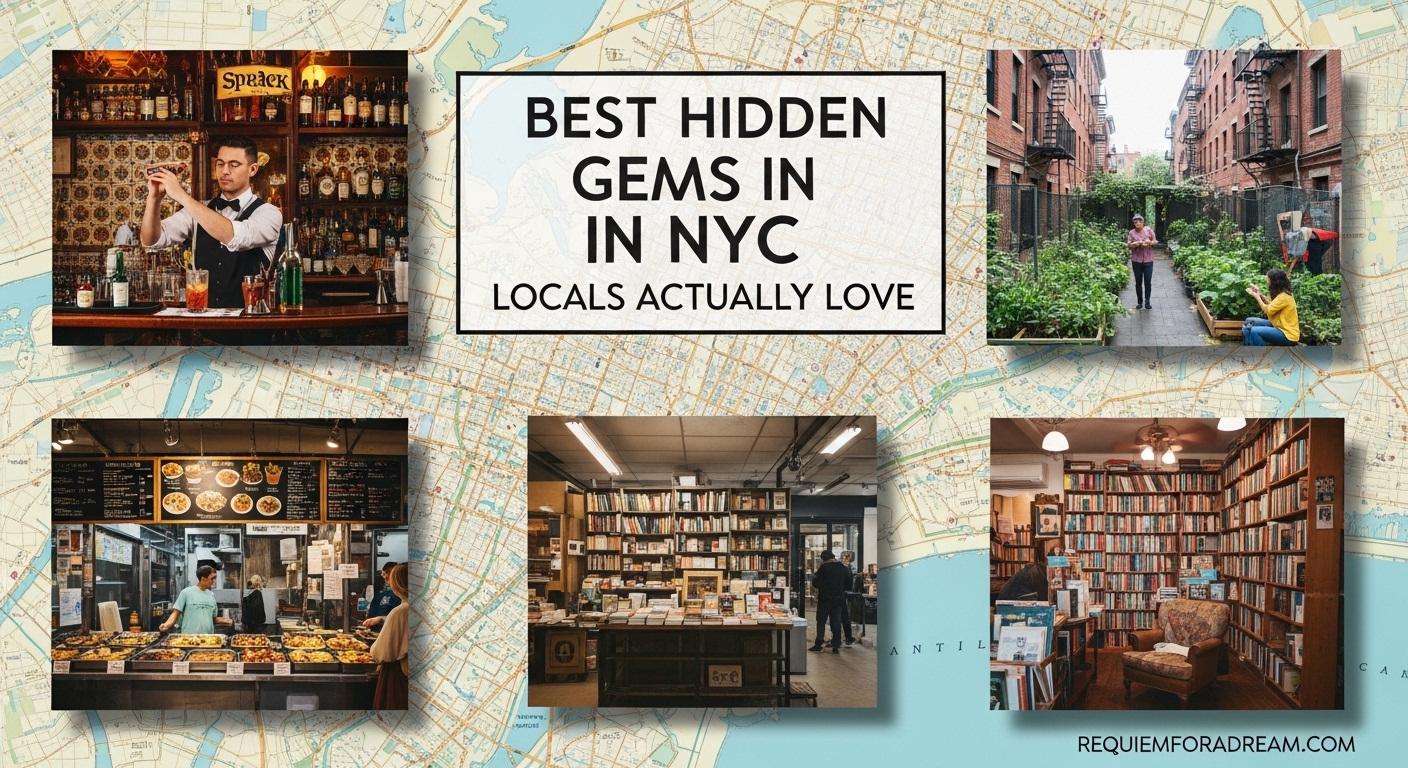
After living in New York City for twelve years, I have watched countless tourists battle through Times Square crowds while missing the spots that actually make this city magical. The hidden gems NYC locals love are not in guidebooks. They are the pocket parks where office workers eat lunch, the cemetery hills where Brooklynites watch sunsets, and the secret gardens tucked behind Financial District skyscrapers.
This guide shares 15 authentic spots across all five boroughs that real New Yorkers actually frequent. I have organized these non-touristy things to do NYC by borough with specific subway directions, costs, and insider tips so you can explore like a local.
Whether you are visiting for the first time or returning to dig deeper, these secret spots New York residents treasure will show you the city’s true character. Every recommendation includes practical details I wish someone had told me when I first moved here.
Table of Contents
Quick Picks: 5 Gems to Visit First
If you only have time for a handful of spots, start with these local favorites that deliver maximum impact:
1. Green-Wood Cemetery (Brooklyn) – 478 acres of rolling hills, sculptures, and skyline views. Locals picnic here on weekends. Take the R train to 25th Street.
2. The Elevated Acre (Manhattan) – A secret floating park above the Financial District with harbor views. Enter through an escalator between skyscrapers on Water Street.
3. Gantry Plaza State Park (Queens) – The best Manhattan skyline view without Manhattan crowds. Take the 7 train to Vernon Boulevard.
4. Fort Totten (Queens) – Explore abandoned Civil War fort tunnels and battery remains. Take the LIRR to Bayside, then grab the Q13 bus.
5. Wave Hill (Bronx) – 28 acres of formal gardens overlooking the Hudson River. Metro-North to Riverdale, then shuttle bus on weekends.
Manhattan Hidden Gems
Manhattan gets 50 million tourists yearly, yet these authentic NYC experiences remain surprisingly peaceful. Locals guard these spots because they offer respite from the Midtown chaos without leaving the island.
The Elevated Acre – Financial District’s Floating Garden
The Elevated Acre sits one story above Water Street in the Financial District, invisible from street level. You enter through a glass-enclosed escalator between two office buildings at 55 Water Street. Locals call it the “secret garden” because most tourists walk right past the entrance.
The space spans about an acre of landscaped greenery with harbor views and benches facing the water. I come here during lunch breaks to escape the Wall Street bustle. The park features a large lawn, walking paths, and an amphitheater that hosts free summer concerts.
Practical details: Take the R or W train to Whitehall Street, or the 4 or 5 to Bowling Green. Walk north on Water Street. Look for the escalator marked “Elevated Acre” between buildings. The park opens daily from 7 AM to 10 PM. Admission is completely free.
Greenacre Park – Midtown’s Secret Waterfall
Greenacre Park hides on East 51st Street between Second and Third Avenues, tucked between Midtown office towers. The 25-foot waterfall dominates the space, creating a white noise that drowns out city sounds completely. I bring out-of-town friends here specifically to watch their reaction when they hear that waterfall roar.
The park measures just 60 by 120 feet, making it a true pocket park. Locals know it as the spot to take phone calls or read during lunch hour. The water feature runs year-round, though the spray feels especially refreshing during humid summer months.
Seating includes cafe-style tables and chairs plus built-in benches along the walls. The park stays open from 8 AM to 8 PM daily, though hours shorten in winter. Take the E or M train to Lexington Avenue/53rd Street, then walk two blocks east.
Jefferson Market Library Garden – West Village Literary Haven
The Jefferson Market Library stands as a Victorian Gothic masterpiece at the corner of Sixth Avenue and West 10th Street. Most visitors photograph the ornate exterior but miss the garden tucked behind the building. This was originally a courthouse designed by Frederick Clark Withers in 1877, and the garden occupies the former prison yard.
The garden features winding brick paths, flower beds, and benches shaded by mature trees. I spent many afternoons here reading when I lived in the West Village. The space feels completely separated from Sixth Avenue traffic despite being one block away.
Take the A, B, C, D, E, F, or M train to West 4th Street, then walk west on West 10th Street. The garden opens during library hours, typically 10 AM to 6 PM Monday through Saturday. Combine this visit with a stroll down Bleecker Street for the full Village experience.
The Morgan Library’s Secret Garden – Midtown’s Literary Courtyard
J.P. Morgan’s former private library now operates as a public museum at 225 Madison Avenue. While the interior exhibits draw art lovers, the Renaissance-style courtyard remains surprisingly unknown. The space centers on a reflecting pool surrounded by colonnades and potted plants that change with seasons.
I discovered this courtyard during a rainstorm when I ducked inside to wait out the weather. The glass ceiling makes it feel outdoors while staying climate-controlled. Locals treat it as a quiet workspace or contemplation space away from Midtown crowds.
The courtyard is free to enter, though the surrounding museum requires admission. Take the 6 train to 33rd Street or the B, D, F, M, N, Q, R, or W to 34th Street-Herald Square. Walk east to Madison Avenue. The museum opens Tuesday through Sunday from 10:30 AM to 5 PM, with extended hours on Fridays.
Brooklyn Hidden Gems
Brooklyn offers the highest concentration of under the radar NYC treasures. These spots reflect the borough’s industrial past, artistic present, and waterfront location. Locals fiercely protect these recommendations because they provide authentic Brooklyn character without the DUMBO tourist crush.
Green-Wood Cemetery – Brooklyn’s Secret Sculpture Garden
Green-Wood Cemetery spans 478 acres of rolling hills in South Brooklyn, making it larger than Central Park. Founded in 1838, it predates both Central Park and Prospect Park as a designed landscape. Locals treat this as their neighborhood park for jogging, dog walking, and sunset watching.
The cemetery contains over 560,000 graves including Leonard Bernstein, Jean-Michel Basquiat, and Boss Tweed. The architecture rivals any European cemetery with Gothic Revival chapels, Egyptian-inspired gates, and elaborate mausoleums. My favorite spot is Battle Hill, the highest point in Brooklyn, which offers panoramic views of the Manhattan skyline and Statue of Liberty.
Take the R train to 25th Street or the D, N, or R to 36th Street in Brooklyn. The main entrance sits at 500 25th Street. The gates open daily from 7 AM to 7 PM. Entry is free, though guided tours cost around $25. Visit in late afternoon for golden-hour photography.
Pebble Beach – DUMBO’s Secret Waterfront
Pebble Beach sits beneath the Manhattan Bridge in DUMBO, offering one of the most photographed views in New York. Yet most visitors stay on the Washington Street overlook and never descend to the actual beach. The shoreline features rounded stones rather than sand, creating a unique texture underfoot.
I bring picnic supplies here on summer evenings when the bridge lights reflect on the water. The beach provides direct views of the Brooklyn Bridge, Manhattan Bridge, and downtown skyline in one frame. Locals know this as the spot for quiet contemplation despite being surrounded by infrastructure.
Take the F train to York Street or the A or C to High Street. Walk toward the water on Main Street, then follow the path under the bridge. The beach has no official hours, though I recommend visiting during daylight. Combine this with a walk through Brooklyn Bridge Park for a full afternoon.
Socrates Sculpture Park – Queens Waterfront Art Space
Socrates Sculpture Park occupies a former landfill site on the Long Island City waterfront, transformed into an outdoor museum in 1986. The park commissions large-scale sculptures that rotate seasonally, creating an ever-changing landscape against the Manhattan skyline backdrop.
Unlike indoor museums, this space encourages physical interaction with art. Locals bring children to run between installations or host sunset yoga sessions on the grass. I attended an outdoor film screening here last summer with the skyline twinkling behind the screen.
Take the N or W train to Broadway on the Astoria line. Walk west toward the water. The park opens from 9 AM to sunset daily, year-round. Admission is always free. Check their events calendar for workshops, performances, and film screenings during your visit.
Brooklyn Army Terminal – Sunset Park’s Industrial Cathedral
The Brooklyn Army Terminal spans nearly 100 acres in Sunset Park, built in 1918 as the largest military supply base in the United States. The atrium of Building B features a mind-bending interior with massive windows, steel gantries, and a 200-foot central skylight that illuminates the space dramatically.
Most of the complex operates as a commercial and industrial hub, but the atrium opens for weekend tours and occasional public events. I stumbled upon an open-house event here and stood in the atrium for twenty minutes just absorbing the scale. The Art Deco details and industrial engineering create a cathedral-like atmosphere.
Take the N or W train to 69th Street. Walk south to 58th Street and Second Avenue. Public access is limited to scheduled tours and events, so check the Brooklyn Army Terminal website before visiting. Weekend tours typically cost $20 and require advance booking.
Queens Hidden Gems
Queens represents the most ethnically diverse urban area in the world, yet most tourists never venture past Astoria for Greek food. These Queens hidden gems showcase the borough’s history, waterfront access, and cultural institutions that locals treasure.
Fort Totten – Bayside’s Abandoned Fort
Fort Totten occupies a peninsula in Bayside, Queens, originally built as a Civil War defensive installation. The site contains abandoned batteries, crumbling barracks, and underground tunnels that create an eerie, post-apocalyptic atmosphere. Urban explorers and photographers flock here for the unique decay aesthetic.
The Bayside Historical Society occupies the former officers’ quarters and offers guided tours of the grounds. I joined a nighttime paranormal tour here that explored the abandoned battery tunnels with flashlights. Whether you believe in ghosts or not, the atmosphere is genuinely spooky after dark.
Take the Long Island Rail Road to Bayside station, then transfer to the Q13 or Q16 bus toward Fort Totten. Alternatively, drive and park inside the fort grounds. The public areas are free to explore during daylight hours. Some buildings require event registration for access.
Museum of the Moving Image – Astoria’s Cinema Paradise
The Museum of the Moving Image sits in the former Kaufman Astoria Studios complex, where films like “The Godfather” and “Goodfellas” shot scenes. The museum focuses on film, television, and digital media history with an emphasis on interactive exhibits. You can dub your own voice over famous movie scenes or experiment with early motion picture devices.
The permanent Jim Henson exhibition draws locals repeatedly because it houses original Muppets, scripts, and personal artifacts from the creator of Sesame Street. I spent an hour at the puppet customization station designing my own character. The museum balances educational content with genuine fun.
Take the M or R train to Steinway Street or 36th Street. Walk east toward 35th Avenue. The museum opens Wednesday through Sunday from 10:30 AM to 5 PM, with extended hours to 8 PM on Fridays. General admission is $20, with pay-what-you-wish admission on Fridays from 4 to 8 PM.
Gantry Plaza State Park – Long Island City’s Waterfront Jewel
Gantry Plaza State Park stretches along the Long Island City waterfront with unparalleled views of the United Nations, Empire State Building, and Chrysler Building. The park preserves historic gantry cranes used for loading railroad car floats, creating an industrial-chic aesthetic unique among city parks.
Locals crowd the piers at sunset when the Manhattan skyline turns golden. I have brought at least a dozen visitors here, and every single person gasps when they see the view for the first time. The park includes manicured lawns, fishing piers, and a restored 1920s carousel that operates in summer.
Take the 7 train to Vernon Boulevard-Jackson Avenue or the G train to 21st Street. Walk west toward the river. The park opens from 8 AM to 10 PM daily. Admission is free. Visit around 7 PM in summer for sunset views, or during weekday mornings for crowd-free photography.
Bronx Hidden Gems
The Bronx gets unfairly overlooked by tourists despite containing some of New York’s most beautiful green spaces. These Bronx off the beaten path spots require more effort to reach but reward visitors with genuine neighborhood character and stunning natural settings.
Wave Hill – Riverdale’s Secret Estate Gardens
Wave Hill occupies a 28-acre estate in the Riverdale section of the Bronx, overlooking the Hudson River and Palisades. The property operated as a private residence for notable figures including Mark Twain and Theodore Roosevelt before becoming a public garden in 1960.
The gardens blend formal landscaping with woodland trails, creating multiple distinct environments within the property. I visit the Aquatic Garden in late spring when the water lilies bloom. The Perkins Visitor Center offers a cafe with terrace seating that provides the best casual dining view in the Bronx.
Take Metro-North to the Riverdale station, then catch the free Wave Hill shuttle bus on weekends or walk 15 minutes uphill. Alternatively, take the 1 train to 231st Street, then the Bx7 or Bx10 bus. The grounds open Tuesday through Sunday from 10 AM to 4:30 PM. Admission costs $10, with free entry on Thursdays and Saturdays from 9 AM to 12 PM.
City Island – New England in the Bronx
City Island sits in Long Island Sound, connected to the Bronx by a single causeway. The community developed as an oystering and shipbuilding village in the 1800s, and the main street still features Victorian architecture, seafood restaurants, and yacht clubs that feel transported from Cape Cod.
Locals come here for fried seafood at places like Johnny’s Reef Restaurant, where you can eat clam strips on picnic tables overlooking the water. I rented a kayak here last summer and paddled around the island’s perimeter. The nautical atmosphere provides a complete departure from urban New York.
Take the 6 train to Pelham Bay Park, the last stop in the Bronx. Transfer to the BX29 bus to City Island. The ride takes about 30 minutes from Manhattan. Most restaurants and shops concentrate on City Island Avenue. Visit on weekends for full restaurant availability, though weekdays offer quieter exploration.
Staten Island Hidden Gem
Staten Island remains the most overlooked borough, accessible only by ferry or bridge. Yet this single gem justifies the trip for anyone seeking underrated spots NYC residents cherish.
Snug Harbor Cultural Center – 83 Acres of Culture and Gardens
Snug Harbor Cultural Center began as a retirement home for sailors in 1833, with the main buildings designed in Greek Revival style. The 83-acre campus now contains museums, botanical gardens, performance venues, and artist studios. Locals consider this Staten Island’s cultural heart.
The Chinese Scholar’s Garden represents the only authentic traditional Suzhou-style garden in New York City. Built by craftsmen from China using traditional methods, the garden features rock formations, waterfalls, and pavilions around a central pond. I spent three hours here during my first visit without seeing everything.
Take the Staten Island Ferry from Whitehall Terminal in Manhattan (free, 25 minutes). Transfer to the S40 or S44 bus to Snug Harbor Road. The grounds are free to enter and open daily. Individual gardens and museums charge admission, with combination tickets available.
Practical Tips for Exploring NYC Hidden Gems
After years of exploring these neighborhood secrets, I have learned strategies that make the experience smoother and more rewarding.
Subway Navigation Basics
New York’s subway system runs 24 hours, though service changes on weekends. Download the Citymapper or Google Maps apps for real-time directions. Always check for weekend construction before leaving. Express trains skip stops, so verify whether your destination requires local service.
Keep a MetroCard loaded with at least $20 for convenience, or use OMNY contactless payment at turnstiles. Many hidden gems require walking 10-15 minutes from stations, so wear comfortable shoes.
Best Times to Visit
Weekday mornings offer the quietest experience at most gems. Parks and outdoor spaces fill with locals on weekends, though this can add energy and people-watching opportunities. Fall provides ideal weather and foliage at places like Wave Hill and Green-Wood Cemetery. Summer brings free events and extended hours.
Winter visits work well for indoor gems like the Museum of the Moving Image or Brooklyn Army Terminal. Some outdoor spots like Pebble Beach feel desolate in January, while others like Greenacre Park’s waterfall remain beautiful year-round.
Budget Considerations
Twelve of the fifteen gems listed here are completely free to enter. Only the Museum of the Moving Image, Wave Hill (outside free hours), and Brooklyn Army Terminal tours require payment. The subway costs $2.90 per ride, and the Staten Island Ferry remains free.
I recommend prioritizing free gems to stretch your budget toward one or two paid experiences that particularly interest you. The free options provide just as much authentic local atmosphere as paid alternatives.
Frequently Asked Questions
What are the best non-touristy things to do in NYC?
The best non-touristy things to do in NYC include exploring Green-Wood Cemetery in Brooklyn, visiting the Elevated Acre in the Financial District, watching sunset at Gantry Plaza State Park in Queens, and discovering the abandoned Fort Totten. These spots offer authentic local experiences away from Times Square crowds.
Where do locals hang out in NYC?
Locals hang out in neighborhood parks like Socrates Sculpture Park in Queens, waterfront spots like Pebble Beach in Brooklyn, and cultural venues like the Museum of the Moving Image in Astoria. Each borough has distinct local gathering spots that tourists rarely discover.
What are NYC’s best kept secrets?
NYC’s best kept secrets include the Elevated Acre’s harbor views, Greenacre Park’s 25-foot waterfall in Midtown, the Whispering Gallery at Grand Central Terminal, and the secret garden behind the Jefferson Market Library. These spots remain unknown to most tourists despite being centrally located.
What are some free hidden gems in NYC?
Free hidden gems in NYC include Green-Wood Cemetery, the Elevated Acre, Gantry Plaza State Park, Socrates Sculpture Park, Fort Totten, Pebble Beach, the Morgan Library’s courtyard, and Snug Harbor Cultural Center grounds. Twelve of the fifteen gems in this guide require no admission fee.
What weird and unhinged spots should I visit in NYC?
Weird and unhinged spots in NYC include Fort Totten’s abandoned military tunnels, the Green-Wood Cemetery where locals picnic among graves, the Brooklyn Army Terminal’s industrial cathedral atrium, and City Island’s New England fishing village atmosphere in the middle of the Bronx.
Conclusion
These 15 hidden gems NYC locals love represent just a fraction of what the city offers beyond Times Square and the Statue of Liberty. From the Financial District’s floating garden to the abandoned forts of Queens, each spot reveals a different facet of New York’s character.
I encourage you to explore at least one gem from each borough during your visit. The subway connections make it possible to hit Manhattan, Brooklyn, and Queens gems in a single day if you plan efficiently. The Bronx and Staten Island deserve dedicated half-day excursions.
The best authentic NYC experiences happen when you step off the main tourist thoroughfares and into the neighborhoods where real New Yorkers live, work, and relax. Start with Green-Wood Cemetery or Gantry Plaza for maximum impact. Both deliver those “I can’t believe this exists in New York” moments that create lasting memories.
Visit in August 2026 to catch these spots in their prime season. Fall brings spectacular color to Wave Hill and Green-Wood Cemetery. Summer offers free concerts and film screenings at Socrates Sculpture Park. Winter provides peaceful solitude at Pebble Beach and the Elevated Acre. Every season reveals different sides of these neighborhood treasures.