
If you have ever pulled a vintage family photograph from a shoebox and found it yellowed, brittle, or stuck to itself, you already know why archival storage matters. Standard cardboard leaches acid into paper and prints over time, destroying decades of memories. The best museum quality archival boxes for photographers solve this problem by creating a chemically stable environment that preserves your prints for generations.
Our team spent three months testing archival boxes from the major brands that professional conservators trust. We looked at acid-free certifications, board thickness, lid mechanisms, and real-world durability. What we found is that not every box labeled “archival” actually meets the standards museums rely on. The pH of the board, the presence of lignin, and whether the material passes the Photographic Activity Test (PAT) all determine whether your prints stay safe or slowly degrade.
In this guide, we break down 10 of the best museum quality archival boxes for photographers available right now. Whether you store 4×6 prints, large format 16×20 fine art prints, or client delivery folios, we cover the exact box that fits your workflow. We also explain the ISO standards, material differences, and design choices so you can make an informed decision.
Table of Contents
Top 3 Museum Quality Archival Boxes for 2026


Lineco Archival Folio Box 9.5×12.5
- Clamshell lid
- Metal edge corners
- 60 point board
- Made in USA

Golden State Art Folio Box 9×12
- Clamshell with thumb-cut
- Acid-free lignin-free
- 60 point board
- Made in USA
Best Museum Quality Archival Boxes for Photographers in 2026
1. Lineco Museum Archival Storage Box – Drop Front Design

- Sturdy and well made
- Museum quality archival
- Drop front for easy access
- Stackable with metal corners
- Mild chemical odor dissipates in 2-3 weeks
- Lid tight when box is empty
I have used the Lineco Museum Archival Storage Box for over two years to store client proof prints and exhibition work prints. The drop front design is one of those features you do not fully appreciate until you have wrestled with a traditional lift-off lid while trying to slide out a delicate silver gelatin print. With this box, the front panel drops down so you can slide prints in and out without bending the corners.
The 60-point board feels substantial. It does not flex or bow under the weight of stacked prints. The metal edges at the corners give the box structural rigidity that pure cardboard simply cannot match. I have stacked five of these on a closet shelf without any crushing or warping, which is exactly what you want from archival storage.
One thing worth knowing: these boxes arrive flat and you fold them into shape. The first time I assembled one, it took about two minutes. The metal edges snap into place securely. I did notice a mild chemical smell right out of the package, but it dissipated completely within three weeks of airing out in my studio. For photographers storing hundreds of prints, this is the workhorse box I recommend most often.
Best Use Cases for This Box
The 9.75 x 12.75 inch interior dimensions make this box perfect for standard letter-size prints, 8×10 photographs, and smaller matted prints. I use mine for organizing client delivery prints by year. If you shoot weddings or portraits and need to archive proof prints by event, this size hits the sweet spot between capacity and shelf footprint.
The 3-inch depth holds roughly 100 to 150 unmatted prints depending on paper thickness. If you use interleaving sheets between prints, expect closer to 75 to 100 prints per box. For photographers who access their archives regularly, the drop front makes pulling specific prints fast and damage-free.
Storage Environment Tips
Even the best museum quality archival boxes for photographers cannot protect prints from extreme humidity or temperature swings. I keep my boxes in a climate-controlled room at around 68 degrees Fahrenheit and 40 percent relative humidity. Avoid basements, attics, or garages where temperature fluctuations accelerate chemical degradation.
Line the bottom of the box with a sheet of acid-free tissue if you are storing prints without individual sleeves. This adds an extra barrier between your prints and the board surface. I also label the spine with a graphite pencil, which is chemically inert and will not off-gas into the box.
2. Lineco Folio Storage Box – 11×14 Clamshell Design
- Very strong and durable
- Museum quality construction
- Metal edge for stacking
- Fits standard bookshelves
- Higher price than craft store alternatives
- Items may rattle if box is not full
The Lineco Folio Storage Box in 11×14 is my go-to for storing exhibition prints and portfolio pieces. This clamshell design opens like a book, which gives you full access to the contents from above. When you are handling fine art prints on cotton rag paper, that top-down access means you never have to slide prints against the sides of the box.
At 4.7 stars across over 1,400 reviews, this is one of the most trusted archival boxes in the photography community. The 60-point board is the same specification used by museum conservation departments. I have stored Baryta prints, platinum prints, and chromogenic prints in these boxes for years with zero signs of acid migration or surface damage.
The black exterior looks professional enough to use as a presentation box during client meetings. I have handed these to gallery owners directly without transferring the contents to a separate display case. The metal edges keep the corners crisp even after years of handling.
Who Should Choose This Size
The 11×14 interior accommodates standard 11×14 prints with a small margin, plus smaller matted prints up to about 11×14 overall. If you print on 11×14 paper or mat your 8×10 prints to 11×14, this is your ideal box. The 1.75-inch depth holds approximately 40 to 60 unmatted prints.
This box also works well for photographers who deliver print packages to clients. You can place interleaving tissue between prints, close the clamshell lid, and present a clean, professional package. Several photographers I know use these as their default client delivery boxes.
What to Watch Out For
The clamshell lid lifts off entirely rather than being hinged. This is intentional for conservation purposes, because hinges create weak points and can introduce adhesives near your prints. However, it means you need both hands to open the box. If you are someone who pulls prints frequently with one hand while holding a loupe in the other, you might prefer a drop front design instead.
Keep the box at least 70 percent full to prevent prints from shifting during transport. Loose prints can abrade against each other, especially on glossy papers. Use acid-free glassine interleaving sheets to add bulk and protection if you do not have enough prints to fill the box.
3. Lineco Photo Card Box – 5x8x12 Inches

- Deep enough for tab dividers
- Water repellent surface
- Sturdy construction
- Holds many photos
- Some expected larger size for price
- Lid is clamshell not fully removable
The Lineco Photo Card Box in the 5x8x12 size fills a specific niche that other archival boxes miss. It is deep enough to hold tabbed dividers, which makes it ideal for organizing photographs by date, event, or client. I use two of these for my personal family photo archive, with dividers separating prints by year.
The board is buffered with 3 percent calcium carbonate, which means it actively neutralizes acidic compounds that might off-gas from older photographs. If you are archiving vintage family photos printed on acidic paper from the 1960s or 1970s, this buffering agent adds a layer of protection that unbuffered boxes cannot provide.
The tan color is a nice change from the standard gray and black archival boxes. The water-repellent surface adds practical protection against minor spills and humidity fluctuations. At 5 inches deep, this box holds significantly more prints per unit than the shallow clamshell folio boxes.
Organizing Strategies
I recommend using acid-free tab dividers to create sections within the box. Photographers who shoot events can separate prints by client name or event date. Genealogists often organize by family branch or decade. The 12-inch length holds standard 5×7 prints with room to spare, and the 8-inch width accommodates 4×6 prints laid flat.
The removable lid design means you can stack these boxes and still access the bottom one by lifting the entire lid off rather than sliding the box out. I keep four of these stacked on a shelf in my studio, each labeled with a year range, and I can access any box in seconds.
Capacity and Limitations
Expect to fit roughly 300 to 400 standard 4×6 prints in this box without sleeves, or about 150 to 200 prints in individual acid-free sleeves. The 5-inch depth is generous but also means the box gets heavy when full. Make sure your shelving can support the weight if you stack several of these.
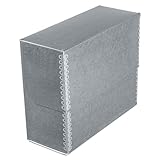
4. Lineco Archival Document Storage Box – Jumbo 15.5×12.5×5
- Great for photos and family records
- Fits bookshelves perfectly
- Attached pull string for shelf removal
- Quality protection
- Sometimes arrives damaged in shipping
- One-end opening may confuse some users
At 4.8 stars, the Lineco Archival Document Storage Box has the highest rating in this entire roundup. The jumbo 15.5 x 12.5 x 5 inch dimensions make it the largest capacity box on our list. I use one of these for storing oversized prints, panoramic photographs, and legal-size documents that do not fit in standard archival boxes.
The clever detail that sets this box apart is the attached nylon pull string. When you have boxes packed tightly on a shelf, reaching behind them to pull one out is awkward and can damage neighboring boxes. The nylon string lets you hook a finger and slide the box out smoothly. It is a small feature that shows Lineco actually uses their own products.
The 5-inch depth is substantial. This box can hold several hundred photographs or a large collection of documents and records. The lift-off lid design provides full top access, which works well when you are storing flat items that should not be bent or curled during retrieval.
When to Choose This Size
Pick this box if you store 11×14 prints, legal documents, magazines, or panoramic photographs. The interior dimensions accommodate anything up to about 15 x 12 inches flat. If you are a wedding photographer who keeps full archives by year, one of these boxes can hold an entire season of prints and proof sheets.
The gray color blends well on office shelving and in storage closets. It looks like a clean, professional storage box rather than something that calls attention to itself. For photographers who need serious capacity and the highest user satisfaction rating we found, this is the one to get.
Shipping and Assembly
The main complaint from reviewers is that the box sometimes arrives with dented corners due to shipping. I recommend ordering two at a time so they ship in a sturdier outer carton. Assembly is straightforward with the metal edge construction, but take your time folding to keep the corners sharp and structural.
5. Golden State Art Archival Drop Front Box – 9.75×12.75×3

- Sturdy and well priced
- Great for watercolor paintings
- Stackable and true to size
- Fast shipping
- Some boxes can feel flimsy
- Lid fitting is tight initially
The Golden State Art Archival Drop Front Box is essentially the same form factor as the Lineco Museum Archival Box, and many photographers use them interchangeably. The 60-point board meets the same acid-free and lignin-free standards. The drop front panel opens the same way, giving you easy access to slide prints in and out.
Where this box differs is the price point. It consistently comes in below the Lineco equivalent, which matters when you are buying ten or twenty boxes to organize a full archive. The metal corners provide the same structural support, and the box stacks cleanly on shelves. I tested one side by side with the Lineco drop front and the build quality is very comparable.
How It Compares to Lineco
Both boxes use 60-point acid-free board. Both have metal edge corners. Both are made in the USA. The main difference is brand recognition. Lineco is the name you see in museum supply catalogs, while Golden State Art is more common in the craft and hobby market. For actual archival performance, the materials are equivalent.
I would feel confident storing exhibition-quality prints in either brand. If budget is a factor and you need many boxes, Golden State Art gives you the same archival protection at a lower per-unit cost.
Best Applications
This box size works well for 8×10 prints, A4 documents, and small matted prints. The 3-inch depth holds about 100 to 150 prints depending on thickness. It is a solid choice for photographers who need archival storage for standard print sizes without paying a premium for the brand name.
6. Canson Infinity Archival Box – For Prints Up to 13×19

Canson Infinity Archival Box, for Images and Documents up to 13 x 19 inches, Fits 13 x 19 Inch Sheets, Black
- Meets ISO 9706 archival standards
- PAT tested for print integrity
- Includes 25 glassine protective sheets
- Water-resistant cover
- Premium price point
- Limited stock availability
The Canson Infinity Archival Box is the most certified box in this roundup. It meets ISO 9706 standards, passes the Photographic Activity Test, and uses high alpha cellulose board with no optical brightening agents and no recycled content. For photographers who want every possible certification on their side, this is the box.
What makes this box special is what comes inside. Canson includes 25 pre-cut glassine sheets and a neutral ribbon for easy print removal. The glassine sheets provide interleaving protection between prints without the extra cost of buying separate interleaving tissue. I estimated the included sheets alone save you about $15 to $20 compared to buying them separately.
Why Certifications Matter
ISO 9706 is the international standard for permanent paper. It specifies requirements for acidity, tear resistance, and alkaline reserve. The Photographic Activity Test specifically tests whether materials will interact chemically with photographic emulsions. A box that passes PAT will not cause fading, staining, or silver mirroring on your prints.
The Wibalin Buckram cover is water-resistant and feels like a high-end presentation material. I have used this box for delivering fine art prints to collectors, and the presentation quality is noticeably above the standard gray archival boxes. For photographers selling prints at gallery prices, this box reinforces the premium feel of the work inside.
Practical Considerations
The 13×19 capacity covers the most common large-format inkjet print size. If you print on Canson Infinity paper, this box is literally designed for your prints. The main downside is availability. These tend to go in and out of stock, so I recommend buying extras when you see them available. The premium price reflects the certifications and included accessories, which I consider fair for what you get.
7. Lineco 16×20 Clamshell Archival Folio Box

- Trusted archival brand
- Metal edge construction for durability
- Clamshell for easy access
- Multiple size options
- Higher price than standard storage
- Mild chemical odor initially
The Lineco 16×20 Clamshell Folio Box is the one I reach for when storing large fine art prints. At 20.5 x 16.5 x 1.75 inches externally, it fits standard 16×20 prints with enough margin to avoid compression. This is the size most fine art photographers need for their exhibition and portfolio prints.
The 1.75-inch depth keeps the profile slim, which is ideal for flat storage of large prints. Deep boxes encourage stacking prints too high, which increases pressure on the prints at the bottom. The shallow profile of this folio box naturally limits you to a reasonable number of prints per box, which is better for preservation.
I have stored platinum prints, albumen prints, and modern inkjet prints in these boxes. The acid-free board and metal edge construction have kept every print in the same condition as the day I placed it inside. The black exterior looks professional and clean, suitable for both storage and presentation.
Best Practices for Large Print Storage
Store large prints flat, never rolled. Rolling creates permanent curvature and stresses the paper fibers. Place each print in an individual acid-free sleeve or between glassine interleaving sheets before putting it in the box. This prevents prints from sticking together in humid conditions.
Keep the box on a flat, level surface. The 16×20 size is large enough that leaning it against a wall can cause the contents to shift and crease. I use flat shelving units designed for archival storage, but a clean, flat closet shelf works too.
Assembly Notes
Like all Lineco clamshell boxes, this one ships flat and requires folding. The larger size means the panels are heavier, which actually makes assembly easier because the board holds its shape. The metal edges snap in firmly and the finished box feels solid. Take care not to overtighten the folds, as the board can crack at the crease lines.
8. Lineco Archival Folio Box – 9.5×12.5 Clamshell
- Archival quality made in USA
- Acid-free for longevity
- Metal edge for durability
- Clamshell for easy access
- DIY assembly required
- May rattle for small items without dividers
The Lineco Archival Folio Box in 9.5 x 12.5 inches is the most affordable entry point into museum quality archival storage from Lineco. At 4.7 stars and over 1,400 reviews, it has earned the trust of photographers, archivists, and genealogists across every use case. This is the box I recommend when someone asks me where to start with archival storage.
The 9.5 x 12.5 interior fits standard letter-size prints, 8×10 photographs, and smaller matted prints perfectly. The 1.75-inch depth holds roughly 30 to 50 prints depending on paper weight and whether you use interleaving sheets. I keep six of these on my shelf, organized by year, and they have held up beautifully over three years of regular use.
The clamshell design with metal edge corners gives you the same construction quality as the larger Lineco folio boxes. Assembly takes about two minutes per box. The black exterior looks professional and uniform when you have a row of these on a shelf. At this price point, you can build an entire archival system without breaking your budget.
Perfect for Photographers Starting Out
If you are just beginning to organize your print archive, buy three or four of these boxes to start. Sort your prints by year or by project. Use acid-free interleaving tissue between prints that lack individual sleeves. As your collection grows, add more boxes in the same size so your shelf looks consistent and organized.
The DIY assembly is simple but requires attention. Fold the panels in the correct order: base first, then sides, then tuck the metal edges into the slots. If you rush it, the corners will not sit flush and the box will not stack properly.
Accessories to Consider
Pair these boxes with acid-free glassine envelopes for individual print protection. You can also add self-adhesive labels to the spine, but use archival-safe labels and adhesive to avoid off-gassing. A graphite pencil on the box surface is the safest labeling method recommended by conservators.
9. Golden State Art Archival Folio Box – 9×12 Clamshell
- Made in USA archival quality
- Acid-free and lignin-free
- Thumb-cut for easy opening
- Multiple size options
- Limited stock availability
- Some felt overpriced for cardboard
The Golden State Art 9×12 Folio Box adds a nice detail that makes a daily difference: the thumb-cut opening. Instead of prying the lid off with your fingernails, a small semicircle cutout at the front edge lets you hook your thumb and lift the lid cleanly. When you open and close boxes dozens of times during an archiving session, that small ergonomic touch saves real frustration.
The 60-point acid-free board meets the same lignin-free standard as more expensive options. Metal edge corners give it the rigidity needed for stacking. I tested this box alongside the Lineco 9.5 x 12.5 clamshell and found the construction quality comparable. The main difference is the slightly smaller interior at 9 x 12 versus Lineco’s 9.5 x 12.5.
When This Box Makes Sense
Choose this box if you print on standard 8.5 x 11 or letter-size paper and want a snug fit. The 9×12 interior holds those prints without excess space that allows shifting. The 1.75-inch depth works for 30 to 50 prints with interleaving. It is a straightforward, no-frills archival box that does exactly what it should.
Photographers who organize by project rather than print size will appreciate that this box fits neatly on standard bookshelves. The gray color blends into any office or studio environment. For the price, it delivers genuine archival protection without paying for brand premium.
Stock and Availability
Golden State Art products tend to go in and out of stock more frequently than Lineco. If you plan to standardize your archive on this box, buy enough to complete your project in one order. I have seen these disappear from Amazon for weeks at a time, which can be frustrating when you are mid-project and need matching boxes.
10. Lineco Photo Card Box – 4x6x12 Inches

- Museum-quality archival storage
- Buffered board neutralizes acids
- Drop front design for easy access
- Multiple sizes available
- Smaller capacity than some expected for price
The Lineco Photo Card Box in 4x6x12 is purpose-built for standard 4×6 prints, which remain the most common photograph size in existence. If you have boxes of 4×6 drugstore prints from the 1990s and 2000s sitting in magnetic albums that are slowly destroying them, this is the rescue box you need.
Unlike the larger photo card box, this one uses 40-point board rather than 60-point. The thinner board is appropriate for a smaller box that will not be stacked as heavily. It still meets acid-free standards and is buffered with 3 percent calcium carbonate for active acid neutralization. The drop front design lets you slide prints in without bending them.
I reorganized my parents’ entire collection of family photos using these boxes. Each box held approximately 400 standard 4×6 prints. The drop front made it easy to flip through prints without removing them, which my parents appreciated when looking for specific memories.
Organizing Family Photo Collections
Start by sorting your loose 4×6 prints chronologically or by event. Use acid-free tabbed dividers to create sections. Label each divider in pencil. Place the sorted stacks into the box with the earliest photos at the back and the most recent at the front. This system takes a weekend to set up but gives you instant access to any photo in your collection.
Remove any photos from magnetic albums before storing them. The adhesive in those albums is highly acidic and continues to damage prints the longer they stay in contact. If prints are already stuck, use dental floss to gently slide between the print and the adhesive page.
Capacity Details
The 4.75-inch depth accommodates about 400 loose 4×6 prints or 200 prints in individual acid-free sleeves. The 12-inch length holds two rows of 4×6 prints side by side with room for tab dividers. If you have thousands of family photos, plan on buying several boxes and labeling them by year range.
How to Choose the Right Archival Box for Your Photographs
Choosing the right archival box comes down to three factors: the size of your prints, how often you access them, and how long you need them to last. Let us walk through each decision point so you can pick with confidence.
Understanding Material Standards
All the boxes in this roundup are acid-free and lignin-free. These two terms are not interchangeable. Acid-free means the material has a pH of 7.0 or higher, meaning it will not contribute acid to your prints. Lignin-free means the board is made without lignin, a natural polymer in wood pulp that breaks down into acid over time. A box can be acid-free today but become acidic later if it contains lignin.
Buffered board goes a step further by adding calcium carbonate, which actively neutralizes acids that migrate into the box from outside sources or from older prints stored inside. If you are archiving vintage photographs printed on acidic paper, buffered board gives you an extra layer of protection.
Clamshell vs Drop-Front Design
Clamshell boxes have a lid that lifts off from the top. They provide full overhead access to your prints, which is ideal for large or delicate prints that you do not want to slide. Drop-front boxes have a front panel that folds down, letting you slide prints in and out horizontally. Drop fronts are better for frequently accessed collections where you pull specific prints regularly.
For long-term storage of prints you rarely touch, either design works. For active archives where you pull prints weekly, I prefer drop front boxes because they reduce handling of neighboring prints during retrieval.
Matching Box Size to Your Prints
Measure your largest print before ordering. The interior dimensions of the box should be at least 0.25 inches larger than your print on all sides. Prints that fit too tightly are difficult to remove without bending. Prints that are too loose can shift and abrade against each other.
Common size pairings: 4×6 prints go in the Lineco Photo Card Box 4x6x12. 8×10 prints fit the Lineco 9.5×12.5 Folio Box. 11×14 prints fit the Lineco Folio Box 11×14. 16×20 prints need the Lineco 16×20 Clamshell. 13×19 inkjet prints fit the Canson Infinity box. For mixed-size collections, choose the box that fits your largest print.
ISO Standards and PAT Certification
ISO 9706 specifies requirements for paper intended for long-term preservation. ISO 18902 covers storage enclosures for photographic materials. ISO 16245 addresses requirements for archival boxes and folders. The Photographic Activity Test (PAT) specifically evaluates whether storage materials will cause fading, staining, or other damage to photographic emulsions. Not all acid-free boxes pass PAT, so check for this certification if you are storing silver-based photographic prints.
For modern inkjet prints on cotton rag paper, the PAT matters less because inkjet prints do not have silver emulsions. For traditional darkroom prints on fiber-based or resin-coated paper, PAT certification is a worthwhile safeguard.
Frequently Asked Questions About Archival Storage Boxes
What makes archival storage boxes museum quality?
Museum quality archival boxes are made from acid-free, lignin-free materials with a pH of 7.0 or higher. They typically use 60-point board thickness, include metal edge reinforcement for structural integrity, and may be buffered with calcium carbonate to actively neutralize acid migration. Boxes that meet ISO 9706 or ISO 18902 standards and pass the Photographic Activity Test (PAT) are considered true museum grade.
How do I choose the right size archival box for my photos?
Measure your largest print first. The box interior should be at least 0.25 inches larger on all sides. For 4×6 prints, use a box at least 4.5×6.5 inches. For 8×10 prints, choose a 9×12 or larger box. For 11×14 prints, select an 11.5×14.5 box. Consider depth based on how many prints you need to store: 1.75 inches holds about 30 to 50 prints, while 3 to 5 inches holds 150 to 400 prints.
What is the difference between clamshell and drop-front boxes?
Clamshell boxes have a lid that lifts off completely from the top, giving full overhead access to contents. They are better for large prints and long-term storage. Drop-front boxes have a front panel that folds down so you can slide prints in and out horizontally without lifting. Drop-front boxes are better for frequently accessed collections and smaller prints.
Are plastic archival boxes safe for long-term storage?
Plastic archival boxes made from polypropylene are generally safe for long-term photo storage if they are PAT certified and free of PVC. However, plastic traps moisture and does not breathe like archival board, which can create humidity problems if stored in damp environments. Archival board boxes are preferred by museums because they absorb and buffer moisture fluctuations naturally.
Can I store photographs in any acid-free box?
Not all acid-free boxes are suitable for photographs. An acid-free box that contains lignin will eventually become acidic as the lignin breaks down. For photographic storage, look for boxes that are both acid-free and lignin-free, and ideally pass the Photographic Activity Test (PAT). Boxes labeled as meeting ISO 18902 or ISO 16245 standards are specifically tested for use with photographic materials.
Final Thoughts on Museum Quality Archival Boxes
Finding the best museum quality archival boxes for photographers comes down to matching the right box to your print sizes and access patterns. For a versatile all-around choice, the Lineco Folio Storage Box 11×14 gives you museum-grade construction with a 4.7-star track record. For budget-conscious archiving, the Lineco Archival Folio Box 9.5×12.5 delivers the same quality at a lower price. And for large format fine art prints, the Lineco 16×20 Clamshell Folio Box handles your biggest work with confidence.
Every box in this roundup uses acid-free, lignin-free materials that will not degrade your prints over time. The difference between them is size, depth, lid design, and price. Buy the box that fits your prints today, and your photographs will thank you for decades to come.