
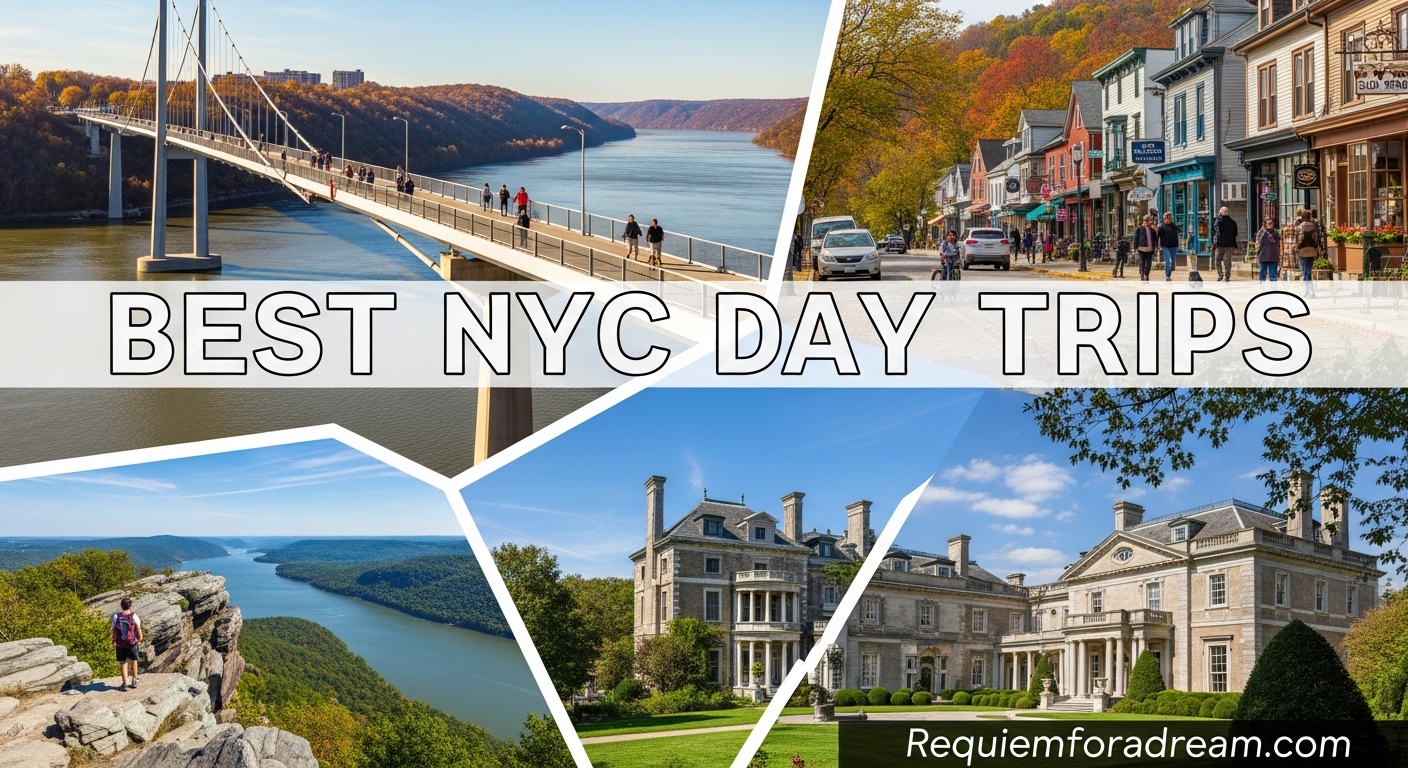
Living in New York City means having one of the world’s greatest urban playgrounds right outside your door. But even the most dedicated Manhattanite needs an escape from the subway crowds and concrete canyons sometimes. I spent three years living in a walk-up in the East Village, and I learned quickly that the key to surviving NYC burnout is knowing exactly where to go when you need a breath of fresh air.
The best day trips from New York City offer something extraordinary. Within an hour, you can be hiking mountain trails that overlook the Hudson River. In two hours, you can swim in the Atlantic Ocean or tour world-class art museums housed in former factories. You do not need a car for most of these escapes, which makes them perfect for anyone relying on subway cards and train schedules.
This guide covers 12 destinations organized by travel time from Manhattan. Each includes transportation details, what to do when you arrive, and where to eat. Whether you want a beach day, mountain hike, wine tasting, or simply a quiet Main Street to wander, you will find an option that fits your mood and schedule.
Table of Contents
Quick Picks: Our Top 3 Day Trips
If you only have time to read about three destinations, start here. These represent the best overall experience, the best option for art lovers, and the best choice for outdoor adventure seekers.
Cold Spring takes the top spot for best overall day trip. This Hudson Valley gem sits just over an hour from Grand Central via Metro-North. The walkable Main Street features antique shops, independent boutiques, and excellent restaurants. Serious hikers can access the Hudson Highlands State Park trail system, while casual visitors enjoy riverfront parks and historic architecture. It works equally well for solo travelers, couples, and small groups.
Beacon earns the recommendation for art lovers. Dia:Beacon houses one of the most significant collections of modern and contemporary art in a repurposed Nabisco printing factory. The building itself is worth the trip, with soaring ceilings and natural light pouring through skylights. After exploring the galleries, walk down Main Street for craft coffee and farm-to-table dining. The town feels curated but not pretentious.
The Catskills win for outdoor adventure. Two and a half hours from Manhattan, you enter proper mountain country with waterfalls, challenging hikes, and swimming holes. Kaaterskill Falls offers one of the most photographed cascades in the Northeast, while the Devils Path challenges experienced hikers with steep climbs and panoramic views. This is where you go when you need to feel small among nature again.
Best Day Trips From New York City in 2026
We organized these destinations by travel time from Manhattan to help you match your available hours with the right escape. Each entry includes transportation options, activity recommendations, and dining suggestions based on actual visits and local recommendations.
Under 1 Hour From NYC
These destinations work perfectly for spontaneous Saturday mornings or even half-day escapes when you need a break but cannot commit a full day.
Cold Spring: The Hudson Valley Classic
Cold Spring sits on the eastern bank of the Hudson River about 50 miles north of Manhattan. The Metro-North Hudson Line drops you at the town center, steps from everything worth seeing. No car required, which already makes this a winner for city dwellers.
Main Street stretches for several blocks of 19th-century buildings housing antique shops, art galleries, and independent boutiques. I spent three hours here on my first visit and barely covered half the shops. The Cold Spring Antiques Center occupies a multi-floor building with dozens of dealers selling everything from vintage jewelry to mid-century furniture. Down the street, the Cold Spring Coffeehouse roasts beans on-site and serves excellent breakfast sandwiches.
Outdoor enthusiasts should head to Hudson Highlands State Park, accessible via a short taxi ride or a moderately challenging walk from the train station. The Breakneck Ridge trail offers some of the most dramatic views in the region, though it demands serious fitness and hiking boots. For an easier option, walk the riverside trail at Little Stony Point, which provides Hudson River views without elevation gain.
Best For: Couples, solo travelers, history buffs, antique shoppers
How to Get There: Metro-North Hudson Line from Grand Central to Cold Spring station (approximately 70 minutes)
Where to Eat: Hudson Hil’s Cafe for brunch, Moo Moo’s Creamery for ice cream, Brasserie Le Bouchon for dinner
Beacon: Art and Architecture
Beacon represents the perfect convergence of industrial grit and cultural polish. The town transformed from a fading manufacturing center into a destination anchored by Dia:Beacon, the museum that put this community on the cultural map. The train station sits at the base of Main Street, making the entire town accessible on foot.
Dia:Beacon occupies a 1929 Nabisco box printing factory that closed in the 1990s. The museum opened in 2003 and now displays massive works by Richard Serra, Dan Flavin, and Andy Warhol that could never fit in traditional gallery spaces. The building’s original industrial features, concrete floors and sawtooth skylights, become part of the exhibition. Plan to spend at least three hours here if you actually want to see the collection rather than just walk through it.
Main Street Beacon offers a more curated experience than Cold Spring, with less antique clutter and more contemporary shops. The Beacon Bagel Company draws lines out the door on weekends. The Roundhouse, a restaurant and hotel in a converted factory building, sits directly over a waterfall and offers one of the most dramatic dining settings in the Hudson Valley.
Active visitors can hike Mount Beacon, which rises behind the town and offers panoramic views of the Hudson Valley. The trail climbs steeply for about a mile to reach the summit and the ruins of a former casino and hotel that burned in the 1920s.
Best For: Art lovers, families with older children, architecture enthusiasts
How to Get There: Metro-North Hudson Line from Grand Central to Beacon station (approximately 80 minutes)
Where to Eat: The Roundhouse for special occasions, Beacon Bagel for breakfast, Melzingah Tap House for casual dining
Tarrytown and Sleepy Hollow: History and Halloween
Tarrytown and neighboring Sleepy Hollow sit along the Hudson River about 25 miles north of Manhattan. Together they offer a concentration of historic sites, gothic atmosphere, and riverfront dining that makes for a satisfying day trip. Washington Irving made this area famous with “The Legend of Sleepy Hollow,” and the towns lean into that heritage, especially during autumn.
Start at Lyndhurst Mansion, a Gothic Revival estate built in 1838 that looks like something from a Tim Burton film. The property includes 67 acres of parkland with Hudson River views and a greenhouse conservatory. Tours run daily and cover the mansion’s history and its role in American design.
Sleepy Hollow Cemetery sits adjacent to the Old Dutch Church, both featured in Irving’s famous story. The cemetery offers guided tours on weekends, or you can wander independently among the mausoleums and monuments. Washington Irving’s grave sits near the church, marked by a simple headstone.
In October, the area transforms into a Halloween destination with haunted hayrides, lantern tours, and theatrical performances of the Headless Horseman story. Book accommodations months ahead if you plan an overnight during fall foliage season.
Best For: History buffs, families, Halloween enthusiasts, architecture lovers
How to Get There: Metro-North Hudson Line to Tarrytown station (approximately 40 minutes)
Where to Eat: The Twisted Oak for modern American cuisine, Bridge View Tavern for burgers and Hudson River views
Coney Island: Nostalgia by the Sea
Coney Island technically sits within New York City limits in Brooklyn, but it feels worlds away from Manhattan. This historic amusement district offers a beach, boardwalk, vintage rides, and the kind of unpretentious fun that contrasts sharply with the city’s more polished attractions. It is also the easiest destination on this list, accessible by subway in under an hour from most Manhattan neighborhoods.
The Cyclone roller coaster, built in 1927, remains the star attraction. This wooden coaster drops 85 feet at 60 miles per hour and delivers more thrills than many modern steel rides. Nathan’s Famous, the original location of the hot dog chain, sits at the corner of Surf and Stillwell Avenues. The annual hot dog eating contest happens here every Fourth of July.
The boardwalk stretches for 2.7 miles along the beach, lined with arcade games, food vendors, and carnival attractions. The New York Aquarium sits at the western end, with exhibits including sharks, sea lions, and octopuses. The beach itself offers a surprisingly decent stretch of sand for swimming and sunbathing, though it gets crowded on summer weekends.
Visit during the off-season for a completely different experience. Walking the empty boardwalk on a November afternoon, with the Atlantic wind and the closed rides looming overhead, creates an atmosphere of melancholy beauty that explains why so many artists and filmmakers find inspiration here.
Best For: Families, nostalgia seekers, budget travelers, subway riders
How to Get There: Subway D, F, N, or Q trains to Coney Island-Stillwell Avenue (approximately 45-60 minutes from Midtown)
Where to Eat: Nathan’s Famous for hot dogs, Totonno’s for coal-oven pizza, Coney Island Brewery for local craft beer
1 to 2 Hours From NYC
These destinations require more commitment but reward you with distinct experiences you cannot find within the city limits. Pack a day bag and plan for early departure.
New Paltz: Hiking and History
New Paltz sits in the Shawangunk Mountains about 90 miles north of Manhattan, offering access to some of the best hiking and rock climbing in the Northeast. The town itself centers on a historic district established by Huguenot settlers in the 1700s, creating an interesting contrast between outdoor adventure and preserved colonial history.
The main draw for active visitors is the Mohonk Preserve, which protects 8,000 acres of forests, fields, and streams. The preserve includes over 70 miles of carriage roads and trails, ranging from easy walks to strenuous climbs. The most popular destination is the Skytop Tower, reached via a steep but rewarding hike that offers 360-degree views of the Hudson Valley and the Catskill Mountains.
Historic Huguenot Street preserves stone houses built by French-speaking settlers who fled religious persecution in Europe. The street includes seven historic homes dating to the early 1700s, a reconstructed church, and a burial ground. Guided tours run daily and provide context about colonial life in the Hudson Valley.
The Shawangunk Ridge, known locally as “The Gunks,” draws rock climbers from around the world with its quartz conglomerate cliffs. Even if you do not climb, watching experienced climbers tackle the vertical walls from the carriage roads below offers entertainment and motivation to try the sport.
Best For: Hikers, rock climbers, history enthusiasts, outdoor adventurers
How to Get There: Trailways bus from Port Authority to New Paltz (approximately 90 minutes) or drive via I-87 (approximately 90 minutes)
Where to Eat: Main Street Bistro for brunch, Bacchus for New American cuisine, Mudd Puddle Coffee Roasters for caffeine
Hudson Valley: Wineries and Scenic Drives
The Hudson Valley wine region stretches from just north of the city to Albany, encompassing dozens of wineries, farm stands, and historic estates. A day trip here requires a car or a tour service, as public transportation does not reach most vineyards. The trade-off is access to some of the most beautiful countryside within two hours of Manhattan.
Millbrook Winery sits on a former dairy farm in Dutchess County, producing award-winning wines from estate-grown grapes. The tasting room overlooks vineyards and the rolling hills beyond. Benmarl Winery in Marlboro claims to be the oldest winery in America and offers tastings on a hilltop terrace with Hudson River views.
Beyond wine, the region includes historic mansions open for tours. The Vanderbilt Mansion in Hyde Park preserves the Gilded Age estate of Frederick Vanderbilt, with formal gardens and riverfront views. Nearby, the Franklin D. Roosevelt Presidential Library and Museum documents the life of the 32nd president, who considered Hyde Park his true home regardless of his time in the White House.
For a scenic drive, follow Route 9 along the river, stopping at riverside parks and small towns. The stretch from Peekskill to Beacon offers particularly dramatic views of the Hudson Highlands rising directly from the water.
Best For: Wine enthusiasts, couples, groups of friends, scenic drivers
How to Get There: Car required (approximately 90-120 minutes depending on destination)
Where to Eat: The Culinary Institute of America restaurants in Hyde Park, Blue Hill at Stone Barns for special occasions
Bear Mountain State Park: The Appalachian Trail
Bear Mountain State Park sits on the west bank of the Hudson River about an hour north of the city. The park offers hiking, swimming, a zoo, and the Perkins Memorial Tower with panoramic views of the Hudson Highlands. It is also where the Appalachian Trail begins its 2,190-mile journey to Georgia, though most day visitors content themselves with shorter hikes.
The Perkins Memorial Drive leads to a tower built by the Civilian Conservation Corps in the 1930s. From the top, you can see the Manhattan skyline on clear days, a reminder of how close the city actually sits. The drive itself is seasonal, closing in winter, but hikers can reach the tower year-round via trails.
The Trailside Museums and Zoo features native animals including bears, foxes, and eagles that cannot survive in the wild due to injury. The zoo is small but well-maintained and free with park admission. Children particularly enjoy the beaver exhibit and the reptile house.
For hiking, the Appalachian Trail passes through the park, with a particularly challenging section that climbs steeply from the river to the summit. The Major Welch Trail offers a slightly easier alternative with nearly equal views. Bring water and proper footwear regardless of which trail you choose.
Best For: Hikers, families with children, outdoor enthusiasts, swimming
How to Get There: Short Line Bus from Port Authority (approximately 60-75 minutes) or car via Palisades Parkway
Where to Eat: Park concession stands, or drive to nearby Peekskill for more options
Princeton, NJ: Ivy League Charm
Princeton University anchors this small New Jersey town with Gothic architecture, world-class art museums, and the kind of intellectual atmosphere that makes you want to read a book on a bench. Nassau Street runs through the town center with independent bookstores, cafes, and restaurants that cater to both students and visitors.
The Princeton University Art Museum holds over 100,000 works spanning ancient to contemporary art. The museum is free and open to the public, with highlights including Chinese bronzes, Pre-Raphaelite paintings, and modern photography. Check the schedule for rotating exhibitions that often feature significant loans from other institutions.
The university campus itself merits exploration, with buildings designed by prominent architects including Frank Gehry’s Lewis Science Library. The Princeton University Chapel rises 120 feet with stained glass windows and Gothic details that rival European cathedrals. Walk through the courtyard of Nassau Hall, the oldest building on campus and briefly the nation’s capitol in 1783.
Nassau Street offers excellent dining options ranging from casual student favorites to upscale destinations. The town hosts a farmers market on Thursday afternoons with vendors selling produce, baked goods, and prepared foods from central New Jersey farms.
Best For: Architecture lovers, culture seekers, families with teenagers, art enthusiasts
How to Get There: NJ Transit from Penn Station to Princeton Junction, then shuttle train to Princeton (approximately 60-70 minutes total)
Where to Eat: The Peacock Inn for fine dining, PJ’s Pancake House for breakfast, Halo Pub for locally made ice cream
Over 2 Hours From NYC
These destinations require commitment but deliver experiences that feel genuinely removed from city life. Plan for early departure and late return, or consider extending to an overnight stay.
The Catskills: Mountain Escapes
The Catskill Mountains rise west of the Hudson River, offering waterfalls, hiking trails, and small towns that feel far removed from Manhattan despite the manageable drive. This region has experienced a revival in recent years, with new hotels, restaurants, and outdoor adventure companies joining the traditional fishing and hiking culture.
Kaaterskill Falls stands as the region’s signature attraction, a 260-foot two-tier waterfall reached via a relatively short but steep trail. The hike takes about two hours round trip and requires caution, especially near the top where the rocks are slippery. The view from the base looks straight up at water plunging over a cliff edge, an impressive sight that draws photographers and nature lovers.
The town of Woodstock, famous for the 1969 music festival that actually happened 40 miles away in Bethel, offers a walkable Main Street with galleries, vintage shops, and cafes. The Woodstock Playhouse hosts performances throughout the summer. Nearby, the Karma Triyana Dharmachakra monastery offers tours and meditation instruction with panoramic mountain views.
For serious hikers, the Devil’s Path traverses six major peaks in a challenging 24-mile route that experienced hikers tackle as a two-day backpack or a very long day hike. The eastern portion offers some of the most dramatic terrain in the East, with steep climbs, cliff scrambles, and views that justify the effort.
Best For: Outdoor adventurers, hikers, nature lovers, photographers
How to Get There: Car required via I-87 and Route 28 (approximately 2.5 hours to most destinations)
Where to Eat: The Mud Club for breakfast, Silvia for farm-to-table dinner, Last Chance Cheese for provisions
Montauk: The End of the Island
Montauk sits at the eastern tip of Long Island, 120 miles from Manhattan, where the land finally runs out into the Atlantic Ocean. The town maintains a different character from the Hamptons to the west, with less emphasis on fashion and more focus on fishing, surfing, and simple beach enjoyment. The lighthouse, commissioned by George Washington, marks the end point of your journey.
The beaches here are the main attraction, with Ditch Plains offering the best surfing on the East Coast when conditions align. Non-surfers enjoy the wide sandy stretches and the relative lack of crowds compared to Hamptons beaches. The water stays cold well into summer, but sunbathing and beach walking work year-round.
Montauk Point State Park surrounds the lighthouse, with trails along the bluffs and a museum in the keeper’s house. The point itself is where the Block Island Sound meets the Atlantic, creating dramatic wave action and excellent fishing. Charter boats run from the harbor for tuna, shark, and striped bass depending on season.
The town center along Main Street offers seafood restaurants, surf shops, and the kind of casual bars where fishermen and visitors mingle. Gosman’s Dock, a collection of seafood restaurants and shops at the harbor, provides sunset views over the water with boats bobbing at their moorings.
Best For: Beach lovers, surfers, fishing enthusiasts, summer travelers
How to Get There: Long Island Rail Road from Penn Station (approximately 3 hours) or Hampton Jitney bus (approximately 3 hours) or drive via Long Island Expressway (approximately 2.5-3 hours depending on traffic)
Where to Eat: The Lobster Roll for seafood, John’s Drive-In for frozen custard, Gosman’s for harborside dining
The Hamptons: Beaches and sophistication
The Hamptons occupy the South Fork of Long Island, a string of villages and hamlets that serve as summer homes for wealthy New Yorkers and year-round communities for local residents. Southampton and East Hampton draw the most attention for their beaches and shopping, but the entire region offers vineyards, farm stands, and coastal scenery worth experiencing even without a share house invitation.
Cooper’s Beach in Southampton regularly ranks among the best beaches in America, with soft white sand and rolling dunes. Main Beach in East Hampton offers similar quality with a more exclusive atmosphere. Both charge parking fees and get crowded on summer weekends, but the experience justifies the hassle.
The North Fork of the South Fork, confusingly, contains the wine region, with over 30 wineries producing mainly Bordeaux-style reds and crisp whites. Bedell Cellars and Sparkling Pointe offer tastings with vineyard views and live music on summer weekends. Many visitors rent bikes to travel between wineries, though driving is more practical for covering multiple stops.
Southampton Village offers high-end shopping on Main Street, with designer boutiques and art galleries. East Hampton has a similar concentration of upscale retail with a slightly more relaxed vibe. Both towns feature excellent restaurants, though prices reflect the affluent clientele.
Best For: Beach goers, luxury travelers, wine enthusiasts, foodies
How to Get There: Long Island Rail Road to Southampton or East Hampton (approximately 2.5 hours) or Hampton Jitney bus (approximately 2.5 hours) or drive (approximately 2-2.5 hours depending on traffic)
Where to Eat: Nick & Toni’s for Italian, The Lobster Roll for casual seafood, Tate’s Bake Shop for cookies
Fire Island: Car-Free Paradise
Fire Island stretches 32 miles along Long Island’s south shore, a thin barrier island accessible only by ferry and completely free of cars. This car-free environment creates a unique atmosphere where bicycles, wagons, and bare feet replace honking horns and exhaust fumes. The island offers beaches, nature trails, and an LGBTQ+ friendly culture that makes it one of the most inclusive destinations near NYC.
The Sunken Forest, located within the Fire Island National Seashore, protects a rare maritime holly forest that developed behind the dunes. A boardwalk trail winds through the forest, offering views of twisted trees and the Great South Bay beyond. The area serves as important habitat for migratory birds and unique plant communities adapted to the sandy soil.
Cherry Grove and the Pines represent the island’s famous LGBTQ+ communities, with beachfront restaurants, bars, and a welcoming atmosphere that has attracted visitors since the 1950s. The ferry from Sayville drops visitors directly into this community, with no cars required for the entire trip.
Fire Island Lighthouse stands at the western end, with a museum in the keeper’s quarters and 192 steps to the top for those who want the view. The beach adjacent to the lighthouse offers excellent swimming and sunbathing without the crowds of more accessible locations.
Best For: Beach lovers, LGBTQ+ travelers, nature enthusiasts, cyclists, anyone seeking car-free tranquility
How to Get There: Long Island Rail Road to Bay Shore, Sayville, or Patchogue, then ferry to various points on the island (approximately 2-2.5 hours total)
Where to Eat: CJ’s Restaurant for pizza and casual dining, various beachfront cafes in Cherry Grove and the Pines
Day Trip Planning Guide
Successful day trips from NYC require some advance planning. Here is what you need to know about transportation, costs, and logistics.
Transportation Options
Metro-North Railroad serves the Hudson Valley and parts of Connecticut with regular service from Grand Central Terminal. The Hudson Line stops at Cold Spring, Beacon, and Poughkeepsie with trains running hourly on weekends. Off-peak round-trip fares cost approximately $25-35 depending on destination.
Long Island Rail Road covers Queens and Long Island from Penn Station and various Brooklyn terminals. The Montauk branch reaches the eastern tip of the island with limited weekend service requiring advance planning. Peak summer trains fill quickly, so purchase tickets early on the MTA app.
NJ Transit serves New Jersey destinations including Princeton with frequent service from Penn Station. The Northeast Corridor line offers the fastest service, while the North Jersey Coast Line reaches beach towns.
Amtrak provides faster but more expensive service to destinations including Hudson, Rhinecliff, and Albany with connections to the Hudson Valley wine region. Book at least two weeks ahead for reasonable fares.
Driving offers flexibility but introduces traffic variables. The Long Island Expressway and Route 27 become parking lots on summer Friday afternoons heading east. The Taconic State Parkway moves slowly on fall foliage weekends. Calculate extra time for these delays.
Cost Breakdown
A typical day trip from NYC costs between $50 and $150 per person depending on transportation, activities, and dining choices. Here is a sample budget for a Cold Spring day trip:
Metro-North round trip: $30
Taxi to trailhead: $15
Lunch at local restaurant: $25
Coffee and snacks: $15
Dinner on return: $35
Total: $120 per person
Save money by bringing your own food for lunch, hiking instead of paid attractions, and traveling during off-peak hours for reduced train fares.
Solo Traveler Tips
Solo travelers often mention uncertainty about safety when considering day trips alone. The destinations on this list are generally safe for solo visitors, with normal urban awareness sufficient for most situations.
Cold Spring, Beacon, and Princeton work particularly well for solo travelers due to walkable town centers and frequent foot traffic. Hiking alone requires additional preparation: tell someone your planned route, carry a fully charged phone, and download offline maps in case of spotty cell service.
Many solo travelers enjoy the freedom of setting their own pace without group compromise. Start with shorter, train-accessible destinations to build confidence before attempting longer drives or more remote hikes.
Seasonal Considerations
Fall foliage season from late September through October brings the most dramatic scenery to the Hudson Valley and Catskills. It also brings crowds, higher accommodation prices, and fully booked restaurants. Plan weekday trips if possible, or arrive early on weekends to secure parking and trail access.
Winter offers a different experience, with snow-covered landscapes and frozen waterfalls. Some trails become hazardous with ice, but winter hiking with proper traction devices provides solitude impossible during other seasons. Check weather conditions and trail closures before winter trips.
Summer beach destinations like the Hamptons, Montauk, and Fire Island require advance ferry reservations and early departure to beat traffic. July and August represent peak season with corresponding prices and crowds.
Spring brings mud season to mountain trails, with some paths closed to prevent erosion. Lower elevations and river towns like Cold Spring and Beacon work better for spring trips before the summer heat arrives.
FAQ
What are the best day trips from NYC?
The best day trips from NYC include Cold Spring and Beacon in the Hudson Valley for arts, shopping, and hiking within one hour by train. The Catskills offer the best outdoor adventure with waterfalls and mountain trails. For beaches, Fire Island provides car-free tranquility while Montauk offers surfing and fishing. Tarrytown and Sleepy Hollow combine history with Hudson River scenery.
Can you do day trips from NYC without a car?
Yes, many excellent day trips from NYC require no car. Cold Spring, Beacon, and Tarrytown are accessible via Metro-North Hudson Line. Princeton reaches via NJ Transit. Montauk and the Hamptons connect via Long Island Rail Road. Fire Island requires only a train to Long Island plus a ferry. Only the Hudson Valley wine region and Catskills typically require private transportation.
Is Montauk doable as a day trip from NYC?
Montauk is possible as a day trip but requires commitment. The journey takes approximately 3 hours each way by train, bus, or car during peak times. This leaves 4-6 hours for beach time, meals, and lighthouse visits. Many visitors prefer overnight stays to enjoy sunrise and sunset without rushed travel. If day tripping, take the first morning train or leave Manhattan by 6 AM to beat traffic.
What are good family day trips from NYC?
Coney Island offers the easiest family day trip with subway access, beach, boardwalk, and the historic Cyclone roller coaster. Bear Mountain State Park provides hiking suitable for children plus a small zoo. Beacon works well for families with the engaging Dia:Beacon museum and manageable Main Street. Cold Spring offers gentle hiking at Little Stony Point and train fascination for young visitors.
How much does a day trip from NYC cost?
Day trips from NYC typically cost $50 to $150 per person. Transportation ranges from $6 for a subway ride to Coney Island to $60 for a round-trip train ticket to Montauk. Meals vary from $15 at casual spots to $50 at farm-to-table restaurants. Activities like museum admission ($15-25) or wine tastings ($20-35) add to the total. Save money by bringing food, hiking free trails, and traveling off-peak.
Conclusion
New York City sits surrounded by remarkable destinations that many residents never explore. The same transportation networks that move millions through subway tunnels also reach mountain trails, ocean beaches, and historic towns within a few hours. The best day trips from New York City deliver experiences that feel completely removed from urban life without requiring vacation days or hotel reservations.
Start with Cold Spring or Beacon for an easy introduction to Hudson Valley charm. Work up to the Catskills when you need serious mountain time. Save Montauk and the Hamptons for summer beach days. Each destination offers a different perspective on the region and a necessary reminder that Manhattan occupies just a small corner of a much larger world.
Plan your first trip for next weekend. Pack a day bag, charge your phone, and set an early alarm. The train or the highway leads out of the city, and within hours you can stand on a mountaintop, a beach, or a historic Main Street wondering why you did not do this sooner. Share your experiences in the comments, and let us know which destination surprised you most.