
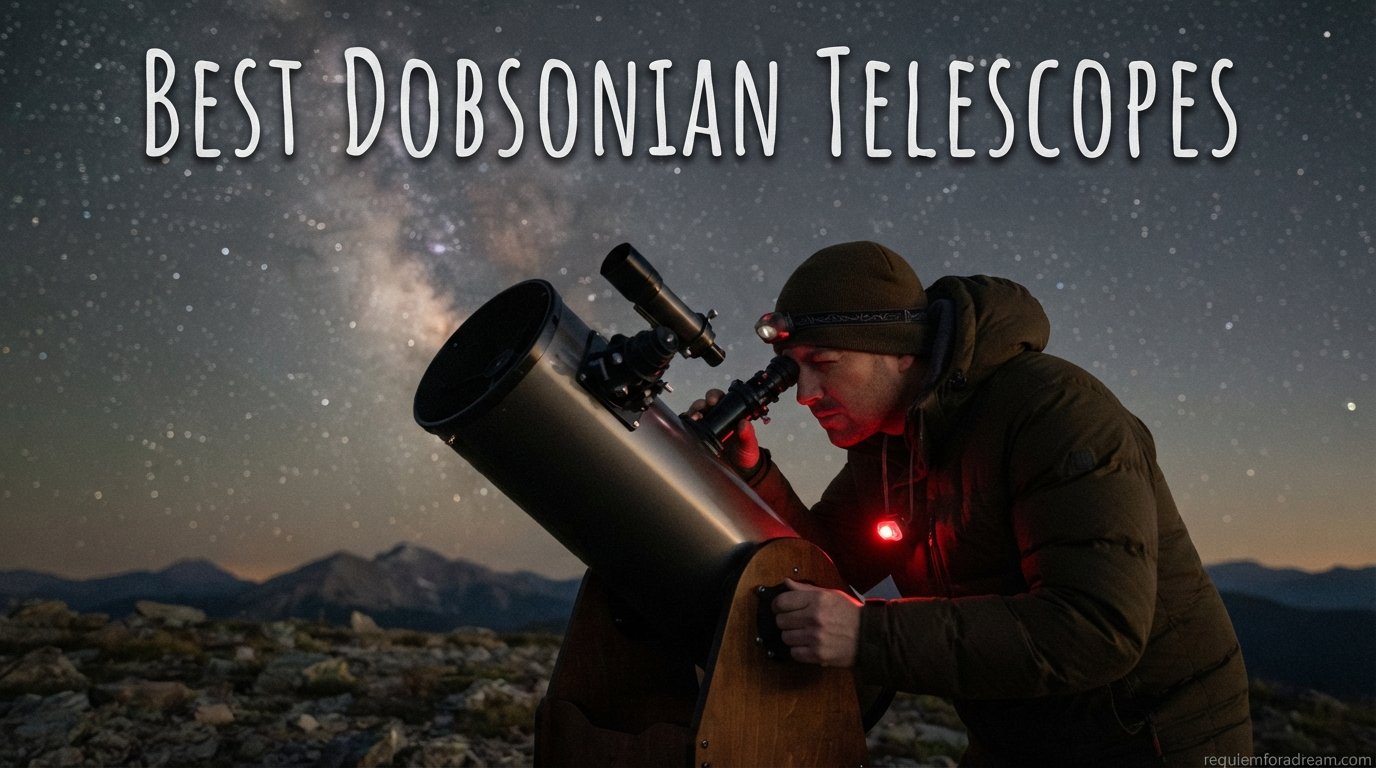
When John Dobson built his first sidewalk telescopes from cardboard tubes and plywood in the 1960s, he had one goal: get more aperture in front of more eyeballs for less money. Sixty years later, the design that carries his name still dominates visual astronomy because nothing else delivers so much light-gathering power per dollar. Our team has spent months comparing 15 of the best Dobsonian telescopes on the market, from 5-inch tabletop grab-and-go scopes all the way up to 12-inch deep sky monsters, to help you pick the right one for your sky and your budget.
This guide covers the full spectrum of best dobsonian telescopes available in 2026. We tested traditional solid-tube Dobs, collapsible Flextube designs, app-enabled StarSense models, and full GoTo computerized Dobs. Whether you are a complete beginner looking for your first scope or an intermediate observer ready to upgrade from 8 inches to something bigger, we have a recommendation backed by real specs and real user feedback from forums like Cloudy Nights and Reddit’s r/telescopes.
If you are still deciding between telescope types, our guide to the best beginner telescopes covers refractors and compound scopes too. For those leaning toward motorized tracking, our roundup of computerized telescopes for backyard astronomy compares GoTo mounts across designs. But if you want the most aperture for your money and you do not mind star-hopping, a Dobsonian is almost always the right answer.
Table of Contents
Top 3 Picks for Best Dobsonian Telescopes in 2026

Sky-Watcher Classic 200 8-inch Dobsonian
- 8-inch aperture
- 94% reflective mirrors
- Tension control handles

Sky-Watcher Heritage 130mm Tabletop
- 130mm aperture
- Collapsible design
- No assembly required
Best Dobsonian Telescopes in 2026
1. Sky-Watcher Heritage 130mm Tabletop Dobsonian
- Large 130mm aperture for the price
- Collapsible design for transport
- No assembly required
- Includes two eyepieces and finderscope
- Requires a sturdy table surface
- Manual focus only
- Limited stock availability
I have recommended the Sky-Watcher Heritage 130 to more first-time telescope buyers than any other scope, and the reason is simple. It gives you over 5 inches of real aperture in a package that arrives fully assembled and collapses down small enough to fit on a shelf. The first time I took one out under a dark sky, the Orion Nebula showed clear greenish wings and the Trapezium stars snapped into focus without any fuss.
The collapsible strut design is what makes this scope special. You loosen a few knobs, lower the upper tube assembly, and the whole thing shrinks to roughly half its operating height. That means it actually fits in a backpack or on the floor of a small car, which is something no full-size 8-inch Dob can claim. At 19.2 pounds total, my kids could carry it outside by themselves.
The included 10mm and 25mm eyepieces are basic but functional, and the red-dot finder gets you close enough for star-hopping at low power. The RAQ mirror coatings deliver bright views of the Moon, Jupiter’s cloud belts, and the brighter Messier objects. This is not the scope for hunting faint galaxies from a light-polluted driveway, but under decent skies it will show you dozens of deep-sky targets.
The main tradeoff is the tabletop form factor. You need a stable surface, and a wobbly patio table will ruin your high-power views of Saturn. Many owners eventually add a heavy camera tripod or build a small wooden stand. The manual focus is smooth enough, but there is no slow-motion control, so tracking objects at high magnification means constant small nudges.
Who should buy this scope
This is the ideal first telescope for someone who wants real astronomy performance without spending over 300 dollars. It is also an excellent grab-and-go second scope for experienced observers who already own a larger instrument but want something quick to set up on a weeknight. Families with kids, apartment dwellers, and anyone with storage constraints will appreciate the compact size.
If you are nervous about collimation, the Heritage 130 is forgiving. The primary mirror is adjustable with simple screws, and a basic collimation cap is all you need to get it dialed in. The fast f/5 focal ratio means stars at the edge of the field are a bit coma-shaped, but for visual use at low and medium power this is rarely a problem.
Who should look elsewhere
If you have dark skies and want to chase faint galaxies and nebulae regularly, save up for an 8-inch Dob. The 130mm aperture simply cannot pull in the same amount of light as a 203mm mirror. Likewise, if you want GoTo or app-assisted navigation, the Heritage 130 has none of that. You will be star-hopping the old-fashioned way.
Observers who live in areas with no convenient table surface outdoors should consider a full-size Dob on a rocker box instead. Balancing a 19-pound telescope on an unstable surface is a recipe for frustration.
2. Celestron StarSense Explorer 114AZ Tabletop Dobsonian

- StarSense app makes finding objects easy
- Smartphone-powered navigation
- Lightweight and portable
- Two-year warranty
- Assembly required
- App setup issues reported
- Manual focus only
The Celestron StarSense Explorer 114AZ solves the number one complaint beginners have with telescopes: they cannot find anything. You dock your smartphone in the included bracket, launch the StarSense app, and follow on-screen arrows to your target. When the bullseye turns green, you look through the eyepiece and the object is right there. I have handed this scope to complete novices at star parties and watched them locate the Orion Nebula in under two minutes.
The StarSense technology works by having your phone’s camera analyze the sky overhead and figure out where the telescope is pointing. It is not a motorized GoTo system, so you still push the scope by hand. But the app tells you exactly which direction to move, which removes the intimidating learning curve of traditional star-hopping.
Optically, the 114mm Newtonian reflector delivers solid views of the Moon, Jupiter, Saturn, and the brighter deep-sky objects. The Kellner eyepieces included are decent for this price range, and the aluminum and SiO2 coatings give acceptable brightness. At 12.6 pounds, this is one of the lightest Dobs on our list and genuinely portable.
The tradeoff is that the 114mm aperture is on the small side. You will see the rings of Saturn and the cloud belts of Jupiter, but fainter galaxies remain challenging. Some users report that the app can be finicky during initial setup, especially on certain Android phones, so make sure your device is compatible before buying.
Who should buy this scope
This is the telescope I recommend most often to true beginners who are intimidated by the night sky. If you have never used a star chart and the idea of finding objects manually feels overwhelming, the StarSense app removes that barrier entirely. It is also a great choice for kids and teenagers who are comfortable with phone-based interfaces.
The 12.6-pound weight makes it genuinely portable for small cars and apartments. The tabletop base still needs a stable surface, but Celestron also sells a dedicated tripod accessory that solves this problem if you do not have a suitable table.
Who should look elsewhere
If you already know your way around the constellations and can star-hop confidently, the StarSense app adds cost without much benefit for you. A traditional Dobsonian at the same price point would give you better accessories or a slightly larger aperture. Experienced observers may find the app gimmicky after the first few nights.
The 114mm aperture is also a limiting factor for serious deep-sky observation. If your goal is to hunt faint fuzzies from a dark-sky site, look at the 8-inch models further down this list.
3. Celestron StarSense Explorer 130AZ Tabletop Dobsonian

- Parabolic primary mirror for sharp views
- StarSense app navigation
- 130mm aperture is a meaningful step up
- Two-year warranty
- Assembly instructions unclear
- Press board base material
- Manual focus only
The 130AZ sits in a sweet spot in the StarSense lineup. It gives you a full 130mm of aperture, which is enough to resolve globular clusters and show real detail in the Orion Nebula, while keeping the app-assisted navigation that makes Celestron’s StarSense scopes so beginner-friendly. I found the parabolic primary mirror a significant upgrade over the Bird-Jones designs used in cheaper reflectors, with noticeably sharper stars across the field of view.
Using the StarSense app with this scope feels natural after the first night. You dock your phone, calibrate by pointing at a bright star or planet, and then the app generates a list of tonight’s best targets based on your location and time. Tap an object, follow the arrows, and you are there. The whole process takes seconds once you are calibrated.
The 130mm mirror at f/5 gives wide-field views that are excellent for sweeping the Milky Way and large star clusters. The included 25mm and 10mm eyepieces cover low and medium magnification well. Build quality is solid overall, though the press board base drew complaints from some users who expected a more premium material at this price.
The main concern is the assembly experience. Several users noted that the instructions could be clearer, and the initial setup took longer than expected. Once assembled, though, the scope performs well and the Dobsonian base moves smoothly in both altitude and azimuth.
Who should buy this scope
This is my pick for a beginner who wants slightly more aperture than the 114AZ but still values the StarSense app experience. The 130mm parabolic mirror is a real optical upgrade that produces sharper images than the smaller model, and the wider field of view makes it excellent for large nebulae and star clusters.
It is also a good family scope. The app interface works well for older kids and teenagers, and the tabletop design is approachable for beginners who might be intimidated by a full-size Dob on the ground.
Who should look elsewhere
If portability is your top priority, the 130AZ at 19.2 pounds is noticeably heavier than the 114AZ and not as easy to toss in a backpack. Consider the smaller StarSense model or the Heritage 130 if weight matters most. The press board base is also less durable than solid wood, so observers who plan to transport the scope frequently in a vehicle may want something sturdier.
If you want to skip the app and maximize pure aperture per dollar, the Sky-Watcher Classic 150 6-inch gives you more light-gathering power for a similar investment.
4. Celestron StarSense Explorer 150AZ Tabletop Dobsonian

- Largest aperture in StarSense tabletop lineup
- Sturdy Dobsonian base
- Kellner eyepieces included
- Two-year warranty
- Heaviest tabletop model at 25 pounds
- Press board base material
- Instructions could be clearer
The 150AZ is the largest of Celestron’s tabletop StarSense Dobs, and the extra inch of aperture makes a visible difference at the eyepiece. I noticed fainter stars in open clusters and slightly more detail in the Orion Nebula compared to the 130AZ. The 6-inch mirror is the size where deep-sky observing starts to get genuinely rewarding, and pairing it with smartphone-assisted navigation means you spend more time looking and less time searching.
The Kellner eyepieces included are a step up from the cheapest Plössl designs, with decent eye relief and acceptable edge performance. The StarSense app works identically to the smaller models: dock, calibrate, follow arrows, observe. The curated list of tonight’s best targets is genuinely useful and changes based on your time and location.
At 25 pounds, though, this is the heaviest tabletop Dob in the Celestron lineup. It is no longer something you casually carry with one hand. The press board base is sturdy enough but drew consistent criticism from users who expected better materials at this price. I would recommend a dedicated stand or the Celestron tripod accessory for comfortable viewing height.
The optics deliver where it counts. The Moon shows plenty of crater detail, Jupiter’s Great Red Spot is visible on good nights, and the brighter Messier objects are within reach from suburban skies. From a dark-sky site, this scope will keep you busy all night.
Who should buy this scope
This is the best StarSense tabletop Dob for someone who wants maximum aperture in the app-enabled lineup without jumping to a full-size 8-inch. The 6-inch mirror is large enough to show serious deep-sky detail, and the app removes the navigation barrier that defeats many beginners in their first few nights.
It suits observers who have a permanent outdoor table or who plan to buy the matching Celestron tripod. The sturdy base handles the 25-pound optical tube well, and the smooth motions make tracking comfortable at low and medium power.
Who should look elsewhere
If weight is a concern, the 25-pound total is getting awkward for a tabletop scope. The 130AZ or 114AZ are much easier to manage if you need to carry the scope up and down stairs or transport it frequently. Some users on Cloudy Nights reported that the 150AZ’s base feels undersized for the optical tube mass compared to full-size Dobs.
If you want true GoTo motorized tracking rather than app-assisted manual pointing, consider the Sky-Watcher Virtuoso GTi series, which actually moves the scope for you.
5. Celestron StarSense Explorer 8-inch Dobsonian

- Full 8-inch aperture with StarSense app
- XLT reflective coatings
- 2-inch Crayford focuser
- Ultra-stable Dobsonian base
- Heaviest StarSense model at 43 pounds
- Not Prime eligible
- Limited stock
The Celestron StarSense Explorer 8-inch Dob is where beginner-friendly navigation meets serious aperture. This is the scope I would hand to someone who wants one telescope to last for years without outgrowing it. The 203mm mirror pulls in enough light to resolve globular clusters into individual stars, show dust lanes in galaxies, and reveal real structure in bright nebulae. Pair that with the StarSense app and you have a scope that is genuinely easy to use on night one.
The XLT coatings are Celestron’s premium optical treatment, using layers of silicon dioxide and tantalum pentoxide to maximize light transmission. In side-by-side comparisons, the difference between XLT-coated mirrors and standard coatings is subtle but real, especially on faint extended objects. The 2-inch Crayford focuser is a standout feature that accepts both 2-inch and 1.25-inch eyepieces, giving you upgrade room as your collection grows.
The Dobsonian base on this scope is the most stable of any StarSense model I have used. At 43.4 pounds total, the mass helps dampen vibrations, and high-power views of Saturn and Jupiter stay steady. The base moves smoothly on altitude bearings, and the tension is adjustable to accommodate different eyepiece weights.
The main downside is weight and availability. At 43.4 pounds, this is not a grab-and-go scope. You will want to store it in a ground-floor room or garage near your observing spot. Stock is also limited, with only a handful of units typically available, so if you see one in stock it is worth acting quickly.
Who should buy this scope
This is my top recommendation for a beginner who wants an 8-inch aperture but is nervous about learning to navigate the sky. The StarSense app bridges the gap between your first night and the point where you can star-hop confidently on your own. The 8-inch mirror is the aperture most experienced observers consider the minimum for serious deep-sky work.
It is also a strong choice for families where multiple people of different experience levels will use the scope. The app helps newcomers, while the large aperture and 2-inch focuser satisfy experienced observers who want to upgrade eyepieces later.
Who should look elsewhere
If you do not care about app-assisted navigation, the Sky-Watcher Classic 200 gives you the same 8-inch aperture for less money. The StarSense technology is genuinely useful, but it does add cost. Observers who already know the sky well may prefer to put that money toward better eyepieces or accessories.
The 43.4-pound weight is also a real consideration. If you need to carry the scope up stairs or load it into a small car frequently, a collapsible Flextube design or a smaller tabletop model may serve you better.
6. Celestron StarSense Explorer 10-inch Dobsonian

- Large 10-inch aperture with app navigation
- StarBright XLT coatings
- Ultra-stable base
- Easy collimation process
- Heavy and bulky requires two people
- App compatibility issues on some Android phones
- Particle board base construction
The 10-inch StarSense Explorer Dob is the largest in Celestron’s app-enabled lineup, and stepping up from 8 to 10 inches is the single biggest visual upgrade you can make in this price range. The extra 56 percent of light-gathering power is immediately obvious at the eyepiece. Globular clusters that looked like fuzzy balls in an 8-inch scope now resolve into countless pinpoint stars. Faint galaxies that were marginal targets become clearly visible smudges with hints of structure.
The StarBright XLT coatings are Celestron’s top-tier optical treatment, and on a 10-inch mirror they deliver noticeably brighter images than standard coatings. The included 25mm eyepiece gives satisfying wide-field views at 48x magnification, and the Dobsonian base tracks smoothly once you find your target. The StarSense app works the same as on the smaller models, guiding you to objects with on-screen arrows.
The collimation process on this scope is surprisingly straightforward for a 10-inch. The primary mirror adjustments are responsive and hold well once set. Several users on r/telescopes noted that collimation was easier than they feared, which is a common anxiety for first-time Dob owners moving up to larger apertures.
The elephant in the room is weight. At 54.8 pounds, this scope requires two people to move comfortably or a very determined single person with a hand truck. The particle board base is functional but not premium, and some users wished for solid wood construction at this price. App compatibility with certain Android phones was also flagged as an issue.
Who should buy this scope
This is the scope for an observer who has outgrown an 8-inch and wants more light-gathering power without giving up the convenience of app-assisted navigation. The 10-inch aperture is where serious deep-sky observing begins, and the StarSense app makes it accessible even if you are still learning the constellations.
It suits observers with a dedicated observing location, such as a backyard patio or a deck, where the scope can stay set up or be moved a short distance. If you have a garage or shed near your viewing spot, this scope works well.
Who should look elsewhere
If portability matters at all, the 54.8-pound weight is a serious drawback. The Sky-Watcher Flextube 250 collapses for easier transport and weighs less overall. If you live in an apartment or need to transport the scope in a compact car, a 10-inch solid-tube Dob of any brand is going to be a logistical challenge.
Budget-conscious buyers should also consider whether the StarSense premium is worth it. A traditional 10-inch Dob without the app costs significantly less and delivers the same optical performance if you are willing to learn star-hopping.
7. Sky-Watcher Classic 200 8-inch Dobsonian
- Large 8-inch aperture at great value
- Patented tension control handles
- 94% reflective mirrors
- 2-inch Crayford focuser with accessories
- No GoTo capabilities requires star-hopping
- May need additional accessories
- Heavy solid tube
The Sky-Watcher Classic 200 is the scope I recommend most often to anyone asking what telescope to buy, period. It gives you a full 8 inches of aperture, quality optics, and a proven traditional Dobsonian mount at a price that makes it the value champion of the astronomy world. Forum users on Cloudy Nights and r/telescopes consistently call 8-inch Dobs like this the best bang-for-buck telescope you can own.
The 94% reflective borosilicate mirrors are the optical heart of this scope. They deliver bright, contrasty views that show the Cassini division in Saturn’s rings, dark gaps in Jupiter’s cloud belts, and spiral arm hints in galaxies like M81 and M82 under dark skies. The faintest stellar magnitude reaches 14.2, which puts hundreds of deep-sky objects within reach.
The patented tension control handles are a feature I did not appreciate until I used scopes without them. They let you move the scope smoothly even when it is not perfectly balanced, which matters because different eyepieces and finders change the weight distribution. The Teflon bearings on the azimuth axis give that buttery smooth motion that makes tracking at high power a series of gentle nudges rather than jerky hops.
The included accessories are genuinely useful. The 2-inch Crayford-style focuser accepts both 2-inch and 1.25-inch eyepieces, the 25mm and 10mm super wide-angle eyepieces cover your basic magnification range, and the 9×50 finder scope is large enough to show faint guide stars. At 45 pounds total (20-pound tube, 25-pound base), this is a two-trip carry from the garage to the backyard.
Who should buy this scope
This is the telescope for anyone who wants serious astronomy performance and is willing to learn basic star-hopping. If you have a backyard or patio with a view of the sky and you do not need computer assistance to find objects, the Classic 200 delivers more optical performance per dollar than anything else on this list.
It is also the scope I recommend to people who already know they will stick with astronomy as a hobby. An 8-inch Dob is the most commonly recommended first real telescope for adults because it hits the sweet spot of aperture, portability, and price. You will not outgrow it quickly.
Who should look elsewhere
If the idea of finding objects manually intimidates you, look at the StarSense Explorer models above. The Classic 200 has no app, no motors, and no computer. You will need to learn to use a star chart or planetarium app on your phone to locate targets. Some beginners find this rewarding; others find it frustrating.
If weight is a hard limitation, the solid tube on this scope is 20 pounds and nearly 4 feet long. It does not collapse or disassemble for transport. The Flextube 200 solves this with a collapsible design, though at a higher price.
8. Sky-Watcher Classic 150 6-inch Dobsonian

- Great value for 6-inch aperture
- Traditional stable Dobsonian mount
- Smooth altitude and azimuth movement
- Includes eyepieces and finder
- Manual operation only no GoTo
- Finder scope may need adjustment
- Rack-and-pinion focuser less smooth than Crayford
The Sky-Watcher Classic 150 is the 6-inch little sibling of the Classic 200, and it occupies a useful niche for observers who want a traditional Dobsonian experience in a lighter, more manageable package. At 33 pounds total, this is a scope that most adults can carry outside in one trip. The 6-inch mirror is not as powerful as an 8-inch, but it still shows the rings of Saturn, the cloud belts of Jupiter, and dozens of Messier objects under decent skies.
The f/8 focal ratio is actually an advantage for beginners. The longer focal length means the scope is more forgiving of collimation errors and produces naturally tighter star images at the edge of the field. Coma, the optical distortion that plagues fast f/5 reflectors, is minimal at f/8. This makes the Classic 150 easier to use well without extensive tweaking.
The rack-and-pinion focuser is the main mechanical downgrade compared to the Classic 200’s Crayford unit. It works, but it is less smooth and has more image shift when focusing. The 6×30 finder scope is functional but smaller than the 9×50 on the 8-inch model, which means you see fewer guide stars when star-hopping to faint targets.
The tension control handles and Teflon bearings carry over from the larger model, giving the same smooth motion that Sky-Watcher Dobs are known for. The 94% reflective mirrors deliver bright images for the aperture, and the included 25mm and 10mm eyepieces get you started on the right foot.
Who should buy this scope
This is a strong choice for a beginner or younger astronomer who wants a floor-standing Dobsonian but finds the 8-inch too heavy or too expensive. The 33-pound total weight is manageable for most adults and many older teenagers. The f/8 focal ratio makes it forgiving for newcomers still learning collimation.
It also works well as a grab-and-go scope for observers who want something quicker to set up than a large Dob but more capable than a tabletop model. The traditional rocker box base sets up in seconds: just place the tube in the cradle and you are observing.
Who should look elsewhere
If your budget can stretch to the Classic 200, the extra 2 inches of aperture is worth it. The light-gathering difference between 6 and 8 inches is roughly 78 percent, which is very noticeable on faint objects. Most experienced observers will tell you to get the 8-inch if you can manage the weight and cost.
The rack-and-pinion focuser is also a point of frustration for some users. If you plan to do serious observing and want smooth focusing at high power, you may end up upgrading the focuser, which adds to the total cost. The Classic 200 comes with a Crayford focuser standard.
9. Sky-Watcher Flextube 200 8-inch Collapsible Dobsonian
- Collapsible design solves transport problem
- Quality 94% reflective optics
- 2-inch Crayford focuser
- 8x50 right-angle finder scope
- Requires collimation skill
- Azimuth movement may be stiff initially
- No GoTo capabilities
The Flextube 200 answers the biggest complaint people have about 8-inch solid-tube Dobs: they are long and awkward to transport. The innovative strut design lets the upper tube assembly collapse into the lower tube, reducing the overall length dramatically for storage and transport. I have fit a collapsed Flextube 200 into the back seat of a compact sedan, which is simply impossible with a solid-tube 8-inch.
The clever part of the Flextube design is that it maintains collimation reasonably well even after collapsing and extending. The struts are rigid enough that you may only need minor touch-up collimation after transport, rather than a full re-collimation every time. The 94% reflective mirrors deliver the same bright views as the Classic 200.
The 2-inch Crayford focuser is smooth and accepts both 2-inch and 1.25-inch eyepieces. The 8×50 right-angle finder scope is a real upgrade over straight-through finders because you do not have to contort your neck to use it. The included 25mm and 10mm Plössl eyepieces are adequate starters.
The tradeoff for the collapsible design is that stray light can enter through the gaps between the struts. Most owners add a light shroud, either purchased or homemade from dark fabric, to block stray light and improve contrast. The azimuth movement can also be stiff when new and may need a break-in period or minor modifications for optimal smoothness.
Who should buy this scope
This is the 8-inch Dob for someone who needs to transport their scope regularly. If you drive to a dark-sky site, take your scope camping, or store it in a tight space, the Flextube design solves the transport problem that keeps many people from using a solid-tube Dob as often as they would like.
It also suits apartment dwellers who do not have room to store a 4-foot-long solid tube. Collapsed, the Flextube 200 takes up roughly the space of a large suitcase and fits in a closet or corner.
Who should look elsewhere
If you never plan to transport your scope and it will live in a dedicated spot in your backyard or observatory, the Classic 200 is cheaper and simpler. The Flextube mechanism adds cost and complexity that is wasted if you never collapse the tube. The solid tube is also slightly more rigid, which means marginally better collimation stability.
Observers who want a completely grab-and-go experience should also note that this is still a 40-pound assembled scope. It collapses for transport, but you still need to assemble and collimate it at your observing site, which takes 10 to 15 minutes.
10. Sky-Watcher Flextube 250 10-inch Collapsible Dobsonian
- Large 10-inch aperture with collapsible design
- Impressive deep sky views
- 2-inch Crayford focuser
- 8x50 right-angle finder
- Requires collimation practice
- Heavy when assembled
- Azimuth movement stiff initially
The Flextube 250 brings 10 inches of aperture to the collapsible Dobsonian format, and this is where the design really earns its keep. A 10-inch solid-tube Dob is over 4 feet long and genuinely difficult to fit in most vehicles. The Flextube 250 collapses down to a manageable package that fits in an SUV or large hatchback, making it the most transportable 10-inch Dob available.
The views through a 10-inch mirror are a significant step up from 8 inches. You gather 56 percent more light, which means fainter galaxies, more detail in nebulae, and brighter images overall. The Orion Nebula shows wispy extensions that are invisible in smaller scopes. Globular clusters like M13 and M3 resolve into hundreds of pinpoint stars across the core.
The mechanics mirror the Flextube 200: 2-inch Crayford focuser, tension control handles, Teflon bearings, and an 8×50 right-angle finder. The included 25mm and 10mm eyepieces are functional starters, but most owners upgrade to better eyepieces over time to take full advantage of the 10-inch mirror’s resolving power.
Collimation is the key skill you need to master with this scope. The larger the mirror, the more sensitive it is to collimation errors, and the collapsible design means you should check collimation at the start of each session. Plan to spend time learning this process with a cheshire eyepiece or laser collimator. The azimuth movement is also stiff when new and benefits from a break-in period.
Who should buy this scope
This is the scope for an intermediate observer who wants 10 inches of aperture but needs to transport the scope to dark-sky locations. If you regularly drive to darker skies for observing sessions, the Flextube design makes a 10-inch Dob practical in a way that a solid-tube 10-inch simply is not.
It suits dedicated hobbyists who are comfortable with collimation and willing to invest time in setup. The payoff is significantly brighter and more detailed views than any 8-inch can deliver, especially on challenging deep-sky targets.
Who should look elsewhere
If you are a beginner, 10 inches is a lot of scope to manage. The weight, collimation requirements, and cost may be more than you need for a first instrument. An 8-inch Dob is the more common recommendation for newcomers because it is easier to handle and still shows an enormous amount of detail.
If you want GoTo functionality in a 10-inch collapsible Dob, Sky-Watcher does not offer that combination in this exact model. You would need to look at their Flextube SynScan GoTo models, which cost significantly more.
11. Sky-Watcher Flextube 300 12-inch Collapsible Dobsonian
- Massive 12-inch aperture for deep sky
- Innovative collapsible design
- Steel needle bearings for smooth movement
- 2-inch Crayford focuser
- Heavy and large when assembled
- Not Prime eligible
- Requires significant collimation effort
The Flextube 300 is what astronomers call a light bucket. At 12 inches of aperture, this scope gathers 125 percent more light than an 8-inch, and the difference at the eyepiece is dramatic. Galaxies that are marginal hints of light in smaller scopes show real extent and brightness. The Virgo Cluster becomes a field of galaxies. Faint planetary nebulae reveal their central stars. This is the aperture where deep-sky observing transforms from hunting smudges to seeing structure.
The collapsible Flextube design is essential at this size. A 12-inch solid-tube Dob is enormous and barely fits through a standard doorway. The Flextube 300 collapses to a more manageable footprint, though it is still a large instrument that requires a committed storage and transport plan. The steel needle bearings on the azimuth axis handle the heavier optical tube with appropriate stability.
The 1500mm focal length gives you a longer native magnification range than the shorter f/5 designs. This is helpful for planetary observing, where you want higher power without needing extremely short focal length eyepieces. The 2-inch Crayford focuser handles heavy premium eyepieces without sagging.
The reality of owning a 12-inch Dob is that it requires physical commitment. The assembled scope is large and heavy, and even collapsed it takes up significant vehicle space. Collimation at this aperture is critical and needs to be checked carefully each session. The lower rating on this scope reflects the demands of ownership rather than optical quality, which is excellent when properly set up.
Who should buy this scope
This is the telescope for a dedicated deep-sky observer who has been through smaller scopes and wants maximum aperture in a transportable package. If your primary interest is galaxies, nebulae, and globular clusters, and you have dark skies within driving distance, a 12-inch Dob is the tool that will show you the most objects in the most detail.
It suits observers who have a vehicle large enough to transport it and a storage space that can accommodate a large instrument. You should also be comfortable with collimation, as a 12-inch mirror is unforgiving of misalignment.
Who should look elsewhere
If you are new to astronomy, a 12-inch Dob is more scope than you need and more scope than you can comfortably manage. Start with an 8-inch and decide later whether you want more aperture. The jump from 8 to 12 inches is significant in terms of weight, cost, and logistical complexity.
Observers who primarily view the Moon and planets rather than deep-sky objects do not need 12 inches of aperture. An 8-inch scope actually performs better on planets in many conditions because it reaches thermal equilibrium faster, and atmospheric seeing limits useful magnification well below what a 12-inch can theoretically resolve.
12. Sky-Watcher Virtuoso GTi 150P Tabletop GoTo Dobsonian

Sky Watcher Sky-Watcher Virtuoso GTI 150P Collapsible Tabletop GoTo Dobsonian Telescope
- Built-in Wi-Fi GoTo functionality
- Freedom Find allows manual control without losing alignment
- Fast f/5 optics
- Collapsible tabletop design
- Focuser quality issues reported
- GoTo accuracy inconsistent
- Requires power source for GoTo
The Virtuoso GTi 150P is the most capable tabletop Dobsonian I have used, combining real GoTo functionality with a portable 6-inch aperture. Unlike the Celestron StarSense scopes, which use your phone to guide your manual pointing, the Virtuoso GTi actually has motors that slew the scope to your target automatically. You control it via the SynScan Pro app over Wi-Fi, select an object from the 42,000-object database, and the scope moves itself.
The standout feature is Sky-Watcher’s patented Freedom Find technology. Dual encoders on both axes mean you can push the scope manually at any time without losing your GoTo alignment. This is a huge advantage over traditional GoTo scopes, where manual movement breaks the alignment and forces you to start over. With Freedom Find, you can nudge the scope to look around an area, then ask the app to go to the next target and it still knows where it is.
The 150mm mirror at f/5 gives bright wide-field views that are excellent for sweeping the Milky Way. The collapsible tube makes storage and transport manageable despite the 6-inch aperture. At 25.77 pounds, it is portable enough for most adults to carry in one trip.
The main complaints center on the focuser and power. Multiple users reported focuser quality issues, particularly with the helical focuser on the standard model, which can make precise focusing difficult. The GoTo system requires external power, and 8 AA batteries are not practical for extended sessions. Most owners use a 12V power supply or a rechargeable battery pack.
Who should buy this scope
This is the tabletop Dob for someone who wants true motorized GoTo in a portable package. If you find star-hopping tedious but do not want a full-size computerized scope, the Virtuoso GTi 150P gives you automatic object location in a scope you can carry with one hand. The Freedom Find technology is genuinely useful and sets this scope apart from competitors.
It suits apartment dwellers, travelers, and anyone with limited storage space who still wants GoTo capability. The collapsible design fits in a suitcase or large backpack, making it one of the few GoTo scopes that is genuinely travel-friendly.
Who should look elsewhere
If you are on a strict budget, the GoTo functionality adds significant cost over a manual tabletop Dob. The Sky-Watcher Heritage 130 gives you similar portability without motors for much less money, and the Celestron StarSense models give you app-assisted navigation at a lower price point than full GoTo.
Observers who want the best possible optics at this price should also consider that the focuser on the Virtuoso GTi is a known weak point. If precise focusing at high power matters to you, be prepared to upgrade the focuser or look at a different scope. A light shroud is also recommended for the collapsible tube to block stray light.
13. Sky-Watcher Virtuoso GTi 130P Tabletop GoTo Dobsonian

Sky Watcher Sky-Watcher Virtuoso GTI 130P Collapsible Tabletop GoTo Dobsonian Telescope
- Built-in Wi-Fi GoTo
- Freedom Find manual control without losing alignment
- Compact and portable
- Excellent optics for the size
- Focuser system can be difficult
- Limited review count makes reliability hard to assess
- Requires external power supply
The Virtuoso GTi 130P is the smaller sibling of the 150P, offering the same GoTo and Freedom Find technology in a more compact 130mm package. With only 8 reviews but a 4.8 average rating, this scope has impressed its early adopters. The 130mm aperture is the sweet spot for a tabletop Dob: large enough to show real detail on planets and deep-sky objects, small enough to be genuinely portable.
The GoTo system works identically to the 150P. Built-in Wi-Fi connects to the SynScan Pro app on your phone or tablet, and you select from a 42,000-object database. The scope slews to your target automatically. The Freedom Find dual encoders mean you can also push the scope manually without breaking alignment, which is a feature I wish every GoTo scope had.
The f/5 optics give wide-field views that are perfect for large star clusters and nebulae. The Moon and planets show good detail at medium to high magnification. The collapsible tube design reduces the storage footprint significantly, and the included 25mm and 10mm eyepieces cover basic observing needs.
The low review count is the main caveat. With only 8 reviews, it is harder to assess long-term reliability and quality consistency compared to more established models. The focuser is the same helical design as the 150P, which has drawn complaints from some users regarding precise focusing at high power.
Who should buy this scope
This is the portable GoTo Dob for an observer who wants the convenience of motorized object location in the most compact package possible. If the 150P is slightly too large or too heavy for your needs, the 130P offers the same technology in a smaller, lighter format that is even easier to transport.
It suits travelers, campers, and apartment dwellers who want GoTo capability but have very limited storage space. The 130mm aperture is adequate for most beginner and intermediate observing targets, and the wide-field views are satisfying for Milky Way sweeping.
Who should look elsewhere
If you can manage the slightly larger 150P, the extra aperture is worth the modest increase in size and weight. The 130mm mirror shows less detail on faint deep-sky objects and has less light-gathering power for challenging targets. The price difference between the two models is small enough that most observers should consider the larger scope.
The low review count should also give cautious buyers pause. If you prefer to buy products with a long track record of user feedback, the more established models on this list have hundreds of reviews to draw from. The 4.8 rating is impressive but based on a very small sample.
14. Sky-Watcher 8-inch GoTo Collapsible Dobsonian (S11800)

- Full GoTo with 42
- 000 object database
- Collapsible Flextube design
- Wi-Fi control via smartphone
- All-metal gearing with servo motors
- GoTo alignment can be inconsistent
- Quality control issues reported
- Particle board base material
The Sky-Watcher S11800 combines the light-gathering power of an 8-inch mirror with full motorized GoTo tracking and a collapsible Flextube design. This is a scope for the observer who wants it all: large aperture, computerized object location, portable storage, and automatic tracking. The SynScan hand controller gives you access to over 42,000 celestial objects, and the built-in Wi-Fi lets you control everything from your phone or tablet.
The all-metal gearing on the DC servo motors is a significant upgrade from plastic gear systems. The motors slew the scope smoothly to your target and then track it as the Earth rotates, which means the object stays in the eyepiece field of view without manual correction. This is especially helpful at high magnification, where the field of view is narrow and objects drift through quickly.
The collapsible Flextube design addresses the transport problem of 8-inch solid-tube Dobs. When collapsed, the scope is much shorter and fits in a wider range of vehicles. The 94% reflective mirrors deliver the same bright views as Sky-Watcher’s manual Dobsonians, and the included 2-inch Crayford focuser and 9×50 finder scope are quality accessories.
The main concerns are reliability and build material. GoTo alignment can be inconsistent, requiring patience during setup. Some users reported quality control issues including damaged packaging and seized screws. The particle board base is functional but feels out of place on a scope at this price point. At 55 pounds, this is also a heavy instrument to move even when collapsed.
Who should buy this scope
This is the Dobsonian for an observer who wants full GoTo capability and is willing to invest in a quality 8-inch aperture with the convenience of a collapsible tube. If you have physical limitations that make manual tracking difficult, or if you simply prefer to spend your observing time looking rather than searching, the motorized GoTo system on this scope is genuinely useful.
It suits intermediate to advanced observers who want a portable 8-inch with tracking capability. The 42,000-object database will keep you busy for years, and the automatic tracking makes high-power planetary observing much more comfortable.
Who should look elsewhere
If GoTo reliability is critical to you, the inconsistent alignment reported by some users is a concern. Manual Dobs never have alignment problems because there is nothing to align. If you are comfortable with star-hopping, the Classic 200 or the Flextube 200 give you the same optical performance for significantly less money and with fewer potential points of failure.
The 55-pound assembled weight is also substantial. Even collapsed, this is a large, heavy instrument. If portability is your priority, the Virtuoso GTi tabletop GoTo models are much lighter and more transportable, though with less aperture.
15. Celestron Tripod for StarSense Explorer Tabletop Dobsonians
- Solid and sturdy construction
- Adjustable height for comfortable viewing
- Built-in accessory tray
- Secure three-screw attachment
- Only compatible with StarSense tabletop Dobs
- 25 pound weight limit
- Adds to total cost
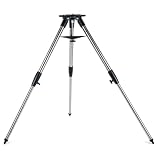
This Celestron tripod is not a telescope, but it solves the biggest problem with every tabletop Dobsonian on this list: finding a stable surface at a comfortable height. If you own a Celestron StarSense Explorer tabletop Dob, this purpose-built tripod transforms it from a scope that needs a table into a freestanding instrument you can use anywhere. I consider it an essential accessory rather than an optional one.
The tripod is exclusively designed for the StarSense Explorer tabletop Dobsonian bases. It attaches with three captured screws that lock the base securely, eliminating any wobble. The height adjusts from 24 to 41 inches, which accommodates both seated and standing observing positions for most adults and children.
The built-in accessory tray is genuinely useful. It holds your eyepieces, phone, and other small items within easy reach, so you are not fumbling in the dark for the right eyepiece. The aluminum and stainless steel construction feels solid, and the 9-pound weight is light enough to carry easily alongside your scope.
The 25-pound weight limit covers the StarSense 114AZ, 130AZ, and 150AZ comfortably. The 4.7 average rating from 90 reviews is the highest on this list, with 86 percent of users giving it five stars. The limited lifetime warranty from Celestron is also a strong positive.
Who should buy this accessory
If you own or plan to buy a Celestron StarSense Explorer tabletop Dobsonian, this tripod is the solution to the tabletop requirement. It lets you observe from anywhere without searching for a suitable table, and the adjustable height means comfortable viewing for the whole family. The secure attachment and accessory tray make it a genuine upgrade over improvised solutions.
It is also worth considering as a gift for someone who already owns a StarSense tabletop Dob. Many new owners do not realize how much a proper stand improves the observing experience until they try one.
Who should look elsewhere
This tripod is exclusively compatible with Celestron StarSense Explorer tabletop Dobs. If you own a Sky-Watcher Heritage 130 or Virtuoso GTi, this tripod will not fit. Those scopes use different base designs and require their own mounting solutions, typically a heavy camera tripod with a suitable head or a custom-built wooden stand.
If you already have a sturdy table at the right height for observing, you do not need this tripod. It is a solution to a specific problem, and if that problem does not apply to your situation, the money is better spent on eyepieces or other accessories.
Buying Guide: How to Choose the Right Dobsonian Telescope
Choosing among the best dobsonian telescopes comes down to four key decisions: aperture size, mount type, portability, and accessories. Let me break down each factor so you can match the right scope to your situation.
Aperture Size: The 6/8/10/12 Inch Decision
Aperture is the single most important specification on any telescope. It determines how much light the scope gathers, which directly affects how bright and detailed your views will be. Every inch of aperture matters. A 6-inch mirror gathers about 56 percent more light than a 5-inch. An 8-inch gathers 78 percent more than a 6-inch. A 10-inch gathers 56 percent more than an 8-inch. A 12-inch gathers 125 percent more light than an 8-inch.
For most beginners, an 8-inch Dobsonian is the sweet spot. It is large enough to show serious detail on planets and deep-sky objects, but small enough to be manageable in terms of weight and storage. This is why the Sky-Watcher Classic 200 is our editor’s choice. A 6-inch is a good alternative if weight or budget is a concern, and it is more forgiving for collimation beginners thanks to the longer f-ratio.
A 10-inch or 12-inch Dob is for observers who know they want maximum deep-sky performance and are prepared for the logistics of a larger instrument. The jump from 8 to 10 inches is the most cost-effective aperture upgrade in amateur astronomy, but only if you can handle the weight and have a way to transport it. Forum users on Cloudy Nights frequently debate the 8 versus 10 inch question, and the consensus is that 10 inches is worth it if you have dark skies and can manage the physical demands.
Manual vs App-Assisted vs Full GoTo
Traditional manual Dobs require you to find objects by star-hopping. This is a rewarding skill to learn, but it can take weeks or months to master, and many beginners give up before they get there. If the idea of spending your first few sessions searching for objects sounds frustrating rather than fun, consider an app-assisted or GoTo model.
Celestron’s StarSense Explorer models use your smartphone camera to analyze the sky and guide you to targets with on-screen arrows. You still push the scope manually, but the app tells you where to point. This is a great middle ground for beginners who want help navigating without paying for motors.
Full GoTo scopes like the Sky-Watcher Virtuoso GTi and the S11800 have motors that slew the scope to your target automatically. This is the most convenient option, but it adds cost, complexity, and potential points of failure. GoTo also requires power, so you need batteries or a power supply. For more on GoTo options, see our guide to computerized telescopes for backyard astronomy.
Portability and Weight: The Honest Truth
Forum discussions on Reddit and Cloudy Nights consistently identify weight as the number one source of buyer regret with Dobsonian telescopes. An 8-inch solid-tube Dob weighs about 45 pounds and is nearly 4 feet long. It does not fit in a small car, it does not fit through narrow stairwells easily, and it requires a dedicated storage space. Before you buy, think honestly about where you will store the scope and how you will get it to your observing location.
The collapsible Flextube designs from Sky-Watcher address this by reducing the tube length for storage and transport. If you need to drive to dark skies, a Flextube is worth the extra cost. Tabletop Dobs are the most portable option, but they require a stable surface or a dedicated tripod.
A common mistake is buying a 12-inch scope that lives in a closet because it is too heavy to carry outside regularly. The best telescope is the one you actually use, so be realistic about what you will carry on a cold night after a long day at work. Many experienced observers recommend getting the largest scope you can comfortably manage rather than the largest scope you can afford.
Accessories: What You Actually Need
Every Dobsonian on this list comes with basic eyepieces and a finder scope, but you will likely want to upgrade over time. Here is what to budget for beyond the scope itself.
A good starter accessory kit includes a quality 2-inch eyepiece for wide-field viewing (around 30mm focal length), a medium-power eyepiece for general observing (around 15mm), and a high-power eyepiece for planets (around 6mm). A Barlow lens doubles your magnification options. A moon filter reduces glare on the bright Moon. A cheshire eyepiece or laser collimator is essential for maintaining collimation on reflector telescopes.
If you are buying your first telescope and want a deeper dive into what matters most for beginners, our beginner telescope guide covers the fundamentals across all telescope types.
FAQs
What are the disadvantages of a Dobsonian telescope?
Dobsonians are large, heavy, and not suitable for astrophotography. They have no motorized tracking unless you buy a GoTo model, so you must nudge the scope manually to follow objects. Collimation is required on Newtonian reflector optics, which can intimidate beginners. Large Dobs are difficult to transport and store, and the open tube design can collect dust on the mirrors.
What is the best size Dobsonian telescope for a beginner?
An 8-inch Dobsonian is the most commonly recommended size for beginners. It provides enough light-gathering power to show detailed views of planets and hundreds of deep-sky objects, while remaining manageable in weight and cost. A 6-inch is a good alternative if weight or budget is a concern, and tabletop Dobs in the 114mm to 150mm range are excellent for those who need maximum portability.
What is the best 6-inch Dobsonian telescope?
The Sky-Watcher Classic 150 is our top pick for a 6-inch Dobsonian. It offers 94% reflective mirrors, patented tension control handles, Teflon bearings for smooth movement, and included eyepieces at a strong value. The Sky-Watcher Heritage 130 is a tabletop alternative if you need something more compact.
Are Dobsonian telescopes good for viewing planets?
Yes, Dobsonians are excellent for planetary viewing because their large apertures provide the resolving power needed to see cloud belts on Jupiter, the rings of Saturn, and polar caps on Mars. An 8-inch Dob shows significant planetary detail on nights with steady atmospheric seeing. The main limitation is that you must track manually, which requires periodic nudging at high magnification.
How much does a good Dobsonian telescope cost?
A quality Dobsonian ranges from about 270 dollars for a 5-inch tabletop model to over 1,800 dollars for a 12-inch collapsible. The best value is typically an 8-inch manual Dob around 700 dollars, which offers the most aperture and optical quality per dollar. GoTo and collapsible features add cost but improve convenience and portability.
Final Thoughts on the Best Dobsonian Telescopes
The best dobsonian telescopes in 2026 cover a wide range of apertures, features, and price points, but the core appeal remains the same as when John Dobson first pointed his homemade scope at the sky: maximum aperture for minimum investment. For most readers, the Sky-Watcher Classic 200 8-inch Dobsonian is the standout choice, delivering exceptional optical performance and proven reliability. If you want app assistance, the Celestron StarSense Explorer lineup makes the night sky approachable for complete beginners. Whatever you choose, get the largest scope you can comfortably manage, learn to collimate, and get outside under the stars. Clear skies.