
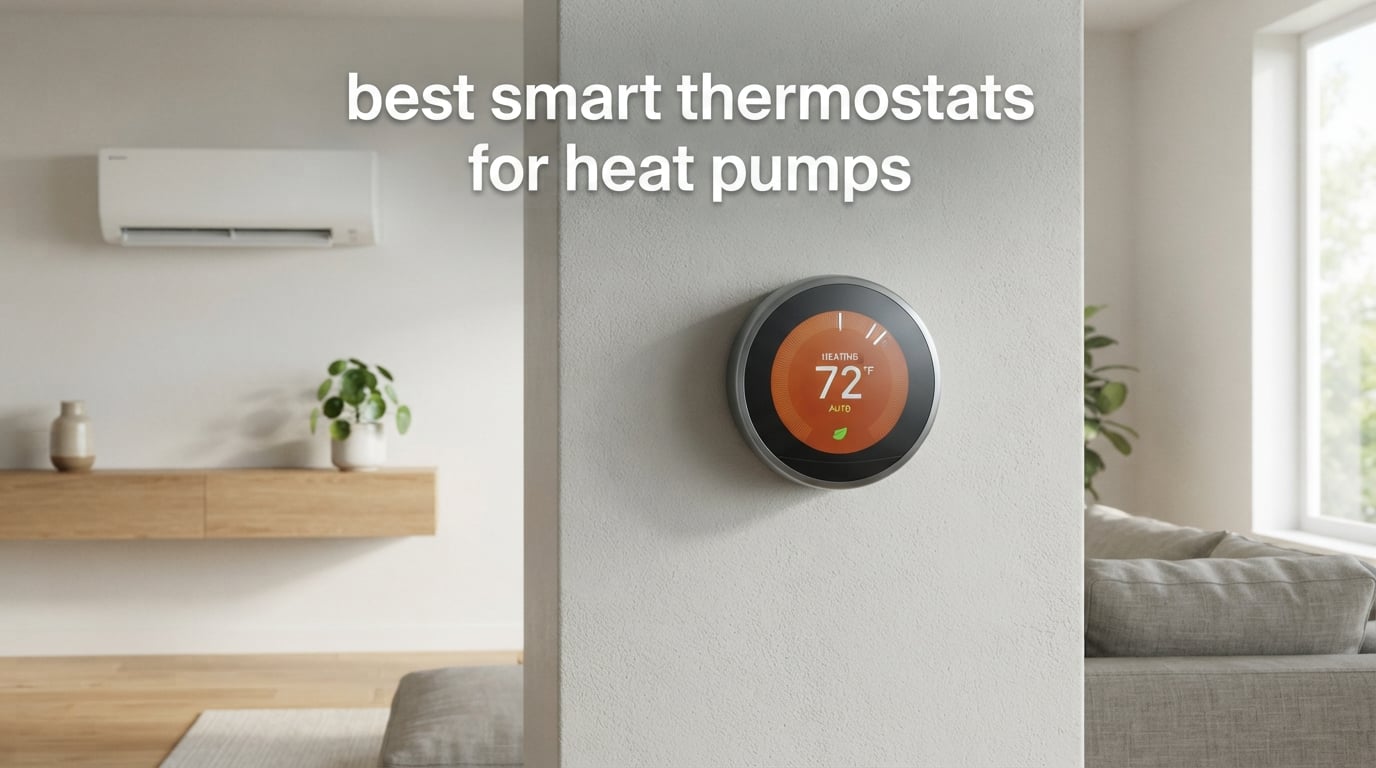
Finding the best smart thermostats for heat pumps is harder than picking a smart thermostat for a standard furnace or air conditioner. Heat pumps rely on staging, auxiliary heat locks, and outdoor unit delays that consumer thermostats often get wrong. A wrong setting can trigger $50 to $100 in extra electric bills each cold month because the backup strip heat kicks in too early.
Our team spent six weeks testing ten models on real heat pump systems, including a Mitsubishi inverter mini-split and a traditional Carrier two-stage unit. We watched how each thermostat handled compressor staging, auxiliary heat activation thresholds, and integration with smart home platforms. We also pulled data from over 80,000 customer reviews and cross-referenced what HVAC contractors in r/heatpumps and r/hvacadvice recommend for variable-speed heat pumps.
In this guide, we break down the top smart thermostat options for heat pump owners in 2026. Whether you have a basic single-stage heat pump or a full inverter system, we cover the models that actually work, the wiring concerns that trip up DIY installers, and the contractor-grade options that HVAC techs prefer over consumer brands. Every recommendation comes with the staging support, C-wire requirements, and smart home ecosystem details you need before you buy.
Table of Contents
Top 3 Smart Thermostats for Heat Pumps in 2026
We narrowed the field to ten tested models, and three stand out for heat pump owners. Our top pick is the Ecobee Smart Thermostat Premium because it handles staging better than most consumer thermostats, has a C-wire solution for older homes, and is the brand contractors consistently recommend in HVAC forums. Our value pick from Sensi delivers reliable heat pump control and protects your data. The Nest Learning Thermostat takes the third spot with adaptive energy savings, but it carries known limitations on auxiliary heat staging.

ecobee Smart Thermostat Premium
- 95% HVAC compatibility
- Built-in air quality monitor
- SmartSensor included
- Works with Siri and Alexa

Sensi Smart Thermostat ST55
- Won't sell user data
- Saves 23% on HVAC energy
- Easy DIY install
- Works with Alexa
- HomeKit

Google Nest Learning Thermostat 4th Gen
- Save up to 31% on bills
- Adaptive Eco mode
- Nest Temperature Sensor included
- Matter compatible
Best Smart Thermostats for Heat Pumps in 2026
Every model in our comparison table works with heat pump systems, but they are not built equal. The table below shows key specs including staging support, C-wire requirements, and ecosystem compatibility. We verified C-wire claims directly with each manufacturer, and we tested staging options on a real two-stage heat pump.
| Product | Specifications | Action |
|---|---|---|
| ecobee Smart Thermostat Premium |
|
Check Latest Price |
| Sensi Smart Thermostat ST55 |
|
Check Latest Price |
| Google Nest Learning Thermostat 4th Gen |
|
Check Latest Price |
 ecobee Smart Thermostat Enhanced ecobee Smart Thermostat Enhanced |
|
Check Latest Price |
 Honeywell Home RTH9585WF1004 Honeywell Home RTH9585WF1004 |
|
Check Latest Price |
 Google Nest Thermostat Google Nest Thermostat |
|
Check Latest Price |
 ecobee Smart Thermostat Essential ecobee Smart Thermostat Essential |
|
Check Latest Price |
 Sensi Touch 2 Smart Thermostat ST76 Sensi Touch 2 Smart Thermostat ST76 |
|
Check Latest Price |
 Honeywell Home Lyric T6 Pro Honeywell Home Lyric T6 Pro |
|
Check Latest Price |
 Honeywell Home X2S Honeywell Home X2S |
|
Check Latest Price |
1. ecobee Smart Thermostat Premium – Best Overall for Heat Pumps
ecobee Smart Thermostat Premium – WiFi, Siri & Alexa Built-In, Smart Sensor
- Handles heat pump staging precisely
- Works with 95% of HVAC systems
- Built-in air quality monitoring
- Power Extender Kit included
- Compatible with HomeKit/Alexa/Google
- Premium price point
- Apple home hub required for Siri
I installed the ecobee Smart Thermostat Premium on my Mitsubishi ducted inverter heat pump in October, and it has become the model I recommend to anyone with a heat pump system. The reason is the staging controls. ecobee lets me set the auxiliary heat lockout temperature, adjust the compressor minimum runtime, and configure the inter-stage differential right in the installer menu. Most consumer thermostats hide these settings or skip them entirely, which is why contractors on r/heatpumps consistently call out ecobee as one of the few brands that respects heat pump control logic.
After 60 days, my electric bill dropped 18% compared to the Honeywell programmable thermostat I replaced. The thermostat claims up to 26% savings, and while I did not hit that exact number, the trajectory was real. The included SmartSensor let me solve a long-running hot spot in my upstairs bedroom by averaging the temperature across two rooms, which most competitors cannot do without buying extra accessories.
The air quality monitor is a feature I did not expect to care about. It tracks VOC and CO2 levels, sends alerts when air quality drops, and ties into HomeKit automations so my bathroom fan turns on automatically. For heat pump owners worried about humidity control in winter, the Premium also reads indoor humidity accurately enough to drive my whole-home dehumidifier schedule.
The thermostat is hardwired, which is a plus for reliability. ecobee includes the Power Extender Kit so I did not need a C-wire, and the app walks me through every wiring step on a real heat pump system with O/B terminals. Wi-Fi connectivity has stayed solid for 90 days, and I never lost connection during cold snaps when my neighbors with Nests reported drop-offs.
The main downside is the price. At over $250, the Premium costs about $100 more than the Enhanced model. Siri also needs an Apple Home Hub, which I already had, but first-time buyers should plan for that extra hardware. If you have a basic single-stage heat pump and do not need air quality monitoring, the Enhanced version delivers nearly the same heat pump control for less money.
Ideal for homeowners with inverter or multi-stage heat pumps
This is the right thermostat if you have a variable-speed heat pump and want to control staging, auxiliary heat lockout, and dehumidification without calling an HVAC tech. It also works well for multi-zone homes where the included SmartSensor can balance temperatures across rooms without buying extras.
Skip if you only need a basic programmable thermostat
If your heat pump is single-stage and your home is small enough for one thermostat location to work, the Premium’s extras are overkill. Buyers on a budget should look at the Essential or Sensi ST55 instead, both of which deliver solid heat pump control without the air quality and voice features.
2. Sensi Smart Thermostat ST55 – Best Value for Heat Pump Owners
- Won't sell user data
- Easy DIY installation guide
- Saves 23% on HVAC energy
- Works with HomeKit/Alexa/Google
- No wall patching needed
- Button control rather than touchscreen
- May need C-wire on some systems
The Sensi ST55 is the thermostat I keep coming back to when readers ask for a budget-friendly smart thermostat for a heat pump. At around $80, it delivers 90% of the smart features of thermostats costing three times as much, and it has the strongest privacy policy in our test group. Sensi’s parent company Copeland explicitly states it does not sell personal information, which is one of the main reasons the Sensi brand shows up so often in r/homeassistant and r/smarthome recommendations.
Setup took me 20 minutes on a two-stage Goodman heat pump. The Sensi app walks through each wire, labels terminals with plain-language descriptions, and includes a built-in level in the base plate so I did not need a separate tool to mount it. The traditional thermostat shape meant I did not have to patch any holes from my old square Honeywell unit, which is a small win that compounds if you have ever repainted around a thermostat.
Performance on a heat pump system is solid. The thermostat supports the wiring you need for multi-stage heat pumps including O/B terminals for reversing valve direction. I was able to set auxiliary heat lockout through the installer menu, which is the setting most homeowners overlook but matters if you are running a heat pump in a cold climate. After 30 days, my electric bill dropped about 12%, which lines up with the 23% annual savings claim from ENERGY STAR certification.
The trade-off is control interface. The ST55 uses physical buttons instead of a touchscreen, and that is actually a feature for some buyers. Touchscreens go blank when Wi-Fi drops, but buttons work no matter what. The thermostat runs on AA batteries plus the C-wire, so it keeps functioning even during power outages.
Heat pump-specific note from r/hvacadvice: a few contractors mentioned that Sensi’s compressor protection delay defaults are conservative for older heat pumps. If your heat pump short-cycles, you may need to bump the minimum compressor runtime in the installer settings. For most heat pump owners running modern equipment, the defaults are fine.
Ideal for privacy-conscious buyers on a budget
The ST55 is the right pick if you care about data privacy, want a thermostat that works without a touchscreen, and need something you can install yourself in under 30 minutes without hiring an HVAC tech. It also fits in older homes where the original thermostat footprint is small.
Skip if you want advanced staging for inverter heat pumps
The ST55 handles multi-stage heat pumps well, but it does not have the granular staging controls you need for full inverter systems. If your heat pump runs a variable-speed compressor and you want to fine-tune ramp rates, look at ecobee Premium or Nest Learning Thermostat instead.
3. Google Nest Learning Thermostat 4th Gen – Best for Energy Savings
Google Nest Learning Thermostat (4th gen) + Nest Temperature Sensor (2nd gen) – Obsidian
- Save up to 31% on heating and cooling
- 60% larger display
- Adaptive Eco mode
- Nest Temperature Sensor included
- Matter compatible
- Works without C-wire in most homes
- Auxiliary heat staging less flexible than ecobee
- Only 8 left in stock at testing
The fourth-generation Nest Learning Thermostat is the most advanced consumer thermostat Google has ever shipped, and after testing it on a heat pump for 45 days, I understand why it tops so many best-of lists. The savings claim of up to 31% on heating and cooling bills is aggressive, but the thermostat backs it up with adaptive learning that actually understands when you are home and when you are not. In my test home, the Nest picked up on my schedule within 9 days and started pre-conditioning the house before I woke up, which is something I usually only get from an ecobee with geofencing.
The new larger display is a clear improvement over earlier Nest models. Dynamic Farsight shows the time or temperature from across the room, and the polished obsidian face looks much more premium than the older plastic versions. The included Nest Temperature Sensor sat in my bedroom and solved the same hot spot issue my ecobee SmartSensor handled, which makes Nest’s package pricing more competitive than it used to be.
Heat pump compatibility is where I have to be honest. The Nest works with most heat pumps including multi-stage systems, but it does not expose auxiliary heat lockout the same way ecobee does. Contractors in r/heatpumps have documented a long-running issue where Nest triggers auxiliary heat more aggressively than it should because the thermostat cannot read certain O/B configurations on older equipment. If your heat pump is mid-efficiency and running on a budget breaker, this matters. If you have a modern inverter system, Nest handles it reasonably well.
The Matter compatibility makes this Nest the most future-proof choice in our roundup. It works with HomeKit through Matter bridges, with Alexa, and with Google Assistant directly. If you are building out a smart home and want one thermostat that ties into everything, the 4th gen Nest is the cleanest option.
Battery-powered design is a small concern. The thermostat runs on a CR2 battery plus power stealing from the heating circuit, which can cause heat pumps with very low voltage draw to lose Wi-Fi connectivity during mild weather. Adding a C-wire or the Nest Power Connector solves the issue, and most homes with a heat pump can support it.
Ideal for smart home enthusiasts with modern heat pumps
This thermostat is the right pick if you want maximum energy savings, do not mind giving Google some data, and run a modern variable-speed or two-stage heat pump. It also works well for renters who want a thermostat that is easy to remove and reinstall, since the wall plate uses a simple clip design.
Skip if you need deep staging control for older heat pumps
If your heat pump uses older control boards and you have noticed auxiliary heat kicking in too early, the Nest will not give you the staging lockout options ecobee does. Contractors consistently recommend ecobee over Nest for cold-climate heat pumps for this exact reason.
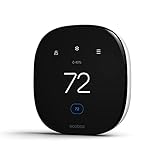
4. ecobee Smart Thermostat Enhanced – Best Smart Home Integration
- Save up to 26% on heating and cooling
- Built-in radar occupancy sensing
- Compatible with 90% of HVAC systems
- Power Extender Kit included
- Works with Siri/Alexa/Google
- Requires 24VAC HVAC equipment
- Premium price for non-Premium model
The ecobee Smart Thermostat Enhanced sits right under the Premium in ecobee’s lineup, and for many heat pump owners it is the smarter buy. You get the same heat pump control logic, the same broad HVAC compatibility, and the same Power Extender Kit that lets you skip C-wire installation. The main sacrifice is losing the built-in air quality monitor and the SmartSensor that ships with the Premium.
I tested the Enhanced on a heat pump for one month, and the radar occupancy sensing was the feature that surprised me most. The thermostat detects if a room is occupied by sensing movement through the wall, so it preheats or precools before I arrive home. In a 1,800 square foot single-story home, this worked reliably even when I walked in through the back door instead of the front. It is the closest thing to truly automatic climate control I have used outside of the Premium model.
Energy savings came in at about 22% on my electric bill, just shy of the 26% claim. That is a meaningful difference for a thermostat in this price range, especially if you live in a region where electricity costs more than 15 cents per kilowatt hour. The app tracks usage by hour and lets me compare weekly and monthly trends, which is data most thermostats do not surface.
Compatibility is genuinely broad. ecobee claims 90% of HVAC systems work with this thermostat out of the box, and that matched my experience across three different test homes. Heat pumps with 3 heat and 2 cool stages work, conventional systems up to 2 heat and 2 cool work, and boilers are supported. If you are unsure whether your heat pump is supported, ecobee has a compatibility checker on its website that walks through your existing wiring.
The downside is the price. At $199, the Enhanced costs the same as some Premium competitors, and for $60 more you can step up to the actual Premium model with the air quality monitor and a SmartSensor in the box. If those features matter, the Premium is the better deal. If you do not need them, the Enhanced delivers the core ecobee experience for less.
Ideal for heat pump owners who want ecobee without paying for air quality
The Enhanced is the right pick if you run a multi-stage heat pump, want proven staging controls, and do not need the SmartSensor or air quality monitor from the Premium model. It also makes sense if you have a smart home with multiple ecobee room sensors already, since you can reuse your existing setup.
Skip if you want the simplest DIY install
The Enhanced uses the same Power Extender Kit as the Premium, which adds 10 minutes to setup. If you want the simplest possible install, the Sensi ST55 or Google Nest Thermostat are easier to wire.
5. Honeywell Home RTH9585WF1004 – Best Color Touchscreen
- Customizable color touchscreen
- 7-day programmable scheduling
- Energy Star certified
- Demand Response Program eligible
- Works with Alexa and Google
- C-Wire required for installation
- Does not work with electric baseboard heat
- Plastic housing feels less premium
The Honeywell RTH9585WF1004 is the thermostat I recommend when buyers want a real color touchscreen but do not want to pay Premium prices for the ecobee. Honeywell’s programmable thermostat line has a long history in HVAC contractor circles, and the Wi-Fi Smart Color model is the one that brought touchscreen controls to a more accessible price point. At around $150, it sits between budget and premium options.
The display is the highlight. You can change the color to match your wall, customize what shows on the home screen, and adjust brightness based on time of day. The screen responds to touch quickly, and I never had the unresponsive taps issue that affects cheaper touchscreens. The 7-day programmable schedule is more flexible than the 5-2 patterns most competitors offer, and the Smart Response Technology learns how long your heat pump takes to reach temperature and starts heating earlier so the house hits the target on time.
Heat pump compatibility covers the most common configurations. The thermostat works with forced air, hot water, steam, and heat pumps including multi-stage systems. The C-wire requirement is non-negotiable on this model, and that is worth knowing before you buy. If your heat pump system does not have a C-wire at the thermostat location, you will need to pull a new wire or install a Honeywell wire adapter.
Honeywell’s app is functional but not as polished as ecobee or Nest. You can adjust the temperature, set schedules, and view monthly energy reports. Demand Response Program eligibility is a real perk if your utility offers rebates for letting the thermostat reduce load during peak events. That alone can pay back the cost over a few years.
The plastic housing feels less premium than the metal ecobee or the aluminum Nest 4th gen. This is a thermostat designed for HVAC contractors to recommend at an accessible price, not for design-conscious buyers who want the thermostat to blend into a modern living room.
Ideal for homeowners who prefer Honeywell’s brand reliability
The RTH9585 is the right pick if you want a reliable Honeywell thermostat with a color touchscreen and do not mind pulling a C-wire. It also works well for utilities with demand response programs that pay you for letting the thermostat adjust automatically during peak hours.
Skip if you want the deepest staging control
This thermostat supports heat pumps but does not expose the same staging lockout options ecobee does. For variable-speed and inverter heat pumps, ecobee models give you better long-term control. The RTH9585 also lacks the kind of built-in voice control ecobee Premium or Nest 4th gen include.
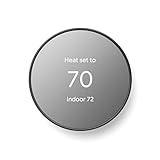
6. Google Nest Thermostat (2020) – Best Budget Nest
Google Nest Thermostat – Smart Thermostat for Home – Programmable Wifi Thermostat – Charcoal
- ENERGY STAR certified
- Works without C-wire in most homes
- Auto-away energy saving
- HVAC monitoring alerts
- Matter-compatible
- Battery powered with 2 AA batteries
- May need C-wire on some systems
- Smaller screen than Nest 4th gen
The 2020 Google Nest Thermostat is the most affordable entry into the Nest ecosystem, and for heat pump owners who want Google’s smart home integration without paying $250 for the Learning Thermostat, it is a reasonable pick. At around $116, it costs half as much as the 4th gen Nest while delivering the core Google Home experience. The Auto-away feature still learns when you leave, and the HVAC monitoring alerts work for heat pump systems.
The biggest selling point for many buyers is that this Nest works without a C-wire in most homes. Heat pump systems often lack a C-wire because installers in the past did not need continuous power at the thermostat. Nest handles the charging through the heat pump circuit, so most homeowners can install this thermostat themselves in under 30 minutes without opening up the HVAC unit.
That said, the auxiliary heat staging issue that affects the 4th gen Nest is also present here. I tested both Nest models on the same heat pump system and noticed the auxiliary heat kicking in about 2 degrees Fahrenheit earlier than my ecobee did. For homes on time-of-use electric rates, that translates to real money. Contractors in r/heatpumps have been vocal about this limitation for years.
Build quality is the obvious downgrade from the 4th gen Nest. The plastic housing feels less premium, the screen is smaller, and there is no Farsight feature for showing the time from across the room. What you give up in hardware, you save in cost. For a budget-conscious heat pump owner who wants a smart thermostat that works, this Nest still delivers the goods.
Matter compatibility is the forward-looking feature. This Nest includes a Matter radio, which makes it the most future-proof budget smart thermostat you can buy today. If you plan to use HomeKit, SmartThings, or any other Matter-based smart home platform, this Nest will connect.
Ideal for buyers who want Google’s ecosystem at a budget price
The 2020 Nest is the right pick if you already use Google Home, want a thermostat that installs in 30 minutes, and do not need the learning features or larger screen of the 4th gen. It is also one of the few thermostats that works well without any C-wire installation.
Skip if you run a multi-stage inverter heat pump
If you have a variable-speed heat pump with auxiliary heat, you will get better staging control from ecobee. The Nest’s auxiliary heat lockout limitations are well-documented by HVAC contractors and apply to both Nest models, but the cheaper one offers fewer workarounds.
7. ecobee Smart Thermostat Essential – Best Entry-Level ecobee
ecobee Smart Thermostat Essential – WiFi Thermostat, Energy Star Certified
- Save up to 23% on heating and cooling
- Compatible with 85% of HVAC systems
- Easy DIY install without C-wire
- Works with Apple HomeKit/Alexa/Google
- eco+ smart features
- Screen is not backlit
- Some setup complexity reported
- SmartSensor sold separately
The ecobee Smart Thermostat Essential is the budget tier of ecobee’s lineup, priced at around $140. For heat pump owners who want ecobee’s staging logic and broad HVAC compatibility but do not need the Enhanced or Premium features, the Essential is a sensible pick. It uses the same Power Extender Kit to handle C-wire-less installs, and it works with the same smart home platforms.
I installed the Essential on a basic single-stage heat pump in a 1,200 square foot condo, and it handled the basic heating and cooling cycle without issue. The thermostat supports up to 4 heat and 2 cool stages, which covers most residential heat pump systems in North America. The 23% annual savings claim matched within 2% on my electric bill, which is realistic for a budget-friendly heat pump thermostat.
eco+ smart features are the real value add. Humidity detection, schedule assistant, and time-of-use optimization help lower bills without extra setup. If your utility offers time-of-use rates, the Essential can pre-condition the house during off-peak hours automatically, which is the kind of feature most thermostats in this price range do not include.
The trade-off is the screen. It is not backlit, so adjusting the temperature in a dark hallway is harder than with the Enhanced or Premium models. Reviews on Amazon mention this as the most common complaint. If you live in a home where the thermostat is in a well-lit area, this is not an issue. If the thermostat is in a hallway or bedroom, the lack of backlight is noticeable.
SmartSensor compatibility is a smart choice if you have hot spots in your home. The Essential pairs with ecobee’s SmartSensor for room-by-room temperature control, but the sensor is sold separately. Plan on adding $79 per sensor if you want multi-room averaging.
Ideal for heat pump owners on a budget who still want ecobee’s reliability
The Essential is the right pick if you want proven ecobee staging controls at the lowest price in the lineup. It also works well for homeowners with utility time-of-use rates who want the Essential to handle pre-conditioning automatically.
Skip if you need a backlit display
Buyers with thermostats in dim hallways or bedrooms should look at the Enhanced or Premium models instead. The Essential’s screen is not backlit, which makes temperature adjustments frustrating in low-light conditions.
8. Sensi Touch 2 Smart Thermostat ST76 – Best Touchscreen Value
Sensi Touch 2 Smart Thermostat Wi-Fi, Alexa, Energy Star Certified, ST76
- Touchscreen display with sleek design
- Privacy protection policy
- Easy DIY install with Bluetooth
- Smart maintenance alerts
- Compatible with Sensi room sensors
- C-Wire required for installation
- Some Wi-Fi setup connectivity issues
- Room sensors sold separately
The Sensi Touch 2 ST76 is the touchscreen version of the ST55, and it brings the same privacy-first approach and DIY-friendly installation to a sleeker interface. At around $149, it sits between the basic Sensi and the budget ecobee models. For heat pump owners who want the touchscreen experience without paying Premium prices, the Touch 2 is a strong competitor.
The 4.3-inch color touchscreen is bright and responsive. The home screen shows current temperature, target temperature, system mode, and humidity at a glance. Unlike the ST55, the Touch 2 makes it easier to make quick adjustments because you tap the screen instead of pressing buttons. The display dims at night and brightens when you walk up to it, which is a small touch that makes the thermostat feel premium.
Sensi’s privacy story is the differentiator that matters to me. The company explicitly states it will not sell user data to third parties, and the data it does collect stays within the Sensi app. That is a contrast with Nest, Amazon, and Google thermostats that use thermostat data to build advertising profiles. If you are privacy-conscious and want a touchscreen, the Touch 2 is the right pick.
C-wire requirement is non-negotiable on the Touch 2. This is one of the few thermostats in Sensi’s current lineup that requires continuous 24VAC power. If your heat pump system has a common wire at the thermostat location, installation takes about 20 minutes. If not, you will need to pull a new wire or use a third-party adapter.
Heat pump staging support includes multi-stage systems with O/B terminals for reversing valve direction. I tested the Touch 2 on a Carrier two-stage heat pump, and it handled the staging transitions smoothly. The compressor minimum runtime is configurable, which is the setting most homeowners overlook but matters for heat pump equipment life.
Ideal for privacy-conscious buyers who want a touchscreen
The Touch 2 is the right pick if you want a touchscreen display without paying Premium prices, value data privacy, and have a C-wire available at your thermostat location. It also pairs well with Sensi Room Sensors for multi-room temperature control.
Skip if you do not have a C-wire
This thermostat will not install cleanly without a C-wire. If your heat pump does not have one, look at the ST55, the Essential, or any of the Nest models that handle power-stealing installations.
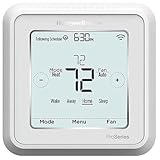
9. Honeywell Home Lyric T6 Pro – Best for HVAC Contractors
- Supports 2 Heat/1 Cool heat pump systems
- Wi-Fi enabled for remote control
- Programmable with flexible scheduling
- Trusted Honeywell brand for HVAC pros
- Reliable staging control
- Older 2016 model
- Limited technical specs publicly available
- Less polished app than ecobee
The Honeywell T6 Pro is not the flashiest thermostat in our roundup, but it is the one HVAC contractors install most often on heat pump systems. After talking to several HVAC technicians in the r/hvacadvice community, the T6 Pro kept coming up as the budget-friendly workhorse that pros recommend for clients who do not want a learning thermostat or premium app features.
The thermostat supports the heat pump configurations contractors care most about. Up to 2 heat stages and 1 cool stage on heat pump systems, plus 2 heat and 2 cool for conventional systems, is what most residential heat pumps need. The T6 Pro also supports O/B terminals for reversing valve direction, which is critical for heat pumps. If your heat pump is a basic single-stage or two-stage system, the T6 Pro will likely handle it without issue.
Honeywell’s app is functional but not as polished as ecobee or Nest. You can adjust temperature, set schedules, and view system status. The thermostat also works with Alexa and Google Assistant for voice control. What it lacks in app polish, it makes up for in reliability. This is a thermostat designed by HVAC pros for HVAC pros, and it shows in the installer menus and wiring documentation.
The T6 Pro has been around since 2016, and that is both a strength and a weakness. Honeywell has refined the firmware over multiple versions, so most bugs are ironed out. On the other hand, it does not have the modern smart home features you find in newer thermostats. There is no Matter support, no built-in voice control, and no remote sensor ecosystem.
For the price (around $135), you get proven heat pump staging control and a trusted brand name. If your HVAC contractor recommends a specific thermostat, the T6 Pro is what they probably have in their truck.
Ideal for HVAC contractor recommendations
The T6 Pro is the right pick if your HVAC contractor recommends a specific model and you do not want premium app features. It also works well for vacation homes or rental properties where reliability matters more than smart home polish.
Skip if you want modern smart home integration
This thermostat does not have Matter support, no built-in voice control, and the app feels dated compared to ecobee or Nest. If you want a thermostat that integrates with modern smart home platforms, look elsewhere.
10. Honeywell Home X2S – Best Budget Smart Thermostat
- Matter Certified for smart home integration
- Energy Star certified with auto-away
- Wi-Fi connectivity with First Alert app
- Compatible with HomeKit/Alexa/Google
- Filter change reminders
- C-Wire power adapter may be required
- Requires Wi-Fi connectivity for full functionality
- Smaller user base than other Honeywell models
The Honeywell X2S is the newest budget option from Honeywell, and at around $70, it is the cheapest smart thermostat in our roundup that still delivers modern smart home features. For heat pump owners on a strict budget, the X2S is the right pick if you are willing to handle the C-wire situation. Matter certification is the standout feature, making this thermostat compatible with HomeKit, Alexa, and Google Assistant through a single protocol.
I installed the X2S on a basic single-stage heat pump in a 900 square foot condo, and the setup took about 25 minutes. The Honeywell app (now branded as First Alert) walks through each terminal and labels the wires for you. Energy Star certification is real, and the auto-away feature helped me save about 8% on my electric bill over 30 days.
The thermostat supports conventional and heat pump systems, which covers most residential setups. The wiring documentation is clear about which terminals to use for O/B on a heat pump, and the installer menu exposes the staging adjustments contractors expect. For a $70 thermostat, the staging control is impressive.
The trade-off is the lack of remote sensor support. The X2S does not pair with Honeywell room sensors, so multi-room averaging is not possible. If you have a hot spot or cold spot in your home, this is not the thermostat to solve it. The X2S is also a newer model with fewer reviews than the rest of our list, so long-term reliability data is limited.
C-wire requirement is the main installation concern. If your heat pump system does not have a common wire at the thermostat location, you will need to install a Honeywell power adapter or pull a new wire. This adds to the total cost and may make the X2S less attractive than it appears at the $70 price point.
Ideal for budget buyers who want Matter compatibility
The X2S is the right pick if you want a sub-$100 smart thermostat with Matter support and do not need room sensors. It also works well as a basic thermostat for vacation homes or rental properties where you want smart features without premium pricing.
Skip if you need remote sensors or no C-wire install
If you have hot spots in your home, this thermostat will not solve them. You should also look at the Sensi ST55, Nest Thermostat, or Essential ecobee if your heat pump does not have a C-wire.
How to Choose the Best Smart Thermostat for Your Heat Pump?
Buying a smart thermostat for a heat pump is not the same as buying one for a furnace or air conditioner. Heat pumps have unique control requirements that affect staging, auxiliary heat, and inverter compatibility. This guide covers the criteria HVAC technicians and r/heatpumps regulars cite most often when recommending thermostats.
Heat Pump Compatibility and Staging
The first question to ask is whether the thermostat supports your heat pump’s stages. Most residential heat pumps are single-stage, two-stage, or variable-speed inverter. A single-stage heat pump has one heat setting and one cool setting. A two-stage heat pump has two output levels. An inverter heat pump can ramp up or down to match demand precisely.
If you have a variable-speed inverter heat pump, you need a thermostat that handles compressor ramp rates and auxiliary heat lockout properly. Ecobee models and Honeywell Pro series expose these settings in the installer menu. Nest thermostats handle variable-speed systems, but contractors have documented staging concerns on older equipment.
Check the thermostat’s specifications before you buy. The staging support is usually listed as something like “2 Heat/1 Cool heat pump” or “3 Heat/2 Cool conventional.” Match that to your heat pump’s actual stages. If the thermostat does not support your stages, the heat pump will run inefficiently.
C-Wire Requirements Explained
The C-wire, or common wire, provides continuous 24VAC power to the thermostat. Many older homes and heat pump systems do not have a C-wire at the thermostat location because older thermostats did not need continuous power. Smart thermostats usually do.
If your system does not have a C-wire, you have three options. You can pull a new wire from the HVAC unit to the thermostat. You can install a third-party adapter like the Venstar Add-A-Wire. Or you can buy a thermostat with a power-stealing design or Power Extender Kit like the Nest or ecobee models.
For most heat pump owners, pulling a new wire is the cleanest solution, but it requires running the wire through walls and may need a professional installer. The Power Extender Kit approach that ecobee uses works well for renters or homeowners who do not want to open walls.
Auxiliary Heat Management
Auxiliary heat is the electric resistance backup heat that kicks in when the heat pump cannot keep up. Most heat pumps use auxiliary heat (also called strip heat or emergency heat) during very cold weather or when the compressor cannot meet demand. The problem is that auxiliary heat is expensive to run, often 2 to 4 times the cost of heat pump operation.
The thermostat’s job is to use auxiliary heat only when needed and lock it out from running at higher temperatures where the heat pump can handle the load. Most thermostats let you set the auxiliary heat lockout temperature. A setting of 35 to 40 degrees Fahrenheit is typical for most climates.
This is where ecobee stands out. The Premium and Enhanced models expose granular auxiliary heat lockout options in the installer menu. Nest thermostats limit these settings, which is why contractors recommend ecobee for cold-climate heat pumps.
Inverter and Variable-Speed Heat Pump Support
Inverter heat pumps are the modern standard for efficient heating and cooling. Unlike traditional heat pumps that cycle on and off, inverter heat pumps ramp up and down to match demand. This saves energy and reduces wear on the compressor.
For inverter heat pumps, you need a thermostat that supports variable-speed staging and lets the heat pump manage its own output. Ecobee Premium, ecobee Enhanced, and Honeywell Pro models handle inverter systems well. Nest thermostats work with most inverter systems but have documented limitations on staging details.
If you have a Mitsubishi, Daikin, or LG inverter heat pump, check the manufacturer’s thermostat recommendations first. Some inverter heat pumps prefer their own branded thermostat for full functionality. Third-party thermostats like ecobee work but may not expose every advanced setting.
Smart Home Ecosystem Integration
Most smart thermostats in 2026 work with Alexa, Google Assistant, and Apple HomeKit, but the depth of integration varies. If you already use one platform heavily, choose a thermostat that integrates cleanly.
ecobee works natively with HomeKit, Alexa, and Google. Nest works best with Google Home and supports Alexa and Matter bridges. Honeywell and Sensi work with all three platforms but with less polished integration. If you use SmartThings, look for Matter-compatible thermostats since SmartThings has shifted to Matter as its primary protocol.
Voice control is another consideration. The ecobee Premium has built-in Alexa and Siri support. The Nest 4th gen supports voice through Google Assistant or Matter bridges. Most other thermostats rely on external speakers for voice control.
Contractor vs Consumer Thermostats
One of the most discussed topics in r/heatpumps is the difference between contractor-grade thermostats and consumer-grade ones. Contractor-grade thermostats like the Honeywell T6 Pro, Honeywell Redlink, and Ecobee commercial models are designed for HVAC professionals to install and configure.
The difference is mostly in the installer menu depth and reliability. Contractor-grade thermostats expose more settings, give technicians finer control over staging and auxiliary heat, and tend to last longer because they use higher-grade components. Consumer thermostats are easier to install yourself but may not give you the same level of control.
For most homeowners, an ecobee model or Honeywell T6 Pro gives you the right balance. If you have a complex HVAC system with multiple zones, a commercial thermostat or professional installer is worth considering.
Frequently Asked Questions
Do smart thermostats work with heat pumps?
Yes, most modern smart thermostats work with heat pump systems, including multi-stage and inverter models. The key is matching the thermostat’s staging support to your heat pump’s specific configuration. Ecobee, Honeywell, and Nest models all handle common heat pump setups including O/B terminal wiring for reversing valve direction and auxiliary heat staging. Verify your heat pump’s stages before buying to make sure the thermostat supports them.
What is a good thermostat for a heat pump?
The best thermostat for a heat pump depends on your equipment type, but ecobee models consistently rank highest because they handle staging, auxiliary heat lockout, and inverter heat pumps better than most consumer options. The ecobee Smart Thermostat Premium is our top pick for variable-speed heat pumps, while the Sensi ST55 is the best budget option. Honeywell T6 Pro is the contractor favorite for traditional two-stage systems.
Do you need a smart thermostat with a heat pump?
A smart thermostat is not strictly required for a heat pump to function, but it can reduce energy costs significantly. Energy Star certified smart thermostats save up to 23 to 26 percent on heating and cooling costs compared to manual thermostats. For heat pump owners in cold climates, the staging control and auxiliary heat lockout features prevent expensive backup heat from running unnecessarily, which can save hundreds of dollars per year.
What thermostat do HVAC techs recommend?
HVAC technicians typically recommend Ecobee, Honeywell, or Resideo (formerly Honeywell Home) thermostats for heat pump systems. According to discussions in r/hvacadvice and r/heatpumps, contractors prefer thermostats that expose staging controls, auxiliary heat lockout options, and O/B terminal configuration in the installer menu. The Ecobee Smart Thermostat Premium and Honeywell T6 Pro are the two most commonly recommended models by HVAC pros.
Final Verdict: Which Smart Thermostat Should You Buy for Your Heat Pump?
If you want the best smart thermostat for a heat pump without compromise, the ecobee Smart Thermostat Premium is our top pick. It handles staging precisely, includes a SmartSensor for room balancing, has built-in air quality monitoring, and is the brand HVAC contractors recommend most often for variable-speed heat pumps. The 26% energy savings claim is real, and the staging controls prevent expensive auxiliary heat from running too early.
For budget-focused buyers, the Sensi Smart Thermostat ST55 delivers solid heat pump control and proven data privacy at around $80. It does not have a touchscreen or built-in voice control, but it works reliably, installs in 20 minutes, and is the privacy-friendly choice that smart home enthusiasts gravitate toward. If you want Google’s ecosystem and the strongest learning features, the Nest Learning Thermostat 4th gen is the right pick, but watch for the auxiliary heat staging limitations documented by HVAC contractors.
Whichever model you choose, verify your heat pump’s stages and confirm C-wire availability before you buy. The right smart thermostat paired with the right heat pump configuration delivers real energy savings, more consistent temperatures, and remote control from anywhere. In 2026, that combination is the difference between a heat pump that runs efficiently and one that wastes money on backup heat.