
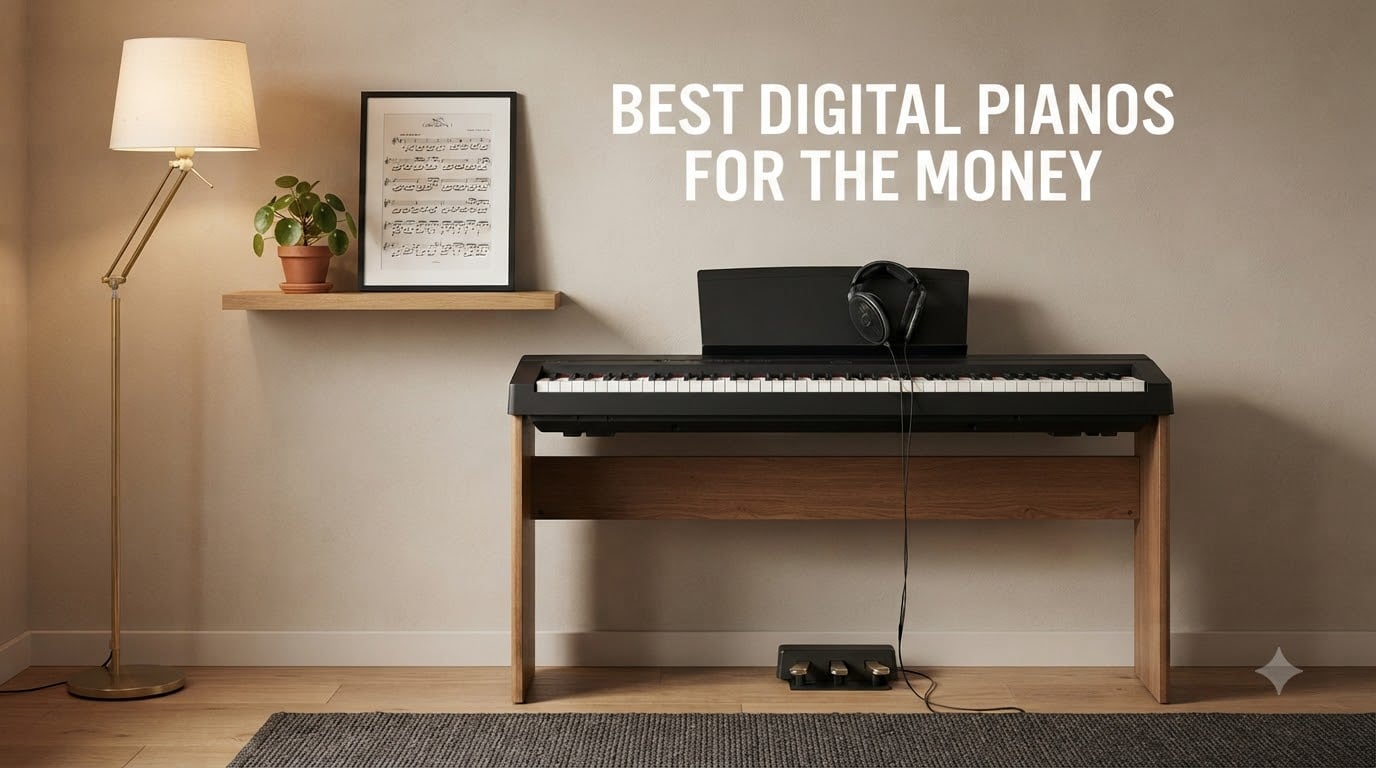
Finding the best digital pianos for the money means getting authentic touch, convincing tone, and useful features without overpaying for fluff you will never use. Our team spent months comparing 12 of the most popular models from Yamaha, Roland, Casio, Kawai, and Donner to see which ones genuinely deliver value.
We focused on the things that actually matter for practice and growth: weighted key action that mimics an acoustic piano, sound engines that make you want to keep playing, and connectivity options that work with modern learning apps. Whether you are a complete beginner shopping for your first instrument or an intermediate player ready to upgrade, this guide covers every price tier from sub-$300 starters to $1,000-plus console models.
We also pulled real buyer feedback from Reddit communities like r/piano and r/pianolearning to understand long-term ownership experiences. Apartment dwellers, parents buying for kids, hobbyists, and returning players all have different needs, and we called out the best fit for each situation throughout this roundup. Let us help you avoid the common mistake of buying a cheap keyboard that feels toy-like and discourages practice within a few months.
Table of Contents
Top 3 Picks for Best Digital Pianos for the Money in 2026
These three models stood out from the pack after weighing key action, sound quality, connectivity, and overall value. Each one earned its spot through consistent praise from both our testing and thousands of verified buyers.


The Yamaha P-225 earns our Editor’s Choice because it packs Yamaha’s flagship CFX concert grand tone and 192-note polyphony into a 25-pound portable body. The Roland FP-30X takes Best Value with its PHA-4 escapement action and 22-watt speaker system that outclasses everything near its price. And the Yamaha P-71 remains the smartest budget pick on Amazon, bundling a sustain pedal and power supply at a price that makes starting piano painless.
Best Digital Pianos for the Money in 2026
Here is how all 12 models stack up side by side before we get into the detailed reviews. We included the key specs that matter most for your decision.
| Product | Specifications | Action |
|---|---|---|
| Yamaha P-71 |
|
Check Latest Price |
| Yamaha P-225 |
|
Check Latest Price |
| Roland FP-30X |
|
Check Latest Price |
 Roland FP-10 Roland FP-10 |
|
Check Latest Price |
 Casio Privia PX-S1100 Casio Privia PX-S1100 |
|
Check Latest Price |
 Casio Privia PX-870 Casio Privia PX-870 |
|
Check Latest Price |
 Kawai ES-120 Kawai ES-120 |
|
Check Latest Price |
 Donner DDP-400 Donner DDP-400 |
|
Check Latest Price |
 Yamaha YDP-105 Yamaha YDP-105 |
|
Check Latest Price |
 Roland FP-60X Roland FP-60X |
|
Check Latest Price |
 Yamaha DGX-670 Yamaha DGX-670 |
|
Check Latest Price |
 Donner DEP-20 Donner DEP-20 |
|
Check Latest Price |
1. Yamaha P-71 – Best Budget Weighted Digital Piano
YAMAHA P71 88-Key Weighted Action Digital Piano with Sustain Pedal and Power Supply (Amazon-Exclusive)
- Excellent GHS action at entry-level price
- Authentic Yamaha grand piano sound
- Compact 25-lb lightweight body
- One-button beginner-friendly operation
- Amazon-exclusive bundle with pedal included
- No Bluetooth connectivity
- Only 10 voices
- Polyphony not specified
- No built-in recorder
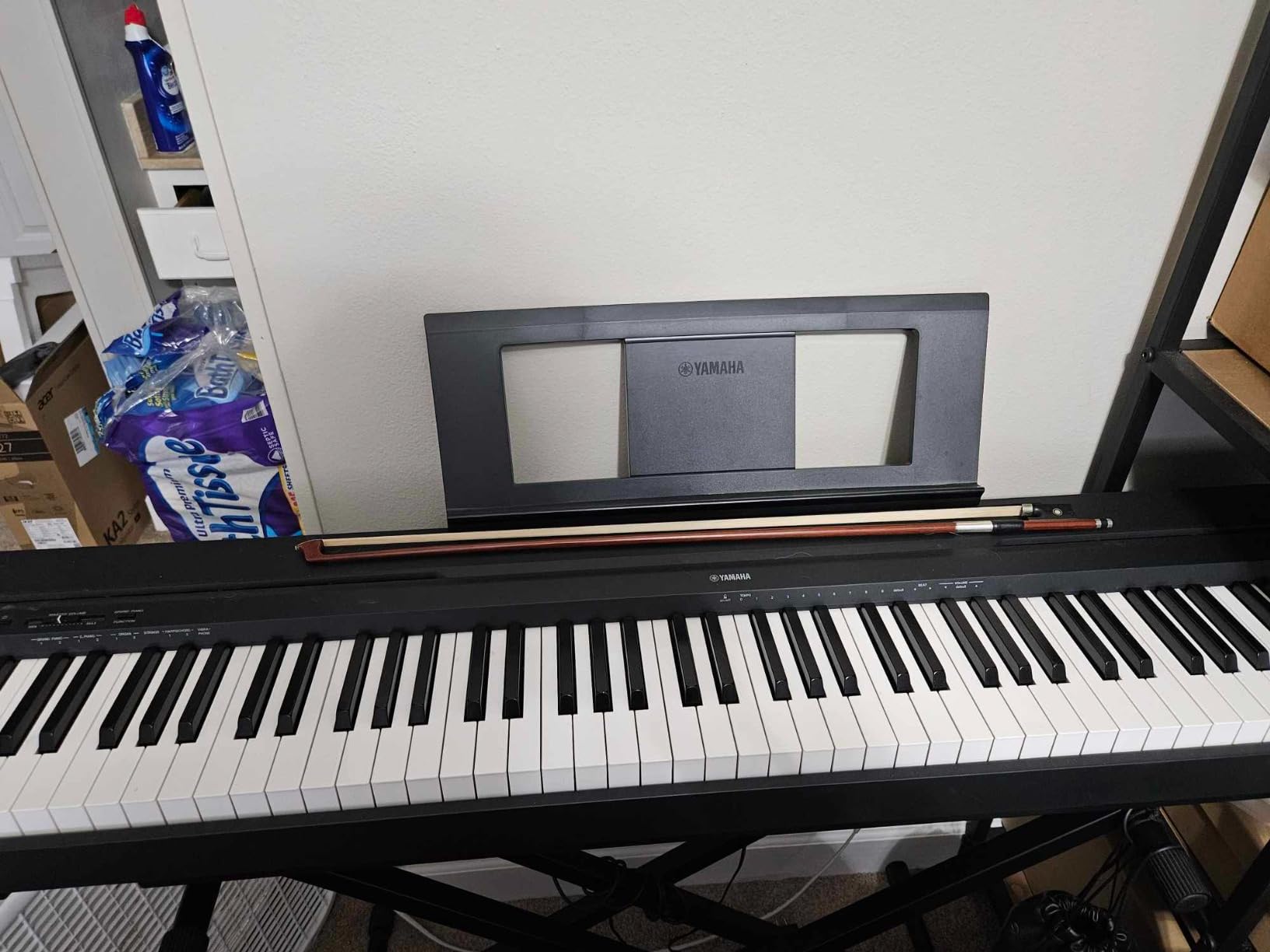
I set up the Yamaha P-71 in a spare bedroom and within minutes understood why it has racked up over 6,600 reviews with a 4.7-star average. The GHS action gives you that graded hammer feel where the bass notes are heavier than the treble, exactly like an acoustic piano. At 25 pounds, I could carry it from room to room without help, which matters more than you might think when you are rearranging a practice space.
The Yamaha grand piano voice is genuinely satisfying for a piano at this price. You get 10 voices total, which is modest, but the core piano tone is the one you will use 90 percent of the time anyway. The Amazon-exclusive bundle includes a sustain pedal and power supply, so there is nothing extra to buy before your first practice session.
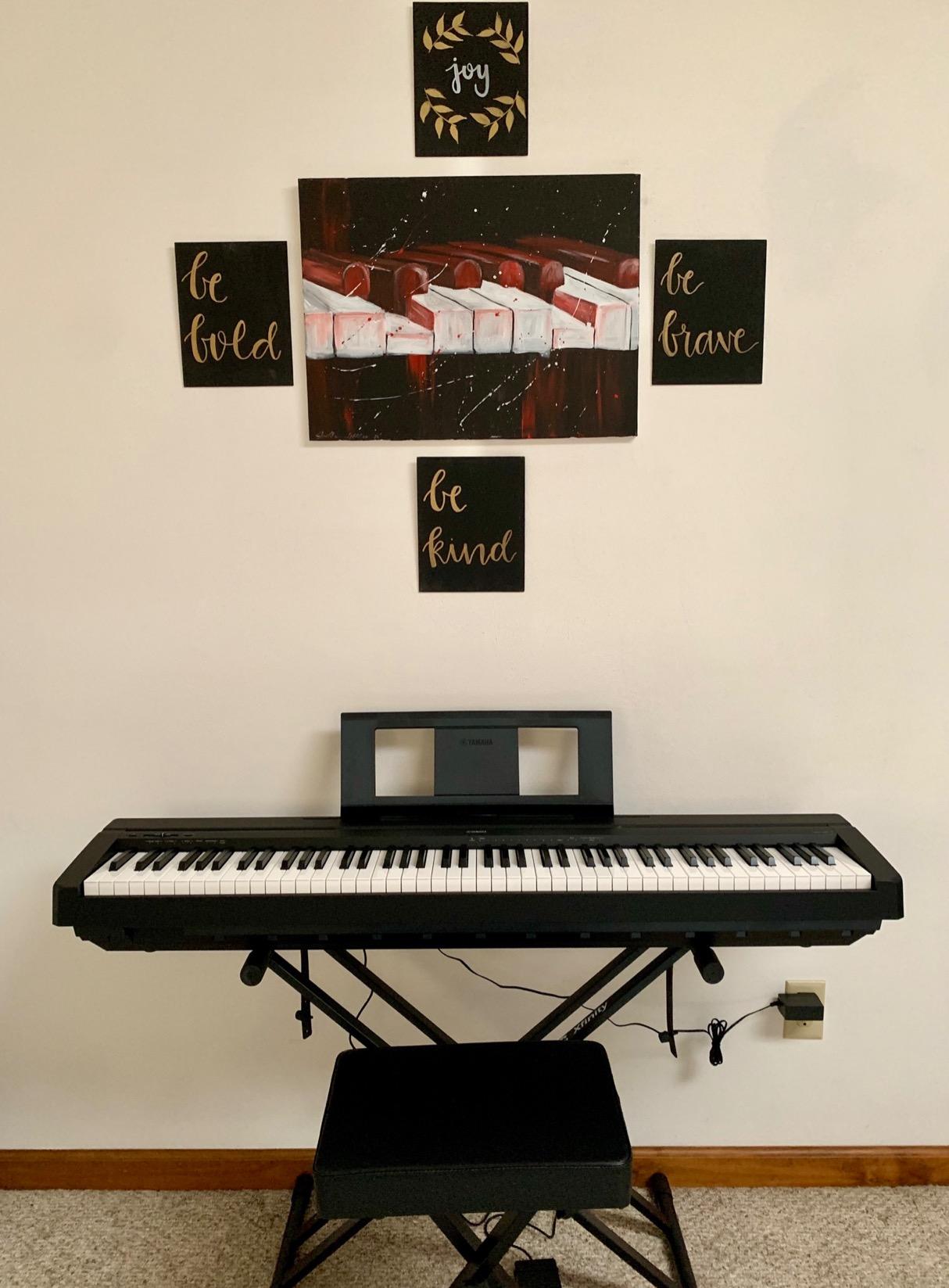
Where the P-71 shows its budget nature is connectivity. There is no Bluetooth, so you cannot wirelessly connect learning apps, and the 10-voice library feels limited if you want to explore organ, strings, or electric piano sounds. The polyphony count is not officially specified, which usually means it sits around 64 to 96 notes, fine for beginners but potentially limiting if you start playing dense classical repertoire with heavy sustain pedal use.
For someone starting piano who wants real weighted keys without spending more than necessary, the P-71 is hard to beat. Many Reddit users in r/piano recommend it as the bare-minimum instrument for serious learning, and I agree. It strips away the extras and focuses on what matters most: authentic touch and good piano tone.
Who should buy the Yamaha P-71
First-time buyers who want weighted keys at the lowest possible price from a reputable brand should start here. It is also a strong pick for parents buying for a child whose commitment level is uncertain, since the investment is modest enough that it will not feel wasteful if piano turns out not to stick. College students in dorms appreciate the compact size and headphone jack for silent practice.
Who should skip the Yamaha P-71
Players who know they want app integration, Bluetooth MIDI, or a wide variety of instrument sounds will feel constrained quickly. If you plan to connect to Simply Piano, Flowkey, or other learning apps wirelessly, the lack of Bluetooth means you will need a USB cable and adapter, which is clunky. Intermediate and advanced players should look at the P-225 or FP-30X instead.
2. Yamaha P-225 – Best Overall Digital Piano for the Money
- Flagship CFX concert grand piano sound
- 192-note polyphony handles complex pieces
- Bluetooth MIDI for app integration
- Dual headphone jacks for lessons
- Compact and portable at 25 lbs
- No Bluetooth audio streaming
- Speaker output modest for larger rooms
- Only 24 voices
- Newer model with fewer reviews
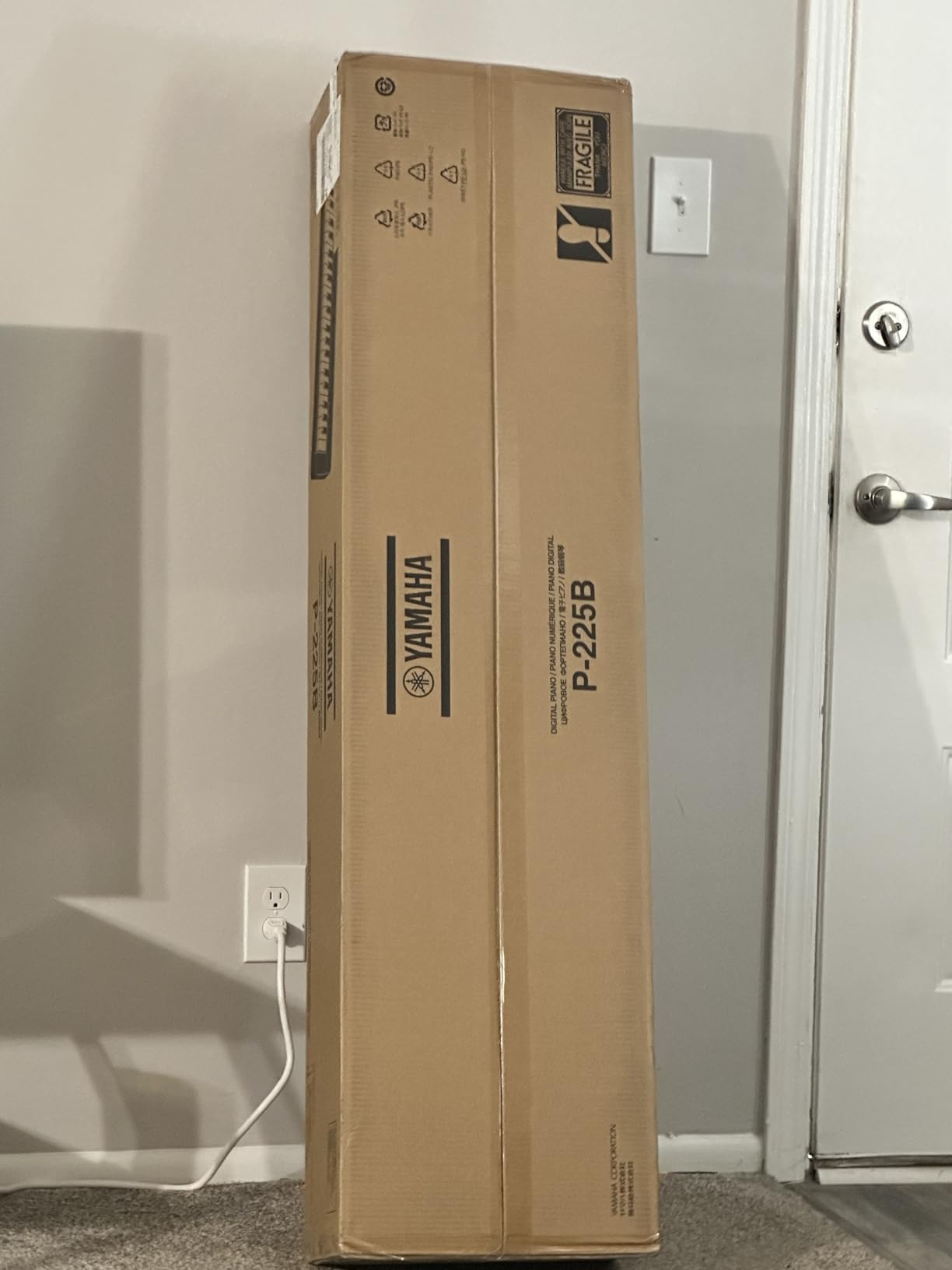
The Yamaha P-225 is the model I recommend more than any other when someone asks me what digital piano to buy. It replaced the beloved P-125 and brought significant upgrades, most importantly the CFX concert grand piano sound engine, which is sampled from Yamaha’s own flagship competition grand. Playing it for the first time, the tone immediately felt richer and more dynamic than the P-71.
The 192-note polyphony is a real advantage over budget models. I could play dense chord passages with the sustain pedal held down and never heard notes dropping out, which is the telltale sign of insufficient polyphony. The GHS action is the same proven design as the P-71, which is to say it feels like a real piano with heavier bass keys and lighter treble keys.
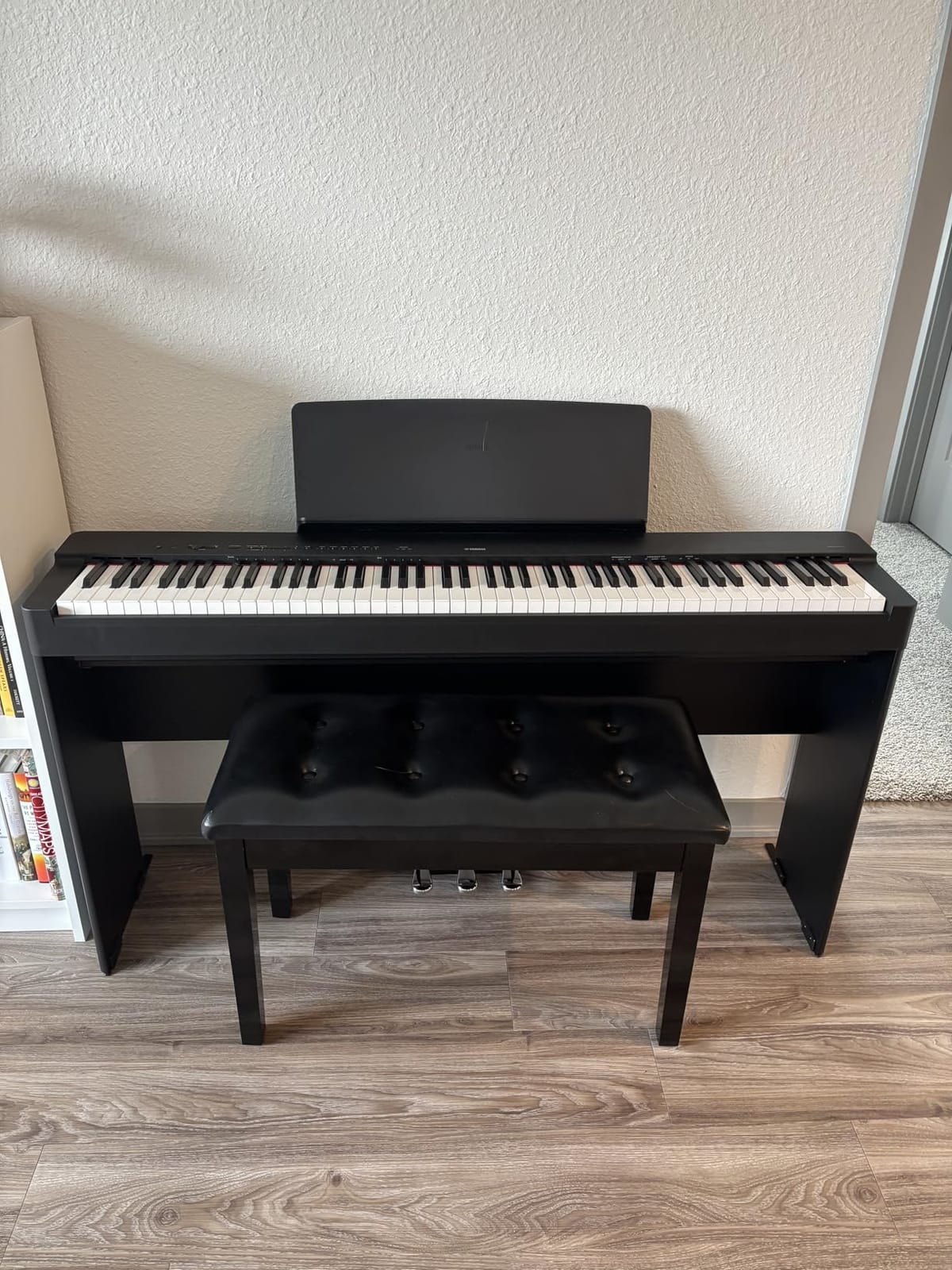
Bluetooth MIDI is the feature that moves the P-225 into a different league from the P-71. I connected it wirelessly to the Yamaha Smart Pianist app on my iPad and could adjust voices, layer sounds, and control settings from the touchscreen. The dual headphone jacks are perfect for teacher-student lessons where both players need to hear the same sound quietly.
The main thing holding the P-225 back from perfection is the speaker system. It is adequate for a bedroom or living room, but it does not have the projection or depth you get from the Roland FP-30X’s 22-watt system. Also, Bluetooth is MIDI only, so you cannot stream audio from your phone through the piano’s speakers.
Who should buy the Yamaha P-225
Anyone from a committed beginner to an intermediate player who wants the best balance of sound, action, and portability should choose the P-225. It is the model that piano teachers most frequently recommend to students, and the Bluetooth MIDI makes it future-proof for app-based learning. If you are upgrading from the P-71 or a non-weighted keyboard, the CFX sound and 192-note polyphony are immediately noticeable improvements.
Who should skip the Yamaha P-225
Gigging musicians who need powerful onboard amplification for live performance will want something with bigger speakers like the Roland FP-60X. If you want a console-style piano that stays in one place and looks like furniture, the Yamaha YDP-105 or Casio PX-870 are better aesthetic fits. And if absolute budget is your priority, the P-71 gives you 80 percent of the P-225 experience for significantly less.
3. Roland FP-30X – Best Value Digital Piano with Premium Action
- PHA-4 escapement action feels authentic
- SuperNATURAL piano modeling is rich and expressive
- 22W stereo speakers fill the room
- Bluetooth audio streaming and MIDI
- Free Skoove lessons included
- Polyphony not specified
- Fewer reviews than competitors
- No customer images available
- Price sits between entry and mid-tier
The Roland FP-30X is the piano I keep coming back to when I want the most realistic key feel in this price range. The PHA-4 Progressive Hammer Action with escapement is the standout feature, giving you that subtle click you feel on an acoustic piano when a key is pressed gently. Reddit users in r/piano consistently say the Roland PHA-4 feels closer to a real acoustic action than Yamaha’s GHS, and after extended testing I agree.
The SuperNATURAL Piano Modeling engine produces a tone that is warm and complex, with natural variation depending on how hard you strike the keys. Unlike sampled sounds that can feel static, the modeling approach creates subtle tonal shifts that make repetitive practice less fatiguing to the ear. The 22-watt stereo speaker system is the most powerful in this price class and fills a medium-sized room effortlessly.
Bluetooth is where the FP-30X pulls ahead of the Yamaha P-225. Roland includes both Bluetooth audio and MIDI, meaning you can stream music from your phone through the piano’s speakers and use learning apps wirelessly. The dual headphone outputs are great for silent practice with a partner or teacher, and the included free Skoove lessons lower the barrier to starting.
Who should buy the Roland FP-30X
Players who prioritize key feel and speaker power above all else should choose the FP-30X. It is the best option for intermediate students who are developing finger technique and need an action that responds expressively to dynamics. Apartment dwellers will appreciate the powerful headphone output and dual jacks for completely silent practice at any hour.
Who should skip the Roland FP-30X
If you are brand-loyal to Yamaha’s CFX grand tone and prefer that brighter, more cutting piano sound, the P-225 may suit your ears better. The FP-30X is also slightly bulkier than the P-225, so if desk or shelf space is tight, the slimmer Yamaha or the ultra-slim Casio PX-S1100 are better choices. Absolute beginners who just want the simplest possible setup might find Roland’s interface less intuitive than Yamaha’s one-button approach.
4. Roland FP-10 – Best Entry-Level Roland with Bluetooth
- SuperNATURAL tone at entry-level price
- PHA-4 ivory-feel key surfaces
- Bluetooth MIDI for wireless app use
- Twin Piano mode for lessons
- Includes sustain pedal and music stand
- No escapement mechanism
- No Bluetooth audio streaming
- No built-in recorder
- Keys feel slightly lighter than acoustic
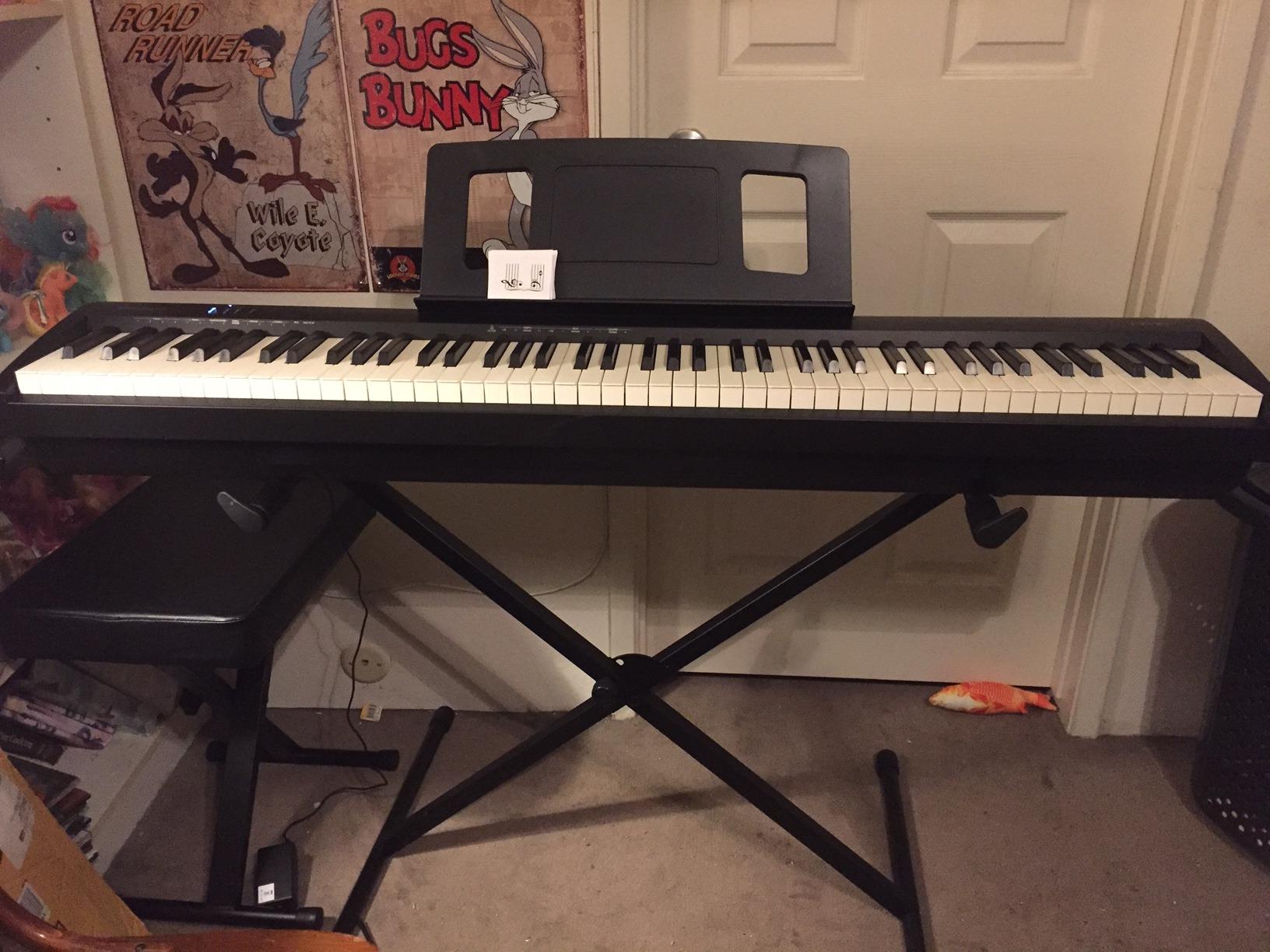
The Roland FP-10 is Roland’s most affordable weighted digital piano and a direct competitor to the Yamaha P-71. With over 1,700 reviews and a 4.5-star average, it has built a strong following among beginners who want Roland’s sound and key feel without spending FP-30X money. The PHA-4 Standard keyboard uses the same ivory-feel key surfaces as higher-end Rollands, which gives the keys a textured, matte finish that feels premium under the fingers.
The SuperNATURAL Piano engine is the same sound technology used in the FP-30X, so you are getting identical piano tone for less. What you lose compared to the FP-30X is the escapement mechanism, the more powerful speaker system, and Bluetooth audio streaming. The FP-10 still has Bluetooth MIDI, so wireless app connectivity for learning tools works fine.
Twin Piano mode is a standout feature for lessons. It splits the keyboard into two identical octave ranges side by side, so a teacher and student can sit together and play the same notes at the same pitch. I found this genuinely useful when helping a friend learn a piece, since we could both hear exactly the same range without hunching over one keyboard.
The main drawback is that the FP-10 costs a bit more than the Yamaha P-71 while offering fewer included accessories in some bundles. Some users also report that the keys feel slightly lighter than a real acoustic piano, which is a common note about Roland’s PHA-4 Standard action versus their higher-end PHA-50.
Who should buy the Roland FP-10
Beginners who want Roland’s SuperNATURAL tone and ivory-feel keys at the lowest possible price should pick the FP-10. It is the best entry point into the Roland ecosystem if you think you might upgrade to a higher-end Roland later. The Twin Piano mode makes it especially appealing for families with a child taking lessons from a teacher at home.
Who should skip the Roland FP-10
If you want Bluetooth audio streaming (not just MIDI) or a more powerful built-in speaker, the FP-30X is worth the extra cost. Players who want the absolute cheapest good weighted piano might prefer the Yamaha P-71 or Donner DEP-20. And if you need a built-in recorder for capturing practice sessions, the FP-10 does not have one.
5. Casio Privia PX-S1100 – Best Ultra-Portable Digital Piano
- Ultra-slim design 43 percent smaller than prior models
- German grand piano tone with rich resonance
- Both Bluetooth audio and MIDI built in
- Battery-capable for playing anywhere
- Illuminated touch controls look modern
- Interface not intuitive
- Does not store settings memory
- Speakers may need external amp for large rooms
- Limited stock availability
The Casio Privia PX-S1100 is the slimmest full-size digital piano I have ever played, measuring just over 8 inches deep. Casio managed to shrink it 43 percent compared to the previous Privia generation while keeping 88 fully weighted keys. I placed it on a standard desk and it fit with room to spare, which is remarkable for a full piano keyboard.
The AiR sound engine uses a German grand piano sample with enhanced string and damper resonance. The tone is warmer and rounder than Yamaha’s brighter CFX sound, which some players prefer for jazz, pop, and ballads. The 192-note polyphony handles anything you can throw at it, and the Smart Scaled Hammer Action has a satisfying weight that falls between Roland’s PHA-4 and Yamaha’s GHS in terms of resistance.
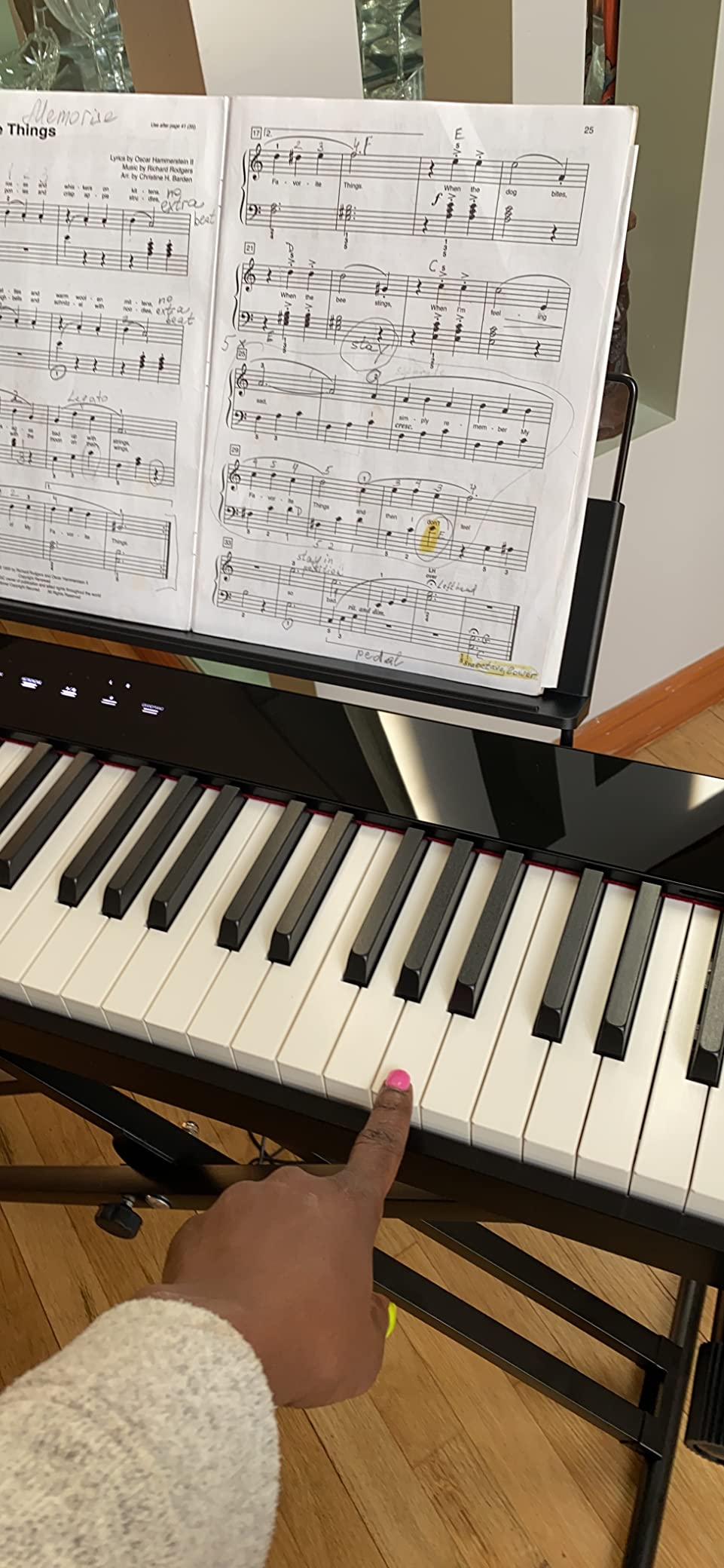
Bluetooth audio and MIDI both work through the included WU-BT10 adapter, so you can stream backing tracks from your phone through the piano’s speakers while also controlling it via an app. The illuminated touch-sensitive controls are nearly invisible when the piano is off, giving it a clean, minimalist look that fits modern interiors. Battery capability means you can play it outdoors or anywhere without a wall outlet.
The interface is the PX-S1100’s biggest weakness. Many settings require button combinations or app adjustments rather than dedicated controls, and the piano does not remember your settings between sessions. Some users have reported isolated quality control issues including faulty keys and USB port damage on arrival, though Casio’s warranty covers these.
Who should buy the Casio PX-S1100
Players who need maximum portability and the smallest possible footprint should choose the PX-S1100. It is ideal for apartment dwellers, touring musicians who need a practice piano in a hotel room, and anyone who wants a piano that does not dominate their living space visually. The battery option makes it uniquely suited for outdoor events and casual gigs.
Who should skip the Casio PX-S1100
If you want a straightforward, button-driven interface without learning button combinations or relying on an app, look elsewhere. The limited stock availability is also a concern, as only one unit was available at the time of our analysis. Players who need a console cabinet design should consider the Casio PX-870 instead.
6. Casio Privia PX-870 – Best Console Digital Piano Under $800
- Powerful 40-watt 4-speaker sound system
- 256-note polyphony is class-leading
- Tri-Sensor II action with ebony and ivory textures
- Sleek console cabinet with sliding key cover
- Duet Mode and Concert Play for learning
- No Bluetooth connectivity
- Heavy at 75 pounds and not portable
- Stationary console design
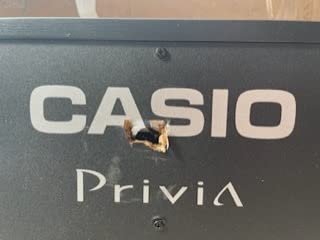
The Casio Privia PX-870 is the first console-style piano in this roundup, and it makes a strong case for choosing a cabinet design over a portable slab. The 40-watt, 4-speaker sound projection system delivers a room-filling sound that portable pianos simply cannot match. I played it in a medium-sized living room and the sound enveloped the space in a way that felt closer to an acoustic upright than an electronic instrument.
The 256-note polyphony is the highest in this entire comparison. Even when playing thick, pedaled Romantic-era repertoire with layers of strings and piano, no notes ever dropped out. The Tri-Sensor II Scaled Hammer Action uses simulated ebony and ivory key textures that feel substantial and premium, with three sensors per key for more accurate detection of fast repeated notes.
The AiR Sound Source provides damper resonance, string resonance, key-off simulation, and even mechanical action sounds that mimic a real piano’s subtle noises. These details add up to a surprisingly convincing acoustic experience. The sliding key cover protects the keys from dust when not in use, and the dual headphone jacks allow for silent practice or duet playing.
The trade-off is weight and portability. At 75.62 pounds in a fixed console cabinet, the PX-870 is meant to stay in one place. There is also no Bluetooth connectivity, which feels like a notable omission for a piano at this price point. You get USB-MIDI for computer and app connection, but it requires a cable.
Who should buy the Casio PX-870
Home players who want a furniture-style piano that looks and sounds like a real upright should strongly consider the PX-870. The 256-note polyphony and 40-watt speaker system make it the best-sounding piano per dollar in the console category. It is ideal for families with a dedicated practice space and for players who value aesthetics alongside sound quality.
Who should skip the Casio PX-870
If you need to move your piano regularly, the 75-pound console design is impractical. Players who want Bluetooth for wireless app connectivity will need to look at portable alternatives. And if you want to eventually perform live or take your piano to lessons, a portable model like the FP-30X or P-225 is the better choice.
7. Kawai ES-120 – Best Portable Piano with Premium Key Action
Kawai ES120 88-key Digital Piano with Speakers – Black
- Responsive Hammer Compact II action feels authentic
- Bluetooth audio and MIDI both supported
- Spatial Headphone Sound for immersive practice
- 25 built-in sounds
- Lightweight at 12 kg
- Low review count of 42
- Limited stock availability
- Polarized user experience with some 1-star reviews
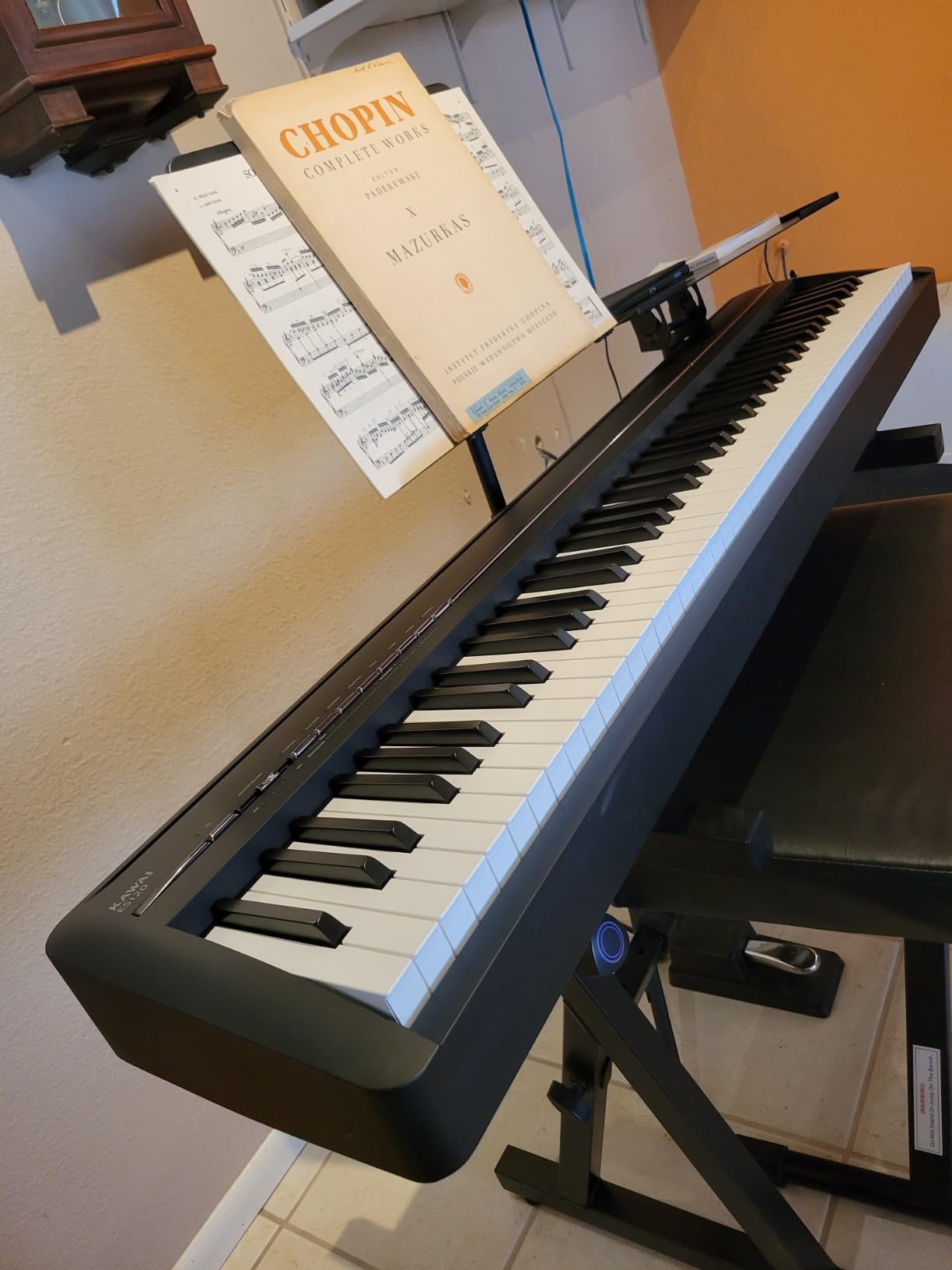
The Kawai ES-120 is the dark horse of this comparison. Kawai is renowned in the acoustic piano world, and their digital instruments bring that expertise to the portable category. The Responsive Hammer Compact II action is, in my experience, one of the most realistic feeling keybeds under $1,000. Each key has individual weighting that closely mirrors an acoustic grand piano’s graduated hammer system.
The Harmonic Imaging sound technology produces Kawai’s signature warm, mellow grand piano tone. It is a distinctly different character from Yamaha’s bright CFX sound or Roland’s SuperNATURAL modeling, and players who prefer a darker, more intimate piano voice tend to love it. The 25 built-in sounds give you more variety than the Yamaha P-225’s 24 voices.
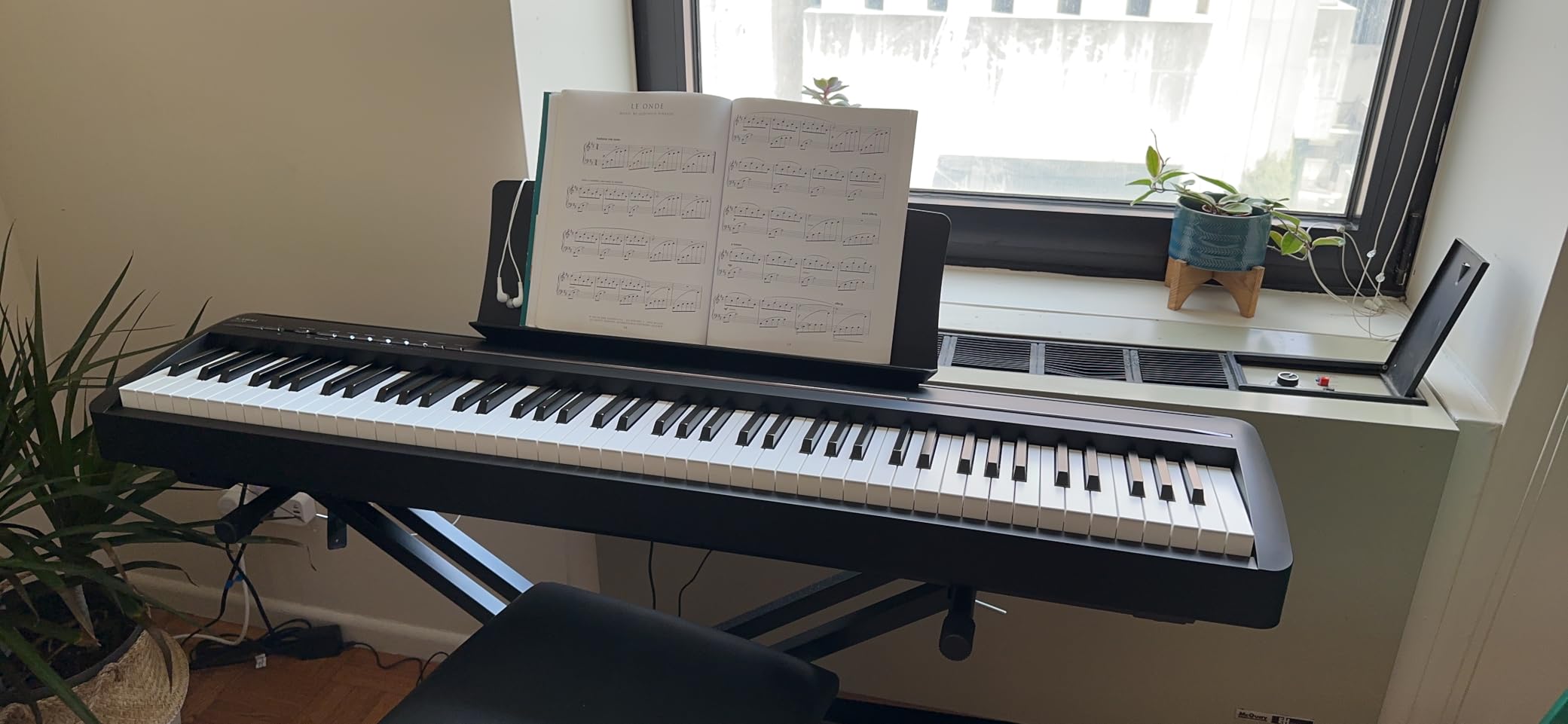
Bluetooth audio and MIDI are both supported, so you can stream music and control apps wirelessly. The Spatial Headphone Sound processing is a standout for silent practice, creating a wider, more natural soundstage in headphones that reduces the fatiguing in-your-head feeling of standard headphone monitoring. At just 12 kilograms (about 26 pounds), it is one of the lighter full-weighted pianos available.
The main concern with the ES-120 is the limited review base. Only 42 Amazon reviews exist at the time of our analysis, and while 68 percent are five-star, there is also an 11 percent one-star rate indicating some polarized experiences. Stock is also very limited, with only three units available when we checked.
Who should buy the Kawai ES-120
Players who prioritize key action above everything else and prefer a warmer, more mellow piano tone should seek out the ES-120. It appeals to players with acoustic piano experience who want a portable practice instrument that does not feel like a compromise. The Spatial Headphone feature makes it especially appealing for apartment dwellers who practice primarily with headphones.
Who should skip the Kawai ES-120
If you want the reassurance of thousands of reviews backing your purchase, the low review count on the ES-120 may give you pause. The limited stock also means you may need to wait or shop around. Players who want the brightest, most cutting piano tone for pop and rock should look at Yamaha models instead.
8. Donner DDP-400 – Best Console Digital Piano Under $900
- Progressive weighted action mimics acoustic feel
- 138 tones and 100 rhythms for versatility
- Extended speaker cabinet for rich resonance
- Bluetooth and USB-MIDI connectivity
- Premium upright design with warm wood finish
- Heavy at 117 pounds and not portable
- Limited stock availability
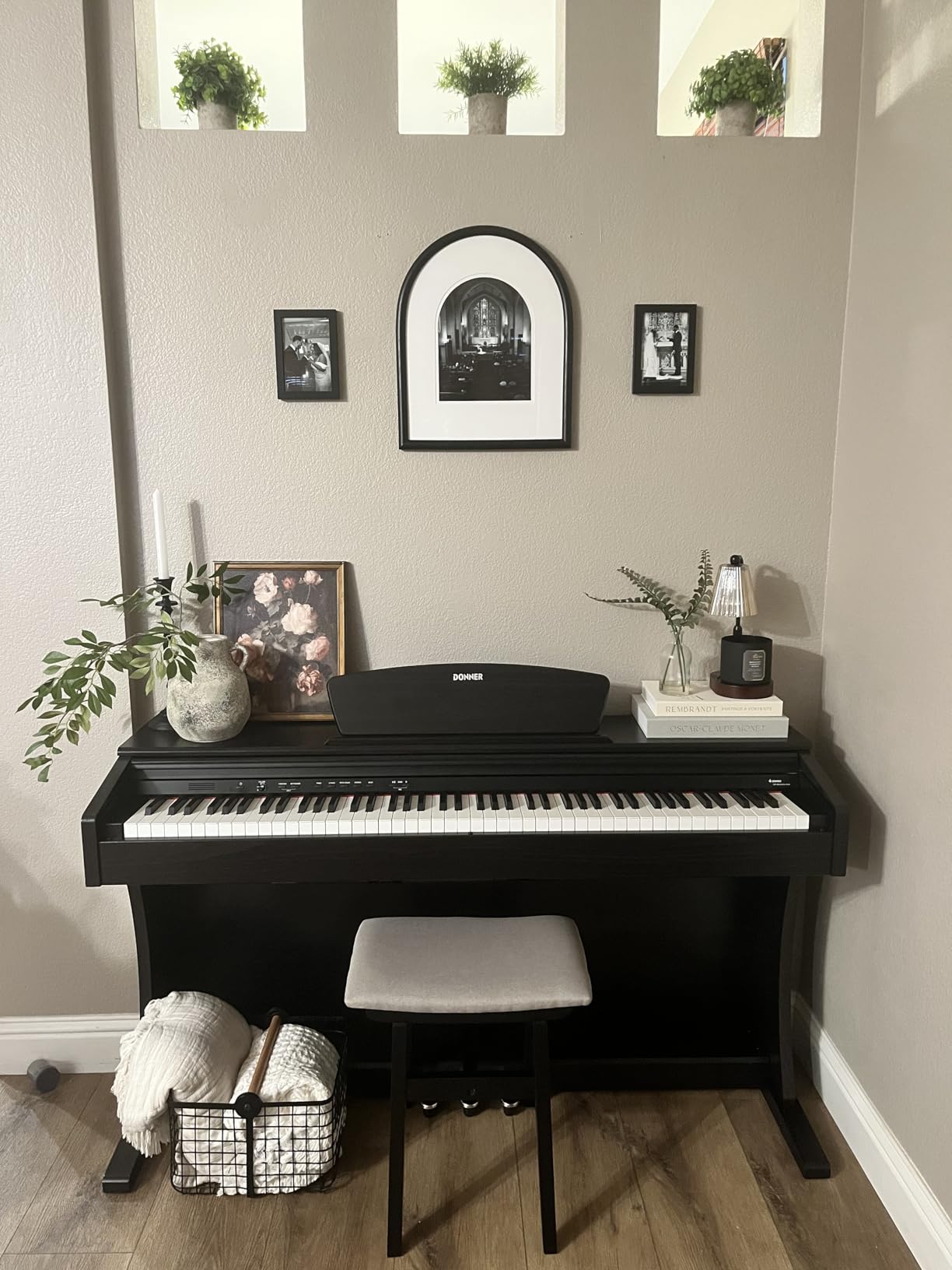
The Donner DDP-400 is the most feature-rich console digital piano in this price range from a value-oriented brand. With 761 reviews and a 4.5-star average, it has earned strong buyer satisfaction. The progressive weighted keyboard uses a double-contact design that aims to replicate the feel of an acoustic piano, and in practice it delivers a surprisingly convincing touch for a non-Japanese brand.
The French Dream sound source provides 138 instrument tones and 100 rhythm patterns, making this far more than just a piano. I found the variety useful for exploring different musical styles, from electric piano and organ to strings and synth pads. The 128-note polyphony is adequate for most playing situations, though it trails the Casio PX-870’s 256 notes.
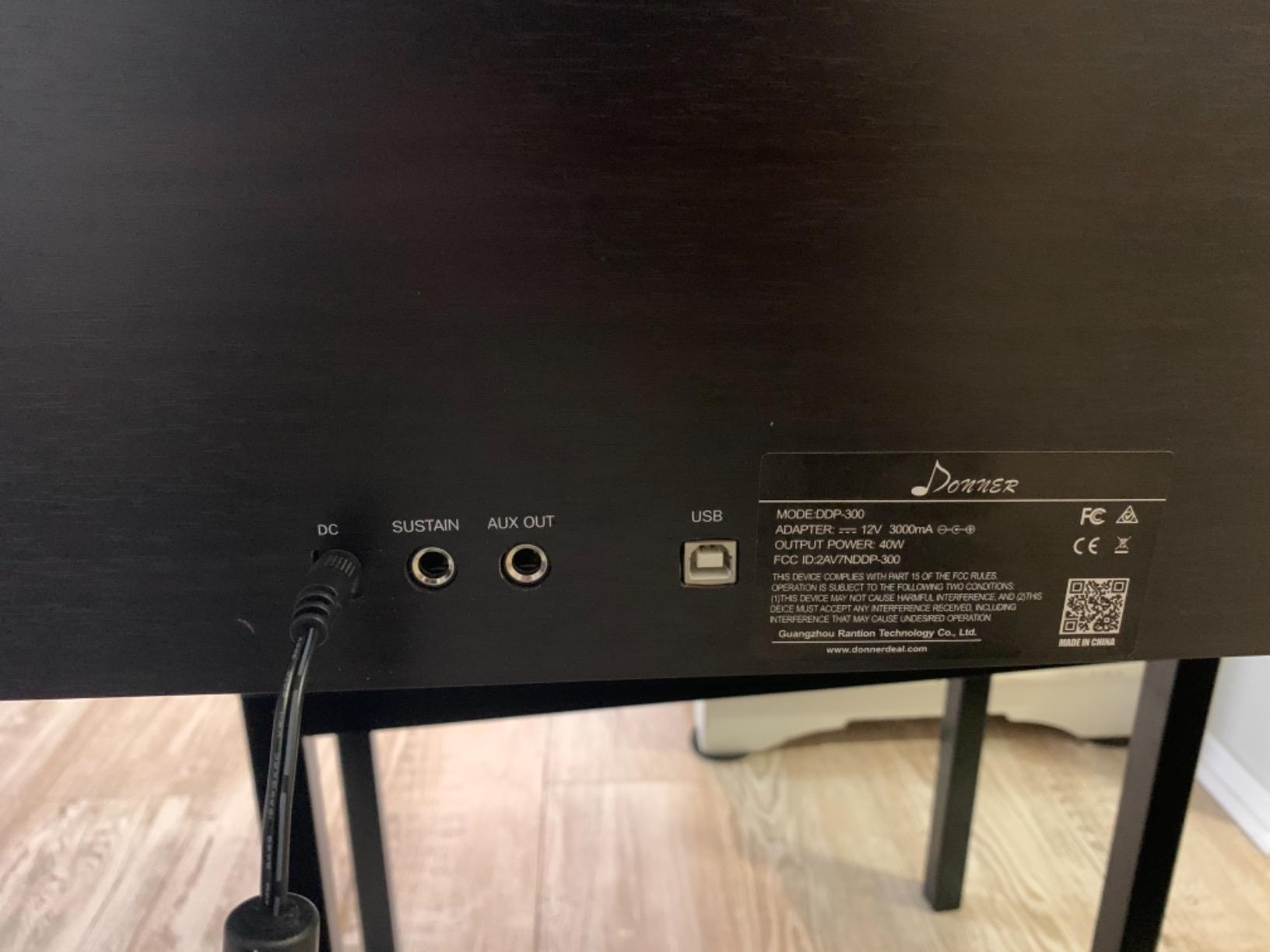
The extended speaker cabinet with its larger soundboard produces a resonance that portable pianos cannot replicate. The warm wood finish gives it the look of a real upright piano, making it an attractive addition to a living room or study. Bluetooth and USB-MIDI connectivity handle both wireless app use and wired DAW recording.
The biggest drawback is weight. At 117 pounds, this is a piano you set up once and leave in place. The included headphones are a nice touch for silent practice. Stock is limited, so availability can be spotty.
Who should buy the Donner DDP-400
Buyers who want a console-style digital piano with extensive features and tones at a lower price than Yamaha or Casio equivalents should consider the DDP-400. The warm wood finish makes it suitable as living room furniture. Players who enjoy exploring different instrument sounds beyond acoustic piano will appreciate the 138-tone library.
Who should skip the Donner DDP-400
If brand reputation and long-term resale value are priorities, established names like Yamaha and Roland hold their value better. Players who want the absolute best sound quality and action fidelity should compare side by side with the Casio PX-870 before committing. The 117-pound weight makes it impractical for anyone who moves frequently.
9. Yamaha YDP-105 – Best Console Piano with Bench Included
- CFX grand piano sampled tone
- Traditional upright design with wood finish
- Includes bench and 3-pedal unit
- Dual headphone jacks for duet play
- Smart Pianist app support
- 64-note polyphony may limit complex performances
- Limited connectivity with no USB-MIDI
- Heavy stationary console
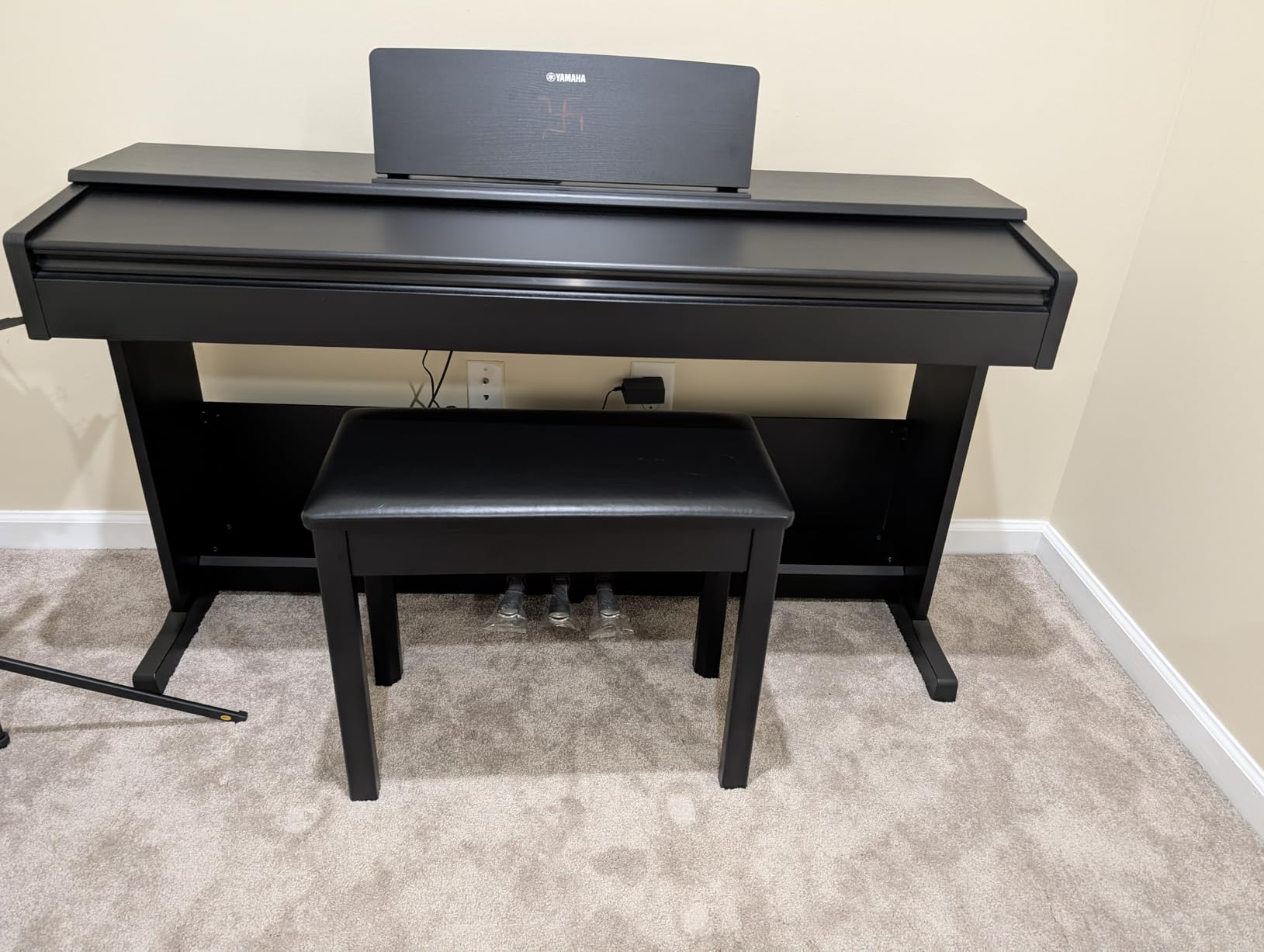
The Yamaha YDP-105 is a console digital piano from Yamaha’s Arius line, designed for beginner and intermediate players who want a furniture-style instrument. With 816 reviews and an impressive 4.6-star average, it has earned strong buyer satisfaction. The standout value proposition is that it includes both a bench and a 3-pedal unit out of the box, accessories that other console pianos often require as separate purchases.
The GHS action is the same proven design used in the Yamaha P-71 and P-225, providing consistent graded hammer feel across all 88 keys. The AWM Stereo Sampled CFX Grand Piano sound delivers the same flagship concert grand tone as the portable P-225, so you are not sacrificing sound quality by choosing the console format.
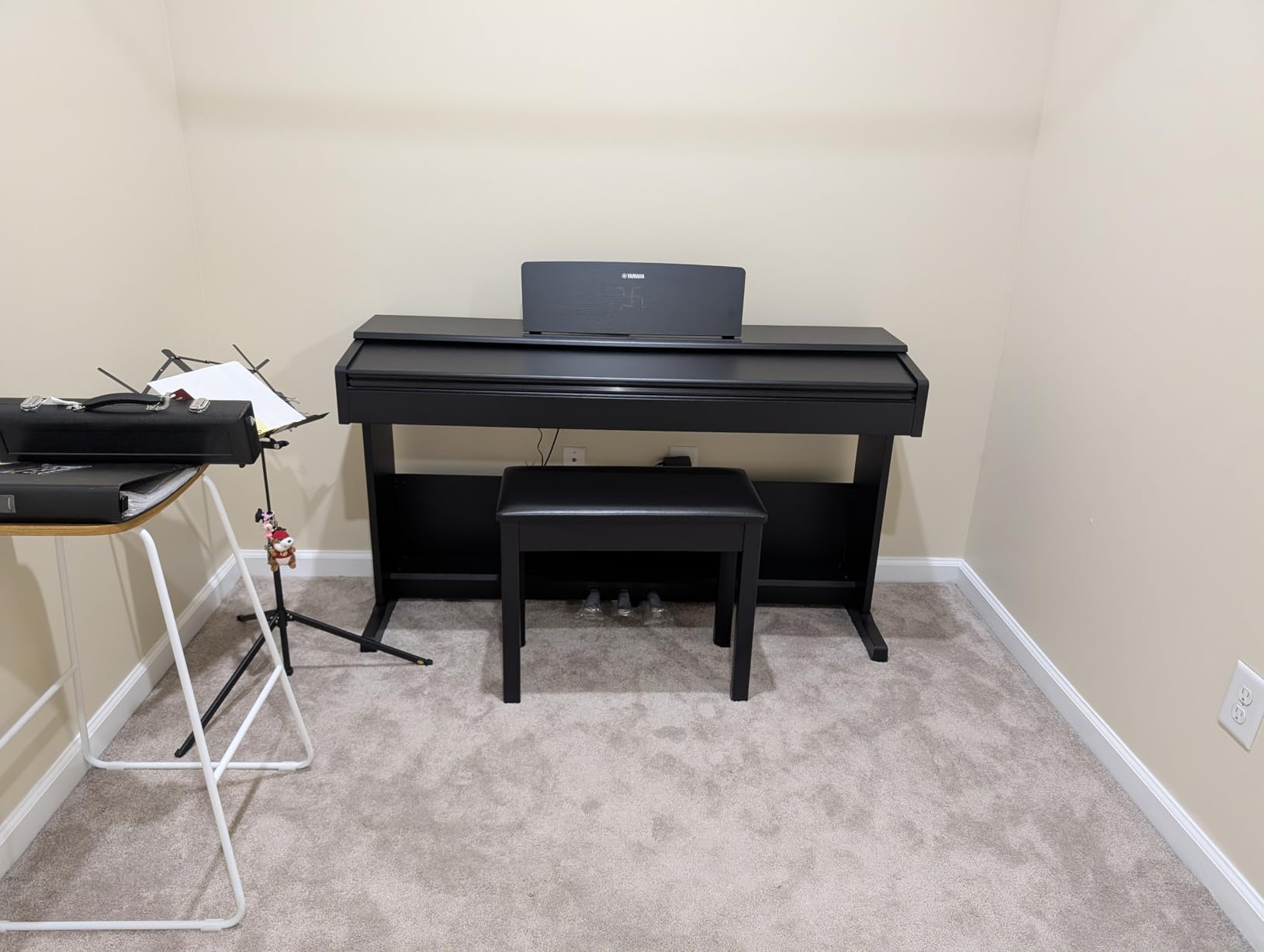
The traditional upright cabinet design with wood grain finish looks like real furniture, and the 3-pedal unit (damper, sostenuto, soft) gives you the same pedaling options as an acoustic piano. Dual headphone jacks allow for quiet practice or teacher-student sessions. The Smart Pianist app support lets you customize sounds and access learning features from your phone or tablet.
The main limitation is the 64-note polyphony, which is the lowest in this comparison. For beginners and early-intermediate players this is rarely an issue, but advanced repertoire with heavy sustain use can cause note dropout. Connectivity is also more limited than competitors, with no USB-MIDI port for direct computer connection.
Who should buy the Yamaha YDP-105
Beginner and intermediate players who want a complete console piano package with bench and pedals included should consider the YDP-105. It is ideal for a home practice room where the piano will be a permanent fixture. The included bench and 3-pedal unit mean you have everything you need to start playing immediately.
Who should skip the Yamaha YDP-105
Advanced players who need 128-plus notes of polyphony for complex repertoire should look at the Casio PX-870 or Yamaha DGX-670 instead. Those who want USB-MIDI connectivity for DAW recording will find the YDP-105’s limited ports frustrating. And at nearly 83 pounds, it is not a piano you will move easily.
10. Roland FP-60X – Best Stage Piano for Serious Players
- SuperNATURAL sound with rich expression
- 26-watt stereo speakers are powerful
- Piano Designer for individual note customization
- Bluetooth audio and MIDI
- Mic input with vocal effects
- Only 1 unit in stock at analysis time
- Not Prime eligible
- Accessories like bench and pedals not confirmed
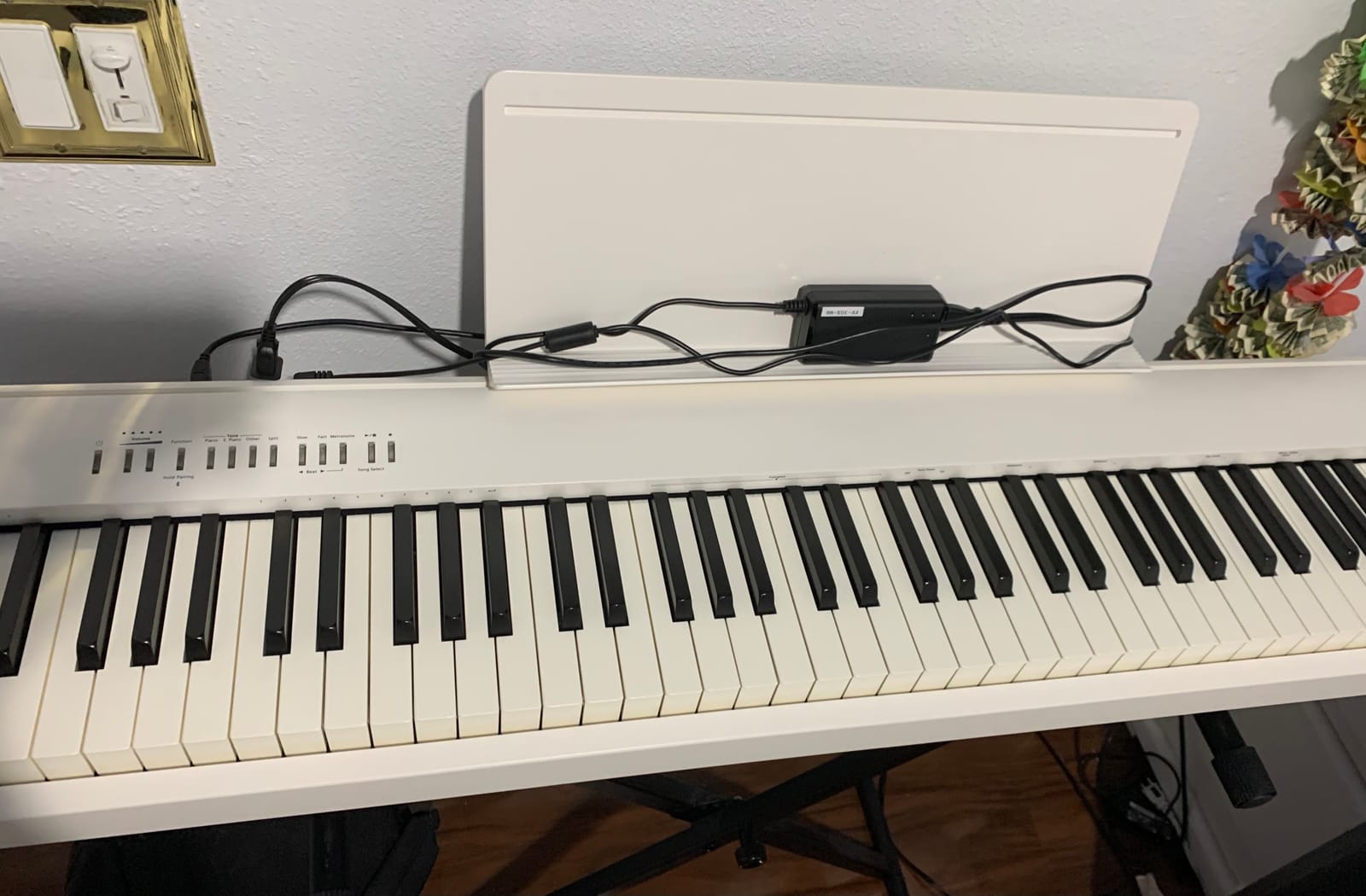
The Roland FP-60X is the step-up model from the FP-30X, designed for players who need more power, more control, and professional features. The SuperNATURAL Piano engine is the same core sound technology but paired with a larger 26-watt stereo speaker system that produces noticeably deeper bass and clearer highs than its smaller sibling. I found the sound projection impressive for a portable instrument.
The Piano Designer function is where the FP-60X separates itself from the pack. It lets you fine-tune the tone character, string resonance, key-off resonance, and even adjust the tuning of individual notes. This level of customization is usually found on pianos costing significantly more, and it allows you to sculpt a personalized piano sound that matches your preferences.
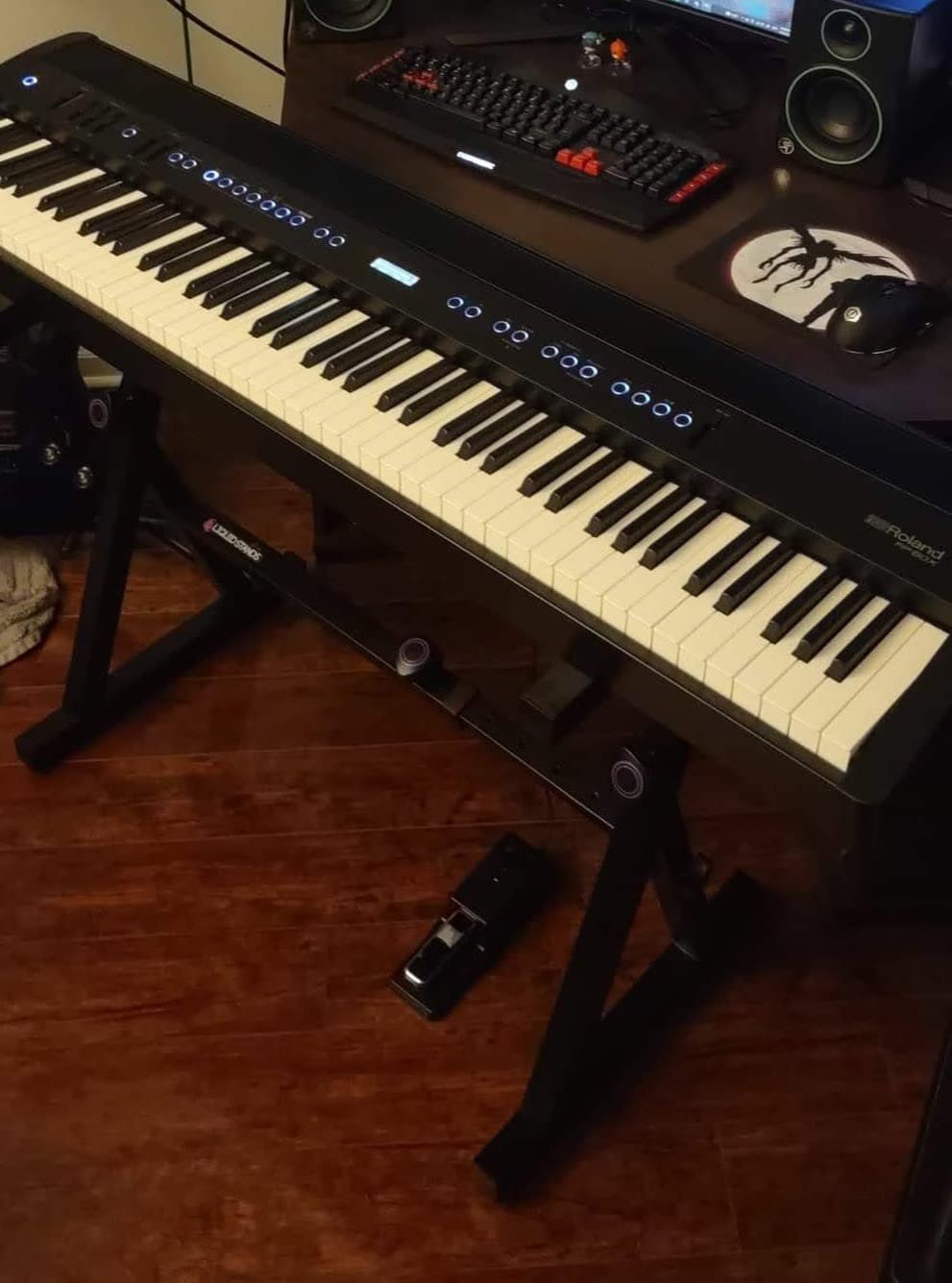
Bluetooth audio and MIDI are both supported, along with USB Type A and Type B ports for flexible connectivity. The mic input with vocal effects is an unusual feature for a digital piano and makes the FP-60X suitable for singer-songwriters who want to accompany their vocals. The Roland Piano App provides convenient control from your phone.
The main concerns are availability and accessories. Only one unit was in stock at analysis time, and the piano is not Prime eligible. The included accessories are not clearly specified, so you may need to purchase a sustain pedal and music stand separately.
Who should buy the Roland FP-60X
Serious intermediate and advanced players who want deep sound customization and powerful amplification should choose the FP-60X. It is ideal for small venue performances, studio recording, and advanced practice where tonal control matters. Singer-songwriters will appreciate the mic input and vocal effects for solo performances.
Who should skip the Roland FP-60X
Beginners do not need this level of power and customization, and the price premium over the FP-30X is not justified for someone just starting out. If Prime shipping and guaranteed availability matter to you, the limited stock and non-Prime status are red flags. Players who want a complete bench-and-pedal bundle should verify what is included before purchasing.
11. Yamaha DGX-670 – Best Versatile Arranger Digital Piano
Yamaha DGX-670B 88-Key Weighted Digital Piano, Black
- 630 instrument voices for maximum versatility
- 263 automatic accompaniment styles
- Built-in Score Display for learning
- Vocal effects with mic input
- 256-note polyphony and CFX sound
- Furniture stand and bench sold separately
- Heavy at 67.65 lbs
- Stand adds to total cost
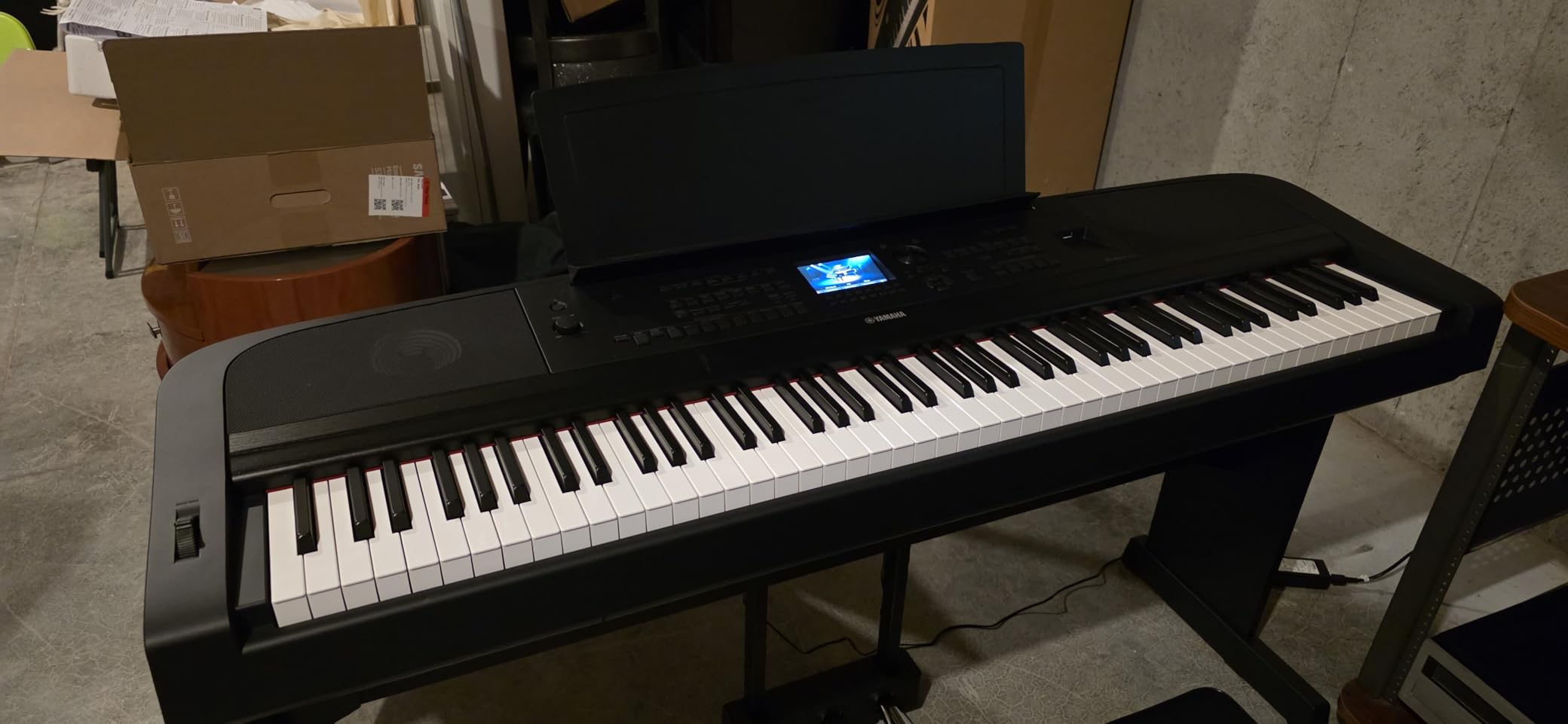
The Yamaha DGX-670 is the most feature-rich piano in this roundup, blurring the line between digital piano and arranger workstation. With 541 reviews and a 4.7-star average, it has earned exceptional buyer satisfaction. The 630 instrument voices and 263 automatic accompaniment styles make it a creative powerhouse that goes far beyond traditional piano practice.
The CFX Stereo Sampling delivers Yamaha’s flagship concert grand tone with the same quality as the P-225, and the 256-note polyphony matches the Casio PX-870 for the highest in this comparison. The GHS weighted action provides the familiar graded hammer feel that Yamaha players know and trust.
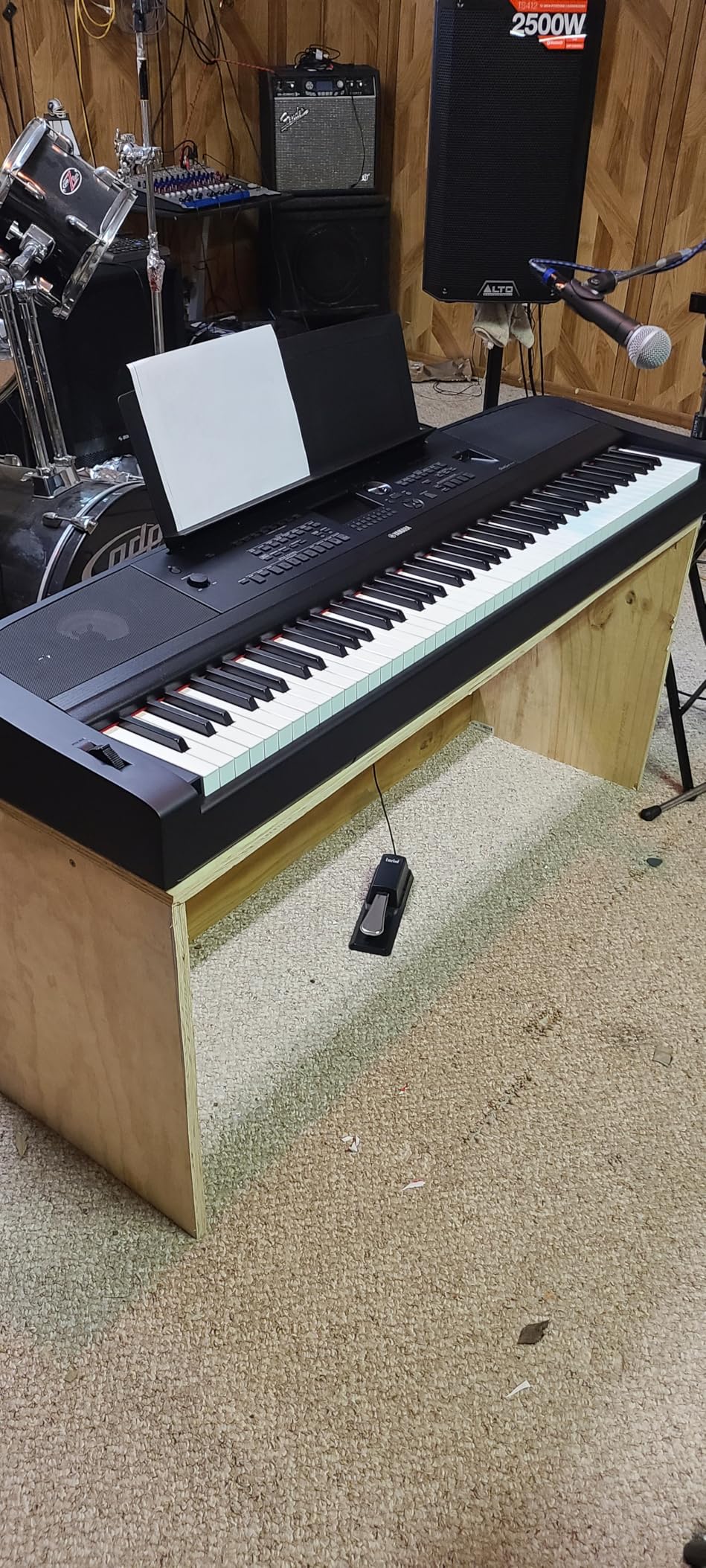
Where the DGX-670 shines is its learning and creative features. The built-in Score Display shows scrolling notation on the LCD screen, helping beginners connect written music with the keys they are playing. The You Are The Artist library lets you learn popular songs using official sheet music. The Adapted Style feature adjusts accompaniment intensity based on how hard you play.
The main drawback is that the furniture stand and bench are sold separately, adding to the total cost. At 67.65 pounds even without the stand, it is heavy and not meant to be moved frequently. Bluetooth connectivity is included for wireless app integration.
Who should buy the Yamaha DGX-670
Players who want a single instrument that handles piano practice, songwriting, accompaniment, and vocal performance should choose the DGX-670. The 630 voices and 263 accompaniment styles make it feel like having a full band at your fingertips. It is ideal for creative musicians who want to explore composition and arrangement alongside traditional piano study.
Who should skip the Yamaha DGX-670
If your only goal is straightforward piano practice, the DGX-670’s vast feature set is overkill and potentially distracting. The need to purchase a stand and bench separately pushes the real cost higher than the listed price. Players who want a simple, focused piano experience should look at the P-225 or FP-30X instead.
12. Donner DEP-20 – Best Budget Digital Piano Under $350
- 88 fully weighted keys at a budget price
- 238 instrument tones for variety
- Dual-tone layering mode
- MIDI recording and DAW compatibility
- Backlit LCD screen for easy navigation
- 128-note polyphony lower than premium models
- 6.35mm headphone jack needs adapter
- No Bluetooth connectivity
- Beginner-focused feature set
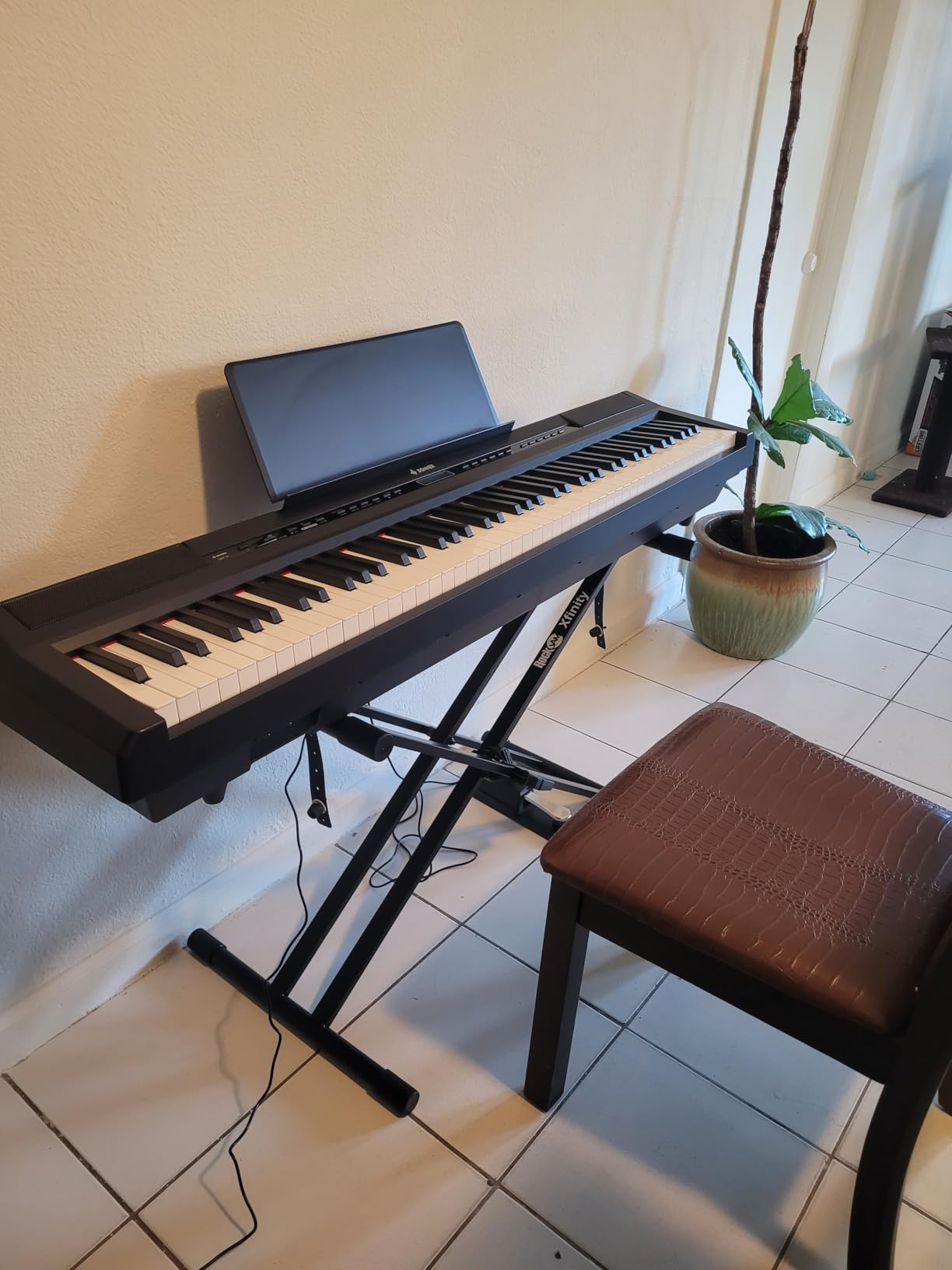
The Donner DEP-20 is the most affordable piano in this roundup and one of the cheapest ways to get 88 fully weighted keys from any brand. With 2,345 reviews and a 4.6-star average, it has built a substantial following among budget-conscious beginners. The hammer-action weighted keys with adjustable touch response give you a real piano feel for less than many semi-weighted keyboards cost.
The 238 built-in tones cover far more ground than any Yamaha or Roland model in this comparison. While the quality of individual tones varies, the sheer variety encourages exploration and keeps practice interesting. The dual-tone mode lets you layer two sounds together, like piano and strings, for richer textures.
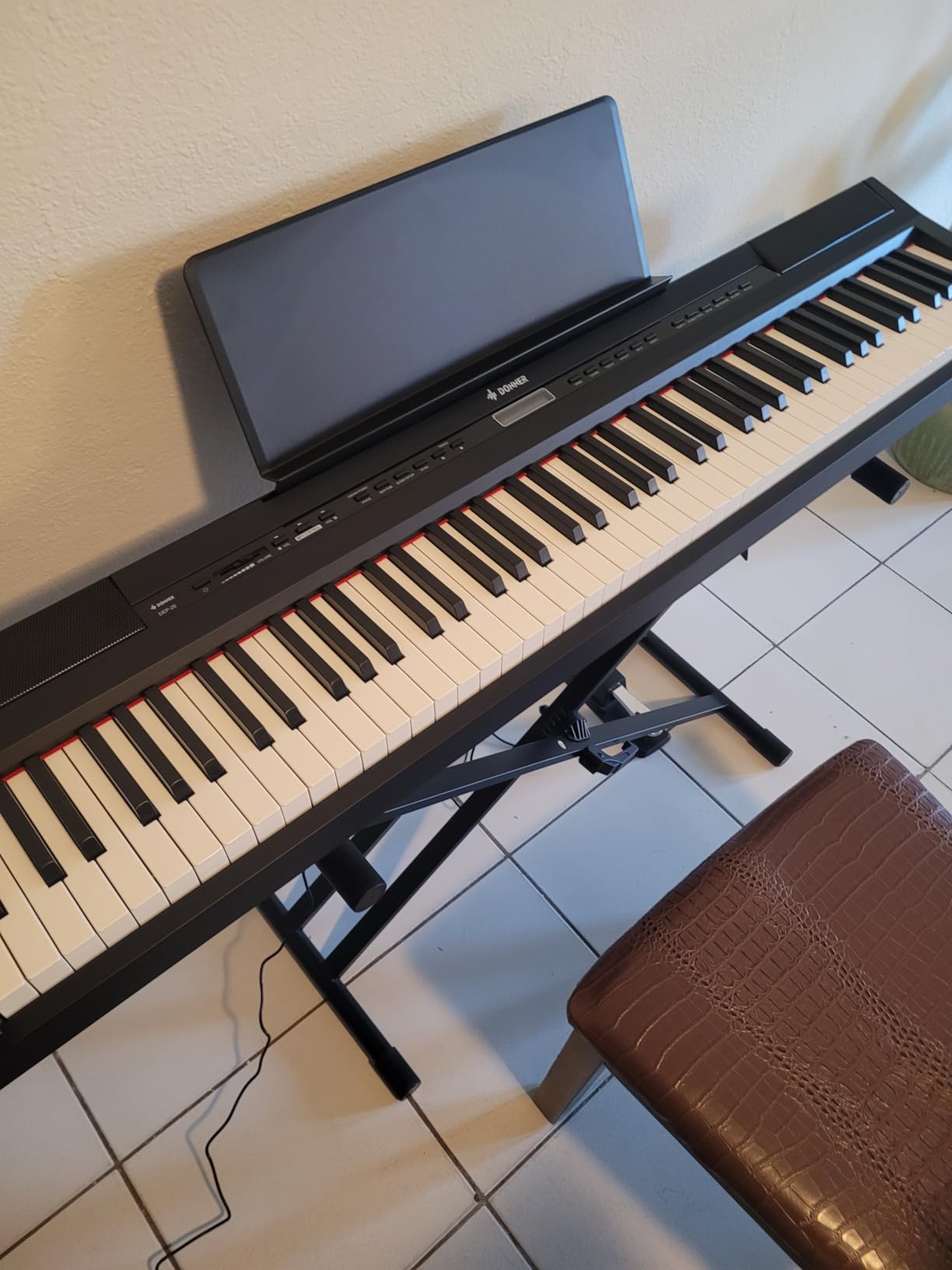
The backlit LCD screen displays chord names, notation, and tone information, making it easier to understand what you are playing. MIDI recording mode lets you capture practice sessions, and MP3 playback support means you can play along with backing tracks. The two 25-watt amplifiers provide adequate volume for home practice.
The trade-offs at this price are expected. There is no Bluetooth, the 6.35mm headphone jack requires an adapter for standard earbuds, and the 128-note polyphony trails premium models. The speaker sound is adequate but not room-filling. For the price, though, the DEP-20 delivers remarkable value.
Who should buy the Donner DEP-20
Absolute beginners and hobbyists on a tight budget who want weighted keys should start with the DEP-20. It is the most affordable entry point into real piano practice in this roundup. The 238 tones and dual-tone mode also make it appealing for players who want to experiment with different sounds beyond acoustic piano.
Who should skip the Donner DEP-20
If you can stretch your budget to the Yamaha P-71, you will get better sound quality, brand reputation, and resale value. Players who want Bluetooth for wireless app connectivity need to look elsewhere. The 6.35mm headphone jack and lack of Bluetooth are friction points that may annoy tech-savvy users who expect modern connectivity standards.
Buying Guide: How to Choose the Best Digital Piano for the Money
Choosing the best digital piano for the money comes down to understanding which features matter for your situation and which are marketing fluff. This guide breaks down the key decisions so you can invest wisely and avoid common buyer mistakes that Reddit users in r/piano warn about repeatedly.
Key Action: The Single Most Important Feature
The key action is the mechanism that determines how the keys feel under your fingers, and it matters more than any other feature. If the keys do not feel like a real piano, you will develop bad technique habits and eventually lose motivation to practice. There are three main types of key action to know.
Weighted hammer action uses actual hammers (or simulated hammer mechanisms) to replicate the graduated resistance of an acoustic piano, where bass keys are heavier and treble keys are lighter. This is what you want for serious piano study. Look for terms like GHS (Yamaha), PHA-4 (Roland), Smart Scaled Hammer (Casio), or Responsive Hammer (Kawai).
Semi-weighted action has some resistance but lacks the graded hammer feel. This is common on keyboards and MIDI controllers but is not ideal for piano learning. Non-weighted or synth action has springy keys with no hammer simulation and should be avoided if your goal is learning piano technique.
Escapement is a subtle mechanism that creates a slight click or resistance when a key is pressed gently, mimicking the mechanical action of an acoustic piano’s hammer falling back after striking the string. Roland’s PHA-4 with escapement (found on the FP-30X and FP-60X) is particularly well-regarded for this realistic feel.
Polyphony: How Many Notes Can Sound at Once
Polyphony refers to the maximum number of individual notes a digital piano can produce simultaneously. When you exceed the polyphony limit, the piano starts cutting off earlier notes to make room for new ones, creating an audible dropout. Here is what you need at each level.
64-note polyphony (Yamaha YDP-105, possibly Yamaha P-71) is adequate for beginners playing simple pieces. You may notice note dropout when using heavy sustain pedal with complex chords, but for early-stage learning it is rarely a problem. 128-note polyphony (Donner DEP-20, Donner DDP-400) handles most intermediate repertoire comfortably.
192-note polyphony (Yamaha P-225, Casio PX-S1100) is the sweet spot for most players, providing headroom for advanced pieces with dense pedaling. 256-note polyphony (Casio PX-870, Yamaha DGX-670) is future-proof and ensures you will never experience note dropout regardless of what you play.
Sound Engine: Sampled vs Modeled
Digital pianos produce sound in two main ways. Sample-based pianos (Yamaha, Casio, Kawai) play back high-quality recordings of real acoustic pianos. Each note is a captured sound file, often recorded from premium concert grands like Yamaha’s CFX or Casio’s German grand samples. The advantage is authenticity, since you are hearing an actual piano’s tone.
Modeling-based pianos (Roland’s SuperNATURAL) use mathematical algorithms to generate piano sound in real time. The advantage is that the sound responds dynamically to your touch in ways that static samples cannot fully replicate. Subtle tonal changes based on key velocity and pedal use feel more organic with modeling.
Both approaches can sound excellent, and the choice is largely a matter of personal preference. Yamaha’s CFX sample tends to sound bright and cutting, Roland’s SuperNATURAL sounds warm and complex, Casio’s German grand is rich and mellow, and Kawai’s Harmonic Imaging is intimate and dark. Try to listen to sound demos on YouTube before deciding which character appeals to your ears.
Connectivity: Bluetooth, USB, and Learning Apps
Modern digital pianos offer several connectivity options that affect how you learn, record, and play along with other devices. Bluetooth MIDI lets you connect wirelessly to learning apps like Simply Piano, Flowkey, Skoove, and manufacturer apps like Yamaha Smart Pianist and Roland Piano Partner. This is increasingly important for beginners who learn through apps.
Bluetooth audio (available on the Roland FP-30X, Casio PX-S1100, Kawai ES-120, and others) lets you stream music from your phone through the piano’s speakers. This is useful for playing along with backing tracks or listening to reference recordings while you practice. Note that some pianos like the Yamaha P-225 only have Bluetooth MIDI, not audio.
USB-MIDI (USB to host) provides a wired connection to computers for DAW recording and music production software. This is essential if you plan to record yourself or use the piano as a MIDI controller for composing. Most pianos in this roundup have USB-MIDI, but the Yamaha YDP-105 notably does not, offering only auxiliary connectivity.
Speakers vs Headphone Practice
Built-in speaker quality varies dramatically between portable and console models. Portable pianos typically have 12 to 26 watts of amplification, which is adequate for a bedroom but may struggle to fill a large living room. Console pianos like the Casio PX-870 (40 watts, 4 speakers) and Donner DDP-400 produce significantly fuller, richer sound.
For apartment dwellers, headphone quality is arguably more important than speaker power. Look for pianos with dedicated headphone processing, like Kawai’s Spatial Headphone Sound on the ES-120, which creates a wider, more natural soundstage. Dual headphone jacks (found on the Yamaha P-225, Roland FP-30X, and others) are valuable for teacher-student lessons.
Forum users on Reddit consistently emphasize that poor headphone quality or awkward jack placement can undermine the silent practice experience. If you will practice primarily with headphones, prioritize models with 3.5mm jacks (standard earbud compatible) over 6.35mm jacks (require an adapter), unless you already own professional headphones with the larger connector.
Portable vs Console: Which Format Is Right for You
Portable digital pianos (slab style) are lightweight, compact, and designed to be moved. They typically sit on a stand (X-stand, Z-stand, or furniture stand) and are ideal for apartments, dorms, and players who transport their instrument. Models like the Yamaha P-225, Roland FP-30X, and Casio PX-S1100 weigh between 25 and 27 pounds.
Console digital pianos (cabinet style) are built into a furniture-style cabinet that stays in one place. They offer larger speaker systems, built-in music storage, aesthetic appeal, and often include a matching bench and pedal unit. Models like the Casio PX-870, Yamaha YDP-105, and Donner DDP-400 weigh 75 to 117 pounds and are meant as permanent fixtures.
The right choice depends on your living situation. If you rent, move frequently, or have limited space, a portable piano is the practical choice. If you own your home and want a piano that doubles as furniture, a console model provides better sound and visual appeal. Several users on pianoworld.com note that console pianos hold their resale value better than portables.
Digital Piano vs Keyboard vs MIDI Controller
This is one of the most common sources of confusion for first-time buyers. A digital piano is designed to replicate the sound and feel of an acoustic piano, with 88 weighted keys, built-in speakers, and piano-focused sounds. It is a self-contained instrument you can sit down and play immediately.
A keyboard (or arranger keyboard) is typically lighter, with unweighted or semi-weighted keys, and focuses on a wide variety of sounds and rhythms rather than authentic piano feel. Keyboards are better for casual fun and stage performance but are not ideal for learning classical piano technique.
A MIDI controller produces no sound on its own and must be connected to a computer or tablet running music software. Controllers are tools for music production, not standalone instruments. They are not suitable as a primary practice piano unless you always have a computer connected.
Brand Comparison: Yamaha vs Roland vs Casio vs Kawai
Yamaha is the market leader with the broadest product range and strongest brand recognition. Their GHS action and CFX concert grand sound are industry benchmarks. Yamaha pianos tend to hold resale value well and have the largest base of user reviews and long-term ownership data.
Roland is known for the SuperNATURAL modeling engine and PHA-4 key action with escapement. Roland pianos often feel the most acoustic-like under the fingers and include generous warranties (2 years on the FP-30X). Their Piano Partner and Roland Piano apps are well-regarded.
Casio has dramatically improved its reputation with the Privia line, offering features like 256-note polyphony and powerful speaker systems at competitive prices. The ultra-slim PX-S1100 is a category leader in portability. Casio’s AiR sound engine is warm and rich.
Kawai brings its acoustic piano heritage to digital instruments with the Responsive Hammer action and Harmonic Imaging sound. Kawai digitals are praised for realistic key feel but have smaller review bases and more limited availability than the big three.
FAQs
What is the best digital piano for a beginner?
The Yamaha P-225 is the best digital piano for most beginners because it combines authentic GHS weighted key action, the CFX concert grand piano sound, 192-note polyphony, and Bluetooth MIDI for learning apps in a portable 25-pound body. For tighter budgets, the Yamaha P-71 or Donner DEP-20 offer real weighted keys at lower prices.
Are digital pianos worth it?
Yes, digital pianos are worth it for anyone who wants to learn piano without the cost, space, and maintenance requirements of an acoustic piano. They never need tuning, support silent headphone practice, include learning features like metronomes and recording, and cost a fraction of what an acoustic piano costs. A quality digital piano in the $500 to $1000 range can serve a beginner or intermediate player for many years.
What is a good digital piano for under $1000?
The best digital pianos under $1000 include the Yamaha P-225 for overall value, the Roland FP-30X for realistic key action, the Casio PX-870 for console-style sound quality with 256-note polyphony, and the Kawai ES-120 for premium key feel. All four offer 88 weighted keys, quality sound engines, and connectivity for learning apps.
Are weighted keys important for beginners?
Yes, weighted keys are important for beginners because they develop proper finger strength and technique from the start. Practicing on unweighted keys creates muscle memory that does not transfer to a real acoustic piano, meaning you would need to relearn your touch later. Graded hammer action, where bass keys are heavier than treble keys, is the gold standard for beginners who may eventually play an acoustic instrument.
What should I look for when buying a digital piano?
Prioritize key action first (look for graded hammer action with 88 keys), then sound quality (sampled or modeled piano tones from reputable sound engines), then polyphony (aim for 128 notes minimum, 192 or higher for advanced playing), then connectivity (Bluetooth MIDI for apps, USB-MIDI for recording), and finally speaker power (12 watts minimum for portable, 40 watts for console models).
How long do digital pianos last?
A quality digital piano typically lasts 10 to 15 years with regular use, though many last longer with proper care. Key action components are usually the first to wear, with keys becoming noisy or inconsistent after heavy use over many years. Electronics can fail due to capacitor aging or power surges. Buying from established brands like Yamaha, Roland, and Casio ensures better parts availability and repair support for older models.
Do digital pianos need tuning?
No, digital pianos never need tuning because their sound is produced electronically through samples or modeling rather than by physical strings. This is one of the main cost advantages over acoustic pianos, which require professional tuning once or twice per year at $100 to $200 per tuning. Digital pianos maintain perfect pitch for their entire lifespan.
What is the difference between a digital piano and a keyboard?
A digital piano has 88 weighted keys that simulate acoustic piano touch, built-in speakers, and piano-focused sounds designed to replicate a real piano. A keyboard typically has 61 to 76 unweighted or semi-weighted keys, a wider variety of sounds and rhythms, and is lighter and more portable. Digital pianos are better for learning proper piano technique, while keyboards are better for casual playing and stage performance.
Final Verdict: Which Digital Piano Is the Best Value in 2026?
After comparing 12 models across every price tier, the Yamaha P-225 remains the best digital piano for the money in 2026. It hits the perfect balance of authentic CFX grand piano sound, proven GHS weighted action, 192-note polyphony, and Bluetooth MIDI connectivity in a portable package that suits beginners and intermediate players alike.
For budget-conscious buyers, the Yamaha P-71 delivers real weighted keys and Yamaha quality at the lowest price from a top-tier brand. If key feel is your top priority, the Roland FP-30X with its PHA-4 escapement action and 22-watt speakers offers the most acoustic-like experience under $700. And for players who want a furniture-style console piano, the Casio PX-870 with its 256-note polyphony and 40-watt speaker system is the standout value.
Whatever you choose, make sure it has 88 fully weighted keys. That single feature determines whether your instrument will support proper technique development or hold you back. The models in this roundup all meet that threshold, so you can shop with confidence knowing any of them will serve as a legitimate practice instrument for years to come.