
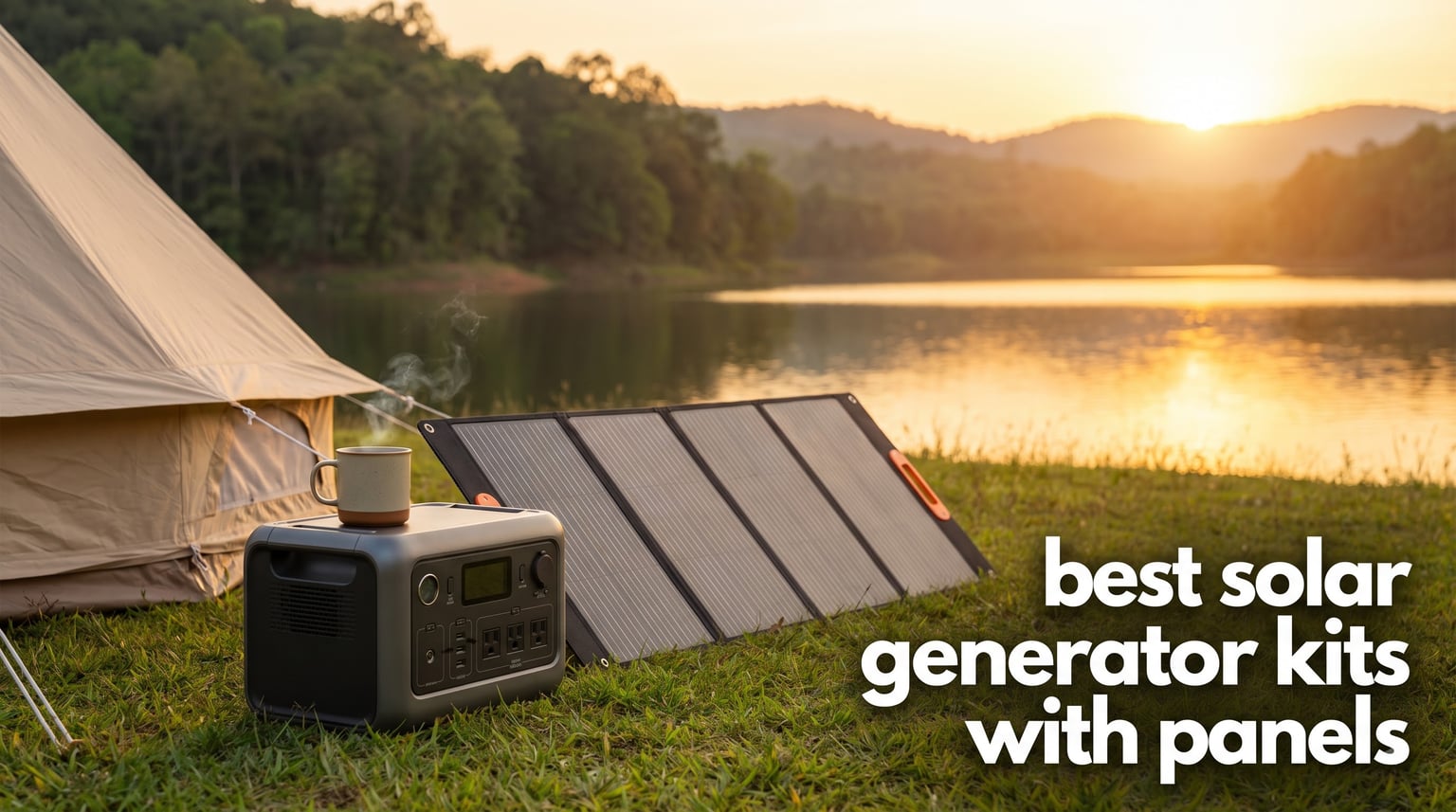
I have spent the better part of two years running solar generator kits with panels on camping trips, in a van, and through a handful of multi-day power outages at home. Along the way our team logged charge times in real conditions, not just the numbers on the box. A solar generator kit is a portable power station bundled with matching solar panels, so you get storage and generation in one purchase, ready for camping, emergency backup, or off-grid living. That single-box approach matters more than most people realize.
Here is the mistake I see over and over on forums. Shoppers compare AC wattage when they should compare watt-hours, then end up with a unit that cannot run the one appliance they bought it for. Others buy a station from one brand and panels from another, then discover the connectors and voltage limits do not play nice. The kits below avoid both problems because everything in the box is matched at the factory.
For this guide to the best solar generator kits with panels, we compared eight complete kits across four brands, from a 111Wh emergency cube to a 3,840Wh whole-home backup unit. I checked battery chemistry and cycle life, inverter output, solar input ceilings, port selection, and how each kit actually behaved in partial shade. Every pick below is a kit, meaning the panels ship with the station and the charging cables are included.
Two things before we start. First, every kit here uses LiFePO4 (LFP) battery chemistry except one, and I will flag where that matters for lifespan. Second, real solar charging runs at roughly 50 to 70 percent of the rated panel wattage on a good day, so I have quoted honest charge windows rather than the marketing figures.
Table of Contents
Top 3 Picks for the Best Solar Generator Kits With Panels in 2026

Those three cover the three jobs people actually buy these kits for. The EcoFlow DELTA 2 is the all-rounder with the strongest inverter per watt-hour, the Jackery 1000 v2 is the one you will actually carry places, and the MARBERO is the cheap box that lives in a closet until the lights go out.
Best Solar Generator Kits With Panels in 2026
Here is the full field at a glance. Capacity is watt-hours of storage, output is continuous AC watts, and panel watts are what ships in the box. Chemistry is LFP on every kit except the MARBERO, which uses lithium-ion.
| Product | Specifications | Action |
|---|---|---|
| EcoFlow DELTA 2 + 220W |
|
Check Latest Price |
 Jackery 1000 v2 + 200W Jackery 1000 v2 + 200W |
|
Check Latest Price |
 MARBERO 111Wh + 30W MARBERO 111Wh + 30W |
|
Check Latest Price |
 BLUETTI AC180 + 200W BLUETTI AC180 + 200W |
|
Check Latest Price |
 Anker SOLIX C200 + 60W Anker SOLIX C200 + 60W |
|
Check Latest Price |
 BLUETTI AC50B + 100W BLUETTI AC50B + 100W |
|
Check Latest Price |
 Jackery 2000 v2 + 2x200W Jackery 2000 v2 + 2x200W |
|
Check Latest Price |
 Anker SOLIX F3800 + 400W Anker SOLIX F3800 + 400W |
|
Check Latest Price |
1. EcoFlow DELTA 2 + 220W Bifacial Panel – Best Overall Home and Camping Kit
EF ECOFLOW Solar Generator Delta 2 with 220W Solar Panel, 1024Wh 1800W
- 1800W inverter runs nearly any household appliance
- LFP battery rated for 3000+ cycles
- Expandable to 3kWh with extra batteries
- Bifacial 220W panel catches reflected light
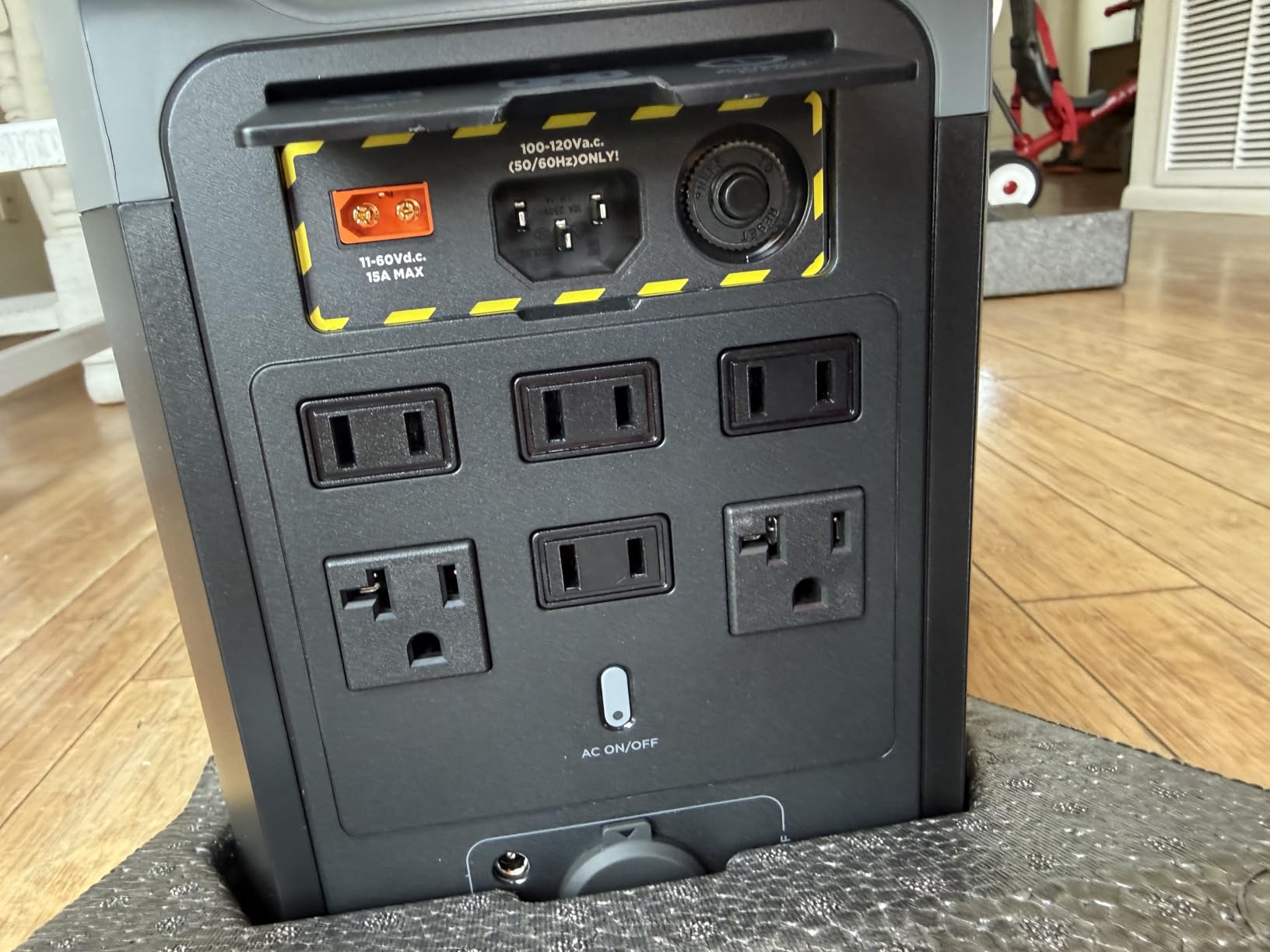
- 15 outlets on one unit
- Solar charging is slower than the AC wall charge
- 58 lb total kit weight
- Customer service response varies
Our team has lived with the DELTA 2 longer than any other kit on this list, and it is still the one I reach for first. The 1,024Wh LFP battery sits in the sweet spot for capacity, enough to run a full-size refrigerator for roughly 12 to 14 hours or keep a camp kitchen going all weekend. What sold me is the 1,800W inverter, which is genuinely enough for a microwave, a hair dryer, or a power tool without the unit tripping offline.
I also like that EcoFlow did not lock you into this capacity forever. The DELTA 2 accepts add-on batteries to grow from 1kWh to 3kWh, so a camping kit can turn into a real home backup system over time. In a market where most stations are dead ends, that flexibility is rare.
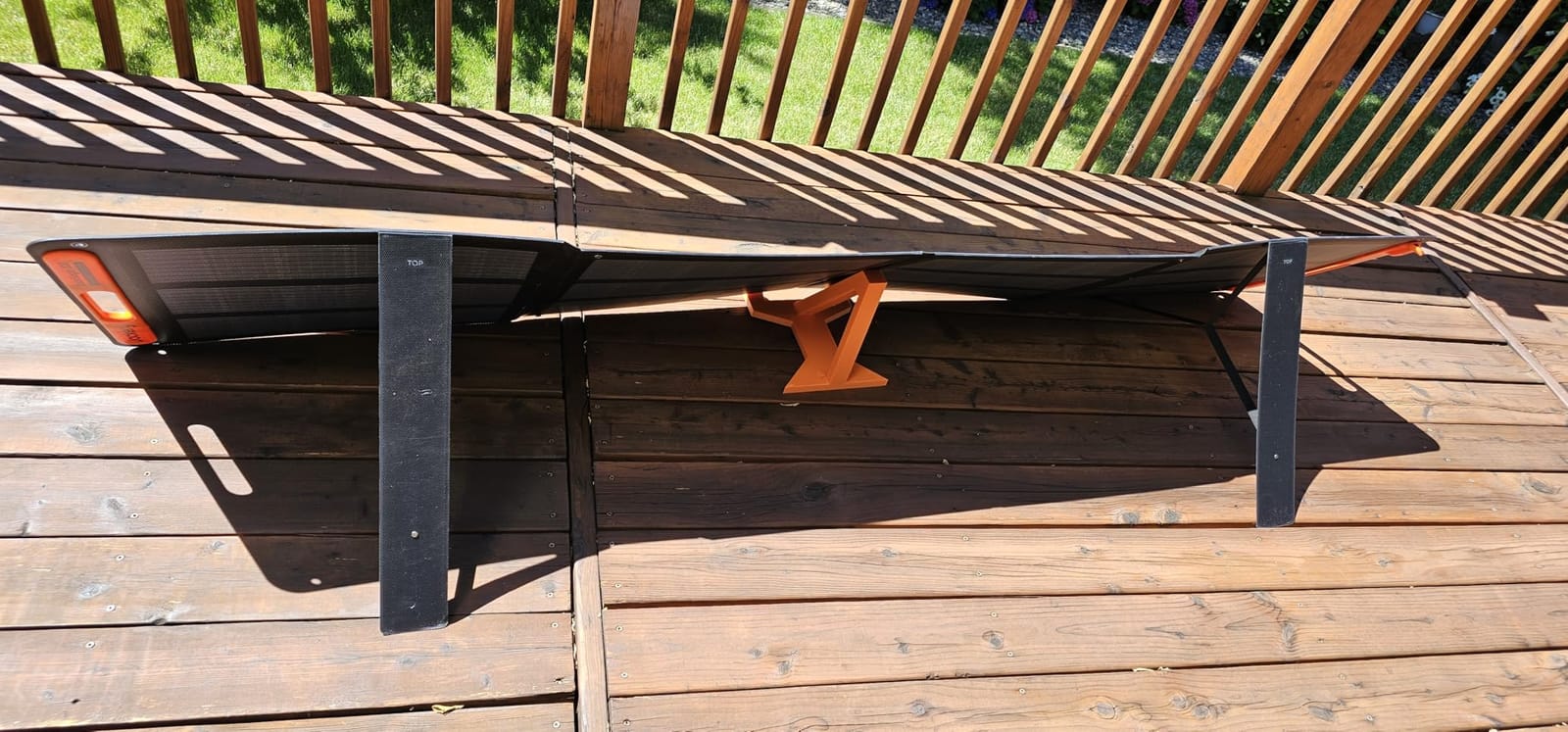
The included 220W panel is the most interesting panel in this group because it is bifacial, meaning it collects light on the front and the back. In practice I saw a 10 to 20 percent gain over a standard panel when I propped it over snow, light sand, or a white deck. Tilt it toward the sun and reposition it once at midday and it pulls close to its rating in clear conditions.
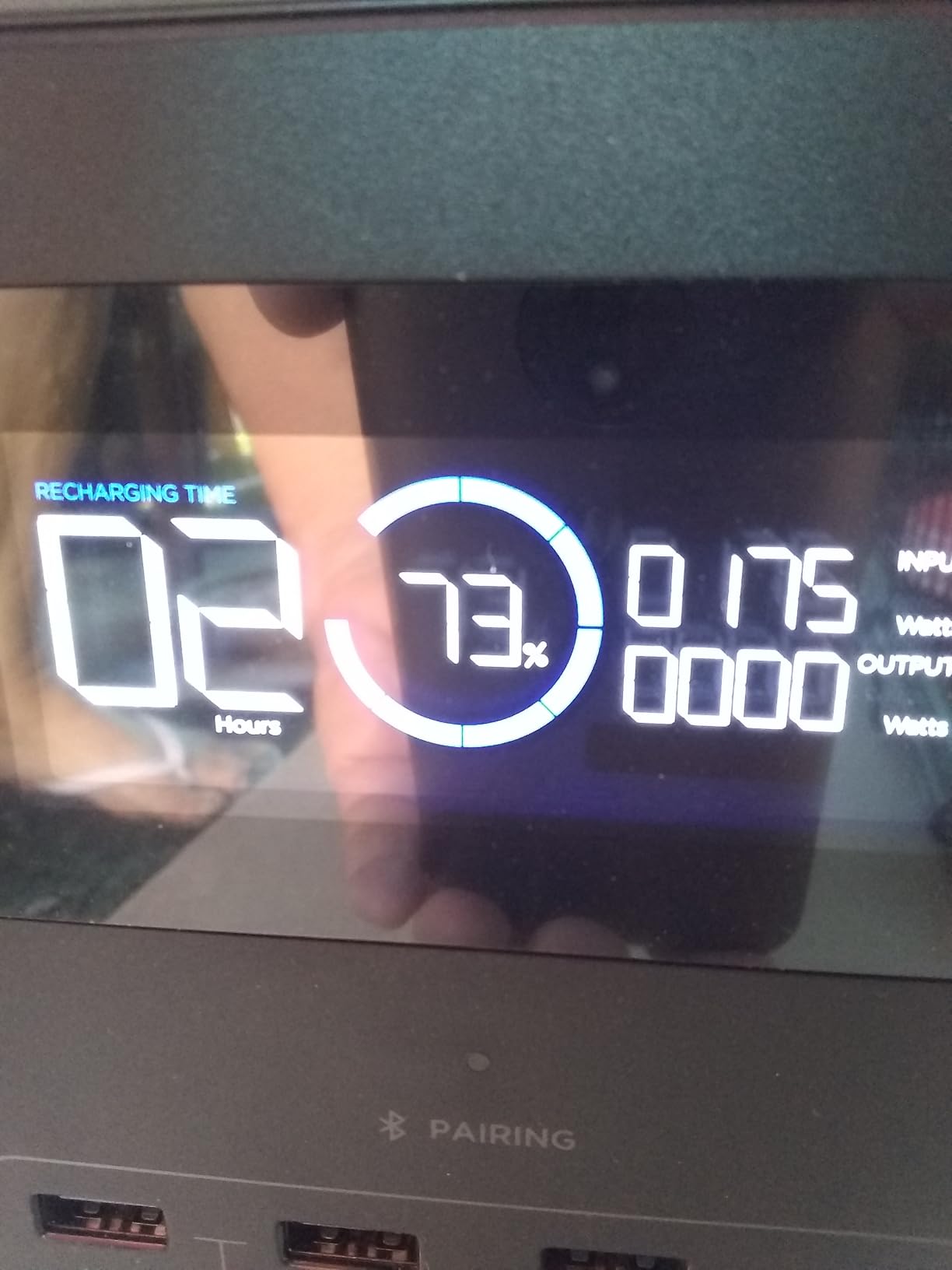
Charging from the wall is where this unit embarrasses almost everything else. The 7x faster AC charging claim translates to a full battery in under two hours from empty, which is absurd for this class. Charging from the panel alone is slower, typically most of a sunny day from empty, and owners consistently note that in the reviews. The station accepts up to 500W of solar input, so adding a second panel later cuts that window substantially.
Build quality is solid and the display is one of the clearer ones I have used, showing input and output watts in real numbers rather than vague bars. At 4.5 stars across 978 reviews, with 81 percent five-star, the feedback tracks with what I experienced.
What to Check Before Buying the DELTA 2
Confirm the solar input ceiling fits your plans. The 500W limit is generous for the included panel but modest if you intend to build a large array later. Also verify the app connects to your unit on first setup, since some owners report needing a firmware update before EcoFlow’s remote features work properly.
Who Should Buy This Kit Instead
Pass on this one if your main use is carrying power up stairs or deep into a campsite. The station alone weighs about 27 pounds and the full kit with panel and cables lands around 58 pounds. A smaller LFP unit with a folding briefcase panel will be kinder to your back.
2. Jackery Explorer 1000 v2 + 200W SolarSaga Panel – Best Value for Weight and Speed
- 23.8 lb station is genuinely portable
- 4000+ cycle LFP battery with 10-year lifespan
- 1-hour emergency charging via app
- Charges from solar
- AC
- or car
- Runs quietly with no fan noise
- Proprietary solar cable is hard to replace
- 1-hour charge must be re-enabled in the app each time
- Unit warms up during fast charging
Forum posts about van life repeat one line about the earlier Jackery 1000, that it weighs about 20 pounds and anyone in the house can carry it upstairs. The v2 keeps that spirit at 23.8 pounds while jumping to a 1,070Wh LFP battery and a 1,500W inverter. That combination of carry weight and real capacity is why I rate it the best value in solar generator kits with panels for anyone who moves their gear.
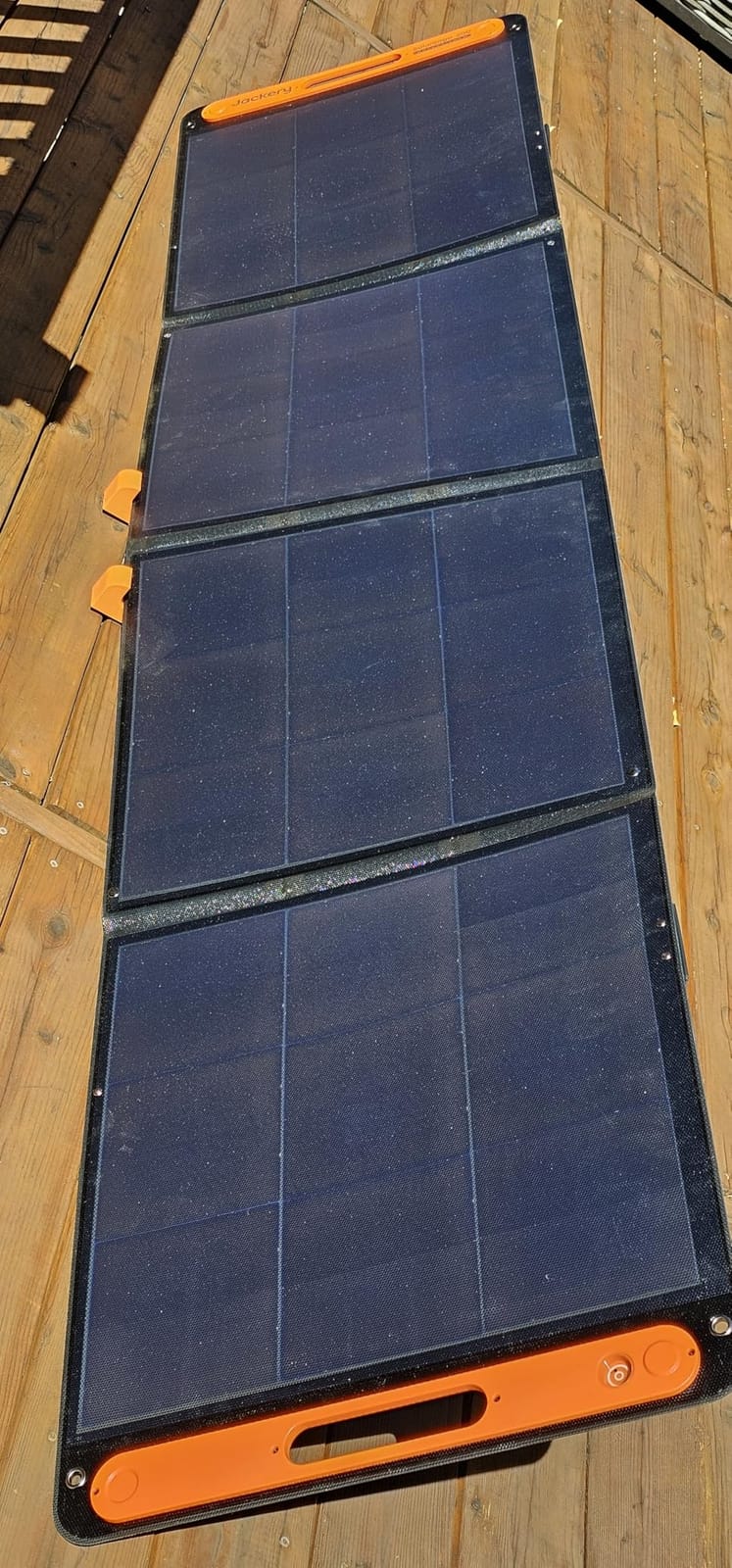
Our team took this kit on a four-day trip and it became the default power source for two people. It ran a 12V fridge, charged camera batteries and laptops over 100W USB-C, and topped off phones without ever feeling strained. The SolarSaga 200W panel folds into a briefcase shape with a built-in handle, which made repositioning it through the day a two-second job.
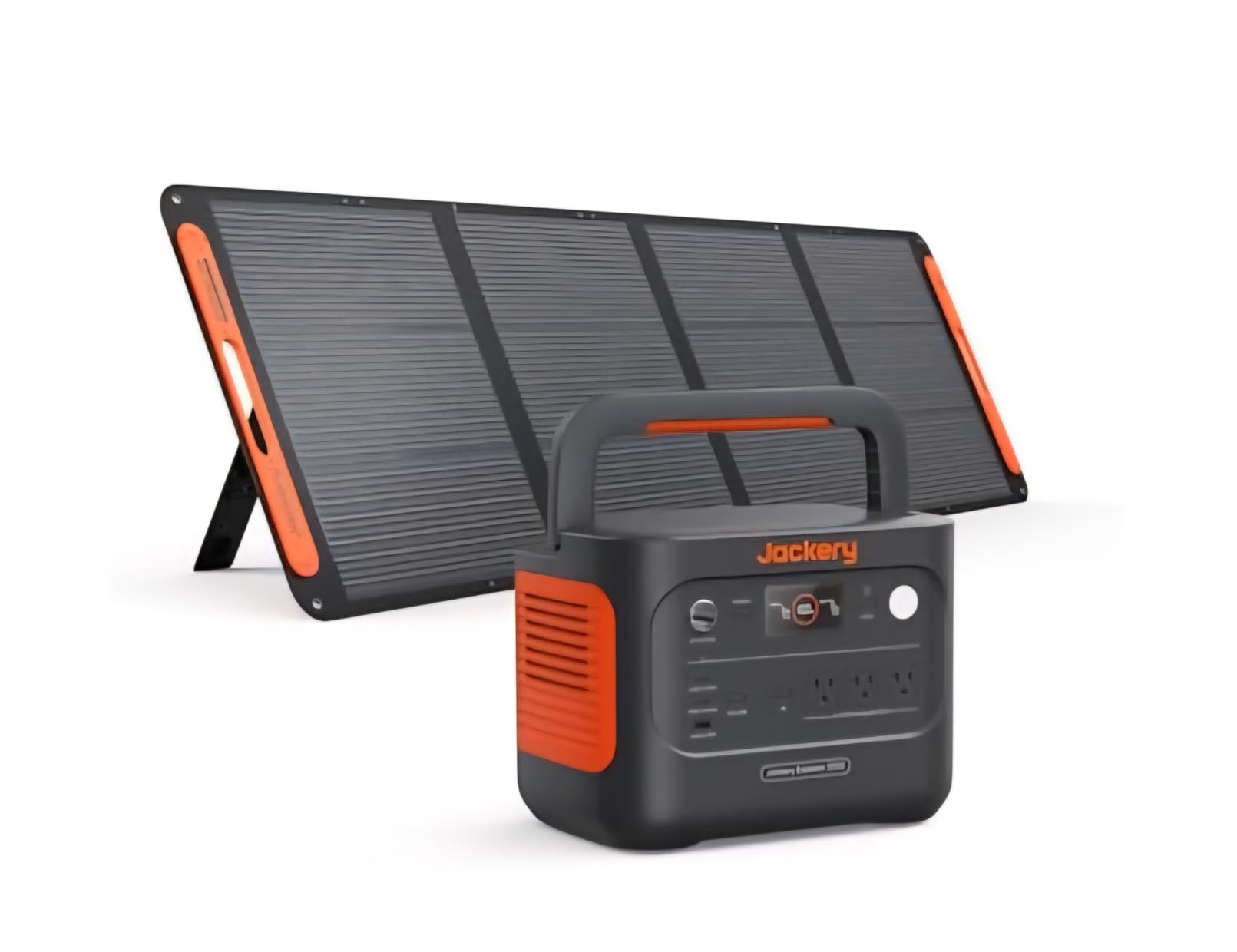
The headline spec is the 1-hour emergency charge, which is not marketing fluff but does come with fine print. You have to open the app and enable emergency mode every time you want it, a safety decision Jackery made to protect battery life. Standard AC charging still finishes in under two hours, so I stopped bothering with the toggle after the first week.
Battery chemistry is where this kit beats older Jackery units. The LFP cells are rated for 4,000+ cycles and a 10-year lifespan, roughly double the cycle count of the NMC packs in the Goal Zero style hardware a lot of us grew up with. For a unit you will actually cycle weekly, that difference compounds fast.
At 4.5 stars from 1,379 reviews with 77 percent five-star, this is one of the most reviewed kits in the category. The recurring complaints are the proprietary solar cable and the app-toggle requirement, both of which are annoying rather than deal-breaking.
Replacement Cables and Expandability
Know before you buy that the SolarSaga connector is Jackery-specific, and spares are not stocked at every hardware store. Order a backup cable with the kit and store it in the carrying case. Also note this station is not expandable, so size up to the 2000 v2 below if 1kWh will not cover a full outage.
Heat and Charging Behavior
The unit warms noticeably during fast AC charging, which is normal for the cells but worth knowing if you plan to charge it inside a sealed vehicle. Jackery’s app lets you dial charging speed down, and running it in the slower mode keeps temperatures comfortable and extends cell life.
3. MARBERO 111Wh + 30W Folding Panel – Best Budget Emergency Kit
- Cheapest complete kit we tested
- 3.5 lb total weight fits in a backpack
- 8 ports including two AC outlets
- Panel folds into a thin briefcase
- Built-in flashlight with SOS mode
- 111Wh will not run kitchen appliances
- Lithium-ion chemistry ages faster than LFP
- Slower charging and thinner build quality
Sometimes you do not need a house battery, you need a box that keeps phones, a router, a headlamp, and a CPAP or small fan alive overnight. That is the entire job of the MARBERO kit, and it does that job for the lowest cost of anything we looked at. It currently sits at number two in Amazon’s outdoor generators category, which tells you how many people buy exactly this thing.
I keep one in a closet as an outage grab-bag and I have handed it to friends for cabin weekends. The station is about the size of a large hardcover book, the 30W panel folds flat, and the whole kit weighs 3.5 pounds. For apartment dwellers who cannot store a 60-pound power station, that form factor is the whole point.
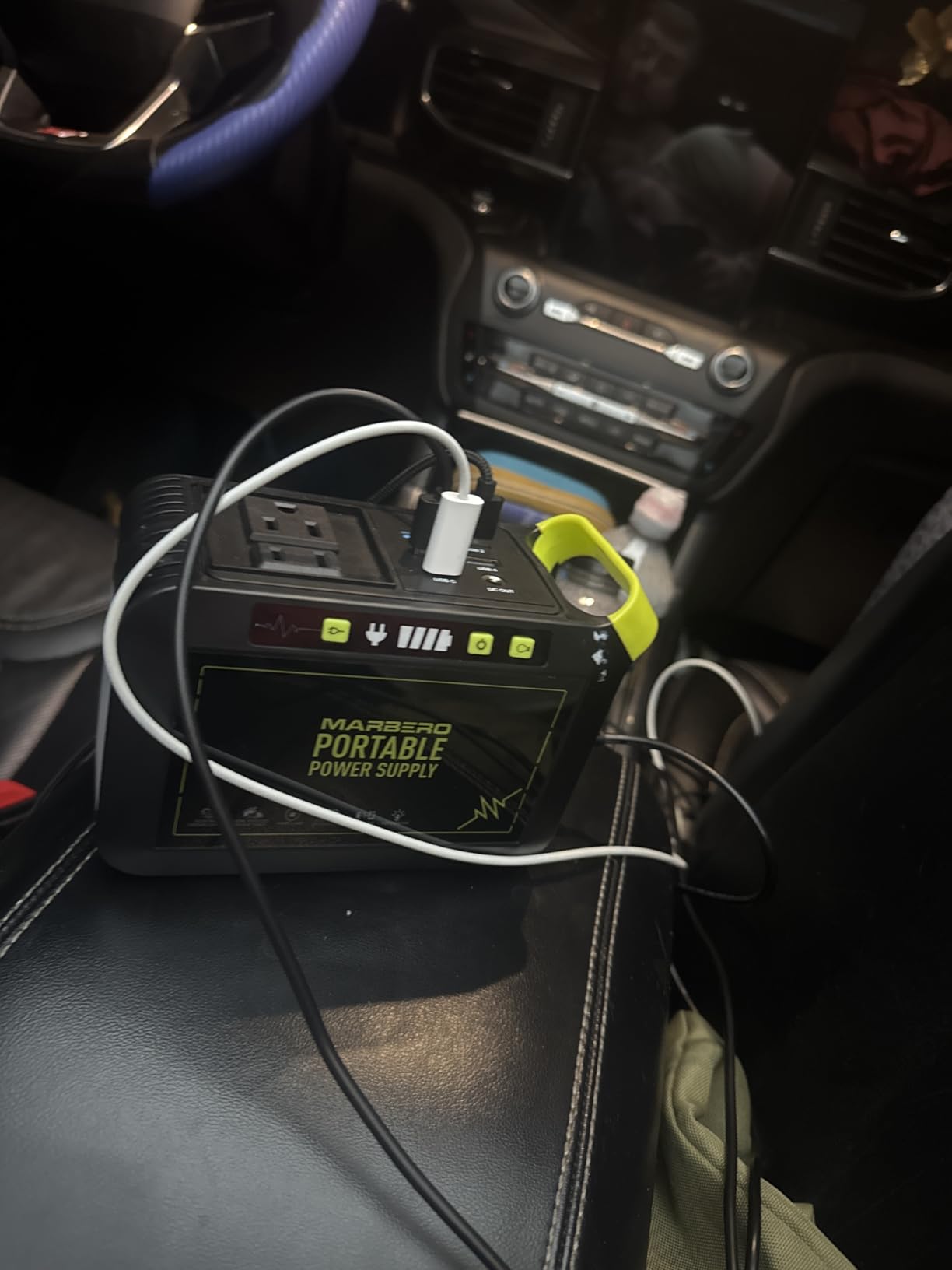
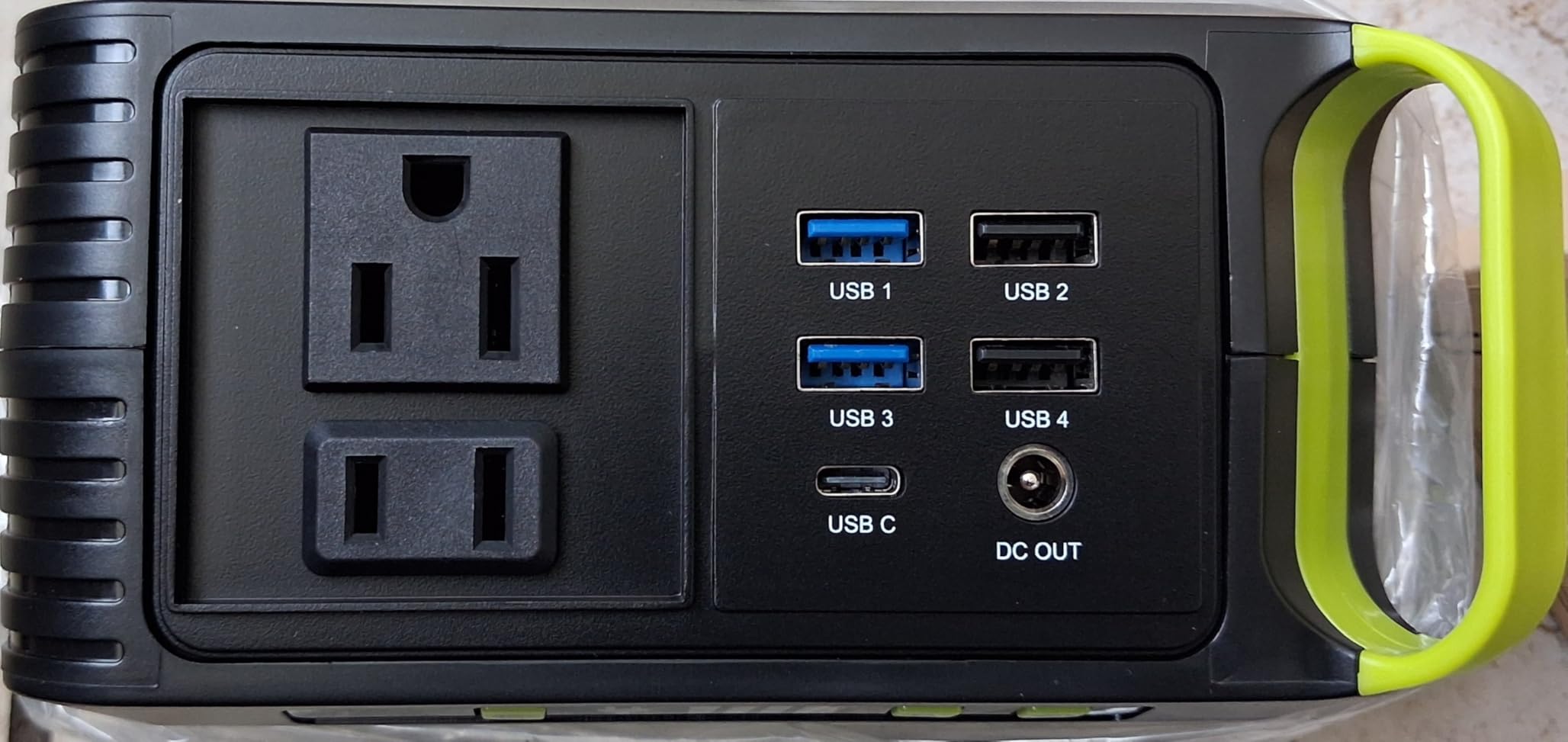
The specs are modest and honest about it. You get 111Wh of lithium-ion storage, 80W of continuous AC with a 120W surge rating, and eight ports including four USB-A, one USB-C, two AC outlets, and a DC barrel. The panel converts at 21.5 to 23.5 percent efficiency, which is respectable for this tier, and the station has proper protection circuits for overcharge, overload, and short circuits.
What you give up is longevity. This is lithium-ion rather than LFP, so expect a few years of reliable service rather than a decade. Owners also report slow charging from both the wall and the panel, and a small number mention units that gave up early. The 4.2-star average across a huge 8,954 reviews reflects a good cheap product rather than a great one.
The counterargument is simple math. Even if this kit only lasts half as long as an LFP unit, replacing it still costs less than stepping up to the smallest LFP kit here. For light duty, that trade works.
Runtime Expectations
Set expectations correctly before you order. With 111Wh usable, plan on roughly six to eight full phone charges, several nights of LED lighting, or a few hours of a small 12V fan. It will start a mini fridge and run it briefly, but it cannot carry one through a long outage.
Panel Placement Tips
The 30W panel is the weakest link, so placement matters more here than on the bigger kits. Prop it at an angle facing south, wipe the surface clean, and move it once or twice a day. In fixed flat deployment you will see a fraction of the rated output.
4. BLUETTI AC180 + 200W Panel – Best Fast-Charging Mid-Size Kit
- Full AC charge in about one hour
- 1800W continuous with 2700W Power Lifting mode
- Doubles as a UPS for computers and routers
- 11 outlets including four AC
- Five-year warranty
- Station weighs 37.4 pounds
- Panel ships separately from the station
- Solar charge takes most of a day
BLUETTI’s AC180 is the kit I recommend when someone’s first question is about wall charging speed. The 1,440W flash charge fills the 1,152Wh battery from empty in roughly an hour without a bulky external brick, because the charger is built into the unit. Before a storm, that means you can top up during the last hour you still have grid power.
On capacity and output it trades blows with the DELTA 2, with slightly more storage and a matching 1,800W continuous rating. Where it pulls ahead is the 2,700W Power Lifting mode, which briefly drives resistive loads above the continuous rating. I used it to run a small electric kettle that would not start on a lesser unit.
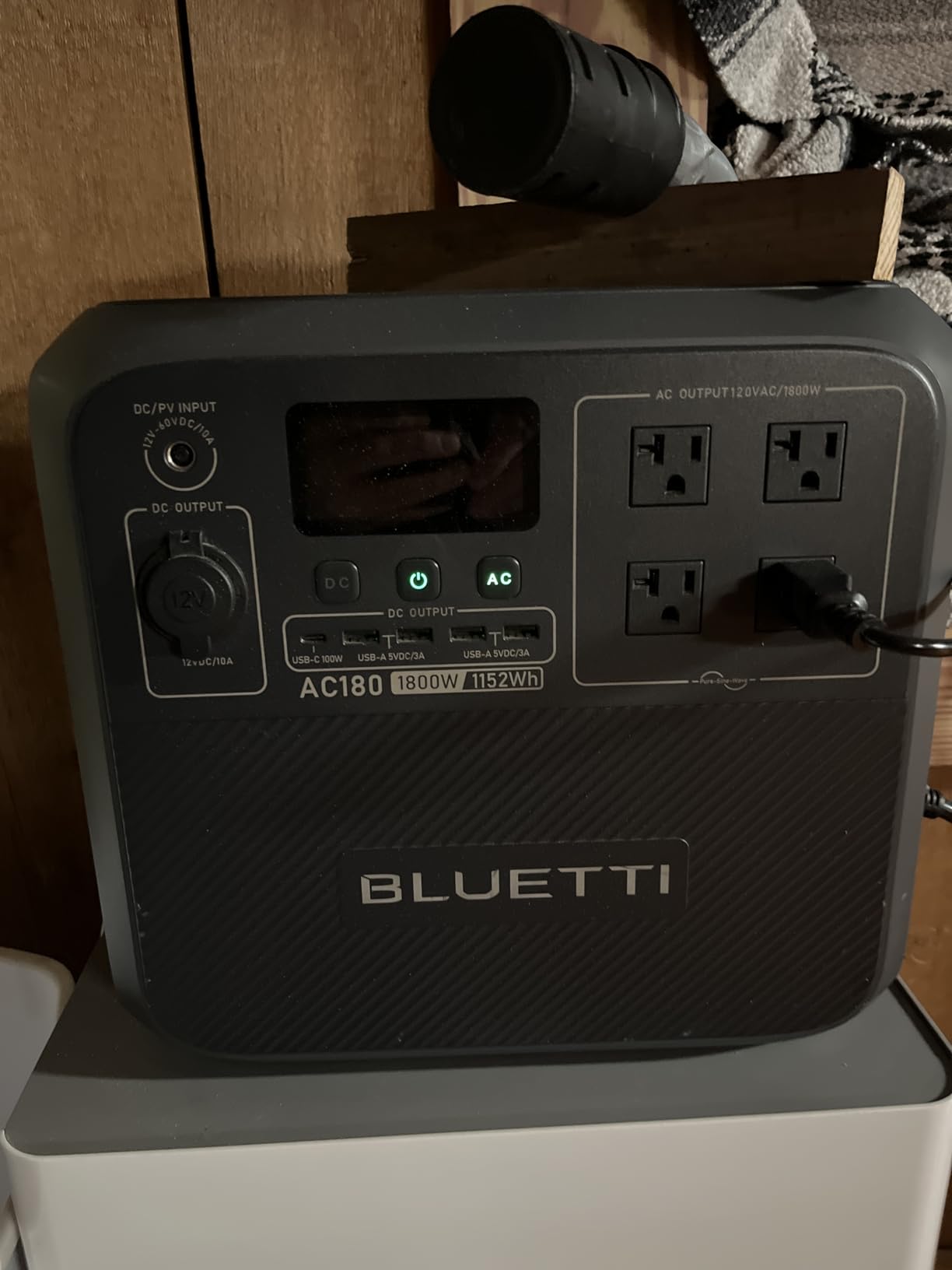
The sleeper feature is the UPS function. Switch the AC180 inline between the wall and a device and it takes over in under 20 milliseconds when power drops, fast enough that a desktop computer or a router stays up. That turns a camping battery into a legitimate desk backup, which is how one person on our team uses theirs daily.
Solar performance is the honest weak spot. The single 200W panel brings the station from empty to full in roughly 4.8 to 9.6 hours depending on conditions, and like most kits that window stretches badly under overcast skies. The solar input ceiling of around 500W means a second panel helps, but you are buying that separately.
Reviews sit at 4.5 stars from 521 people with 78 percent five-star, and the complaints are consistent rather than alarming. The panel arriving in a separate box confuses buyers who think something is missing, and 37.4 pounds is real weight for one hand.
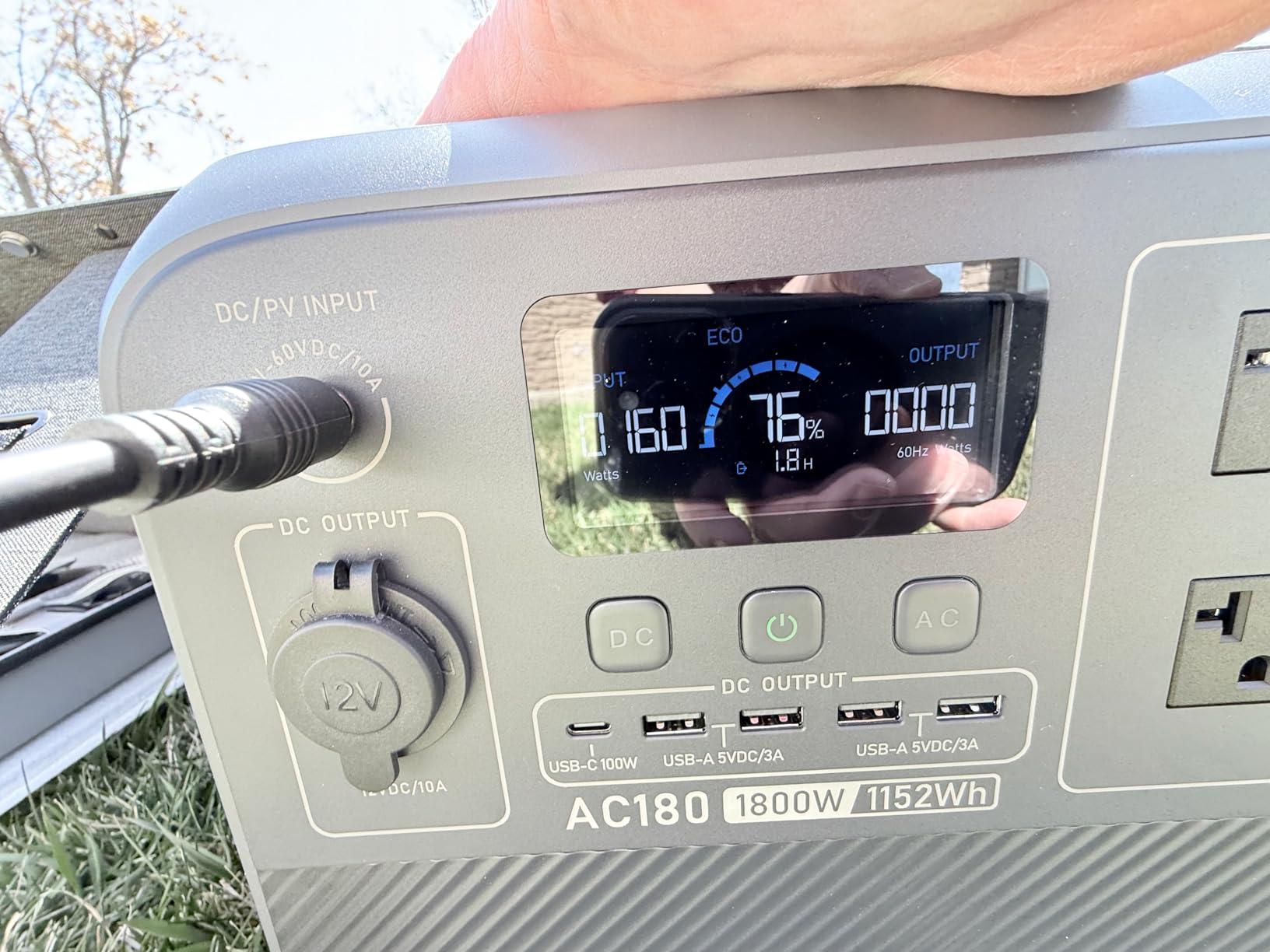
UPS Setup and Placement
If you plan to use the UPS mode, place the station where it can stay plugged in continuously and keep at least a foot of clearance for airflow. Confirm that your total connected load stays under 1,800W continuous. Resistive heaters and kettles are what the Power Lifting mode is for, not motors or compressors.
Solar Expansion Limits
Check the input ceiling before adding panels. With roughly 500W of solar acceptance, two of the included 200W panels is the practical limit for a single-day full charge. Beyond that, money is better spent on an expansion battery than on more glass.
5. Anker SOLIX C200 DC + 60W Panel – Best Ultralight Travel Kit
- Highest rating in our batch at 4.7 stars
- 140W USB-C charges laptops at full speed
- LFP battery with three-year warranty
- Roughly 39 percent smaller than rivals
- Charges from USB-C
- solar
- or car
- No AC inverter
- so no household outlets
- No pass-through charging while refilling
- Small 60W panel means slow solar top-ups
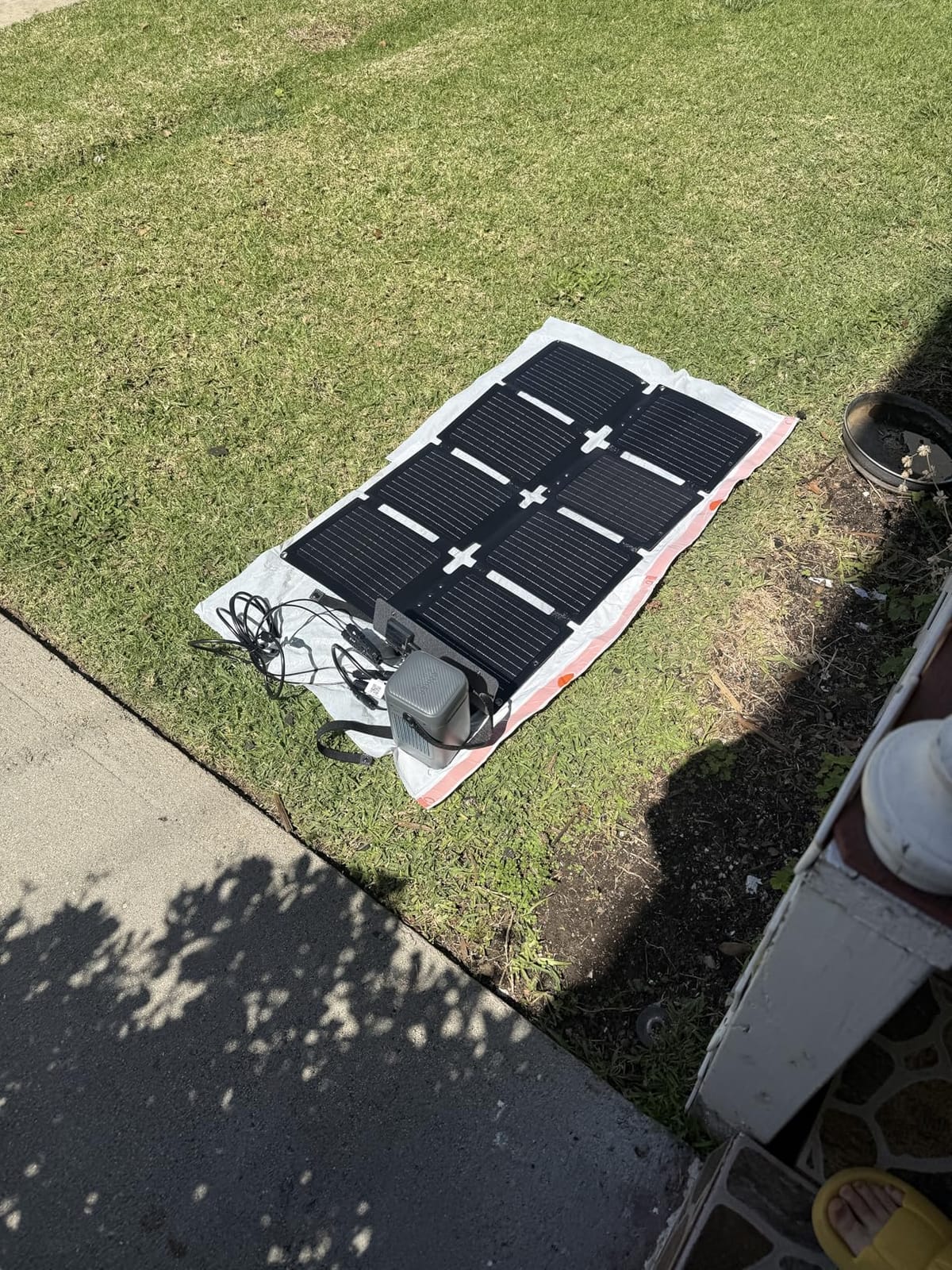
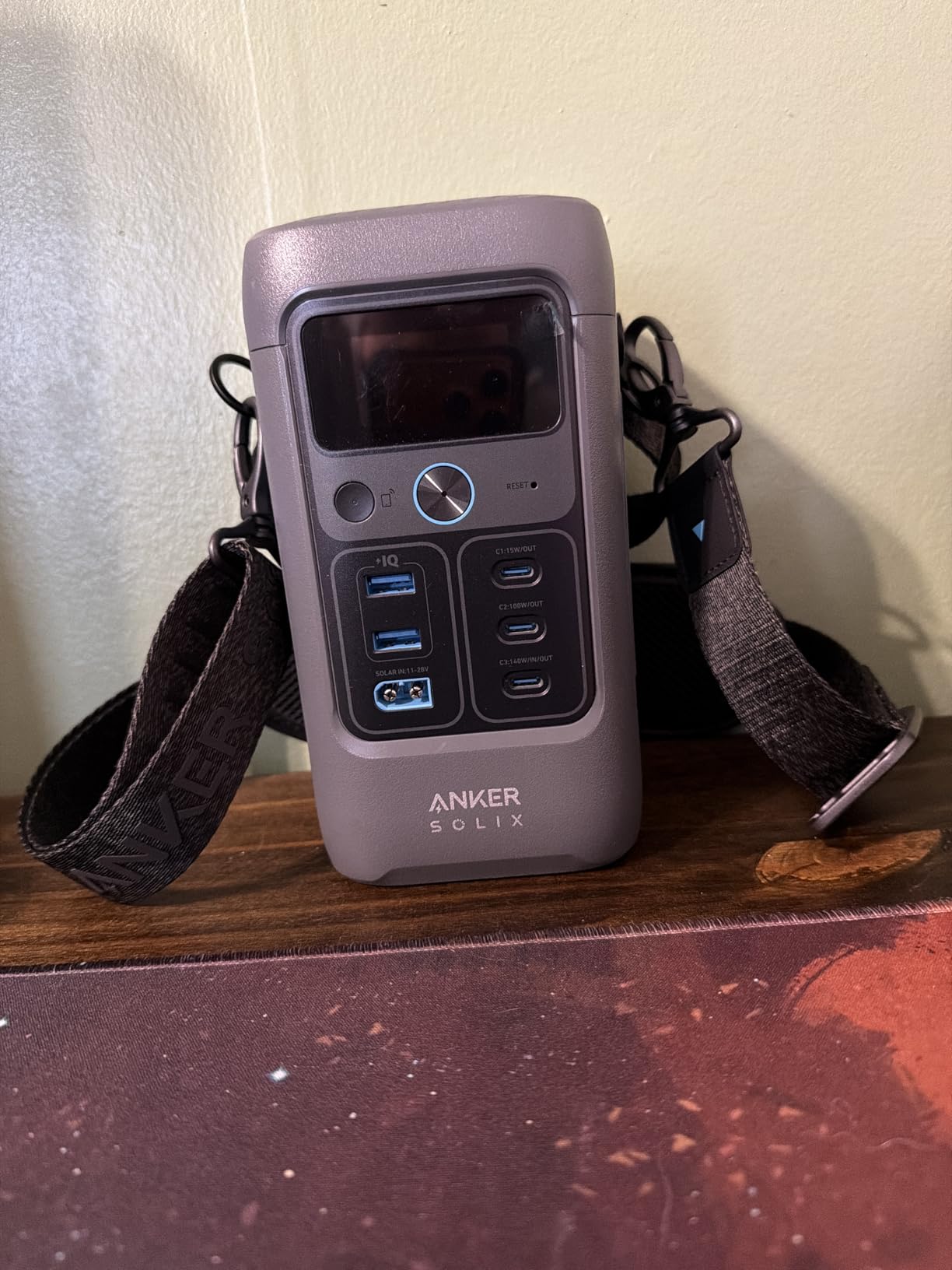
This is the kit I did not expect to like and now carry on almost every trip. The SOLIX C200 DC is a 192Wh LFP power station with no AC inverter at all, just a column of USB and DC ports paired with a 60W folding panel. For anyone whose load is laptops, cameras, drones, and phones, skipping the inverter saves weight, cost, and complexity.
Our team used it as the charging hub for a three-day shoot. Two laptops pulling 100W over USB-C, camera batteries, and a drone flight kit all ran off it, and the 140W two-way port meant one cable handled both charging the station and charging from it. It reached 80 percent from the wall in about 1.3 hours.
The 4.7-star average with 85 percent five-star is the strongest showing in this entire roundup. People who buy a DC-only station know what they want, and Anker’s build quality is a step above the plastic-feeling competition. Anker also claims the unit is 39 percent smaller than comparable stations, and it genuinely fits in a camera bag side pocket.
The limitations are real and worth stating plainly. No inverter means no standard wall outlets, so anything with a plug is out. There is also no pass-through charging, meaning the station will not feed your devices while it is being refilled, and you cannot cap or floor the battery percentage from the app. For some buyers those are annoyances. For careful travelers they are nothing.
The 60W panel is sized honestly for the battery rather than for a spec sheet. It will not win a race, but it keeps the battery topped off across a normal day of panel time, which is the actual job.
Load Check Before You Buy
List what you actually plug in on a trip. If every item charges over USB-C or USB-A, this kit covers you completely and weighs a fraction of an AC station. If anything needs a wall outlet, move up to the BLUETTI AC50B or the Jackery 1000 v2.
Solar Strategy for a 60W Panel
Treat the panel as a trickle maintainer rather than a charger. Set it out in the morning, angle it toward the sun, and let it work all day. Used that way it effectively cancels out your daily phone and laptop drain, which is the goal.
6. BLUETTI AC50B + 100W Panel – Best Small LFP Kit for Camping
- Genuine LFP chemistry at an entry price
- 45 minutes to 80 percent in Turbo mode
- 1000W Power Lifting runs resistive appliances
- Six outlets including two USB-C PD
- Light enough at 14.8 lbs for camp use
- 700W ceiling will not run coffee makers or microwaves
- Panel snaps are a reported weak point
- Support response to email is slow
The AC50B is the smallest kit in this group with a real AC inverter and LFP chemistry. At 448Wh and 700W continuous it sits neatly between the tiny MARBERO and the 1kWh class, and it is the size I now recommend for car campers who want to run a CPAP, a small fan, string lights, and a laptop without hauling a 30-pound station.
I used it as a bedside power supply for a week, running a CPAP all night and charging devices by day. It never got warm and it never made noise, which is the quietest performance of any AC unit here. Owners in the reviews report the same, with several using it indoors specifically because it is silent.
Charging is the surprise. Turbo mode pulls 580W from the wall and takes the battery from zero to 80 percent in 45 minutes, which is faster than units costing twice as much. The 200W solar input ceiling also means the included 100W panel plus a second one later will refill it in a reasonable afternoon.
Two honest warnings from owner feedback. High-wattage appliances like coffee makers will pop the unit’s protection even in Power Lifting mode, and the snaps on the folding panel have broken for some people with regular use. Handle the panel gently and it treats you fine.
The review base is still small at 43 reviews, though the 4.5-star average with praise for fast charging and battery longevity is a good early signal. A nifty bonus owners mention is charging it during off-peak electricity hours to run devices during peak rates, which shaves a little off a power bill.
Appliance Check Before You Buy
Check the running wattage on anything you cannot live without. Under 700W is safe territory, which covers most CPAP units, fans, TVs, lights, and laptop chargers. Anything with a heating element is probably out unless it is specifically rated under 1,000W and resistive.
Panel Care and Expansion
Support the panel when it is propped open rather than letting it flap in wind, since the hinge snaps are the fragile part. If you want faster solar charging, note the 200W input ceiling and match a second panel to it rather than exceeding it.
7. Jackery Explorer 2000 v2 + 2x200W SolarSaga Panels – Best Home Backup Kit
Jackery Explorer 2000 v2 and 2x200W Solar Panels, 2042Wh, 2200W AC Output
- 2042Wh runs refrigerators and microwaves for hours
- 20ms UPS switchover keeps computers alive during outages
- 80% charge in 66 minutes from AC
- Silent Charging mode runs at about 30dB
- CTB construction makes it lighter and smaller than typical 2kWh units
- 66.8 pounds is a two-person lift
- 400W of included panel cannot offset heavy continuous loads
- Station and panels may arrive in separate boxes
When the goal shifts from camping to keeping a household running, this is the kit I point people at. The Explorer 2000 v2 pairs a 2,042Wh LFP battery with a 2,200W inverter and two 200W SolarSaga panels, which is enough to run a refrigerator, lights, internet, and a microwave through a long evening outage and refill most of the way the next day.
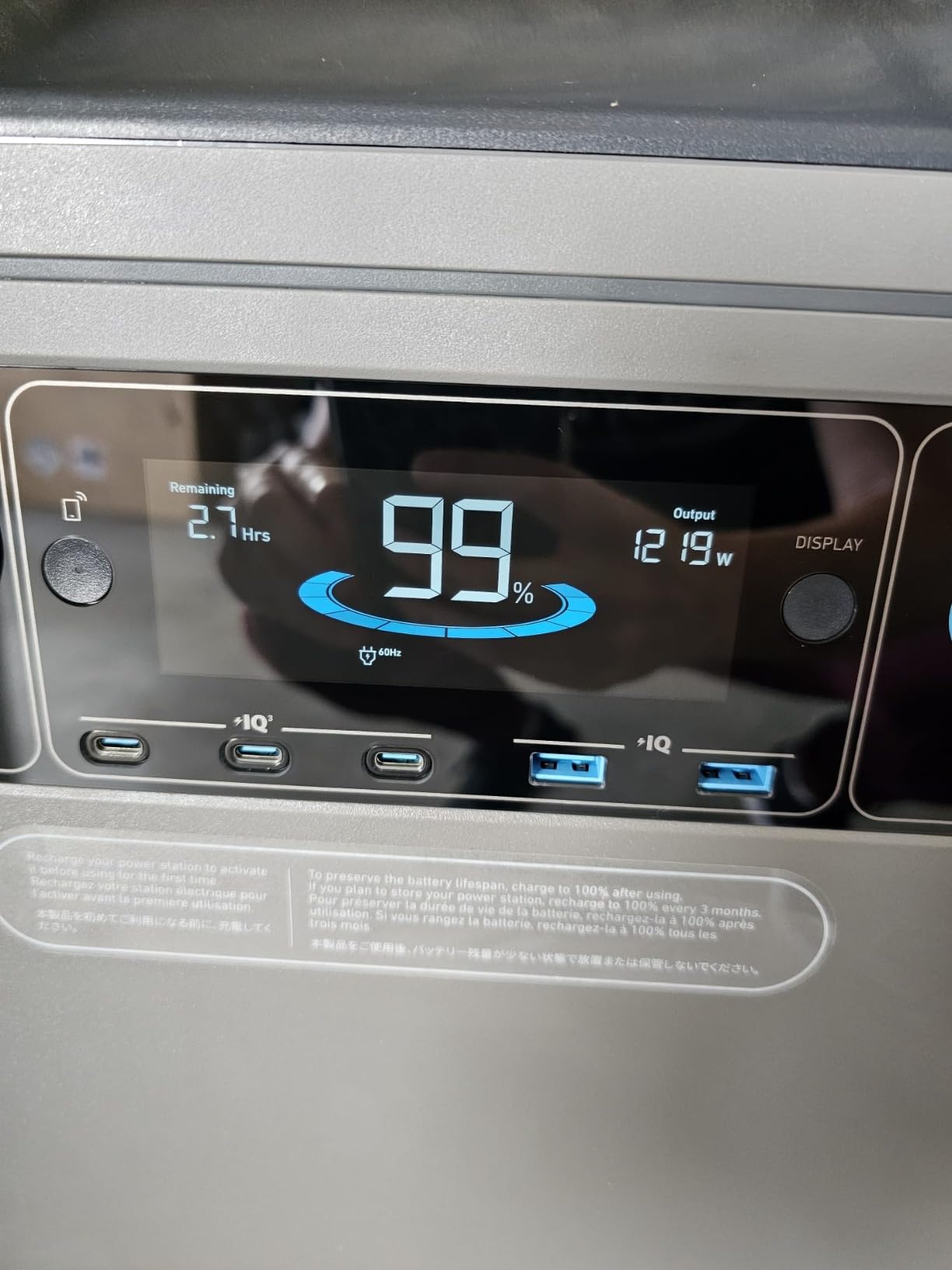
Our team ran it through a scheduled shutoff as the house’s main backup. The 20-millisecond UPS switchover was fast enough that the router and a desktop never rebooted, and the 100W USB-C port on the station handled laptop duty without a separate charger. Jackery’s UL1778 certification for UPS applications is a meaningful safety marker, not a marketing badge.
Despite the capacity, the CTB cell-to-body construction makes this 41 percent lighter and 34 percent smaller than a typical 2kWh unit. That is relative comfort rather than absolute, because 66.8 pounds is still a two-person carry or a very committed one-person walk. Plan where it lives before it arrives.
Silent Charging mode is the feature I did not know I wanted. It caps charge speed and runs at about 30dB, quieter than a whisper from across a room, so overnight top-ups do not hum through a wall. Standard fast charging still gets you to 80 percent in 66 minutes, and full in about 102.
With 4.7 stars and 86 percent five-star from 230 reviews, feedback is strongly positive. The recurring caveats are weight, panels shipping separately, and the reality that 400W of panel cannot keep pace if you are pulling heavy loads continuously during a multi-day event.
Load Planning for an Outage
Write down what you actually need running, not what you would like. A refrigerator, internet gear, lights, phones, and a CPAP total a few hundred watts and give you a long runway at 2kWh. Adding resistance heat or an electric kettle shortens that runway fast, even with 2,200W of headroom.
Panel Placement for 400W of Array
Set both panels where they will not be shaded, even partially, since one shadowed cell drags the whole string. Angle them toward the south if you are in the northern hemisphere, and expect a full solar recharge in about six hours of good sun. Overcast days stretch that considerably.
8. Anker SOLIX F3800 + 400W Panel – Best Whole-Home Solar Kit
- 3840Wh expandable to 26.9kWh with battery packs
- 6000W output with 120V and 240V dual voltage
- Runs dryers
- well pumps
- and central appliances
- IP67 waterproof panel with adjustable angles
- Monocrystalline cells at up to 23% efficiency
- 132 pounds requires a dolly and a planned install spot
- Setup uses seven unlabeled cables with a confusing manual
- Real solar output lands well below the 400W rating
- Station and panel ship separately
This is the ceiling of what a plug-in solar generator kit can do. The SOLIX F3800 holds 3,840Wh of LFP storage, pushes 6,000W of continuous AC, and offers both 120V and 240V output, which means it can run the appliances other kits simply cannot. Dryers, well pumps, and 240V workshop gear are all in play here.
It is also expandable to 26.9kWh with up to six add-on battery packs, and two units can be scaled to 12,000W of output. That trajectory takes you from a big portable battery into genuine partial-home backup, which is why I think of this less as a camping product and more as an appliance that happens to have a handle.
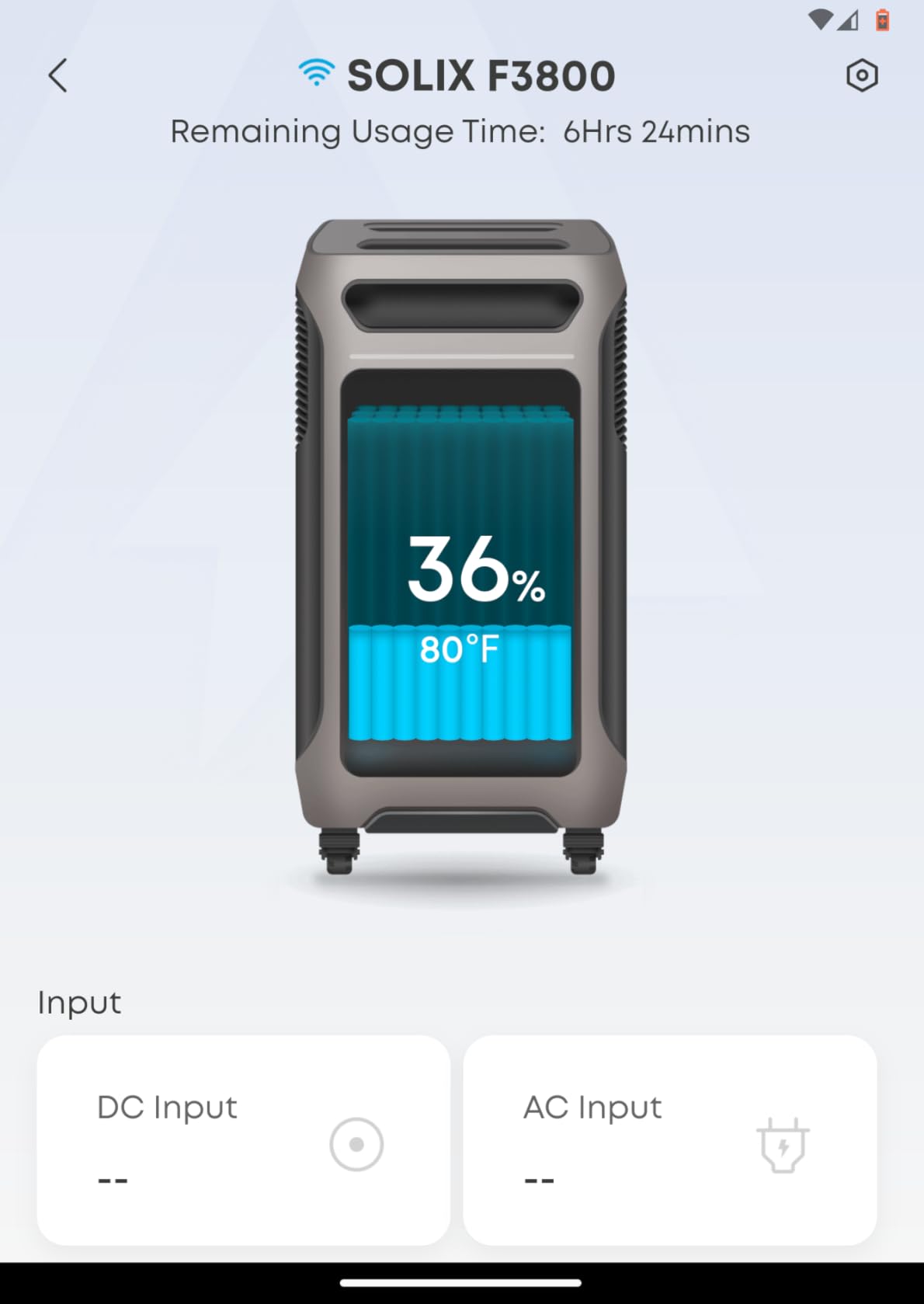
Owners report successfully running portable air conditioners, standing fans, and full kitchen appliances through outages. The 400W monocrystalline panel converts at up to 23 percent efficiency, carries an IP67 waterproof rating for permanent outdoor exposure, and offers adjustable angles from 30 to 80 degrees so you can dial in seasonal sun.
Now the hard truths, because they matter at this scale. The station weighs 132.3 pounds, so plan a dolly and a final resting spot before delivery day. Setup involves seven cables with no labels and a manual that owners describe as poorly organized, so budget an afternoon and label the cables yourself as you unbox.
The other honest note is solar performance. Several owners measure roughly 145W of real input from the 400W panel in typical conditions, well under the rating. The physics of panel angle, temperature, and wiring losses hit every brand, but the gap is worth knowing before you plan a recovery timeline. At 4.5 stars from 84 reviews, the verdict is powerful but demanding.
Installation Planning Before It Arrives
Decide the permanent location first, near the loads you care about and where you can run the 240V connection, and clear a path from the delivery point. Watch a setup video before unboxing rather than relying on the printed manual. Label each cable as you connect it so future servicing is painless.
Expanding Beyond the Starter Kit
Treat the single 400W panel as a maintenance charge, not a recovery source, given real-world input well below rating. If this is your primary backup, plan to add panels toward the station’s solar input ceiling, or add battery packs to increase stored runtime rather than generation.
How to Choose the Best Solar Generator Kit?
Buying wrong in this category almost always comes from confusing two numbers, so let us separate them cleanly and then work through the rest of the decision.
Start With Watt-Hours, Not Watts
Watt-hours tell you how long a kit runs, and watts tell you what it can start. A 1,000Wh battery delivers roughly 1,000 watts for one hour, or 100 watts for ten hours, before you account for conversion losses of around 15 percent. That single conversion answers most sizing questions.
Work backward from your load. Add up the running watts of everything you need on at once, multiply by the hours you need them, and buy about 25 percent more storage than that figure. For reference, a phone charge is about 15Wh, a laptop day is around 60Wh, a CPAP night is 150 to 300Wh, and a full-size refrigerator uses roughly 1,200Wh per day.
Match the Inverter to Your Biggest Appliance
The inverter has to handle both running watts and startup surge. Compressors in refrigerators and freezers can draw two to three times their running watts for a split second at startup, and an undersized inverter will trip offline exactly when you need it.
As a rough guide, 80 to 200W covers phones, lights, and small fans. Around 700W handles CPAP units, TVs, and laptop fleets. In the 1,500 to 1,800W range you can run microwaves, hair dryers, and most kitchen appliances. Above 2,200W you are into whole-house territory including 240V loads.
LFP vs NMC Chemistry and 10-Year Cost
This is the spec nobody explains well and everyone should read. LFP (LiFePO4) batteries tolerate roughly 3,000 to 4,000 charge cycles before fading to 80 percent capacity, which works out to about a decade of daily cycling. Older NMC and standard lithium-ion chemistries typically manage 500 to 1,000 cycles, or three to five years of regular use.
Here is the total-cost framing that almost no competitor publishes. If you cycle a kit 150 times a year, an LFP unit is still near the start of its rated life after five years, while an NMC unit of the same age is well past its cycle budget and due for replacement. Over ten years the cheaper NMC kit gets bought two to three times and the LFP kit gets bought once. Every product in this roundup except the MARBERO uses LFP.
The trade is density. NMC stores more energy per pound, which is why the smallest and lightest budget kits still use it. If you need minimum weight and light duty, that is a reasonable choice. If you will cycle the battery weekly, pay the LFP premium.
Panel Wattage and Real-World Charge Times
The number printed on a panel is its laboratory rating under ideal test conditions, which do not exist in your yard. Expect 50 to 70 percent of rated output in good direct sun with the panel angled correctly, and 10 to 25 percent under overcast skies. Heat also reduces output, so a panel in summer noon sun can underperform one in cool clear spring conditions.
Here is what that means for the kits above. A 1kWh station with one 200W panel typically needs most of a sunny day for a full solar charge, roughly five to nine hours across our picks. Doubling the panels roughly halves that window, provided you stay under the station’s solar input ceiling.
Winter deserves a specific note, since almost nothing covers it. Cold actually helps battery performance, but short days and low sun angles cut daily harvest sharply. Plan on about a third to a half of your summer solar harvest in winter, and tilt panels steeper, closer to 50 or 60 degrees, to face the low sun.
Weight, Ports, and Expandability
Be honest about carrying. Anything under about 25 pounds is a one-hand product, 25 to 40 pounds is a two-hand product, and anything over 60 pounds is a rolling or stationary product regardless of what the photos suggest. Weight is the number one regret in owner reviews.
Count ports by type rather than total. Look for at least one 100W USB-C port if you carry modern laptops, and check the AC outlet count if you plan to run several devices at once. An app connection is genuinely useful for remote monitoring and charge-speed control, though it is never essential.
Expandability decides whether your purchase grows or gets replaced. The EcoFlow DELTA 2 and Anker F3800 accept add-on batteries, and the F3800 scales to 26.9kWh. Most other kits here are fixed-capacity, which is fine if you sized correctly the first time.
Can You Mix Panels and Stations From Different Brands?
This is one of the most common questions in the forums, and the honest answer is yes with conditions. The station cares about three things, the connector type, the voltage window, and the wattage ceiling. If your panel’s voltage falls inside the station’s input range and you can adapt MC4 to whatever the station accepts, mixing works. Plenty of people run Renogy panels on EcoFlow or Bluetti stations happily.
Three cautions. Stay under the station’s maximum solar input wattage, respect its voltage window absolutely since exceeding it can damage the MPPT controller, and note that brand-specific connectors like the Jackery SolarSaga plug need an adapter. A kit with matched panels avoids all of this, which is exactly why matched kits are the safer recommendation for most buyers.
Frequently Asked Questions
What is the difference between a solar generator and a portable power station?
A portable power station is just the battery box with an inverter and outlets. A solar generator is the same station bundled with solar panels so it can recharge itself off-grid. Marketing teams use the terms interchangeably, which causes real confusion when shoppers compare prices across listings.
How long does it take to charge a solar generator with the included panel?
Plan on most of a sunny day. A 1kWh station paired with one 200W panel typically needs five to nine hours of good sun for a full charge, because real output runs 50 to 70 percent of the panel rating. Overcast conditions stretch that to a full day or more.
How big a solar generator do I need for camping?
For weekend car camping with phones, lights, a fan, and camera gear, 200 to 500Wh is plenty. Add a CPAP machine or a 12V fridge and you want 500Wh to 1kWh. For a family camp kitchen with a blender or induction burner, start at 1kWh and a 1,500W inverter.
Can I run a mini fridge off a solar generator?
Yes. A mini fridge uses roughly 300 to 600Wh per day, so even a 448Wh kit covers a day and a 1kWh kit covers two to three days. A full-size refrigerator uses closer to 1,200Wh daily, which puts you in the 2kWh class for multi-day runtime.
Can I upgrade the panel included in a solar generator kit?
Usually yes, as long as the new panel stays under the station’s solar input wattage ceiling and inside its voltage window, and you adapt the connector. Adapters from MC4 to brand-specific plugs like the Jackery SolarSaga input are inexpensive. Never exceed the rated input voltage, since that can damage the charge controller.
Final Verdict
After living with all eight of these, my shortlist is short. The EcoFlow DELTA 2 with its bifacial 220W panel is the best overall solar generator kit with panels for 2026, combining a 1,800W inverter, LFP chemistry, and expansion room in one box. The Jackery Explorer 1000 v2 is the one to buy if you carry your gear, and the MARBERO covers basic emergency duty for the smallest possible spend.
From there, step up by need rather than by price. The Jackery 2000 v2 and Anker F3800 are genuine home backup for multi-day outages, while the Anker C200 DC and BLUETTI AC50B cover travel and light camping beautifully.
Whatever you choose, buy the capacity your appliance list demands, insist on LFP if you will cycle it regularly, and set your solar expectations at roughly 60 percent of the number on the panel. Do that and your first kit will probably be your last.