
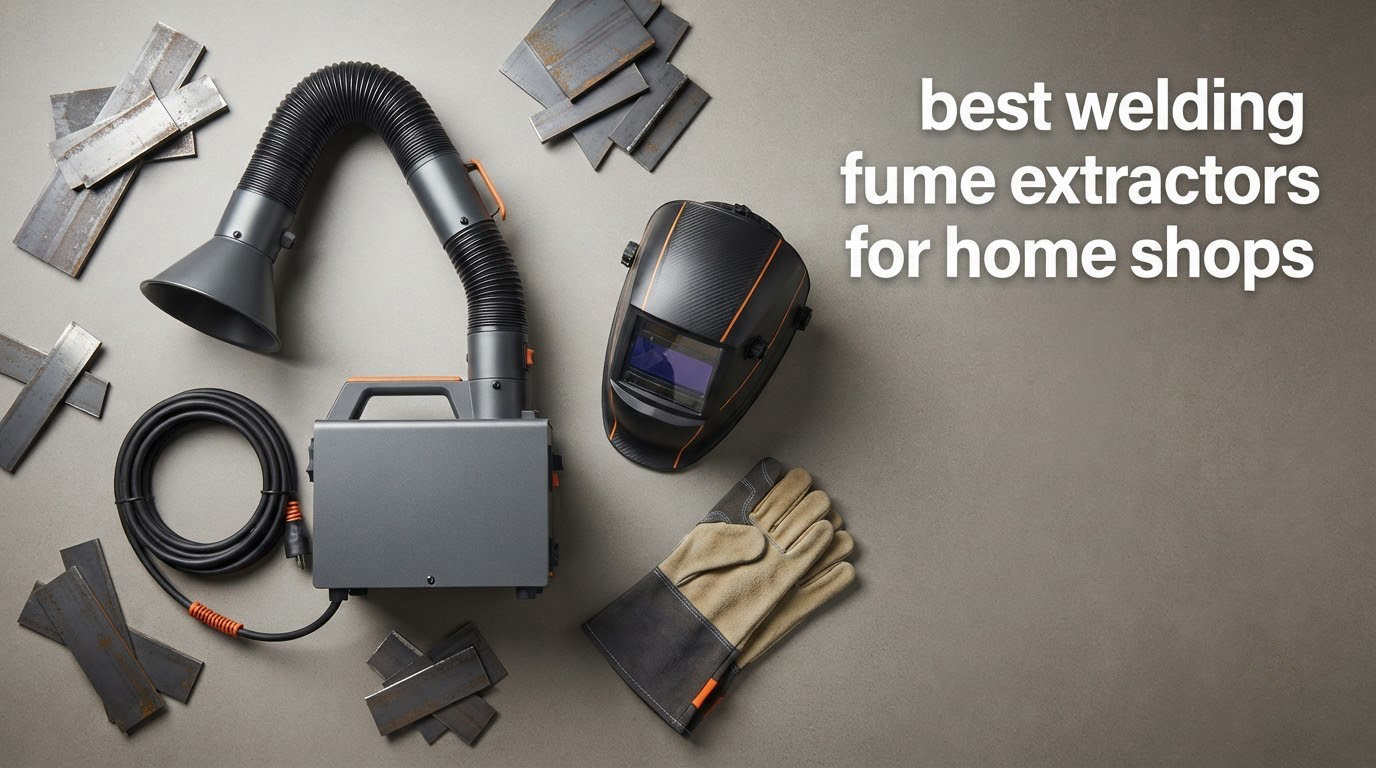
Welding fume is the quietest serious hazard in a home shop. The metal oxide particles that come off the arc are linked to lung damage, and when you weld stainless or galvanised steel you are also making hexavalent chromium, a recognised carcinogen. The problem for a hobbyist is not the arc, it is the room. A garage door open in July is a decent extraction strategy. The same garage in January is a sealed box with a welding puddle in it, and that is when the fume goes to work through the rafters and into the house.
So yes, a welding fume extractor does exactly what its name suggests. A fan pulls contaminated air through a hood parked close to the arc, runs it past a pre-filter that catches sparks and coarse debris, then through a high-efficiency particle filter and usually activated carbon, and the clean air goes back into the shop. The direct answer to the question most people arrive with: the best welding fume extractor for a home shop is the one that is quiet enough to leave running, has filters you can actually buy again, and sits close enough to the arc that you can see the fume being drawn in.
One honest note before the rankings, because it changes how you should read this list. The ten units below are the compact, filtered, bench-and-cart class of extractor that fits a garage with a normal budget. None of them is a 14-foot articulated extraction arm and none is a downdraft table. They are rated in tens and hundreds of cubic feet per minute, not the thousands a professional installation needs. What they will do is catch fume at a single small workbench, at a single arc, while you keep the garage door shut for the winter. When you outgrow that, the home workshop welding table guide covers the bench side of the same problem.
I have read through the customer reviews on all ten, weighed the specification sheets against what the owners report in real rooms, and ranked them for home-shop duty. The first thing every honest review mentions, in one form or another, is whether the machine still pulls hard after six months, because that is the difference between a real extractor and an expensive fan.
Updated for October 2026.
Table of Contents
Top 3 Picks for Best Home Shop Welding Fume Extractors in 2026
Three machines come out ahead for garage duty. The KOTTO is the one I would put in a one-car garage first, the M-T is the most capable of the entry level machines and carries real HEPA filtration, and the FumeClear FC-100A is the strongest single-port machine here for anyone who wants a step up in power and a carbon filter that does not need replacing every few months.
Quick Overview: All 10 Welding Fume Extractor Picks in 2026
All ten units are listed below with their headline airflow, filtration and best-for use. Two products in this group have no customer photographs at all, which is worth noticing on its own. Review volume varies enormously, from 843 reviews down to 14, and I have leaned on the higher-volume machines when the specifications alone did not settle a question.
| Product | Specifications | Action |
|---|---|---|
 KOTTO Strong Suction Smoke Absorber KOTTO Strong Suction Smoke Absorber |
|
Check Latest Price |
 M-T 80W Fume Extractor M-T 80W Fume Extractor |
|
Check Latest Price |
 FumeClear FC-100A FumeClear FC-100A |
|
Check Latest Price |
 VEVOR FL250 Solder Fume Extractor VEVOR FL250 Solder Fume Extractor |
|
Check Latest Price |
 Weller ZeroSmog Shield Weller ZeroSmog Shield |
|
Check Latest Price |
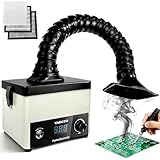 YAOCEO YC60 YAOCEO YC60 |
|
Check Latest Price |
 Zericuf 180W Fume Extractor Zericuf 180W Fume Extractor |
|
Check Latest Price |
 VEVOR DX2000 Dual Hose VEVOR DX2000 Dual Hose |
|
Check Latest Price |
 FumeClear FC-2003 Dual Port FumeClear FC-2003 Dual Port |
|
Check Latest Price |
 NLVYPRO MN04 Dual Fan NLVYPRO MN04 Dual Fan |
|
Check Latest Price |
1. KOTTO Strong Suction Smoke Absorber – Best First Extractor for a One-Car Garage
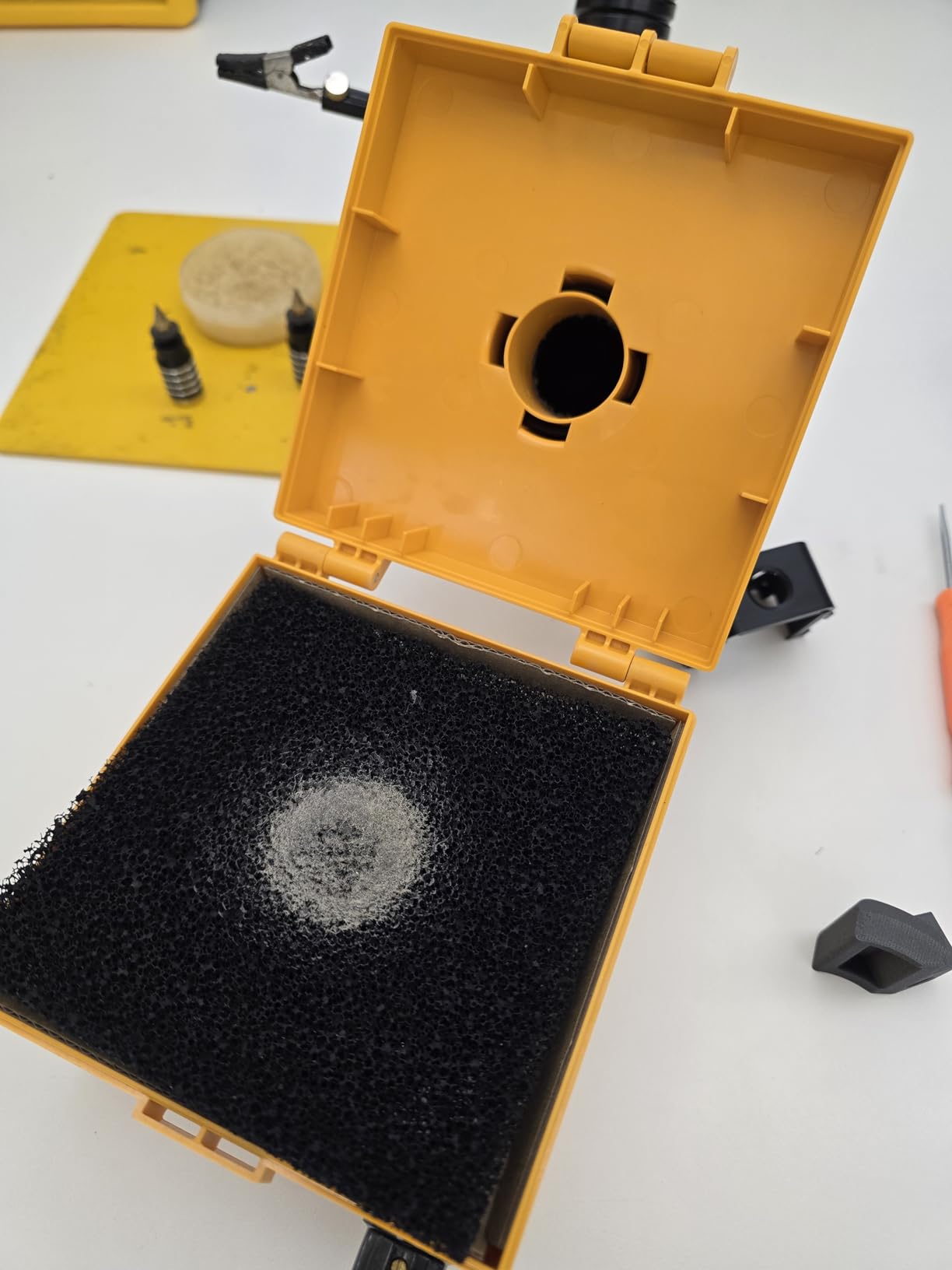
KOTTO Strong Suction Smoke Absorber for Soldering,Welding,3D Printing
- 52 CFM from a 40W motor is real pull for a compact unit
- Holds position hands-free with the 24 inch flexible hose
- One replacement filter included and swaps in seconds
- 843 reviews at 4.2 stars give the best evidence base here
- 55 dB is audible during quiet precision work
- Single stage carbon style filtration is basic
- Small footprint limits the capture zone for larger workpieces
The KOTTO is the reason I rank it first. It is not the most powerful machine here and it is nowhere near the most sophisticated, but 843 reviews at 4.2 stars is by far the largest evidence base in this group, and the complaints in those reviews are consistent and small. A fan this size that has been running for years without a motor failure is exactly what you want behind a hobby welder.
The 52 CFM figure comes from an adjustable 6000 RPM motor drawing 40 watts, and the listed static pressure of 125mmH2O tells you it is a genuinely sealed, high-pressure fan rather than a cheap open axial. That is why it can pull through a 24 inch length of flexible hose and still hold the nozzle in position. Reviewers repeatedly describe being able to park it roughly five or six inches from a joint and watch solder smoke get dragged in rather than drifting across the bench.
For a home welder the important number is not peak CFM, it is how the unit feels after the filter has loaded. A carbon and particle filter on this class of machine adds real resistance, and a weak fan simply stops pulling when that happens. This one holds, which is the single most common failure complaint forum owners raise about budget extractors generally. Home-shop builders on garagejournal.com describe fitting a multi stage unit into a larger workshop build as part of the whole package, and suction that survives filter loading is what makes that sensible.
The noise figure of 55 dB is the honest drawback. It is not silent, and during delicate TIG work on thin stainless you will notice it. The counter-argument is that it is a steady broadband hum rather than a whine, which is the sort of background you can work inside for an hour at a time.
What it handles well in a home shop
This is the unit I would recommend for short MIG welds on thin wall mild steel, and for any of the bench-scale work that fills a home shop between bigger projects. At 3.87 pounds it is trivial to move from the welding bench to the workbench, so one machine can follow you around the garage instead of being bolted to a corner.
It also works while plugged in, which matters more than it sounds. Continuous bench use is the difference between an extractor that gets used and one that gets switched off when the shop gets cold. On garagejournal.com, owners building out a residential workshop talk about fumes migrating into the house as their driving concern, and a machine you will actually leave running solves more of that than a more capable unit you switch off.
Where it falls short
The filtration is the compromise. A single stage carbon style arrangement has a much smaller media volume than the three stage machines further down this list, so expect to change it more often on heavy grinding or cutting work. Owners who pushed it into stainless TIG duty report residual odour, which is what an undersized carbon bed looks like.
Because the capture zone is small, you have to bring the nozzle to the work rather than the work to the machine. That is a real adjustment for anyone used to a large hood, and it is why this ranks as a first extractor rather than a final one. If you need the range hood of a proper shop, look further down the list.
2. M-T 80W Fume Extractor – Best Budget Welding Extractor with Real HEPA Filtration
- Triple layer filtration with H13 HEPA that many cheaper rivals omit
- Metal shell rather than flimsy plastic
- 360 degree hose directs airflow where you need it
- Effective within about 5 inches of the source
- Loud on the top speed setting
- Hose to housing joint can cross-thread
- Filters are not widely stocked and wear out quickly
At 161 reviews and 4 stars, the M-T has more than three times the review volume of most machines in this group and the filtration spec sheet that most budget extractors only pretend to offer. Triple layer, with high density fibre, carbon cotton, an H13 HEPA stage and activated carbon, at 168 m3/h from an 80 watt motor. That is a lot of filtration for a machine this size.
The 15000 RPM motor is the reason for the airflow number, and the listed under 60 dB rating holds on the lower two of the three speed settings. Reviewers are consistent about that split: the middle setting is where the machine works best, because it is quiet enough to think inside and still pulls hard. Turning it to maximum buys airflow you rarely need and noise you definitely do.
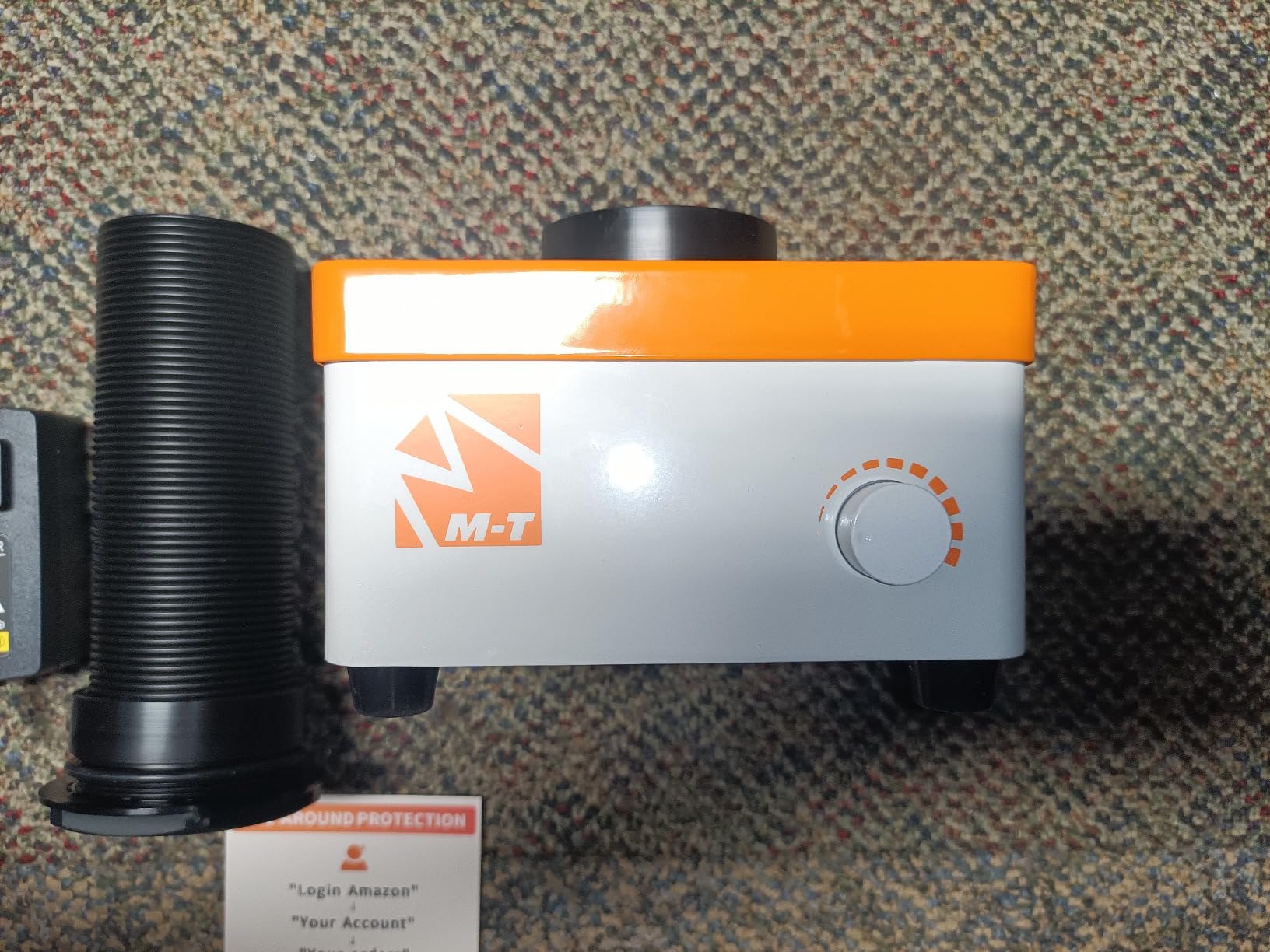
Reviewers also credit the metal shell. It is heavier and more stable than the plastic boxes in the same bracket, and it does not flex when you drag it across a bench. The 360 degree hose between roughly 7 and 25 inches gives you enough reach to bring the nozzle to a raised workpiece rather than lowering the workpiece to the machine.
One practical detail worth flagging: the air exits at the bottom of the unit. Several owners note that without an air dam, some of the filtered air comes straight back out toward you. Parking it on a shelf so the exhaust has somewhere to go fixes almost all of this.
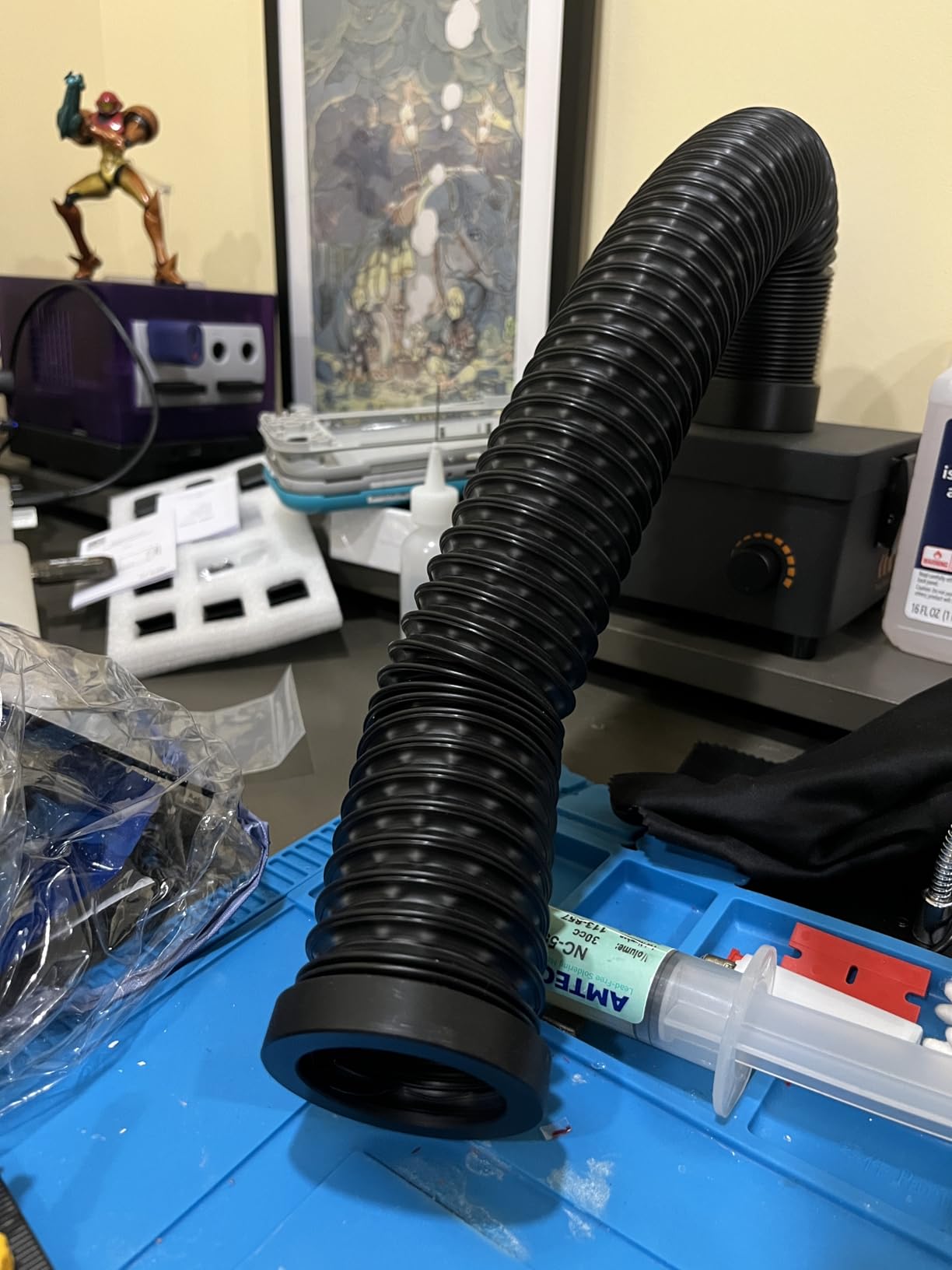
What it handles well in a home shop
This is the pick for anyone who has been tempted by a very cheap carbon-only absorber and worried about whether it would cope with an arc. The H13 stage is a genuine high efficiency particle filter and it gives you something closer to a real filtration chain at the entry end of this list.
It also covers the second job a home shop extractor gets, which is fume and dust from cutting and grinding on the same bench. The 168 m3/h figure moves a lot of air for a 3.72 pound unit, and the three speed settings let you dial it down for the fine work where the extra airflow is not needed. The universal 100 to 240V adapter with surge and voltage protection is a small thing that matters if your shop has a rough supply.
Where it falls short
Replacement filters are the real problem, and it is the same problem this whole category has. Reviewers report that the cartridges are not widely available and that they wear out faster than expected. Buying a three year warranty is not much comfort if the consumable is awkward to source, so check availability before you commit.
There is also a fitting issue. A number of owners describe the hose to housing joint as cross-threaded rather than properly seated, which leaks suction until it is reseated. It is a two minute fix if you know about it and a frustrating afternoon if you do not. Mine came from a metal body, and I would run it on the middle setting rather than the top one.
3. FumeClear FC-100A – Best High-Capacity Extractor for One Workbench
FumeClear FC-100A Fume Extractor Low-Noise & High Iodine 3-Stage Filtration
- Noticeably more powerful and quieter than low cost carbon only boxes
- High iodine carbon filter rated to roughly 3000 hours
- Long hose reaches from the floor to a seated position
- Small box footprint fits under a desk
- Not sized for large laser engravers
- Residual odour can pass through on some processes
- Voltage version has to match your local supply
The FC-100A is the strongest single unit in this list on paper, and the 4.4 stars from 136 reviews is one of the two best rating and volume combinations here. At up to 200 m3/h suction from a 100 watt maximum draw, it moves more air than either of the machines above it from a box about the size of a small filing cabinet.
Where it wins on a real cost basis is the carbon. The main filter is high iodine activated carbon rated at approximately 3000 hours, and ten pre-filters come in the box. For a home shop, filter cost per year of ownership is the number that actually decides whether a machine was worth buying, and a 3000 hour media life changes that arithmetic entirely. That figure is the manufacturer’s rating rather than a measurement I took, so treat it as a planning number and watch the condition indicator instead.
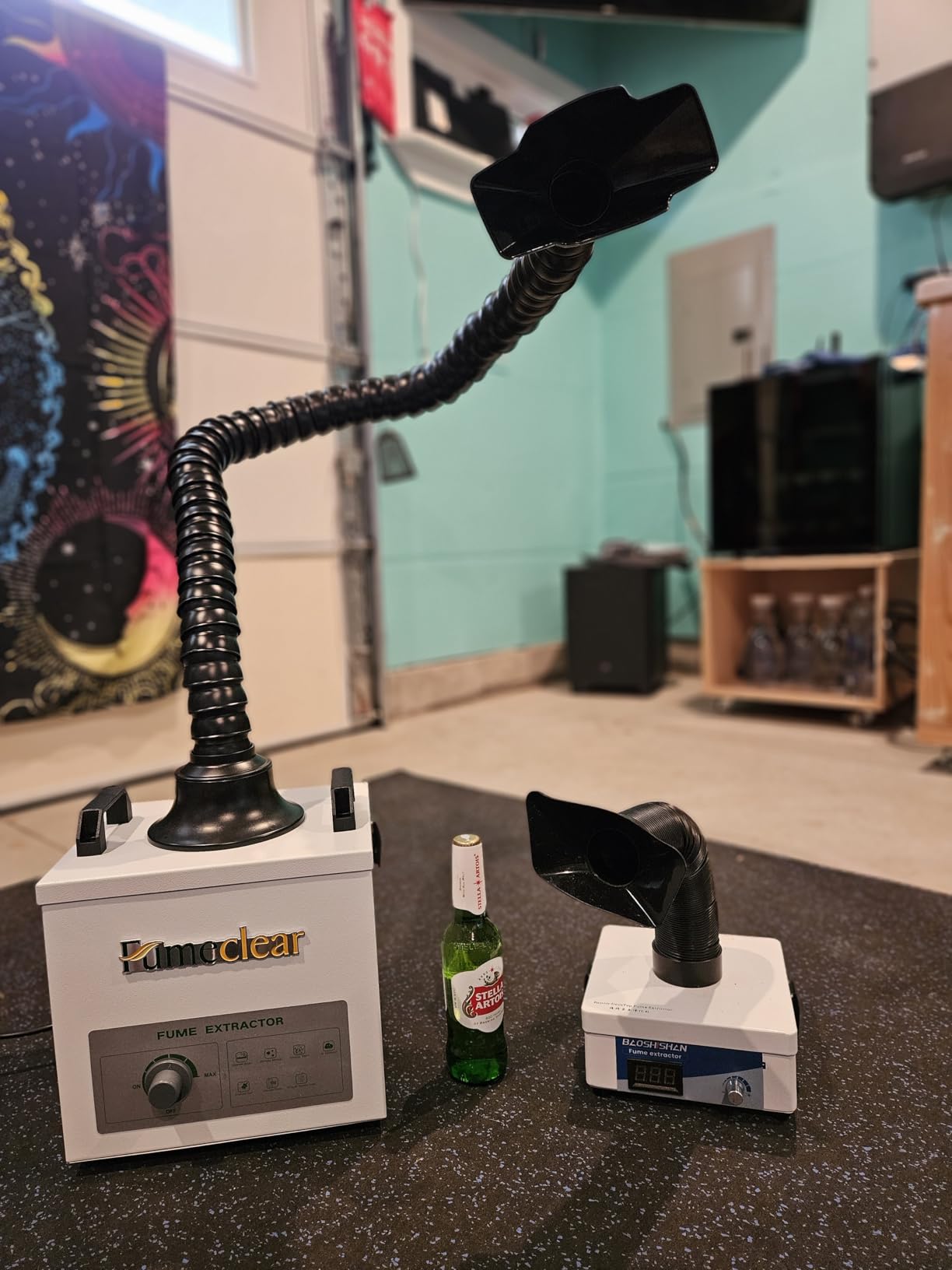
The listed filtration performance of 99.97 percent on particles below 0.3 microns is again a spec sheet claim, but the 3 stage layout with upgraded sealing is the part that matters in practice. A HEPA stage and a carbon stage in the same housing, properly sealed, is what stops the gas phase odour coming straight back through the particle filter.
Owners consistently describe it as both stronger and quieter than the inexpensive carbon boxes, and the long flexible hose is repeatedly praised for reaching from the floor up to a seated working position. At 19.51 pounds it has real mass, which stops it wandering across the garage floor while running.
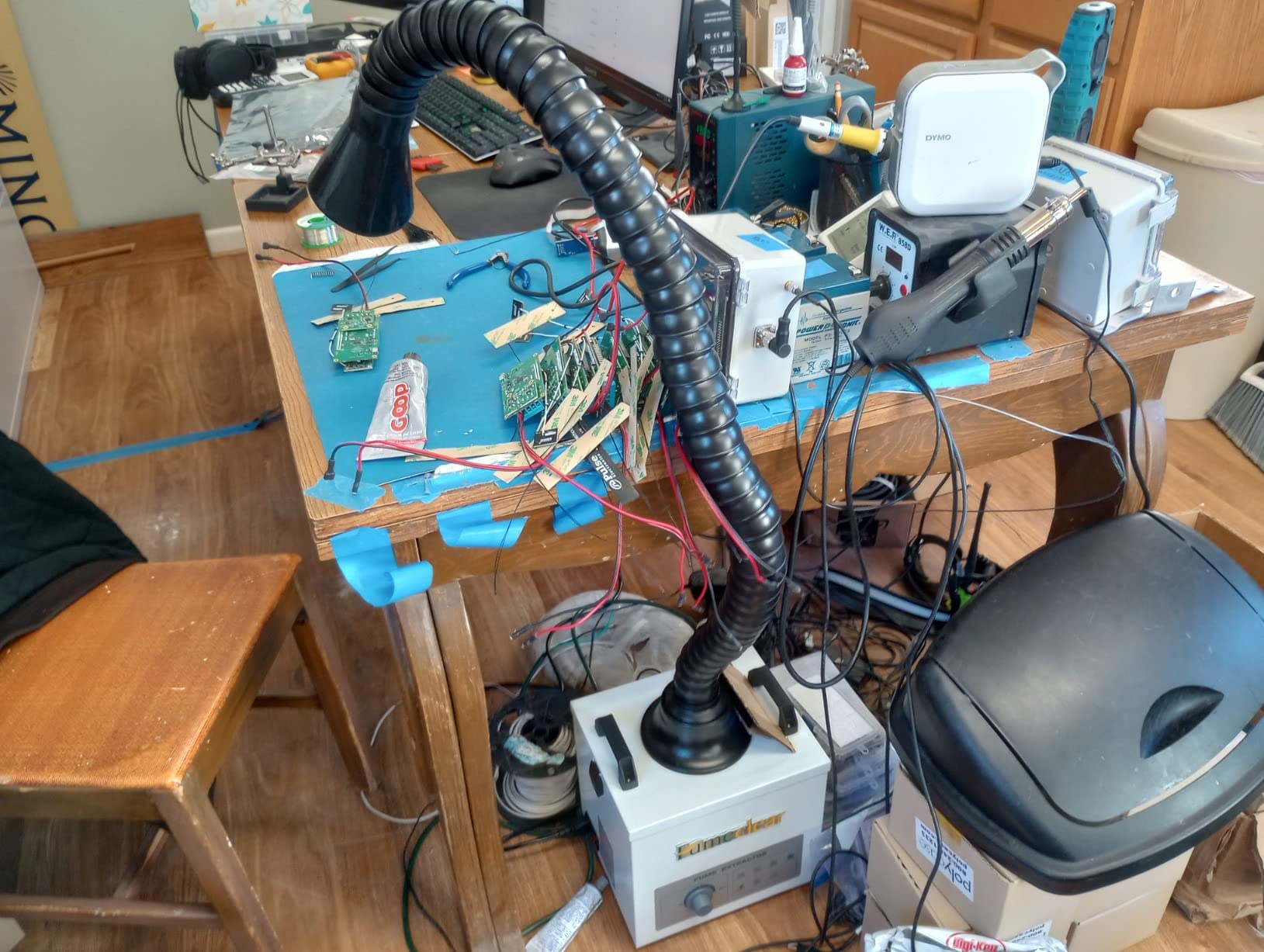
What it handles well in a home shop
This is the one I would point at for anyone welding stainless steel indoors. A high iodine carbon bed is the component that deals with the metal fume gas phase rather than the particulate, and stainless TIG is the process where you most want that handled rather than merely filtered for dust. The combination of a large carbon mass and a decent particle stage is what separates it from the cheap units.
It also copes with more than one job at a time better than most. Benching it under a work surface, aimed at cutting and grinding dust rather than just the arc, is the setup small-shop hobbyists describe in practice. Weldingweb.com threads on small workshop layout show owners comparing compact and mobile extractors on exactly this point, and the recurring conclusion is that capacity matters more than clever mounting once you start doing several kinds of work.
Where it falls short
Be clear about scale. The manufacturer itself points buyers with larger laser engravers to the bigger FC series, and the same logic applies if you plan to run a plasma cutter under this hood. Plasma cutting throws far more particulate than a welding arc, and a bench unit sized for an arc will load up quickly on a cut.
Two smaller warnings. Some owners report residual odour passing through on certain processes, which is usually the carbon stage reaching saturation before the particle stage. And there is at least one report of a motor and control board failure inside about six months on an early unit, so buy it from somewhere that makes that straightforward to sort.
4. VEVOR FL250 – Best Value Metal-Cased Extractor for Bench and Grinding Work
- Large 2.1 m2 pleated area gives real capacity for heavy bench volumes
- Two ball jointed gooseneck arms hold position solidly
- Solid sheet metal build with sealed latches and lockable casters
- Lowest speed setting is already effective for most work
- Replacement filters are hard to source and close to the machine cost
- No handle so repositioning is awkward
- Controls sit at the bottom requiring bending down
The FL250 is the most interesting shape in this group. Instead of a single hose, it uses two ball jointed gooseneck arms, which means two fixed capture points without repositioning the whole machine. Owners of multi machine workrooms describe the same effect. For a home shop it means one extractor can watch a welding bench and a grinding station at the same time, which is the two task problem most hobbyists have.
Airflow is listed at 165 CFM from a 150 watt DC brushless motor running up to 4500 RPM, across three adjustable speed settings, with a stated sound emission below 63 dB. The 2.1 square metre pleated filter area is the number that stands out to me, because filter area is what determines how long a home shop goes between cartridge changes.
What it handles well in a home shop
Sheet metal construction with sealed latches and four wheels, two of which lock, is closer to workshop equipment than to a desk accessory. At 26.2 pounds it is a machine you would roll to the work rather than lift, and the locking casters mean it stays where you put it once you have it positioned.
The lowest speed setting being effective on its own is what makes it usable in a quiet shop. You are not forced to run it flat out for a small job, which is how these machines end up switched off. The three stage cotton, HEPA and carbon arrangement covers both particulate and the gas phase at once.
Where it falls short
Filter availability is the dominant complaint across multiple international reviews, and it is a serious one. If the replacement cartridges are hard to find and priced close to the cost of the machine itself, the total cost of ownership story falls apart after the first change. Before you buy this one, confirm you can get the media.
Two smaller ergonomic points. There is no handle, so repositioning means bending down and dragging 26 pounds, and the power and speed controls are mounted on the bottom of the unit, which means crouching every time you change setting. The intake tubes are also stiff to aim, which is the trade against having two of them.
5. Weller ZeroSmog Shield – Best Compact Extractor for a Soldering Bench
Weller ZeroSmog Shield Fume Extraction Black Edition | FT91019190
- Genuinely professional grade housing and fan assembly
- Quiet enough to hold a conversation while running
- Stackable slim design saves bench space
- Tool free filter changes with condition monitoring
- Capture footprint is only about one square foot
- No flexible hose so the capture zone cannot be moved
- External power brick takes up a lot of power strip space
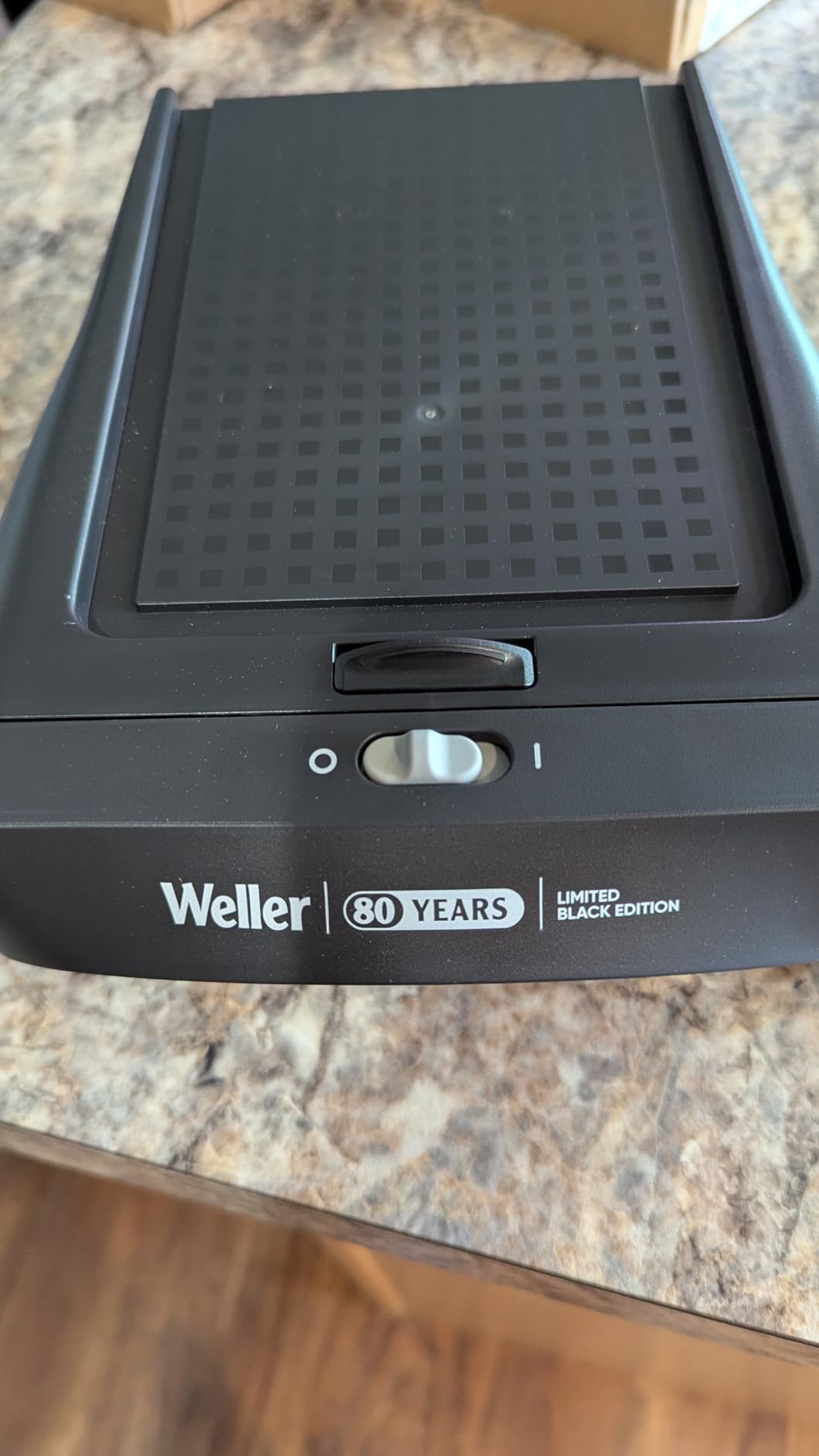
I want to be straight about where this one belongs. The Weller ZeroSmog Shield is a soldering and bench electronics extractor, not an arc machine, and the reviewers say so plainly. What it does have going for it is build quality that no other unit at this size in this group matches, plus continuous filter condition monitoring.
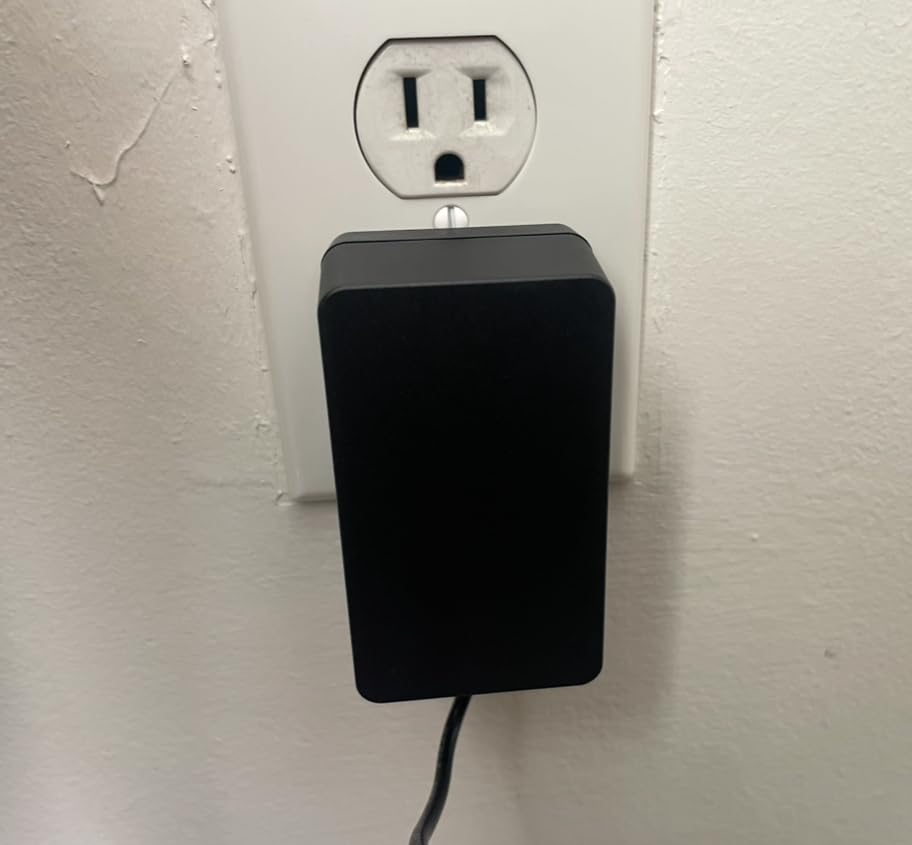
That monitoring is the feature that separates it from everything else here. Instead of guessing when a cartridge is finished, the unit tells you. Owners praise genuinely tool free in-unit filter changes, and the EPA E10 particulate filter paired with activated carbon handles both the particles and the gases that come off a soldering iron.
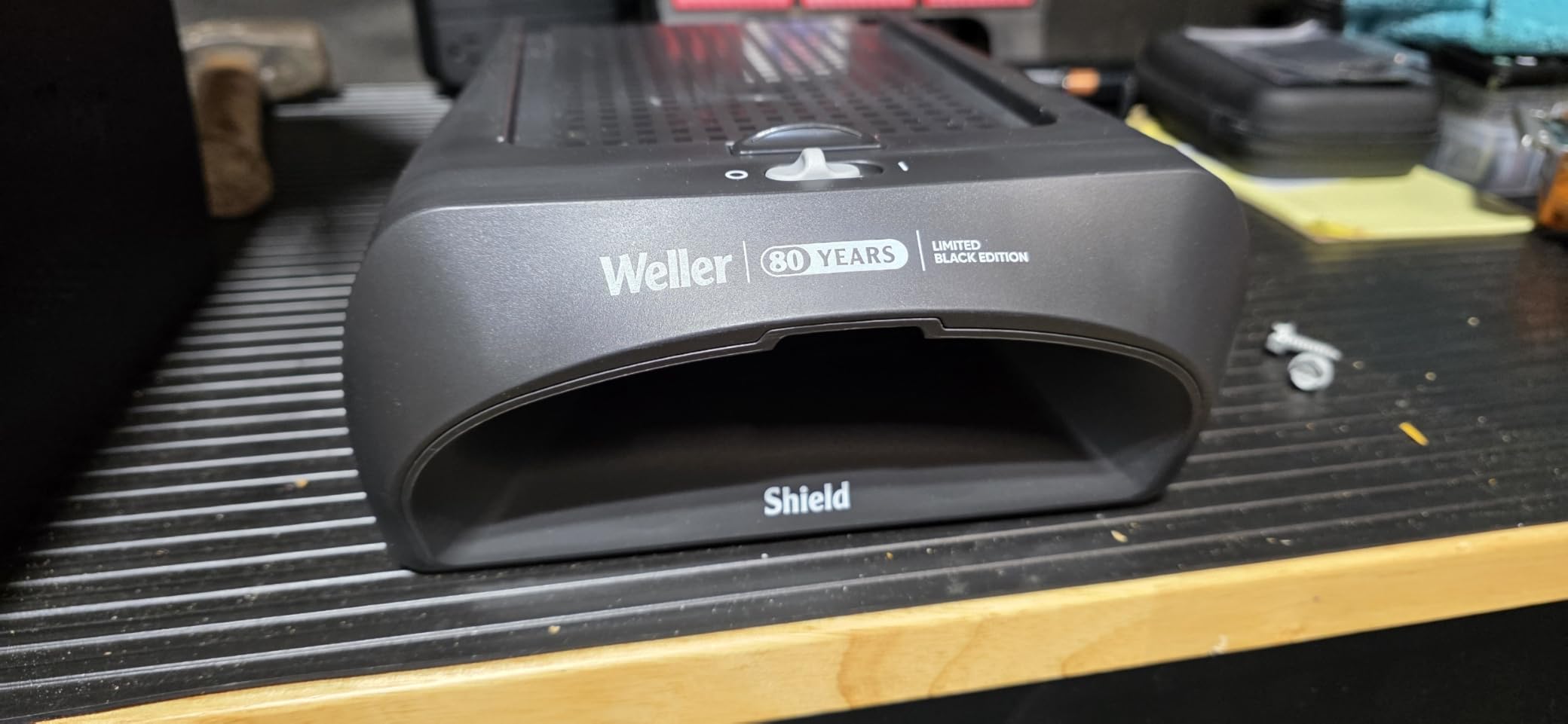
The integrated work light marking the optimal extraction area is a nice touch that sounds like marketing and turns out not to be, because knowing exactly where the good capture zone sits is more useful than it sounds. It is also dim enough that several owners complain it will not actually light your work.
At 4.3 pounds and 11.89 by 10.35 by 5.75 inches, the slim stackable chassis is among the smallest things in this roundup. If your welding and your electronics work share a bench, that footprint matters more than airflow.
What it handles well in a home shop
Choose this machine for the soldering, rework and small parts side of a home shop, where low noise is the priority. Reviewers describe being able to talk or play music while it runs, and in a garage that doubles as a study or a television room that is the difference between using it and switching it off.
It is also the right pick for anyone doing delicate work where a large extractor is simply too much machine. The 80th Anniversary Black Edition build is the kind of thing that survives a decade of bench knocks, which matters more for a small box that gets moved constantly than for a big unit on casters.
Where it falls short
The capture zone is roughly one square foot and there is no flexible hose, so you bring the board to the unit. Reviewers specifically call out that it works poorly with a Panavise or any holder that raises the board up into the air, which is a warning for anyone who expects to use it on an arc. The fixed capture zone limits project size too.
So if you came here for a welding fume extractor, this is not it. It is the right answer to a different question, and it is a very good answer to that one. The external power brick also takes up an outsized amount of power strip space for a 4.3 pound unit.
6. YAOCEO YC60 – Best Quiet Welding Fume Extractor for a Shared Room
- Arm holds position without drooping unlike cheaper models
- All metal frame that stands up to bench knocks
- Suction strong enough to visibly pull smoke off the joint
- Digital speed readout and simple dial control
- Instructions are thin or missing
- Occasional units arrive dead on arrival
- Filter cartridges still need periodic replacement
The YC60 is the quietest machine here on paper, at below 50 dB, and it is the one I would look at first if your garage shares a wall with somewhere people sleep. That is a real home shop constraint that almost every spec sheet ignores, and forum owners raise it constantly: people switch extractors off because of noise, and a machine that is off is not doing any work.
It delivers up to 71 CFM, or 120 m3/h, at wind speeds up to 21 feet per second, across three stage filtration with a pre-filter, an H13 HEPA stage and activated carbon, rated at 99.97 percent on 0.3 micron particles. The industrial brushless motor sits in an all metal frame rated past 10000 hours, and the unit accepts 100 to 240V.
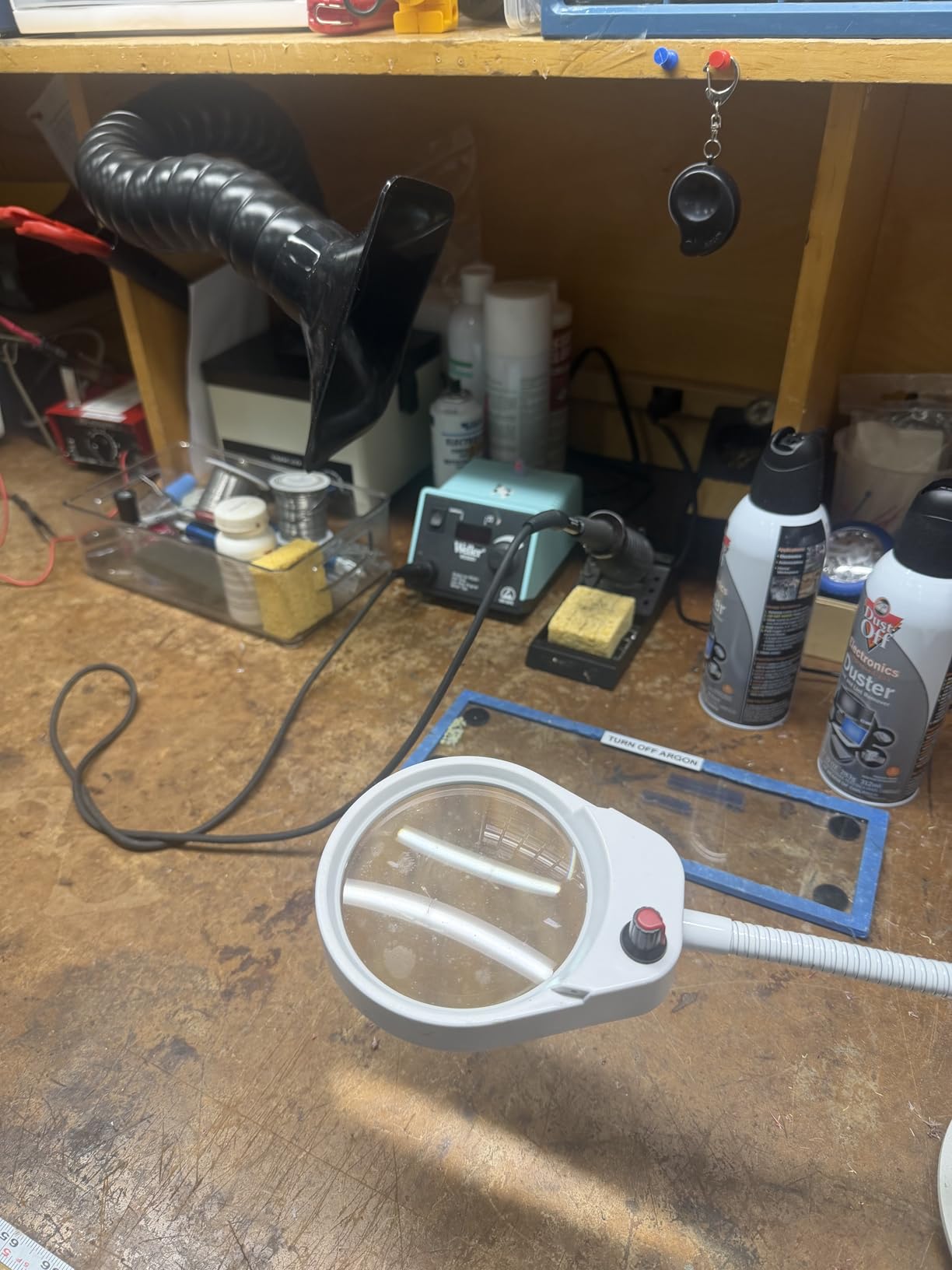
What owners like most is the 360 degree locking heat resistant arm that holds position without drooping. That sounds minor until you have used a flimsy one, which slowly collapses into the workpiece and destroys your capture distance halfway through a weld. The real time digital fan speed display is a nice addition for dialling in a repeatable setting.
Every filter component is individually replaceable, which is the right design decision and a genuine improvement on sealed units. At 8.18 pounds it is light enough to move between the bench and the sawhorse without thinking about it.
What it handles well in a home shop
Short MIG welds on mild steel in a room where noise matters, plus bench soldering, is the sweet spot. 71 CFM is more than enough to pull a fume column off a modest arc when the hood is parked close, and the quiet operation means you can leave it running through a whole evening session rather than switching it off after ten minutes.
The metal frame is the other quiet win. It is a recent release with a current generation brushless motor and wide voltage support, and the 4.4 star average from 21 reviews comes with an 81 percent five star share. That is a young review base, so I would treat it as promising rather than proven, and check the warranty terms before you rely on it.
Where it falls short
The two recurring negatives are both manufacturing rather than design. Instructions are thin or missing even though the unit comes assembled, and there is an isolated report of a unit arriving dead on arrival with no power at all. On a machine this quiet and this new, check it works the day it arrives rather than assuming.
Filter cartridges still need replacing under heavy use, as with everything in this category. And 71 CFM is a genuinely modest figure. If your plan involves grinding a lot of steel or cutting with a plasma cutter, you want the higher output machines further down.
7. Zericuf 180W – Best High Output Extractor for Heavy Bench Work
- Stepless control is finer than the 1 to 3 speed steps on most rivals
- Handles heavy continuous work that smaller units cannot
- Quiet enough to talk over even at full speed
- Locking swivel casters and a zero droop positioning arm
- Replacement filters were not yet widely available
- Filter cartridges burn through fast under very heavy use
- Some units arrive dead on arrival
The Zericuf delivers more raw output than anything else in this roundup, and the reason to buy it is that 320 m3/h from a 180 watt brushless pure copper motor is a lot of air for a bench unit. That is roughly 190 CFM, which puts it in territory where you start to be able to think about cutting and grinding under the same hood, not just welding.
It is also the only one here with a proper acoustic treatment. A soundproof chamber using acoustic and damping foam holds noise below 58 dB at full output, which is a better result than the machines in this list that manage similar airflow with a louder motor and no treatment. Owners consistently describe being able to talk over it.
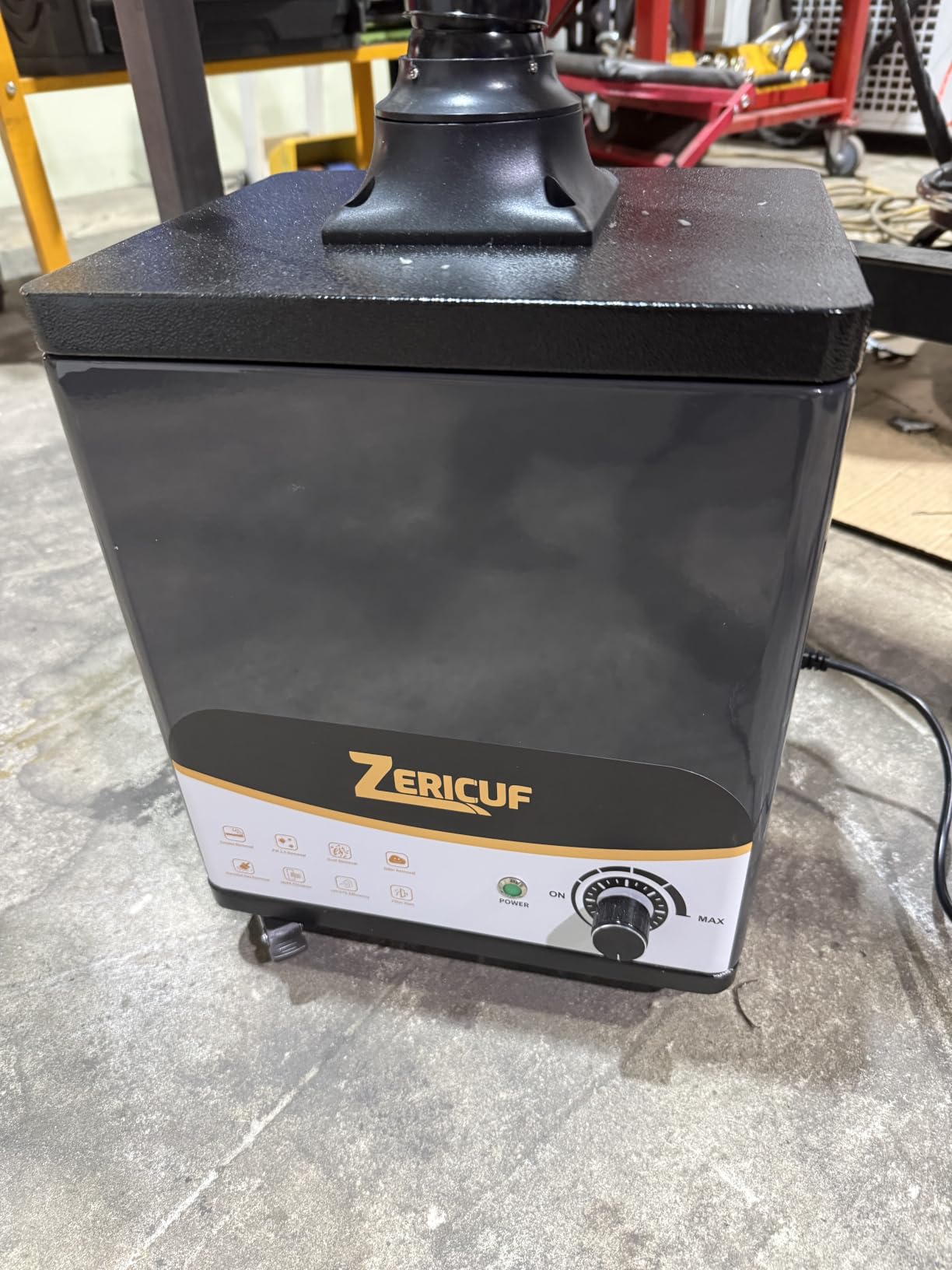
The smart buzzer clog alert is the feature I would most want in a home shop. Instead of wondering why the suction has felt weak for a month, the machine tells you the filter is loaded. On smaller units you are left reading a warning light and guessing, and most people ignore the light until the performance has already dropped.
Stepless speed control via a potentiometer is finer than the 1 to 3 step settings on most rivals, and there is a downward sloping rear exhaust vent that keeps hot air off the bench. Four swivel casters with front brakes and a 360 degree zero droop positioning arm make it easy to move and then keep it exactly where you set it.
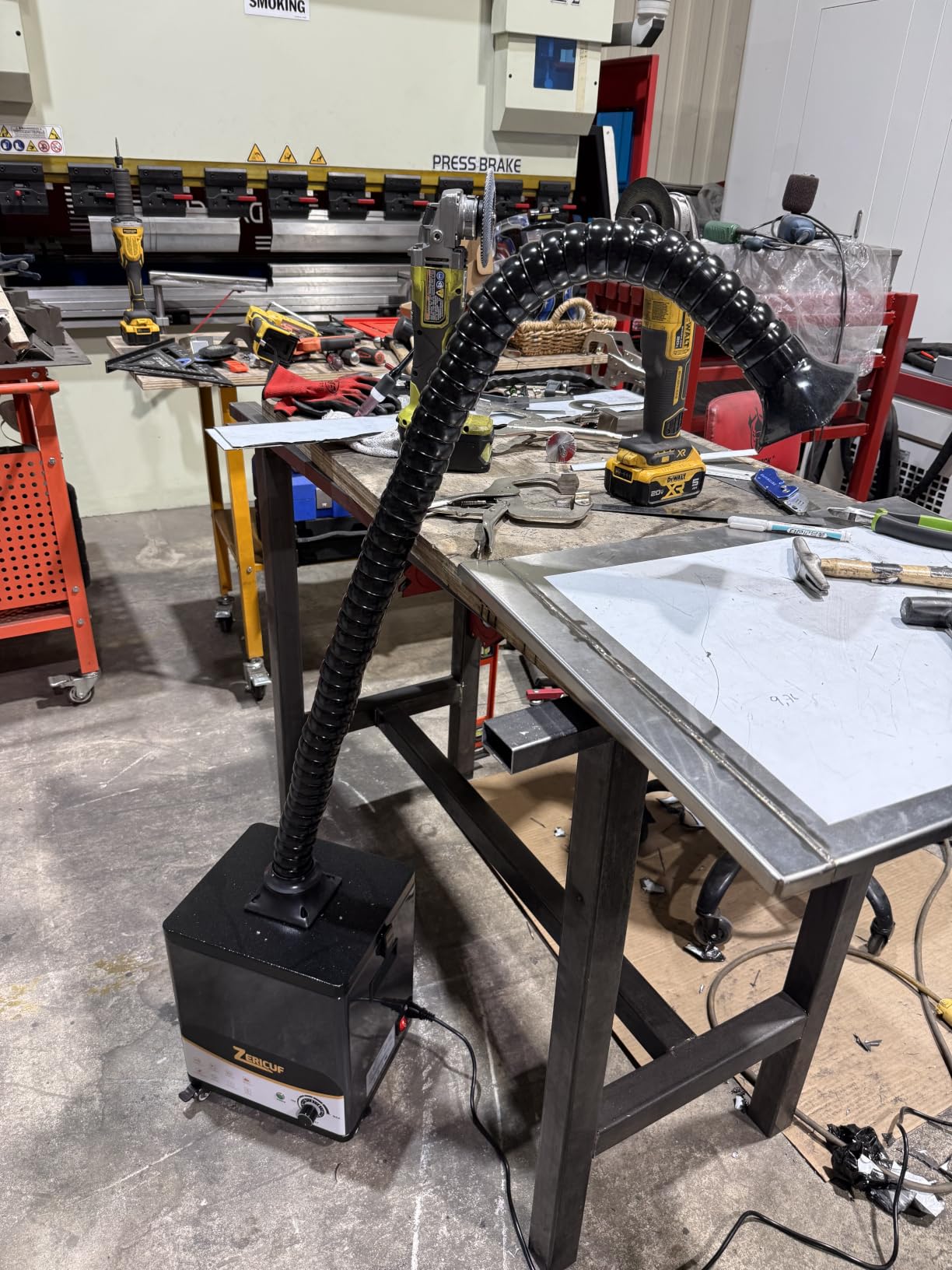
What it handles well in a home shop
Anyone whose real problem is volume rather than precision. If you grind welds, cut steel or run a plasma cutter on the same bench as your arc, this is the machine in the group with the headroom for it. A 5 year warranty with 24/7 support and free parts is also the longest cover listed here.
The filter hierarchy is thorough: double thickness pre-filters with ten included, H13 HEPA at 99.997 percent of 0.3 micron particles, and 800 to 900 mg/g high iodine activated carbon. The hose is rated past 5000 bend tests, which is the right number to care about if you drag it across a garage floor.
Where it falls short
Consumables are the problem here, and the problem is availability. The listing states that pre-filter, HEPA and carbon replacements were scheduled to become available after launch, so if you buy this, check the current replacement situation before you commit. Buyers report exhausting filters faster than expected under very heavy continuous use, which is exactly the use case this machine is built for.
At 19 reviews there is not much owner history to lean on yet, and there is a report of units arriving dead with only automated seller support available. The build is metal, the warranty is long and the control scheme is unusually refined, so the fundamentals are right, but you are buying a newer design here.
8. VEVOR DX2000 Dual Hose – Best Extractor for Two Separate Work Areas
- Dual 360 degree hoses give two capture points at once
- Highest airflow figure in this group at 380 m3/h
- Lowest speed setting is enough for detailed hobby work
- Packs down and moves on casters
- Replacement filters are not sold for this model
- Not especially quiet
- At least one unit failed after about two months
The DX2000 exists to solve one specific problem, which is capturing at two places at the same time. Two 360 degree bendable exhaust hoses mean you can park the hood over a welding bench and a cutting table simultaneously, or run one hose to a bench and keep the other on the unit. At 275 watts and up to 380 m3/h, it moves more air than any other unit in this roundup.
Speed control runs across ten adjustable levels on a stepless knob, finer than the three step settings most of the field uses. Reviewers of this class of machine find the lowest setting is enough for stained glass and hobby soldering without the noise, which tells you how wide the range really is.
What it handles well in a home shop
A garage with two working areas, or one bench that gets used for both welding and fine electronics work. The dual hose is not a gimmick. Once the second point of capture is live, the airflow splits, and having a fine low setting on one hose and a high setting on the other is a genuinely useful arrangement that a single hose machine cannot match.
At 41.9 pounds with four smooth rolling wheels and carrying handles, it is built to be moved rather than lifted, and the sheet metal shell means it tolerates a garage floor better than anything plastic in this list.
Where it falls short
Replacement filters are not sold for this model, and that is a serious problem for a machine designed to be used hard. You are running a four stage chain with no supported consumable path. I would not build a long term purchase plan around a machine whose filters you cannot buy.
It is also one of the two heaviest units in the group at nearly 42 pounds, which is fine on casters and annoying for anything else. Reviewers describe it as not especially quiet, there is at least one report of a unit failing after about two months, and manufacturer support was reportedly unresponsive when troubleshooting was needed. With 18 reviews the owner history here is thin.
9. FumeClear FC-2003 – Best Extractor for Two Workstations in a Shared Shop
FumeClear FC-2003 Dual Ports Fume Extractor for Remote Control Low-Noise
- Two simultaneous ports suit two workstations
- High iodine carbon with a 2000 to 4000 hour service life
- Low noise design suitable for an occupied room
- Remote control for a permanently mounted station
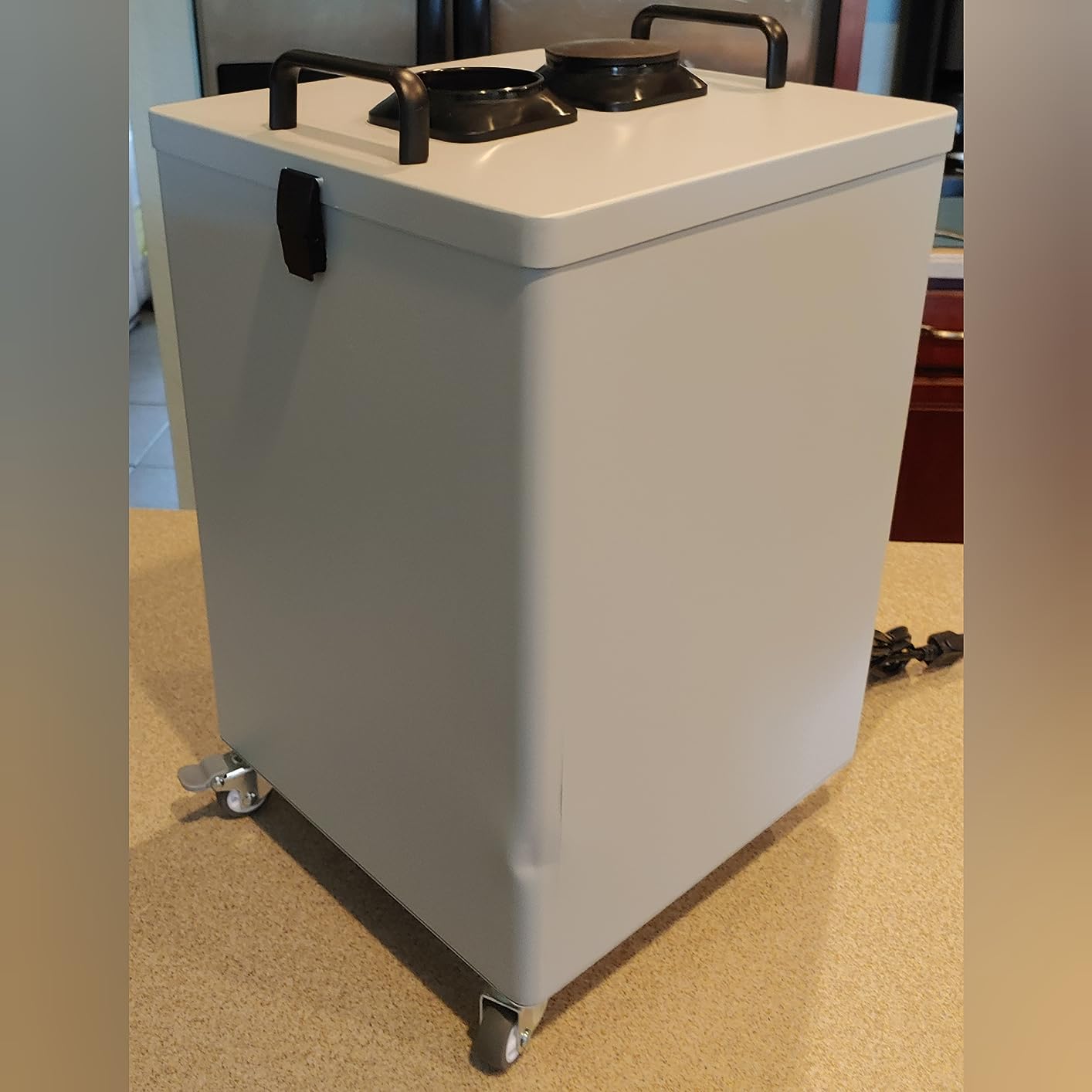
- Heavy 42.2 lb body to reposition
- Dual inlet mode halves airflow per port
- Smallest review base in the group at 14
The FC-2003 carries the highest star rating in this entire roundup at 4.8, with no ratings below four stars. I want to caveat that honestly, because it also has the smallest review base here at 14. A 4.8 across 14 reviews tells you the people who bought it were happy. It does not tell you what a 4.2 across 843 tells you, and I have ranked it below machines with far rougher histories for that reason.
What it does is serve two air inlet ports simultaneously, which is the feature that separates it from the single port machines. Airflow is listed at 330 m3/h through a single inlet and 165 m3/h with both, so running two ports genuinely halves the flow to each. Read that number before you assume two ports means double the performance.
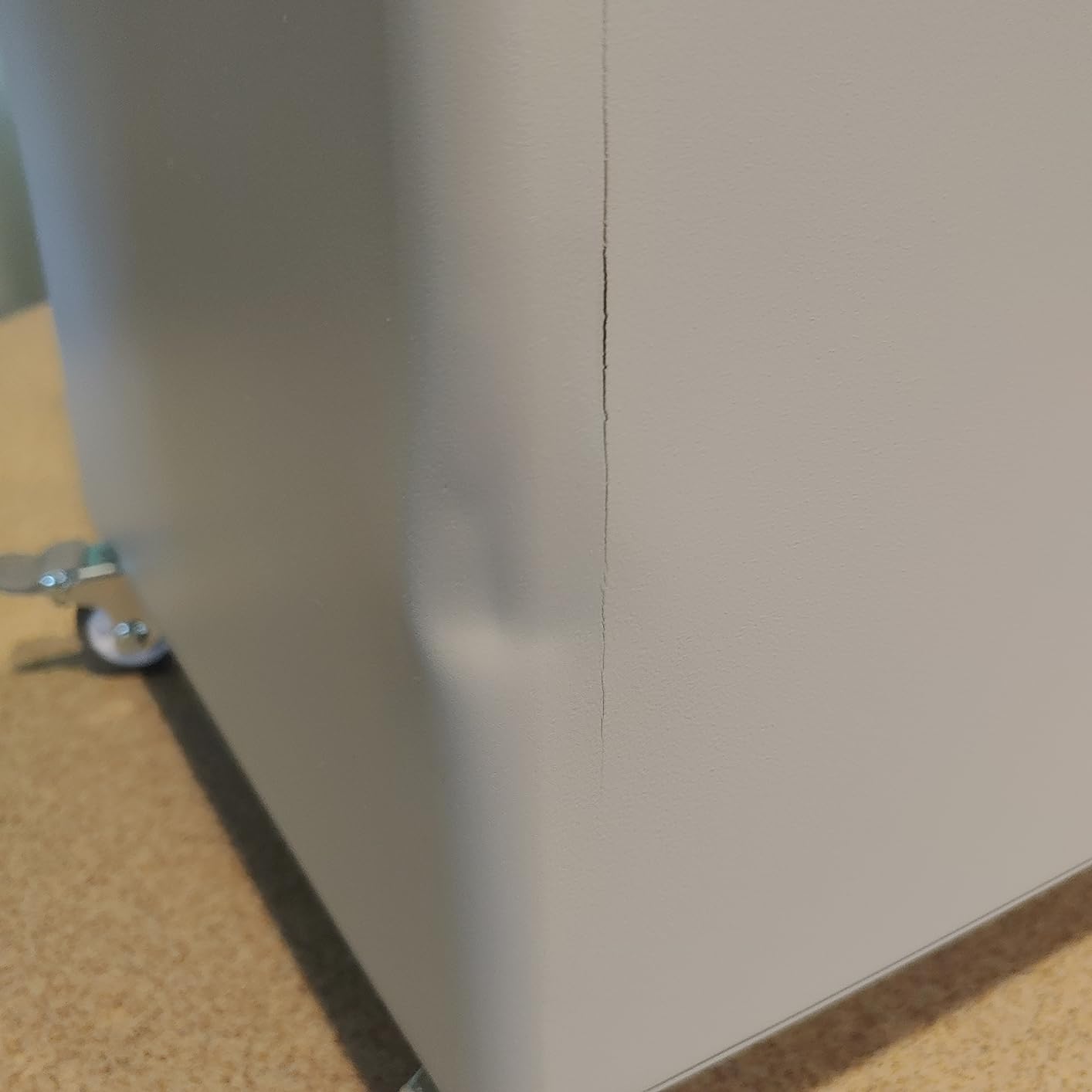
Filtration is a three stage layout with ten pre-filter cottons included and a high iodine coconut shell activated carbon rated for 2000 to 4000 hours. Capture is listed within 15 cm of the source, and the unit is certified to CE, FCC, ROHS and UKCA, which is a more complete certification list than most of this group carries.
The remote control is the feature that makes sense for a permanently installed station. You set it once, mount it where the work happens, and adjust from across the room rather than walking over to it.
What it handles well in a home shop
Two welders, or one welder and one soldering or finishing station, in a room that people also live in. The low noise design and long lived carbon are the reasons to pick it over a louder single port machine, and the long carbon life is the strongest cost of ownership argument in this roundup.
It suits the shop that has graduated from occasional to regular work. Owners describe it as aimed at installed high throughput stations rather than a home bench, and I would agree, with the caveat that a 42.2 pound unit is a commitment once it is in position.
Where it falls short
Weight. At 42.2 pounds this is the joint heaviest machine in the group, and the package dimensions are larger than the unit itself. That is fine for a fixed station and a poor fit for anything you intend to move between benches.
The halved airflow in dual mode is the second caution. If both ports are serving real work, each one gets 165 m3/h, which is no more than a good single port machine would give you anyway. And with 14 reviews there is no long term history to judge reliability against, which for a machine at this size is worth thinking about before you commit.
10. NLVYPRO MN04 – Best Adjustable Speed Budget Bench Extractor
NLVYPRO MN04 Soldering Fume Extractor with Dual Fan & H13 HEPA Filter, 3200 RPM Smoke Absorber for Welding, Jewelry, Electronics Repair, Low Noise, 110-240V Wide Voltage
- Bolted sheet metal construction rather than glued plastic
- Low speed is nearly silent yet still clears solder smoke
- Inline controller lets you trade airflow for quiet
- Uses standard replaceable 12V fans
- Louder than the low noise claim on higher settings
- Needs to sit very close to the joint to capture
- Very short cord with the controller 3 to 4 feet away
The MN04 does something almost nothing else in this list does, which is give you proper speed control on a machine at the entry level of the category. An inline variable speed controller sits on the power cable, and owners report dialling airflow down until the unit is nearly silent while still clearing solder smoke effectively. For a home shop next to living space, that dial is worth more than a larger fan.
The construction is the other surprise. Reviewers consistently praise the bolted powder coated sheet metal rather than glued plastic, and the front doors hinge open to expose the layered filter stack, which improves airflow across a larger surface and makes changing the foam pre-filter straightforward. Two spare pre-filters are included.
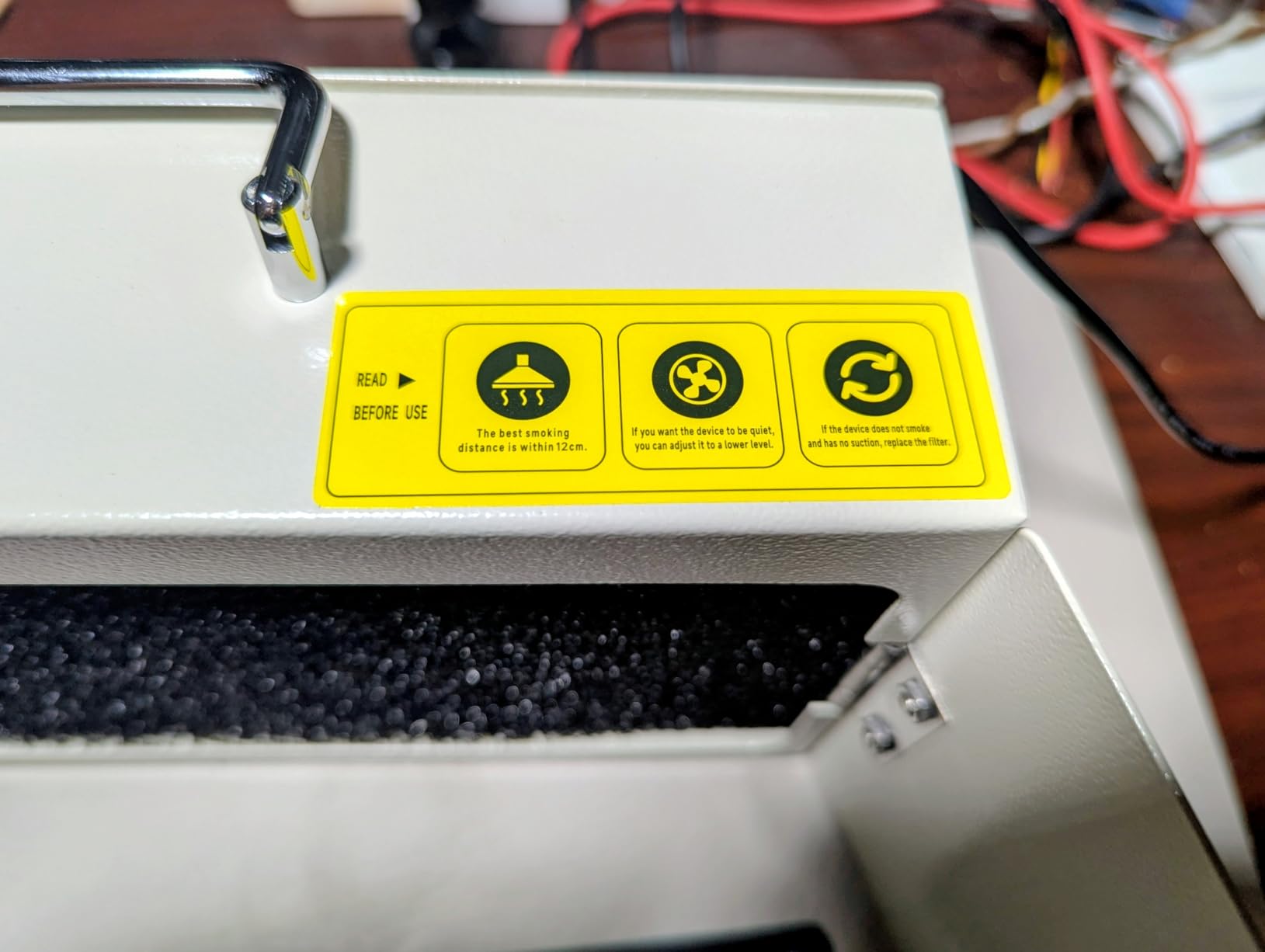
Filtration is an H13 HEPA stage plus a foam pre-filter and a carbon stage, running on a dual fan system at up to 3200 RPM. The 110 to 240V wide voltage makes it usable anywhere, and using two standard 12V computer fans means a fan failure costs almost nothing to fix.
The capture distance is the limit, though. It needs to be positioned very close to the joint, and the power cord is extremely short with the controller sitting three to four feet from the unit, which dictates where on the bench it can live.
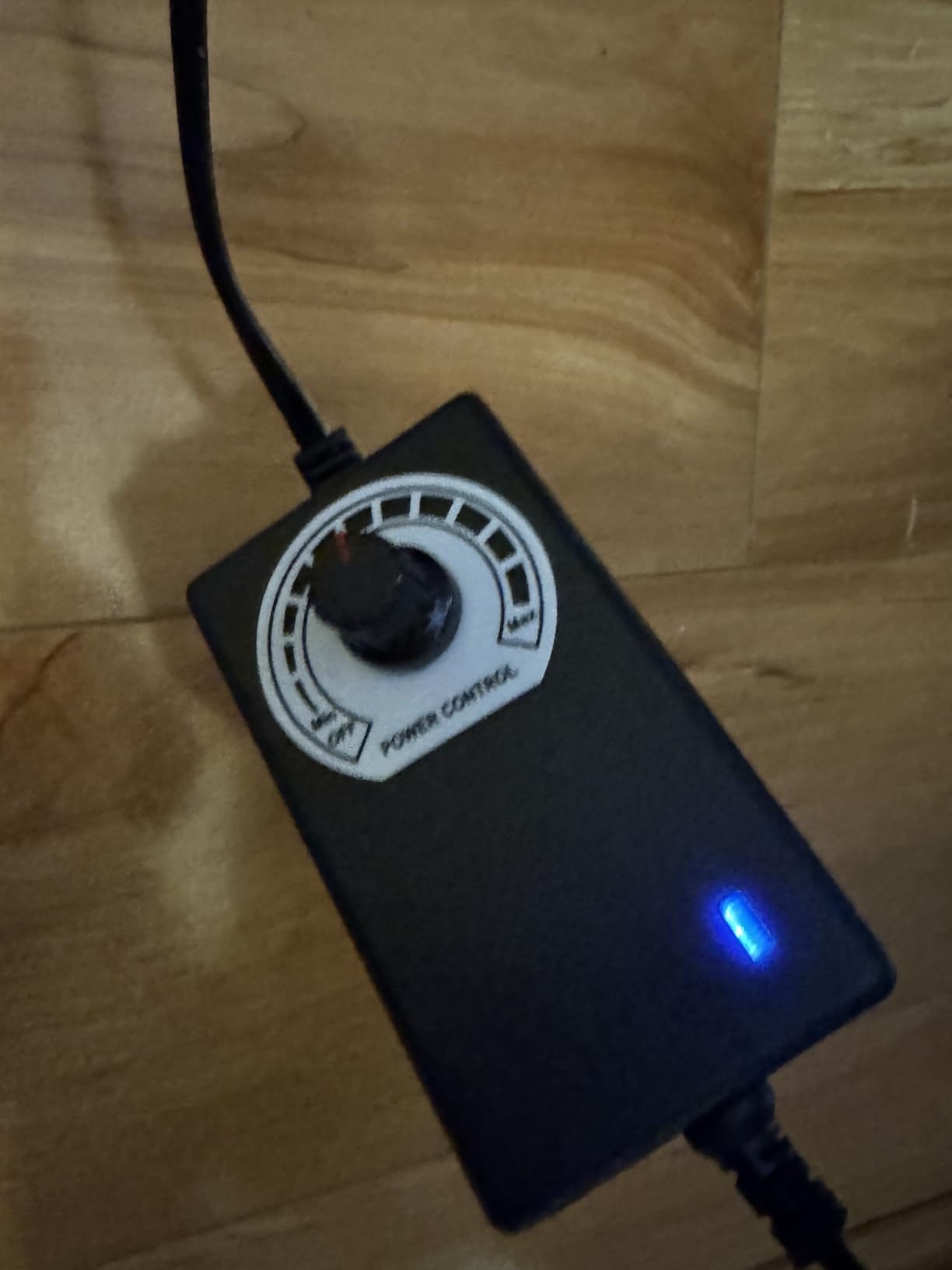
What it handles well in a home shop
Fine bench work. Soldering, jewellery, electronics repair and the small precise jobs where a big extraction fan is overkill and the noise would break your concentration. The variable controller is the reason, because you set it to suit the work rather than running a fixed setting.
For anyone who also does light welding on thin material, the 10 watt dual fan will draw a visible column when the hood is parked a couple of inches from the arc. I would pair it with the more substantial machines rather than expect it to carry a whole shop, and I would raise it four to six inches off the bench to give the low profile body some clearance.
Where it falls short
It is louder than the low noise marketing suggests on the higher settings, which is an odd complaint for a machine whose main selling point is quietness, but the distinction is that the low end is genuinely near silent and the top end is not. Reviewers also note a very short cord, and there is one report of a wiring fault where the unit only ran when the cord was wiggled.
The manual is long, repetitive and poorly written, and no spare HEPA filter is included even though the foam pre-filters are. At 3.74 pounds it is one of the lighter things here, which is excellent for carrying around a garage and useless for keeping it steady while you reposition a workpiece.
How to Choose a Welding Fume Extractor for a Garage?
Airflow, type, filtration, noise and the running cost. Those five decide almost everything, and the order you weigh them in depends on whether you weld for an hour a month or an hour a day.
How much airflow do you actually need in a one-car garage?
Start with the volume of the space, not the number on the box. A one-car garage is typically somewhere around 200 to 250 square feet of floor with an 8 to 9 foot ceiling, so a few hundred cubic feet. Multiply floor area by ceiling height for the room volume, then multiply by the number of air changes per hour you want, then divide by 60 to get CFM. For a workshop, five air changes per hour is a common target.
But here is the part most spec sheets blur, and it matters more than the arithmetic. A welding fume extractor rated at 200 CFM is almost always measured with no filter installed and the inlet wide open. That is free air. The same fan pulling air through a loaded pre-filter, a HEPA stage and a carbon bed delivers a fraction of that, and the hose and hood resistance takes more again. Ask any seller for filtered airflow rather than free air airflow, and if they only quote one number, treat it as free air.
For a home shop, the practical target is a machine rated between roughly 150 and 400 CFM equivalent. Anything much below that will capture at a small bench with the hood parked close and nowhere else. Anything much above that is money you would be better spent on a larger filter cartridge, because the machine will be the size of your garage.
Capture distance matters more than raw CFM. The rule of thumb across the industry is that capture drops off sharply beyond 6 to 12 inches from the arc. If your hood has to sit two feet away to cover your work, no amount of airflow in that box will fix it, and you need a bigger hood or an arm instead.
Portable cart, extraction arm or downdraft table – what changes for a home shop
There are three real system types, and the difference is less about power than about how close the hood can get to the arc.
A portable cart unit, which is everything above, is a box on wheels with a hose or short arm. It moves between benches and takes up a parking bay rather than wall space, and its weakness is that you bring the hood to the work within about a foot. For one welder, occasional work and a home shop with room to park it, that is a good trade.
An articulated extraction arm, typically 6 to 14 feet of reach, mounts to a wall, ceiling or a magnetic post. The hood stays over the workpiece while the welder moves around it, so capture distance stays at 6 to 12 inches no matter where you stand. This is what a welding web layout forum discussion converges on: the cart is fine until you start moving around the work, and then the arm wins.
A downdraft table pulls air down through a perforated work surface, which suits grinding and heavy cutting better than it suits a vertical arc. It is a stationary commitment and it is oversized for most home shops. Every home shop forum post I read about it came back to the same conclusion: commercial downdraft tables get pushed on buyers who weld a few hours a month, and they regret it.
Beyond all three sits a fixed, ducted central system, which is a commercial-scale investment and not a home shop purchase. If you get there, the plasma cutter roundup for home shops is the other half of the extraction problem, because a cutter throws far more particulate than an arc does.
Why a solder smoke extractor is the wrong tool for an arc
Most of the machines in this roundup are marketed as solder smoke extractors, and I have ranked them on welding performance anyway, so let me be direct about the distinction. A soldering iron produces a thin, cool plume of flux vapour and fine particles. A welding arc produces far more volume, far more heat, and far more particulate, including metal oxides that are an order of magnitude heavier and stickier than solder smoke.
The practical symptoms of buying too small are well known to anyone who has tried it. The filter clogs within weeks instead of months, the suction drops so far that you can see the fume turning, and in a residential garage that means the fume starts migrating toward the house. Forum owners describe exactly this, and the recurring advice from people who have made the mistake is the same: buy for the welding, not the soldering.
One useful trick from garagejournal.com, where owners build out residential workshops, is a two tier approach. A smaller extractor handles routine mild steel work, and a dedicated unit is reserved for stainless, galvanised or unknown-base material. That way you do not burn through your good filter media on every bracket you weld, and the serious work still gets proper treatment. On garagejournal.com, one owner describes reserving a separate extractor specifically for hazardous or unknown base material, which is exactly this logic.
Noise, filters and the running cost nobody quotes
Noise is a residential constraint, not a specification. A garage attached to a house has people on the other side of the wall, and a 63 dB extractor running for four hours is a real household grievance. Below 50 dB units like the YC60 change how you use a machine rather than just how it sounds.
The two things that determine whether you will run it are noise and whether it still pulls when the filter is dirty. A loud machine with a clogged filter is a machine you switch off, and a machine that is switched off is a fan.
Then there is filter cost, which decides the value of the purchase over two years rather than on day one. Add up the machine, then the number of cartridge changes you will realistically make, then divide by the years you expect to use it. A unit with a carbon stage rated at 2000 to 4000 hours looks very different from one whose cartridges are hard to source. Several machines in this roundup have that sourcing problem, and for a home shop it is the one I would check first.
Never buy a fume extractor whose replacement filters you cannot easily obtain. That is not a consumables complaint, it is a functional one. Miller’s own forum has carried a fume extractor recommendation thread running back more than a decade, which tells you something useful: people buy these more than once, and filter availability is the reason they move up rather than down.
Buying a used extractor: what to inspect
A used extractor is a reasonable way in, provided you check the things that are expensive to replace. Ask the seller to run it with a clean filter and listen to the fan. A bearing that sounds like gravel is a fan rebuild, not a bargain.
Then check the arm or hood for stiffness. A collapsed arm ruins capture distance, and articulated parts are rarely cheap to replace. Count the filter stages physically and confirm every one has a cartridge in it, because a machine sold as three stage and running as one will load up in weeks. Finally, make sure the power cable and the control are sound, and check the voltage version matches your supply. If the rest of your shop is being set up fresh, matching new equipment is often the better call.
Frequently Asked Questions
What is the best fume extractor for welding?
For a home shop, the best welding fume extractor is a filtered unit that is quiet enough to leave running, has replacement filters you can easily buy, and can hold its hood within 6 to 12 inches of the arc. The KOTTO Strong Suction Absorber in this roundup is the strongest starting point, with 52 CFM, 55 dB and the largest review base we looked at.
Do fume extractors work?
Yes, when the hood is close enough to the source. A fume extractor pulls the plume at the arc and filters it before it reaches your breathing zone, rather than cleaning the air after it has spread through the room. Capture falls off sharply beyond about 12 inches, so placement matters as much as the machine. An air purifier cannot do this job because it cleans air already in the room rather than capturing the plume.
What is the recommended CFM for a welding fume extractor?
For a one-car home garage, a unit rated between roughly 150 and 400 CFM equivalent handles an arc at a small bench with the hood parked close. Treat the number on the box as free air airflow. Ask for filtered airflow, because a loaded filter and a length of hose can cut the delivered figure dramatically.
Can I just open the garage door instead of buying an extractor?
In mild weather, opening the door and a window is genuinely good ventilation and it costs nothing. The problem is the winter shop, when the door stays shut for months and there is no cross flow. That is when a source capture extractor earns its place, because it removes the fume at the arc instead of diluting it into the whole property.
Is a HEPA solder smoke extractor good enough for welding?
Not really. A soldering unit handles a small, cool plume from an iron. A welding arc throws far more volume and heavier metal oxide particulate, which clogs a small filter within weeks and drops the suction until capture fails. Look for a welding rated unit with a pre-filter sized for sparks, a high efficiency particle stage and a carbon bed for the gas phase, and expect to change filters on a schedule.
The Verdict for Home Shop Welding
If you want one answer, take the KOTTO Strong Suction Smoke Absorber as your first welding fume extractor. It is not the most powerful machine here, but 843 reviews at 4.2 stars, 52 CFM through a real sealed fan and a 3.87 pound body that moves between benches is the combination that suits a home shop best. The machine you will actually leave running is the one that does the job.
If you want more capacity at the same bench, go to the FumeClear FC-100A for its 200 m3/h suction and long life carbon. If your garage shares a wall with a room where people sleep, the YC60 at under 50 dB is the smarter buy. Whatever you choose, park the hood within a foot of the arc, check the filter replacement path before you pay, and run it through the winter.
That is the whole guide to welding fume extractors for home shops in 2026. Open the door in July, extract the fume all year.