
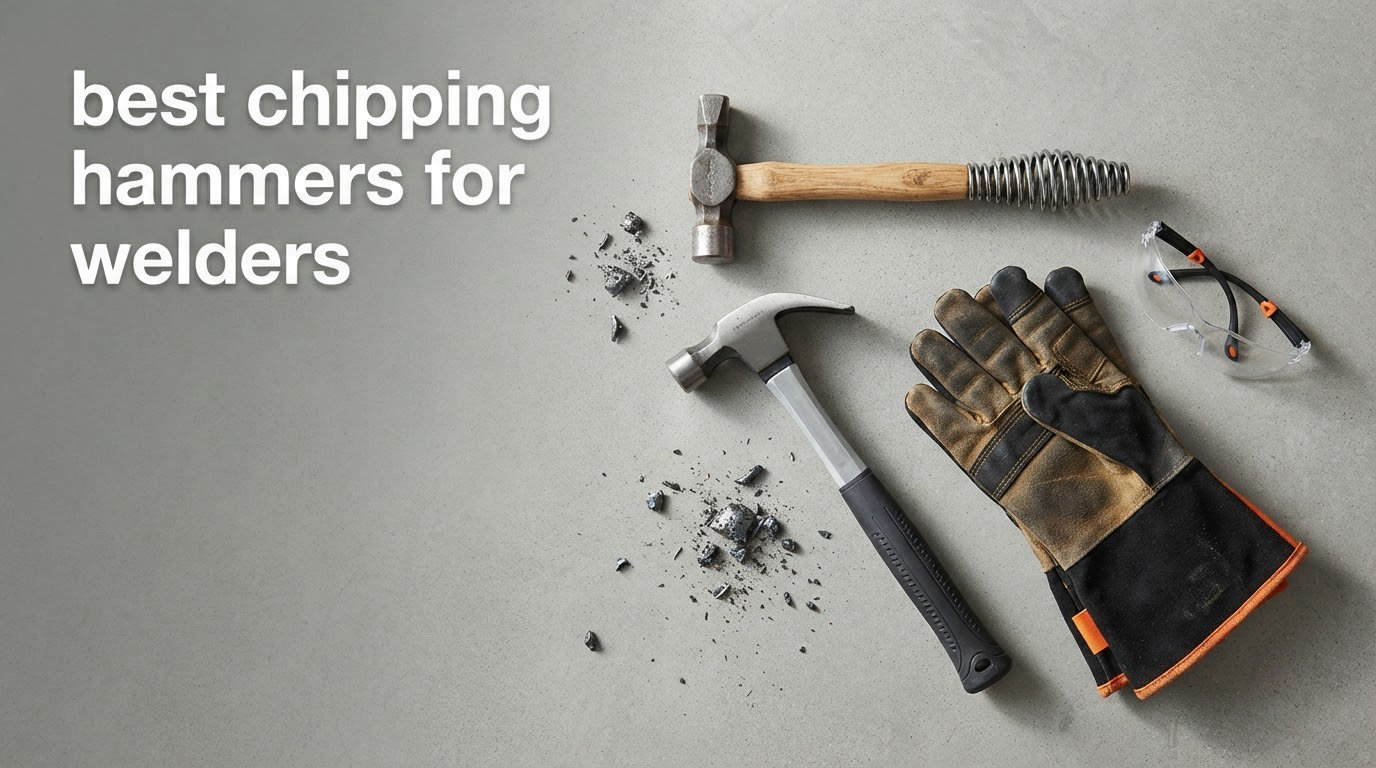
A weld that looks finished from ten feet away can still be a problem weld. Underneath that crust of slag sits the bead you actually made, and until the slag is off, nobody can inspect the reinforcement, the undercut, or the porosity hiding underneath. That is the whole job of a chipping hammer: get the debris off so the weld can be looked at, and get it off without chewing into the base metal.
We compared 12 of the best chipping hammers for welders across head weight, steel construction, grip damping, and chisel geometry. Two of them are American-made Vaughan tools at different weights, two ship with a wire brush, and a couple are light enough to use overhead all shift. The differences between them matter far more than the spec sheets suggest, because a hammer that chips well but shakes your forearm apart will end up in a drawer by Friday.
If you are still choosing a welder or setting up a shop, our picks for the [best multiprocess welders](https://www.requiemforadream.com/best-multiprocess-welders/) and the [best TIG welders](https://www.requiemforadream.com/best-tig-welders/) cover the machines that make the slag. This guide covers the tool that takes it off. Everything below was updated for 2026.
Table of Contents
What Is the Best Chipping Hammer for Welding?
The best chipping hammer for welding is the Estwing E3-WC, a 14 oz one-piece forged hammer with a 7/8 inch chisel on one end and a point on the other, rated 4.9 out of 5 across more than four thousand reviews. For most shop work that is the whole answer, but a 28 oz model wins on thick built-up slag and a 10 oz model wins in tight corners and overhead work.
A chipping hammer, also called a slag hammer or welding hammer, is a short two-ended tool. One end is a flat chisel for knocking slag off flat bead and the other is a point or cross chisel for prying pieces out of corners and off curved surfaces. Most are forged from a single piece of steel so the head cannot separate from the handle, and many add a spring or grip design that cuts the sting of repeated impacts.
Top 3 Chipping Hammer Picks for Welders (October 2026)

Estwing E3-WC 14 oz Forged Steel Hammer
- One-piece forged American steel
- 7/8 inch chisel plus point
- Molded vinyl grip cuts vibration

VASTOOLS 10.5 in Hammer and Wire Brush Kit
- 1-1/16 inch tempered chisel
- Coil spring handle absorbs shock
- Includes 10 inch wire brush

Mutt Tools 14 oz Forged Chip Hammer
- Forged hardened one-piece head
- Anti-slip ergonomic grip
- Chisel and point working ends
All 12 Chipping Hammers Compared in 2026
| Product | Specifications | Action |
|---|---|---|
| Estwing E3-WC 14 oz |
|
Check Latest Price |
| VASTOOLS 10.5 in Kit |
|
Check Latest Price |
| Mutt Tools 14 oz |
|
Check Latest Price |
 Titan 41225 Titan 41225 |
|
Check Latest Price |
 CHOWEL BHS-W330 13 oz CHOWEL BHS-W330 13 oz |
|
Check Latest Price |
 Hobart 770066 Hobart 770066 |
|
Check Latest Price |
 Uopyeri 10.6 in Set Uopyeri 10.6 in Set |
|
Check Latest Price |
 Vaughan RWC14 14 oz Vaughan RWC14 14 oz |
|
Check Latest Price |
 YESWELDER LTG01 28 oz YESWELDER LTG01 28 oz |
|
Check Latest Price |
 Klein Tools H80612 10 oz Klein Tools H80612 10 oz |
|
Check Latest Price |
 N NOAH 28 oz N NOAH 28 oz |
|
Check Latest Price |
 Vaughan 185-10 12 oz Vaughan 185-10 12 oz |
|
Check Latest Price |
1. Estwing E3-WC 14 oz Forged Steel Welding Chipping Hammer
- Forged in one piece from solid American steel
- 7/8 inch chisel covers broad bead cleanup
- Point end reaches tight corners and detailed work
- Dimpled molded vinyl grip reduces impact vibration
- Made in Rockford Illinois since 1923
- Heaviest of the 14 oz hammers here and tires the hand on long sessions
- One-piece build means no replaceable tips when the edge finally goes dull
This is the hammer most shops end up with, and it is the one I hand to anyone who asks. The head and handle are forged as a single piece of American steel, so there is no joint to loosen, no wedge to work out, and no way for the handle to snap off at the neck. That construction is the reason it has accumulated more reviews than anything else in this roundup by a wide margin.
The working end is a 7/8 inch chisel, which is the sweet spot between a narrow pick that nicks the toe of the bead and a wide face that skids off the slag without gripping it. The opposite end is a point, and that is the end you will use more than the marketing suggests. It fits into the root gap of a fillet, the corner where a bead meets a wall, and the tight inside radius of pipe.
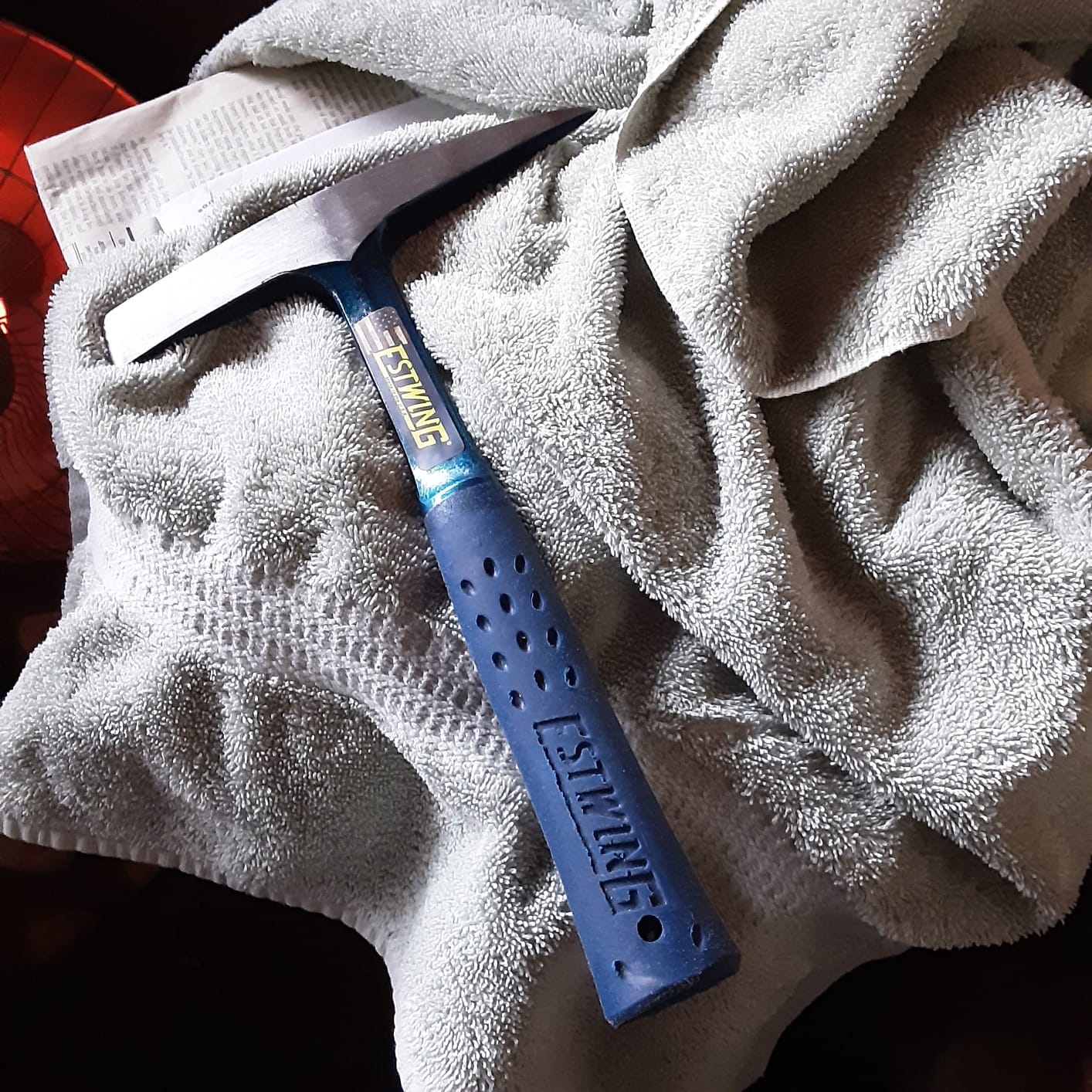
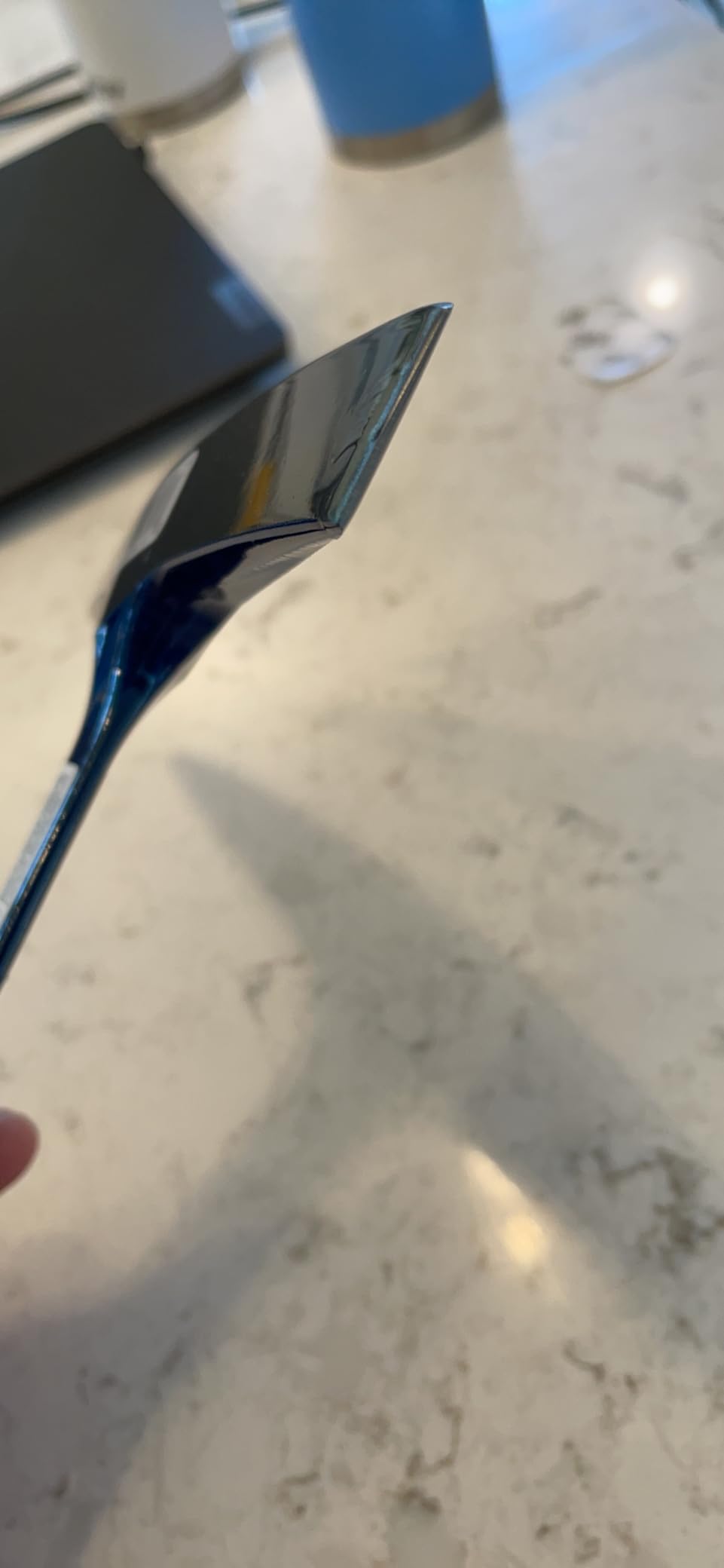
The molded vinyl grip is dimpled on purpose. Those dimples break up the shock path so the sting of a struck impact arrives dulled rather than sharp, and the material stays grippy when your hand is damp or coated in shop grime. At 14.4 ounces it is the heaviest 14 oz hammer here, which is noticeable after an hour of overhead work but fine for bead cleanup at bench height.
That reputation is not ours alone. Welders posting in r/Tools and r/Welding repeatedly single out Estwing as the go-to chipping hammer, calling it the best there is and noting that it lasts a very long time. When twelve hammers are compared and the community has already converged on one, that is worth knowing before you read a single spec sheet.
Owners in the reviews talk about the balance more than the weight. The head is forged with the mass close to the grip rather than out at the tip, so a light tap still moves slag. Treat the chisel as a pry bar instead of a battering ram and the edge stays sharp for a long time.
What it handles well
Everyday stick welding cleanup where slag sits on a flat bead, and pipe work where the point end matters. It clears spatter, flux residue, and light mill scale without needing a second tool for the residue pass.
Where it falls short
It is not a demolition hammer, and a lot of owners try to use it like one. For heavy built-up slag on structural sections, a 28 oz model breaks the slag loose in fewer blows and saves your arm over a full shift.
2. VASTOOLS 10.5 inch Welding Chipping Hammer and Wire Brush Kit
- Hammer and brush in one kit
- 1-1/16 inch chisel clears thick slag fast
- Coil spring handle absorbs impact
- Compact 10.5 inch body suits an apron or tool bag
- Wood handle isolates less than rubber or vinyl over long sessions
- A small number of reviews report soft heads
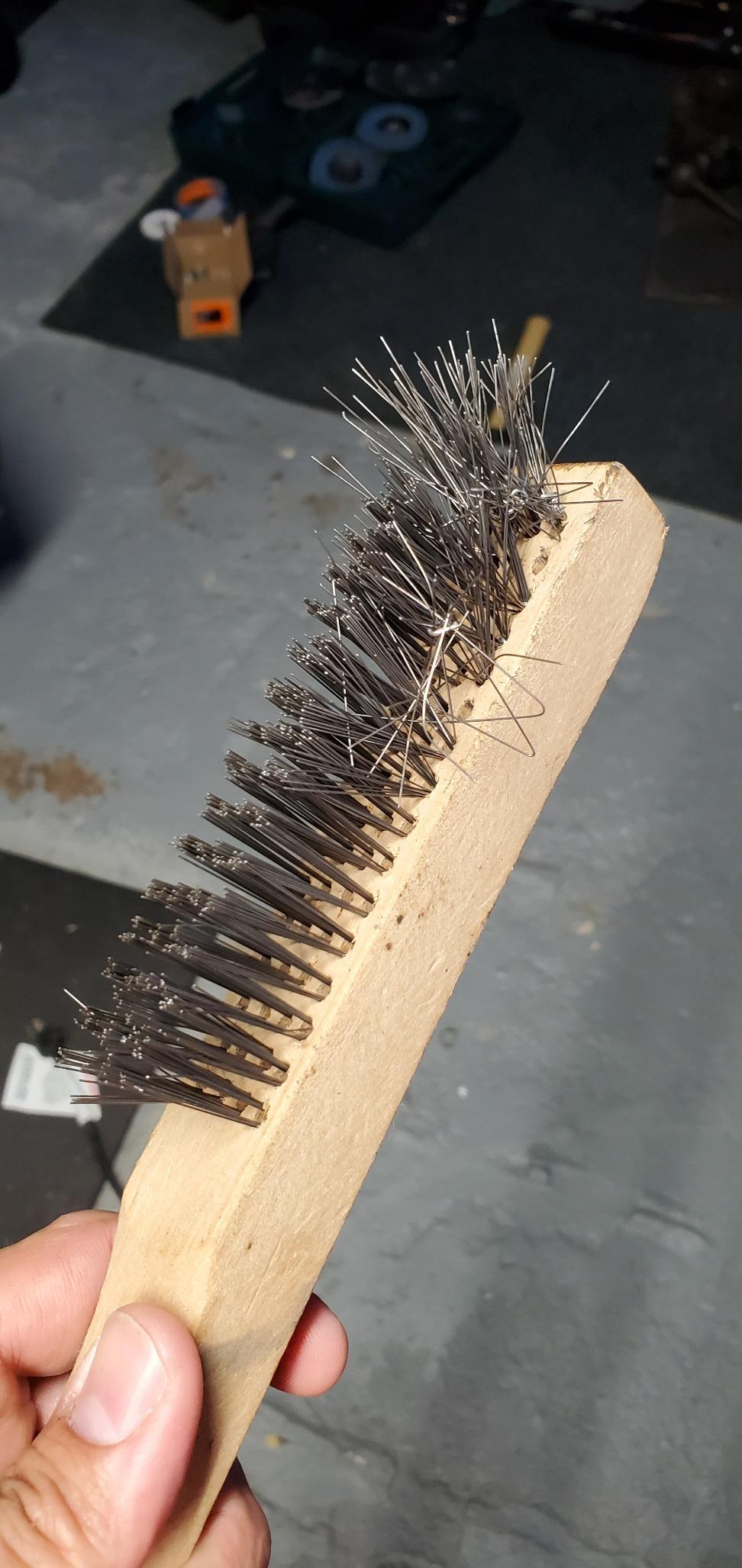
This is the kit most first-time welders buy, and the reason is simple: it solves two problems at once. You get a high carbon steel chipping hammer with a spring handle, plus a 10 inch shoe-handle steel wire scratch brush with 0.012 inch fill diameter. A wire brush is not optional in this workflow, because the hammer leaves a fine grit film behind that a brush removes and your glove does not.
The chisel measures 1-1/16 inch across, wider than the Estwing’s 7/8 inch face, and that width is why it moves slag quickly on chunky multipass beads and flux-core welds where the crust is thick and grainy. The opposite end is a point for corners. The spring handle absorbs the shock of contact while the hammer is working, which takes the edge off a full day of cleanup.
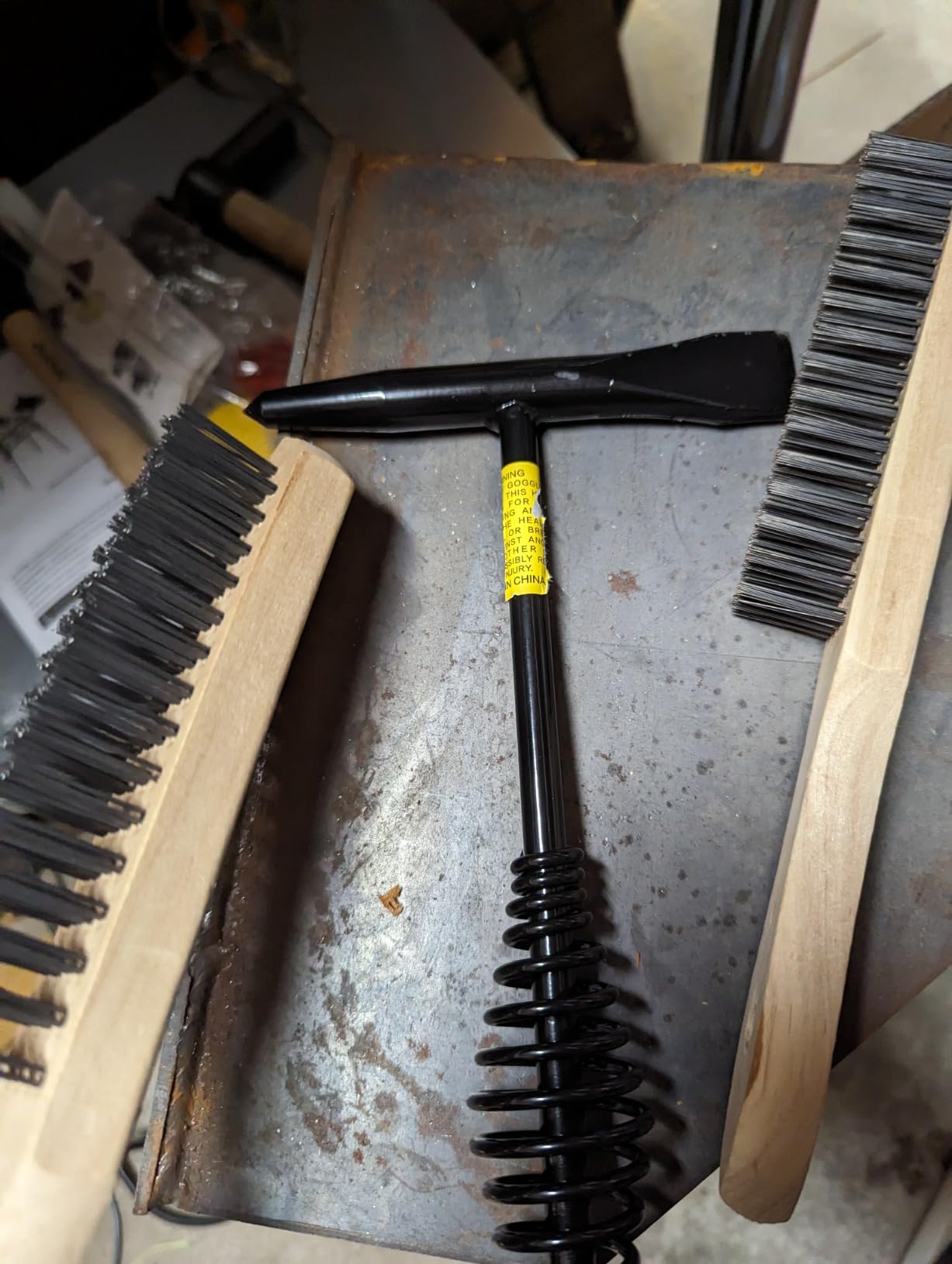
Reviews describe it as the value pick with a wide following, particularly for MIG, flux-core, and stick work in a home shop. At 10.5 inches overall the tool is compact enough to keep in an apron or a truck console, and the whole package is light enough that you forget it is there until you need it.
The trade-off is the handle. A wood handle with a coil spring does not damp impact the way a molded vinyl or rubber grip does, and once your gloves are sweaty the spring grip is less certain than a dimpled vinyl surface. A small share of reviews also report soft heads, so if you hit it against hard steel edges or use it as a general shop striking hammer, expect the chisel to dull sooner than the brand-new look suggests.
What it handles well
Complete post-weld cleanup in one purchase, which makes it the easiest starter kit. The wide chisel is strong on thick slag from flux-core and multipass stick welds, and the included brush handles the finishing pass.
Where it falls short
All-day heavy shop use where forearm fatigue matters, and any job that needs a pristine edge straight out of the box. Test the chisel on a piece of scrap before you rely on it for finish work.
3. Mutt Tools 14 oz Forged Steel Welding Chipping Hammer
- Forged one-piece head resists dulling
- Anti-slip grip stays comfortable through long sessions
- Balanced 14 oz weight reduces arm strain
- Chisel and point ends cover flat bead and corners
- Pointed end can arrive bent if packaging protection fails
- A few users report the small end dulling faster than expected
This is the closest thing in the group to a modern replacement for a traditional shop hammer, and welders regularly describe it as comparable to the Estwing at a lower cost. The head is forged and hardened as one piece of steel with a dual-end chisel, which is the same construction logic as the premium tools and the reason it holds an edge over months rather than weeks.
What sets it apart is the handle geometry. The ergonomic anti-slip grip is shaped to sit in the palm rather than across it, and at 14 ounces the balance is deliberately set toward control instead of raw swing weight. Reviewers who switched from a traditional slag hammer describe the change as feeling lighter even at the same nominal head weight, which tracks with how the mass is distributed around the grip.
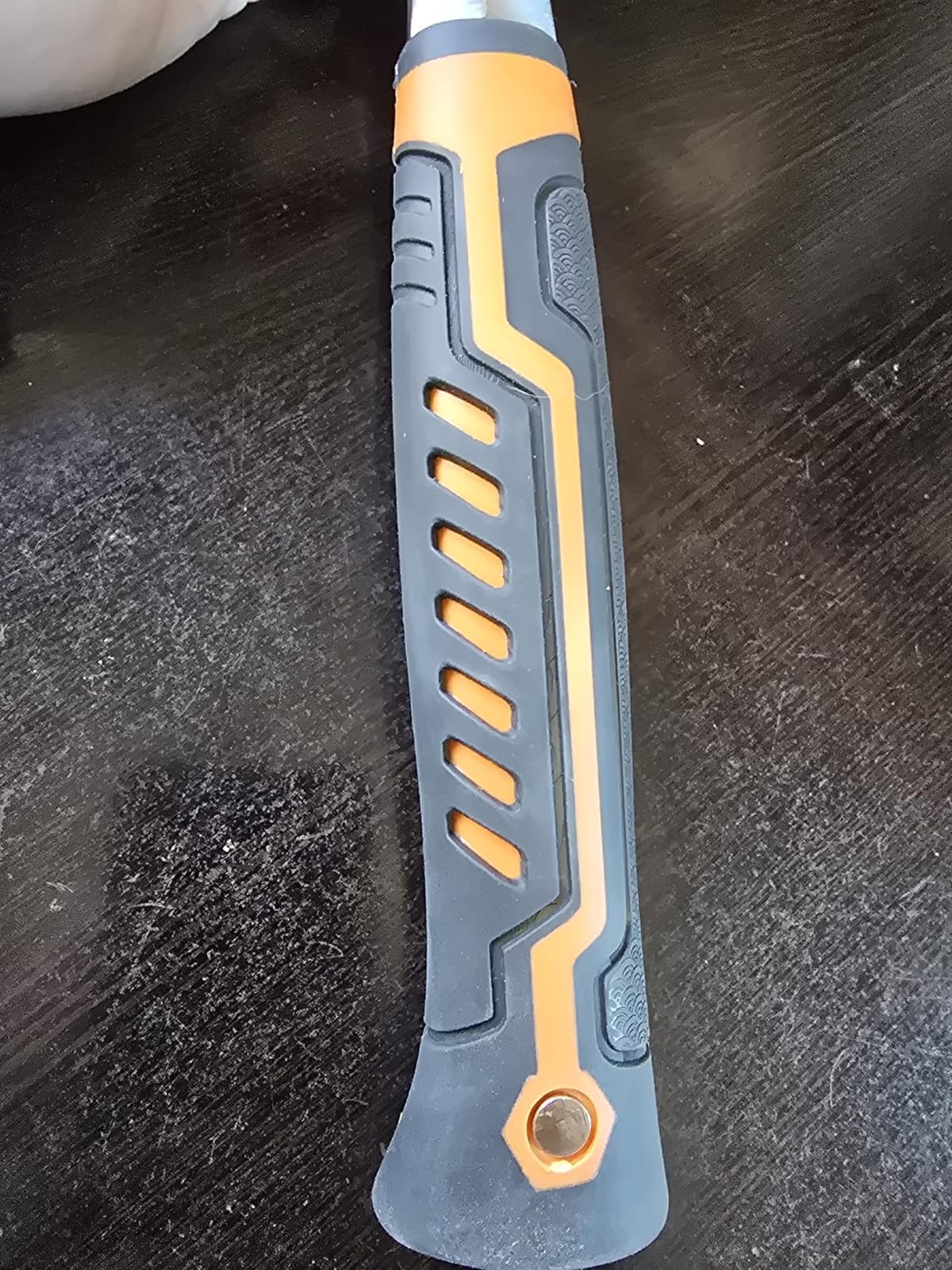
The build is the differentiator here. A one-piece forged and hardened head is a cheaper thing to replace than a bonded two-piece hammer, and in practice it means a cracked or splitting head is an edge case rather than an expected purchase. For a shop that owns one hammer per welder, that changes the ownership calculation.
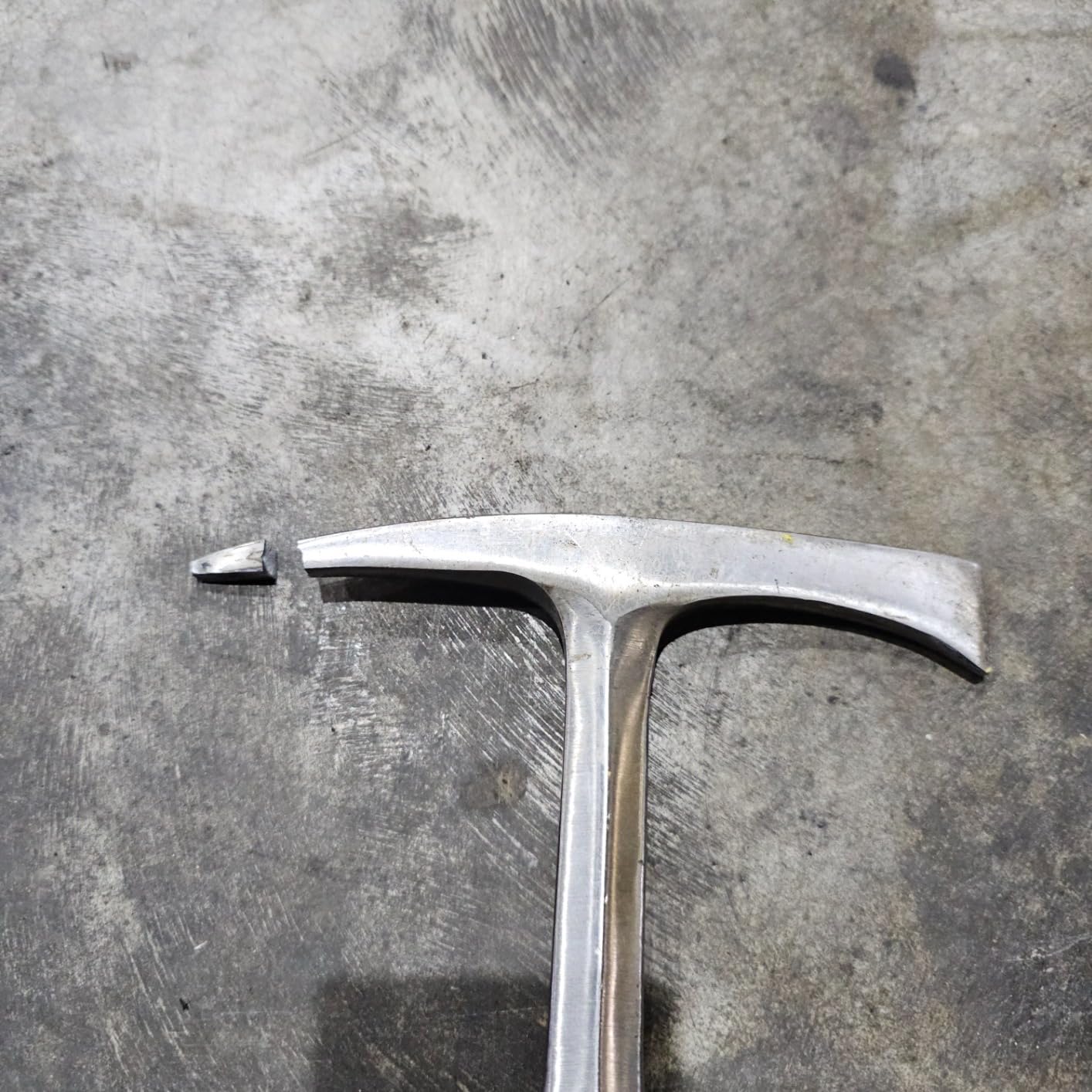
Two practical notes. The pointed end protrudes and a few owners report it arriving bent when the packaging does not protect it, so inspect the tip before first use. And while the big end holds well, a handful of reviews say the smaller end dulls faster, which is normal for a fine point that you use to concentrate force in a narrow area.
What it handles well
Shop work where the hammer gets used all shift and a grip that stays comfortable is worth more than extra head weight. Also a strong choice for spatter removal and cleanup of excess weld material after grinding.
Where it falls short
Very heavy built-up slag on thick structural beads, where a 28 oz head breaks the crust in fewer blows. Check the pointed tip on arrival since shipping damage is the most common complaint.
4. Titan 41225 Cone and Chisel Chipping Hammer
- Among the lowest cost options here and still clears slag
- Rubber grip stays secure
- Coil spring loosens slag well
- Tight head-to-handle joint that stays together
- Cast iron head is not hardened so the edge dulls sooner
- Handle runs short for some users
The Titan 41225 is the tool to buy when you need to clean up welds this month and are not yet sure you will still be welding next year. It has a cone and chisel dual-head layout, a shock absorbing coil spring handle, and a rubber grip, which is the standard parts list on a competent chipping hammer.
Buyers consistently describe it in the same terms: cheap but sturdy, and good enough for non-professional welding. The cone end is the one that gets underrated, because on a bead with a rounded cap the cone rolls along the crown and catches the edge of the slag where a flat chisel would slide off. The chisel end handles the flat sections.
The limitation is material, not marketing. The head is cast iron rather than forged hardened steel, so there is no long-term edge retention to rely on. It chips well enough for intermittent work, and the tight head-to-handle joint is a real plus compared with hammers whose heads work loose, but it is not a precision finishing tool and it will want sharpening sooner than anything else in this list.
What it handles well
Occasional cleanup on MIG and small shop work, spatter removal, and anyone learning welding who wants a working hammer without a serious commitment. The rubber grip and short overall length suit a small hand.
Where it falls short
Production work where the edge is re-dulled every week, and fine cleanup where you need the blade to shave a millimetre at a time. Owners also flag the handle as short for their preference.
5. CHOWEL BHS-W330 13 oz Forged Steel Welding Chipping Hammer
- Lightest forged head here at 13 oz
- Rubber grip absorbs impact on overhead work
- Chisel and point ends cover beads and corners
- Forged construction holds up to regular shop use
- Under-powered on heavy built-up slag according to some users
- Lowest average rating of the twelve hammers we compared
Thirteen ounces is the reason this hammer exists. When you are chipping a weld on a rack, inside a frame, or above shoulder height, every extra ounce is an ache by the end of the hour. The BHS-W330 is forged high-strength steel with a rubber handle that absorbs impact, and owners working overhead or in tight spaces consistently call that combination the right trade.
The head carries a wide chisel on one end and a pointed pick on the other, so you are not trading away versatility for the low weight. Reviewers note that the chisel and point ends together handle both broad bead cleanup and the corner work that a single-ended design cannot.
The honest trade is striking force. Several users report the 13 oz head feeling under-powered on heavy, built-up slag, where you are effectively asking a light hammer to do the work of a heavy one and you end up swinging harder and longer to compensate. Its average rating is also the lowest in this group, and the reviews that drag it down cluster around finishing power rather than durability or grip.
What it handles well
Overhead cleanup, work inside frames, and any long session where your arm is raised. The forged steel and rubber grip hold up fine to normal shop use.
Where it falls short
Thick layered slag on heavy structural welds. If that is your daily work, spend the extra effort on a 28 oz head instead of fighting a light one.
6. Hobart 770066 Straight Head Chipping Hammer
- Solid build from a known brand
- Chisel and point ends cover flat beads and tight spots
- Spring handle takes the sting out
- Owners buy a spare because of the low cost
- Listed weight of 16 oz is heavier than most 14 oz options
- Straight head has no cone for raking curved beads
The Hobart 770066 is the pick for someone who has just finished their first few welds and wants a hammer that feels substantial in the hand without a large commitment. It is a straight head design: chisel on one side, point on the other, alloy steel through both head and handle, and a spring handle that absorbs the shock of contact while you are chipping.
First-time welders reviewing it call it solidly constructed and effective at removing slag, and several note that the build matches what they have seen in bigger shops. The alloy steel head and handle pair is the key detail, since a mixed wood and steel hammer can crack at the eye even when the head is good.
Two caveats come up repeatedly. The listed item weight is 16 ounces, which is heavier than most of the 14 oz hammers here, so do not expect the light handling the nominal size implies. And a straight head gives you a flat chisel and a point but no cone or curved pick, which means raking slag off a rounded or curved bead takes more repositioning than it would with a cone end.
What it handles well
Straightforward flat bead cleanup on plate and structural work, plus beginner shop setups. The spring handle makes long practice sessions more comfortable than a bare wood handle.
Where it falls short
Curved surfaces and pipe fillets where a cone end would hook the slag instead of needing multiple taps. Heavier than its class suggests, so it is not ideal for extended overhead work.
7. Uopyeri 10.6 Inch Chipping Hammer and Wire Brush Set
Welding Chipping Hammer, 10.6-Inch with Wire Brush for Welding Slag Removal
- Covers the full post-weld cleanup in one set
- Spring handle reduces vibration and heat transfer
- Pointed tip plus flat chisel edge
- Tempered steel head with compact 10.6 inch length
- Smallest review base here so long-term durability is less documented
- Lightest build is unsuited to heavy built-up slag
This two-piece set pairs a tempered steel chipping hammer with a stainless steel wire brush, and the combination covers the entire post-weld sequence: knock the crust off with the hammer, then take the loose residue and oxide film off with the brush. Home garage and hobby welders like the value of getting both tools in one purchase.
The handle is a spring design that does two jobs, reducing shock and limiting heat transfer toward the hand. That second part matters more than it sounds, because a chipping hammer ends up near hot metal and a handle that conducts heat makes an already uncomfortable job worse. The head carries a pointed tip for corners and a flat chisel edge for broad surfaces, and the whole thing measures 10.6 inches, so it stores in a drawer without dominating it.
The open question is durability over time. Its review count is the smallest of the twelve, which means there is simply less long-term evidence, and the total weight of 10.37 ounces is the lightest here. That is a good weight for cleanup of light spatter and small beads and a poor weight for the heavy crust that comes off structural multipass welds.
What it handles well
Garage and hobby setups that need a hammer and a brush without two separate orders. Light MIG, TIG, and arc welding cleanup of spatter, rust, and oxidation, plus storage in a small tool bag.
Where it falls short
Production work and thick layered slag. The light head means more blows per piece, and the limited review history makes it a riskier shop-only purchase.
8. Vaughan RWC14 14 oz Drop-Forged Welding Chipping Hammer
VAUGHAN Welders Chipping Hammer 14 Oz, Welding Tool, Assembled in the USA
- Unworn ends after hundreds of welds per professional shops
- Curved raking point lifts slag off welds
- Balance and handle geometry cut wrist effort
- Drop-forged American high carbon steel
- Heaviest-feeling hammer in the group at 1.5 lb
- Heavy clear coat on head and handle is hard to sand off
This is the one to look at if your work involves thick, built-up slag rather than ordinary cleanup. The RWC14 is drop-forged and heat-treated American high carbon steel with a rust-resistant finish, and the working faces are chisel-like ends built for efficient slag removal and light demolition, finishing on a tapered point at the opposite end. Professional fabricators reviewing it report the ends still unworn after hundreds of welds, at a point where cheaper imported hammers already need sharpening.
The curved, raked point is the feature that gets singled out most. Rather than chipping straight down, the geometry is shaped to get underneath slag and pull it away, which is the same principle as the shallow-angle technique described further down, built into the tool itself. On a bead with a heavy cap this is the difference between two taps and eight.
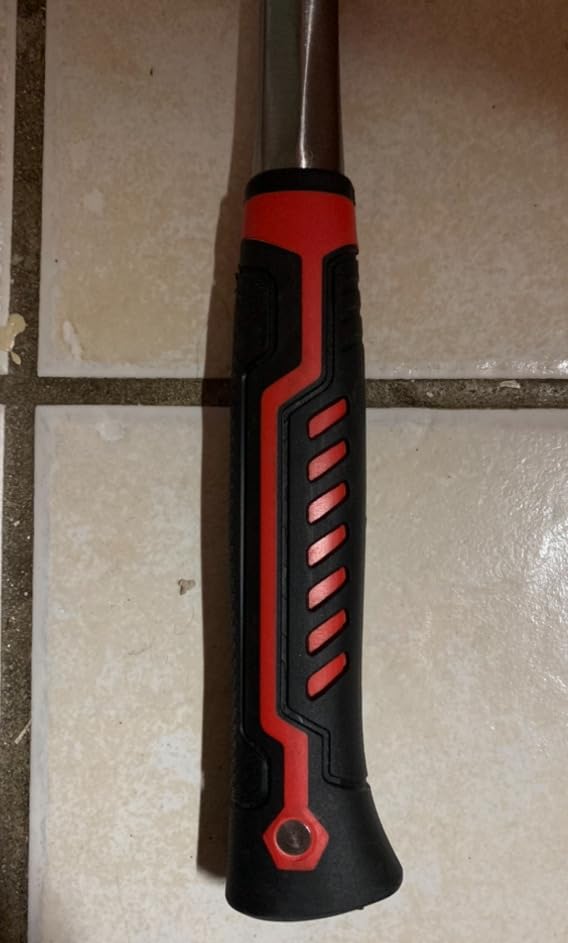
Handle geometry is the second strength. A shock-blocking rubber wrap over a solid steel handle spreads the impact load along the forearm instead of concentrating it in the wrist, and reviewers with long production runs call out the balance directly. Two downsides: at 1.5 pounds it is the heaviest-feeling hammer here and tires you over long sessions, and the head and handle arrive heavily clear-coated, which is annoying if you plan to refinish the steel yourself.
Vaughan has been making tools since 1869, and this model is assembled in the USA, which is worth something in a world where chipping hammer heads increasingly come from castings rather than forgings. If your slag is stubborn, this is the hammer that refuses to be the weak link.

What it handles well
Heavy layered slag, large structural beads, and shops running production volumes where edge retention and balance decide whether the tool survives the quarter. The raked point handles curved and concave surfaces unusually well.
Where it falls short
Overhead work and all-day light cleanup, where 1.5 pounds becomes tiring. It is also the wrong tool for a small hand or a beginner who only chips occasionally.
9. YESWELDER LTG01 28 oz One-Piece Carbon Steel Chipping Hammer
- One-piece steel construction gives real strength
- 28 oz head breaks up thick slag in fewer blows
- Soft rubber grip with anti-slip texture
- Works for professional and DIY metalwork
- Listed for slag and spatter removal only rather than general striking
- Straight head gives less chisel versatility
When the slag is thick, more strikes is the answer you do not want. The LTG01 carries a 28 ounce head forged from a single piece of high-hardness carbon steel, and that mass is the whole point of it. Each blow delivers enough energy to fracture a heavy slag crust instead of just bouncing off it, which means fewer swings, less fatigue, and a cleaner bead underneath.
The grip is a soft rubber ergonomic handle with an anti-slip texture, and the balance works with the heavier head because the mass sits close to the handle rather than out at the tip. Buyers consistently single out the single-piece steel build, the grip, and the weight for clearing slag and spatter in shop work.
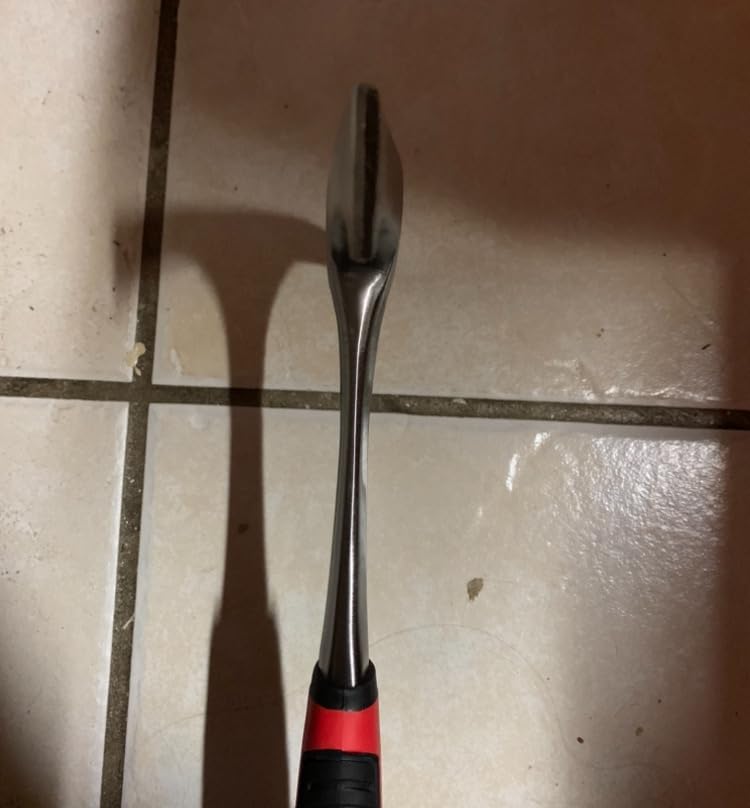
Be clear about what this is for. It is specified for slag and spatter removal, not as a general striking hammer, and the straight head style gives you less chisel geometry to work with than the dual-ended designs here. A heavy head is also easy to misjudge, so practise the stroke on a piece of scrap until the chisel lands where you intend.
That said, for structural fabrication, pressure vessel work, and heavy plate where a 14 oz hammer means four strikes per slag piece, the difference in a full shift of cleanup is not subtle. The 28 oz class exists because this work is real.
What it handles well
Heavy structural and thick plate welds, multipass beads with a built-up cap, and shop clean-up where breaking the crust in fewer blows matters. Also effective for spatter and light scale removal.
Where it falls short
Overhead work, confined spaces, and precision cleanup where a heavy head is uncontrollable. It is a dedicated slag tool, so keep it away from general striking duties.
10. Klein Tools H80612 10 oz Welding Chipping Hammer
- Heat resistant grip stands up to welding heat and sparks
- Tempered steel build that stays light in the hand
- Sharp chisel edges clear slag in few passes
- Compact size fits tight spaces and aids air arcing
- Handle is short and can feel slippery when wet
- Chisel edges dull relatively fast with heavy use
The Klein H80612 rates 4.9 out of 5, the joint highest in this group, and it earns that on balance rather than on power. It is a 10 ounce hammer with a compact overall length, and the small geometry is not a compromise here, it is the design. Reviewers specifically call out that the size fits tight spaces and makes air arcing easier, because you can get the chisel into a corner you cannot physically reach with a full-size hammer.
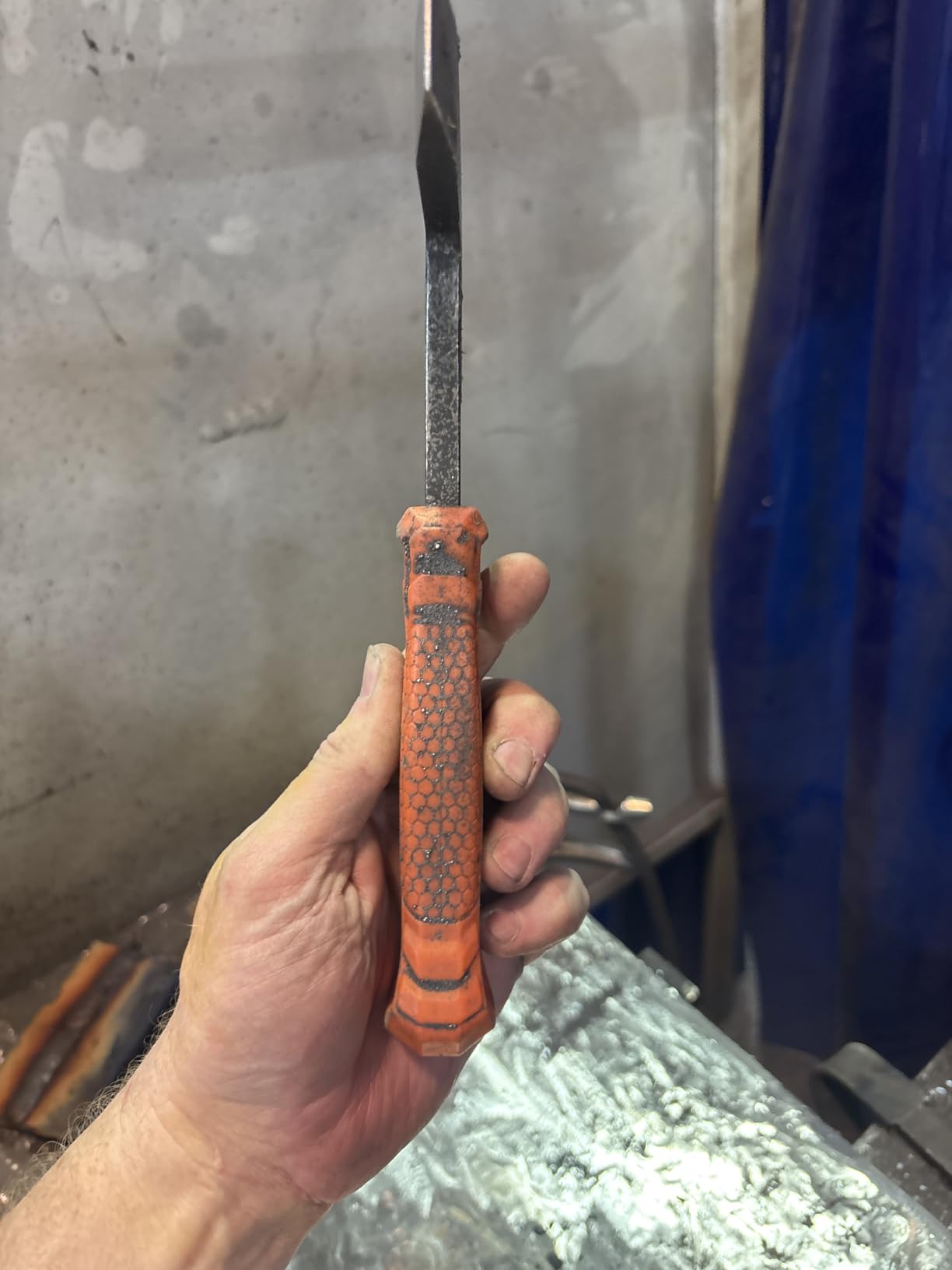
The grip is the other reason for the rating. It is described as heat resistant and shock absorbing, and several owners report that it outperforms lighter hammers with bent wire handles, which tells you the spring handle category is not automatically equal. The recurring praise is for weight, balance, tempered steel durability, and that grip.
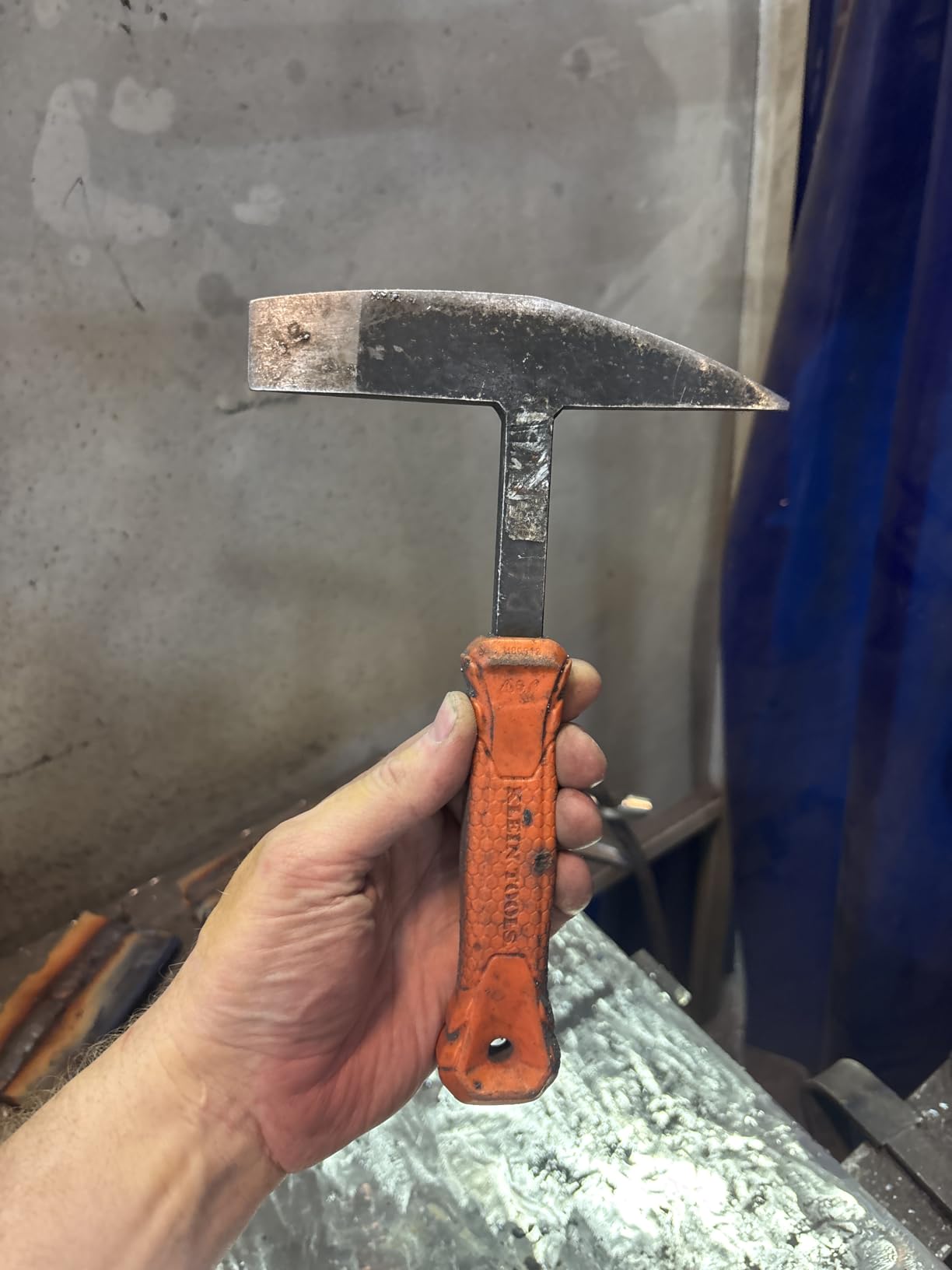
Tempered steel gives it a firmer feel than the cast iron budget hammers without the mass of a 14 oz forged model, and the dual-sided chisel head gives you a flat end and a pointed end for varied striking angles. The tether hole is a small professional touch, letting you clip the hammer to a harness or hang it in a bag where it will not roll.
The two criticisms are consistent. The handle is short, and one reviewer found it slippery when wet. The chisel edges dull relatively fast under heavy use and need regular sharpening, so this is a tool to keep an eye on rather than forget about.
What it handles well
Precise cleanup in tight corners, inside frames, around piping, and anywhere you need control more than force. The compact body also works well as a light cleanup hammer on workbenches and in a tool bag.
Where it falls short
Thick built-up slag that needs real breaking force, and wet or gloved conditions where grip matters most. Budget time for sharpening if you use it daily.
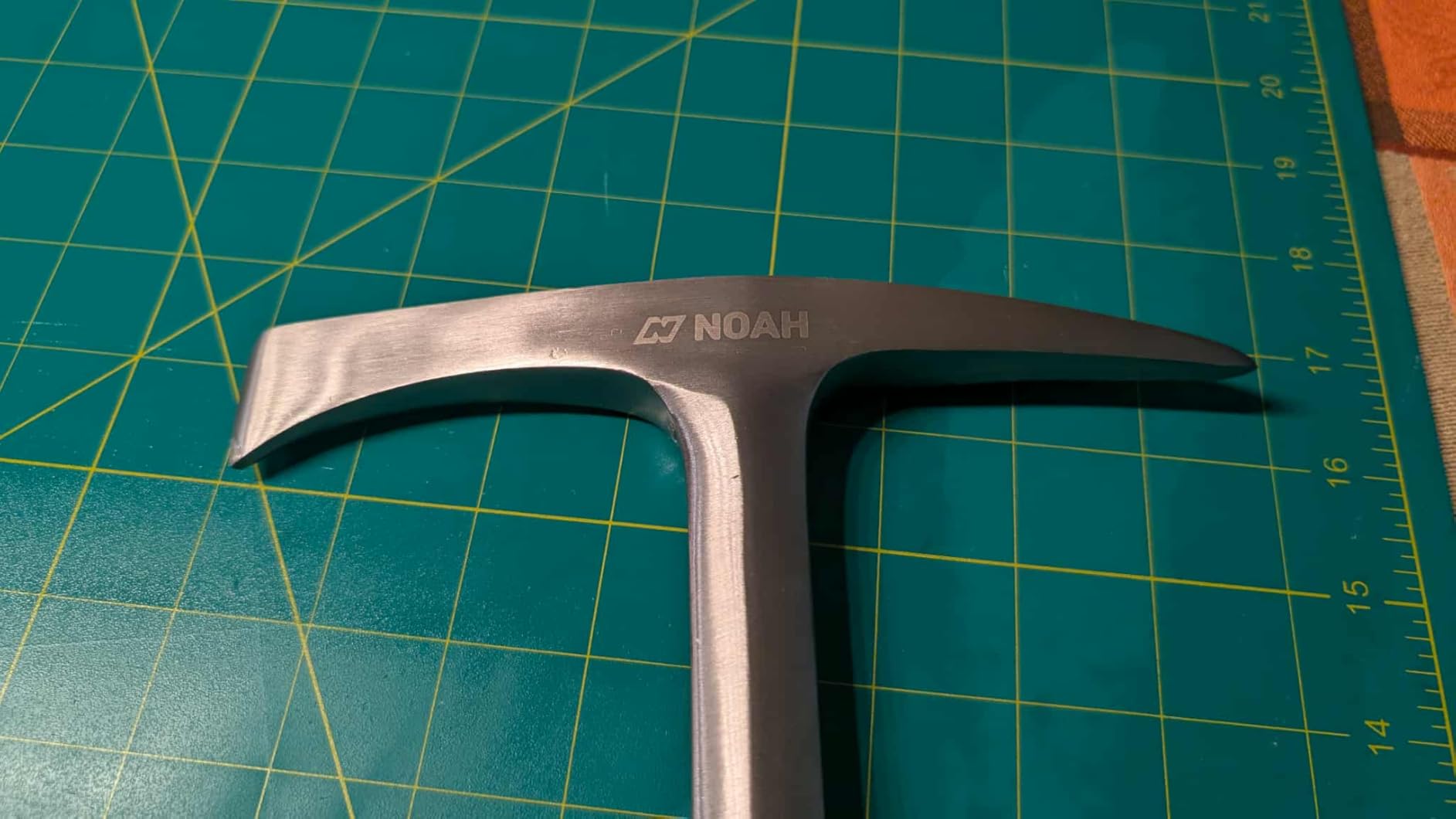
11. N NOAH 28 oz #45 Carbon Steel Welding Chipping Hammer
- Heat treated #45 carbon steel holds a sharp edge
- Dual pointed and flat surfaces handle varied cleanup
- Shock reducing ergonomic grip
- 28 oz swing gives strong strikes with control
- A small share of buyers report an inconsistent finish on some units
- 28 oz head is poor for overhead and confined space work
The N NOAH is a 28 ounce hammer built around #45 carbon steel, which is a harder grade than plain carbon steel and the reason it holds an edge without constant attention. The listing describes heat treatment, an anti-rust oil protection, and triple fine polishing, and those three steps together are what separate a chipping hammer that stays sharp from one that fuzzes after a week.
Both working surfaces are usable. The head carries a pointed end and a flat chipping end, so you can concentrate force into a small area for corner work or spread it across the cap of a heavy bead. Reviewers highlight the balanced 28 ounce swing, meaning the extra weight does not translate into extra strain when you are working at bench height.
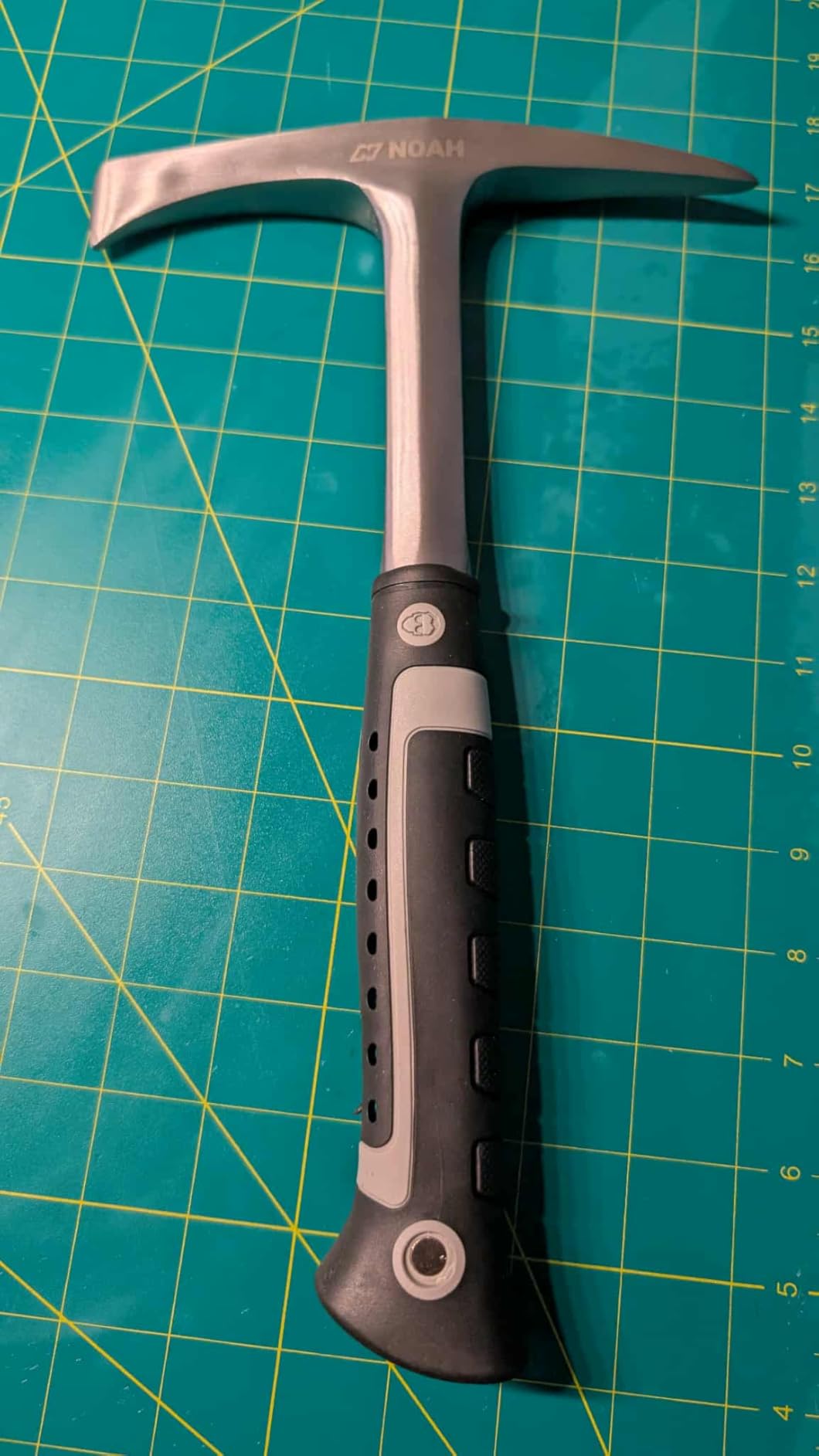
Forty-five reviews is a thin sample, but the distribution is encouraging and the recurring notes are the dual pointed and flat head, the balanced swing, and the grip comfort. A small share of two-star feedback suggests the finish is not perfectly consistent across production runs, so inspect the tool before you depend on it.
Like any 28 ounce hammer, this is a bench-height tool. Overhead or inside a confined frame, the same mass that breaks slag efficiently becomes a liability, and a 10 ounce or 13 oz model is the correct answer for that position.
What it handles well
Heavy shop cleanup where the steel needs to hold an edge between sharpening sessions, and shops that move between professional and DIY work. The oiled finish also helps if the tool sits in a damp environment between uses.
Where it falls short
Overhead and confined space work, and buyers who want the reassurance of a long review history. Check finish quality on arrival given the small share of lower ratings.
12. Vaughan 185-10 12 oz Hickory Handle Welder’s Chipping Hammer
- Sharp 1-1/4 inch beveled blade gives strong cutting bite
- Pointed end covers tight corners
- Buyers favour hickory over spring handles
- 12 ounce weight is well balanced
- Handle is shorter than some buyers are used to
- Hickory offers no heat resistant synthetic grip
The Vaughan 185-10 is the traditional design in this roundup, and it is traditional for a reason. A 12 ounce alloy steel head sits on a hickory handle that is wedged into a tapered adze eye using a Sure-Lock fit, which is a joinery method that tightens as the wood moves rather than loosening. On one end is a sharp 1-1/4 inch blade with a back bevel, and the opposite end tapers to a point.
Buyers tend to come from a background of spring-handle hammers, and several say they prefer the hickory. The feel is firmer and the direct feedback tells you exactly where the chisel is landing, which is useful when you are working by feel in a dark shop or a confined frame. The 12 ounce weight is also the easiest to control in this entire list, and the blade width is the widest among the forged hammers here.
The rating is the lowest of the twelve at 4.4. Two themes account for most of the complaints: the handle is shorter than some buyers expect, and natural hickory is not the heat-resistant synthetic grip found on the modern hammers. If you are working close to hot metal for long stretches, a synthetic grip is the safer choice.
What it handles well
Work where direct feedback and control matter, including dark shops and confined frames. The 1-1/4 inch blade cuts a lot of slag per blow and the point handles corners.
Where it falls short
Long sessions near hot metal where a synthetic grip would protect your hand better, and buyers who prefer a longer handle for two-handed leverage.
Do You Actually Need a Chipping Hammer?
No, not always, and pretending otherwise is the fastest way to damage a good weld. If you run MIG or flux-core with a wire feeder, a heavy knotted wire wheel on an angle grinder removes slag faster on flat work, and a cup brush or stringer bead knot wheel handles the residue. If you only place a few welds a year, a wire brush and a pair of needle nose pliers will handle the small bits of slag that come off.
That said, a chipping hammer earns its place in specific situations. Wire wheels polish the bead and leave its surface slightly ground, which matters on stainless, on visible finish welds, and anywhere a later pass has to fuse into the bead. Wire wheels also cannot reach a corner or the root of a fillet without touching the base metal, and that is exactly what the point end of a chipping hammer is for.
For anyone doing stick welding as their main process, a chipping hammer is standard kit. The slag is thick, the crust is hard, and removing it by abrasive means abrading every weld. A needle scaler is the pneumatic alternative used in production and boiler work, where a person cleaning every joint would be the bottleneck, but it is an air tool with a hose attached and it does not replace a hand hammer for detail cleanup.
Our rule of thumb: if you are chipping more than a few welds a shift, or if any of your welds are inspected, stainless, or visible, use a hammer. If you weld occasionally and only ever grind the bead, a wire wheel on your grinder is enough. Related heavy hitting tools are covered in our guide to the [best demolition hammers for breaking concrete](https://www.requiemforadream.com/best-demolition-hammers-for-breaking-concrete/), though those are a different tool class entirely.
Why Some Slag Is Harder to Remove Than Others
Slag hardness follows the electrode, and this is the single biggest reason beginners think their hammer is defective. E6011 electrodes produce a slag that is dense, glassy, and bonded hard to the bead, which is why so many fabricators reach for a chipping hammer the moment they run a 6011 pass. E7018 slag is also tough and comes off in dense plates rather than crumbling, so it resists a casual tap.
Faster-freezing electrodes such as E6010 and E7010 produce a thinner, more friable slag that breaks up with much less force. That is the practical answer to why slag from some rods seems to fly off in the videos and yours will not budge. It is not your technique, it is the flux.
This is exactly why the angle of attack matters so much on hard slag. Striking straight down crushes the crust into the bead and spreads it. Running the chisel along the side of the bead at a shallow angle gets the edge underneath and levers the slag off in pieces, which is the single most repeated technique tip in the welding forums and the reason the raked and curved point ends on the Vaughan and Titan designs are worth choosing deliberately.
How to Use a Chipping Hammer the Way Experienced Welders Do
Let the bead cool first, then chip. Chipping hot slag is how you put your hand in a burn and how you fling molten material at your own apron.
- Let the bead cool to the touch. Everything below assumes cool slag. If you can hold your hand near it comfortably, you are close enough.
- Set the flat of the chisel against the side of the bead. You want the chisel face flat on the slag and the edge just under its lower lip, not striking the top of the crust.
- Strike along the side, not straight down. A shallow angle along the bead lets the edge slide underneath and lever the slag off in pieces. Vertical blows crush it into the weld.
- Use the weight, not the swing. A 14 oz hammer on 6011 slag should move it in one or two taps. If it does not, you have the wrong weight or the wrong angle.
- Switch ends by job. The chisel clears broad surfaces and flat bead. The point or cone goes into corners, the root of a fillet, and around pipe.
- Wire brush the residue afterwards. The hammer leaves a fine grit film that only a wire brush removes. Skipping this step is how grit gets left under the next pass.
- Inspect before you move on. Chipping exposes what was hidden: slag inclusions, undercut, porosity, and cold starts. That is the point of the step, not a reason to skip it.
Beginners often get frustrated when chipping reveals a bad joint they did not know was there. That frustration is misplaced. The slag was hiding the problem either way, and now you know before the weld goes into service.
Cleaning Slag Between Passes in Multi-Pass Welding
Cleaning between passes is a different job from finishing cleanup, and the goal is different. You are not trying to make the bead look good, you are trying to remove every loose particle so the next bead fuses into solid metal. A bead laid over trapped slag is a lamination, and no amount of grinding afterward will fix it.
- Brush first. Before you touch the hammer, run a wire brush along the bead. Loose slag and flux dust fall off at this stage, and the hammer is for what is fused, not for what is sitting loose.
- Remove only the loose crust. Take off slag that lifts on its own. Stop when the piece stops releasing, because continuing means working into the bead.
- Keep the toe of the weld visible. Clean to the edge of the reinforcement, not past it. A hammered toe is a stress riser and a rejection in inspection work.
- Brush again and inspect. The bead should look uniformly metallic with no grey film. If a section is still dark and pitted, that is contamination, and it has to come off before the next pass.
If you are running multi-pass work regularly, this step and the choice of hammer compound. A blunt chisel shatters slag into grit instead of lifting it, and grinding that grit into the bead is how inclusions get in. Keeping the edge sharp is not fussiness.
Safety: What Chipping Actually Throws at You
Chipping throws material. The slag is a projectile, and if the piece is not fully cool it is a molten projectile. Wear eye protection every time, and it should be a face shield or safety glasses rated for impact rather than a welding shade alone.
Keep your striking hand turned away from the line of the blow. The classic injury on this tool is a chip that glances off the bead and comes back at your knuckles, and it happens to people who have done it a thousand times. Gloves matter here, but a glove on a slipping hammer is worse than a bare hand, so grip before you swing.
Never chip toward your body, and never chip while the workpiece is still on the hot side of a weld you just made. Hot slag will stick to your clothing and burn through in seconds. Work on a bench or a table rather than a ladder or a scaffold, and if you are chipping overhead, use a light hammer and accept that you should not be doing that job at the end of a shift.
Long term, protect your hearing and your forearm. Repeated impact through an undamped handle accumulates, which is the entire reason shock reduction grips and coil spring handles exist as a category.
How to Choose: Head Weight and Chisel Geometry
Head weight is the decision that matters most, and it comes down to where the work is and how big the slag is. A 10 oz hammer is for tight corners, overhead positions, and light spatter. A 13 to 14 oz hammer is the general purpose answer and covers most shop work. A 28 oz hammer is for thick built-up slag on structural and heavy plate welds where a lighter hammer means four strikes per piece.
The mistake buyers make is matching weight to toughness rather than to position. A 28 oz hammer in a confined frame is not stronger, it is just harder to aim. If your work is mostly overhead or in corners, buy the light hammer and accept more blows.
Chisel geometry comes second. A flat chisel is for broad surfaces and flat bead. A cone or cross chisel is a raking, curved shape that hooks under slag and lifts it, which is why it does better on rounded caps and curved surfaces. A point is for corners and the root of a fillet. Most of the hammers here give you two of those three, and the Estwing chisel-plus-point and the Titan cone-plus-chisel represent the two most useful pairings.
Grip matters more than buyers expect. Molded vinyl, rubber, and hickory handles all work, and the difference you feel after an hour is the reason a shock reduction grip exists. If you clean up all day, that is a feature, not a luxury. If you clean up occasionally, it does not matter much.
Keeping a Chipping Hammer Sharp and Rust-Free
A dull chisel is the reason people reach for a grinder mid shift, and grinding into a bead to remove slag is how you destroy a good weld. Keeping the edge is a five-minute job.
- Clean the head after every session. Wipe slag and flux dust off with a rag. Trapped flux holds moisture against the steel and it is the main cause of surface rust on a tool that never gets wet otherwise.
- Put a light film of oil on the steel. A wipe of machine oil or light oil on the chisel faces and the body prevents rust in a damp shop or a vehicle over the winter.
- Sharpen on a flat surface, not a wheel. Run a file across the chisel face until it is flat and bright, keeping the original bevel angle. Grinding on an angle grinder changes the geometry and you will feel it in how the tool bites.
- Take the burr off behind the edge. A file on a surface plate or even fine sandpaper on flat concrete removes the burr that turns a clean chip into a tear.
- Store it off the concrete. A damp floor and a steel head make rust in a few days. Hang it or put it in a drawer.
Forgers and coating play into this. The one-piece forged American steel hammers here have the edge retention to tolerate periodic sharpening, whereas cast iron budget options will want more frequent work to stay effective. Steel with anti-rust oil protection and triple polishing, like the N NOAH, is closer to maintenance-free, though wiping it down still matters.
Frequently Asked Questions
What is the best chipping hammer for welding?
The Estwing E3-WC is our pick for most welders: a 14 oz one-piece forged steel hammer with a 7/8 inch chisel on one end, a point on the other, and a molded vinyl grip that reduces impact vibration. A 28 oz model such as the YESWELDER or N NOAH is better for thick built-up slag, and a 10 oz Klein Tools H80612 is better in tight corners and overhead.
Do you need a chipping hammer for welding?
For stick, flux-core, and multi-pass work, yes. Slag from these processes bonds hard to the bead and has to come off before the next pass or inspection. For occasional MIG work on flat surfaces, a knotted wire wheel on an angle grinder is often faster, but it cannot reach corners or the root of a fillet without touching the base metal, and it leaves a lightly ground surface that matters on stainless and visible welds.
What is the best way to remove slag from welds?
Let the bead cool, brush off the loose dust, then set the flat of the chisel against the side of the bead and strike along it at a shallow angle. The edge slides underneath and levers the slag off in pieces instead of crushing it into the weld. Finish with a wire brush to remove the grit the hammer leaves behind.
Why is 7018 slag so hard to remove?
Because of the electrode. E6011 and E7018 produce a dense, glassy slag that fuses to the bead and comes off in plates, while faster-freezing electrodes such as E6010 and E7010 produce a thinner, more friable slag that crumbles with far less force. Technique makes the biggest difference: striking straight down crushes the crust into the bead, while a shallow angle along the side levers it off.
What tool is used to remove slag after stick welding?
A chipping hammer, also called a slag hammer or welding hammer. It is a short two-ended tool with a flat chisel on one side and a point or cone on the other, used to knock slag and spatter off finished welds and to clean bead edges between passes. Small bits of slag can be lifted with needle nose pliers, and a knotted wire wheel on an angle grinder is the common alternative for flat work.
Our Final Chipping Hammer Picks for 2026
The Estwing E3-WC is the best chipping hammer for welders overall, and it is the answer to give most people: one-piece forged steel, a chisel and a point, a grip that takes the sting out, and a build that has held up through years of shop use. If you want a second tool for a different job, add a 28 oz model for heavy structural slag rather than replacing the 14 oz with something heavier.
For beginners and home shops, the VASTOOLS kit gives you a hammer and a wire brush in one go. For tight corners and overhead work, the Klein Tools H80612 handles control better than any heavier hammer here. For stubborn built-up slag, the Vaughan RWC14 is the one that keeps its edges. Pick by position and slag thickness, keep the chisel sharp, and the best chipping hammers for welders in 2026 will all do the same job for you.