
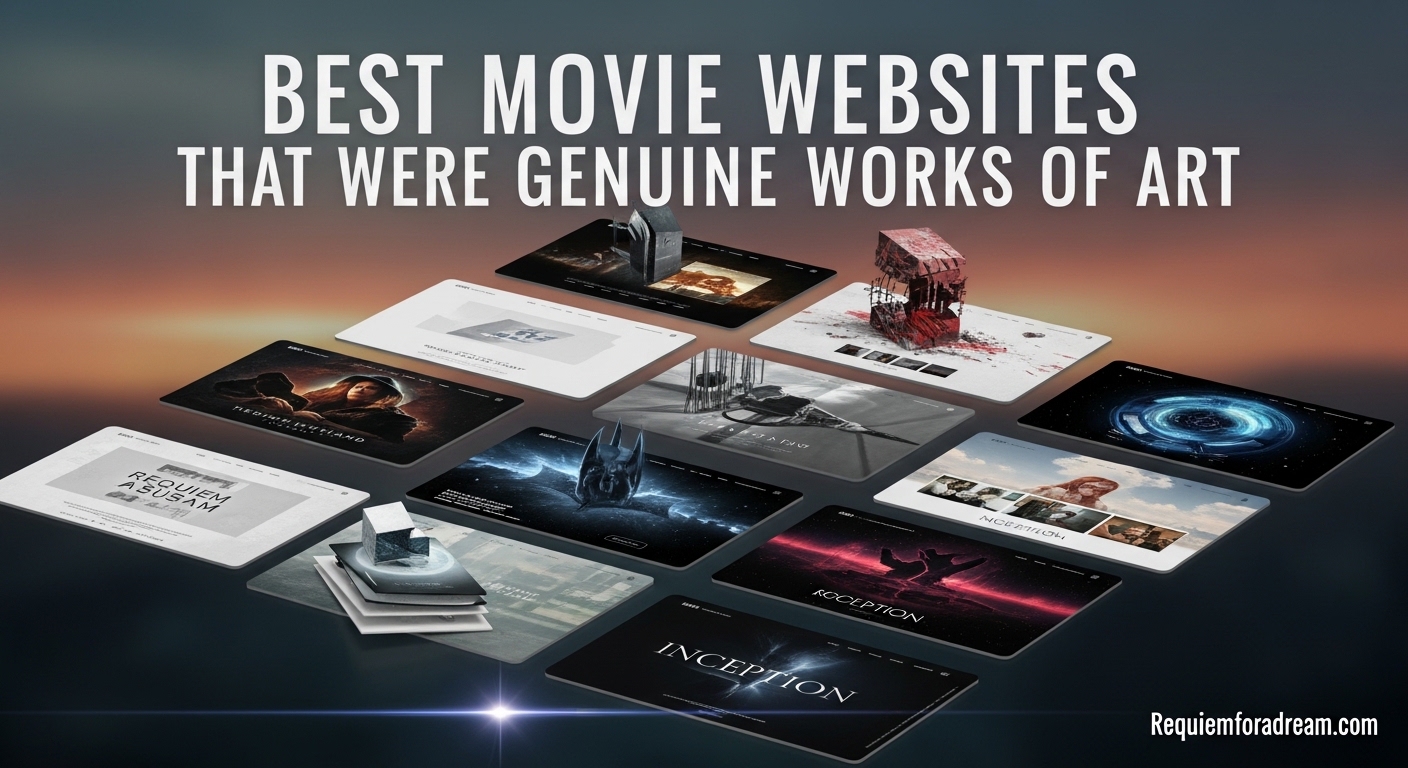
Long before social media dominated movie marketing, studios created something truly special: best movie websites works of art that transcended simple advertising to become immersive digital experiences. These weren’t just pages with trailers and release dates. They were complete worlds built in code, Flash animations, and HTML5 wizardry that pulled visitors into the film’s universe before they ever bought a ticket.
I spent weeks exploring archived versions of these sites through the film journal community and web archives. What I discovered was a forgotten golden age of digital creativity. From the viral marketing revolution of The Blair Witch Project to the mind-bending interactive experiences of modern blockbusters, these promotional websites represent some of the most innovative web design ever created.
In this guide, I’ll walk you through 12 movie websites that genuinely qualify as works of art. Each one pushed the boundaries of what a promotional website could be, using interactivity, storytelling, and technical innovation to create unforgettable digital experiences.
Table of Contents
The Golden Age of Movie Websites: When Flash Ruled the Web
Between roughly 1998 and 2010, Adobe Flash was the magic tool that made cinematic web experiences possible. Before HTML5, CSS animations, and WebGL, Flash gave designers the power to create immersive, interactive worlds that felt like extensions of the films themselves.
This era produced some of the most creative movie marketing the internet has ever seen. Studios weren’t limited to static pages with poster images. They could build games, hidden content, fake corporate websites, and atmospheric experiences that blurred the line between fiction and reality. The technical constraints of dial-up internet and early broadband actually forced designers to be more creative with compression, loading sequences, and progressive reveals.
When Adobe finally discontinued Flash in 2020, many of these masterpieces disappeared from the live web. Fortunately, archivists and web historians have preserved many of them, allowing us to appreciate these digital artifacts today.
12 Best Movie Websites That Were Genuine Works of Art
These are the promotional websites that changed how we think about movie marketing. Each one represents a unique approach to digital storytelling and user engagement.
1. The Blair Witch Project (1999) – The Viral Marketing Pioneer
No discussion of movie websites as art can begin anywhere else. The Blair Witch Project’s promotional website didn’t just advertise a film. It created an entire mythology that convinced millions of people the footage was real.
The website featured police reports, missing persons posters, and interviews with the families of the “missing” filmmakers. It extended the found-footage concept into the digital realm, creating an alternate reality that existed parallel to the film. Visitors could explore the woods of Burkittsville, Maryland through grainy photos and read testimonies from local residents about the legend.
What made this site revolutionary was its commitment to authenticity. There was no hint that this was marketing for a fictional film. The design was deliberately amateurish, matching the handheld aesthetic of the movie itself. This approach birthed an entire genre of viral marketing that studios still try to replicate today.
The Blair Witch website proved that the internet could be more than a billboard. It could be an integral part of the storytelling experience, deepening audience investment and creating genuine mystery.
2. Requiem for a Dream (2000) – The Disturbing Flash Experience
Arthouse films produced some of the most experimental promotional websites, and Requiem for a Dream stands as perhaps the most haunting example. The site’s design mirrored the film’s descent into addiction and desperation through increasingly fractured navigation and disturbing imagery.
Visitors were greeted with rapid cuts, uncomfortable sound design, and a navigation system that seemed to fight against the user. The experience was intentionally unpleasant, creating a visceral reaction that perfectly matched the film’s themes. This wasn’t marketing designed to make you feel good about buying a ticket. It was art that demanded emotional engagement.
The Flash animations used grainy textures, distorted typography, and jarring transitions that reflected the characters’ psychological deterioration. Even the loading screens contributed to the atmosphere, using medical imagery and statistics about addiction.
What strikes me most about this site is how it refused to compromise its artistic vision for accessibility or comfort. It remains a testament to how promotional materials can be genuine extensions of a film’s aesthetic and thematic concerns.
3. The Hunger Games: The Capitol.pn – Immersive Fiction
For The Hunger Games series, Lionsgate created one of the most sophisticated fictional government websites ever designed. The Capitol.pn presented itself as the official portal for Panem’s ruling district, complete with citizenship registration, propaganda videos, and fashion content.
The genius of this approach was how it positioned the audience as citizens of the dystopian world rather than passive viewers. You weren’t just reading about the Hunger Games. You were experiencing life under the Capitol’s control. The site featured Capitol TV broadcasts, citizen profiles, and even allowed visitors to apply for passport renewals in the fictional universe.
Design-wise, The Capitol.pn used lavish aesthetics that contrasted sharply with the grim reality of the films. Glossy fashion photography, elegant typography, and sophisticated user interfaces created an uncomfortable juxtaposition that reinforced the story’s themes of wealth inequality and media manipulation.
This website demonstrated how modern movie marketing could use social media integration and interactive elements to create sustained engagement beyond the theater experience.
4. Interstellar (2014) – Interactive Space Exploration
Christopher Nolan’s Interstellar launched with a website that turned visitors into astronauts. The promotional site featured an interactive space exploration experience where users could pilot a spacecraft through wormholes and explore alien worlds.
The design emphasized scientific authenticity, featuring accurate star maps, spacecraft schematics, and detailed planetary information. Unlike many movie sites that prioritized style over substance, Interstellar’s website felt grounded in real science, matching the film’s consultation with physicist Kip Thorne.
Users could customize their spacecraft, plan missions, and share their exploration achievements. The site also included a library of in-universe documents, mission briefings, and scientific explanations that expanded on the film’s complex time dilation and relativity concepts.
From a technical standpoint, the Interstellar site showcased what HTML5 could achieve after Flash’s decline. Smooth animations, 3D elements, and responsive design proved that modern web technologies could deliver experiences just as immersive as their Flash predecessors.
5. Jurassic World (2015) – Fictional Theme Park Reality
Universal created something brilliant for Jurassic World: a promotional website that pretended the dinosaur theme park was a real vacation destination. The Isla Nublar resort site featured booking information, park maps, dinosaur exhibits, and safety guidelines that treated prehistoric creatures as everyday attractions.
The attention to detail was extraordinary. Park hours, ticket prices, hotel accommodations, and dining reservations all followed the conventions of real theme park websites. This commitment to fictional reality made the world feel tangible and lived-in.
Visitors could explore different areas of the park, learn about specific dinosaur species, and even check wait times for attractions. The site used bright colors, clean interfaces, and professional photography that contrasted deliciously with the chaos that would eventually unfold in the film.
This approach has influenced countless movie websites since, proving that treating fictional worlds as real entities creates powerful immersion and audience engagement.
6. Inception (2010) – Mind-Bending Design
The promotional website for Inception matched the film’s layered reality with a navigation system that mirrored its dream-within-a-dream structure. Users descended through levels of the site, each layer revealing different aspects of the film’s complex narrative and visual style.
The Mind Crime game became a standout feature, challenging players to navigate maze-like puzzles that referenced the film’s dream architecture. The spinning top imagery from the movie’s ambiguous ending appeared throughout the site, creating visual continuity between the digital experience and the theatrical one.
Design elements included gravity-defying animations, impossible architecture rendered in CSS, and transitions that suggested the fluid nature of dreams. The color palette shifted between the cool blues of reality and the warm golds of the dream world.
What I appreciate most about Inception’s website is how it respected audience intelligence. Rather than explaining the plot, it offered puzzles and mysteries that rewarded curious exploration, mirroring the film’s own narrative complexity.
7. Cloverfield (2008) – The Alternate Reality Game Masterpiece
Before the film’s title was even revealed, Cloverfield’s marketing team launched an intricate alternate reality game spread across multiple websites, MySpace profiles, and cryptic videos. The central hub appeared to be a Japanese drilling company called Tagruato, complete with corporate history, employee profiles, and investor information.
The fictional Slusho frozen drink brand became a viral phenomenon in its own right, with its own website featuring bright Japanese-inspired design, fake commercials, and elaborate backstory connecting to the film’s monster origins. This transmedia approach created a mystery that fans spent months unraveling.
The websites featured hidden codes, password-protected areas, and clues that required community collaboration to decipher. Each discovery led to new sites, deepening the mythology and building anticipation to unprecedented levels.
Cloverfield’s marketing proved that the internet could support complex narrative ecosystems. The line between promotional material and entertainment disappeared, creating something that existed purely for the joy of discovery and puzzle-solving.
8. The Dark Knight (2008) – Political Campaign Marketing
Warner Bros. revolutionized superhero movie marketing by treating The Dark Knight’s viral campaign as a real political operation. Harvey Dent’s campaign website presented the fictional district attorney as an actual political candidate, complete with campaign promises, volunteer signup, and attack ads.
The site used patriotic colors, professional photography, and polished political messaging that mirrored real campaign websites of the era. Visitors could download campaign materials, watch TV spots, and even attend virtual rallies. This approach made Gotham City feel like a real place with real political struggles.
As the campaign progressed, the Joker’s vandalism appeared across the site, creating a narrative of escalating conflict that paralleled the film’s plot. These digital vandalism events required users to participate in puzzles and challenges to unlock new content.
The Dark Knight’s marketing demonstrated how movie websites could tell ongoing stories, using the web’s temporal nature to create serialized experiences that built over months.
9. Prometheus (2012) – The TED Talk That Never Happened
Ridley Scott’s Prometheus created one of the most brilliant pieces of transmedia content ever: a TED Talk from 2023. The promotional website featured this fictional presentation by Peter Weyland, founder of the Weyland Corporation, delivered decades in the future but accessible today.
The site expanded into a complete corporate presence for Weyland Industries, featuring investor relations, product catalogs, and company history that spanned from the present into the film’s future timeline. This temporal play created genuine science fiction immersion.
Design-wise, the Prometheus websites used clean, futuristic interfaces that suggested advanced technology while remaining believable. The TED Talk video used the real conference’s branding and presentation style, creating uncanny authenticity.
This approach influenced how science fiction films use promotional materials to build believable future worlds. By grounding the fantastic in familiar formats like corporate websites and conference presentations, Prometheus made its universe feel tangible and real.
10. The Grand Budapest Hotel (2014) – Fictional Institutional Presence
Wes Anderson’s distinctive visual style translated perfectly to the web through multiple promotional sites for The Grand Budapest Hotel. The Zubrowka Film Commission and Akademie Zubrowka websites extended the film’s fictional Eastern European setting into detailed institutional presences.
These sites featured the film’s signature pastel color palettes, symmetrical compositions, and vintage typography. Navigation elements resembled hotel signage and bureaucratic documents, maintaining aesthetic consistency with the movie’s production design.
The attention to detail included fictional staff profiles, institutional histories, and cultural information about the imaginary Republic of Zubrowka. Every element reinforced the film’s carefully constructed fictional world.
What makes these websites exceptional is how they captured Anderson’s meticulous visual style in interactive form. The websites felt like digital extensions of the film’s sets, maintaining the same obsessive attention to period detail and composition.
11. Mank: The Unmaking (2020) – The Digital Art Book
Netflix’s Mank received one of the most sophisticated promotional websites in recent memory. Created by Watson Design Group, The Unmaking presented itself as an interactive digital art book exploring the making of the film about Citizen Kane screenwriter Herman Mankiewicz.
The site used parallax scrolling, custom cursor effects, and sophisticated typography that evoked 1930s Hollywood while feeling thoroughly modern. Users could explore behind-the-scenes content, production design details, and historical context through an interface that felt like flipping through a premium coffee table book.
The design honored classic Hollywood aesthetics while showcasing contemporary web capabilities. Black and white photography, period-appropriate fonts, and elegant transitions created a cohesive visual experience that matched the film’s own vintage presentation.
This website demonstrates how modern movie sites can balance artistic ambition with information delivery, creating experiences that stand alone as digital art pieces.
12. Where the Wild Things Are (2009) – The Flash Era Swan Song
Spike Jonze’s adaptation of Maurice Sendak’s classic book received a promotional website that perfectly captured the film’s blend of live action and puppetry. The Flash-based site featured interactive environments where visitors could explore the island and interact with the Wild Things.
The design used hand-drawn elements, rough textures, and organic animations that matched the film’s handmade aesthetic. Navigation felt like wandering through a child’s imagination, with hidden surprises and playful interactions scattered throughout.
Character profiles, behind-the-scenes footage, and interactive games extended the film’s emotional world. The website didn’t just promote the movie. It created a space where children and adults could engage with the themes of imagination, emotion, and growing up.
As one of the last great Flash movie websites before HTML5 became standard, Where the Wild Things Are represents the end of an era while demonstrating the emotional potential of interactive web design.
What Made These Movie Websites Artistic Masterpieces
Immersive Design and Atmosphere
Each website on this list understood that atmosphere matters more than information. Rather than simply listing cast and crew, these sites created emotional experiences that prepared audiences for the films. The grainy textures of The Blair Witch Project, the pastel perfection of The Grand Budapest Hotel, and the corporate sterility of The Capitol all communicated something essential about their respective films before a single frame played.
Sound design played a crucial role as well. Many of these sites used ambient audio, subtle music, and interactive sound effects that transformed browsing into immersion. The Requiem for a Dream site used uncomfortable audio loops that created genuine physical reactions in visitors.
Interactive Elements and Gamification
The best movie websites didn’t just present content. They invited participation. Games, puzzles, and hidden content transformed passive visitors into active participants. The Cloverfield ARG required community collaboration to solve mysteries. The Inception puzzles rewarded careful attention with deeper insights.
This interactivity served marketing purposes by extending engagement time and encouraging sharing. But it also respected audiences as intelligent participants in the storytelling process. The websites became extensions of the films’ themes and narratives.
Transmedia Storytelling Techniques
These websites exemplified transmedia storytelling, where narrative elements spread across multiple platforms and formats. The Prometheus TED Talk existed as standalone content that enriched the film’s universe. The Hunger Games’ Capitol website provided backstory that enhanced understanding of the dystopian world.
This approach recognized that modern audiences consume content across multiple channels. Rather than repeating the same trailer on every platform, these campaigns created unique content for each medium, building a richer overall experience.
Viral Marketing Innovation
The Blair Witch Project pioneered viral movie marketing, but every website on this list contributed to the evolution of digital word-of-mouth. By creating mysterious, interactive, and shareable experiences, these sites generated organic discussion and speculation.
The Cloverfield campaign became a case study in mystery marketing, withholding basic information like the film’s title to generate curiosity. The Dark Knight’s political campaign created genuine confusion about whether Harvey Dent was a real candidate.
The Legacy of Flash and the Future of Movie Websites
When Adobe discontinued Flash Player in December 2020, countless movie websites from the 2000s stopped functioning. The Requiem for a Dream site, the original Blair Witch experience, and hundreds of other promotional masterpieces became inaccessible through standard browsers.
This loss represents more than nostalgia. These websites were genuine works of digital art that influenced web design, marketing, and interactive storytelling. Fortunately, projects like the Web Design Museum and individual archivists have preserved many of these experiences through emulators and screen recordings.
Modern movie websites have largely shifted toward social media integration, video content, and mobile-first design. While this accessibility is welcome, something has been lost in the transition. The elaborate Flash experiences of the 2000s had a craftsmanship and ambition that rarely appears in today’s more streamlined promotional sites.
However, technologies like WebGL, Three.js, and advanced CSS animations are enabling new forms of interactive web art. The Mank website demonstrates that artistic ambition remains possible within modern web standards. As virtual and augmented reality mature, we may see movie websites evolve into even more immersive spatial experiences.
The legacy of these 12 websites extends beyond nostalgia. They proved that promotional materials can be art, that marketing can respect audience intelligence, and that the web is a legitimate medium for cinematic storytelling.
Frequently Asked Questions About Movie Websites
What movie has the best marketing?
The Blair Witch Project (1999) is widely considered the gold standard of movie marketing. Its website created an entire mythology that convinced millions the film was real documentary footage. This viral approach generated $248 million worldwide on a $60,000 budget and established the template for internet-based movie marketing.
What happened to old movie websites?
Many classic movie websites from the Flash era (1998-2010) are no longer accessible because Adobe discontinued Flash Player in 2020. Sites built with Flash technology stopped functioning in modern browsers. However, archivists have preserved many through the Web Design Museum and emulation projects.
Why did movie websites use Flash?
Flash allowed designers to create immersive, interactive experiences that weren’t possible with early HTML. It supported animation, video, audio, and complex user interactions that made cinematic web design achievable. Before HTML5, Flash was essentially the only way to build the elaborate promotional websites that defined 2000s movie marketing.
How do movies use transmedia storytelling?
Transmedia storytelling spreads narrative elements across multiple platforms. Movie websites extend the film’s universe through fake corporate sites, fictional social media profiles, alternate reality games, and interactive experiences. Examples include The Hunger Games’ Capitol.pn government website and Cloverfield’s Tagruato corporation presence.
What are promotional websites?
Promotional websites are dedicated sites created to market films. The best examples transcend advertising to become artistic experiences that immerse visitors in the movie’s world. They may include games, fictional institutional sites, behind-the-scenes content, and interactive elements that extend the film’s narrative.
Conclusion: The Enduring Art of Movie Marketing
These best movie websites works of art remind us that marketing can be more than commercial necessity. When executed with vision and craft, promotional websites become genuine creative achievements that stand on their own merits.
From The Blair Witch Project’s viral mythology to Mank’s digital art book, these 12 websites represent the peak of what movie marketing can achieve. They treated audiences as intelligent participants rather than passive consumers. They used technology not as gimmick but as genuine medium for storytelling. And they created experiences that remain memorable years after the films left theaters.
As we move further into 2026, the technologies will continue evolving. Flash has given way to HTML5, and virtual reality may soon transform how we experience promotional content. But the principles these websites established remain relevant: respect your audience, commit to your artistic vision, and use interactivity to deepen rather than distract from the narrative.
The next time you encounter a movie website that feels like more than advertising, remember these pioneers. They proved that even in the service of commerce, genuine art can flourish.