
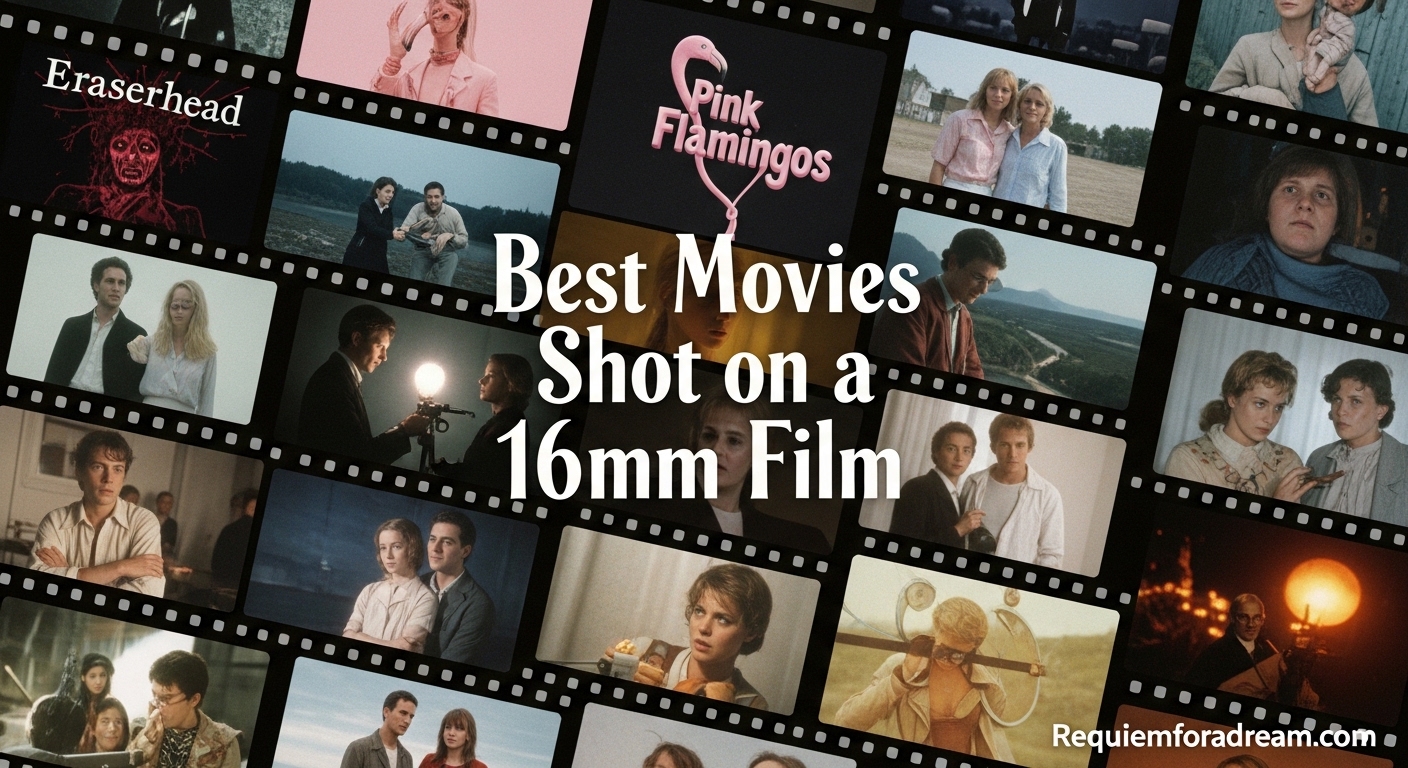
There is something undeniably magical about the way 16mm film captures light. When I first watched Moonrise Kingdom, I found myself mesmerized by those grainy textures and the intimate, almost dreamlike quality that seemed to wrap around every frame. That was my introduction to the world of best movies shot on 16mm film, and I have been obsessed ever since.
16mm film has been the secret weapon of independent filmmakers for nearly a century. Its distinctive aesthetic combines organic grain, raw immediacy, and a visual texture that digital cameras still struggle to replicate authentically. From Sundance darlings to Academy Award nominees, the format has powered some of the most visually striking films in cinema history. Our film journal explores these cinematic treasures that continue to inspire filmmakers and audiences alike.
In this guide, I am sharing 15 of the best movies shot on 16mm film, covering everything from Wes Anderson’s whimsical landscapes to Darren Aronofsky’s psychological thrillers. Each entry includes the director, cinematographer, and why the filmmaker chose this format. Whether you are a budding cinematographer, a film student, or simply someone who appreciates the art of cinema, this list will give you a new appreciation for the 16mm aesthetic.
Table of Contents
Quick Picks: Top 5 Best Movies Shot on 16mm Film
Before diving into the full list, here are my top 5 quick picks for the best movies shot on 16mm film:
- Moonrise Kingdom (2012) – Wes Anderson’s whimsical coming-of-age tale that turns grain into visual poetry
- Black Swan (2010) – Darren Aronofsky’s psychological thriller shot on Super 16mm for intimate close-ups
- Carol (2015) – Todd Haynes’s 1950s romance with lush, tactile cinematography
- The Wrestler (2008) – Gritty documentary-style drama capturing the raw world of professional wrestling
- Wendy & Lucy (2008) – Kelly Reichardt’s quiet character study with naturalistic 16mm photography
What is 16mm Film?
16mm film is a historically popular and economical gauge of motion picture film, approximately 2/3 inch (16 millimeters) wide, widely used for independent filmmaking, documentaries, and low-budget features since the 1920s. The format strikes a perfect balance between affordability and image quality, making it the go-to choice for filmmakers working outside the studio system.
Super 16mm is a variant that maximizes the film area by extending the exposure into the area traditionally reserved for the soundtrack. This creates a wider aspect ratio closer to the 1.85:1 standard used in theatrical releases, allowing 16mm to compete with 35mm for big-screen exhibition. Directors like Darren Aronofsky have used Super 16mm to achieve a cinematic look on modest budgets.
The unique aesthetic of 16mm comes from its grain structure, which creates a textured, organic feel that many filmmakers find adds emotional weight and immediacy to their stories. The format excels in natural lighting conditions and handheld situations, which is why it dominates documentary filmmaking and independent features. Common cameras include the Aaton XTR Prod, Bolex H16, and Arriflex 416, while popular film stocks include Kodak Vision3 and Fuji Eterna.
1. Moonrise Kingdom (2012) – Wes Anderson’s Visual Masterpiece
Director: Wes Anderson
Cinematographer: Robert Yeoman
Film Format: Super 16mm
Wes Anderson’s Moonrise Kingdom stands as perhaps the most visually stunning example of how Super 16mm can elevate a film’s aesthetic. The grainy texture and warm color palette perfectly complement Anderson’s story of young love on a New England island. The format adds a nostalgic, storybook quality that digital cinematography simply could not achieve.
Robert Yeoman, Anderson’s longtime cinematographer, chose Super 16mm for its organic texture and the way it renders skin tones and natural environments. The film’s distinctive yellows, greens, and browns feel tactile and alive on 16mm. Every frame could be a painting, with the film grain adding a subtle complexity that rewards repeated viewings.
The movie was a commercial and critical success, grossing over $68 million worldwide and receiving an Academy Award nomination for Best Original Screenplay. It premiered at the Cannes Film Festival and solidified Anderson’s reputation as a visual stylist. The 16mm photography was essential to creating the film’s timeless, slightly surreal atmosphere that feels both contemporary and nostalgic.
2. Black Swan (2010) – Psychological Intensity on Super 16mm
Director: Darren Aronofsky
Cinematographer: Matthew Libatique
Film Format: Super 16mm (Arriflex 416)
Darren Aronofsky returned to Super 16mm for Black Swan after the success of The Wrestler, cementing his preference for the format’s intimate qualities. The grainy, handheld cinematography plunges viewers into Nina Sayers’s psychological unraveling, creating a claustrophobic atmosphere that mirrors the protagonist’s deteriorating mental state.
Matthew Libatique shot the film primarily handheld on Arriflex 416 cameras, allowing the camera to become a character in itself, following Natalie Portman through backstage corridors and rehearsal studios. The Super 16mm format’s shallow depth of field and organic grain contributed to the film’s dreamlike yet gritty aesthetic. The camera’s physical proximity to Portman during intense sequences creates an almost uncomfortable intimacy.
The film was a massive critical and commercial success, grossing over $329 million worldwide against a $13 million budget. Natalie Portman won the Academy Award for Best Actress, and the film received four other nominations including Best Picture. The 16mm cinematography was widely praised for its contribution to the film’s psychological impact.
Where to Watch
Black Swan is currently available for streaming on Hulu and for rental/purchase on Amazon Prime Video, Apple TV, and Google Play.
3. Carol (2015) – Period Romance with Tactile Beauty
Director: Todd Haynes
Cinematographer: Edward Lachman
Film Format: Super 16mm
Carol represents one of the most visually accomplished uses of Super 16mm in recent cinema. Edward Lachman’s cinematography creates a 1950s New York that feels both authentic and dreamlike, with the film grain adding a hazy, romantic quality that digital would have struggled to replicate. The tactile nature of 16mm perfectly suits the film’s themes of touch, desire, and forbidden love.
Lachman chose Super 16mm specifically for its ability to render the period’s visual texture, citing photographers like Saul Leiter as inspiration. The format’s sensitivity to light allowed for stunning window-lit scenes and naturalistic exposure that enhanced the film’s emotional authenticity. The color palette, rich with teals, creams, and deep reds, feels uniquely cinematic.
The film received six Academy Award nominations including Best Cinematography, and won numerous critics’ awards. Cate Blanchett and Rooney Mara both received widespread acclaim for their performances. The 16mm photography was singled out by critics as a highlight, with many noting how the format elevated the film beyond standard period romance.
4. The Wrestler (2008) – Documentary-Style Grit
Director: Darren Aronofsky
Cinematographer: Maryse Alberti
Film Format: Super 16mm (Arriflex 416)
The Wrestler marked Darren Aronofsky’s first major feature shot on Super 16mm, and the format proved essential to the film’s documentary-like authenticity. Following Mickey Rourke’s broken-down wrestler Randy “The Ram” Robinson, the grainy, handheld cinematography by Maryse Alberti creates an immediate, unvarnished look at the brutal world of independent professional wrestling.
The decision to shoot on 16mm was driven by both practical and aesthetic concerns. Aronofsky wanted the film to feel like a documentary, capturing real locations and real wrestling crowds with minimal production footprint. The Arriflex 416 cameras allowed the crew to move quickly through actual venues, while the Super 16mm negative provided enough resolution for theatrical projection while maintaining a raw, unpolished texture.
Mickey Rourke’s performance earned him an Academy Award nomination and numerous critics’ prizes, and the film won the Golden Lion at the Venice Film Festival. The 16mm cinematography was widely praised for its contribution to the film’s visceral impact, with many critics noting how the format made the wrestling sequences feel dangerous and real.
5. Wendy & Lucy (2008) – Quiet Intimacy on a Budget
Director: Kelly Reichardt
Cinematographer: Sam Levy
Film Format: 16mm
Kelly Reichardt’s Wendy & Lucy demonstrates how 16mm can serve intimate, character-driven storytelling. The film follows Wendy (Michelle Williams) and her dog Lucy as they struggle to survive in a small Oregon town. The 16mm cinematography creates a naturalistic, unobtrusive visual style that keeps focus on the performances and the quiet desperation of the story.
Sam Levy’s photography emphasizes available light and handheld camera work, capturing the Pacific Northwest’s gray skies and damp atmosphere with documentary immediacy. The grain structure adds texture to the film’s modest settings, making gas stations and grocery stores feel authentic and lived-in. Reichardt has said the format helped keep the production nimble and affordable.
The film premiered at the Cannes Film Festival and was released by Oscilloscope Laboratories. It received widespread critical acclaim, with many critics praising Michelle Williams’s understated performance. The 16mm cinematography was noted for its restraint and its ability to serve the story without calling attention to itself.
6. The Squid and the Whale (2005) – Lo-Fi Family Drama
Director: Noah Baumbach
Cinematographer: Bobby Bukowski
Film Format: 16mm
Noah Baumbach’s breakthrough film The Squid and the Whale uses 16mm to capture the messy dissolution of a Brooklyn family in the 1980s. The grainy, slightly washed-out cinematography perfectly matches the film’s raw emotional content and period setting. Shot on a modest budget, the format helped Baumbach achieve his vision without studio interference.
Bobby Bukowski’s handheld camera work keeps the film feeling spontaneous and intimate, moving through cramped Park Slope apartments with the energy of a documentary. The 16mm grain adds a vintage quality that suggests the past without resorting to obvious period tricks. The format’s limitations become strengths, creating a lo-fi aesthetic that matches the characters’ intellectual pretensions and emotional struggles.
The film was a critical success, earning an Academy Award nomination for Best Original Screenplay and making Baumbach a major voice in American independent cinema. Jeff Daniels and Laura Linney received particular praise for their performances as the divorcing parents. The 16mm cinematography helped establish the film’s credentials as an authentic indie production.
7. Half Nelson (2006) – Indie Realism
Director: Ryan Fleck
Cinematographer: Andrij Parekh
Film Format: Super 16mm
Half Nelson announced Ryan Fleck and Anna Boden as major talents in independent cinema, with Ryan Gosling delivering a career-defining performance as a drug-addicted middle school teacher. The Super 16mm cinematography by Andrij Parekh creates a gritty, immediate portrait of Brooklyn that grounds the film’s melodramatic premise in documentary realism.
Parekh used available light and handheld cameras to capture Gosling’s improvisational performance style, allowing the actor to move freely through real locations. The Super 16mm format’s shallow depth of field isolates characters in their environments while maintaining connection to the world around them. The grainy texture adds warmth to the teacher-student relationship at the film’s center.
Ryan Gosling received an Academy Award nomination for Best Actor, and the film was a Sundance Film Festival favorite. It grossed $4 million on a $700,000 budget, proving the commercial viability of micro-budget 16mm filmmaking. The cinematography was praised for its documentary-like immediacy and its ability to elevate material that could have become maudlin.
8. The Station Agent (2003) – Character Study in Grain
Director: Tom McCarthy
Cinematographer: Oliver Bokelberg
Film Format: 16mm
Before Tom McCarthy won the Academy Award for Spotlight, he made his directorial debut with The Station Agent, a gentle character study shot on 16mm. The film follows a train-obsessed dwarf (Peter Dinklage) who inherits a decrepit train station in rural New Jersey. The 16mm cinematography creates a warm, slightly weathered look that suits the film’s themes of isolation and unexpected friendship.
Oliver Bokelberg’s photography emphasizes the textures of rust, overgrown weeds, and small-town decay, with the film grain adding a nostalgic quality that suggests timelessness. The format allowed McCarthy to work with minimal equipment in real locations, keeping the focus on the actors and their interactions. The result feels both specific and universal, a slice of life captured with documentary respect.
The film premiered at the Sundance Film Festival where it won the Audience Award and the Waldo Salt Screenwriting Award. Peter Dinklage received widespread acclaim for his performance. The 16mm cinematography was noted for its contribution to the film’s modest, unassuming charm.
9. Junebug (2005) – Southern Intimacy
Director: Phil Morrison
Cinematographer: Peter Donahue
Film Format: Super 16mm
Junebug introduced Amy Adams to the world in a performance that earned her an Academy Award nomination, and the film’s Super 16mm cinematography plays a crucial role in creating its intimate, slightly claustrophobic portrait of a Southern family. The grainy texture adds warmth to the North Carolina setting while emphasizing the tensions beneath polite surfaces.
Peter Donahue’s cinematography uses available light to capture the verdant landscapes and dim interiors of rural North Carolina, with the Super 16mm format rendering both with painterly beauty. The handheld camera work during family dinners and social gatherings creates a documentary-like sense of eavesdropping on real conversations. The format’s organic quality prevents the film from feeling condescending toward its characters.
The film was a Sundance favorite and established Amy Adams as a major talent. It grossed $3 million on a modest budget and received numerous Independent Spirit Award nominations. The cinematography was praised for capturing the specific textures of Southern life without resorting to caricature.
10. 28 Weeks Later (2007) – Horror on the Run
Director: Juan Carlos Fresnadillo
Cinematographer: Enrique Chediak
Film Format: Super 16mm
The sequel to Danny Boyle’s 28 Days Later takes a different visual approach while maintaining the series’ gritty immediacy. 28 Weeks Later uses Super 16mm to capture the chaos of a post-apocalyptic London, with cinematographer Enrique Chediak employing handheld cameras and frantic movements to create visceral horror sequences.
The decision to shoot on Super 16mm rather than 35mm or digital was driven by the need for mobility during action sequences. The smaller cameras allowed for running shots through deserted London streets and cramped military installations. The grainy texture adds to the sense of breakdown and social collapse, with the format’s imperfections becoming part of the horror aesthetic.
The film was a commercial success, grossing $65 million worldwide. While it received mixed reviews compared to its predecessor, the cinematography was widely praised for its technical accomplishment and visceral impact. The 16mm photography proved the format could handle big-budget action horror.
11. Mother! (2017) – Aronofsky’s Return to 16mm
Director: Darren Aronofsky
Cinematographer: Matthew Libatique
Film Format: 16mm (Arriflex 416)
Darren Aronofsky once again turned to 16mm for mother!, his psychological horror allegory starring Jennifer Lawrence and Javier Bardem. The tight, handheld cinematography creates an almost unbearable sense of intimacy and claustrophobia, with the camera rarely leaving Lawrence’s face as her character’s home is invaded by increasingly disturbing guests.
Matthew Libatique shot the film in a 1.66:1 aspect ratio, unusual for modern cinema but perfect for the film’s portrait-oriented compositions. The 16mm grain adds texture to the film’s symbolic imagery, from the burning house to the bleeding floorboards. The format’s limitations become strengths, forcing creative solutions that enhance the film’s nightmarish atmosphere.
The film was controversial upon release, receiving both boos and standing ovations at festival screenings. It has since been reappraised as one of Aronofsky’s most audacious works. The 16mm cinematography was praised for its contribution to the film’s oppressive atmosphere and its ability to maintain visual interest within limited locations.
12. Beasts of the Southern Wild (2012) – Magical Realism
Director: Benh Zeitlin
Cinematographer: Ben Richardson
Film Format: 16mm
Beasts of the Southern Wild represents one of the most visually striking debuts in recent American cinema. Shot on 16mm in the bayous of Louisiana, the film creates a mythic landscape where a young girl named Hushpuppy learns to survive in a community called the Bathtub. The 16mm cinematography transforms real locations into something fantastical.
Ben Richardson’s photography captures the waterlogged environment with tactile immediacy, with the film grain adding a dreamlike quality to the already surreal imagery. The format proved essential for shooting in challenging conditions, with the small 16mm cameras allowing the crew to navigate boats and flooded terrain. The result feels both authentic and otherworldly.
The film won the Caméra d’Or at Cannes and received four Academy Award nominations including Best Picture and Best Cinematography. It launched the careers of both Benh Zeitlin and Quvenzhané Wallis, who became the youngest Best Actress nominee in history. The 16mm photography was singled out by critics as essential to the film’s unique vision.
13. Slacker (1991) – Austin’s 16mm Portrait
Director: Richard Linklater
Cinematographer: Lee Daniel
Film Format: 16mm
Richard Linklater’s Slacker is a foundational text of American independent cinema, and its 16mm cinematography is inseparable from its impact. The film follows a loose network of characters through Austin, Texas, capturing the city’s eccentric subculture with documentary immediacy. The grainy, handheld aesthetic became a template for indie filmmakers throughout the 1990s.
Lee Daniel shot the film on a minuscule budget, using whatever film stock was available and sometimes hand-processing the negative. The resulting variation in grain and color adds to the film’s authentic, thrown-together quality. The 16mm format allowed Linklater to work quickly with non-professional actors in real locations, capturing Austin before gentrification transformed it.
The film launched Linklater’s career and became a touchstone for Generation X cinema. It grossed over $1 million on a $23,000 budget, proving that 16mm filmmaking could reach theatrical audiences. The cinematography was praised for capturing a specific time and place with documentary authenticity.
14. Vera Drake (2004) – Period Grit
Director: Mike Leigh
Cinematographer: Dick Pope
Film Format: 16mm
Mike Leigh’s Vera Drake uses 16mm to create an unvarnished portrait of 1950s London, following Imelda Staunton’s title character, a working-class woman who performs illegal abortions. The grainy cinematography by Dick Pope strips away period drama gloss, revealing the harsh realities of postwar British life.
The 16mm format was a deliberate choice to avoid the pristine look of typical costume dramas. Pope used available light and practical sources to create a documentary-like atmosphere, with the grain adding texture to cramped working-class interiors. The result feels more immediate and emotionally raw than traditional period pieces.
Imelda Staunton won numerous awards for her performance including the Venice Film Festival’s Volpi Cup, and the film received three Academy Award nominations. The 16mm cinematography was praised for its departure from Merchant Ivory aesthetics, creating a working-class period drama that felt authentic rather than nostalgic.
15. The Blair Witch Project (1999) – Found Footage Revolution
Directors: Daniel Myrick and Eduardo Sánchez
Cinematographers: Neal Fredericks and the cast
Film Format: 16mm (Hi-8 and 16mm mixed)
The Blair Witch Project revolutionized horror cinema and demonstrated the commercial potential of lo-fi filmmaking. While primarily shot on Hi-8 video, the film incorporated 16mm footage for specific sequences, creating a layered texture that enhanced its documentary illusion. The format variations became part of the film’s found-footage aesthetic.
The 16mm sequences in The Blair Witch Project serve as “professional” footage contrasted with the consumer video, adding visual variety and production value. The grainy 16mm images of the woods and the abandoned house feel more cinematic than the video footage, creating a hierarchy of image quality that mirrors the characters’ deteriorating situation.
The film grossed nearly $250 million worldwide on a $60,000 budget, becoming one of the most profitable films ever made. It launched the found-footage horror genre and proved that unconventional formats could achieve mainstream success. The mixed-format approach influenced countless horror films that followed.
Modern Films Shot on 16mm (2020-2026)
Despite the dominance of digital cinematography, 16mm film remains alive and well in contemporary cinema. Here are some notable recent examples that prove the format’s continued relevance:
Zola (2020)
Director Janicza Bravo shot this wild road movie on 16mm, using the format to create a fever-dream atmosphere that matches the film’s outrageous true story. The grainy texture adds to the sense of unreality, blurring the line between documentary and fiction.
Shiva Baby (2020)
Emma Seligman’s debut feature uses 16mm to capture the claustrophobia of a shiva ceremony where a young woman runs into her sugar daddy. The handheld cinematography creates documentary-like immediacy within the confined space.
The Green Knight (2021)
While primarily shot on 35mm, David Lowery incorporated 16mm footage for specific dreamlike sequences, using the smaller format’s grain structure to create visual differentiation within the film’s medieval fantasy world.
Red Rocket (2021)
Sean Baker returned to 16mm for this portrait of a former porn star returning to his Texas hometown, using the format to capture the specific textures of the Gulf Coast with documentary authenticity.
Technical Deep Dive: Why Filmmakers Choose 16mm
Cost Considerations
One of the primary reasons filmmakers choose 16mm is cost. According to forum discussions among working cinematographers, shooting on 16mm costs approximately $250 for every 11 minutes of footage when you factor in film stock, processing, and scanning. While this is significantly more expensive than shooting digital, it is still roughly one-third the cost of 35mm film, making it accessible for independent productions.
The cameras themselves are also more affordable. A used Aaton XTR Prod or Arriflex 416 can be purchased for a fraction of the cost of a professional digital cinema camera, and these film cameras hold their value while digital technology becomes obsolete. Many film schools still teach on 16mm Bolex cameras because they force students to learn proper exposure and lighting technique.
Aesthetic Qualities
Beyond cost, filmmakers choose 16mm for its distinctive aesthetic. The grain structure creates an organic texture that digital cameras struggle to replicate, even with advanced grain plugins. This “imperfection” becomes part of the film’s visual language, suggesting authenticity, nostalgia, or rawness depending on context.
The format excels in natural lighting situations, with film’s latitude handling highlights and shadows differently than digital sensors. Many cinematographers specifically mention the “rolloff” in bright areas and the way film captures skin tones with warmth and dimension.
Equipment and Film Stocks
The most common 16mm cameras used in feature production include the Aaton XTR Prod (known for its quiet operation and ergonomic design), the Arriflex 416 (popular for its reliability and lens compatibility), and the Bolex H16 (beloved for its simplicity and the unique look of its reflex viewing system).
Kodak Vision3 film stocks dominate the market, with 500T being the most popular choice for low-light situations and 50D preferred for daylight exteriors. Fuji Eterna stocks were also popular before Fuji discontinued motion picture film production, leaving Kodak as the primary manufacturer.
The Processing Challenge
One challenge facing 16mm filmmakers today is the decreasing number of film labs. Forum users report processing times of two months or more, compared to next-day digital dailies. This delay requires more confidence in exposure and a different workflow than digital production. However, many filmmakers see this as a feature rather than a bug, forcing more intentionality in their shooting.
Frequently Asked Questions
What are some famous movies shot on 16mm?
Some of the most famous movies shot on 16mm film include Wes Anderson’s Moonrise Kingdom, Darren Aronofsky’s Black Swan and The Wrestler, Todd Haynes’s Carol, Richard Linklater’s Slacker, Mike Leigh’s Vera Drake, and Benh Zeitlin’s Beasts of the Southern Wild. These films showcase the format’s ability to create intimate, textured images that digital cameras struggle to replicate.
Is 16mm good for movies?
Yes, 16mm is excellent for movies, particularly independent films, documentaries, and low-budget features. The format offers a distinctive grainy texture, organic aesthetic, and cinematic intimacy that many filmmakers prefer over digital. While it requires more planning and budget for film stock and processing, the unique visual qualities make it a preferred choice for directors seeking a specific look.
Is 16mm still used in filmmaking?
Absolutely. Despite the dominance of digital cinematography, 16mm film remains widely used in 2026. Recent films like Zola, Shiva Baby, Red Rocket, and The Green Knight have all incorporated 16mm footage. Many independent filmmakers, music video directors, and documentarians continue to choose the format for its distinctive aesthetic and cost advantages over 35mm.
Is 16mm film good quality?
16mm film produces excellent quality images with a unique aesthetic characterized by organic grain, rich colors, and natural skin tones. While it has more visible grain than 35mm, this grain structure is often desirable for the texture and immediacy it provides. Super 16mm, which maximizes the film area, can achieve image quality suitable for theatrical projection and has been used on Academy Award-nominated films.
Conclusion: The Enduring Appeal of 16mm
The best movies shot on 16mm film prove that format is never just a technical choice; it is an artistic statement. From the whimsical landscapes of Moonrise Kingdom to the psychological intensity of Black Swan, these films use 16mm’s unique qualities to tell stories that resonate with audiences and critics alike.
What strikes me most about this list is the diversity of approaches filmmakers take with the same basic technology. Wes Anderson uses Super 16mm for precise, painterly compositions while Darren Aronofsky employs handheld cameras for visceral immediacy. Kelly Reichardt finds quiet intimacy in the format while Richard Linklater captures generational energy. The limitations of 16mm become strengths in the hands of skilled artists.
As we move deeper into the digital age, 16mm film remains a vital option for filmmakers seeking something different. The format’s continued use in 2026 and beyond demonstrates that celluloid still has a place in cinema, not as nostalgia but as a living, evolving medium. Whether you are a filmmaker considering your next project or simply a film lover seeking authentic cinematic experiences, these 15 movies offer a masterclass in what 16mm can achieve.
If you enjoyed this exploration of 16mm cinema, check out our other film recommendations for more curated viewing guides.