

I have spent countless nights journaling my dreams, trying to decode the symbols that surface from my subconscious mind. After three years of exploring dream psychology and testing different interpretation methods, I have learned that the right book can transform how you understand your nightly visions.
The best books about dreams and the subconscious offer more than symbol dictionaries. They provide frameworks for understanding the unconscious mind, practical techniques for dream interpretation, and pathways to deeper self-awareness. Whether you are drawn to Freudian psychoanalysis, Jungian depth psychology, or contemporary practical guides, there is a book that matches your needs.
In this guide, I share 15 carefully selected books that have helped thousands of readers unlock the meaning of their dreams. From foundational classics to modern workbooks, these recommendations span difficulty levels and approaches to serve beginners and advanced students alike.
Table of Contents
Top 3 Picks for Best Books About Dreams and the Subconscious
Here are my top three recommendations based on hundreds of reader reviews and my own experience with each approach.

Dream Wise: Unlocking the Meaning of Your…
- Jungian keys system for dream analysis
- Chapter summaries for quick reference
- Journaling prompts and exercises
- Written by practicing analysts

Inner Work: A Four-Step Journey to…
- Classic four-step Jungian method
- Accessible to beginners
- Combines dreams and active imagination
- 221 pages of practical guidance

The Interpretation of Dreams by Sigmund Freud
- Foundational text of psychoanalysis
- Affordable edition
- 544 pages of theory
- Essential for psychology students
Best Books About Dreams and the Subconscious in 2026
This comparison table shows all 15 books side by side, organized by category and approach. Use this to quickly identify which books match your interests and experience level.


1. Dream Wise: Unlocking the Meaning of Your Dreams – Modern Jungian Excellence
- Comprehensive yet accessible approach
- Practical chapter summaries
- Journaling prompts throughout
- Written by practicing Jungian analysts
- Modern updated framework
- Newer book with fewer reviews
- Jungian framework may not suit everyone
When the hosts of the popular podcast “This Jungian Life” published Dream Wise in late 2024, they created exactly what the dream interpretation community needed: a comprehensive yet accessible guide that bridges clinical expertise with everyday application.
I found their “keys” system particularly valuable. Instead of rigid symbol definitions, the authors teach you to recognize patterns in your dreams that unlock personal meaning. This approach respects the uniqueness of each dreamer while providing structure for interpretation.
The book stands out for its practical organization. Each chapter includes summaries for quick reference, and the journaling prompts help you apply concepts immediately. At 352 pages, it offers substantial depth without overwhelming readers new to Jungian psychology.
What impressed me most was how the authors address common barriers to dream work. They understand that many people struggle to remember dreams or feel intimidated by complex psychological theory. Their solutions are grounded and realistic.
Who Should Read This Book
Dream Wise suits anyone seeking a modern, comprehensive guide to Jungian dream interpretation. The writing is clear enough for beginners but sophisticated enough for those with some psychology background. If you want one book that covers theory and practice thoroughly, this is my top recommendation.
Who Might Want to Skip It
If you prefer Freudian approaches or want purely scientific explanations without symbolic interpretation, this book may not resonate. The Jungian framework assumes dreams carry meaningful psychological messages worth exploring.
2. Inner Work: A Four-Step Journey to Self-Transformation – Best Introduction to Jungian Dream Work
- Highly accessible to beginners
- Clear four-step methodology
- Combines multiple Jungian techniques
- Affordable pricing at 7.49
- Time-tested classic approach
- Some readers want more depth
- Requires prior interest in Jung
Robert A. Johnson wrote Inner Work in 1989, and it remains the most recommended starting point for anyone interested in Jungian dream interpretation. I have recommended this book to dozens of friends, and the feedback is consistently positive.
The four-step method Johnson teaches is straightforward: you record the dream, identify the symbols, perform active imagination, and integrate the insights into daily life. This structure gives beginners a clear pathway instead of leaving them overwhelmed by theory.
What makes this book exceptional is how Johnson makes complex concepts approachable. His writing feels like guidance from a wise mentor rather than academic instruction. At 221 pages, you can read it in a weekend and begin practicing immediately.
The sections on active imagination alone justify the purchase. This technique, where you engage dream figures in dialogue while awake, opens remarkable channels for self-discovery that pure analysis cannot reach.
Who Should Read This Book
Inner Work is perfect for beginners who want practical methods without wading through dense academic texts. If you have tried interpreting dreams but felt lost, Johnson’s structured approach provides the guidance you need.
Who Might Want to Skip It
Advanced students of Jungian psychology may find the material familiar. This book serves as an introduction, not a comprehensive treatise on depth psychology.
3. The Interpretation of Dreams (Fingerprint Edition) – Freud’s Foundational Classic
- Essential for psychology students
- Affordable at 8.99
- Foundational theory of dream analysis
- Classic that started the field
- Some theories feel dated
- Dense academic writing style
- Emphasis on sexual interpretation
No list of dream books would be complete without Sigmund Freud’s The Interpretation of Dreams. Published in 1900, this work established the foundation of psychoanalytic dream interpretation and introduced the concept of the unconscious mind to modern psychology.
Reading Freud’s original text provides essential context for understanding everything that came after. His theory that dreams represent wish fulfillment, often disguised through condensation and displacement, remains influential even when debated.
This Fingerprint edition offers an affordable way to own the classic text. At 544 pages, it covers Freud’s complete theory including his famous analysis of his own dreams and the methods he developed for working with patients.
Modern readers should approach Freud with historical perspective. Some interpretations feel dated, particularly his emphasis on sexual symbolism. However, his core insights about dreams revealing unconscious content remain valuable.
Who Should Read This Book
Anyone serious about dream psychology needs to encounter Freud directly. This edition suits budget-conscious readers and students who want the foundational text without academic commentary.
Who Might Want to Skip It
If you want contemporary dream interpretation methods or prefer Jung’s symbolic approach, this book may frustrate you. Freud’s writing is dense and his theories have been substantially revised by later psychologists.
4. Man and His Symbols – Jung’s Accessible Illustrated Guide
Man and His Symbols
- Beautiful illustrations and artwork
- Accessible introduction to Jung
- Excellent for understanding symbols
- 79% five-star reviews
- Covers archetypes clearly
- Some writing remains cryptic
- Black and white plates limit visuals
- Jung's views differ from traditional theology
Carl Jung intended Man and His Symbols as his most accessible work, written for general readers rather than specialists. At 432 pages with extensive illustrations, it serves as both introduction and reference for understanding dreams, symbols, and the unconscious mind.
The book covers Jung’s key concepts including archetypes, the collective unconscious, and the process of individuation. I found the visual plates particularly helpful for grasping how symbols appear across cultures and time periods.
What distinguishes this book is Jung’s integration of mythology, art, and psychology. He demonstrates how dream symbols connect to larger patterns of human experience, validating the significance of personal dreams within universal frameworks.
The section on the individuation process provides crucial context for dream work. Understanding that dreams often reflect our movement toward psychological wholeness changes how you interpret challenging or frightening dream content.
Who Should Read This Book
Man and His Symbols suits visual learners who want to understand Jung’s approach to dreams and symbols. It works well as a companion to more practical guides like Inner Work, providing theoretical depth that enhances practice.
Who Might Want to Skip It
Readers seeking step-by-step dream interpretation instructions will find this book frustrating. It is more theoretical and philosophical than practical, better suited for deepening understanding than starting practice.
5. The Interpretation of Dreams: Complete and Definitive Text – Academic Standard
- Most complete English translation
- Essential for serious psychology study
- Strachey's authoritative translation
- Comprehensive coverage of Freud's theory
- Dense academic prose
- 688 pages can overwhelm
- Some theories superseded by modern research
For serious students of psychology, this Basic Books edition represents the definitive English translation of Freud’s masterpiece. James Strachey’s translation remains the standard used in academic settings worldwide.
At 688 pages, this edition includes not only the core text but also Freud’s extensive case studies and theoretical elaborations. The additional material provides context that helps readers understand how Freud’s thinking developed.
I recommend this edition for anyone pursuing formal study in psychology or psychoanalysis. The Strachey translation preserves Freud’s technical terminology consistently, which matters when you encounter these terms in other scholarly works.
The book’s length requires commitment. I found reading it in sections over several months more productive than attempting to rush through. Freud’s insights about dream mechanisms, particularly condensation and displacement, reward careful study.
Who Should Read This Book
This definitive edition suits psychology students, therapists in training, and serious scholars who need the complete text with authoritative translation. It belongs in academic libraries and serious personal collections.
Who Might Want to Skip It
Casual readers interested in understanding their own dreams should choose a more accessible introduction. This edition’s density and length make it unsuitable for beginners.
6. Dream Yoga: Illuminating Your Life Through Lucid Dreaming – Eastern Meets Western

- Best book on dream yoga available
- Integration of meditation practices
- Science-based sleep information
- Combines lucid dreaming with spiritual practice
- Garrulous writing style
- Deep content requires time to digest
- Some concepts challenging initially
Andrew Holecek’s Dream Yoga stands as the most comprehensive English-language guide to the Tibetan Buddhist practice of dream yoga. This 352-page volume bridges Eastern contemplative traditions with Western psychological understanding.
The book covers not just lucid dreaming techniques but the broader framework of using dream states for spiritual development. Holecek explains how dream yoga fits within meditation practice and provides exercises that work during waking hours.
What impressed me was Holecek’s inclusion of modern sleep science alongside traditional teachings. He presents research on REM sleep, dream recall, and consciousness states that grounds the practices in observable phenomena.
The section on sleep yoga, the progression beyond lucid dreaming into deeper awareness during sleep, offers material rarely available in Western publications. This content distinguishes Dream Yoga from standard lucid dreaming manuals.
Who Should Read This Book
Dream Yoga serves spiritual seekers who want to integrate dream work with meditation practice. It also appeals to lucid dreaming enthusiasts ready to explore contemplative dimensions beyond technique.
Who Might Want to Skip It
If you want purely psychological or scientific approaches to dreams, the Buddhist framework may not resonate. The spiritual content is integral, not optional.
7. Think and Grow Rich – Subconscious Power for Success

- Highest rated at 4.8 stars
- 86% five-star reviews
- Proven success principles
- Landmark bestseller status
- Original 1937 content feels dated in parts
- Some concepts require significant application effort
Napoleon Hill’s Think and Grow Rich appears on this list because it directly addresses how the subconscious mind influences our waking reality. While not strictly a dream book, it belongs here for anyone interested in subconscious power.
Hill spent 25 years researching successful people and distilled their common practices into thirteen principles. The chapter on the subconscious mind provides practical techniques for harnessing its power through autosuggestion and focused intention.
The revised edition updates some language while preserving Hill’s core insights. I found his emphasis on definiteness of purpose and persistent action particularly relevant for anyone doing serious inner work with dreams.
What makes this book remarkable is its track record. Published in 1937, it has influenced millions of readers and created documented success stories across industries. The principles work when applied consistently.
Who Should Read This Book
Think and Grow Rich suits readers interested in practical applications of subconscious power beyond dream interpretation. If you want to influence your waking life through subconscious programming, Hill’s methods provide structure.
Who Might Want to Skip It
Readers seeking pure dream psychology without self-help or success orientation should look elsewhere. Hill’s focus is achievement and wealth, not psychological insight or spiritual growth.
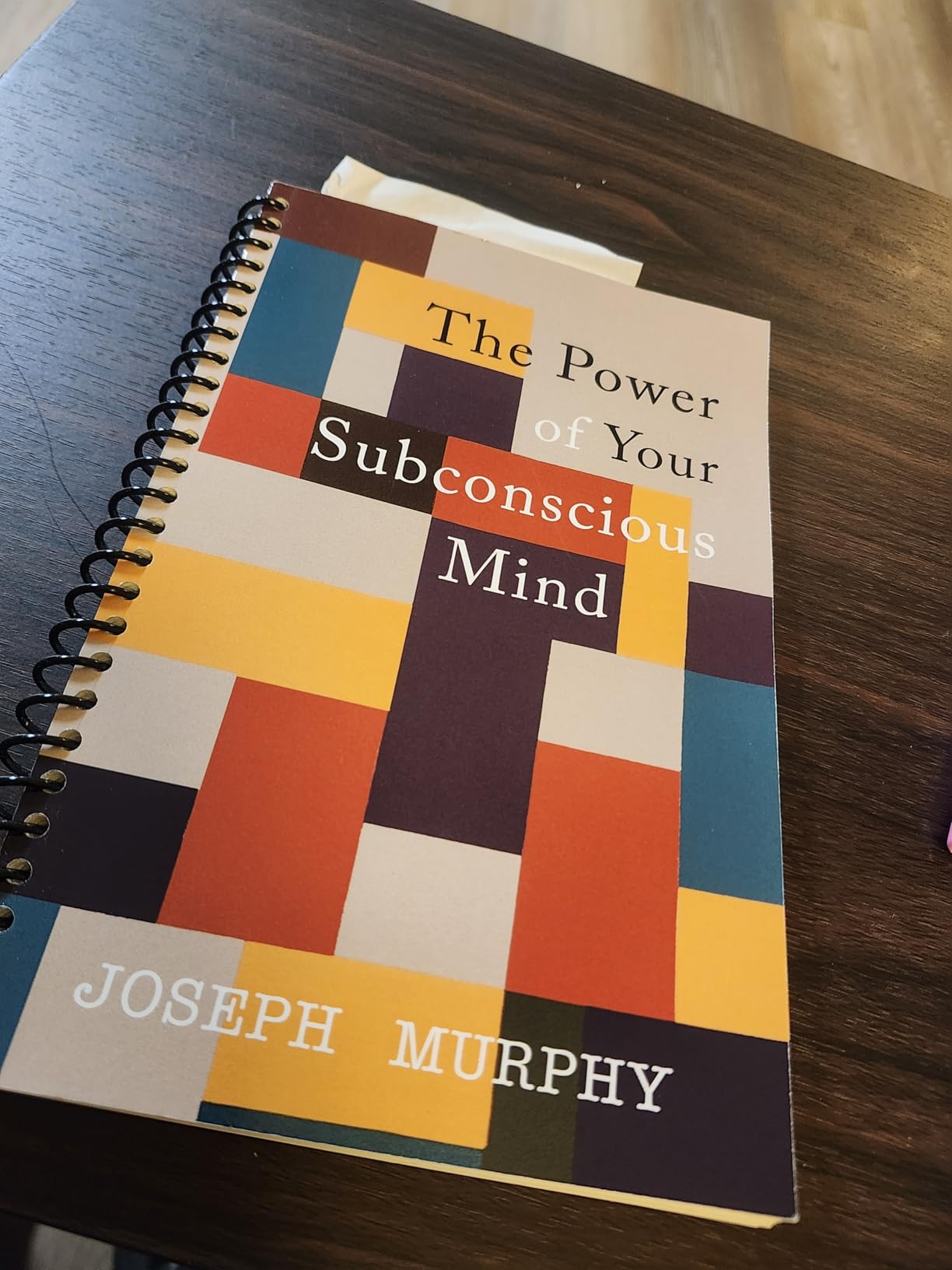
8. The Power of Your Subconscious Mind – Practical Manifestation

The Power of Your Subconscious Mind
- Classic self-help with timeless principles
- Practical techniques for subconscious harnessing
- 78% five-star reviews
- Affordable pricing
- Multiple format options
- Some editions have formatting issues
- Original copyright expired-many editions available
- Language may feel dated to some readers
Joseph Murphy’s The Power of Your Subconscious Mind has sold millions of copies since its original publication. This 2025 independent edition makes the classic available in modern formats including a convenient spiral-bound version.
Murphy, a minister and counselor, focused on practical techniques for directing the subconscious mind toward health, happiness, and success. His approach combines spiritual principles with psychological insights in accessible language.
The book’s central thesis is that your subconscious mind operates according to the thoughts and images you feed it. Murphy provides specific techniques for impressing positive patterns upon the subconscious through repetition and belief.
With over 65,000 reviews, this book has clearly resonated with readers worldwide. The high rating reflects genuine transformation reported by practitioners who applied Murphy’s methods consistently.

Who Should Read This Book
This book serves readers wanting practical techniques for influencing their subconscious mind. The spiritual but non-denominational approach appeals to those comfortable with concepts of universal mind or divine intelligence.
Who Might Want to Skip It
Readers seeking scientific or clinical approaches to the subconscious will find Murphy’s spiritual framework unsatisfying. The book assumes readers accept metaphysical premises about mind and consciousness.
9. Dreamer’s Journal: An Illustrated Guide to the Subconscious – Beautiful Bedside Companion

- Beautifully illustrated with stunning artwork
- Includes helpful dream dictionary
- Small and portable for bedside use
- 4.8 star rating from 766 reviews
- Dream dictionary is not comprehensive
- Only one page per dream may be limiting
Caitlin Keegan created something rare: a dream journal that is both functional and beautiful. This 160-page illustrated guide sits on my nightstand, inviting me to record dreams with its artistic presentation.
The format dedicates one page to each dream, with prompts for recording date, mood, key symbols, and interpretation. The compact size makes it genuinely portable, unlike bulkier journals that stay home.
The included symbol dictionary, while not comprehensive, covers common dream themes with thoughtful interpretations. I appreciate that Keegan includes both traditional meanings and prompts for personal association.
The artwork throughout elevates the journaling experience. Recording dreams feels less like a chore and more like an artistic practice, which encourages consistency.
Who Should Read This Book
Dreamer’s Journal suits anyone who has struggled to maintain consistent dream journaling. The beautiful design encourages use, and the compact format removes barriers to keeping it accessible.
Who Might Want to Skip It
If you need extensive symbol reference material or multiple pages per dream, this journal’s constraints may frustrate you. It serves as a starter journal rather than a comprehensive system.
10. Exploring the World of Lucid Dreaming – Scientific Approach

Exploring the World of Lucid Dreaming
- Comprehensive guide with practical techniques
- Includes LaBerge's proven MILD method
- Scientific approach backed by research
- Clear instructions for beginners
- Scientific approach may feel reductionist to some
- Requires consistent practice and patience
Stephen LaBerge’s Exploring the World of Lucid Dreaming remains the definitive scientific guide to lucid dreaming. Based on his Stanford University research, this 352-page manual provides proven techniques for achieving consciousness within dreams.
LaBerge’s MILD technique (Mnemonic Induction of Lucid Dreams) has been validated through laboratory research and taught to thousands of students. The book presents this and other methods with clear step-by-step instructions.
Beyond induction techniques, LaBerge explores applications including problem solving, creative inspiration, and psychological healing. The research-backed approach distinguishes this book from more speculative lucid dreaming guides.
I found the reality testing methods particularly practical. These daytime exercises build habits that carry into dreams, increasing the likelihood of recognizing when you are dreaming.
Who Should Read This Book
This book serves readers who want scientifically validated lucid dreaming techniques. If you prefer evidence-based approaches over mystical explanations, LaBerge delivers rigorously tested methods.
Who Might Want to Skip It
Readers interested in dream yoga or spiritual approaches to lucid dreaming may find the strictly psychological framework limiting. LaBerge focuses on technique and application, not spiritual development.
11. 12,000 Dreams Interpreted – Comprehensive Symbol Dictionary
- Comprehensive with 12
- 000 entries
- Updated edition for modern readers
- 544 pages of detailed interpretations
- Traditional symbolism reference
- Based on traditional symbolism which some question
- Some modern symbols may not be covered
This updated edition of Gustavus Hindman Miller’s classic dream dictionary brings traditional symbol interpretation into the modern era. With 12,000 entries across 544 pages, it offers comprehensive reference material for dream enthusiasts.
The alphabetical organization makes looking up symbols quick and easy. I keep this book handy for checking interpretations of unusual dream elements that do not appear in smaller dictionaries.
Linda Shields’ revisions update some interpretations while preserving Miller’s core insights about symbolic meanings. The result respects traditional wisdom while acknowledging contemporary contexts.
While some modern psychologists question universal symbol dictionaries, many readers find the traditional meanings resonate with their experience. The extensive coverage ensures most dream symbols receive attention.
Who Should Read This Book
12,000 Dreams Interpreted serves readers who want comprehensive symbol reference material. It works well as a companion to method books like Inner Work, providing specific meanings to inform your personal interpretation.
Who Might Want to Skip It
Readers who believe dream symbols are entirely personal, with no universal meanings, will find this approach objectionable. The book assumes some symbols carry consistent significance across dreamers.
12. The Dream Dictionary – Mystic Encyclopedia Format
The Dream Dictionary (Mystic Encyclopedias)
- Comprehensive dictionary format
- 592 pages of detailed interpretations
- Recent 2023 publication with updates
- Mystic approach covers spiritual dimensions
- Dictionary format may feel less personal
- Mystic approach may not suit scientific readers
Theresa Cheung’s The Dream Dictionary offers a contemporary encyclopedia approach to dream symbols. Published in 2023, this 592-page volume brings fresh perspectives to traditional symbol interpretation.
The mystic encyclopedia format organizes entries thematically as well as alphabetically, allowing readers to explore connected symbols and broader symbolic categories. This structure encourages deeper engagement than simple lookup.
Cheung includes both psychological and spiritual interpretations, acknowledging that dreams may serve multiple functions. The balanced approach respects different perspectives on dream meaning.
The recent publication date means this dictionary includes contemporary symbols that older references miss. Technology, modern social situations, and current concerns receive appropriate coverage.
Who Should Read This Book
The Dream Dictionary suits readers wanting current, comprehensive symbol reference with mystical and psychological dimensions. The encyclopedia format rewards browsing as well as targeted lookup.
Who Might Want to Skip It
Readers who prefer strictly clinical or scientific approaches may find the mystic elements distracting. The book assumes openness to spiritual interpretations alongside psychological ones.
13. The Dream Interpretation Handbook – Compact Beginner Guide

- Compact and concise at 134 pages
- Combines guide and dictionary functions
- Good introduction for beginners
- Affordable entry point
- Shorter than other dream books
- Less comprehensive than dedicated dictionaries
Karen Frazier’s The Dream Interpretation Handbook offers an efficient entry point for dream work newcomers. At just 134 pages, it delivers core concepts without overwhelming readers with excessive detail.
The book combines instructional material with symbol reference, allowing readers to learn methods while having interpretations available. This integration works well for beginners who want to start practicing immediately.
Frazier covers common dream themes including falling, flying, and being chased, providing starting interpretations while encouraging personal exploration. The balance between guidance and openness respects the personal nature of dreams.
The compact size makes this book approachable for readers intimidated by thicker volumes. You can read it in an afternoon and begin working with dreams that same evening.
Who Should Read This Book
This handbook serves absolute beginners who want a quick, affordable introduction to dream interpretation. It works well as a gift for someone expressing interest in dreams without prior knowledge.
Who Might Want to Skip It
Readers with some dream work experience will likely find this book too basic. The brevity that makes it accessible to beginners limits depth for more serious students.
14. The Lucid Dreaming Workbook – Practical Exercises
- Clear guidelines for lucid dreaming
- Combines scientific and Eastern methods
- Includes practical sleep information
- Workbook format encourages active practice
- Requires consistent daily practice
- Some concepts may be complex initially
Andrew Holecek’s companion to Dream Yoga, The Lucid Dreaming Workbook, provides structured exercises for developing dream awareness. This 200-page workbook format encourages active participation rather than passive reading.
The book covers daytime and nighttime practices, recognizing that lucid dreaming preparation happens around the clock. Holecek integrates meditation techniques with psychological methods for comprehensive training.
Each chapter includes specific exercises with space for recording progress. This structure helps readers track their development and identify which techniques work best for their particular situation.
The integration of Eastern contemplative practices with Western sleep science offers a holistic approach missing from technique-only manuals. Holecek respects both dimensions without forcing unnatural combinations.
Who Should Read This Book
This workbook serves serious students ready to commit consistent practice to lucid dreaming development. The structured format suits disciplined learners who benefit from clear assignments.
Who Might Want to Skip It
Casual readers curious about lucid dreaming but unwilling to do daily practice will find this book demanding. The exercises require commitment that not all readers are prepared to give.
15. Psychology of the Unconscious – Advanced Jungian Study
Psychology of the Unconscious
- Jung demonstrates immense erudition
- Provides vocabulary for engaging art and literature
- Dover edition impeccable with helpful index
- Essential for serious Jungian study
- Dense and challenging read
- Assumes familiarity with mythology
- Complex associations difficult to follow
Psychology of the Unconscious represents Jung’s groundbreaking early work that established his independence from Freud. This 624-page Dover edition makes the seminal text available with helpful scholarly apparatus.
The book presents Jung’s analysis of mythological and literary materials to demonstrate unconscious patterns in human psychology. The case studies require patience but reward careful study with profound insights.
I found the Dover edition particularly valuable for its index and chapter summaries, which help navigate Jung’s complex associative method. The publisher’s attention to scholarly detail supports serious study.
This work introduces concepts that Jung later developed more fully, including the seeds of his theories about archetypes and the collective unconscious. Reading it provides historical context for understanding Jung’s mature work.
Who Should Read This Book
Psychology of the Unconscious suits advanced students of Jungian psychology who have read his more accessible works and want to encounter his early thinking. It belongs in the library of anyone pursuing depth psychology seriously.
Who Might Want to Skip It
Beginners to Jung should start with Man and His Symbols or Inner Work before attempting this dense early text. The difficulty level assumes substantial prior knowledge of psychological concepts and mythology.
How to Choose the Right Dream Book for You
With fifteen excellent options, selecting the right book depends on your goals, experience level, and preferred approach. Here is how to navigate the choices.
Understanding the Three Main Approaches
Freudian Psychoanalysis emphasizes dreams as expressions of repressed wishes and unconscious desires. The Interpretation of Dreams provides the foundational text, though modern readers often find Freud’s sexual emphasis excessive. Choose this approach if you want historical understanding of psychoanalytic dream work.
Jungian Depth Psychology views dreams as messages from the unconscious that compensate for one-sided conscious attitudes. Books like Dream Wise, Inner Work, and Man and His Symbols offer practical methods for engaging dream symbols and archetypes. This approach suits readers interested in personal growth and symbolic exploration.
Contemporary Practical Methods include lucid dreaming techniques, dream dictionaries, and guided workbooks. These resources focus on immediate application rather than theoretical depth. Choose these if you want to start working with dreams quickly without extensive study.
Beginner, Intermediate, or Advanced?
Beginners should start with Inner Work for Jungian methods, The Dream Interpretation Handbook for general introduction, or Dreamer’s Journal for recording practice. These books require no prior knowledge and provide clear starting points.
Intermediate students ready for more depth will benefit from Dream Wise, Man and His Symbols, or Exploring the World of Lucid Dreaming. These books assume basic familiarity with dream concepts and offer expanded frameworks.
Advanced readers pursuing serious study need The Interpretation of Dreams (definitive edition), Psychology of the Unconscious, or Dream Yoga. These demanding texts reward dedicated effort with comprehensive understanding.
Dictionary vs. Method Book
Symbol dictionaries like 12,000 Dreams Interpreted and The Dream Dictionary provide reference material for looking up specific dream elements. They work best as supplements to method books rather than standalone resources.
Method books like Inner Work and Dream Wise teach you how to interpret dreams independently. They develop your capacity for understanding symbols personally rather than depending on external definitions.
Frequently Asked Questions
What is the most famous book about dreams?
Sigmund Freud’s The Interpretation of Dreams (1900) is the most famous book about dreams. It introduced groundbreaking theories about the unconscious mind and established dream analysis as a tool for understanding psychological processes. The book remains essential reading for anyone studying psychology or interested in the history of dream interpretation.
What are the best books about the subconscious mind?
The best books about the subconscious mind include The Interpretation of Dreams by Freud for foundational theory, Inner Work by Robert Johnson for practical Jungian methods, The Power of Your Subconscious Mind by Joseph Murphy for applied techniques, and Think and Grow Rich by Napoleon Hill for success-oriented subconscious programming. Dream Wise offers a modern comprehensive guide combining contemporary insights with depth psychology.
Are dreams connected to the subconscious?
Yes, dreams are directly connected to the subconscious mind. According to Freud, dreams are the royal road to the unconscious, revealing hidden desires, fears, and psychological patterns that exist below conscious awareness. Jung expanded this understanding by showing how dreams compensate for conscious attitudes and provide guidance toward psychological wholeness. Modern psychology continues to explore this connection through various dream analysis methods.
What mental illness is linked to vivid dreams?
Vivid dreams and nightmares are commonly associated with depression, anxiety disorders, and post-traumatic stress disorder (PTSD). These conditions can affect REM sleep patterns and dream content intensity. Some medications used to treat mental health conditions may also increase dream vividness. If disturbing dreams significantly impact sleep quality or daily functioning, consulting a mental health professional is recommended.
Final Thoughts
The best books about dreams and the subconscious offer doorways into understanding the remarkable world that emerges when we sleep. Whether you choose Freud’s foundational psychoanalysis, Jung’s symbolic depth psychology, or contemporary practical guides, each approach provides valuable perspectives on the unconscious mind.
I recommend starting with one book that matches your current level and interests. Dream Wise offers the most comprehensive modern approach, while Inner Work provides the clearest beginner method. For historical understanding, Freud remains essential despite his dated theories.
Remember that dream work is a practice, not just a subject to study. The books that will serve you best are the ones you actually use. Choose a book that inspires you to begin recording your dreams and exploring their meanings. The journey into your subconscious mind awaits.