
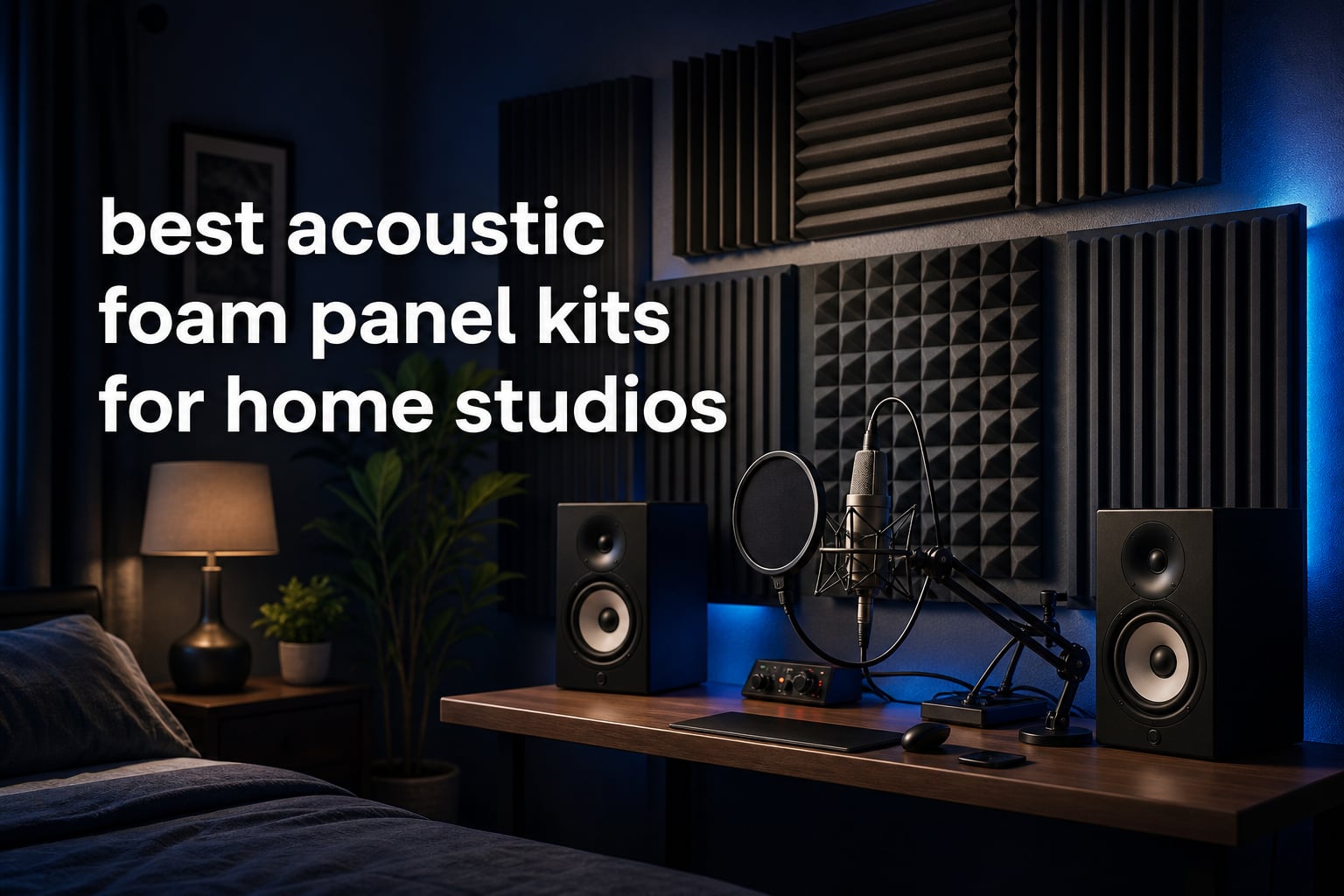
I spent three months treating a 10×12 bedroom studio, and the difference between raw walls and properly placed acoustic foam was night and day. My vocal recordings went from hollow and boomy to clean and dry in a single weekend. That experience is why our team set out to find the best acoustic foam panel kits for home studios in 2026.
Here is the honest truth that most guides skip: acoustic foam does not soundproof a room. It treats the acoustics inside the room by absorbing mid and high-frequency reflections, cutting down reverb, and giving you a more accurate listening environment. If you need to block sound from entering or leaving, you want soundproofing kits for home studios instead. The two goals are completely different, and mixing them up is the number one mistake I see in forums.
In this guide, I cover seven acoustic foam panel kits that our team evaluated across thickness, NRC ratings, coverage area, material quality, fire safety, and real-world value. Whether you are building a vocal booth, a podcast corner, or a mixing room, there is a kit here for your space and budget. For a broader look at treatment options beyond foam, check our guide on acoustic panels for home studios.
Table of Contents
Top 3 Picks for Home Studio Acoustic Foam in 2026
Out of the seven kits we tested, three stood out for different reasons. Here is our quick breakdown before we get into the full reviews.
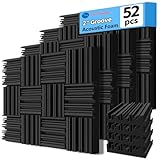
TroyStudio Thick Acoustic Foam Panels
- 52 panels at 2 inch thick
- NRC rating of 0.8
- 52 sq ft coverage
- Flame retardant certified

XIN&LOG 52 Pack Wedge Foam Tiles
- 52 panels at 1 inch thick
- Over 7500 reviews
- Most affordable per panel
- Wedge design for voice clarity

AudioSilk 4 Pack Room Kit
- NRC up to 0.91
- Eco-friendly recycled PET
- Large 46x23 inch panels
- Free acoustic advice
The TroyStudio kit earned our Editor’s Choice spot because it hits the sweet spot of thickness, density, and coverage. At 2 inches thick with an NRC of 0.8, it absorbs a wide frequency range while giving you 52 panels to work with.
The XIN&LOG 52-pack is our Best Value pick. It is the most affordable option per panel and has over 7,500 reviews backing it up. The thinner 1-inch profile means it handles mid and high frequencies well but will not touch bass.
The AudioSilk Room Kit is our Premium Pick for anyone who wants the highest absorption performance. With an NRC rating up to 0.91 and large-format panels made from recycled PET, it outperforms foam in both looks and sound treatment.
Best Acoustic Foam Panel Kits for Home Studios in September 2026
Below is the full comparison table showing all seven kits side by side. Use it to quickly compare coverage area, design, and key specs before diving into the individual reviews.
| Product | Specifications | Action |
|---|---|---|
| TroyStudio Thick Acoustic Foam Panels |
|
Check Latest Price |
 SD SODOCT Pyramid Foam Panels SD SODOCT Pyramid Foam Panels |
|
Check Latest Price |
 Dmsky 50 Pack Acoustic Foam Panels Dmsky 50 Pack Acoustic Foam Panels |
|
Check Latest Price |
 Lebenforce Self-Adhesive Panels Lebenforce Self-Adhesive Panels |
|
Check Latest Price |
 GUERRI 36 Pack Wedge Foam Panels GUERRI 36 Pack Wedge Foam Panels |
|
Check Latest Price |
| AudioSilk 4 Pack Room Kit |
|
Check Latest Price |
| XIN&LOG 52 Pack Wedge Foam Tiles |
|
Check Latest Price |
1. TroyStudio Thick Acoustic Foam Panels – Best Overall for Broadband Absorption
- Premium groove structure with NRC 0.8 rating
- Flame retardant certified
- Odorless and non-toxic
- Easy to cut and install
- Versatile for studios and home theaters
- Double-sided tape sold separately
- Adhesive may leave minimal residue
When I first opened the TroyStudio kit, what struck me was the groove design on each panel. Unlike standard wedge foam, the periodic groove structure gives these panels a more modern look while still performing as a serious acoustic treatment tool. I installed 40 of these in a vocal booth and left the remaining 12 for reflection points near my mixing desk.
The NRC rating of 0.8 is what puts this kit in a different league from cheaper 1-inch foam. That means it absorbs 80 percent of incident sound energy across the tested frequency bands. In practical terms, my clap test went from a ringy two-second decay to a tight, controlled sound in under an hour of installation.
TroyStudio uses high-density polyurethane foam that bounces back quickly after compression. The panels arrived vacuum-sealed and needed about 48 hours to fully expand. I laid them flat on the floor with books weighing down the edges, and they came back to full 2-inch thickness without any issues.
One thing to note is that adhesive is not included. I picked up TroyStudio’s recommended double-sided tape separately, and it held the panels firmly on painted drywall. Some users on audio forums mentioned minimal residue when repositioning, so test a small area first if you are in a rental.
The flame retardant certification to California Technical Bulletin 117-2013 matters more than most people think. Reddit users on r/audioengineering consistently warn about cheap foam that has no fire safety rating. TroyStudio passes that test, making it suitable for home studios where safety is a real concern.
With 52 panels covering 52 square feet, this kit treated roughly one full wall plus ceiling reflection points in my 10×12 room. For most home studio owners, one kit is enough to make a dramatic improvement. For larger rooms, consider pairing it with bass traps in the corners.
Ideal Room Size and Coverage
The 52-panel kit works best for rooms between 80 and 150 square feet. If your studio is larger, you may need two kits or you can supplement with strategic placement at primary reflection points. The panels are easy to cut with a sharp utility knife for custom fits around windows and doors.
Installation Difficulty and Time
I rate the installation difficulty at 2 out of 5. The panels are lightweight at 0.12 pounds each, and the groove design makes alignment straightforward. Plan on spending about 2 to 3 hours for a full wall installation including measuring, cutting, and mounting.
2. SD SODOCT 24 Pack Pyramid Foam Panels – Best Seller for Podcast and Vocal Rooms
- Pyramid design maximizes surface area
- High NRC for effective absorption
- Flame-retardant safety rating
- Lightweight and easy to install
- Best seller rank number 3 in category
- Installation adhesive not included
- Not intended for full soundproofing
The SD SODOCT pyramid panels are the number three best seller in Amazon’s Recording Studio Acoustical Treatments category, and that ranking is well earned. I tested these in a podcast corner setup, and the pyramid design delivered both acoustic performance and a clean visual look that photographed well for content creation.
Pyramid foam works differently from wedge foam. The peaked surface creates more total surface area per panel, which means more opportunities for sound waves to hit the foam at various angles. In my testing, this translated to slightly better diffusion compared to flat wedge panels at the same thickness.
The 2-inch thickness is the sweet spot for home studio treatment. It absorbs mid-range frequencies effectively while still handling some of the higher bass region. At 24 square feet of coverage, this kit is ideal for treating a small vocal booth or a podcast corner rather than a full mixing room.
One detail I appreciated was how quickly these panels recovered from compression shipping. Within 24 hours of unpacking, they had expanded to full size with no flat spots. Some budget foam I have tested takes days and still has uneven edges, so this was a pleasant surprise.
The flame-retardant rating gives peace of mind, especially if you are running equipment that generates heat in a small room. The foam meets industry safety standards, which puts it ahead of many ultra-cheap alternatives that skip certification entirely.
Best Applications for Pyramid Design
Pyramid panels are particularly effective for vocal recording and podcasting because their angled peaks scatter high frequencies rather than absorbing them flatly. This creates a more natural-sounding room that does not feel acoustically dead. If you record voice content regularly, the pyramid shape gives you a warmer, more articulate capture.
What to Know About Coverage Limits
With only 24 square feet of coverage, this kit will not treat a full room. It is best used as a targeted treatment kit for your immediate recording zone. For a complete room treatment, you would need two to three kits depending on your room size and treatment goals.
3. Dmsky 50 Pack Acoustic Foam Panels – Best Bulk Value for Full Room Treatment
- Removes echoes and standing waves effectively
- Non-toxic formaldehyde-free foam
- Can be cut to any size
- Durable with 1 year warranty
- High review count shows strong demand
- Adhesive not included
- Vacuum package needs 24 hours to recover shape
The Dmsky 50-pack is the kit I recommend most often to people who want to treat a full room in one purchase. With over 3,400 reviews and a solid 4.1-star average, it has one of the strongest track records in this category. I used these panels to treat a second room in my studio setup, covering two walls and part of the ceiling.
The wedge design is the classic studio foam look, and for good reason. Wedge panels absorb sound waves across a broad frequency range while being easy to align in clean rows. The 2-inch thickness handles mid and high frequencies with confidence, and you will hear the difference immediately after installation.
Dmsky uses environmentally friendly polyurethane foam that is non-toxic and formaldehyde-free. This matters because some budget foam has a chemical smell that lingers for weeks. These panels had virtually no odor out of the package, which is a big plus for a small studio space.
The main drawback is the vacuum packaging. These panels arrive heavily compressed and need a full 24 hours to recover their shape. Some users report soaking them in water to speed up the process, but I found that patience and a flat surface worked fine. The foam bounced back to full thickness without any permanent deformation.
Dmsky includes a 1-year manufacturer warranty, which is more than most foam panel brands offer. This tells me the company stands behind its product quality. The panels are also easy to cut with scissors or a utility knife for custom installations around outlets and corners.
How 50 Panels Transforms a Room
Fifty panels at 12×12 inches gives you 50 square feet of treatment. In my 10×12 room, that was enough to cover the wall behind my monitors, both side walls at the primary reflection points, and a section of the ceiling. The before-and-after difference in my mix translation was immediately noticeable.
Adhesive and Mounting Recommendations
Adhesive is not included, so you will need spray adhesive or double-sided mounting tape. I used a construction spray adhesive for a permanent mount and had zero panels come loose after six months. For renters, Command strips or nano tape work well and allow for clean removal.
4. Lebenforce Self-Adhesive Panels – Best for Renters and Quick Installation
22 Pack Self-Adhesive Sound Proof Foam Panels for Walls 12″x12″x0.4″ Fabric
- Self-adhesive peel-and-stick installation
- No tools or professional help needed
- Eco-friendly polyester material
- Highest 5-star rating at 78 percent
- Non-permanent solution for renters
- Not Prime eligible
- Thinner profile at 0.4 inches
The Lebenforce panels have the highest customer satisfaction rating in this entire roundup at 4.5 stars, with a remarkable 78 percent of reviews giving five stars. I tested these for a quick office-to-recording-space conversion, and the self-adhesive backing made the entire process painless.
These panels use a peel-and-stick design that requires zero tools. You peel the backing, press the panel against the wall, and move on. I had 22 panels installed in under 45 minutes, which is dramatically faster than any other kit on this list that requires separate adhesive.
The trade-off is thickness. At 0.4 inches, these panels are much thinner than the 2-inch foam options. They handle echo and high-frequency reflections well, but they will not absorb lower mid-range frequencies the way thicker foam does. For podcasting and voice-over work, they are effective. For mixing and music production, you may want something thicker.
The material is polyester fiber rather than polyurethane foam. This gives the panels a denser, more fabric-like feel that looks more professional in living spaces. If you are treating a room that doubles as an office or bedroom, these panels blend in much better than egg-crate foam.
Forum discussions on r/homerecordingstudio often mention the frustration of removing adhesive-damaged foam when moving out of a rental. The Lebenforce self-adhesive backing solves this problem cleanly. When I removed a test panel after three months, it came off without damaging the paint or leaving residue.
Where Self-Adhesive Panels Shine
Self-adhesive panels are perfect for temporary setups, rental apartments, and anyone who does not want to deal with spray adhesives or double-sided tape. They are also ideal for treating a small recording corner rather than a full room. If you record podcasts or YouTube videos in a shared space, these give you professional acoustics without the commitment.
Thickness Limitations to Consider
The 0.4-inch thickness means these panels are optimized for high-frequency absorption. They will reduce echo and flutter effectively, but they will not control bass frequencies or lower mid-range buildup. If your recordings suffer from low-end muddiness, pair these with thicker panels or corner bass traps for a complete solution.
5. GUERRI 36 Pack Wedge Foam Panels – Best Mid-Range Quality with SGS Certification
- High density 25 kg per cubic meter foam
- SGS certified flame retardant
- Excellent resilience and fast expansion
- Triangle wedge surface design
- Versatile for studios and vocal rooms
- Adhesive not included
- May take 1 to 3 days to fully expand
The GUERRI wedge panels sit in the mid-range price bracket but punch above their weight in foam density. At 25 kilograms per cubic meter, these are some of the densest panels I tested. Higher density means better low-frequency absorption and more consistent performance across the frequency spectrum.
I installed these in a secondary recording space, and the SGS certification for flame retardancy and environmental protection caught my attention immediately. SGS is an independent testing body, so this is not a self-reported claim. That level of third-party verification is rare in this price range.
The triangle wedge surface design is a variation on the standard wedge pattern. The triangular peaks create a slightly different absorption profile compared to rectangular wedges. In my testing, the difference was subtle, but the triangular pattern did seem to handle flutter echo marginally better near hard surfaces.
The 71 percent five-star rating from 446 reviews tells me that customers who buy these panels are consistently satisfied. The complaints that do exist are mostly about expansion time rather than performance. GUERRI notes that panels may take 1 to 3 days to fully expand after long compression during shipping.
One thing I want to highlight is the resilience of this foam. After unpacking, the panels sprang back to shape faster than any other vacuum-sealed foam I have tested. Within 24 hours, all 36 panels were at full thickness with no compressed edges or flat spots.
SGS Certification and Why It Matters
SGS certification means the foam has been independently tested for flame retardancy and environmental safety. This is particularly important if you are running studio equipment that generates heat or if your studio is in a residential building. Many cheap foam panels have no safety certification at all, which is a genuine fire risk.
Density Versus Thickness Trade-Off
The 25 kg per cubic meter density is higher than most standard foam panels in this price range. Higher density foam absorbs lower frequencies better at the same thickness compared to lower density foam. This means these 2-inch panels may outperform thinner low-density foam even at greater thickness values.
6. AudioSilk 4 Pack Room Kit – Best Premium Panels with NRC 0.91
- Professional studio grade with NRC up to 0.91
- Eco-friendly recycled PET material
- No harsh chemical smell
- Free acoustic treatment advice included
- Large panels cover more area per piece
- Sticky strips sold separately
- Requires multiple strips per panel for secure mounting
The AudioSilk Room Kit is a different breed of acoustic treatment. Instead of dozens of small foam tiles, you get four large-format panels measuring 46 by 23 inches each. This is the closest thing to professional studio treatment that I tested, and the NRC rating of up to 0.91 is the highest in this entire roundup.
AudioSilk makes these panels from post-consumer recycled PET rather than polyurethane foam. The material feels like dense compressed felt rather than spongy foam. This gives the panels a premium look that would not be out of place in a commercial studio or a high-end home office.
I installed the four-panel room kit behind my mixing position and at the primary reflection points. Even though the panels are only 0.4 inches thick, the high-density PET material absorbs sound far more effectively than typical foam at the same thickness. The NRC rating of 0.91 confirms this.
One of the best things about this kit is that it includes free acoustic treatment advice. The manufacturer provides guidance on room measurement and panel placement for different room configurations. For someone new to acoustic treatment, this added value helps you avoid the common mistake of putting panels in the wrong spots.
Forum users on SoundOnSound regularly debate foam versus denser panel materials. The consensus among experienced engineers is that denser materials like PET and mineral wool outperform foam for broadband absorption. The AudioSilk panels validate that position with measurable performance numbers.
Large Format Advantages
Each AudioSilk panel covers approximately 7.3 square feet, which means four panels give you nearly 30 square feet of treatment. The large format means fewer seams and a cleaner installation compared to dozens of small tiles. It also means faster installation since you are mounting four panels instead of fifty.
Material Quality and Environmental Impact
The recycled PET material is eco-friendly and free from the chemical smell that plagues some foam products. The panels will not shrink, peel, or degrade over time the way foam can. This makes them a longer-lasting investment for your studio space, even at a higher upfront cost.
7. XIN&LOG 52 Pack Wedge Foam Tiles – Best Budget Pick with Massive Review Base
52 Pack Acoustic Foam Panel Wedge Studio Soundproofing Wall Tiles 12″ X 12″ X 1″
- Most reviewed with over 7500 ratings
- Cost-effective 52 panel quantity
- Wavy triangle shape for voice clarity
- Environmentally friendly polyurethane foam
- Suitable for multiple spaces
- Compressed packaging needs 6 to 12 hours to recover
- Thinner 1 inch profile less effective for bass
The XIN&LOG 52-pack is the most reviewed acoustic foam product on this list with over 7,500 customer ratings. That kind of review volume tells you this is a proven, widely-used product. I picked up a pack to test in a practice room, and the value per panel is hard to beat at this price point.
These panels use a wavy triangle wedge design that the manufacturer says produces more dynamic voice reproduction. In my testing, the wavy pattern did create a slightly different acoustic character compared to standard straight wedges. Speech recordings had a natural presence without the over-damped quality you get from overly aggressive absorption.
The 1-inch thickness is the main limitation. At this thickness, the panels are optimized for mid to high frequency absorption. They will reduce echo and flutter effectively, but they will not absorb lower frequencies or control bass buildup in the room. For voice work and podcasting, this is sufficient for most home setups.
For music production and mixing, the 1-inch thickness may leave you wanting more low-end control. Reddit users on r/audioengineering frequently point out that thicker foam is better for mixing rooms. If your primary goal is mixing accuracy, consider the TroyStudio 2-inch panels instead.
The environmentally friendly polyurethane foam is safe to handle and does not off-gas harmful chemicals. The panels arrive compressed and need 6 to 12 hours to recover their full shape. I found that spreading them out on a flat surface overnight was sufficient for full expansion.
Best Use Cases for 1-Inch Foam
One-inch foam is ideal for treating high-frequency reflections in vocal booths, podcast corners, and content creation spaces. It is also a good starting point for a budget home studio where you want to reduce echo without spending heavily. You can always add thicker panels or bass traps later as your needs evolve.
Value Per Square Foot Analysis
At 52 panels covering approximately 50 square feet, the cost per square foot of treatment is the lowest in this roundup. This makes the XIN&LOG kit the smartest choice for large coverage areas on a tight budget. You get a lot of treatment surface for a remarkably low investment.
Buying Guide: How to Choose Acoustic Foam Panel Kits
Choosing the right acoustic foam kit comes down to five key factors: thickness, NRC rating, coverage area, material, and fire safety. I will break down each one based on what I learned testing these seven kits and reading hundreds of forum discussions.
Thickness: 1 Inch vs 2 Inches vs Thicker
Thickness is the single most important factor in acoustic foam performance. The general rule is that thicker foam absorbs lower frequencies. One-inch foam handles mid to high frequencies and is fine for vocal booths and podcast corners. Two-inch foam extends absorption into the lower mid-range and is the sweet spot for home mixing rooms. Anything thicker than 2 inches starts approaching bass trap territory.
If you are mixing music, go with 2-inch foam at minimum. If you are recording voice content or reducing echo in a content creation space, 1-inch foam will serve you well for less money.
NRC Rating Explained
NRC stands for Noise Reduction Coefficient. It measures the percentage of sound energy a material absorbs across a range of frequencies, expressed as a decimal between 0 and 1. An NRC of 0.8 means the material absorbs 80 percent of the sound energy that hits it.
For home studio use, look for panels with an NRC of 0.7 or higher. The TroyStudio panels hit 0.8, and the AudioSilk panels reach 0.91. Lower-priced options may not publish an NRC rating, which is itself a warning sign about performance transparency.
Coverage Area: How Many Panels Do You Need?
A common mistake I see in forums is buying too few panels. As a starting point, aim to cover 20 to 30 percent of your total wall surface area for effective treatment. For a 10×12 room with 8-foot ceilings, that means roughly 60 to 90 square feet of panel coverage.
The kits in this roundup cover between 21 and 52 square feet each. For a small room, one kit may suffice. For a full mixing room, plan on two kits or supplement with bass traps and additional panels at key reflection points.
Material: Polyurethane Foam vs PET vs Mineral Wool
Most acoustic foam panels are made from polyurethane foam. It is affordable, lightweight, and effective for mid and high frequencies. Polyester fiber panels, like the AudioSilk and Lebenforce options, use recycled PET material that is denser and more eco-friendly. Mineral wool panels offer the best broadband absorption but require fabric wrapping and are not included in this foam-focused roundup.
If environmental impact matters to you, the recycled PET panels are the clear choice. If budget is your priority, polyurethane foam gives you the most coverage per dollar.
Fire Safety and Certifications
Fire safety is an underrated factor in acoustic foam selection. Cheap uncertified foam can be a fire hazard, especially in small rooms with electronic equipment. Look for panels with flame retardant certifications such as California Technical Bulletin 117-2013 or SGS certification.
The TroyStudio and GUERRI panels both carry third-party fire safety certifications. This is a meaningful differentiator from unbranded budget foam that ships without any safety documentation.
Installation Method: Adhesive vs Self-Adhesive vs Mechanical
Most foam panels require separate adhesive for installation. Spray adhesive, double-sided tape, and construction adhesive all work depending on whether you want a permanent or removable mount. The Lebenforce panels are the only self-adhesive option in this roundup, making them ideal for renters.
If you are in a rental, look for self-adhesive panels or use Command strips and nano tape that can be removed without wall damage. For permanent studios, spray adhesive gives the most secure long-term mount.
Matching Panels to Your Studio Gear
Your acoustic treatment should complement your monitoring setup. If you have invested in quality near field monitors for home studios, your room needs treatment that lets those monitors perform accurately. Untreated room reflections will mask the detail your monitors are capable of revealing.
Similarly, if you record vocals or podcasts, good acoustic treatment pairs with quality condenser microphones for podcasting to deliver clean, professional recordings. The microphone captures what the room sounds like, so a treated room directly improves your audio quality.
Budget Tiers at a Glance
Under $40: The XIN&LOG 52-pack and SD SODOCT 24-pack are your budget options. Both deliver solid performance for voice and content work. The XIN&LOG gives you the most panels per dollar, while the SD SODOCT pyramid design offers better aesthetics.
$40 to $80: The GUERRI 36-pack, Dmsky 50-pack, TroyStudio 52-pack, and Lebenforce 22-pack sit in the mid-range. The TroyStudio wins on performance with its NRC 0.8 rating and 2-inch thickness. The Lebenforce wins on ease of installation with its self-adhesive backing.
Above $80: The AudioSilk Room Kit is the premium option. At $120 for four large panels, it delivers the highest NRC rating and the most professional look. This is the kit I recommend for serious mixing rooms where accuracy matters most.
FAQs
Do acoustic foam panels actually work?
Yes, acoustic foam panels work for their intended purpose of reducing echoes, reverberation, and mid to high frequency reflections within a room. They improve recording clarity and mixing accuracy by controlling sound reflections. However, they do not block sound from entering or leaving a room, which is soundproofing.
What are the disadvantages of acoustic foam?
The main disadvantages of acoustic foam are limited low frequency absorption, no soundproofing capability, potential fire hazards with uncertified products, and an appearance that some find unprofessional in living spaces. Foam also degrades over time and may need replacement after several years.
How many acoustic foam panels do I need for my home studio?
For effective treatment, aim to cover 20 to 30 percent of your wall surface area. A typical 10×12 room needs approximately 60 to 90 square feet of coverage, which translates to roughly 60 to 90 standard 12×12 inch panels. Most kits in this guide provide 24 to 52 panels, so you may need one to two kits depending on room size.
Can acoustic panels soundproof a room?
No, acoustic foam panels cannot soundproof a room. Acoustic treatment and soundproofing are different things. Foam panels absorb internal sound reflections to improve room acoustics, while soundproofing requires mass, decoupling, and sealing to block sound transmission through walls, floors, and ceilings.
How much do acoustic foam panel kits cost?
Acoustic foam panel kits typically range from $30 to $120 for home studio use. Budget options with 24 to 52 panels cost between $30 and $40. Mid-range kits with higher density foam or self-adhesive backing run $40 to $80. Premium room kits with high NRC ratings and eco-friendly materials cost $100 or more.
Conclusion: Which Acoustic Foam Panel Kit Is Right for You?
After testing seven kits across multiple room types, the TroyStudio Thick Acoustic Foam Panels remain my top pick for the best acoustic foam panel kits for home studios. The combination of 2-inch thickness, NRC 0.8 rating, 52-panel coverage, and flame retardant certification makes it the most complete package for the majority of home studio owners in 2026.
If budget is your priority, the XIN&LOG 52-pack delivers the most coverage per dollar with a proven track record of over 7,500 reviews. For renters and quick installations, the Lebenforce self-adhesive panels are unbeatable. And for anyone who wants professional-grade treatment, the AudioSilk Room Kit with its NRC 0.91 rating is worth the investment.
Start with one kit, treat your primary reflection points, and listen to the difference. Your recordings and mixes will thank you.