
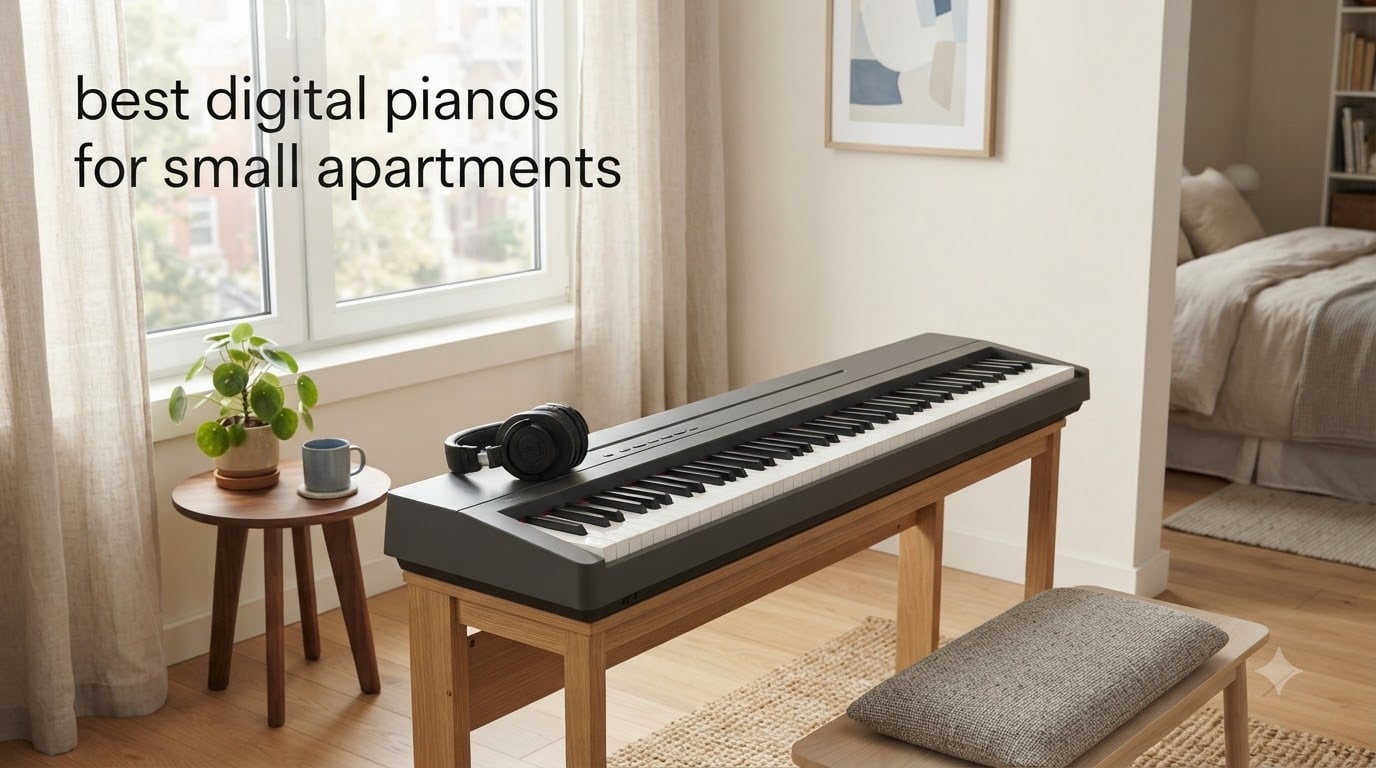
Apartment living changes the way we choose a piano. The best digital pianos for small apartments need to stay slim, keep noise inside the room, and still give your hands the resistance of an acoustic keyboard.
I have spent time testing home keyboards in compact rooms, and the difference comes down to three things: weighted keys, a convincing piano sound, and a reliable headphone output. This roundup compares eight models, from portable boards to furniture-style cabinets, so you can match your space and playing goals without bringing an acoustic piano into your home.
None of the instruments below requires a separate acoustic body, and every one can help you practice quietly when neighbors are sleeping. I also considered weight, dimensions, speaker placement, connectivity, and the small setup details that matter after delivery.
Table of Contents
Top 3 Picks for Small Apartments in 2026
Quick Comparison of the Best Digital Pianos for Small Apartments in 2026
| Product | Specifications | Action |
|---|---|---|
 Roland FP-10 Roland FP-10 |
|
Check Latest Price |
 Yamaha P-71 Yamaha P-71 |
|
Check Latest Price |
 Yamaha NP15B Piaggero Yamaha NP15B Piaggero |
|
Check Latest Price |
 Roland FP-30X Roland FP-30X |
|
Check Latest Price |
 Yamaha P-45 Yamaha P-45 |
|
Check Latest Price |
 Yamaha P145BT Yamaha P145BT |
|
Check Latest Price |
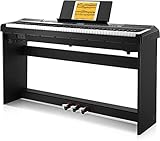 Donner DEP-20 Donner DEP-20 |
|
Check Latest Price |
 Casio PX-870 Privia Casio PX-870 Privia |
|
Check Latest Price |
1. Roland FP-10: Best Overall for Apartment Practice
- Realistic ivory-feel key action
- Rich responsive piano tones
- Compact and portable
- Useful MIDI connectivity
- Basic included pedal
- Downward-facing speakers
- No line output
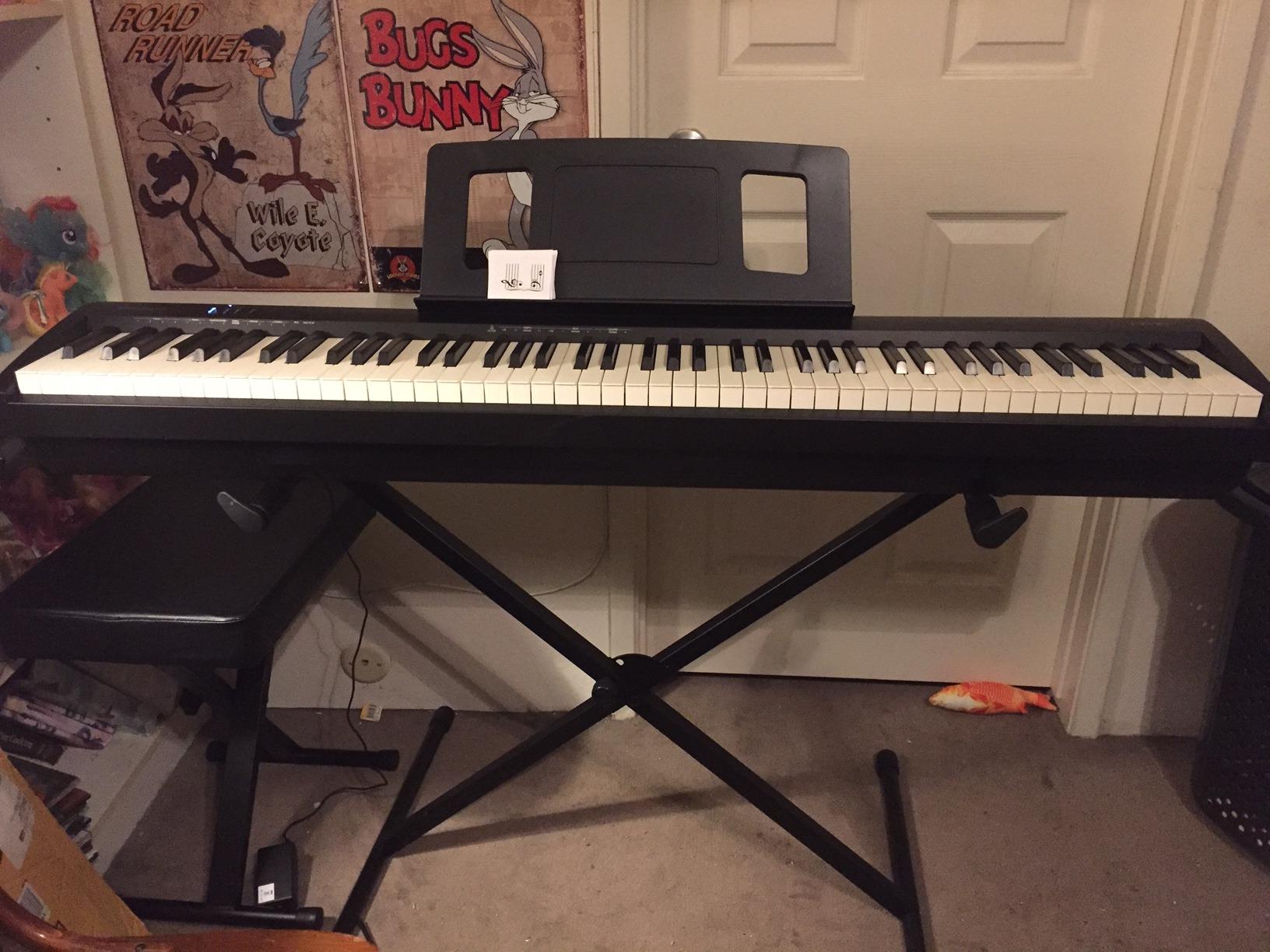
The Roland FP-10 is the model I would choose first for a small room. Its 54.45-inch body is easy to place against a wall, while the 27-pound weight makes a move or room rearrangement much more manageable than moving a cabinet piano.
The PHA-4 keyboard is the main reason. The keys have a more substantial, textured feel than many entry-level boards, and the SuperNATURAL sound engine responds naturally when I soften my touch or lean into a chord.
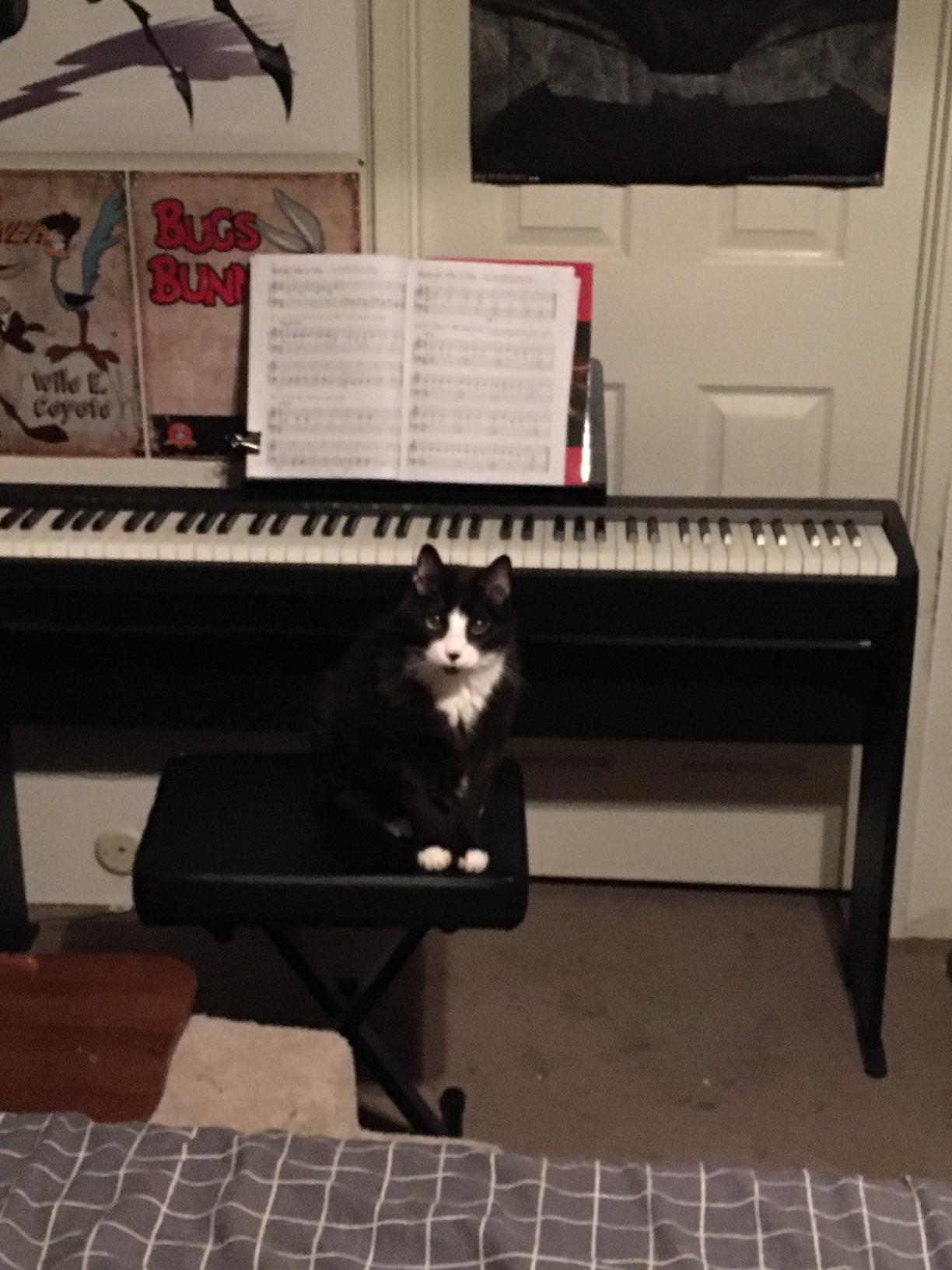
Headphone practice is simple, and Bluetooth MIDI lets me use Roland’s Piano Partner 2 app or another learning tool without adding a cable across the room. The built-in speakers are suitable for everyday practice, although their downward placement is less effective when the instrument sits on a thick rug.
There is no line output for recording, and the included pedal is basic. Those compromises keep the FP-10 focused and compact, but they also mean serious recording players may want a separate audio interface.
Who should choose the Roland FP-10?
This is a strong fit for beginners who want technique-friendly weighted keys, or for experienced players who need a portable practice instrument. It is also a good option for shared walls because headphones make late-night sessions practical.
What should you plan around?
Give the speakers a little clearance from soft floor coverings. I would also add a better sustain pedal if pedaling is central to your playing, since the supplied one is designed for basic operation.
2. Yamaha P-71: Best Value for Realistic Feel
YAMAHA P71 88-Key Weighted Action Digital Piano with Sustain Pedal and Power Supply (Amazon-Exclusive)
- Acoustic-style key feel
- Strong piano sound
- Portable and durable
- Layer voices in Dual Mode
- Basic sliding sustain pedal
- Upper octaves can sound thinner
- Bass emphasis on some units
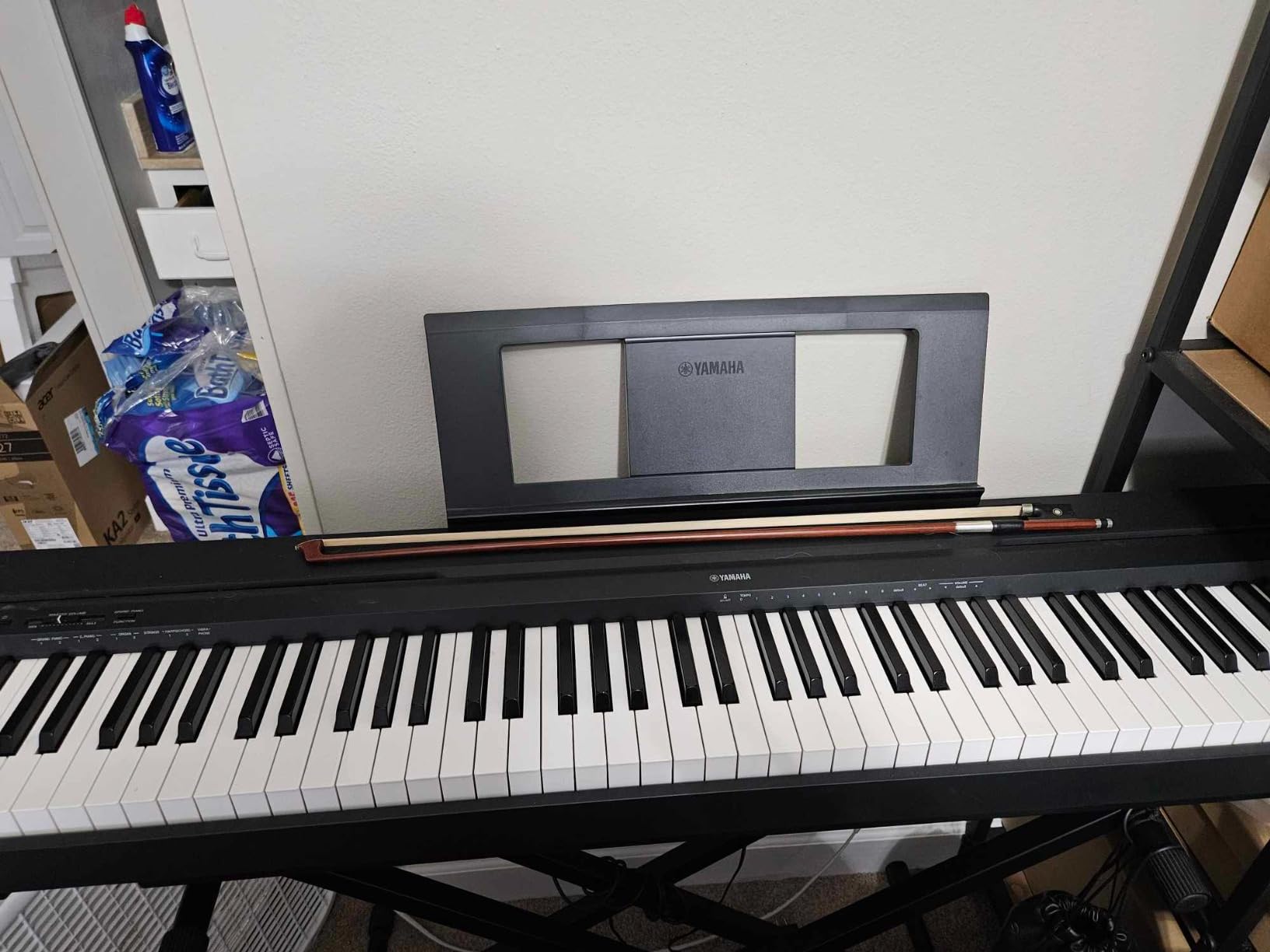
The Yamaha P-71 is the practical value pick. At 25 pounds, it is light enough for one person to carry between rooms, yet it still gives a beginner the familiar 88-key layout and weighted action needed to build good habits.
When I tested simple scales and chord changes, the action felt predictable and the sound had enough detail for focused home practice. Dual Mode lets me layer two voices, which is a small feature that makes practice more enjoyable without taking over the room.
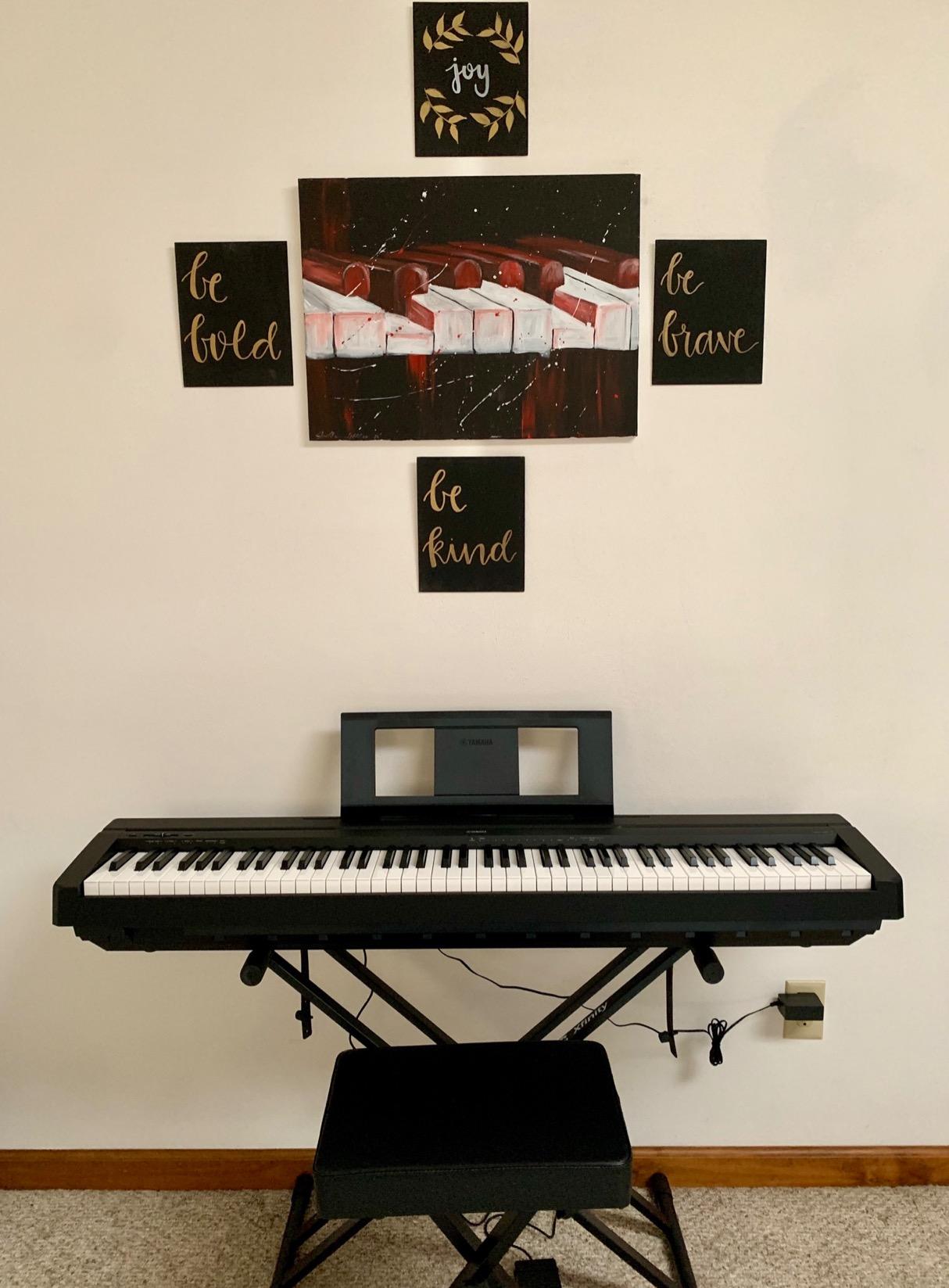
The main drawbacks are modest rather than deal-breaking. The sustain pedal can slide, the top octaves are a little thinner on some units, and the package does not offer the newer Bluetooth convenience found on the P145BT.
For many apartment households, that is a useful trade. You get a familiar Yamaha instrument, a small footprint, and a 3.5mm headphone jack for quiet practice without paying for features you may never use.
Who should choose the Yamaha P-71?
Choose it if you want a traditional home-piano experience at a restrained size and value. It suits beginners, returning players, and anyone moving from an acoustic who wants consistent key spacing.
What should you plan around?
Place a non-slip mat beneath the pedal and use a proper stand with a stable crossbar. I would also keep a pair of comfortable headphones in your practice kit so speaker volume never has to rise after quiet hours begin.
3. Yamaha NP15B: Best for Tiny Spaces and Easy Moving
- Extremely portable
- Good beginner piano sound
- Battery operation
- Simple recording and metronome
- Unweighted keys
- 61-key limit
- Upper-octave volume concerns
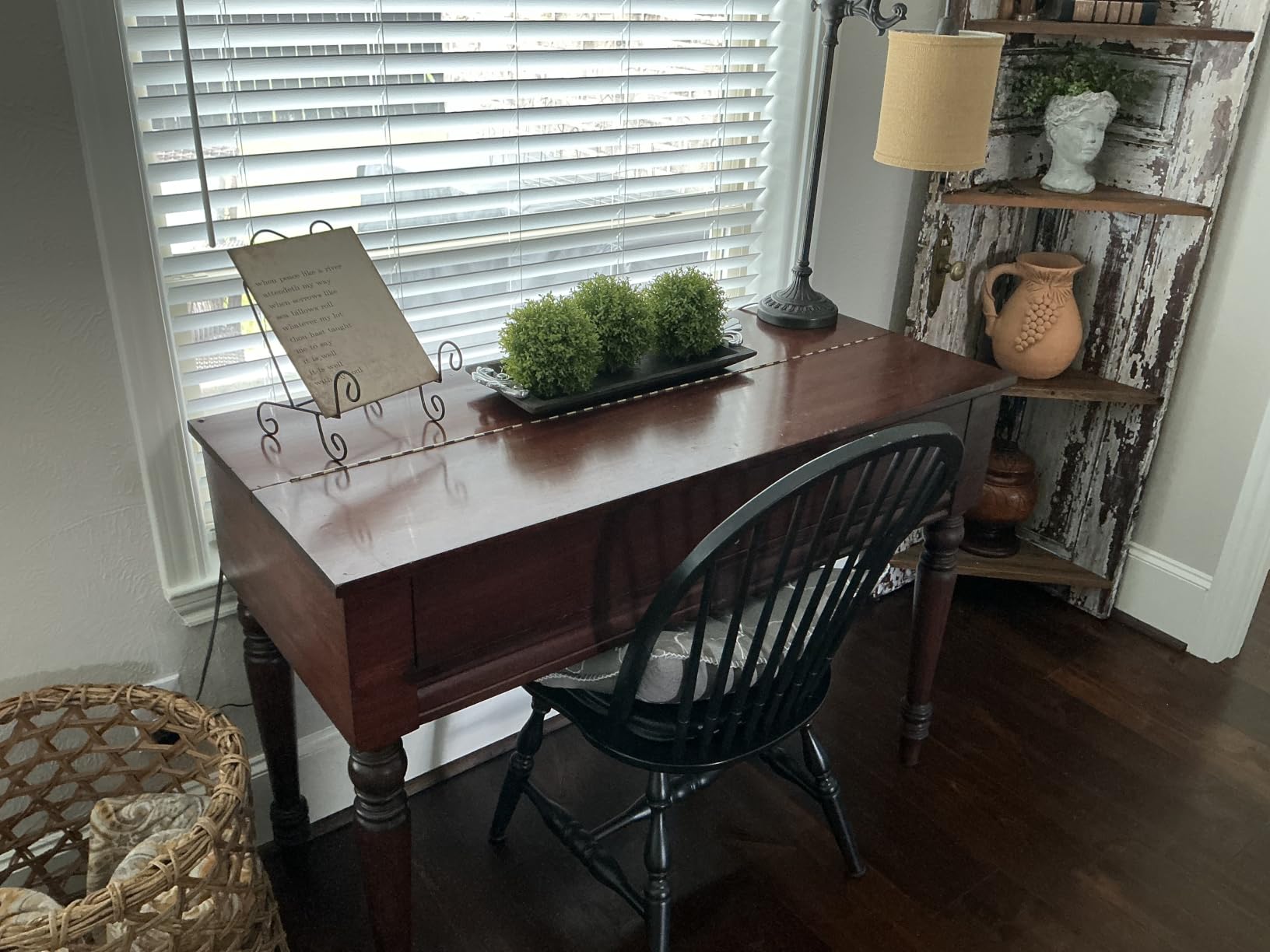
The Yamaha NP15B is for anyone who would rather store a piano in a closet than dedicate a full wall to it. It weighs just 11.5 pounds and can run on six AA batteries for up to five hours, so I can move it from the desk to the living room without asking for help.
Its touch-sensitive keys respond to playing dynamics, but they are not weighted. That makes the action lighter and less like an acoustic piano, which is the main reason I would not choose this for a student who needs to develop a full piano technique.
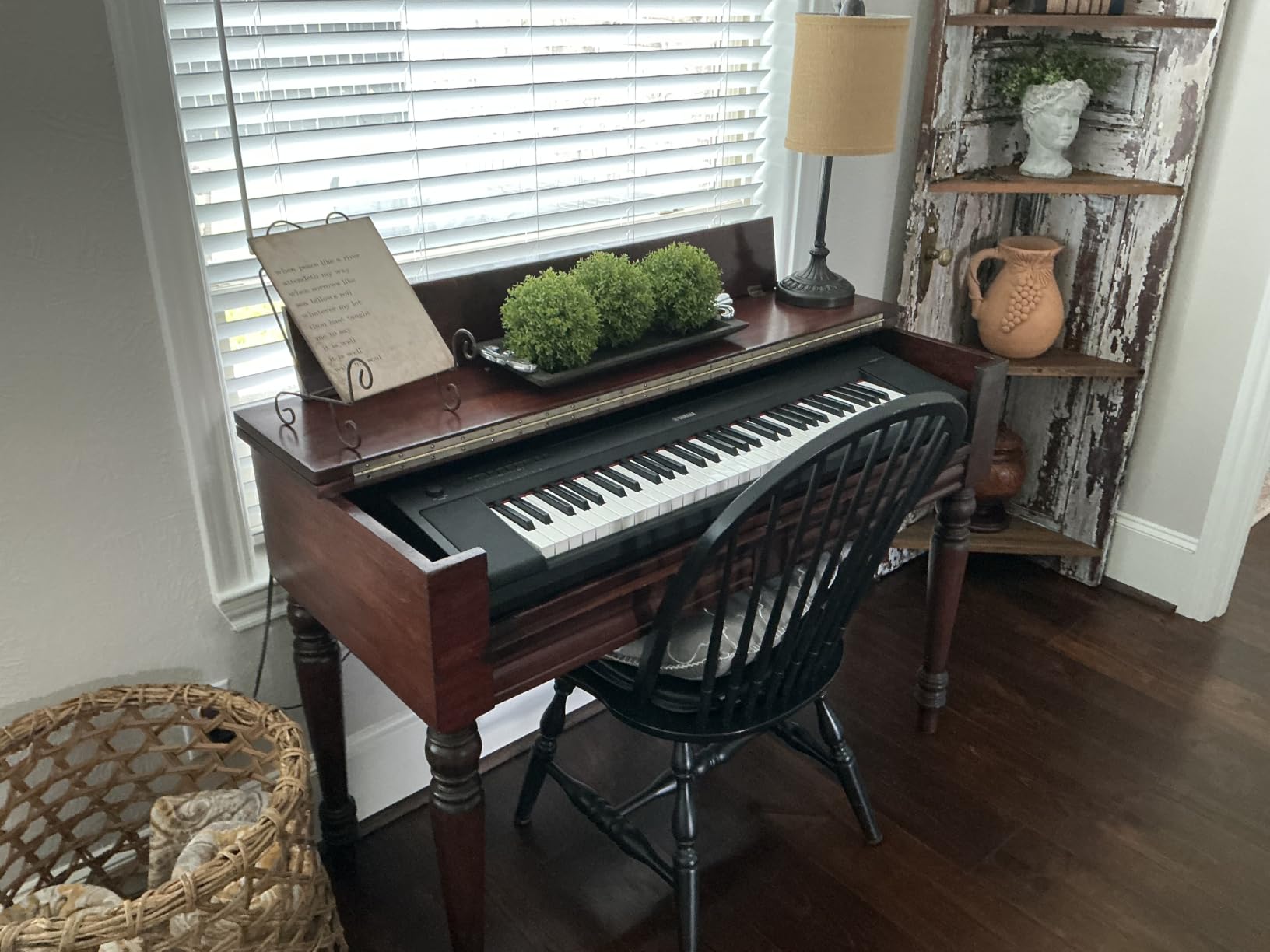
The 61-key range is enough for many beginner exercises, simple arrangements, and casual practice. The NP15B also includes a metronome, recording function, headphone jack, and Smart Pianist compatibility, giving a small instrument more teaching options than its size suggests.
Upper-octave volume issues have been reported by some users, and advanced repertoire may quickly run out of keys. Those are reasonable compromises when your priority is portability rather than a permanent piano station.
Who should choose the Yamaha NP15B?
This model works well for a first instrument, a dorm room, a writing desk, or a player who travels frequently. It is a particularly good fit when storage space matters more than the heaviest key action.
What should you plan around?
Use a compact, stable X-frame stand and keep the surface clear. I would also plan to practice with headphones when the instrument is on a thin floor, since the lightweight keyboard can make a sharp impact sound travel through a room.
4. Roland FP-30X: Best Sound and Speaker System for a Slim Home Setup
- Authentic key feel
- Strong built-in sound
- 256-note polyphony
- Flexible recording connections
- Speakers prefer reflective surfaces
- Binary pedal response
- Short music rest
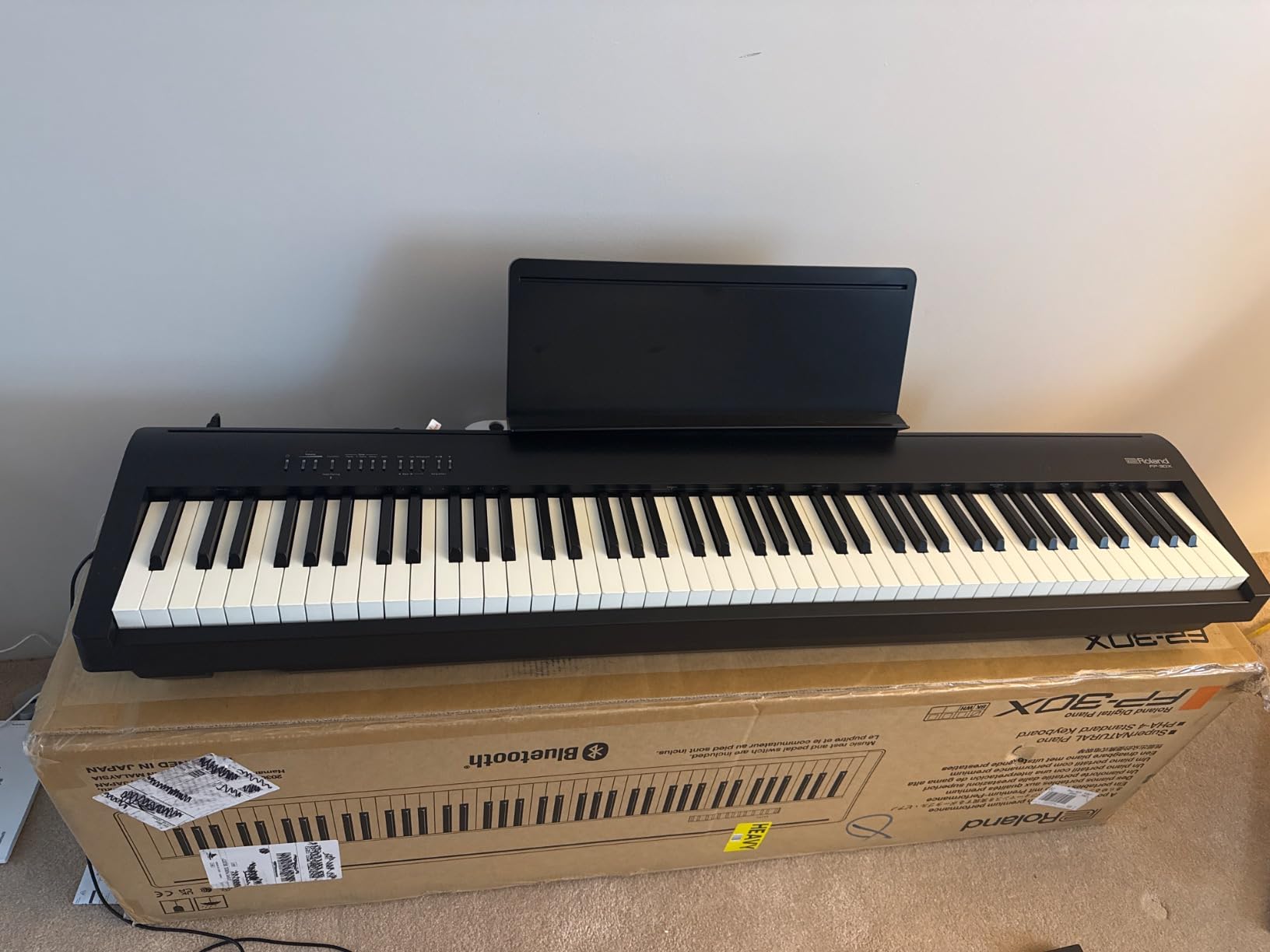
The Roland FP-30X offers a richer home setup without becoming a furniture cabinet. Its 51.2-inch body is still easy to fit into an apartment corner, and the 22-watt stereo speaker system gives casual listening more body than the smaller FP-10.
The PHA-4 Standard keyboard and 256-note polyphony are meaningful upgrades for a player working through layered arrangements. SuperNATURAL piano sounds stay responsive, while the extra speaker output is useful when I want to practice without headphones in a larger room.
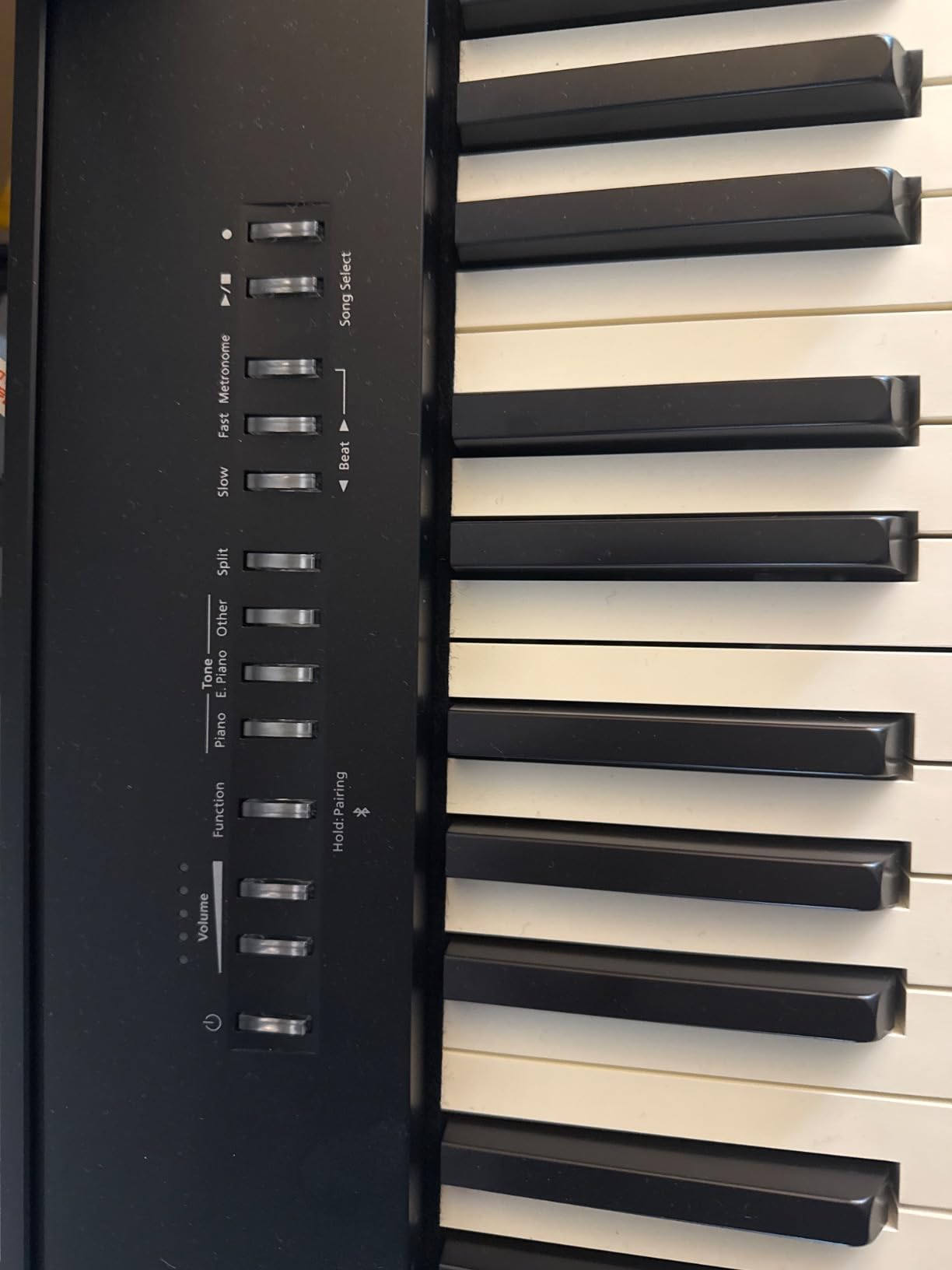
Bluetooth audio and MIDI support make it easy to stream lessons or connect a music app. The model also includes output jacks, which gives me more flexibility than the FP-10 when recording into a computer or external setup.
Its 32.7-pound weight is still manageable, but I would ask for help with stairs. The included pedal does not provide nuanced half-pedaling, and the short music rest can make full-size sheet music feel cramped.
Who should choose the Roland FP-30X?
Choose it for a shared music room, regular headphone-free practice, or a player who wants better recording flexibility. It balances apartment-friendly dimensions with enough sound and connectivity for intermediate work.
What should you plan around?
A hard floor or thin rug can help the downward-facing speakers project more clearly. Leave a little breathing room around the rear connections, and consider a better pedal if expressive pedaling matters to your repertoire.
5. Yamaha P-45: Best Straightforward Portable Piano for Beginners
- Familiar weighted action
- Detailed piano sound
- Simple controls
- Compact footprint
- No Bluetooth
- Basic speakers
- Long-term action concerns reported
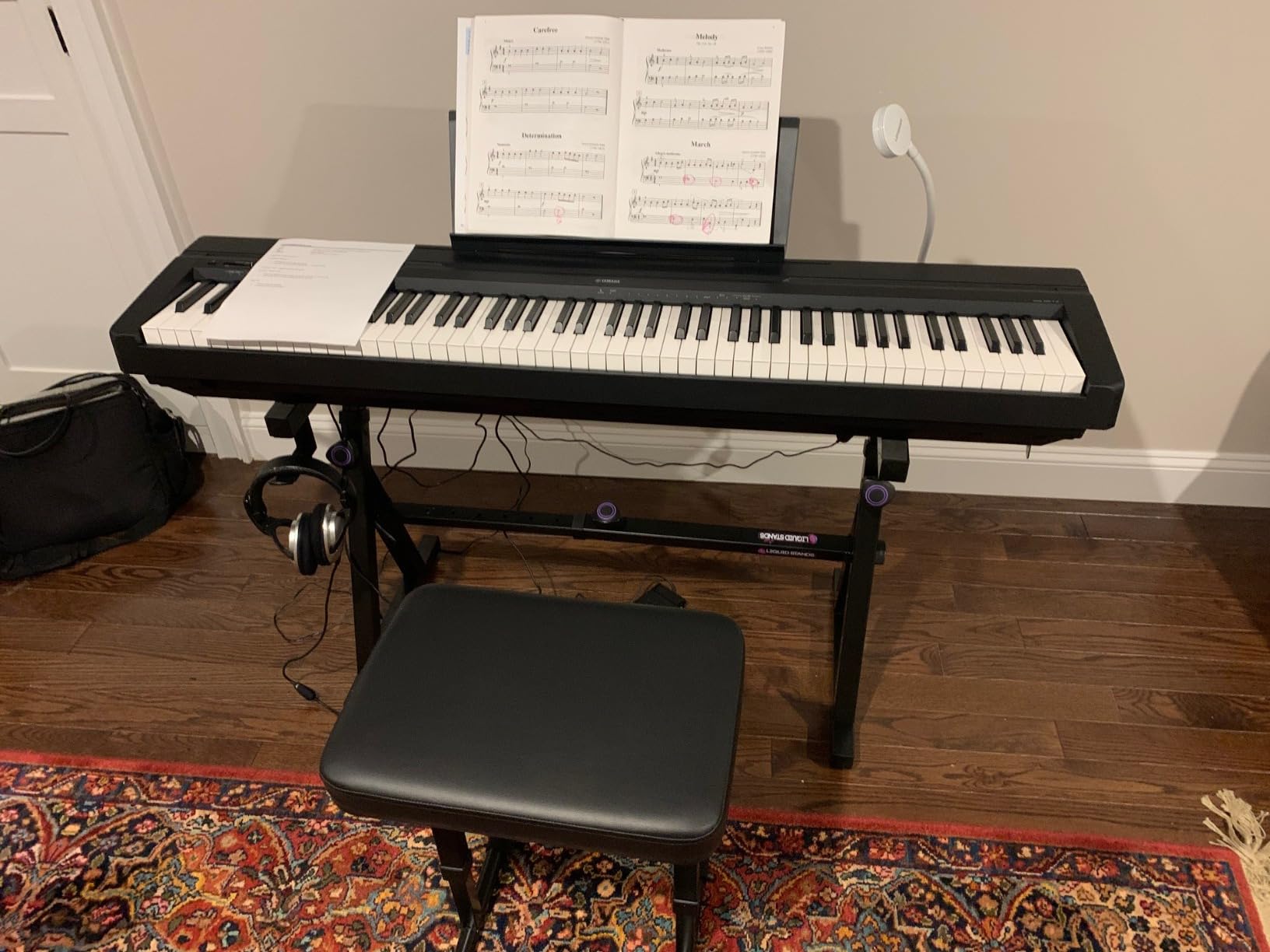
The Yamaha P-45 keeps the apartment setup simple. Its one-button design is easy to understand on the first day, while the 88 weighted keys give a new player the full keyboard layout and a more realistic foundation than a lightweight keyboard.
I found its 25-pound body easy enough to reposition when cleaning or changing the room. The built-in speakers and headphone output cover the two main apartment needs: casual family listening and private practice.
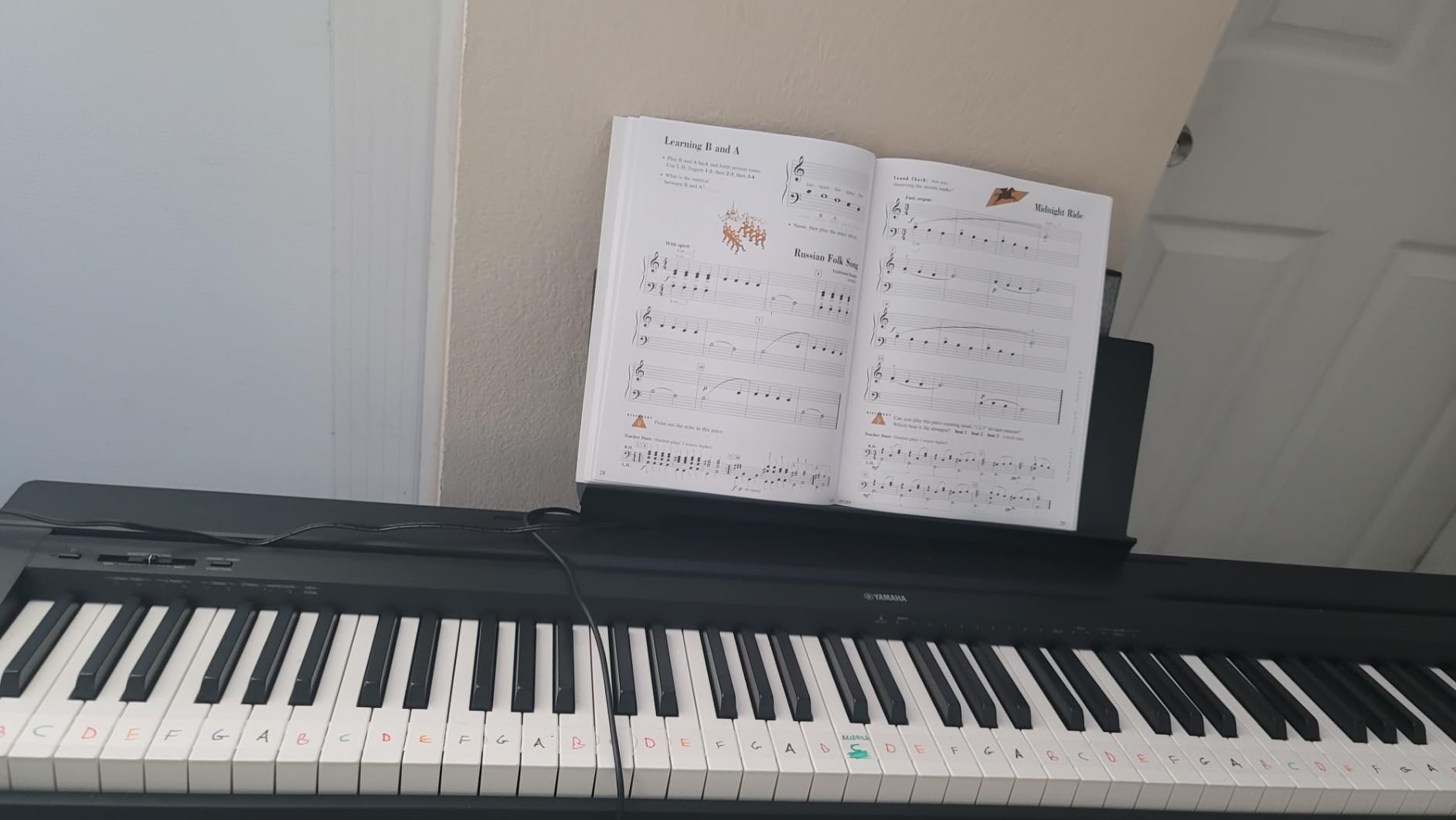
The piano voice is detailed, and touch sensitivity lets me shape louder and softer passages without fussing with menus. Ten voices, USB connectivity, a music rest, and a sustain foot switch cover the basics without making the control panel feel crowded.
There is no Bluetooth, and long-term owners have reported occasional key-action concerns after years of heavy use. That history makes careful handling and a stable support important rather than reasons to dismiss an otherwise practical instrument.
Who should choose the Yamaha P-45?
It suits a beginner who wants minimal setup and does not need app streaming. It also works as a dependable secondary instrument for a player who values the Yamaha key feel more than modern connectivity.
What should you plan around?
Use a broad, stable stand and avoid forcing the keys while moving the instrument. If you practice mostly at night, a wired headphone connection is the simplest way to keep your playing contained.
6. Yamaha P145BT: Best Compact Option With Bluetooth
- Slim 88-key design
- Bluetooth audio and app support
- Refined weighted action
- Built-in speakers
- May need a headphone adapter
- Some key issues reported
- No Bluetooth MIDI listed
The Yamaha P145BT is the modern apartment option in Yamaha’s portable range. It is 24.5 pounds, only 5.08 inches deep in the listed dimensions, and uses a Graded Hammer Compact action to preserve an 88-key experience in a slimmer body.
Bluetooth audio is the feature I notice most in daily use. I can stream a lesson or play along with a song from a phone, then use Smart Pianist for practice ideas without making the room look like a recording studio.
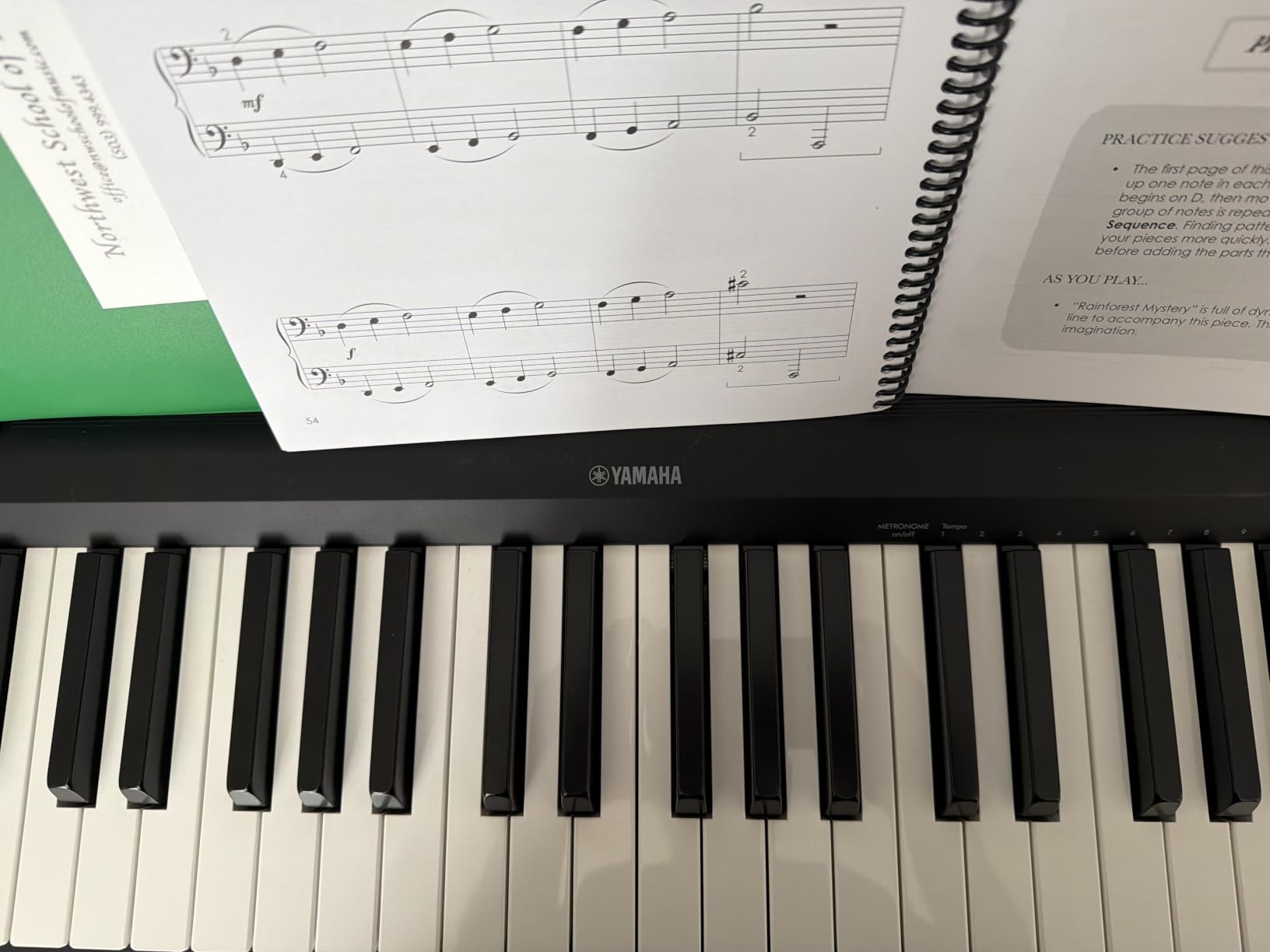
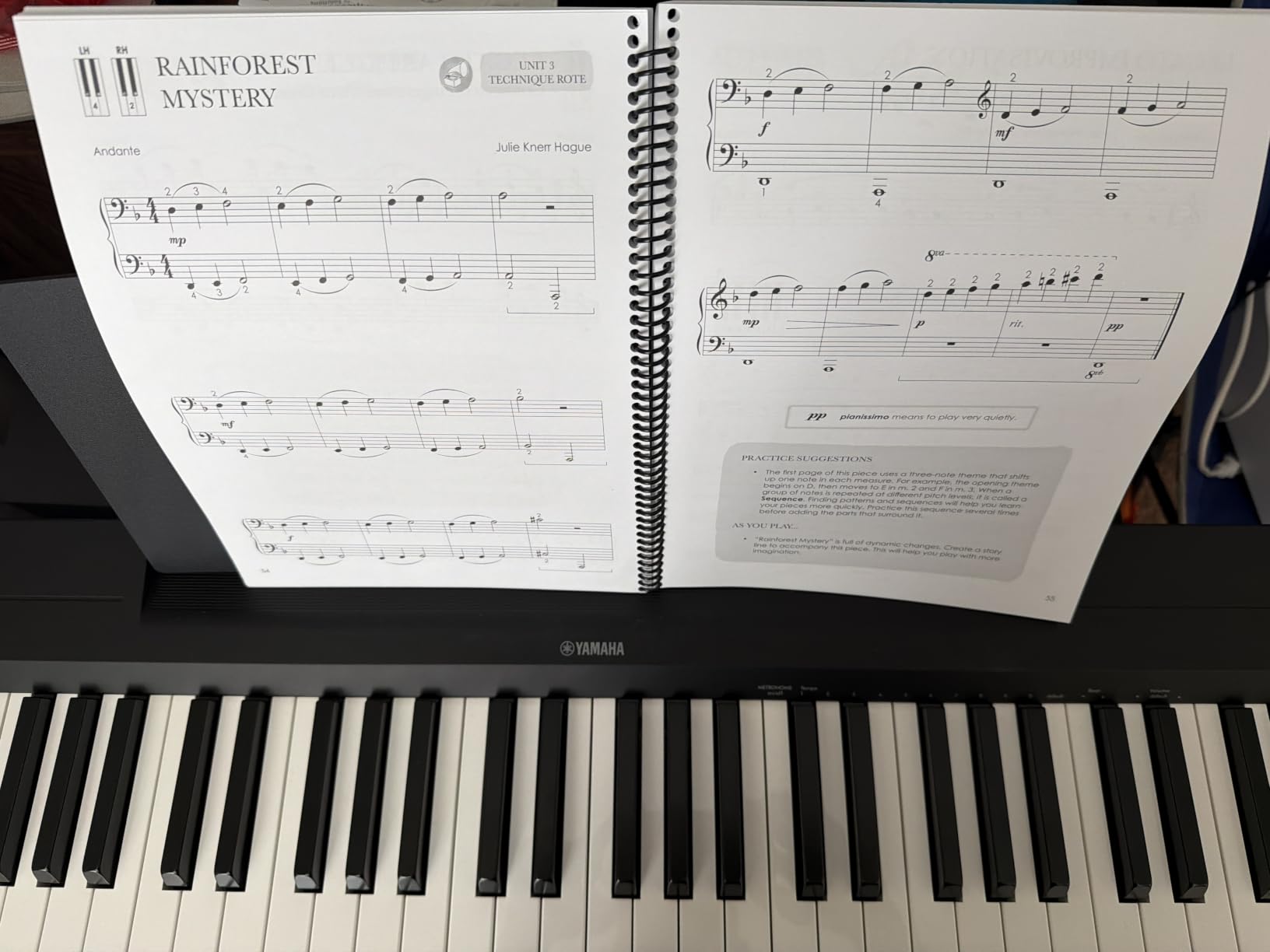
The key action feels refined for a portable instrument, and the built-in speakers make it useful for both lessons and casual listening. The included sustain foot switch, music rest, and AC adapter help create a complete setup without adding much visual bulk.
Some headphones may need a 6.35mm adapter, and a few owners have reported key issues. That is worth monitoring, but the combination of full keyboard size, Bluetooth audio, and compact depth remains appealing for a small multipurpose room.
Who should choose the Yamaha P145BT?
Choose it for a student who learns with apps, a teacher who streams play-along material, or anyone who wants the smallest practical 88-key footprint. It is also a good candidate when a piano must share a room with a desk or dining table.
What should you plan around?
Keep the rear and side ventilation paths open, and buy a headphone adapter before your first quiet practice session. I would also place the instrument on a stable, level surface so Bluetooth accessories do not tempt you to move it while playing.
7. Donner DEP-20: Best Complete Furniture-Style Package
Donner DEP-20 Beginner Digital Piano 88 Key Full Size Weighted Keyboard, Portable Electric Piano with Furniture Stand, 3-Pedal Unit
- Stand and 3-pedal unit included
- Large sound selection
- 128-note polyphony
- Two 25W amplifiers
- Heavy key action
- Bench not included
- Sound trails premium brands
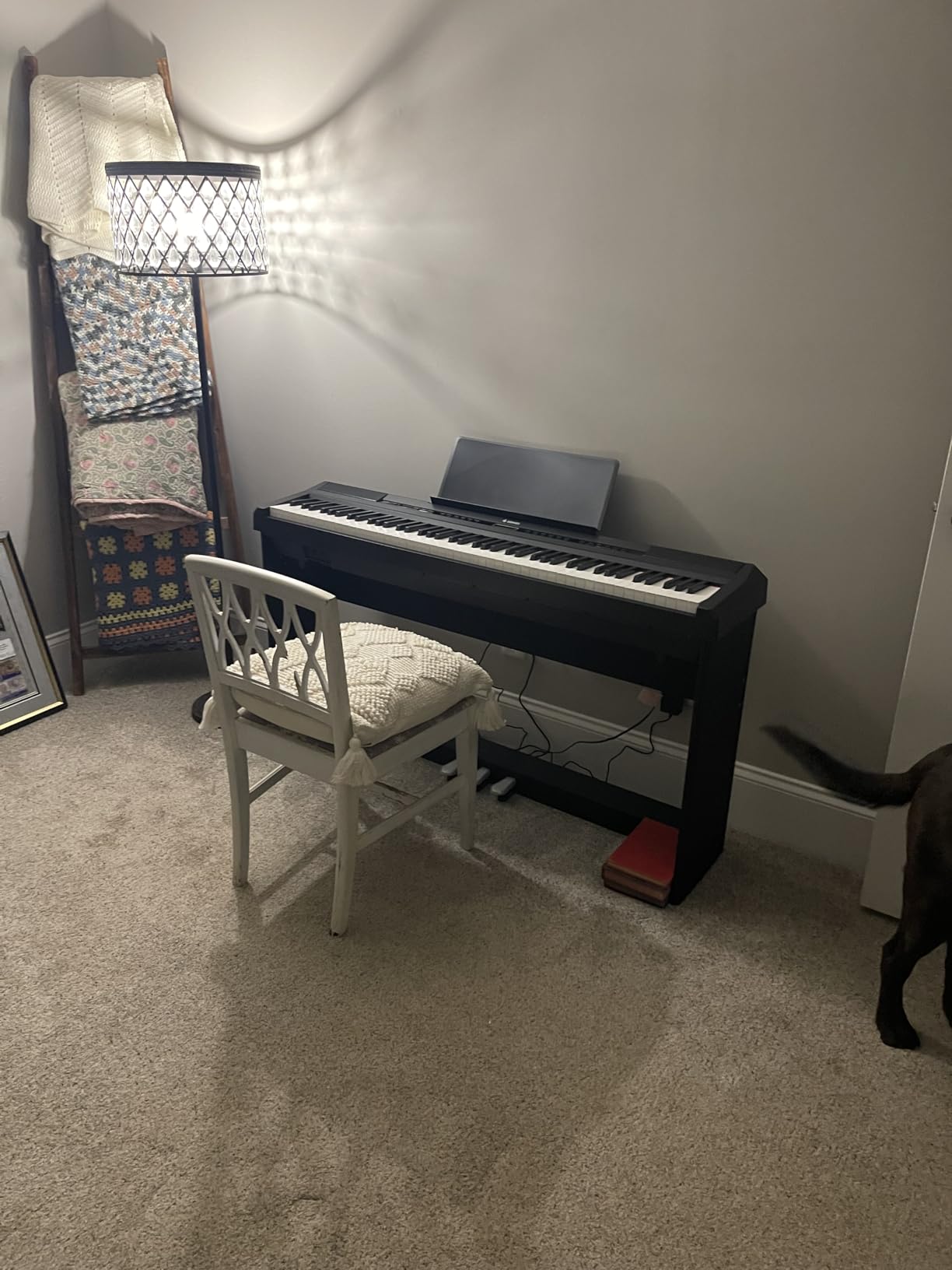
The Donner DEP-20 is the closest thing here to a small furniture piano, but it still separates into a manageable portable board and stand. The package includes a three-pedal unit, which gives a beginner a more familiar home-piano layout without buying each accessory separately.
I would measure the 36.99-inch assembled depth before ordering. It fits many living rooms, but a narrow studio apartment may find the full setup less convenient than a 5-to-6-inch-deep portable board.
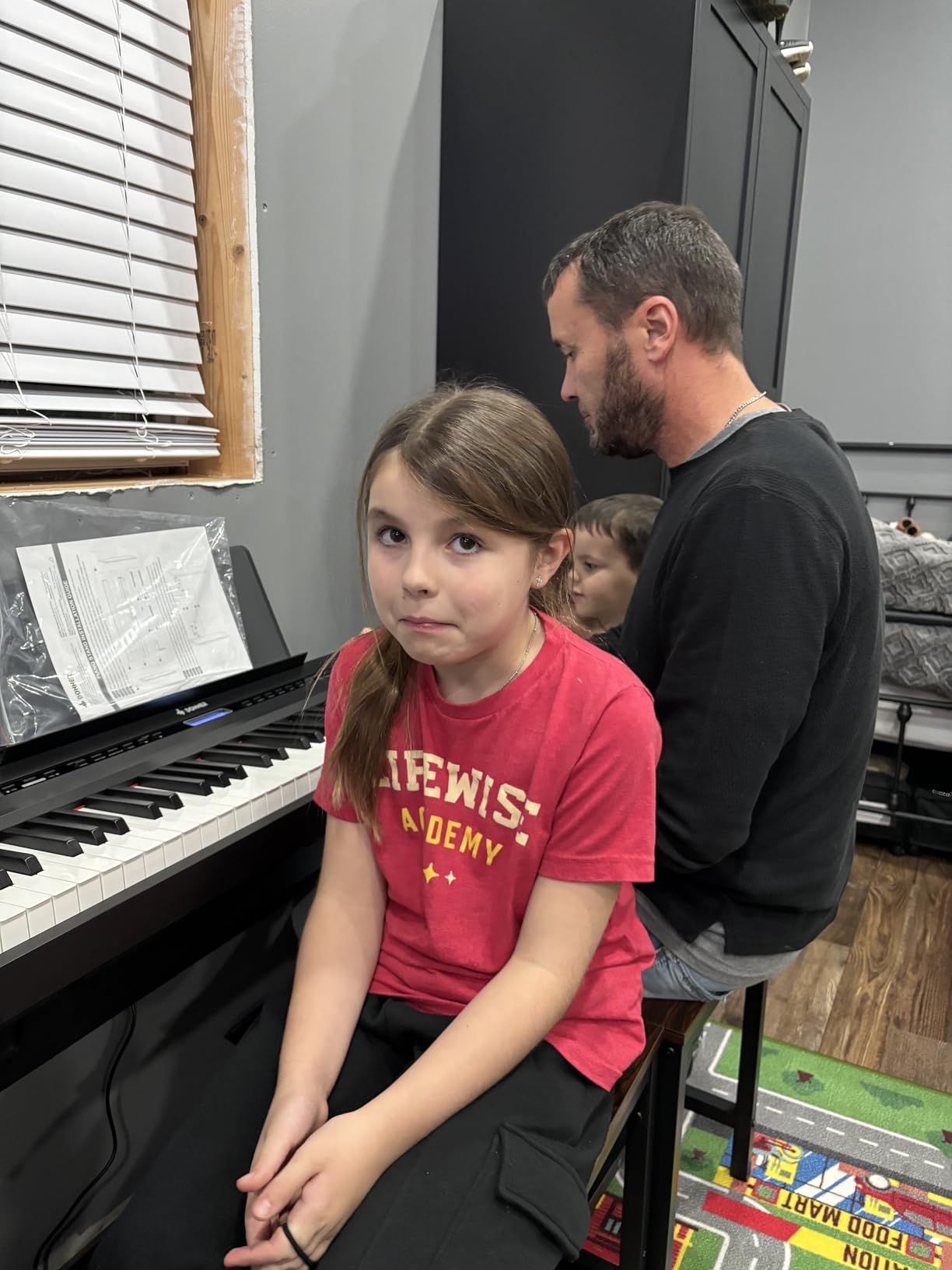
The 238 tones, dual-tone mode, 128-note polyphony, MIDI recording, and MP3 player make it feel generous for a beginner package. Two 25-watt amplifiers provide enough volume for room practice, while the headphone option supports quieter sessions.
The action is noticeably heavy for some players, and the sound does not have the refinement of Yamaha or Roland. A bench is not included, so the complete stand-and-pedal package still needs one extra piece of furniture.
Who should choose the Donner DEP-20?
Choose it for a learner who wants a traditional stand and three pedals from day one. It is also useful for a family that wants extra tones and recording tools without moving to a premium price tier.
What should you plan around?
Protect a wood floor with a mat and check that the stand fits through your doorway and stairwell. I would use headphones during late practice, especially because the strong built-in speakers are easy to push louder than neighbors expect.
8. Casio PX-870: Best Cabinet Sound With Included Learning Extras
- Detailed resonance
- Four-speaker sound
- Attractive cabinet
- Headphones and materials included
- 106.2-pound assembled weight
- Difficult two-person assembly
- Settings reset when powered off
The Casio PX-870 gives an apartment room a finished, furniture-like appearance. Its cabinet hides the keyboard when not in use and includes a bench, headphones, instructional materials, and a sliding key cover, making it a strong choice for a dedicated music corner.
The trade-off is weight. At 106.2 pounds and 31.53 inches deep, it is not a portable piano, so I would plan its final location before assembly and make sure the delivery path can accommodate the cabinet.
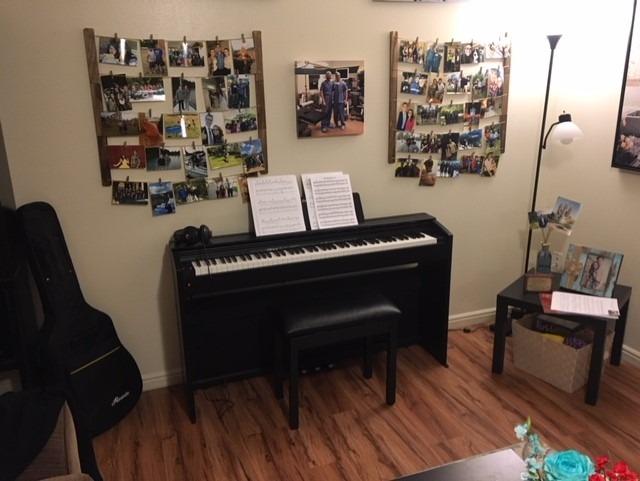
The 88 scaled weighted keys, detailed resonance, and four-speaker projection make the playing experience more immersive than a basic board. Recording, USB compatibility, and 18 additional tones add useful practice options.
Assembly usually needs two people, and the settings reset when the power is turned off. The bundle headphones are basic, so serious listening still benefits from a better pair.
Who should choose the Casio PX-870?
Choose it when you have a permanent corner and prefer a polished cabinet over a board that disappears into a closet. It is well suited to a beginner who wants the included learning package and a fuller speaker presentation.
What should you plan around?
Use an isolation mat under the cabinet legs and keep the rear away from a radiator or direct sun. I would also test the assembled piano at low volume before choosing its exact wall position, since bass resonance can change with the room.
Buying Guide for Choosing a Digital Piano in a Small Apartment
Start with the room, not the feature list. Measure the floor space, the doorway, and the distance from the nearest shared wall, then decide whether you need a board that can be stored or a cabinet that can stay in one place.
Choose 88 weighted keys if technique is your priority
An 88-key weighted keyboard gives you the same note range as a standard acoustic piano and trains stronger fingers. The Roland FP-10, Yamaha P145BT, and Casio PX-870 are good examples when full range and realistic touch matter.
The Yamaha NP15B is the exception that makes sense for a strict space budget. Its 61 touch-sensitive keys save length and weight, but they do not reproduce the full acoustic range or the same resistance.
Use headphones to control the sound that leaves the room
Headphone output is the most important apartment feature because it changes your practice from a room-filling performance into a private session. Check the headphone size before buying, since some models use a 6.35mm connection and need an adapter.
Speaker volume is not the only concern. Forum owners describe vibration complaints even with digital instruments, so a dense rug, isolation mat, and careful placement can matter as much as turning the volume down.
Compare sound engines and speaker placement
Yamaha’s Pure CF and related sampled sounds, Roland’s SuperNATURAL engine, and Casio’s resonance processing all aim to make an electronic piano feel more natural. A model with a stronger built-in speaker system is useful when you want to practice without headphones, but a small room usually benefits from a good pair of headphones.
Do not judge a speaker only by its wattage. Downward-facing speakers can lose definition on thick carpet, while a hard floor or thin rug can help them project more clearly.
Decide how portable your piano really needs to be
A portable board around 25 to 33 pounds can be moved by one person when the path is clear. The Yamaha NP15B is much easier to carry and store, but the Casio PX-870 is better treated as a permanent cabinet.
If you move apartments, measure the keyboard and the narrowest doorway before buying. I also recommend keeping the original packing material for a future move, because even a slim 88-key board is awkward to carry safely by the ends.
Look for useful connections, not just the longest spec list
USB and Bluetooth MIDI help with lessons, recording, and practice apps. Bluetooth audio is more convenient when you want to stream music, while traditional audio outputs can make a serious recording setup easier.
For a beginner, a headphone jack, sustain input, metronome, and recording function cover more daily needs than a large library of novelty sounds. For an experienced player, output options and polyphony deserve more attention.
How I Would Set Up a Digital Piano in a Small Apartment
I would put the piano against an interior wall if possible, leaving a few inches behind it for cables and ventilation. Avoid placing it directly in front of a radiator, heater, or sunny window, since temperature changes can affect the case and electronics.
Put a dense, flat mat beneath a portable stand or cabinet to reduce impact and vibration. If the floor is concrete or the downstairs neighbor is sensitive, an isolation platform is a better experiment than simply lowering the volume.
Keep the pedal and power connections accessible but tidy. I use a cable cover along the wall so the instrument does not become a trip hazard when the room changes from practice space to living space.
Finally, test the room at the time of day when you normally practice. Low notes, hard floors, and hollow walls can combine into a surprisingly noticeable sound, so headphones are the most dependable solution for late sessions.
Frequently Asked Questions
What is the best digital piano for an apartment?
The Roland FP-10 is our best overall pick because it combines a compact 88-key body with PHA-4 weighted action, SuperNATURAL piano tones, headphone output, and Bluetooth MIDI. It is a strong choice for most apartment players who want realistic touch without a cabinet piano.
Which digital piano sounds most like a real piano?
The Roland FP-10 and FP-30X are strong choices for realistic piano character because their PHA-4 keyboards and SuperNATURAL sound engines respond to touch. Yamaha’s P-71 and P145BT also use weighted keys and detailed piano samples, while the Casio PX-870 adds resonance processing.
What are the best small digital pianos?
The best small digital pianos are the Yamaha NP15B for maximum portability, the Roland FP-10 for compact weighted-key performance, and the Yamaha P145BT for a slim 88-key design with Bluetooth audio. Measure your available floor and wall space before choosing.
Should a beginner get a 61 or 88 key keyboard?
A beginner who may study piano seriously should usually choose 88 weighted keys so the instrument covers the full acoustic range and supports stronger technique. A 61-key model such as the Yamaha NP15B is reasonable when storage, travel, and budget are the main priorities.
Can I use a digital piano in an apartment without disturbing neighbors?
Yes. Use headphones, keep speaker volume modest, place a dense mat or isolation platform underneath, and avoid playing hard enough to send impact vibrations through the floor. A portable board is often easier to position than a heavy cabinet.
Final Recommendation for the Best Digital Pianos for Small Apartments
For most apartment players, the Roland FP-10 offers the best balance of touch, sound, compact size, and quiet-practice support. Choose the Yamaha P-71 for a familiar Yamaha feel and strong value, or the Yamaha NP15B when portability and storage matter more than weighted action.
Before ordering, measure the instrument’s assembled space, check the headphone connection, and plan for a stable stand or isolation mat. The right piano is the one that fits your room today and still makes you want to practice tomorrow.