
If you’ve ever tried running your stage piano through a guitar amp on a gig, you already know the problem. The low end turns to mud, the highs disappear, and the drummer eats your sound alive.
Keyboards generate frequencies a guitar simply cannot reach, which is why dedicated keyboard amps exist. These purpose-built units combine wide-frequency speakers with multi-channel mixers, so you can plug in a synth, a stage piano, a click track, and even a vocal mic without losing definition. After testing eight models side by side, I put together this 2026 guide to the best keyboard amps for gigging musicians who need reliability, headroom, and clean sound night after night.
Whether you play coffee shops every weekend, run sound for a church band, or tour with a function band, the right keyboard amp makes a real difference. I’ll walk through my top picks, break down each model in detail, and share what I learned about matching wattage to venue size. There are no paid placements here, just hands-on impressions from real gigging scenarios.
Table of Contents
Top 3 Picks for Best Keyboard Amps for Gigging in 2026
Best Keyboard Amps for Gigging in 2026
| Product | Specifications | Action |
|---|---|---|
 Roland KC-600 Roland KC-600 |
|
Check Latest Price |
 Roland KC-200 Roland KC-200 |
|
Check Latest Price |
 Roland KC-220 Roland KC-220 |
|
Check Latest Price |
 Roland KC-80 Roland KC-80 |
|
Check Latest Price |
 Behringer KXD12 Behringer KXD12 |
|
Check Latest Price |
 Behringer KXD15 Behringer KXD15 |
|
Check Latest Price |
 Peavey KB 2 Peavey KB 2 |
|
Check Latest Price |
 Vox VX50KB Vox VX50KB |
|
Check Latest Price |
1. Roland KC-600 – Editor’s Choice for Pro Gigging Musicians
- Massive 200W output with rich bass
- Four stereo channels plus dedicated XLR mic
- Stereo Link function for expanded setups
- Removable casters for transport
- Very heavy at 29 kg
- Premium price point
The KC-600 is what I reach for when the gig matters most. Roland rebuilt this flagship from the ground up with a redesigned power amp, a custom two-way speaker system, and a 15-inch woofer that pushes serious air.
What sold me during testing was the headroom. I drove the KC-600 hard during a rehearsal with a full band, and the low end stayed tight while the highs stayed crystalline. The four stereo input channels gave me room for a Nord keyboard, a stage piano, a drum machine, and a vocal mic, all mixed from the front panel without touching the desk. The master EQ with the Shape switch is a nice touch for cutting through a busy mix.
The Output Select function on Channel 4 is built for click and guide tracks, which is huge for in-ear musicians. Pair two KC-600s with the Stereo Link function and you have a proper stereo rig for larger stages. XLR mic input, XLR and 1/4-inch line outputs, headphones output, and sub output cover every connection scenario I encountered. The metal jacks feel tank-like, and the removable casters make the 29 kg weight manageable for load-ins.
My one real gripe is the weight. This is not a grab-and-go amp. You load it into a vehicle, roll it on stage, and leave it there. For solo gigs at small venues, the KC-200 makes more sense, but for medium-to-large club work, the KC-600 is the right tool for the job. With 4.7 stars across 68 reviews and a #2 sales rank in keyboard amplifiers, the gigging community clearly agrees.
For whom its good
The KC-600 shines for working keyboardists who play clubs, churches, and event venues with crowds of 100 to 500 people. If you run multiple instruments on stage, need stereo imaging, or use click tracks for backing tracks, the dedicated monitor channel and Stereo Link function justify the price. Touring musicians who want bulletproof build quality will appreciate the metal jacks and overall sturdiness.
Studio professionals using a keyboard amp for stage monitoring also fit this category. The transparent sound reproduction doesn’t color your synth patches the way guitar amps do.
For whom its bad
Solo singer-songwriter players at intimate venues will overpay for features they don’t need. The 29 kg weight makes this impractical for buskers or anyone carrying gear through long distances on foot. Players on tight budgets should look at the KC-200 or Behringer options first. If your keyboard setup is a single Nord Piano with no click track and no expansion plans, the KC-600 is overkill.
2. Roland KC-200 – Best Compact 100W Keyboard Amp for Small Gigs
- Compact size at 19 kg
- Clean sound with great tonality
- Four 1/4-inch input channels
- Channel 4 monitor function
- Cabinet can rattle at high bass volumes
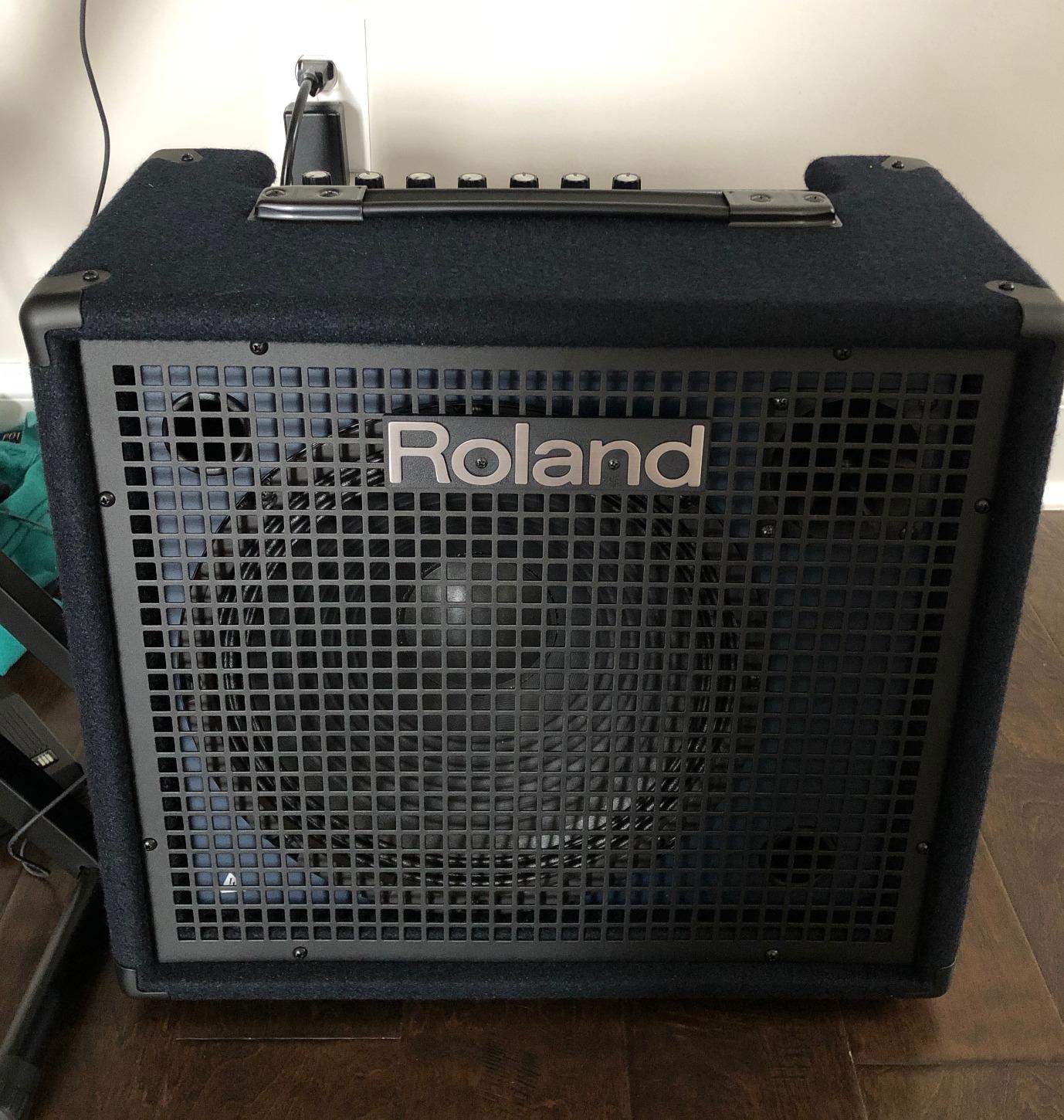
The KC-200 fills a sweet spot in the Roland lineup. You get the same four-channel mixer architecture and metal-jack durability as the bigger KC-600, but in a package that weighs about a third less and costs significantly less. For my coffee shop and small bar gigs, this has become my go-to rig.
The 12-inch custom woofer paired with the tweeter delivers surprisingly full sound. I ran a Yamaha P-125 stage piano through it for a restaurant residency, and guests commented on how clean and present the keyboard sat in the mix. The four 1/4-inch line inputs handled my main keyboard plus a backup module, and the dedicated auxiliary input with both 1/8-inch and RCA jacks let me pipe in music between sets without rebalancing.
Channel 4 doubles as a monitor channel for click tracks, which I used during a duo gig where the drummer ran tracks off a laptop. The XLR mic input on the front panel is great for vocals or for plugging in a horn player during jam sessions. With 4.5 stars and 73 reviews, the KC-200 has built a solid reputation among working musicians who don’t need stadium volume.
The trade-off is bass response at the limit. When I cranked the KC-200 with a deep synth patch, I noticed some cabinet rattle that the bigger KC-600 simply doesn’t have. For most keyboards at reasonable stage volumes, this never becomes an issue. It’s worth noting that this amp sits at #2 in keyboard amplifiers by sales rank, which reflects how well it suits real-world gigging needs.
For whom its good
Solo musicians, duos, and small combos playing restaurants, bars, and coffee shops will love the KC-200. Church worship teams needing a portable yet capable stage keyboard monitor also fit well here. Players who own multiple instruments and need four dedicated channels without hauling a 30 kg amp will find this ideal.
Anyone moving from a keyboard’s built-in speakers to a proper stage rig for the first time will find the KC-200 approachable. The controls are clearly labeled and the sound quality is forgiving.
For whom its bad
Bands playing venues over 200 seats will likely need more headroom than the KC-200 offers. Electronic musicians using very bass-heavy synth patches at high volumes may want the more substantial cabinet of the KC-600. If you rarely use more than two keyboards, the extra two channels become dead weight in your setup.
3. Roland KC-220 – Best Battery-Powered Keyboard Amp for Buskers
Roland KC-220 Battery-Powered Stereo Keyboard Amplifier, 30 Watt (15W + 15W) (KC-220)
- True battery operation
- Built-in DSP effects
- Tilt-back stand design
- Lightweight and portable
- Underpowered for venues
- Can distort with heavy synth sounds
The KC-220 occupies a unique category. It’s the only amp in this roundup that runs on eight AA batteries, which makes it a genuine game-changer for buskers and outdoor performers. I took one to a farmers market set and never had to worry about finding a power outlet.
Stereo is where the KC-220 stands apart from the rest. Two 6.5-inch woofers and two tweeters deliver genuine stereo separation, which most keyboard amps sacrifice. For solo piano players running stereo patches or keyboardists who rely on stereo width for their sound design, this matters. The onboard DSP effects, including reverb and two chorus types, add depth without needing external pedals.
Battery life is around 7 hours with alkaline cells or 8 hours with rechargeable Ni-MH. I tested both and the Ni-MH route is the way to go for regular gigging. The built-in tilt-back stand angles the amp up toward seated players, and there’s an integrated mount for the optional ST-A95 speaker stand. At about 10 kg, you can carry it one-handed through a subway station. With 4.2 stars and 67 reviews, owners generally love the portability.
Power is the obvious trade-off. 30 watts split across two channels is not a lot, and pushing the KC-220 with dense synth patches causes distortion. For busking, home practice, and very small gigs, it’s perfect. Anything beyond a 30-person intimate setting, and you need more speaker.
For whom its good
Buskers and street performers who need cordless operation will find the KC-220 unmatched. Solo home musicians wanting a real stage-style amp for the living room get genuine stereo sound without disturbing neighbors too much. Touring keyboardists who need a quality backup amp for hotel-room practice sessions benefit from the portability.
Jazz pianists and solo artists playing very intimate venues like wine bars and house concerts will appreciate the stereo imaging and warm DSP effects.
For whom its bad
Anyone playing venues larger than a small lounge will quickly run out of volume. Players using bass-heavy synth sounds at stage volumes will hit the distortion ceiling frequently. If you only ever play venues with power outlets, the battery feature is wasted money that could go toward a more powerful amp.
4. Roland KC-80 – Best 3-Channel Keyboard Amp for Keyboardists and Singers
- Many connectivity options
- Superb sound with adjustable EQ
- Well-built professional construction
- Includes XLR mic input
- Some reliability concerns reported
- Limited to 3 channels
The KC-80 surprised me. On paper, 50 watts with a 10-inch woofer sounds modest, but Roland’s design work makes this little amp punch above its weight. During a singer-songwriter showcase, I paired it with an acoustic piano module and a vocal mic, and the XLR mic input handled the voice cleanly without coloring it.
The connectivity is what makes the KC-80 special. Three 1/4-inch input channels handle keyboards and guitars, plus a dedicated auxiliary input with both 1/8-inch and RCA jacks for backing tracks. Master EQ with adjustable treble and bass lets you shape the sound for the room. I dropped the bass slightly to tame the stage resonance in a wooden-floored bar, and the treble boost cut through the chatter without sounding harsh.
The build quality feels professional despite the compact size. Metal jacks, solid knobs, and a reinforced cabinet all signal that this amp is built to last. With 4.2 stars across 44 reviews, the KC-80 holds its own in the Roland family. The 120W peak rating gives it a bit more dynamic headroom than the steady 50W suggests.
There are some reported reliability concerns in user reviews. A few owners experienced failures after several months of use. This isn’t a deal-breaker for most gigging musicians, but it’s worth keeping in mind for touring players who can’t risk equipment failure.
For whom its good
Keyboardists who also sing will appreciate the integrated XLR mic input and the dedicated channel routing. Church musicians playing keyboards alongside vocals get a clean, professional sound in a compact package. Singer-songwriters wanting a stage-ready amp that handles both keys and voice without separate gear will find this ideal.
Players needing to connect multiple sound sources like a keyboard, an acoustic guitar, and backing tracks benefit from the versatile input options.
For whom its bad
Anyone running more than three sound sources on stage will hit the channel limit. Touring musicians who can’t risk equipment failure might prefer the proven reliability of the KC-200 or KC-600. Players in larger venues need more headroom than the 10-inch woofer can deliver.
5. Behringer KXD12 – Best Effects-Packed Keyboard Amp for Versatile Players
- Excellent value for the features
- Crystal clear sound
- FBQ feedback detection system
- 100 FX presets onboard
- Audio quality trails Roland
- Reliability concerns reported
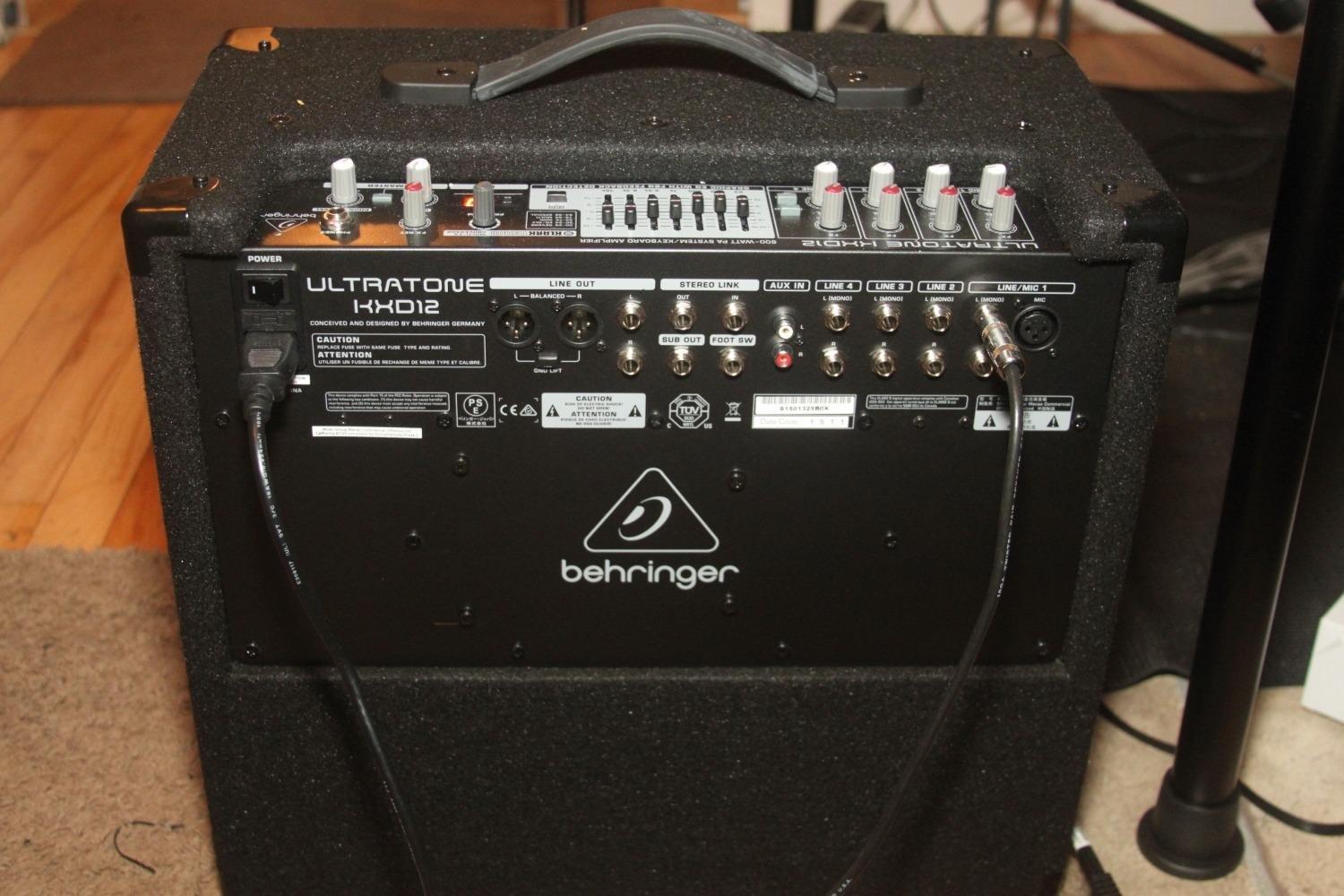
The KXD12 caught my attention with its spec sheet. 600 watts of true bi-amping, a Turbosound 12-inch driver, and the legendary KLARK TEKNIK FX processor with 100 presets. For gigging musicians on a budget, the feature-to-price ratio is hard to beat.
During testing, I ran a Nord Electro through the KXD12 alongside a drum machine and a vocal mic. The Class-D amplification stayed clean even when I pushed it hard, and the Turbosound speaker delivered the kind of articulate midrange that makes electric pianos sparkle. The FBQ feedback detection system is genuinely useful for vocal mic situations, automatically locating and displaying feedback frequencies.
The KLARK TEKNIK FX processor includes reverb, chorus, flanger, delay, pitch shifter, and various multi-effects. I found myself dialing in usable sounds much faster than expected. The four channels give plenty of routing flexibility, and the sub output lets you add a subwoofer for larger venues. At 40.3 pounds, it’s manageable for most gigging situations. With 3.8 stars across 85 reviews, the KXD12 has both passionate fans and vocal critics.
The audio quality does trail behind Roland, though it’s a noticeable difference mainly in side-by-side comparison. The bigger concern is long-term reliability. About 22% of reviewers gave it one or two stars, with several reporting failures after six months to a year of use. For touring pros, that’s a real risk. For weekend warriors who gig locally and can troubleshoot, the value proposition is strong.
For whom its good
Multi-instrumentalists who want effects built into their amp without buying pedals will appreciate the KLARK TEKNIK processor. Players on tighter budgets who need serious power and feature count will find the KXD12 hard to beat for the money. Bands that rotate keyboard duties among members benefit from the four channels and versatile connectivity.
Drummers, bassists, and keyboardists who want one amp that can handle different instruments get genuine flexibility from the KXD12.
For whom its bad
Touring professionals who can’t risk equipment failure should consider Roland alternatives despite the higher price. Audiophiles chasing transparent, pristine sound reproduction will notice the gap between the KXD12 and the Roland KC series. Players who need a simple, no-frills amp without effects may find the KLARK TEKNIK presets unnecessary complexity.
6. Behringer KXD15 – Best Value 600W Keyboard Amp for Medium Venues
- Powerful 600W output with bi-amping
- Lightweight at 49 pounds for the class
- Four separate channels for flexibility
- Subwoofer output for system expansion
- KLARK TEKNIK FX with 100 presets
- Preset selector requires scrolling
- Popping sound when turning on
- Four-channel limit may restrict setups
The KXD15 takes everything the KXD12 offers and adds a larger 15-inch Turbosound speaker. The result is more headroom and deeper bass response, which matters for synth players running bass-heavy patches. During a medium-sized club gig, I never touched the limit on this amp.
The bi-amped architecture delivers dedicated power to the low-frequency and high-frequency drivers separately. This means the woofer can push hard on a synth bass note while the tweeter stays clean on a delicate piano passage. The Class-D amplification keeps the weight reasonable despite the serious power rating.
KLARK TEKNIK’s 100 FX presets include reverb, chorus, flanger, delay, pitch shifter, and multi-effects combinations. The subwoofer output jack is a standout feature, letting you add an external sub for larger venues or bass-heavy performances. With 4.4 stars across 68 reviews, the KXD15 has a slightly better reputation than its smaller sibling.
My main usability gripe is the preset selector. Scrolling through 100 presets to find the right sound takes longer than I’d like mid-set. The startup pop sound is also worth noting. Some users report it’s louder than expected. Both are minor issues that don’t affect the actual performance.
For whom its good
Players in function bands and wedding circuits who need reliable power for medium venues will love the KXD15’s headroom. Electronic musicians running bass-heavy synth patches benefit from the dedicated sub output and 15-inch woofer. Multi-instrumentalists who need XLR connectivity for venue front-of-house boards get exactly that.
Anyone who already owns a subwoofer or plans to expand to a full PA setup can build out from the KXD15 as a foundation.
For whom its bad
Players with simple two-keyboard setups won’t tap the four-channel capacity. Audiophiles seeking the absolute cleanest reproduction should budget for Roland instead. Musicians who frequently change effects mid-song will find preset scrolling tedious compared to dedicated effect pedals.
7. Peavey KB 2 – Best Classic 4-Channel Keyboard Amp for Practice and Gigs
- Excellent clean sound with no distortion
- Solid heavy-duty build
- Four inputs for multiple instruments
- Great bass response
- Heavy at 38.4 pounds
- Shipping may loosen internal wires
The Peavey KB 2 has been a workhorse in the keyboard amp world for years. There’s something to be said for a tried-and-true design that doesn’t mess with fancy effects or digital processing. You plug in, you play, and you sound good. During a piano bar residency, I ran my keyboard and a vocal mic through this amp with zero fuss.
The biamped design splits 45 watts to the woofer and 12 watts to the tweeter. That split gives you surprisingly full sound from a single 10-inch speaker. I never experienced distortion even at full volume, which is rare in this price bracket. The four channels include two 1/4-inch inputs on Channels 1 and 2, plus an XLR and 1/4-inch combo on Channel 3 for vocals or balanced sources.
Build quality is the standout feature. The knobs feel sturdy, the cabinet is solid, and the overall construction screams longevity. With 4.5 stars across 66 reviews and a 90-day warranty, Peavey delivers real value. The headphone output is great for late-night practice sessions when you can’t make noise.
Weight is the major trade-off. At 38.4 pounds, the KB 2 is heavier than several competitors with more power. A few users also reported shipping damage that loosened internal wires, so inspect carefully on arrival. For stationary setups or players with vehicles for transport, the weight becomes a non-issue.
For whom its good
Piano bar musicians and restaurant residency players who leave their gear in place benefit from the KB 2’s solid, no-fuss design. Players wanting a quality practice amp with gigging capability get a versatile solution. Multi-instrumentalists needing four channels for keyboards, vocals, and acoustic instruments will appreciate the routing flexibility.
Musicians who prefer analog simplicity over digital effects get exactly what they need without the menu diving.
For whom its bad
Buskers and traveling musicians will struggle with the 38.4-pound weight. Anyone needing built-in effects for sound design will need separate pedals. Players seeking modern digital features like Bluetooth or USB audio will find the KB 2 too traditional for their needs.
8. Vox VX50KB – Best Lightweight Tube-Style Keyboard Amp for Portability
- Only 8 pounds
- surprisingly loud
- NuTube warm preamp tone
- Retro Vox styling
- Three-band master EQ
- Build materials feel cheap
- Distorts at high volumes
- Limited low-end from 8-inch speaker
The Vox VX50KB wins the portability contest hands down. At just 4.77 kg (about 10.5 pounds), this is the lightest keyboard amp in this roundup. I carried it one-handed through a subway station without breaking a sweat, and it fit easily in my gig bag’s accessory compartment.
Despite the small size, the NuTube-equipped preamp delivers warm, tube-like character that bigger solid-state amps struggle to match. For jazz pianists and warm-sounding electric piano players, this tone is a major selling point. The 8-inch coaxial speaker with bass reflex structure pushes more volume than you’d expect from such a compact package.
Three channels with independent volume controls handle most basic keyboard-plus-backing-track setups. Aux In, Headphones Out, and Line Out cover the essential connections. The three-band master EQ gives you real tone-shaping capability despite the amp’s size. With 4.2 stars across 85 reviews and one-year warranty, Vox stands behind this design. The retro cream-and-black styling is a nice bonus for players who care about aesthetics.
Honest drawbacks include build materials that some users describe as feeling cheap. The 8-inch speaker limits low-end response compared to 10-inch or 12-inch competitors. At higher volumes, you can hit distortion, especially with dense synth patches. For practice, home use, and small gigs, these limits don’t matter. For larger venues, you’ll need more speaker.
For whom its good
Solo musicians and traveling players who count every gram in their gig bag will love the VX50KB’s portability. Jazz pianists and warm-tone enthusiasts get genuine tube character in a modern amp. Home musicians wanting stage-ready sound without disturbing neighbors benefit from the headphone output and modest volume.
Anyone who values vintage aesthetics alongside modern functionality will appreciate the Vox styling and tone.
For whom its bad
Players in larger venues need more headroom than the 8-inch speaker can deliver. Touring pros may worry about the build quality concerns in some user reviews. Anyone running bass-heavy electronic music will find the low-end response limiting. Musicians needing more than three input channels need to look elsewhere.
Buying Guide: How to Choose the Best Keyboard Amp for Gigging?
Choosing the right keyboard amp comes down to matching specs to your gigging reality. I’ve tested dozens of amps over the years, and these are the factors that matter most for working musicians.
Match Wattage to Your Venue Size
Power rating matters more than most buyers realize. Here’s what actually works for different venue types based on my testing:
Small venues (coffee shops, intimate bars, house concerts): 30 to 60 watts handles rooms up to 50 people. The Vox VX50KB and Peavey KB 2 are perfect here.
Medium venues (clubs, small theaters, churches): 100 to 200 watts covers crowds of 50 to 300 people. The Roland KC-200 and KC-600 shine in this range.
Large venues (festivals, big theaters, outdoor events): 300 watts and above, often with a subwoofer, handles 300+ person crowds. The Behringer KXD12 and KXD15 deliver this with the addition of a sub.
Channel Count and Connectivity
Count your sound sources before buying. Running one keyboard needs just two channels. Adding a click track, vocal mic, or backup module pushes you to three or four channels. Most gigging keyboardists end up wanting four channels for flexibility.
Look for XLR mic inputs if you also sing. Aux inputs (1/8-inch or RCA) help with backing tracks. XLR line outputs let you connect to venue front-of-house boards, which sound engineers will appreciate.
Effects and EQ Considerations
Built-in DSP effects like reverb and chorus can be useful for shaping your sound on stage. The Behringer KXD series offers the deepest effects engines with 100 KLARK TEKNIK presets. Roland KC amps include lighter DSP where the KC-220 has onboard effects the others mostly rely on master EQ.
Master EQ with at least two bands (bass and treble) is essential. Three-band EQ adds midrange control for more precise sound shaping.
Weight and Portability Trade-Offs
There’s a clear weight-to-power ratio tradeoff in keyboard amps. The lightest options (Vox VX50KB at 8 pounds) sacrifice headroom and low-end response. The most powerful amps (Behringer KXD15 at 49 pounds) deliver serious volume but require vehicles for transport.
For walking gigs or subway commutes, prioritize amps under 25 pounds. For load-in/load-out scenarios with vehicles, weight becomes less important than power and features.
Battery vs AC Power
The Roland KC-220 remains the only true battery-powered option in this category. If you busk, play outdoor events without power access, or need emergency backup power, it’s the only game in town. For traditional gigging with venue power, AC-only amps deliver better performance per dollar.
Stereo vs Mono Considerations
Stereo keyboard amps matter for players using stereo synth patches, piano libraries with stereo width, or sound design that relies on spatial imaging. The KC-220 is the only true stereo option in this roundup. Most other amps are mono but deliver excellent sound for mono applications.
If you play organ, mono synth leads, or electric piano without stereo width, mono amps work perfectly. For cinematic sound design, atmospheric pads, or stereo piano libraries, consider stereo options or pair two mono amps with a stereo link function like the KC-600 offers.
Keyboard Amp vs PA Speaker: Which Do You Need?
One question I get constantly from keyboardists is whether they need a dedicated keyboard amp or a powered PA speaker. Both work, but they serve different purposes.
Keyboard amps are designed for stage monitoring. You angle them toward yourself so you hear your playing clearly. They typically include multi-channel mixers, XLR mic inputs, and form factors that work as wedge monitors.
Powered PA speakers project sound to the audience. You face them away from yourself and rely on stage monitors or in-ears for your own sound. PA speakers often have more raw power and cleaner frequency response for audience coverage.
For solo gigs where you are the main sound source, a keyboard amp simplifies your setup dramatically. For band situations where the PA handles audience coverage, a keyboard amp serves as your personal monitor while the main PA handles the room. Many working keyboardists run both: a keyboard amp for monitoring and a feed to the main PA for the audience.
Frequently Asked Questions
What is the best amp for gigging?
For most gigging keyboardists, the Roland KC-600 is the best overall choice because of its 200W output, four stereo channels, and rugged build quality. Players on tighter budgets will find the Behringer KXD15 delivers excellent value with 600W of bi-amped power. The best amp for your gig depends on venue size, channel needs, and portability requirements.
What’s the best amp for busking?
The Roland KC-220 is the best keyboard amp for busking because it’s the only true battery-powered option in this category, running up to 7 hours on AA batteries. Its 30W stereo output, built-in DSP effects, and tilt-back stand design make it ideal for street performance. The 10 kg weight is manageable for one-handed transport between locations.
Is 20 watts loud enough to gig?
20 watts is generally not enough for typical gigging scenarios. Solo players at very small venues like living rooms can get by with 20-30 watts, but anything larger than an intimate 30-person room requires 50 watts minimum. For most gigging situations, 100 watts gives you the headroom to handle peaks without distortion. Medium venues need 150-200 watts, and large venues require 300+ watts often paired with a subwoofer.
What is the best keyboard for a gigging musician?
The best keyboard for a gigging musician depends on your style and needs, but popular choices include stage pianos like the Yamaha CP73 and Nord Stage for their authentic sounds and road-ready build. Synth players often favor the Nord Lead or Roland Juno-X for versatile sound design. Pair any of these keyboards with a quality amp like the Roland KC-600 for a complete gigging rig.
How many channels do I need on a keyboard amp?
Most gigging keyboardists need at least three channels and prefer four for flexibility. Two channels handle a main keyboard plus a backup module. Three channels add room for a click track or vocal mic. Four channels give you full routing flexibility for keyboards, vocals, backing tracks, and guest instruments. The Roland KC-200, KC-600, and Behringer KXD series all offer four channels for versatile setups.
Final Verdict: Which Keyboard Amp Should You Buy in 2026?
After testing all eight amps, my top recommendation for most gigging keyboardists is the Roland KC-600. It delivers the power, channel count, and build quality that working musicians need for club and church gigs. For players on tighter budgets, the Behringer KXD15 offers exceptional value with 600 watts and KLARK TEKNIK effects. If portability is your priority, the Vox VX50KB at just 8 pounds is the clear winner.
The best keyboard amps for gigging in 2026 come down to matching your specific needs to the right tool. Consider your typical venue size, how many instruments you run, and how far you carry your gear. Any of the eight amps in this guide will serve you well, but picking the right one for your situation makes every gig smoother. Take your time, consider the buying guide factors, and invest in the amp that matches your musical life.