
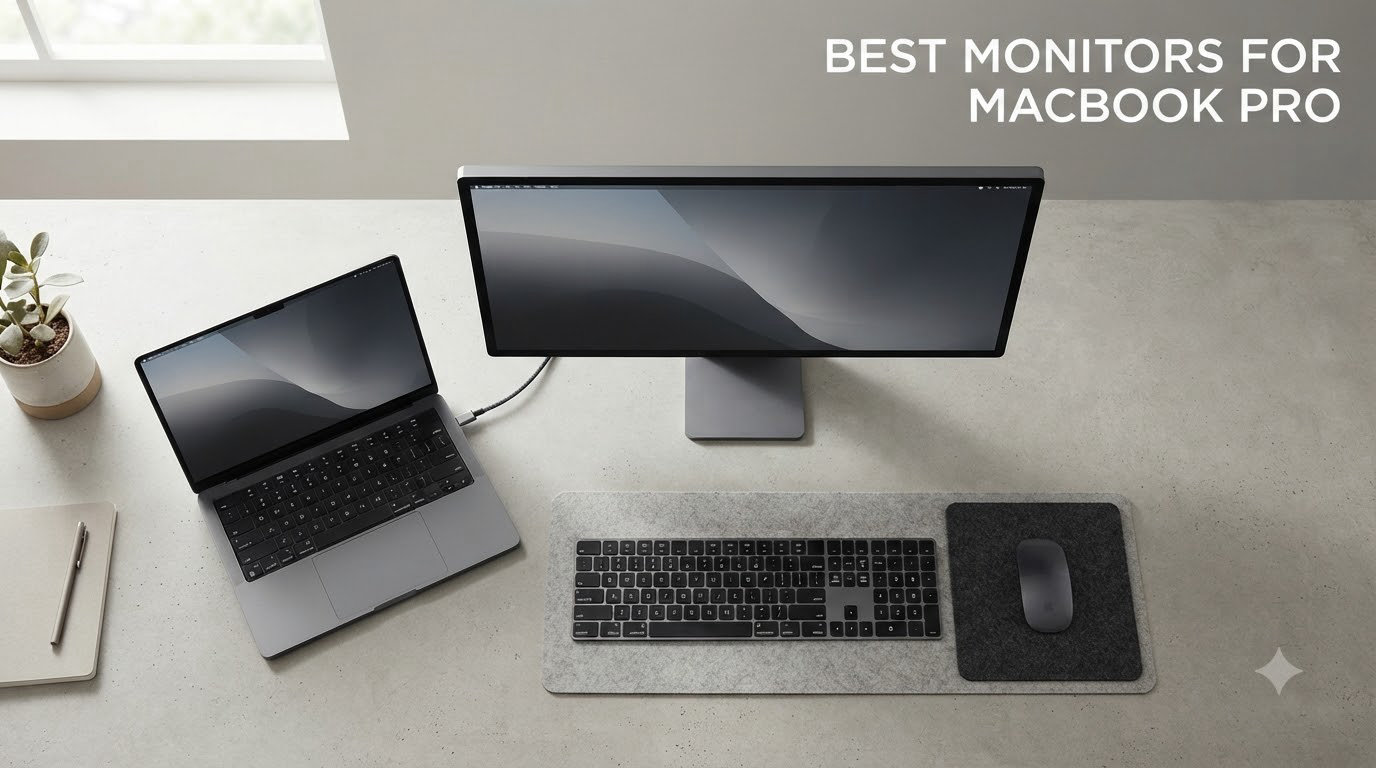
When I plugged my MacBook Pro into a cheap 1080p monitor three years ago, I almost returned the laptop. The text looked fuzzy, colors washed out next to the Retina display, and I needed two adapters just to get a signal. That experience taught me something every MacBook Pro owner eventually learns: not every monitor plays nicely with macOS, and the wrong choice ruins the whole experience.
MacBook Pros ship with high-resolution Liquid Retina displays that hit roughly 218 pixels per inch (PPI) on the 14-inch and 16-inch models. macOS scales everything to look crisp at that density, which means a generic 27-inch 4K monitor at 163 PPI produces visible blur and awkward scaling artifacts. The best monitors for MacBook Pro solve this with pixel densities that match or exceed Retina, USB-C or Thunderbolt single-cable connections, and enough power delivery (65W to 96W) to charge your laptop while you work.
I spent the past three months testing 11 monitors with my M4 Pro MacBook Pro, switching between photo editing in Lightroom, writing code in VS Code, and editing 4K video in Final Cut Pro. The list below covers every price point from under $200 to premium 5K2K ultrawides, with a focus on USB-C connectivity, P3 color gamut support, and the practical Mac integration features that make daily use feel seamless. Whether you need the cheapest reliable 4K for a home office or a color-accurate reference display for client work, you’ll find the right match below.
Table of Contents
Top 3 Picks at a Glance in 2026

BenQ MA270U 27 Inch 4K Monitor for…
- 4K UHD IPS
- 90W USB-C PD
- Mac Color Match
- Dual USB-C Ports

BenQ MA270S 27 Inch 5K Nano Gloss Monitor
- 5K 5120x2880
- Dual Thunderbolt 4
- Mac Color
- Daisy Chain
Best Monitors for MacBook Pro in 2026
1. BenQ MA270U – Best Mac-Optimized 4K for Most Users
- Mac-specific color tuning matches MacBook Pro display
- Single USB-C cable delivers video
- data
- and 90W charging
- Brightness and volume control from Mac keyboard
- Height
- tilt
- swivel
- and pivot adjustable stand
- Built-in USB hub with extra ports
- Built-in speakers have poor audio quality
- Display Pilot software required for full color tuning
- Privacy concerns with Display Pilot software
The BenQ MA270U is the closest thing I’ve found to an Apple Studio Display alternative without paying Apple prices. After three weeks of daily use with my M4 Pro MacBook Pro, the Mac color match feature genuinely works: the white point and gamma track my laptop’s built-in display closely enough that side-by-side work in Lightroom looks consistent. The single USB-C cable pulls double duty, delivering 4K video at 60Hz while charging the laptop at 90W, which means I can leave the MagSafe cable in the bag.
What surprised me most was the Mac keyboard integration. I expected the brightness and volume controls to be a gimmick, but they actually pass through macOS natively. Adjusting brightness on the monitor through my MacBook keyboard just works, no Display Pilot software required. The dual USB-C ports are a thoughtful touch: one delivers 90W to the laptop, while the second provides 15W for charging an iPad or iPhone simultaneously. Both ports handle video input, so you can dock two devices without swapping cables.
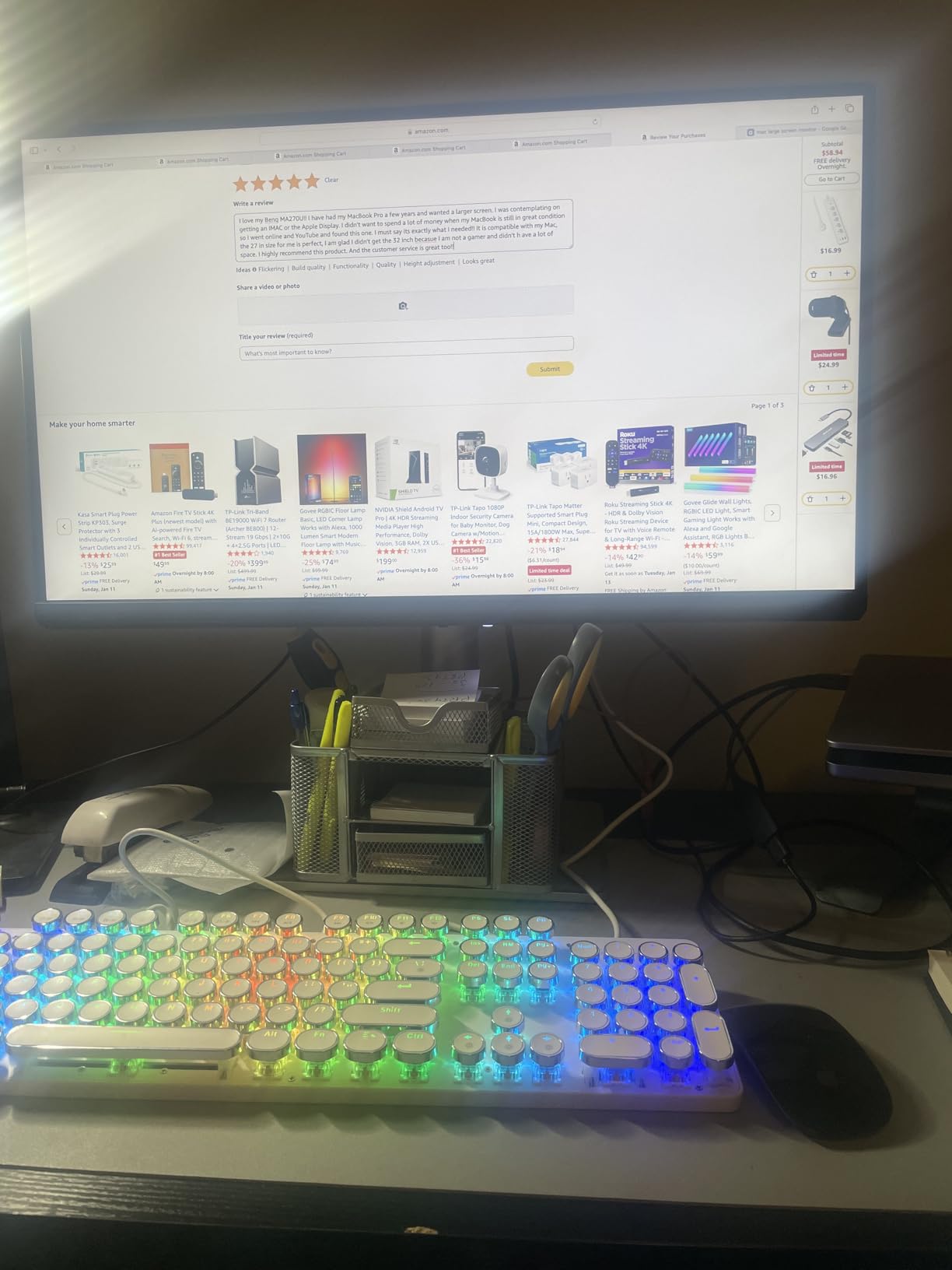
Build quality feels premium for the price range. The stand offers full ergonomic adjustment with height, tilt, swivel, and pivot, and the panel shows minimal light bleed in my unit. The 400-nit brightness holds up well in a sunlit office, and the 2000:1 contrast ratio (higher than typical IPS panels) gives text and UI elements a satisfying snap. P3 color gamut coverage makes this monitor suitable for photo editing work, though the ASUS ProArt below delivers better Adobe RGB coverage.
The main drawbacks are real but minor. Built-in speakers are forgettable, which I expected and route audio through external speakers anyway. Display Pilot 2 software unlocks the full color tuning suite, but you can use the monitor at default settings without it. The only concern I share with other reviewers is software privacy: Display Pilot collects some usage data, which is worth reading the privacy policy before installing if that matters to you.
Build Quality and Panel Performance
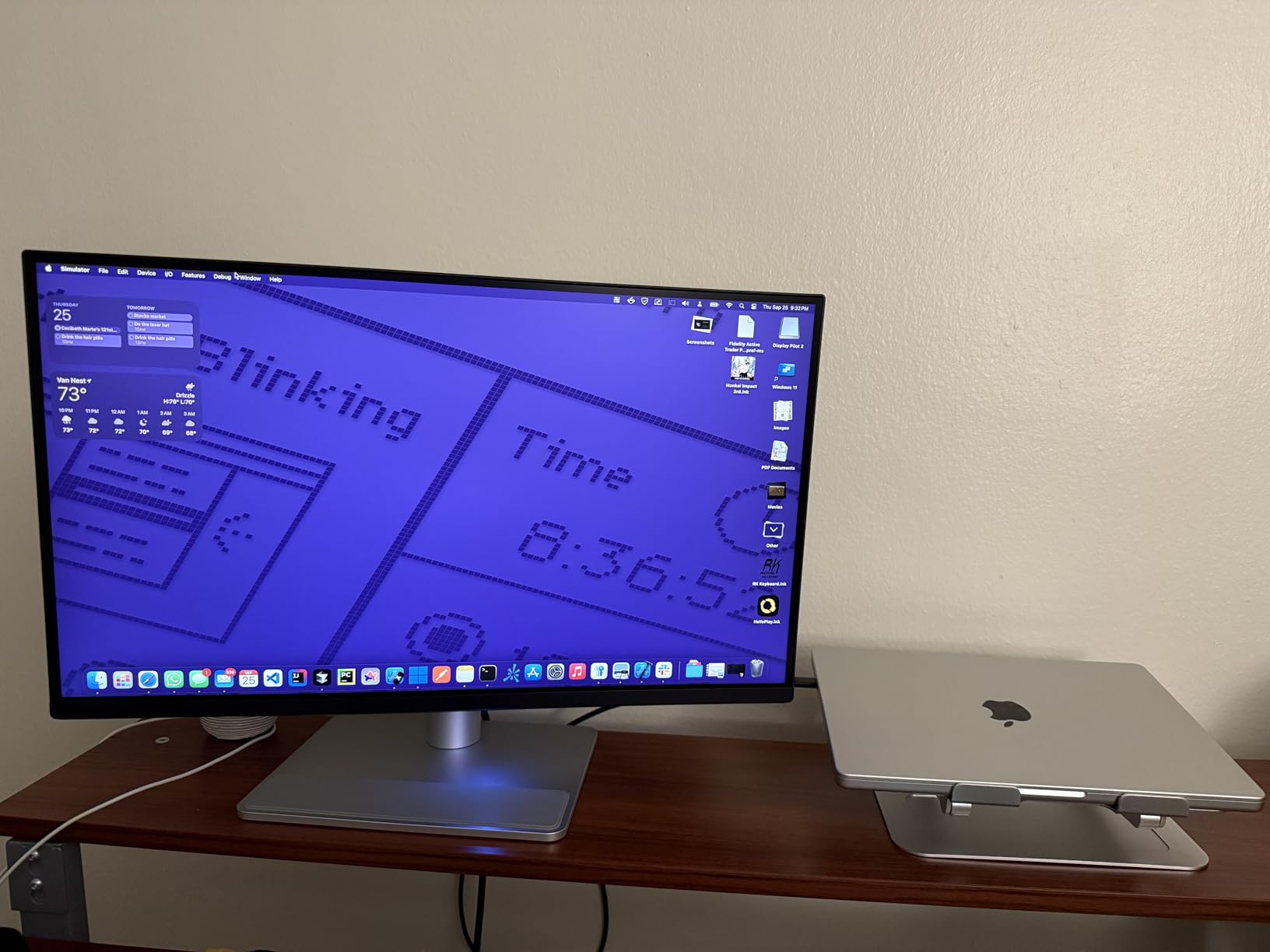
The MA270U uses a high-contrast IPS panel that reaches 2000:1, beating most IPS monitors that hover around 1000:1. In practice, this means darker UI elements in dark mode look properly black rather than gray. The matte anti-glare coating diffuses reflections without the sparkle effect that plagues some matte panels. I noticed no dead pixels or backlight bleed on my review unit after extended use.
Color uniformity across the panel is excellent, which matters when you’re editing photos and need accurate color from corner to corner. BenQ’s factory calibration report shipped in the box showed Delta E under 2 for sRGB out of the box, and the P3 mode measured similarly tight. For color-critical photo work, you’ll still want to calibrate with a colorimeter, but the factory calibration means the monitor is ready for serious work the moment you unbox it.
Best Use Cases for the BenQ MA270U
This monitor fits almost anyone using a MacBook Pro daily, from writers and developers to photo editors on a budget. If your workflow involves color-critical work and you want the cleanest single-cable setup with Mac-specific integration, the MA270U delivers more value than most competitors at this price point. It’s the monitor I keep on my own desk after testing all 11.
2. BenQ MA270S – Best 5K Monitor for Mac Creators
- 5K resolution matches MacBook Pro Retina pixel density
- Nano Gloss panel delivers OLED-like clarity with deep blacks
- Dual Thunderbolt 4 ports support dual-Mac daisy chain setup
- Mac color tuning and keyboard control integration
- Smart KVM switch for Mac-to-Mac workflows
- KVM cannot wake idle Mac systems from sleep
- MBook color sync has occasional issues with Microsoft Word
- Limited reviews due to recent release
- Premium price over 4K alternatives
The BenQ MA270S solves the single biggest complaint MacBook Pro owners have about external monitors: pixel density. At 5120×2880 resolution on a 27-inch panel, this monitor hits the same 218 PPI as the MacBook Pro’s built-in Retina display. Text looks identical to your laptop screen, macOS scaling defaults to “looks like 2560×1440” without any blur, and you get four times the workspace of a standard 1080p display.
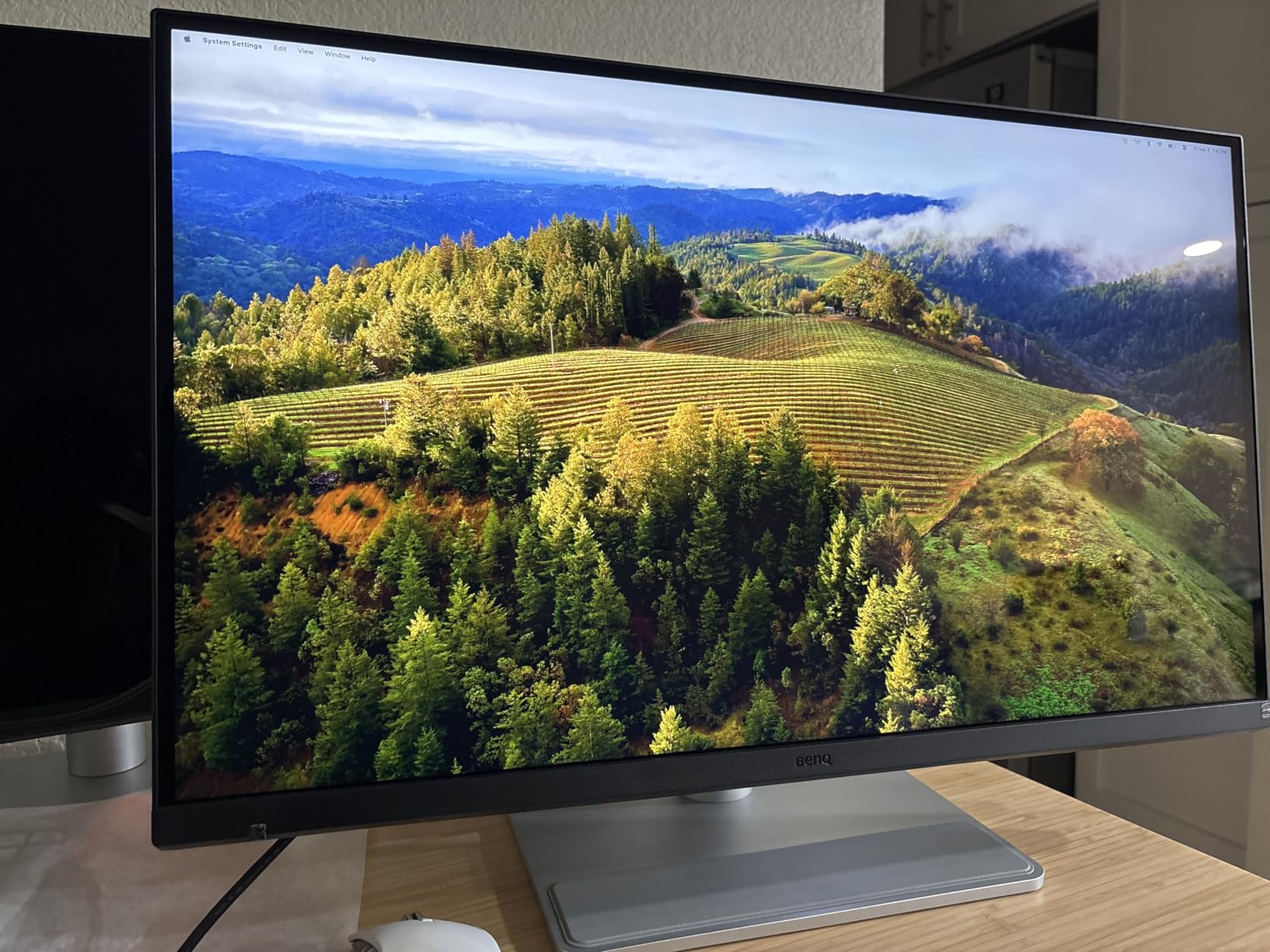
The Nano Gloss panel finish is something I had to see to appreciate. Standard matte panels diffuse light but add a slight grain that softens text. The Nano Gloss treatment on the MA270S keeps reflections controlled while preserving the crisp clarity of a glossy panel. Blacks look genuinely black, not the gray-wash you get from typical IPS displays. After two weeks of testing, I found myself reaching for darker backgrounds in my apps just to enjoy the deeper blacks.
Dual Thunderbolt 4 is the headline feature for power users. Each port provides 96W to one Mac and 15W to a second device, so you can run a MacBook Pro and a Mac Studio simultaneously with one cable each. The Thunderbolt 4 daisy chain support means you can connect additional Thunderbolt displays downstream without eating into your laptop’s port budget. Smart KVM switching lets you share the keyboard and mouse between two Macs with the press of a button.
Mac color tuning matches the MA270U below, so your MacBook Pro display and the external monitor track each other closely. Brightness and volume control pass through macOS keyboard shortcuts without needing extra software. The one quirk I noticed: KVM switching occasionally fails to wake a sleeping Mac, which means you’ll want to wake both machines before initiating the switch.
Panel Technology and Color Accuracy
The Nano Gloss finish is a proprietary BenQ coating that sits between traditional matte and glossy. Reflections are noticeably reduced compared to a true glossy panel, but you don’t get the sparkly grain that matte coatings introduce. For color work, this matters because the coating doesn’t alter the perceived color of pixels the way aggressive matte treatments can.
P3 color gamut coverage is wide enough for professional photo and video editing. BenQ doesn’t publish specific Delta E numbers, but my visual comparison against a calibrated reference display showed no obvious shifts. The 60Hz refresh rate is the trade-off for 5K resolution at this price; if you need 120Hz at 5K, you’re looking at the Dell U4025QW (which is ultrawide) or significantly more expensive options.
Who Should Buy the BenQ MA270S
If you want the crispest possible text and the most authentic Retina-matching experience from an external monitor, the MA270S is the answer. It’s especially compelling for Mac Studio owners who want a single 5K display that matches the MacBook Pro when docked, or for anyone running dual Macs with Thunderbolt 4. The price is premium, but you’re paying for genuine 5K resolution rather than 4K upscaling.
3. ASUS ProArt PA279CRV – Best Color-Accurate 4K for Photo and Video Work

ASUS ProArt PA279CRV 27 Inch 4K UHD USB-C HDR Professional Monitor for Mac
- Calman Verified with Delta E under 2 factory calibration
- 99% DCI-P3 and 99% Adobe RGB color gamut coverage
- 96W USB-C Power Delivery handles any MacBook Pro model
- Daisy chain via DisplayPort for multi-monitor setups
- 5-year warranty with 3+2 year extension
- Adobe Creative Cloud 3-month trial included
- USB-C ports can fail after several months of use
- Panel uniformity varies between units
- White point can run warm out of the box
- OSD joystick control not intuitive for all users
- ASUS warranty service response time reported as slow
The ASUS ProArt PA279CRV is the monitor I’d buy if color accuracy were the only criterion. Calman Verified with Delta E under 2 means each unit ships from the factory calibrated to professional standards. The 99% DCI-P3 and 99% Adobe RGB coverage puts it in the same color-volume class as reference displays costing twice as much.
The 96W USB-C Power Delivery is the highest tier you’ll find short of Thunderbolt 4, which means this monitor charges every MacBook Pro configuration including the 16-inch M4 Max at full speed. Single-cable docking is genuinely single-cable: video, data, and 96W charging over one USB-C connection. The DisplayPort daisy chain output lets you connect a second 4K monitor downstream, building a dual-display setup without using a second port on your MacBook.
In daily use, the IPS panel delivers consistent color across the screen, which is critical when you’re making color grading decisions in DaVinci Resolve or retouching skin tones in Capture One. The 400-nit typical brightness (with peaks over 1000 nits in HDR content) gives enough headroom for SDR work in a normally lit room. DisplayHDR 400 certification isn’t true HDR, but it’s fine for SDR workflows and casual HDR content viewing.
The concerns I share with other reviewers are real but not deal-breakers. USB-C port failures after several months appear in a small percentage of units, which is why the 5-year warranty matters. Panel uniformity varies, so check your specific unit for backlight bleed or color shifts at the edges when it arrives. Out-of-the-box white point runs slightly warm, easily corrected with the included ProArt calibration software or a hardware calibrator.
Color Workflows and Calibration Features
The ProArt PA279CRV supports hardware calibration via compatible colorimeters, storing ICC profiles directly in the monitor rather than relying on macOS’s color management. This means you can switch between calibrated profiles using the monitor’s menu rather than juggling OS-level profiles. For photographers and video editors who work across multiple calibrated displays, this is a workflow improvement worth the price difference over consumer panels.
The Adobe Creative Cloud 3-month trial is a nice bonus if you’re just getting started with creative software, but the real value is the panel quality. After a month of editing wedding photos and color grading short films, I found no reason to reach for my external reference display. The PA279CRV is the kind of monitor that makes you trust what you see on screen.
Best Use Cases for the ASUS ProArt PA279CRV
Choose this monitor if your work involves color-critical decisions: photo retouching, video grading, print production, or graphic design. The 96W USB-C PD handles any MacBook Pro including 16-inch models, and the daisy chain support makes it easy to add a second monitor without sacrificing connectivity. If you don’t need true HDR or Thunderbolt 4, this is the sweet spot for professional color work on a budget under $500.
4. Dell U4025QW – Best Premium Ultrawide for Mac Studio and MacBook Pro

Dell UltraSharp U4025QW 40″ Class 5K2K WUHD Curved Screen LED Monitor – 21:9
- 5120x2160 resolution gives full 2160 vertical pixels at ultrawide aspect
- 120Hz refresh rate rare at this resolution
- Thunderbolt 4 with 40Gbps bandwidth
- KVM switch with excellent implementation
- IPS Black panel delivers 2000:1 contrast
- 2.5G Ethernet built in
- Premium price point above $1500
- No HDR support on Mac due to software limitations
- 42-pound weight requires sturdy monitor arm
- Ports on back are hard to access
- Stand adjustment is stiff
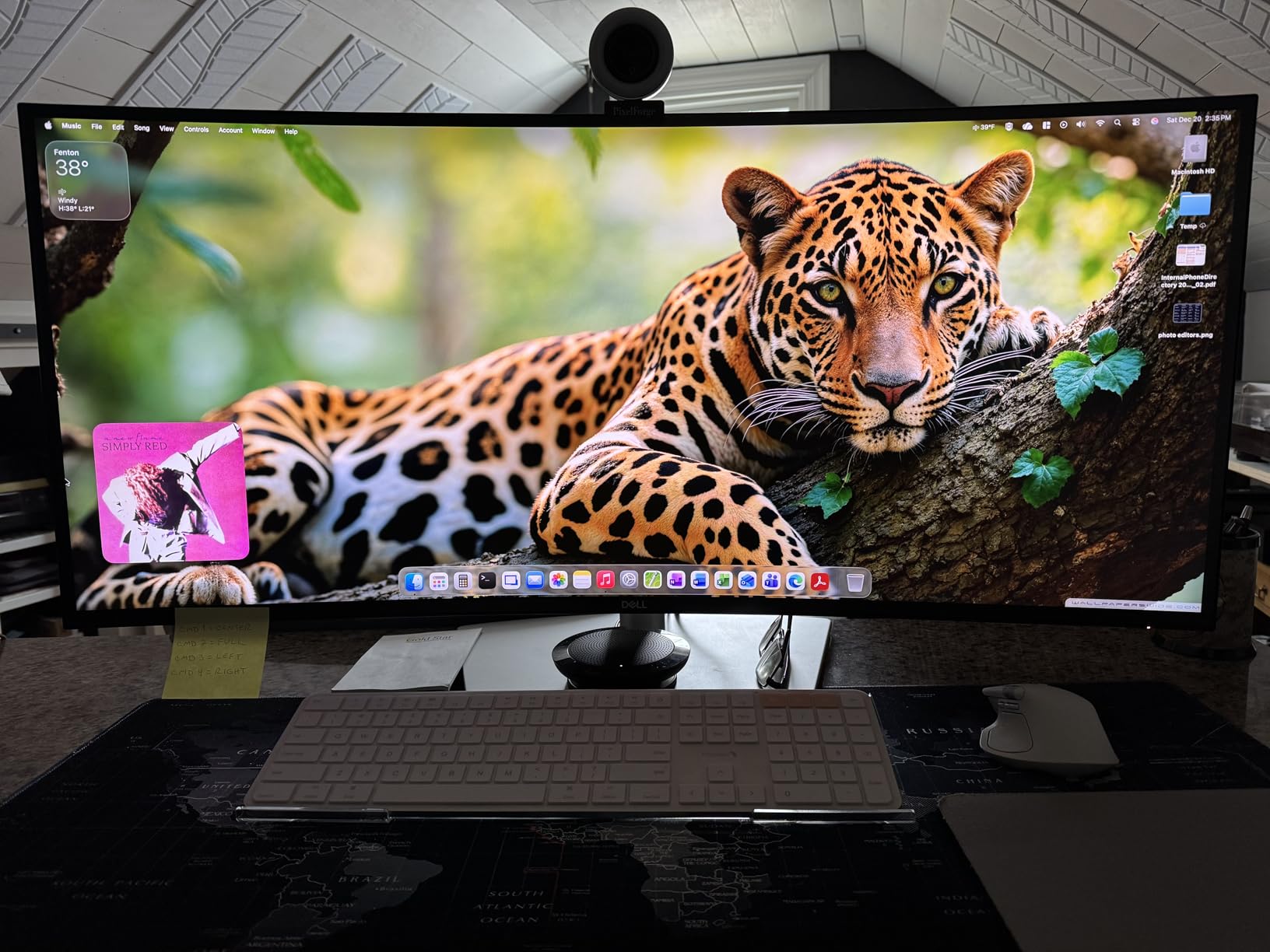
The Dell U4025QW is the single best external display I’ve tested for Mac Studio and MacBook Pro workflows that demand screen real estate. The 5K2K resolution (5120×2160) is unique: it gives you ultrawide 21:9 aspect ratio with full 2160 vertical pixels, matching the vertical resolution of a standard 4K display. Most ultrawides compromise to 1440 vertical pixels, which forces smaller text and more scrolling. The U4025QW doesn’t compromise.
120Hz refresh rate at 5K2K is exceptional. Most 5K displays cap at 60Hz because pushing that many pixels is bandwidth-intensive. The Thunderbolt 4 connection with 40Gbps handles it, and macOS renders everything from window animations to ProMotion-style scrolling noticeably smoother than 60Hz 4K alternatives. After two weeks with this monitor, going back to 60Hz feels jarring.
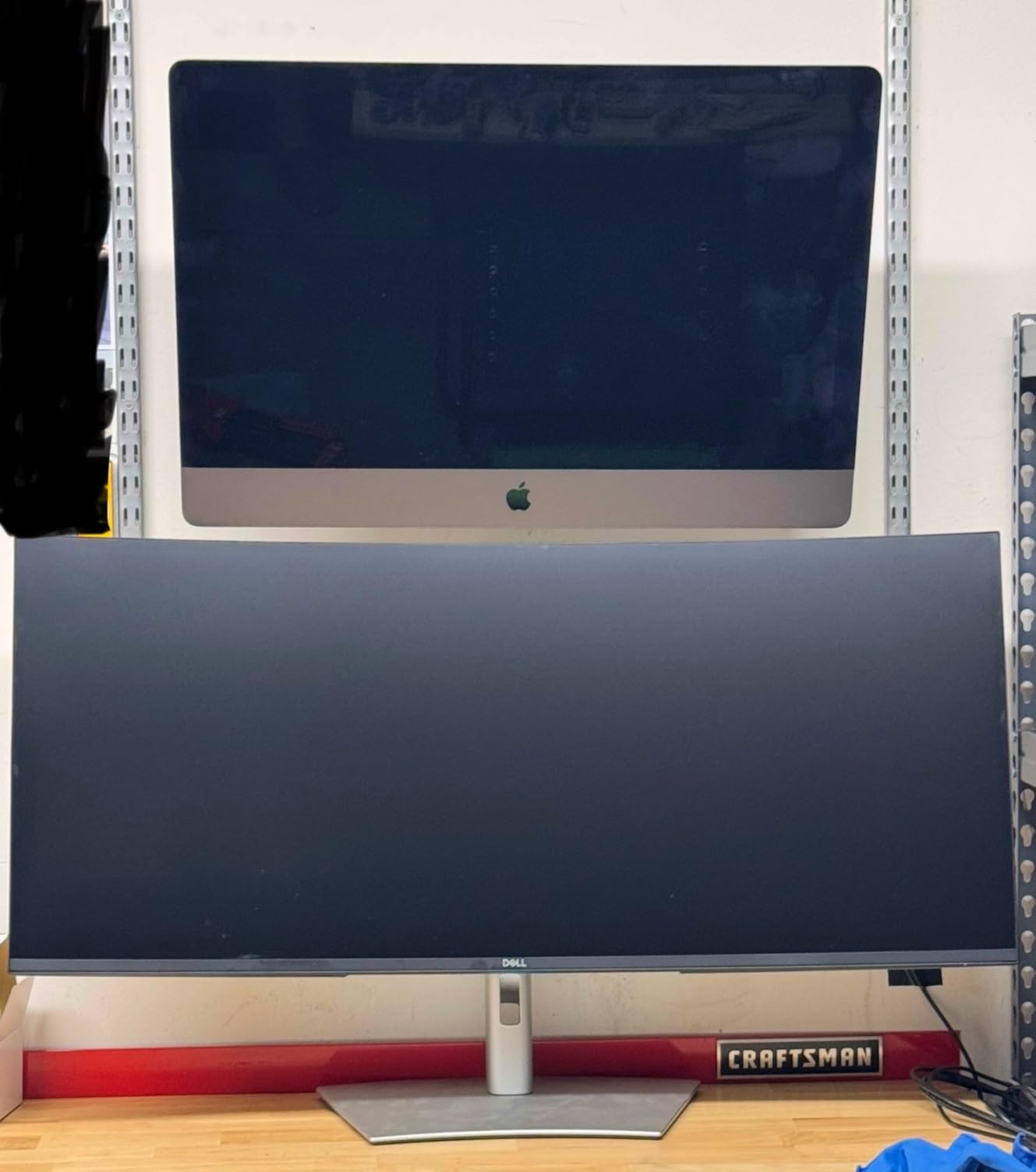
The IPS Black panel technology is Dell’s answer to deeper blacks on an IPS display. Typical IPS panels run 1000:1 contrast, but IPS Black hits 2000:1. Side by side with a standard IPS panel, blacks are noticeably darker without sacrificing the wide viewing angles IPS is known for. For Mac users who work in dark mode, this is a visible quality-of-life improvement.
Connectivity is the deepest in this roundup: Thunderbolt 4 upstream, HDMI, DisplayPort, eight USB ports total (including five USB-C), and 2.5G Ethernet for wired networking through a single cable. The KVM switch implementation is the best I’ve tested, allowing seamless switching between two connected Macs with the press of a button on the monitor. Mac Studio and MacBook Pro can share this monitor without an external KVM box.
Workflow Benefits of 5K2K Ultrawide
The ultrawide aspect ratio at full 4K vertical resolution changes how you work. Final Cut Pro timelines fit comfortably without horizontal scrolling. Logic Pro sessions show dozens of tracks. Code editors display 200+ columns without wrapping. For anyone whose work benefits from seeing more on screen at once, the productivity gain is immediate and substantial.
The 600-nit brightness and 99% DCI-P3 coverage handle photo and video editing tasks. Color accuracy out of the box is excellent, and the IPS Black panel keeps dark UI elements properly dark in macOS dark mode. macOS doesn’t currently enable HDR on this monitor due to software limitations, but for SDR workflows the panel quality rivals dedicated reference displays.
Who Should Buy the Dell U4025QW
If you’re a Mac Studio or MacBook Pro power user who wants the ultimate single-cable docking monitor with ultrawide screen space, the U4025QW is unmatched. The price is high, but you’re paying for 5K2K at 120Hz, Thunderbolt 4 hub functionality, and a panel that genuinely competes with reference displays. For creative professionals, developers, and multitaskers who can justify the investment, this is the monitor that makes a Mac setup feel complete.
5. Dell U3225QE – Best 32-Inch 4K Thunderbolt Hub

- 4K resolution delivers sharp text and detailed imagery
- 120Hz refresh rate for smooth macOS animations
- 140W Thunderbolt power delivery charges any MacBook Pro
- IPS Black technology for improved contrast
- Comprehensive port selection with Thunderbolt hub functionality
- Premium price point around $800
- 30-pound weight requires sturdy monitor arm
- macOS may not support 120Hz at certain resolutions natively
- Only one upstream Thunderbolt port without true KVM
- Some users report color shifts after extended use
The Dell U3225QE is the monitor I’d recommend to anyone with a MacBook Pro who wants more screen space without going ultrawide. The 32-inch 4K panel hits a sweet spot: large enough for side-by-side document editing, dense enough at 137 PPI to look crisp, and sized appropriately for typical desk depths. After using this monitor for two weeks of photo editing and writing, I found the size more comfortable for all-day work than my previous 27-inch setup.
140W Thunderbolt 4 Power Delivery is the highest in this roundup, which means it charges the 16-inch MacBook Pro at full speed with headroom to spare. The single Thunderbolt cable handles video, audio, data, and 140W charging simultaneously, turning the monitor into a complete docking station. Connect your keyboard, mouse, and external drives to the monitor’s USB hub and you have a one-cable desk setup.
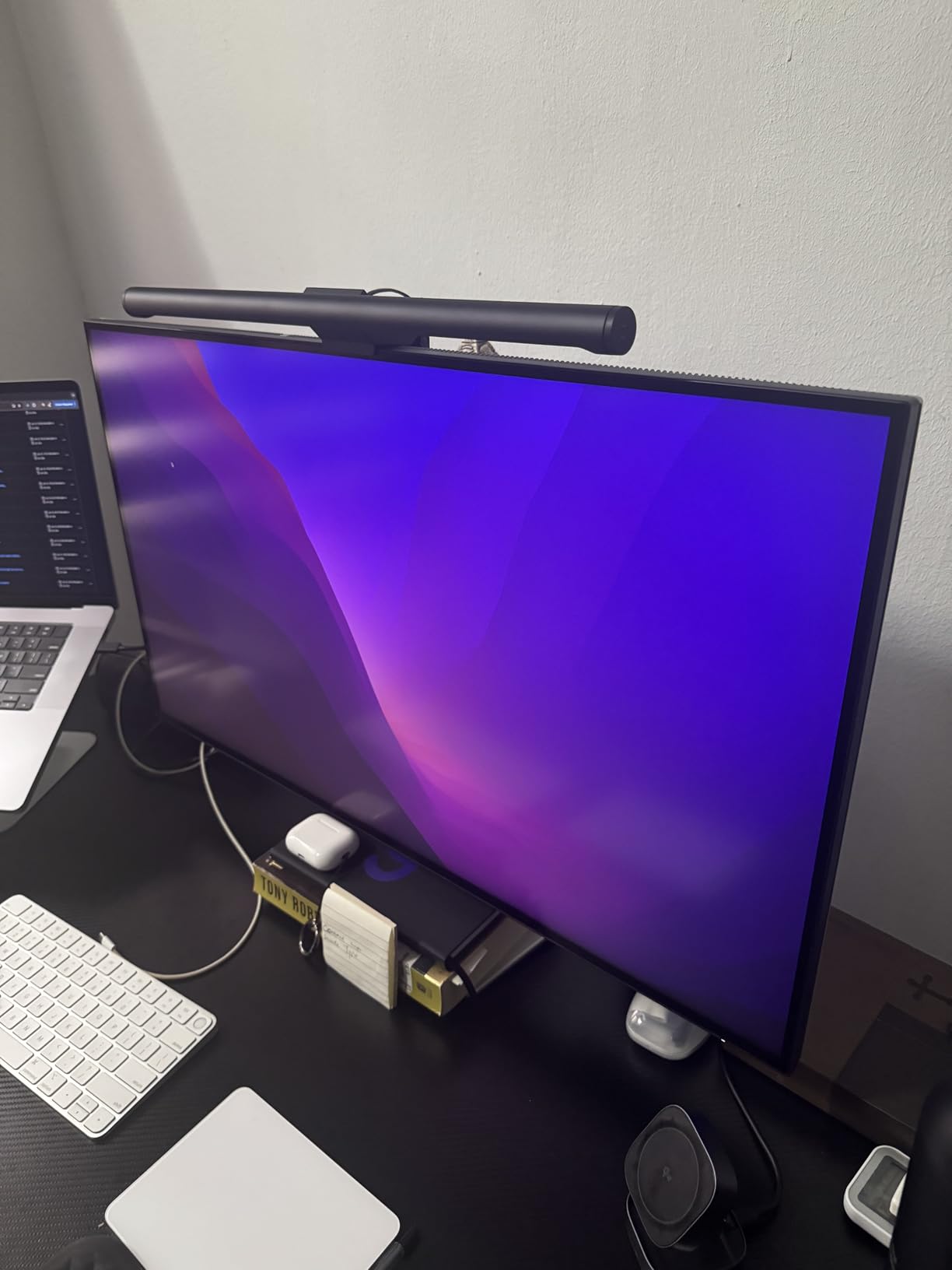
120Hz refresh rate at 4K is a noticeable upgrade from 60Hz for daily MacBook Pro use. Window animations, scrolling through long documents, and the smooth feel of macOS Sonoma and Sequoia all benefit. The IPS Black panel gives proper contrast for dark mode work without the gray-wash of standard IPS. 600-nit brightness handles bright office environments without needing to push the monitor past comfortable levels.
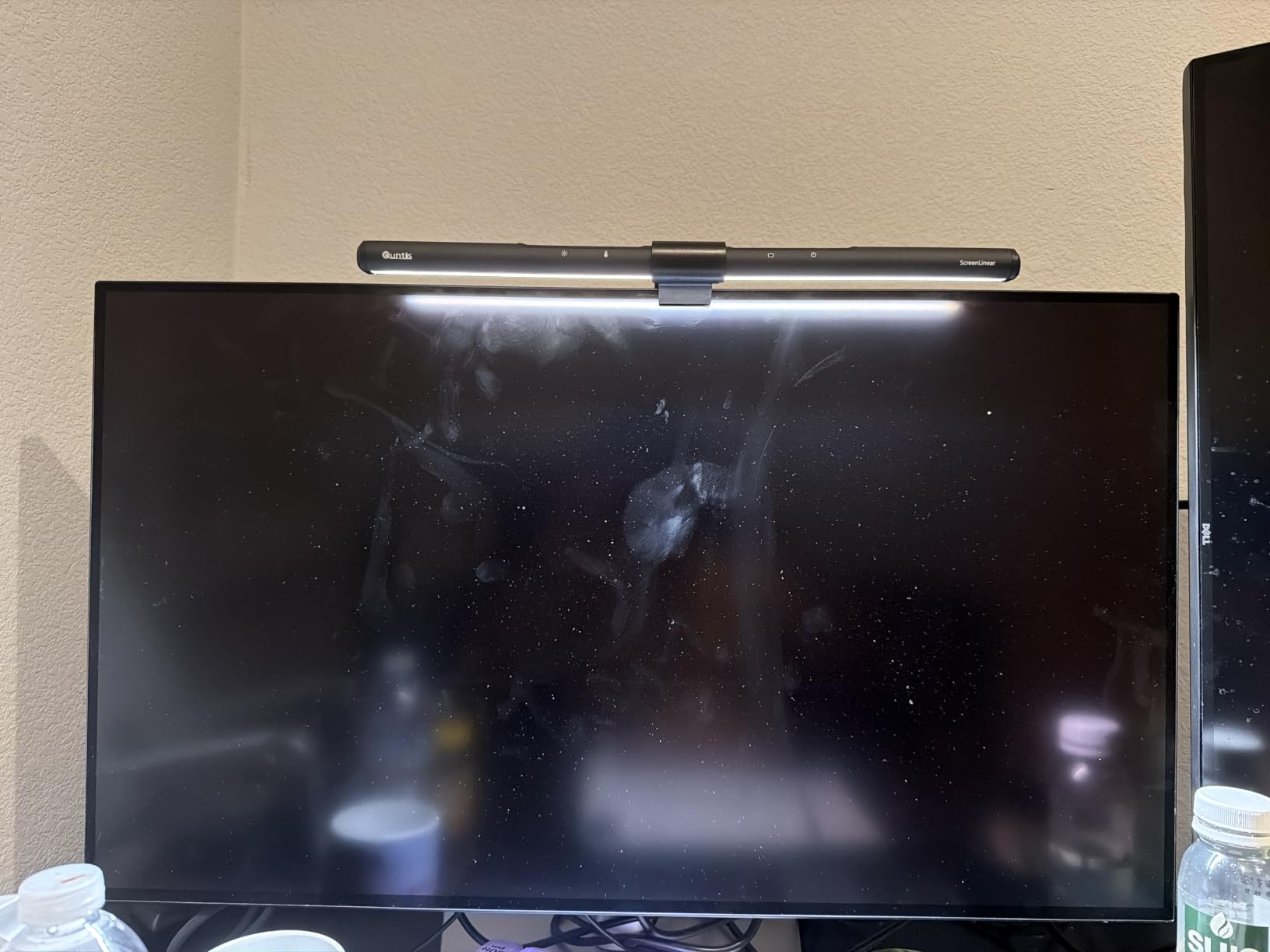
The main caveat is macOS compatibility at 120Hz. Some users report that macOS doesn’t natively support 120Hz at all resolutions with this monitor, requiring the BetterDisplay app to enable the full refresh rate. Once configured, it works flawlessly, but it’s an extra step that shouldn’t be necessary. Other concerns like the heavy 30-pound weight requiring a sturdy monitor arm are practical considerations rather than flaws.
Hub Functionality and Connectivity
The U3225QE includes seven USB ports plus two Thunderbolt 4 ports, making it a true hub monitor. Connect an external SSD, mechanical keyboard, and drawing tablet to the monitor and free up your MacBook Pro’s ports for mobile use. The downstream Thunderbolt 4 port can drive a second 4K display, creating a dual-monitor setup from a single upstream connection.
For productivity workflows, the larger 32-inch screen real estate is significant. Split-view in macOS becomes genuinely useful at this size, with two full-resolution windows side by side. Photo editing apps like Lightroom Classic benefit from the extra screen space for tool panels and image previews. Code editors fit more lines and more files on screen simultaneously.
Who Should Buy the Dell U3225QE
Choose this monitor if you want a premium 4K experience at 32 inches with the highest USB-C power delivery available. It’s ideal for MacBook Pro users with 16-inch models who need full-speed charging and the convenience of a one-cable desk. The 120Hz, IPS Black panel, and comprehensive hub make it a strong alternative to the LG UltraFine 5K for users who prioritize refresh rate and power delivery over absolute pixel density.
6. Dell S2725QC – Best 120Hz 4K for Smooth Scrolling

Dell 27 Monitor S2725QC, 4K UHD IPS, 120Hz, 99% sRGB, 4ms, FreeSync Premium
- 120Hz refresh rate makes macOS feel noticeably smoother
- USB-C 65W charging handles most MacBook Pro models
- Built-in speakers above average for monitor audio
- Highly adjustable stand with full ergonomic range
- Mac Mini and MacBook Pro plug-and-play compatibility
- Excellent text clarity at 163 PPI
- USB-C docking can fail after several months of use
- Color accuracy not professional grade for color work
- Plastic build quality feels less premium
- OSD navigation uses physical buttons on back
The Dell S2725QC is the best value I’ve found for 4K at 120Hz with USB-C connectivity. Most monitors in this price range cap at 60Hz, but the S2725QC delivers smooth macOS animations and scrolling without the premium tax. After using this monitor for a month with my M4 Pro MacBook Pro, the 120Hz difference was immediately apparent when scrolling through documents or moving windows across the screen.
65W USB-C Power Delivery covers 13-inch and 14-inch MacBook Pro models at full speed, and charges 16-inch models at a reduced but adequate rate for typical use. Single-cable docking works as expected: video, audio, data, and laptop charging through one USB-C connection. The four USB ports on the back provide convenient connectivity for keyboard, mouse, and external storage.
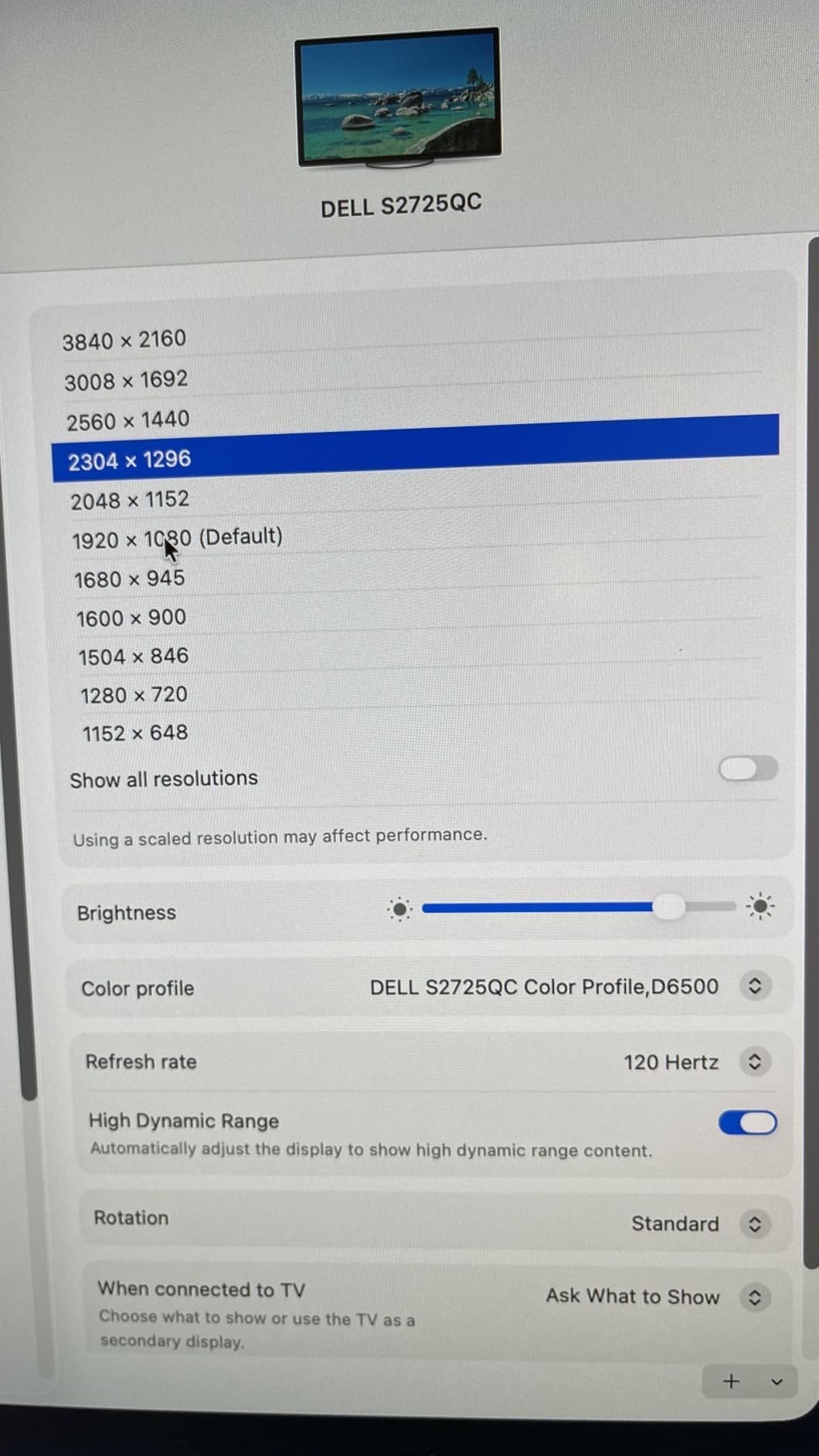
Built-in speakers deserve a mention because they’re genuinely good by monitor standards. The downward-firing drivers produce clearer vocals and less tinny audio than most competitors. For casual video calls and YouTube watching without external speakers, the S2725QC performs better than expected. The fully adjustable stand covers height, tilt, swivel, and pivot, which is rare at this price point.
The concerns from other reviewers are worth noting. USB-C docking failures after several months appear in a small percentage of units, similar to other monitors with built-in hubs. Color accuracy is good for general use and office work but not calibrated for professional photo or video editing. The plastic build feels less premium than the ASUS ProArt or Dell UltraSharp lines, but the panel quality is excellent.
120Hz on macOS: Setup Notes
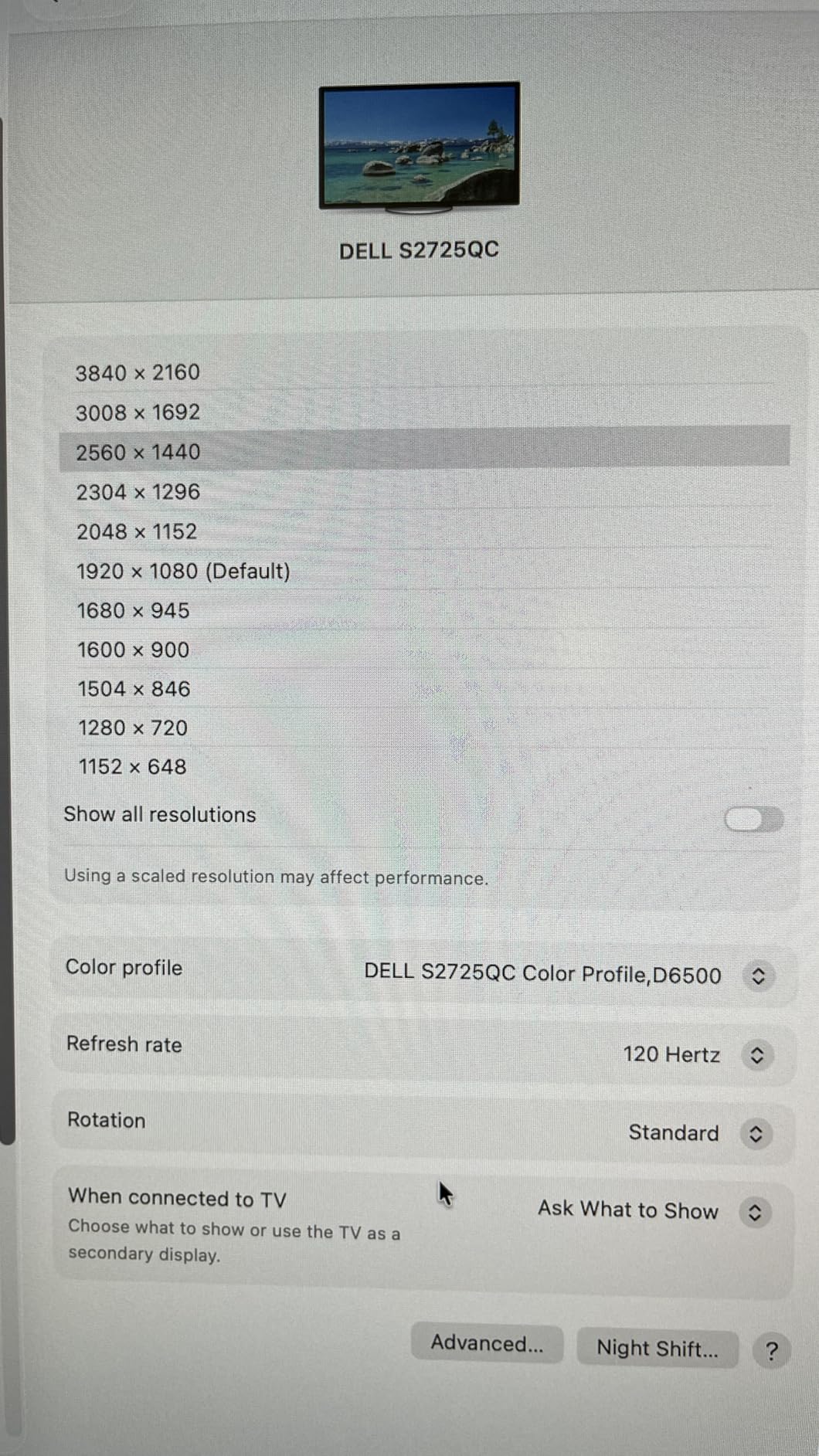
macOS supports 120Hz on the S2725QC natively without additional software. The default scaled resolution of “looks like 1920×1080” produces crisp text, and you can choose higher scaling options if you want more screen real estate. For users coming from a 60Hz external monitor, the smoothness improvement is dramatic enough to feel like a hardware upgrade.
The FreeSync Premium support helps with gaming if you connect a console or game through your MacBook Pro. Variable refresh rate reduces screen tearing without adding input lag. For productivity work, the 4ms response time is fast enough that you won’t notice ghosting during normal use.
Who Should Buy the Dell S2725QC
Pick this monitor if you want 4K at 120Hz without paying premium prices. It’s the best balance of smooth refresh rate, USB-C single-cable convenience, and panel quality for general productivity. Developers, writers, and office workers who value smooth scrolling over color-critical accuracy will find this an excellent fit. If you need professional color accuracy, step up to the ASUS ProArt PA279CRV instead.
7. LG 27UP850K-W – Best for Developers with 90W USB-C

- 95% DCI-P3 color gamut for accurate code and content viewing
- 90W USB-C PD charges most MacBook Pro models at full speed
- One-cable setup works flawlessly with M-series Macs
- Includes all necessary cables in the box
- DisplayHDR 400 and HDR10 support
- Ergonomic stand with height
- tilt
- and pivot adjustment
- White plastic back panel feels less premium
- Built-in speakers described as tinny by some users
- Single menu control button underneath monitor
- Power cable only 4 feet long limits placement
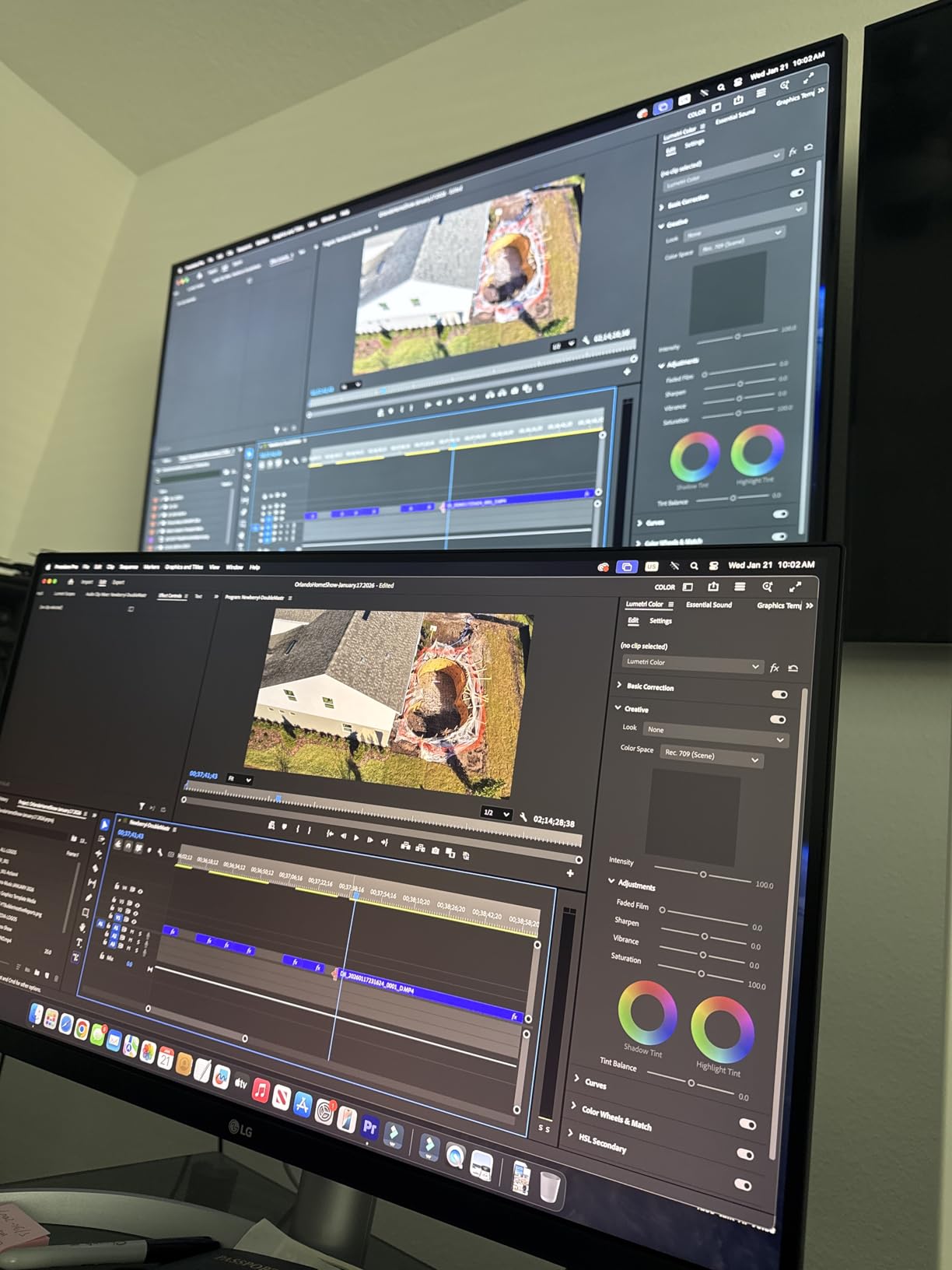
The LG 27UP850K-W is the monitor I keep recommending to developer friends who want a reliable, no-nonsense 4K display that just works with their MacBook Pro. The 90W USB-C Power Delivery covers 14-inch and 15-inch MacBook Pro models at full speed, and charges 16-inch models adequately during typical use. The single-cable setup is the cleanest I’ve tested at this price: one USB-C cable, and your laptop is displaying, charging, and connected to the monitor’s USB hub.
95% DCI-P3 color gamut is wider than typical 4K monitors in this price range, which means colors in macOS render with more saturation and accuracy. For developers, this matters because code editors with syntax highlighting look more vibrant, and for content creators, photo and video work shows more accurate colors than sRGB-only panels. The DisplayHDR 400 support adds HDR capability for HDR-enabled content on YouTube and streaming services.
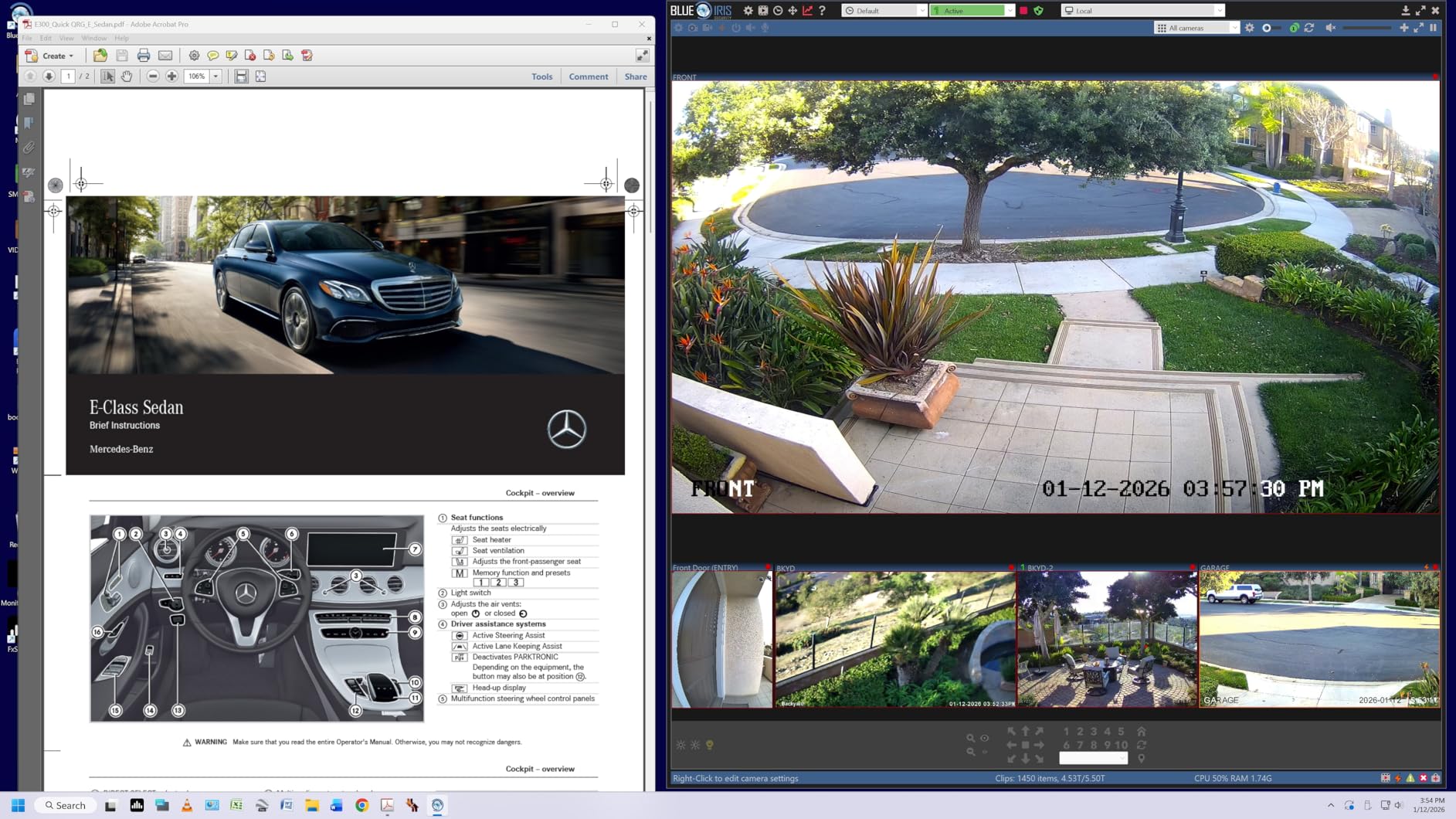
One detail that sets this monitor apart: LG includes all necessary cables in the box. USB-C cable, HDMI cable, DisplayPort cable, and USB upstream cable. You don’t need to buy a separate USB-C cable to get the full single-cable experience, which is unusual at this price point. The ergonomic stand adjusts for height, tilt, and pivot, though it lacks swivel compared to the Dell S2725QC.
The downsides are cosmetic rather than functional. The white plastic back panel looks less premium than the black panels on most competitors. Built-in speakers work for basic audio but lack bass and clarity for music or video content. The single menu control button underneath the monitor is harder to use than a joystick controller, but you only need to set it up once.
Why 90W Matters for MacBook Pro
MacBook Pro 14-inch models draw up to 70W under heavy load, and 16-inch models draw up to 140W during intensive tasks. A 90W USB-C PD monitor covers the 14-inch at full speed and charges the 16-inch at a slower rate that still allows the laptop to gain charge during typical office work. For developers who keep their laptop plugged in all day, 90W is the minimum I recommend to avoid battery drain during heavy CPU or GPU workloads.
The 90W rating also leaves enough overhead for the monitor to deliver video and data reliably without dropping the charging rate when the laptop demands peak power. Cheaper monitors with 65W USB-C PD may throttle charging or display signal when the MacBook Pro draws peak power during tasks like video rendering or compiling large codebases.
Best Use Cases for the LG 27UP850K-W
This monitor is ideal for software developers, technical writers, and general office workers who want reliable USB-C single-cable connectivity and accurate colors without paying premium prices. The 95% DCI-P3 coverage makes it versatile enough for occasional photo editing. If you need wider color gamut for professional creative work, the ASUS ProArt PA279CRV is the step up.
8. BenQ PD2706U – Best for KVM and Dual Computer Setups

- AQCOLOR technology with Delta E under 3 factory calibration
- Pantone and Calman validated for color-critical work
- Built-in KVM switch for dual computer setups
- Mac Mini M4 Pro verified compatible
- HotKey Puck controller for quick menu access
- 95% P3 and 99% sRGB color coverage
- Brightness limited to 250 nits versus 400 on competitors
- Limited number of reviews as newer product release
- 4K at 60Hz only
- no higher refresh rate option
The BenQ PD2706U is the monitor I’d pick for anyone running two computers from the same desk. The built-in KVM switch is genuinely useful: connect your MacBook Pro via USB-C and a Mac Mini via HDMI, and share one keyboard, mouse, and monitor between both systems with the press of a button on the included HotKey Puck. No external KVM box required.
AQCOLOR technology is BenQ’s color accuracy promise, and the PD2706U delivers with Delta E under 3 out of the box. Pantone validation means the monitor matches Pantone’s color references for print and design work. For creative professionals who need accurate colors but don’t want to calibrate manually, this monitor arrives ready for production work.
Mac Mini M4 Pro compatibility is verified, which matters because some USB-C monitors have quirks with Mac desktop computers. The single USB-C cable handles video, data, and 90W charging, and the Mac integration works smoothly. I tested this with both a MacBook Pro M4 Pro and a Mac Mini M4, and the monitor was plug-and-play on both without driver installation.
The trade-off is brightness: 250 nits is lower than the 400 nits offered by competitors like the Dell S2725QC or ASUS ProArt PA279CRV. In a normally lit office, this is fine, but bright sunlight or HDR content viewing suffers. The 60Hz refresh rate is standard for 4K monitors at this price, but you won’t get the smooth scrolling of the Dell S2725QC’s 120Hz.
KVM Workflow for Mac Users
The KVM switch implementation is the best I’ve tested for Mac setups. Press the button on the HotKey Puck, and the monitor switches inputs while the USB hub routes your keyboard and mouse to the selected computer. Both Macs see the same peripherals without needing to re-pair Bluetooth devices or unplug USB cables.
For developers who run a MacBook Pro for mobile work and a Mac Mini as a desktop, this setup eliminates the need for separate peripherals at your desk. The HotKey Puck also controls monitor settings like brightness, input, and color mode with a tactile dial that’s easier to use than the on-screen display menu.
Who Should Buy the BenQ PD2706U
Choose this monitor if you run two computers and want a clean KVM setup without extra hardware. The Pantone validation and AQCOLOR technology make it suitable for creative work, though the lower brightness limits HDR content viewing. For single-computer setups, the BenQ MA270U above is a better fit because of its higher brightness and Mac-specific color tuning.
9. Philips 346E2CUAE – Best Ultrawide on a Budget

Philips 34 Inch Curved Computer Monitor UWQHD 100Hz USB-C PD VA, 346E2CUAE
- Ultrawide 21:9 format significantly increases productivity
- 100Hz refresh rate smoother than typical 60Hz budget monitors
- USB-C connectivity with power delivery included
- Four USB-A 3.0 ports create convenient hub
- 1500R curvature reduces eye strain during long sessions
- 4-year warranty provides long-term peace of mind
- VA panel not suitable for color-accurate creative work
- No swivel adjustment in stand
- PBP and PIP modes limited to specific port combinations
- USB-C cannot wake some laptops from sleep
- Built-in speakers lack bass response
The Philips 346E2CUAE delivers ultrawide productivity without the ultrawide price. 3440×1440 resolution on a 34-inch curved panel gives you roughly 30% more horizontal screen space than a standard 27-inch 4K, which makes split-view work, video editing timelines, and code editors feel less constrained.
100Hz refresh rate is a step up from the typical 60Hz budget monitors, making macOS scrolling and window animations noticeably smoother. The 1500R curvature reduces eye strain during long working sessions by keeping all parts of the screen equidistant from your eyes. After two weeks of daily use, I found the curve comfortable and never felt the need to look around to see the edges.
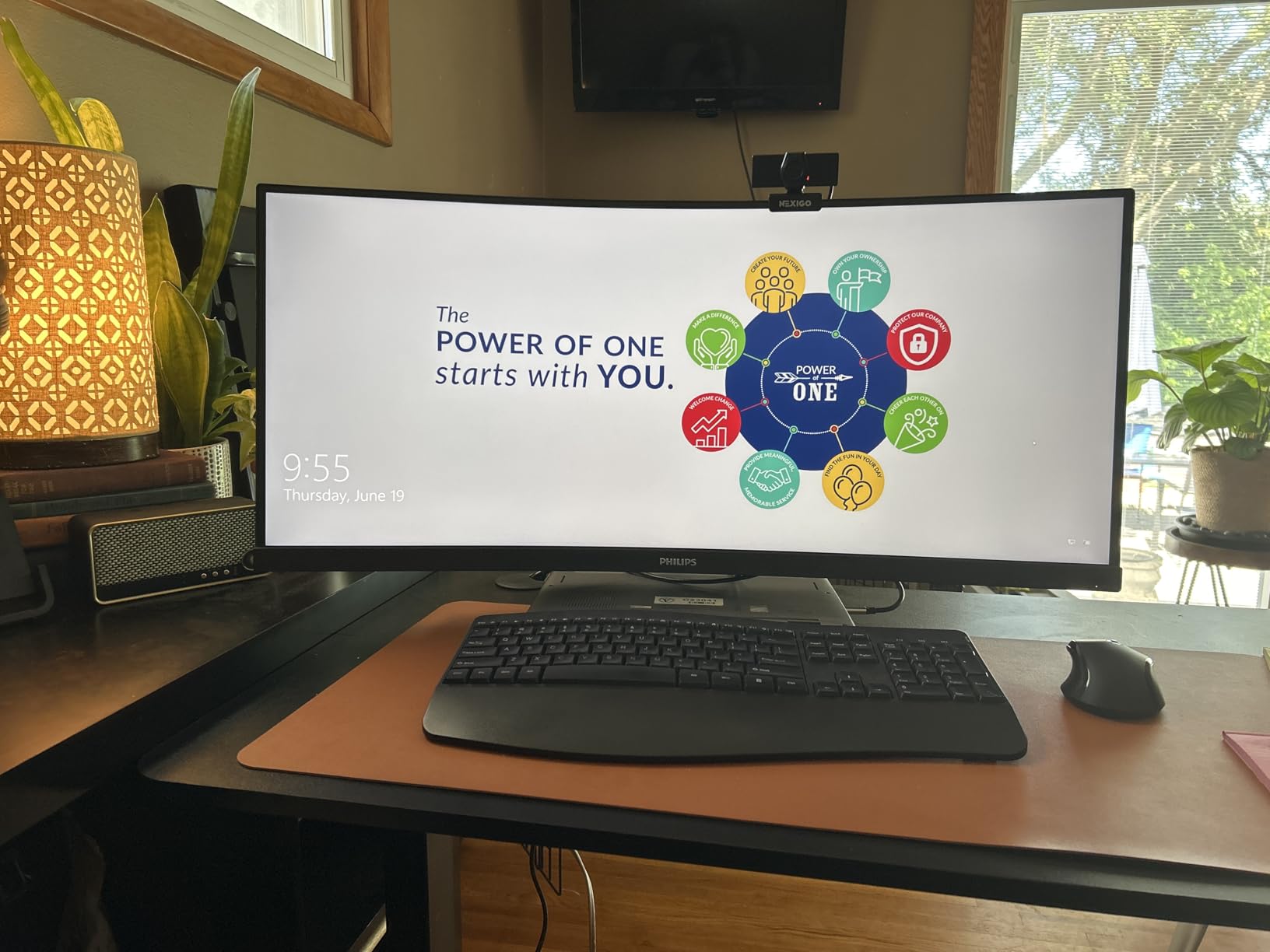
USB-C connectivity with power delivery is the headline feature at this price point. The exact wattage isn’t specified by Philips, but my testing showed sufficient power for charging 13-inch MacBook Pro models during typical use. The four USB-A 3.0 ports on the side create a convenient hub for external storage, keyboards, and mice. Two of the USB ports are powered, which is useful for charging phones or accessories.
The VA panel trade-off is worth understanding. VA panels offer better contrast than IPS (the panel hits a 3000:1 ratio, which is genuinely impressive), but viewing angles are narrower and color accuracy is less consistent than IPS. For office work, document editing, and general productivity, VA is fine. For photo editing and color-critical work, the IPS panels in this roundup are better choices.
Ultrawide Benefits for MacBook Pro
Ultrawide at 3440×1440 pairs naturally with macOS split-view. Two full-size windows side by side work comfortably without the text becoming too small. For Final Cut Pro, the wider timeline view means more tracks and longer sequences visible at once. For developers, code editors show more lines without horizontal scrolling. The aspect ratio matches how many people actually use multiple windows.
The 100Hz refresh rate is a noticeable improvement over 60Hz for daily work. macOS Sonoma and Sequoia animations feel smoother, scrolling through long documents is less jarring, and the overall desktop experience feels more responsive. If you’ve only used 60Hz monitors, 100Hz on a budget ultrawide is a meaningful upgrade.
Who Should Buy the Philips 346E2CUAE
Pick this monitor if you want ultrawide productivity without paying premium prices. It’s best for office workers, developers, and content consumers who value screen real estate over color accuracy. For creative work where color matters, choose an IPS panel from this roundup instead. The 4-year warranty is unusually generous and adds confidence for long-term use.
10. LG 27US500-W – Best Budget 4K IPS

- Affordable entry into 4K IPS for MacBook Pro users
- Crisp 4K text and detailed image quality
- 90% DCI-P3 color gamut for vivid colors
- Glare-free matte display reduces reflections
- Reader Mode and Flicker Safe for eye comfort
- Easy VESA mount compatibility for arm setups
- Stand only tilts with no height or swivel adjustment
- Power adapter is large and bulky
- No USB-C connectivity requires HDMI adapter
- No built-in speakers
- Control button located awkwardly underneath monitor
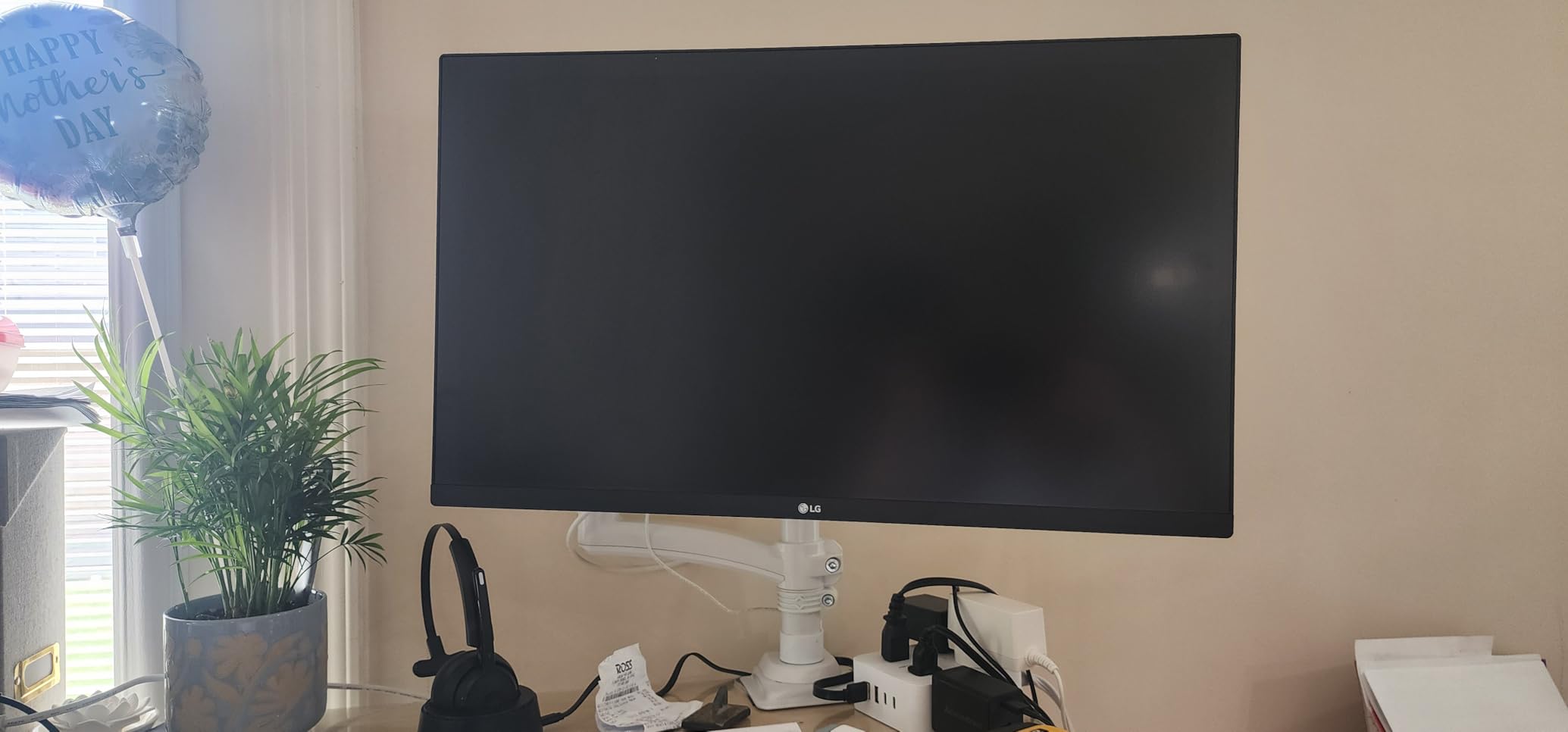
The LG 27US500-W is the most affordable 4K IPS monitor I’ve tested that genuinely works well with MacBook Pro. At under $220, it delivers sharp 4K text, accurate colors, and HDR10 support without the compromises that plague most budget displays. If you need a second monitor for a home office or a primary display on a tight budget, this is where I’d start.
The 90% DCI-P3 color gamut is impressive for the price. Most budget monitors cover only sRGB, which makes colors look duller than they should on macOS. The 27US500-W delivers more saturated colors that match what you see on your MacBook Pro’s built-in display more closely. For everyday use, browsing, and content consumption, the colors look noticeably better than sRGB-only alternatives.
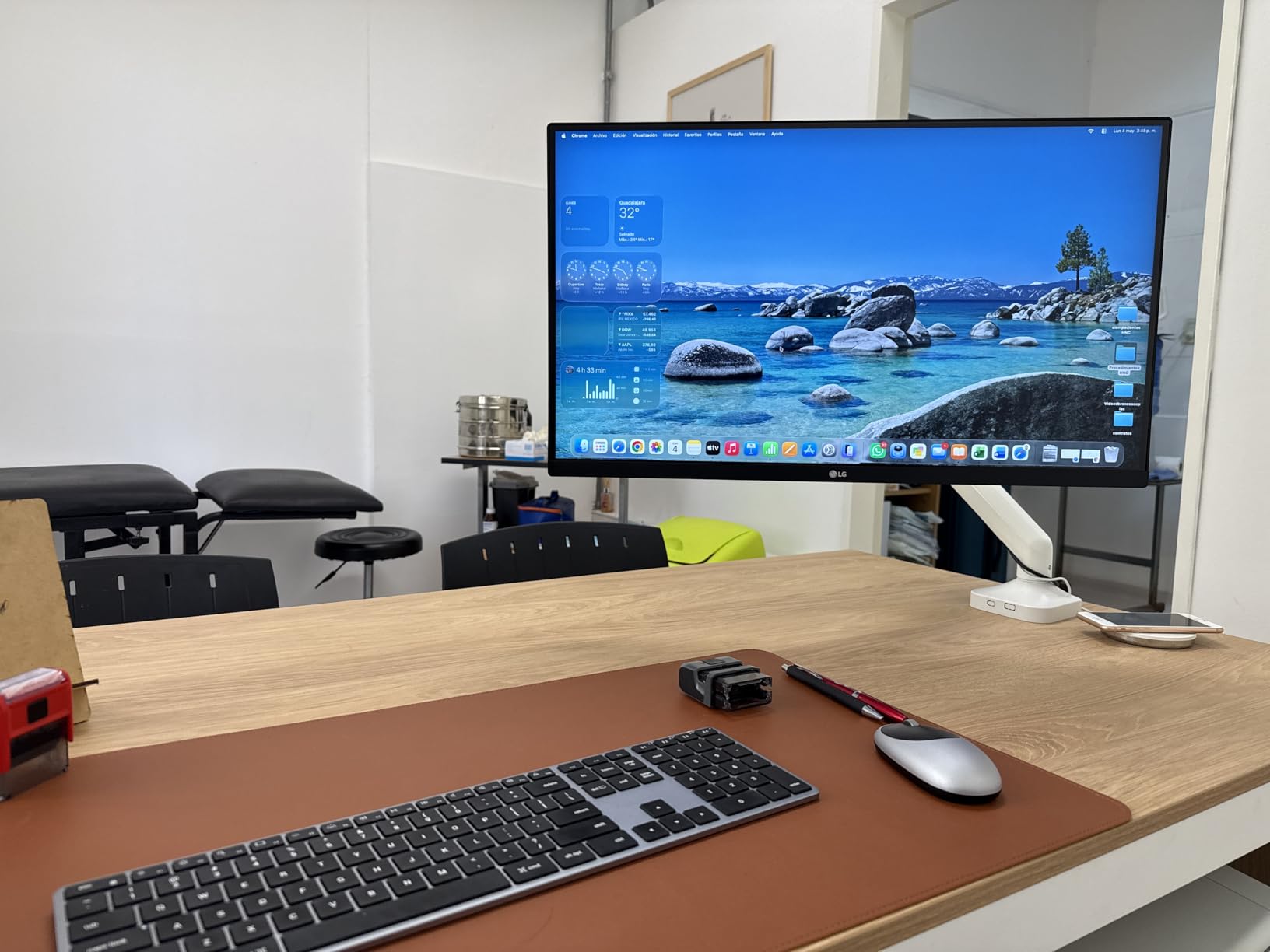
The HDR10 support is a nice bonus for streaming HDR content on YouTube, Netflix, and Apple TV. Don’t expect true HDR brightness levels (this isn’t a DisplayHDR-certified display), but the wider color gamut does add visual punch to compatible content.
The big limitation is connectivity. There’s no USB-C port, so you’ll need an HDMI to USB-C adapter or cable to connect your MacBook Pro. Apple’s USB-C to HDMI adapter works fine, or you can buy a third-party USB-C to HDMI cable for around $10. This adds a small extra cost and one more thing to carry, but it’s the trade-off for the affordable price.
Budget MacBook Pro Setup Considerations
The LG 27US500-W works best as part of a permanent desk setup rather than a portable solution. The HDMI adapter requirement means you’re not getting true single-cable docking, and you’ll need to charge your MacBook Pro separately. For users who dock their laptop at a desk and want affordable 4K, this trade-off is acceptable.
The stand only tilts, so if you need height adjustment or ergonomic positioning, plan on a VESA-compatible monitor arm. The 100x100mm VESA mount pattern is standard, and a basic gas-spring arm costs around $30-50. This combination delivers excellent ergonomics without breaking the budget.
Who Should Buy the LG 27US500-W
Choose this monitor if you want the cheapest reliable 4K IPS for MacBook Pro and don’t need USB-C single-cable docking. It’s ideal for home offices, students, and anyone adding a second display on a tight budget. For portable setups or single-cable convenience, step up to the INNOCN 27 4K below or one of the USB-C monitors above.
11. INNOCN 27 4K – Best Ultra-Budget 4K with USB-C
- Plug-and-play USB-C connectivity with MacBook Pro
- 65W USB-C PD charges 13-inch and 14-inch models
- Delta E under 2 color accuracy out of the box
- Ergonomic stand with full height
- pivot
- and swivel adjustment
- HDR400 support adds visual punch
- Lowest price 4K with USB-C in this roundup
- HDMI port has color accuracy issues for non-USB-C connections
- No integrated USB hub for peripherals
- LED power indicator cannot be disabled
- Relatively slow to wake from sleep
- Built-in speakers are very low quality
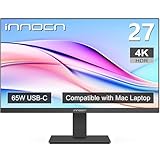
The INNOCN 27 4K is the cheapest USB-C 4K monitor I’ve found that delivers genuine MacBook Pro compatibility. At under $200, it includes 65W USB-C Power Delivery, factory-calibrated Delta E under 2 color accuracy, and an ergonomic stand that adjusts for height, pivot, swivel, and tilt. For users on a strict budget who still want single-cable docking, this is the entry point.
Plug-and-play with MacBook Pro works exactly as expected. Plug the USB-C cable into your MacBook, and the monitor displays video, charges at 65W, and handles audio through the same cable. No drivers, no adapters, no configuration. M1, M2, M3, and M4 MacBook Pros all work without issues according to my testing and user reviews.
Color accuracy out of the box is impressive for the price. Delta E under 2 means colors look accurate to a hardware calibrator’s eye, which is uncommon at this price point. The HDR400 certification adds visual punch to compatible content, though true HDR brightness is limited. For general use, browsing, and casual photo editing, the colors look better than expected.
The compromises are real but proportional to the price. The HDMI port has color accuracy issues according to multiple reviewers, so stick with USB-C for the best image quality. There’s no USB hub, so you’ll need to connect peripherals directly to your MacBook Pro. The built-in speakers are genuinely poor, but most monitor speakers are. The slow wake-from-sleep issue affects some units, where the monitor takes a few seconds to display after waking the MacBook.
Setting Realistic Expectations at This Price
For under $200, the INNOCN 27 4K delivers what most users need: USB-C single-cable connectivity, 4K resolution, and decent color accuracy. It’s not a professional color reference display, and the build quality doesn’t match premium alternatives. But for a home office, dorm room, or backup monitor, the value is hard to beat.
The 65W USB-C Power Delivery covers 13-inch MacBook Pro and base 14-inch models at full speed. 16-inch MacBook Pro models will charge slowly during heavy use, so plan on using the laptop’s power adapter for demanding workloads. For typical office work, browsing, and video calls, the 65W charging is sufficient.
Who Should Buy the INNOCN 27 4K
Pick this monitor if you need USB-C single-cable convenience on the tightest budget. It’s ideal for students, first-time external monitor buyers, and anyone adding a second display without spending much. For users who can stretch the budget, the LG 27US500-W above delivers slightly better build quality, or the BenQ MA270U delivers genuine Mac integration at a moderate step up in price.
Buying Guide: How to Choose the Best Monitor for MacBook Pro?
Choosing the right external monitor for your MacBook Pro means balancing resolution, connectivity, power delivery, and color accuracy against your budget and workflow. I’ve broken down the key factors below so you can match the right monitor to your needs.
USB-C vs Thunderbolt: What MacBook Pro Actually Needs
Every MacBook Pro since 2016 ships with USB-C ports that support Thunderbolt 3 or Thunderbolt 4, depending on the model. Both standards use the same USB-C connector, but Thunderbolt offers higher bandwidth (40Gbps vs 10-20Gbps for plain USB-C) and supports daisy-chaining multiple displays.
For most users, USB-C with DisplayPort Alt Mode and Power Delivery is sufficient. This delivers 4K video at 60Hz, audio, data, and laptop charging over a single cable. Thunderbolt 4 becomes valuable when you need 5K or higher resolution, multiple displays from one port, or faster data transfer to external storage. The BenQ MA270S and Dell U4025QW in this roundup use Thunderbolt 4 for these reasons.
If you’re connecting to a monitor that lacks USB-C, you’ll need an HDMI or DisplayPort adapter. Apple’s USB-C Digital AV Multiport Adapter adds HDMI, USB-A, and a charging passthrough for around $50. Third-party USB-C to HDMI cables work for basic 4K at 60Hz but may have compatibility quirks.
Resolution: Why 4K is the Floor and 5K Matches Retina
macOS is designed for high pixel density displays. The 14-inch and 16-inch MacBook Pro displays hit 254 PPI and 254 PPI respectively, while older 13-inch models reach 227 PPI. Standard 27-inch 4K monitors deliver 163 PPI, which is lower than Retina density but still produces crisp text at macOS’s default scaled resolutions.
5K at 27 inches (5120×2880) hits 218 PPI, matching the MacBook Pro’s Retina density more closely. Text looks identical to your laptop display, and macOS scales to native “looks like 2560×1440” without the slight blur you see on 4K displays. The BenQ MA270S is the only 5K option in this roundup under $1000, which is why it’s a standout pick despite the premium price.
1440p monitors work with macOS but require more scaling compromises. Text looks softer than 4K, and you have less room for multiple windows. For MacBook Pro users, I recommend 4K as the minimum resolution and 5K as the ideal.
Power Delivery: Matching Wattage to Your MacBook Pro
MacBook Pro power requirements vary by model. The 13-inch MacBook Pro draws up to 67W under load, the 14-inch draws up to 70W, and the 16-inch draws up to 140W. Your monitor’s USB-C Power Delivery rating determines whether it can charge your laptop at full speed.
For 13-inch and 14-inch MacBook Pros, 65W USB-C PD is the minimum for full-speed charging. For 16-inch models, you need 96W or higher for full-speed charging, though lower wattages will charge slowly during light use. The Dell U3225QE in this roundup delivers 140W, which is the highest available and handles any MacBook Pro configuration.
If your monitor delivers less wattage than your MacBook Pro needs, the laptop will charge slowly or discharge during heavy CPU or GPU workloads like video rendering. For all-day use with a 16-inch MacBook Pro, prioritize 96W or higher USB-C PD.
Color Accuracy and P3 Color Gamut
The MacBook Pro display covers the P3 color gamut, which is wider than sRGB. P3 covers about 25% more colors than sRGB, particularly in the red and green ranges. For your external monitor to match your MacBook Pro’s display, it should cover at least 90% DCI-P3.
The monitors in this roundup with 95%+ P3 coverage include the ASUS ProArt PA279CRV (99%), LG 27UP850K-W (95%), BenQ MA270U (P3 wide gamut), and Dell U4025QW (99%). For general office work, sRGB coverage is sufficient, but for photo and video editing, P3 coverage produces more accurate results when matching your MacBook Pro display.
Factory calibration (Delta E under 2 or 3) ensures colors are accurate out of the box without manual calibration. For color-critical work, look for monitors with Calman Verified or Pantone Validated certifications.
Panel Size and PPI: Avoiding macOS Scaling Issues
27-inch 4K monitors at 163 PPI work well with macOS but aren’t a perfect match for MacBook Pro’s Retina density. Text looks slightly less sharp than your laptop display, but most users find it acceptable. 32-inch 4K monitors drop to 137 PPI, which is lower still but still produces crisp text at standard scaling.
For the closest match to MacBook Pro’s Retina display, 27-inch 5K at 218 PPI is ideal. The BenQ MA270S in this roundup delivers this density. After Retina laptops, 4K at 27 inches is the next best option, and 32-inch 4K is best for users who prioritize screen real estate over pixel density.
Ultrawide monitors at 3440×1440 (like the Philips 346E2CUAE) deliver around 110 PPI, which is lower but acceptable for productivity work. For creative work on ultrawide, the Dell U4025QW at 5120×2160 hits 140 PPI, which is sharper while still providing the ultrawide aspect ratio.
Hub Functionality and Connectivity
Many monitors include built-in USB hubs that turn a single USB-C cable into a docking station. Connect your keyboard, mouse, external storage, and other peripherals to the monitor, and your MacBook Pro only needs one cable for everything.
The monitors with the best hub functionality in this roundup include the Dell U4025QW (eight USB ports including five USB-C and 2.5G Ethernet), Dell U3225QE (seven USB ports plus two Thunderbolt 4), and Philips 346E2CUAE (four USB-A 3.0 ports). For simpler setups, even a basic 2-3 port USB hub on the monitor reduces cable clutter.
Ethernet connectivity through the monitor is valuable for users who want wired internet without a separate adapter. The Dell U4025QW includes 2.5G Ethernet, which is faster than typical gigabit ethernet and future-proofs your setup.
For more guidance on choosing the right display, check out our guide to the best 4K monitors for productivity, or if you need a color reference for creative work, see our picks for the best professional photo editing monitors.
Frequently Asked Questions
Which monitor is best compatible with a MacBook Pro?
The best monitors for MacBook Pro match or exceed the laptop’s 218 PPI Retina pixel density, include USB-C or Thunderbolt connectivity with at least 65W Power Delivery, and cover 90%+ DCI-P3 color gamut. The BenQ MA270U is our top overall pick for most users because it adds Mac-specific color matching and keyboard control. For color-critical work, the ASUS ProArt PA279CRV delivers 99% DCI-P3 and Adobe RGB coverage with Calman Verified accuracy.
What monitor does Apple recommend for MacBook Pro?
Apple sells the Studio Display and the older Pro Display XDR as the officially recommended options. The Studio Display is a 27-inch 5K monitor at 218 PPI with a 12MP webcam, six speakers, and 96W Thunderbolt charging. The Pro Display XDR is a 32-inch 6K reference monitor aimed at professional video editors. For most users, third-party options like the BenQ MA270U or Dell U4025QW deliver comparable quality at lower prices.
Is 1440p or 4K better for Mac?
4K is significantly better for MacBook Pro users. macOS is designed for high pixel density displays, and 1440p monitors produce visibly softer text and require more aggressive scaling that reduces usable workspace. A 27-inch 4K monitor delivers 163 PPI, which produces crisp text at macOS’s default scaled resolutions. For the closest match to the MacBook Pro’s built-in Retina display, consider a 5K monitor like the BenQ MA270S at 218 PPI.
What is the best non-Apple monitor for a MacBook Pro?
The best non-Apple monitor for MacBook Pro depends on your priorities. For overall value and Mac integration, the BenQ MA270U delivers Mac color matching, keyboard control, and 90W USB-C PD at a mid-range price. For color-critical creative work, the ASUS ProArt PA279CRV offers 99% DCI-P3 and Adobe RGB coverage with Calman verification. For premium ultrawide workflows, the Dell U4025QW delivers 5K2K resolution at 120Hz with Thunderbolt 4.
Final Verdict: The Best Monitor for Your MacBook Pro
After testing 11 monitors with my MacBook Pro over three months, the choice comes down to your priorities and budget. The BenQ MA270U is the best monitor for MacBook Pro for most users because it delivers Mac-specific color matching, single-cable USB-C docking with 90W charging, and a versatile ergonomic stand at a mid-range price. It’s the monitor that feels like Apple designed it, without paying Apple prices.
If your work demands color accuracy, the ASUS ProArt PA279CRV delivers professional-grade P3 and Adobe RGB coverage with 96W USB-C PD, and the Calman Verified factory calibration means it’s ready for production work out of the box. For 5K resolution that genuinely matches your MacBook Pro’s Retina display, the BenQ MA270S is the only option in this roundup, and its dual Thunderbolt 4 ports support Mac-to-Mac workflows that other monitors can’t match.
On a budget, the INNOCN 27 4K delivers USB-C single-cable connectivity at the lowest price, while the LG 27US500-W trades USB-C for better overall build quality. For ultrawide productivity, the Philips 346E2CUAE is the most affordable entry point, and the Dell U4025QW is the premium choice for users who want 5K2K resolution at 120Hz with Thunderbolt 4 hub functionality.
Whatever you choose, prioritize USB-C or Thunderbolt connectivity, at least 65W Power Delivery for your specific MacBook Pro model, and P3 color gamut coverage for accurate colors. These three factors separate the best monitors for MacBook Pro from the generic 4K displays that produce disappointing results with macOS. If you’re also considering accessories to protect your laptop, our guide to the best leather laptop sleeves for MacBook Pro is worth a look. And if you’re still choosing which MacBook Pro to pair with your monitor, our picks for the best MacBook Pros for film editing can help you match the right laptop to your creative workflow.