
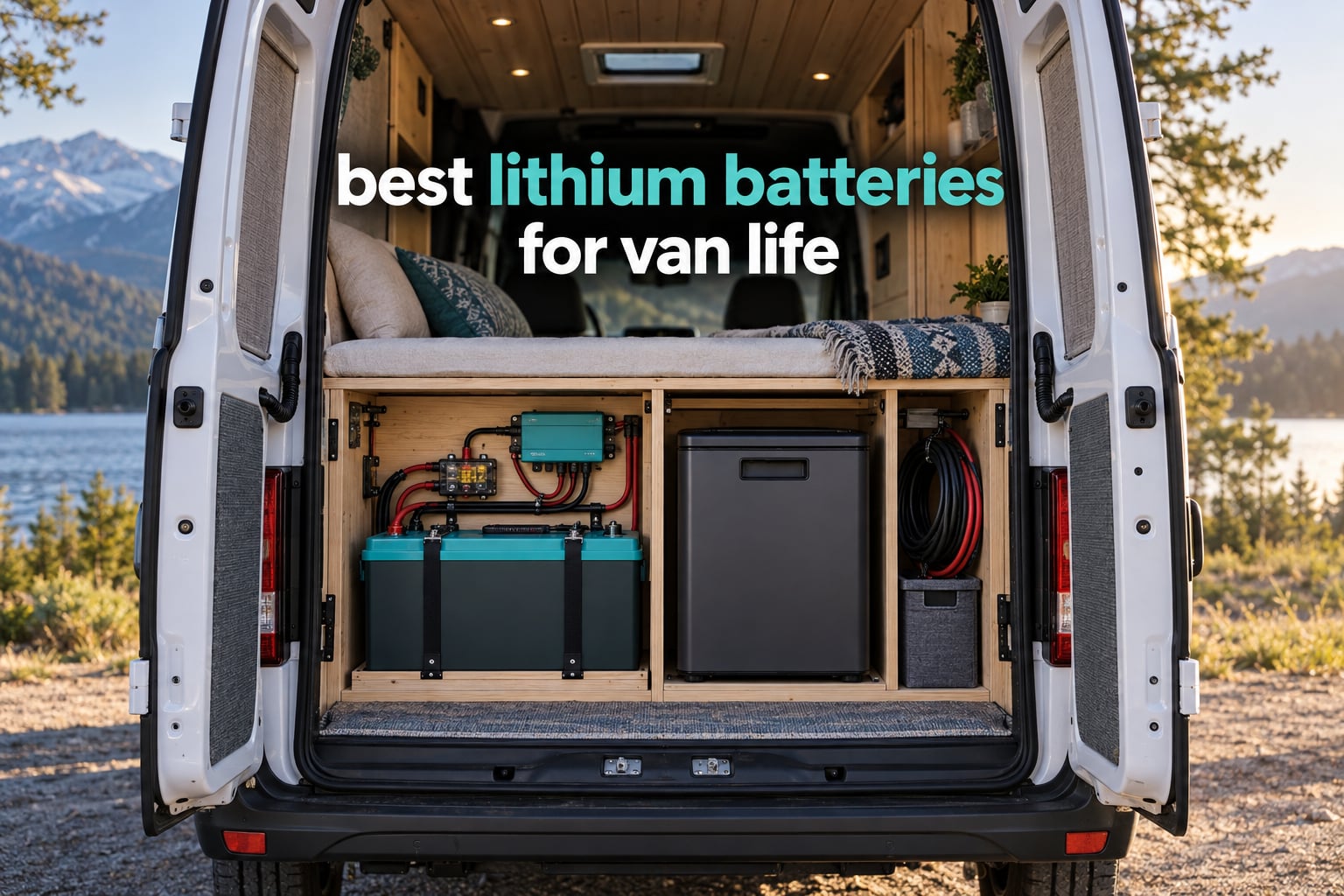
Choosing the best lithium batteries for van life comes down to three questions: how many amp-hours you actually burn in a day, how much continuous current your inverter can pull, and how cold it gets where you park. Those three answers narrow the field fast, and after spending weeks reading owner reports alongside manufacturer specs, three models rise to the top. The Litime 12V 100Ah LiFePO4 is the strongest all-round pick, the Litime 12V 100Ah Self Heating handles the coldest camps, and the ECO-WORTHY EnergyRock 280Ah gives you the most energy in the least space.
Before the list, the chemistry in plain English. Almost every lithium battery sold for van use today is LiFePO4, short for lithium iron phosphate. A lead-acid battery stores energy in lead plates and a sulfuric acid liquid, which is why a 100Ah lead unit weighs around 60 pounds and why you can only safely pull about half of that rating before the voltage sags. A LiFePO4 cell stores energy in iron, phosphate and lithium instead. That chemistry lets you use roughly 80 to 90 percent of the rated capacity, run a far higher cycle count before it degrades, and lose about half the weight for the same usable energy.
One owner on r/VanLife described the difference in the most concrete terms we have found. Their 400Ah lead-acid bank was dead within two days of sitting without hookups, so they replaced the entire bank with a single 460Ah lithium unit. The new bank weighs 60 percent less, takes up half the space, and holds a charge for five to seven days on solar instead of two. That owner also cut monthly living costs to under a quarter of what they had been spending, and the battery paid for itself inside two months through avoided campground fees alone. That is the whole argument for lithium in one story, and it is why the chemistry is no longer optional for a full-time build.
What follows is a twelve-battery roundup covering 100Ah to 460Ah house banks between 19 and 86 pounds. We deliberately left out the small portable power stations that dominate shopping carousels, because a 300Wh camping power station is a different product category with different physics. We are only covering batteries that live under a bench, in a battery box, or behind a seat and power a fridge, lights, water pump, CPAP machine and inverter. If you want a comparison of smaller units, our 100Ah lithium battery guide goes deeper on the entry-level end, and our lithium car battery review covers starter chemistry, which is a different job again.
A quick note on method. Every spec in this guide comes from the manufacturer listing, and every owner observation is attributed to the source where we found it rather than blended into anonymous consensus. We have not invented capacity, weight or cycle figures, and where a number is disputed between the listing and owner reports, we say so.
Table of Contents
Top 3 Picks for Lithium Batteries for Van Life in 2026

Litime 12V 100Ah LiFePO4
- 1280Wh at 22.2 lbs
- 100A output
- 4000+ cycles at full depth of discharge
- 5-year warranty
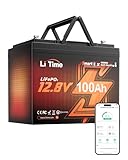
Litime 12V 100Ah Self Heating
- Self-heating below 41F
- Bluetooth 5.0 monitoring
- 1280Wh class capacity
- IP65 rated

ECO-WORTHY EnergyRock 280Ah
- 3584Wh in a metal case
- Built-in 200A BMS
- On/off safety switch
- Front-post terminals
The Litime 12V 100Ah takes the top slot because it is the rare battery that does the fundamentals without an asterisk: correct Group 31 dimensions, about 22 pounds, a 100A BMS, UL certification, a 4000-cycle claim at full depth of discharge and more owner reviews than anything else in this group. The self-heating LiTime is the same core platform plus a heating element and Bluetooth, which earns its place if you camp below 40F. The ECO-WORTHY EnergyRock is the outlier that solves a physical problem instead of a spec problem, packing 3584Wh into a metal case with front posts and an on/off switch.
Best Lithium Batteries for Van Life at a Glance in 2026
| Product | Specifications | Action |
|---|---|---|
| Litime 12V 100Ah LiFePO4 |
|
Check Latest Price |
| Litime 12V 100Ah Self Heating |
|
Check Latest Price |
| ECO-WORTHY EnergyRock 280Ah |
|
Check Latest Price |
 dumfume 12V 200Ah 200A BMS dumfume 12V 200Ah 200A BMS |
|
Check Latest Price |
 Litime 12V 460Ah Group 8D Litime 12V 460Ah Group 8D |
|
Check Latest Price |
 HumsiENK 12V 100Ah Bluetooth HumsiENK 12V 100Ah Bluetooth |
|
Check Latest Price |
 SUPER EMPOWER 12V 100Ah SUPER EMPOWER 12V 100Ah |
|
Check Latest Price |
 DC HOUSE 12V 100Ah Bluetooth DC HOUSE 12V 100Ah Bluetooth |
|
Check Latest Price |
 yeagulch 12V 314Ah yeagulch 12V 314Ah |
|
Check Latest Price |
 dumfume 12V 150Ah Max dumfume 12V 150Ah Max |
|
Check Latest Price |
 ECO-WORTHY 12V 314Ah ECO-WORTHY 12V 314Ah |
|
Check Latest Price |
 HeyFuture 12V 100Ah Bluetooth HeyFuture 12V 100Ah Bluetooth |
|
Check Latest Price |
Read that table as three practical groups. Everything at 100Ah and roughly 20 to 24 pounds is a weekend or single-load battery, and most people run two of them. Everything from 200Ah to 320Ah is the full-time boondocking range, where one battery replaces an entire old lead-acid bank. The 460Ah unit is the consolidation play for people who want a rooftop air conditioner and minimal wiring.
Bluetooth monitoring appears on more than half the entries in this roundup, but only one has an active heater, and several of the Bluetooth apps report readings that owners have not been able to confirm with a bench test. Both of those are worth knowing before you order two batteries that cannot talk to each other or warm themselves up. Our 12V refrigerator guide covers the single biggest load in most vans, which is useful background for the sizing decisions later in this article.
How We Picked These Batteries
We combined published manufacturer specifications with long-term owner reports from r/VanLife, r/vandwellers, r/SolarDIY, the Escape Forum, the ProMaster Forum, vanlivingforum.com and the Van Build community. Forum threads dominated the top of the search results for this topic, which tells you something useful about the category: buyers here care far more about what breaks than about what the brochure claims.
Four criteria shaped the ranking. First, honest energy density, meaning rated watt-hours divided by real weight rather than a marketing adjective. Second, the continuous current rating of the built-in BMS, because a 200A ceiling decides whether a 3000W inverter is even possible on one battery. Third, cold-weather charging behaviour, either a documented cutoff threshold or genuine self-heating. Fourth, warranty length combined with a track record of answering the phone, which is the single most-cited reason owners give for paying more.
What we deliberately did not do is rank on a single headline cycle count. A cycle figure without a stated depth of discharge and temperature is close to meaningless, and we call that out where the data does. We also flag the deal breakers that show up repeatedly in the forums: a battery that will not take charge below freezing with no way to warm it, a BMS too small for the intended inverter load, a sealed case that cannot be re-celled, and mislabelled capacity.
1. Litime 12V 100Ah LiFePO4 – The Best All-Round Pick for Most Van Builds
Litime 12V 100Ah LiFePO4 Battery, Group 31 Lithium Batteries for RV, Marine
- About 22.2 lbs for 1280Wh
- roughly a third of lead-acid weight
- A+ grade cells with 20+ BMS safeguards
- 4000+ cycles at 100% depth of discharge
- UL and FCC certified
- Expands to 4P4S for larger systems
- No Bluetooth on this variant
- Companion app reported as unreliable on Bluetooth models
- Not for engine starting
- No self-heating for cold weather charging
Two of these is the configuration I would build today for a full-time van that runs a fridge, lights, water pump and a small inverter for laptops and a coffee maker. Each battery carries 1280Wh at 12.8V nominal, and at 22.2 pounds you can carry a real 2560Wh house bank without noticing it in the payload rating. That is the number most guides bury, because they stop at the amp-hour figure and never tell you what the thing weighs in your hands.
The listing describes A+ grade automotive cells behind 20+ BMS protection circuits, and it publishes a 4000-cycle claim at 100% depth of discharge plus 15000 cycles at 60%. Those are unusually specific claims, which tells you the manufacturer is comfortable being held to them. Rated output is 100A continuous, which is plenty for a 1200W inverter and marginal for anything larger, so plan around it rather than discovering it mid-trip.
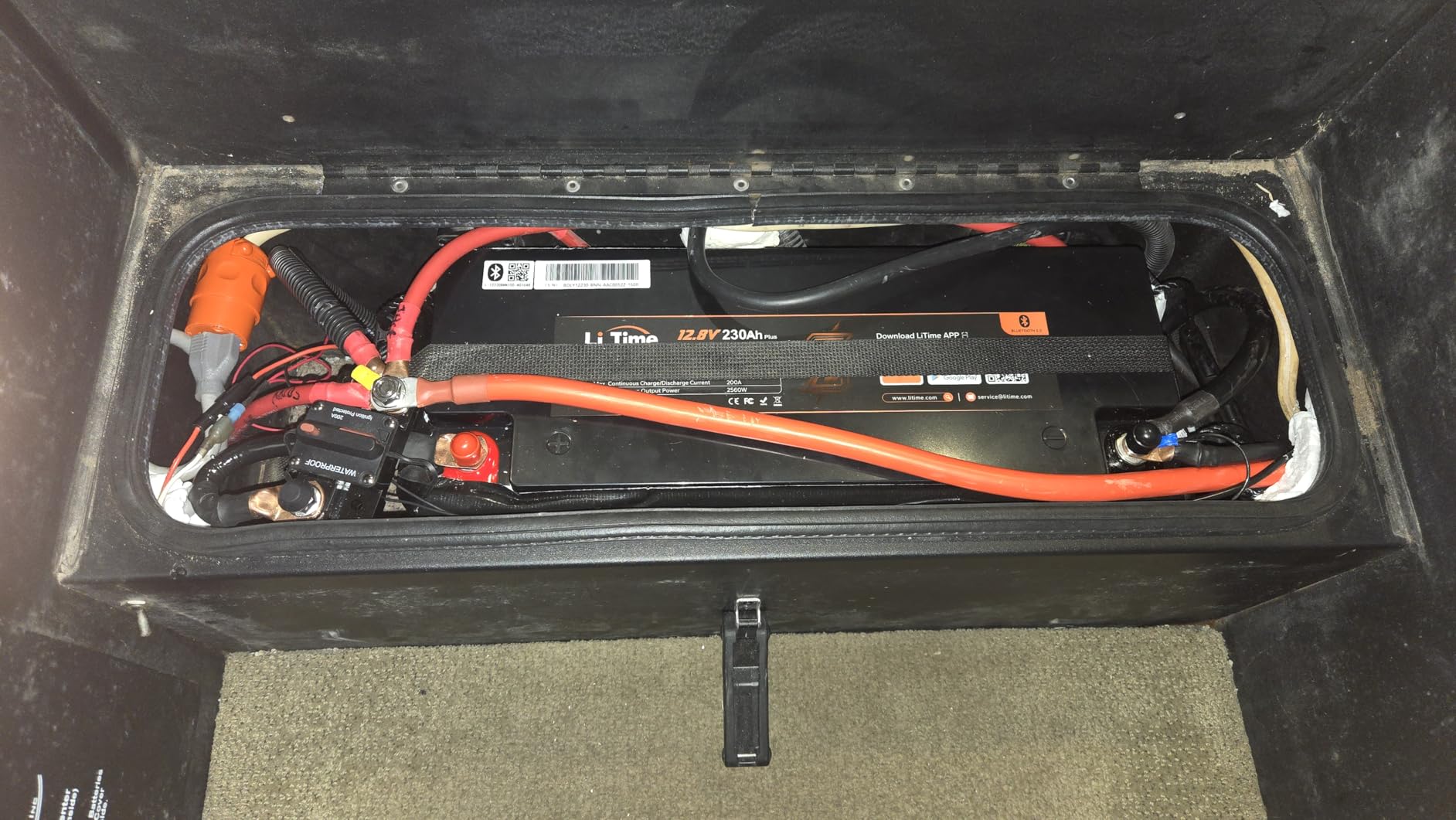
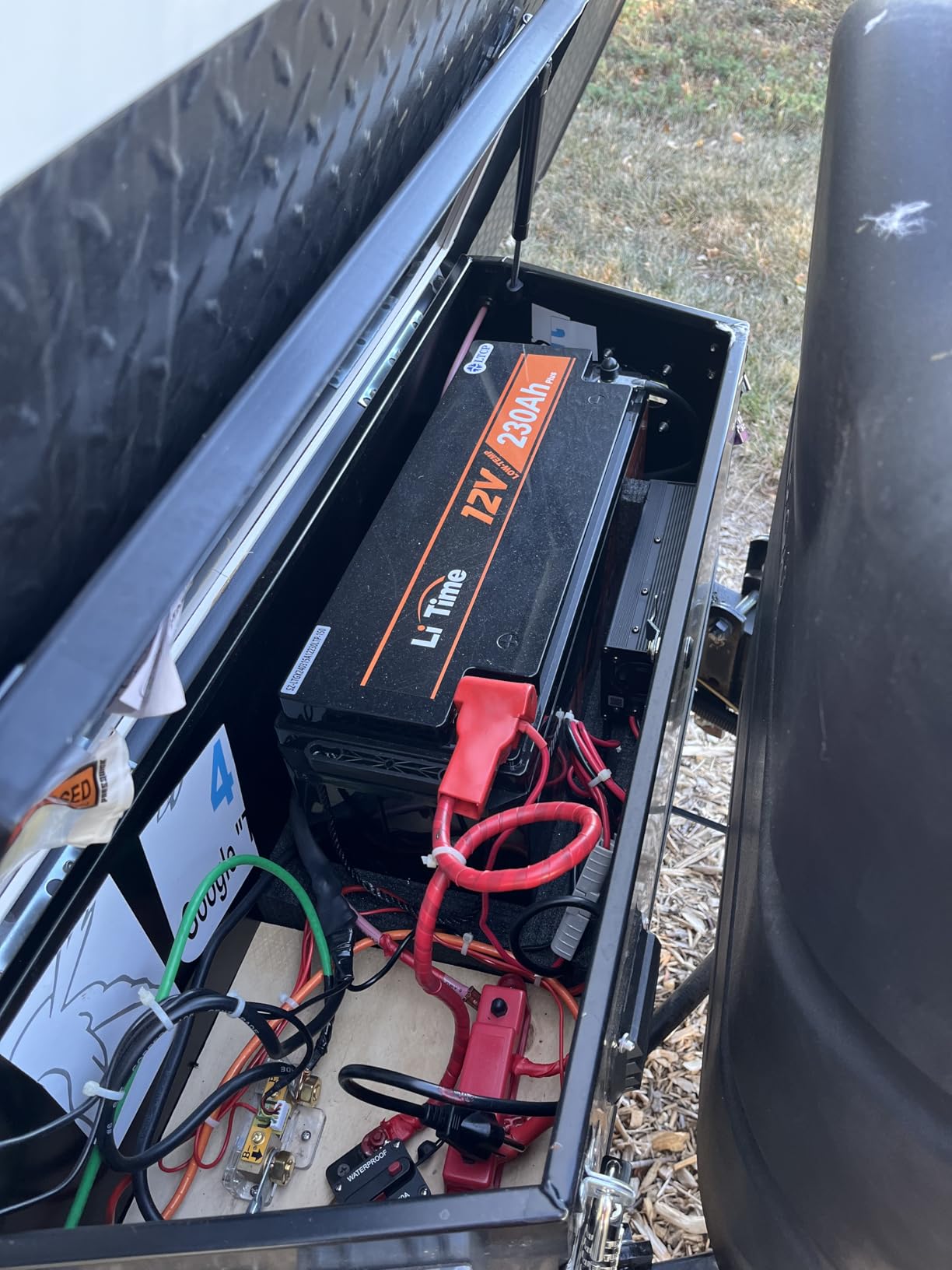
What makes this the pick rather than one of four similar batteries is the review base. 739 ratings at an average of 4.6 is by far the most owner history in this group, and the pattern in that history is consistent: buyers treat it as a clean lead-acid swap, fitting standard Group 24 and 31 boxes without modification. That consistency is worth more than a spec-sheet advantage, because a battery that fits the box you already built removes an afternoon of fabrication.
The honest criticism is Bluetooth. This specific variant has none, and reviewers of the Bluetooth-equipped sibling units report an app that sometimes fails to update status while charging. If remote monitoring matters to you, either accept reading state of charge from your inverter or a shunt monitor, or step up to the self-heating model below, which ships with Bluetooth 5.0.
Is 100Ah enough for a full-time van?
A single 100Ah unit is genuinely enough for weekend camping with a 12V fridge, LED lighting, phone charging and a water pump. Full-time boondocking usually wants 200Ah to 300Ah so that a cloudy stretch does not eat the bank. Owners converting from lead acid report halving their old bank size to hit the same runtime, because usable capacity roughly doubles.
When should you skip this model?
Skip it if you camp in sustained cold and cannot keep the battery above freezing, since there is no heating element here. Also skip it if you plan to run a 3000W inverter, because 100A continuous output caps what you can draw from one box. And skip it if you are replacing a house bank and want phone monitoring without adding a second device.
2. Litime 12V 100Ah Self Heating – The Best Lithium Battery for Cold Weather Boondocking
Litime 12V 100Ah Self Heating RV LiFePO4 Battery for Camper, Travel Trailer
- Two heating modes that engage below 41F and stop at 50F
- Bluetooth 5.0 app for live state of charge
- IP65 dust and water resistance
- 4000+ cycles at 100% depth of discharge
- 30-second overload auto-recovery
- Costs more than non-heated 100Ah alternatives
- Bluetooth needs a lithium or MPPT charger to activate on arrival
- Heating itself draws power when active
- Not for engine starting
Cold is the single most common way a first-time lithium owner kills a battery, and it is the reason this variant exists. Lithium iron phosphate cells cannot accept charge below freezing because lithium plating forms on the anode, and plating is effectively permanent. Most non-heated batteries solve this by refusing to charge until the cell warms up on its own, which in a van parked at 20F in January can mean no charge at all for a morning.
This one has two heating modes, a regular setting and an energy-efficient setting, that kick in below 41F and stop at 50F. Bluetooth 5.0 shows state of charge from the app. The package includes a manual, insulating caps and M8 terminal bolts, and the unit is rated IP65 for dust and water, which matters more than most guides admit when you are behind a wet plywood panel in January.
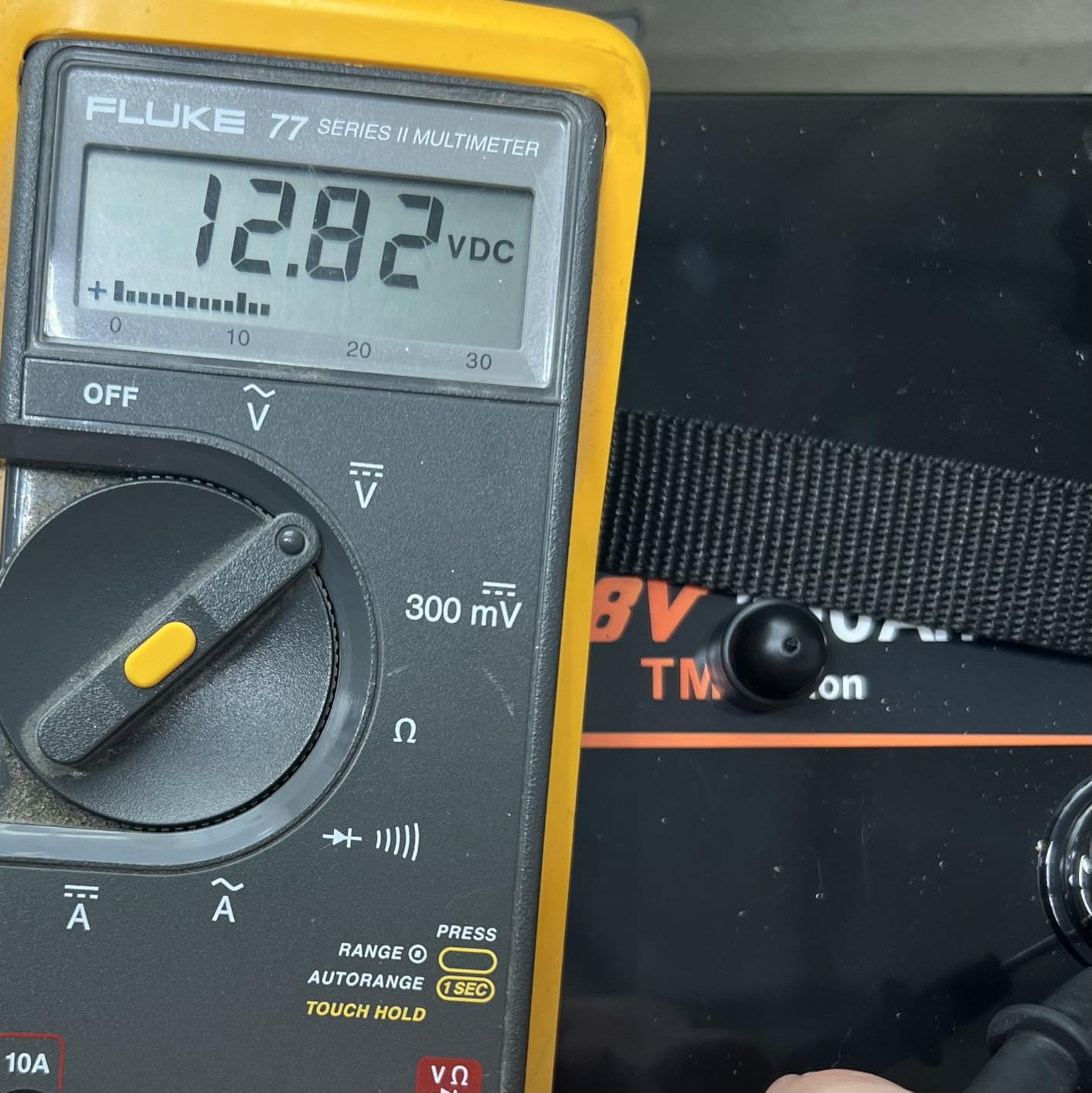
At 21.8 pounds for a 1280Wh class battery, it is about 63 percent lighter and 35 percent smaller than the 100Ah lead-acid it replaces, according to the listing. Owners consistently single out the heating function and the light weight, and describe the app as genuinely useful rather than decorative. The recurring caveat is procedural: Bluetooth and heating only activate properly after the first charge with a lithium-activation or MPPT charger, so do not test the app straight out of the box.
It is a Group 24 form factor, which makes it an easy swap for an existing battery box. Remember that the heater is a load, so during sustained freezing your effective capacity dips slightly while the element runs. In a heated camper that is a rounding error. In a cold van parked overnight, budget for it.

Do you actually need self-heating?
You need it if you camp below about 32F for more than a few nights a year, especially if your battery sits in an unheated box or a chassis-mounted compartment. If you travel in mild climates or keep the van plugged in when stored, a standard battery with a low-temperature cutoff is the more sensible spend.
What is the catch with the app?
You have to charge it with a lithium-profile or MPPT charger before Bluetooth pairing works, and a small number of owners report the app dropping status updates during long charging sessions. Budget for a shunt monitor if you need monitoring you can rely on for a trip you cannot afford to misjudge.
3. ECO-WORTHY EnergyRock 280Ah – The Best Lithium Battery for Rugged Metal-Case Builds
- 3584Wh in a metal case rather than a plastic shell
- One-touch safety switch disconnects the discharge circuit
- Flat top with four mounting feet needs no external battery box
- Reinforced case and cell holders resist road vibration
- Bluetooth monitoring with low-temperature cutoff
- Very heavy at roughly 60 to 68.5 lbs
- Slightly wider than Group 31 so some boxes need modification
- No stated IP rating or sealed lid
- No clear warranty term on the listing
Every other battery in the 100Ah class shares a plastic case with a smooth top and recessed terminals. This one is built differently on purpose. The housing is metal, the cell holders inside are reinforced, and the case is described as resisting heat and fire better than plastic, which matters for anyone mounting a battery directly behind a heater duct or in a compartment that gets hot in summer.
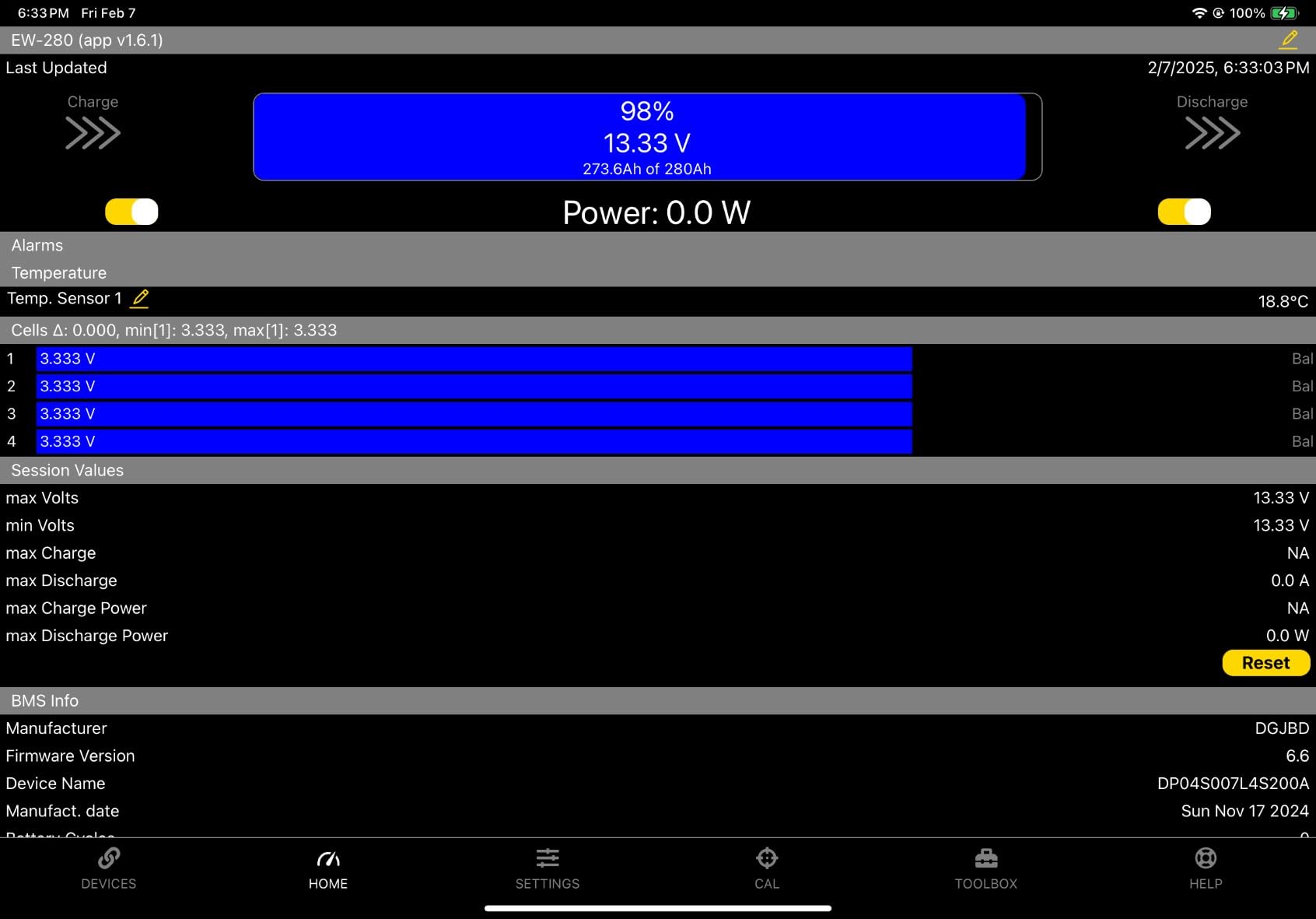
The electrical design is where the enthusiast features live. Front-post terminals mean you can bolt a busbar or cable lug straight onto the face without fishing into a recessed well, and the one-touch safety switch isolates the discharge circuit, which makes wiring and long-term storage safer. A 200A BMS sits underneath, and Bluetooth monitoring with automatic low-temperature charging cutoff is built in.
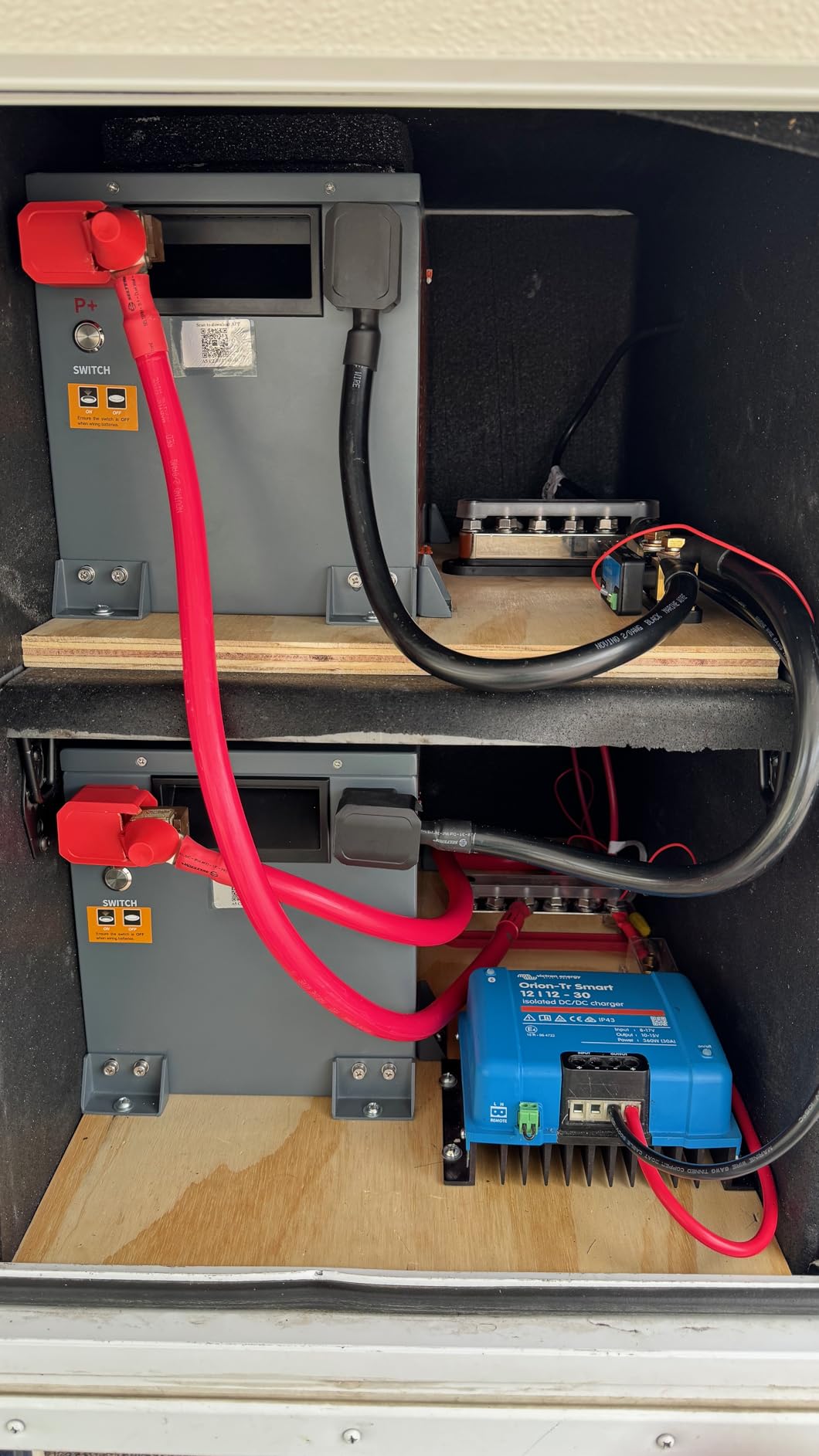
Owners cite the switch, the front posts and the app as the reasons they bought it, and several report running a 12000 BTU portable air conditioner and power tools for hours on a single charge, which is a meaningful claim given the 3584Wh capacity. Community consensus on r/VanLife regularly names ECO-WORTHY, alongside WattCycle, as one of the best-built options in the value tier, and this metal-case model is the strongest argument for that view.
The negatives are physical and honest. Owners put the weight between roughly 60 and 68.5 pounds, and at least one reviewer returned a unit specifically because of that. The footprint is about 16.54 by 8.64 by 9.65 inches, slightly wider than a Group 31, so a tight battery box needs a modification. There is no stated IP rating and no sealed lid seal, and the listing does not publish a warranty term, which is the one real gap in an otherwise well-documented product.
Is 280Ah overkill for a weekend build?
Yes, if your loads are a fridge and lights, because 3584Wh is far more than a two-night trip needs and you would be carrying the weight for nothing. It is exactly right for full-time boondocking, and it becomes the sensible choice for anyone running a portable air conditioner or a microwave on a 3000W inverter.
Why does a metal case matter in a van?
Metal conducts heat away from the cells and tolerates higher internal temperatures than an ABS shell, which matters in a closed compartment behind a plywood panel in summer. It also tolerates road vibration and rough handling better, and it is far less likely to crack if something shifts underfoot. The trade-off is weight and the absence of a published ingress rating.
4. dumfume 12V 200Ah with 200A BMS – The Best Lithium Battery for Running a Big Inverter
Dumfume 12V 200Ah LiFePO4 Lithium Battery 200A BMS,15000 Deep Cycle battery
- 200A continuous BMS with fast overcurrent and short-circuit response
- 2560Wh at about 60 percent less weight than lead-acid
- IP65 dust and water protection
- UL-certified and UN38.3-certified for transport
- Low-temperature cutoff that resumes at 41F
- Nearly 59 lbs so lifting needs two people
- Charging blocked below 32F
- Deep-cycle only so not for engine starting
Here is the battery that answers the most common forum complaint about lithium, the one about a 200 to 300 amp BMS ceiling cutting off inverter loads. A 200A continuous rating at 12.8V is 2560 watts of headroom, which means a 2000W inverter is comfortable and a 3000W inverter works for everything except simultaneous high-draw appliances like a microwave plus a hair dryer.
The BMS is specified in unusual detail, with 50 millisecond overcurrent response and sub-100 microsecond short-circuit response. That matters in a confined space where a short has seconds to become a fire. The battery is UL-certified and UN38.3-certified, both of which are meaningful when you are asking whether a sealed lithium pack is safe behind a seat.
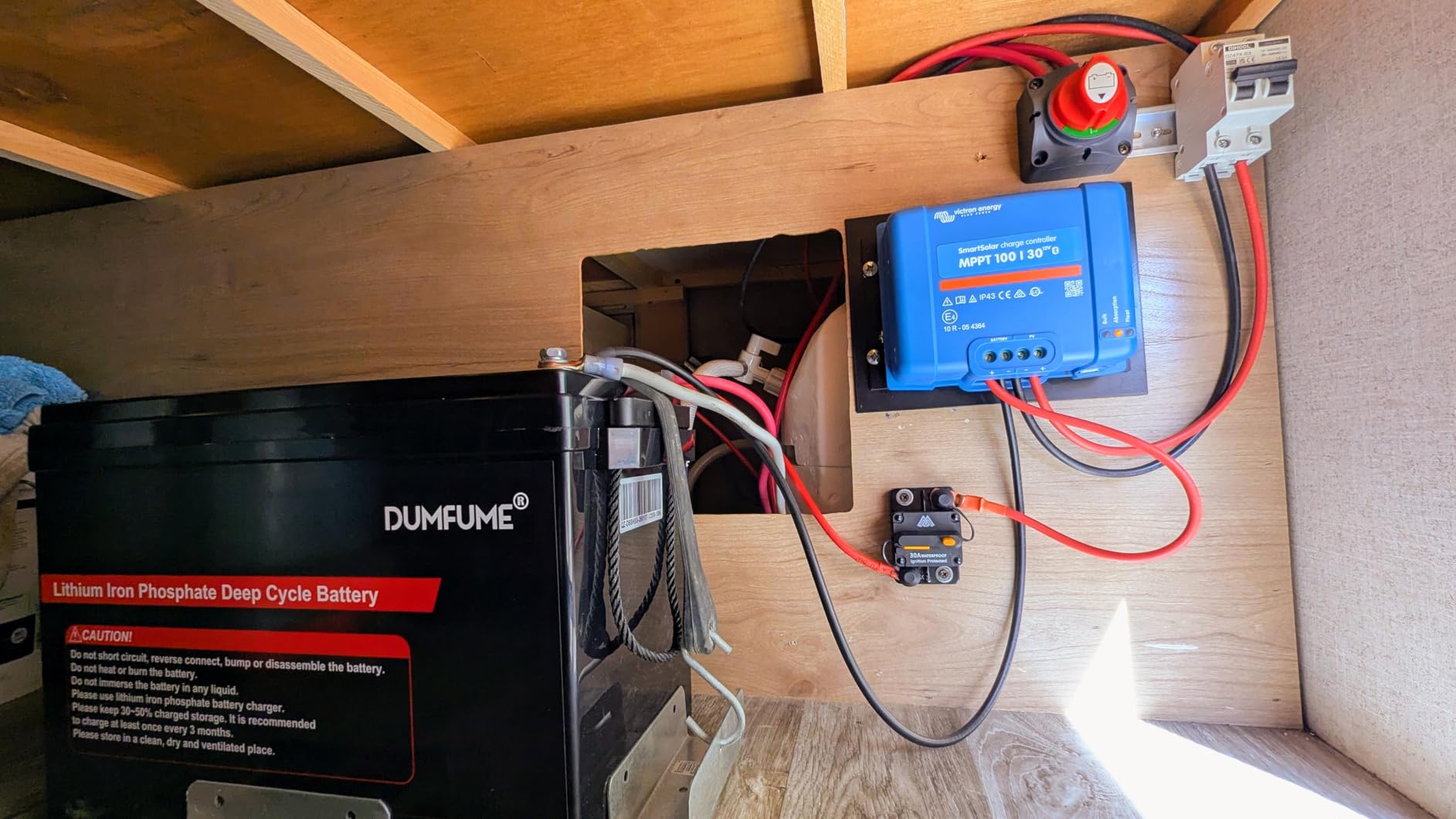
Cycle claims are the strongest thing in the listing: 15000+ cycles at 60% depth of discharge, 6000+ at 80% and 4000+ at 100%. Owners highlight real capacity headroom and the weight saving, and they report the documented cut-off thresholds as reassuring rather than annoying, because you know exactly what the battery is doing. The low-temperature cutoff blocks charging below 32F and resumes at 41F, which protects against plating but does mean a cold morning produces no charge.
The practical drawback is weight. At 58.9 pounds listed, this is not a one-person lift, and the 21.06 by 8.07 by 8.46 inch case including the handle is long. Buyers should plan the mounting position before the box arrives, because a 200Ah that has to be twisted into a tight compartment is a bad afternoon.
Can one battery run a 3000W inverter?
Roughly, yes, with caveats. A 3000W inverter at 12.8V draws about 235 amps, so a 200A BMS is right at the edge and real-world continuous loads will trip or throttle it. If you plan to run high-draw appliances, either size to a 3000W inverter and accept a 70 to 80 percent duty ceiling, or run two batteries in parallel to double the available current.
Why do parallel batteries need matched lengths?
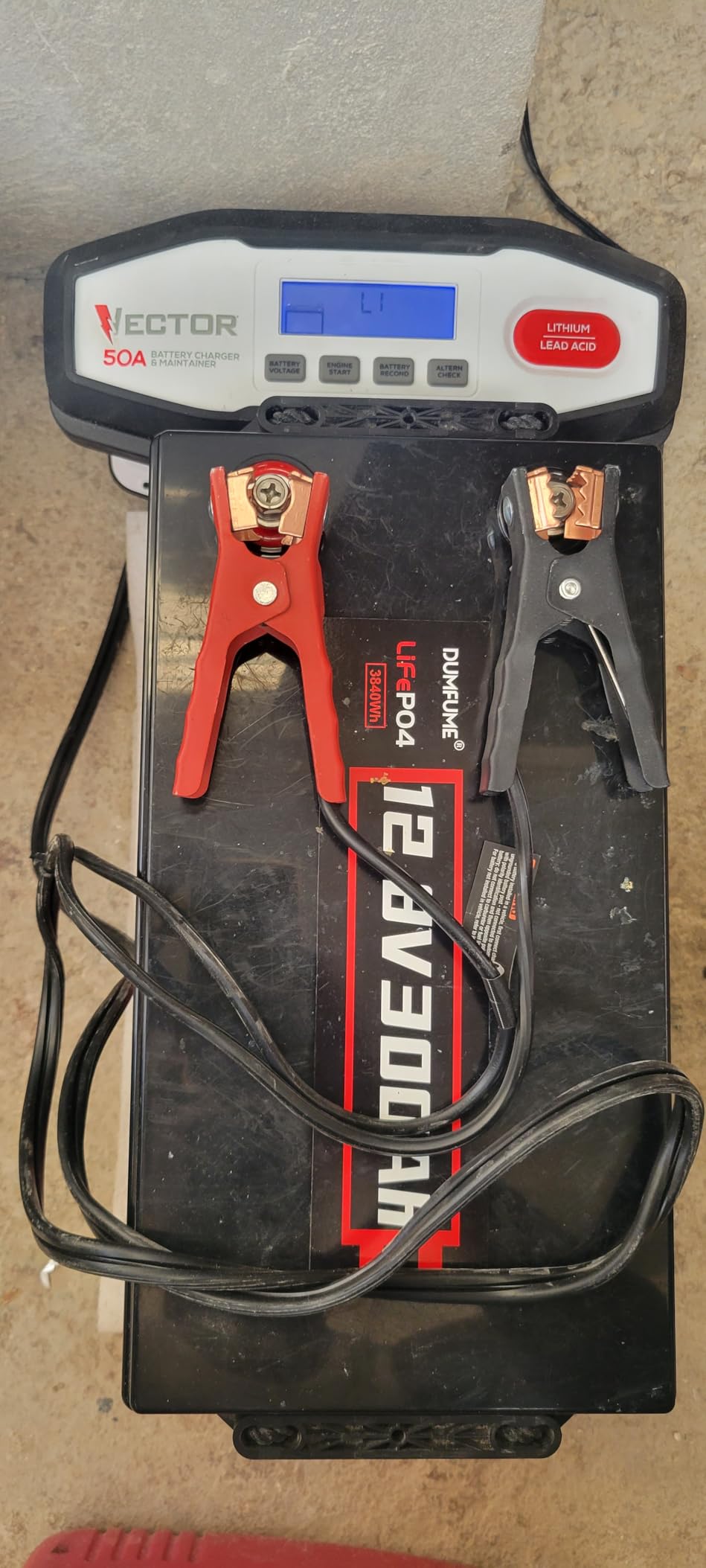
Because the lowest-resistance cable carries disproportionate current, which starves the other battery. Manufacturers want equal-length, equal-gauge cables between each battery and the common negative busbar. Keep every run the same length, use the same cable gauge throughout, and confirm the BMS ratings match so one battery does not become the limiting factor on the whole bank.
5. Litime 12V 460Ah Group 8D – The Best Lithium Battery for Long Boondocking Trips
Litime 12V 460Ah Group 8D Lithium LiFePO4 Battery for RV Marine Solar
- 460Ah capacity at 100% usable depth of discharge
- 250A BMS built on EV-grade cells
- Consolidates a whole bank into one footprint
- Owners run rooftop AC overnight and recharge by morning
- CE and RoHS compliant
- 86 lbs so mounting needs help
- Taller than standard so existing boxes need replacing
- Terminal-side-down mounting not advised
- Higher cost per battery than smaller units
This is the battery that replaces an entire bank rather than supplementing one. At 460Ah and 12.8V it stores a little under 6kWh, and the 250A BMS on EV-grade cells means it can drive a rooftop air conditioner, induction cooking and a microwave without a second battery anywhere in the van. Consolidation is the real appeal: one enclosure, one set of cables, fewer failure points.
Buyers typically arrive from a multi-battery lead-acid or small-lithium bank and treat this as the upgrade. Reviews emphasise the freed weight and space relative to what it replaces, all-night air conditioner runtime on solar, and packaging that protected an 86-pound unit in transit. Expansion to 4P4S covers outages, medical devices and communications equipment for full-time use.
The dimensions are 20.47 by 10.59 by 8.66 inches, which is the Group 8D footprint and noticeably taller than a standard battery. Owners are blunt about the practical consequence: existing battery boxes often need replacing, and not all mounting orientations are supported, with terminal-side-down explicitly not advised. If your build is already finished and boxed, measure before you commit.
One owner also reported a handshake problem with a charger that required power cycling to resolve, which is the kind of integration issue that shows up more with high-capacity packs and large inverter chargers than with a 100Ah unit. At 86 pounds, plan the mounting with a second person and a plan for getting it into position before it leaves the box.
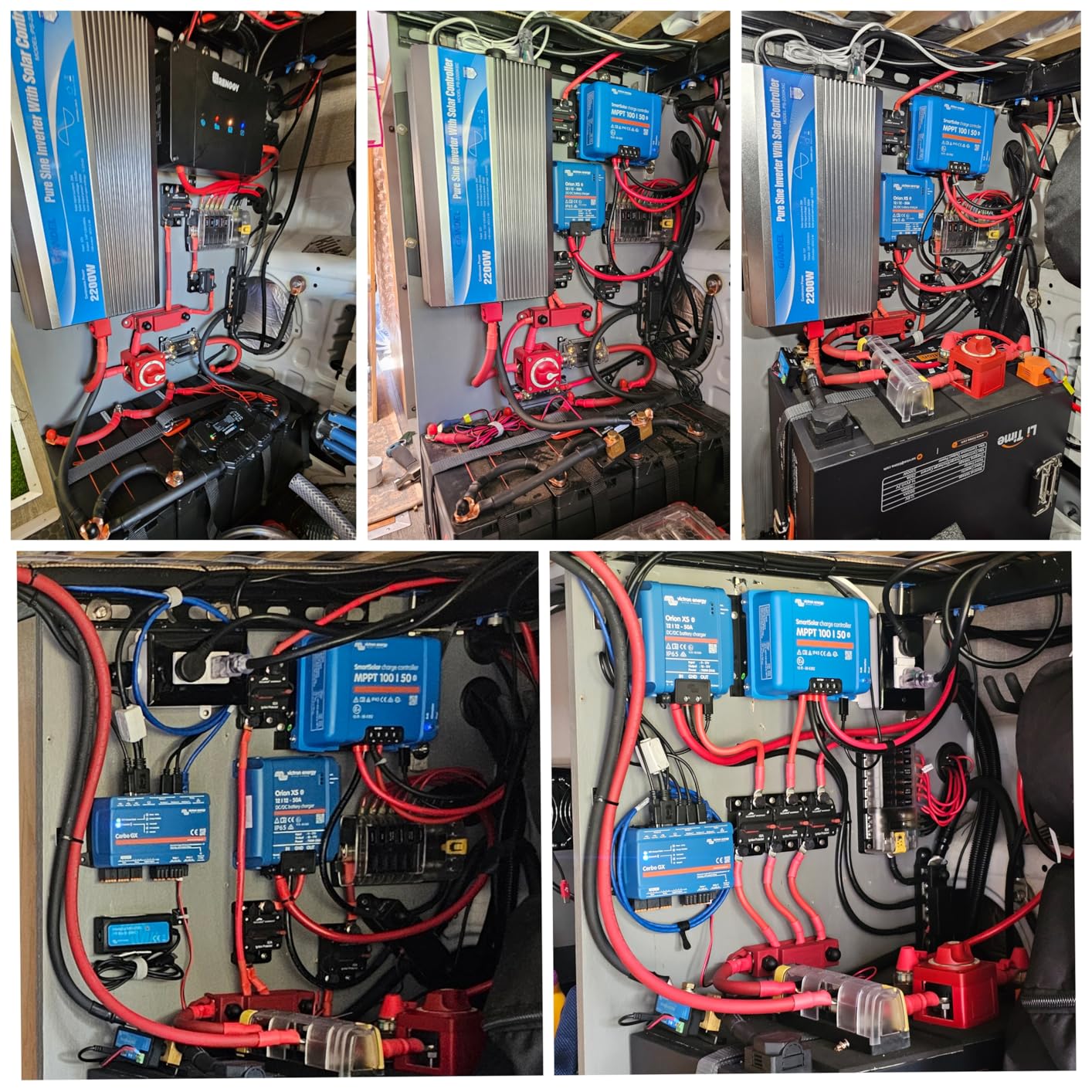
Is one 460Ah battery better than four 100Ah units?
Fewer boxes, less wiring and a much simpler install, and owners who made the jump report all-night air conditioner runtime on solar alone. The trade-off is that if the single battery fails, the whole bank is down until it is replaced, so the long warranty term on a unit this heavy matters more than usual. Measure your available space first, because the height is the constraint more than the weight.
How much usable capacity do you get?
The listing states 100 percent usable depth of discharge for this pack, and the LiFePO4 platform generally supports 80 to 90 percent without meaningful degradation according to owners. Multiply your required watt-hours by about 1.2 to cover inverter losses, conversion losses and the reserve you want to keep in reserve before sizing a single-unit solution.
6. HumsiENK 12V 100Ah Bluetooth – The Best Lithium Battery for the Lightest Possible Build
HumsiENK 12V 100Ah LiFePO4 Lithium Battery with Bluetooth (Group 24) 1280Wh
- Lightest 1280Wh unit here at 19.73 lbs
- Group 24-31 compatible so it fits standard boxes
- Bluetooth app reports voltage temperature and state of charge
- UL tested plus FCC and CE certification
- 4S4P expansion to 20.48kWh
- Bluetooth range is limited so pairing needs close proximity
- Brand is less established with fewer independent teardowns
- Needs a dedicated lithium charger
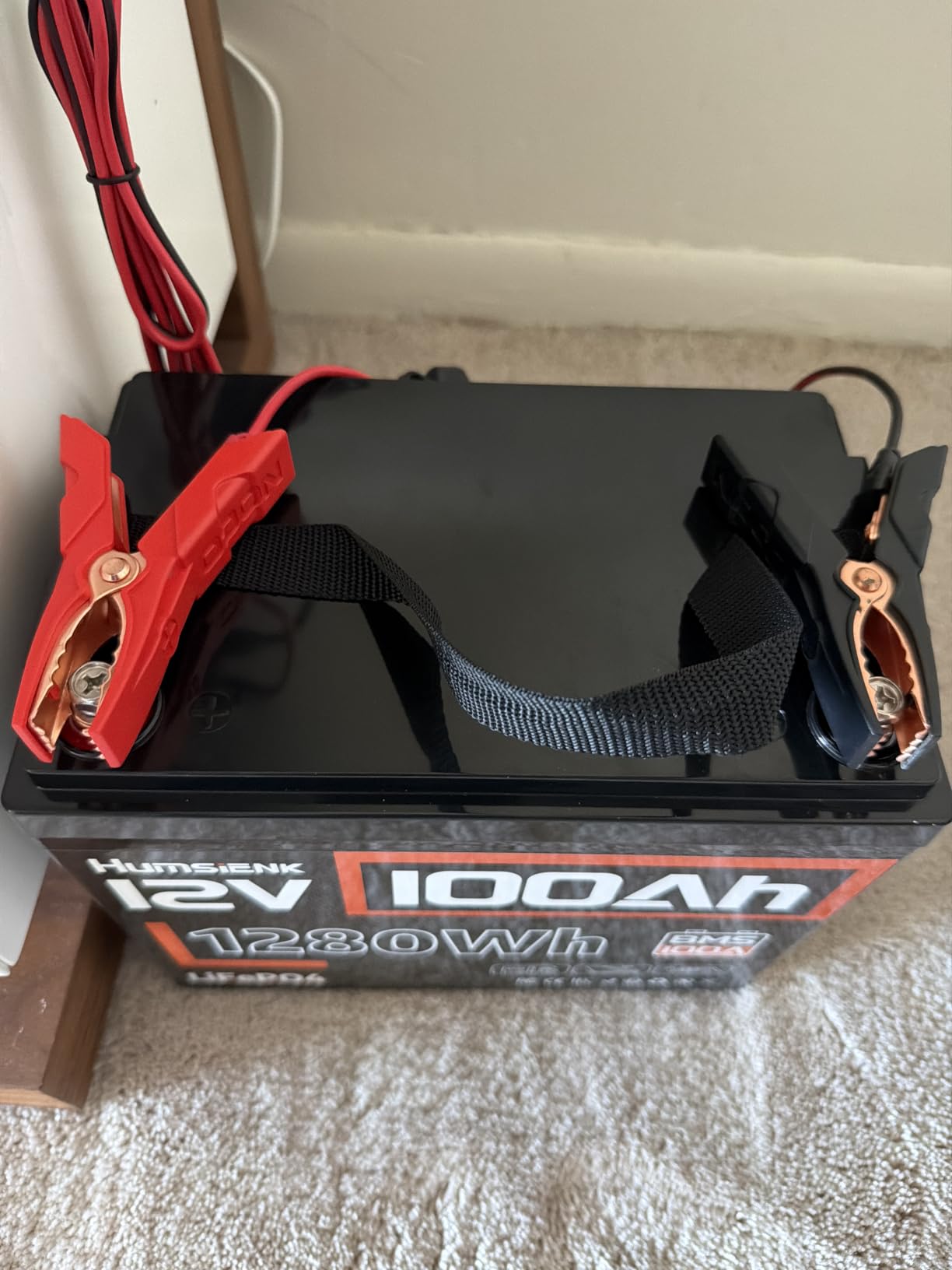
Payload is the quiet constraint on van conversions, and at 19.73 pounds this is the lightest 1280Wh battery in our group. If you are running two of these, your 2560Wh house bank costs about 40 pounds, which is roughly the weight of a single 100Ah lead-acid unit. The Group 24 to 31 compatible case means it drops into a box sized for lead-acid without cutting anything.
Monitoring is unusually good for the money. The 100A smart BMS reports voltage, temperature, state of charge and fault status over Bluetooth, with a listed operating range of minus 4F to 158F and an automatic low-temperature cutoff. Cells are described as A+ grade, the pack is UL tested with FCC and CE certification, and it carries an IP65 rating.
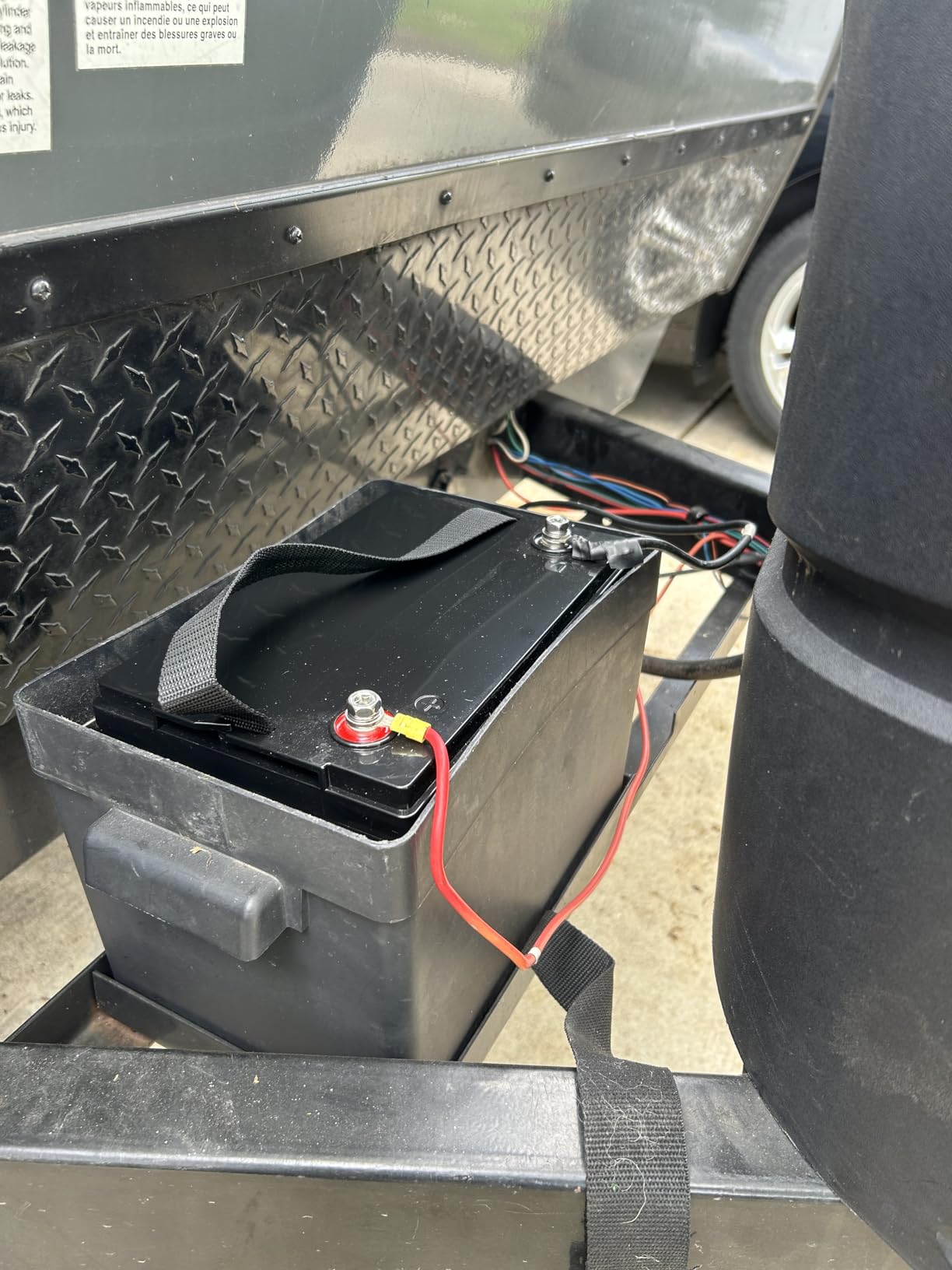
Owners point to install simplicity and the app data as the reason they like it, and reservations cluster around the fact that the brand is less established than LiTime or ECO-WORTHY, with fewer independent teardowns available to verify cell quality. The Bluetooth signal range is limited, meaning you need to be near the battery to pair or read it, which is a real limitation if you want to check state of charge from the driver’s seat.
The rating distribution is worth noticing. At 4.4 across 340 reviews, this one carries a heavier tail of negative feedback than the leaders, and reviewers specifically mention the lesser-known brand and a dedicated lithium charger being required. If you want verifiable cell pedigree over the lightest possible box, the Litime at number one is the more conservative choice.
Does the weight saving actually matter in a van?
It matters more than most guides admit. A conversion that removes 60 pounds of battery gains payload for a water tank, tools or a second person, and a lighter battery also means an easier battery-box design with fewer mounting brackets. The difference between 19.7 and 24 pounds is not dramatic on paper, but it multiplies across a two-battery bank.
Is a less-known brand a risk?
It is a real consideration, and it is not a disqualifier. The mitigations are certification, a 100A smart BMS, a five-year manufacturer warranty and app-based fault reporting, all of which give you a diagnostic path if something goes wrong. Buy from a seller who will process a warranty replacement rather than the cheapest listing you find, because support responsiveness is what actually determines whether a 5-year warranty means anything.
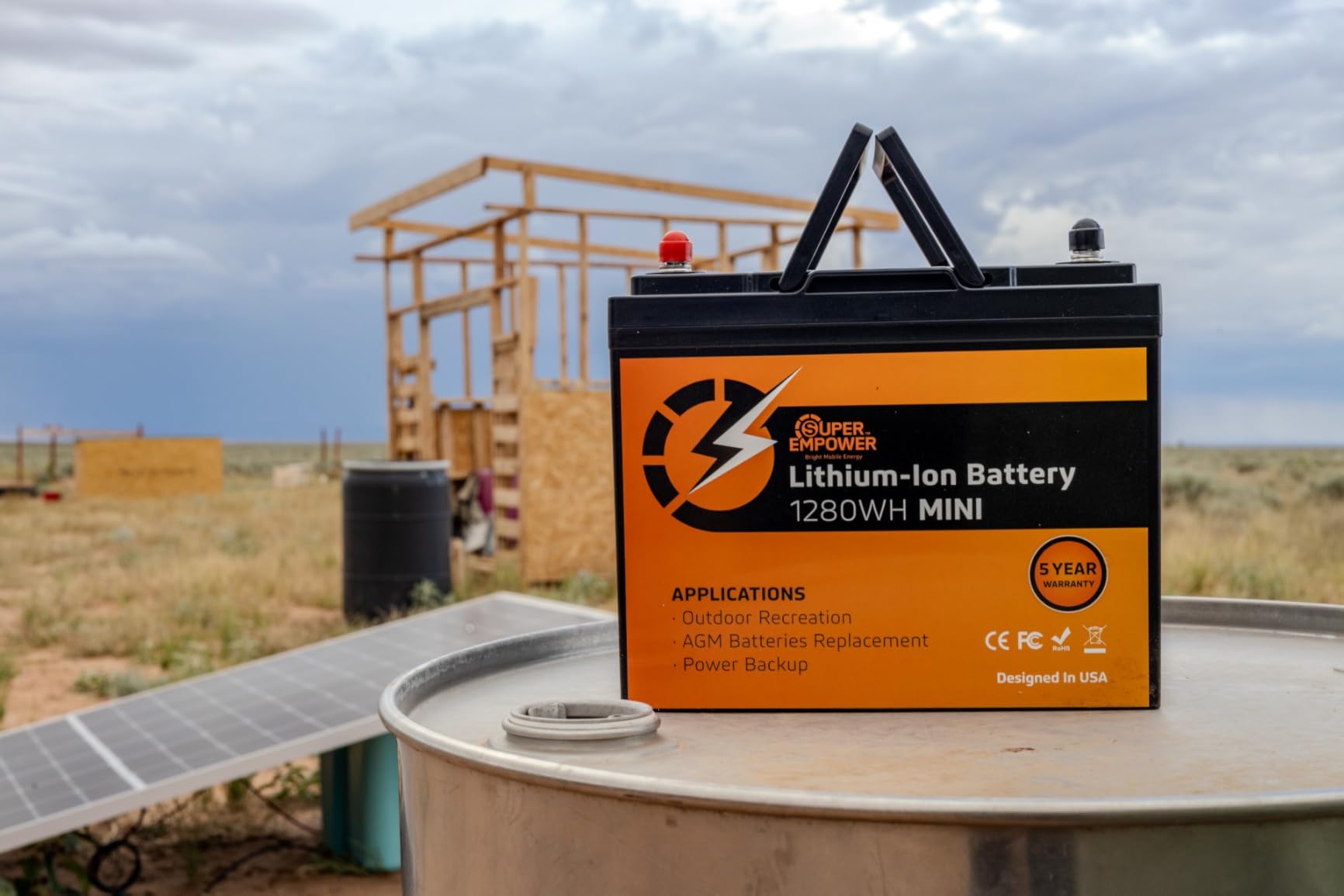
7. SUPER EMPOWER 12V 100Ah Group 24 – The Most Versatile for a Clean Lead-Acid Swap
12V 100Ah LiFePO4 Battery, Group 24 Deep Cycle RV/Trolling Motor Battery
- True Group 24 fit with M8 terminals and no modifications
- 21.6 lbs for 1280Wh cuts payload noticeably
- 100A BMS with full electrical and temperature protection
- Low-temp charging pauses below 32F and resumes above 41F
- 5-year warranty with support response within 24 hours
- No Bluetooth monitoring on this variant
- No accessories bundled in the box
- Not for engine starting
- Will not accept charge until the battery is warm
This is the pick for someone whose entire requirement list is drop it in, bolt it down, and stop thinking about it. The Group 24 footprint with M8 terminals is a genuine drop-in replacement, internal resistance is published at 40 milliohms, and the 100A BMS covers overcharge, over-discharge, overcurrent, short circuit and temperature extremes. Nothing about the installation is novel.
At 21.6 pounds for 1280Wh it sits in the middle of the weight cluster, and the rating is strong at 4.6 across 220 reviews with an 84 percent five-star share. That distribution is unusual for a lesser-known brand, and reviewers treat it as a no-fuss lead-acid swap rather than a product they need to explain to anyone.
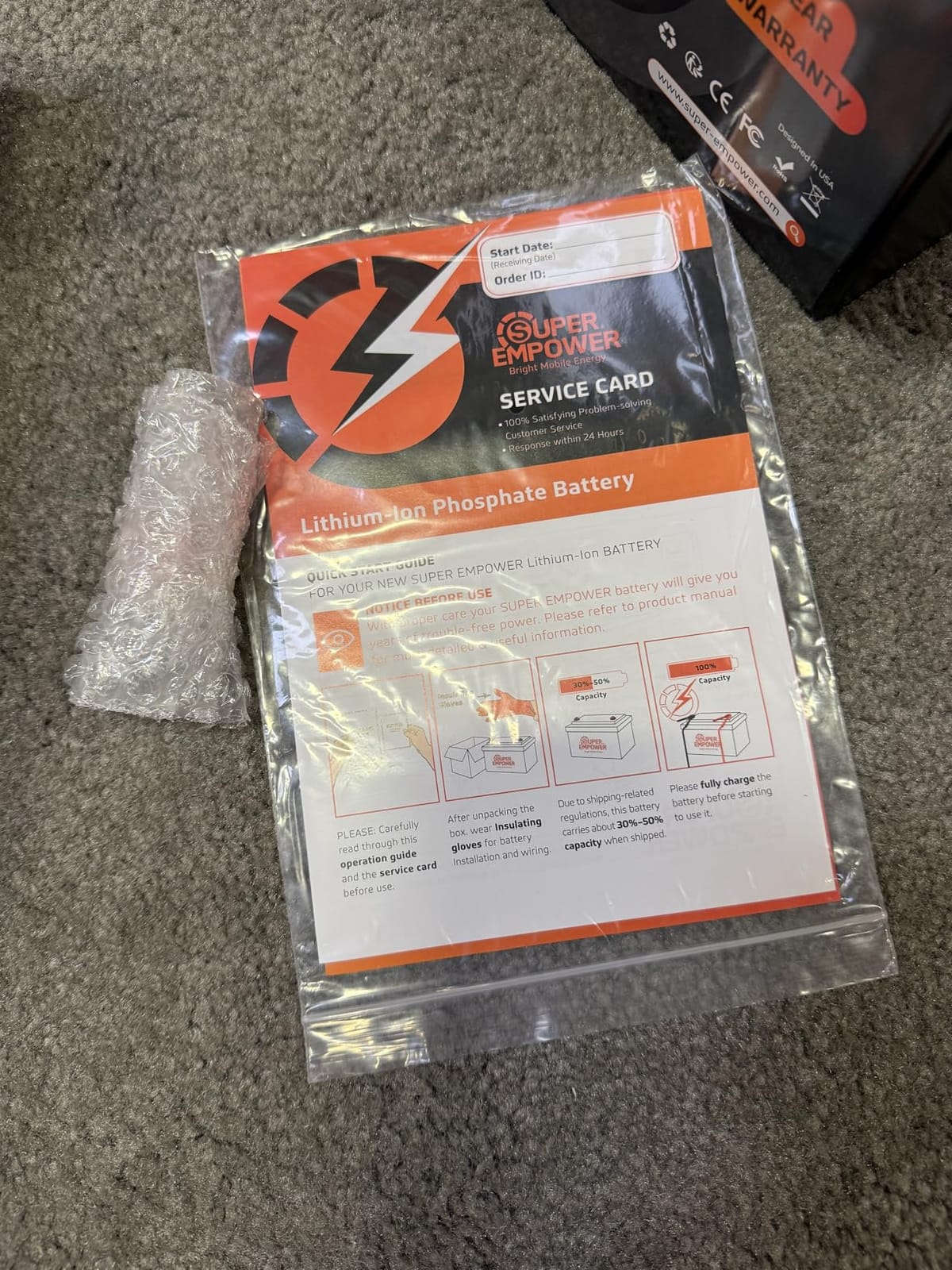
The gap relative to similarly priced competitors is Bluetooth. There is no app and no cell-level telemetry, so state of charge has to come from your inverter display or a shunt monitor. For most weekend builds that is perfectly fine, and it removes one more device to configure. The included components list shows no accessories bundled, so plan on sourcing your own terminal hardware if yours are corroded.
It also explicitly is not for engine starting, and it is not a lead-acid charger, which is the single most common mistake we see in lithium conversions. Your inverter charger or MPPT controller needs a lithium profile, or the battery will be chronically undercharged and you will wonder why the state of charge never reaches 100 percent.
Do you need Bluetooth in a weekend build?
Probably not. If your main loads are a fridge, lights and a water pump, a low-voltage cut-off warning light and an inverter display tell you everything you need to know. Bluetooth earns its keep when you are away from the van for days, or when you run a solar charge controller that can report remotely.
What has to change when you swap to lithium?
Three things. Set your inverter charger to the lithium profile, confirm your MPPT controller is set for lithium rather than lead-acid absorption voltages, and confirm the low-temperature cutoff thresholds match your climate. Wiring gauge and fusing can stay as they are, provided the cable is sized for the current and protected close to the battery.
8. DC HOUSE 12V 100Ah Bluetooth – The Best Lithium Battery for App Monitoring and Cold Protection
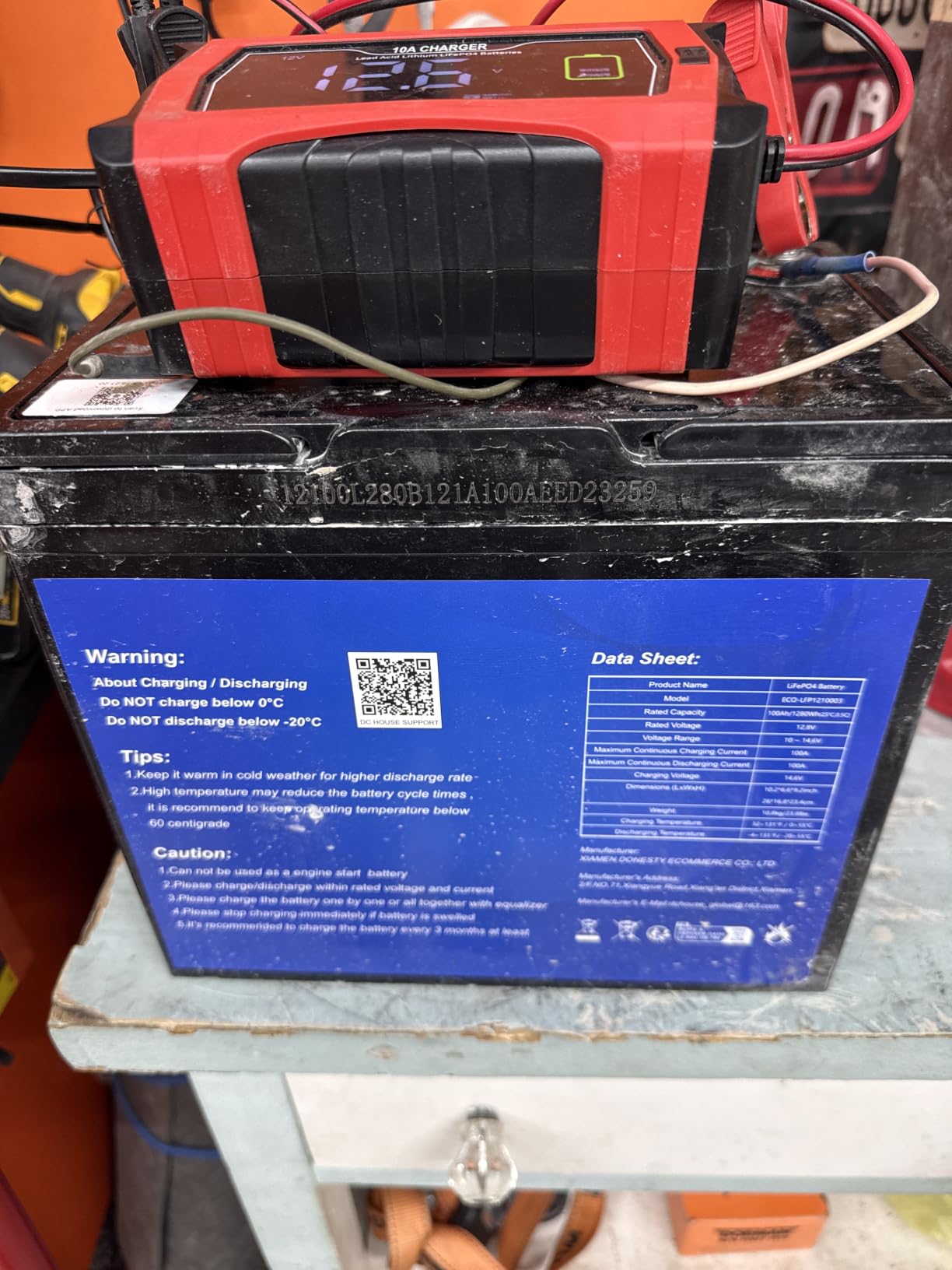
DC HOUSE 12V 100Ah Bluetooth LiFePO4 Trolling Motor Lithium Battery
- Bluetooth 5.1 reports state of charge voltage and current down to cell level
- Push notifications alert on detected anomalies
- Charge cut below 19.4F and discharge cut below minus 4F
- UL and UN38.3 certified Class A cells
- 3-year warranty
- 3-year warranty is shorter than most in this group
- Bluetooth range limited to 5 to 10 meters
- About 0.32 inches taller than the Group 24 spec
- Expansion limited to 8 batteries total
This is one of the most instrumented batteries in the group for a modest outlay, and the detail level in the app is the reason. Bluetooth 5.1 reports state of charge, voltage and current down to individual cell level, with a dedicated fault page and push notifications when an anomaly is detected. If a cell drifts out of balance, you see it on your phone rather than discovering it when the bank refuses to charge.
The cold-weather thresholds are the most aggressive in our group. Charging cuts off below 19.4F and discharge below minus 4F, with automatic recovery at 32F. That is a wider safety margin than the standard 32F charge cutoff most value batteries use, and it is the feature that makes this a sensible winter choice without paying for a heating element.
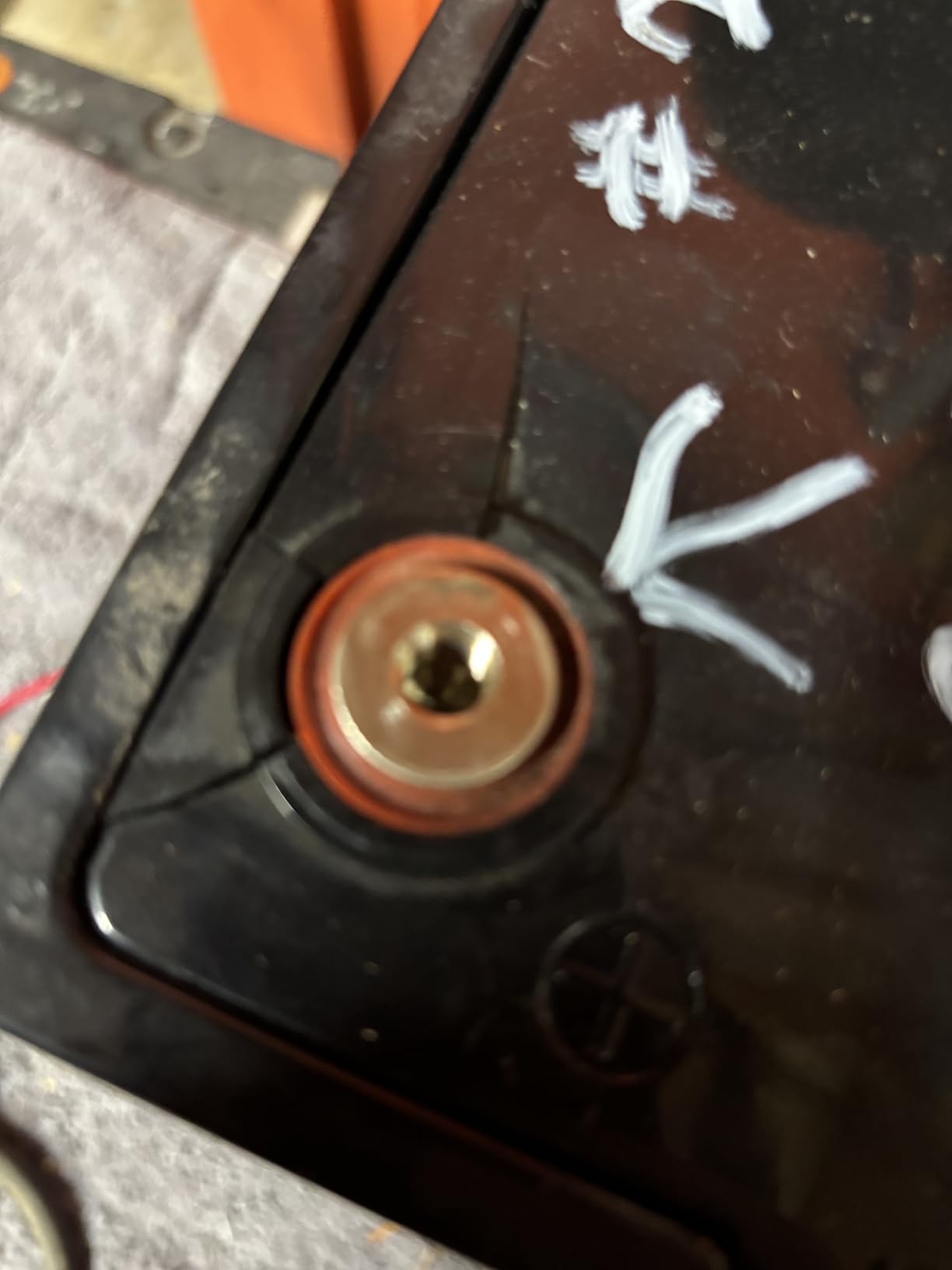
Cells are described as Class A lithium iron phosphate with UL and UN38.3 certification, rated up to 15000 cycles and a 10-year service life, and the Group 24 footprint fits most standard battery boxes. Reviewers single out the app troubleshooting page as genuinely useful, which is more than can be said for most battery apps.
The compromises are worth pricing in. The warranty is 3 years, shorter than the 5 years most competitors in this class offer, and the unit is roughly 0.32 inches taller than the Group 24 specification, which can matter in a tight box. Bluetooth range is 5 to 10 meters, and expansion is limited to 4 in series or 4 in parallel, eight batteries maximum.
Is a 3-year warranty a deal breaker?
It is a real trade, not a disqualifier. A 3-year term from a brand that will replace defective units is a reasonable position for a pack in this price bracket, especially if you can pair it with a self-heating option for winter and expect a lifespan far beyond the warranty window. If you want a 5-year paper guarantee, the Litime and the SUPER EMPOWER both give you one.
Why does per-cell monitoring matter?
Because a lithium pack fails gradually rather than suddenly. One weak cell drags the whole string down, it charges slower, gets hotter under load, and eventually the BMS cuts output. Cell-level telemetry lets you see the drift, isolate the problem and replace the battery while you still have a working system, instead of finding out on a cold morning in the middle of nowhere.
9. yeagulch 12V 314Ah – The Best Lithium Battery for Large Banks Without an App
12V 314Ah LiFePO4 Lithium Battery with 200A BMS 15000+ Deep Cycle
- 4019Wh at about a third the weight of equivalent lead-acid
- 200A BMS with electrical and temperature protection
- Low self-discharge suits long unattended storage
- IP65 certification for marine and off-grid exposure
- Owners confirm bench capacity matches the label
- No Bluetooth so you need an external monitor
- Some support emails reportedly went unanswered
- One owner received a unit with a faulty BMS
- Needs a dedicated lithium charger
At 4019Wh and 57.3 pounds, this sits in the better half of the capacity-per-pound range in the group, and the 200A BMS gives it the output headroom for a 2000W to 2500W inverter.
Buyers like the capacity-per-pound ratio and confirm that real-world capacity matches the label when paired with a proper LiFePO4 charger, and bench testing by several owners has come out at or above spec.
The chemistry detail that suits van storage is the low self-discharge rate. If your van sits for weeks between trips, a chemistry that bleeds almost nothing while parked means the battery is still usable on arrival rather than needing a maintenance charge first. Cycle life is stated as approximately 6000 cycles at 80% depth of discharge, which is a more conservative and more useful number than a headline figure with no conditions attached.
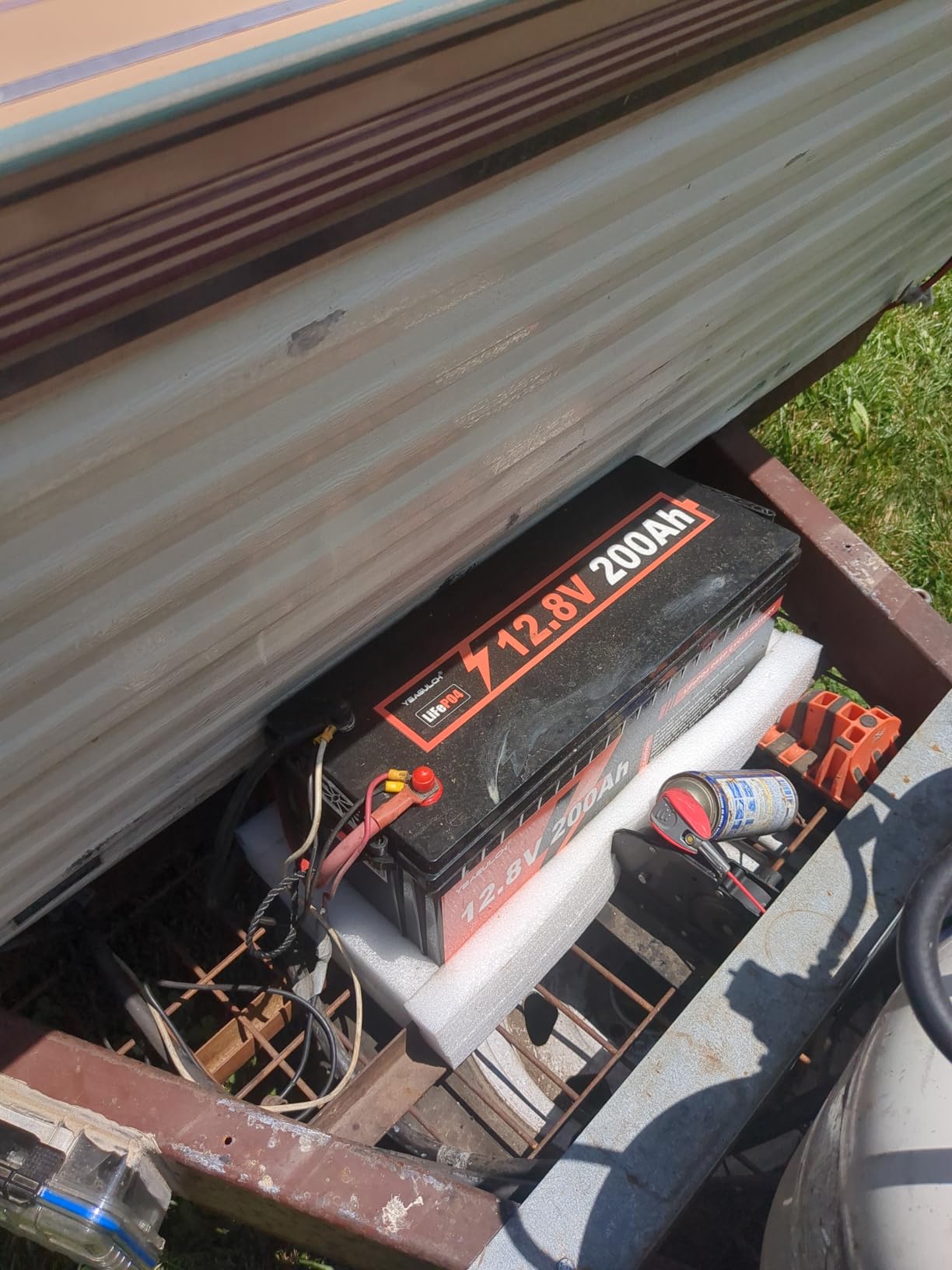
The IP65 certification is worth noting for anyone mounting a battery in an exterior box or a wet bilge area. The case measures 35 by 19.3 by 24.99 centimetres, so roughly 13.8 by 7.6 by 9.8 inches, which is a fairly standard footprint for a battery of this size.
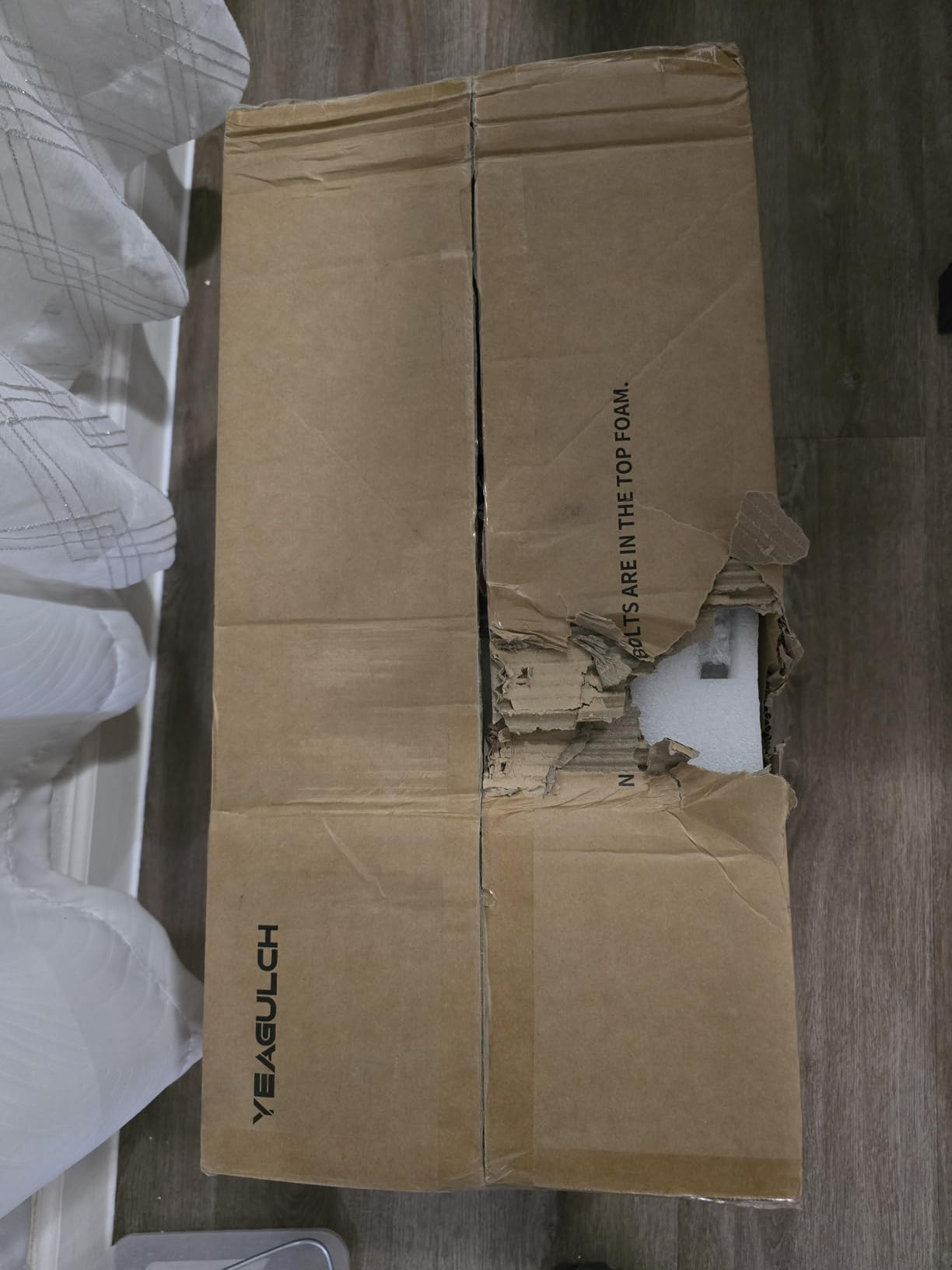
There is no Bluetooth, so monitoring has to come from a shunt or your inverter, and that is the main feature gap relative to the ECO-WORTHY at number 11. Reviewers also mention that a dedicated lithium charger is essential, and the manufacturer advises recharging every six months to avoid damage from disuse. We saw one report of a unit arriving with a faulty BMS delivering a fraction of rated capacity, and another of support emails going unanswered, both of which are single reports rather than patterns, but they are worth factoring into how you choose a seller.
Is 314Ah the right size for full-time van life?
It is a strong middle of the road answer. Most full-time van builds draw somewhere between 400 and 900 watt-hours a day once you account for a fridge running continuously, lighting, a water pump, electronics and a CPAP machine. At 4000 watt-hours, this battery covers several days of that on solar alone, and the 200A BMS covers the inverter loads that come with it.
What is the real drawback of no Bluetooth?
You are flying blind on state of charge unless you buy a shunt monitor, which is an inexpensive addition and the standard solution in most serious builds. That is a real cost, and it is the main reason we would pair this battery with an external monitor rather than treating the absence as a deal breaker.
10. dumfume 12V 150Ah Max – The Best Value Battery with the Most Owner Feedback
- 1920Wh in a compact 10.04 by 7.68 by 9.84 inch case
- Listed at 22.1 lbs
- far lighter than comparable lead-acid
- 100A BMS with overcharge short circuit and overheat protection
- 4000+ cycles rated to 80% capacity
- Expandable up to 4S4P
- Requires 5C or higher for charging
- Needs a maintenance charge every 6 months in storage
- 12 percent of reviews are 1-star
- Not for engine starting
This battery has the largest owner base in the entire roundup at 789 ratings, which makes it the most battle-tested option here even though its 4.4 average sits below the 4.6 cluster. The engineering case is straightforward: 1920Wh in a 10.04 by 7.68 by 9.84 inch Group 31 footprint at a listed 22.1 pounds, with a 100A BMS and a 4000-plus cycle rating to 80% capacity.
The footprint is the underrated part. A 150Ah lithium that fits where a lead-acid Group 31 used to sit means no new box, no cutting floor and no respending on a battery tray. For a first conversion, that physical simplicity is often worth more than the last 200 watt-hours of capacity.
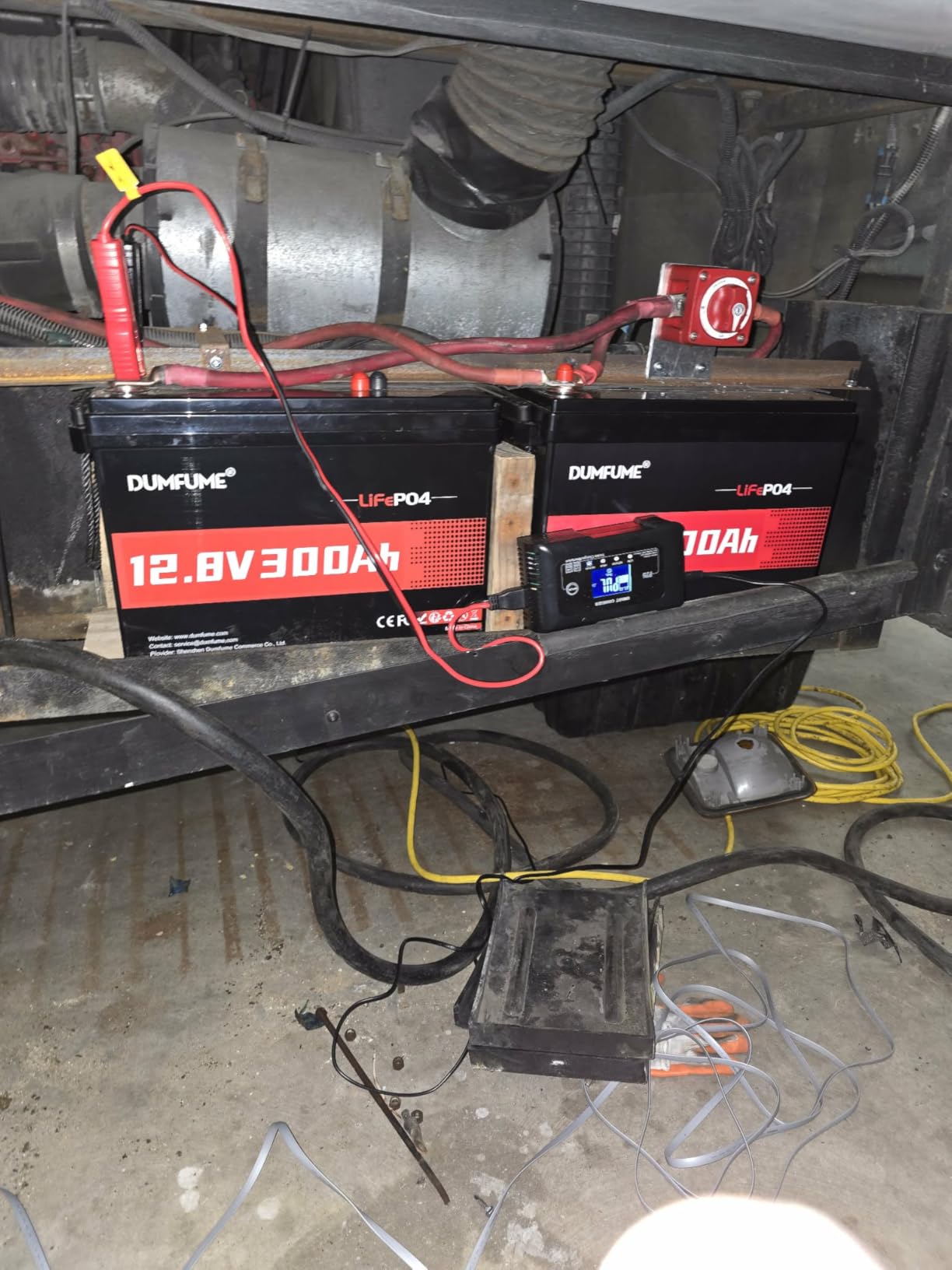
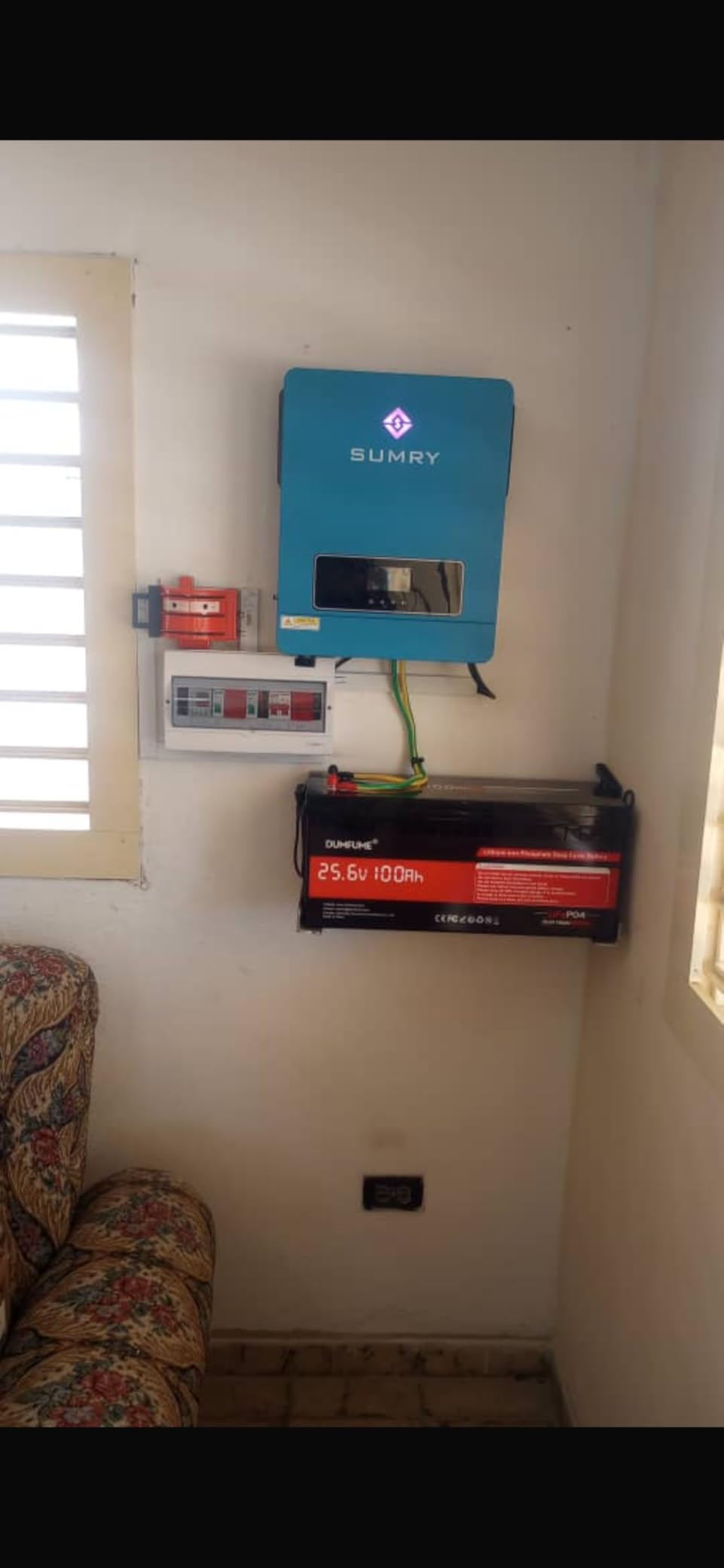
Customers consistently praise the power-to-weight ratio and the compact footprint for RV and campervan installs, along with the 100A BMS and the long cycle claims. The main friction in reviews is that charging requires temperatures of 5C or higher, so in a cold climate the battery simply will not take charge until the compartment warms up, and low-temperature charging is not covered by the warranty.
Two other honest notes. The listing asks for a full maintenance charge every six months during extended storage, which is a mild inconvenience but sensible chemistry management. And 12 percent of reviews are 1-star, which is a meaningful share of dissatisfied buyers and the clearest signal in this guide that the brand’s quality control is less consistent than the rating average alone would suggest. Buyers who want the same footprint with tighter warranty terms should look at the 100Ah units in the 5-year bracket.
Is a 150Ah battery a good middle ground?
Yes, especially for someone stepping up from lead acid who does not want to redesign the battery box. At 1920 watt-hours you get roughly two days of moderate full-time loads on solar alone, and because expansion goes to 4S4P you can add a second identical unit in parallel later and double both capacity and current without changing anything else in the build.
What does the 1-star share tell you?
It usually means a minority of units arrive with a defect or a firmware or BMS fault, and it is why warranty responsiveness matters more than warranty length. Check the listing for a seller that replaces rather than refunds only, and register the battery and confirm the app or Bluetooth pairing works on day one, before you bury it behind a panel.
11. ECO-WORTHY 12V 314Ah – The Best Lithium Battery for On-Battery Status Without an App
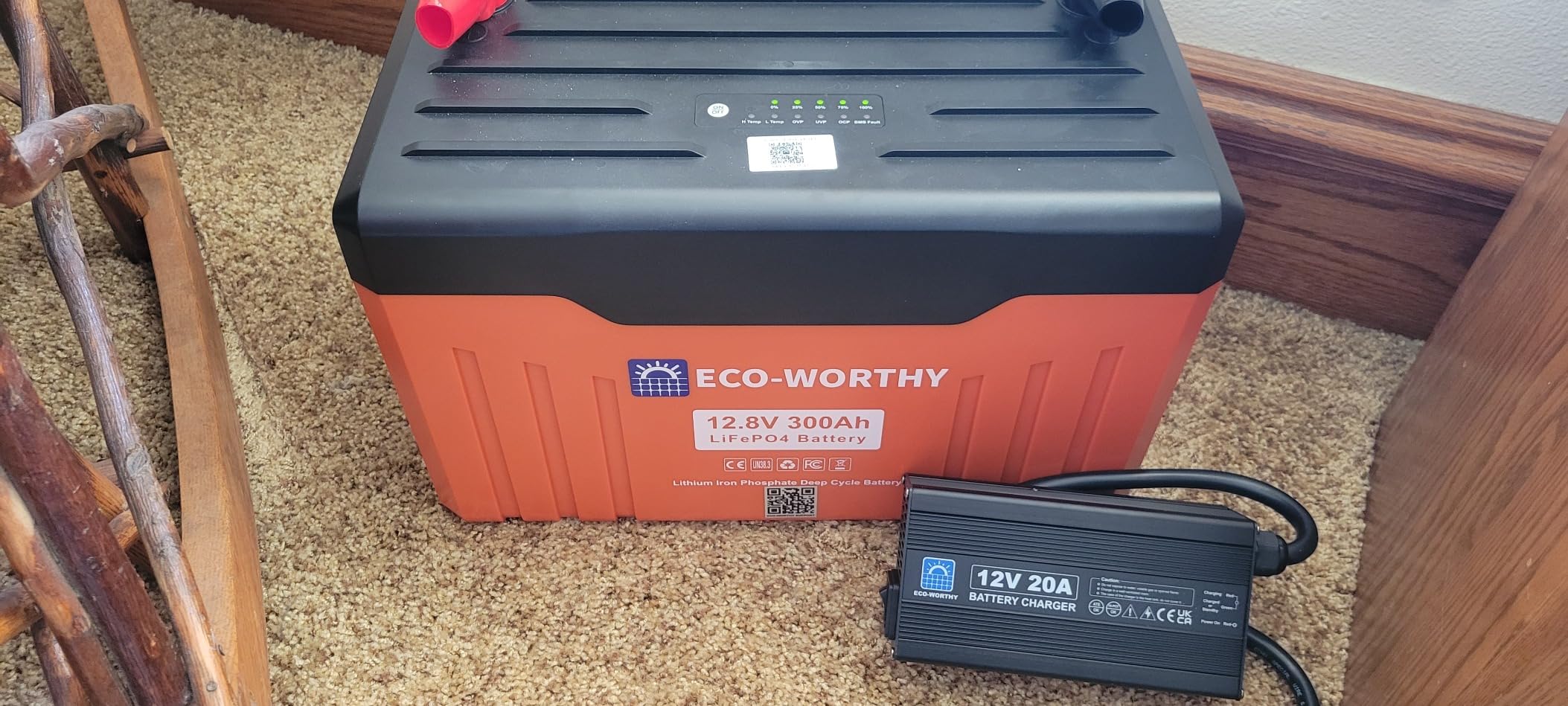
ECO-WORTHY 12V 314AH LiFePO4 Lithium Battery Bluetooth with SOC LEDs, Low Temp Protection, 4019WH, 200A BMS Up to 15000 Deep Cycle for Off-Grid, RV, Solar Power System, HomeBackup
- 314Ah upgrade gives meaningfully longer runtime
- On-battery SOC and status LED panel plus a fault buzzer
- Bluetooth monitoring through the brand app
- 200A BMS cuts charging below 19.4F
- Fire-resistant case with built-in handles
- 3-year warranty only
- 60.4 lbs makes returns impractical without the box
- App telemetry reported as basic and sometimes inaccurate
- Customer service response times reported as poor by some
The feature that separates this from the other 314Ah option is physical. There is a state of charge and status LED panel on the top of the battery itself, so you can read charge level and fault modes at the battery without a phone, an app or a network connection. For a van in a forest with no signal, that is worth more than it sounds, and it is paired with a built-in buzzer that alerts on battery faults.
Capacity was upgraded from 300Ah to 314Ah effective 16 April 2026, which is a small but real runtime improvement over the earlier version. The 200A BMS cuts charging below 19.4F to protect the cells, Bluetooth monitoring is available through the brand app, and the fire-resistant case has built-in handles at 60.4 pounds.
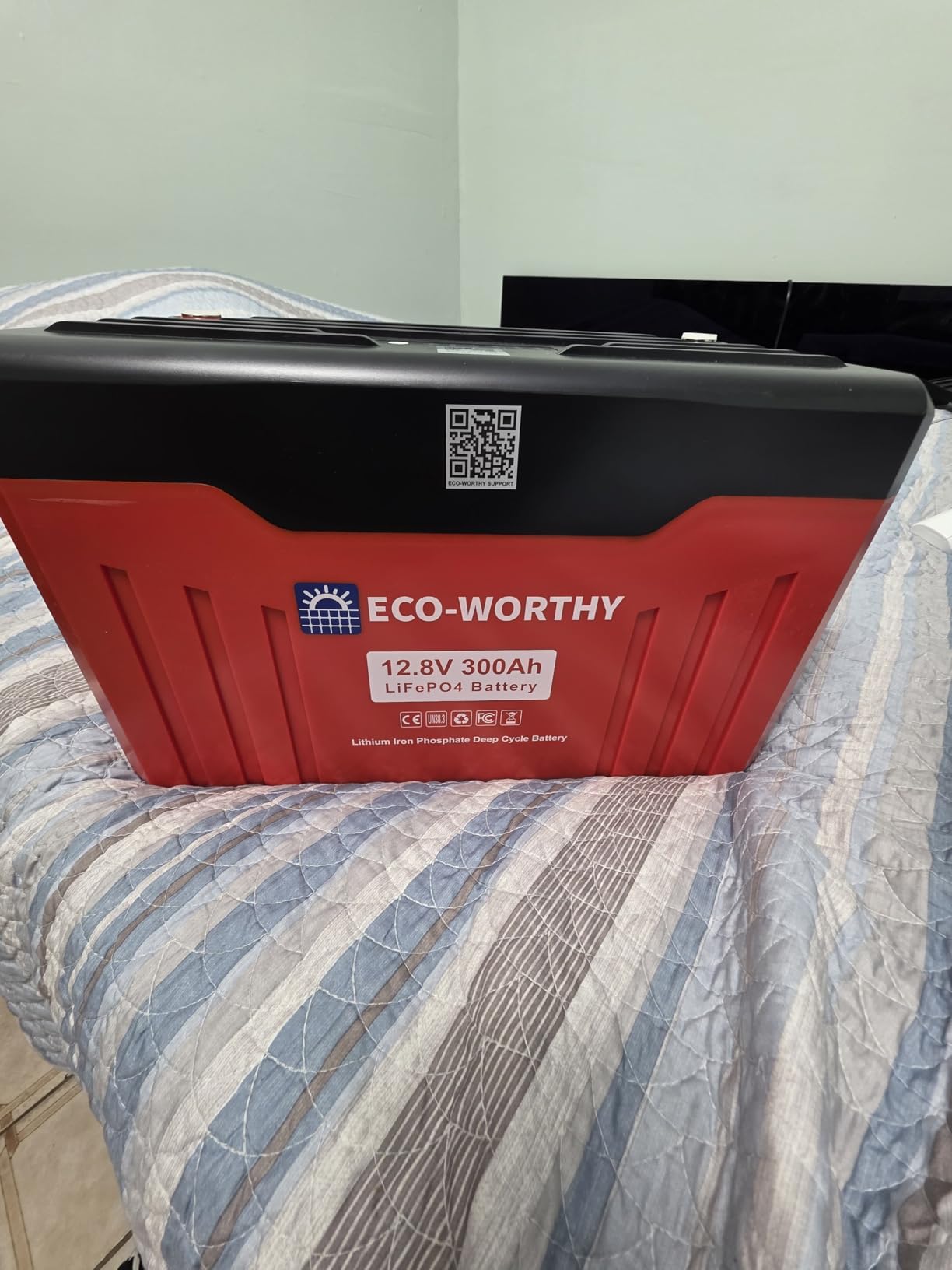
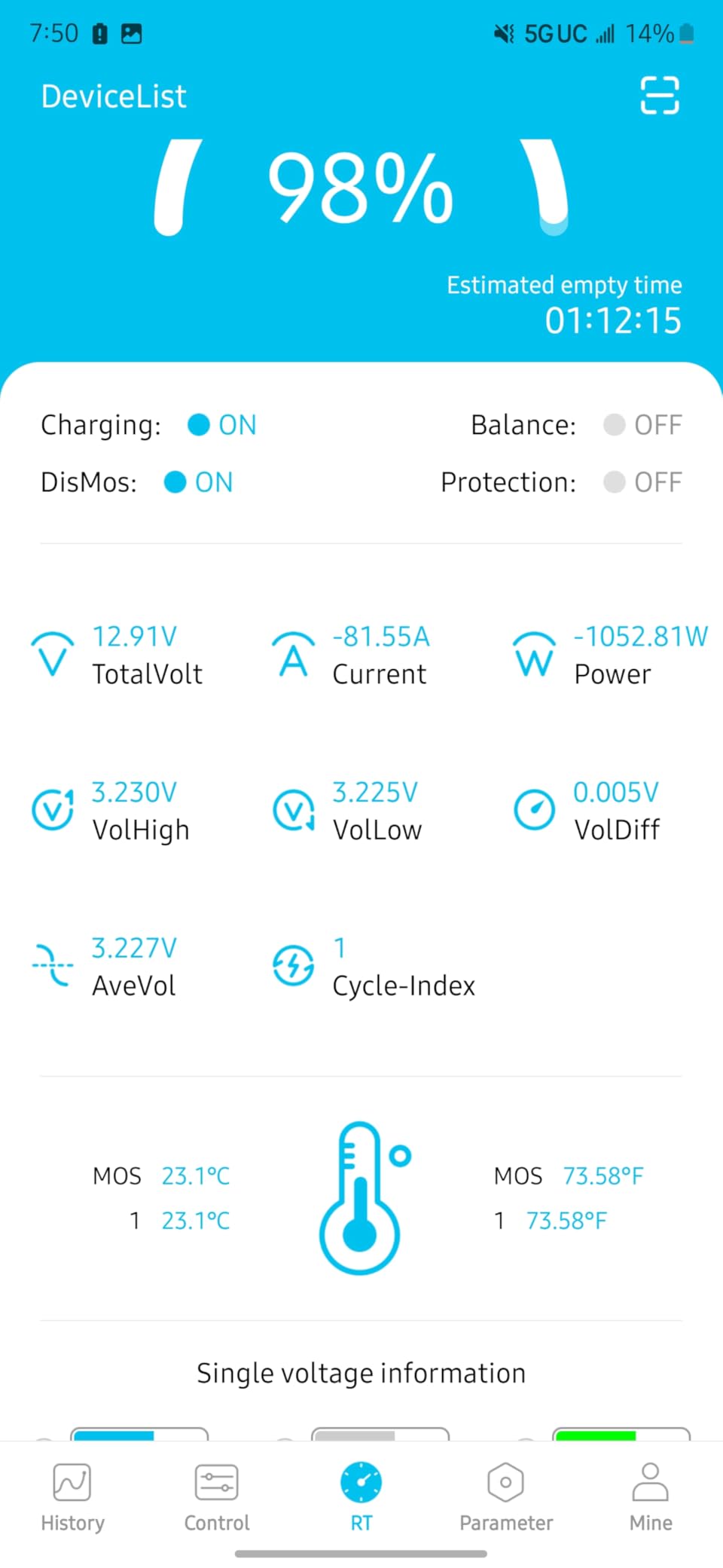
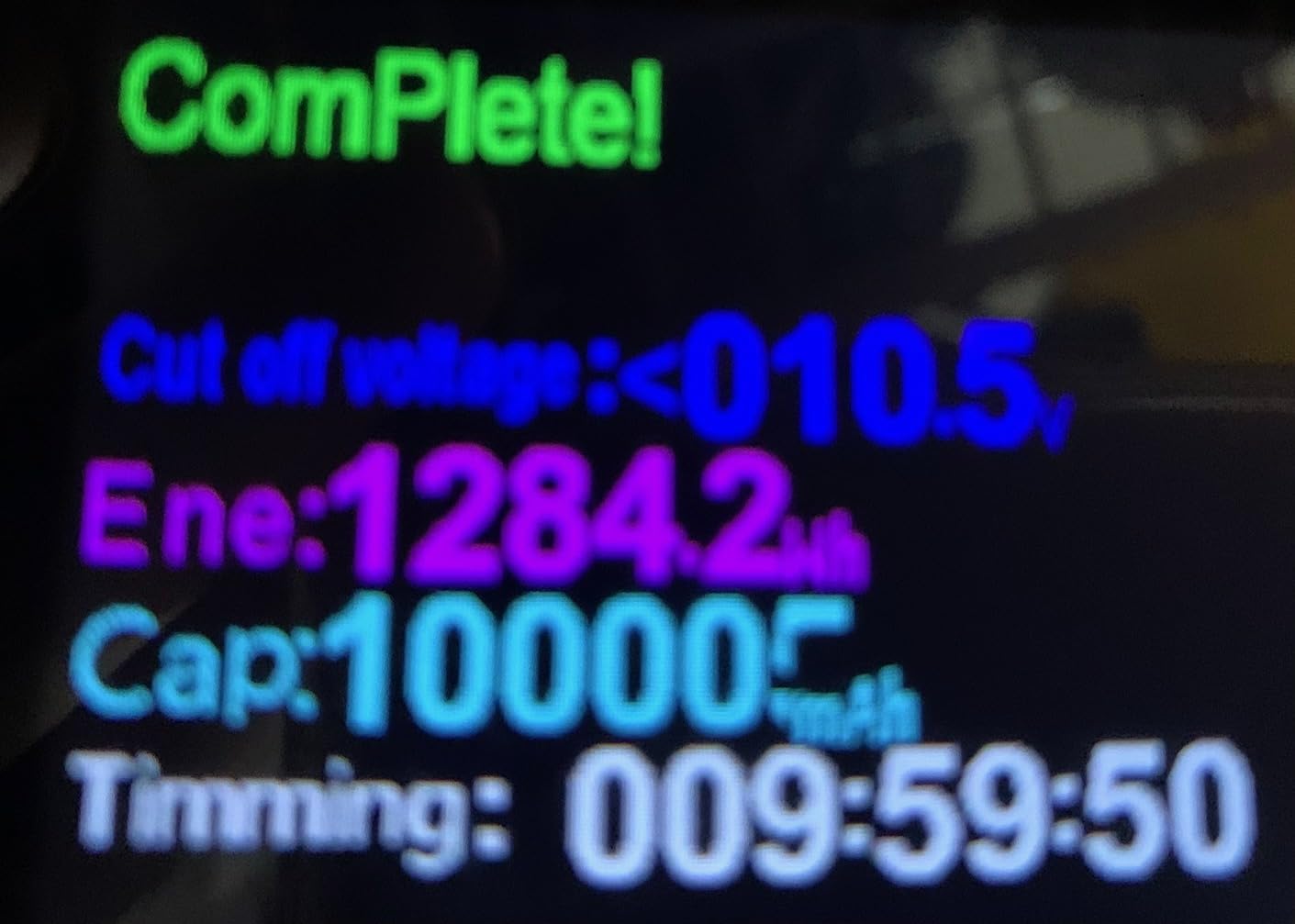
Owners report bench testing that exceeds spec, and several describe running a 15K RV air conditioner for three to four hours per charge, which is a demanding real-world load for a single battery. The metal-case design and the 4019 watt-hour capacity make this a strong choice for anyone running rooftop air conditioning off solar in a full-time build.
The weaknesses are equally documented. The warranty is 3 years, and at 60.4 pounds a return is impractical without the original packaging. One owner reported Bluetooth voltage and current readings that were several times the actual draw, others describe the app as basic, and some buyers report poor customer service response times, though the brand did eventually issue replacements when units failed outright. If responsiveness when something breaks is your top priority, weigh that carefully.
Do you need the on-battery LED panel?
If you check state of charge by walking to the battery, yes, and it is a better experience than squinting at an app with no signal. If you monitor remotely from the driver’s seat or from home, the app is the interface you will actually use. Some people use both, which is redundant but cheap compared to a trip home.
When does 314Ah earn its weight?
When you run loads that would flatten a 200Ah bank in a day. Rooftop air conditioning, an electric water heater, induction cooking and a CPAP machine all add up, and at 4019 watt-hours with a 200A BMS this pack covers the days when solar input is poor. It also expands to 4P2S or 2P4S for up to 32.15kWh if the build grows later.
12. HeyFuture 12V 100Ah Bluetooth – The Best Lithium Battery to Start Building With
HeyFuture 12V 100Ah Bluetooth LiFePO4 Battery for Rv, Trolling Motors, Boat
- Bluetooth monitoring in a Group 24 case that fits standard boxes
- Standard Group 24 dimensions replace lead-acid and AGM directly
- JBD 100A smart BMS with cell balancing visible in third-party apps
- 21.5 lbs with quick charge rates
- 5-year warranty with prompt replacement of a defective unit
- Cells are unbranded so true cycle life is unverified
- No internal fuse so external fusing is advisable
- 4S2P layout limits per-cell monitoring
- Waterproofing depends on sealant application quality
At the entry end of this roundup, this Group 24 battery still ships with a JBD 100A smart BMS, cell balancing, Bluetooth and a five-year warranty. That combination is the point. For a first build or a weekend van, the money saved goes into solar panels or a better inverter, which have a bigger effect on your time off grid than the fifth battery ever will.
Owners report genuine endurance numbers, including more than three hours of pumping on a 10 percent draw and 85 percent or more charge remaining after heavy trolling motor use, which suggests the capacity claim holds up in real duty. Internal resistance is published at 40 milliohms, terminal type is M8, and the unit weighs 21.5 pounds.
Teardown-style reviews are genuinely mixed, and that honesty matters here. Praise goes to the build quality, with molded cell frames and welded busbars. Criticism goes to unbranded cells of unverified quality, the absence of an internal fuse, and a 4S2P layout where the BMS cannot monitor each individual 50Ah cell. The practical consequence of the missing internal fuse is that you should add your own fusing close to the battery, which you should be doing anyway.
Waterproofing depends on the quality of the sealant application, and some units have failed with intermittent shutdowns from weak cells, with one owner reporting a battery dead in six months. The warranty service itself has been reported as responsive, and a defective unit was replaced promptly. It is a reasonable first purchase, but it is not the pick for someone who cannot afford to troubleshoot a battery in the field.
Is this good enough for full-time van life?
As a single unit, no. At 1280 watt-hours with a 100A BMS, it is a weekend and short-trip battery, or one of several in a parallel bank. In a pair it becomes a credible 200Ah house bank, and because the BMS is a published 100A, the pair delivers 200A continuous, which covers a 2000W inverter comfortably.
What should you add when you install it?
An inline fuse or breaker at the battery terminal, a proper lithium-profile charge controller or inverter charger, and a bonding strap if the case is metal. Because the 4S2P layout limits cell-level visibility, a shunt monitor is a sensible addition, and because the BMS is a published JBD unit it will show up in common third-party battery monitoring apps.
Buying Guide: How to Choose a Van Life LiFePO4 Battery?
Sizing first, brand second. Get your daily watt-hour consumption measured rather than guessed, then size the bank with headroom, and only then decide which of these twelve suits you. The forum consensus is that when converting from lead acid you can roughly halve the required bank size for the same load, because usable capacity per amp-hour is far higher.
How much capacity do you actually need?
Work out your average and peak load in watts, multiply by hours, and that is your daily watt-hours. A 12V fridge cycling roughly a third of the time draws about 45 to 55 watts, so a day of fridge alone is around 1200 watt-hours. LED lighting, a water pump, phone charging and a laptop add another 200 to 500 watt-hours, and a CPAP machine sitting on a humidifier overnight can add 100 to 200. A conservative full-time van with a CPAP and a 12V fridge lands around 1500 to 2000 watt-hours a day.
For weekend camping, one 1280 watt-hour battery covers that with room to spare. For full-time boondocking with a 1500 to 2000 watt-hour daily draw, a 3000 to 4000 watt-hour bank gives you two to three days without solar, which is the comfort most people want. Our van life roof rack guide covers the other half of a boondocking setup, because your solar array has to be able to refill the bank you choose.
LiFePO4 versus lead acid versus AGM
Lead acid is the baseline most people are upgrading from, and the comparison is stark. A 100Ah lead-acid battery weighs about 60 pounds and you can only safely use around half of it, so real usable capacity is about 640 watt-hours. A 100Ah AGM is better but still lands near half depth of discharge and is even heavier. A 100Ah LiFePO4 weighs about 22 pounds and gives 80 to 90 percent usable, so roughly 1100 watt-hours of real energy from a third of the weight.
Cycle life follows the same pattern. Lead acid is rated in the low hundreds of deep cycles before it loses capacity, while these lithium batteries are specified from 4000 to 15000 cycles depending on depth of discharge. Multiply that by the fact that lithium will sit unused for months without losing much charge and never needs watering or terminal maintenance, and the cost of ownership argument makes itself.
On the chemistry question that shows up constantly in search, LiFePO4 is the lithium chemistry. Comparing LiFePO4 to lithium battery is a category error, like comparing a diesel engine to an engine. LiFePO4 is the right lithium chemistry for van use because it has the best cycle life, the lowest fire risk and the widest operating temperature band of the common lithium options.
Understanding the BMS and the 200A to 300A ceiling
The battery management system is the real limit on any lithium install, and it is the most misunderstood part of the spec sheet. A 3000W inverter at 12.8V nominal draws about 235 amps, so a 100A BMS battery cannot support it no matter how many watt-hours the pack holds. This is the complaint that shows up again and again in van forums, where builders discover their single battery cannot deliver the inverter load and end up buying a second one.
The maths is simple. Divide inverter watts by 12.8 to get required continuous amps, divide that by the BMS rating to get the number of batteries in parallel, and round up. A 3000W inverter on 100A batteries needs three in parallel for full output, on 200A batteries it needs two, and on 250A batteries one. If that sounds expensive, size the inverter down instead, which is usually the better answer.
Cold weather charging and whether you need self-heating
Charging a LiFePO4 cell below freezing causes lithium plating, which permanently reduces usable capacity. Every battery in this roundup handles it with a cutoff, and the thresholds differ meaningfully. Several units cut charging below 32F and resume at 41F. The DC HOUSE cuts at 19.4F, which is a much tighter margin. The ECO-WORTHY 280Ah also reports a 20F cut-off. The self-heating Litime goes further and actively warms the pack, starting below 41F and stopping at 50F.
So does a self-heating battery earn its cost? If you camp below freezing regularly, yes, because the alternative is arriving at a flat battery that will not charge until something else warms it. If you travel in mild weather, keep the van plugged in when stored, or bring the battery indoors on cold nights, a standard low-temperature cutoff is enough. Our lithium marine battery review goes into the same cold-weather chemistry questions from the boating side.
The charge side most guides skip
Swapping to lithium usually costs more than the battery. You need a charger that speaks lithium, an MPPT controller rather than a PWM unit if you are on solar, and a DC-DC charger if you want to charge from the alternator while driving. A standard lead-acid charger or an isolation relay is not enough current to top a lithium bank up properly, and a lead-acid absorption profile will leave the battery chronically undercharged.
The most common advice from owners is to set an inverter charger to the lithium profile, size the MPPT controller for the panel array rather than the battery, and if charging from the alternator use a dedicated DC-DC charger rather than a simple isolator. Also confirm your low-voltage disconnect settings match lithium, because the default thresholds on many inverters are set for lead acid and will cut your usable capacity short.
Wiring, fusing and physical fit
Physical fit catches people more often than electrical specifications. Check the dimensions against your box before you order, and note that the tallest units in this group, such as the 460Ah Group 8D, will not fit where a standard battery sat. Measure the clearance including terminal height, and confirm the mounting orientation is supported, because some manufacturers explicitly advise against laying the battery on its terminal side.
On the electrical side, run properly sized cable from each battery to a common busbar, keep parallel runs equal in length and gauge, and install a fuse or breaker within a short distance of each battery. Lithium fault currents are high, and fusing is not optional. Secure the battery against vibration with straps rated for the direction of travel, and if it is in a sealed box or behind a panel, leave ventilation path because the cells generate heat under high load.
What to avoid and common failure modes
Five things show up repeatedly as deal breakers in the van community. First, a battery that will not accept charge below freezing with no self-heating option and no way to warm it. Second, a BMS rated too low for the inverter you plan to run, which forces unplanned spending on extra parallel units. Third, a sealed unit with no internal fuse and no external protection, which is exactly the configuration we flagged on the HeyFuture. Fourth, mislabelled or inflated capacity, which is why buyer reports of bench testing capacity are valuable. Fifth, brands with no phone support and warranty terms buried in fine print.
Two more failure modes are worth knowing. A weak cell in a series string drags the whole pack down, which is why per-cell Bluetooth monitoring has real diagnostic value rather than being a novelty. And charging a lithium battery with a lead-acid profile is slow, incomplete damage that you will not notice until the battery no longer reaches full charge, so set the profile correctly on day one.
What a quality brand looks like
Look for published cycle life with a stated depth of discharge, a warranty term written in years rather than cycles, real human phone support, UL or CE certification with UN38.3 for transport, and a BMS that publishes its continuous and peak current rather than hiding behind a marketing number. The most-cited trust signal in the forums is the ability to get on the phone with a support engineer, which is why premium brands keep a price premium at equal amp-hour ratings.
That last point is the honest answer to the most common question in this category. Two batteries with identical 100Ah ratings can differ by a factor of several in price because one publishes honest cell grade, tested cycle counts at stated conditions, documented cut-off thresholds and employs people who answer phones, and the other does none of those things. You are not paying for amp-hours, you are paying for the evidence behind them. If you cannot verify the evidence, buy the cheaper one and accept the risk, but do it knowingly.
Frequently Asked Questions
Which brand of lithium RV battery is the most reliable?
For van and RV use, reliability tracks warranty length, published cycle life and whether real phone support exists. LiTime and ECO-WORTHY carry the largest owner bases and 4.5-plus ratings across hundreds of reviews in our testing. Owners most often single out Battle Born for customer service rather than specs, though it does not appear in our roundup. Pick on warranty term, documented cut-off thresholds and certification, not on amp-hours alone.
What size lithium battery do I need for van life?
One 100Ah LiFePO4 battery, about 1280Wh, covers weekend camping with a 12V fridge, lights and a water pump. Full-time boondocking with a CPAP machine and continuous fridge draw usually calls for 3000 to 4000Wh, which means a 200Ah to 314Ah bank or two 100Ah units in parallel. When converting from lead acid, roughly halve your old bank size to hit the same runtime.
Which is better, LiFePO4 or lithium battery?
LiFePO4 is the lithium chemistry used in essentially every van-life battery on the market, so the comparison is really LiFePO4 versus lead acid. LiFePO4 stores about twice the usable energy per pound, allows 80 to 90 percent depth of discharge instead of roughly 50 percent, runs thousands of cycles instead of hundreds, and needs no maintenance. NMC and NCA lithium chemistries offer higher energy density but far shorter cycle life and greater fire risk, which is why they rarely appear in RV installs.
What are the downsides of using lithium batteries in a van?
The main downsides are a higher upfront cost, the inability to charge below freezing without a self-heating option or a low-temperature cutoff, the 200A to 300A BMS ceiling that can force extra parallel batteries for a large inverter, sealed cells that cannot be re-celled, and the need to upgrade your charge-side equipment. Lithium also has a higher self-discharge than lead acid in very hot storage, so long hot storage deserves attention.
Can I run a 3000W inverter off a 100Ah lithium battery?
Not properly. A 3000W inverter at 12.8V draws roughly 235 amps continuously, while a 100A BMS can only deliver 100 amps, so the BMS will cut output or the inverter will shut down. You need three 100A batteries in parallel, two 200A batteries, or one unit with a 250A or higher BMS. Alternatively, size the inverter down to about 1200W to match a single 100Ah battery.
Do I need a self-heating lithium battery for van life?
Only if you regularly camp below about 32F for more than a few nights a year and cannot keep the battery compartment above freezing. Charging a LiFePO4 cell below freezing causes permanent lithium plating, so any self-heating or cutoff feature is valuable in winter. In mild climates or when the van is stored plugged in, a standard battery with a documented low-temperature cutoff is sufficient and saves money.
Conclusion
The best lithium batteries for van life in 2026 come down to your climate and your inverter. The Litime 12V 100Ah LiFePO4 is the pick for most builds, because it fits a standard box, weighs about 22 pounds and carries the deepest owner history in this roundup. The Litime 12V 100Ah Self Heating is the one to buy if you camp in genuine cold, and the ECO-WORTHY EnergyRock 280Ah is the one to buy if you want 3584Wh in a metal case with front posts and a 200A BMS.
LiFePO4 is the right chemistry for a van, and the argument is not close. You get roughly double the usable capacity per pound, thousands of cycles instead of hundreds, and a battery that survives months of storage without attention. Work out your daily watt-hours, divide inverter watts by 12.8 to check the BMS, and then use the buying guide above to close the gap between what you need and what you are about to order.