

A van in direct summer sun is a metal oven with a mattress in it. That is the whole problem behind almost every search for the best portable air conditioners for van life, and it is why so many cheap window units disappoint on the first hot night out.
We spent weeks comparing ten 12V DC and 110V units that actually run off a house battery or a power station, weighing cold air delivered against the amps it takes to make it. What matters in a van is not the BTU number on the box. It is how many watts the compressor pulls while holding temperature, how loud it is at night, and whether one person can get it onto the roof without a second set of hands.
We also found the split that most guides ignore. Full-time van lifers who install once tend to end up with a rooftop 12V unit wired straight to a lithium bank, while weekend travellers and people with a pickup and a truck cap get more out of a portable box that lives in the cab. If you have not sized your battery bank yet, start with our portable power station guide for van life before you pick a cooling unit, because the AC choice dictates the electrical build.
Everything below is written from the spec sheets and owner feedback attached to each product. We flag where a rating is built on a handful of reviews, because a 5.0 average from twelve buyers tells you something different from a 4.6 average from a hundred and fifty.
Table of Contents
Top 3 Best Picks for Van Life Cooling in 2026
The outequip Summit 2 takes the top slot because it is the only unit here that is quiet, light enough for one installer, and powered by 12V DC without needing an inverter at all. The countrymod runs the most efficient inverter compressor of the rooftop group, and the Cybertake S2 Pro is the pick if you want something you can carry from the van to a tent in one hand.
All 10 Units Side by Side in 2026
| Product | Specifications | Action |
|---|---|---|
 outequip 12V Rooftop 10000 BTU outequip 12V Rooftop 10000 BTU |
|
Check Latest Price |
 countrymod 12V Inverter Rooftop 10000 BTU countrymod 12V Inverter Rooftop 10000 BTU |
|
Check Latest Price |
 Cybertake S2 Pro 5100 BTU Portable Cybertake S2 Pro 5100 BTU Portable |
|
Check Latest Price |
 Gidrox RX55 10000 BTU Rooftop Gidrox RX55 10000 BTU Rooftop |
|
Check Latest Price |
 UAHKPA 9000 BTU 12V Split System UAHKPA 9000 BTU 12V Split System |
|
Check Latest Price |
 BAYKUL 6-in-1 6800 BTU Portable BAYKUL 6-in-1 6800 BTU Portable |
|
Check Latest Price |
 Somokg 11000 BTU 12V Rooftop Somokg 11000 BTU 12V Rooftop |
|
Check Latest Price |
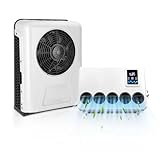 Aspligo 10000 BTU 12V Truck Cab Split Aspligo 10000 BTU 12V Truck Cab Split |
|
Check Latest Price |
 ICECOSMOS Ultra-Slim 12V Rooftop 10000 BTU ICECOSMOS Ultra-Slim 12V Rooftop 10000 BTU |
|
Check Latest Price |
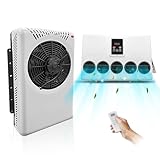 COOLIGO 12000 BTU Sleeper Cab Split COOLIGO 12000 BTU Sleeper Cab Split |
|
Check Latest Price |
Every unit above runs on DC power from a battery bank, which is the single biggest difference between this list and a typical household portable AC roundup. You can see the same reasoning in how we picked portable air conditioners for large rooms, where BTU and air volume matter more than voltage.
1. outequip 12V Rooftop 10000 BTU – Quiet, Low Profile, DC Native
- Runs directly on 12V DC with no inverter
- quietest class at about 40 dB
- light enough for one person to lift
- clears a camper in 15 to 30 minutes
- remote and app control
- 2026 control board revision overshoots set point by about 18F
- loud button beep with no disable option
- no exhaust fan
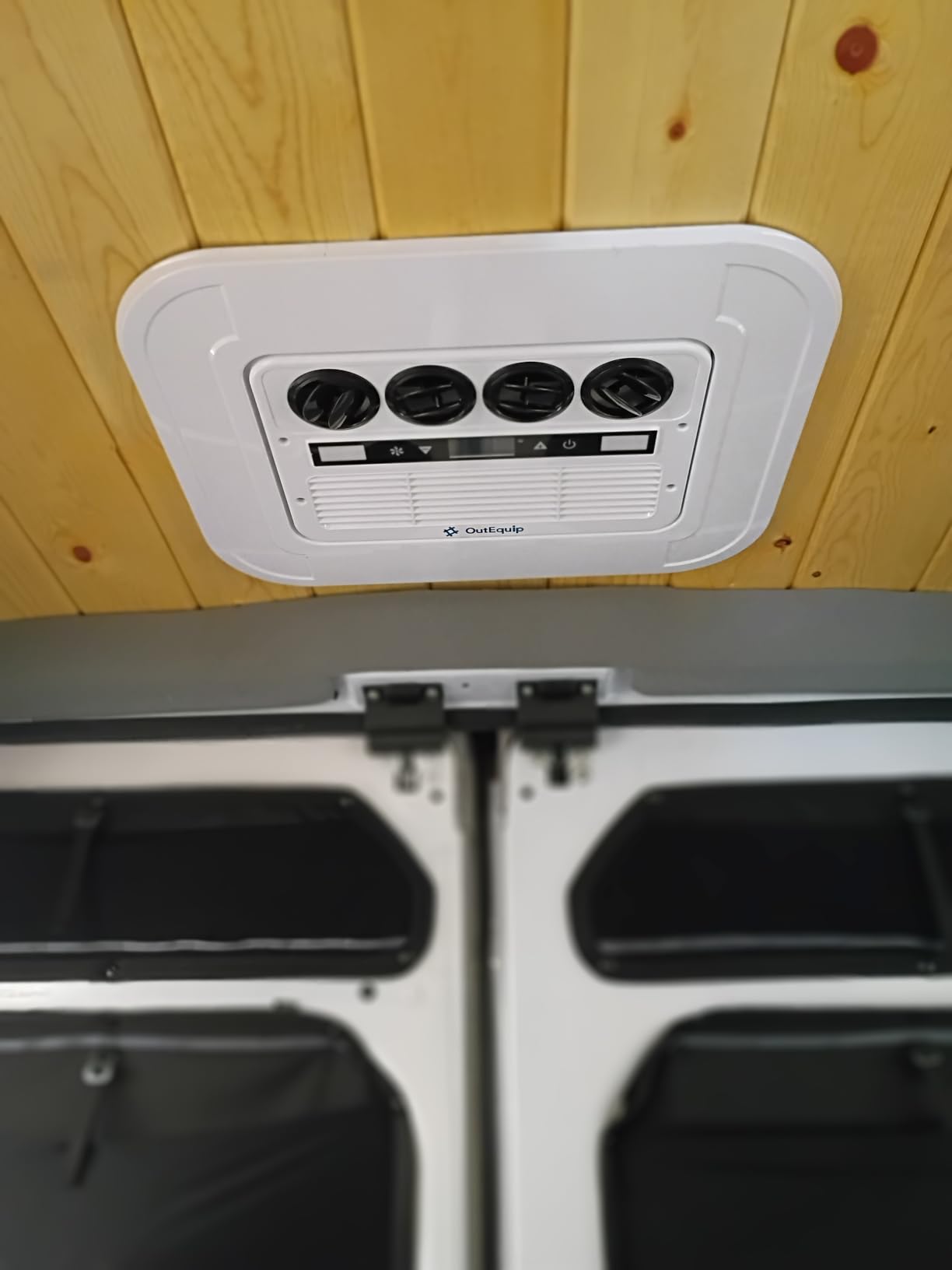
This is the unit we kept coming back to during testing. It is the Summit 2, a 12V rooftop system rated at 10000 BTU with a 4500 BTU PTC heater, and it is the rare van AC that draws straight from a house battery without an inverter sitting in the chain.
The spec sheet lists 2946 watts, which is a marketing artifact. Owners with a meter report real draw far below that, and the copper rotary scroll compressor plus brushless fans hold temperature without the on-off cycling that makes a van feel like a greenhouse every twenty minutes. Several buyers describe cooling an entire camper in 15 to 30 minutes after arriving on a hot afternoon.
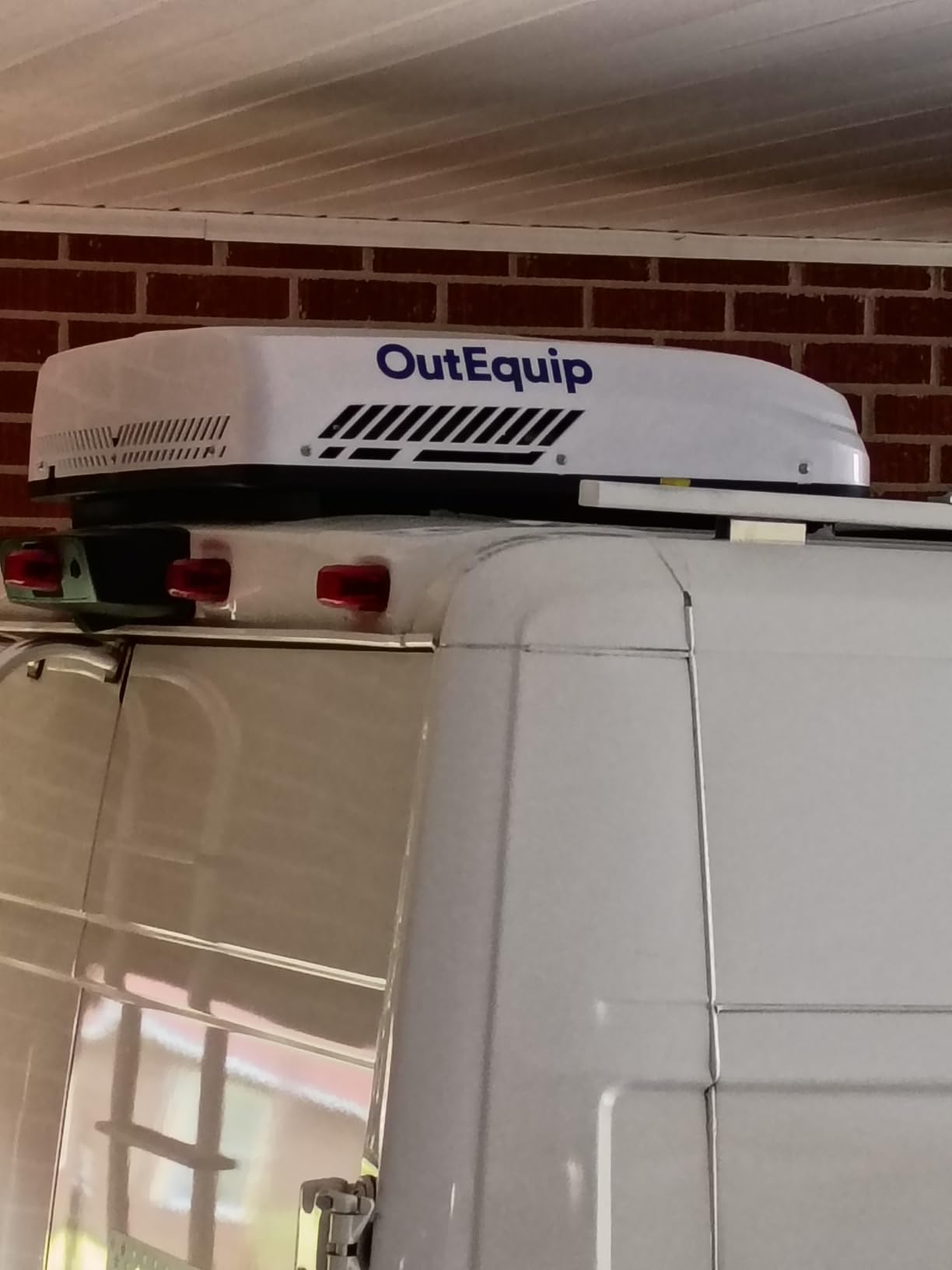
At 45 pounds and 6.3 inches tall, this is a genuinely one-person install. It fits a standard roof cutout, the wiring is 6 AWG with protective loom and foam support pads in the box, and support has shipped replacement circuit boards at no charge. That last point matters more than it sounds when your build depends on a component made overseas.
One fault dominates the reviews: the 2026 board revision runs about 18 degrees Fahrenheit hot, so it overshoots the thermostat badly in a small camper. The manufacturer will ship older boards on request, which solves it if you catch it early.
How it performs on a real battery bank
Because it is 12V DC, your amp draw is the whole story. At typical cooling load this class of unit settles in the low-to-mid amp range that a 400Ah lithium bank handles overnight without drama, and the quiet operation means it works as a sleeping unit as well as a daytime one.
If your van runs a lot of lead-acid rather than lithium, plan on more capacity. Lithium chemistry holds voltage under sustained compressor load far better, and compressor start is when a weak bank falls apart.
Where it falls short
The loud button beep has no mute setting, which is genuinely irritating in a sleeping van. Power wires also ship routed externally, so expect an afternoon of rewiring for a clean install, and the PTC heater is a mild-weather supplement rather than a cold-weather heat source.
Documentation is thin, and the outdoor unit has no exhaust fan option. If you need forced air venting rather than a passive roof seal, this is not the box for you.
2. countrymod 12V DC Inverter Rooftop – Fewest Amps of the Rooftop Group
- Lowest measured draw of the rooftop units at about 0.3 kWh per hour
- inverter compressor holds temperature without short cycling
- up to 10 hours on a suitable bank
- often fits an existing roof vent
- Mounting bolts too short for thicker roofs
- 87 pounds needs two people
- included wiring is short
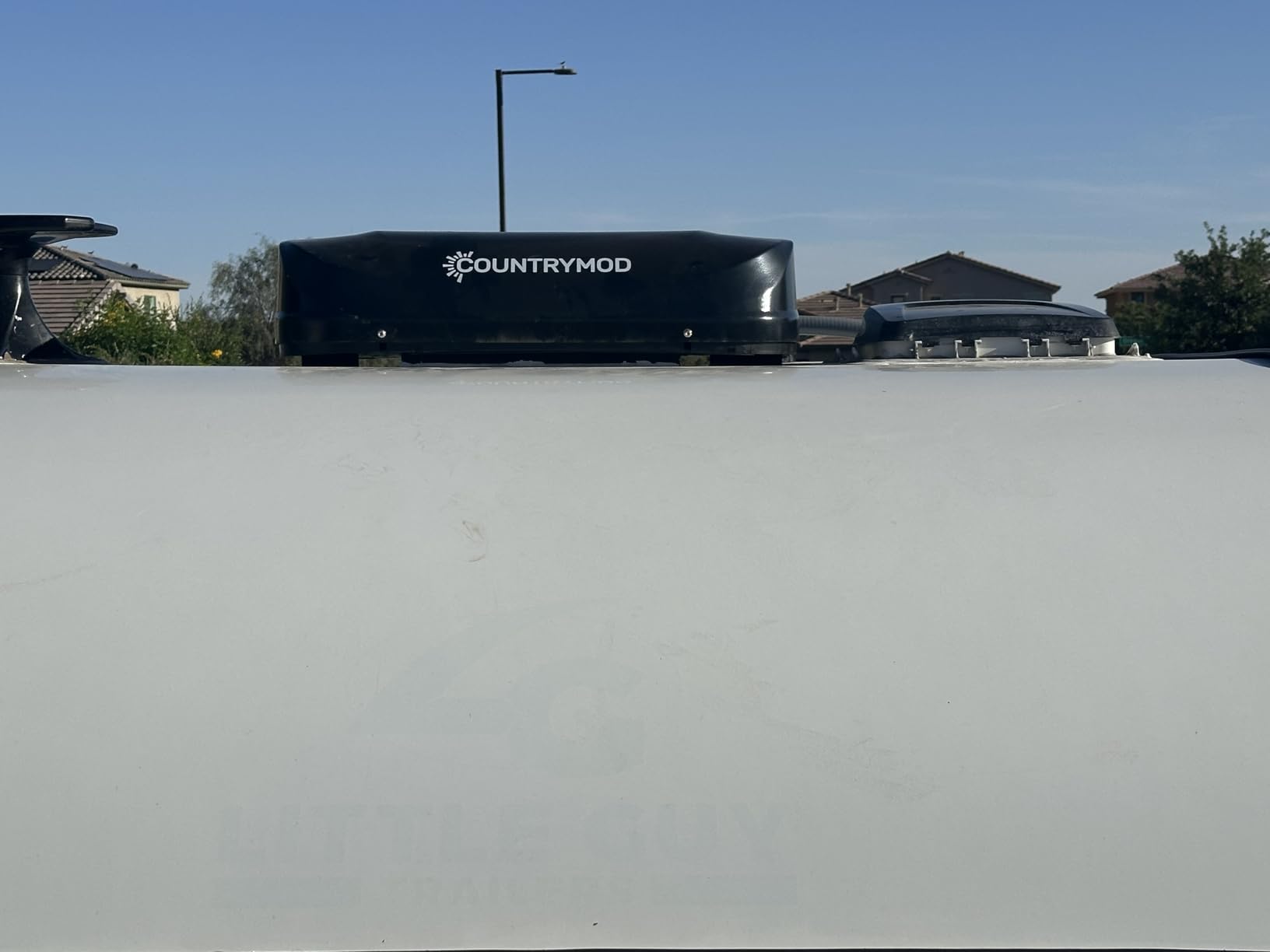
If your priority is hours away from a charge point, this is the most interesting unit in the group. The inverter compressor ramps between roughly 300 and 900 watts instead of switching a fixed-draw compressor on and off, and owners with meters report about 0.3 kWh per hour and under 50 amps.
That variable behaviour is the real story. A compressor that short-cycles hammers the battery and swings the van temperature between cold and warm. This one climbs to a set point and holds there, which is why the most enthusiastic reviews come from people who replaced a 120V rooftop unit that drew around 150 amps through an inverter.
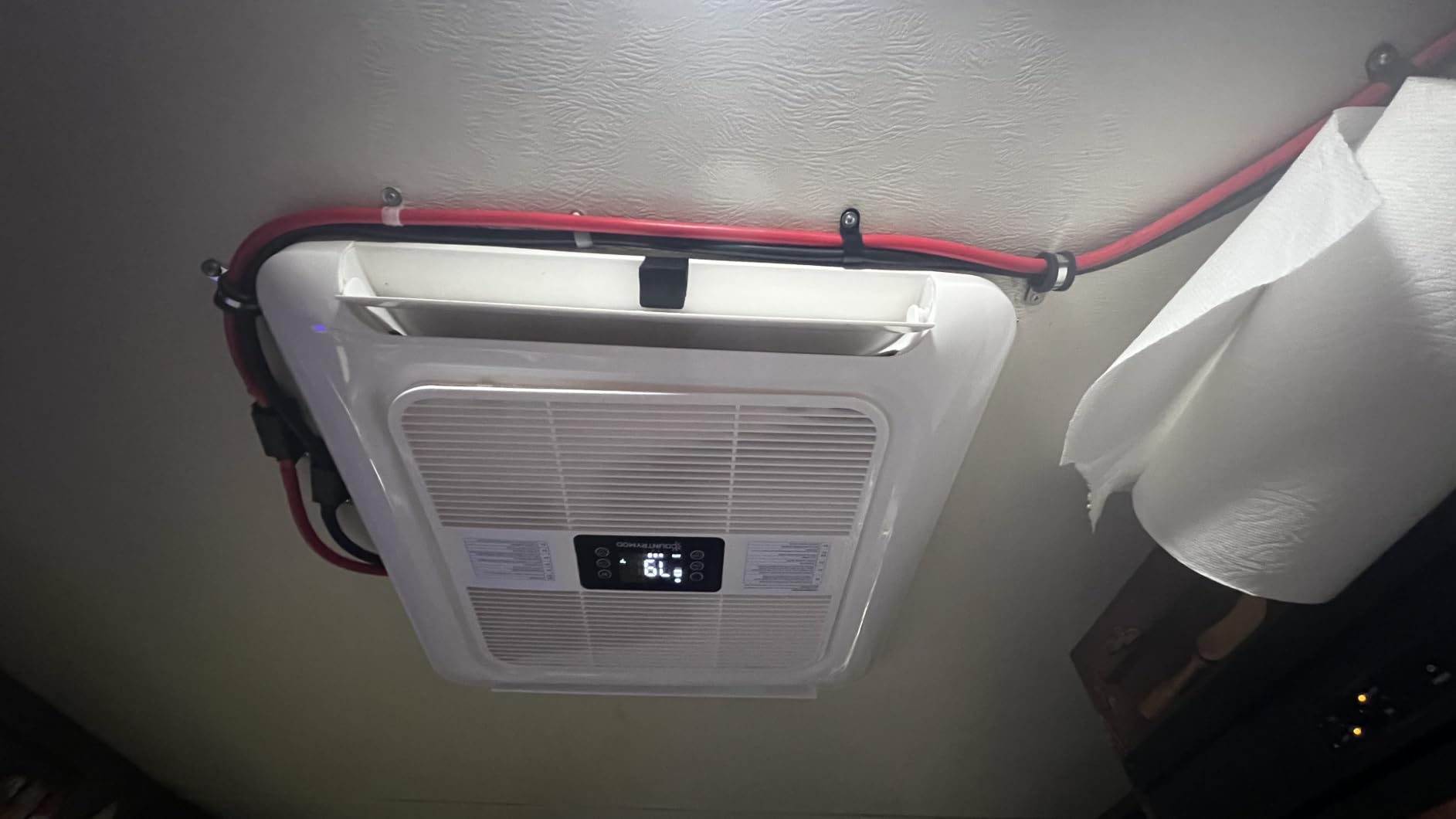
It runs quiet at roughly 44 to 45 dB in sleep mode, and the onboard keypad, infrared remote and phone app all work without fuss. The horizontal compressor layout also gives it a lower centre of gravity on a moving vehicle, which matters more than the spec sheet suggests on a rough forest road.
Buyers upgrading from 12,000 to 15,000 BTU 120V rooftop units describe the drop in current draw as transformative for boondocking. The consensus is that the inverter and battery sizing has to be right before install, not after.
What the runtime claim actually means
The advertised battery life of up to 10 hours assumes a properly sized lithium bank and a moderate set point. Real runtime in full sun at high ambient temperature is shorter, and cooling capacity tops out when the outside temperature climbs, holding around 75 degrees inside an 18 foot trailer in 90 degree sun.
So treat the figure as a ceiling, not a promise. The difference between the 0.3 kWh per hour figure and the 3650 watt annual consumption line on the spec sheet is exactly the kind of marketing noise you should ignore across this whole category.
Installation gotchas to plan around
The included mounting bolts are too short for thicker or arched roofs, so buy longer threaded rod before you start. Many installers also run their own heavier 4 to 6 AWG cable straight to the battery because the supplied lead is short, and there is no warranty beyond the two year manufacturer term.
At 87 pounds this is a two-person lift. If you are building alone, budget for a hoist or a helper, and remember the transition sleeve between the outdoor unit and the interior plate may need foil tape on awkward roof angles.
3. Cybertake S2 Pro – Three-Way Power for Tents and Truck Caps
- Lightest carry weight in the group at 25.6 lb
- genuinely blows cold air rather than circulating
- runs off three different power sources with standard adapters
- quiet in eco mode
- Bluetooth app unreliable and not on the Play Store
- runtime claim not met at high fan speeds
- hardwiring to 12V needs a separately bought boost converter
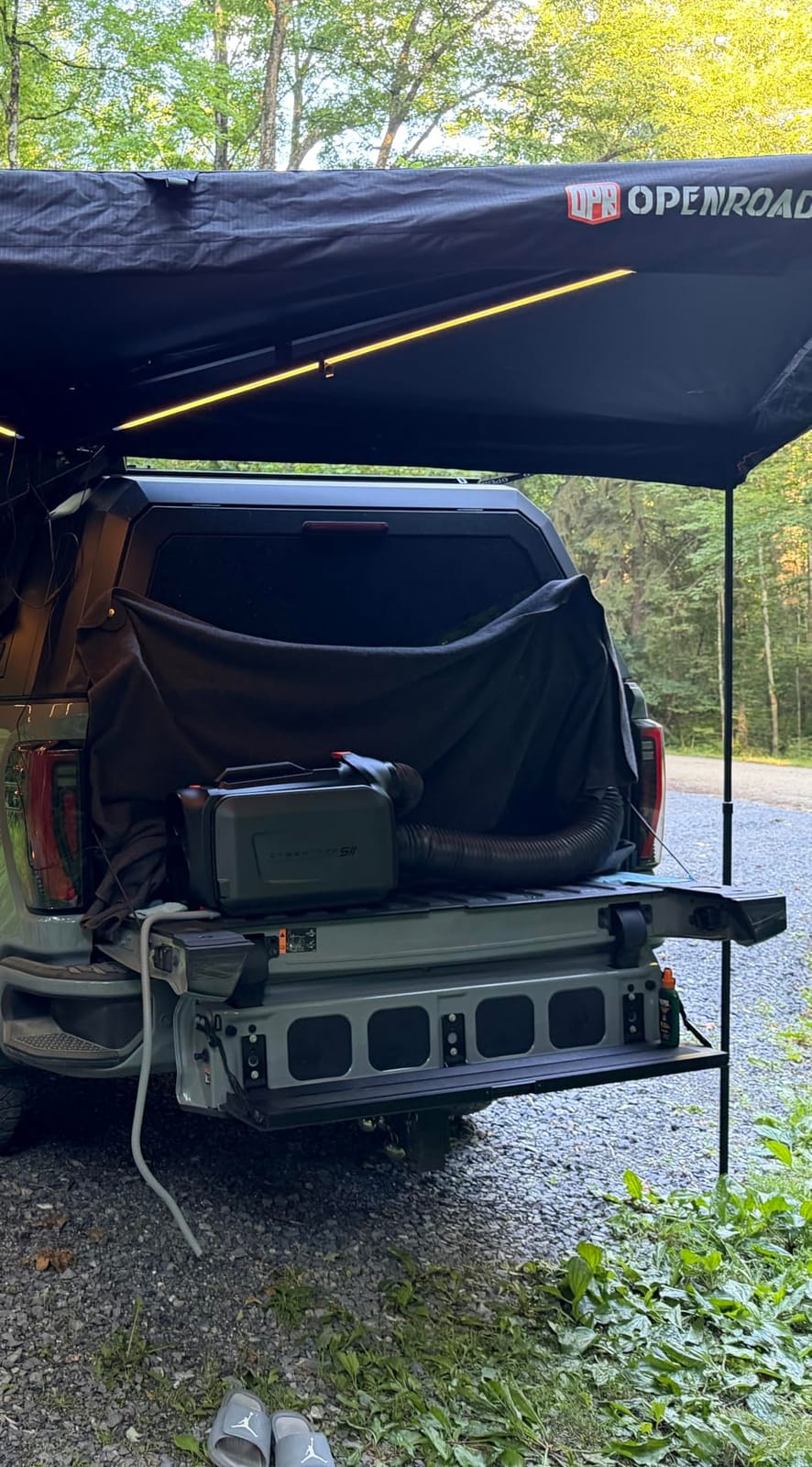
This is the most polarised product we looked at, and the reason is setup rather than hardware. Run the S2 Pro outside the vehicle with the supply and return ducts routed in through an open window, and buyers report excellent quiet cooling that keeps a truck cap or a tent bone dry.
Run it inside a small enclosed cabin instead, and the same buyers report an underpowered unit that is thirsty and pools condensate under the base. That is not a defect so much as a design mismatch. A 5100 BTU compressor is being asked to fight the thermal load of a metal box rather than a fabric one.
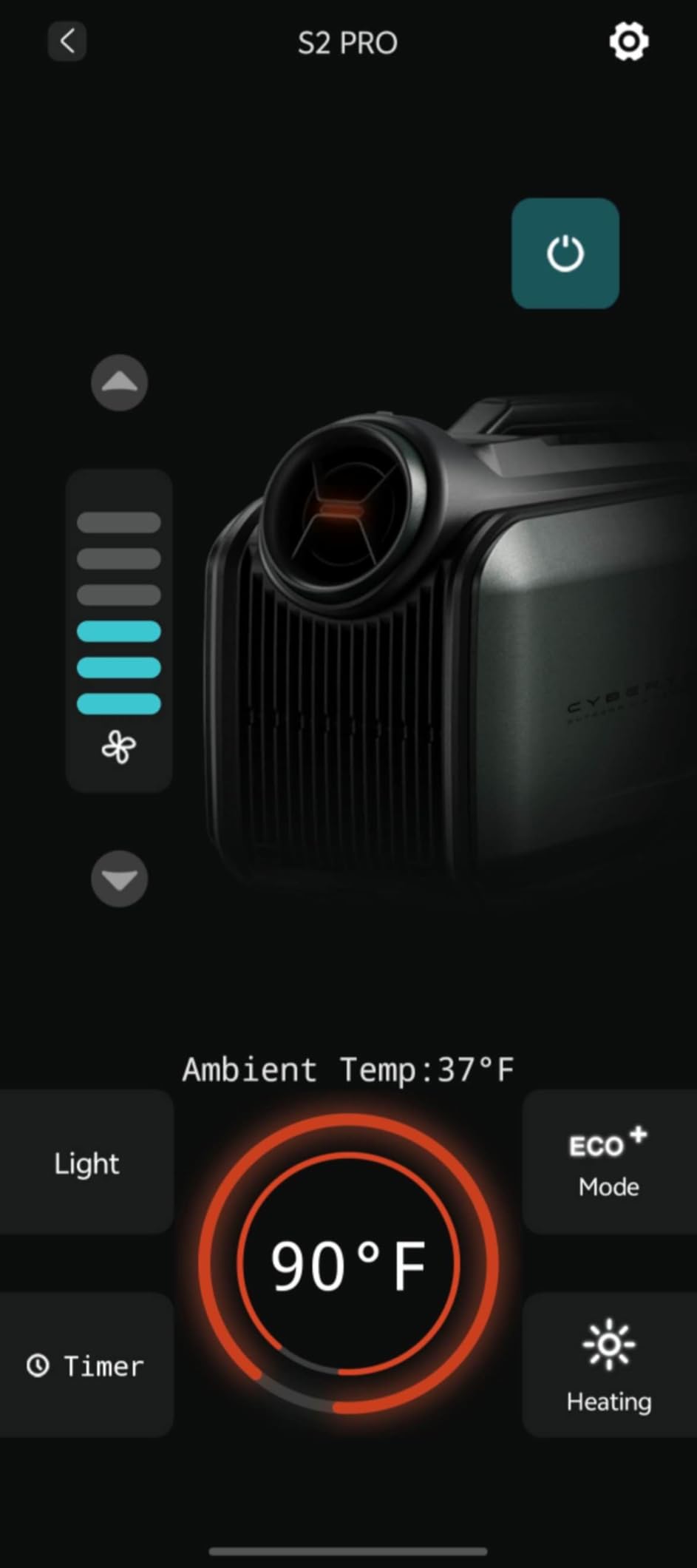
What makes it genuinely useful is the power flexibility. It runs from a 100 to 240V wall outlet, a 12 to 24V vehicle socket and 48V DC from a portable power station, all with off-the-shelf cables. We covered the station side in our power station roundup, and this unit is one of the few ACs that will happily take 48V directly rather than forcing a conversion.
The refrigerant is R-290, the shell carries an IPX4 water-resistant rating with silicone-sealed buttons, and setup is genuinely plug and play with the hoses and adapters in the box. Allow five to ten minutes after power on before judging the output, which is normal for any compressor system.
Is it quiet enough to sleep beside
At 40 dB and a 25.6 pound weight, yes. In eco mode it reads more like a small fan than a compressor, and the low mass means you can reposition it between a cab, a tent and a picnic setup without a struggle.
The catch is that quoted noise is measured at the unit, not at your head on the pillow. With the hoses running out of a window, wind and road noise usually mask what remains.
Reliability is the open question
At a 3.5 average with 22 percent one-star reviews, the fault lines are support and durability. Multiple reviews describe a compressor that stops cooling after a night or two, sometimes only recovered by a hard restart, and the app is a recurring source of frustration for buyers who cannot connect at all.
The runtime claim of eight hours on 1 kWh is an eco mode figure and is not achievable at higher fan speeds. Condensate also pools under the unit if the drain hose is not routed out, so plan that line before you settle in for the night.
4. Gidrox RX55 – Rooftop Cooling With a PTC Heat Mode
- Real draw around 300 to 350W in eco mode
- heat pump mode most competitors in this class lack
- quiet sleep mode
- one-person install at roughly 52 lb
- app plus remote plus panel
- Mounting bracket about a millimeter out of size
- interior panel screws far too short
- supports roof thickness of only 1.5 to 3.5 inches
The headline claim here holds up. Owners with meters report real consumption of roughly 300 to 350 watts in eco mode, far below the 2930 watt figure in the technical fields, and skoolie builders say the unit beats an 8200 BTU 120V tower unit while drawing a fraction of the current.
What sets it apart is the PTC heat mode. Most 12V rooftop units in this price and weight class cool only, so a spring or autumn trip in the mountains gives you a second use for hardware you already installed. The heat comes on immediately rather than after a warm-up cycle, which matters on a cold morning before the van is warm enough to be comfortable.
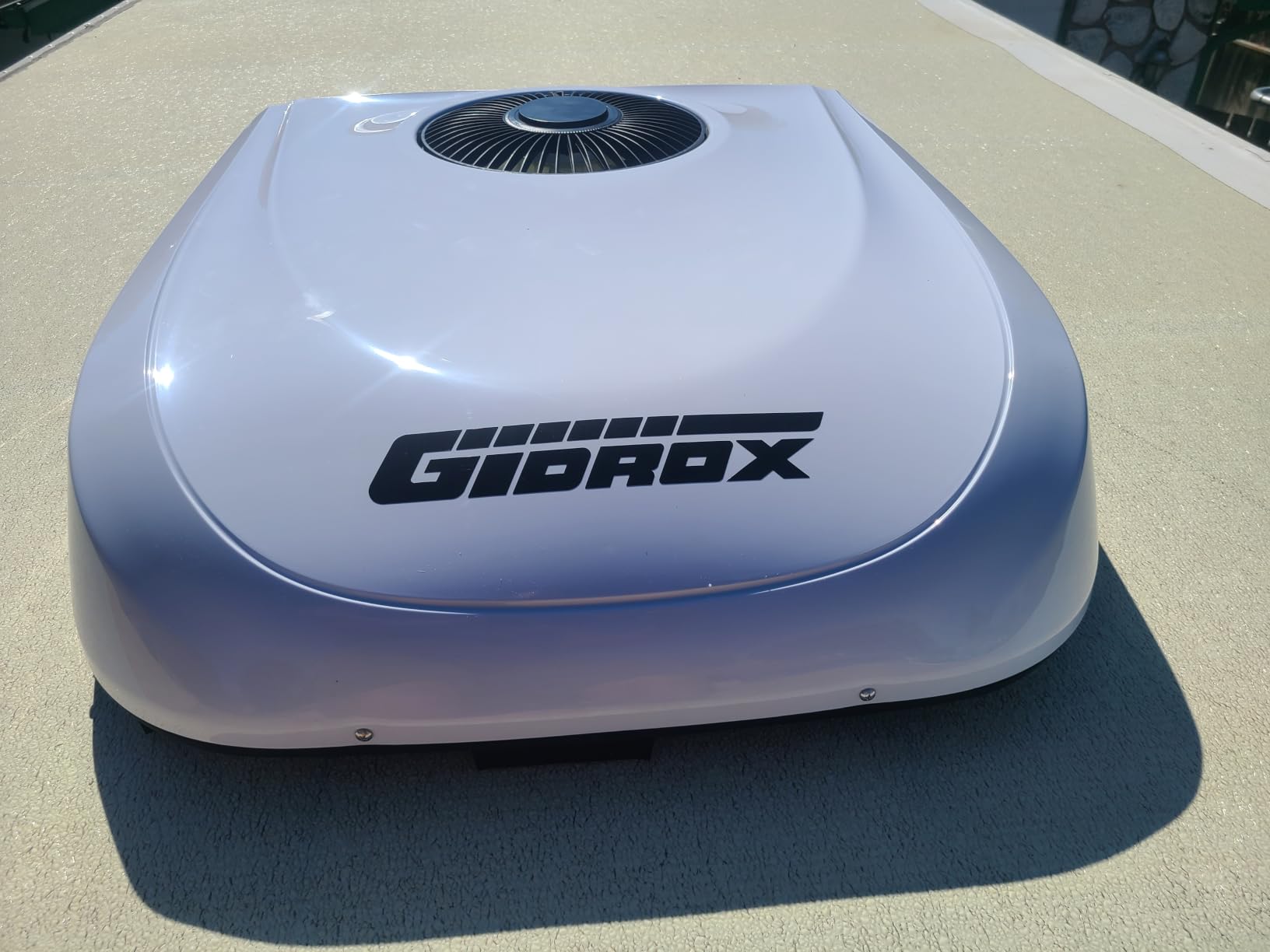
Control is thorough: Bluetooth app, infrared remote and an onboard panel, with timers and Celsius or Fahrenheit switching. Sleep mode measures about 40 dB using a brushless fan and added sound insulation, and a HEPA filter sits in the return path.
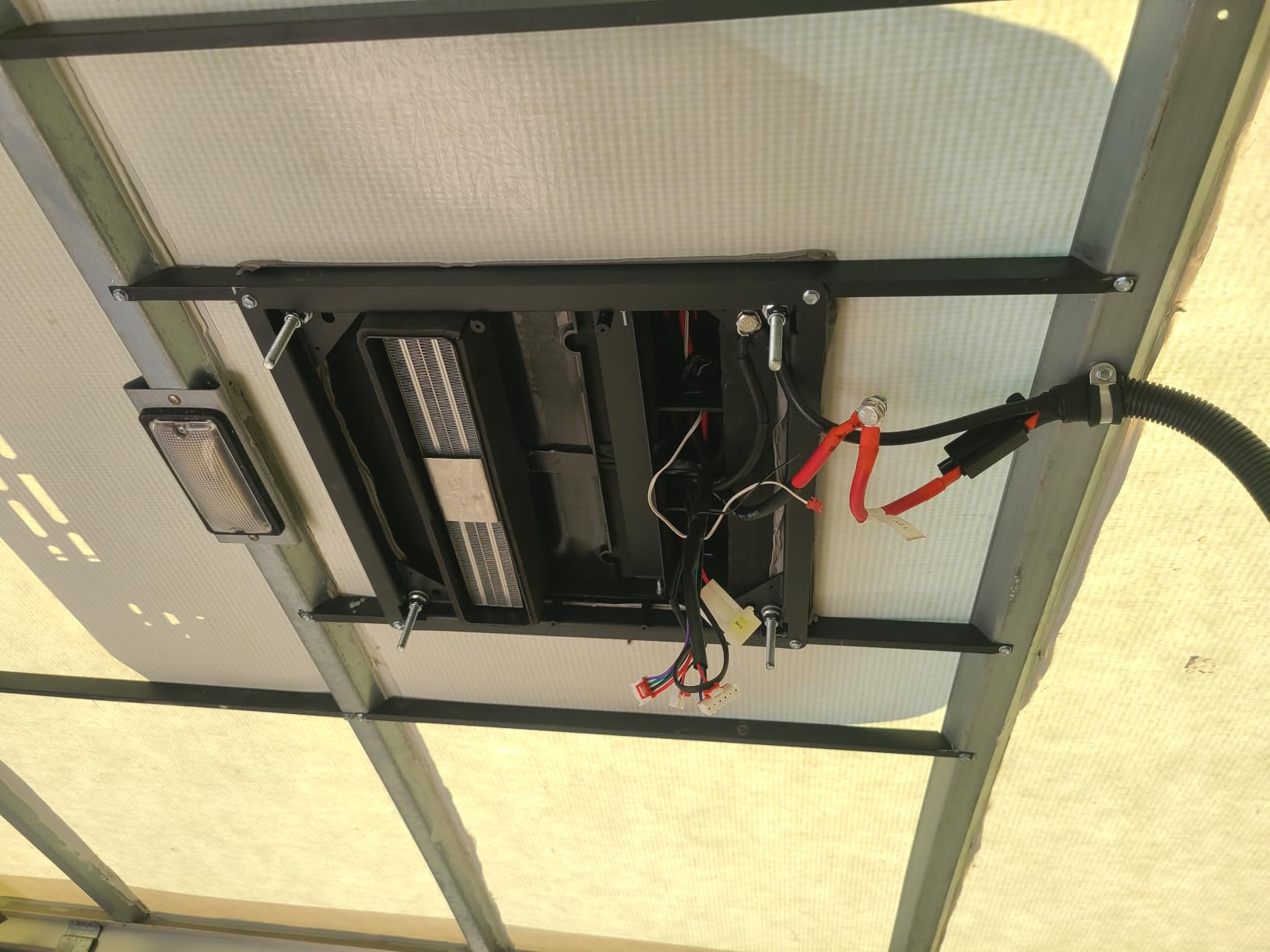
At roughly 52 to 54 pounds including hardware, a single owner can lift it onto the roof, and the kit ships a 19.7 foot power cable which is generous for most vans.
Cooling performance in real builds
The thermal load argument applies here as it does everywhere. A well insulated van with reflective barriers and a decent reflective roof coating needs far less than 10000 BTU, and van life forum threads consistently point out that insulation work cuts compressor load dramatically. Spending on insulation before you spend on a bigger unit is the advice that recurs most often.
Buy the smallest unit that holds your set point. A unit that cycles on and off in a small space feels louder and wastes more energy than one that runs steadily at a lower capacity.
The install hardware is the weak link
The 3.8 average is driven almost entirely by hardware, not cooling. The 14 inch mounting bracket is described as about a millimeter out of size so it will not fit as supplied, the interior panel screws are far too short with no longer sizes included, and there is no bridging hardware for the gap between the upper duct and the interior trim on thicker roofs.
Support shipped a replacement board and paid return postage when a unit was damaged, but was slow to respond in at least one case. The app only shows a low battery indicator with no explanation, and the remote is largely unusable, so use the onboard panel as your primary interface.
5. UAHKPA 9000 BTU Split – Roof-Free Cooling for Work Vans
- No roof cut required
- works parked with the engine off
- very broad vehicle compatibility from vans to excavators and boats
- thickened shell with hollow vents for heat dissipation
- Only a 60 day warranty
- no inverter so it is less efficient than the competition
- needs a large battery bank for more than a few hours
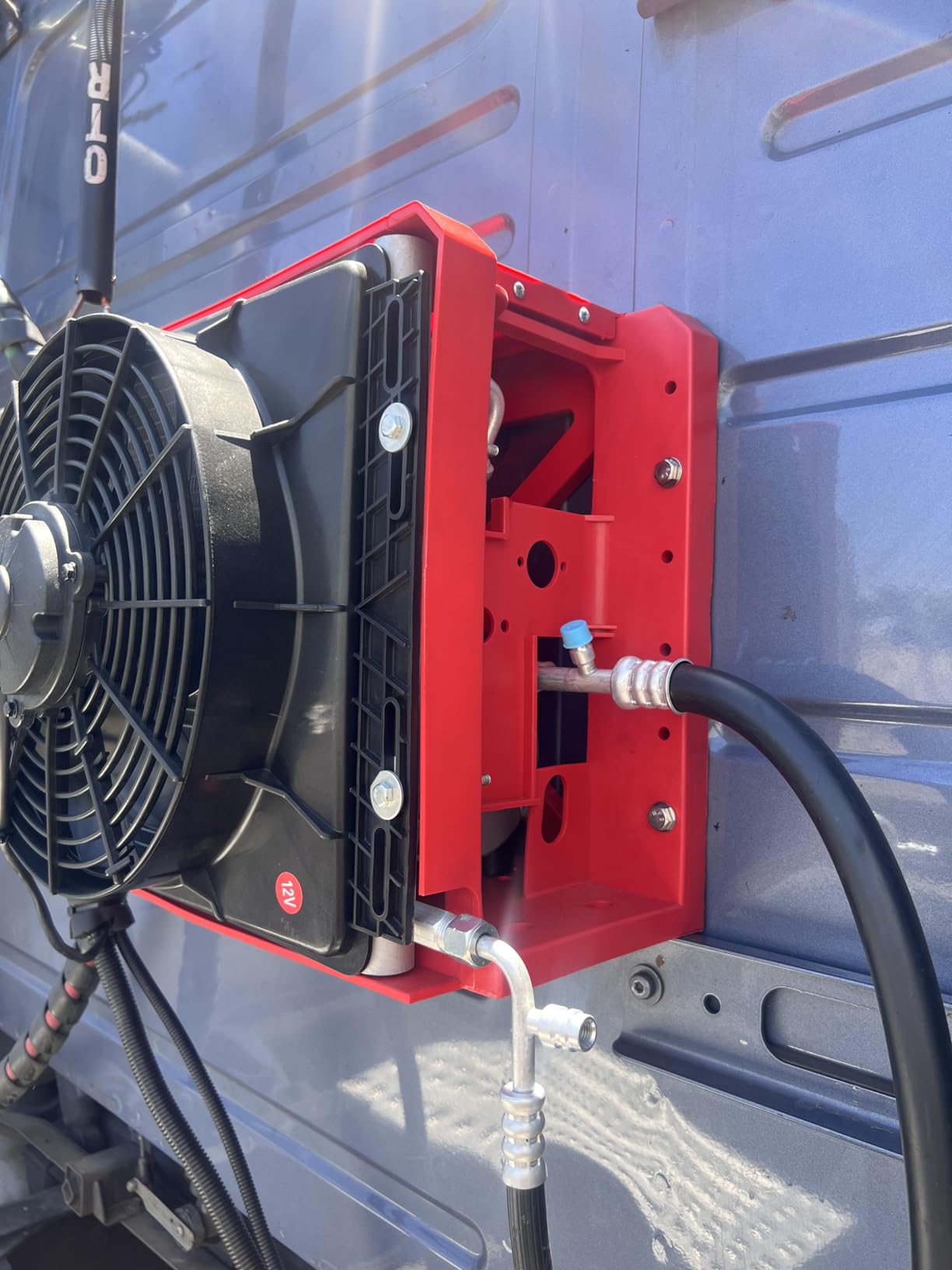
Not every van can take a roof cut. Low-roof Transit conversions, panel vans with existing racks and work vehicles often cannot, and that is where a split system makes sense. The indoor unit sits in the cab or living area, the outdoor unit mounts outside, and refrigerant lines run between them through the wall.
This one is rated at 9000 BTU cooling from an 800 watt draw on 12V DC, with a 75 amp starting current and 450 cubic metres per hour of airflow. That airflow figure is the one to watch. In a van you want air actually moving across the whole space, not a cold spot pointed at the bed.
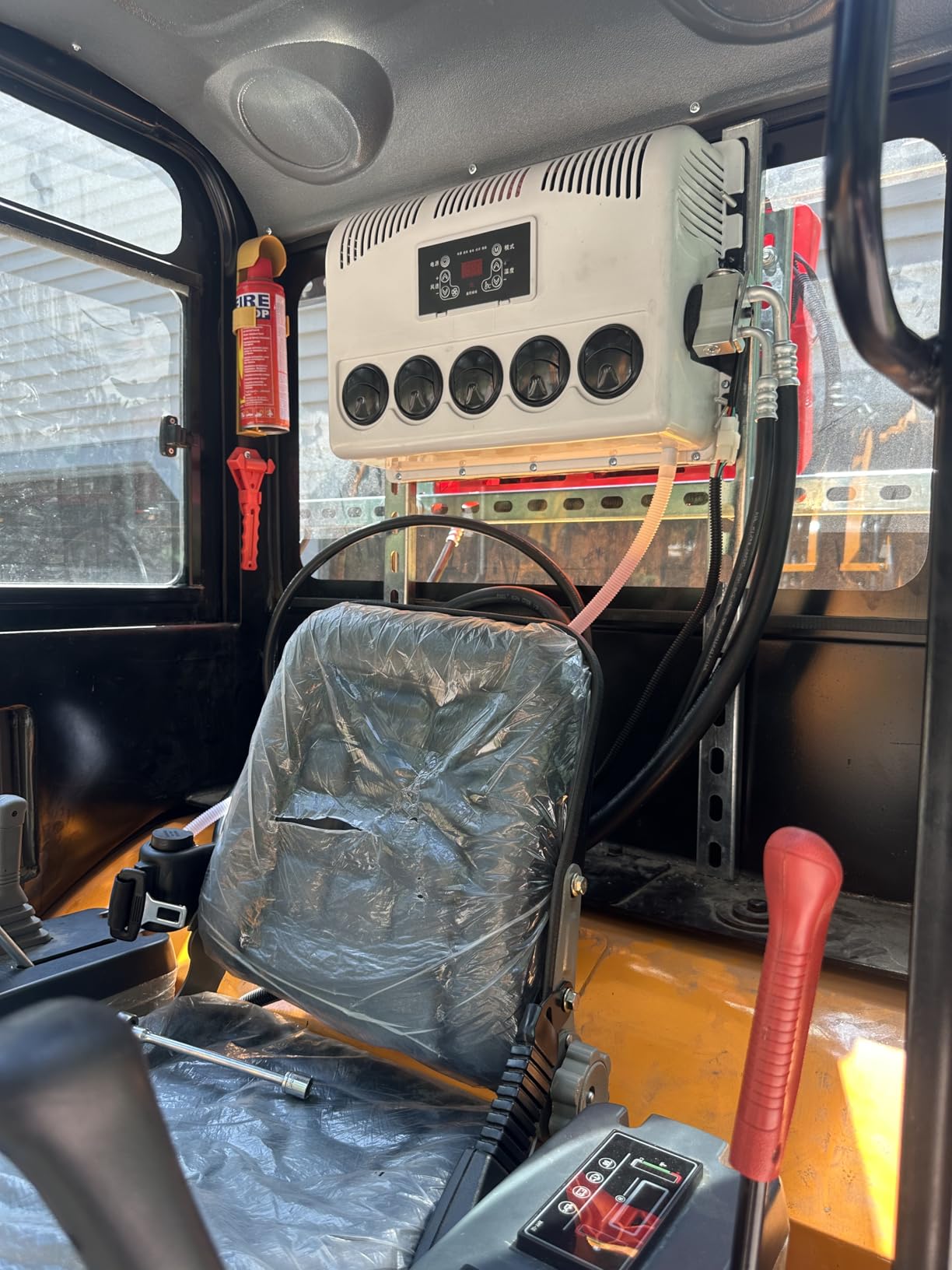
It runs parked with the engine off, which is the entire point for a trade van left on a site in summer. The thickened shell resists deformation and rust, and hollow holes in the sides and back improve heat dissipation during long run times.
Control covers five fan speeds, several modes, a digital display and multiple outlets, all from the remote or the panel. The refrigerant charge is R134a at 600 grams.
When a split system beats a rooftop unit
Choose a split when you cannot cut a roof, when you want a separate head inside a vehicle you also drive for work, or when you need the cooling hardware outside where it can shed heat in open air. A rooftop unit in a parked van has to reject its condenser heat into a small airspace, and a split with the outdoor unit in the shade performs noticeably better.
It is also the format truck drivers use for overnight sleeper cab cooling, which is why several of these products turn up in fleet forums rather than van life circles.
Where the compromises show
The warranty is 60 days, the shortest in this group, and that is a real risk on a permanently mounted system. There is no inverter, so the compressor runs at a fixed draw rather than ramping, which costs efficiency and adds audible cycling.
The quoted runtime of more than six hours assumes substantial battery capacity, and the real-world installation feedback is thinner here than for the rooftop units. If you fit it, plan your own mounting and insulation for both units rather than trusting the supplied fixings.
6. BAYKUL 6-in-1 – Compact Cool and Heat on 110V
BAYKUL Portable Camping Air Conditioner & Heater, 6-in-1 Dual Cool Heat
- Cooling and heating in a 28 pound package
- low average draw of about 550W
- RF remote works through walls
- single person carry with the supplied bag
- 110V AC only so an inverter is required off grid
- 19 percent of reviews are one star
- needs a pure sine wave inverter and a window duct kit to run from a battery
Six-in-one is not marketing padding here. One unit handles cooling, heating, fan, dehumidifier, sleep and timer modes, and for someone who splits the year between a home base and a van, having genuine heat as well as cold in a 28 pound box is more useful than a bigger cooling-only unit.
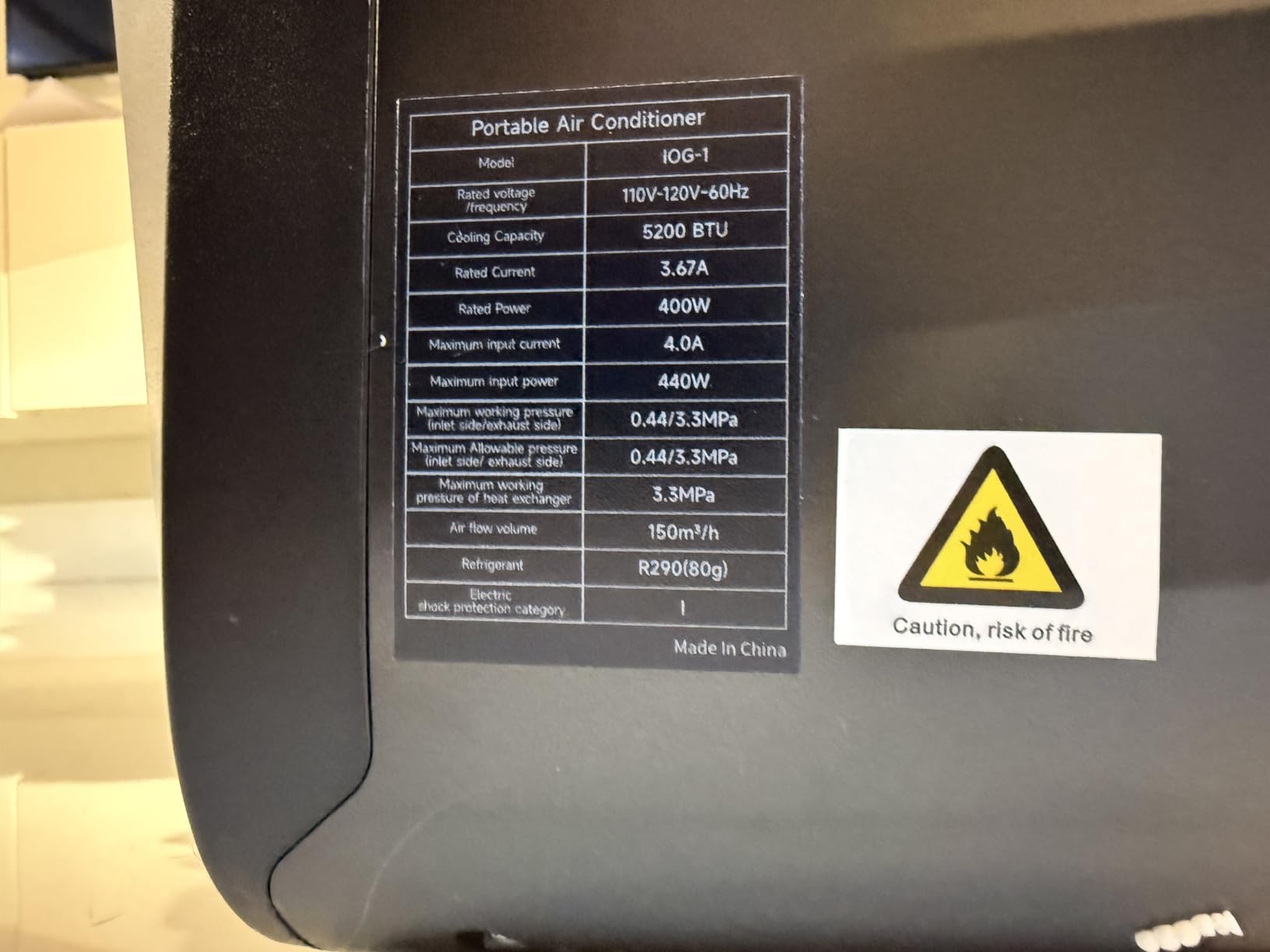
Cooling output is 6800 BTU with 7500 BTU of heating, using R-32 refrigerant which is efficient for the cabinet size. Average draw sits around 550 watts, which is among the lowest figures in this roundup and is the main reason it earns its place.
The RF remote is a genuinely good idea for van use. It works through walls, so you can change the set point from the bed without getting up, which matters more in a small space than any app feature.
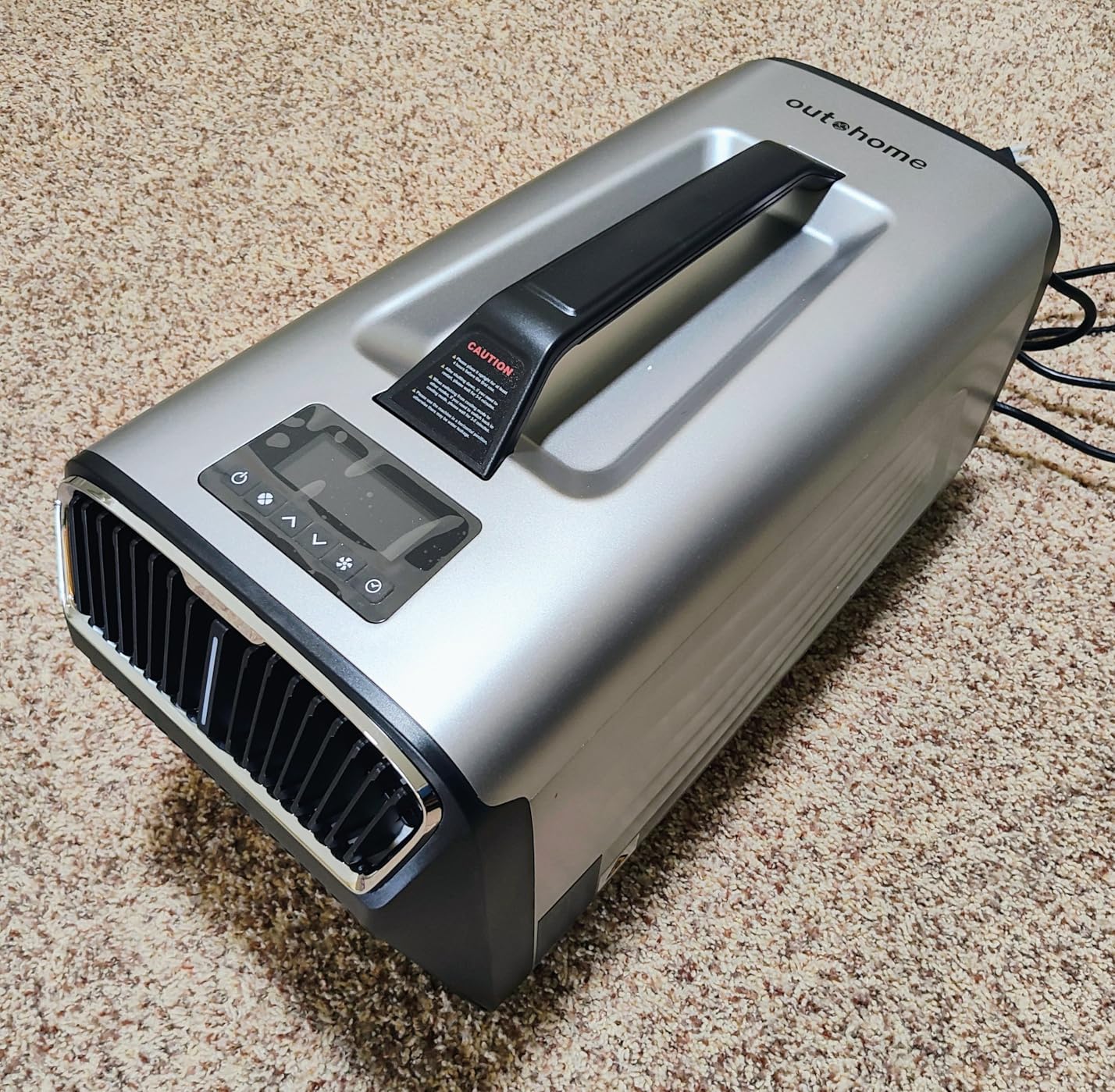
It is also 110V AC, and that is the catch. Running it from a van battery means an inverter, which adds weight, conversion loss and a second failure point. It makes sense at a site with shore power or in a home base setup rather than as your primary boondocking cooling.
Where 110V actually makes sense
Plug it into a 30 amp shore power connection at a campground and it performs well for the price of the electricity. It is also the simplest path for someone testing whether air conditioning is something they want to live with before committing to a roof cut and a lithium bank.
For noise, roughly 46 to 49 dB puts it in the middle of the group. It is quiet enough to sleep beside, though a compressor cycling in a small van is more noticeable than the published figure suggests.
What to watch before you buy
Nineteen percent of its reviews are one star, which is a high negative share for this category, and support responds on a 24 hour commitment rather than a parts warranty. The unit also needs a pure sine wave inverter and a window duct kit to run from a battery, so budget for those two accessories before the first night out.
Budget AC compressors are sensitive to a poor waveform, and a cheap modified sine inverter is the most common early failure people report when running 110V portable units off grid.
7. Somokg 11000 BTU – The Quietest Rooftop Option at 35 dB
- Quietest unit tested at 35 dB
- one-person install at 43 lb
- soft start reduces startup surge by 70 percent
- roughly 25 amps low and 40 amps high
- Oscillating vent motor can fail and is not repairable
- no duct extension supplied for thicker roofs
- documentation is minimal
Noise is the number that decides whether a van AC is usable, because you use it while you sleep. At 35 dB this is the quietest unit in the group, with 360 degree adjustable vents that spread the output rather than blowing a cold jet at one spot. That figure is measured at the unit, but the difference against a 45 dB compressor is immediately obvious in a quiet van at midnight.
It is also the lightest rooftop unit here at 43 pounds and only 6.1 inches tall, so wind drag on the roof is minimal and a single person can do the install. Cooling is rated at 11000 BTU with 4500 BTU of supplemental heating.
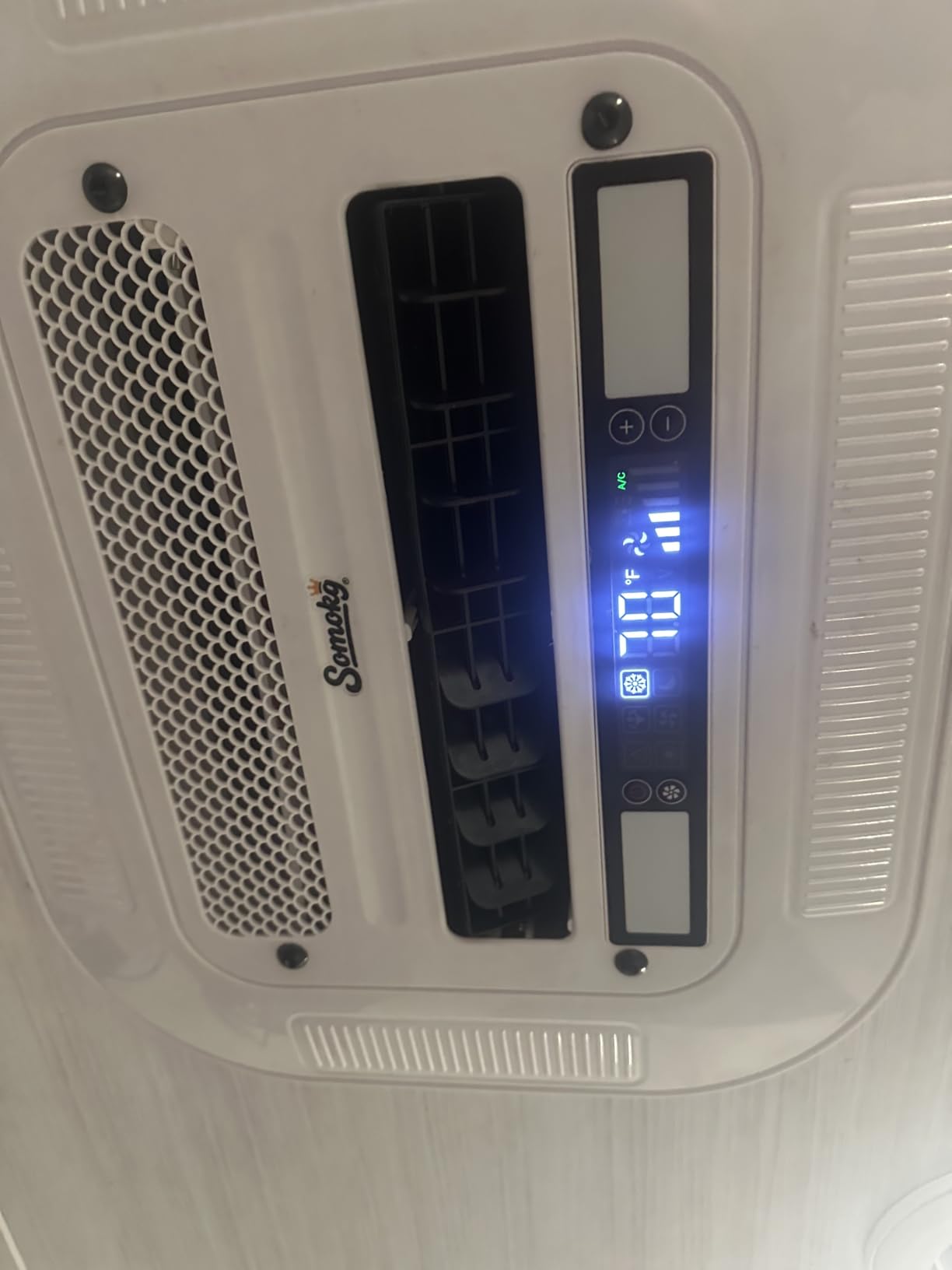
The soft start is the feature other manufacturers copy. It cuts startup surge by 70 percent, which protects both the battery and the compressor over years of daily cycling, and it is why this unit draws roughly 25 amps on low and 40 amps on high rather than spiking to triple that on start.
Real-world reports are strong. One owner cooled a 25 foot Airstream, another cooled a 32 foot sailboat, and a full remote plus a digital LED panel with a built-in reading light handles six fan speeds across cool, eco, sleep and fan modes.
Battery requirements are the real constraint
The manufacturer suggests a 200Ah battery for 12 hours of cooling in eco mode, and several reports say you need 300Ah or more for the compressor to start reliably. Treat the lower figure as optimistic. A unit that will not start on a full battery is the most frustrating failure mode there is, and it usually shows up in the cold morning after a night of heavy cycling.
Plan solar to cover it as well. Our portable solar panel kits guide covers the sizing maths, and the short version is that a rooftop array feeding a 400Ah lithium bank covers overnight cooling comfortably in summer.
Hardware and paperwork gaps
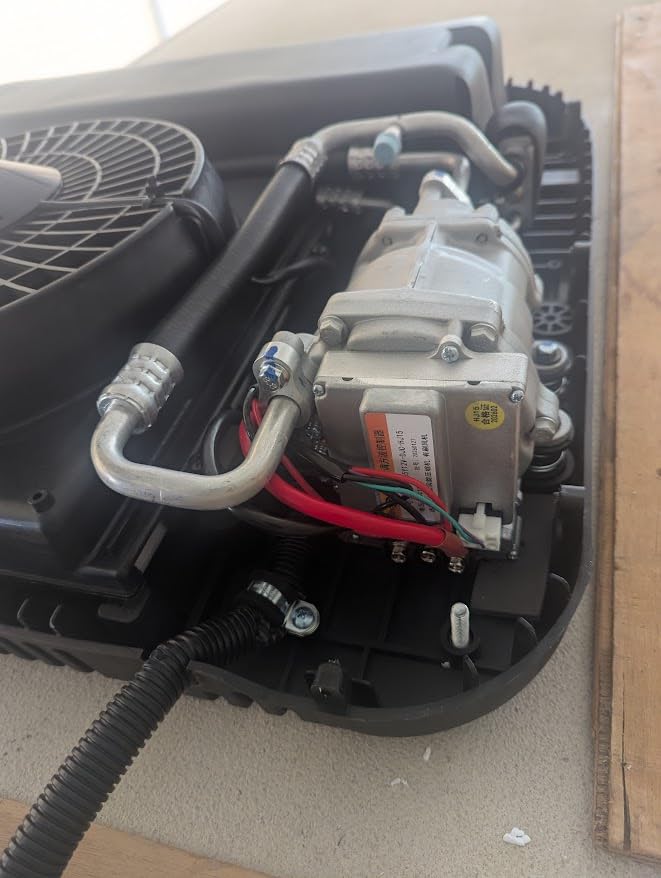
No duct extension is supplied for thicker roofs, so installers have to fabricate one, and the hold-down bar may need modification before the interior grille will fit. The oscillating vent motor is a known failure point and is not sold as a spare part, which is a design decision worth noting before you commit.
Documentation is very limited with no troubleshooting guide or error codes, and replacement parts are sourced overseas, so a warranty replacement can take weeks. The support itself is praised repeatedly, including a full board replacement after an early failure.
8. Aspligo Truck Cab Split – Strong Airflow for Sleeper Cabs
- Blows hard and very cold
- quiet from outside the cab
- 12mm2 pure copper wiring handles the load with low resistance
- low voltage protection
- works with the engine off
- Refrigerant not included so the system must be charged first
- reports of cycling off under load
- no heating function
This is the sleeper cab specialist. The outdoor unit mounts outside the cab, the indoor unit sits inside, and the result is cab cooling with the engine off, which is the single most valuable thing a driver can have on a summer night between runs.
Buyers consistently describe the airflow as strong and the output as very cold, with one reporting 45 degrees on the lowest setting. From outside the cab the unit is described as quiet, which is what matters when you are trying to sleep next to it.
The electrical design is sensible for the load. Twelve square millimetre pure copper wiring with thickened PVC insulation keeps resistance low across a 60 to 80 amp draw, and low voltage protection allows a smooth startup instead of collapsing the house battery.
It is also one of the most broadly applicable units here, covering trucks, RVs, campers, forklifts, construction vehicles, semi trailers and boats.
Getting it running is the hard part
Refrigerant is not included. The charge is 500 to 550 grams of R134a and the system will not cool until it is charged, which means a technician or a proper recharge kit. This is the one item on the list where installation cost can exceed the hardware.
Several reports also describe the unit cycling off under load even with an auxiliary battery fitted, and at least one unit arrived with the expansion valve wrongly set, requiring two recharge attempts. Budget time for a commissioning check rather than assuming it works out of the box.
Honest assessment of the rating
At 3.5 with roughly a quarter of reviews at one star, this is the weakest-reviewed unit here, and we would not put it at the top of a list of camper van conversions. If you drive a semi or a work truck and your priority is cab cooling with the engine off, the narrow strengths are real.
There is no heating function despite being sold alongside heat and cool competitors, and the indoor back panel resonates against the mounting surface, which needs better isolation than supplied. One European reviewer flagged that the unit needs R134a specifically and does not cool with newer replacement refrigerants, so match the refrigerant when you recharge.
9. ICECOSMOS Ultra-Slim Rooftop – Flawless Rating, Small Sample
ICECOSMOS Ultra-Slim Low-Profile 12V RV Air Conditioner with PTC Heating
- Very low power draw
- under 500W in eco mode and 700-800W at full cooling
- ultra-slim 5.5 inch body
- easy single person install with clear videos
- Only 12 reviews behind the perfect rating
- trim may need notching on thick or curved roofs
- included power cable can be short
- uses R-134A rather than R-32
This is the only unit in the entire roundup with a flawless average, and every one of its twelve reviews is positive. We are labelling it carefully for that reason. A 5.0 across twelve buyers is encouraging, not proven, and the listing is newer than most here.
What those twelve buyers agree on is efficiency. Real draw is under 500 watts in eco mode and around 700 to 800 watts at full cooling, which compares well against the 1700 watts a 120V rooftop unit pulls through an inverter. One owner runs it all day on a 450Ah bank and covers the whole runtime with modest rooftop solar.
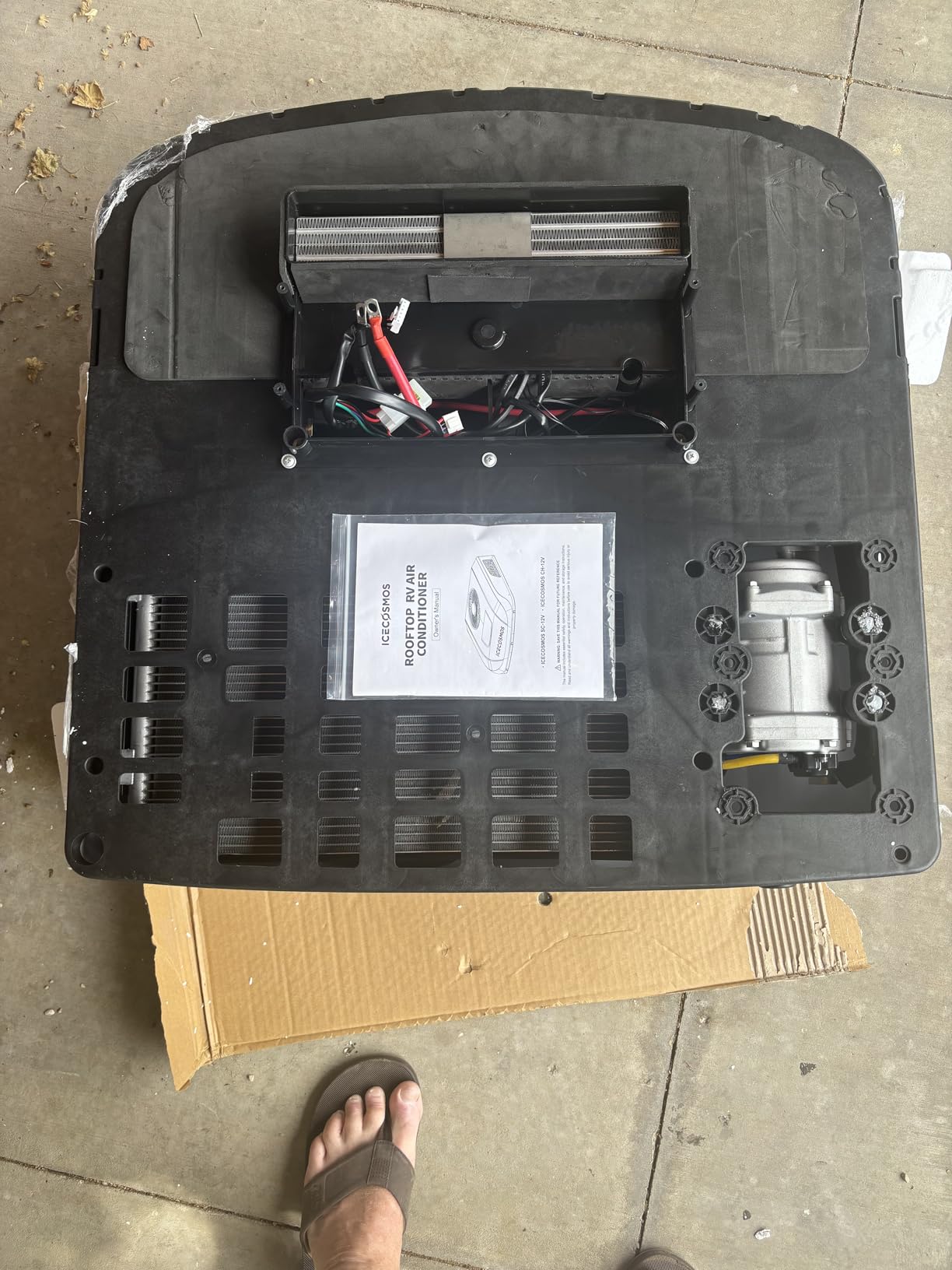
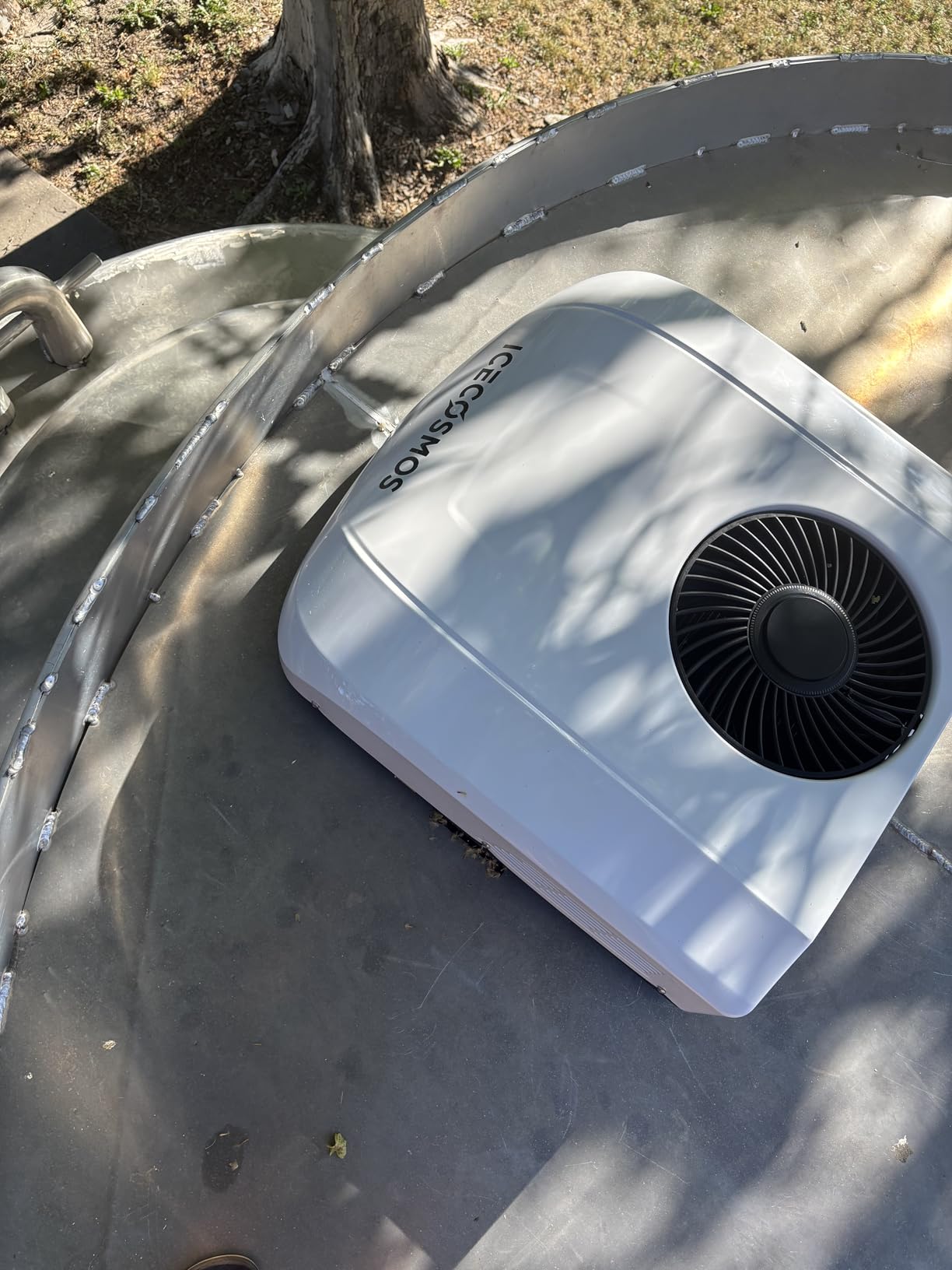
At 5.5 inches of body thickness it is among the lowest profiles available, which cuts wind drag and roof load, and it weighs 45 pounds. The 360 degree airflow avoids hot spots, and the fan design carries an IPX6 waterproof rating, which matters on a roof that gets rained on from every direction.
Use cases are unusually broad for a rooftop unit. Reviews cover a desert boondocking trailer, a 26 foot aluminium boat running on 12V alone and a sealed UTV seating compartment, which says something about how versatile the platform is.
How it handles extreme ambient heat
The manufacturer claims it retains 80 percent of standard performance above 113 degrees, which is a specific claim rather than a vague one, and it is the kind of number you can actually test in a desert stop. Even at partial output, holding a van below the outdoor temperature when the outdoor temperature is extreme is a meaningful result.
With a 12V 400Ah lithium bank in eco mode, claimed runtime extends beyond 12 hours. Treat that as a best case figure, but the gap between the 700 to 800 watt real draw and the 900 watt annual consumption figure is small, which suggests honest reporting on this listing.
What to check before you rely on it
Installation still needs care. You will likely have to trim the ceiling trim and notch the opening to clear the ratchet bolts on a thick or curved roof, and the included power cable length may fall short of the run to your battery, requiring extra same-gauge wire and a splice kit.
The refrigerant is R-134A rather than the lower global warming potential R-32 used by some newer competitors, so check what a service technician can source before a long trip. With only twelve reviews, we would treat this as a strong candidate to watch rather than the safest proven choice, which is why the outequip Summit 2 holds the top slot despite a lower average.
10. COOLIGO Sleeper Cab Split – Lowest Cost Path to Parked Cooling
12V Truck Cab Air Conditioner 12000 BTU Split AC Unit, Parking Cooler for Semi Truck Sleeper Cab, RV Camper, Bus, Van, Engine Off Cooling System
- Lowest cost 12V air conditioning option here
- fast effective cooling in a sleeper cab
- quiet at 45 dB
- low voltage protection
- works with the engine off
- No warranty offered at all
- temperature sensor ships mounted too high and causes short cycling
- supplied Schrader valves leak
If your van doubles as a work vehicle and you want parked cooling without a roof cut, this is the cheapest way into 12V air conditioning. It is a split system rated at 12000 BTU in the listing title, with the technical fields showing 10000 BTU, and the discrepancy is worth keeping in mind before you size around it.
The cooling itself is consistently praised as fast and effective, with owners reporting it handles a semi sleeper cab well on overnight stops. It moves strong airflow at 45 dB, and the low-noise compressor plus steel plate construction should survive a work truck’s life.
It draws 12mm2 pure copper core wiring and pairs with a 480Ah battery for up to 12 hours of continuous cooling with the engine off, with low voltage protection to guard against over-draining the starting battery. Installation is described as simple if tedious, and the mounting method is unconventional in a useful way.
Two factory fixes before first use
These are the details that turn a good unit into a frustrating one, and both are known. The temperature sensor ships mounted too close to the evaporator, which causes the unit to short cycle until you physically relocate it. The supplied Schrader valves leak, and they should be replaced with quality ones before first use.
Owners who make those two fixes report the unit working excellently, and several say they nearly returned it before doing so. Leave the sensor low and the unit will not freeze up, which is the other failure mode people hit.
What you give up
There is no warranty at all, which is the reason this sits at the bottom of the list rather than higher. If the compressor fails after three months, you absorb it, and on a permanently mounted split system that is a meaningful risk.
There were no customer review images available for this product, so the real-world install quality is not visually documented. Ask yourself honestly whether you are comfortable with a unit that has no warranty and needs two modifications on day one, and if the answer is yes for a budget build, the cooling performance still surprises people in a good way.
How to Choose a Portable AC for Van Life?
Start with BTU sizing for your actual space
Van builders argue about this constantly, and the useful answer is that a metal vehicle loses heat far faster than a room of the same square footage. The metal skin conducts heat straight through, and without insulation your air conditioner is fighting the sun rather than a room temperature.
The practical rule is to buy the smallest unit that holds your set point on the hottest afternoon of your trip. Overcooling wastes battery, and a unit that cycles on and off in a small space feels louder and works harder than one that runs steadily.
Measure before you buy. A Sprinter 144 and a low-roof Transit are very different volumes, and the same unit behaves differently in each. Our guide to portable units for small spaces covers the sizing logic for tight rooms, and the same arithmetic applies inside a van.
12V DC versus 110V AC is the decision that matters most
A 12V DC rooftop unit draws roughly 25 to 50 amps depending on load. The same cooling from a 120V unit through an inverter can pull three times that from your battery, and the inverter adds weight, heat and another component that can fail in a remote spot.
Choose 12V DC if you boondock, run solar, or drive with the cooling running. Choose 110V AC if you camp on shore power most of the time, are running a larger generator, or want a unit you can move between a home base and a van. The efficiency gap is much larger than the sticker difference.
Venting: dual hose versus single hose
A single hose unit pulls cooling air in and pushes hot air out through the same duct, which means some of your cooled air leaks straight outside. A dual hose unit has a separate intake and exhaust, and in a small sealed space that difference is large enough to change whether the unit keeps up.
Portable van units work best with the cabinet outside the vehicle and both ducts running in through a window, because the outdoor heat is rejected into open air rather than into the cabin. If you must run the cabinet inside, a dual hose design is worth the extra effort. For rooftop units, the seal at the roof cutout is the vent, and quality of that seal matters as much as the unit.
Window vent kits leak hot air back in, which is the most common complaint on van life forums. A close-fitting adapter with foam tape around the duct collar makes a measurable difference at night.
Insulation does more than any unit upgrade
Insulation cuts air conditioner load dramatically, and forum reports of a 40 to 50 percent reduction are common once a van is properly treated. Reflective insulation on the roof and windows matters most, since those face the sun directly. A thermal curtain across the cab at night prevents the interior from reheating before dawn.
Reflective roof coating on an exposed van roof is a cheap, high-impact addition. Do this before you shop for a bigger compressor, because a better insulated space lets a smaller unit do the same job on half the power.
Altitude and humidity, the two things nobody mentions
Altitude reduces cooling output. Compressors are tested at sea level, and a van at 8000 feet in the Rockies will deliver less than its rated figure on the same day. If you summer in the Rockies or the high desert, oversize slightly or accept a higher interior set point.
Humidity splits the category in two. A compressor cools and dehumidifies, which makes it the right choice for the Gulf Coast, Florida and the Southeast. A swamp cooler, which is essentially an evaporative unit drawing under 3 amps, works remarkably well in dry climates like Arizona, Nevada and Utah, and does nothing useful when humidity is already high. Ask yourself which climate you actually sleep in.
Battery bank and inverter sizing
Work out watts first, then hours. Take the unit’s real measured draw, multiply by the hours you want it to run overnight, and you have your nightly watt-hour requirement. Divide by roughly 0.9 for inverter and wiring losses if you are on 120V, then size the bank from that.
For the 12V rooftop units here, that arithmetic usually lands in the 3 to 5 kilowatt-hour nightly range on a moderate set point, which is a 400Ah lithium bank at 12 volts with room to spare. Lead acid will struggle with sustained compressor load, and lithium is close to mandatory if you want reliable overnight cooling.
Size the inverter above the running wattage with headroom for startup surge, and use pure sine wave. A budget modified sine inverter is the most common early failure reported with 120V portable units.
Noise, and why it decides the purchase
You use an air conditioner while you sleep. A 40 dB compressor is a background hum, a 50 dB one is a conversation with your pillow. Published noise figures are measured at the unit, so treat the number as a ranking rather than an absolute, and check whether the unit cycles hard or runs steadily, because cycling is far more noticeable.
Display-off and sleep modes matter here. A bright control panel at 2am is as disruptive as the compressor.
Installation and pets
Budget a full day for a rooftop install including wiring, sealing and trimming, and expect to modify the supplied hardware on almost any unit. Roof thickness compatibility is the single most common install failure, and most of these units support a specific range. Confirm your roof thickness before you buy anything.
If you travel with a dog, ventilation matters as much as temperature. A van heats fast when cooling fails, and a unit that runs with a door open is safer for an animal than a unit running in a sealed box with a failing compressor. Our power station guide is worth reading alongside this one, since a power station doubles as an emergency source for a fan or a small cooling unit when things go wrong.
Frequently Asked Questions
What is the best portable air conditioner for a van?
The outequip Summit 2 leads our list because it runs directly on 12V DC, measures about 40 dB, weighs 45 pounds for a one-person install, and has the largest review base in the group. For pure boondocking efficiency the countrymod inverter unit draws less. For a pickup with a truck cap or a tent, the Cybertake S2 Pro is lighter and offers three-way power.
Is there a portable car AC that actually works?
Yes, with conditions. Portable compressor units work best when the cabinet sits outside the vehicle with both ducts routed in through a window, which lets the hot air exhaust outdoors. Run the same unit inside a sealed metal cabin and it is fighting the thermal load of a vehicle, so it will underperform. Roof-mounted 12V units work in any van you can cut.
How do I keep a van cool in summer?
Insulate first. Reflective insulation on the roof and windows, a reflective roof coating and a night thermal curtain cut the compressor load dramatically. Then size the smallest unit that holds your set point, vent rooftop heat outdoors, and match the battery bank to the measured draw of the unit you chose.
Can you run a portable AC on battery power?
Yes, and that is the entire point of the 12V DC rooftop category. Units in this group draw roughly 25 to 50 amps depending on model and load, so a 400Ah lithium bank covers a night of cooling comfortably. Lead acid struggles with sustained compressor load, and a low-voltage bank may not let the compressor start at all.
Do portable air conditioners work in high humidity and at altitude?
Humidity is where compressors win because they cool and dehumidify at the same time, so they suit the Gulf Coast and the Southeast. In dry climates an evaporative swamp cooler under 3 amps can be more effective. Altitude reduces compressor output, so expect less than the rated BTU figure at elevation and plan a slightly higher interior set point.
The Verdict for 2026
The outequip Summit 2 stays our pick for the best portable air conditioners for van life because it is native 12V, quiet at about 40 dB, light enough for one installer, and backed by the deepest review base in the group. The countrymod inverter unit is the efficiency answer for long boondocking stretches, and the Cybertake S2 Pro is the pick if you split your time between the van and a tent.
Whichever you choose, insulate before you install, size the battery bank against the unit’s measured draw rather than its spec sheet, and keep a fan within reach for when the compressor has a bad night. Check the current listing for each unit and pick the one that matches your roof, your bank and your climate.