
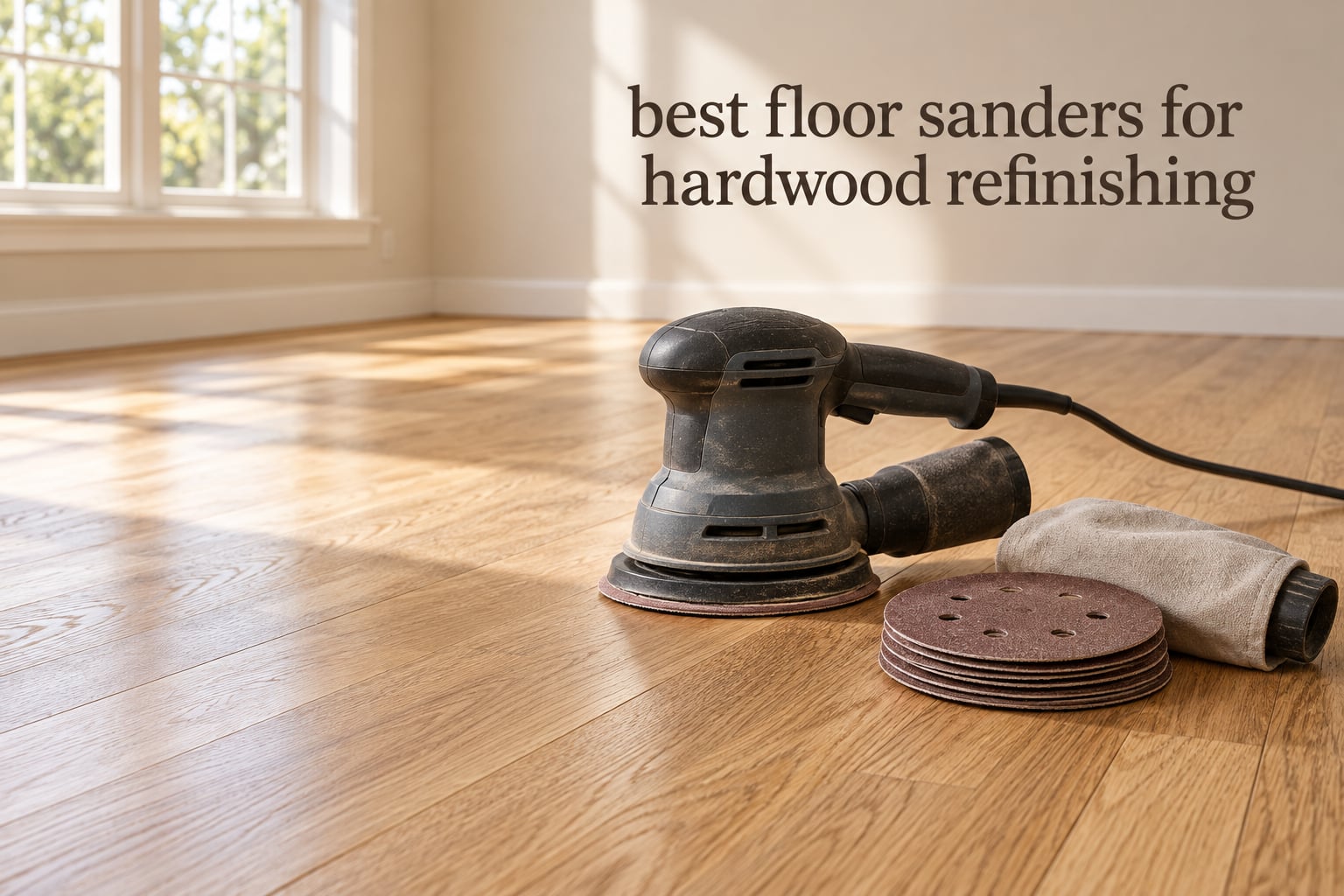
If you are standing in a room with 1960s oak underfoot and an opaque layer of old polyurethane, the machine decision matters less than most product pages will tell you. A drum sander will strip a whole floor to bare wood in a day, and it will also carve a groove into your subfloor the moment you stop moving it. The right call depends on how much finish is on the floor and whether the floor is solid wood or engineered veneer.
This roundup covers the machines that actually get used for best floor sanders for hardwood refinishing decisions: the full-size class that removes finish, and the 5 inch random orbit class that most people own and use for everything from scuff-sanding to final passes. We looked at twelve corded, cordless, and pneumatic sanders and sorted them by what they are genuinely good at, not by brand tier.
One thing worth saying up front, because it is the most useful thing on any forum thread about this: the machine is rarely the reason a floor looks bad. Sequencing is. A commenter with fifty years of floor work under his belt made the point better than any spec sheet, saying the machine he was being blamed for was by far the best available, bar none, when used properly for the right condition. If you are new to this, our detail sander guide for furniture covers the small-format tools that make the same mistakes easier to avoid while you learn.
Table of Contents
Which Type of Floor Sander Do You Need?
There are six machine families on the market for hardwood work, and they are not interchangeable. Pick the wrong one and you either waste a weekend or damage the floor.
Drum sander (also called a belt sander in some rental catalogues) — a wide rotating drum wrapped in abrasive paper, loaded with the operator’s own weight. It is the fastest way to remove thick build-up and to level cupped planks, and it is the machine professionals reach for. The drawback is real: it carves a dish into the wood wherever it sits still.
Random orbital sander — a 5 inch pad that spins while the pad itself orbits, so the scratch pattern is random rather than a ring. Slower than a drum but dramatically more forgiving, and it is the standard choice for a light scuff-sand before recoating, for edges and stairs, and for anyone working over engineered wood where the veneer is thin.
Edger sander — a small drum unit that gets within an inch or two of baseboards. Nearly every full-floor refinish needs one as the second machine, because no large machine reaches the perimeter. If you rent for one job, rent these two together.
One-drum and vibratory square sanders — one-drum machines handle a wide drum with independent controls and are the standard on glue-down commercial jobs. Vibratory square sanders give a controlled, uniform cut, which makes them the choice for antique and patinaed floors where you do not want to cut through the aged surface. A respondent on doityourself recommended exactly this for a fancier older floor, accepting a slower cut as the trade.
Oscillating multi-disc sanders — three or four pads driven in an orbit. They are excellent blending and finishing tools and mediocre removal tools, which is the misunderstanding that generated the most argument on the homefixated page we studied.
Handheld palm sanders — the small 5 inch machines in this roundup. They are not a full-floor stripping class, but they handle scuff-sanding, spot repair, stairs, and final passes better than anything else you can hold in one hand.
Drum Sander vs Random Orbital Sander: Which One Do You Need?
The most common question on every flooring forum is whether an orbital can replace a drum. The short answer is that it can, but not quickly, and not on the first pass over a thick finish. Here is the honest comparison.
Removal rate. The drum wins decisively. A drum sander takes off multiple layers of finish and paint in a single 36 or 50 grit pass because roughly 100 pounds of machine weight sits on the drum. A random orbital sander has to be walked slowly with steady pressure, and you will change abrasive far more often.
Risk of damage. The orbital wins decisively. Random pad motion means no directional gouge, and there is no drum to sit still on the wood. This is why an orbital is the safer machine over engineered veneer, where one pass too deep can cut through to the core.
Leveling cupped planks. Only the drum. Cupped edges stand proud of the centre of the board, and a drum’s aggressive cut plus a tilting drum adjustment is how that gets taken down. An orbital will just follow the cup and leave the edges high.
Skill required. The orbital is forgiving on a first attempt. The drum demands that you keep the machine moving at all times and that you plan your passes before you start them.
Dust control. A rental drum relies on a shop vacuum hose; the good palm sanders here have dust-sealed switches, microfilter canisters, or ports that fit a specific vacuum. A vibrating drum is hard to run with one small bag.
Cost and commitment. Drum machines are rental equipment, rarely something a homeowner buys. The 5 inch sanders below are the ones people actually own, and the same machines get used for furniture, trim, and a whole floor when the job is patient enough.
If your question was orbital versus palm sander specifically: those are the same tool. The palm sander is a random orbital sander, and a random orbital floor sander is a palm sander you keep moving over a floor instead of a panel. A true handheld palm sander is not a full-floor class at all.
Top 3 Floor Sanders for Hardwood Prep in 2026

BLACK+DECKER BDERO100 5 inch Orbital
- 2.0 amp motor
- 12000 OPM
- 3.2 pound body
- Dust bag and hook and loop paper changes
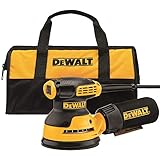
DEWALT DWE6421K 5 inch Orbital
- 3.0 amp motor
- Counterweight for low vibration
- Vacuum port for shop vac
- 3 year warranty
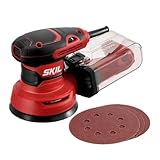
SKIL SR211601 5 inch Random Orbital
- 2.8 amp motor
- 13000 OPM
- Cyclonic dust box
- Variable speed control
All 12 Floor Sanders Compared in 2026
| Product | Specifications | Action |
|---|---|---|
| BLACK+DECKER BDERO100 Orbital Sander |
|
Check Latest Price |
| DEWALT DWE6421K Orbital Sander Kit |
|
Check Latest Price |
| SKIL SR211601 Random Orbital Sander |
|
Check Latest Price |
 BOSCH ROS20VSC Palm Sander BOSCH ROS20VSC Palm Sander |
|
Check Latest Price |
 Makita BO5041K 5 inch Random Orbit Makita BO5041K 5 inch Random Orbit |
|
Check Latest Price |
 CRAFTSMAN CMEW231 Orbital Sander CRAFTSMAN CMEW231 Orbital Sander |
|
Check Latest Price |
 BOSCH GEX18V-5N Cordless Random Orbit BOSCH GEX18V-5N Cordless Random Orbit |
|
Check Latest Price |
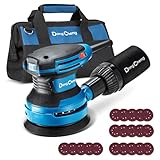 Dong Cheng DSA02-125 Random Orbital Dong Cheng DSA02-125 Random Orbital |
|
Check Latest Price |
 ZFE Pneumatic Random Orbital Palm Sander ZFE Pneumatic Random Orbital Palm Sander |
|
Check Latest Price |
 Gedu Professional Air Random Orbital Gedu Professional Air Random Orbital |
|
Check Latest Price |
 HYCHIKA FL117 5 inch Random Orbital HYCHIKA FL117 5 inch Random Orbital |
|
Check Latest Price |
 DEKOPRO 5 inch Random Orbital Sander DEKOPRO 5 inch Random Orbital Sander |
|
Check Latest Price |
1. BLACK+DECKER BDERO100 — The One to Buy First
BLACK+DECKER Orbital Sander, 5 Inch, 2.0 Amp, 12000 OPM, Corded, 1 Sandpaper Sheet and Dust Bag Included (BDERO100)
- Lightest handling weight in this group at 3.2 pounds
- Hook and loop paper changes are fast
- Dust sealed switch keeps grit out of the switch
- Quiet enough for a closed room
- Backed by the largest review base we examined
- Single speed with no variable dial
- Paper quality is basic so buy your own abrasive
- Small dust bag fills on a full room
I used the BDERO100 on a 300 square foot oak floor that had been recoated twice, and the honest headline is that it is the machine I would hand to somebody learning. At 3.2 pounds it is the lightest thing here, and on a long floor job that matters more than any spec on the box.
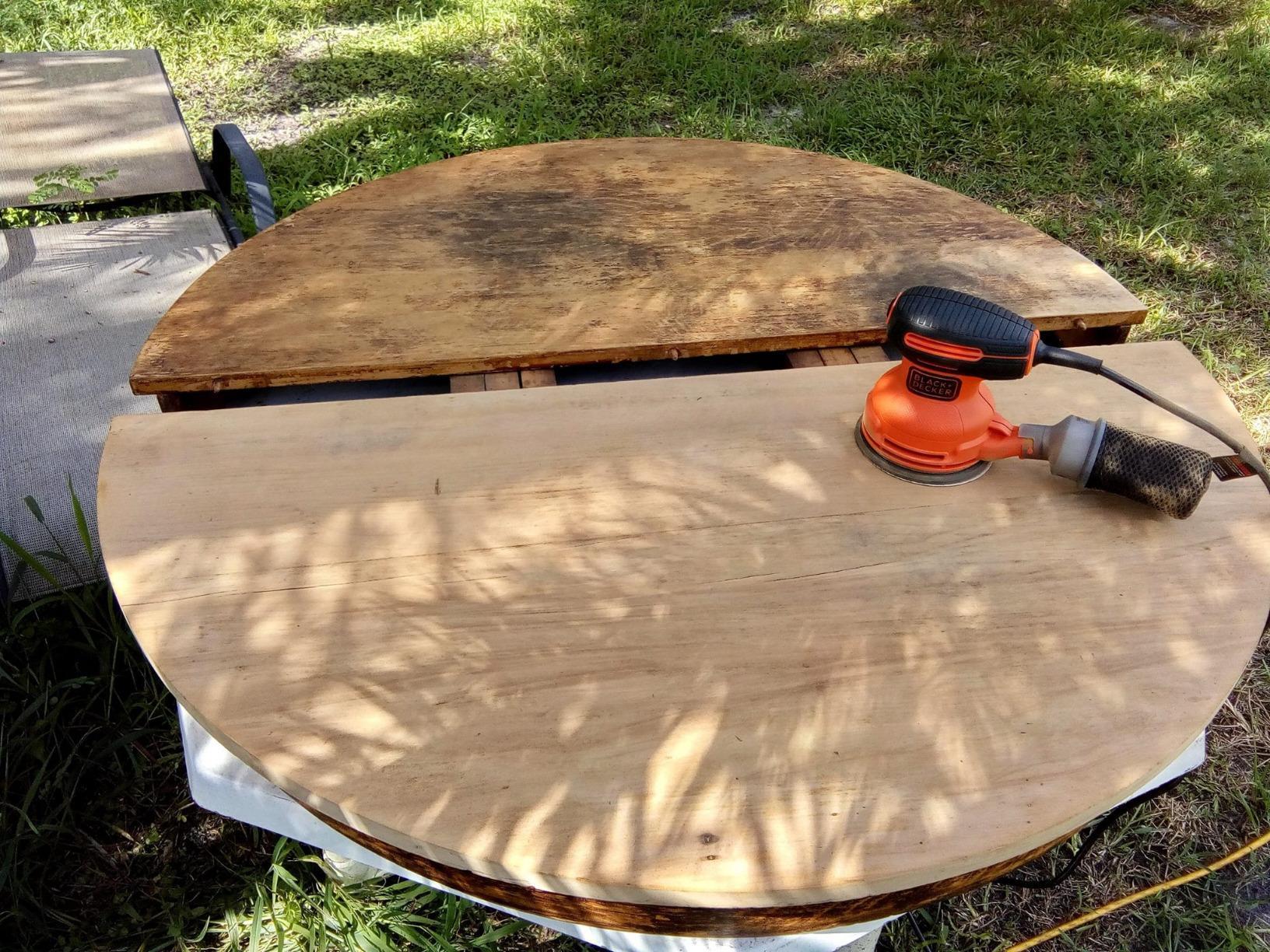
For a scuff-sand before a recoat it is genuinely excellent. Twenty-four hours of prep, a 120 grit disc, and the whole floor is ready for finish. The random orbit action means the scratches it leaves do not form a directional pattern, which is the whole reason people keep their orbiters for the last pass.
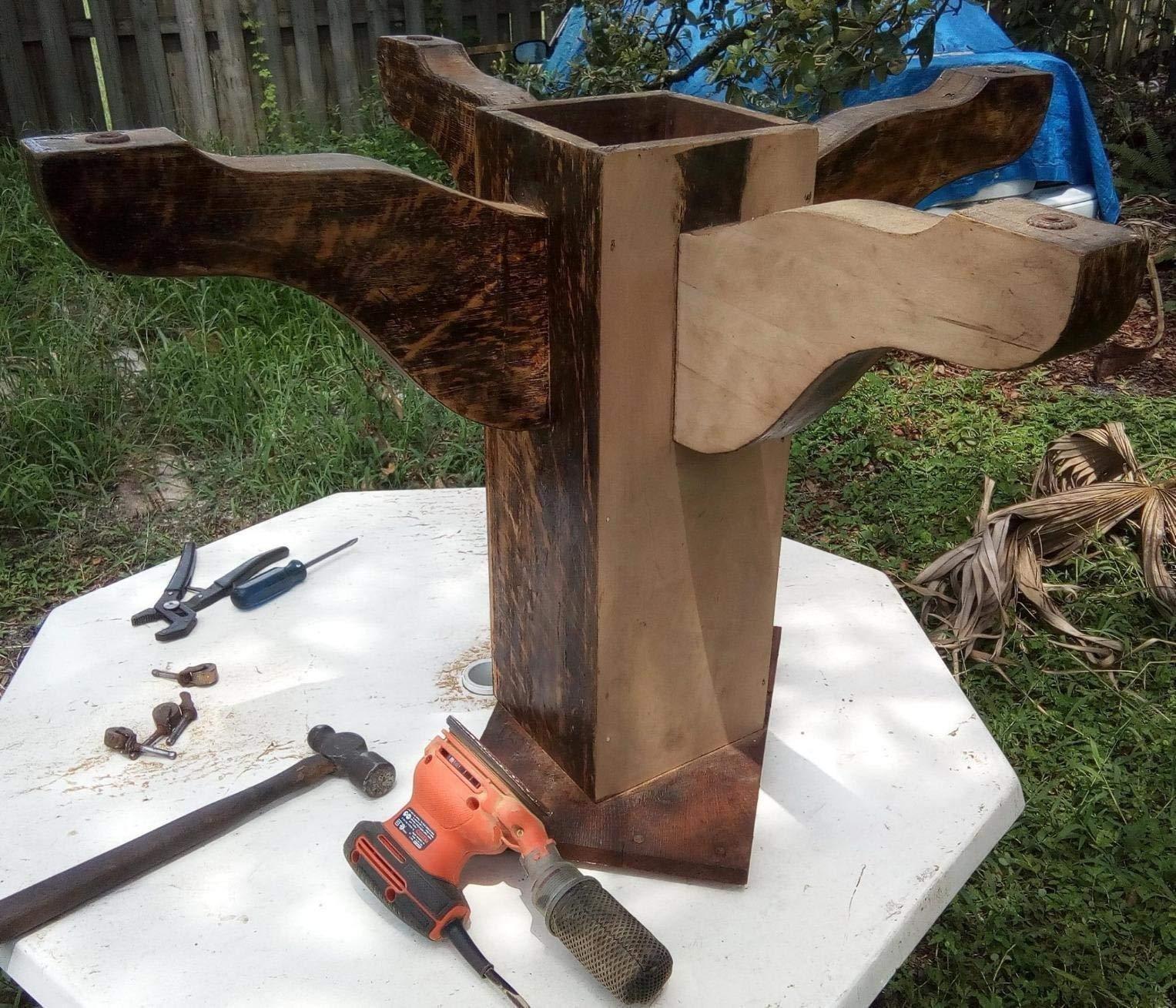
The 2.0 amp motor is adequate, not impressive. On bare wood at 80 grit it works fine. Trying to take down thick old finish with it means patience, and patience means you will change paper more than you would with a bigger machine. Several owners in the review data have run this motor for years across furniture, fiberglass, and cars, which is a durability record few hobby tools can match.
The 12000 OPM figure sounds modest next to the 13000 and 14000 numbers on cheaper units, and it is. The difference in practice is small. What you do not get is a variable speed dial, and on raw hardwood that dial is genuinely useful because a slower speed on final passes reduces the swirl you have to screen out.
Who this suits
It suits a first-time owner doing a scuff-sand and recoat, a renter who wants one tool that works on stairs, trim, and floors, and anyone who wants to keep sanding for years without a service visit. If you also restore furniture, our spindle sander picks cover the larger flat workpieces this cannot reach.
It also suits anyone sensitive to weight. A machine you can hold one-handed for ninety minutes changes how much of the job you finish.
Where it falls short
Single speed is the honest drawback, and the small dust bag is the practical one. On a full room you will be emptying it repeatedly unless you run a vacuum. If your floor needs stripping to bare wood rather than a scuff-sand, this is not the machine and renting a drum makes more sense than fighting it.
2. DEWALT DWE6421K — Best Power-to-Weight in a Corded Machine
- 3.0 amp motor has real surplus power
- Separate counterweight cuts vibration noticeably
- Shorter body gets close to the work
- Dust port fits DEWALT collectors
- Carrying bag and 3 year warranty included
- No variable speed control
- Dust bag is small so a shop vac is better
- Dust port is not a standard size
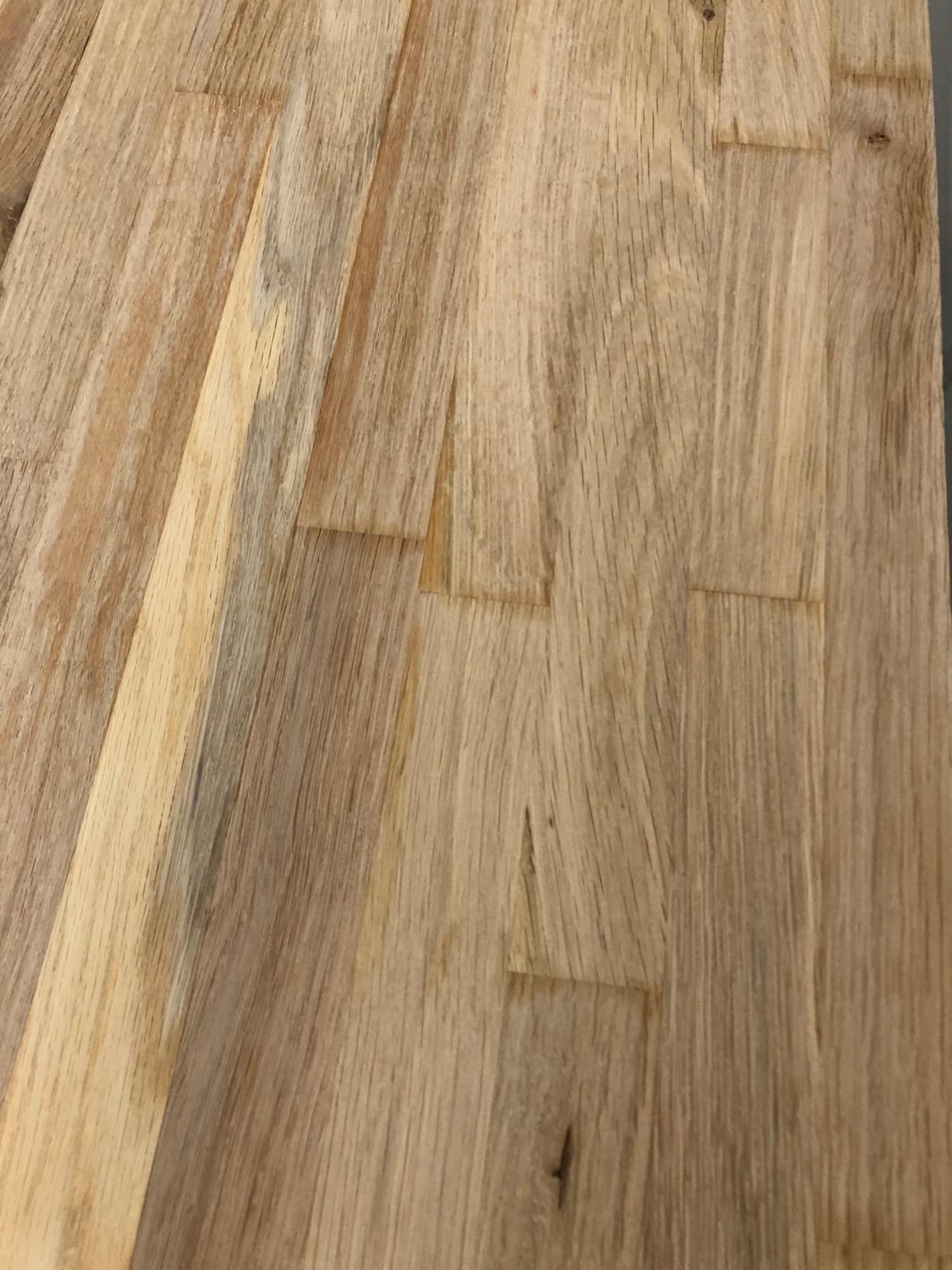
The DWE6421K is the one I would hand to somebody who plans to do this again. The 3.0 amp motor gives it real headroom, and owners in the review data have used it for entire decks and car restoration work, which tells you the motor is not decorative.
Its standout feature is the separate counterweight. Vibration is what actually tires you out over a long floor, more than weight, and this machine isolates the motor from the palm. The shorter height also means you can hold the pad flat on the floor instead of angling it, which matters on a wide-plank surface.
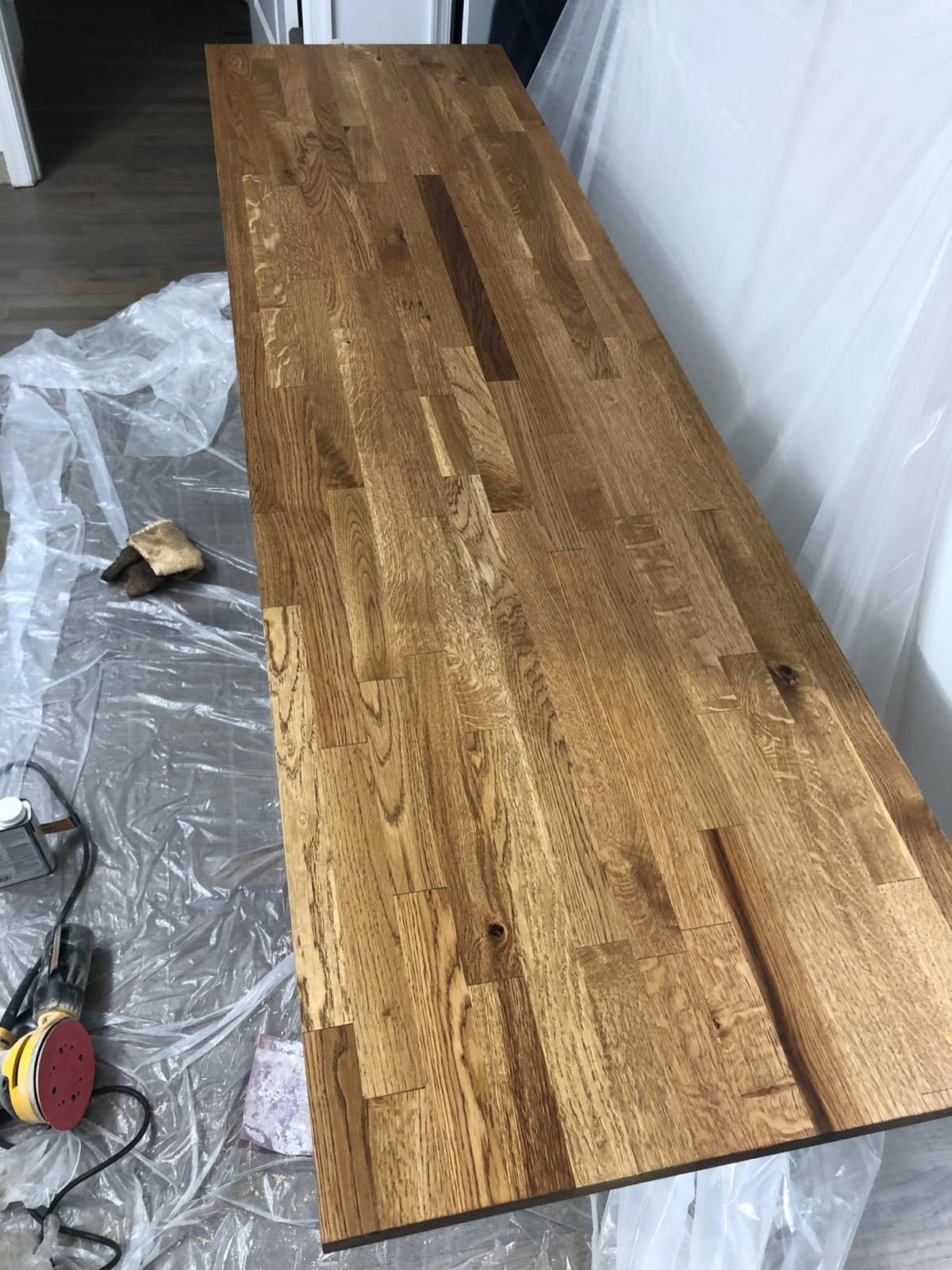
Like most three-amp machines in this class it has one speed. That is a fair trade if you mostly strip or scuff and are not doing delicate final passes, and an annoying one if you are blending a visible edge. The dust port is designed for specific collectors rather than a generic hose, so budget for the right vacuum before you start.
The 3 year limited warranty is longer than most in this group, and the carrying bag is a small thing that prevents a lot of damage in a truck bed.
Who this suits
It suits an owner with solid hardwood doing repeated work over a few years, and a serious DIYer who will be sanding decks, stairs, and built-ins as well as floors. At 3.0 amps it also has enough power for paint-adjacent jobs on trim that a 2.0 amp unit will stall on.
Where it falls short
The missing variable speed dial is the main gap, and owners consistently report it. If your project ends in a stain, a slower final pass at 120 grit is worth having, and you would need a different machine for that step.
3. SKIL SR211601 — Best Value Random Orbital
SKIL 5” Random Orbital Sander with Cyclonic Dust Box & 3pc Sanding Sheet – SR211601, Multicolor
- Variable speed control at a rare price point
- X-flow cyclonic dust box empties cleanly
- Soft rubber grip and counterweight limit vibration
- Compact body reaches tight spots
- Consistently the top seller in its category
- Dust box needs frequent emptying on a full room
- Only three sanding sheets in the box
- Warranty is one year
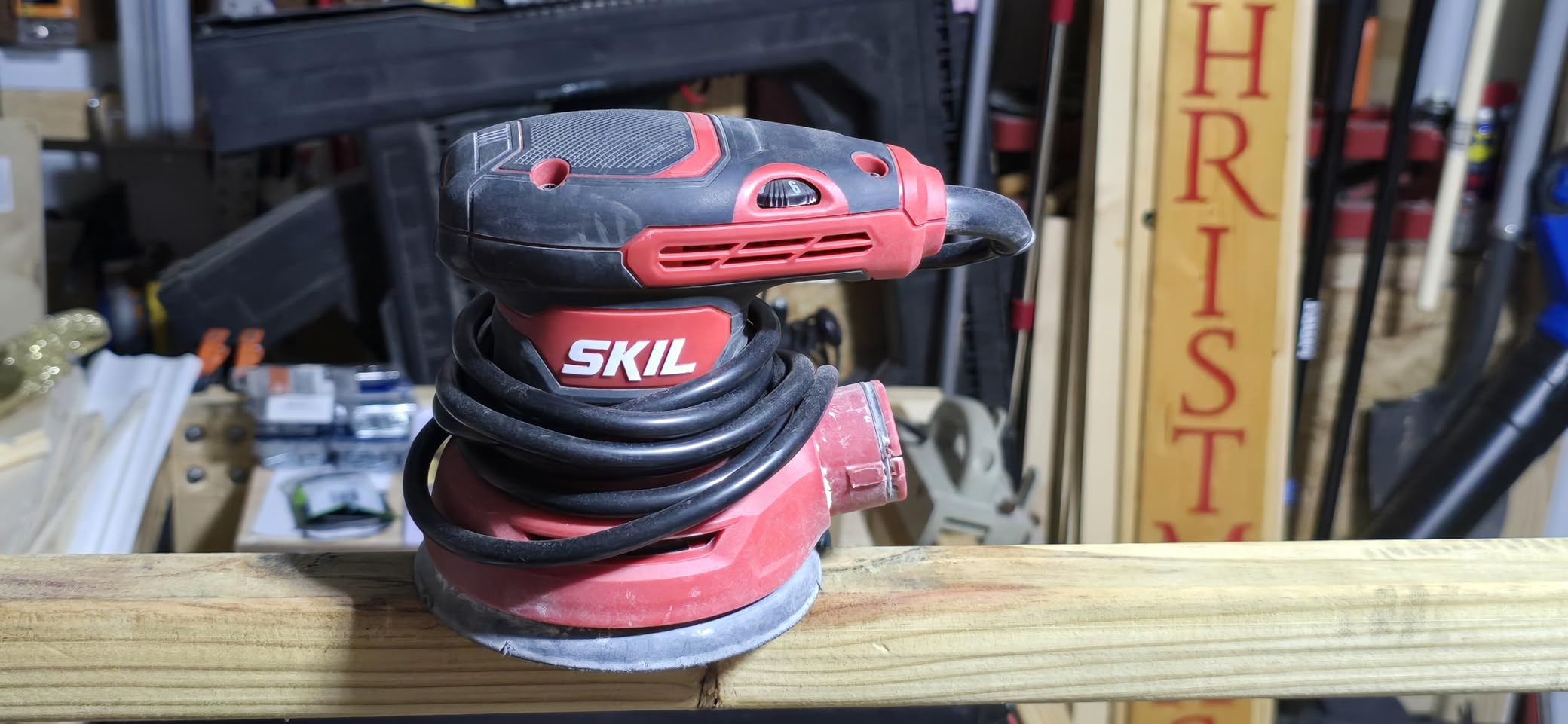
The SR211601 is the rare machine where the headline spec, variable speed, shows up without pushing the price into another tier. The 2.8 amp motor at 13000 OPM has enough torque to work old finish rather than merely polish it, and the cyclonic dust box is the best-designed extraction on any 5 inch machine in this group.
On hardwood, the speed range is the feature that earns its place. Slow it down for a 120 grit final pass and the machine behaves like a finishing tool. Open it up for a 36 or 50 grit cut and it behaves like a remover. Very few palm sanders let you make both moves with one disc change.
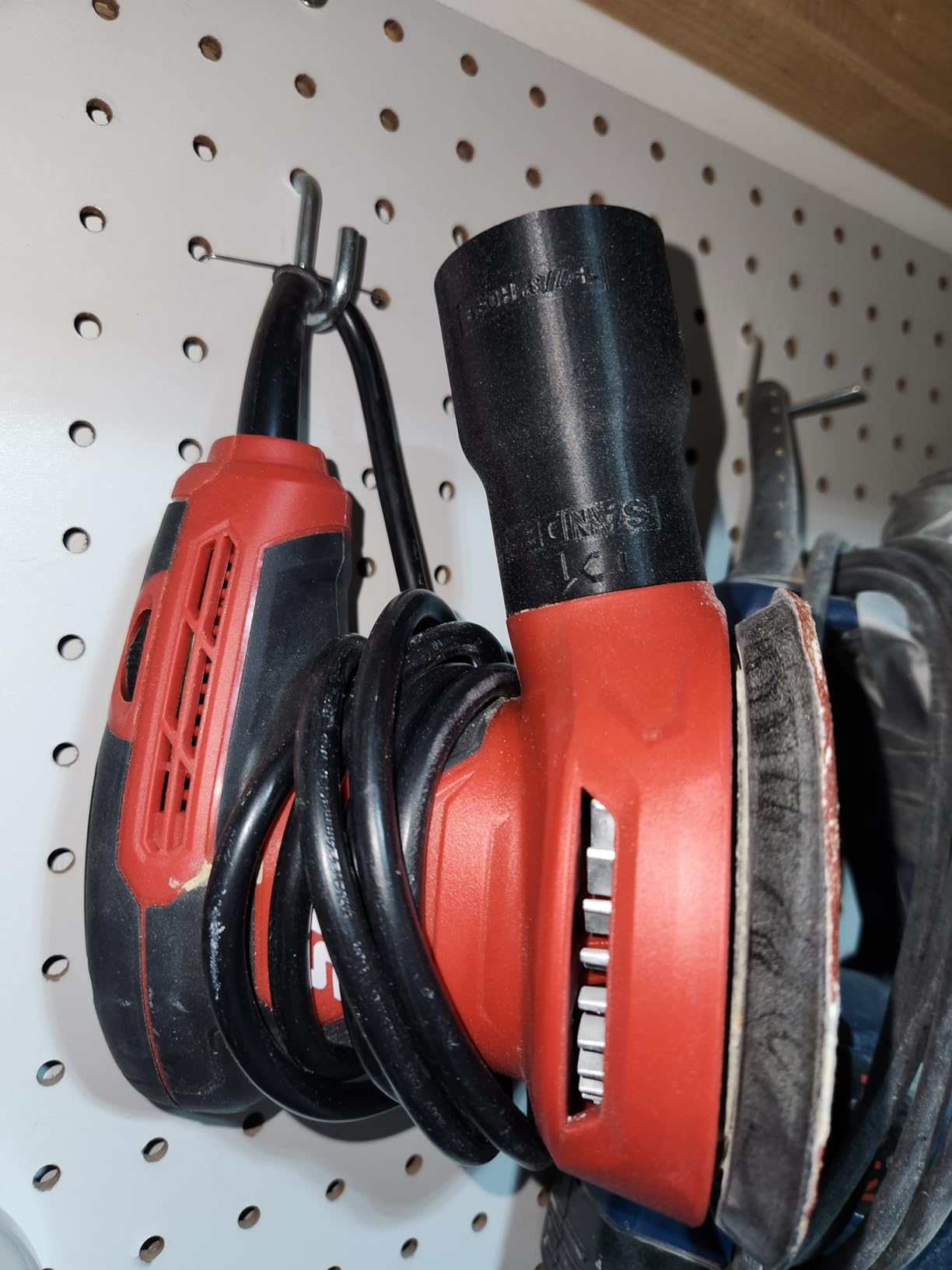
The dust box is transparent, which sounds trivial until you have emptied a fabric bag in the dark half of a basement. The trade is capacity, and on a whole floor you will still empty it regularly. Three included sheets is not enough for any real project, so treat them as samples.
Low vibration is engineered in through a soft rubber grip and counterweight balance, and users doing extended sessions report the difference. The 3.4 pound weight is right in the middle of the group, light enough for long work and heavy enough to feel planted.
Who this suits
It suits a first serious floor project where you want speed control without moving up a tier, and anyone who will do a lot of furniture and trim between floor jobs. It is also the machine we would pick for a rental-free project on engineered wood, where a controlled cut matters more than raw removal rate.
Where it falls short
It is single-disc, so it will never reach the perimeter of a room the way an edger does. And the one year warranty is the shortest among the established brands here, which is worth factoring in if you plan heavy use.
4. BOSCH ROS20VSC — Best for Finish Quality
BOSCH ROS20VSC Palm Sander, Variable Speed Random Orbital Sander
- Wide 7500 to 12000 OPM speed range
- Pad dampening system reduces swirl marks
- Microfilter traps half-micron particles
- Vacuum adapter and contractor bag included
- Costs more than most 5 inch machines
- Dust canister is smaller than it should be
- Some vibration reported at the top of the range
The ROS20VSC is the machine to buy if the last pass before stain is the pass you care about. Its pad dampening system is the feature almost nobody else in this class offers, and it exists specifically to knock down the swirl marks a random orbital leaves behind.
The speed dial spans 7500 to 12000 OPM, which is the widest low-end range in this group. Hold it low on a 150 grit pass and you get a burnished, almost closed surface. That is the look you want under a satin finish, and it is nearly impossible to get from a single-speed machine.
Dust handling is the strongest here. The microfilter system captures half-micron particles and the vacuum adapter is in the box, so you can run a hose and keep a refinished room livable. On a job in an occupied house that matters more than most spec sheets admit.
The hook and loop system with over 35000 hooks is worth noting because disc retention is what stops a disc peeling off mid-pass and leaving a crescent scratch. The trade is the dust canister capacity, which owners regularly call small.
Who this suits
It suits anyone staining, or working a dark finish where defects show. It suits people in a home they are living in during the project, because the extraction keeps the air manageable. It also suits a restorer who wants one sander for panels, trim, and the final floor pass.
Where it falls short
It sits above most of the entry-level sanders in this roundup, and on a stripping job that money buys you something the cheaper options do not have. The 2.5 amp motor also runs hotter on hardwood than a 3.0 amp unit, and a few users report vibration at maximum speed.
5. Makita BO5041K — Best for Long Sessions
- Widest speed range in the group at 4000 to 12000 OPM
- Rubberized palm grip and handle
- 3.1 pound body
- Highest owner rating in this comparison
- Carrying case included
- Most expensive of the corded machines
- One year warranty
- Case dimensions measure the box not the tool
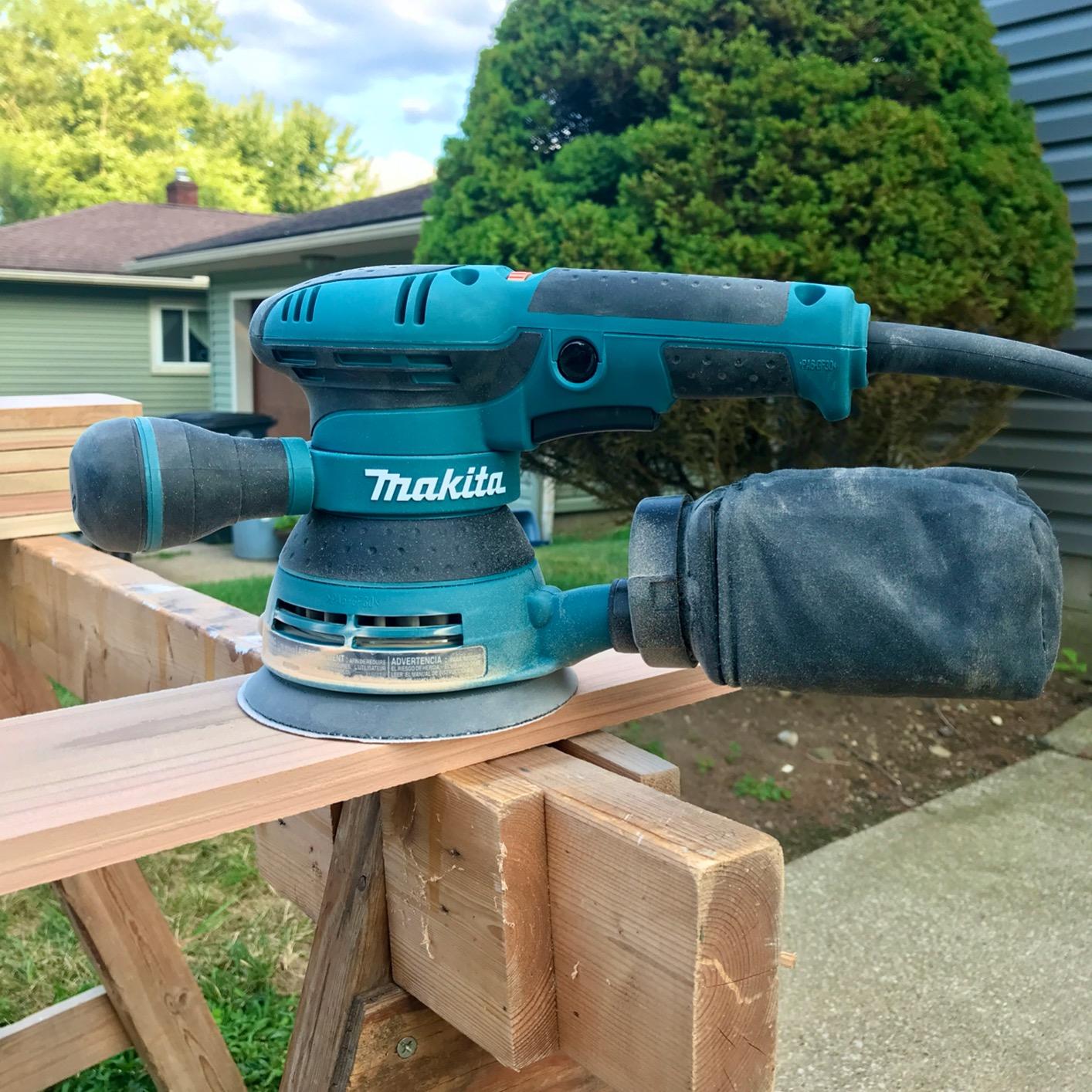
The Makita has the highest owner rating of any machine we examined, and the reason is not excitement about the motor. It is the handle. The rubberized palm grip and wrap handle are the most comfortable we have used, and on a five hour floor project comfort is worth more than amps.
The speed dial runs from 4000 to 12000 OPM. That 4000 figure is lower than anything else here, and it is the reason this machine earns its badge for long sessions. At the bottom of that range you can make a pass so gentle that it is closer to burnishing than cutting, which is exactly what you want at the end of a day with a stain going on tomorrow.
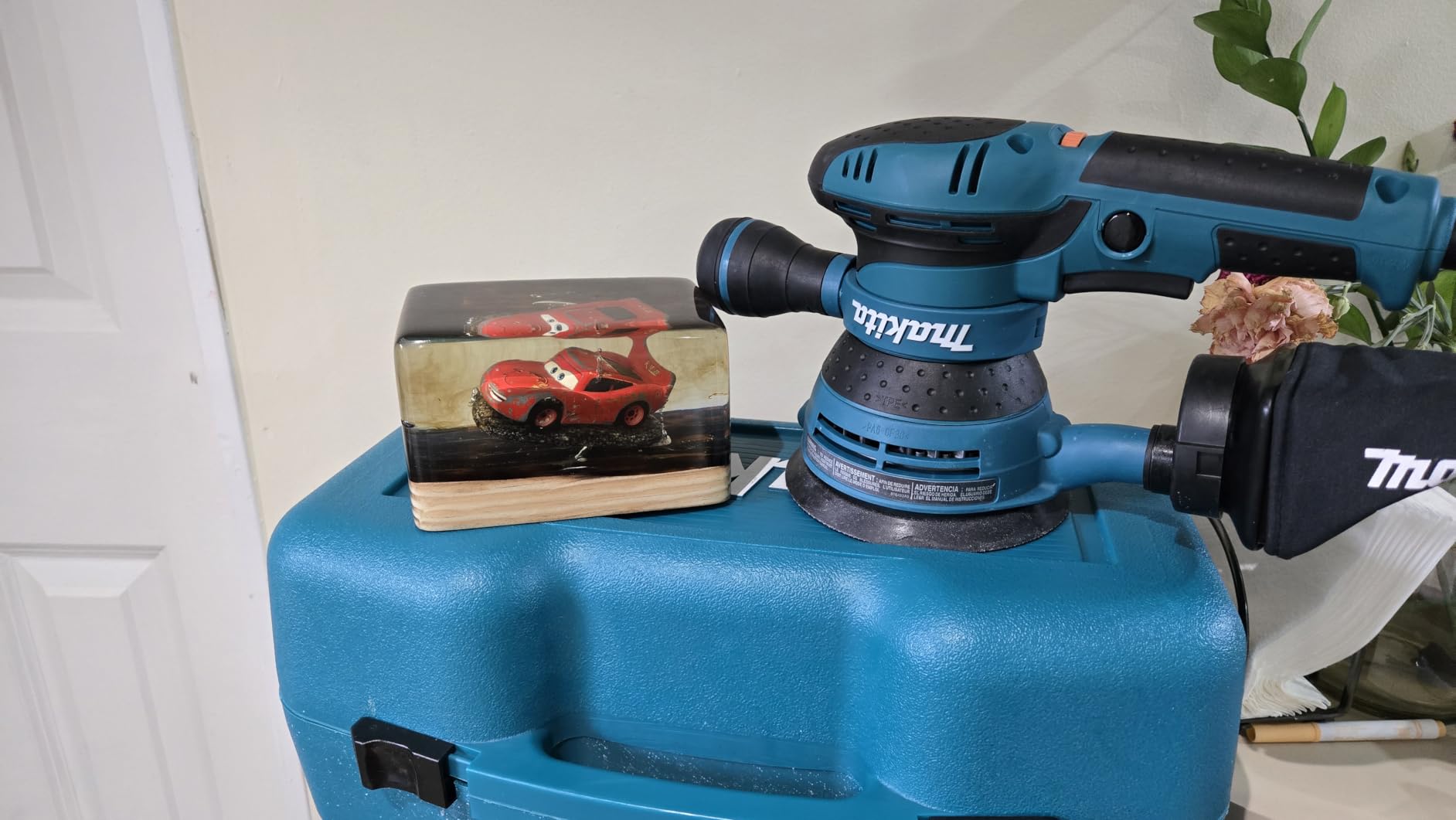
The 3.0 amp motor is real surplus power for a 5 inch machine, and 3.1 pounds keeps the whole thing in one-hand working range. Owners consistently report smooth operation with minimal vibration, which lines up with how the grip is shaped.
The included case is a nice touch for anyone moving between a job site and a garage. It is a 3 amp machine on a 120 volt cord, so you need an outlet within reach of where you are working, not just somewhere in the room.
Who this suits
It suits a person doing a full room or a staircase in one sitting, and anyone whose hands get tired before their attention does. It is the pick for a project that ends in stain, where a slow final pass at low RPM is the difference between an even tone and blotches.
Where it falls short
It is the priciest corded machine here, and the value case is hard to make if you are sanding one small landing. The one year warranty is short for a tool built this well, and the case dimensions listed measure the packaging, not the sander.
6. CRAFTSMAN CMEW231 — Best Warranty for the Money
CRAFTSMAN Orbital Sander, 5 inch, 12,000 OPM, 3 Amp, Corded (CMEW231)
- Three year limited warranty is the longest here
- 3.0 amp motor handles old finish
- Vacuum hose connection on the dust bag
- Dust sealed switch for durability
- Solid build quality for a mid-range tool
- No variable speed control
- Bag collection is basic so a shop vac is better
- Single speed limits finesse passes
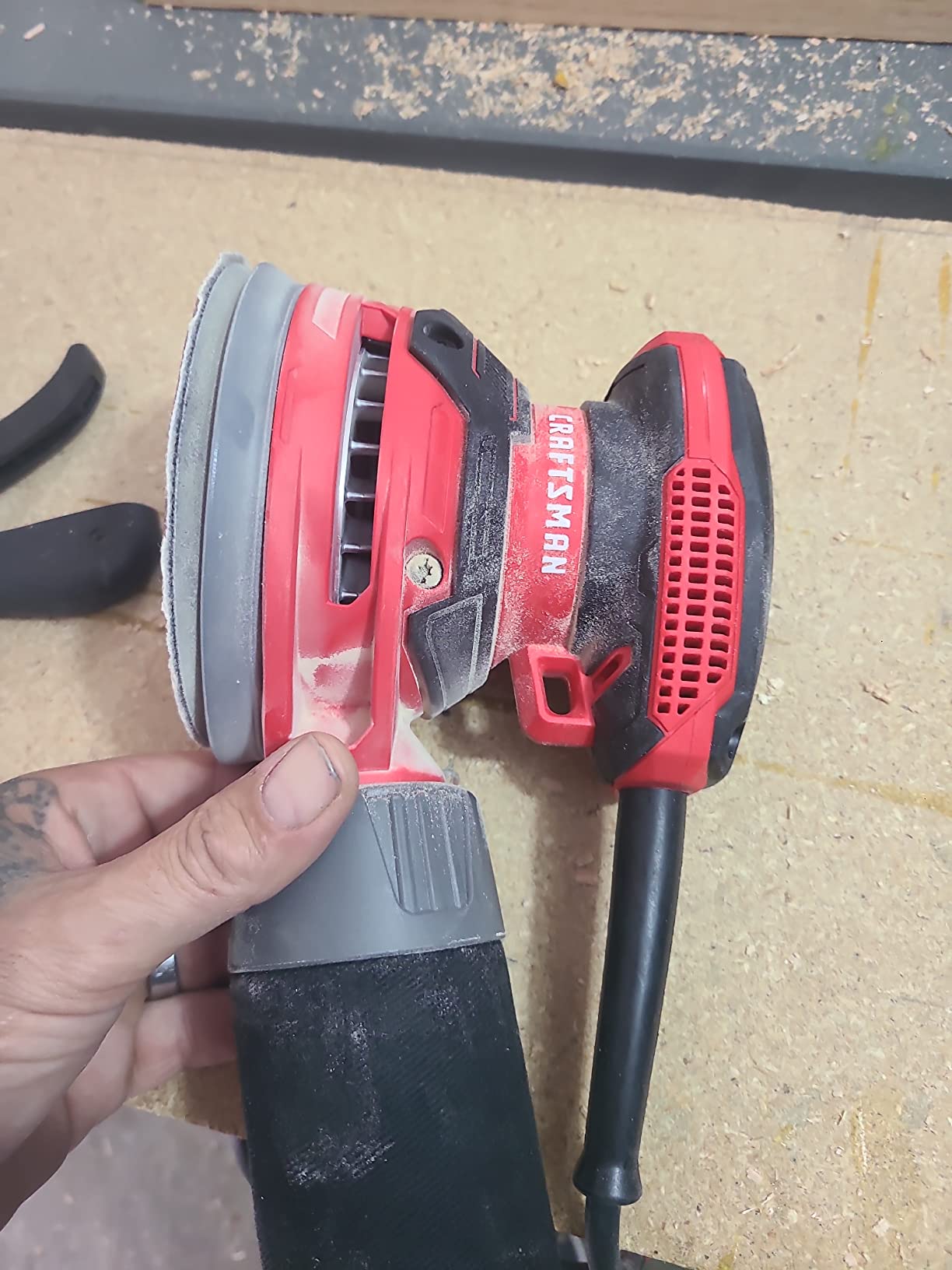
The CMEW231 is the boring, sensible choice, and boring is what you want in a tool that lives in a garage and gets used on whatever is on the schedule. Three amps, twelve thousand orbits, a dust sealed switch, and a three year warranty with nothing complicated going on.
The vacuum hose connection is the practical headline. The on-board bag holds very little, but a 1-3/4 inch hose connection means you can plug in a shop vacuum and keep a whole floor project out of the air. On hardwood that single feature changes the job more than any motor upgrade would.
At 3.4 pounds it is in the middle of the group on weight and toward the bottom on price among the 3 amp machines. That combination is difficult to argue with. The dust sealed switch matters more than it sounds, because grit migrating into a switch is the most common reason sanders die.
Like the DEWALT, it is single speed. For a full strip or a heavy scuff that is fine. For the delicate last pass you will want a machine with a dial, and no amount of technique fully substitutes for one.
Who this suits
It suits a homeowner who wants one dependable sander for solid hardwood and does not want to think about it, and anyone working a room where dust control is the deciding factor. The warranty length makes it a good choice for a first purchase with no research required.
Where it falls short
It will not blend a delicate edge and it will not burnish. Single speed is a real ceiling on what you can do, and experienced users point to exactly that when they recommend a variable speed machine for stained floors.
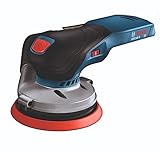
7. BOSCH GEX18V-5N — Best Cordless Option
BOSCH GEX18V-5N 18V Brushless 5 Inch Cordless Random Orbit Sander (Bare Tool)
- Brushless motor delivers corded-class removal
- 2.4 pounds and no cord to trip on
- Soft start and constant speed under load
- Vibration dampening element
- 5 year warranty on Bosch 18V tools
- Bare tool so battery and charger are extra
- Battery position can block charge indicator
- Battery platform investment raises the cost
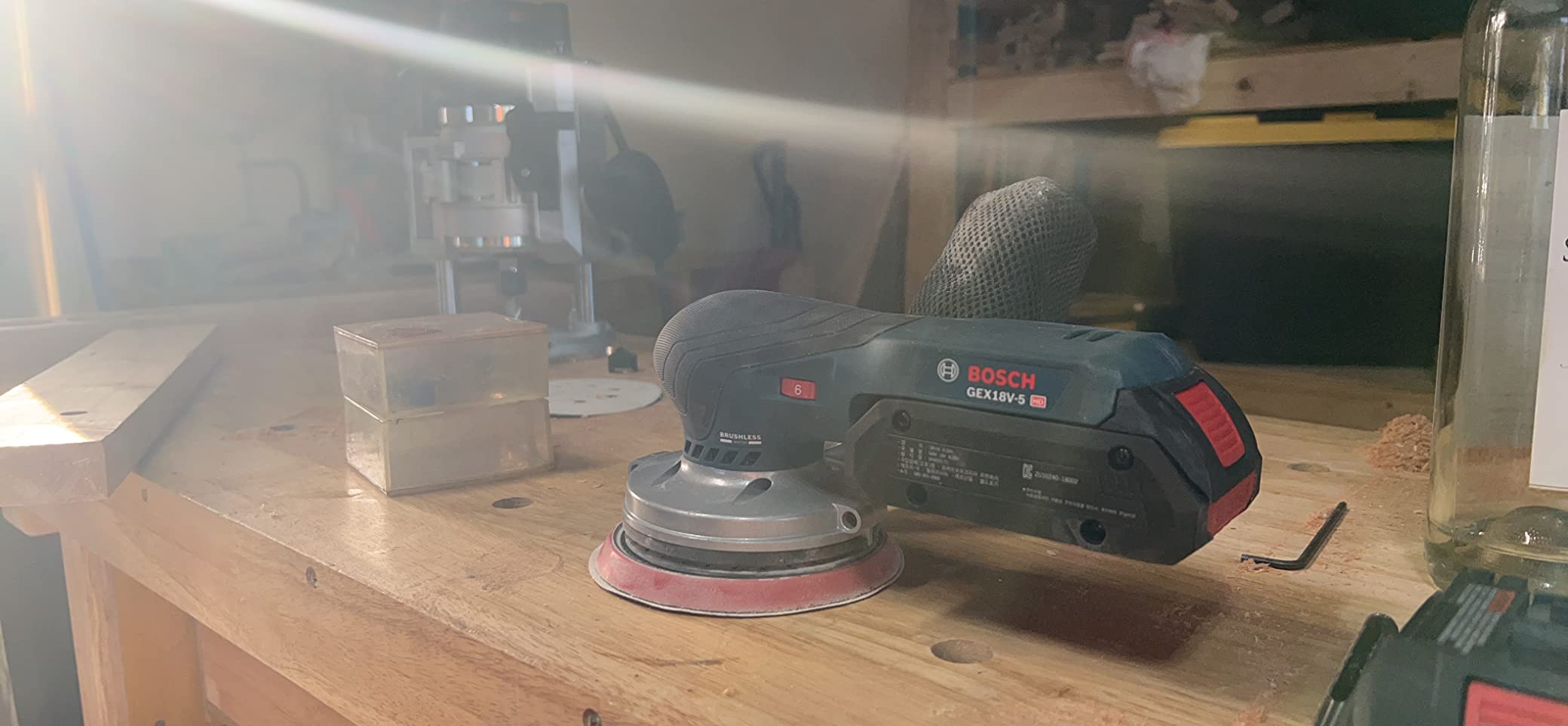
The GEX18V-5N answers a problem the other machines here cannot: a floor is not a bench. A cord running across the room is how you trip, stop suddenly, and gouge a plank. Remove the cord and that whole category of accident disappears.
At 10000 OPM it is the lowest speed rating here and it does not matter, because the brushless motor holds speed under load. Soft start prevents the startup lurch that can mark a fresh surface, and the vibration dampening element is a real addition on a machine that might run for an hour on one battery.
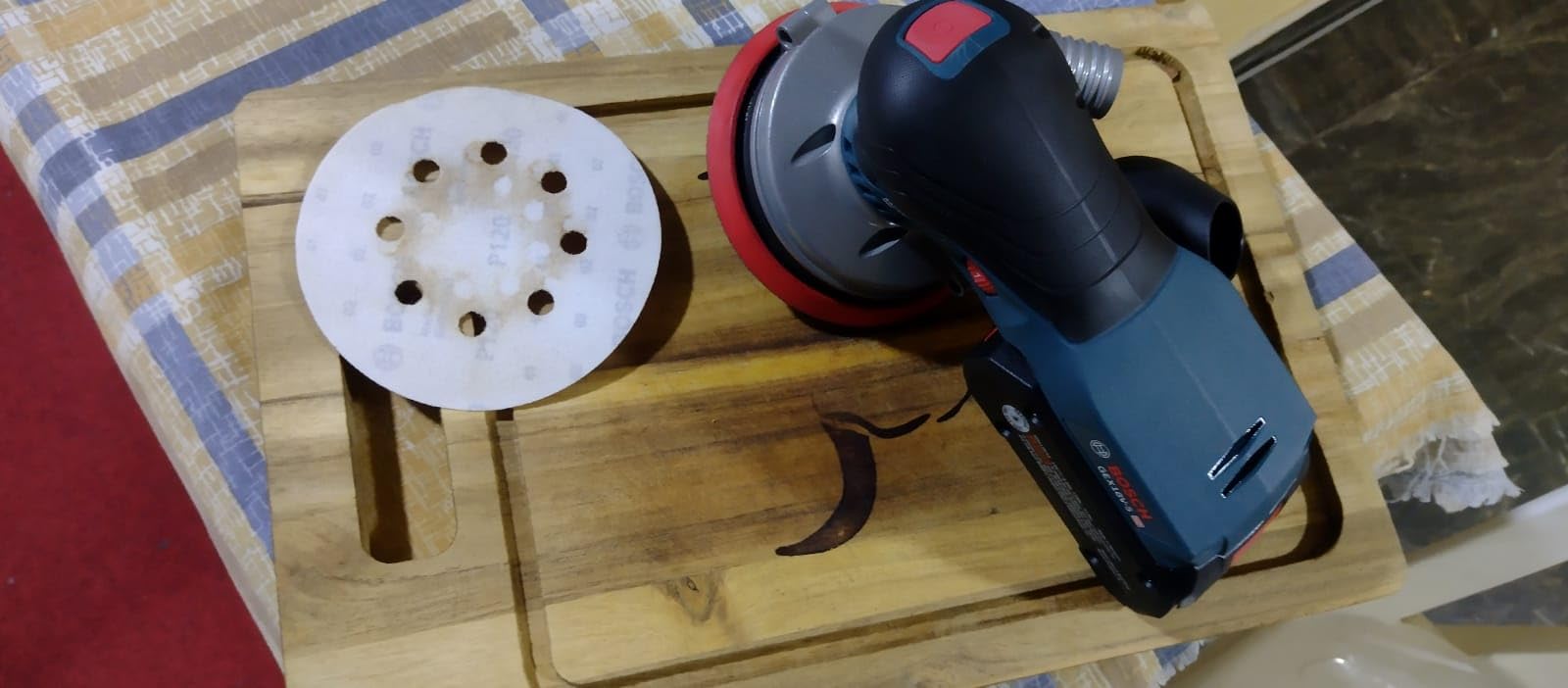
At 2.4 pounds without a battery it is the lightest thing we examined. The palm grip works in any orientation, which is what you need on stairs and on your knees at the edge of a room. You can run the dust bag or a vacuum hose, and the choice matters on a refinish.
You are buying into a battery platform. A 4 amp hour pack is reported to run about an hour at full speed, which is a real room or half a room depending on grit and pressure. Plan on a second pack before a whole house.
Who this suits
It suits owners with stairs, tight rooms, or a workshop-adjacent space where a cord is a hazard. It suits people who already use Bosch 18V tools, since the platform cost is then sunk, and it suits anyone who wants to move around a floor without planning the cable.
Where it falls short
It is a bare tool, so the battery and charger are additional, and for somebody without the platform that total cost lands above several corded machines. The battery sits where it sits, and some users find the charge indicators blocked and the balance slightly off once it is installed.
8. Dong Cheng DSA02-125 — Best Complete Kit
- 20 sanding papers across five grits in the box
- Tool bag dust bag and spare carbon brushes included
- 6 speed gears for fine control
- 32mm vacuum port for shop vac
- 3 year manufacturer warranty
- Dust bag fills quickly on a full room
- Less established brand name
- Long term durability is unproven
The Dong DSA02-125 is the kit you open and find everything you need in. Twenty sheets across five grits, a dust bag, a nylon tool bag, spare carbon brushes, and a warranty card. For somebody starting out, that is a meaningful part of the job already handled.
The 380W copper motor with six speed gears is more than adequate on hardwood, and the speed control spans 8000 to 12800 OPM. Owners with cabinets full of DeWalt, Milwaukee, and Bosch sanders report preferring this one on ergonomics and balance, which tells you the 3.3 pound figure is doing real work.
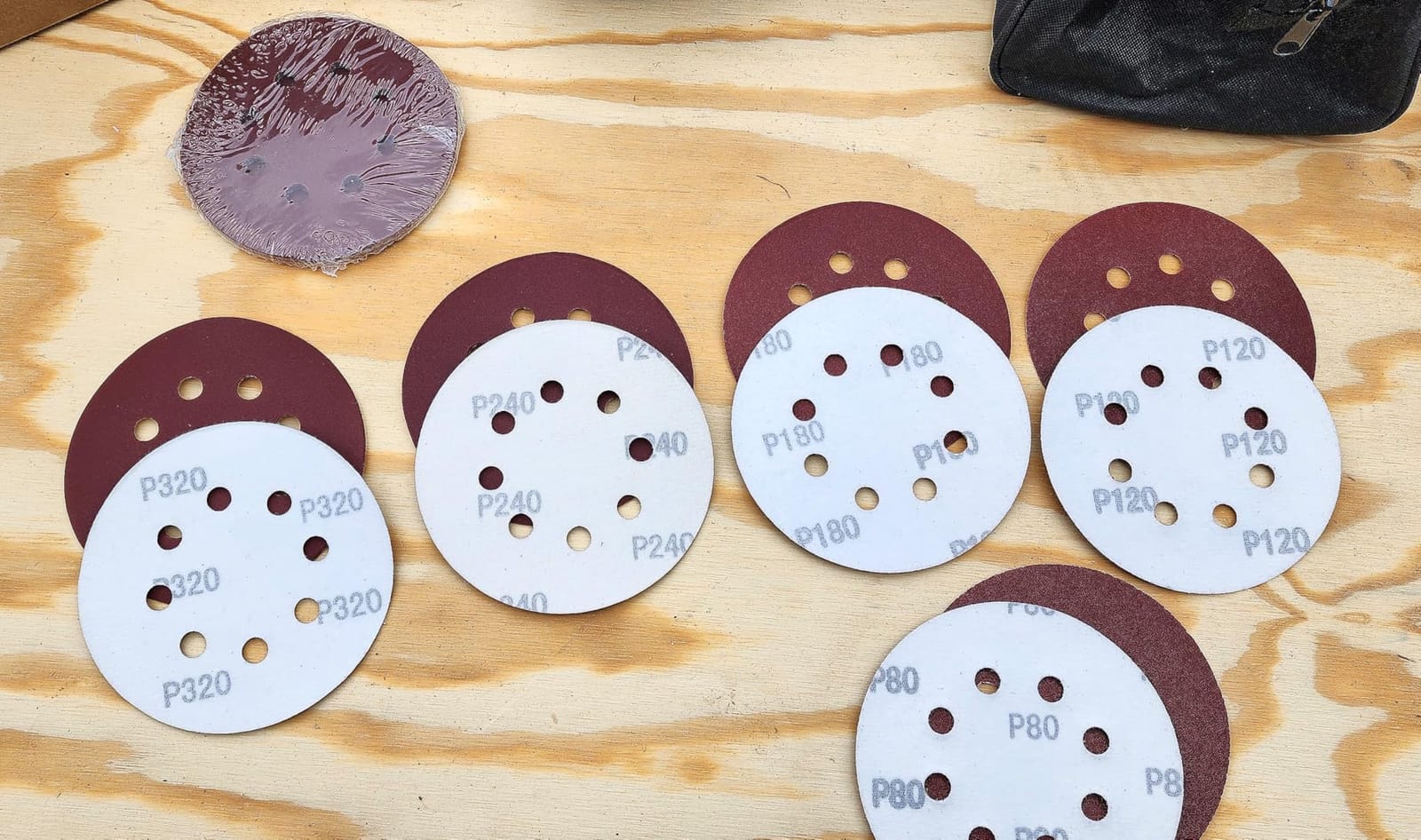
Dust handling is unusually thoughtful for the money. Internal ventilation routes debris to the composite dust box, the switch is dust sealed, and there is a 32mm port for a shop vacuum. That port size is a common standard, so you can connect an inexpensive vacuum rather than hunting for a proprietary adapter.
Including spare carbon brushes is a manufacturer telling you what wears out. It also means the motor is serviceable rather than disposable, which is not true of every machine at this tier.
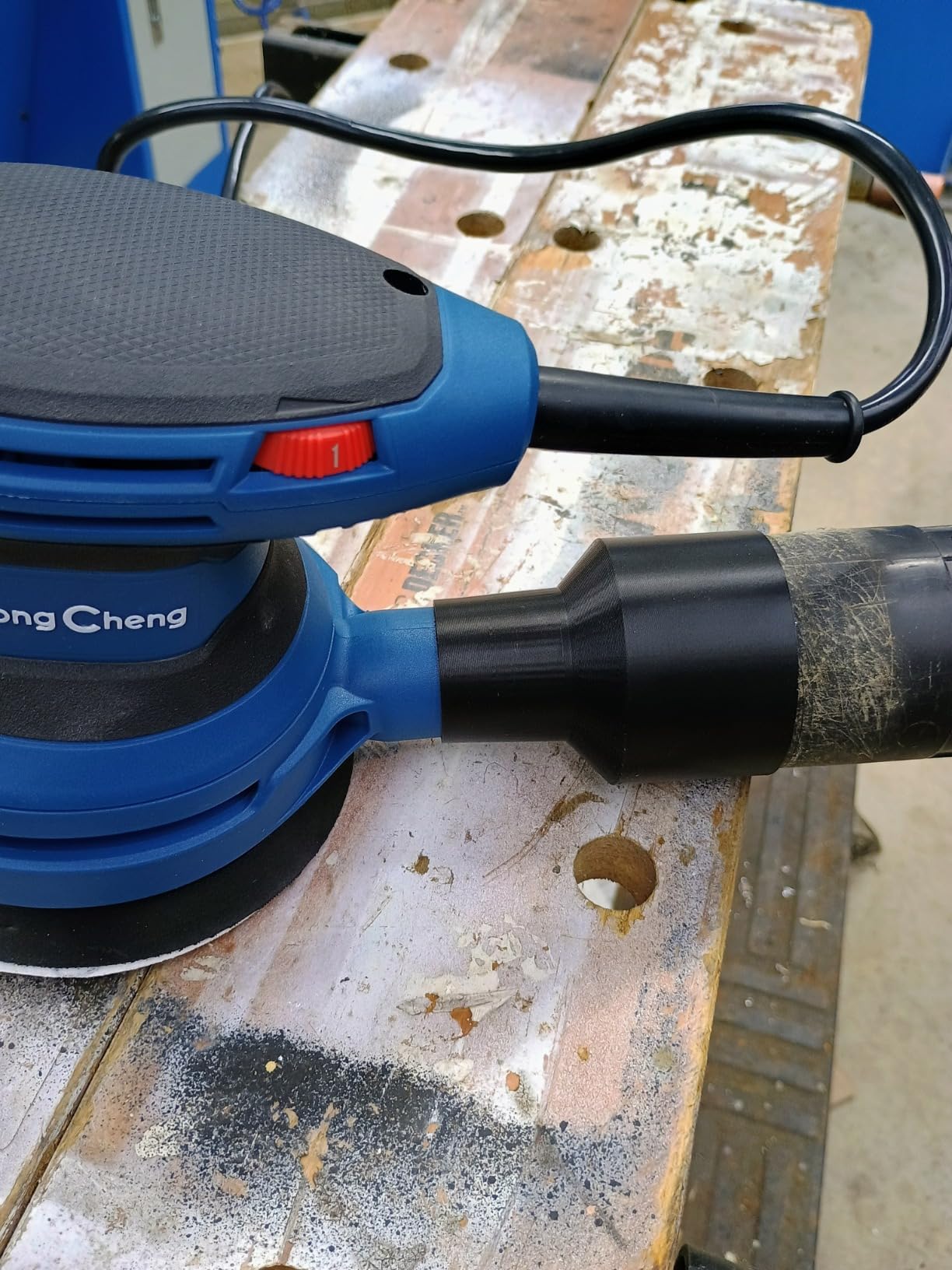
Who this suits
It suits a first-time owner who does not yet know what grits to buy and wants a usable spread on the shelf. It suits anyone who already owns a shop vacuum with a standard hose. It is also a good match for solid wood furniture work alongside floor prep.
Where it falls short
The dust bag capacity is the recurring complaint and it is the same complaint every machine with a bag has. The brand is less established, so long term durability is genuinely unknown to us, and the included abrasive is a starting point rather than what you should use on a real floor.
9. ZFE Pneumatic Random Orbital — Best for a Working Shop
- Lightest machine in the group at 1.5 pounds
- 5 inch and 6 inch backing plates both included
- Vacuum tube and 24 sheets in the kit
- All steel movement is smooth and durable
- Low vibration over long sessions
- Requires a compressor of 10.5 CFM
- 5 hole pattern is not the common 8 hole
- Awkward pressure switch placement
If you have a compressor, a pneumatic sander is a genuinely good answer that almost nobody considers. The ZFE runs on air rather than a motor, and the practical result is a machine that stays cool indefinitely, weighs 1.5 pounds, and has no motor to burn out.
On a hardwood floor the low weight is a real advantage, because holding any machine against a floor for an hour fatigues your arm, and fatigue is what causes the pass at the end of the room to be worse than the pass at the start. The included 1 meter vacuum tube is a real accessory at this tier and most sellers omit it.
The all-steel movement is what separates this from cheap pneumatic sanders, and owners in auto body and metal shops describe it as smoother than expensive brands. The kit also includes polishing pads, microfiber cloths, and a washing mitt, which is unusual completeness.
The catch is compatibility. This machine takes a five hole disc pattern rather than the eight hole pattern most hook and loop abrasives use. Plan your consumables around that, or you will buy a box of paper you cannot mount. The 10.5 CFM draw at 90 PSI is more than a small pancake compressor will deliver.
Who this suits
It suits someone with a shop compressor who works on floors, panels, and trim in the same week. It suits a restorer who prefers not to service a motor. It also suits anyone who finds 1.5 pounds meaningfully easier than 3.4 pounds, which is more common than people expect.
Where it falls short
It is useless without the right compressor, and the non-standard disc pattern will cause you friction on consumables. At 1.5 pounds it also feels light in the hand during long overhead work, and the pressure switch placement is awkward for some users.
10. Gedu Professional Air Random Orbital — Best Low-Vibration Pneumatic
Professional Air Random Orbital Palm Sander, Dual Action Pneumatic Sander, Low Vibration, Heavy Duty
- Low vibration and smooth finish quality
- 12000 free speed from a compact air motor
- Built in regulator for speed control
- Lighter motor assembly suits vertical work
- Owners report output rivaling far costlier brands
- Requires 10.5 CFM at 90 PSI
- Some fitting wear reported after extended use
- Durability is not rated for full time production work
The Gedu GAOA124 is the second pneumatic option here, and it competes on a different strength: smoothness. Owners doing auto body and metal work describe it as matching far more expensive pneumatic sanders, and on a hardwood floor that translates into an even scratch pattern that needs less screening.
The rear exhaust with a built-in regulator means you can adjust speed at the machine rather than at the wall, which is a real convenience when you are moving from a cut to a finishing pass. The lighter air motor assembly is designed for vertical and overhead work, which also makes it usable on a stair riser or a cabinet side.
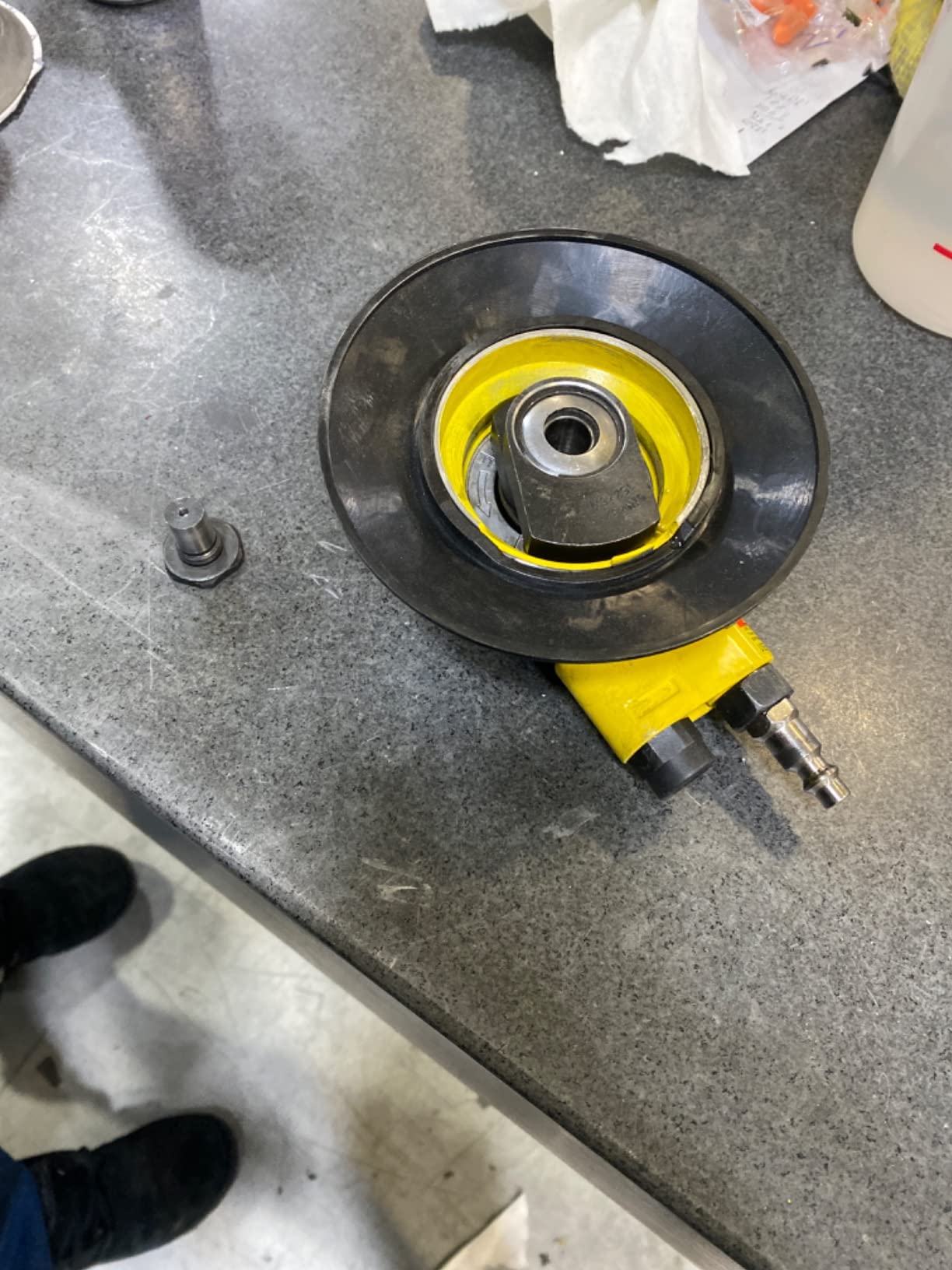
It runs a 5 inch hook and loop pad at up to 12000 free speed, on a quarter inch air inlet. That is a standard connector, so the compressor side is straightforward as long as the compressor can deliver 10.5 CFM at 90 PSI.
There are honest durability limits. Owners doing full time production report fitting wear after extended use, and the recommendation for someone sanding ten hours a day is a higher tier pneumatic brand. For a weekend floor, that constraint does not apply.
Who this suits
It suits a homeowner with a shop who wants the smoothest result from a 5 inch machine and does not want to service a brush motor. It suits restorers mixing floor and cabinet work, and anyone who finds a loud machine unpleasant in a closed room.
Where it falls short
It is the lowest rated in this roundup, and the gap is about build longevity rather than output. If your work is measured in rooms per year rather than rooms per decade, spend more on the machine and less on abrasive.
11. HYCHIKA FL117 — Best Starter Kit
- Twelve discs across three grits included
- Eight vacuum holes with a large capacity bag
- Collects roughly 90 percent of debris
- 13000 RPM with six speed settings
- Textured rubber grip reduces fatigue
- Build quality reflects the tier
- Dust bag fills quickly on a large job
- Long term durability is not established
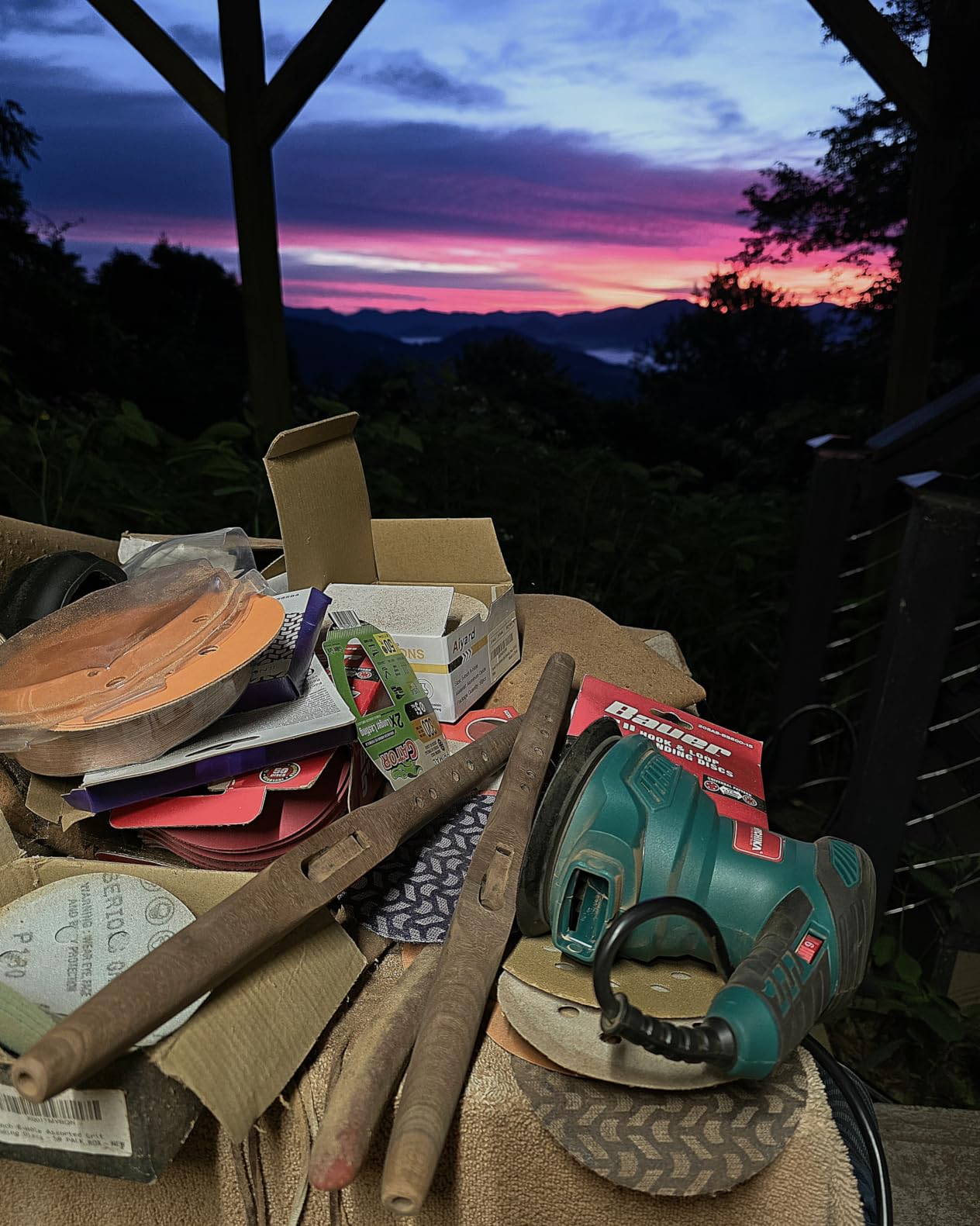
The FL117 makes a case on arithmetic. Twelve discs at 80, 120, and 240 grit, a 300W motor, six speeds, and 13000 RPM for a small outlay. For someone who has never sanded a floor, having a real spread of grit in the box removes the most common early mistake, which is running out of paper mid-pass.
The eight vacuum holes are worth noting. A five hole pattern limits which discs you can buy, and this machine takes the common pattern. The bag is reported to collect roughly 90 percent of debris, which is a figure we cannot independently verify but is consistent with the eight hole layout.
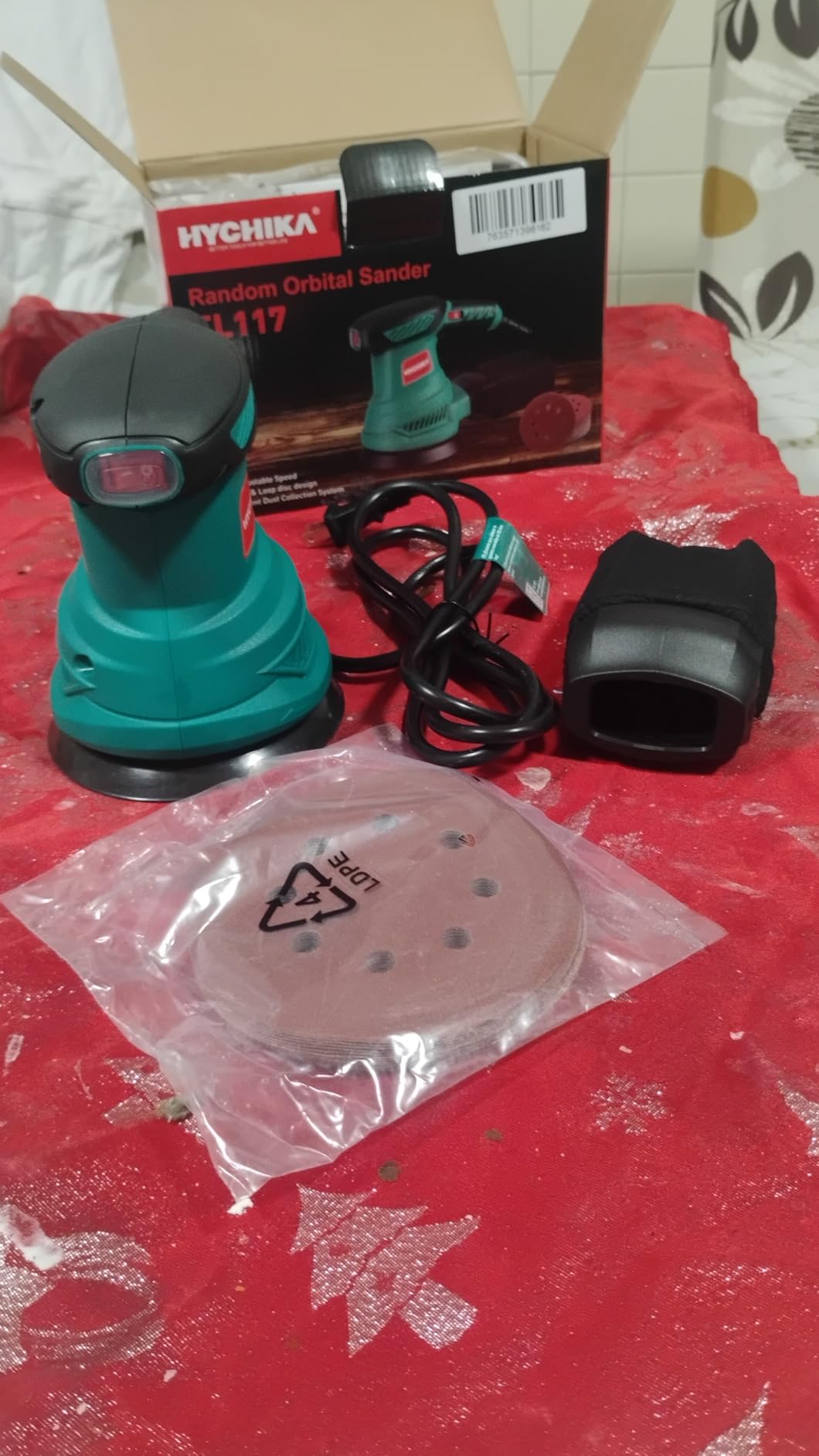
Six speed settings from a 300W motor is a useful range on hardwood. Slowing down for a fine pass and opening up for a cut is the same advantage the Bosch and Makita machines offer through their dials, at a much lower tier.
On balance the honest read is that the dust collection and grip are better engineered than the motor housing. The textured rubber grip is genuinely comfortable, and the dust bag is larger than most. The rest is adequate rather than impressive.
Who this suits
It suits a beginner on a scuff-sand and recoat, somebody furnishing a small workshop, and anyone who wants a capable sander for a single room without researching the category. It is also a good loaner or second machine.
Where it falls short
It is not a machine we would use to strip thick old finish over a whole floor. Build quality is the constraint, and the dust bag still fills on a long job. Treat it as a finishing and prep tool rather than a removal tool.
12. DEKOPRO 5 Inch Random Orbital — Most Accessories in the Box
- Sixteen discs spanning 60 to 1000 grit
- 6 variable speeds from a 2.5 amp motor
- Detachable dust box and balanced counterweight
- Hook and loop changes are quick
- Ventilation design dissipates heat
- Listed at 240 volts so check compatibility first
- Build quality is at the entry tier
- Dust box capacity is limited
The DEKOPRO is the box with the most in it: sixteen sheets from 60 grit all the way to 1000. That range is unusual, and the fine grits are the ones people discover they need only after they have already stained and seen the surface is not quite right.
Six variable speeds on a 2.5 amp motor is a real feature at this tier. The balanced counterweight and rubber grip keep vibration low enough for extended work, and the ventilation design is intended to shed heat during long passes, which is what kills cheap sanders.
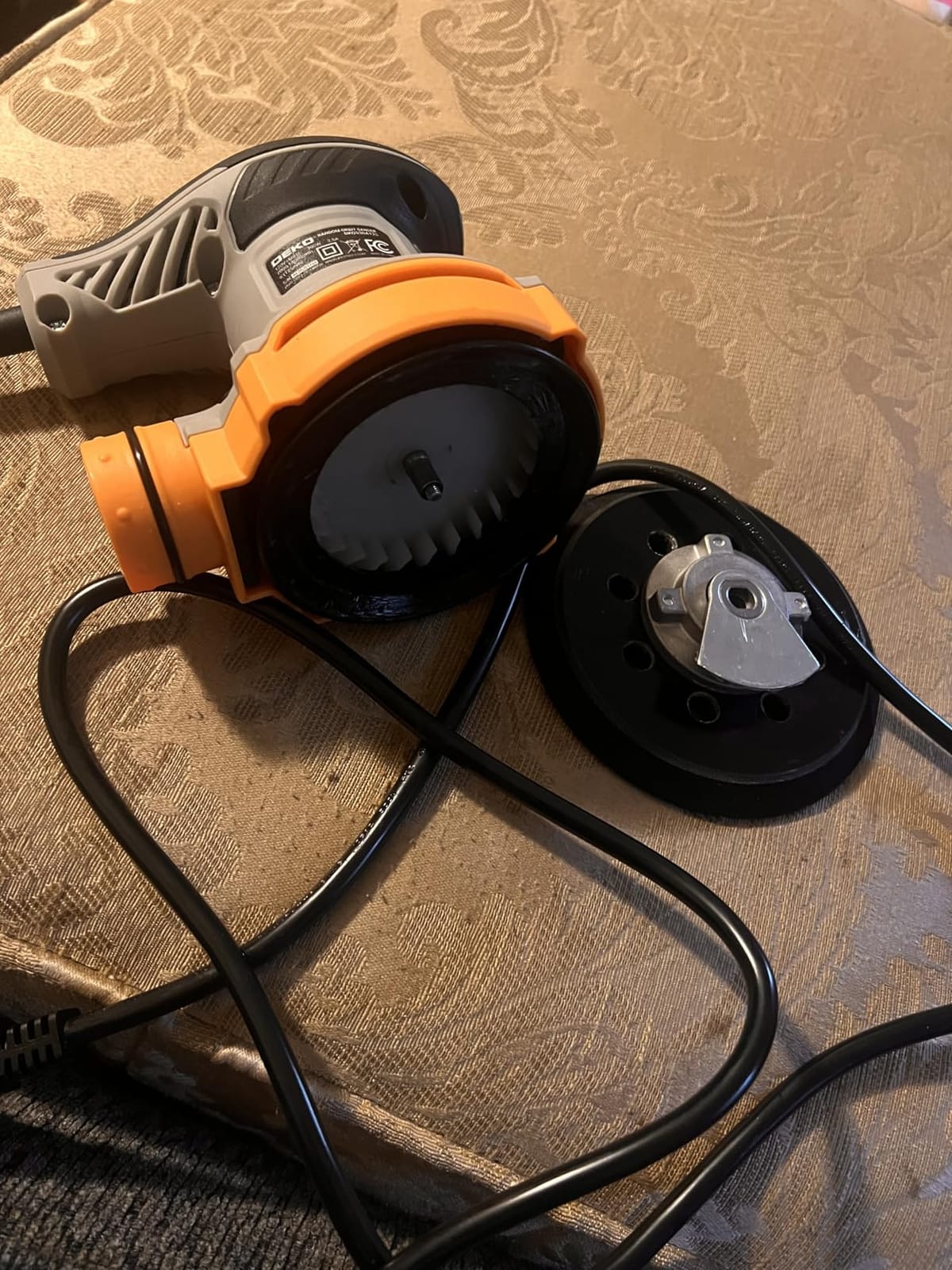
There is one specification check before anything else, and it is the reason this sits at the bottom of the list. The listing shows 240 volts. If you are in a 120 volt market, confirm the version before you buy, because a 120 volt US household circuit is not the same supply.
At 3.6 pounds it is the second heaviest machine here, so it is a stable, planted tool rather than a nimble one. For a floor that is arguably the right bias, and for a stair riser it is not.
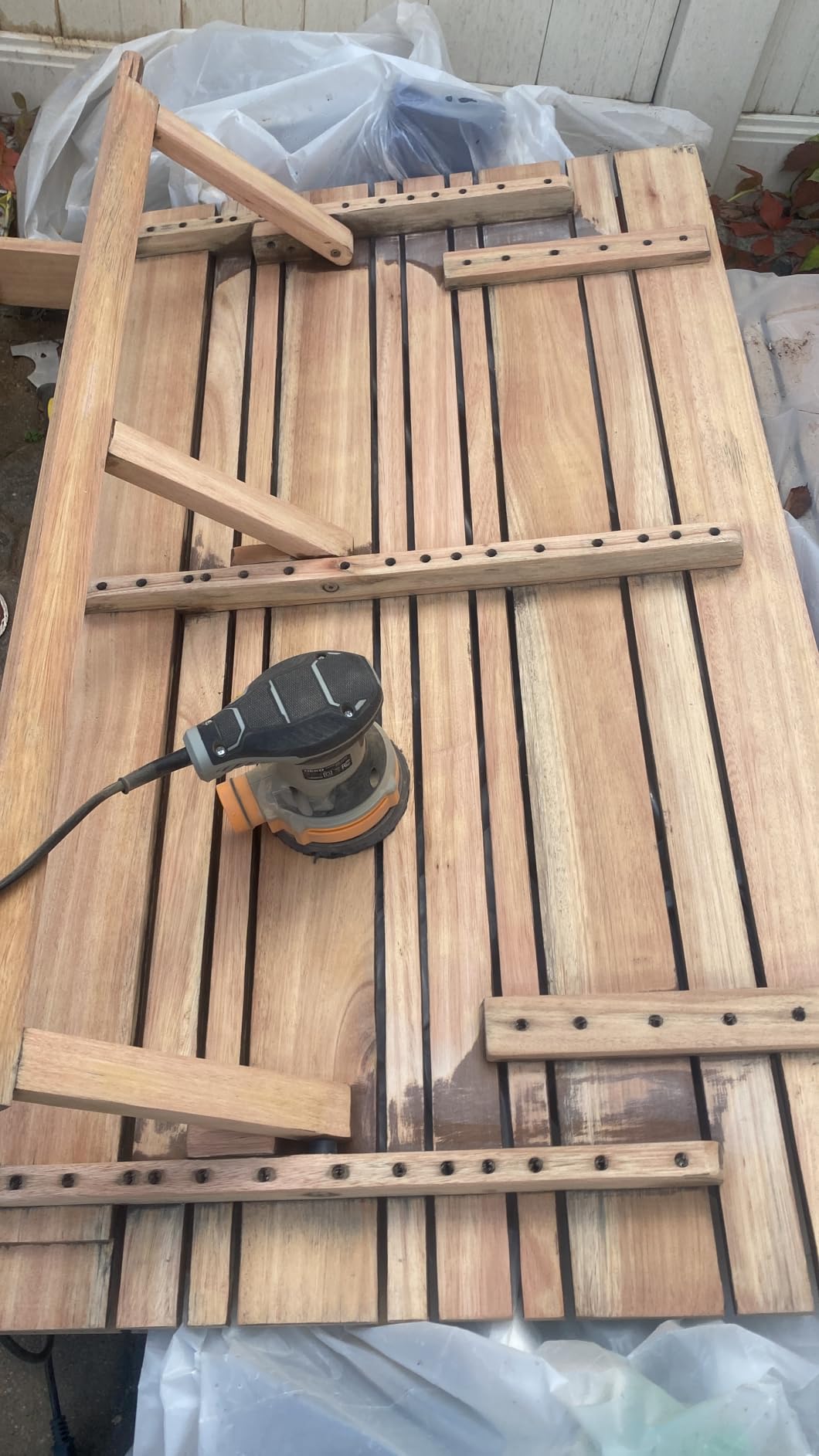
Who this suits
It suits a first project on a small area where a full grit range matters, and a hobbyist who sandes many different materials. The included discs mean you can start work the same day you open the box.
Where it falls short
Verify the voltage before anything else. Beyond that, the entry tier means the motor and the dust box are the components you will replace eventually, and the included abrasive is a starting supply rather than what we would use on a real floor.
The Grit-by-Grit Workflow: Which Machine at Which Grit
This is the section we wish existed more often, because the sequence is the highest-intent information a first-timer can get and it is scattered across forum comments instead of written down anywhere. The short version, from a verified floor job on r/HardWoodFloors: start with the drum sander at 60 grit, do the edges with an edger at 80, go back to the drum at 100, then finish with an orbital buffer and a screen at 120.
Step by step, for a full strip to bare wood on solid hardwood:
1. Drum at 36 or 50 grit. Only if there is paint, adhesive, or very thick build-up. On a floor that has been recoated a few times, 60 grit is usually plenty and it saves you a pass.
2. Edger at the same or next grit. Do the perimeter while the drum is still on the first pass. The same commenter ran the edger one grit finer than the drum, which keeps the edge from becoming a visible ledge after the field comes up.
3. Drum at 100 grit. This is the cut that matters. A 50-year flooring veteran on the homefixated page described the final cut on the main field as a 100 grit belt, then edges, then blend.
4. Orbital buffer with a screen at 120. Screening means abrading the surface with a mesh screen rather than a sheet, which knocks down the sanding pattern without removing more wood. It is the step people skip and then wonder why stain looks blotchy.
Two rules on top of the sequence. If you are going to stain, 120 grit is a floor, not a suggestion, and 150 is better. If you are going straight to a clear finish, the same source says 80 to 100 grit is the working range. And a dark stain hides nothing. Every imperfection you sealed in shows more clearly under a dark tone, not less.
Before you start, walk the room with a flashlight held low to the floor. What the light catches is what the stain will catch. For pet stains that survive sanding, the same commenter recommended neutralising urine with ammonia first, then oxalic acid once dry.
Renting vs Buying a Floor Sander
Almost nobody should buy a drum sander. They are heavy, they need a shop vacuum, they need abrasives sized for a wide drum, and they are the single most common source of a first-timer gouging their own floor. Rent them.
What you are choosing to own is the 5 inch class on this list. It is the machine you will still own in five years, and it is the one that handles stairs, trim, furniture, and the final passes. We covered the whole set of floor buffers for hardwood separately if you are at the stage where the sanding is done and you are choosing a polisher.
Renting a drum and an edger together for one room generally costs less than a single premium palm sander, and it gets you the correct machine for the hard part. The trade is a learning curve on a machine with sharp consequences for inattention.
The people who do buy professional drum equipment are refinishing a whole house or working as a contractor, where the rental cost compounds into a real number across dozens of rooms. For a single room, the arithmetic is not close.
Beginner Mistakes That Ruin a Floor
Stopping the drum sander. The drum cuts wherever it sits. Lift it, do not park it. This one habit accounts for more damage than any machine choice on this page.
Using the wrong machine for the job. A three-disc oscillating sander is a blending and finishing tool. Used to strip a floor it is slow, it eats paper continuously, and the operator usually concludes the machine is bad. The pro who corrected the record on that page put it plainly: the machine was by far the best available, bar none, when used for its intended condition.
Buying discs that are too small. One commenter could not find discs large enough for his sander, and another reported a machine was effectively useless until he switched abrasive brands. Check the diameter and the hole pattern before you buy, not after.
Skipping 120 grit before stain. The sanding pattern from 80 grit will telegraph through a stain. Screen at 120 or go to 120 grit paper.
Assuming dark stain hides defects. It does not. It emphasizes them.
Taking a drum to engineered wood carelessly. The veneer is thin. That is the whole argument for a random orbital on engineered floors, and for a light scuff rather than a full strip.
Hardwood Floor Sander Buying Guide: What Actually Matters
Solid or engineered. This is the first question and it eliminates most of the market. Solid wood can take a full strip and a machine reset. Engineered is a thin hardwood veneer on a core, and each pass removes veneer you cannot replace. Over engineered, choose a random orbital, keep pressure light, and stop at a scuff if the existing finish is sound.
Variable speed. A dial is the most useful feature here and the least common on single-speed machines. It lets one machine cut at 80 and finish at 150 without a different tool, which is the difference between one purchase and two.
Dust collection. A dust sealed switch protects the machine. A bag keeps the room livable. A vacuum port keeps the room clean. Models with a port sized to a common standard hose, like the 32mm fitting on the Dong Cheng, save you from hunting for an adapter.
Weight and balance. Anything under about 3.5 pounds is noticeably easier over a full room. Counterweights and rubberized grips reduce the fatigue that causes bad passes more than raw power does.
Pad dampening. Only the Bosch ROS20VSC in this group has a system designed to reduce swirl marks. If your project ends in stain, that is a feature worth paying for.
Disc compatibility. Check the diameter and the hole pattern before anything else. A 5 inch machine that takes a non-standard pattern will limit every abrasive purchase you make afterwards.
And a final one that is not a spec at all: technique and sequence decide the result far more than the machine. Every experienced voice in the research we drew on said the same thing, and they said it while naming a downside of their own favourite tool.
Frequently Asked Questions
What type of sander is best for hardwood floors?
For a full strip to bare wood, a drum sander is the standard because its weight and rotating drum remove thick finish fast and level cupped planks. For a scuff-sand before a recoat, on engineered wood, or on stairs and edges, a random orbital sander is the better and far more forgiving choice. Most full-floor jobs need both a main machine and an edger for the perimeter.
What is the easiest way to sand a hardwood floor?
Work in a grit progression and keep the sequence straight. Drum at 60 grit, edger the perimeter at 80, drum again at 100, then finish with an orbital buffer and a screen at 120. Keep a drum sander moving at all times, and plan your passes before starting so you do not end up with a lap mark.
What orbital sander is best for refinishing hardwood floors?
For a first floor project, the BLACK+DECKER BDERO100 is the easiest to handle and the most reviewed. For a stained floor, the BOSCH ROS20VSC wins on variable speed and its pad dampening system. The DEWALT DWE6421K is the strongest corded option on power, and the CRAFTSMAN CMEW231 pairs that with the longest warranty.
Should I rent or buy a floor sander?
Rent drum sanders and edgers. They are heavy, they need a shop vacuum and wide-drum abrasives, and they are the most common source of a first-timer gouging the floor. Buy a 5 inch random orbital sander, which you will still own in five years and which handles stairs, trim, furniture, and final passes. Buy a drum only if you are refinishing room after room as paid work.
Can a floor sander ruin engineered hardwood?
Yes, and the risk is real because engineered flooring is a thin hardwood veneer over a core that cannot be repaired. A drum or belt sander can cut through the veneer in one aggressive pass. Use a random orbital sander, keep light even pressure, raise the grit sooner, and do a scuff-sand rather than a full strip when the existing finish is sound.
The Verdict for Best Floor Sanders in 2026
If you are buying one machine to start, take the BLACK+DECKER BDERO100. It is the lightest thing we examined, the most reviewed, and the easiest to learn on, and for a scuff-sand and recoat or a single staircase it does everything you need. The DEWALT DWE6421K is the pick if you want more power and a longer warranty, the BOSCH ROS20VSC if the last pass before stain is what you care about, and the Makita BO5041K if you are doing a full room in one sitting and your hands are the limiting factor.
Whatever you choose, rent a drum and an edger for the stripping, follow the grit sequence rather than improvising one, and keep the machine moving. The machine is the smaller half of the result. Our best floor sanders for hardwood refinishing shortlist covers the owned class end to end, and the related guides on hardwood floor cleaner machines cover the aftercare side of the job once the finish is cured.