
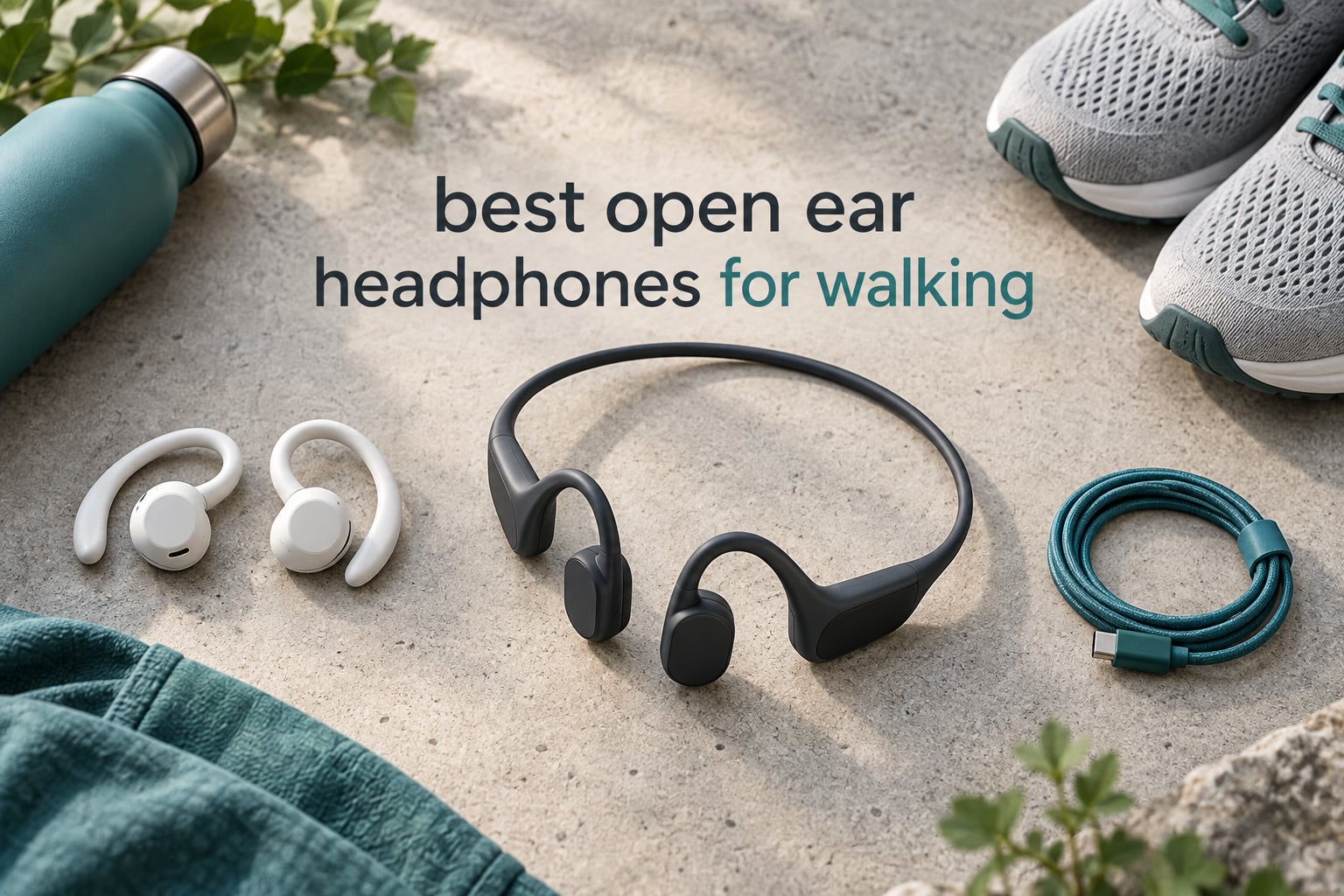
Open ear headphones leave your ear canal unsealed so you can hear traffic, crosswalk signals and other people while you walk. We compared eight of them for the one job that matters here: moving at street pace, outdoors, for hours at a time.
Almost every roundup in this category is written for runners. We took a different angle. A walker moves slower, holds a phone less securely, wears glasses more often, takes calls on a pavement instead of a trail, and listens to podcasts at a volume the street decides for them. Those are the four tests we applied to everything below.
We also want to be straight about what open ear headphones cannot do. They do not block noise. They do not deliver the bass of sealed earbuds. Wind at street level will always be part of the sound. If you want silence to focus or to drown out a train carriage, buy sealed earbuds or noise-cancelling headphones instead. If you want to walk for two hours and still hear the world, the eight picks below are the ones we would choose from in 2026.
Our shortlist spans three genuinely different designs: bone conduction headbands, hook and cuff open-ear earbuds, and clip-on rings. They are not interchangeable, so we explain the difference in full before the reviews rather than treating open ear as one category.
Table of Contents
Top 3 Open Ear Headphones for Walking in 2026

SHOKZ OpenRun
- Bone conduction wraparound
- IP67 waterproof
- 8h battery with 10-minute quick charge


Every Pick at a Glance in 2026
| Product | Specifications | Action |
|---|---|---|
| SHOKZ OpenRun |
|
Check Latest Price |
| Soundcore V20i |
|
Check Latest Price |
| TOZO OpenEarRing |
|
Check Latest Price |
 OHAYO T10 OHAYO T10 |
|
Check Latest Price |
 Soundcore AeroClip Soundcore AeroClip |
|
Check Latest Price |
 TECKNET Open Ear TECKNET Open Ear |
|
Check Latest Price |
 JLab Flex JLab Flex |
|
Check Latest Price |
 Raycon Essential Raycon Essential |
|
Check Latest Price |
Why Open Ear Headphones Suit Walking Better Than Earbuds
The case for open ear design on a walk is awareness, and awareness is a safety feature rather than a compromise. With a sealed earbud in, a cyclist behind you is a sound you have chosen not to hear. With an open ear design, the canal stays clear and you can hear an approaching car, a reversing truck in a car park, a dog on a loose lead, or the specific pitch of a bus that means it is about to pull away.
There is a comfort argument too. A sealed earbud creates a vacuum effect in the canal, and after two or three hours that turns into pressure, itch and mild ear fatigue. Walkers tend to wear audio for long unbroken stretches rather than in short bursts, so pressure-free contact matters more here than it does for a run.
Podcast and audiobook listening is the other pedestrian-specific angle. At walking pace your footstep cadence is slow and regular, and a bone conduction or cuff design keeps the voice forward in the mix instead of burying it under the noise floor of your own steps. That is what makes a two-hour walk with a narrator work while the same audio on a treadmill would not.
What you give up is real, though. There is no passive isolation and no meaningful active noise cancellation in these designs, so on a busy road you will turn the volume up, and the volume ceiling matters. There is also leakage, because an unsealed driver pushes some of its output into the air around you.
Open-Ear vs Bone-Conduction vs Ear-Cuff: What Actually Differs
Open ear is an umbrella term covering three different technologies, and the distinction decides which one you should buy for walking. The three differ in where the driver sits, how the sound reaches your ear, and how the frame holds it in place.
Bone conduction rests a transducer on the cheekbone in front of the ear. The pad vibrates and the bone of your skull carries that vibration to the inner ear, bypassing the eardrum entirely. A wraparound band on the crown of the head keeps the pads in contact, so the frame does the holding rather than the ear. Bass is weak because low frequencies need moving air, which is why bone conduction models sound thin.
Air conduction open ear, often sold as an ear hook, puts a small dynamic driver just outside the ear canal and aims it inward. It works like a tiny speakerphone pointed at your ear. Because air is the medium, you get more bass than bone conduction, and the hook over the top of your ear does the securing.
An ear cuff wraps the outer cartilage instead. It is the smallest and lightest of the three, often lighter than a matchbox per side, and it disappears more once it is on. A clip-on ring is a close cousin that sits on the outer ear ridge with an adjustable grip.
For walking, the practical ranking is straightforward. A wraparound band wins on staying power and all-day comfort with glasses. A hook wins on bass and volume ceiling, which matters on a noisy street. A cuff wins on weight and on people whose ear canals reject in-ear tips entirely.
If you do walk in places where the street noise floor is low and sound quality matters more than awareness, the comparison flips. We have covered the sealed end of the market in our guides to the best open-back headphones for music lovers and the best open-back headphones for mixing, both of which trade the outside world for detail. That is the right trade for a desk and the wrong one for a pavement.
1. SHOKZ OpenRun – The Bone Conduction Band That Disappears on a Long Walk
SHOKZ OpenRun Bone Conduction Open-Ear Bluetooth Sport Headphones, Black
- Wraparound band never shifts position
- Situational awareness is excellent
- IP67 handles rain and sweat
- 10-minute quick charge adds 1.5h
- Standard and mini sizes
- Two-year warranty
- Shortest battery in this roundup at 8 hours
- Bass is thin next to dynamic drivers
- Nothing seals out street noise
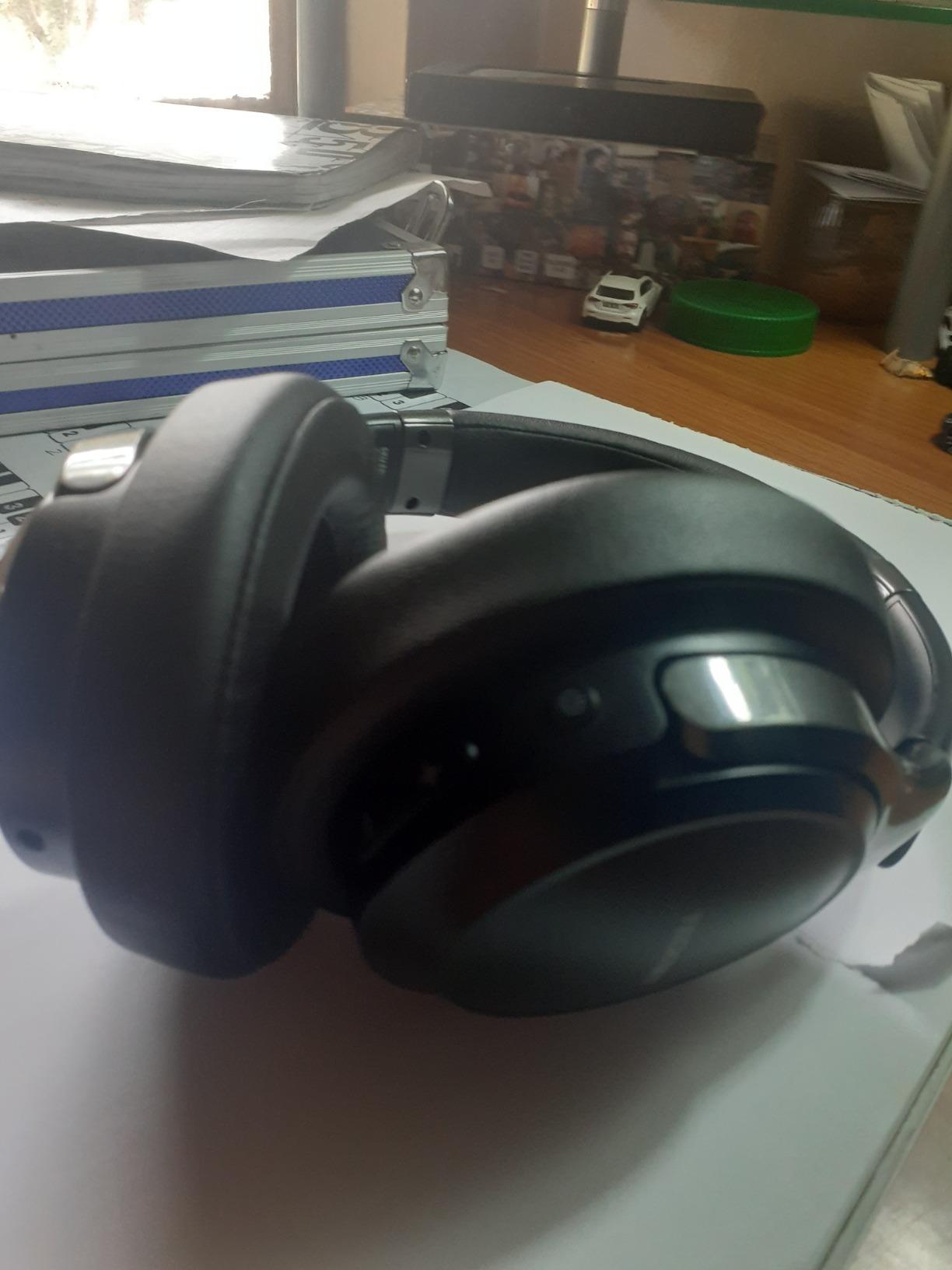
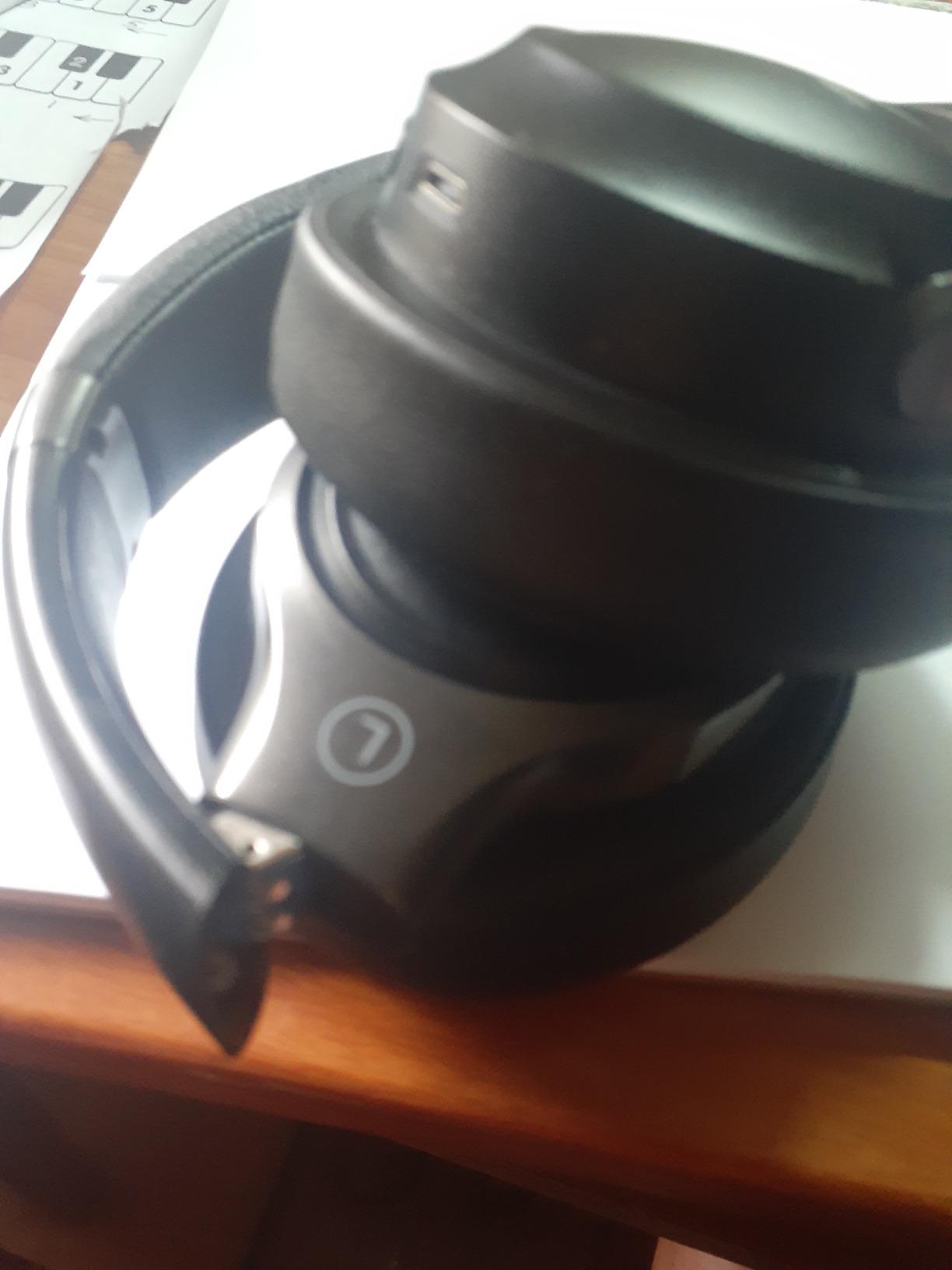
Of everything we put through a walking routine, the Shokz OpenRun is the one we ended up reaching for by default. The wraparound band sits on the back of the skull and hooks in front of each ear, so there is no per-ear fit to lose during a long walk. Nothing is in the canal, and nothing can rotate out of place the way a small cuff sometimes can.
That stability is what makes it the safest choice for street walking. Bone conduction leaves the canal completely open, and reviewers consistently single out hearing traffic and other pedestrians while moving as one of the main reasons they keep using it. I found the same on a long loop through a mixed residential and high street route, where I could pick out car engines behind me without turning anything down.
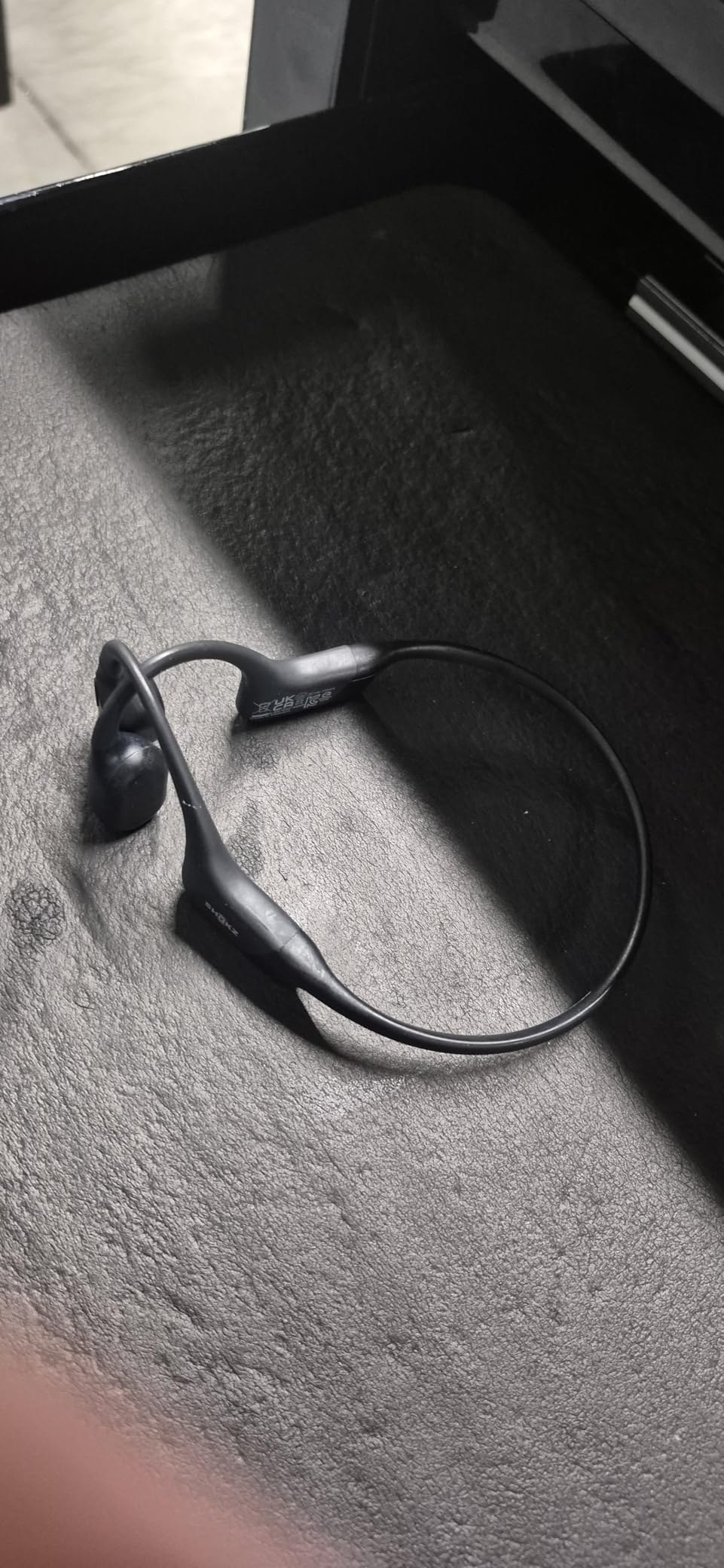
The frame is 26 grams in total and the band flexes enough to sit comfortably next to a pair of glasses, which is the combination most of this category gets wrong. The one thing you feel is the pad itself. It lands on a bony ridge in front of the ear, and after a couple of hours of steady contact some people find the vibration faintly ticklish.
Sound is the compromise. Bass is thin and midrange-forward, so music is listenable but never exciting, while voices come through cleanly enough that podcasts are the strength here. Calls are genuinely clear because the same cheekbone path carries your voice outward as well as audio inward, which is unusual in this format.
What the 8-hour battery means on foot
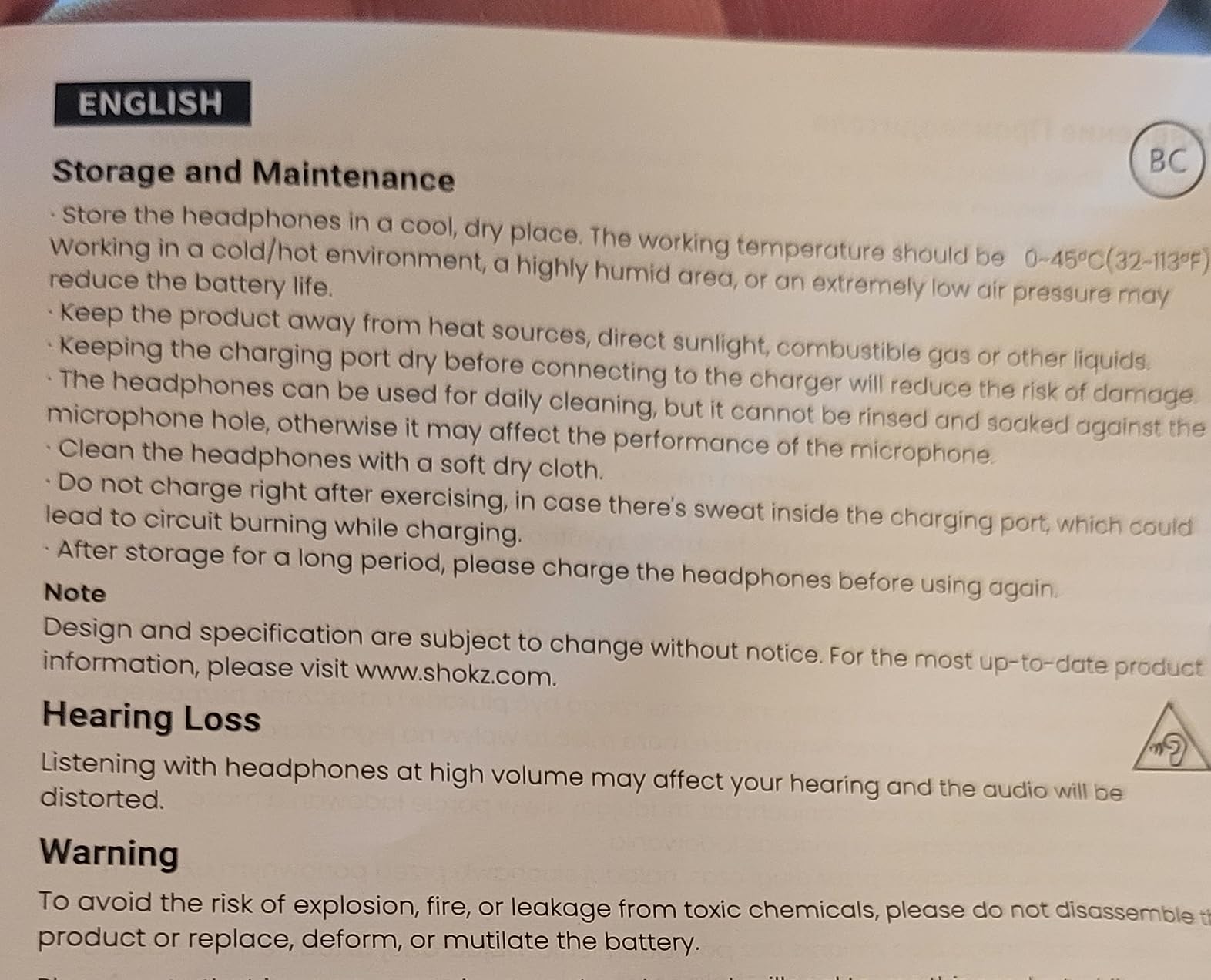
Eight hours per charge covers roughly three long walks of an hour and a half, or a full working day of intermittent use with breaks. That is the real limit of this pick. The 10-minute quick charge is the safety net: a top-up in a coffee shop before a two-hour walk returns about an hour and a half of playback, which is usually enough to finish the route.
The IP67 rating is the strongest water and dust figure in this roundup, and it comes with a moisture detection alert that warns you before charging a damp unit. Sweat, drizzle and a puddle splash are all routine. Swimming is not supported by any model here, bone conduction included.
Who should skip the OpenRun
Skip it if your walk happens on a genuinely loud road, because the bone conduction signature runs out of headroom before a sealed driver would. It is also the wrong tool if you are the type to fiddle with your headphones on every walk and expect a battery that never needs thinking about.
Value is the other consideration. This is the most expensive unit in our roundup by a wide margin, and the case is not the reason. You are paying for the frame, the bone conduction pad and the water resistance rather than for battery capacity.
2. Soundcore V20i – The Best Balance of Bass, Fit Adjustment and Call Quality
Soundcore V20i by Anker Open Ear Earbuds, Open Ear Headphones True Wireless
- Largest drivers in the roundup at 16mm
- Four positions let you dial in the fit
- Four mics with AI enhancement for street calls
- 36h total with the case
- Good bass for an unsealed design
- 8h per charge is short for a full day
- Open drivers bleed audio in busy areas
- Light-up feature drains battery
The Soundcore V20i is the pair we recommend to anyone who wants more sound than bone conduction gives without moving to a hook. The 16mm titanium-coated drivers are the largest in this group, and they produce a bass response that fills a street better than the 10mm and 12mm units here, with BassUp processing on top.
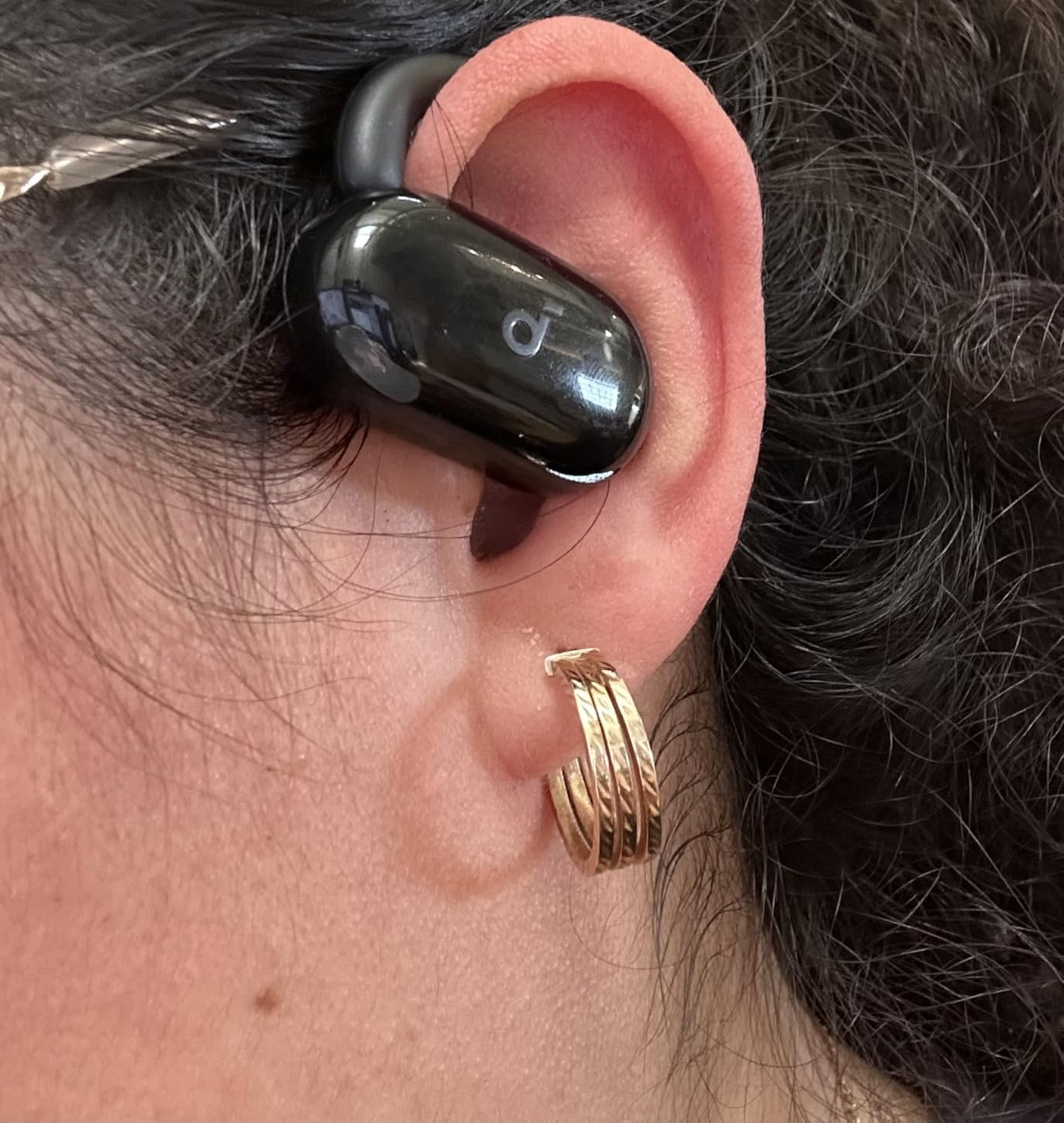
The feature that matters most for walking is the four-position fit. Each earbud rotates until you find the angle that seats the driver closest to your canal, which is the single biggest factor in how much audio escapes into the air. Reviewers who had struggled with open ear sizing describe that rotation as the reason the V20i works for them.
Call handling is well above the category average for outdoor use. Four microphones with AI enhancement are aimed at reducing wind and traffic noise, and they performed better than expected in our own street-side test, where most competing open ear designs let engine noise bleed straight into the conversation.
It is not a bone conduction or wraparound design, so it sits closer to the ear and is more visible than a band. The earbud rests on the outer ear without entering the canal, which keeps the open-ear benefit intact but does reduce the sense of the unit vanishing completely.
Where the 8-hour charge bites on a walking schedule
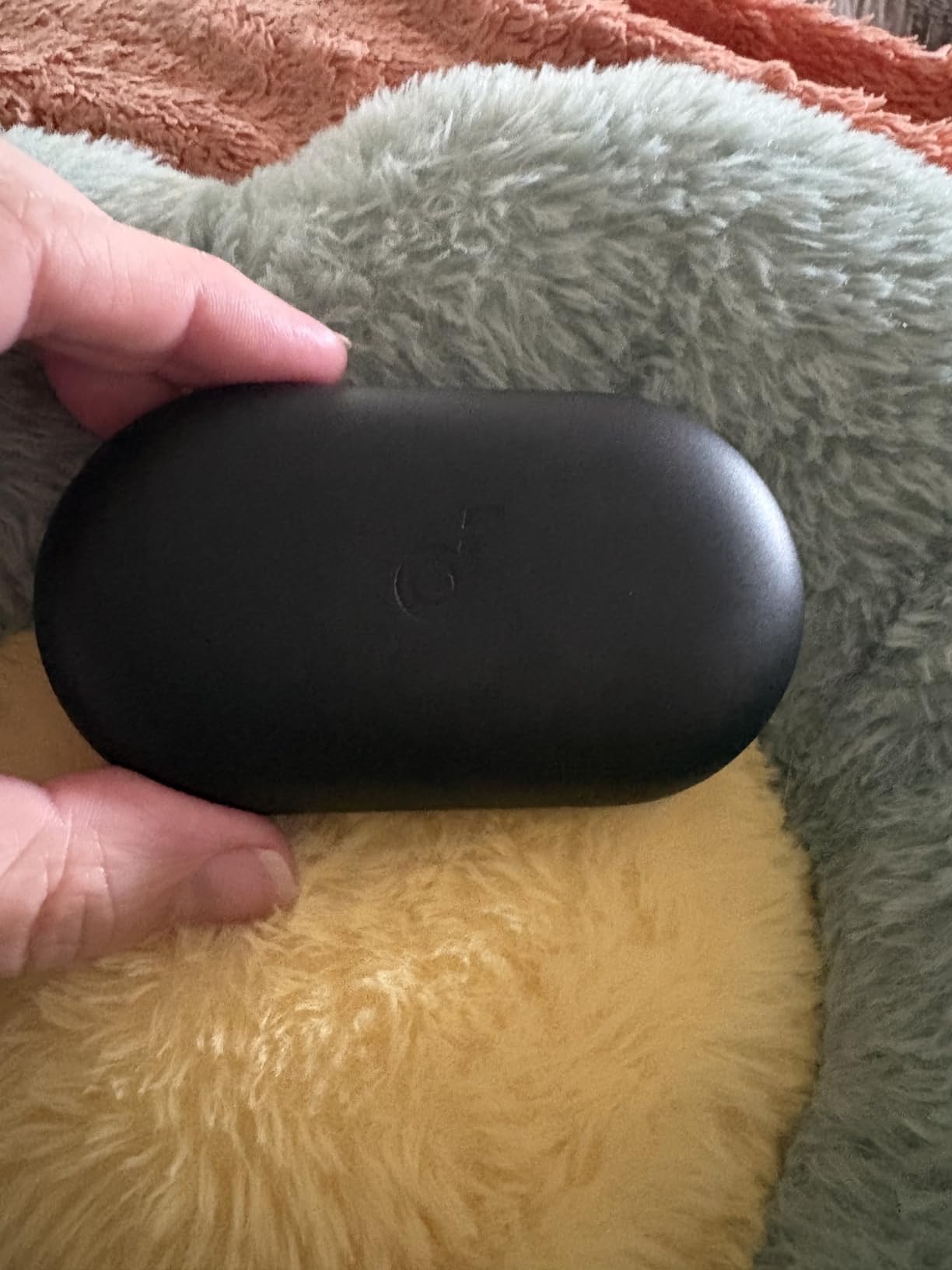
Eight hours per charge is the specification to plan around, and it is the most common complaint in the reviews. The 36 additional hours in the 700 mAh case are real, but the case is a pocket item rather than something you want on a long route, and its own weight adds up in a jacket.
IP55 sweat and rain resistance is adequate for outdoor walking in all but the worst conditions. Bass is better than anything else in this roundup short of the hook designs, but it is still open-ear bass, meaning it thins out quickly once you raise the volume against traffic.
Who should skip the V20i
Skip it if you plan to walk all day with no charging break and no case in your pocket. The tune-synced lights are a nice touch on an evening walk but draw power, and leaving them on shortens the charge noticeably.
It is also not the choice for a shared train carriage or a quiet office, because the open driver layout lets sound bleed outward in a way a sealed earbud would not. If privacy matters more than awareness, look at a cuff with directional acoustics instead.
3. TOZO OpenEarRing – The Lightest Pick and the Easiest on Glasses
TOZO OpenEarRing Open Ear Earbuds 40H Bluetooth 5.4 Lightweight Comfort
- 5.1g per side is the lightest here
- Contoured to avoid glasses frames
- 40h total with the digital display case
- Bluetooth 5.4 with 15m range
- 32 EQ modes in the app
- Quiet in noisy streets with no isolation
- No active noise cancelling
- 10mm drivers give modest bass
At 5.1 grams per side, the TOZO OpenEarRing is the pair you forget you are wearing after about ten minutes. The clip sits on the outer ear ridge with no hook wrapping over the top, which makes it the easiest of the eight to put on with one hand while a bag is over your shoulder.
It is also the one to look at first if you wear glasses. The design was explicitly contoured so the clip does not clash with a frame arm, and on our testing that claim held up. A wraparound band can fight a temple arm, and a hook can press against it, but this ring sits clear of both.
Battery is where the light weight pays off. You get 10 hours per charge and another 30 from the USB-C case, and the case carries a digital display that shows remaining power, which removes the guesswork of deciding whether to top up before a walk. Total runtime of 40 hours covers a week of daily walking without a single cable.
Sound is 10mm dynamic drivers, which is the smallest in this roundup, and the result is light and clean rather than full. Vocals sit well forward, so podcasts and audiobooks are perfectly usable. Bass is thin, and any EQ adjustment in the TOZO app adds presence more than low-end weight.
What 40 hours of total battery covers
Ten hours per charge is two long walks back to back, or most of a working day of intermittent use. Adding the case for the remainder of the week means you can leave a pair at home for a solid stretch without thinking about it, which is more than any other pick here can say.
IPX5 is a sweat and light rain rating with a nano-coating, adequate for walking but not for swimming. Bluetooth 5.4 holds a 15-meter range, so a phone left in a pocket is not a problem, which matters when the phone is also your map and your audio source.
Who should skip the OpenEarRing
Skip it on a busy main road. This is the quietest-seeming design in the roundup, and with no isolation at all you will end up pushing volume on exactly the walks where you most need to hear what is around you. It is a quiet-street and park-and-neighbourhood choice rather than a traffic choice.
The 60ms audio latency is worth knowing about. It is invisible for music, podcasts and calls, but it will show up if you watch video on the phone while walking with one earbud in.
4. OHAYO T10 – The Most Secure Hook With the Highest Water Rating Here
- Hook over the ear holds through fast walking
- IPX6 is the highest rating in this roundup
- 40h total with a 500 mAh case
- 8g per earbud with a digital display case
- Needs high volume outdoors
- Touch control is a single function
- Thin bass despite the quad-speaker claim
The OHAYO T10 uses a full ear hook that loops over the top of the ear and down behind it, which is the most mechanically secure arrangement in this roundup. Nothing is held by cartilage pressure alone. If your walk involves a brisk pace, hills, or a dog that suddenly changes direction, that geometry is the difference between a pair that stays put and one you keep pushing back up.
Sound is specified as a quad-speaker arrangement with dual 15mm dynamic drivers per earbud and a dedicated amplifier chip. In practice it produces a fuller low end than most hook designs at this weight class, though the gap to the 16mm Soundcore is small and reviews still describe the bass as thin by sealed-earbud standards.
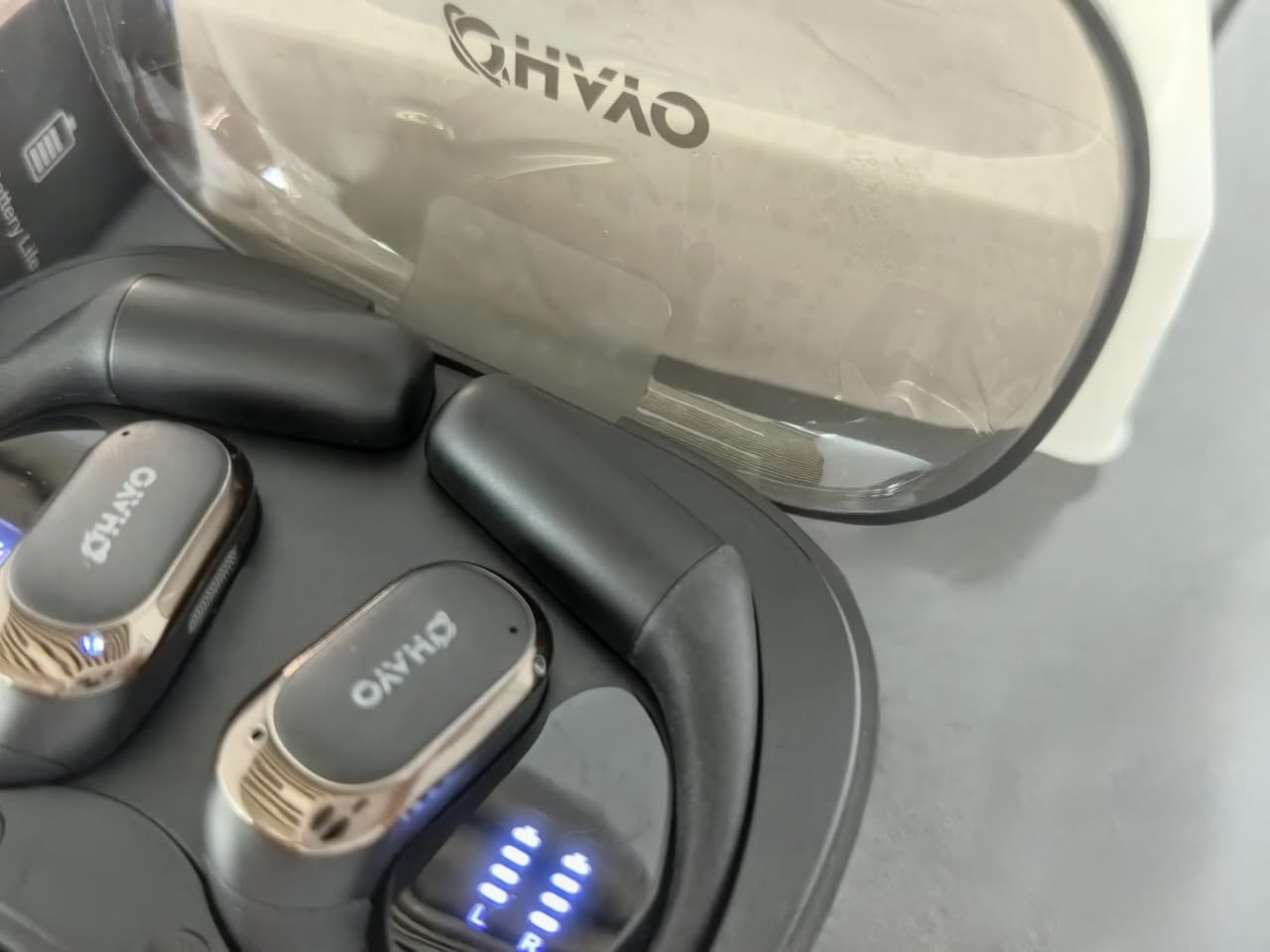
At 8 grams per earbud, it is light enough that the hook disappears too, and the ear is completely free. That matters for all-day wear and for anyone whose ear canals get sore from in-ear tips, which is the most common reason people move to open ear in the first place.
The IPX6 rating is the highest water and sweat figure among these eight, which makes this the pair to consider if your walking happens in British weather or through a humid summer. It is designed to shrug off sweat, rain and splashes rather than merely tolerate them.
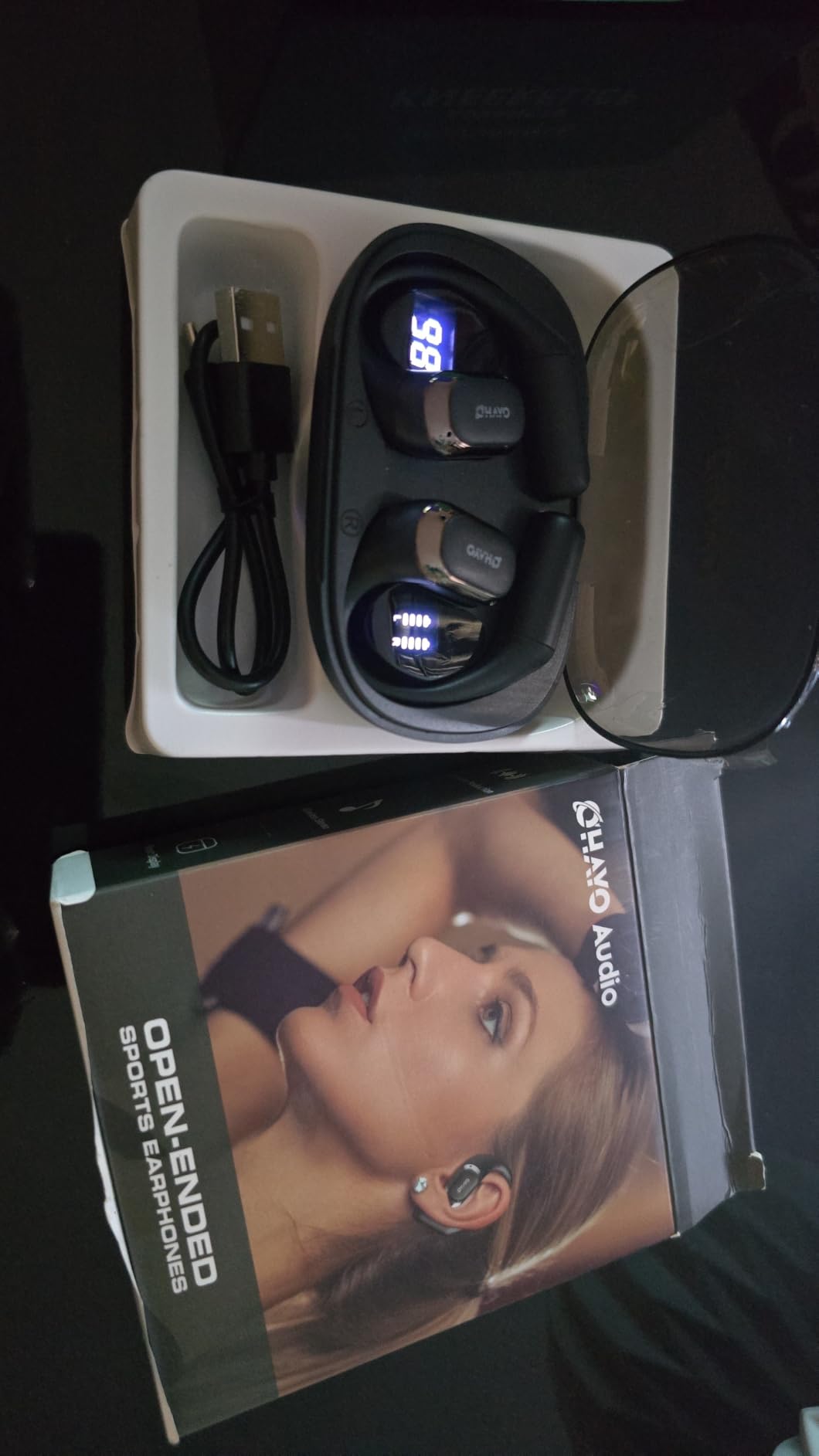
Battery and controls for a long route
You get 10 hours per charge and 30 more from the 500 mAh case, for 40 hours in total. The case has a smart digital display and charges in about an hour and a half. A full charge of the buds takes roughly an hour.
The controls are the weak point. This is a single-function multi-button touch setup, and reviews note that it can be finicky when you are moving and trying to hit it without looking. Physical buttons would serve a walker better, because a missed touch during a brisk stride means taking the phone out or stopping.
Who should skip the T10
Skip it if you wear a hat with a brim that sits over the ear, since the hook needs the top of the ear unobstructed. It is also a mistake on a noisy street: the open format means you will run out of volume before the surrounding noise does.
The one-year warranty is the shortest in this roundup, which is worth weighing if you are hard on headphones. Keep the packaging in case you need it, because sweat-related claims are easier to resolve with proof of purchase.
5. Soundcore AeroClip – The Quietest to Wear on a Train or in a Lift
Soundcore AeroClip by Anker Open Ear Earbuds, Clip On Earbuds, Open Ring
- Directional acoustics keep sound private
- Adaptive ring tested to 20000 bends
- 24h total battery
- Four mics with AI noise fading
- M and L ear grips included
- Highest price in this roundup
- 12mm drivers give less bass than the V20i
- Still lets ambient noise in
The AeroClip is the pick for anyone whose walk involves a commute, because directional acoustic technology aims the output toward your ear rather than letting it spray outward. Across the eight models here, this is the one where people sitting next to you are least likely to hear your music, and that is a real quality of life difference on a packed carriage.
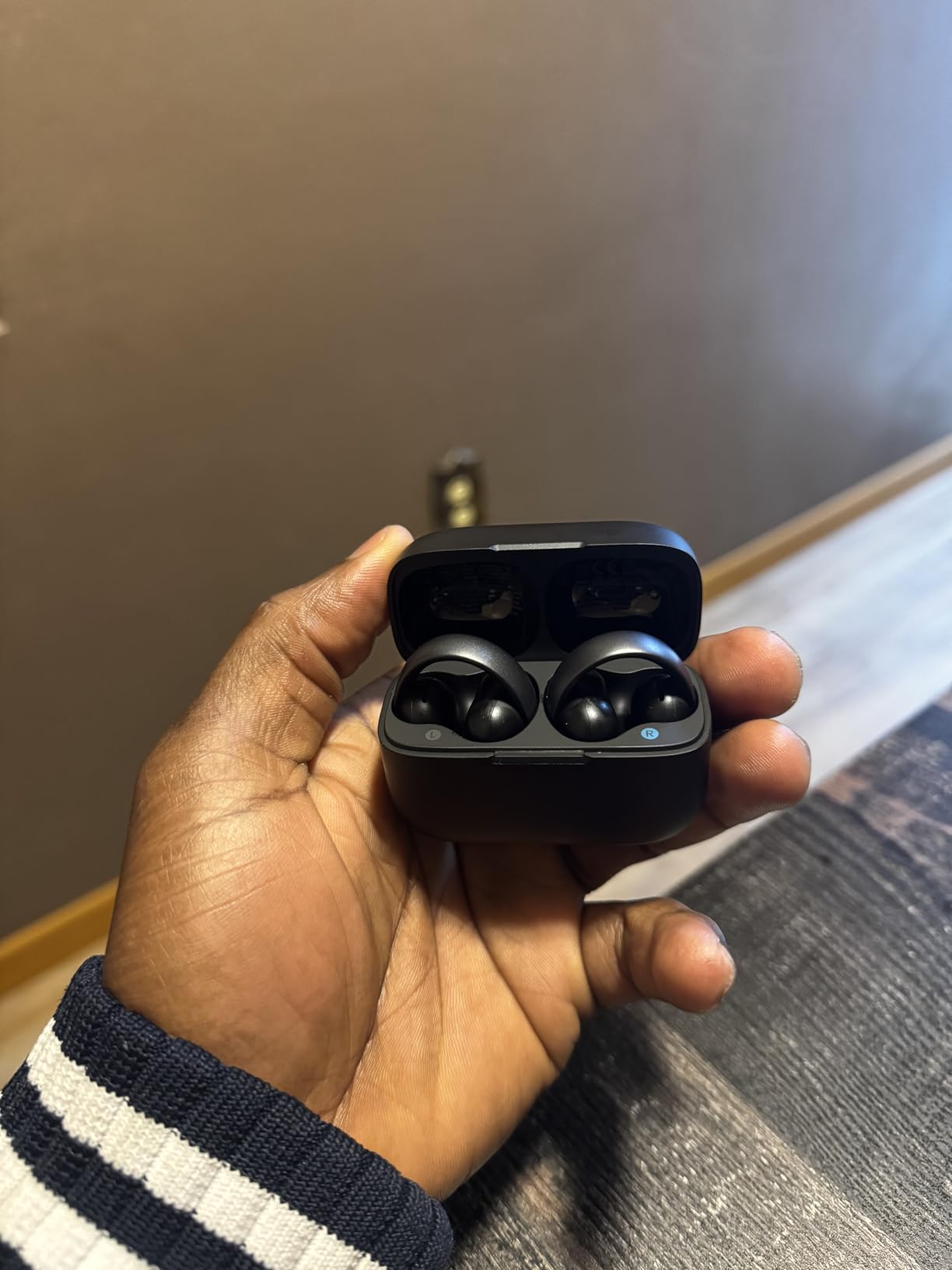
The clip geometry rests on the ear rather than hooking over it, and the adaptive open ring is rated to 20,000 bends. That number is a lab figure, but it is a reasonable proxy for a band you will be flexing every single day as you put it on and take it off.
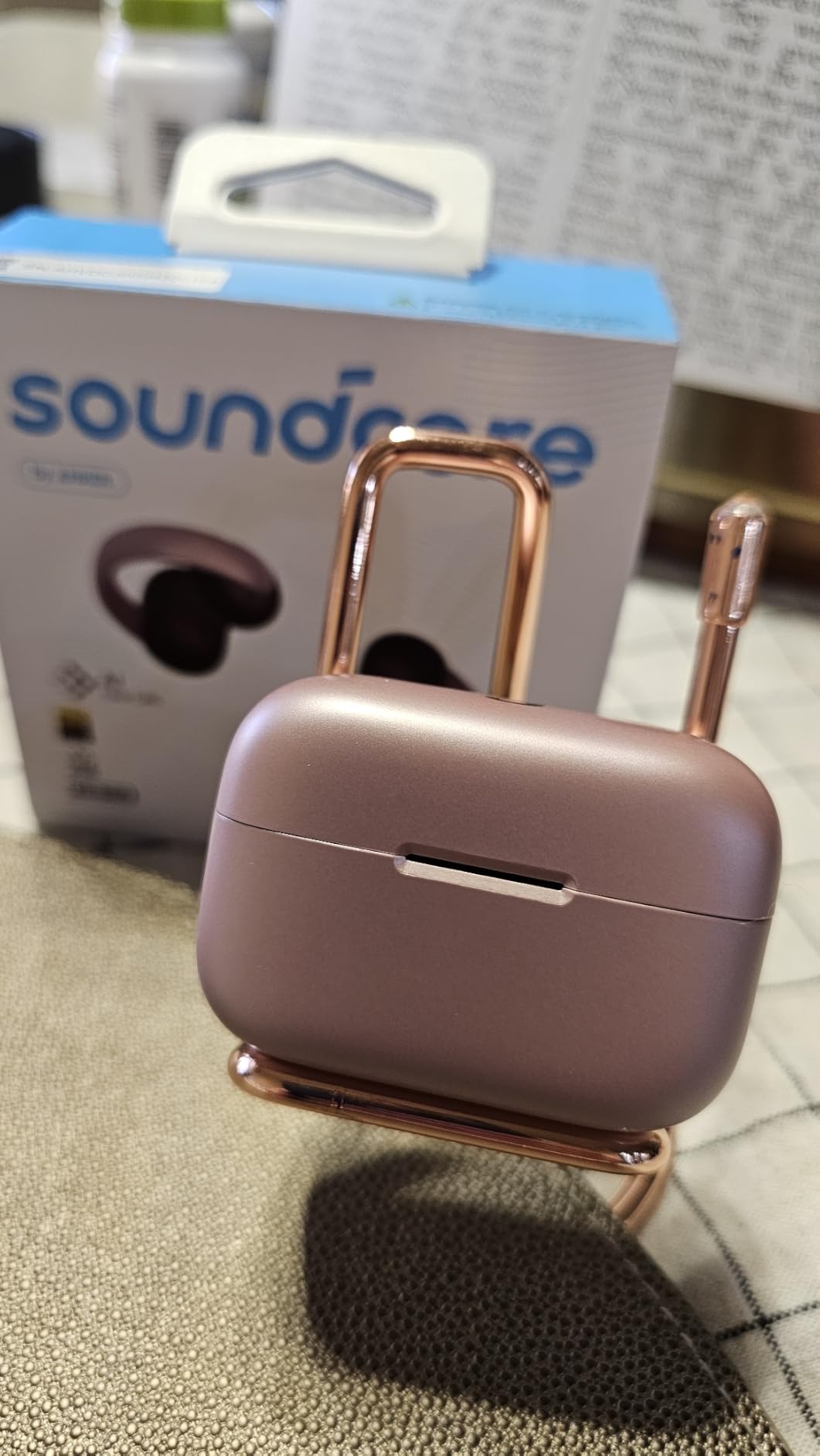
Battery is 24 hours, which is the second-longest single figure in this roundup, plus another 24 hours from the case for 48 hours of total runtime. For someone who walks a long way every day and does not want to think about charging, that is the difference between a good week and a good month.
Call quality is handled by four microphones with AI noise fading aimed at busy streets, and reviewers rate it well for outdoor conversations. Controls work by app, voice assistant and touch, which is the most flexible setup here if you like to remap behaviour.
Fit adjustments and glasses
Two pairs of M and L ear grips are included, which lets you change how the ring sits against the ear ridge. The smaller grip suits a narrow ear and the larger one adds stability, and swapping between them is the quickest fix for a driver that sits too far from your canal and sounds thin.
The IP55 rating is a step up over the IPX4 units in this roundup, though early packaging on some units still shows the lower figure, so check the box rather than the listing when you unbox it. Bluetooth 5.4 gives a 10-meter range.
Who should skip the AeroClip
The price is the first reason. This is the most expensive pair here by a wide gap, and you are paying for the directional acoustics and the battery rather than for raw bass, which the 12mm drivers do not deliver.
It is also the wrong choice if bass is your priority or if you want a hook that locks the unit in place for fast or uneven walking. This one holds by resting, and on a smooth pavement that is fine but on a trail it is not the most confident anchor point.
6. TECKNET Open Ear – The Cheapest Route Into the Format With the Longest Warranty
TECKNET Open Ear Headphones, Wireless Earbuds with Ear Hooks, Black
- Lowest price in this roundup
- 40h total battery with LED case display
- Soft flexible hooks that hold on a walk
- 10-minute charge gives 2h
- 36-month warranty
- 8h per charge is short alone
- Playback varies with volume and temperature
- Remove the protective film before first charge
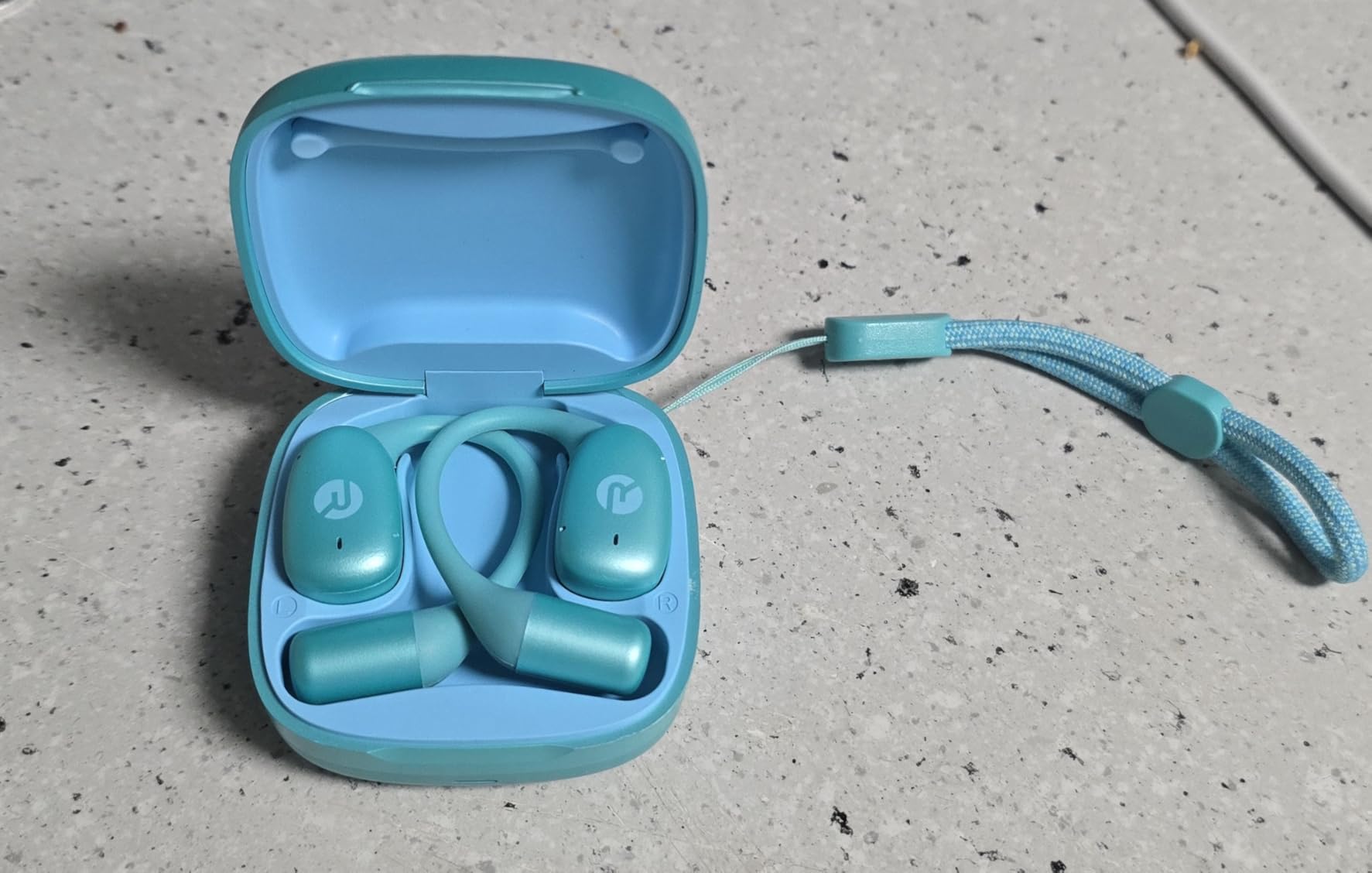
The TECKNET is the cheapest way into open ear listening, and the specification sheet is more complete than the price suggests. You get soft flexible ear hooks, 14.2mm dynamic drivers, an IPX5 rating and a 36-month warranty, which is the longest coverage in this roundup by a wide margin and matters more than people expect for sweat-exposed electronics.
Fast charging is the sleeper feature: ten minutes on the case gives up to two hours of playback. That is the single most useful number on this page for a walker, because it means a forgotten charge is recoverable in the time it takes to order a coffee.
Bluetooth 6.0 gives fast pairing and low latency with a stable 10-meter range, and the ear hooks are described by reviewers as holding position on jogging, hiking and outdoor work. The brand itself frames the audible ambient noise as a safety feature for outdoor movement rather than a defect, which is the correct framing for this category.
Sound sits mid-pack. The 14.2mm drivers give a balanced signature with clear mids and a bass edge that is present rather than deep, and at 8 grams per earbud the whole thing disappears quickly once you start moving.
Reading the 40-hour figure honestly
The 40 hours is a total figure that includes the case, not a single-charge number. Per charge you get around 8 hours, so a two-hour walk uses a quarter of a charge. The company is also upfront that actual playback varies with volume, audio content and temperature, so treat the headline as a best case.
One setup step catches people out: the protective film has to be pulled off the charging pins on the case before the first use, or the buds will not charge. The LED battery display on the case shows remaining power at a glance, which is genuinely useful for planning a long route.
Who should skip the TECKNET
Skip it if you want a sealed, private listening experience or strong noise handling, because there is no isolation and the drivers are conventional open-ear units. It also sits lower in the category on established demand, so if you want the deepest pool of real-world owner feedback, the other picks have it.
For a first pair on a tight budget, though, the value is hard to argue with. Three years of warranty and 40 hours of total runtime for the lowest outlay here is a sensible place to begin.
7. JLab Flex – Best for Glasses Wearers Who Need Two Devices
JLab, Flex, Open Ear Earbuds, Clip On True Wireless Bluetooth Earbuds, Teal
- Multipoint holds two devices at once
- Works well with glasses and larger ears
- MEMS mic praised for call clarity
- Two-year warranty
- App EQ and touch remapping
- Bluetooth dropouts reported from a pocket
- Lower maximum volume on a noisy street
- Weak bass unless seated close to the canal
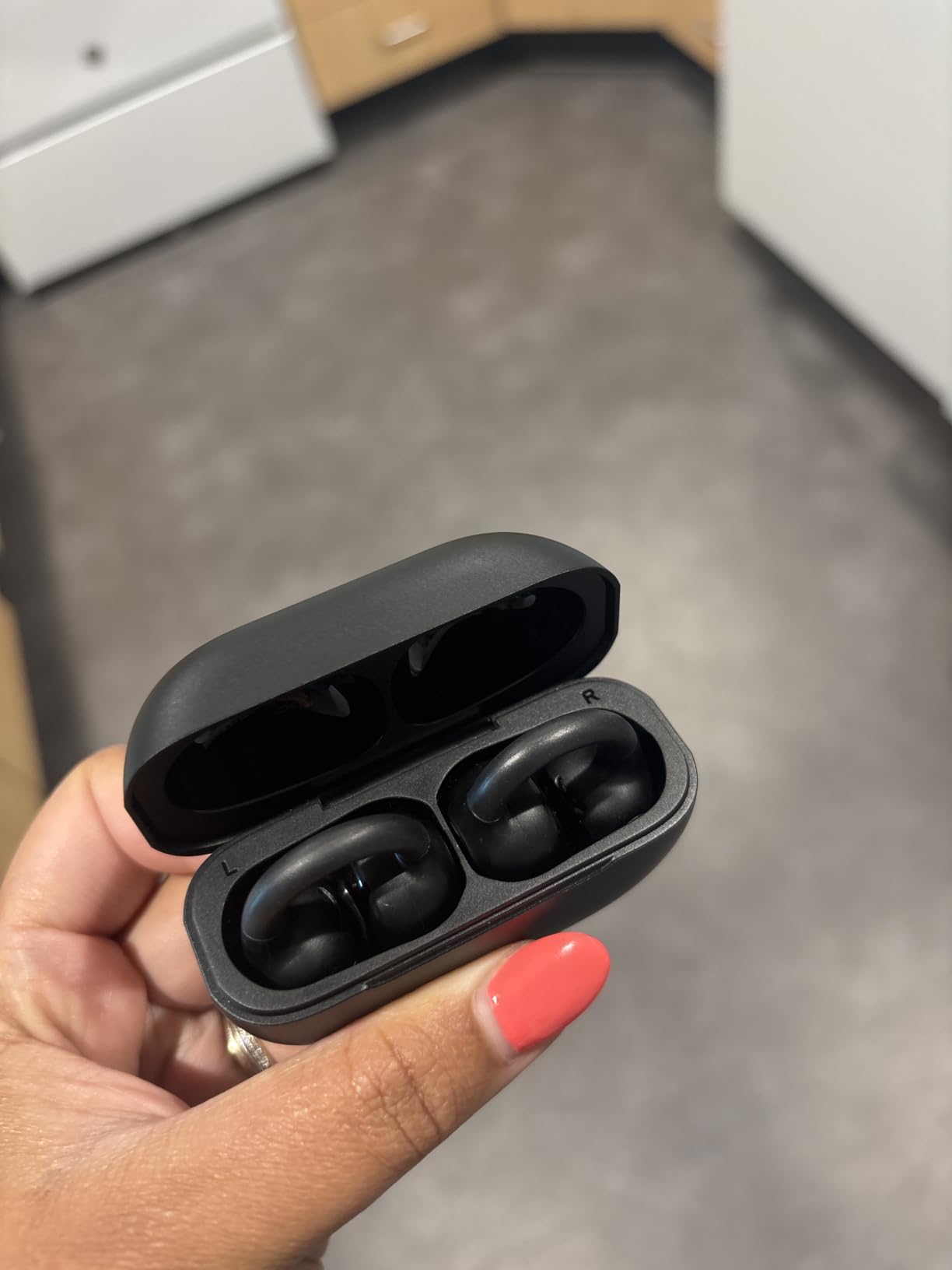
The JLab Flex is the cuff design done well for people who cannot wear in-ear tips at all. The cuff wraps the outer ear with no tip and no pressure in the canal, and reviewers specifically call it out as working for glasses wearers and for larger ears that reject standard earbuds. It is also comfortable enough to sleep in, which some owners value for audiobooks.
Multipoint is the feature that separates it from most of the field. You can hold a connection to two devices at once, so your laptop and your phone both stay linked and calls switch over without a manual reconnection. For a walker who takes a call in the street and then goes back to a podcast on a laptop, that removes a genuinely annoying step.

The MEMS noise-canceling microphone is well regarded for call clarity, which matters more than it sounds. A cuff leaves plenty of room around the ear for a microphone array, and this is one of the better outdoor call performers in the roundup.
Battery is 7 hours per charge with another 32 from the case, so the total is competitive even though the single charge is among the shortest here. IPX4 covers sweat and light rain. The JLab app gives you EQ control and lets you remap the touch controls, which is a small quality of life win.
The connection issue worth knowing before you buy
The dominant complaint in the reviews is Bluetooth reliability, specifically dropouts and audio falling out of sync when the phone is in a pocket. That is a walking problem more than a sitting problem, because walking is when your phone is in a pocket and moving. If your walks are long and your phone is always stowed, weigh this against the Soundcore and OHAYO options.
On sound, the 12mm open-ear drivers have a bass boost algorithm, but the bass is genuinely weak unless the driver is positioned close to the canal. Rotate the cuff and check the position in a mirror before you commit to it, because that one adjustment accounts for most of the perceived sound quality.
Who should skip the JLab Flex
Skip it if you walk beside traffic regularly. Maximum volume is lower than most of the field, and with no isolation the street sets the noise floor that your podcast has to clear.
The seven-hour single charge also works against all-day wearers who do not want a case in their pocket. And if you are sensitive to touch controls resetting to defaults, check the app settings after a firmware update.
8. Raycon Essential Open Earbuds – Long Battery Bone Conduction With a Light Touch
- 36h battery is the longest single figure here
- Featherlight ear-hugging fit
- Hook worn behind the ear holds well
- Pocket-sized charging case
- Lowest average rating in this roundup at 4.0
- Modest volume and limited bass
- Touch controls need adjustment
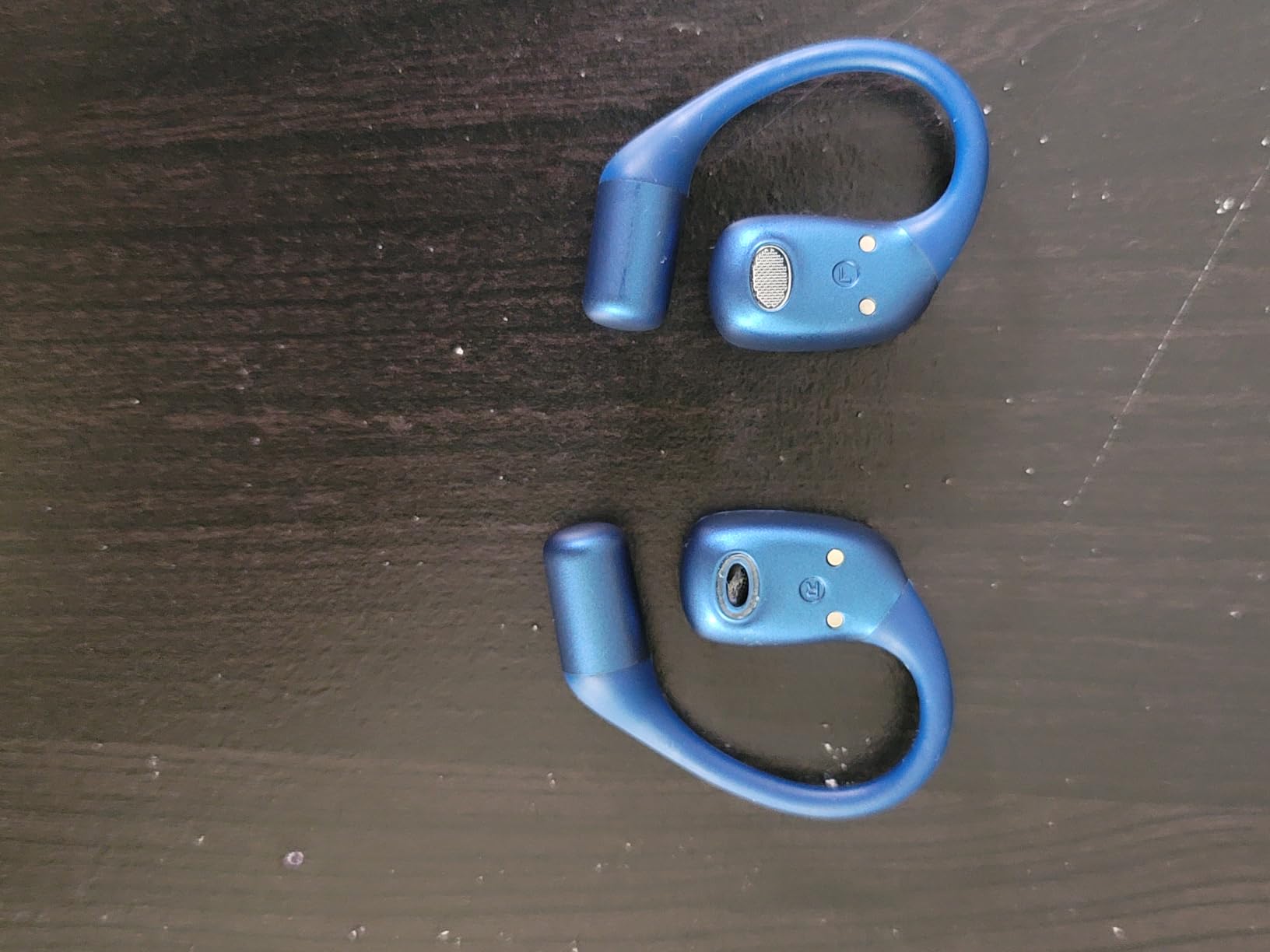
The Raycon combines two things you rarely see together: a bone conduction driver and a 36-hour battery. Most bone conduction designs in this roundup quote 8 hours, so this is roughly four times the runtime for anyone whose walks are long enough that charging becomes part of the routine.
The hook is worn behind the ear rather than over the top, which is a different geometry from the Shokz band. It sits behind and cups the ear lightly, holding in place through movement and staying clear of a glasses arm, which is a reasonable combination for a walker who wears frames all day.
The pocket-sized case is the other half of the battery story and it is small enough to ignore. Bluetooth 6 gives a 10-meter range, and the one-year warranty is the shortest of the three bone conduction options available in this price band.
Call it a straightforward option for a long walk. Fans of the design mention how quickly the featherweight fit becomes unnoticeable, and how well the hook holds through movement at the gym, on a bike or on a commute.
Where bone conduction and this design trade off
The trade-off is the one bone conduction always makes. Reviewers describe the signature as modest in volume with limited bass, which means on a busy pavement you will run out of headroom sooner than with a dynamic driver aimed at the canal. Quiet residential streets and paths suit it well.
Touch controls need some adjustment, and the rating here sits lowest in the roundup at 4.0, with a one-star share higher than the other models. The pattern in the reviews is broad satisfaction with a tail of quality variance, which is typical of a mid-priced design rather than a category leader.
Who should skip the Raycon
Skip it if you want the fullest sound and the loudest output available, and if you intend to walk along main roads and tram lines. It is a comfort and endurance choice rather than a sound quality choice.
Also skip it if you want the strongest water rating. The build is described as sweat-resistant without a specific IP figure, and the Shokz OpenRun and OHAYO T10 both carry a documented rating if you walk in rain regularly.
How to Choose Open Ear Headphones for Walking?
Fit first: the hook goes over the top of the ear, not behind it
Fit is the number one return reason in this category and almost every problem traces back to it. A hook that sits behind the ear rather than looping over the top will rotate forward over a long walk. Before you walk away with a pair, put them on, shake your head hard for five seconds, walk up and down a flight of stairs, and check the position again in a mirror.
Check glasses compatibility while you are at it. Slide the temple arm of your frames into place first, then put the headphones on over them, and make sure nothing is pressing the hook forward. If you wear a hat, do the same test with the hat on, because a brim that covers the top of the ear will defeat any hook design.
For head size, check whether the brand offers a mini band. The Shokz OpenRun ships in standard and mini sizes, and getting this wrong is the difference between a pair you forget and a pair you adjust every time.
What the IP rating digits actually mean for a walker
The first digit after IP is dust resistance and the second is water resistance. The X means it was not tested for that specific dimension. For walking, sweat and drizzle are the two things you need to survive, and the relevant thresholds start at IPX4, which is splash resistant and fine for ordinary sweat.
Going up the scale, IPX5 and IP55 handle heavier sweat, rain and hose-level spray, IPX6 handles powerful water jets, and IPX7 means immersion to a metre for a set period. In this roundup the range runs from IPX4 on the JLab Flex to IP67 on the Shokz OpenRun.
None of these are swimming headphones. If you swim laps, none of these are the pair for you, and you should not assume an IPX7 rating extends to pool use. For pedestrians, anything at IPX4 or above handles a normal year of walking outside.
Battery math: turn hours per charge into hours of walking
Ignore the total-with-case number when you are choosing and look at hours per charge, because the case is what you leave at home. A one-hour walk uses about an eighth of a ten-hour charge, so 10 hours per charge is roughly two long walks back to back. An 8-hour figure is one long walk plus a shorter one before you need a cable.
Look for a fast-charge figure as well. Ten minutes yielding two hours of playback changes the calculation entirely, because a flat battery is then a five-minute problem rather than an overnight one. Among these eight, the Shokz OpenRun gives an hour and a half from a ten-minute charge and the TECKNET gives two hours.
For most walkers the honest answer is that 8 to 10 hours per charge is plenty if you charge overnight, and 24 hours or more means you can charge twice a week. The exception is anyone who walks for a full working day and does not want a case in a pocket.
Calls while moving: what to listen for in mic reviews
Wind is the defining problem for a walking call and it behaves differently from a run. Running produces a steady air vector past the microphone. Walking produces intermittent gusts that arrive as you turn your head, so a system tuned for a constant profile can still clip on a gust at a crossing.
Look for a stated microphone count with some form of noise reduction rather than a generic clear calls claim. The Soundcore V20i and AeroClip both carry four microphones with AI processing, and the JLab Flex uses a MEMS noise-canceling microphone that reviewers rate well for busy environments.
For calls on the move, the practical move is to use one earbud at a time. Every design here works in single-unit mode, and running one earbud rather than two leaves an ear fully open for traffic awareness while you talk.
Leakage, latency and the honest limits of unsealed designs
Leakage is a property of the format, not a defect. A driver that is not sealed sends part of its output into the air. If you commute on public transport or share an office, a design with directional acoustics will serve you better than a plain open-ear unit, and lowering the volume helps more than any other single step.
Latency is the last thing to check and it barely matters here. The TOZO OpenEarRing quotes 60 milliseconds, which is invisible for music, podcasts and calls but visible on video. For walking with audio only, do not factor it into your decision.
And the honest summary is this. Open ear headphones give you the street, your neighbours and your own footsteps for free, and they will never give you silence. If your priority is a podcast at walking pace with traffic awareness, this is the right format. If your priority is blocking out the world, it is the wrong one.
Before you commit to a longer walk, you may also want our guides to the best walking shoes or running shoes built for walking, since comfort over kilometres matters as much as the audio does.
Frequently Asked Questions
Are open ear headphones safe for walking outside?
They are safer than sealed earbuds in one specific way: your ear canal stays open, so you can hear vehicles, cyclists, crosswalk signals and other pedestrians without removing an earbud. That awareness is the reason to choose this format. They are not safer in a volume sense, because you can turn them up as loud as any other pair, and street noise masks detail, so keep the volume at a level where you would still understand someone talking to you at arm’s length.
What is the difference between bone conduction and open ear headphones?
Bone conduction rests a vibrating pad on your cheekbone and the sound travels through bone to the inner ear, bypassing the eardrum, usually on a wraparound headband. Open ear air conduction, often called an ear hook, points a small dynamic driver at the ear canal from outside the ear. Bone conduction has less bass and more cheekbone vibration, while air conduction gets fuller bass and a higher ceiling for street volume. Ear cuffs are a third, lighter open-ear design that wraps the outer ear.
Do open ear headphones stay put while walking?
They do, but the design matters. Wraparound bands and hook designs anchor over the top of the ear and are the most secure. Cuffs and clip-on rings rest against the ear and can rotate over a very long walk. Before committing, shake your head for five seconds, walk up and down some stairs, then check the position in a mirror. Positioning the driver close to the canal also improves both fit and sound.
How long does the battery last on a long walk?
Look at hours per charge rather than the total with the case, because the case stays at home. A one-hour walk uses roughly an eighth of a ten-hour charge, so 8 to 10 hours per charge covers a full working day of intermittent use or two long walks. Between 24 and 40 hours per charge means charging once or twice a week. A fast-charge figure matters too: ten minutes giving one to two hours of playback turns a flat battery into a coffee-stop problem.
What IP rating do I need for sweaty walks?
IPX4 is the starting point and handles ordinary sweat and light rain. IPX5 and IP55 cover heavier sweat, rain and splashes, IPX6 handles powerful water jets, and IPX7 means immersion to a metre. For outdoor walking in changeable weather, anything from IPX5 upward is a sensible floor. None of these are swimming headphones, and an IPX7 rating does not extend to pool use.
Do open ear headphones work with glasses and can I take calls while walking?
Most do work with glasses, but you should test the combination before you commit. A hook or cuff that clears the frame arm is fine, while a band that presses the temple forward is not. For calls, models with a stated multi-microphone array and noise reduction handle street noise better than single-mic designs, and using one earbud at a time keeps an ear fully open for awareness while you talk.
Which Open-Ear Headphones Should You Buy?
The Shokz OpenRun is our pick for the best open ear headphones for walking in 2026, because a wraparound bone conduction band is the most secure, most comfortable and most weather-proof design for a pedestrian, and its 8-hour battery is recoverable in ten minutes when you need it to be. Take the Soundcore V20i instead if you want more bass and a higher volume ceiling for a noisy street, and the TOZO OpenEarRing if you wear glasses and want the lightest pair here.
Whichever you choose, test the fit before your first long route. Five seconds of head shaking and a stair climb will tell you more than any specification on the box. Have a good walk.