
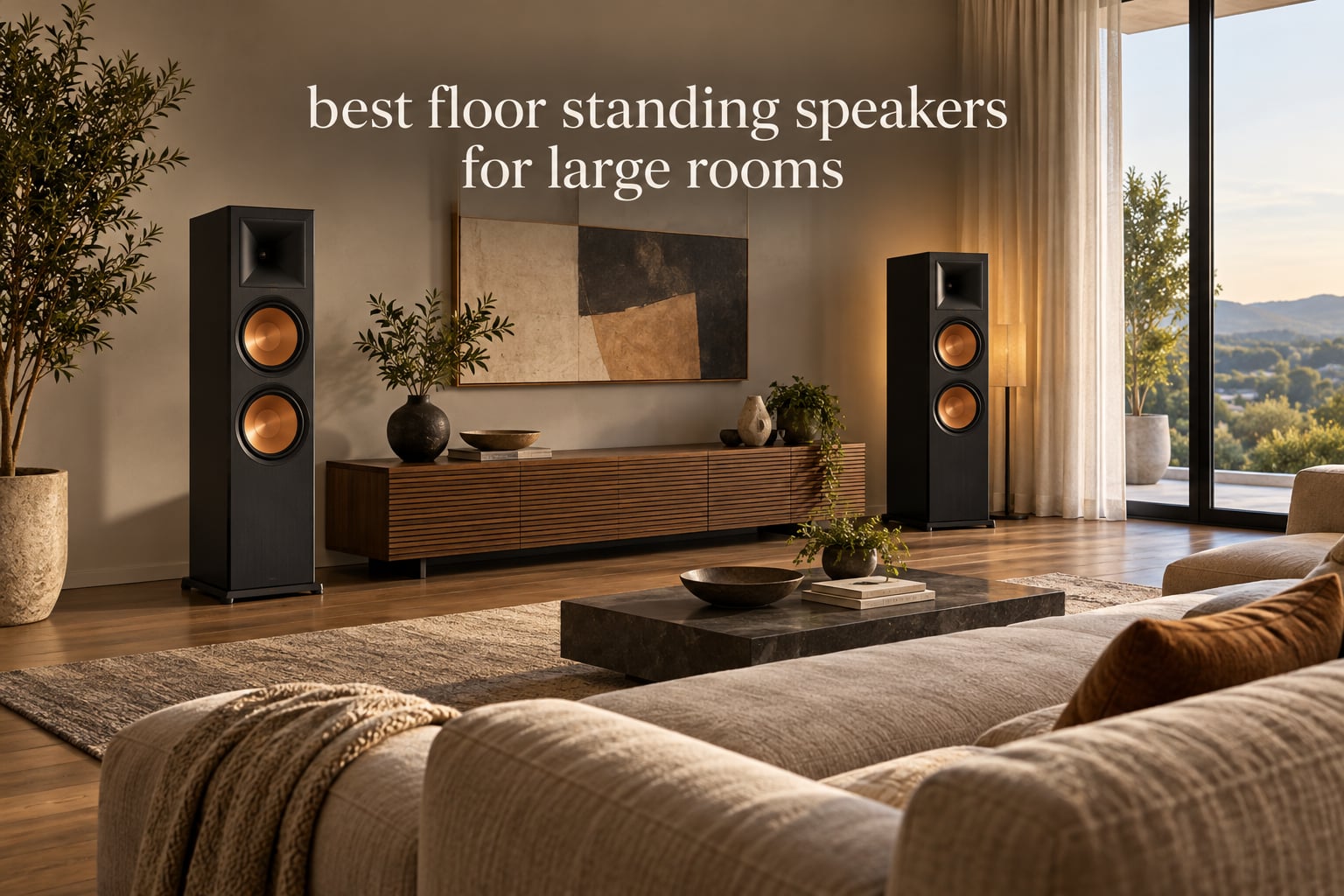
The best floor standing speakers for large rooms are high-sensitivity towers with at least two 6.5 inch woofers, wide dispersion, and enough power handling to hit 90 dB at your listening seat without straining. After comparing the ten most-reviewed models on sensitivity, driver size and real-room headroom, the Klipsch R-26FA comes out on top for most open-plan spaces.
Most floorstanding speaker roundups quietly assume a 12 by 14 foot room. The picks are slim two-way towers with 5 inch drivers, and the copy says something vague about a “medium-sized room.” Buy one of those for a 600 square foot open-plan living and dining space and you will find out fast: the speakers strain at the volume you actually want, the bass disappears a foot past the couch, and the whole system sounds thin.
That is not a fault of those speakers. They were never asked to do the job. A large room is hard to fill because the same sound energy is spread across a bigger volume, reflections travel further before they die, and low frequencies pile up into room modes near the walls. The fix is not simply a more expensive tower. It is a speaker with high sensitivity, so each watt of amplifier power becomes more decibels of output, large-diameter woofers for real air movement, and enough power handling to reach concert-adjacent levels without the compression distortion that makes an underpowered setup sound cheap.
That is how I ranked the ten towers below. I weighted published sensitivity in decibels first, then woofer diameter and driver count, then power handling, then how the reviews describe the speaker at distance rather than at arm’s length. If you want the general-purpose version first, our guide to the best floor standing speakers overall covers the smaller-room and value cases in more depth.
Table of Contents
What is the best speaker system for a large room?
The best system for a large room is a pair of high-sensitivity floorstanding towers with two 6.5 inch or larger woofers each, driven by an amplifier with 100 to 200 watts per channel, plus one or two subwoofers for the deepest bass. In very open-plan spaces, four towers spread across the room will cover the listening area better than one very large pair.
Top 3 Floor Standing Speakers for Large Rooms (September 2026)

Klipsch R-26FA
- 1 inch Tractrix horn compression driver
- Dual 6.5 inch copper spun IMG woofers
- 100W continuous and 400W peak

Polk Audio T50
- One 6.5 inch Dynamic Balance driver
- Dual 6.5 inch bass radiators
- 150W power handling
Best Floor Standing Speakers for Large Rooms in 2026
| Product | Specifications | Action |
|---|---|---|
| Klipsch R-26FA |
|
Check Latest Price |
| Klipsch R-610F |
|
Check Latest Price |
 Polk Monitor XT70 Polk Monitor XT70 |
|
Check Latest Price |
 Klipsch R-625FA Klipsch R-625FA |
|
Check Latest Price |
 Polk Signature Elite ES60 Polk Signature Elite ES60 |
|
Check Latest Price |
 Sony SS-CS3 Sony SS-CS3 |
|
Check Latest Price |
 ELAC Debut 2.0 F6.2 ELAC Debut 2.0 F6.2 |
|
Check Latest Price |
| Polk T50 |
|
Check Latest Price |
 Fluance Signature HiFi Fluance Signature HiFi |
|
Check Latest Price |
 Dayton Audio Classic T65 Dayton Audio Classic T65 |
|
Check Latest Price |
1. Klipsch R-26FA – the horn-loaded tower that covers the most room per watt
- Integrated elevation speaker for Atmos without extra wiring
- Horn compression driver stays articulate at distance
- Dual copper spun woofers with front firing port
- Bi-wiring and bi-amping binding posts
- 8 ohm load asks for a capable amplifier
- Bass reflex port limits deepest sub bass
The R-26FA is the one I keep coming back to for open-plan spaces because of the one spec that matters most in a big room: how hard it can be driven without complaint. A 1 inch aluminum diaphragm compression driver in a 90 by 90 degree Tractrix horn throws treble forward into the room rather than past your head, which is exactly what you want when the nearest seat is 14 feet away and off-axis.
Horn loading is not a stylistic preference, it is an efficiency decision. The horn controls dispersion so the tweeter works at lower excursion for the same output, which is why horn-loaded designs tend to hold their composure at levels where soft-dome towers start to compress. Pair that with dual 6.5 inch copper spun IMG woofers behind a front-firing port and you have a tower that projects rather than just radiates.
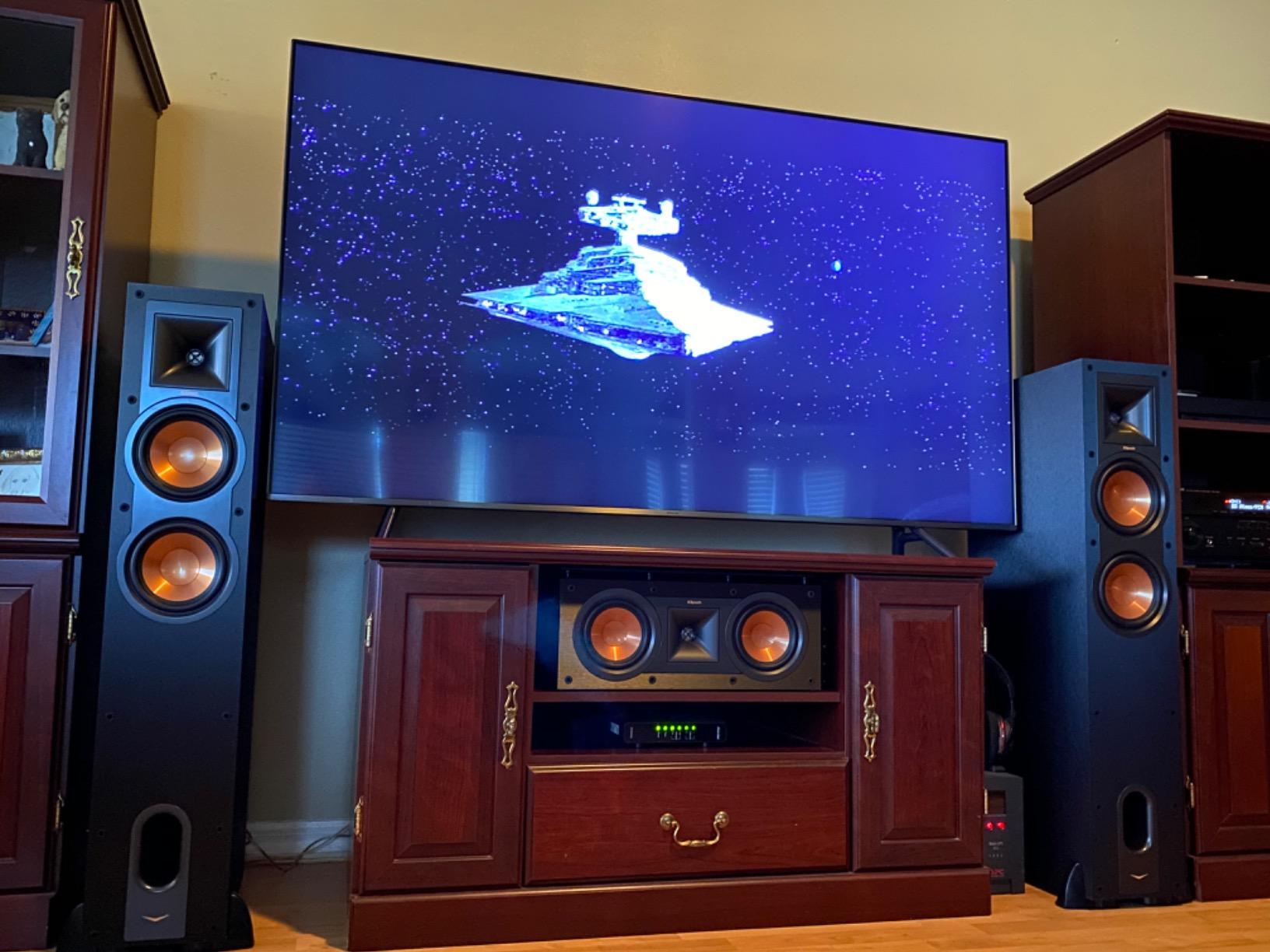
The dimensions matter more than the spec sheet suggests. At 13 inches wide by 13 inches deep by 22 inches tall per cabinet, this is not a slim tower, and the front port means it needs breathing room at the front rather than shoved into a corner. Keep roughly 20 inches of clearance behind a television or console and it behaves.
Power handling is listed at 100W continuous and 400W peak. That is honest marketing for a speaker that will not punish you for running a capable integrated amplifier at real volume, but it is not a license to clip with a thin 40 W per channel receiver. Give it something with current capability and the 8 ohm load is unremarkable.
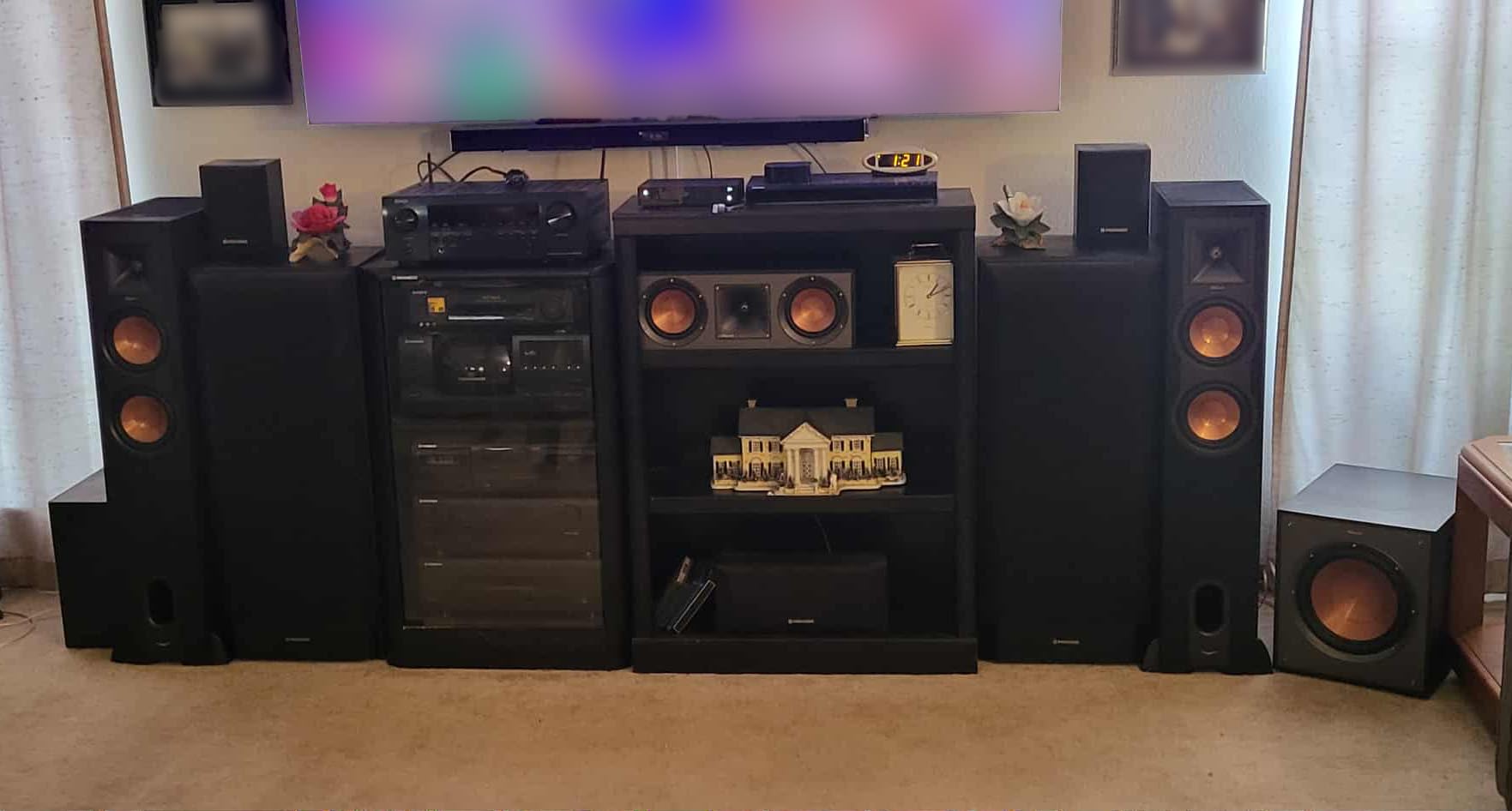
How much room the R-26FA actually fills
In a room up to roughly 400 square feet with a listening distance under 12 feet, this is comfortable and detailed. Past 500 square feet you can still push it, but you should plan on adding a subwoofer for the bottom octave and expect the very lowest bass to be rolled off by the port rather than delivered with authority.
The integrated elevation speaker is the sleeper feature for large rooms. Rather than cutting ceiling holes or hanging on-ceiling height channels, this cabinet throws sound upward from the top of the tower, which suits a room where the ceiling is high and the layout is awkward.
Where the R-26FA falls short
The horn signature is forward. In a large, live room with hard floors and parallel side walls, that treble energy adds up and the top end can feel assertive at close distance. Room correction or a gentle high-shelf cut settles it quickly, but a receiver without EQ will need a lower setting.
It is also a two-way design with a single compression driver doing all of the upper midrange and treble work. On a big, reverberant space with lots of people absorbing high frequencies, the midrange stays lively, which is good, but it is not the smoothest option for late-night critical listening.
2. Klipsch R-610F – the efficiency benchmark that drives a big room on modest power
- 94dB sensitivity is the highest figure in this roundup
- Flat response from 45Hz to 20kHz
- Plays loud on modest amplification
- Solid MDF cabinet build
- 5 year warranty
- Plastic feet hardware strips easily
- Horn treble signature is forward
- Magnetic grilles and bold styling divide opinion
When the brief is a large room and the amplifier is an average AV receiver, sensitivity is the deciding number. The R-610F is rated at 94dB, which is the highest published figure among these ten and roughly 3 dB above a typical mass-market tower. Three decibels is not a rounding error. It is the difference between reaching comfortable volume and hearing the system strain.
Because it is 8 ohm, that efficiency translates directly into amplifier headroom, and it explains why this model shows up in large-room conversations as often as it does despite being one of the smaller cabinets here. At 41 inches tall and 12.75 inches wide with a front-firing port, it needs a little breathing room, but the footprint is manageable in a normal room layout.
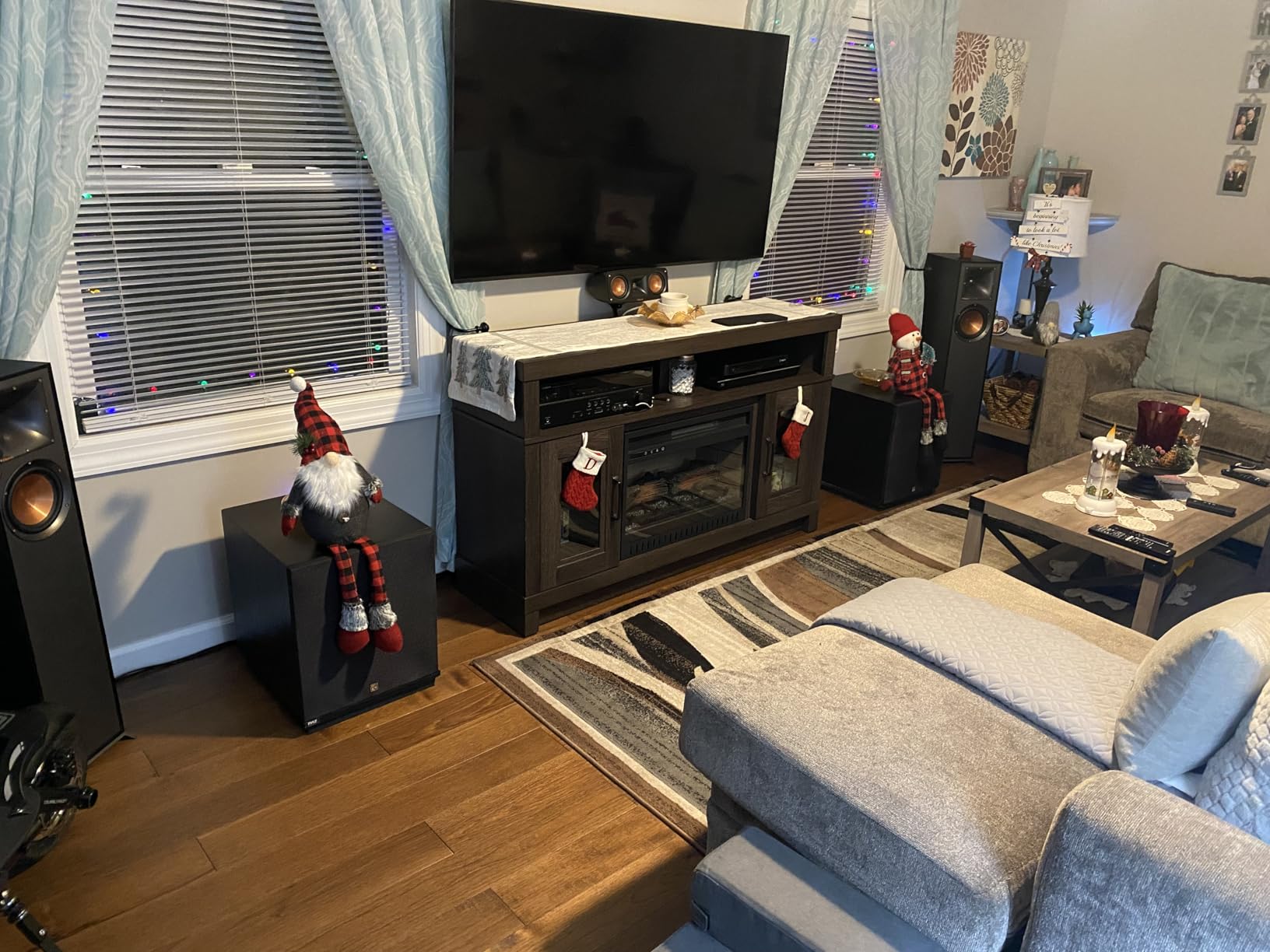
Frequency response is listed from 45Hz to 21kHz within plus or minus 3dB, using dual 6.5 inch copper spun drivers under a 1 inch aluminum LTS tweeter in a 90 by 90 square Tractrix horn. Bass down to roughly 60Hz is where the real output lives, which in a large room is often more than enough once a subwoofer handles the bottom two octaves.
Reviews describe it as a benchmark value tower: accurate, efficient and comfortable in both stereo and surround duty, with the main complaints landing on the plastic foot screws and the bright horn character. That is an honest trade for a speaker that keeps its composure at distance.
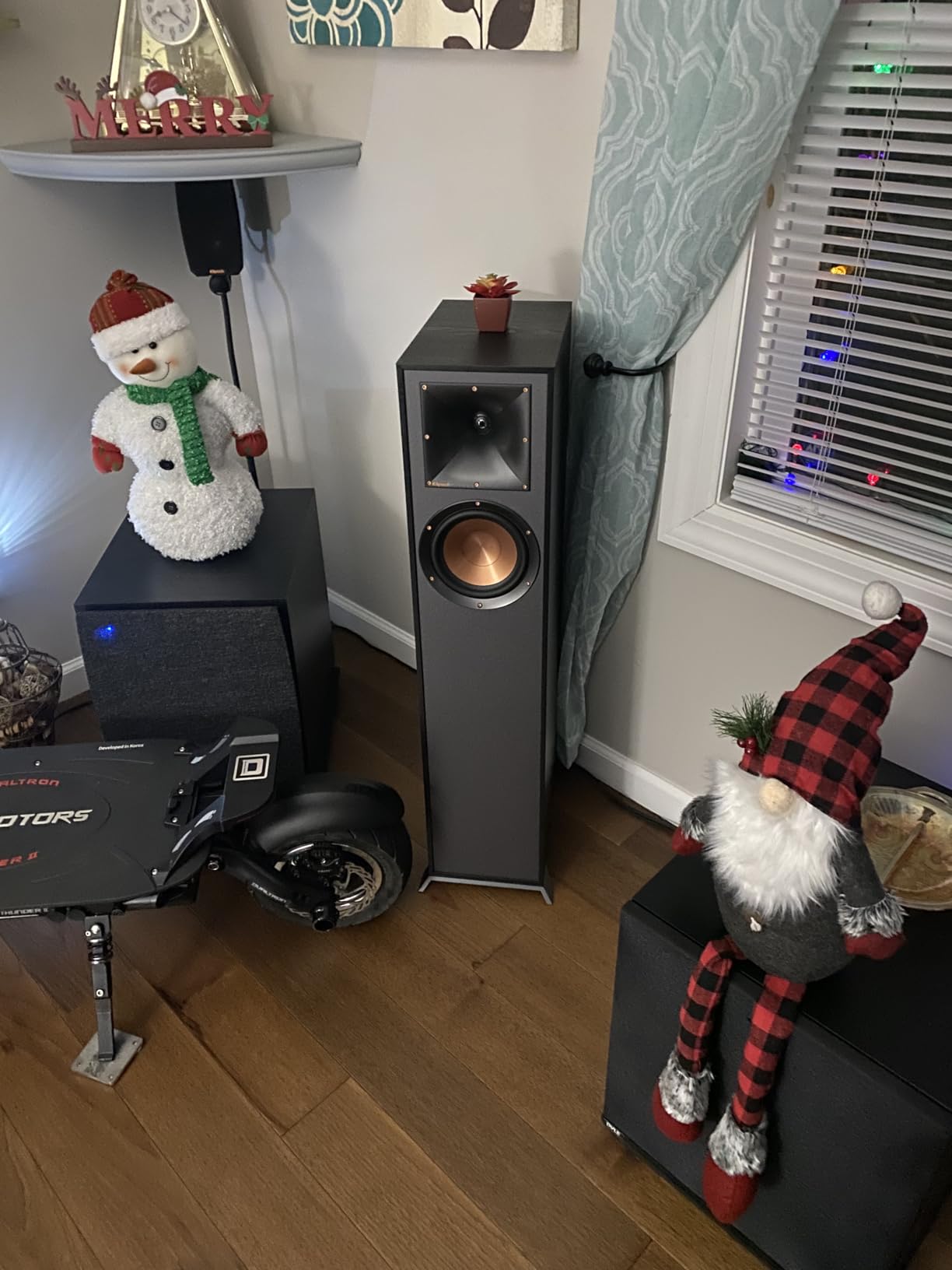
When the R-610F is the right large-room pick
Choose it when your room is 300 to 500 square feet, your amplifier is a mid-range receiver, and you want real volume without a dedicated power amplifier. The 94dB rating means it will play at a volume that makes the rest of the room notice before the speaker does.
It is also the safe choice for a mixed audience. Horn-loaded highs can be divisive in a critical listening room, but in a busy open-plan space at party levels, the extra clarity and forward projection usually wins over a softer, more polite signature.
What it cannot do
It will not deliver genuine sub-bass in a large volume, and a 6.5 inch driver pair has a hard ceiling on how much air it can move. If your goal is to feel the low end physically in a 700 square foot space, add a subwoofer. This tower handles everything above roughly 60Hz and does it well.
3. Polk Audio Monitor XT70 – the deepest bass without any subwoofer
Polk Audio Monitor XT70 Large Home Tower Speaker (Single, Midnight Black)
- Twin 8 inch passive radiators add real low end weight
- Timbre matched across the Monitor XT line
- Works with 4 and 8 ohm amplifiers
- Rubber feet suit carpet and hardwood
- Sold as a single speaker so a pair needs two units
- Passive radiators add bulk to a deep cabinet
The Monitor XT70 solves a specific large-room problem: a tower that produces convincing low end without help. Most competitors rely on a single port. This one runs two 6.5 inch Dynamically Balanced woofers plus two 8 inch passive radiators, which is a lot of moving surface area for a cabinet of this class.
Passive radiators behave like tuned mass rather than a port, and their benefit grows in a large room where a port would either boomy at one frequency or disappear entirely. Reviews consistently single out the bass weight as unusual for the size, and the midrange stays open rather than thickened by the radiators working hard.
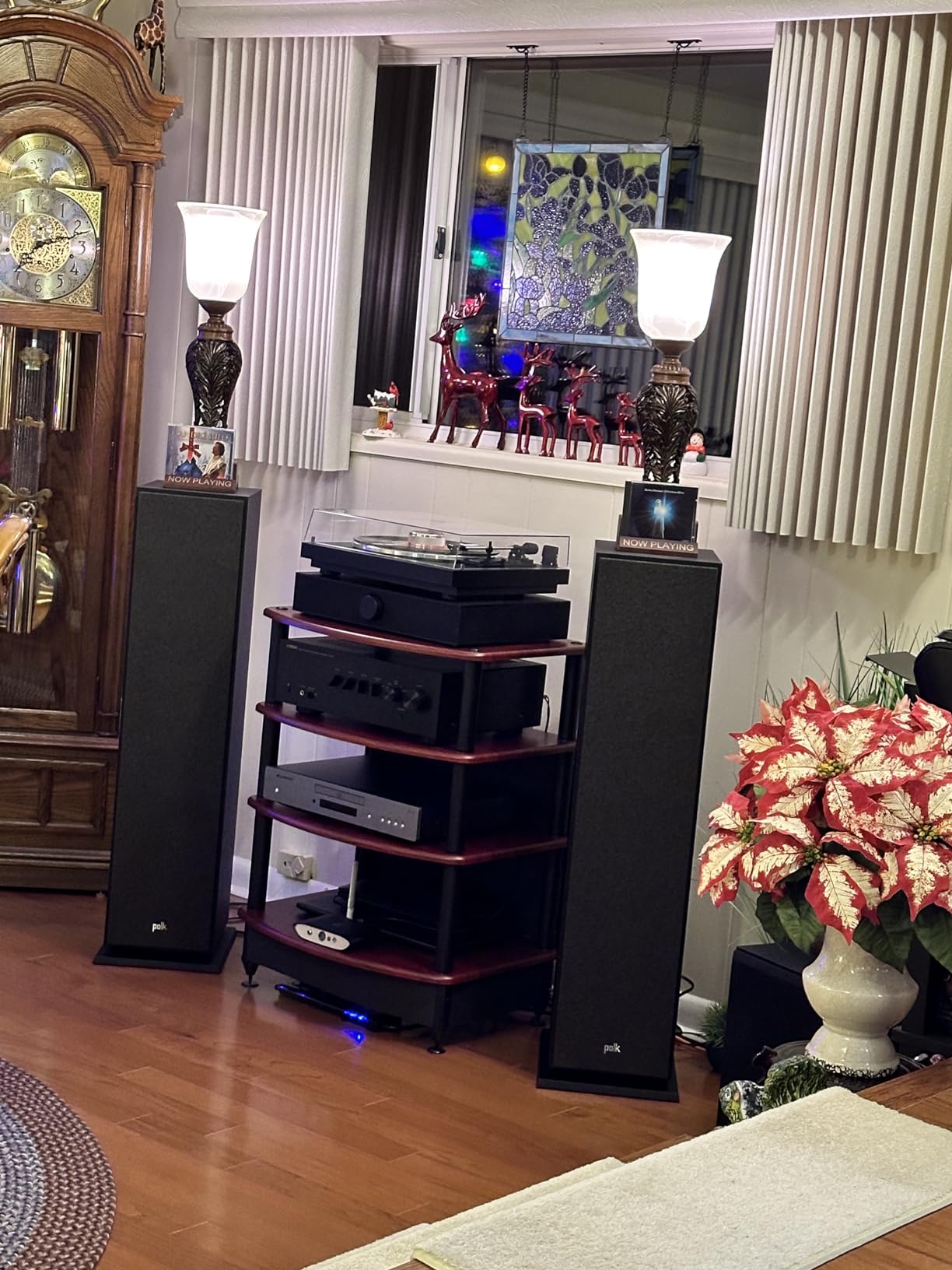
It is a 36 inch tall wood cabinet weighing 35 pounds, deep at 9 inches and only 7.5 inches wide, which makes it easier to place than most of the towers here. The wide radiators face sideways, so give the cabinet a little clearance on both sides if you can. Power handling is listed at 200W and it works with both 4 and 8 ohm amplifiers.
The big practical point is system matching. This tower is timbre matched with the rest of the Monitor XT range, so a full front stage built from one line will hold together in a large open room where differences between brands are far more obvious. Our floor standing speakers for movie watching picks cover that system-building angle in more detail.
How the XT70 behaves at distance
The wide, even bass is what survives a big room. Because the radiators spread the load rather than pushing one port resonance, the low end stays even across a wide seating area instead of pooling in one spot, which is the main reason to reach for a design like this in an open-plan space.
At 8 ohm with 200W handling, it pairs comfortably with a mainstream receiver. Below about 40Hz you will still want a subwoofer for effects, but the tower alone handles music bass convincingly in a way most budget towers cannot.
What to watch for
Owners buying a single unit for stereo end up paying for two eventually, and the passive radiators add real depth to a cabinet that already sits fairly close to the wall in most rooms. Both are planning issues rather than sound issues.
4. Klipsch R-625FA – the most output per cabinet in a home theater
- Built-in elevation channel removes extra height wiring
- Highest power handling rating in this group
- Spun copper drivers stay clear at high volume
- Audyssey calibration handles the height channels easily
- 6.5 inch drivers still need a subwoofer for deep bass
- Bulky at 45 inches tall and nearly 21 inches deep
- Plastic feet feel cheap
The R-625FA is the biggest cabinet in the Klipsch range here and the one with the most raw headroom. Power handling is listed at 400W, frequency response runs 38Hz to 21kHz within plus or minus 3dB, and at 49 pounds per cabinet it is physically the sort of speaker you can push hard in a large room without worrying about it folding.
Its standout feature for a big space is the built-in Dolby Atmos elevation speaker. In a room where the ceiling is high and the layout is open, having the height channel come off the top of the tower removes the need to cut ceiling holes or run cable to on-ceiling channels, and reviewers report that calibration routines pick the height speakers up without fuss.
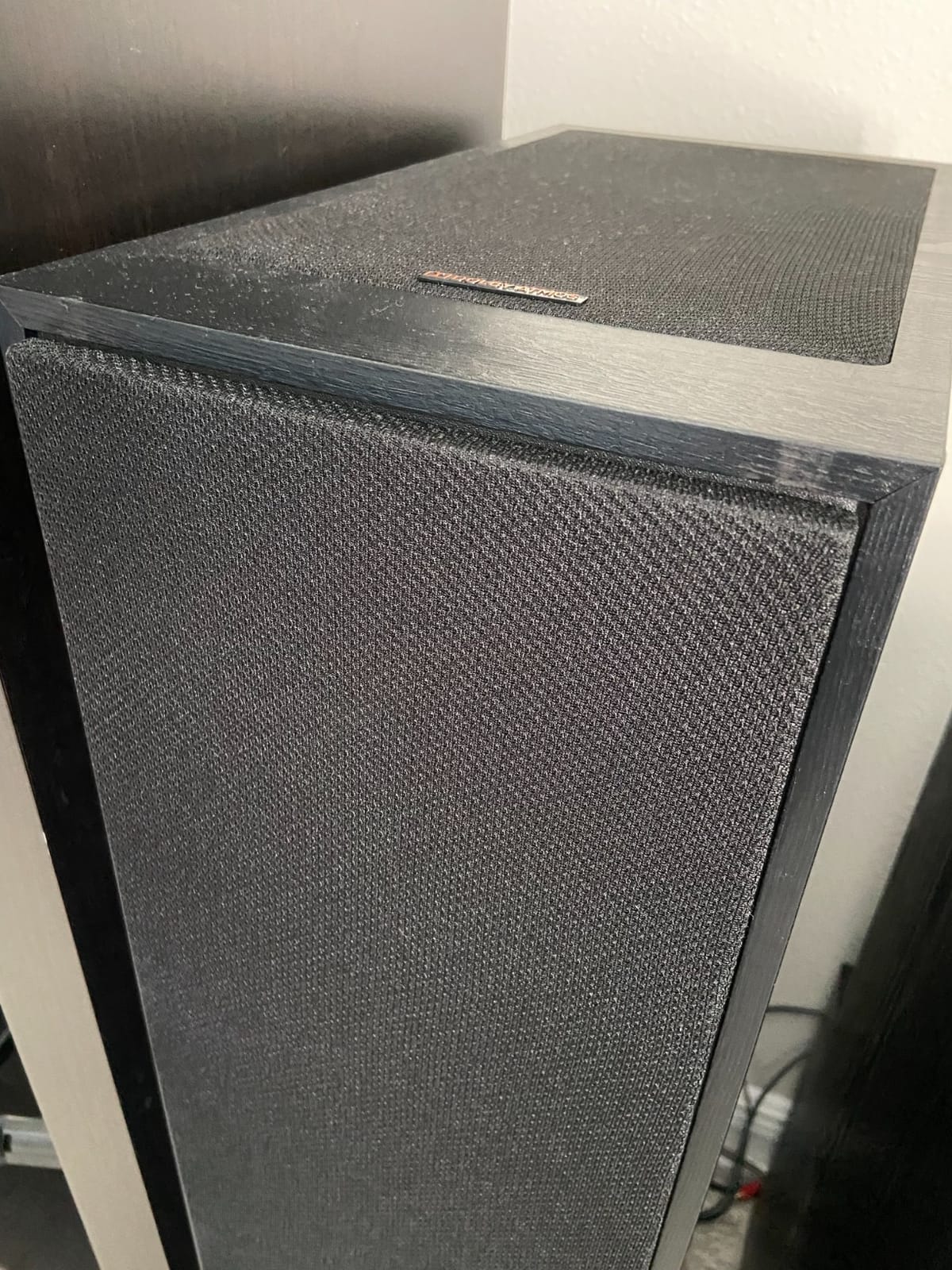
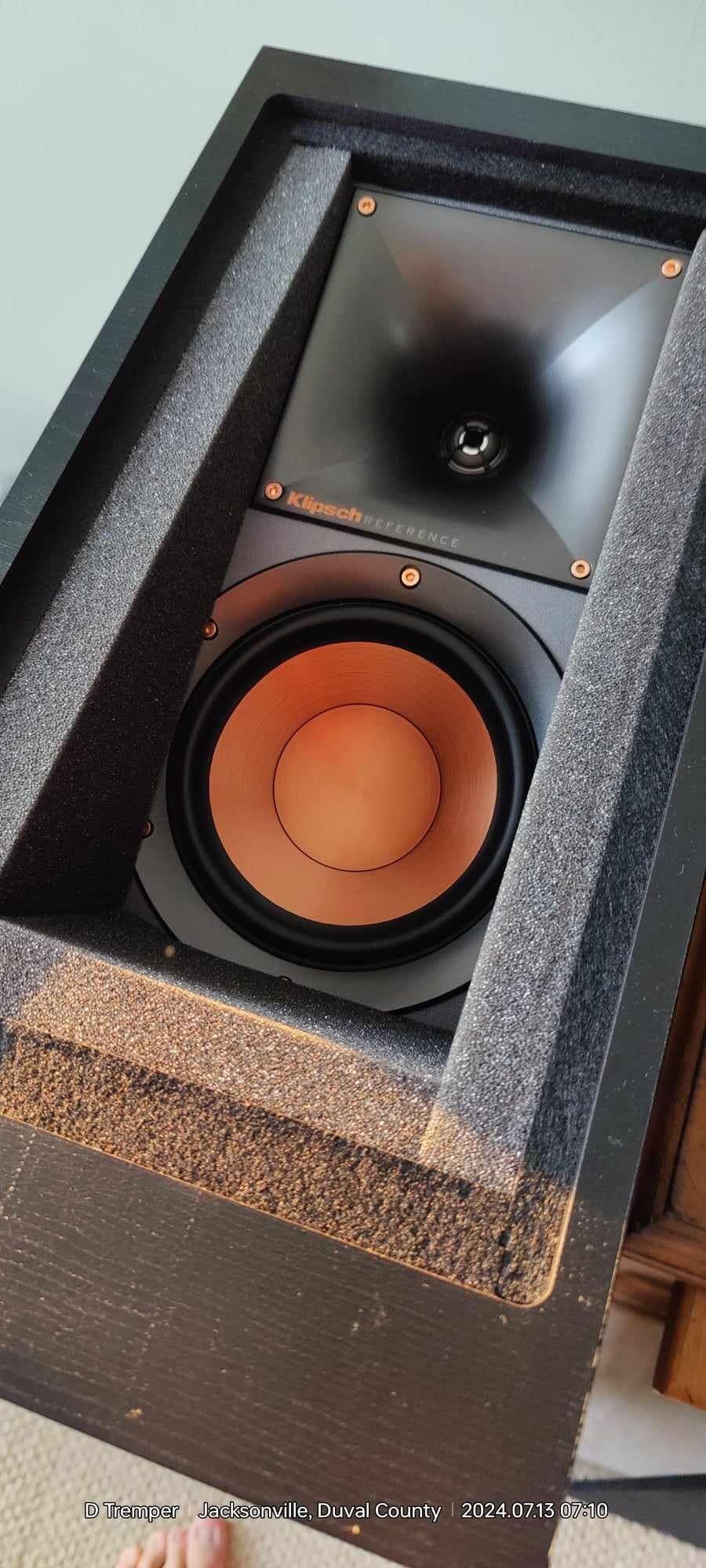
Sound is carried by dual 6.5 inch spun copper woofers and a 1 inch aluminum LTS tweeter in a 90 by 90 square Tractrix horn. In a large room the horn keeps dialogue intelligible over a wide listening area, which is the single most important quality for a front stage in an open-plan space with people sitting off to the side.
Reviews describe a wide soundstage that fills large rooms and clear, distortion-free output at high volume, with the recurring complaint that a subwoofer is still needed for real deep bass. That is an honest limit, not a flaw, given the driver size.
Why this is the home theater pick
A home theater front stage is asked to do two things at once: hold a dialogue-heavy soundtrack together during a quiet scene, and survive an action sequence at reference level. The 400W rating and horn-loaded tweeter cover the second job better than anything else here, and the built-in height channel covers the immersion requirement without extra hardware.
It is 8 ohm, so a standard receiver is fine, and it is a good match if the rest of your system is neutral and forward rather than warm.
Where the bulk becomes a problem
At 20.75 inches deep and 45 inches tall, this is the tower to measure twice for. Against a large television or in a narrow alcove it crowds the screen, and the front-firing port needs clearance in front. The plastic feet also feel out of proportion with a cabinet this size.
5. Polk Audio Signature Elite ES60 – the most consistent sound across a large seating area
Polk Audio Signature Elite ES60 Tower Speaker, Single, Contemporary Walnut
- Wide dispersion serves off-axis seats in a big room
- Three 6.5 inch woofers in a slim baffle
- Power Port adds 3dB of bass output
- Neutral tuning that stays comfortable for hours
- Works with modest amplification
- Sold as a single speaker
- Soft tweeter can recede female vocals
- 52 pounds per cabinet
Large rooms punish narrow speakers. When the listening seat is 15 feet back and 6 feet to the side, a tower with a tightly focused vertical dispersion will sound thin and off-axis. The ES60 is built for exactly that situation, and reviews specifically call out its wide dispersion keeping off-axis seats in a large room well served.
The engineering behind that is three 6.5 inch woofers in a slim 8.5 inch wide baffle, a 1 inch Terylene tweeter, and a 2.5-way cascading crossover arrangement that lets the upper woofer roll off gradually rather than switching sharply. That smoothness is what keeps the output even from a far seat.
Polk Power Port Technology is claimed to deliver 3dB louder bass than a conventional ported design, and with three drivers per cabinet there is a lot of surface area behind it. At 52 pounds and 44.5 inches tall it is a substantial speaker, but the walnut finish is the one here most at home in a living room rather than a media room.
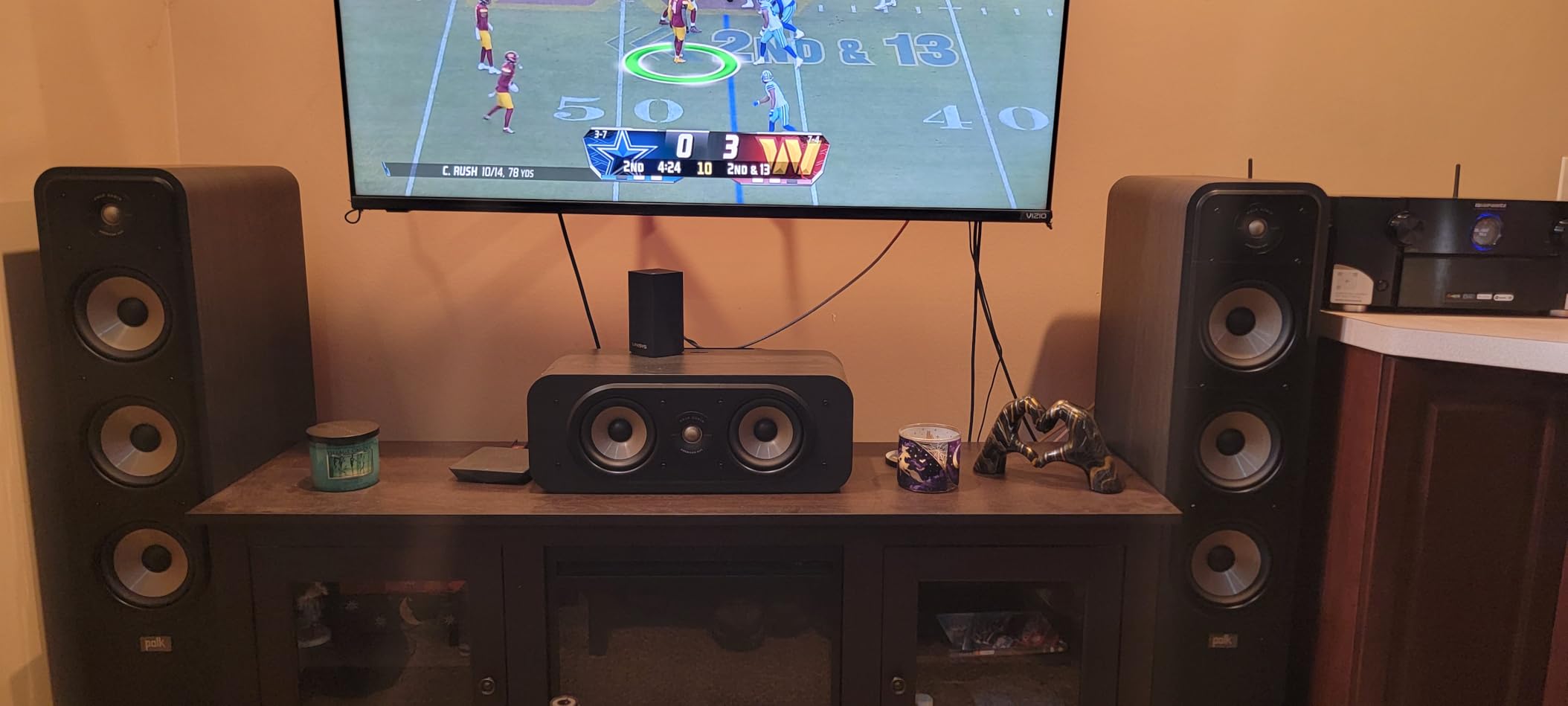
Forum regulars on r/hometheater list the ES60s among value large-room towers, and that matches the owner reports here: neutral, detailed, non-fatiguing, and controlled enough to satisfy many listeners without reaching for a subwoofer immediately.
Why dispersion matters more than raw output
In a big room, the seat that complains first is rarely the one in the center. Family spreads out, guests sit at the ends of a sectional, and someone ends up behind the right-hand tower. A wide-dispersion design keeps all of those positions closer to the same tonal balance than a narrow one, and the ES60 is built for that.
High sensitivity and 4 and 8 ohm compatibility also mean it does not demand an expensive amplifier, which is useful in a large room where you are likely to add subs, a processor and other gear that want your budget.
Where it is not the answer
The soft dome tweeter is gentle, and some listeners find female vocals and cymbals sitting slightly back. If you want a horn-loaded, high-forward presentation for movies, a Klipsch tower is the better match. This one is tuned for long listening sessions.
6. Sony SS-CS3 – the narrowest cabinet for rooms where space is the constraint
- Genuine three-way layout with a dedicated super tweeter
- Response extends to 50kHz
- Sold as a ready pair
- Slim 5 inch depth suits tight layouts
- 5.12 inch woofers give modest bass for a large room
- 6 ohm load draws more current from the amplifier
- Mids and bass lose detail against larger drivers
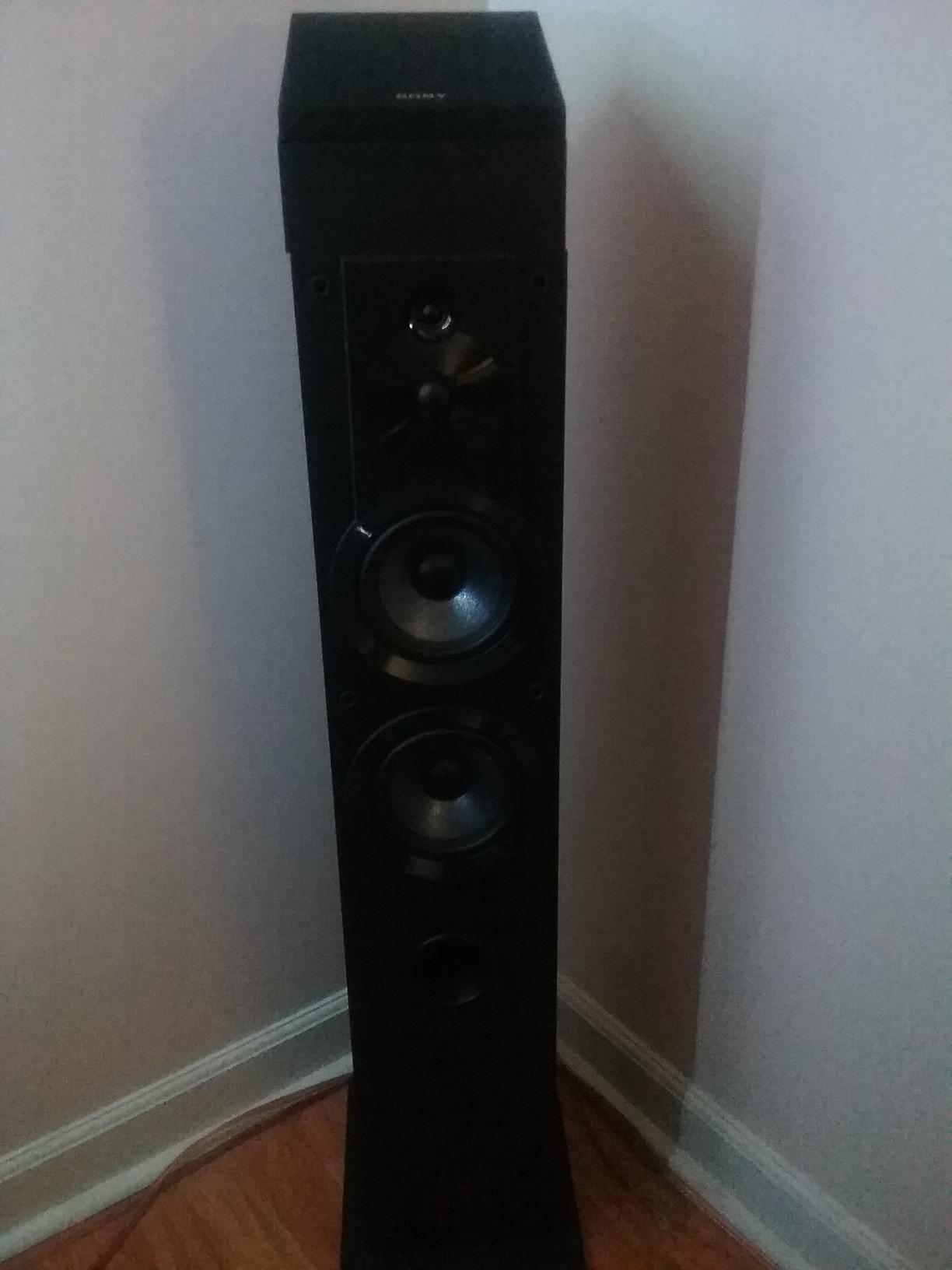
Most large rooms are not short on space. The Sony SS-CS3 is here for the opposite problem, where a 600 square foot open plan has a television wall and no room for a 20 inch deep cabinet. At just 5 inches deep and 9.1 inches wide, it slides into a narrow gap that would defeat a deep tower, and it still lands the tweeter at seated ear height on a 36 inch cabinet.
The driver layout is unusual. A 1 inch polyester main tweeter is paired with a 3/4 inch super tweeter in a true three-way design with four drivers, giving response out to 50kHz. That top-end extension is audible as air and openness rather than as detail in a large space.
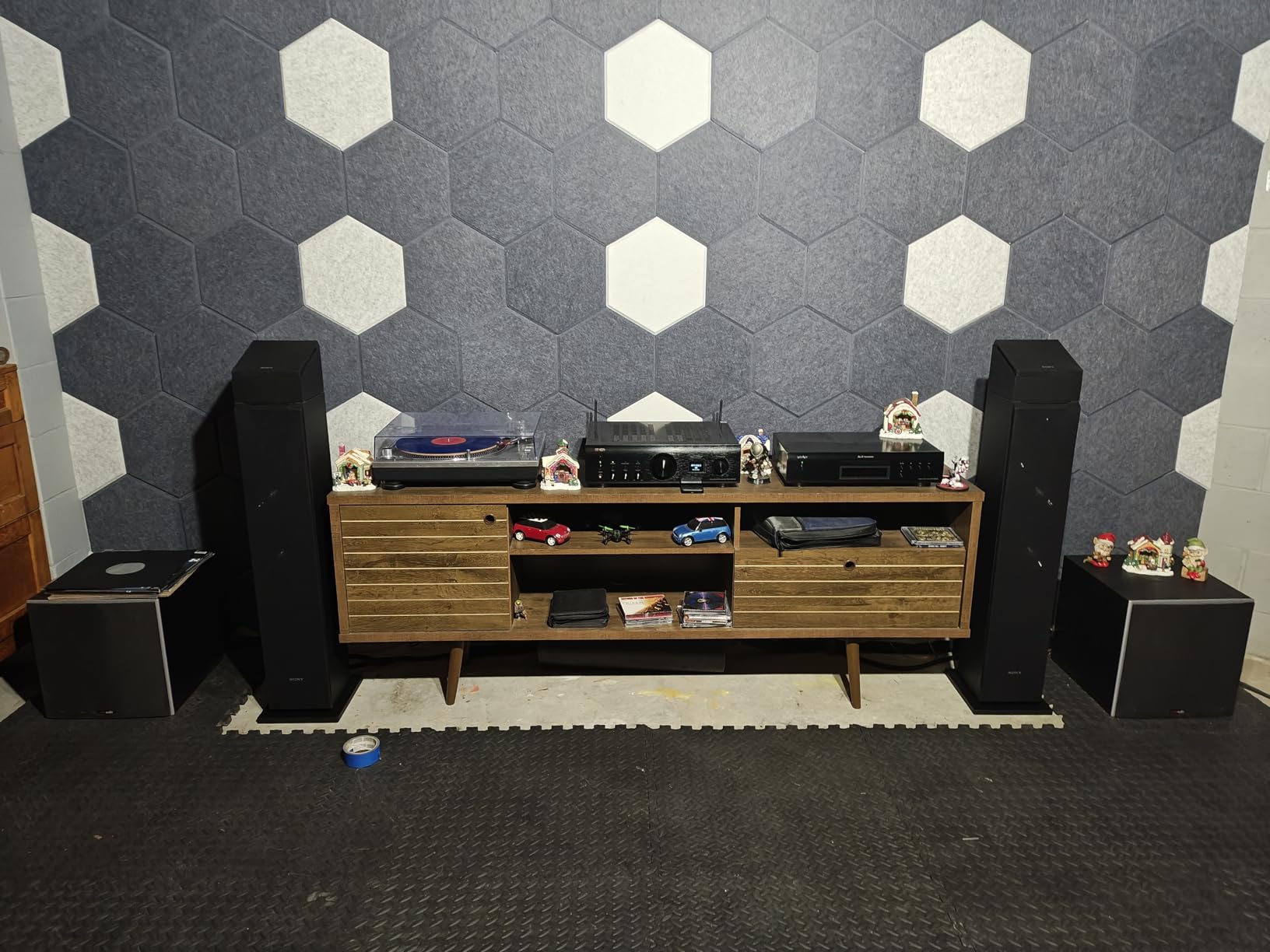
Where it gives ground is bass. The woofers measure 5.12 inches, which is by far the smallest cone in this roundup, and 6 ohm impedance asks more current from the amplifier. In a big room, that combination means you will be reaching for the volume control more often and the low end will be thin without a subwoofer.
Owners still rate it well at 4.5 across more than 300 reviews, mostly for three-way clarity, extended treble and the convenience of the pair bundle. It is a room-acoustics compromise, chosen for fit.
When slim wins over output
If the only places for your front stage are beside a wall-mounted television, or in a long narrow room where the towers must sit tight to a side wall, this is the model that gets installed at all. A deep tower left in a box is a waste of the money you already spent.
Pairing it with a capable subwoofer is close to mandatory at this size, and a mid-range amplifier rather than a small one will help considerably.
When to skip it
Do not buy it for a large room if the goal is music at volume or a home theater that needs chest-thumping effects. The 5.12 inch drivers and 145W peak rating put a ceiling on it that bigger cones simply do not have.
7. ELAC Debut 2.0 F6.2 – the most accurate choice for critical listening
- Accurate
- neutral tuning for music and films
- Soft dome tweeter is smooth over long sessions
- Wide deep soundstage with excellent imaging
- Thick internally braced MDF cabinet
- Three year parts and labor warranty
- Needs break-in and room EQ to reach full potential
- Limited deep bass without a subwoofer
- Short three year warranty
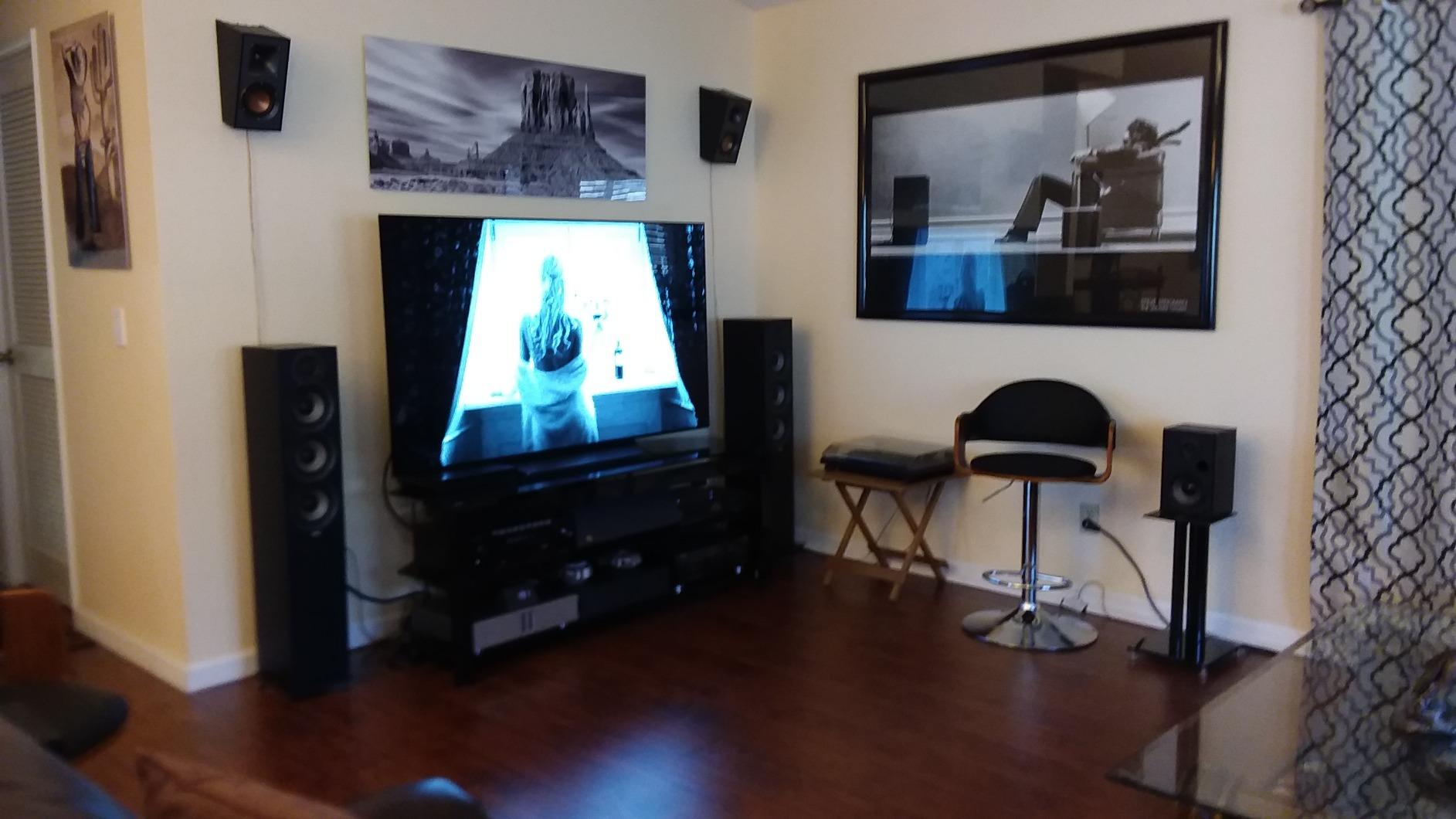
The ELAC F6.2 is the pick for someone who wants to hear what the recording actually sounds like rather than a signature. Three 6.5 inch woven aramid fiber woofers sit under a 1 inch cloth dome tweeter with a waveguide, in a thick, internally braced MDF cabinet at 48.8 inches tall and 43.9 pounds. It is a serious cabinet for the money.
Woven aramid cones are stiff and well damped, which keeps the low end from smearing over the midrange when the volume comes up. In a large room that matters more than it does in a small one, because a smeared midrange that goes unnoticed at low level becomes obvious at high level across a bigger listening area.
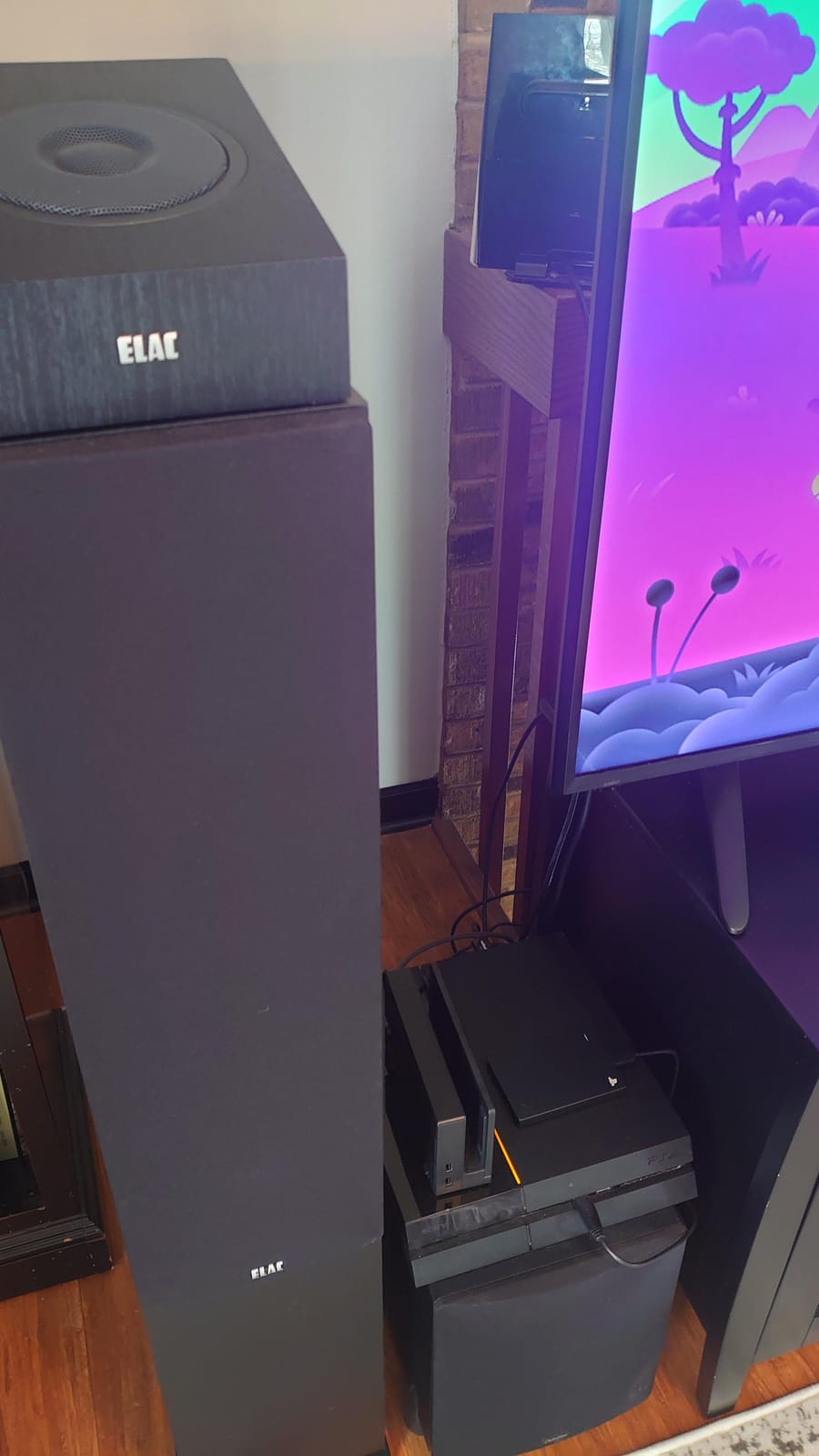
The cloth dome tweeter is smooth and non-fatguing, and reviews mention a wide, deep soundstage with excellent imaging for the class. The recurring advice from owners is consistent: this speaker is good out of the box and noticeably better after break-in, room correction and sub integration.
It is 6 ohm with 140W of rated power, and reviewers note it sounds great from an inexpensive amplifier of that rating, which is helpful when the money is going into subs and speakers instead.
Where accuracy pays off in a big room
A large, live room adds reverb to everything, and a speaker with any built-in emphasis will sound exaggerated once reflections pile up. The F6.2’s flat, unfussy tuning is the safest starting point in a hard room, and its wide soundstage means the far seat still hears a coherent presentation.
It is also the right tower when the amplifier is the weak link. Balanced, low-distortion behavior at moderate volume matters more here than spectacular output at a level you rarely use.
What you give up
You give up the vertical spread and forward projection that horn-loaded designs produce, and the 6.5 inch drivers still need a subwoofer for the bottom octave in a large volume. Buyers expecting the raw output of a horn tower will find this restrained.
8. Polk Audio T50 – the most proven budget tower for filling a room
- Best reviewed model in the roundup with a large owner base
- Dual bass radiators add low end weight for a slim tower
- Timbre matched with Polk T15 and T30 for a 5.1 system
- Quick setup over standard speaker wire
- Sold as a single speaker so a pair needs two
- 6 ohm load and 150W rating limit headroom
- Bass radiators add low end emphasis some listeners find boomy
With more than 2400 reviews, the T50 has the longest track record of anything here, and the owner feedback is remarkably consistent: room-filling warmth, crisp highs, and a genuinely easy path into a full home theater system. For most people buying a first serious pair for a big room, that combination still wins.
The driver complement is unusual for the price. A single 6.5 inch Dynamic Balance driver handles the midrange and bass, with dual 6.5 inch passive radiators taking the low end and a 1 inch tweeter on top. The radiators are what make a slim 8.75 inch wide tower produce more low end than its size suggests.
More than 2400 reviews is a long track record for any design, and it means the failure modes are already well documented. The consistent complaints are the single-speaker packaging, the 6 ohm load, and slightly boosted low end that some listeners find boomy on smaller rooms. None of those is a dealbreaker in a 300 to 400 square foot space.
At 36.25 inches tall and 20.4 pounds it is among the easiest here to place, and it is part of a buildable ecosystem with the Polk T15 surrounds and T30 center, which matters more in a large room than people expect because mismatched surrounds become obvious across a wide seating area.
Where the T50 still makes sense in a large room
In a 300 to 400 square foot room, this speaker punches above what the driver count suggests. The radiators supply enough low end that a lot of buyers never feel the need for a subwoofer in stereo, which is still the shortest path to a full, non-thin sound.
For home theater it remains a sensible front stage when the budget goes toward a receiver or a projector instead, particularly if the rest of the system is also Polk. If you want the full breakdown of budget options, our floor standing speaker picks under 1000 roundup covers the surrounding tiers.
The limits you should plan around
One 6.5 inch driver and 150W of rated power will not carry a 700 square foot open-plan space at high volume, and 6 ohm impedance makes it work harder for the same output. Beyond roughly 450 square feet, budget for a subwoofer and a decent amplifier.
9. Fluance Signature HiFi – the most bass from a single tower
Fluance Signature HiFi 3-Way Floorstanding Tower Speakers with Dual 8″ Woofers for 2-Channel Stereo Listening or Home Theater System – Natural Walnut/Pair (HFFW)
- Dual 8 inch woofers move far more air than any other pair here
- Three-way design keeps mids clean
- Bi-ampable with a 75W per channel receiver
- Bass reflex to 35Hz
- Acoustically inert MDF with chamfered baffle
- Over 62 pounds per cabinet needs two people to move
- Sensitive to placement with hours of tuning reported
- Veneer rather than solid wood and grilles hold dust
By cone area, the Fluance Signature is the most capable tower in this roundup, and it is the only one built around 8 inch woofers. Two of them per cabinet give it more displacement than any other model here, which is why it is the right pick when the complaint is that bass runs out before the volume does.
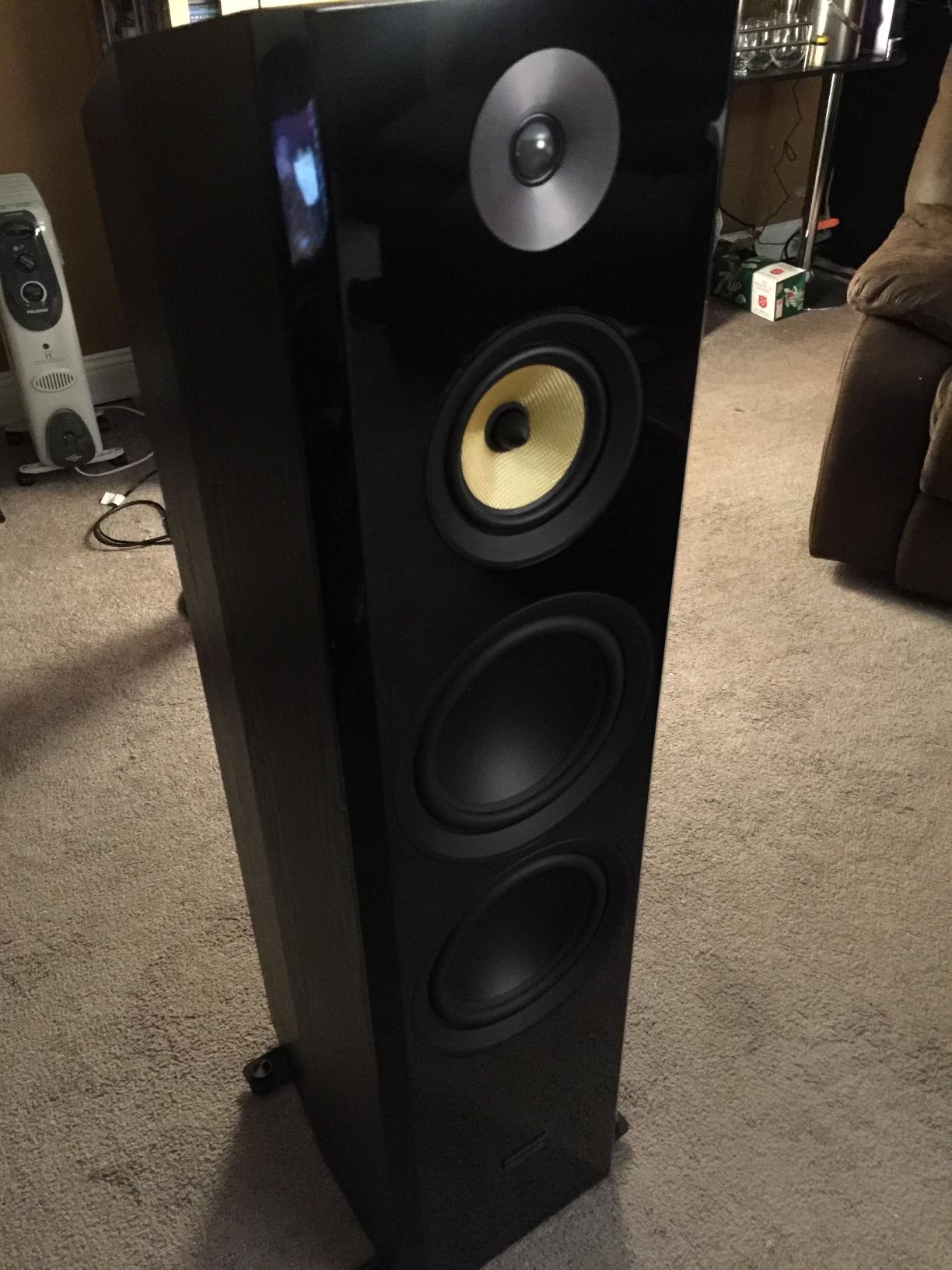
It is a three-way design with dual 8 inch woofers, a woven glass fiber pointed dome midrange and neodymium tweeters, in a 45 inch tall acoustically inert MDF cabinet with a 1.4 inch chamfered baffle to reduce diffraction. The chamfer matters in a large room because it keeps the front edge from acting as a secondary radiator at off-axis seating positions.
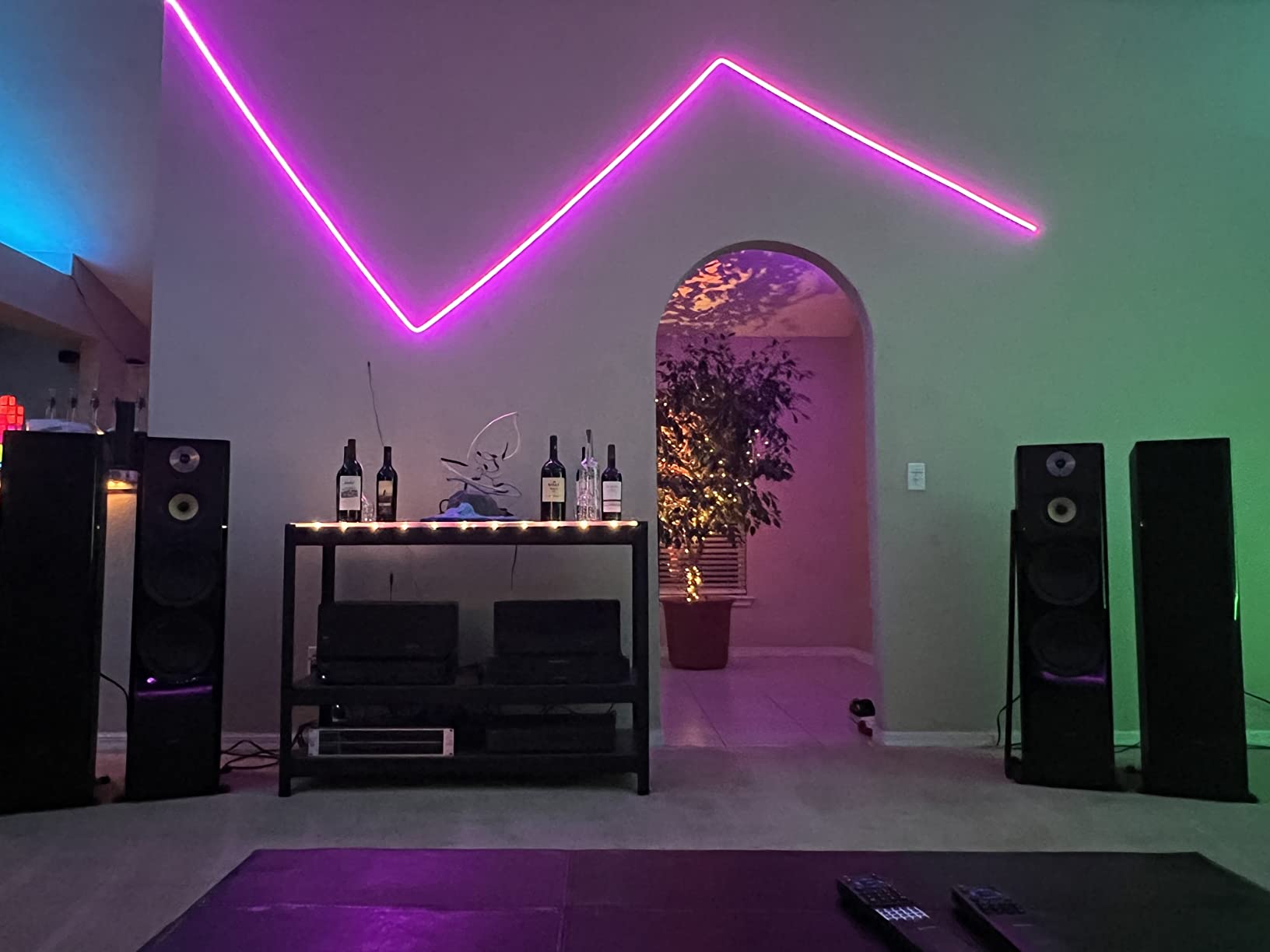
Long-term owners describe a system that scales with the electronics. Modest amplification leaves it good. A capable amplifier and careful placement unlock a wide, holographic soundstage with articulate mids that stay accurate at high volume, plus deep, tight dual 8 inch bass. The cabinet is 15 inches deep and 20 inches wide, so it is a real commitment in a room layout.
It includes outrigger stabilizers and floor spikes, and the binding posts are bi-ampable, which gives you room to split the low and high sections later. Owners note that a 75W per channel receiver is enough to drive them hard, which is unusual for a pair with this much cone area.
When 8 inch woofers are worth the weight
Choose this pair when the room is genuinely large, the music is loud and bass-forward, and you have someone to help carry 62 pounds per cabinet up stairs. At 35Hz rated bass extension, it gets meaningfully lower than anything else on this list without a subwoofer.
It is also the one here most likely to reward a better amplifier later, so a buyer who plans to add a power amplifier after the speakers is not wasting money.
Where the compromises show
It is the lowest rated model in the roundup at 4.3, and the reviews explain why: placement sensitivity, hours of tuning, veneer instead of solid wood, and an improvement in sound that is clearly tied to the quality of the rest of the system. Owners who expected an instant result in a difficult open-plan room were less satisfied.
10. Dayton Audio Classic T65 – the most sensible first floorstanding pair
Dayton Audio Classic T65 Floor-Standing Tower Speaker Pair (Black)
- Genuine step up from entry level 2.1 systems
- Engaging and balanced sound with punchy bass
- Silk dome tweeter stays bright without harshness
- Slim 39 inch cabinet fits where bigger towers will not
- Comes as a ready-made pair
- Midrange detail and soundstage width are modest
- Needs a subwoofer for home theater use
- Polymer cabinet is less damped than MDF
The Classic T65 is the pick for someone building their first real pair and replacing a soundbar or a small 2.1 system, and owners consistently describe it as a clear step up rather than a sideways move. At 4.6 across more than 120 reviews, that is a reasonable expectation for a slim pair at the bottom of this list.
The build is straightforward: a bass reflex cabinet over 39 inches tall, twin 6.5 inch custom poly bass drivers, a 1 inch silk dome tweeter and a real hi-fi crossover network rather than a simple first-order divider. The tweeter height matters in a large room because it puts the treble at ear level for a seated listener standing back from the front stage.
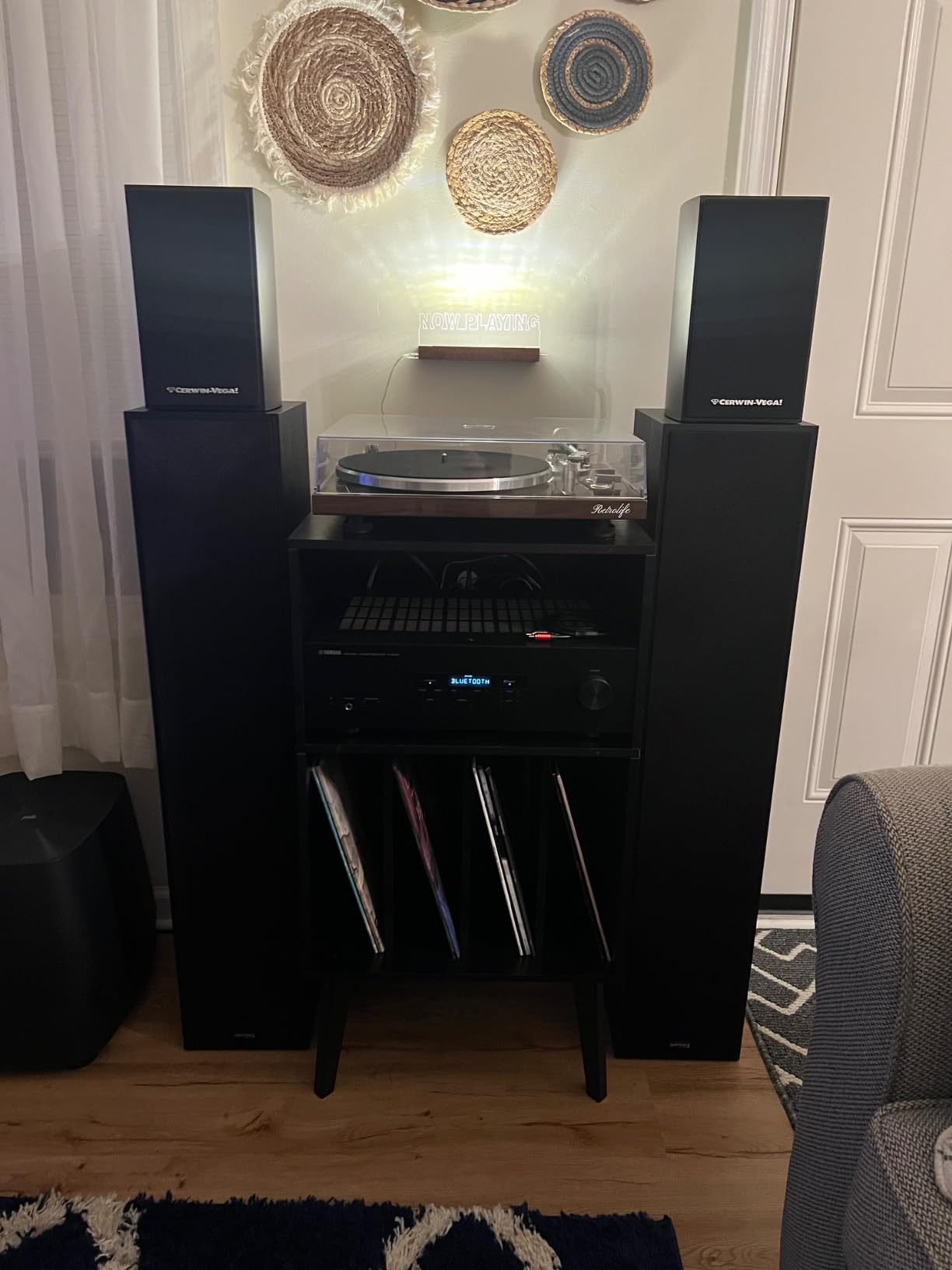
Owners like that the bass presence goes deeper than the budget towers it typically replaces, and that the silk dome stays bright without harshness. The honest limitation is refinement: midrange detail and soundstage width are described as modest rather than audiophile-grade, and a subwoofer is recommended for surround or home theater use.
It comes as a finished pair with gold-plated binding posts that accept banana plugs, which removes the single most common reason first-time buyers end up buying a second unit to complete a stereo pair. Most of the other towers here are sold singly.
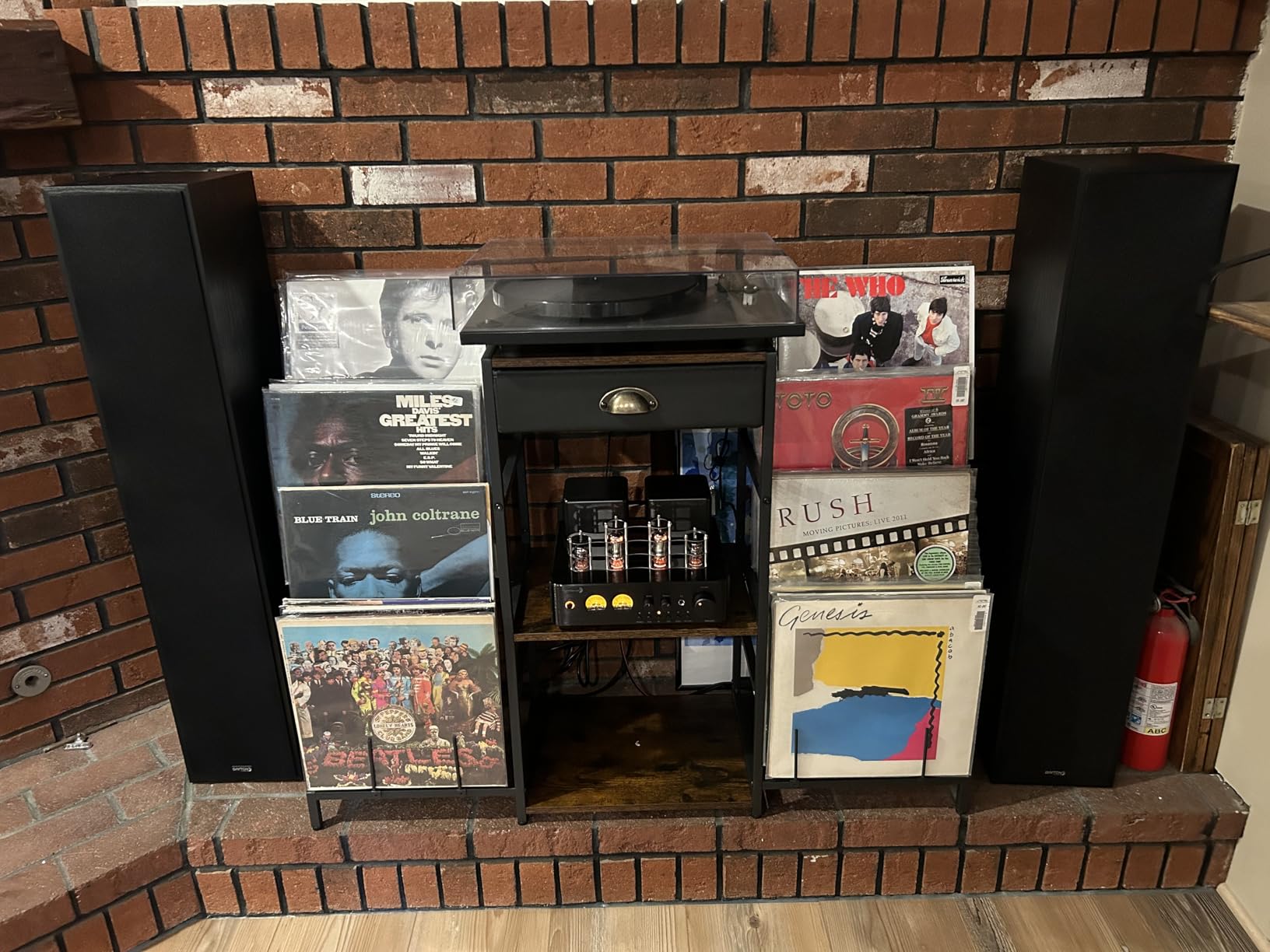
Where the T65 is genuinely enough
In a mid-sized room, or as a secondary pair in a large open-plan space that also has a proper main system, it does the job well. The 150W rating and dual 6.5 inch drivers give it more headroom than its price suggests, and the slim cabinet makes placement easy.
It is also a sensible second pair for filling a fourth zone or an awkward extension of a listening area, which is exactly the multi-speaker approach regulars recommend over trying to make one pair do the work of a whole open plan.
What it will not do
It will not drive a very large room at high volume with real authority, and the polymer cabinet is less damped than the MDF competitors, which can color the midrange a little. If your space is over 500 square feet, spend up and come back to this list.
How to Match Floor Standing Speakers to a Large Room?
Match the speaker to your room size
Volume matters more than floor area, so measure the room and multiply by ceiling height before you shop. The rule of thumb is straightforward: a pair of towers with two 6.5 inch woofers covers roughly 300 to 450 square feet, three 6.5 inch drivers pushes that toward 500 square feet, and beyond 600 square feet you want either 8 inch drivers or a second pair of towers placed around the listening area.
Floor area only tells part of the story. A 500 square foot room with a 9 foot ceiling is very different from one with a 20 foot ceiling and a kitchen opening, because reflections travel further and low frequencies excite more modes.
Sensitivity is the number that decides whether a big room works
Sensitivity is how many decibels of output a speaker produces for one watt of amplifier power, measured at one meter. Every 3 dB of extra sensitivity effectively doubles the amplifier power you need for the same volume. That is why the Klipsch R-610F, rated at 94dB, can fill a room that leaves a lower-efficiency tower straining.
Impedance is the second number to check. Anything at 6 ohm or 4 ohm draws more current from your amplifier than an 8 ohm design, and a receiver with a weak power supply will protect itself by limiting output. Never connect two 4 ohm towers to a receiver rated for 8 ohm speakers.
Two towers with subs or four towers
Forum consensus across audio communities is consistent: several smaller towers placed around a large space beat one giant pair. In an open-plan living and dining room, a pair covering the sofa and a second pair covering the dining table will serve every seat more evenly than a single pair trying to cover both from the same position.
Subwoofers solve output, not coverage. They do nothing for the person sitting off to the side, so if your problem is uneven sound across the room, add speakers before you add a second subwoofer. If your problem is bass you cannot feel, add the subwoofer.
Home theater versus music-first use
For home theater, prioritize the built-in Atmos height channel, wide dispersion and a high power handling rating, since a front stage has to hold a quiet dialogue scene and a reference-level action sequence with the same speakers. The Klipsch R-625FA and the Polk Monitor XT70 are the two that answer that brief most directly in this roundup.
For music first, prioritize a neutral tuning, a wide soundstage and a speaker that stays comfortable for hours. The ELAC Debut 2.0 F6.2 and the Polk Signature Elite ES60 are the calmer choices, and both are easier to live with in a room that also has to work for conversation.
Open-plan rooms, hard floors and glass
Large rooms usually mean hard surfaces. Tile, glass patio doors and bare walls reflect treble and midrange energy, and the reflections arrive late enough to blur the soundstage. A rug in front of the seating area and a set of curtains on the glass wall do more for clarity than any upgrade you can buy at the speaker end.
On placement, keep at least 50 centimeters of clearance around a tower where the layout allows it, since pushing a cabinet tight into a corner adds low frequency reinforcement that is uneven across the room. Leave the front port clear on ported models, and start with the speakers toed in slightly before widening them out.
Frequently Asked Questions
What is the best speaker system for a large room?
A pair of high-sensitivity floorstanding towers with two 6.5 inch or larger woofers each, driven by 100 to 200 watts per channel, plus one or two subwoofers. In very open-plan spaces, four towers spread around the room cover every seat better than a single large pair.
What are the best speakers for a large space?
Look at three numbers. Sensitivity above 90dB means fewer amplifier watts are needed for the same volume. Two or more 6.5 inch woofers per cabinet give real air movement. Power handling above 200W means the speaker will not compress at high levels. Match all three to your room volume.
What are the best floorstanding speakers for home theater?
A tower with a built-in Dolby Atmos elevation speaker removes the need for separate height channels or ceiling work, while a high power handling rating keeps dialogue clear during loud scenes. The Klipsch R-26FA, R-625FA and the Polk Monitor XT70 cover that brief well.
Are floorstanding speakers the best?
For a large room, usually yes. A tower holds bass, midrange and treble in one cabinet without needing a stand, and the larger drivers move far more air than bookshelf speakers. In a small room or for near-field listening, a well-placed bookshelf pair plus a subwoofer is often the better use of budget.
What is the 83% rule for speakers?
It is a placement guideline: the distance from your speaker to the nearest wall should be about 83% of the distance from that speaker to your listening position. Moving the speaker off the wall smooths out the bass reinforcement that boundary effects create, which matters more in a large room than in a small one.
What is the 38% rule for room acoustics?
It is the companion placement rule: the distance from the front wall to your main speakers should be about 38% of the room length. This positions the speakers so their bass reinforcement interacts with the room in a predictable way instead of landing on a standing wave and boosting one frequency unevenly.
Do I need bigger speakers or more speakers for a large room?
For volume, bigger or more efficient speakers. For even coverage across a wide seating area, more speakers. Forum consensus across audio communities favors several smaller towers spread around an open-plan space over one very large pair, and subwoofers only add low frequency output, not coverage.
How loud should I play floor standing speakers in a large room?
Loud enough to reach about 85 to 90 dB at your listening seat, which is roughly where the amplifiers in the 100 to 200 watt per channel range stop feeling strained. Below that you are not testing the speaker properly, and well above it you risk listener fatigue in a room with hard reflective surfaces.
Our Final Verdict on Large Room Floor Standing Speakers
The Klipsch R-26FA is the best floor standing speaker for large rooms in 2026 because it combines a horn-loaded compression driver, dual 6.5 inch copper spun woofers, 400W peak power handling and a built-in Atmos height speaker in a single cabinet. It projects into a large space instead of radiating into it, and it is the pick I would put at the front of an open-plan living and dining room.
The Klipsch R-610F is the value answer, and its 94dB sensitivity is the single most useful number on this list for anyone driving a big room from a modest amplifier. The Polk Monitor XT70 and Klipsch R-625FA cover the deep bass and home theater briefs, the Polk ES60 handles wide dispersion across a wide seating area, and the Fluance Signature is the pick when 8 inch bass matters more than moving the cabinets around.
Whichever you choose, measure the room first, match the amplifier to the impedance, keep 50 centimeters of clearance where you can, and treat a rug and curtains as part of the system. That last part is free and it does more for a large room than any speaker swap will.