
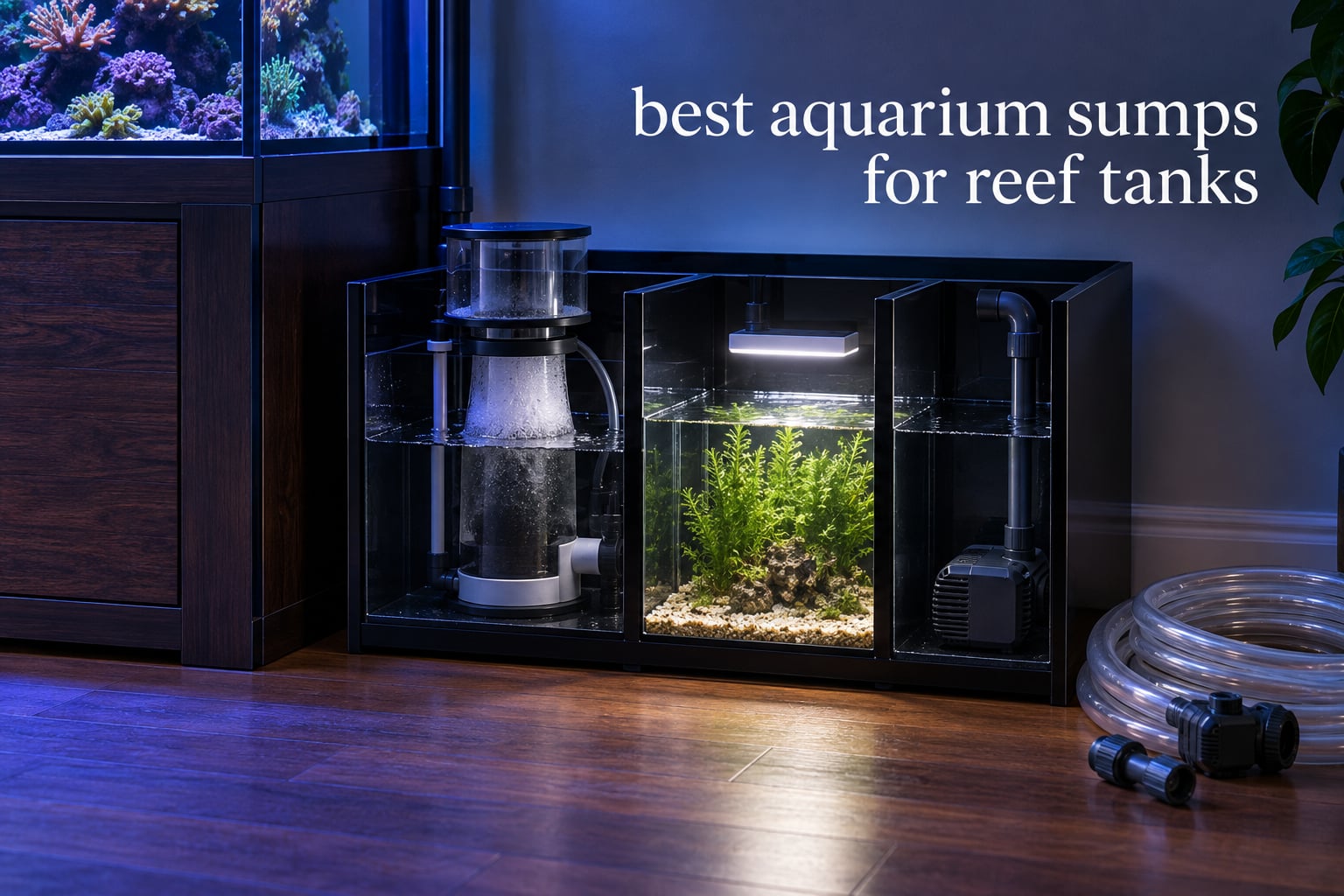
A reef sump is a secondary water reservoir that lives inside or beneath your aquarium stand and quietly holds the gear you would otherwise cram into the display — protein skimmer, refugium, filter media, heater, chiller, dosing pumps, and auto top-off hardware. Water rises into an overflow box on the display, drains by gravity into the sump, passes through each piece of equipment in sequence, and a return pump pushes it back up. That arrangement hides the hardware, cuts noise and visual clutter inside the tank, and adds real water volume to your system.
For reefs that extra volume matters more than it does in freshwater. A sump commonly adds 10 to 30 percent to total system volume, which means your parameters drift more slowly between water changes, your top-off reservoir lasts longer, and the display itself can be plumbed on a smaller overflow than a 100-plus gallon system usually needs. If you run SPS, LPS, tangs, dosing pumps, or a chiller, a sump is close to mandatory.
This roundup covers the best aquarium sumps for reef tanks that we could find and evaluate in the category, from compact acrylic boxes to five-chamber German-built systems. We went through the specifications, the review history, and the real-world chatter on r/ReefTank and Reef2Reef so you can see which units fit a real cabinet and which ones merely look good on a product page. The short version: chamber count and footprint fit decide almost everything.
If your sump still needs a pump, we covered that separately in our best sump pumps for reef tanks guide, and the temperature side of the equation in our picks for the best aquarium chillers for reef tanks.
Table of Contents
Top 3 Reef Sump Picks for 2026

Dupla Marin Ocean Sump 200 I
- 5-chamber layout
- Adjustable skimmer water level
- Dosing electrode holders included
- 19.41 x 15.75 x 13.78 inch

Dupla Marin Ocean Sump 500
- 5-chamber layout
- Adjustable skimmer water level
- Largest footprint in the group
- 30.16 x 15.75 x 15.75 inch

Fiji Cube Fiji-20 Advanced Reef Sump
- Full cast acrylic
- Refugium ready
- Water level adjustable 5 to 12 inch
- Filter sock included
Best Aquarium Sumps for Reef Tanks in 2026
Every sump below is judged on the same three things: how many chambers you get, whether the footprint and height actually clear your stand opening, and what the owners who already own one report. Here is the whole lineup at a glance.
| Product | Specifications | Action |
|---|---|---|
| Dupla Marin Ocean Sump 200 I |
|
Check Latest Price |
 NextReef NRS-30 Sump NextReef NRS-30 Sump |
|
Check Latest Price |
 Fiji Cube Fiji-24 Advanced Reef Sump 2nd Gen Fiji Cube Fiji-24 Advanced Reef Sump 2nd Gen |
|
Check Latest Price |
| Fiji Cube Fiji-20 Advanced Reef Sump 2nd Gen |
|
Check Latest Price |
| Dupla Marin Ocean Sump 500 |
|
Check Latest Price |
 Eshopps AEO14000 Reef Sump RS-75 Eshopps AEO14000 Reef Sump RS-75 |
|
Check Latest Price |
1. Dupla Marin Ocean Sump 200 I – Best Overall Reef Sump With Five Chambers
- Five chambers in a compact footprint
- Skimmer chamber water level is adjustable
- Electrode holders and cables for dosing pumps included
- German and Italian owners praise build quality
- Only 6 reviews available
- Uncovered chamber openings out of the box
- Heaviest relative to its chamber count
The OS200 is the sump I keep coming back to because five chambers in a box that is under 20 inches long solves the single biggest complaint the reef community has about pre-built sumps. Most three-chamber units force a choice between a skimmer and a refugium, and the community answer on r/ReefTank is that the right fix is a kit you can baffle yourself. This arrives already divided into five, so nothing has to be cut.
Build quality is the story here. German and Italian owners describe the seams as clean and the layout as genuinely thought through, and the maker is Dohse Aquaristik, which has been making aquarium equipment for a long time rather than being a marketplace brand that relabeled a generic box.
The skimmer chamber has an adjustable water level, which matters more than it sounds. A skimmer needs a stable water column to stay calibrated, and a fixed level means a small change in evaporation retunes the whole cup. You can set it and walk away. Electrode holders and connection cables for dosing pumps are in the box, which is one less trip to the parts drawer during the build.
Who this sump fits
This is a nano-to-medium sump in footprint terms but a serious reef sump in function. If your display is roughly 20 to 55 gallons, or you run a larger display on a modest stand with a single overflow, the 19.41 by 15.75 by 13.78 inch footprint is forgiving and the five chambers give you a skimmer, refugium, media chamber, equipment shelf, and ATO float without cramming.
It is also a good fit for anyone who wants a refugium but does not want to build a baffle layout from a 10 gallon tank. Bring your own skimmer sized for your system volume, drop it in the dedicated chamber, and you have a working refugium compartment on the same footprint.
Where it falls short
The review pool is six, and the rating spread is not flattering — roughly three quarters five-star and a quarter two-star. The recurring note is missing covers for the remaining openings, which is an easy fix with a sheet of acrylic but still an annoyance on day one.
At 18.03 pounds empty, it is a heavy lift into a stand, so measure the cabinet opening before you commit. If your stand is low and the sump is going in at floor level, plan a second pair of hands.
2. NextReef NRS-30 Sump – A Simple Submersible Design From an Established Brand
- Straightforward single-body design
- NextReef is an established reef brand
- No complicated baffle layout to tune
- 20 pound listed weight
- No published dimensions
- No customer reviews to judge it by
- No chamber layout detail in the listing
The NRS-30 is the simple answer. Where the acrylic boxes on this list are about chamber count and the Dupla units are about chamber count plus refinement, this is a straightforward submersible-style body from NextReef, a brand with a long history in reef equipment. Fewer moving parts, fewer seams to worry about, and a lighter mental load during assembly.
The honest problem is that there is almost nothing to evaluate. The listing carries no customer reviews, no rating, and no published dimensions, so you are buying on the brand name alone. That is a legitimate reason for some people and a poor one for a first reef build where fit inside the stand is the number one failure mode.
We would not build a new system around it without asking the manufacturer for the external footprint and height first. Those two numbers decide whether the sump physically goes in your cabinet, and no amount of feature speculation compensates for a sump that does not fit.
What it is good for
If you already know exactly what you want — a small display, a skimmer you have already sized, no refugium on the plan — a simple submersible-style sump removes the variables. There is no water level to tune and no compartment that is too small for the gear you wanted to put in it.
It also suits a quarantine or frag system where the tank is temporary and the whole build needs to come apart eventually. Nothing in a simple design is hard to remove when you move on.
What gives us pause
Zero reviews and zero rating means there is no owner history on leaks, seam integrity, or long-term use, and those are the failure modes this hobby actually cares about. The listing also does not publish dimensions, which is disqualifying for a sump.
Treat this one as a candidate only after you have confirmed fit with the manufacturer. Everything else in this roundup publishes its footprint, and that transparency is worth something.
3. Fiji Cube Fiji-24 Advanced Reef Sump 2nd Gen – Best for Mixed SPS and LPS Systems
- Cast acrylic is rigid and resists seam creep
- Refugium ready out of the box
- Heater holder probe holder and dosing holes
- Water level adjustable from 5 to 12 inch
- Polarized reviews at 3.7 average
- One third of reviews are one star
- 12 inch cube limits chamber width
The Fiji-24 is a 12 inch cube of full cast acrylic, and that single fact drives everything about it. Cast acrylic is stiffer and heavier than extruded acrylic, which means baffles deflect less under a pump pushing water at them. On a mixed SPS and LPS system where you are running a high-turnover return, that rigidity is worth more than another chamber would be.
The feature list is unusually complete for a box this size. Full top support brace with a polycarbonate sump cover, an interchangeable floss filter box and filter sock holder with a sock included, heater holder, test probe holder, dosing holes, and a removable auto top-off float valve. The skimmer, refugium, and equipment chambers are all water level adjustable between 5 and 12 inches, so the same box works for a 20 gallon frag system and a 60 gallon display.
The design also targets noise explicitly, with what the manufacturer calls a quiet water flow operation layout. That matters more than most listings admit. A sump sitting inside a stand in a living room is the loudest thing in the cabinet, and baffle geometry is the cheapest way to cut it.
Where it earns its place
This is the refugium-ready option in the group. If you have been meaning to run a refugium but did not want to silicone baffles into a spare tank, the Fiji-24 gives you a partitioned box with an adjustable refugium chamber on the first day.
For a frag tank or a quarantine system, the 12 inch footprint and removable ATO float make it a clean fit. You can move the whole assembly without rebuilding plumbing.
Where the reviews get ugly
The 3.7 average across eight reviews comes from a genuinely split distribution — about two thirds five-star, about one third one-star. Nothing in the reviews points to a single systemic defect, which is what you want to see, but a one-third failure rate on such a small sample is enough to slow down any impulse order.
The square 12 by 12 footprint is also the real constraint. Wide and shallow runs suit equipment better than a cube, because a cube gives every chamber the same narrow width and you end up squeezing a skimmer into a space designed for something smaller.
4. Fiji Cube Fiji-20 Advanced Reef Sump 2nd Gen – Top Rated for a First Reef Build
- Perfect 5.0 rating from every review
- Same cast acrylic body as the Fiji-24
- Removable ATO float and dosing holes
- Quiet water flow baffle design
- All reviews are five star
- Listing dimensions look like placeholder data
- No English-language owner feedback
Its published feature list reads the same as the Fiji-24 second generation, with the top brace, polycarbonate cover, interchangeable floss box and sock holder, heater holder, probe holder, dosing holes, removable ATO float, and 5 to 12 inch adjustable water levels. It ranks higher on owner satisfaction only because the owners who have one are all happy with it.
All six reviews are five star, and reviewers single out quiet operation and build quality. A perfect score on a small sample means the product is not provoking anyone, not that it is proven over a decade. Read it as a low-complaint signal.
One thing to watch before you order: the listing dimensions on this model read 5 by 5 by 5 inches, which is placeholder data rather than a real measurement. Confirm the actual external footprint with the seller, because that single number decides whether it goes in your stand.
Best for beginners
The Fiji-20 is the friendliest first sump on this list for one reason: it arrives with the difficult parts already done. There is no cutting, no silicone curing time, and no guessing at baffle placement. The filter sock and floss box are included, so you are running mechanical filtration on day one.
It suits a display in roughly the 20 to 40 gallon range, which is exactly where most first reef tanks sit. Our reef lighting guide and wave maker picks both assume a sump-fed system like this one.
Best for experienced reefers
If you already run a sump and you know your target system volume, skip it. A small, comfortable, well-reviewed box is not an upgrade, and nobody needs a second set of chambers to reorganize.
The all-five-star review set is also worth a second look. No critical reviews means nobody has documented a leak, a failed bracket, or a misaligned seam, and that absence is not the same as a verified absence. Warranty and build paperwork matter more on a box like this.
5. Dupla Marin Ocean Sump 500 – Most Versatile for Large Stands and Big Systems
- Largest sump footprint in the group
- Five chambers for a skimmer refugium and gear
- Perfect 5.0 rating from verified buyers
- Dosing electrode holders and cables included
- 25.68 pounds is a two-person lift
- All reviews are in German and Italian
- Uncovered chamber openings out of the box
The OS500 is the same design philosophy as the OS200 scaled up: five chambers, adjustable skimmer water level, dosing electrode holders, a connection cable in the box, and the same Dohse build. What changes is footprint, from 19.41 inches to 30.16 inches long, with depth and height holding at 15.75 inches. That extra eleven inches of length is what lets you stop compromising on equipment.
This is the sump for a 60 to 100 gallon mixed reef where you want a real refugium, a proper skimmer chamber, a media chamber, and an equipment shelf that will actually hold a chiller or heater. Community consensus on fitting a 90 gallon display points toward a sump in this size class rather than a small one with an overflow box to match.
Owner feedback is unanimously positive, with verified German and Italian buyers praising build quality and the thoughtful layout. One of them asked for additional covers for the remaining openings, which is the same note we saw on the smaller model and is worth planning for.
Who should buy it
If you have ever tried to fit a 90 gallon reef into a 3 or 4 chamber sump and ended up improvising, this is the direct answer. The extra length means a wider skimmer chamber and a dedicated refugium that does not eat the return pump’s space.
It is also a good match for a system you plan to grow. If you might add dosing pumps, a calcium reactor, or a second skimmer later, having a chamber already waiting makes that upgrade a plumbing change rather than a sump replacement.
What to plan around
At 25.68 pounds empty, this does not go into a stand by yourself. Measure the cabinet opening, confirm the sump slides past whatever door or panel is in the way, and have help on hand for the lift.
The English-language review pool is effectively empty. Every review is German or Italian, which means warranty handling and parts questions will likely run through a European channel rather than a domestic support line. That is a real consideration if you are outside Europe, so know it before you order.
6. Eshopps AEO14000 Reef Sump RS-75 – Best for Shallow Cabinets
- Quiet operation confirmed by multiple owners
- Refugium berlin or wet dry in one box
- Long market presence since 2011
- Arrives as a finished sump
- One owner reported a cracked side panel
- Less feature packed than newer models
- Listing dimensions are placeholder data
The AEO14000 is the oldest product in this roundup, listed since 2011, and that longevity is its argument. Owners mention it is quieter than newer, more aggressively baffled boxes, and one reviewer specifically calls it a good fit for shallow cabinets where height is the limiting factor rather than width.
It is also flexible about what you make of it. The same body can be configured as a refugium, a Berlin-style three-chamber system, or a wet/dry filter, which is unusual and lets you change the filtration strategy later without replacing the box.
The design language is deliberately plain, a clean-line box with no visual features, which in a stand nobody sees is exactly right. A sump is infrastructure, not decor, and a quiet simple box that does one thing well is a defensible choice.
The Berlin and wet/dry flexibility is underrated. If your filtration plan changes, or if you decide to move from a skimmer-only setup to a refugium-first approach a year into the build, the same box handles it. That is not true of a fixed-baffle acrylic box.
The trade-off is that this is a simple box without the integrated conveniences newer designs offer. There are no dosing holes, no top support brace, and no included auto top-off float. You are buying a clean canvas, not a feature set.
Where it makes sense
Long product life is a genuine durability signal in a category where a seam failure can mean draining a display. This sump has been sold for well over a decade, which is more history than anything else on this list.
Pick it if your cabinet is short, you want Berlin or wet/dry configuration freedom, and you value low noise over integrated features like dosing holes and a top brace.
What the owners report
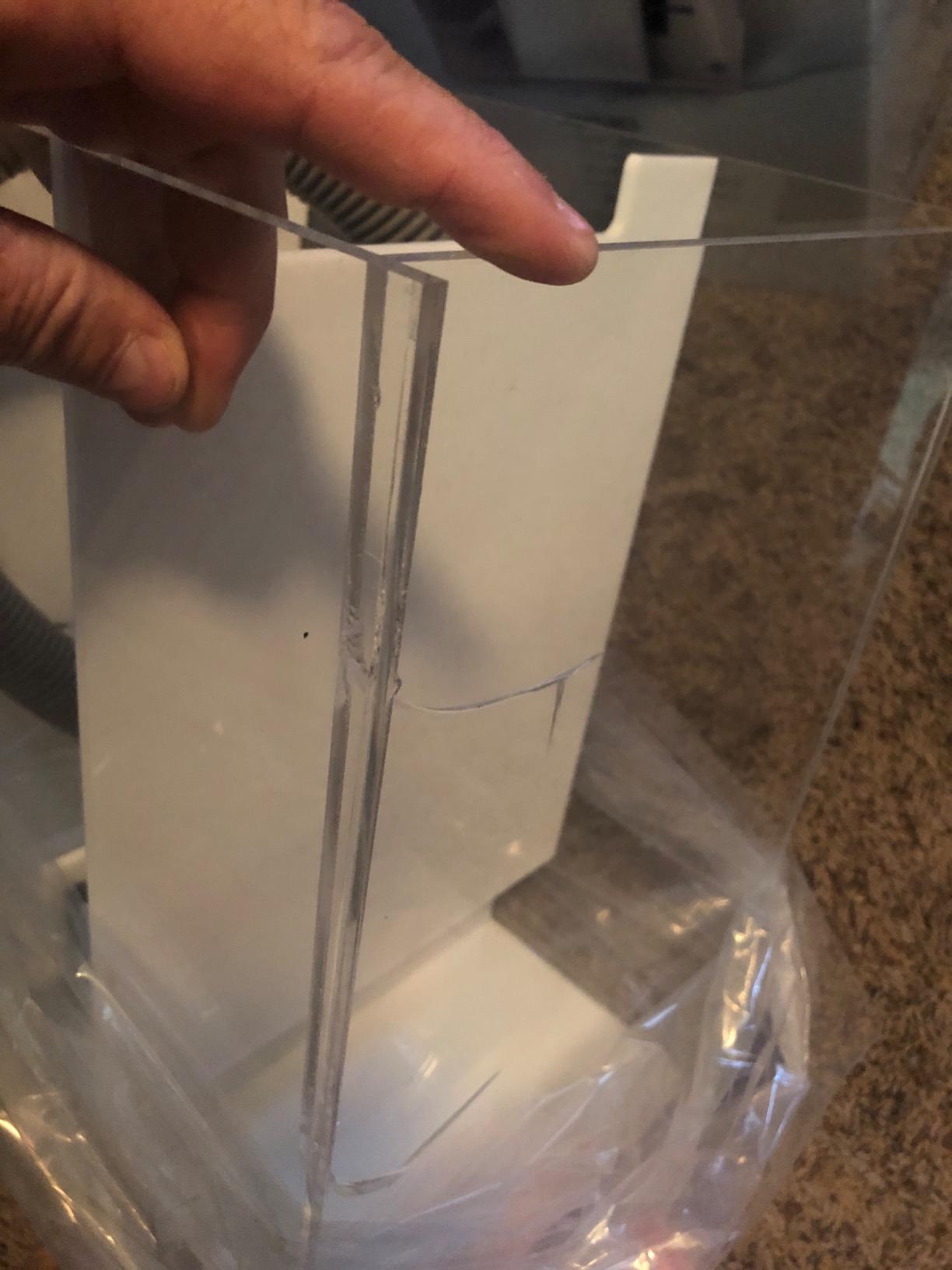
The rating is 3.8 from five reviews, split roughly 70 percent five-star and 30 percent one-star. Quiet operation and value carry the positive reviews. The negative side includes one report of a cracked or unglued side panel, which is the exact failure mode this community worries about most.
Also note the listing itself: published dimensions and weight read as placeholder data at 1 by 1 by 1 inches and 1 pound, so they are useless for planning. Get the real measurements from the manufacturer, and inspect the seams and panels on arrival before you plumb anything.
Reef Sump Buying Guide: Size, Chambers, Materials, and Fit
What size sump does your display actually need?
Match the sump footprint to your display footprint rather than trying to size it by gallons. A sump that is much narrower than the display forces water to channel, and a sump that is much longer will not fit the cabinet. In practice, go as wide as the stand opening allows and as short as your equipment list can tolerate.
As a rough frame of reference for sizing: nano and micro displays up to about 20 gallons want a small square box; a 20 to 40 gallon display wants a sump in the 12 to 20 inch class; a 40 to 65 gallon display wants something in the 20 to 30 inch class; and a 90 gallon or larger display generally wants a sump in the 30 inch class, which is where the Dupla OS500 sits. Treat these as starting points and then subtract whatever your stand opening and plumbing actually allow.
Second rule: the sump should never be wider or deeper than the stand opening minus clearance for the plumbing on both sides. Overhang it and the sump either does not go in or rests against the cabinet wall where you cannot lift it out to clean.
How many chambers should a reef sump have?
This is the number one purchase blocker in reef forums, and the reason kits from Modular Marine and Fiji Cube get recommended so often. A standard three-chamber sump cannot hold a skimmer, a refugium, mechanical filtration, and a return pump without a compromise somewhere. Count the equipment you are actually installing, then add one.
- Mechanical: a sock holder and a floss box, ideally on the first chamber the water enters so debris is caught before it reaches anything else.
- Skimmer: a dedicated chamber with enough width and depth for the skimmer body plus a stable water column you can fix at one level.
- Refugium: a partitioned compartment with a removable or macro-grade lid and room for a light, ideally with a shelf so you can dose into it.
- Equipment: a shelf for the heater, chiller, and probe ends so they are out of the way and easy to service.
- ATO and return: space for the float valve and a clear path for the return pump to draw without stirring settled water.
Three chambers is enough for a skimmer, socks, and a heater. Four is the practical minimum once a refugium is on the plan. Five is where you stop rearranging equipment, which is why the two Dupla models and the Fiji boxes on this list are the ones we keep recommending.
Acrylic, glass, or a baffled kit?
Acrylic is the default for pre-built sumps because it is light, inexpensive to move, easy to drill, and repairable. Cast acrylic, as used in the Fiji Cube bodies, is stiffer than extruded acrylic and holds baffle positions better under flow. Extruded acrylic scratches more easily around plumbing holes, which is cosmetic rather than structural.
Glass gives you the tightest, most leak-resistant seams because they are welded rather than bonded, and it resists chemical creep better. It is also heavy, brittle at the edges, and impossible to modify once it is full. A glass sump is a build-once decision.
A baffled kit gives you the most chamber freedom for the least money, since you silicone your own dividers into a rated container. It costs you a curing window before you can plumb, and a badly placed baffle dead-spaces the water. Our saltwater chiller guide assumes a sump with a usable equipment shelf, which is the space most kits give away to badly sized chambers.
How to measure your stand before you order
Measure first, order second. This three-step check prevents the most common return in this category.
- Measure the internal width and depth of the cabinet opening at the height where the sump will sit, not at the cabinet door. Write both numbers down in inches.
- Measure the clearance from the cabinet floor to the underside of the tank brace, minus the sump lid thickness. Most sumps are listed without their lid.
- Subtract an inch from each dimension for the plumbing on each side, and confirm the sump lid and any mounted equipment still clear when the cabinet door closes.
If a listing does not publish external dimensions, treat the product as unsized. The AEO14000 and the Fiji-20 both carry placeholder numbers in their listings, and that is exactly the kind of listing that produces a return.
Sizing your return pump and understanding head pressure
Turn over your display volume roughly four to six times an hour for a mixed reef and closer to ten for a high-flow tang system, then subtract what you lose to head and to plumbing. Head pressure is the height the pump has to lift water to get it back to the display, and every vertical foot and every elbow costs flow. A return line with tight elbows and a lot of vertical rise can cost you a third of the pump’s rated rate.
Run the pump at zero head when you read the label and treat that number as a ceiling, not a target. Plumb for the long elbows and the high stand, then check the real rate in the sump with a flow meter once everything is running. If you are still choosing a pump, our sump pump guide walks through the details.
Finally, match the pump to the sump. A return pump that can move far more water than the overflow can deliver will make noise, chatter, and reduce skimmer performance, because skimming works on stable inflow. A pump that is too small leaves the sump level dropping between cycles.
How sump volume changes your water change math
A sump adds to your total system volume, and total system volume is what sets your water change percentage. If you have a 90 gallon display and a sump that holds 20 gallons, your system is 110 gallons, and a 10 percent change is 11 gallons, not 9. That difference shows up in your alkalinity and calcium stability, and it works in your favor.
It also changes top-off behavior. A larger reservoir means your auto top-off has more room to work before the sump level drops enough to matter, which is a genuine reliability gain in a hot room. If you are upgrading from a canister filter setup, this is the argument that sells the sump more often than any other.
One last note on noise, because it is the complaint that shows up most in forum threads. Standalone baffles, a sock instead of a floss box that chatters, and a return line that does not hum when it resonates with a cabinet panel solve most of it. Pair the sump choice with the right flow path and the quietest sump on this list becomes a lot quieter than its name suggests.
Frequently Asked Questions
What is the recommended size for a reef tank sump?
Match the sump footprint to your display footprint, not to a gallon number. A 20 to 40 gallon display usually wants a sump in the 12 to 20 inch class, a 40 to 65 gallon display wants 20 to 30 inches, and a 90 gallon display generally wants a sump in the 30 inch class. Always subtract an inch per side for plumbing and confirm the cabinet opening is wider than the sump before ordering.
How big of a sump for a 90 gallon reef tank?
A 90 gallon reef generally wants a sump in the 30 inch length class, which is long enough to give a skimmer, a refugium, mechanical filtration, and an equipment shelf their own chambers. Shorter sumps force you to stack equipment in one compartment, and taller sumps often will not clear the stand brace. Measure the cabinet opening before ordering anything.
What is the best size sump for a 75 gallon tank?
For a 75 gallon display, aim for a sump roughly 24 to 30 inches long and 15 to 16 inches wide, with at least four chambers. That gives you a dedicated skimmer chamber, a refugium compartment, a sock or floss chamber, and equipment space without overrunning a standard stand opening. Add a half inch of clearance per side for plumbing.
Is a sump better than a filter?
For reefs, usually yes. A canister filter works for a small soft coral system with modest flow needs, but a sump hides the skimmer, refugium, dosing pumps, and chiller, adds 10 to 30 percent more system volume for steadier parameters, and keeps plumbing and equipment noise outside the display. Above roughly 40 gallons or any SPS and LPS work, the sump is the more practical layout.
What is the ideal flow rate for a reef tank sump?
Most mixed reef systems run a turnover rate of roughly four to six times display volume per hour, while high-flow tang systems want closer to ten. Because head pressure and elbows reduce the rated flow, pick a pump that exceeds your target at zero head and then verify real flow in the sump with a flow meter once it is plumbed.
How many chambers should a reef sump have?
Three chambers covers a skimmer, mechanical filtration, and a heater. Four is the practical minimum once a refugium is planned, and five is where you stop rearranging equipment. Add one chamber for every major function you add later, such as a refugium, an auto top-off float, a calcium reactor, or extra dosing pumps.
Final Verdict on the Best Aquarium Sumps for Reef Tanks
The Dupla Marin Ocean Sump 200 I is our pick as the best aquarium sump for reef tanks, because five chambers in a sub-20-inch footprint solves the skimmer-versus-refugium argument that stalls most pre-built sump purchases. Move up to the OS500 if you are running a 90 gallon display and want room for everything, and choose a Fiji Cube second-generation box if you want a refugium-ready acrylic with a filter sock in the box and a small footprint.
Measure your cabinet before anything else, and buy the chamber count you will need in two years rather than the one you need today. Then pair it with a right-sized return pump and let the sump do the quiet work.