
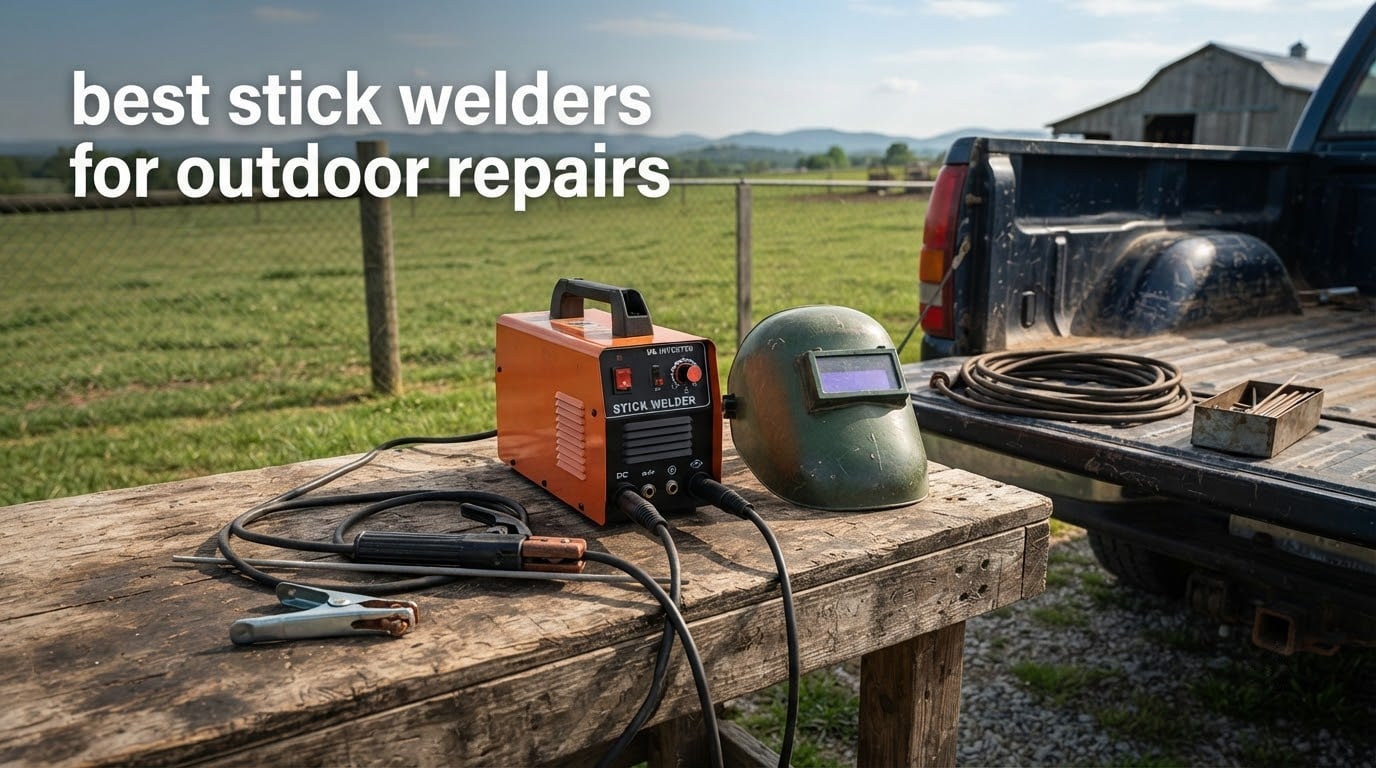
A stick welder uses a flux-coated electrode that melts into the workpiece, so the coating itself shields the weld pool from air. That single fact is why it needs no gas cylinder, tolerates wind and light rain, and happily eats through rusty, painted, dirty steel that would wreck a MIG gun.
That is the whole argument for the best stick welders for outdoor repairs: a machine that starts in the truck bed with a household outlet or a small generator and puts a load-bearing bead into a fence post, a gate hinge or a drawbar without caring what the weather is doing.
Our answer first, so you can stop reading at the end of this paragraph. The DEKOPRO 160A dual-voltage MMA machine is the best all-round pick here, sitting at 4.6 stars across more than 6,100 reviews with hot start, anti-stick and a carry handle. The YESWELDER ARC-205DS is the value pick if you want lift TIG and four electrode types in one box. The Hpoouo ARC-200 wins the carry test at 3.7 pounds if your work is a hundred yards from the truck.
We looked at twelve machines that all land in the same broad price band, which matters because it keeps the comparison honest: no premium-shop flagship is padding the list, and nothing here is a toy. We read every published specification for amperage, input voltage, duty cycle, electrode compatibility and carry weight, then cross-checked those numbers against buyer reports on welding forums and the review summaries attached to each listing.
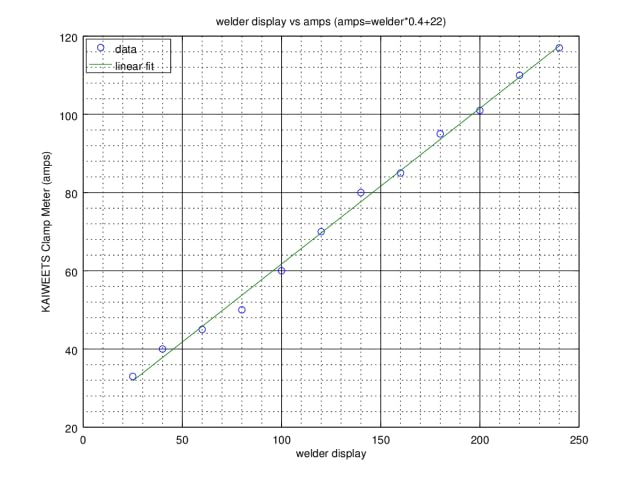
What we could not do is cut test coupons in a farmyard, so treat our numbers as specification data plus owner-reported field results rather than a lab result. Where a spec and the owner reports disagree, we say so. That is a pattern worth knowing: on three of these machines, buyers report the digital amperage readout does not match what a clamp meter shows, and on two of them the advertised rod compatibility is wider than real-world experience supports.
One more framing note before the list. Almost everything you will read about stick welding online assumes a garage with a 240V circuit and clean steel. If your situation is a gate post in wet grass, skip that advice and read the power and electrode sections further down, because voltage and rod choice change the outcome far more than brand name does.
If your repairs are indoors or involve thinner metal than a fence rail, our guide to best multiprocess welders covers the indoor case in more detail. This page stays outside with the machines that work where there is no bench, no clean metal and sometimes no mains power at all.
Table of Contents
Top 3 Stick Welders for Outdoor Repairs (October 2026)

DEKOPRO 160A Dual Voltage
- 110V and 220V dual input
- IGBT inverter with hot start and anti-stick
- ETL certified
- 11.11 pounds

YESWELDER ARC-205DS
- 205A on 110V and 220V
- Runs 6010 6011 6013 and 7018 rods
- Adjustable hot start and arc force
- 8.8 pounds
HONE MMA140D 140A
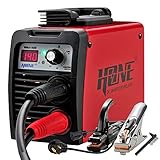
- Up to 140A on 220V
- 40 percent duty cycle at rated output
- Digital display with trouble indicator
- 9.44 pounds
The DEKOPRO takes the top slot because review volume is the closest thing to a durability proxy we have: 6,128 owners have filed a rating, and 75 percent of them gave it five stars, on a machine that weighs 11.11 pounds and takes both 110V and 220V. The YESWELDER earns the value badge because it is the only machine here combining 205A dual-voltage output, four rod types, adjustable hot start and arc force, and lift TIG at 8.8 pounds. The HONE 140A rounds it out as the most honest spec sheet in the group, with a stated 40 percent duty cycle at rated output rather than a headline number.
None of these three is a heavy fabricator. All three are repair machines, and that is the point: they are built to start a gate, close a crack in an implement frame and shut down before the duty cycle gets uncomfortable.
The 12 Best Stick Welders for Outdoor Repairs in 2026
| Product | Specifications | Action |
|---|---|---|
| DEKOPRO 160A Dual Voltage MMA Welder |
|
Check Latest Price |
| YESWELDER ARC-205DS |
|
Check Latest Price |
| HONE MMA140D 140A |
|
Check Latest Price |
 Hpoouo ARC-200 200A Mini Hpoouo ARC-200 200A Mini |
|
Check Latest Price |
 HITBOX UW-AT2000 200A HITBOX UW-AT2000 200A |
|
Check Latest Price |
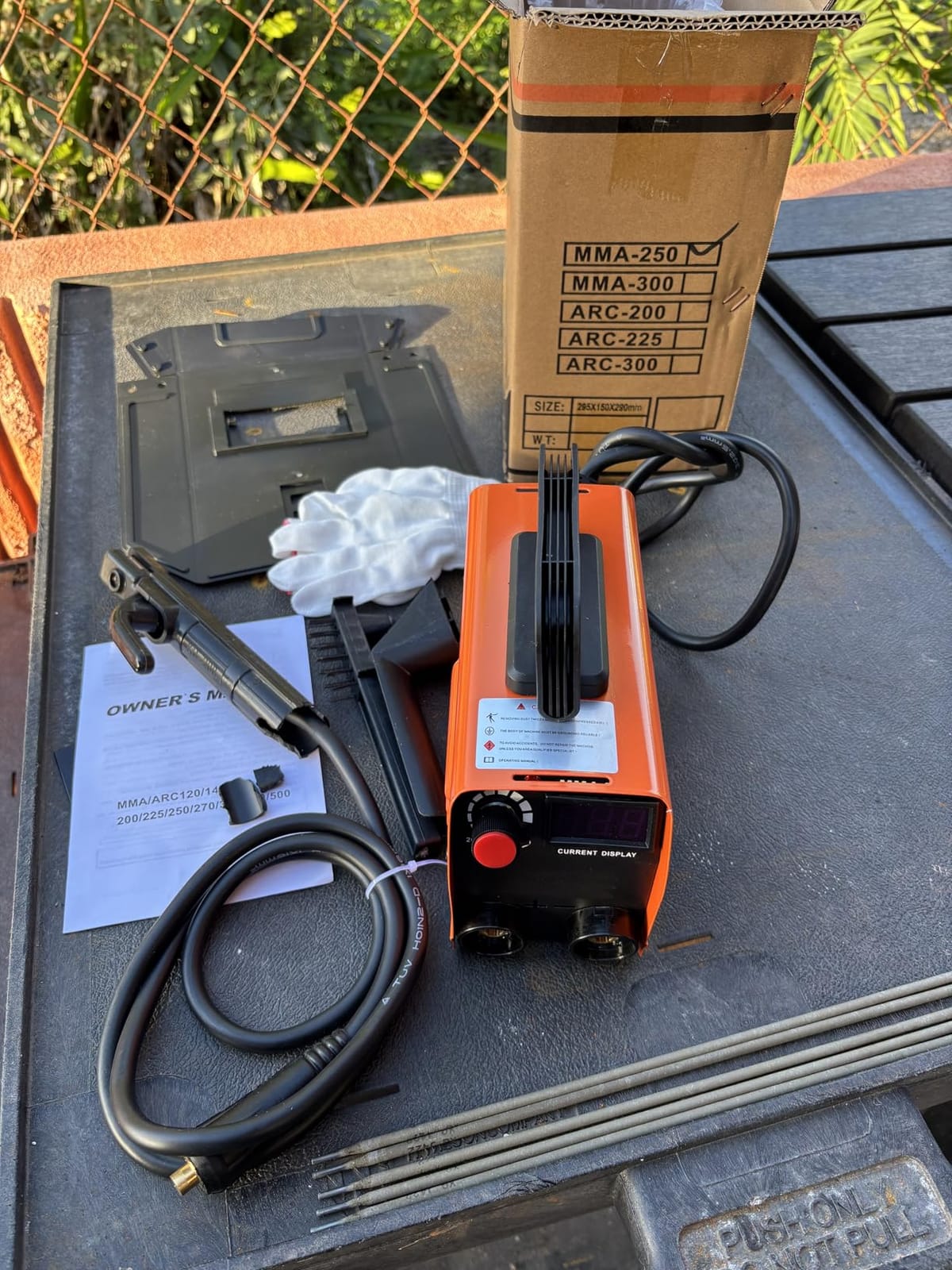
 HGNVGZ MMA-250 250A HGNVGZ MMA-250 250A |
|
Check Latest Price |
 S7 250A Dual Voltage S7 250A Dual Voltage |
|
Check Latest Price |
 FEIFANKE ARC 250A Mini FEIFANKE ARC 250A Mini |
|
Check Latest Price |
 HONE MMA205 205A Mini HONE MMA205 205A Mini |
|
Check Latest Price |
 Siasky MMA-250A Mini Siasky MMA-250A Mini |
|
Check Latest Price |
 Sefaspe ARC 200Pro Sefaspe ARC 200Pro |
|
Check Latest Price |
 TOOLIOM ARC-195 PRO TOOLIOM ARC-195 PRO |
|
Check Latest Price |
Two columns in that table deserve a warning label before you read further. Amperage ratings on all of these are peak numbers, and the honest measure is how long each one holds that output before the thermal protection steps in. Separately, the weight column mixes bare machine weight with shipping weight for several listings, so a machine showing 3.7 pounds may arrive in a 7.8 pound box.
1. DEKOPRO 160A Dual Voltage MMA Welder: Best Overall for Outdoor Repairs
- Highest review volume in the group with a 4.6 average
- IGBT inverter with hot start anti-stick and arc stability
- ETL certified for field safety
- Works on mild steel stainless and cast iron
- Closed loop voltage control holds output steady
- Heaviest of the small dual-voltage machines at 11.11 pounds
- Minimal accessory bundle with no rods or helmet included
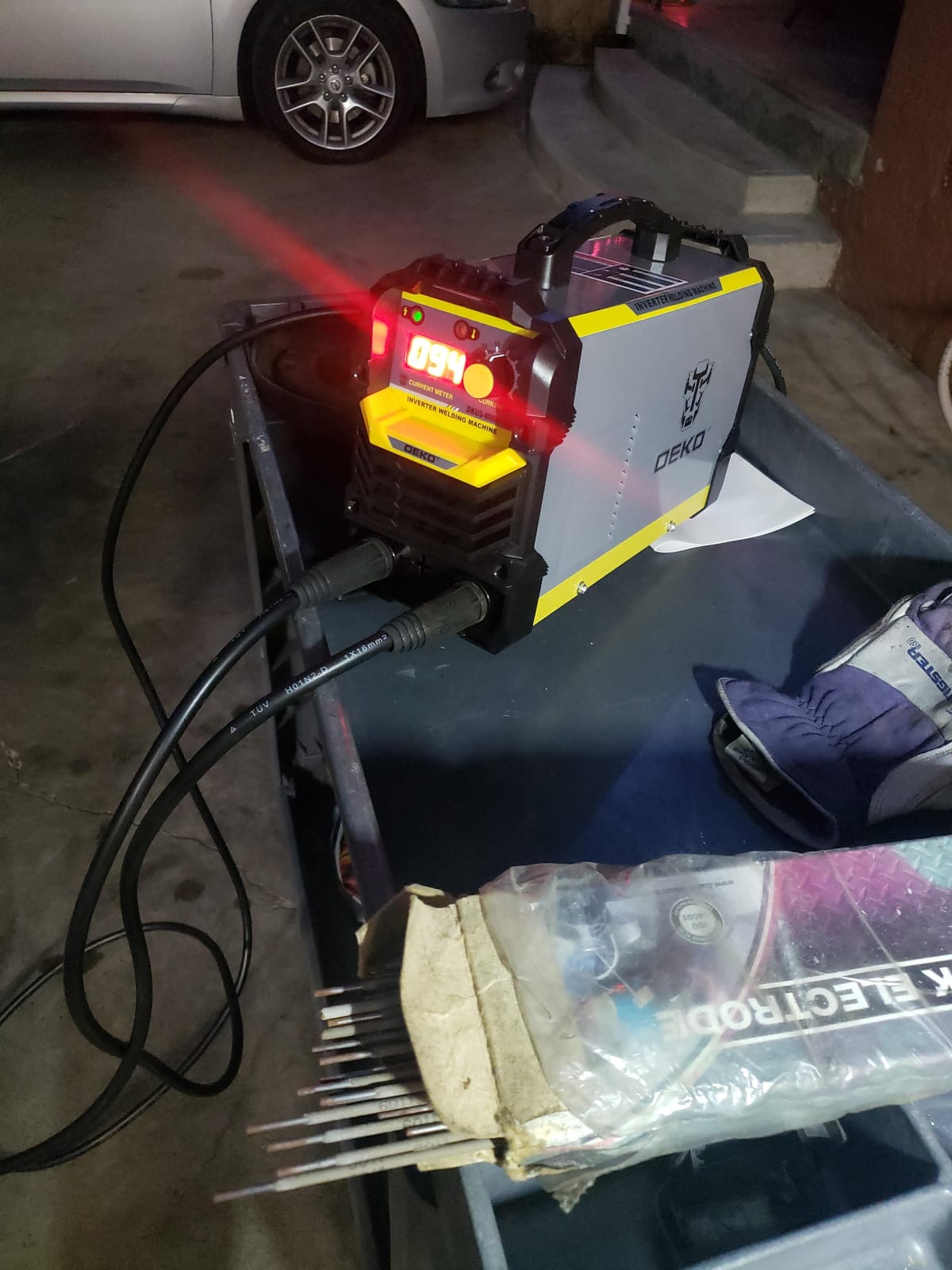
This is the machine I would put in the truck if I only had room for one. It arrived with an electrode holder, a work clamp, an input power adapter cable and a brush, which means no rods and no helmet, so budget for both before your first bead. What it did arrive with was a 160A IGBT inverter, dual 110V and 220V input, and a physical size of 14.88 by 11.5 by 6.34 inches that fits behind a seat.
Owner reports describe it as a capable general-purpose machine rather than a specialist one, with hot start and anti-stick doing most of the work for beginners. Buyers run it on stainless, mild steel, aluminum and cast iron, and the 75 percent five-star share suggests first-time users are not immediately frustrated by it.
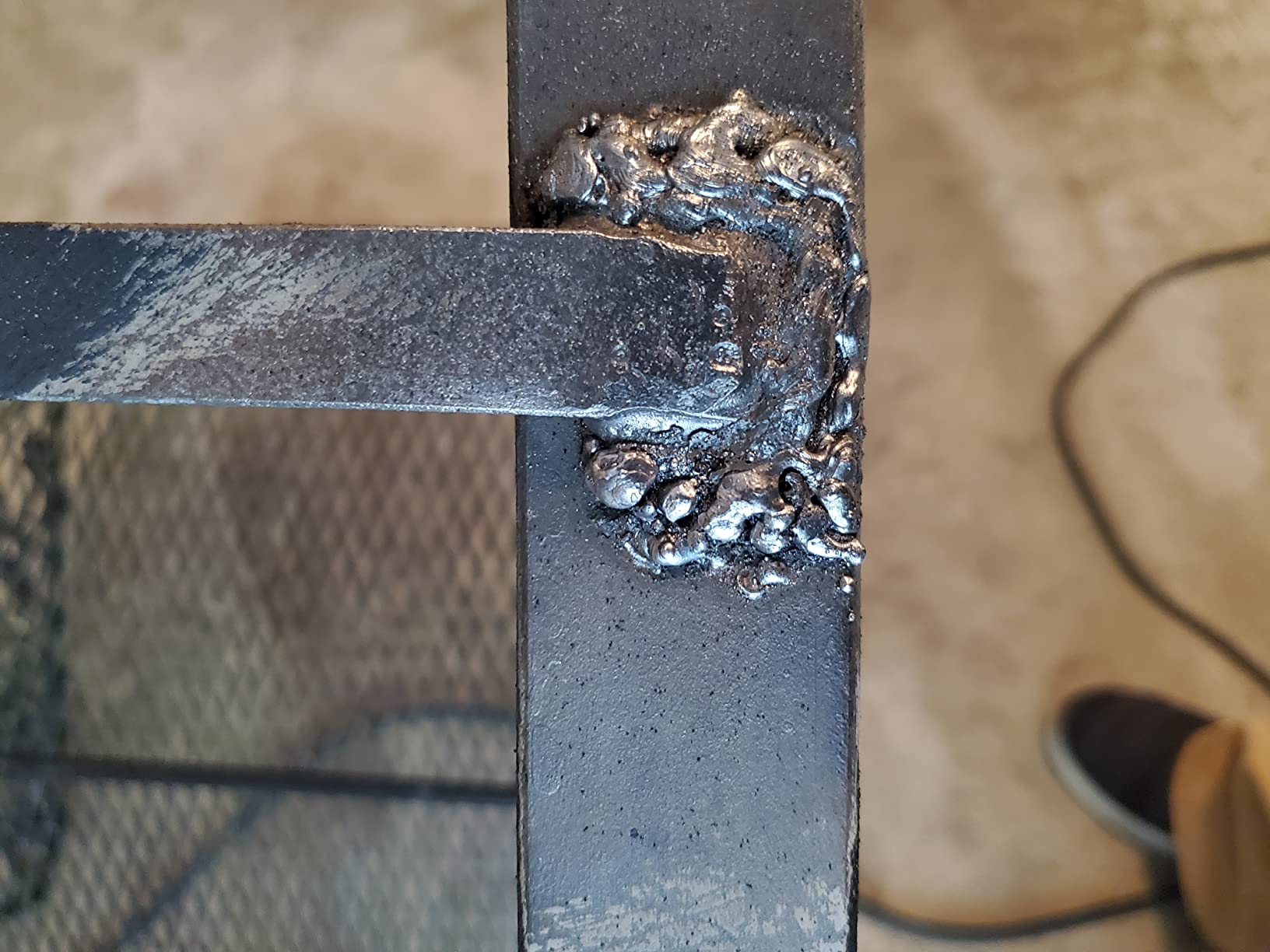
The honest weakness is weight. At 11.11 pounds it is the heaviest small dual-voltage unit here, which is fine in a truck bed and a nuisance on a hundred-yard walk to a broken gate. Second, the review consensus is that this is a general-purpose welder, not a machine to build a trailer frame in one sitting.
On the outdoor question specifically, the dual voltage matters more than the wattage. Being able to run on a 110V branch at a jobsite means you are not hunting for a 20A circuit or a generator big enough to run a 220V-only machine. Closed-loop feedback voltage control is what keeps the arc from wandering when the input sags, which is exactly the failure mode that makes cheap welders miserable on a long cord.
When this is the right machine for the job
Choose the DEKOPRO if your repairs span a range of thicknesses on mild steel, you want stainless or cast iron capability in the same machine, and you will mostly work within reach of both 110V and 220V outlets. It is also the safest default for a household because it is ETL certified, which matters more outdoors where you may be working near damp ground and a metal gate.
It is a good first machine and a good second machine. The switchgear inside is protected, hot start handles rust scale, and the review base is deep enough that failure patterns are well documented, and mostly boring.
When you should pick something else
Skip it if you are doing a long structural job such as a drawbar or a three-point hitch repair, where sustained high amperage matters more than arc initiation. At 160A it is not built to hold a heavy bead for an hour without resting.
Also skip it if you have to carry the machine more than a short distance from the vehicle, and consider a lighter 110V-only mini machine instead. And if the 11.11 pounds bothers you, two machines below weigh less than 8 pounds and do the same job on thinner material.
2. YESWELDER ARC-205DS: Best Value Stick Welder for Outdoor Repairs
- Adjustable hot start and arc force on 1-10 scales that you can tune in the field
- Runs 7018 smoothly on 220V with good penetration
- Light at 8.8 pounds with a carry handle
- Automatic compensation for unstable supply voltage
- Full overcurrent overload and thermal protection suite
- Digital current readout reported off by as much as about 30 percent
- Finicky with 6013 rods on cold start
- Ground clamp is flimsy
- No TIG torch included
This is the machine most owners in this price band actually recommend for farm and property work, and the reason is simple: it runs 7018 on 220V with real penetration while weighing 8.8 pounds. The box contains the welder, an electrode holder, a ground clamp and a 220V to 110V adapter, so you can run it off a normal outlet without buying anything else to make it work.
Owner reviews describe easy arc striking even from complete beginners, and multiple detailed reports confirm strong 7018 performance on 220V and on generator power. The 72 percent five-star share is solid, and the 1-to-10 hot start and arc force adjustment gives you more control over a rusty start than a machine with a single fixed setting.
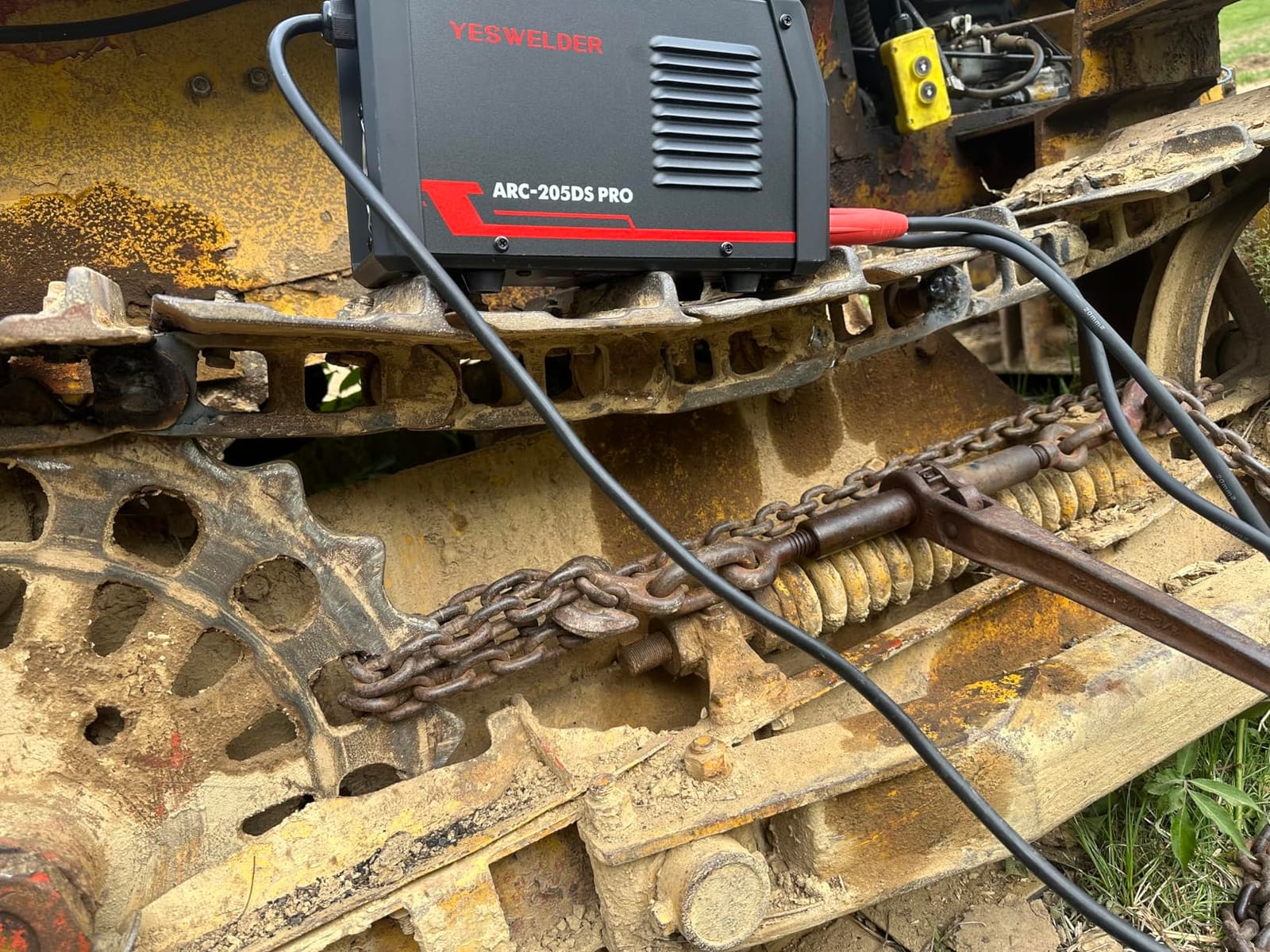
Here is the catch that matters outdoors. The digital current readout overstates actual output, with owners reporting errors of up to roughly 30 percent. That means if you set the dial by the number on the screen, you may be welding considerably hotter than you intended on thin material, and if you are chasing a penetration problem on thick rod, the screen is not telling you the truth.
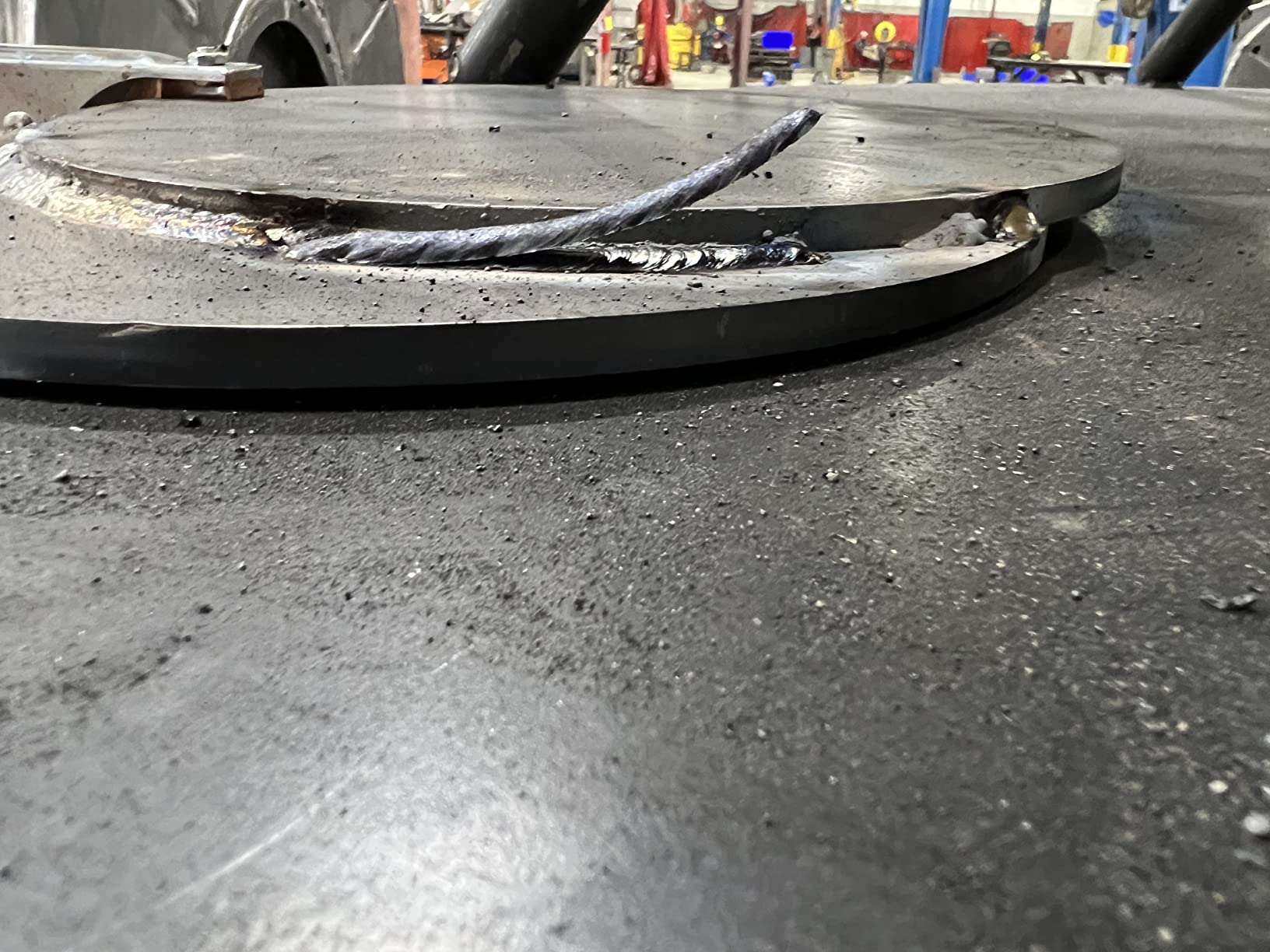
The second issue is 6013 rods. Reviewers specifically report that this machine is harder to control a puddle with and struggles on cold starts with that rod. For outdoor work this is manageable if you use 6011 for dirty or rusty metal and 7018 for anything structural, but it is a real limitation if your only planned rod is 6013.
When this is the right machine for the job
Pick the ARC-205DS if you weld trailers, implement frames or anything structural that needs 7018, and if you want the flexibility of running on either voltage depending on what outlet you find. It is also a strong pick if you plan to run from a portable generator, since owner reports specifically confirm it works on generator power.
If you are coming from no welding at all, the adjustable hot start is genuinely useful. You get a gentler ignition on a dirty fence post and a firmer arc on a 7018 bead without swapping machines.
When you should pick something else
Do not buy it for clean sheet metal work where you will be running 6013 rods and trusting the display. Both of those are the machine’s weak spots, and the readout problem is not a dealbreaker but it will annoy anyone who meters their work.
Plan on replacing the ground clamp early, and budget for a proper electrode holder too, since the included holder and clamp are described as flimsy relative to what heavy rod work demands. Neither problem is a reason to skip the machine, but both are money to plan for.
3. HONE MMA140D 140A: Best Dual-Voltage Machine with an Honest Duty Cycle
- States a real 40 percent duty cycle at 120A on 110V and 140A on 220V
- Handles 6013 7018 6011 and 6010 rods from 1/16 to 1/8 inch
- Anti-stick plus closed loop feedback and full protection
- Digital display with a trouble indicator
- Customer service reported responsive within 24 hours
- Amp display and dial chart do not match real output except at a few points
- Does not run 6010 cellulose rods reliably despite the claims
- Not intended for all-day production welding
This is the machine whose spec sheet tells you the truth, and in a category where that is rare it changes how you buy. It states 10 to 120 amps on 110V and 10 to 140 amps on 220V, a 40 percent duty cycle at that rated output, 4.29 kW of draw, and rod compatibility across AWS E6013, E7018, E6011 and E6010 from 1/16 to 1/8 inch. Nothing in those numbers is inflated, which means you can plan a job around them.
Owner reports back this up. Buyers welded mower frames, brackets, rebar and outdoor railings on both voltages with good penetration, and one detailed review with a meter documented exactly where the display and the dial chart stop matching real output. That is a design complaint about the readout, not the welder.
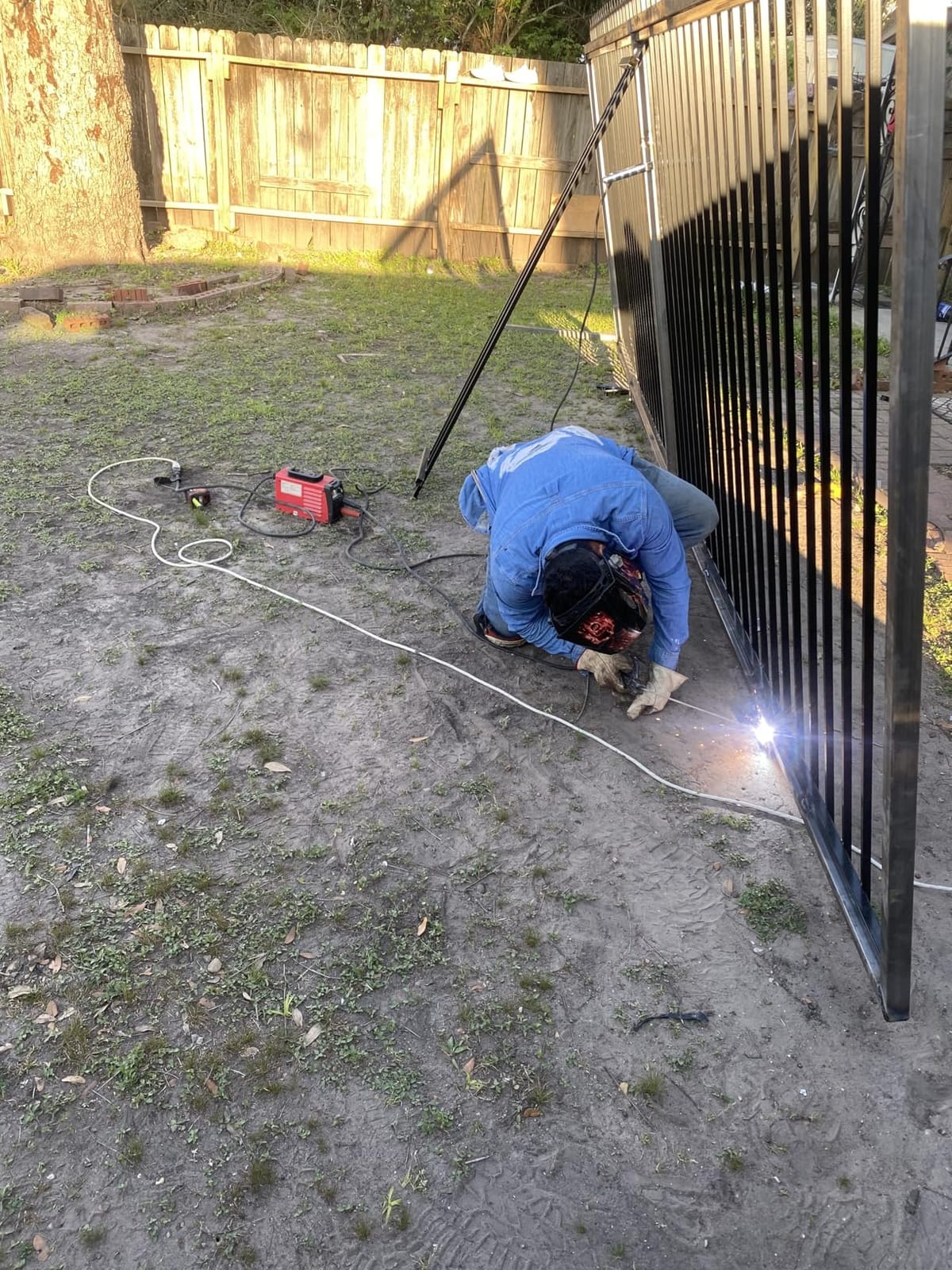
At 9.44 pounds and 9 by 3.9 by 5.6 inches it is one of the smaller boxes in the group, though the carry weight is not unusually light. The digital display includes a trouble indicator, which is a nice touch in the field because a fault code beats guessing why the arc stopped.
The 6010 problem is the one to know about. The listing claims E6010 support, and owners report it does not run cellulose 6010 reliably. If your outdoor work involves pipe, heavy farm implement frames or old painted structural steel where a cellulosic rod is the normal choice, cross this one off your list or keep another machine for those jobs.
When this is the right machine for the job
Choose the MMA140D if you want to plan your work around real numbers rather than marketing numbers, and if your typical material runs from rebar and mower frames down to brackets. The 40 percent duty cycle is genuinely workable for repair work with pauses between beads.
It is also a sensible pick if a machine that fails in the field troubles you. The listed protections cover heat, current, voltage and short circuit, and the fault indicator plus responsive customer service give you somewhere to go when something goes wrong a hundred miles from a shop.
When you should pick something else
Pass if you weld with 6010 cellulose rods regularly, because the real-world experience contradicts the spec. Pass if you plan continuous production work, since this is explicitly not that machine, and pass if you need 1/4 inch rod capability for a drawbar or a heavy implement repair.
Also be aware of the 140A ceiling on 220V. If your thickest outdoor job is heavier structural steel, you need a machine rated above that or you will be making two passes on everything.
4. Hpoouo ARC-200 200A: Best for Backpack Carry to Remote Jobs
Hpoouo 200Amp 20PCS Rods Stick Welder, Super MINI Portable Welding Machine
- Lightest carrying weight in the group at 3.7 pounds
- Runs on 110V household power for remote sites
- Kit includes 20 rods two chip hammers and gloves
- Works with 6013 6011 6010 7018 and E308 rods
- Sits at a top five category rank for a budget machine
- 110V only so output is limited against dual-voltage machines
- Listed weight and package weight differ noticeably
At 3.7 pounds and 7.8 by 3.9 by 5.3 inches, this is the machine for the jobs where the walk is longer than the weld. It fits in a backpack, it runs on ordinary 110V household power, and the box includes 20 welding rods, two chipping hammers and gloves, so the first trip out does not require a hardware store stop.
Output is adjustable from 20 to 200 amps and the stated weldable thickness is 0.06 to 0.2 inch, which covers fence straps, gate hardware, trailer brackets and light frame repair. Hot start, anti-stick and arc pushing force are all present, and the review profile is 76 percent five-star, so beginners are not fighting the machine.
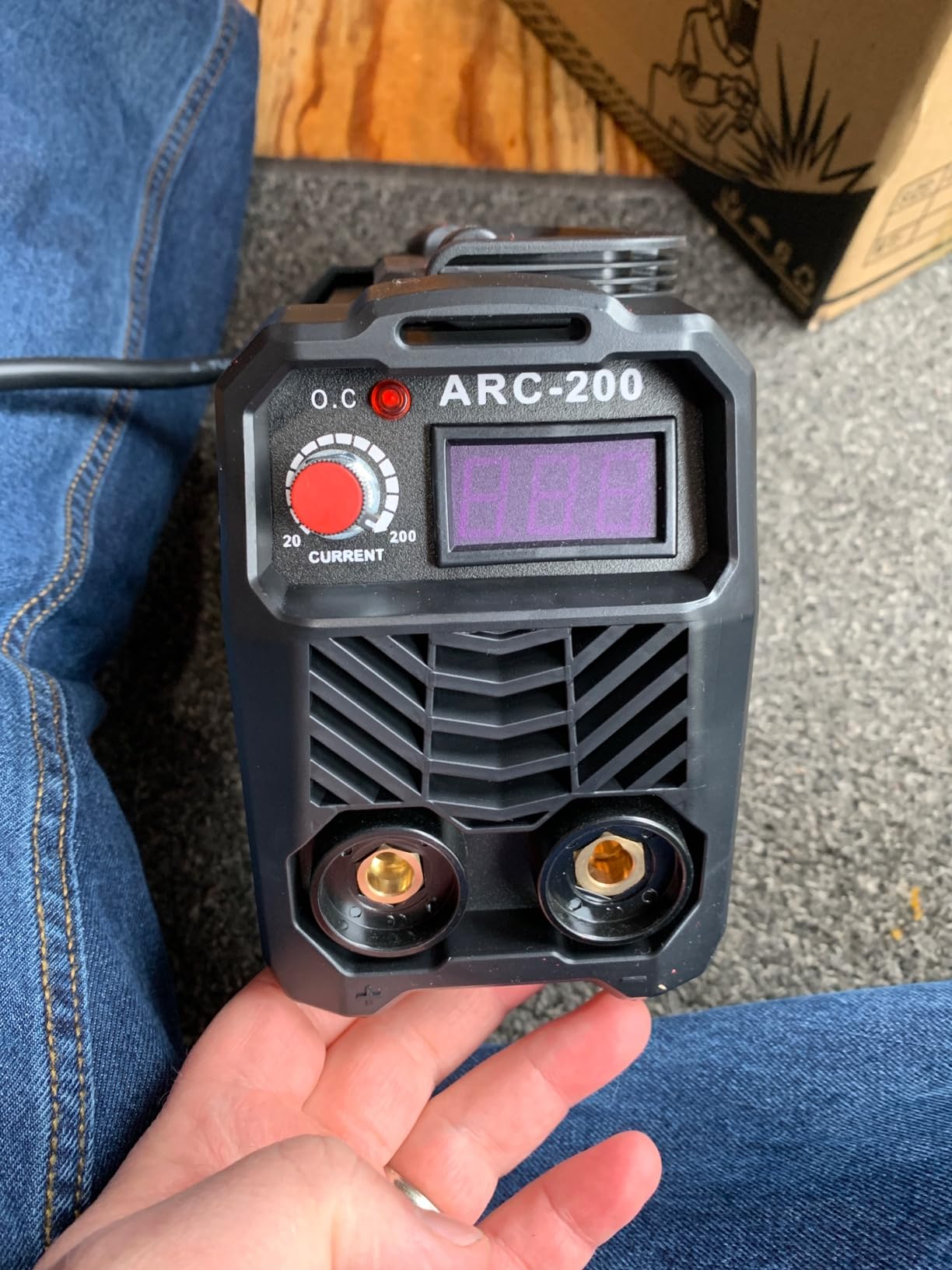
Being 110V-only is the defining limitation, not a flaw. On a 20 amp household circuit you are capped at roughly half the output a 220V machine delivers, so a heavy structural job simply is not in scope. For the gate hinge or the loose trailer bracket, it is more than enough.
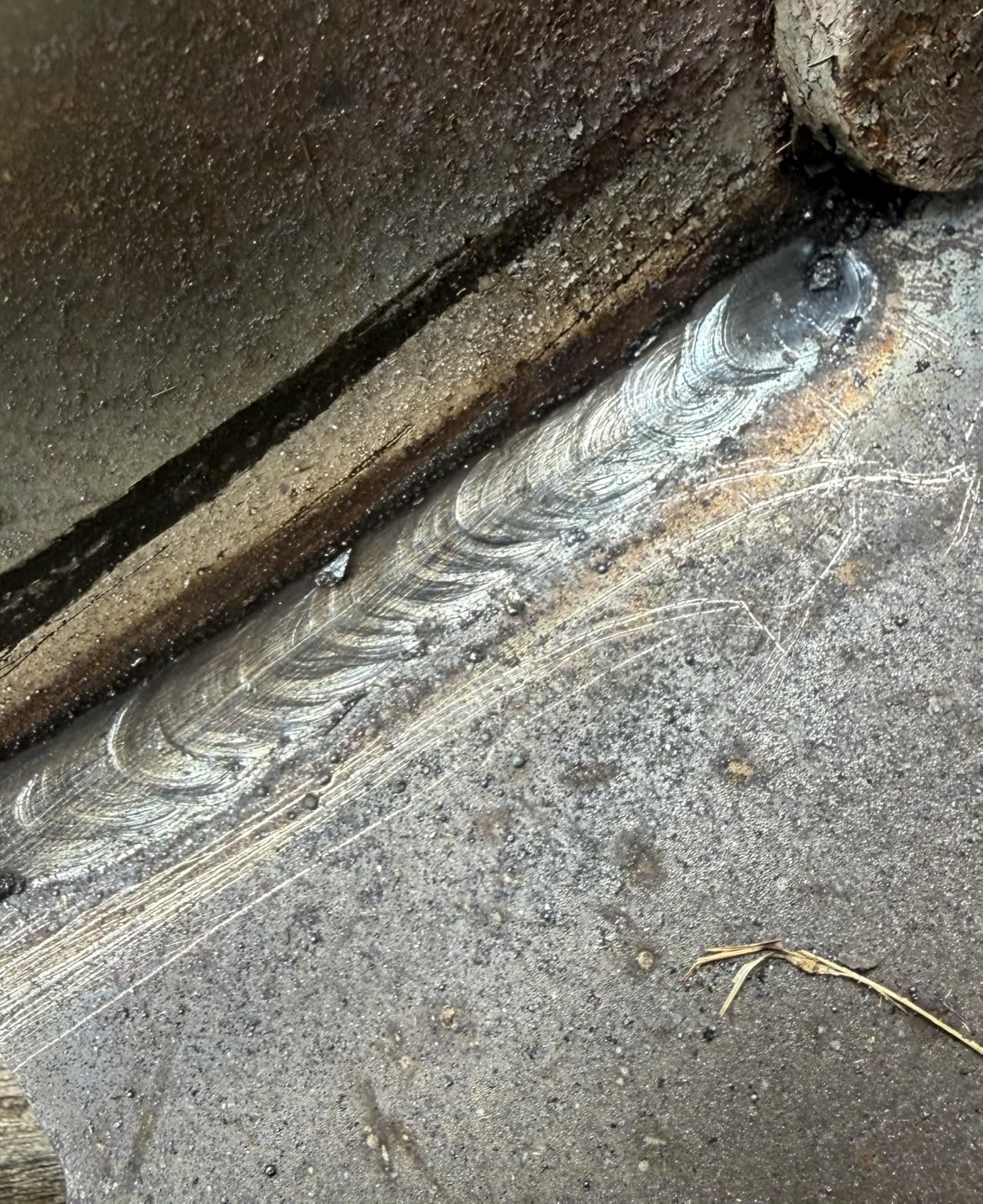
One data quirk worth knowing: the listed item weight is 3.7 pounds while the package weight is listed at 7.85 pounds, so plan your carry for something closer to 4 pounds plus leads. Reviewers concentrate on the included consumables and easy handling rather than heavy fabrication, which tells you where the machine’s ceiling is.
When this is the right machine for the job
Pick it if your work is scattered: a gate in one field, a feeder in another, a fence line along a boundary. One person carrying one machine, on 110V power at the far end, is the situation this is built for, and the included rods mean you are not hunting for supplies.
It is also a good second machine for anyone who already owns a bigger welder and needs a lightweight unit for the jobs that do not justify hauling 20 pounds of equipment across a pasture.
When you should pick something else
Do not buy it for load-bearing implement repair or trailer frame work. A 110V-only machine is the wrong tool when a weld has to hold a drawbar or a bucket mounting point, and there is no way around that with more practice.
Skip it if you expect to run it on a shared 15 amp extension cord from a distance. The lighter the machine the better it copes with a marginal circuit, but 110V output plus a long thin cord still adds up, and a dual-voltage machine gives you an out.
5. HITBOX UW-AT2000 200A: Best for the Widest Rod Range
HITBOX 200Amp Stick Welder, 110V/220V ARC/Lift TIG Welding Machine
- Widest electrode range here covering 6013 6014 7016 7018 7028 8018 and E308-16
- Light at 5.9 pounds with a carrying handle
- Switchable MMA and Lift TIG modes
- Adjustable hot start and arc force with anti-stick
- VRD plus overheat overcurrent and overvoltage protection
- No TIG torch included so Lift TIG needs a separate purchase
- Listed weight and package weight differ
The reason to look at this machine is the rod list. It covers E6013, E6014, E7016, E7018, E7028, E8018 and E308-16, which is broader than anything else in this list, and rod flexibility is what lets you match an electrode to the job rather than forcing one rod to do everything outdoors.
Everything else is conventional and well-executed for the class. It takes 110V or 220V input with 20 to 200 amps of adjustable output, weighs 5.9 pounds at 9.06 by 4.33 by 6.69 inches, and includes switchable MMA and Lift TIG modes with adjustable hot start, arc force and anti-stick. VRD is included, which is a genuine safety plus when you are kneeling on wet ground next to a metal gate.
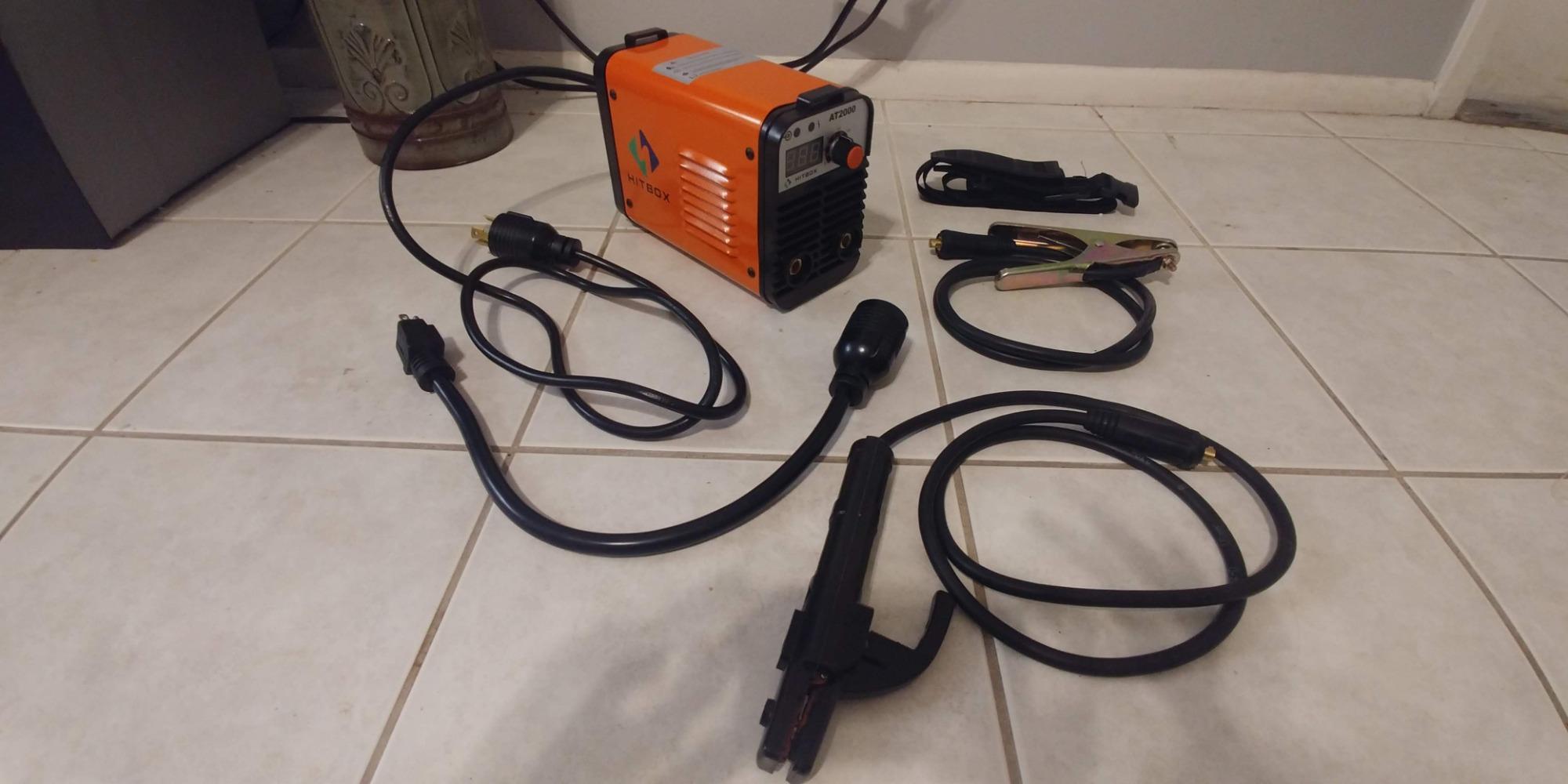
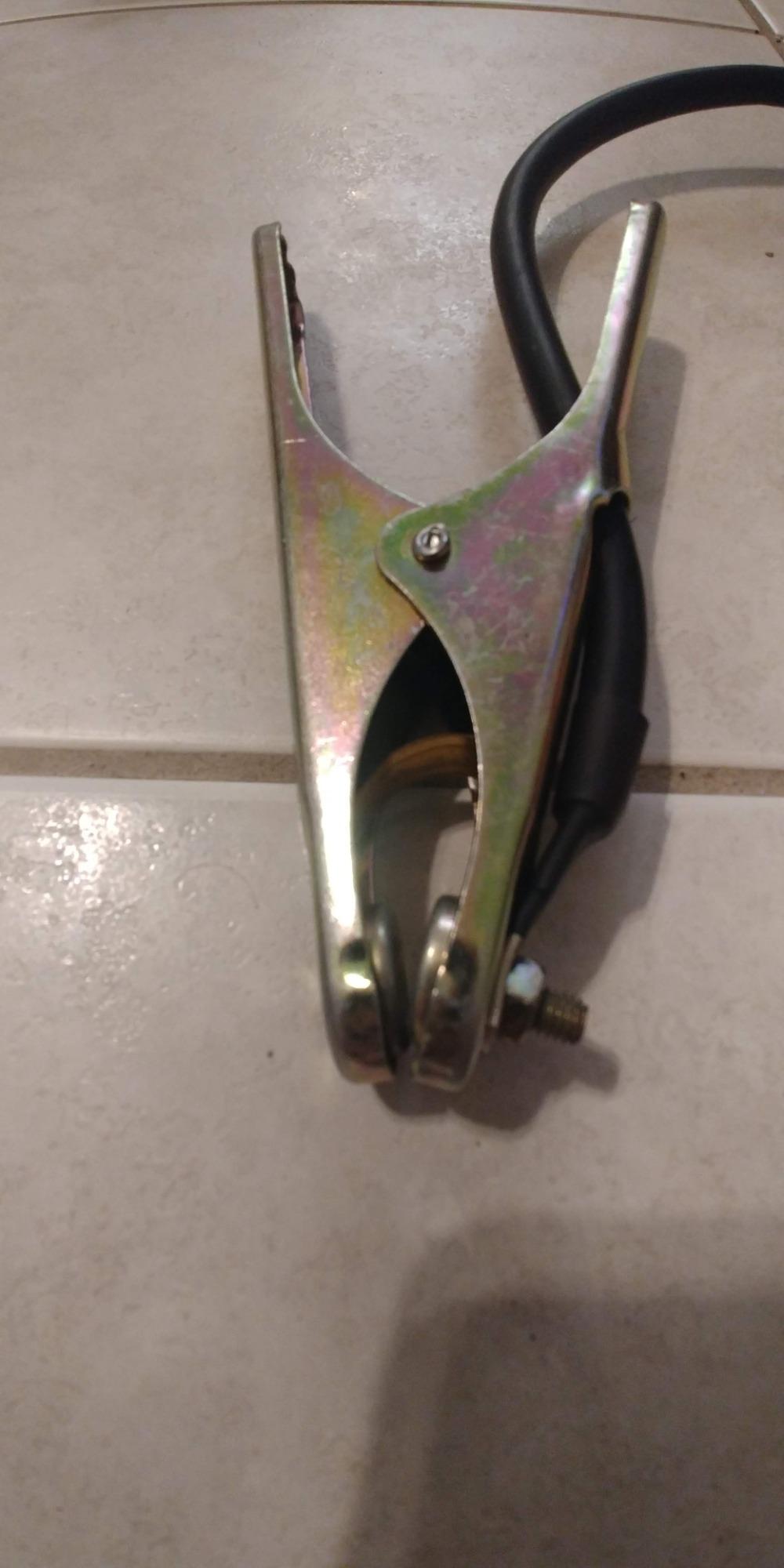
Two things temper the recommendation. The TIG torch is sold separately, so the Lift TIG mode is a promise you will pay extra to keep, and the listed weight of 5.9 pounds does not match the package weight of just over 8 pounds. Buyers weigh portability and the lift TIG option highly, with the missing torch the recurring caveat.
It is worth noting this machine sits lower in category demand than several rivals here. That is not a quality signal by itself, but it does mean fewer long-term field reports exist to draw on, so treat the owner feedback as thinner evidence than the review counts on the top three suggest.
When this is the right machine for the job
Choose it if you work across mixed metals and mixed rod types, which on a farm or a property with a trailer, a stainless gate and a rusty implement is common. The E308-16 compatibility alone covers stainless repair jobs that most budget machines here cannot touch.
It is also a strong choice if you are in a damp environment regularly. The VRD function lowers the no-load voltage, which is exactly the protection you want on a wet day when you cannot keep everything dry.
When you should pick something else
Skip it if lift TIG was the reason you were considering it, because the torch is an extra purchase and adds weight you may not want on a long carry. And if you already know you will run 6013 and 7018 exclusively, the extra rod compatibility does not pay for itself.
For pure carry weight, a lighter 110V mini machine will beat it, and for pure duty cycle headroom on long beads, a 250A machine is a better fit.
6. HGNVGZ MMA-250 250A: Best for Long 110V Sessions
HGNVGZ 250A MMA Stick Welder 110V, Portable IGBT Inverter Arc Welder
- Highest stated duty cycle here at 60 percent at rated output
- Very light at 3.7 pounds with an adjustable shoulder strap
- ABS shell insulates better than metal housings
- Works on 6013 7018 6011 and E308 rods up to 0.2 inch
- Owners report durability after three years of heavy rod use
- Requires a standard 20A circuit breaker to run reliably
- Instruction manual is poorly translated with no troubleshooting section
- One report of the unit failing to arc seconds after testing
This is the machine to look at if you want serious 250 amp output and a 60 percent duty cycle from nothing but a 110V outlet. Most owners use it for mower decks, gates and small brackets, and they praise the portability and the run time. The stated weldable range covers 1/16 to 1/8 inch E6013, E7018, E6011 and E308 rods up to 0.2 inch, with an ABS shell and a 360 degree cooling fan.
The shoulder strap is worth calling out. It is the only machine here that ships with one, and for carrying a live power source to a gate or a ditch bank a strap is more useful than a handle. The listed weight of 3.7 pounds makes it one of the lightest machines that can genuinely push 250 amps.
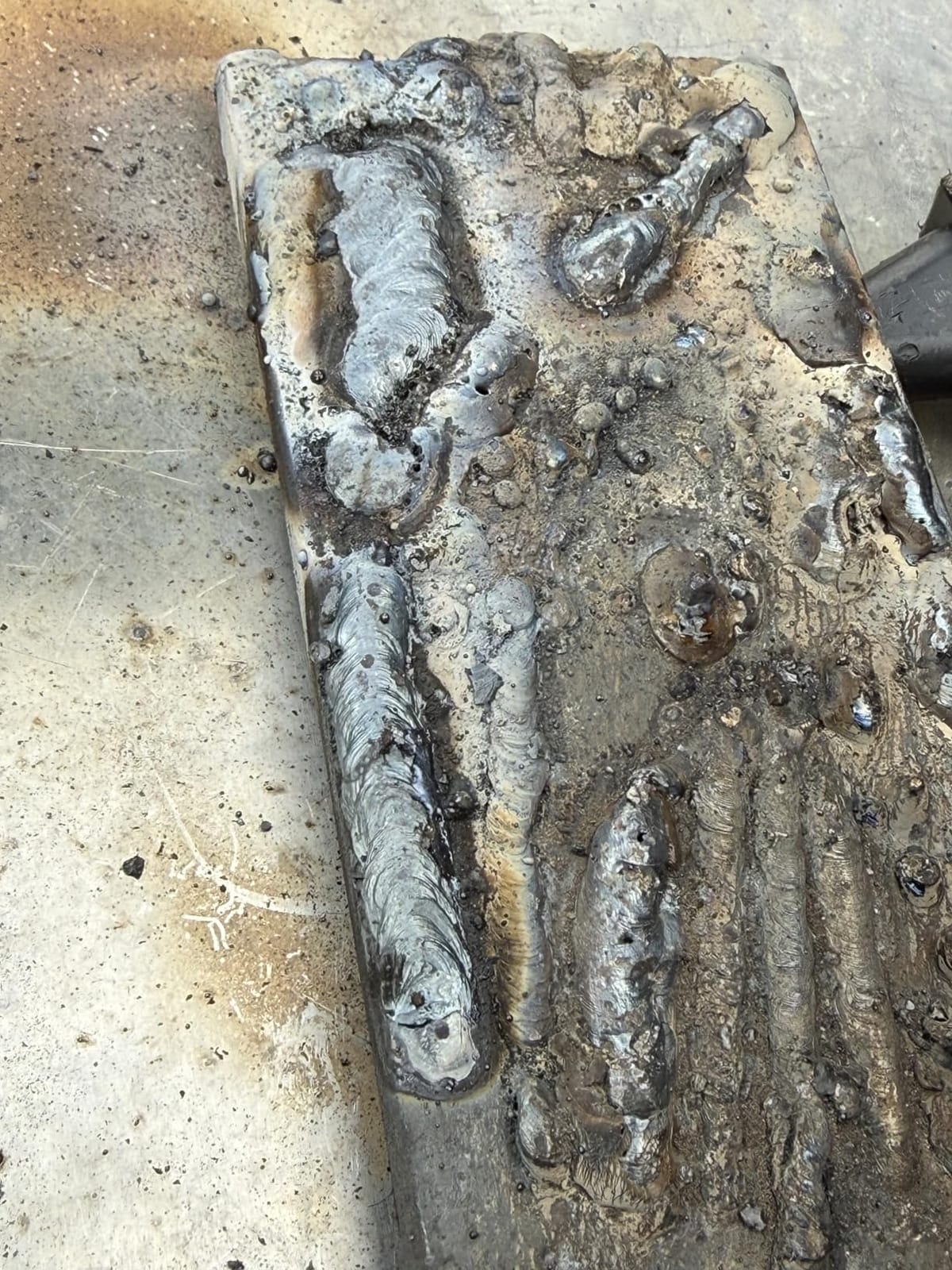
The important caveat is the circuit. It needs a standard 20A household breaker to run reliably, so a 15 amp extension or a shared circuit will cause problems before the machine does. On a jobsite where you are lucky enough to have 20 amps available, it is a different story entirely.
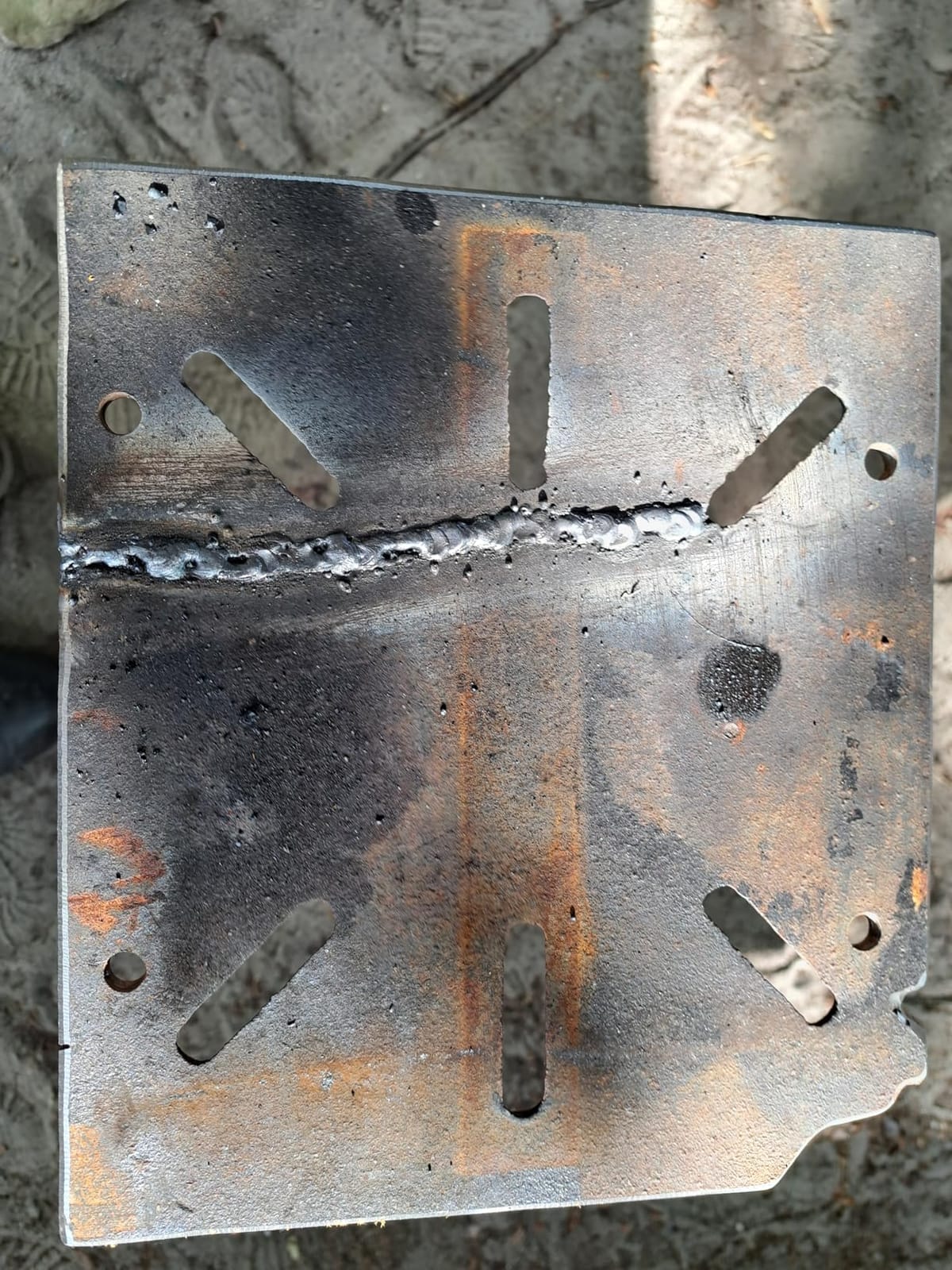
Two other honest notes. The instruction manual is poorly translated with no troubleshooting section, so you will be relying on the display and your own judgment when something odd happens. And there is an isolated report of a unit that stopped producing an arc seconds into testing, which is a single data point rather than a pattern, but it is worth knowing if you are buying far from any support.
When this is the right machine for the job
Pick it when you have genuine 20 amp power available and you want the highest duty cycle in this group. The combination of 60 percent duty cycle, 250 amps and a 3.7 pound carry weight is unusual and it means you can do a long repair session on one machine without it thermally tripping.
It is also a reasonable choice for someone who welds often enough to worry about the ABS shell running hot, since owners specifically report better insulation behaviour and fewer overheat shutdowns than metal-housed machines.
When you should pick something else
Do not buy it if your available power is 15 amps, and be careful with long extension cords, because a 250A machine on 110V is drawing serious current and a thin cord will sag the voltage mid-bead. If you are unsure of your circuit, pick a lower-amperage 110V machine instead.
Skip it if you cannot get a readable manual or local support, and treat it as a light-to-medium job machine rather than a shop welder, which is how most owners use it.
7. S7 250A Dual Voltage: Best for Cellulose 6010 Rod Work
250A Stick Welder, 110V/220V Portable IGBT Inverter ARC Welder
- Runs cellulose 6010 rods alongside 6011 6013 and 7018
- Broadest supported rod range for dual-voltage machines here
- 80 percent five-star rating distribution is the highest in the group
- IGBT inverter runs lighter and cooler than transformer machines
- The listing itself names gates fences trailer parts mower decks and brackets
- Cooling time is needed during extended operation on higher output
- Best results require a suitable power circuit and the correct rods
Most budget inverters in this category advertise 6010 support and then struggle with it. This one has an 80 percent five-star distribution with only 3 percent one-star, and it is rated for E6010, E6011, E6013 and E7018 on both 110V and 220V with 250 amps of output. For outdoor work on old structural steel or farm implement frames, being able to pick up a cellulosic rod is a real capability difference.
The listing itself names the intended work, which is unusual and useful: gates, fences, trailer parts, mower decks and brackets. That is precisely the outdoor repair category this roundup covers, and the owners buying it treat it as a capable dual-voltage 250A machine for property and farm work.
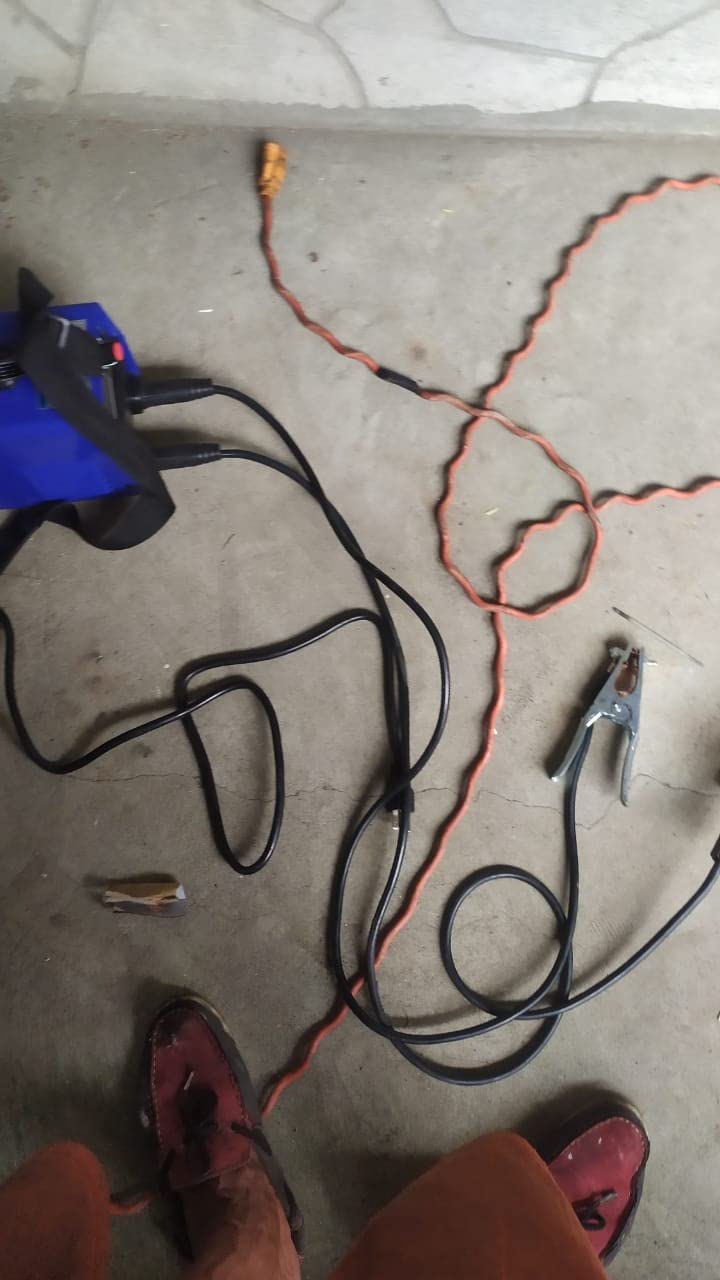
The stated limitation is cooling time during extended operation on higher output. In practice that means planning your work in beads with pauses, which for repair welding is rarely a problem. The second note, that best results require a suitable power circuit and the proper rods, is advice worth taking seriously rather than skipping.
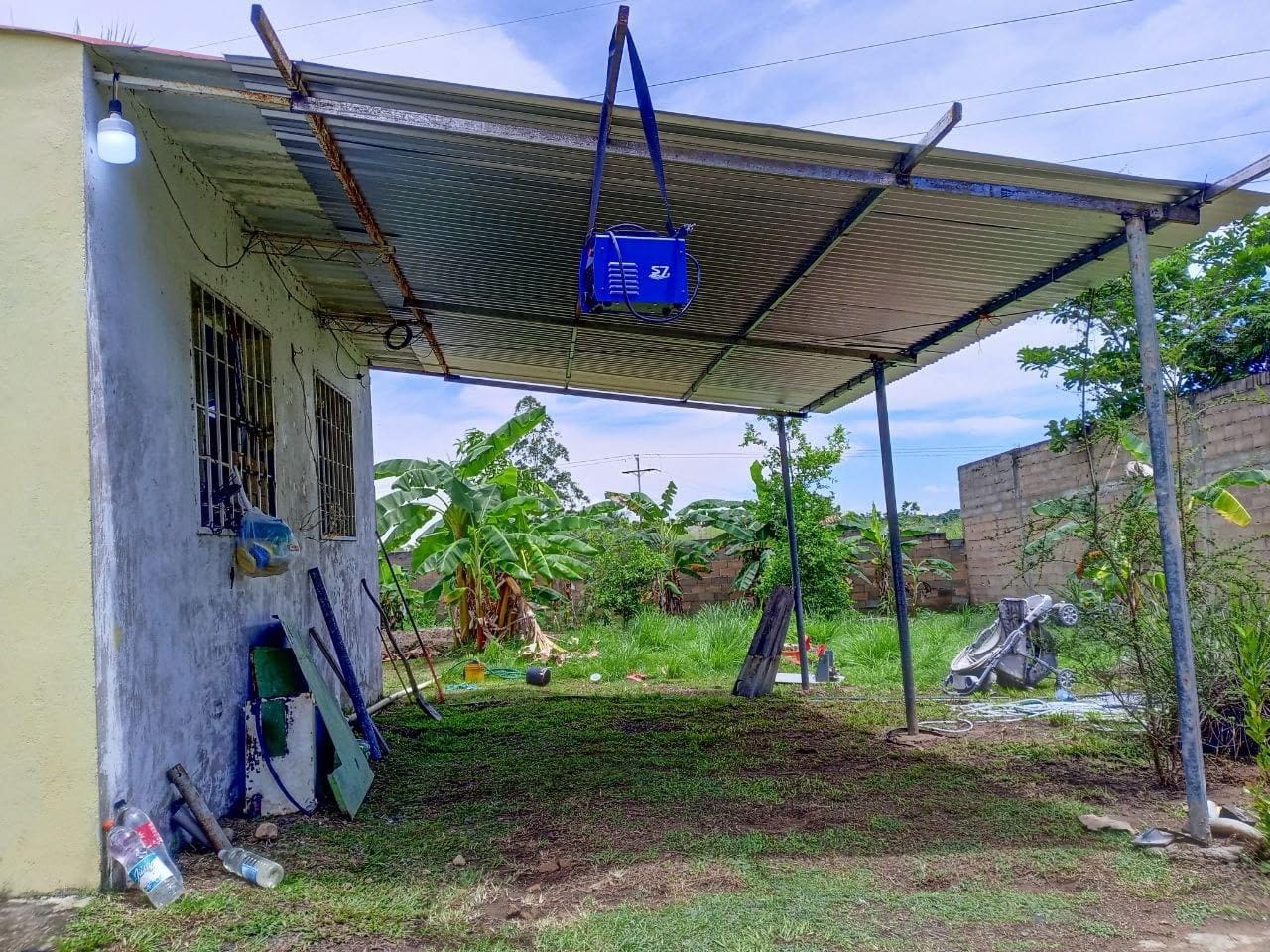
At 9.13 pounds it is not a one-person carry machine over a long distance, but the dual voltage means you can use it in the shop and the field with the same leads, which saves swapping equipment. The IGBT inverter platform is also lighter and cooler-running than the old transformer designs at this output level.
When this is the right machine for the job
Choose the S7 if your work includes old painted or rusty structural steel where cellulosic 6010 is the natural rod, or if you want one machine that covers all four common rod types across two voltages. The 250A output also gives you real headroom for a thicker implement frame than most of the compact machines here.
It suits a mixed workload: light fence work on 110V during the week and heavier trailer or implement repair on 220V at the weekend, with the same machine and the same leads.
When you should pick something else
Skip it if your outdoor work is strictly light material and you will be carrying the machine a long way, because 250 amps of capability is dead weight on a walk to a fence line. A 110V mini machine is the better tool for that.
Also pass if you need a long uninterrupted structural weld with no pauses. Plan your bead length around the cooling requirement rather than hoping it will not show.
8. FEIFANKE ARC 250A: Best Starter Kit for a First Outdoor Repair
FEIFANKE 250A Stick Welder Machine, 20Pcs Welding Rod Mini Welding Machine
- Around 3.9 pounds and small enough for a backpack or toolbox
- Complete kit with 20 rods clamp holder hammer brush and manual
- AC and DC output with DCEP for acidic and DCEN for alkaline rods
- Works with 6013 6011 6010 and 7018 rods
- 77 percent five-star and 15 percent four-star distribution
- 110V only with no 220V option
- Lower category rank than competing budget machines
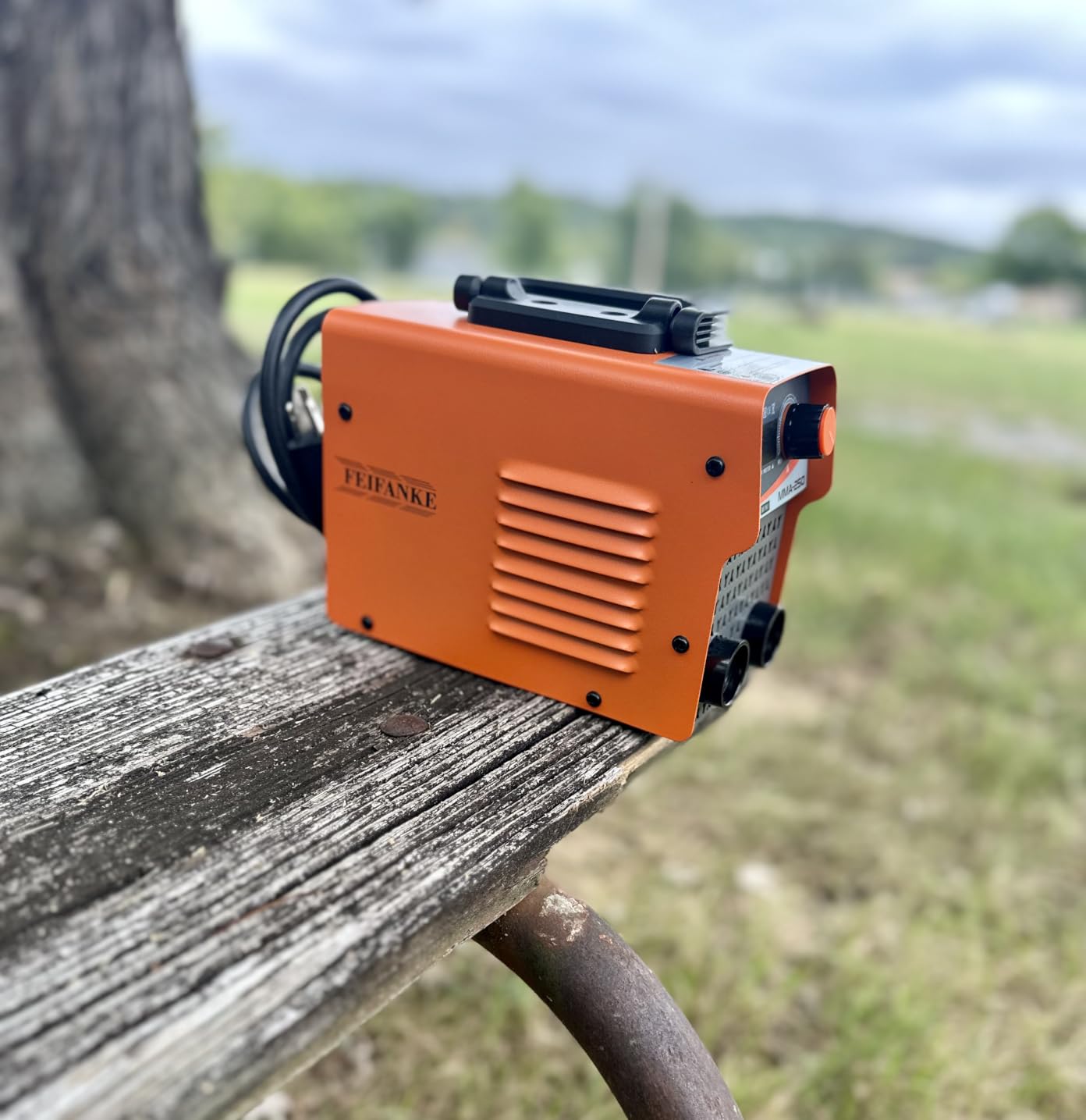
The appeal here is that everything needed to make a weld arrives in the box. You get the machine, a 1.2 meter ground clamp, a 1.8 meter electrode holder, a chipping hammer, a wire brush, 20 sticks of 1/16 inch E6013 rod and a manual. For someone whose first outdoor job is a loose gate hinge, that is genuinely zero additional purchases before the first bead.
Output adjusts from 20 to 250 amps with a stated weldable thickness of 0.05 to 0.22 inch, across AWS E6013, E6011, E6010 and E7018 rods. The AC and DC capability is a genuine advantage, because DCEP suits acidic rods like 6013 and 6011 while DCEN suits alkaline 7018, and most compact machines force one polarity on you.
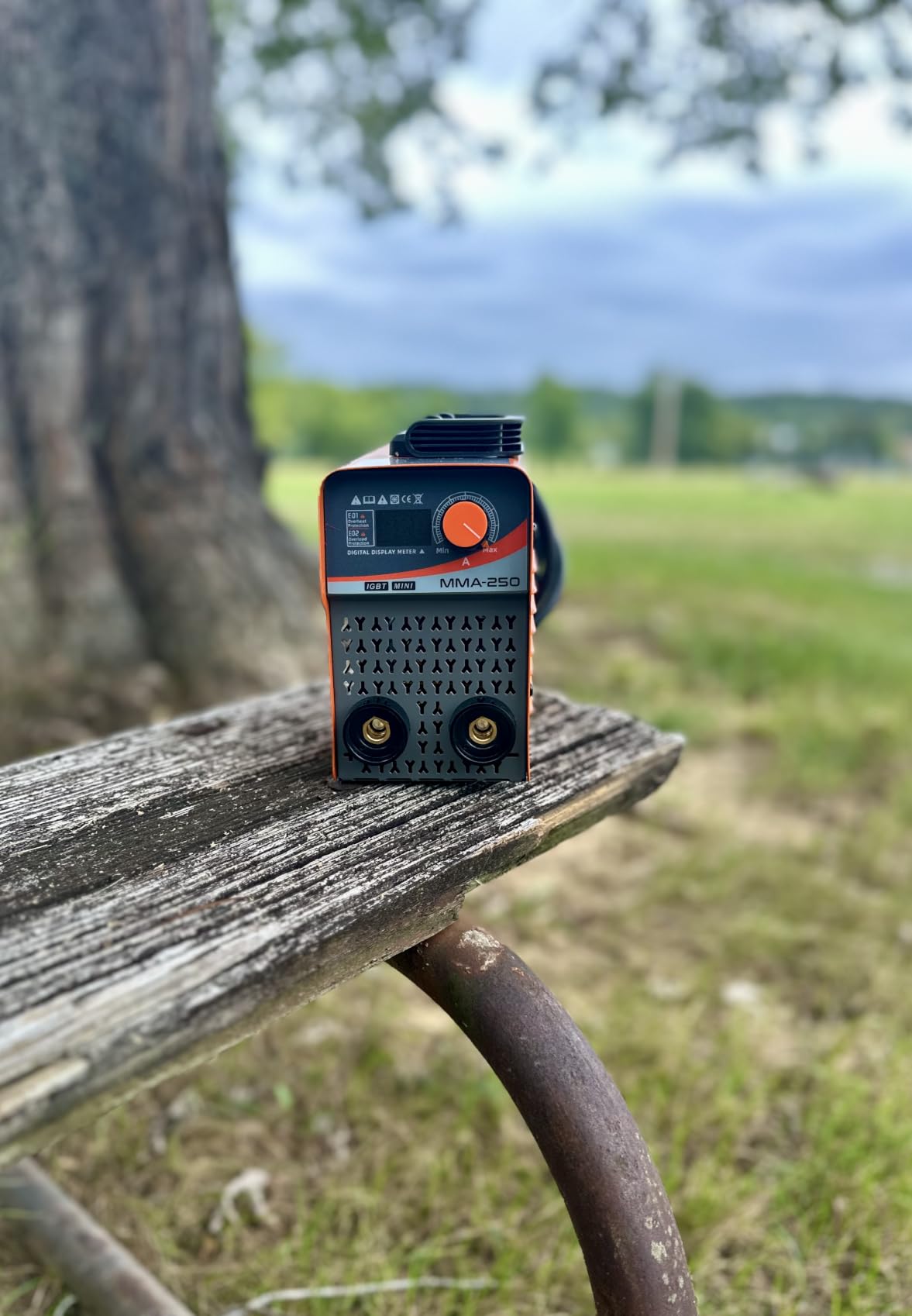
The reviews centre on portability and kit completeness, with 77 percent five-star ratings, and the positioning is clearly hobby and home repair rather than shop work. At 3.9 pounds and 8.5 by 3.7 by 5.9 inches it is genuinely a backpack machine, and owners specifically call it out for outdoor and at-height work where size matters.
Its ceiling is the ceiling of every 110V-only machine in this list. The listed package weight of 7.52 pounds against a 3.9 pound machine weight is the usual shipping-versus-bare-weight discrepancy, and the low category rank compared with rival budget welders simply means less long-term field history to lean on.
When this is the right machine for the job
Pick it if you are buying your first welder, if the jobs are light to medium gauge outdoor repairs, and if the ability to change polarity for different rod types matters to you. The included consumables mean the first project is not delayed by a trip to buy rods and a hammer.
It is also a good lightweight companion for anyone who owns a larger machine but works alone at height or at distance from a vehicle, where 3.9 pounds and dual polarity solve more problems than extra amperage would.
When you should pick something else
Do not buy it for structural outdoor work. With no 220V option, a load-bearing weld on a drawbar or a bucket edge is outside what this machine can do well, and no amount of technique changes that.
Pass if you already have rods, a helmet and leads, because the kit value disappears quickly and a dual-voltage machine serves more situations. And check your circuit before you buy, since 250 amps is an ambitious claim from a 110V outlet.
9. HONE MMA205 205A: Best for a First-Timer With Full Protection
- Complete kit with 25 rods brush chipping hammer leather gloves and face shield
- VRD function is a real safety gain for beginners
- Light 4.4 pound body suited to truck beds and at-height work
- Supports 6013 6011 6010 7018 and E308 rods from 1/16 to 1/8 inch
- 77 percent five-star ratings and a top fifteen category position
- 110V only so there is no 220V option
- The lift TIG mode is listed but the torch is not included
This is the most safety-conscious machine for a beginner in the group, and outdoors that is not a trivial feature. It includes a voltage reduction device that drops the no-load voltage, which is exactly the protection you want when you are kneeling on damp grass working on a gate with a hot electrode holder in your hand.
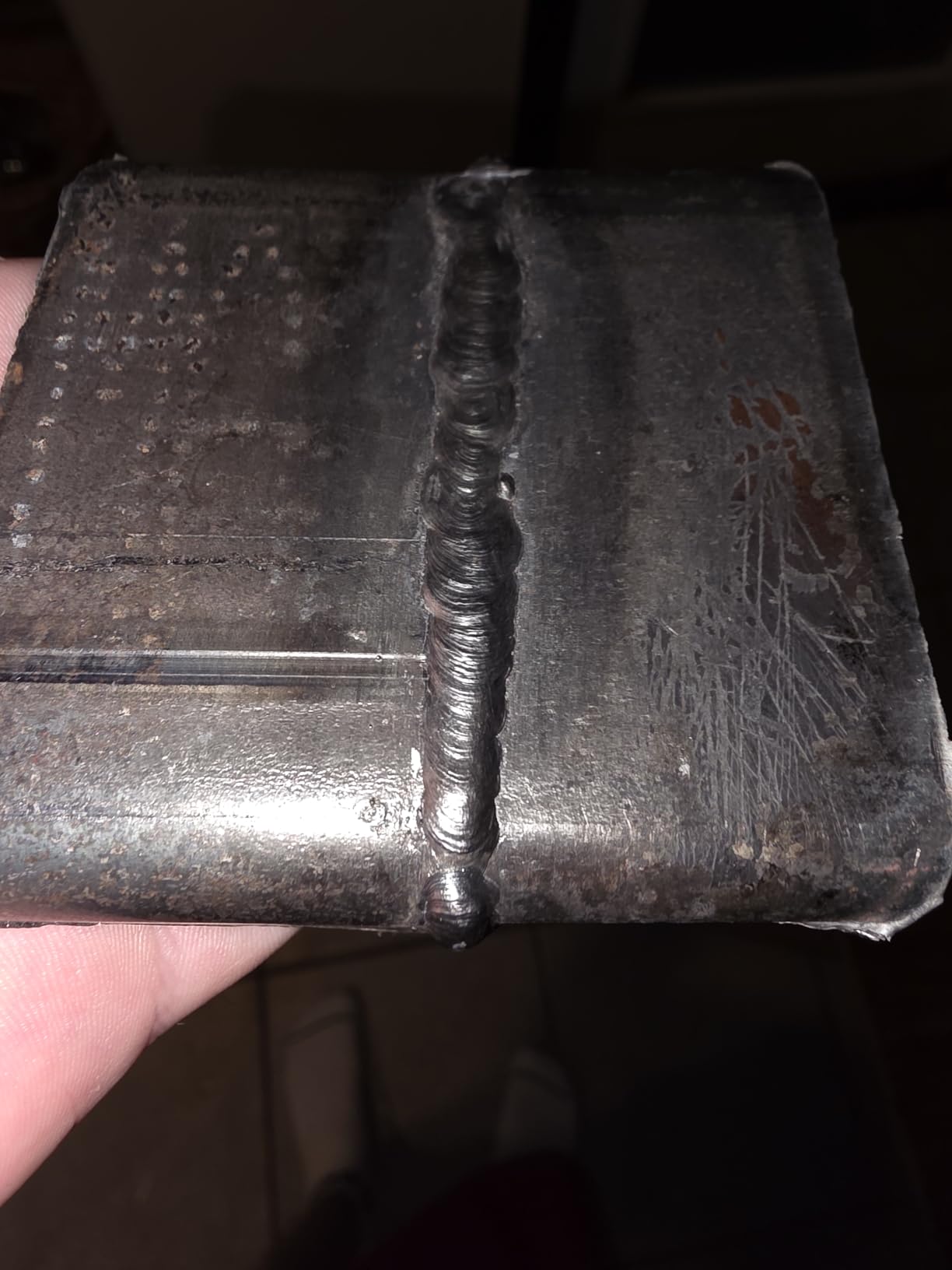
Adjustable current runs 20 to 205 amps for material from 0.05 to 0.22 inch thick, with hot start, arc force, anti-stick and the full protection suite of over-voltage, over-current, over-heat and over-load. The kit includes 25 sticks of 3/32 inch rod, a wire brush, a chipping hammer, leather gloves, a welding mask and both a 6.5 foot ground clamp and electrode holder.
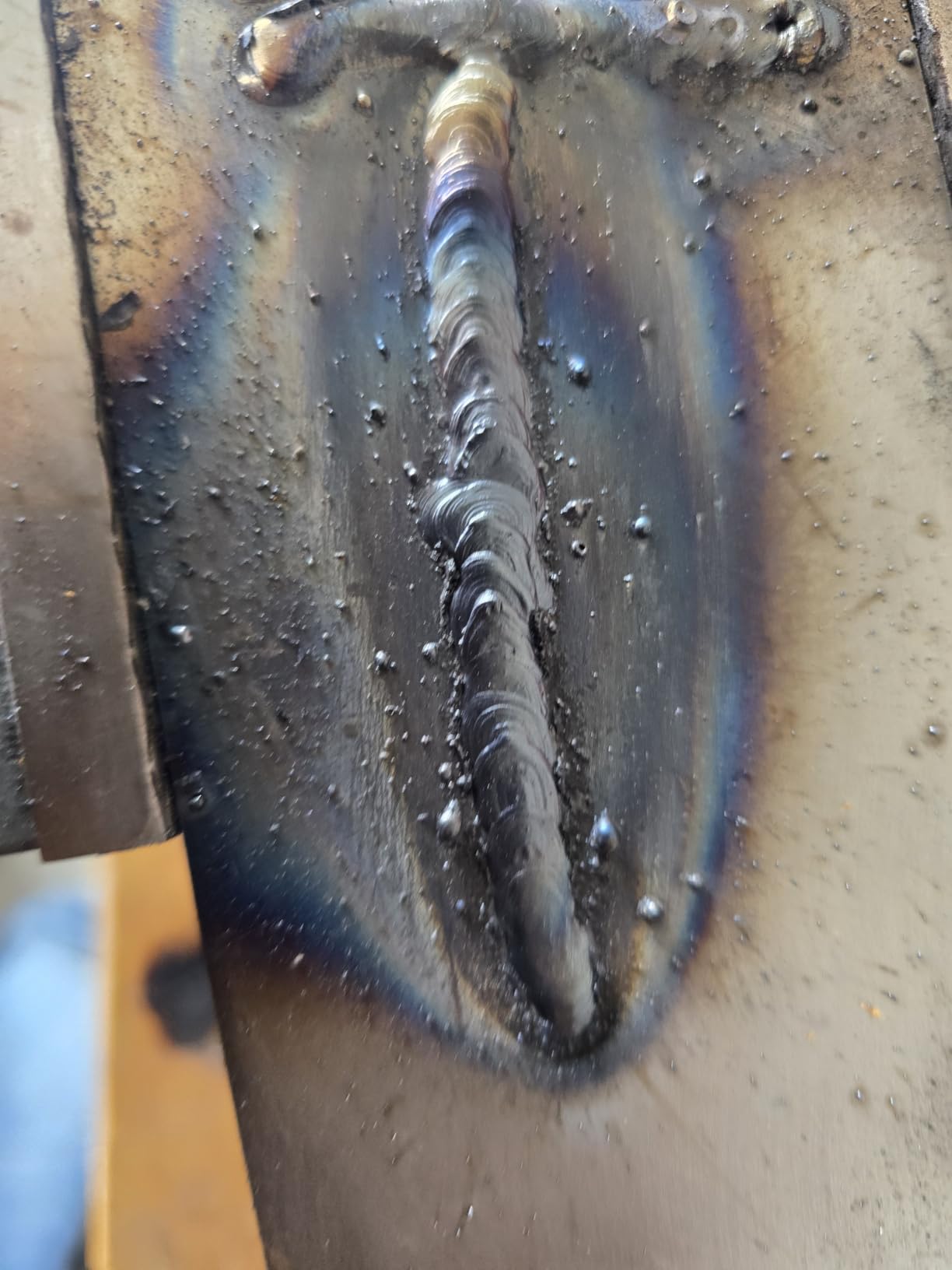
That accessory bundle is the differentiator. Most machines in this list ship with a holder and a clamp and nothing else, so for a first-time buyer the practical difference between this and a rival is a helmet and a stack of rods you do not have to source separately. Reviewers highlight the bundle and the VRD as the standout features.
At 4.4 pounds with an 8.4 by 3.7 by 5.3 inch body, it is one of the easier machines to carry, though the listed package weight of 9.31 pounds is nearly double. The 110V-only limitation is the same one that applies across the compact machines here, and the lift TIG mode is listed without the torch.
When this is the right machine for the job
Choose it if the person using it has never welded, because VRD and anti-stick together remove the two most common beginner problems, striking an arc on dirty metal and freezing a rod in the puddle. The included helmet also removes the excuse not to wear one.
It suits fence, trailer and small farm bracket repairs where you are working alone and moving around, and it is a sensible first machine to learn on before moving up in size.
When you should pick something else
Skip it if your outdoor work is structural. Without 220V there is no path to the penetration you need for a load-bearing repair, and the lift TIG mode is useless without buying a torch separately.
Also pass if you already own a helmet, gloves and rods, since the accessory bundle is the main reason to choose it over a similar compact machine. And note the 4.4 pound figure is the machine, not the box it arrives in.
10. Siasky MMA-250A: Lightest Machine to Carry to a Field Job
- Lightest machine here at 3.3 pounds
- LED screen shows output current and auto-matches current for beginners
- Owners report it burns through 1/8 inch steel and 1/8 inch angle iron
- Kit includes electrode clips work clips face shield brushes and 20 rods
- Automatic current matching helps a first-time user set up
- Included gloves helmet and slag hammer are low quality
- Ground clamp can be weak with one unit needing replacement quickly
- Lead cables are shorter than typical
At 3.3 pounds this is the lightest machine in the group, and if your outdoor work involves a walk rather than a drive that number decides the purchase before anything else does. The 110V IGBT inverter runs anti-stick electrodes with stronger arc force for penetration, and the kit includes electrode clips, work clips, a face shield, brushes and 20 sticks of 2.5 mm rod.
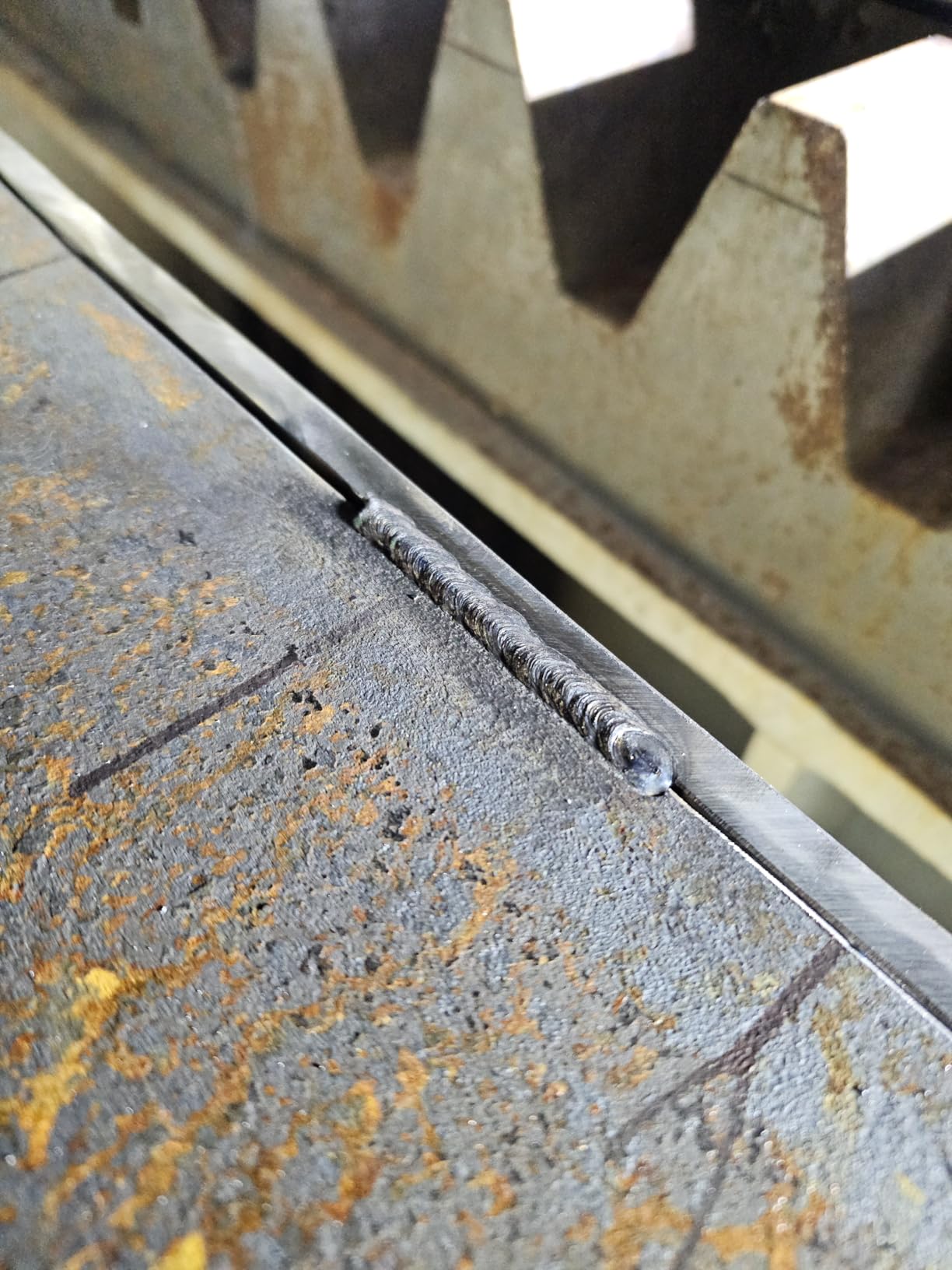
The feature that stands out for a beginner is automatic current matching. The LED screen shows the output current and can set it for you, with manual adjustment available once you know what you are doing. Owners report it burning through 1/8 inch steel and 1/8 inch angle iron easily, which covers most property and equipment repairs.
The consumables are the weak point and buyers say so directly. The gloves, face shield and slag hammer in the box are throwaway quality, and one unit had a ground clamp replaced within a week. The lead cables are also shorter than typical, which on a field job with a gate at the far end of a run means you may be stretching.
Those are consumable costs rather than machine faults, but they add up the same way. Owners are consistent that the machine performs well for its size while the included PPE and accessories do not, which is the honest ceiling on this one.
When this is the right machine for the job
Pick it if the distance between your vehicle and the repair is the deciding factor, and if you are new enough to welding that automatic current setup is worth more to you than manual control. At 3.3 pounds, you can carry it and a full consumable kit in one hand.
It is a good match for fence repairs, small brackets and light equipment fixes where you are moving from post to post rather than setting up at one spot for hours.
When you should pick something else
Do not buy it for appearance work, for structural repair, or if bead quality matters more than carrying convenience. The reports of low-quality accessories are fair, so budget immediately for a proper ground clamp, a real helmet and a decent pair of gloves.
Short leads are the other limitation. If your work area is more than a few feet from where you can safely place the machine, the cable length will be the thing that frustrates you, not the welder.
11. Sefaspe ARC 200Pro: Best Warranty and Technical Support
- Only machine here with a two year warranty and 24/7 technical support
- Handles 4.0mm electrodes with multi-pass welding up to 12mm
- Synergic control displays matching electrode specifications on screen
- Stick 40-200A and lift TIG 10-200A on dual voltage
- VRD and instant current cut-off anti-stick add real protection
- Heaviest machine in the group at 13.79 pounds
- Some owners found the current adaptation unclear rather than intuitive
Support is the headline here. This is the only machine in the group carrying a two year warranty alongside 24/7 technical support, and for a welder that will live in a truck bed and get rained on, a warranty that is longer than a single year is worth real money when something fails away from a shop.
The feature set is the most ambitious in the list. Synergic control displays the matching electrode specifications on the large LED screen, hot start runs from zero to one second with 1 to 10 percent current adjustment, and arc force adjusts across the same range with automatic output increase below critical voltage. It handles 2.5 to 4.0 mm electrodes with a maximum weld thickness of 4 mm and multi-pass capability to 12 mm.
![Stick Welder, 2026 Newest [Large LED Display] ARC 200Pro Welding Machine 110V/220V 200A with Synergic Control, IGBT Inverter Portable Welder Machine with Hot Start, Arc force and Anti-Stick customer photo 1](https://www.requiemforadream.com/wp-content/uploads/2026/09/B0FSJMRTH2_customer_1.jpg)
Weight is the counterweight to all that. At 13.79 pounds it is the second-heaviest machine here, and anyone who has carried 14 pounds across uneven ground will feel it. The dual voltage and the 40-200A stick range help, since the same machine covers a garage circuit and a heavier 220V job.
The synergic feature divides opinion. Owners who like it call it very beginner friendly because the screen tells you which electrode specification matches your setting. Others found the current adaptation unclear, and that is the cluster of three-star feedback in the reviews. It is a learning curve, not a defect.
![Stick Welder, 2026 Newest [Large LED Display] ARC 200Pro Welding Machine 110V/220V 200A with Synergic Control, IGBT Inverter Portable Welder Machine with Hot Start, Arc force and Anti-Stick customer photo 2](https://www.requiemforadream.com/wp-content/uploads/2026/09/B0FSJMRTH2_customer_2.jpg)
When this is the right machine for the job
Choose it if you want the thickest electrode capability in this group, since 4.0 mm rods and multi-pass to 12 mm put it ahead of the compact machines for heavier repair work. The 220V mode plus lift TIG range also make it the most flexible unit here for mixed jobs.
It is the pick if warranty length and support access are decision factors for you, which is reasonable for a machine that lives outdoors and gets used in weather rather than in a climate-controlled shop.
When you should pick something else
Skip it if carrying weight is the priority, because 13.79 pounds rules out the one-person long carry that lighter machines handle comfortably. And if you want a set-and-forget machine, the synergic behaviour may ask for more attention than you want to give it.
It also carries one of the smallest review bases in the group at 362 ratings, so the long-term reliability picture is less established here than the review volume on the top picks would suggest.
12. TOOLIOM ARC-195 PRO: Best for Heavier Rod and 5/32 Inch Work
TOOLIOM 195A 110/220V Stick Welder, LCD Display IGBT MMA Machine
- Handles 5/32 inch 4.0mm welding rods which few machines here can
- Runs E6010 E6013 and E7018 electrodes
- Switchable VRD is a genuine safety feature in damp environments
- Dual voltage with automatic current limiting on a 20A 120V circuit
- Automatic anti-stick to prevent the electrode freezing in the puddle
- Heaviest machine in the group at 14.5 pounds
- Amps setting reported as inaccurate
- Not suited to all-day production welding
The distinguishing capability is rod size. This machine runs 5/32 inch, or 4.0 mm, electrodes, which almost nothing else in this list can, and experienced welders report it burns 1/8 inch rods easily on 220V and handles 3/32 inch on 110V. If your outdoor work includes heavier plate or thick tube, that is a real difference rather than a spec-sheet line.
The switchable VRD is also worth attention. Because you can turn voltage reduction on or off, you get the safety benefit when you are working in damp conditions and the full output voltage when you need it, and combined with automatic anti-stick it is a sensible package for gate and implement work near wet ground.
At 14.5 pounds it is the heaviest machine in the group, and that is the first thing to weigh before anything else. It also ships with a 17.32 by 11.93 by 7.64 inch package, so it genuinely lives in a truck bed rather than a hand. If you are working fifty feet from a gate, that is a real cost in effort and in cord length.
The amperage setting is reported as inaccurate, joining the pattern seen on three other machines in this list. The machine is intended for repair work rather than all-day production welding, and experienced users note the 220V side is where the 1/8 inch rod comfort comes from.
When this is the right machine for the job
Choose it if your thickest outdoor material needs 5/32 inch rod, or if you repair heavier plate than the compact machines in this group can handle. It is the pick for a serious implement or trailer repair where rod capability is the deciding factor.
The switchable VRD and dual voltage also suit a mixed workload, since you can run 110V with current limiting on a 20 amp circuit and step up to 220V for heavier beads with the same machine.
When you should pick something else
Skip it if you will be carrying the machine any real distance. At 14.5 pounds, plus leads, this is a two-person job or a drive-up job, and no feature compensates for that when you are walking a perimeter fence.
Pass if you already have a machine covering 1/8 inch rod, because the extra capability will rarely be used on repair work. And if accuracy of the amperage setting matters to you for thin material, look for a machine with a readout you can calibrate against a meter.
How to Choose a Stick Welder for Outdoor Repair Work in 2026?
Brand matters far less outdoors than three other things: how much amperage your thickest job needs, what power you can actually get to the work site, and whether the machine can be carried to the job. Get those three right and most of the field will go well. Get one wrong and the machine is useless no matter how many stars it has.
Match amperage to your thickest material
Rule of thumb for mild steel: roughly 1 amp per 0.001 inch of material, so 1/8 inch wants about 125 amps and 1/4 inch wants about 250 amps. Add a margin of 20 to 30 percent because joint fit-up and rod diameter change what you need, and because a machine at 90 percent of its rating holds its output longer than one being run at the ceiling.
The published weldable thickness figures on these machines cluster in a useful range. Several 250A machines state 0.2 to 0.22 inch of material capacity, one states 0.05 to 0.22 inch, and the 140A HONE stops at 1/8 inch rod. If you only ever repair fence straps and gate hardware, 130 amps is plenty. If a drawbar or bucket edge is in scope, you want 200 amps and a machine that will hold it.
Match the rod to the machine too. 1/16 inch rod is comfortable at low amperage and is the right choice for thin material and starter work, 3/32 inch is the general-purpose outdoor rod, and 5/32 inch is for heavier plate and is the reason one machine in this list stands apart from the rest.
Decide between 110V and 220V input
Dual voltage is worth paying for when your work moves between a garage and a field. A 220V machine draws roughly twice the input current for the same output, so a 20 amp household circuit caps it near 130 to 140 amps, which is fine for a fence post and not fine for a trailer frame. A 220V circuit lets a 200 or 250 amp machine actually reach its rating.
Single-voltage 110V machines have their place. They are the lightest option, they work on household outlets anywhere, and they are usually the machines you can carry in one hand. The tradeoff is a hard ceiling on output, and the ceiling is lower than the advertised peak number suggests. If most of your work is indoors on clean, thin material rather than outside on weathered steel, our guide to best multiprocess welders is the better comparison to start with.
A warning worth repeating from the forums: a machine advertised at high wattage often only reaches that output on the higher voltage. Several buyers in this category discover this after delivery, so confirm the 110V output rating separately from the headline figure.
Read the duty cycle the honest way
Duty cycle is the percentage of a ten-minute cycle a machine can weld at a stated amperage. A 40 percent rating at 140 amps means seven minutes of arc time and three of cool-down. The stated figures range from 40 percent at rated output on the HONE MMA140D to 60 percent at 250 amps on the HGNVGZ, and those honest numbers are rarer than they should be.
For occasional repair work, a 40 percent duty cycle is genuinely sufficient because you are stopping to reposition, chip slag and fit the next piece anyway. For a long structural repair, higher is better. The pattern from owner reports is that marketing duty cycle figures are optimistic, so treat the rating as a ceiling and plan pauses in.
Weigh the machine before you buy it
Published weight in this category is inconsistent, with several listings quoting bare machine weight against a much higher package weight. Assume the lower number is the machine and add 2 to 4 pounds for leads, clamp, holder and electrodes before you decide whether you can carry it.
Under 5 pounds means a real one-person carry. Between 5 and 10 pounds means a walk to the gate or the ditch, not a long perimeter. Above 12 pounds means the machine lives in the truck bed and you work where you park, which is fine for a drawbar repair and wrong for a fence line.
Choose electrodes by the job in front of you
The four rods that matter outdoors are 6010, 6011, 6013 and 7018, and picking between them is the single most common beginner question. Match the rod to the current type, the metal condition and whether the weld carries load.
6011 is the all-round outdoor rod. It runs on AC or DC, has a fast striking arc, tolerates rust, paint and mill scale, and produces a slag that peels off cleanly. It is the right rod for a fence post that has been in the ground for ten years. It is not as strong as 7018, so it is the wrong choice for a load-bearing weld.
7018 is the low-hydrogen rod for structural work. It requires DC and produces a stronger, ductile weld with less hydrogen, which matters for anything that carries load, shocks or stays cold. It is the correct rod for a drawbar, a three-point hitch, a trailer frame or a bucket edge. It will not run on an AC-only transformer machine.
6013 is a fast-fill, general-purpose rod for clean mild steel and thinner gauge material, producing a smooth bead with low spatter. It is the rod for a clean bracket or a piece of sheet metal where appearance matters. It is a poor choice for dirty or rusty outdoor steel because it is less forgiving of contamination.
6010 is the cellulosic rod, and it is the one outdoor machines most often claim and then fail to run properly. It handles heavy rusted and painted structural steel, old pipe and farm implement frames, with a deep penetrating arc and a slag that self-removes to a degree. It needs DC and it produces more fume, which is a genuine reason to work in moving air.
Is 6013 or 6011 better? For outdoor repair on metal that has been outside, 6011. For clean, unpainted mild steel and thin material, 6013. If you only weld in the conditions this roundup is about, buy 6011 in 3/32 inch and 7018 in 3/32 inch, and you will cover nearly every job.
Hot start, arc force, anti-stick and VRD in plain English
Hot start boosts current for a fraction of a second on ignition, which makes striking an arc on dirty or cold metal far easier. Almost every machine in this list has some version of it, and it is the single feature that most improves a first weld.
Arc force adds penetration when the arc is short or the voltage sags, which is what keeps a bead steady on thick material. Machines with a 1 to 10 adjustment let you tune it, and that adjustment matters more in the field than in a shop because field voltage is less stable.
Anti-stick drops current to near zero when the electrode freezes in the puddle, so you can twist the rod free instead of snapping it. It is the feature that saves the most rods and the most frustration on outdoor work where you are interrupted.
VRD, or voltage reduction device, lowers the no-load voltage the machine presents when the arc is not lit. It is a genuine safety feature outdoors because you may be kneeling on wet ground, working around a metal gate, with a hot electrode holder in your hand. Two machines in this list include it and let you switch it on and off.
Powering a welder in the field: extension cords and generators
This is where most field disappointment happens. A machine that performs beautifully in a shop can run rough in a field, and the cause is almost always the cord or the generator rather than the welder.
Extension cord length and gauge work together. Keep the run as short as you can, and when you must use a long cord, go up in gauge rather than trusting a cheap cord. A 12 gauge cord is workable for lighter 110V machines, a 10 gauge cord is the practical choice for a 200 amp machine, and beyond about 100 feet you should plan on 8 gauge. Voltage drop across a thin cord is what makes an arc sputter and hunt mid-bead, and no amount of machine quality compensates for it.
Generators need sizing by continuous output, not peak. A 200 amp stick machine on 110V can pull more than 30 amps of input, so a generator with only enough peak wattage will sag mid-bead and give you exactly the unstable arc you bought a better machine to avoid. Inverters tolerate voltage sag far better than old transformer machines, which is the strongest practical argument for a modern machine when you are working off a generator at all.
If you can plug into mains, plug into mains. Reserve the generator for genuinely remote work, keep the cord short and heavy, and let the machine cool before you shut the generator down, because generators are unhappy about being stopped immediately after a load.
Keeping a Stick Welder Working Through Dust, Damp and Neglect
Outdoor machines fail from three things: dust in the cooling fan, condensation inside the case, and electrodes that have absorbed moisture. None of them is expensive to prevent and all of them shorten a machine’s life badly.
First, blow the cooling fan out. Field dust is abrasive and it packs into the fan and heatsink, and a blocked fan is the most common cause of thermal overload trips. Compressed air at low pressure, or a brush and a vacuum, keeps the fins clear.
Second, keep electrodes dry. Cellulosic and low-hydrogen rods absorb moisture from the air and will spit, pit and give a porous weld. An electrode oven or a sealed container with desiccant in an unheated shed makes a measurable difference to weld quality, and it costs very little.
Third, control condensation. Overnight temperature swings in a truck bed or a shed draw moisture that corrodes terminals and the ground clamp connection. If the machine lives outdoors, a fitted cover over the case when it is not in use, and a wipe-down of the leads, prevents most of it.
Fourth, mind the cables in sun and weather. Ultraviolet exposure degrades cable insulation over time, and strain relief at the machine end is where cables actually fail. Support the cord rather than letting its weight hang on the connector, and check the clamp and holder connections before a job rather than during one.
Fifth, budget the consumables. Owners consistently report replacing the included ground clamp and electrode holder early, and helmets and gloves included in the box are rarely up to standard. A proper ground clamp, a stinger and a real auto-darkening helmet are the three purchases that make an inexpensive machine pleasant to use outdoors.
Frequently Asked Questions
What is the best stick welder for outdoor repairs?
The DEKOPRO 160A dual-voltage MMA machine is our top pick for outdoor repairs, with 4.6 stars across more than 6,100 reviews, 110V and 220V input, hot start, anti-stick and ETL certification at 11.11 pounds. The YESWELDER ARC-205DS is the value alternative if you want 205 amps, four electrode types and lift TIG, and the Hpoouo ARC-200 is the pick when carrying weight matters most at 3.7 pounds.
Is 6013 or 6011 better for rusty outdoor metal?
6011 is better for rusty and dirty outdoor metal. It strikes easily, runs on AC or DC, tolerates rust, paint and mill scale, and its slag peels off cleanly, which makes it the standard rod for weathered fence posts and old painted steel. 6013 is a general-purpose rod better suited to clean mild steel and thinner material where a smooth bead matters. A 7018 rod is the right answer for rusty metal that also has to carry load.
Can a stick welder run off a portable generator?
Yes, but size the generator by continuous output rather than peak wattage, because a 200 amp stick machine on 110V can draw more than 30 amps of input and a small generator will sag mid-bead. Modern inverter welders tolerate voltage sag much better than older transformer machines. Keep the extension cord short and heavy gauge, and let the machine cool briefly before you shut the generator down.
Do I need 230V for stick welding?
No, not for most outdoor repair work. On a 20 amp 110V household circuit a typical 200 amp machine is capped near 130 to 140 amps of output, which handles fence posts, gates, mower decks and brackets comfortably. You want 220V or 230V when the job is load-bearing or thick, such as a drawbar, a three-point hitch or a trailer frame, because a single-voltage 110V machine simply cannot deliver the penetration.
How thick of metal can a 200 amp stick welder weld?
On mild steel, roughly 1 amp per 0.001 inch, so a 200 amp machine is comfortable at 1/8 inch and can handle 1/4 inch in two passes. The machines in this group state weldable thickness figures from 0.05 inch up to 0.22 inch, and one machine here supports 5/32 inch electrodes with multi-pass work up to 12 mm. Rod diameter also matters, since heavier plate needs a heavier electrode to feed the puddle properly.
Is stick welding outdated?
No. Stick welding is the most widely used process in the world, and it is arguably the most practical one for outdoor repair work specifically. It needs no shielding gas cylinder, tolerates wind that ruins MIG, handles rusty and painted steel, and a repair-capable machine weighs under 20 pounds. MIG and TIG give cleaner beads on thin material and stainless, but neither works outdoors without more support.
What is the difference between AC and DC stick welders?
AC stick welders use alternating current, which suits cellulosic rods such as 6010 and 6011 and works on simple transformer machines with few failure points. DC welders use direct current, which is required for low-hydrogen 7018 rod and gives a more stable, controllable arc with better penetration on thinner material. Machines that output both, like the FEIFANKE ARC 250A, let you match polarity to the rod, using DCEP for acidic rods and DCEN for alkaline ones.
Final Verdict: Which Stick Welder Should You Take Outside?
The DEKOPRO 160A is the best stick welder for outdoor repairs overall, because dual voltage, ETL certification and a 6,000-plus review history give you the most proven package at 11.11 pounds. Buy the YESWELDER ARC-205DS instead if 205 amps and lift TIG matter more to you than the display accuracy, and buy the Hpoouo ARC-200 if the walk to the job is longer than the weld.
Match your machine to your heaviest material and your available power, not to a brand name. Fence work and gate hardware are 110V jobs that a 4 pound machine handles; a drawbar or a bucket edge is a 220V job that needs 200 amps and a 7018 rod.
Wherever you end up, budget for a real ground clamp, a proper stinger and an auto-darkening helmet, and check your circuit and cord gauge before you leave the shop. Those three purchases and a proper cord matter more to how a field repair goes than the gap between any two machines on this list.