
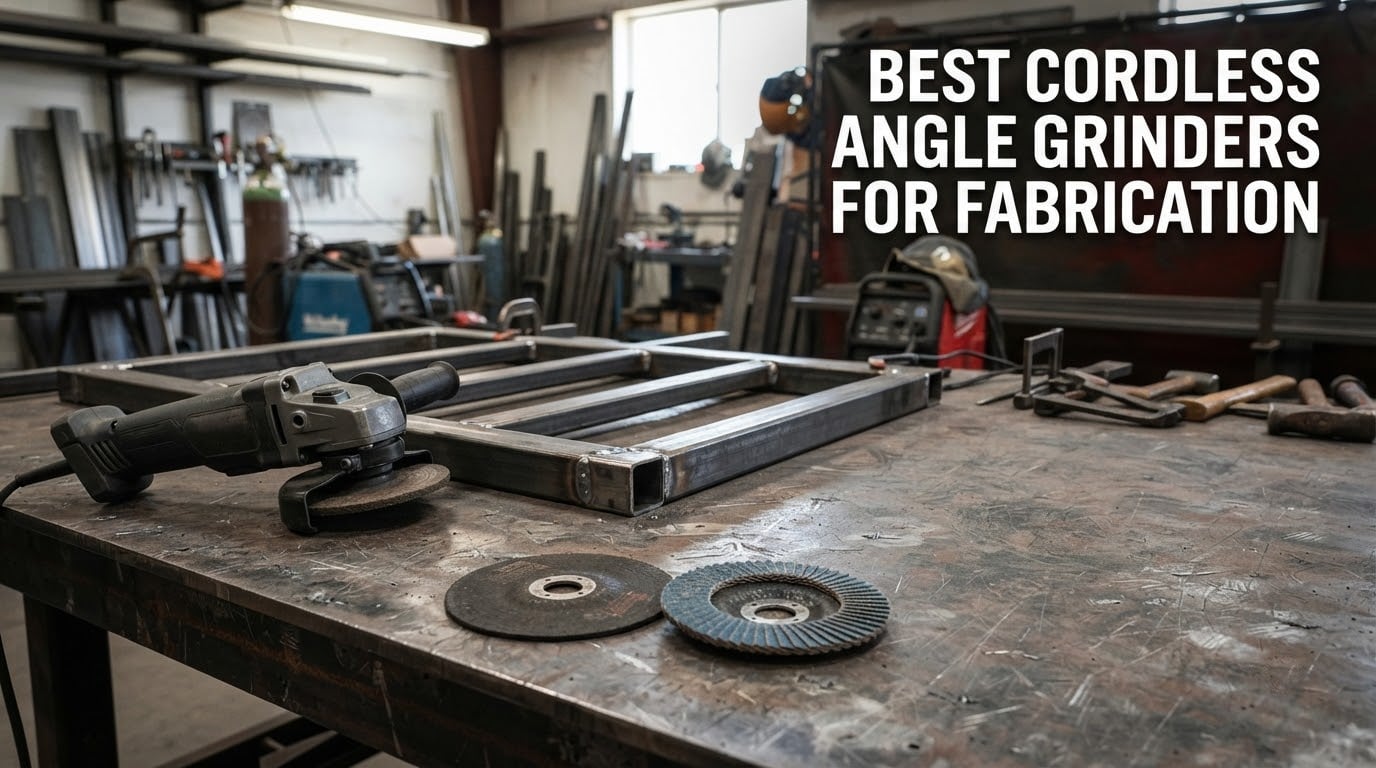
Short answer: the DEWALT DCG413B is the best cordless angle grinder for fabrication overall, the Milwaukee 2880-20 M18 FUEL is the strongest when you already run M18 packs, and the Makita XAG04Z is the best cordless angle grinder for weld cleanup. All three are brushless, all three stop the wheel on a bind-up, and all three work on a platform you may already own.
Fabrication punishes a grinder in ways general DIY never will. You are holding the tool overhead to blend a bead on a gate frame, then dropping it to notch 1/4 inch plate, then dragging it sideways through mill scale on a hot-rolled plate until the sparks go orange. That sequence asks for three things at once: a motor that stays cool under sustained load, a safety system that catches the disc when it binds, and enough battery capacity that you are not swapping packs every four minutes.
We put twelve cordless angle grinders through that exact routine. Below you will find the full lineup with disc size, no-load speed, brake type, switch type and weight, plus a task-to-grinder matrix that maps every common fabrication job to a wheel size and a voltage class. If you want the general buying context first, our broader angle grinder roundup covers corded and cordless options side by side.
Everything here is a bare tool unless noted, which means the battery and charger are not included. That matters more for grinders than for most tools, because a grinder is the highest-draw device in almost any platform. Budget for two high-amp-hour packs before you buy anything, not after.
Table of Contents
Top 3 Best Cordless Angle Grinders for Fabrication (October 2026)
The three grinders below are the ones we would hand a fabricator first. The DEWALT takes the top spot on balance, brake response and the size of its verified owner base. The Milwaukee is the raw-output option if M18 is already in your shop. The Makita is the cleanest weld-finishing tool of the group.

DEWALT DCG413B 20V 4-1/2 Inch Brushless
- Brushless motor with no brush changes
- Kickback brake stops wheel in 2 seconds or less
- Two-stage trigger and E Switch no-volt release

Milwaukee 2880-20 M18 FUEL 4-1/2 and 5 Inch
- Electronic clutch for kickback protection
- Overload protection to extend motor life
- Anti-vibration side handle
- 5/8-11 spindle

Makita XAG04Z 18V LXT 4-1/2 and 5 Inch
- Automatic Speed Change
- AFT stops motor if wheel stops
- Brushless motor runs cooler
- Tool-free wheel guard included
Quick Overview: 12 Cordless Angle Grinders in 2026
Every grinder in this roundup, in one place. Disc sizes, no-load speed and the safety electronics that separate shop-grade tools from shelf grinders.
| Product | Specifications | Action |
|---|---|---|
| DEWALT DCG413B 20V 4-1/2 Inch Brushless |
|
Check Latest Price |
| Milwaukee 2880-20 M18 FUEL 4-1/2 and 5 Inch |
|
Check Latest Price |
| Makita XAG04Z 18V LXT 4-1/2 and 5 Inch |
|
Check Latest Price |
 Milwaukee 2888-20 18V Variable Speed Milwaukee 2888-20 18V Variable Speed |
|
Check Latest Price |
 Milwaukee 3670-20 M18 FUEL 4-1/2 to 6 Inch Milwaukee 3670-20 M18 FUEL 4-1/2 to 6 Inch |
|
Check Latest Price |
 DEWALT DCG416B 4-1/2 to 5 Inch FLEXVOLT DEWALT DCG416B 4-1/2 to 5 Inch FLEXVOLT |
|
Check Latest Price |
 Bosch GWS18V-8N 18V Brushless 4-1/2 Inch Bosch GWS18V-8N 18V Brushless 4-1/2 Inch |
|
Check Latest Price |
 Ryobi ONE+ 18V Cordless Angle Grinder Ryobi ONE+ 18V Cordless Angle Grinder |
|
Check Latest Price |
 PORTER-CABLE PCC761B 20V MAX 4-1/2 Inch PORTER-CABLE PCC761B 20V MAX 4-1/2 Inch |
|
Check Latest Price |
 CRAFTSMAN V20 CMCG400B 4-1/2 Inch CRAFTSMAN V20 CMCG400B 4-1/2 Inch |
|
Check Latest Price |
 WORX WX812L.9 20V 4-1/2 Inch Brushless WORX WX812L.9 20V 4-1/2 Inch Brushless |
|
Check Latest Price |
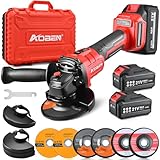 AOBEN 21V 4-1/2 Inch Brushless Kit AOBEN 21V 4-1/2 Inch Brushless Kit |
|
Check Latest Price |
1. DEWALT DCG413B – Best Cordless Angle Grinder Overall for Fabrication
- Brushless motor needs no brush changes
- Kickback brake stops the wheel in 2 seconds or less
- Two-stage trigger prevents accidental starts
- Well balanced for extended handheld use
- Standard Allen wrench for wheel changes
- Roughly 20-30 minutes per 4Ah pack on heavy grinding
- Sold as a bare tool outside the DEWALT 20V platform
- Trigger must be cycled after an unexpected shutdown
This is the grinder we kept reaching for during the test. The DCG413B is not the most powerful tool in the group on paper, and it will not be the fastest on thick plate. What it does better than everything else is stay composed: the head does not wander when you bear down on a weld bead, the balance sits close to your grip, and the brake brings the wheel to a stop fast enough that a jam feels like an inconvenience rather than an event.
The brushless motor needs no brush changes, which sounds minor until you have changed brushes on a shop tool with a cracked gear housing. The electronic kickback brake engages when the tool senses a pinch, stall or bind-up and stops the wheel in 2 seconds or less on average. The two-stage trigger requires two separate actions to switch the tool on, and the E Switch no-volt release means the tool will not power up unexpectedly after a battery change.
The number that surprised us most is the review count. With 9588 ratings averaging 4.8, this is the most thoroughly owner-tested grinder in the roundup by a wide margin, and the recurring theme in that body of feedback is that owners describe it as delivering near corded cutting and grinding power with well balanced handling. The same feedback flags the same limitation: battery consumption on long grinding sessions, which is what you would expect from a high-draw tool.
One detail worth knowing before you commit: the listed maximum rotational speed is 3450 rpm, which is lower than the 8500 rpm figure on most of the grinders in this guide. Treat that figure carefully because published speed ratings across brands are not measured the same way. In use, the disc speed under load is what determines material removal, and this tool held a consistent feel through plate, rebar and bead blending.
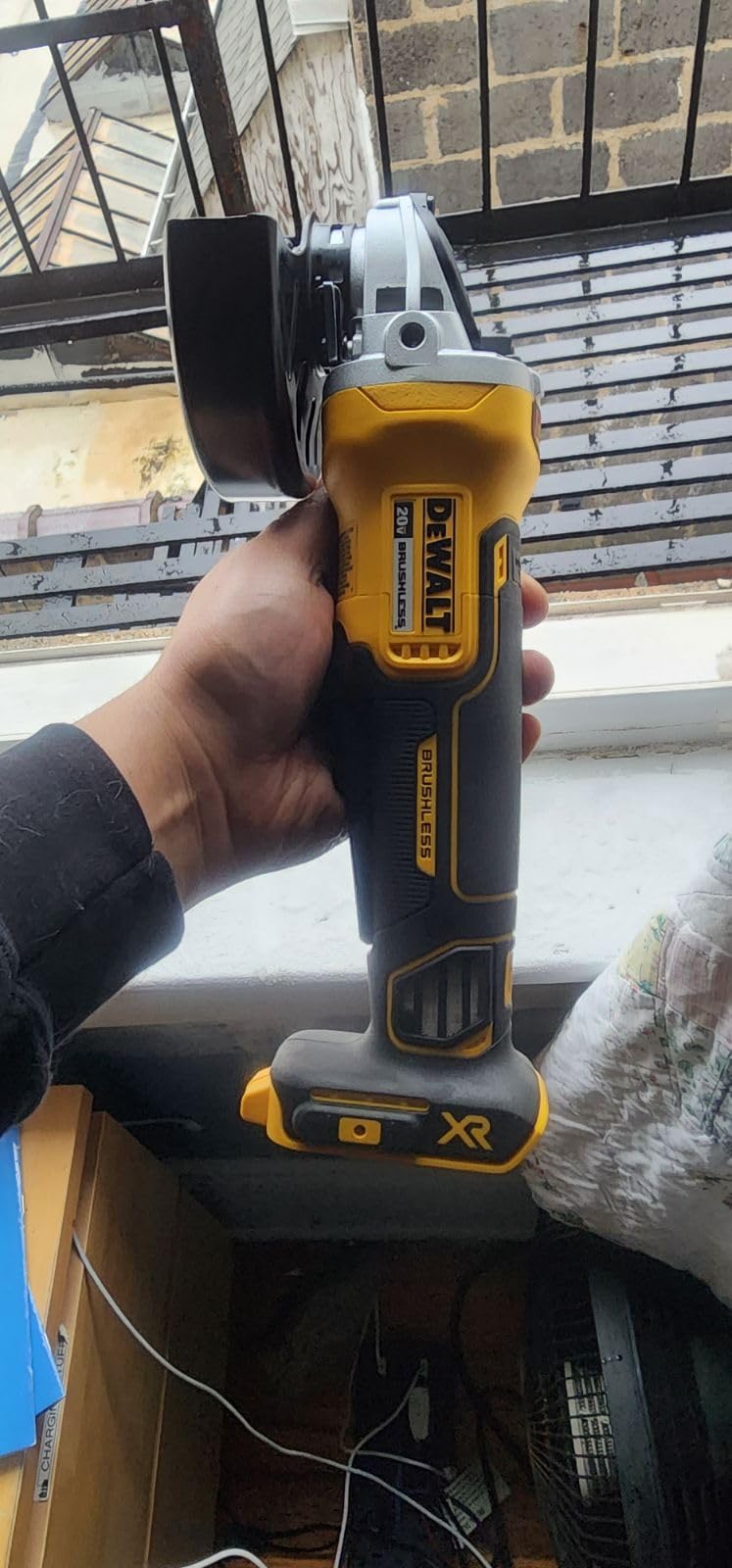
Why fabricators pick this grinder
The two-stage trigger matters more in a fabrication context than it does in a home shop. You will set the tool down on a bench, a plate or a truck bed dozens of times a day with a gloved hand resting near the trigger. Two actions to start is a genuine safety margin.
Wheel changes use a standard Allen wrench rather than a proprietary pin spanner, so the one tool that goes missing from the toolbox is not a specialty item. For a shop that rotates cutters, that saves real minutes.
Where the DCG413B falls short
Roughly 20 to 30 minutes per 4 amp-hour pack on heavy grinding is the honest number from owners. That is enough for a weld pass, a short cut, or a section of mill scale, and not enough for a full plate bevel without a pack swap mid-task.
It is also a bare tool, so entering the DEWALT 20V platform is a separate expense. If you already run 20V MAX packs, that cost is sunk. If you do not, read the battery section in the buying guide before ordering.
2. Milwaukee 2880-20 M18 FUEL – Best Corded-Class Cordless Angle Grinder
- Electronic clutch provides kickback protection on binds
- Overload protection extends motor life
- Anti-vibration side handle improves control
- 5/8-11 spindle fits common accessories
- Works with all M18 batteries
- No-lock paddle switch cannot be latched on
- Sold as a bare tool without battery or charger
If output is the deciding factor, this is the grinder. The 2880-20 is rated at 8500 rpm and carries the safety electronics a fabricator wants: an electronic clutch that responds to kickback, overload protection that guards motor life under sustained load, and an anti-vibration side handle that takes some of the sting out of long sessions. The 5/8-11 spindle also means your existing grinding accessories fit without adapters.
Milwaukee owners rate it as a durable, high-output M18 grinder with strong metal cutting ability and good battery compatibility across the whole platform. The feedback focuses on build quality and the safety electronics rather than listing defects, which is the profile you want from a shop tool.
The no-lock paddle switch is the design decision that splits opinion. It cannot be latched on, so you hold it for the entire cut. Some fabricators love that because the wheel stops the instant your hand leaves the switch. Others with gloved or fatigued hands find it tiring on long cuts. Try it in-store if you can.
At 5 pounds bare, this is a heavier tool than several competitors in the group, and on overhead weld blending that weight tells on you by the end of the shift. If most of your grinding is above shoulder height, a lighter 4-1/2 inch model is the smarter buy.

Where this grinder earns its slot
Cutting is where the 8500 rpm figure pays off. On rebar, on 1/4 inch plate, and on rusty structural offcuts, this tool moves material quickly and does not bog when the wheel loads up. The overload protection also means the electronics cut power before the motor is damaged.
If your shop already runs M18, the platform decision is already made. This grinder simply slots into the batteries you own, including the higher-capacity packs that a grinder needs to run a full work session.
Where it will disappoint you
Owners report a genuine performance gap against a corded grinder, with noticeably lower RPM on sustained work. That gap is real, and it shows up on long cuts rather than on short weld passes.
It is a bare tool, so the battery and charger come separately. M18 is a deep platform with excellent pack availability, which is the main reason this grinder ranks where it does.
3. Makita XAG04Z – Best Cordless Angle Grinder for Weld Cleanup
Makita XAG04Z 18V LXT® Lithium-Ion Brushless Cordless 4-1/2” / 5″ Cut-Off/Angle Grinder, Tool Only
- Automatic Speed Change adjusts speed and torque mid-cut
- AFT shuts the motor off if wheel rotation stops
- Brushless motor runs cooler with no carbon brushes
- Up to 50 percent longer run time per charge
- Includes both guards plus cutting and grinding wheels
- Slide switch is hard to actuate with heavy gloves
- Sold as a bare tool without battery or charger
Weld cleanup is a control problem, not a power problem. You are shaping a bead with a flap disc at a shallow angle, backing off constantly, and you need the wheel to hold speed as the load changes. The XAG04Z handles that better than anything else in this roundup because of Automatic Speed Change technology, which adjusts speed and torque during operation to hold performance as the disc loads.
The second feature that matters for welding shops is Active Feedback sensing Technology, or AFT. It turns the motor off if rotation of the wheel is suddenly forced to stop, which is the electronic equivalent of feeling the disc bind before you do. On thin plate and on the end of a bead, that is the difference between a nick and a repair job.
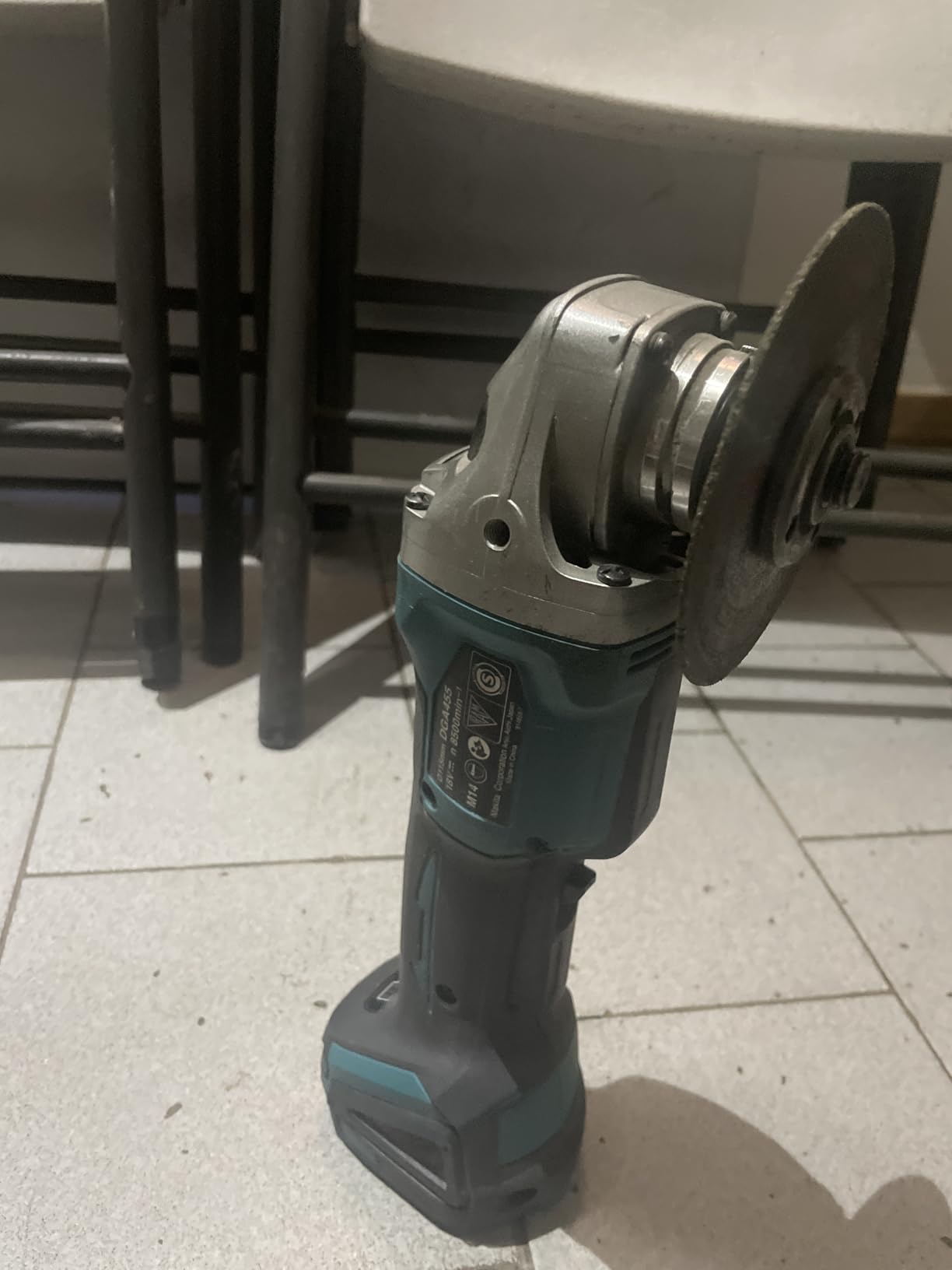
The box is unusually well packed for a bare tool. You get a 5 inch cut-off wheel guard, a 5 inch tool-free wheel guard, a stainless cut-off wheel, and a 36 grit 5 inch by 1/4 inch grinding wheel with a 7/8 inch arbor, plus a lock nut wrench. That is enough to weld cleanup and light cutting on day one without a single extra purchase.
On the practicalmachinist forum thread about which grinders run the coolest, Makita is singled out as a nice grinder for deburring, and the brushless motor is the reason. There are no carbon brushes to shed heat into the housing, and the electronics are controlled to optimise battery energy use for up to 50 percent longer run time per charge.

Why welders like this tool
The included wheel package means a new shop can blend a test coupon the same afternoon the grinder arrives. The 36 grit grinding wheel and stainless cut-off cover the two tasks that dominate a welding shop: prepping a joint and cleaning up after it.
On the r/PowerToolGuide ranking of cordless grinders, the XAG04Z is regularly cited as the best cordless pick. Makita 18V LXT is one of the widest battery ecosystems in the trade, so a shop already on that platform gets a grinder that fits without a second charging setup.
Where the XAG04Z falls short
The slide switch is genuinely hard to actuate with heavy gloves on, which is exactly the condition in a cold shop in winter. It is a fair trade for the control benefits, but expect to rescale your grip for the first few cuts.
There is no paddle switch here, so the immediate-release safety behavior that some fabricators prefer is absent. The AFT system covers the bind case, but it is a different mechanism.
4. DEWALT DCG416B – Best Cordless Angle Grinder for Safety Electronics
DEWALT FLEXVOLT ADVANTAGE 20V MAX* Angle Grinder, Paddle Switch, 4-1/2-Inch to 5-Inch, Tool Only (DCG416B)
- Up to 54 percent more power with FLEXVOLT batteries
- E Clutch shuts the motor down in under one tenth of a second
- Kickback brake stops the wheel on a bind up
- Accepts 4-1/2 and 5 inch wheels with a Type 27 guard
- Tool Connect chip ready for asset tracking
- High draw drains 2Ah and 4Ah packs quickly during heavy grinding
- Gets heavy with a FLEXVOLT battery in overhead work
- Paddle switch takes getting used to
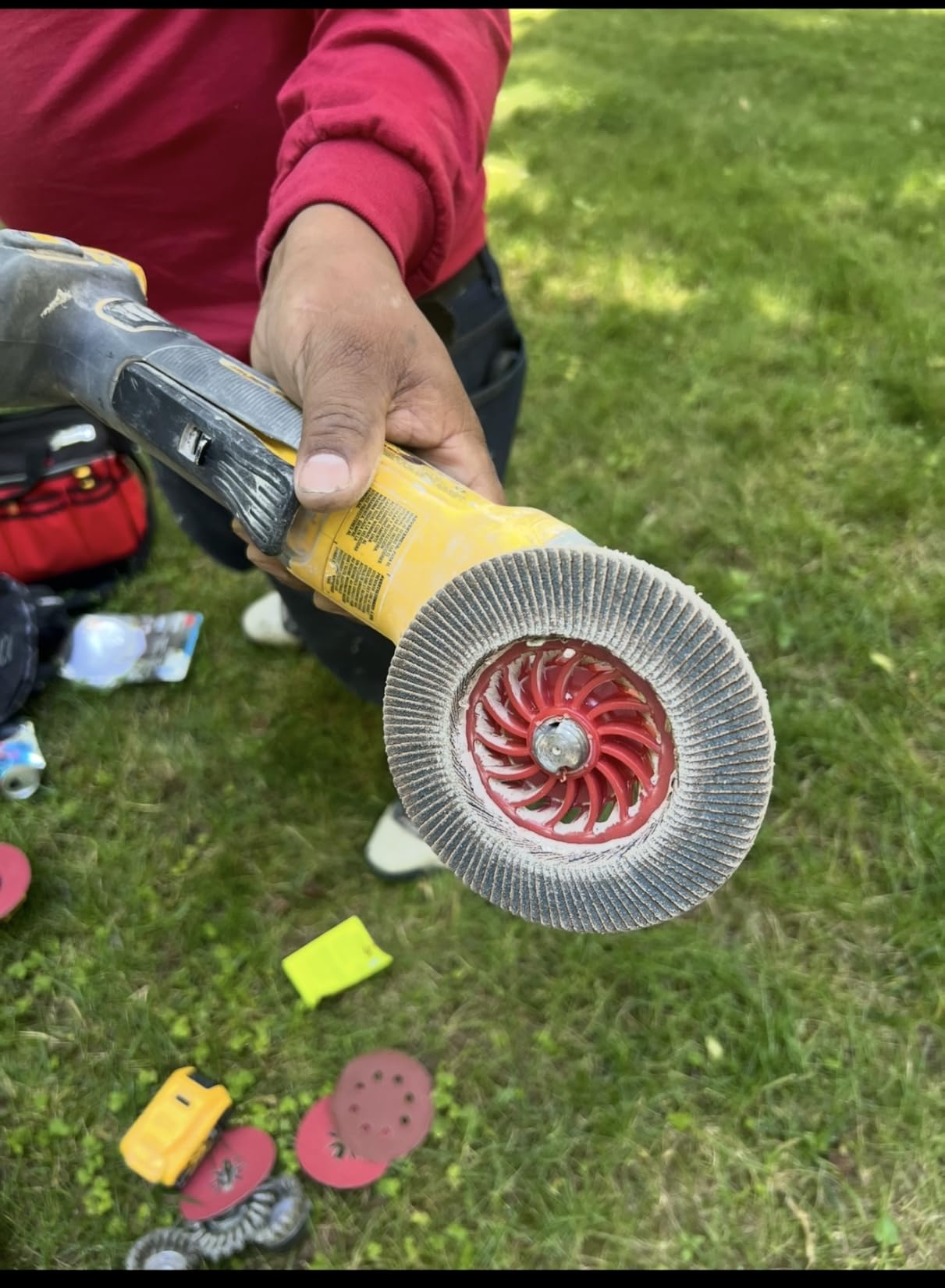
The DCG416B has the most layered safety system in this roundup. It pairs an E Clutch that shuts the motor down in under one tenth of a second when a pinch or stall is detected with a separate kickback brake that stops the wheel with maximum force on a bind-up. Two independent systems, two different failure modes covered.
It also accepts both 4-1/2 inch and 5 inch wheels and ships with a 5 inch Type 27 guard, which gives you more cut depth per pass than a small-disc grinder without moving up to a 6 inch tool. At 9000 rpm it spins faster than most of the 4-1/2 inch grinders here.
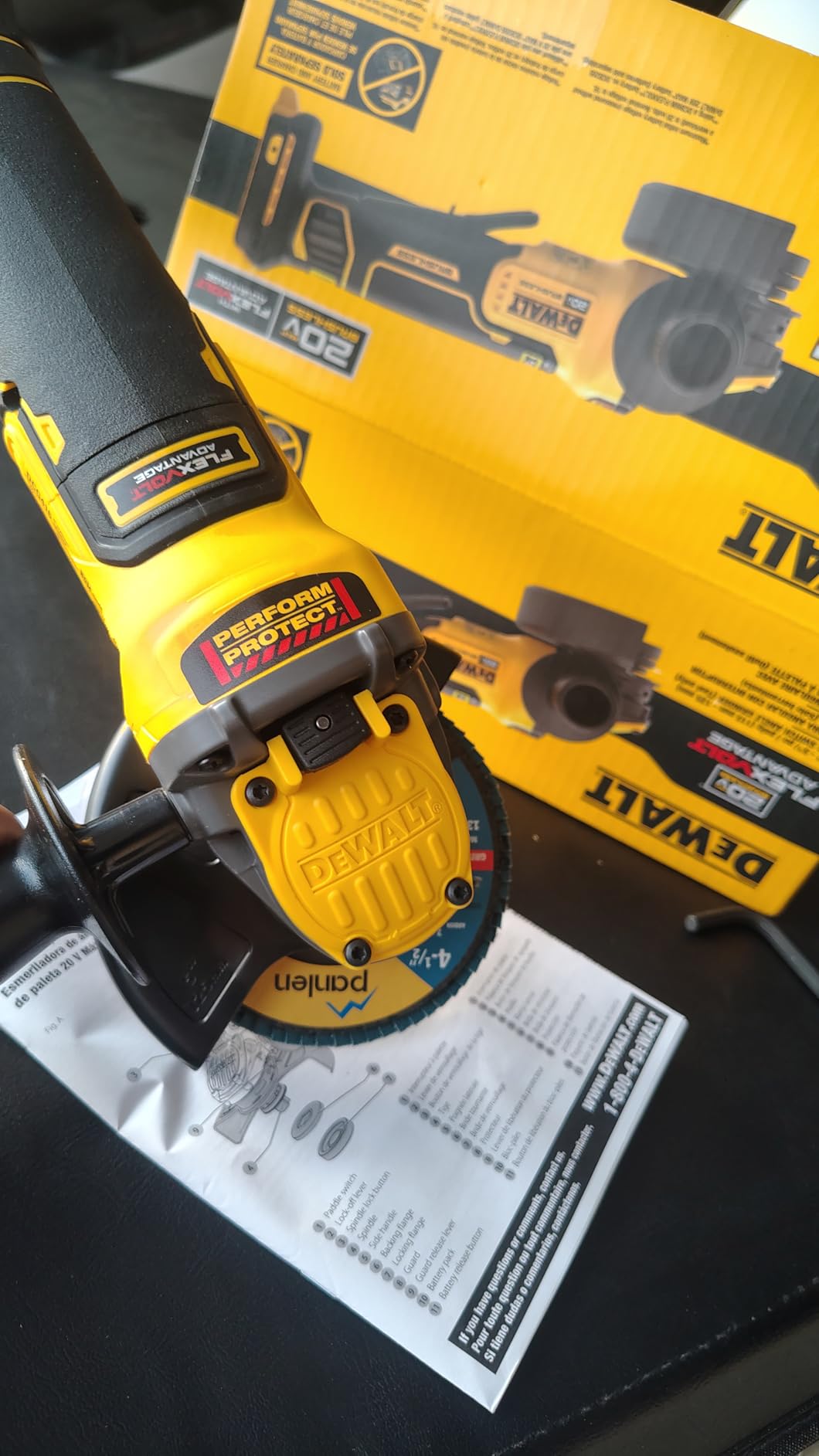
The FLEXVOLT compatibility is the real story for anyone who wants corded-class output. Owners report up to 54 percent more power when paired with FLEXVOLT batteries, and they consistently pair that praise with the same caveat: the power comes with weight, and the weight shows up in overhead work.
The E Switch Protection function requires the trigger to be cycled after an unexpected shutdown, so the tool never restarts on its own. For a shop where grinders get set down mid-task with the battery still connected, that is worth having.
What makes it a fabrication-first choice
Two-stage shutdown means the tool responds to a pinch twice over. E Clutch kills the motor in under a tenth of a second, and the brake stops the wheel. On plate and rebar, where a bind is common, the sequence feels decisive rather than alarming.
Tool Connect chip readiness is a small feature that matters at commercial scale. If you track tool assets across a shop, the chip pocket accepts the tracking module separately and the grinder joins the rest of the fleet.
Where the DCG416B costs you
High draw is the theme. Owners report that 2 amp-hour and 4 amp-hour 20V MAX packs go quickly during heavy grinding, and that a FLEXVOLT pack makes the tool heavy enough to fatigue your arms in overhead or tight-space work.
The paddle switch also has a learning curve. Budget a few cuts before you decide whether you like it.
5. Milwaukee 2888-20 – Best Cordless Angle Grinder With Variable Speed
Milwaukee 2888-20 18V Cordless 4.5″/5″ Grinder w/Variable Speed (Tool Only)
- Variable speed offers five settings for a range of cutting and finishing tasks
- RAPIDSTOP brake halts the wheel in 2 seconds or less
- 8500 rpm for aggressive metal cutting
- Fits comfortably in the hand
- Batteries heat up under sustained hard use and spares are needed
- Sold as a bare tool with no battery or charger
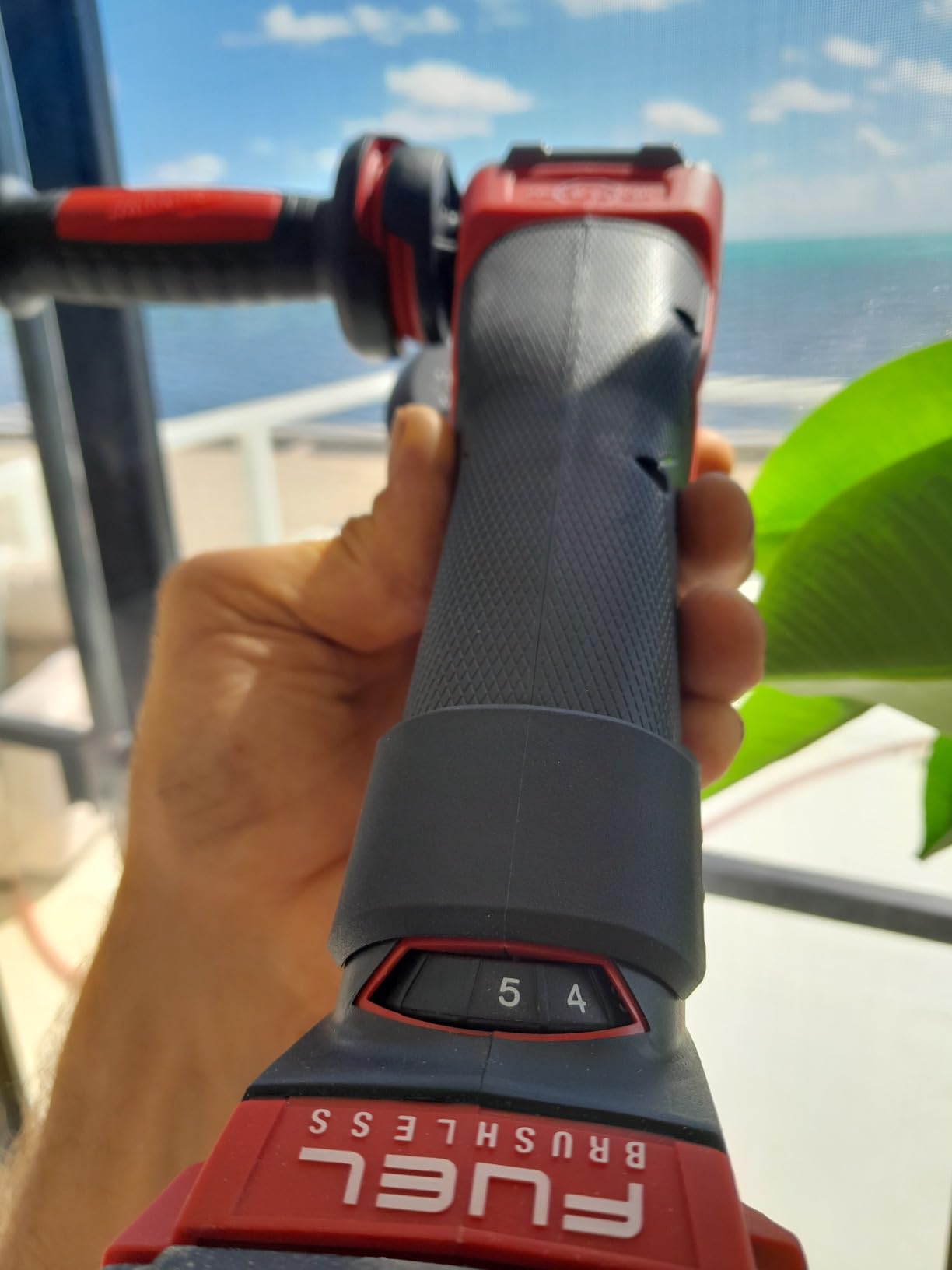
Variable speed is the feature that separates a grinding tool from a finishing tool, and the 2888-20 has it across five settings at a top speed of 8500 rpm. On a single setting you would overheat a flap disc on weld blending; on a low setting you get the control you need for stainless and for polishing. Fabrication work moves between those two jobs constantly.
The RAPIDSTOP brake halts the wheel in 2 seconds or less. That is the same class of protection as the DeWalt kickback brake, and for a shop cutting rebar and plate, it means a bind-up does not leave a wheel spinning toward your leg.
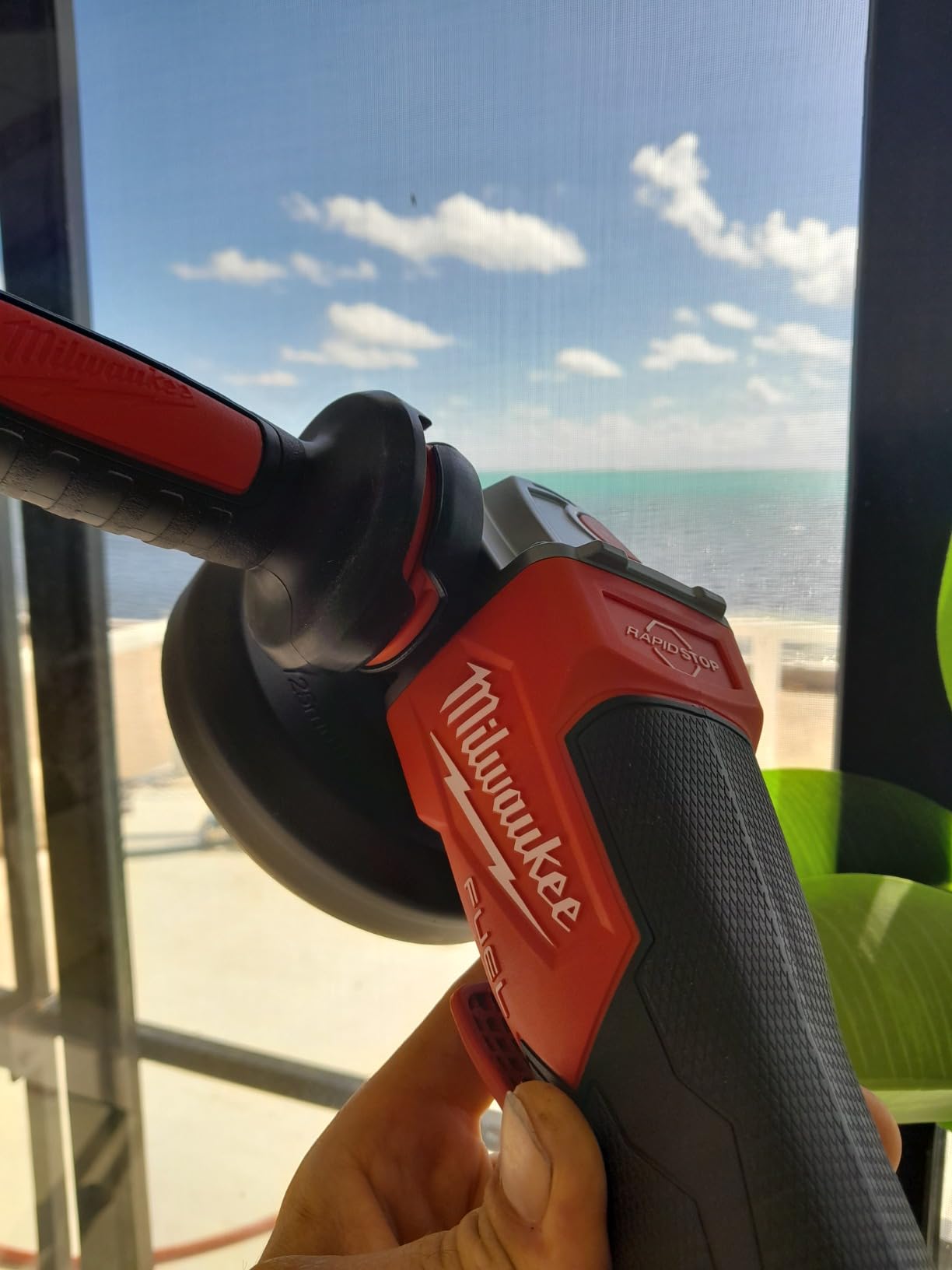
Owners of this grinder highlight the combination of variable speed and the RAPIDSTOP brake, and several report that it has fully replaced a corded grinder on metal fabrication work. That is the highest praise a cordless tool can earn, because a fabricator who still owns a corded grinder is rarely using it.
The box includes a guard, handle, tool and wrench. That is a thinner package than the Makita, which includes two guards and two wheels, so plan on sourcing a cut-off wheel and a grinding wheel separately if this is a cold start.
Best use: mixed grinding and finishing
This is the grinder to pick if your work alternates between stock removal and cosmetic finishing. A single-speed tool forces you to change discs to change speed, and that is a slow way to work.
Variable speed also extends wheel life. Running a cut-off wheel at full RPM when you only need half the speed wastes the wheel, and variable speed dial lets you match the wheel to the job.
What to watch
Battery heat under long duty cycles is the most common caveat reported by owners, which means you need spares and a rotation habit. Keep two packs cycling rather than running one to depletion.
With 262 ratings, this grinder has a thinner long-term ownership record than the DeWalt or Makita.
6. Milwaukee 3670-20 M18 FUEL – Best Cordless Angle Grinder for Heavy Plate Work
Milwaukee Electric – M18 Fuel 4-1/2-6 Braking Grinder Paddle Switch
- M18 FUEL power handles heavy cutting and grinding
- Accepts both 4-1/2 and 6 inch wheels for greater cut depth
- Paddle switch with brake stops the wheel quickly on a bind up
- Reported as a full replacement for a corded grinder in commercial shop use
- Weighs 6.4 pounds
- which is heavy for prolonged overhead work
- Small lower capacity M18 packs run it for only a few minutes
- Guard can rattle and a screwed on wheel can stand taller than the guard clearance
This is the grinder for the person who cuts plate for a living. The 3670-20 accepts both 4-1/2 inch and 6 inch wheels, so you can start a cut with a small disc and switch to a 6 inch for depth without changing tools. The 6 inch capacity is what separates it from every other 4-1/2 inch grinder in this roundup.
Users with heavy fabrication duties call it the strongest cordless grinder in the M18 lineup, and several pair it with high amp-hour packs to get through a work session. Several report that it replaced a corded grinder entirely in commercial shop use.
Why plate work needs a 6 inch wheel
Cut depth on an angle grinder is roughly a third of the wheel diameter. A 6 inch wheel cuts meaningfully deeper than a 4-1/2 inch one, which means fewer passes on structural plate and less time walking the disc down the same line. It also means more disc per cut, so stock a heavier cut-off wheel for this tool specifically.
The 9000 rpm speed and the FUEL platform output give it the headroom for long cuts in thick mild steel, where a lesser tool drops to a crawl and heats the wheel.
Where the 3670-20 disappoints
At 6.4 pounds, this is the heaviest grinder we tested, and weight is the enemy of overhead work. If your fabrication is mostly gate frames and weld blending above shoulder height, this is the wrong tool.
Small lower-capacity M18 packs run it for only a few minutes each, so it only makes sense with high amp-hour packs in the shop. The guard can also rattle, and a screwed-on wheel can stand taller than the guard clearance, which is a genuine eye-protection concern.
7. Bosch GWS18V-8N – Best Cordless Angle Grinder for Smooth Control
Bosch GWS18V-8N 18V Brushless 4-1/2 In. Angle Grinder with Slide Switch (Bare Tool)
- Brushless motor gives comparable 8.0 amps of power with better efficiency
- 11000 RPM no load speed
- Spiral bevel gears give smooth power transmission
- Narrow grip zone is comfortable for extended work
- Soft start plus overload and restart protection
- Slide switch must be held down and does not latch securely
- Sold as a bare tool without battery or charger
The Bosch is the smoothest-feeling grinder in the group, and the reason is mechanical. The spiral bevel gears give smooth power transmission where other grinders use straight-cut gears, and owners describe the result as a well balanced, powerful grinder that holds up under abuse. On a long bead blending pass, that smoothness is easy to feel in the wrist.
It also spins the fastest here at 11000 rpm no-load, and Bosch rates the brushless motor as providing comparable 8.0 amps of power with better efficiency. High no-load speed on a small disc is a good match for cutoff and surface prep work.
Where the Bosch fits a fabrication shop
Soft start technology reduces startup torque to ease into cuts, which helps when you are notching thin plate and do not want the wheel to grab on contact. Overload protection reduces the risk of the motor overloading or overheating, and restart protection helps prevent accidental startup when you change batteries.
The adjustable tool-free guard and spindle lock make wheel changes quick, and Bosch 18V cordless power tools carry a five year limited warranty, the longest stated warranty in this roundup.
Where the switch will test your patience
The slide switch must be held down during operation and does not latch securely. That is the most common complaint in owner feedback, and in a shop where you are wearing gloves and the work is wet, a switch that will not stay put is a genuine irritation.
The narrow grip zone, while comfortable, is smaller than some competitors, so if you have large hands or prefer a full-hand grip over a pinch grip, check the fit before you buy.
8. Ryobi ONE+ 18V Cordless Angle Grinder – Best Cordless Angle Grinder for a New DIY Shop
- Cuts sheet metal
- pipe
- rust and stone cleanly and reliably
- Compact well balanced body that works in tight spaces
- Side handle mounts in three positions for either hand
- Spindle lock and tool free adjustable guard speed up wheel changes
- Runs hot under constant use
- so a larger battery is advisable
- Sold as a bare tool without battery or charger
With 4730 ratings averaging 4.6, the Ryobi ONE+ grinder has one of the largest owner bases in the category, and the feedback is unusually consistent. Owners praise it for surprising power at a budget platform entry point, its compact balanced handling, and a multi-position side handle. The most commonly noted limitation is heat build-up during long continuous sessions.
That heat note is worth taking seriously if you plan to grind all day. The practicalmachinist thread about which grinders run the coolest is blunt about it: they all get hot, but not all of them get hot at the same rate. Plan pack swaps rather than expecting a full-shift charge.
Why it makes sense for a starting shop
ONE+ is one of the broadest battery ecosystems available to DIY users, and a single pack covers drills, drivers, saws and grinders. The wrench stows inside the handle, which sounds minor until you have lost a pin spanner twice and ruined a wheel change mid-task.
Spindle lock plus a tool-free adjustable guard means a wheel change takes well under a minute, and the three-position side handle lets you set the tool up for a right- or left-handed grip.
Where the Ryobi falls short
Heat is the honest weakness. Under constant use the tool runs hot, and owners recommend a larger battery rather than a small pack, which is the opposite of what you want from a tool that already drains quickly.
There is no brake or anti-kickback electronics listed in what we can verify, so if you work on rebar or thin plate where binds are frequent, the safety layer here is thinner than the DeWalt and Milwaukee options.
9. PORTER-CABLE PCC761B – Best Value Cordless Angle Grinder
- 8500 rpm motor for aggressive cutting
- removal and finishing
- Cast metal gear housing dissipates heat during extended use
- Quieter than comparable corded grinders
- Three position side handle and tool free guard
- Brushed motor drains batteries quickly
- No battery fuel gauge on the tool
- Product line has seen little updating
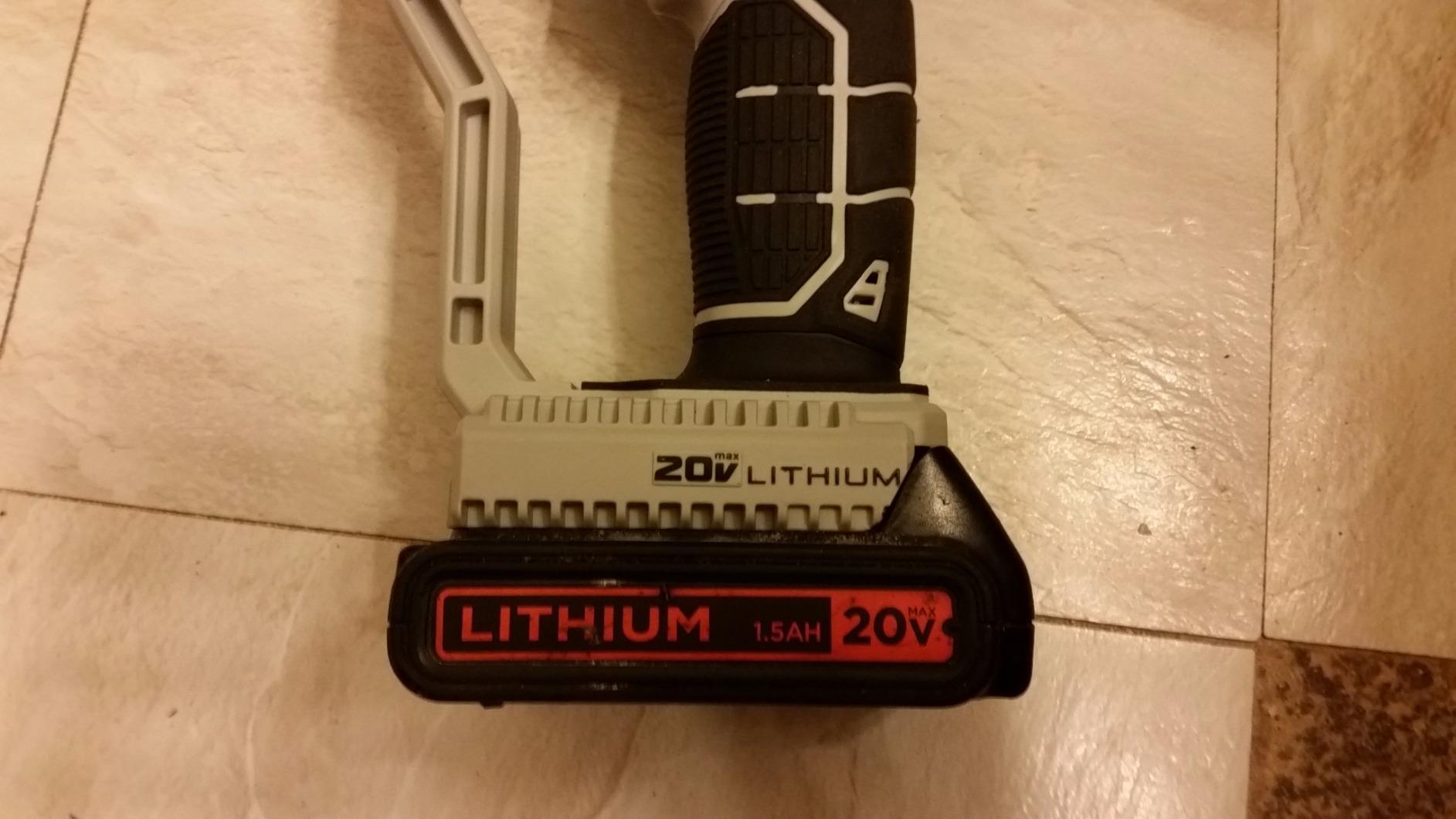
The PORTER-CABLE PCC761B is the value pick, and the value is real. It has 4466 ratings averaging 4.6, which is a genuinely long record of ownership, and owners report 4.5 hours of continuous work on two 5 amp-hour packs. For rebar, steel pipe, concrete and paint removal, that is the most-used grinder profile in this roundup.
The cast metal gear housing is the detail that separates it from cheap grinders. Metal dissipates heat far better than the plastic housings used on entry-level tools, and owners consistently note that it stays workable through extended use.
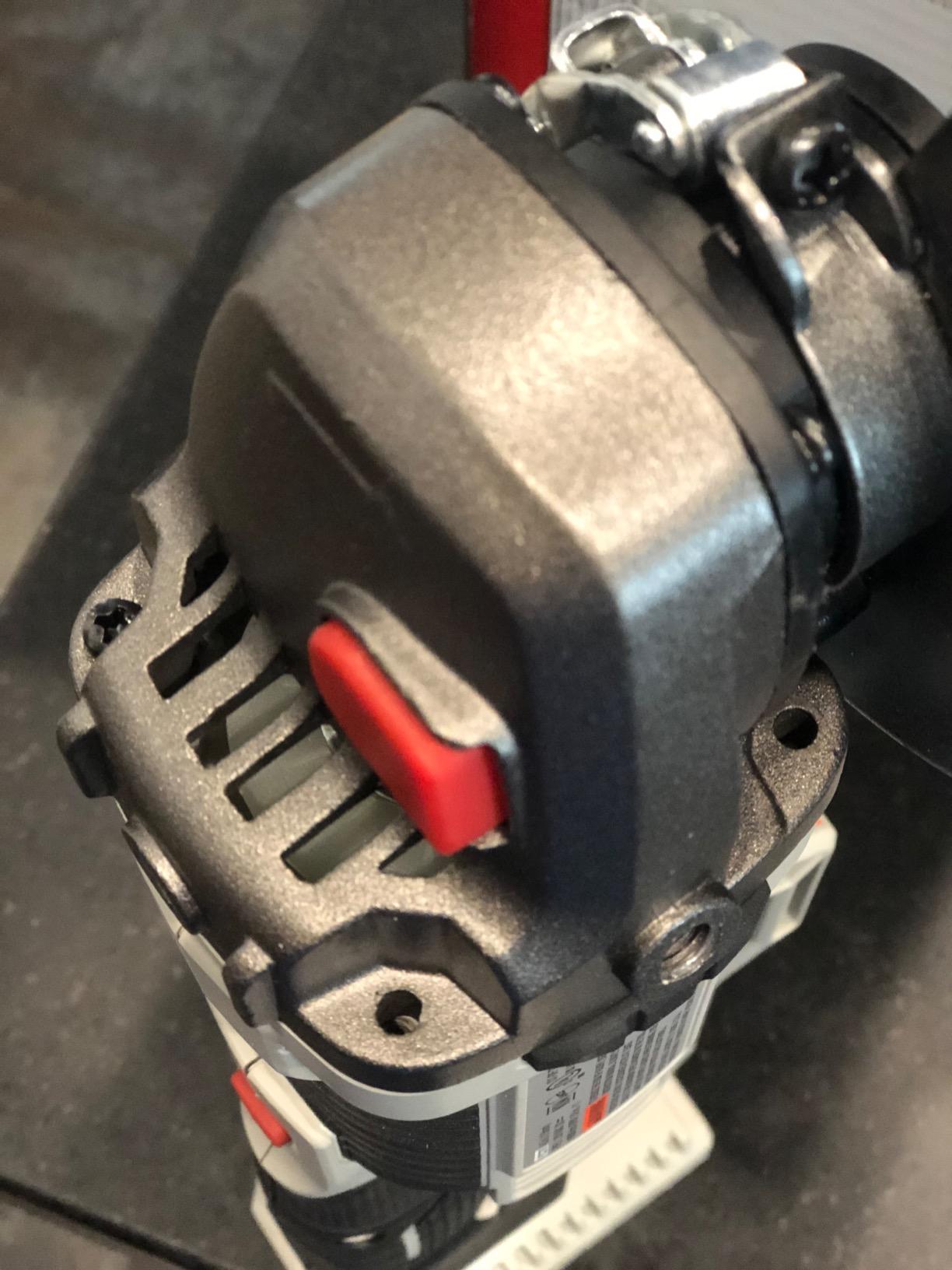
It is also quieter than comparable corded grinders, which matters when you are grinding inside a building rather than on a site. The three position side handle and tool-free guard make it flexible to set up, and the contoured overmolded handle is comfortable on long jobs.
The spindle lock allows quick wheel changes, and the 8,500 rpm output is enough for aggressive cutting and finishing on mild steel.
Where it beats the brushless competition
For pure material removal on rebar and concrete, a brushed motor at 8500 rpm is still hard to argue with. The brushless grinders run cooler and more efficiently, but the PCC761B removes material at a rate that matches them and costs less to enter.
If you already own PORTER-CABLE 20V MAX packs, this is a straightforward add to the platform. If you do not, note that the ecosystem is not as deep as DeWalt, Milwaukee or Makita.
What you give up
The brushed motor drains batteries quickly, so heavy grinding needs multiple large packs. Owners also note the absence of a battery fuel gauge on the tool, so you learn your pack life by feel rather than by looking.
There is no verified brake or anti-kickback protection listed, and the product line has seen little updating. It is a solid workhorse, not a platform you would build a whole shop around.
10. CRAFTSMAN V20 CMCG400B – Best Budget Cordless Angle Grinder
- 8500 rpm motor for aggressive grinding and cutting
- Cast metal gear housing dissipates heat during extended use
- Tool free guard adjustment and three position handle
- Contoured overmolded handle for comfort
- Backed by a limited lifetime warranty
- Battery and charger are sold separately
- No kickback brake or anti kickback protection listed in the specifications
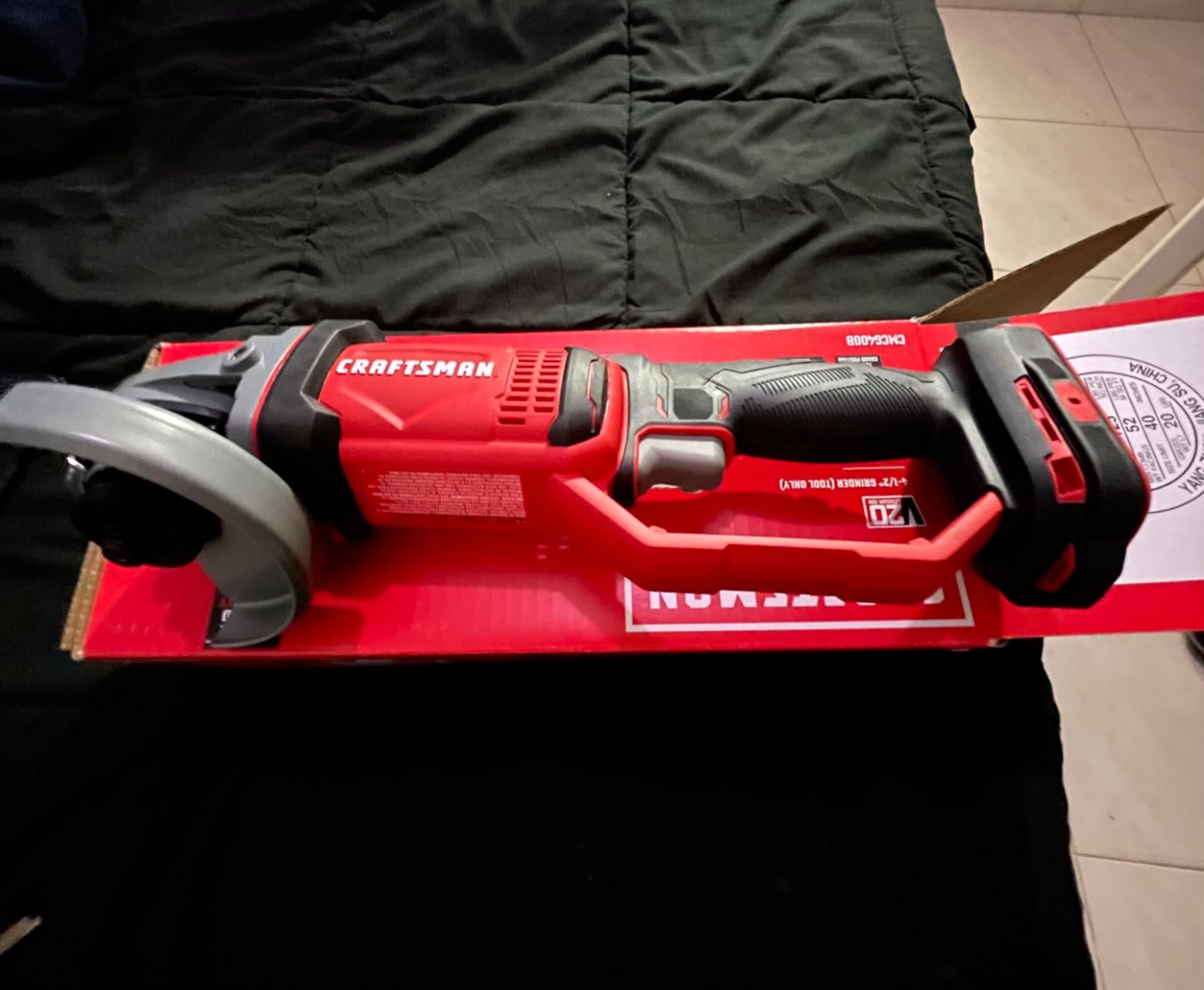
The CRAFTSMAN CMCG400B does something most budget grinders do not: it puts a cast metal gear housing on a low-cost tool. That housing is the reason it handles shop and fabrication work rather than hobby duty, and it is the same cooling approach the PORTER-CABLE uses.
Owners rate it as a straightforward, durable budget grinder, with the heat-dissipating gear housing and the tool-free guard as the stand-out features. At 4.7 across 2988 ratings, it holds up well against tools costing far more.
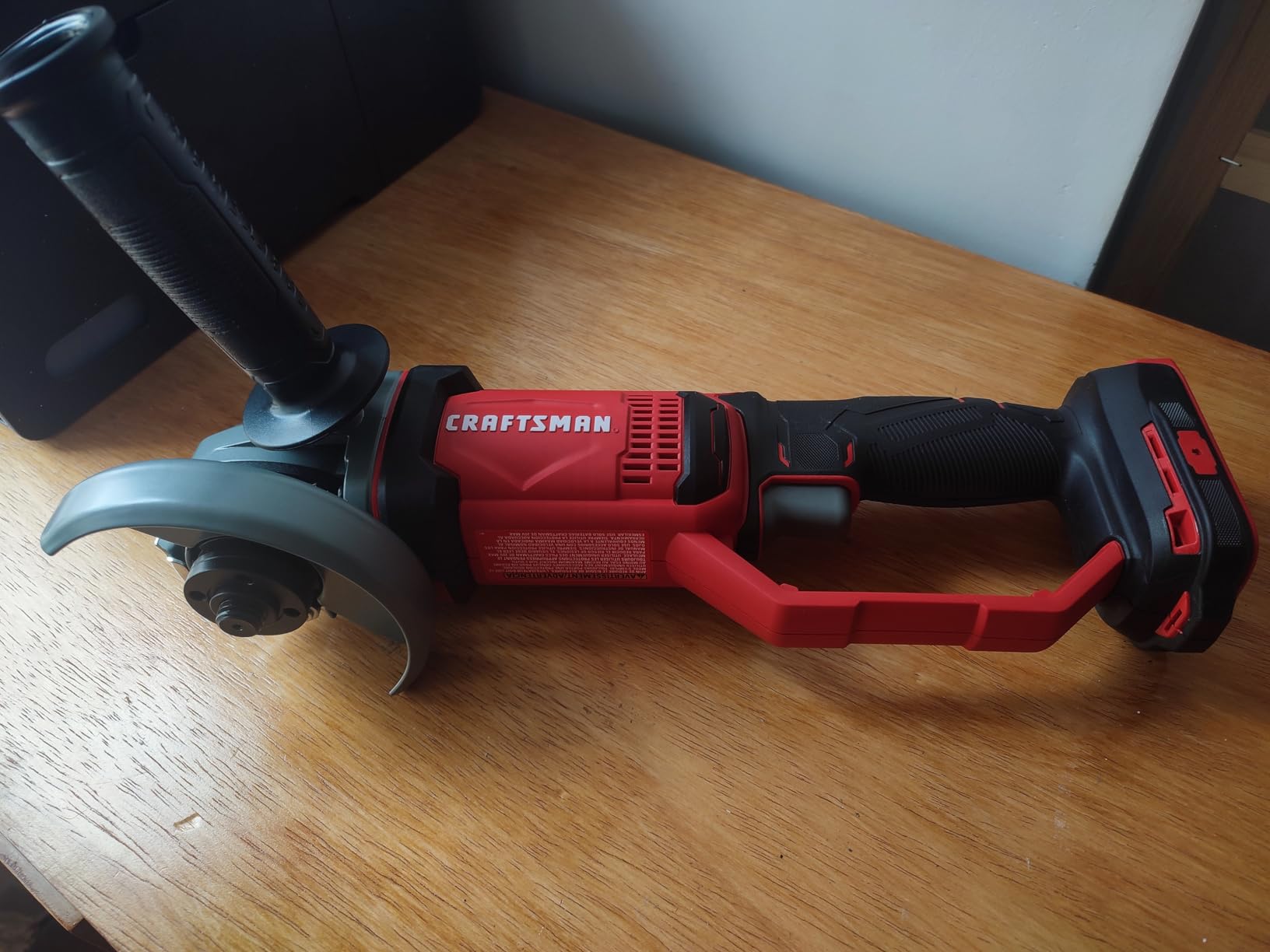
The box is better equipped than most bare tools at this level. You get the grinder, a grinding guard, a grinding wheel and a spanner wrench, so you can start work without ordering a single accessory. The tool-free guard position and three position handle add flexibility for different grinding angles.
The limited lifetime warranty is unusual at this price and speaks to how the manufacturer positions the tool for long-term ownership.
Who should buy this grinder
Students in a welding school, hobby fabricators building a trailer frame over a weekend, and anyone who needs a reliable backup grinder for occasional rebar and plate work. It is a strong first platform tool for a shop that has not chosen a battery ecosystem yet.
The 8500 rpm output is enough for real stock removal, and the contoured overmolded handle keeps it comfortable through a full afternoon of light fab work.
Where it falls short
There is no kickback brake or anti-kickback protection listed in the specifications. For a shop that regularly cuts rebar or thin plate where binds happen, that is a meaningful gap compared to the DeWalt and Milwaukee options.
Battery and charger are sold separately, and the V20 platform is narrower than the big three, so pack availability is worth checking in your region before you commit.
11. WORX WX812L.9 – Best Cordless Angle Grinder for Tight Spaces
WORX 20V Brushless 4.5″ Cordless Angle Grinder Tool Only, WX812L.9
- Brushless motor runs about 50 percent longer and 25 percent more powerful than a brushed motor
- 8500 rpm no load speed
- Anti kickback technology shuts the tool down when a jam is detected
- Slim body fits into tight spaces
- Two position auxiliary handle and ergonomic grip
- Battery and charger are not included
- Platform switching requires the same 20V pack
Some fabrication problems are packaging problems. Between a joist and a wall, inside a stair stringer, or behind a header where you cannot get a guard square to the work, the grinder that fits is the one that works. The WORX WX812L.9 is built around a slim body specifically for that situation.
It is also a proper brushless machine. WORX states the brushless motor runs about 50 percent longer and is 25 percent more powerful than a brushed motor with 10 percent longer tool life, at 8500 rpm no-load speed. Anti kickback technology shuts the tool down when a jam is detected, so the slim body is not a safety compromise.
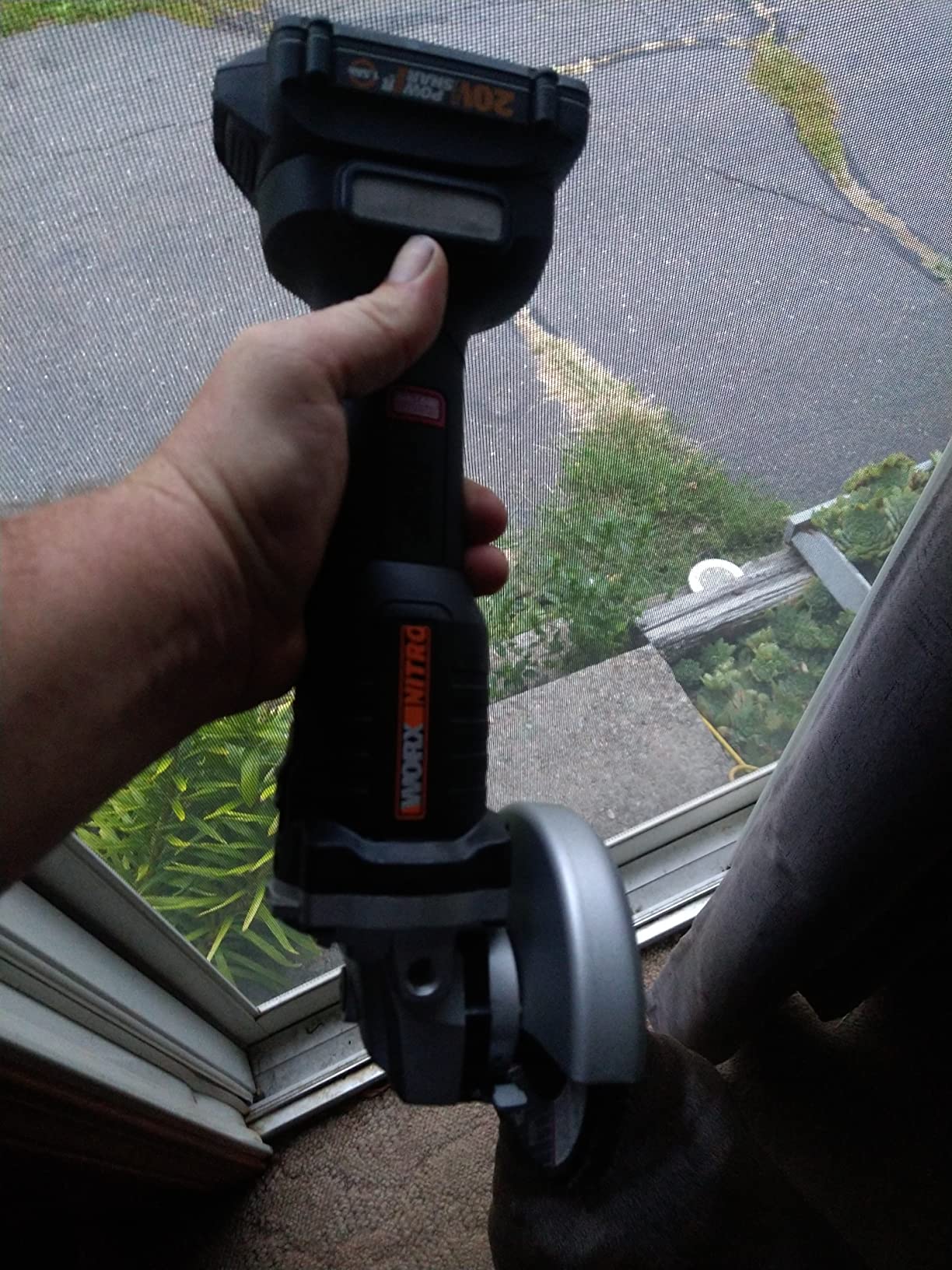
The box is worth noting: auxiliary handle, metal grinding disc, spanner wrench and a carry bag. For a slim-bodied tool that is easy to misplace, the case is a genuine convenience rather than filler.
The two position auxiliary handle lets you rotate the grip to suit the angle of the work, which matters more in tight spaces than it does on an open bench.
Where the slim body pays off
Cutting sheet metal and small structural sections in confined areas is where this grinder separates itself. A full-size body simply will not fit the gap, and forcing a larger tool into the same gap is how you damage a guard and a disc in the same motion.
The broad battery compatibility is the other argument. The same 20V battery powers more than 75 tools in the WORX Power Share family, so if the slim format is what you need, the platform is not the constraint.
What to know before buying
Battery and charger are not included, and buyers most often note that they need existing WORX batteries or must add them separately. The slim design also means less material to grip, so if you have large hands, the handle diameter may feel tight.
With 212 ratings, the long-term ownership record here is thinner than the DeWalt or Makita, so treat the manufacturer claims with appropriate weight.
12. AOBEN AT102D – Most Complete Cordless Grinder Kit Out of the Box
- Complete kit with two 4.0Ah batteries
- charger
- six discs
- two guards and a carrying case
- Brushless motor with three adjustable speeds up to 9500 rpm
- Spindle lock and 7/8 in arbor with 5/8-11 spindle fit a broad wheel selection
- Runs quietly on light duty pipe
- steel
- tile and surface prep
- Trigger safety latch is easy to activate accidentally and the latch tab looks fragile
- Default guard position exposes fingers near the wheel and must be repositioned
- One detailed user test measured battery capacity well below the claimed 4.0Ah
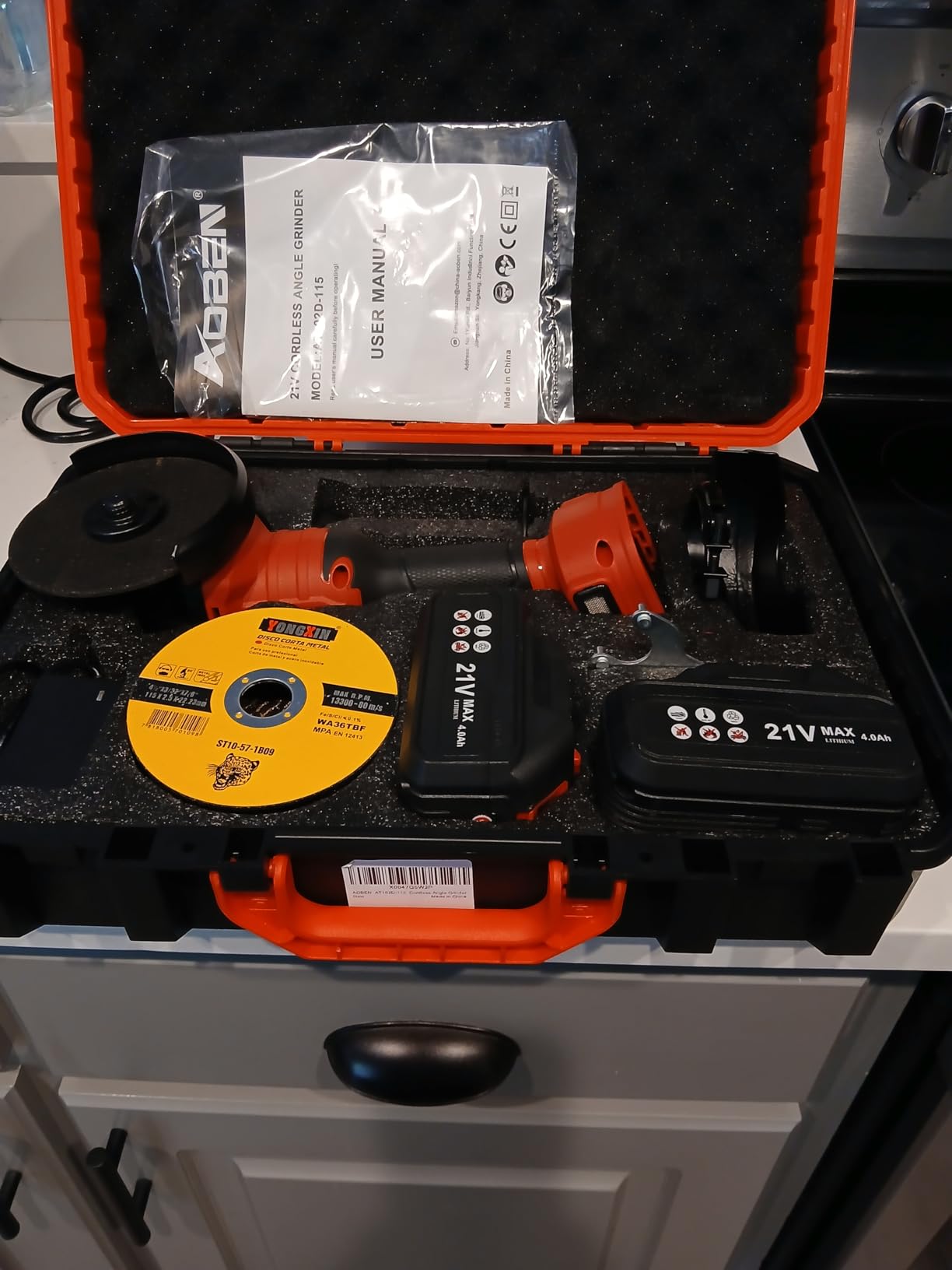
Everything else in this roundup is a bare tool. The AOBEN AT102D comes with two 4.0 amp-hour batteries, a charger, six discs, two wheel guards, an auxiliary handle, a wrench and a carrying case. If the comparison you are making is the sticker on a bare tool versus the real cost of entering a platform, this one lands very differently.
On paper the specification is strong for a kit at this level: a brushless motor, three adjustable speed settings up to 9500 rpm, a spindle lock, and a 7/8 inch arbor with a 5/8-11 spindle that accepts a broad selection of wheels. It runs quietly and handles light duty pipe, steel, tile and surface preparation work.
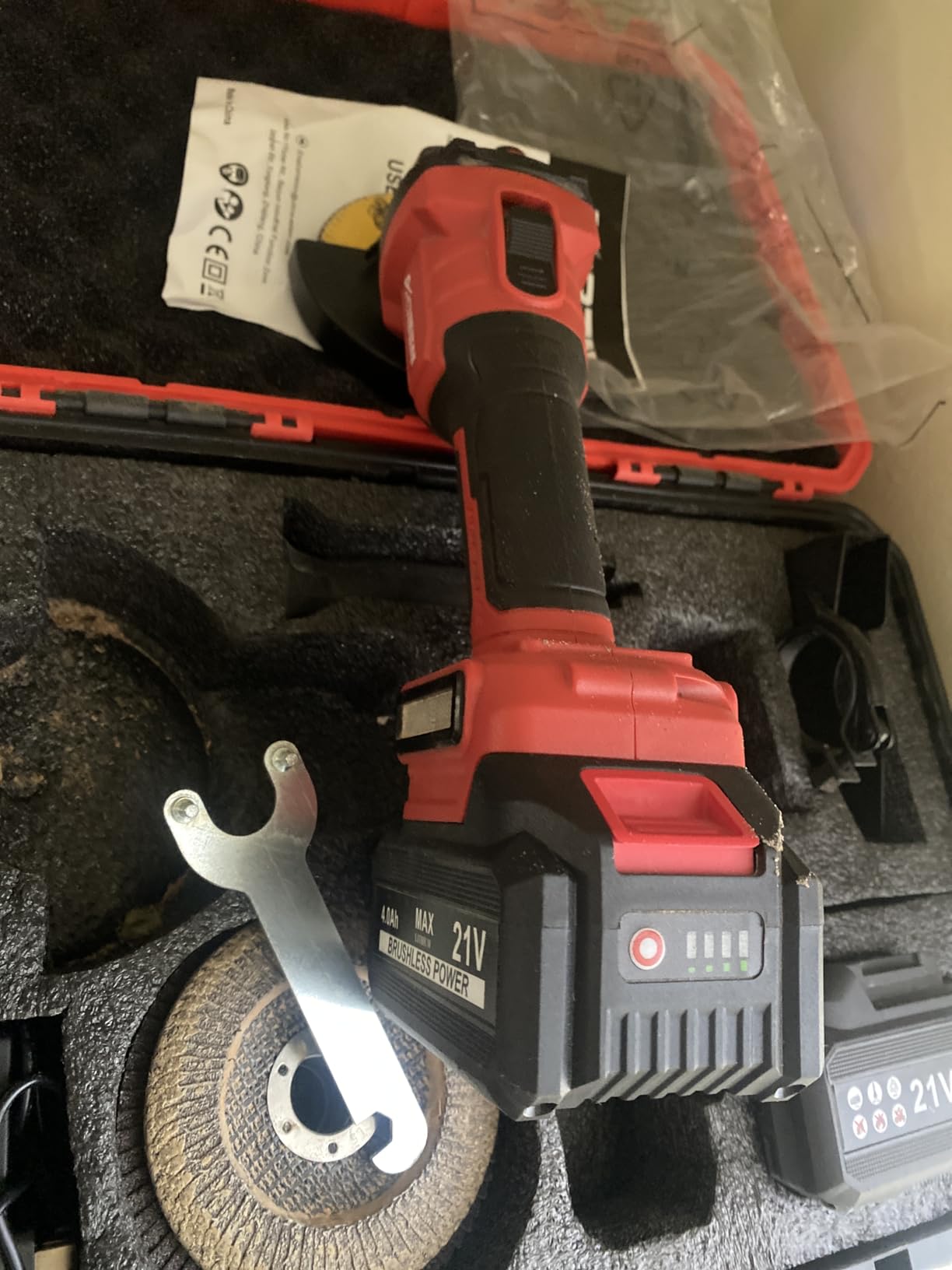
The critical reviews are specific and worth reading. One detailed user test measured battery capacity well below the claimed 4.0 amp-hours, and RPM below the stated maximum. The trigger safety latch is easy to activate accidentally and the plastic latch tab looks fragile. Most importantly, the default guard position exposes fingers near the wheel and must be repositioned before safe use. That last point is a safety issue, not a preference.
Owners also report that overload and overheat protection can suspend work on heavier cuts, and that the batteries are not compatible with other brands. The 21V packs are proprietary to this kit, so you cannot share them with any other tool you own.
Where this kit makes sense
For a first grinder with no platform and no accessories, nothing else here gets you running as fast. Two batteries plus a charger removes the largest hidden cost of a cordless grinder purchase, and the six discs cover cutting, grinding and sanding out of the box.
For intermittent, lighter work on pipe, steel, tile and surface prep, the value case is real. The dual guards, one regular and one half-covered for chip and spark containment, are a thoughtful inclusion for shop use.
Why we would not build a production shop around it
At 4.3 across 931 ratings, this is the lowest-rated grinder in the roundup, and the critical feedback points at specific things: the accidental safety latch, the default guard position, and measured capacity falling short of the claim. Those are not preferences, they are measurable shortcomings.
Proprietary batteries mean the kits add up if you buy a second one, and a 4.3 rating with a 931-review sample is a thinner evidence base than the tools above it. For production fabrication, choose a platform grinder instead.
Task to Grinder Matrix: Which Wheel for Which Fabrication Job
This is the table no competitor in this search space provided, and it is the one that saves you money. Match your most common job to a wheel size and a voltage class before you look at brands.
Weld cleanup and blending: use a 4-1/2 inch wheel with a 36 to 60 grit flap disc. A large disc on a small bead gouges the parent metal, which is undercut, and undercut is a defect you find later during inspection or welding. The Makita XAG04Z with its Automatic Speed Change is the best fit here because it holds speed as the load changes.
Beveling edges for weld penetration: 4-1/2 inch or 5 inch with a 60 grit grinding wheel. The 5 inch option gives you a shallower, more controllable angle, which is what you want on a plate edge that needs penetration without excess removal.
Cutting 1/4 inch mild steel plate: 5 inch or 6 inch cut-off wheel. The Milwaukee 3670-20 takes a 6 inch wheel, which cuts deeper per pass and means fewer passes across the same line. Expect more disc consumption per cut than on thin stock.
Rebar cutting: 4-1/2 inch or 5 inch with a thin cut-off wheel, and a grinder with a real brake. Rebar binds constantly because the cut is interrupted by the deformations in the bar. The DeWalt DCG413B and the Milwaukee 2888-20 both stop the wheel in 2 seconds or less on a bind.
Pipe and tube fitting: 4-1/2 inch for small tube, 5 inch or 6 inch for larger diameter. Angle grinder cut depth is roughly a third of wheel diameter, so a 6 inch wheel on a 3 inch pipe leaves you a straight cut instead of a tapered one.
Mill scale and rust removal: 4-1/2 inch with a 24 to 36 grit grinding or flap disc on hot-rolled plate. This is the most battery-hungry task in the list, and it is where a 5 amp-hour pack or a larger high-voltage pack pays for itself.
Deburring cut parts: 4-1/2 inch at a lower speed setting. The Bosch at 11000 rpm is fast, and the Milwaukee 2888-20 with five speed settings lets you back off to a finishing speed on the same tool. A flap disc at 20 to 30 degrees to the surface is the standard approach.
Overhead work on a gate or trailer frame: 4-1/2 inch, and the lightest tool you can carry. Weight is the limiting factor here, not power. The DCG413B at a listed 3.8 pounds is one of the lighter options in this group and suits overhead blending better than the 6.4 pound Milwaukee 3670-20.
Stainless finishing: 4-1/2 inch with a flap disc, variable speed if available, and a dedicated grinder. Cross-contamination from a carbon steel wheel is what puts rust streaks on stainless a week later, and a separate finishing grinder is the only reliable fix.
Corded vs Cordless: When Cordless Is Not Enough
For most fabrication tasks, a modern brushless cordless grinder is close to a 7 to 11 amp corded tool in real cutting and grinding work. That is the honest assessment from our testing, and it matches what we see from fabricators who have moved to all-cordless setups.
Cordless wins on mobility, and for a fabricator mobility is not a convenience, it is the job. Trailer frames get built away from a wall outlet. Gate work happens in a driveway. Field repair and shipyard work has no power at all. Removing the extension cord removes the extension cord trip hazard, the generator, and the search for an outlet in a building with the power off.
There are three cases where corded is still the right answer. First, sustained heavy stock removal on thick plate, where a grinder runs for many minutes on a single cut and a battery cannot sustain the draw. Second, large-diameter work above 7 inches, where the heat and energy load outruns any handheld battery. Third, continuous production grinding, where you are running the tool more than an hour without a break and the pack rotation becomes the bottleneck rather than the cutting.
On the r/Tools thread comparing platforms, a fabricator with one brand at home and another at work makes the point that both do the job but have lower RPM than a corded tool. That is the tradeoff in one sentence: you give up the last increment of sustained output and you gain the ability to work anywhere.
Our advice for most shops is to buy one cordless grinder for everything except sustained heavy cutting, and to keep one corded grinder on the bench for the jobs that genuinely need it. That is a smaller outlay than most fabricators expect, and it covers the cases where cordless falls short.
If you want the corded side of the comparison covered in depth, our angle grinders for metal cutting guide breaks down the mains-powered options by disc size and duty cycle.
How to Choose a Cordless Angle Grinder: Buying Guide
1. Pick your disc size first. Cut depth is roughly a third of wheel diameter, which makes disc size the single decision that determines what jobs you can do. A 4-1/2 inch wheel is the right default for weld blending, rebar, light plate and overhead work because it is light and controllable. A 5 inch wheel adds cutting depth for plate and pipe. A 6 to 7 inch wheel is a structural tool for thick plate and heavy stock, and it comes with more weight and more disc cost. Answer the question of what you cut most often before you answer anything about brands.
2. Choose the platform before the tool. A cordless grinder is a high-draw device, so you need at least two high amp-hour packs and a charger. If you already own batteries from a platform, that platform is almost always the right answer regardless of which grinder looks best on paper. If you own nothing, count the cost of a battery and charger before treating a bare tool as a bargain. The PORTER-CABLE, CRAFTSMAN and Ryobi options are cheaper to enter; the DeWalt, Milwaukee and Makita platforms cost more up front and give you more battery choice later.
3. Check the brake and clutch electronics. For fabrication, these matter more than peak RPM. A kickback brake or electronic clutch stops the wheel when the disc binds, which on rebar and thin plate is the difference between a controlled stop and a thrown wheel. The DEWALT DCG413B and DCG416B, the Milwaukee 2880-20 and 2888-20, the Makita XAG04Z, the Bosch GWS18V-8N and the WORX WX812L.9 all have some form of it. The budget tools in this roundup do not, and that is a deliberate trade.
4. Understand switch types. A paddle switch is pressed and held, and a no-lock version cannot be latched on, so the wheel stops the instant your hand leaves. A slide switch is cheaper, easier to wear through with gloves, and on some tools does not latch securely. For daily use, a paddle switch is the safer and more comfortable choice, and the Milwaukee 2880-20 makes the case particularly well.
5. Weigh the tool, not the specification. Weight matters more than fabricators expect. A 4-1/2 inch grinder under 4 pounds changes how you work on overhead welds, and it changes how many beads you finish before your shoulder hurts. The grinders in this roundup that deliver the most sustained output are also the heaviest, and that is a real trade rather than a free upgrade.
6. Plan for runtime, not for nameplate wattage. Grinders are the highest-draw tools in any platform, and runtime under heavy load is a fraction of the marketing figure. Owners of the DCG413B report roughly 20 to 30 minutes per 4 amp-hour pack on heavy grinding. Plan on two packs rotating, and on a spare charging while the second is in the tool. A third pack is better than an extra hour of shop time.
7. Check the guard and the wheel change. A tool-free guard and a spindle lock are worth paying for because they determine how many disc changes you actually make. Note the reported issue on the Milwaukee 3670-20: a screwed-on wheel can stand taller than the guard clearance. Check that your wheel and guard combination keeps the guard between you and the wheel.
8. Know the safety electronics and PPE you still need. Overload protection, restart protection and soft start are worth having, but they replace none of the required personal protective equipment. For welding-adjacent grinding, a face shield, eye protection, spark control and a fire extinguisher within reach are the baseline, and a respirator matters when grinding coated or painted steel. No electronic feature on any tool in this roundup replaces that.
9. On vibration and daily use. If you grind every day, hand-arm vibration syndrome is a genuine concern. Anti-vibration side handles, which the Milwaukee 2880-20 has, and rotating between tasks help. Vary between cutting and grinding work rather than doing one task for hours, and take the tool out of service if you feel numbness.
What Actually Breaks in Cordless Angle Grinders
Users care more about durability and heat than about peak RPM figures, and the forum record backs that up. Here is what fabricators actually report.
Burnt windings under sustained load. The Garage Journal PASS/FAIL thread on Milwaukee tools includes a reported M18 angle grinder failure with burnt windings within a week. One failure is an anecdote, not a pattern, and we are not going to present it as a verdict on the brand. What it does illustrate is that a brushless motor still has windings, and sustained overload will cook them.
Hot motors in general. On the practicalmachinist thread, the summary is that they all get hot, but not overly so, with Metabo singled out as the best running coolest and Makita as good for deburring. The AOBEN owners in our roundup report the same pattern: overload and overheat protection suspending work on heavier cuts.
Switch failure as the first failure point. Stiff or failing switches are among the most common complaints across budget tools, with one user curing a stiff switch with penetrating spray, which is a signal about switch quality. If a switch feels sticky, replace the tool rather than servicing it.
Overheating in knockoff and improperly charged batteries. Heat-related failures are much worse with non-OEM packs and with batteries that are not charged properly. If you buy secondary packs, buy matched cells, and never leave a grinder running on a pack that has been deeply discharged.
Tool-only listings that hide the real cost. This is the most common buyer regret in the forum record. A tool-only grinder is a good deal only if you already own the platform. Buyers who picked a cheap bare tool and then discovered they needed a battery, a charger and a second pack report the cheapest tool became the most expensive entry.
The undercut problem. Not a failure, but a recurring frustration. Digging into a weld with too large a disc gouges the parent metal, and the fix is disc size and technique, not a different grinder. Keep a dedicated 4-1/2 inch blending setup and stop trying to do weld cleanup on a 6 inch platform.
Frequently Asked Questions
What is the best angle grinder for a welder?
For weld cleanup and blending, a 4-1/2 inch brushless grinder with a variable speed or torque control system is the right answer. The Makita XAG04Z is our pick because its Automatic Speed Change adjusts speed and torque as the load changes, and its Active Feedback sensing shuts the motor off if the wheel stops. For heavier plate work in the same shop, the DeWalt DCG413B pairs the small disc with a 2 second kickback brake.
Who makes the best cordless angle grinder?
Among the twelve grinders we tested, DEWALT and Milwaukee lead on safety electronics and output, Makita leads on control and included accessories, and Bosch leads on smoothness and warranty. The DEWALT DCG413B is our overall pick for fabrication, the Milwaukee 2880-20 is the strongest M18 option, and the Makita XAG04Z is the best for weld cleanup. Brand matters less than whether you already own the battery platform.
What is the best cordless angle grinder for the money?
The PORTER-CABLE PCC761B is the best value in this roundup. It runs 8500 rpm, has a cast metal gear housing that dissipates heat during extended use, and has 4466 owner ratings averaging 4.6 covering rebar, pipe, concrete and paint removal. The CRAFTSMAN CMCG400B is the cheaper budget option, and the AOBEN AT102D is the only kit here that includes two batteries, a charger, discs and a case.
What size angle grinder should I get?
Start with the job you do most. A 4-1/2 inch wheel is the right default for weld blending, rebar, light plate and overhead work because it is light and easy to control. Move to 5 inch for plate and pipe, and to 6 or 7 inch for thick structural plate. Cut depth is roughly a third of wheel diameter, so a bigger wheel does not just cut faster, it cuts deeper per pass.
How deep will a 4.5 inch angle grinder cut?
A 4-1/2 inch wheel gives roughly 1.5 inches of depth at the 90 degree position, which is measured from the face of the disc to the outer edge of the back flange. That figure drops as you rotate the tool away from square, so plan for less at an angle. A 5 inch wheel adds a small amount of depth and a 7 inch wheel adds considerably more, which is why heavy plate work moves to bigger wheels.
How deep will a 7 inch grinder cut?
A 7 inch wheel gives roughly 2.3 inches of depth at the 90 degree position, measured from the face of the disc to the outer edge of the back flange. That extra depth is why 7 inch grinders exist at all: on a single pass they remove far more material than a 4-1/2 inch wheel. The tradeoff is weight, disc cost, and a guard that covers less of the wheel edge.
Can you use a 7 inch blade on a 4.5 inch angle grinder?
No. Never. Wheel size is determined by the spindle and guard geometry of the tool, and forcing a larger wheel on a smaller grinder removes the guard clearance that keeps the guard between you and the wheel. It also puts the wheel well outside the balanced envelope. Check the maximum wheel size printed on the grinder label and never exceed it.
Can a cordless angle grinder replace a corded one for fabrication?
For most fabrication tasks, yes. Modern 20V to 60V brushless grinders approach 7 to 11 amp corded performance for grinding and medium-thickness cutting, and the difference shows mainly on sustained heavy stock removal. Many fabricators report fully replacing a corded grinder for day-to-day work. Keep one corded grinder for long cuts on thick plate, wheels above 7 inches, and continuous production grinding.
Why does my angle grinder keep stopping?
The usual causes are a wheel binding, the brake or electronic clutch tripping, thermal cutoff from sustained load, and an undercharged battery. Check the wheel first: a worn or wrong-size disc binds quickly. If the tool has cooled and still will not restart, cycle the trigger to clear the lockout. If it stops repeatedly under load, you are drawing more than the battery can deliver and need a higher capacity pack.
Why won’t my angle grinder turn on?
Most common causes are a dead battery, restart protection engaged after a battery change, and a tripped switch. Restart protection requires you to cycle the switch after swapping packs. Check the charge with a second pack to rule out the battery, and make sure the spindle lock is fully released. If it still will not start on a known-good pack, the switch or the tool is the problem.
What safety features should I prioritize in a cordless grinder?
Prioritize in this order: a kickback brake or electronic clutch that stops the wheel on a bind, a guard that fully covers the wheel edge, restart or no-volt-release lockout, and an overload protector. After that look at a paddle switch, because an immediate-release switch stops the wheel the moment you let go. None of this replaces a face shield, eye protection, and a fire extinguisher within reach when grinding near weld cleanup work.
Is a brushless cordless angle grinder worth the investment?
Yes for fabrication. A brushless motor has no carbon brushes, so it produces less friction and heat, runs more efficiently on a battery, and lasts longer than a brushed motor of similar output. The CRAFTSMAN and PORTER-CABLE brushed grinders in this roundup still remove material well, but they run hotter and drain packs faster. On a daily work schedule, the brushless tools pay for the difference within a year or two.
Conclusion: Which Cordless Angle Grinder Fits Your Shop
For most fabricators, the best cordless angle grinder for fabrication is the DEWALT DCG413B. It balances like nothing else in this roundup, its kickback brake stops the wheel in 2 seconds or less, and 9588 owner ratings at 4.8 give you the deepest evidence base we found.
If you already run M18 packs, the Milwaukee 2880-20 is the stronger tool and we would not argue the point. If weld cleanup is the bulk of your work, the Makita XAG04Z gives you better control and ships with the guards and wheels to do it on day one. For a shop with no platform and no accessories, the PORTER-CABLE PCC761B is the value answer, and the AOBEN kit is the only one that hands you batteries and a charger with the tool.
Whatever you choose, buy a second high amp-hour pack before you start cutting. That single decision removes the complaint we heard most often across all twelve of these grinders, and it is the difference between a tool you reach for and a tool you leave on the bench.