
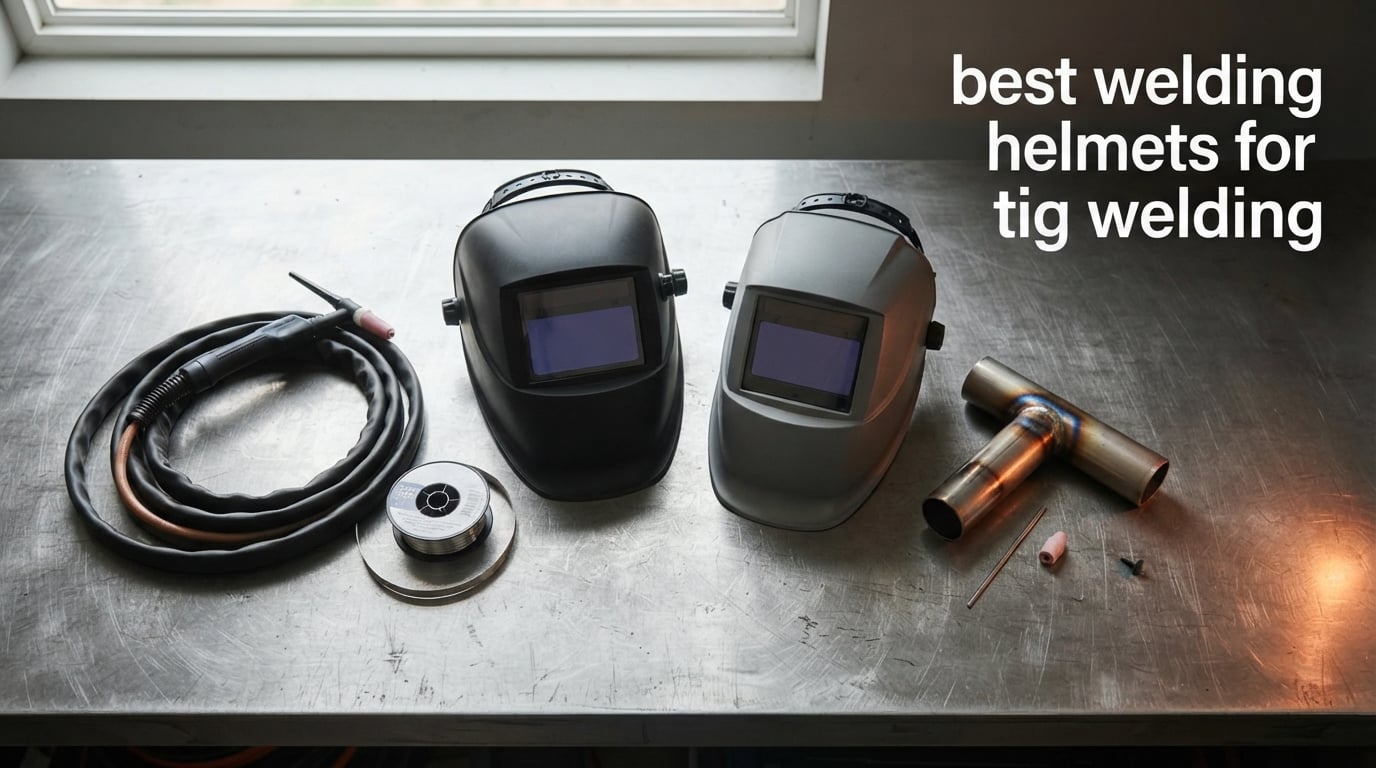
The best welding helmet for tig welding is the Lincoln Electric VIKING 3350, and the numbers explain why: 4C lens technology at 1/1/1/1 optical clarity, a 12.5 square inch viewing area, a 1.4 pound nylon shell, and a 5 year manufacturer warranty. The 1/1/1/1 rating is the hardest specification to find, and it is the one TIG rewards most because you are reading a puddle and a wire through the arc, not just watching a bright blob.
TIG punishes a helmet in a way stick and MIG never do. You run low amperage, you restrike constantly to move the puddle, and you often bury the torch so close to the joint that the sensors never see a clean signal. A helmet specified only for MIG will either flash you or force you to weld through a light filter, and both outcomes show up as a ruined learning curve.
We compared ten of the strongest auto-darkening helmets sold today, from premium professional shells down to entry models that have become shop standards because they cost so little. Every pick below was chosen against published specifications, not vibes: minimum detection current, optical class, viewing area, sensor count, controls, and warranty. If you want the short version, take the VIKING 3350. If your budget cannot stretch that far, the YESWELDER LYG-L600A is genuinely hard to argue with.
If you are still choosing the machine rather than the hood, our [TIG welder roundup](https://www.requiemforadream.com/best-tig-welders/) covers the inverter side, and our [custom welding helmet guide](https://www.requiemforadream.com/best-custom-welding-helmets/) covers the style and fit side if appearance matters to you at all.
Table of Contents
Top 3 TIG Welding Helmets in 2026
These three are the ones we would put on our own bench first. The Lincoln is the all-rounder with the best optical specification on the list, the YESWELDER LYG-L600A is the value pick with the largest proven owner base in the group, and the Hobart 770890 is the one welders who prefer turning a knob over tapping a button keep coming back to.

Lincoln Electric VIKING 3350
- 4C lens technology
- 1/1/1/1 clarity
- 12.5 sq in view
- 1.4 lb shell
- 5 year warranty

YESWELDER LYG-L600A
- 1/1/1/1 true color
- 1/30000s switching
- shade 3/7-13
- spare lenses included
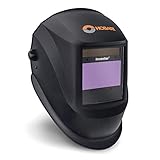
Hobart 770890 Auto-Darkening Helmet
- PureColor lens
- 9.3 inch widescreen view
- 4 arc sensors
- weld-to-grind switch
All 10 TIG Welding Helmets Compared in 2026
Every helmet in this roundup, in one place. The viewing area numbers are the sizes the manufacturers publish, and the sensor counts show detection field width rather than low amp capability. One experienced user on Practical Machinist described the same helmet by saying it was very easy to see what you were welding and the area around it, even on low amp TIG, and that is the outcome these specs exist to serve.
| Product | Specifications | Action |
|---|---|---|
| Lincoln Electric VIKING 3350 |
|
Check Latest Price |
| YESWELDER LYG-L600A |
|
Check Latest Price |
 YESWELDER BW-10MAXTRI 180 Degree YESWELDER BW-10MAXTRI 180 Degree |
|
Check Latest Price |
| Hobart 770890 |
|
Check Latest Price |
 Jackson Safety Insight ADF Jackson Safety Insight ADF |
|
Check Latest Price |
 Miller Classic Series ClearLight Miller Classic Series ClearLight |
|
Check Latest Price |
 ESAB Savage A40 ESAB Savage A40 |
|
Check Latest Price |
 MIGVAN H-21 MIGVAN H-21 |
|
Check Latest Price |
 ARCCAPTAIN Large Screen ARCCAPTAIN Large Screen |
|
Check Latest Price |
 TOOLIOM TL-M800D TOOLIOM TL-M800D |
|
Check Latest Price |
1. Lincoln Electric VIKING 3350: Best Overall for TIG
Lincoln Electric K3034-4 VIKING 3350 Auto Darkening Welding Helmet with 4C Lens Technology, Matte Black, extra large
- 1/1/1/1 optical clarity with true color arc and puddle rendering
- 12.5 sq in extra large viewing area
- Light 1.4 lb shell with balanced X6 headgear
- Uses standard inexpensive cover lenses
- 5 year manufacturer warranty
- Internal shade selector needs the hood opened
- Occasionally slow to react at the first arc strike
- Premium tier compared with mid-range shells
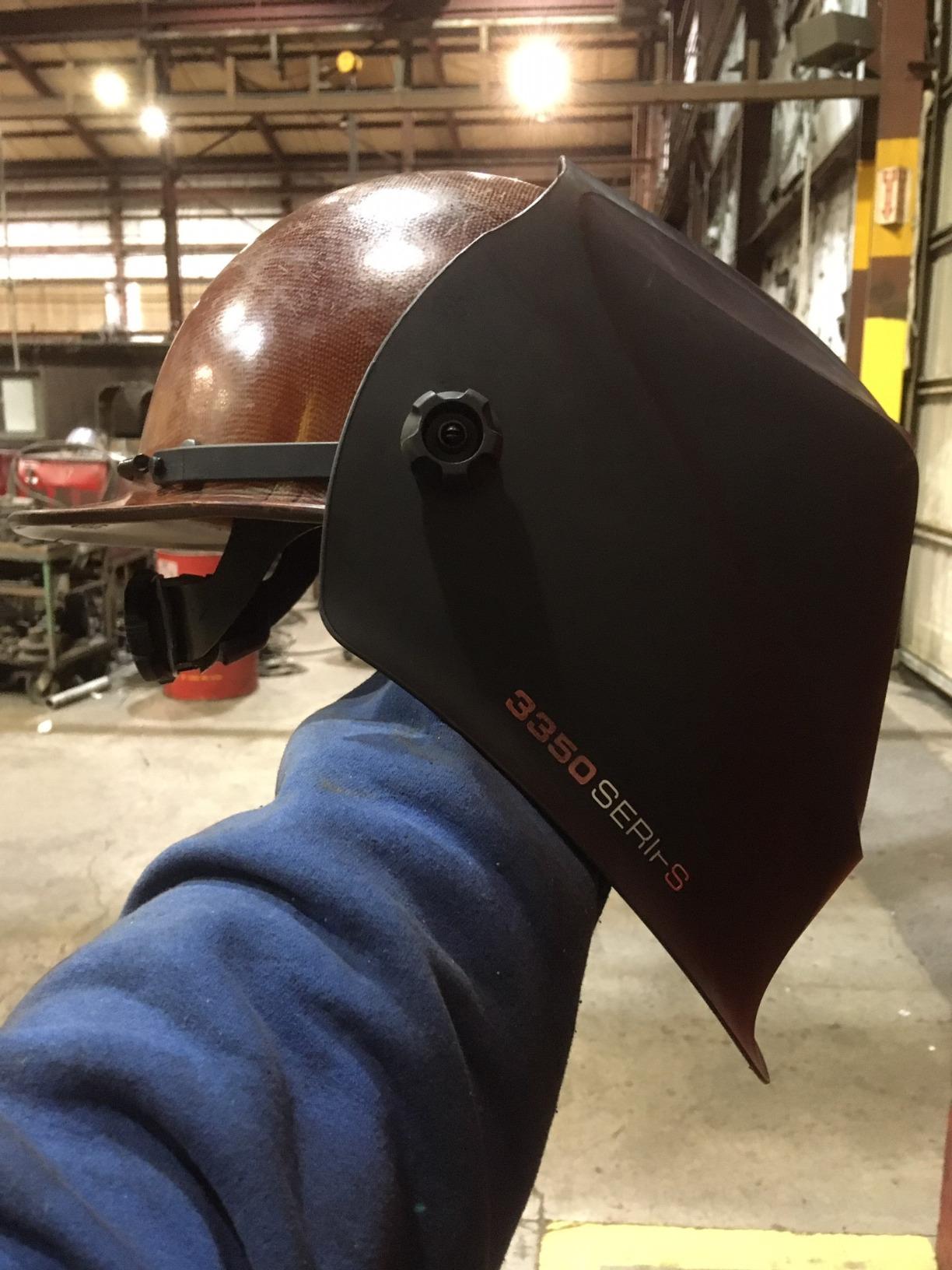
This is the helmet we keep coming back to after reading the spec sheets of everything else. The 4C lens is the reason: 1/1/1/1 means the optical quality, light diffusion, luminous transmittance, and viewing angle dependence are all the highest class in the standard, and TIG is the process where you notice every step down that ladder.
The X6 headgear spreads 1.4 pounds across the whole skull rather than hanging it off the front brow, which matters more than it sounds when you spend an hour crouched over a stainless tube. Ratchet knob adjustment means the fit survives being flipped up and down a hundred times in a shift.
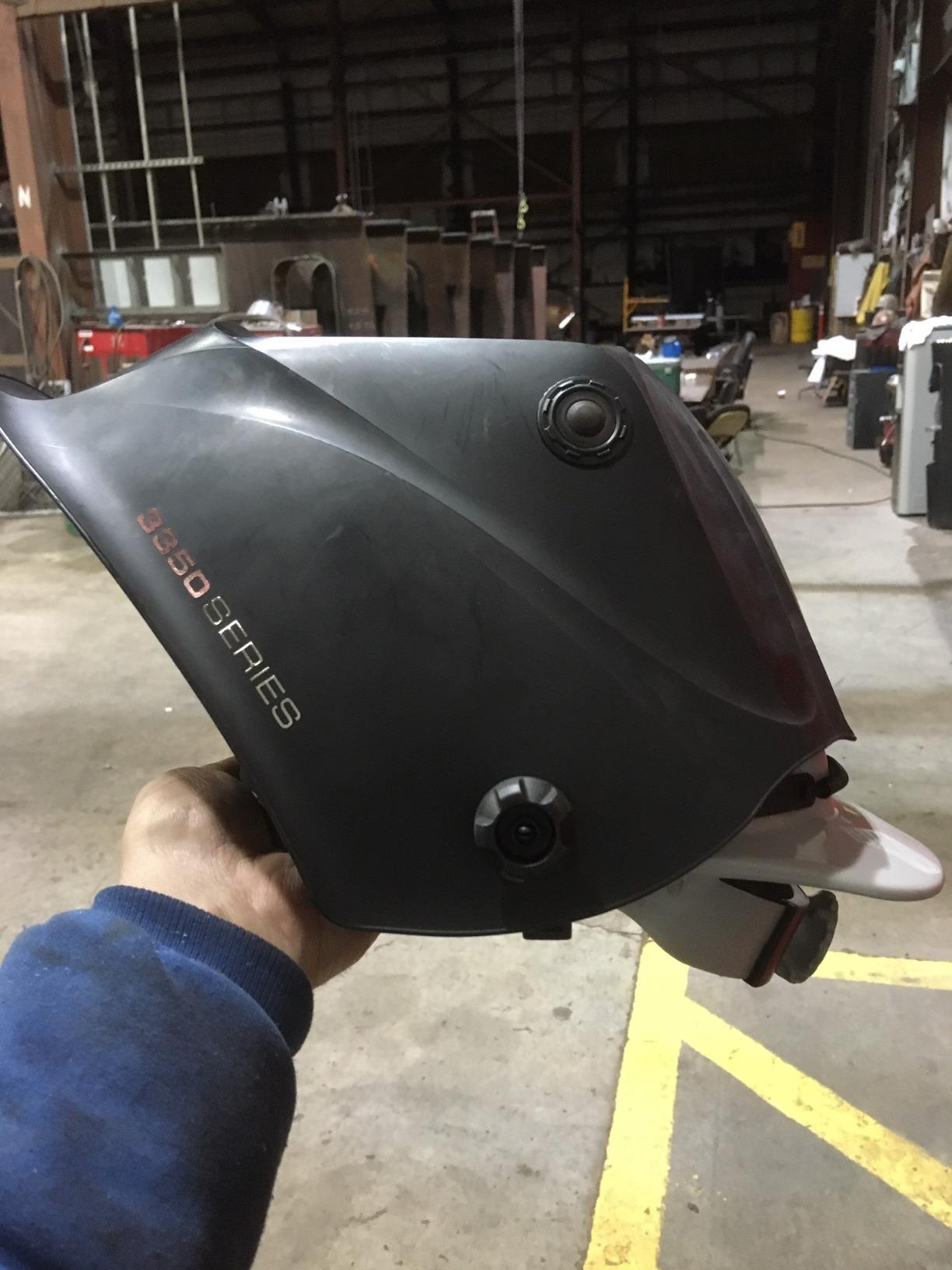
Owners consistently describe the jump from a green-tinted budget lens as the single biggest change in their welding. Several report that being able to see heat tint travel up the side of a bead changed how they set amperage, which is a learning-curve problem a darker filter was hiding before.
Two practical details matter for long-term ownership. It runs on standard inexpensive cover lenses rather than a proprietary cartridge, so the consumable budget stays flat, and the box ships with five outside covers, two inside covers, a helmet bag, and a bandana.
What the 1/1/1/1 rating actually gets you on thin stainless
On 0.035 inch tubing, the puddle is small and the arc is faint. Under a lower class lens, that faint arc blooms and hides the wire. Under 1/1/1/1 optics the light stays where it is, so you can see the leading edge and the wire merge, which is the difference between a decent bead and a consistent one.
The light state here is bright enough to keep the hood down between welds, which saves the flip-up cycle. If you work in a dim shop, that is worth more than a fancier shade range.
Where the VIKING 3350 disappoints
The shade selector lives inside the shell, so changing it means flipping the hood fully open. In a confined position with a fixture nearby, that is an awkward reach, and a small number of users report the lens being slow to react on the very first strike even at maximum sensitivity.
It is also the most expensive helmet in this group, and the premium buys optical class and weight distribution rather than extra features. If your budget is tight, the pick below gives up clarity level before anything else.
2. YESWELDER LYG-L600A: Budget Pick TIG Welding Helmet
- 1/1/1/1 true color lens at an entry price
- 1/30000 second switching with adjustable sensitivity and delay
- Covers TIG MIG stick and grind on one helmet
- Includes spare lenses a spare battery and a storage bag
- 16 oz shell stays comfortable on long sessions
- Small viewing area compared with panoramic styles
- Light duty headgear and straps for heavy shop use
- Inner cover lenses are not stocked separately by the manufacturer
This helmet has the kind of owner base you only see with a proven commodity, and the reviews read like a decade of shop use rather than a launch week. For a weekend hobbyist moving from stick to TIG, it is the shortest path to a true color view without a research project.
The 1/1/1/1 optical classification is the headline, and it holds up: owners describe the arc and puddle reading naturally rather than through a green filter. Two arc sensors switching in 1/30000 second is a workable detection setup for the amperage range most people actually start TIG at.
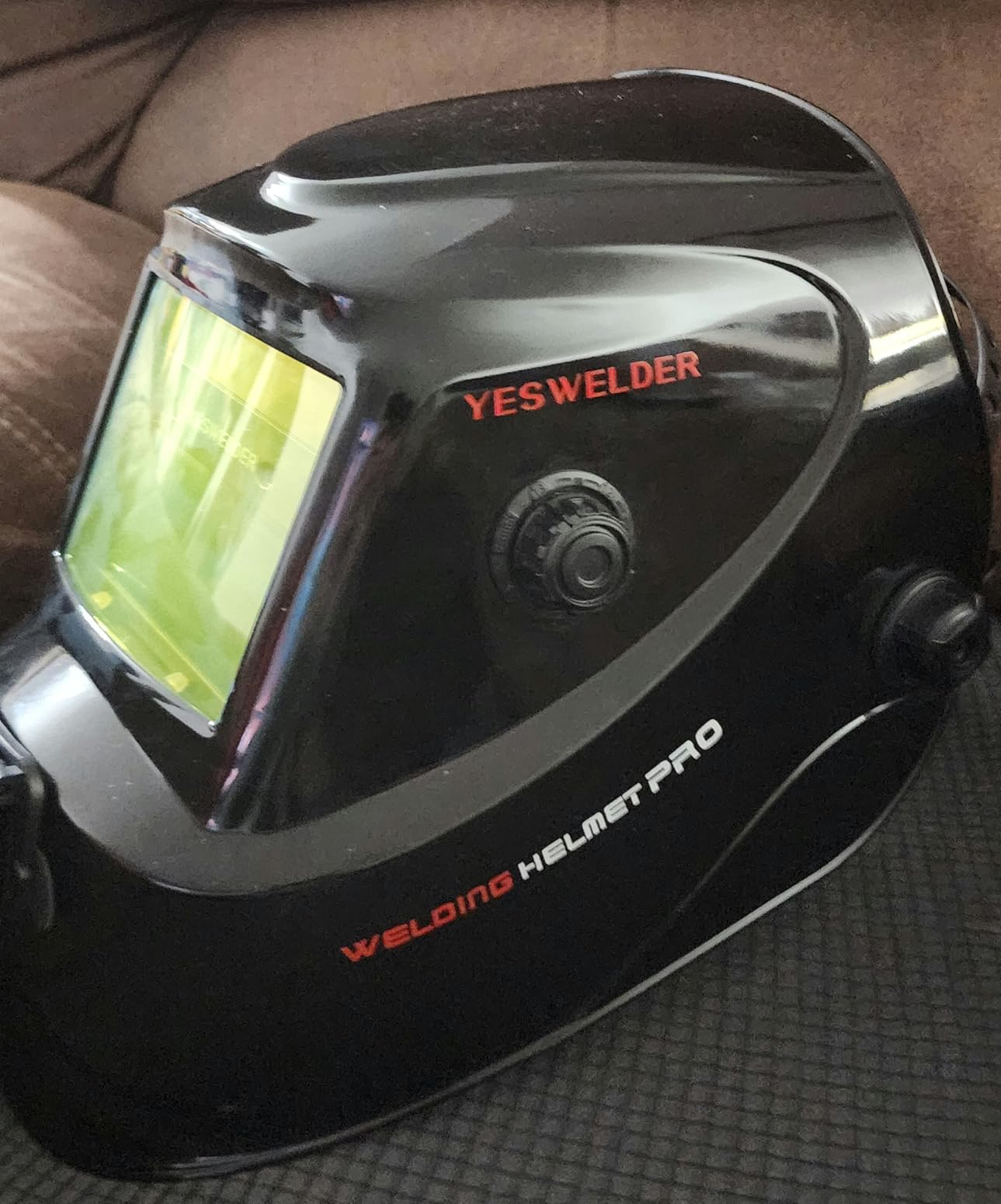
Multi-process coverage is genuinely useful here. The shade 3/7-13 range covers TIG, MIG, stick, and a grind mode, so one hood can live in the car and cover a whole shop practice instead of forcing a swap every time the process changes.
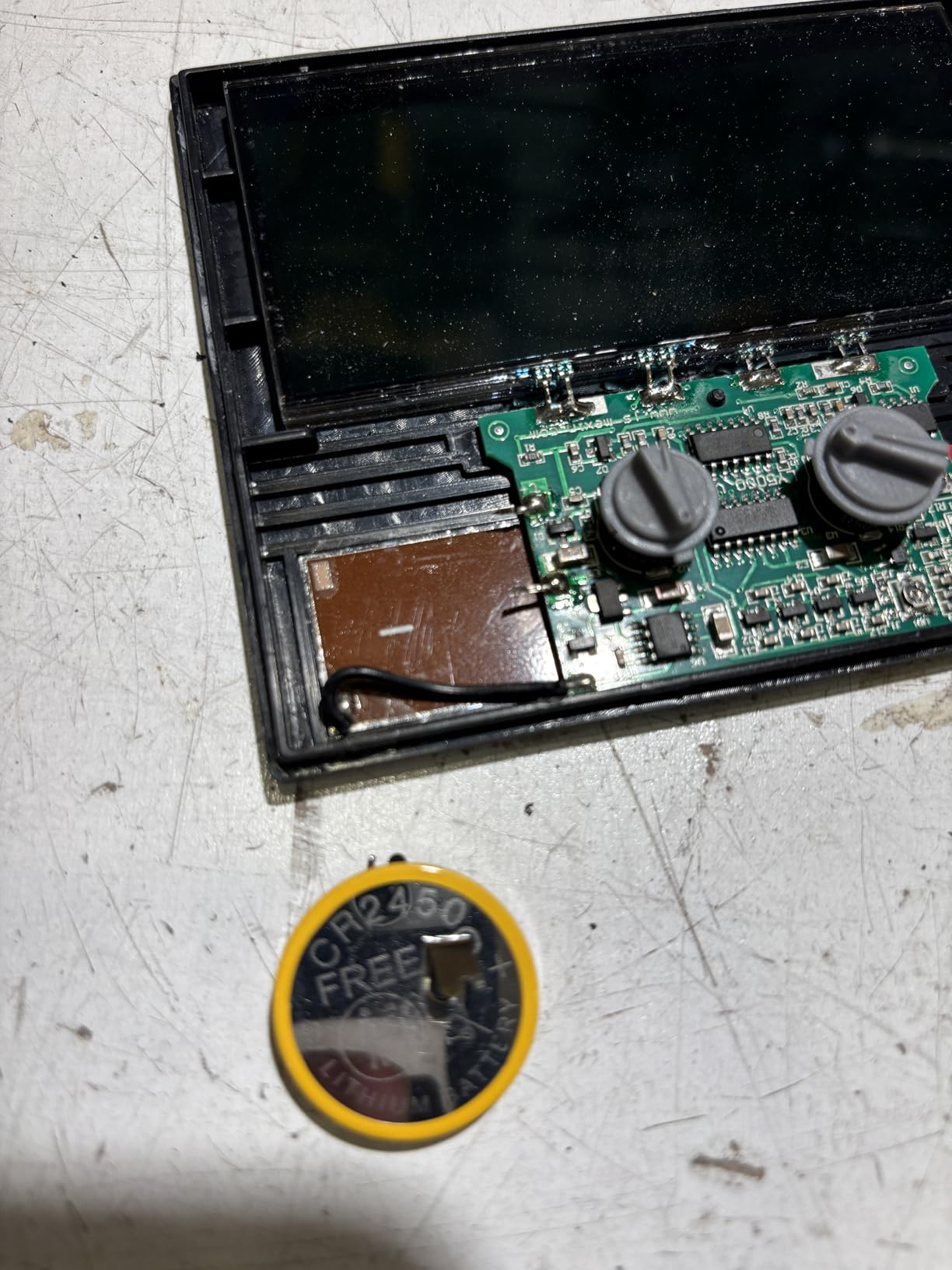
The box includes a CR2450 battery, a spare inner lens, two outer lenses, and a storage bag, which is unusual at this level and means you are not hunting for consumables in month two. Solar charging tops that up between welds.
Good enough for a first TIG machine
Two sensors is the number most often held against it, and one experienced forum voice is blunt about the reasoning: cheaper helmets tend to have fewer switching sensors, and sensor count alone does not prove low-amp behaviour. Judge it on the amperage you run. At 30 to 50 amps DC it is comfortable, and the adjustable sensitivity gives you room to tune.
The small window is the real ergonomic limit. On a flat plate with room to move, it disappears. On pipe or an outside corner where you need peripheral vision, the two sensor panels do not cover the field of view a wide shell would.
Where it falls short
The headgear and straps are described as light duty by people who put this helmet through production work, and the plastic is thinner than the shells above it. The most annoying gap is parts: inner cover lenses are not stocked separately by the manufacturer, so a scratched inner lens means hunting for a generic equivalent.
If you are hard on gear or buy once, look at the Jackson Safety Insight further down, which is built lighter and holds a fit better at the cost of a brighter light state.
3. YESWELDER BW-10MAXTRI: Best 180 Degree View for Pipe and Fit-Up
YESWELDER Auto-Shade Welding Helmet, Internal Digital Control, 180° View
- Wide 180 degree field with side views for fit-up
- Five arc sensors for varied arc brightness
- Internal digital display for gloved shade and delay adjustment
- Shade range reaches from 4 to 14 across modes
- Polyamide shell stays light for long sessions
- Shell and headband quality basic against the electronics
- Sizing band can arrive misshapen
- Heavier than most shells at this level
The pitch here is geometry. Instead of one rectangular window you get a 4.25 x 3.23 inch main view plus two 2.87 x 2.32 inch side views, which together cover a 180 degree field. On a pipe joint or a stainless tube with a tight fit-up, those side panels are where you find the gap you were about to weld into.
Five arc sensors is the highest count in this roundup, and owners note the wide field helps on root passes where the arc appears at the edge of vision rather than centred. The shade range spans 3/4-8/9-14 across MIG, TIG, stick, tack, grind, and cut modes, so it also handles the cleanup work without a second hood.
Internal digital controls are the underrated feature. The display sits inside the shell with buttons you can find and press in a welding glove, so shade and delay changes happen without flipping the helmet and losing your setup. Several owners rank that above the panoramic lens as the reason they kept it.
There is also a smart auto-adjust mode that tunes shade, sensitivity, and delay for you within a plus or minus 9 level band. It is a good starting point before you take manual control, though it is a starting point only.
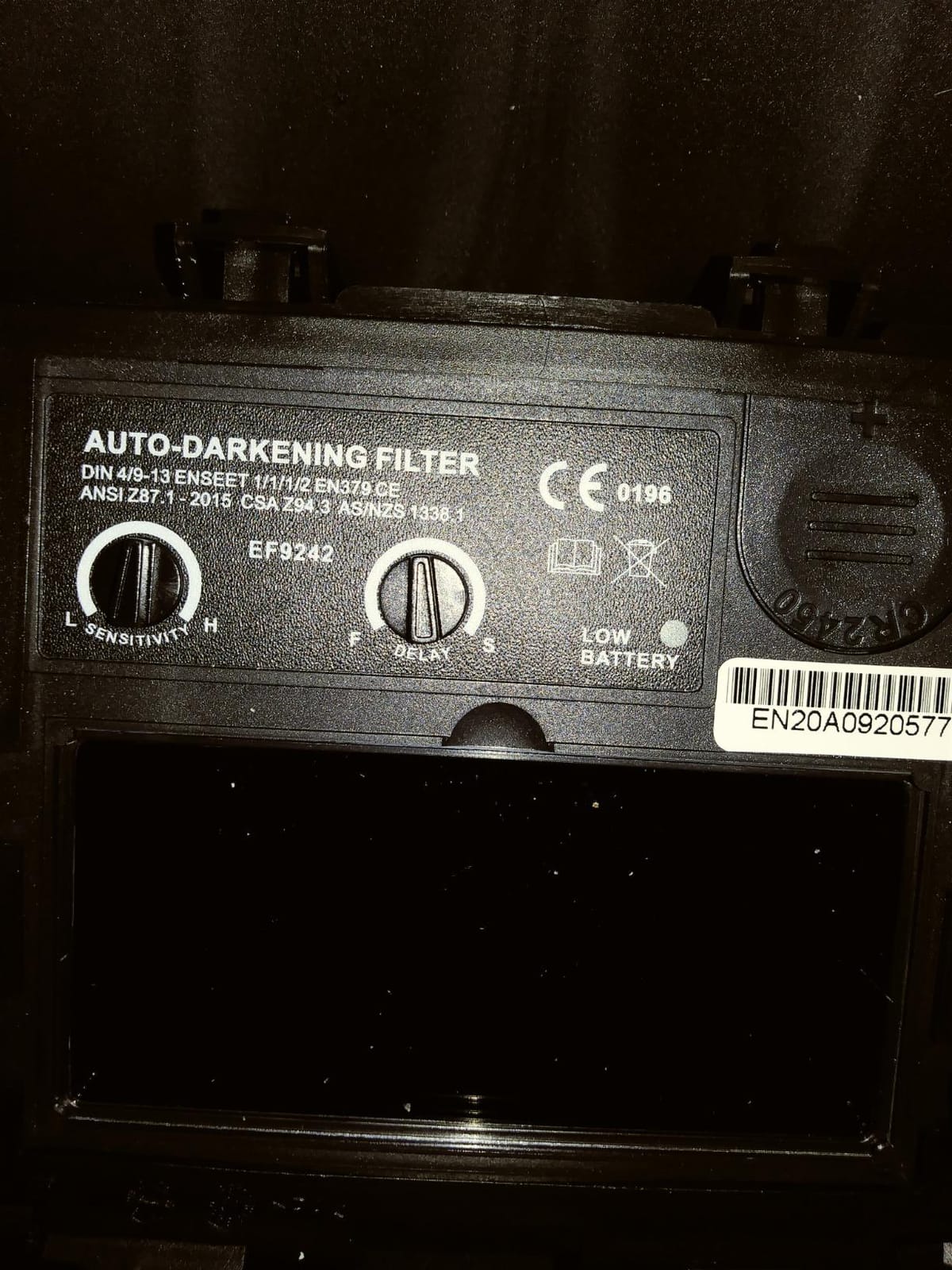
When a wide field of view changes the job
Fit-up is where this helmet earns its place. Aligning two tubes before tacking means looking at the joint, not the arc, and a wide light-state field shows misalignment earlier. Out-of-position work on a vertical or overhead joint benefits for the same reason, because the arc lands outside the centre of the view.
The five sensors also give more tolerance for partial obstruction. If the torch body shades one sensor cluster, the remaining sensors still see enough arc to trigger, which is a common failure mode in corners.
Where it falls short
Owners are clear that the shell and headband are a step below the electronics, and the 2.79 pound weight is noticeable next to the Lincoln and Jackson shells on this list. In smart mode the sensitivity setting is effectively fixed within its band, so if you like to hand tune detection you will want to switch it off.
A few users also report the sizing band arriving misshapen from shipping, which is a five minute fix but worth knowing if you order on a deadline.
4. Hobart 770890: Best Analog Controls With a Widescreen View
- Large 9.3 inch view with accurate PureColor rendering
- Four independent arc sensors detect reliably on TIG and stick
- Analog knobs easy to adjust while wearing gloves
- Weld to grind mode switch without changing hood
- Light 1.25 lb shell reduces neck fatigue
- Analog dials are less precise than digital controls
- 2 year manufacturer warranty is short
- Shell and headgear feel basic for the tier
This is the pick for anyone who has ever said the words wrong shade, mid weld. Three analog knobs set shade, sensitivity, and delay, they are large enough to find with a glove on, and you can adjust them with the hood partially raised rather than only fully open.
The PureColor lens with a 9.3 inch widescreen viewing area gives you a noticeably bigger field than the compact shells in this group, and owners describe the colour rendering of the weld as accurate rather than tinted. Four independent arc sensors cover the detection needs for both TIG and stick.
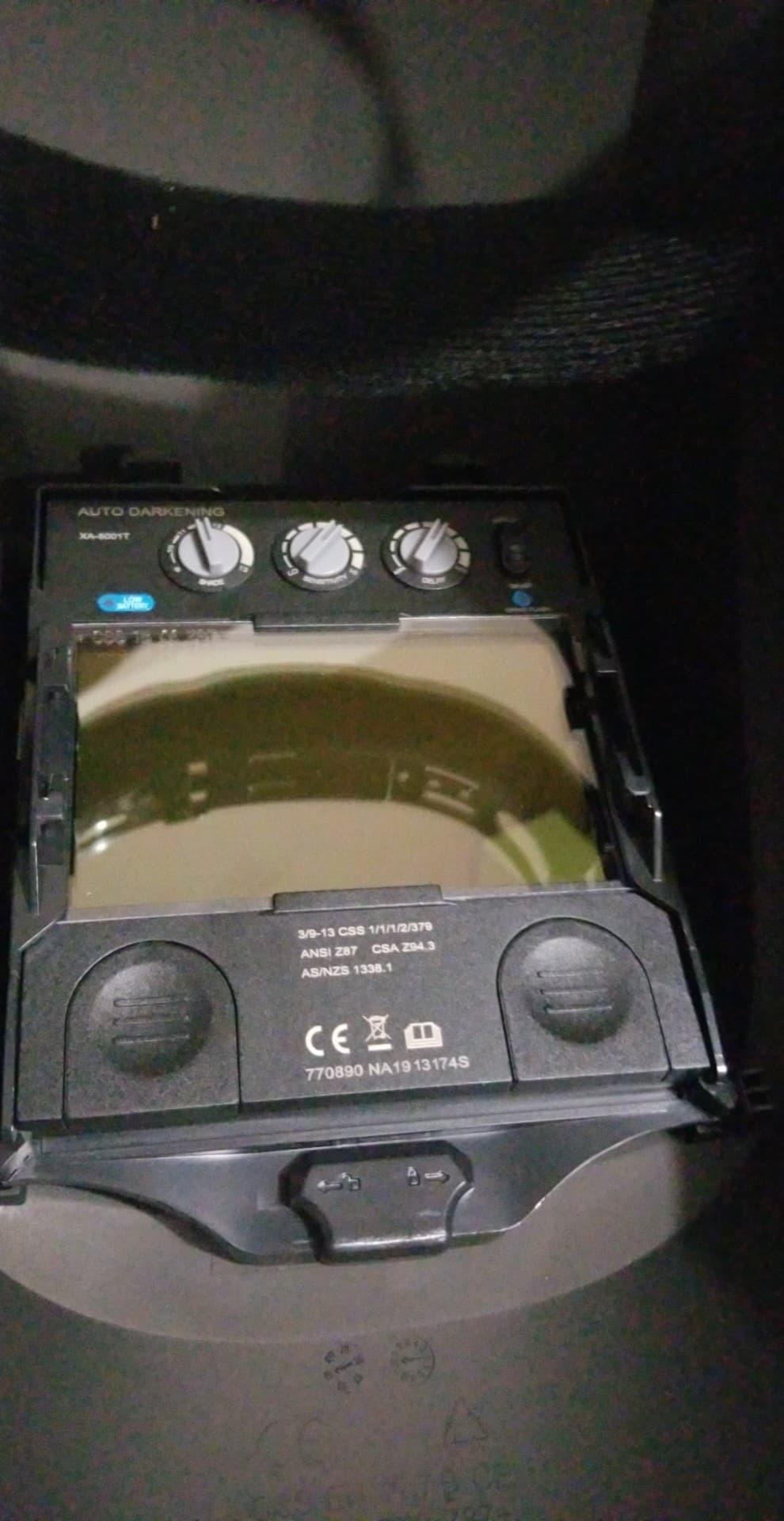
Auto-on power control is a small thing that matters more than it should. The filter wakes at arc strike, so you are not cycling a switch every time you reposition, and auto-on pairs neatly with the weld to grind mode switch for cleanup work.
At 1.25 pounds it is one of the lighter shells we recommend, which pays off over a full shift of pipe work or a day of crouched tacking. A protective lens kit is included in the box.
Why analog still wins for some welders
A knob gives you immediate feedback and a repeatable muscle memory. Once you know that shade 10 and two clicks from centre is your 40 amp DC stainless setting, you set it in the dark before you strike. Digital displays are more precise, but they add a step between the intent and the change.
Four sensors plus a wide window also makes this a good pipe hood, since pipe welders tend to weight the ESAB Sentinel and Optrel families heavily, and this is the same instinct applied at a lower tier.
Where it falls short
The 2 year manufacturer warranty is the shortest among the professionally branded shells here, and the plastic shell and headgear read as basic next to the nylon housings above it. If you keep a helmet for a decade, warranty length is a reasonable proxy for confidence in the electronics.
Knob precision is the other limit. Half-shade steps and shade memory are not available, so if you alternate between thin and thick material constantly, the digital controls on the panoramic YESWELDER or the Lincoln are a better fit for that workflow.
5. Jackson Safety Insight: Best Lightweight Helmet for Crouched and Pipe Work
Jackson Safety Insight Auto Darkening Welding Helmet, ADF Hood – ANSI Z87.1
- 6 ounce shell reduces neck strain in tight positions
- True Color lens with 1/1/1/1 clarity and no reported flashes
- Four sensors trigger reliably on inverter machines
- 370 Speed Dial ratcheting headgear holds position
- Tight sealing cover keeps spatter off the filter
- Light state reads darker than some rivals in a bright shop
- Shell is less rugged than heavier premium hoods
- Modest 3.94 x 2.36 in viewing area
The Insight is the one we would put on for overhead and out-of-position work. A 6 ounce shell is less than half the weight of several shells in this roundup, and on a helmet that must be tilted back to see a vertical or overhead joint, that difference is felt in the neck within an hour.
Optically it does not compromise. True Color technology at 1/1/1/1 optical clarity with variable shade 9 to 13 gives you the same class rating as the Lincoln, and owners report no eye flashes even on inverter machines that defeat cheaper lenses.
Headgear is the underrated story. The patented 370 Speed Dial ratcheting system with a Qwik-Fit rear swivel headband keeps its position when you flip the hood up, which is both a comfort win and a safety win because the helmet does not slide forward when you look up.
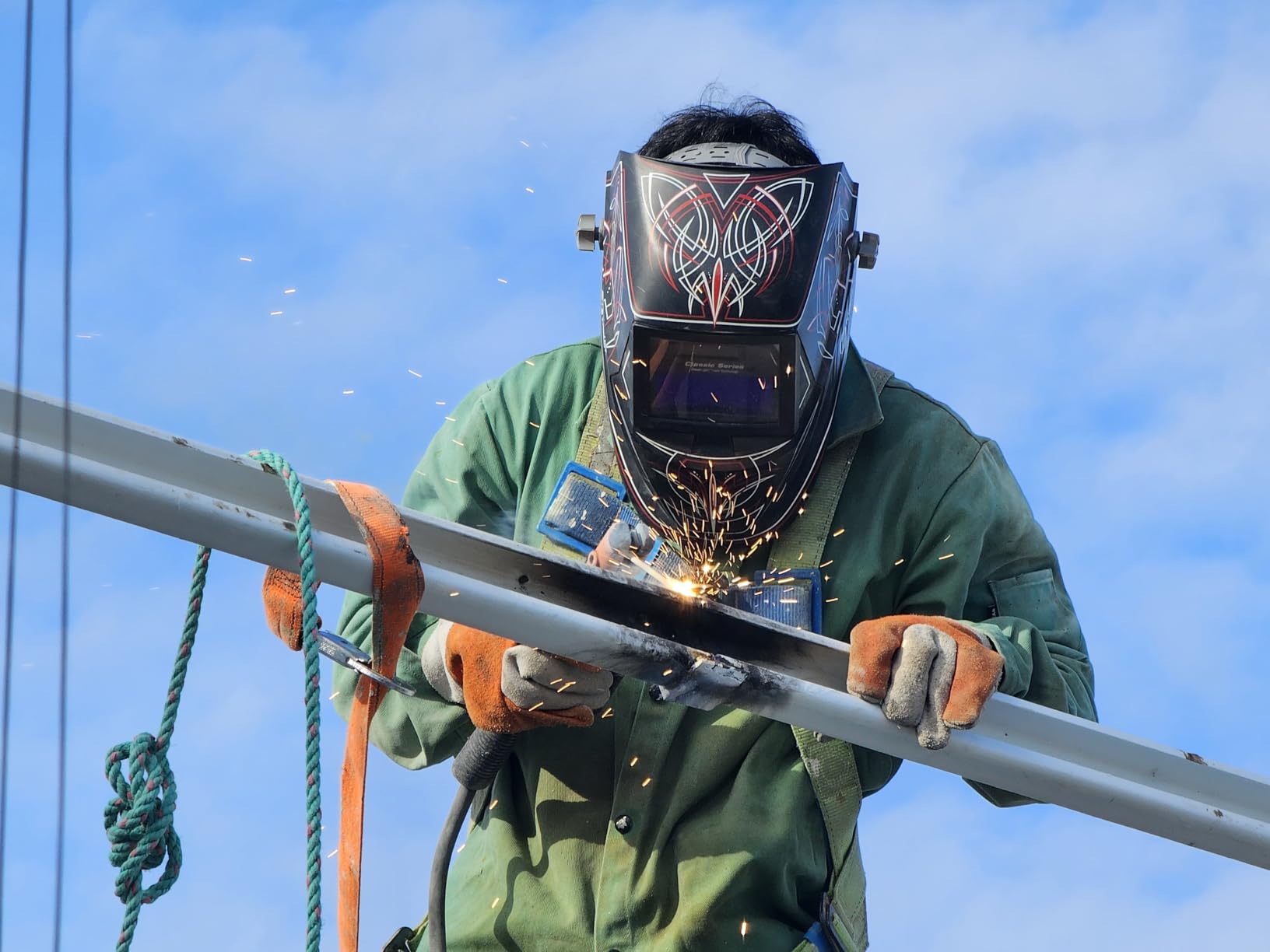
Four arc sensors with digital sensitivity and delay controls, and Weld, Torch, and Grind modes cover the process changes without a swap. The front cover plates take standard 4.5 x 5.25 inch clear lenses, so consumables are easy to find, and an adapter lets it ride on a hard hat.
Long-term durability reports
Owners describe the Insight as one of those helmets that survives a decade of ownership with the same headgear and light shell it started with, and several say it performs comparably to premium-priced hoods. That is a different durability claim from a big brand name: fewer plastic parts, less to break.
For a fabricator alternating between TIG and MIG, the Torch mode and standard cover lens compatibility mean one hood genuinely covers the week. A [welding blanket](https://www.requiemforadream.com/best-welding-blankets/) for the work surface and a solid clamp setup round out a bench like ours.
Where it falls short
The light state is darker than some competitors, and that is the most repeated complaint from people working in a brightly lit shop. If you do most of your fit-up with the hood down, the Lincoln and the panoramic YESWELDER are brighter and you will notice.
The shell is light by design, which means it is less rugged under impact, and the 3.94 x 2.36 inch window is modest. On a large joint where you need peripheral awareness, that is a fair trade for not wrecking your neck.
6. Miller Classic Series ClearLight: Best for Welding at Very Low Amps
Miller Classic Series Welding Helmet, ClearLight™, Shade 8-13, Black
- ClearLight optics give a colour faithful view of the puddle
- Suited to welding at five amps or below
- Weld shade 8-13 plus cut and grind modes
- 3.0 light state keeps the hood down between welds
- Three year warranty from an established brand
- 6 sq in viewing area is small for large joint fit-up
- Only two arc sensors against four or five on newer models
- Digital controls are not internally lit
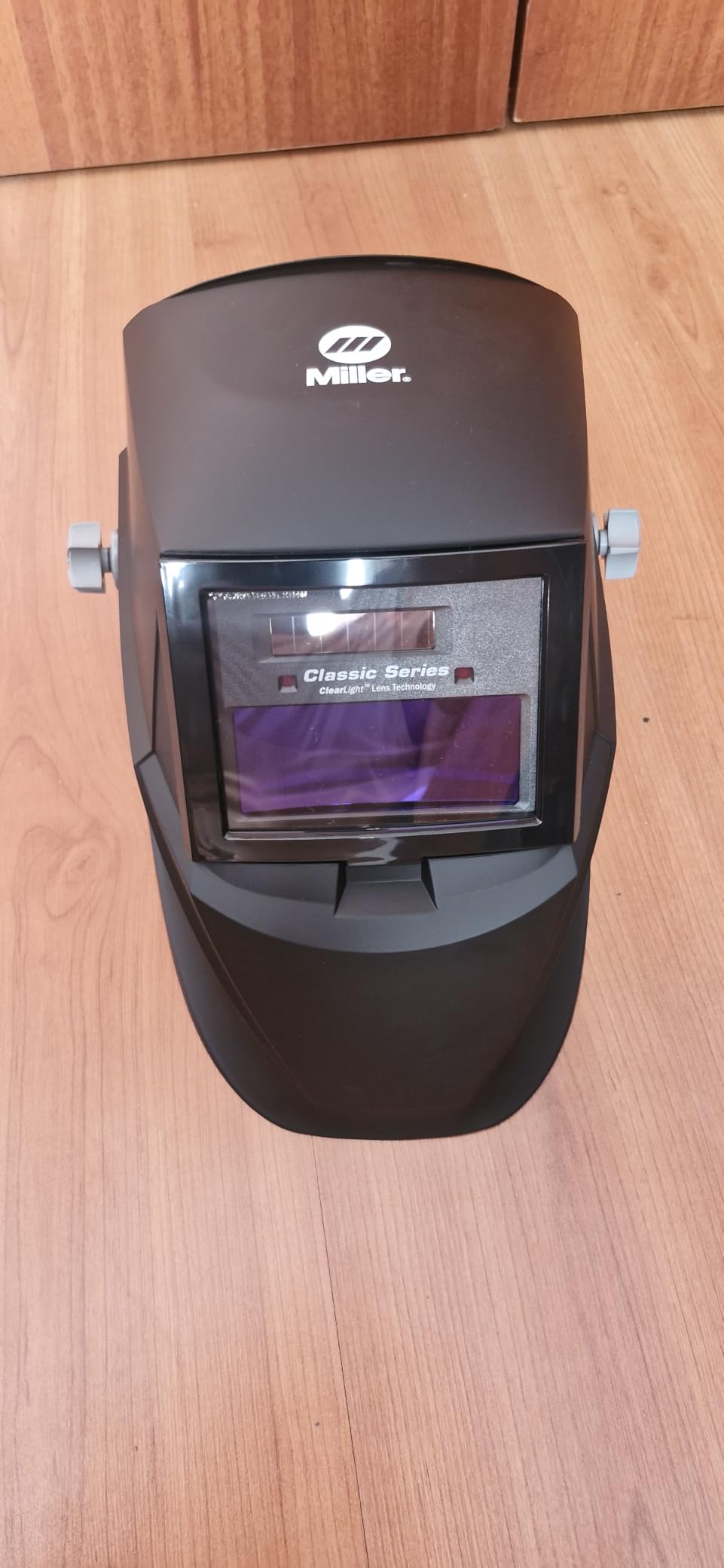
This is the only helmet in the roundup that publishes a minimum current figure in its own specifications: it is suited to welding at five amps or below. If you are chasing the fantasy of tacking thin sheet or doing repair work at a whisper of amperage, that published number is more useful than any sensor count.
The ClearLight lens is the other argument. TIG users specifically value colour accuracy for judging puddle behaviour and bead appearance, and owners of this model consistently credit that clarity as the reason their work improved rather than just looking different.
Weld shades 8 through 13 cover GTAW from thin material upward, with cut shades 5-8 and a grind shade 3 in the same unit. Two arc sensors switch in 1/23,000 second, digital controls handle shade, delay, and sensitivity, and a ratchet headgear holds the fit.
The 3.0 light state is a genuine productivity feature. It is bright enough to keep the hood down between welds, so you are not flipping up and down constantly on repetitive fit-up and tacking work.
Reading the low-amp figure honestly
A published five amp rating is a specification, not a guarantee for every machine. What it tells you is that the filter was designed and tested to detect a faint arc, which is a different design target from detecting the bright flash of a 200 amp MIG pass. Most budget shells were never characterised at that end.
It also tells you where this helmet belongs. Fine sheet, thin wall, and delicate repair work are the cases where a light TIG arc is the whole problem, and this is the shell built for that end of the range.
Where it falls short
Two arc sensors and a 6 square inch viewing area are both dated against this group. For a large joint where you need to see the whole fit-up before striking, the window is genuinely small, and two sensors give less tolerance for a torch blocking the detection field.
The digital controls are also not lit, so changing a setting means lifting the hood into the light. If you weld mostly in bright conditions, that is a minor annoyance; in a dim shop it is worth weighting toward a lit interface instead.
7. ESAB Savage A40: Best for Learning TIG on a Budget
- Clear true color view makes the puddle and seam easy to read
- Sensitivity control tuned for low amp TIG in the lower range
- Delay control useful for tacking and high amperage passes
- Single exterior button grind mode works with gloves
- Reliable over multi year ownership
- Exterior shade knob is awkward in tight quarters
- Viewing area smaller than premium wide view models
- Cheater magnification inserts can cause double vision
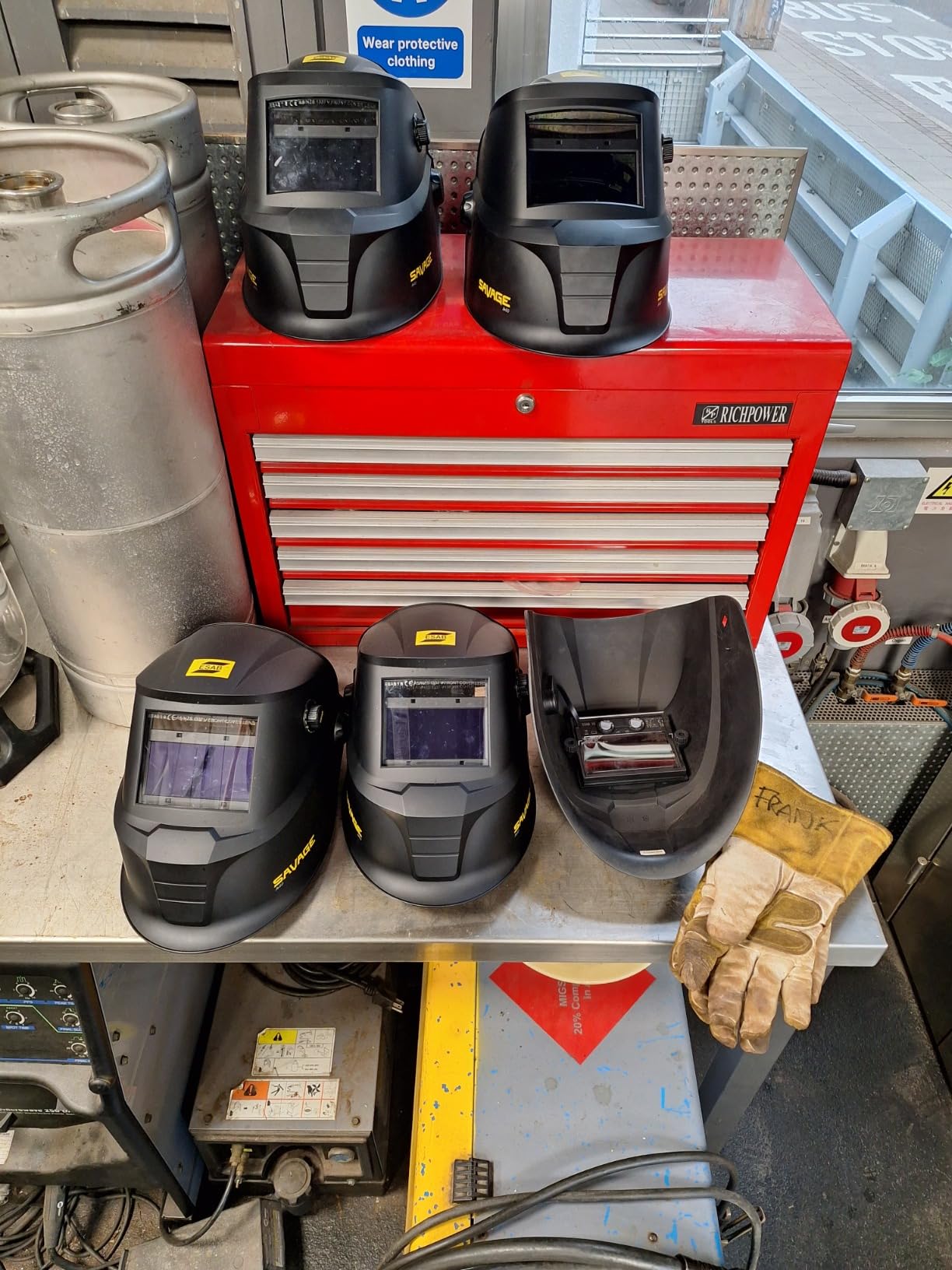
ESAB built the A40 around the two controls that matter on a learning machine, and owners notice. The sensitivity control is tuned for the lower amperage range used on thin TIG work, and the delay control lets you set how long the lens stays dark after the arc stops, which is exactly what you need while learning to ride the pedal.
Clarity gets the most praise. Users call the view near HD, and several say being able to actually see the puddle and the bead is what finally broke their learning curve, with more than one owner reporting it replaced a much more expensive hood.
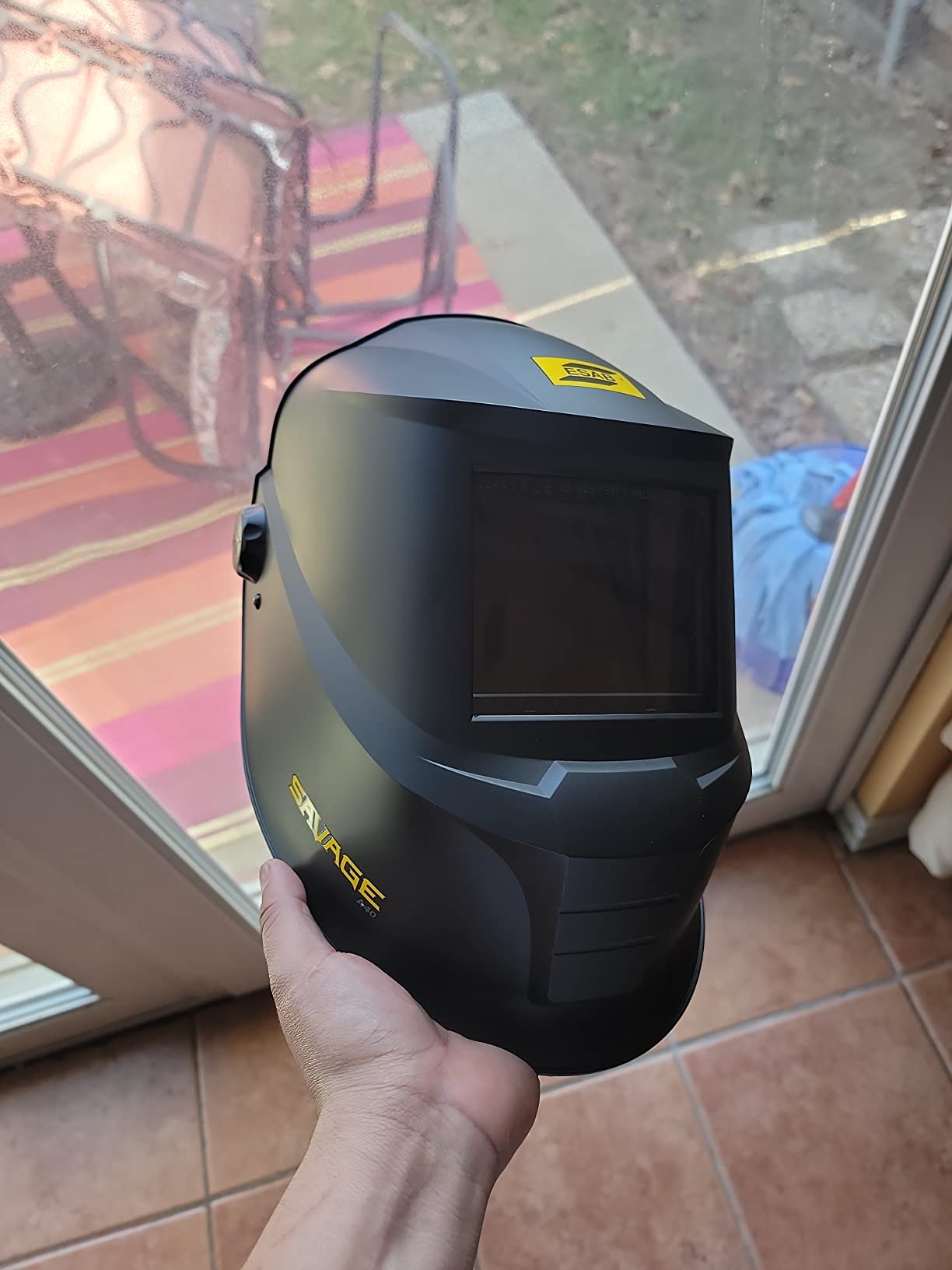
The single exterior grind button is a small quality of life decision. You can toggle to grinding with a glove on and the hood still on your head, which matters because swapping helmets to clean up a bead is the step people skip, and skipping it is how a good weld gets ruined.
Four arc sensors give better detection coverage than the two-sensor budget shells, and a CR2 lithium battery is included, so there is no coin cell to find a screwdriver for on day one.
Why the delay control matters more on TIG
On stick and MIG you keep the arc going. On TIG you ride the foot pedal up and down and you restrike constantly, so the filter flickers between light and dark with every movement. A delay setting holds the shade after the arc drops, which keeps your eyes out of the bright state during restrikes and cuts the eye strain that ends a practice session early.
The exterior button for grind mode is the second quiet win. Being able to flip to shade 3 without lifting the helmet means you can inspect and dress a bead the moment you finish it, while you still know where the heat went.
Where it falls short
The exterior shade knob is the most repeated complaint, and it is a real one in practice. In a confined position with a fixture nearby, the hood can knock it and you end up opening the helmet to reset, which is a genuine interruption in pipe or corner work.
The viewing area is smaller than the wide-view models above it, and the optional cheater magnification insert is worth testing carefully because some users report double vision with it installed. Leave it out until you know you need it.
8. MIGVAN H-21: Best for the Widest Shade Range
- True color golden filter gives a lifelike view of the puddle
- Wide shade range covers TIG electrode shades and cutting
- Four arc sensors give stable detection at low amps
- Solar plus CR2450 supports low light working
- Generous package with spare lenses and a storage bag
- 1/10000s response is slower than premium lenses
- Detection can be inconsistent at very low amperage
- Generic branding with limited long term support
The H-21 is the one to look at if your practice spans more than welding. It moves from a DIN4 light state through DIN5-9 and up to DIN9-13 dark states, which covers TIG electrode shades, heavy cutting, and everything between on one dial range.
The lens is a true color optical class design with an advanced golden filter, and owners describe the puddle and workpiece as lifelike rather than tinted. That matters most when you are trying to read heat tint on stainless or see the colour of a bead you are about to grind.
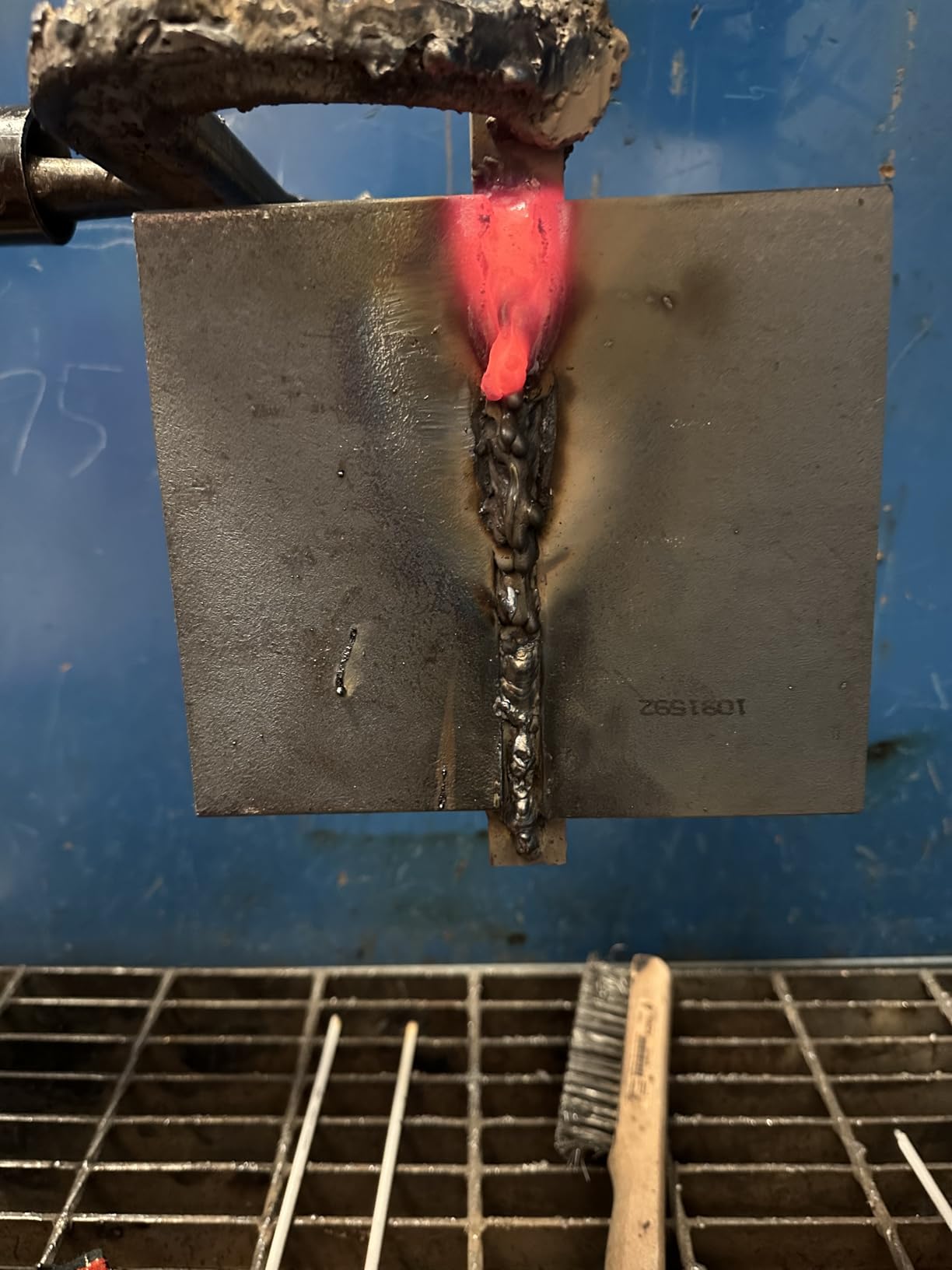
Four premium arc sensors with sensitivity control handle the detection side, and solar power with a replaceable CR2450 battery means it keeps working in a low light or enclosed space where a coin cell alone might not hold up.
The box is unusually generous for the tier: two inner lenses, two outer lenses, a user manual, and a heavy duty storage bag. Carrying spares in the bag is the cheapest insurance in welding gear.
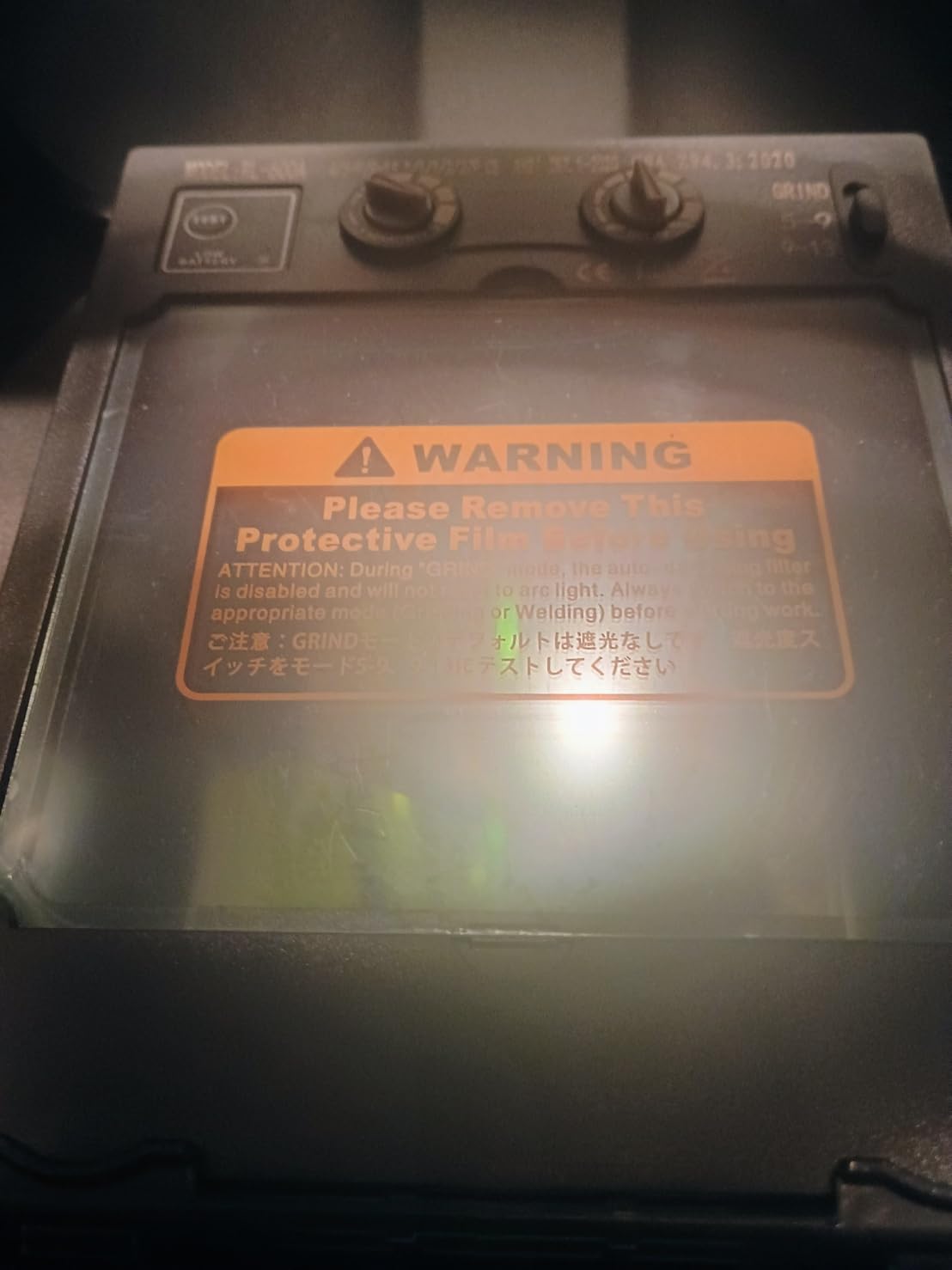
Where a wide shade range pays off
If you alternate between thin TIG, structural work, and occasional cutting on the same machine, shade range stops being a spec sheet detail and becomes the feature you use daily. Going from a low light state for fit-up to a deep dark state for a hot cut without changing helmets removes a step that wears people down.
It also suits shops with changing ambient light. A DIN4 light state is workable in a dim bay, which is where many darker light state helmets leave you squinting at the joint.
Where it falls short
Switching speed is 1/10000 second against 1/30000 second on the premium shells here, and owners who have used both report the difference at arc strike. At the amperages most TIG work runs, that is acceptable; on fast restriking work it is noticeable.
Detection can be inconsistent at very low amperage, which is the honest limitation for anyone chasing five amp work. Generic branding also means parts and long term support are less certain than an established manufacturer, so keep the spare covers that ship with it.
9. ARCCAPTAIN Large Screen: Best Big Screen for the Money
ARCCAPTAIN Auto Darkening Welding Helmet, 3.94″X3.66″ Large Viewing Screen
- Unusually large 3.94 x 3.66 inch true color viewing screen
- Four arc sensors with adjustable shade and sensitivity
- Light 2 pound shell reduces load in long sessions
- Solar cell plus replaceable CR2450 for long run time
- UV and IR protection up to DIN 16
- PP shell is less rigid than metal framed professional hoods
- Adjustment knobs less precise than digital controls
- Short 180 day warranty against longer coverage elsewhere
The screen is the whole argument. A 3.94 x 3.66 inch panel is larger than several premium shells in this roundup, and pairing it with 1/1/1/1 optical clarity and true color technology at this tier is unusual. Owners consistently point to the combination of a big screen and low weight as the reason this helmet stands out.
Four premium arc sensors with adjustable shade and sensitivity cover ARC, MIG, and TIG, and the DIN4 light state keeps fit-up work comfortable in moderate light. UV and IR protection up to DIN16 is a reasonable safety margin for a multi process shell.
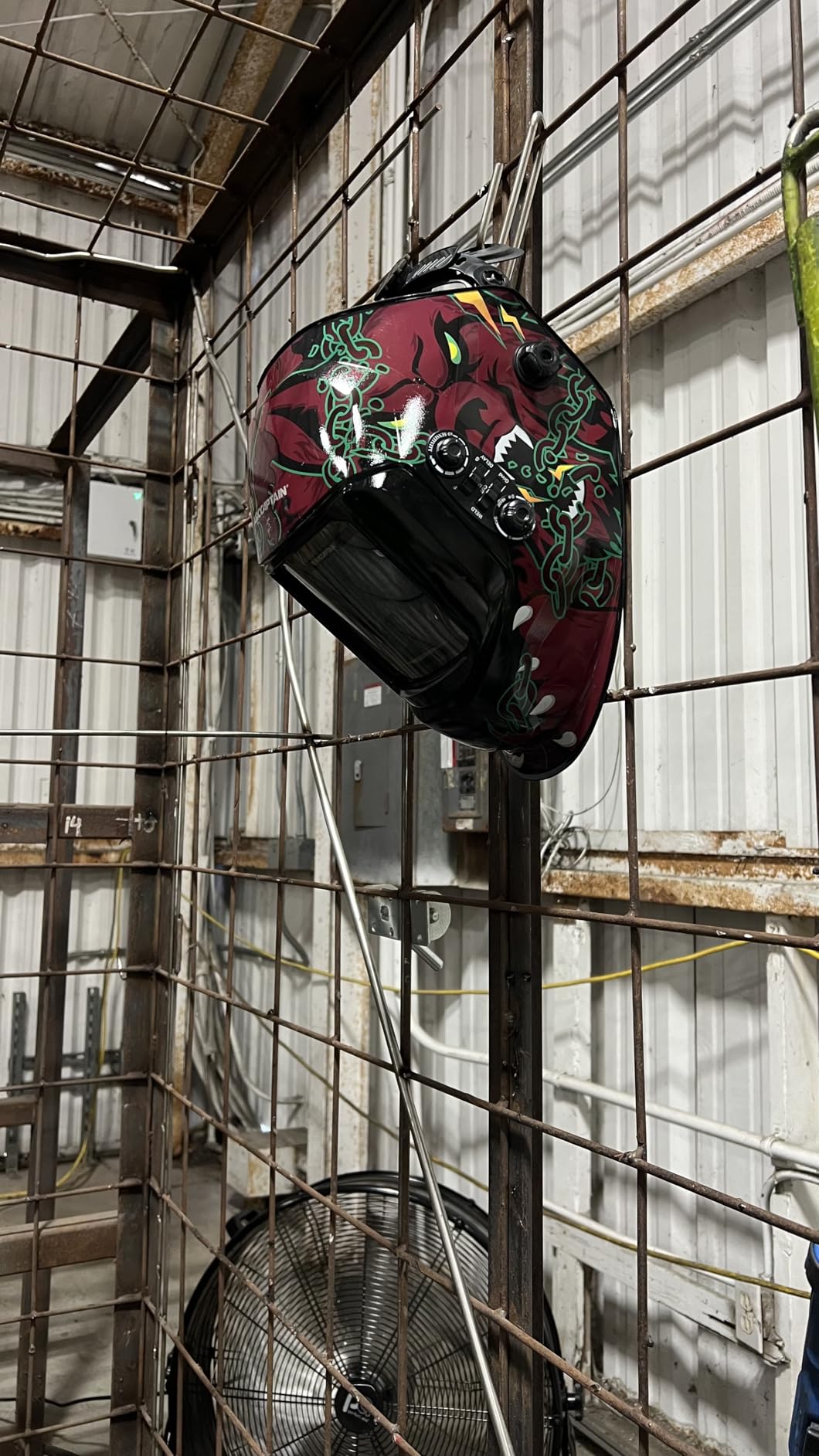
Meets ANSI Z87.1, EN 379 CE, and CSA Z94.3, so the certification list is complete for a fabricator who needs to document compliance. A solar cell with a replaceable CR2450 lithium battery handles extended run time without a charging routine.
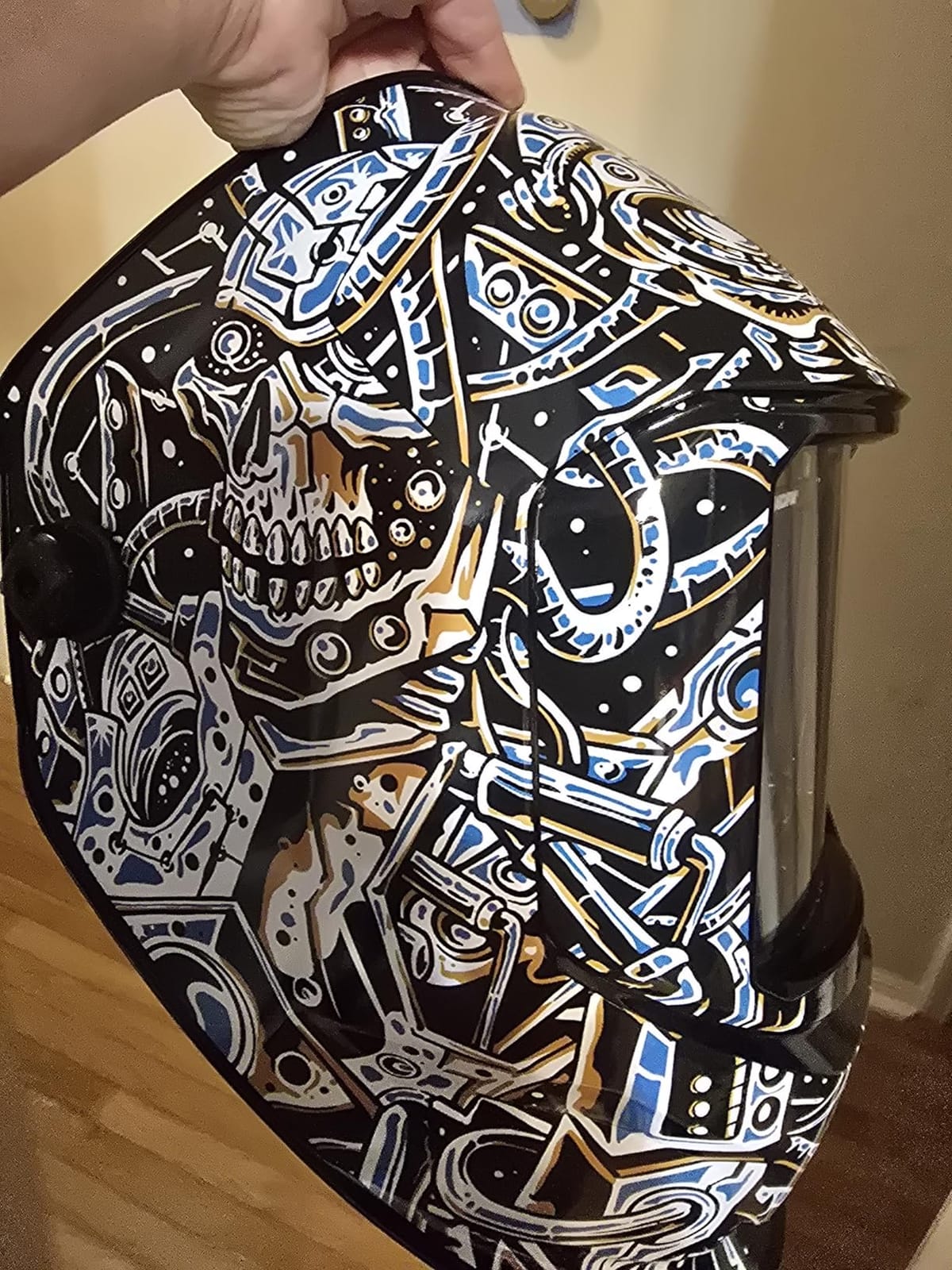
The box includes a storage bag, a replacement battery, and two replacement lenses, so consumables are covered from the start. There are also multiple style variants if you want something other than plain black.
Screen size as a real safety feature
A larger window does more than look generous. It lets you keep both the joint and the surrounding geometry visible at once, which means fewer arc strikes on misaligned work and better torch angle control on a corner or a tube. That is a fit-up quality problem before it is a comfort problem.
At 2 pounds it sits between the ultralight Jackson shell and the heaviest shells in this group, which is a reasonable middle for a full day of work without dominating the load on your head in a crouched position.
Where it falls short
The polypropylene and polyamide shell is less rigid than a metal framed professional hood, and the adjustment knobs are less precise than the digital controls on the panoramic YESWELDER. In an impact heavy environment, that shell is the first thing to worry about.
The 180 day warranty is the shortest in this roundup by a wide margin, and it is the reason we would not recommend this as a single helmet for someone welding daily. As a learning helmet or a shop second hood, it is hard to argue with.
10. TOOLIOM TL-M800D: Best Value With a Roomy View
- Roomy 12.9 sq inch viewing area at a value price point
- True color 1/1/1/1 optics make the puddle easy to read
- Four arc sensors for dependable detection
- Separate weld cut and grind shade modes
- Ships with spare lenses a battery and a manual
- Listed to ANSI Z89.1 rather than the common Z87.1 welding standard
- Basic plastic shell and headband for heavy shop use
- Fewer style and size options than larger brands
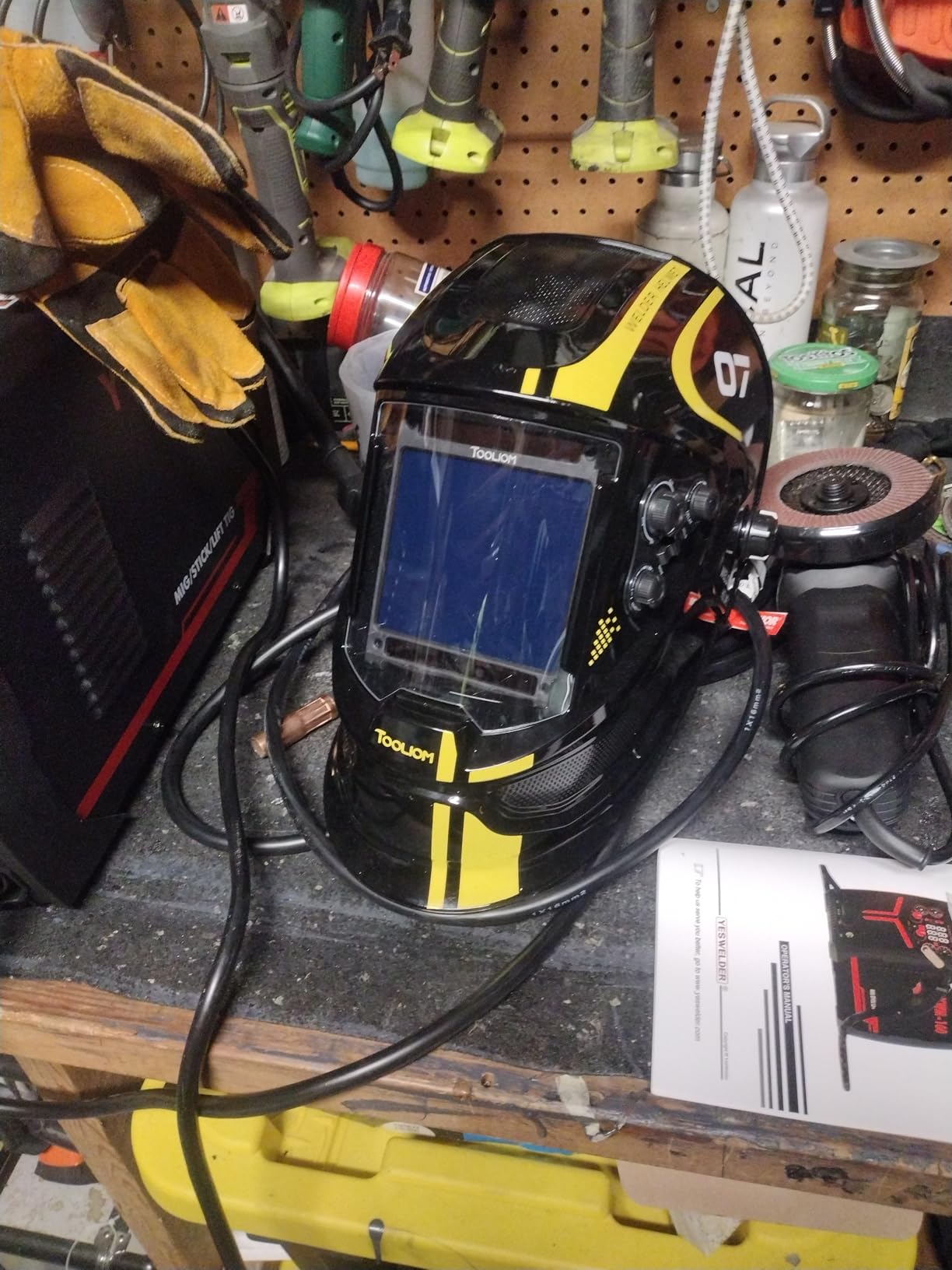
The TL-M800D does something the other budget shells do not: it gives you a 3.94 x 3.27 inch viewing area, which works out to 12.9 square inches, with 1/1/1/1 optical classification and true color technology. At this price that combination is the standout feature.
Four arc sensors give dependable detection, and the M800D lens covers shade 9-13 for welding, 5-9 for cutting, and 3.0 for grinding with separate delay and sensitivity adjustment. That is a real multi process range rather than a marketing line.
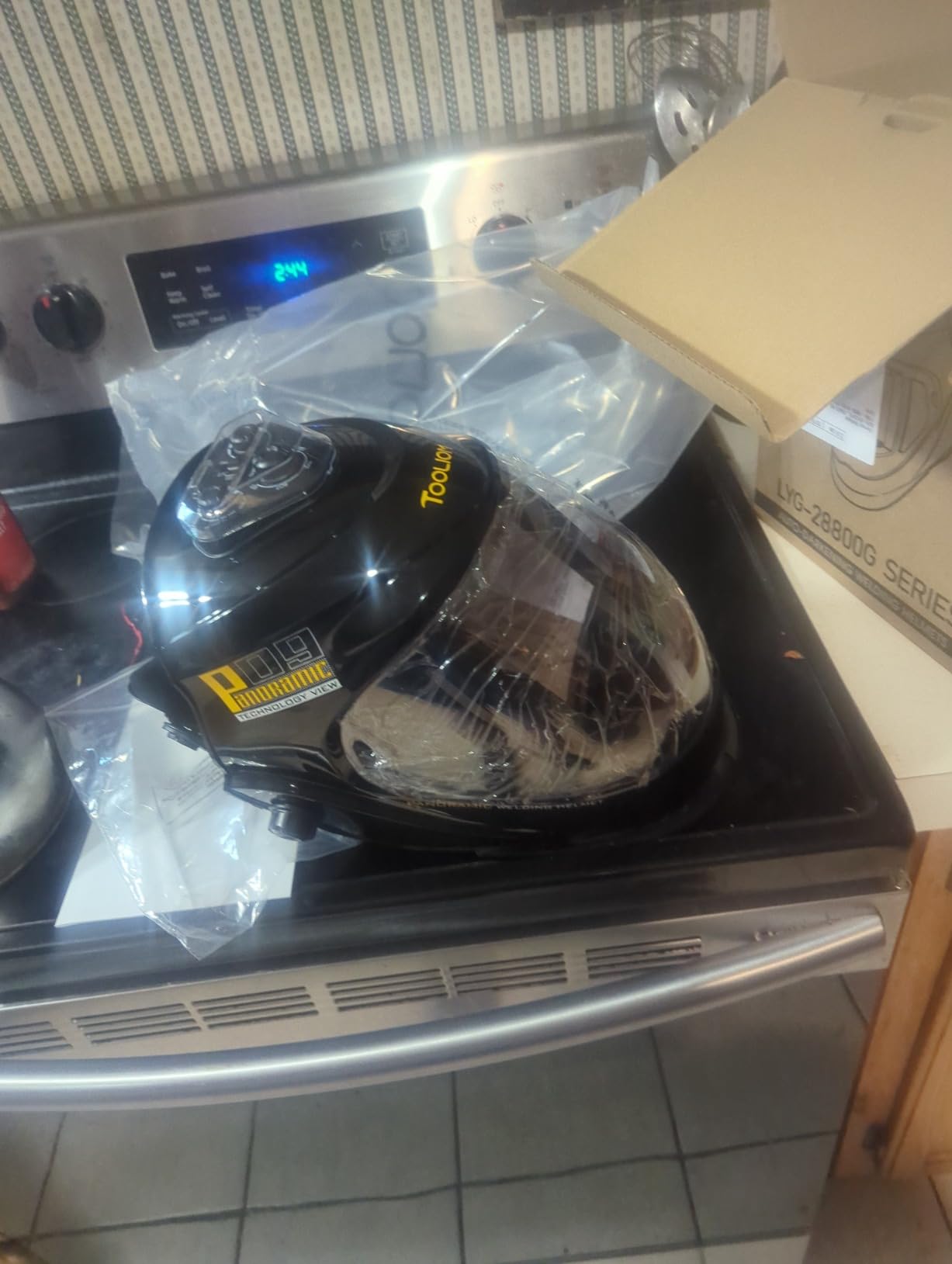
At 0.58 kg it is one of the lighter shells here, and the box includes a replaceable battery, two outer replacement lenses, and one inner lens, so the first consumable replacement is already handled.
Owners describe it as a solid value helmet for hobby and light shop work. The recurring reservation is the plastic shell and headgear construction rather than the electronics.
Check the certification standard before you buy
This model is listed to ANSI Z89.1 rather than the ANSI Z87.1 welding standard that most auto-darkening helmets carry, including the other four budget options in this roundup. Z89.1 covers industrial head and face protection, and a welder working to a specification sheet should confirm which standard their procedure requires before committing.
It is the single specification we would want a buyer to verify personally here. Everything else on the sheet, the 12.9 square inch view, the true color lens, and the four sensors, is competitive for the money.
Where it falls short
Beyond the certification question, construction is the limit. The plastic shell and headband are described as basic for heavy shop use, and if you are the kind of welder who drops tools or grinds near the hood, expect a shorter service life than the nylon shells above it.
Style and size options are also thinner than the larger brands offer, so if you have a hard hat adapter requirement or an unusual head shape, check the fit before ordering. Our [welding table clamp kit guide](https://www.requiemforadream.com/best-welding-table-clamp-kits/) covers the fixture side of a bench TIG setup, which is the other half of a good fit-up.
How to Choose a TIG Welding Helmet?
The specs that matter for TIG are not the ones that matter for MIG, and most buying guides blur them together. Here is the short version of what actually changes your weld quality, ordered by how much it matters.
Minimum TIG current is a separate spec from optical clarity
These are two independent numbers and a helmet can be excellent at one and poor at the other. Minimum TIG current is the lowest arc current the filter is specified to detect, and it is only published by some manufacturers. The Miller Classic in this roundup states it explicitly, suited to welding at five amps or below, and that single line is more informative than a sensor count.
Optical class, by contrast, tells you what the filter does with the light it receives. 1/1/1/1 is the highest class in the standard and the four numbers respectively cover optical quality, light diffusion, luminous transmittance, and viewing angle dependence. Six of the ten helmets here carry 1/1/1/1, so it is no longer a premium-only feature, which is genuinely good news for anyone buying at the value end.
A practical rule from the forums, repeated often by experienced TIG hands: four sensors alone do not establish low-amp performance. Sensor count widens your detection field and helps when a torch body shades part of the array, but the sensing threshold still has to be low enough for a faint arc.
Light state decides how much fit-up you can see
The light state is the shade the filter sits at when no arc is present, and it is a separate buying axis from the dark shade range. On TIG you spend a large share of the cycle with the arc off: aligning, checking root face, tacking, inspecting. A brighter light state means fewer hood flips and a clearer look at the joint.
The models here range from a DIN4 light state up to a shade 3.0. A darker light state is fine in a dim shop and genuinely annoying in a bright one, and it is the most common criticism aimed at the Jackson Safety Insight despite its other strengths.
Sensitivity and delay are not the same control
These get confused constantly, and understanding the difference fixes most complaints about a helmet that will not darken. Sensitivity is a threshold: how strong a light the sensors need before they trigger. Delay is a timer: how long the filter stays dark after the arc stops.
Delay cannot repair unreliable sensing. If the lens does not detect the arc on the first strike, waiting longer changes nothing. Raise sensitivity for faint TIG arcs and set delay for your restrike rhythm, and you will get most of what adjustment can do for you.
AC TIG on aluminum changes what you need
On AC TIG the arc extinguishes at every half cycle and re-strikes at the electrode polarity change, so the filter sees a rapidly pulsing light source rather than a steady one. Fewer consumers discuss this than the low-amp question, and it is worth asking a shop which helmets they have run on aluminum rather than assuming a DC rating transfers.
What carries over is the sensitivity setting. If your filter is not detecting a steady DC arc reliably, it will not handle the flicker of AC well. Set the detection threshold conservatively and test on coupons before a production joint.
Red flags when you are shopping
Walk away from any listing that does not publish a sensitivity control, a delay control, or a shade range that reaches 13. A fixed sensitivity shell cannot be tuned to a faint TIG arc, and a shade ceiling below 13 will leave you under protected on heavier work.
Be equally careful with listing photos. The same model name ships with different lens packages, and sellers reuse old photography with new copy, which is a documented source of buyer regret. Confirm the lens generation in the technical specifications, not the picture, and check whether replacement inner covers are sold separately by the manufacturer.
Cost of ownership beats the purchase price
Cover lenses are the real consumable, not the filter. A scratched or dirty inner cover makes even a brand new helmet look cloudy, and that is the first thing people blame on the electronics. Buy standard-size covers where the helmet accepts them, keep one set in the bag, and replace the inner lens when the view degrades rather than when the helmet fails.
Check that your candidate takes common 4.5 x 5.25 inch style covers before you buy, and confirm whether the manufacturer stocks them separately. Batteries matter less if the shell is solar assisted, but note the type anyway, since a coin cell is trivial and a proprietary pack is not.
When a Helmet Will Not Darken on Low-Amp TIG
If your TIG welding helmet flashes you or stays light on a faint arc, work through this in order. The first three account for most cases, and none of them require opening the helmet.
First, check what the sensors can actually see. A torch body, a large fixture, a tube, or your own hand shading the sensor array will stop detection, especially in corners and on pipe. Reposition the torch angle, move a clamp, or add a small amount of light to the sensor area if the manufacturer allows it.
Second, raise sensitivity in small steps rather than slamming it to maximum. Too high and the lens will trigger from shop lighting, a fluorescent tube, or a neighbouring arc, which is the other half of this problem and a common one in shared shops.
Third, separate the two controls. If detection is failing on strike, delay is irrelevant. Set sensitivity until the lens darkens reliably at your lowest working amperage, then set delay for how long you want the shade to hold after the arc drops during your restrikes.
Fourth, check the power. Solar-assisted shells still run on a battery for the first strike of the day, and a drained coin cell shows up as sluggish or absent response. Two arc sensors and a two amp arc is a demanding combination for a depleted cell.
Fifth, look at the covers. A clouded, scratched, or dirty inner lens reduces the light reaching the sensors, and it also ruins the view, so it is worth cleaning and inspecting before you blame the electronics.
Finally, if the helmet still will not trigger at a faint arc, the detection threshold is what it is. That is a hardware limit, and the answer is a filter published for low amperage rather than another adjustment.
Frequently Asked Questions
What is the best helmet for TIG welding?
The Lincoln Electric VIKING 3350 is the best overall welding helmet for TIG, with 1/1/1/1 optical clarity on 4C lens technology, a 12.5 square inch viewing area, and a 1.4 pound shell. For welding at very low amperage, the Miller Classic Series is the only pick here that publishes a minimum current figure, suited to welding at five amps or below. On a tight budget, the YESWELDER LYG-L600A gives you 1/1/1/1 true color optics for a fraction of the cost.
What is the best helmet setting for TIG welding?
Start at shade 10 for thin stainless and most DC TIG work, then move up or down by half a shade depending on the material. Raise sensitivity one step at a time until the lens darkens reliably at your lowest amperage, since a faint arc needs a low threshold. Set the delay to roughly 0.2 to 0.5 seconds so the shade holds through the restrikes you get when riding the foot pedal. If the lens triggers from shop lighting, back the sensitivity down. Delay cannot fix a lens that does not detect the arc at all.
Do TIG welding helmets need to be true color?
No, but true color optics make low amp work noticeably easier. Color fidelity helps you read the puddle, judge heat tint on stainless, and see the wire merge into the leading edge, all of which matter more on a faint TIG arc than on a bright MIG pass. A budget filter rated 1/1/1/1 gives you true color clarity today at a fraction of the price of a premium shell, so it no longer requires a premium purchase.
My auto dimming welding helmet is not working. What could be the problem?
In order of likelihood: the torch, a fixture, or your own hand is blocking the arc sensors, so the lens never sees the arc. Next, the sensitivity threshold is set too high for a faint TIG arc. Then a drained battery, since a solar assisted shell still relies on a cell for the first strike. After that, a scratched, dirty, or clouded inner cover lens reducing the light reaching the sensors. Finally, the filter may simply be specified for higher currents than you are running.
How many arc sensors do I need for TIG welding?
Four is the practical target for TIG, and five gives more tolerance when a torch body shades part of the array in a corner or on pipe. But sensor count alone does not prove low amp performance, which experienced welders on welding forums repeat often. What matters is the sensing threshold. Check whether the manufacturer publishes a minimum TIG current figure, and match that to the lowest amperage you plan to weld at.
Conclusion
The Lincoln Electric VIKING 3350 is the best welding helmet for tig welding in 2026 because it combines the specification that is hardest to find, 1/1/1/1 optical clarity, with a 12.5 square inch view, a 1.4 pound shell, and a 5 year warranty. It is the pick we would put on our own bench without hesitating.
Match your choice to the job instead. On a tight budget the YESWELDER LYG-L600A delivers true color optics and a proven service record. Fit-up and pipe work argue for the panoramic YESWELDER BW-10MAXTRI or the Jackson Safety Insight if your neck suffers. Knob preferences point to the Hobart 770890, and very low amperage work points to the Miller Classic Series.
Whichever you choose, buy it with the cover lenses and a spare battery already in the bag, and spend the first ten minutes setting sensitivity and delay against your actual machine rather than the factory default. That single habit prevents more frustration than any spec on the list.