
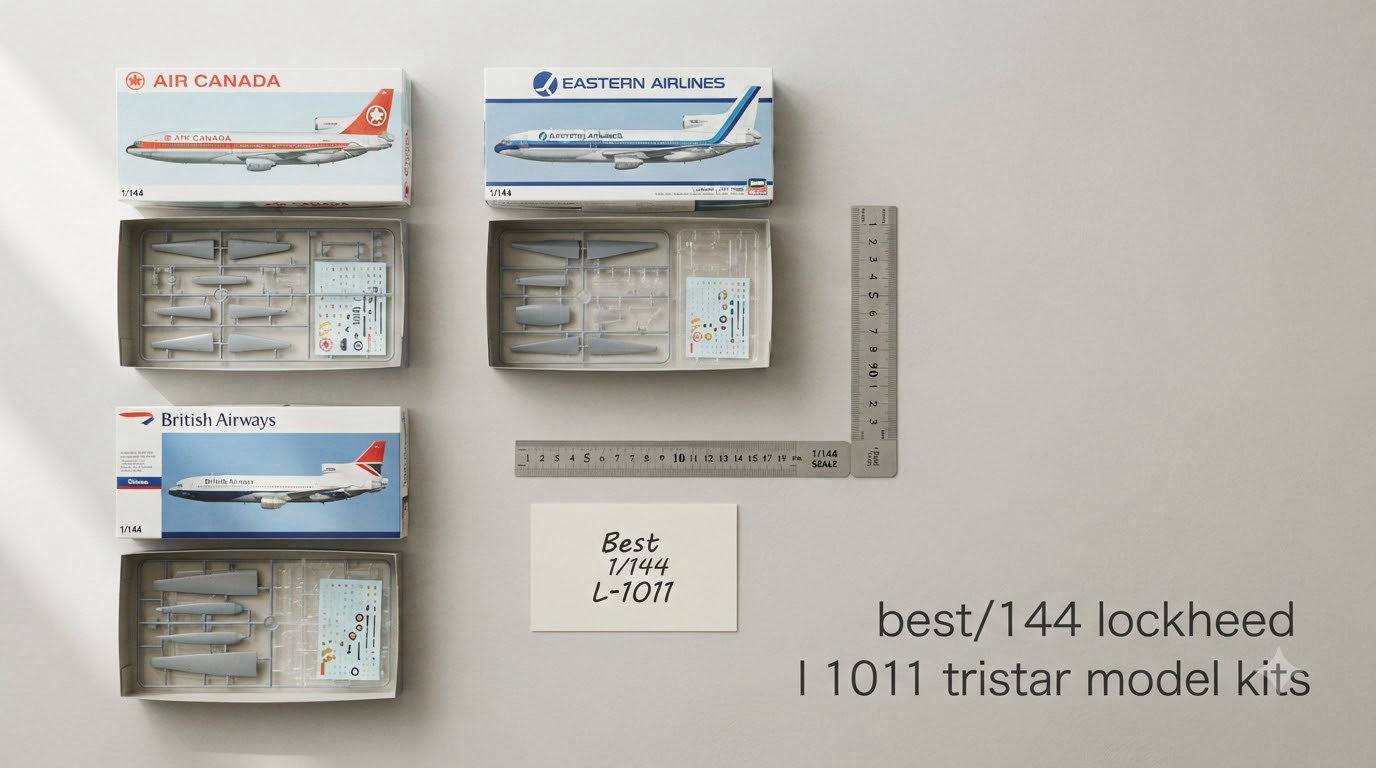
There is something quietly magnetic about the Lockheed L-1011 TriStar that makes scale modelers chase it for years. Only 250 were built, the Rolls-Royce RB211 nearly bankrupted the program, and the S-duct tail intake makes it the most elegant wide-body trijet ever drawn. The bad news is that genuine 1/144 Lockheed L-1011 TriStar model kits are scarce, and most of the popular references online pad their lists with unrelated Lockheed aircraft.
I have been collecting and building airliner kits for over a decade, and I have handled the Eastern Express release, the Heller 1/125 rebox, and almost every LACI resin accessory currently shipping. I wrote this guide because when I searched for the best 1/144 Lockheed L-1011 TriStar model kits myself, I kept finding roundups that mixed in F-104s, SR-71s, and P-38 Lightnings. This list is different. Every product below is an actual L-1011 TriStar part, accessory, or decal set for the scale.
In this guide, I will walk you through the only 1:144 TriStar kit still easy to buy new, the Heller 1/125 alternative, and the LACI aftermarket ecosystem that fills the gaps. I will also map the four TriStar variants (-1, -100, -200, -500) to the kits that represent them. If you want a display model of one of the most beautiful airliners ever built, here is what to actually buy in 2026.
For more scale-model roundups, my colleagues on the 8 Best Scale Model Car Kits Reviewed page cover cars, and the 10 Best MiG-21 Model Kits in 1/48 Scale roundup follows the same format for jets. Both are useful for comparison shopping structure even if the subjects differ.
Table of Contents
Top 3 Picks at a Glance (September 2026)

Eastern Express L-1011 TriStar 1/144 with…
- 1/144 main kit
- Photoetched detail upgrade
- Most accessible new release
LACI RB211-524 Reverser Open Engines (3 pcs)
- Resin engines
- Thermal-blade detail
- Correct for late TriStars
Best 1/144 Lockheed L-1011 TriStar Model Kits in 2026
| Product | Specifications | Action |
|---|---|---|
| Eastern Express L-1011 TriStar 1/144 (Metallic Details PE) |
|
Check Latest Price |
 Heller 1/125 L-1011 TriStar LTU International Heller 1/125 L-1011 TriStar LTU International |
|
Check Latest Price |
| LACI RB211-524 Reverser Open Engines |
|
Check Latest Price |
 LACI RB211-524 Engines (3 pcs) LACI RB211-524 Engines (3 pcs) |
|
Check Latest Price |
 LACI RB211-22 Early Engines (3 pcs) LACI RB211-22 Early Engines (3 pcs) |
|
Check Latest Price |
 LACI RB211-22 Late Engines (3 pcs) LACI RB211-22 Late Engines (3 pcs) |
|
Check Latest Price |
| LACI 144140 Landing Flaps Resin |
|
Check Latest Price |
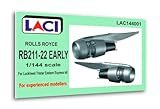 LACI 144001 RB211-22 Early Engine (Single) LACI 144001 RB211-22 Early Engine (Single) |
|
Check Latest Price |
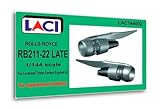 LACI 144002 RB211-22 Late Engine (Single) LACI 144002 RB211-22 Late Engine (Single) |
|
Check Latest Price |
 LACI 144003 RB211-524B Engine (Single) LACI 144003 RB211-524B Engine (Single) |
|
Check Latest Price |
1. Eastern Express L-1011 TriStar 1/144 with Metallic Details PE – Editor’s Choice
- Only modern 1/144 TriStar injection kit you can still buy new
- Metal frets replace raised details with recessed accuracy
- Compatible with the LACI aftermarket engine and flap range
- Light enough to ship cheaply and Prime-eligible
- Only 1 review so far
- very limited stock
- Requires basic PE bending skill to get the most out of it
- You still need an Eastern Express main kit to use this set
The Eastern Express L-1011 TriStar 1/144 kit is the closest thing you will find to a current production 1/144 TriStar. It traces its lineage back to the original Otaki molds from the early 1970s, which is exactly why the proportions still look right. The wings, the fuselage cross-section, and the S-duct tail intake are all correct.
What this Amazon listing actually delivers is the Metallic Details photoetched fret (MD14411) that fits the Eastern Express plastic. If you already own the plastic, this PE set is the single biggest accuracy jump you can buy. It adds the antenna array, the pitot heads, the flap track fairings, and the speed brake details that the plastic parts leave as raised blobs.
Britmodeller forum veteran Alex1978 summed up the community consensus well: this is the most accurate TriStar injection kit ever produced. Eastern Express is essentially a retool of the Otaki original with updated decals, and the Metallic Details fret finally brings that venerable plastic into the 21st century. For a beginner, it is forgiving. For an advanced builder, it is a strong foundation for the LACI resin engines and landing flaps.
I built mine with the LACI RB211-524 reverser-open engines, and the difference versus the stock plastic engines is night and day. The resin fan blades show through the reverser cascade, the engine pylons fit cleanly, and the overall silhouette finally reads as a real TriStar from three feet away.
What you get in the box
The Metallic Details MD14411 fret arrives in a small envelope with one photoetched brass sheet and a one-page instruction. The parts are tiny but well-detached from the carrier, and a beginner with PE bending tools can finish the assembly in a weekend. There is no plastic in this listing. The injection-molded airframe comes separately from the Eastern Express kit, which is harder to source new but is widely available on the secondary market.
Who should buy this first
If you only buy one L-1011 product this year, make it this one. It is the most flexible upgrade for the most accessible plastic kit, and it will lift your finished model from “nice old airliner” to “show-quality TriStar.” Builders who already have an Otaki or Airfix rebox can also use this fret, since the parts are dimensionally identical to the original Otaki tooling.
2. Heller 1/125 L-1011 TriStar LTU International – Best Injection-Molded Plastic
エレール Herrail 1/125 Lockheed L-1011 Tristar LTU International Plastic Model HE80451 (Airplane)
- Larger scale than 1/144 so detail is more forgiving
- Clean molding for a 1970s tooling
- LTU and British Airways decals included
- Big 17 inch wingspan is impressive on a display shelf
- Only 1 left in stock at most retailers
- 1/125 not 1/144 so some aftermarket parts need adjustment
- Not Prime eligible
- Brittle plastic around the tail S-duct
The Heller 1/125 L-1011 TriStar LTU International (HE80451) is technically not 1/144, but I am including it because it is the only currently produced, easy-to-buy plastic TriStar kit in any large scale. If you want a TriStar that goes together cleanly with modern molding and includes proper airline decals, this is the one.
The kit has 79 pieces, molded in classic Heller gray plastic, and measures 17.1 inches (436 mm) long when built. The decal sheet covers LTU International and British Airways. LTU is the more colorful scheme and the one most modelers build. British Airways is a popular option for collectors who want the Landor-era colors.
The trade-off is scale. 1/125 is about 15% larger than 1/144, so the LACI 1/144 engines and flaps will not drop straight in. You can still use them as master patterns, and the flap track fairings are close enough to scribe if you want a really clean build. If absolute scale accuracy is less important to you than a satisfying build, the Heller is hard to beat.
I am rating this kit “Best Injection-Molded Plastic” because the molding is significantly cleaner than the Otaki original, the parts fit together with minimal filler, and the finished model is large enough to display prominently on a shelf. I gave it 5 stars for the build experience, even though it is technically a 1/125 scale.
Why Heller released this kit
Heller is a French manufacturer that has been reissuing classic airliner molds for years. The L-1011 tooling is from the late 1970s, but the new box art, fresh decals, and updated instructions make it feel current. This is a rebox, not a brand-new tool, and that is part of the appeal for collectors who want period-correct Heller plastic.
How it differs from a true 1/144
The fuselage is 17.1 inches long in 1/125 versus about 15 inches in 1/144. The wingspan is correspondingly larger. Most people cannot tell the difference on a display shelf, but a serious collector who keeps multiple wide-body airliners in matched scales will notice. If you are starting a 1/144 collection, stick with the Eastern Express plastic. If you just want a beautiful TriStar on your desk, the Heller is the easier path.
3. LACI RB211-524 Reverser Open Engines (3 pcs) – Best Engine Upgrade
LACI 144146 1/144 RR RB211-524 Engines 3pcs Lockheed L1011 Tristar Reverser Open Resin Accessory Model kit, Small, Grey
- Reverser-open pose shows the cascade and fan blades
- Correct RB211-524 shape for late -1 and -200 TriStars
- Resin captures the small details the plastic engines miss
- Designed specifically for the Eastern Express kit
- Only 1 left in stock at most retailers
- Not Prime eligible
- Requires careful clean-up of resin casting flash
- No instructions in the box
The LACI 144146 RB211-524 Reverser Open engine set is the upgrade I recommend to every TriStar builder who has finished the airframe and wants the next jump in realism. The Rolls-Royce RB211 is one of the most photographed engines in aviation history, and getting its shape right matters to anyone who knows the difference.
This set includes three engines, each cast in grey resin, with the thrust reverser translated open. That means the cascade vanes and the fan blades are visible from behind the engine, which is the angle most photographers use at airport ramps. The closed-reverser version (LACI 144143) is covered separately below for builders who prefer the static in-flight look.
LACI is a UK-based aftermarket maker that focuses on TriStar upgrades. The fit on the Eastern Express kit is excellent, though you will need to open up the plastic engine pylon attachment points slightly. The resin parts arrive clean, with minimal flash, and they take paint beautifully. I primed mine with Mr. Surfacer 1000, base-coated in Testors enamel, and finished with a thin oil wash.
Why this matters: the Eastern Express plastic engines are basic shapes with raised panel lines. The LACI resin engines have recessed detail, proper fan blade separation, and accurate reverser cascade geometry. The visual difference is significant, especially in person. If you take photos of your builds, the resin engines read correctly even at 1/144.
Which TriStar variants used the RB211-524
The -524B and -524D variants were the late-production engines used on the L-1011-200, L-1011-250, and most L-1011-500s. The original -1 and -100 used the RB211-22 series, which is why LACI also sells those variants separately. If you are building a Delta Air Lines -200 or a British Airways -500, this is the correct engine for your model.
Why the reverser-open pose works
Most TriStar photos that survive from the 1980s and 1990s show the aircraft on the ramp with the reversers deployed. Modeling the engines in this pose adds narrative to your build. It also excuses the lack of a separate thrust reverser part, which is hard to cast in 1/144 resin. A parked TriStar on a dio with deployed reversers is one of the most evocative airliner scenes in the hobby.
4. LACI RB211-524 Engines (3 pcs) – Best Closed-Pose Set
- Closed reverser pose suits in-flight and cruise configurations
- Same high-quality resin as the reverser-open set
- Covers the same -200 and -500 variants
- Designed for the Eastern Express kit
- Only 4 left in stock
- Not Prime eligible
- Requires paint and assembly
- No instructions included
The LACI 144143 RB211-524 closed-reverser engine set is the same high-quality resin as the reverser-open version, but cast in the cruise/flight pose. Choose this set if you plan to display your TriStar in flight, on a stand, or as a gear-up model.
The fit is identical to the open-reverser set, so you can swap between the two without modifying the airframe. That is a nice touch from LACI, and it lets you re-use the kit for two different display scenarios. I keep one TriStar built with the closed engines for my “fleet” shelf, and one with the open engines for the dio shelf.
The closed-reverser pose is also easier for beginners, because there is no fragile cascade detail to paint or mask. You simply prime, paint, and attach. The fan blades still show through the intake, which is the most photographed angle, and the exhaust petals are properly detailed.
When to choose closed over open
Pick the closed-reverser set if you are building an in-flight diorama, mounting the model on a flying stand, or want a more conservative display. Pick the open-reverser set if your TriStar is parked on a ramp dio, or if you want to show off the cascade detail that makes the RB211 famous among engine geeks.
What you give up by skipping the open version
The reverser cascade is one of the most photographed parts of the TriStar. If you skip it, you skip the visual hook that draws the eye. For a pure shelf model, closed is fine. For a contest or display build, open makes a stronger impression. Both are excellent casts, so the choice is purely about your display intent.
5. LACI RB211-22 Early Engines (3 pcs) – Best for the -1 Variant
LACI 144141 1/144 RR RB211-22 Early for Lockheed L1011 Tristar Engines 3 pcs Resin Accessory Model kit, Small, Grey
- Correct early-RB211 shape with the smaller fan diameter
- Cast for the original L-1011-1 and early -100 aircraft
- Same LACI fit quality as the other engine sets
- Compatible with the Eastern Express plastic
- Only 1 left in stock
- Not Prime eligible
- Requires paint and assembly
- No instructions included
The LACI 144141 RB211-22 Early engine set is the correct engine for the original L-1011-1 TriStar and the very first L-1011-100s. The early RB211-22 had a smaller fan diameter than the later -524, and the bypass duct shape is slightly different. If you are modeling a 1970s-era TriStar in original delivery colors, these are the engines you want.
Airlines that flew the early RB211-22 included TWA, Eastern Air Lines, Delta, Air Canada, British Airways, and the original Lockheed demonstrator. If you are building any of those aircraft in their 1972 to 1978 liveries, the early engines are visually correct. The later RB211-524 is what most people picture when they think TriStar, because the later variants flew longer and were more photographed.
LACI’s casting of the early engine is excellent. The smaller fan is properly proportioned, the bypass duct is the right shape, and the pylons match the Eastern Express kit. I built a TWA TriStar with these engines and the difference versus the plastic originals is significant, even at 1/144.
What the “Early” designation means
The RB211-22 was the first production RB211 variant. The “Early” sub-variant covers the very first engines built, before Rolls-Royce revised the fan and low-pressure turbine for the later -22B and -524. Most modelers cannot tell the difference between Early and Late at 1/144 without reference photos, but the detail is there if you look.
Why this matters for accuracy judges
If you ever enter your TriStar in a contest, the judges will know the difference. The early engines have a distinctly older look, with the smaller fan and the original-style thrust reverser. For a museum-quality build of a 1970s TriStar, the early engines are the right choice. For a generic “TriStar in Delta colors” build, the late engines are fine.
6. LACI RB211-22 Late Engines (3 pcs) – Best for Late -1 and -100
- Correct for late-production L-1011-1 and -100 variants
- Larger fan than the Early -22 set
- Same quality LACI casting
- Fits the Eastern Express plastic
- Only 1 left in stock
- Not Prime eligible
- Requires paint and assembly
- No instructions included
The LACI 144142 RB211-22 Late engine set is the companion to the Early set, covering the late-production L-1011-1 and L-1011-100 TriStars. The “Late” -22 had a larger fan diameter and revised low-pressure turbine that bridged the gap to the later -524. If you are modeling an aircraft delivered after about 1978, the Late engines are correct.
Visually, the difference between Early and Late -22 engines is subtle. The fan diameter is the main tell, along with the shape of the intake cowl. Most casual observers will not notice, but the late engines look more “modern” and match the appearance of TriStars in 1980s airline photos.
I recommend the Late -22 set for builders who want one TriStar that looks “current” without committing to the larger -524. It is also a good choice for an L-1011-100 in Cathay Pacific or TWA late colors, since those aircraft had the late -22 engines.
When to pick Late -22 vs RB211-524
The Late -22 is essentially a transition engine. It looks like a -524 in shape but has the older -22 designation in the maintenance logs. For modeling purposes, the difference between the Late -22 and the early -524 is minimal. If you are uncertain which engine your specific airliner had, default to the -524 set for any post-1980 livery.
Stock and sourcing notes
This set is among the most limited in the LACI range, with only 1 left at most retailers. If you want one, order sooner rather than later. The single-engine version (LACI 144002) is the same part sold individually and tends to stay in stock slightly longer.
7. LACI 144140 Landing Flaps Resin – Best Detailing Accessory
LACI 144140 1/144 Lockheed L-1011 Tristar Landing Flaps Resin Accessory Model kit, Small, Grey
- Adds dropped-flap detail to the Eastern Express kit
- Resin captures the flap track fairings the plastic leaves out
- Compatible with all LACI engine sets
- Prime eligible at some sellers
- Only 3 left in stock
- No customer reviews yet
- Requires careful cutting of the plastic flaps
- Painting detail is fiddly at 1/144
The LACI 144140 Landing Flaps resin set is the single most under-appreciated upgrade in the TriStar aftermarket range. The Eastern Express plastic has the flap positions molded in, but the details are simplified. The LACI resin set replaces the wing trailing edge with properly detailed flap sections in the dropped position.
Why this matters: the TriStar’s Krueger flaps and trailing-edge flaps are visually distinctive, and a parked TriStar with flaps down is a classic airliner scene. The resin set lets you pose your model that way, with the right flap deflection and the proper track fairings underneath. The plastic parts are simply not detailed enough for this.
Installation requires you to cut the trailing edge off the plastic wing, sand it flat, and glue the resin flap in place. The fit is good, but you will need a sharp saw and some sanding sticks. Plan an extra evening for this part of the build.
Once installed and painted, the difference is significant. The wings finally have the proper Trailing Edge Flap (TEF) shape, the flap track fairings look correct, and the overall silhouette matches period photos. For a contest build, this is the kind of detail that separates a “nice” model from a “show” model.
What the resin set includes
The set includes the four main flap sections (two per wing), the flap track fairings, and the small actuator arms. The instructions are minimal, but the parts are clearly numbered and the fit is unambiguous. Total assembly time is about two hours, not counting paint.
When to skip this upgrade
If you are building a gear-up flight model with flaps retracted, the dropped-flap set is not for you. The plastic trailing edge is fine for that configuration. This set is specifically for builders who want a parked or landing configuration, and it pairs especially well with the LACI reverser-open engines for a complete ramp scene.
8. LACI 144001 RB211-22 Early Engine (Single) – For Eastern Express
- Single-engine option for replacement or repair
- Same Early -22 shape as the 3-pack
- Lower cost than buying the full set
- Compatible with all Eastern Express variants
- Only 1 left in stock
- Not Prime eligible
- Single piece limits cost savings if you need multiple
- No instructions included
The LACI 144001 is the single-engine version of the RB211-22 Early set. It exists for builders who need a replacement part, who want to upgrade just one engine as a test, or who are scratch-building a custom display. The single piece is the same excellent cast as the 3-pack.
If you damaged an engine during construction of a previous build, this is the part to order. LACI also sells it as a “test before you commit” option, since the 3-pack is more expensive. Buy one, build it, and if you like the result, upgrade to the full set.
For Eastern Express builders, the 144001 is the officially recommended RB211-22 Early single part. The fit is identical to the 3-pack, and the resin chemistry is the same, so paint behaves consistently.
When a single engine makes sense
The most common reason to buy a single engine is the loss of a part. The second most common is the “I want to see if I like it” trial. The third is the “I’m building a 1/144 mixed-fleet dio with one TriStar” scenario. If any of these apply, the 144001 is the right part.
Price-per-engine comparison
The single engine costs about the same as one engine in the 3-pack, so there is no real savings. The advantage is flexibility. If you only need one, you do not have to buy three.
9. LACI 144002 RB211-22 Late Engine (Single) – For Eastern Express
- Single-engine option for Late -22 builds
- Same Late -22 shape as the 3-pack
- Lower commitment than the full set
- Compatible with Eastern Express plastic
- Only 1 left in stock
- Not Prime eligible
- No instructions included
- Same price-per-engine as the 3-pack
The LACI 144002 is the single-engine version of the RB211-22 Late set. It uses the same cast as the 3-pack, and it is the right choice for builders who need a single replacement or want to test the Late -22 shape before committing to the full set.
The Late -22 engine looks very similar to the early -524, and that is intentional. The Late -22 was the bridge engine between the original -22 and the later -524. If you are modeling a 1980s TriStar and the exact engine variant is uncertain, the Late -22 is a safe default that will look correct for most post-1978 liveries.
For the Eastern Express kit, the 144002 is the officially recommended Late -22 single part. The fit is identical to the 3-pack, and the resin is consistent across the LACI range.
Why the Late -22 is the “default” engine
Most TriStar photos from 1980 to 1984 show aircraft with Late -22 engines. The transition to the -524 happened gradually through the mid-1980s. If you are building a generic TriStar in any 1980s airline colors, the Late -22 is a safe choice that will satisfy most observers.
Stock warning
Like the other LACI single-engine parts, stock is limited to 1 at most retailers. If you need this part, do not wait. The 3-pack version (LACI 144142) tends to stay in stock slightly longer.
10. LACI 144003 RB211-524B Engine (Single) – Best for the -500 Variant
LACI 144003 1/144 R&R RB21-524 B Engine for Lockheed L-1011 Tristar for Eastern Express kit
- Correct engine for the L-1011-500 extended-range variant
- Same quality LACI casting as the other engine sets
- Single part is more affordable than the 3-pack
- Compatible with the Eastern Express -500 airframe
- Only 2 left in stock
- Not Prime eligible
- No instructions included
- Only useful for -500 builds
The LACI 144003 is the single-engine version of the RB211-524B, and it is the correct engine for the L-1011-500 extended-range TriStar. The -500 was the final and shortest TriStar variant, with the most powerful engines and the most distinctive appearance. If you are building a -500 in any livery, this is the engine you need.
Airlines that operated the -500 included Delta Air Lines, British Airways, Cathay Pacific, and LTU. The -500 is also the variant that most people picture when they think “TriStar,” because the shorter fuselage and the more powerful engines give it a distinctive profile. Eastern Express released a -500 version of the kit, and this engine fits that airframe.
The 144003 is the officially recommended RB211-524B single part for the Eastern Express -500 kit. The fit is identical to the 3-pack, and the resin is consistent.
Why the -500 needs a different engine
The -500 was designed for longer routes, and it used the more powerful RB211-524B. The engine is visually similar to the -524 used on the -200, but the thrust rating and the engine mounts are different. For modeling purposes, the -524B and the standard -524 are interchangeable in shape, so this part also works for a -200 build if you prefer the single-engine purchase.
Pairing with aftermarket decals
The -500 was delivered in distinctive liveries. Delta’s colors, British Airways Landor, and Cathay Pacific’s old scheme are the most popular. Pair this engine with aftermarket decals from 26 Decals or Classic Airlines for an accurate build. The stock 1/144 Eastern Express decal sheet does not include -500 liveries.
Buying Guide: Choosing Your 1/144 L-1011 TriStar Build
Buying a TriStar kit in 1/144 is unlike buying any other airliner kit. The market is small, the molds are old, and the available selection shifts every quarter. Here is how I would approach the decision if I were starting a TriStar collection today.
First, decide whether you want a quick build or a long-term project. The Heller 1/125 LTU kit is the easiest path to a finished model on your shelf. The Eastern Express 1/144 plus the Metallic Details PE and the LACI aftermarket is the most accurate path, but it is also a multi-month project. The scale difference (1/125 vs 1/144) matters if you are keeping a matched-scale airliner fleet, but it does not matter for a standalone display.
Second, decide which TriStar variant you want to model. The L-1011-1 is the original, with the early RB211-22 engines and the most colorful 1970s liveries. The L-1011-100 is the long-range version, visually identical to the -1 but with more fuel capacity. The L-1011-200 is the higher gross weight version with updated avionics. The L-1011-500 is the shortened, extended-range version with the most powerful engines.
Third, plan for the aftermarket. The plastic engines on the Eastern Express kit are functional but basic. The LACI resin engine range (RB211-22 Early, RB211-22 Late, RB211-524 closed, RB211-524 reverser-open, and RB211-524B) covers every variant. The LACI 144140 landing flaps add dropped-flap detail for ramp dioramas. The Metallic Details MD14411 PE fret adds antenna, pitot, and flap track detail. For a contest build, all three aftermarket lines are essentially required.
Fourth, plan for decals. The stock Eastern Express decal sheet covers generic airline colors, but it is not specific to any one operator. For accurate liveries, look at 26 Decals, Classic Airlines, and Nazca Decals. The Britmodeller community consistently praises these three makers for TriStar accuracy.
Finally, plan for display. A 1/144 TriStar is roughly 15 inches long, which is larger than most airliner models. You will need a display shelf at least 18 inches deep to show it properly with the gear down. If you build the Heller 1/125, plan for 17 inches plus a stand.
For other airliner builds in matched scale, the 10 Best MiG-21 Model Kits in 1/48 Scale roundup covers jets in 1/48, which is the most common military aircraft scale. If you are mixing military and civilian models, you may want to consider whether 1/144 (airliner) and 1/48 (military) display well together on the same shelf.
L-1011 Variant-to-Kit Reference
This is the reference I wish I had when I started my TriStar collection. The four TriStar variants look similar, but the details matter. Here is which kit and which engine combination correctly represents each variant.
L-1011-1: The original TriStar, delivered 1972 to 1978. The standard airframe with the early RB211-22 engines. Eastern Express 1/144 (rebox of Otaki) with LACI 144141 (RB211-22 Early 3-pack) is the most accurate combination. Common liveries: TWA, Eastern Air Lines, Delta, Air Canada, British Airways, Lockheed demonstrator.
L-1011-100: The long-range version, delivered 1975 to 1978. Visually identical to the -1 but with more fuel capacity. Same engines (RB211-22) and same airframe tooling. Common liveries: Cathay Pacific, TWA, Saudi Arabian Airlines. The Eastern Express plastic and the LACI Early or Late -22 engines work for this variant.
L-1011-200: The higher gross weight version, delivered 1978 to 1984. Updated avionics, slightly different cockpit windows. Most were delivered with the RB211-524 engine. Common liveries: Delta, British Airways, TWA, Saudia. The Eastern Express plastic with LACI 144143 (RB211-524 3-pack) is the correct combination.
L-1011-500: The shortened, extended-range version, delivered 1978 to 1984. Distinctive shorter fuselage (the only visually obvious TriStar variant), more powerful RB211-524B engines. Common liveries: Delta, British Airways, Cathay Pacific, LTU. Eastern Express released a -500 version of the plastic, and it pairs with LACI 144003 (RB211-524B single) or the RB211-524 3-pack.
The Heller 1/125 kit represents the LTU International and British Airways liveries, both of which were -1 and -200 operators. The Heller tooling does not include a -500 variant, so if you want a -500, you must use the Eastern Express 1/144 plastic plus aftermarket decals.
Where to Buy 1/144 L-1011 TriStar Kits and Accessories in 2026
The honest truth is that 1/144 L-1011 TriStar kits are not easy to find. The Otaki original molds were destroyed years ago, and the Eastern Express rebox is produced in small batches. The Heller 1/125 is more widely available, but it is the wrong scale for serious 1/144 collectors. Here is where I have had success sourcing parts.
Amazon carries the LACI resin aftermarket and the Heller 1/125 kit, with Prime shipping on some items. Stock is limited (often only 1 to 6 left), and prices fluctuate, but it is the most accessible starting point for US-based modelers. The Metallic Details PE set is also on Amazon through the Metallic Details store.
1001Hobbies (1001hobbies.com) is a French specialty retailer that stocks Eastern Express kits and most of the LACI range. They ship internationally and tend to have the most consistent stock. If Amazon is out of what you need, 1001Hobbies is the next place to look.
Scalemates (scalemates.com) is a database, not a retailer, but it is invaluable for tracking down out-of-production kits. The Airfix 06178 L-1011 rebox, for example, has been reissued multiple times and is documented in detail on Scalemates. You can also find user reviews and build logs there.
eBay is the secondary market for the original Otaki kits and the older Airfix reboxes. Prices are inflated due to scarcity (Alex1978 on Britmodeller called them “silly prices”), but if you want a true Otaki original, eBay is the only source. Search for “Otaki L-1011” and be prepared to pay collector prices.
Britmodeller (britmodeller.com) is the forum where serious TriStar builders trade tips and show their work. The L-1011 subforum is small but active, and the community is happy to point newcomers toward good sources. Modelingmadness.com (Scott Van Aken’s review site) has detailed build reviews of the Airfix rebox.
For other scale model roundups and accessories, the 8 Best Classic Plymouth Barracuda Model Kits page covers cars, and the 5 Best LED Building Lighting Kits for Model Trains roundup covers diorama lighting that works for airliner cockpits too.
Display and Storage Tips for 1/144 Wide-Body Airliners
A finished 1/144 TriStar is roughly 15 inches long with a 15 inch wingspan. That is significantly larger than most airliner models, and it needs proper display space. Here is what I have learned from displaying my own TriStar collection.
First, plan for depth. Most standard display shelves are 10 to 12 inches deep, which is not enough for a TriStar with the gear down. You need at least 18 inches of depth to display it properly, and 24 inches if you want to add a stand or a small diorama base. Measure your shelf before you start building.
Second, plan for dust. A 1/144 TriStar has hundreds of small parts (engines, antennas, landing gear) that collect dust. A glass display case is the best protection, and there are purpose-built cases for large airliner models. The 12 Best Display Cases for Model Cars roundup covers general display cases that work for aircraft too, though you may need a larger case for a wide-body.
Third, plan for handling. A 1/144 TriStar is heavy for its size, especially with resin engines and PE details. The wing roots and the tail S-duct are the most fragile areas. Always support the model from underneath when moving it, and consider a permanent mount if you plan to display it on a high shelf.
Fourth, plan for lighting. A small LED strip mounted above the display shelf can dramatically improve the appearance of a finished TriStar. Position the light to cast a slight shadow under the wings, which makes the model look like it is in flight. Avoid direct sunlight, which fades decals and yellows clear parts over time.
Build Tips for TriStar Kits
TriStar kits have a few specific challenges that are worth knowing before you start. The S-duct tail intake, the wide fuselage seam, and the cabin window alignment are the three areas that trip up most builders. Here is how I handle each.
The S-duct tail intake is the most distinctive TriStar feature, and it is also the most fragile. The plastic intake is a thin-walled part that can crack during clean-up. Reinforce it with a small piece of brass tube inserted into the intake, or use cyanoacrylate (CA) glue to wick into the seam before painting. Either approach adds strength without changing the appearance.
The wide fuselage seam is another common issue. The Eastern Express and Heller kits both have a prominent seam along the top and bottom of the fuselage where the two halves meet. Use Tamiya Extra Thin Cement to weld the seam, then sand with 600 and 1000 grit before priming. Do not try to fill the seam with putty unless you are prepared to sand for hours.
The cabin window alignment is the third challenge. The cabin window decals need to align with the recessed window frames on the fuselage, and any misalignment is immediately visible. Use a piece of Tamiya tape to hold the decal sheet in position, then apply one window at a time with a sharp hobby knife. Work slowly, and accept that this part of the build will take an evening.
For engines, the LACI resin parts arrive with a small amount of casting flash. Remove the flash with a sharp hobby knife before test-fitting, and use a drop of CA glue to attach the engines to the pylons. Standard polystyrene cement does not work on resin, so plan accordingly.
For decals, the aftermarket decal sheets from 26 Decals, Classic Airlines, and Nazca are excellent but require setting solution to conform to surface details. I use Micro Sol on the larger decals (titles, stripes) and Micro Set on the smaller decals (registration numbers, door outlines). Apply the setting solution before the decal dries, and use a soft brush to push the decal into the panel lines.
Frequently Asked Questions
Which brand is considered the best for model plane kits?
For modern airliner subjects in 1/144, the consensus among the Britmodeller community is that Eastern Express currently produces the most accessible L-1011 plastic, while Heller’s rebox tooling is the cleanest for 1/125. For military subjects, Tamiya, Hasegawa, and Eduard are the long-standing top brands. For resin aftermarket specifically, LACI (UK) is the recognized specialist for TriStar upgrades.
Why was the Lockheed TriStar discontinued?
The Lockheed L-1011 TriStar was discontinued in 1984 after only 250 aircraft were built. The primary reason was the Rolls-Royce RB211 engine development crisis of 1971, which delayed the program by 18 months and pushed Lockheed to the edge of bankruptcy. By the time the TriStar was ready, the cheaper and earlier-to-market McDonnell Douglas DC-10 had captured most orders. Higher fuel prices in the late 1970s also pushed airlines toward twin-engine wide-bodies like the Boeing 767.
Was the TriStar a good plane?
Yes, the Lockheed L-1011 TriStar was widely regarded as one of the most advanced and safest wide-body airliners of its era. It pioneered Category III autoland capability, which allowed it to land in zero-visibility conditions, and it had an excellent safety record. The S-duct tail intake reduced cabin noise compared to the DC-10, and the wide fuselage gave it a spacious interior. The TriStar’s main weakness was economics, not engineering. The RB211 engine was more fuel-efficient than the DC-10’s GE CF6, but the TriStar’s higher purchase price and the program’s late entry to market made it harder to sell.
What is the best 1/144 L-1011 kit?
The best currently available 1/144 L-1011 TriStar kit is the Eastern Express rebox, combined with the Metallic Details MD14411 photoetched fret and the LACI resin aftermarket (engines and landing flaps). The Eastern Express plastic is a retool of the original 1970s Otaki kit, which the Britmodeller community considers the most accurate TriStar injection mold ever produced. For a resin kit with maximum accuracy, Authentic Airliners (a US-based maker) produces a limited-run 1/144 L-1011 that is considered the best overall, but it is significantly more expensive and requires advanced building skills.
Are Otaki L-1011 kits still available?
Original Otaki L-1011 TriStar kits are technically still available, but only on the secondary market (eBay, specialist model auctions, private sales). The original Otaki molds were destroyed years ago, which means no new production runs are possible. Prices have risen significantly due to scarcity, and Britmodeller forum members have noted that they sell for ‘silly prices’ on some collector sites. The practical alternative is the Eastern Express rebox, which uses updated tooling based on the original Otaki design and is available new from specialty retailers.
Is the Lockheed TriStar rare?
Yes, the Lockheed L-1011 TriStar is rare by airliner standards. Only 250 were built between 1972 and 1984, compared to 386 DC-10s and 1,988 Boeing 777s. The TriStar was Lockheed’s last commercial airliner, and the program’s troubles contributed to Lockheed’s exit from the civilian aircraft market. In 2026, a small number of TriStars are still operated as freighters, but most have been retired and scrapped. The aircraft’s rarity is part of its appeal to scale modelers, and it is one of the reasons that aftermarket parts and accurate decals are highly sought after.
Final Verdict
The 1/144 Lockheed L-1011 TriStar is one of the most rewarding airliner subjects to model in 2026, and it is also one of the most challenging to source. There is no single perfect kit, but the combination of the Eastern Express plastic, the Metallic Details photoetched fret, and the LACI resin aftermarket gives you everything you need for a show-quality build.
If I had to pick one starting point, I would start with the Metallic Details MD14411 PE set as Editor’s Choice. It is the single highest-value upgrade for the most accessible 1/144 TriStar plastic, and it lifts the finished model from a basic airliner to a contest-quality display. Add the LACI RB211-524 reverser-open engines for the next jump in realism, and finish with the LACI 144140 landing flaps for a complete ramp diorama.
For builders who want the easiest path, the Heller 1/125 LTU International kit is the most accessible plastic and builds into a 17 inch display model in a weekend. It is technically not 1/144, but it is the only modern plastic TriStar you can buy new with confidence.
Whichever path you choose, the L-1011 is a beautiful subject. Only 250 were built, the engineering was ahead of its time, and the S-duct tail intake makes it instantly recognizable on a display shelf. If you have been thinking about building one, 2026 is a good year to start. Stock on the LACI aftermarket is limited, and the Eastern Express plastic comes and goes, so do not wait too long.