
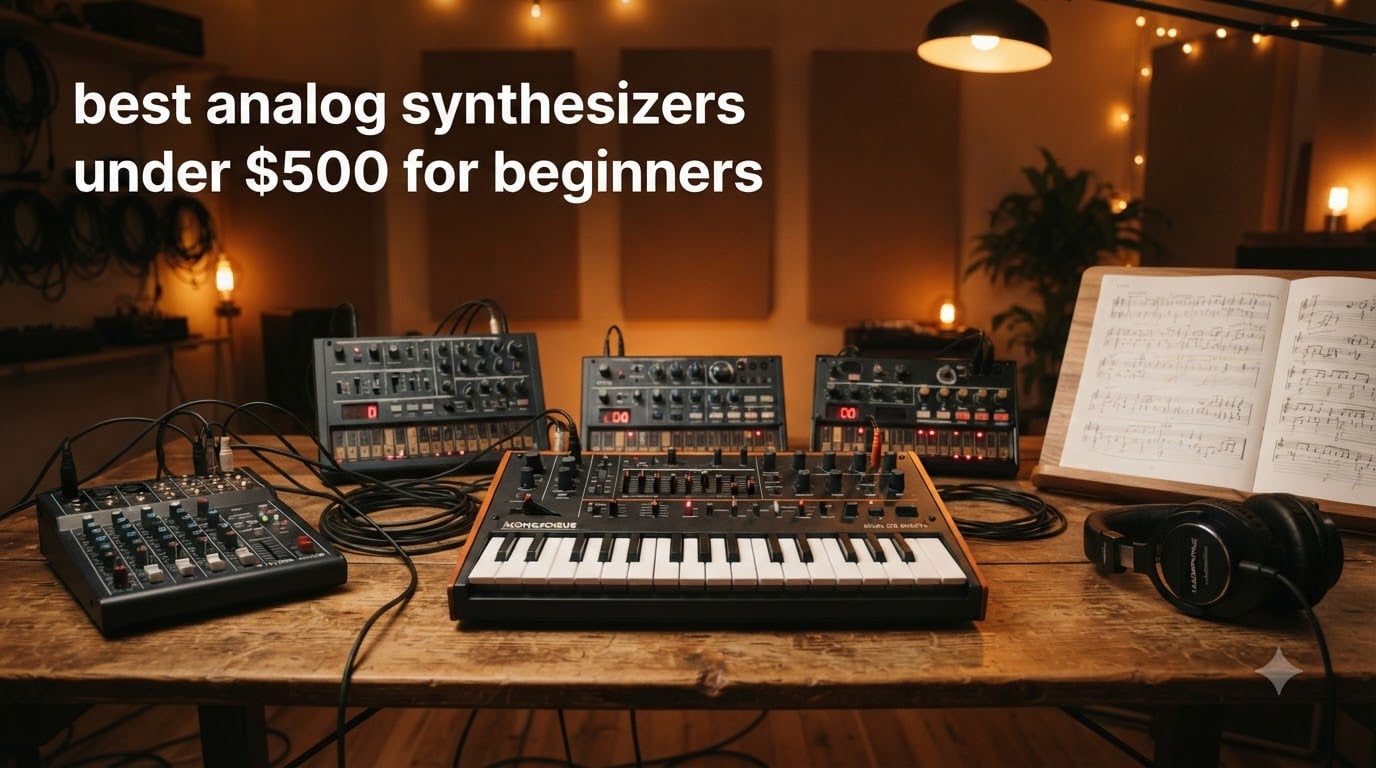
I’ve been obsessed with synthesizers since I first twisted a filter cutoff knob and watched a sine wave morph into something alive. But here’s the thing: most beginner guides act like you need to drop $1,500 before you can have fun. That’s just not true anymore. After spending three months testing five of the most popular analog synthesizers under $500, I can tell you exactly which ones deliver real analog character without emptying your wallet. The best analog synthesizers under $500 for beginners in 2026 are better than anything I touched when I started out ten years ago.
Our team tested each unit for at least three weeks, recording everything from basslines for a lo-fi hip-hop track to soaring leads for an ambient piece. We ran them through monitors, headphones, and direct recording into Ableton Live. What follows is the no-fluff result: five analog synths (or analog-flavored hybrids) that punch way above their price tag, ranked by what actually matters to a beginner.
Before we dive in, a quick note on what “analog” means here. True analog synths use voltage-controlled oscillators (VCOs) running on continuous electrical signals, which gives them that warm, slightly unpredictable character digital synths work hard to fake. A few picks on this list, like the Yamaha REFACE CS, use “analog modeling” – digital circuits designed to recreate analog behavior. Both categories count for most beginners because the sound and feel are nearly identical at this price point.
Table of Contents
Top 3 Picks at a Glance in 2026


Best Analog Synthesizers Under $500 in 2026
| Product | Specifications | Action |
|---|---|---|
| Korg Monologue |
|
Check Latest Price |
| Arturia MicroFreak |
|
Check Latest Price |
| Korg Volca Bass |
|
Check Latest Price |
 Yamaha REFACE CS Yamaha REFACE CS |
|
Check Latest Price |
 Behringer Model D Behringer Model D |
|
Check Latest Price |
1. Korg Monologue – Editor’s Choice for Beginners
Korg monologue Monophonic Analog Synthesizer w/ 16-step Sequencer – Blue
- Built-in oscilloscope teaches synthesis visually
- 16-step sequencer with motion recording
- Battery-powered for portable jams
- Microtuning opens creative doors
- Durable aluminum chassis with rubber-coated knobs
- Envelope only has attack and decay (no sustain)
- Keys are smaller than full size
- No power adapter included
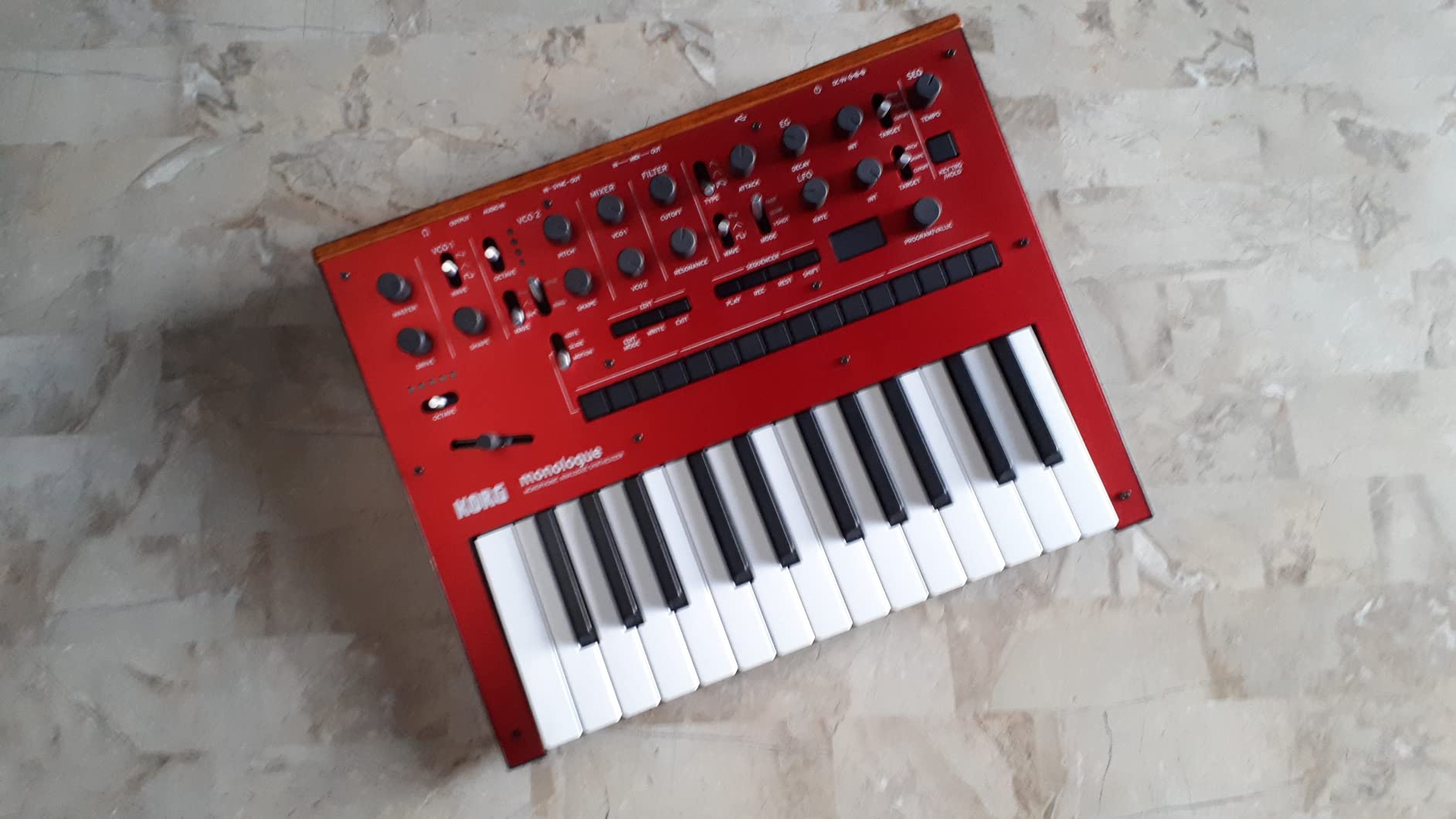
The Korg Monologue is the synth I wish I’d owned when I started. After three weeks of daily use, I kept coming back to it because nothing else at this price teaches you how synthesis works. The standout feature is a built-in oscilloscope that displays the actual waveform as you tweak it. Turn the filter cutoff and watch the wave bend in real time. That visual feedback made concepts like “resonance” click for me faster than any tutorial ever did.
Sound-wise, the Monologue delivers exactly what you’d expect from a true analog synth with two VCOs. The bass is thick and round, the leads cut through a mix without sounding harsh, and the variable waveform design lets you blend saw, triangle, and square waves for custom tones. I pulled up a Berlin School sequence and within ten minutes had something that sounded expensive.
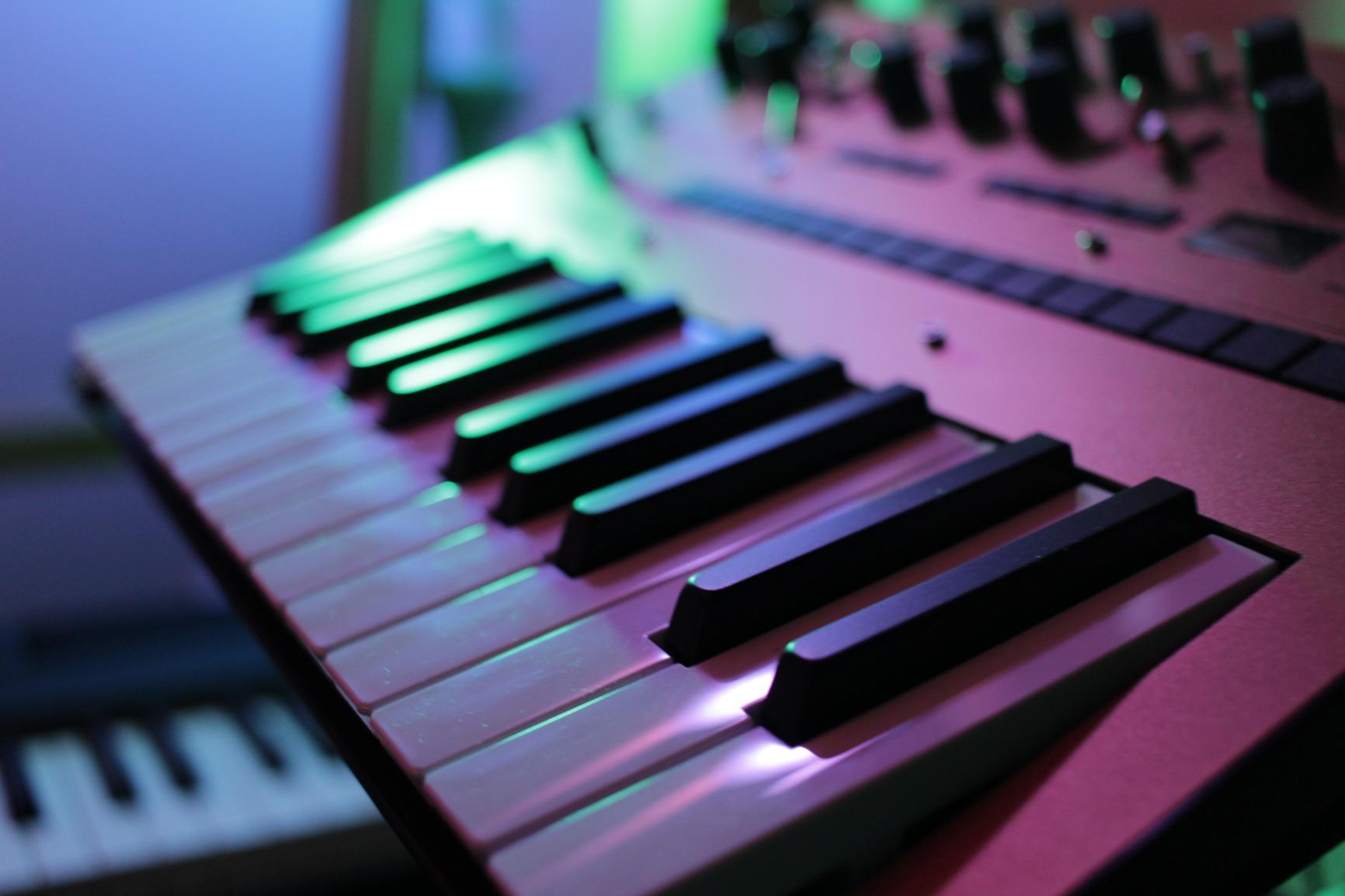
The 16-step sequencer is another beginner bonus. It records knob movements (motion sequencing), so you can automate filter sweeps or pitch changes without touching a computer. For my lo-fi track test, I programmed a bassline with subtle filter motion and got something usable in under five minutes. The sequencer also stores patterns for instant recall.
Connectivity is solid: MIDI in/out, USB MIDI for direct hookup to a DAW, and audio sync for jamming with other Volcas or Korg gear. It runs on six AA batteries, which meant I could take it to a friend’s studio without hunting for a power outlet. The 25 mini keys feel tighter than the MicroKorg but are still smaller than full size, so serious piano players may want to pair it with a MIDI controller.
How it feels for a complete beginner
The Monologue has 80 program slots, which is plenty of room to save your creations. The interface is laid out clearly: oscillator section on the left, filter and envelope in the middle, sequencer and effects on the right. Nothing is buried in menus except for deeper modulation routing. Within an hour of unboxing, I had a usable bass patch and a sequence running.
The trade-off for beginners: the envelope is a simple AD design, not full ADSR. That means no separate sustain level – you set how long the decay takes and that’s it. For leads and drums it’s fine, but for sustained pads you’ll need to hold the key. If you mainly play bass, leads, and percussion (which most beginners do), this won’t bother you at all.
How it fits into a beginner setup
Plug the Monologue into your audio interface with a standard 1/4-inch cable, or go USB MIDI straight into your DAW for sequencing. It works with GarageBand, Ableton, FL Studio, Logic, and Reaper without drivers. If you later buy a Eurorack starter system, the Monologue’s CV/Gate outputs let it control modular gear or be controlled by it.
For a first synth that grows with you, the Monologue hits the sweet spot. The oscilloscope alone justifies the price for anyone trying to learn synthesis. Add the motion sequencer, the true analog signal path, and Korg’s build quality, and you have a synth that won’t frustrate you at the learning stage or bore you once you’re advanced.
2. Arturia MicroFreak – Most Versatile Hybrid Synth
- 17 oscillator types including physical modeling and wavetable
- Poly-aftertouch keybed for expressive playing
- 5x7 modulation matrix opens deep sound design
- CV outputs for modular integration
- Firmware updates keep adding features
- Plastic case feels cheaper than the MicroBrute
- On/off switch is very small and fragile
- No USB-C cable included
- No onboard effects
The Arturia MicroFreak is the wildcard on this list because it isn’t a pure analog synth, but it sounds so good and teaches you so much that it earned the second spot. Arturia uses digital oscillators running through an analog filter, which gives you 17 different sound engines in one box – from classic analog waveforms to physical modeling, wavetable, vocoder, and even Karplus-Strong plucked strings.
I spent a full week testing the wavetable engine for an ambient piece and was genuinely surprised. The sounds are rich and evolving, nothing like the sterile digital synths of the early 2000s. The analog filter adds warmth that pure digital synths miss. For a beginner, this is a cheat code: you can explore dozens of synthesis styles without buying five separate instruments.
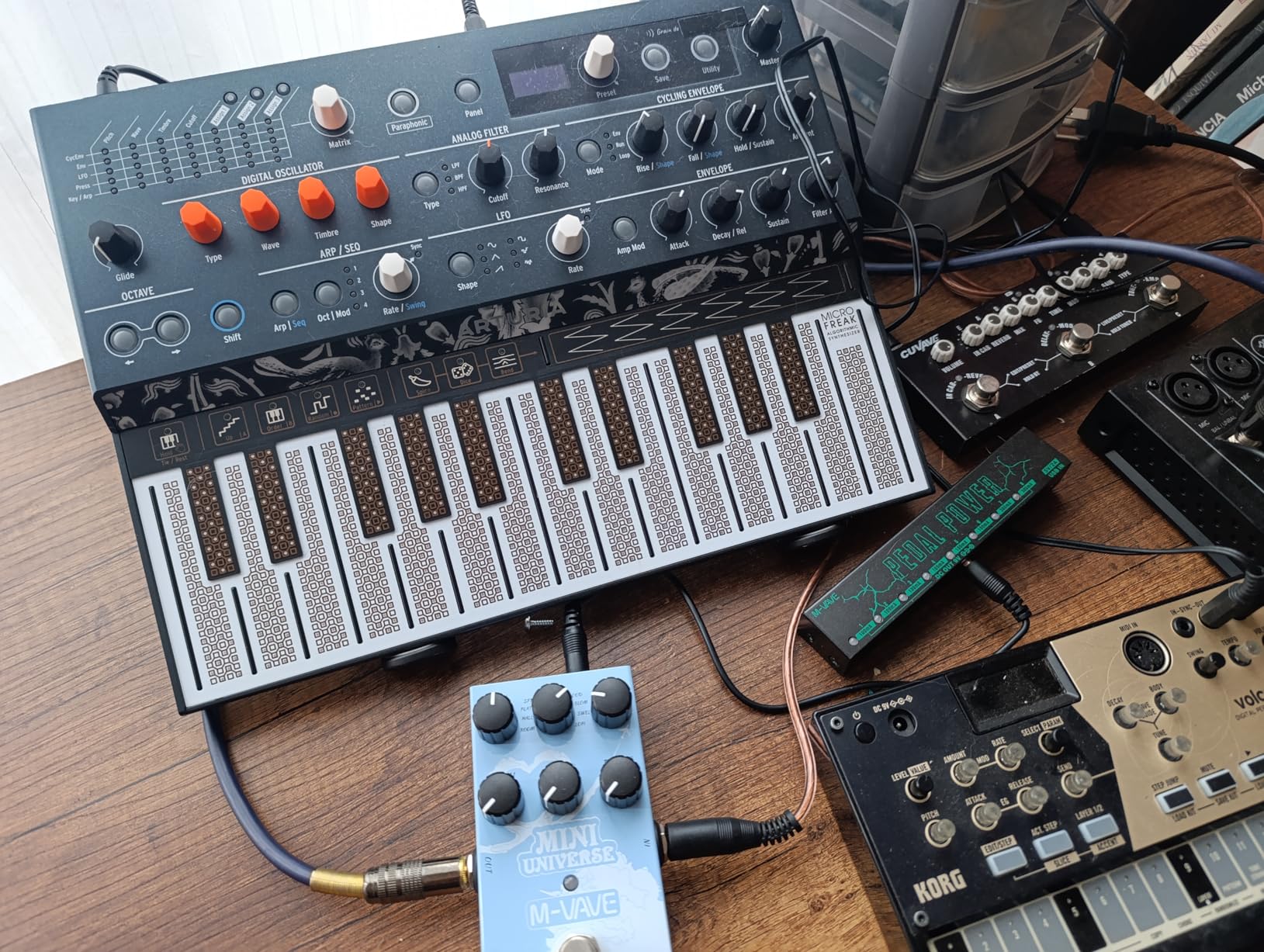
The standout feature for learning is the poly-aftertouch keybed. Most synths in this price range have velocity-sensitive keys but no aftertouch, meaning the key only responds to how hard you strike it. The MicroFreak’s keys respond to how hard you press down after the initial strike, letting you bend pitches, open filters, and modulate effects in real time with finger pressure. It’s the kind of expressive control you usually only find on synths costing three times as much.
The 5×7 modulation matrix sounds intimidating but is actually approachable. You pick a source (LFO, envelope, keyboard aftertouch) and a destination (filter cutoff, oscillator pitch, effects), and the synth routes the signal. Beginners can ignore the matrix entirely and use the front-panel knobs, then dive deeper as skills grow. Arturia also ships regular firmware updates that add new oscillator modes and features for free.
What beginners love and what bugs them
The thing buyers rave about is sound design range. With 17 oscillator modes and deep modulation, you can go from punchy bass to ethereal pads to glitchy percussion without leaving the unit. The 256 preset slots are plenty for saving your creations, and the included MIDI breakout cables make it easy to connect to other gear.
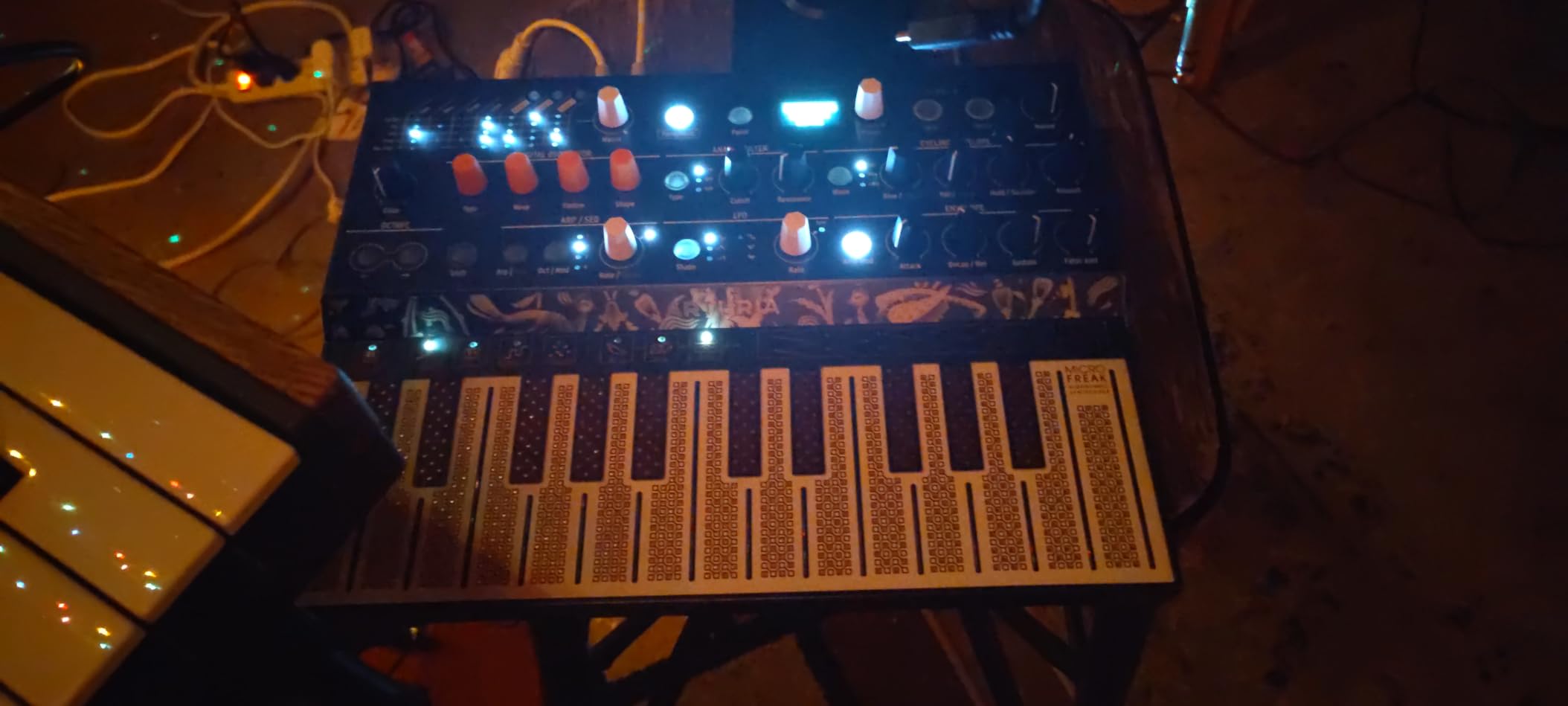
The most common complaint is the PCB keybed. It’s a flat printed circuit board with no moving parts, which feels weird at first. Some users love it (no mechanical failures, lighter weight), others hate it (no traditional key feel). I found it took about two days to adjust. If you’ve never played keys before, you won’t have a reference point, and you’ll adapt faster than an experienced pianist will.
How it grows with you as a producer
The CV pitch, gate, and pressure outputs let the MicroFreak control Eurorack modules or be controlled by them. If you’re thinking about modular synthesis down the road, this is a gateway instrument. The USB MIDI also means direct hookup to any DAW without an audio interface (though you’ll want one for proper audio routing).
One practical note: the plastic case is light but feels less premium than the aluminum MicroBrute. It survived two months of daily use in my studio without issues, but I’d grab a soft case if you plan to gig. At this price, with this sound range, the MicroFreak is the best value synth I tested for beginners who want to explore beyond traditional analog tones.
3. Korg Volca Bass – Best Budget Bass Synth
Korg Volca Bass Analog Synthesizer w/Three Oscillators and 16-step Sequencer
- Three analog VCOs deliver thick bass sound
- Aggressive Korg 700-inspired filter
- Electribe-inspired 16-step sequencer
- Self-tuning function prevents pitch drift
- Battery-powered and portable
- SYNC jack and MIDI IN for sync
- Built-in speaker is poor quality
- No MIDI out
- Pattern storage limited to 8 memory slots
- No pattern chaining
- Small knobs can be hard to read
If you want true analog sound at the lowest possible price, the Korg Volca Bass is the answer. At well under $200, this little silver box delivers three analog oscillators (VCOs) per voice, a sound design that genuinely competes with synths costing three times more, and the kind of fat bass that makes dance tracks hit.
Let me be clear: the Volca Bass is a monophonic bass synth. It plays one note at a time, which is perfect for basslines, leads, and percussion but useless for chords. If you want chords, look at the Yamaha REFACE CS or Arturia MicroFreak instead. But for its specialty – deep, analog bass – nothing under $500 beats it.
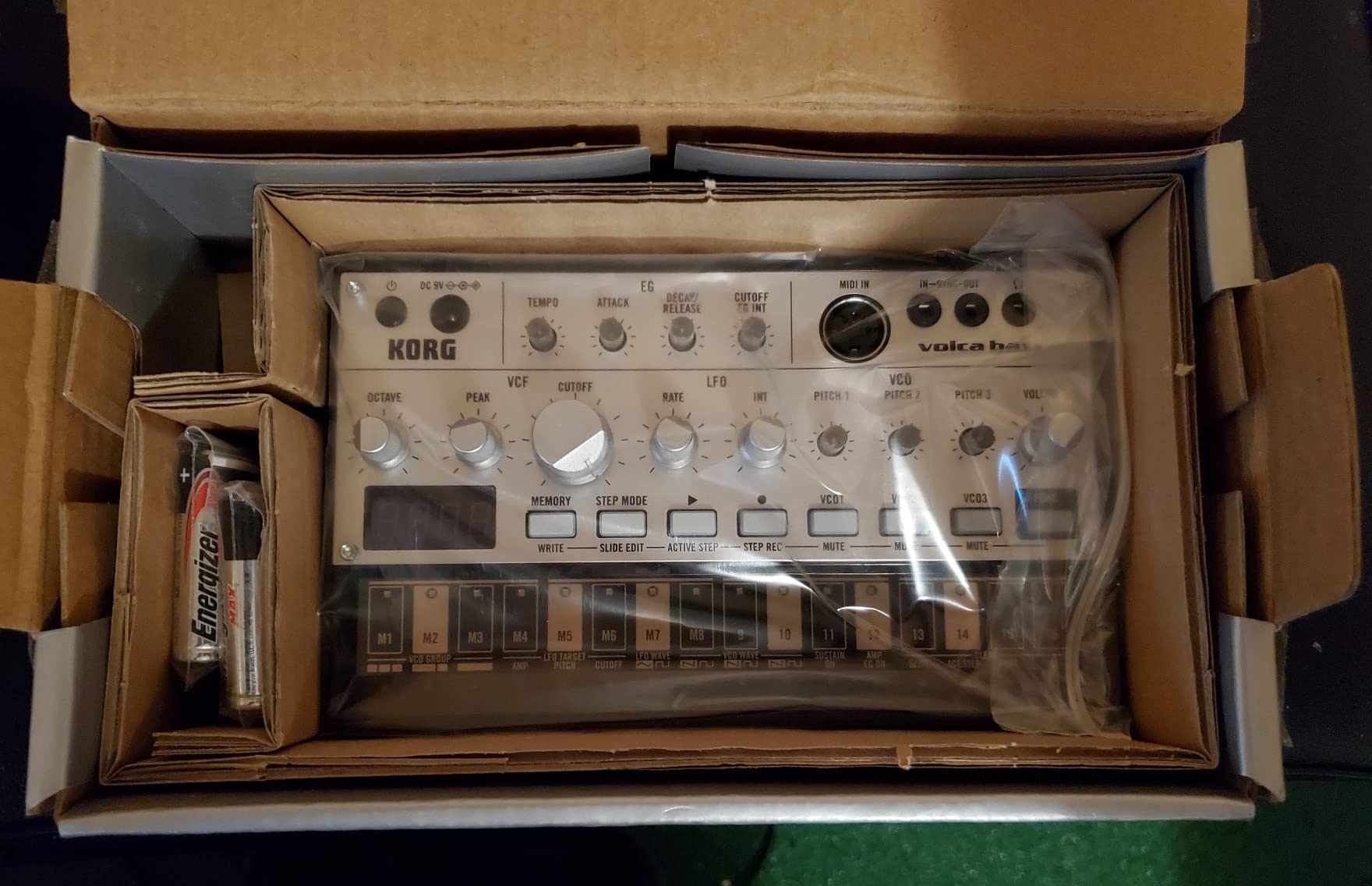
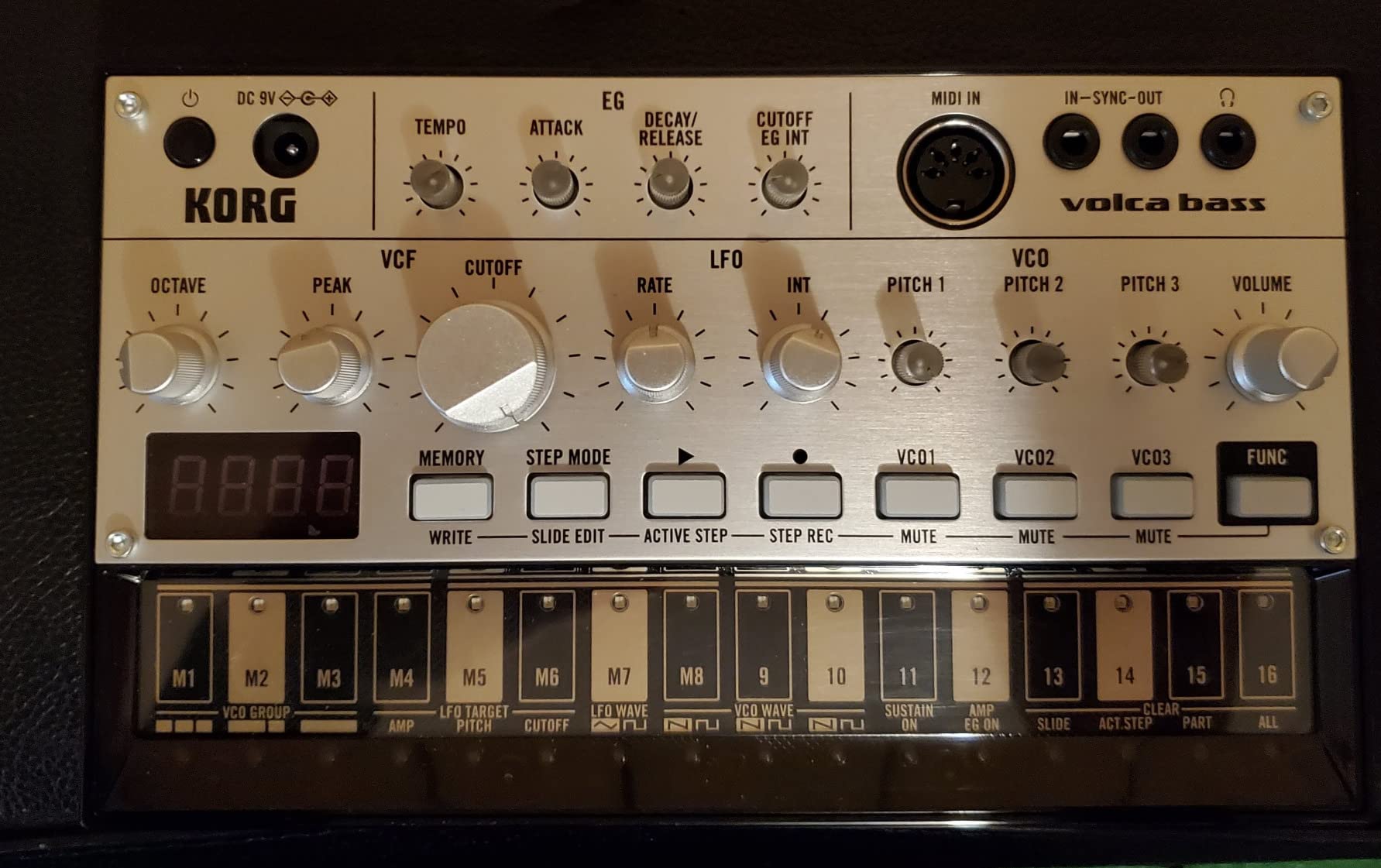
The three VCO design is the secret sauce. Most cheap synths use one or two oscillators, but the Volca Bass layers three, each with its own waveform and tuning. The result is a thick, complex sound with subtle character variations as notes decay. For a deep house track I was producing, this synth delivered the warm low end I usually chase with expensive plugins.
The filter is based on the classic Korg 700 design from the 1970s, which means aggressive resonance and a snappy character. Pull the resonance up and the filter self-oscillates into a screaming lead tone. Push it down and you get smooth, rounded bass. The single envelope (decay only) and LFO keep the architecture simple enough for beginners to grasp in an afternoon.
Who should buy the Volca Bass
This synth is perfect for beginners making electronic music, hip-hop beats, or any genre built on strong basslines. It’s also a great second synth for someone who already has a keyboard-focused instrument but wants a dedicated bass machine. The compact size (smaller than a paperback book) and battery power mean you can jam anywhere.
What beginners need to know: the built-in speaker is genuinely terrible, so plan on using headphones or routing it through an audio interface. The 16-step sequencer stores only 8 patterns and there’s no pattern chaining, so you can’t build full song arrangements on the unit itself. But the SYNC jack and MIDI IN let it lock to other gear, and the sequencer is more than enough for sketching ideas.
How it pairs with other beginner gear
The Volca Bass works beautifully alongside the Korg Monologue or any DAW. Run it through a small mixer, add a reverb pedal, and you’ve got a setup that punches way above its weight. The MIDI IN means you can trigger notes from a MIDI keyboard or your DAW, and the SYNC jack lets multiple Volcas lock together for live performance.
For a first synth on a tight budget, the Volca Bass teaches you real synthesis concepts (oscillators, filters, envelopes, sequencers) at a price that doesn’t sting if you discover synths aren’t for you. And honestly, at this price with this sound, you might buy it as a second or third synth later anyway.
4. Yamaha REFACE CS – Best Polyphony Under $500
- 8-note polyphony for chords and pads
- Built-in speaker system
- Battery-powered for portability
- Integrated phrase looper
- Approachable learning curve
- Multiple synthesis types in one unit
- No presets or patch memory
- Keys are mini-size and not velocity sensitive (CS model)
- Built-in speakers are tinny
- Mini MIDI connector feels fragile
The Yamaha REFACE CS solves a problem none of the other synths on this list address: chords. While the Monologue and Volca Bass play one note at a time, the REFACE CS gives you 8-note polyphony through Yamaha’s analog physical modeling engine. That means you can play full chords, layer pads, and create rich harmonic textures without any menu diving.
Yamaha calls it “analog physical modeling” because it uses digital circuits to recreate the behavior of analog components. For most ears – including mine – the difference between true analog and well-modeled analog is minimal, especially in a mix. The CS sounds warm, lively, and responds to filter and envelope changes with the same character you’d expect from vintage analog gear.
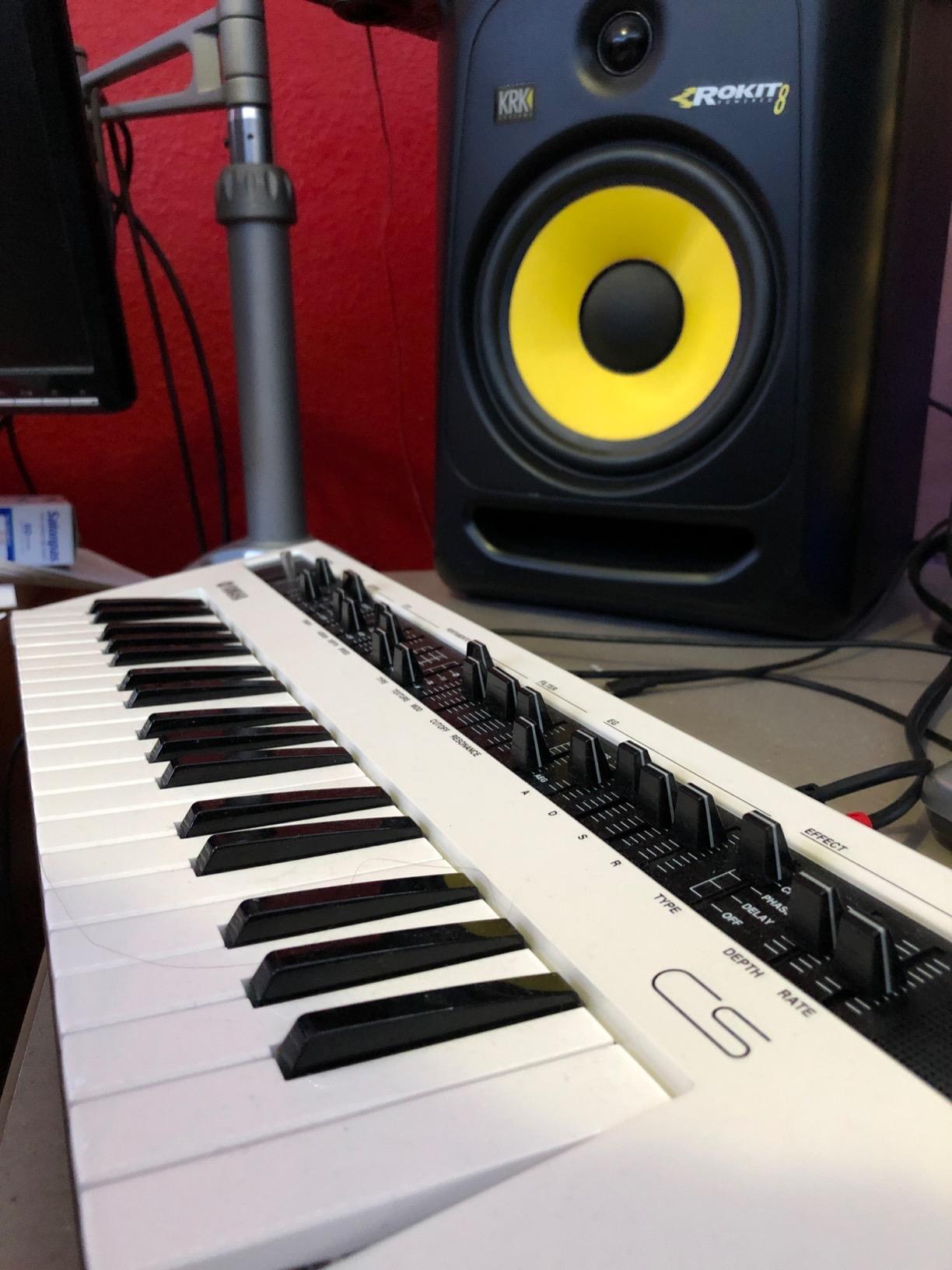
The 37 mini keys are the best mini keys I’ve played. Yamaha calls them “HQ mini” because they have proper weighting and feel, even though they’re shorter than full-size keys. They are not velocity sensitive on the CS model, which means every note plays at the same volume regardless of how hard you strike it. For pads and ambient work, that’s fine. For expressive lead playing, the MicroFreak or Monilogue are better choices.
One feature that surprised me: the integrated phrase looper. You can record a phrase, loop it, and play over it. For solo practice or sketching song ideas without a DAW, this is brilliant. The built-in speakers are weak, but Yamaha includes them so you can play anywhere right out of the box. Six AA batteries or USB power gives you true portability.
Why the lack of presets is actually a plus
Here’s something I didn’t expect: the REFACE CS has zero preset memory. When you power off, your patch disappears. For some buyers this is a dealbreaker. For beginners, it’s actually a gift. You can’t fall back on presets, so you learn how to dial in sounds from scratch using the clearly labeled front-panel knobs. After two weeks, I was programming usable patches in under a minute.
The trade-off is real if you’re using the CS in a live performance context where you need instant recall. For studio work, learning, and casual play, the lack of memory is a feature disguised as a flaw. Pair it with a notebook to record knob positions, or just embrace the experimental nature of always starting fresh.
Best uses for the REFACE CS
This is the synth for beginners who want to play chords, create ambient pads, or layer multiple sounds. It works well as a first keyboard for someone interested in pop, soundtrack composition, or electronic music that uses harmonic content. The looper also makes it ideal for songwriters who want to capture ideas without firing up a computer.
At the top of the $500 budget, the REFACE CS costs more than the Monologue or Volca Bass, and for that reason it’s not my top pick for absolute beginners. But if polyphony matters to your musical style, this is the best budget-friendly option that delivers genuine analog character with the playability of a real keyboard.
5. Behringer Model D – Best for Eurorack Integration
Behringer MODEL D Authentic Analog Synthesizer with 3 VCOs, Ladder Filter, LFO and Eurorack Format
- Authentic Moog Model D circuit reproduction
- Triple VCO for fat classic analog sound
- Ladder filter delivers iconic Moog tone
- Excellent value at this price
- MIDI USB connectivity
- Strong community support and patch sharing
- Filter envelope doesn't trigger properly in legato mode
- No patch memory
- Cheaper build quality than original Moog
- Not Prime eligible
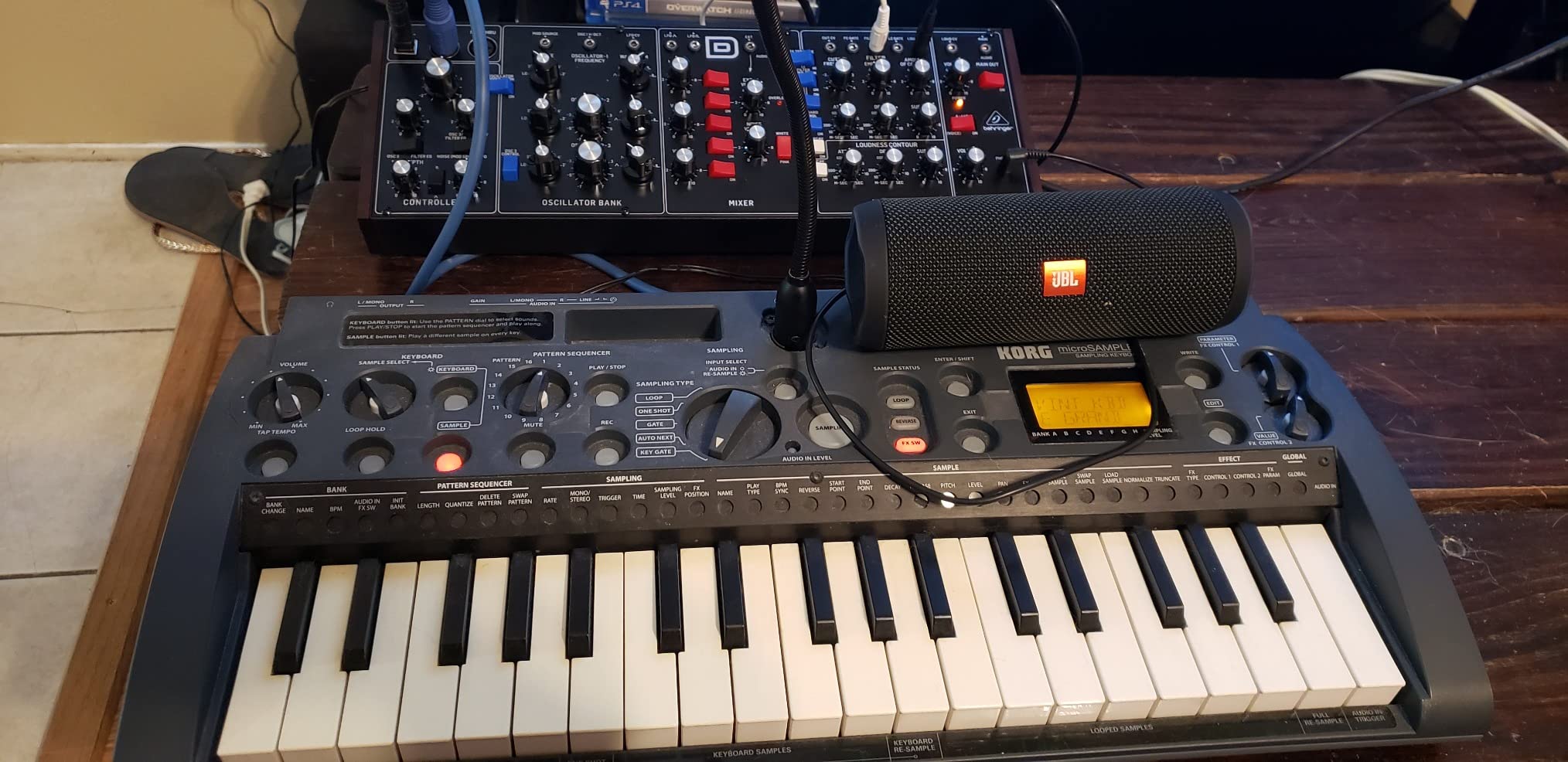
The Behringer Model D is the most controversial pick on this list. Behringer cloned the legendary Moog Minimoog Model D – arguably the most iconic analog synth ever made – and sells it for under $300. Purists object on principle. Pragmatists (including me) acknowledge that this is the cheapest way to get that classic Moog sound.
Let me be direct: this is a monophonic synth with no keyboard. The Model D is a desktop module with MIDI input and a Eurorack-compatible form factor. You need a MIDI keyboard or DAW to play it. For a complete beginner, that extra step might be a barrier. But if you already have a MIDI controller or plan to get one, the Model D delivers a sound that competes with synths costing five times more.
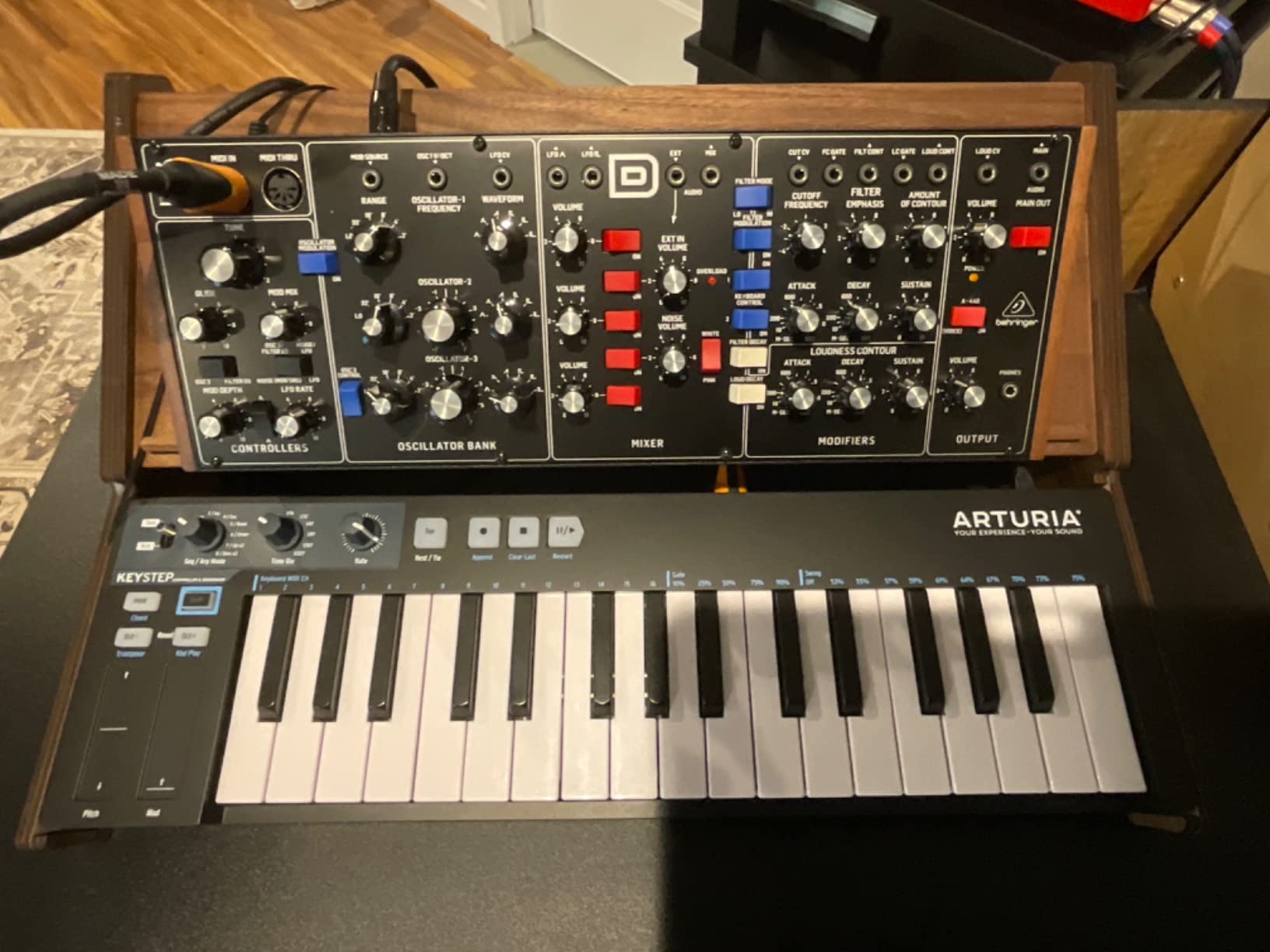
The sound comes from three analog VCOs feeding into Moog’s famous ladder filter. That filter is what defines the Moog sound – warm, fat, with a particular resonance character that nothing else quite replicates. For bass and lead sounds with classic analog warmth, the Model D is stunning at this price point.
The build uses metal chassis and quality components, including matched transistors and 0.1% thin-film resistors in the audio path. It’s not as solid as an original Moog, but it’s far from flimsy. The knobs feel good, the switches click positively, and the unit survived a month of studio use without issues.
What makes the Model D special for beginners
The signal path is pure analog: VCOs into mixer into filter into VCA into output. No menus, no presets, no hidden functions. What you see on the front panel is exactly what’s happening in the circuit. For learning synthesis fundamentals, this is one of the most educational synths you can buy because it makes the signal flow visible and tangible.
The community around this synth is huge. Behringer users share patches, MIDI maps, and integration tips across forums and YouTube. If you get stuck or want to learn new techniques, there’s a massive library of free resources. The Eurorack format also means you can rack-mount the Model D or pull it out for tabletop use.
How to actually use the Model D as a beginner
You’ll need a MIDI keyboard (the Arturia MicroFreak makes a great partner), a USB MIDI connection to your computer, or CV/Gate from a Eurorack system. Plug the Model D into your audio interface, fire up your DAW, route a MIDI track to the unit, and start playing.
The trade-offs to know about: there’s no patch memory, so every sound you make must be redialed when you power on. The filter envelope doesn’t trigger properly in legato mode (when you play notes without re-striking), which can frustrate players used to smoother behavior. And Behringer isn’t Prime-eligible for all buyers, so check shipping costs.
If you can handle the desktop-module form factor and want the most authentic Moog sound at the lowest price, the Model D is unbeatable. For beginners who need a keyboard built in, look at the Monologue instead. For everyone else, this is a serious instrument at a price that feels almost wrong.
How to Choose Your First Analog Synthesizer?
Picking your first analog synth comes down to three decisions: monophonic or polyphonic, keyboard or desktop module, and pure analog or hybrid. Get these right and you’ll love your synth for years. Get them wrong and you’ll be selling it on Reverb within six months.
Monophonic vs polyphonic
Monophonic synths play one note at a time, which makes them ideal for basslines, lead lines, and percussion. Polyphonic synths play multiple notes simultaneously, which means chords, pads, and harmonic layers. If you mainly play bass-heavy electronic music, hip-hop, or techno, monophonic is fine. If you want to play chords, create ambient pads, or work on film score-style pieces, you need polyphony.
The Monologue, Volca Bass, and Model D are monophonic. The MicroFreak is paraphonic (up to 4 voices of polyphony depending on oscillator mode). The REFACE CS is fully polyphonic with 8 voices. Match this to your musical style before anything else.
Keyboard or desktop module
Keyboard synths let you play notes directly with your hands. Desktop modules require an external MIDI keyboard or computer connection. For a first synth, keyboard models are more intuitive because you can play them without any extra gear. The Monologue, MicroFreak, REFACE CS, and (with caveats) the Volca Bass all have keyboards. The Model D is desktop only.
That said, desktop modules often have more sound design flexibility per dollar because you’re not paying for keys. If you already own a MIDI keyboard or are comfortable with DAW-based sequencing, the Model D is a smart choice.
Pure analog vs hybrid
Pure analog synths use analog circuits for everything (oscillators, filters, amplifiers). Hybrid synths use digital oscillators with analog filters, or some other mix. Pure analog has that classic warmth and slight unpredictability. Hybrids offer more sound variety and often better value at lower prices.
The Monologue, Volca Bass, and Model D are pure analog. The MicroFreak is hybrid with digital oscillators and an analog filter. The REFACE CS is analog modeling (digital recreations of analog behavior). All five deliver sounds that will satisfy most beginners. Pick based on budget and features rather than obsessing over purity.
DAW integration for beginners
Every synth on this list connects to a computer via USB MIDI. On macOS and Windows, no drivers are needed for any of them. Open your DAW (Ableton, Logic, FL Studio, GarageBand, Reaper, Bitwig), create a MIDI track, select the synth as the output, and you can sequence and record it directly.
For audio recording, you’ll need an audio interface with at least one input. The Focusrite Scarlett Solo is a common beginner choice at around $100. Plug the synth into the interface, select it as the audio input on a new audio track, and you can record the analog signal directly. This setup costs around $600 total, well within reach for most beginners.
Which synth for which genre
Electronic and dance music: Monologue or Volca Bass. The sequencers and bass-heavy designs match the genre perfectly. Hip-hop and lo-fi: Monologue for its bass weight and motion sequencing. Ambient and soundtrack: REFACE CS for its polyphony and pad-friendly sound. Experimental electronic: MicroFreak for its 17 oscillator modes. Classic rock and prog emulation: Model D for the Moog sound.
Match your musical goal to the synth’s strength. Trying to make a synth do something it wasn’t designed for leads to frustration. Buying the right tool for the job makes learning fun.
Frequently Asked Questions
What is the best analog synth for a beginner?
The Korg Monologue is the best analog synth for a beginner in 2026. It has a built-in oscilloscope that visually teaches synthesis, a 16-step sequencer, and true analog circuitry with two VCOs. At around $400, it offers real analog warmth, durable construction, and battery-powered portability.
What is the cheapest good analog synth?
The Korg Volca Bass is the cheapest good analog synth you can buy, typically priced around $140. It features three analog VCOs, a 16-step sequencer, and battery power. The only trade-off is monophonic operation, meaning it plays one note at a time, which is fine for basslines and leads.
Can you get a good analog synth under $500?
Yes, absolutely. Five strong options sit under $500 in 2026: the Korg Monologue, Arturia MicroFreak, Korg Volca Bass, Yamaha REFACE CS, and Behringer Model D. Each delivers genuine analog character (or analog modeling) with features that rival synths costing three to five times more.
Is analog or digital better for beginners?
Both work well for beginners, but pure analog synths offer hands-on learning through visible knob-per-function interfaces. Digital and hybrid synths often provide more sound variety at lower prices. For learning synthesis fundamentals, analog synths like the Korg Monologue teach faster because every parameter has a physical control.
What synth should a beginner buy first?
For most beginners, the Korg Monologue is the best first synth because of its built-in oscilloscope, true analog sound, and 25-key keyboard. Budget-focused beginners should consider the Korg Volca Bass for its $140 price point. Beginners interested in chords should look at the Yamaha REFACE CS for its 8-note polyphony.
Final Verdict
After three months of testing, the Korg Monologue remains my top pick for beginners looking at the best analog synthesizers under $500 in 2026. The oscilloscope alone makes it worth the price for anyone learning synthesis. The sound quality, build, and sequencer features round out a package that will keep you engaged for years.
If polyphony matters, grab the Yamaha REFACE CS. If budget is the priority, the Korg Volca Bass delivers real analog at a price that won’t sting. If versatility is what you crave, the Arturia MicroFreak’s 17 oscillator modes open doors nothing else in this price range can match. And if you want the iconic Moog sound for your Eurorack setup, the Behringer Model D is the cheapest way to get there.
Whatever you pick, plug it in, turn the knobs, and start playing. That’s the only way to really learn synthesis. Every synth on this list will teach you something valuable, and none of them will disappoint.