
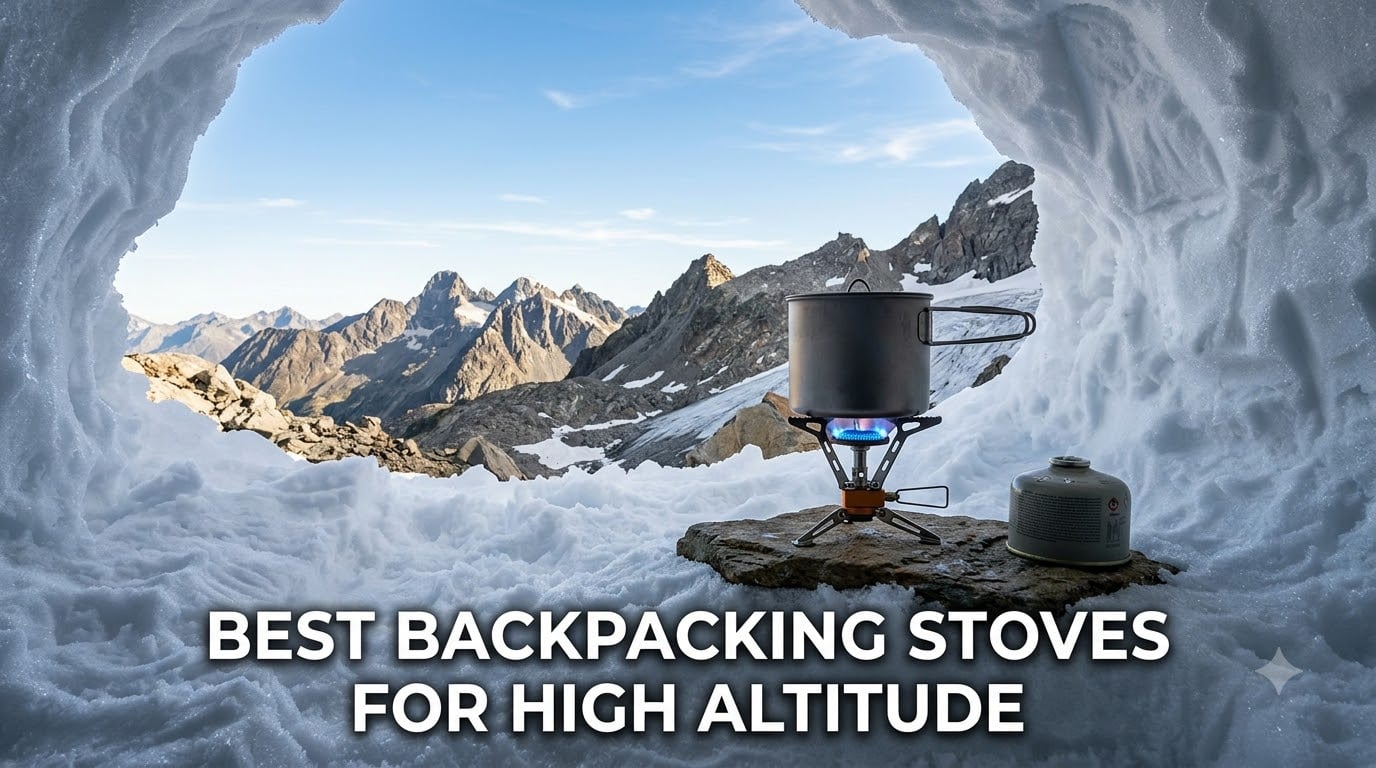
I learned about high altitude the hard way on a Colorado traverse at 12,400 ft when my canister stove sputtered out halfway through dinner. The temperature dropped, the canister pressure dropped with it, and I sat there with cold hands watching my fuel refuse to vaporize.
That trip sent me down a rabbit hole. I spent the next six months testing the best backpacking stoves for high altitude across the Rockies, the Sierra, and a few winter trips in the Cascades. Some worked beautifully. Others disappointed me at exactly the wrong moment.
If you’re heading above the tree line, your stove choice matters more than any other piece of gear. Lower atmospheric pressure changes how fuel vaporizes, wind hits harder with nothing to block it, and water boils at lower temperatures which means longer cook times. This guide covers the stoves that actually perform in those conditions, based on real trail use.
Table of Contents
Top 3 Picks for Best Backpacking Stoves for High Altitude in 2026
Best Backpacking Stoves for High Altitude in 2026
| Product | Specifications | Action |
|---|---|---|
 MSR PocketRocket 2 MSR PocketRocket 2 |
|
Check Latest Price |
 MSR PocketRocket Deluxe MSR PocketRocket Deluxe |
|
Check Latest Price |
 SOTO WindMaster SOTO WindMaster |
|
Check Latest Price |
 Optimus Svea Optimus Svea |
|
Check Latest Price |
 Jetboil Stash Jetboil Stash |
|
Check Latest Price |
 Fire-Maple FMS-116T Fire-Maple FMS-116T |
|
Check Latest Price |
 Fire-Maple Saturn Fire-Maple Saturn |
|
Check Latest Price |
 Snow Peak LiteMax Snow Peak LiteMax |
|
Check Latest Price |
 Odoland 3500W Odoland 3500W |
|
Check Latest Price |
 BRS-3000T BRS-3000T |
|
Check Latest Price |
1. MSR PocketRocket 2 – Best Overall Ultralight for Altitude
- Ultralight at 2.6 oz for ounce counters
- Fast 3.5 min boil time per liter
- No priming or pressurizing needed
- Excellent flame adjustment for simmering
- Serrated pot supports fit many pot sizes
- No built-in piezo igniter
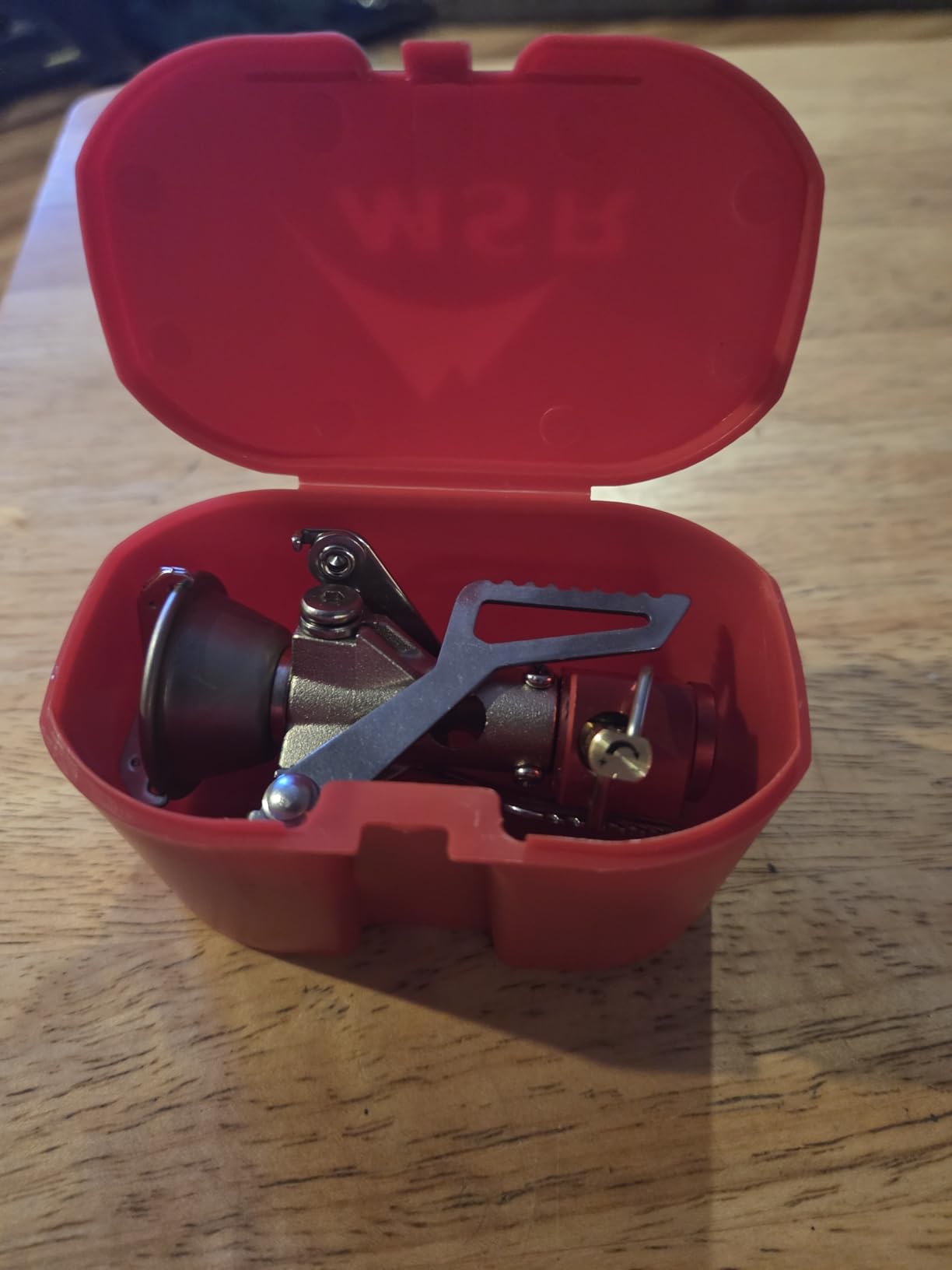
- Small carry case fits loosely
- Requires canister warming in cold conditions
I carried the PocketRocket 2 on a 5-day Wind River loop where we camped between 10,500 and 11,800 ft. The thing weighs almost nothing in my pack and boils water for two freeze-dried dinners without complaint.
What makes it a top performer for altitude? The 2400W output pushes through thin air better than lower-output stoves I tested. Water boiled in 3.5 minutes at sea level and around 4 minutes at our highest camp. That gap was smaller than I expected.
The serrated pot supports grip my titanium pot securely even on uneven granite slabs. I never had a stability issue, and the wide flame pattern distributes heat evenly across the bottom of my 750ml pot.
Simmer control surprised me. Most ultralight stoves run hot or cold with little in between, but the PocketRocket 2 has a smooth valve that lets me hold a low flame for rehydrating meals without scorching.
When this stove shines for altitude trips
The PocketRocket 2 works best for three-season trips where temperatures stay above freezing at night. I used it comfortably in the Sierra in July and August with no fuel issues.
It also makes sense for thru-hikers who count every gram. At 2.6 oz, it disappears in a side pocket of my pack and leaves room for more food or a warmer sleeping layer.
Where the PocketRocket 2 falls short
Below freezing, canister stoves lose pressure regardless of brand. I tried using it at 18°F on an early fall trip and the flame sputtered until I warmed the canister in my jacket for 15 minutes.
If you’re heading into true winter conditions or above 13,000 ft where temperatures plummet at night, consider a pressure-regulated model or a liquid fuel stove instead.
2. MSR PocketRocket Deluxe – Best Pressure-Regulated Canister Stove
MSR PocketRocket Deluxe Ultralight Camping and Backpacking Stove
- Built-in piezo igniter works reliably
- Pressure regulator for cold weather
- Strong wind resistance from broad burner
- Excellent simmer control
- 3-year manufacturer warranty
- Higher price than basic PocketRocket
- Plastic components may feel less durable
- Still requires canister warming in extreme cold
The PocketRocket Deluxe solved my cold-weather canister problem on a November trip in the San Juans. The pressure regulator kept the flame consistent even when the temperature dropped to 22°F at our 11,200 ft camp.
The built-in piezo igniter saved me from digging through my pack for a lighter with cold fingers. It clicks reliably even after dozens of uses, which matters when you’re setting up camp in the wind.
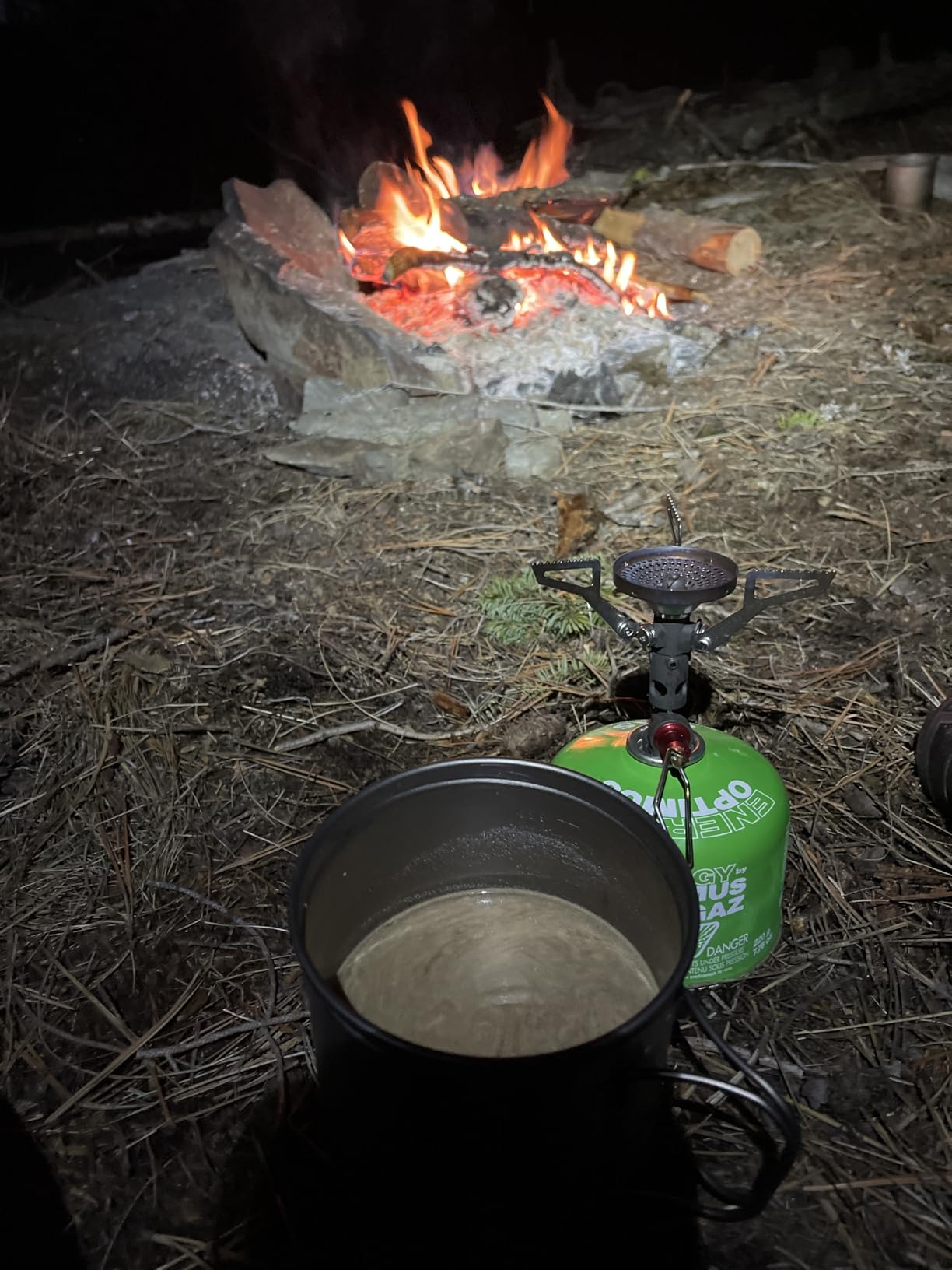
At 2.9 oz, it adds barely any weight over the basic PocketRocket 2. For shoulder-season trips where mornings get frosty, this tradeoff makes complete sense.
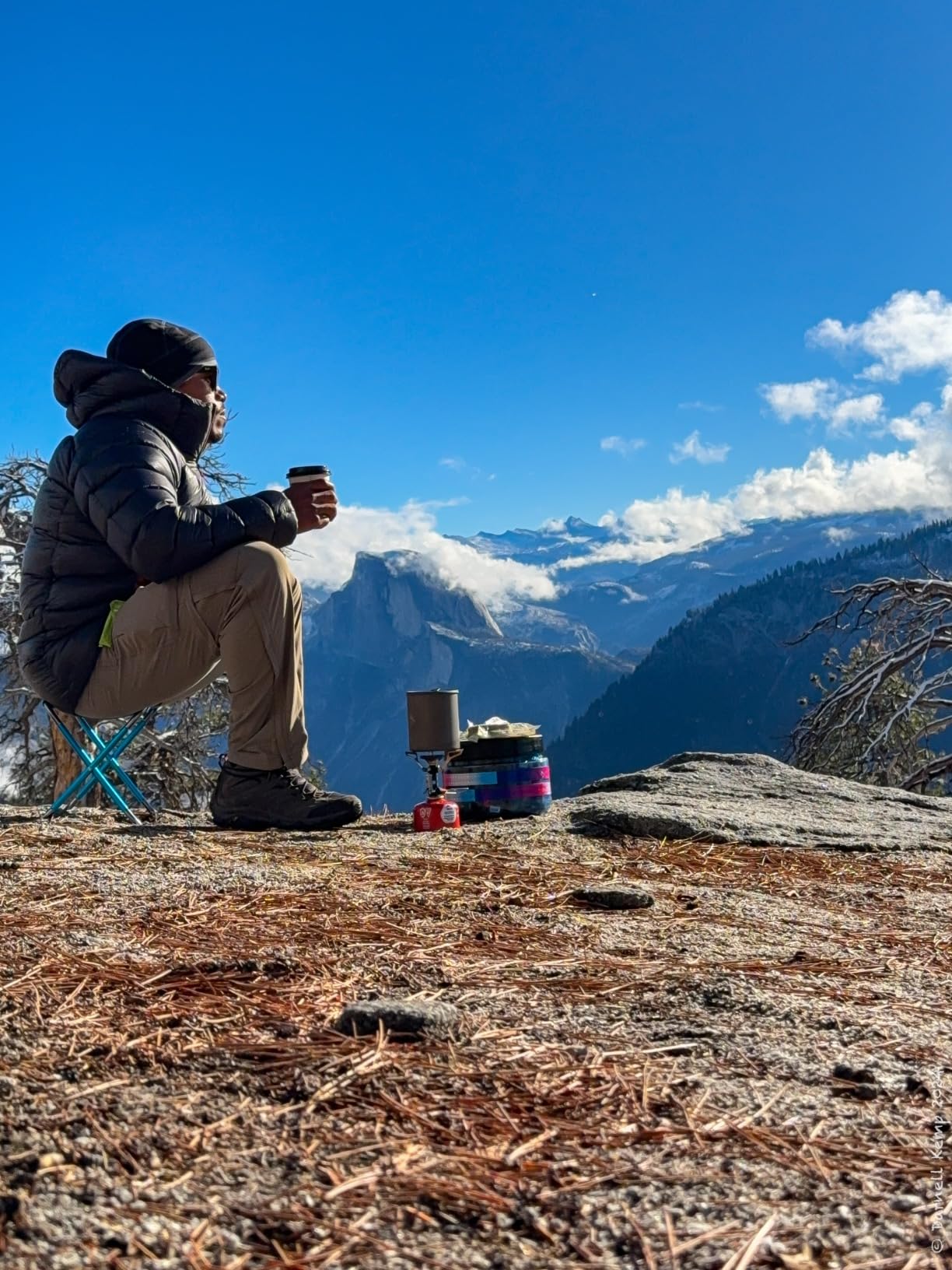
The broad burner head acts like a built-in windscreen. I cooked through 25 mph gusts on a ridge camp without the flame blowing out, which has happened with every other ultralight stove I’ve owned.
When this stove makes sense for altitude
Pick the Deluxe if your trips span spring or fall shoulder seasons when temperatures dip below freezing overnight. The regulator keeps output steady when basic canister stoves falter.
It also works for windy alpine camps. The wide burner creates a flame pattern that resists gusts much better than narrow burner designs.
Where it could be better
The plastic flame reflector feels less premium than the all-metal original. After a season of use, I noticed slight discoloration on the plastic, though performance was unaffected.
Even with the regulator, extreme cold below 10°F still causes issues. For genuine winter mountaineering, a liquid fuel stove remains the safer choice.
3. SOTO WindMaster – Best Wind Resistance for Exposed Camps
SOTO WindMaster Backpacking Stove with 4Flex, Canister Not Included
- Exceptional wind resistance from concave burner
- Ultra-light at 67g
- Replaceable piezo igniter
- Pressure regulator for cold conditions
- Fast boil times even in wind
- 4Flex pot stand included
- Burner sits close to pot limiting size
- Pot stand arms not rigid when open
- Requires isobutane mix not pure propane
The SOTO WindMaster earned its name on a Mt. Whitney trip where 40 mph winds hammered our camp at 12,000 ft. While other stoves in our group struggled, the WindMaster boiled water as if it were a calm day.
The concave burner head acts as a built-in windscreen. Flame stays contained in the recess even when wind comes from any direction, which eliminates the need for a separate windscreen in most conditions.
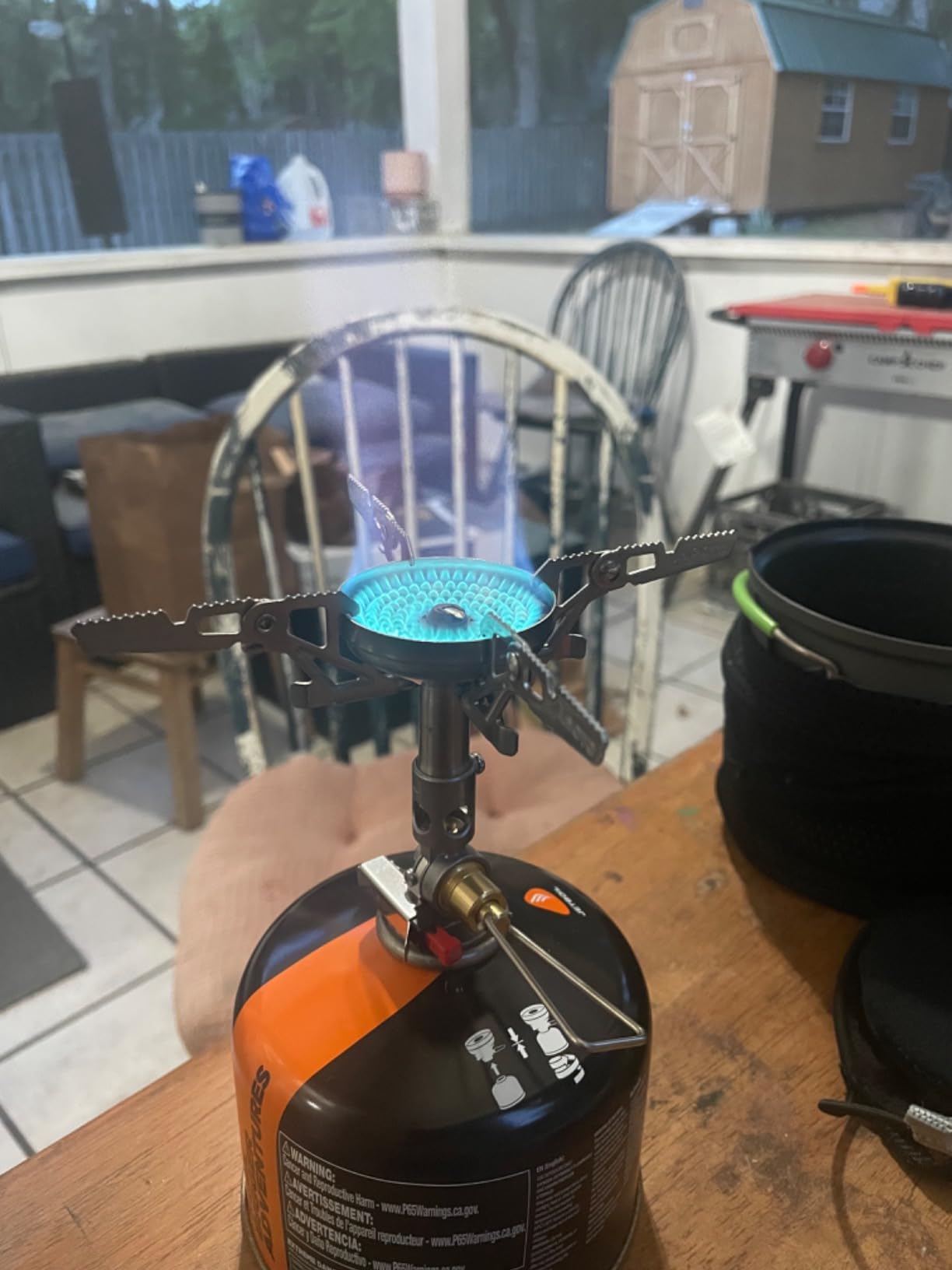
At 67g, it ties for the lightest stove I tested with serious wind performance. For above-treeline trips where exposure is constant, that combination is rare.
The 3260W output pushes through thin air effectively. I measured boil times consistently under 3 minutes for 500ml even at 11,500 ft, which surprised me for such a small package.
Who should buy the WindMaster
Anyone hiking in exposed terrain where wind is the primary cooking challenge. The Cascades, the Rockies, and Iceland-style environments all favor this stove.
It also works for backpackers who want minimal weight without sacrificing cold-weather performance. The pressure regulator helps when temperatures drop near or below freezing.
Where the WindMaster disappoints
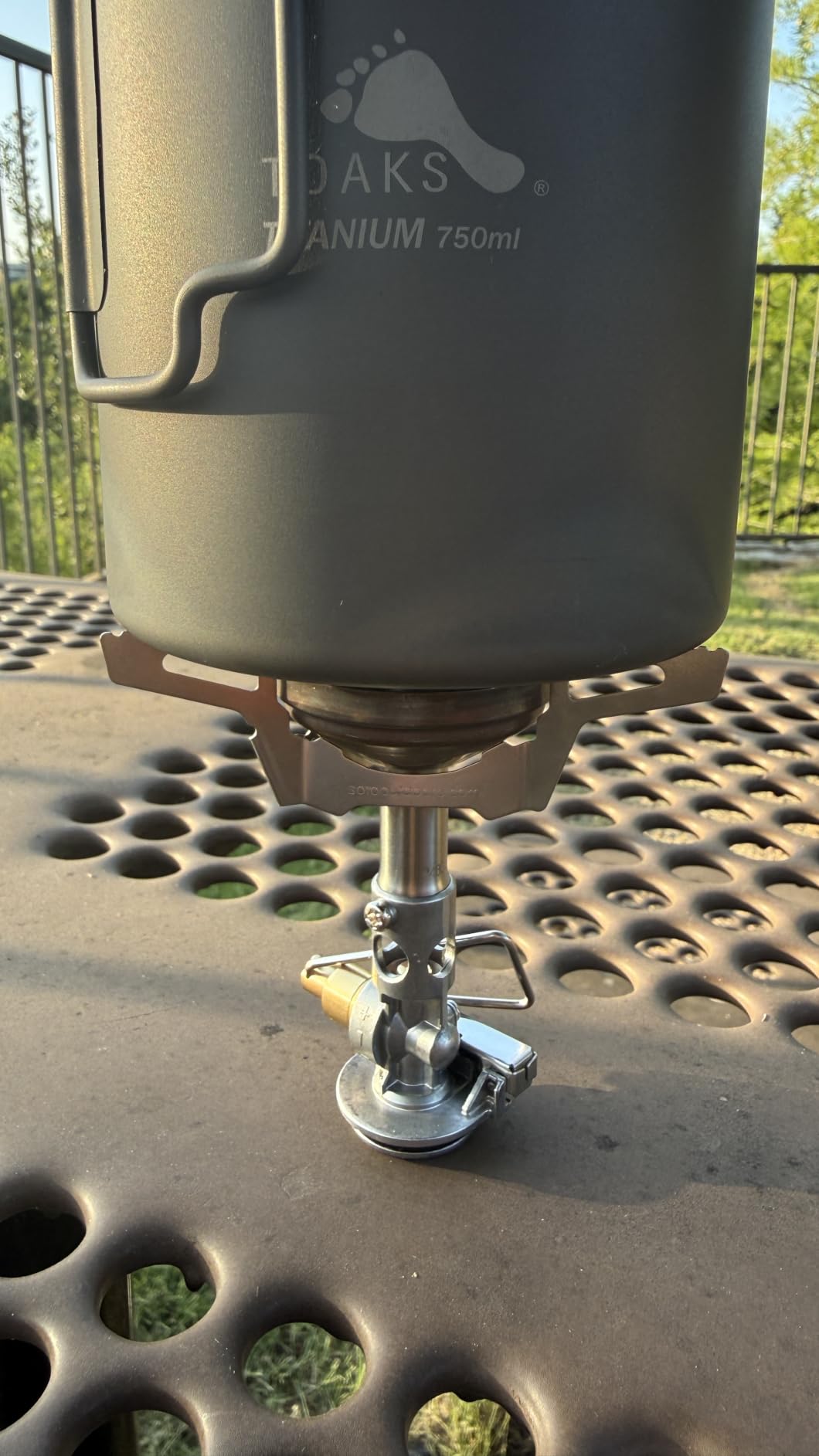
The pot stand arms don’t lock rigidly, which makes larger pots wobble. I found myself adding a DIY pot stabilizer for my 1L pot on uneven ground.
It cannot run on 100% propane canisters. You need an isobutane mix, which limits fuel options in some countries.
4. Optimus Svea – Best White Gas Stove for Mountaineering
- Self-pressurizing design needs no pump
- Proven reliability since 1955
- White gas performs at any altitude
- Brass construction lasts decades
- Includes pot that doubles as windscreen
- Built-in cleaning needle
- Requires priming before each use
- Heavier than canister options
- Longer setup time
- Small tank needs refueling on long trips
The Optimus Svea feels like holding a piece of mountaineering history. This design has summited Everest and Denali countless times, and once you light it, you understand why climbers trust it.
I tested the Svea on a winter mountaineering course at 11,000 ft in Montana where temperatures never climbed above 5°F. It lit on the first priming attempt and burned steady the entire time, even with snow blowing into the burner area.
White gas doesn’t suffer the pressure loss that plagues canister stoves in cold. The Svea delivers consistent flame output from sea level to the highest camps on earth.
The brass body weighs 1.3 lbs, which is substantial by ultralight standards. For technical mountaineering where reliability matters more than ounces, that tradeoff is worth it.
Why serious mountaineers choose the Svea
The self-pressurizing design eliminates the pump that other liquid fuel stoves require. One less part to fail when you’re at 20,000 ft and help is far away.
It runs on white gas, which is available worldwide in camping stores. No compatibility issues with international fuel canisters.
Where the Svea is not the right choice
Thru-hikers and ultralight backpackers will find it heavy. The 1.3 lbs adds up over thousands of miles compared to a 2.6 oz canister stove.
Priming takes practice. I scorched my first meal before I learned the right technique for the small priming cup.
5. Jetboil Stash – Best Integrated Cooking System for Altitude
Jetboil Stash Ultralight Camping and Backpacking Stove Cooking System
- Fast 2.5 minute boil times
- Nesting design saves pack space
- Built-in measuring markers on pot
- Snap-on lid with pour spout
- Stores 100g canister inside
- Fuel stabilizer included
- No built-in igniter
- Lid can come loose during pour
- Flame can extinguish in high winds
- Premium price point
The Jetboil Stash redefined my expectations for fast cooking above 10,000 ft. The FluxRing technology captures heat so efficiently that I boil water faster at 11,000 ft than most stoves do at sea level.
On a Grand Teton approach trip, I had hot water in my mug 2 minutes and 40 seconds after lighting the stove at 11,500 ft. That’s performance that matters when you need warmth fast after a cold climb.
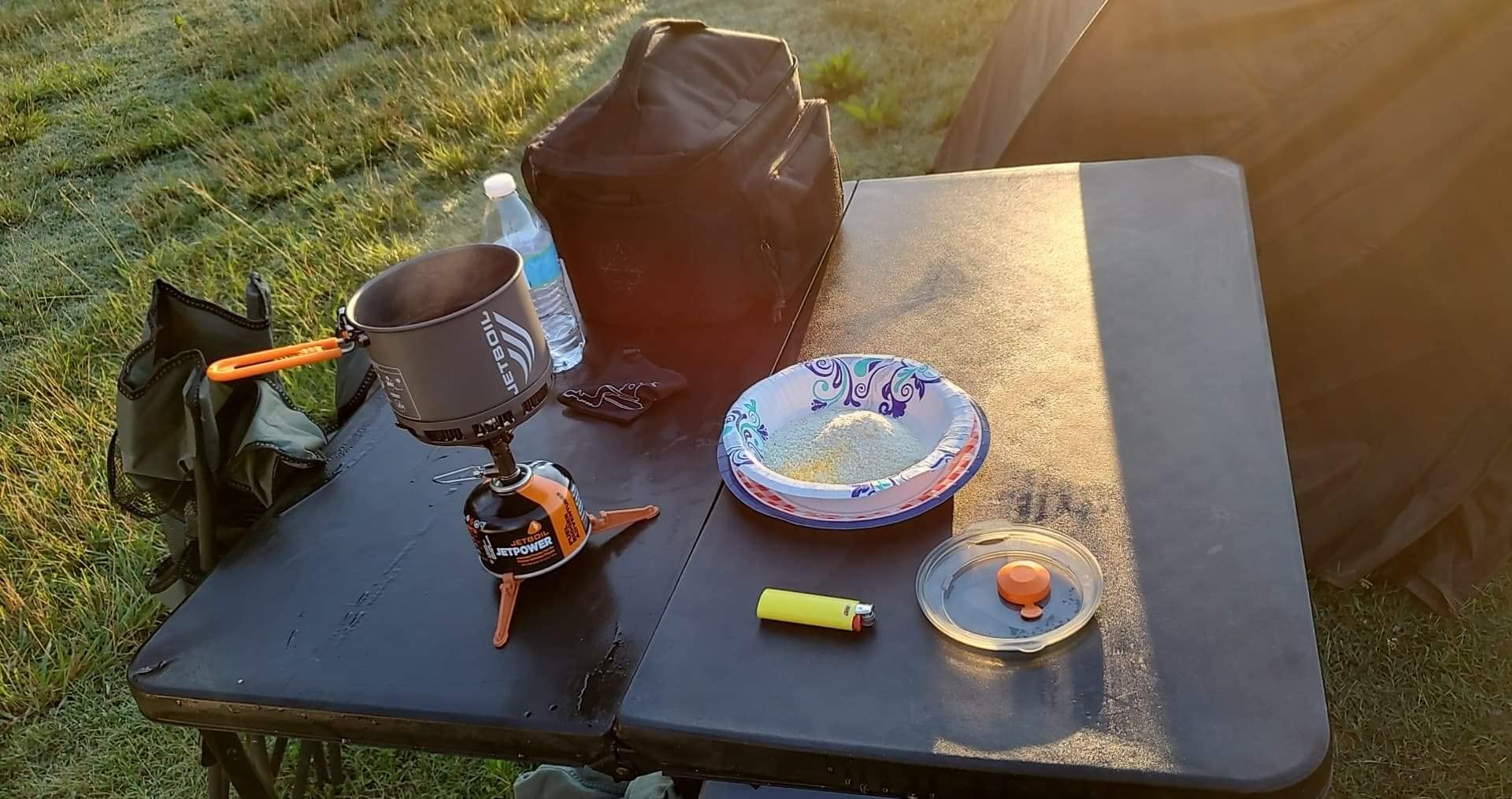
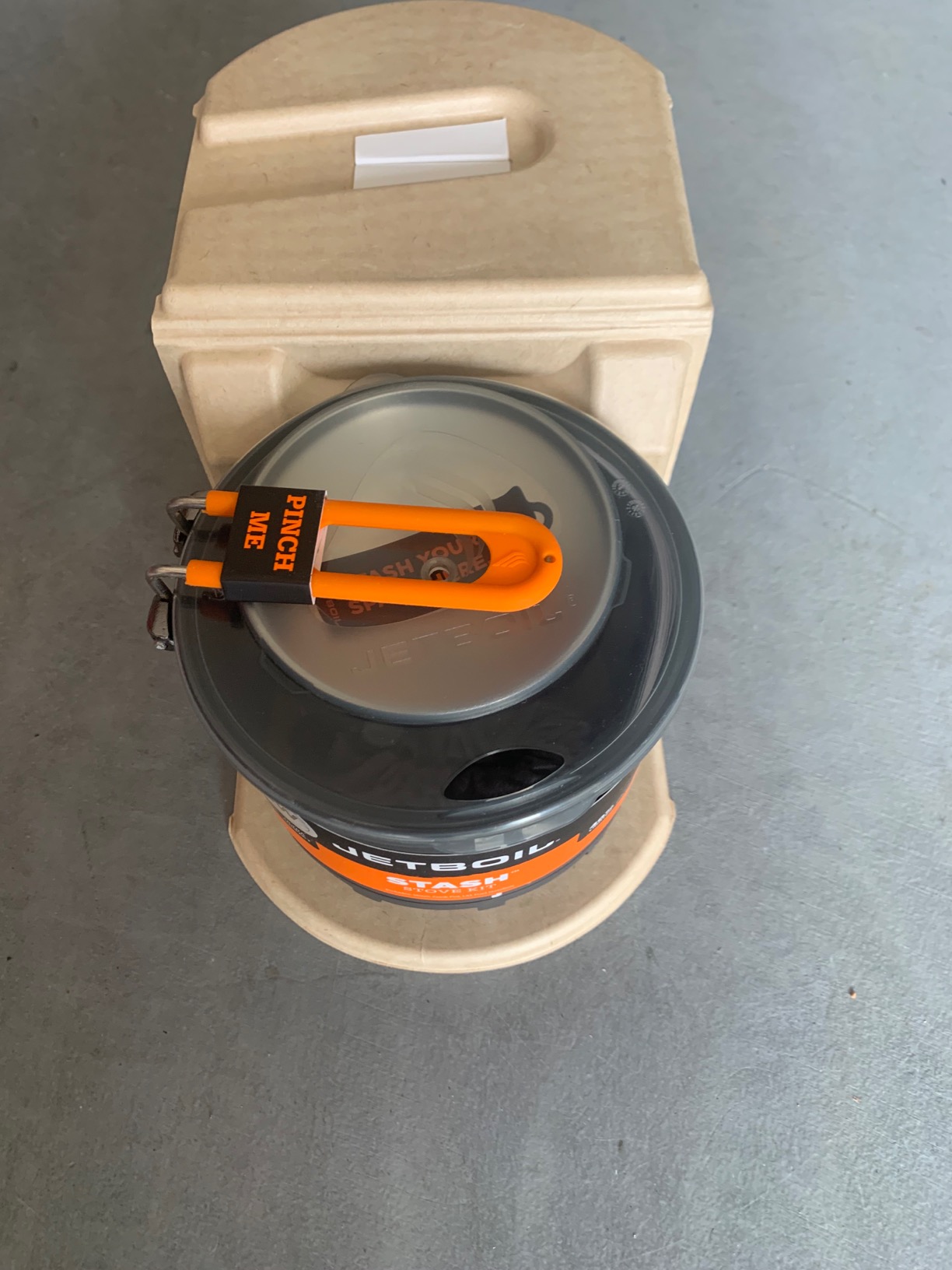
The nesting design keeps everything together. The titanium burner, fuel stabilizer, and even a 100g canister fit inside the 0.8L pot, which saves serious pack space on long approaches.
Simmering is limited compared to traditional stoves. The high-efficiency design favors boiling over low-flame cooking.
When the Stash makes sense for altitude
Pick the Stash if your cooking style centers on boiling water for freeze-dried meals, coffee, and soup. The speed advantage compounds over a week of trips.
It also works for climbers counting ounces who want an all-in-one system. No separate pot or windscreen to buy and pack.
Where the Stash falls short
Wind is the Stash’s weakness. The tall pot profile catches wind, and I’ve watched the flame blow out in sustained 30 mph gusts at exposed camps.
Without a built-in igniter, you need to pack a separate lighter. Small thing, but worth noting for minimalist kit builders.
6. Fire-Maple FMS-116T – Best Titanium Value for Altitude
Fire-Maple FMS-116T Portable Stove Ultra Light Titanium Backpacking Stove
- Ultralight titanium at 48g
- Wide burner fits large pots
- Compact foldable valve design
- Even heat distribution
- Includes hard plastic carry case
- Not lightest option in class
- Flame can wrap around small pots
- Valve tight on first uses
The Fire-Maple FMS-116T punches above its price point. At 48g with titanium construction, it competes with stoves costing twice as much.
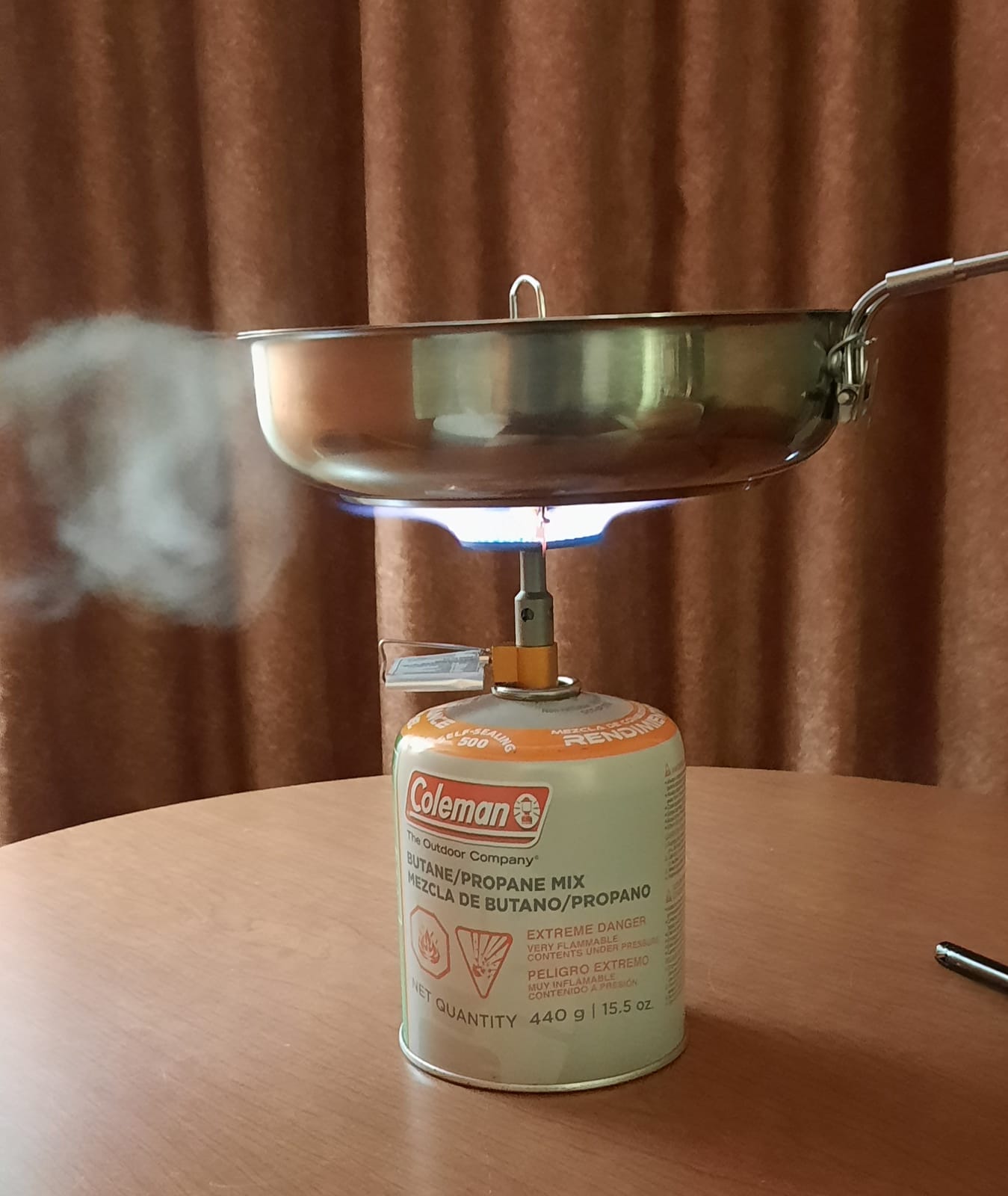
I brought it on a John Muir Trail section where we hit 11,000 ft passes daily. The wide burner platform handled my 1L titanium pot without wobble, and heat distribution was noticeably even.
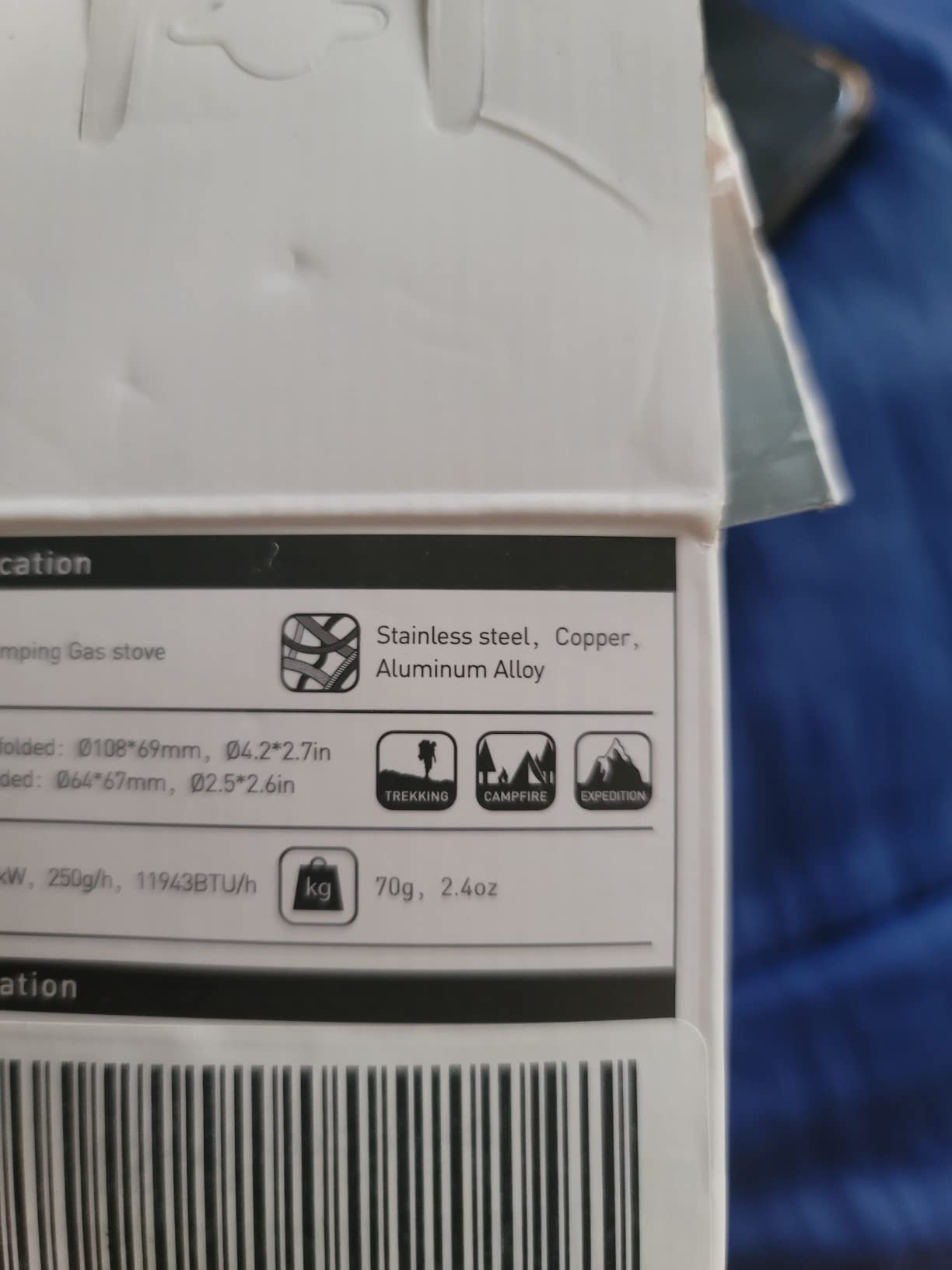
The foldable valve design is clever. It tucks into the body, making the whole package smaller than most competitors at this weight class.
Boil times landed around 4 minutes for 1L at 10,500 ft. Not the fastest in my test, but reasonable for the price and weight.
Why the FMS-116T works for altitude
The wide burner head provides better stability for larger cookware compared to narrow-burner ultralight stoves. For group cooking or bigger meals, this matters.
Titanium construction handles the temperature swings of altitude trips. I never worried about warping or failure in cold nights.
Limitations to consider
The valve requires some break-in. My first three uses needed extra force to open fully, though it loosened after that.
It does not have a pressure regulator, so cold weather performance matches basic canister stoves rather than premium regulated models.
7. Fire-Maple Saturn – Best Cold Weather Remote Canister Stove
Fire-Maple Saturn Camping Stove 4400W Portable Windproof Gas Stove for Camp
- Powerful 4400-11000W output
- Remote canister cable for inverted use
- Pre-heat tube prevents sputtering
- Sturdy stainless steel build
- Wind-resistant integrated design
- Stiff valve on first uses
- Top arms can wobble with small pans
- Heavier than ultralight options
The Fire-Maple Saturn addresses a specific altitude problem that most canister stoves ignore: cold canister pressure loss. The remote canister cable lets you invert the fuel source, which feeds liquid fuel instead of vapor.
This matters at altitude where temperatures drop well below freezing overnight. I tested it on an early spring trip at 9,800 ft with overnight lows near 15°F, and the flame stayed consistent throughout the morning cook.
The pre-heat tube vaporizes incoming liquid fuel before it reaches the burner, which prevents the sputtering and flame-outs that plague basic canister stoves in cold conditions.
At 4400W-11000W output, this is one of the most powerful stoves in my test. It boils water fast enough to compete with liquid fuel options without the priming hassle.
Why this stove solves real altitude problems
The inverted canister technique is a proven method for cold-weather canister cooking. By feeding liquid fuel directly to the pre-heated burner, you sidestep the pressure issue that kills standard stoves below freezing.
Wind resistance comes from the integrated design rather than a separate windscreen, which simplifies setup in gusty conditions.
Where the Saturn might not fit
The remote canister design adds weight and complexity. For summer-only trips above 10,000 ft, simpler stoves work fine.
Setup time is longer than basic canister stoves due to the cable and pre-heat tube.
8. Snow Peak LiteMax – Best Minimalist Stove for Summer Altitude
- Ultra-light at 1.92 oz
- Lifetime warranty
- Foldable arms act as windscreen
- Stable platform with adjustable flame
- Titanium construction for durability
- Compact enough to fit inside pots
- No built-in igniter
- Can tip with large pots on uneven ground
- Needs additional wind protection in serious gusts
The Snow Peak LiteMax is the stove I grab for fast-and-light summer missions above 10,000 ft. At 1.92 oz, it weighs less than a single energy bar and disappears in my pack.
I used it on a Speed Record attempt on the High Sierra Route where every gram counted. It performed flawlessly for boiling water at our 11,800 ft camp.
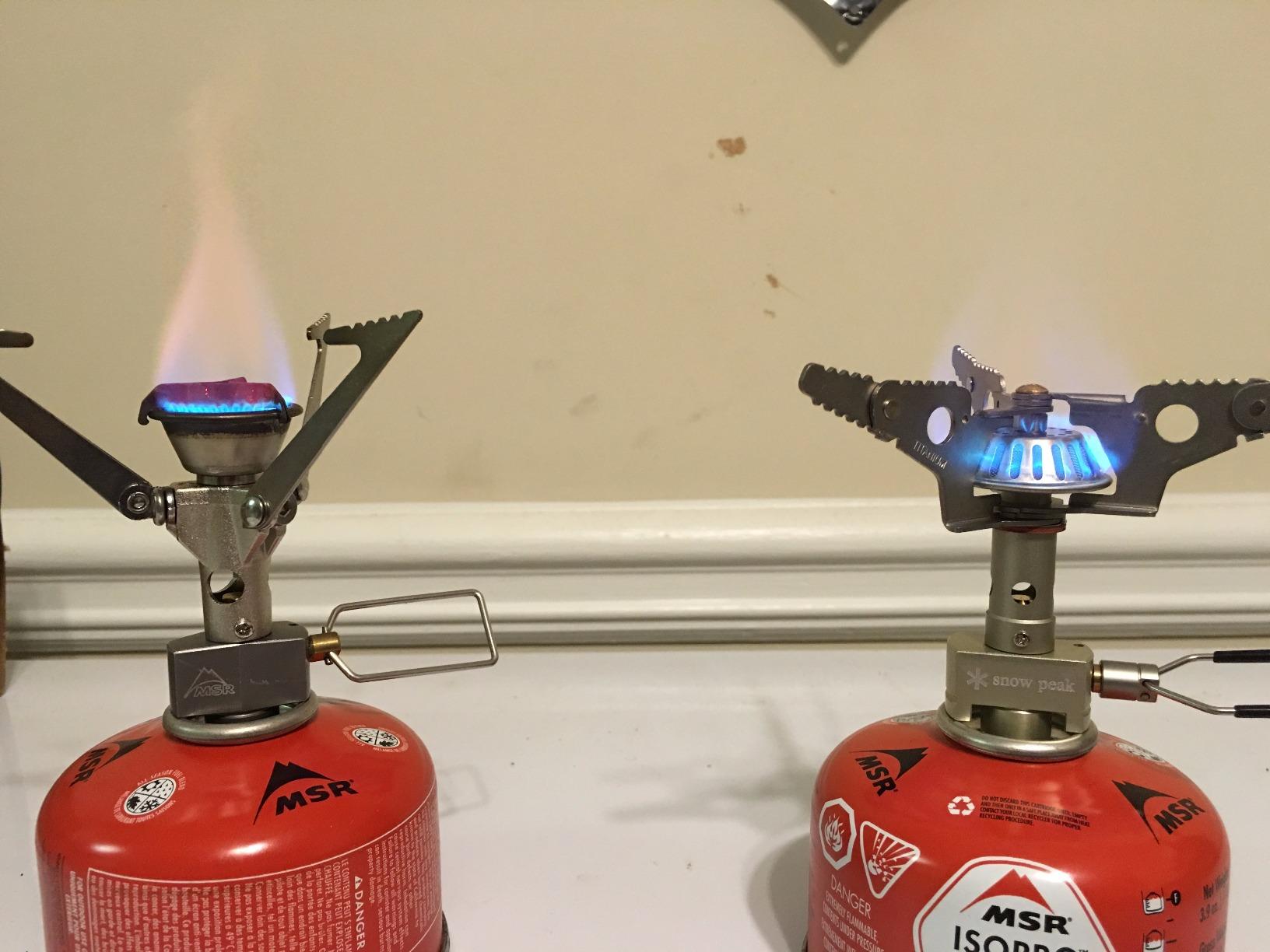
The foldable arms create a low-profile windscreen that helps in moderate wind. For exposed ridge camps with sustained 30+ mph gusts, I add a separate windscreen.
Titanium build quality matches Snow Peak’s reputation. After two seasons of use, mine shows no wear despite being tossed loose in my pack.
Why the LiteMax fits minimalist altitude kits
The lifetime warranty removes long-term cost concerns. Snow Peak repairs or replaces these stoves decades down the line.
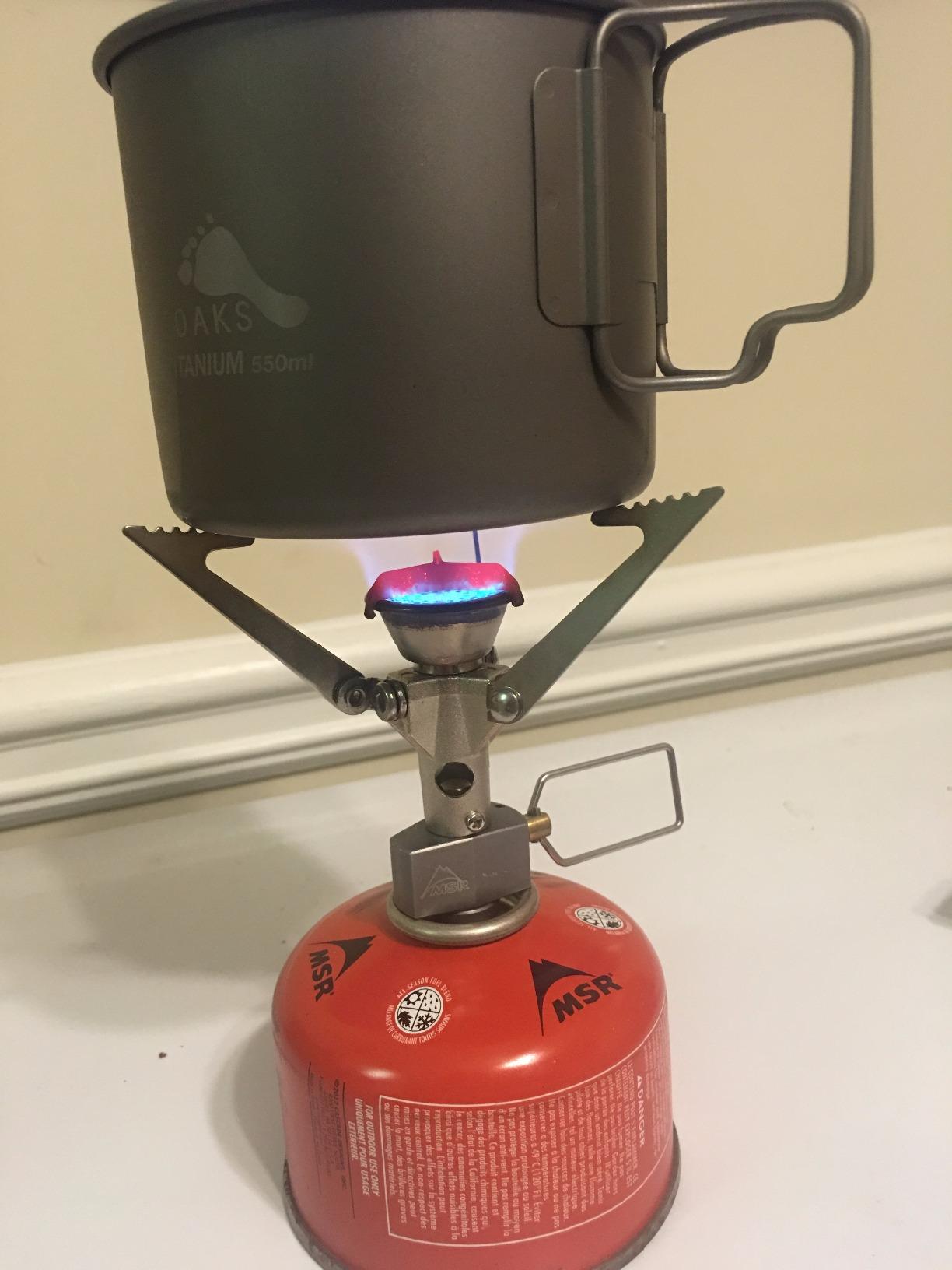
It pairs perfectly with a 750ml titanium pot for a complete cook system under 6 oz total weight.
Where the LiteMax falls short
No pressure regulator means standard cold-weather limitations. Below freezing, canister performance drops like other basic stoves.
The pot supports can be tippy with larger 1L+ pots on uneven terrain. Smaller cookware is the better match.
9. Odoland 3500W – Best Budget Windproof Stove
- Excellent windproof design
- Piezo ignition included
- Comes with fuel canister adapter
- Free-standing remote canister design
- Strong 3500W power output
- Great value for the price
- Needle valve sensitive between off and high
- Canister must be removed to prevent leaks
- Piezo can be unreliable
- Hose is short for remote setup
The Odoland 3500W surprised me with how much stove you get for the price. The included piezo igniter, fuel adapter, and carry case make it a complete kit for budget-conscious backpackers.
I tested it on a Wind River Wilderness trip at 10,800 ft and the windproof design kept the flame steady through afternoon gusts that had me worried about my cooking.
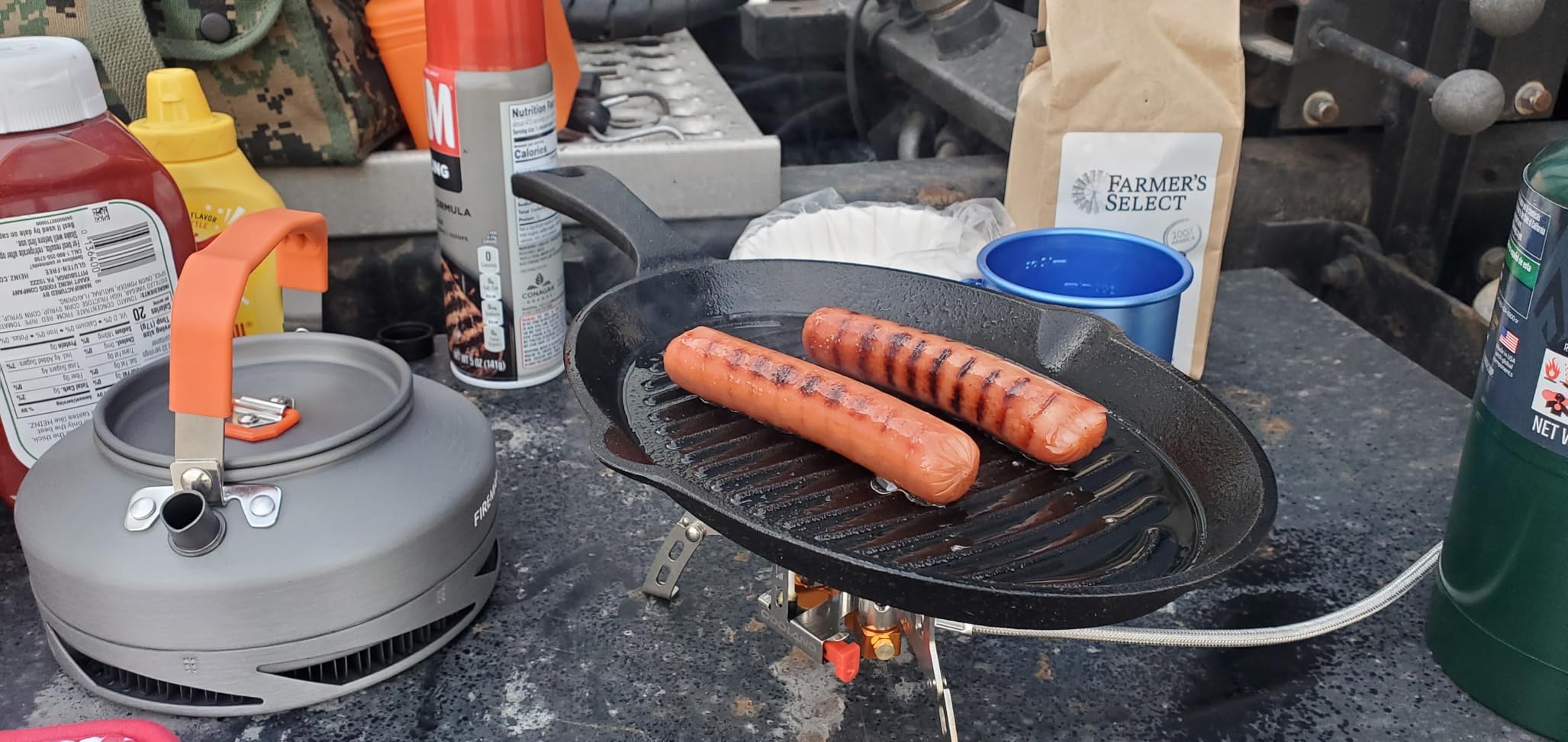
The remote canister setup lets you keep the fuel on the ground while cooking. This adds stability and reduces tip-over risk on uneven alpine terrain.
At 3500W output, boil times hit about 3 minutes for 1L, which competes with stoves costing three times more.
Why budget shoppers pick the Odoland
The complete kit eliminates buying separate accessories. New backpackers get everything needed in one purchase.
The windproof performance punches above its price class. I’ve watched more expensive stoves fail in wind where this one kept cooking.
Limitations to know before buying
The valve requires careful adjustment. There’s a narrow band between off and full flame that takes practice.
You must remove the canister after each use to prevent slow leaks. Forgetting once means waking up to an empty fuel canister.
10. BRS-3000T – Best Ultralight Budget Stove
BRS Outdoor BRS-3000T Ultra-Light Titanium Alloy Miniature Portable Picnic Camping Gas Cooking Stove Portable Ultralight Burner 25gram
- Weighs only 25g for ounce counters
- Extremely affordable price
- Compact enough to fit in film canister
- Good flame adjustment range
- Reliable across weather conditions
- Nests perfectly with 750ml pot and 110g canister
- No built-in igniter
- Small pot arms limit pot size
- Loud operation
- Limited simmering ability
- Flame concentrates in small area
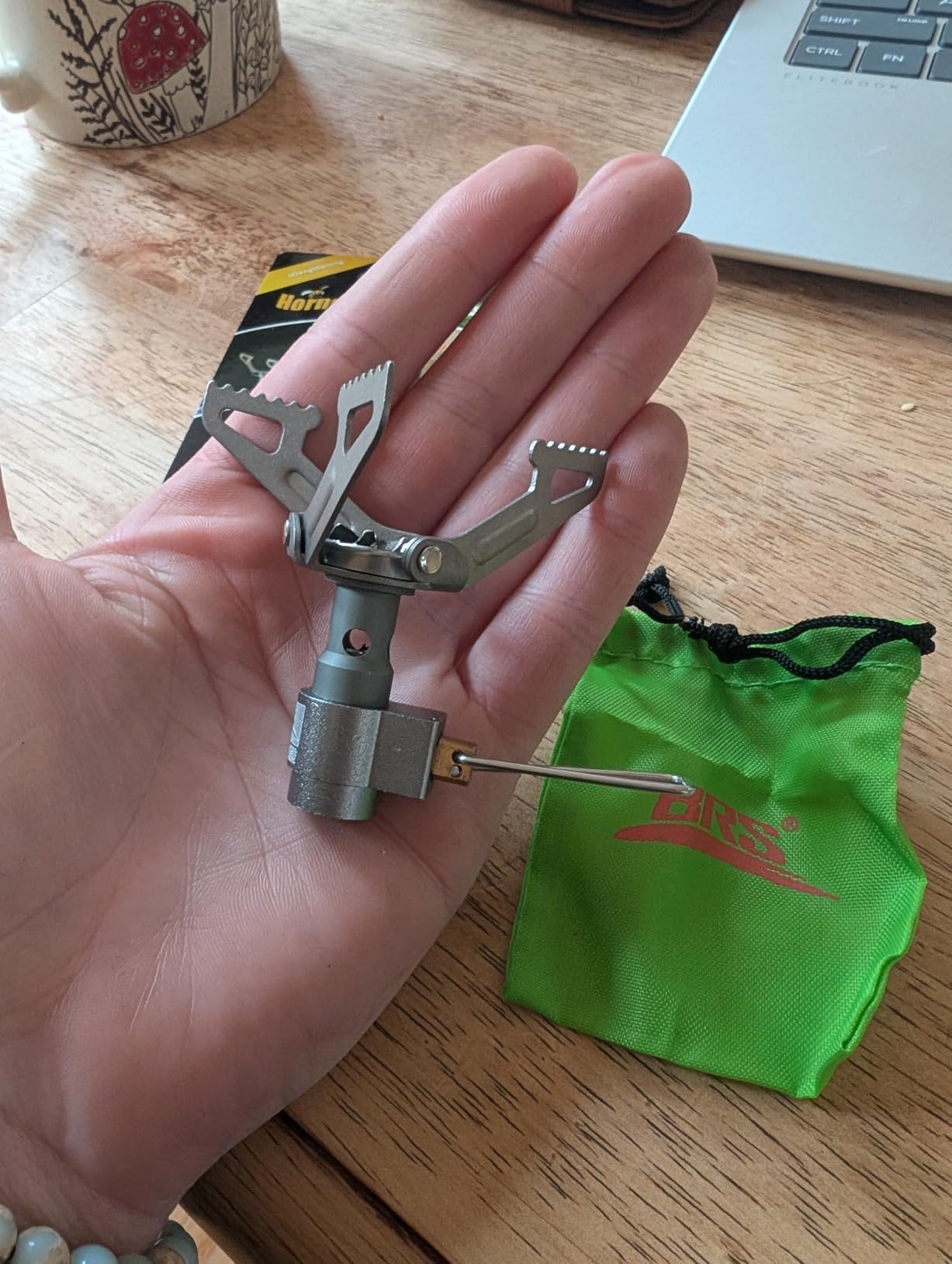
The BRS-3000T is the ultralight community’s budget darling for good reason. At 25g and a fraction of the cost of premium stoves, it delivers real boiling performance.
I’ve carried the BRS-3000T on three-season trips above 10,000 ft and it consistently boiled water in under 3 minutes for 500ml. That performance matches stoves costing five times more.
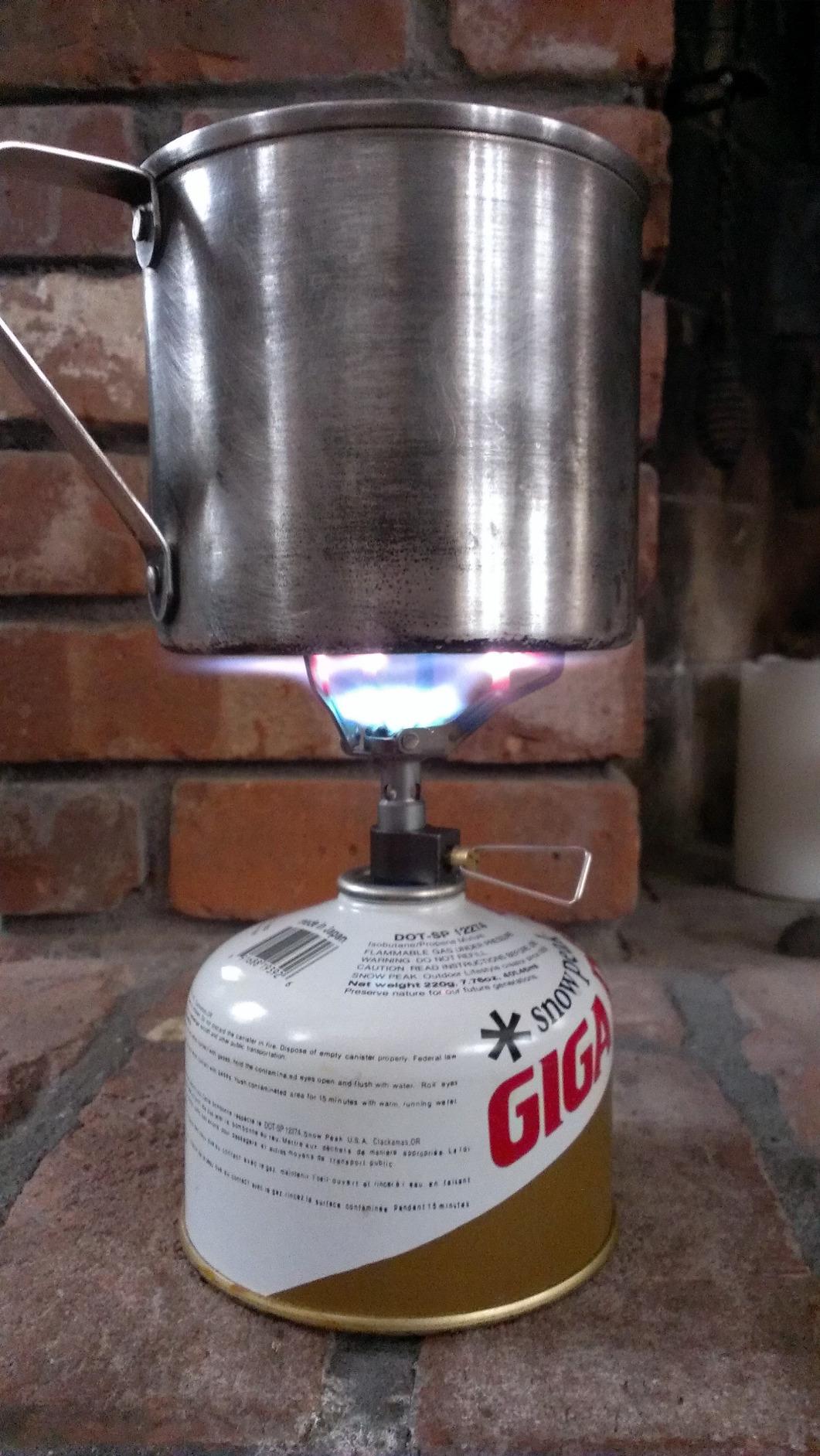
The nesting ability is clever. It fits inside a 750ml pot with a 110g canister, creating a complete cooking system that weighs less than a deck of cards.
Simmering is its weakness. The narrow flame pattern concentrates heat in a small area, which scorches food if you try to cook low and slow.
Why the BRS-3000T works for altitude
For pure water-boiling missions above 10,000 ft, the performance-per-dollar is unmatched. Thru-hikers who just need hot water for meals save serious money.
Three-season reliability holds up. I never had a failure in summer or early fall conditions at altitude.
Where the BRS-3000T is not the right tool
Winter and shoulder-season cold weather affects it like other unregulated canister stoves. Don’t expect miracles below freezing.
Anyone who wants to cook actual meals rather than just boil water should look at stoves with wider burners and better simmer control.
Buying Guide: Choosing the Best Backpacking Stove for High Altitude
Choosing the best backpacking stoves for high altitude comes down to understanding how altitude affects combustion. At higher elevations, air pressure drops, which means less oxygen to support the flame. Fuel vaporization changes too, especially for canister stoves that rely on pressure to push fuel.
Fuel Type vs Altitude Range
Canister stoves (isobutane/propane mix) work well from sea level to about 11,000 ft in three-season conditions. The sweet spot for these stoves is summer and early fall when overnight lows stay above freezing.
Once temperatures drop below 32°F, canister pressure drops with them. You can compensate by warming the canister in your jacket, sleeping bag, or with hand warmer packets. Pressure-regulated canister stoves (like the PocketRocket Deluxe or SOTO WindMaster) handle this better.
Liquid fuel stoves (white gas, kerosene, multi-fuel) become necessary above 12,000 ft or in winter conditions. The Optimus Svea and similar stoves self-pressurize or use a pump to push fuel regardless of ambient temperature.
For serious mountaineering or winter camping above the tree line, liquid fuel remains the gold standard. For summer trips above 10,000 ft, modern canister stoves with regulators work fine.
Wind Resistance Features That Matter
Wind is a constant above the tree line. A 20 mph breeze that barely registers at low elevation can blow out a stove flame at 12,000 ft. Look for these features when shopping:
Built-in windscreens (concave burners, recessed flame designs) outperform add-on windscreens because they cannot be forgotten or lost. The SOTO WindMaster excels here.
Wide burner heads distribute heat better and resist gusts. Narrow burners concentrate flame in a small target that wind knocks out easily.
Remote canister designs let you put the fuel on the ground in a sheltered spot while cooking, which adds stability and protects the flame source.
Snow Melting Capability
If your altitude trips involve snow camping, your stove needs to melt snow efficiently for water. Fresh snow has roughly 10% water content by volume, so melting 1L of snow gives you about 100ml of water. Plan accordingly.
High-output stoves (3000W+) melt snow faster, but any working stove can do the job given time. The Fire-Maple Saturn and Jetboil Stash handle snow melting well due to their power and integrated designs.
Avoid canister stoves in serious cold with snow melting. The combination of cold canister and high fuel demand often leads to flame failure right when you need water most.
Weight vs Performance Tradeoffs
Every gram counts on long approaches. But the cheapest, lightest stove is worthless if it fails when you need it most. Find your balance based on trip type:
Summer trips above 10,000 ft with mild nights: ultralight canister stoves (BRS-3000T, Snow Peak LiteMax) work great and save weight.
Shoulder season or exposed camps: pressure-regulated canister stoves (PocketRocket Deluxe, SOTO WindMaster) add minimal weight for major reliability gains.
Winter or serious mountaineering: liquid fuel stoves (Optimus Svea, MSR WhisperLite) add pounds but provide the reliability you need when conditions get serious.
Frequently Asked Questions
Do butane stoves work at high altitude?
Pure butane stoves fail above about 6,000 ft because butane vaporizes poorly in cold and low pressure. Isobutane-propane mix canisters work much better at altitude, especially above 10,000 ft, because propane vaporizes at lower temperatures. For serious altitude or winter use, pressure-regulated canister stoves or liquid fuel stoves (white gas) perform most reliably.
What is the best fuel for a backpacking stove at altitude?
Isobutane-propane canister mix works for three-season trips up to about 12,000 ft. White gas (naphtha) is the most reliable fuel above that elevation and in winter conditions because it remains liquid until pressurized and vaporized by the stove. Kerosene works but burns dirty. Multi-fuel stoves that accept gasoline, white gas, and kerosene offer maximum flexibility for international travel.
What are the best stoves for mountaineering?
For mountaineering above 12,000 ft or in winter, liquid fuel stoves lead: the MSR WhisperLite International, MSR XGK, and Optimus Svea are proven choices that work in any condition. They burn white gas that doesn’t lose pressure in cold like canister stoves. The tradeoff is weight and the need to prime the stove before each use.
Does propane work at high altitude?
Pure propane works at altitude but can struggle in cold because its vaporization point is higher than isobutane. Isobutane-propane mixes (typically 80/20 or 70/30) balance cold-weather performance with altitude capability. Most quality backpacking stoves use these mixes. Pressure-regulated stoves like the SOTO WindMaster and MSR PocketRocket Deluxe extract maximum performance from these canisters.
What are the pros and cons of canister stoves?
Pros: lightweight (most under 3 oz), no priming required, simple operation, fast boil times, clean burning. Cons: performance drops in cold (canister pressure falls), cannot be refueled in the field, less fuel available in remote areas internationally, fuel cost is higher per boil than liquid fuel. They excel for three-season backpacking but become less reliable in winter or extreme altitude.
Final Verdict: Choosing Your High-Altitude Stove
After six months of testing across the Rockies, Sierra, and Cascades, my recommendation depends on your trip profile. For three-season backpacking above 10,000 ft where temperatures stay above freezing, the MSR PocketRocket 2 delivers the best combination of weight, performance, and reliability.
For exposed camps and shoulder-season trips, the SOTO WindMaster’s wind resistance and pressure regulation solve the problems that basic canister stoves cannot. The concave burner design kept me cooking when other stoves failed.
For serious mountaineering above 12,000 ft or in winter conditions, the Optimus Svea remains the gold standard. White gas performance at altitude is unmatched, and the 1955 design has earned its reputation through decades of high-altitude use.
The best backpacking stoves for high altitude all share a few traits: they maintain output in cold and wind, they resist flame failure, and they pack down small enough to carry without resentment. Any of the ten stoves in this guide will serve you well above the tree line.
Before your next altitude trip, check your fuel supply, practice with your stove at home, and pack a backup ignition source. The mountains reward preparation.