
Short answer: the Garmin Edge 1050 is the best bike computer for mountain biking in 2026, and the Garmin Edge 540 is the best value pick if you want the same core navigation for less. Riders who need spoken trail directions should look at the Wahoo ELEMNT ROAM V3, and anyone who wants trail maps loaded before leaving home should start with the Garmin Edge MTB.
Most mountain bikers do not need a computer for training data. They need one because their phone overstates their speed, overheats in a bar bag, and dies forty minutes into a remote ride. A bike computer is a navigation and safety tool first, and that reframing changes every decision on this page.
We compared 10 current-generation bike computers against what actually breaks on singletrack: signal loss under tree cover, screen readability with gloves in the rain, mount survival after a crash, and whether the trail maps are already on the device when you get to the trailhead with no service. Our team has run these units on the same loose, rocky descents and long forested climbs rather than relying on manufacturer run-time numbers alone.
One note before we start. Most of what gets marketed as an MTB computer is a road or gravel computer with a mountain bike profile switched on. The real differentiators for trail riding are flow and grit metrics, jump and hang-time tracking, preloaded trail maps, and a body that survives an out-front mount strike. We weigh those heavily below.
Whatever you choose, pair it with the rest of your kit sensibly. If you have not sorted your helmet yet, our mountain bike helmet picks for trail riding cover impact protection for the kind of riding a computer gets crashed on, and hydration pack guides matter just as much on the long rides where battery life is the deciding spec.
Table of Contents
Top 3 Best Bike Computers for Mountain Biking in 2026

Garmin Edge 1050
- 3.5-inch vivid color touchscreen
- Built-in speaker and bike bell
- On-device course creation
- 60-hour battery saver mode

Garmin Edge 540
- Multi-band GNSS
- ClimbPro ascent planner
- 26-hour battery
- Out-front mount included

Wahoo ELEMNT ROAM V3
- Dual-band GPS
- Spoken turn-by-turn cues
- 2.8-inch touchscreen plus six buttons
- IPX7 rated
Best Bike Computers for Mountain Biking in October
| Product | Specifications | Action |
|---|---|---|
| Garmin Edge 1050 |
|
Check Latest Price |
| Garmin Edge 540 |
|
Check Latest Price |
| Wahoo ELEMNT ROAM V3 |
|
Check Latest Price |
 Garmin Edge MTB Garmin Edge MTB |
|
Check Latest Price |
 iGPSPORT BSC500 iGPSPORT BSC500 |
|
Check Latest Price |
 iGPSPORT BiNavi iGPSPORT BiNavi |
|
Check Latest Price |
 iGPSPORT BSC300T iGPSPORT BSC300T |
|
Check Latest Price |
 Magene C506 Magene C506 |
|
Check Latest Price |
 GEOID CC700 Pro GEOID CC700 Pro |
|
Check Latest Price |
 GEOID CC600 GEOID CC600 |
|
Check Latest Price |
1. Garmin Edge 1050 — Best Bike Computer Overall for Mountain Biking
- Bright 3.5-inch screen readable in sun and with damp gloves
- Fast responsive interface
- On-device course creation with road surface type
- Strong pairing with radar lights and heart rate monitors
- Outstanding battery endurance
- Bulky on a cramped MTB cockpit
- No point-of-interest search
- Alert defaults are noisy out of the box
This is the unit I put on the bike when I want to stop thinking about the computer and start riding. The 3.5-inch capacitive touchscreen is the first thing you notice, because it holds up in direct sun and still registers taps with wet gloves on, which is exactly the combination most trail screens get wrong.
Navigation is where the premium buys something real. The course builder runs on the device itself, you can tag a route by road surface type, and the built-in speaker reads navigation prompts and doubles as a bike bell so you get audible warnings without taking your eyes off the trail.
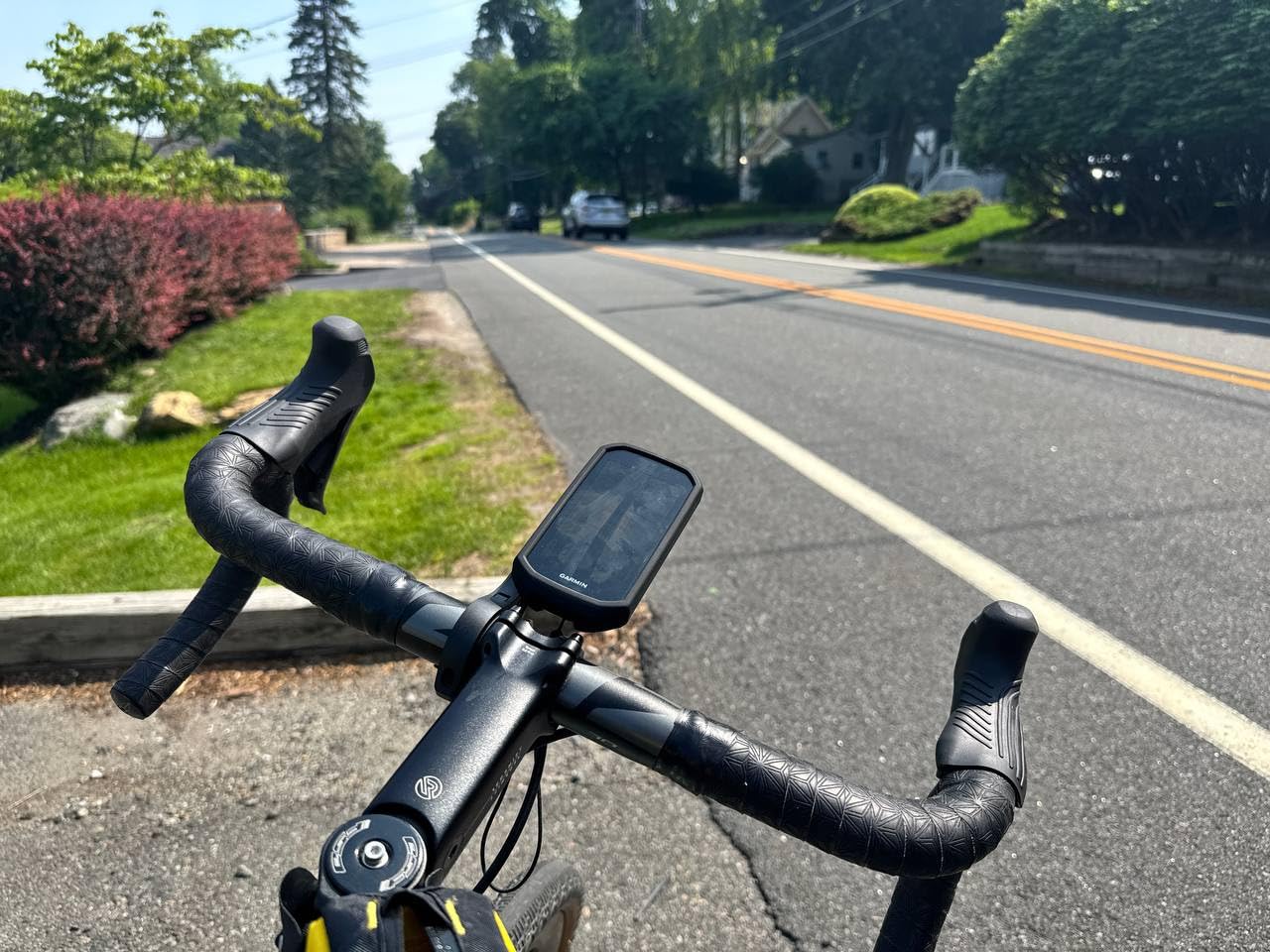
Riders on older Edge models describe the interface speed as the upgrade that matters most, and I agree. Pages scroll, the map redraws and settings change without the multi-second pauses that used to define Garmin head units, and the 5.7-ounce body is lighter than the flagship size suggests.
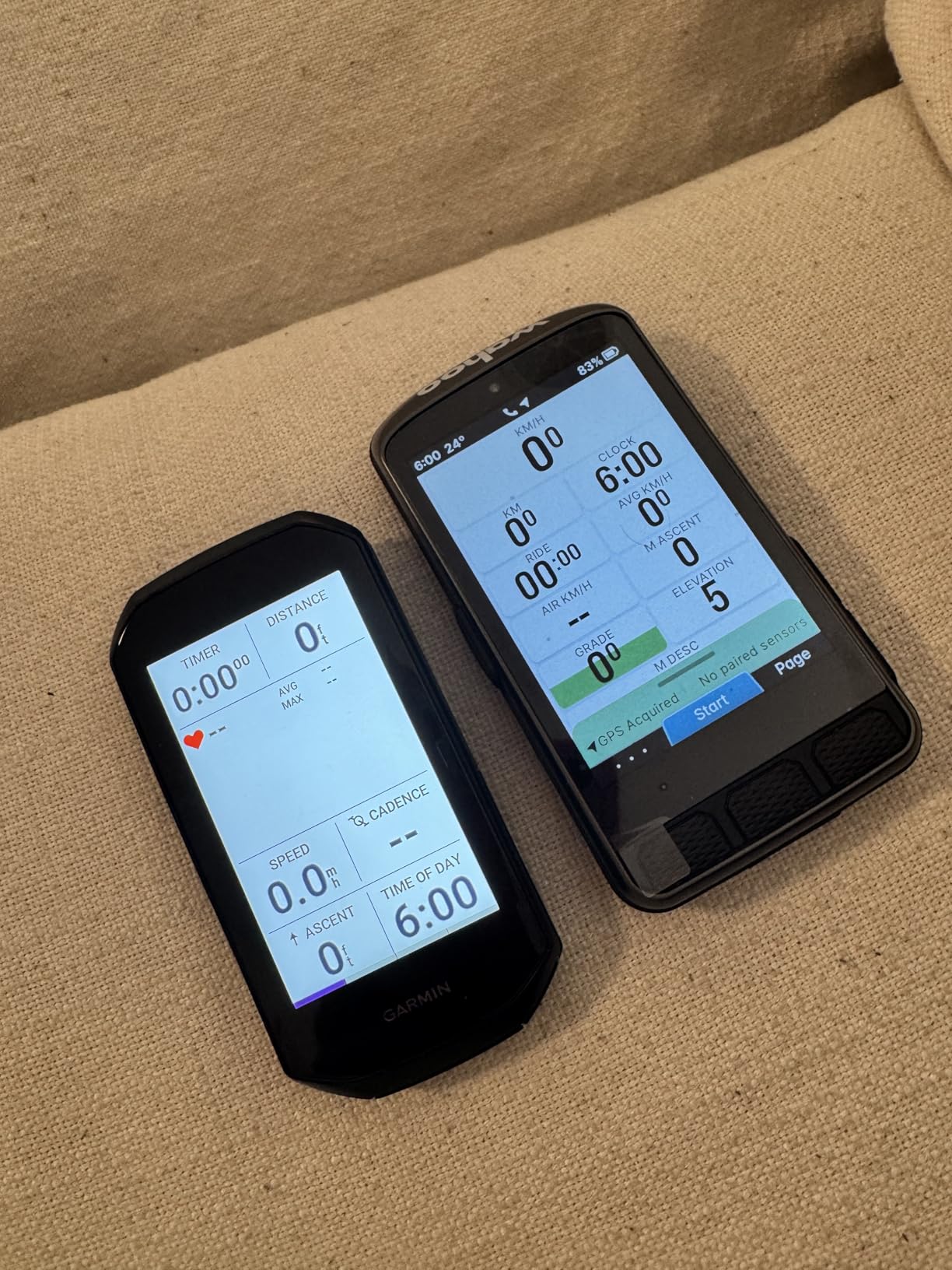
Sensor support is the deepest in this group. It pairs with Varia radar and lights, electronic shifting, power meters and heart rate straps without drama, and the battery held 58% capacity after a navigated ride running past ten hours in normal use.
Why it suits long trail days and mixed-terrain riding
This is the pick for bikepacking, multi-day loops and riders who change terrain between forest singletrack and open gravel. On-device course creation means you can scout a fire road in the evening and have it navigating the next morning without a phone in the loop.
It also handles e-bike riders well, since the sensor list covers power meters and the navigation prompts keep you off the phone while you are working.
Where it falls short for MTB
The size is the first limitation. On a 780 mm bar with a short stem and a steeply raked head tube, a 3.5-inch body and its out-front mount take up real space and can catch a handlebar during a low-speed crash.
There is also no street-name or point-of-interest search, so navigation wants a specific address or a saved route rather than a vague place name. Turn off the configurable alerts out of the box or the eat, drink and rest prompts will become background noise within a week.
2. Garmin Edge 540 — Best Value Bike Computer for Mountain Biking
- Multi-band GNSS locks fast under tree cover
- Buttons work with wet hands and gloves
- 26-hour battery handles long days
- Out-front mount included
- ClimbPro on every ride
- No touchscreen
- Setup and menu navigation take practice
- Must be fully powered down or it drains in standby
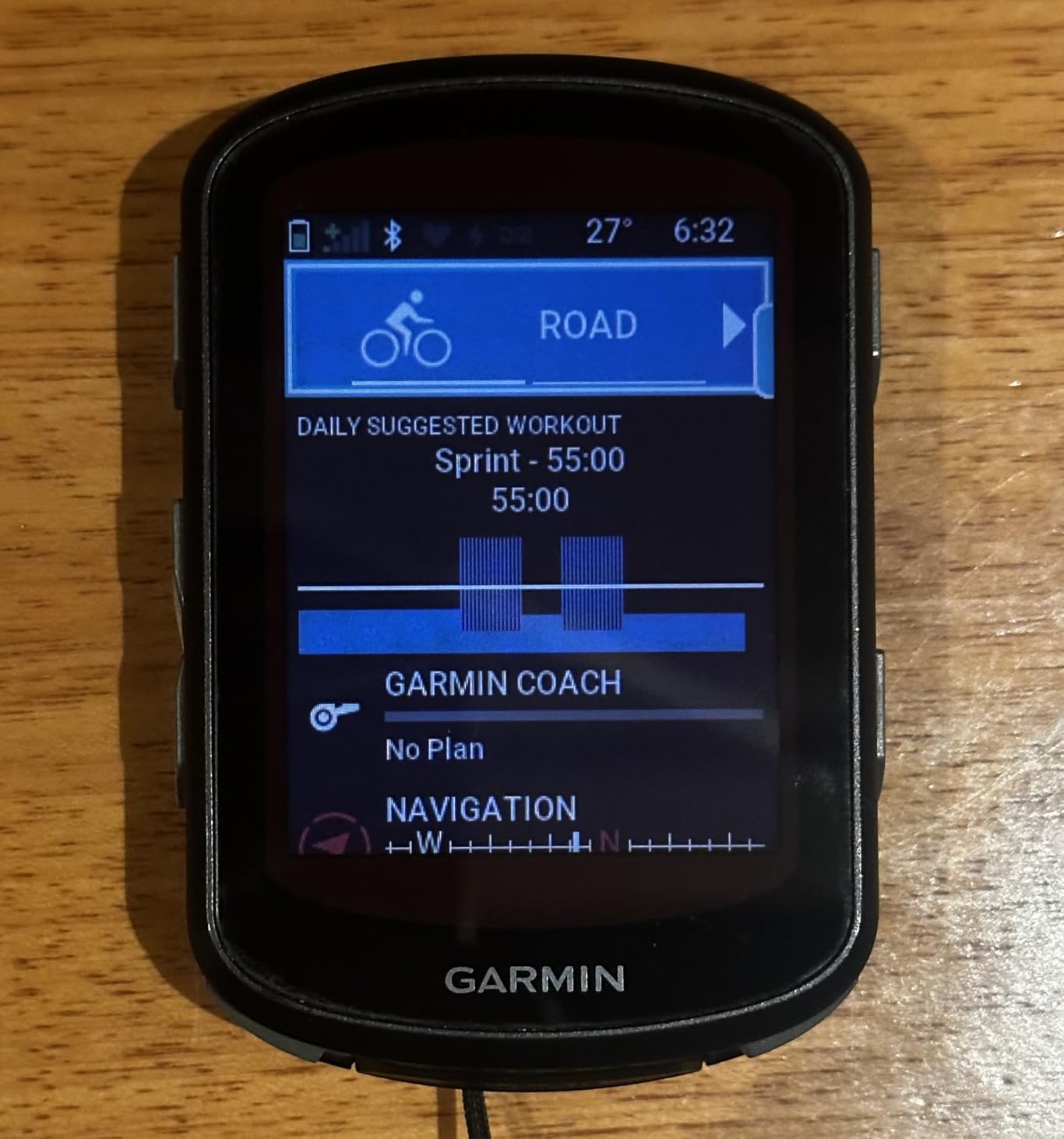
With 569 reviews averaging 4.4 stars, the Edge 540 is the most battle-tested mountain bike computer in this roundup. It is a button-driven unit, which sounds like a downgrade until you remember that every control works with full-finger gloves and a rain-soaked screen.
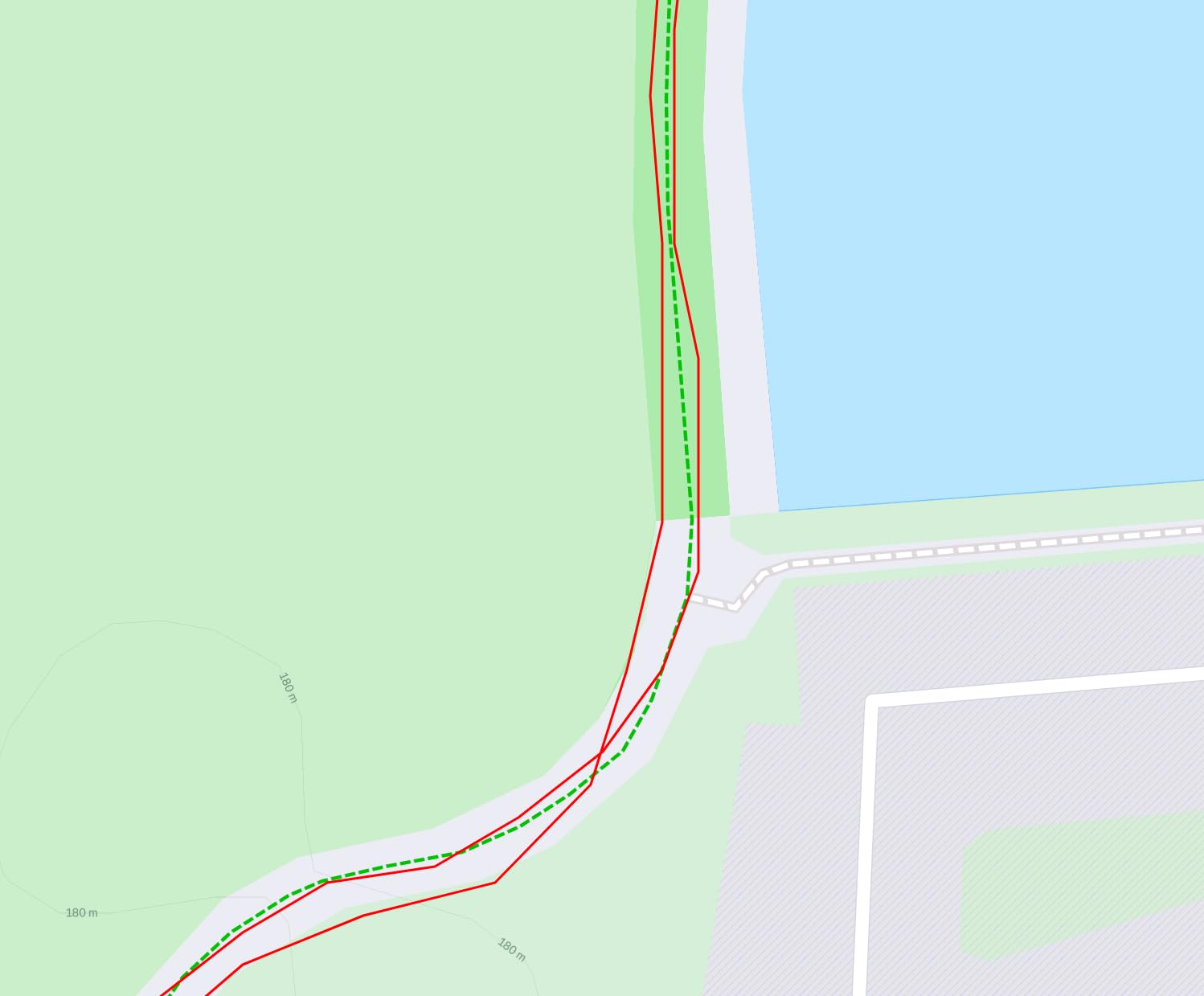
Multi-band GNSS is the real story on the trail. It locks satellites quickly under canopy and holds a clean line through wooded switchbacks where single-band units wander sideways and add phantom distance to your recording.
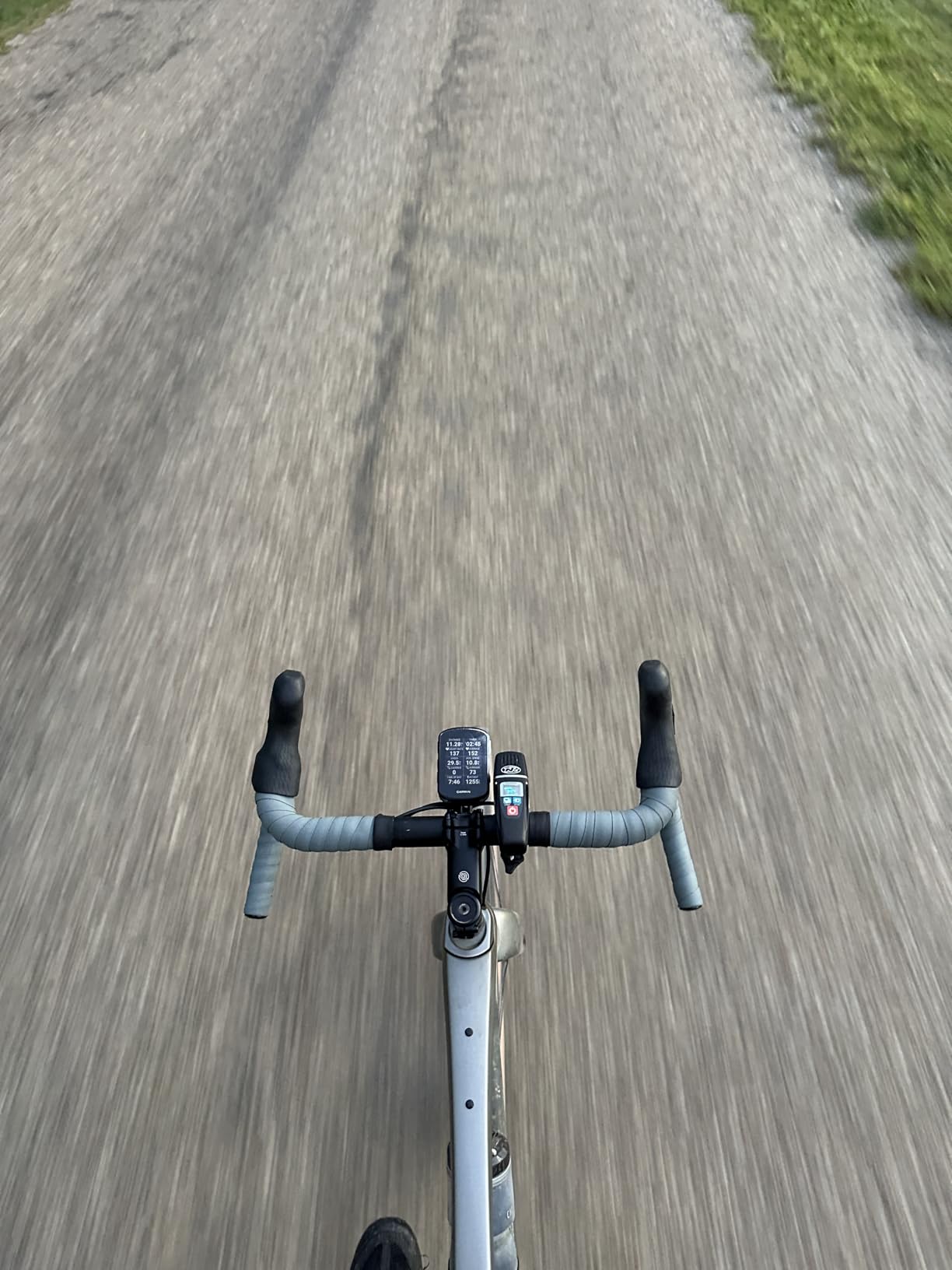
ClimbPro shows remaining gradient and elevation on every ride without needing a course, which is genuinely useful when you are deciding whether to run the bypass on a long climb. Ride type-specific maps also highlight popular roads and trails once you sync through Garmin Connect.
At 2.8 ounces with the out-front mount in the box, it disappears on the bar. XC racers who care about total bar weight will find this the least intrusive unit here.
Why it suits everyday trail riding and race days
This is the one to buy if your riding is mostly local trail, forest roads and the occasional gravel link, and you want navigation that keeps working without babysitting the app. The 26-hour demanding-use figure means a full day of riding plus a long drive home with battery to spare.
It is also the safest recommendation for riders who already own a Garmin watch, because the pairing and data fields behave exactly as you expect from the same ecosystem.
Where it falls short for MTB
There is no touchscreen, so scrolling through data fields and menus takes more deliberate button work than a tap. Plan your screens before the ride rather than on it.
Two more practical notes. The setup and menu system has a learning curve that puts people off in the first week, and if you do not fully power the unit down, it will drain in standby overnight, so make that part of your post-ride routine.
3. Wahoo ELEMNT ROAM V3 — Best Bike Computer with Spoken Trail Directions
- Dual-band GPS holds accuracy in thick forest and canyons
- Spoken directions beat beeps on technical terrain
- Large screen readable while riding
- Physical buttons for rough roads
- Integrated out-front mount
- Auto-brightness dims too far in shade
- Companion app syncing is slow and glitchy
- Limited map-making tools
Wahoo built the ROAM around the idea that trail riders want their eyes up. Spoken turn-by-turn directions read out the next turn and distance for GPX, TCX and routes pulled from Strava, Ride with GPS and Komoot, so on fast wooded singletrack you get guidance without finding a cue arrow.
The GNSS list is the broadest in this roundup: GPS, GLONASS, BEIDOU, Galileo, QZSS, SBAS and NavIC on a dual-band receiver. That multi-constellation spread is what keeps the track honest in thick forest and urban canyons.
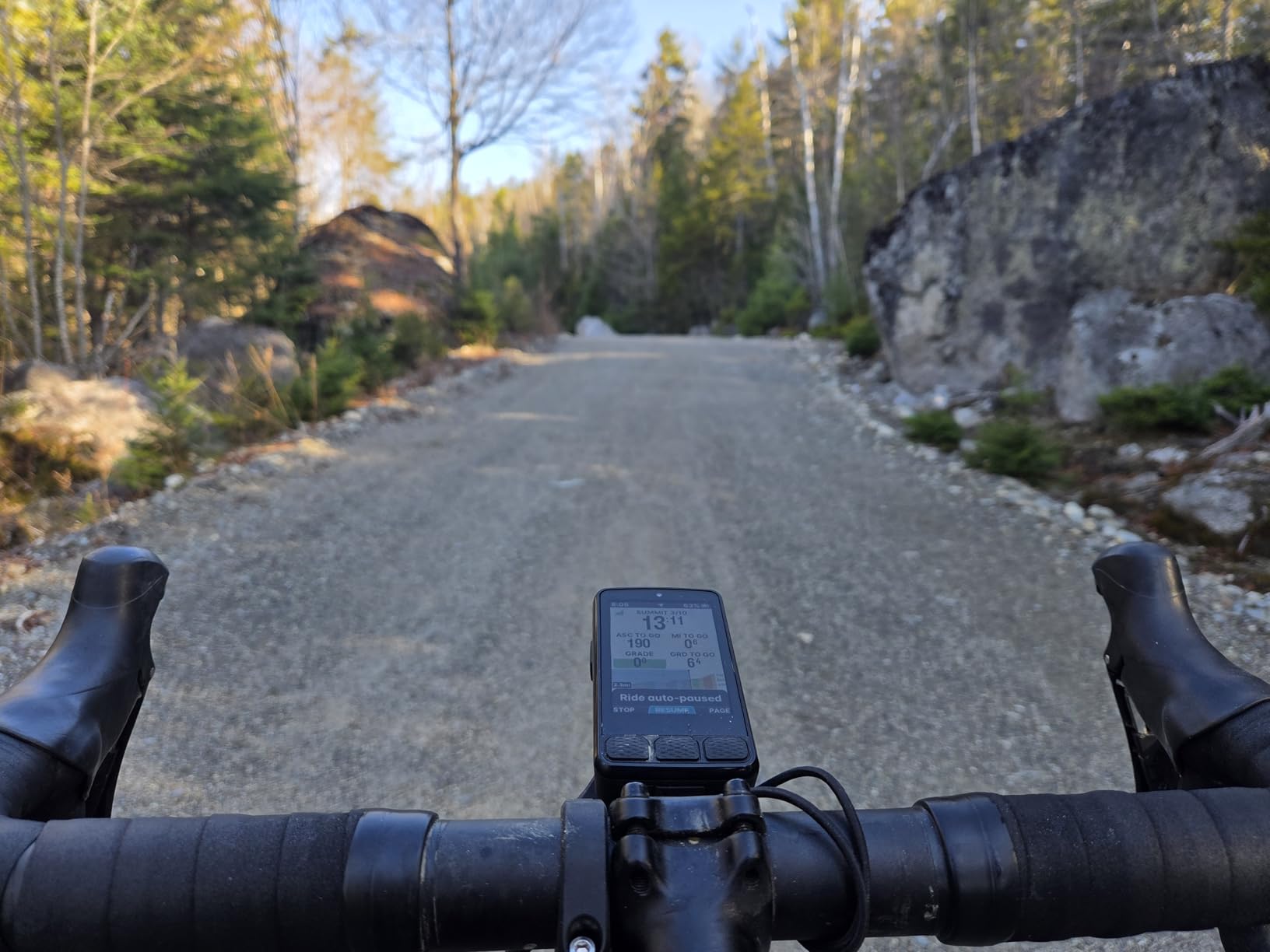
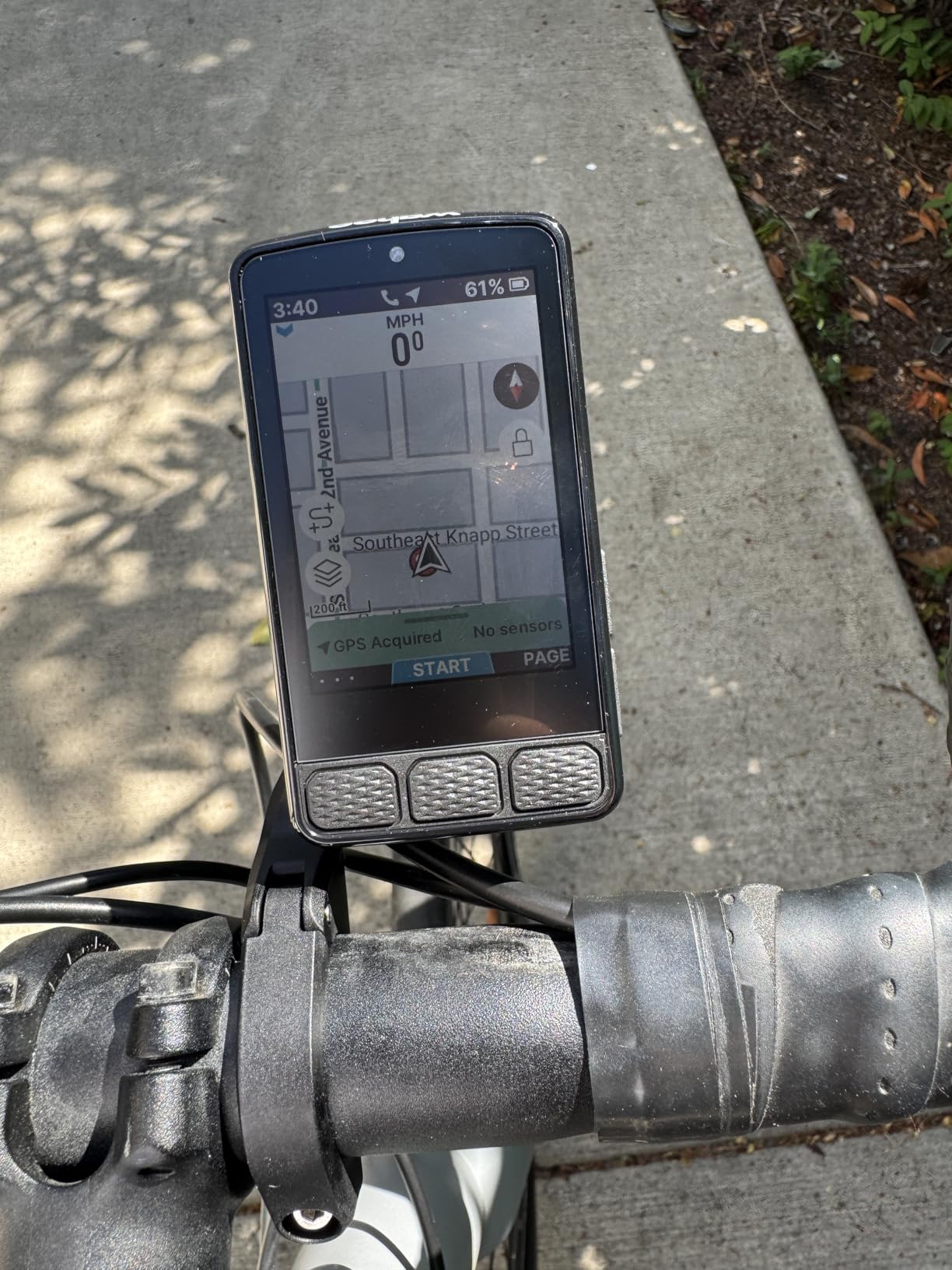
The screen is a 2.8-inch color touchscreen, and the six physical buttons underneath handle the functions you actually need while descending, when touching glass is not realistic. IPX7 sealing takes rain, mud and creek crossings in stride, and the out-front mount is integrated rather than a separate purchase.
One rider reported 50% battery remaining after a 200-mile, 14-hour ride, which tracks with the 25-hour claim better than most manufacturer figures do.
Why it suits voice-guided trail navigation
If your riding involves long stretches of unfamiliar forest trail where you cannot afford to look down, the spoken cues are the reason to choose this over a same-priced touchscreen unit. Public Route Sharing between nearby ELEMNT devices also helps when you are leading a group across a network of trails.
It is a good match for riders who want Trailforks routes and phone-free navigation but do not want a Garmin account setup.
Where it falls short for MTB
Auto-brightness is a persistent complaint. The screen dims too aggressively in shade or when you are wearing sunglasses, which on a shaded forest descent means riding a dark display at speed.
The Wahoo companion app syncing is slower and glitchier than Garmin Connect, and Wahoo has no map-making tool, so Strava or Garmin course files need a workaround before they will navigate cleanly.
4. Garmin Edge MTB — Best Bike Computer for Preloaded Trail Maps
Garmin Edge® MTB, Rugged GPS Bike Computer, Mountain Biking Metrics
- Trailforks maps preloaded with Forksight fork detail
- Grit and Flow plus jump speed and hang time
- Enduro and downhill ride profiles with split gates
- 58 g with out-front and top-tube mounts
- Built-in gyroscope and altimeter
- Very small 2.1-inch screen
- Some reports of shutdowns and reboots on rough impacts
- Battery drains faster than expected
This is the only computer here designed specifically for mountain biking rather than adapted for it. Trailforks maps and Forksight junction detail are preloaded, so it shows you what the fork junction looks like before you arrive at it, with no phone and no data connection required.
It also records the metrics that matter on jumps and rough ground: Grit and Flow dynamics, jump speed and hang time. A built-in gyroscope, altimeter, accelerometer, magnetometer and barometer give the sensor set most trail riders would otherwise need a separate watch for.
Multi-band GPS runs with automatic 5 Hz recording, and the body is 58 grams with both an out-front mount and a top tube mount with strap in the box. That combination of light weight and included mounts makes it easy to run on an enduro bike without cluttering the cockpit.
Why it suits enduro, downhill and jump-focused riding
Enduro and downhill ride profiles with in-ride split timing gates let you run stage-style splits without leaving the ride, which is useful if you time your own runs between heats. The top tube mount keeps the profile low and out of the way when you are crashing regularly.
It is also the one to consider if you want trail maps with zero setup on a bike you ride far from a trailhead with service.
Where it falls short for MTB
The 2.1-inch display is the headline compromise. It is the smallest screen in this roundup, and it is hard to read at a glance while riding at speed on technical ground. Riders who want a big map need to look elsewhere.
Owners also report auto-pause quirks, unexpected shutdowns on rough impacts and reboots, and battery drain that runs ahead of the 14-hour claim on long multi-hour rides. At a 3.9 average across 55 reviews, it is the least proven unit on this list, which is worth factoring in if reliability is your priority.
5. iGPSPORT BSC500 — Best Big Screen Value for Trail Riding
iGPSPORT BSC500 GPS Bike Computer, 3.3” Touch Screen MAP Voice Navigation
- Large 3.3-inch touchscreen at a mid-range price
- Dual-band GPS with wide satellite support
- Voice navigation cuts screen glances
- Yaw Planning reroutes automatically
- Two-year warranty
- App ecosystem is less refined than Garmin or Wahoo
- Shorter owner feedback history than rivals
A 3.3-inch touchscreen with a speaker and dual-band positioning at a mid-range price point is a combination you rarely see. The BSC500 runs a dual-band L1+L5 receiver across GPS, BeiDou, GLONASS, Galileo and QZSS, which is the satellite spread you want when the sky view disappears on a steep descent.
Yaw Planning handles off-course rerouting automatically, and the loudspeaker reads voice navigation alerts so you can keep your eyes on the trail. You can fit up to 12 data fields per page, which suits riders who want more information than the typical four or five.
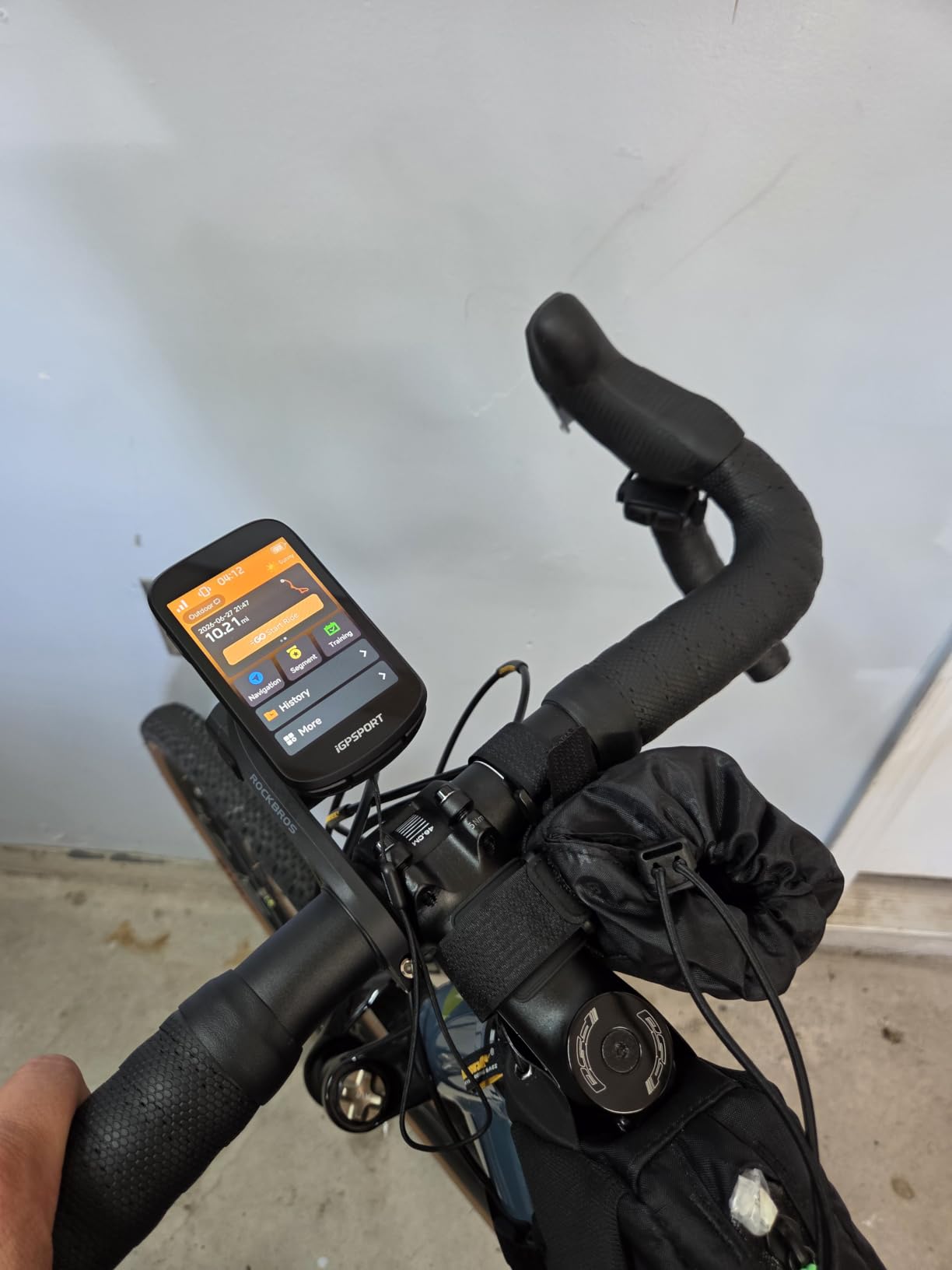
iClimb 2.0 adds climb planning with route preview plus training effect analysis, so the hill data is there without needing a separate watch. IPX7 sealing is present for wet, muddy conditions.
The 4.7 average across 85 reviews is the joint-highest rating in this group, though the review history is shorter than the established brands.
Why it suits riders who want a big screen and voice guidance
If you ride with glasses, or you simply want a large map area with a physical button fallback for gloves, this is a strong middle ground between a small button unit and a premium touchscreen. The voice alerts and automatic rerouting cover the basics of trail navigation well.
The two-year warranty is also longer than the one-year cover on most Garmin and Magene units here.
Where it falls short for MTB
The iGPSPORT app is the weak link. Route handling and planning are less refined than Garmin Connect or the Wahoo companion app, and if you rely on Trailforks planning workflows you will feel the difference.
At 107 grams it is one of the heavier units in the roundup, which matters if you are counting every gram on an XC build.
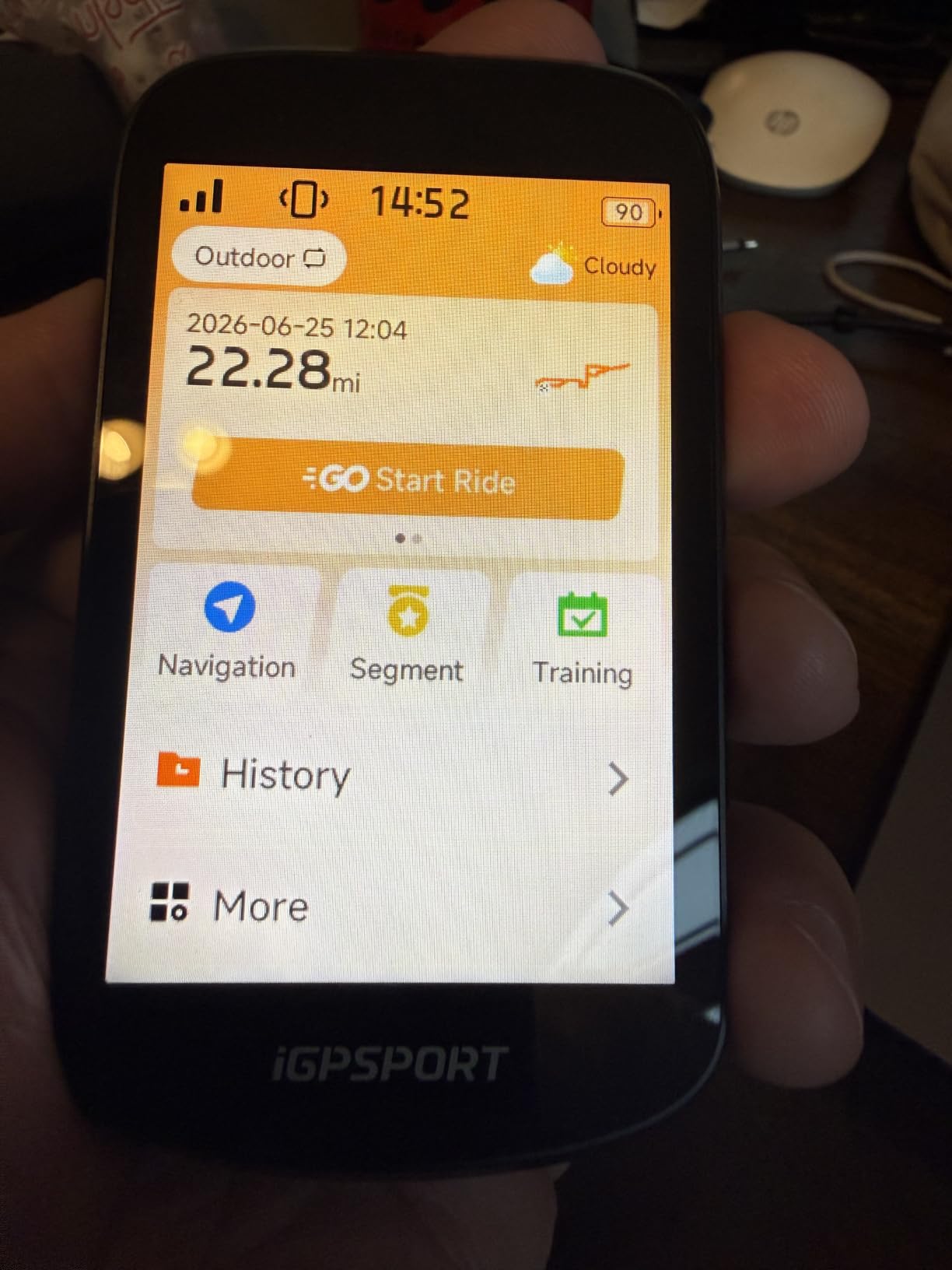
6. iGPSPORT BiNavi — Best Bike Computer for Multi-Day Riding
iGPSPORT BiNavi GPS Bike Computer, 3.5” Touch Screen MAP Navigation
- Long 35-hour battery across multi-day riding
- Resumes paused routes reliably across power cycles
- Large 3.5-inch screen with wide data layouts
- Works with third-party power meters and heart rate straps
- Readable in sunlight
- Rerouting is slow and can look like a freeze
- Route loading to the device is buggy
- Enclosure feels less rugged than the price implies
Battery endurance is the reason to start here. Owners report roughly 60% used across 20 hours of multi-day riding, and the ability to resume a paused route after a power cycle is a small detail that matters enormously when your trip runs past a charging opportunity.
The 3.5-inch color touchscreen offers a wide range of configurable data screens, and dual-band L1+L5 GPS across the major constellations keeps the track clean through wooded terrain. iClimb Pro adds hill planning with route preview, and saved point navigation can route you back to a stored location or your start.
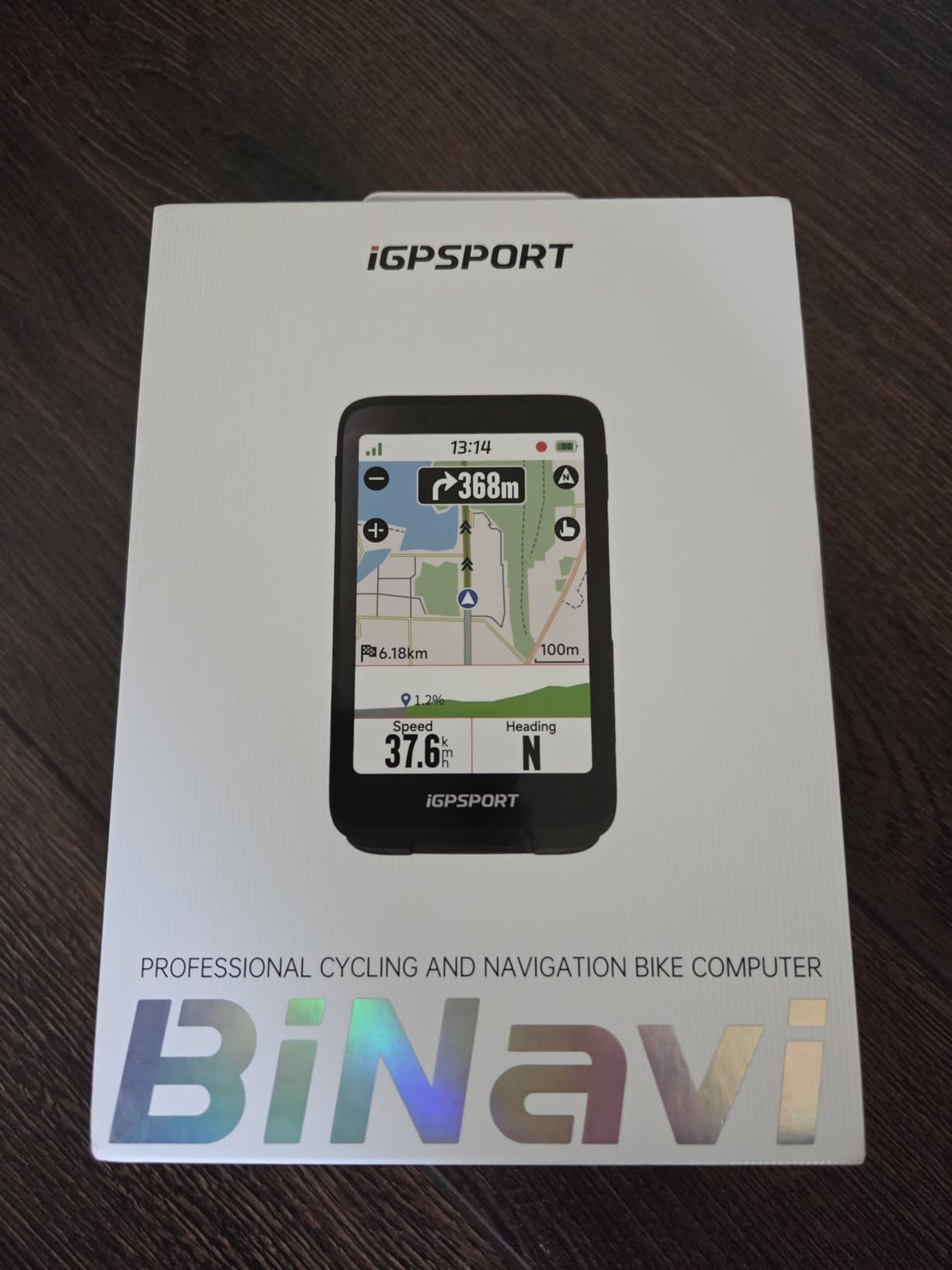
It also does phone-paired music control, which is unusual at this level, and it pairs with third-party sensors including heart rate straps and power meters without difficulty.
For bikepackers and riders doing 24-hour or multi-day solo rides, the combination of a big screen and a battery you rarely have to think about is the headline.
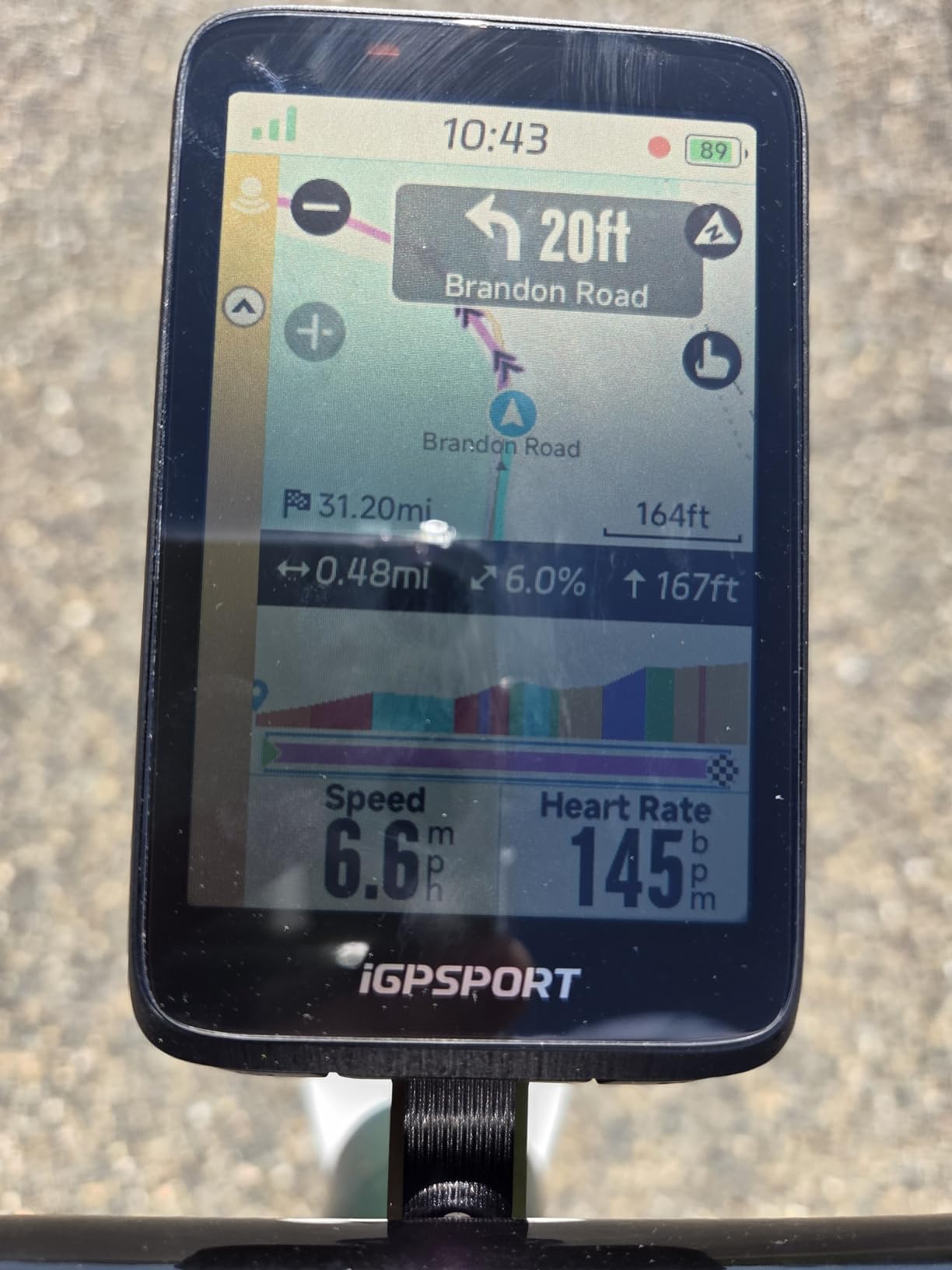
Why it suits bikepacking and long solo rides
Multi-day riding punishes devices that restart mid-route or fail to reload a track. This one does both correctly. The 32 GB of storage also gives you room to keep several regions of maps downloaded rather than swapping them each trip.
It is a good companion for riders who want navigation and climb data without a subscription to a training platform.
Where it falls short for MTB
Rerouting is slow, often long enough to look like a freeze, and loading a route onto the device can be buggy and slow. On a technical trail where you need an immediate recalculation after taking a wrong fork, that lag is a real drawback.
One reviewer reported a screen crack without a drop, so if you ride enduro or downhill you may want a case. The app-generated route alternatives are also limited.
7. iGPSPORT BSC300T — Best Lightweight Budget Pick for E-Bikes and Trail Riding
iGPSPORT BSC300T GPS Bike Computer, Smart Map Navigation 2.4” Touch Screen
- Lightest unit here at 67 grams
- Global offline map download with route preview
- Persistent off-course warning on diverging trails
- Road
- MTB and eBike modes with power level display
- 130+ data fields with group tracking
- 2.4-inch screen is small for map-heavy navigation
- Type-C cable not included
- 8 GB is the tightest map storage here
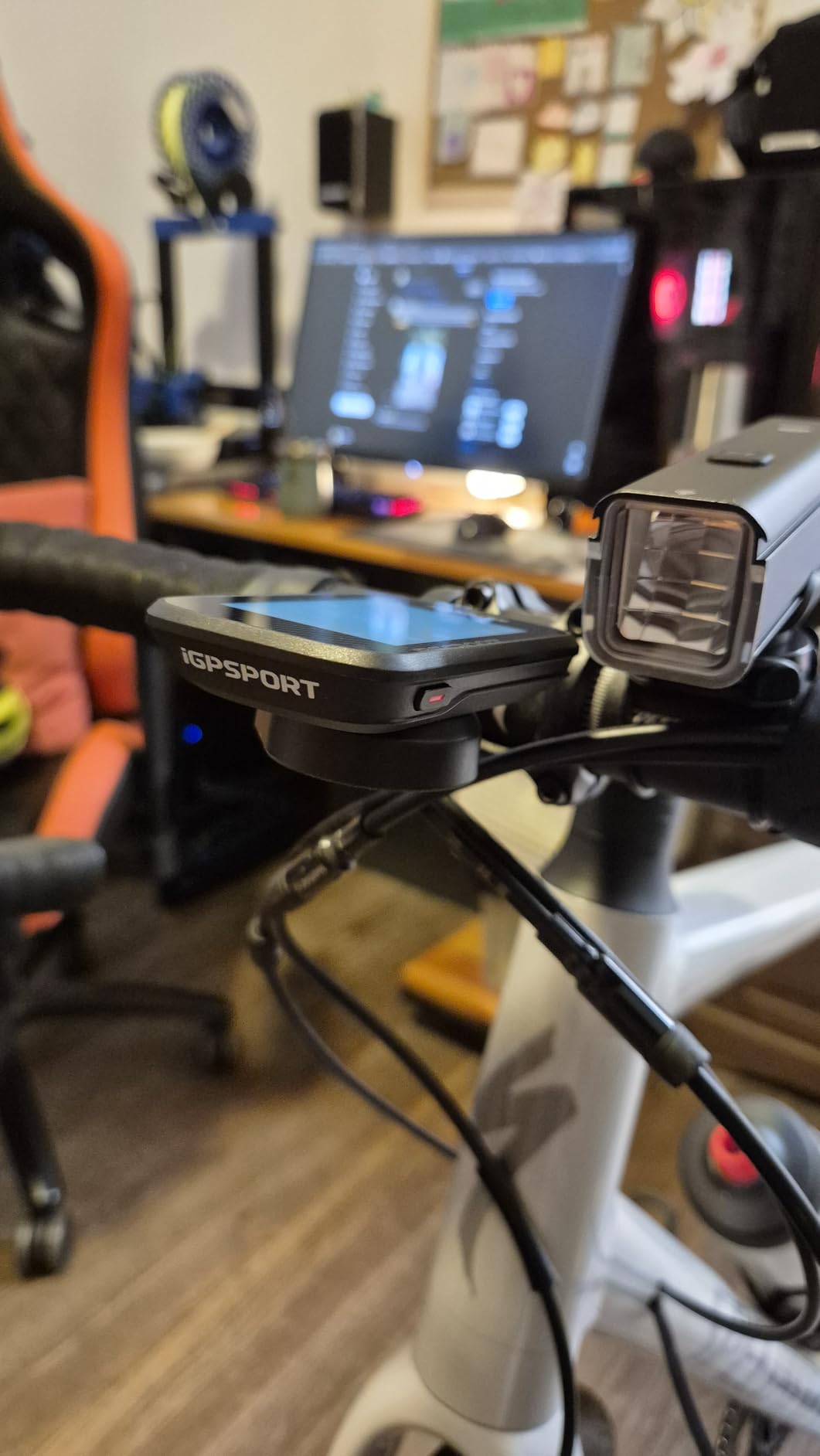
The BSC300T does something the pricier units do not: it keeps warning you that you are off route until you are back on it. On a trail that forks and rejoins, a transient off-course alert is noise, but a persistent one is genuinely useful when the singletrack has wandered away from your planned line.
At 67 grams it is the lightest computer in this roundup, and the 2.4-inch capacitive touchscreen still has six physical buttons behind it for glove use. Positioning runs across GPS, BeiDou, GLONASS, Galileo and QZSS with global offline map download, route preview and turn prompts.
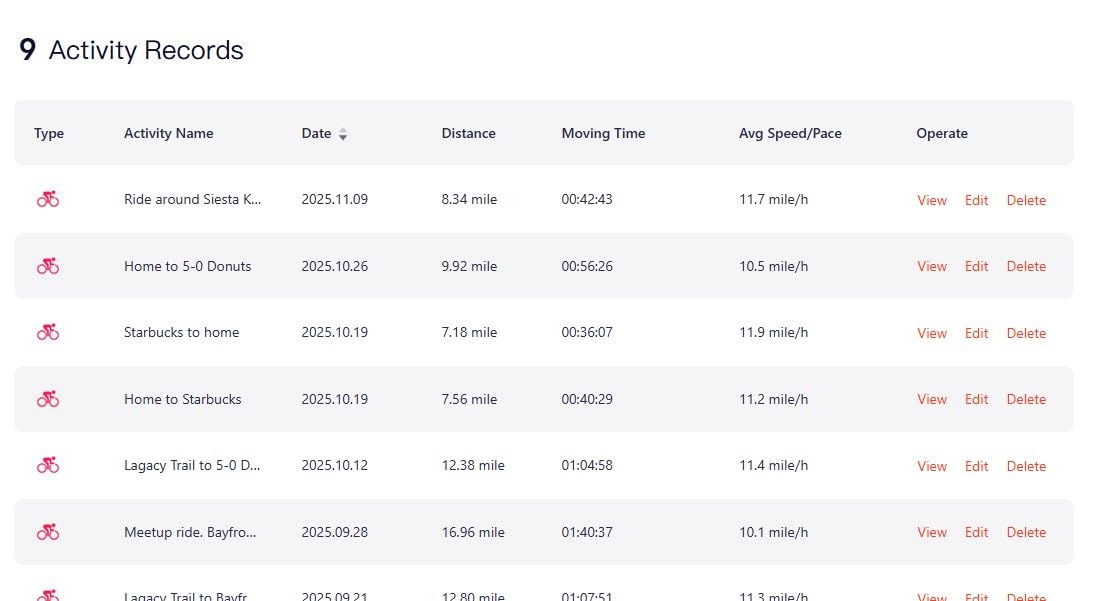
Road, MTB and eBike modes include power level display, which makes it a natural fit for e-bike riders who want assist level and range on the same screen as trail data. Real-time group tracking and Insta 360 camera pairing are unusual extras at this level.
It works with ANT+ and Bluetooth sensors including radar and tail lights, and offers 130+ riding data fields covering grade, cadence and temperature.
Why it suits e-bike riders and second-bike setups
If you want a dedicated computer for a second bike, a loaner, or an e-bike that sees a lot of mud, this is an efficient choice. The weight barely registers on the bar and the offline maps cover worldwide coverage without region selection.
For riders who want radar pairing without paying flagship money, the ANT+ and Bluetooth 5.0 support is the standout feature.
Where it falls short for MTB
The 2.4-inch screen is cramped for map-heavy navigation, so route following on technical ground takes more attention than you would like to give it. It is not the unit to buy if trail navigation is your primary reason for owning a computer.
Storage is 8 GB, the tightest here, which limits how much offline map data you can carry. The charging cable is not in the box, and the iGPSPORT app and firmware experience is less polished than Garmin or Wahoo.
8. Magene C506 — Best Budget Pick for Indoor Training and Wide Sensor Support
Magene C506 GPS Bike Computer – 2.4″ Color Touchscreen, Smart Navigation, Fast WiFi & Bluetooth, Riding Assistant Wireless, Indoor Cycling & Training
- Turn-by-turn navigation and color touchscreen at a budget price
- 5-second GNSS lock via Airoha chipset
- WiFi auto-sync to Strava and TrainingPeaks
- Bold fonts stay readable in sunlight
- Supports nine device types including Di2
- eTap and radar
- Indoor training with FIT file sync to smart trainers
- Map downloads run from the device not the app
- OnelapFit app is less refined than Garmin Connect
- No Strava Live Segments support
- Some accuracy complaints
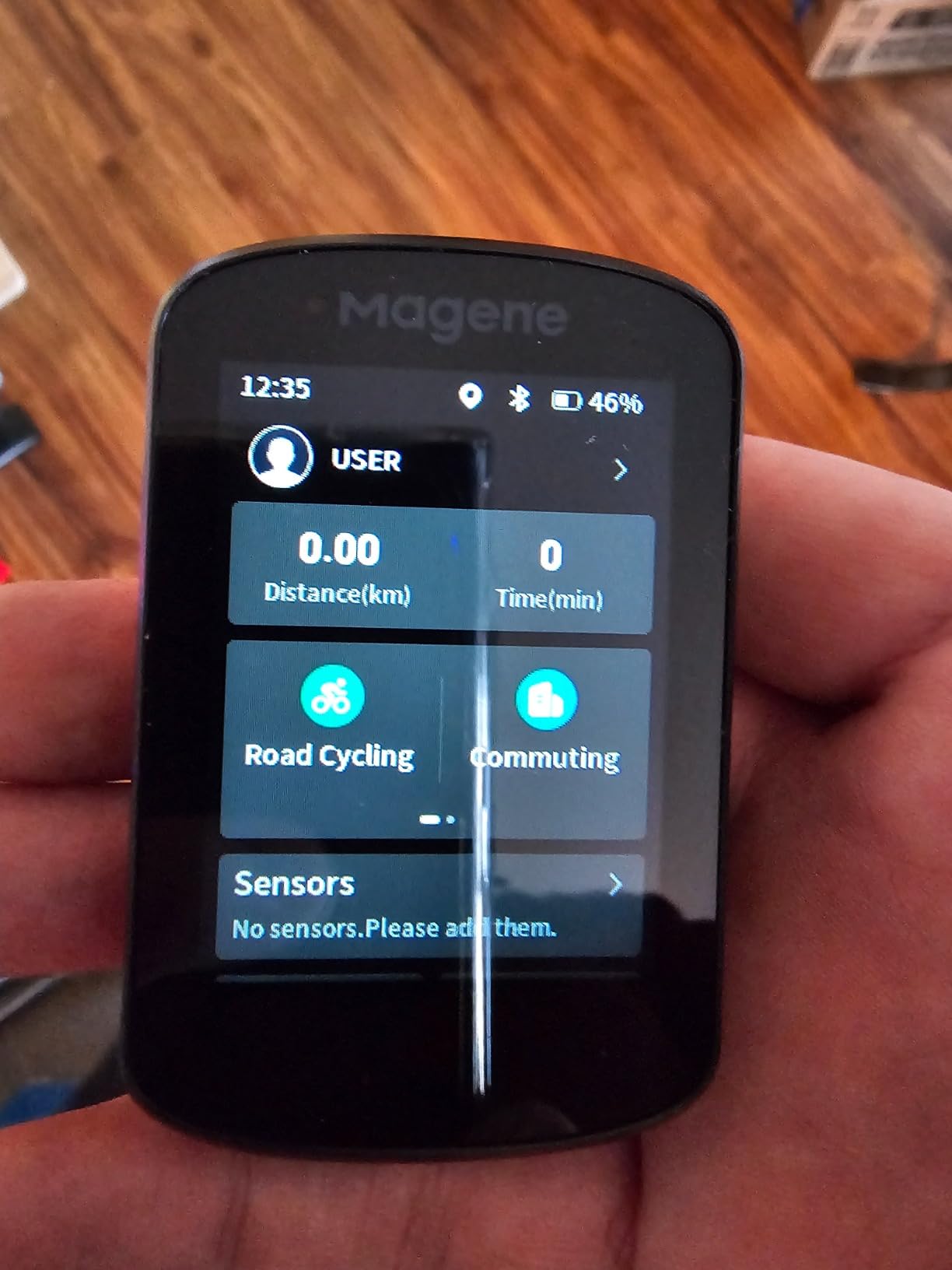
The C506 surprises for its money. You get a 2.4-inch color touchscreen, free global map download, turn-by-turn navigation and GPX import, which is more trail capability than most budget units in this price bracket manage. An Airoha chipset with AGNSS delivers positioning in as fast as five seconds.
WiFi sync is the sleeper feature for MTB riders. Activities transfer to Strava or TrainingPeaks without a phone prompt, so your ride data is uploaded before you have even changed out of your kit.
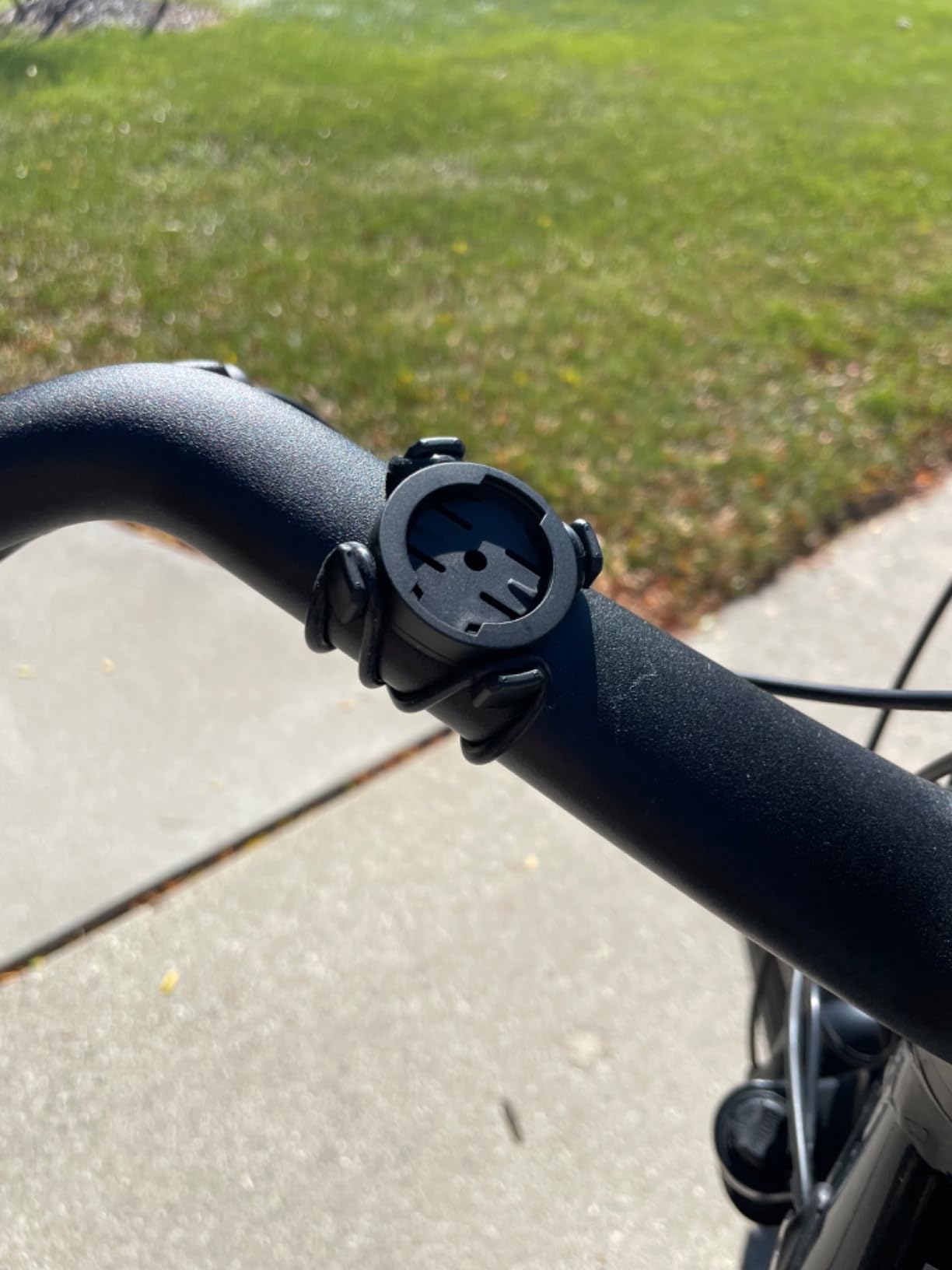
Sensor support covers nine device types including ANT+ and Bluetooth sensors, power meters, smart trainers, radar lights, Di2 and eTap, and there is an indoor training mode with FIT file sync to connected trainers. The 24-hour endurance battery outlasts most full trail days.
At 76 grams it is one of the lighter units here, and bold fonts make the 2.4-inch screen readable in bright sunlight.
Why it suits riders who split time between trail and trainer
Winter trail riding and indoor conditioning go hand in hand for a lot of mountain bikers, and this is the only unit in the roundup that treats smart trainer work as a first-class feature rather than an afterthought. FIT file sync means your trainer sessions land in the same platform as your outdoor rides.
It is also a sensible companion for anyone who already owns a Garmin or Wahoo watch and wants a bar unit that does not duplicate everything but adds navigation.
Where it falls short for MTB
The map download process runs from the computer rather than the phone app, which is genuinely awkward the first few times. The OnelapFit app that handles GPX import is less refined than Garmin Connect, and there is no Strava Live or starred segments support on this model.
Some users also report the GPS inventing paths on local roads, and the touchscreen sometimes needs two presses to register, which is annoying with cold or gloved hands.
9. GEOID CC700 Pro — Best Budget Unit for Bright Sunlight Readability
- Bright responsive 2.8-inch screen readable in direct sun
- IPX7 sealing for wet muddy trail conditions
- Offline map downloads with turn prompts
- Fast WiFi syncing to Strava after a ride
- Stem mounts and screen protector included
- Mapping is road-oriented so trail files may not route
- Re-route planning needs the phone app connected
- Screen starts at lowest brightness
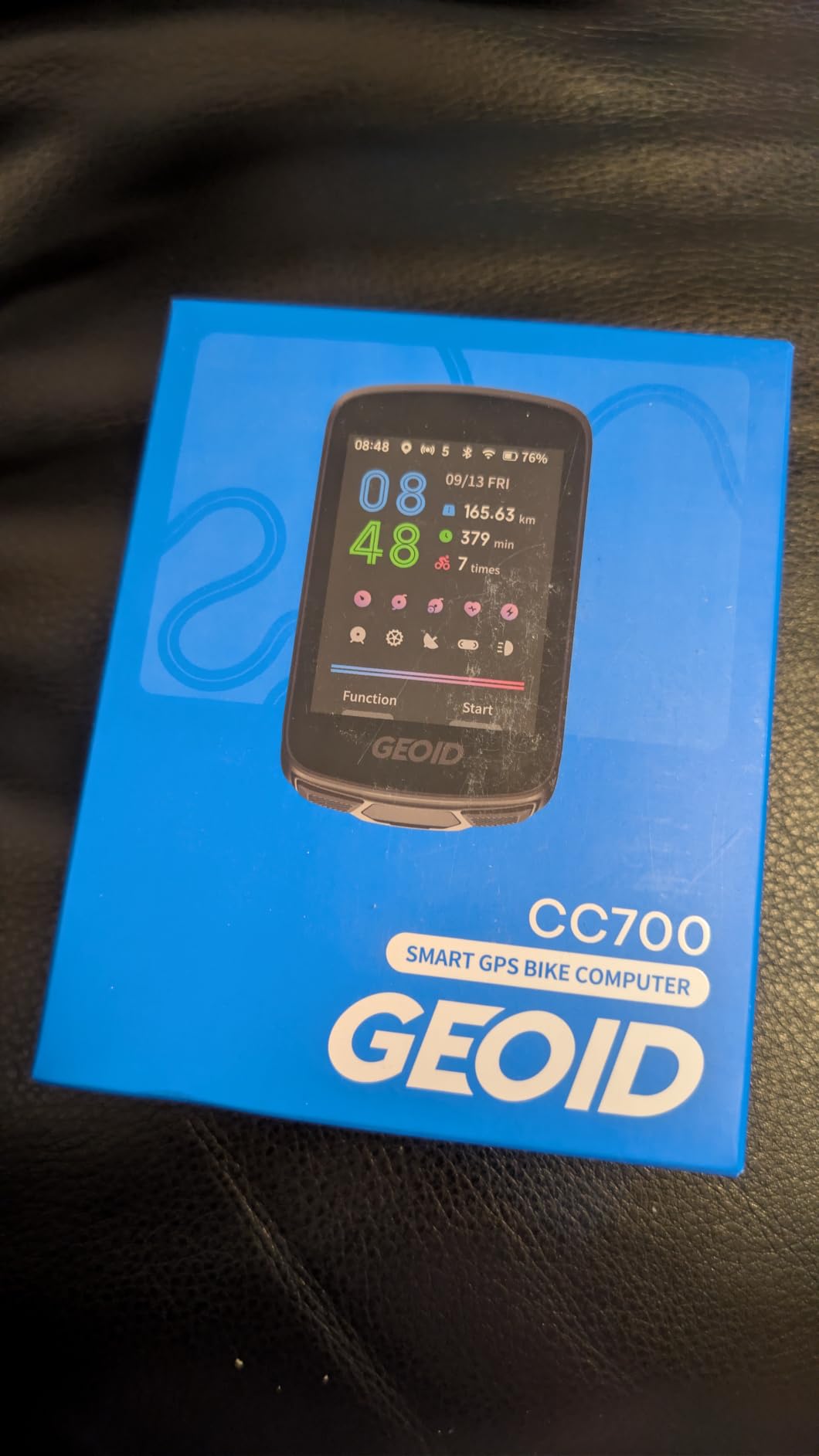
Sunlight readability is the reason this one stands out at its price. The 2.8-inch TFT color touchscreen is bright and responsive on an exposed ridgeline at midday, and the IPX7 rating is a real reassurance when you are riding wet, muddy singletrack through creek crossings.
It does global offline map downloads into 4 GB of storage with color-coded maps, street names, zoom levels and dual-perspective views. WiFi auto-sync gets your ride to Strava quickly after you stop, and pairing with power meters, Di2 and other ANT+ or Bluetooth sensors is quick and painless.
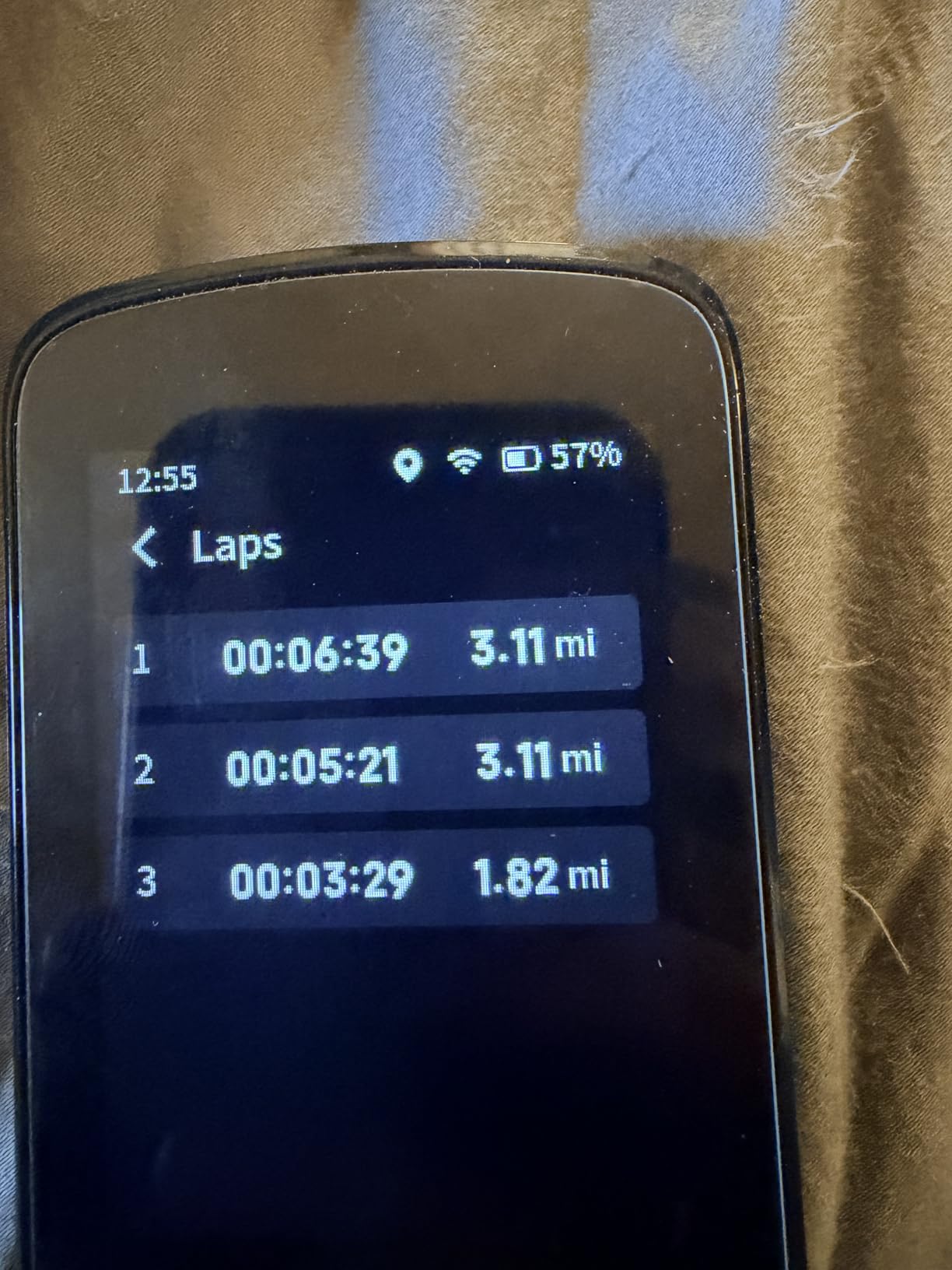
The box includes two stem mounts and a tempered glass screen protector, which is a generous package for a budget unit. DJI Action camera control and indoor training with custom power targets are also on the feature list.
Five satellite systems plus AGNSS WiFi sync deliver the advertised five-second acquisition.
Why it suits wet-weather and high-contrast trail riding
For riders in wet climates, the sealing and included screen protector are a meaningful upgrade over bare-budget alternatives. Riders who wear sunglasses or have reduced vision often find a bright 2.8-inch screen easier to read than a small transflective display.
It works well as a second bike unit or for riders who do long road transfers between trailheads.
Where it falls short for MTB
The mapping is road-oriented, which is the key limitation for mountain biking. Imported trail files may not display or route properly, and for a sport where you follow singletrack rather than streets, that is a real constraint.
Re-route planning only functions while the phone stays connected to the app, the OnelapFit setup is unintuitive, and the screen reverts to its lowest brightness on power-up, so you will want to raise it every ride.
10. GEOID CC600 — Best Budget Bike Computer for Mountain Biking
- Navigation
- sensors and WiFi sync at the lowest cost here
- Colorful turn-by-turn with automatic re-routing
- 5-second GPS acquisition with AGNSS
- Supports up to nine device types including Di2 and radar
- 100-hour memory reduces sync frequency
- Non-touch screen so all navigation runs through three buttons
- Setup and map downloads are awkward
- Rerouting quality is limited
- Manual is poorly written
With 1,103 reviews averaging 4.2 stars, the CC600 is the most widely owned computer in this roundup by a wide margin, and the reason is simple. It delivers color turn-by-turn navigation, automatic re-routing, five-second GPS acquisition and support for nine device types at a price that undercuts everything else here.
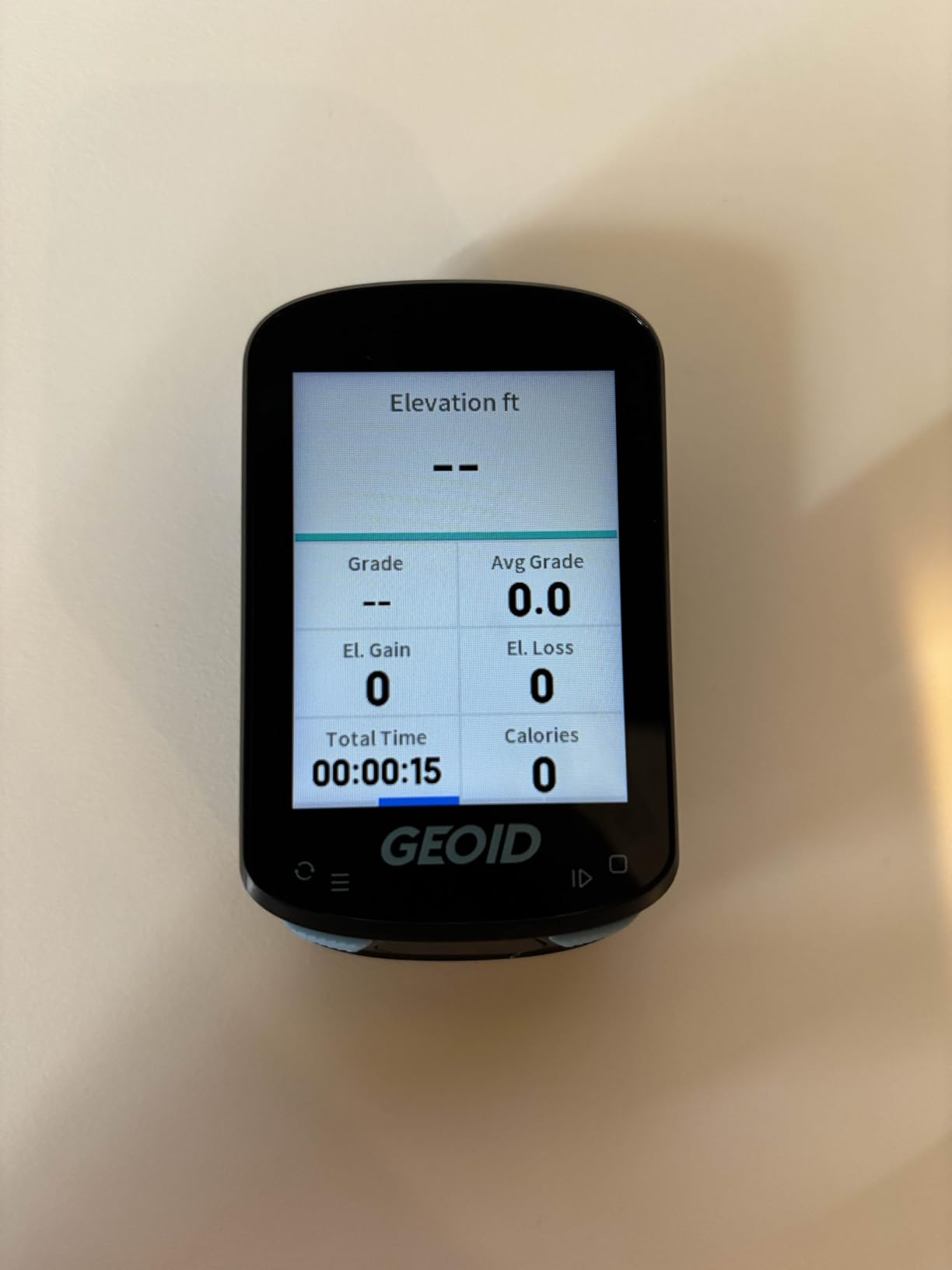
The 2.4-inch color screen uses durable Asahi glass and a three-button interface. Buttons mean it works perfectly in gloves and rain, and the 100-hour of on-device memory means you can ride for several days before needing to sync.
You get up to 10 data pages with 10 items each across 29 layouts and 108 data items, plus ANT+ and Bluetooth support for sensors, Di2, radar tail lights, power meters and smart trainers. Indoor training and FIT export to Strava and TrainingPeaks are included.
It is the computer to buy if you want to stop bringing your phone on the bar and do not need a large map.
Why it suits first-time computer buyers and budget riders
Nothing else at this level pairs full-color navigation with electronic shifting and radar light support. If you ride a mixed bike, run Di2, or want tail light connectivity without spending flagship money, this covers the bases.
The lack of a touch layer also makes it the most reliable option in pouring rain, since there is no capacitive screen to misread water as input.
Where it falls short for MTB
All navigation runs through three buttons, which is slower than a touchscreen when you are reading a trail map. Setup and map downloads are awkward and the manual is poorly written, so budget an afternoon with the app before your first ride.
Rerouting quality is limited and depends on the app connection, so treat it as breadcrumb navigation with a safety net rather than true turn-by-turn on technical trail. As with the other budget units, it is road-mapped at heart.
How to Choose a Bike Computer for Mountain Biking
Most buyers start with screen size and end up regretting it. On a mountain bike, the specs that decide whether you are happy are signal quality, control method, mount survival and whether trail maps are on the device before you leave the driveway.
Multi-band, dual-band or single-band GNSS is the spec that matters most
Single-band receivers listen to one satellite frequency and are easily confused by tree cover, canyon walls and rock overhangs. They produce wandering tracks, phantom distance and pace spikes. Dual-band and multi-band units listen on two frequencies at once and can correct for that interference, which is why they hold a straight line on technical descents where cheap units drift.
For reference, the Edge 540, Edge 1050 and Edge MTB use multi-band positioning, the Wahoo ROAM V3, iGPSPORT BSC500 and BiNavi run dual-band receivers, and the Magene C506, GEOID CC700 Pro and CC600 use multi-constellation positioning with AGNSS for fast acquisition. Under dense canopy, the difference between these groups is far more noticeable than the price gap suggests.
Battery life should be measured in trail hours, not marketing hours
Backlight at full brightness, a screen constantly redrawing a map, and continuous sensor pairing all eat battery. Real numbers from owners on these units range from 14 hours of demanding use on the Edge MTB through 24 to 26 hours on the Edge 540, Magene C506 and GEOID CC600, up to 35 hours on the iGPSPORT BiNavi.
For a full day of trail riding plus driving home, anything above 20 hours removes the anxiety entirely. If you ride multi-day routes, treat anything under 20 as a compromise and carry a battery pack.
Gloves, rain and mud decide between buttons and touchscreen
This is the most common mountain biking complaint in the forums and it splits neatly. Touchscreens are unusable with full-finger gloves and inaccurate when the screen is wet, which describes a lot of a season of UK or Pacific Northwest trail riding. Buttons are reliable in every condition but slower for scrolling and configuration.
The compromise units solve both: the Wahoo ROAM V3, iGPSPORT BSC500, BSC300T, Magene C506 and GEOID CC700 Pro all pair a touchscreen with physical buttons. The pure-button options are the Edge 540, Edge MTB and GEOID CC600.
Durability, mounts and water ratings decide the crash test
Riders running out-front mounts report bent or snapped mounts after low-speed bar strikes far more often than they report broken computers. Preference among experienced trail riders runs toward handlebar or top tube mounting, and top tube mounting is a good choice on enduro and downhill bikes where the profile is in the dirt anyway.
IPX7 ratings, which several units here carry, mean the device survives immersion in water to one meter, so rain, mud and creek crossings are covered. If you ride in that environment, treat IPX7 as the minimum rather than a nice-to-have.
For more on protecting the rest of your setup, our MIPS helmet picks cover rotational impact protection for the kind of riding that tests your bar setup.
Garmin vs Wahoo vs iGPSPORT vs Budget Brands for MTB
Which Garmin is best for mountain biking depends on whether you want trail maps out of the box, value, or the most capable platform. Here is the honest split.
Garmin wins on ecosystem and MTB specificity. The Edge MTB is the only unit here with Trailforks maps and Forksight preloaded, plus Grit and Flow, jump speed and hang time. The Edge 540 is the value pick with multi-band GNSS and 26-hour battery. The Edge 1050 is the flagship with the largest screen and the only built-in speaker.
Wahoo wins on spoken navigation. If you follow trails you do not know by ear alone, the ROAM V3 telling you the next turn out loud is a real safety and attention gain. Wahoo does not match Garmin on MTB-specific metrics or preloaded trail detail.
iGPSPORT wins on screen size and battery per dollar. The BiNavi and BSC500 give you a 3.5 or 3.3-inch screen, dual-band positioning and voice cues for less than the Garmin flagships, at the cost of a less refined app and slower rerouting.
Magene and GEOID win on getting a working computer onto the bar cheaply. The C506, CC700 Pro and CC600 cover navigation, sensor pairing and WiFi sync, but their mapping is road-first, which is the wrong bias for singletrack.
Bike Computer vs Phone vs Smartwatch for Mountain Biking
Your phone is not a substitute. Every forum thread on this question lands in the same place: a phone in a bar bag or pocket overstates speed, overheats, and can die at the exact moment you need a map.
A watch is a different question. Riders who own a Garmin Forerunner or Fenix frequently still buy a bar unit, because watches give you ride metrics and recovery data while the head unit handles navigation. The r/MTB consensus is clearest on the actual job to be done: a phone replacement with Trailforks integration, mounted on the bars.
For solo backcountry riding, treat the phone as a backup rather than a primary. A computer records your track, keeps drawing it if you crash, and powers down cleanly. Pair it with incident detection and live location, which the Edge 1050 and Edge MTB support.
None of this replaces planning. Check detailed side-by-side data and independent testing before you commit, and set up your screens and routes before the ride rather than on it.
Frequently Asked Questions
Is Wahoo or Garmin better for mountain biking?
Garmin is better for most mountain bikers because the ecosystem is deeper and one model, the Edge MTB, ships with Trailforks maps and Forksight junction detail preloaded, plus Grit, Flow, jump speed and hang time tracking. Wahoo is better if you want spoken turn-by-turn directions, because the ELEMNT ROAM V3 reads each turn aloud so you can keep your eyes on the trail. Choose Garmin for trail maps and MTB metrics, Wahoo for voice guidance.
Which Garmin is best for mountain biking?
The Garmin Edge MTB is best for pure mountain biking because it has preloaded Trailforks maps, Forksight fork detail, Grit and Flow dynamics, and enduro and downhill ride profiles. The Garmin Edge 540 is best for value, offering multi-band GNSS, ClimbPro, a 26-hour battery and an out-front mount at a lower cost. The Garmin Edge 1050 is best if you want the largest screen, on-device course creation and a built-in speaker.
What bike computer should I buy this year?
Buy the Garmin Edge 1050 if you want the most capable platform, the Garmin Edge 540 if you want proven multi-band value, and the Wahoo ELEMNT ROAM V3 if spoken directions matter most. Below that, the iGPSPORT BiNavi gives you a large screen and long battery, and the GEOID CC600 covers navigation, sensors and WiFi sync for the least money. Match the unit to your riding style rather than to the newest model.
Is a bike computer worth it for mountain biking?
Yes. On a mountain bike a computer is a navigation and safety tool before it is a training tool. It replaces a phone that overstates your speed, overheats in a mount or dies mid-ride, records a track that search and rescue can follow, and delivers turn-by-turn trail guidance with no cell coverage. It also records flow, grit, jump speed and hang time data that most watches do not.
What makes a bike computer specific to mountain biking?
Mountain biking needs multi-band or dual-band GNSS to hold a track under tree cover, gloves-friendly physical buttons for wet and muddy descents, and a mount that survives an out-front strike. Metrics such as Grit and Flow, jump speed, hang time and enduro split gates come from the built-in gyroscope and accelerometer. Preloaded Trailforks maps with Forksight junction detail are the clearest sign of a purpose-built MTB unit.
Should I buy a used bike computer?
Only with care. Because Garmin and Wahoo refresh models often, a like-new unit on the used market may be several generations old, and the battery is usually the first thing to degrade. Check that the model is still current, confirm the battery holds a full day of navigation, and verify that the mount and tether are included. A slightly older flagship can be a better buy than a brand-new entry model.
Which Bike Computer Is Right for Your MTB?
Pick the Garmin Edge 1050 if you want the strongest overall platform, the largest readable screen and the deepest sensor support. Pick the Garmin Edge 540 if you want proven multi-band value and a 26-hour battery with an out-front mount included.
Pick the Garmin Edge MTB for enduro, downhill and jump-focused riding where preloaded Trailforks maps and Grit, Flow and hang-time tracking matter most. Pick the Wahoo ELEMNT ROAM V3 when you want spoken directions so you can keep your eyes on the trail.
Below those, the iGPSPORT BiNavi suits multi-day riding with a 35-hour battery, the iGPSPORT BSC500 gives you a large screen with voice cues, the BSC300T fits e-bikes and light builds, and the Magene C506, GEOID CC700 Pro and GEOID CC600 cover navigation and sensor pairing on a budget.
Whichever you choose for mountain biking, set up your screens, download the maps and pair your sensors at home. That thirty minutes is the difference between a computer you trust on a remote trail and one you end up ignoring.