
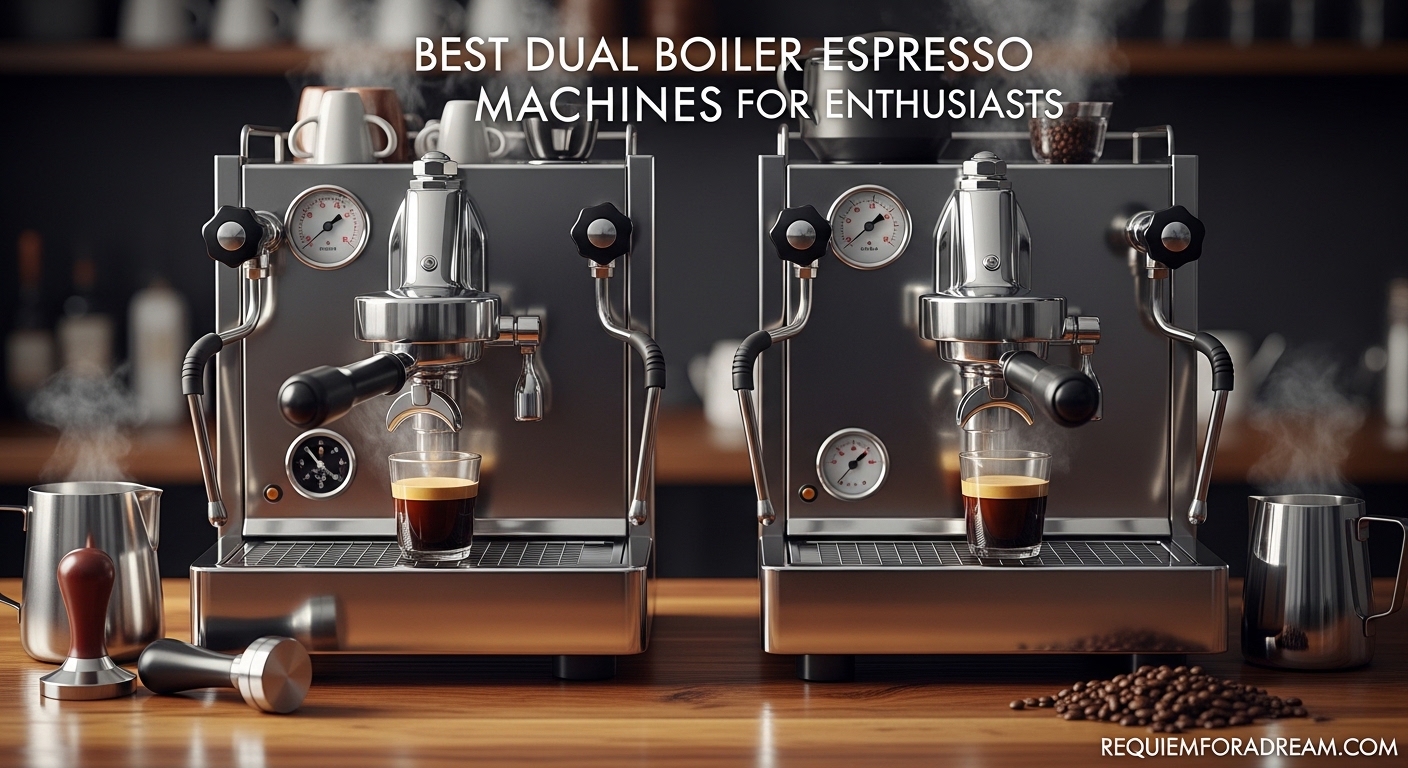
Nothing beats the ritual of pulling a perfectly calibrated shot of espresso in your own kitchen — that rich, golden crema, the aroma of freshly ground beans filling the room, and the satisfaction of mastering a craft that took you months to learn. For espresso enthusiasts who have moved past the limits of single-boiler machines, the best dual boiler espresso machines for enthusiasts represent the true turning point: commercial-grade temperature stability, simultaneous brewing and steaming, and the kind of precise control that separates a good home barista from a great one. If you have been researching dual boiler coffee machines and wondering which one genuinely earns its place on your countertop, this guide walks through everything you need to make a confident, informed purchase in 2026.
The appeal of a dual boiler espresso machine for enthusiasts lies in what it solves. Single-boiler machines force you to choose — pull a shot, then wait for the boiler to reheat before steaming milk, or vice versa. Heat-exchanger machines get you closer, but temperature surfing is an art unto itself, and consistency between shots can slip. A true dual boiler system dedicates one boiler to brewing temperature (typically between 200°F and 205°F for espresso) and another to steam pressure (often reaching 250°F to 266°F), operating completely independently. That separation means you can pull back-to-back espresso shots without compromise while simultaneously steaming milk for latte art — no waiting, no temperature sacrifice. For anyone serious about developing their technique, this is not a luxury. It is the foundation.
Choosing the right dual boiler espresso machine for your home setup means weighing factors that go far beyond brand name and price tag. Boiler material and capacity directly affect recovery time and steam pressure. PID temperature control determines how consistently you can hold your extraction temperature across an entire session. Portafilter size (58mm being the professional standard) influences the range of accessories and baskets available to you. And for home baristas who plan to grow, the machine’s learning curve and upgrade path matter just as much as its out-of-the-box performance. This guide covers ten machines across a wide price range — from the best budget dual boiler espresso machine options under $500 to premium Italian-crafted espresso machines over $2,000 — to help you find exactly the right fit.
Table of Contents
Top 3 Picks for Best Dual Boiler Espresso Machines for Enthusiasts

Rancilio Silvia Pro X
- Dual boiler system
- PID temperature control
- 58mm portafilter
- Programmable preinfusion

Ninja Luxe Cafe Premier
- 3-in-1 espresso & drip & cold brew
- Built-in grinder
- Hands-free milk frother
- Assisted tamper
The Best Dual Boiler Espresso Machines for Enthusiasts in 2026
| Product | Specifications | Action |
|---|---|---|
 Breville Dynamic Duo Breville Dynamic Duo |
|
Check Latest Price |
 Breville Dual Boiler BES920XL Breville Dual Boiler BES920XL |
|
Check Latest Price |
 Breville Barista Pro BES878BSS Breville Barista Pro BES878BSS |
|
Check Latest Price |
| Diletta Bello+ |
|
Check Latest Price |
| Rancilio Silvia Pro X |
|
Check Latest Price |
| Ninja Luxe Cafe Premier |
|
Check Latest Price |
 Breville Bambino Plus BES500BSS Breville Bambino Plus BES500BSS |
|
Check Latest Price |
 Fellow Espresso Series 1 Fellow Espresso Series 1 |
|
Check Latest Price |
 Gaggia E24 Classic Evo Pro Gaggia E24 Classic Evo Pro |
|
Check Latest Price |
 HIBREW H13 HIBREW H13 |
|
Check Latest Price |
1. Breville Dynamic Duo Dual Boiler Espresso Machine — Best All-in-One Package
Breville Dynamic Duo Dual Boiler Espresso Machine and Smart Grinder Pro Package, Stainless Steel – BEP920BSS
- Dual boiler enables simultaneous extraction and steaming
- Built-in precision conical burr grinder with 60 settings
- Exceptional temperature stability for consistent extraction
- 266°F steam power for silky microfoam milk texture
- Includes both dual-wall and single-wall filter baskets
- Heated group head maintains temperature between shots
- Requires 15-20 minutes to reach full operating temperature
- Included grinder may struggle with lighter single-origin roasts
- Vibration pump rather than rotary design
- Premium price reflects its capabilities
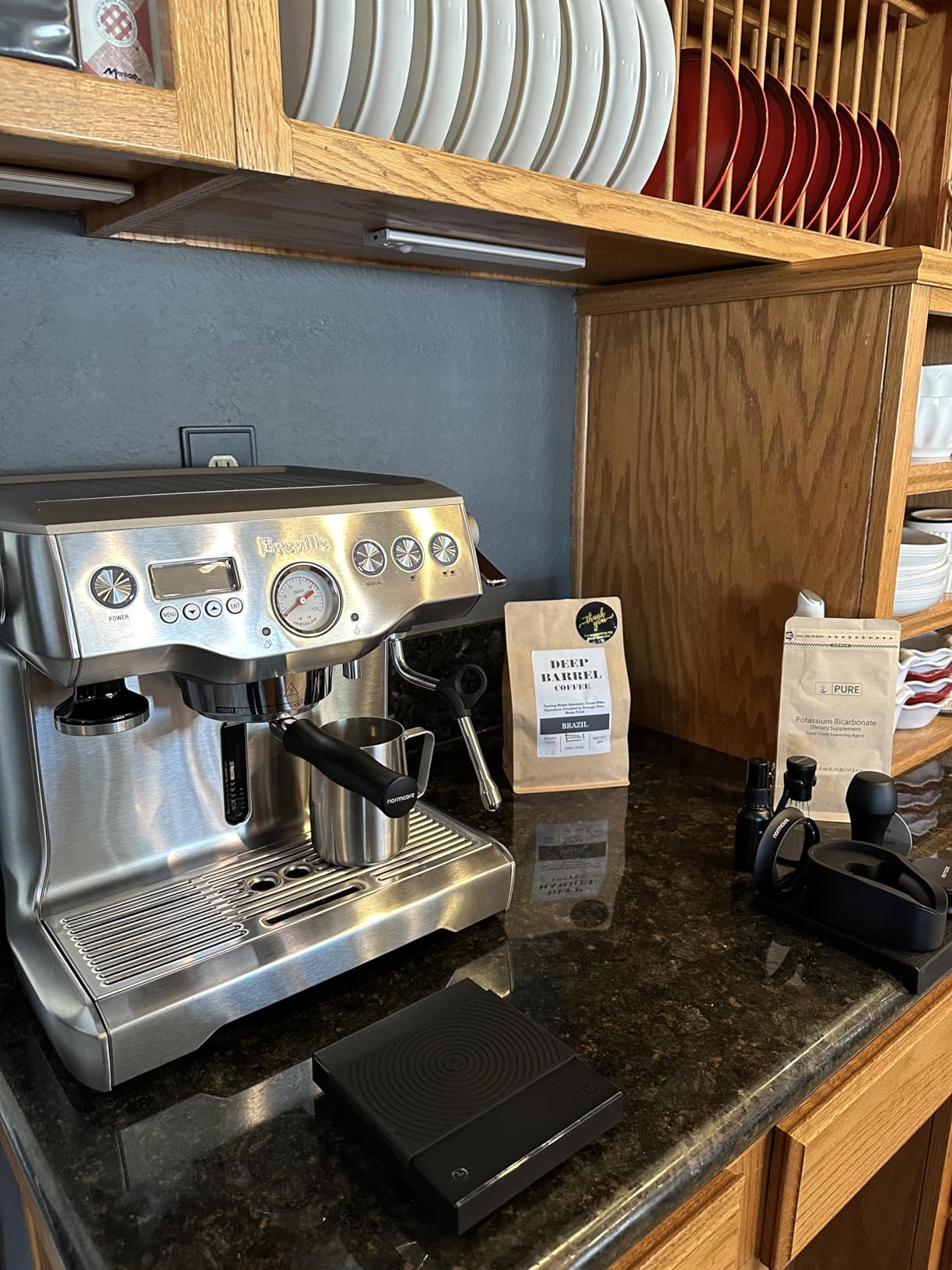
The Breville Dynamic Duo Dual Boiler BES920BSS is the rare espresso machine that actually earns its name. Where most machines offer dual-boiler architecture as a premium feature, Breville packages it alongside a fully integrated precision grinder — the Smart Grinder Pro — creating what is effectively an end-to-end espresso station from a single manufacturer. Having spent time with this machine, the most immediately noticeable benefit is the sheer workflow efficiency. The dual boiler system keeps your brew boiler locked at 200°F to 205°F while the steam boiler fires independently at up to 266°F, which means you can pull a shot and immediately steam milk without any temperature adjustment or waiting period in between. For anyone practicing latte art or serving multiple drinks in sequence, this is not a convenience. It changes how you work.
The integrated Smart Grinder Pro deserves particular attention because it handles one of the most overlooked challenges in home espresso: dosing consistency. With 60 grind settings and precision conical burrs, it delivers grounds directly into the 58mm stainless steel portafilter with impressive repeatability. The Dynamic Duo includes both dual-wall and single-wall filter baskets, giving you the flexibility to experiment as your technique develops. Low-pressure pre-infusion followed by the 9-bar extraction pressure produces a rich, full-bodied shot when dialed in correctly, and the volumetric shot controls let you automate your dosage once you have found your ideal recipe.
On the steam side, the 266°F steam output generates microfoam quickly and efficiently, making it straightforward to produce latte art even for someone still refining their technique. The steam wand rotates through a wide arc, giving you good reach over taller cups. Temperature stability between consecutive shots is genuinely impressive — the PID-controlled brew boiler holds within a narrow range, so the second and third shots of a session extract just as cleanly as the first. The heated group head is a detail that matters in practice: you lose less heat between the boiler and the puck, which is especially important when pulling lighter roasts where temperature has an outsized effect on flavor.
Who this machine is best for
The Breville Dynamic Duo is the ideal choice for the home barista who wants a complete, professional-grade setup without piecing together individual components. If you do not yet own a quality burr grinder, the bundled Smart Grinder Pro represents genuine value — a comparable standalone grinder would cost $200 to $300 on its own. The learning curve is approachable enough for determined beginners while offering enough depth for experienced users to dial in exceptional shots over time.
Who should look elsewhere
Purists who already own a high-end grinder like a Eureka Mignon or Baratza Vario may find the included Smart Grinder Pro redundant. More advanced enthusiasts who prefer pressure profiling or flow control paddles will also want to consider the premium Italian machines below. And anyone with limited counter space should measure twice — the Dynamic Duo is a substantial machine at 14.7 by 14.8 by 14.7 inches.
2. Breville Dual Boiler Espresso Machine BES920XL — Best for the Serious Home Barista
- Genuine dual boiler architecture for simultaneous brewing and steaming
- Heated group head eliminates temperature loss between boiler and puck
- Adjustable Over Pressure Valve lets you tune extraction pressure
- Low-pressure pre-infusion for even
- controlled extraction
- Illuminated water reservoir and hidden tool compartment
- Built-in magnetic tamper is a genuinely useful included accessory
- LCD display with shot timer for precise extraction tracking
- Warranty registration process is cumbersome
- No printed instructions included in the box
- Plastic internal tubes and fittings can degrade over time
- Repair costs after warranty can exceed $350
- Low stock availability — only 10 units often remain
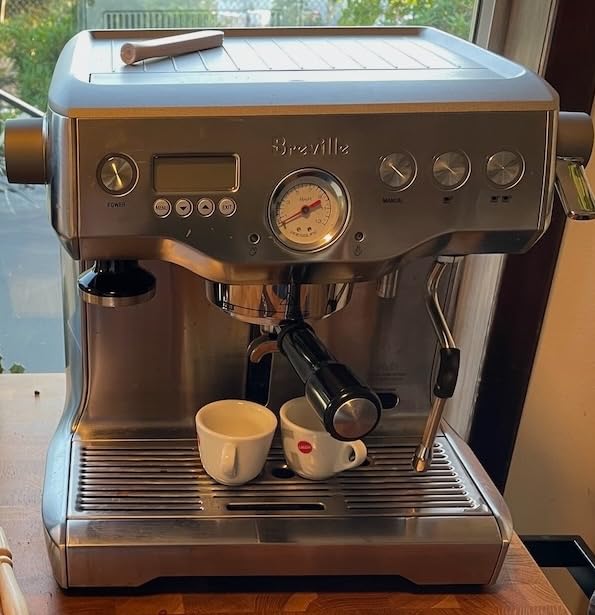
The Breville Dual Boiler BES920XL is the machine that serious home espresso enthusiasts graduate to after outgrowing their first grinder and learning the fundamentals. What sets it apart from its all-in-one sibling is its unapologetic focus on control: this is a machine that puts every meaningful parameter within reach of the user who wants to dial it in. The Over Pressure Valve is the standout feature here. Unlike machines with fixed extraction pressure, the OPV on the BES920XL can be adjusted to fine-tune the pressure profile of your extraction — a capability that experienced baristas use to coax the best flavor out of different roast levels and bean densities.
The dual boiler architecture here mirrors the Dynamic Duo’s approach with the same brew-and-steam independence, but the heated group head is a meaningful refinement. By maintaining active heat all the way to the portafilter, it reduces the temperature drop that occurs between a heated boiler and a relatively cold group head on lesser machines. The result is noticeably more consistent extraction across a session of multiple shots. The low-pressure pre-infusion phase gradually builds pressure before the main 9-bar extraction, which helps channel-free, evenly extracted espresso even with less-than-perfect distribution in your puck.
On the steam side, the rotating steam lever gives you fine-grained control over steam pressure by feel — something that experienced baristas use intuitively to texture milk differently for flat whites versus cappuccinos versus latte art. The 58mm commercial portafilter is the professional standard, meaning the ecosystem of aftermarket baskets, distribution tools, and precision tampers is vast and well-supported. The LCD display with integrated shot clock is one of those features that seems minor but becomes essential in daily use: it gives you an objective measure of your extraction time so you can track your dial-in process across sessions rather than relying on taste memory alone.
Who this machine is best for
The BES920XL is built for the home barista who already owns a quality burr grinder and is ready to push their extraction technique further. If you understand why grind size, dose, yield, and time matter — and you want a machine that rewards that knowledge with exceptional results — this is one of the best dual boiler espresso machines for enthusiasts at its price point.
Who should look elsewhere
Beginners who are still learning to dial in a consistent shot will spend time fighting the machine’s steep learning curve. The lack of a printed manual compounds this. And the long-term durability concerns around internal plastic components should give anyone planning heavy daily use pause — budget accordingly for potential repairs.
3. Breville Barista Pro Espresso Machine BES878BSS — Best Mid-Range Dual Boiler
- Integrated precision conical burr grinder with 30 grind settings eliminates a separate purchase
- ThermoJet heating reaches extraction temperature in just 3 seconds
- Intuitive LCD interface with grinding and extraction progress animations
- PID temperature control maintains consistent extraction
- Pre-infusion and 15-bar Italian pump for balanced shots
- Huge installed user base means extensive community support and accessory availability
- Single boiler means no simultaneous extraction and steaming
- Grind consistency from integrated grinder not as precise as standalone premium grinders
- Steam wand ports can clog with heavy daily use
- Not as consistent as true dual boiler machines across long sessions
The Breville Barista Pro BES878BSS occupies a unique position in this roundup: it is technically a single-boiler machine with a thermoblock heating element rather than a traditional dual boiler setup, but it earns its place here because its ThermoJet system heats to extraction temperature so rapidly — approximately 3 seconds — that it effectively sidesteps the primary frustration of single-boiler machines. You can pull a shot, wait the briefest moment, and steam milk with surprisingly little temperature penalty. For many home baristas, this pragmatic compromise between boiler architecture and heating speed delivers 90% of the dual boiler experience at a significantly lower price point.
The integrated conical burr grinder with 30 grind settings is a genuinely useful addition that simplifies the espresso workflow. Rather than managing a separate grinder and its associated retention and calibration challenges, the Barista Pro doses, grinds, and tamps in a single compact footprint. The LCD interface is leagues ahead of most competitors at this price: it walks you through the grinding and extraction process with visual animations, making it significantly more approachable for someone still learning what good extraction looks and sounds like. The digital temperature control keeps extraction within a narrow, consistent band, and the pre-infusion phase does much of the heavy lifting to produce evenly extracted espresso even before you have mastered your technique.
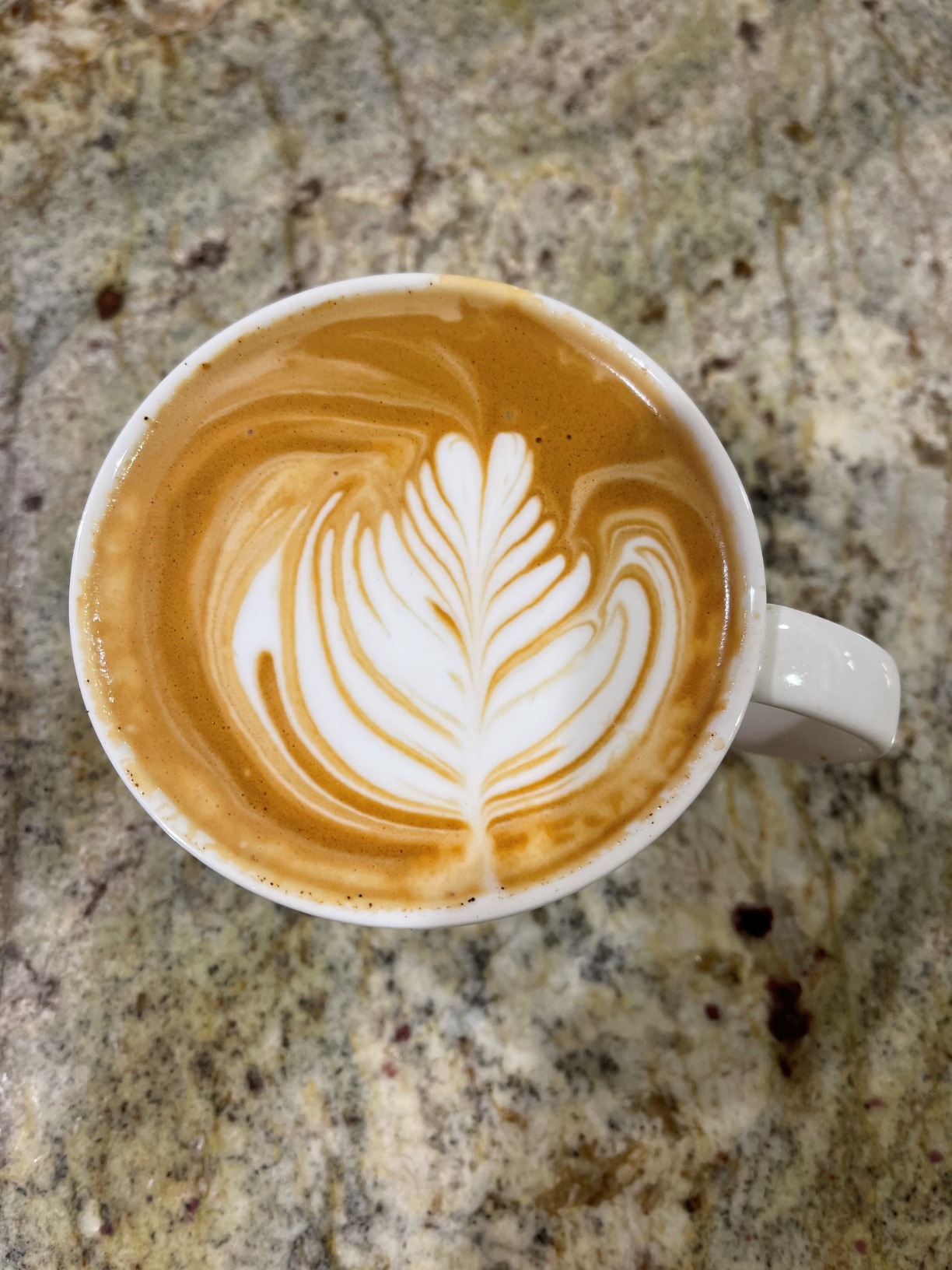
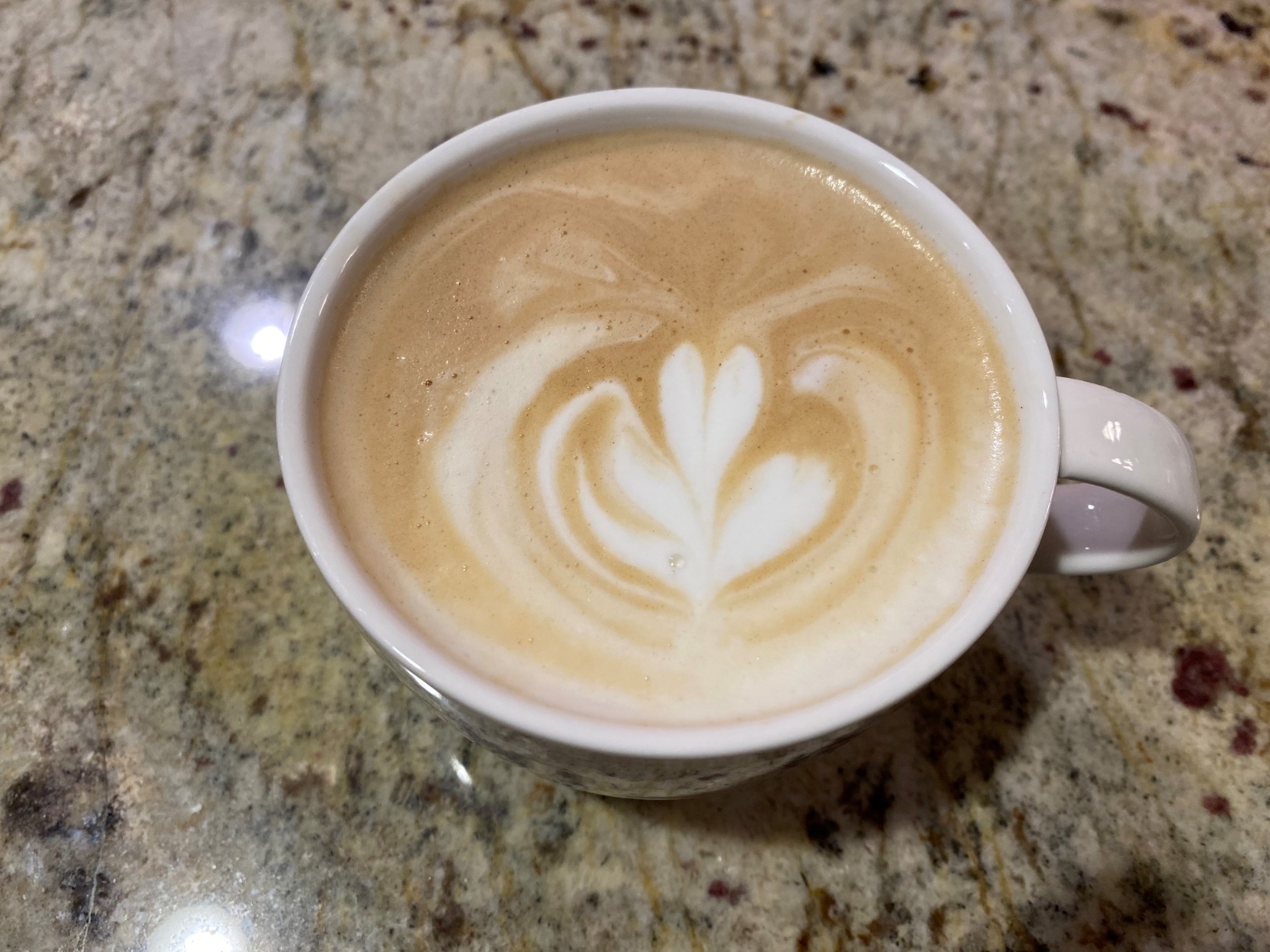
The steam wand on the Barista Pro produces respectable microfoam for home use, though it does not reach the steam pressure of the dedicated dual boiler machines above. Port clogging with heavy use is a documented maintenance concern, and regular backflushing is recommended to keep performance consistent. But for the home barista who is buying their first serious machine and wants room to grow without immediately outgrowing the machine, the Barista Pro is one of the best dual boiler espresso machine options under $1,000 — and it ranks among the most reviewed espresso machines on Amazon with over 3,300 ratings, giving you an unusually broad picture of real-world long-term ownership.
Who this machine is best for
The Breville Barista Pro is the ideal entry point for someone buying their first dedicated espresso machine and wanting an all-in-one solution that does not require purchasing a separate grinder. Its intuitive interface and fast heat-up time dramatically lower the barrier to entry for learning proper espresso technique.
Who should look elsewhere
Dedicated dual boiler performance is genuinely superior for anyone making multiple milk-based drinks in sequence. If you regularly host gatherings or are practicing latte art intensively, the single-boiler limitation will eventually constrain you.
4. Diletta Bello+ Espresso Machine — Best Italian Craftsmanship
- Authentic Italian craftsmanship handmade in Milan
- E61 group head is the gold standard of espresso technology with excellent thermal stability
- Front-mounted PID screen gives direct temperature control and monitoring
- Programmable preinfusion up to 10 seconds for dialing in challenging roasts
- Cool-touch dual steam wands for safe and efficient milk texturing
- Low Power Eco Mode reduces energy consumption when machine is idle
- Shot timer built into the PID display for extraction tracking
- Requires approximately 10 minutes to reach full temperature stability
- Steep learning curve even for intermediate home baristas
- Drip tray capacity is smaller than comparable machines
- Factory smell from initial unboxing requires thorough flushing before first use
- Premium price exceeds comparable heat-exchanger alternatives
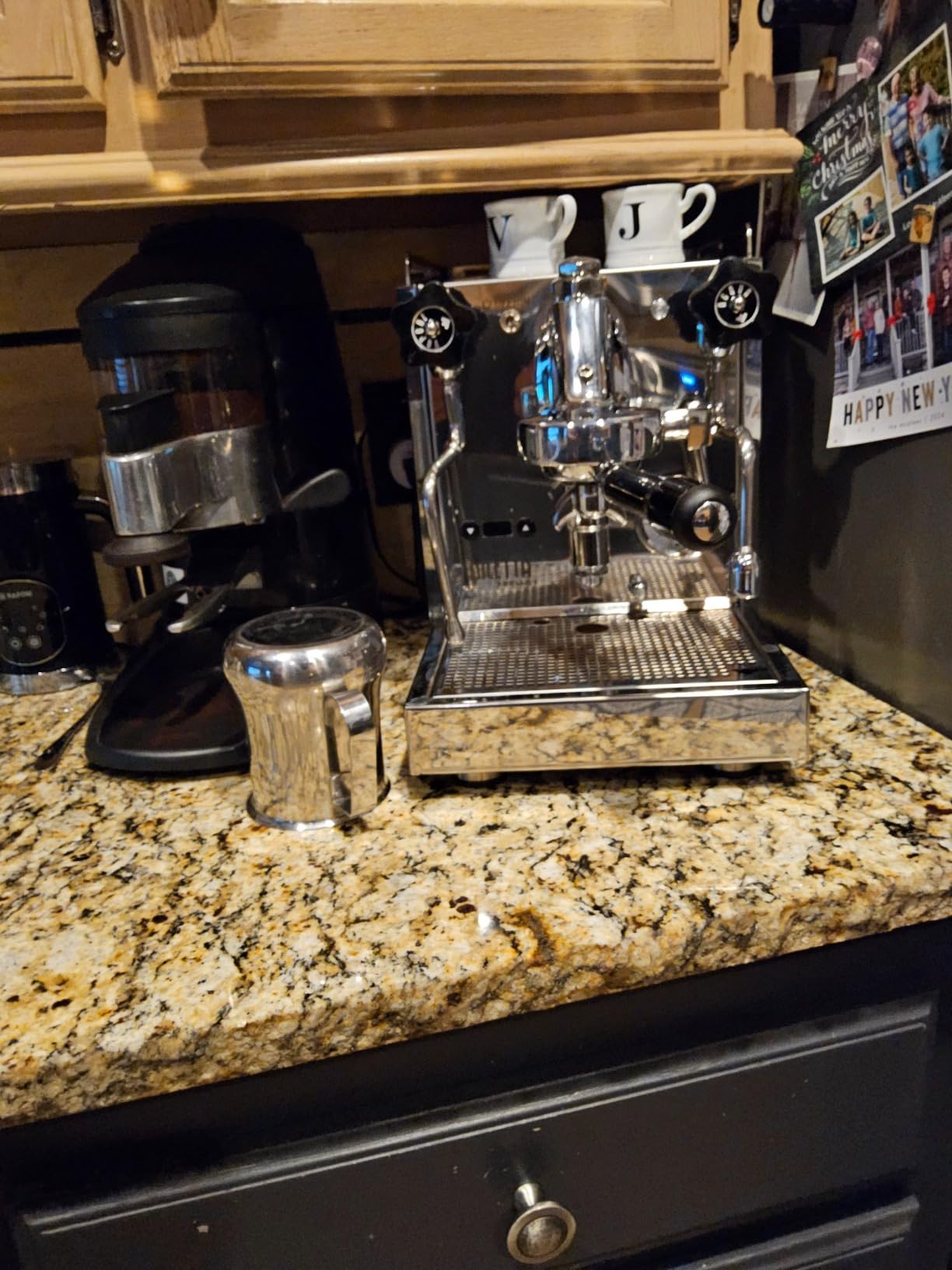
The Diletta Bello+ represents the kind of machine that serious home espresso enthusiasts dream about owning: an authentic Italian heat-exchanger espresso machine with PID temperature control, assembled by hand in Milan. It is built on the proven E61 group head platform — the same technology that powers commercial espresso machines in cafes worldwide — which means its thermal mass and preheating characteristics are extraordinarily well understood by the espresso community. Once the machine reaches operating temperature, the E61 group head holds temperature with a consistency that is difficult to achieve with thermoblock or smaller boiler designs.
What distinguishes the Bello+ from other E61 machines is the addition of a front-mounted PID controller. Traditional E61 machines relied on the machine operator to read group head temperature and manage the heating cycle by feel — a process called temperature surfing that requires experience and intuition. The PID on the Bello+ eliminates that guesswork, giving you precise digital control over extraction temperature. The programmable preinfusion up to 10 seconds is another significant capability: longer preinfusion times allow you to gently saturate denser, darker roasts before applying full pressure, which reduces channelling and produces a more even extraction.
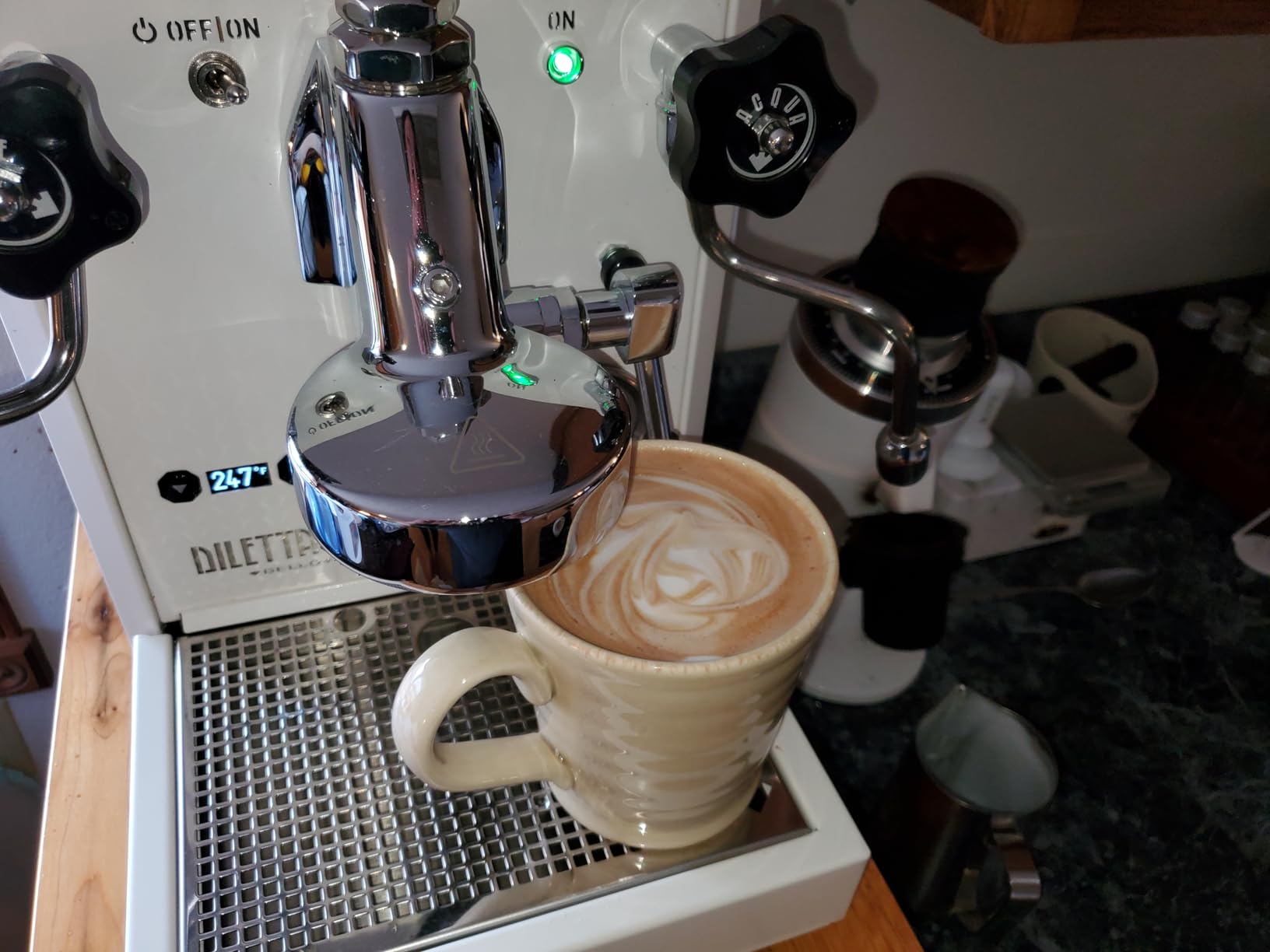
The cool-touch steam wands are a practical safety feature that beginners and experienced users alike will appreciate, and the dual-wand design allows simultaneous milk heating and drink preparation. The Low Power Eco Mode is a thoughtful addition for anyone who leaves their machine on throughout the day — it reduces energy draw while maintaining group head temperature in standby. The hot water cycle feature is genuinely useful for preheating cups or making Americanos without pulling a shot first. Made by Quickmill, a manufacturer with decades of experience supplying components to the Italian espresso industry, the Bello+ benefits from an ecosystem of readily available E61-compatible parts and accessories.
Who this machine is best for
The Diletta Bello+ is purpose-built for the home barista who has outgrown entry-level machines and is ready to embrace the craft-level approach of traditional Italian espresso technology. If you appreciate the ritual of espresso preparation and want a machine that rewards skill development over years rather than months, this is one of the most satisfying machines you can own.
Who should look elsewhere
Beginners will find the Bello+ frustrating without guidance. The learning curve is real, and without a foundation in espresso technique, the machine’s capabilities are difficult to access. Budget-conscious buyers should also note that comparable heat-exchanger machines are available for less.
5. Rancilio Silvia Pro X Espresso Machine — Best Pro-Sumer Dual Boiler
- Dual boiler system with dedicated 1L steam and 300ml brew boilers for genuine simultaneous operation
- Dual PID controllers independently regulate brew and steam temperatures
- 4-hole steam wand produces dense
- professional-quality microfoam for latte art
- Adjustable soft preinfusion for improved shot quality
- Shot timer built into the PID display
- Programmable auto-on timer for scheduled warm-up
- Brass internal components and commercial-grade build quality throughout
- Heavy-duty construction that feels built to last decades
- Timed turn-on requires manual calculation rather than time-of-day scheduling
- Menu navigation for advanced settings requires referencing codes
- Water tank may be insufficient for large gatherings or entertaining
- Requires a high-quality burr grinder to achieve its full potential
The Rancilio Silvia Pro X is, in the estimation of many experienced home baristas, the definitive pro-sumer espresso machine currently available. Building on the legendary reputation of the original Silvia — a machine that has been a fixture in home espresso circles for over two decades — the Pro X adds genuine dual boiler architecture to the proven Rancilio platform. The result is a machine that brings commercial-grade capabilities into a home-sized footprint without the commercial service demands. The 1-liter steam boiler and 300ml brew boiler operate independently, meaning you can pull consecutive shots at precise temperature while simultaneously generating powerful steam for milk — and you can leave the steam boiler off when you are only pulling espresso, which meaningfully reduces energy consumption during simple sessions.
The dual PID configuration is the technical heart of what makes the Silvia Pro X exceptional. Rather than a single controller managing both boilers, two dedicated PIDs independently regulate the brew and steam circuits. This means your extraction temperature is not affected by steam demand, and vice versa — each stays precisely where you set it regardless of what the other circuit is doing. The 4-hole steam wand is one of the most capable at this price point: it produces a dense, velvety microfoam that is genuinely competitive with what you get from dedicated café equipment, making it a favorite among home baristas focused on latte art.
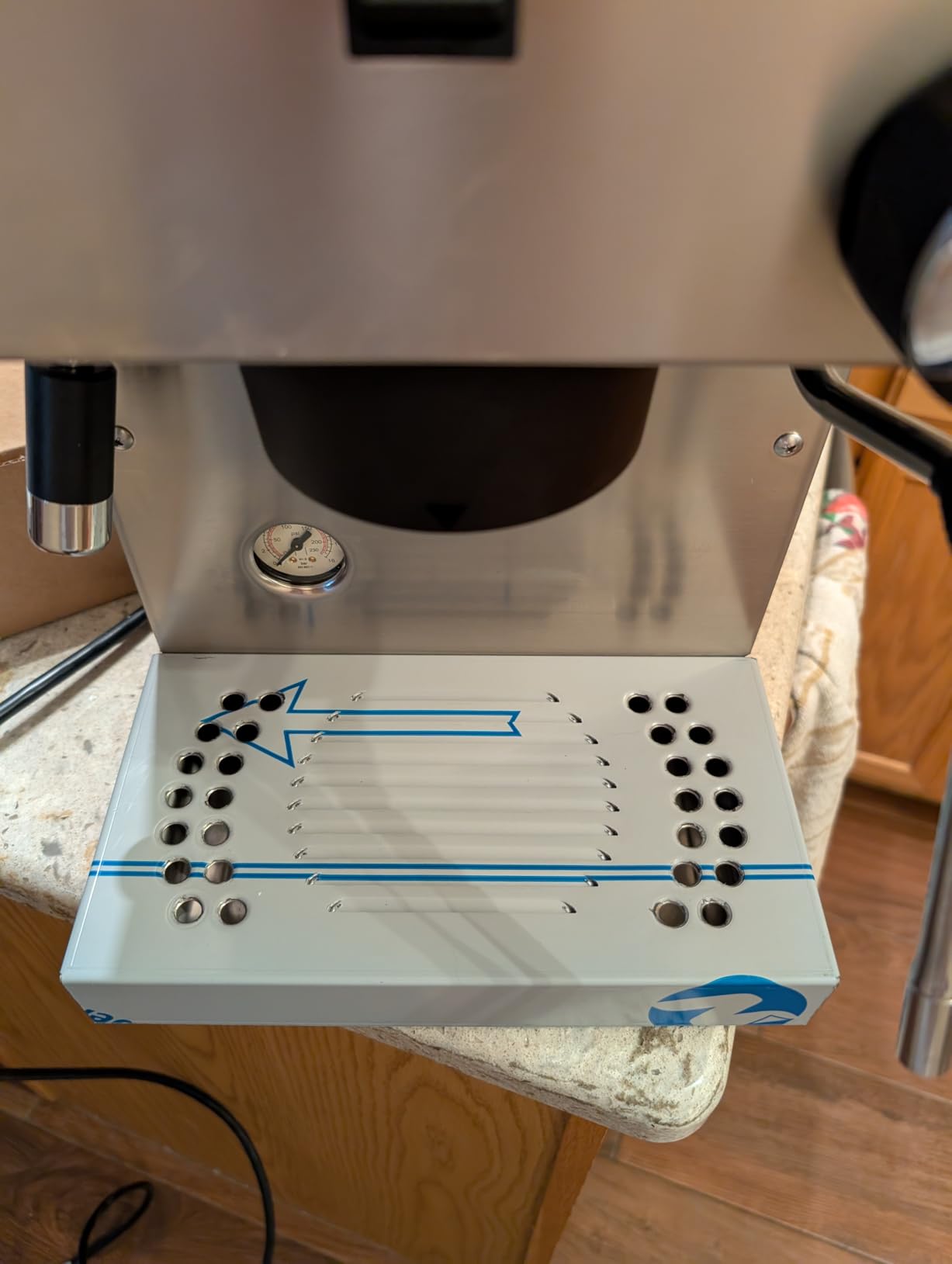
The adjustable soft preinfusion feature deserves particular attention from anyone working with lighter roasts. By gradually increasing pressure before the main extraction, preinfusion allows the puck to saturate evenly and reduces the channelling that produces uneven extraction and bitter or sour notes. The programmable auto-on timer is convenient in principle, though the implementation as a duration-based timer rather than a clock-based schedule requires a moment of calculation each time you set it. The machine is self-serviceable with widely available parts — Rancilio has maintained the Silvia platform for decades, and the ecosystem of upgrades, modifications, and replacement parts is extensive and well-documented.
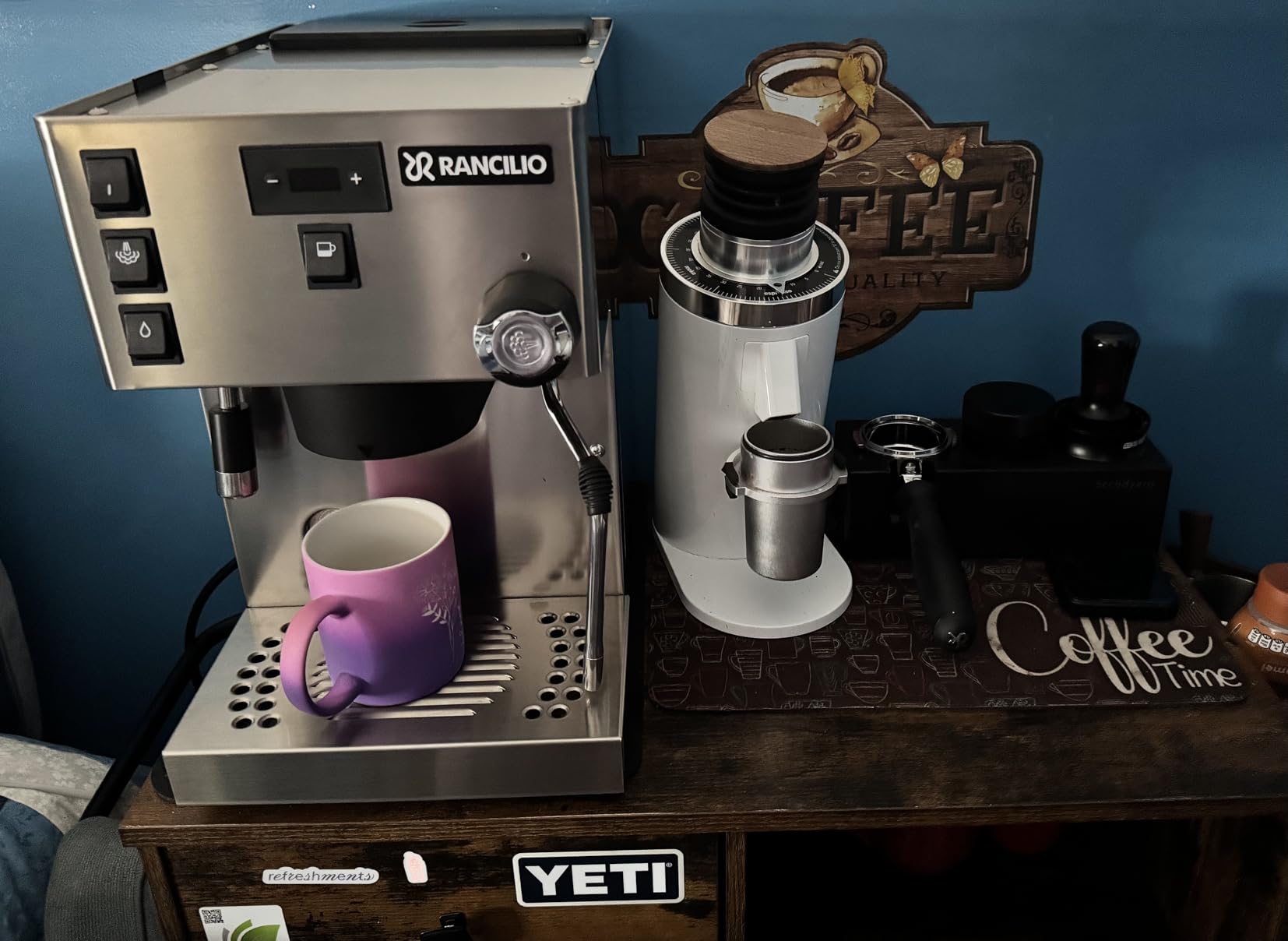
Who this machine is best for
The Silvia Pro X is the machine for the home barista who wants the best possible foundation for developing professional-grade technique over years of use. It is serious enough to reward mastery while remaining accessible to anyone willing to learn. Pair it with a quality burr grinder like a Eureka Mignon or Baratza Vario, and you have a setup capable of producing espresso that rivals commercial cafes.
Who should look elsewhere
Anyone without a quality grinder should buy the grinder first and revisit the Silvia Pro X as a second purchase. Without proper grinding, even this machine cannot perform to its potential. Beginners who want immediate gratification will also be frustrated by the learning curve.
6. Ninja Luxe Cafe Premier 3-in-1 Espresso Machine — Best Automatic for Beginners
- 3-in-1 functionality covers espresso
- drip coffee
- and rapid cold brew in a single machine
- Integrated conical burr grinder with 25 settings and weight-based dosing with built-in scale
- Assisted tamper ensures consistent
- evenly distributed pucks every time
- Hands-free milk frother with Dual Froth System handles dairy and plant-based milks
- Barista Assist Technology provides guided grind size recommendations per drink type
- Built-in storage for accessories keeps the workspace tidy
- Exceptional value for households with diverse coffee preferences
- No single-dose filter basket available — minimum output is a double shot
- The 36g minimum grind dose may be too much for single servings
- Cannot dispense hot water only — not suitable for tea drinkers
- Plastic drip tray cover feels inconsistent with the overall build quality
The Ninja Luxe Cafe Premier ES601 takes a fundamentally different approach to espresso than every other machine in this roundup. Rather than targeting experienced home baristas who want to develop craft-level technique, it is designed to democratize café-quality espresso for households with diverse coffee preferences. The 3-in-1 functionality — espresso, drip coffee, and rapid cold brew — covers virtually every coffee drink a household might want from a single, compact countertop machine. The rapid cold brew feature is particularly noteworthy: it brews cold brew at lower temperature and pressure in under 5 minutes, which is a genuine convenience for anyone who enjoys cold coffee without the 12-to-24-hour wait of traditional cold brew methods.
The integrated conical burr grinder with 25 settings and weight-based dosing via a built-in scale is the feature that makes this machine approachable for non-baristas. Rather than measuring and dosing manually, the Luxe Premier weighs your grounds as it grinds and alerts you when you have reached the target dose. The Assisted Tamper continues this theme: it applies consistent, even pressure to the puck each time, eliminating one of the most common sources of inconsistent extraction among beginners. The Dual Froth System combines steam and whisking to produce milk foam without requiring you to master steam wand technique — a genuine innovation that makes café-quality milk drinks accessible to anyone.
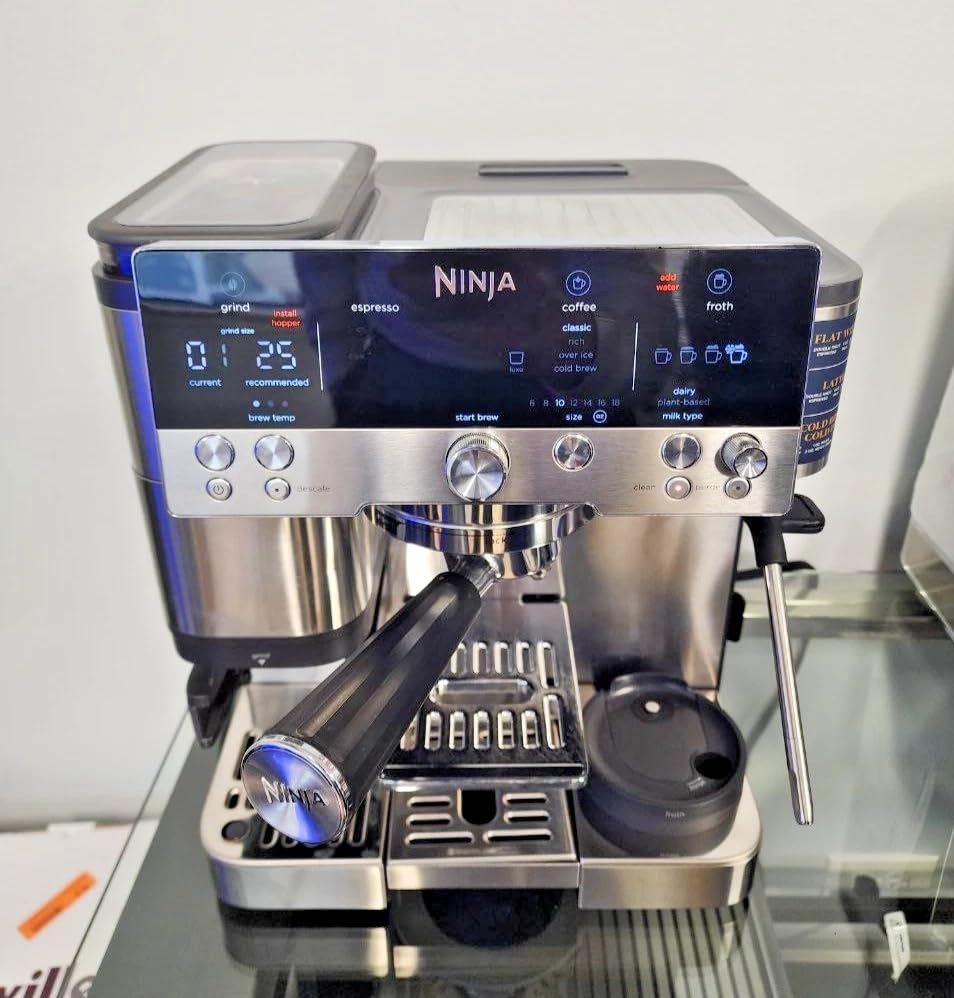
The Barista Assist Technology deserves credit for genuinely useful guidance rather than marketing fluff. The system provides specific grind size recommendations for each drink type and bean variety, which takes much of the trial and error out of dialing in a new bag of coffee. The 3-in-1 versatility is the real story here: for a household where one person wants a double-shot espresso while another wants a full pot of drip coffee, this machine eliminates the need for multiple appliances. The 2,100-plus reviews and consistent 4.4-star average reflect broad satisfaction across a wide range of user experience levels.
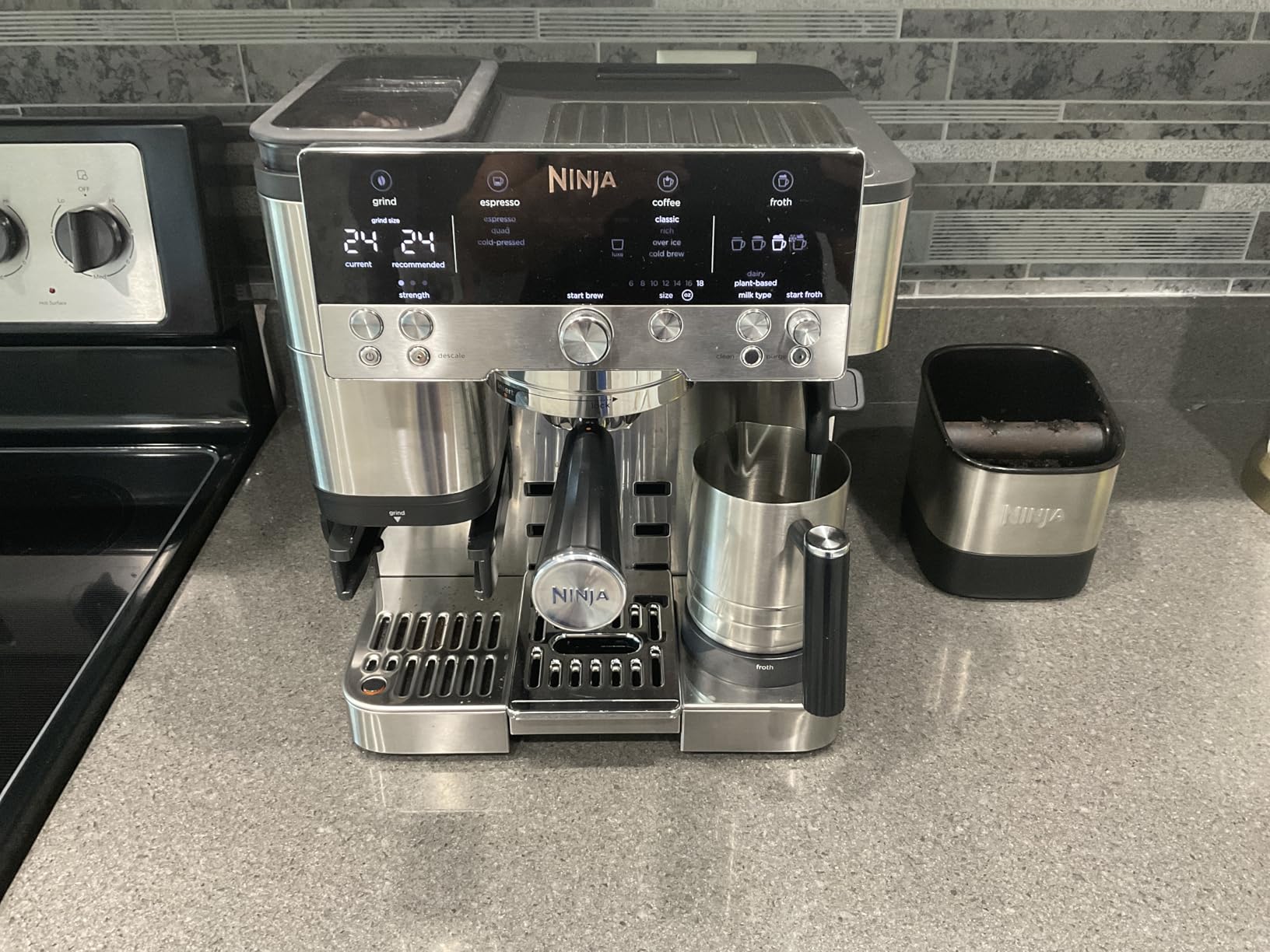
Who this machine is best for
The Ninja Luxe Cafe Premier is the best dual boiler espresso machine for enthusiasts who are just beginning their espresso journey, or for households where coffee preferences vary widely. It is also an excellent choice for anyone frustrated by the complexity of traditional espresso setups who still wants access to real espresso and café-quality milk drinks.
Who should look elsewhere
Experienced home baristas who want maximum control over every parameter of their extraction will find the automated systems constraining. And serious cold brew enthusiasts who want the deep, slow-extracted flavor of traditional cold brew will prefer a dedicated cold brew maker.
7. Breville Bambino Plus BES500BSS — Best Compact Dual Boiler Machine
- Compact 7.7-inch width fits in small kitchens without sacrificing performance
- ThermoJet heating reaches extraction temperature in just 3 seconds
- Automatic microfoam milk texturing with adjustable texture and temperature settings
- PID temperature control for consistent extraction across sessions
- Auto purge function cleans the system after steaming automatically
- Remarkably consistent shots for a machine at this price point
- Lightweight at 11 lbs — easy to move or store
- 54mm portafilter is smaller than the professional 58mm standard
- Stock tamper is inconsistent — aftermarket recommended for best results
- Low stock availability — only 4 units often remain in inventory
- Requires a separate quality grinder for optimal results
- Learning curve remains despite automated milk frothing
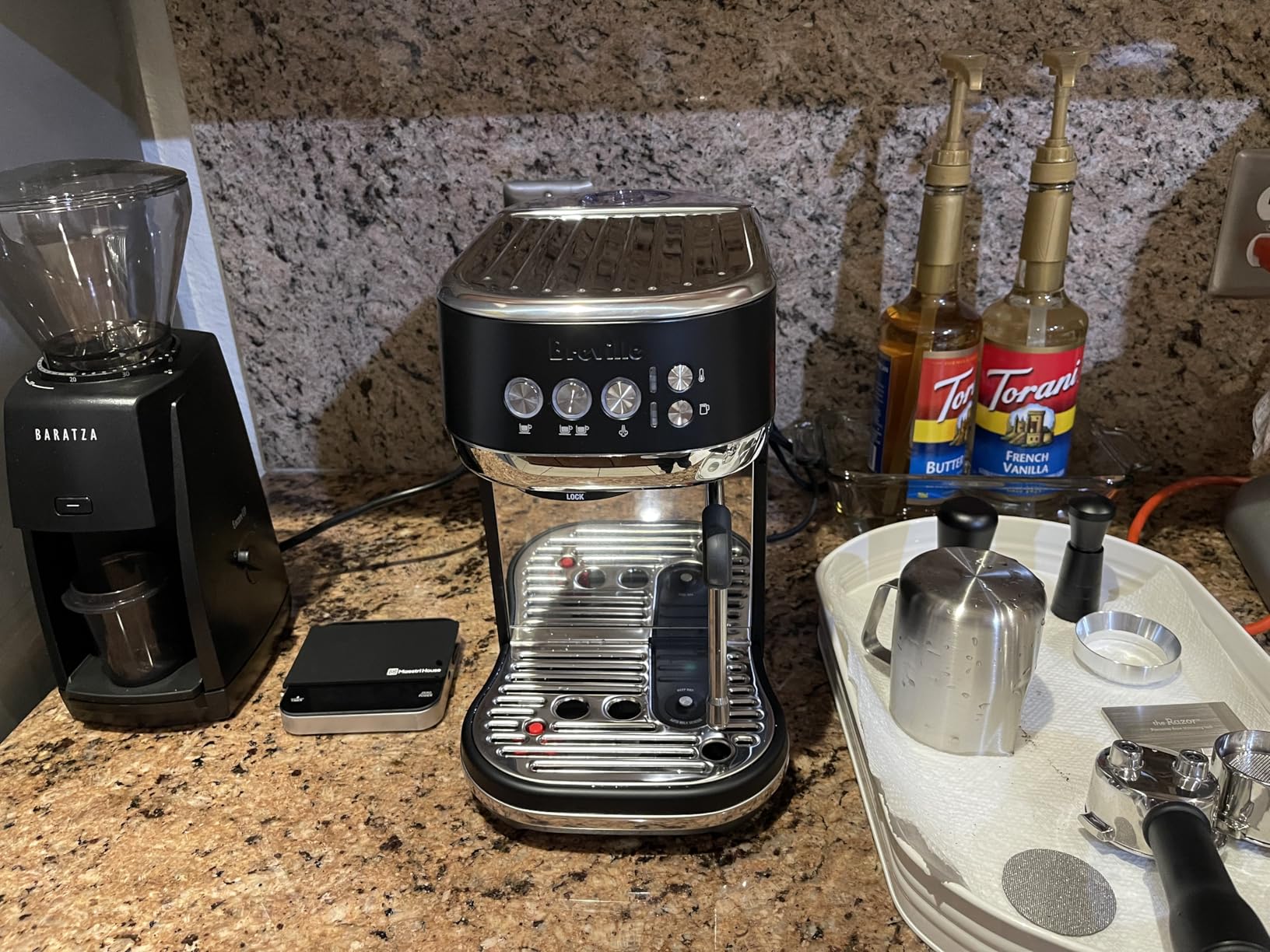
The Breville Bambino Plus BES500BSS has quietly become one of the most influential espresso machines of the past several years — not because it is the most powerful or feature-rich, but because it has done more than any other machine to make quality espresso accessible to home users with limited space and limited budgets. At just 7.7 inches wide and weighing only 11 pounds, it is small enough to fit in a dorm room, an apartment kitchen, or a workspace where a full-size espresso machine would be impractical. Yet its ThermoJet heating system, PID temperature control, and automatic microfoam milk texturing deliver espresso and milk drinks that are genuinely competitive with machines costing two to three times its price.
The 3-second heat-up time deserves special emphasis because it changes the entire relationship between user and machine. With a traditional espresso machine that requires 15 to 20 minutes to heat up, there is a threshold cost — in time, in waiting — to making a single drink. The Bambino Plus reduces that threshold to nearly nothing. Want one espresso? The machine is ready before you finish grinding your beans. This matters more in daily practice than it does on paper: the easier a machine is to use casually, the more you will use it, and the more you use it, the faster your technique develops.
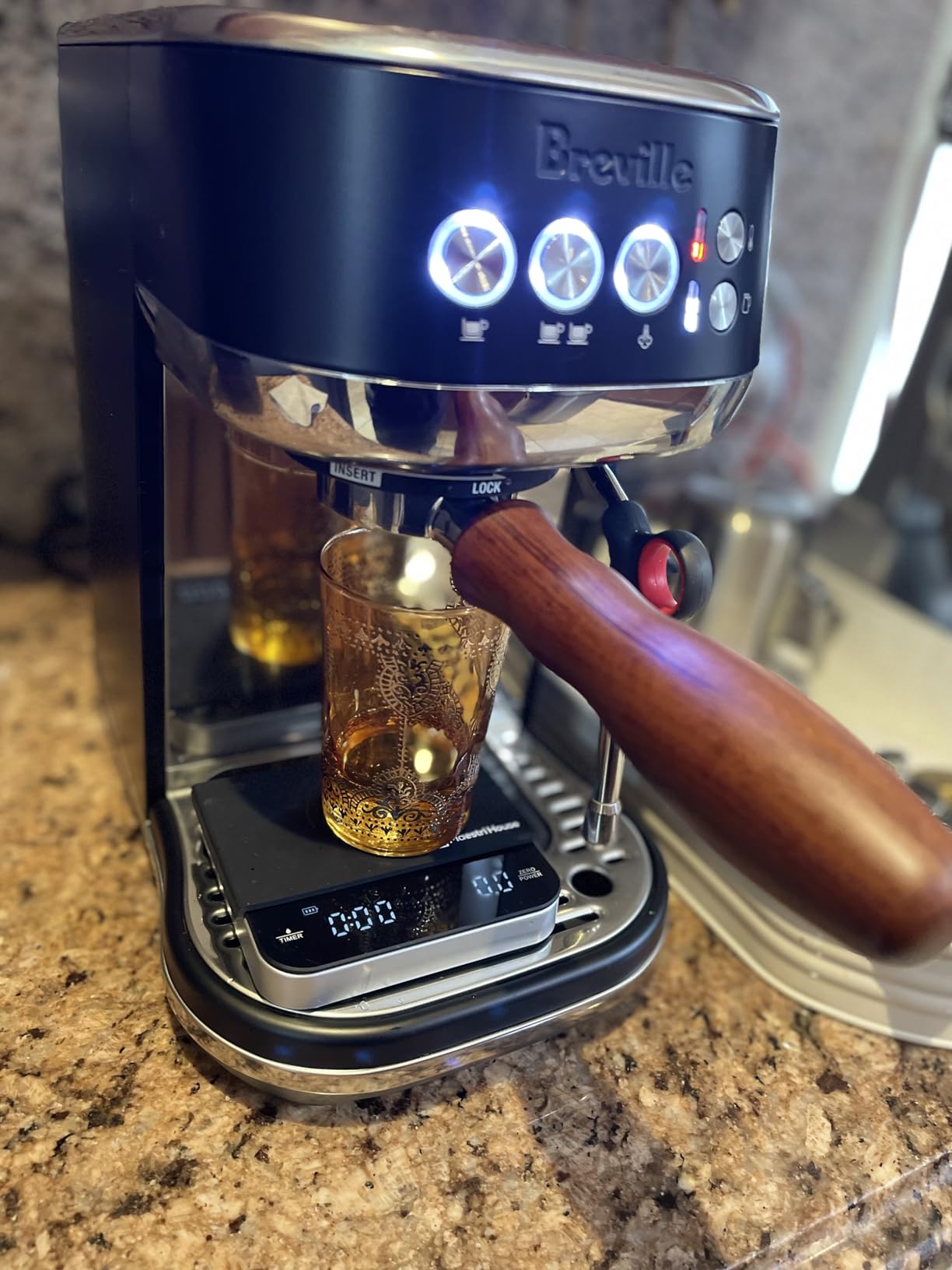
The automatic microfoam milk texturing system is genuinely impressive for what it achieves within its constraints. Rather than requiring you to master steam wand technique, it automates milk frothing to a consistently good standard. You can adjust both texture and temperature via the control panel, producing everything from hot flat milk to fine microfoam for latte art without touching a steam wand. The auto purge function that cleans the system after steaming is a hygiene detail that most users never think about until they have forgotten to purge a manual wand and gotten a mouthful of burned milk residue — the Bambino Plus simply does not allow that mistake.
Who this machine is best for
The Breville Bambino Plus is the ideal first serious espresso machine for someone with limited counter space or a limited budget who wants a foundation for developing technique. Its automated milk frothing removes one of the biggest barriers to making café-quality drinks at home, and its compact footprint means it fits into kitchens where a full-size machine simply would not work.
Who should look elsewhere
The 54mm portafilter is a meaningful limitation if you plan to grow into the professional standard 58mm ecosystem. And anyone serious about milk technique for latte art will eventually want to move beyond the automated frothing system to manual steam wand control.
8. Fellow Espresso Series 1 Home Espresso Machine — Best Beginner-to-Intermediate Bridge
- Built-in guided experience walks beginners through drink preparation step by step
- Pressure profiling lets advanced users customize extraction curves beyond fixed 9-bar
- Temperature-sensing steam wand automatically stops at target milk temperature
- Heats to operating temperature in under 2 minutes
- 58mm commercial-grade portafilter aligns with professional accessories ecosystem
- Step-by-step on-screen recipes for lattes
- cappuccinos
- flat whites and more
- Beginner-friendly interface that grows into expert capabilities as skills develop
- Very limited review history — only 3 reviews as a newer product
- Premium price reflects the guided technology rather than raw brewing capability
- Compact depth (23 inches) may require counter space planning
- Newer product without established long-term reliability data
The Fellow Espresso Series 1 is one of the most thoughtfully designed home espresso machines to emerge in years, and it represents a genuinely new category of approachability within the dual boiler espresso machine landscape. Fellow — best known for their Stagg kettle and Atlas grinder — has applied their product design philosophy to espresso: make something that is immediately accessible to beginners while preserving the depth that experienced baristas need to continue growing. The built-in guided experience is the key differentiator. Rather than expecting the user to know what a good extraction looks or sounds like, the Series 1 walks you through drink preparation with step-by-step on-screen guidance that includes shot timing, milk temperature, and technique prompts.
Pressure profiling is the feature that separates the Series 1 from other beginner-accessible machines. Rather than locking you into a fixed 9-bar extraction, the machine allows you to adjust the pressure curve across the extraction — starting lower for preinfusion, ramping to peak pressure, and tapering off at the end. This is a technique used by professional baristas to optimize extraction for different roast levels and bean characteristics, and the ability to experiment with it at home on a machine this accessible is genuinely novel. The temperature-sensing steam wand is equally innovative: it monitors milk temperature in real time and automatically stops steaming when it reaches your target, preventing the scalding that ruins milk texture and is one of the most common mistakes beginners make with traditional steam wands.
The 2-minute heat-up time is competitive with the fastest machines in this roundup, and the 58mm commercial-grade portafilter signals Fellow’s commitment to building a machine that users will not outgrow. The portafilter ecosystem is vast and well-supported, meaning the accessories, baskets, and distribution tools available for a 58mm setup will serve a user for years. The on-screen recipe library for specific drinks — lattes, cappuccinos, flat whites, and more — is a genuinely useful feature that bridges the gap between following a recipe on your phone and executing it at the machine. Early reviews are unanimously positive, though the limited review count reflects the machine’s newness rather than any concern about quality.
Who this machine is best for
The Fellow Espresso Series 1 is ideal for the dedicated beginner who is serious about learning proper espresso technique and wants a machine that will grow with them rather than requiring replacement as skills develop. It is also an excellent choice for experienced baristas who want pressure profiling capabilities without the complexity and footprint of a commercial-grade machine.
Who should look elsewhere
The limited review history means long-term reliability data does not yet exist. If you prefer to buy based on proven track records with thousands of user reviews, choose one of the more established machines in this roundup.
9. Gaggia RI9380/46 E24 Classic Evo Pro — Best Budget Italian Dual Boiler Machine
- Italian-made with solid steel housing — decades of proven craftsmanship
- Commercial-grade 58mm portafilter matches the professional standard
- Brass boiler provides excellent temperature stability for consistent extraction
- 3
- 100-plus reviews make this one of the most widely validated machines available
- Three-way solenoid valve eliminates post-extraction dripping and keeps the puck dry
- Wide ecosystem of mods
- upgrades
- and replacement parts available from decades of community development
- Outstanding price-to-quality ratio compared to machines at twice the cost
- 15-20 minute warm-up time is significantly longer than modern thermoblock machines
- No PID temperature control in stock configuration — requires aftermarket upgrade for digital precision
- Two-piece steam wand assembly is less convenient than one-piece designs
- Learning curve required to achieve consistent results without temperature control
- Plastic drip tray feels inconsistent with the premium housing quality
The Gaggia RI9380/46 E24 Classic Evo Pro occupies a unique position in this roundup: it is the machine that generations of dedicated home baristas have used as their entry point into serious espresso, and it remains one of the best budget dual boiler espresso machines for enthusiasts even as newer machines compete for attention. What makes the E24 Classic Evo Pro enduring is not any single feature but the total package: Italian manufacturing, commercial-grade components, a decades-proven design, and a price point that has remained remarkably stable despite inflation and market changes. More than 3,100 Amazon reviews provide one of the most extensive real-world validation datasets of any home espresso machine available, and the consistent 4.4-star average reflects broad satisfaction across a diverse user base.
The brass boiler is the foundation of the E24’s temperature stability. Brass has a high thermal mass relative to aluminum or steel, which means it absorbs heat energy and releases it gradually — smoothing out the minor temperature fluctuations that cause inconsistency in shots. The commercial three-way solenoid valve is another detail borrowed from commercial equipment: after extraction, it relieves pressure on the puck and routes any remaining water to the drip tray, leaving the portafilter dry and clean rather than dripping for the next minute. This keeps your workspace tidy and, more importantly, signals that extraction is complete, which is useful feedback for dialing in your technique.
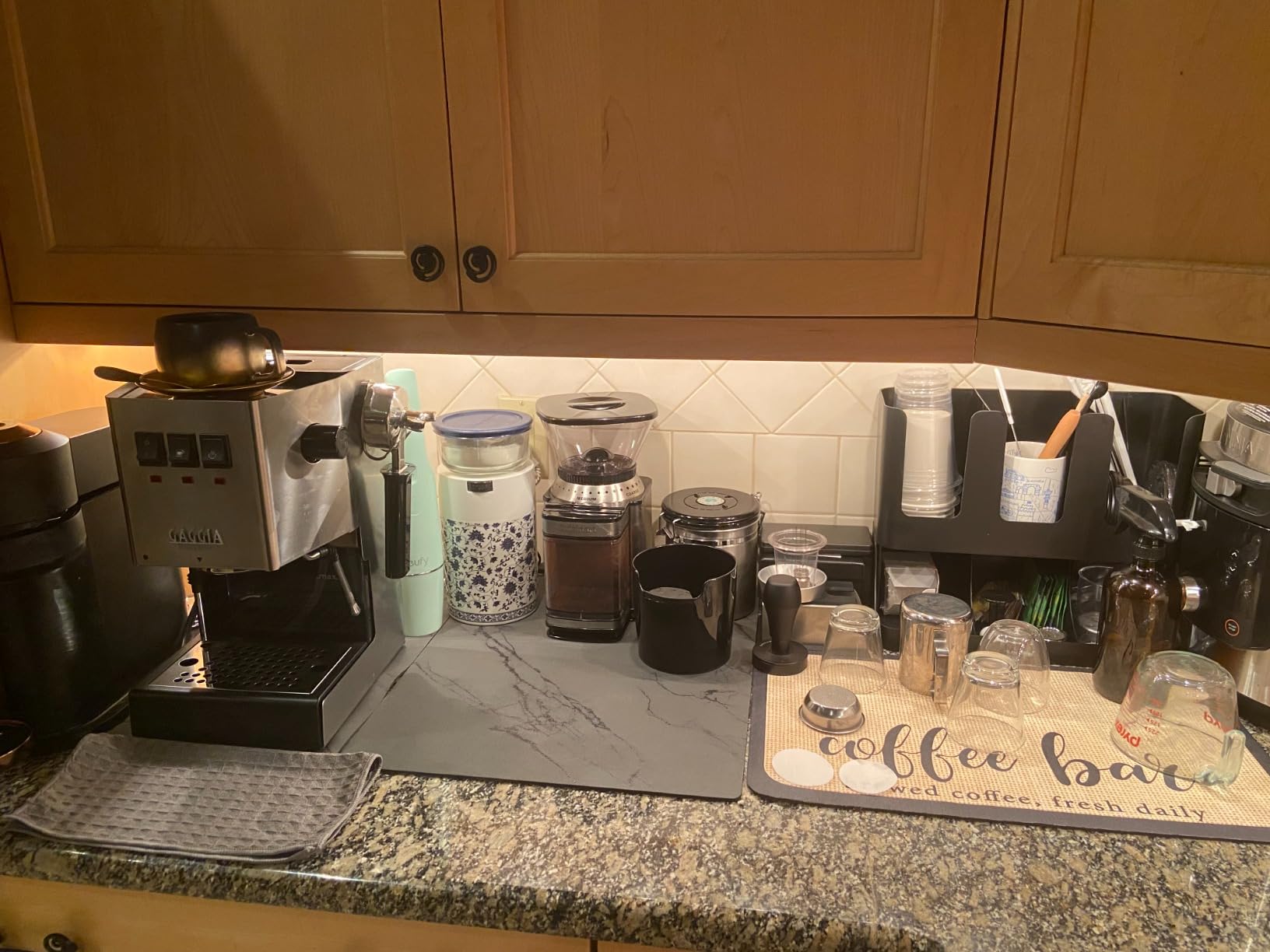
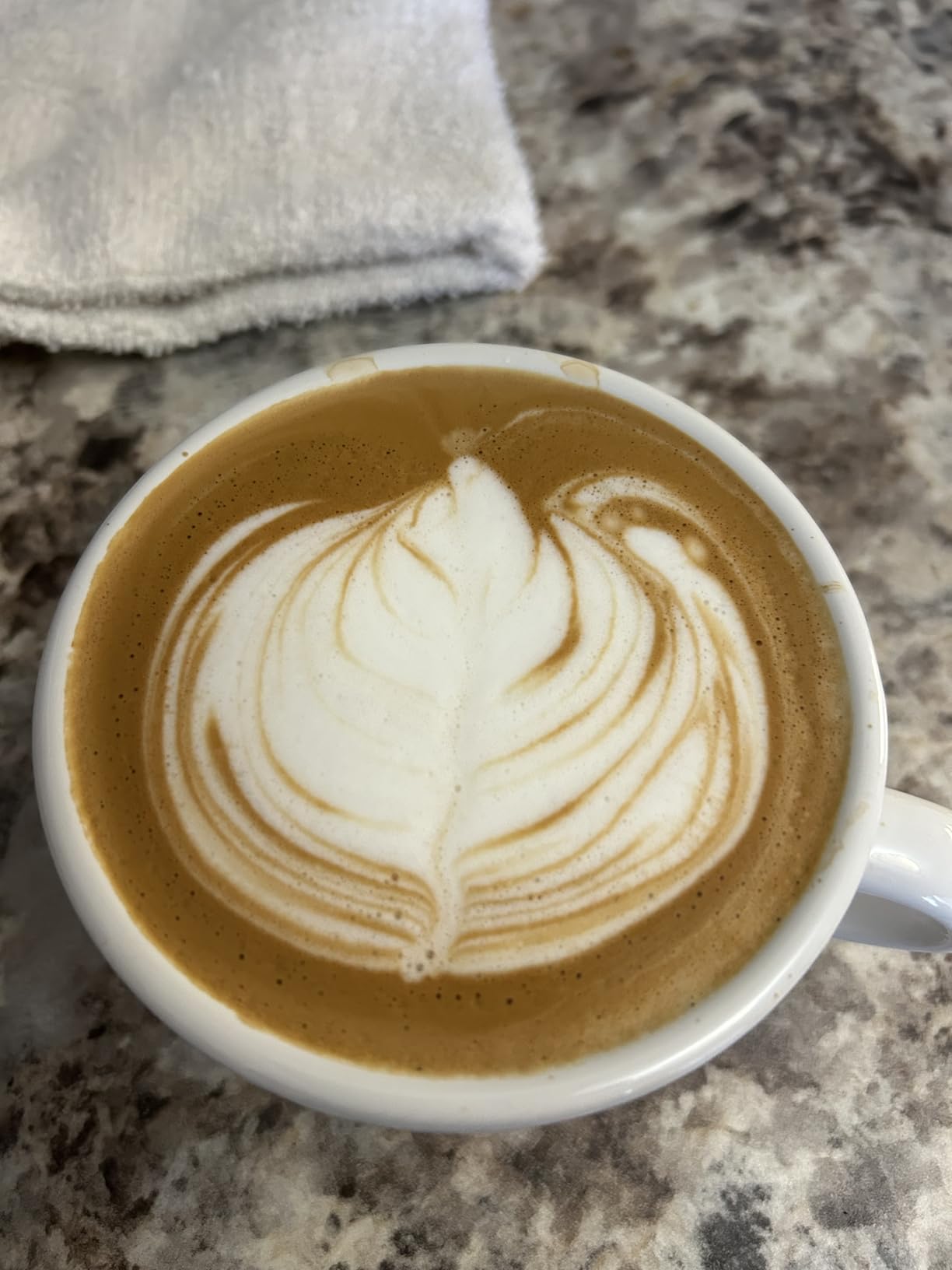
The commercial steam wand on the E24 Classic Evo Pro is one of its most celebrated features among experienced users. Unlike the smaller, less powerful wands on entry-level machines, the commercial-style wand produces a dense, focused steam jet that is well-suited to the latte art community. The 9-bar extraction pressure — slightly above the traditional 9-bar standard — can be fine-tuned with an OPV adjustment for users who want to experiment. The E24 supports ESE pods as well as ground coffee, which is a useful fallback for mornings when you do not have time to dial in a fresh grind. The self-serviceable design and vast ecosystem of modifications mean that as you develop your technique, the machine grows with you — PID upgrades, pressure profiling modifications, and OPV adjustments are all well-documented projects within the Gaggia community.
Who this machine is best for
The Gaggia E24 Classic Evo Pro is the best dual boiler espresso machine for the budget-conscious enthusiast who is committed to developing real espresso technique over time. It provides professional-grade components and commercial DNA at a price that leaves budget for a quality grinder, which is the right priority for anyone building a serious home espresso setup.
Who should look elsewhere
The lack of PID temperature control in the stock configuration is a genuine limitation for anyone who wants precise digital temperature management without modification. The 15-to-20-minute warm-up time also rules out casual use for anyone who wants espresso without advance planning.
10. HIBREW H13 Dual Boiler Espresso Machine — Best Budget Dual Boiler Under $300
- Genuine dual boiler system with independent brew and steam heating elements
- LED touchscreen provides intuitive control over brew parameters and steam levels
- 58mm commercial-grade portafilter at a budget price point
- PID precision temperature control for consistent extraction
- 3-level adjustable steam settings allow fine-tuning of milk texturing
- Separate hot water spout for making Americanos and preheating cups
- Includes complete barista kit: tamper
- pitcher
- and portafilter
- Compact stainless steel design with wood accent trim looks premium
- Limited review count of 7 ratings — new product without extensive validation
- Volume-based shot timing rather than time-based — requires adjustment period
- Auto shut-off cannot be disabled and activates between 60-90 minutes
- Smaller 1.3-liter water tank requires more frequent refilling for heavy use
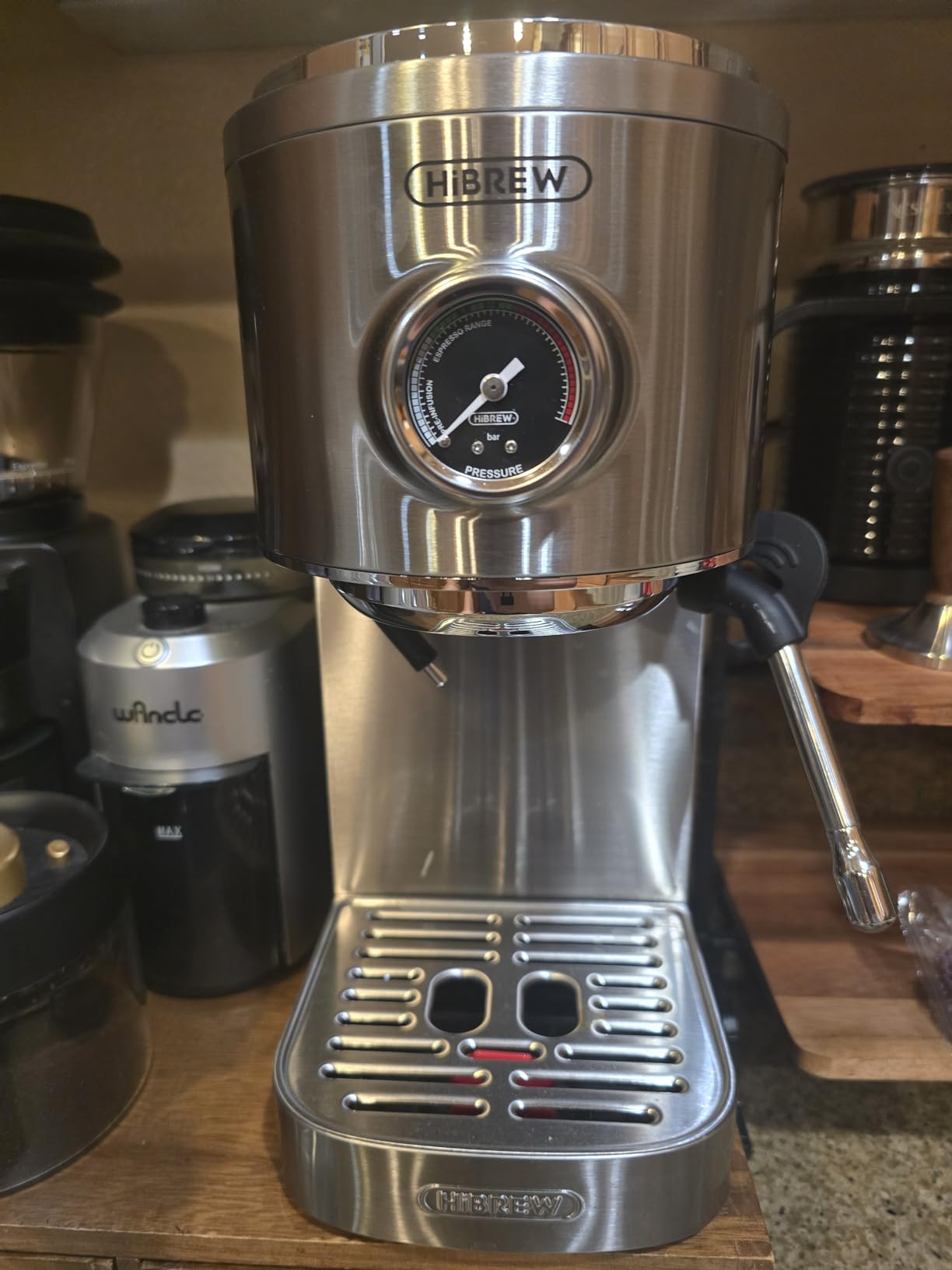
The HIBREW H13 is the best budget dual boiler espresso machine in this roundup — and arguably in its category — precisely because it delivers genuine dual boiler functionality at a price point that previously only bought single-boiler compromises. The core architecture is straightforward but effective: one heating element dedicated to the brew boiler at approximately 90°C to 95°C, another dedicated to the steam boiler at 125°C to 150°C, operating simultaneously and independently. The result is the core dual boiler benefit — simultaneous extraction and steaming — at a price that makes it accessible to anyone building their first serious espresso setup without a large initial investment.
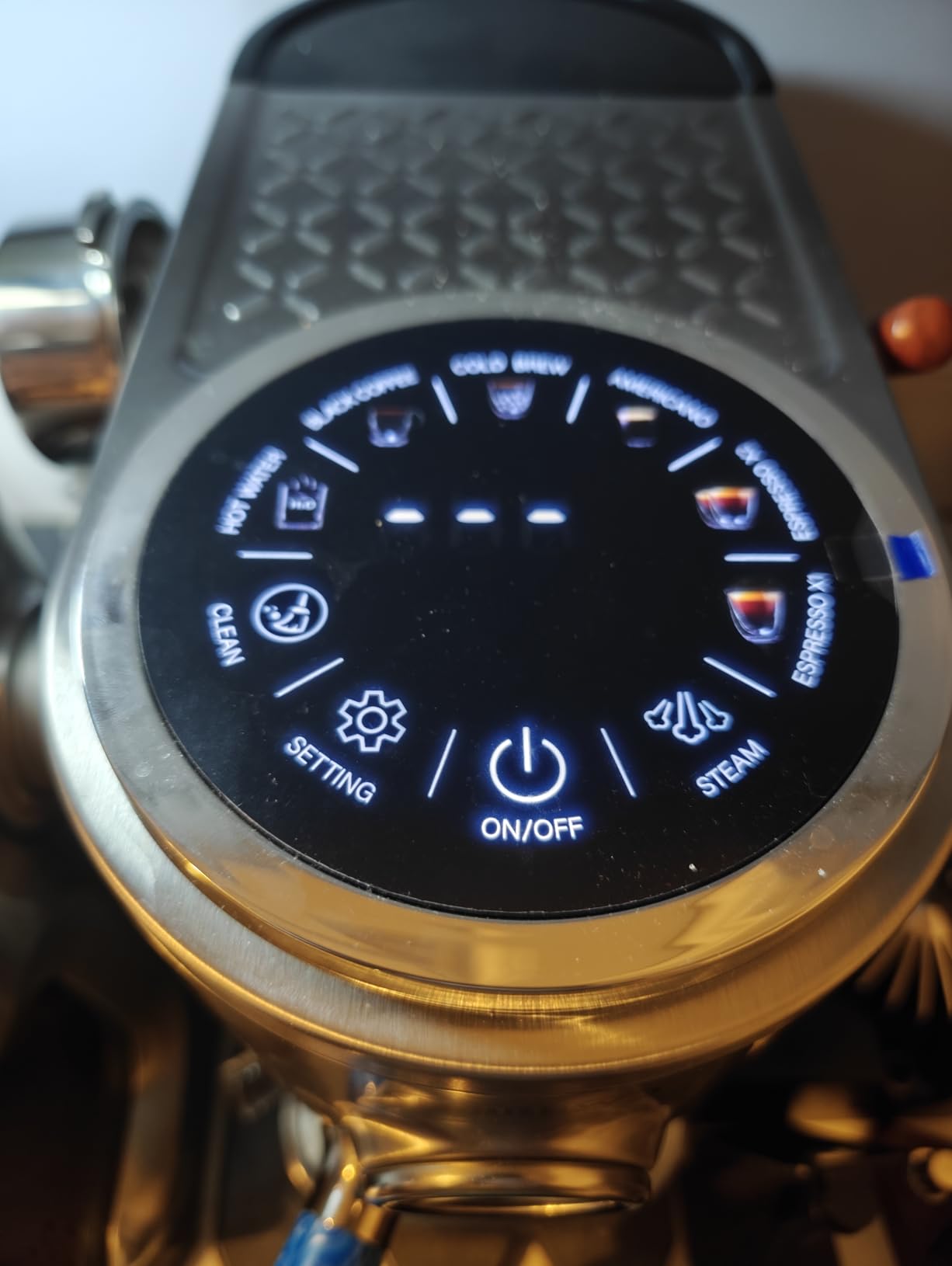
The LED touchscreen is a genuine surprise at this price point. Rather than the basic rocker switches or dial controls typical of budget machines, the HIBREW H13 gives you an intuitive digital interface for selecting brew modes, adjusting steam levels, and monitoring extraction status. The three-level adjustable steam settings are a practical feature that lets you tune steam pressure for different milk types and drink styles — lower settings for delicate plant-based milks, higher settings for whole milk or cream. The separate hot water spout for making Americanos without pulling a shot is a small but meaningful convenience that becomes essential in daily use once you start making Americanos regularly.
The 58mm commercial-grade portafilter at this price point is particularly noteworthy. Unlike machines that compromise on portafilter size to reduce cost, the HIBREW H13 maintains the professional standard, meaning you can use the same accessories, baskets, and distribution tools you would buy for any other 58mm machine. The aluminum bridge that distributes heat across the brewing assembly is a design detail that contributes to temperature consistency, and the 9-bar OPV extraction pressure aligns with the professional standard. The compact dimensions — just 6 by 9 by 12.59 inches — make it one of the smallest machines in this roundup, which is meaningful if counter space is at a premium.
Who this machine is best for
The HIBREW H13 is the best entry point into genuine dual boiler espresso for anyone on a tight budget. It is also well-suited to the home barista who wants to experience the benefits of simultaneous extraction and steaming without committing to the investment required by premium machines. The touchscreen interface makes it more approachable than many competitors at similar price points.
Who should look elsewhere
The limited review count means the HIBREW H13 has not yet accumulated the validation data that comes with thousands of user reviews. If you prefer to buy based on established long-term reliability records, the more reviewed machines in this roundup are a safer choice. The auto shut-off limitation is also frustrating for anyone who wants to leave the machine in standby mode.
Buying Guide: What to Look for in a Dual Boiler Espresso Machine
Choosing the right dual boiler espresso machine means understanding the technical factors that separate an exceptional cup from an ordinary one. Here are the key criteria every enthusiast should evaluate before purchasing.
PID Temperature Control
PID (Proportional-Integral-Derivative) controllers are the gold standard for temperature management in espresso machines. A PID monitors the actual boiler temperature and automatically adjusts heating element power to maintain a precise setpoint — typically within 1°F to 2°F of your target. This eliminates the temperature surfing required on machines with simple thermostat control, where you monitor the group head and switch elements manually to hold a target range. For enthusiasts committed to consistent extraction, a machine without PID control requires significantly more attention to maintain results across a session.
Boiler Capacity and Recovery Time
Boiler size directly affects two practical concerns: steam power and recovery time between shots. Larger steam boilers produce more pressure and recover faster after steaming, which matters if you are making multiple milk drinks in sequence. Smaller brew boilers heat and stabilize faster but may show temperature fluctuation under heavy use. For most home enthusiasts, a brew boiler between 300ml and 500ml and a steam boiler of 1 liter or more represents a practical balance. Recovery time — how quickly the machine returns to full temperature after steaming — is often more important than raw boiler volume in daily use.
Portafilter Size and Ecosystem
The 58mm portafilter is the professional standard for a reason: it accommodates larger doses (up to 22 grams for a double basket), produces more even water distribution across the puck, and aligns with the vast majority of aftermarket accessories, baskets, distribution tools, and replacement parts. Machines with 54mm portafilters — like the Breville Bambino Plus — require specific accessories that are less widely available and more expensive. If you plan to grow your setup over time, the 58mm standard is the more flexible choice.
Steam Pressure and Wand Design
Steam pressure determines how quickly and effectively you can texture milk. Higher-pressure steam produces finer, denser microfoam — the velvety, bubble-free foam required for latte art. Multi-hole steam tips, particularly 4-hole designs like those on the Rancilio Silvia Pro X, produce superior results compared to single-hole tips. Cool-touch wands are a meaningful safety feature, particularly in households with less experienced users. And the ability to adjust steam pressure by feel — through a rotating lever rather than a simple on/off switch — gives experienced baristas fine control over milk texture for different drink styles.
Preinfusion Capability
Preinfusion — the initial low-pressure saturation of the coffee puck before full extraction pressure — has an outsized effect on shot quality, particularly with darker roasts and densely packed pucks. Machines with programmable preinfusion (like the Diletta Bello+ at up to 10 seconds) give you additional parameters to optimize for different beans and roast levels. Fixed preinfusion is better than no preinfusion, but adjustable preinfusion is the enthusiast preference for maximum flexibility.
Heat-Up Time and Energy Management
Modern thermoblock and ThermoJet heating systems can reach extraction temperature in 2 to 3 seconds, while traditional boiler systems typically require 10 to 20 minutes. If you make espresso casually — one or two drinks at a time — a machine with fast heat-up time significantly lowers the barrier to daily use. Programmable auto-on timers, available on machines like the Rancilio Silvia Pro X, let you schedule warm-up in advance so the machine is ready when you want it without running continuously. Low Power or Eco modes reduce energy draw during standby, which is a meaningful consideration for anyone who leaves their machine on throughout the day.
The Grinder is Part of the Machine
No espresso machine, regardless of price or capability, can produce excellent espresso from poorly ground coffee. The quality of your burr grinder is inseparable from the quality of your espresso. If you are purchasing a machine without an integrated grinder, budget at least $200 to $400 for a quality burr grinder — conical burr grinders like the Baratza Vario or Eureka Mignon are the enthusiast standard at this price point. A $1,500 machine with a mediocre grinder will produce worse results than an $800 machine paired with a $300 grinder.
Frequently Asked Questions
Is a dual boiler worth it for home espresso?
For anyone making more than one or two espresso drinks per day, a dual boiler espresso machine is absolutely worth the investment. The ability to pull shots and steam milk simultaneously eliminates the wait time between extraction and milk texturing that limits single-boiler machines. Beyond convenience, dual boiler machines consistently outperform single-boiler alternatives on temperature stability — the independent brew boiler maintains extraction temperature precisely without being affected by steam demand. If you are serious about developing your home espresso technique, the dual boiler investment pays dividends in consistency, workflow, and the quality of the espresso you produce.
What is the difference between a dual boiler and a heat exchanger espresso machine?
A dual boiler espresso machine has two completely separate boilers — one dedicated to brewing temperature and one dedicated to steam pressure — operating independently with no interaction between them. A heat exchanger (HX) machine has a single large boiler that serves both functions: a tube running through the boiler carries water to the group head at brewing temperature, while the boiler itself produces steam. HX machines are less expensive to manufacture and can produce excellent espresso, but they require temperature management (temperature surfing) because the boiler temperature is shared between both functions. Dual boiler machines are the enthusiast preference for their precision, consistency, and lack of temperature management demands.
What should I look for in the best dual boiler espresso machine for beginners?
The best dual boiler espresso machines for beginners prioritize approachable interfaces and forgiving operational characteristics over raw technical capability. Look for PID temperature control (eliminates temperature management complexity), fast heat-up time (reduces the barrier to casual use), and integrated grinder options (simplifies the workflow and reduces equipment investment). Machines like the Breville Barista Pro and the Ninja Luxe Cafe Premier are excellent beginner choices because they provide professional-grade results with guided interfaces that help new users learn proper technique. Avoid machines with steep learning curves until you have developed foundational extraction knowledge.
Do I need a separate grinder with a dual boiler espresso machine?
Yes — almost always. The only machines in this roundup that include integrated grinders are the Breville Dynamic Duo, the Breville Barista Pro, and the Ninja Luxe Cafe Premier. Every other machine requires a separate grinder purchase, and this is not an area where budget compromise makes sense. The quality of your grinder determines the consistency of your grind particle size, which directly controls extraction rate. Inconsistent grind particles produce channelling, uneven extraction, and sour or bitter shots. Plan to spend $200 to $500 on a quality conical burr grinder — Baratza Vario, Eureka Mignon, and Breville Smart Grinder Pro are reliable enthusiast standards — before investing in your machine.
How much should I spend on a dual boiler espresso machine?
Realistic budget ranges for quality dual boiler espresso machines break down into three tiers: budget entry ($300 to $600) covers machines like the HIBREW H13 and Breville Bambino Plus that deliver genuine dual boiler benefits with some trade-offs in build quality and features; mid-range ($600 to $1,500) covers machines like the Breville Barista Pro and Fellow Espresso Series 1 that offer excellent all-around performance with integrated grinders or advanced features; and premium ($1,500 to $3,000) covers machines like the Diletta Bello+ and Rancilio Silvia Pro X that deliver commercial-grade performance and build quality for the serious home barista. Above $3,000 you enter commercial equipment territory that is overkill for home use unless you are running a serious home café.
Conclusion
The best dual boiler espresso machines for enthusiasts in 2026 represent a genuinely exciting category — one where technological innovation, Italian craftsmanship, and thoughtful user experience design are pushing the boundaries of what is achievable at home. Whether you are drawn to the complete workflow simplicity of the Breville Dynamic Duo, the authentic Italian engineering of the Diletta Bello+, or the budget-breaking value of the HIBREW H13, there has never been a better time to invest in a machine that can genuinely produce cafe-quality espresso in your own kitchen.
If you are just beginning, the Breville Bambino Plus and Ninja Luxe Cafe Premier offer the most accessible path to quality espresso with their guided interfaces and automated milk systems. For the committed intermediate enthusiast, the Breville Barista Pro and Fellow Espresso Series 1 provide the best balance of capability, features, and room to grow. And for those who have already developed serious technique and want the finest tools available, the Diletta Bello+ and Rancilio Silvia Pro X represent the pinnacle of what home espresso can achieve. Whatever machine you choose, remember that the grinder is the foundation of great espresso — invest in quality burrs, dial in your technique methodically, and give yourself permission to learn over months rather than weeks. The best shots you will ever pull are still ahead of you.