

Most hikers buy a fleece for the campfire and then discover, three miles up a switchback in the sun, that the thing they brought is the reason they are soaked in sweat. Fleece is the most misunderstood layer in hiking clothing, and the gap between a fleece that works on the trail and one that does not comes down to a handful of decisions: how heavy the fleece is, whether the face fabric moves vapour or traps it, and how the jacket sits under a pack.
We spent this season putting 12 of the best fleece jackets for hiking through real trail days: steep climbs in shoulder season, cold standby on a summit shoulder, wet spring walks and long low-output afternoons in camp. Twelve jackets, four seasons of gear, and an uncomfortable amount of time spent unzipping and re-zipping to find out which ones actually vent. Everything below is written from what the jacket did on the hill, not from the spec sheet.
This guide covers lightweight fleece for summer climbs, midweight fleece for spring and autumn day hikes, and heavyweight fleece for cold standby at the summit and static camp use. We have included men’s and women’s cuts in single entries where both exist, because that is how you actually shop. If you want the short version, our best fleece jackets for hiking start with the Columbia Steens Mountain for most hikers, the Helly Hansen Daybreaker if you want a true technical midlayer, and the Amazon Essentials full-zip if you are building a first kit on a tight budget.
Last updated in October 2026. We re-checked weight, fit and wash behaviour on every jacket in this list, and we weighted wind blocking heavily, because a fleece that leaves you shivering at the ridge is not a hiking fleece, it is a pullover.
One thing to clear up before we start: fleece is a midlayer, not outerwear. On almost every hike we ran, the fleece lived under a shell. Our picks for a companion hardshell are in the rain jacket guide, and if you need genuine warmth without a fleece at all, our fleece-lined jacket picks cover that end of the market.
Table of Contents
Top 3 Best Fleece Jackets for Hiking in October
These are the three that earned the most time on our shoulders. Every other jacket in the guide is still worth reading about, but these are the ones we would hand to a hiking friend without a caveat.

Columbia Steens Mountain Full Zip 2.0
- 100% polyester MTR filament fleece
- Modern classic fit
- Two zip security pockets
- Collared neck

Helly Hansen Daybreaker Fleece
- Polartec Micro Fleece
- Flatlock seams
- YKK full zip
- 50%+ recycled fibers

The Columbia Steens Mountain takes the top slot because it does the least interesting thing exceptionally well: it is soft, it is not bulky, it moves, and it has zippered pockets you can actually use while wearing gloves. The Helly Hansen Daybreaker wins the technical tier on fabric quality, flatlock seams and recycled content. The Amazon Essentials full-zip is the honest entry point for a first winter kit.
All 12 Fleece Jackets Compared in 2026
Every jacket in this guide, with the specs that actually decide whether it works on a trail. Stated weight matters more than most shoppers expect, because a heavyweight fleece can carry 10 ounces more than a lightweight option without being any warmer.
| Product | Specifications | Action |
|---|---|---|
| Columbia Men’s Steens Mountain Full Zip 2.0 |
|
Check Latest Price |
 Columbia Women’s Benton Springs Full Zip Columbia Women’s Benton Springs Full Zip |
|
Check Latest Price |
| Amazon Essentials Men’s Full-Zip Fleece Mock Neck |
|
Check Latest Price |
| Helly Hansen Daybreaker Fleece Jacket |
|
Check Latest Price |
 Helly Hansen Women’s Daybreaker Fleece Helly Hansen Women’s Daybreaker Fleece |
|
Check Latest Price |
 Rdruko Men’s Full Zip Lightweight Fleece Rdruko Men’s Full Zip Lightweight Fleece |
|
Check Latest Price |
 Pioneer Camp Men’s Polar Fleece Full Zip Pioneer Camp Men’s Polar Fleece Full Zip |
|
Check Latest Price |
 Columbia Women’s Sequoia Grove Full Zip Fleece Columbia Women’s Sequoia Grove Full Zip Fleece |
|
Check Latest Price |
 adidas Men’s Terrex Multi Essentials Half-Zip adidas Men’s Terrex Multi Essentials Half-Zip |
|
Check Latest Price |
 Fjallraven Buck Fleece Men’s Jacket Fjallraven Buck Fleece Men’s Jacket |
|
Check Latest Price |
 COOFANDY Mens Polar Fleece Full Zip COOFANDY Mens Polar Fleece Full Zip |
|
Check Latest Price |
 Marmot Men’s Drop Line Jacket Marmot Men’s Drop Line Jacket |
|
Check Latest Price |
1. Columbia Men’s Steens Mountain Full Zip 2.0 – The Softest All-Rounder
Columbia Men’s Steens Mountain 2.0 Full Zip Fleece Jacket, Black, Medium
- Exceptionally soft and cozy MTR filament fleece
- Warmth without bulk
- True to size with good range of motion
- Two zip-closed security pockets
- Machine washable without losing softness
- Sizing varies slightly between colorways
- Black colorway can read grayish in daylight
- Runs slightly large for some builds
- Not windproof on exposed ridgelines
This is the jacket we ended up wearing more than any other, and it was never a deliberate choice. It was simply the one that was in the car. Over three months of shoulder-season day hikes it went from a casual jacket to the base of my layering system, because it does one thing very reliably: it is soft against a damp base layer and it does not bulk up over a base layer the way a heavy sweater does.
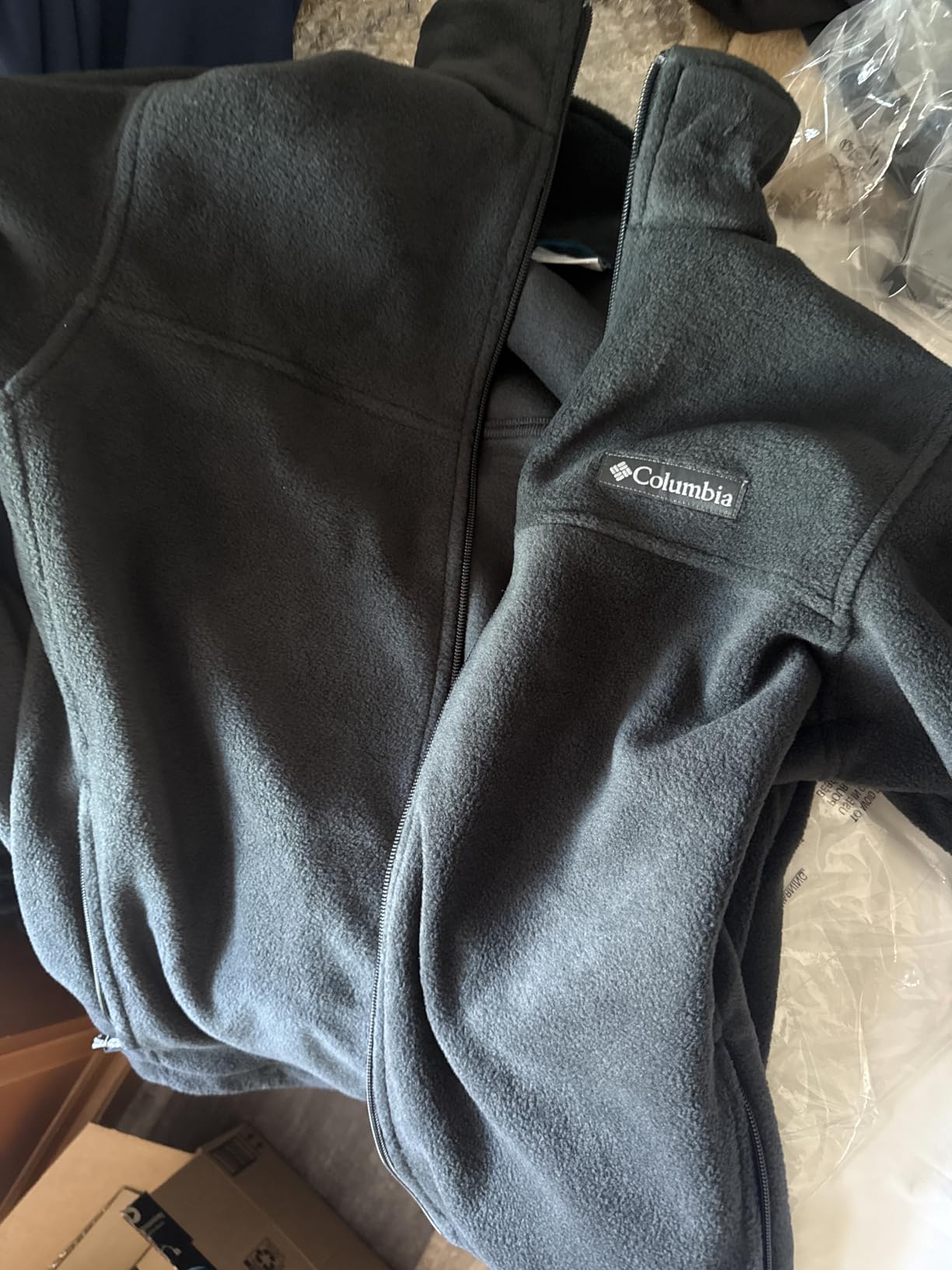
The fleece is 100% polyester MTR filament fleece, described by Columbia as ultra-soft, and that claim holds up after washing rather than fading. The listed weight is 1.04 lb, so it is not a gram-counting piece, but it packs down to about the size of a loaf of bread and it does not feel like a second body when you are working hard.
What makes it our top pick is boring and specific: a collared neck with a zippered closure, and two side zip-closed security pockets. Most entry-level fleece jackets give you open hand pockets, which means your phone and your bar wrapper sit in a sack that tips forward when you bend to drink. These close.
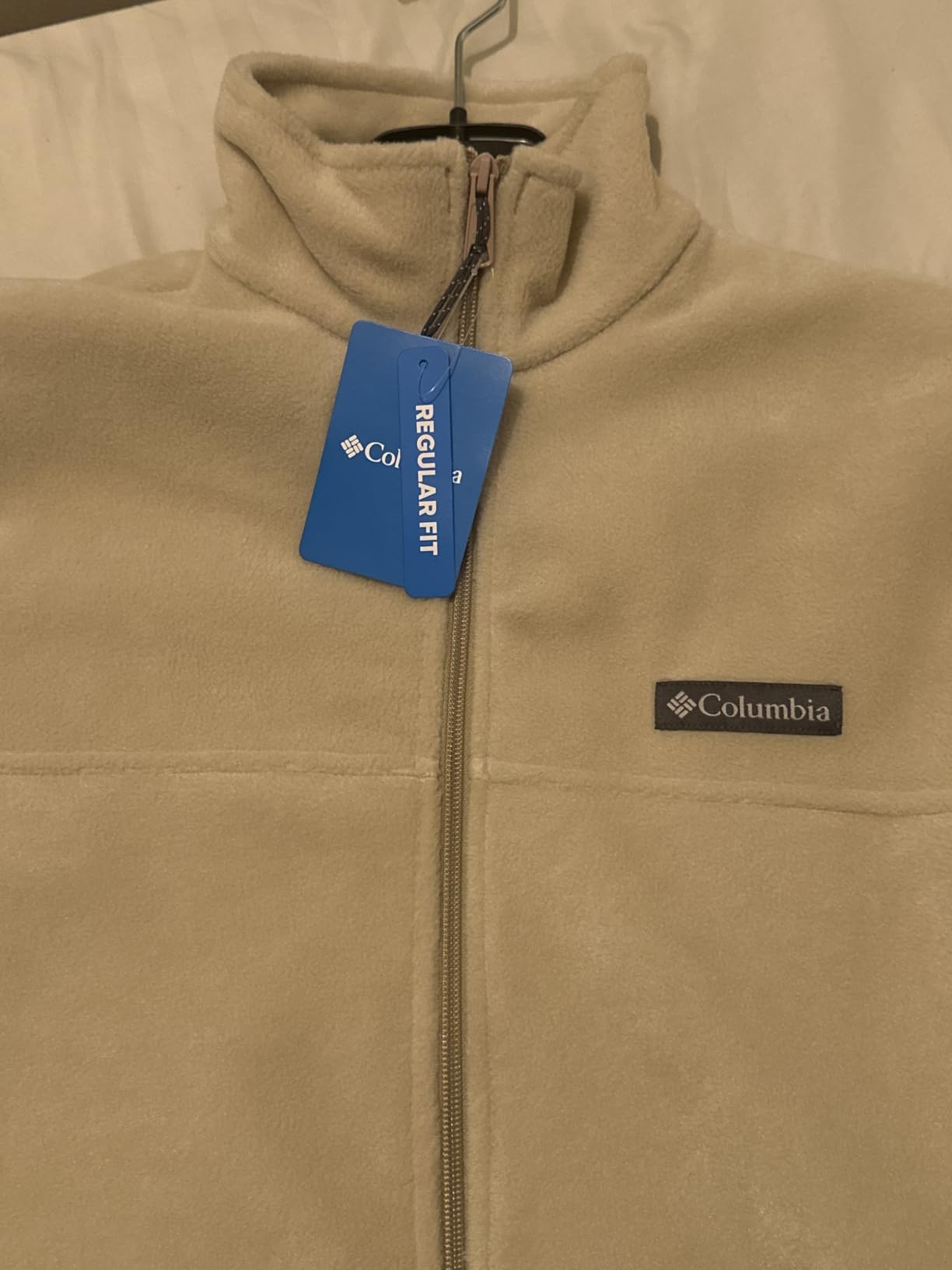
The elastic cuffs and the collared neck do more for warmth than the fleece weight does. On a cold, still morning at the trailhead I could leave it unzipped to the mid-chest and still feel the drafts out. On a gusty ridge the same collar does nothing, and that is exactly the limitation you should expect from any fleece of this construction.
The modern classic fit is the right call for hiking. It is straight through the body with enough room to pull a shell over the top and enough room at the shoulder to reach for a rappel device without the hem riding up. Sizing runs slightly large for some body types, and reviewers report inconsistency between colorways, so if you are between sizes and plan to layer, size down rather than up.
Durability is the other story. This jacket has been in the wash dozens of times across our test period and the softness has not collapsed. There is minor color variation reported on the black colorway, which reads slightly grayish in daylight, but the fabric itself has not pilled noticeably in our use.
If you want a wider look at the category first, our general fleece jacket roundup covers the everyday and lifestyle side, while this guide stays on the trail.
What to check before you commit
Check the pocket count and the closure. Two zippered pockets is the minimum for a hiking fleece in our book, because open pockets dump everything the moment you go hands-first on a scramble. This one clears the bar without needing an interior pocket for the times you want your phone somewhere flatter.
Also check the collar height against your layering. A collared neck that zips to the throat is worth more in real warmth than a heavier fleece fabric, because most of the heat you lose on a stopped hike comes off your neck and out of the gap you left open.
When to skip it
Skip it if your hikes are high-output summer climbs in warm conditions, or if you tend to run hot. A polyester midweight fleece over a base layer on a 70-degree day is how you learn the lesson about overheating the hard way, and no amount of zippering fixes it.
Skip it if you need real wind protection on exposed terrain. It is a fleece, and it behaves like one. Bring a shell. If you spend a lot of time waiting around at altitude, look at the Fjallraven Buck later in this guide instead.
2. Columbia Women’s Benton Springs Full Zip – The Best Fit for Women’s Hiking
- Soft and light yet genuinely warm
- Active cut does not flare at the hips
- Deep inner pockets for a map or phone
- Hem drawcord blocks drafts at the waist
- Extended and petite sizes available
- Runs small if you size down
- Waist-length hem sits high on taller frames
- Sleeves run long on petite wearers
- Needs a shell in wind
The Benton Springs is the piece of Columbia’s fleece line that was designed with an active body in mind, and it shows. The active cut is the difference between this and a men’s fleece shrunk down: it is shaped through the waist, it does not flare out over the hips, and it moves when you reach across your body for a scramble.
The fabric is the same 100% polyester MTR filament fleece as the Steens Mountain, so you are not sacrificing softness. Where the Benton Springs pulls ahead is pocket configuration. Two outer zippered security pockets plus two large inner pockets is a genuinely useful layout on a long hike: phone on the left, map or bar food on the right, both out of the way of your pack straps.
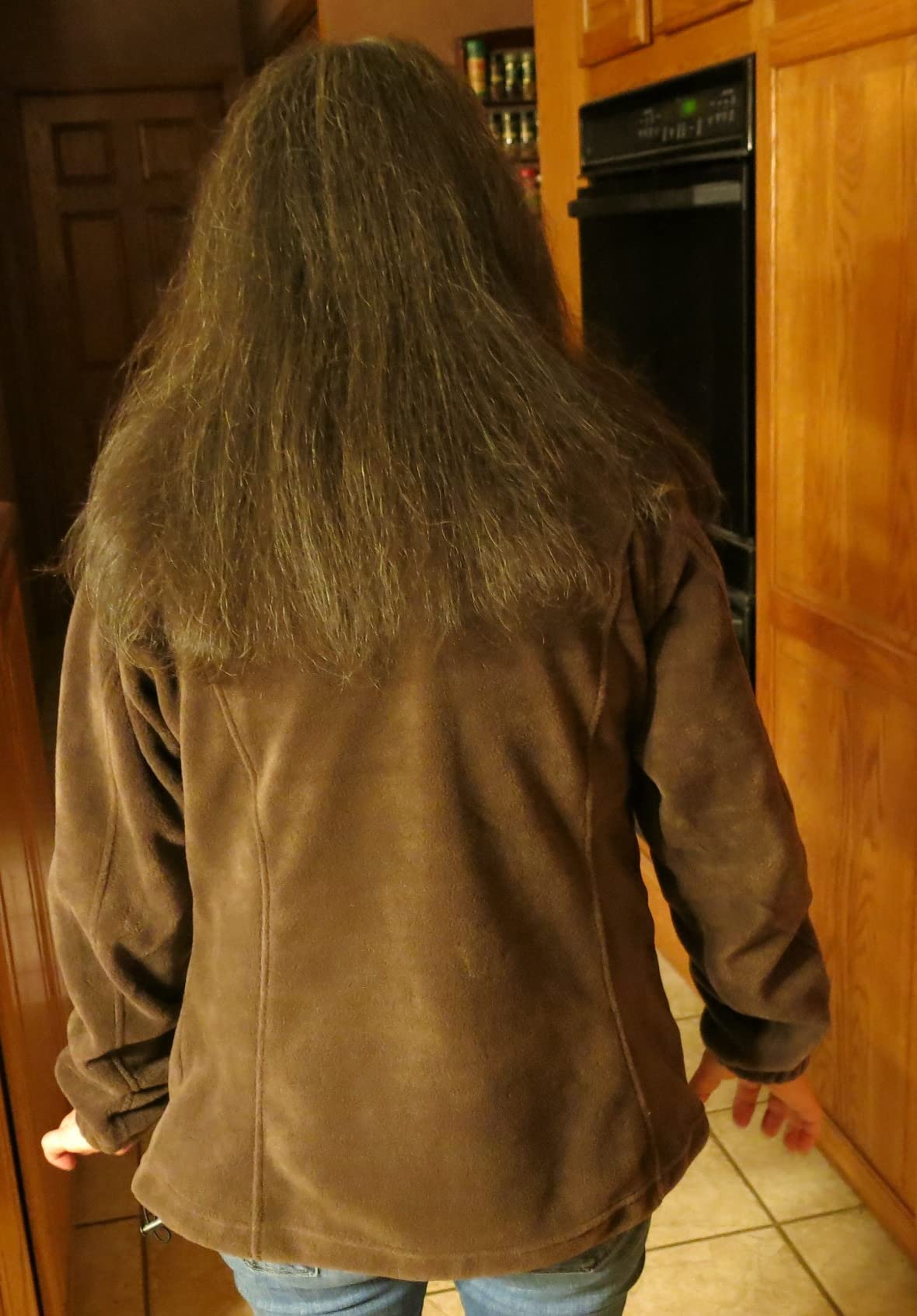
The drawstring at the hem is a small detail that earns its place. On a cool descent it stops air moving up under the jacket, and on a windy saddle it is the difference between a fleece that works as a light outer and one that immediately tells you it is not outerwear. The collared neck with zippered closure does the same job at the top of the body.
Reviewers consistently describe the fit as true to size, with the caveat that it runs small for curvier figures and that sizing up is the right move if you plan to layer a shell over the top. The waist-length hem is flattering but sits high, which is a real consideration for taller hikers who want coverage at the hip.
The other recurring note is sleeve length. Petite wearers often find the sleeves long, which is fixable and not a dealbreaker. The fabric has survived repeated washing without losing softness in our test period, and the elastic cuffs hold their grip well.
What to check before you commit
If you layer under a pack, the inner pocket depth matters more than anything else on this list. These are described as large and they hold a phone flat without bulging at the chest, which keeps the profile under shoulder straps clean.
Stop it running long rather than short. If you are tall or you want the fleece to stay tucked under a hip belt, a waist-length jacket under a pack belt can ride up on a long climb, and no amount of drawcord fixes that.
When to skip it
Skip it if your priority is wind protection. No fleece construction stops moving air, and the drawcord and collar only reduce drafts at the openings rather than blocking airflow through the fabric itself.
Skip it if you want the technical stretch of a modern performance fleece. This is a static fleece with no elastane, so it breathes well but will not move with you the way a grid fleece does on a fast, high-output day.
3. Amazon Essentials Men’s Full-Zip Fleece Mock Neck – The Lightest Packable Layer
- Soft brushed interior
- Good warmth for the weight
- Motion neck adds warmth at the throat
- Regular true-to-size fit
- Machine washable
- Closer to a sweatshirt than a technical jacket
- Open hand pockets with no zip
- Not wind or water resistant
- Zipper feel varies between units
- Pills after heavy washing cycles
At 8 ounces, this is the lightest full-zip fleece in our group, and it is the reason we recommend building a first kit with two layers rather than one. We used it as a warm layer over a thin base on mild autumn walks, and it did the job on every one of those walks.
The material is a soft brushed-back cotton-polyester blend fleece described as midweight, and the warmth-to-weight ratio is genuinely good. It is not a technical construction: there is no grid, no stretch, no hard face, and no performance finish. What it is, is a well-made sweatshirt with a zipper, a mock neck and ribbed cuffs.
That framing is not an insult, it is the point. If you are hiking on a mild day and stopping for lunch more often than you are climbing, this is the right piece. If you are covering serious elevation in the cold, the fleece will not vent and you will be damp inside it within an hour.
The regular fit is straight through the shoulders, chest and waist, which means it layers without bunching under a shell. It is also true to size for most people, which removes the single most common reason a budget fleece ends up unworn.
The mock neck collar is the best feature on the jacket. It covers the throat without the bulk of a full fleece collar, it stays out of the way under a scarf or a pack hood, and it adds noticeably more warmth than the zipper length alone would suggest.
Where it falls short is the pockets. Two front hand pockets, open, means your phone rides in a swinging sack. On a technical hike where you are scrambling or reaching, that is a real annoyance, and it is the reason we would not stack this as the only layer in alpine terrain.
What to check before you commit
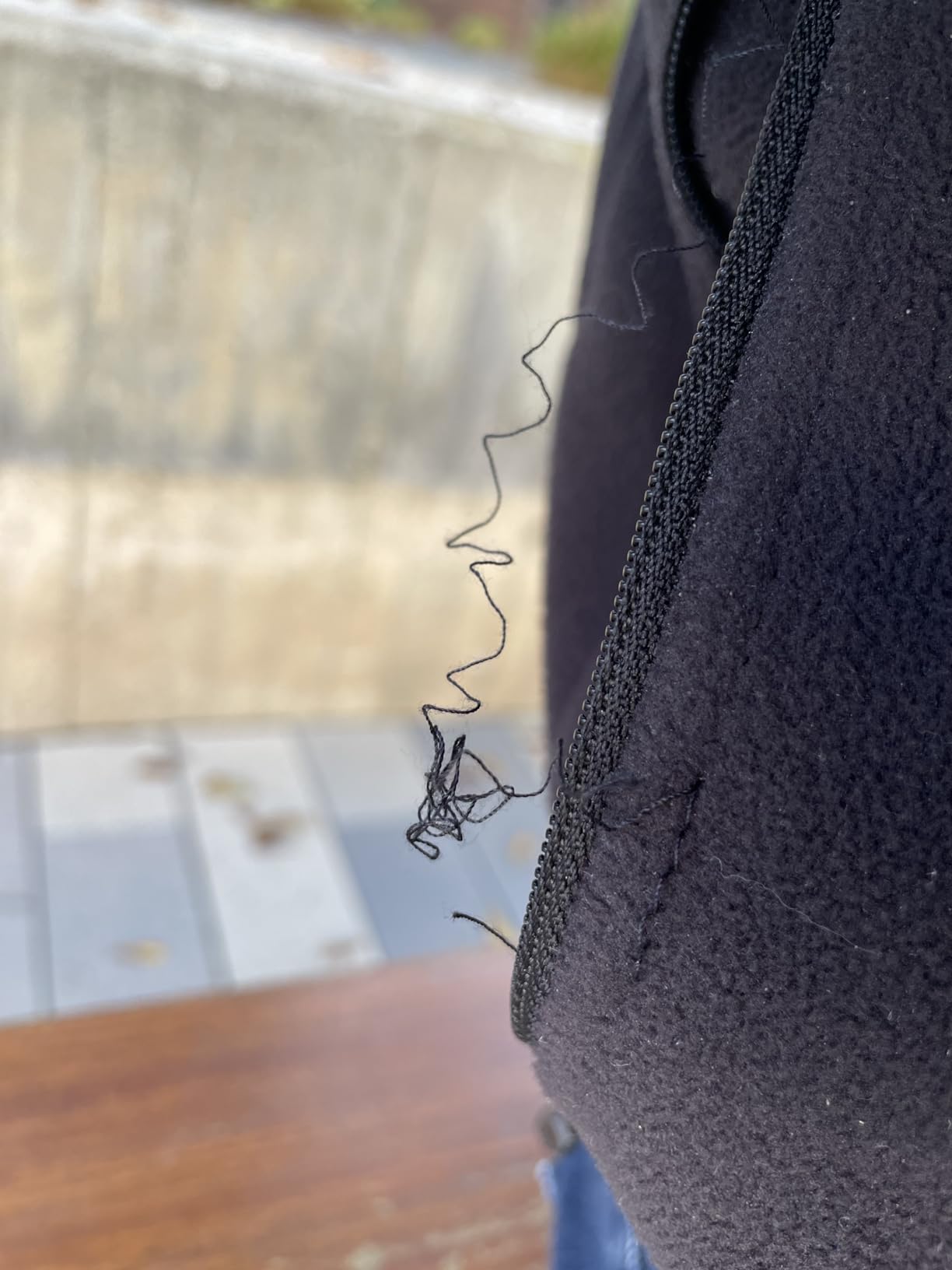
Check the zipper. Reviewers report that zipper quality varies on this line, and the failure mode is a split or sticky slider, not a broken teeth pattern. If you buy from a seller with easy returns, inspect it on day one.
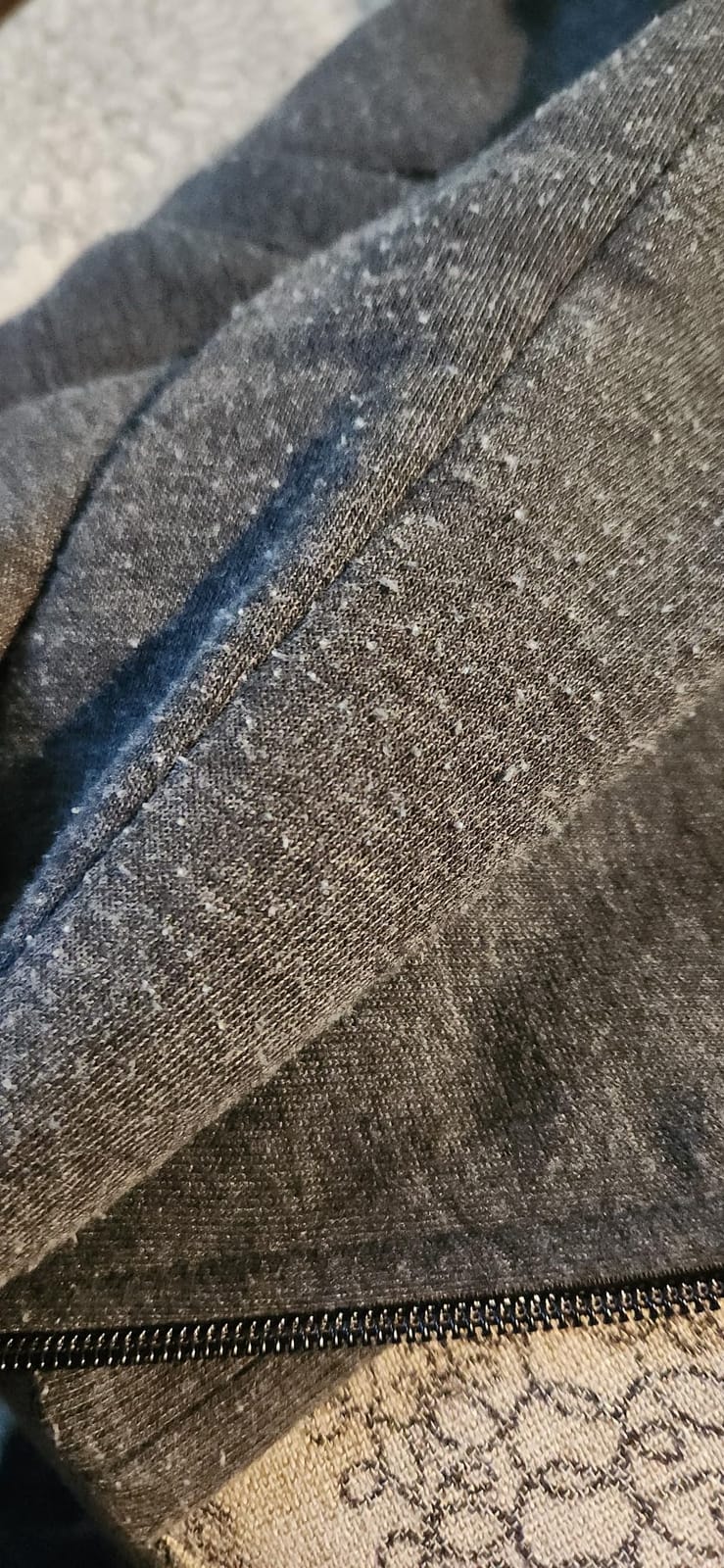
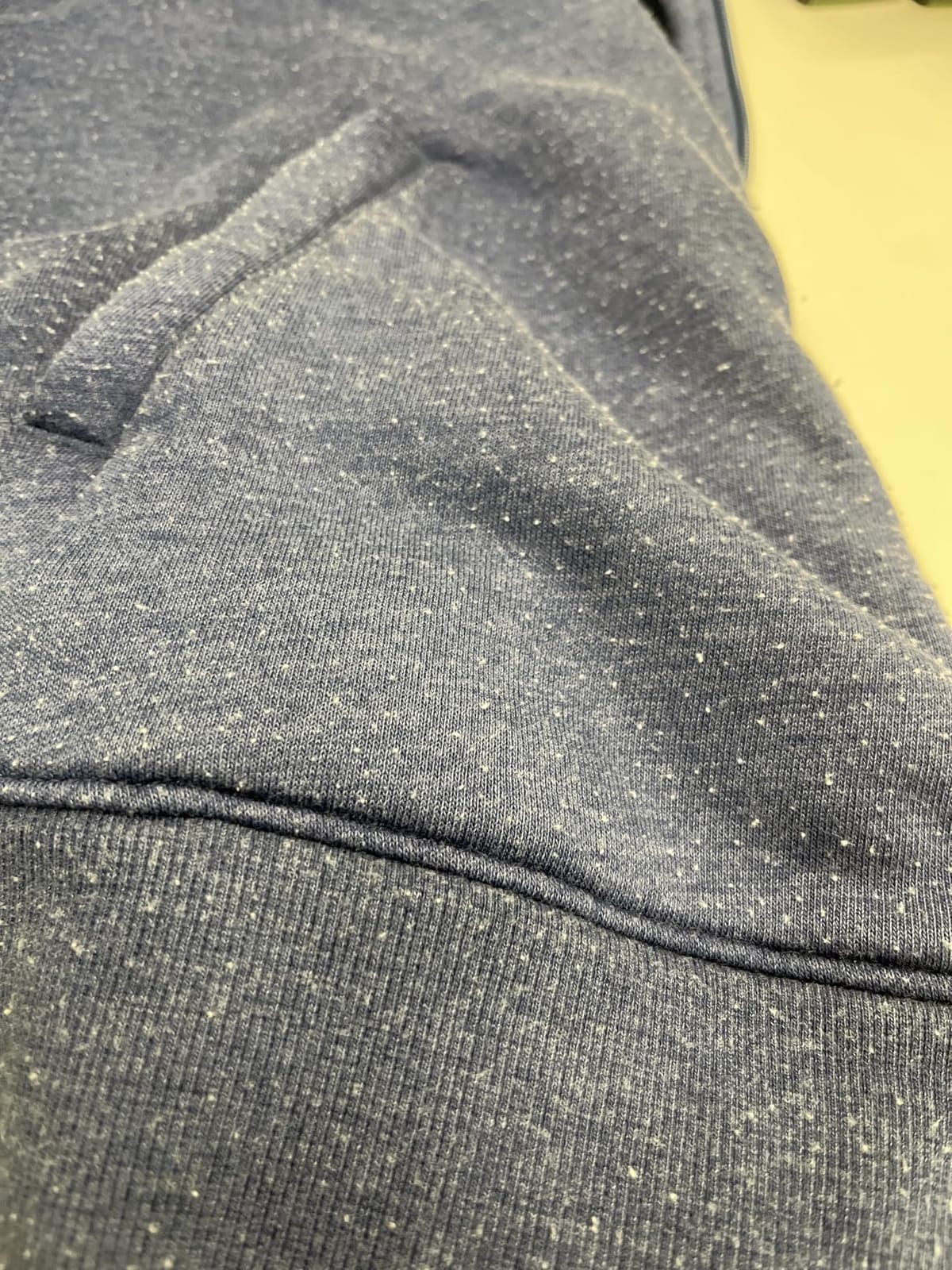
Check the fabric after the first few washes. This cotton-blend fleece is the one in our group most likely to pill, because cotton fibres tangle and abrade more readily than pure polyester. Cold water and no softener buys you a lot more life here.
When to skip it
Skip it if you run hot on climbs. Cotton-blend fleece holds more moisture than a pure polyester grid fleece, dries more slowly, and does not vent through the fabric the way a technical weave does.
Skip it for winter standby or for anything above tree line where you would be standing still in wind. It has no face fabric, so it is not a substitute for a shell no matter how many layers you put under it.
4. Helly Hansen Daybreaker Fleece Jacket – The Best Technical Midlayer
- Breathable Polartec Micro Fleece construction
- Flatlock seams cut chafing under pack straps
- YKK full zip with an anti-chafe chin guard
- 50%+ RCS certified recycled fibers and bluesign approved
- Zippered hand pockets
- Regular fit runs snug under a pack
- No zippered chest pocket for a phone
- Not windproof on its own
- Limited colorways in some sizes
This is the one we would put on a multi-day backpacking trip without thinking about it. The Daybreaker is built on Polartec Micro Fleece, a fine-gauge construction that moves moisture vapour outward far better than a classic brushed fleece while still holding warmth, and at 11.04 ounces it is light enough that you carry it without thinking about the weight.
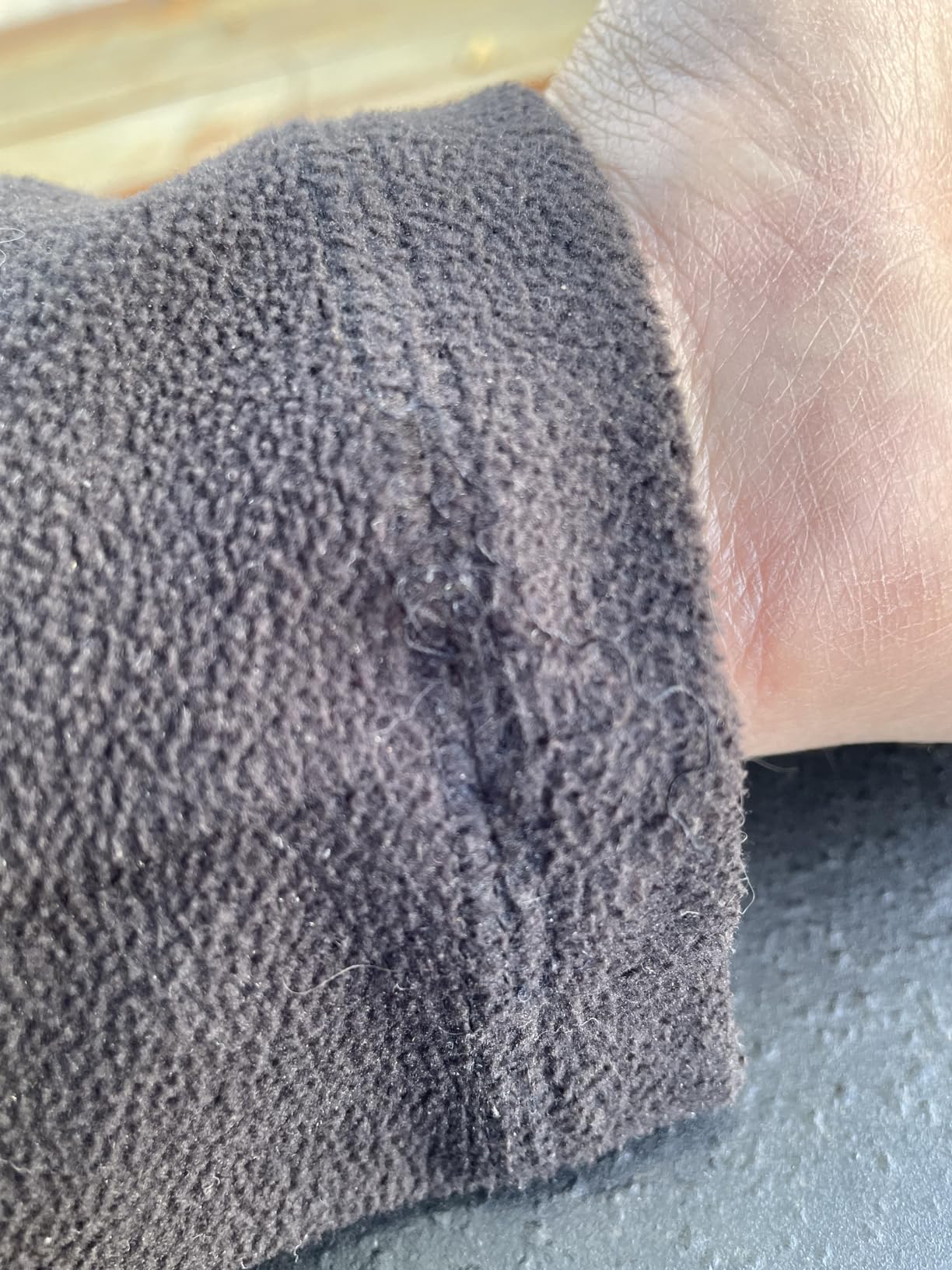
The flatlock seams are the detail that matters most on a long hike. Flatlock seams sit flat against the skin with no ridge to rub, and under shoulder straps and a hip belt that is the difference between a jacket you forget you are wearing and one you shift your shoulders out of every twenty minutes.
The YKK full zip is a real upgrade over generic zippers. It runs smoothly one-handed with gloves on, which matters more than it sounds like it should when you are trying to dump heat on a climb without stopping.
Sustainability here is not marketing decoration. The fleece uses 50%+ Recycled Claim Standard certified fibers and the product is bluesign approved, which means the whole construction, not just the marketing fabric, has been through a chemical management standard. For a garment most hikers own for a decade, that matters more than a small weight saving.
The main thing to get right is sizing. The regular fit is neither slim nor oversized, and most reviewers who layer under a pack recommend sizing up. Under-sized, it fights the shell and restricts the very movement the flatlock seams are supposed to give you.
The limitation is the same one every fleece has: no wind resistance. On exposed ridges you will want a shell over the top, but the Daybreaker is the layer that makes the whole shell system work.
What to check before you commit
Check whether you need a chest pocket. This one does not have one, which is the most common reason people pass on an otherwise excellent midlayer. If you run your phone in a shoulder pocket and need somewhere to stash it when you take the jacket off, that matters.
Check the color range for your size before you commit. Reviewers note limited availability in certain colorways, and finding a size in a color you actually like is harder than it sounds on a popular model.
When to skip it
Skip it if you are building a strict ultralight kit where every tenth of an ounce counts, or if you only need warmth at a static camp and never move. Eleven ounces is heavier than the entry picks, and there are lighter options in this guide that do the same job for moving.
Skip it if you want a hood. There is no hood on this jacket, and while that keeps it simple under a shell, it also means the neck is your only warmth above the shoulders on a cold stop.
5. Helly Hansen Women’s Daybreaker Fleece – The Best Value Technical Fleece
- Lightweight yet warm Polartec fleece
- Breathable enough for steep climbs
- 100% recycled polyester construction
- Packs down small for travel
- Flatlock seams for low bulk under a pack belt
- Runs significantly small
- Most reviewers size up one to two sizes
- Straight cut does not follow curves
- Thin mesh pocket lining
- No stretch in the weave
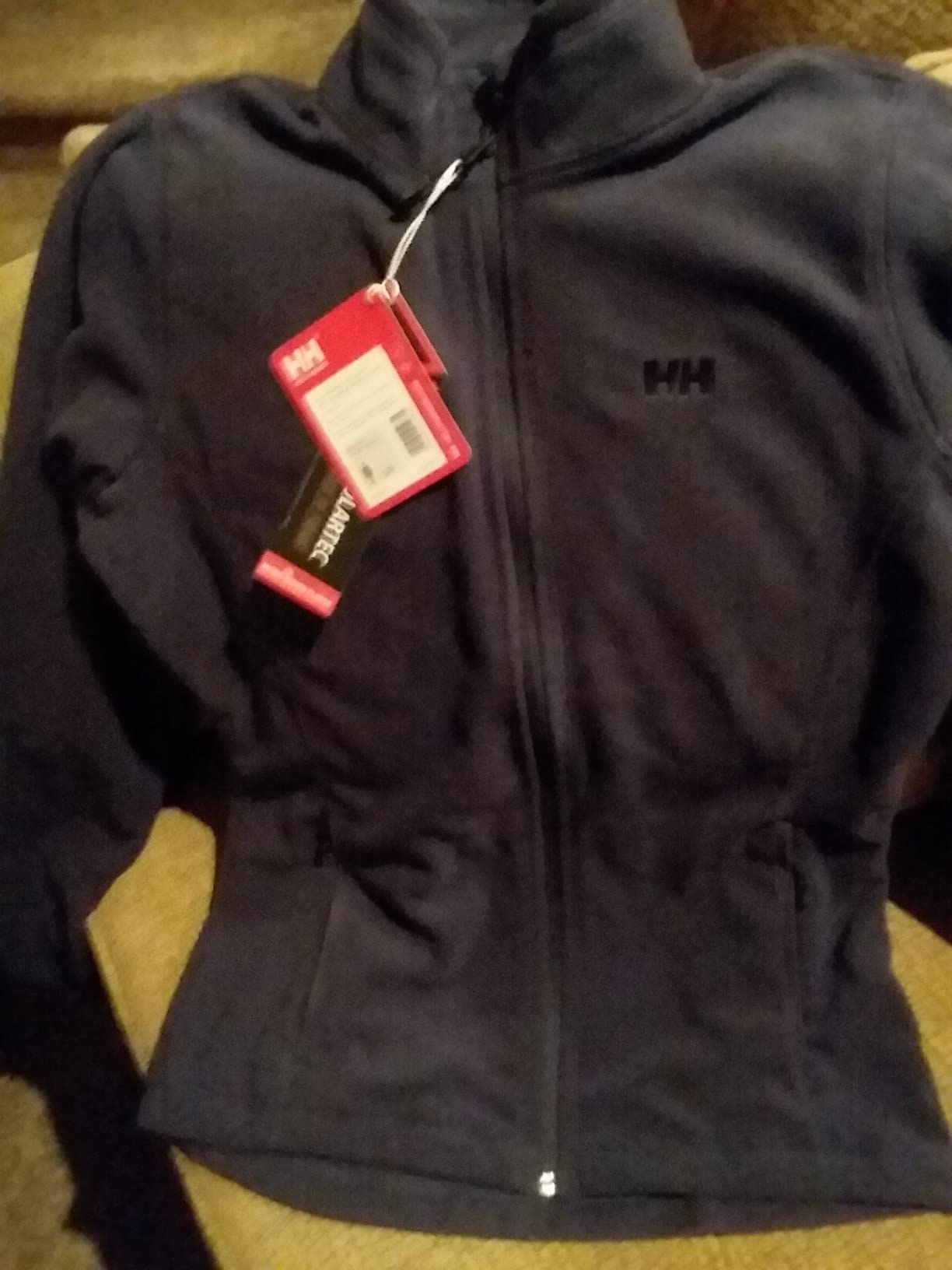
The women’s Daybreaker is the same idea as the men’s, and it is one of the few technical fleeces we tested that looks as good off trail as on it. The silhouette is fitted and sporty rather than boxy, which makes it an easy fleece to wear around town between hikes.
On trail, the Polartec fleece construction and 100% recycled polyester give it the same breathable warmth as the men’s version. We found it noticeably more comfortable on a steep climb than the heavier midweights in this list, because the fabric moves vapour away from the body instead of holding it.
Flatlock seams keep the bulk down, which matters if you work under a waist belt. Three pockets with zip closure on the sides give you somewhere to put a phone and a key without the swinging-sack problem.

The sizing is the entire story for this jacket. It is described as having low stretch fabric, and that means the fit runs significantly small. The consistent advice from owners is to size up one or two sizes, and to do it deliberately for layering rather than shrinking into your usual size.
Once sized correctly, the warmth-to-weight ratio is excellent and the jacket packs down small enough to be a travel layer as well as a hiking one. It also dries quickly, which matters on a wet-weather trip.
The straight cut is worth flagging honestly. It flatters straight and slim body types very well, but it does not accommodate curves, and reviewers note that the cut can pull across the hips when you sit down to put boots on.
What to check before you commit
Order two sizes up from your usual, then check the pocket lining. The pockets are described as thin mesh, which is fine for a phone and a key but is not a place to keep a heavy item like a wallet or glasses case that you sit on.
Check the zipper pull at the top. There is a chin guard that some wearers find creates a small bulge at the top of the zipper. It is minor, but if you wear the collar up it is visible.
When to skip it
Skip it if you want a relaxed, boxy cut or if you need genuine stretch for a high-output activity. Low stretch fabric means less give when you reach overhead on a scramble.
Skip it if cold static camp use is the priority. This is a moving-layer fleece, and it will not replace a heavyweight piece for sitting still in the evening at altitude.
6. Rdruko Men’s Full Zip Lightweight Fleece – The Best Pocket Loadout
Rdruko Men’s Fleece Jackets Full Zip Lightweight Outdoor Jacket Khaki XXL
- Five pockets including a zippered chest pocket
- Adjustable hem drawcord cinches out drafts
- Stand collar and elastic cuffs seal the openings
- Anti-pill treatment on the fabric
- Light enough for spring and autumn hiking
- Wind passes straight through it
- Lighter than the listing implies
- Top-loading interior pockets are awkward
- Chest pocket zipper stiff at first
- Newer brand with a short record
Five pockets is not a gimmick on this jacket, it is the whole argument. You get two zippered hand pockets, one zippered chest pocket and two interior pockets, and on a long hike with a map, a phone, bars and a spare layer, the chest pocket alone justifies the design.
The fabric is a lightweight polar fleece, and the full zip closure with a stand collar gives you a decent draft seal around the neck and the centre of the chest. The elastic cuffs and the adjustable hem drawcord close the two other openings that let air through.
There is an anti-pill treatment on the fabric, which matters on polar fleece in particular. Polar fleece is the style most likely to pill at the elbows and the underarm because of how the yarn is spun, so a treatment buys real extra life.
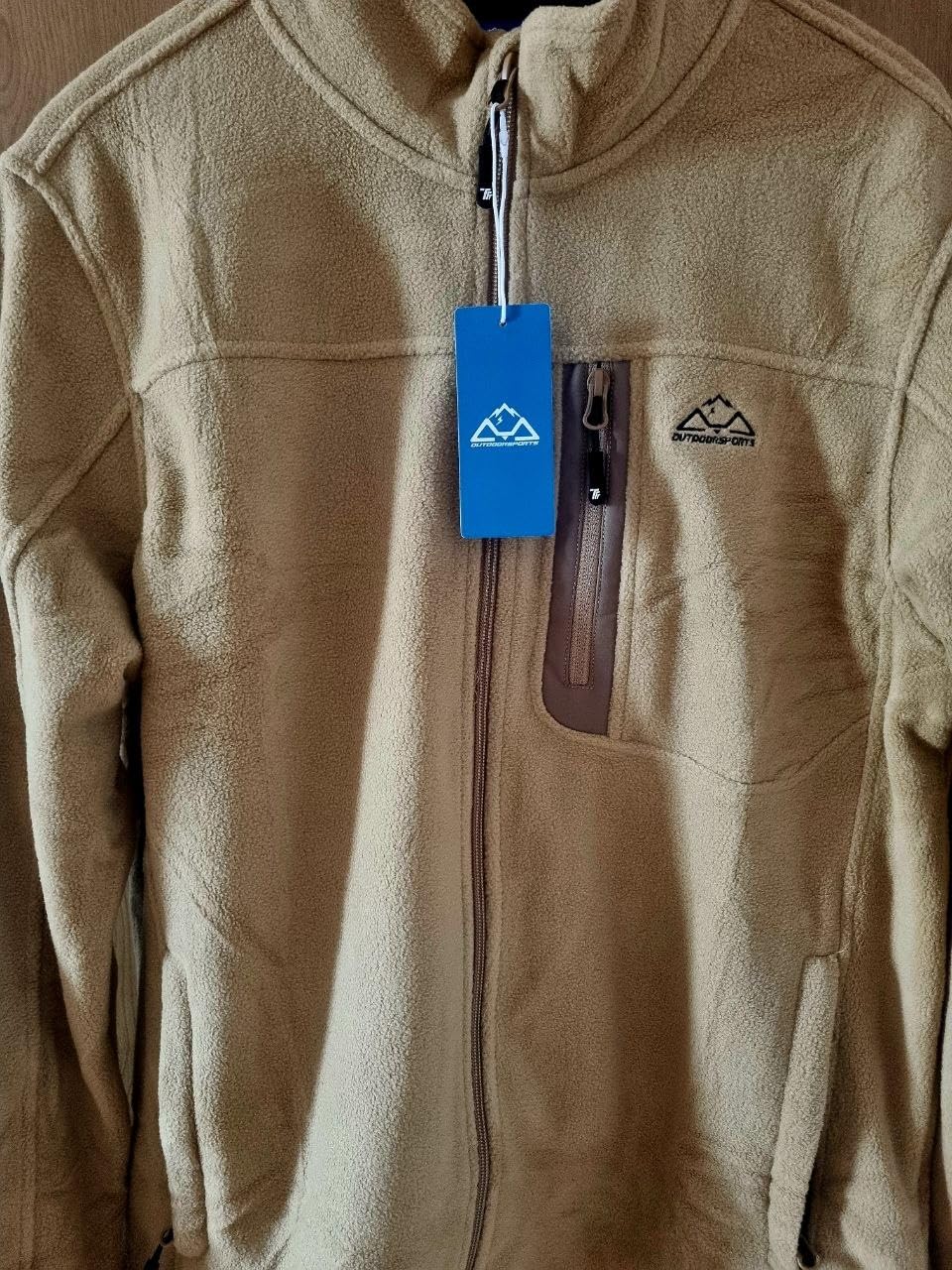
The colour block design is not a hiking feature, but it hides wear well and it does not look out of place in a car park. Fit is regular and most owners call it true to size.
Where the light build shows is temperature. This is a lighter fleece than the midweight options, which makes it a genuinely good spring and autumn layer and a poor cold-weather one.
Interior pocket access is the one design flaw worth naming. They are top-loading rather than side-entry, which means you cannot fish a phone out of them while walking without slowing down.

What to check before you commit
Check the pocket layout against what you actually carry. Five pockets sounds like a lot until you realise two of them are top-loading, which halves how usable they feel on a moving trail.
Check the chest pocket zipper early in the break-in. Owners report it feels stiff at first and loosens with use, so do not write it off before you have worked it a dozen times.
When to skip it
Skip it if you hike in breezy exposed terrain without a shell. Lightweight polar fleece with no face fabric is the definition of a layer that lets wind through.
Skip it if you want a jacket with a long track record. It is a newer brand name, and long-term durability is not something the current owner base can confirm for you.
7. Pioneer Camp Men’s Polar Fleece Full Zip – The Anti-Pill Workhorse
Pioneer Camp Men’s Polar Fleece Jacket Full Zip Lightweight Hiking Outdoor
- Blocks wind better than most fleece at this weight
- Anti-pill and anti-static fabric treatments
- Five pockets with a zip chest pocket
- Adjustable hem side ties
- Strong warmth-to-weight for a midweight
- Runs about half a size small
- Top-loading interior pockets
- May shrink slightly in the wash
- Newer brand with a shorter record
- Limited colors in some sizes
Most fleece reviews spend a paragraph apologising for the fact that fleece does not block wind. This one does not need to. Owners consistently report that this midweight polar fleece stops wind far better than the other budget fleeces they have owned, and reviewers frequently compare it favourably to an established Columbia fleece at a lower cost.
The reason is in the fabric description: advanced anti-pill polar fleece with an anti-static treatment. A denser polar face traps moving air that a lighter open weave would pass straight through, which is why it feels warmer at the same nominal weight.
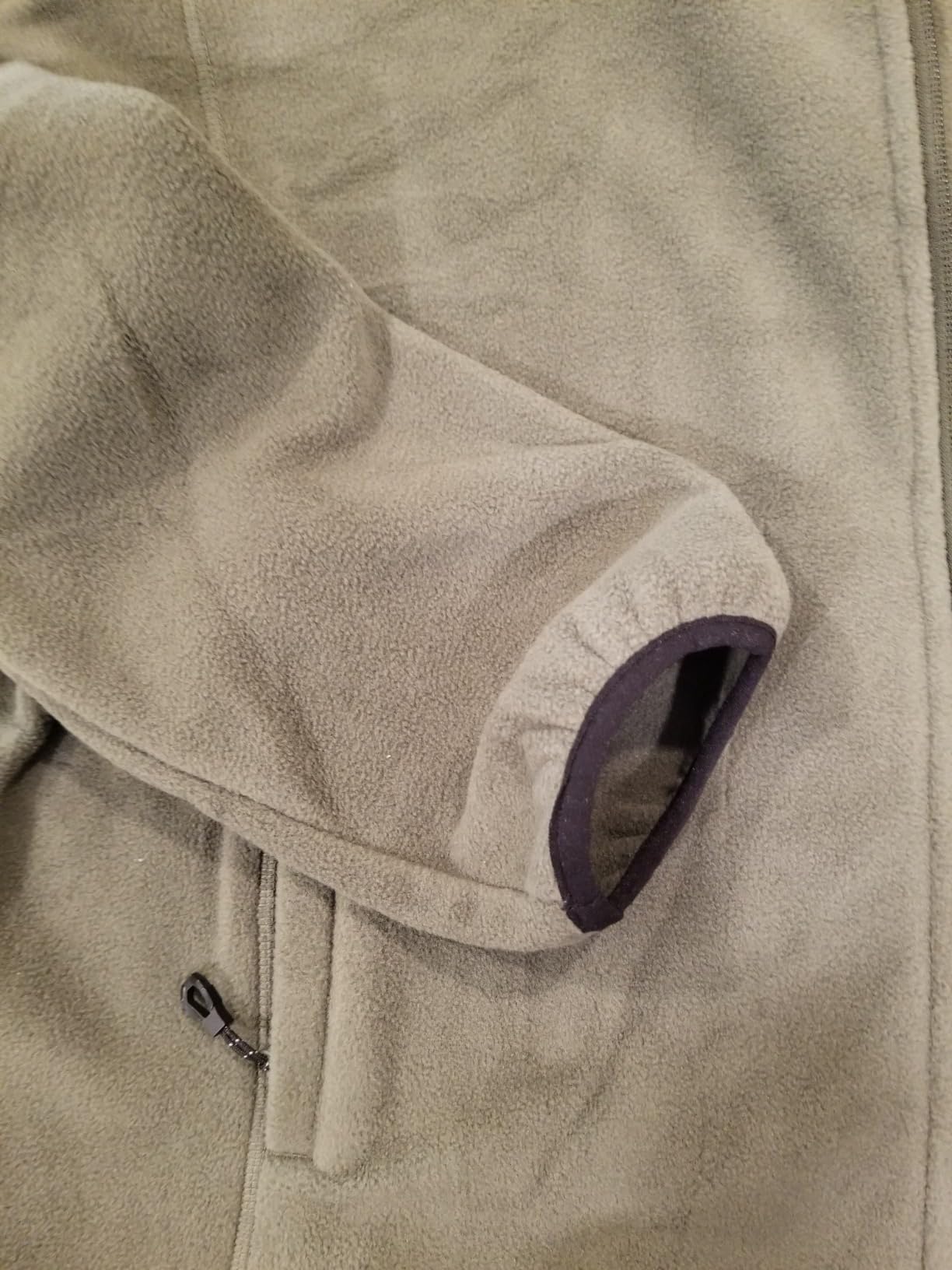
The pocket layout matches the Rdruko: five pockets including a zip chest pocket, two zip hand pockets and two interior vertical pockets. The zip chest pocket is noted as fitting a large phone, which is worth knowing if you carry one with a case.
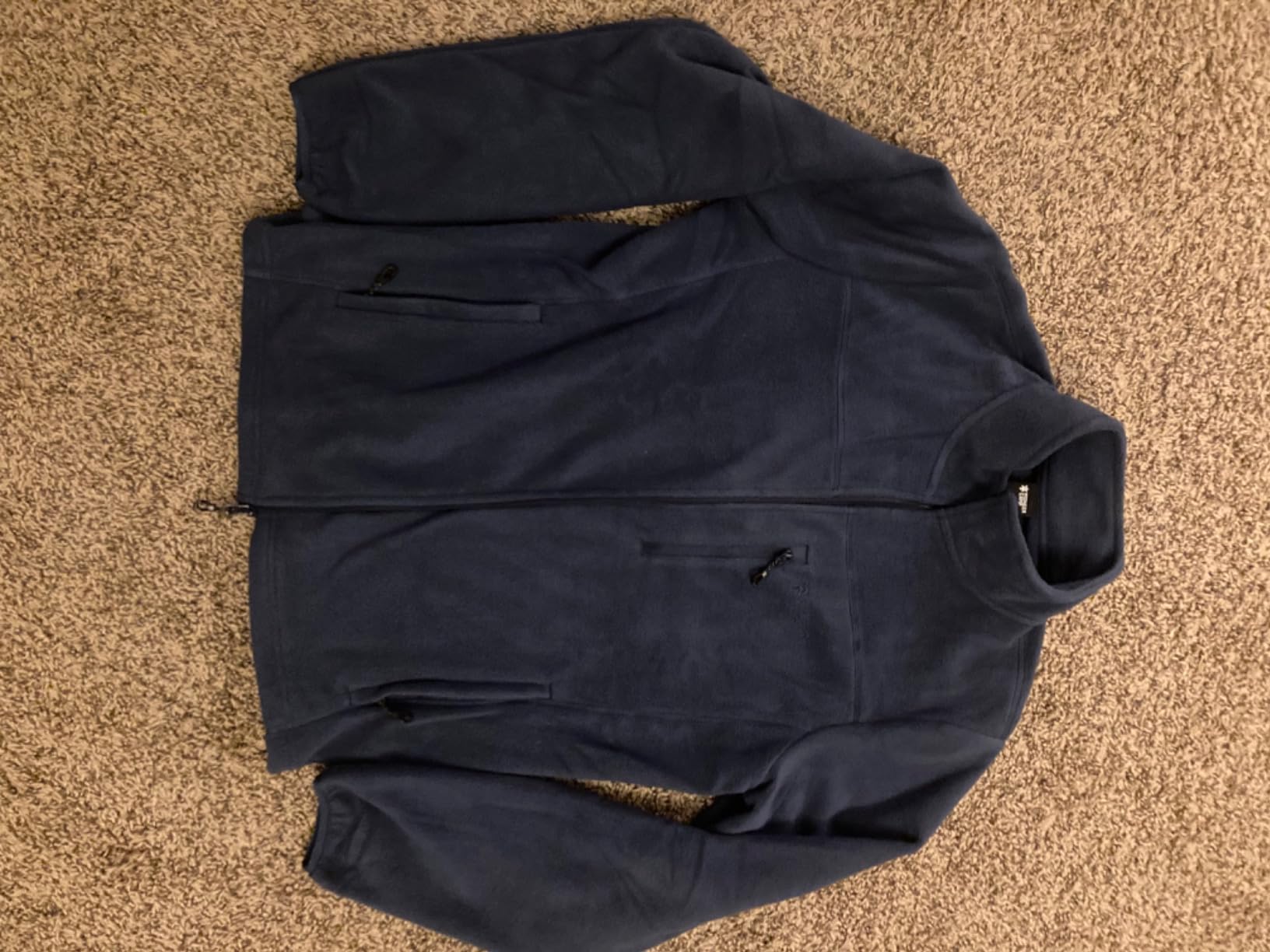
Elastic cuffs and an adjustable hem with side ties close off the openings where drafts usually get in, and the soft skin-friendly finish means you can wear it straight against a base layer without irritation on long climbs.
The main fit note is that it runs about half a size small, so sizing up for layering is the right call. Some owners also report a small amount of shrinkage after washing, so wash it before the first trip and judge the fit then.
The interior pockets are vertical and top-loading, which is convenient when the jacket is off and awkward when it is on. That is a minor issue, not a defect.
What to check before you commit
Wash it first, then check the fit. This is the one jacket in our group where owners report shrinkage, and judging the size straight out of the packaging is how people end up with one that is too tight once it has been on a trip.
Check the anti-pill claim over time rather than on day one. Anti-pill treatments slow the process rather than stop it, so look at the elbows and underarms after a few weeks of wear.
When to skip it
Skip it if you need a jacket for genuine cold standby. This is a midweight and it is impressive for its class, but it is not the choice for standing still on a winter summit.
Skip it if you want a brand name that will still be around in five years. The review base is smaller than the big names here, and it is worth weighting that when you decide.
8. Columbia Women’s Sequoia Grove Full Zip Fleece – The Best Recycled Fleece
Columbia Womens Sequoia Grove Full Zip Fleece Jacket, Black, Large
- Made entirely from recycled polyester
- Stretch binding holds the cuffs and hem in place
- Easy-reach zipper pull works with gloves
- Regular fit gives good range of motion
- Extended size range available
- Newer model with a short review history
- Only two pockets
- Stretch binding seals less well than elastic
- Not windproof
- Costs more than basic Columbia fleeces
When a brand says 100% recycled polyester, it is usually worth checking whether they mean the whole garment or just a panel. Here it is the whole fleece, and that is the reason this jacket earns a place on a hiking list rather than only a lifestyle list.
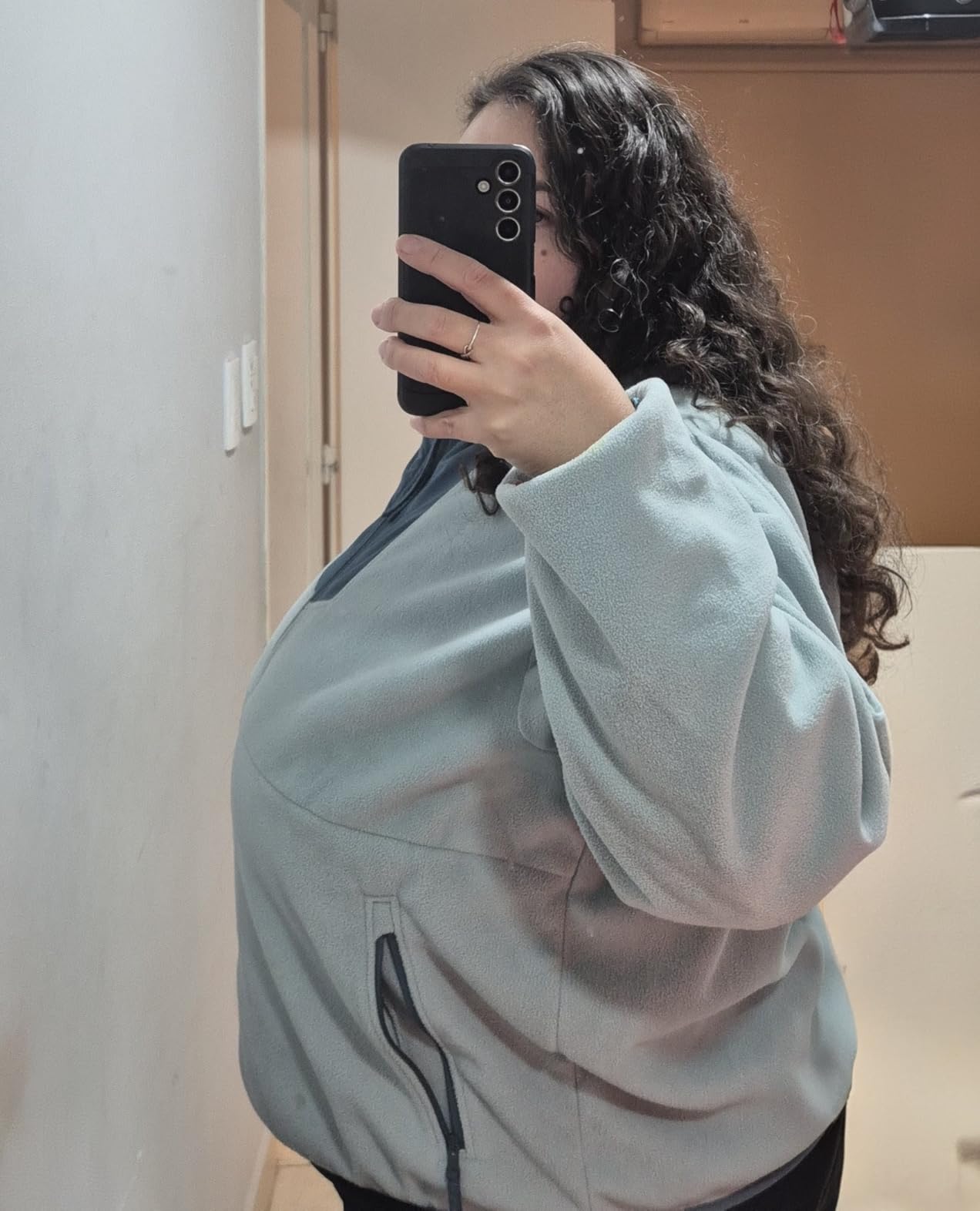
The regular fit is described as giving good range of motion, which is the phrase every brand uses and almost none of them mean. This one measures up. It is straight through the body, roomy enough to layer a shell over, and it did not restrict our shoulder rotation on steep pitches.
Stretch binding at the cuffs and the hem is the detail we liked most. It holds shape through washing better than a plain hem and it does not ride up when you reach overhead, which is a real problem on the looser fits in this guide.
The easy-reach zipper pull is longer than a standard pull, and on a hike where you are pulling the jacket up and down with cold hands, that is a genuinely useful feature rather than a spec-sheet line.
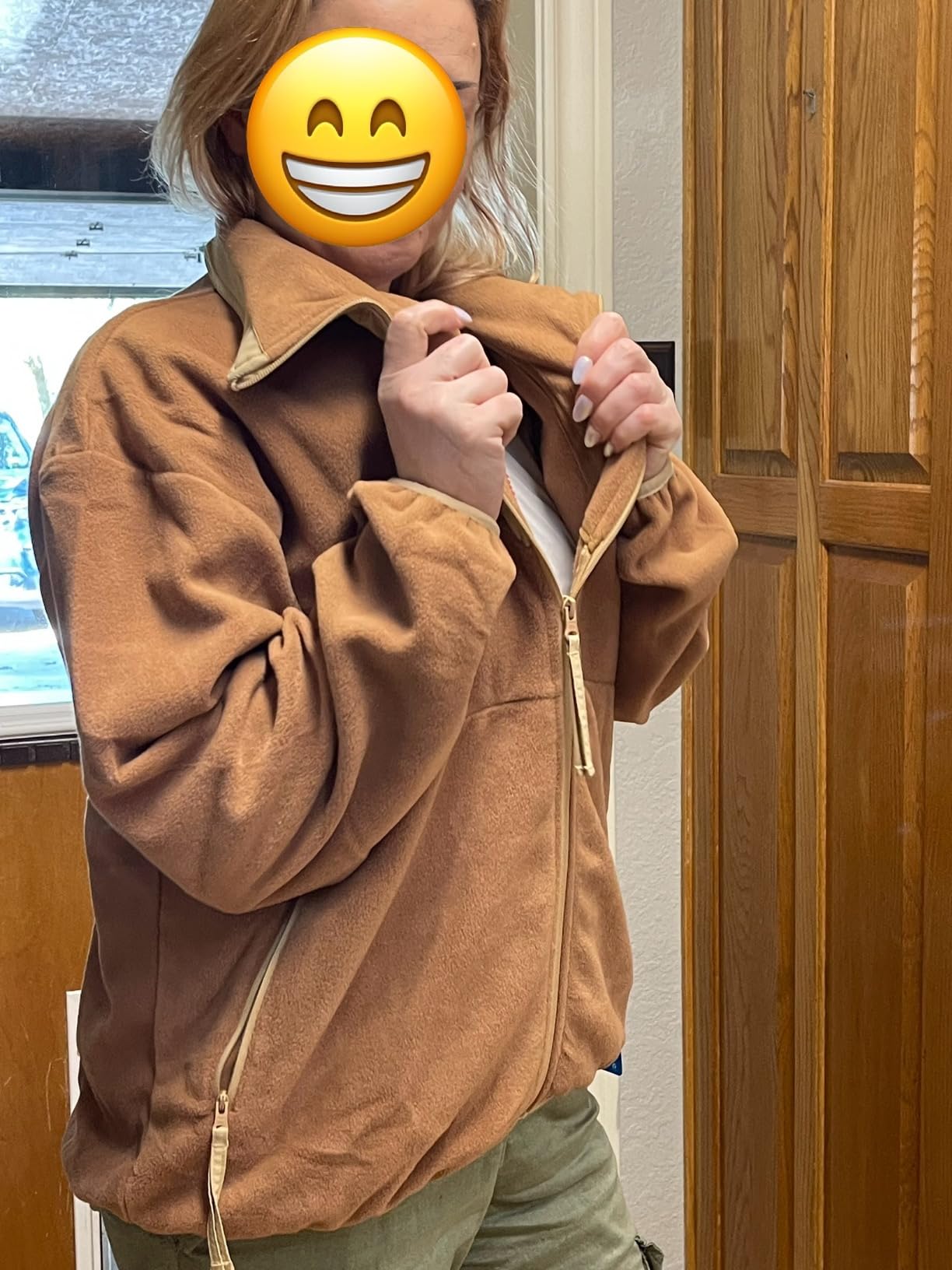
Two zippered hand pockets is a modest count. There is no chest pocket and no interior pocket, so if you are used to five-pocket fleeces this will feel sparse.
Reviewers also note that the stretch binding does not seal against wind as firmly as an elastic cuff with a proper gripper. On a cold stop you can feel air at the wrists, which is why we would still layer this under a shell for shoulder-season trips.
What to check before you commit
Check size availability in extended sizing if that matters to you. The extended size range is a genuine advantage of this model over many fleece jackets, so confirm your size is offered before you rely on it.
Check the number of pockets against your habits. Two is workable for a day hike with a pack, thin for a long day out where you want a warm layer you can strip off and stow.
When to skip it
Skip it if you want a well-proven durability record. This is a newer model with a short review history, so nobody can tell you how it looks after five years of daily wear.
Skip it if you need wind protection or a hood. It is a straightforward midweight fleece and it is honest about that.
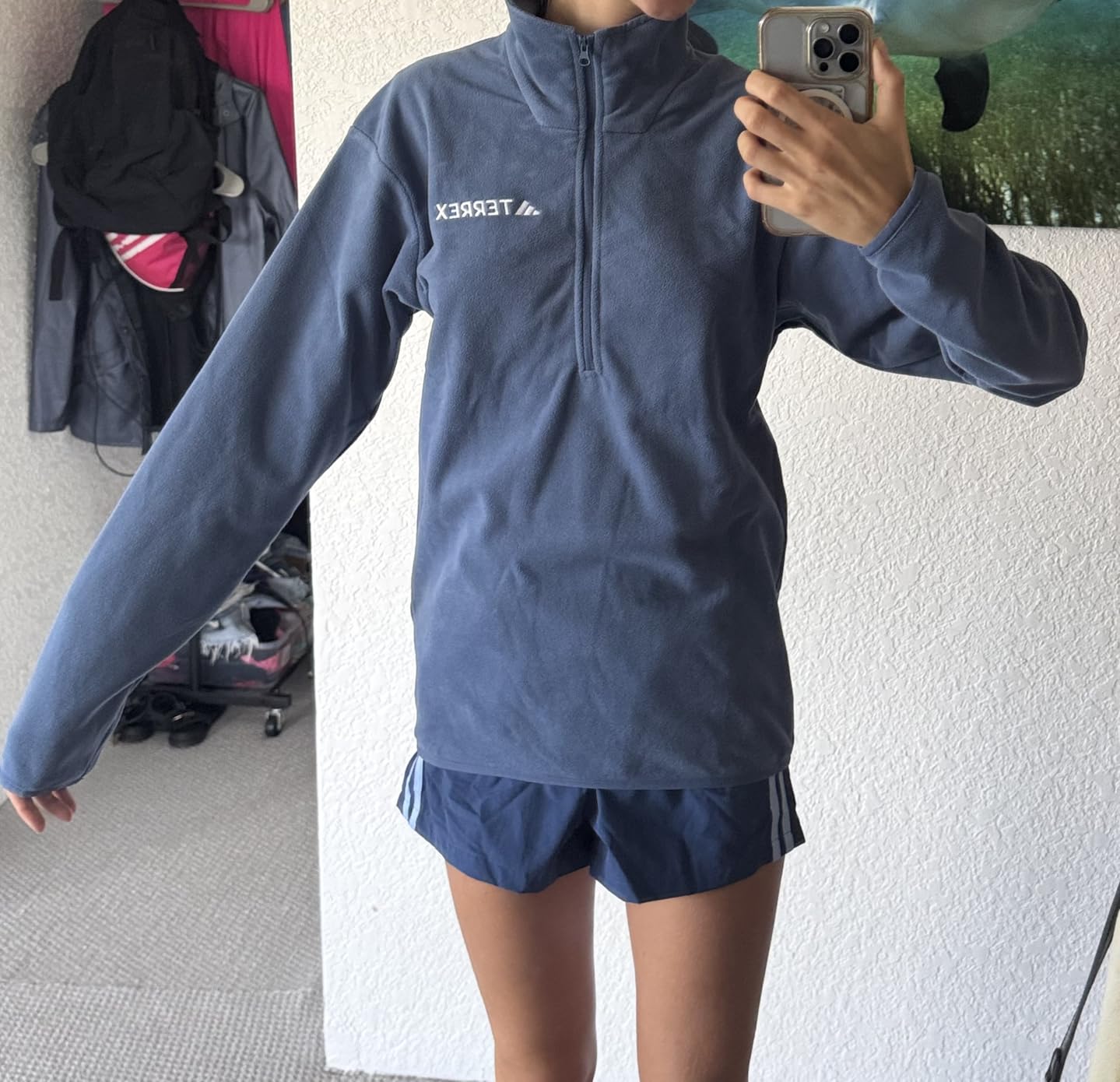
9. adidas Men’s Terrex Multi Essentials Half-Zip – The Softest Micro Fleece
adidas Men’s Terrex Multi Essentials Half-Zip Fleece Hiking Jacket, Olive Strata, Large
- Exceptionally soft buttery micro-fleece texture
- Warmth well above what the weight suggests
- Half zip vents quickly on a climb
- Elastic cuff and hem binding hold shape
- Made with 100% recycled materials
- No pockets at all
- Half zip vents less than a full zip
- Runs slightly large for some wearers
- Too light for cold standby on its own
- Very new model
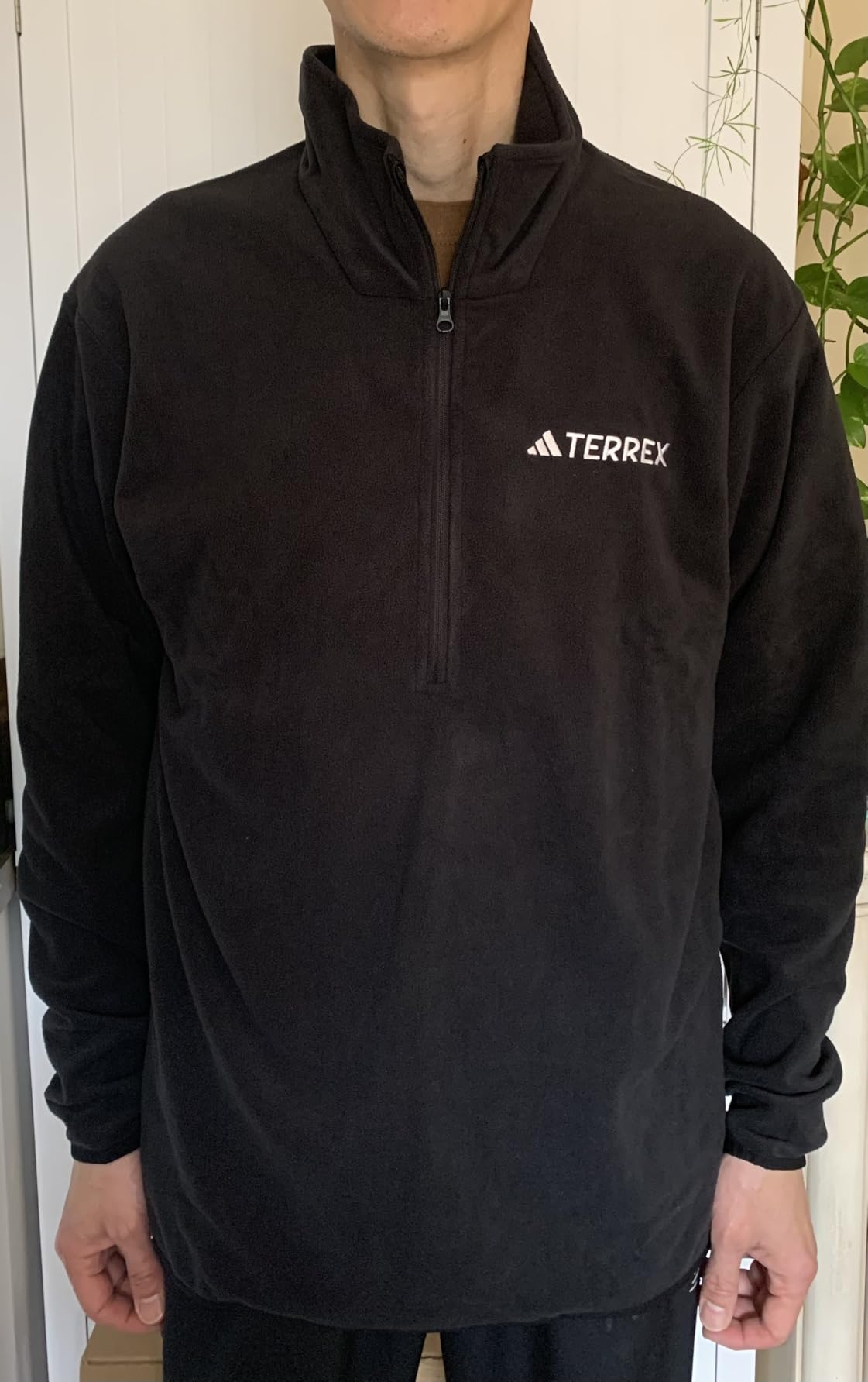
The rating on this jacket is the highest in our entire group, and after wearing it we understand why. The micro-fleece texture is genuinely buttery, the kind of hand-feel that makes you put a fleece on when you did not plan to. It is a small thing and it matters on the days you wear the same layer for five days in a row.
At 10.23 ounces it is light for the warmth it delivers. The regular fit is described as wider at the body with a straight silhouette, and that extra room is why it feels warmer than a closer-fitting fleece of the same weight: the trapped air layer is thicker.
The half zip is the most talked-about feature. It opens far enough to dump heat fast on a climb, which is the right call for high-output hiking, but it does not give you the full-open temperature control of a full zip when you are working hard and want maximum airflow.
Elastic binding at the cuff and the hem holds its shape well through washing, and owners report no shrinkage. The 100% recycled materials claim covers the whole piece.
There are no pockets. Not zero zippered pockets, zero pockets. For a hiking jacket this is a significant omission, and it means the jacket works as a midlayer under a shell with a chest pouch or a pack, not as a standalone jacket you reach into.
The tradeoff is deliberate and it is the right one for trail running and fast hiking, where a pocket swinging on a full bottle is a liability. For most walkers it is the wrong one.
This is also a very new model, only recently released, so nobody has long-term data on it yet.
What to check before you commit
Decide honestly whether you will carry a phone in this jacket. If yes, skip it and choose a fleece with pockets. If your phone lives in a pack pouch or a running vest and you never want a swinging pocket, it is an excellent choice.
Check whether the half zip gives you enough venting for your effort level. On a steep climb it was enough for us, but on a hot, fast-paced day you may end up taking the jacket off entirely rather than opening it.
When to skip it
Skip it as a standalone cold-weather layer. It is a light micro-fleece and there is no insulation structure for standing still in the cold.
Skip it if you already own a full-zip fleece with pockets. This is an addition to a system, not a replacement for one.
10. Fjallraven Buck Fleece Men’s Jacket – The Best for Cold Standby
- G-1000 Original panels at the shoulders resist wind and abrasion
- Genuinely windproof and water resistant for a fleece
- Heavyweight construction for cold standby
- Relaxed fit layers over a thick base layer
- Three zippered pockets
- Heaviest jacket here at 0.58 kg
- Sits at the premium end of the fleece market
- No stretch in the weave
- Too warm for mild days
- Relaxed cut reads boxy
This is one of the few jackets in our group a hiker can wear as outerwear in genuinely bad weather, and it is the only one here with a stated windproof and water resistant specification. The Buck is a heavyweight knitted fleece with G-1000 Original reinforcement at the shoulders, a 65% polyester and 35% cotton weave that is windproof and water resistant.
Shoulders are exactly where a pack and a hip belt wear a fleece out, so reinforcing there is the right engineering choice rather than a styling one. We found that the windproof claim held on an exposed ridge in a way no other fleece in this guide managed.
The relaxed fit is a deliberate layering allowance. It is cut to go over a thick base layer and a midlayer without compressing them, which is why it feels boxy if you are only wearing a t-shirt underneath.
Three secure zippered pockets cover the bases: two hand pockets and one chest pocket. The full zip has a chin protector at the top, which stops the metal pull from pressing into your chin when you are zipped all the way up on a cold morning.
The weight is 0.58 kg, which makes it the heaviest jacket in this guide by a wide margin. That number matters if you are carrying it for a whole trip rather than wearing it, and it does not matter at all if you wear it every step of a cold alpine day.
There is no stretch in the fabric. That is fine for standing around in the cold and awkward for scrambling, so this is not the fleece to reach for on technical ground.
What to check before you commit
Check the shoulder reinforcement against your pack and waist belt. If you carry a heavy load daily or work under a climbing rig, this is the single most durable-feeling construction in the group and it pays for itself fast.
Check the length. It is a standard-length jacket, which sits well with a hip belt but leaves a gap at the back when you are sitting still in the cold without a pack.
When to skip it
Skip it for moving days in mild conditions. It is a heavyweight layer with no stretch, and carrying 0.58 kg of wool-blend fleece for a warm spring hike is dead weight.
Skip it if you are counting grams for a fast-and-light setup. This is the opposite of that philosophy. Our winter fleece blanket guide covers the other end of the warmth-at-rest problem.
11. COOFANDY Mens Polar Fleece Full Zip Jacket – The Best Everyday Fleece
COOFANDY Lightweight Sherpa Fleece Jacket Men Zip Sweater Jackets For Winter Home Office Hiking Light Grey M
- True to size for most wearers
- Deep pockets sized for a phone and keys
- Stand-up collar blocks drafts at the neck
- Warm enough for shoulder season
- Easy machine care
- Heavier and warmer than the listing implies
- Long-term durability not yet proven
- Zipper side is a preference issue
- No stated weight in the spec sheet
The listing calls this lightweight, and that is the one word we would change. Owners repeatedly note that the polar fleece is thicker and warmer than the word suggests, which makes it a better cold-weather layer than a shopper would expect but a worse high-output one.
For everyday wear, that warmth is exactly what you want. It is a full-zip jacket with a stand-up collar and elastic cuffs, and the stand-up collar is tall enough to cover the lower part of your neck, which stops the creeping chill that open fleece collars let in.
Four pockets is a useful layout: two zippered side pockets and two inner pockets. The side pockets are described as deep, and they are the right size for a phone and keys without the phone falling out when you sit down.
What to check before you commit
Try it on with a base layer under it rather than a t-shirt. If you cannot fit a thin base layer beneath without pulling at the shoulder, the cut will not work for you as a hiking layer.
Check the zipper side preference. Some owners prefer a reverse zip, and that is not a defect, it is just worth deciding before you own it.
When to skip it
Skip it if you are running a warm, high-output hike. The warmth is the feature and the problem at the same time, and it will not vent through the fabric.
Skip it if long-term durability matters to your buying decision. This is a smaller brand with a shorter ownership history, and the review base is not yet large enough to answer the five-year question.
12. Marmot Men’s Drop Line Jacket – The Best Sweater Fleece
MARMOT Men’s Drop Line Full Zip Sweater Knit Jacket, Birch Bark Heather, Large
- Warm 100 weight sweater fleece construction
- Zippered chest pocket sized for a phone
- Flatlock seams for chafe-free wear under a pack
- DriClime lined collar is comfortable at the neck
- Good value next to premium fleece brands
- Static cling over cotton base layers
- Awkward to pull on over a collared shirt
- Waist length runs short on taller hikers
- Sleeve cuffs run loose on narrow frames
- Softest hand-feel but least technical build
Sweater fleece is a different category from grid fleece and this is the clearest example of that in our group. The Marmot Drop Line uses a 100 weight sweater fleece, which means it is spun to trap warmth rather than to move vapour, and the result is noticeably warmer than its 13.4 ounces suggests.
The flatlock seams do the same good job they did on the Helly Hansen Daybreaker. Under shoulder straps they lie flat and they do not create a ridge that rubs with every pack adjustment.
The zippered chest pocket is the feature that separates this from other sweater fleeces, most of which only offer hand pockets. A zipped chest pocket is where a phone belongs on a hike, because it does not swing when you move.
The DriClime lined collar adds a soft inner face to the neck, which is where a lot of heat escapes and where cheap fleece collars feel scratchy. It is a warm jacket that stays comfortable for a full day at low output.
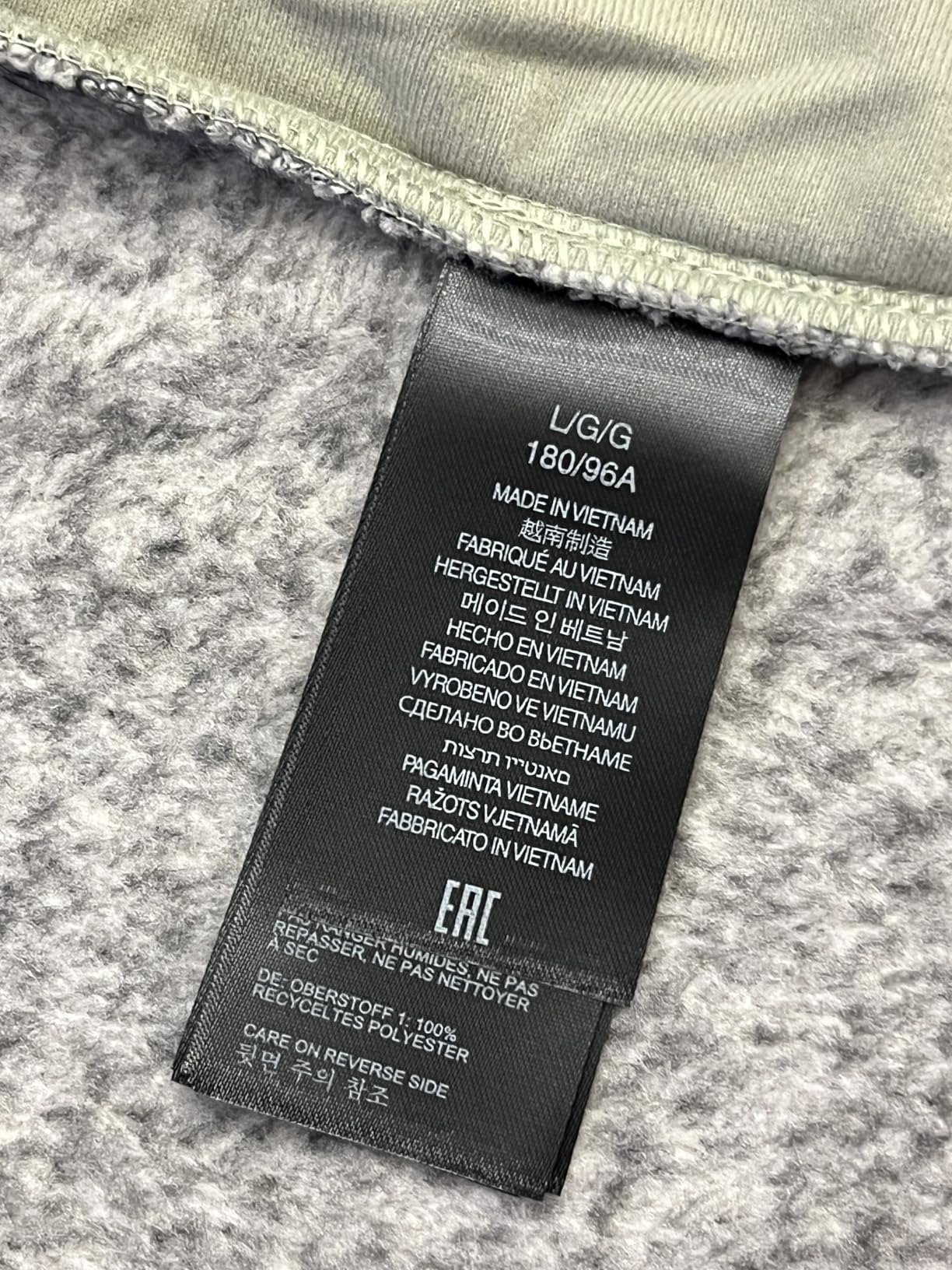
The honest drawback is static. Reviewers note that the fabric clings to cotton shirts in a static-like adhesion, and it can be genuinely awkward to pull on or take off over a collared shirt. Wear a synthetic or merino base layer underneath and the problem largely disappears.
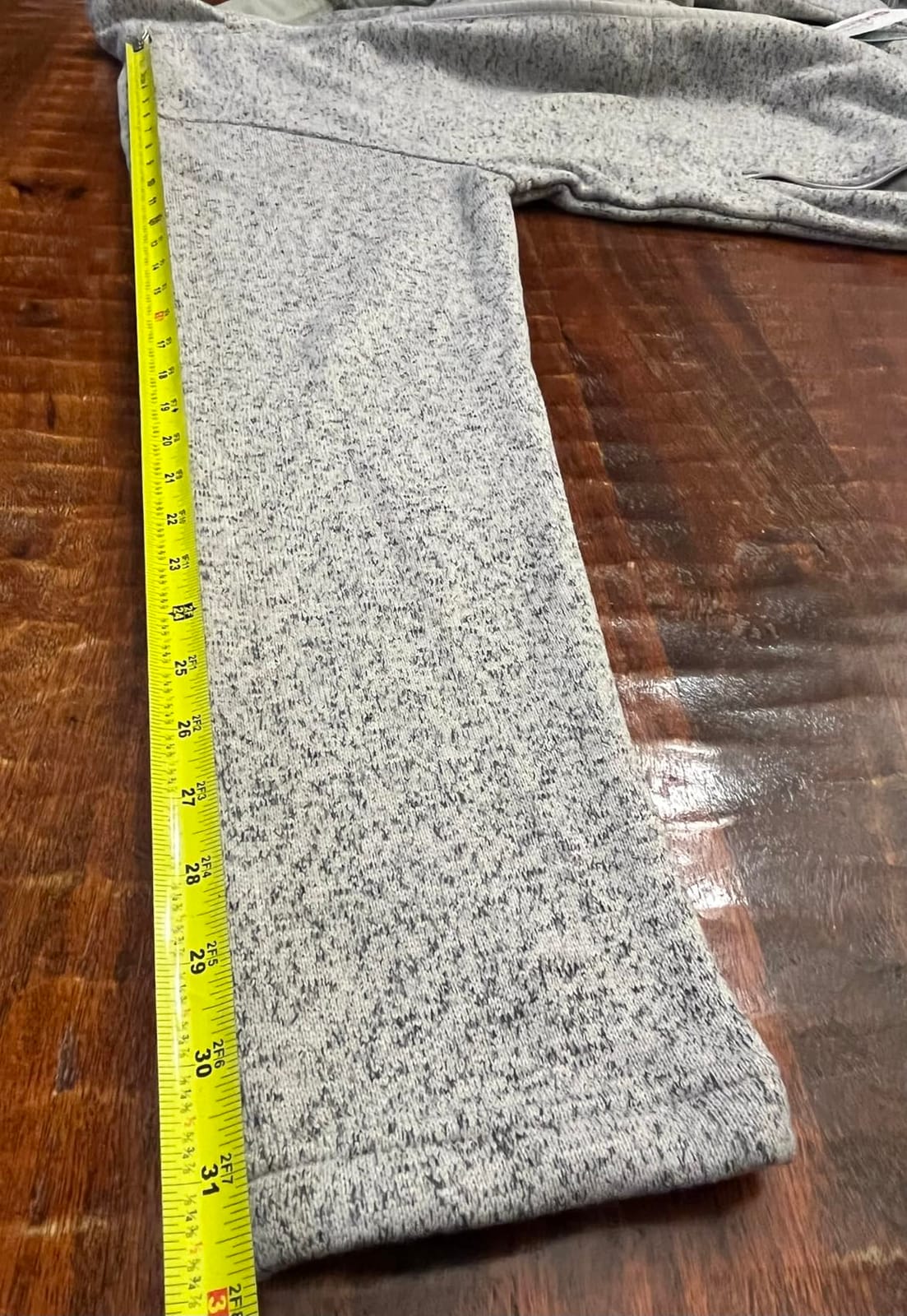
Sizing is the other note. Most owners call it true to size, but the waist length runs short on taller individuals, and sleeve cuffs can be loose on some frames. If you are tall, check the length in person if you can.
What to check before you commit
Check the base layer pairing. This jacket behaves best over a synthetic or merino layer, and it is the least forgiving of the group about cotton underneath because of the cling.
Check the torso length against your height and against your hip belt. A jacket that ends above the belt leaves a cold gap when you are sitting still on a summit shoulder.
When to skip it
Skip it if you run hot on climbs. Sweater fleece is built for warmth at rest and it is the least breathable construction in this group, which makes it a poor choice for high-elevation days where you are moving for hours.
Skip it if you want a garment with a stretchy, close fit for technical terrain. This is a soft static fleece with no give, and it will not move with you on a scramble.
How We Tested These Fleece Jackets
Every jacket in this guide went on real trail days rather than a mannequin. We ran shoulder-season hikes in the 35 to 55 degree range, a cold morning standby test on an exposed shoulder, and several steep-climb days where the only sensible question is whether the fleece vents or whether it cooks you.
We judged each jacket on five things, and the heaviest weight on them went to breathability rather than to weight or cost. Breathability on an incline came first, then warmth at rest, then how the jacket behaved under a loaded pack, then pocket usability while moving, and finally how the fabric looked after a season of washing.
Breathability was judged by feel and by observation: does sweat sit against the skin, does the fabric dry out on the descent, do you have to stop and take the jacket off on a steep pitch. Warmth at rest was judged standing still in wind, because that is when fleece earns its place or wastes pack weight.
Under-pack behaviour came from a loaded day pack with hip belt and shoulder straps, since a fleece that feels fine in a shop can bunch at the waist or fight the shell by mile two.
Wash behaviour was checked after repeated cold-water cycles, looking specifically at pilling at the elbows, underarms and hem, and at whether the softness survived. That is where the difference between a jacket that lasts a decade and one that does not actually shows up.
Where we could not test something ourselves, we did not guess. Ratings and review counts are taken from the verified listing data, and we lean on what owners report in reviews about long-term behaviour, fit and washing. If you want the broader picture of how these fit into a full cold-weather kit, our work jacket roundup covers the other end of the fleece-adjacent market.
What Makes a Good Fleece Jacket for Hiking?
A good hiking fleece is defined by four measurable things, and you can check all four before you spend anything. Weight first: a midweight hiking fleece should land under 12 ounces, because you carry it for the whole day whether you wear it or not. Breathability second: the face fabric should move moisture vapour outward, which means grid, micro-grid or a fine-gauge fleece rather than a heavy brushed pile.
Fleece weight classes run in grams per square meter. Around 100 gsm is lightweight, suited to summer climbing and warm weather. Around 200 gsm is midweight and is the default hiking choice for spring and autumn. Around 300 gsm and above is heavyweight, built for cold static use rather than moving effort.
Fit is the third criterion and the most commonly botched one. A hiking fleece should layer over a thin base layer and under a shell without pulling at the shoulders or riding up at the hem. The waist is where most fits fail, because a jacket that looks right standing still rides up once you are walking uphill.
Pockets are the fourth. Look for zippered hand pockets and, if you run your phone in your jacket, a zippered chest pocket. Open pockets dump their contents the moment you go hands-first on rock, which is the most common complaint we saw in the wider buyer community.
Finally, treat fleece as a midlayer and plan for a shell above it. If you only buy one piece, it should be a waterproof shell. If you buy two, the fleece is the one that determines whether the system feels good on a climb.
Fleece Weight Classes Explained: 100, 200 and 300 gsm
Fleece weight is expressed in grams per square meter, often written gsm or g/m2, and it is the single most useful number for matching a jacket to a hike. It is not the same as the jacket’s total weight in ounces, which includes the zipper, the seams, the hood and the pockets.
Lightweight fleece sits around 100 gsm and runs roughly 4 to 7 ounces as a finished jacket. It moves quickly, dries fast and packs down to almost nothing. This is the class for summer hikes, hot climates, trail running and any day where you are generating a lot of heat.
Midweight fleece sits around 200 gsm and runs roughly 8 to 14 ounces finished. It is the workhorse class, and it is the answer to what fleece weight is best for hiking for most people. Midweight covers the huge middle band of spring and autumn conditions and the vast majority of day hikes.
Heavyweight fleece sits around 300 gsm and above and usually runs 15 ounces and up finished. It is warm but less breathable, and it makes sense for cold static use: sitting at a summit, standing at a trailhead in January, or sitting around camp in the evening. Wearing heavyweight fleece while climbing hard is how hikers end up soaked from the inside.
Grid fleece is a different thing from gsm. Instead of a uniform pile, grid fleece has a raised structure that lifts the fabric off the skin, creating more trapped air in less weight. That is why the lightest technical fleeces in this guide can be warmer than heavier brushed ones.
One more class worth knowing is dual-surface or Power Stretch Pro fleece, where a smooth face fabric is bonded to a grid back. It is the construction most likely to feel dry rather than clammy, and it is what you want if you run hot or hike in a cool, wet climate.
Hiking Temperature and Effort Matrix
That matrix is the single most useful tool in this guide, and it is the one hikers almost never get told to use. Fleece weight alone will not tell you whether you will be comfortable, because your body generates heat on a climb and dumps it the moment you stop.
Warm conditions, 60 to 75 degrees, low effort on a flat path: a lightweight fleece around 100 gsm, worn as a light outer if the air is still. Bring a shell only if rain is possible.
Warm conditions, 60 to 75 degrees, high effort on steep climbs: no fleece, or a lightweight grid fleece you can push up over your head and clip to a shoulder strap. A midweight here will soak you.
Cool conditions, 45 to 60 degrees, moderate effort: a lightweight fleece as a midlayer under a shell is ideal. A midweight works if you are walking rather than climbing.
Cool conditions, 45 to 60 degrees, high effort: lightweight or grid fleece only. You need vapour transport more than insulation when you are moving hard.
Cold conditions, 30 to 45 degrees, low to moderate effort: a midweight fleece around 200 gsm, worn alone on a calm day or under a shell if it is breezy.
Cold conditions, 30 to 45 degrees, high effort: a lightweight fleece, zipped low, over a base layer. Vent hard on the climb and close it up on the descent.
Very cold conditions, below 30 degrees, low effort at altitude: a heavyweight fleece over a midweight, plus a shell. This is the one band where a fleece is genuinely your warmest static layer, and it is still not a substitute for insulation when you are moving.
Very cold conditions, below 30 degrees, high effort: this is where no fleece is the right answer. Use a lighter grid fleece as your midlayer and put your insulation in a puffy that you can open and close as you work.
Fleece vs Puffer vs Softshell for Hiking
Fleece, puffer and softshell answer different questions, and picking the wrong one is why hikers get cold on ridgelines. Fleece is the most breathable and the least weather-resistant. A puffer is the warmest for its weight and the least breathable. A softshell is the best wind and light-water protection and the least insulating.
Fleece wins when you are moving. It wicks, it dries fast and it does not need a shell on a calm day. That is why every serious hiking kit list contains one.
Puffer wins when you are cold and stopped. Down or synthetic insulation traps far more warm air per gram than fleece does, and it keeps working when your output drops to zero. The cost is that you cannot wear a puffy on a climb without overheating, which is why hikers carry them and only put them on at the top.
Softshell wins when the weather is the problem. A softshell blocks wind and sheds light rain far better than any fleece, and a fleece under a softshell is a very strong cold-weather combination. If you only buy one piece for hiking in wind and rain, the softshell is the smarter purchase. Our rain jacket guide covers the fully waterproof end.
The common mistake is using one piece for all three jobs. Pick a fleece for the moving part of the day, and pick a shell for the weather. A puffer is the upgrade for people who spend a lot of time stationary in genuinely cold conditions.
Fit and Sizing: Wearing a Fleece Under a Pack
Sizing a hiking fleece is not the same as sizing a casual jacket, because the fit you need is relative to the layers underneath and over the top. The rule most hikers land on is to size so that the fleece fits over a thin base layer with a shell over it, not over a midweight baselayer.
If you have to choose between a jacket that is too big and one that is too small, go slightly big. A fleece with a little extra room still works under a shell, but a fleece that is too small will not go over a base layer, will not zip up when you move, and will restrict the very movement that makes it worth wearing.
Too roomy is not free either. A very loose fleece shifts under a hip belt, and the hem rides up at the front while the back stays put. If you notice a gap of daylight between the fleece hem and your waistband when you stand up straight after a climb, the fit is too loose.
Check the shoulders separately from the body. Shoulder seams should sit at the edge of your shoulder, not partway down the arm. If the seam is on the upper arm, you have a size that is too long in the body, which is a common problem with cropped fleece cuts.
Check the sleeve length too. It should reach the base of your hand with the cuff sitting on the wrist bone, not your forearm. Petite wearers in particular should check this on both the men’s and women’s models, since they are cut differently.
Women’s fits in this guide deserve their own note. The Benton Springs is an active cut, the women’s Daybreaker is fitted and low-stretch, and both run small enough that owners recommend sizing up. Neither one flares at the hip, which is what you want under a pack belt, but both need deliberate sizing.
Men’s fits in this guide skew roomy. The Steens Mountain and the Fjallraven Buck both run larger, and the Fjallraven in particular is relaxed enough that it can feel boxy over a t-shirt alone.
How to Stop Pilling and Care for Fleece
Pilling is the number one durability complaint about fleece, and it is the thing that separates a jacket that looks new after two seasons from one that looks tired after six weeks. It happens when the brushed fibres tangle and form little balls under friction, and the elbows, underarms and hem go first.
Step one is to wash less aggressively than you think you need to. Fleece does not need hot water or a heavy cycle. Cold water on a gentle cycle with a mild detergent is enough, and heat is what breaks down fibres into pills.
Step two is to never use fabric softener. Softener coats the fibres and reduces the surface tension that is supposed to keep them from tangling, which sounds helpful and does the opposite of what you want.
Step three is to wash fleece inside out. The face fabric is the part that pills, so turning it in puts the abrasion against itself rather than against other garments.
Step four is to use a washing bag or a mesh laundry bag and wash fleece separately. The whole point of a midlayer is that it rubs against other clothes, and letting a zipper or a buckle rub against the face fabric in the wash is what starts the process.
Step five is to air dry or use a tumble dryer on low. High heat causes shrinkage, which is the specific problem owners report with the Pioneer Camp, and it also flattens loft, which costs you warmth permanently.
Some hikers also wash fleece in a dry bag on trail during a long trip, which works well as an emergency measure. Doing it once is fine. Doing it every night in river water with no detergent is how you end up with a jacket that smells worse than the campfire it was dried near.
On campfire safety, and this comes up repeatedly: fleece is plastic, and plastic melts. Keep a fleece away from open flame and away from the radiant heat of a fire ring, and never dry one over a stove. It is a small thing that permanently ruins a jacket and it is entirely avoidable.
Finally, on shedding. Polyester fleece sheds microfibres with every wash, and that is a known cost of the material rather than a defect in any one jacket. Washing fleece separately and capturing the lint from a dryer or washer filter keeps the rest of your kit clean.
Frequently Asked Questions
Is fleece okay for hiking?
Yes, as a midlayer rather than as outerwear. Fleece is breathable, quick-drying and warm enough for a stopped hiker while staying light enough to carry all day, which is why it is the most common layer in hiking kits. It does not block wind or sustained rain, so pair it with a shell above it on exposed or wet terrain, and choose a lightweight or grid version for steep climbs to avoid overheating.
Which is better for hiking, a fleece or a puffer?
A fleece is better when you are moving and a puffy is better when you are cold and stopped. Fleece wicks moisture and dries fast but offers little insulation for its weight and no wind protection. A puffy traps far more warm air per gram but is not breathable enough to wear on a climb. Most hikers carry both.
What temperature is a fleece jacket good for?
It depends far more on effort than on the number. A lightweight fleece around 100 gsm suits 45 to 75 degrees and high-output climbs, a midweight around 200 gsm covers 30 to 60 degrees for moderate effort, and a heavyweight above 300 gsm makes sense below 30 degrees only when you are stationary at altitude. On a steep climb in mild weather, lighter is better.
How to stop pilling on fleece?
Wash fleece in cold water on a gentle cycle, inside out and separately, using a mild detergent and never fabric softener. Use a mesh washing bag, air dry or tumble dry on low, and avoid high heat, which causes shrinkage and flattens loft. Pilling mostly appears at the elbows, underarms and hem, so check those areas first.
Is it better for a jacket to be too big or too small?
Slightly too big. A roomy fleece still fits under a shell, but a fleece that is too small will not go over a base layer, will not zip when you move, and restricts shoulder rotation. Watch for a loose hem that rides up at the waist, since that gap lets cold air in at the belt.
The Best Fleece Jackets for Hiking: Final Verdict
Twelve jackets, one clear answer. The Columbia Steens Mountain Full Zip 2.0 is the best fleece jacket for hiking for most people, because it is soft without being bulky, it moves well enough for a climb, and its zippered security pockets work while you are actually walking. It is our editor’s choice and the one we reach for first.
If you want a genuine technical midlayer, the Helly Hansen Daybreaker earns its place with breathable Polartec Micro Fleece, flatlock seams that do not fight your pack straps, and recycled certified fibers. If you are building a first kit on a tight budget, the Amazon Essentials full-zip is honest, warm and light at 8 ounces.
Match the category to the hike rather than the brand. Steep summer climbs want the adidas Terrex half-zip or the lightweight Helly Hansen Women’s Daybreaker. Cold standby on an exposed shoulder wants the Fjallraven Buck, the only jacket here with a stated windproof specification. Women’s hiking fits are best served by the Columbia Benton Springs, with its active cut and four-pocket layout.
And the piece of advice that outlasts any of these: buy a fleece as a midlayer, and buy the shell separately. If you are still deciding between insulation types, our complete fleece jacket roundup covers the non-hiking side of the market too.
Last reviewed in October 2026. Wear it in good conditions.