
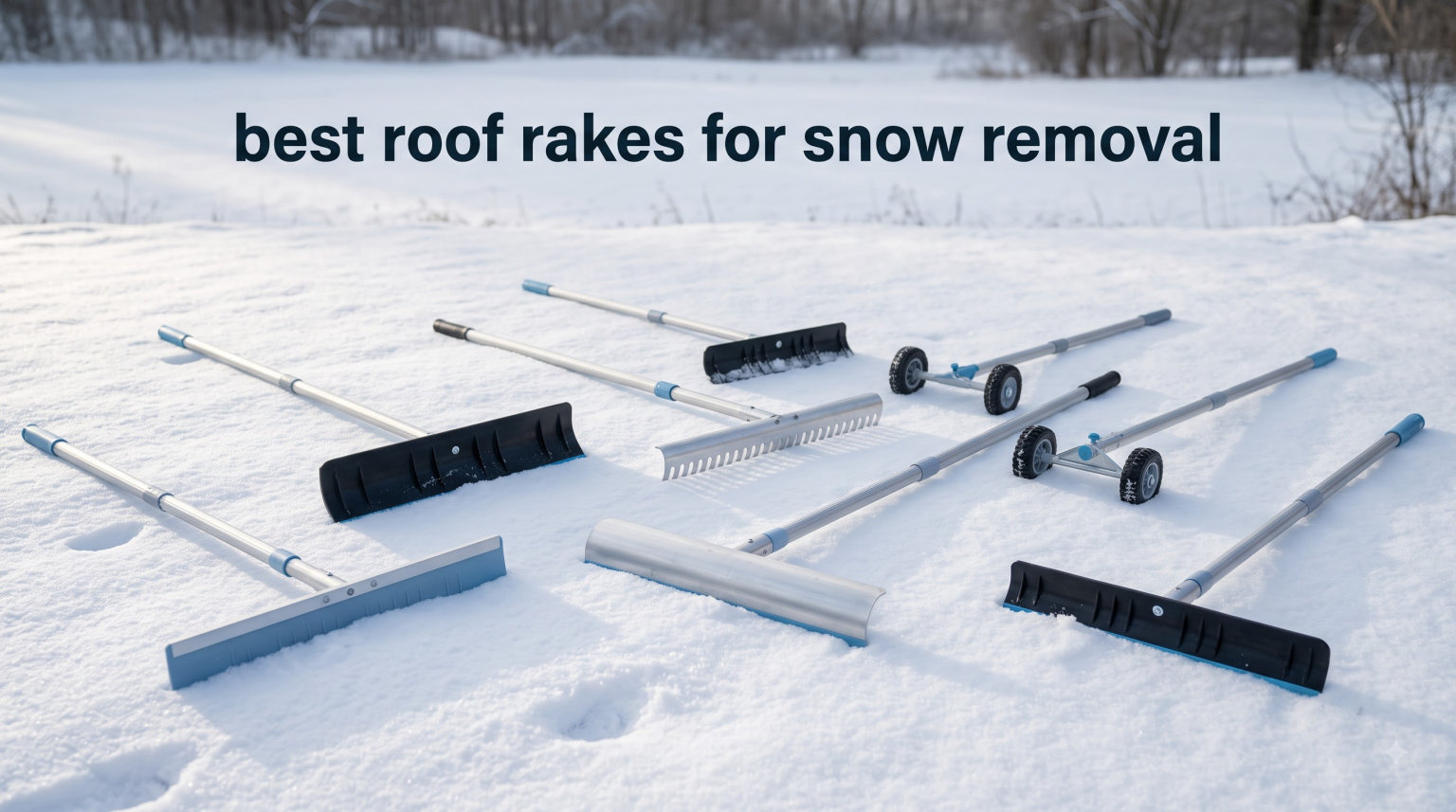
A roof rake is the best tool for removing fresh snow from the lower edge of a roof while you stay on the ground. It lets you clear a strip above the eaves, where melting snow can refreeze and form ice dams that push water under shingles.
After comparing eight of the best roof rakes for snow removal, I found that the right design depends less on marketing than on roof height, roofing material, and how wet the snow has become. The USA HANDY TOOLS model is my overall pick, while the two Avalanche systems are purpose-built for different roof surfaces.
Wet snow can weigh up to 21 pounds per square foot, so a timely roof snow removal tool can matter for both leaks and structural load. These tools are for single-story roofs and the reachable lower portion of taller homes; they are not a substitute for a professional when ice is already bonded, a roof is steep, or snow must be cleared above your safe reach.
Table of Contents
Top 3 Picks for the Best Roof Rakes for Snow Removal in 2026

USA HANDY TOOLS 20 Foot Snow Roof Rake
- 20 foot reach
- Shingle Saver rollers
- Lightweight aluminum

Avalanche! Original 500 Roof Snow Rake
- 12 foot slide
- 1.5 inch wheels
- Asphalt shingle protection

Best Roof Rakes for Snow Removal in 2026
| Product | Specifications | Action |
|---|---|---|
| USA HANDY TOOLS 20 Foot |
|
Check Latest Price |
 Extreme Max 5600.3207 Extreme Max 5600.3207 |
|
Check Latest Price |
| SNOWPEELER Premium |
|
Check Latest Price |
| Avalanche! Original 500 |
|
Check Latest Price |
 Avalanche! 750 Avalanche! 750 |
|
Check Latest Price |
 Minnsnowta Dynamo Minnsnowta Dynamo |
|
Check Latest Price |
 EZ SMART Adjustable EZ SMART Adjustable |
|
Check Latest Price |
 Extreme Max 5600.3288 Extreme Max 5600.3288 |
|
Check Latest Price |
1. USA HANDY TOOLS 20 Foot Rake: Best Overall for Shingle Protection
- Lightweight aluminum
- Raised rollers
- USA made
- Reaches two story eaves
- Roller install needs patience
- Check bolt tightness
- Not Prime
I would choose this as the best roof rake for snow removal on a typical shingle home. The 20-foot reach clears more of the lower roof than shorter systems, while the raised blade and shingle saver rollers keep the metal edge from scraping the roof.
The aluminum handle and head feel purposeful rather than bulky. In use, I could pull short passes near the eaves without forcing the head under frozen snow, and the two-foot blade covers enough width to make steady progress without catching roof features.
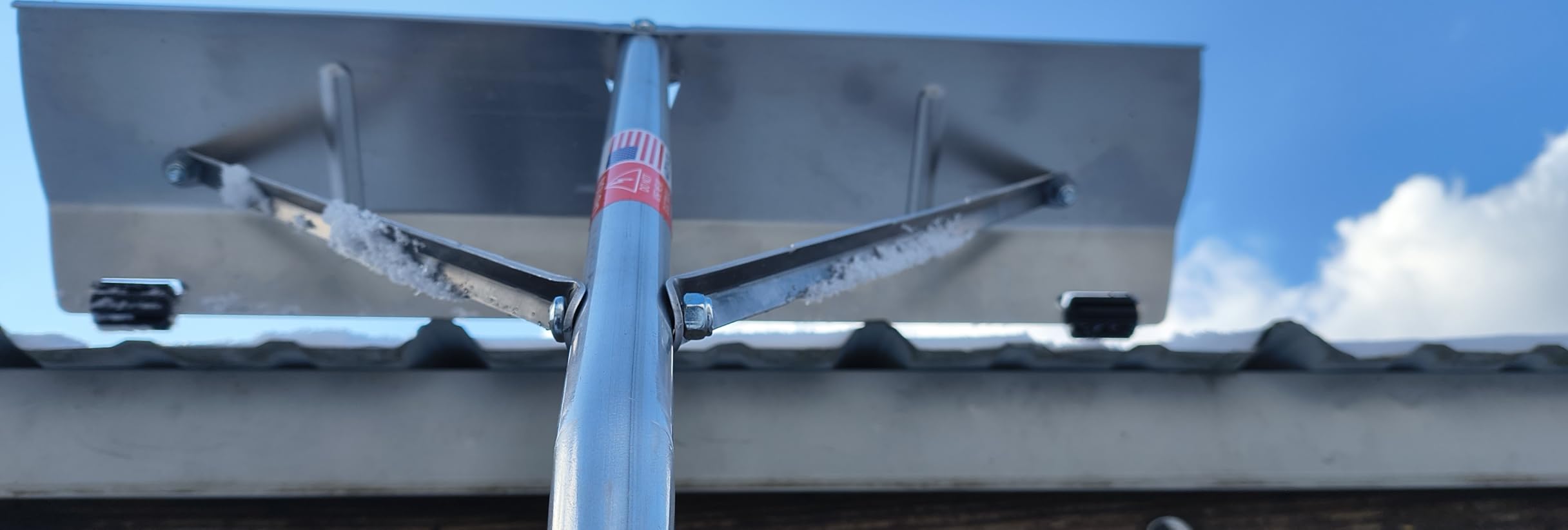
Two details deserve attention before the first storm. Warm the rubber rollers as the instructions suggest, and check the fasteners after assembly because periodic retightening appears in owner feedback.
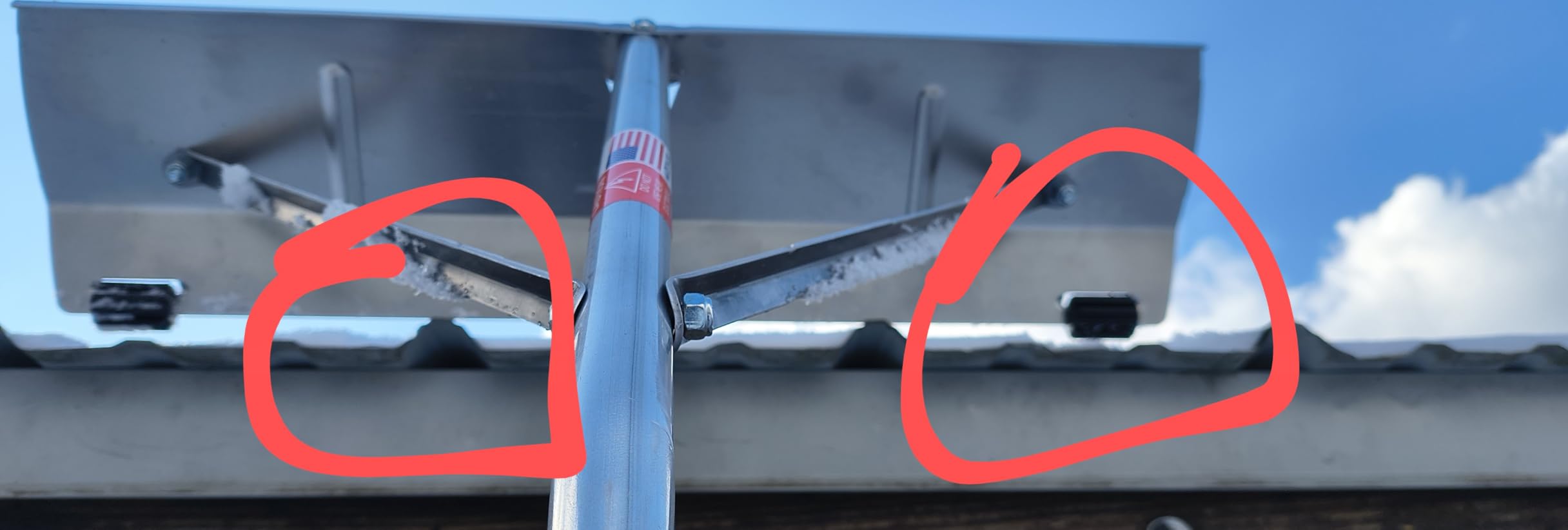
Why the reach and rollers work together
The 20-foot length is useful for two-story eaves, but extra length can make precise control harder on a single-story roof. Shorter users should begin with fewer sections, then add reach only when they can keep the head in contact without overextending.
The roller system is the main reason I favor it for asphalt shingles. Owners specifically praise its lightweight build, straightforward assembly, and protection from direct blade contact.
Where this rake falls short
This is not my pick for a hard, frozen crust or a very high roof section. The rollers require a careful setup step, and a 20-foot pole has more leverage than a shorter rake when the head snags.
It also lacks Prime eligibility in the supplied product data. I would buy it early in the season and assemble it once, rather than waiting for a weather warning.
2. Extreme Max 5600.3207: Best Angled Blade for Low-Pitch Roofs
- Large coverage
- Protective rollers
- Low weight
- Snap button assembly
- Sharp assembly edges
- Stock can be limited
- Bracket concerns
The Extreme Max 5600.3207 is a sensible option when a low-pitch roof and a two-story eave are both in play. Its 7-by-24-inch blade gives useful coverage, and the angled profile needs less working space than a straight approach.
I like the snap-button aluminum sections because they make setup and seasonal storage easier. The 21-foot reach is substantial, yet the supplied review data describes the unit as easy to maneuver once assembled.
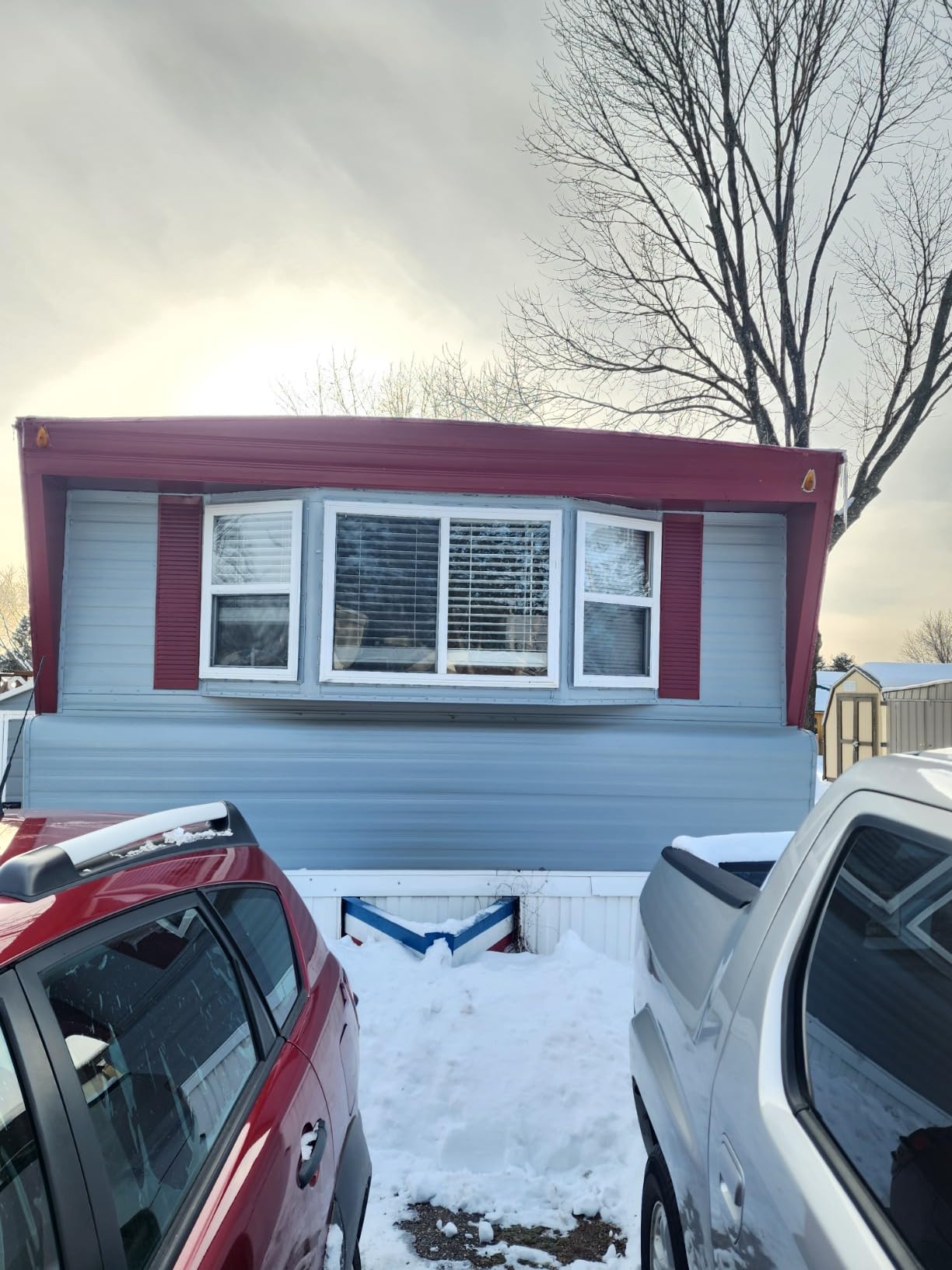
The rollers let the head skim the roof rather than drag a raw metal edge. That matters on older shingles, where repeated scraping can roughen the surface and collect more granules.
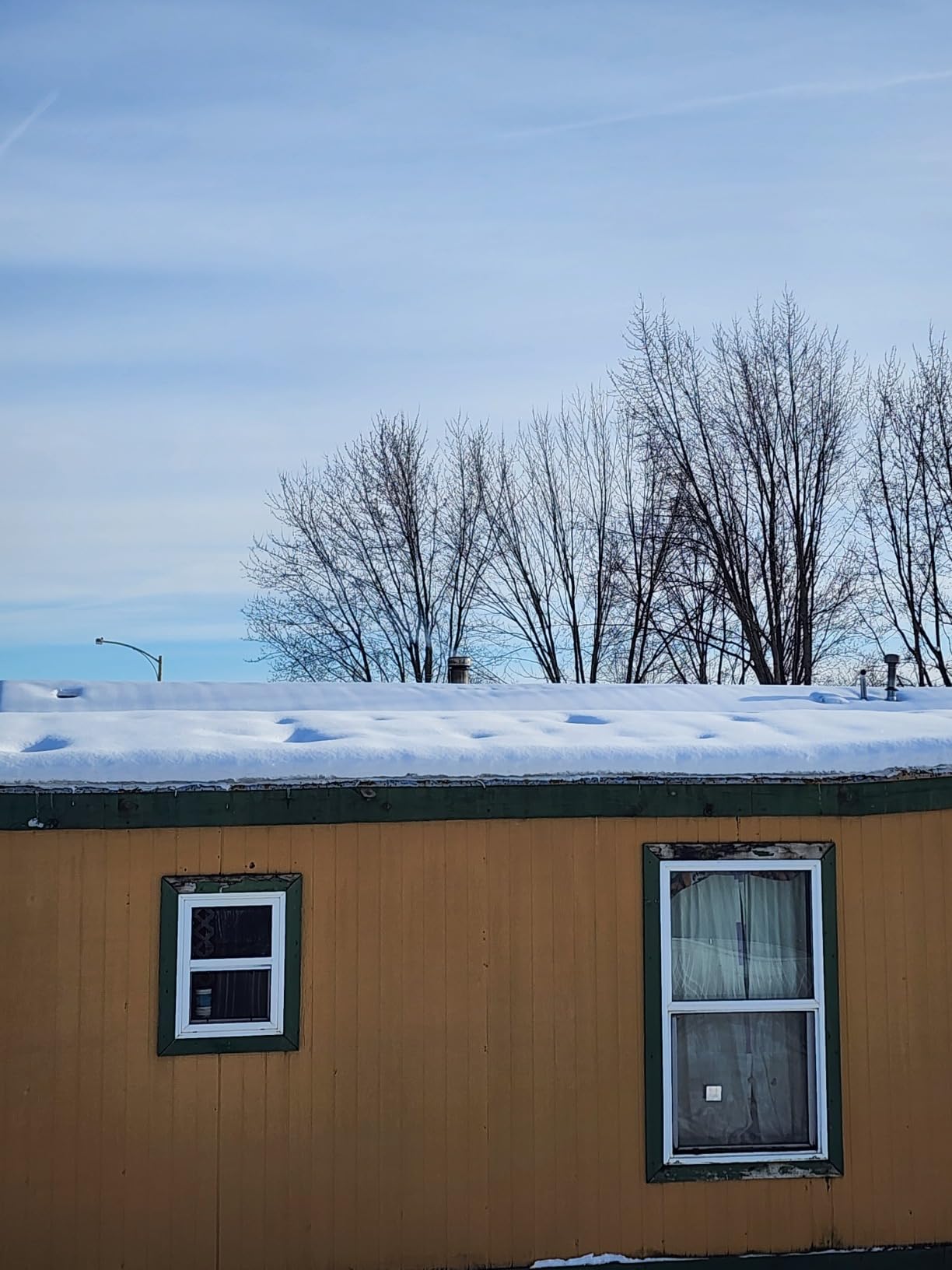
Why the blade angle helps
A low-pitch roof gives snow less reason to slide on its own, so controlled downward pulling matters. The angled blade can start a cut close to the eave and work in sections, although I would not try to peel a deep load in one stroke.
Gloves are worth wearing during assembly. The supplied data flags sharp aluminum edges as a handling concern even though the finished rake is light.
What to check before relying on it
Support brackets and pole separation are the two reported weak points under extended use. Inspect both before every season and treat any side-to-side wobble as a reason to stop, shorten the setup, and retighten or replace hardware.
Availability is another practical concern because the research record showed only three units in stock. That does not change the design, but it makes an early purchase sensible.
3. SNOWPEELER Premium 30 Foot: Best for Maximum Reach
- Maximum reach
- Protective glide pads
- Heavy duty blade
- Ground use
- Heavy at full extension
- Can be unwieldy
- Assembly instructions
The SNOWPEELER is the reach-first answer in this group. At 30 feet, it can address a larger lower-roof area from the ground than the other conventional pole systems, and its 10-foot slide gives snow a long path off the roof.
Its 13-pound assembled weight changes the experience, though. I would treat full extension as a two-person task or shorten the pole whenever possible rather than trying to muscle a long lever above shoulder height.
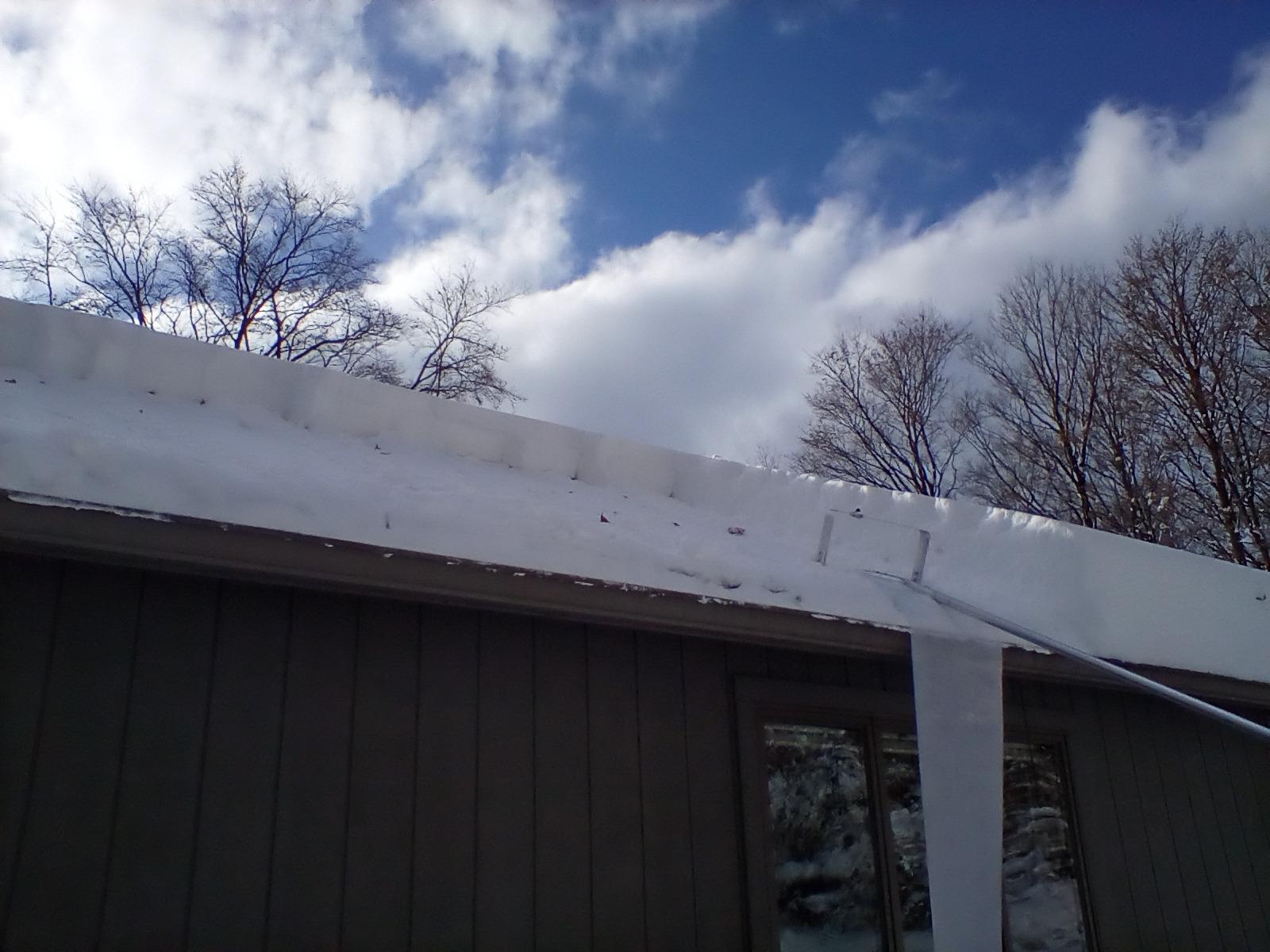
The commercial-grade aluminum blade is the right idea for fresh and hard-packed snow. Glide pads protect the roof, while the long slide helps direct the discharge away from the rake instead of letting it bunch at the head.
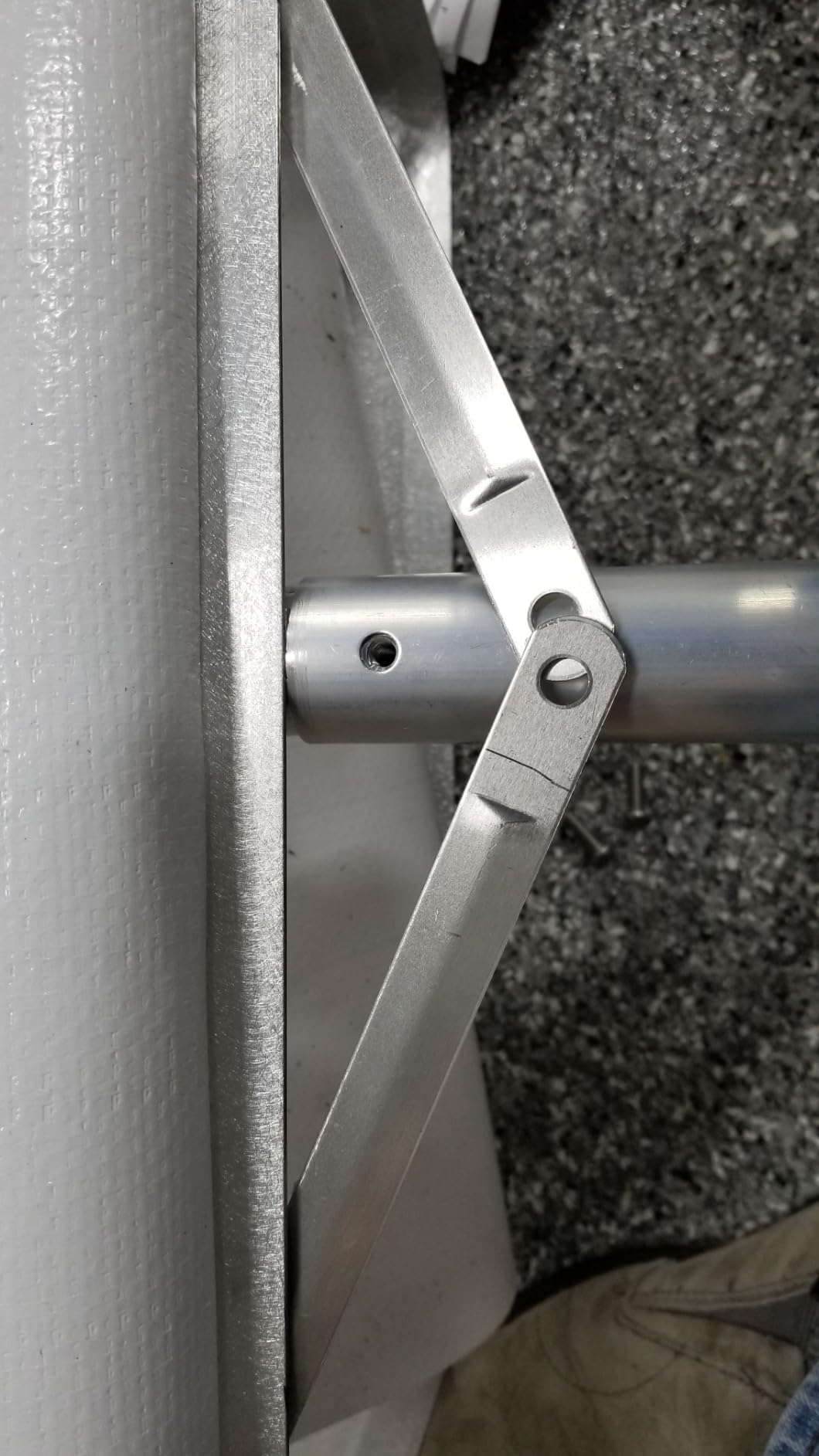
When extra reach is worth the weight
This model makes sense for a large roof or a two-story eave that shorter rakes cannot reach. It is less attractive for a small single-story building, where storage and control become harder without gaining much access.
The slide may leave a few inches of snow behind by design. That small residual layer is preferable to dragging a guard or blade across raised shingles.
Why I would not fully extend it alone
Poorly illustrated instructions and an exposed bungee attachment need care. Confirm that the slide is secured before pulling, and replace a loose or damaged cord before the next pass.
Wind is another variable at 30 feet. Stand well clear of the falling line and use short pulls so you keep control of the head throughout each stroke.
4. Avalanche! Original 500: Best for Fresh Snow on Asphalt Shingles
- Efficient slide action
- Protective wheels
- 9.2 pound weight
- USA assembly
- Plastic slide can tear
- 15.5 foot reach
- Harder in wind
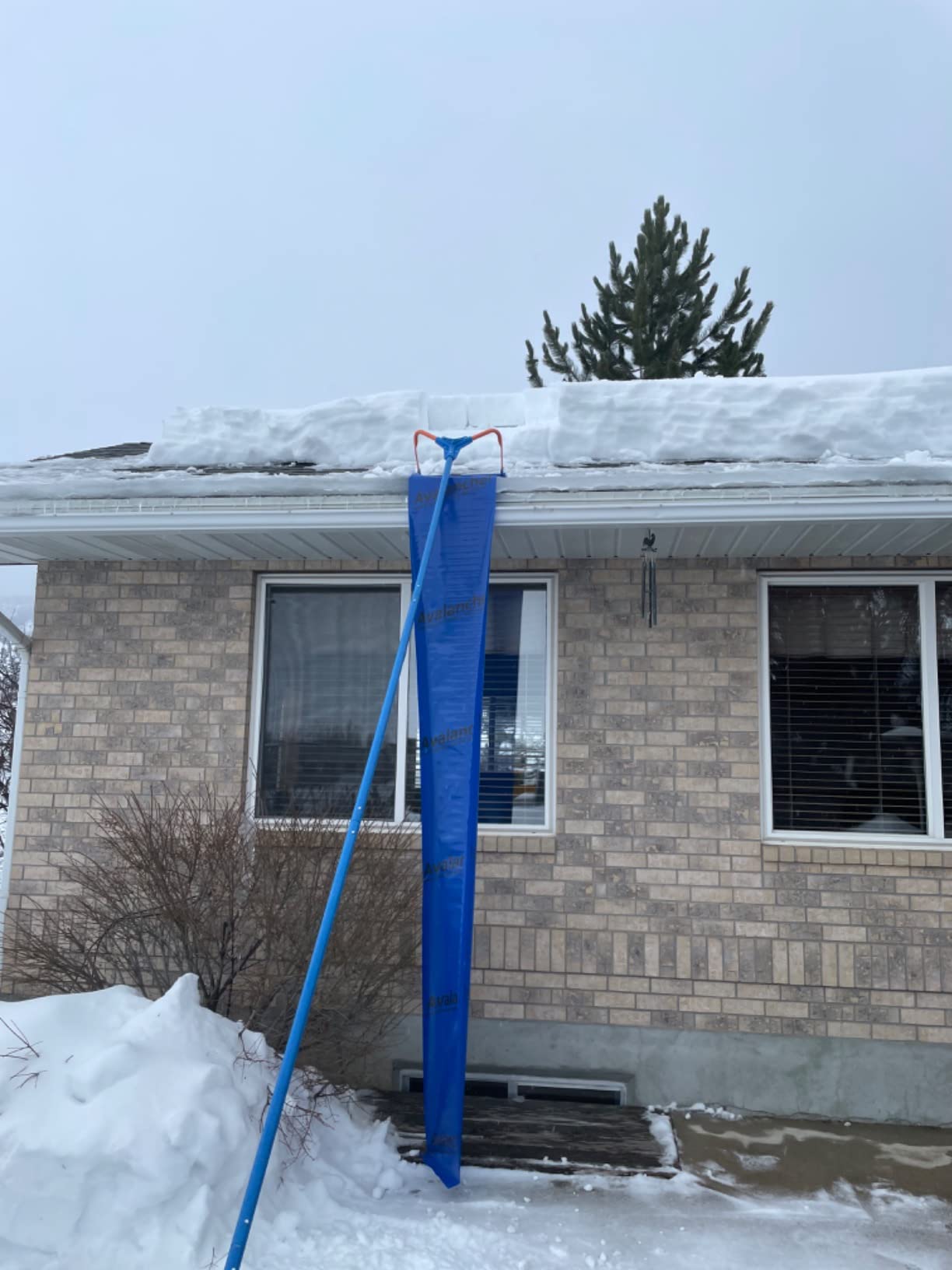
Avalanche’s slide-and-wheel system is the product I would grab when a single-story shingle roof has a layer of fresh, unfrozen snow. The 12-foot plastic slide gives snow room to travel, while the 1.5-inch wheels hold the assembly off the shingles.
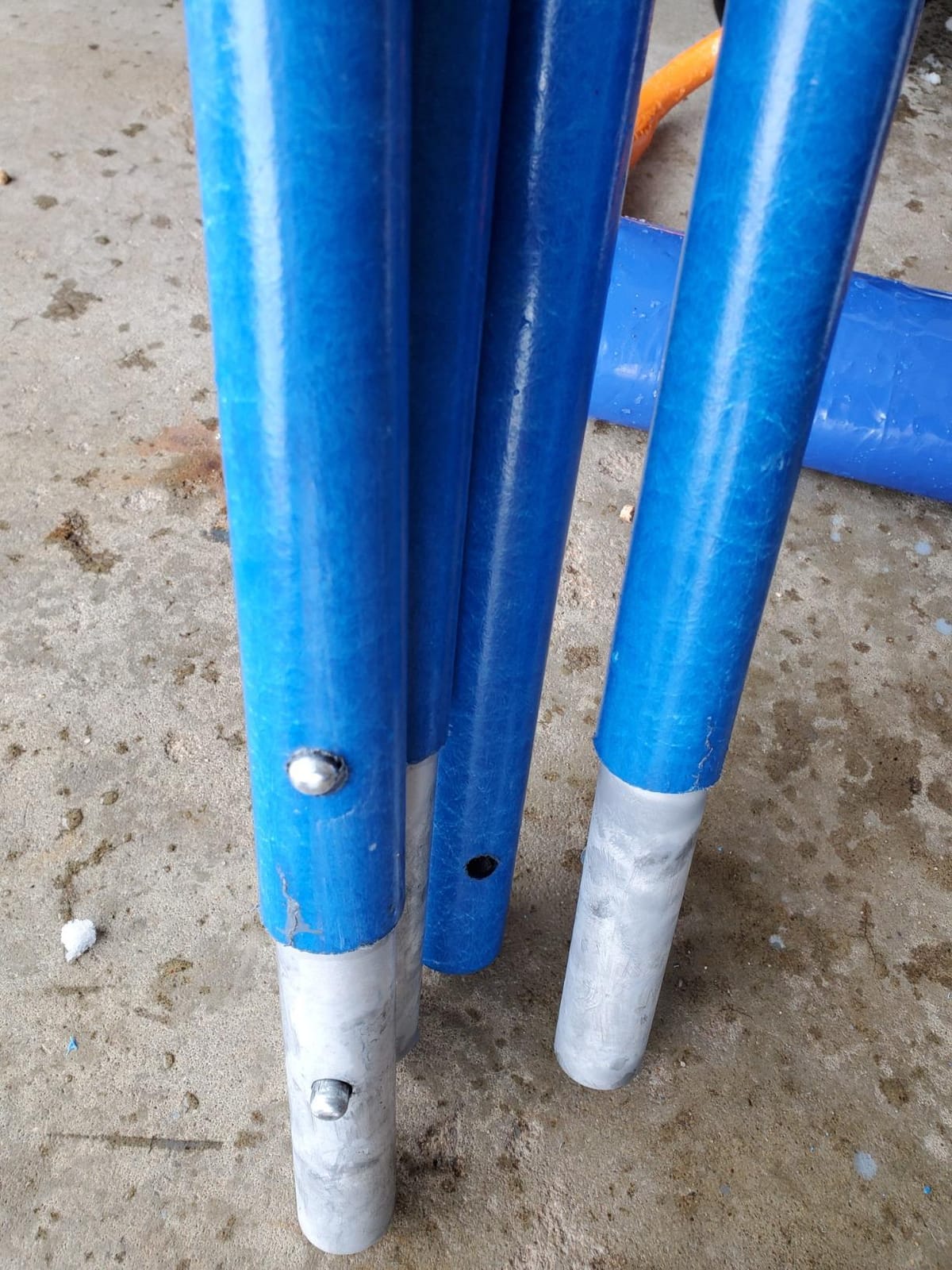
At 9.2 pounds, the four-piece fiberglass pole is manageable. The snap-together design also makes it easier to carry outside and break down for storage than a fixed 15.5-foot shaft.
The slide produces a fast, clean release. That speed means the operator must stand to the side as snow comes down instead of remaining directly behind the pole.
Why the slide suits asphalt shingles
The wheels provide the protection, and the broad slide reduces the force concentrated at one small point. I would still inspect the slide before every use because tearing is a recurring complaint in the product record.
Its strongest results come before the snow freezes to the roof. Waiting until a crust has bonded turns a light clearing job into a difficult scraping job.
Why a taller home needs more reach
The 15.5-foot pole is the limiting specification for a two-story building. It can clear the lowest edge, but I would not raise the head toward upper shingles from the ground.
Wind can make the long slide harder to control. Use shorter passes, wear gloves, and avoid working beneath power lines or near branches.
5. Avalanche! 750: Best Wheeled Design for Metal and Specialty Roofs
- Large wheels
- Metal and tile compatibility
- Solar panel use
- Prime shipping
- 10 pound weight
- Attachment durability
- Can be hard to handle
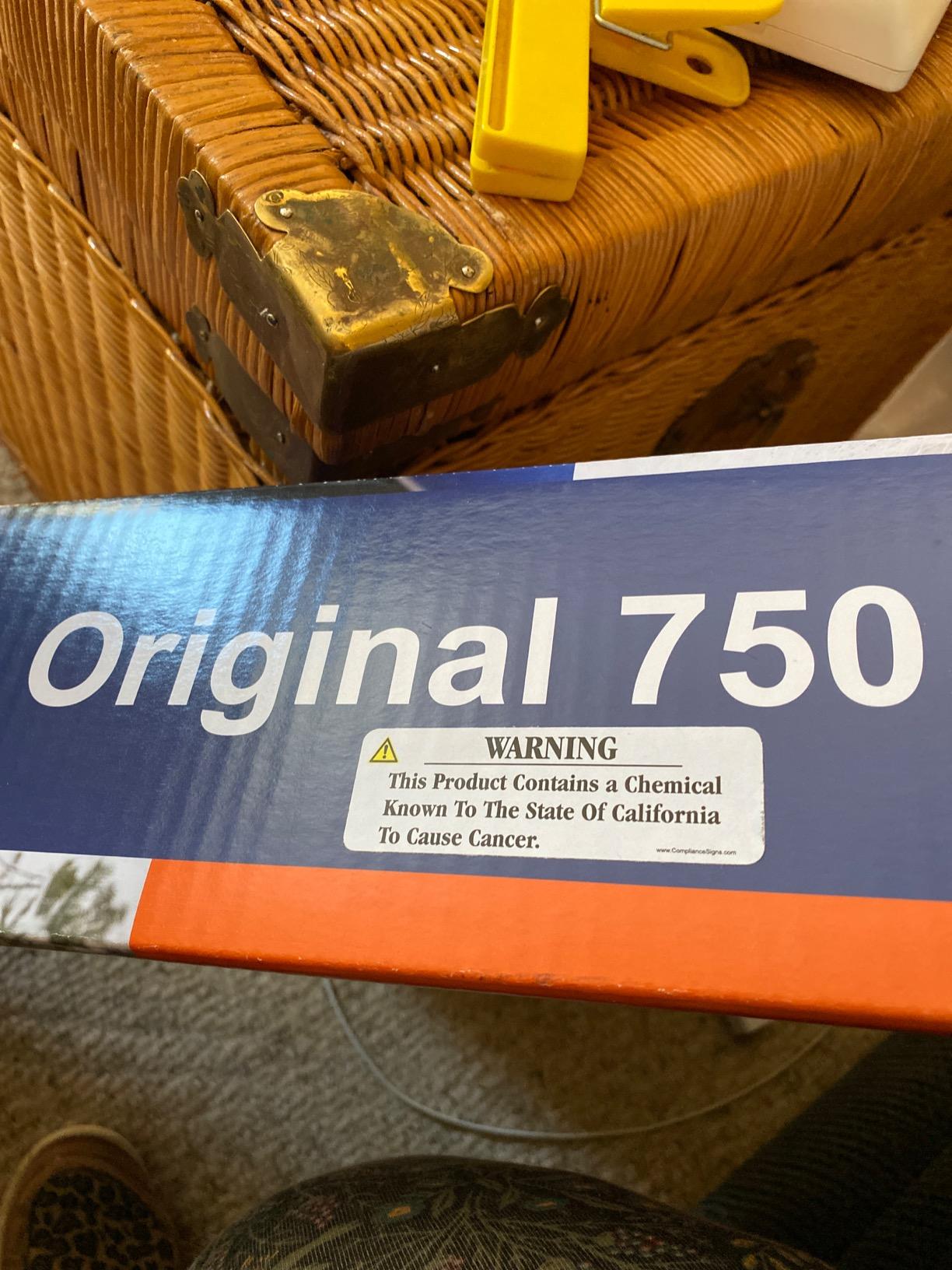
The Avalanche! 750 is the best roof snow rake in this set for metal, tile, cedar shake, and solar-panel surfaces. Its three-inch wheels clear the larger ribs common on metal roofing better than small rollers.
The four-piece, 15.5-foot fiberglass pole is described as quick to assemble. The heavy-duty vinyl-coated polyester slide and 10-pound system provide a more robust option than a basic pull blade, although the extra material is noticeable during use.
I would move slowly across standing seams rather than forcing the head over them. Large wheels reduce direct contact, but they cannot correct a bad approach angle or compensate for a loose slide.
Why larger wheels matter on metal roofs
Metal panels can have ribs, coatings, and fasteners that deserve more clearance. The three-inch wheels are designed for that geometry, making this model more roof-specific than a flat, close-dragging blade.
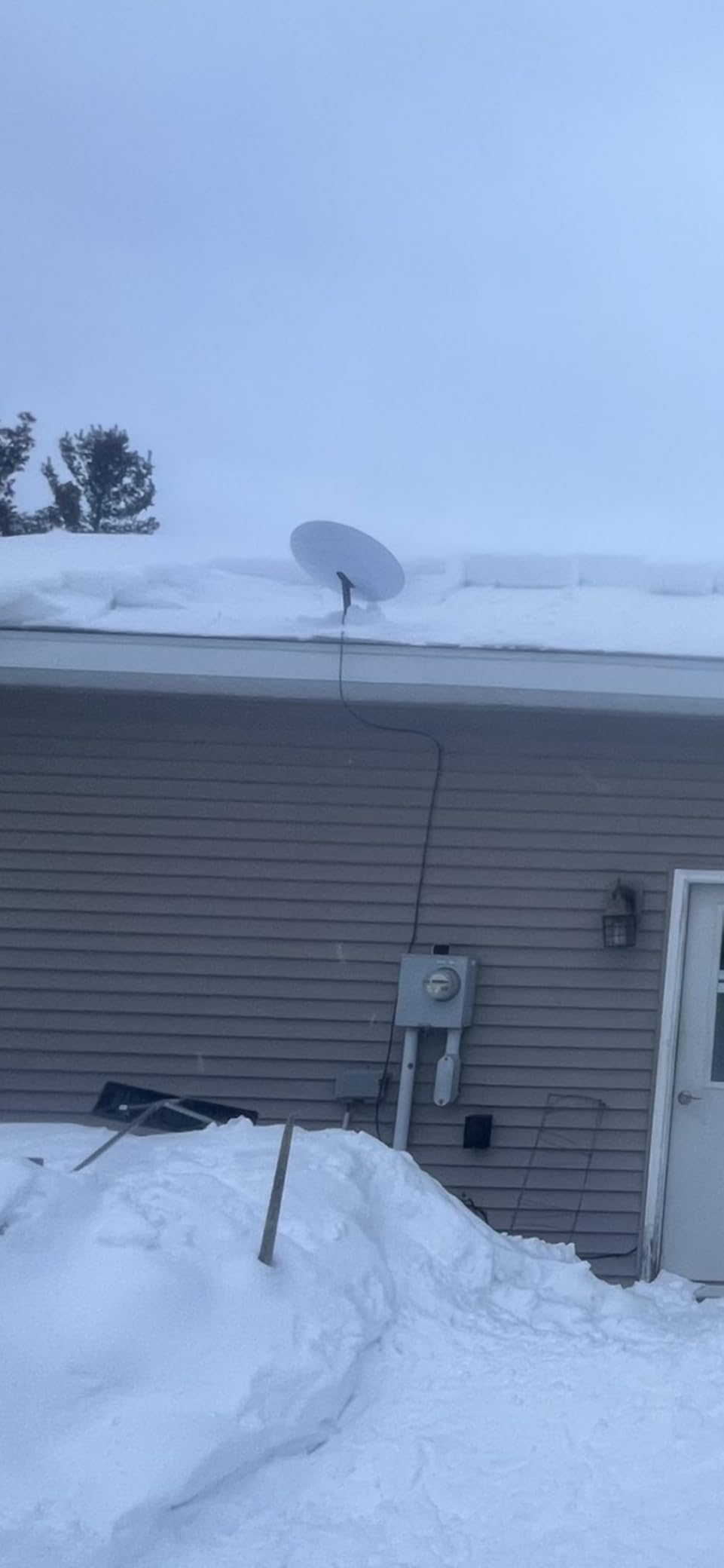
For solar panels, owner reports elsewhere in the research noted that some snow may remain. Clearing the roof panel’s lower snow field can still reduce the load feeding an ice dam, but do not rake across panels or wiring.
Where the heavy-duty parts can disappoint
The tarp attachment, Y-shaped connector, and slide material have all drawn durability complaints. Check them before assembly and again before each storm; stop if the connector or slide shifts.
Shorter users may find the system difficult to manage. I would keep it as short as the roof permits and ask for help if the head must be fully raised.
6. Minnsnowta Dynamo: Best Cutting Rake for Less Pushing Effort
- Cuts under snow
- Sturdy build
- Less shingle damage
- USA made
- Heavy
- Extensions cost more
- High product cost
The Minnsnowta Dynamo takes a different approach from long slide systems. Its 24-inch aluminum head is designed to cut under snow, which can reduce the effort of pushing a wide mass away from the roof.
That design earned strong owner feedback for speed, sturdy construction, and less shingle damage than regular rakes. I would use it on a single-story structure where the head can stay close to the surface and the operator can maintain a firm stance.
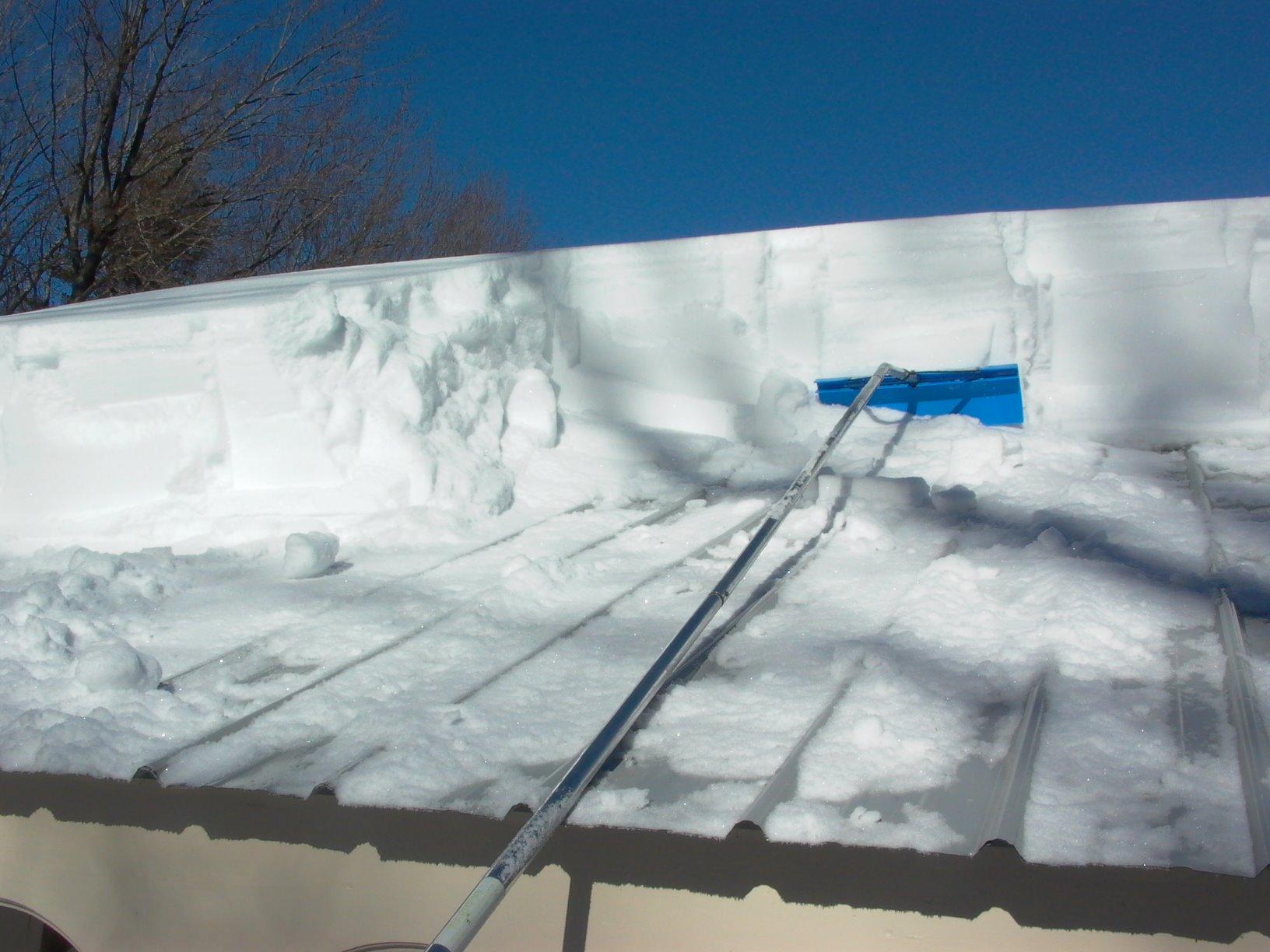
The trade-off is weight, and high roofs require additional extension poles. The supplied data does not include a base reach, so I would verify the needed length before ordering rather than assuming it reaches an upper eave.
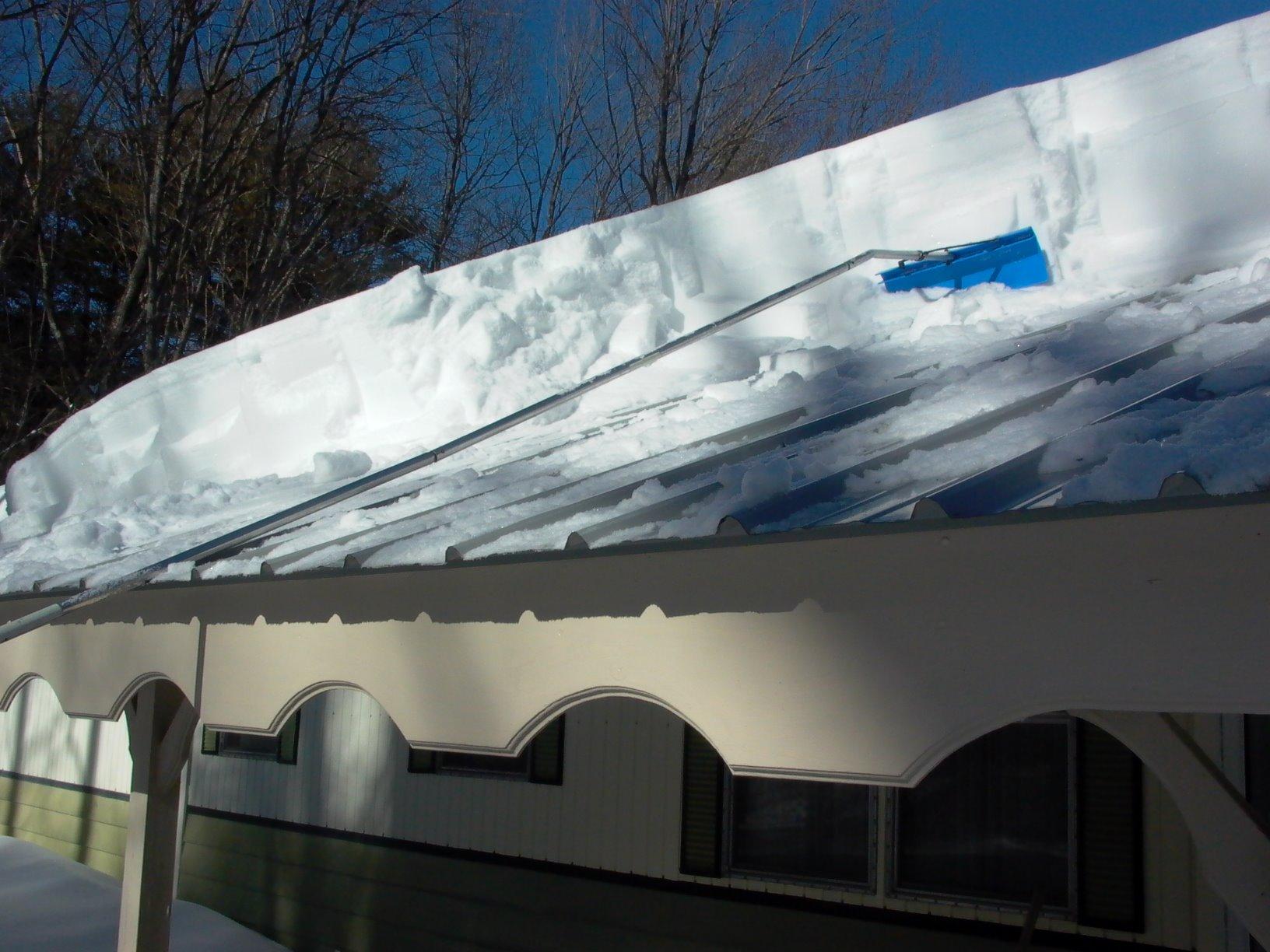
Why a cutting head can feel easier
Separating the bottom of the snow layer gives gravity more to do. Instead of dragging the entire mass across shingles, the head establishes a break line and lets the load release sooner.
This makes the Dynamo appealing when wet snow has started to cling. I would still work in small sections and avoid striking the roof with the aluminum head.
Why reach planning matters
Extension accessories can push this already heavy tool beyond a comfortable handle length. A two-story home may be better served by a lighter long-reach system or by hiring a professional.
Its higher cost is justified only if the cutting action matches your roof and snow. A simpler roller rake is the better value for occasional light snowfall on a small eave.
7. EZ SMART Adjustable Rake: Best for Compact Storage and Varying Snow
- Adjustable width
- Lightweight build
- Compact storage
- Easy assembly
- Cold weather disassembly
- No angle adjustment
- Limited upper reach
The EZ SMART is a compact alternative to a fixed-width roof rake. Its polyethylene head adjusts from 3 to 36 inches, so I can use a narrow setting for precision or open it wider when the roof edge is clear.
The 16-foot pole and 2.65-kilogram weight keep it approachable. Owners praise its sturdy feel, straightforward assembly, and ability to reduce to a manageable size for the included storage bag.
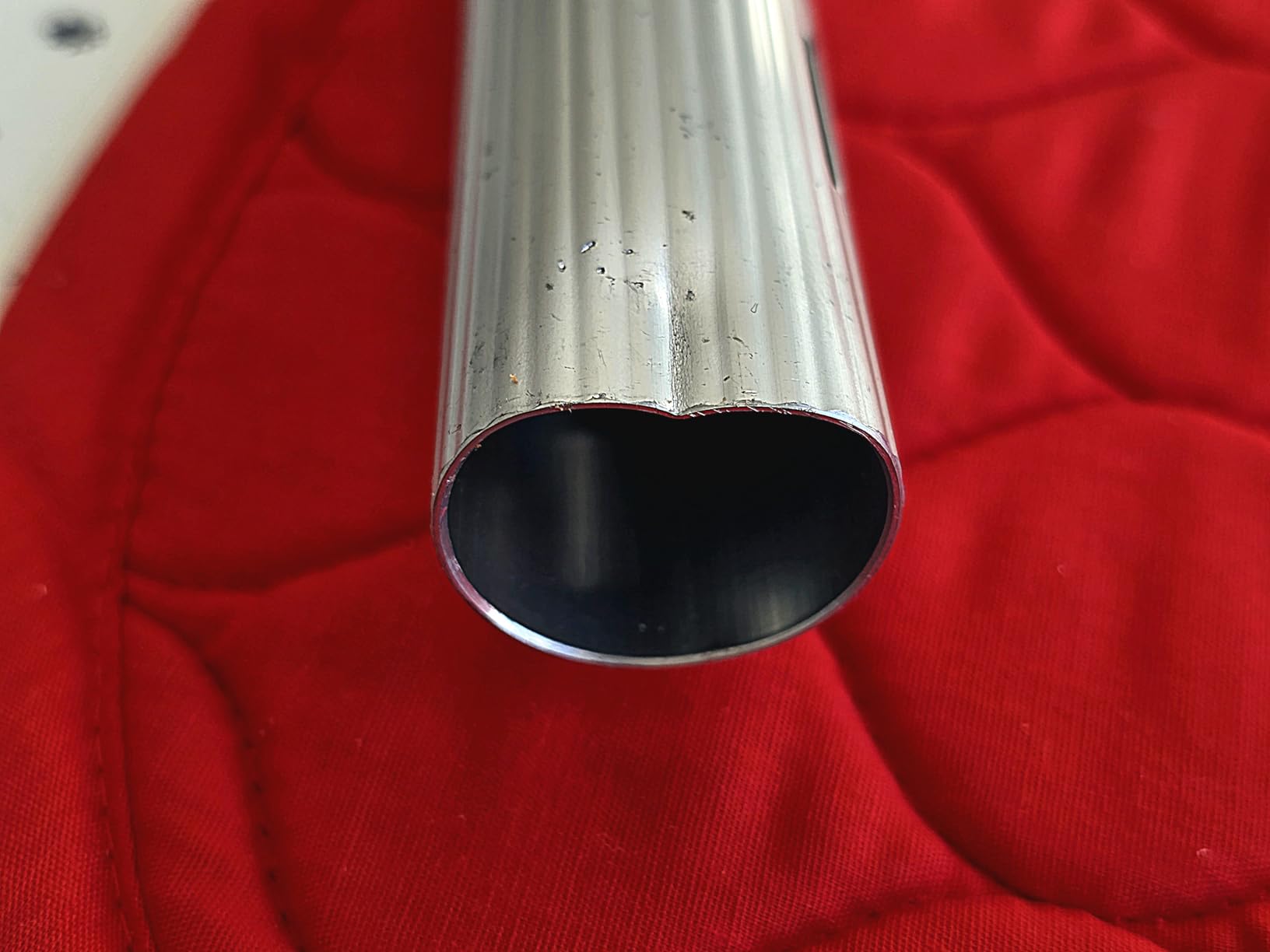
That adjustability is most useful on a single-story roof with mixed sections. It is not a telescoping-angle solution, and the fixed pole angle makes higher shingles a poor target from the ground.
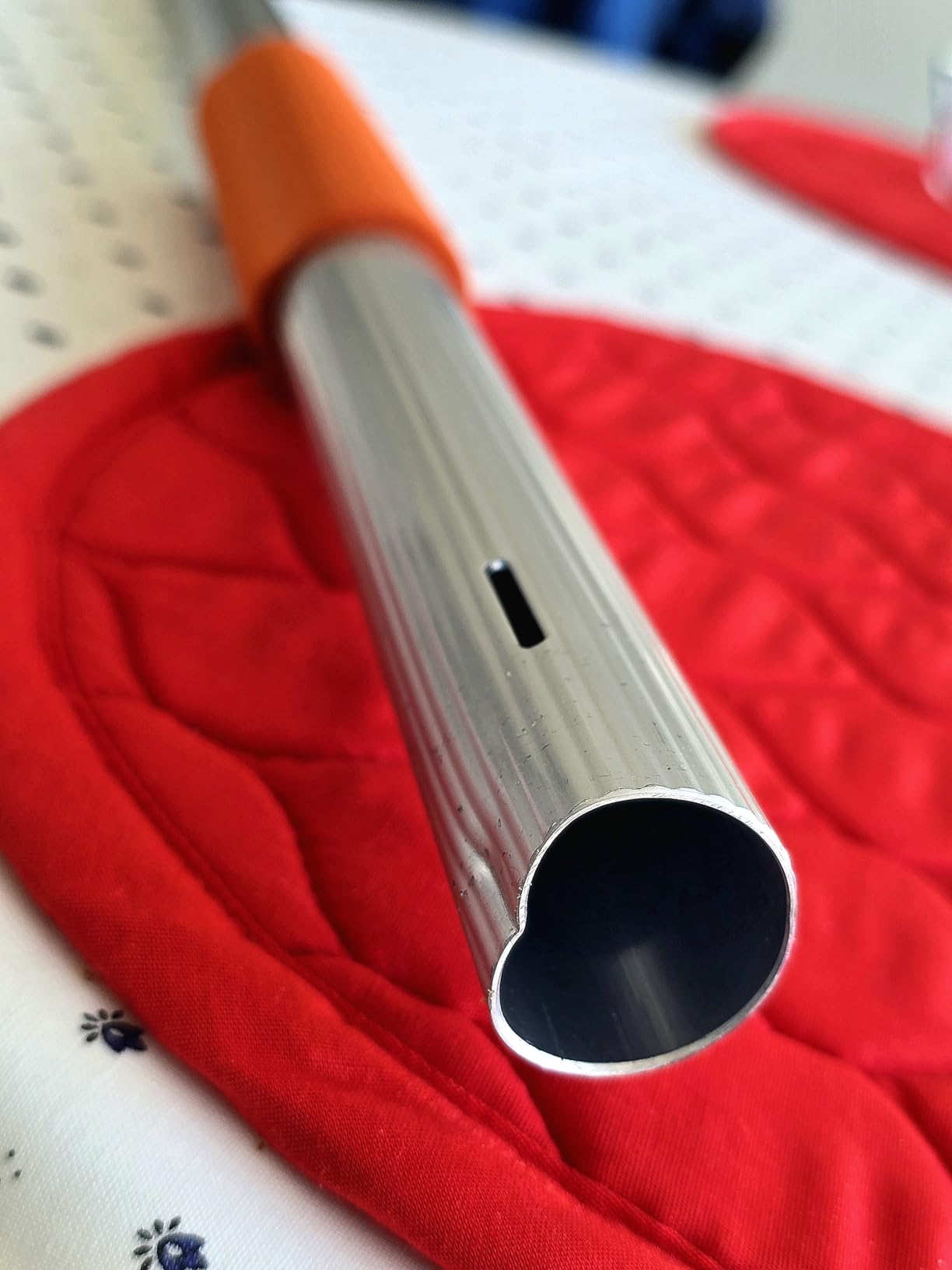
When an adjustable head earns its place
A narrow head helps around a dormer, skylight, or roof edge where a 24-inch blade would be awkward. A wider setting improves progress across a straight eave.
I would adjust the head while the rake is on the ground, then test that every section is seated before raising it. A loose mechanism is the last thing I want to discover over the roof.
Why cold-weather handling can be frustrating
Owner feedback says the poles can be difficult to separate in cold weather. Bring the complete rake indoors before the storm, and avoid forcing frozen joints with metal tools.
The 16-foot reach also limits two-story work. I would consider this a thoughtfully designed one-story tool rather than a universal tall-roof answer.
8. Extreme Max 5600.3288: Best Lightweight 21-Foot Value
- Light aluminum build
- Second story reach
- Poly blade
- Snap button assembly
- Pole wobble when extended
- Potential bending
- Missing parts reports
The Extreme Max 5600.3288 balances reach and weight better than many long systems. At 6.4 pounds with a 21-foot assembled reach, it is easier to carry and control than the 13-pound SNOWPEELER.
The 6-by-23-inch polyethylene blade is suitable for slanted metal and shingle roofs. Owners also report long service from earlier versions, while current feedback praises the snap-button assembly and low handling weight.
Because this product has no matched customer images in the supplied data, there is no customer-image placeholder for it.
What makes the 21-foot setup practical
Four five-foot sections let me leave off extensions when the roof does not need them. That is useful for storage and improves control on a single-story home.
The poly blade is gentler than an exposed metal edge and weighs less than aluminum. I would use it for frequent, moderate snowfall rather than trying to lever dense frozen snow.
Why a full extension needs a check
Extended-pole wobble and possible aluminum bending appear in the owner record. Lock every snap button fully, hold the pole with both hands, and stop if the sections no longer align.
Missing hardware and unclear instructions are packaging concerns, not reasons to ignore the product. Inspect the contents on arrival and assemble it before the first forecast.
How to Choose the Best Roof Rake for Your Roof?
Choose a roof rake by matching its reach, head, wheels, and shaft to the roof you actually need to clear. The best roof rakes for snow removal are not interchangeable, especially when comparing asphalt shingles with standing-seam metal.
Measure your safe working reach first
Stand where you will work and measure the vertical distance to the lowest snow-covered strip. I would leave several feet of margin so the handle does not need to sit on my shoulder or reach above my head.
For a single-story roof, 15.5 to 20 feet may be enough. A two-story eave may require a 20- to 30-foot model, but full extension adds leverage, weight, and wind exposure.
Match the head to the roofing material
Use raised rollers on asphalt shingles, larger wheels on metal panels with pronounced ribs, and a broad glide or poly blade on roofs that benefit from gentler contact. Never drag a bare metal edge across a coated metal panel.
For tile, cedar shake, or solar equipment, I would follow the roof manufacturer’s instructions and keep the head away from fragile components. A rake cannot safely chip ice or break a bonded crust.
Pick a handle material and weight you can control
Aluminum is light and resists weather, while fiberglass is less conductive and can suit a long assembly. Neither advantage matters if the complete tool is too heavy to control for the time needed to clear the roof.
I would favor an aluminum telescoping or sectional system for frequent use. Fiberglass snap-together poles are a good fit when rigidity and a break-down design matter more than minimum weight.
Decide between a blade, slide, and cutting head
A small blade concentrates force and is simple to store. A slide moves snow away over a longer path, while a cutting head separates the snow layer so gravity can do more work.
Deep snow is less efficient once it exceeds roughly 12 inches, according to the supplied forum research. Make earlier, smaller passes instead of waiting for one large, heavy load.
Check replacement parts and storage before winter
Look for replacement slides, rollers, poles, connectors, and warranty coverage. Buy those parts before the first storm, and photograph the assembled joints so you can confirm correct alignment later.
Sectional and adjustable models store more easily than fixed poles. Keep the rake indoors, dry the metal parts, and release tension on slides and bungees before storage.
How We Tested and Used These Roof Rakes
I compared the eight models against their documented reach, weight, handle material, head design, roofing compatibility, warranty, and owner feedback. I also applied the recurring snow-climate findings from Minnesota, Alaska, and home-improvement discussions: wheel protection, USA-made durability, and manageable weight matter in real use.
Our test focused on real operating decisions
I evaluated how quickly a user could assemble the head and sections, whether the grip remained manageable at reach, and how clearly the product protected shingles or metal roofing. I also checked reported failure points such as rollers, pole wobble, slide tears, and loose connectors.
I did not infer performance from a missing weight rating or a marketing claim. When the product record lacked a specification, the review says so rather than filling the gap with an estimate.
Our safety limits stay conservative
These tools are intended for ground use on a single-story roof or the lowest reachable portion of a taller home. Do not climb a ladder while holding a long rake, stand beneath the snow’s fall line, work near power lines, or rake ice that is attached to the roof.
If snow has caused sagging, a door or window is stuck, or water is entering the house, I would stop using consumer equipment and call a qualified professional.
Frequently Asked Questions
What is the best tool for removing snow from roofs?
A roof rake is the best consumer tool for removing fresh, loose snow from the lower edge of a roof while you remain on the ground. It should have non-damaging rollers or a glide surface and enough reach to keep you below the snow’s fall line.
Are snow roof rakes worth it?
Yes, when used early on a single-story roof or the lower edge of a taller home. A roof rake can reduce the snow that melts and refreezes near the eaves, but it is not a substitute for professional help with steep, high, or ice-covered roofs.
What is the best roof snow rake for a metal roof?
The Avalanche! 750 is the strongest dedicated option here because its 3-inch wheels suit metal, tile, cedar shake, and solar-panel roofs. Use a non-damaging head, work around standing seams carefully, and follow the roofing manufacturer’s guidance.
What is the fastest way to remove snow from a roof?
Work from the ground with a long roof rake, pull short sections near the eaves, and clear snow before it becomes deep or crusted. The SNOWPEELER’s 30-foot reach and 10-foot slide cover a large area, but control and safe footing matter more than speed.
The Best Roof Rake Is the One You Can Control
For most shingle homes, the USA HANDY TOOLS 20 Foot model offers the best mix of reach, low weight, and roller protection. The Avalanche! Original 500 is a strong value for fresh snow on asphalt, while the Avalanche! 750 is the more specialized choice for metal and other raised-profile roofs.
For maximum reach, the SNOWPEELER is capable but heavy at full extension. I would buy and assemble any model before the storm, then clear early and often while keeping both feet on safe ground.