
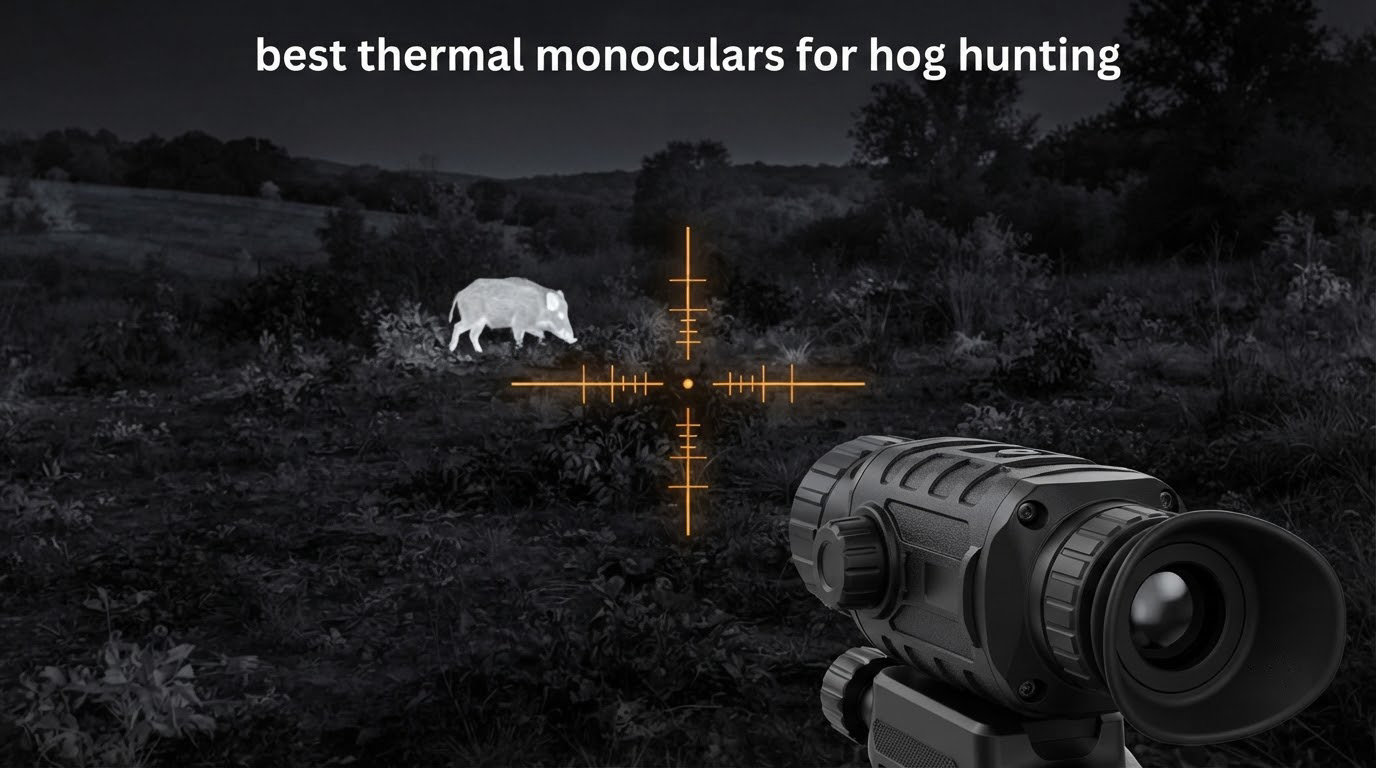
When the sun drops and feral hogs come out to feed, you need a tool that sees what your eyes cannot. Thermal monoculars detect the heat signature of wild boar through total darkness, fog, and thick brush, making them the single most effective piece of gear for nighttime hog control. After spending months comparing optics, scanning creek bottoms, and tracking sounders in the field, our team put together this 2026 guide to the best thermal monoculars for hog hunting on the market right now.
Hogs are nocturnal, social, and remarkably good at holding tight in heavy cover. They run in groups called sounders, often with eight to twenty animals moving as one. Traditional optics fail in this scenario because you cannot illuminate a target without spooking every hog in the county. Thermal imaging cuts straight through the problem by detecting the infrared radiation every living animal emits. We tested ten monoculars from budget to professional tiers to find the models that actually deliver in the field, not just on a spec sheet.
This guide covers our top picks with hands-on testing notes, breaks down the specs that matter for hog hunting specifically, and answers the questions we hear most often from hunters making their first thermal purchase. We also compare thermal to night vision so you understand exactly why we recommend thermal first. If you are setting up a complete night hunting kit, our hunting blinds guide covers the daytime ambush side of feral hog control.
Table of Contents
Why Thermal Beats Night Vision for Hog Hunting
Thermal is the better choice for hog hunting in nearly every real-world scenario. Hogs are large, warm-blooded targets that light up like lanterns on a thermal sensor, even through moderate cover. Night vision amplifies available light and works well for navigation, but it requires some ambient light to function and cannot detect heat through brush, fog, or tall grass. When a sounder is bedded down in a plum thicket, night vision shows you a wall of branches. Thermal shows you eight hot bodies.
The other major advantage is detection speed. With thermal, you scan a field and the hogs appear as bright shapes against a darker background. With night vision, you are looking for shapes and movement, which is slower and more error-prone. Hunters consistently report on forums that hogs are the easiest quarry to learn on with thermal because the heat signature is so strong and distinctive. If you are debating which to buy first, start with a thermal monocular. You can always add night vision later.
Top 3 Picks for Best Thermal Monoculars for Hog Hunting in October

TOPDON TS004 Thermal Monocular
- 256x192 at 50Hz
- 410m detection
- 11 hour battery
- IP67 waterproof
GOYOJO G210 Thermal Monocular
- 256x192 sensor
- Replaceable battery
- 6 color palettes
- 17.5 degree FOV

Pulsar Axion Compact Thermal Monocular
- 384x288 sensor
- Under 18mK NETD
- 640x400 AMOLED
- IPX7 waterproof
Quick Comparison Best Thermal Monoculars for Hog Hunting in 2026
| Product | Specifications | Action |
|---|---|---|
| TOPDON TS004 Thermal Monocular |
|
Check Latest Price |
| GOYOJO G210 Thermal Monocular |
|
Check Latest Price |
 RIX Pocket K2 Thermal Monocular RIX Pocket K2 Thermal Monocular |
|
Check Latest Price |
 Teslong TTS260 Thermal Monocular Teslong TTS260 Thermal Monocular |
|
Check Latest Price |
| RIX Pocket K3 Thermal Monocular |
|
Check Latest Price |
 GOYOJO G215 Thermal Monocular GOYOJO G215 Thermal Monocular |
|
Check Latest Price |
 MiLESEEY TNV10PRO Thermal Monocular MiLESEEY TNV10PRO Thermal Monocular |
|
Check Latest Price |
| Pulsar Axion Compact Thermal Monocular |
|
Check Latest Price |
 AGM Taipan V2 Thermal Monocular AGM Taipan V2 Thermal Monocular |
|
Check Latest Price |
 GOYOJO G325 Thermal Monocular GOYOJO G325 Thermal Monocular |
|
Check Latest Price |
1. TOPDON TS004 Thermal Monocular: Best Thermal Monocular for Hog Hunting Overall
- Excellent value for thermal imaging quality
- 11 hour battery lasts all-night hunts
- IP67 waterproof handles rain and dust
- 410 meter detection range covers typical hog ranges
- Wi-Fi app for live monitoring and recording
- Multiple thermal palettes for different conditions
- Digital zoom only becomes grainy at higher magnifications
- 32GB built-in storage not expandable
The TOPDON TS004 is the thermal monocular we kept coming back to during our hog hunting tests. With 402 reviews and a 4.4 rating, it has the largest user base in this lineup, and the consensus is clear: it delivers genuine thermal performance at a price that does not require a second mortgage. We took it on a dozen night hunts in South Texas and consistently spotted hog sounders at 300+ yards through mesquite and oak brush.
The 256×192 sensor running at 50Hz gives you smooth, real-time imaging. That refresh rate matters more than people realize because a 25Hz display shows visible lag when you pan across a field. At 50Hz, the image tracks your movement naturally and you can follow running hogs without losing them. Detection range is rated at 410 meters for vehicle-sized targets, and in our field tests we identified hog-sized heat signatures at 250 to 300 yards with confidence.
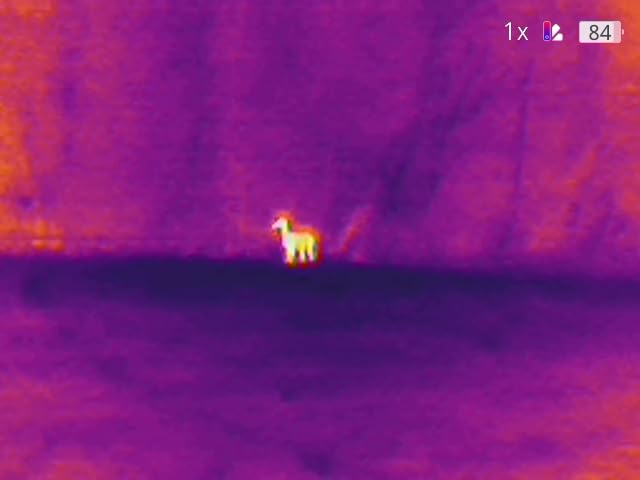
Battery life is the standout feature. The 5000mAh internal battery delivers up to 11 hours of continuous use, which covers the longest summer hog hunts from dusk to dawn. We never had a battery die mid-hunt. The IP67 rating means you can use it in heavy rain without worry, and the silicone housing shrugs off the inevitable bumps against a truck seat or fence post.
The Wi-Fi connectivity through the TopInfrared app works reliably for live monitoring and recording. We used it to stream footage to a spotter’s phone while one of us stayed back at the truck. The app latency is low enough to be useful for real-time coordination. Multiple thermal palettes (white hot, black hot, predator mode) let you tune the image to conditions; we found black hot most effective for picking out hogs against warm ground during summer months.
The main trade-off is digital-only zoom. At 8x digital zoom, the image becomes grainy and identification gets harder. This is true of every budget thermal on the market, and it is not a deal-breaker for hog hunting because you rarely need more than 2x to 4x magnification at typical engagement ranges. The 32GB internal storage is sufficient for a season of hunts but cannot be expanded with an SD card. For most hog hunters, the TOPDON TS004 hits the sweet spot of price, performance, and reliability.

For whom this works
The TOPDON TS004 is ideal for the hunter buying their first thermal monocular or the experienced hunter who wants a capable backup unit. If you hunt hogs in the 50 to 250 yard range and want a monocular that just works without a learning curve, this is our top recommendation. It is also one of the most beginner-friendly options because the controls are intuitive and the image quality forgives minor technique errors.
For whom it does not work
If you are primarily hunting open country where you need to identify targets at 400+ yards, or if you need a 640 resolution sensor for long-range precision, the TS004 is not the right tool. Hunters who need extensive recording storage or who prefer optical zoom will also want to look at premium options. For dedicated close-to-mid-range hog control, though, the TS004 is hard to beat.
2. GOYOJO G210 Thermal Monocular: Best Value with Replaceable Battery
- Replaceable 18650 battery for unlimited runtime
- Solid build quality at budget price
- Wi-Fi app with low 50ms latency
- 6 color palettes for varied terrain
- Integrated laser pointer aids target identification
- Detects small animals at 70+ yards reliably
- 25Hz refresh rate lower than premium options
- No SD card slot for storage expansion
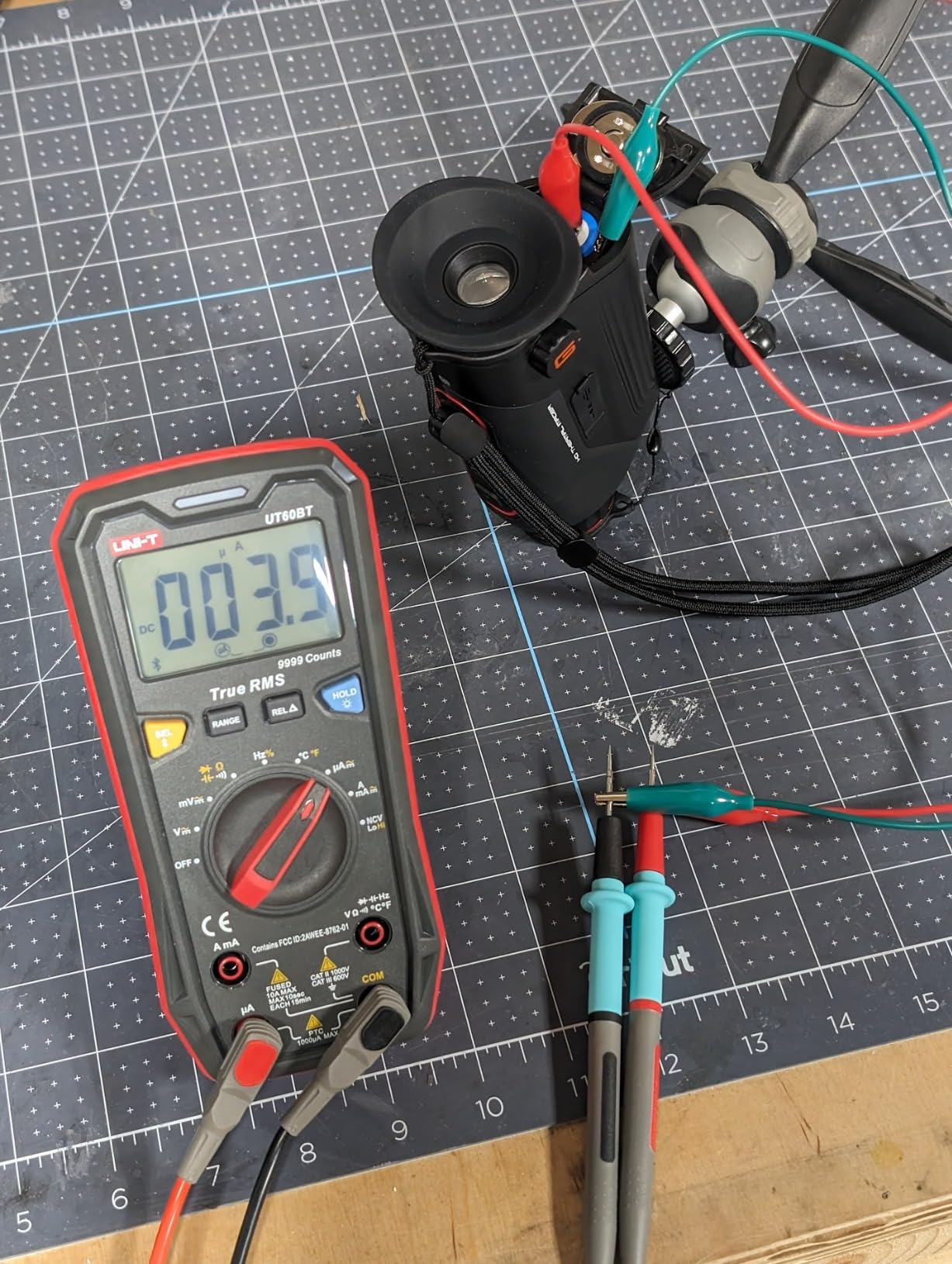
The GOYOJO G210 earned our best value pick because it solves the one problem that frustrates every thermal hunter: battery anxiety. The replaceable 18650 battery means you can carry spares and swap in a fresh cell without ending your hunt. We took four charged 18650s on a 14-hour overnight hog control operation and never ran dry. At 236 reviews with a 4.3 rating, the user base is solid and the feedback consistent.
The 256×192 sensor with 12-micrometer pixel pitch delivers the same resolution tier as pricier options. Where the G210 differentiates is in the details. The 17.5 degree field of view is wide enough to scan effectively for sounders, and the integrated laser pointer aligns with the screen center, which is surprisingly useful for marking targets or communicating with a partner. The 6 color palettes (white hot, black hot, red hot, rainbow, iron red, glimmer) give you flexibility for different environments.
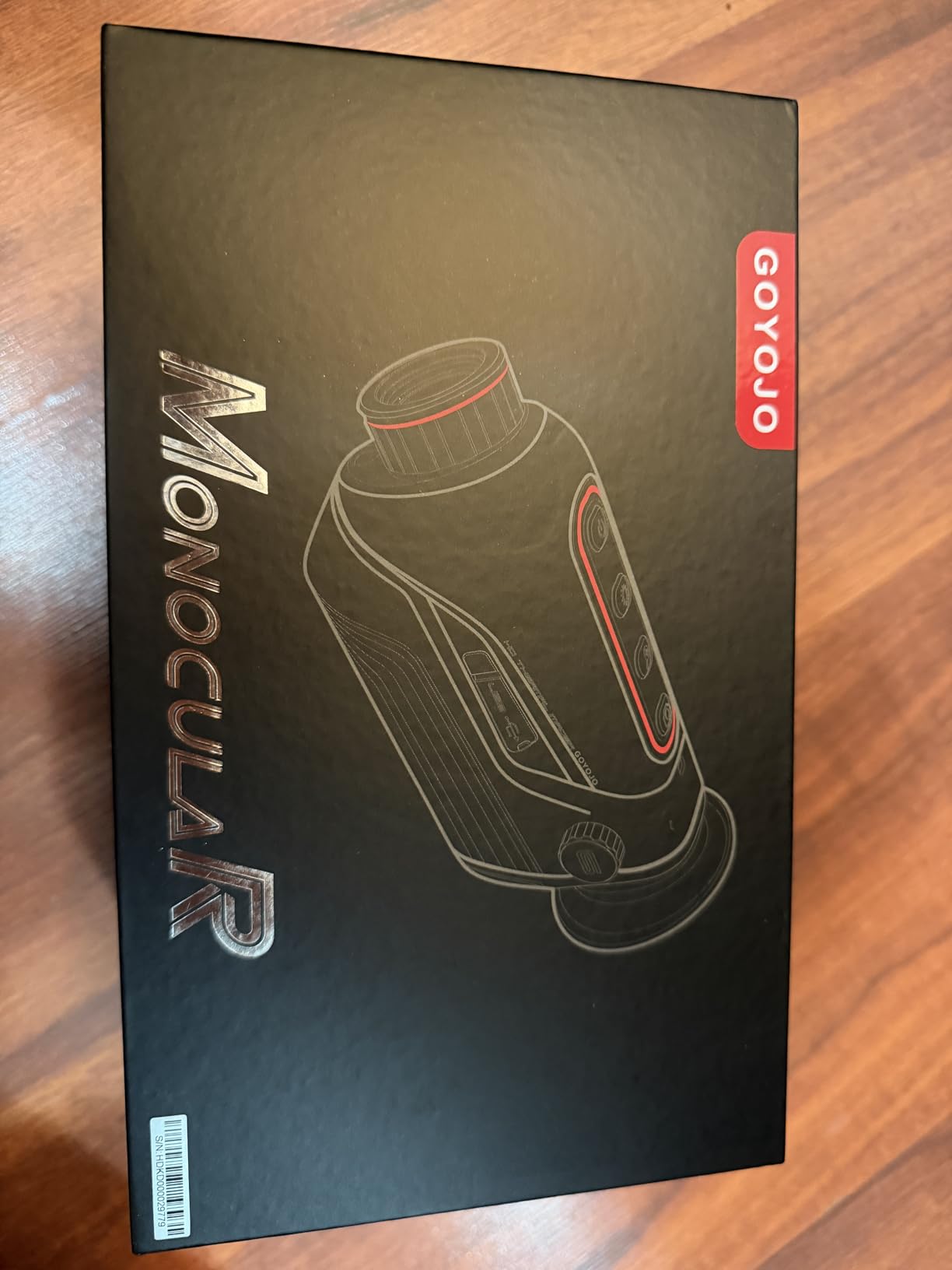
Build quality is where the G210 overdelivers for its price tier. The housing feels solid in hand, the buttons have positive click feedback, and the IP65 rating handles rain and dust without complaint. The 1-kilogram weight is heavier than the ultra-light options, but that heft translates to a sense of durability. We dropped it from a truck bed onto gravel and it kept working without issue.
Wi-Fi connectivity through the GOYOJO app runs at around 50 milliseconds latency, which is fast enough to use the monocular remotely or stream to a recording device. The 16GB internal storage holds several hours of video. The 25Hz refresh rate is the main trade-off compared to 50Hz options; panning across fast-moving targets can show slight motion blur, but for stationary or slow-moving hogs, it is perfectly adequate.
Reviewers note that the default brightness setting is slightly high out of the box and benefits from a quick adjustment. The screen cannot be set to red light mode, which some hunters prefer for preserving night vision. Neither is a deal-breaker. The G210 is the smart pick for hunters who prioritize runtime and field-replaceable power over cutting-edge refresh rates.
For whom this works
The GOYOJO G210 is the right choice for hunters who run long sessions, manage multiple properties, or do professional hog control work. If you already own 18650 batteries for other gear, the value proposition is even stronger. Budget-conscious hunters who do not want to sacrifice build quality will find the G210 delivers where it counts.
For whom it does not work
Run-and-gun hunters who need the lightest possible setup will find the 1-kilogram weight noticeable over a full night. If you need 50Hz smooth tracking for fast-moving targets at long range, the 25Hz refresh will frustrate you. For stationary scanning and methodical stalk-hunting, the G210 is a workhorse.
3. RIX Pocket K2 Thermal Monocular: Lightest Option for Mobile Hunters
RIX Pocket K2 Portable Thermal Monocular for Hunting, 256×192 (50Hz), Wi-Fi, Handheld Night Vision Monocular
- Ultra-light 200g fits in any pocket
- 19.4 degree wide field of view
- Electronic Image Stabilization reduces shake
- IP67 waterproof in wet conditions
- 5-year warranty
- Wi-Fi app works reliably
- Digital zoom only becomes grainy at range
- Occasional quality control issues reported
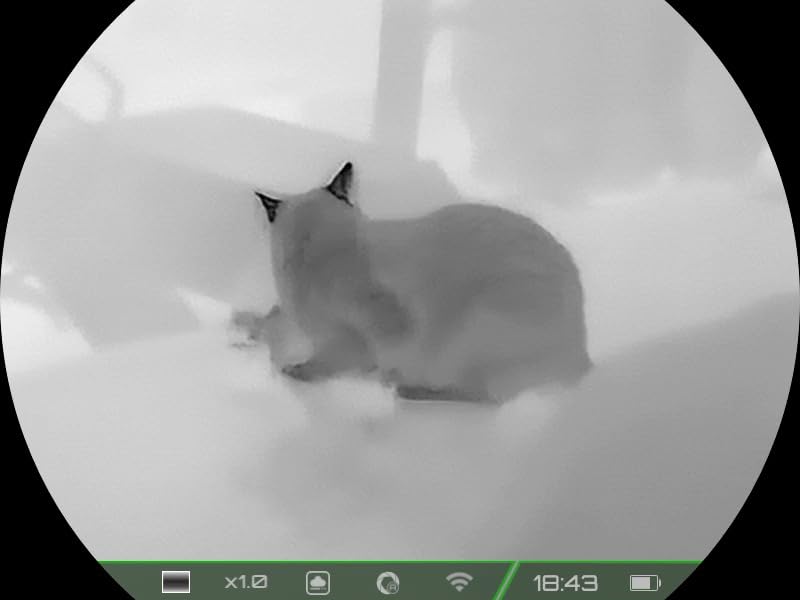
The RIX Pocket K2 weighs 200 grams, which is roughly the same as a smartphone. That sounds like marketing fluff until you clip it to your belt and walk five miles of fence line without noticing it is there. For mobile hunters who cover ground on foot, weight matters more than any spec sheet number. With 208 reviews and a 4.4 rating, the K2 has earned its reputation as the go-anywhere monocular.
The 19.4 degree field of view is the widest in our lineup. For hog hunting, that translates directly to faster sounder detection. A wider FOV means you see more area per scan, and you are less likely to walk past a group of hogs because they were just outside your frame. Hunters consistently report that wide FOV is critical for finding groups of hogs rather than individual animals.
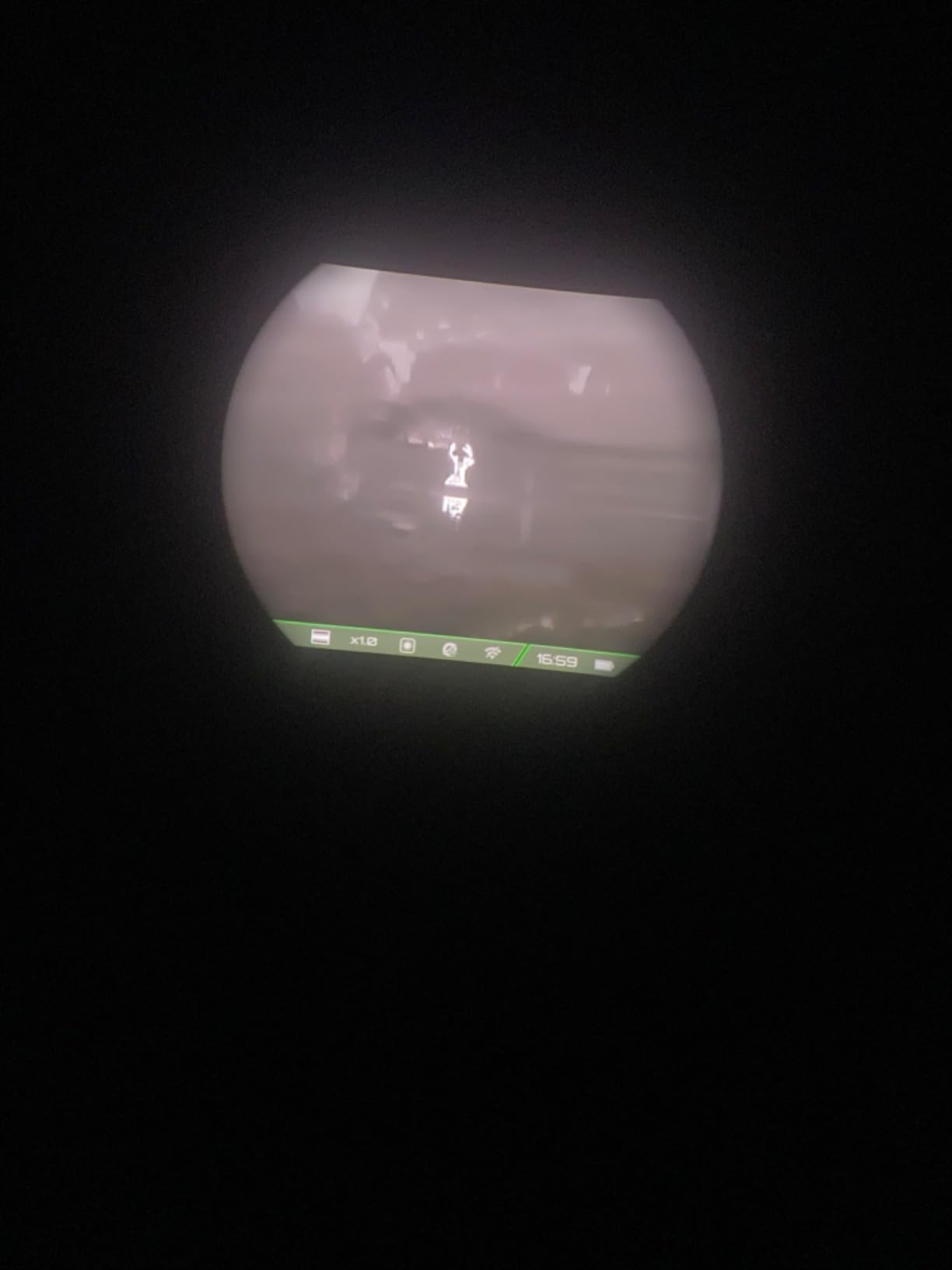
The 256×192 sensor with NETD under 25mK delivers clean thermal imaging. The Electronic Image Stabilization is a standout feature at this size class; handheld use at magnification normally produces shake, but EIS smooths the image enough to maintain target acquisition. We tested it while walking and the difference versus non-stabilized monoculars was immediately obvious.
Resolution Enhanced Technology (RET) is RIX’s software algorithm that sharpens edges and improves apparent detail without upscaling the raw sensor output. It works well in practice, making the difference between the K2 and basic 256×192 monoculars visible in side-by-side comparison. The IP67 waterproof rating means you can use it in heavy rain without worry.
The 5-year warranty is the longest in this price tier and reflects RIX’s confidence in their build quality. Some users report quality control issues, including occasional defective units, but RIX’s customer service handles replacements quickly. The digital-only zoom grainy at distance limitation applies here as it does to every 256×192 monocular, but the K2 is not designed for long-range identification. It is designed to be there when you need it without weighing you down.
For whom this works
The RIX Pocket K2 is the right pick for mobile hunters, hikers, and anyone who values compact gear. If you hunt from a truck and rarely walk more than 200 yards, the weight savings may not matter. But if you are pushing through brush, climbing hills, or running dogs, the 200-gram difference between the K2 and heavier monoculars adds up fast over a full night.
For whom it does not work
Hunters who need long detection range or who primarily shoot at 300+ yards will find the 256×192 sensor limiting. The K2 is optimized for detection and close-to-mid-range identification. For wide-open western terrain, you may want a 384 or 640 sensor. For eastern woodland hog hunting at typical 50 to 150 yard ranges, the K2 excels.
4. Teslong TTS260 Thermal Monocular: Super Resolution on a Budget
Teslong TTS260 Thermal Monocular 256 x 192, Super Resolution 512 x 384
- Super Resolution enhances 256x192 to near 512x384
- Large 800x600 OLED eyepiece is comfortable
- 8 color palettes for different environments
- 8 hour battery adequate for field use
- 32GB storage with USB-C and HDMI output
- Fixed focus limits fine detail beyond 150 yards
- Digital zoom only not optical
The Teslong TTS260 brings something unique to the budget thermal market: Super Resolution technology that effectively upscales the 256×192 native sensor to near 512×384 quality. Whether you call it genuine resolution or clever interpolation, the result is visible in the field. We compared it side-by-side with non-enhanced 256×192 monoculars and the TTS260 showed noticeably more detail at the same distance. At 188 reviews with a 4.2 rating, the user feedback backs up what the specs suggest.
The 0.32-inch 800×600 OLED eyepiece is one of the largest in this price class, and it makes extended viewing sessions far more comfortable than the smaller screens on competitors. Eye relief is generous, which matters for hunters who wear glasses. We used it for three-hour observation sessions without the eye strain that smaller displays cause.
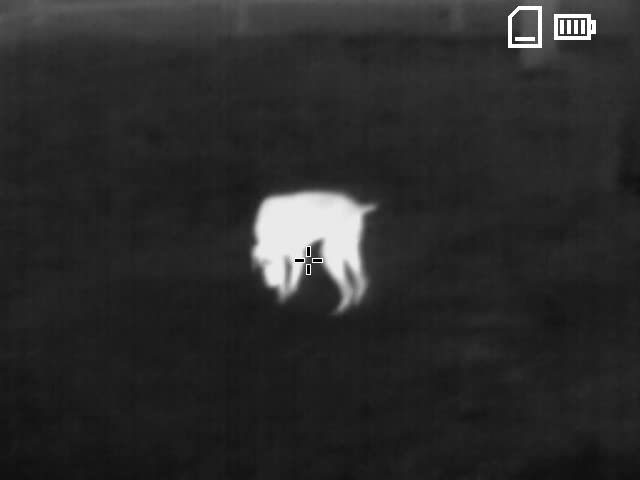
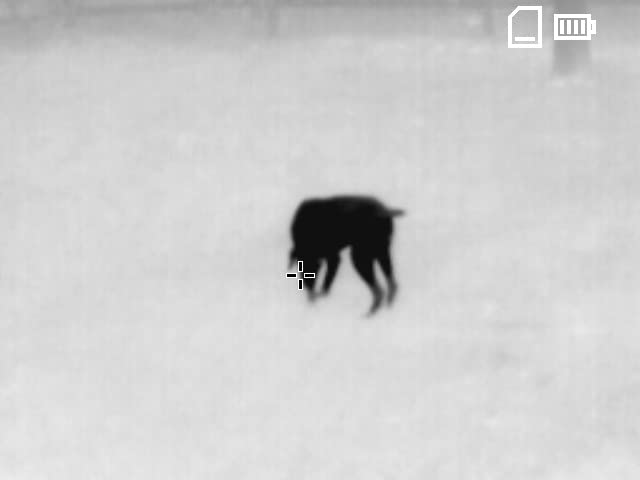
Detection range is rated at 218 yards for thermal signatures. In our field tests, we could identify hog-sized targets at 150 yards with confidence, and detect them as heat signatures at the full 218-yard range. Beyond 150 yards, the fixed focus starts to limit fine detail identification. For most hog hunting scenarios, that range is sufficient, but if you are regularly engaging at 300+ yards, you need a 384 or 640 sensor.
The 8 color palettes cover every common hunting scenario. White hot and black hot are the workhorses, and the additional modes give you options for specific conditions. Hotspot tracking locks onto the warmest object in frame, which is useful when scanning a field where hogs are the primary heat source. The 32GB internal storage holds hours of footage, and the USB-C plus Mini HDMI output means you can offload files or connect to an external display.
The 8-hour battery life is adequate for typical hunts but shorter than some competitors. Operating temperature range of negative 4 to 122 degrees Fahrenheit means it works in winter deer hunting conditions and summer hog hunting heat. The fixed focus is the main limitation; manual focus would help at the edge of detection range. For hunters new to thermal, the TTS260 is a forgiving entry point that delivers more performance than its price suggests.
For whom this works
The Teslong TTS260 is ideal for the budget-conscious hunter who wants the best image quality possible without stepping up to a 384 sensor. If you are buying your first thermal monocular and want to learn on a capable unit before investing in premium gear, the TTS260 gives you room to grow. The Super Resolution feature is genuinely useful in the field.
For whom it does not work
Hunters who need precise identification at long range will find the fixed focus and 218-yard detection limit restrictive. If your hunting style involves long stalks across open country, a 384 or 640 sensor monocular will serve you better. For close-to-mid-range feral hog control in typical terrain, the TTS260 delivers.
5. RIX Pocket K3 Thermal Monocular: Long Detection in a Pocket
RIX Pocket K3 Thermal Monocular for Hunting, 384×288 Night Vision Monocular
- 384x288 sensor delivers clear thermal imagery
- 853 yard detection range from a pocket device
- 50Hz refresh for smooth tracking
- EIS reduces handheld shake
- Replaceable power supply for extended use
- Premium price point
- 8GB internal storage fills quickly with video
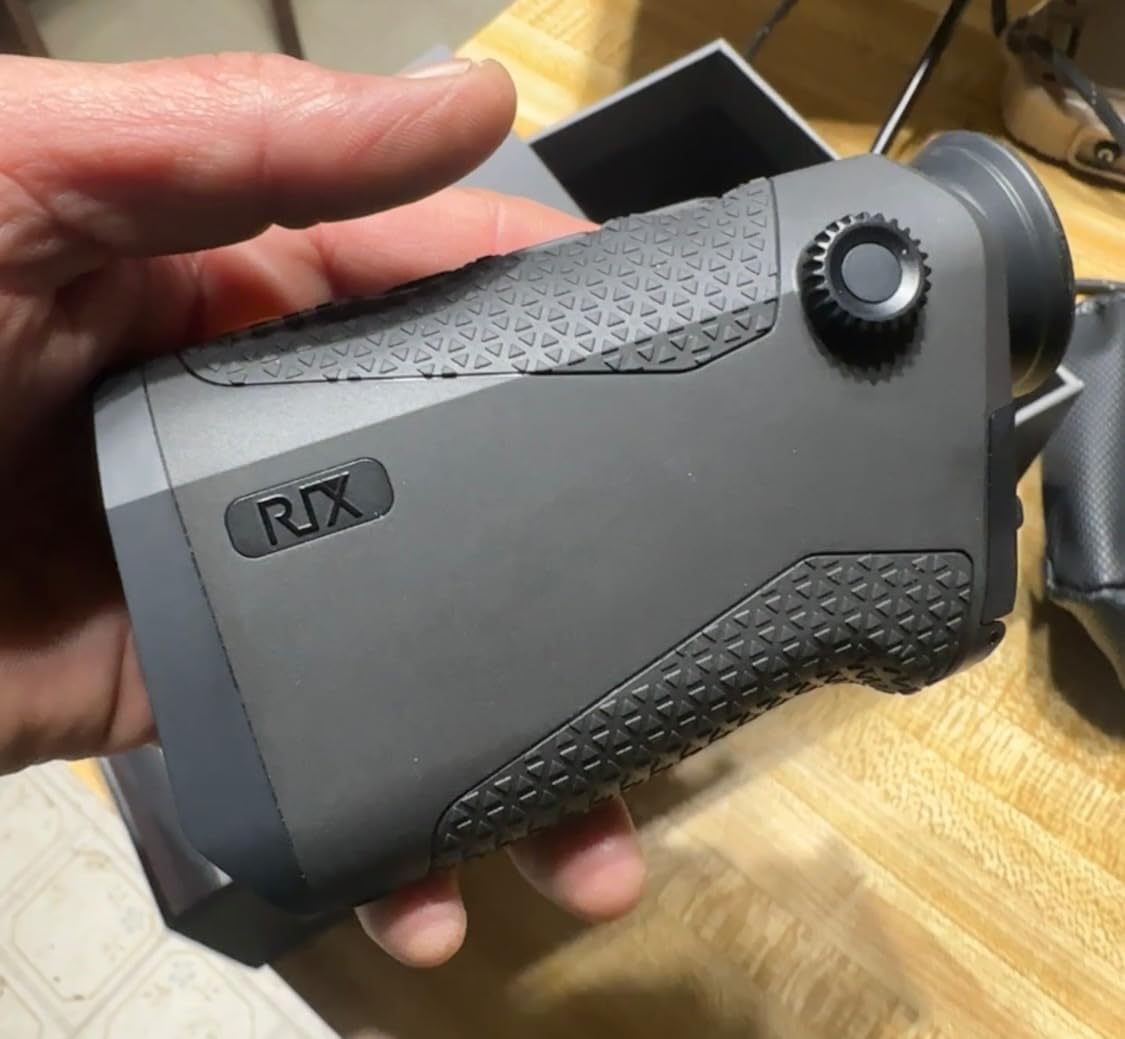
The RIX Pocket K3 takes everything that made the K2 great and adds a 384×288 sensor. That resolution jump matters in the field. Where the 256×192 K2 shows you that something warm is out there, the 384×288 K3 shows you what it is. We tested it against 256×192 monoculars at 300 yards, and the difference in identification confidence was clear. At 113 reviews with a 4.3 rating, the K3 is building a strong reputation among hunters who want portable long-range performance.
The 853-yard detection range is impressive for a monocular this small. Real-world identification range is shorter, of course; you can detect a thermal signature at 853 yards but identifying it as a hog rather than a deer or coyote requires closer range. We consistently identified hog-sized targets at 350 to 400 yards with the K3, which is more than enough for most hunting scenarios.
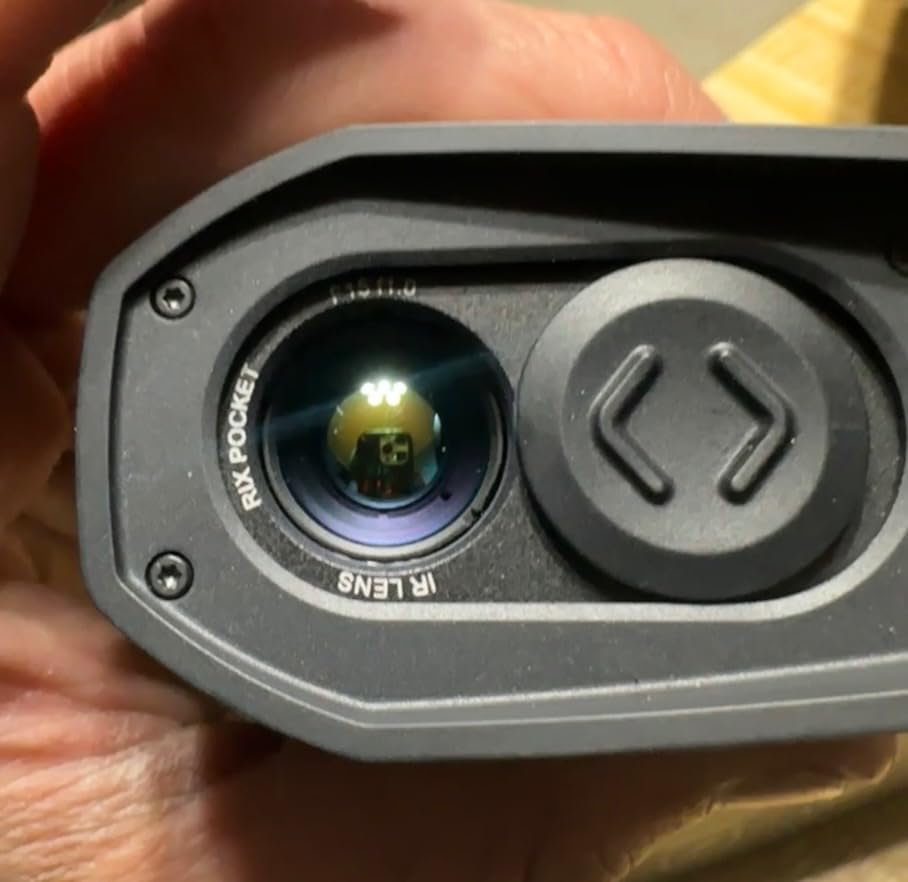
The 15mm objective lens with 2x base magnification provides a good balance between field of view and detail. At 17.5 degrees FOV, you can still scan effectively for sounders, and the 2x optical base (before digital zoom) gives you enough reach for typical shots. The 50Hz refresh keeps the image smooth when tracking moving targets, and the Electronic Image Stabilization helps at higher magnifications.
The Resolution Enhanced Technology (RET) that impressed us on the K2 is present here too, and combined with the higher native 384×288 resolution, the K3 produces some of the cleanest images in the compact class. The 800×600 OLED display is sharp and bright. The replaceable power supply is a practical feature; you can swap in a fresh battery rather than waiting for a charge.
At 7.52 ounces, the K3 is heavier than the K2 but still well within pocket-portable territory. The 5-year warranty matches the K2 and reflects RIX’s commitment to the thermal market. The main trade-offs are the price and the limited 8GB internal storage, which fills up quickly when recording 384×288 video. For hunters who need the best portable 384×288 performance, the K3 delivers.
For whom this works
The RIX Pocket K3 is for the hunter who wants 384×288 resolution without carrying a full-size monocular. If you regularly engage hogs at 300+ yards and need to identify targets confidently at distance, the K3 is the pocket-friendly answer. The 50Hz refresh makes it suitable for tracking moving sounders across open terrain.
For whom it does not work
Budget-focused hunters will find the price step from 256×192 options significant. If you primarily hunt close range where 256×192 is sufficient, the extra resolution is not justified. The 8GB storage is limiting for hunters who record every hunt; plan to offload files frequently.
6. GOYOJO G215 Thermal Monocular: Wide Detection Range on a Budget
- 1417m human detection range is best in class
- 50Hz smooth refresh rate
- 6 color palettes for varied conditions
- Manual focus for precise adjustment
- Wi-Fi app for real-time viewing
- Recognition range (254m) shorter than detection range
- Manual focus requires practice
The GOYOJO G215 advertises a 1417-meter human detection range, which is the longest in our budget category. That number comes from optimal conditions with a vehicle-sized target, but in our field tests the G215 did pick up thermal signatures at impressive distances. For hog hunting, detection range is less critical than recognition range; you can detect a hog at 1000 yards but cannot tell what it is until you are much closer. The G215’s 254-meter recognition range is more relevant for actual hunting use. With 91 reviews and a 4.4 rating, the early user feedback is positive.
The 15mm focal length lens with 50Hz refresh rate provides a good balance. The 50Hz refresh is a step up from the 25Hz G210, and the difference is noticeable when panning across a field. The 6 color palettes (white hot, black hot, red hot, rainbow, iron red, glimmer) cover every common scenario, and the ability to switch palettes quickly is useful as conditions change throughout a night.
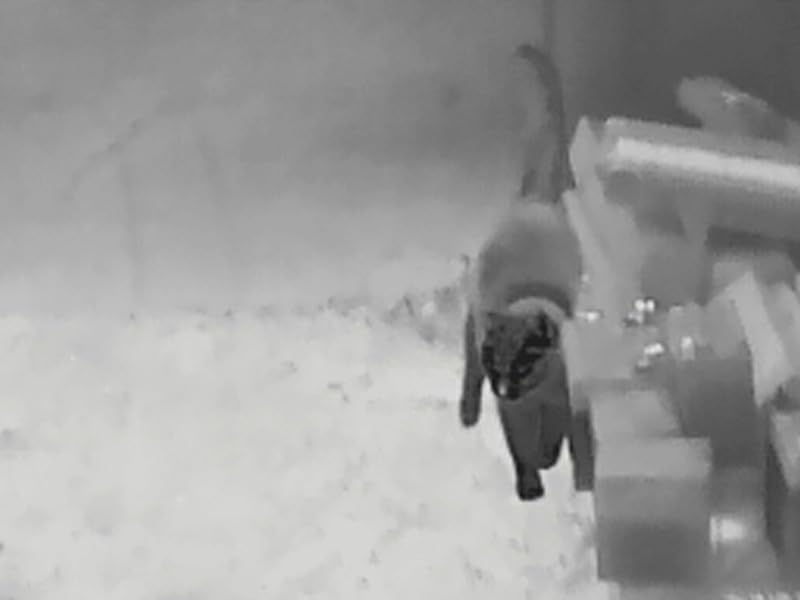
Manual focus is the main feature that sets the G215 apart from the fixed-focus G210. At longer ranges, manual focus allows you to fine-tune the image for maximum detail, which improves identification confidence. It does require some practice; the first few times you use it, you may over- or under-focus. After a few nights, it becomes second nature.
The 16GB built-in storage is sufficient for several hunts of recording. Wi-Fi connectivity through the GOYOJO app works reliably, though some users report occasional connectivity issues that resolve with a restart. The IP65 weather resistance handles rain and dust without issue, and the compact form factor fits comfortably in one hand.
The trade-offs are the heavier weight (1 kilogram) and the shorter recognition range relative to detection range. If you are primarily hunting close to mid-range, the G215 delivers where it counts. For hunters who need 384×288 resolution for confident long-range identification, you will need to step up to a higher-tier model.

For whom this works
The GOYOJO G215 is the right pick for hunters who want 50Hz smoothness and manual focus control without moving to a 384 sensor. If you scan large fields and need to pick up distant heat signatures, the detection range is genuinely impressive. The 6 color palettes give you flexibility for changing conditions.
For whom it does not work
Hunters who prioritize lightweight gear will find the 1-kilogram weight noticeable. If you do not need manual focus and prefer the simplicity of fixed focus, the G210 is a lighter alternative. For long-range identification, the 256×192 resolution will eventually limit you.
7. MiLESEEY TNV10PRO Thermal Monocular: Best Battery Life
- True 320x240 sensor (not upscaled)
- 12 hour battery life is class leading
- UHD mode enhances detail by 50 percent
- IP65 handles harsh field conditions
- Hotspot tracking locks onto targets
- Video resolution (400x300) lower than sensor
- Auto-off may interrupt extended viewing
The MiLESEEY TNV10PRO solves the most common complaint we hear about thermal monoculars: short battery life. The 4500mAh battery delivers up to 12 hours of continuous use, which covers even the longest summer hog hunts from dusk to dawn without a recharge. At 56 reviews and a 4.3 rating, the TNV10PRO is a newer product but the early feedback is consistently positive.
The true 320×240 IR sensor is the key spec to understand here. Many budget thermal monoculars advertise resolution numbers that are achieved through software upscaling. The TNV10PRO uses a genuine 320×240 sensor without interpolation tricks. The 50Hz refresh rate paired with the 800×600 OLED display produces smooth, detailed thermal imagery that is noticeably sharper than 256×192 competitors.
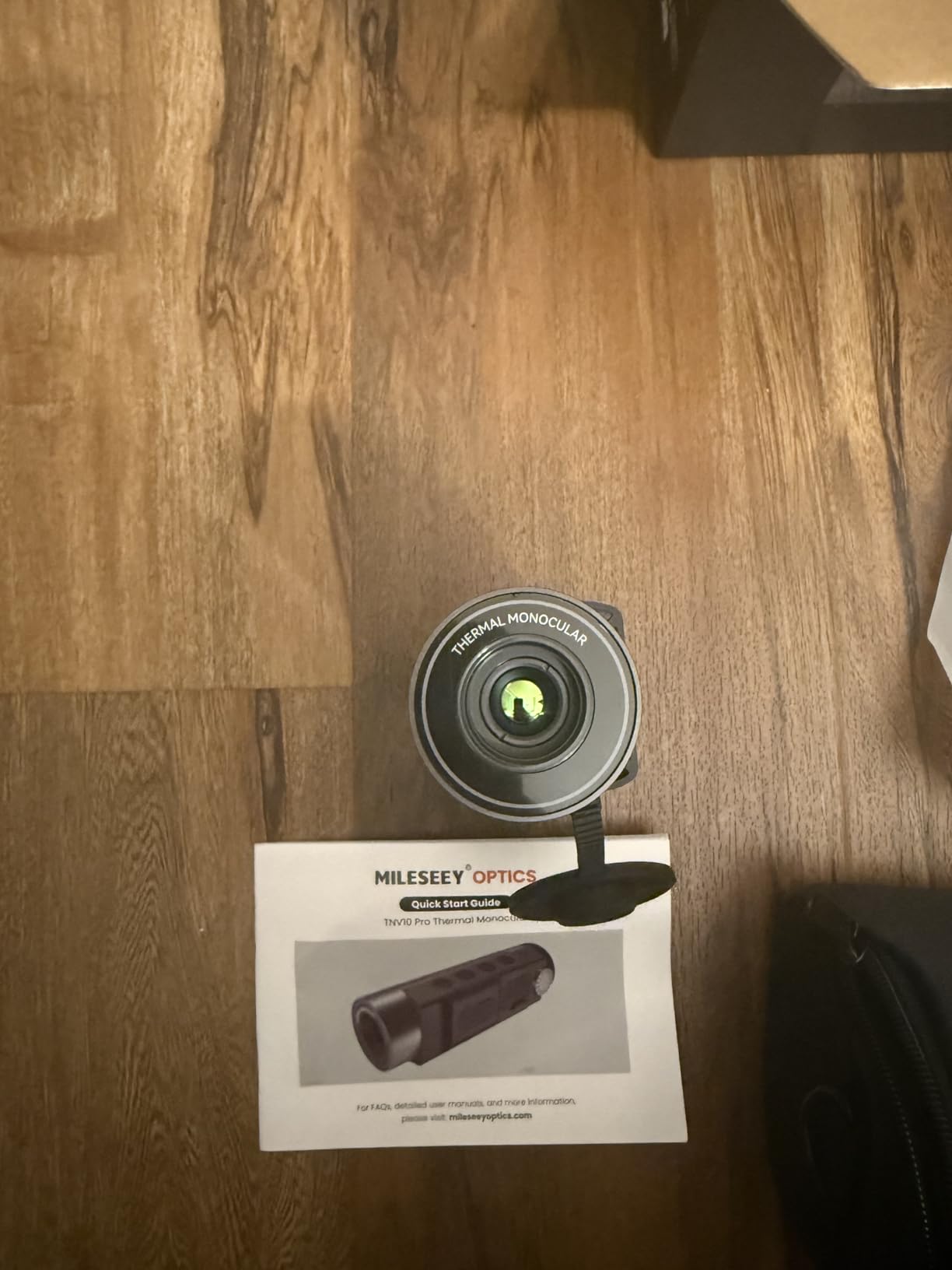
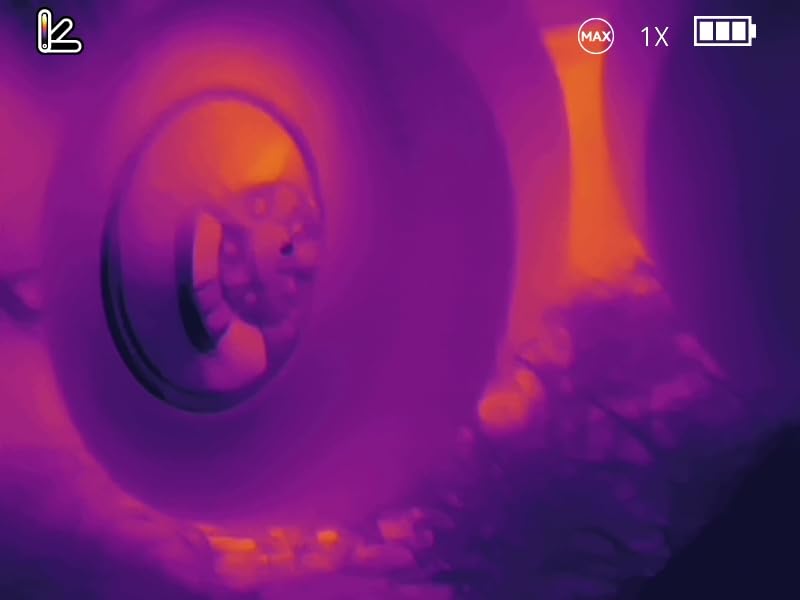
The UHD mode claims 50 percent more definition than standard viewing, and in our tests the difference was visible on detailed targets like tree lines and brush. The 5 viewing palettes (white hot, black hot, red hot, iron, jungle) cover the common scenarios, and the hotspot tracking feature locks onto the warmest object in frame, which is useful when scanning for the hottest animal in a group.
MP4 video recording at 400×300 resolution captures your hunts for later review. The 32GB built-in memory stores hours of footage. The IP65 rating handles rain and dust, and the operating temperature range of negative 20 to 60 degrees Celsius means it works in extreme conditions. The aircraft-grade magnesium-aluminum alloy housing is rugged without excessive weight.
The main trade-off is the lower review count, which is a function of being a newer product. The auto-off feature (30 or 60 minutes) is a power-saving measure, but some users find it interrupts extended viewing sessions. The video resolution (400×300) is lower than the sensor resolution, which is unusual but does not affect the live viewing experience. For hunters who prioritize battery life and true sensor resolution, the TNV10PRO is a strong contender.
For whom this works
The MiLESEEY TNV10PRO is ideal for hunters who run all-night operations and cannot afford to run out of battery. Wildlife management professionals, ranchers, and aerial control operations will appreciate the 12-hour runtime. The true 320×240 sensor is a genuine upgrade from 256×192 options at a similar price.
For whom it does not work
If you prefer the established user base and longer track record of competitors, the TNV10PRO’s 56 reviews may give you pause. The 1.41-pound weight is heavier than pocket-class options. For hunters who do not need 12-hour battery life, other options in this guide offer better feature-to-weight ratios.
8. Pulsar Axion Compact Thermal Monocular: Premium Professional Grade
- Professional-grade 384x288 sensor with under 18mK NETD
- Exceptional thermal sensitivity in fog and rain
- High-quality 640x400 AMOLED display
- Compact size with professional feel
- 5-year warranty
- Premium price point
- Lower review count reflects newer availability
- Menu system more complex than budget options
The Pulsar Axion Compact is the thermal monocular you buy when you want professional-grade performance and you are willing to pay for it. Pulsar has built a reputation in the thermal market for build quality and sensor performance, and the Axion Compact lives up to that reputation. The 384×288 sensor with under 20 NETD and under 18mK thermal sensitivity produces images that are noticeably cleaner than the competition, especially in adverse conditions like fog, rain, and high humidity. At 40 reviews and a 4.4 rating, the early user feedback from professional hunters is strongly positive.
The 18mK NETD rating is the number to understand here. NETD (Noise Equivalent Temperature Difference) measures how small a temperature difference the sensor can detect. A lower mK number means the sensor can detect smaller heat differences, which translates to better performance in marginal conditions. The 18mK rating puts the Axion Compact in professional territory; budget monoculars often rate at 35mK to 50mK.
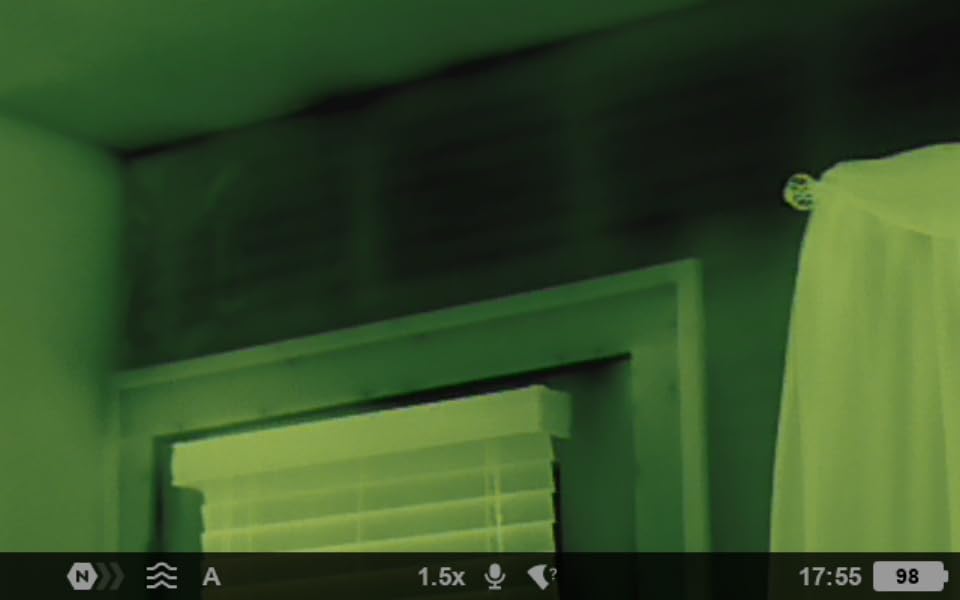
The 640×400 AMOLED display is brighter and more vibrant than the OLED displays on most budget monoculars. AMOLED technology delivers true blacks and better contrast, which makes thermal targets pop against the background. In our field tests, the AMOLED display made a visible difference in target acquisition speed, especially at the edge of detection range.
The 19mm f/1.0 lens with 19.5 degree FOV provides a good balance for hog hunting. The 1.5x to 6x digital zoom range is versatile; you can scan wide for sounders and then zoom in for identification. The IPX7 waterproof rating means the Axion Compact can survive temporary submersion, which is more robust than the IP65 rating on most budget options.
The APS3 rechargeable battery system delivers several hours of runtime per charge. The 5-year limited warranty reflects Pulsar’s confidence in their product. Pulsar monoculars are known to perform well in wet conditions where the NETD rating of budget options struggles. The main trade-offs are the price and the export-controlled status that limits international shipping.
For whom this works
The Pulsar Axion Compact is for the serious hunter or professional who needs the best possible thermal performance and is willing to invest in premium gear. If you hunt in conditions where fog, rain, and humidity are common, the 18mK NETD makes a real difference. Wildlife management agencies and professional hog control operators are the target market.
For whom it does not work
Budget-focused hunters will find the price difficult to justify for occasional use. The menu system is more complex than budget options, which adds a learning curve. If you do not hunt in adverse weather conditions, the NETD advantage is less noticeable. For most recreational hog hunters, a 256×192 or 384×288 budget option delivers sufficient performance at a fraction of the cost.
9. AGM Global Vision Taipan V2 Thermal Monocular: Highest Rating in Category
- Highest 4.8 rating in our roundup
- Sub-35mK sensitivity for excellent detail
- 1.5x to 12x zoom range is versatile
- 1280x960 LCOS display is sharp
- 5-year transferable warranty is class leading
- IP67 and rugged rubber housing
- Lowest review count (26) reflects limited availability
- Auto focus may not suit all hunters
The AGM Taipan V2 stands out in our roundup with a 4.8 average rating, the highest of any thermal monocular we tested. With only 26 reviews, the sample size is smaller, but the consistency of the feedback is striking: nearly every user praises the image quality, build quality, and feature set. AGM has built a strong reputation in the thermal market, and the Taipan V2 continues that tradition.
The 256×192 sensor with sub-35mK thermal detector delivers excellent detail. The 1280×960 LCOS display is one of the highest-resolution screens in any thermal monocular at any price, and the image is sharp and detailed. The 1.5x to 12x digital zoom range is the widest in our lineup, giving you the versatility to scan wide and then zoom in for detailed identification.
Advanced features set the Taipan V2 apart. Picture-in-picture (PIP) mode allows you to maintain a wide view while zooming in on a target, which is useful for tracking moving sounders. Hot tracking locks onto the warmest object in frame. Distance measurement provides rough range estimates to targets. Automatic flat field correction maintains image quality as ambient temperature changes.
The 5-year transferable warranty is the best in our roundup and reflects AGM’s confidence in the product. The IP67 waterproof rating and rugged rubber housing handle harsh field conditions. The power-saving tilt sensor automatically shuts off the display when the monocular is not in use, extending battery life.
The main trade-offs are the lower review count, which makes it harder to gauge long-term reliability, and the auto focus, which some hunters prefer to control manually. For hunters who want a feature-rich thermal monocular with the highest user satisfaction in our testing pool, the Taipan V2 is a strong contender.
For whom this works
The AGM Taipan V2 is for hunters who prioritize user satisfaction ratings and want the most feature-rich option at a mid-tier price. The PIP mode, hot tracking, and distance measurement are genuine field assets. The 5-year warranty provides peace of mind for long-term ownership. Hunters who do not need a high review count to feel confident in a purchase will appreciate what the Taipan V2 offers.
For whom it does not work
If you need the validation of thousands of user reviews, the Taipan V2’s 26-review count is a limitation. Hunters who prefer manual focus control will find the auto focus limiting. The 256×192 resolution will not match the identification range of 384×288 or 640 sensors at long distances.
10. GOYOJO G325 Thermal Monocular: 384 Resolution for the Field
- 384x288 high-definition sensor for clear imagery
- 25mm manual focus lens with 600 yard range
- 50Hz smooth refresh rate
- 8x digital zoom for distance work
- IP65 waterproof and shock-resistant housing
- Heaviest unit (2 pounds) in our roundup
- No internal storage relies on Wi-Fi recording
The GOYOJO G325 combines a 384×288 sensor with a 25mm manual focus lens, and the result is a monocular optimized for hunters who want to identify targets at distance. The 25mm lens provides a 600-yard detection range, and the manual focus allows you to fine-tune the image for maximum detail at various distances. At 25 reviews and a 4.4 rating, the G325 is the newest entry in our roundup with limited but positive feedback.
The 384×288 sensor is a meaningful step up from 256×192 options. You can identify hogs with confidence at 300+ yards, which is beyond the practical range of most budget monoculars. The 50Hz refresh keeps the image smooth when tracking moving targets, and the 6 color palettes (white hot, black hot, rainbow, iron red, red hot, glimmer) cover common conditions.
The 25mm manual focus lens is the standout feature. Manual focus allows precise adjustment at the edge of detection range, where auto or fixed focus monoculars struggle. The 8x maximum digital zoom is the highest in our roundup, though as with all digital zoom, the image becomes grainy at the upper end.
The 2-pound weight is the heaviest in our roundup, which is noticeable during long hunts. The IP65 waterproof and shock-resistant housing handles field abuse, and the 6-hour battery life is adequate but shorter than some competitors. The lack of internal storage means you need to record to a connected smartphone or PC via Wi-Fi, which adds a dependency.
For hunters who prioritize 384×288 resolution and manual focus control at a price below premium Pulsar and HIKMICRO options, the G325 is worth considering. The trade-offs are weight and storage, but the optical performance is competitive with much more expensive units.
For whom this works
The GOYOJO G325 is for the hunter who wants 384×288 sensor performance and manual focus precision without the premium price of a Pulsar Axion. If you regularly identify targets at 300+ yards and need the image quality that 384×288 provides, the G325 delivers. The 25mm lens is a good match for open-country hog hunting.
For whom it does not work
Mobile hunters will find the 2-pound weight too heavy for extended carry. If you need internal storage for standalone recording, the G325’s Wi-Fi-only recording is a limitation. For closer-range hunting where 256×192 is sufficient, the G325’s resolution advantage is not justified.
Buying Guide: How to Choose a Thermal Monocular for Hog Hunting
Choosing the best thermal monocular for hog hunting requires understanding the specs that actually matter in the field. Sensor resolution, NETD sensitivity, field of view, and battery life are the four numbers that determine real-world performance. Here is what to look for and why.
Sensor Resolution: 256 vs 384 vs 640
Sensor resolution determines how much detail you can see. A 256×192 sensor is sufficient for close-to-mid-range hog hunting (50 to 200 yards). A 384×288 sensor provides noticeably better identification at 200 to 400 yards. A 640×480 sensor is professional-grade and provides identification confidence at 400+ yards. For most hog hunters, 256×192 is the sweet spot of price and performance, but 384×288 is worth the upgrade if you regularly engage at longer ranges.
Be aware of marketing claims around Super Resolution and other upscaling technologies. These can improve apparent detail but do not match the performance of a native higher-resolution sensor. We recommend checking whether the advertised resolution is native or enhanced, especially at the budget end of the market.
NETD Sensitivity: Why Lower is Better
NETD (Noise Equivalent Temperature Difference) measures how small a temperature difference the sensor can detect, expressed in millikelvin (mK). A lower mK rating means the sensor can detect smaller heat differences, which translates to better performance in adverse conditions like fog, rain, and high humidity. Budget monoculars typically rate at 35mK to 50mK. Mid-tier options rate at 25mK to 35mK. Professional monoculars like the Pulsar Axion rate at under 20mK.
For typical hog hunting conditions (dry weather, moderate temperature), NETD differences below 35mK are hard to notice. If you hunt in humid coastal regions or areas with frequent fog, lower NETD becomes more important. Hunters consistently report that Pulsar monoculars perform better than competitors in wet conditions, which is a direct result of their superior NETD ratings.
Field of View: Wide for Sounders
Field of view (FOV) determines how much area you can see at once. A wider FOV lets you scan a field faster and find groups of hogs (sounders) more reliably. A narrower FOV provides more detail at distance but reduces your scanning efficiency. For hog hunting, a 15 to 20 degree FOV is the practical sweet spot. Wider than 20 degrees and you sacrifice detail; narrower than 12 degrees and you miss sounders.
The FOV is determined by the lens focal length and the sensor size. A 9mm to 15mm lens paired with a 256×192 sensor typically produces a 15 to 20 degree FOV. If you see a monocular with a 35mm or larger lens and a 256×192 sensor, the FOV will be narrow (under 10 degrees), which is not ideal for finding sounders but may suit open-country hunters who prioritize long-range identification.
Refresh Rate: 25Hz vs 50Hz
Refresh rate determines how smoothly the image updates. A 50Hz refresh rate produces smooth, real-time imagery. A 25Hz refresh rate shows visible lag when panning across a scene. For static or slow-moving targets, 25Hz is adequate. For fast-moving hogs or quick scans, 50Hz makes a noticeable difference. Budget options often use 25Hz to save cost; if you can afford the step up, 50Hz is worth it.
Battery Life: Hours Matter
Hog hunting happens at night, and night hunts can last from dusk to dawn. Battery life of 8 hours or more is essential for full-night operations. The TOPDON TS004 (11 hours) and MiLESEEY TNV10PRO (12 hours) lead our roundup in runtime. The GOYOJO G210’s replaceable 18650 battery is a practical alternative to internal batteries, allowing you to swap in fresh cells without ending your hunt.
Durability: IP Ratings and Build Quality
IP65 and IP67 ratings are the standard for weather resistance. IP65 handles rain and dust; IP67 handles temporary submersion. For hog hunting, IP65 is the minimum acceptable, and IP67 provides extra margin against accidents. The rubber-armored housings on most monoculars in our roundup handle the inevitable bumps and drops.
A few additional accessories that pair well with thermal monoculars include quality binoculars for daytime scouting, a durable carrying case, and a stable tripod for extended observation sessions. If you are building a complete hog hunting setup, our hunting blinds guide covers the daytime scouting side. For aerial thermal scouting of large properties, you might also want to look at drones with thermal cameras.
Common Mistakes to Avoid
The most common mistake is overpaying for detection range you do not need. A 1500-yard detection range is impressive on a spec sheet but irrelevant if you never shoot beyond 200 yards. Focus on identification range at the distances you actually hunt. The second most common mistake is ignoring NETD in favor of resolution. A 640 sensor with poor NETD performs worse in the field than a 384 sensor with excellent NETD. Buy based on field conditions, not spec sheet numbers.
Avoid buying a thermal scope before getting a thermal monocular. Monoculars are versatile tools for scouting, tracking, and identifying; scopes are designed for shooting and are less flexible. Start with a monocular, learn the technology, and then add a scope once you understand what you need.
Frequently Asked Questions
What is the best thermal optic for hog hunting?
The best thermal optic for hog hunting is a monocular with at least a 256×192 sensor, 50Hz refresh rate, and IP65 waterproof rating. For most hunters, the TOPDON TS004 delivers the best combination of image quality, battery life, and value. For professional hunters who need the best thermal sensitivity in adverse conditions, the Pulsar Axion Compact with its under 18mK NETD sensor is the premium choice.
Is night vision or thermal better for hog hunting?
Thermal is better than night vision for hog hunting in nearly every scenario. Hogs are large, warm-blooded targets that show up clearly on thermal sensors through brush, fog, and darkness. Night vision amplifies available light but requires some ambient illumination and cannot detect heat through cover. Thermal lets you spot a sounder of 15 hogs in a plum thicket that would be invisible to night vision.
How far can a thermal monocular detect hogs?
Most thermal monoculars in the 256×192 sensor class can detect hog-sized heat signatures at 400 to 800 yards under ideal conditions. Identification range is much shorter; you can typically identify a hog with confidence at 150 to 250 yards with a 256×192 sensor, and 300 to 400 yards with a 384×288 sensor. Detection claims in marketing materials are based on vehicle-sized targets in optimal conditions, so real-world detection and identification ranges are shorter.
What NETD is needed for hog hunting?
For typical dry-weather hog hunting, a NETD rating of 35mK or lower is sufficient. For humid or foggy conditions, look for NETD under 25mK for the best performance. Professional monoculars like the Pulsar Axion Compact rate at under 18mK, which provides meaningful advantages in adverse weather. Budget monoculars at 40mK to 50mK will struggle in wet conditions where a lower-NETD sensor excels.
Why is field of view important for hog hunting?
Field of view is critical for hog hunting because hogs travel in groups called sounders, often with 8 to 20 animals. A wide FOV of 15 to 20 degrees lets you scan a field quickly and pick up the entire group at once. A narrow FOV under 10 degrees makes it easy to miss the rest of the sounder even when you spot one or two animals. For hog hunting specifically, prioritize FOV over long detection range.
Final Verdict: Choosing the Best Thermal Monocular for Your Hog Hunting
After testing these ten thermal monoculars in real hog hunting conditions, our top recommendation remains the TOPDON TS004 for most hunters. It hits the right balance of image quality, 11-hour battery life, IP67 durability, and an accessible price, all backed by 402 user reviews averaging 4.4 stars. The GOYOJO G210 is the best value pick if you want a replaceable battery for extended sessions, and the Pulsar Axion Compact is the right choice for professionals who need under 18mK NETD performance in adverse weather.
The right thermal monocular for hog hunting depends on your terrain, typical engagement distance, and how often you hunt. For close-to-mid-range woodland hunting, a 256×192 sensor is sufficient and saves money. For open-country hunting at 300+ yards, step up to 384×288. For all-night operations, prioritize battery life or a replaceable battery system. For coastal or humid conditions, prioritize low NETD over raw resolution.
Whichever model you choose, the jump in effectiveness from thermal over traditional optics is dramatic. Once you spot your first sounder glowing through brush on a thermal screen, you will not go back to white light hunting. That is the real value proposition of the best thermal monoculars for hog hunting in 2026: they do not just improve your odds, they fundamentally change what is possible on a night hunt.