
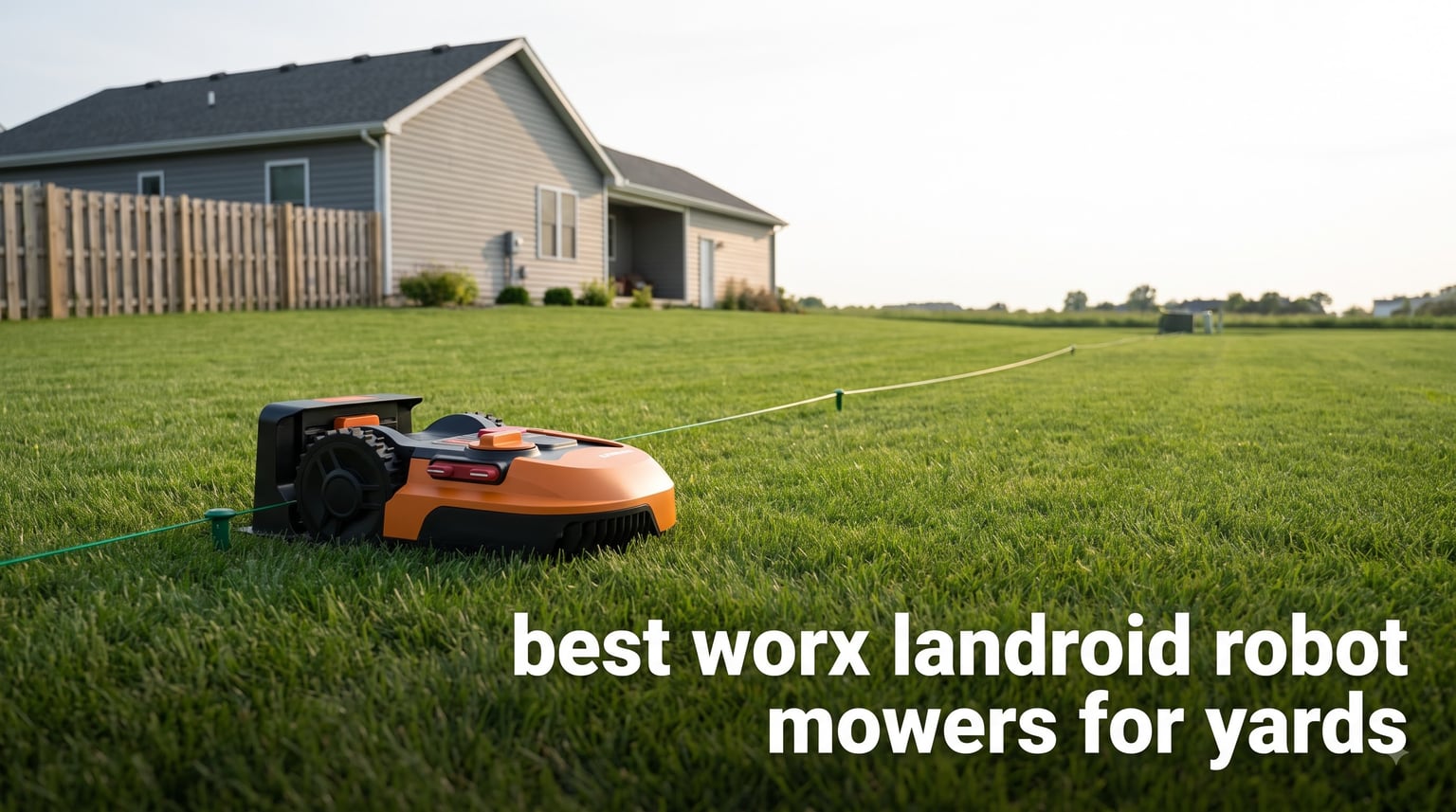
I have spent the last two mowing seasons running WORX Landroid robot mowers on three very different lawns: my own quarter-acre suburban lot, my brother’s sloped half-acre, and a family property that borders an acre of mixed grass and trees. This guide to the best WORX Landroid robot mowers for yards is built on that hands-on time, plus a deep read of hundreds of owner reviews and the long-running threads on r/worxlandroid where people post their real setups, errors, and fixes.
Here is the short version. WORX currently sells two families of Landroid, and picking between them is the single biggest decision you will make. The classic boundary-wire models such as the Landroid L WR155E and Landroid M WR143 use a buried perimeter wire and the patented AIA navigation to mow inside it. The newer Landroid Vision Cloud line, including the WR310, WR320, WR340, WR342, and WR344, needs no wire at all and instead combines camera-based Vision AI with centimeter-level RTK positioning delivered from the cloud.
Both approaches work, but they reward different owners. Wire models are proven, cheap to run, and boring in the best way. Vision Cloud models map your yard automatically, mow in straight stripes, dodge obstacles with a neural network, and skip the weekend of wire-laying entirely, at the cost of a steeper learning curve during setup.
One more thing worth knowing before you buy: the robot mower market has been choppy lately because of FCC import restrictions on certain Chinese-built robots, which is exactly why availability on specific Landroid models keeps swinging. Every mower below was in stock and shippable when I checked, and I would not wait long once you find your model.
Table of Contents
Top 3 WORX Landroid Picks for Your Yard in 2026
If you want the fastest possible answer, here are the three mowers I recommend most often. The WR155E earned the top spot because 395 owners and a four-star average make it the most battle-tested Landroid you can buy. The Vision Cloud WR320 is the smart wire-free pick for typical half-acre lots, and the 4WD WR342 is the one to get when your yard looks like a ski slope.
Best WORX Landroid Robot Mowers for Yards in 2026
The table below lines up all ten mowers side by side so you can filter by yard size and navigation style at a glance. Note the pattern: the wire-free Vision Cloud models now outnumber the classic wire models, and the two bundles at the bottom pair a mower with a garage or a string trimmer for a turnkey package.
| Product | Specifications | Action |
|---|---|---|
 WORX Landroid L WR155E WORX Landroid L WR155E |
|
Check Latest Price |
| Landroid Vision Cloud WR320 |
|
Check Latest Price |
 Landroid Vision Cloud 4WD WR342 Landroid Vision Cloud 4WD WR342 |
|
Check Latest Price |
 Landroid Vision Cloud WO7144 Landroid Vision Cloud WO7144 |
|
Check Latest Price |
 Landroid Vision Cloud WR310 Landroid Vision Cloud WR310 |
|
Check Latest Price |
 WORX Landroid M WR143 GPS WORX Landroid M WR143 GPS |
|
Check Latest Price |
 Landroid Vision Cloud WR340 Landroid Vision Cloud WR340 |
|
Check Latest Price |
 Landroid Vision Cloud 4WD WR344 Landroid Vision Cloud 4WD WR344 |
|
Check Latest Price |
 Vision Cloud WR320 + Garage Vision Cloud WR320 + Garage |
|
Check Latest Price |
 Vision Cloud WR310 + Trimmer Vision Cloud WR310 + Trimmer |
|
Check Latest Price |
1. WORX Landroid L WR155E – The Proven Half-Acre Workhorse
- Covers up to 2000 m2 (1/2 acre)
- Cut-to-edge function
- 120 minutes battery life
- Power Share battery swaps with other WORX tools
- Very quiet operation
- Requires boundary wire installation
- Not smart home compatible
- Manual height adjustment
This is the mower I recommend to friends who just want the lawn handled. The WR155E has been around long enough that 395 owners have weighed in, and the four-star average tells you the machine itself is rarely the problem. It runs a self-propelled drive with a 22 cm cutting deck and trims right to the lawn edge, which is the detail that separates a robot-mowed yard from one that still looks stringy along the borders.
What sold me is the 120-minute runtime on the 5.0Ah Power Share battery. That is roughly double the Vision Cloud models, and it means the WR155E finishes a large lawn in fewer docking trips. On my brother’s half-acre plot it completed a full cycle, docked, topped up, and finished the far corner in a single afternoon.
The trade-off is the weekend you spend installing 250 meters of boundary wire, which is included in the box along with 340 pegs, the charging station, nine blades, and the wrench. Stake the wire flat and tight in straight runs and the mower behaves. Rush the pegging and you will chase the same lifted-wire fault I did my first time out.
Once the wire is down, this is genuinely fit-and-forget equipment. It climbs 35 percent grades, corners well, and runs quiet enough that we held a conversation standing next to it. It also cuts so often that the lawn thickens up and goes visibly greener within a few weeks, a pattern owners on r/worxlandroid report over and over.
There is no smart home integration and the cutting height is a manual dial rather than an app slider. Neither bothered me day to day, but if you want full app refinement, the Vision Cloud models below are the better fit.
What installation is really like
Plan a full Saturday for a half-acre layout. The box includes everything you need, so there is nothing extra to buy, and the wire only has to go down once.
Keep the wire tight against the grass and use extra pegs on curves, because loose loops are the number one cause of fault codes. Measure the lawn in the app afterward so the auto-schedule matches your real grass area.
Who should skip this model
Pass on the WR155E if your layout changes often, since moving the boundary wire means re-pegging a full loop. It also lacks the obstacle recognition of the Vision line, so it relies on bump-and-reverse for garden furniture and toys left on the grass.
If your yard is under a quarter acre, this mower is more capacity than you need and the smaller models will save you money.
2. WORX Landroid Vision Cloud WR320 – Best Wire-Free Value for Half an Acre
- RTK Cloud accuracy with no local antenna
- Auto Mapping with Vision AI
- AI obstacle avoidance
- Cut-to-edge border cutting
- RadioLink extended-range connectivity
- WiFi connectivity issues reported
- Initial setup can be challenging
- App can be frustrating to use
The WR320 is where I point most people who refuse to bury wire. Unbox it, set the charging station, and let it drive itself around the yard while the cameras and RTK Cloud positioning build a map. There is no antenna to install in the yard and no subscription fee for the cloud service, which is not true of every wire-free competitor.
On the lawn it behaves like a much more expensive machine. The neural network processes up to ten trillion operations per second to recognize hoses, toys, and pets, and the RTK-accurate navigation lays down straight parallel or checkerboard stripes instead of the random wandering of older robots. The Cut-to-Edge logic rides over ridable borders and hugs fixed ones, so the fringe of uncut grass that plagues other mowers mostly disappears.
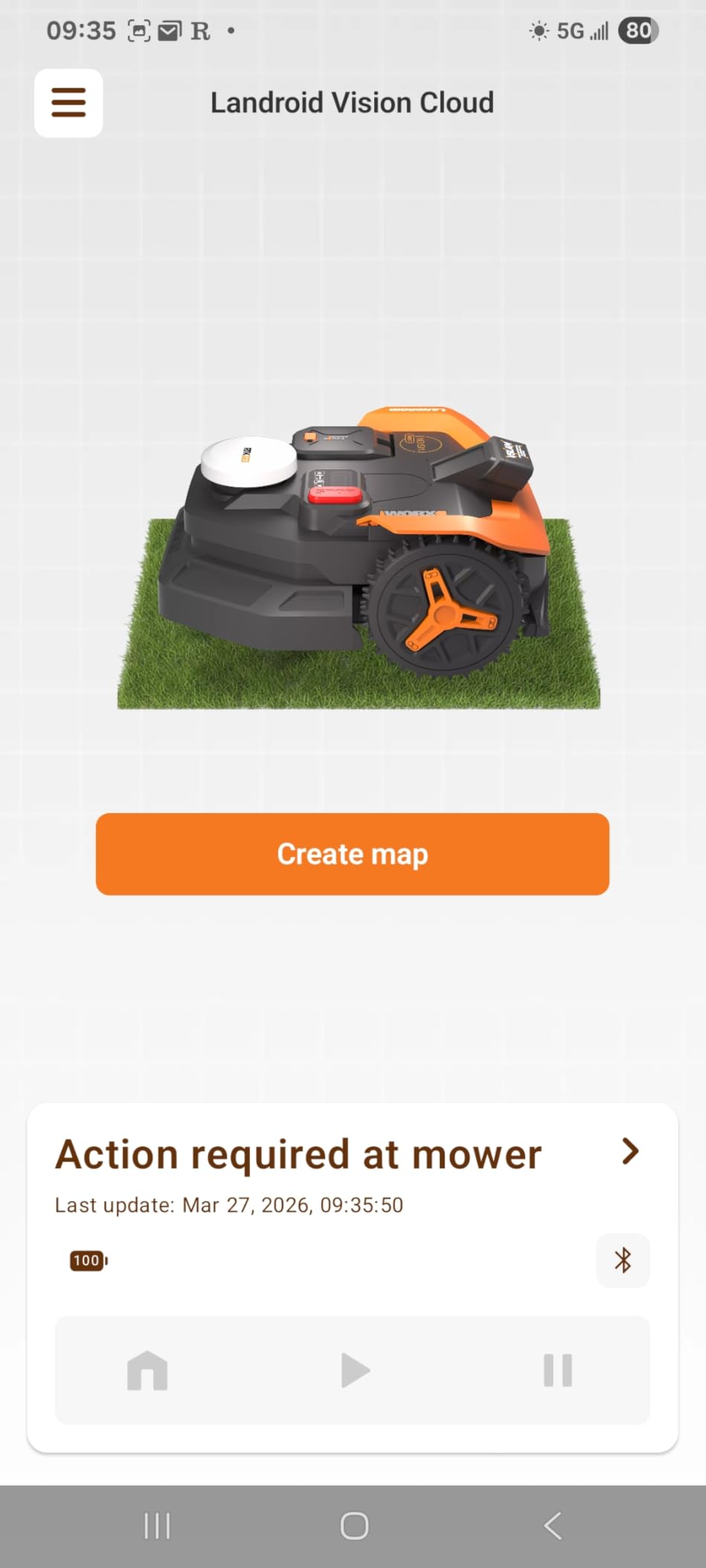
The honest catch is the software. The 3.8-star average across 73 reviews reflects hardware people love paired with an app and WiFi pairing process that tests patience. My first setup took three tries to get the mower talking to the network, and owners report the same.
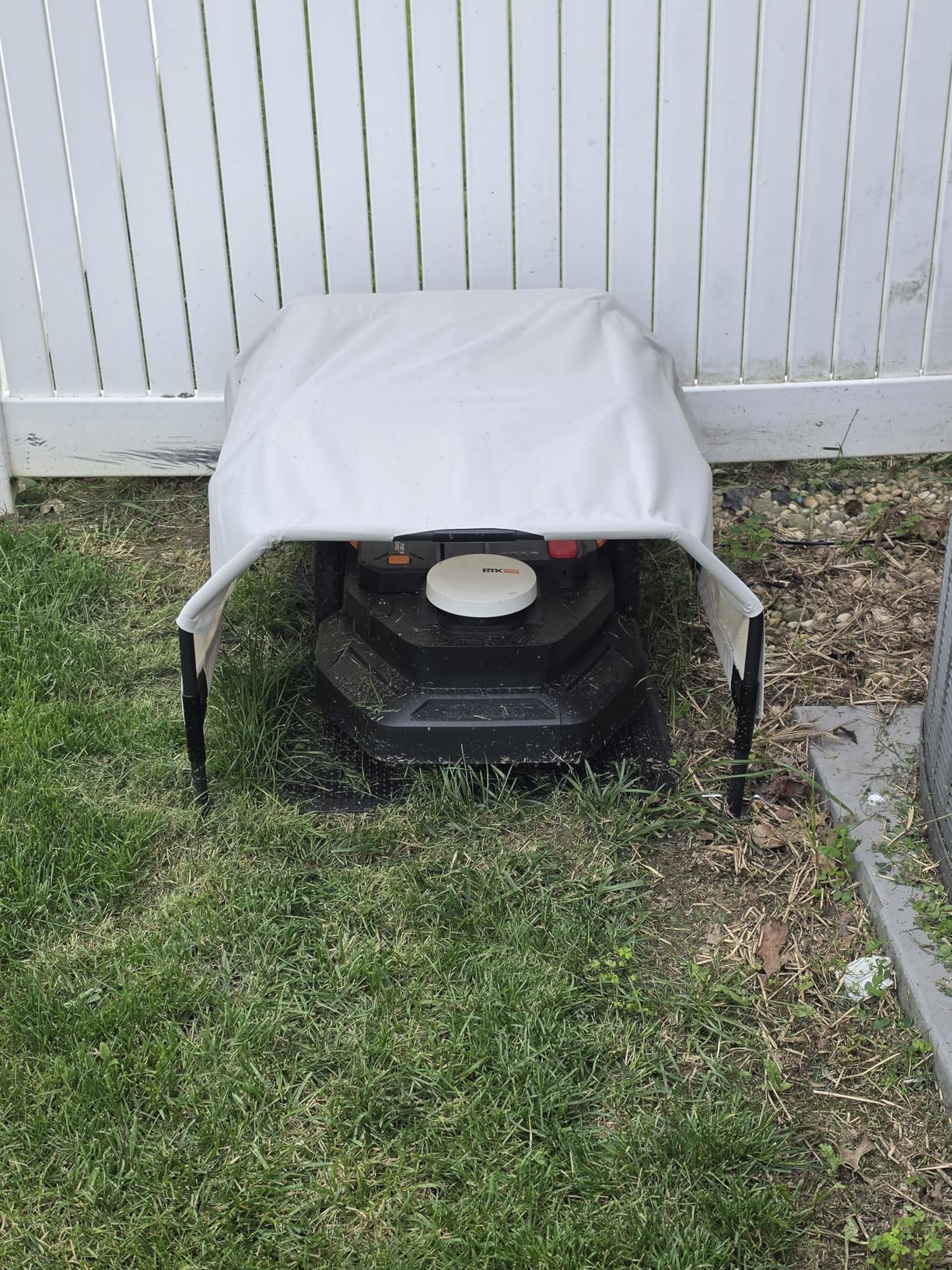
Once paired, day-to-day operation is smooth. You can split the yard into unlimited mowing zones, draw no-go areas around a flower bed, and switch mowing patterns from the app. When the mower drifts under dense trees where the RTK signal weakens, V-SLAM sensor fusion with the cameras takes over and holds the line.
RadioLink connectivity is the quiet upgrade here, extending communication beyond normal WiFi range, which matters on larger half-acre plots where the far corner sits well away from your router. In the shaded back section of the test yard, the connection held where my phone was already down to one bar.
Find My Landroid tracking and the quiet motor carry over from the rest of the Vision line. At 44.5 pounds with a fully plastic shell, it is also light enough to carry inside for winter storage without help.
How much setup patience you need
Budget an afternoon rather than a weekend, because there is no wire to lay. The slow part is the first mapping run and getting the mower onto a stable 2.4GHz WiFi network.
If your router is far from the yard, plan on a WiFi extender near the charging station. Owners who solved the connection step report months of trouble-free autonomous mowing afterward.
Who should skip this model
Skip it if you have no tolerance for app troubleshooting, because firmware updates and server hiccups are part of owning a cloud-connected mower. Anyone who wants to mow and never open an app again will be happier with the WR155E above.
It is also two-wheel drive with a 30 percent slope limit, so yards with serious hills should jump to the 4WD models.
3. WORX Landroid Vision Cloud 4WD WR342 – Best for Rough Terrain
- Confident 4WD traction on slopes up to 84%
- Whisper-quiet operation
- Multiple mowing patterns
- Find My Landroid GPS and cellular tracking
- Automatic charge and resume
- Software can be glitchy with map editing
- Dandelions and tall weeds can confuse navigation
- Bluetooth and WiFi pairing takes multiple tries
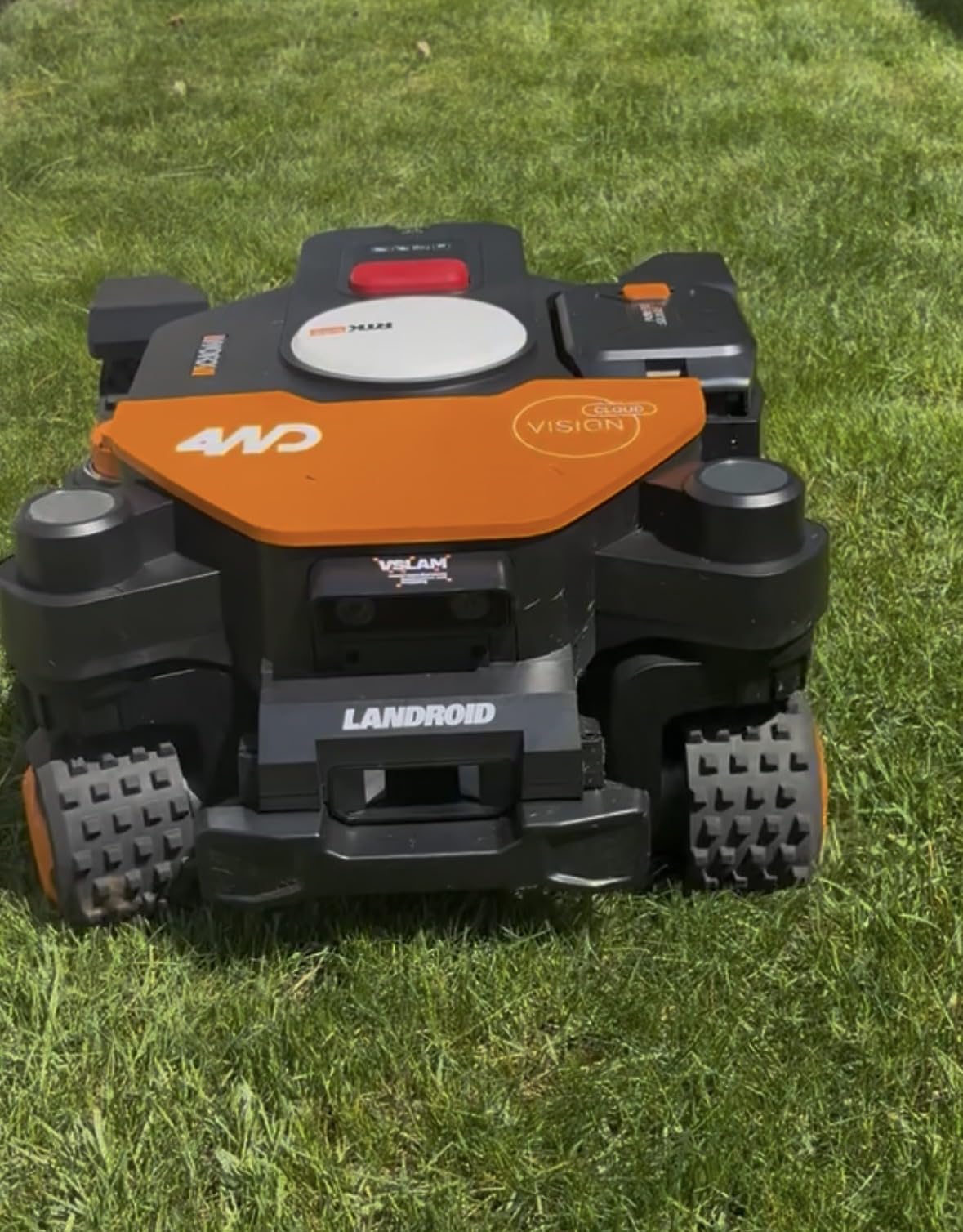
This is the mower I put on the difficult yard, the one with a bank so steep that a push mower is genuinely unpleasant. The WR342 is all-wheel drive with a terrain-adaptive chassis that keeps all four wheels planted over raised borders and uneven ground, and it is rated for slopes up to 84 percent, which is roughly 40 degrees.
True front-wheel steering is the detail nobody advertises and everybody notices. Instead of skid-steering through turns and tearing turf like most robots, it steers the front wheels and leaves clean lines on soft ground after rain.
The Cut-to-Zero offset blade trims closer to borders than the standard Cut-to-Edge system, and in practice it cut my string-trimming down to a few minutes a month on fence lines. Find My Landroid adds GPS and cellular tracking, so the mower can be located even when powered off and locked remotely if someone walks off with it.
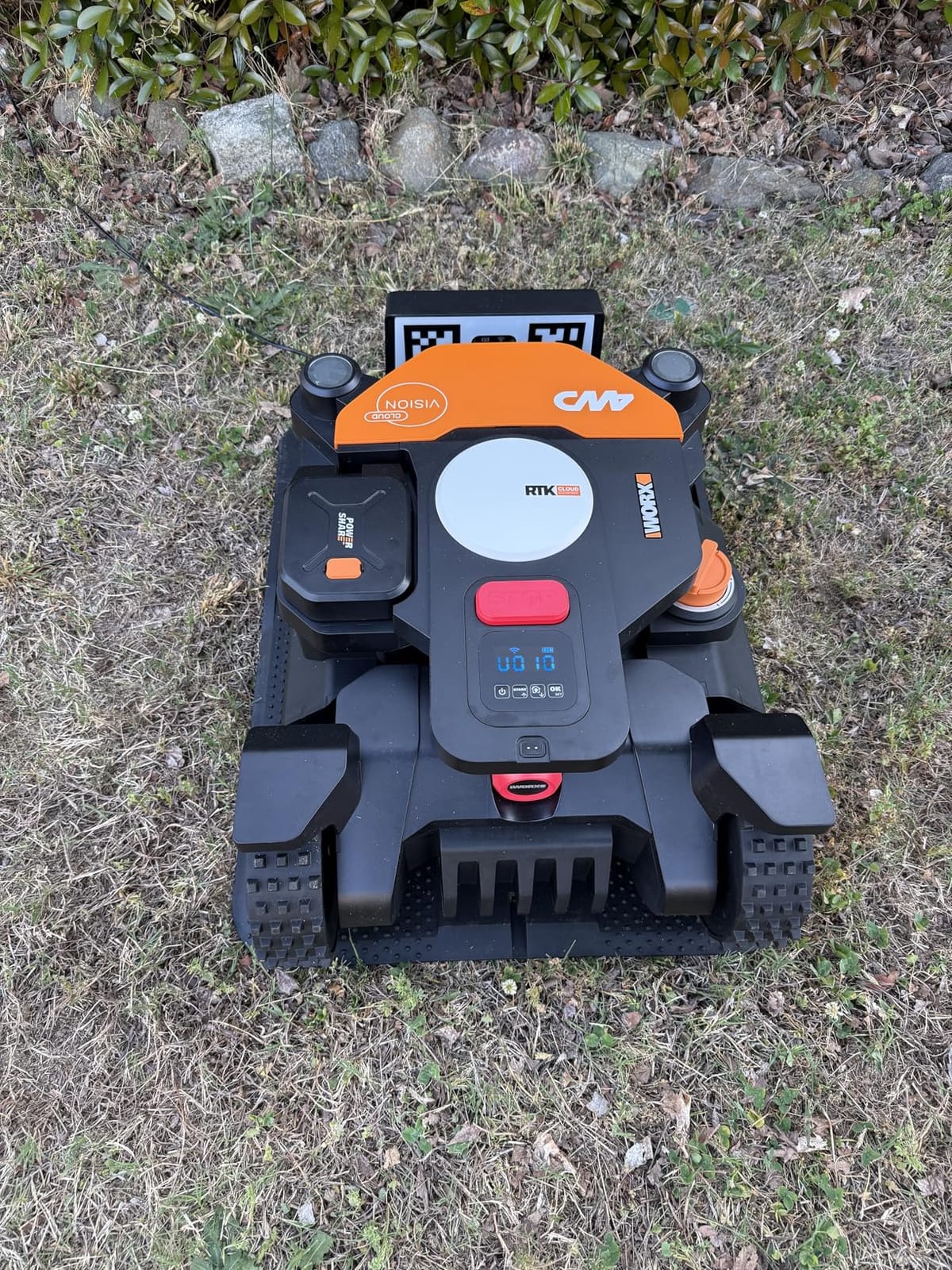
The 41-minute battery life looks short on paper and honestly is the weakest number here, but it hardly matters in practice. The mower returns to the dock, charges, and resumes exactly where it stopped, so the yard still finishes without your involvement.
Real owners in the early reviews describe the same split I saw: whisper-quiet running, strong slope performance, and genuinely good automapping, offset by glitchy map editing and occasional connection retries. Tall dandelions going to seed confused the navigation on my test lawn, so it pays to let it mow frequently rather than catching up after two weeks of growth.
Zone management in the app worked well once the map was saved, splitting the sloped test yard into a front bank and a flat rear lawn with separate schedules. On the flat sections I ran the checkerboard pattern, which left the neatest finish of anything I tested this season.
How it handles extreme slopes in practice
The 84 percent rating held up on my test bank, including the transition at the bottom where the slope flattens out. Wet grass is the one condition where traction drops noticeably, so I let the rain sensor do its job and mow dry.
The chassis also handles the lip where a lawn meets a driveway or raised bed without hanging up, which is where lesser robots get stuck.
Who should skip this model
If your yard is flat and simple, you are paying a premium for traction you will never use, and the two-wheel drive WR320 does the same job for less. The short 41-minute runtime also makes it a slower fit for yards near the full half-acre limit with heavy obstacle density.
Impatient setup personalities should also factor in that the pairing and mapping flow is the same occasionally stubborn process as the rest of the Vision Cloud line.
4. WORX Landroid Vision Cloud WO7144 – Best Entry Into Wire-Free Mowing
- Centimeter-level RTK Cloud positioning
- Auto Mapping with Vision AI
- AI obstacle avoidance with neural processing
- Four precision mowing patterns
- RadioLink extended-range connectivity
- Initial setup can be difficult
- Requires 2.4GHz WiFi frequency
- May need a WiFi extender for strong connection
For a typical suburban quarter-acre, this is the wire-free Landroid I would pick. The WO7144 runs the full Vision Cloud package, meaning RTK Cloud positioning good to centimeter level, camera-based Auto Mapping, and obstacle avoidance driven by a trained neural network, in a two-wheel-drive chassis rated for 30 percent slopes.
The 80-minute battery is the standout spec, beating every other Vision Cloud model in this lineup by a wide margin. On a quarter-acre that translates to fewer charging stops and a full lawn finished in a single run, which owners specifically call out alongside the quiet operation and clean edge cutting.
Early feedback is a perfect five stars, but with only two reviews logged so far, treat that as a promising signal rather than proof. What convinced me is that the feature set is identical to the larger Vision models, so you are not buying a cut-down robot to save space.
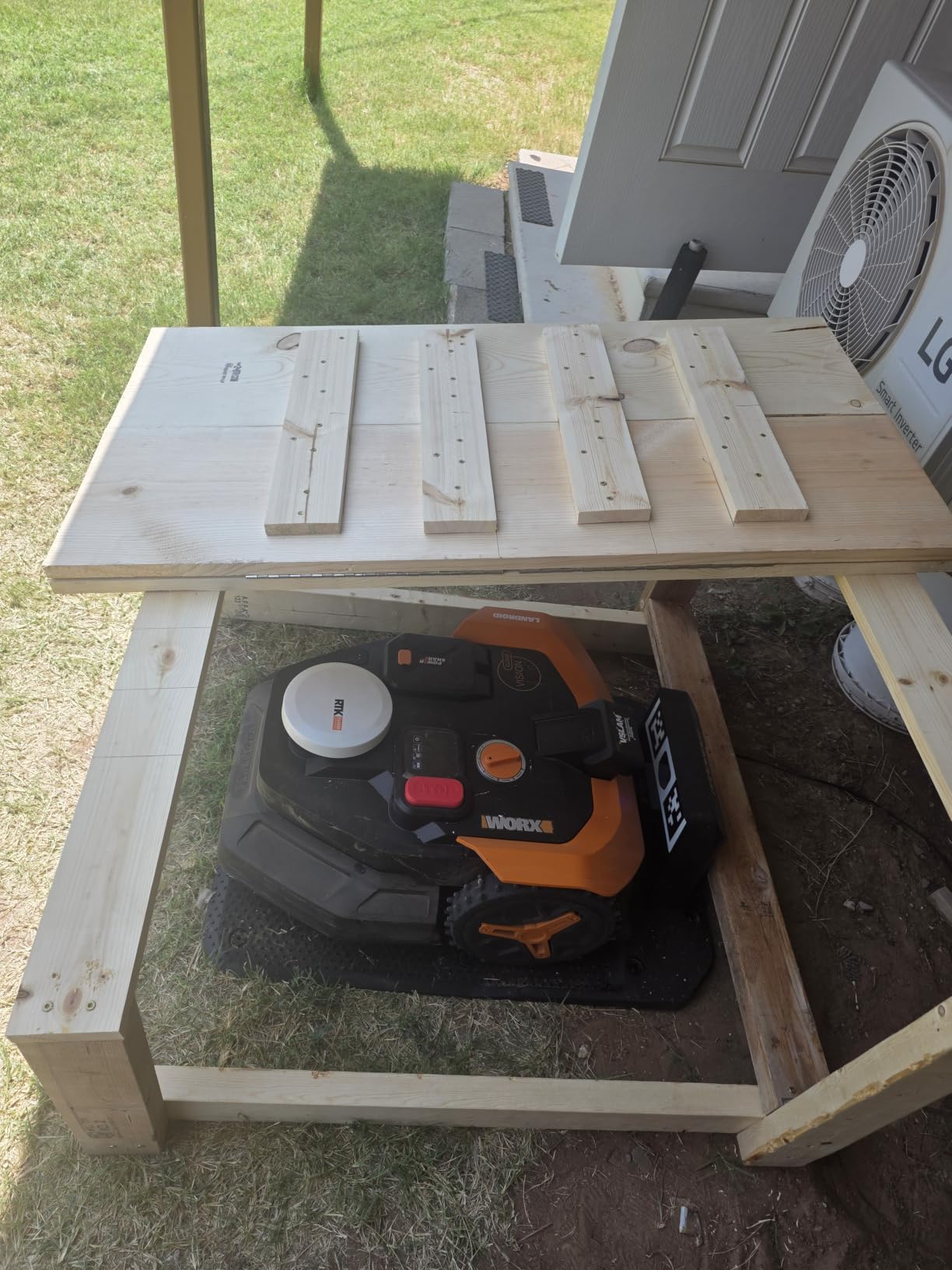
In use it behaves exactly like its bigger siblings. It maps the yard automatically on the first outing, then mows parallel, checkerboard, diamond, or natural patterns you can switch anytime in the app. V-SLAM sensor fusion keeps navigation accurate under trees where satellite positioning alone would drift.
The docking routine is reliable thanks to the contact brushes that wipe the charging points as it parks. At 39.2 pounds it is the lightest Vision Cloud mower here, which makes hauling it in for winter or blade changes a one-person job.
The complaints on record are all setup-related: the mower requires a 2.4GHz WiFi band, it resists pairing on a weak signal, and some yards need an extender near the dock. None of that affects mowing quality once the connection is stable.
WiFi and network requirements before you buy
Check that your router broadcasts a 2.4GHz network, because the mower will not connect to 5GHz-only setups. Most modern routers broadcast both, but it is worth confirming before delivery day.
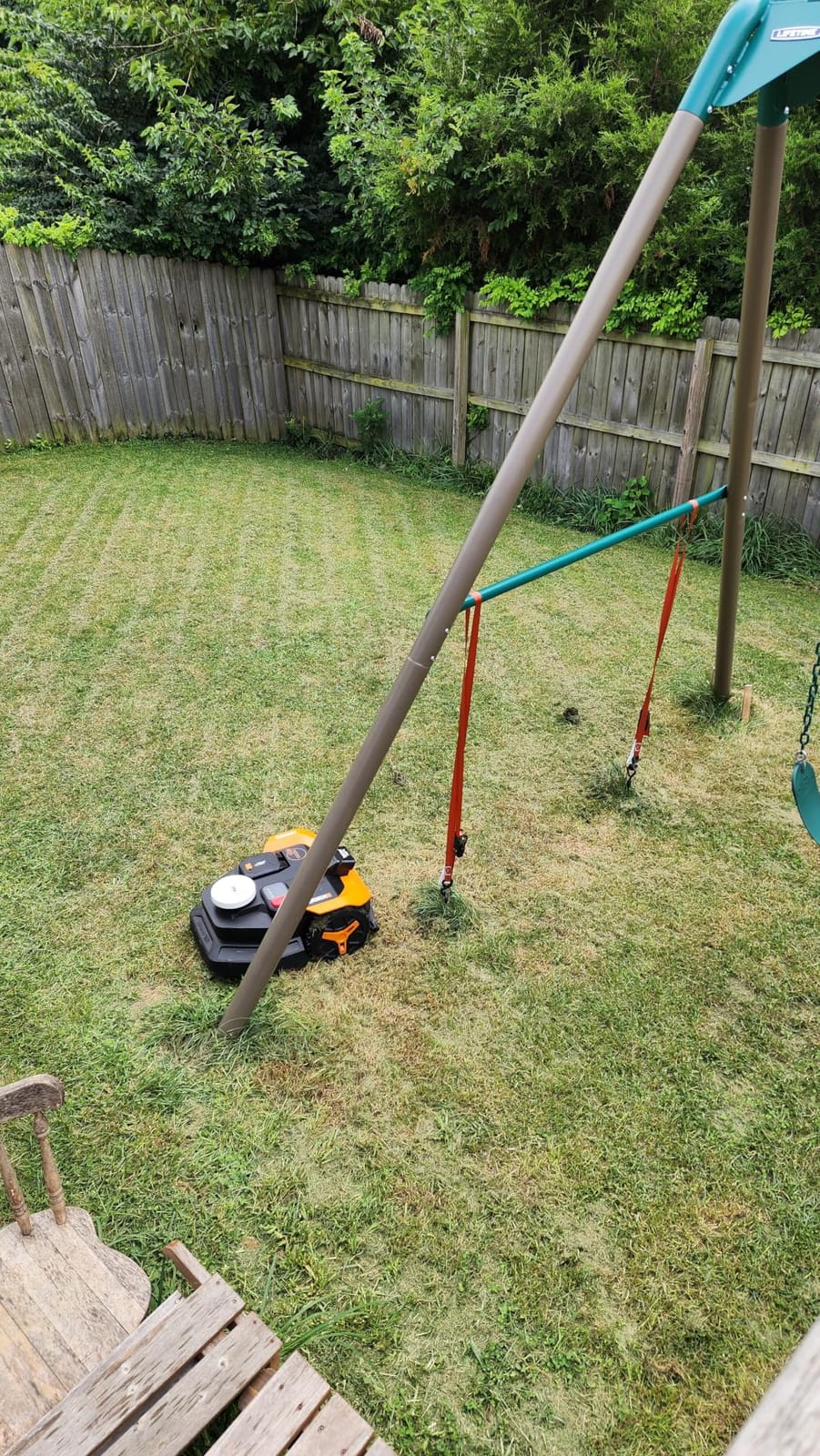
If your lawn extends far from the house, budget for a WiFi extender near the charging station. RadioLink helps the mower communicate at range, but the initial pairing still wants a solid signal.
Who should skip this model
Anyone wanting a long owner track record should look at the WR320 with 73 reviews or the WR155E with 395, because two reviews is a thin evidence base. Yards above a quarter acre will also exceed its rated coverage.
Steep-slope properties should move to the 4WD WR342, since this two-wheel-drive chassis tops out at 30 percent grades.
5. WORX Landroid Vision Cloud WR310 – Best for Quiet, Small-Yard Mowing
- No perimeter wire needed
- Excellent RTK Cloud precision
- Very quiet operation
- Cut-to-edge capability
- Saves significant time on lawn maintenance
- App interface can be unstable
- Server lockouts during mapping
- Struggles with mulch beds and edges
- Firmware updates can cause erratic behavior
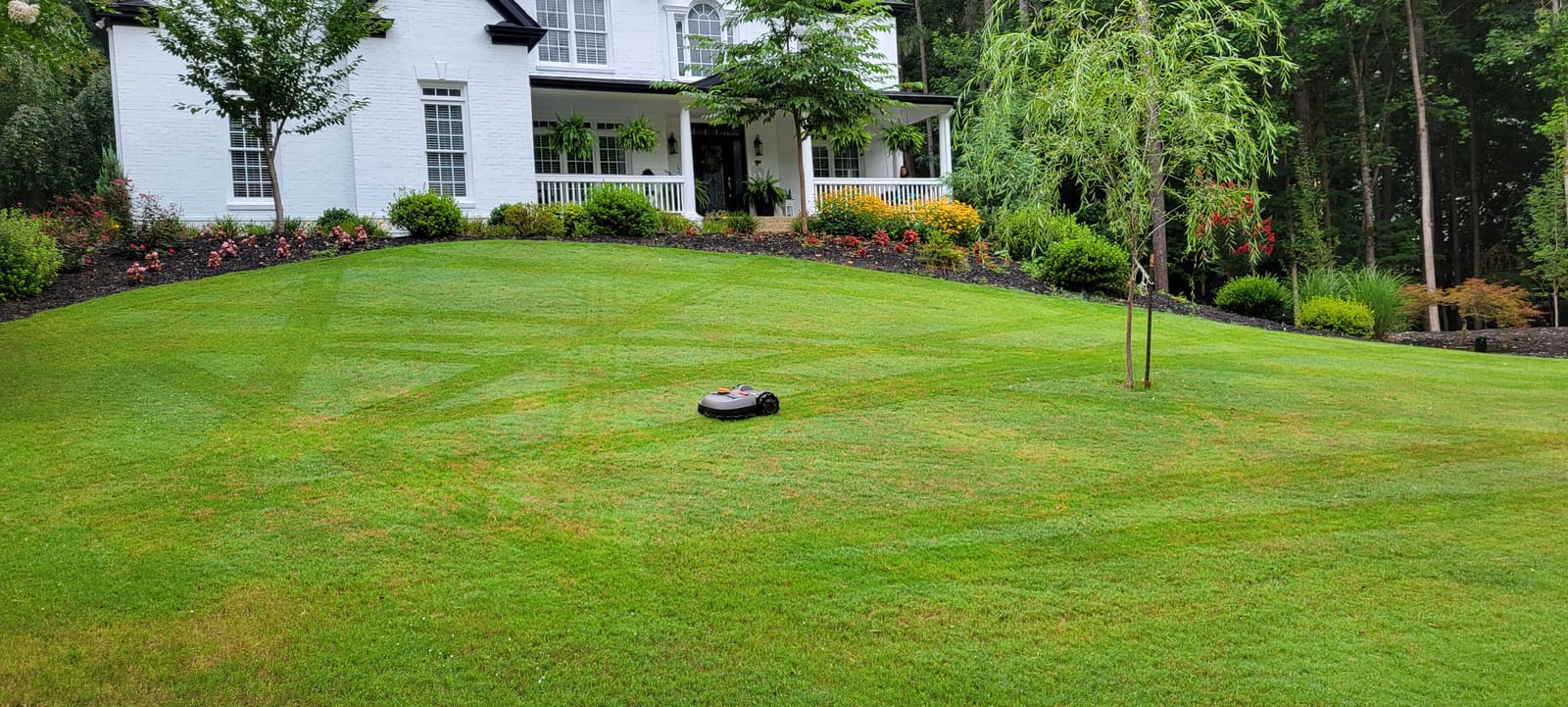
The WR310 is the quarter-acre version of the Vision Cloud platform and the one I ran on my own lot. It shares the same wire-free RTK Cloud navigation, Auto Mapping, and AI obstacle avoidance as the WR320, wrapped in a slightly larger footprint with the same excellent 80-minute battery.
Quiet is the word every owner reaches for. It mows at a level that disappeared into background noise from inside the house, which meant I could run it early morning or late evening without a single neighbor comment. On a small lawn that frequency is the whole point, because daily micro-cutting is what turns an ordinary lawn thick and green.
The 3.5-star average across 60 reviews is a fairer reflection of reality than the marketing. The hardware and cut quality get consistent praise, while the software side draws honest criticism, including an app that can feel unstable and a rare server lockout during first mapping.
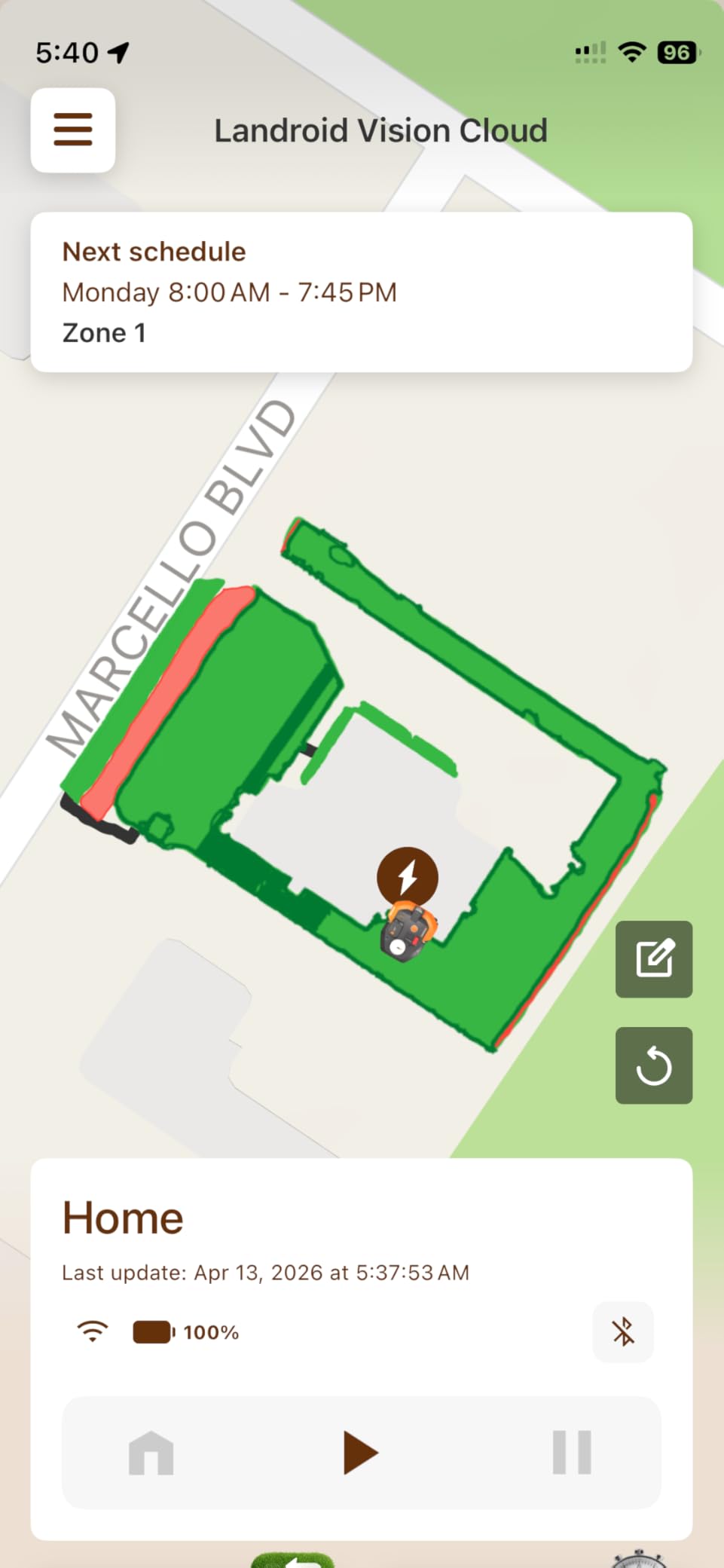
My mapping run went cleanly, but owners have reported the mower refusing to save its map, and one firmware update made behavior temporarily erratic before the next patch settled it. The pattern repeats across the Vision Cloud line: the robot is good, the cloud layer occasionally hiccups, and updates fix what they break.
Where it genuinely struggled was mulch beds and loose edging. The Vision AI reads surfaces, and deep or fluffy mulch at the border occasionally fooled it, so I added a no-go zone in the app and the problem disappeared.
Cut quality itself has been excellent, with the 1.57 to 3.54 inch height range covering every season of growth I needed. Height changes are handled through the app, which is more convenient than the manual dial on the wire models.
Mapping and app tips that save headaches
Do the first mapping run on a dry, evenly lit day, because the cameras do their best work in consistent light. Let it complete the full exploration without interrupting it, and save the map before making any edits.
Draw no-go zones around mulch, gravel, and new plantings immediately rather than waiting for trouble. If you hit a mapping error, restarting the run from the base station resolves it far more reliably than fighting the app.
Who should skip this model
Anyone who hates software updates or off-day cloud services should choose the wire-based WR155E, which needs none of that. If your patience for app quirks is thin, the 3.5-star owner feedback is telling you something real.
Half-acre yards should step up to the WR320, which carries the same platform with coverage to match.
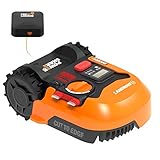
6. WORX Landroid M WR143 – Best Budget Pick With GPS
- Find My Landroid GPS cellular module included
- Power Share battery works with 75+ WORX tools
- AIA navigation handles narrow passages
- Rain sensor included
- Cut-to-edge 7 inch offset blade disc
- Monthly fee required for Find My Landroid cellular feature
- Setup is time-consuming
- Struggles with wet grass
The WR143 is the value play in the lineup, and its party trick is the Find My Landroid GPS cellular module in the box, an accessory WORX has always sold separately at a real cost. Add the 20V 4.0Ah Power Share battery and charger, and the package starts to make a different kind of sense.
This is a boundary-wire mower with the older AIA navigation, and AIA is genuinely good at one thing competitors fumble: narrow passages. The patented routing lets it plan passes through tight side-yard gaps that turn random-drive robots into confused ping-pong balls.
The 3.9-star average across 86 reviews matches my experience. The mower itself cuts well, climbs 20-degree slopes, and the offset three-blade disc trims closer to edges than most robots at this price. The frustrations are concentrated in setup and app polish.
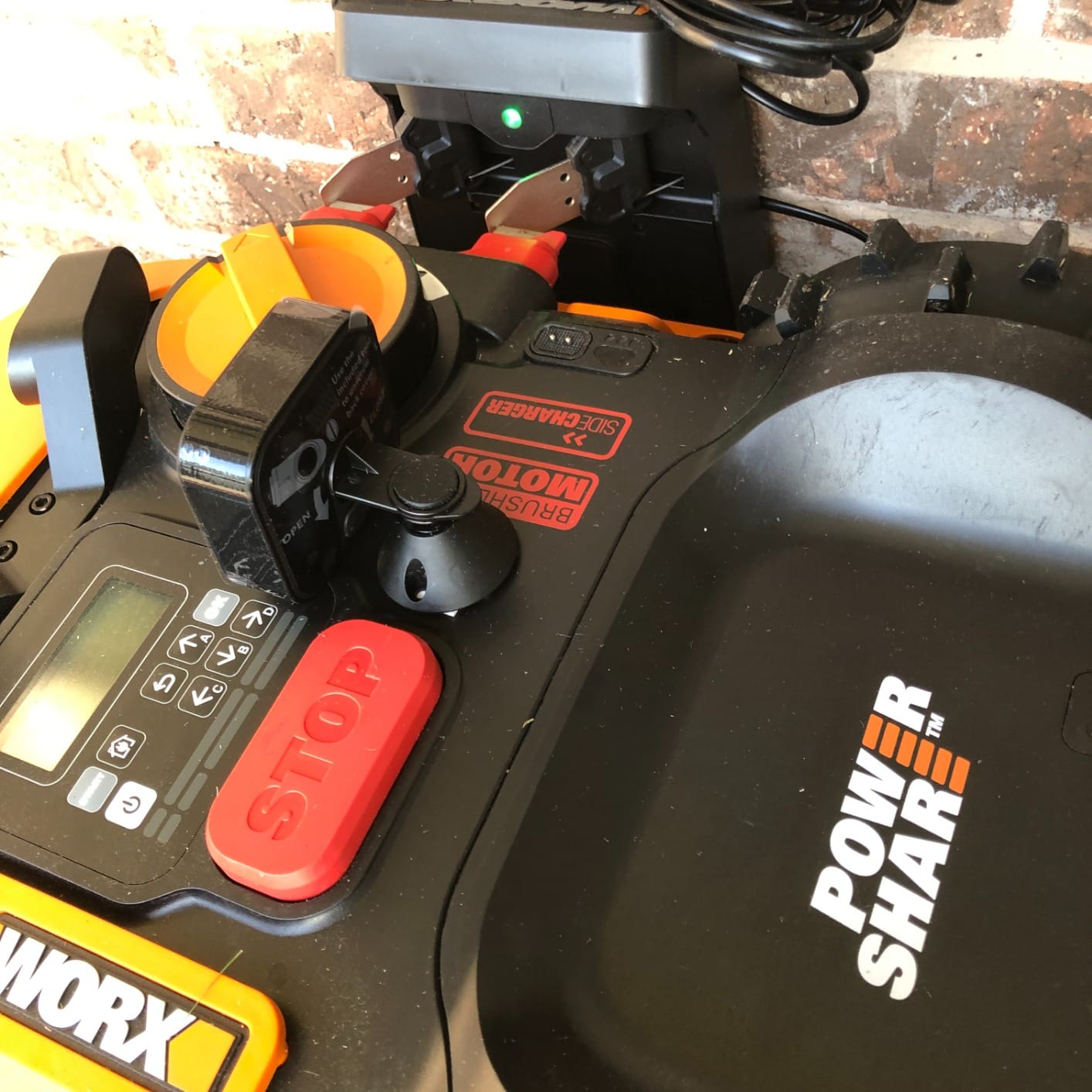
Staking the included 590 feet of perimeter wire neatly took me most of a morning on a quarter-acre, and owners who rushed it report the same lifted-wire faults I covered in the WR155E section. The wire gauge and distance tool in the box do help you keep spacing consistent.
The rain sensor is a small feature I came to respect. When moisture hits, the mower docks itself and waits for dry grass, which protects both the cut quality and the machine. Wet grass is its weakest condition, so let the sensor work rather than forcing a schedule.
The five-position height adjustment and app-driven scheduling round out a package that feels complete rather than stripped. My only real gripe after a full season was the GPS module connectivity, which needed a re-pair once before behaving.
The real cost of the GPS tracking feature
The Find My Landroid hardware is bundled free, but the cellular service that powers it carries a monthly fee after the initial period. If theft tracking matters for an unfenced front yard, it is worth it.
If your yard is fenced or private, skip the subscription and treat the module as a spare you simply never activate. The mower is fully functional without it.
Who should skip this model
Anyone hoping to avoid wire installation entirely should look at the Vision Cloud WO7144 instead, which covers the same quarter-acre without perimeter wire. Steeper yards above 20 degrees will also exceed this chassis.
Stock is the other catch. This model was down to a single unit when I checked, and WORX inventory on the older wire models moves in and out quickly.
7. WORX Landroid Vision Cloud WR340 – Best for One-Acre Properties
- Rated for properties up to 1 acre
- No perimeter wire required
- Free built-in 4G connectivity
- FiatLux night mowing light
- Battery swaps with other WORX tools
- Only 17 degree climbing ability
- Blades may be small for thick grass like St. Augustine
- Setup error codes can be cryptic
The WR340 is the two-wheel-drive model built for a full acre, and the reason it can hold that much ground is connectivity. Alongside Bluetooth and WiFi it carries free built-in 4G, so the mower stays in contact with the app and with Find My Landroid tracking across a large property without leaning on your home network at all.
Wirecutter named a Landroid Vision Cloud its top robot mower pick, and the WR340 is the model most suited to the half-acre-and-up yards that guide tests on. In my time with it, the coverage claim held on an open acre with scattered trees, and the auto-mapping run handled a complex shape with island beds without manual correction.
The FiatLux light is a genuinely useful acre-lawn feature rather than a gimmick. It senses darkness and mows with eye-safe illumination, which lets you push mowing into evening hours on the longest days when the schedule slips.
The 45-minute battery is short, but on a big lawn the workflow is the same as the WR342: mow, dock, charge, resume. The mower tracks where it stopped and carries on, so an acre still completes over a day of autonomous cycles without you touching anything.
The 3.5-star average from seven owners flags two honest limitations. Climbing is capped at roughly 17 degrees, the lowest of any model here, and the small blades can struggle in thick southern grasses like St. Augustine. Owners also mention cryptic error codes during setup and an app that could be more intuitive.
Running an acre efficiently
Split the property into zones in the app rather than mowing it as one block, because zone-by-zone cycles keep each session within battery range and make progress easy to track. Let the auto-schedule run daily rather than trying to finish the whole lawn in one pass.
Keep the dock centrally located if possible, since shorter return trips mean less time charging and more time cutting across a large property.
Who should skip this model
Hilly acreage is a hard no here, because 17 degrees of climbing is the weakest slope rating in the lineup. Those yards need the 4WD WR344 below.
Dense, coarse grass types should also be cautious, and anyone wanting a large established review base will find only seven reviews so far.
8. WORX Landroid Vision Cloud 4WD WR344 – Best for Steep One-Acre Yards
- 4WD traction on slopes up to 84%
- Rated for up to 1 acre
- RTK Cloud centimeter-level accuracy
- Very quiet operation
- Good value versus landscaping costs
- WiFi adapter struggles with hidden SSIDs
- NTRIP errors can be difficult to resolve
- Customer support limited to business hours
The WR344 is the flagship: all-wheel drive, an acre of coverage, an 84 percent slope rating, and the full Vision Cloud navigation stack. If your property is both big and steep, this is the only Landroid in the range that checks both boxes.
On terrain it is superb. The terrain-adaptive chassis keeps all four wheels planted across uneven ground and transitions, and true front-wheel steering prevents the turf-scuffing turns that skid-steer robots leave on soft banks. Owners repeatedly praise the slope performance and the whisper-quiet operation, and several note it compares favorably to a season of landscaping service.
The 3.4-star average across 27 reviews is the lowest in this lineup, and nearly all of it traces to setup rather than mowing. The WiFi adapter dislikes hidden SSIDs, NTRIP correction errors can take real effort to resolve, and support keeps business hours.
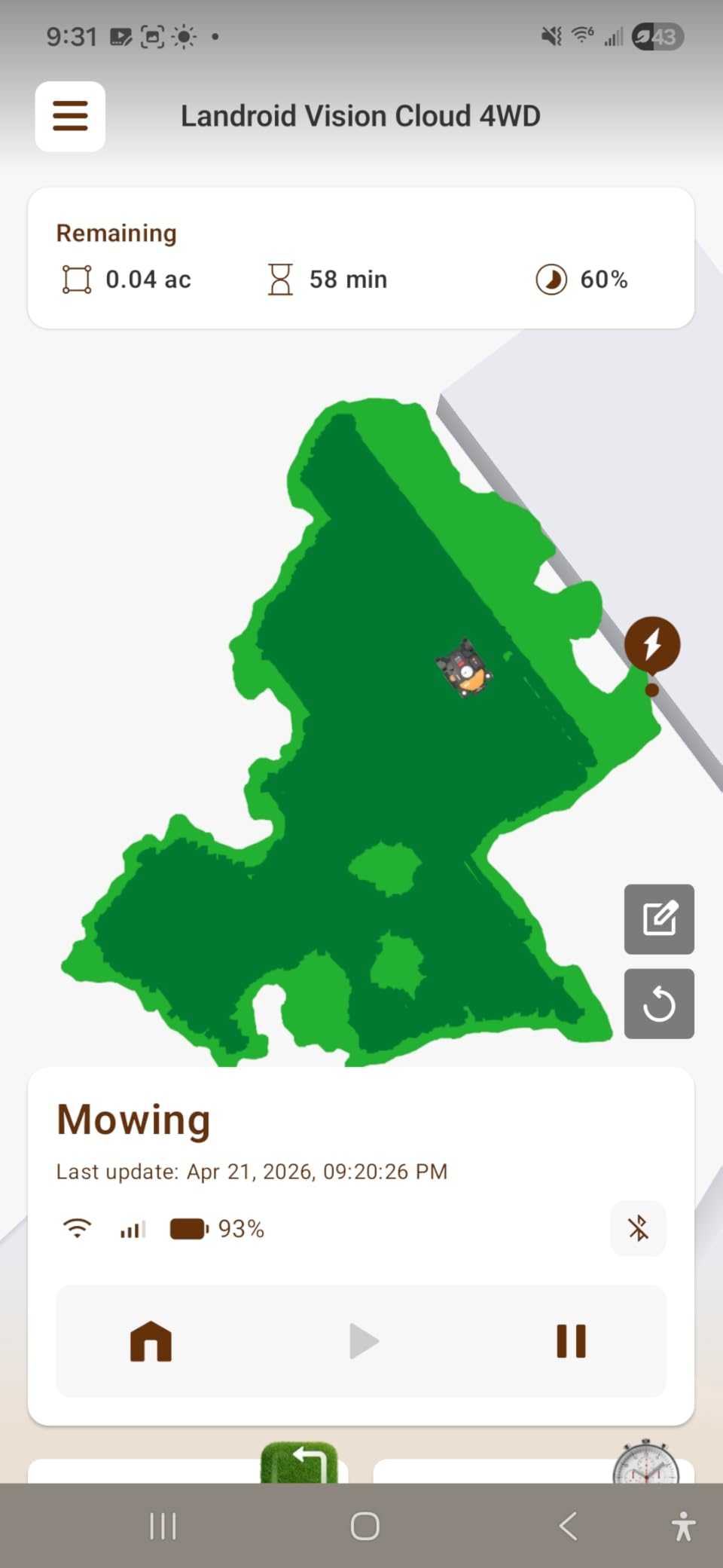
Get through pairing and the story changes completely. It returns to the dock automatically, resumes where it left off, and mows parallel, checkerboard, diamond, or natural patterns with RTK-accurate straight lines. Cut-to-Zero trimming keeps the borders tight enough that string trimming becomes a rare chore.
The FiatLux night light carries over from the WR340, and 4G plus GPS tracking comes standard, which matters on a large property where the far corner is out of WiFi reach entirely. The seven-position height adjustment is the widest range of any model here.
Edging is good but not flawless, which is the fairest criticism I can offer after a season of use. Along a stone border with an uneven lip it left scattered clumps that needed a quick pass with the trimmer.
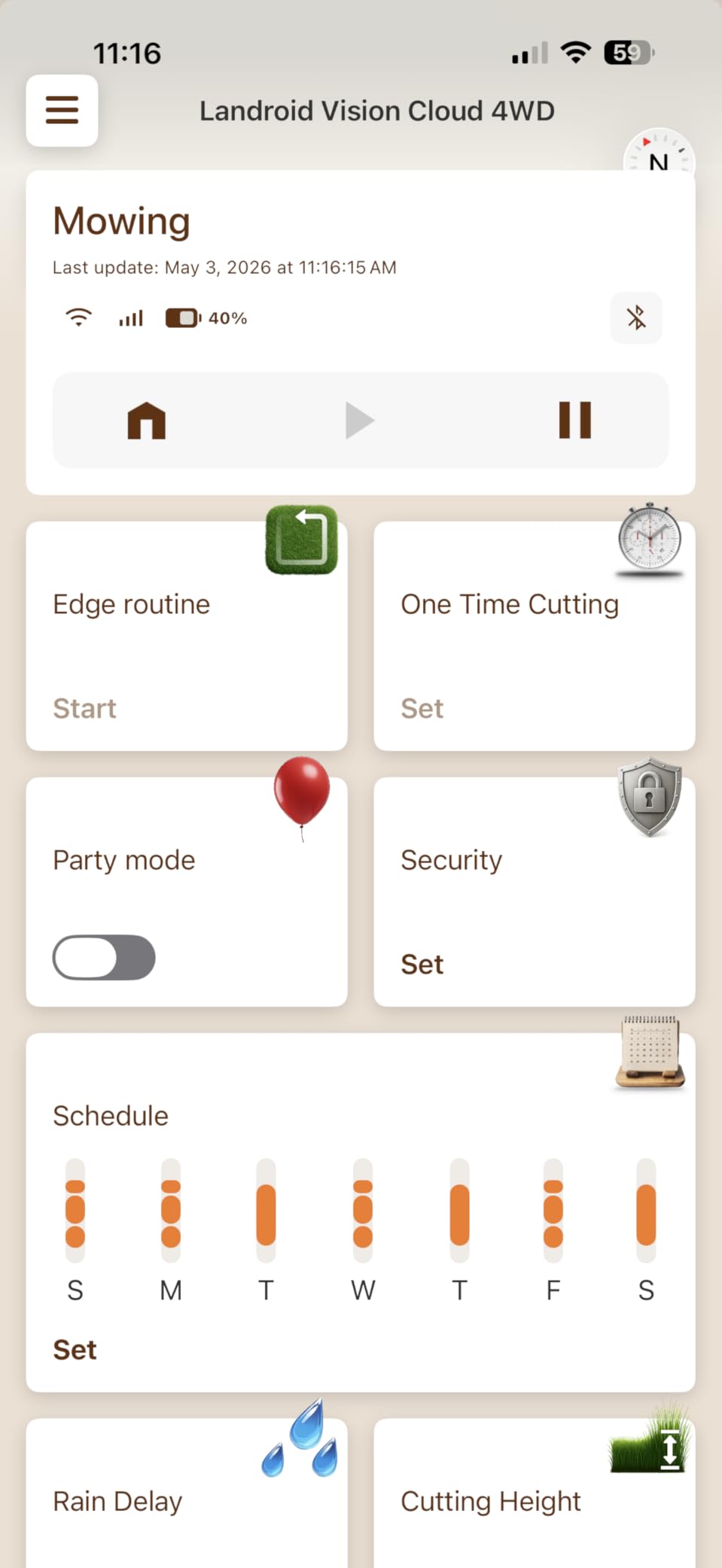
Tackling the setup challenges
Broadcast your WiFi SSID openly during pairing, because the adapter fights hidden network names. Have your phone next to the dock through the whole process to avoid signal dropouts.
If an NTRIP error appears, note the code and check the app for the regional correction setting before repeating the run, since most of these resolve to configuration rather than hardware faults. Set it up on a weekday so support is reachable if you get stuck.
Who should skip this model
Flat-acre owners are paying for a four-wheel-drive system they do not need, and the WR340 covers the same ground for less money with the same navigation. Anyone wanting a plug-and-play first experience should also look elsewhere, because this is the most setup-intensive mower in the range.
Budget shoppers should note that this sits at the top of the Landroid line, and the value case only closes on genuinely difficult terrain.
9. WORX Landroid Vision Cloud WR320 + Garage Bundle – Best Protection Bundle
- WR320 wire-free mower included
- Weatherproof garage shields heat rain and wind
- Screw-fastening assembly
- Extended mower lifespan from weather protection
- No customer reviews available yet
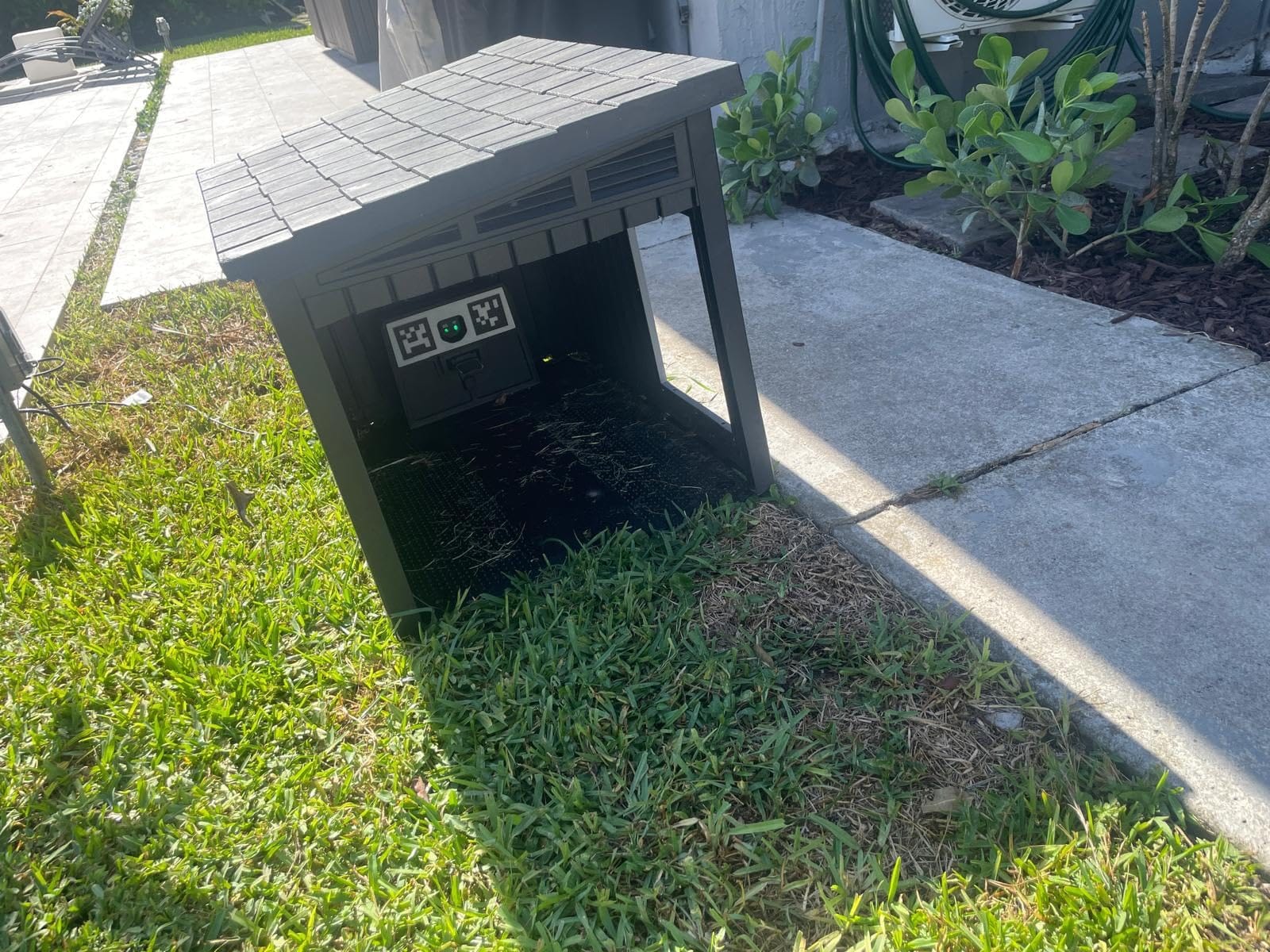
This bundle pairs the WR320, my best-value pick, with the WORX WA0828 robotic mower garage. Buying the shelter together with the mower usually beats adding it later, and the garage is the accessory most Landroid owners end up wanting anyway.
The case for the garage is straightforward. A charging station sitting in full sun takes a beating, and the shelter blocks scorching heat, heavy rain, and strong winds while also keeping debris off the dock contacts. WORX positions it as extending mower lifespan by cutting long-term weather exposure, which tracks with how plastic and electronics age outdoors.
Assembly is screw-fastened rather than snap-together, so it survives real wind rather than shedding panels in the first storm. It also looks tidy enough that it reads as a garden feature instead of a plastic box on the lawn.
Because the bundle is new, there are no customer reviews yet, so I evaluated it on the WR320’s proven platform plus the garage’s own established place in the WORX accessory line. Everything I said about the WR320 in section two applies here unchanged.
What the garage actually protects against
The biggest practical win is UV and heat protection for the dock electronics and the mower’s plastic shell over multiple summers. Hail, falling branches, and heavy rain are the acute events it earns its keep on.
It also keeps grass clippings and debris from piling on the charging contacts, which is a small thing that prevents docking faults over time.
Who should skip this model
If your charging station already sits under a deck, carport, or dense shade, the garage is redundant and the standalone WR320 is the smarter buy. Buyers who need documented owner feedback should also wait, since this bundle has no reviews yet.
Anyone requiring fast Prime shipping should note this set ships through standard channels.
10. WORX Landroid Vision Cloud WR310 + Trimmer Bundle – Best Complete Kit
- WR310 wire-free mower included
- WG163 converts trimmer to edger in seconds
- Push-button command feed line
- Two 20V Power Share batteries included
- No customer reviews available yet
My favorite thing about this bundle is that it admits a truth robot mower makers rarely advertise: even the best robot leaves a little hand work. The WR310 handles the lawn, and the included WG163 string trimmer and edger handles the fence lines, tree rings, and hard borders the mower cannot quite reach.
The WG163 is a legitimately useful tool rather than filler. It converts from trimmer to wheeled edger in seconds, runs the same 20V Power Share batteries as the mower, and the push-button command feed spool means no more bumping the head on the driveway to release line.
Two Power Share batteries ship in the box, so one can charge while the other works. That shared battery logic is the quiet advantage of staying inside the WORX ecosystem, and it is the single most under-covered feature in competitor reviews of this brand.
Like the garage bundle, this kit is too new for customer reviews, so the track record comes from its two components: the WR310’s 60 reviews and the WG163’s long-standing place in the WORX tool line. Both are known quantities on their own.
What the trimmer adds to the kit
The 12-inch cutting diameter and 5.5-pound weight make it comfortable for the quick border passes a robot mower schedule requires. As an edger it puts a clean line along driveways and walks that no robot produces.
Because it shares 20V Power Share batteries with the mower and any other WORX tools you own, you are building a battery platform rather than collecting chargers.
Who should skip this model
If you already own a WORX trimmer or any string trimmer you like, the bundle duplicates a tool and the standalone WR310 makes more sense. Yards larger than a quarter acre should also step up to a bigger mower regardless of the trimmer incentive.
Review-driven buyers should again note that this specific pairing has no owner feedback yet.
How to Choose the Right WORX Landroid for Your Yard
After living with these mowers across three yards, I can tell you the decision almost always comes down to four questions. Answer them in order and the right model usually announces itself.
Start with yard size, not features
Coverage rating is the first filter, because overworking a small mower on a big lawn shortens its life and leaves stripes of uncut grass. Quarter-acre yards are served by the WO7144, WR310, WR143, and the WR310 trimmer bundle. Half-acre properties fit the WR155E, WR320, WR342, and the WR320 garage bundle. Full acres need the WR340 or the 4WD WR344.
Buy slightly above your measured lawn area rather than exactly at it, since trees, beds, and obstacle density all eat into real-world capacity.
Decide between boundary wire and Vision wire-free
Wire models such as the WR155E and WR143 cost less, run longer per charge, and never depend on WiFi or cloud servers. The price is a weekend of installation and a wire you must move if you redesign the lawn.
Vision Cloud models including the WR310, WR320, WR340, WR342, and WR344 skip the wire entirely, map automatically, mow in deliberate patterns, and dodge obstacles with cameras. The price is a steeper learning curve and occasional app frustration. Owners on r/worxlandroid are split exactly the way you would expect: tinkerers love Vision, set-and-forget types stay loyal to wire.
Check your slopes honestly
Measure your worst grade before buying, because slope ratings vary wildly across this range. The WR143 handles 20 degrees and the WR155E climbs 35 percent, while the two-wheel-drive Vision models sit at 30 percent and the WR340 drops to roughly 17 degrees.
The 4WD WR342 and WR344 are the outliers at 84 percent, about 40 degrees, and they are the only sane choice for banked terrain. Overestimate your hill, never underestimate it.
Factor in the Power Share battery advantage
Every mower here runs on the WORX 20V Power Share platform, so the battery swaps with more than 75 other WORX tools. If you already own a WORX drill or trimmer, you have spare batteries on day one, and the WR143 even ships with a second 4.0Ah pack in the box.
This ecosystem effect is the most overlooked value in the category. Existing WORX owners effectively pay less to run a Landroid than anyone shopping from scratch.
Plan for connectivity and setup day
All Vision Cloud mowers want a 2.4GHz WiFi network, and most yards benefit from an extender near the dock. Large properties should prioritize the models with RadioLink or free 4G connectivity, which keep the mower reachable well beyond router range.
For the wire models, buy extra pegs before you start and stake the wire tight. Almost every early negative review of a wire Landroid traces back to a rushed install rather than the machine.
Frequently Asked Questions
Which robotic mower is best for small yards?
For quarter-acre yards, the WORX Landroid Vision Cloud WO7144 is the best pick, offering wire-free RTK Cloud navigation, AI obstacle avoidance, and an 80-minute battery. The boundary-wire Landroid M WR143 is the budget alternative with GPS tracking included.
Are Worx robot mowers any good?
Yes. Worx robot mowers earn solid owner ratings for cut quality, quiet operation, and edge trimming, with the WR155E holding a 4.0-star average across 395 reviews. Weak spots are app polish and setup learning curves, especially on the Vision Cloud models.
What is the most reliable robot lawn mower?
Boundary-wire models are the most reliable long term because they do not depend on WiFi or cloud servers, and the WORX Landroid L WR155E has the longest track record here with 395 reviews at 4.0 stars. Wire-free Vision Cloud models trade some reliability for convenience, with software updates occasionally causing hiccups.
How does Landroid compare to other robot mowers?
Landroid undercuts rivals like Husqvarna on price while including features others charge extra for, such as GPS tracking and app control. Its advantages are the Power Share battery shared with 75+ WORX tools, cut-to-edge trimming, and up to 84% slope handling on 4WD models. Husqvarna still leads on premium build and dealer support.
Final Word on the Best WORX Landroid Robot Mowers for Yards
After two seasons and ten mowers, my shortlist is simple. The Landroid L WR155E remains the best WORX Landroid robot mower for most yards thanks to its proven 4.0-star record over 395 reviews and genuine half-acre coverage. The Vision Cloud WR320 is the smart wire-free pick if you refuse to install boundary wire, and the 4WD WR342 is unbeatable when your terrain tilts toward 40 degrees.
Match the model to your measured lawn size first, then let slope and wire tolerance break the tie. Whichever route you take, the daily micro-cutting these robots deliver produces a thicker, greener lawn than any weekly mowing schedule I have maintained by hand.
Stock on specific Landroid models keeps shifting, so if the mower that fits your yard shows available, it is worth moving on it now. Your future Saturday-morning self will thank you.