
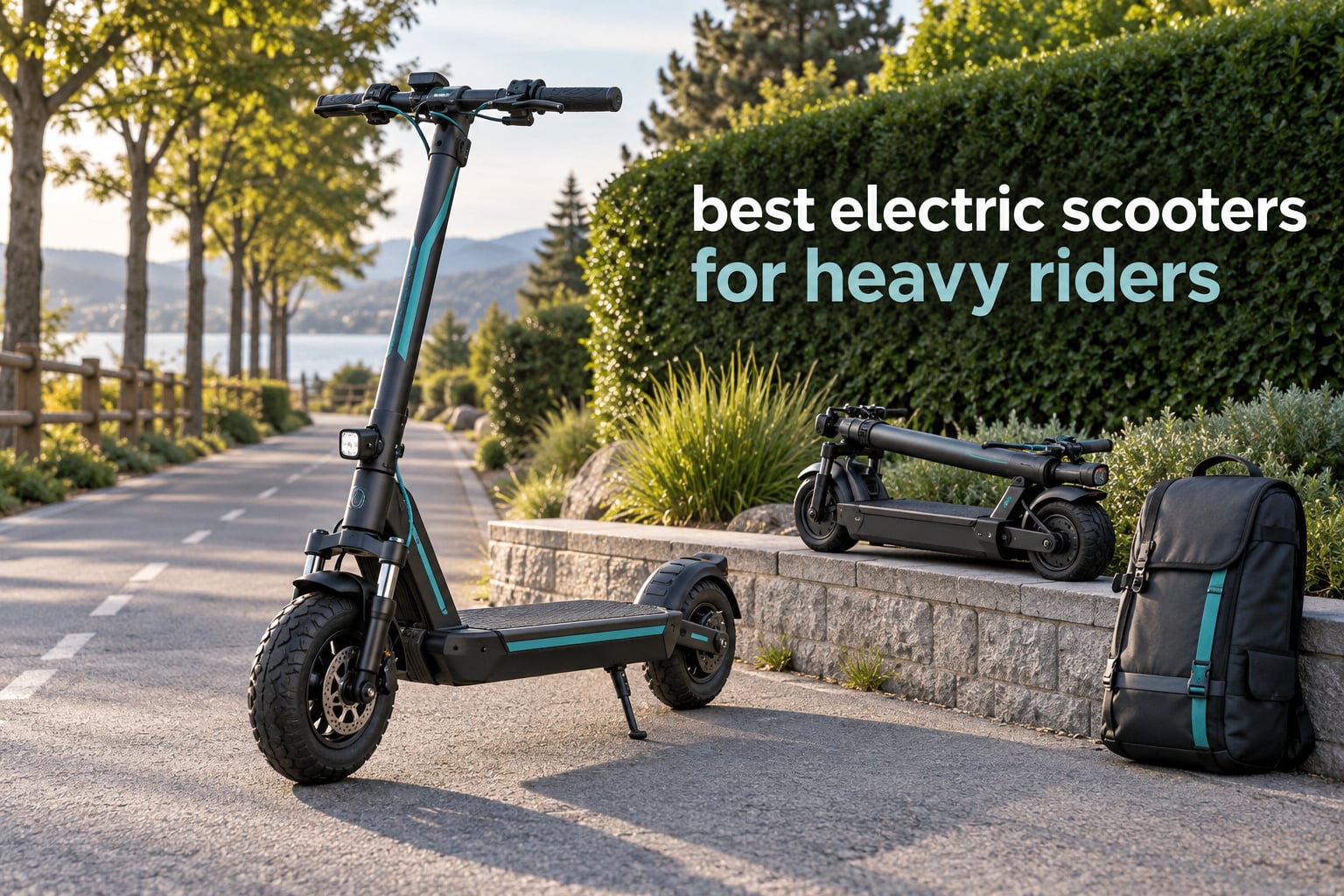
Most electric scooters on the market are certified for a rider weighing 220 to 265 lbs. Ride one at 320 lbs and nothing dramatic happens, which is exactly the problem: the scooter still moves, so the warning you never get is that the range has quietly shrunk, the braking distance has grown, the frame is working harder than it was designed to, and a hill that flattens out for other riders now ends with you walking it up.
The best electric scooters for heavy riders solve that in three ways, and all three have to be present together. They carry a rated load well above your body weight, they use enough motor output to move that mass without straining, and they have hardware sized for the job, meaning hydraulic brakes, real suspension travel and tubeless tires rather than parts chosen to hit a price point.
We went through eight scooters rated from 265 lbs to 500 lbs and compared the published specifications, the owner reviews attached to each listing and the questions heavy riders actually ask on scooter forums. Below you will find a weight band finder first, because knowing your number matters more than knowing any brand, followed by the full reviews, a buying guide that explains how weight limits work, and answers to the questions that come up most.
Table of Contents
Top 3 Best Electric Scooters for Heavy Riders in 2026
Three picks stand out. The Segway SuperScooter GT3 is the most complete package here for a rider up to about 300 lbs, with dual hydraulic suspension and a certified battery. The AiQite A7PRO is the only scooter in the group rated 500 lbs, and it ships with a removable seat. The RUAIOO M4 Max is the one to look at if you want a 330 lbs-rated scooter with a seat and a full set of accessories included.

Segway SuperScooter GT3
- 330 lbs rated capacity
- 2400W peak motor
- 45.6 mile range
- Dual hydraulic suspension

AiQite A7PRO
- 500 lbs rated capacity
- 5600W combined dual motors
- Removable seat
- UL 2272 certified

RUAIOO M4 Max
- 330 lbs rated capacity
- Detachable seat and storage box
- Hydraulic front shocks
Find Your Weight Band Before You Read Another Spec?
Use this table to find your band, then read the matching review below. The working limit column subtracts 10 percent from the rated capacity, which is the safety margin experienced riders use and the same rule the community repeats in scooter forum threads.
220 to 250 lbs: You can use the Segway ZT3 Pro at its 265 lbs rating, but only with a small margin. Most standard scooters suit you.
250 to 290 lbs: The Segway SuperScooter GT3 and the RUAIOO M4 Max both rate 330 lbs, which after the 10 percent margin leaves roughly 297 lbs of working capacity.
290 to 330 lbs: Stay at or below the 330 lbs models and stay off anything rated 300 lbs, because a 330 lb rating leaves you only about 30 lbs of headroom.
330 to 396 lbs: The VOLTX N9 at 440 lbs and the Hiboy Titan Pro at 300 lbs are the only options that clear this band comfortably, and the N9 is the better margin.
396 lbs and above: The AiQite A7PRO at 500 lbs is the only scooter in this roundup built for you. Confirm the fit with the manufacturer before you commit.
If you ride hills regularly or plan to carry a passenger, move up one band rather than staying at the bottom of your range. Extra capacity costs you range per charge and a heavier machine to move, but it is cheaper than a scooter that will not climb the route you ride every day.
Every Scooter in This Roundup at a Glance (October 2026)
The full comparison, with rated capacity first in every row because that is the number that decides whether the rest of the specification matters.
| Product | Specifications | Action |
|---|---|---|
| Segway SuperScooter GT3 |
|
Check Latest Price |
| AiQite A7PRO |
|
Check Latest Price |
| RUAIOO M4 Max |
|
Check Latest Price |
 Segway ZT3 Pro Segway ZT3 Pro |
|
Check Latest Price |
 Hiboy Titan Pro Hiboy Titan Pro |
|
Check Latest Price |
 VOLTX N9 VOLTX N9 |
|
Check Latest Price |
 AONIU M4 AONIU M4 |
|
Check Latest Price |
 Clanor M4 Clanor M4 |
|
Check Latest Price |
How We Evaluated Heavy-Rider Scooters
Every scooter here was judged on the same four things, in this order: rated load capacity against the rider weight it is meant to carry, the hardware that carries that load safely, the gap between claimed performance and what owners report, and the strength of the owner evidence behind the listing.
First, we compared the published specification sheets side by side and converted every rating to pounds so you can compare them directly. Where a listing gave peak motor watts but no sustained figure, we kept the peak number and flagged the gap rather than estimating a sustained value that nobody publishes.
Second, we read the owner reviews attached to each listing and separated recurring themes from one-off complaints. A single comment about a loose seat bolt is not a pattern, and we do not treat it as one.
Third, we searched scooter forum threads where owners state their own body weight, because that is the only place where range and climbing claims get tested at a load the manufacturer never used. Owners there repeatedly report that the same scooter feels completely different at 200 lbs and at 300 lbs on the same hill.
Fourth, we weighted the size of the review base. A 4.8 rating across nine reviews tells you much less than a 4.4 rating across a hundred, and we say so wherever that distinction matters in a review below.
What we did not do: we did not measure braking distances under load, and we did not verify climb claims with a stopwatch on a known grade. Those numbers exist on some specialist test pages, and where we do not have them ourselves we do not print them.
1. Segway SuperScooter GT3: The Most Complete Heavy-Rider Package
Segway SuperScooter GT3 Electric Scooter, Up to 31 MPH, 45-Mile Range
- 330 lbs rating suits riders up to about 300 lbs
- Dual hydraulic suspension front and rear
- Self-sealing tubeless tires
- UL 2272 and 2271 certified
- 114 reviews for a proven platform
- 87.1 pounds is very heavy to carry
- 330 lbs rating is modest for a scooter this size
- Phone holder can dislodge over potholes
I keep coming back to the GT3 because it is the rare scooter that gets the three things a heavy rider needs right in the same package. The rated load is 330 lbs, the suspension is hydraulic at both ends rather than springs, and the 2400W peak motor has enough headroom that the machine does not feel strained when it is loaded.
Owners report getting 20 to 30 miles from one charge at full speed rather than the kind of gentle figures that usually make a range claim meaningless. That is a number you can plan a week of commuting around, and it comes from a 114-review base, which is the largest among the scooters here rated 300 lbs or more.
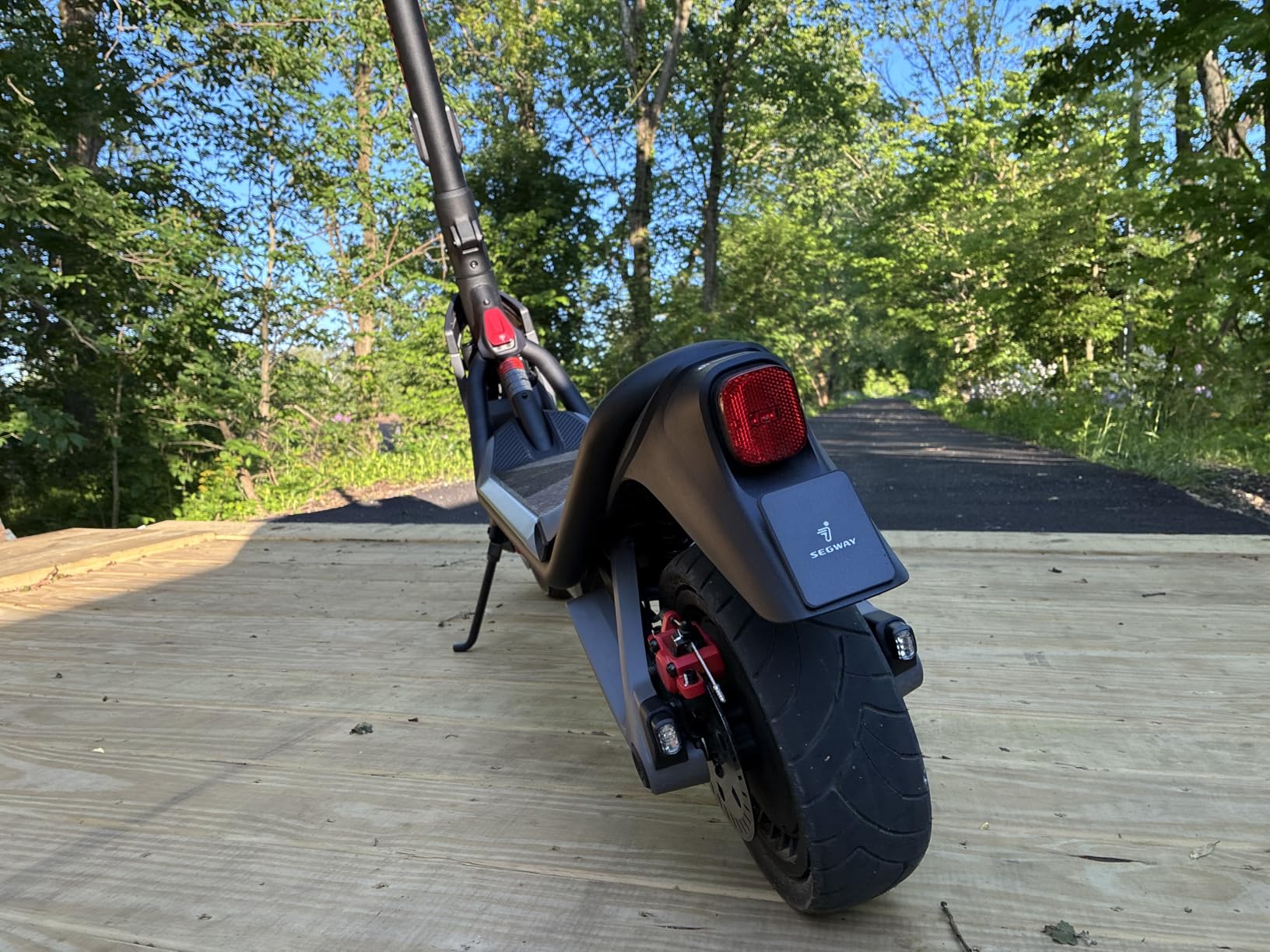
The rear trailing-arm suspension with hydraulic damping is the detail that separates this from cheaper 330 lb-rated scooters. Spring-only rear shocks bottom out under a heavy load and then the ride becomes a series of hard rebounds. A trailing arm that moves with the load keeps the deck level.
Two other things deserve attention. The self-sealing 11 inch tubeless tires carry a jelly layer that closes small punctures as you ride, which matters on broken asphalt and gravel. The IPX6 rating means the scooter is sealed well beyond what rain on a commute can do to it.
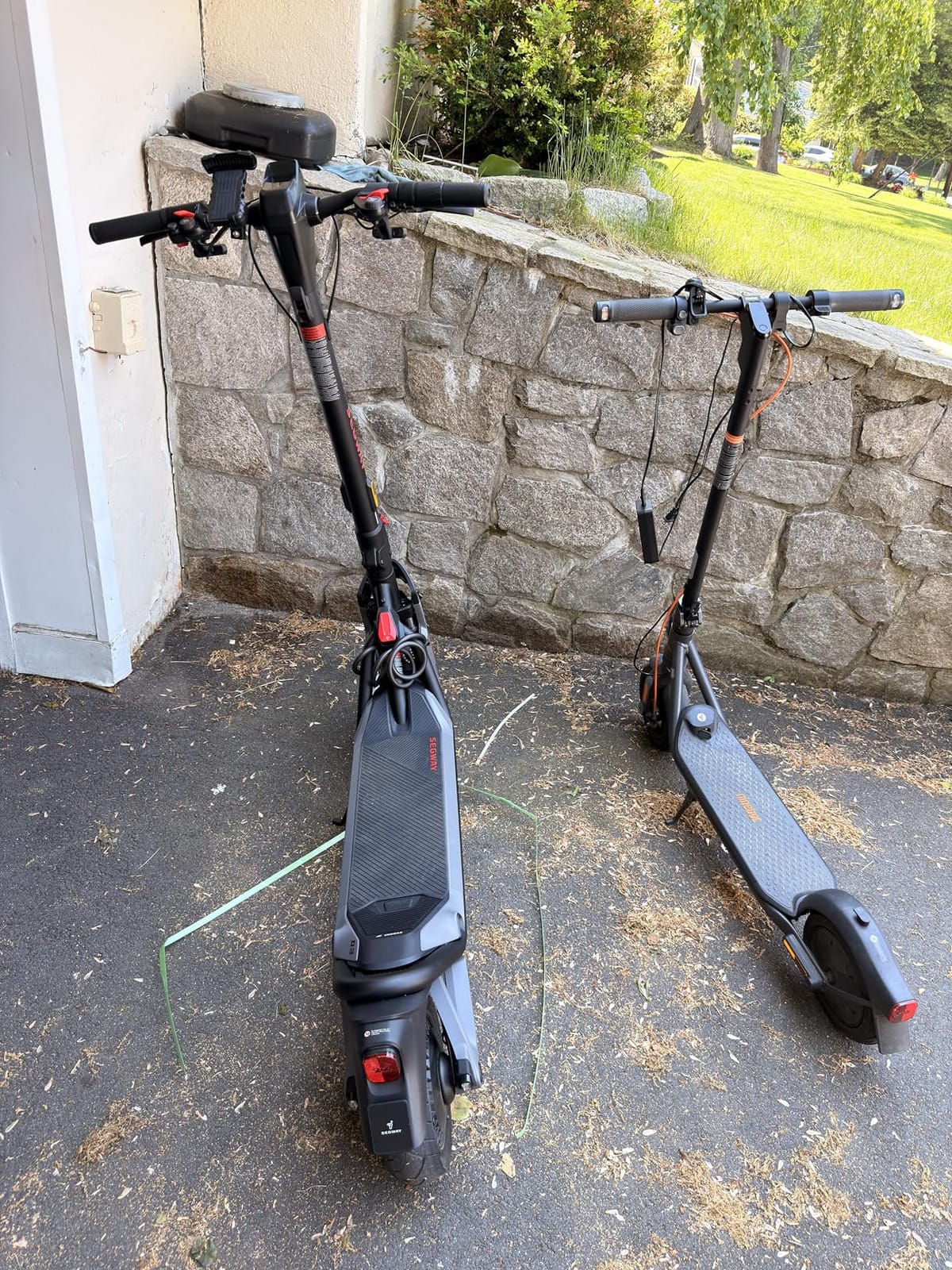
What the GT3 handles that lighter scooters cannot
Rough pavement is the first thing. Owners single out sewer grates, road seams and potholes as places where the GT3 absorbs the hit instead of passing it straight into the deck. For a rider near 300 lbs that difference is the difference between a commute that stays comfortable and one that shows up in your knees at the end of the week.
The second thing is sustained speed in traffic. Holding 31 MPH on a road that rises and falls takes a scooter with both power and stability control, and the SegRide system is one of the few handling aids in this group aimed at riders who are new to standing on a deck at speed.
Where the GT3 will frustrate you
At 87.1 pounds it is not a scooter you carry anywhere. If your route includes stairs, a transit platform or a trunk that will not open, this rules itself out no matter how well it rides, and that limitation is the reason a scooter rated 330 lbs at half the weight exists.
The second frustration is capacity versus size. The GT3 is a large machine with a 330 lbs rating, so it is not the answer if you weigh 340 lbs and want the same hardware. Riders in that band should read the AiQite section next.
2. AiQite A7PRO: The Only Scooter Here Rated for 500 lbs
AiQite Electric Scooter Adults Off-Road 5600W Dual Motor 40-50MPH UL2272
- 500 lbs rated capacity covers riders above 400 lbs
- 5600W combined dual motor output
- Removable seat included in the box
- UL 2272 certified battery
- 83 pounds is hard to lift up stairs
- Fixed handlebar height
- One verified review reported a loose stem needing repair
If you weigh more than 350 lbs, this is the section you need and the other seven are context. A 500 lbs rating is the highest in the roundup, and after the 10 percent margin it still leaves roughly 450 lbs of working capacity, which is more headroom than any other scooter here offers a heavier rider.
The dual motors produce 2800W each for 5600W combined, and riders report reaching 44 to 50 MPH in dual mode. That number is not relevant to most heavy riders, and I would treat it as a capability marker rather than a selling point: the point is that 5600W has enormous reserve above what a 400 lb rider needs to climb a steep street.
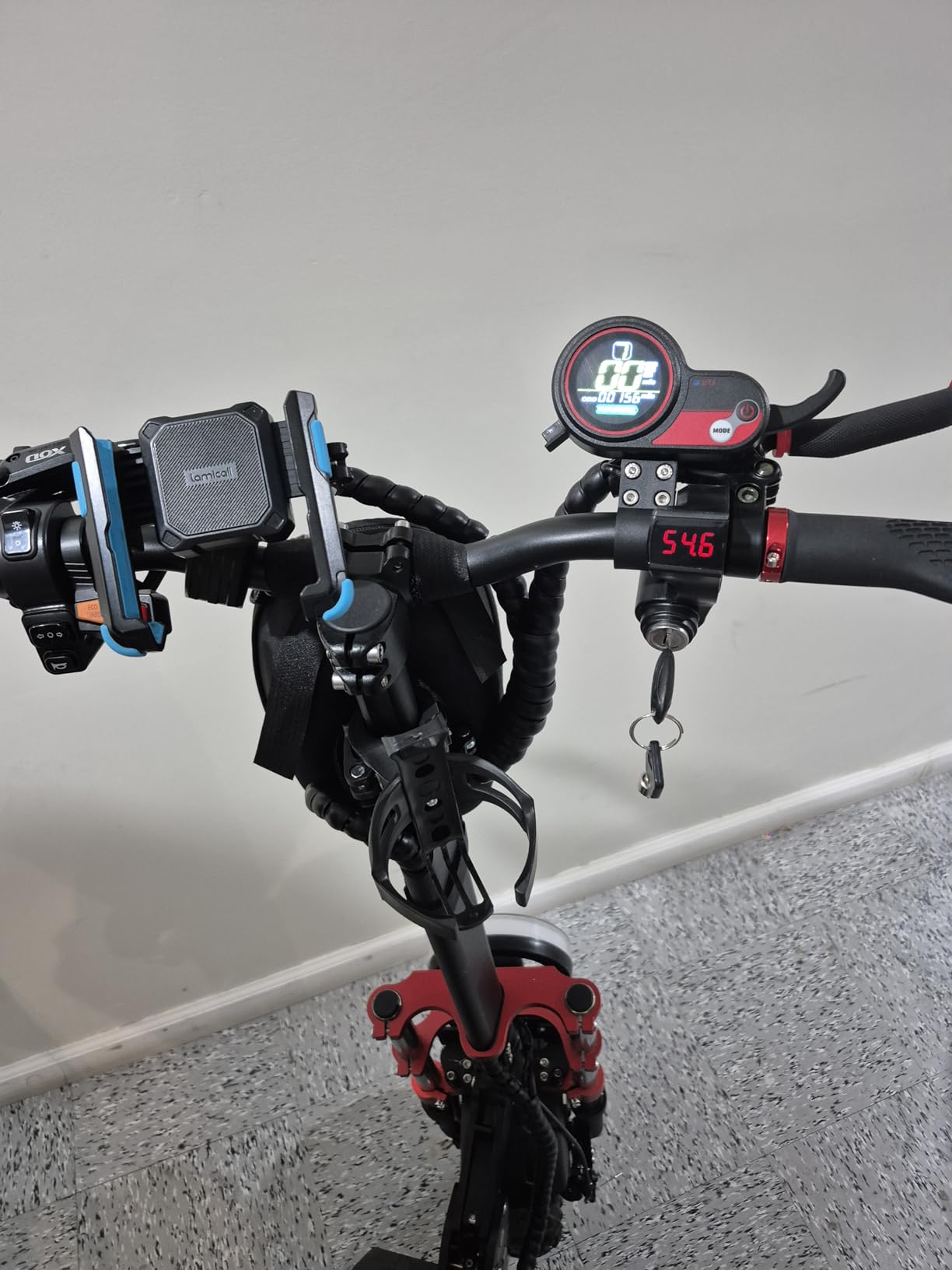
Several owners in the heavier weight range specifically report that it pulls them up hills without the usual walk-up. That is the single complaint heavy riders raise most often about underpowered machines, and a 5600W combined rating is the direct answer to it.
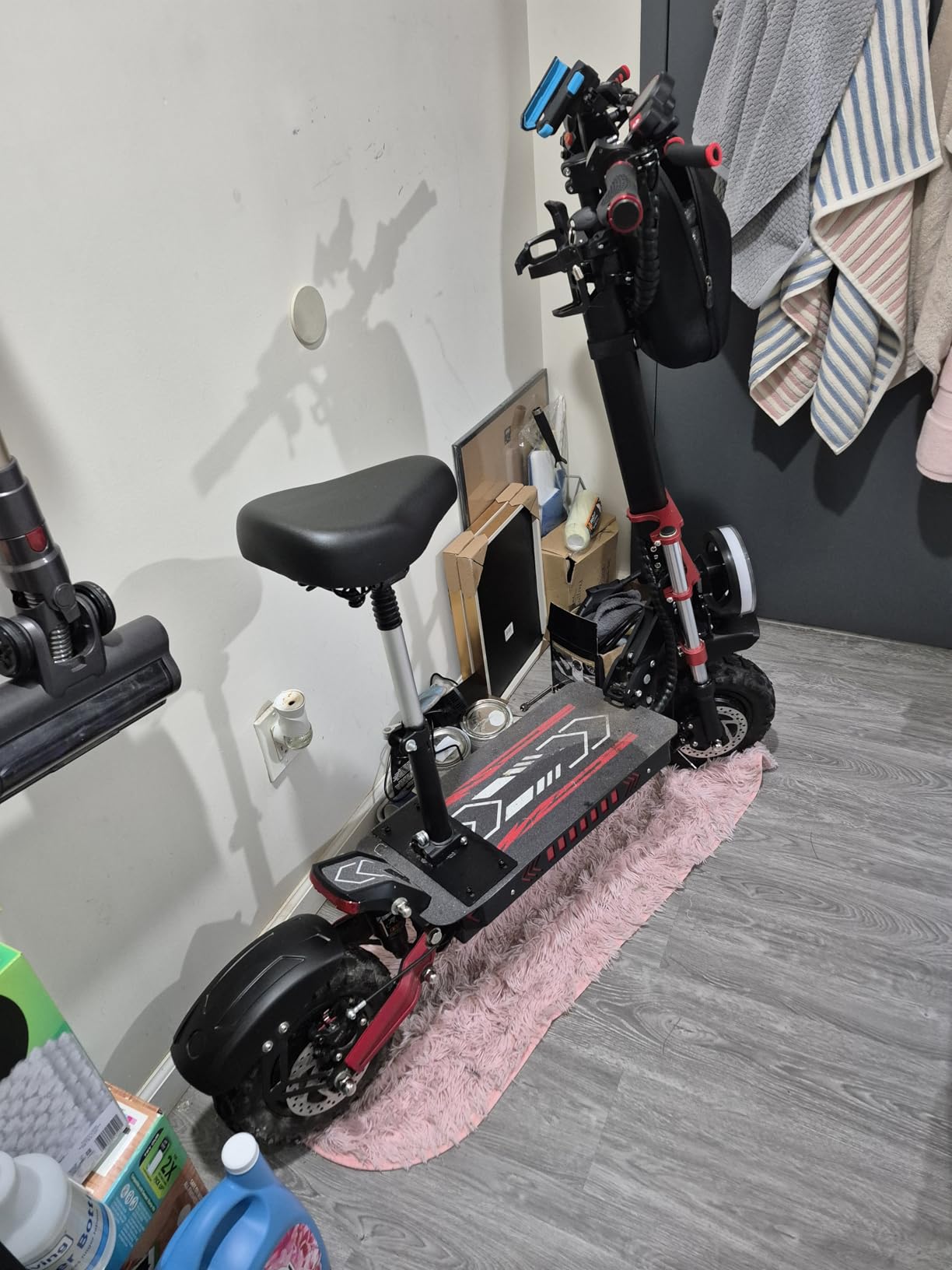
The seat is removable and the frame folds, so this can be a seated commuting scooter one day and a standing one the next. The battery is UL 2272 certified, which is the safety certification you want on a pack this large.
Why the 500 lbs rating matters more than the power figure
A high power number does not make a frame stronger. The reason the A7PRO can carry 500 lbs is the aluminium alloy frame and the load path through it, and the reason you can trust that rating more than a marketing number is that it is paired with hardware sized for the load, including oil shock absorbers at both ends and electronic anti-lock braking with a hydraulic rear disc.
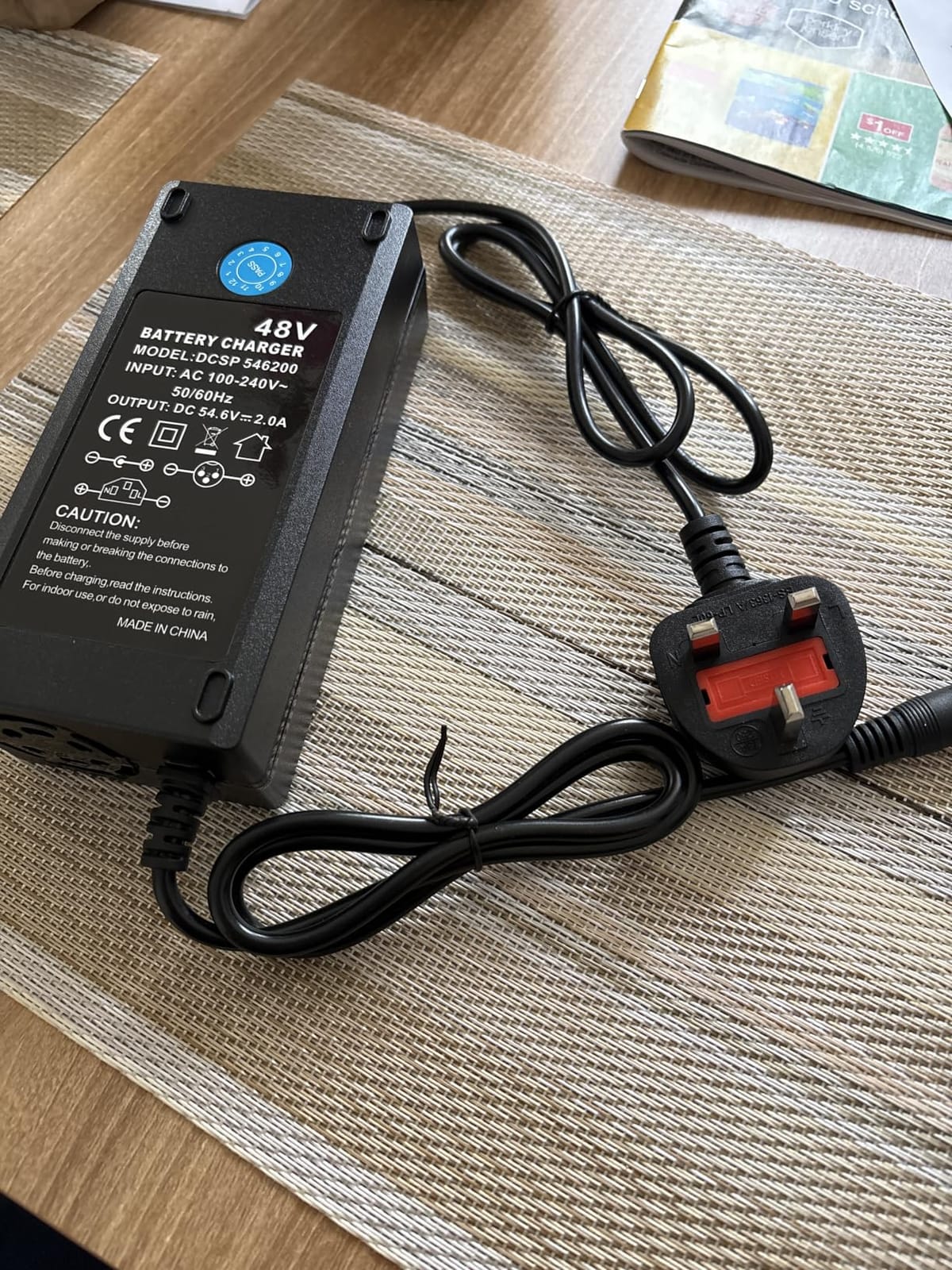
The 48V 26Ah battery with a stated 50 mile range takes about seven hours to charge. Owners report long real-world battery life on a single charge, though at 500 lbs loaded you should plan around the lower end of that range rather than the headline.
Where the A7PRO falls short
At 83 pounds it is not a portable scooter by any definition, and the fixed handlebar height is a real problem for a tall rider. One verified review reported handlebar misalignment and a loose stem that needed repair, and a small number of reviews question stability at the top of its speed range.
The 4.2 rating across 28 reviews is the lowest average in this roundup, and the gap between it and the next pick is explained by build-quality reports rather than by performance. If you can inspect the stem and handlebar alignment on delivery, that is the one check worth doing.
3. RUAIOO M4 Max: The Best-Priced 330 lbs Scooter With a Seat
- 330 lbs capacity with a detachable seat
- Front hydraulic and rear spring suspension
- 33 reviews at a 4.4 average
- Storage box and head bag included
- 67.5 pounds is awkward to carry
- Highest one-star share among the well-reviewed picks
- Warranty terms vary between 3 and 12 months
This is the scooter I would point a 280 lb rider toward who wants a seat, a suspension that can take a broken street, and a complete set of accessories in one box. At 330 lbs rated it sits in the same band as the GT3, but the whole package including the seat and the rear storage box is the reason the value argument holds up.
The technical detail that matters here is the suspension layout. The front uses hydraulic shocks and the rear uses a spring, which is a step up from twin springs and is why owners describe it as handling rough pavement well. The 10 inch tubeless pneumatic tires keep the ride planted rather than skipping over cracks.
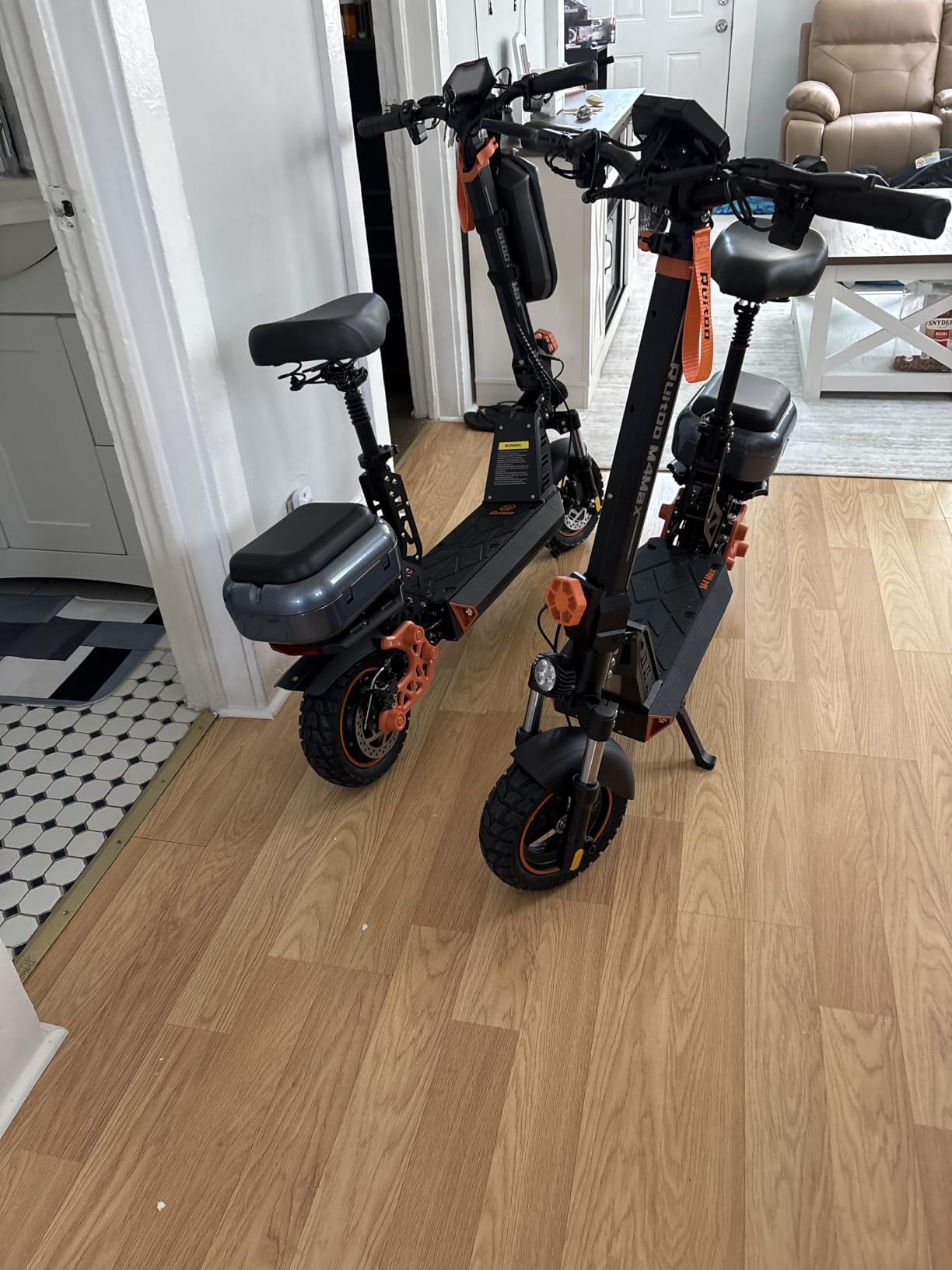
Owners like the adjustable handlebar, which extends from 41 to 49 inches and lets the scooter fit a wide range of rider heights. For a heavier rider that matters more than it sounds, because a short stem combined with a heavy load puts more of your weight forward and changes how the deck feels underfoot.
Three riding modes and a 30 MPH top speed cover both a commute and a longer weekend route. The lighting package, with a headlight, turn signals and ambient stem lights, is more complete than most listings at this level and it is genuinely useful in the darker months.
What you get that normally costs extra
A detachable seat, a rear storage box and a head bag all arrive in the box, along with the charger and a toolkit. For a rider who does not want to buy accessories separately to make a scooter practical for a daily commute, that changes the effective cost of this machine considerably.
The dual disc brakes with E-ABS electronic braking give predictable stopping, and the battery is stated as good for 30 to 35 miles with a six to eight hour charge. Plan the charge overnight rather than between trips.
Where the M4 Max falls short
Its 330 lbs rating is the tightest among the heavy-duty picks here, so a 300 lb rider is already using most of the margin. If you are near that number, the VOLTX N9 at 440 lbs gives you a much larger buffer for a similar machine size.
Review data shows 14 percent of reviews at one star, the highest one-star share among the picks with meaningful review counts. Read the warranty terms carefully too, since the listing describes coverage that varies between 3 and 12 months depending on the part.
4. Segway ZT3 Pro: The Most Proven Scooter, For Riders Up to 265 lbs
Segway ZT3 Pro Electric Scooter, Up to 24.9 MPH, 43.5-Mile Range
- 392 reviews at a 4.5 average
- 43.5 mile range with a 4 hour full charge
- UL 2272 and 2271 certified
- 2 year frame warranty
- 265 lbs rating is the lowest in this roundup
- 24.9 MPH is the slowest top speed here
- 65.5 pounds on a steel frame
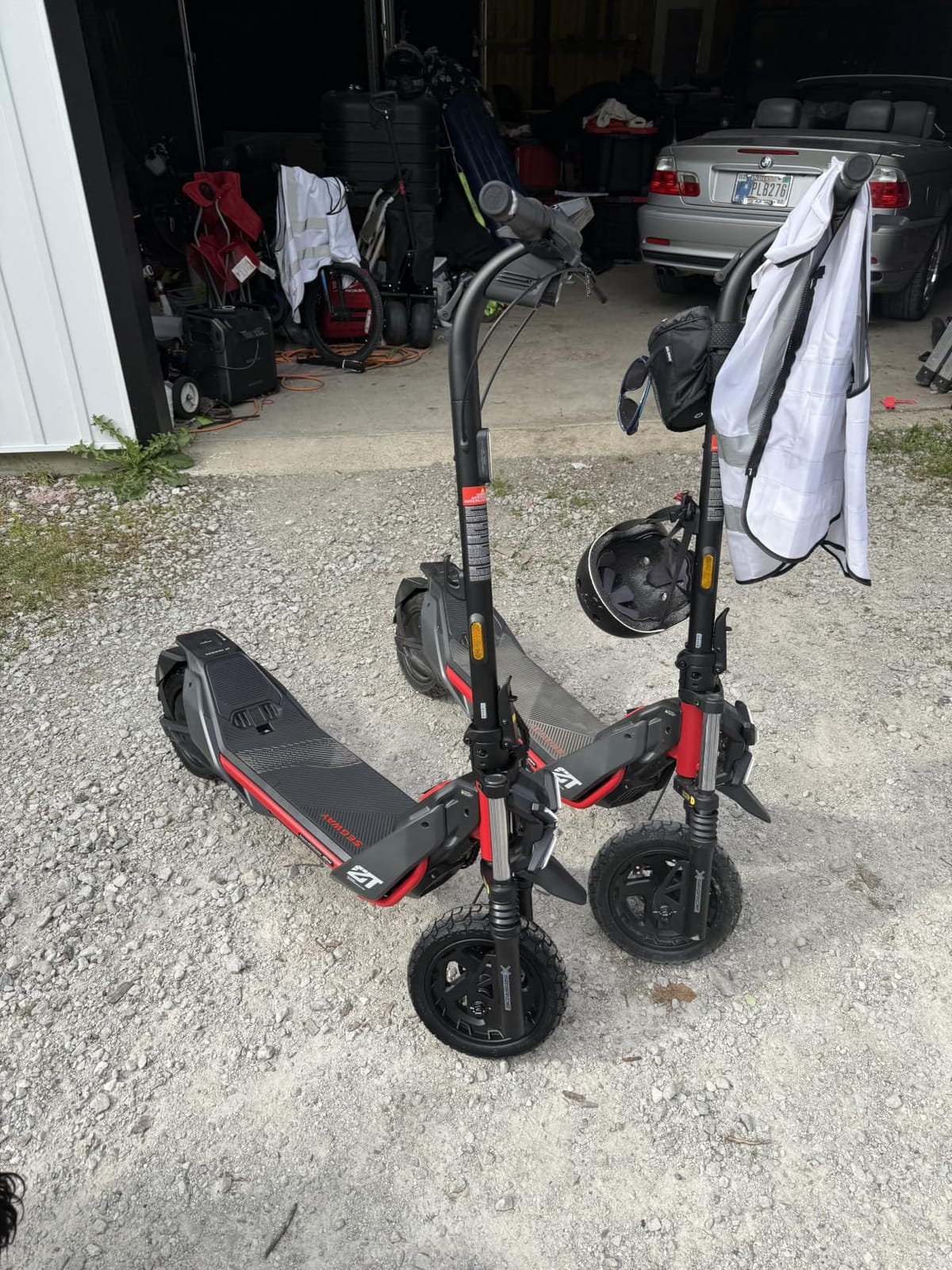
I want to be direct about this one: the ZT3 Pro is the most proven scooter in the roundup and it is not built for a heavy rider. The listed maximum load is 265 lbs, the lowest rating of the eight. If you weigh more than that, the rest of this review is not for you and I would rather say so than sell it to you.
What it is, for readers at or below its rating, is the best-documented machine here. With 392 reviews and a 4.5 average, the range, the four hour full charge and the off-road composure are all confirmed by a large body of owners rather than by a marketing page. The 43.5 mile range in ECO mode is the longest claimed figure on a scooter that charges in four hours.
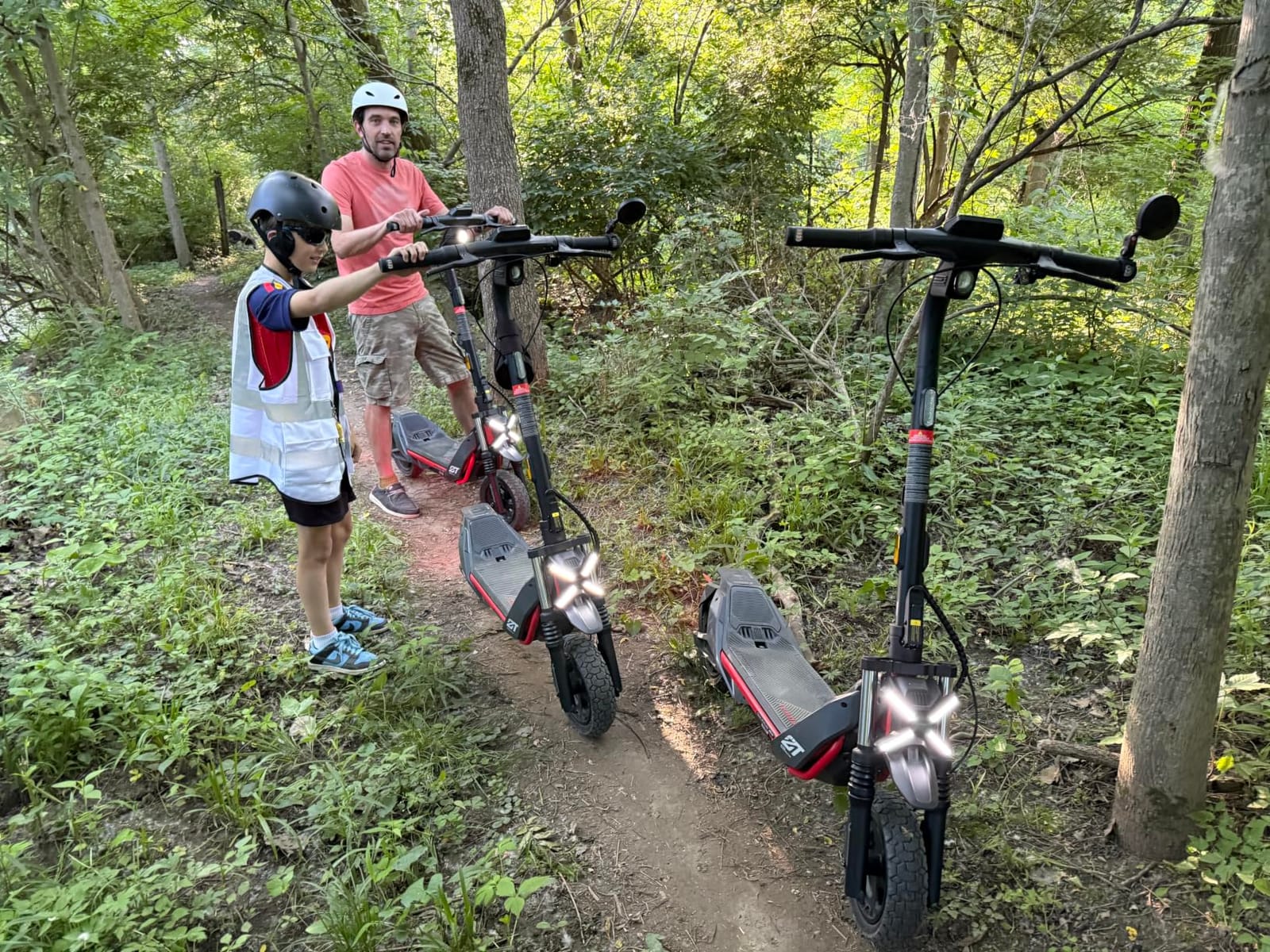
Owners consistently describe the controls as simple enough for a first-time scooter rider, which is a real advantage if you are moving up from something small. The traction control system and SegRide stability technology both help on loose or uneven surfaces.
It is also the only scooter here with a two year frame warranty, and the certification is ANSI/CAN/UL-2272 tested by TUV Rheinland with an IPX5 water resistance rating. For a buyer who plans to keep a scooter for years rather than months, the warranty length matters as much as the specification.
Why I still included it in a heavy-rider roundup
Because the honest answer to the question of what to buy at a lower body weight still comes back to proven hardware, and the search results for this topic are full of listings rated 220 lbs that will not survive a year of loaded use. If you are at or under 265 lbs, the proven machine beats an unproven heavier-rated one.
It also sets a useful baseline for the rest of the list. Everything rated above 300 lbs here is trading some of this scooter range and charging efficiency for load capacity, and seeing that trade in numbers makes the trade in the other reviews easier to judge.
Where the ZT3 Pro is the wrong choice
It is the wrong choice above 265 lbs, and the gap grows fast. At 290 lbs you would be running the machine with no margin at all, and at 300 lbs you are past its rating entirely. The 1600W peak motor would still move you, which is precisely the misleading part.
The 24.9 MPH top speed is also the slowest here, and the high-strength steel frame weighs 65.5 pounds. Neither is a problem for the rider it is designed for. Both are reasons to move up a band if you are heavier than its rating.
5. Hiboy Titan Pro: The Suspension and Brake Benchmark
Hiboy Titan Pro Electric Scooter, Dual 1200W Motors, Long Range
- Dual hydraulic disc brakes front and rear
- Dual suspension absorbs seams and grates
- Large deck gives foot room for bigger riders
- 12 month warranty with 24/7 support
- About 104 pounds makes it hard to carry
- 300 lbs rating is low for a dual motor
- One reviewer rated it 2 stars over real-world speed
The Titan Pro has the best brakes in this roundup and the best owner feedback about comfort under load, which are the two things that matter most once you are carrying more mass than the scooter was tested with. Dual hydraulic disc brakes are the only hydraulic pair here, and several models that rate well use mechanical discs or a mixed setup.
Reviewers in the 225 to 235 lb range describe the Titan Pro as the scooter that finally handled hills and rough pavement for them. That is the clearest signal in the review base that this machine works well when loaded, even though its own 300 lbs rating is modest for a dual motor.
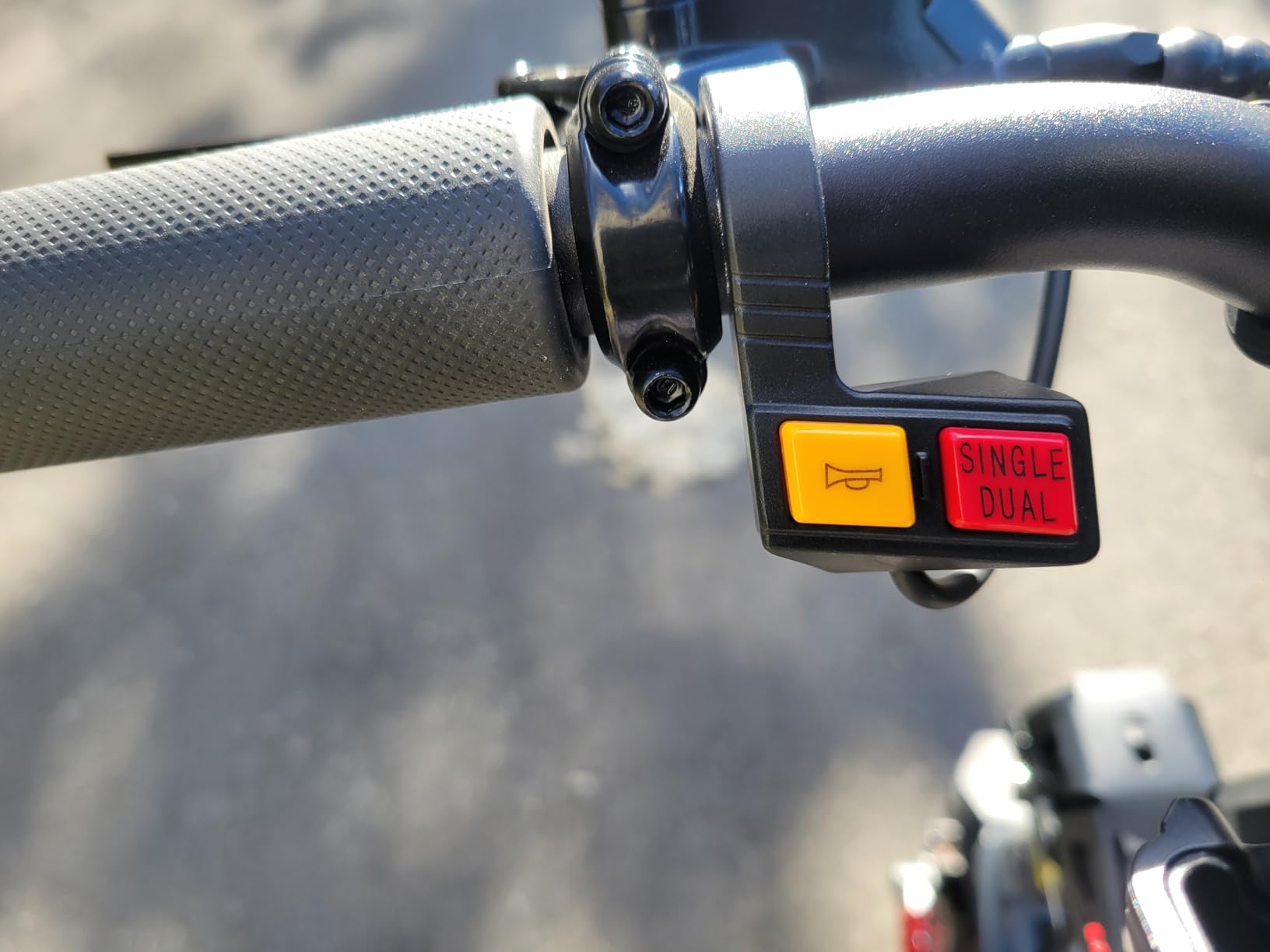
The 48V 36Ah battery is the largest pack here, and the claimed range is up to 80 miles measured at 9.3 MPH. That measurement condition matters: an 80 mile figure at a walking-pace average is not the same as 45 miles at 31 MPH, and the two should never be compared directly.
The deck is large enough that owners with bigger feet report having room to reposition, which is a small thing that removes a real annoyance on a long ride. The AL-6061 aluminium body is certified to UL 2272 by UL LLC.
What the hardware does for a heavier load
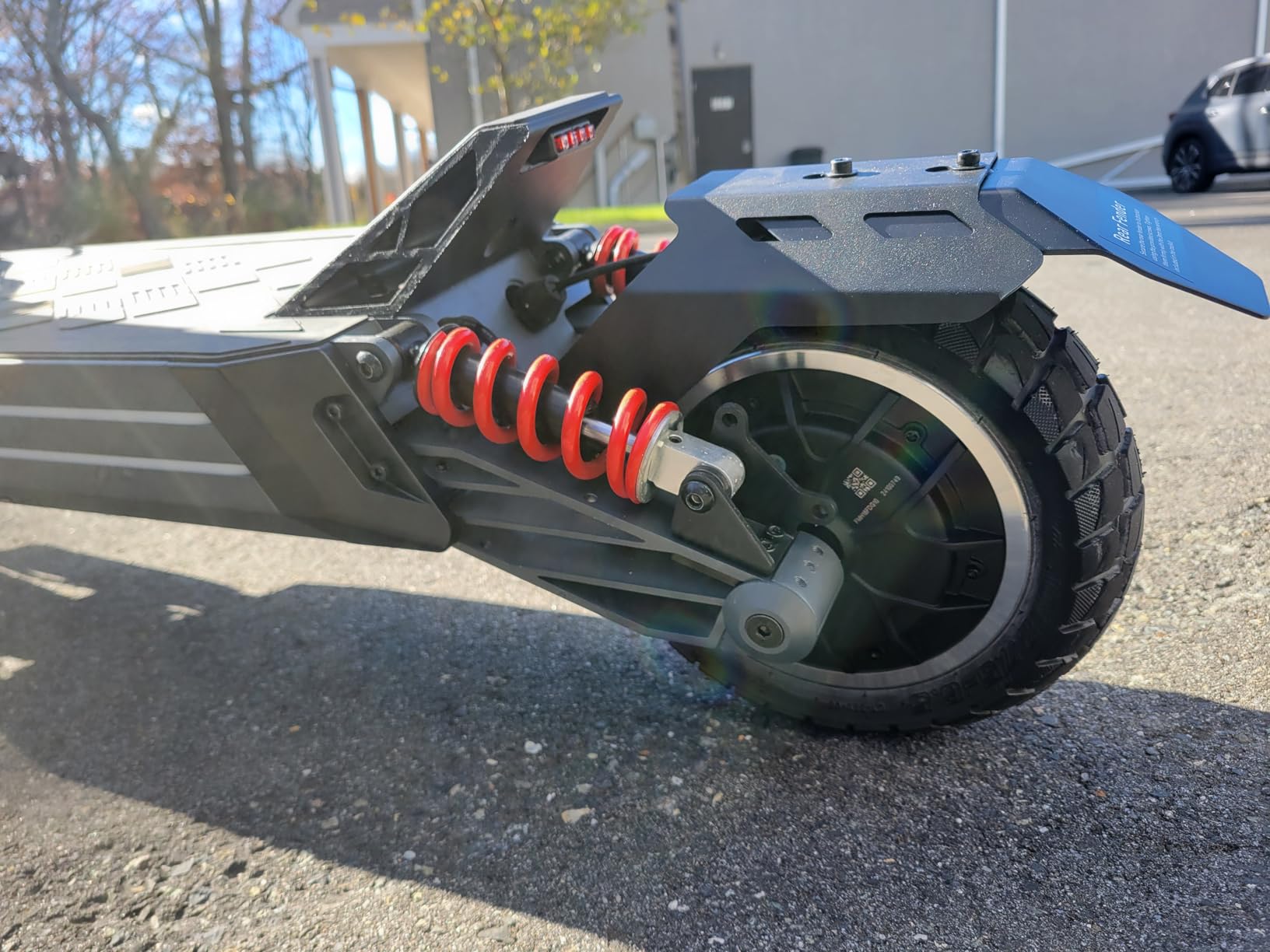
Hydraulic brakes provide consistent stopping power under load in a way that mechanical discs do not, because the pressure is generated by fluid rather than by a cable. Under 300 lbs the lever pressure required is already high, and a cable brake will degrade faster than a hydraulic one as components wear.
The dual suspension is described by owners as smoothing out rough roads, seams and sewer grates, which is the same feedback the GT3 generates. At roughly 104 pounds the machine itself is the heaviest scooter in this roundup by a wide margin.
Where the Titan Pro falls short
About 104 pounds is a serious weight for anyone without a ground-level garage or vehicle loading. Combined with a 300 lbs rating, you are paying for premium suspension and braking on a machine that stops being appropriate for you past 300 lbs.
One reviewer rated it 2 stars because real-world speed came in well below the 31 MPH claim, and the long charge time works against long-distance commuting. A 4.5 average across 17 reviews is a small base, so treat the comfort praise as promising rather than proven.
6. VOLTX N9: The Best Margin for Riders in the 330 to 396 lb Band
- 440 lbs rated capacity
- 1200W motor reaching roughly 32 to 33 MPH
- 11 inch off-road tires with dual suspension
- Dual disc brakes and full lighting
- Only 4 reviews so durability is undocumented
- Handlebar height is not adjustable for every rider
- 58 pounds limits carry-up-stairs plans
The N9 has a 440 lbs rating, which after the 10 percent margin leaves about 396 lbs of working capacity. That is the widest margin available to a rider in the 330 to 396 lb band who does not want to jump straight to an 83 pound 500 lb machine.
Owners report it hitting close to its advertised top speed at around 32 to 33 MPH and describe the build as tough with no shaking or rattles over rough roads. At 58 pounds it is one of the lighter machines here, which matters more than it sounds when you are considering stairs.
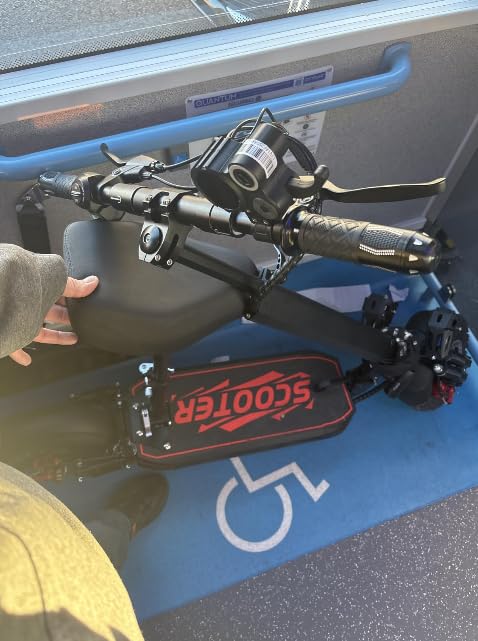
The 11 inch off-road tires with front and rear spring suspension make this the most credible choice in the roundup for gravel paths, park trails and broken asphalt. Riders describe the suspension smoothing out both bumps and cracks rather than just absorbing large impacts.
The lighting package is unusually complete for this class: headlight, taillight, turn signals and deck ambient lighting. Brakes are dual discs front and rear, and the aluminium alloy frame arrives 90 percent assembled with the charger and a toolkit in the box.
Why the margin matters more than the speed
A 440 lbs rating against a 330 lb rider leaves 110 lbs of factory margin, which after the safety rule still leaves roughly 36 lbs. That gap is what absorbs the weight of a backpack, a delivery load, or a wet coat in winter, all of which push a marginal machine past its working limit within a year.
The 48V 18Ah battery is stated at up to 34 miles per charge with about six hours of charging. Owners describe the braking as strong and the lighting as bright enough for night riding, which are both functional needs rather than extras.
Where the N9 falls short
Four reviews is not enough to make any durability claim, and every one of them is a five-star review, which usually means an early and unusually positive set. Long-term reliability on a 1200W scooter at 440 lbs load is genuinely unknown.
The handlebar height is listed at 51 inches and is not adjustable to every rider preference, so a tall rider should check reach before ordering. The warranty is a single year, which is short next to the Segway ZT3 Pro two year frame coverage.
7. AONIU M4: The Lightest 330 lbs Scooter in the Group
- 330 lbs capacity at only 49.6 pounds
- UL 2272 certified
- Removable seat and one-click fold
- 31 mile range on a fast charge
- Only 9 reviews and no long-term data
- Riding modes take time to learn
- Seat bolts need retightening after setup
At 49.6 pounds the M4 is the lightest scooter rated 330 lbs in this roundup, and weight is the thing riders in this band underestimate most. A 330 lbs-rated scooter you can carry up one flight of stairs changes what routes are possible in a way that a heavier machine with identical capacity does not.
The 800W brushless motor reaches around 28 MPH, which is slower than most picks here, and it is the weakest motor in the group. For a rider near 250 lbs on flat ground that is entirely adequate. On a sustained grade it is the reason I would not put this first for anyone at the top of the band.
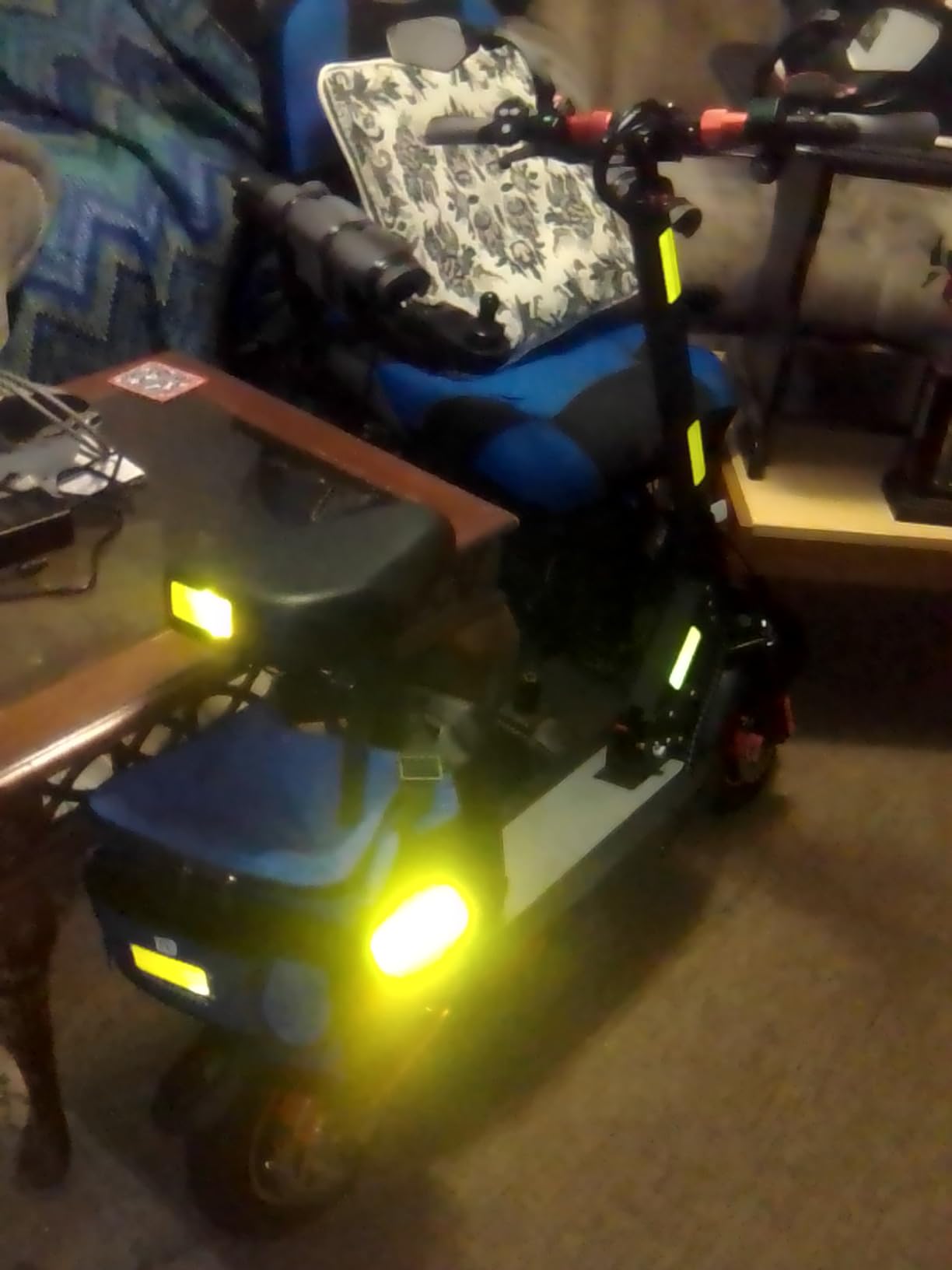
Owners consistently describe a smooth, comfortable ride with good bump absorption from the dual absorbers, and the aircraft-grade aluminium unibody frame is a better construction description than most listings manage. The removable seat lets you sit or stand depending on the trip.
The battery delivers up to 31 miles with four to five hour charging, among the fastest charge cycles in this roundup. The one-click fold is straightforward, and the listing notes that assembly is simple.
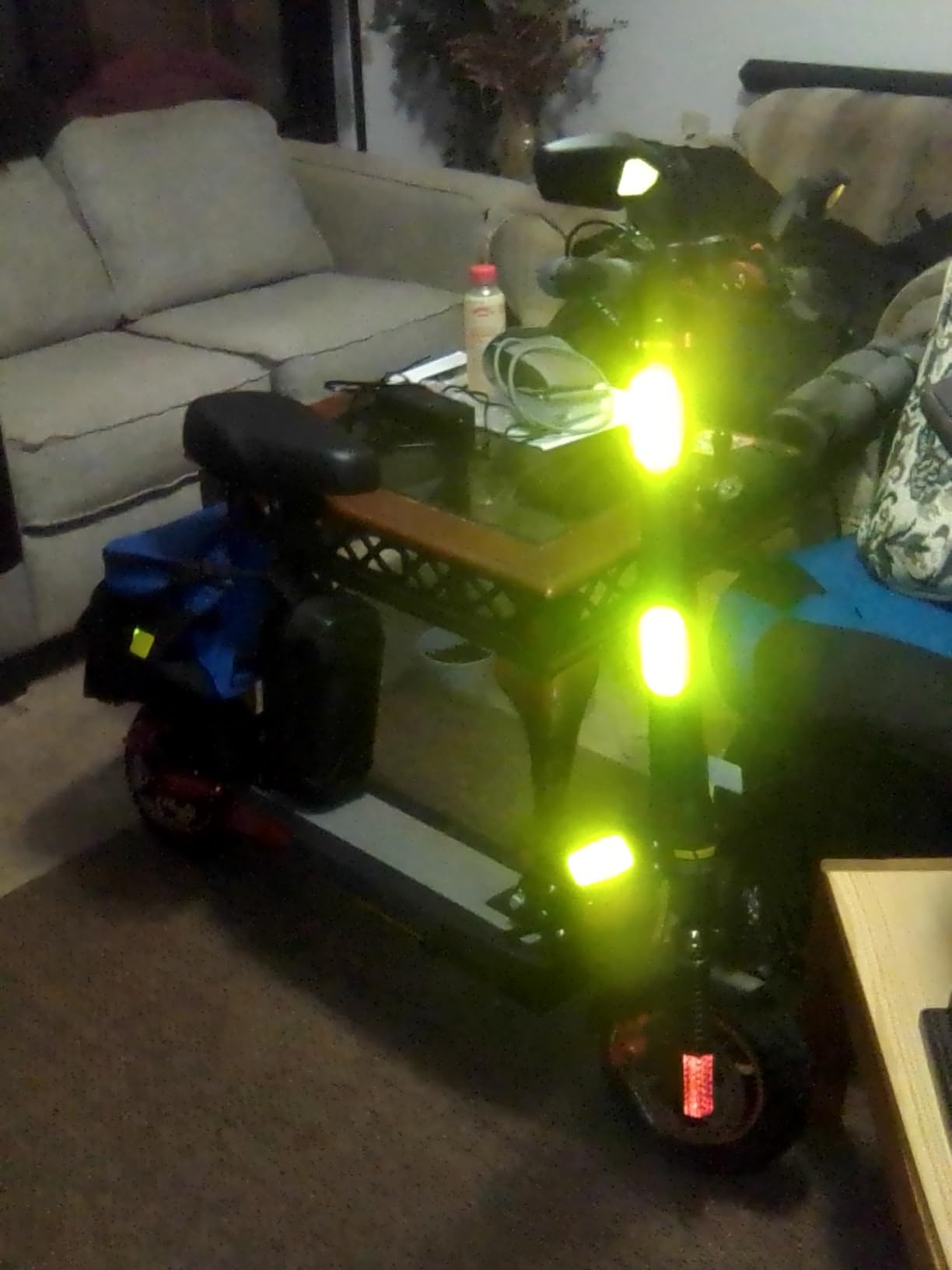
Where the low weight pays off
Portability is the honest advantage here. If your commute includes a train platform, a flight of stairs or a shared storage locker, a 49.6 pound scooter that folds to a manageable size is a fundamentally different purchase from an 83 or 104 pound machine that must live where it is ridden.
The UL 2272 certification is also worth noting at this level. Battery safety certification is the one specification that should never be traded away, and many budget listings in this weight class skip it entirely.
Where the M4 falls short
Nine reviews, all recent, means there is no long-term reliability information at all. A 4.8 rating is encouraging but statistically thin, and I would not treat it as a reason to pick this over a machine with a hundred reviews.
The 800W motor is the real constraint. Owners also note the riding modes take some learning, and the seat hardware needs all bolts tightened after setup. At the top of the 330 lbs band, choose a machine with more motor reserve.
8. Clanor M4: A Seated Scooter for Riders Up to 300 lbs
- 330 lbs rated capacity
- Removable seat and foldable frame
- Top speed class of 25 to 30 MPH
- Headlight and taillight with dual brakes
- Only 4 reviews with almost no long-term data
- 330 lbs rating is below the 440 and 500 lb models
- Sparse listed specification detail
The Clanor M4 shares a 330 lbs aluminium alloy rating with several machines here and includes a removable seat and a foldable frame at 54 pounds. It sits in the same weight class as the AONIU M4 and functions similarly, so choose between them on the details below.
The most substantive owner report describes a rider reaching 42 MPH on a flat road, which is well above the stated 28 MPH figure. Read a single unverified speed report as a data point rather than a specification, but it does suggest the motor has more in reserve than the listing claims.
How it compares with the AONIU M4
Both rate 330 lbs, both carry a removable seat, and both use an 800W motor with roughly 31 miles of claimed range. The AONIU is 4.4 pounds lighter, is UL 2272 certified and has nine reviews to the Clanor’s four, which on balance makes it the safer of the two.
The Clanor’s advantage is its brighter headlight and rear warning light, and a listing that dates to May 2026 means the machine is current generation rather than a model carried over from an earlier year.
Where the Clanor falls short
Four reviews and a May 2026 first-available date leave almost no long-term data, and every one of those reviews is five-star, which is the pattern you see before a product has been tested by many owners. The listing detail is also sparse compared with the others in this roundup.
At 330 lbs it does not clear anyone above about 300 lbs with the safety margin. If you are heavier than that, the VOLTX N9 or the AiQite A7PRO is the correct direction.
How Electric Scooter Weight Limits Actually Work?
Yes, every electric scooter has a weight limit, and it is a certified load figure covering the rider and any cargo. Most standard models are rated between 220 and 265 lbs. A scooter rated 265 lbs that carries a 320 lb rider will still accelerate, which is exactly why the over-limit condition is dangerous: there is no warning, only degraded performance.
Two rules cover most of the decision. The first is the headroom rule: choose a scooter rated 20 to 30 percent above your actual weight, so a 250 lb rider should target a machine rated 300 to 330 lbs. The second is the margin rule: subtract 10 percent of the rated capacity and treat the remainder as your real ceiling, which turns a 330 lbs rating into a 297 lb working limit.
Riders regularly report in scooter forum threads that they exceed a stated limit with no immediate failure and cannot tell whether the rating is conservative or unsafe. The community answer is consistent: the rating is a real engineering limit for the frame, battery and brakes, and the absence of a visible failure does not convert it into a suggestion.
Weight capacity falls into three practical tiers. Standard models cover 220 to 265 lbs. Reinforced models cover 265 to 330 lbs and are the right choice for most riders between 250 and 290 lbs. Heavy-duty models cover 330 to 500 lbs, and the market above 400 lbs is thin enough that you should confirm the fit with the manufacturer before committing.
How Rider Weight Changes Performance?
Rider weight affects more than whether the scooter starts. It changes how far the range goes, how long braking takes, how quickly it accelerates and how it behaves in a crosswind or over a bump. Forum owners report the same scooter behaving completely differently for a 200 lb and a 90 lb rider on the same medium-grade hill, which is the clearest evidence that rated capacity understates what matters.
On range, the practical figure quoted across this category is a 10 to 30 percent reduction when the scooter is ridden near its rating rather than by a mid-weight rider. Cold weather takes a further 10 to 30 percent off the same figure, so a winter commute needs more battery than a summer one.
Motor power is the second factor, and the relationship is roughly linear below the rated load. Riders between 200 and 250 lbs are served by 500 to 1000W. Between 250 and 300 lbs, look for 1000W or more. Above 300 lbs, 2000W combined or a dual motor is the sensible starting point, and at 400 lbs and up, dual motors are not a luxury.
One caution on published power figures. Most listings quote peak watts rather than sustained output, and peak is a brief maximum that a motor cannot hold indefinitely. A scooter quoting 2400W peak may produce far less than that on a long climb. Treat peak power as a ceiling indicator and use the climb angle as the better guide.
Finally, the honest limit of this category. If your route involves sustained grades above about 20 percent, an e-bike is a better tool than any scooter, at any weight. A scooter that you have to walk up the hill is not a commuting solution, and heavy riders hit that wall sooner. Our companion guides cover electric bikes for heavy riders and fat tire e-bikes built for bigger riders if your terrain is the deciding factor.
Brakes, Tires, Deck and Handlebar Width
Brakes matter more as rider weight rises, and the difference between mechanical and hydraulic discs is not a marketing distinction. Fluid pressure produces consistent stopping power as components wear, and at 300 lbs the lever pressure a mechanical cable brake needs is already high. The Hiboy Titan Pro and the AiQite A7PRO are the two scooters here with a hydraulic brake at the rear.
Tires are the second lever. Pneumatic tubeless tires at 10 inches or larger absorb road defects that solid tires transmit straight into the deck, and self-sealing variants close small punctures while you ride. Every scooter here runs pneumatic or tubeless tires; the Segway GT3 adds a puncture-resistant inner layer on top of that.
Deck and handlebar width are the stability factors heavy riders mention most and that almost no roundup addresses. A wider deck gives you room to reposition your feet, which lets you shift your weight fore and aft on a hill instead of standing rigid. A wider handlebar increases leverage on corrections, which is what keeps a loaded scooter from feeling twitchy at speed.
On the numbers, the Segway GT3 and Hiboy Titan Pro both measure 26.8 and 25.6 inches wide overall, while the RUAIOO M4 Max measures 23.6 inches and the Clanor M4 is listed without a measurement. Wider is better for stability, but the difference between a 23 and a 26 inch machine is far less than the difference between a 330 lb rating and a 265 lb one.
Finally, battery certification and warranty. UL 2272 is the safety standard for the pack itself, and five of the eight scooters here carry it or the related UL 2271 controller standard. Warranty length separates the field: the Segway ZT3 Pro offers two years on the frame, the Hiboy Titan Pro twelve months, and some of the smaller brands describe coverage in months rather than years.
Finally, a note on brand support for anyone buying in the upper capacity bands. We also cover Segway electric scooters in more detail, and for riders who need a seated option at higher capacities our guide to mobility scooters for heavy adults covers the four-wheel side of the market.
Frequently Asked Questions
Do e-scooters have a weight limit?
Yes. Every electric scooter is certified for a maximum load covering rider and cargo, and most standard models are rated 220 to 265 lbs. Riding above the limit rarely causes an immediate failure, which is the danger: the scooter still accelerates while the range shrinks, braking distance grows and the frame and battery work harder than they were designed for. Choose a scooter rated 20 to 30 percent above your body weight, then subtract 10 percent of that rating as your working limit.
What kind of scooter is best for heavy people?
A dual motor scooter rated 300 lbs or more, with hydraulic or strong dual disc brakes, real suspension on both wheels and 10 inch or larger tubeless pneumatic tires. Above 350 lbs, dual motors stop being optional. Between 250 and 290 lbs, a 330 lbs-rated model with a removable seat covers most needs, and above 400 lbs the market is thin enough that you should confirm the rating with the manufacturer.
What are some electric scooters with a 300 lb capacity?
Several in this roundup meet or exceed 300 lbs. The Segway SuperScooter GT3 and the RUAIOO M4 Max both rate 330 lbs with dual suspension. The Hiboy Titan Pro rates 300 lbs with dual hydraulic brakes. The VOLTX N9 rates 440 lbs and the AiQite A7PRO rates 500 lbs. The Segway ZT3 Pro rates 265 lbs and is the entry point rather than a heavy-duty option.
What is the best electric scooter for a 300 lb man?
The AiQite A7PRO is the correct answer at 300 lbs, because a 330 lbs rating leaves you almost no margin and a 500 lbs rating leaves roughly 450 lbs of working capacity after the 10 percent safety margin. If your weight is closer to 280 lbs, the Segway SuperScooter GT3 at 330 lbs rated is the stronger all-round package, with dual hydraulic suspension and a 45.6 mile claimed range.
What is the best electric scooter for heavy weight riders in the 350 to 400 lb band?
The VOLTX N9 at 440 lbs rated is the best fit, since 440 lbs leaves a working limit near 396 lbs after the safety margin and the machine weighs 58 pounds rather than 83. The AiQite A7PRO at 500 lbs is the alternative if you want more power, a seat and the widest margin in the roundup, at the cost of being considerably heavier.
Are Kaabo scooters any good?
Kaabo is frequently recommended for heavier riders, and the brand is a common sight in scooter forums precisely because its machines are built around high load ratings rather than speed. We did not include a Kaabo in this roundup, so we cannot give you measured or review-based evidence on a specific model. Check the rated capacity against your weight with the 20 to 30 percent headroom rule, and read reviews that state the rider weight.
What is the best electric scooter for climbing steep hills?
A dual motor scooter with 2000W combined output or more, tubeless tires and a stated climb angle, since climb angle is a better guide than peak watts. The AiQite A7PRO with 5600W combined and the Segway SuperScooter GT3 with a 30 percent climbing rating are the strongest choices here. If your route holds a sustained grade above about 20 percent, an e-bike will serve a heavy rider better than any scooter.
How much range does a heavier rider lose?
Riding near the rated limit rather than at a mid-weight load typically costs 10 to 30 percent of the claimed range, and cold weather takes a further 10 to 30 percent off the same figure. That is why owners report 20 to 30 miles of real range from a 45 mile claim on a 330 lbs-rated scooter. Plan around the lower end of the claim and check the range figure the manufacturer measured at, because a figure tested at a slow average speed flatters the result.
The Verdict by Rider Weight
Pick by your weight, not by the brand name on the deck. The Segway SuperScooter GT3 is our overall pick for heavy riders: 330 lbs rated, dual hydraulic suspension, a 2400W peak motor, self-sealing tubeless tires and a 114-review base confirming 20 to 30 miles of real range. It is the most complete combination of rated capacity, load-appropriate hardware and proven owner evidence in this roundup.
Below 250 lbs, the Segway ZT3 Pro offers the longest range and the fastest full charge, but its 265 lbs rating makes it an entry point rather than a heavy-duty machine. Between 250 and 290 lbs, the RUAIOO M4 Max gives you a 330 lbs rating with a seat and included storage, and the AONIU M4 is the light option if you have to carry it.
At 290 to 330 lbs, stay on the 330 lbs-rated machines and treat that as your ceiling. Between 330 and 396 lbs, the VOLTX N9 at 440 lbs is the widest sensible margin you can carry. Above 396 lbs, the AiQite A7PRO at 500 lbs is the only one here built for your weight, and you should confirm the fit with the manufacturer first.
Whichever band you land in, choose 20 to 30 percent above your body weight, subtract 10 percent of that rating as your working limit, and check whether the brakes are hydraulic before you commit. Updated for 2026, and we will keep this list current as the listings change.