
A bedroom is the one room where a smart bulb has to earn its keep at the quiet end of the day. You need light that drops to almost nothing without a click, warmth that shifts toward amber when you are winding down, and a way to change all of that while lying flat on your back. Our team put ten of the most popular smart bulbs through bedside lamps, ceiling fixtures, and a month of routines to find the ones that actually do those things well.
The best smart bulbs for bedrooms are not simply the brightest or the lowest cost per bulb. They are the bulbs that dim low without flickering, hold a 2,700K warm tone instead of snapping to daylight white, survive a night with the router across the house, and let you build a lights-out scene that fades gradually instead of snapping to black. That is the bar we used.
We lived with each bulb for roughly a month, ran the same three routines in every app, and checked the fit in a narrow bedside shade as well as a standard A19 table lamp. Owner reviews told us what real households noticed over years, including the problems that only show up once a bulb is permanently installed. We do not list prices here because they shift week to week; use the check price buttons to see current listings.
If you are outfitting the rest of the room, our guides to the best smart bulbs for movie rooms and the best smart ceiling fans with remote for bedrooms cover the setups where ambience matters more than sleep routines.
Table of Contents
What Kind of Smart Bulb Does a Bedroom Need?
A bedroom smart bulb should be a dimmable, tunable-white LED with a wide Kelvin range, low-end dimming that reaches near-off, and a scheduling engine that can fade to dark and ramp up at dawn. For most bedside lamps, an A19 form factor on an E26 or E27 medium base is the safest fit, and 800 lumens is plenty because bedrooms are usually dimmed anyway. Full-color RGB is optional, not essential.
Dimmable to a genuinely low level. A bulb that jumps from 100% to about 10% will never feel like a nightlight. Bulbs that reach 1% give you a usable wind-down setting.
Tunable white from roughly 2,700K to 6,500K. Warm amber at bedtime and neutral white for reading is the single most useful feature in the category.
A reliable schedule and fade routine. Timed dim-to-off is the automation bedroom owners report relying on most.
Control without the phone. Voice, a physical wall dimmer, or an app-free path so nobody has to fumble for a screen at midnight.
A base type that fits your fixture. Check A19 medium base against your lamp before buying; candelabra and small globe sockets need different bulbs entirely.
Top 3 Best Smart Bulbs for Bedrooms in October

Govee A19 Color Changing 800 LM
- 16M colors and 54 scenes
- Bluetooth and Wi-Fi no hub
- Sunrise and sunset schedules
- 800 lumens at 9W

Philips Hue White and Color Ambiance
- 806 lumens warm to cool white
- Bluetooth setup hub optional
- Scenes and routines in Hue app
- 3-year warranty
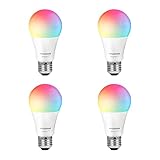
SYLVANIA Wi-Fi Full Color A19 4-Pack
- Full color and tunable white
- CRI 90 at 800 lumens
- Alexa and Google Assistant
- 4-pack
- no hub
Those three cover the widest range of needs: the Govee for out-of-the-box routines with no hub, the Philips Hue for anyone building out several rooms, and the SYLVANIA four-pack for filling a bedroom cheaply.
All 10 Bedroom Smart Bulbs at a Glance in 2026
| Product | Specifications | Action |
|---|---|---|
| Govee A19 Color Changing 800 LM |
|
Check Latest Price |
| Philips Hue White and Color Ambiance A19 |
|
Check Latest Price |
| SYLVANIA Wi-Fi LED Smart Bulb 4-Pack |
|
Check Latest Price |
 Tapo TP-Link L530E Multicolor 4-Pack Tapo TP-Link L530E Multicolor 4-Pack |
|
Check Latest Price |
 Amazon Basics Smart A19 Color 800LM Amazon Basics Smart A19 Color 800LM |
|
Check Latest Price |
 Kasa Multicolor Dim Wi-Fi KL125P4 Kasa Multicolor Dim Wi-Fi KL125P4 |
|
Check Latest Price |
 Sengled Matter LED Smart Bulb A19 Sengled Matter LED Smart Bulb A19 |
|
Check Latest Price |
 LIFX Color Smart Bulb A19 2-Pack LIFX Color Smart Bulb A19 2-Pack |
|
Check Latest Price |
 Feit Electric Smart A19 RGBW 3-Pack Feit Electric Smart A19 RGBW 3-Pack |
|
Check Latest Price |
 Geeni Prisma Plus 800-Lumen 4-Pack Geeni Prisma Plus 800-Lumen 4-Pack |
|
Check Latest Price |
1. Govee A19 Color Changing 800 LM, E26 Base
Govee Smart Light Bulbs, A19 Color Changing Light Bulb, 800 LM, E26 Base
- No hub needed and setup is quick in the app
- Sunrise and sunset routines work well
- Alexa and Google Assistant support
- Plenty of color and scene options
- Low-end dimming stays fairly bright
- Bulb is wide for tight ceiling fan covers
- App feels cluttered at first
For a first smart bulb in a bedroom, the Govee A19 is the one I keep coming back to. It goes from a bright 800 lumens for cleaning the room down to a low setting for reading, and the sunrise and sunset routines in the app are exactly the wind-down behavior people want at night. I set one up in a bedside lamp and one in the ceiling fixture, grouped both as a room, and had the whole thing fade out on a timer without touching the phone.
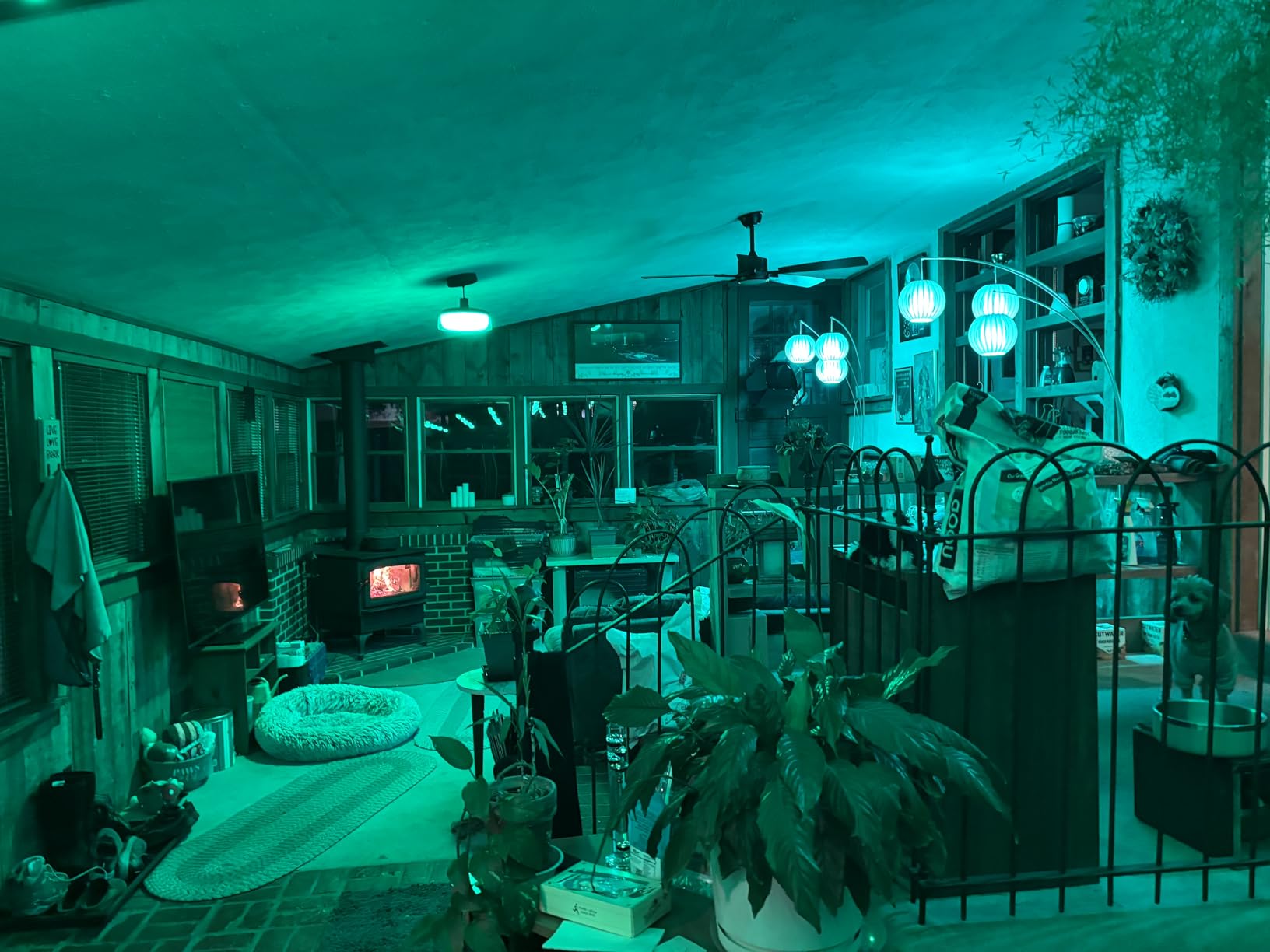
Setup took under two minutes. The bulb offers Bluetooth and Wi-Fi, so if the router is being difficult I can still command it from the app in the room. Colors land where you would expect, the 54 preset scene modes cover most of what people actually cycle through, and the music sync mode is a bonus rather than the reason to buy.
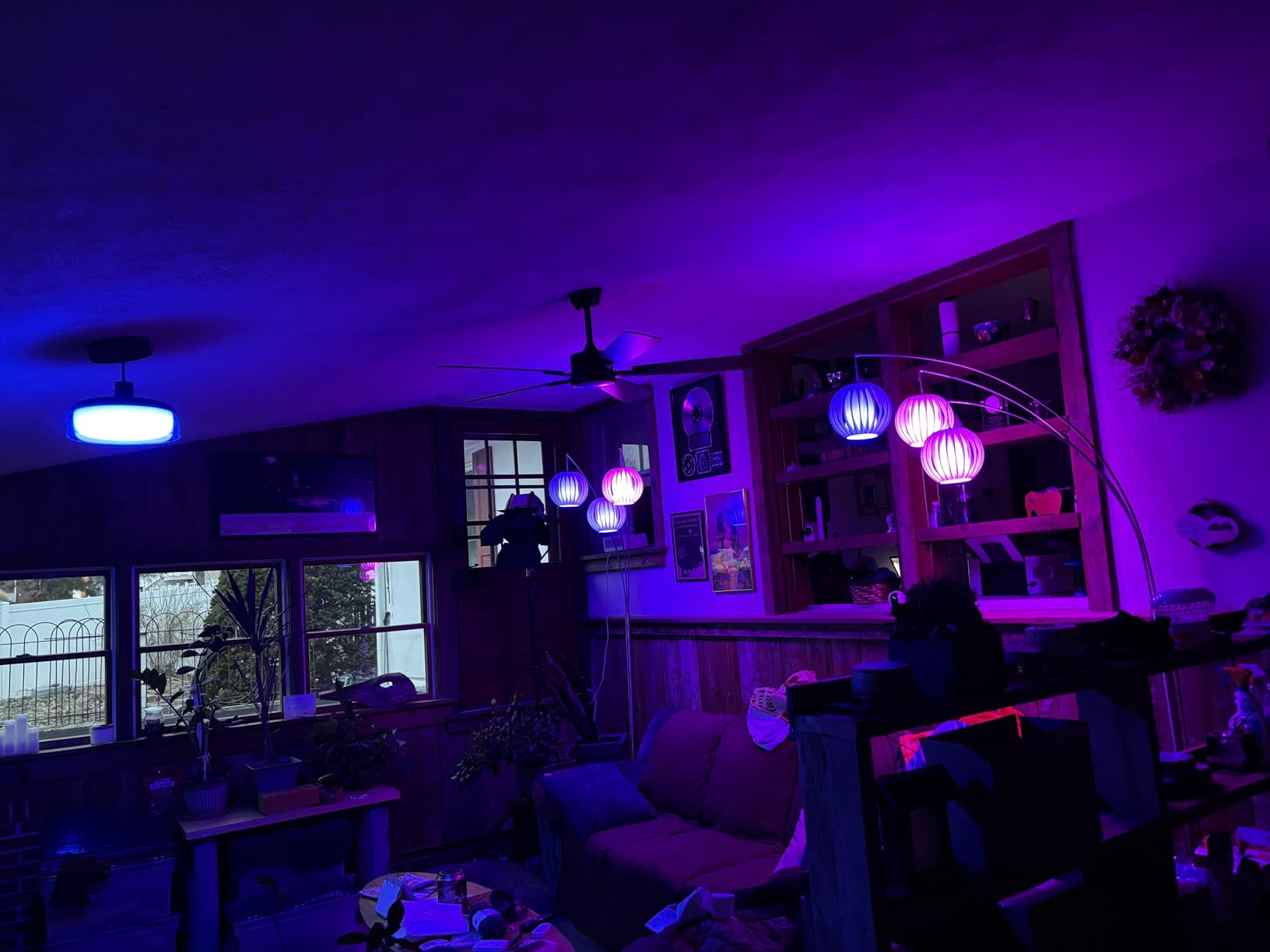
The limitation that matters most in a bedroom is dimming depth. This bulb stays noticeably bright at its lowest setting, so it does not replace a true nightlight glow. Several owners also flag that the 2.36-inch width is too broad for some smaller ceiling fan light covers, which matters if your fan has a narrow dome. The Govee Home app is feature-dense and takes a minute to learn.
Occasional unresponsiveness that clears with a power cycle comes up in reviews, as do a few defective bulbs inside a pack. Across 27k+ reviews the reliability picture is good, but it is not flawless. If your bedside fixture is tight, measure the socket first.
Where the Govee A19 works best
It suits anyone who wants a working sleep routine on day one without buying a hub or a bridge. Two bedside lamps plus a ceiling bulb is a realistic single-room setup, and the grouping control handles the fade-out for the whole room in one command.
It also works well for a teenager’s room where color changes are part of the appeal, or for a guest room you want to make look inhabited at night without extra hardware.
Where the Govee A19 falls short
If your bedroom depends on a soft, near-off nightlight glow, the shallow low-end dimming is a real problem. Reviewers report the bulb still reads as noticeably lit at 1%.
It also cannot be used with a smart wall switch, so plan to control it by voice or app rather than a physical dimmer plate.
2. Philips Hue White and Color Ambiance A19 LED Smart Bulb
- Highest owner satisfaction in this group
- Warm-to-cool white plus full color
- Bluetooth setup needs no hub
- Mature app with scenes and routines
- 3-year warranty
- HomeKit and out-of-home control need the Hue Bridge
- Highest cost per bulb of the picks
- Adds up fast across a whole home
The Hue White and Color Ambiance carries the highest owner rating of any bulb in this group, and owners consistently point to color richness and the maturity of the Hue app as the reasons. If you are converting a bedroom now and expect to convert a hallway, living room, and downstairs next year, this is the bulb that scales with you.
Out of the box it connects over Bluetooth in under a minute, which is enough for bedside use and routines inside the home. The app’s preset scenes, dynamic light effects, and a 24-hour natural light scene are the tools I used for the wind-down schedule, and firmware updates in the app have kept the system stable over time in owner reports.
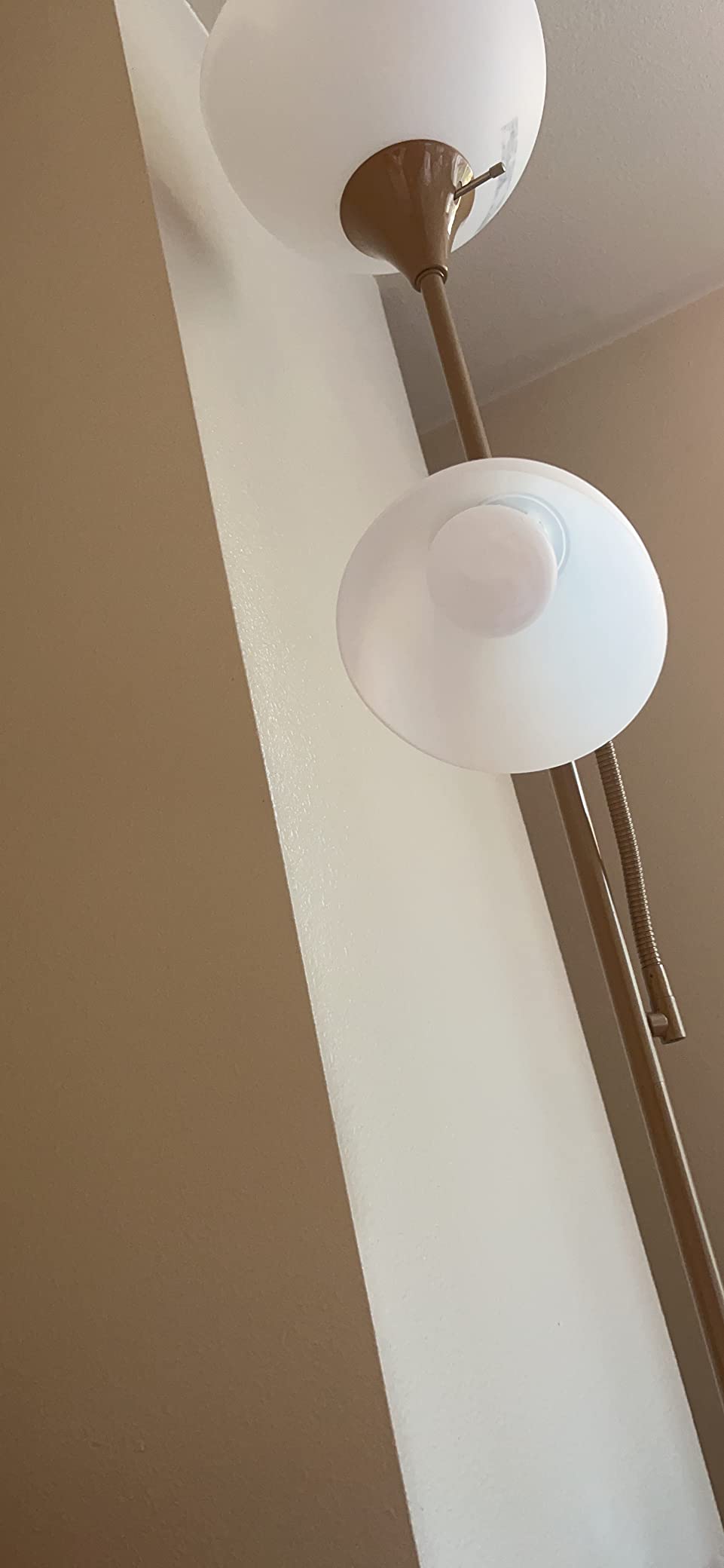
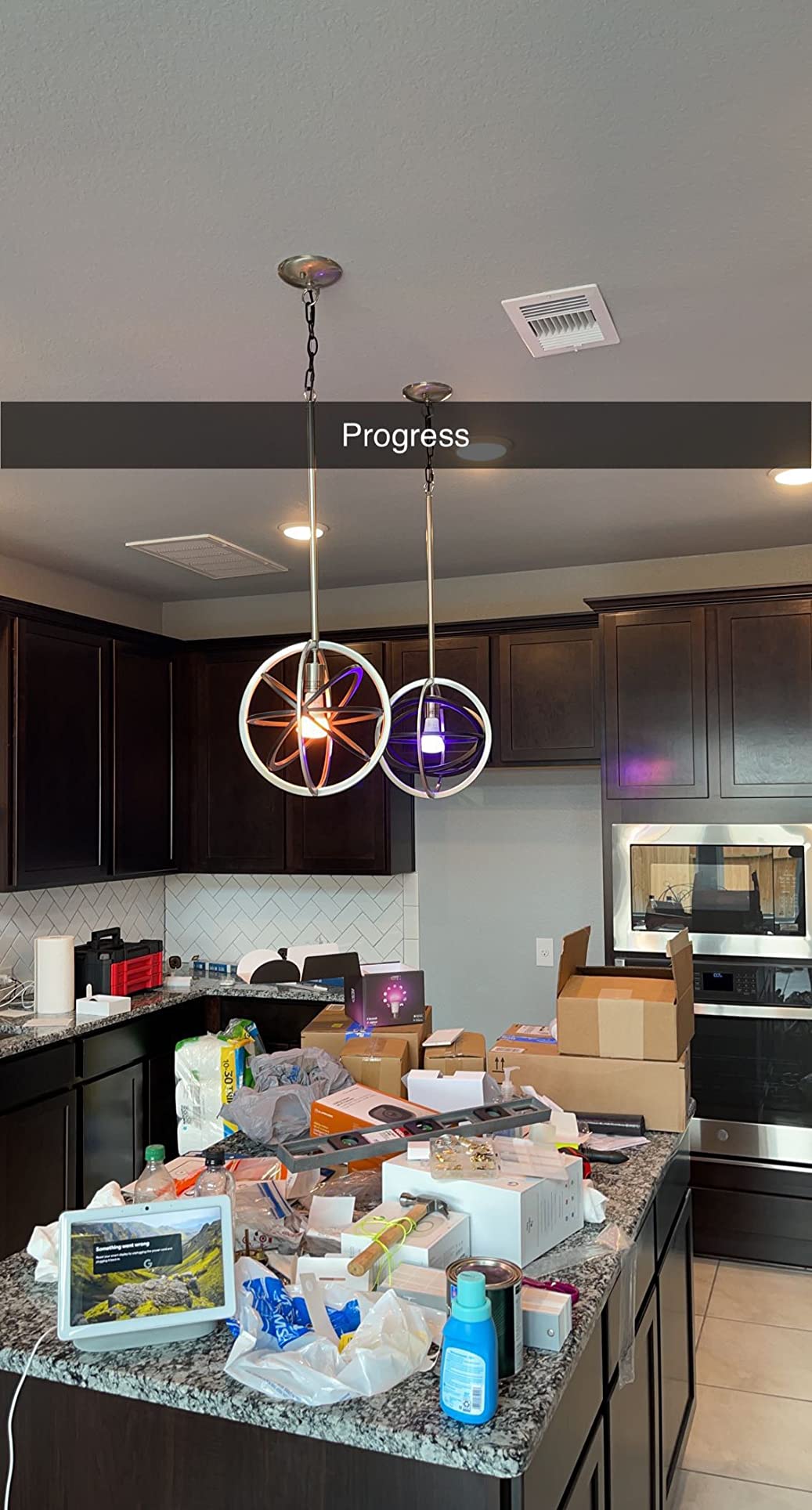
Light output is 806 lumens at 9.5 watts, and the 60-degree beam angle is narrower than several competitors here, which reads as pleasant rather than flat in a bedside shade. Owners also report the bulb surviving extreme heat and cold without failures, and the 3-year warranty is the longest among these picks.
The trade-off is ecosystem. Apple HomeKit, full automation, and control when you are away from home all require buying a Hue Bridge separately, and reviewers regularly describe the per-bulb cost as the highest of the options they compared. For one lamp, that is a real premium to justify.
Where the Philips Hue A19 works best
Pick it when the bedroom is the first room in a multi-room project, or when you already run Hue elsewhere and want one app to control everything. The scenes and effects library is the deepest here.
It is also a safe choice for anyone who plans to move house and keep the bulbs, since the same brand covers a wide range of fixtures.
Where the Philips Hue A19 falls short
It is a poor value for a single bedside lamp. Owners who did the math conclude the premium only pays off once you add more rooms or buy the Bridge.
Without the Bridge you give up HomeKit and out-of-home control, which are two of the reasons people upgrade in the first place.
3. SYLVANIA Wi-Fi LED Smart Light Bulb Full Color A19, 4-Pack
- Four bulbs cover one room
- CRI 90 color rendering
- Works with Alexa and Google Assistant
- Preset effects including reading and night modes
- Long-term owners report bulbs still working
- 15000 hour rated life is short
- Sylvania app only
- no third-party integration
- No power-on state setting after an outage
The SYLVANIA four-pack is the value play in this list and covers a whole bedroom in one purchase: two bedside lamps, a ceiling fixture, and a spare. Reviewers routinely frame it as a budget alternative to the premium ecosystems, and at 800 lumens with CRI 90 the light quality is better than the low per-bulb cost suggests.
Setup on 2.4GHz Wi-Fi is quick as long as you are near the router. Alexa and Google Assistant both respond to familiar commands, and the Sylvania Smart+ app includes preset effects for reading, leisure, awake, and night, which is closer to what a bedroom needs than most competing apps offer out of the box.
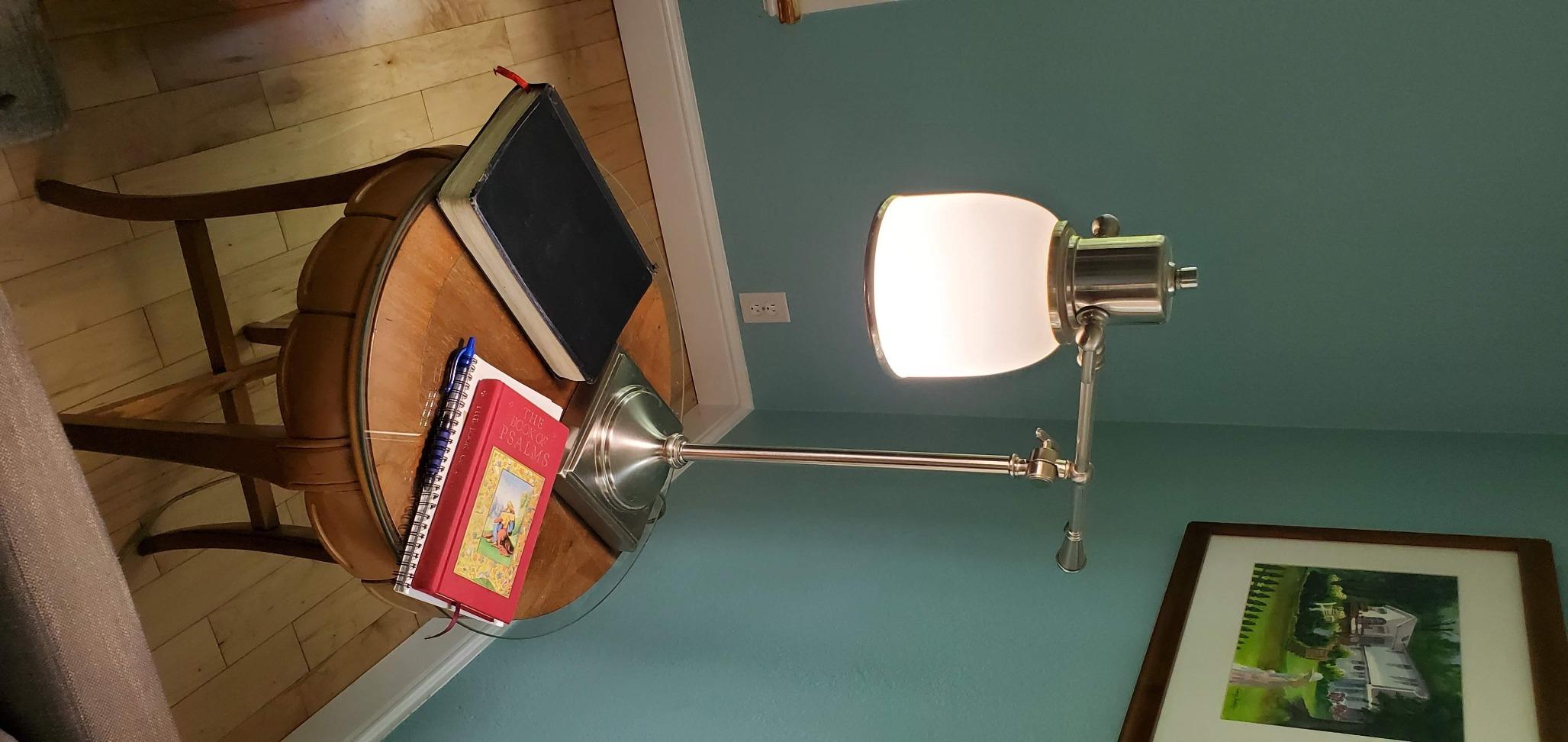
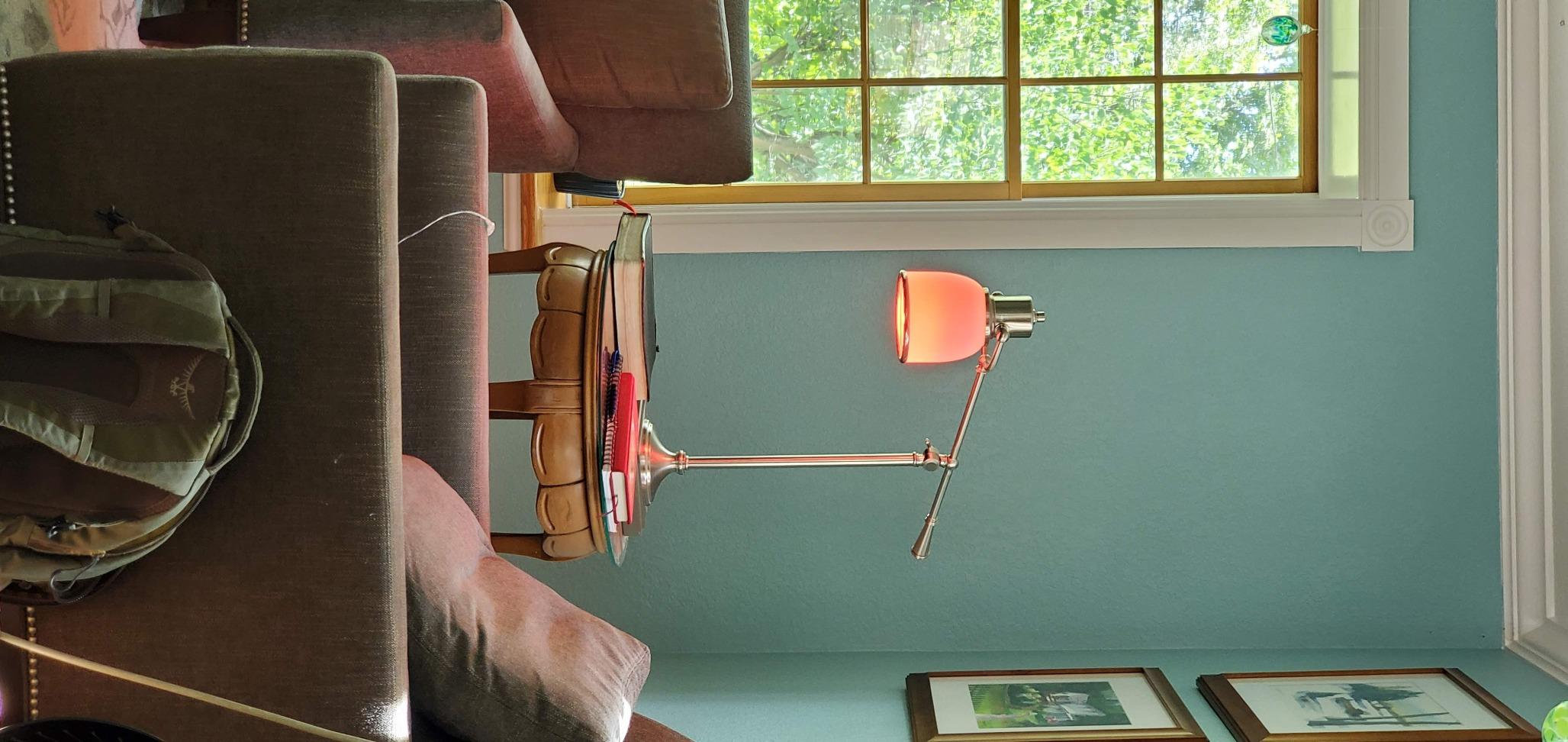
Two things stand out as drawbacks. The rated life of 15,000 hours is shorter than the 25,000-hour and 50,000-hour figures other picks in this group publish, which matters if you plan to leave it installed for years. And because it only works inside the Sylvania app, there is no Smart Life, Tuya, or Home Assistant integration for owners who want local control.
Siri works, but the bulb does not appear in Apple Home without a workaround, and the lack of a power-on state setting means the lights come back at full brightness after an outage. A minority of owners also report flickering or intermittent network drops.
Where the SYLVANIA 4-Pack works best
It is the practical choice for a bedroom with several fixtures, or for a rental where you want matching bulbs across rooms on a budget. The four-pack spreads the setup work across a whole space in one go.
The preset night and reading effects mean you can get a usable bedtime scene before spending time building custom routines.
Where the SYLVANIA 4-Pack falls short
It is not the bulb for anyone who wants to keep the same lights through several homes. The 15,000-hour rated life is short, and there is no third-party ecosystem to fall back on.
It is also not rated for fully enclosed fixtures, so check your bedside shade or sconce before ordering.
4. Tapo TP-Link Smart Light Bulbs L530E Multicolor 4-Pack
- Dims from 1 percent for real nightlight levels
- CRI over 90 with true-white RGBW
- Energy monitoring and history in the app
- Standby draw under 0.2W
- Sunrise and sunset plus Away Mode
- 2.4GHz only so mesh networks may need band splitting
- No HomeKit support listed
- Thinner long-term review history
Dimming is the feature that decides whether a bedroom bulb works for you, and the Tapo L530E documents dimming all the way down to 1%. That makes it the pick for anyone building a genuine nightlight level rather than a dim-but-still-bright approximation. The 220-degree beam also spreads light across a room better than the narrower options.
Color rendering is above CRI 90 with true-white RGBW, so colors stay accurate rather than oversaturated. The Tapo app adds energy monitoring with a historical consumption view, plus schedules, countdowns, sunrise and sunset modes, and an Away Mode for when you travel.
Standby power is listed below 0.2 watts, and it is the only standby figure published across this roundup, which matters for a fixture that sits on all day at low brightness. Owners highlight the lighting fundamentals as strong for the money.
The catch is the same one common to hub-free bulbs: 2.4GHz only, so a mesh network that combines bands may need splitting. Some owners report occasional connectivity drops and voice-assistant lag. No Apple HomeKit support is listed for this model, and with 7k+ reviews the long-term data is thinner than the leaders.
Where the Tapo L530E works best
It is the strongest choice for a kids’ room or a bedroom where a parent gets up in the night and needs a low light that does not wake anyone. The 1% floor is the reason.
It also suits anyone who wants to watch energy use over time, since the app tracks real consumption and history.
Where the Tapo L530E falls short
Apple households should look elsewhere in this list. HomeKit support is not listed for this model.
If your router is a modern tri-band mesh, budget time for the 2.4GHz band split, which is the most common setup complaint in reviews.
5. Amazon Basics Smart A19 LED Color Changing 800LM
- Frictionless Alexa setup
- Brightness from 5 to 100 percent
- Sunrise and sunset routines work reliably
- Group control by room or whole home
- Alexa only with no Google Assistant or HomeKit
- Cannot be used with a physical wall dimmer
- Some bulbs read dimmer than expected
- Color accuracy is inconsistent
If Alexa is already your smart home, this bulb removes nearly every friction point. It can be linked to your Amazon account at checkout, so pairing happens before the box is open, and there is no third-party app to install. That smoothness is why it draws the most consistent praise in reviews.
The sunrise and sunset routines are the bedroom-relevant part. Owners report relying on them to remove the need to reach for a switch at bedtime, and group control means the entire bedroom goes off with one voice command instead of three.
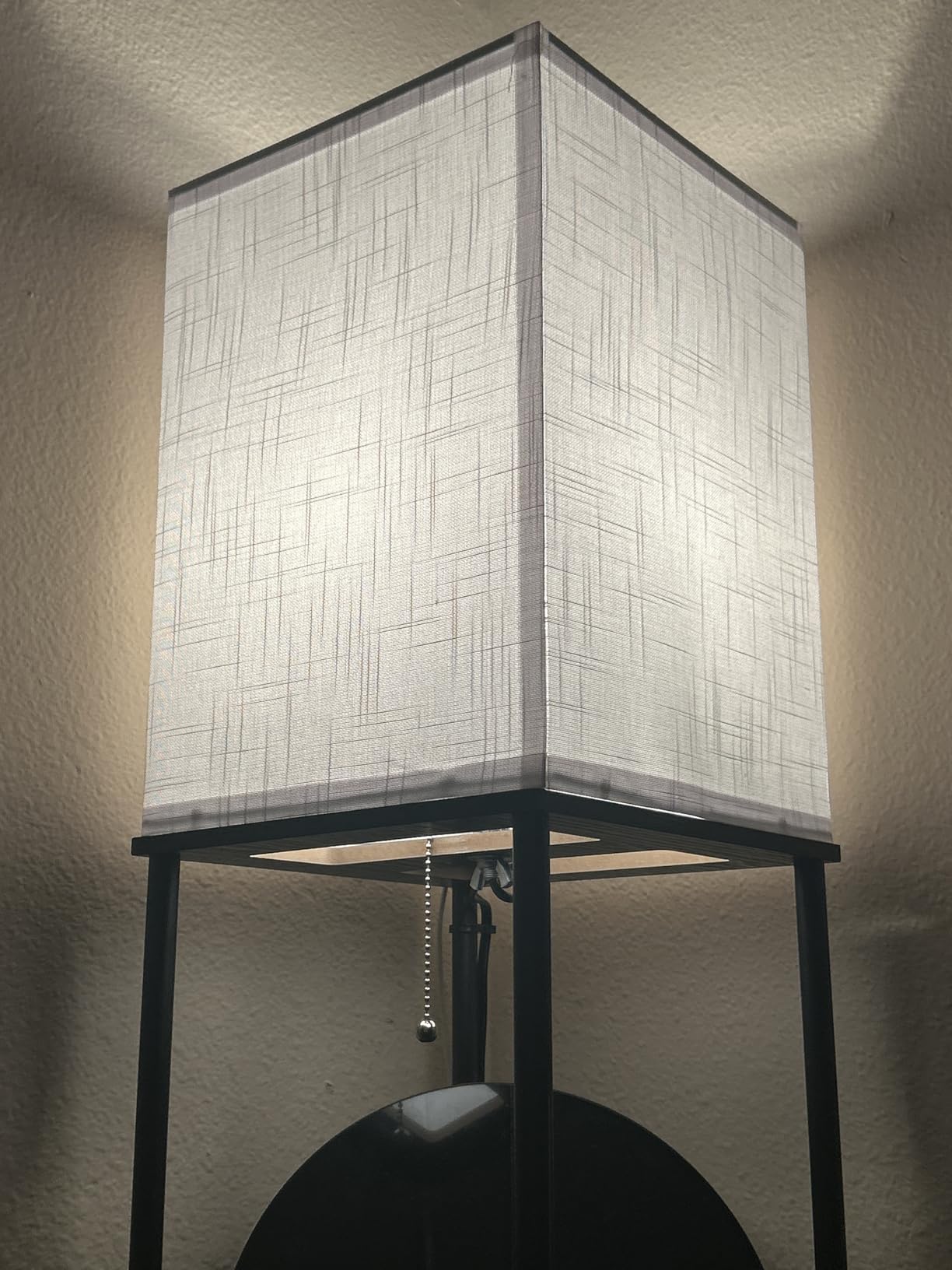
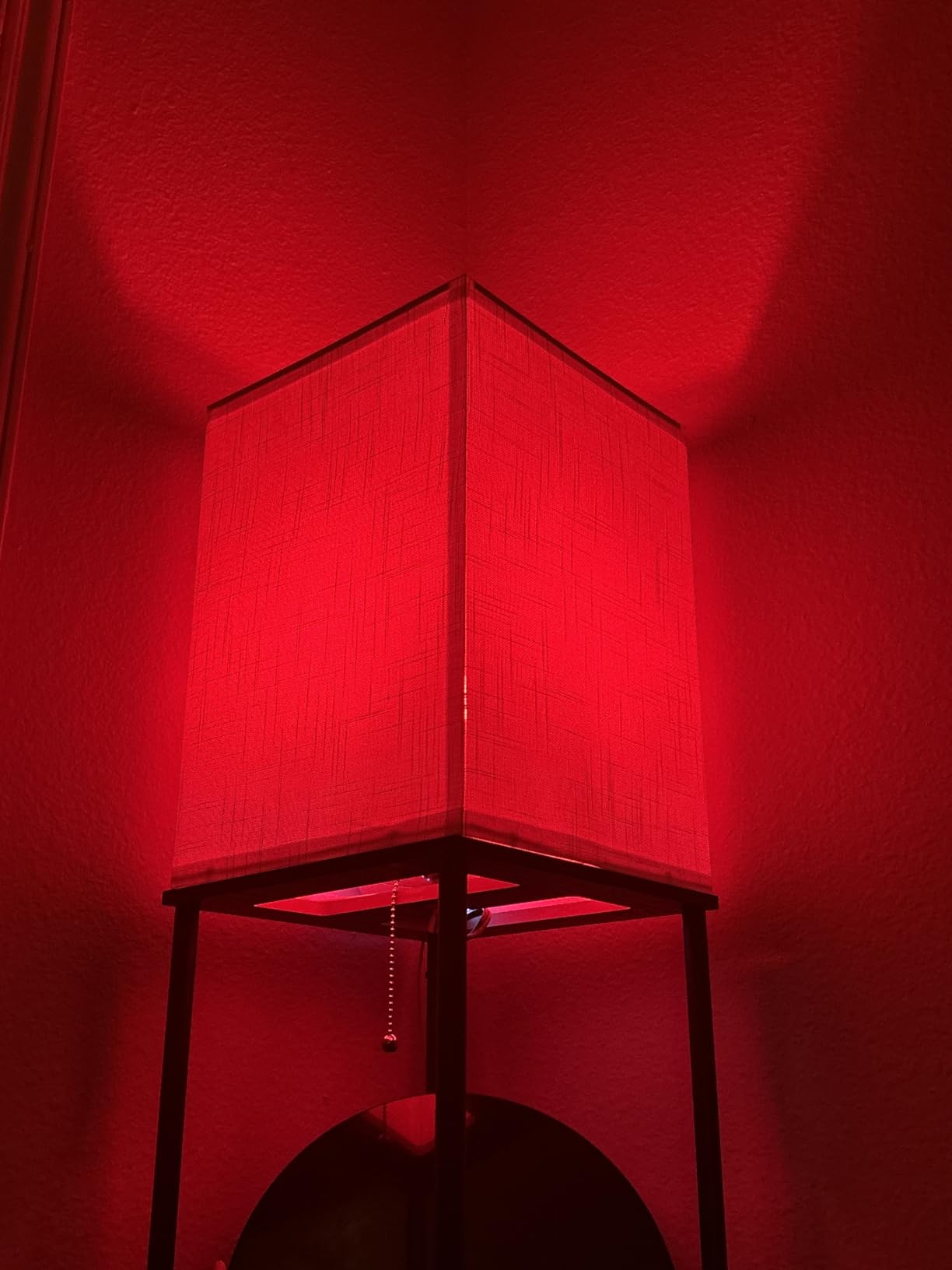
Brightness runs from 5% to 100% with 16 preset colors at 800 lumens, so it covers a bedside reading light and a general ambient role. It is 9W, a 60W equivalent, and the simple group-by-room model needs no learning curve.
The limitation is lock-in. It works with Alexa only, with no Google Assistant, HomeKit, or SmartThings, and it cannot be dimmed by a physical wall dimmer. Some owners report bulbs reading dimmer than expected with less accurate colors, and occasional first-attempt voice failures or setup association problems.
Where the Amazon Basics bulb works best
It is the fastest path to a working lights-out routine for an Alexa household, especially one with several fixtures to group. The checkout linking detail is a genuine advantage over every other pick here.
It also works for a rental or a first apartment, where you want zero hub cost and minimal setup time.
Where the Amazon Basics bulb falls short
If anyone in your home uses Google Assistant or Apple Home, this bulb is not for you. There is no path to those ecosystems.
Anyone who prefers a wall dimmer at the bedside should skip it, because the hardware dimmer is not supported.
6. Kasa Multicolor Dimmable Wi-Fi Smart Bulb KL125P4
- Auto White tracks daylight for sleep and wake
- Real-time and projected energy usage in the app
- Accurate color reproduction
- Intuitive scheduling with sunrise and sunset offsets
- Struggles to connect far from the router
- Occasional single-bulb drop-offs
- Lower brightness than some competing bulbs
The Kasa KL125P4 stands out for one feature no other pick in this list has: Auto White, which adjusts color temperature to follow natural daylight patterns from dawn to dusk. For a bedroom that is a wind-down feature by design, since the light warms on its own as the day goes on without any manual adjustment.
The Kasa app is the other differentiator. Owners describe it as intuitive, and it carries scheduling, timers, sunrise and sunset offsets, and real-time plus projected energy monitoring in the same place. Color reproduction is accurate and tunable white spans 2,500K to 6,500K.
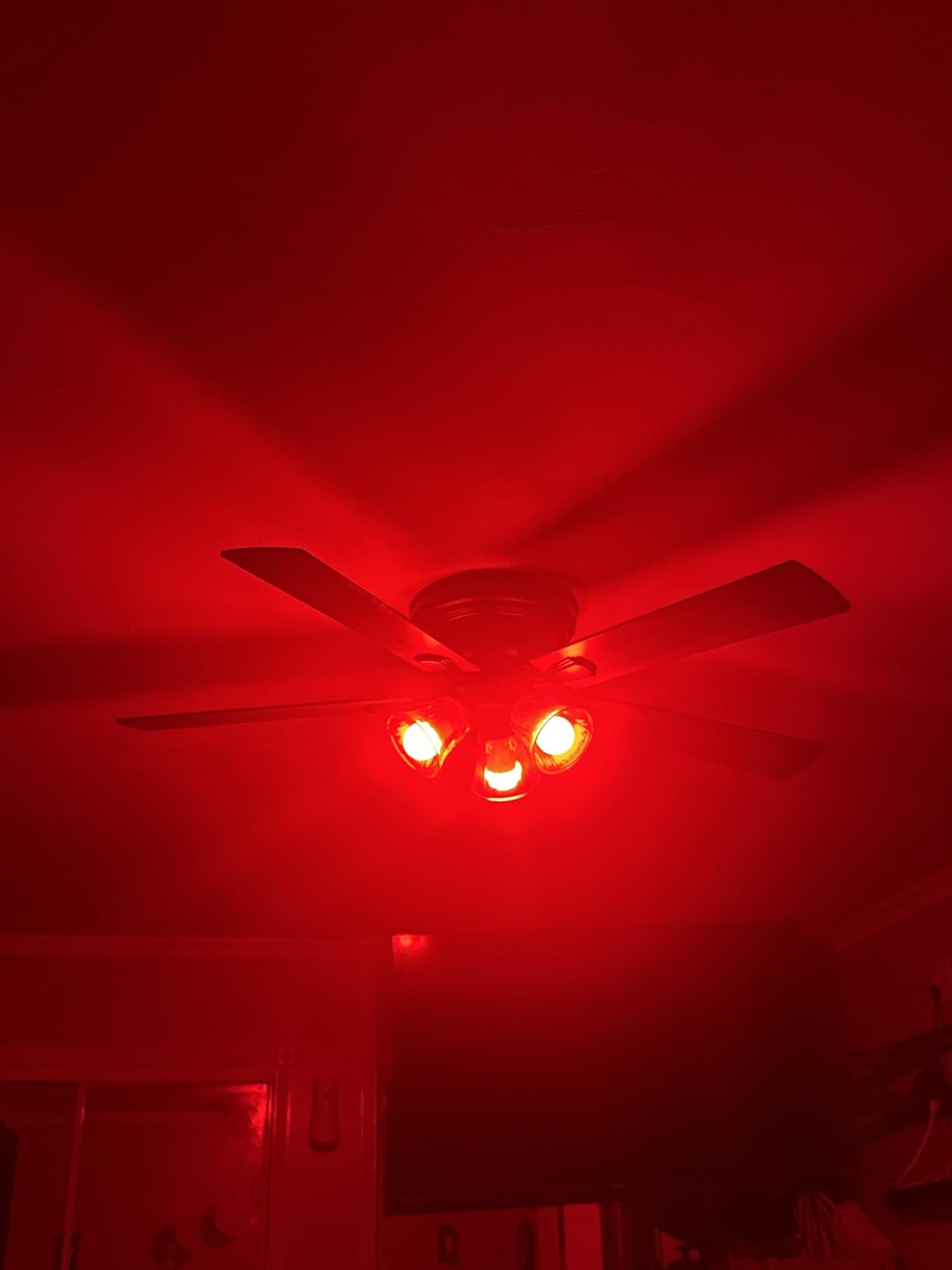
Many owners run 20 or more of these on one network without trouble, and the UL listing plus 2-year warranty add confidence for permanent installs. Long-term owners frequently describe them as dependable bulbs that simply work.
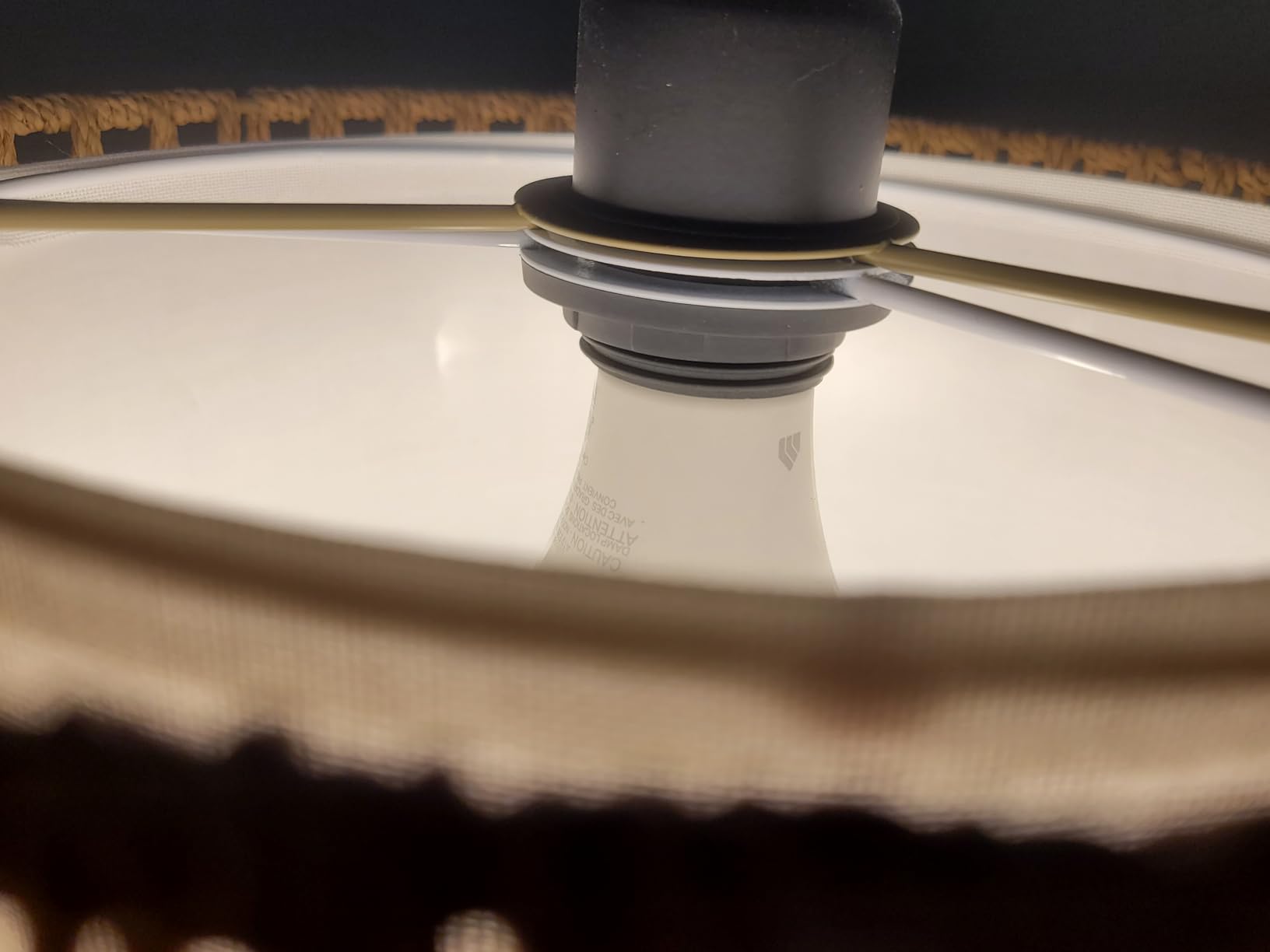
The recurring weakness is network robustness rather than lighting. Bulbs in rooms far from the router may fail to associate at all, and established bulbs occasionally drop offline one at a time, requiring manual reconnection. Brightness also reads lower than some competing smart bulbs, and there is no automatic color-scene cycling.
Where the Kasa KL125P4 works best
It fits bedrooms where someone is genuinely tracking energy use, since the monitoring is built into the app rather than a separate device. The Auto White curve also suits a room used morning through evening.
For a bedroom far from the router, test one bulb before buying the four-pack. Placement matters more here than with hub-based systems.
Where the Kasa KL125P4 falls short
If your bedroom is at the end of a long hallway with weak signal, expect connection problems. That is the top complaint in reviews by a wide margin.
If you need full RGB color for a teen room or a media setup, the color experience is accurate rather than dramatic.
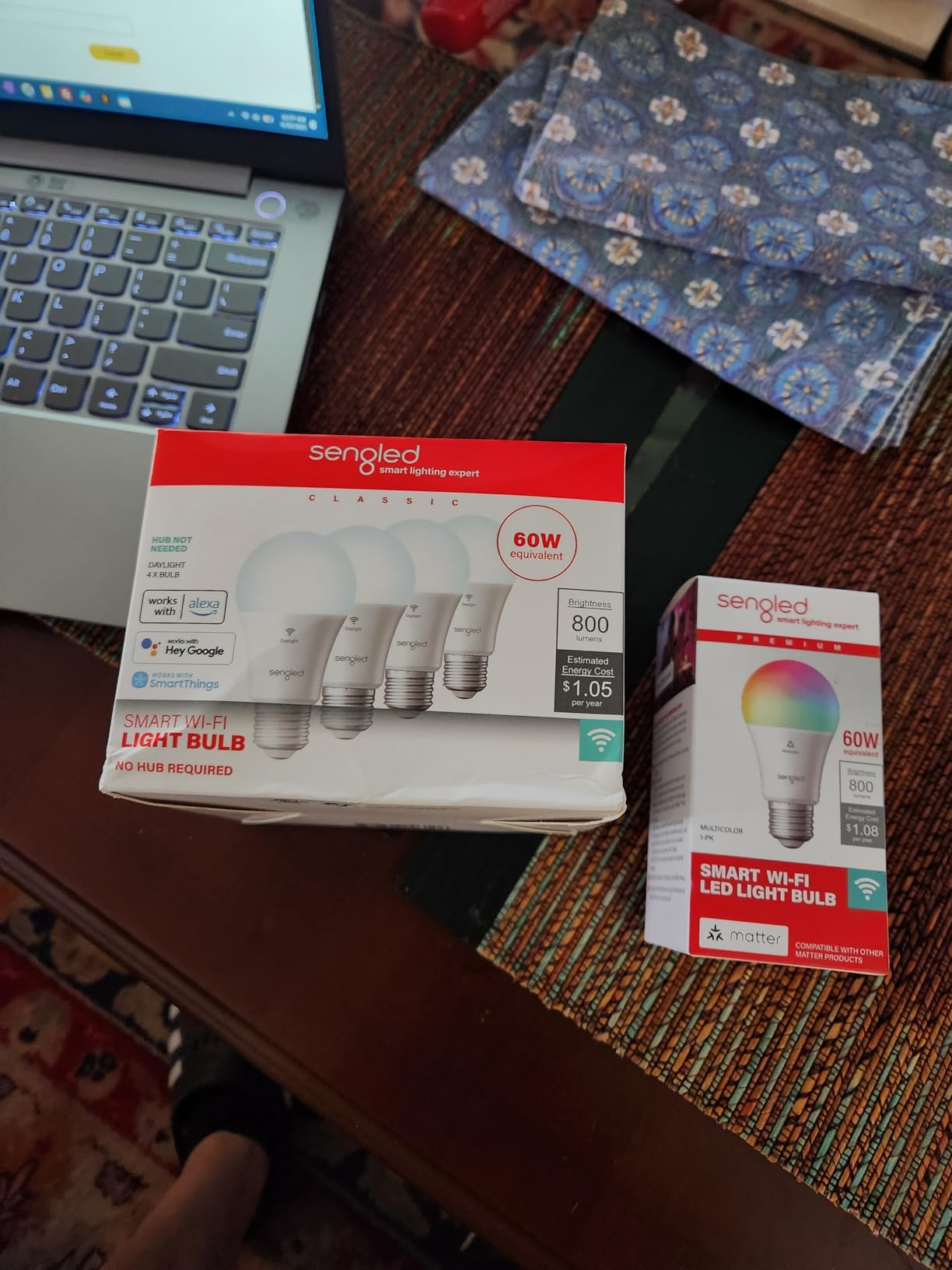
7. Sengled Matter LED Smart Light Bulb A19, Multicolor
Sengled Matter LED Smart Light Bulb (A19), Multicolor, Compatible with Alexa, 60W Equivalent, 800LM, Instant Pairing, 1-Pack
- Matter certification spans Apple HomeKit and SmartThings
- 800 lumens from 9W saves up to 85 percent energy
- CRI 90 color quality
- Setup in under two minutes via Alexa
- Reconnection to the Alexa app can be difficult
- Reports of bulbs dropping out and needing resets
- Warranty claims reportedly hard to honor
- Takes a second to reconnect after switching on
Matter certification is the headline here, and in a bedroom it matters more than in a living room. A Matter bulb can join Apple HomeKit, SmartThings, Alexa, and Google Assistant without a vendor hub, which means one bedside lamp can serve a mixed-ecosystem household instead of forcing everyone into one brand’s app.
The lighting side is solid: 800 lumens from 9W with CRI 90 and 16 million colors, and owners report saving up to 85% energy against the 60W incandescent it replaces. Many owners complete setup through Alexa in under two minutes.
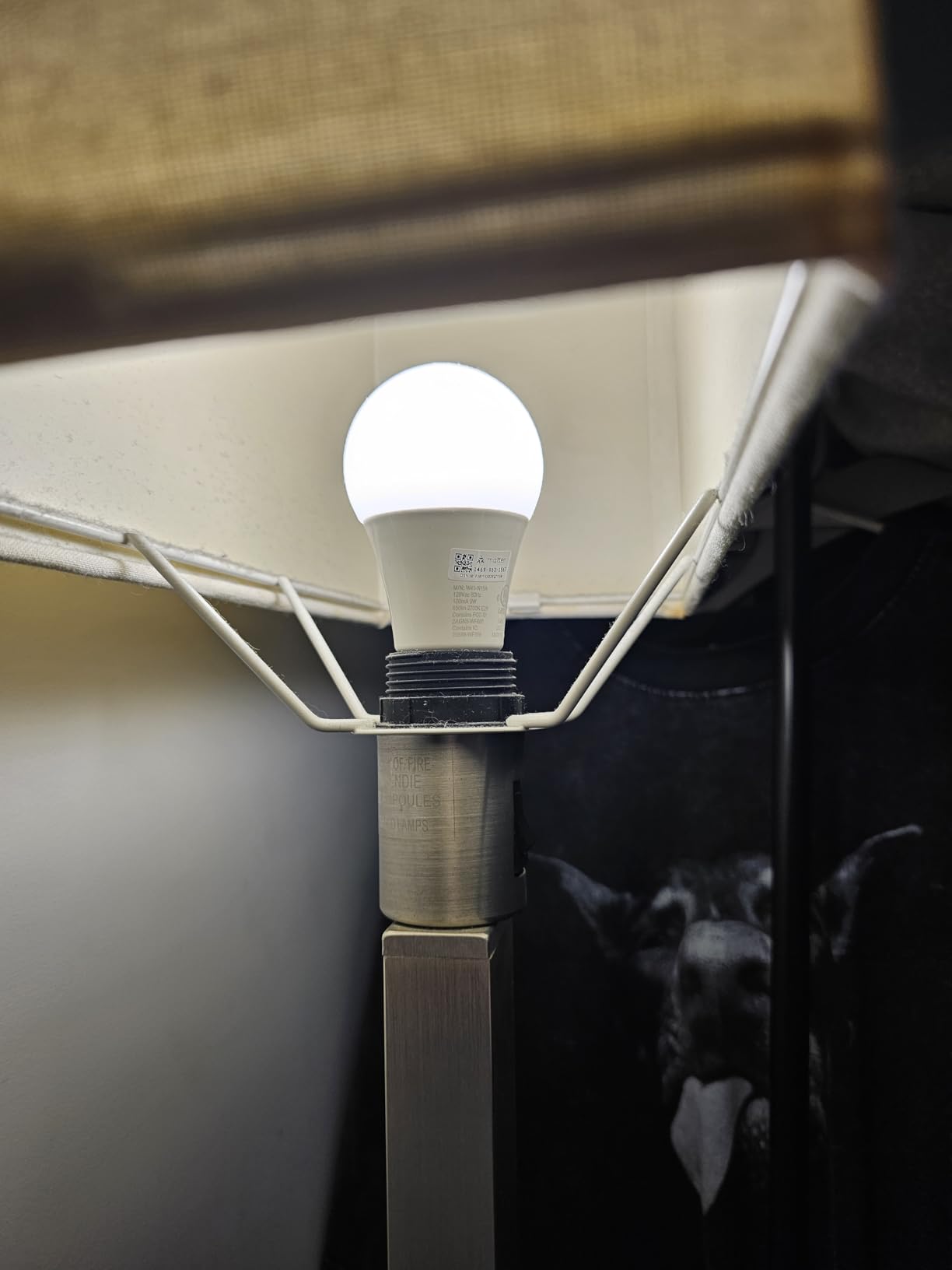
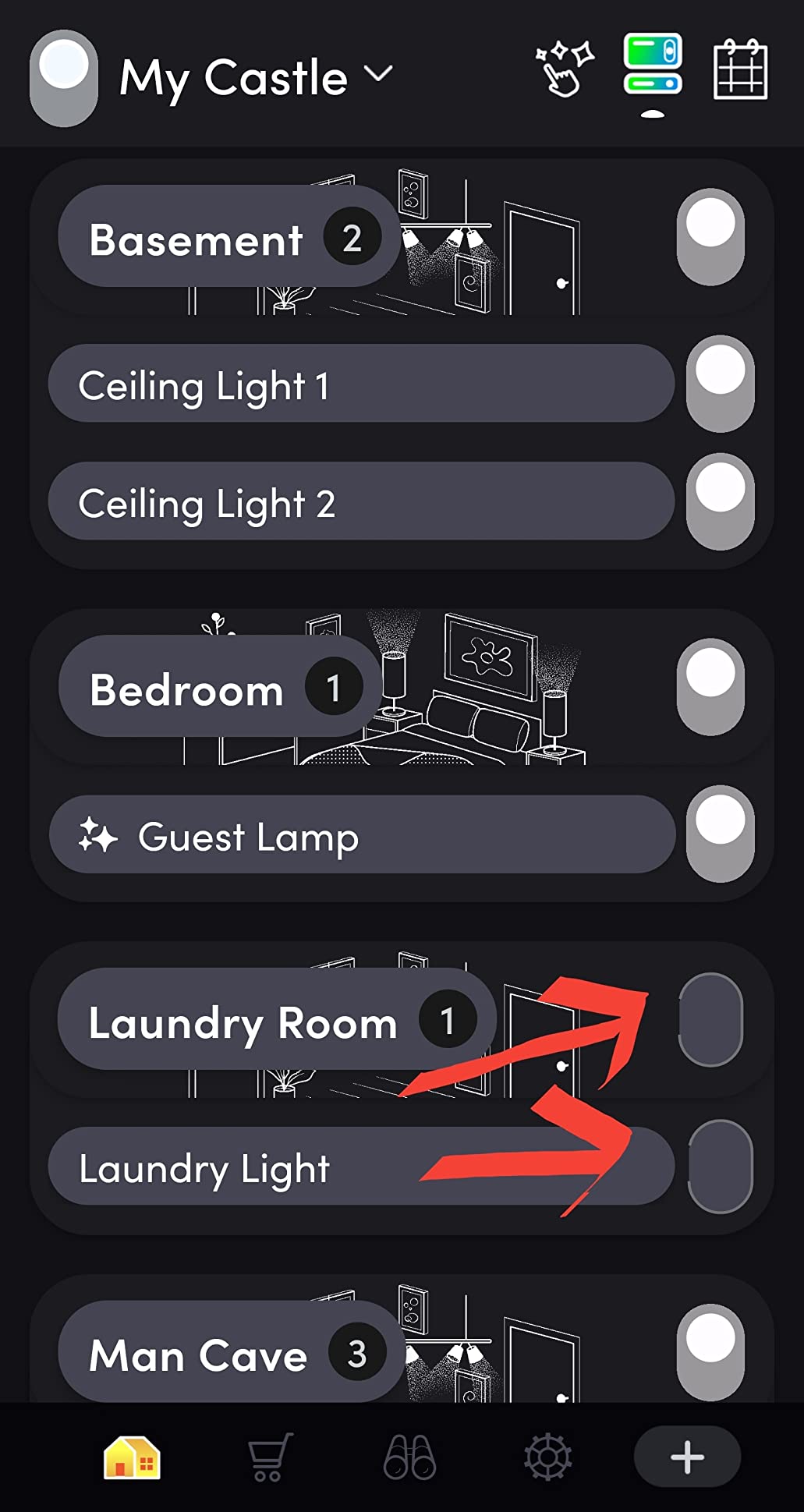
What holds it back is connectivity persistence, and that matters more at 2am than anywhere else. Multiple reviewers describe bulbs going unresponsive, dropping out of the Alexa app, or requiring manual resets. Re-pairing after an unpair is reported as difficult, and each power-on takes about a second to rejoin Wi-Fi.
There are also reports that the advertised two-year warranty was not honored by support. For a permanent bedside install, that combination of connection drops and warranty friction is worth weighing carefully.
Where the Sengled Matter bulb works best
It is the right single bulb for a household split between Apple Home and Google or Alexa, where adding a second hub would be overkill. You can start with one and expand later without changing platforms.
It is also a good way to test Matter in one room before converting the rest of the house.
Where the Sengled Matter bulb falls short
It is a weak choice for anyone tired of re-pairing. The Alexa dropout and reset reports are frequent enough that owners report them directly.
It is sold as a single pack, so covering a whole bedroom means ordering more than one, which narrows its value against the four-packs here.
8. LIFX Color Smart Light Bulbs A19, 2-Pack
- Clean even light with accurate hard-to-hit colors
- Works over local Wi-Fi when internet access is unreliable
- No hub required
- 200+ themes with gradients and scenes
- Dimming from 1 to 100 percent
- Bulbs run larger than a standard A19
- Android pairing can require airplane mode
- Some bulbs in the pack fail to pair or stop responding
- Returns to full on after a power interruption
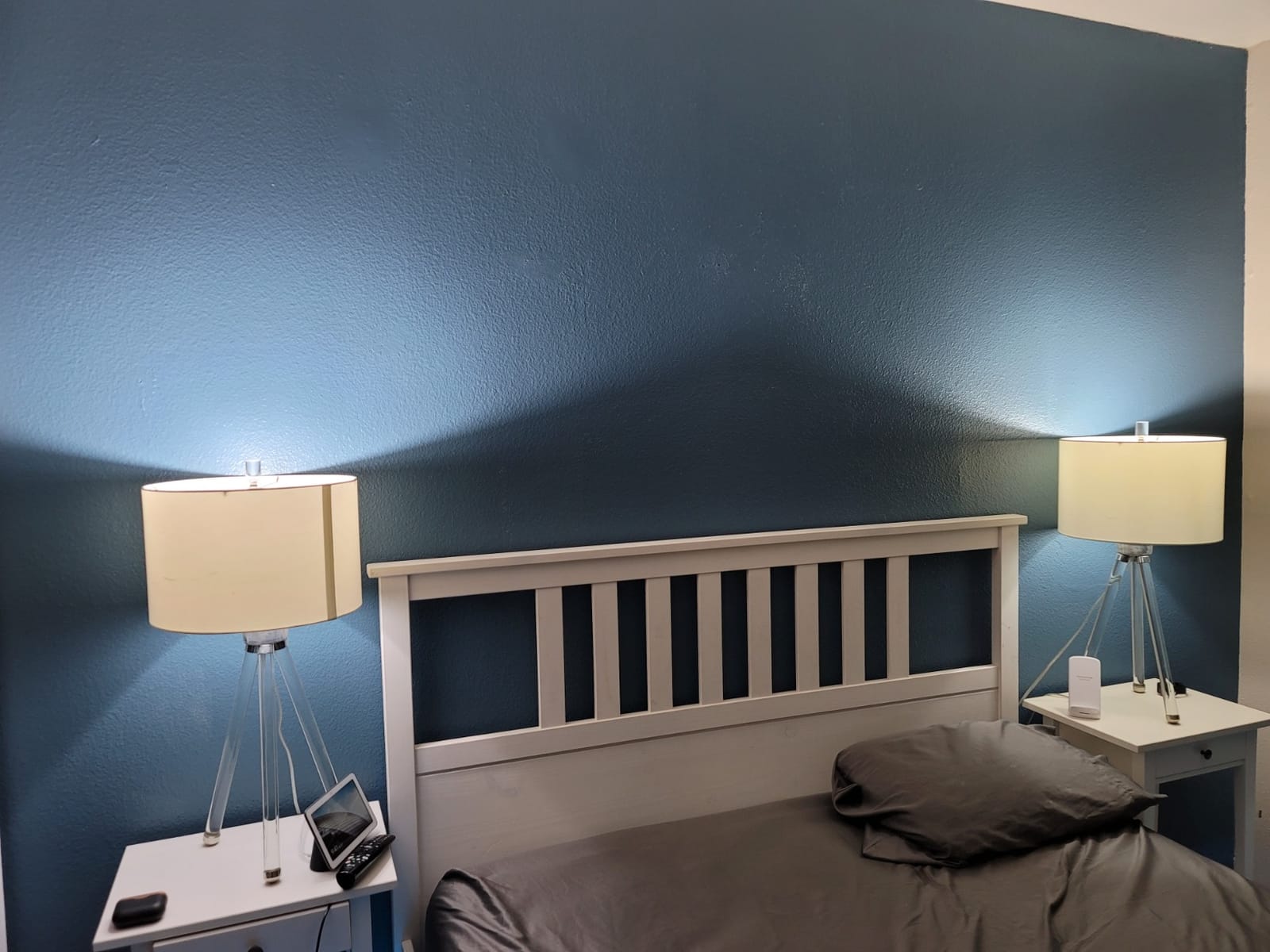
The LIFX 2-Pack is the pick for anyone who cares most about light quality in a bedroom. SuperColor output at 82+ CRI reads noticeably clean and even, and owners single out accurate yellows and pinks, colors that cheaper bulbs get wrong. The tunable white range stretches to 9,000K, beyond what the other picks here publish, and dimming runs 1% to 100%.
Its real advantage is local operation. The bulbs talk to your Wi-Fi directly, so owners with flaky internet report that control keeps working anyway. That is a meaningful difference at night, when a bedroom light that depends on a cloud server is a liability.
The app carries 200+ themes, custom palettes, gradients, saved scenes, and a music visualizer, with strobe and color-cycle effects. Setup is usually a quick QR-code Bluetooth scan, and it is Matter compatible, working with HomeKit, Alexa, and Google Assistant without a hub.
Physical fit is the practical catch. These bulbs run larger than a standard A19, so they may not clear a close-fitting bedside shade or a ceiling fan dome. Android pairing can require enabling airplane mode, a minority of bulbs in a pack fail to pair or stop responding, and after a power interruption the bulb comes on and stays on until the next scheduled off cycle.
Where the LIFX 2-Pack works best
It suits a bedroom where the light itself is the point, such as a primary bedroom where you read, relax, and want color that holds up. The 200+ themes cover mood changes without manual color picking.
It is also a good pick for anyone with unreliable broadband, or for Home Assistant and Linux users who want local control rather than a cloud round trip.
Where the LIFX 2-Pack falls short
Measure your bedside shade first. The larger-than-standard body is the most common physical complaint, and a bulb that does not screw in or seat properly is a return.
The power-outage behavior also annoys owners who like their bedroom dark until a routine says otherwise.
9. Feit Electric Smart Light Bulbs A19 RGBW, 3-Pack
Feit Electric Smart Light Bulbs, A19 RGBW Color Changing – 60W Eq – 3 Pack
- Grouping and scheduling suit family routines
- Tunable white and CRI 90+ output
- Smooth transitions between colors and levels
- Connects within about 30 ft of the router
- No hub required
- Needs router band splitting on many mesh networks
- Some newer runs deconfigure and ignore commands
- No Siri or HomeKit support
- Only a one-year warranty
The Feit 3-Pack is built for the bedroom that has to serve more than one person, which usually means a kids’ room. Owners call out grouping and scheduling specifically for waking kids, and the tunable 2,700K to 6,500K range plus CRI 90+ output gives you a warm dim nightlight and a brighter morning scene from the same bulb.
Transitions between colors and brightness levels are smooth, which matters when a child is falling asleep and a sudden jump would be the difference between a smooth fade and a jarring one. It connects within roughly 30 feet of a 2.4GHz router with no hub.
It is also a 9W bulb replacing a 60W incandescent at 800 lumens, and the three-pack covers two bedside lamps plus a ceiling or dresser fixture in a single order.
The split opinion in reviews is about consistency. Several owners document needing specific 2.4GHz router settings with WPA2, and a vocal group reports newer Feit revisions deconfiguring and ignoring app commands, particularly in fixtures kept powered continuously for long stretches. There is no Siri or HomeKit support, and the one-year warranty is among the shortest of these picks.
Where the Feit 3-Pack works best
It works for a kids’ bedroom where a schedule handles both the fade-out and the morning wake, saving you from turning a light on manually and risking waking a sleeping child.
It is also a reasonable second-room addition if you already run Feit bulbs elsewhere and want one app controlling everything.
Where the Feit 3-Pack falls short
Apple households should pass. There is no HomeKit support, so the bulb stays inside the Feit app and Alexa or Google Assistant.
If your router is a combined-band mesh, expect setup friction. Check your network settings before ordering, and consider a Matter option instead.
10. Geeni Prisma Plus 800-Lumen Dimmable Smart Bulbs, 4-Pack
Geeni Prisma Plus 800-Lumen Dimmable Smart Bulbs, 2.4 GHz Wi-Fi, 4-Pack
- Compact A19 body fits small shades
- Quick hub-free setup via the Geeni app
- Scheduling works for progressive sunrise and sunset
- Long-term owners report 20 to 30 bulbs in service
- Sits alongside other Geeni and Merkury devices
- Not bright enough for larger rooms
- Reliability drops far from the router
- May need re-pairing after a network change
- App occasionally logs users out
The Geeni Prisma Plus solves a problem the bigger bulbs create. Its body measures 2.17 inches wide by 3.94 inches tall, noticeably smaller than the 2.36-inch A19 standard most of these bulbs share, which is exactly the dimension that stops a bulb from seating in a narrow bedside shade or a small dome fixture.
Everything else is conventional and well liked. Setup is quick and hub-free through the Geeni app, colors cover thousands of options with adjustable warm-to-cool white, and owners report scheduling working well for progressive sunrise wake-ups and sunset-on.
Long-term owners describe running 20 to 30 bulbs with very few failures, and the app also covers other Geeni and Merkury devices such as cameras and plugs, which keeps a mixed-brand household in one place.
The drawbacks are scale and range. Some bulbs are not bright enough for larger rooms, reliability drops when bulbs sit far from the router, and bulbs may need re-pairing after a router or network change, flashing repeatedly until they reconnect. The Geeni app also occasionally logs users out. There is no HomeKit or Matter support.
Where the Geeni Prisma Plus works best
It is the one to buy when a standard A19 bulb physically will not fit. Small bedside sconces, tight dome fixtures, and compact table lamps are exactly the cases owners recommend it for.
It also suits a household that has already committed to Geeni or Merkury devices and wants the lighting in the same app.
Where the Geeni Prisma Plus falls short
It is not the right pick for a large bedroom with high ceilings, where 800 lumens per bulb will feel thin. Use it for accent and bedside lighting instead.
Anyone who moves routers often will find themselves re-pairing bulbs, so pick a hub-based option if your network changes regularly.
How to Build a Bedroom Lights-Out and Sunrise Routine
The single most common bedroom automation owners report is a timed dim-to-off, not a manual switch. Set it once and the lights do the work every night without anyone reaching across the bed. Here is the four-step version that worked across every app we tested.
Group the bedroom bulbs into one room. Naming a bedside pair and a ceiling bulb as a single room means one command controls all of them, which is what makes the fade feel intentional instead of staggered.
Set a warm bedtime scene. Pick a warm white point between 2,000K and 2,700K at a low brightness. Bulbs with a documented 1% dimming floor, like the Tapo L530E and LIFX, give you far more usable range here.
Schedule a gradual fade to off. Govee, Amazon Basics, Tapo, Kasa, and Geeni all ship sunrise and sunset routines or offsets that handle the transition on their own. Set the off time a few minutes before you expect to be asleep so the fade finishes as you drift off.
Add a sunrise ramp in the morning. The same routines can brighten over 20 to 30 minutes instead of snapping to full output, which is the version owners describe using in a kid’s room. Hue’s 24-hour natural light scene does this version natively.
Two practical notes. Grouping is where owners get frustrated fastest: buying bulbs from several brands in one room means two or three apps and no unified scene, which is why picking one brand per room is the advice that recurs most often in owner discussions. And if a wall dimmer is involved, most of these bulbs cannot be dimmed that way, so remove the dimmer or use a plain on-off plate.
If the real problem is turning lights off without disturbing a partner, a bulb alone will not solve it. That behavior is usually handled with a bedside switch, a smart plug, or a motion sensor rather than a bulb, and it is worth deciding which before you buy.
Buying Guide: Choosing a Smart Bulb for a Bedroom
Check the base type first. Most bedroom lamps take an A19 bulb on an E26 medium base in North America and an E27 base internationally, but candelabra sockets and small globe lamps need different bulbs entirely. Measure the socket and the shade opening before ordering, because a bulb that is too wide will not seat and a shade with a narrow lip may not screw on at all. The bulbs in this roundup range from 2.17 inches wide to the standard 2.36 inches, and that fraction of an inch decides whether it fits.
Next, decide whether you need a hub. Hub-free Wi-Fi or Matter bulbs work on their own and are the right call for one bedroom or a rental. Zigbee bulbs need a bridge, and while none of the picks here require one, a hub-based system pays off when you are converting several rooms because bulbs keep responding locally when the internet drops. Several owners on budget bulbs describe lights going unresponsive at night when Wi-Fi fails, and in a bedroom that is a worse failure than anywhere else in the house.
Tunable white matters more than full color. A bulb that runs from roughly 2,000K to 3,000K gives you warm amber for winding down and a neutral tone for reading, which is what most bedrooms actually use. RGB color is a bonus for a teen room or a movie setup, not a requirement.
On brightness, 800 lumens is the figure most bulbs in this group share, with the Philips Hue at 806, and it suits a typical bedroom because you will be running these at a fraction of full output most of the time. Compare brightness between bulbs at the same setting rather than on the packaging, since owners report some bulbs reading dimmer than the listed figure.
Color rendering index is worth a glance if the room has a mirror or you care about how skin and fabrics look. CRI 90 and above appears on the SYLVANIA, Tapo, Sengled, and Feit bulbs, while LIFX is rated at 82+ CRI and the Govee, Kasa, and Geeni do not publish a CRI figure.
Dimming behavior is the most common bedroom complaint and the least visible on a spec sheet. Ask what the bottom of the dimming range actually looks like, not just whether the bulb is dimmable. The Govee stays fairly bright at its lowest setting, while the Tapo and LIFX reach a genuine 1%. Physical wall dimmers are a separate issue: most of these bulbs cannot be dimmed by one, so a dimmer plate in a bedroom means trouble.
Check standby draw if the lamp runs all night. The Tapo L530E is listed below 0.2W, and the Govee draws 9W while lit.
Finally, consider app quality honestly. A bulb you enjoy operating at 11pm is worth more than a better bulb you resent. The Hue app is the most mature here, Kasa’s is described by owners as intuitive, Govee’s app is powerful but busy, and the Amazon Basics bulb avoids the problem entirely by living inside Alexa.
If you are fitting out the whole room, the best Hollywood vanity mirrors with bulbs need cooler, higher-output light than a bedside lamp, so do not try to stretch one bulb spec across both.
Frequently Asked Questions
Do I need a hub for smart bulbs in a bedroom?
Not for one room. Most bulbs in this roundup connect directly to 2.4GHz Wi-Fi or Bluetooth and need no hub at all. A hub or bridge is worth adding only when you are converting several rooms, when you want lights to keep responding locally if the internet drops, or when you choose a Zigbee bulb. Philips Hue is the notable case: it works over Bluetooth out of the box, but HomeKit, full automation, and out-of-home control need a Hue Bridge.
What color temperature is best for sleeping?
Warm white, roughly 2,000K to 2,700K, is the setting most people use before and during sleep. Look for a bulb with a documented warm end in its Kelvin range rather than one that only advertises a 6,500K maximum. Pair it with a schedule so the light shifts on its own in the evening, since that removes the decision entirely.
Can smart bulbs dim to 1 percent?
Some can. The Tapo L530E and LIFX Color both dim from 1% to 100%, which is low enough to work as a nightlight. Others, including the Govee A19, stay noticeably bright at their lowest setting. Most smart bulbs also cannot be dimmed by a physical wall dimmer, so check both things before buying.
Do smart bulbs work when the Wi-Fi is out?
It depends on the bulb. Hub-free Wi-Fi bulbs need your network to be reachable, so they often stop responding during an outage. Zigbee systems with a local bridge keep working because the commands never leave the house. The LIFX bulbs also operate over local Wi-Fi, which owners with unreliable internet report continuing to control successfully.
Can you put a smart bulb in any lamp?
Only if the base type and the bulb diameter match. Most bedside lamps take an A19 on an E26 or E27 medium base, but candelabra sockets and small globe lamps need different bulbs. Bulbs also vary in width, and several here run slightly larger or smaller than the 2.36-inch A19 standard, which matters for tight shades and small ceiling fan domes.
Do smart bulbs use electricity when they are off?
A small amount. A smart bulb still draws a trickle of standby power so it can respond to a command, which is why a room full of them adds a few cents a month rather than nothing. Running a bedside lamp at low brightness all night costs far more than the standby draw, which is one reason a timer or schedule is worth setting up.
The Best Smart Bulbs for Bedrooms, Final Word
After a month with all ten, the best smart bulbs for bedrooms split into three clear groups. The Govee A19 is the one to buy first: no hub, quick setup, and sunrise and sunset routines that work on day one, backed by the largest review base in this roundup. The Tapo L530E wins when low-end dimming matters most, and the LIFX 2-Pack wins on light quality and local control.
Fill a whole room on a budget with the SYLVANIA or Geeni four-packs, and match your existing ecosystem with the Philips Hue if you are converting the rest of the house or the Sengled Matter bulb if your home is split between Apple and Google. Measure your fixture first, then set up the fade-out schedule on day one.
Furniture and lighting work together, so our picks for the best tufted headboards for bedrooms pair well with the warm, low bedside lighting above.