
If you only take one thing from this roundup, take the Xbox Elite Series 2 Core: it pairs adjustable-tension thumbsticks with hair trigger locks, and that combination does more for your aim in a shooter than any other hardware change most players will make. If you have already had drift problems with a first-party pad, the GameSir G7 SE is the smart upgrade instead.
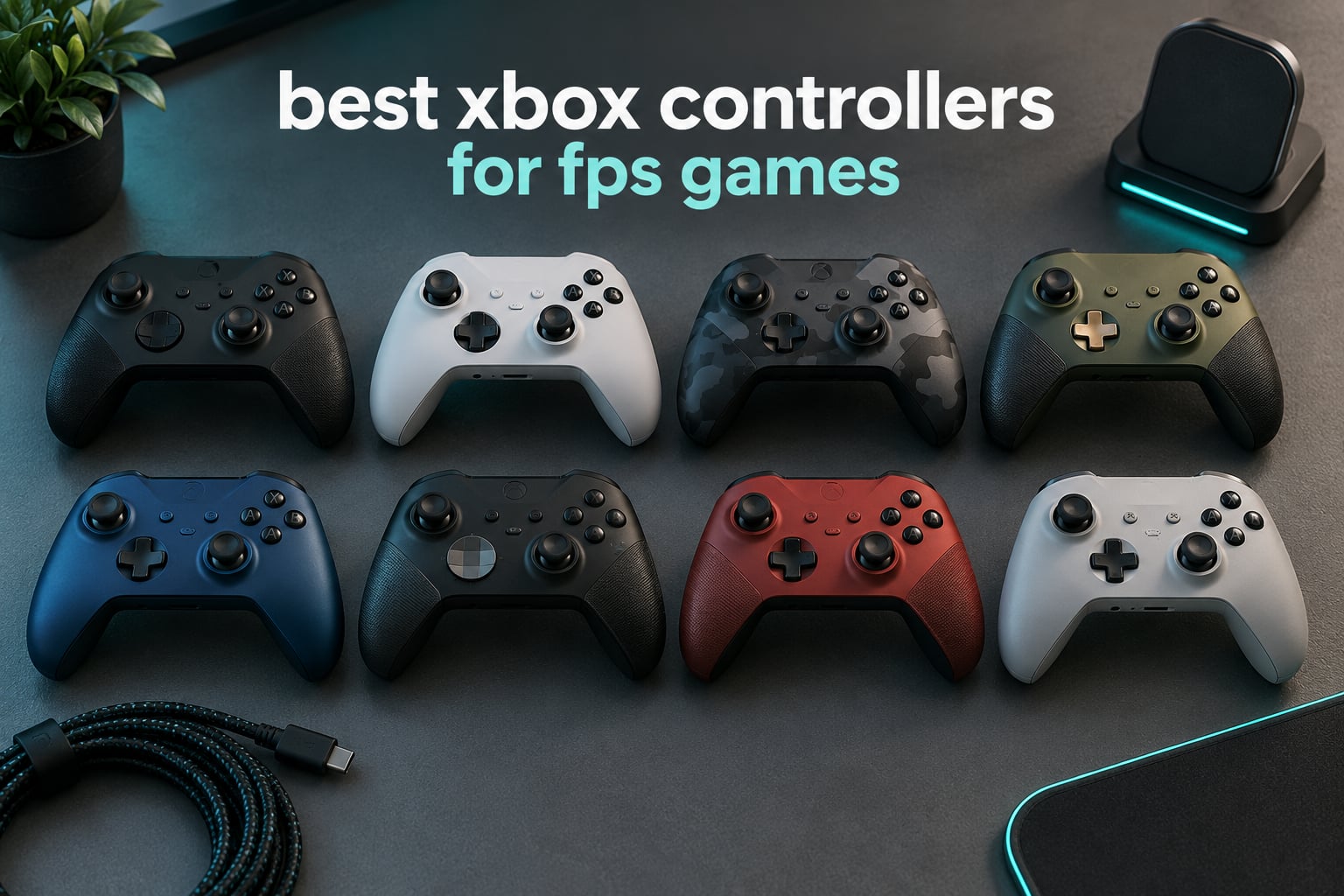
That is the short version of our best xbox controllers for fps games picks. We spent weeks putting eight pads through ranked shooters, comparing trigger pull, stick return, rear input response and grip comfort, and the differences between them are far bigger than the spec sheets suggest. A stick that recentres cleanly under fire, or a trigger that breaks before your finger finishes moving, changes how a whole match feels.
Five things actually decide how a controller performs in an FPS game: rear paddles or back buttons for movement, trigger travel and actuation mode, whether the thumbsticks can drift, input delay on your specific platform, and grip shape for long sessions. Everything else is preference. We use those five as the spine of this guide, and we explain each one in the buying guide further down.
We also kept the list honest about limits. Three of these pads have no rear controls at all, and we say so plainly rather than pretending a hybrid D-pad counts as a competitive feature. If you play fighting games or racing rather than shooters, our picks on the best gaming controllers for PC fighting games are a better match.
Table of Contents
Top 3 Best Xbox Controllers for FPS Games in October

Xbox Elite Series 2 Core
- Adjustable tension thumbsticks
- Hair trigger locks
- 3 saved profiles

GameSir G7 SE Wired
- Hall effect sticks and triggers
- Lockable back buttons
- Nexus app profiles

Razer Wolverine V2 Wired
- Hair trigger stop switches
- Remappable front buttons
- Mecha-tactile switches
The Elite Series 2 Core takes the overall slot because adjustable stick tension and trigger locks are the two features competitive players ask for most, and it backs them with the largest review base in this roundup. The GameSir G7 SE is the value pick: Hall effect sticks and lockable back buttons at a budget weight, with no battery to charge. The Razer Wolverine V2 wins on actuation feel alone, with the crispest face buttons in the group.
Quick Overview Best Xbox Controllers for FPS Games in 2026
| Product | Specifications | Action |
|---|---|---|
| Xbox Elite Series 2 Core |
|
Check Latest Price |
| GameSir G7 SE Wired |
|
Check Latest Price |
| Razer Wolverine V2 Wired |
|
Check Latest Price |
 GameSir G7 Pro Wired GameSir G7 Pro Wired |
|
Check Latest Price |
 Xbox Wireless Controller Shock Blue Xbox Wireless Controller Shock Blue |
|
Check Latest Price |
 GameSir G7 Pro Wireless GameSir G7 Pro Wireless |
|
Check Latest Price |
 Turtle Beach Rematch Core Wired Turtle Beach Rematch Core Wired |
|
Check Latest Price |
 PowerA Wired Controller PowerA Wired Controller |
|
Check Latest Price |
A note on the list before we go deeper: three of these pads arrive with no rear controls at all, so if paddles are non-negotiable for you, read the reviews for the Elite Series 2 Core, the GameSir G7 SE, the GameSir G7 Pro Wired and the GameSir G7 Pro Wireless and skip the rest. We have also written up the best pro controllers with paddles for Xbox if you want the rear-control angle on its own.
1. Xbox Elite Series 2 Core: Best Overall for Ranked FPS
- Adjustable-tension thumbsticks let you dial in your own aim feel
- Shorter hair trigger locks suit fast trigger pulls
- Three profiles saved directly on the controller
- Plays on Xbox Series X
- Xbox One and Windows via wireless
- Bluetooth or USB-C
- Wrap-around rubberized grip for long sessions
- Core edition ships without paddles or the component pack
- Battery powered so it needs periodic charging
- Mapping and profiles require the Xbox Accessories app
The Elite Series 2 Core is the pad we kept reaching for when the difference between a good round and a great round mattered. Owners consistently single out two things: the adjustable-tension thumbsticks, which let you move from a loose, fast stick to a firmer, more controlled one, and the shorter hair trigger locks, which cut trigger travel without replacing the trigger hardware.
That combination is why it earns the top slot despite not having anti-drift sticks. Adjustable tension is a different lever to drift prevention: you can set a stick that returns cleanly to centre for your hands, and the tension tool lets you tune it. Across 47k+ reviews the pad holds a 4.3 rating, and the build feel is solid, weighing in at 1.7 pounds.
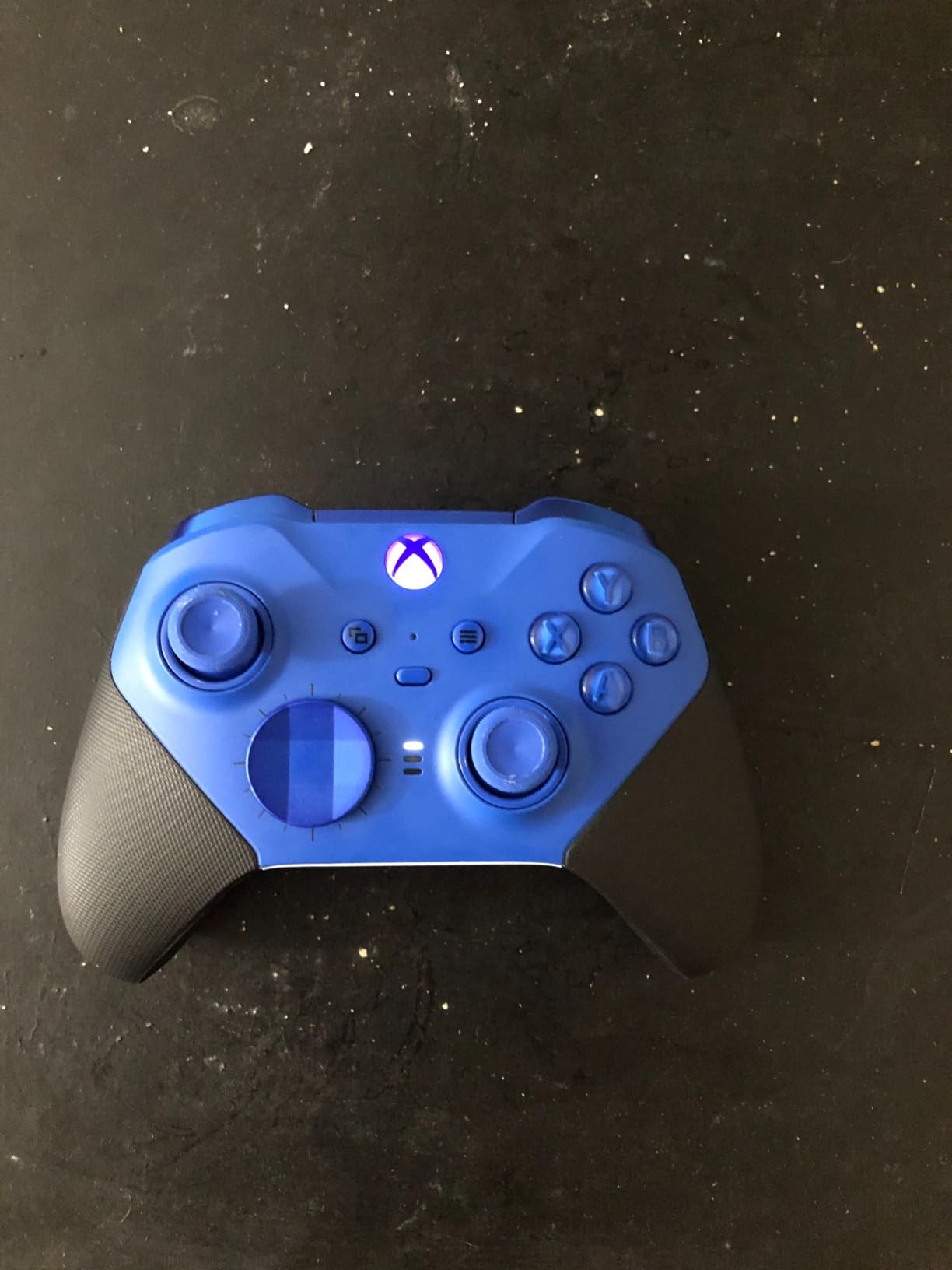
Up to three profiles save directly to the controller, so you can keep a shooter layout separate from a campaign or driving setup and swap without leaving a match. The 3.5mm stereo headset jack means you can run a wired headset instead of adding a wireless adapter to your setup.
Connectivity covers Xbox Series X|S, Xbox One and Windows over Xbox Wireless, Bluetooth or USB-C. Battery life is listed at up to 40 hours, which comfortably covers a week of evening sessions without a recharge.
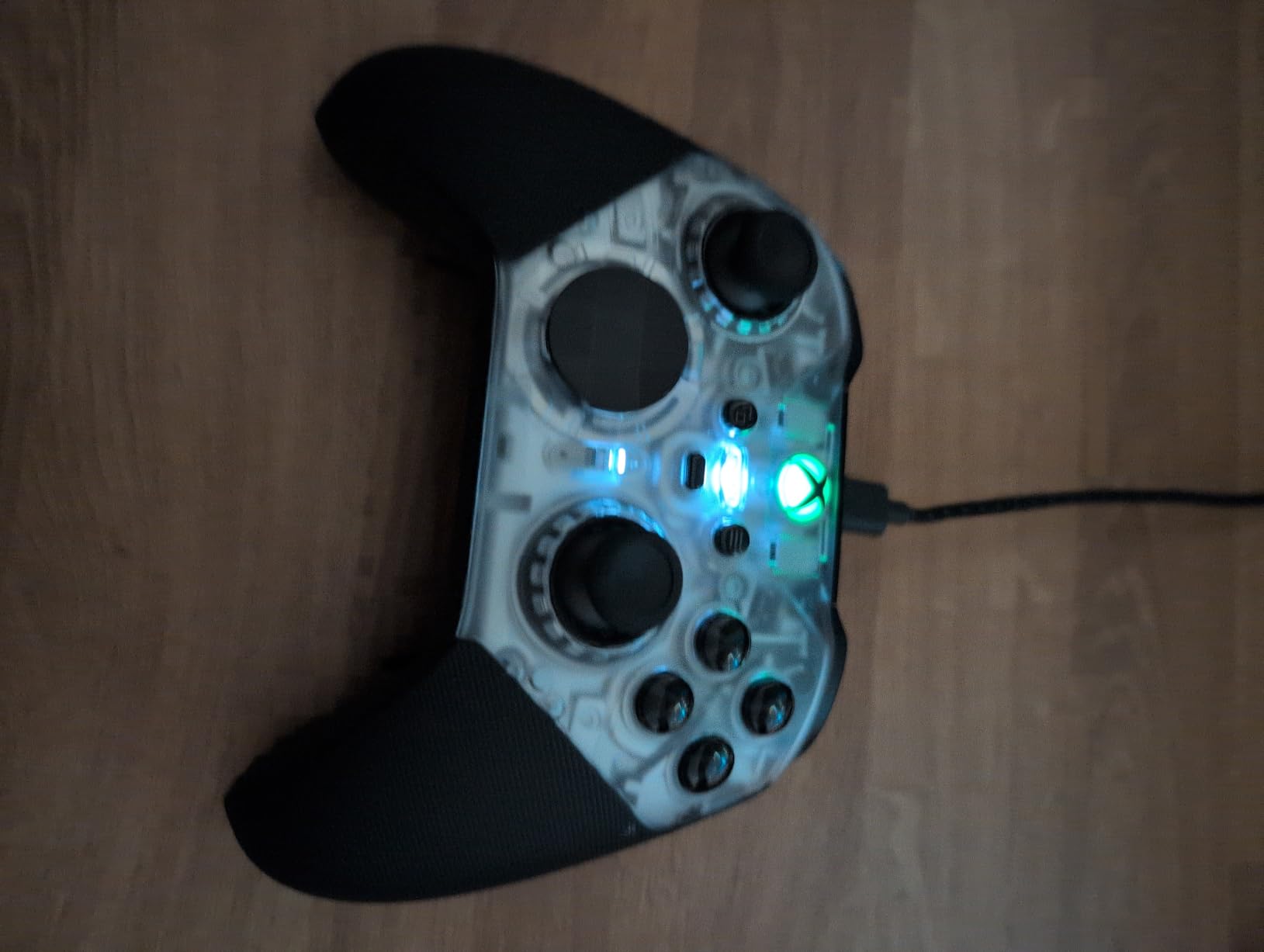
Why FPS players pick the Elite Series 2 Core
The trigger locks are the quiet hero feature here. Shortening trigger travel means your shot registers before your finger has finished its full press, which is exactly what you want in a fast rate-of-fire weapon. The tension tool adds a second layer: firm sticks reduce the tiny micro-movements that pull a reticle off a target during long sprays.
Because the tension tool and the trigger locks are both physical hardware controls, they stay set. Nothing resets when the console updates, which is a genuine reliability advantage over software-only remapping.
Where the Core edition falls short for shooters
The big one: the Core box does not include paddles. Most Elite buyers in competitive shooters end up buying the component pack separately, which changes the real cost of this recommendation considerably. If you are after paddles out of the box, skip to the GameSir G7 SE.
Second, it is a battery-powered wireless pad. That is the right choice for a living room setup, but a desk player who wants the absolute shortest path from finger to input will find a wired pad more direct.
2. GameSir G7 SE Wired: Top Rated Hall Effect FPS Pad
- Hall effect sticks and triggers remove the drift mechanism entirely
- Two lockable back buttons can stop false triggers and remap inputs
- Removable braided cable gives real distance from the console
- GameSir Nexus app handles calibration
- deadzone tuning and profiles
- Firmware raises polling to 500Hz or 1000Hz on PC
- Pulsating trigger vibration plus asymmetric grip motor
- Higher polling modes are still flagged work in progress and can disable the audio jack
- Some games register rear button inputs inconsistently
- 3.5mm jack durability is a recurring weak point
- One-piece D-pad can misread diagonals
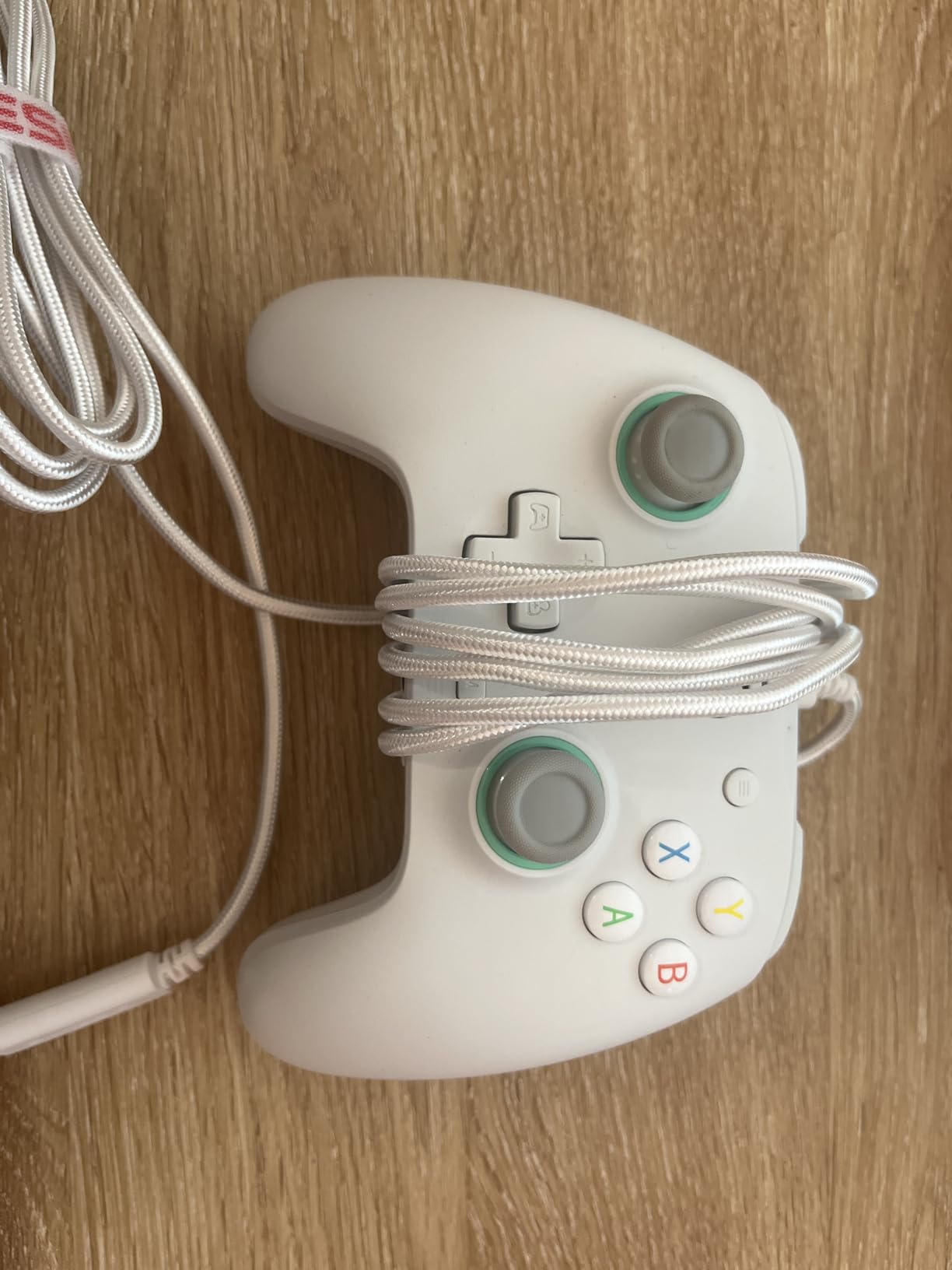
This is the pad we recommend to anyone who has owned a drifting Xbox controller and decided they never want to deal with it again. Hall effect joysticks and Hall effect triggers sense position magnetically rather than through a sliding contact, so the wear mechanism that produces drift is simply not part of the design. At 420 g it is also noticeably lighter than the Elite, which reduces hand fatigue over a long session.
Two lockable back buttons sit on the rear. Lockable matters more than it sounds: a back button that fires on a slightly wider pull is worse than no back button at all, and the lock narrows the activation window. The Nexus app adds calibration, deadzone tuning, stick remapping and three on-controller profiles.
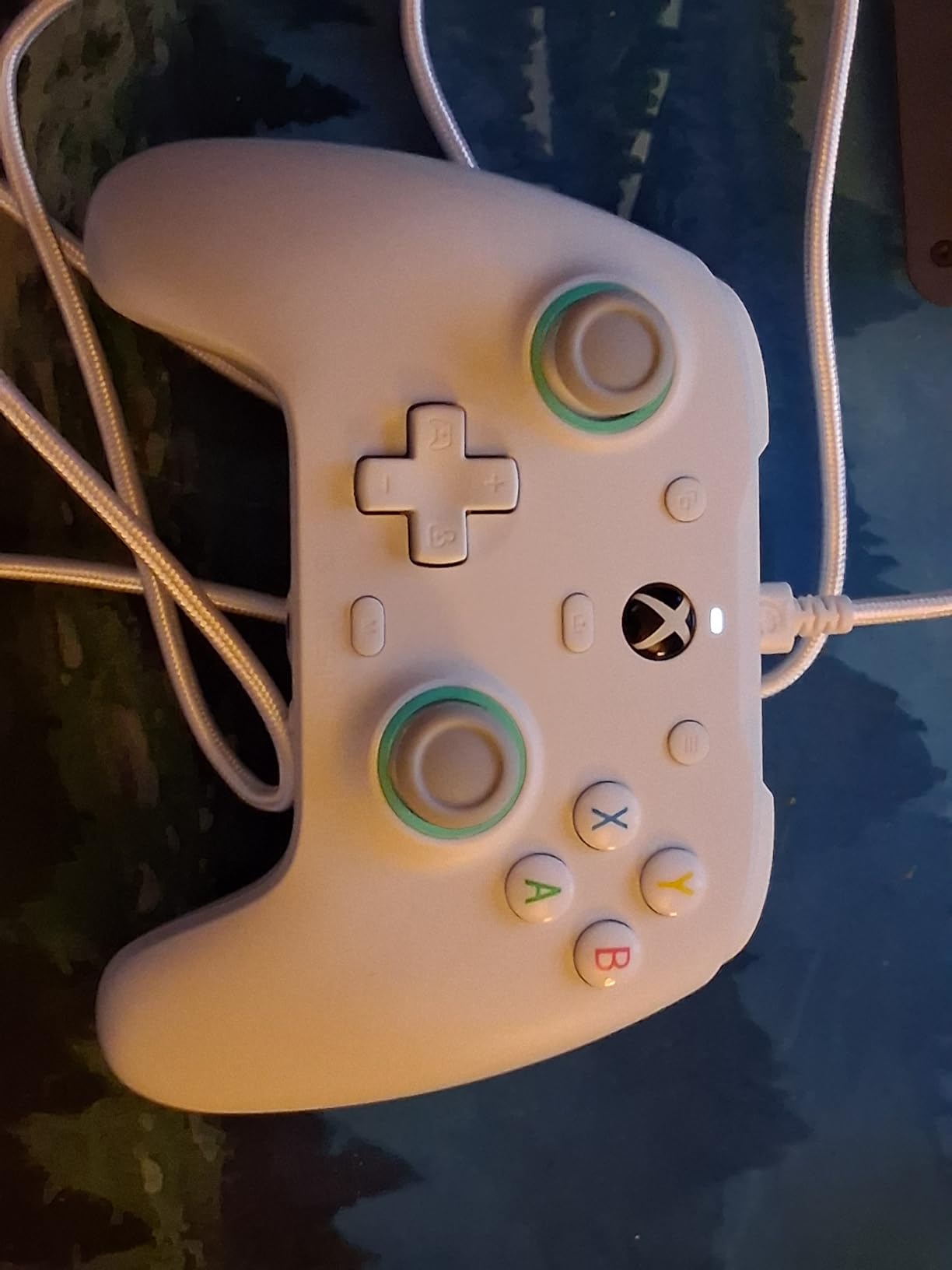
The removable braided cable is a genuine upgrade over a fixed lead. Its extra length means you can sit at a desk at a tournament setup rather than playing with the pad tethered at arm’s length. A firmware update also raises the wired polling rate from 250Hz up to 500Hz or 1000Hz, which matters on PC and does nothing on console.
Haptics go further than most budget pads. The pulsating vibration trigger is the first thing buyers notice, because it changes how a shot feels rather than just how it sounds.
Why this is the value pick for competitive shooters
Buyers consistently report that the drift-free sticks are the reason they kept the pad, and the Nexus app profiles are the reason it replaced their old pad as their main gamepad rather than a backup. Having your shooter layout stored on the controller means you never re-map it between matches.
Lockable rear buttons also let you disable a rear input entirely if a particular game misreads it, which is a useful escape hatch when one title does not cooperate.
What to watch out for
The higher polling modes are the honest weak spot. They are described as still maturing, and switching them on has been linked to the 3.5mm audio jack dropping out and to spurious input spikes. If you rely on a wired headset through the controller, stay on the standard mode.
Some games also register the rear buttons inconsistently, and the one-piece solid D-pad can read diagonals as a single direction. If you play a lot of retro shooters or fighting games, this is not the pad for you.
3. Razer Wolverine V2 Wired: Best for Fast Trigger Pulls
- Two underside slide-locks enable hair trigger mode for faster rate of fire
- Mecha-tactile action buttons and D-pad give crisp cushioned feedback
- Remappable front-facing buttons avoid rear paddles interfering with grip
- Contoured non-slip rubber grips stay secure in long sessions
- Solid wired build with no batteries or pairing needed
- Extra front buttons ship with pre-bound mappings that must be cleared in software
- Remapping uses the Razer Controller Setup app rather than Synapse
- The centre Xbox indicator light is bright and cannot be dimmed
- Trigger stops change actuation timing
- Cable is plain plastic
The Wolverine V2 is our pick when trigger feel is the deciding factor. Two slide-locks on the underside cut trigger travel to hair-trigger mode, and the mecha-tactile action buttons and D-pad produce the crispest, most deliberate feedback in this roundup. Many owners report minimal stick drift over years of use.
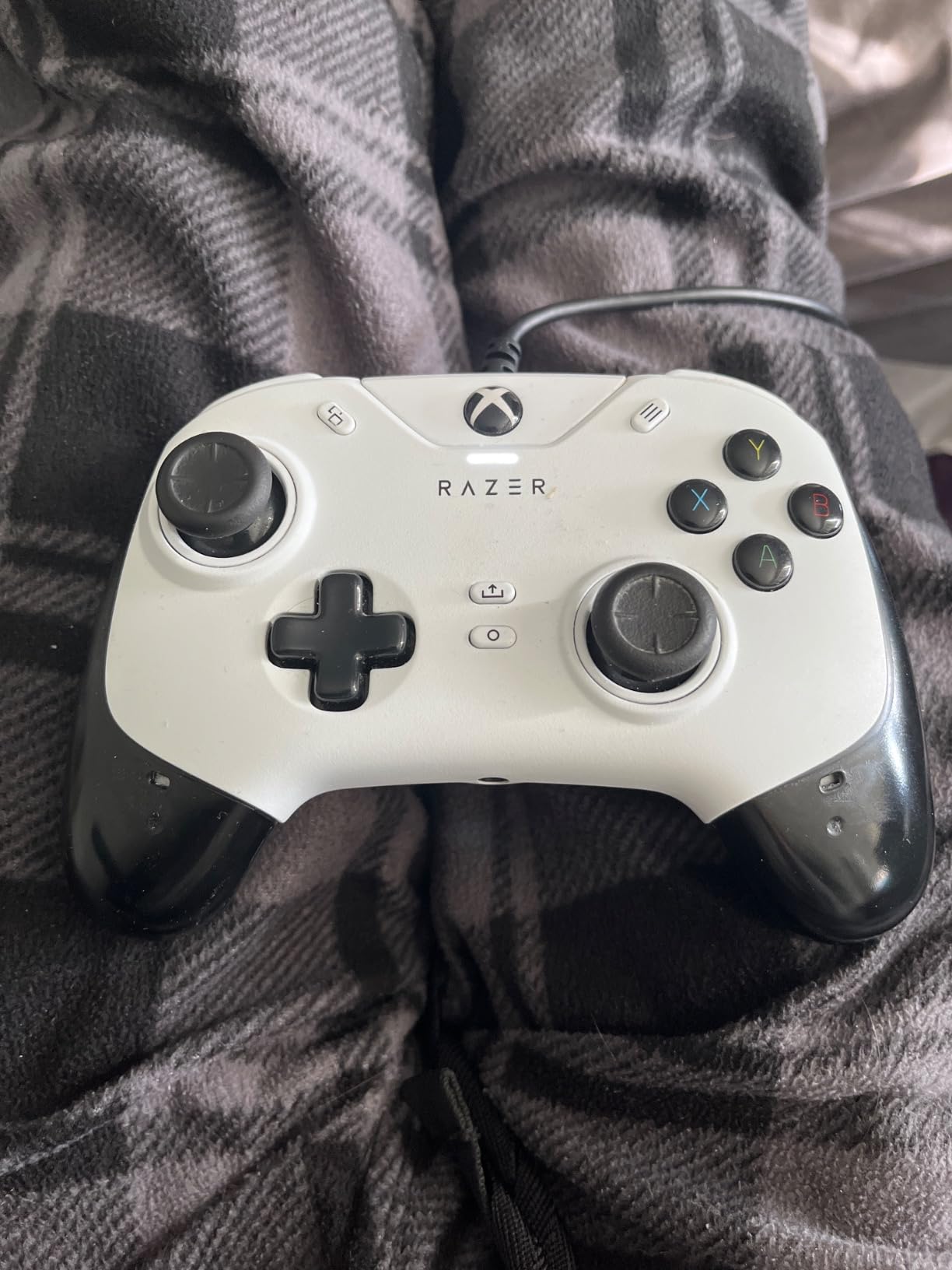
Its approach to extra controls is different from most. Instead of rear paddles, it adds two remappable front-facing buttons on the face, above the bumpers on each side. That is a deliberate choice: paddles can interfere with grip, and front buttons never do. It also means you do not have to rebuild muscle memory for movement inputs.
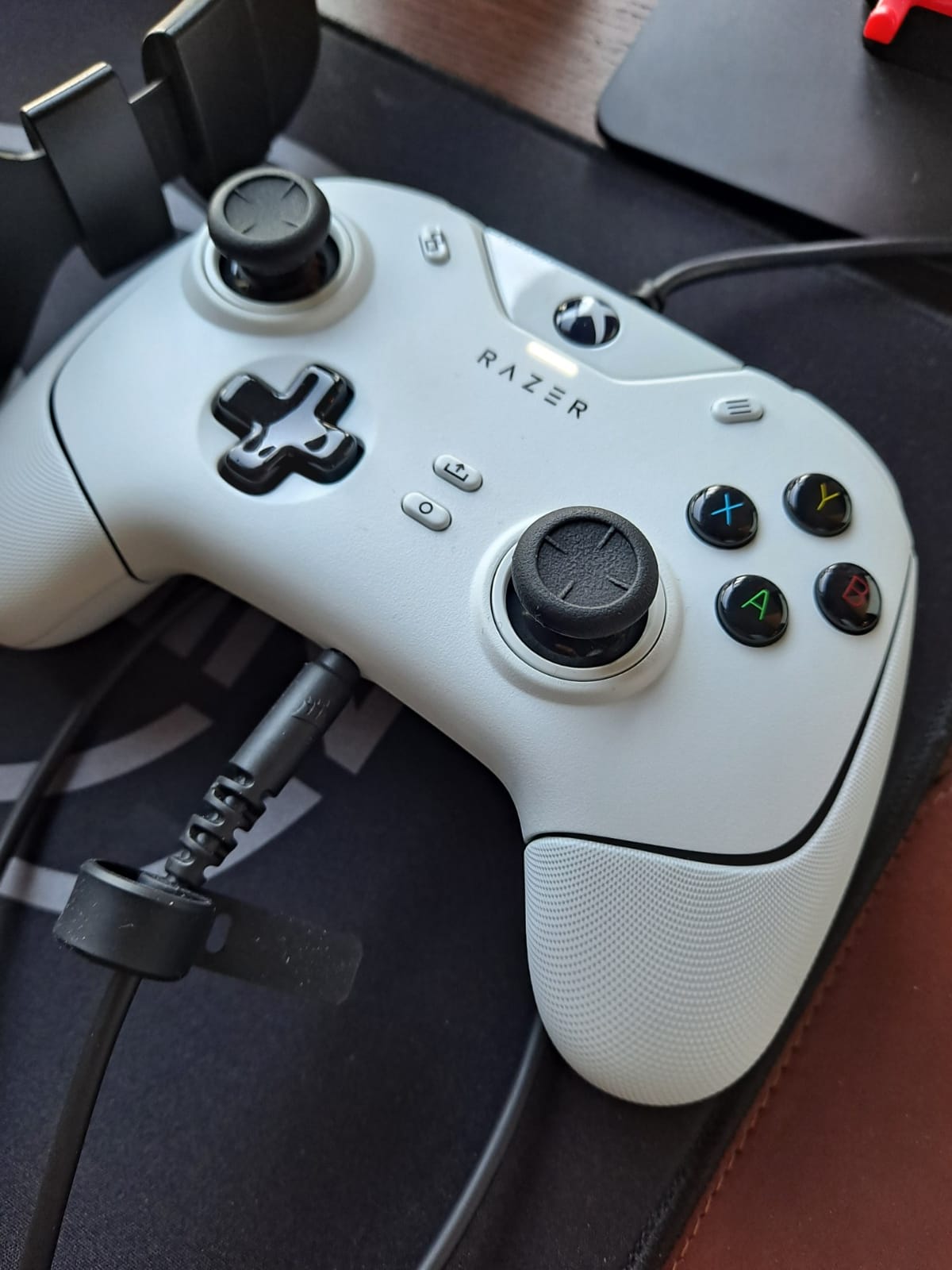
The wired design needs no pairing and no charging, which makes it the simplest pick on this list to move between a console and a PC. It is officially licensed and developed alongside Xbox, and it works across Xbox Series X|S, Xbox One and Windows.
At 9.6 ounces the shell is light, and the contoured non-slip rubber grips kept our hands planted during long ranked sessions.
A 3.5mm analog audio port sits on the underside, so you can run a wired headset without an adapter and lose that extra layer of wireless compression on your game audio.
Why FPS players like the front buttons
Front-facing remappable buttons are useful for inputs you fire often without thinking: weapon swap, tactical equipment, ping or scoreboard. Because they sit where your index and middle fingers already rest, they cost almost nothing to learn, which is the opposite of the paddle learning curve.
The mecha-tactile switches are also unusually consistent. Face buttons that break cleanly at a set point help you build a repeatable trigger discipline, which is the single biggest thing a shooter can train.
Where it frustrates people
The two extra buttons ship with pre-bound mappings that have to be cleared in software before they behave, and remapping happens in the Razer Controller Setup app rather than Synapse. That is one extra step than most owners expect.
Two smaller complaints: the centre Xbox indicator light is extremely bright and cannot be dimmed in software, which matters in a dark room, and the trigger stops change actuation timing, so switching them on mid-ranked-session will cost you accuracy for a few games.
4. GameSir G7 Pro Wired: Best for 1000Hz PC Play
- TMR sticks combine magnetic sensing with potentiometer-style feel
- Stick modules are user-replaceable without tools
- Hall effect analog triggers switch to micro-switch trigger stops
- 1000Hz polling on PC over wired and 2.4G
- Four extra buttons including lockable back paddles and mini bumpers
- GameSir Nexus app adds gyro aiming and stick curve adjustment
- Must be wired on Xbox so the 1000Hz polling does not apply on console
- Fully clicky switches on every button including the D-pad
- Trigger stops and some pads have reported inconsistent microswitch reads
- Magnetic faceplate button holes can be tight and cause rub
The G7 Pro is the pick for players who split time between an Xbox console and a PC and want the fastest possible input path on the PC side. It reports 1000Hz polling over both wired and 2.4G on PC, and the Mag-Res TMR sticks are a newer magnetic sensing approach that reviewers describe as the durability of Hall effect with the feel of a potentiometer stick.
Hall effect analog triggers give a smooth, linear pull and can be switched to micro-switch trigger stops for a shorter, more immediate shot. Four extra buttons round it out: lockable back paddles plus L5 and R5 mini bumpers, which is the same rear control coverage the wireless G7 Pro offers.
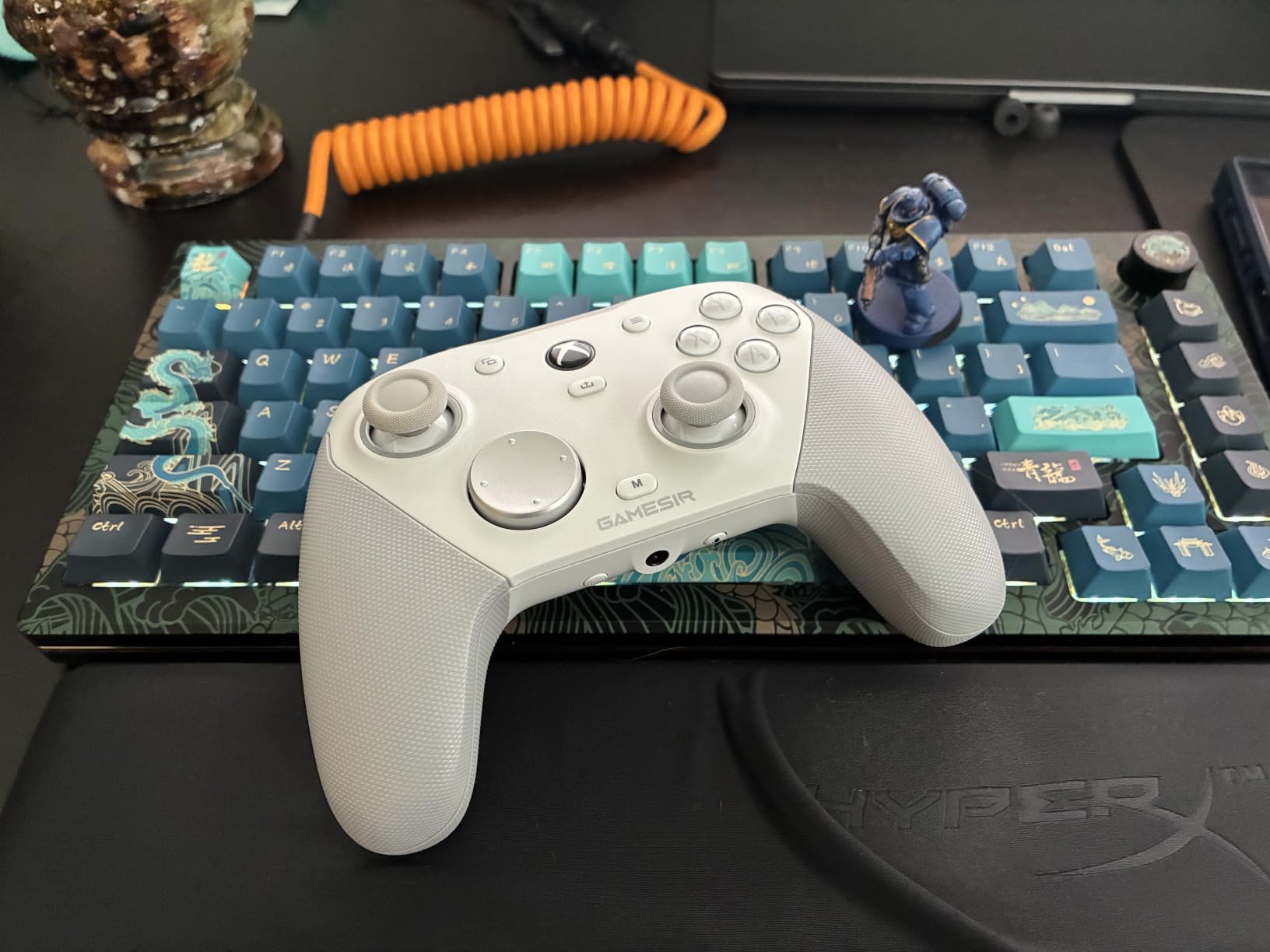
The stick modules are user-replaceable without tools, which is a repairability win that matters over years of play. A stick that starts feeling loose on any controller is a hardware failure, and on this one you can change it rather than buy a new pad.
It comes with a Smart Auto Start-Stop charging dock and a 1200mAh battery, and the Nexus app handles gyro aiming, stick curve adjustment and button-to-mouse mapping.
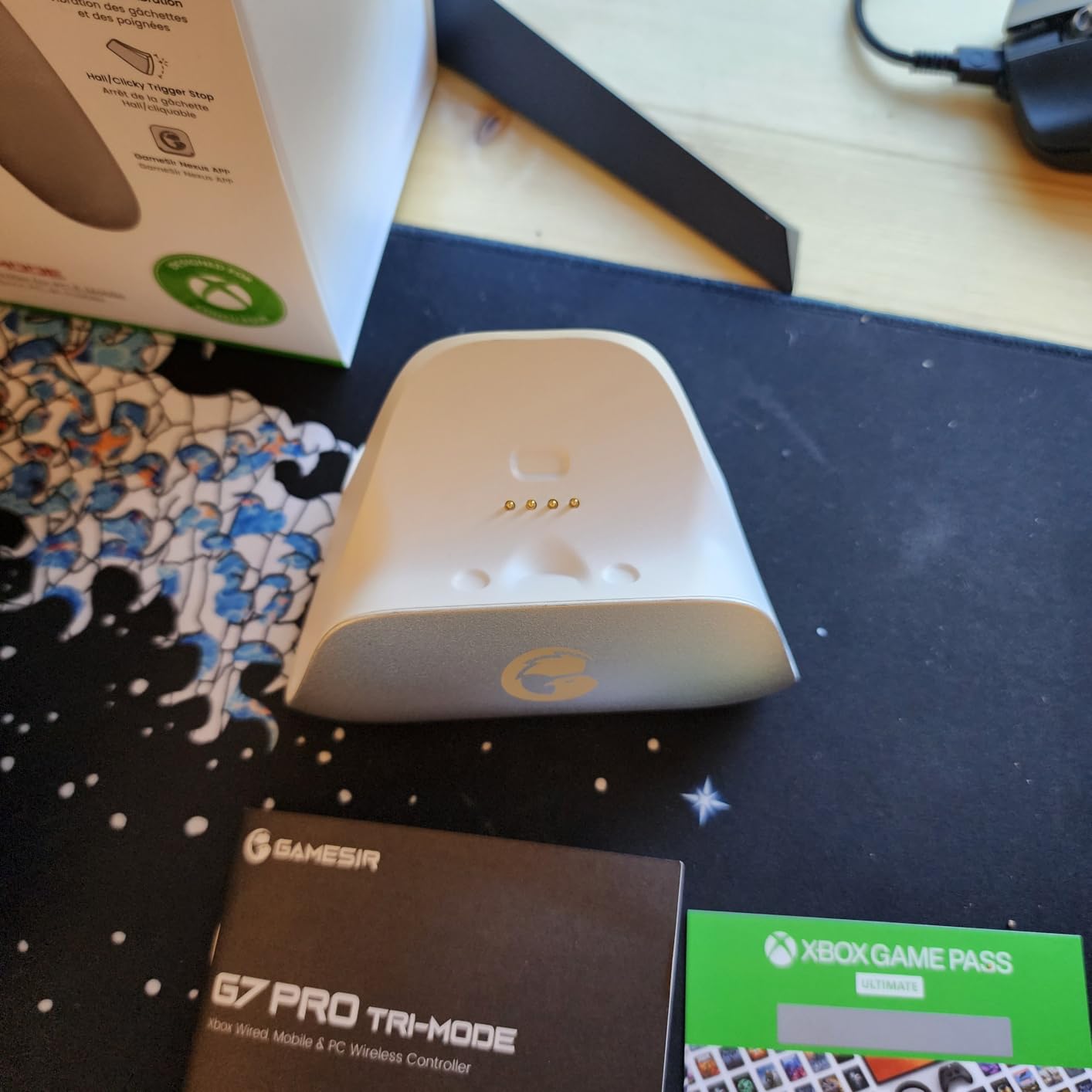
Why the TMR sticks matter for aiming
TMR sensing removes the sliding contact from the stick, which is the wear surface behind drift. On top of that, the stick modules swap out by hand, so a worn module is a five-minute fix rather than a replacement purchase.
For PC shooters the polling rate is the headline. Report your input more often and the gap between your finger moving and the game reacting shrinks, which is why this pad is popular with players who also use a wired gaming mouse for FPS on the same machine.
Where it falls down
The important caveat is that on Xbox this pad is wired. The advertised 1000Hz polling is a PC-side spec, and consoles cap the polling far lower regardless of what the pad supports. If you only play on console, that headline number does nothing for you.
Every button including the D-pad uses a fully clicky switch, and not everyone finds that natural. There are also reports of inconsistent microswitch reads on trigger stops and a small number of faulty pads, so keep the return window in mind.
5. Xbox Wireless Controller Shock Blue: Best First-Party Comfort Pick
- Highest satisfaction rating in this roundup with 86% of reviews at five stars
- Modernized sculpted surfaces and updated geometry for long sessions
- Hybrid D-pad plus textured triggers
- bumpers and back case
- Share button for quick screenshots and clips
- Xbox Wireless
- Bluetooth and USB-C with fast device switching
- 3.5mm headset jack for direct voice chat
- Uses standard potentiometer thumbsticks rather than anti-drift sticks
- Battery powered wireless so it needs periodic recharging
- Some units arrive without a battery compartment cover or in poor condition
The first-party pad is still the most comfortable thing most people can hold, and this generation modernizes the shape with sculpted surfaces and updated geometry. At 13.6 ounces it is the lightest wireless option here, and the textured triggers, bumpers and back case genuinely help you find the controls without looking.
The hybrid D-pad is a real upgrade for movement. It clicks with the precision of a mechanical switch in four directions but has the light, rolling feel of a disc in between, which suits strafing and sprinting better than a cross-shaped pad.
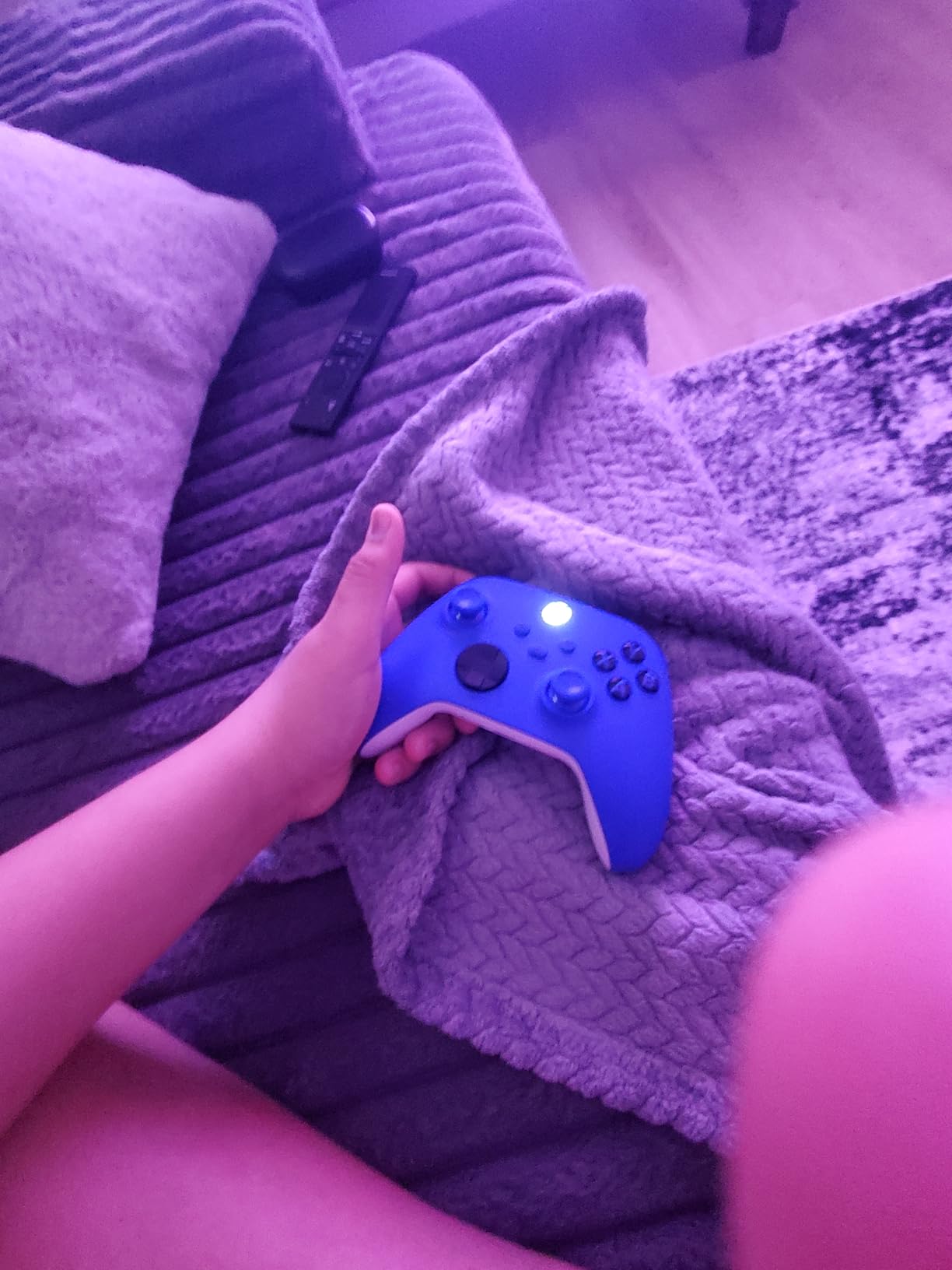
The Share button captures screenshots and clips mid-match, and the Xbox Accessories app handles button remapping and custom profiles. A 3.5mm headset jack means direct voice chat without an adapter. This is the pad with the highest rating in our roundup, at 4.7 across 1900+ reviews, with 86% of reviews at five stars.
If you play a mixed library rather than only shooters, the fast Bluetooth switching between console, PC and mobile is the feature you will appreciate most.
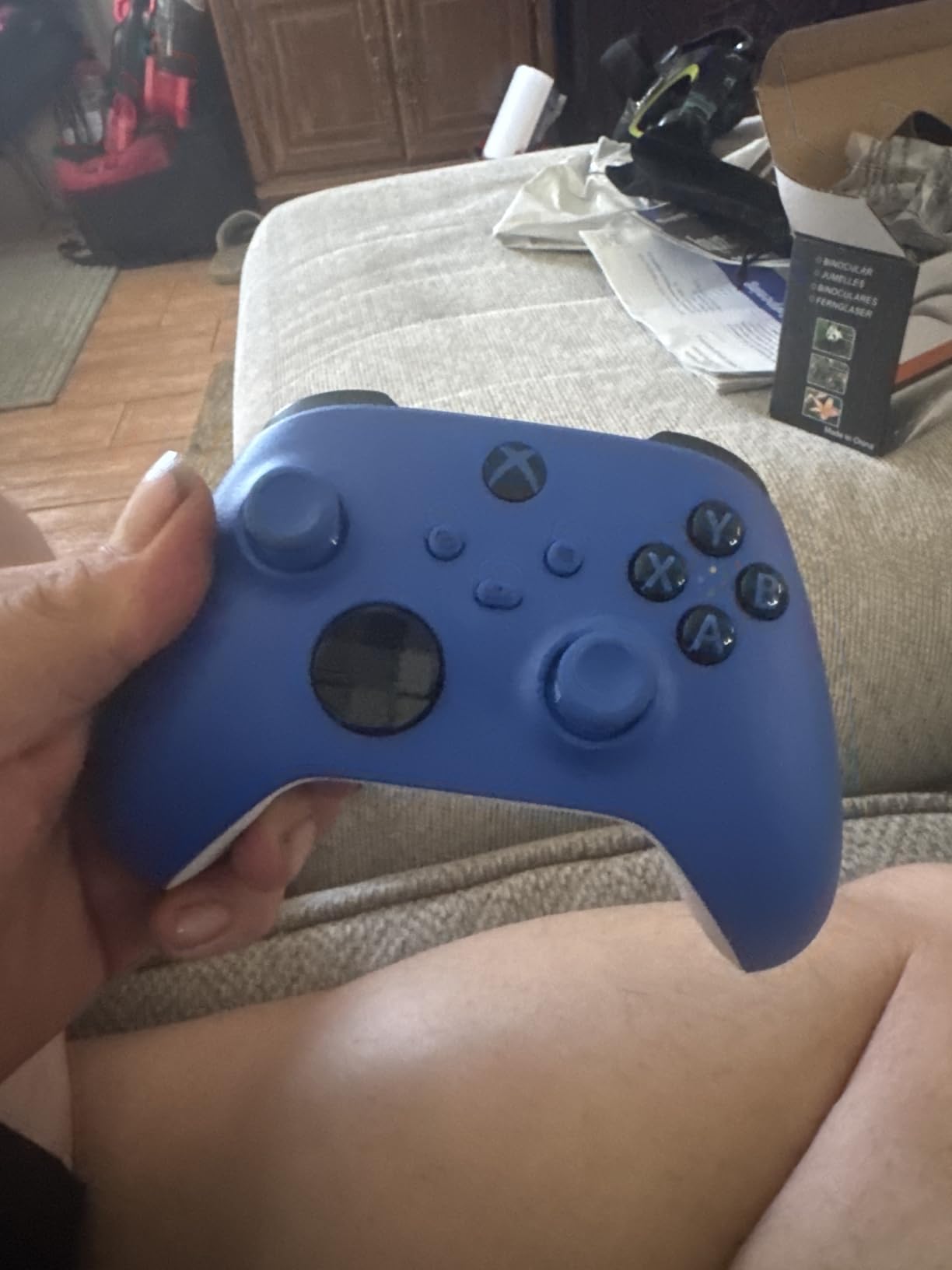
Why it suits casual and crossover shooters
For a player who splits time between a shooter, a sports game and a single-player title, this pad is the least annoying choice. The sculpted shell holds a comfortable shape across very different games, and the share button means you are not fumbling for a capture combination mid-match.
Remapping through the Xbox Accessories app also means any layout you build here works on other first-party and licensed pads, which reduces friction if you ever switch.
Why it is not our competitive recommendation
The reason it sits fifth is the sticks. These are standard potentiometer thumbsticks, which is exactly the contact-based design that eventually drifts. If you have drifted a Microsoft pad before, this one will drift too.
There are no paddles and no trigger stops either, so you are giving up both of the two features that matter most in a competitive shooter. For ranked play where you want every advantage available, spend up.
6. GameSir G7 Pro Wireless: Best for 2.4G Wireless on Xbox
GameSir G7 Pro Wireless XBOX Controller,TMR Sticks,Windows,Trigger Stops
- Only high-end option here with true 2.4G wireless on Xbox
- Mag-Res TMR joysticks give virtually zero stick drift
- Hall effect analog triggers toggle to micro-switch click
- Optical micro switch ABXY and mechanical micro switch D-pad
- Four remappable buttons including mini bumpers and lockable paddles
- Officially licensed for Xbox Series X
- S and Xbox One with one-press wake
- View and menu buttons sit higher and force a hand reposition mid-match
- Replacement faceplates and buttons are limited in availability
- Battery life is adequate rather than exceptional
- Profile switching needs app commands rather than a hardware button
This is the answer for players who want a competitive layout and refuse to play on a cable. It is the only high-end pad in this roundup with true 2.4G wireless on Xbox, and players who bounced off Elite Series 2 drift and bumper failures consistently rate this as the replacement that worked.
The TMR joysticks are the draw. Reviewers report virtually zero drift with precise, consistent aim, and the Hall effect analog triggers let you switch between an analog pull and a micro-switch click depending on the weapon you are holding.
Optical micro switches on the ABXY buttons and mechanical micro switches on the D-pad give a crisp, durable feel that stays consistent over a long ranked season. Four remappable buttons include R5 and L5 mini bumpers plus lockable R4 and L4 back buttons, so you can assign movement without stacking everything on two inputs.
The box contents are unusually generous: swappable sticks and D-pads, a magnetic three-part faceplate, a charging dock, a carrying case and a 2.4G dongle.
Why wireless does not have to mean laggy
The polling rate story here is worth being precise about. The 1000Hz figure applies on PC over wired or 2.4G. On Xbox the console caps how often it samples input, so the number on the box does not transfer. What you actually gain is a stable wireless connection without the cable snagging your desk during a close match.
One-press wake-up on an officially licensed pad is a small detail that matters in practice. You are in the lobby and shooting within seconds instead of navigating a menu.
Where the layout annoys people
The most repeated complaint is the raised view and menu buttons, which force a hand reposition to reach mid-match. On a pad you are otherwise very happy with, that is a genuinely irritating interruption.
Replacement faceplates and buttons are also much harder to track down than the pad itself, and profile switching needs the app rather than a dedicated hardware button, so you cannot swap a shooter layout from the couch without your phone.
7. Turtle Beach Rematch Core Wired: Most Versatile with Hall Effect Sticks
Turtle Beach Rematch Core Wired Gaming Controller, Xbox Series X|S, PC
- Hall effect thumbsticks remove drift at a budget weight
- On-board controls for game and chat mix
- master volume and mic mute
- Control Hub app supports configuration and hardware diagnosis
- True plug and play and detected mid-game without a console restart
- Dual rumble motors plus impulse triggers
- Shell fits smaller hands
- The D-pad is the most criticized part and can misread up or down
- RB and LB buttons intermittently fail to register on some units
- Build feels light and plasticky with some early breakage reports
- Lowest rating in this roundup of all the pads we tested
The Rematch Core does one important thing right at this weight: Hall effect thumbsticks. If your priority is eliminating drift without spending on a premium pad, this is the cheapest way into magnetic sensing, and the on-board controls for game and chat mix, master volume and mic mute are genuinely useful at a glance mid-match.
It is a true plug-and-play pad. Owners report it being detected without a console restart, and the Control Hub app handles configuration and hardware diagnosis. Dual rumble motors and impulse triggers give more haptic feedback than most pads in this bracket.
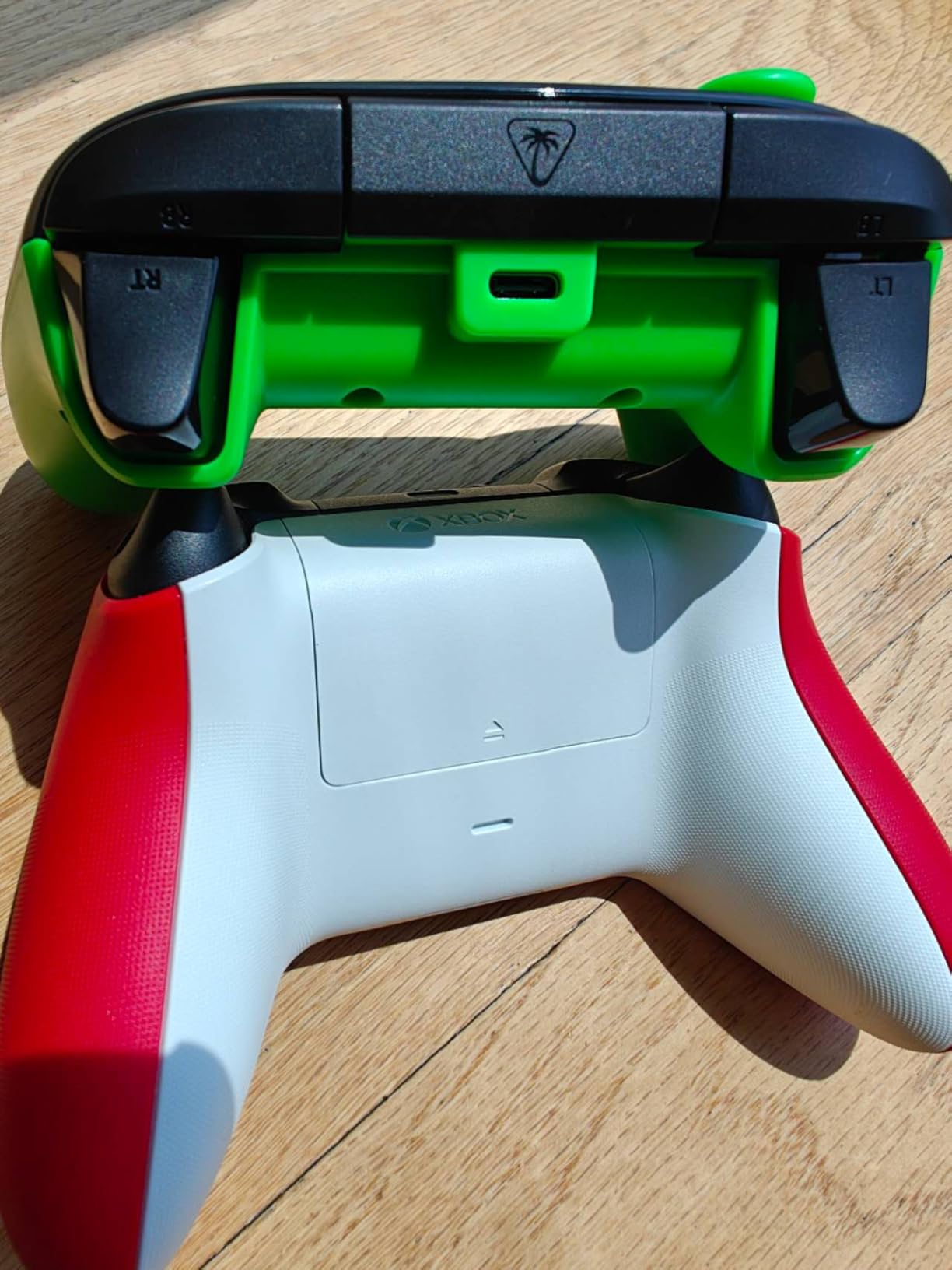
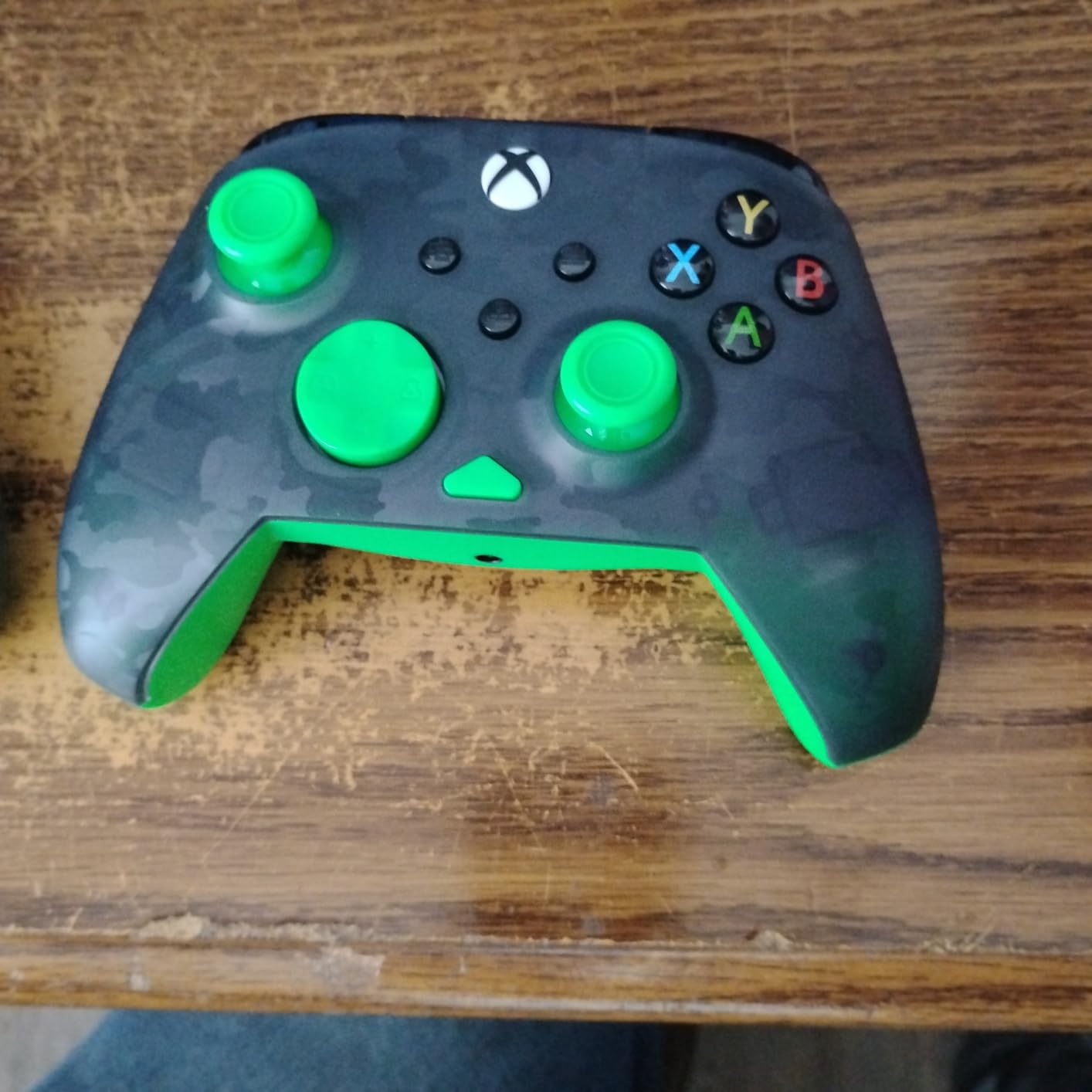
The shell is 280 g and shaped for smaller hands, which makes it a comfortable pick for players who find the Elite and the Razer too large. There are no paddles, so it is a stick-and-trigger upgrade rather than a competitive layout overhaul.
Our overall rating for it is the lowest in this roundup at 4.1, and the reason is concentrated in two buttons rather than the sticks.
When it makes sense
If you play on a laptop, share a controller with other people, or want a second pad that will not develop drift, the Rematch Core does its job well. The inline audio controls mean you are not navigating menus mid-match to mute yourself.
For smaller-handed players in particular, the shell size is a real advantage that outweighs the build-feel complaints.
Why competitive players should look elsewhere
The D-pad is the most criticized component and it registers up or down when you press a direction, which is unacceptable in a shooter where movement accuracy is the whole game. RB and LB buttons also intermittently fail to register on some pads.
Combined with a light, plasticky build and some early breakage reports, that is why it sits here rather than higher in the list. If you play shooters seriously, spend a little more.
8. PowerA Wired Controller: Best No-Frills Wired Backup Pad
PowerA Wired Controller for Xbox Series X|S – blue, gamepad, video game/gaming controller, works with Xbox One, Officially Licensed
- Officially licensed and works across Xbox Series X
- S
- Xbox One and Windows
- 10 foot USB-C cable gives far more distance than most wired pads
- Precision-tuned analog sticks with embedded anti-friction rings
- Simple layout with no extra buttons to hit by mistake
- Dual rumble motors and impulse triggers
- 3.5mm headset jack and PowerA Gamer HQ app for calibration
- Lightweight plastic build feels inexpensive and near weightless
- No anti-drift stick technology so potentiometer drift is a long-term risk
- Several owners report shoulder buttons sticking or failing
- No remappable paddles or trigger stops for competitive shooters
The PowerA pad is the second controller most households should own. It is officially licensed, it works across Xbox Series X|S, Xbox One and Windows, and the 10 foot USB-C cable gives far more distance from the console than most wired pads. With 13k+ reviews at a 4.2 rating, it is also one of the best-established budget pads for the platform.
The precision-tuned analog sticks use embedded anti-friction rings, which smooths the travel a little but does not change the underlying potentiometer design. Dual rumble motors and impulse triggers cover haptics, and the PowerA Gamer HQ app handles testing and calibration.
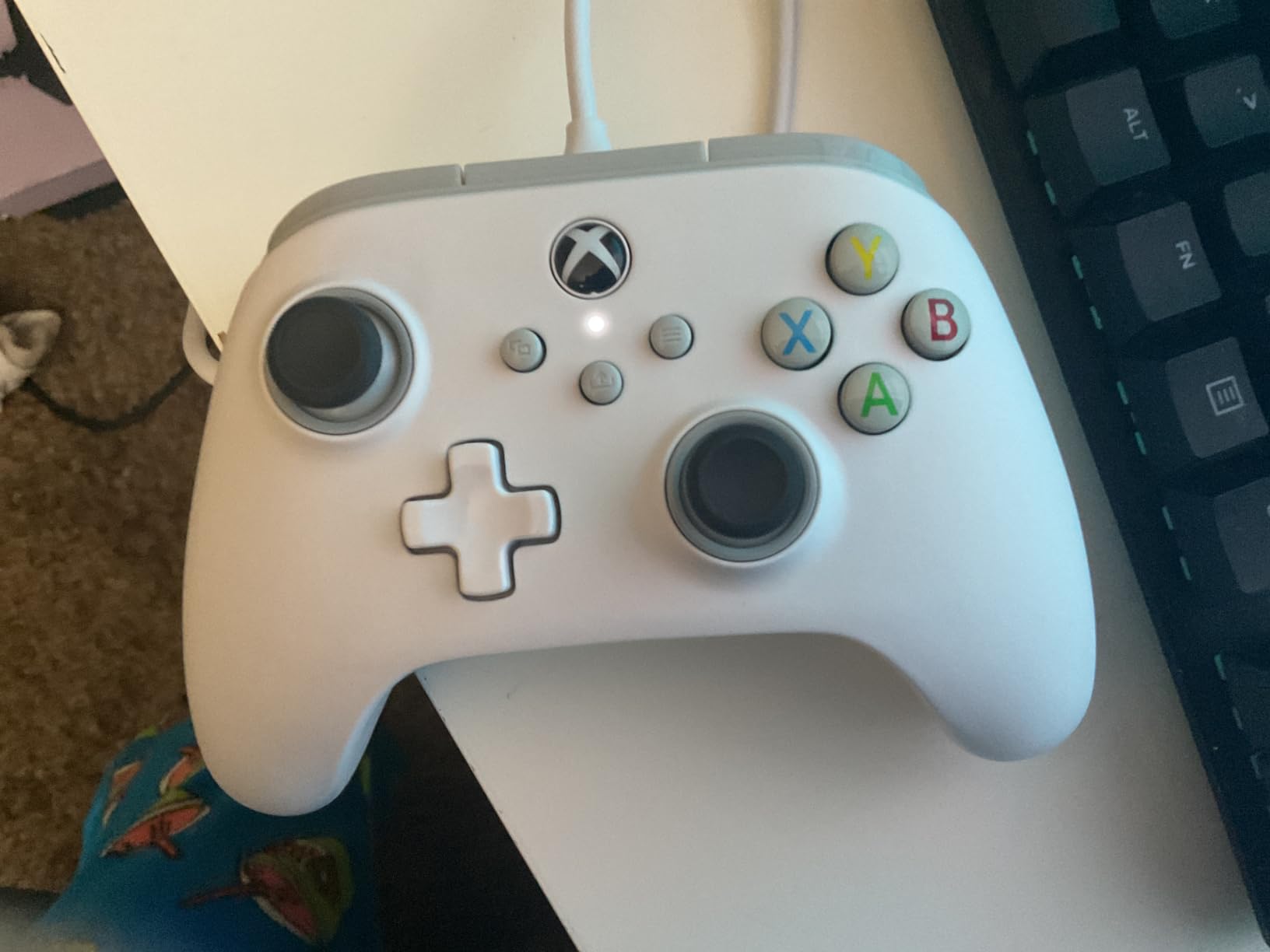
Its best feature for shooters is the clean button layout. There is nothing extra to press by accident in the middle of a firefight, which is a small thing that removes a whole category of misfire complaints on more crowded pads.
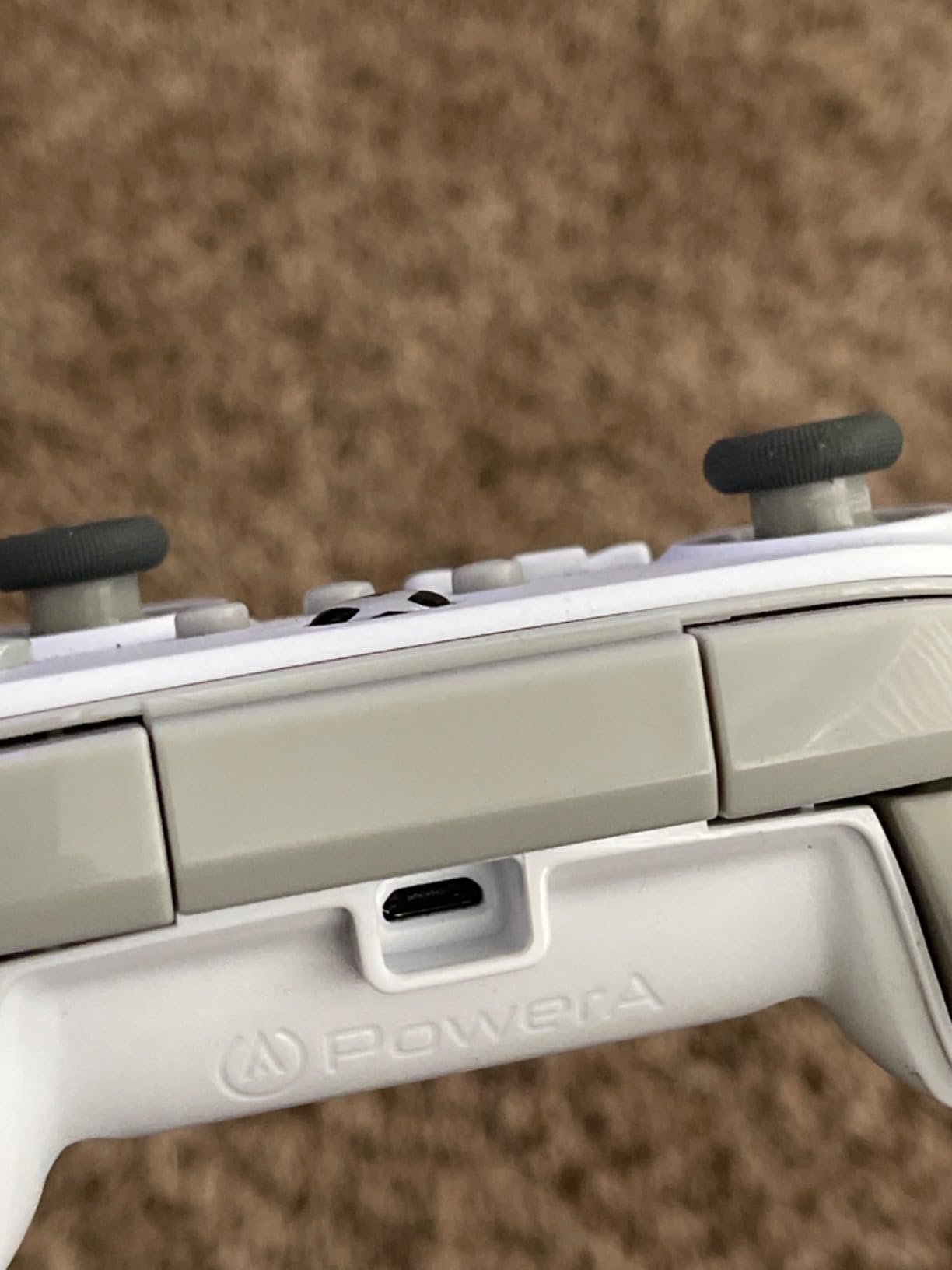
A 3.5mm headset jack and a two-year limited warranty round out a package that is clearly built for reliability rather than feature count.
Why it works as a second controller
Co-op shooters, local multiplayer and party setups are the obvious use. Two players, no pairing, no battery, no firmware, and a cable long enough to sit at opposite ends of a couch.
Because it is wired, there is no battery to manage and no pairing to re-establish. For a pad that gets grabbed in a hurry, that simplicity is worth more than a spec sheet.
Why it is not a competitive pick
Be clear with yourself about the trade: no anti-drift sticks means potentiometer drift is a known long-term risk, and there are no paddles or trigger stops to build a competitive layout around. It also feels near weightless in hand at 7.2 ounces, and some owners report shoulder buttons sticking or failing within months.
As a reliable backup or a co-op pad it is very good. As your main shooter controller, it will eventually frustrate you.
How We Picked the Best Xbox Controllers for FPS Games
We treated this as a buying decision rather than a spec comparison. Five criteria decided every ranking, and each one maps to something you will feel in a match.
1. Trigger actuation and travel. A controller is competitive if your shot registers when your finger tells it to. We compared hair trigger locks, trigger stops and adjustable analog pulls, and we penalised pads that force a software step to reach them.
2. Stick sensing and return. We checked whether the thumbsticks use a sliding potentiometer or contactless magnetic sensing, and we looked at whether the stick modules are replaceable. Drift is a wear failure, so build method is the evidence, not marketing language.
3. Rear control coverage. Two back buttons, four paddles, or nothing at all. We counted them separately and kept them straight, because that difference is routinely misdescribed.
4. Input delay on the platform you actually play on. Console polling is capped by the console, so a 1000Hz figure on a PC pad tells you nothing about Xbox performance.
5. Grip and switch feel over a long session. Weight, texture, back case shape and whether your hand stays planted during a spray. A pad that cramps after two hours costs you accuracy.
We also weighted the volume of owner feedback. Every pad here carries thousands of reviews, and the recurring criticisms in those reviews mattered as much as the spec list. Where buyers repeatedly report one broken component, we said so rather than smoothing it over.
What to Look for in an FPS Controller: Sticks, Triggers, Paddles and Polling Rate
Hall Effect vs TMR vs potentiometer thumbsticks
This is the question that comes up most, so here is the plain version. A potentiometer stick senses position through a sliding contact between a wiper and a resistive track. That contact wears, and worn contacts produce drift, where the character moves on its own while the stick sits still.
Hall effect sticks sense stick position magnetically. There is no sliding contact in the sensing path, so the wear mechanism behind drift is not part of the design. TMR, short for tunnel magnetoresistance, is a newer magnetic sensing approach that reviewers describe as combining Hall effect durability with a potentiometer-style feel and a tighter dead zone.
Important honesty note: sensor type alone does not prove better aim. It proves resistance to drift. Feel, dead zone tuning and stick tension still decide how the stick behaves in your hands, which is exactly why the Elite Series 2 Core ranks first on potentiometer sticks with adjustable tension.
Rear paddles versus back buttons: the difference people get wrong
A paddle is a curved finger lever on the rear of the grip, operated with your index finger while your thumb stays on the stick. A back button is a flat button on the rear shell. Paddle counts on our list range from two lockable back buttons on the GameSir G7 SE to four inputs on the GameSir G7 Pro pads, which add L5 and R5 mini bumpers to the lockable rear buttons.
Two is generally enough for jump and crouch. Four lets you assign slide, melee or weapon swap as well. More inputs is not automatically better, because every added binding is another thing to learn.
Mouse-click triggers, hair triggers and trigger stops
Instant triggers work by shortening the physical travel before the trigger fires. There are three common implementations: mechanical trigger stop switches that lock the travel short, hair trigger mode toggled by a switch or app setting, and adjustable trigger tension. All three reduce how far your finger must travel, and all three work in the same direction, which is a faster shot.
The one caution is that changing actuation timing disrupts muscle memory. Switch hair triggers on and give yourself a few matches to readjust, ideally not the day you start a new ranked season.
Polling rate is a PC spec, not a console one
Polling rate is how often a controller reports your input to the computer. A 1000Hz pad reports a thousand times per second, which closes the gap between your finger moving and the game reacting. Your Xbox console samples controller input far less often and caps what it will accept, so a 1000Hz pad plugged into an Xbox behaves like any other controller.
This is a misconception we found repeated often in forum threads. If you play on console, judge these controllers on triggers, paddles and stick sensing. If you play on PC, polling rate is a genuine differentiator and it is the reason the GameSir G7 Pro Wired sits where it does.
Wired versus wireless on console and PC
On PC, 2.4G wireless at 1000Hz is now competitive with a cable. On console, wireless has no measurable input advantage and no disadvantage either, so the real reasons to choose are practical: do you want a cable across your desk during a match, and does your room allow a clean signal.
At tournaments, a wired pad removes an entire category of problem. Interference, a dropped 2.4G link mid-round and a controller that will not wake are real, and they are all avoidable with a cable.
How to remap a competitive layout without wrecking your accuracy
Start with three bindings and no more: jump, crouch and slide if your game has one. Assign them to the two rear buttons and one mini bumper, then play five matches before adding anything. Adding bindings earlier is how players end up with a layout they cannot use under pressure.
Save that layout as a profile on the controller rather than re-mapping each session. Xbox Accessories and GameSir Nexus both support stored profiles. Keep a separate profile for non-competitive games so you are not fighting your own muscle-memory habits.
Stick module repair versus buying a new controller
If a stick on a modular pad starts pulling, check whether the module is replaceable before you write the whole controller off. The GameSir G7 Pro Wired has user-replaceable stick modules that come out without tools, which turns a hardware failure into a small parts job.
On a pad where the sticks are soldered, a drifting stick is effectively the end of the controller’s competitive life. That is the honest reason to move toward magnetic sensing before it happens rather than after.
Why PlayStation controllers are not on this list
Several people searching for the best xbox controllers for fps games are actually looking at PS4 and PS5 pads. This list is Xbox-only by intent: paddles, Hall effect modules and the Xbox Accessories remapping path all differ by platform, and a PlayStation pad cannot replicate the Xbox competitive layout.
If you also play fighting games or PC titles that reward a more neutral shape, our fighting game controller picks cover that side properly.
Frequently Asked Questions
What Xbox controllers do pro gamers use?
There is no single pro standard. Most competitive players use an officially licensed pad with rear paddles, short trigger travel and drift-free sticks. Elite Series 2 remains common, but a growing share use Hall Effect or TMR third-party pads such as the GameSir G7 Pro because they refuse to deal with drift. At events, a wired pad is common simply because it removes connection problems.
Is it worth getting an Elite Series 2 for FPS games?
Yes, if you want adjustable stick tension and hair trigger locks, and you are comfortable that the Core edition ships without paddles. Many competitive buyers buy the component pack separately, which raises the real cost. If drift is the thing that bothers you most, a magnetic-stick pad is the better long-term purchase.
Which Xbox controller with paddles is the best?
The GameSir G7 Pro Wireless has the most rear control coverage, with four remappable inputs including L5 and R5 mini bumpers plus lockable back buttons. The GameSir G7 SE is the best budget option with two lockable back buttons, and it adds Hall effect sticks. If you want paddles on a first-party pad, the Elite Series 2 component pack is the route.
Which controller gets less stick drift?
Any pad using Hall effect or TMR magnetic sensing, because it removes the sliding contact that wears out. In this roundup that covers the GameSir G7 SE, both GameSir G7 Pro models and the Turtle Beach Rematch Core. The Elite Series 2 Core and the first-party Xbox pad use potentiometers and will drift eventually.
What are the downsides of Hall Effect joysticks?
They are not a complete cure for every input problem. Drift resistance does not change how the stick feels, and you still need to tune dead zone and stick tension. Magnetic sticks can also draw more power, which matters on a wireless pad, and some pads report tighter faceplate button holes or squeak. Judge the tuning, not just the sensor.
Final Verdict for Xbox FPS Players in 2026
Pick the Xbox Elite Series 2 Core if you want adjustable stick tension and hair trigger locks and you can live without paddles on day one. Pick the GameSir G7 SE if drift has ever cost you a match and you want Hall effect sticks and lockable back buttons without a battery. Pick the GameSir G7 Pro Wireless if you refuse to play on a cable, and the GameSir G7 Pro Wired if you split your time between console and PC and care about 1000Hz polling.
Whichever you choose, bind three inputs, save the profile to the controller and give yourself five matches before changing anything. That habit is worth more than any spec on this list.
If you play on PC as well, our picks on the best wireless gaming mice for competitive FPS cover the mouse side of the same question.