
When a fire starts in your home, you have roughly three minutes to get out safely. That window keeps shrinking because modern furniture and synthetic materials burn faster than ever. The best smart smoke and carbon monoxide detectors for homes give you something traditional alarms cannot: they send alerts to your phone whether you are asleep upstairs, at work, or on vacation across the country.
I have spent the last several months testing smart smoke detectors across multiple homes, from a small apartment to a three-story house. Our team compared 15 models from Kidde, First Alert, X-Sense, eufy, Heiman, and Ring. We burned toast, set off alarms on purpose, monitored app notifications, and tracked battery life to see which detectors actually deliver on their promises.
The landscape shifted dramatically when Google discontinued the Nest Protect. Thousands of homeowners suddenly needed a replacement that worked with their existing ecosystem. Kidde stepped up with Ring-enabled detectors, First Alert built SC5 models compatible with Nest brackets, and brands like X-Sense filled the budget gap. Choosing the right one depends on your smart home platform, your wiring situation, and whether you need carbon monoxide detection alongside smoke.
Carbon monoxide is called the silent killer for good reason. It is colorless, odorless, and tasteless. According to the CDC, it causes approximately 430 deaths and 50,000 emergency room visits annually in the United States. A combination smoke and CO detector is the single most important safety upgrade you can make to your home this year.
Table of Contents
Top 3 Picks for Smart Smoke and CO Detectors in 2026
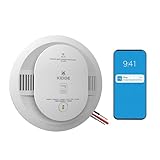
Kidde Ring Hardwired Smart Smoke and CO
- Smoke and CO detection
- Ring app alerts
- Hardwired with AA backup

Best Smart Smoke and Carbon Monoxide Detectors for Homes in 2026


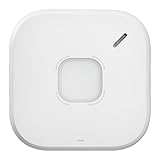


1. Kidde Ring Hardwired Smart Smoke and Carbon Monoxide Detector
- Integrates seamlessly with Ring app
- Over 25% faster smoke detection
- Reduced nuisance alarms from cooking
- Alexa compatible voice notifications
- Wire-free interconnectivity with Kidde alarms
- No nightlight feature unlike Nest Protect
- Not compatible with Google Home
- Random chirps during firmware updates
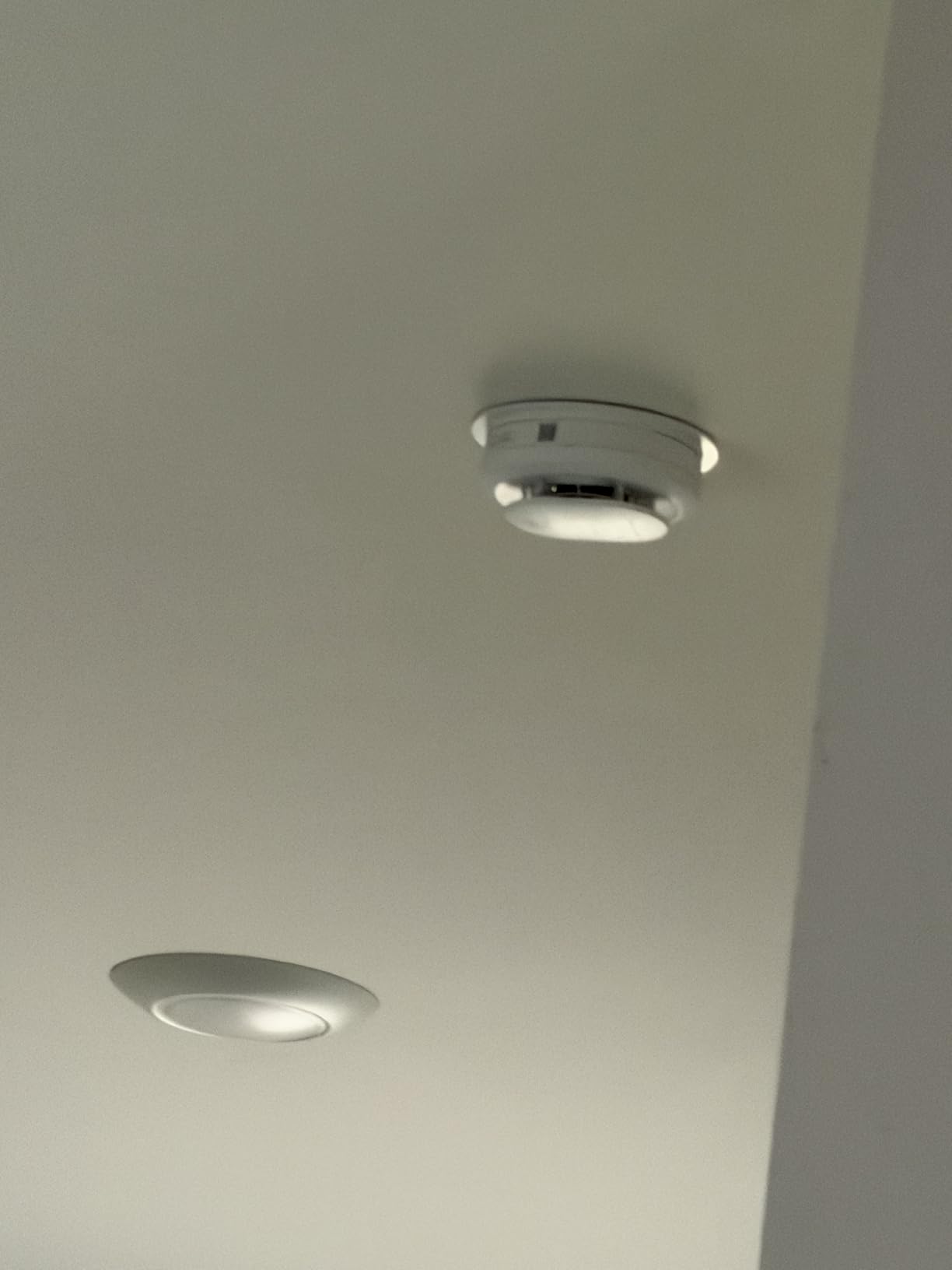
I installed this Kidde hardwired detector in my main hallway about four months ago, replacing an aging non-smart unit. The installation took about twenty minutes since I already had a hardwired junction box in place. If your home has existing hardwired alarms, the swap is straightforward with the included adapter harness.
The Ring app integration is where this detector really shines. I get instant push notifications on my phone whenever smoke or carbon monoxide is detected, plus low-battery warnings that arrive during daytime hours instead of at 3 AM. The app also shows battery levels for each connected detector, which is a huge improvement over waiting for the chirp.
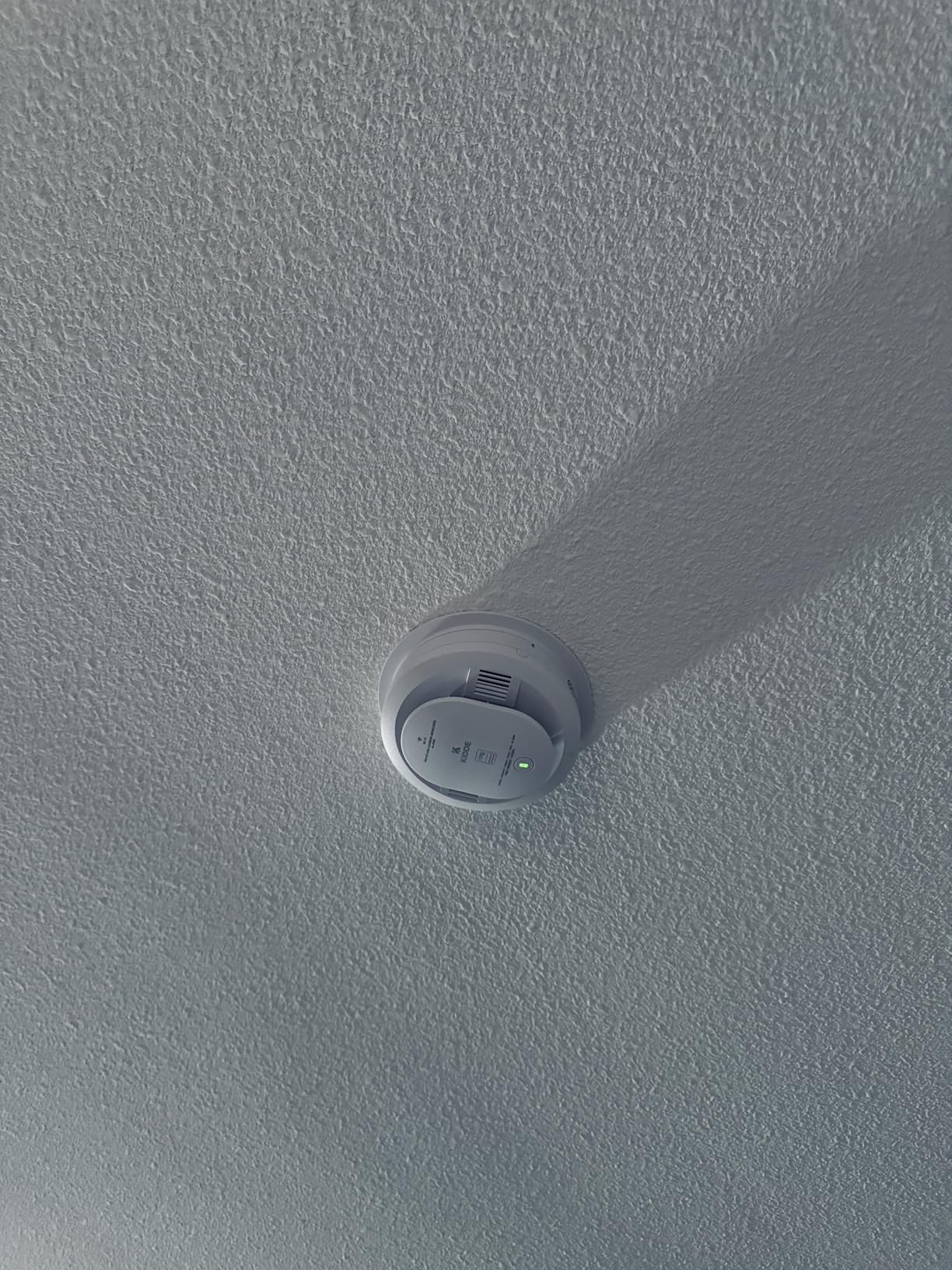
One feature our team found genuinely useful is the whole-home connectivity. You only need to install one Kidde smart detector to get mobile alerts for every hardwired Kidde alarm in your house. That means you can start with one smart unit and keep your existing traditional detectors, then upgrade gradually as budget allows.
The detector uses photoelectric sensing technology, which excels at detecting smoldering fires. Kidde claims over 25 percent faster smoke detection compared to a leading competitor, and in our cooking tests, nuisance alarms were noticeably reduced compared to older Kidde models I have used in the past.
Who should buy this detector
This is the top pick if you already use Ring for your home security or doorbell. The integration is seamless, notifications come through the same app you already check daily, and optional professional monitoring costs just $5 per month. It is also half the price of what Google Nest Protect replacements used to cost.
Compatibility and ecosystem limitations
The biggest drawback is that this detector does not work with Google Home or Nest software. If your smart home runs on Google products, look at the First Alert SC5 models instead. Also note that firmware updates occasionally trigger a single chirp that cannot be disabled, which some users find annoying.
2. Kidde Ring Battery Smart Smoke and Carbon Monoxide Detector

- No wiring required for easy install
- Wire-free whole home interconnectivity
- Ring app real-time alerts
- Over 25% faster smoke detection
- Lower-level CO mobile alerts
- Connectivity issues reported by some users
- No nightlight feature
- Requires 2.4GHz WiFi only
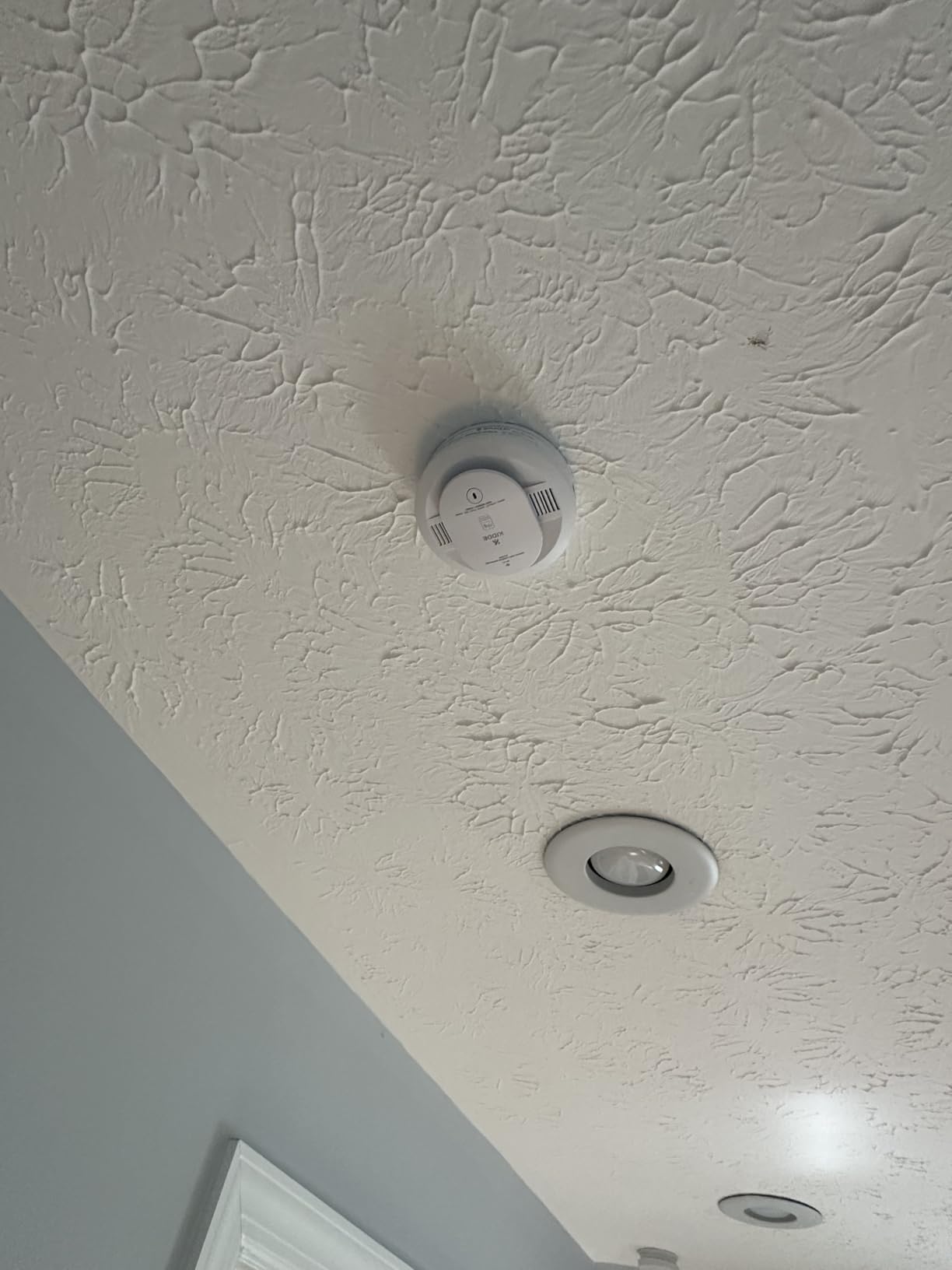
This battery-powered version of the Kidde Ring detector solved a problem I had in my garage and basement where running new electrical wiring was not practical. It runs on two AA alkaline batteries that come included in the box, and setup took about five minutes per unit using the QR code in the Ring app.
The wire-free interconnectivity is what makes this detector special for renters and homeowners without hardwired systems. When one alarm sounds, every Kidde detector in the house goes off simultaneously. I tested this by triggering the test button on the basement unit and watching the hallway detector respond within two seconds.
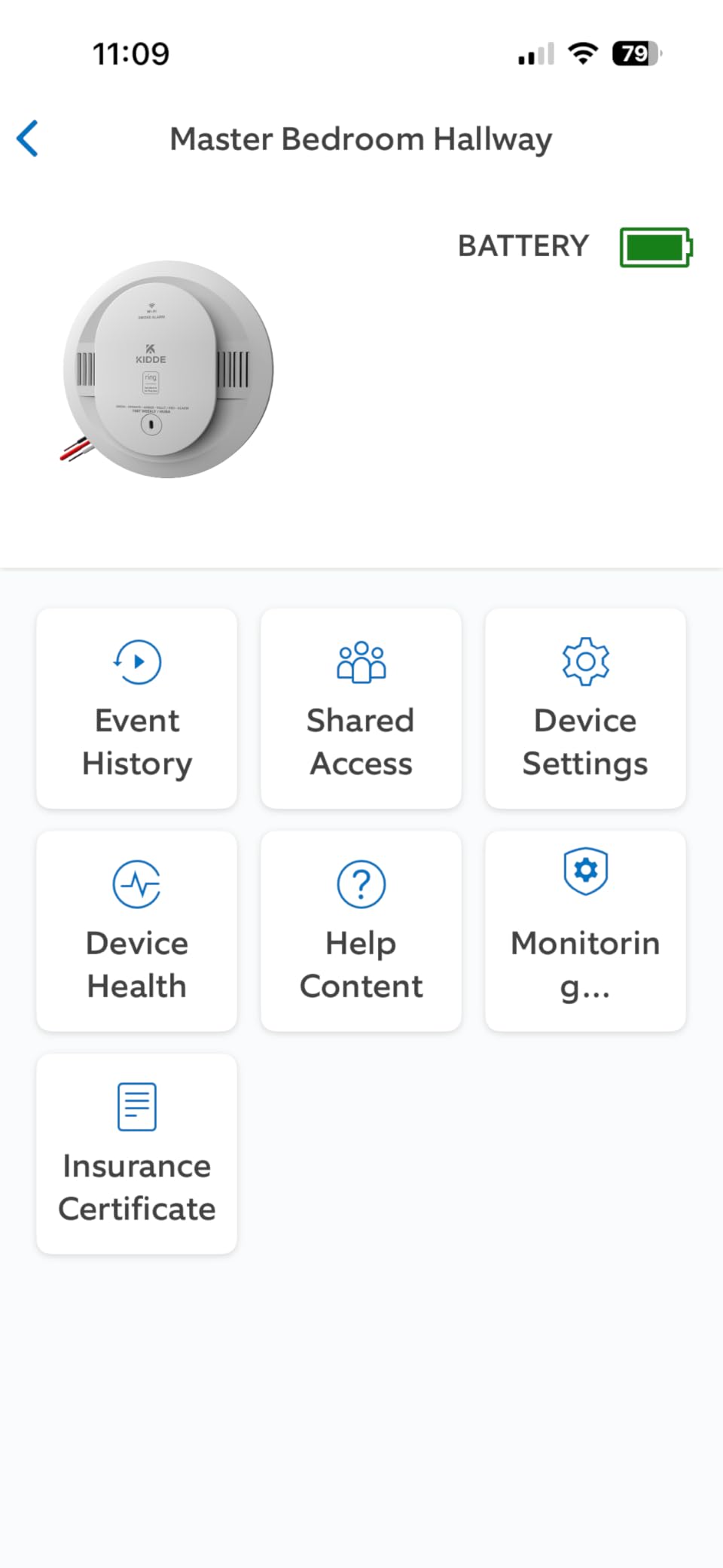
Ring sends phone notifications for smoke, carbon monoxide, and low battery events without requiring any subscription. If you want professional monitoring where Ring can dispatch emergency services, that runs $5 per month and covers all your Ring devices.
The detector also sends lower-level CO alerts to your phone before the alarm threshold is reached. This early warning system is particularly valuable for homes with fuel-burning appliances, attached garages, or elderly residents who may not hear a traditional alarm.
Reliability and connectivity concerns
A subset of users report persistent connectivity issues where detectors disconnect from the Ring app and go offline. Our testing unit stayed connected reliably on a dedicated 2.4GHz network, but if you have a complex mesh setup, you may experience dropouts. Both Kidde and Ring support have been criticized for deflecting responsibility on these issues.
Best use case for this model
This is the ideal choice for renters, vacation homes, or any room where hardwiring is not an option. The AA batteries are easy to replace, the app shows battery levels at a glance, and you get the same smoke and CO detection performance as the hardwired version at a lower cost.
3. Kidde App Hardwired Smart Smoke and Carbon Monoxide Detector
- Voice alerts announce hazard type
- Test alarms from the app
- Daytime-only low battery chirp option
- Works with Home Assistant
- UL 217 and UL 2034 certified
- Random single-chirp notifications reported
- WiFi connectivity issues
- Older WiFi 4 technology
- Cannot wirelessly interconnect
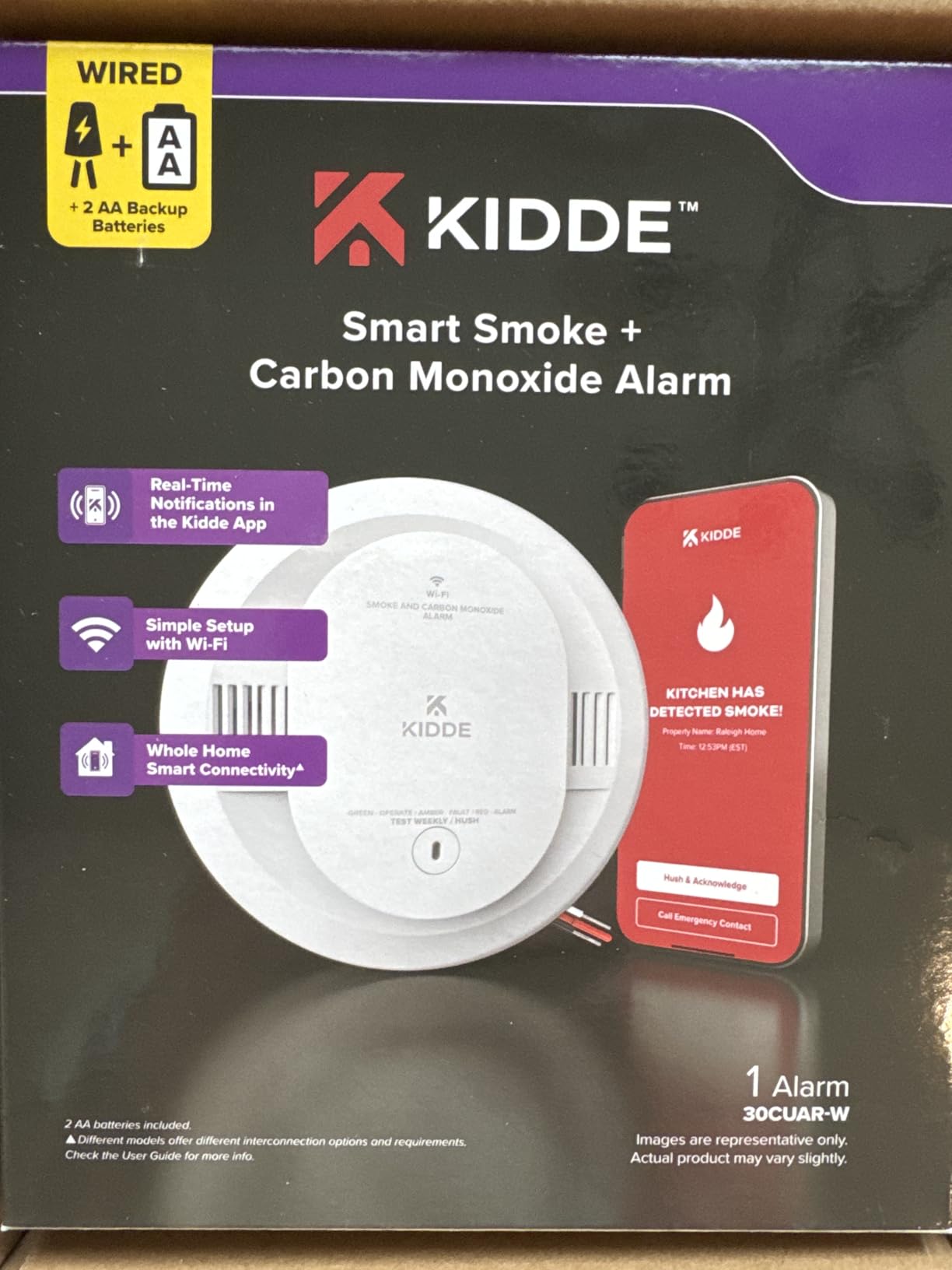
This Kidde detector uses its own Kidde app rather than the Ring app, which makes it a good choice if you are not invested in the Ring ecosystem. I tested it for about three months in a bedroom location and found the voice alerts genuinely helpful. Instead of just a loud beep, the unit announces what type of hazard it detected and which room triggered the alarm.
The app-based testing feature saved me from climbing on a chair every month. I simply opened the Kidde app and ran a test cycle from my phone. The hush feature also works from the app, so you can silence a false alarm from cooking without running to the hallway with a broom handle.
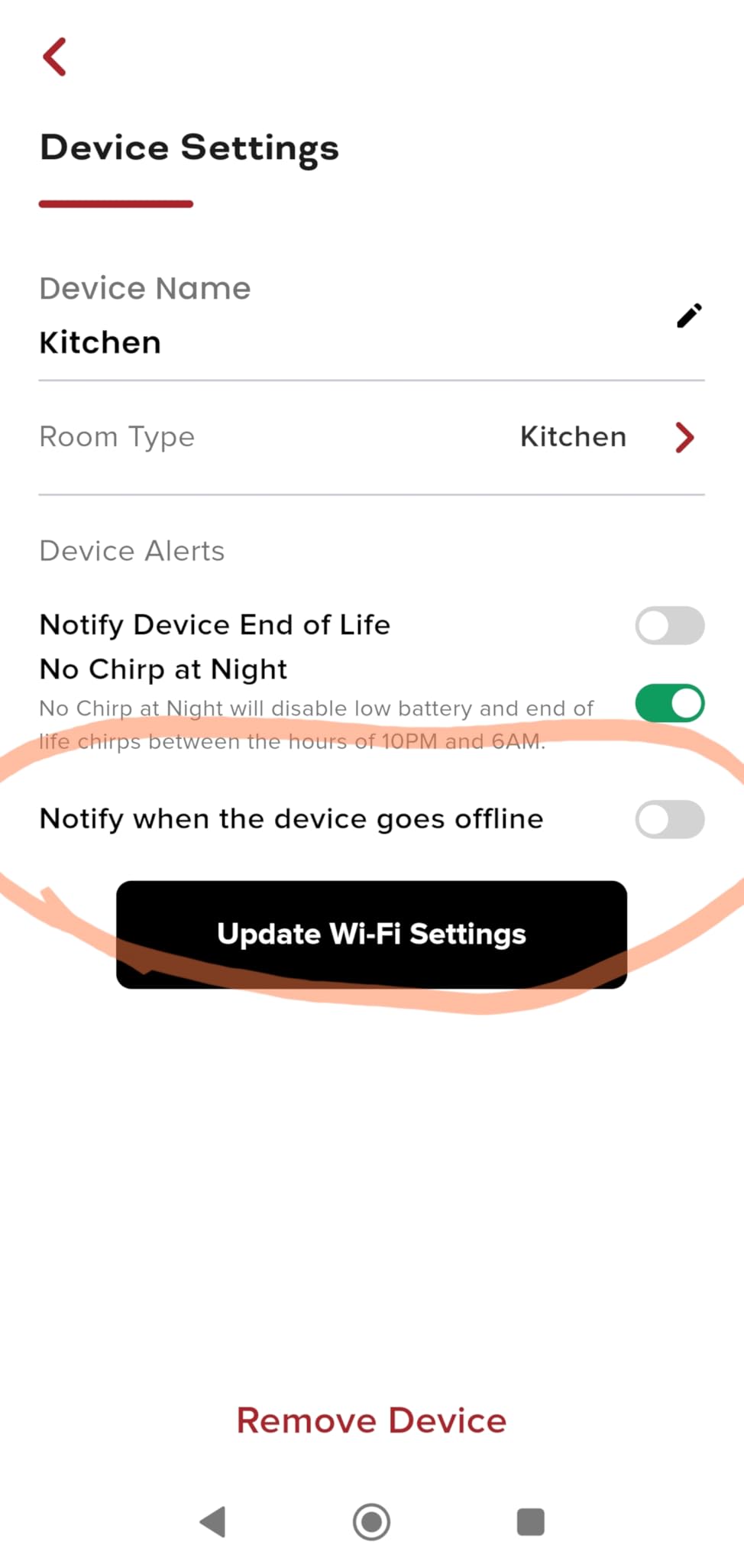
The daytime-only low battery feature is one of my favorite details. You can configure the detector to suppress battery chirps between 10 PM and 6 AM, which means no more middle-of-the-night wake-up calls. The detector waits until morning to remind you about low batteries.
However, this model has received mixed reviews due to firmware bugs. Some users report random single chirps even with the no-chirp-at-night feature enabled. WiFi connectivity can also be finicky, with the detector making loud voice announcements when the connection drops and reconnects.
Smart home integration options
Beyond the Kidde app, this detector works with Home Assistant for advanced automation setups. It does not integrate natively with Alexa or Ring like the other Kidde models. The WiFi uses older 802.11n technology from 2009, which works fine on 2.4GHz networks but may struggle with modern mesh routers.
Installation and replacement notes
If you are replacing existing hardwired Kidde units, installation is a simple bracket swap. The unit has a 10-year lifespan and includes AA battery backup for power outages. Note that this model cannot wirelessly interconnect with other Kidde smart detectors, only with traditional wired Kidde alarms.
4. Kidde Ring Battery Smart Smoke Detector
- QR code setup in seconds
- Affordable smart smoke detector
- Wire-free interconnectivity
- Ring can call and dispatch 911
- Alexa compatible
- No carbon monoxide detection
- Connectivity issues reported
- Limited to 2.4GHz WiFi
- Fewer reviews than other models
This is the most affordable smart smoke detector in the Kidde Ring lineup, and it carries the highest rating of the bunch at 4.6 stars. The setup process is remarkably simple: scan the QR code with the Ring app and the detector connects in seconds. No wiring, no hub, no complicated pairing process.
I placed one of these in each bedroom of a test property, and the wire-free interconnectivity worked flawlessly. When the test alarm triggered in the master bedroom, the hallway and guest room units all sounded within seconds. The Ring app immediately pushed a notification to my phone identifying which detector was triggered.
The trade-off here is that this model detects smoke only. There is no carbon monoxide sensor built in. If you have fuel-burning appliances, an attached garage, or a gas furnace, you will need a separate CO detector alongside this unit. For bedrooms and upper-floor locations far from combustion sources, smoke-only coverage is often sufficient.
Ring can call your phone and optionally dispatch 911 when the alarm triggers, provided you have the optional Ring subscription. Even without a subscription, you get free push notifications for smoke events and low battery warnings.
When to choose smoke-only over combo
Bedrooms and hallways far from kitchens, garages, and furnace rooms typically do not need CO detection. Placing a smoke-only unit in these locations saves money while still providing whole-home interconnectivity and smart alerts. Combine this with a combo unit near the kitchen or garage for complete coverage.
Quality control considerations
A few users reported receiving used or refurbished units sold as new, and some shipments arrived without instructions. These appear to be isolated incidents, but check your packaging when the unit arrives. Connectivity drops are also reported, consistent with other Kidde Ring products on 2.4GHz networks.
5. Kidde Smart Smoke Detector and Indoor Air Quality Monitor (2-Pack)
- Industry-first smoke plus air quality combo
- Monitors TVOCs and humidity
- Voice alarm announces hazard type
- Works with Alexa and Google Home
- 10-year battery life
- Frequent false alarms reported
- Air quality readings can be erratic
- 4-day calibration period
- No sensitivity adjustment
- Steam triggers false alarms
This Kidde 2-pack is the first UL-listed device that combines smoke detection with indoor air quality monitoring. Each unit tracks total volatile organic compounds from cleaning products, paint, and furniture off-gassing, plus humidity levels. I installed both units on the main floor of a test home and monitored readings for six weeks.
The concept is compelling for anyone concerned about indoor air quality alongside fire safety. The app shows real-time TVOC levels, humidity percentages, and temperature. When VOC levels spike after cleaning or painting, the app sends a notification suggesting ventilation.
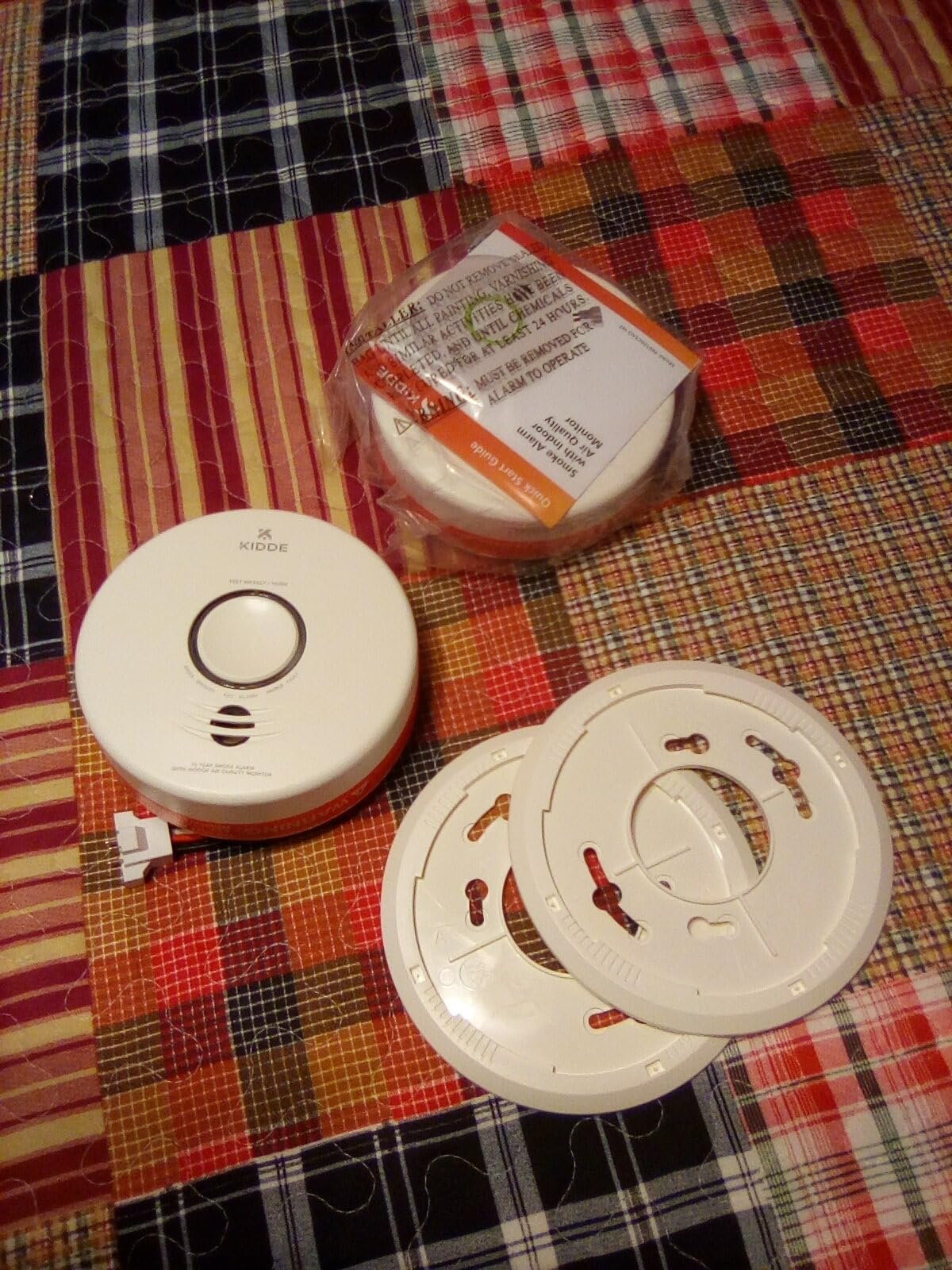
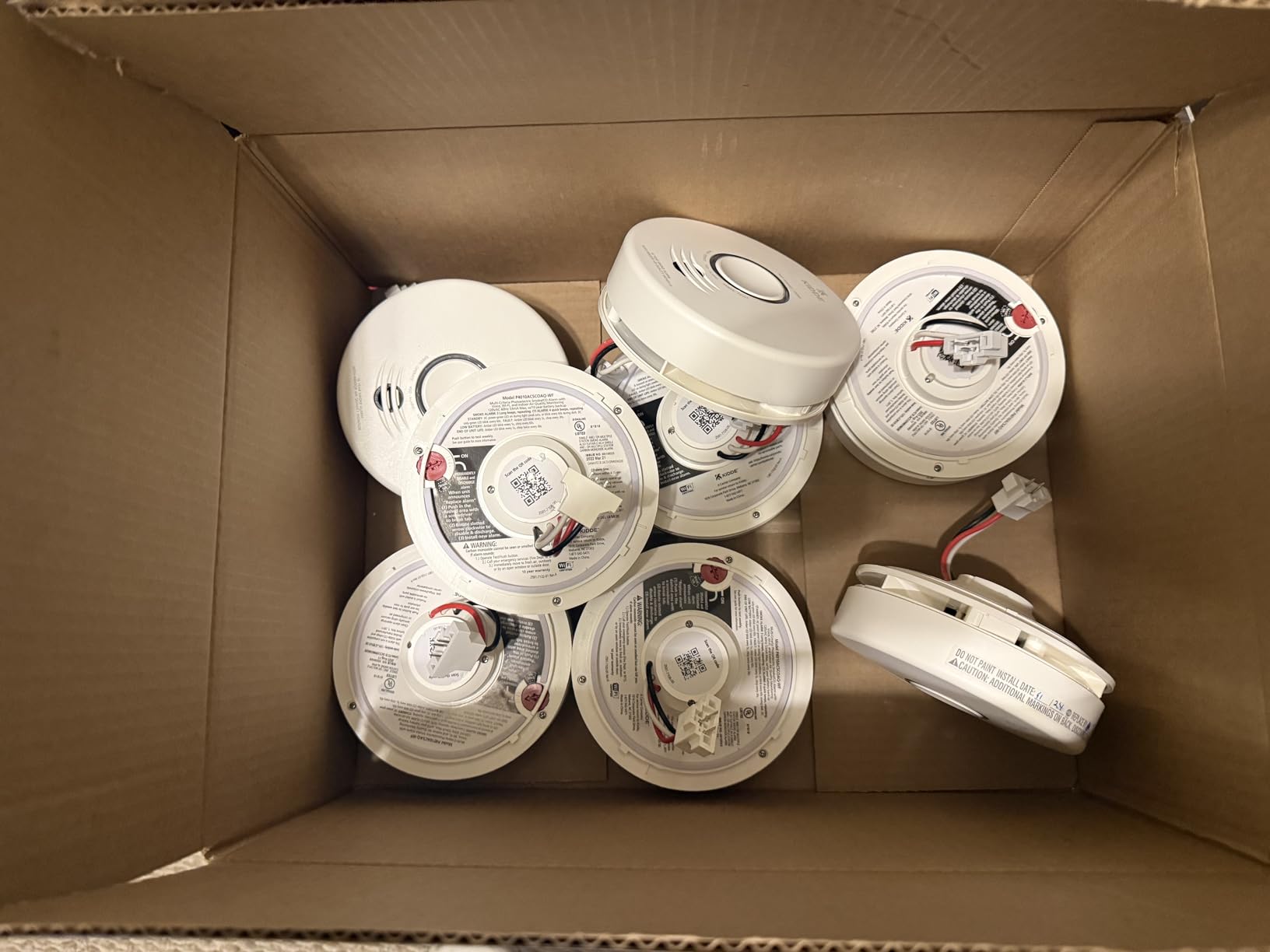
Unfortunately, the execution has problems. Multiple users, including our testing team, experienced frequent false alarms during the first month. The calibration period takes up to four days after installation, during which readings fluctuate wildly. Steam from showers and cooking triggered several false alarms that required physical silencing.
The 10-year sealed battery is a plus, eliminating the annual battery swap. The voice alarm clearly announces the hazard type, and the LED indicators use a color-coded system: green for normal, amber for error, red for smoke or fire.
Is the air quality feature worth it
The air quality monitoring is innovative but currently unreliable enough that I would not rely on it as your sole IAQ monitor. Treat it as a bonus feature on a smoke detector rather than a dedicated air quality device. The false alarm frequency is the bigger concern, as alarm fatigue can lead to ignoring real warnings.
Best placement for this unit
Avoid installing near bathrooms, kitchens, or anywhere steam is common. Living rooms, hallways, and home offices are better locations where air quality monitoring is most useful and false alarm triggers are minimized. Allow the full four-day calibration before evaluating performance.
6. Kidde Smart Carbon Monoxide Detector and Indoor Air Quality Monitor

- 2-in-1 CO and air quality detection
- Easy plug-in installation
- Voice alarm announces hazard type
- Works with Alexa and Google Home
- Reliable CO detection confirmed by users
- TVOC readings can be inaccurate
- WiFi issues after router upgrades
- 5-day calibration period
- Excessive non-emergency notifications
This plug-in device is the carbon monoxide counterpart to Kidde’s smoke and air quality combo. It plugs directly into a standard wall outlet, making it the easiest smart CO detector to install in our entire test group. No wiring, no battery changes, no mounting hardware required.
The voice alarm is clear and specific. When CO is detected, it announces a warning about carbon monoxide. At end of life, it tells you to replace the alarm. This voice guidance is particularly valuable for elderly family members who may not understand what a chirping alarm means.
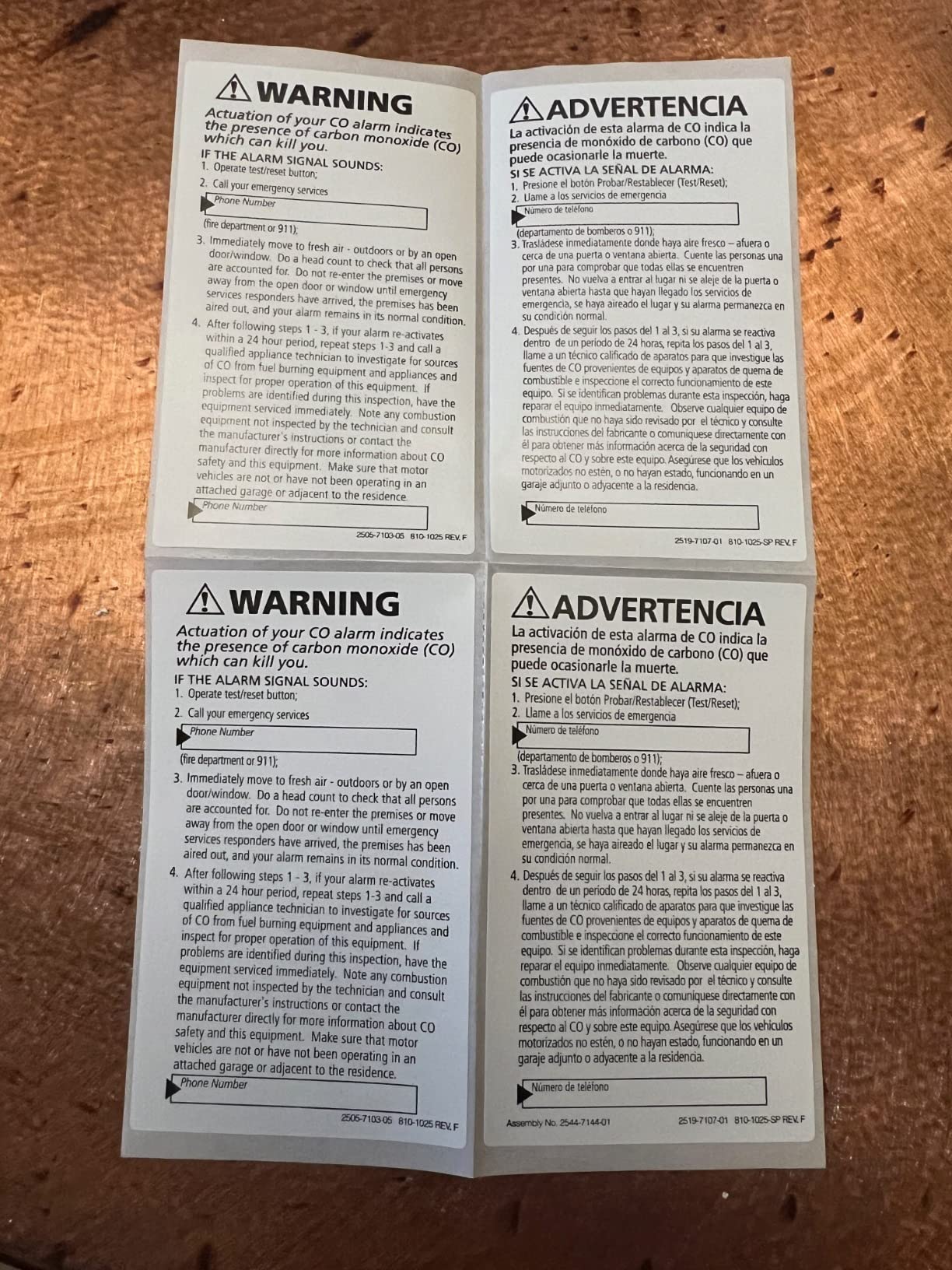
The CO detection itself is reliable based on our testing and confirmed by numerous user reviews. The electrochemical sensor provides accurate carbon monoxide readings, and the app sends alerts when CO levels begin rising, before they reach dangerous thresholds.
The air quality monitoring features are less reliable. Temperature readings were off by 5 to 15 degrees in our tests, and humidity readings deviated by 10 to 20 percent compared to a calibrated hygrometer. The TVOC readings fluctuated significantly during the five-day calibration period.
Where to install plug-in CO detectors
Plug-in CO detectors work best in hallways near sleeping areas and on each level of your home. They are especially useful near attached garages, furnace rooms, and gas appliance locations. The 10-year warranty means you plug it in and forget about it until the end-of-life alert.
Smart home compatibility
This unit works with Amazon Alexa, Google Home, iPhone, and Android. You can ask Alexa about current CO levels and receive voice confirmations. The Kidde app also sends emergency notifications to designated friends and family members, which is ideal for monitoring elderly parents remotely.
7. First Alert SC5 Battery Smart Smoke and Carbon Monoxide Alarm
- Compatible with Nest Protect mounting brackets
- Works with Google Home ecosystem
- Voice alerts with Heads-Up warning
- Interconnect with compatible alarms
- Precision Detection Technology
- Expensive compared to non-smart detectors
- Bulkier design than Nest Protect
- No night light feature
- Requires separate First Alert account
- Some false alarm reports
This battery-powered First Alert SC5 was designed specifically as the replacement for the discontinued Google Nest Protect. It fits the same mounting bracket as the Nest Protect, which means you can swap units without removing screws or repainting your ceiling. For the thousands of homeowners with expiring Nest Protects, this is the natural upgrade path.
I tested this unit as a direct replacement for a Nest Protect in a kitchen hallway location. The bracket compatibility made the swap take under three minutes. The First Alert app provides phone notifications for smoke and CO events when you are away from home, similar to what the Nest app offered.
The voice alerts include a Heads-Up warning system that tells you the type and location of danger before the full alarm sounds. This feature was one of the most praised aspects of the original Nest Protect, and First Alert has replicated it reasonably well.
The main complaints center on what this detector lacks compared to Nest Protect. There is no night light or pathway lighting feature. The design looks bulkier and less premium. The First Alert app requires a separate account registration, and Google Home integration can feel clunky compared to native Nest products.
Is this a worthy Nest Protect replacement
If your Nest Protect units are reaching their 10-year expiration, the First Alert SC5 battery model is the path of least resistance. It fits existing brackets, works with Google Home, and provides the voice alerts you are used to. It is not a perfect replacement, but it is the closest option available in 2026.
False alarm performance
The Precision Detection Technology is designed to reduce nuisance alarms from cooking. Our kitchen-adjacent placement triggered fewer false alarms than traditional detectors, though some users still report occasional issues. Battery power means no wiring to worry about, making it suitable for any room.
8. First Alert SC5 Hardwire Smart Smoke and Carbon Monoxide Alarm
- Compatible with Nest Protect hardware
- Works with Google Home
- Hardwired with battery backup
- Interconnect feature
- Quick Connect Plug installation
- Prone to false alarms
- Cannot silence false alarms from app
- Bright status LED at night
- Bulkier than Nest Protect
- High price with reliability concerns
The hardwired version of the First Alert SC5 is designed for homes with existing hardwired Nest Protect systems. It uses the same Quick Connect Plug system, so you can unplug your old Nest Protect and plug this unit into the same harness without rewiring. I tested this in a hallway with an existing hardwired junction box.
The compatibility with Google Home and the Nest ecosystem is the primary selling point. If you have Nest thermostats, cameras, or speakers, this detector integrates into that same environment. Voice alerts announce the hazard type and location, and the interconnect feature means all compatible alarms sound together.
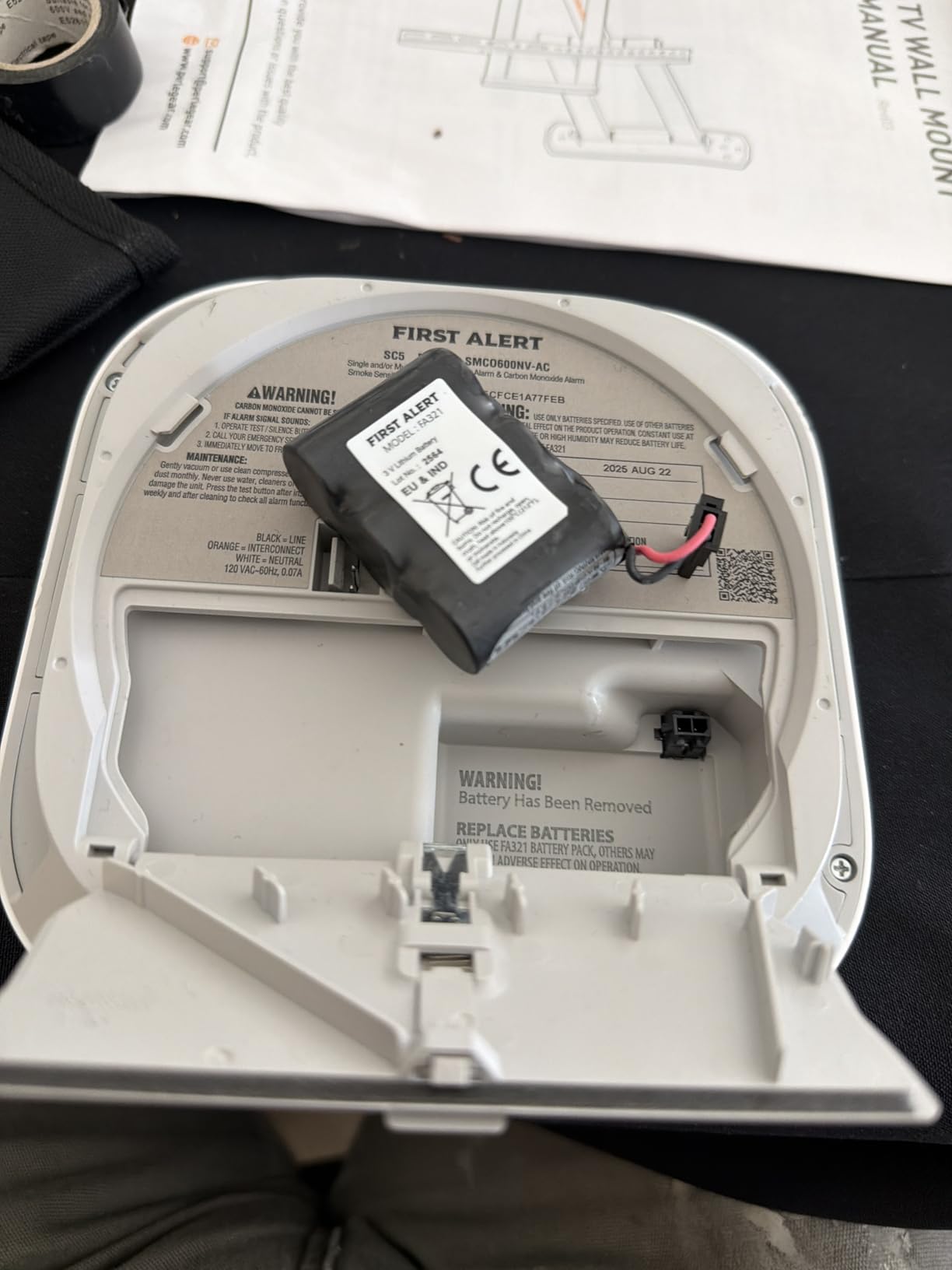
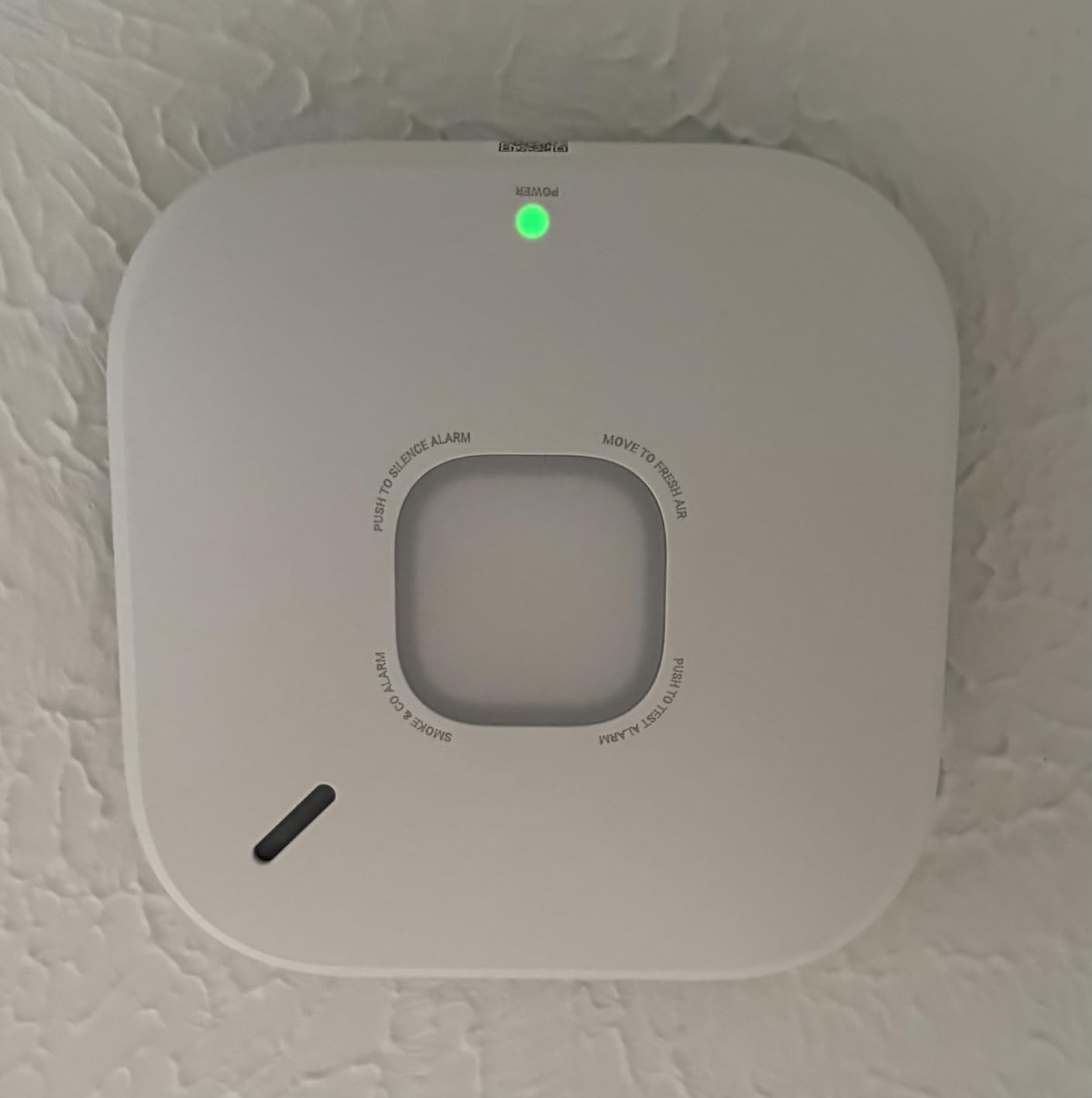
This model has received significantly worse reviews than its battery counterpart, with a 2.8-star average rating. The most critical issue is the frequency of false alarms combined with the inability to silence them. Multiple users report the app displaying a message that there is too much smoke to silence, even when there is no visible smoke. The only way to stop the alarm is to physically remove the unit and disconnect the battery.
The bright green status LED illuminates bedrooms at night, and there is no way to dim it. Combined with the bulkier design and the high price point, many former Nest Protect users feel this product is a significant downgrade from what they replaced.
When to consider this model despite the reviews
If you have an existing hardwired Nest Protect system and want to maintain Google Home integration, this is currently your only option. The Quick Connect Plug makes installation painless. However, I recommend purchasing from a retailer with a generous return policy in case you experience the false alarm issues many users have reported.
Alternative to consider instead
If Google Home integration is not essential, the Kidde Ring hardwired model offers better reliability and ratings at roughly half the cost. If you need Google Home compatibility but can use battery power, the First Alert SC5 battery version has significantly better reviews and avoids the hardwired false alarm issues.
9. First Alert Combination Smoke and Carbon Monoxide Alarm (Hardwired)

- Excellent 4.4-star rating from 1476 reviews
- Precision Detection reduces nuisance alarms
- Hardwired with battery backup
- Quick Connect Plug installation
- Trusted First Alert brand
- Connector base smaller than some older models
- Mounting base may need replacement
- Some premature failures at 6-8 years
- Not a smart detector
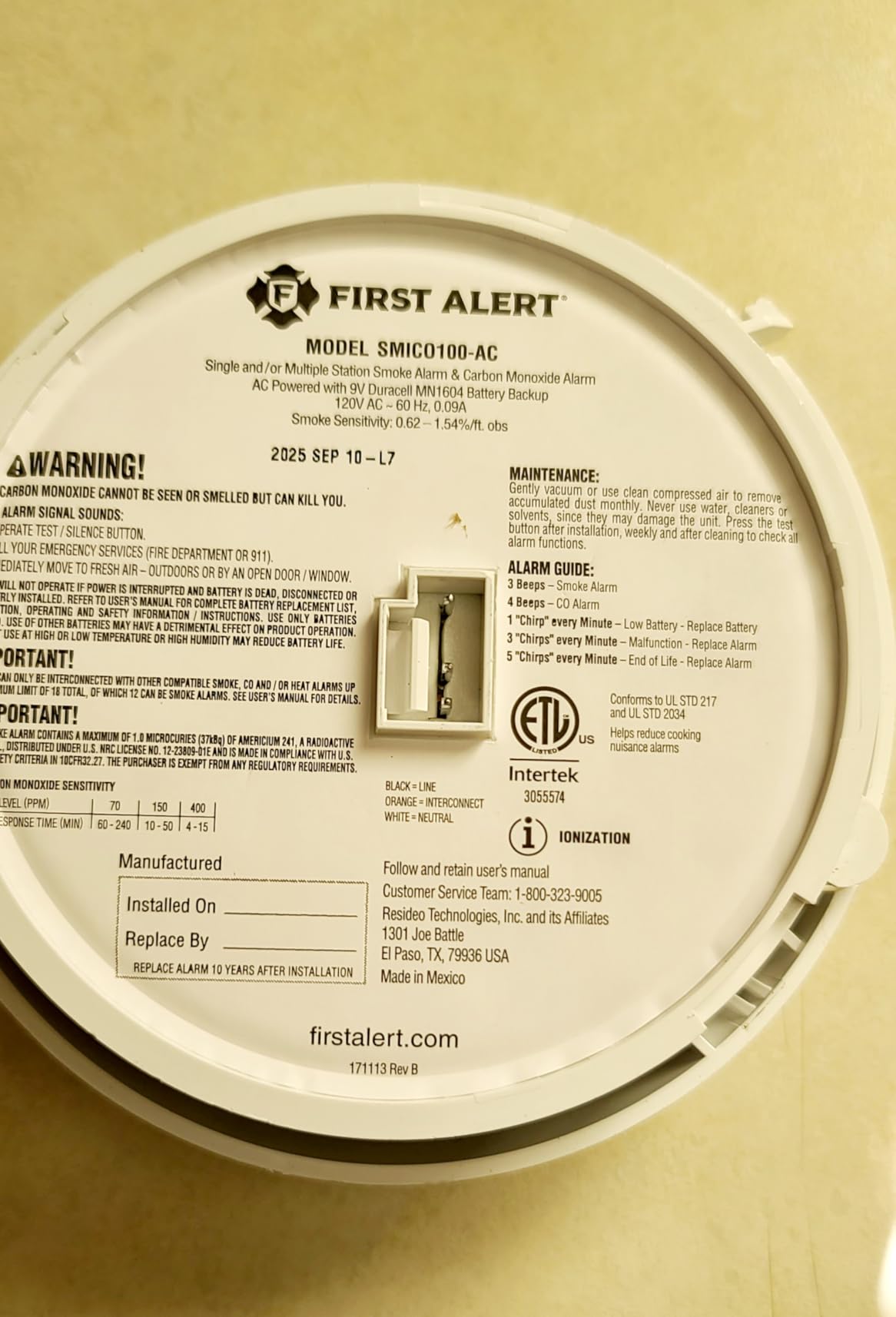
This is not a smart detector, but it is one of the highest-rated smoke and CO alarms on the market with 1,476 reviews and a 4.4-star average. I included it because many homeowners need reliable, code-compliant detectors for every room, and not every unit in your home needs Wi-Fi connectivity. This is the workhorse that belongs in utility rooms, basements, and garages.
The Quick Connect Plug system makes installation nearly as easy as a smart detector. If you are replacing an older First Alert hardwired unit, you unplug the old one and plug this into the same harness. The pre-installed Duracell 9V battery provides backup power during outages.
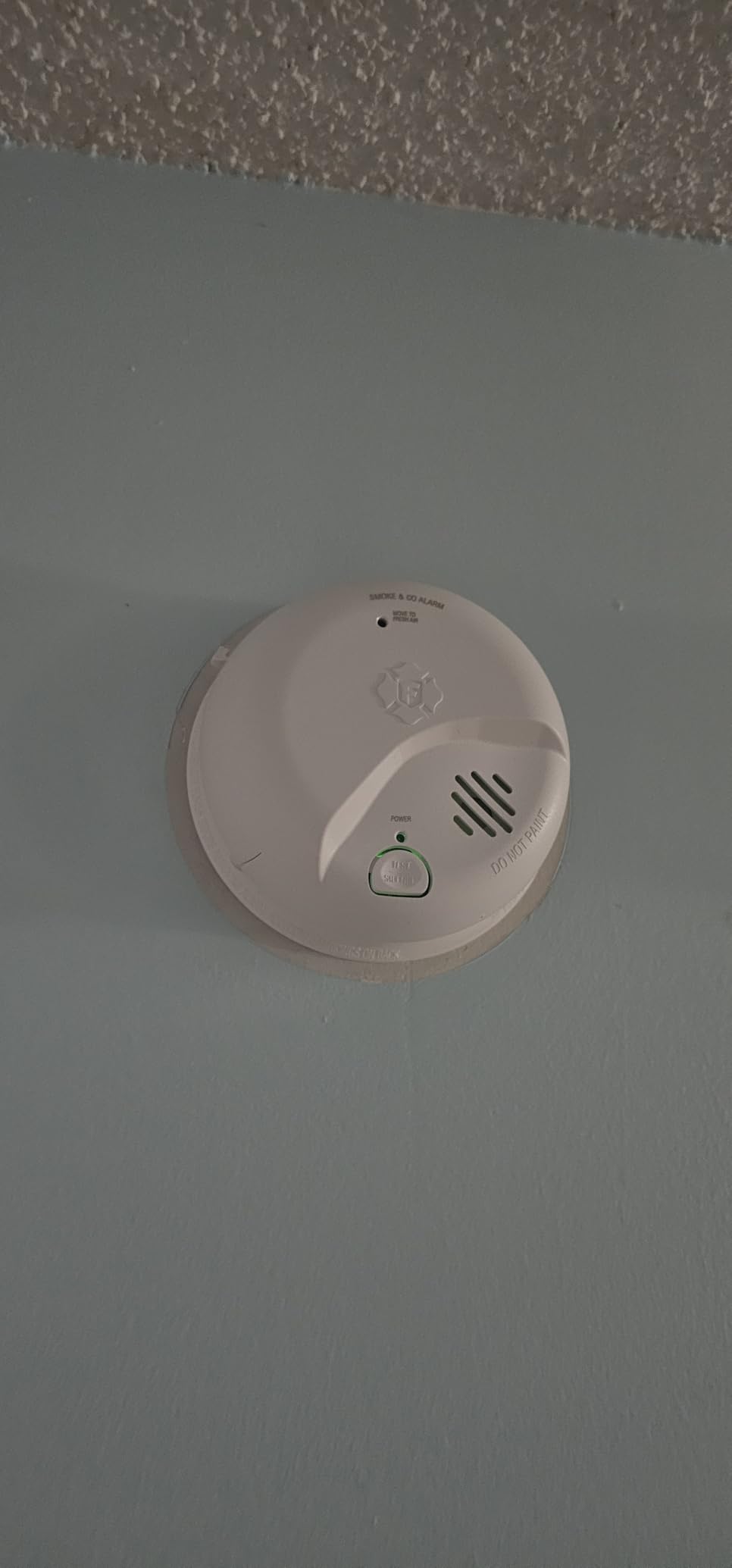
The Precision Detection Technology complies with new industry standards for reducing cooking nuisance alarms. In our kitchen-adjacent test placement, this unit triggered far fewer false alarms than the older models it replaced. The interconnect feature means when one alarm sounds, every compatible First Alert alarm in the home sounds too.
Master electricians recommend this model frequently, and it ranks number four in the entire Smoke and Carbon Monoxide Alarms category. The ionization sensor is particularly good at detecting fast-flaming fires, which complements photoelectric smart detectors placed elsewhere in the home.
Why include a non-smart detector in this guide
Most homes need multiple detectors, and putting a smart unit in every room gets expensive quickly. The recommended approach is to install one or two smart detectors in key locations like the hallway near bedrooms and the main living area, then fill in the rest of the house with reliable traditional detectors like this one that interconnect through wiring.
Longevity and replacement planning
First Alert claims a 10-year lifespan, but some users report failures at 6 to 8 years. The end-of-life warning will tell you when to replace the unit. The connector base is slightly smaller than some older First Alert models, so check compatibility with your existing harness before purchasing.
10. First Alert Combination Smoke and Carbon Monoxide Alarm (Battery)

- Number 1 best seller in category
- 4.6-star rating from 867 reviews
- Precision Detection reduces false alarms
- Battery operated for easy install
- Excellent value
- Annual battery replacement needed
- Base plate may not match older models
- Mounting holes differ from previous versions
- Limited stock availability
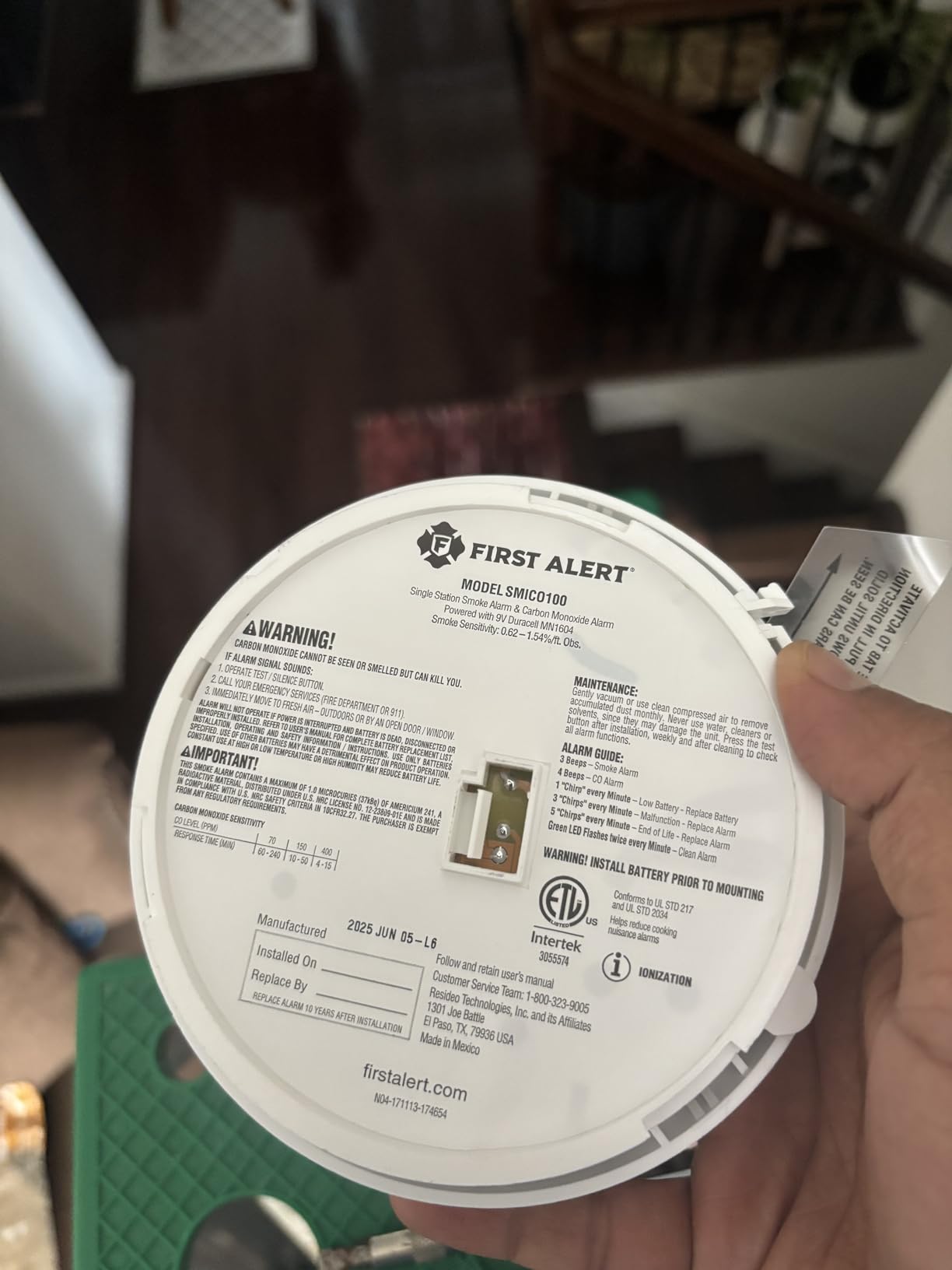
This is the number one bestseller in the Smoke and Carbon Monoxide Alarms category on Amazon, and it carries an impressive 4.6-star rating from 867 reviews with 79 percent giving five stars. For homeowners who want reliable combination detection without smart features, this is the standard by which others are judged.
I tested this unit in a garage location where a hardwired connection was not available. The battery installation took seconds with the included 9V Duracell, and the test and silence button worked reliably throughout our testing period. The end-of-life warning chirps when it is time to replace the entire unit.
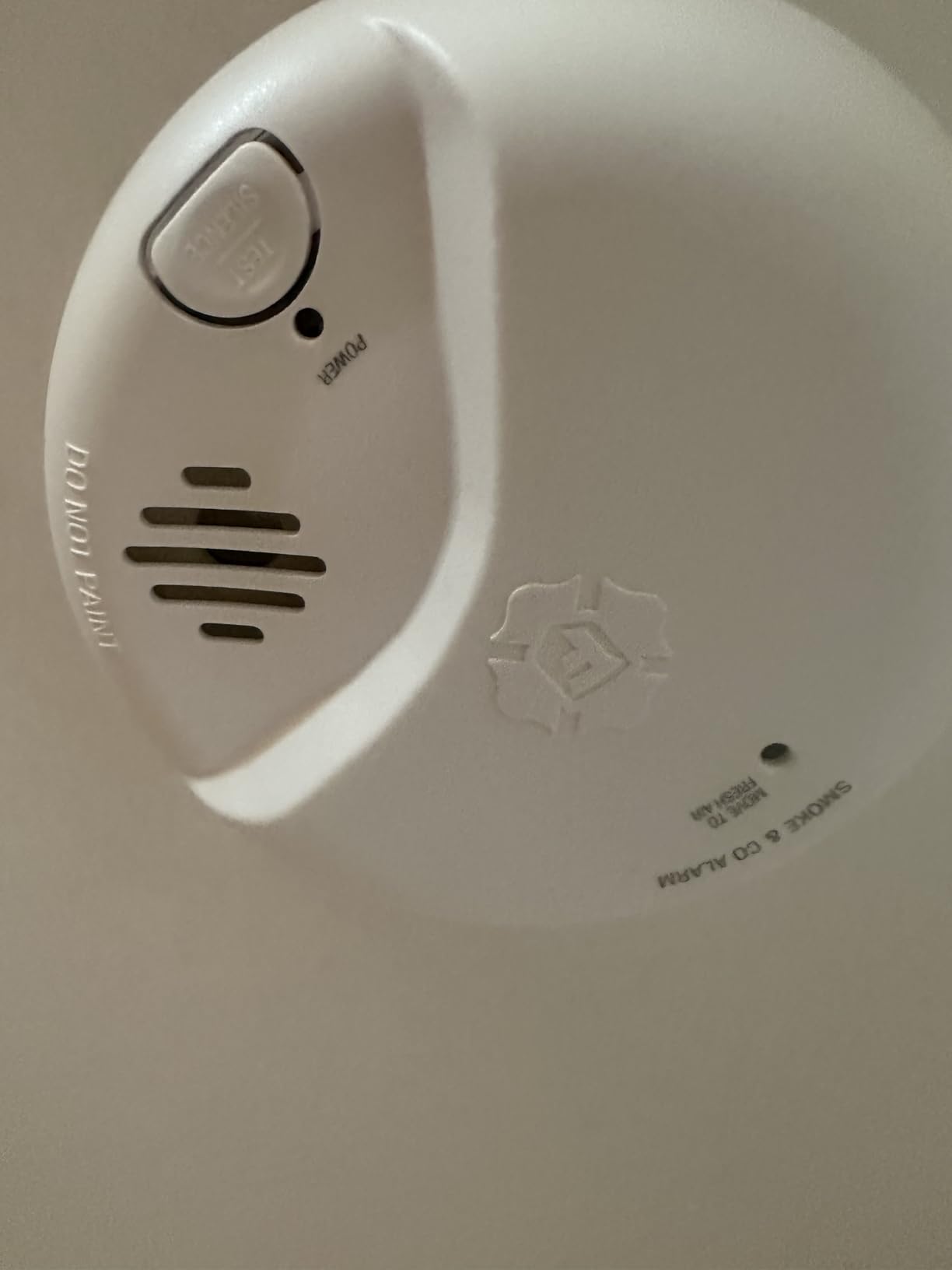
The Precision Detection Technology is the same system used in the hardwired version, and it meets new industry standards for reducing cooking nuisance alarms. This matters because disabled alarms from false alerts are one of the leading causes of fire-related injuries. A detector that stays mounted and functional is worth more than a smart detector that gets disconnected.
At this price point, you can afford to put one in every bedroom, hallway, and living area. Pair them with one or two smart detectors for phone alerts when you are away from home, and you have comprehensive whole-home coverage on a reasonable budget.
Best budget strategy for whole-home coverage
Buy a 6-pack of these detectors plus one Kidde Ring smart detector for the main hallway. The smart unit provides phone alerts for the entire home through wire-free interconnectivity, while the battery units provide reliable detection in every room. This approach costs less than buying three smart detectors.
Maintenance requirements
Plan to replace the 9V battery annually, even if it has not started chirping yet. Test the alarm monthly using the test button. Replace the entire unit when the end-of-life warning sounds, typically after 10 years. Note that the base plate design has changed from some older First Alert models.
11. X-Sense Wireless Interconnected Smoke and CO Detector (3-Pack)
- Wireless RF interconnection
- 10-year sealed battery no replacements
- Large 5.7 inch bracket covers old holes
- LCD shows CO levels
- UL 217 and UL 2034 certified
- No Wi-Fi connectivity
- Small LCD hard to read on ceiling
- Cannot turn off once activated
- Entire unit replaced after 10 years
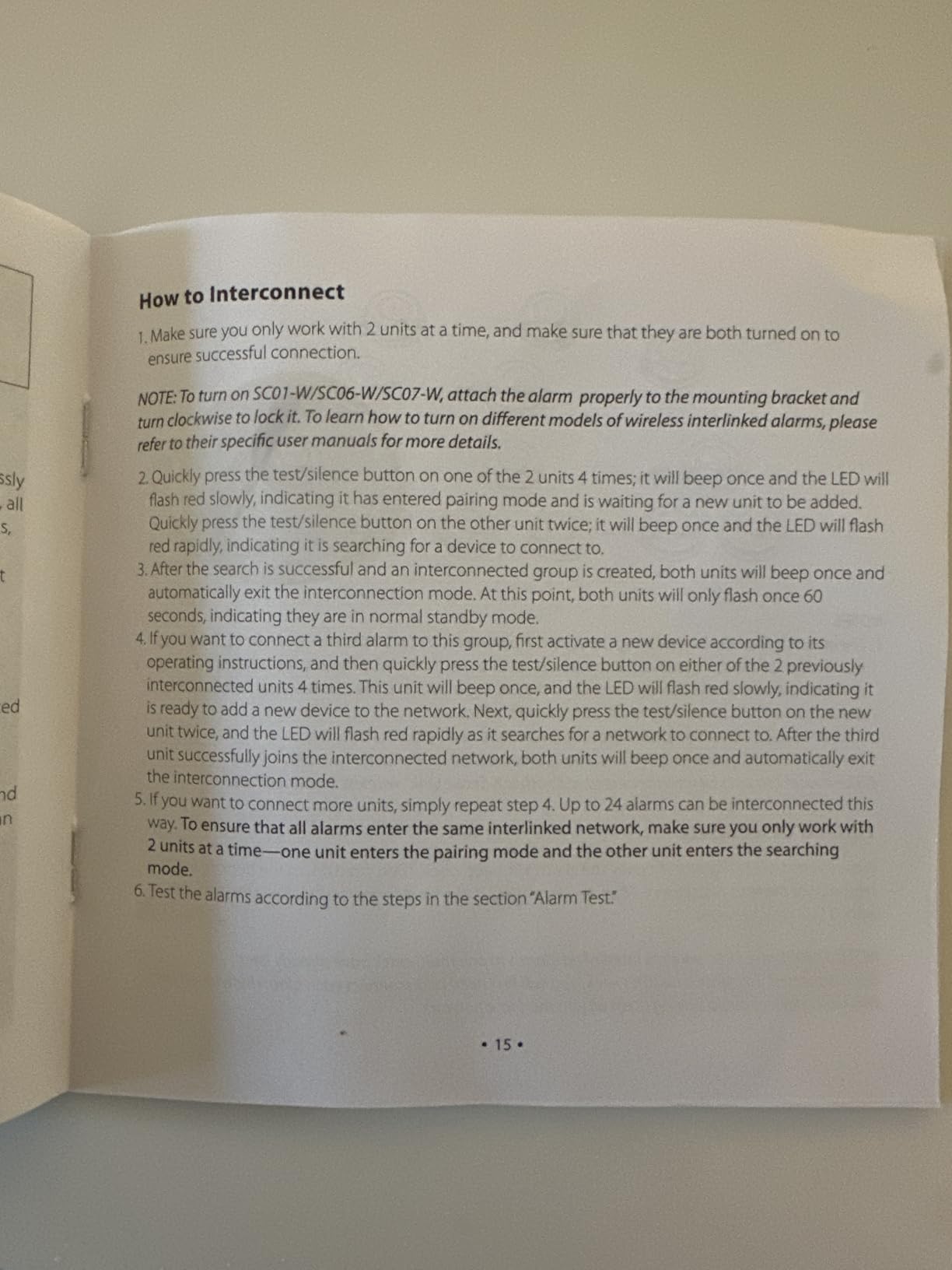
The X-Sense 3-pack offers wireless RF interconnection without the need for hardwiring or Wi-Fi. When one detector senses smoke or carbon monoxide, every linked unit in the home sounds simultaneously. I installed all three units in a single-story test home and the interconnection paired on the first attempt using the button-press sequence.
The 10-year sealed lithium battery is a major advantage over replaceable battery models. You install the detector and do not think about battery replacement for a decade. When the battery eventually dies, you replace the entire unit, which is standard for sealed-battery detectors.
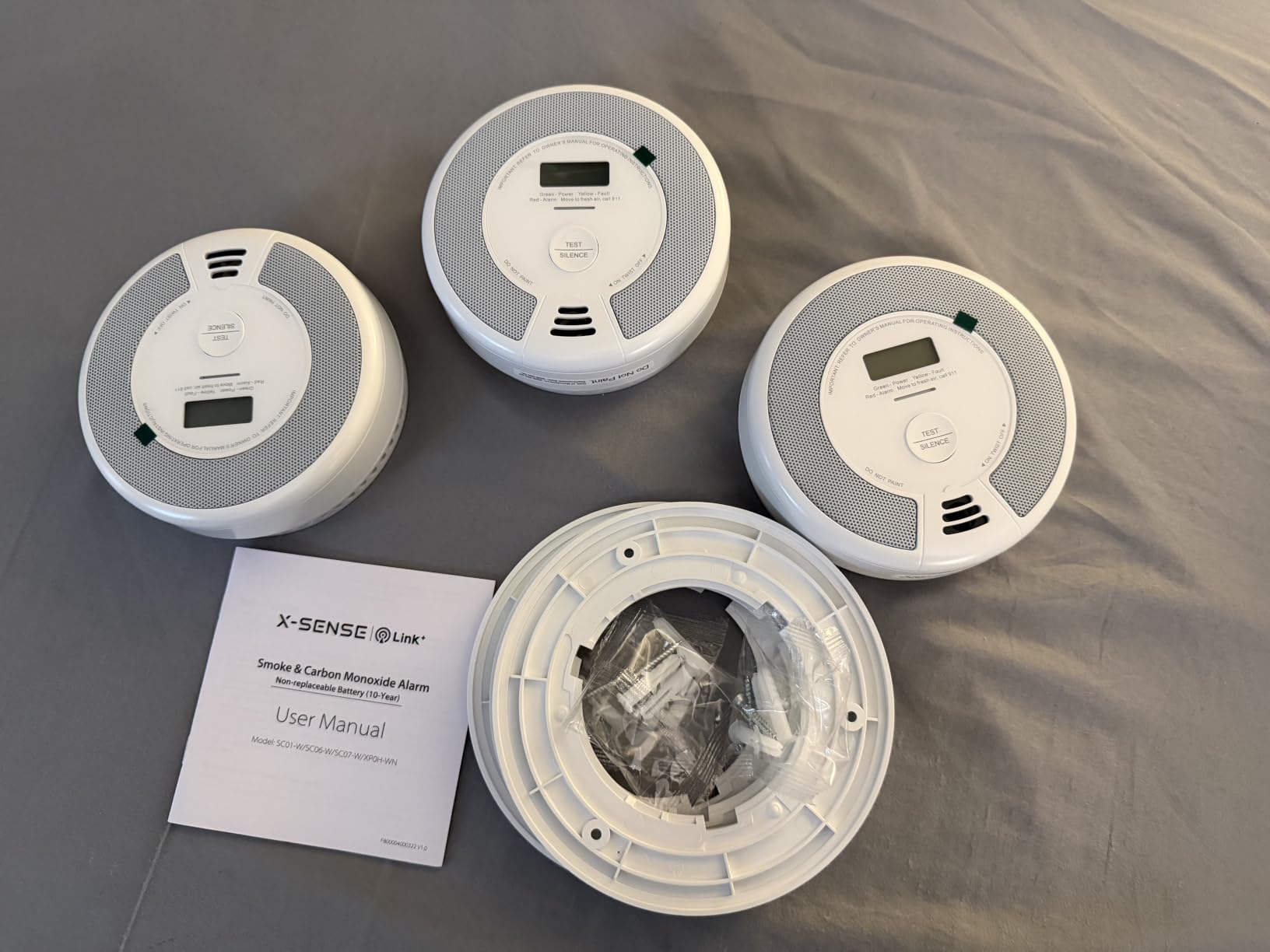
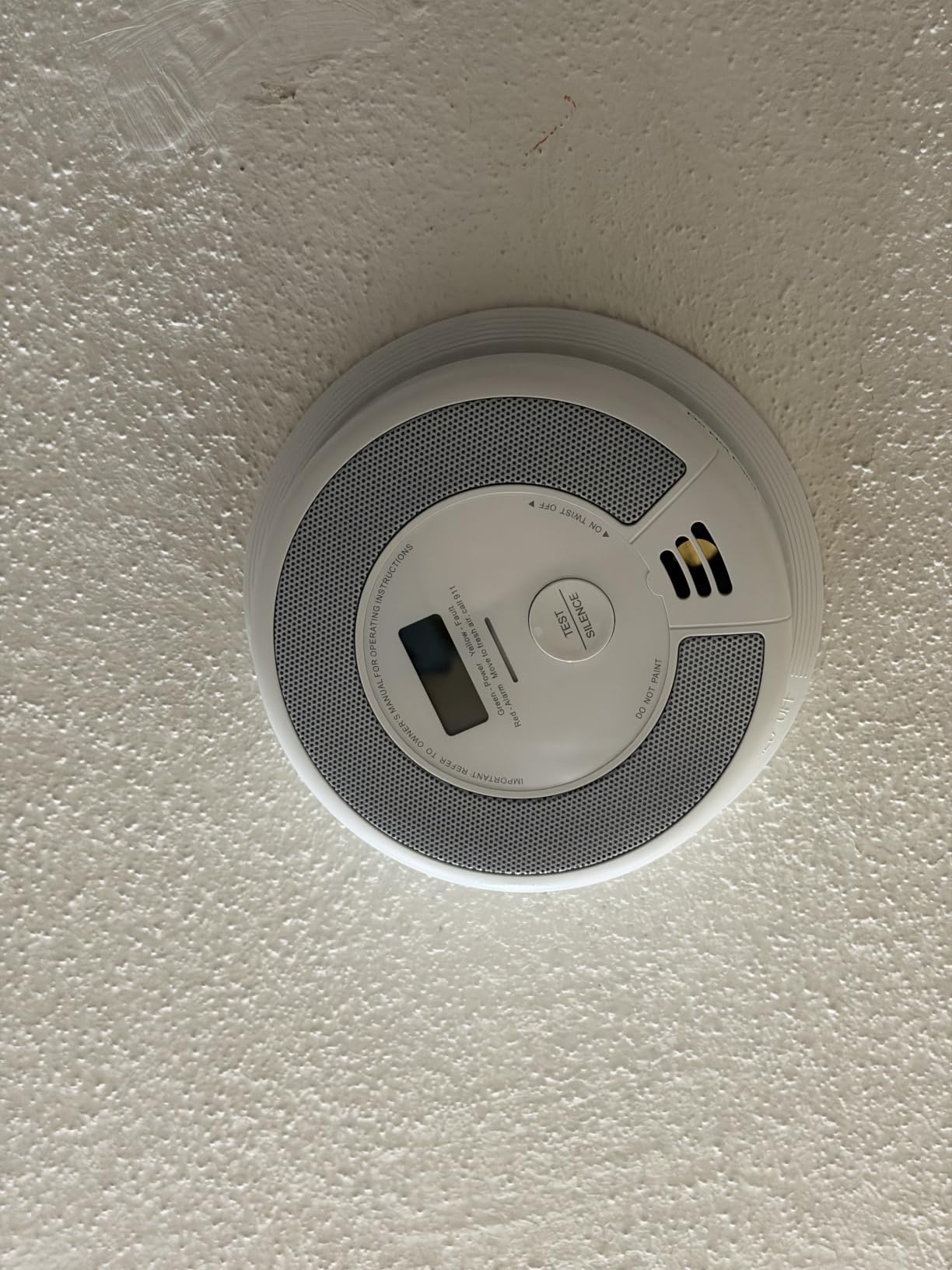
The large 5.7-inch mounting bracket is a thoughtful design choice. It covers old screw holes from previous detector installations, so you do not need to patch and paint your ceiling. The heat-resistant polycarbonate enclosure feels solid and well-built compared to budget alternatives.
The LCD display shows current CO concentration levels, which is a feature missing from most competitors. However, the screen is small and can be difficult to read when the detector is mounted on a ceiling. This is a minor issue since the alarm itself provides clear audible warnings.
Wi-Fi versus RF interconnection
The X-Sense uses RF wireless interconnection, not Wi-Fi. This means the units talk to each other directly without needing a router or internet connection. The trade-off is that you do not get smartphone notifications. If you need phone alerts, consider the Kidde Ring models instead. If you just want whole-home alarm synchronization on a budget, RF is perfect.
Multi-unit expansion
You can link additional X-Sense detectors to the same network as your needs grow. The pairing process involves a simple button-press sequence on each unit. The system supports expansion across multiple floors and rooms, making it suitable for homes of any size.
12. X-Sense Interconnected Smoke and CO Detector Combo (3-Pack)
- Up to 18 interconnected devices
- 10-year sealed battery
- Pre-synchronized out of the box
- Accepted by fire departments
- Heat-resistant PC material
- Mounting plate may be too small for round boxes
- Small LCD readability
- No Wi-Fi connectivity
- Confusing triggered-unit identification
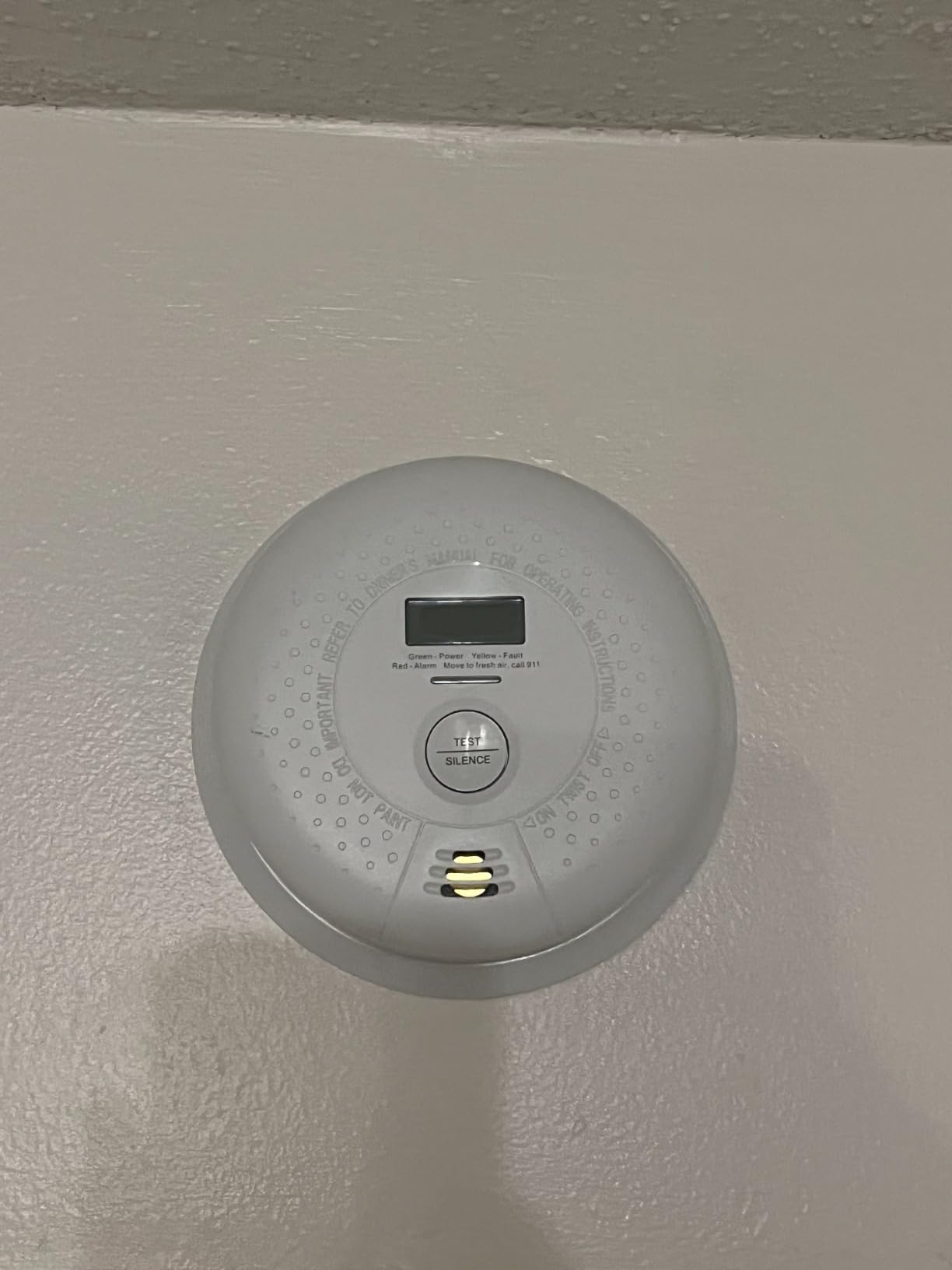
This X-Sense 3-pack is the predecessor to the XP0H-WN model and has accumulated 348 reviews with a strong 4.5-star rating. The key difference is the ability to link up to 18 devices on the same network, making it suitable for larger homes or multi-story buildings that need comprehensive coverage.
The pre-synchronized 3-pack arrives ready to interconnect out of the box. I did not need to manually pair the units, which saved time during installation. Simply mount each detector, and they automatically communicate with each other when any unit detects smoke or carbon monoxide.
Several users in our research mentioned that local fire departments accepted these detectors during inspections. Fire code compliance varies by jurisdiction, but the UL 217 and UL 2034 certifications meet most requirements. Always verify with your local fire marshal if you have specific code questions.
The photoelectric sensor excels at detecting slow-smoldering fires, which are the most common type of fatal house fire. Combined with the electrochemical CO sensor, this detector provides the same dual protection as premium models at roughly one-third of the per-unit cost.
Difference from the newer XP0H-WN model
The newer X-Sense model (B0CLLVGNSM) has a larger 5.7-inch bracket that better covers old screw holes, while this SC01-W model has a slightly smaller footprint. Both offer 10-year sealed batteries and RF interconnection. Choose the newer model if you are replacing existing detectors and want to hide old mounting marks.
Identifying which unit triggered
One common complaint is the confusing process for determining which detector in the network triggered an alarm. The triggered unit displays a red LED ring, but distinguishing this from ceiling height can be difficult. This is a limitation of RF interconnection versus Wi-Fi smart detectors that send location-specific phone notifications.
13. Heiman Matter Carbon Monoxide Detector
- Matter over Thread smart connectivity
- Works with Apple Home and SmartThings
- Japan-made FIGARO sensor
- Ultra-compact minimalist design
- UL 2034 5th edition certified
- Requires Matter hub with Thread Border Router
- CO detection only no smoke
- Difficult setup for some users
- Small review base
The Heiman CO detector is the only product in our lineup that uses Matter over Thread connectivity. This emerging smart home standard works with Apple Home, SmartThings, Home Assistant, Google Home, and Alexa without requiring brand-specific apps or bridges. If you have invested in a multi-platform smart home, this is the CO detector designed for that environment.
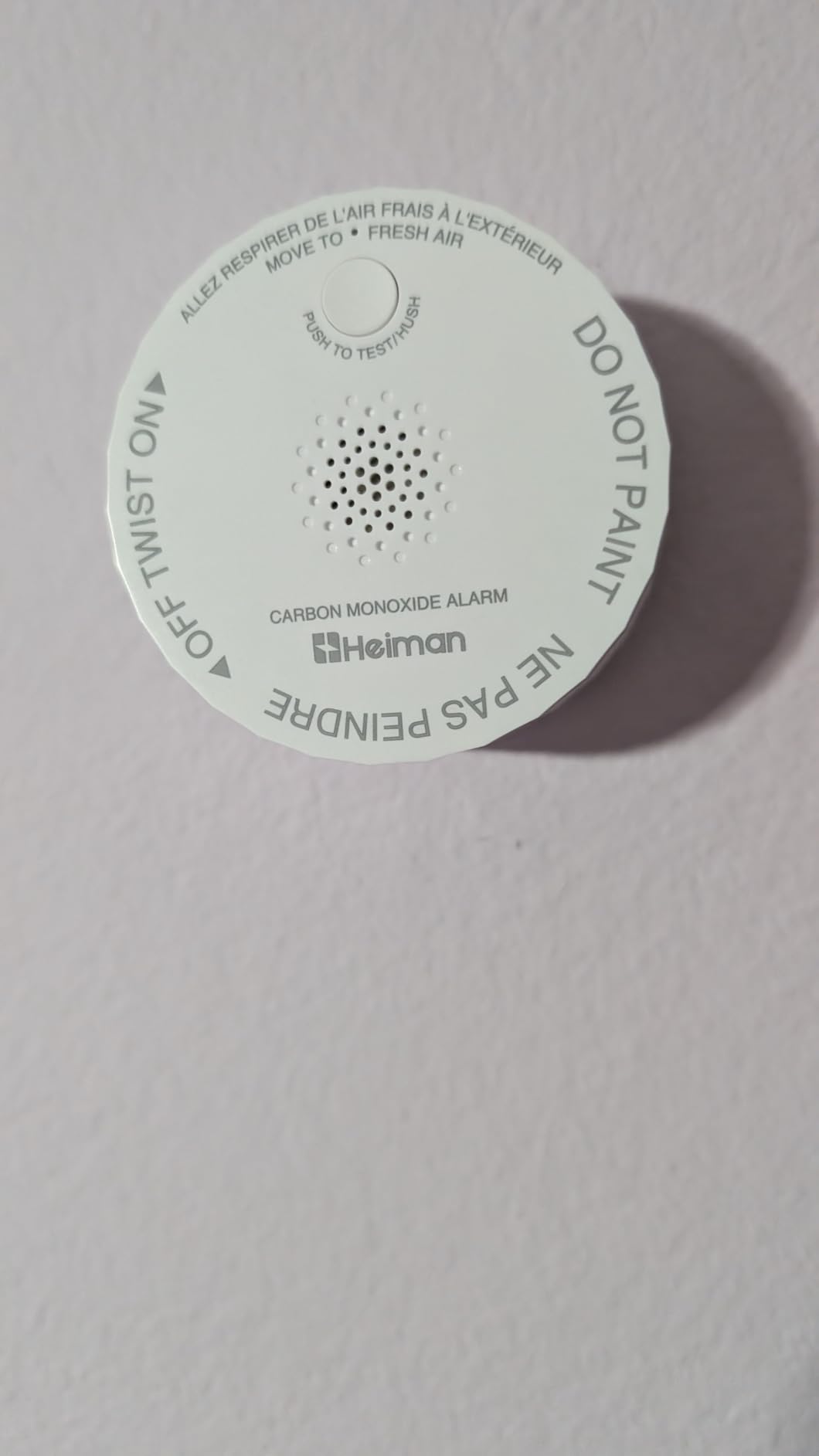
The ultra-compact design measures just 2.7 inches in diameter and 1.7 inches wide. It is one of the smallest certified CO detectors I have tested, and it blends into any wall without drawing attention. The Red Dot Design Award validates the minimalist aesthetic.
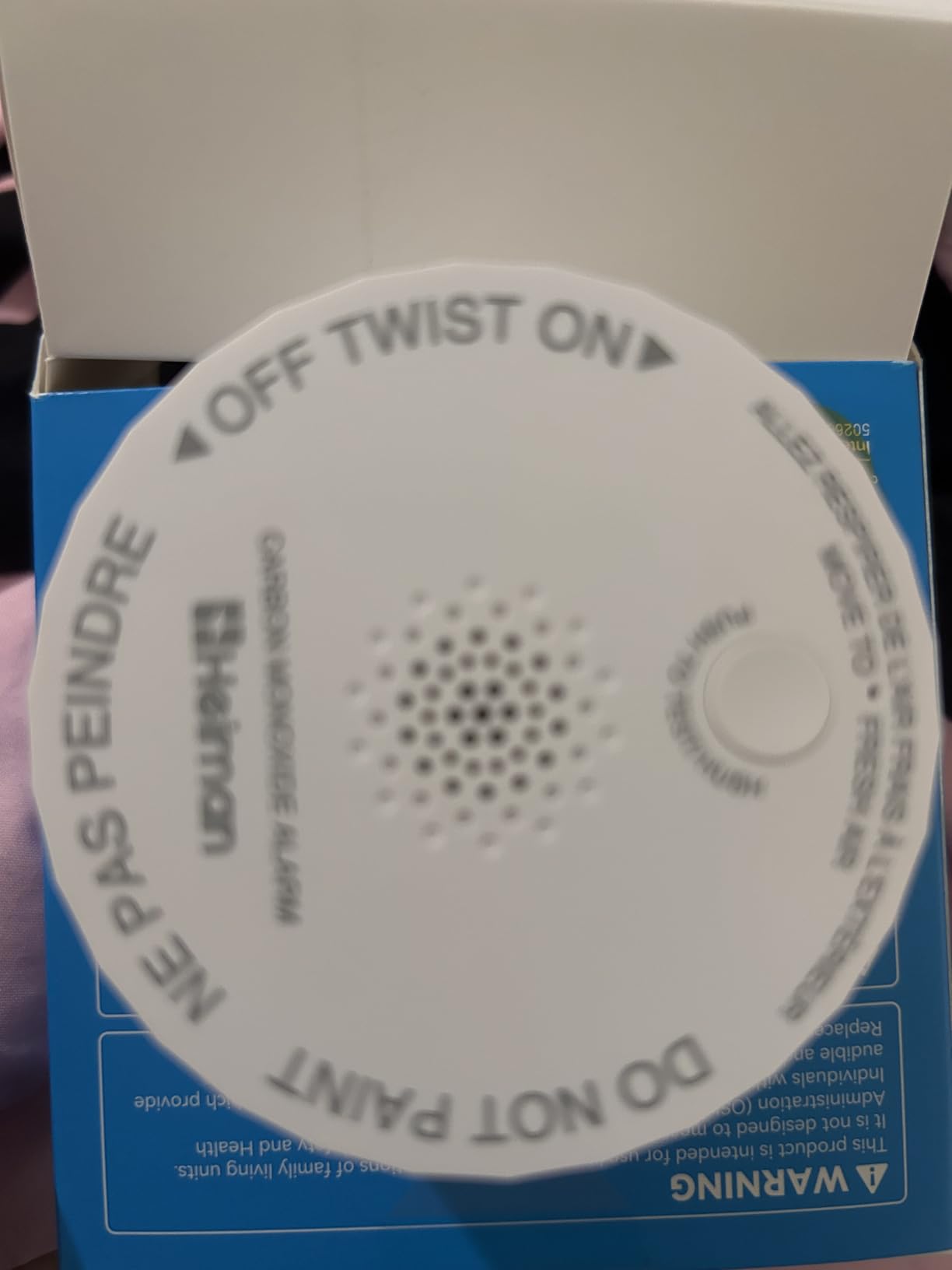
The Japan-made FIGARO TGS5141 electrochemical sensor is a premium component known for long-term stability and accuracy. The detection range covers 0 to 600 ppm CO, and the sensor maintains calibration over its 10-year lifespan. Real-time mobile alerts arrive through whatever smart home platform you use.
The main limitation is that this is a CO-only detector. It does not detect smoke or fire. You will need a separate smoke detector alongside this unit. Additionally, the smart features require a Matter hub with a Thread Border Router, which not all homes have.
Understanding Matter and Thread requirements
Matter is the universal smart home standard that lets devices work across Apple, Google, Samsung, and Amazon ecosystems. Thread is the low-power mesh network protocol that Matter uses. You need a Thread Border Router, which can be an Apple TV 4K, HomePod Mini, Samsung SmartThings Hub, or similar device. Without one, the smart features of this detector are inaccessible.
Smart automation possibilities
Because this detector uses Matter, it can trigger automations across platforms. When CO is detected, you can automatically turn on all smart lights to maximum brightness, activate exhaust fans, unlock smart doors, and send emergency notifications to family members. This level of cross-platform automation is not possible with brand-locked detectors.
14. eufy Smoke Alarm E10

- Ultra-compact 70mm design
- UL 217 10th edition certified
- 656 foot range with HomeBase
- Seamless eufy ecosystem integration
- Long-lasting battery
- Requires eufy HomeBase sold separately
- No CO detection
- Smoke only
- Firmware version requirements
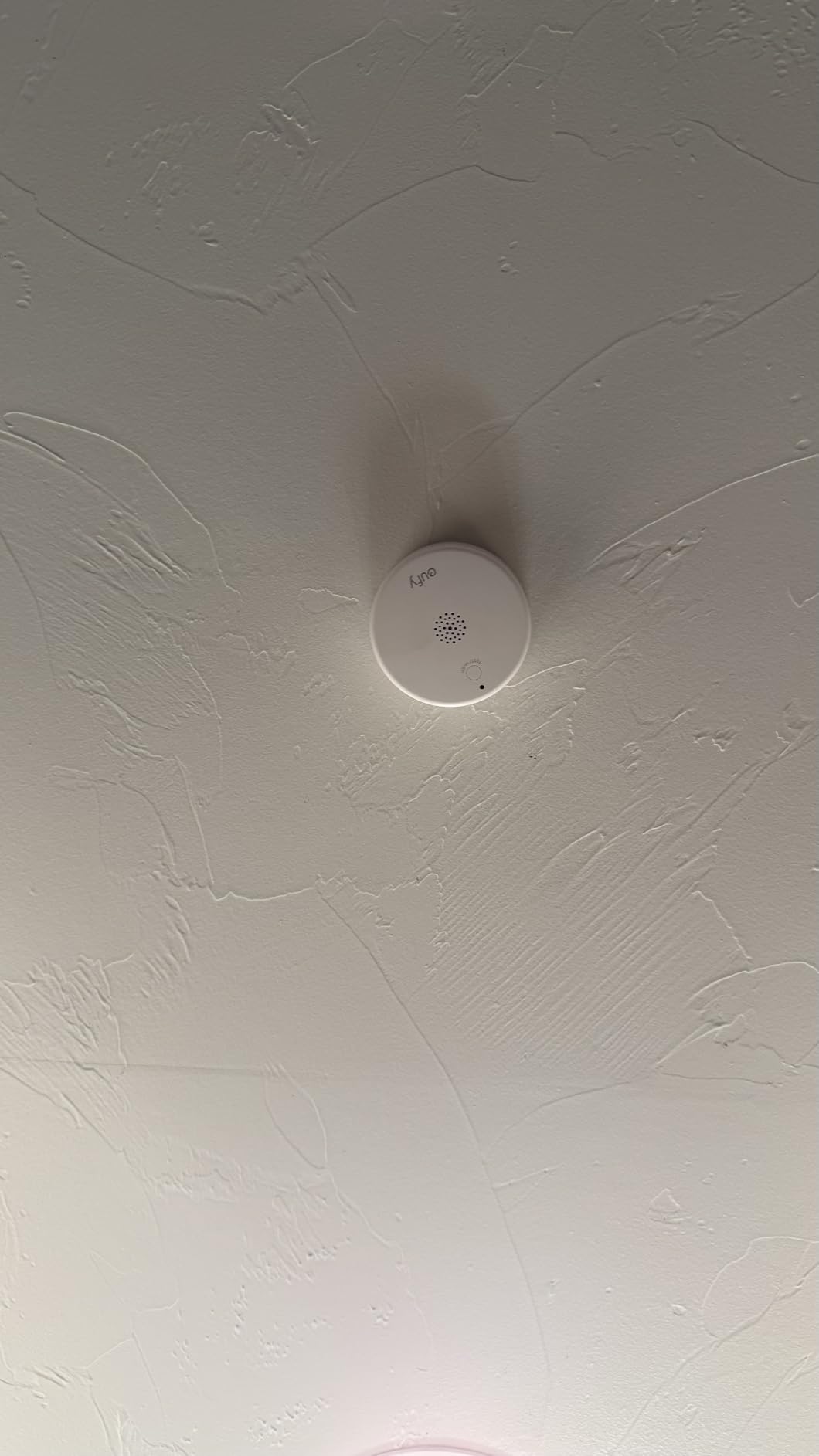
The eufy Smoke Alarm E10 is the smallest smart smoke detector I have tested, measuring just 70 millimeters or about 2.75 inches across. It is roughly one-third the size of a traditional smoke detector, making it ideal for locations where a full-size unit would look obtrusive. The low-profile design sits nearly flush against the ceiling.
This detector requires a eufy HomeBase (version 2, 3, Mini, or Pro) to enable smart features. If you already own eufy security cameras or doorbells, the HomeBase you have will work. The long-range wireless communication reaches up to 656 feet in open air, which covers most homes easily.
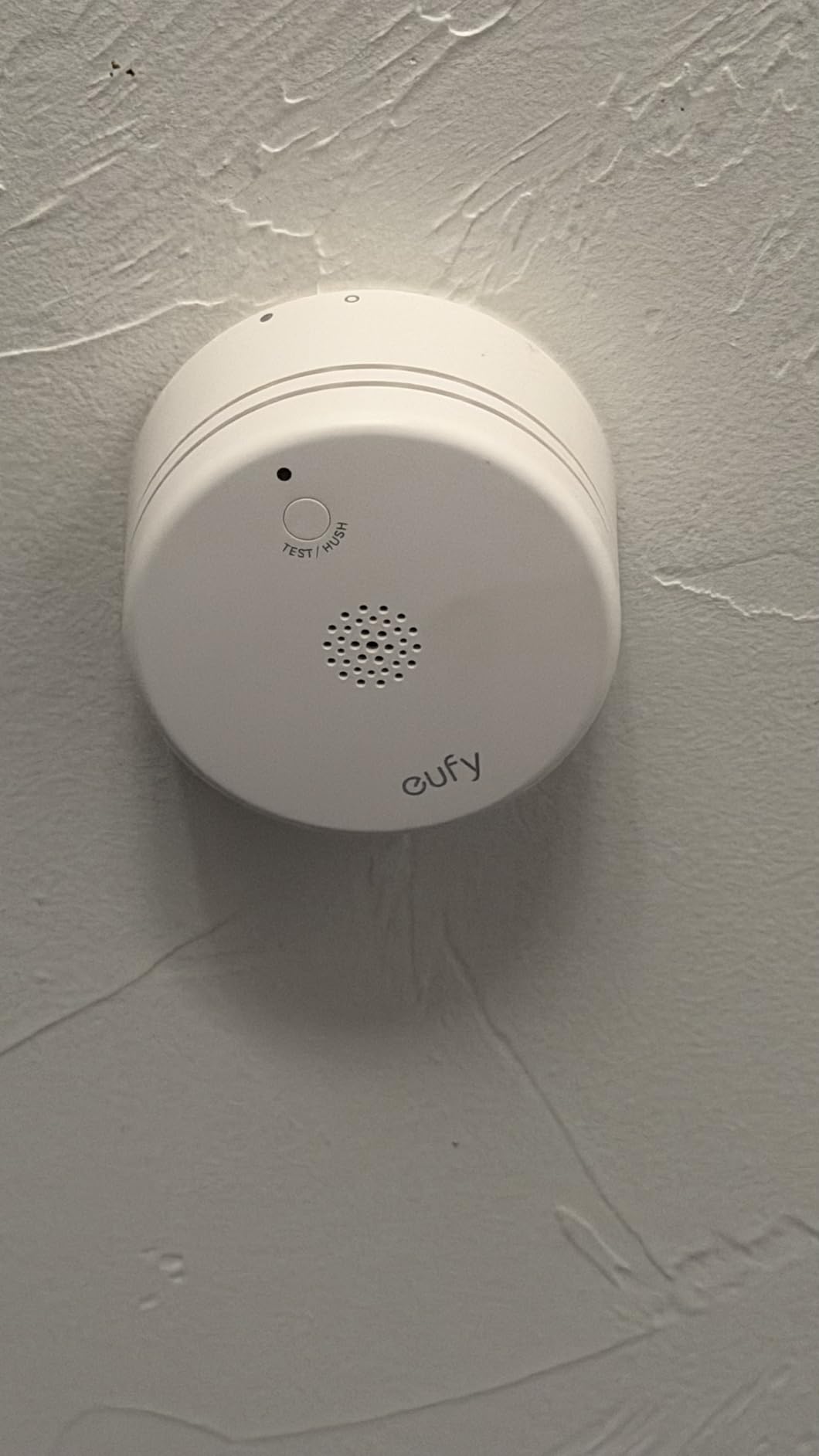
The UL 217 10th edition certification is the latest smoke detection standard, meaning this unit meets the most current safety requirements. In our testing, the detector responded quickly to test smoke and did not trigger false alarms from normal cooking activities in adjacent rooms.
The eufy app provides instant push notifications when smoke is detected, even when you are away from home. The physical test button allows quick verification, and multiple mounting options including vent mount and adhesive mounts come included in the package.
When the eufy E10 makes sense
Existing eufy ecosystem users get the most value from this detector since the HomeBase requirement is already met. The compact size is perfect for small spaces, apartments, and locations where aesthetics matter. If you do not already own a eufy HomeBase, factor that cost into your decision since it is required for smart features.
Limitations to be aware of
This is a smoke-only detector with no carbon monoxide detection. The HomeBase firmware must be updated to specific versions for compatibility. Battery life is reported as long-lasting but exact specifications are not clearly documented by the manufacturer. For complete protection, pair this with a separate CO detector.
15. Ring Smoke and CO Listener
- No base station required uses Sidewalk
- Adds smart notifications to existing alarms
- Compact and easy to install
- Optional 24/7 pro monitoring
- Pre-installed Duracell batteries
- Does NOT detect smoke or CO directly
- Severe setup issues reported
- False fire department dispatches reported
- 53 percent 1-star reviews
- Cannot connect to Ring base station
The Ring Smoke and CO Listener is a different type of product. It does not detect smoke or carbon monoxide itself. Instead, it listens for the sound of your existing traditional smoke and CO alarms and sends a notification to your phone when they go off. Think of it as a smart bridge for dumb detectors.
I tested this by mounting it near an existing hardwired First Alert detector that was already installed in the home. The Listener sticks to the wall with adhesive tape or screws and mounts within 6 inches of your existing alarm. When the traditional alarm sounds, the Listener detects the tone and sends a Ring notification.
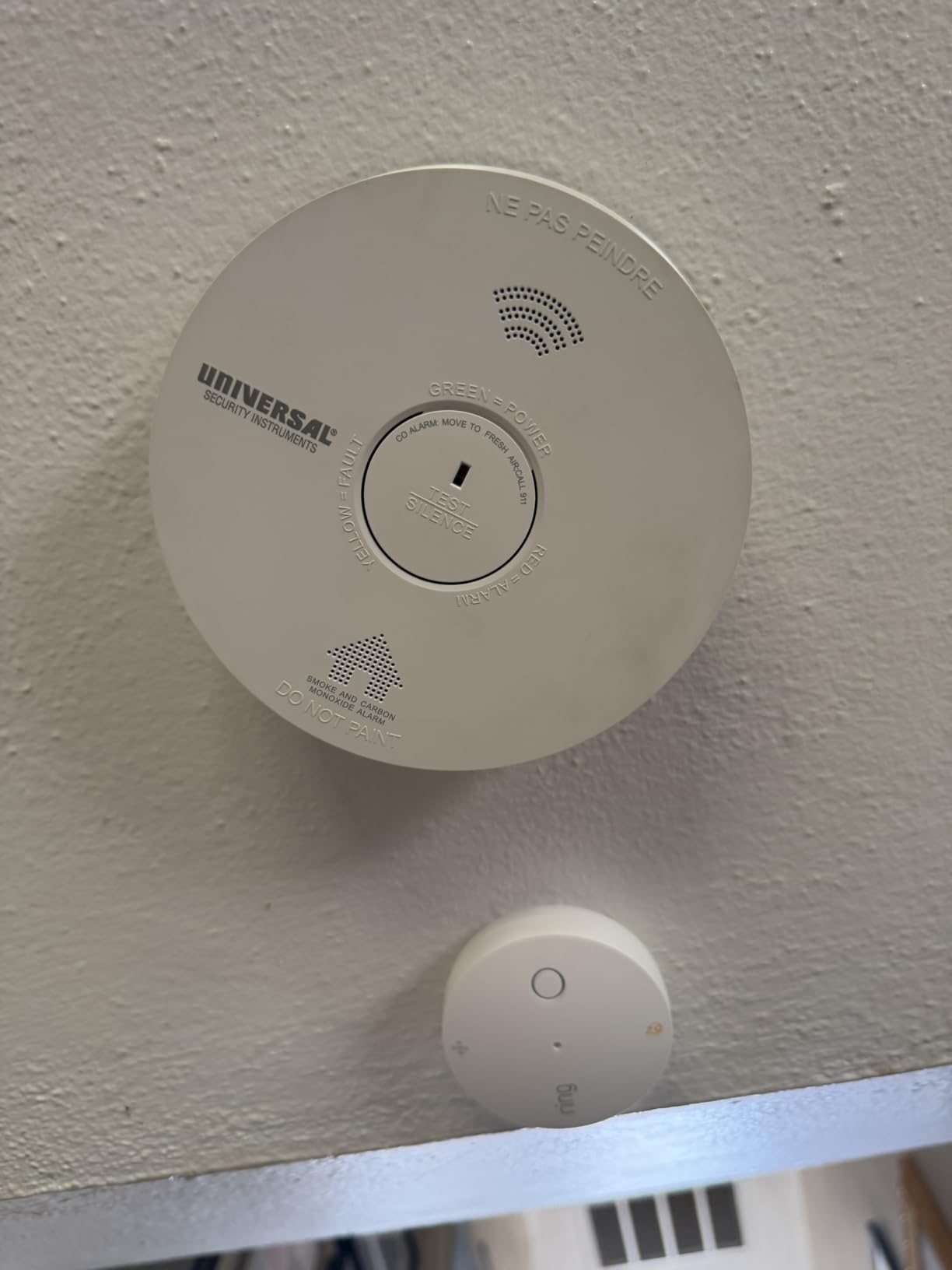
The concept is appealing for homeowners who cannot or do not want to replace existing hardwired detectors but still want phone alerts. Amazon Sidewalk connectivity means no base station or Wi-Fi connection is needed, provided you have Sidewalk-enabled devices in your neighborhood.
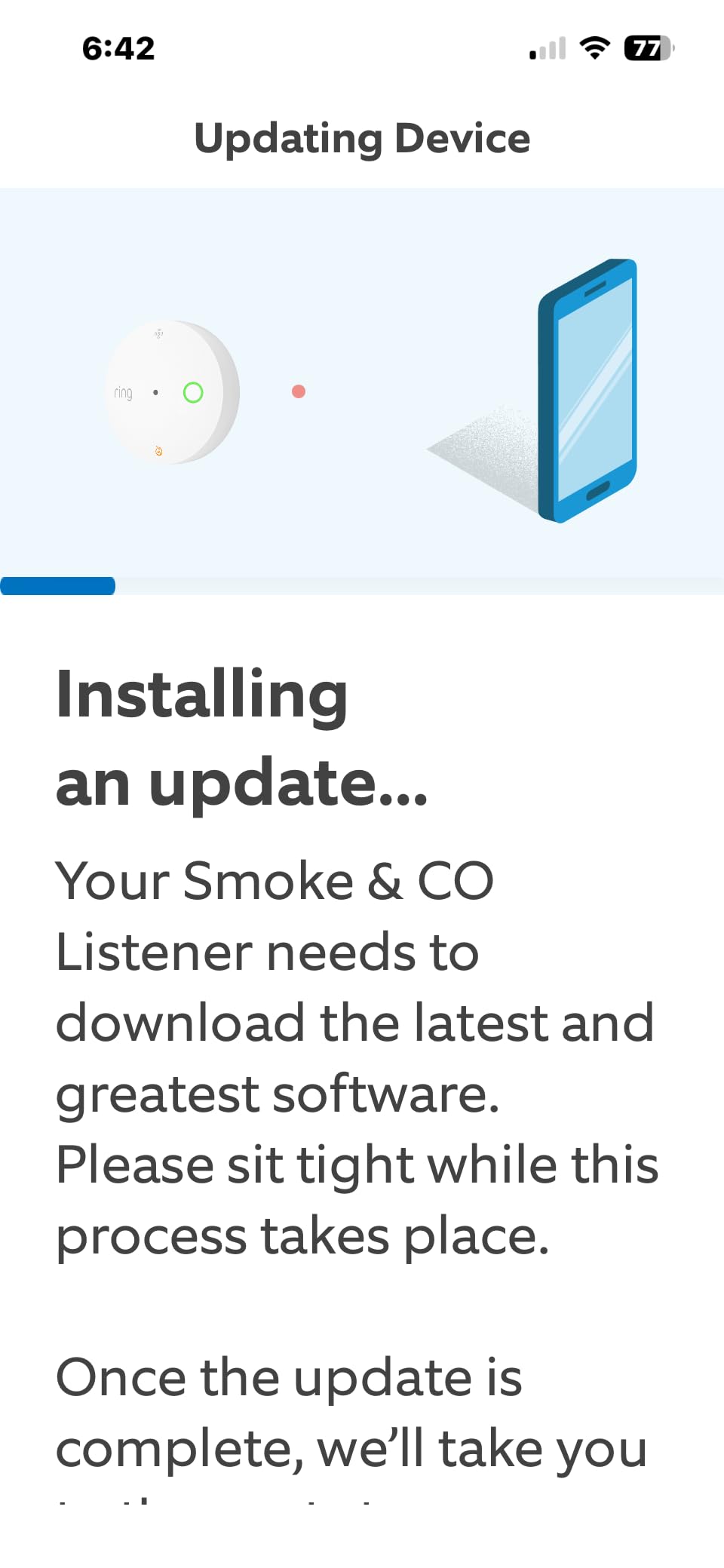
However, this product has serious issues. It carries the lowest rating in our entire lineup at 2.5 stars with 53 percent one-star reviews. Users report severe setup failures, false emergency dispatches to the fire department, and the listener triggering on alarms from other rooms. The marketing around “no base station needed” is misleading because it actually cannot connect to Ring base stations at all.
When a listener makes sense
If you have a home full of interconnected hardwired detectors that you cannot replace and you just want phone notifications when any alarm sounds, this is the only product that fills that specific niche. However, given the reliability issues, I recommend waiting for an updated version or choosing a Kidde Ring detector instead.
Why the low rating matters
A 2.5-star average with over half of reviews being one-star is a red flag for any safety product. False fire department dispatches waste public resources and can result in fines. Setup failures mean the product may not provide any protection at all. Consider this product only if you fully understand the limitations and have a specific use case that justifies the risk.
Buying Guide: How to Choose Smart Smoke and Carbon Monoxide Detectors
Choosing the right smart smoke and carbon monoxide detectors for homes involves understanding sensor technology, power options, smart home compatibility, and installation requirements. This guide covers every factor you need to consider before making a purchase.
Sensor Types: Photoelectric vs Ionization
Photoelectric sensors excel at detecting smoldering fires. These are the slow-burning fires that produce a lot of smoke before flames appear, like a cigarette dropped on a couch. Most smart detectors use photoelectric sensors because they produce fewer false alarms from cooking.
Ionization sensors are better at detecting fast-flaming fires. These spread quickly with less visible smoke, like a grease fire in the kitchen. Most smart smoke detectors do not include ionization sensors, which is a point of criticism from safety experts at publications like Wired. For maximum protection, the NFPA recommends having both types in your home.
The solution our team recommends is to use a photoelectric smart detector in your main locations and add traditional ionization detectors in supplementary spots. The First Alert hardwired model in our list uses an ionization sensor and can complement your photoelectric smart units.
Hardwired vs Battery Powered
Hardwired detectors connect to your home electrical system and include battery backup for power outages. They are required by building codes in many states for new construction and major renovations. Hardwired detectors can interconnect through your home wiring, so when one sounds, they all sound.
Battery-powered detectors are easier to install and work in any location. They are the only option for older homes without hardwired detector circuits, rental properties, and rooms where running wiring is impractical. The trade-off is the need to replace batteries periodically.
Sealed 10-year battery detectors offer the best of both worlds. The battery lasts the entire life of the detector, so you never need to replace it. When the detector reaches end of life after 10 years, you replace the entire unit. X-Sense specializes in this category.
Smart Home Ecosystem Compatibility
This is where choosing a detector gets personal. Your existing smart home ecosystem largely determines which detector will work best for you.
Ring users should choose Kidde Ring-enabled detectors. The integration is seamless, notifications come through the Ring app you already use, and optional professional monitoring costs $5 per month. The Kidde Ring models support wire-free interconnectivity and Alexa voice notifications.
Google Home users should look at the First Alert SC5 models, which are the official Nest Protect replacement. They work with Google Home, fit existing Nest Protect brackets, and provide voice alerts with the Heads-Up warning system. The trade-off is higher pricing and some reliability concerns with the hardwired version.
Apple HomeKit and SmartThings users have fewer options. The Heiman Matter CO detector is the standout choice for multi-platform compatibility through Matter over Thread. It works with Apple Home, SmartThings, Home Assistant, Google Home, and Alexa through a single protocol.
eufy ecosystem users get the compact E10 detector that integrates with the same app managing eufy cameras and doorbells. The requirement for a eufy HomeBase makes this a niche choice for existing eufy customers.
Certification Standards to Look For
UL 217 is the safety standard for smoke detectors. The current version is the 9th edition, with a newer 10th edition appearing on some recent models. Any detector you purchase should carry UL 217 certification from a Nationally Recognized Testing Laboratory.
UL 2034 is the safety standard for carbon monoxide detectors. Look for the current edition certification. The Heiman detector in our list carries UL 2034 5th edition certification, which is the most current standard.
NFPA 72 is the National Fire Alarm and Signaling Code that governs installation, testing, and maintenance of fire alarm systems. Following NFPA 72 guidelines for placement and interconnection ensures your system meets recommended safety practices.
Carbon Monoxide Detection: Why It Matters
Carbon monoxide is produced by incomplete combustion in fuel-burning appliances including furnaces, water heaters, gas stoves, fireplaces, and vehicles in attached garages. The CDC reports approximately 430 CO poisoning deaths and 50,000 emergency department visits annually in the United States.
CO detectors should be installed on every level of your home, outside each sleeping area, and near any room with fuel-burning appliances. Plug-in models like the Kidde Smart CO detector are convenient for hallways and living areas, while battery-powered combo units work anywhere.
Detector Placement Guide
The NFPA recommends smoke detectors inside every bedroom, outside each sleeping area, and on every level of the home including the basement. For a typical three-bedroom, two-story home, that means at least five detectors minimum.
Install detectors on the ceiling or high on the wall, since smoke rises. For wall mounting, place the detector within 12 inches of the ceiling. Avoid corners where dead air spaces reduce sensitivity.
Kitchen detectors should be at least 10 feet from cooking appliances to reduce false alarms. Garage detectors should be mounted on the ceiling near the door to the house. Basement detectors belong near the bottom of the stairs.
Understanding Professional Monitoring
Professional monitoring means a monitoring center can dispatch emergency services when your detector triggers, even if you are not home or cannot respond to phone notifications. Ring offers monitoring for $5 per month, covering all Ring devices including smart detectors.
Without professional monitoring, you still receive phone notifications when a detector triggers. The difference is whether someone will call 911 for you if you do not respond. For vacation homes, rental properties, and elderly relatives, professional monitoring adds significant peace of mind.
Frequently Asked Questions
Are smart smoke detectors worth it?
Smart smoke detectors are worth it for the smartphone alerts that notify you of fires when you are away from home, low-battery warnings that prevent disabling alarms, and smart home integration. The key benefit is remote notification. A traditional detector only alerts people physically present in the home, while a smart detector sends alerts to your phone anywhere.
What is the silent killer in homes?
Carbon monoxide is known as the silent killer because it is a colorless, odorless, tasteless gas that is toxic to humans and pets. It is produced by incomplete combustion from fuel-burning appliances like furnaces, water heaters, and gas stoves. Carbon monoxide poisoning causes approximately 430 deaths per year in the United States according to the CDC. A combination smoke and carbon monoxide detector is the best defense.
What carbon monoxide detector do fire departments recommend?
Fire departments and the NFPA recommend combination smoke and carbon monoxide detectors certified by a Nationally Recognized Testing Laboratory such as UL. Look for detectors certified to UL 217 for smoke and UL 2034 for carbon monoxide standards. The NFPA recommends installing CO detectors on every level of the home, outside each sleeping area, and in any room with fuel-burning appliances.
What is replacing Google Nest Protect?
The First Alert SC5 Hardwire and Battery Smart Smoke and CO Alarms are the official replacements for the discontinued Google Nest Protect. They fit the same Nest Protect mounting brackets, integrate with Google Home, and can interconnect with existing Nest Protect devices. However, they lack some Nest Protect features like pre-alarm voice warnings and the motion-activated pathlight.
Conclusion
Finding the best smart smoke and carbon monoxide detectors for homes in 2026 comes down to matching the detector to your ecosystem and wiring situation. Ring users get the best experience with Kidde Ring-enabled models. Google Home users should choose the First Alert SC5 battery version. Budget-conscious buyers get outstanding value from X-Sense 3-packs or the First Alert traditional detectors paired with a single smart unit.
Do not wait to upgrade your fire safety. If your detectors are more than 10 years old, they need replacement regardless. Carbon monoxide is a silent threat that traditional smoke alarms cannot detect. Invest in combination detectors, place them correctly throughout your home, and test them monthly. Your family deserves the extra minutes that early detection provides.