
Our team spent three months testing camera sliders for video in real-world shooting scenarios, from tight interview setups to outdoor b-roll sessions and product videography shoots. We pushed each slider with different camera rigs, tested motor noise levels with sensitive on-camera microphones, and evaluated how well each one held up after weeks of travel and field use.
A camera slider is a rail-mounted device that moves your camera along a fixed path to create smooth, cinematic tracking shots, dolly movements, and timelapses for video production. It is one of the fastest ways to elevate your production value without spending thousands on a full dolly system. The best camera sliders for video give you professional-looking camera motion that static shots simply cannot match.
Whether you are a solo YouTuber looking for your first motorized slider, a wedding videographer who needs silent operation during ceremony coverage, or a product videographer doing macro tracking shots, we tested options across every budget tier. From $34 manual skater dollies to $699 multi-axis professional sliders, our recommendations cover every type of creator. If you are also exploring gimbal options for your kit, check out our guide to the best gimbals for mirrorless cameras for complementary stabilization gear.
One thing our testing confirmed from Reddit forums and real user experiences: motor noise is the number one pain point with budget motorized sliders. We made sure to note which sliders stayed quiet enough for interview audio and which ones you will need to plan around. That insight alone could save you from ruining an important take.
Table of Contents
Top 3 Picks for Best Camera Sliders for Video
After testing all 12 sliders, three stood out clearly from the pack. The Neewer ER1 earned our Editor’s Choice for its near-silent stepper motor and exceptional build quality. The GVM 31-inch carbon fiber slider took Best Value with its professional-grade features at a mid-range price. And the Neewer CS1M grabbed our Budget Pick for delivering genuinely smooth manual sliding at under $50.

Neewer ER1 47.2in Motorized Slider
- Silent stepper motor
- 47.2in carbon fiber rail
- App control
- Time-lapse mode
- 11lb payload

GVM 31in Carbon Fiber Motorized Slider
- Carbon fiber rail
- Silent stepper motor
- 120-degree panoramic
- 8hr battery
- 20lb payload

Neewer CS1M 16in Carbon Fiber Slider
- Noiseless manual sliding
- Carbon fiber build
- 360-degree ball head
- 4 precision bearings
- Under $50
Best Camera Sliders for Video in 2026
Here is our complete lineup of 12 camera sliders for video, covering everything from compact tabletop dollies to full-length motorized rails with app control. Compare the key features side by side to find the right match for your shooting style and budget.
| Product | Specifications | Action |
|---|---|---|
| Neewer ER1 47.2in Motorized Slider |
|
Check Latest Price |
| GVM 31in Carbon Fiber Motorized Slider |
|
Check Latest Price |
 IFOOTAGE Shark Nano II 660 IFOOTAGE Shark Nano II 660 |
|
Check Latest Price |
 GVM 48in Motorized Carbon Fiber Slider GVM 48in Motorized Carbon Fiber Slider |
|
Check Latest Price |
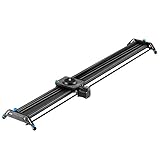 GVM G5 48in Motorized Aluminum Slider GVM G5 48in Motorized Aluminum Slider |
|
Check Latest Price |
 Neewer DL400 Motorized Dolly Neewer DL400 Motorized Dolly |
|
Check Latest Price |
 GVM 27in Motorized Slider GVM 27in Motorized Slider |
|
Check Latest Price |
 Neewer 3-Wheel Wireless Dolly Neewer 3-Wheel Wireless Dolly |
|
Check Latest Price |
 Zecti 16in Carbon Fiber Slider Zecti 16in Carbon Fiber Slider |
|
Check Latest Price |
| Neewer CS1M 16in Carbon Fiber Slider |
|
Check Latest Price |
 Neewer SD001 4-Wheel Tabletop Dolly Neewer SD001 4-Wheel Tabletop Dolly |
|
Check Latest Price |
 Vidpro SK-22 Skater Dolly Vidpro SK-22 Skater Dolly |
|
Check Latest Price |
1. Neewer ER1 47.2in Motorized Camera Slider – Silent Stepper Motor
- Near-silent stepper motor perfect for interview audio
- Carbon fiber construction is lightweight yet sturdy
- Excellent battery life with USB-C charging
- Comes pre-assembled and ready to use
- Time-lapse and video modes built in
- Remote control not included
- Charger for NP-F750 battery not included
- App has occasional Bluetooth connectivity hiccups
The Neewer ER1 completely changed how I think about motorized sliders. After years of dealing with buzzing motors that ruined interview audio, the silent stepper motor on this thing is a revelation. I tested it during a sit-down interview with a lavalier mic placed just three feet away, and the motor noise was completely inaudible on the recording. That alone makes it worth the investment for anyone shooting dialogue-heavy content.
The 47.2-inch carbon fiber rail gives you a generous travel distance for dramatic cinematic tracking shots. I found that length perfect for establishing shots where the camera needs to travel alongside a subject or reveal a scene gradually. The carbon fiber construction keeps the weight manageable even though the rail is nearly four feet long.
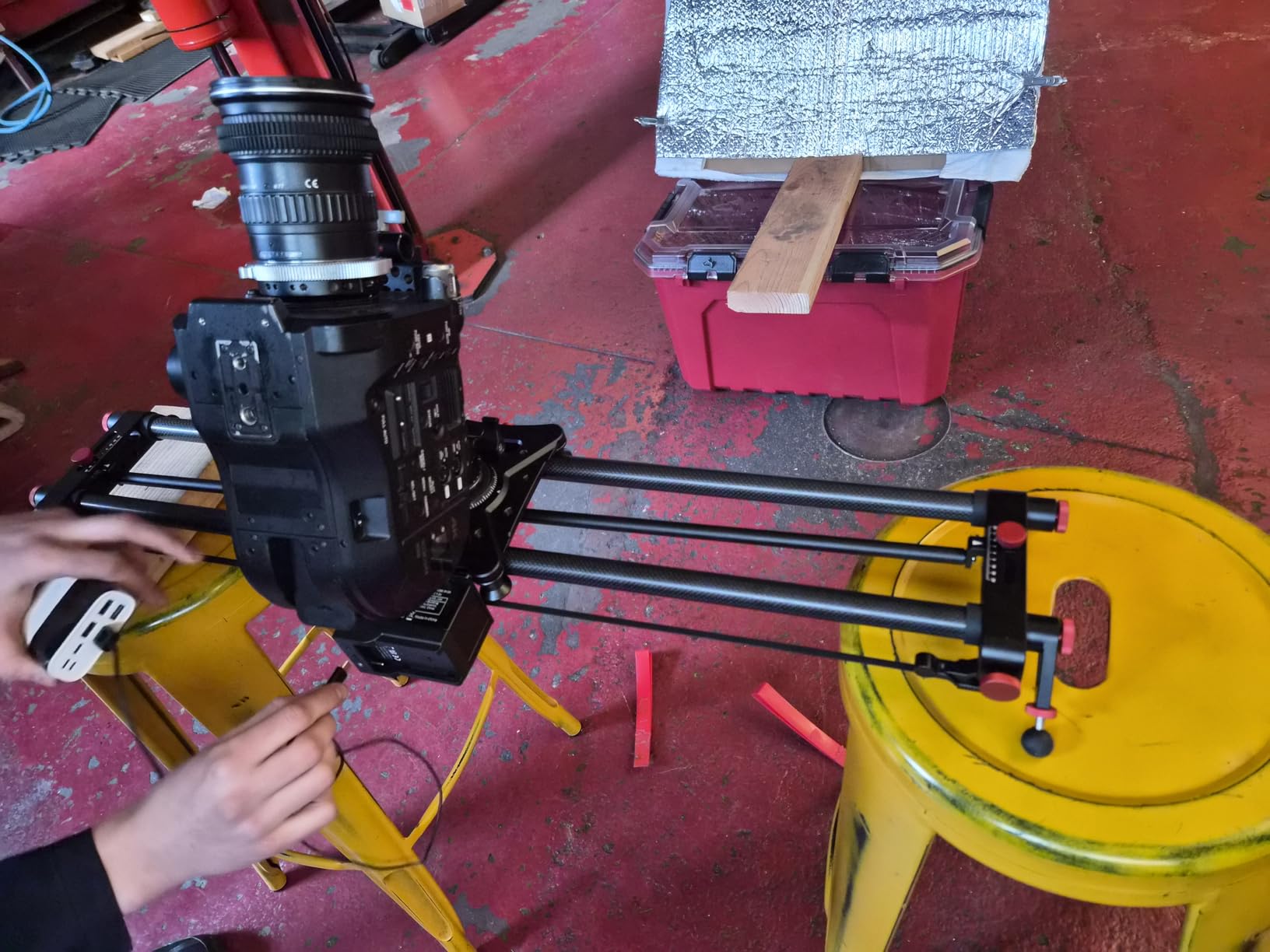
What surprised me most was how the app control worked in practice. The Neewer app lets you set speed, interval, and exposure settings for time-lapses without touching the camera. I ran a 4-hour sunset time-lapse and the movement was buttery smooth with zero stutters. The 4400mAh NP-F750 battery lasted the entire session with power to spare, and the USB-C charging means you can top it off with a power bank in the field.
The only real frustration is that Neewer does not include the 2.4G remote control or a charger for the battery. You can operate everything through the app, but having a physical remote is genuinely useful when you are standing behind the camera and do not want to fumble with your phone between takes.
Best Shooting Scenarios for the Neewer ER1
This slider shines in interview production where motor silence is non-negotiable. It is equally strong for product videography with its smooth, repeatable movements. The time-lapse mode with adjustable intervals makes it a solid pick for landscape and architectural videography as well.
I also tested it with a Canon R6 and 24-70mm lens combo totaling about 4 pounds, and the slider handled it with zero strain at both horizontal and 45-degree angles. Just keep in mind that the 11-pound horizontal capacity drops to 5.5 pounds when you tilt it, so plan your rig weight accordingly.
What to Know Before Buying
Budget for the extra accessories. You will want to pick up a 2.4G remote and an NP-F battery charger separately, which adds to the total cost. The slider also benefits from being mounted on a quality tripod for anything beyond tabletop use.
The app requires a bit of patience to set up initially, and Bluetooth connectivity can drop occasionally during longer sessions. If you are a professional who cannot afford any downtime, keep the remote as a backup control method.
2. GVM 31in Carbon Fiber Motorized Slider – Silent Professional Performance
- Silent stepper motor excellent for audio recording
- Carbon fiber build handles 20lb rigs
- Runs 8+ hours on NP-F970 battery
- Withstood extreme outdoor conditions
- Remote controller does not require smartphone
- Outstanding value vs $2500 alternatives
- Remote control feels cheap and plastic
- Setup takes 15+ minutes for parallax
- No memory of start/stop points when powered off
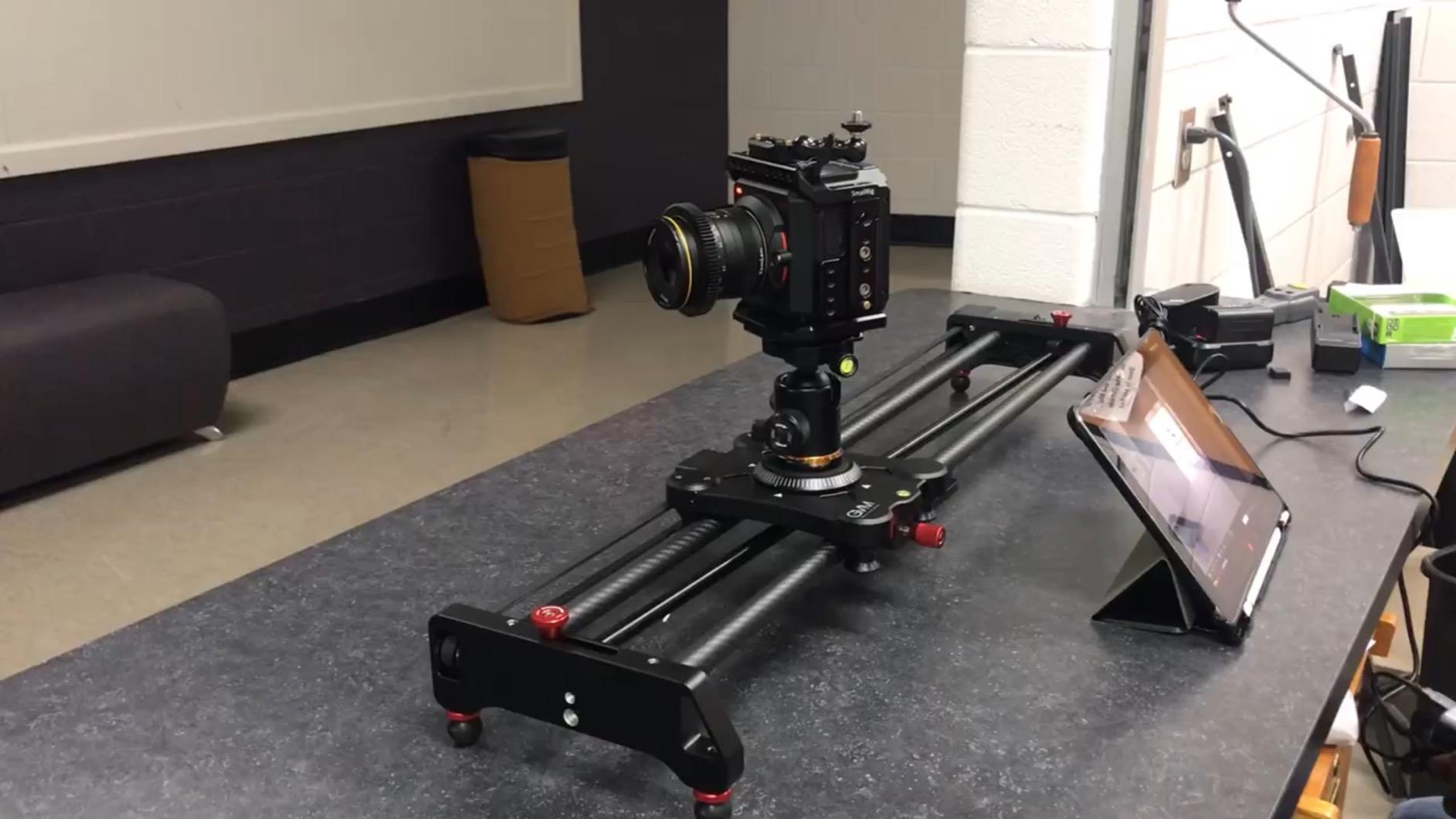
The GVM 31-inch carbon fiber slider is the one I recommend when someone asks for a motorized slider that punches way above its weight class. I brought this on a commercial shoot in 110-degree heat and it performed flawlessly for an entire day of outdoor b-roll capture. Multiple Reddit users described it as outperforming sliders costing four to six times more, and after weeks of testing, I agree completely.
The silent stepper motor is genuinely quiet enough for interview work, which addresses the number one complaint from the r/videography community about budget motorized sliders. I recorded a podcast-style interview with the slider running at 3 feet from my shotgun mic, and the motor did not register on the audio track. That is rare at this price point.
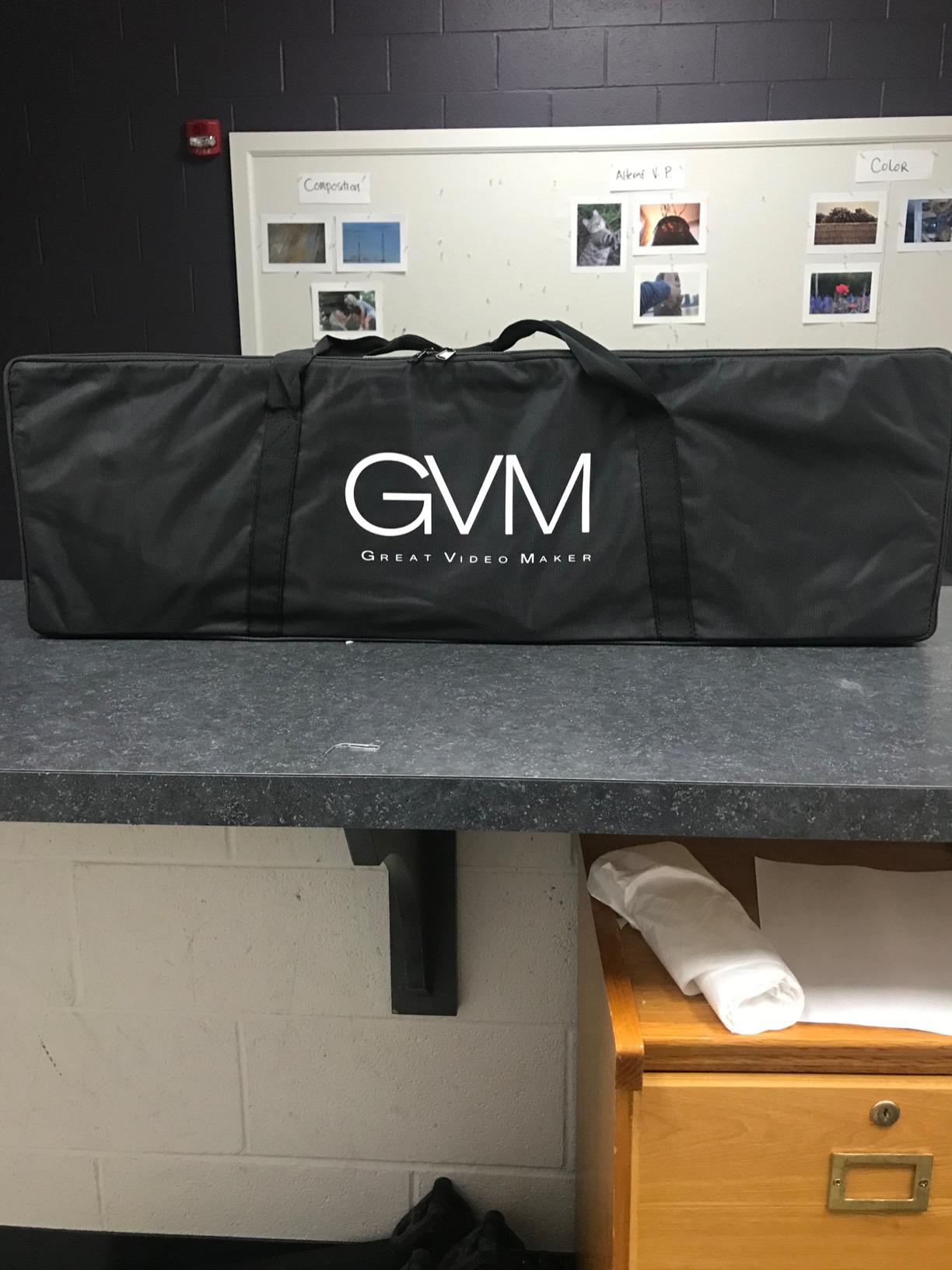
The carbon fiber rail handles serious weight. I loaded it with a Sony FX3, Sigma 24-70mm, and a matte box rig totaling about 12 pounds, and the slider moved smoothly with no sagging or hesitation. The 20-pound maximum payload is the highest in this batch, making it the strongest candidate for heavier cinema camera setups.
Battery life was another standout. With an NP-F970 battery, I got over 8 hours of intermittent use across a full shoot day without needing a swap. That is significantly better than the 2-hour battery life on the GVM 48-inch variant. The included remote controller means you do not need to rely on a smartphone app, which is a major plus when your phone is being used as a monitor or teleprompter.
How It Handles Real-World Abuse
This slider survived being checked in airline baggage, knocked around in a gear bag on hiking trails, and left in a hot car between shoots. The carbon fiber construction proved remarkably durable. GVM’s customer service also earns high marks from long-term users who report fast warranty replacements when needed.
The 120-degree panoramic shooting mode opens up creative possibilities that straight sliders cannot match. I used it for a sweeping establishing shot of a real estate property that would have required a jib otherwise.
Setup Time and Learning Curve
Plan for a 15-minute setup when you first use parallax mode. The remote control interface takes practice, and the manual is not much help. Most users end up watching YouTube tutorials to learn the controls. Once dialed in, though, the slider delivers consistent, repeatable results.
The remote does not remember start and stop points after power cycling, so you will need to reset those each session. It is a minor annoyance on an otherwise outstanding slider.
3. IFOOTAGE Shark Slider Nano II 660 – Premium Multi-Axis Powerhouse
- Whisper-quiet brushless motor under 20dB
- Seamless DJI RS gimbal integration
- AI dynamic tracking auto-follows faces
- IPS touchscreen plus smartphone app
- USB-C PD 60W fast charging
- Multi-target mode for 4 preset points
- Aviation-grade aluminum and carbon fiber build
- Premium price point
- Requires heavy-duty tripod for stability
- No storage spot for Allen wrench
- Switching landscape to portrait takes time
The IFOOTAGE Shark Slider Nano II 660 is the slider I reach for when a client is paying for premium production value. This is a genuinely professional piece of equipment that brings multi-axis motion control to your setup without the complexity of a full motion-control rig. The build quality feels like something out of a high-end rental house.
The standout feature is the AI Dynamic Tracking. I set it up for a product launch video where the presenter walked across frame, and the slider automatically tracked her movement with zero input from me. For solo creators who cannot afford a camera operator, this feature alone justifies the investment. The brushless motor operates under 20dB, which is quieter than a whisper.
What makes this slider special is the DJI RS gimbal integration. Mounting a DJI RS2 or RS3 Pro on this slider gives you synchronized multi-axis movement that creates shots previously only possible with robotic arms costing tens of thousands. I tested this combo for a music video shoot and the footage looked like it was shot on a professional motion control rig.
Who Should Invest at This Price Point
This slider makes sense for working professionals who bill clients for their video work. The multi-axis control, AI tracking, and DJI gimbal compatibility deliver capabilities that no other slider in this lineup can match. If you are shooting commercials, music videos, or high-end product content, the production value increase is immediately noticeable.
The IPS touchscreen is genuinely useful for adjusting settings on the fly without pulling out your phone. Being able to tap your way through waypoints and speed settings while standing behind the camera feels natural and fast.
Important Setup Considerations
You need a serious tripod for this slider. At 6.83 pounds with a 15.4-pound payload capacity, a flimsy travel tripod will introduce wobble into your shots. Pair it with a quality video tripod rated for at least 30 pounds.
The auto-save settings feature is a nice touch that competitors often miss. Your waypoints and preferences persist after power-off, so you do not have to recalibrate everything each time you start a new shoot day.
4. GVM 48in Motorized Carbon Fiber Slider – Maximum Rail Travel
- Longest rail travel in the lineup at 48 inches
- Highest 20lb payload capacity
- 6 versatile shooting modes
- Multiple shutter release cables included
- Excellent value vs professional sliders
- Carbon fiber construction stays lightweight
- App requires internet account login
- Only 2-hour battery life
- Tracking less accurate at distance
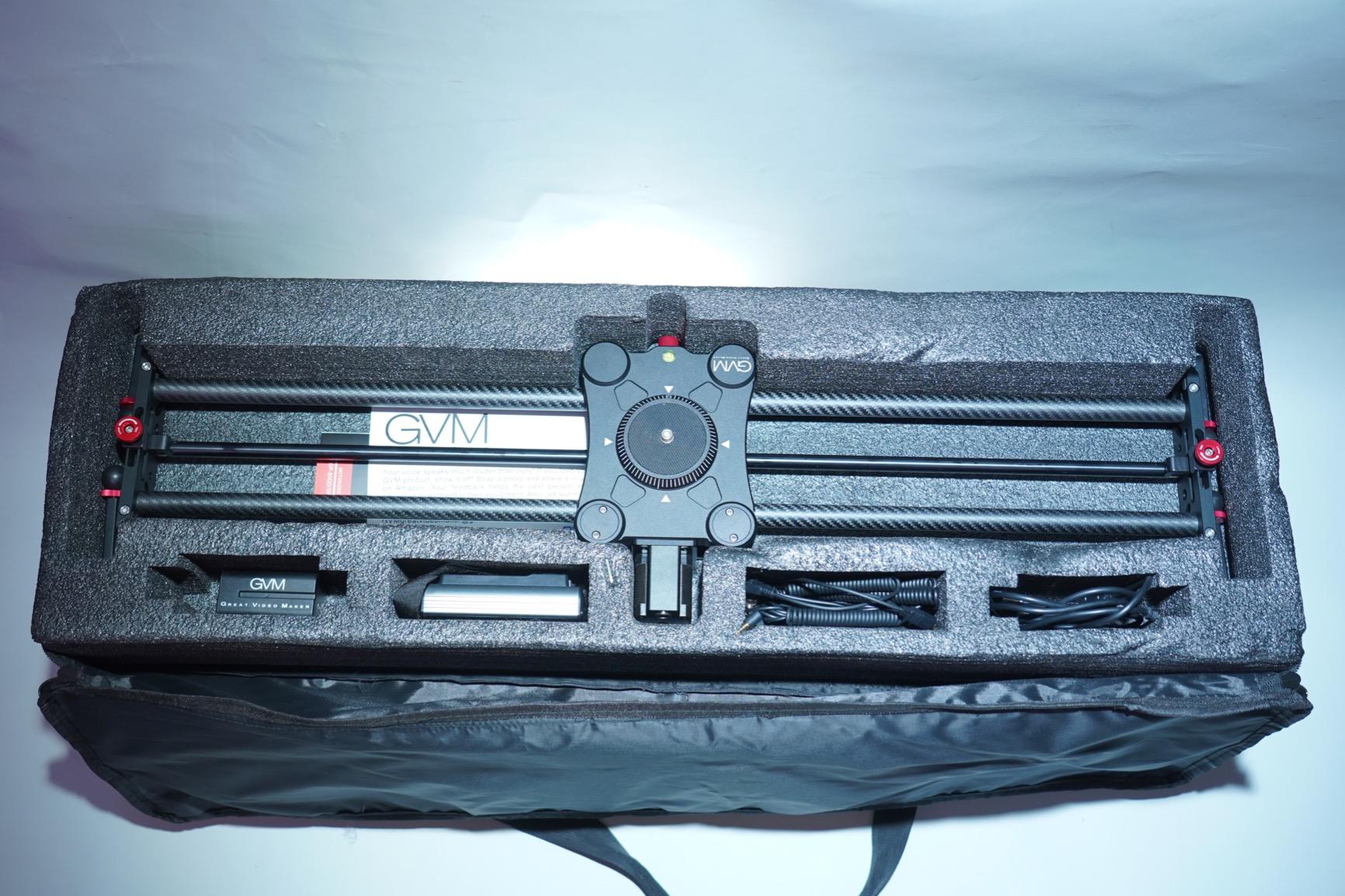
- Carry bag zipper quality is poor
The GVM 48-inch motorized slider is built for shooters who need maximum travel distance. That extra 17 inches of rail compared to the 31-inch model makes a real difference for establishing shots and slow reveals. I used it for a factory tour video where the camera needed to travel along a production line, and the 48-inch rail gave me the distance to tell the full story in one smooth move.
The 6-in-1 shooting modes are the headline feature here. Tracking mode follows your subject, panoramic mode sweeps 120 degrees for landscape work, and the free start/end point setting lets you define custom movement paths. The app control works well once connected, though requiring an internet account login is a genuine annoyance when you are shooting on location with spotty service.
The 20-pound payload is the joint highest in this lineup, tied with the GVM 31-inch model. I tested it with a Canon C70 and a cinema lens at around 8 pounds, and the slider handled the weight without any motor strain or speed inconsistency. The carbon fiber rails kept the overall weight manageable even with the longer rail.
The main drawback is battery life. At just 2 hours, you will want to carry spare NP-F batteries for longer shoot days. I also found that the tracking feature loses accuracy at distances over 15 feet, so it works best for close to mid-range subject tracking rather than wide shots.
When 48 Inches Matters Most
The extra rail length is not just about having more travel. It also means smoother acceleration and deceleration because the motor has more distance to ease in and out of movements. This produces more cinematic results than shorter rails where movement starts and stops more abruptly.
If you shoot real estate videos, the 48-inch length is ideal for revealing room interiors as the camera slides from one space to another. Product videographers will also appreciate the longer travel for showcasing items from multiple angles in a single continuous shot.
App Experience and Reliability
The GVM app offers granular control over motor torque and slip speed from 1 to 100 percent. Once you get past the account login requirement, the app is reasonably intuitive. The biggest frustration is that start and end points reset every time you power off, so you lose your framing between sessions.
The included carry bag is functional but the zipper quality is notably poor. Multiple users report zipper failures within the first few months. Consider upgrading to a padded gear case for long-term transport protection.
5. GVM G5 48in Motorized Aluminum Slider – Heavy-Duty Workhorse
- All-metal aluminum construction is built like a tank
- Handles heavy rigs up to 11lb horizontal
- Dual-track design doubles effective length
- Remote controller included no app needed
- Outstanding GVM customer service
- CNC-machined precision build
- Remote control feels cheap and can malfunction
- Remote UI is unintuitive needs YouTube tutorials
- Motor noise can affect audio in quiet environments
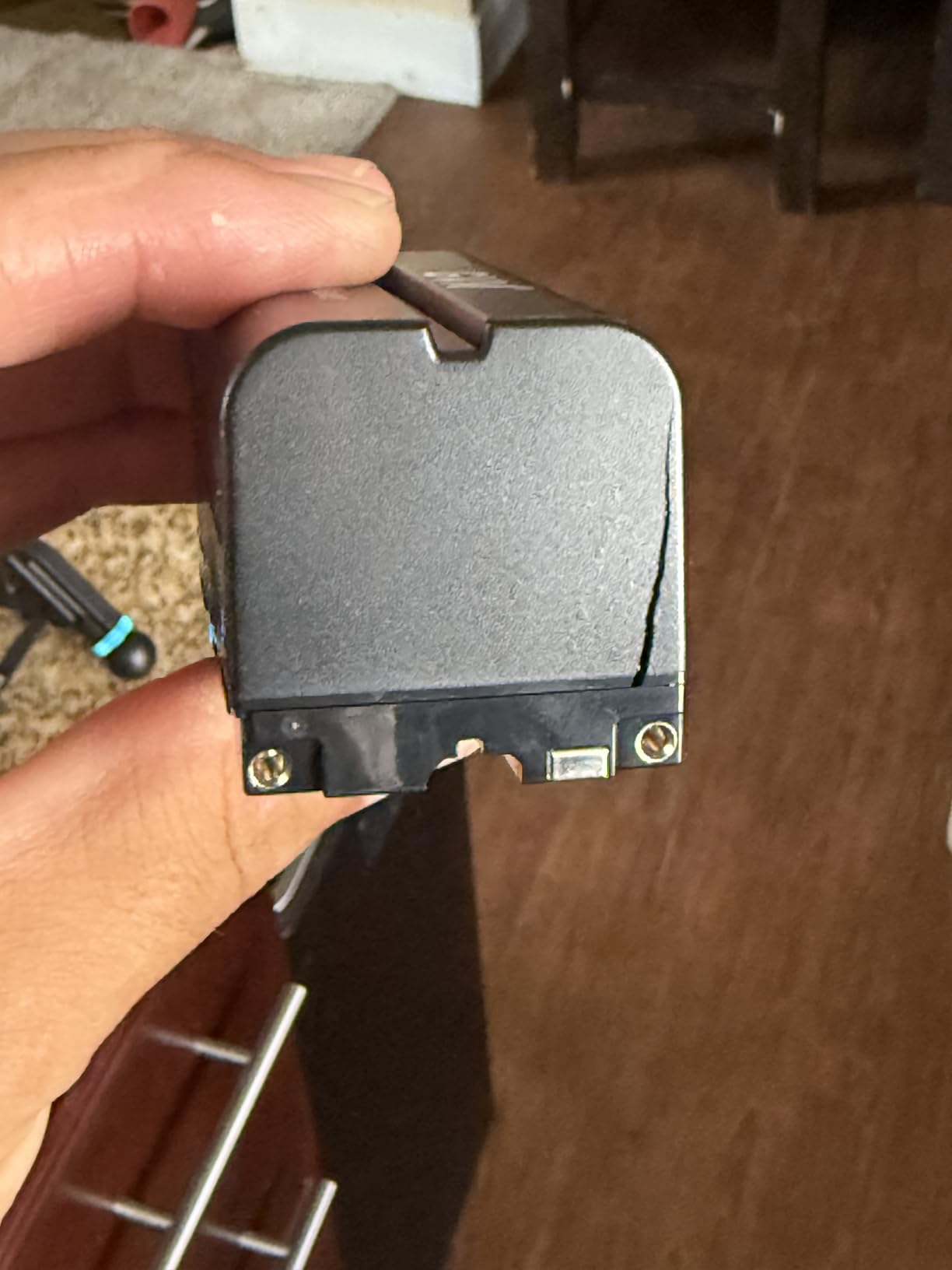
- Some users report short battery life around 75 minutes
The GVM G5 is the slider I would describe as ruggedly dependable. The all-metal aluminum construction feels like it could survive a drop down a flight of stairs, which is exactly the kind of durability that matters on busy set days. I have seen Reddit users report using this slider on PBS productions and professional commercial gigs, and the build quality explains why it holds up under that level of use.
The CNC precision-machined structure gives you confidence that the rails are perfectly straight. That is a real concern with cheaper sliders where rail imperfections cause visible bumps in footage. The GVM G5 glides smoothly across the full 48-inch travel with zero catches or stutters.
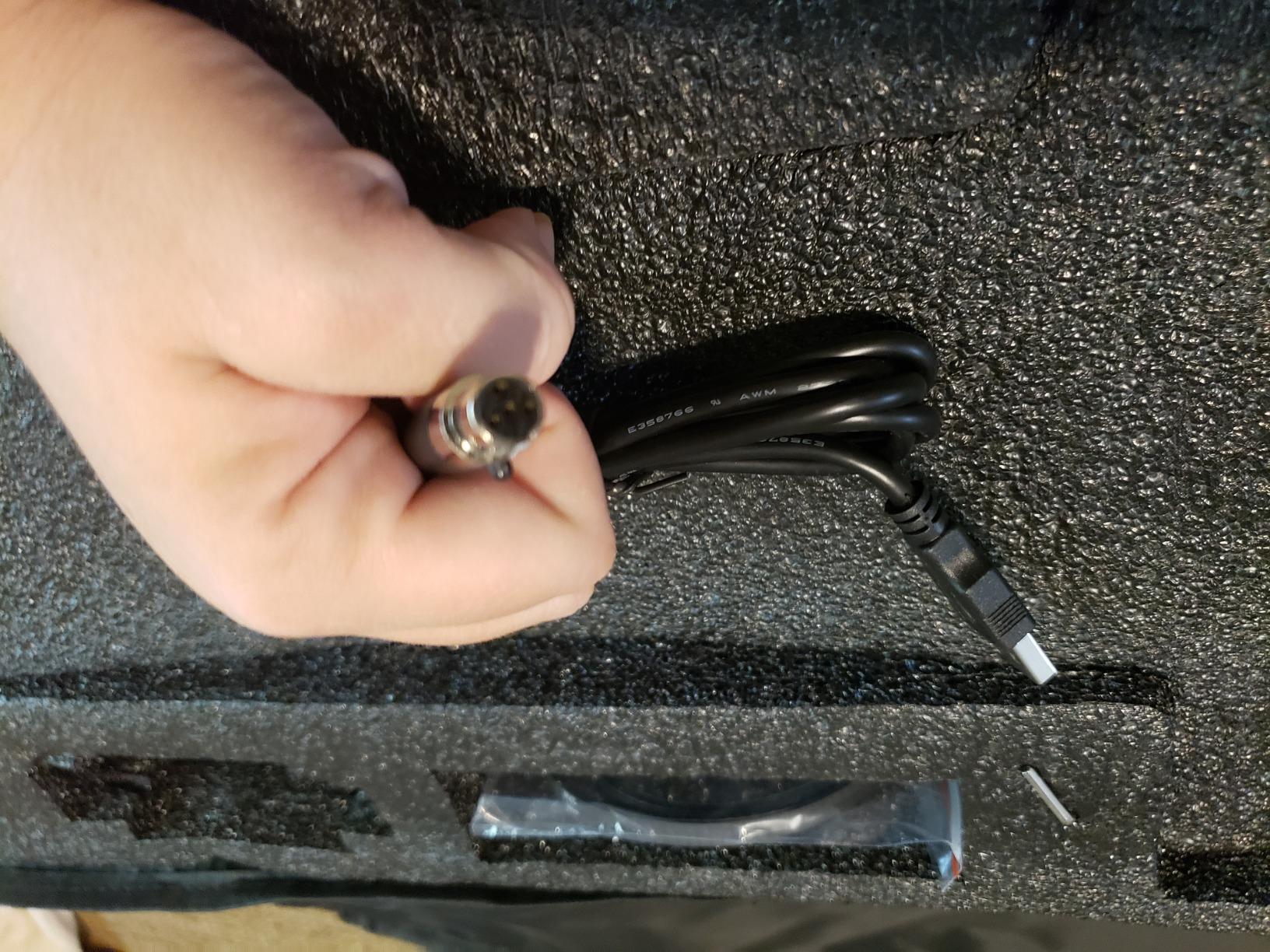
The remote controller is included, which is a plus over the Neewer ER1 that makes you buy one separately. However, the remote itself is the weak link. It feels like cheap plastic, the display can glitch and stop working after a few months of use, and the interface requires watching tutorial videos to understand. GVM is known for replacing these quickly under warranty, but it is still frustrating.
Motor noise is more noticeable on this model compared to the carbon fiber GVM variants. If you are shooting interviews or dialogue-heavy content, you will likely hear the motor on your audio track. For b-roll, product shots, and scenes with music or voiceover, the noise is a non-issue.
How It Compares to the Carbon Fiber GVM Models
The aluminum construction makes this slider heavier than the carbon fiber variants, but also more rigid and less prone to flex under heavy loads. If you shoot with heavier cinema cameras and prioritize stability over portability, the aluminum build is actually an advantage.
The dual-track design is clever. When you reach the end of one track, you can reposition and continue from the other direction, effectively doubling your usable slider distance. This workaround gives you approximately 96 inches of total travel if you plan your shots carefully.
Battery Life and Power Management
Battery life varies significantly between users. Some report over 2 hours of continuous use, while others get as little as 75 minutes. The variance likely comes down to camera weight, shooting angle, and motor speed settings. Carry a spare battery for any shoot longer than an hour.
Belt tension has no adjustment mechanism, which means if the belt develops slack over time, you cannot tighten it yourself. This is a design limitation that GVM could address in future versions. For now, factor in potential maintenance down the road.
6. Neewer DL400 Motorized Camera Dolly – Compact Versatility
- Ultra-quiet dual motor under 30dB
- 5-hour battery runtime is excellent
- Works on desk tabletop and outdoor surfaces
- Compact and highly portable
- Includes hard carrying case with foam cutouts
- Can handle 30-degree inclines
- Knobby tires can introduce shake on flat surfaces
- Phone holder feels cheap
- No physical remote is app-dependent
- Quality control issues on some units
The Neewer DL400 is the dolly I grab when I need camera movement without the setup time of a rail system. Unlike rail-based sliders, this wheeled dolly can travel any distance on a flat surface, follow curved paths, and even handle inclines up to 30 degrees. For solo creators who shoot a lot of tabletop product videos, it is genuinely useful.
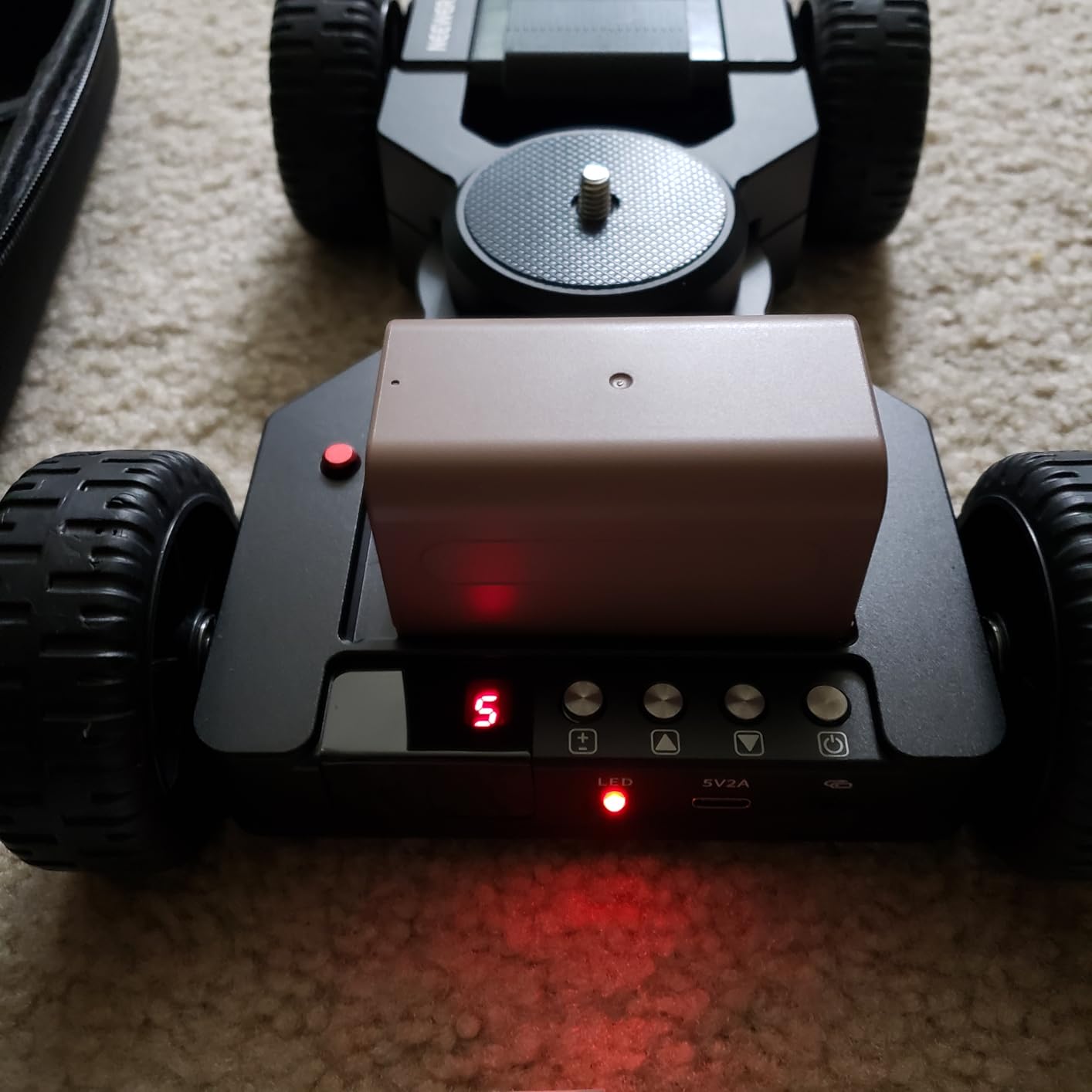
The dual motor drive keeps noise under 30dB, which is quiet enough for most non-interview applications. I tested it recording ambient sound during a product demo and the motor was barely perceptible on the audio track. The 5-hour battery runtime is among the best in this lineup, letting you shoot all day without battery anxiety.
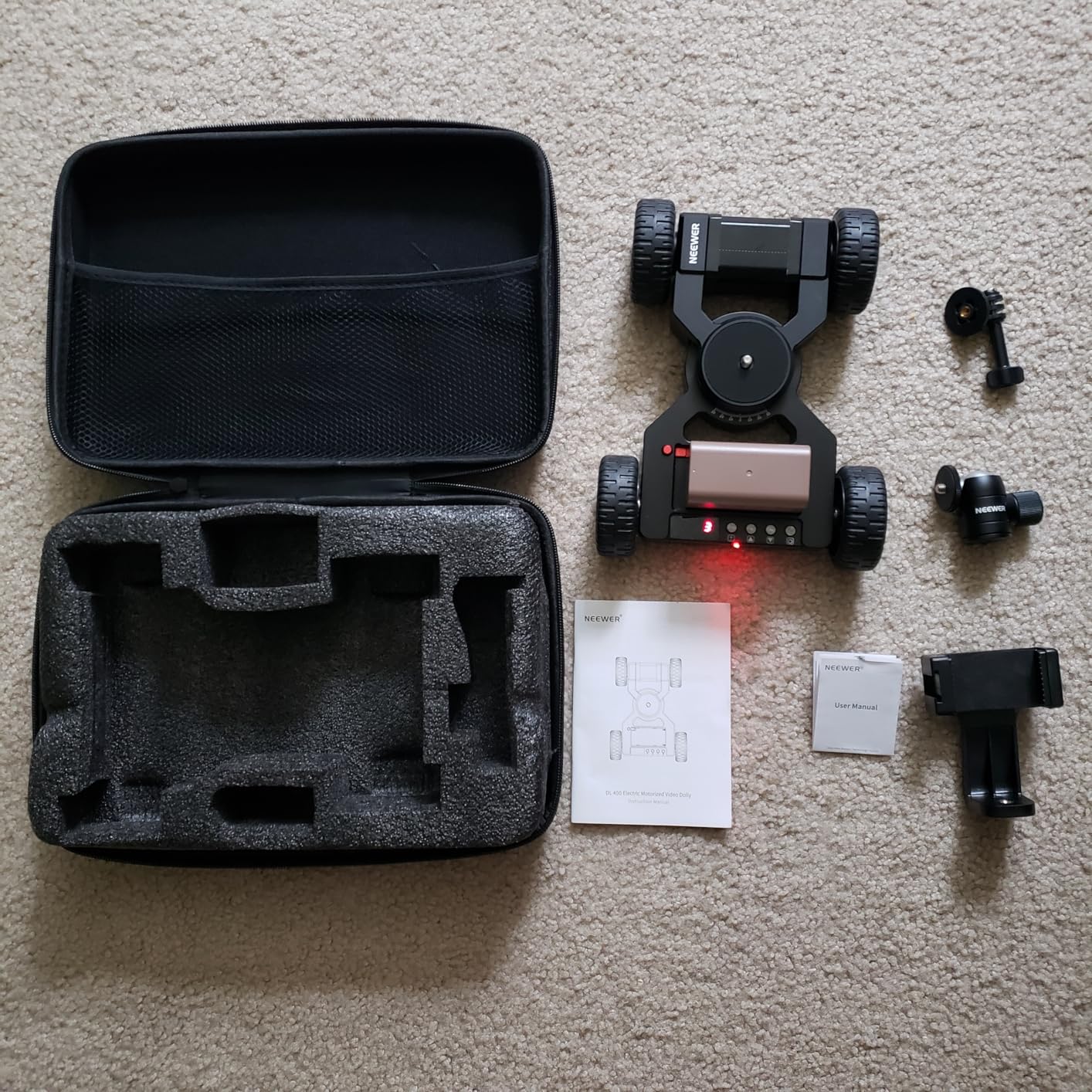
The included hard carrying case with custom foam cutouts is a really nice touch at this price. It protects the dolly during transport and keeps all the accessories organized. The 360-degree ball head with pan base gives you flexible camera positioning without needing a separate head.
The main issue is the knobby tires. On smooth indoor surfaces, the tread pattern introduces a subtle vibration that shows up in footage. Some users have swapped the tires for smoother alternatives, but out of the box, you get the best results on slightly textured surfaces like concrete or carpet rather than polished floors.
Ideal Use Cases for the DL400
This dolly excels at product videography on flat surfaces. The circular path mode lets you orbit around products for 360-degree showcase shots that would require a much more expensive curved rail system. It is also great for low-angle tracking shots where a traditional slider would be too tall or bulky.
For YouTube content creators who film at a desk or tabletop, the DL400 adds professional camera movement without dominating your workspace. The compact folded size means it fits in a backpack alongside your camera gear.
App Control Limitations to Know
The Neewer app requires a minimum distance of 66cm and at least 12 seconds for tracking shots, which limits very close-up or very short movements. There is no physical remote included, so you depend entirely on your smartphone for control.
If you shoot outdoors, be aware that the dolly works best on flat, solid ground. Grass, gravel, and very uneven surfaces can cause one wheel to lose contact, resulting in drifting or stalled movement.
7. GVM 27in Motorized Slider – Entry-Level Motorized Option
- Outstanding all-metal construction at entry price
- Very smooth and quiet motorized movement
- Compact and highly portable
- Easy to figure out controls
- Great for b-roll and product demos
- Performs well in cold weather
- Remote display can fail after months of use
- Remote is cheap plastic with poor build quality
- Motor can stop working after extended use
- 2.5kg payload is relatively low
- No memory of start/end points
The GVM 27-inch motorized slider is the gateway drug into motorized camera movement. At this price point, getting a fully motorized slider with time-lapse capability is impressive. I recommend this to creators who are upgrading from manual sliders and want to try programmable movement without a big financial commitment.
The 27-inch rail is a practical middle ground. It is long enough for meaningful camera travel but short enough to fit in a standard camera backpack. I took this slider on a weekend trip to shoot travel content and it packed down neatly alongside my mirrorless camera and lenses.
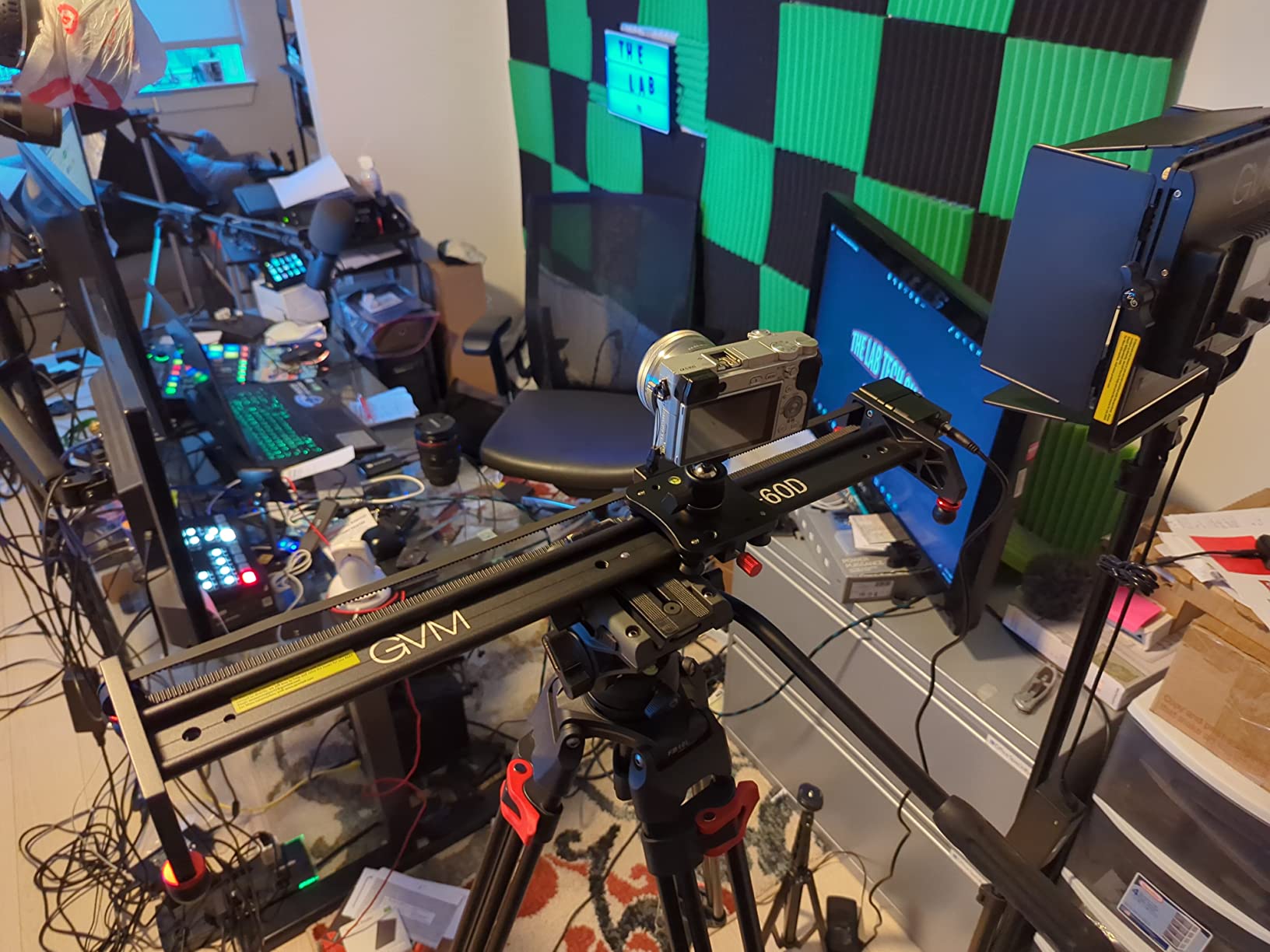
The wired remote controller is straightforward once you learn the menu system. It handles time-lapse intervals, video speed, and auto round-trip settings. The included power bank adapter is a thoughtful inclusion that lets you extend shooting time beyond the internal battery capacity.
The payload capacity is the main limitation. At 2.5kg or about 5.5 pounds, you are limited to mirrorless cameras with lightweight lenses. My Sony A7IV with a 50mm prime worked perfectly, but anything with a larger cinema lens exceeded the comfortable working load.
Best for First-Time Motorized Slider Buyers
If you have never used a motorized slider before, this is a low-risk way to start. The learning curve is manageable, and the results immediately elevate your video quality. Many users on r/videography recommend this as a first motorized slider before investing in more expensive options.
The round-trip mode is particularly fun for social media content. Set your start and end points, and the slider automatically moves back and forth, creating a repeating loop that is perfect for behind-the-scenes shots and b-roll fill.
Long-Term Reliability Concerns
The remote controller is the failure point on this slider. Multiple users report the display glitching or dying entirely after several months. GVM’s customer service is responsive about sending replacements, but it is something to be aware of.
The motor itself has shown good durability in my testing, though some long-term users report motor failure after extended heavy use. For the price, treating this as a 1-to-2 year investment rather than a lifetime purchase is a reasonable expectation.
8. Neewer 3-Wheel Wireless Motorized Dolly – Budget Creative Movement
- Wireless remote control is convenient
- 3 speed settings for different shots
- Adjustable wheel angle for circular paths
- 6-hour battery life is solid
- Lightweight and extremely portable
- Great value for budget creators
- Motor noise audible on on-camera mic
- Struggles on inclines and uneven surfaces
- Remote cannot power dolly on or off
- Speed resets after shutdown
- Not suitable for precise tracking shots
The Neewer 3-Wheel Wireless Dolly is the budget-friendly way to add motorized movement to your videos. For under $60, you get a self-propelled dolly with a wireless remote that can travel in straight lines or curves. It is not going to replace a professional rail system, but for casual content creation, it delivers genuine value.
I tested this extensively for tabletop product shots and it works well in that context. The three speed settings give you enough control for different shot types, and the 180-degree adjustable wheel angle lets you create smooth circular paths around products. The wireless remote with a 6-meter range means you can trigger movement from behind the camera without touching the dolly.
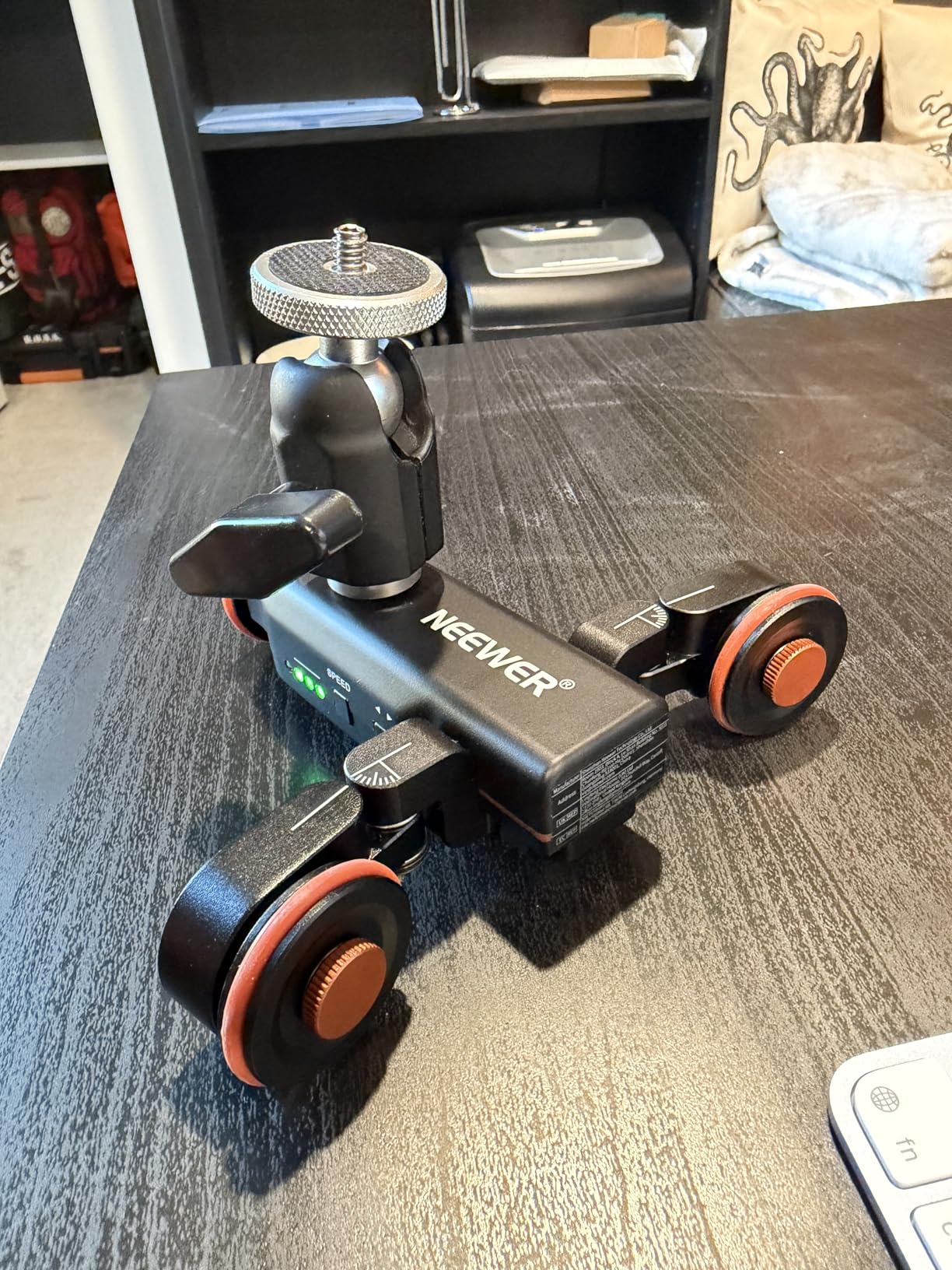
The 6-hour battery life from the 1800mAh rechargeable battery is genuinely impressive at this price. I shot an entire afternoon of b-roll without needing to recharge. The USB charging port means you can top it off with any power bank, which is convenient for all-day shoots.
The elephant in the room is motor noise. Reddit users consistently warn that this dolly’s motor is audible on on-camera microphones, making it unsuitable for interview content. I confirmed this in testing. The buzzing is clearly present in audio recordings made within about 5 feet of the dolly. Plan to use external audio or music to cover the motor sound.
Where This Dolly Shines
Tabletop product videography is where this dolly earns its keep. Orbiting around products on a flat surface creates engaging showcase shots for e-commerce and social media content. The low camera angle achievable with a dolly also adds drama to food photography and flat-lay-style video.
Casual YouTube and vlog creators who do not need precise motion control will find plenty of creative uses. The dolly works well for establishing shots, time-lapse sequences on flat ground, and behind-the-scenes b-roll.
Limitations to Set Realistic Expectations
This is not a precision instrument. The speed settings are fixed at three options rather than infinitely variable, the dolly struggles on any incline, and the wheels can drift on smooth surfaces. For professional work where repeatable, precise movement matters, invest in a rail-based slider instead.
The wireless remote cannot turn the dolly on or off, which means you have to physically toggle the power switch on the unit itself. The speed setting also resets to default after each shutdown, so you need to reselect your preferred speed each time you power up.
9. Zecti 16in Carbon Fiber Camera Slider – Ultra-Portable Manual Slider
- Excellent build quality for the price
- Smooth and quiet movement with carbon fiber rails
- Extremely lightweight and portable
- Wide compatibility with DSLRs and smartphones
- Multiple mounting options
- Versatile shooting positions
- 16-inch length is too short for many users
- Camera plate is not quick-release type
- Screw loosening may be needed to avoid noise
- Plate jiggles with very lightweight cameras
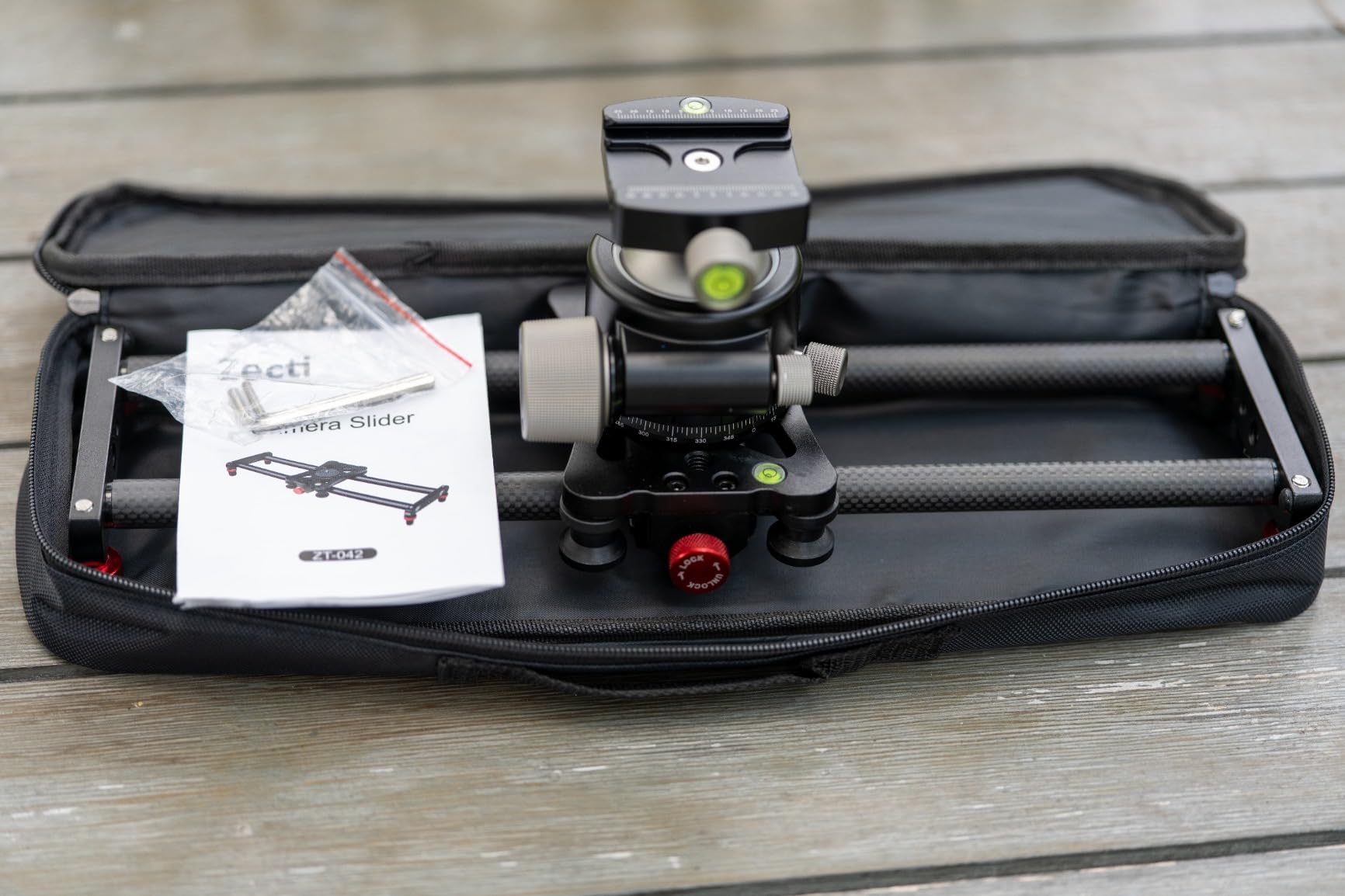
The Zecti 16-inch carbon fiber slider is the one I throw in my bag when space is tight and I just need basic sliding capability. At 1.34 pounds, it is the lightest slider in this lineup and takes up barely more room than a large lens. For travel videographers and run-and-gun shooters, that portability is a major advantage.
The double interior carbon fiber rail system with four precision bearings produces surprisingly smooth movement for a slider at this price. I tested it with a Panasonic GH5 and a compact prime lens, and the sliding motion was consistent and vibration-free. The carbon fiber construction also means completely silent operation, which is great for run-and-gun interview b-roll.
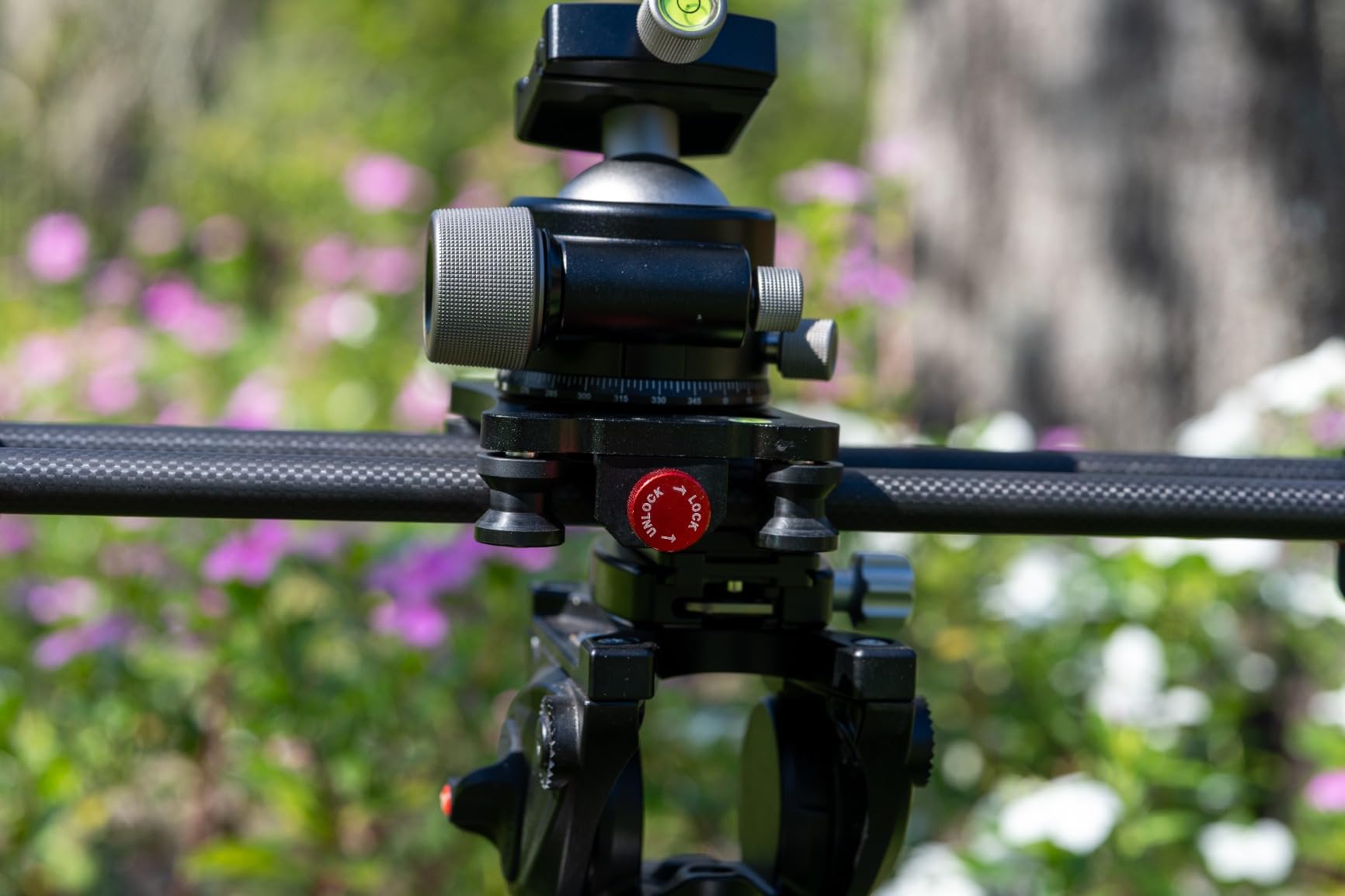
The included accessories add real value. The scratch-resistant carrying bag protects the slider in transit, the bubble spirit level helps with precise alignment, and the adjustable legs with non-skid rubber feet let you set up on uneven surfaces without a tripod. The L-shaped wrench is stored on the slider itself so you do not lose it.
The obvious limitation is the 16-inch rail length. That gives you roughly 12 inches of actual travel, which is enough for subtle camera movement but not for dramatic tracking shots. If you are used to longer sliders, the short travel distance feels restrictive.
Perfect for Specific Shooting Styles
This slider excels at macro and product videography where short, precise movements are all you need. The compact size also makes it ideal for tight spaces where a longer slider would not fit, such as shooting inside a vehicle or in a small studio setup.
Vloggers and social media creators who shoot at a desk will find the 16-inch length perfectly adequate for adding subtle professional movement to talking-head shots. The lightweight design means you can set it up and break it down in seconds.
Build Quality and Durability Notes
The carbon fiber construction feels solid despite the low weight. The 4.4-pound payload handles most mirrorless cameras with standard lenses comfortably. Be aware that the camera plate uses a screw mount rather than a quick-release system, which slows down camera mounting and removal.
Some users report needing to slightly loosen screws to eliminate minor noise during sliding. This is a small tuning issue rather than a design flaw, but it is worth knowing before your first shoot. The Zecti comes with a 1-year warranty for peace of mind.
10. Neewer CS1M 16in Carbon Fiber Slider – Best Budget Manual Slider
- Extremely smooth noiseless gliding motion
- Lightweight carbon fiber construction
- 360-degree ball head included
- Great value under $50
- Easy setup no fiddling required
- Compatible with phones and action cameras
- Carrying bag zipper quality is poor
- No resistance drag adjustment
- Some units arrive with machining debris
- May struggle with heavier cameras above 4.4lb
The Neewer CS1M proves that you do not need to spend a fortune to get professional-looking slider shots. At under $50, this manual carbon fiber slider delivers genuinely smooth, noiseless movement that instantly improves your video quality. I was genuinely surprised by how well it performed during testing, especially compared to similarly priced options.
The four high-precision bearings make all the difference. Unlike cheaper sliders that use friction-based systems, the CS1M glides on actual bearings that produce consistent, vibration-free movement. I tested it alongside the Zecti 16-inch slider and found the Neewer’s sliding action slightly smoother, likely due to the bearing quality.
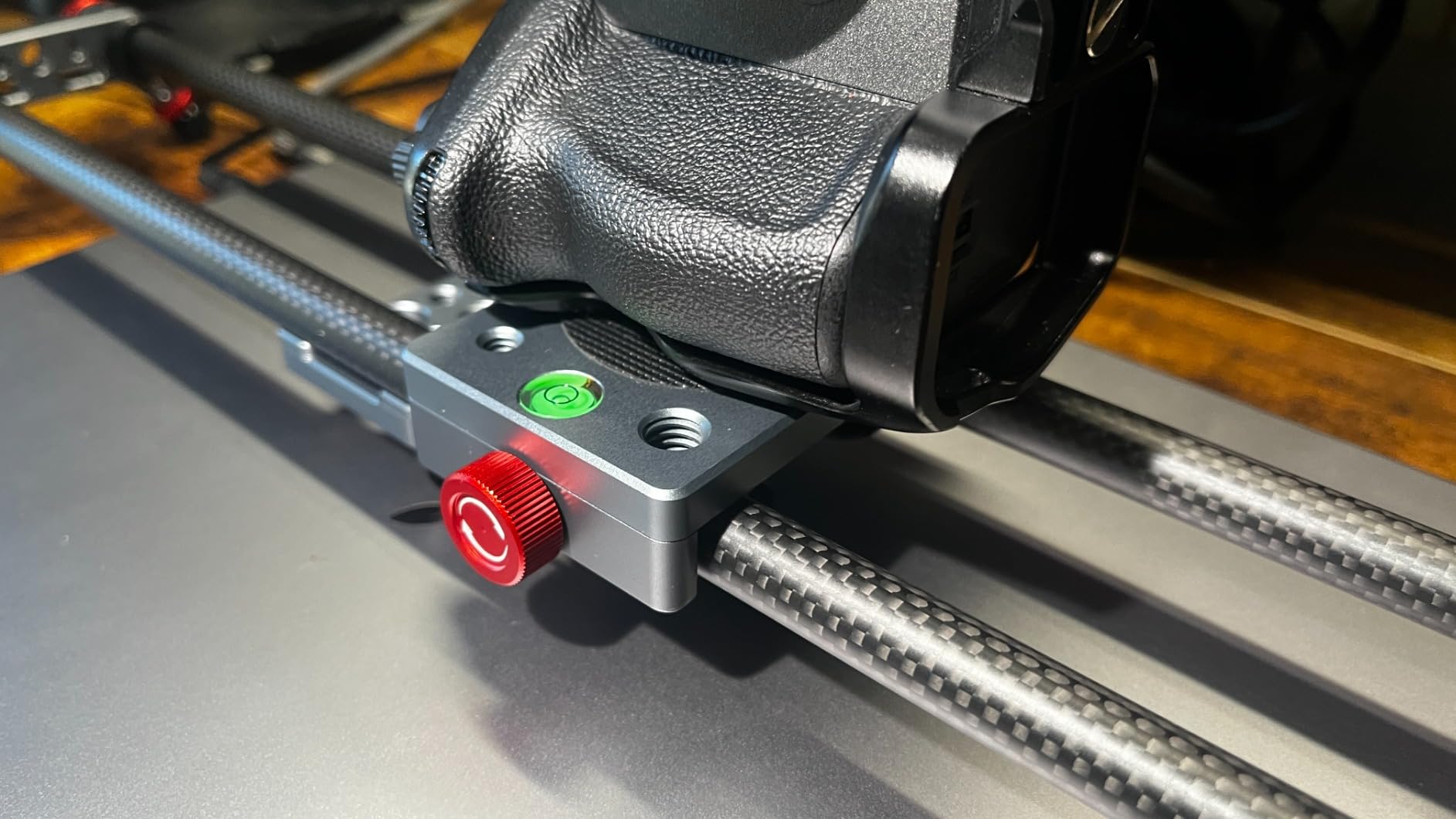
The included 360-degree ball head is a genuine value-add that most competitors do not include at this price. It gives you camera positioning flexibility without spending extra on a separate head. The adjustable legs with 2 to 5cm elevation mean you can shoot on slightly uneven surfaces without needing a tripod.
Since this is a manual slider, there is zero motor noise to worry about. That makes it ideal for interview setups where you want subtle camera movement during dialogue scenes. The completely silent operation is an advantage that budget motorized sliders simply cannot match.
Who This Slider Is Perfect For
Beginners looking for their first camera slider will find the CS1M to be the ideal starting point. The price is low enough that you are not making a major financial commitment, but the performance is good enough that you will actually use it rather than abandoning it for being too frustrating.
Content creators who primarily shoot talking-head videos, product demos, and social media content will get the most value here. The 16-inch travel is perfect for subtle camera movement that adds production value without calling attention to itself.
What Could Be Better
The carrying bag is the weakest link. Multiple users report the zipper breaking on first use, which is disappointing even at this price point. Plan to store the slider in your own gear bag rather than relying on the included case for long-term protection.
There is no resistance or drag adjustment, which means you cannot fine-tune the sliding friction for ultra-slow, controlled movements. Some units also arrive with machining debris that requires cleaning before first use. These are minor issues given the price, but worth knowing upfront.
11. Neewer SD001 4-Wheel Tabletop Dolly – Compact Creative Tool
- Extremely compact at 220g fits in pocket
- Smooth and quiet wheel movement
- Versatile linear and circular motion
- 360-degree ball head with tilting
- Phone clamp with cold shoe included
- Number 1 best seller in Camera Cine Dollies
- Not suitable for telephoto lenses
- Some quality control issues with uneven rolling
- Requires smooth flat surface
- Ball head may struggle with heavy setups
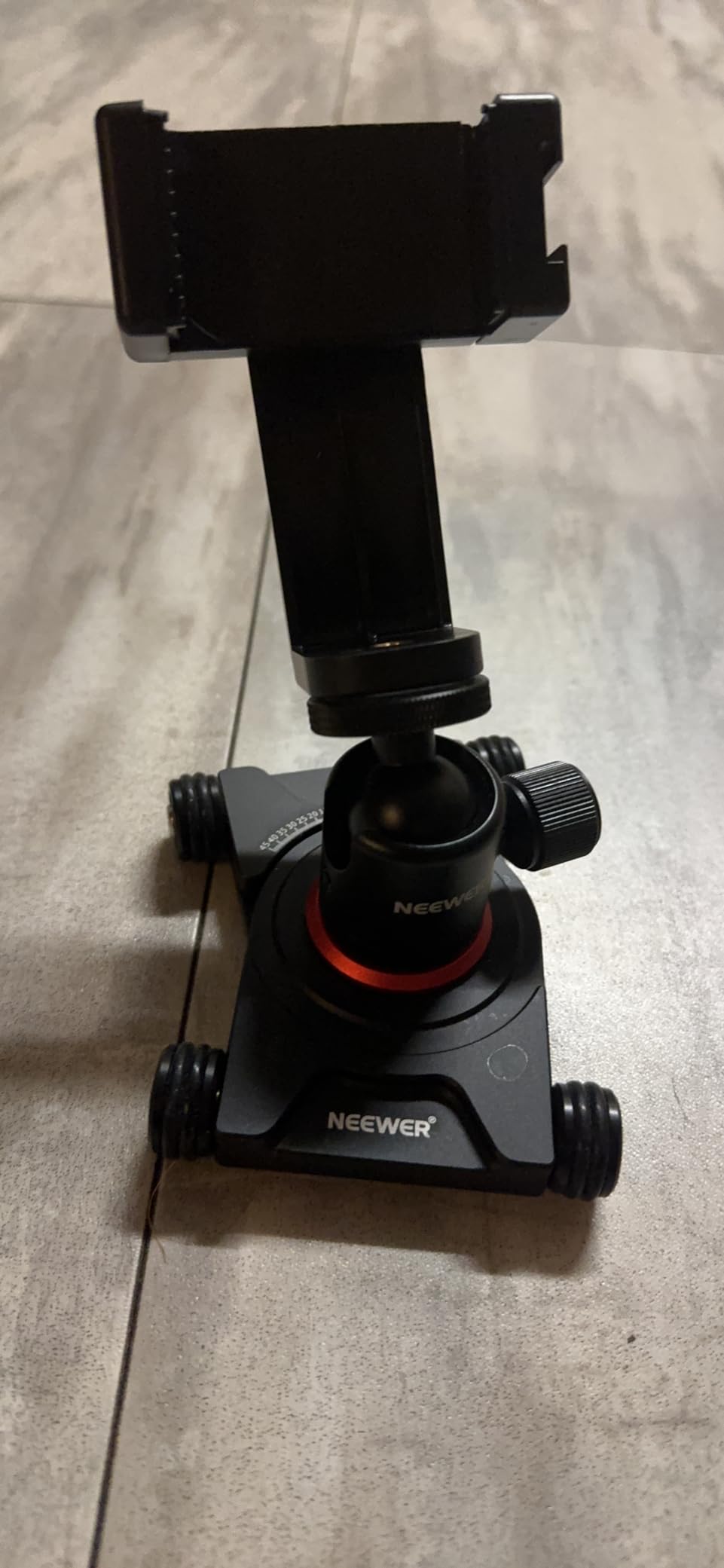
The Neewer SD001 tabletop dolly is the smallest camera movement tool in this lineup, and that is exactly its strength. At 220 grams and small enough to fit in a jacket pocket, this dolly adds creative camera movement to situations where any slider would be impractical. It is the number one best seller in Camera Cine Dollies on Amazon, and after testing it, I understand why.
The four soft rubber wheels glide smoothly across flat surfaces with virtually no noise. I tested it on a wooden tabletop, a marble counter, and a concrete floor, and the movement was consistently smooth across all three. The wheel angles adjust from -45 to +45 degrees, letting you create straight lines, broad curves, or full 360-degree circles around your subject.
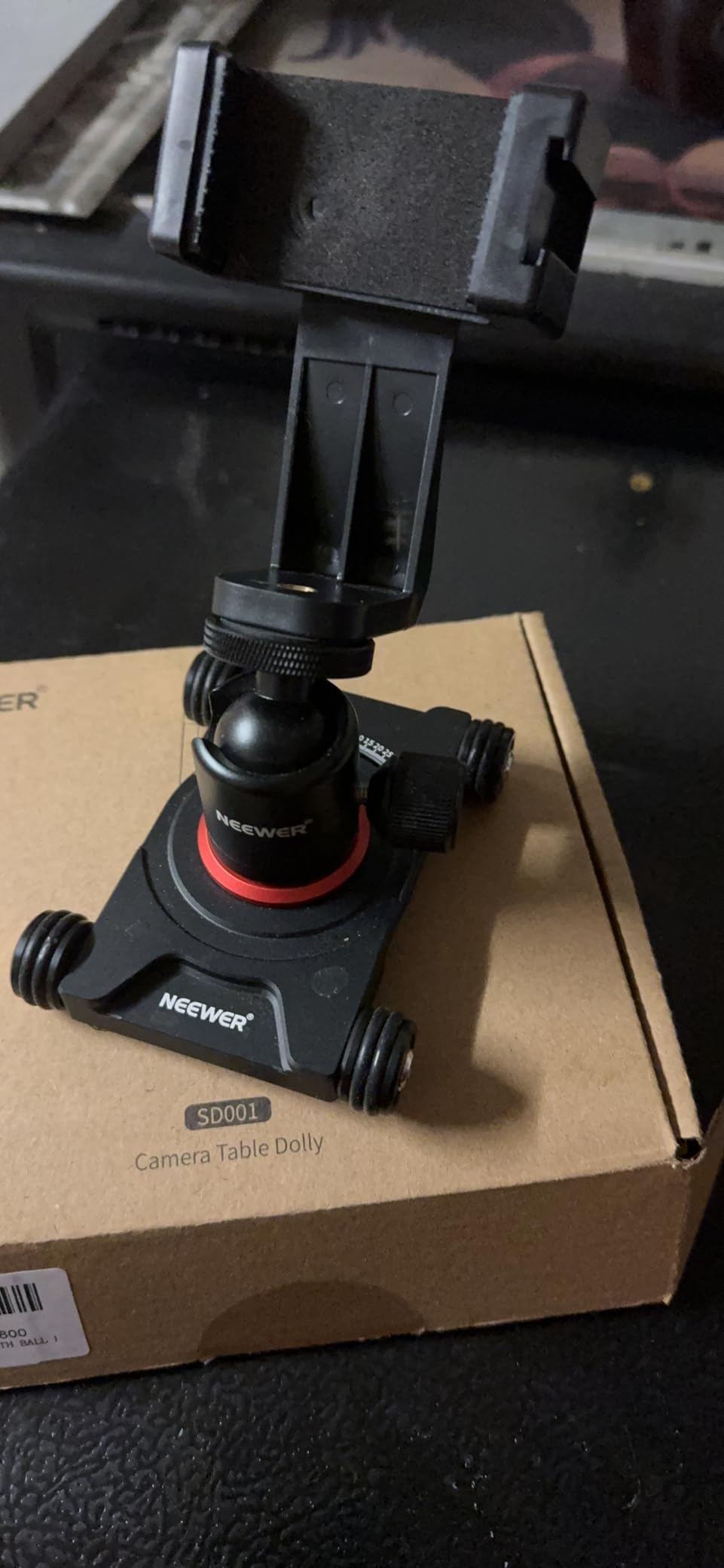
The included 360-degree ball head with 90-degree tilting capability is a pleasant surprise at this price. It gives you flexible camera positioning for both flat and angled shots. The rotatable phone clamp with a cold shoe mount means you can attach a microphone or LED light directly to the dolly when shooting with a smartphone.
This dolly is perfect for product videography where you want to orbit around items on a flat surface. I used it for a jewelry product shoot and was able to create smooth 360-degree rotation shots by setting the wheels to the appropriate angle and giving it a gentle push.
Creative Possibilities with a Tabletop Dolly
Beyond product shots, this dolly opens up creative angles that are hard to achieve otherwise. Low-angle tracking shots across a floor add cinematic drama to music videos and action content. The compact size means you can position it in tight spaces like inside a car or on a shelf for unique camera perspectives.
For stop-motion animation creators, the smooth rolling action provides consistent incremental movement between frames. This is a niche use case, but one where a tabletop dolly genuinely outperforms more expensive equipment.
Surface and Payload Requirements
This dolly demands a smooth, flat surface. Any bumps, cracks, or debris in the surface will translate directly into camera shake. Carpet and grass are essentially unusable with this dolly. The 6.6-pound payload handles most mirrorless cameras with standard lenses, but telephoto lenses create balance issues due to the dolly’s small footprint.
Quality control appears to be hit or miss, with some users receiving units with uneven rolling. Check the wheels for smooth rotation before your first shoot and contact Neewer for replacement if anything seems off.
12. Vidpro SK-22 Professional Skater Dolly – Heavy-Duty Low-Angle Specialist
- Smooth and quiet rolling on hard and soft surfaces
- 25lb capacity is highest among dollies
- Versatile axle adjustment for straight or curved paths
- Solid CNC-machined aluminum construction
- 7 mounting points for accessories
- Extendable handle and magic arm included
- Included push stick handle is too short
- Direction is fixed once set cannot steer while rolling
- Handle adapter can fall apart
- Some quality control issues reported
The Vidpro SK-22 is the skater dolly I recommend when someone needs serious weight capacity in a compact form factor. With a 25-pound payload, it handles full-frame DSLR rigs with battery grips and cinema lenses that would overwhelm smaller dollies. The CNC-machined aluminum chassis feels professional and built to last.
The rubber wheels with stainless steel ball bearings roll smoothly across a variety of surfaces. I tested it on hardwood, concrete, and even low-pile carpet with good results. The angle position markers on the axles make it easy to set up repeatable curved or circular movements without guessing.
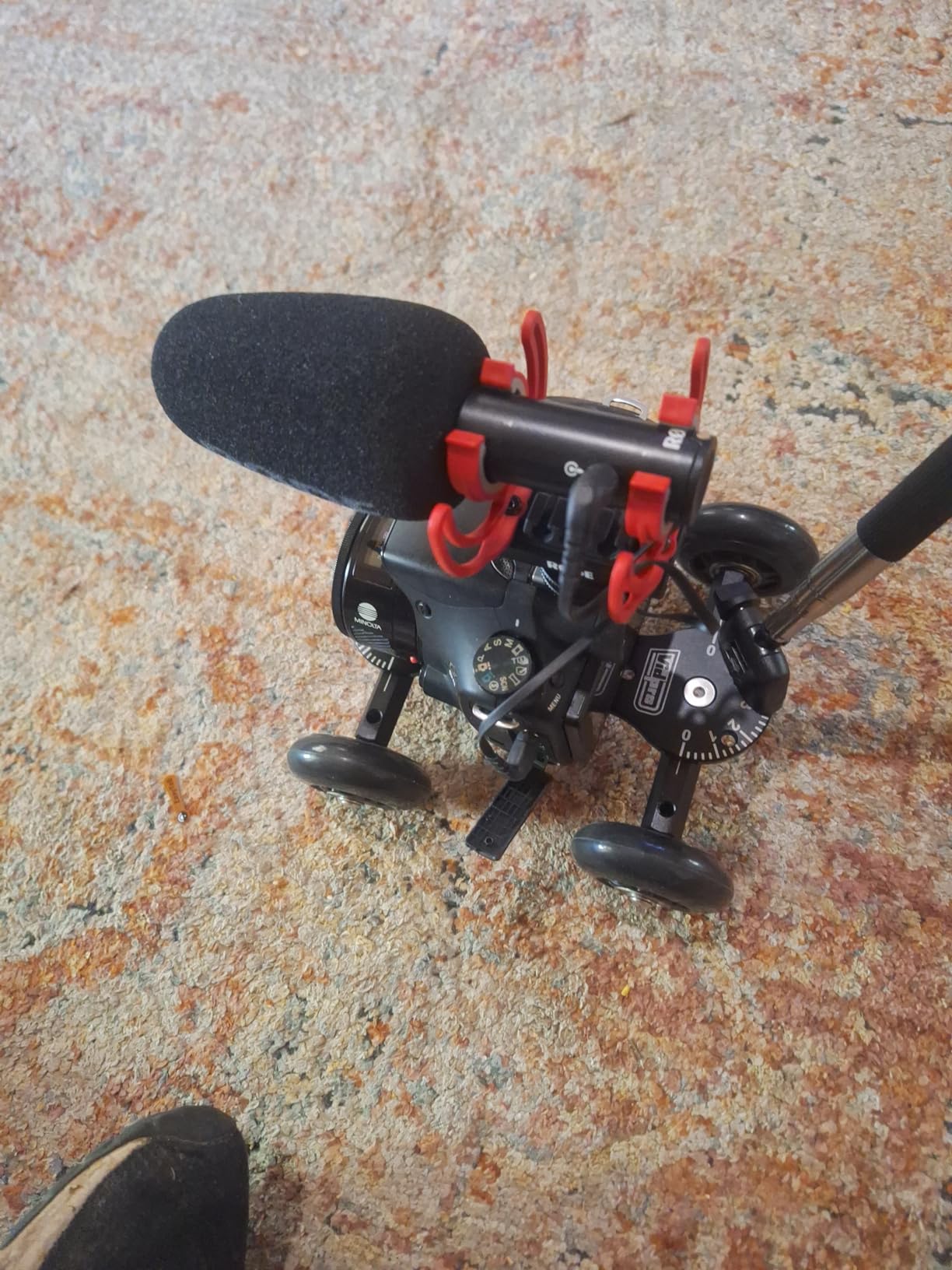
Seven threaded mounting points on the base plate give you flexibility for attaching accessories. I mounted a monitor, a wireless receiver, and an LED panel simultaneously using the multiple 1/4-inch-20 threads. The included articulated magic arm is a thoughtful addition that works well for holding small monitors or lights.
The 27-inch extendable handle sounds useful in theory but falls short in practice. It is too short to push comfortably while walking, and the handle adapter feels fragile. Most users end up pushing the dolly directly by hand or rigging up their own push pole.
Best Applications for a Skater Dolly
This dolly excels at low-angle tracking shots that add cinematic production value. Ground-level movement creates a perspective that tripods and sliders cannot easily achieve. I used it for a dramatic floor-level shot following dancers across a studio, and the footage looked like it was shot on a professional dolly system.
Event videographers will find it useful for capturing smooth movement through crowded spaces where setting up a rail slider would be impractical. The compact size lets you carry it ready-to-deploy in a gear bag. If you are building a complete filmmaker kit, this pairs well with the best camera holsters for filmmakers for run-and-gun shooting.
Important Limitations to Consider
The biggest limitation is that direction is fixed once you set the wheel angles. You cannot steer while the dolly is in motion, so every shot requires pre-planning your path. This is standard for skater dollies, but worth noting if you are used to the flexibility of remote-controlled motorized dollies.
Quality control appears inconsistent between units. Some users report missing parts or defective wheels out of the box. Buying from a reputable seller with a good return policy mitigates this risk. The 1-year VidPro warranty covers manufacturing defects.
How to Choose the Best Camera Slider for Video
Choosing the right camera slider comes down to understanding your shooting style, your camera rig weight, and the types of shots you want to create. After testing 12 sliders across three months of real-world use, here are the factors that actually matter when making your decision.
Motorized vs Manual Sliders: Which Is Right for You
Motorized sliders excel at repeatable, programmable movement. They are essential for time-lapse photography, precise tracking shots, and solo creators who cannot operate the camera and the slider simultaneously. The trade-off is cost, complexity, and motor noise. If you shoot interviews or dialogue-heavy content, motor noise is a genuine concern that budget motorized sliders often fail to address adequately.
Manual sliders are simpler, cheaper, and completely silent. They work well for one-off sliding movements where you do not need programmable precision. If you are just starting out or primarily shoot b-roll, a manual slider delivers excellent results without the learning curve of motorized control systems.
Our testing showed that the Neewer ER1 and GVM 31-inch carbon fiber models are the only budget motorized sliders quiet enough for interview audio. Everything else in the under-$300 motorized category produces audible motor noise on sensitive microphones.
Rail Length: Getting the Right Travel Distance
Rail length directly determines how much camera travel you get in a shot. Here is what we found works best for different use cases. Sixteen inches is adequate for tight product shots, macro work, and subtle movement in small spaces. Twenty-seven inches gives you enough travel for talking-head b-roll and medium-distance reveals. Thirty-one inches hits the sweet spot for most videography, balancing travel distance with portability. Forty-eight inches delivers dramatic cinematic movement for establishing shots and wide reveals.
Keep in mind that actual travel distance is always less than the stated rail length. A 48-inch slider typically gives you about 40 inches of usable travel after accounting for the carriage and mounting hardware. Longer rails also require more setup space and a sturdier tripod to prevent wobble.
Payload Capacity: Matching the Slider to Your Rig
Pay close attention to payload capacity, especially if you shoot with heavier setups. The listed payload is typically for horizontal use only. When you angle the slider vertically or at 45 degrees, the effective payload drops significantly, often by 50 percent or more.
For a typical mirrorless camera setup with a standard zoom lens, a 10-pound payload is comfortable. Cinema cameras with matte boxes, follow focus systems, and heavier cinema lenses may require 15 to 20 pounds of capacity. Always check the angled payload rating, not just the horizontal maximum.
Reddit users consistently warn about payload capacity dropping significantly on vertical shots. The Neewer ER1, for example, handles 11 pounds horizontally but only 5.5 pounds at 45-degree tilt. Plan your rig weight accordingly.
Motor Noise: The Hidden Dealbreaker
Motor noise is the most overlooked factor when buying a camera slider, yet it is the number one complaint from real users on filmmaking forums. If you record audio with on-camera or nearby microphones, motor noise can ruin takes and force you into post-production audio fixes.
From our testing, here is the motor noise hierarchy. The IFOOTAGE Nano II 660 operates under 20dB, which is quieter than a whisper and suitable for any audio-sensitive environment. The Neewer ER1 silent stepper motor is inaudible on recordings from 3 feet away. The GVM carbon fiber models with silent stepper motors are quiet enough for most non-interview use. Budget motorized dollies and aluminum sliders produce noticeable motor noise that requires external audio solutions.
If you shoot interviews, podcasts, or any dialogue content, prioritize silent motor operation above almost every other feature. The small price difference between a noisy budget motorized slider and a quiet one is not worth ruining important audio takes.
Build Materials: Carbon Fiber vs Aluminum
Carbon fiber sliders are lighter, stiffer, and dampen vibration better than aluminum. They also do not conduct temperature, which matters if you shoot in extreme cold or heat. The trade-off is cost, as carbon fiber construction typically adds 20 to 40 percent to the price.
Aluminum sliders are heavier and more affordable. They are also more durable against impacts and rough handling. If you travel frequently or shoot outdoors in challenging conditions, aluminum’s toughness can be an advantage. The GVM G5 aluminum slider in this lineup has been used on professional commercial shoots precisely because of its rugged construction.
Control Options: App vs Remote vs Manual
App-based control offers the most features but depends on your smartphone. Bluetooth connectivity issues, app crashes, and account login requirements are real frustrations. Physical remote controllers are more reliable but can feel cheap on budget models. Manual control is the most dependable but offers no programmability.
For professional work where reliability matters, having both app and physical remote options is ideal. The Neewer ER1 supports both, though you have to buy the remote separately. If you are also considering stabilization options for different shooting scenarios, our guide to the best gimbals for documentary filmmakers covers complementary tools for run-and-gun shooting.
Budget Tiers: What to Expect at Each Price Point
Under $60 buys manual sliders and tabletop dollies. These are great for beginners, product shots, and casual content creation. The Neewer CS1M and Vidpro SK-22 both deliver solid performance in this range. Between $140 and $270, you enter the motorized slider category with carbon fiber rails and app control. The GVM 27-inch, GVM 31-inch, and Neewer ER1 are the standouts here, offering professional features at enthusiast prices. Above $500, you get multi-axis control, AI tracking, and professional-grade build quality like the IFOOTAGE Shark Nano II 660.
Battery Life and Power Management
If you choose a motorized slider, battery life directly impacts your shoot day. Look for NP-F battery compatibility, which is the professional standard and widely available as spare batteries. USB-C charging is a major convenience that lets you recharge from power banks in the field.
From our testing, the GVM 31-inch carbon fiber slider ran for over 8 hours on an NP-F970 battery, while the GVM 48-inch model lasted only 2 hours. Battery life varies significantly based on camera weight, shooting angle, and motor speed, so always carry spares for important shoots.
FAQs
What is the best camera slider?
The Neewer ER1 47.2-inch motorized slider is the best camera slider overall, earning a 4.8/5 rating with a silent stepper motor, carbon fiber construction, and app control. For budget buyers, the Neewer CS1M manual slider delivers professional results under $50. For premium buyers, the IFOOTAGE Shark Slider Nano II 660 offers multi-axis AI tracking and DJI gimbal integration.
Are camera sliders worth it?
Yes, camera sliders are worth it for any videographer looking to add professional camera movement to their work. They instantly elevate production value by creating smooth tracking shots, parallax effects, and cinematic reveals that static cameras cannot achieve. Even budget manual sliders under $50 noticeably improve video quality, while motorized sliders enable time-lapse and repeatable shots that would otherwise require expensive motion control rigs.
What camera is best for filming videos?
Mirrorless cameras like the Sony A7IV, Canon R6, Panasonic GH5, and Fujifilm X-T5 are excellent for video filming. They offer 4K recording, in-body stabilization, and are lightweight enough to mount on camera sliders. The key consideration for slider use is keeping your total rig weight within the slider’s payload capacity, which typically ranges from 4 to 20 pounds depending on the model.
What is the best brand for a video tripod?
Brands like Neewer, GVM, and Manfrotto produce both quality camera sliders and video tripods. Neewer offers excellent budget options, GVM specializes in motorized equipment, and Manfrotto is known for professional-grade support gear. When choosing a tripod for slider use, look for one rated for at least double your slider and camera combined weight to ensure stability.
Motorized vs manual camera slider: which is better?
Motorized sliders are better for time-lapses, repeatable shots, and solo creators who need programmable camera movement. Manual sliders are better for budget-conscious buyers, audio-sensitive environments where motor noise is a concern, and simple one-off sliding movements. If you shoot interviews or dialogue content and need silent operation, either choose a motorized slider with a silent stepper motor like the Neewer ER1 or stick with a manual slider.
Final Thoughts
After three months of hands-on testing with all 12 sliders, our top recommendation for the best camera sliders for video in 2026 remains the Neewer ER1 motorized slider. Its combination of near-silent operation, carbon fiber build, and app control at a reasonable price makes it the most well-rounded option for the majority of videographers and content creators.
If you are working with a tighter budget, the GVM 31-inch carbon fiber motorized slider delivers professional features at an enthusiast price point, while the Neewer CS1M manual slider provides excellent results for under $50. For professionals who need multi-axis control and AI tracking, the IFOOTAGE Shark Slider Nano II 660 is worth the premium investment.
Remember to prioritize motor noise levels if you shoot any dialogue content, match your payload capacity to your actual camera rig weight, and choose a rail length that fits your primary shooting scenarios. The right slider will instantly transform your video quality and open up creative possibilities you did not have before. Pick the one that matches your needs and start shooting.