
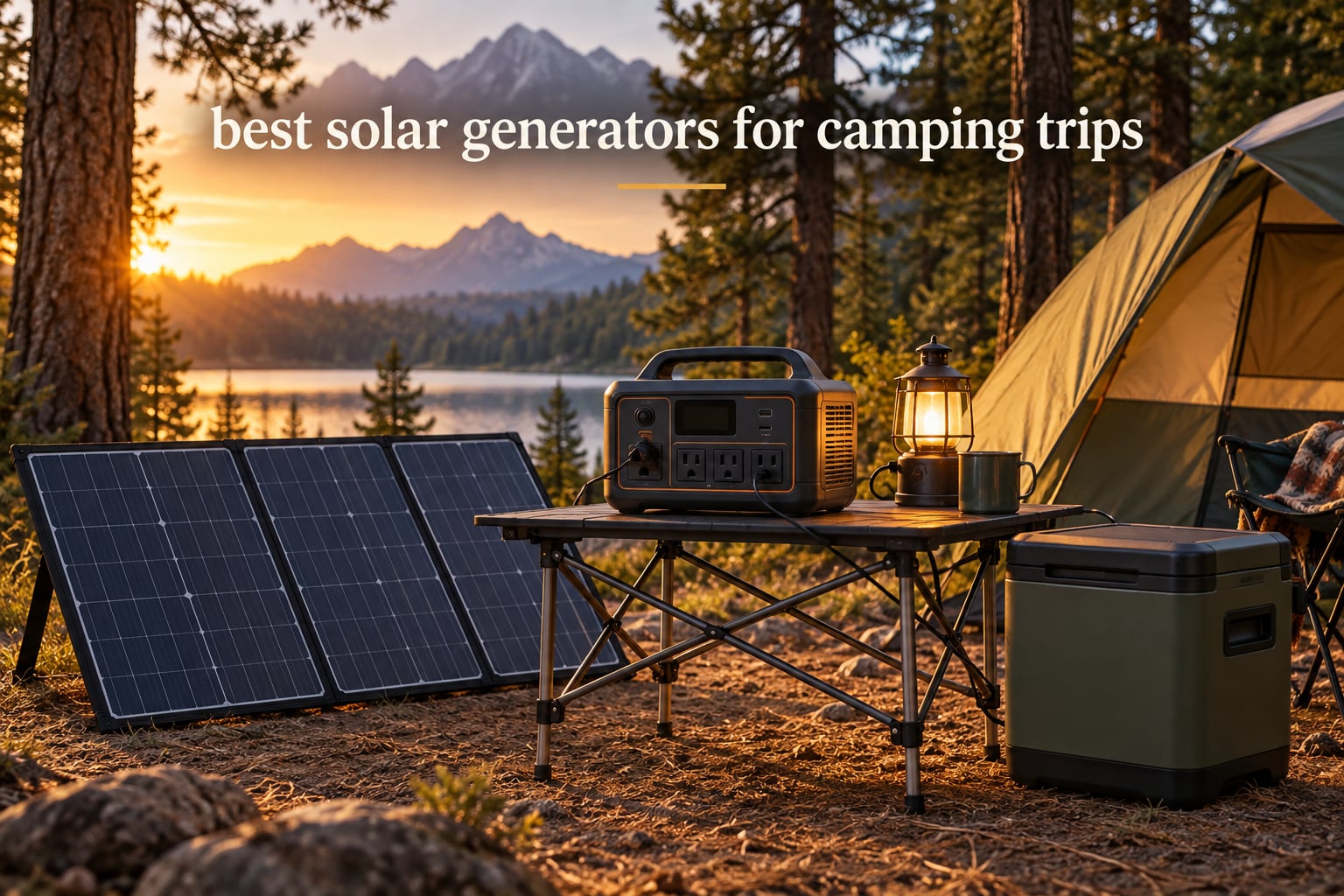
For most two-to-four-person camping trips, a 1,000-1,500Wh portable power station paired with a 200W solar panel is the sweet spot. That range covers a 45L fridge, camp lighting, phone charging and a fan for two or three nights without anyone wrestling a jerry can. Below roughly 1,000Wh you are packing chargers, and above 2,000Wh you are carrying dead weight past the point where extra capacity changes the trip.
A solar generator is not a mechanical generator at all. It is a portable power station: a lithium battery, usually LiFePO4 chemistry, an inverter that turns stored DC into household AC, an MPPT charge controller, and a foldable panel that refills the battery for free whenever the sun is out. We broke down the gas-powered alternatives in our guide to portable generators for camping trips, and the short version is that a station removes the engine noise, the exhaust and the fuel run entirely.
We compared 10 solar generators that cover the whole range, from a 6.4-lb unit that fits beside a boots bag to a 1,024Wh model with 2,000W of continuous output. Every capacity, wattage, weight, cycle count and rating below comes from the current listing data, and we refreshed the whole comparison for 2026. Prices move constantly, so use the buttons below rather than any number you remember.
Table of Contents
Top 3 Picks for Camping Trips in 2026

Jackery Explorer 300 292Wh
- 292Wh LiFePO4
- 300W continuous and 600W surge
- Just over 7 lb
- 4000+ cycles

Jackery Explorer 1000 v2 1070Wh
- 1070Wh LiFePO4
- 1500W continuous and 3000W surge
- One hour emergency charge
- 23.8 lb

All 10 Solar Generators Side by Side in 2026
| Product | Specifications | Action |
|---|---|---|
| Jackery Explorer 300 292Wh |
|
Check Latest Price |
| Jackery Explorer 1000 v2 1070Wh |
|
Check Latest Price |
| BLUETTI AC180 1152Wh |
|
Check Latest Price |
 GRECELL 999Wh 1000W GRECELL 999Wh 1000W |
|
Check Latest Price |
 GRECELL 500W 519Wh GRECELL 500W 519Wh |
|
Check Latest Price |
 MARBERO 237Wh with 60W Panel MARBERO 237Wh with 60W Panel |
|
Check Latest Price |
 ALLWEI 300W 256Wh ALLWEI 300W 256Wh |
|
Check Latest Price |
 Anker SOLIX C300 288Wh Anker SOLIX C300 288Wh |
|
Check Latest Price |
 BLUETTI Elite 100 V2 1024Wh BLUETTI Elite 100 V2 1024Wh |
|
Check Latest Price |
 Anker SOLIX C1000 Gen 2 Anker SOLIX C1000 Gen 2 |
|
Check Latest Price |
1. Jackery Explorer 300: The Starter Unit With 11k Ratings Behind It
- Integrated handle and a body light enough to pack with camping gear
- LiFePO4 cells rated for 4000+ charge cycles
- Runs laptops and cameras plus CPAP machines
- 80% solar charge in about 2.8 hrs on a 100W panel
- Solar panel is not included with the base unit
- 292Wh is small above a phone and a laptop
- Only two AC outlets
This is the unit I keep coming back to for trips where every gram matters. At just over 7 pounds with a moulded handle, the Explorer 300 slides into a dry bag or behind a passenger seat and still delivers 300W of continuous AC output with 600W of surge headroom. That is enough for a laptop, two phones, a camera battery and a CPAP machine on a low-draw setting.
The LiFePO4 upgrade matters more than the capacity does. Reviewers consistently point out that the chemistry holds over 70% of its original capacity after 4,000 charge cycles, which is the difference between a unit that outlasts your tent and one that fades after two seasons. It also carries 11k-plus ratings at 4.6 stars, a review count well above anything else on this list, and that volume of real field use is worth more to me than any spec line.
I would pair it with a 100W folding panel, which brings it to 80% in roughly 2.8 hours in direct sun. Campers on r/camping and r/solar regularly treat the sub-1,000Wh class as the sensible starting point rather than a compromise, and the logic holds: it charges overnight from the car socket and covers the lights, the phones and the coffee grinder without a fight.
For its party trick, the Explorer 300 ships with two AC outlets, one 100W USB-C PD port, two USB-A ports and a 120W car port. The two-year manufacturer warranty is one of the shorter covers in this group, which is the one number I would want to know about before buying.
Who this one is built for
Solo campers, couples on a hut-to-hut trip, and anyone running a CPAP machine or a stack of camera batteries where mains power simply does not exist. It also makes a sensible first solar generator, because it is cheap to carry and easy to learn on before you commit to a heavier base-camp unit.
When you should step up instead
Any trip with a fridge, a kettle or more than two adults. A 292Wh nameplate becomes roughly 250Wh after the inverter conversion losses that every manufacturer here applies, and a 45L fridge at about 430Wh a day will empty it overnight with nothing left for lights. Reviewers report exactly that pattern, which is why the 1,000Wh class sits in the middle of this list.
2. Jackery Explorer 1000 v2: The 1,000Wh All-Rounder
- 1500W continuous output paired with 3000W surge in a 23.8 lb body
- One hour 0-100% emergency charge through the app
- LFP battery holds over 70% after 4000 cycles
- Seven outlets including two 100W USB-C PD ports
- Solar charging is restricted to Jackery-branded panels
- 23.8 lb is far heavier than sub-10-lb stations
Ask me which single box solves most camping trips and this is it. The Explorer 1000 v2 pairs 1,070Wh of LFP capacity with 1,500W of continuous output, and 85% of its ratings sit at five stars for an overall 4.7, tied with the Anker SOLIX C1000 Gen 2 for the highest average in this roundup. The output figure is the real story: a compressor-starting fridge, a projector or an induction burner can all be run from the same station.
The emergency charging mode is the feature I would not buy without. Enable it in the Jackery app and the unit goes from flat to full in one hour; on the default setting it takes 1.7 hours, which the manufacturer says protects long-term battery health. That single toggle is the difference between arriving at a site with power and starting the night at 40%.
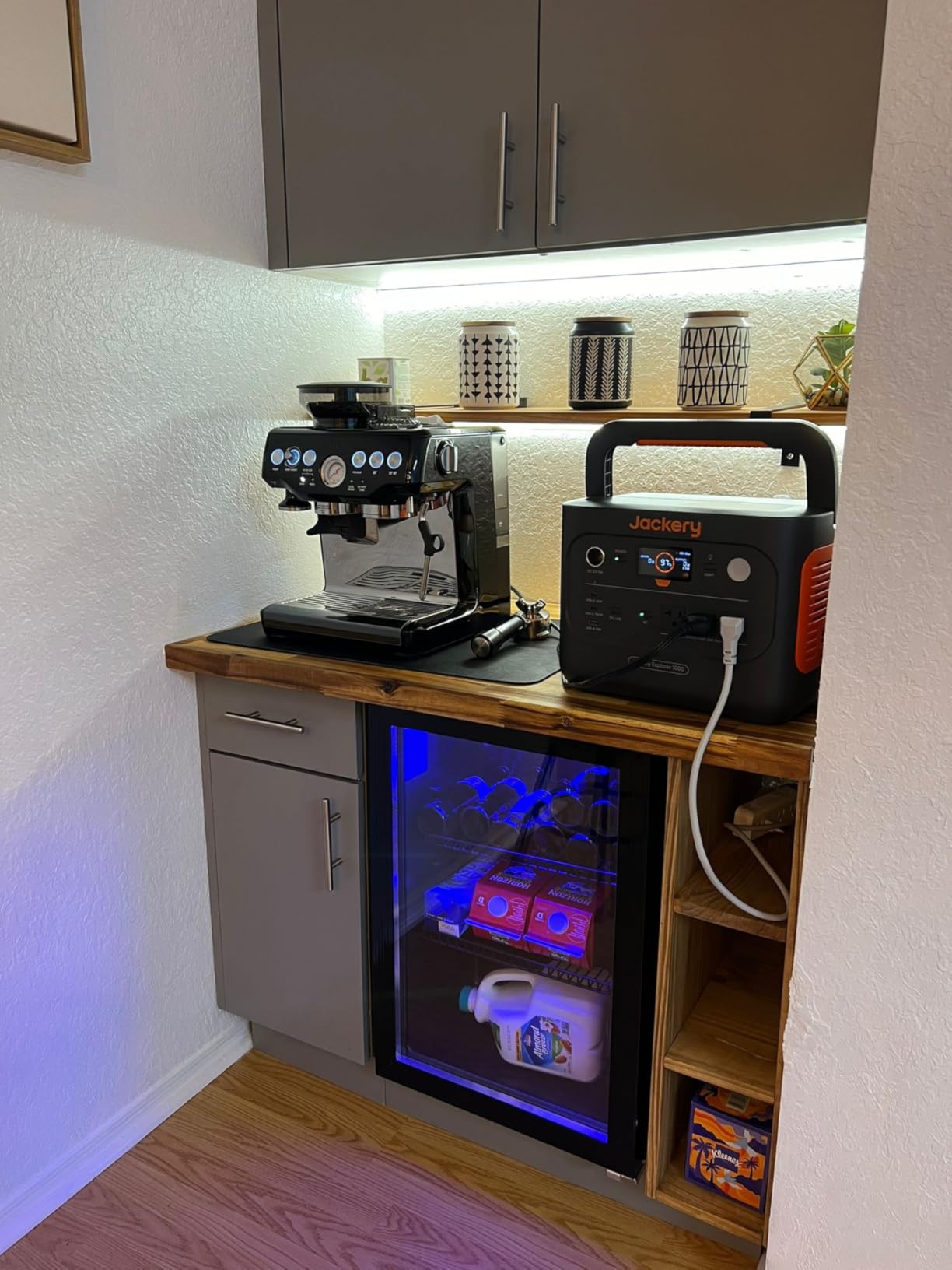
Port layout is generous for the size: three pure sine wave AC outlets, two USB-C ports at 100W PD, one USB-A and a DC car socket. There is a 30dB quiet overnight charging mode too, so you can refill it inside a tent or a van without waking the site.
The compromise is weight. At 23.8 lb this is a two-person carry from the car to the pitch, and the solar input is restricted to Jackery-branded panels. Our portable projector picks for camping both draw 100W or less on USB-C, and this station runs several at once without breaking a sweat.
Why it beats the 300 for most trips
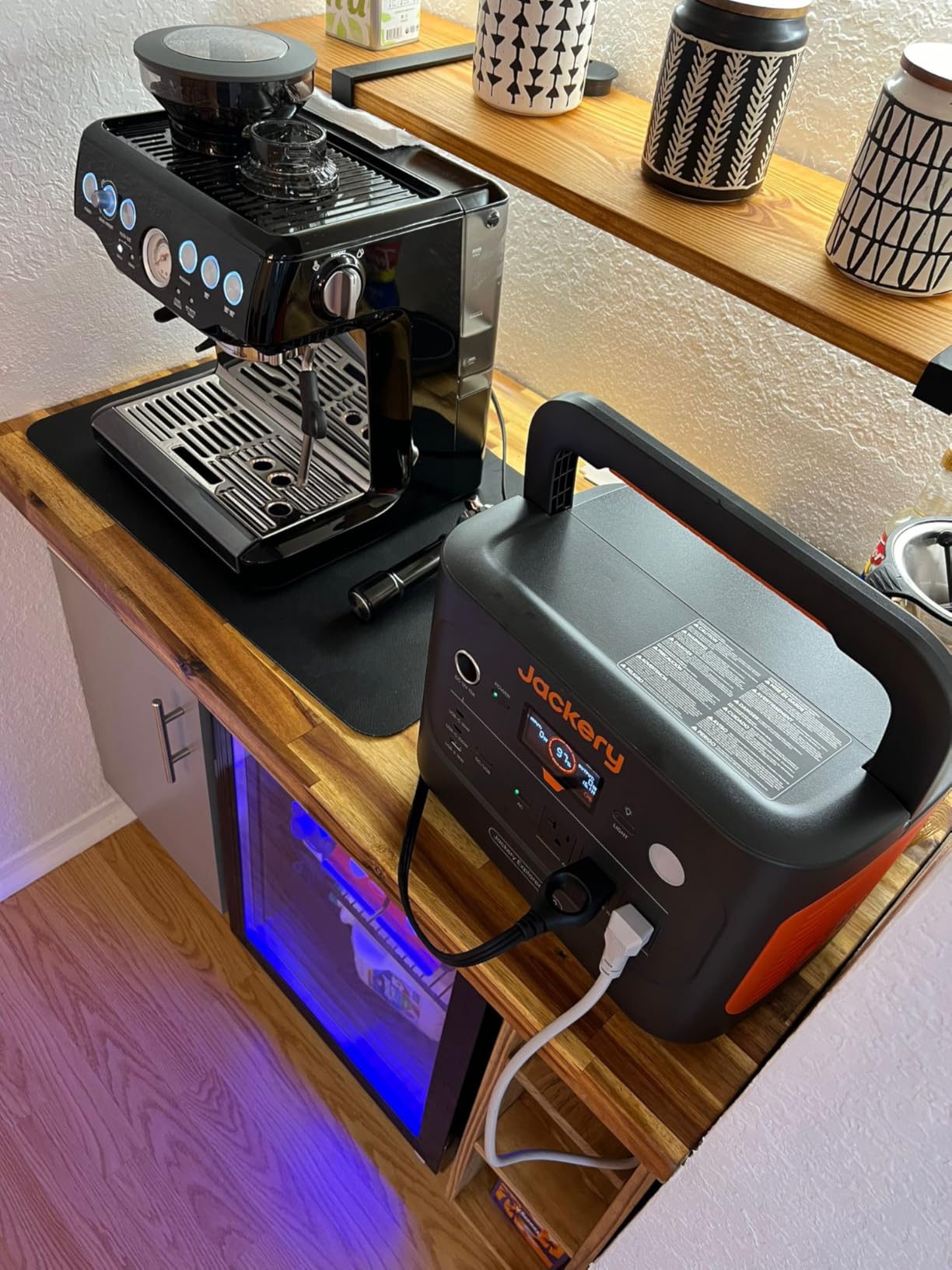
A 45L fridge cycling about 40% of the time draws close to 430Wh a day. That fits inside a 1,024Wh unit with room for lights and charging, and a 200W panel refills roughly a day of that in three or four hours of good sun. The Explorer 300 simply cannot carry that pattern.
What to watch out for
The listed warranty is one year, which is thin against the five-year cover the BLUETTI and Anker units carry. The panel lock-in also annoys people who already own third-party folding panels, and 23.8 lb is real weight when you are moving camp twice in a weekend.
3. BLUETTI AC180: Built for Base Camp, Not for Carry
BLUETTI AC180 Portable Power Station 1152Wh 1800W LiFePO4 Solar Generator
- Charges from empty to full in about an hour at 1440W AC input
- App boost to 2700W handles high-draw appliances
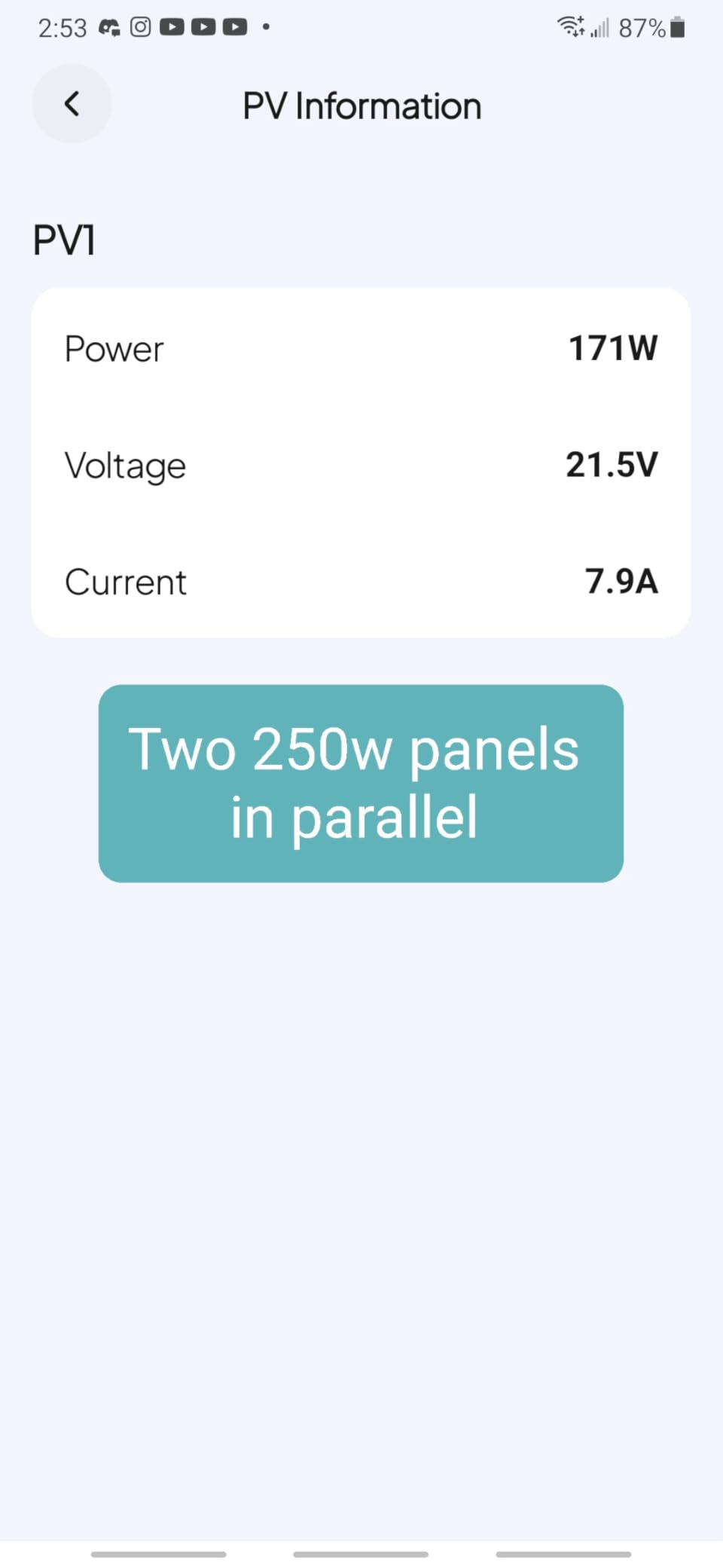
- 500W solar input refills in roughly 3 hrs of full sun
- 20 ms UPS switchover keeps routers and laptops alive
- 37.4 lb is hard to carry any distance
- Idle draw of 15-20W eats usable capacity
- Wireless charging pad drops connection after a few seconds
Base camp is the word that matters here. The AC180 is 37.4 lb, the heaviest of the ten stations here. It holds the biggest battery in the 1,000Wh class, and its 1,800W continuous output can be boosted to 2,700W through the BLUETTI app when you need to start something stubborn.
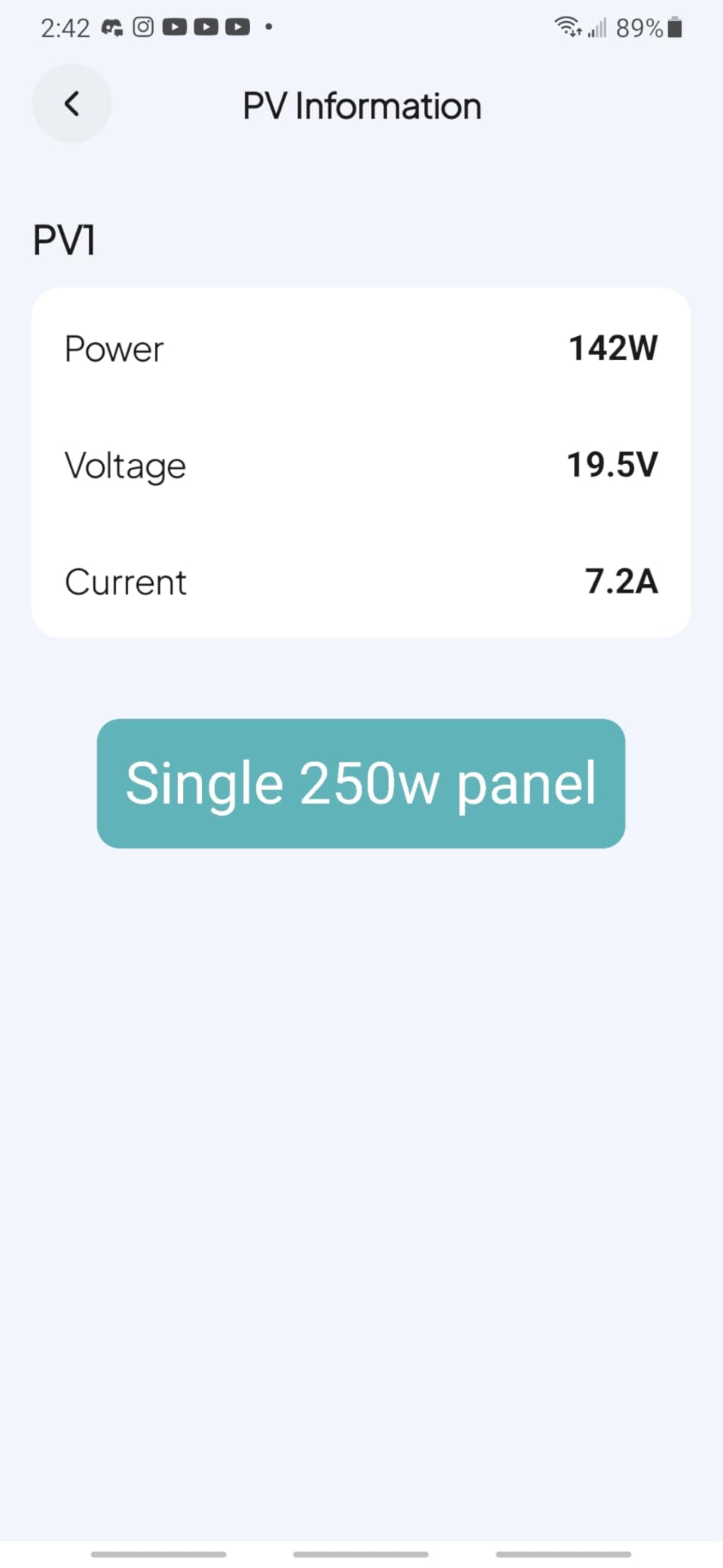
Recharge speed is the headline. A full charge takes about an hour at 1,440W of AC input, and the 500W solar input refills the battery in roughly 2.8 to 3.3 hours of full sun, faster than any other panel-driven recharge in this group except the 600W Anker C1000 Gen 2. Add the 20 ms UPS switchover and you have a unit that doubles as a home backup battery for a router, a laptop and a lamp.
There are eleven ports listed, including AC, USB-C, USB-A, DC and a wireless charging pad on the top, and the LCD is clear enough to read at night. Owners like the three-button simplicity and the app, and the five-year warranty is the longest in this group alongside Anker’s.
Two numbers deserve attention. The pack is deliberately limited to about 90% of rated capacity to protect the cells, and idle self-consumption of roughly 15-20W means a station sitting switched on overnight loses real capacity. Several buyers also report the wireless pad dropping connection after a few seconds, and a few settings only being reachable through the app.
When the weight is worth it
Family trips of five nights or more, a van that stays parked, or a site where the station never moves more than 200 metres. At that point the 37.4 lb buys you overnight fridge runtime, hot-drink appliances and a solar array that keeps up with the load.
When it is overkill
Anyone carrying gear more than a short walk, and anyone whose load is a CPAP plus two phones. A 25-lb unit in the same capacity class does most of the same work, and reviewers who move camp regularly tend to regret the bulk rather than enjoy it.
4. GRECELL 999Wh: Where the Output-to-Weight Maths Works Out
- 1000W pure sine wave output in a 23 lb cube
- Ten simultaneous device connections including a wireless pad
- Built-in MPPT controller for variable solar conditions
- AC output stops charging devices when full
- Rated runtime assumes an 85% conversion rate
- AC output keeps drawing when idle
- Two-year warranty is short against the five-year rivals
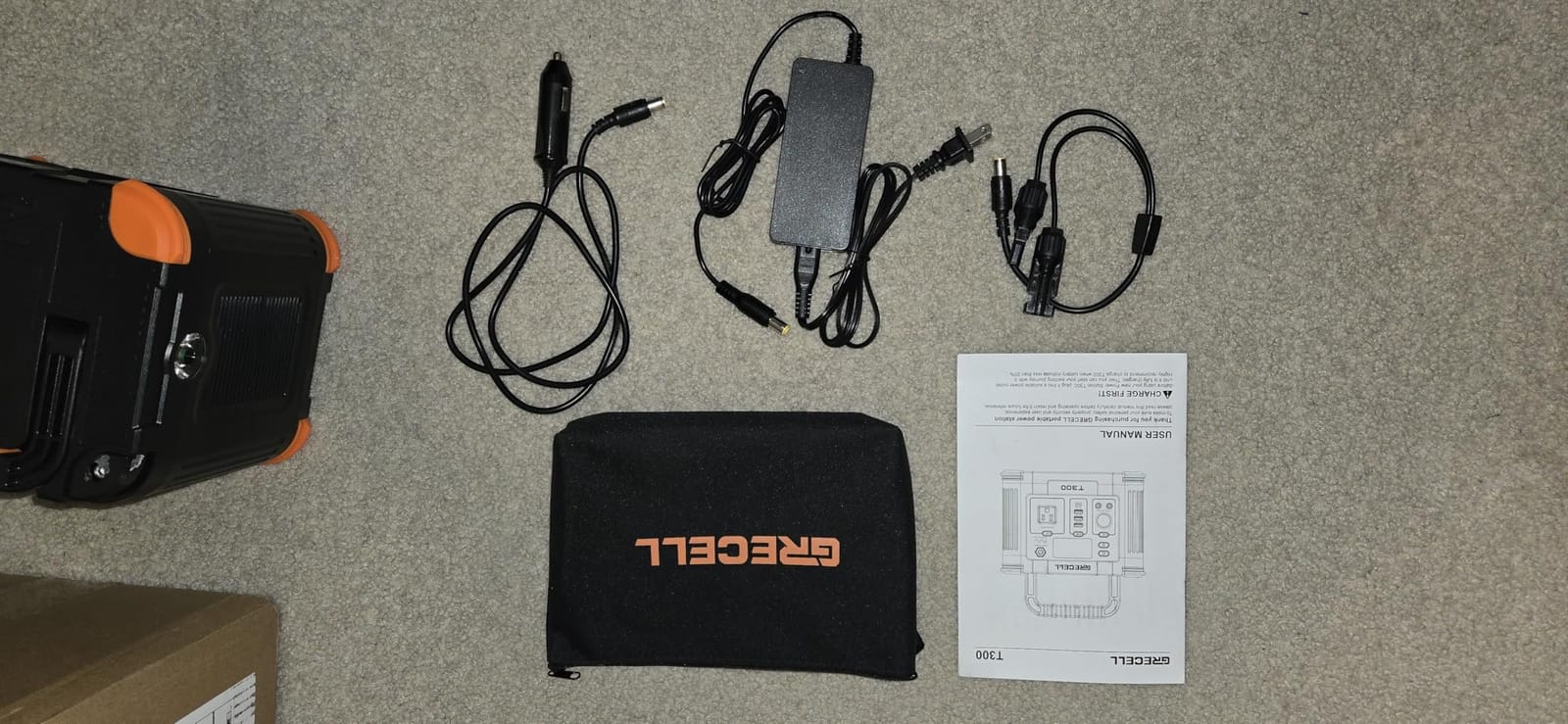
The GRECELL 999Wh is the shape most first-time buyers picture: a compact cube, 1,000W of pure sine wave output, 2,000W of surge and a 999Wh battery, all at 23 lb. Ten devices can run at once across two AC sockets, three USB QC ports, a USB-C PD port, two DC outputs, a car socket and a wireless pad, plus an LED with an SOS mode.
It also recharges three ways, and the built-in MPPT controller matters more than it sounds. MPPT tracks the panel’s changing output point through cloud and haze instead of taking a fixed voltage sample, so you harvest meaningfully more energy on a mixed day. That is a genuine advantage over the cheaper PWM controllers on some budget units.
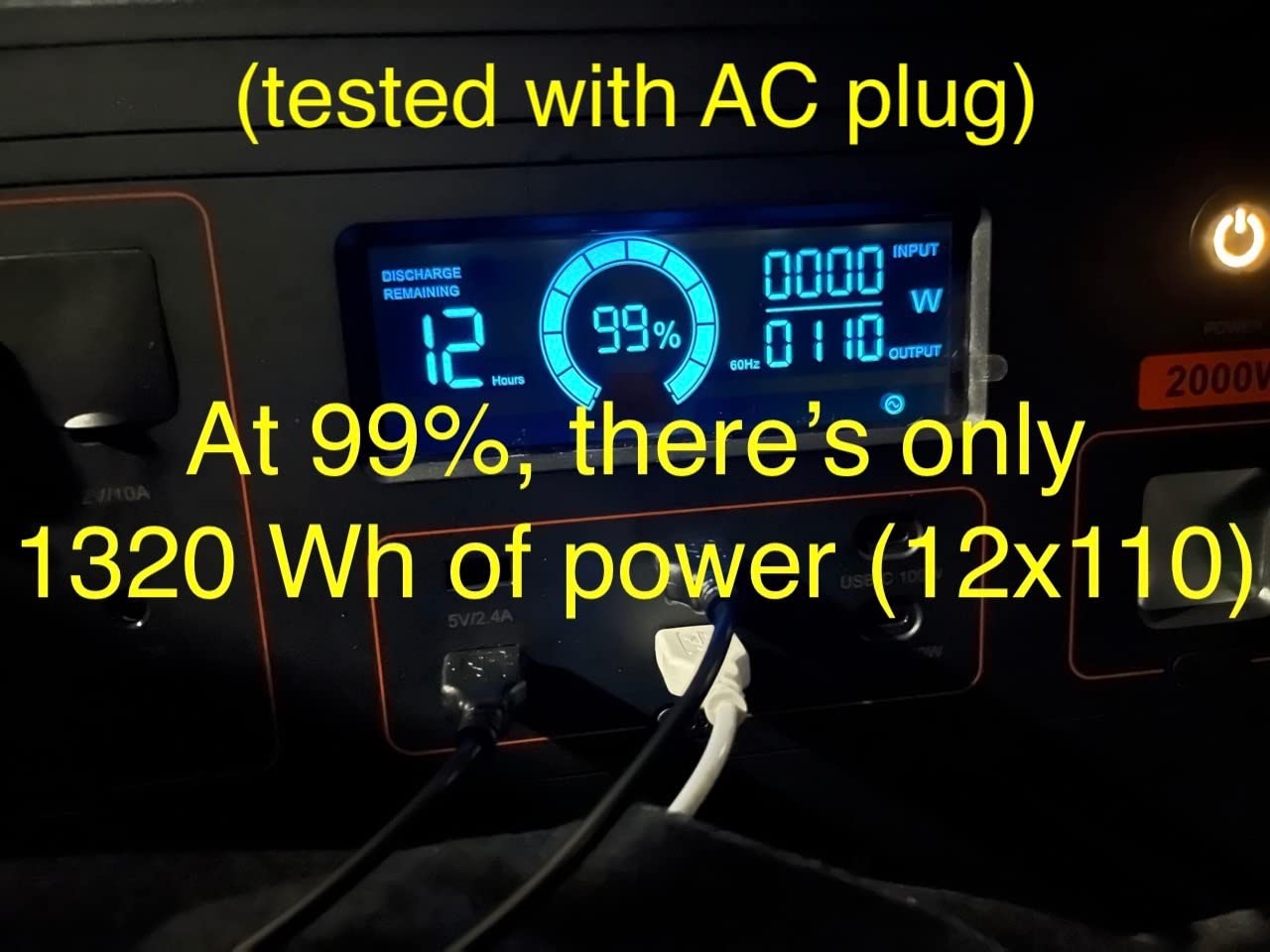
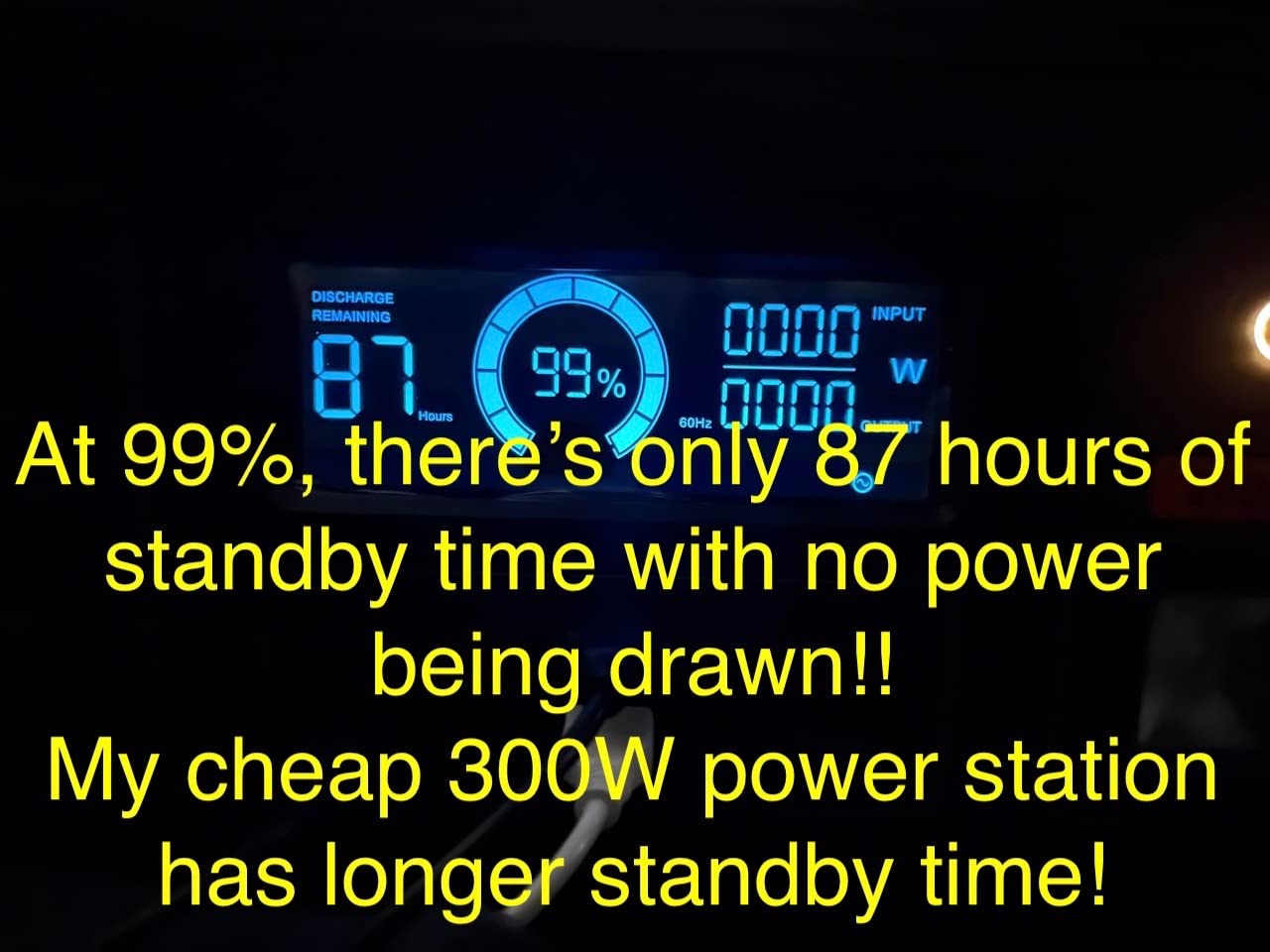
Here is the honesty part. The runtime estimate quoted for this station applies an 85% conversion rate, so real delivered watt-hours sit below the 999Wh on the label, and the AC output keeps drawing from the battery when no load is attached unless you switch it off manually. Owners report shorter real-world runtimes than the nameplate suggests, and that gap is the most common complaint in the reviews.
Ratings sit at 4.3 with a 10% one-star share, higher than any of the leading units here, and the warranty is two years. Both point the same direction: the hardware is right for the money, the manufacturing and support are one tier below the big three.
Who should buy this one
Car campers who want more than 1,000W of output and a full complement of ports without stepping up a size class. It is the sensible middle of the 1kWh group for a family weekend with a fridge and a projector running in the evening.
What to check before you commit
Switch the AC output off when the station is idle, and treat the usable capacity as closer to 800Wh than 999Wh. If you want the same output with a five-year warranty and a larger panel input, the BLUETTI Elite 100 V2 is the comparison point to make.
5. GRECELL 500W: The 14.1-Pound Middle Size That Handles a Car Fridge
- A light 14.1 lb body with a solid carry handle
- Ten ports including a 60W USB-C PD port and wireless pad
- Powers car fridges plus CPAP machines and projectors
- Pure sine wave inverter with a safety BMS
- 500W ceiling is low for anything beyond essentials
- Solar panel is not included
- AC output drains the battery if left on with no load
Half the size of the 999Wh and less than half the weight. The GRECELL 500W puts 519.48Wh behind a pure sine wave inverter rated at 500W with 1,000W peak, and at 14.1 lb it stays light enough to carry from the car unaided, comfortably below the 23.8-lb and 25-lb 1,000Wh units in this list.
Port count is unusually good for the size: two AC outlets, three USB-A QC3.0 ports, a 60W USB-C PD port, two DC outputs, a 12V car socket and a 10W wireless charger. It recharges in three ways, taking 6-9 hours from a 100W panel in full sun, 7-8 hours by car and 6-7 hours from a wall outlet.
Owners single out the weight and the port layout, and confirm that fridges, CPAP units and laptops run reliably. The recurring negatives are the 500W ceiling when you try anything larger, the fact that no panel is included so the real number is higher than the sticker, and the need to switch the AC output off when idle or watch it drain.
Ratings hold at 4.3 with a 2-year warranty, in line with the brand’s other station in this list. Treated as a fridge-and-charging unit rather than a mini base camp, that is an honest and useful set of limits.
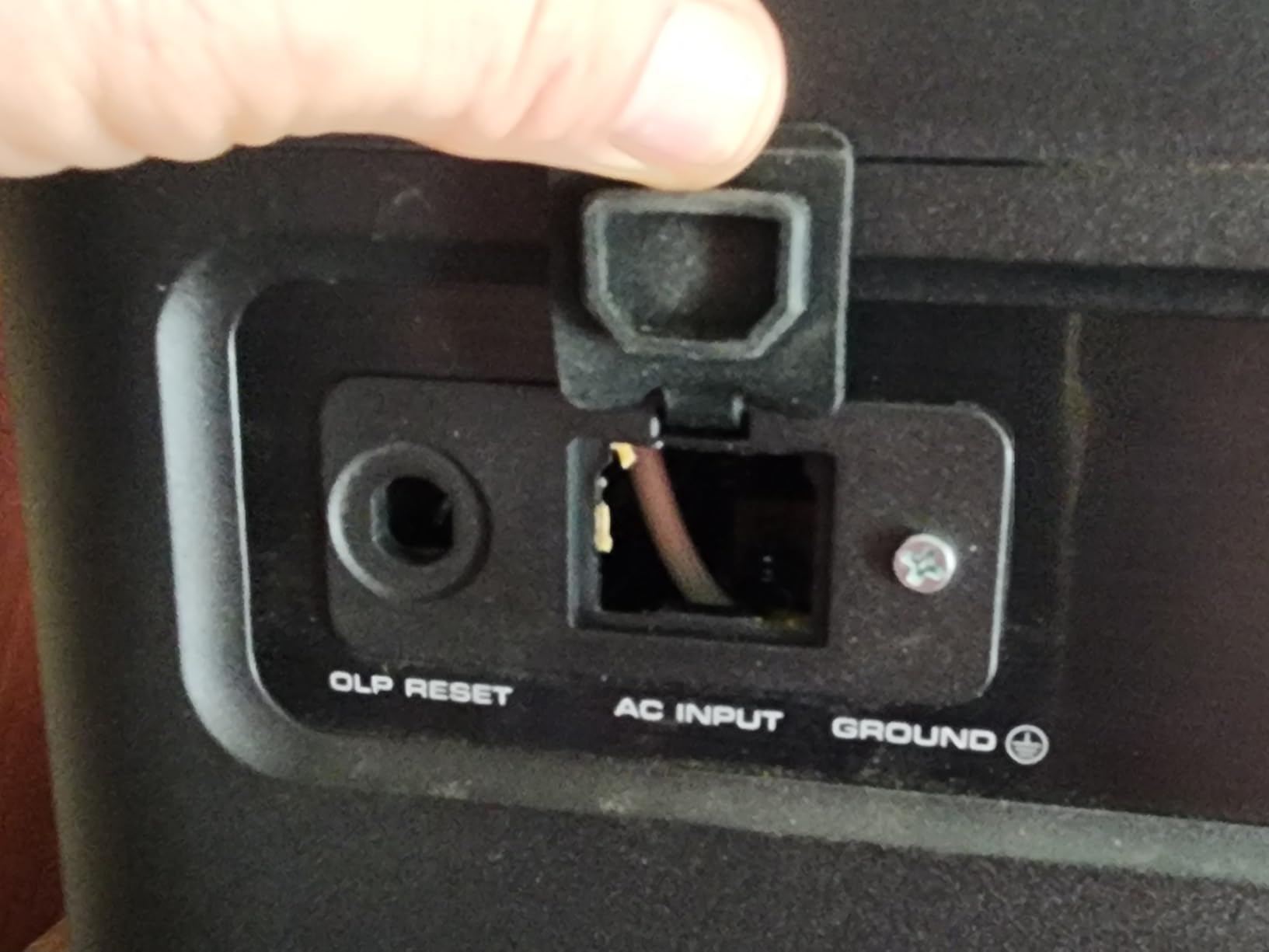
The case for this size
Two people, a 45L fridge, a couple of lights and a phone or two, for three or four days. At 14.1 lb you can still get it from the car to the pitch on your own, which the 23-lb and 25-lb units in this list are too heavy for.
Where the ceiling bites
An electric kettle, a space heater or a coffee maker will either refuse to start or trip the inverter. If your trip involves hot drinks at volume, jump to the 1,000Wh class and its 1,500W-plus of output.
6. MARBERO 237Wh: The Only Kit Here With a Panel in the Box
- Only kit in this roundup shipping with a 60W foldable solar panel
- 9 lb weight and compact footprint for hiking
- Pure sine wave AC on 2-prong and 3-prong outlets
- LED flashlight with strobe and SOS modes
- Smallest capacity here at 237Wh
- Lowest average rating at 4.1 with a 12% one-star share
- Only a 12 month warranty
Everything else in this list assumes you already own a panel, and the MARBERO set is the only one in the group that ships with one. The foldable 60W panel is rated at 21.5-23.5% conversion efficiency alongside a 237Wh station, which makes it the one genuine all-in-one answer for a first trip or a gift.
The station itself is 300W rated with 375W peak on a pure sine wave inverter, with two AC outlets covering both 2-prong and 3-prong plugs, two USB-A QC3.0 ports, two more USB-A ports, an 18W USB-C PD port and a DC output. At 9 lb with an LED flashlight in flashlight, strobe and SOS modes, it is built for phones, tablets, laptops and headphones.
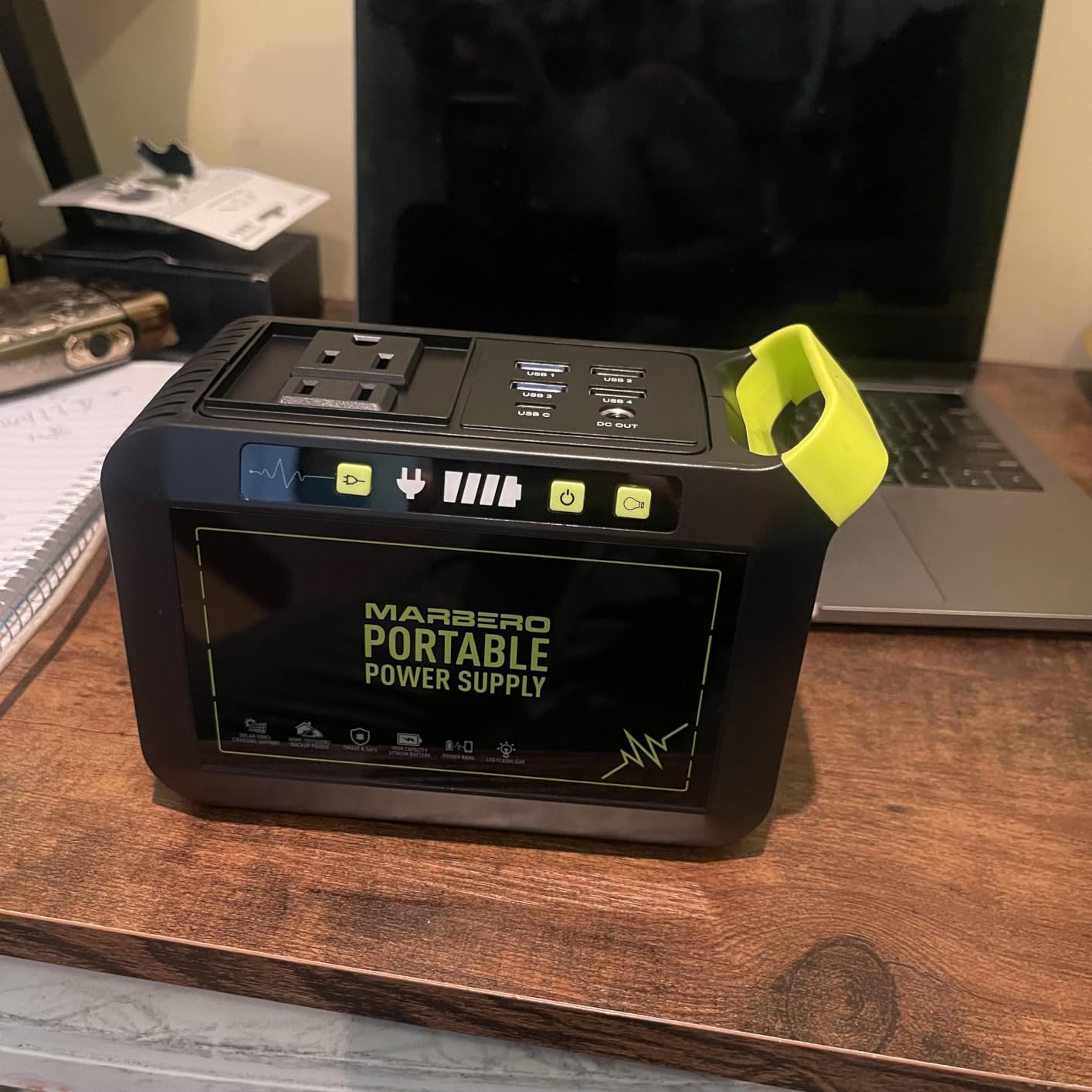
Two things give me pause. First, the rating. At 4.1 across 9,250 ratings, the lowest average in this comparison, with 12% one-star reviews, it is the least well-regarded unit here even though its 9,250 ratings put it second only to the Jackery Explorer 300, which tells you the limits are getting hit often. The 237Wh capacity is the smallest in the group, and the 300W ceiling is firm enough that the manufacturer warns about devices above it, particularly heating elements.
Second, the warranty is 12 months, the shortest coverage among these picks, and a 60W panel takes a long time to refill a 237Wh battery. Buyers who stay inside those limits like the package. Buyers who wanted a fridge end up buying a second unit.
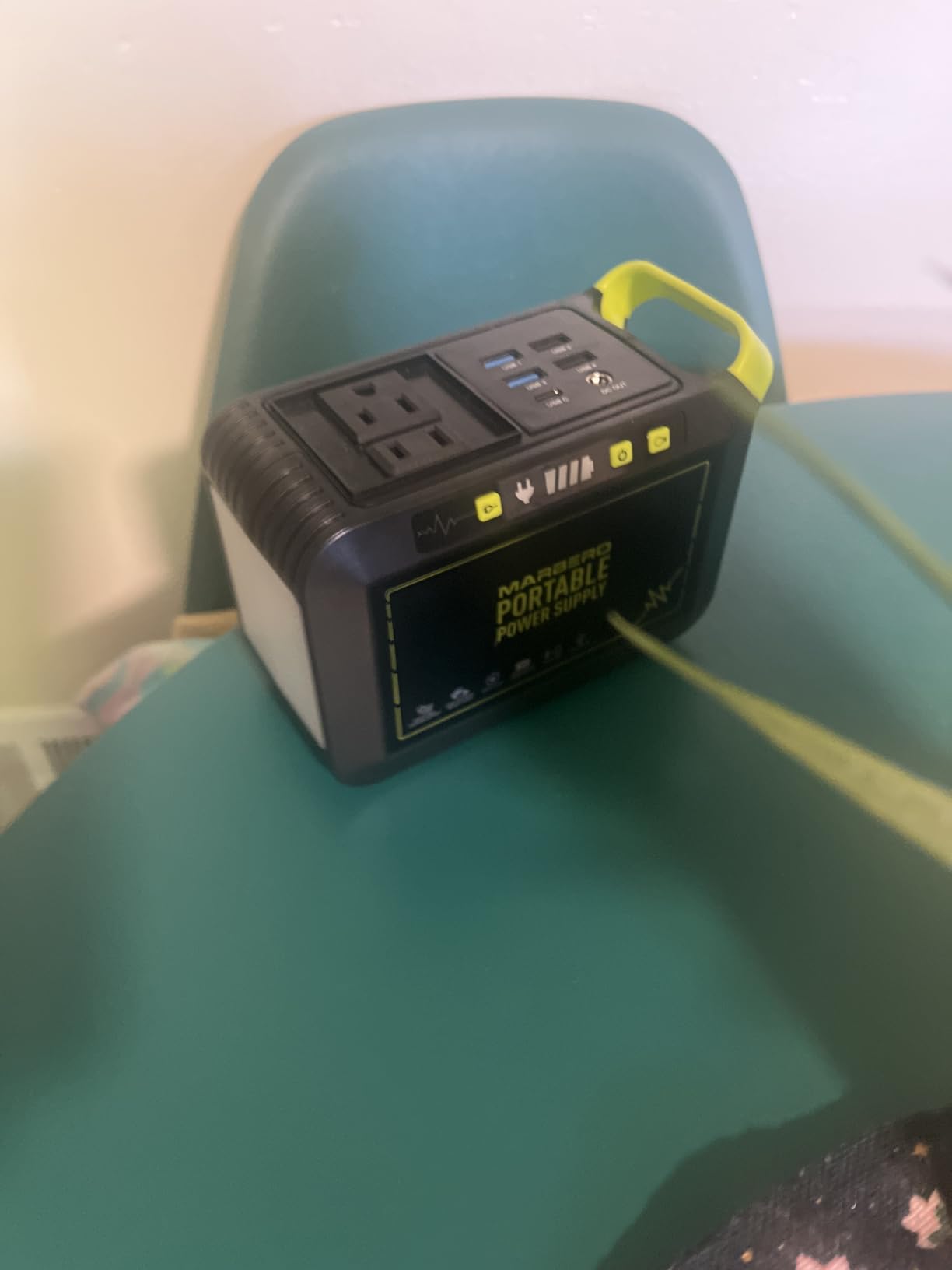
Buy it if this is your first station
A single weekend where you want lights, phone charging and a projector and nothing more. The included panel removes the single most common complaint on camping forums, which is that bundled solar panels underperform and cost more than buying one separately later.
Skip it if you plan to grow
There is no expansion path here. If your second trip involves a fridge, you will outgrow 237Wh quickly, and the one-year warranty gives less protection if something goes wrong in the meantime.
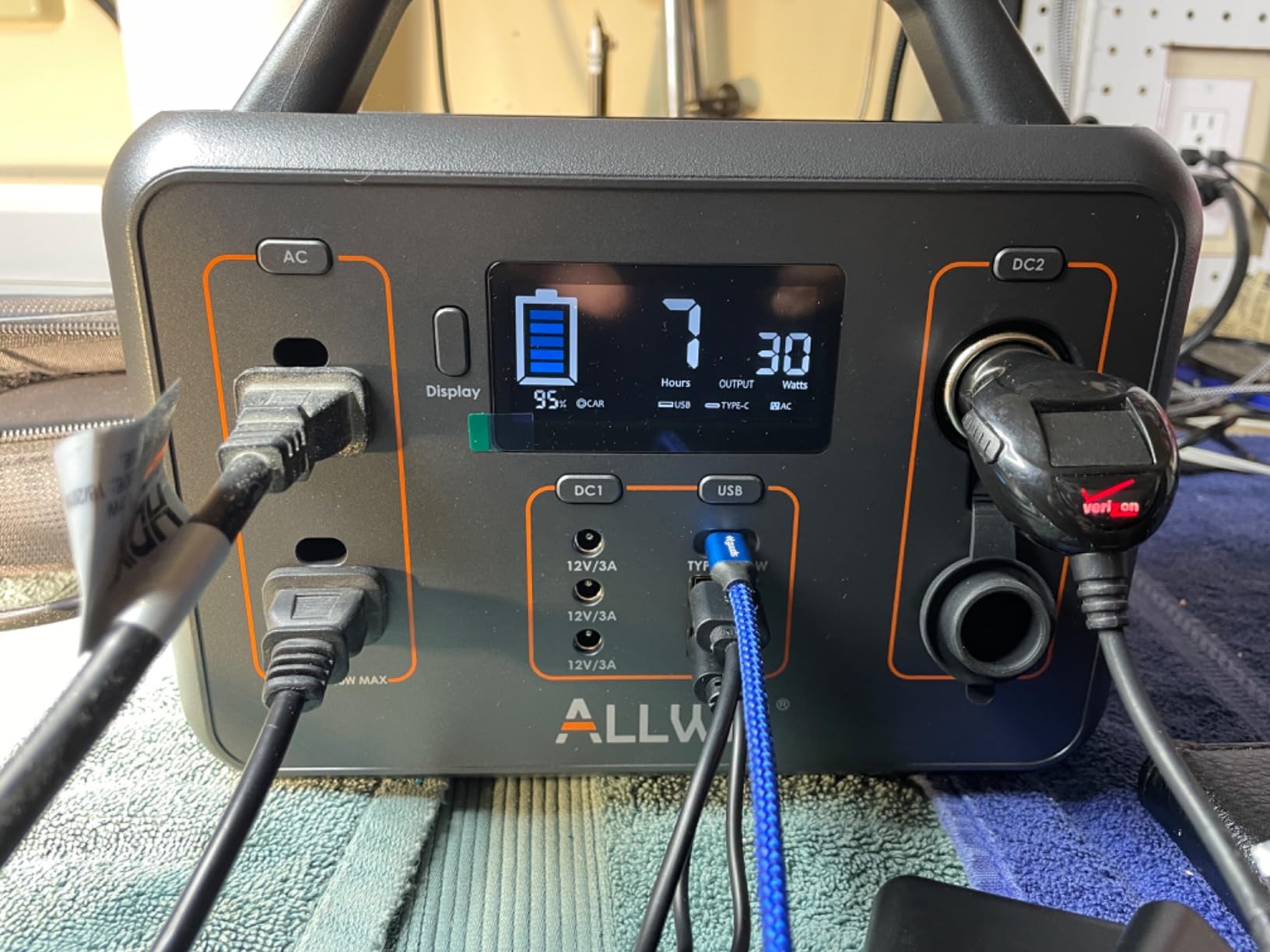
7. ALLWEI 300W: The 6.4-Pound Unit for CPAP and Small Loads
ALLWEI Portable Power Station 300W, 256Wh Solar Generator LiFePO4 Battery
- A 6.4 lb body with a genuine LiFePO4 cell
- Display shows live watts
- time remaining and true charge
- Verified to run a heated CPAP machine for 20 hrs over three nights
- MPPT with pass-through charging allows use while charging
- Charge level display reported inaccurate by some owners
- Minority reports of loud fan noise after months of use
- Solar input limited to 120W panels
At 6.4 lb and 9.25 by 5 by 6.8 inches, the ALLWEI 300W is among the smallest and lightest units here, and one of the few under 300Wh that ships with a real LiFePO4 cell rated for 3,000 charge-discharge cycles. That combination is rare at this size, and the chemistry is the reason the cell count matters for long-term ownership.
Six output ports cover a single AC outlet, two DC5521 outputs, a car socket, an 18W USB-A and a 60W USB-C PD port. The pass-through function lets you run a device while the station charges, and the built-in MPPT controller pulls more from a 100W panel, topping up in 4-5 hours, or in 2-2.5 hours using AC and solar together.
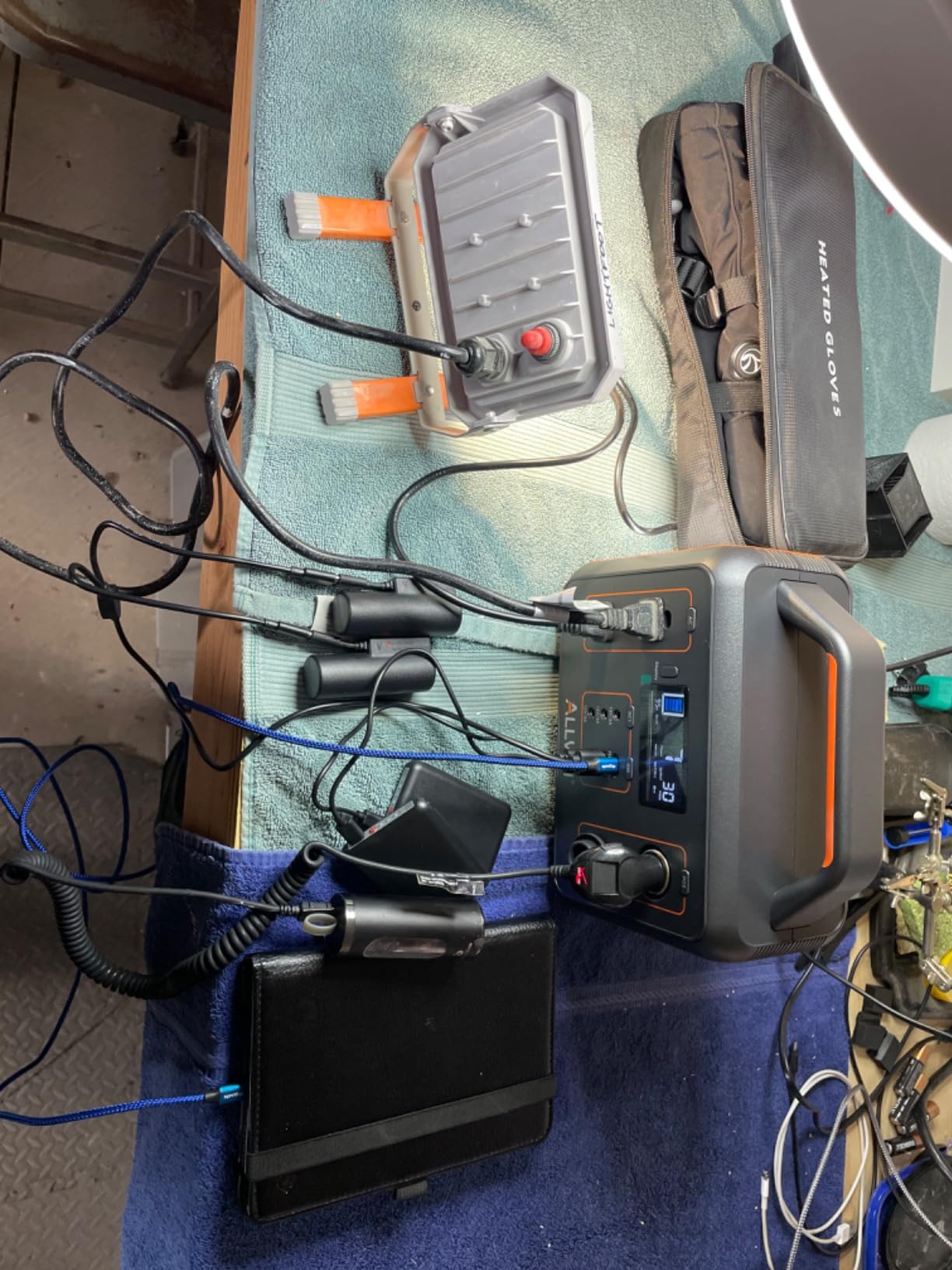
Verified buyers report running heated CPAP machines for 20 hours across three nights, which is the clearest documented use case for this size of station. The display is also unusually honest for the price class, showing live watts, estimated time remaining and a true charge percentage rather than four vague bars.
The reliability thread is worth reading before you buy. A minority of owners report the charge display reading inaccurately and needing periodic resets, and a few report a fan running loudly after several months, with one unit losing charge capacity inside a year. Support has also been described as requiring a pile of data before engaging. The listed warranty is two years despite longer claims in the listing bullets.
Who this fits
Anyone running a CPAP machine, a phone and a small light for a long weekend where the station has to fit in a daypack. Verified owners report heated CPAP use for 20 hours across three nights on this capacity, which leaves room for charging on top.
What to keep in mind
Solar input is capped at 120W panels, so a big folding array is pointless here. If reliability over many trips matters more than weight, the Anker SOLIX C300 is the same weight class with a five-year warranty behind it.
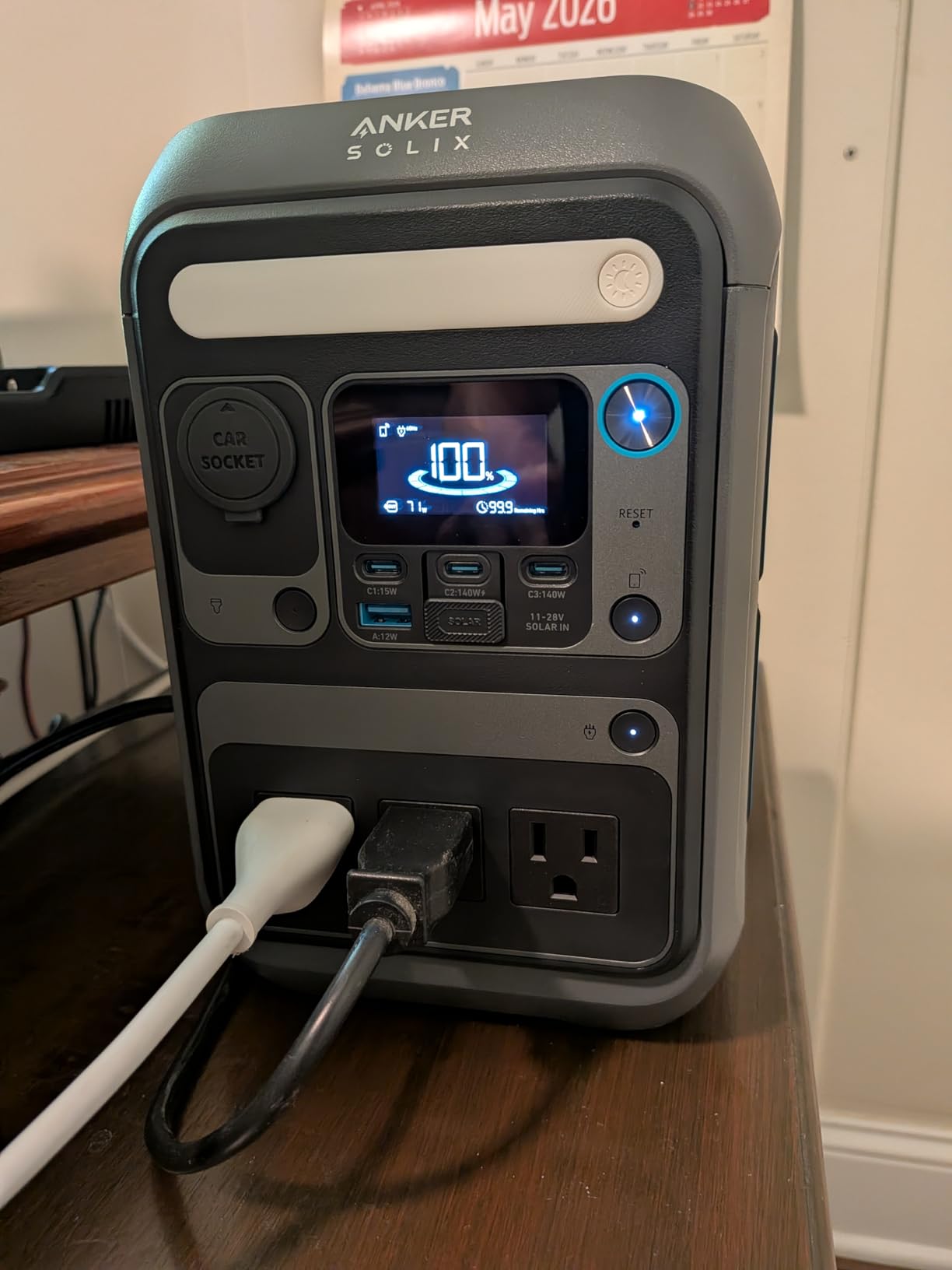
8. Anker SOLIX C300: The 140W USB-C Per Port
Anker SOLIX C300 Portable Power Station, 288Wh Solar Generator for Camping
- Two 140W two-way USB-C ports per socket
- the highest USB-C output listed here
- Reaches 80% in 50 minutes on wall power
- Extremely quiet at 25dB from 3.3 feet
- 5 year warranty with 3000-cycle LiFePO4 cells
- 288Wh is small beyond phones and cameras
- Not compatible with several Anker SOLIX panels including the PS30 and PS200
The C300 exists for one reason, and the reason is USB-C. Two 140W two-way USB-C ports will charge a laptop, a tablet and a phone at full speed simultaneously, and the two-way spec means the station itself takes a 140W PD charge. At 9.1 lb it is heavier than the Explorer 300 but small enough to stay in a pack.
It also recharges to 80% in 50 minutes from a wall outlet, runs at 25dB measured from 3.3 feet, and carries a five-year warranty on 3,000-cycle LiFePO4 cells with smart temperature control. For a station you keep inside a tent or a van at night, that quiet figure is the number that matters.
Where it stops is capacity. At 288Wh it is a charging and lighting unit, not a fridge unit, and the criticism reviewers repeat is consistent about that limit. Solar input tops out at 100W, and the manual is explicit that the C300 will not work with the PS30, PS200 or PS400 Anker panels, which is a sharp edge if you already own Anker solar gear.
Small other things: the shoulder strap is sold separately, and no panel is included. Ratings sit at 4.6 with 92% of reviews at four stars or better, one of the cleanest rating distributions in this group.
The niche it wins outright
Travelers charging USB-C laptops and tablets who do not need a fridge. Nothing else listed here specifies more than 100W of USB-C output, and the 25dB floor keeps the station usable as a bedside unit.
Why you might look elsewhere
If your load includes anything with a compressor, step to the 1,024Wh units. And if you plan to buy Anker SOLIX panels later, check the compatibility list first, because several common models are excluded.
9. BLUETTI Elite 100 V2: 1,024Wh That Refills in 45 Minutes
BLUETTI Elite 100 V2 Portable Power Station for Camping 1024Wh 1800W
- 0-80% in about 45 minutes on 1200W TurboBoost AC input
- 25 lb for a 1024Wh and 1800W unit
- 30dB silent mode
- 10 ms UPS plus 2700W power lifting for appliances
- Heavier in the hand than the numbers suggest
- Exposed DC barrel ports are easy to short
- 12V car outlet runs warm above about 12W
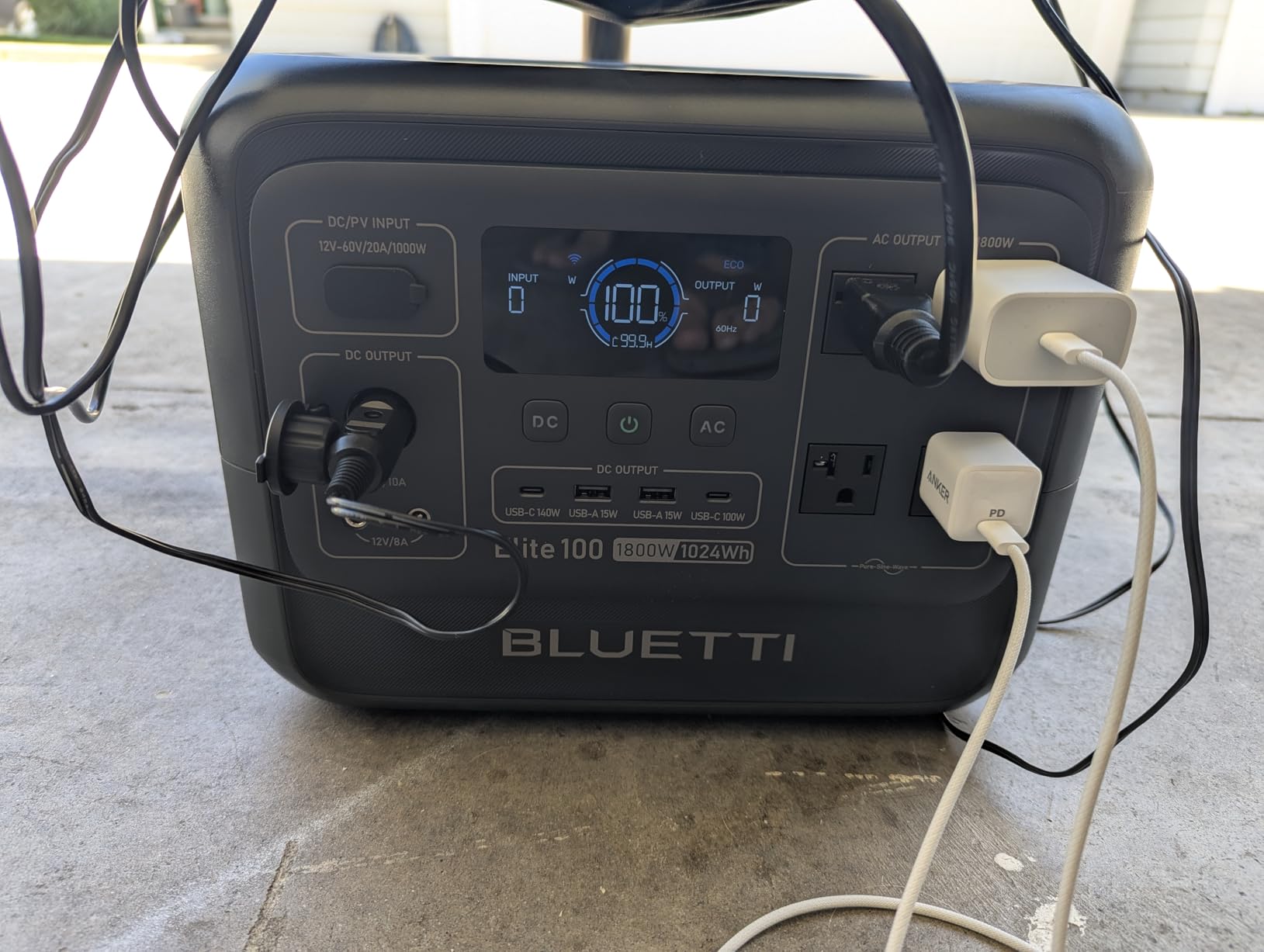
This is the one I would describe as properly engineered rather than simply large. The Elite 100 V2 holds 1,024Wh of LiFePO4 rated beyond 4,000 cycles, delivers 1,800W continuous with 3,600W of surge, and gets from flat to 80% in about 45 minutes on 1,200W of AC input. It weighs 25 lb in a 17-litre body that is 35% smaller and 30% lighter than the previous generation.
Power Lifting mode takes higher-draw appliances up to 2,700W, which is how owners report running a coffee maker and an induction burner on the same trip as the fridge. The 10 ms UPS switchover keeps a router and a laptop alive through a cut, and silent mode drops it to 30dB.
Owners consistently report running a portable fridge for a full weekend of camp lighting on one charge, and the 45-minute recharge means a restock on mains power at a campsite or a layby restores most of the capacity. The warranty runs 60 months, and 11 ports cover simultaneous charging.
The flaws are physical. At 25 lb it feels heavier than the spec suggests, and the DC barrel ports are exposed, which owners warn can be shorted by loose materials. The 12V car socket runs warm above about 12W, Power Lifting stresses the battery, and 12V vehicle charging is slow enough that BLUETTI’s own charger is recommended.
Who this is for
Campers who want to cook on electricity and keep a fridge running at the same time, and who value recharge speed over absolute portability. The 60-month warranty also makes it the safest purchase for someone planning multi-season use.
What to plan around
Protect the exposed DC ports with plugs, and avoid leaning on Power Lifting as a daily habit. Neither is a dealbreaker, but both are avoidable if you plan the cable layout before the trip.
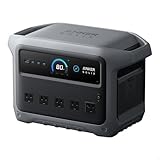
10. Anker SOLIX C1000 Gen 2: 2,000W With 600W Solar Input
- A 4.7 average with 86% five star ratings
- 2000W continuous and 3000W peak across 10 ports
- Full recharge in 49 minutes at 1600W
- 600W solar input gives a full recharge in 1.8 hrs
- Verified to power a heated CPAP for three consecutive nights
- Gen 2 drops the battery expandability of the first generation
- Some waveform distortion measured on a microwave load
- About 25 lb is heavy for pack-in camping
Only 1,024Wh, but 2,000W of continuous output with 3,000W peak across ten ports, which makes it the highest continuous output in the roundup. The HyperFlash recharge at 1,600W fills it in 49 minutes when enabled in the Anker app, and 600W of solar input does a full recharge in 1.8 hours, the quickest solar recovery in this group on the panel input it accepts.
Real-world reports back that up. Buyers document three consecutive nights on a heated CPAP machine, a five-hour home outage covered without touching a gas generator, and more than 30 hours running a Starlink terminal and a laptop. The 10 ms UPS switchover is set up for exactly those loads, and the TOU mode in the app shifts heavy draw to off-peak mains hours.
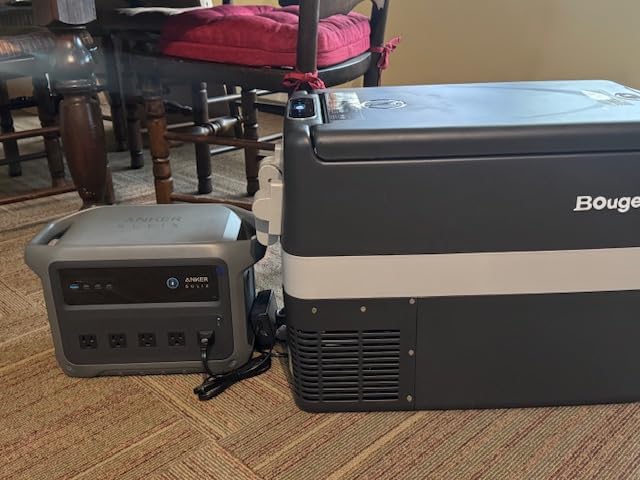
The trade-offs are specific rather than vague. This generation drops the battery expandability the first generation offered, so a 1,024Wh pack stays 1,024Wh. Some measurements show 15-20% harmonic distortion on a microwave load, and no storage case is included, so cables and adapters end up loose in the vehicle.
At 24.9 lb it is at the heavy end of the 1kWh class, and the LiFePO4 pack is rated for at least 80% remaining after 4,000 cycles with a five-year warranty. Ratings of 4.7 with 86% five stars put it alongside the Explorer 1000 v2 at the top of the rating table here.
Why the solar input is the story
The other 1,024Wh unit here lists a 1200W AC fast-charge path rather than a 600W solar ceiling. At 600W and a 1.8-hour refill, a midday panel break can genuinely keep a fridge and a coffee maker running without a mains stop, which is the difference between a solar generator and a battery with a panel attached.
Where it falls short
Losing expandability matters if you were planning to add a second battery next season. The 25-lb weight also rules it out for backpacking, and the missing case is a small annoyance repeated by several owners.
How Big a Solar Generator Do You Need for Camping?
For a typical two-to-four-person camping trip, a 1,000-1,500Wh station with a 200W solar panel covers the load with 20-30% headroom. Below 500Wh you are buying phone chargers. Above 2,000Wh you are carrying weight that a 200W panel cannot refill in a day.
The method is simple. List everything you plan to run, note each device’s wattage, multiply by the hours you expect to use it, and add 20-30% for conversion losses and headroom. A 45L camping fridge that cycles about 40% of the time lands near 430Wh a day, camp lighting runs about 100Wh, a fan about 100Wh, and phone charging across four people about 60Wh. That is roughly 700Wh a day, so a 1,000Wh battery holds two days, and a 200W panel covers one day of that in about four hours of good sun.
Match the style of trip to the answer. Minimalist weekends with no fridge need 250-300Wh. A couple with a fridge and a CPAP need 500-1,000Wh. A family base camp for a week wants 1,000-1,500Wh and the ability to run a kettle or coffee maker, which means 1,800W of continuous output or more. Van life and overlanding reward 2,000Wh-plus with solar input above 500W. We covered the fridge maths in more depth in our solar generator picks for refrigerators.
For solar panel sizing, divide your daily watt-hours by peak sun hours, then apply about 0.75 for real-world conversion. A 700Wh daily load over four peak sun hours needs roughly 235W of panel, which is why 200W is the sensible default and why 50-100W is the practical floor for meaningful charging. Re-angle panels at around 10am and 2pm, since a 30% shade loss can halve the harvest.
On the brand question that comes up constantly, our ten-unit set splits cleanly. Jackery wins on ecosystem breadth and retail availability, and its 1000 v2 carries the highest average rating here at 4.7 with 3,623 reviews. BLUETTI wins on capacity per unit of cash, warranty length and panel input, with a 60-month warranty on the Elite 100 V2. Anker SOLIX wins on build, app control and recharge speed, with 49-minute wall charging and 600W solar input on the C1000 Gen 2. The GRECELL and MARBERO units are cheaper and give you a good fraction of the capability, with fewer review counts behind them.
Two warnings. First, weight is the real constraint nobody advertises: past roughly 30 lb a station becomes a two-person carry from the car, and the 37.4-lb BLUETTI AC180 is the clearest example in this list of a unit that stays in the vehicle. Second, buyers on camping forums repeatedly distrust no-name marketplace units with 2-25 ratings and unverifiable watt-hour claims, and the mainstream units here carry between 1,600 and 11,000-plus ratings, which is a fair proxy for how much field data stands behind the claims.
Finally, never charge a lithium battery below freezing, and store long-term around 40% rather than full. Where noise or fumes rule out an engine, a solar generator replaces a gas unit entirely; if you need sustained high-wattage heating for hours, a portable inverter generator is still the right tool, as we cover in our inverter generator guide.
Frequently Asked Questions
What is the best solar powered generator for camping?
For most weekend trips the Jackery Explorer 1000 v2 is the strongest all-rounder, with 1,070Wh of LiFePO4 capacity, 1,500W of continuous output and a rating of 4.7 across 3,623 reviews. For packable trips under 300Wh the Jackery Explorer 300 or the 6.4-lb ALLWEI 300W make more sense, and for a week-long family base camp the Anker SOLIX C1000 Gen 2 with 2,000W of output is the better fit.
How big of a solar generator do I need for camping?
For two to four people, a 1,000-1,500Wh station with a 200W solar panel is the sweet spot, giving 20-30% headroom over a daily load of roughly 700Wh. A 45L fridge alone draws close to 430Wh a day, camp lighting about 100Wh and a fan about 100Wh. Below 500Wh you are buying phone chargers, and above 2,000Wh a 200W panel cannot refill the battery in a day.
Is Jackery or EcoFlow better?
Among the ten stations we compared, the equivalent question is Jackery versus BLUETTI versus Anker SOLIX. Jackery leads on ecosystem breadth, retail availability and the highest average rating here at 4.7 for the Explorer 1000 v2. BLUETTI leads on capacity per unit of cost, warranty length and 500W solar input. Anker SOLIX leads on recharge speed, app control and 600W solar input on the C1000 Gen 2.
How long will a 1000 watt solar generator run a refrigerator?
A 45L camping fridge cycling about 40% of the time draws close to 430Wh a day, so a 1,024Wh station runs it about two nights on a single charge, and a 1,152Wh pack stretches that further once inverter losses are counted. With a 200W panel in good sun, or 600W of input on a station that accepts it, the fridge runs indefinitely.
Do solar generators work on cloudy days?
A solar generator keeps working on a cloudy day because the battery carries the load once the panel output drops, and the panel still contributes a reduced amount through the MPPT controller. Expect a heavily overcast day to deliver a fraction of a panel’s rated output, so treat panels as a top-up rather than the primary source, and top up on the 12V car socket while you drive to cut the shortfall.
Our Verdict on the Best Solar Generators for Camping Trips in 2026
The Jackery Explorer 300 is our pick overall in 2026, because it does something the rest of this list cannot: it stays under 8 lb while still using LiFePO4 cells rated for 4,000-plus cycles, and it carries more verified ratings than any other unit on this list. Buy it for hut trips, CPAP nights and camera batteries.
Everything else is a step up in size. The Jackery Explorer 1000 v2 handles a fridge and 1,500W of load, the BLUETTI Elite 100 V2 handles high-draw appliances with a five-year warranty, and the Anker SOLIX C1000 Gen 2 handles a week away on solar alone. Read our other camping gear picks, including our portable generator roundup, before you load up, and match the station to the trip rather than the trip to the station.