
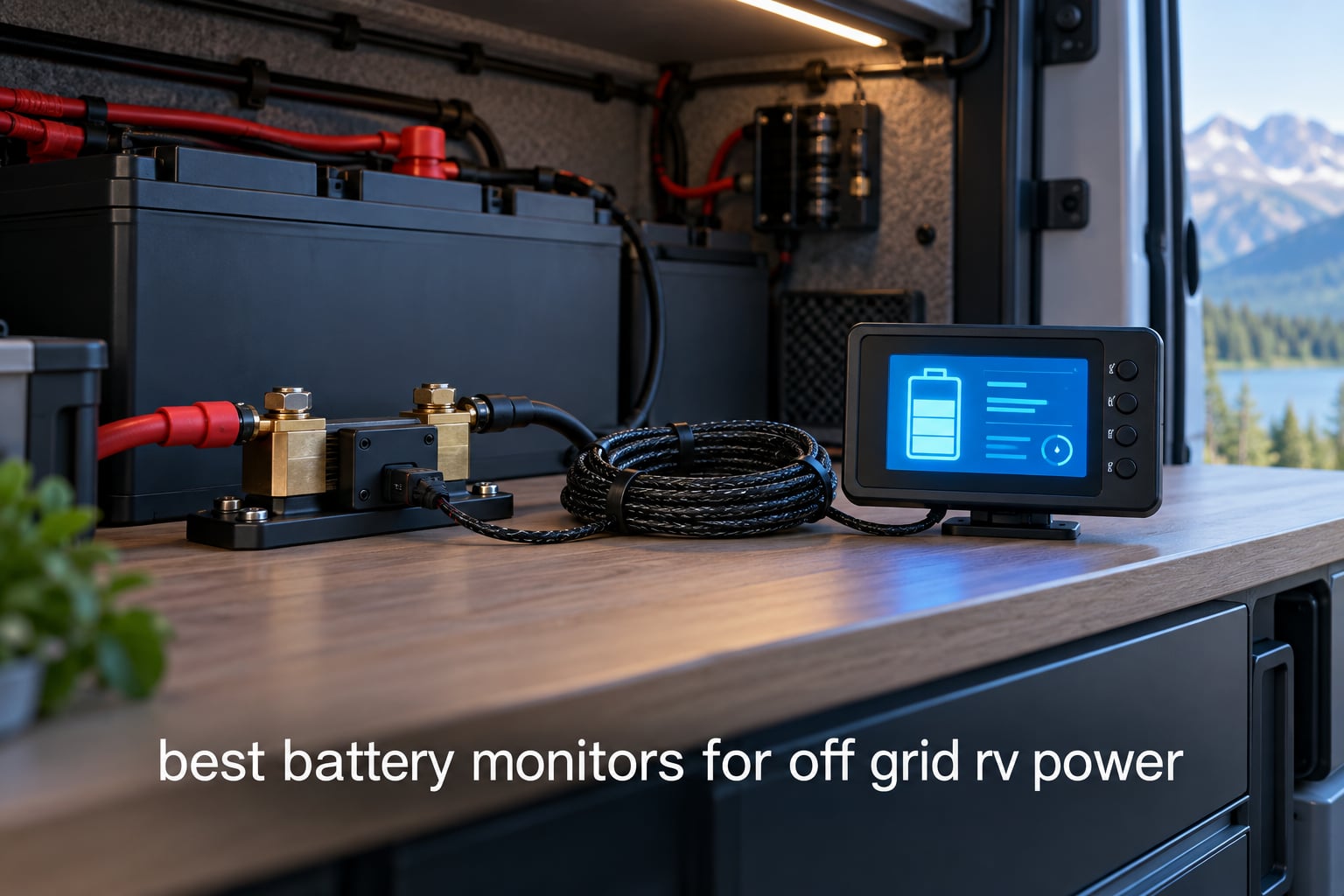
There is a specific way a boondocking trip ends badly. The gauge above the bed reads 60%. The 12V fridge is humming, the lights are on, and the laptop is charging. Two hours later everything is off and the inverter is beeping because the bank is under voltage cutoff. You never saw it coming, because the factory gauge was never measuring anything useful. It was reading terminal voltage and guessing, which is a guess that gets worse the moment you switch to lithium.
That is the whole argument for a shunt-based battery monitor, and it is why we built this roundup around the best battery monitors for off grid RV power rather than around whatever happens to rank highest on a shopping carousel. A shunt is a precision resistor that every amp has to pass through on its way out of your bank. The monitor measures the tiny voltage drop across it, works out the current, and integrates that over time to count amp-hours in and out. That is a real measurement. A voltmeter is a guess with a number attached.
It is worth being honest about the limits before we get into the picks. On iRV2, in a thread comparing Victron against a Trace display, one long-term owner put it plainly: on all battery monitors that are made, the percentage is never accurate, and Victron tries the best because their engineering is second to none. That is the correct expectation to carry into this list. You are choosing where the error comes from, not whether error exists.
What follows is ten shunt-based monitors spanning the price and feature range, each rated on published accuracy, connectivity, display type, cable reach, and how hard it is to fit into an actual rig. We also cover LiFePO4 versus lead-acid, how to size a shunt including the millivolt rating nobody explains, the wiring rule that breaks most DIY installs, and when you can skip the purchase entirely. Specifications and ratings were taken from manufacturer listings and customer review data as of September 2026.
Table of Contents
Top 3 Picks for Off-Grid RV Battery Monitoring (September 2026)
If you want the short version before reading any further, these three lead the group for very different reasons. The Victron SmartShunt is the accuracy benchmark and the one most people should buy. The Renogy 500A is the value pick and the most reviewed monitor here. The ANCEL BM1000 is the answer when you refuse to cut a hole in your cabinet for a display.

Victron SmartShunt 300A
- IP65 sealed housing
- Bluetooth to VictronConnect
- no display cutout needed

All 10 Battery Monitors Compared Side by Side
Every monitor below counts amps through a shunt in your negative cable. What separates them is where the data goes, how long the cable run is, how much of the wiring job you inherit, and how honestly the accuracy is stated. Read the table first, then jump to the review for the one that matches your rig.
| Product | Specifications | Action |
|---|---|---|
| Victron SmartShunt 300A |
|
Check Latest Price |
 Renogy 500A Battery Monitor Renogy 500A Battery Monitor |
|
Check Latest Price |
| ANCEL BM1000 400A Smart Shunt |
|
Check Latest Price |
 AILI TR16 Shunt Monitor AILI TR16 Shunt Monitor |
|
Check Latest Price |
 Victron BMV-700 with Shunt and Display Victron BMV-700 with Shunt and Display |
|
Check Latest Price |
 SENTORISE 500A IP68 Monitor SENTORISE 500A IP68 Monitor |
|
Check Latest Price |
 QWORK 8V-80V Monitor QWORK 8V-80V Monitor |
|
Check Latest Price |
 LNEX 2.4 Inch Color Screen Monitor LNEX 2.4 Inch Color Screen Monitor |
|
Check Latest Price |
 LNEX 500A 26ft Cable Monitor LNEX 500A 26ft Cable Monitor |
|
Check Latest Price |
 BINTA 8-120V Compact Monitor BINTA 8-120V Compact Monitor |
|
Check Latest Price |
1. Victron SmartShunt 300A – The Accuracy Benchmark With No Screen
Victron Energy SmartShunt IP65 Battery Monitor (Bluetooth) – Victron Smart Shunt – 6.5V-70V, 300 amp
- Highest rated monitor in this group
- IP65 sealed housing suits a wet battery bay
- no display cutout needed
- app logs charge cycles and lowest voltage
- aux input for a second battery or temperature sensor
- Bluetooth range only 8-20 feet and shorter inside a metal box
- PUK code in tiny print must be found before pairing
- temperature sensor sold separately
- no standalone display on this model
The SmartShunt is the monitor I keep coming back to for people who are serious about off-grid power, and the reason has less to do with the hardware than with the app. A phone-based monitor can show you everything a panel gauge shows and several things no panel gauge shows at all: charge cycle count, deepest discharge reached, highest and lowest voltage recorded, and amp-hours consumed over any window you choose.
Everything in the group reports volts, amps and a percentage. This one adds history you can actually interrogate the morning after something drained your bank. On a rig running a fridge, a CPAP and an inverter overnight, being able to see that 38Ah disappeared between 2am and 4am is worth more than a round number on a screen.
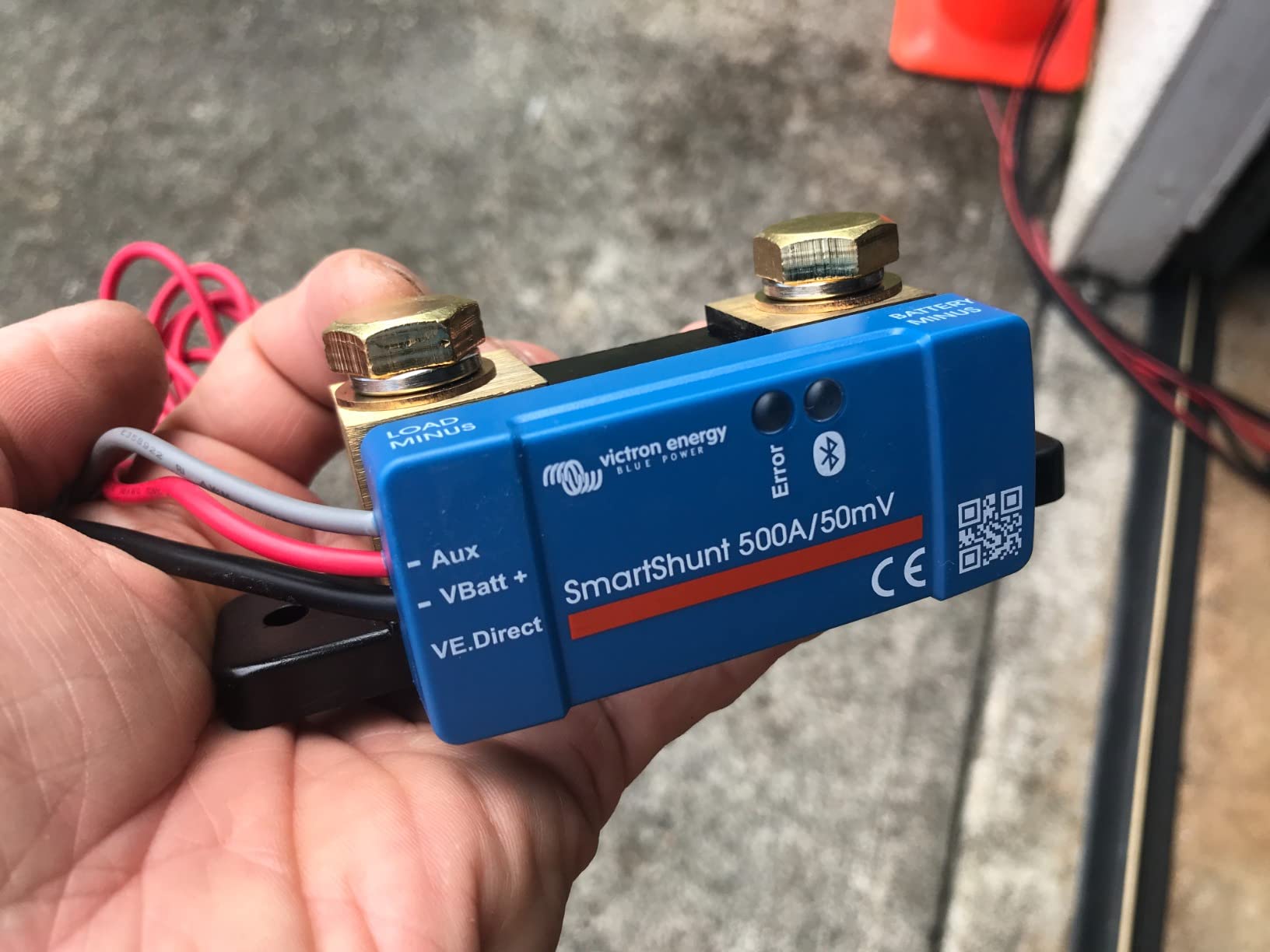
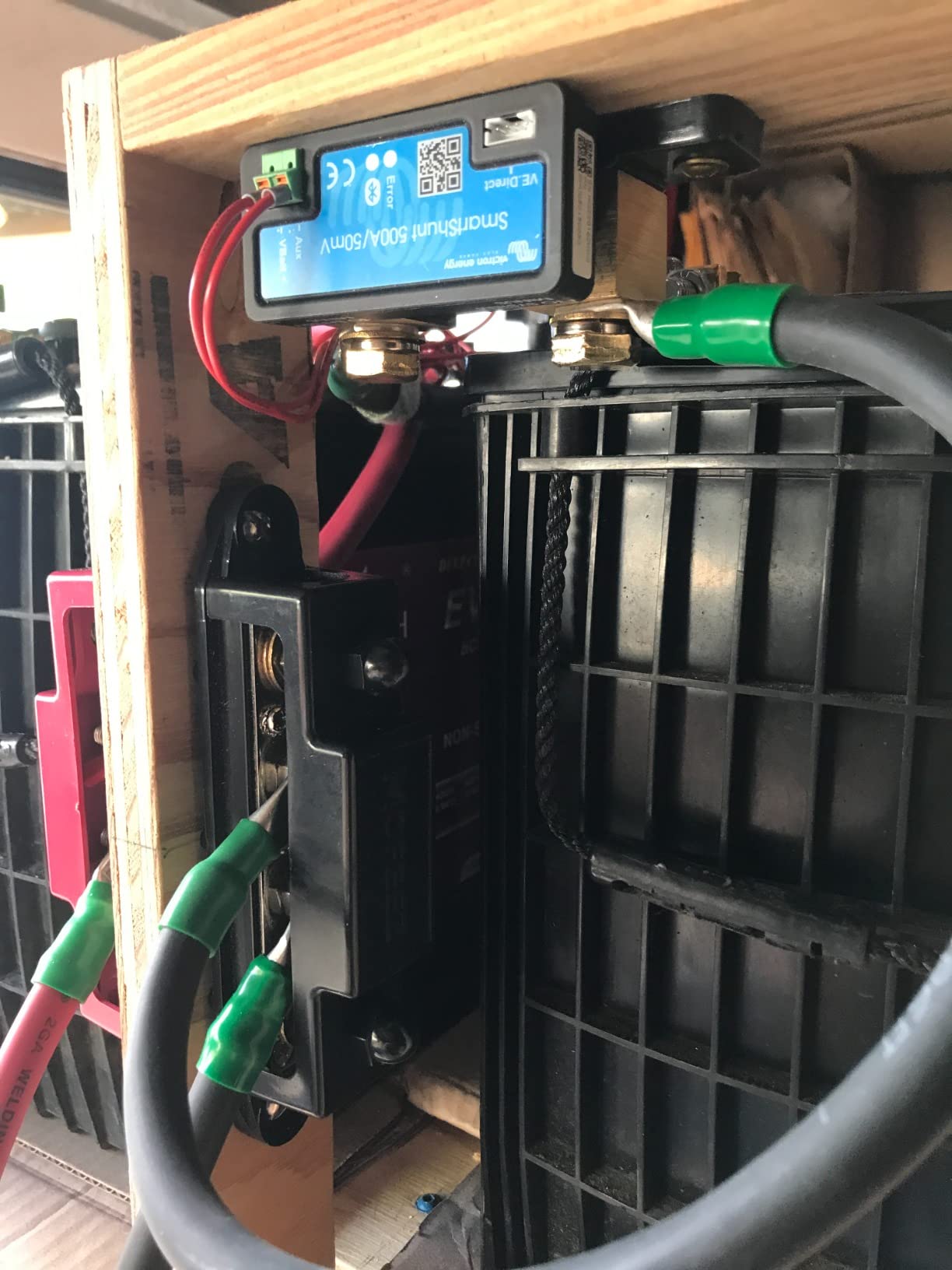
It is also physically the tidiest install in this list. There is no display, so there is no hole in a cabinet, no cable run back to a control panel, and no bezel to trim around. The body is sealed to IP65, which matters more than most roundups admit. Battery compartments on boats and under-bed RVs get wet, and an unsealed monitor in a wet compartment is a future failure.
Two things catch people out. Bluetooth range is genuinely short at roughly 8 to 20 feet, and it gets shorter still inside a metal battery box, so the app may need pairing from outside the compartment. And the pairing code is the PUK printed on the unit, not a default code, so find it before you seal everything back up.
What you need to know before you buy
Available in 300, 500, 1000 and 2000 amp versions, so match the variant to your inverter rather than defaulting to the largest. The 300A covers most travel trailer and Class B builds with a modest inverter; a 3000W inverter on a motorhome bank pushes into the 500A territory. Under-sizing the shunt is the more common mistake, and it shows up as a hot shunt and unstable readings under load.
The aux input is the feature that gets overlooked. It accepts a second battery monitor, a midpoint voltage connection for a two-bank series setup, or a temperature sensor. That gives you starter battery monitoring and temperature compensation from one device, and it is the reason the SmartShunt integrates cleanly with other Victron gear through VE.Smart networking, plus VRM remote management and DVCC when a GX device is present.
Where it falls short
There is no display at all, so if your phone is flat, wet or buried in a pack, you have no way to read the bank in the dark. Forum complaints about this are the single most common reservation about phone-based monitors in general, and it is a real limitation for anyone who does not want to dig out a phone at midnight.
The temperature sensor is a separate purchase, so temperature compensation and cold-weather charging data are not included out of the box. If you winter boondock in sub-freezing conditions, budget for the sensor or choose something else that reports temperature natively.
2. Renogy 500A – The Most Reviewed Monitor In The Group
Renogy 500A Battery Monitor, Tester with Shunt, Battery Meter Power System
- Most reviewed monitor in this roundup
- works with lead acid and LiFePO4
- 20ft shielded cable allows a remote panel
- backlit display shows power and degradation rate
- one year warranty
- No Bluetooth or app connectivity
- capacity must be entered manually
- requires a cutout for the LCD interface
By review volume alone, the Renogy 500A is the safest purchase in the category. With well over two thousand ratings it has a longer owner history than anything else here, and that matters when you are putting a precision sensor in the negative cable of your house bank. Long-term reports are consistent about the readings being accurate and easy to read, and the recurring frustrations are mechanical, not electrical: cutout sizing, cable routing, and setting capacity by hand.
The specification is a 1 percent shunt-type measurement across a 10 to 120 volt range, so it handles 12V, 24V and 48V systems. One customer report describes it absorbing a 1000A momentary surge on engine start without complaint, and resetting to 100 percent once the bank reached 14.6V, which is exactly the behaviour you want from a monitor on a rig that starts a generator or runs a starter circuit.
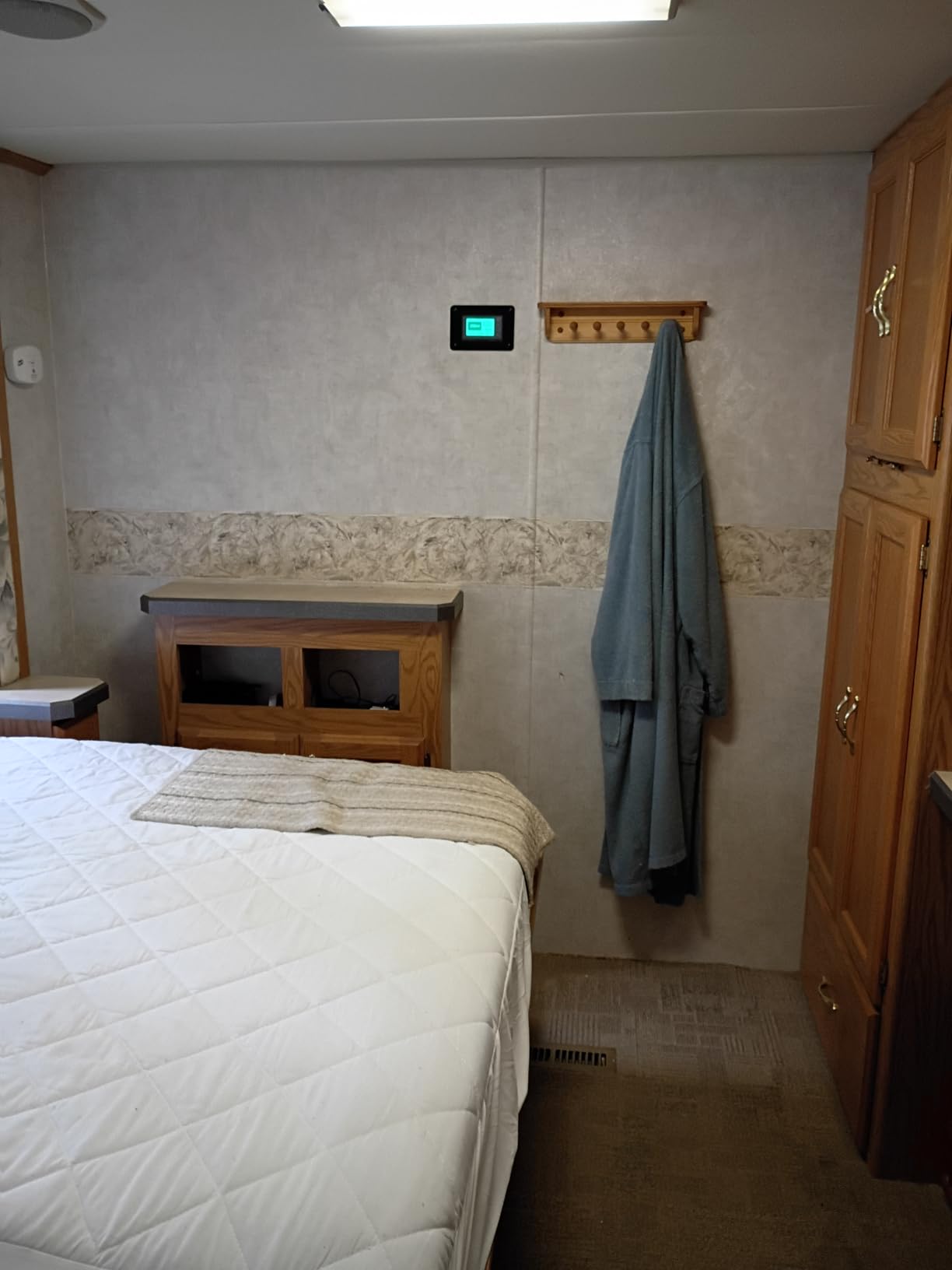
It covers every chemistry in this roundup, listing lead acid including AGM and gel, LiFePO4, lithium-ion and NiMH. The backlit display shows voltage, current, consumed power, battery capacity and a degradation rate reading, and the high and low capacity alarm flashes the backlight and voltage value to warn you before you over-discharge. That last feature is the one that saves boondocking trips, and it is worth setting properly on day one.
At 75 grams and measuring 3.9 by 2.4 by 0.7 inches, the interface head is small enough to fit most existing round-gauge holes, and the transparent shunt holder with a 20 foot shielded cable gives you real freedom over where the panel lives. Owners who have swapped out cheap multi-LED battery level panels report that the jump in usable information is immediate.
What you need to know before you buy
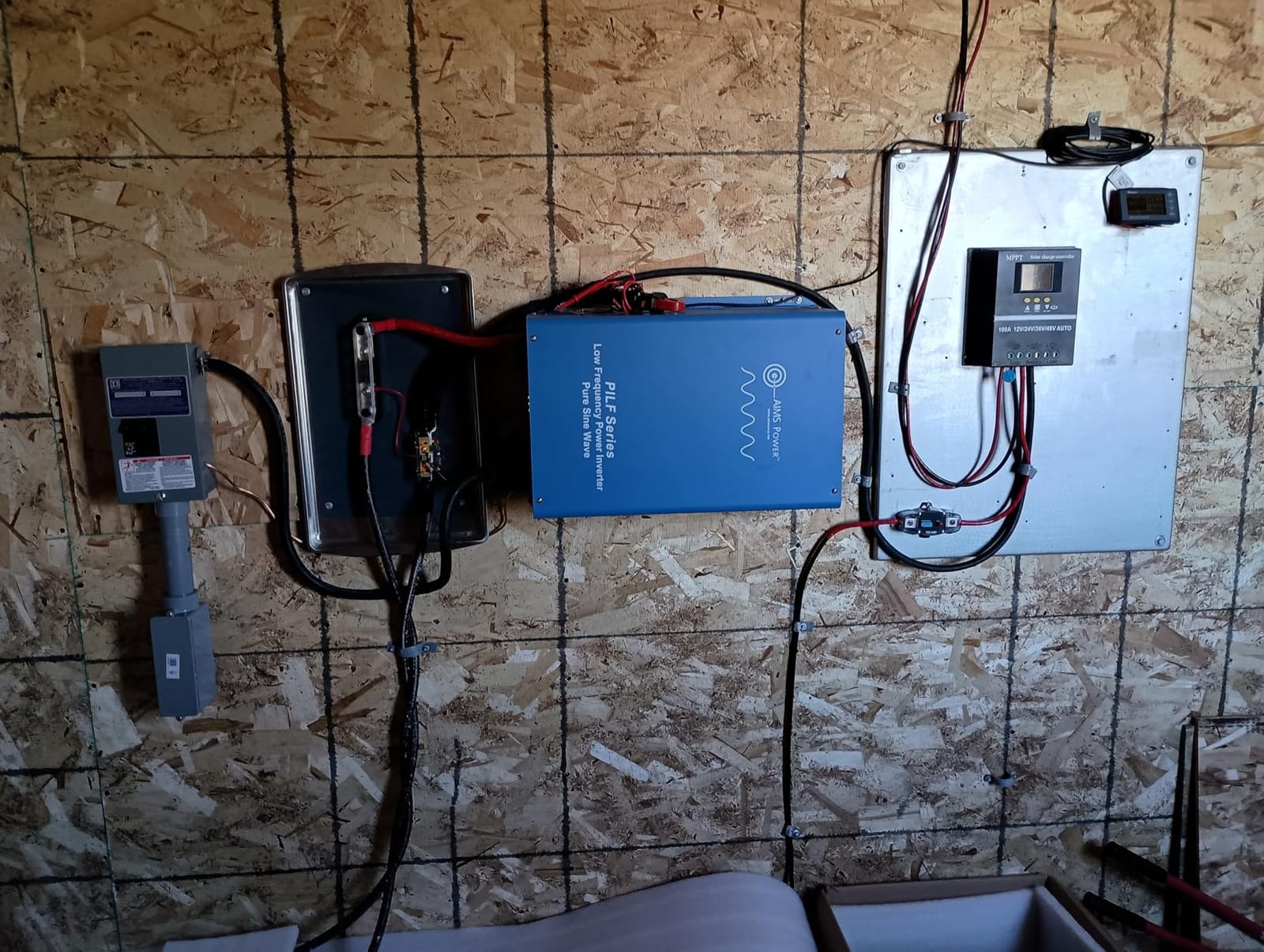
Install difficulty is moderate. This is a wired design, so you will drill a cutout for the LCD interface, run 20 feet of shielded cable from the shunt, and set the amp-hour capacity of your bank manually. Budget an hour if you are comfortable with basic DC wiring, longer if the battery bay is at the opposite end of the rig from where you want the panel.
Because there is no app, everything you will ever see is on the display. If you want remote checking from outside a van, historical data, or alarms pushed to your phone, this is not the monitor for you. It is also worth noting that the one year material and workmanship warranty is the shortest on this list.
Where it falls short
The absence of Bluetooth is the deal breaker for a lot of buyers in 2026, and it is a real loss of function rather than a minor omission. You lose history, you lose remote access, and you get no notification when the bank drops while you are asleep. In a category where app connectivity is close to the baseline expectation, this monitor feels dated even though the measurement hardware underneath is solid.
Manually entering capacity is also where accuracy is won or lost. If you type 200Ah for a bank that now delivers 160Ah after five seasons, the percentage is wrong every day, permanently, and no amount of calibration fixes it. See the state of health note in the buying guide below.
3. ANCEL BM1000 – App-Based Monitoring Without A Panel Hole
ANCEL BM1000 Bluetooth Battery Monitor, 400A Smart Shunt for RV & Marine
- Phone dashboard for state of charge and power
- 30 days of stored energy history
- 400A shunt sized for realistic loads
- reverse polarity and overload protection
- QR video wiring guidance
- Bluetooth range about 10m and shorter through walls or metal
- requires a phone rather than a panel display
- accuracy depends on correct capacity setup
The BM1000 takes the phone-as-display idea and does the thing that matters most: it keeps history. Thirty days of stored energy data lets you see a parasitic drain developing over weeks rather than watching a number that looks fine today and was not fine last month. For an off-grid build where something is quietly eating your reserve, that is the feature that pays for itself.
It covers 10 to 120 volts across 12V, 24V, 36V and 48V banks and works with LiFePO4, lithium, AGM and lead-acid. The manufacturer explicitly notes it is not intended for CCA load testing, starter battery diagnosis or OBD work, which is honest scoping and worth respecting: this is an energy monitor for a house bank, not a diagnostic tool.
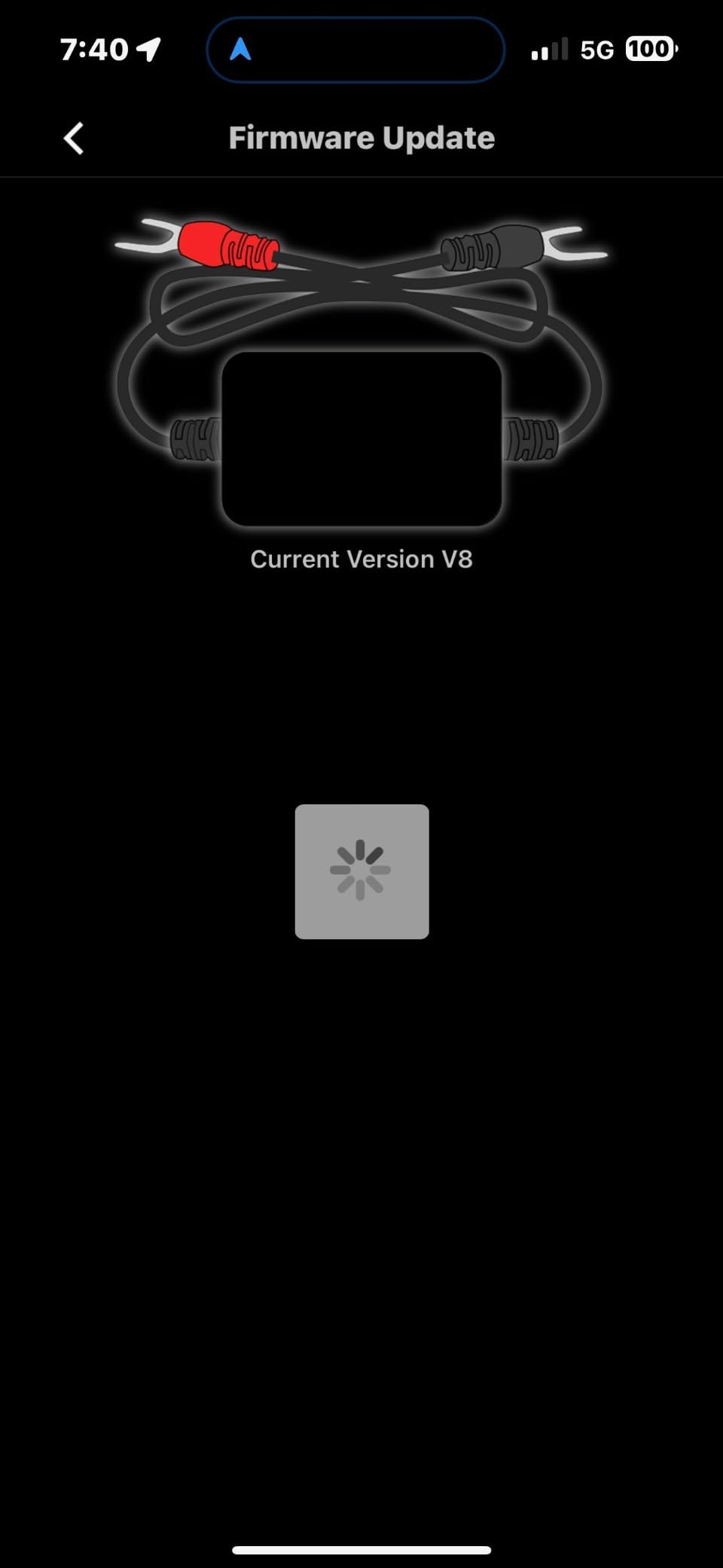
The install aids are better than most at this level. Ports are shaped to resist being wired backwards, there is built-in reverse polarity and overload protection, and a QR code pulls up point-to-point wiring video. For first-time installers that removes a real category of error, and it costs nothing to use them.
The 400A shunt is deliberately sized against typical 100 to 300A peak RV, marine and solar loads rather than advertised against a theoretical maximum. A shunt running closer to its real working range stays cooler and reads more stably than one rated far beyond anything you will ever pull, and that is a genuine engineering choice rather than a spec-sheet trick.
What you need to know before you buy
Bluetooth range is the number one complaint, and it is a measured one at roughly 10 metres in open areas, dropping further with walls or a metal battery compartment. Measure the distance from your battery bay to where you actually stand before you commit. In a long motorhome with the bay at the back, that distance can exceed the useful range.
Install difficulty is low. There is no display cutout, so the job is wiring the shunt into the negative and running the leads. Accuracy is entirely dependent on entering the right bank capacity and chemistry into the app, and a wrong entry produces a confident, consistent, wrong percentage.
Where it falls short
Same limitation as the SmartShunt in a different form: no local display. If your phone is dead or you do not want to wake it, there is no fallback readout at all. This monitor also has no programmable relay, so you cannot use it to cut a load or trigger auto generator start, which rules it out for load shedding setups.
At 4.2 across more than twelve hundred ratings, it sits below the group average, and the gap is mostly Bluetooth reach rather than measurement quality. If you cannot live with a ten metre range, pick a panel-display model instead.
4. AILI TR16 – The Lowest Fuss App-Free Monitor
- Works with LiFePO4 and AGM without any app
- ultra-low 50-60uA standby draw
- memory retains data after power off
- 8-120V covers 12V to 48V systems
- kit includes cable and shunt bracket
- Small display flange needs an exact hole saw diameter
- included cable is short so most installs need an extension
- no Bluetooth
- mounting nut is a small plastic part
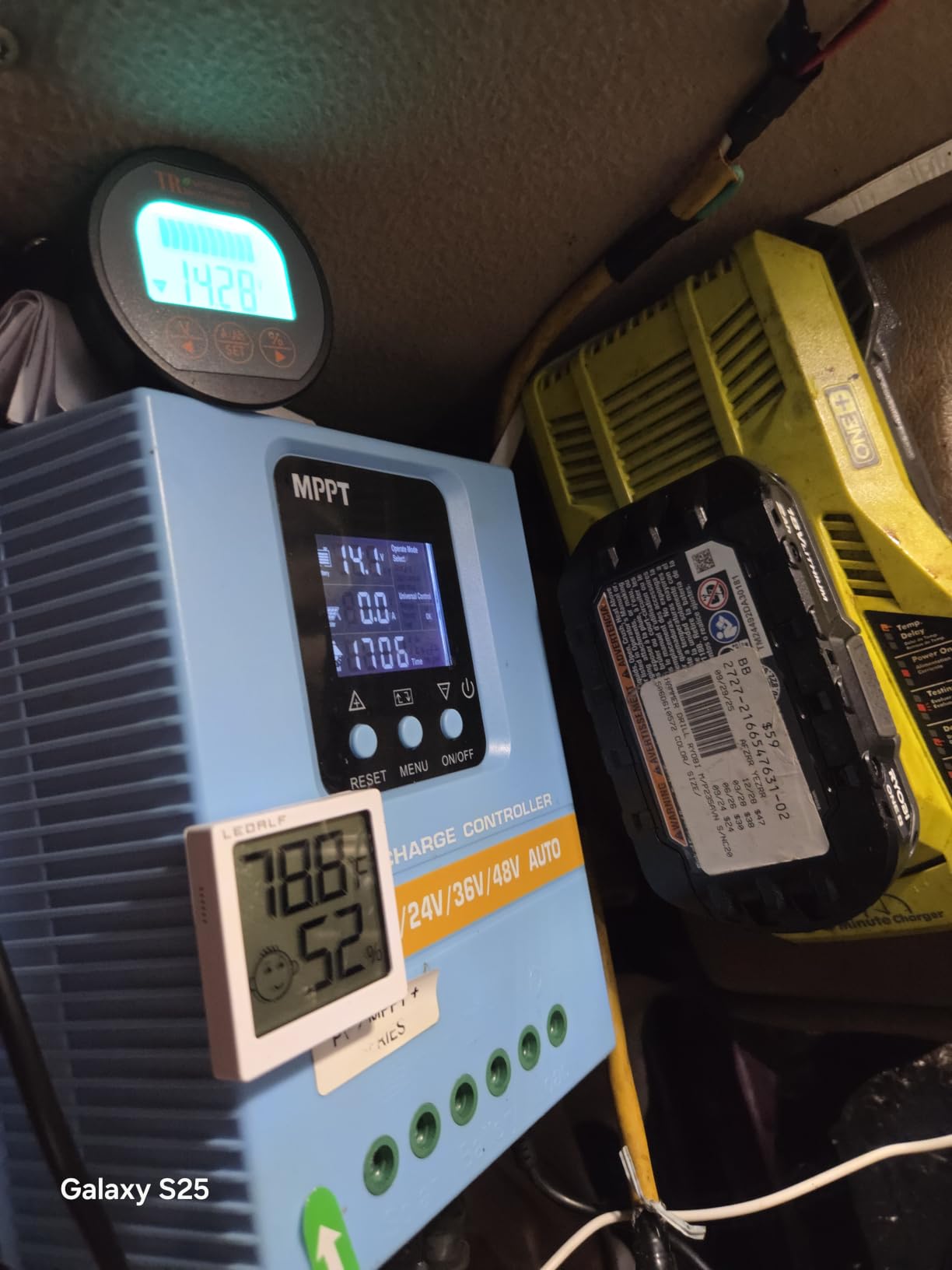
The AILI TR16 exists because some people do not want an app, do not want a phone, and do not want to think about it. It is a pure fuel-gauge style device: shunt in the negative, backlit panel in the cab, and it shows you state of charge percent, voltage, current and remaining capacity up to 999Ah. Owners repeatedly report that once the capacity is configured correctly, the readings are accurate for the money and deliver the core data of far more expensive Bluetooth monitors.
The standby draw is the standout number. At 50 to 60 microamps, and self-powered across an 8 to 80V display range, it is the model to choose if your rig sits in storage between trips or you run a battery disconnect switch. A monitor that quietly eats your bank over a winter is worse than no monitor, and this one does not have that problem.
It handles 8 to 120 volts covering 12V, 24V, 36V and 48V systems, and it works with LiFePO4, lithium-ion, AGM, gel and lead-acid. Capacity is programmable from 0.1 to 999Ah in small increments, which is finer control than most monitors of this size offer, and it retains settings and readings through a power-off thanks to the memory function.
The kit is complete: meter, 2 metre extension cable, a 350A/500A precision shunt, a shunt bracket and a manual. The inclusion of the bracket matters more than it sounds, because the shunt needs to be mechanically solid and correctly torqued for the measurement to be worth anything.
What you need to know before you buy
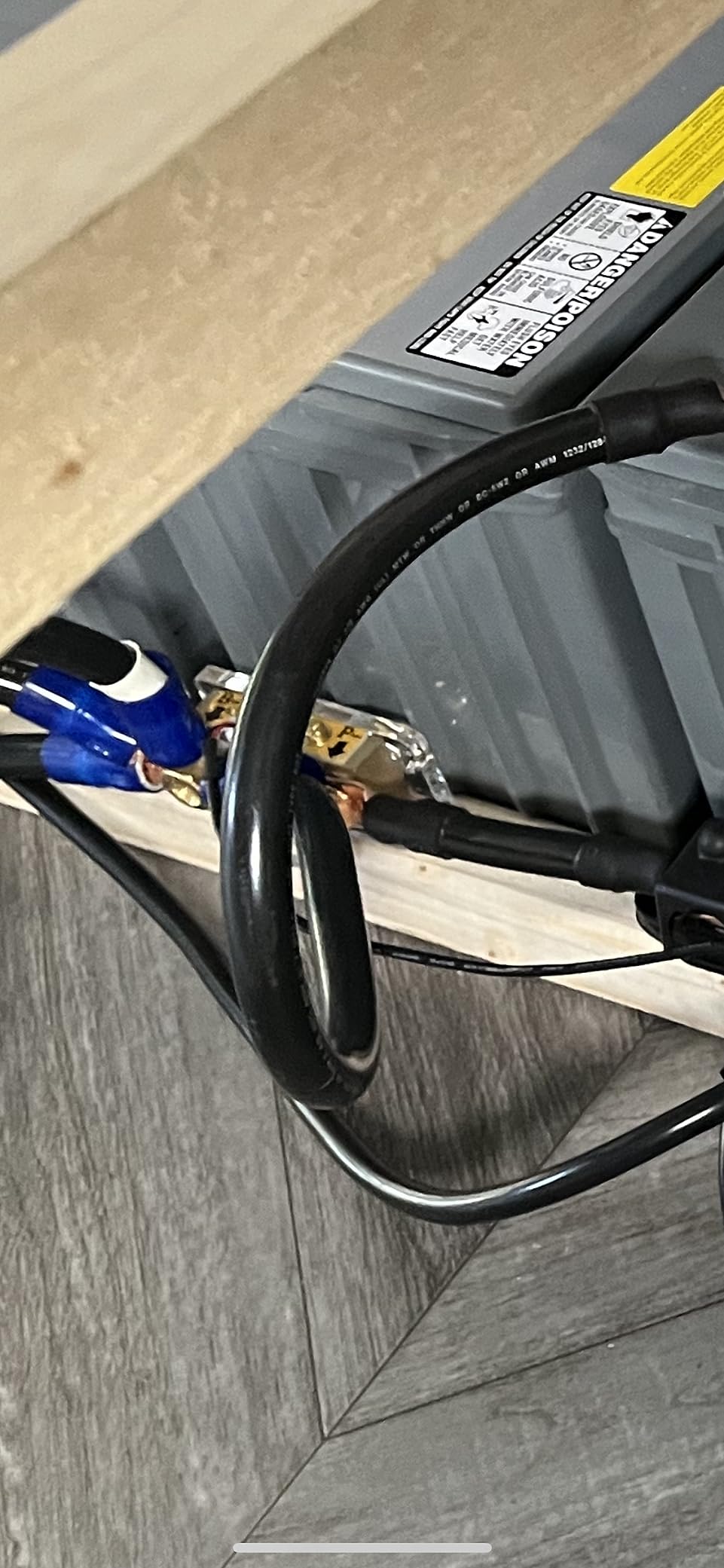
Two install traps. The display flange is small, so you need a hole saw of exactly the right diameter, and cutout errors are not covered. And the included cable is short, so most real installations need the extension run, which means routing a longer shielded cable and making a second termination correctly.
Mounting is described as easy once you learn the button sequence, but calibration against a known state of charge is a required step. Set the capacity, charge the bank fully, and let the monitor synchronise before you trust a single reading.
Where it falls short
No Bluetooth, no app, no history, no relays. If you want alarms that reach your phone, or data you can review over a week, this is the wrong device. The small plastic mounting nut is also a fair thing to notice in a rig that vibrates badly on bad road, which is a lot of off-grid miles.
Dimensions are not published by the manufacturer, which in this category is a legitimate flag rather than a trivial omission. Measure your available panel space against the meter before cutting anything.
5. Victron BMV-700 – The Panel Gauge With A Programmable Relay
Victron Energy BMV-700 Battery Monitor with Shunt & Display – 6.5-95 VDC
- Clear on-screen state of charge and time remaining
- programmable relay can cut a load or start a generator
- long-standing accuracy reports
- clear written instructions
- shunt in a protective enclosure
- Bluetooth needs a separately sold VE.Direct dongle
- listing copy can imply Bluetooth is included
- the BMV-700 cannot monitor a second bank
- higher cost than budget shunts
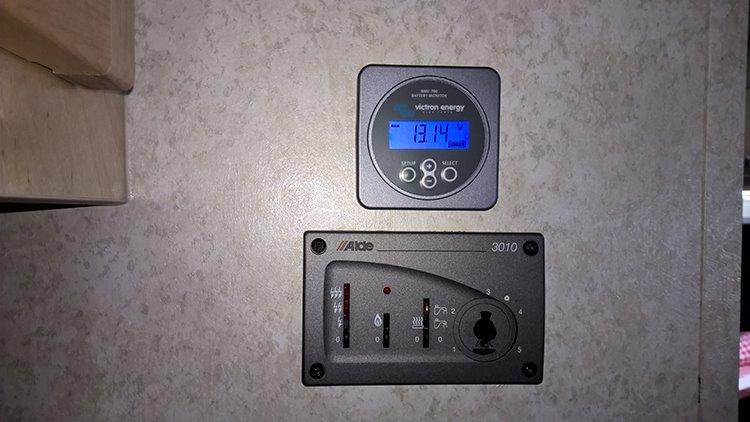
The BMV-700 is the reference-standard panel monitor for RVs, and the reason is the relay. It ships with a programmable relay that can trigger a battery protect or start a generator at a set threshold, which makes it the only product in this roundup that can drive auto generator start or load shedding without extra hardware. If your setup needs the generator to come on automatically at a state of charge threshold, this is the one.
Owners report clear on-screen state of charge and time remaining, clear written instructions and straightforward programming, and one describes it catching a failing solar charge controller before the batteries died. That last point is the real value of a panel gauge you can glance at rather than a phone you have to unlock.
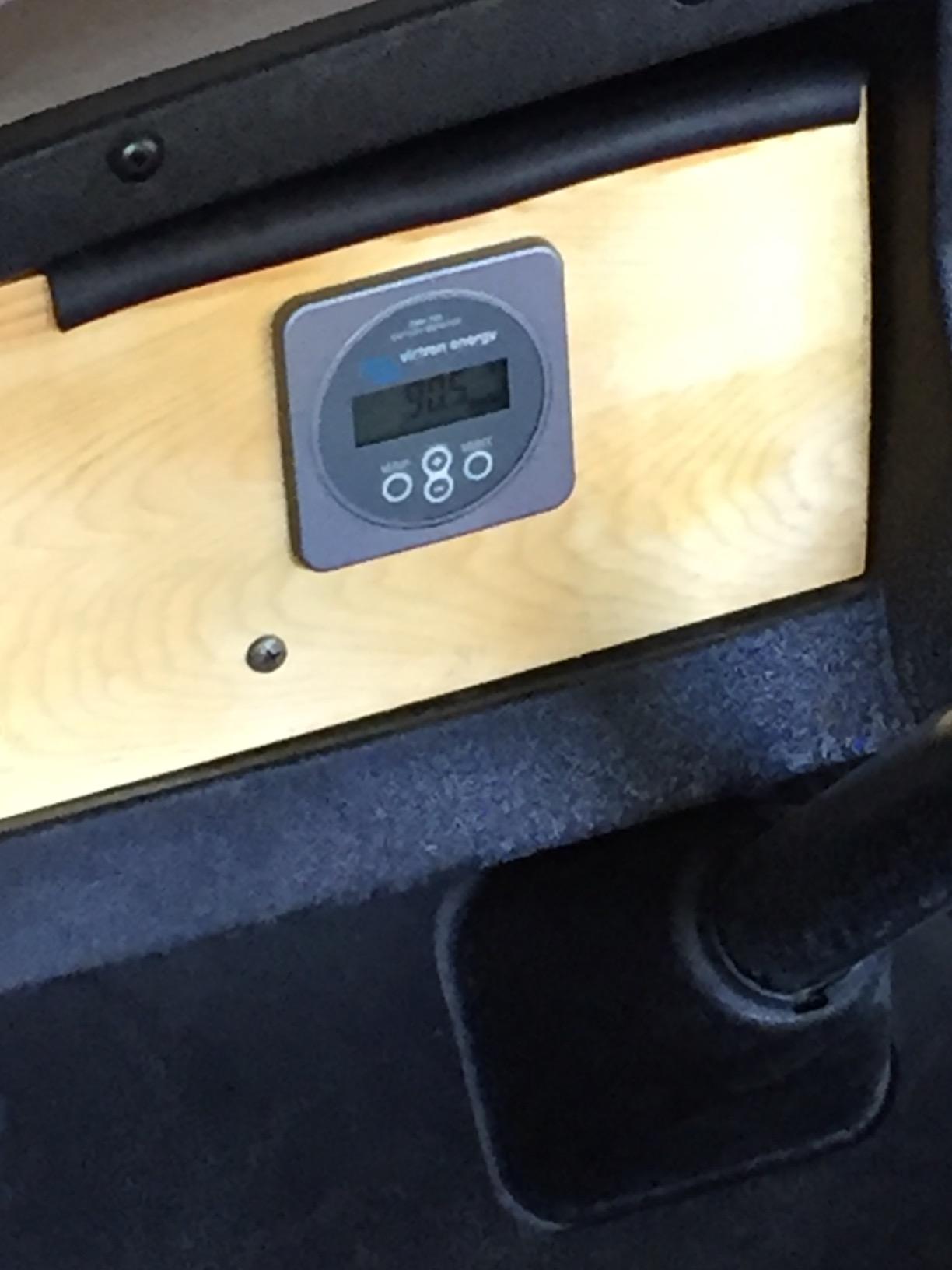
It accepts 6.5 to 95 volts DC, so it covers everything from a single 12V bank to larger systems, and the display shows percent state of charge, voltage, current and energy or time remaining. The 500A/50mV shunt is housed in a protective enclosure, which matters in a battery bay where bare copper gets corroded and knocked.
Connectivity runs through a VE.Direct port, which accepts a Bluetooth Smart dongle sold separately or a GX device with VRM monitoring. That is the same data path the SmartShunt uses, so you are not locked out of remote access, you just pay for the dongle.
What you need to know before you buy
Understand the model numbering before you order. This is the BMV-700, and it cannot monitor a second battery bank. If you need starter battery tracking alongside the house bank, that is the BMV-702, or the SmartShunt with its aux input. Getting this wrong means returning a unit after a cutout has already been drilled.
Install difficulty is moderate to high. The head unit is 7.87 inches square and weighs a kilogram, so you need a properly sized cutout, secure fixing, and a cable run from the shunt. Allow two hours if this is your first panel install, and longer if the control panel is on the opposite side of the rig.
Where it falls short
Bluetooth is not built in. Some buyers report the listing implying otherwise, which is a fair complaint: you will need the VE.Direct Bluetooth Smart dongle before this is a connected monitor at all. Plan that into the purchase rather than discovering it during setup.
It also sits above the budget tier in this list while delivering less connectivity than the phone-based options, and it cannot monitor a second bank. If you are not using the relay, the value case gets thin quickly.
6. SENTORISE 500A IP68 – The Waterproof One For Wet Battery Bays
SENTORISE 0-500A Battery Monitor with Shunt, 8-120V IP68 Waterproof LCD Screen with Buzzer Alarm for RV Solar Marine Off-Grid System, Capacity Percentage Time Power Voltmeter Display
- IP68 waterproof and dustproof housing
- built-in buzzer that sounds every 10 seconds at the low threshold
- colour screen readable in daylight and at night
- long shielded 5-pin signal cable
- verified close to lab-grade test equipment
- No Bluetooth despite the manual mentioning it
- printed manual uses extremely small type
- screen appears blank through polarized sunglasses
- settings change through repeated long-presses
This is the one to consider if your battery compartment gets wet, if you boat, or if you winter camp where condensation is a constant presence. The IP68 sealed housing in high-temperature, impact-resistant plastic is a real engineering answer to a real problem, and it is the strongest environmental claim any product in this roundup makes.
It covers 8 to 120 volts for 12V lead-acid, LiFePO4 and ternary lithium, up to 500 amps, and the display shows voltage, current, power, capacity in amp-hours, state of charge percent and remaining time. Owners consistently single out reliable amp-hour counting as the most important function, which is the correct priority, and one buyer verified the module stays within a few millivolts of lab-grade test equipment.
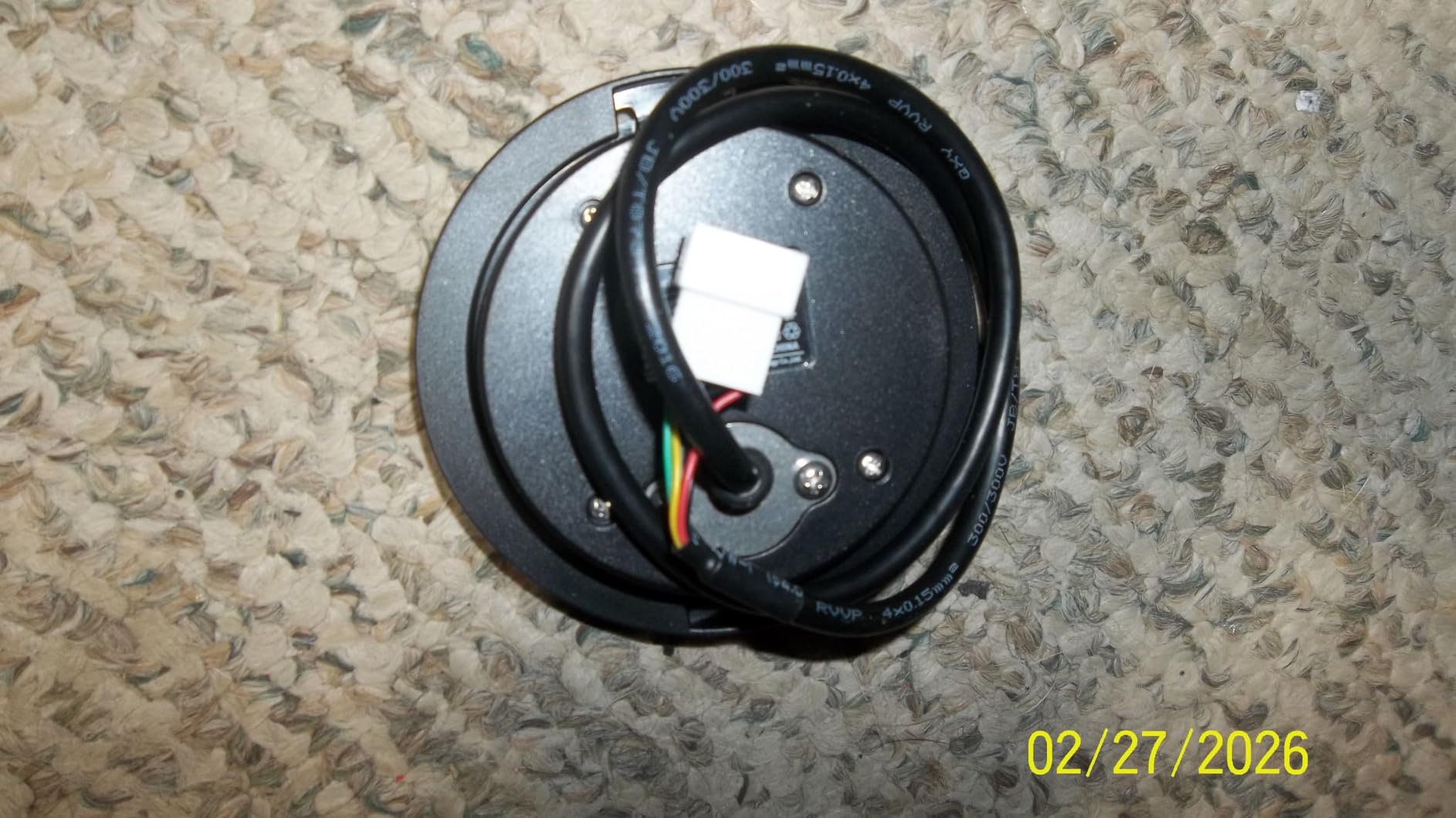
The buzzer alarm sounds every ten seconds once you cross the low-battery threshold, and you can configure both the low-voltage cutoff and the wake-current threshold to limit parasitic draw. That combination is what you want on a rig in storage: audible warning during use, minimal draw when idle.
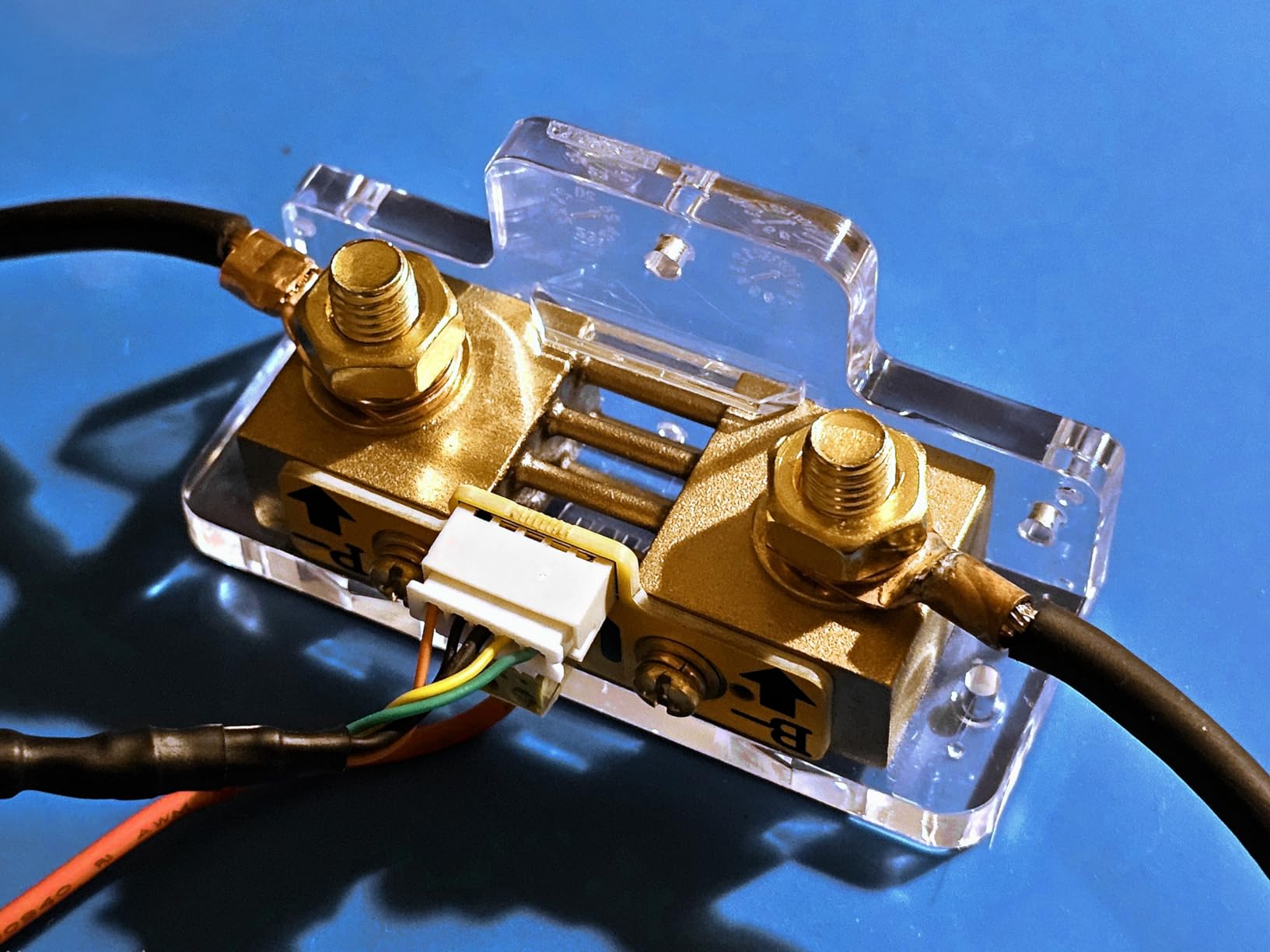
The shunt is pre-calibrated for the included 500A 75mV shunt and connects with a 5-pin JST signal cable, which is a well-behaved connector for a long run. Note that 75mV is not the more common 50mV standard, which matters if you ever need to replace the shunt with a different one.
What you need to know before you buy
The most interesting quirk: the screen is polarised at 90 degrees relative to polarised sunglasses, so it looks blank to anyone wearing them. If you drive a lot in daylight and wear polarised glasses, test it before you commit.
Install difficulty is low to moderate. The kit includes the shunt, bracket, screws, a screwdriver and a wiring guide, and physical buttons handle capacity, brightness and menu navigation. The buzzer is only useful if someone is within earshot, so treat it as a night-time warning rather than a remote alarm.
Where it falls short
There is no Bluetooth or app, and the manual apparently references connectivity the hardware does not have, which is a documentation failure worth flagging. The printed manual also uses extremely small type, and changing settings relies on repeated long-presses, both of which make setup fiddly.
At 84 ratings this has the smallest owner history in the group, and the 4.6 average comes from a young listing. The measurement claims look good, but you are buying a newer product with a shorter track record here.
7. QWORK 8V-80V – The One Built For A Remote Battery Box
QWORK Battery Monitor Voltmeter Ammeter, Voltage Range 8V-80V and up to 500A, Voltage Current Meter with 13 ft Custom Cable
- 13ft cable suits an external battery box
- reinforced external shunt for stable data
- memory retains settings after power disconnect
- backlit LCD readable in low light
- inexpensive way to replace a crude LED panel
- Setup instructions poorly translated
- charger leads must run through the shunt post or charging is not detected
- backlight is hard to disable and flashes while charging
- some units drift or stick at 100 percent
The QWORK exists for a specific layout: a trailer or truck with the battery box outside or well away from where you want to read a gauge. At 13 feet, the custom cable is long enough to bring a real display into the living space from an external box, which is the whole reason this model exists and the reason it is hard to replace with a shorter-cabled unit.
It tracks voltage, charge and discharge current and state of charge as a fuel gauge, with capacity up to 999Ah for RV, caravan, motorhome and off-grid solar storage. The external reinforced shunt is specified for high-current applications with stable data transmission, and the compact panel-mount form factor is easy to fit where space is tight.
There is a built-in memory chip that retains your last testing parameters after a power disconnect, so a rig that sits unpowered between trips does not lose your configuration. That is a small feature that most budget monitors skip, and it saves a reconfiguration every time you reconnect the bank.
Buyers generally treat it as a budget replacement for a multi-LED battery gauge and report trustworthy amp readings once the bank capacity is configured correctly. The backlit LCD shows volts, amps and amp-hours, and it is readable in low light.
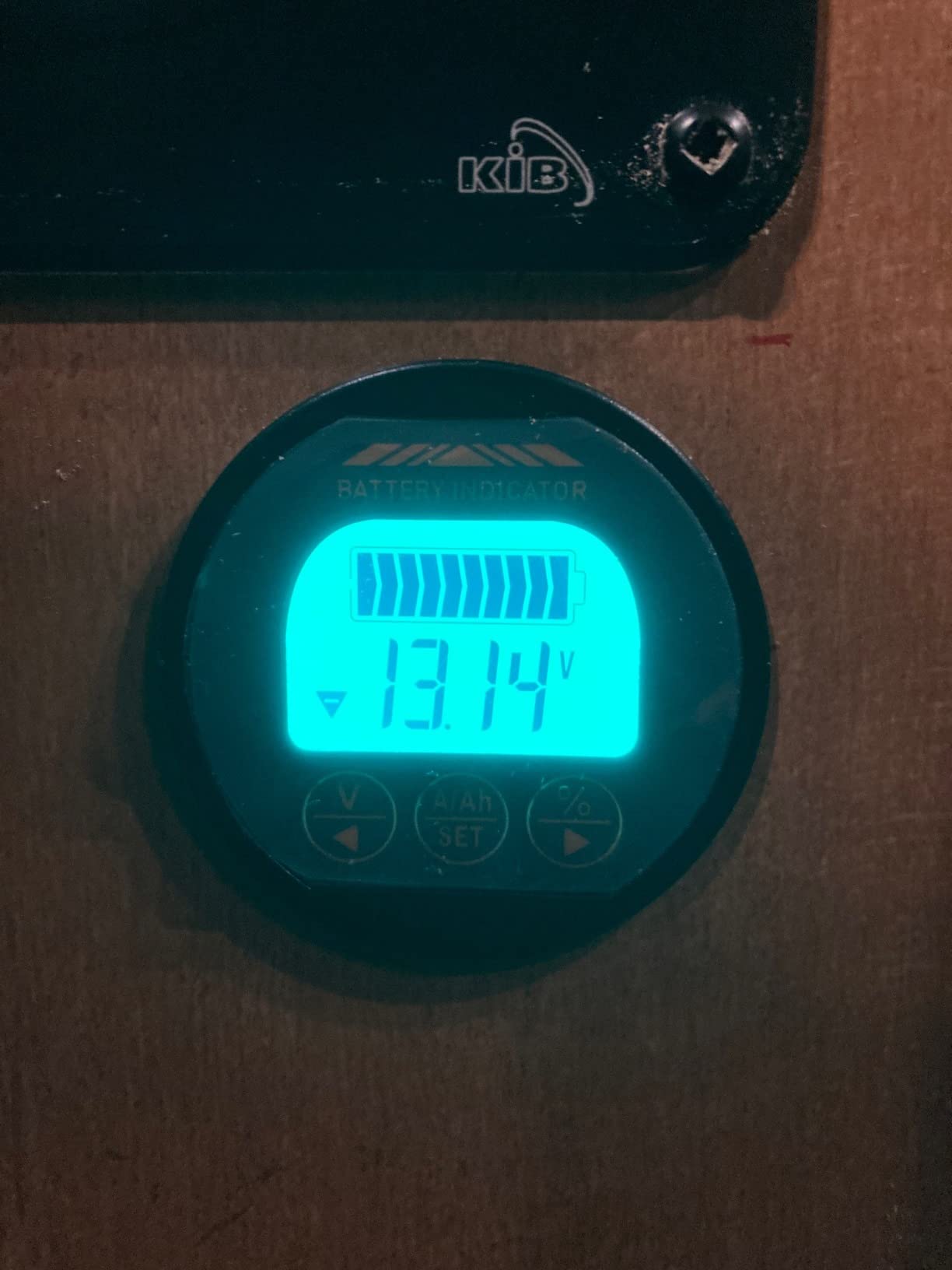
What you need to know before you buy
There is one wiring rule that catches almost everyone: the charger sense leads must be routed through the shunt post, or charging will not be detected and the percentage will drift steadily downward no matter how good the hardware is. This is the bypass rule in miniature, and it is the most common cause of a monitor that seems permanently wrong.
Install difficulty is low. Measure your run first, and note that the current capacity is available in 350A and 500A variants depending on which you order, so pick deliberately against your inverter rather than assuming.
Where it falls short
Documentation is the weak point. Owners describe the setup instructions as poorly translated and hard to follow, and the button sequence takes learning. The backlight also cannot be turned off easily and flashes while charging, which is annoying in a dark trailer.
There are reports of units reporting drifting voltage and stuck-at-100-percent readings after months of use. That is a small number of reports, but it is exactly the failure mode you are buying a monitor to avoid, so weigh it before committing to this over a model with a longer owner history.
8. LNEX 2.4 Inch Color Screen – The Most Readable Panel Gauge
- Largest display here and easy to read at night
- shows voltage current power capacity and time remaining on one screen
- 16ft shielded cable gives routing flexibility
- no app required
- programmable high and low alarms
- Manual does not clearly explain amp-hour and voltage setup
- some units had a dead display within about a year
- percentage can fail to rise while charging
- charge and discharge totals can show bias
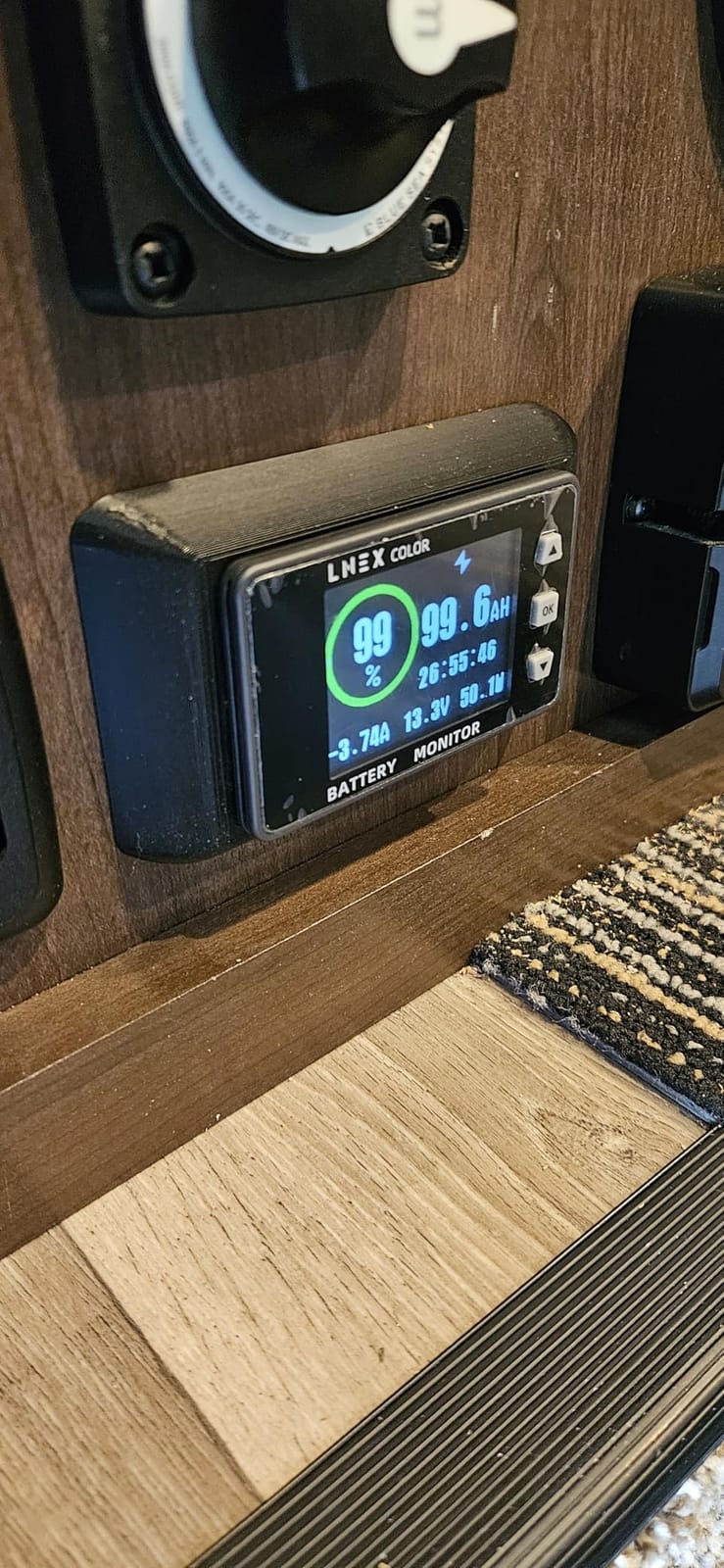
If you want to read your bank at a glance from the driver’s seat of a dark motorhome, a 2.4 inch colour screen is a genuine upgrade over every other panel gauge in this roundup. It puts voltage, current, power, capacity, state of charge and time remaining on a single backlit screen, so you are not pressing buttons to find out whether the fridge compressor is about to quit.
It covers 8 to 100 volts and is compatible with lead acid, LiFePO4, lithium-ion and NiMH, with a 500A shunt using a high precision current detector. The high and low capacity alarm flashes the backlight and voltage to protect against over-discharge, and it auto-stores the latest test data on shutdown to protect against data loss.
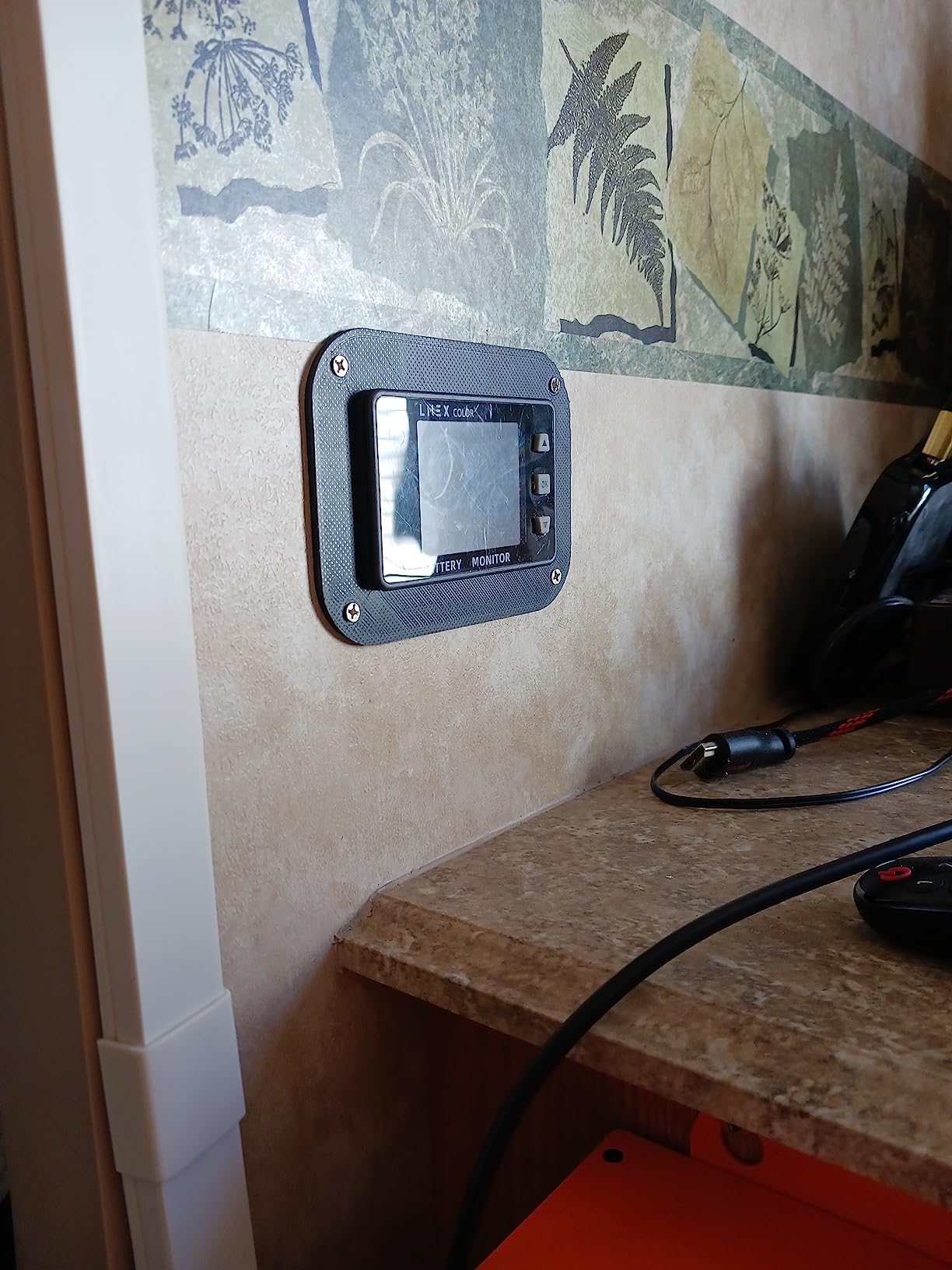
The kit is unusually complete: monitor, shielded wire, shunt, B+ wire, a hand wrench and battery terminals are all included. That hand wrench matters, because a shunt bolt torqued by feel produces a measurement you cannot trust, and having the right tool removes the excuse not to do it properly.
The 16 foot shielded cable and transparent shunt holder with marked positive and negative give you real routing flexibility in an RV, and screen brightness is adjustable, which solves the too-bright-at-night problem that most panel monitors create.
What you need to know before you buy
Install difficulty is moderate, and the documentation is the weak link. The manual does not clearly show how to set amp-hour and voltage parameters, and accuracy depends entirely on doing that correctly. Owners who followed the calibration steps report good results, which tells you the process works even when the instructions are not clear.
Plan the cutout carefully and check it against your existing panel before drilling. This is a larger rectangular unit than a round gauge, so it will not always drop into the hole left by a factory monitor.
Where it falls short
Durability is the concern that comes up most. There are reports of units with a dead display within about a year, and of a percentage that fails to rise during charging and needs manual resets. Bias observed between charge and discharge totals can also make true state of charge a guess rather than a reading.
There is no matched cable extension offered, so a run longer than 16 feet means sourcing a third-party cable and hoping the connector is right. No Bluetooth either, so the display is the only interface you get.
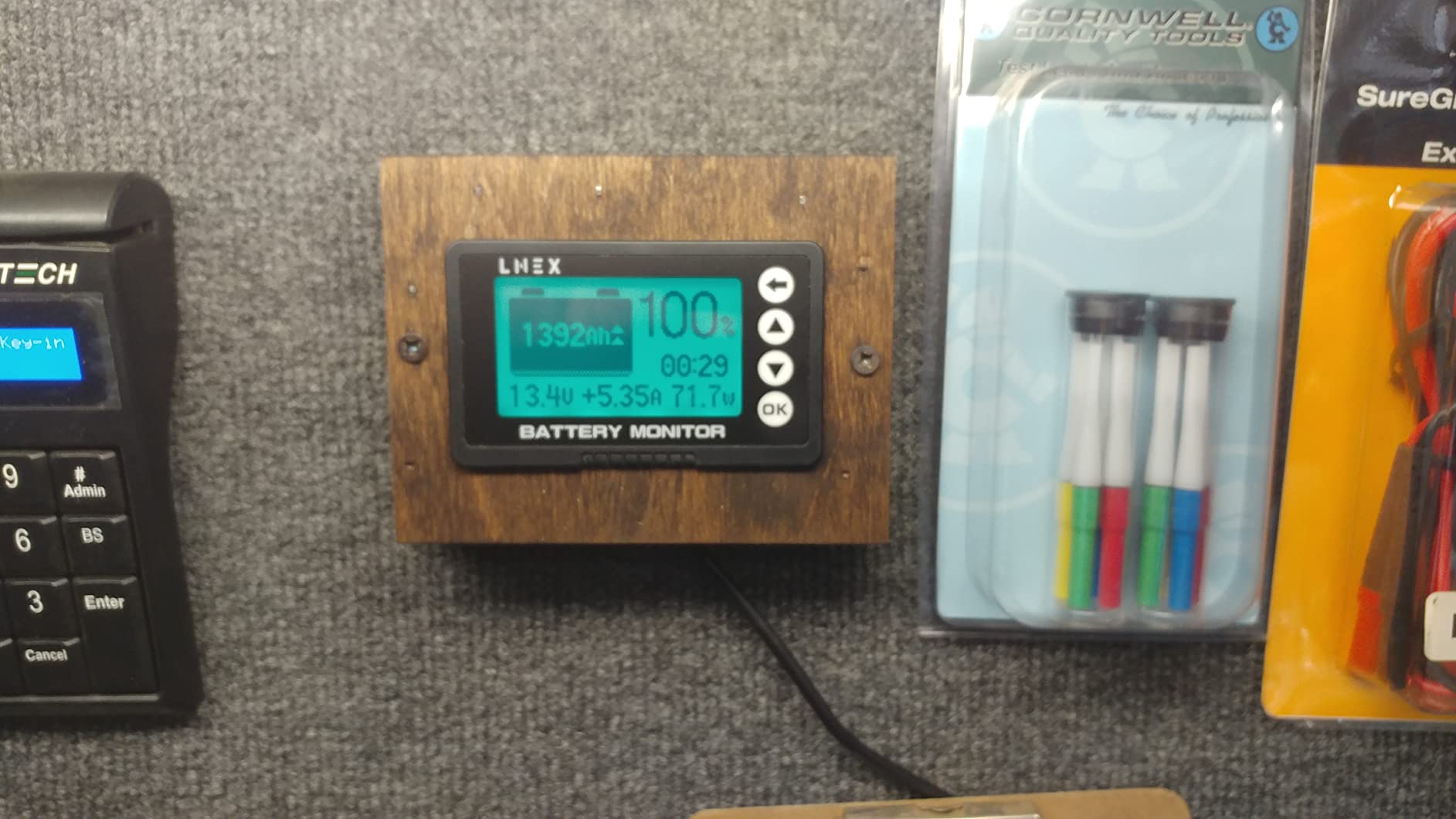
9. LNEX 26ft Cable Model – For The Longest Battery Bay Runs
LNEX Portable Battery Monitor with Shunt, 500A Automotive Car Battery Monitor for RV 10V-120V, with High and Low Voltage Programmable Alarm and 26ft Shielded Wire
- 26ft cable is the longest here for remote battery boxes
- accuracy verified within its 1 percent spec against lab gear
- single screen shows charge discharge amps wattage and time remaining
- brass hardware resists corrosion
- dimmable backlight
- No Bluetooth or app
- needs a rectangular cutout with no surface-mount option
- button sequence is confusing at first
- one unit failed after about two years
This is the same idea as the QWORK but with considerably more cable. At 26 feet of shielded wire, it is the reach you want when the battery compartment is at the back of a 40 foot motorhome and the control centre is at the front. Several buyers note it drops straight into an existing round monitor hole, which turns an afternoon into an hour.
It measures 10 to 120 volts and up to 500 amps, and owners report accuracy verified against lab-grade meters within its stated 1 percent tolerance. The single screen shows charge, discharge, amps, wattage and time remaining without scrolling, which is the layout you want at night when you are checking whether to start the generator.
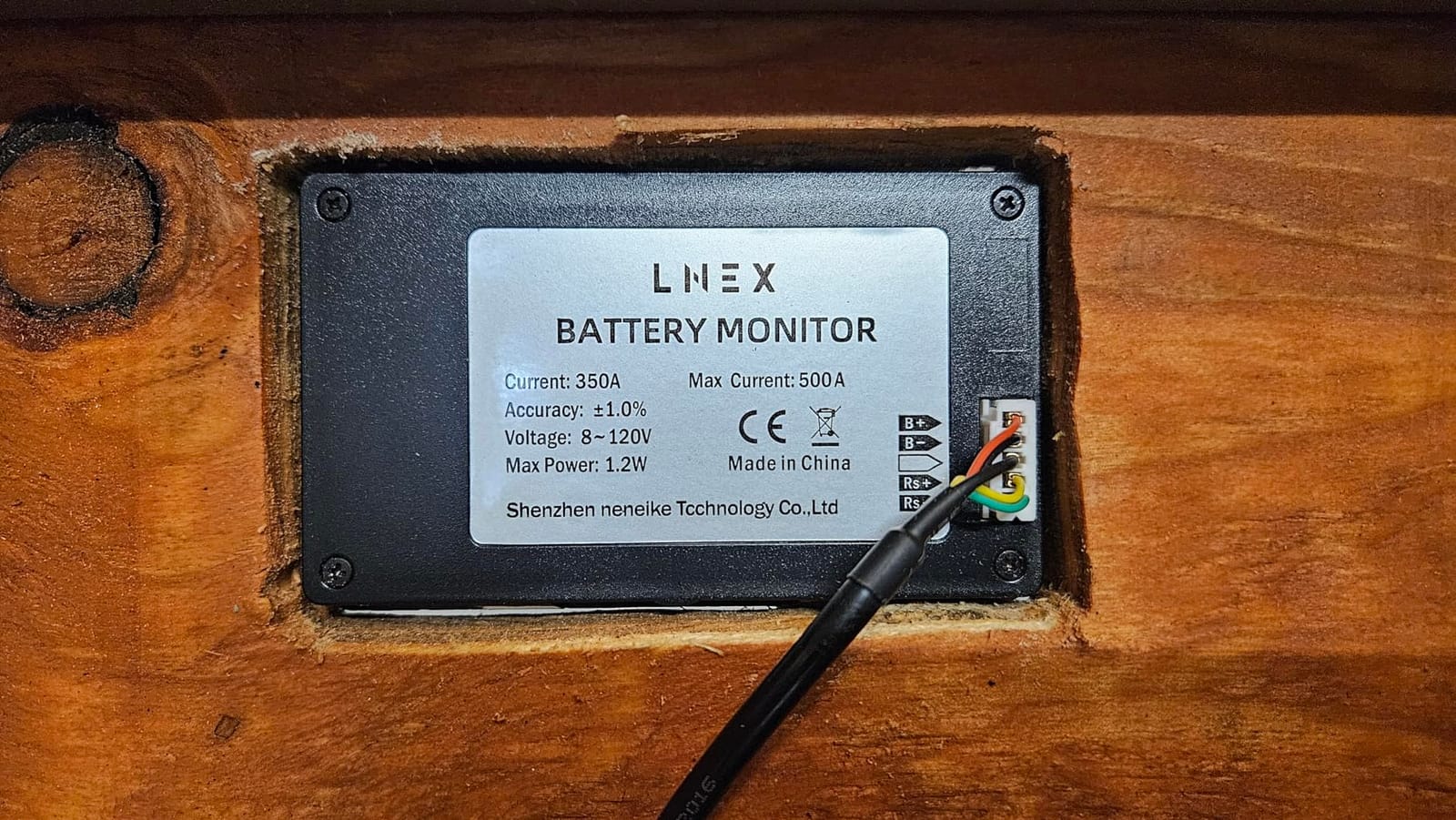
Two details separate it from cheaper units. The pure brass heavy-duty connectors, nuts and bolts resist the corrosion that eats cheap fittings in a battery bay, and the dimmable backlight solves the sleep problem that fixed-brightness displays cause. There is also a settable minimum amp-hour alarm and a built-in light that switches off automatically when there is no load.
Terminals are clearly marked for negative, battery and load, and the high and low capacity alarm flashes the backlight and voltage. Automatic data save on shutdown means your settings and readings survive a power cut.
What you need to know before you buy
Measure the run before ordering, because 26 feet is generous but not unlimited in a large coach with a routing path rather than a straight line. It comes in 500A and 350A-500A variants, so choose against your inverter with headroom rather than taking the smaller one to save a little.
Install difficulty is low to moderate. There is no surface-mount housing option, so you need a rectangular cutout, and setup is confusing until you learn the button sequence. Budget an evening for the first configuration.
Where it falls short
The main reservation is long-term reliability. One unit randomly reset to zero percent capacity and later produced a blocky LCD after about two years, and there is no Bluetooth or app to fall back on. For a monitor you plan to rely on for a decade, that is worth weighing.
The display is the entire interface. There is no remote access, no history and no phone notifications, so it suits people who want a glanceable panel and nothing more.
10. BINTA 8-120V – Small, Round And Easy On The Cutout
BINTA Battery Monitor with Shunt 8-120V 0-500A Voltmeter Ammeter Backlight
- Compact circular form factor fits tight panel spaces
- accurate readings for the price
- auto-sleep below 50mA limits parasitic draw
- backlight readable in darkness and direct sun
- customer service replaced a faulty shunt
- Operating instructions poorly translated
- one report of a blank capacity field
- foil-style touch keypad can respond sluggishly
- no Bluetooth or app
The BINTA is the smallest footprint in this roundup at 2.31 by 2.31 by 0.78 inches, and that is the reason to buy it. If your panel space is already tight or you want to reuse an existing circular cutout, this is the monitor that fits where several of the others do not.
It covers 8 to 120 volts for lead-acid, LiFePO4 and lithium-ion banks, with 500 amps peak and 350 amps continuous, and it shows state of charge percent, remaining capacity up to 999Ah, voltage and current. That continuous-versus-peak distinction is worth reading carefully if you run a large inverter, because 500 amps peak is not 500 amps sustained.
Auto-sleep below 50mA with an instant button-tap wake is a genuinely useful feature for a rig that spends time in storage, and the auto-save memory preserves settings and the last recorded reading through shutdowns. You will not come back after a month away to reconfigure it.
Recent buyers generally find it accurate and easy to fit for the money, and one detailed review praised the build quality while criticising the manual. The kit includes 3 metres of shielded cable plus 1 metre of positive wire, and the backlit display reads clearly in both darkness and direct sun.
What you need to know before you buy
Install difficulty is low if you are comfortable with basic wiring, and the compact circular body with touch buttons mounts quickly. Touch controls are faster to reach but less precise than physical buttons, so budget a few minutes of button learning before you trust any reading.
Upper temperature rating is listed at 50 degrees Celsius, and no lower limit is published. If you camp in deep winter cold, that missing figure is a real gap rather than an oversight, and it is one of the reasons to prefer a sealed model with a stated range.
Where it falls short
The manual is the main complaint, described as poorly translated and hard to decipher, and there is at least one report of a blank capacity field even on a partly charged battery during a test bench check. Treat capacity reporting as something to sanity check against a known state of charge after installation.
There is no Bluetooth or app, and the 130 rating count is the second thinnest owner history in the group. It is a straightforward device that does the core job, without history or connectivity behind it.
How To Choose A Battery Monitor For Off-Grid Power?
Why A Shunt Monitor Beats A Voltmeter On Lithium
A factory gauge estimates remaining charge from terminal voltage, and on a lead-acid bank with a steep discharge curve that estimate is rough but survivable. On LiFePO4 it collapses entirely, because the battery sits between roughly 13.2 and 13.3V from about 90 percent charge all the way down to 30 percent. A voltmeter-based gauge reads Full through almost the entire usable range, then the battery management system cuts everything off without warning.
That is the mechanism behind the boondocking stories in the forums: a fridge, lights and a laptop running off a gauge that said 60 percent, going dark mid-night. A shunt monitor does not have this failure mode, because it never infers charge from voltage. It counts amp-hours in and out, and it reports current in real time.
Surface charge makes voltage readings worse still. While solar or the converter is charging, the reading inflates, and the gauge can flip from full to half within minutes as the surface settles. A coulomb counter does not care what is happening at the terminal, which is why the counter is the number to plan your night around.
LiFePO4 Or Lead-Acid: What Changes About The Monitor You Need
Everything in this roundup handles LiFePO4, lithium, AGM, gel and lead-acid, so chemistry compatibility is not a filter here. What changes is the setup. Lithium banks hold a flatter voltage curve and can absorb a deep discharge without the damage a lead-acid bank suffers, so the consequence of a wrong reading is different: a lead-acid bank gives you warning, a lithium bank just stops.
The practical change is that lithium makes accuracy more valuable rather than less, because there is no recovery margin. On lead-acid you might catch a low reading and switch off a compressor in time. On lithium, the cutoff is abrupt. That is why the shunt-based approach matters more on the chemistry that is replacing lead-acid in new builds.
A secondary point is discharge depth. Lead-acid banks on a boondocking trip are usually kept above 50 percent because going deeper shortens their life. Lithium banks are routinely run much lower, so the amp-hour consumption you need to plan around is larger, and so is the value of accurate time-to-go at low percentages.
Sizing Your Shunt: Amps And The Millivolt Rating People Miss
Size the shunt on amps first. Add up everything that can draw simultaneously: your inverter’s rated output, the converter or DC-DC charger, and the solar charge controller. Then add 25 to 50 percent headroom and pick the next rating up. A 100A shunt covers a pop-up or portable rig, 300A suits a mid-size travel trailer without a large inverter, 500A covers motorhomes and 2000 to 3000W inverter builds, and 600A or more belongs on multi-battery builds and inverter-heavy conversions.
Under-sizing is the expensive mistake, because a shunt pushed past its rating runs hot and gives unstable readings exactly when you are drawing the most current. Over-sizing costs a little money and costs you accuracy, because a shunt working near the bottom of its range resolves smaller currents less precisely.
Then check the millivolt rating, which is the figure most people miss entirely. A shunt produces a small voltage proportional to current, and the monitor has to expect that specific scale. The common standard is 50mV, and the Victron BMV-700 in this roundup ships with a 500A/50mV shunt. The SENTORISE here is pre-calibrated for a 500A 75mV shunt instead. If you ever need to replace a failed shunt, a mismatch in millivolt rating means the monitor reads wrong and cannot be made to read right by configuration.
This is also why a monitor and its shunt are often a non-separable pair. Check the millivolt rating before you buy, not after the shunt has failed in a desert campground.
Installation And The Bypass Rule That Breaks Most DIY Fits
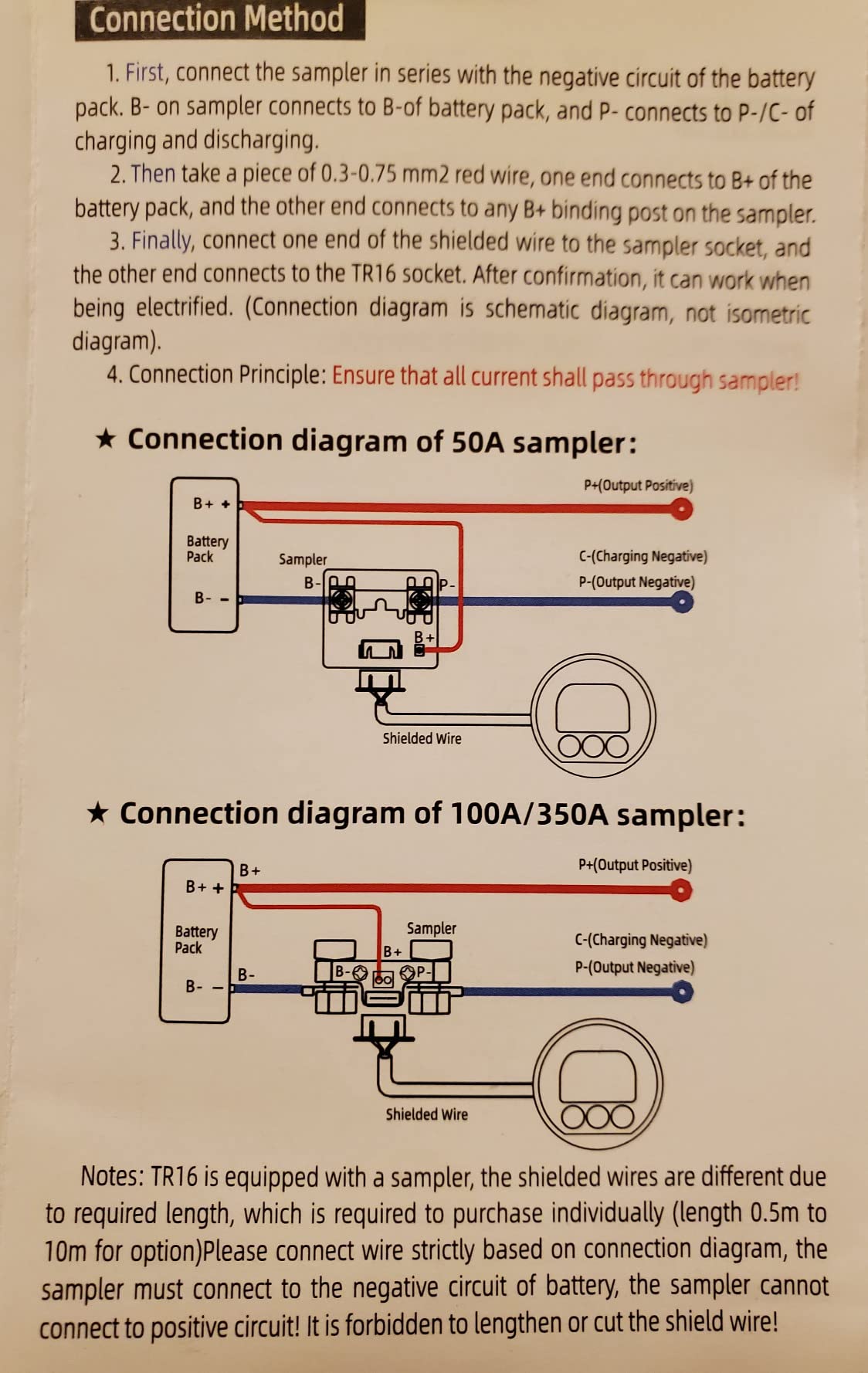
The rule is simple and it is the single most common wiring error in this category: every amp entering or leaving the bank must pass through the shunt. The shunt goes in the battery negative. The battery connects to one side of the shunt, and every load and every charger connects to the other side, the load side. Nothing bypasses it.
When something connects to the battery side of the shunt directly, current moving through that path is invisible to the monitor, and the percentage drifts in one direction with no obvious cause. Forum consensus treats this as the first thing to check on any monitor that seems wrong, and it costs ten minutes to inspect. Some kits, such as the QWORK, will not even detect charging if the charger leads are not routed through the shunt post.
On difficulty: most kits are under an hour for someone comfortable with basic DC wiring. Panel-head-unit models take longer because you are cutting a hole and running cable, and the BMV-700 at nearly eight inches square is the most involved fit here. Two things make the difference between a good install and a bad one, and neither is complicated: torque the shunt bolts properly, and route the cable away from the inverter and starter cables where you can.
Calibration, Synchronisation And When To Distrust Your Number
A coulomb counter measures against a capacity you typed in at setup. It does not measure the capacity. If your bank is five years old and delivers 160Ah instead of the 200Ah on its label, then every percentage it reports is permanently wrong, in a way that no recalibration fixes. This is state of charge versus state of health, and the distinction explains most of the forum complaints about monitors being inaccurate.
It also explains the drift nobody warns you about. A coulomb count stays accurate only if the bank reaches full charge regularly, because the counter resets to 100 percent on a full charge and any error in between accumulates. If you boondock for weeks without ever topping the bank off completely, small errors stack and the percentage slowly becomes fiction. The remedy is periodic resynchronisation: get to a genuine full charge and let the monitor reset.
Practical cadence: every two to four weeks of continuous use, and always after a deep discharge, a battery change, or a long period off. And if the number looks wrong, check it before blaming the monitor. Put a multimeter across the battery terminals to confirm the voltage, confirm every charger and load is on the load side of the shunt, then recheck the capacity value you entered. If all of that lines up and the reading is still wrong, the monitor may be right and the bank may be finished.
When You Do Not Need To Buy A Monitor At All
Some situations make this purchase unnecessary, and a page that never says so is not being straight with you. If your battery already reports state of charge over Bluetooth from its own battery management system and you are content with cell voltage and temperature rather than true amp-hours, the monitor is optional. Remember that a BMS only ever sees its own battery, so it cannot tell you what the converter or the inverter did overnight.
A plug-in cigarette-lighter voltmeter is not a battery monitor, whatever the listing says. It reports voltage and nothing else, which is the exact failure mode this whole article is about. One affiliate page on this topic includes such a product in its list, which is a useful reminder to check what a device actually measures.
Hall-sensor monitors exist too. They clamp around a cable and read the magnetic field instead of inserting a shunt, which is a genuinely easier install with no negative-side wiring. The trade-off is accuracy and the ability to see current flowing through paths you did not clamp. If the easiest install matters more than the last percent of accuracy, that is a reasonable choice. If you are boondocking and a wrong number costs you a night, the shunt is still the better answer.
One more case: if you only ever plug in to shore power and never run on battery, you have no accuracy problem to solve. Boondockers, dry campers and solar-only rigs get the real benefit here.
Frequently Asked Questions
What is the best RV battery monitor?
The Victron SmartShunt 300A is the strongest all-round choice for most off-grid rigs, and the Victron BMV-700 is the pick when you want a physical panel display and a programmable relay. The SmartShunt reads accurate state of charge, time remaining and full history in the VictronConnect app with no display cutout, while the BMV-700 adds a glanceable round LCD and can cut a load or start a generator at a set threshold.
Which battery monitor is the best?
It depends on your rig. The Victron SmartShunt 300A for accuracy and app history, the Renogy 500A for a wired panel display with 1 percent shunt accuracy and the longest owner history in the group, the ANCEL BM1000 for phone-based monitoring with 30 days of stored history, the SENTORISE 500A for a sealed IP68 housing in a wet battery bay, and the AILI TR16 if you want no app and minimal standby draw.
What is the best battery monitor for LiFePO4 batteries?
The Victron SmartShunt 300A and the Renogy 500A are both strong choices for LiFePO4, and both handle every other chemistry too. A LiFePO4 bank holds a flat voltage curve near 13.2V from about 90 percent charge down to 30 percent, so a voltage gauge reads full right up until the battery management system cuts out. A shunt-based counter that counts amp-hours in and out is the only reliable way to plan a night on lithium.
What size shunt do I need for my RV?
Add up your inverter output, converter or DC-DC charger, and solar charge controller, then add 25 to 50 percent headroom and round up. A 100A shunt suits pop-ups and portable rigs, 300A a mid-size travel trailer without a large inverter, 500A a motorhome or a 2000 to 3000W inverter build, and 600A or more multi-battery and inverter-heavy conversions. Then confirm the millivolt rating, since 50mV is the common standard and a mismatch cannot be corrected in configuration.
Do I need a shunt if my battery has Bluetooth?
Usually yes, because they measure different things. Battery Bluetooth typically reports cell voltage and temperature, and a battery management system only ever sees its own battery, so it cannot tell you what the converter or inverter drew overnight. A shunt measures every amp entering and leaving the bank and counts it, which is the only way to get a real state of charge, remaining amp-hours and time to go. Skip it only if voltage and temperature are genuinely all you need.
What should I do if my battery monitor is giving inaccurate readings?
Work through it in order. First confirm every load and charger is connected to the load side of the shunt, since a bypass is the most common cause of one-way drift. Second, check the amp-hour capacity you entered against the bank’s real present capacity, because an aged bank reading lower than its label makes every percentage wrong permanently. Third, charge the bank fully and let the monitor resynchronise. Fourth, verify the battery voltage with a multimeter across the terminals to separate a bad reading from a genuinely failing battery.
Do I need professional help to install a battery monitor in my RV?
Most kits are under an hour for someone comfortable with basic DC wiring, and phone-only models need no cutout at all. Panel-display models take longer because you have to cut a hole and run cable, and a large head unit like the Victron BMV-700 is the most involved fit in this roundup. Torque the shunt bolts properly and keep the sense cable away from inverter and starter wiring. If you are unsure about DC connections, one hour of professional time is cheap insurance.
The Verdict For Off-Grid RV Power In 2026
Start with the Victron SmartShunt 300A if you want the most trustworthy number and you are willing to use your phone. It has the highest rating in this group, an IP65 sealed housing for wet compartments, and history in the app that no panel gauge can match. If you will not use a phone, the Renogy 500A gives you a backlit panel, 1 percent shunt accuracy, a 20 foot cable and the largest owner history in the category, and it is the pick we would make for most travel trailers.
Adjust from there by two variables. Battery chemistry matters less than people think, because everything here handles LiFePO4 and lead-acid, so route on display preference instead: panel gauge for glanceable readings, phone for history and remote access. Layout matters more, and a 26 foot cable model or a sealed IP68 housing solves real problems that no amount of app quality compensates for.
Whichever you choose, wire it properly. The shunt goes in the negative, every load and charger lands on the load side, the bolts get torqued, and you resynchronise on a full charge every few weeks. Get those four things right and any of these monitors will out-perform the factory gauge by a distance that decides how your night goes. Pairing it with the right [solar battery charger](https://www.requiemforadream.com/best-solar-battery-chargers-for-off-grid-living/) or a [3000Wh power station](https://www.requiemforadream.com/best-3000wh-power-stations-for-off-grid-living/) for backup makes the whole system predictable, and a [solar generator](https://www.requiemforadream.com/best-solar-generators-for-off-grid-living/) covers the nights your bank runs out anyway.