
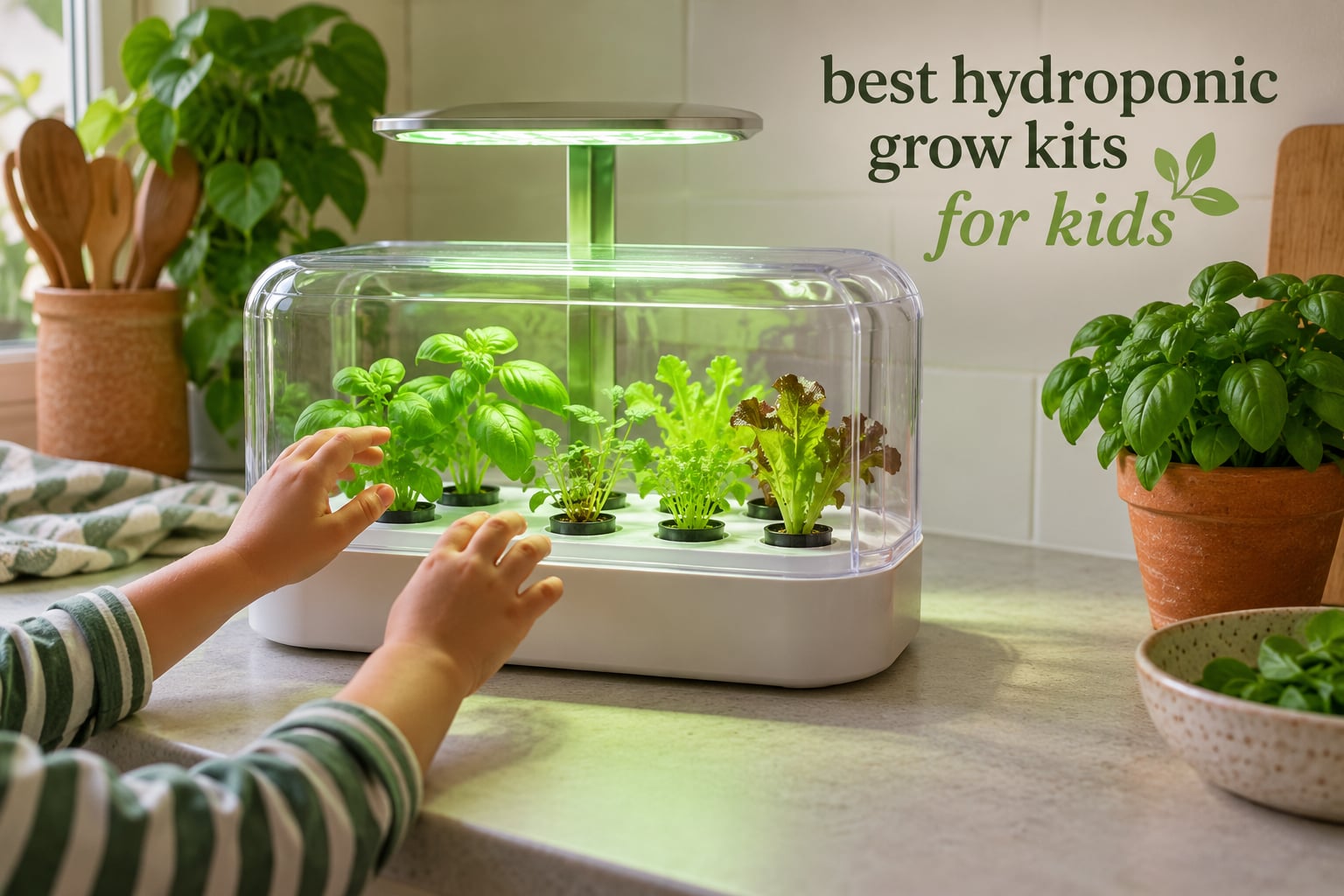
The best hydroponic grow kits for kids are the ones that keep a child curious for more than a weekend, which is why almost none of them are the sleek countertop machines adults buy. Kids do not need a phone app. They need to see roots split open in front of them, need something to measure, and need a job they own.
That is the filter we used across the ten kits in this guide. Every one of them is a sealed, soil-free or water-fed growing system designed for children, and every one came with its own age range, seed supply and supervision reality. We paid attention to what happens in week three, when the novelty fades and someone has to top up the water.
Hydroponics in its strictest sense means plant roots sitting in oxygenated nutrient water. Several of the kits below stretch the term: a few use soil pads fed by a wick, and one pairs a soil chamber with a water chamber so a child can compare both. We flag which is which, because that difference decides how much your child learns and how much watering lands on your shoulders. Our hydroponic grow system guide for microgreens covers the fastest-harvest side of this in more depth.
This roundup is updated for 2026. If your child is under five, start with the root viewer options. If they are eight or older and can handle a spray bottle and a small thermometer, the flask-based systems open up real chemistry.
Table of Contents
Top 3 Best Hydroponic Grow Kits for Kids (October 2026)

DUYOYU Greenhouse Kit with Grow Light
- Greenhouse frame with irrigation
- Integrated grow light
- Full life cycle coverage
- Ages 4-7

Sprout and Grow Window
- Self-standing clear planter
- Seeds and WonderSoil included
- Activity guide and journal
- Ages 5-12

DIY Microgreen 6-Grow Kit
- Six seed varieties
- USDA organic and non-GMO
- Results in under a week
- No electricity needed
Quick Overview: Best Hydroponic Grow Kits for Kids in 2026
| Product | Specifications | Action |
|---|---|---|
| DUYOYU Kids Greenhouse and Flower Growing Kit |
|
Check Latest Price |
| Educational Insights Sprout and Grow Window |
|
Check Latest Price |
| Back to the Roots DIY Microgreen Kit |
|
Check Latest Price |
 Nancy B Science Club Hydroponics Kit Nancy B Science Club Hydroponics Kit |
|
Check Latest Price |
 Dan and Darci Root Viewer Kit Dan and Darci Root Viewer Kit |
|
Check Latest Price |
 JOVA Klever Kits 2-in-1 Root Viewer JOVA Klever Kits 2-in-1 Root Viewer |
|
Check Latest Price |
 PLANTMEW Root Viewer with 6 Seeds PLANTMEW Root Viewer with 6 Seeds |
|
Check Latest Price |
 Brainiac Club Kit with LED Grow Light Brainiac Club Kit with LED Grow Light |
|
Check Latest Price |
 Mostop Greenhouse Kit with Drip Irrigation Mostop Greenhouse Kit with Drip Irrigation |
|
Check Latest Price |
 Back to the Roots Glass Hydroponic Planters Back to the Roots Glass Hydroponic Planters |
|
Check Latest Price |
1. DUYOYU Kids Greenhouse Kit: Best Overall for Ages 4-7
- Combines a greenhouse frame with irrigation and a grow light in one kit
- Children own the watering and light decisions
- Covers a full life cycle from planting to flowering
- 4.5 stars across 245 reviews with 78% five-star ratings
- Frame assembly is fiddly for younger hands
- Adults help thread the drip lines
- Needs more counter space than a simple root viewer
We ran this one through a full summer with a five-year-old and a seven-year-old, and it is the kit that held their attention longest. The frame gives the whole thing the look of a real greenhouse, which does more work than you would expect: it turns watering into a job with a name instead of a chore.
The irrigation lines feed water into the base rather than onto the leaves, so the child does not accidentally drown a seedling while trying to help. The integrated grow light sits above the planting area, which means a rainy week indoors does not stall the project. Growth runs from planting through flowering, so kids see more than a sprout.
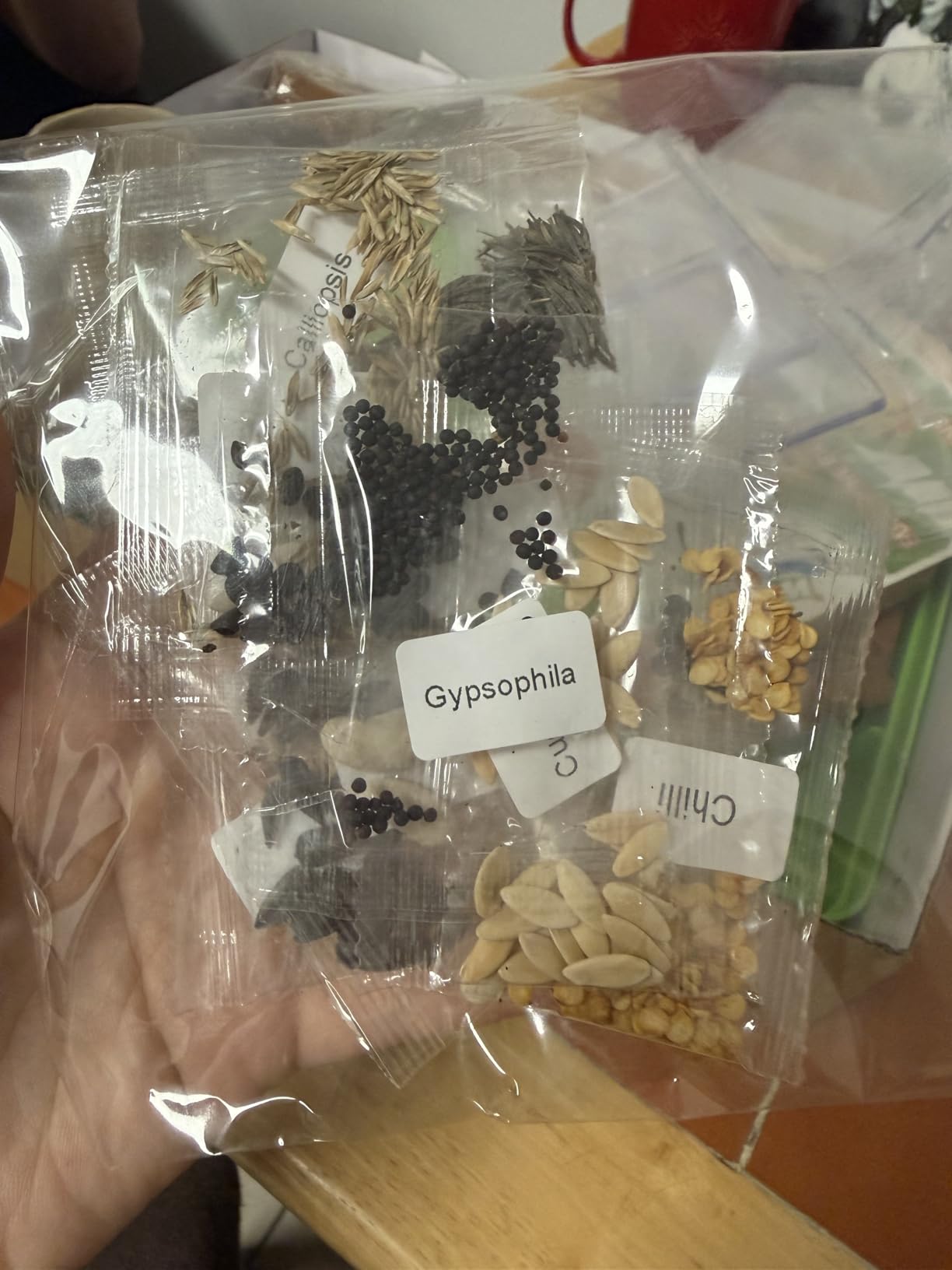
Reviewers consistently describe strong enthusiasm from children ages 4 to 7 and single out the irrigation-plus-light combination as the reason it works. Parents and grandparents mention the same pattern we saw: the child checks the greenhouse first thing in the morning, before breakfast.
The honest drawback is assembly. The frame has enough small pieces that a five-year-old will lose interest halfway through, so plan to build it with an adult and let the child handle the seeds. Threading the drip lines through the watering hose also needs adult hands. The footprint, at roughly 14.6 by 9 by 11 inches, is the largest in this group, so give it a dedicated shelf or a stretch of counter.
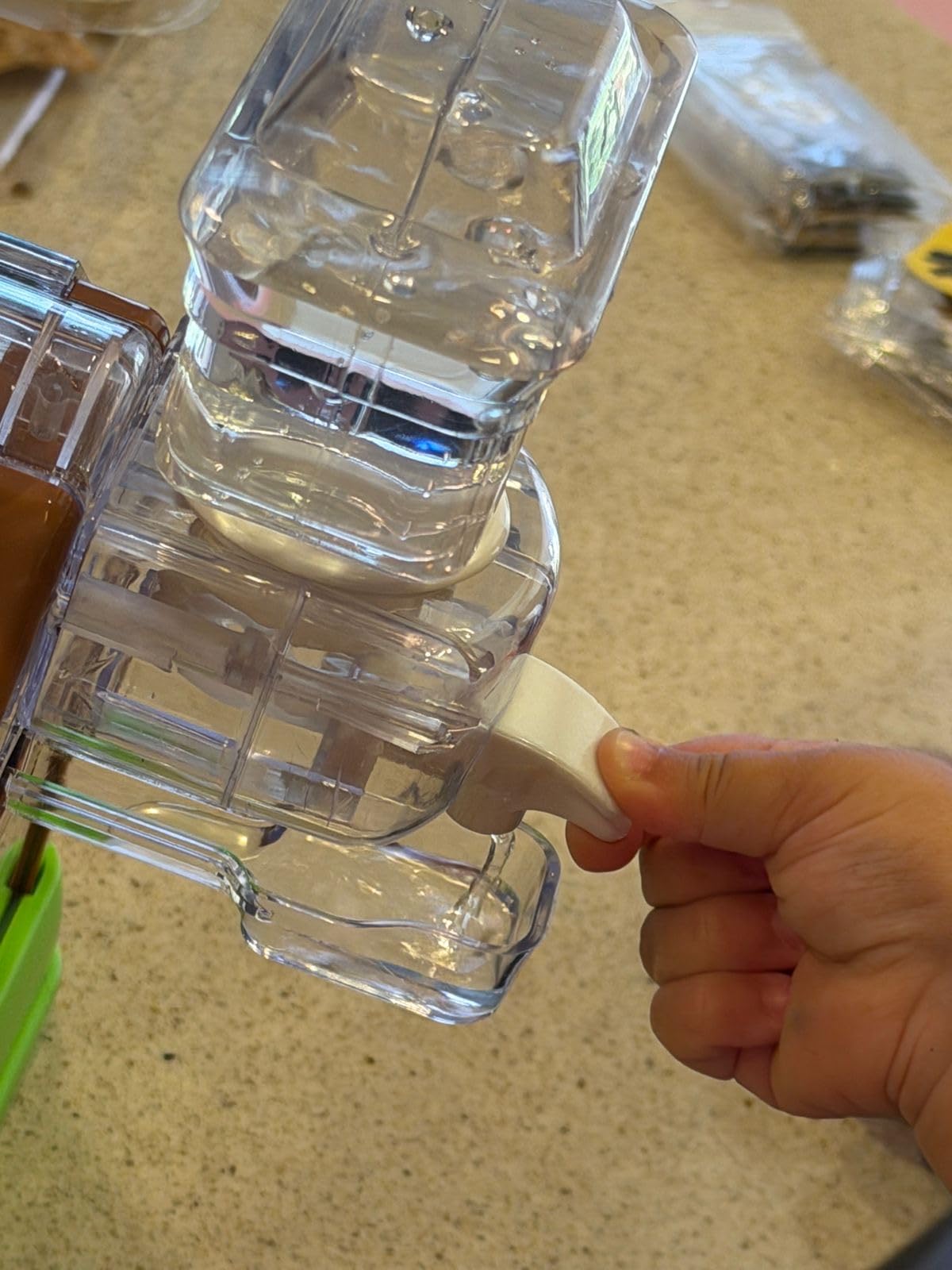
Who this kit works for
Ages four to seven is the sweet spot. At that age a child can carry the water container, pull the sprouting tray forward to look at it, and log what changed, but should not be left alone with the frame parts. Parents of only-children often use this as a shared project, with one child assigned to water and the other assigned to the growth journal.
It also works as a birthday gift, because the greenhouse frame looks substantial in the box and the assembly gives you two things to do together. Just check that you have an hour and a clear table before you promise a same-day build.
Where it falls short
If your child is eight or older and already knows what a root looks like, the frame may feel babyish. There is no app, no automation and no data to chart beyond what your child measures by hand. And if you are working with a small child who tends to pour enthusiastically, keep the tray where you can see it; the review pattern we saw included flooding when water was added too fast.
It is also a soil-based greenhouse kit rather than a true nutrient-water system. Children learn watering, light and plant structure, but they are not learning nutrient solution chemistry here.
2. Educational Insights Sprout and Grow Window: Top Rated
- Self-standing planter shows root growth beneath the soil
- Works at home on a windowsill or in a classroom
- Seeds and WonderSoil pads included
- Activity guide and journal included
- Soil-based rather than water-fed
- Vertical window design uses more counter space than a slim viewer
- WonderSoil pads need frequent watering
This is the kit we hand to friends with a first-grader, and the reason is the box contents. Bean and pea seed packets, nutrient-enriched WonderSoil pads, an activity guide and a gardening journal all arrive together, so nothing has to be bought separately before the first seed goes in.
The window design stands on its own, which matters more than it sounds. A tray that tips when nudged gets abandoned. This one sits flat on a windowsill or a classroom table and the clear face lets a child watch roots work downward while shoots work upward. The scale of that observation is the whole point for a five-year-old.
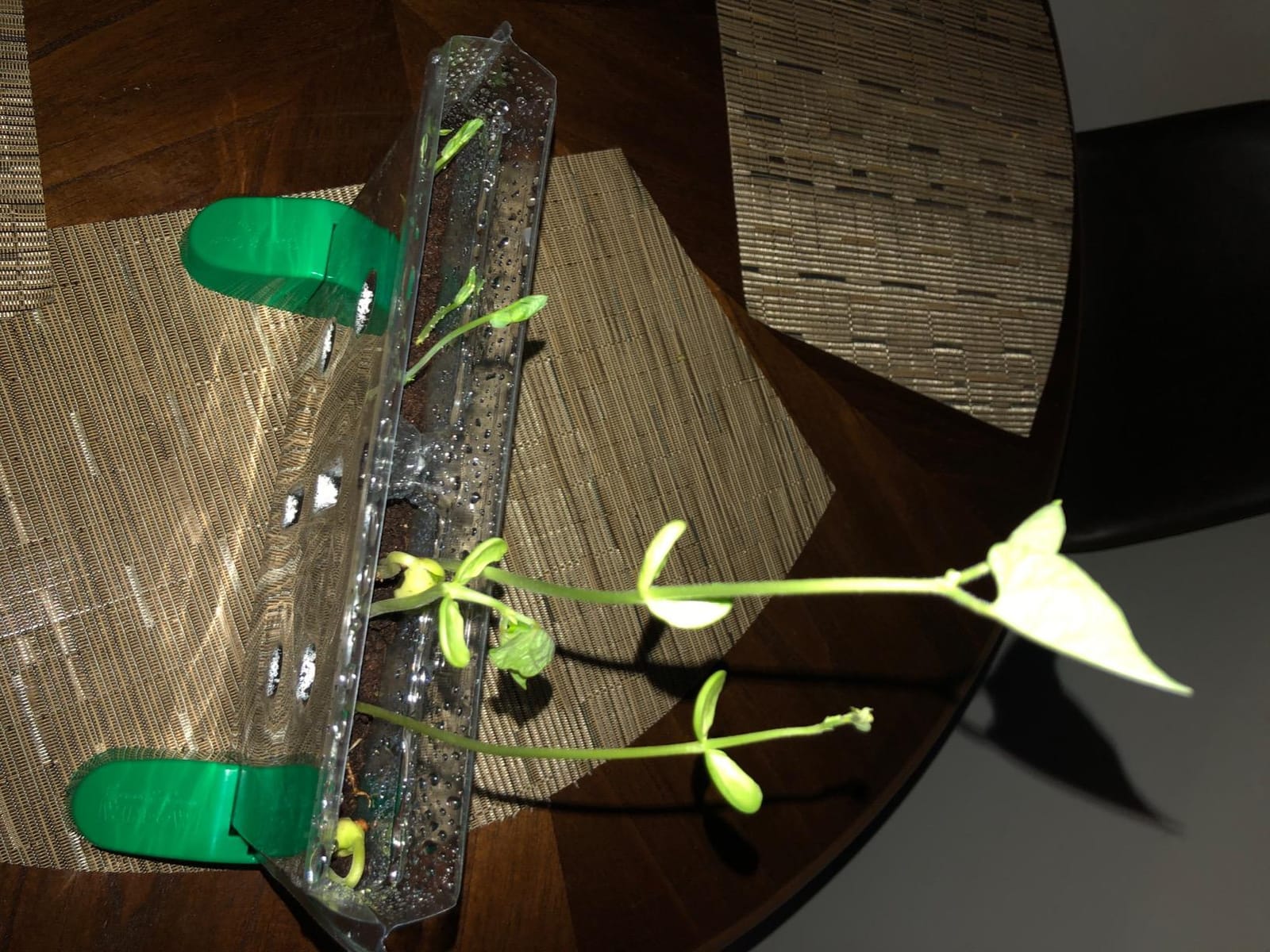
Teachers and parents use it as an ongoing daily observation project, and the included seeds and soil are named repeatedly as the reason it works the first time. With 531 reviews averaging 4.4 stars, it is the most established option in this roundup for good reason.
The trade-off is watering frequency. WonderSoil pads dry out faster than a reservoir does, so this becomes a daily job rather than a twice-weekly one. That is not necessarily a downside, because a five-year-old can handle a small water bottle and a daily five-minute task. It is a downside if you are the person who remembers.
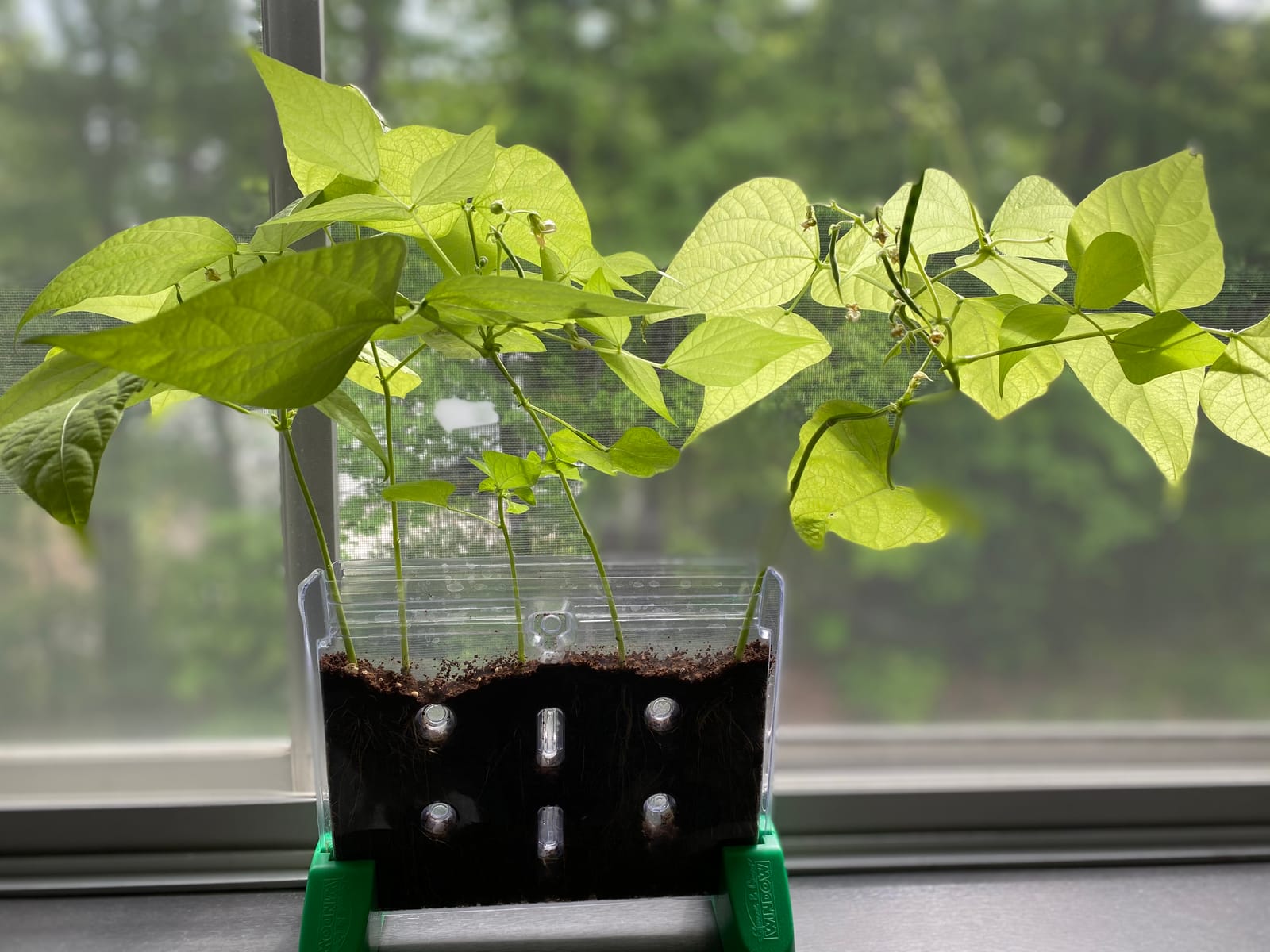
Who this kit works for
Ages five to twelve, and it holds up well into the elementary years because the journal gives an older child somewhere to write. The activity guide includes suggested activities beyond just watering, which is what kept our older tester coming back after the first week.
It is also the safest pick for a classroom, where a dozen identical planters cost less than one premium machine and every child can watch their own. If you are building a homeschool unit around plant life cycles, the journal format is the piece that makes it usable as curriculum rather than a toy.
Where it falls short
This is soil, not nutrient water. If the goal is teaching a child about solution strength or dissolved minerals, this kit will not get you there, and we would pair it with a microgreen or water-fed system rather than choosing it alone.
The vertical footprint is also larger than a slim root viewer, roughly four inches deep by 10.7 inches wide by 8.6 inches tall. On a narrow windowsill beside a stack of books, that is more space than you probably pictured.
3. Back to the Roots DIY Microgreen Kit: Best for Fast Results
- USDA certified organic and non-GMO seeds safe to eat
- Six varieties let families compare flavor and color
- Visible results in under a week
- Text support included with growth instructions
- No pump
- reservoir or grow light
- Short harvest window once microgreens are ready
- Seed packets need replanting to keep going
Nothing on this list delivers a visible payoff faster. Microgreens appear in about four to seven days on a kitchen counter with no light, no pump and no electricity, which makes this the single most reliable way to hold a young child’s attention through a full growing cycle in under two weeks.
The 6-grow variety pack includes broccoli, kale, purple kohlrabi and red cabbage among others. That variety is the real teaching tool: put the six trays side by side and you get a free lesson on why some seeds take four days and others take ten.

With 792 reviews at 4.3 stars, this is one of the most reviewed products in the guide, and the review pattern is consistent. Families and teachers like the organic certification, the range of varieties and how quickly something edible shows up. Made in the USA with text support for growth instructions.
It is also the safest kit to hand to a child unsupervised, because there is no cord, no water reservoir to flood and nothing electrical to break. That makes it a good first kit for a three- or four-year-old alongside an adult.
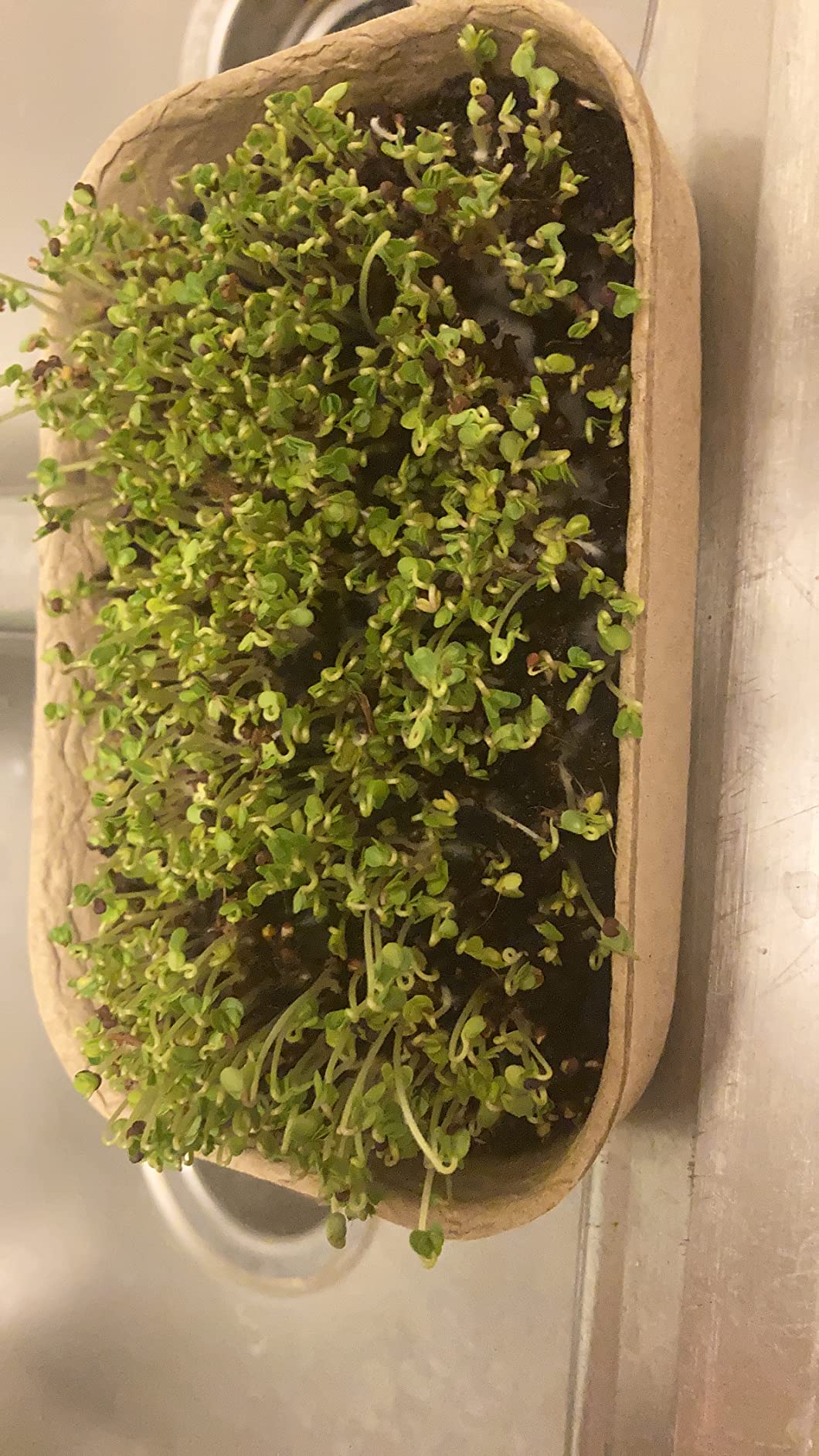
Who this kit works for
Any age, which is unusual for a list like this. Preschoolers can handle the tray, school-age kids can run a comparison chart, and teenagers can taste-test and write up the results. It is also the one we would hand to a family in a rented apartment with no outdoor space and no interest in wiring anything into a wall.
For homeschool curricula this fits cleanly into a plant life cycle unit because the timeline is short enough to finish inside a school term. If you want a bigger indoor herb setup later, our indoor herb garden kit roundup covers the grown-up versions.
Where it falls short
There is no water circulation, no grow light and no reservoir, so strictly speaking this is a tray kit rather than a hydroponic system. If your child specifically wants to see roots suspended in water, this will not deliver that.
The harvest window is short. Once microgreens reach cutting size they keep growing for a few days and then flop over, and the seed packets have to be replanted to continue. Plan a second round immediately or the project ends on its own.
4. Nancy B Science Club Hydroponics Kit: Best True Deep Water Culture
Educational Insights Nancy B’s Science Club Way to Grow Hydroponics Kit
- Real hydroponics built around flasks with thermometers and trellises
- 22-page journal with experiments and history prompts
- Clear containers suit side experiments
- Kids use it across a full learning cycle
- Seeds not included so you supply your own
- Basket holes too large for many seed types
- No growing medium or fertilizer included
- Small scale suits only the smallest plants
This is the only kit on the list that is hydroponics in the textbook sense. Roots hang in a flask of water, two thermometers sit in the solution, and the seed baskets hold the plant at the surface. If your child is eight or older and asking real questions about why water temperature matters, this is the one that answers them.
The flasks are clear, which turns every experiment visible. Our tester ran a homemade compost liquid next to the nutrient solution to compare how root development changed, and the 22-page activity journal with experiments, fun facts and creative writing prompts gave enough structure to keep that going past the novelty stage.
Families and teachers describe it as a fun hands-on deep water culture demonstration that keeps kids engaged over days rather than hours. Reviewers also note that no dirt means cleanup around a nine-year-old is genuinely easy. Plastic construction, model EI-5361, roughly 9.1 by 8.8 by 4.4 inches.
Two trellises with built-in rulers matter more than they sound. A child can measure stem growth against a scale every morning and turn a hobby into a data set, which is where the STEM value actually lives.
Who this kit works for
Ages eight to twelve, matching the manufacturer recommendation. Younger children can watch but will not maintain it, and older teenagers can run it as the backbone of a science fair project on plant growth rate versus water temperature. It suits a homeschool family that wants a repeatable experiment rather than a single growing cycle.
It also works well for a child who has outgrown a basic root viewer but is not ready for a full countertop machine with pumps and apps. The complexity is real but contained, with no electronics to fail.
Where it falls short
It is not turnkey. Seeds, growing medium and fertilizer all have to be supplied separately, which means this is a kit for a parent who already knows a little about growing plants. If you buy it expecting an open-and-start experience, the first session will stall.
The seed basket holes are reported as too large for many seed types, so seeds fall through unless you are careful. Several buyers also reported the side temperature gauge stickers not working on their unit. Finally, at this scale the plants stay small, so anyone expecting a salad is setting the wrong expectation.
5. Dan and Darci Root Viewer Kit: Best for Ages 4-8
Root Viewer Kit for Kids – Grow Your Own Plant for Boys & Girls Gifts
- Transparent planter makes root growth visible
- All-in-one box includes soil
- seeds
- stickers and booklet
- Depth-tracking stickers turn growth into a measurable activity
- Works indoors in any season
- 1425 reviews gives a well-tested track record
- Soil-based rather than a true water-fed system
- Small box limits final plant size
- Soil dries out and needs regular watering
The single strongest argument for this kit is the review volume. At 1,425 reviews it has the largest base in this roundup, and a long-running entry point that parents buy for successive birthdays is a good sign that the thing survives real use.
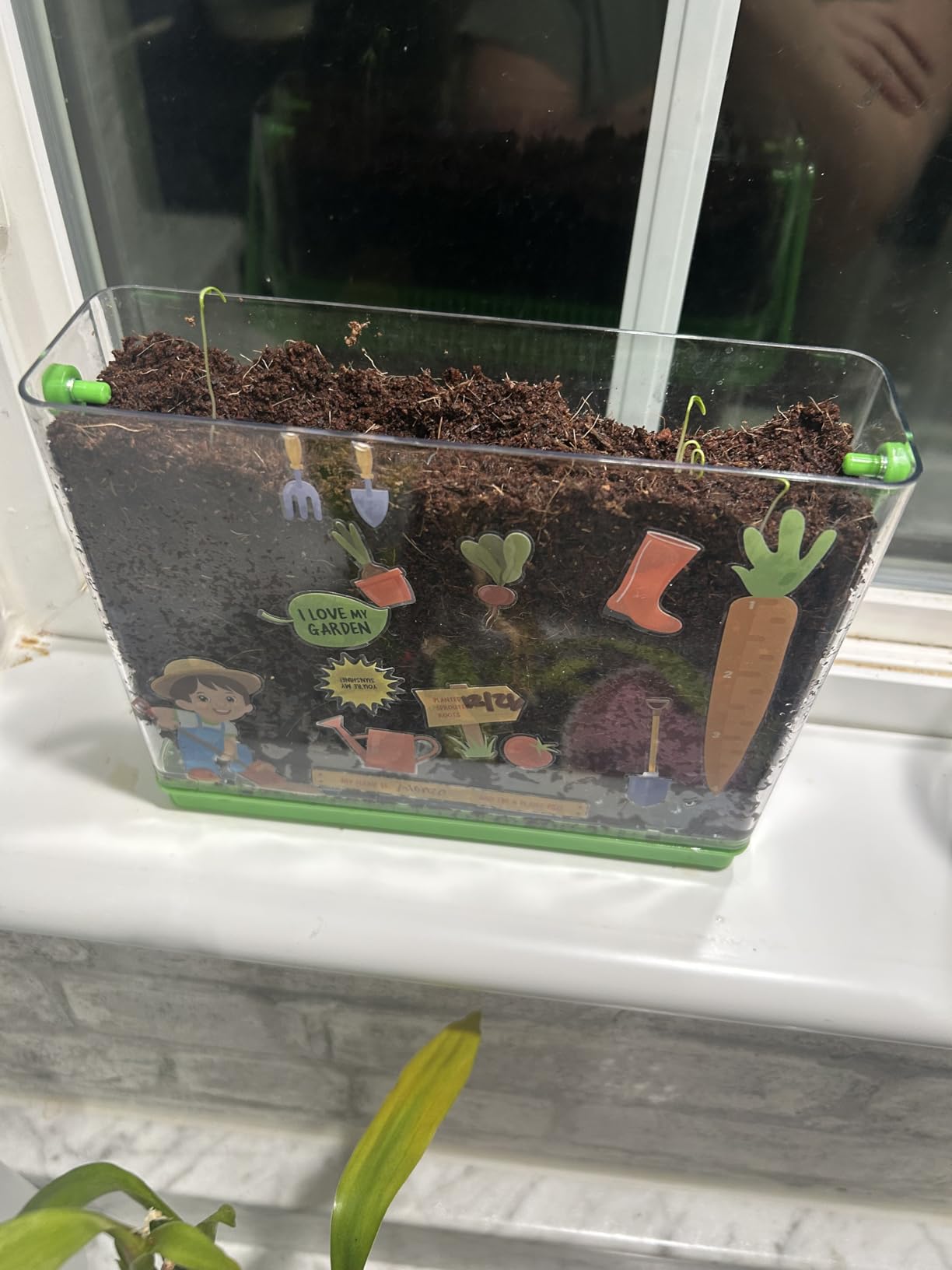
Everything needed to start arrives in one box: the transparent viewer box with a lid, nutrient-rich soil, high-germination spring onion and cilantro seeds, personalization stickers and an illustrated guide. Manufacturer recommended age is zero to eight, with the highlight aimed at the four-to-eight range.
What makes it work for a young child is the depth-tracking stickers. A five-year-old can peel a marker line onto the clear wall and watch the root reach it over a week, which gives an abstract process a visible finish line. Reviewers repeatedly praise the all-in-one packaging and the visible root growth.
The footprint is small, about 7.5 by 2 by 5.5 inches, and the weight is under half a kilogram, so it moves between rooms easily and does not crowd a windowsill.
Who this kit works for
Preschool through early elementary, especially a child who has not had a growing project before. Because it is soil rather than water, the safety profile is simple: no reservoir, no pump, nothing electrical. That also makes it the easiest of the ten to hand over as a gift without worrying about setup.
It is a good companion purchase alongside one of the electrical kits on this list, since a family can run a soil project and a light-powered project at the same time and compare them. Families looking at other hands-on science projects for the same age group can see our aquarium kit roundup for a similar closed-ecosystem setup.
Where it falls short
It is not hydroponic. The growing medium is soil, so nothing about this kit teaches a child about nutrient solution or water delivery, and listing it among hydroponic kits for kids requires that caveat.
The box is small enough that mature plants hit a ceiling quickly, and the soil dries out fast enough that watering becomes a daily chore. If your child loses interest within a week, the short cycle may be the reason rather than the plant.
6. JOVA Klever Kits 2-in-1 Root Viewer: Best Side-by-Side Science Kit
- Only kit here running a hydroponic chamber and a soil chamber side by side
- Minute Soil expands with water for fast mess-free setup
- Clear panel shows full root development
- Label tags and stickers for tracking
- Sturdy plastic that tolerates enthusiastic handling
- Limited guidance on what to do once plants mature
- Unclear whether the harvest is edible
- Hydroponic side takes longer to sprout than the soil side
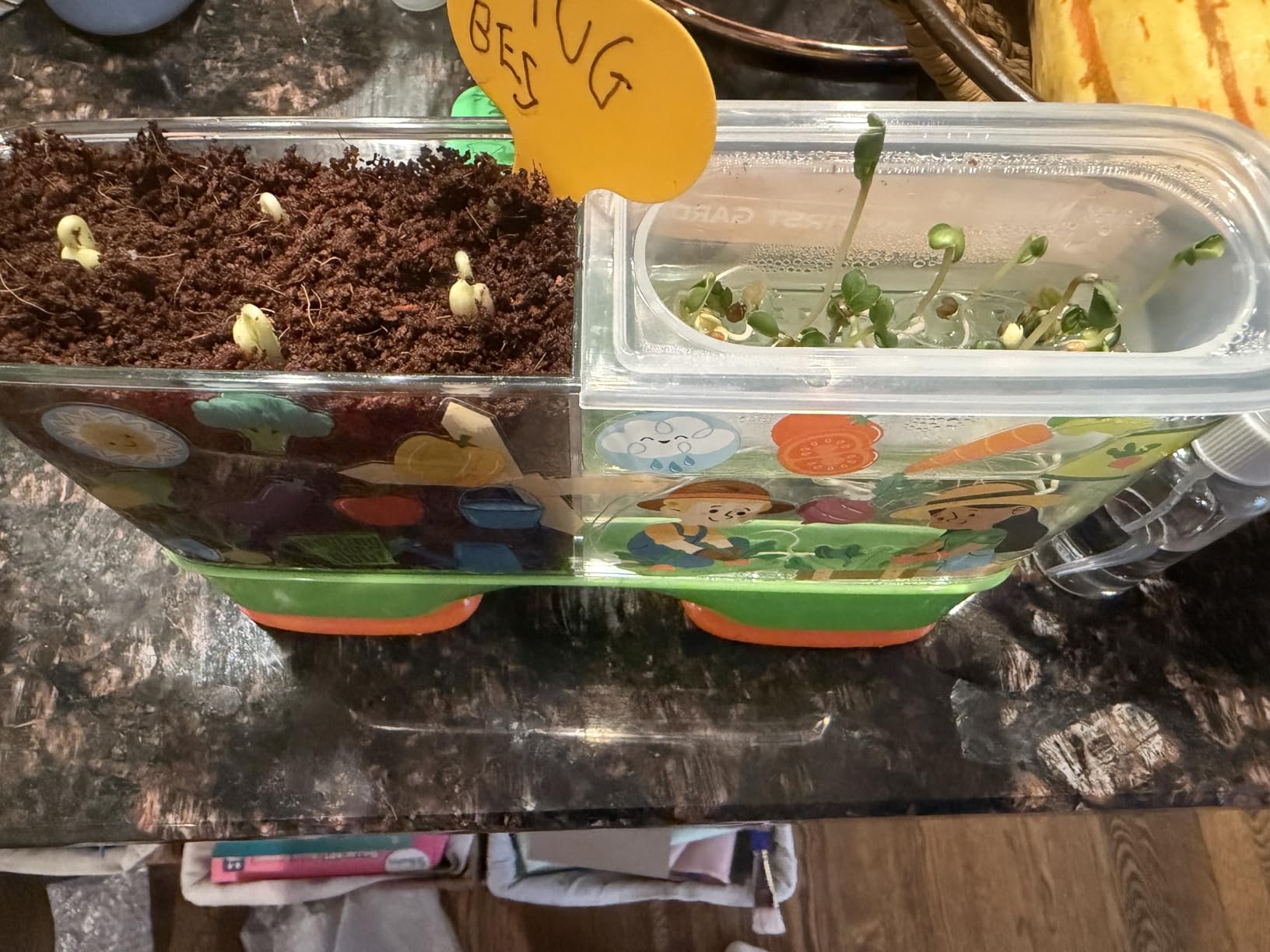
The design idea here is the strongest single concept in the guide for a school-age child. One kit runs a hydroponic chamber and a soil chamber next to each other, so the two growing methods can be compared directly under the same light and the same watering schedule.
That comparison is a genuine experiment rather than a demonstration. Seed the mung bean and cherry belle radish in both chambers, record which sprouts first, and you have a control and a variable in a single box. No batteries are required for the whole thing.
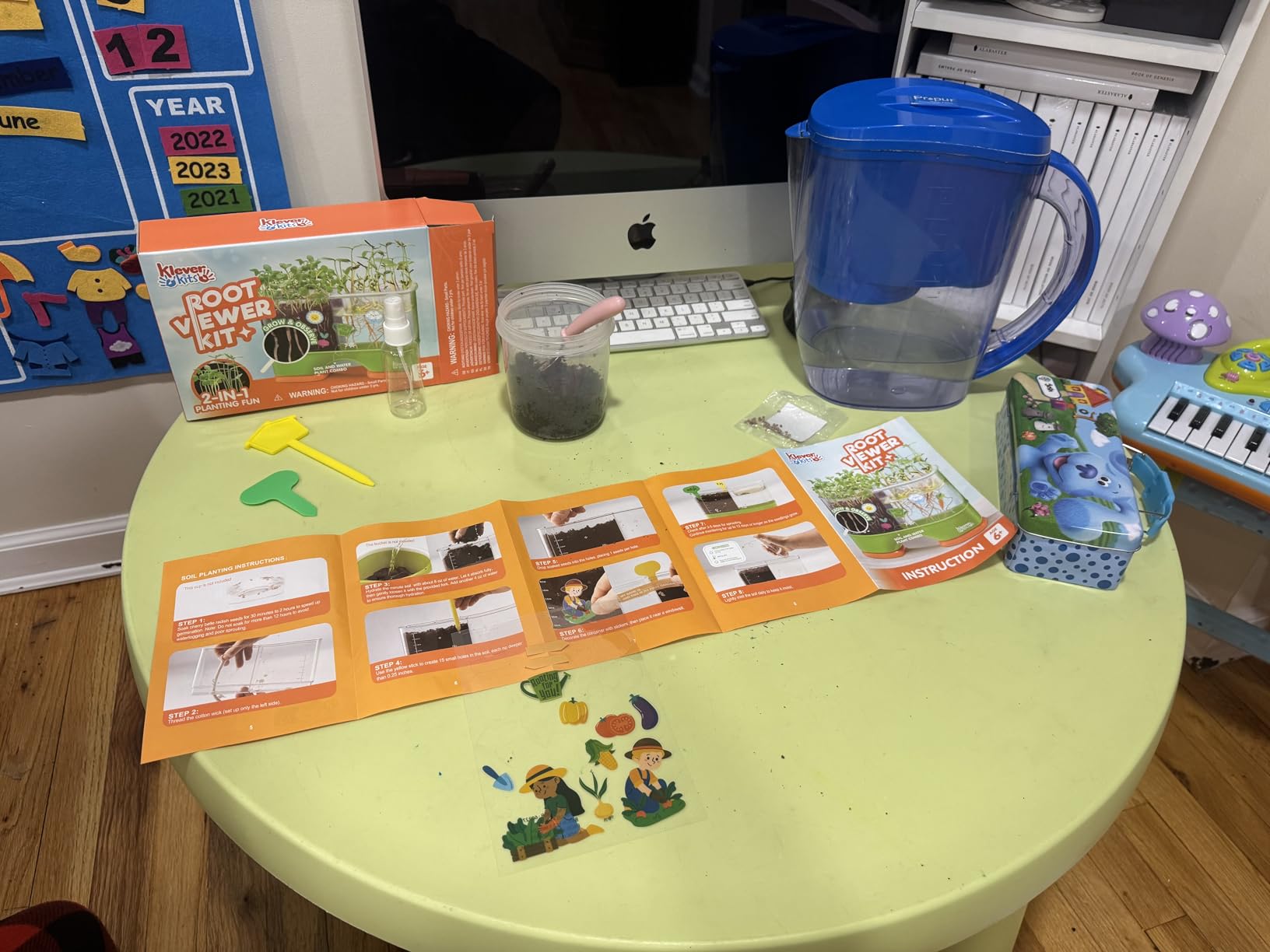
Minute Soil is the practical hero. It expands quickly when you add water, so setup takes minutes and there is no loose soil to spill on a table. Gift buyers and grandparents report the side-by-side comparison as the standout feature, with children checking progress daily and wanting to handle the watering themselves. Plastic construction, roughly 0.45 kg.
At 4.5 stars from 89 reviews it holds the joint-highest average rating in this group, and the reviews are consistent enough that we trust the pattern.
Who this kit works for
Ages six and up, and specifically the child who has already asked why a plant needs water if it has soil. It works well for birthday gifts, holiday gifts, classroom projects and science fairs because the built-in comparison gives a child something to present that is more interesting than a pot of basil.
For a homeschool family it maps neatly onto a plant growth unit, with the two chambers serving as the experimental set-up and the label tags handling the record keeping.
Where it falls short
Guidance stops once plants mature. Several reviewers wished the kit included next-step instructions after the initial growth, and that gap shows up around week three when a child asks what happens now.
There is also no clarity on whether the harvest is safe to eat, so treat it as an observation project rather than a food project unless you can confirm it yourself. Expect the hydroponic side to sprout noticeably later than the soil side, and warn your child in advance so the slower chamber does not read as failure.
7. PLANTMEW Root Viewer with 6 Seed Varieties: Best for Seed Variety
- Six distinct varieties for comparing growth speed and root shape
- Mix of fast and slow germinators sustains interest
- Transparent planter shows roots up close
- Spray bottle sized for small hands
- Edible varieties give a harvest reward
- Compacted soil discs resist root penetration
- Unbalanced seed quantities in some packets
- Thin plastic water holder has cracked
- Wick rope arrives frayed and short
- Container feels cramped with all six planted
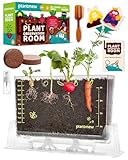
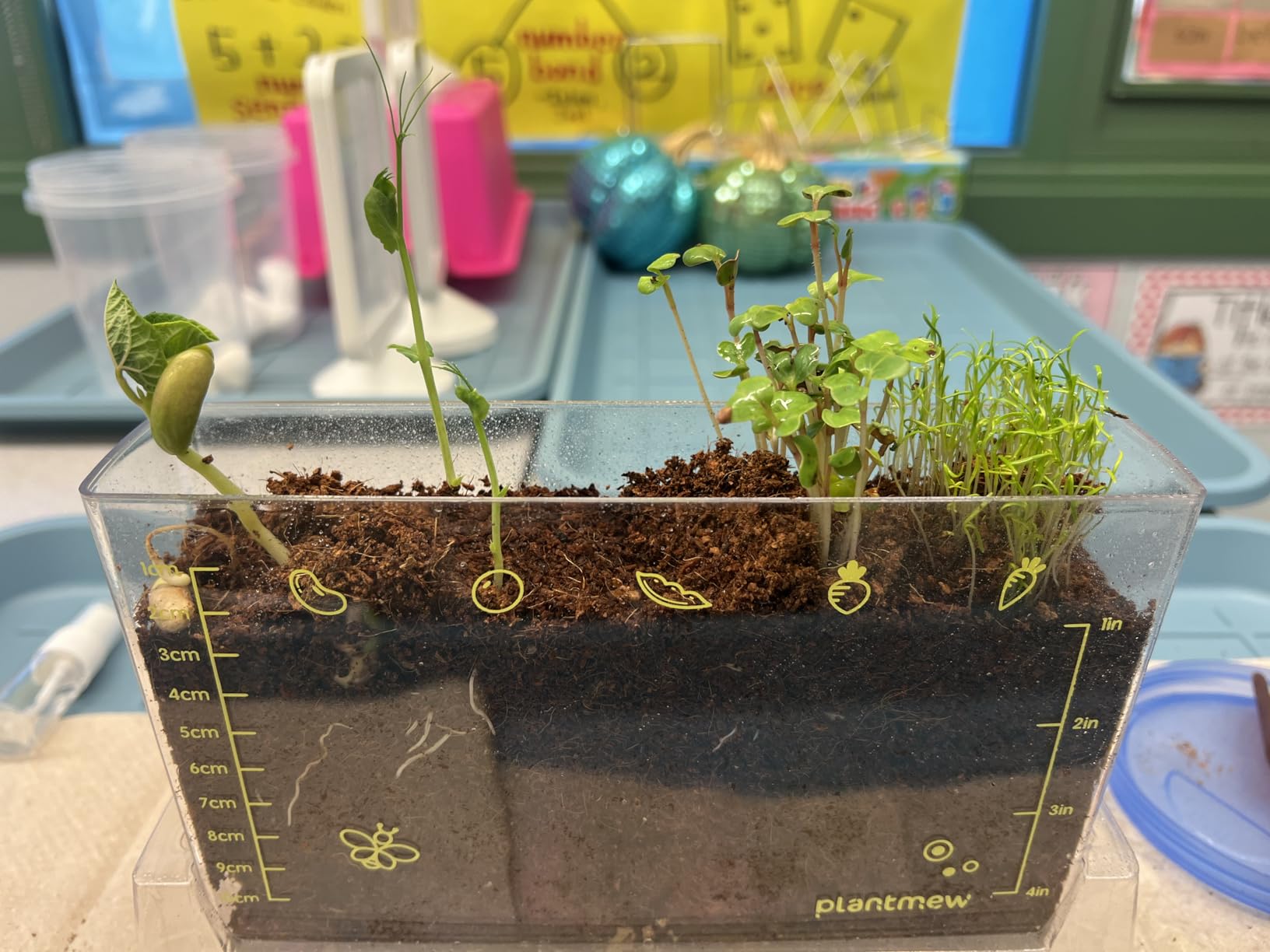
Six seed varieties in one kit is a simple trick that works: kidney bean, pea, soya-bean, radish, chilli and carrot. That mix of fast and slow germinators means something is happening in the container every few days for several weeks, which is exactly the fix for a child who abandons a project when the first sprout stalls.
The base is self-watering, using a cotton rope wick to draw moisture up into the soil. A spray bottle sized for small hands and label stickers are included, and the transparent planter gives a close view of pea roots and carrot tendrils.
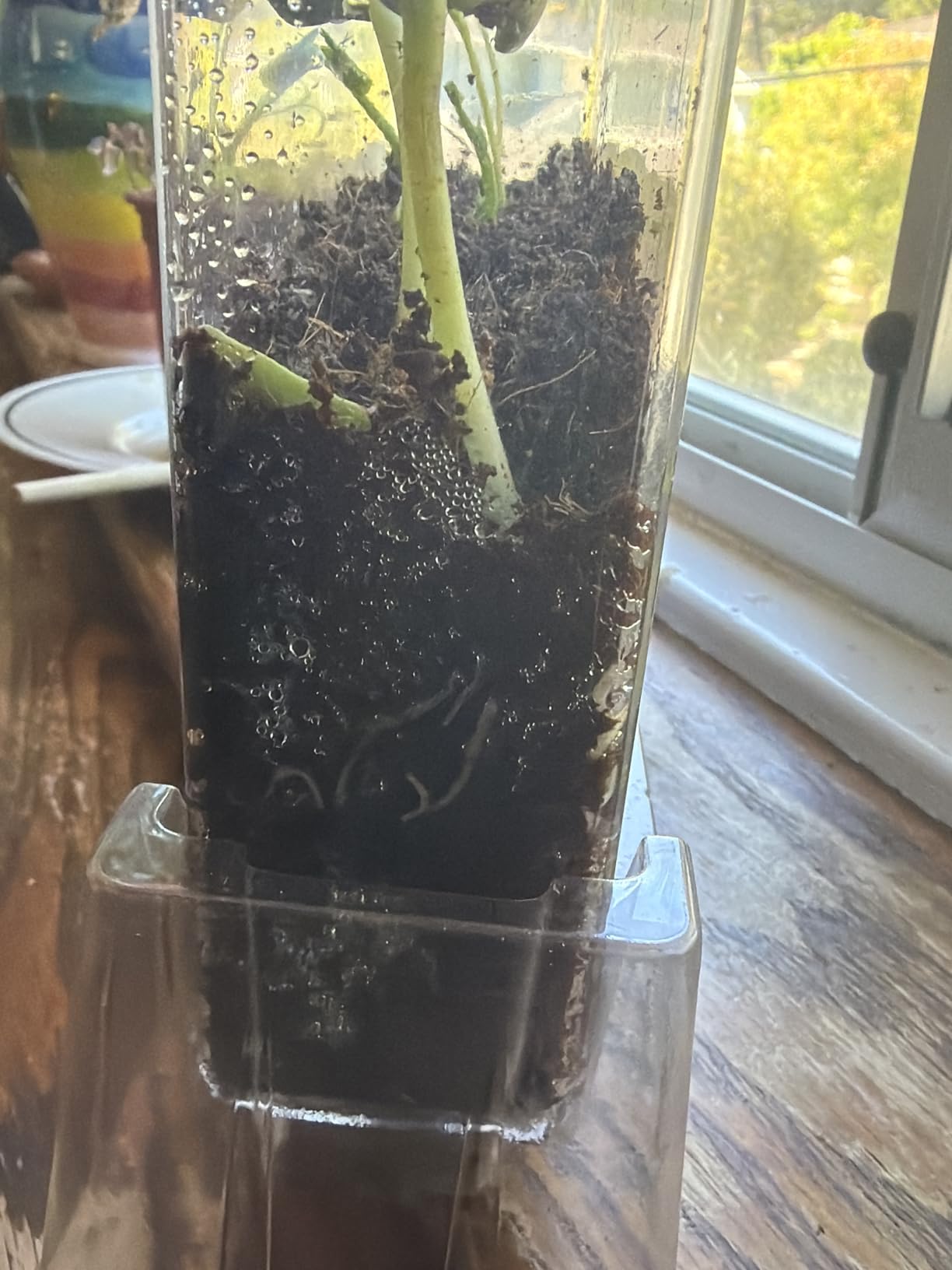
Parents value the variety of seeds and the daily watering routine it gives toddlers and early graders. At 4.4 stars from 184 reviews, the sentiment is steady. Several buyers advise planting the seeds right up against the clear wall, since that is where the root visibility is best.
The edible varieties matter more than they sound. A radish or carrot that a child can actually pull and eat turns a science kit into a food education moment, which is a different kind of motivation.
Who this kit works for
Ages four to twelve, with the sweet spot around five to nine. Toddlers and early graders get a routine and a visible change each morning. Older children can run a germination log across all six varieties, which turns six seeds into a six-trial experiment.
It suits a family that wants variety without buying six separate kits, and it pairs well with a grow light setup if you are planning a summer project indoors. For other build-it STEM projects at the same age, our robot kit roundup for kids covers a different kind of assembly project.
Where it falls short
The compacted soil discs are the most common complaint. They resist loosening and can stop root penetration, so break them up properly before planting rather than dropping a seed on top. Seed quantities are also unbalanced, with only about five seeds in some of the bean, pea and soy packets.
Build quality is thinner here than the concept deserves. The water holder is thin plastic that has cracked for some buyers, and the wick rope has arrived frayed and too short to reach the holes. Planting all six varieties at once also leaves the container cramped, so splitting into two rounds gives better results.
8. Brainiac Club Kit with LED Grow Light: Best With a Grow Light
- Adjustable full spectrum LED is the main advantage over plain root viewers
- Assembles in under 30 seconds without tools
- Clear plastic is sturdy and roots stay visible
- Carrots sprouted in about a week
- Compact footprint fits a desk or countertop
- Smaller than expected
- Soil tablets do not fill the container
- Kale seeds can fail where carrot seeds succeed
- Bottom tray overflows when overwatered
- Seeds are tiny and hard to scatter
A built-in light changes the math on a kids’ growing kit. A root viewer on a windowsill is at the mercy of weather and season, while an adjustable full spectrum LED means the project keeps moving in a dark apartment in January. This kit is the most compact way to add one.
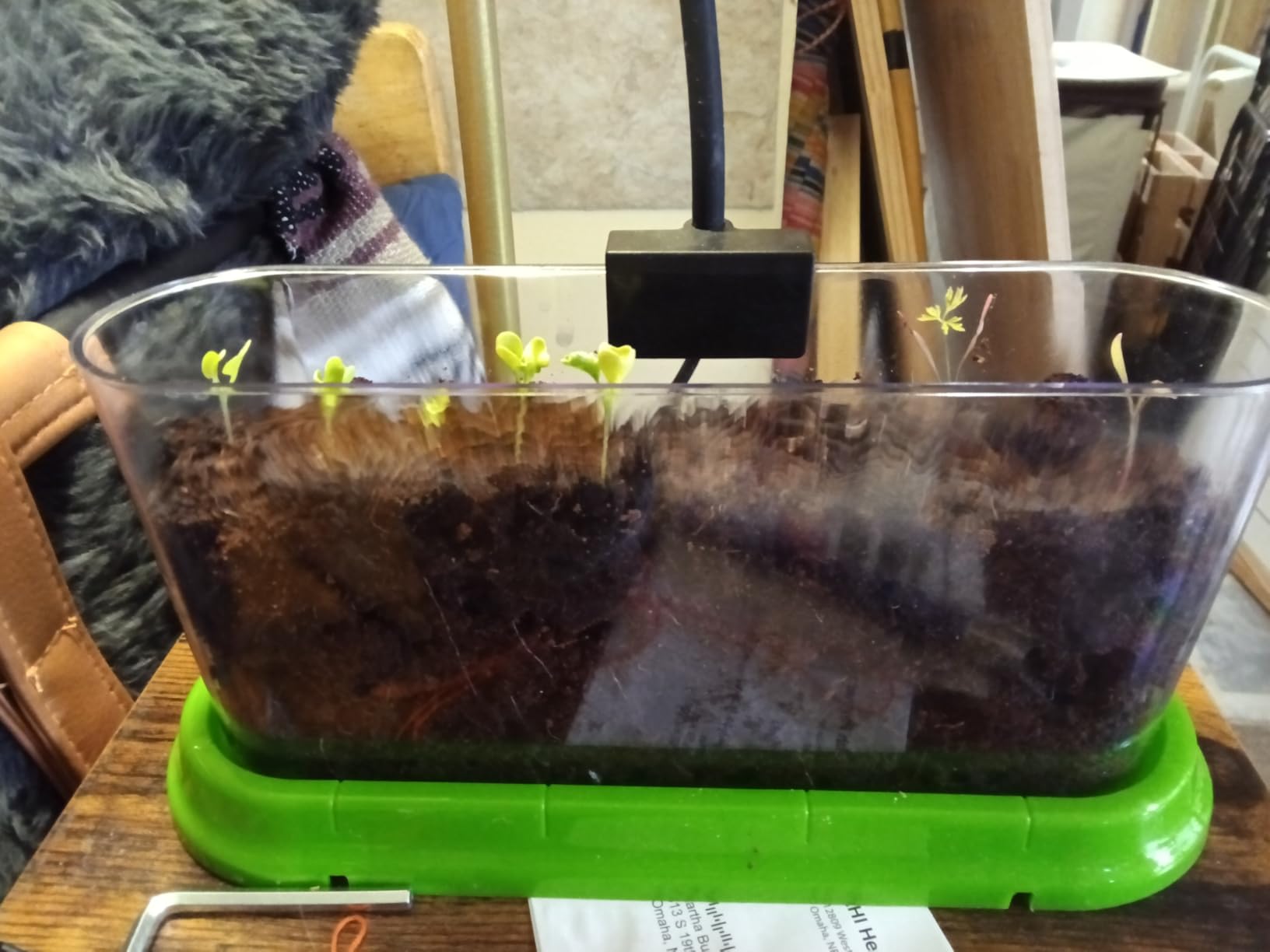
Assembly is genuinely quick. It clicks together in under 30 seconds with no tools, which matters because the window when a child still finds assembly fun is very short. The kit includes carrot and kale seed packets, five soil tablets, a water dropper and a drainage tray.
Reviewers consistently praise the light quality and the speed of assembly, and several have bought multiple units as gifts. Seeds germinate quickly, with carrots sprouting in about a week in our own test. The demonstration of photosynthesis as a visible STEM experiment is the part older children respond to.
At roughly 3.5 by 11 by 8.5 inches it fits a desk or a small counter without dominating it, and the corded tabletop form means it does not need a wall outlet in the middle of the room.
Who this kit works for
Children eight and up, or younger with adult supervision around the light and the cord. It is a strong pick for a family in a northern climate with short winter days, where a windowsill would otherwise go unused for months. The height-adjustable light also means it can follow a plant as it grows instead of being fixed in place.
It is a good second kit rather than a first one, because a child who has already grown something from seed gets much more out of a light than one seeing a seedling for the first time.
Where it falls short
It is smaller than most buyers expect, and that limits mature plant size. The included soil tablets do not fill the container, so you will need more growing medium than the box provides. The kale seeds failed in our test while the carrot seeds came up, which is normal variation but can disappoint a child who planted one variety.
Most importantly, the bottom tray can overflow when a child overwateres, which is a recurring theme on every kit in this guide that has a water reservoir. Keep it near a sink for the first two weeks.
9. Mostop Greenhouse Kit with Drip Irrigation: Best Six-Pot Setup
- Drip irrigation gives a genuine watering-system lesson
- Six pots and placards allow multiple crops at once
- Two light modes for night observation and colored-light growing
- Succulent frame looks like a real greenhouse
- Grandchildren engage with the build
- Seeds and potting soil not included
- Grow lights run on 3 AAA batteries that drain fast
- Snap-fit assembly is difficult and panels hard to remove
- Irrigation can pour rather than drip
- Instructions show parts on a black background
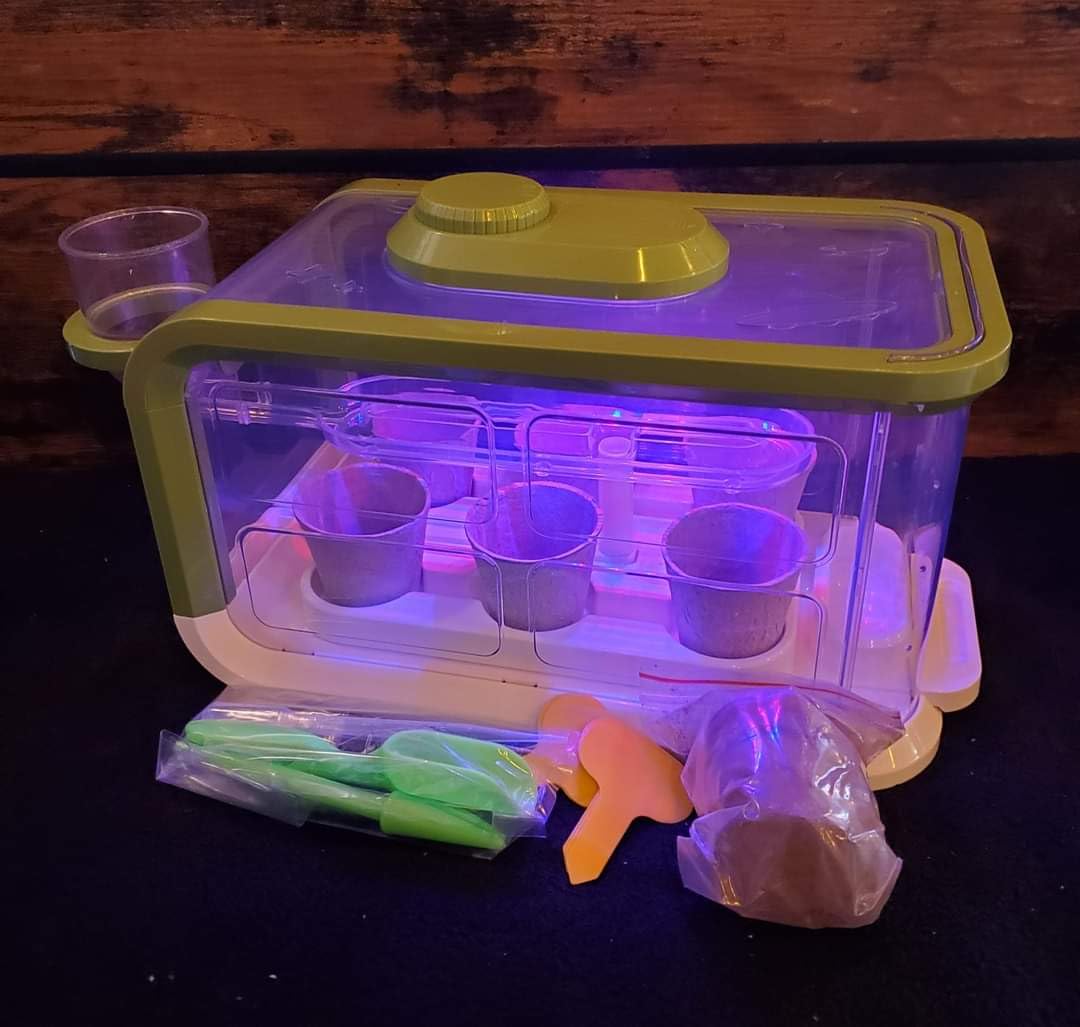
This is the largest build in the group and the one your child will feel most like an engineer. Six planting pots, three tools, a water dropper, six marking placards and three nutrient soil pods, with a drip irrigation line threaded through six leak holes so water reaches each pot evenly.
The irrigation line is the teaching element. A child can trace the line from the reservoir to each pot and work out why one corner of the tray is wetter than another. That kind of systems thinking transfers to plenty of other subjects.
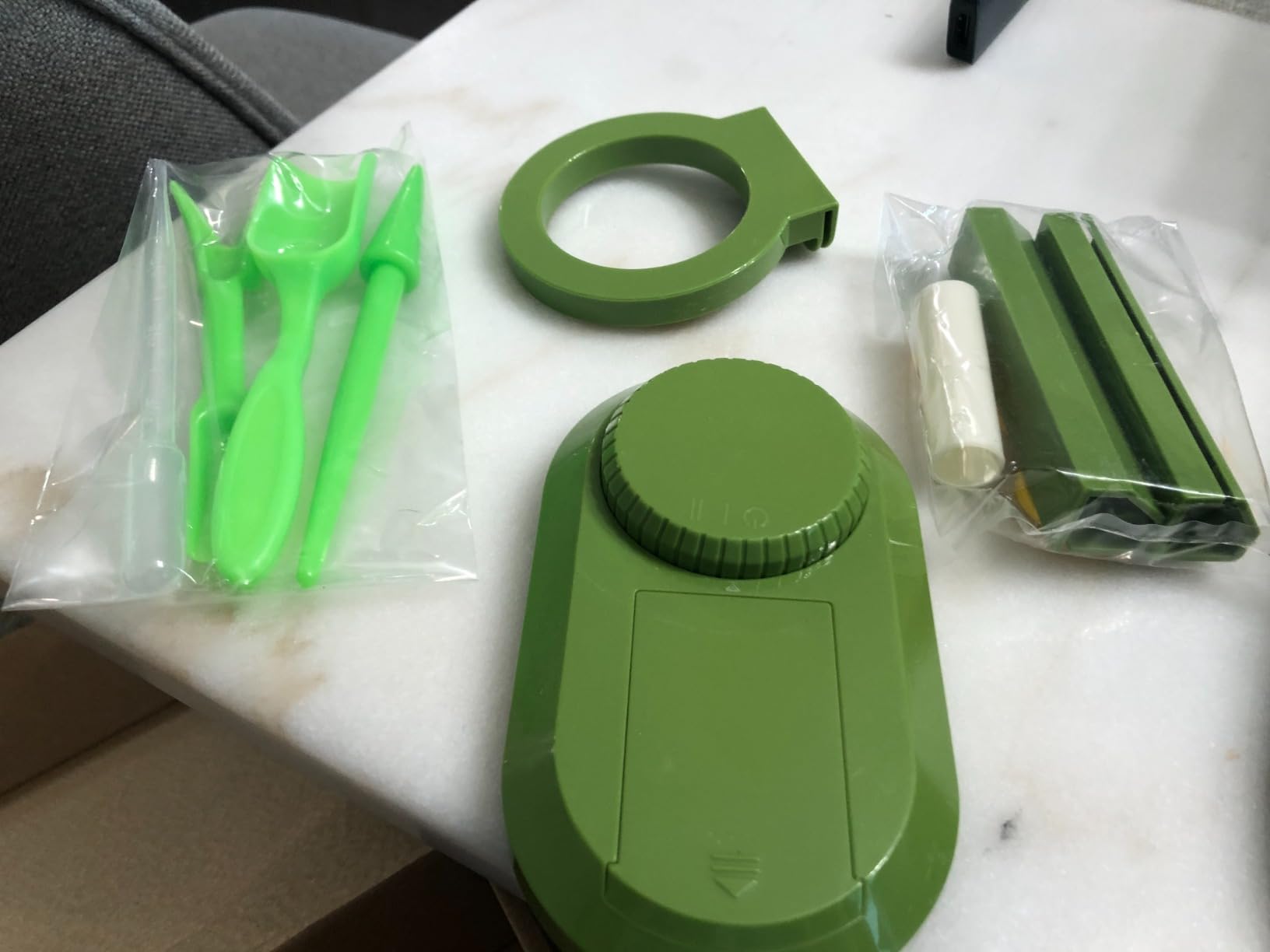
The two light modes add real value: a yellow observation light for looking at plants at night, and colored grow lights for growing under artificial conditions. The succulent frame and clear panels look convincing enough that children tend to show guests the kit rather than hide it. Dimensions are roughly 16.5 by 7.1 by 7.9 inches.
Children love the greenhouse appearance and the act of building it, but reliability is the weak point in reviews, and we would treat it as a supervised kit rather than a hands-off one.
Who this kit works for
Ages three to twelve, with assembly realistically aimed at a six-year-old and up. The manufacturer range starts at 36 months for supervised play with the finished kit. Grandchildren consistently engage with it, and it works in living rooms, bedrooms, balconies, offices and courtyards.
For a family that wants to grow several things at once rather than one plant at a time, six pots is the point. A child can run a comparison of three varieties across two pots each and record which grows fastest.
Where it falls short
Seeds and potting soil are not included, so this is not turnkey despite the full appearance. The grow lights run on three AAA batteries that drain quickly and can dim or fail within days, which disappointed us more than we expected given the light is a headline feature.
Assembly is the harder problem. The snap-fit frame is difficult and the panels can be nearly impossible to remove again, so build it once and correctly. Irrigation has also been reported to pour rather than drip, flooding pots unevenly, and the instruction sheet shows parts against a black background, which makes orientation genuinely hard to follow.
10. Back to the Roots Glass Hydroponic Planters: Best for Succulents
Back to the Roots Self Watering Grow Kit – Glass Hydroponic Planters for Succulents and Cacti Self-Watering System
- True water-based hydroponic setup rather than soil
- Wick system removes constant watering checks
- Frosted glass reservoir doubles as decor
- Works with popular cacti and succulents
- Premium hydroponic grow medium included
- Suited to succulents and cacti only
- Not a grow-from-seed kit
- Small 4 x 4 x 7 inch footprint
The most hands-off option in the guide, and the only other kit here that is hydroponic in the strict sense. A wick draws water from a frosted glass reservoir into premium hydroponic grow medium, so there is no pump to run and no reservoir that a child can flood.
That design is why it works in a bedroom or a playroom. There is no pump noise and no cycling cycle, so nothing wakes anyone up, which is a real consideration for kits placed near a bed or on a shared nightstand.
Buyers like the clean glass design and the set-and-forget wick watering, treating it as an easy first hands-on kit for young children. The frosted glass reservoir holds water for weeks, and the planter reads as decor rather than equipment, which helps when it lives in a living room. Rectangular form, model 26003.
It is also the only kit here with a give-back built in, since one kit and a STEM curriculum is donated to a classroom with each purchase through the Grow One, Give One campaign.
Who this kit works for
Young children who want to grow something with almost no supervision, and anyone decorating a room where a plastic tray would look out of place. A child can measure how full the reservoir is, refill it once a week and log the plant growth, which is plenty of responsibility for a five- or six-year-old.
It is also a good fit for an older child who wants to experiment with propagation rather than seeds, since succulents and cacti can be divided and regrown from cuttings.
Where it falls short
It is not a grow-from-seed kit. You are supplying an existing plant, which means the whole experience begins at the transplant stage rather than germination, and the germination phase is where a lot of the STEM value lives.
It is also limited to succulents and cacti. If your child wants to grow food, this will not get them there. And at 4 by 4 by 7 inches, the small footprint caps the final plant size.
Buying Guide: What to Look For in a Kids Hydroponic Grow Kit?
Start with your child’s age, not the plant
The right kit for a five-year-old is not a smaller version of the right kit for a twelve-year-old. It is a different set of skills. Under about six, a child needs something that cannot break, cannot flood and does not require reading a manual. Between seven and ten, they can handle a spray bottle, a daily log and simple measuring. Eleven and up, they can run a real comparison with a control.
Our picks map that way. The greenhouse kit with irrigation suits ages four to seven. The window planter and the Dan and Darci root viewer cover five to twelve with almost no risk. The Nancy B flask kit suits eight to twelve because of the thermometers and the measurement work. The 2-in-1 hydroponic and soil kit is the pick for a child who already asks why.
Decide whether water-fed or soil-fed matters to you
Only three of the ten kits are hydroponic in the strict sense: the flask kit, the JOVA 2-in-1 kit and the glass wick planters. The rest use soil pads or composted discs, sometimes with a wick drawing water up from a small reservoir.
That is not a problem for most families. If your goal is a happy child with a daily job and a visible change, soil-fed root viewers work and are far easier to maintain. If your goal is to teach dissolved nutrients, water chemistry or plant-water relationships, you need one of the water-fed systems and you should budget extra time for setup.
The two methods are also a comparison worth making rather than a compromise to complain about. Running the JOVA 2-in-1 kit, where both sit side by side, gives a child the exact conversation that pure hydroponic marketing skips.
Check what is actually in the box
Seeds are the most commonly missing item. The Nancy B flask kit, the Mostop greenhouse kit and the Brainiac Club kit all vary in what arrives, and reviewers repeatedly flag having to buy seeds separately. Kits that include seeds, WonderSoil or soil tablets get a child from box to sprout without a second shopping trip.
Check for growing medium too. Several kits ship with a small number of soil tablets that will not fill the container, so plan on buying more medium before the first serious planting.
Light, noise and where the kit will live
Most kits here are unpowered. Only the greenhouse kits with integrated lights and the Brainiac Club LED kit use electricity, and the light matters more in winter than summer. If your child is growing in a dark apartment between October and March, plan for a light. If you have a bright south-facing windowsill, you can skip it.
Noise is less of an issue than on full countertop machines because none of these ten use a pump except the greenhouse irrigation kits, and those run quietly. None of them should go on a bedside table where a running pump would be a problem.
Plan for the two-week attention window
Every kit on this list needs attention daily, and the honest expectation is that interest peaks around week two and dips. Kits with a reservoir survive a missed day easily. Soil-fed root viewers do not, and that daily watering is a feature for a young child and a chore for a tired parent.
Give your child the watering job rather than doing it for them. It is the single change that most reliably keeps a project alive, and it costs nothing.
Budget for refills and replacements
Seed packets are a recurring cost on every kit here, and a few need growing medium replanted between cycles. Kits with no electronics also have no ongoing power draw, which is a genuine budgeting advantage over the countertop hydroponic machines adults tend to buy, where proprietary seed pods and nutrient refills add up over a year.
If you do end up wanting an adult system for herbs later, our indoor herb garden kit guide covers the pump and pod options, and our violin starter kit roundup covers another long-term learning project for older children.
Frequently Asked Questions
What is the best hydroponic system for kids?
The best hydroponic grow kits for kids are the ones that match the child’s age and attention span rather than the size of the machine. For ages four to seven, a greenhouse kit with irrigation and a grow light works best. For eight to twelve, a flask-based deep water culture kit with thermometers offers the most real science. For the fastest visible results at any age, a microgreen tray kit shows sprouts in under a week.
How does hydroponics work for kids?
Hydroponic systems deliver water and nutrients straight to plant roots with no soil involved. Most kids’ kits use deep water culture, where roots hang in a basket above aerated or still nutrient solution, or a wick system, where a cotton rope draws water up into growing medium. LED lights supply the energy for photosynthesis and a pump or wick moves the water. The result is a closed system with no soil to spill.
Is hydroponics safe for children?
The kits in this roundup use plastic, glass or paper components and no high-voltage parts, so they are safe for supervised use at home. Choose kits with rounded plastic parts rather than sharp metal frames, keep any irrigation tubing out of reach of children under three, and supervise the first two weeks while a child learns how much water to add. Avoid placing any wired kit where a cord can be pulled from a table edge.
What can kids grow in hydroponics?
Lettuce, basil, mint, kale, cilantro, strawberries and most leafy greens are the easiest hydroponic crops. The root viewer kits on this list lean toward visible-root crops such as beans, peas, radish and carrots, while the glass planters are built for succulents and cacti. Microgreens such as broccoli, kale and red cabbage are the fastest option and need no light at all.
Do hydroponic kits need electricity?
Most do not. Seven of the ten kits in this roundup are unpowered, using a wick, a self-watering base or a plain tray with no light or pump. Only the kits with integrated LED grow lights need power, and even those draw very little. A fully unpowered kit like the microgreen tray has no running cost beyond replacement seed packets.
What age can kids start hydroponics?
Around three or four for supervised, unpowered kits with nothing breakable, five to six for soil-fed root viewers a child can water independently, and eight or older for flask systems with thermometers, rulers and measurement logging. Manufacturers on this list recommend ages ranging from three to twelve, so check the stated range before buying.
Conclusion: Which Kids Hydroponic Kit Fits Your Child
Our overall pick is the DUYOYU greenhouse kit with irrigation and a grow light. It carries a 4.5 rating across 245 reviews, it runs a full plant life cycle, and it hands a four-to-seven-year-old a job that feels like real work.
For the fastest results at any age, the microgreen six-grow pack gives you sprouts in under a week with nothing electrical. For the best value, the Sprout and Grow window planter arrives with seeds, soil and a journal ready to use. For a child ready for real chemistry, the Nancy B flask kit is the only one here with thermometers and a genuine deep water culture setup.
Whichever you pick, give your child the watering job, expect the excitement to dip around week two, and start a second round before the first one ends. That habit is what turns a kit into a project. All of these recommendations hold for 2026, and we update this list as new models arrive.