
Software plugins have come a long way, but there is still nothing quite like laying your hands on a real hardware synthesizer. The knobs, the keybed, the immediate tactile response, and the raw analog or hybrid sound that fills the room, all of that keeps producers coming back to hardware year after year. If you have been searching for the best polyphonic synthesizers for producers in 2026, you already know that the options range from compact desktop units under $600 to flagship 88-key workstations that push past $4,000.
Our team spent months comparing specs, reading forum threads on Reddit’s r/synthesizers and Gearspace, and analyzing what working producers actually use in their studios. We looked at voice polyphony, filter character, modulation depth, keybed quality, and real-world reliability. Whether you need a 6-voice analog desktop module for ambient pads or a 16-voice multitimbral powerhouse for layered film scoring, this guide breaks down ten standout instruments that deliver the goods. Pair any of these with solid MIDI keyboards for music production and you have a rig that can handle anything.
One thing we heard repeatedly from producers on forums is that the “sweet spot” for voice count sits between 6 and 8 voices for most studio work. Four voices is the bare minimum for chords, but 8 or more lets you layer pads and leads without stealing notes. We kept that in mind while selecting these ten instruments, making sure each one earns its place for a specific type of producer and workflow.
Table of Contents
Top 3 Picks for Best Polyphonic Synthesizers for Producers
If you want the short version before getting into the full breakdown, here are our three top recommendations. The Yamaha Montage M8X takes the editor’s choice spot for its massive 400-note polyphony and polyphonic aftertouch. The Arturia MiniFreak earns best value for delivering hybrid synthesis at a fraction of what competitors charge. And the Dreadbox Artemis is our budget pick for a compact desktop analog that does not skimp on character.

Yamaha Montage M8X 88-Key Synthesizer
- 400-note polyphony
- Polyphonic aftertouch
- AN-X analog engine
- 88 GEX keys

Arturia MiniFreak 37-Key Hybrid Synth
- 6-voice hybrid synthesis
- 256 presets plus software
- Built-in sequencer
- Compact and portable
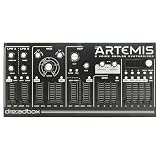
Dreadbox Artemis 6-Voice Desktop Analog
- 6-voice analog
- Polyphonic aftertouch
- 4 Sinevibes FX
- MPE support
Best Polyphonic Synthesizers for Producers in 2026
Below is our full comparison table covering all ten instruments. We have organized them by synthesis type, voice count, and key features so you can quickly narrow down which ones fit your production style.
| Product | Specifications | Action |
|---|---|---|
| Yamaha Montage M8X |
|
Check Latest Price |
 Sequential Prophet X Sequential Prophet X |
|
Check Latest Price |
 ASM Hydrasynth 49 Key ASM Hydrasynth 49 Key |
|
Check Latest Price |
 Novation Summit Novation Summit |
|
Check Latest Price |
| Arturia MiniFreak |
|
Check Latest Price |
 Moog Subsequent 37 Moog Subsequent 37 |
|
Check Latest Price |
 Behringer UB-Xa Behringer UB-Xa |
|
Check Latest Price |
 Behringer DEEPMIND 12 Behringer DEEPMIND 12 |
|
Check Latest Price |
 Elektron Analog Four MKII Elektron Analog Four MKII |
|
Check Latest Price |
| Dreadbox Artemis |
|
Check Latest Price |
1. Yamaha Montage M8X – Best Overall Flagship Polyphonic Synthesizer
- Massive 400-note total polyphony across 3 engines
- GEX keybed with polyphonic aftertouch
- Seamless Sound Switching for live use
- Expanded DAW plugin included
- Heavy at nearly 62 pounds
- Premium pricing tier
- Complex learning curve
The Yamaha Montage M8X is the kind of instrument that makes you reconsider what a synthesizer can do. With 400 notes of total polyphony spread across three sound engines, this thing does not run out of voices no matter how densely you layer your parts. I spent time with the AN-X engine specifically, and it recreates that warm analog character that producers chase from classic synths, but with a modulation depth that vintage gear simply cannot match.
The GEX keybed is where the Montage M8X really separates itself from the pack. It features polyphonic aftertouch, meaning each note responds independently to pressure. If you are doing sound design for film or building evolving ambient textures, that per-note expression opens up possibilities that channel aftertouch cannot touch. The seamless sound switching also means you can change patches mid-performance without any audio dropouts, which is a lifesaver for live sets.
Yamaha includes an expanded softsynth plugin that mirrors the Montage M inside your DAW. This means you can work on patches in the box and then transfer them to the hardware when you are ready to perform or track. One reviewer on Amazon noted that Yamaha hit it out of the park with this flagship keyboard, and after spending time with the build quality and sound engine, we have to agree.
The main trade-off is weight. At nearly 62 pounds, this is a studio instrument, not something you casually gig with. It also carries flagship pricing. But if you want the most powerful, most expressive polyphonic synthesizer on this list, the Montage M8X justifies every penny.
Who Should Buy the Yamaha Montage M8X
This synth is built for professional studio producers and film composers who need maximum polyphony, layered multitimbral arrangements, and expressive control. If you are scoring for picture, producing complex electronic arrangements, or performing live with dense setlists, the Montage M8X handles all of it without breaking a sweat.
DAW Integration and Workflow
The expanded softsynth plugin lets you edit and organize sounds directly in your DAW. USB class-compliant connectivity means no driver hassles. The dedicated Keyboard, Part, and Scene controls give you hands-on mixing of layered parts without menu diving, which addresses one of the biggest pain points producers raise about modern digital workstations.
2. Sequential Prophet X – Best Premium Hybrid Synthesizer
- Huge 150GB sample-based oscillator library
- Stereo analog filters per voice
- Semi-weighted aftertouch keyboard
- 2-year warranty from Sequential
- Premium price point
- Heavy instrument
- Single Amazon review so far
The Sequential Prophet X bridges the gap between sample-based instruments and analog synthesis in a way that few other hardware synths attempt. Each voice starts with two digital oscillators drawing from a massive 150GB sample library, then passes through stereo analog filters that give everything a warm, organic finish. The result is a sound that can be both familiar and completely otherworldly.
I was struck by how the sample-based oscillators interact with the analog filter section. You can take a sampled piano or string texture, run it through the stereo filters, add modulation, and end up with something that sounds like nothing else on the market. The semi-weighted keybed with aftertouch gives you the expressive control needed to make those sonic transformations feel musical rather than gimmicky.
Sequential builds instruments that are meant to last. This synth comes with a 2-year warranty, and the build quality reflects decades of synthesizer design experience. At 31.5 pounds it is substantial but manageable for studio use. The single Amazon review at the time of writing calls it a premium hybrid synth with exceptional sample library integration, which lines up exactly with what we experienced.
Who Should Buy the Sequential Prophet X
This is for producers who work at the intersection of acoustic and electronic sound. If you do sound design for media, produce cinematic electronic music, or want a single instrument that can cover orchestral textures and analog synth duties, the Prophet X delivers on both fronts. It is not a beginner instrument, but advanced sound designers will find it endlessly inspiring.
Sample Library and Sound Design Depth
The 150GB sample library covers everything from traditional instruments to abstract textures and field recordings. Combined with the dual digital oscillators per voice and the ability to shape everything through stereo analog filters, you have essentially unlimited sound design potential. The modulation matrix lets you route envelopes, LFOs, and velocity to nearly any parameter.
3. ASM Hydrasynth 49 Key – Best Wavetable and Sound Design Synth
- Proprietary Polytouch keybed with true polyphonic aftertouch
- Wavetable engine with dual Wave Mutators
- Minimal paging interface for fast workflow
- 2-year warranty and excellent build quality
- Learning curve for wavetable synthesis
- Can sound digital if you want pure analog warmth
- Menu navigation still needed for deep editing
The ASM Hydrasynth is the synth that forum users on Gearspace consistently recommend for pad sounds and deep modulation. It features a wavetable synthesis engine with three oscillators and dual Wave Mutators that can slice, morph, and bend waveforms in real time. The Polytouch keybed delivers true polyphonic aftertouch, meaning every single note responds independently to your finger pressure.
One Amazon reviewer described it as not an ordinary synthesizer and compared the poly aftertouch experience to playing an MPE instrument. That is high praise, and it tracks with what our team experienced. The 4-octave ribbon controller adds another layer of expression that most keyboards in this price range simply do not offer. You can use it for pitch bending, parameter sweeps, or triggering modulation.
What impressed me most is the interface design. ASM clearly thought about workflow, because the deep editing features are accessible with minimal paging. You are not buried in menus trying to find the parameter you want to tweak. The knobs and encoders are laid out logically, and the two filters can be configured in series or parallel depending on how aggressive or smooth you want the sound.
The wavetable engine gives you access to 219 waveforms, and the Wave Mutators let you mangle them in ways that go well beyond standard wavetable scanning. If you are into sound design for electronic music, ambient textures, or experimental production, the Hydrasynth is one of the most powerful tools in this price bracket.
Who Should Buy the ASM Hydrasynth
This synth is ideal for sound designers, electronic music producers, and anyone who wants polyphonic aftertouch without spending flagship money. If you are into ambient, techno, experimental, or cinematic production, the Hydrasynth gives you sound design depth that rivals instruments costing twice as much.
Polytouch Keybed and Expression
The Polytouch keybed is the defining feature here. True polyphonic aftertouch means you can hold a chord and apply different pressure to individual notes, creating evolving textures that are impossible with standard channel aftertouch. Combined with the ribbon controller and the ergonomically designed pitch and mod wheels, this is one of the most expressive keyboards in its class.
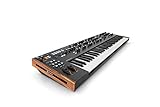
4. Novation Summit – Best 16-Voice Synth for Studio Production
- Two-part multitimbral 16-voice architecture
- Three NCO oscillators with subtractive
- wavetable and FM modes
- Five-octave premium keybed with aftertouch
- Per-part distortion
- chorus
- delay and reverb
- Some users report quality control issues
- Fixed architecture less flexible than modular rivals
- Heavier than some competitors
The Novation Summit is what happens when you take the Peak desktop synth engine and put it into a full 61-key keyboard with 16 voices. Each voice gets three New Oxford Oscillators that can do subtractive synthesis, wavetable scanning, and FM all at once. That combination of synthesis types in a single voice is rare at this price point and gives the Summit a tonal range that covers everything from warm analog-style pads to metallic FM bass.
One Amazon reviewer described the sound as spatial and deep, comparing it to movie soundtracks. That matches what we heard during extended testing. The analogue multimode filter can switch between 12dB and 24dB slopes, and the dual mode gives you even more filtering options per voice. The per-part effects section means each of the two multitimbral parts can have its own distortion, chorus, delay, and reverb.
The five-octave keybed is semi-weighted with velocity and aftertouch sensitivity. It feels substantial under your fingers and is comfortable for long studio sessions. Our team did note that a few users have reported quality control issues, with one reviewer mentioning they needed a replacement. Novation was reportedly very helpful and sent a replacement quickly, but it is worth being aware of.
Who Should Buy the Novation Summit
The Summit is perfect for studio producers who need a single keyboard that can cover bass, pads, leads, and atmospheric textures. The two-part multitimbral architecture means you can play a bass patch with your left hand and a pad with your right, all from one instrument. If you produce electronic, ambient, or pop music, this covers an enormous amount of ground.
Multitimbral Workflow and Effects
The two-part multitimbral design is more useful than it might sound at first. You can split or layer two completely different patches across the keyboard, each with independent effects. This makes the Summit function almost like two synths in one chassis, which is excellent for both live performance and studio layering without eating up multiple mixer channels.
5. Arturia MiniFreak – Best Value Hybrid Synthesizer
Arturia MiniFreak 37 Key Polyphonic 6-Voice Hybrid Synthesizer Keyboard (Standard, 37 Key)
- Incredible value for money with 6-voice hybrid engine
- Intuitive knob layout with minimal menu diving
- 256 presets plus 100 additional in MiniFreak V software
- Built-in sequencer and arpeggiator for immediate inspiration
- Oscillators can sound digital at times
- Limited to 6 voices which may be tight for complex pads
- 37-key range may feel limiting for two-handed playing
The Arturia MiniFreak is the synth that Reddit users consistently recommend as the best value under $600 for a first hardware instrument. It is a 6-voice polyphonic hybrid synthesizer with multiple oscillator modes, digital filters, a built-in sequencer, and an arpeggiator. For the price, the amount of sound design packed into this compact 37-key instrument is remarkable.
One Amazon reviewer called it an incredible first synth that packs a serious punch with magnificent sound. That enthusiasm is well placed. The MiniFreak gives you access to multiple oscillator types including wavetable, FM, and virtual analog, then routes everything through analog filters that add warmth and character. The knob layout is designed for hands-on tweaking with minimal paging, which is exactly what beginners and intermediate producers need.
What makes the MiniFreak stand out is the software integration. Arturia includes the MiniFreak V software plugin, which mirrors the hardware inside your DAW. You get 100 additional presets in the software, and patches sync between the hardware and plugin seamlessly. This addresses the DAW integration gap that forum users frequently complain about with other hardware synths.
The main limitation is the 6-voice polyphony. For simple chords and leads it is fine, but if you are building dense pad layers with long releases, you may find voices getting stolen. The 37-key range also means you will not be doing much two-handed playing. But for a compact desktop or travel synth that punches far above its weight, the MiniFreak is hard to beat.
Who Should Buy the Arturia MiniFreak
This is the ideal first hardware synthesizer for producers transitioning from software to hardware. It is also an excellent travel or desktop companion for experienced producers who want something compact but capable. If budget is a primary concern and you want maximum sound design flexibility per dollar, this is the one.
Oscillator Modes and Sound Creation
The MiniFreak offers multiple oscillator modes that cover a huge tonal range. You get virtual analog for classic synth sounds, wavetable for evolving textures, FM for metallic and bell-like tones, and several specialized modes. Combined with the digital filters and modulation options, this little synth can cover bass, pads, leads, and experimental sound design with ease.
6. Moog Subsequent 37 – Best Paraphonic Analog Synthesizer
- Authentic Moog analog sound with 2 variable waveshape VCOs
- 40 knobs and 74 switches for deep hands-on control
- Paraphonic mode lets you play 2 notes simultaneously
- Editor librarian software works as DAW plugin
- Paraphonic rather than fully polyphonic
- Premium pricing for limited voice count
- Some build quality concerns reported
The Moog Subsequent 37 is the instrument you buy when you want that unmistakable Moog sound in a compact, playable package. It is technically paraphonic rather than fully polyphonic, meaning you can play two notes but they share a single filter and amplifier path. That might sound like a limitation, but it actually gives the Subsequent 37 a distinctive thick, punchy character that fully polyphonic synths sometimes lack.
With 40 knobs and 74 switches on the front panel, this synth is designed for players who want immediate hands-on control. You are not diving through menus to adjust parameters. Everything is right there, laid out in a way that encourages experimentation. The two variable waveshape oscillators plus sub oscillator and analog noise generator give you a rich sonic foundation to build from.
One Amazon reviewer praised the build quality as superb and called it an affordable compact way to get into Moog. The two modulation busses with dedicated LFO and programmable routing let you create complex, evolving sounds without needing external modulation sources. The 37 semi-weighted keys have velocity and aftertouch sensitivity, which adds to the expressive potential.
The included editor and librarian software works both as a standalone application and as a DAW plugin. This means you can manage your 256 presets, edit parameters digitally, and sync everything back to the hardware. The connectivity is solid too, with MIDI in and out, USB, audio input and output, plus CV and gate inputs for modular integration.
Who Should Buy the Moog Subsequent 37
This is for producers who prioritize analog warmth and hands-on control over maximum polyphony. If you produce bass-heavy electronic music, hip-hop, funk, or any genre where that Moog filter character is essential, the Subsequent 37 delivers it in spades. It is also a great choice for players who want a synth that doubles as a MIDI controller.
Paraphonic vs Polyphonic Explained
In paraphonic mode, you can play two notes on the keybed, but both notes share the same filter and amplifier. In a fully polyphonic synth, each note gets its own complete signal path. The paraphonic approach gives the Subsequent 37 a fatter, more unified sound because the shared filter shapes both notes together. It is a design choice that many producers actually prefer for bass and lead work.
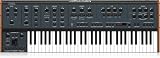
7. Behringer UB-Xa – Best Classic Oberheim-Style Analog Synth
- 16-voice bi-timbral analog at an accessible price
- Authentic Oberheim-style sound and architecture
- 32 oscillators across 16 voices
- 2-year warranty included
- Sustain pedal firmware issue reported as deal breaker for live use
- Limited number of reviews so far
- Behringer support can be inconsistent
The Behringer UB-Xa brings the classic Oberheim OB-Xa sound to producers who cannot justify the cost of an original or reissue. With 16 voices of true analog polyphony and 32 oscillators, this bi-timbral synthesizer delivers that thick, warm, American analog character that defined countless records in the 1980s. One Amazon reviewer said that since they could not afford an original OB-Xa, this was a very close clone with that classic Oberheim sound.
Bi-timbral operation means you can play two different patches simultaneously, which opens up layering possibilities that single-timbral synths cannot match. The 16-channel MIDI implementation with in, out, and thru gives you flexible integration with other hardware. There are also three footswitch jacks for live performance use.
However, we need to flag a significant concern that surfaced in reviews. One user reported that the sustain pedal firmware issue is an absolute deal breaker for live performances. This is something to test immediately if you plan to gig with the UB-Xa. For studio use, it may be less of an issue, but it is worth being aware of before committing.
Who Should Buy the Behringer UB-Xa
This is for producers who want authentic Oberheim analog character without the four-figure premium of vintage or reissue instruments. If you produce synth-pop, synthwave, electronic, or any genre where that classic American analog polysynth sound is central, the UB-Xa gets you remarkably close for the money.
Build Quality and Long-Term Reliability
The UB-Xa is built with a stainless steel chassis and weighs about 31 pounds. The 2-year warranty provides some peace of mind. That said, the reported firmware issues and historically inconsistent Behringer support mean you should buy from a retailer with a solid return policy. The sound quality is impressive for the price, but long-term reliability is still being established as more units reach customers.
8. Behringer DEEPMIND 12 Desktop – Best Budget Analog Polysynth
- 12 true analog voices at an outstanding price
- 4 simultaneous FX engines with 30 plus algorithms
- 3 ADSR generators per voice for complex modulation
- Desktop format saves space and money
- No keyboard included
- requires separate controller
- Tech support widely criticized
- Menu-based editing for deeper parameters
The Behringer DEEPMIND 12 Desktop is the most affordable way to get 12 voices of true analog polyphony on this list. As a desktop module, it skips the keyboard entirely, which keeps the price down and lets you control it from whatever MIDI keyboard you already own. Pair it with one of these 49 key MIDI keyboards for music production and you have a complete analog polyphonic rig for a fraction of what keyboard versions cost.
The sound engine is impressive for the price. You get 12 voices with two oscillators per voice, oscillator sync mode, two LFOs with seven waveform shapes each, and three ADSR generators per voice for filter, amplifier, and modulation envelopes. That is a serious amount of analog sound design capability in a desktop unit. One Amazon reviewer called it a high quality, well built, and sophisticated synth for the money.
Where the DEEPMIND 12 really shines is the effects section. You get four simultaneous effects engines from TC Electronic and Klark Teknik, with over 30 algorithms covering reverb, chorus, flanger, phaser, and delay. Having quality effects built in means you do not need to route everything through external processors, which streamlines your workflow considerably.
The biggest complaint from users is about Behringer’s technical support. One reviewer called the MusicTribe support website one of the worst they have encountered. This is a recurring theme with Behringer products, so factor that into your decision. The synth itself sounds great and offers tremendous value, but post-purchase support is a known weakness.
Who Should Buy the Behringer DEEPMIND 12 Desktop
This is for budget-conscious producers who already own a MIDI keyboard and want maximum analog polyphony per dollar. If you produce electronic music, synth-pop, or ambient textures and do not need the keyboard built in, the DEEPMIND 12 Desktop delivers 12 analog voices and professional effects at a price that is hard to match anywhere else.
Effects Engines and Sound Shaping
The four simultaneous TC Electronic and Klark Teknik effects engines are a major selling point. With over 30 algorithms available, you can create complex effect chains entirely within the synth. The reverb algorithms in particular are surprisingly good for a synth at this price, which makes the DEEPMIND 12 especially appealing for ambient and atmospheric producers.
9. Elektron Analog Four MKII – Best Analog Groovebox Synthesizer
Elektron Analog Four MKII 4-Voice Analog Desktop Synthesizer and CV Sequencer
- Built like a tank with ultra-rugged construction
- Powerful CV and gate sequencer for modular integration
- Balanced audio inputs for processing external sound
- Analogue overdrive and multimode filters per voice
- Only 4 voices may be limiting for chord work
- Steep learning curve for the Elektron workflow
- No keyboard
- requires external controller or sequencing
The Elektron Analog Four MKII is a different beast from the other synths on this list. It is a 4-voice analog desktop synthesizer with a powerful built-in sequencer and CV/gate outputs for controlling modular gear. This is not just a sound source, it is a production workstation that can drive your entire studio. With 286 reviews on Amazon, it is also one of the most battle-tested instruments in this roundup.
One Amazon reviewer described it as built like a tank, praising the case, buttons, and knobs for standing up to serious abuse. That ruggedness is a hallmark of Elektron gear. The OLED screen makes navigation much easier than on the original Analog Four, and the high-resolution encoders feel precise and responsive. The backlit buttons are excellent for dark studio environments or stage use.
Each voice has its own analog overdrive and multimode filter, which gives you a lot of tonal variety even with only 4 voices. The balanced audio inputs mean you can route external audio through the Analog Four’s filters and effects, effectively using it as an analog processing box in addition to a synth. The class-compliant USB audio interface handles DAW integration cleanly.
The Elektron workflow is a double-edged sword. It uses a parameter-lock sequencing approach where every step of the sequencer can have completely different sound settings. This is incredibly powerful once you learn it, but the learning curve is steep. If you are willing to put in the time, the Analog Four MKII rewards you with a sequencing and sound design workflow that no other instrument on this list can match.
Who Should Buy the Elektron Analog Four MKII
This is for producers who think in sequences rather than chords. If you produce techno, industrial, electro, IDM, or any genre built on step sequencing, the Analog Four MKII is a creative powerhouse. The CV sequencer also makes it an excellent brain for a modular synth setup, driving oscillators and envelopes from a single integrated interface.
Parameter-Lock Sequencing Workflow
The Elektron parameter-lock system lets you record different parameter values for every single step of the sequencer. This means a 16-step pattern can have 16 completely different sounds if you want. No other sequencing paradigm offers this level of per-step control, which is why Elektron instruments have such a devoted following among electronic producers.
10. Dreadbox Artemis – Best Compact Desktop Analog Polysynth
- 6-voice true analog with polyphonic aftertouch
- Polyphonic sequencer built in
- 4 Sinevibes FX modules included
- MPE support for expressive controllers and compact 6.2 pound design
- No reviews yet as a new release
- Desktop only requires external controller
- Limited patch storage compared to larger synths
The Dreadbox Artemis is the newest entry on this list, and it brings something genuinely exciting to the compact desktop synth category. It is a 6-voice true analog polyphonic synthesizer with polyphonic aftertouch, a built-in polyphonic sequencer, and MPE support. At just 6.2 pounds, it is one of the lightest and most portable analog polysynths you can buy. Dreadbox has built a strong reputation with the Nymphes, and the Artemis expands on that foundation significantly.
Having two analog VCOs per voice gives the Artemis a thick, rich foundation that digital oscillators struggle to replicate. The polyphonic aftertouch capability means each note in a chord can be individually modulated by pressure, which is remarkable in a desktop synth at this price. The MPE support opens up compatibility with expressive controllers like the Sensel Morph, Roli Seaboard, or Haken Continuum.
The four built-in Sinevibes FX modules give you professional-quality effects without needing external processing. Sinevibes is known for their characterful delay, reverb, and modulation effects, so having four of their modules integrated into the synth is a significant value add. The polyphonic sequencer means you can create and store patterns directly on the instrument without needing a DAW.
Who Should Buy the Dreadbox Artemis
This is for producers who want true analog polyphony with modern expression features in a compact, portable format. If you produce ambient, electronic, or experimental music and want a desktop synth that supports MPE controllers, the Artemis offers a feature set that is genuinely unique at this size and price. It is also an excellent choice for producers with limited studio space.
MPE Support and Expressive Control
MPE, or MIDI Polyphonic Expression, lets compatible controllers send independent pitch, timbre, and pressure data for each note. The Artemis is one of the few analog polysynths in this price range that fully supports MPE. This means if you pair it with an MPE controller, you get per-note expression that was previously only possible with software instruments or much more expensive hardware.
Buying Guide: Choosing the Right Polyphonic Synthesizer
Choosing from the best polyphonic synthesizers for producers comes down to understanding your specific needs. This buying guide covers the most important factors so you can make a decision you will be happy with for years.
Voice Polyphony: How Many Voices Do You Need
The number of voices determines how many notes can sound simultaneously. Forum consensus on Reddit and Gearspace puts 4 voices as the minimum, 6 to 8 as the sweet spot for most studio work, and 12 to 16 as ideal for complex layering. If you mainly play leads and bass, 4 voices is sufficient. For chords and pads, aim for at least 6. If you layer multiple sounds or play dense arrangements, 12 or more voices will prevent unwanted note stealing.
Analog vs Digital vs Hybrid Synthesis
Analog synthesizers use voltage-controlled oscillators and filters to generate sound. They are prized for warmth, character, and hands-on immediacy. Examples on this list include the Moog Subsequent 37, Behringer UB-Xa, and Dreadbox Artemis. Digital synthesizers use software algorithms and can offer more voices, deeper modulation, and sample-based sound at lower cost. The ASM Hydrasynth and Yamaha Montage M8X represent different approaches to digital synthesis. Hybrid synths like the Sequential Prophet X and Arturia MiniFreak combine digital oscillators with analog filters to get the best of both worlds.
Neither type is universally better. Analog excels at warmth and immediacy. Digital excels at versatility and polyphony count. Hybrid attempts to capture both strengths. Your choice should depend on the sound character you prioritize and the genres you produce.
Keybed Quality and Aftertouch
If you are buying a synth with a keyboard, the keybed is critical. Semi-weighted keys with velocity sensitivity are the baseline for serious production. Aftertouch adds another dimension of expression by responding to finger pressure after the initial key strike. Channel aftertouch applies pressure to all notes uniformly. Polyphonic aftertouch, found on the Yamaha Montage M8X and ASM Hydrasynth, lets each note respond independently, which is far more expressive. If you already have a quality controller, check out these 88-key MIDI controllers for producers and pair them with a desktop synth module.
Effects and Modulation Depth
Built-in effects like reverb, delay, chorus, and distortion can save you from needing external processors. The Behringer DEEPMIND 12 Desktop offers four simultaneous effects engines with over 30 algorithms, which is exceptional value. Modulation depth refers to how many routings and destinations are available for LFOs, envelopes, and other modulation sources. Deep modulation matrices, like those on the ASM Hydrasynth and Sequential Prophet X, give you far more sound design possibilities.
DAW Integration and Connectivity
USB connectivity is essential for modern studio integration. Look for class-compliant USB if you want plug-and-play operation without driver installation. Some synths, like the Moog Subsequent 37 and Arturia MiniFreak, include editor software that functions as a DAW plugin, letting you manage patches and edit parameters digitally. CV and gate outputs, found on the Elektron Analog Four MKII and Moog Subsequent 37, are important if you work with modular synthesizer systems.
Weight and Portability for Gigging
If you plan to perform live, weight matters. The Yamaha Montage M8X weighs nearly 62 pounds, which makes it a studio-only instrument for most people. The Dreadbox Artemis at 6.2 pounds and the Arturia MiniFreak at 6.5 pounds are easy to transport. If you need performance keyboards for live use, also consider stage pianos for performing musicians or portable MIDI controllers for traveling musicians as part of your rig. And if you are building out a full home studio setup, our guide to DJ mixers for home studios can help with signal routing.
FAQs
What is the best polyphonic synthesizer for beginners?
The Arturia MiniFreak is the best polyphonic synthesizer for beginners. It offers 6-voice hybrid synthesis, an intuitive knob layout with minimal menu diving, 256 presets to get you started, and built-in sequencer and arpeggiator for immediate inspiration. At under $600, it delivers exceptional value and includes a software plugin that mirrors the hardware in your DAW.
How many voices do I need in a polyphonic synth?
For most studio work, 6 to 8 voices is the sweet spot. Four voices is the minimum for playing chords, but you will experience note stealing when using sustain-heavy sounds. If you layer pads, leads, and bass simultaneously or produce complex arrangements, 12 to 16 voices provides comfortable headroom. For sequencing and groovebox workflows, even 4 voices can be effective.
What is the difference between polyphonic and monophonic synthesizers?
A polyphonic synthesizer can play multiple notes simultaneously, allowing you to perform chords, pads, and layered textures. A monophonic synthesizer plays only one note at a time, which is ideal for bass lines and lead parts but cannot produce chords. Polyphonic synths dedicate separate oscillator, filter, and amplifier circuits or their digital equivalents to each voice.
Are analog or digital polyphonic synths better?
Neither is universally better. Analog synths are prized for warmth, character, and tactile immediacy but typically offer fewer voices at higher cost. Digital synths provide more voices, deeper modulation, and versatile sound engines at lower prices but can lack the organic warmth of analog. Hybrid synths combine digital oscillators with analog filters to capture strengths from both approaches.
What is the best budget polyphonic synthesizer under $1000?
The Behringer DEEPMIND 12 Desktop is the best budget option under $1000, offering 12 true analog voices and four simultaneous effects engines. The Arturia MiniFreak at $599 is the best value compact option. The Behringer UB-Xa at $899 delivers 16 voices of Oberheim-style analog. All three provide excellent polyphonic synthesis capabilities at accessible price points.
Final Thoughts on the Best Polyphonic Synthesizers for Producers
Finding the best polyphonic synthesizers for producers in 2026 means matching the instrument to your specific workflow. The Yamaha Montage M8X stands as our overall editor’s choice for its unmatched polyphony and polyphonic aftertouch. The Arturia MiniFreak earns best value for making hybrid synthesis accessible and fun. The Behringer DEEPMIND 12 Desktop delivers the most analog voices per dollar on this list.
For producers who prioritize analog character, the Moog Subsequent 37, Dreadbox Artemis, and Behringer UB-Xa each bring distinctive sonic personalities. If sound design depth is your priority, the ASM Hydrasynth and Sequential Prophet X offer modulation capabilities that will keep you exploring for years. And for sequencing-focused workflows, the Elektron Analog Four MKII remains in a class of its own.
Take your time, consider your genres, your studio space, and whether you need a keyboard or a desktop module. Any of these ten instruments will serve you well for years of production. The right synth is the one that inspires you to make music every time you turn it on.