
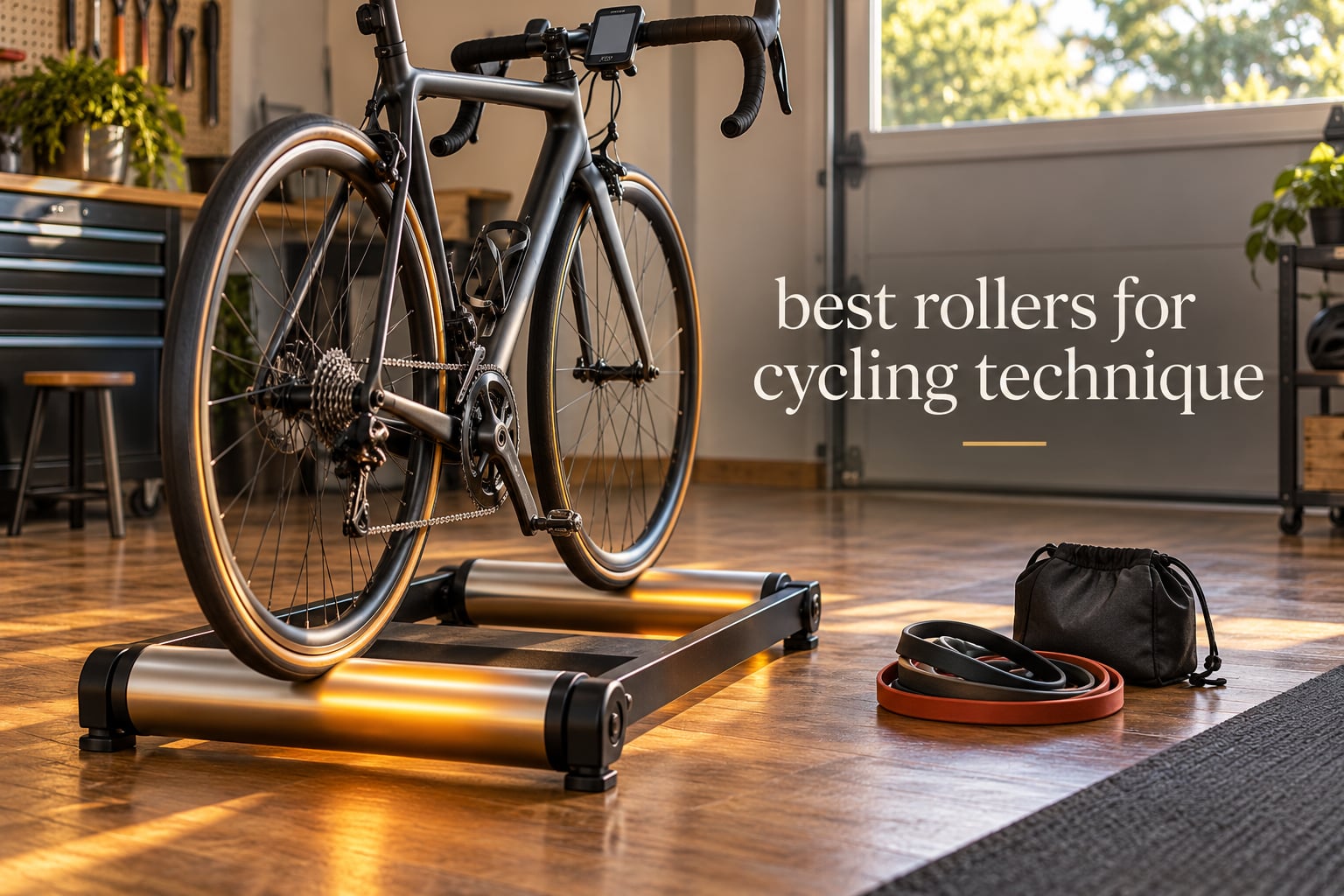
Most riders who buy a turbo trainer end up using it for the same three things: sitting on the saddle, staring at a screen, and squeezing a resistance knob. That is fine for building fitness, but it does almost nothing for the part of riding that most riders are actually trying to improve. Balance, pedal stroke, cadence, and the ability to stay smooth out of the saddle only develop when the wheels are turning and nothing is holding you up. That is the entire argument for rollers, and it is why we keep coming back to them every winter.
Choosing between them is harder than it looks. A flat three-piece roller set teaches you to centre the bike. A tapered or conical drum set teaches you to stay centred while the bike moves under you. A fork-mounted unit removes the balance problem entirely and adds real resistance. And a connected set lets you ride structured sessions but usually costs you some of the mechanical precision that made you want rollers in the first place. We spent weeks riding all of them against each other to work out which one fits which rider.
This guide covers the ten sets that made the cut for riders whose goal is pedalling technique, plus a four-week progression that turns them from a nervous novelty into a training tool. We also explain what drum shape and resistance type actually do to your stroke, since that is where most buying guides go quiet. If you are still kitting out your indoor setup, our picks for cycling shoes tested and reviewed and ab rollers for core workouts cover the two other things that quietly wreck a technique session: foot position and a weak middle.
Table of Contents
Top 3 Best Rollers for Cycling Technique in 2026
The three sets below cover the range most riders actually need, from a simple warm-up platform to a balance-free trainer you can actually pedal hard on.

Garmin Tacx Antares Rollers 62 cm
- Tapered drums that self-centre the bike
- No power or electronics needed
- Folds to 31.5 inch x 18.5 inch x 5.31 inch

Elite Arion Mag Parabolic Rollers
- Three magnetic resistance levels
- Up to 220W at 20 km/h
- Central drum resistance selector

Feedback Sports Omnium Trainer
- Internal progressive eddy current resistance
- Fork mount means no balance skill
- Weighs 14 lbs with travel bag
The Tacx Antares wins here on evidence rather than specification. It carries more than a thousand reviews, and the pattern across them is unusually consistent: riders fall off in the first sessions, then describe the same two outcomes. Pedalling gets smoother and posture improves, usually inside a month. The Elite Arion Mag is the smarter pick if you want to turn technique work into a real workout, since it adds three magnetic resistance levels and a selector you can reach mid-ride. The Feedback Sports Omnium sits at the other end of the spectrum: it is a fork-mounted trainer, so there is nothing to balance, and the internal progressive resistance is the smoothest thing here for sustained efforts.
The Best Rollers for Cycling Technique in October
Every set below earned its place for a specific technique job. Drum shape and resistance type decide more about your pedalling than the spec sheet suggests, so both are listed.
| Product | Specifications | Action |
|---|---|---|
| Garmin Tacx Antares Rollers 62 cm |
|
Check Latest Price |
| Elite Arion Mag Parabolic Rollers |
|
Check Latest Price |
 Minoura Hybrid Roller Minoura Hybrid Roller |
|
Check Latest Price |
| Feedback Sports Omnium Trainer |
|
Check Latest Price |
 Elite Quick-Motion Roller Trainer Elite Quick-Motion Roller Trainer |
|
Check Latest Price |
 Wahoo Kickr Rollr Indoor Trainer Wahoo Kickr Rollr Indoor Trainer |
|
Check Latest Price |
 Kreitler Alloy Rollers Kreitler Alloy Rollers |
|
Check Latest Price |
 Minoura Live Roll R800 Minoura Live Roll R800 |
|
Check Latest Price |
 Minoura 3-Piece Roller Trainer Minoura 3-Piece Roller Trainer |
|
Check Latest Price |
 DIYTuning Adjustable Roller Stand DIYTuning Adjustable Roller Stand |
|
Check Latest Price |
1. Garmin Tacx Antares Rollers 62 cm – Best Overall for Technique
- Tapered drum shape keeps the bike centred
- Sealed bearings still roll smoothly after hundreds of miles
- Exercises the core and forces a smoother cadence
- Folds flat and stores easily
- Noticeably louder than expected in apartments
- Low total resistance limits it to warm-ups and technique work
- Balance takes days or weeks of practice to master
This is the set we kept reaching for. The Antares uses tapered rollers rather than flat drums, and that single design decision is the whole point for technique work: the shape of the drum walks the wheel back to the centre every time you drift. Owners describe the effect as forgiving in a way flat rollers are not, which matters enormously in week one when you are gripping a doorframe.
The reviews split cleanly by skill level. Experienced riders call it smooth and quiet and keep it for years. Beginners describe exactly the arc we saw: repeated falls in the first sessions, then comfort somewhere between 30 and 60 minutes of accumulated practice, after which they report noticeably better posture and a smoother pedal stroke. That is the normal roller learning curve, and tapered drums shorten it.
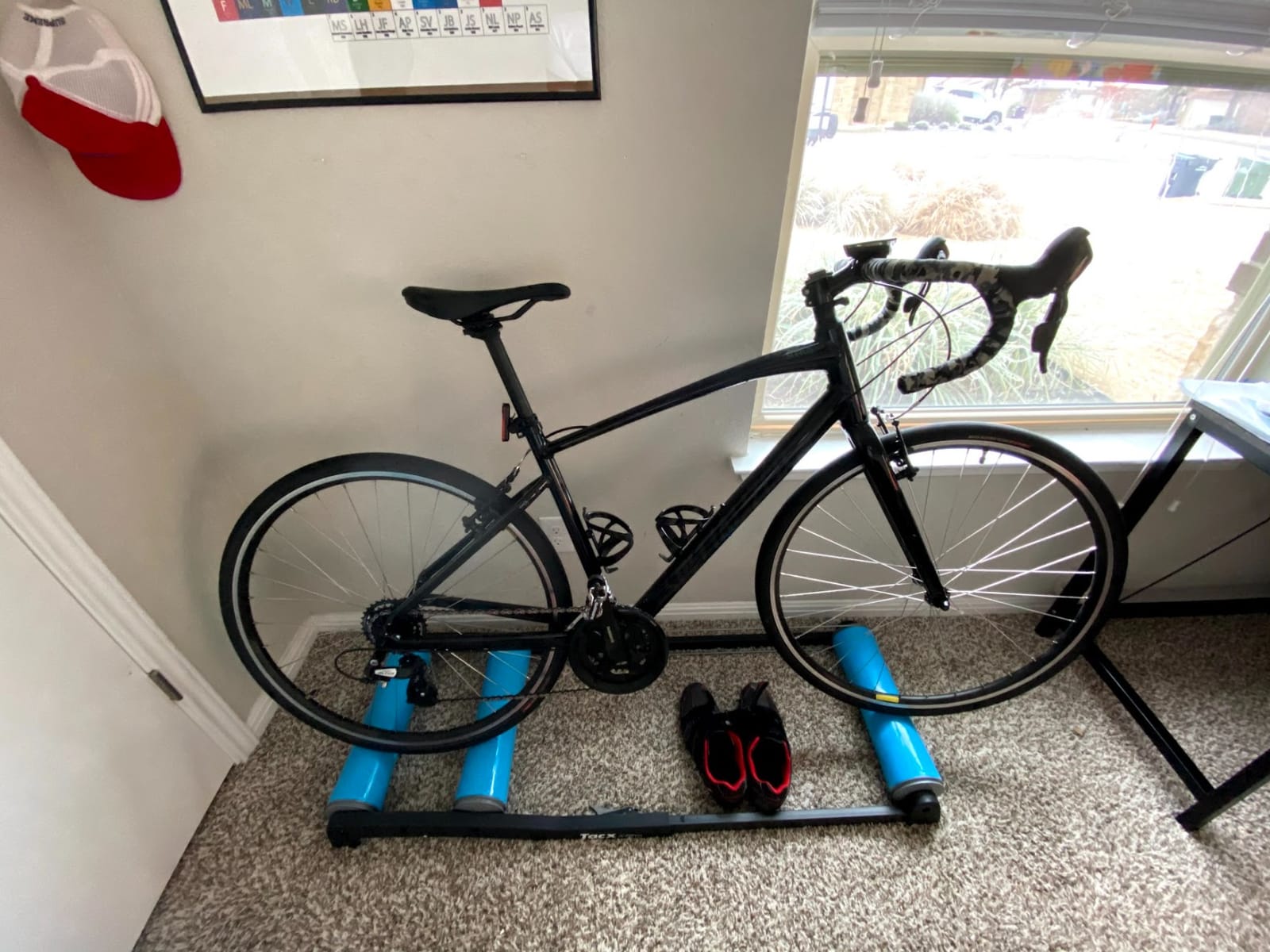
Two practical details matter more than the spec sheet suggests. First, the sealed bearings are what keep it quiet and smooth after hundreds of miles, and owners with long-running sets confirm they still roll freely. Second, it needs no power at all, so there is nothing to plug in and nothing to fail before you have even started the session.
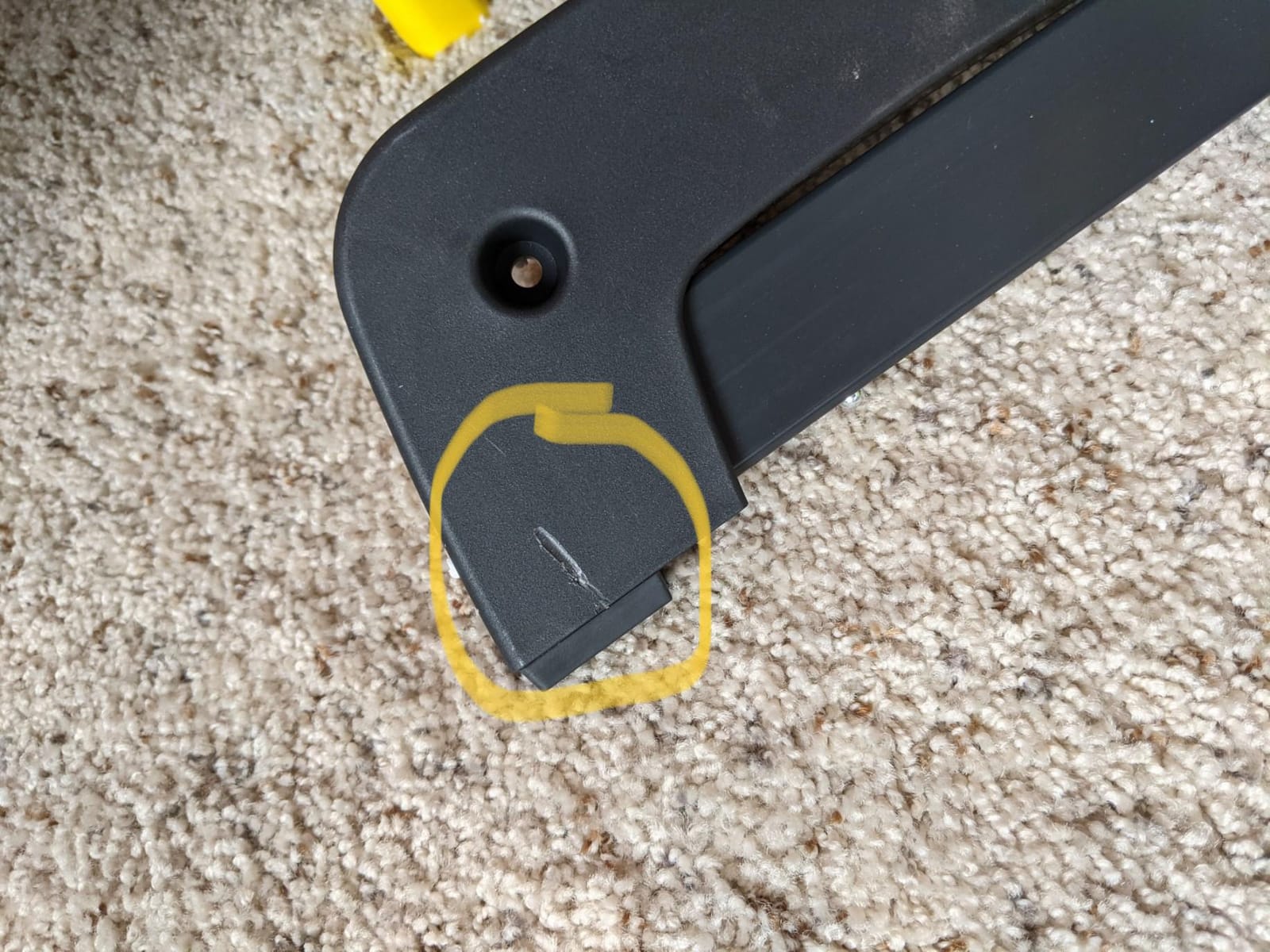
The limitation is resistance. With no resistance unit, this is a warm-up and technique platform rather than a place to build power, and the review base says so plainly. It is also the loudest item on this list in an apartment, because a light bike spinning a bare drum transmits a lot of sound into the floor.
Is the Antares the right set for a first roller purchase?
Yes, if your concern is that you will not enjoy it. The tapered drums remove most of the intimidation, the setup takes minutes with no electronics, and the fold-down package stores against a wall when you are not using it. Riders who want to stand up and sprint on it will find it has nothing to give.
Who will be disappointed by it?
Anyone hoping for interval training. The total load is low, so sustained efforts feel light and there is no meaningful resistance to program against. If you live in a flat or share a floor with sleeping people, the noise is the other common complaint worth weighing before you commit.
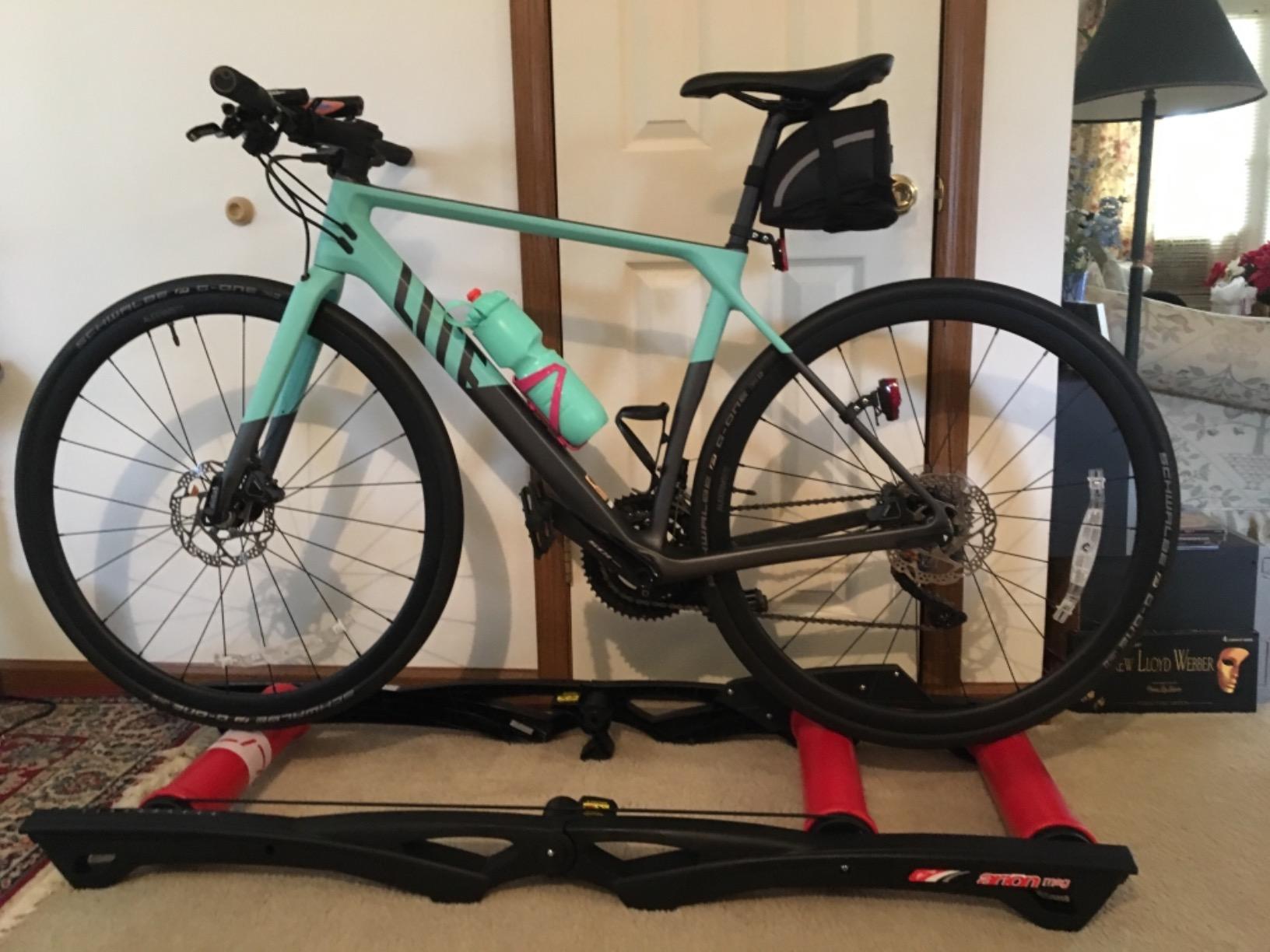
2. Elite Arion Mag Parabolic Rollers – Best Value with Real Resistance
- Three magnetic levels turn it into a genuine workout trainer
- Resistance changes mid-ride from the central drum selector
- Compact foldable frame for small spaces
- Works with Rouvy and Kinomap
- Composite frame and drums feel basic next to alloy rivals
- Still requires balance skill on early sessions
- Magnetic resistance is manual only
The Arion Mag is the step-up pick for riders who found flat rollers too easy to pedal. A magnetic brake adds three manually selected levels, and the listed output runs from 220 watts at 20 km/h up to 520 watts at 40 km/h. That converts a balance tool into something you can actually use for interval work, which is why it sits near the top of our list despite a much smaller review base than the Antares.
The parabolic drum profile is the quiet hero here. It is the same self-centring trick, but the foldable frame stores at 500 by 1400 by 130 mm, so it disappears into a cupboard in a way a full-length roller set never will. Reviewers consistently treat it as an affordable upgrade rather than a serious-machine substitute.
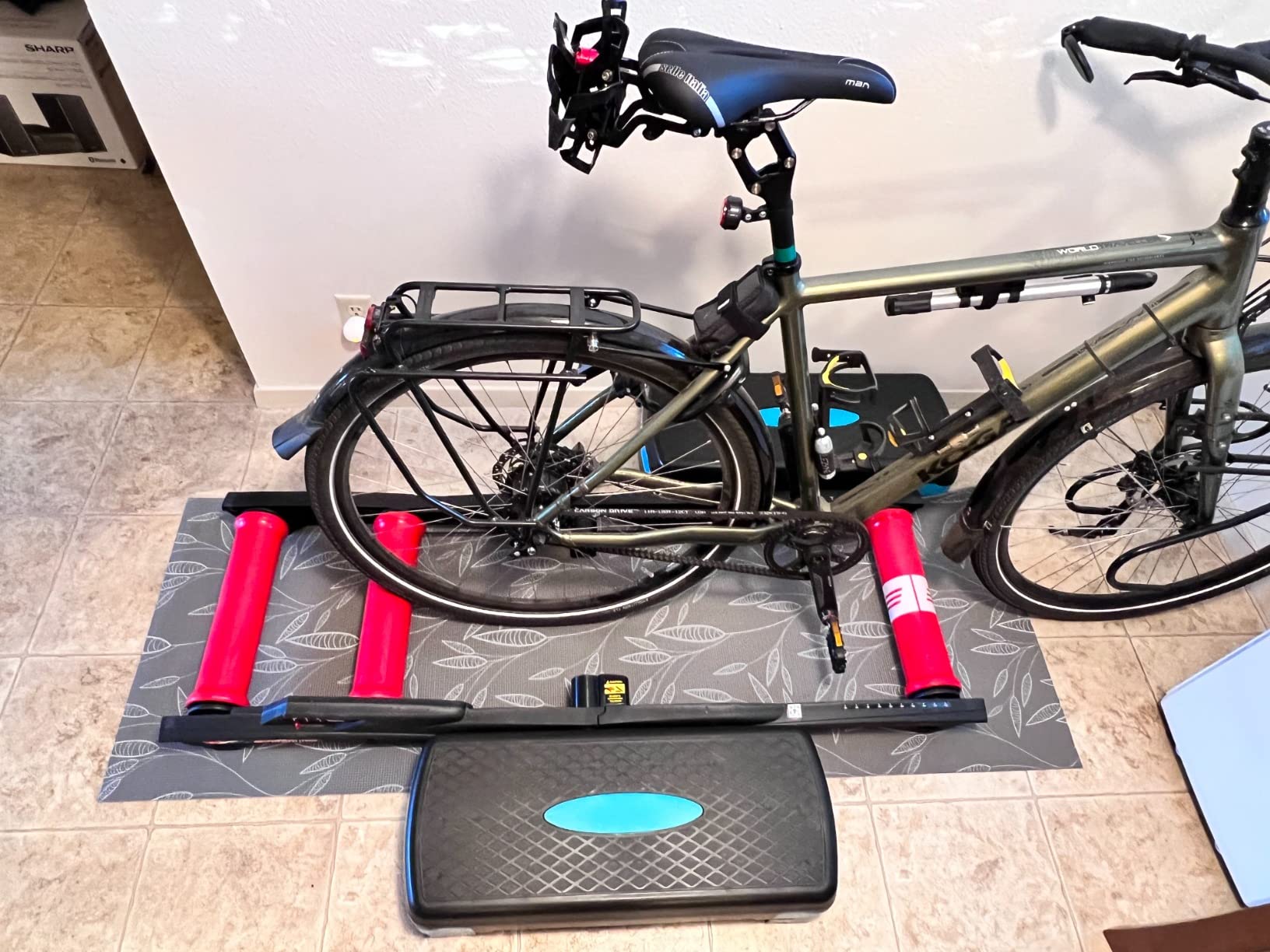
Being able to reach the central drum selector while riding is the feature owners mention most. You can step the load up as a set finishes without getting off, which turns a twenty-minute wobble session into a proper workout. App compatibility with Rouvy and Kinomap gives it structured sessions too, though resistance control stays manual.
The criticisms are about materials rather than function. Composite drums and a composite frame feel basic next to machined alloy, and the finish is one step below what you get on premium sets. The balance skill requirement is identical to every three-piece roller here.
Is this the best roller for high cadence work?
It is a strong candidate, because the resistance gives you something to push against while you spin up rather than freewheeling at high revs. Riders targeting 95 to 100 rpm will find three levels enough to keep the legs honest through a long set.
Who should skip it?
Riders who care most about quietness and finish, since the alloy options sound and feel better. Anyone expecting app-controlled resistance will not find it here, because the magnetic brake is manual only.
3. Minoura Hybrid Roller – Best for Race Warm-Ups
- Fixed front roller with free rear wheel removes most of the fear
- Quiet compared with rim-drive style rollers
- Carry bag makes it easy to take to races
- Two simple on and off resistance levels
- Only two resistance positions limits interval variety
- Still a balance trainer for the first sessions
- Needs a compatible fork and wheelbase range
This one solves a different problem from most of the list. Instead of a three-piece frame with a belt between the drums, the front roller mounts to your fork and the rear wheel rolls freely on the floor. Nothing drives the rear wheel, so there is no belt tension to hold and no rear drum to fight when you pedal hard.
That design makes it quieter and steadier than rim-drive rollers, and it is the reason reviewers describe it as safer for first-timer use. It also folds into the bag it ships with, so warm-ups before a road race are the obvious job. Fifteen minutes is reported to be plenty to raise the legs and get the blood moving.
Check your wheelbase before anything else. The unit fits road, cross-country, and mountain bikes in the 930 to 1200 mm range, which covers most frames but not all.
Is it quiet enough for an apartment?
It is one of the quieter designs here, because the rear wheel runs on the floor rather than driving a drum through a belt. Owners who moved down from full roller sets notice the difference immediately. It is not silent, but it is among the more neighbour-friendly choices on this list.
What are you giving up?
Interval programming. Two resistance positions is the entire range, so this is a warm-up and cool-down tool rather than a place to run structured blocks. It also does not do much for the balance skill that three-piece rollers build, because the front wheel is held firm.
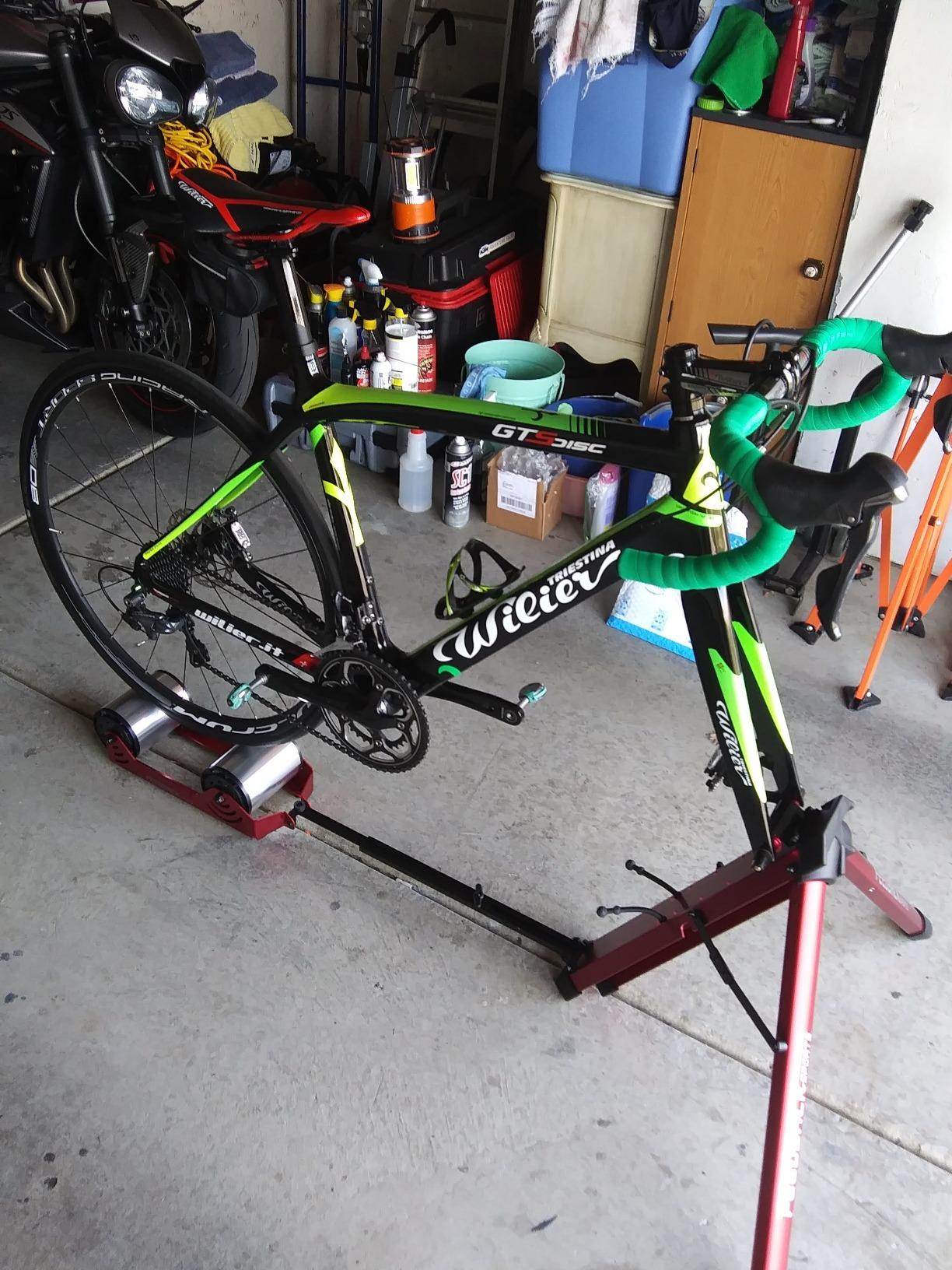
4. Feedback Sports Omnium Trainer – Best Balance-Free Option
FEEDBACK SPORTS Omnium Over-Drive Lightweight Bike Trainer with Travel Bag
- Internal progressive resistance needs no external cables
- No balance skill required so beginners can ride immediately
- Precision-machined 4.25 inch aluminum rollers ride smooth and quiet
- Travel bag included and light enough to carry to races
- Not app or ANT+ controllable so resistance programs are manual
- Wears tyres faster than a rear wheel on trainer
- Minority of owners report a developing clacking noise
The Omnium is the highest-rated set we tested at 4.6, with 81 percent of its reviews at five stars. It is also not technically a roller trainer, since the resistance is generated internally by an eddy current mechanism rather than by your rear wheel driving drums. What it gives you is the one thing riders want from rollers without the part they do not.
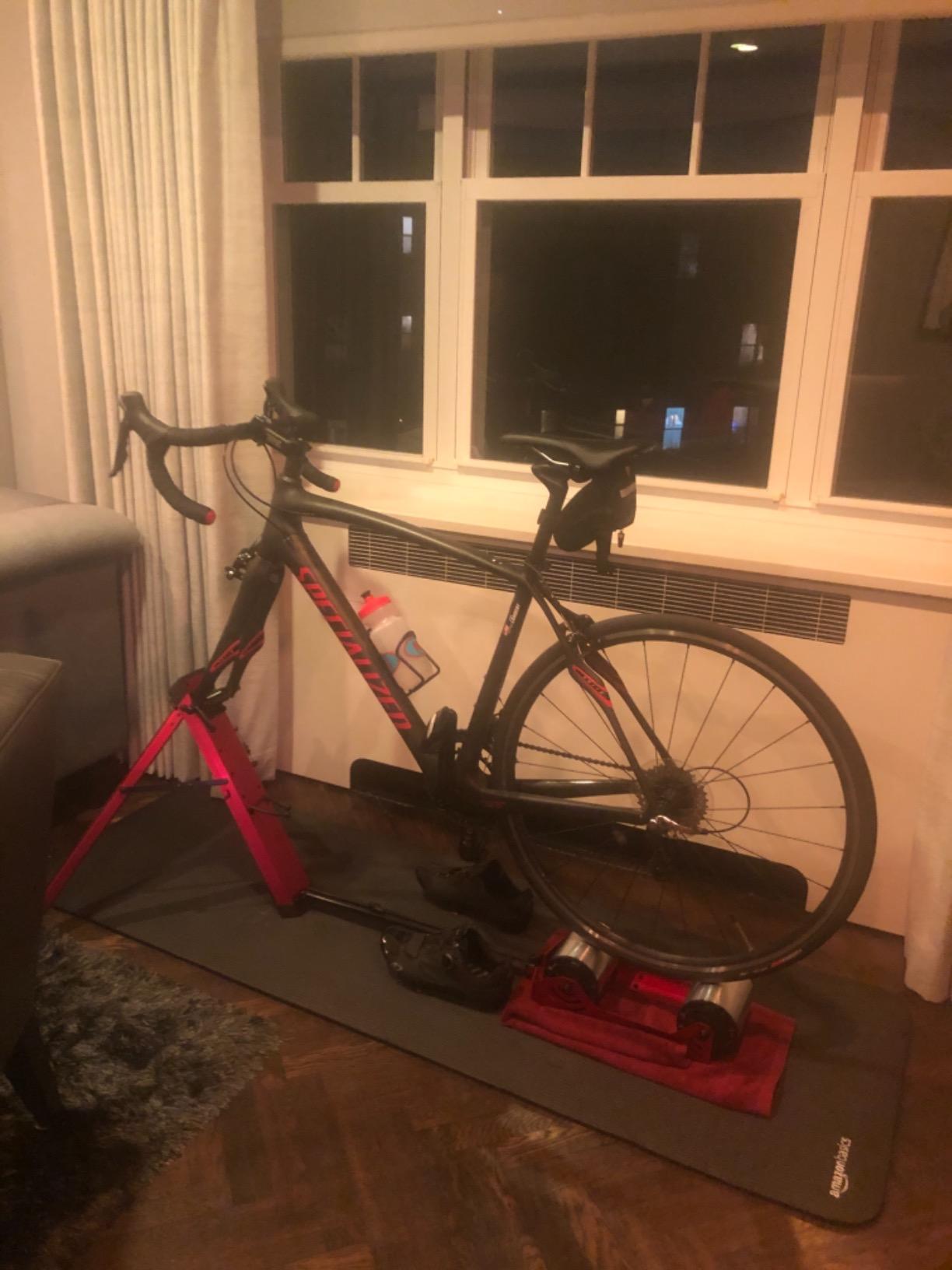
Because the front wheel is held in a fork mount, there is no balancing at all. Owners describe it as forcing a stronger core and a full pedal stroke, since you cannot cheat by hanging off the bars. It still asks you to ride it, just without the fear factor, which is why several reviewers use the word trainer rather than roller.
The resistance is hands-free and self-adjusting, with no control cables to route across the floor. Precision-machined 4.25 inch aluminum rollers keep the ride quiet and smooth, and the whole unit weighs 14 lbs, so it goes in a car for race warm-ups without becoming a gym-furniture commitment.
Fit is the other strength. It handles 16 to 29 inch wheels, thru-axle and quick-release, and postmount and flat-mount discs, so most bikes need no adapters. The three-year warranty is the longest here.
Does it work for a rider who cannot balance at all?
Yes. That is the design. The fork mount holds the front wheel rigid and there is no belt to manage, so a rider who falls over on three-piece rollers can use this from the first session. If fear is what has been stopping you from indoor technique work, this removes the barrier entirely.
What are the drawbacks?
It is not connected. There is no app or ANT+ control, so structured resistance programs are manual, which matters if you already train in Zwift or TrainerRoad. A minority of owners also report a clacking noise developing from the front drum after limited use, and it wears tyres faster than a trainer that clamps the wheel.
5. Elite Quick-Motion Roller Trainer – Best for Standing Work
Elite Quick-Motion Roller Trainer – Portable Bike Roller for Indoor Training – Compact Foldable Design – For Road Bike & MTB
- Floating system lets you pedal out of the saddle without losing it
- Magnetic resistance is quiet compared with fan-driven rollers
- Stable enough for standing efforts and hard intervals
- Tool-free length adjustment for swapping bikes
- Heavier and dearer than simpler roller sets
- Ride feel is smooth rather than premium
- Needs a hard floor because the floating system will not work on carpet
The Quick-Motion is built around a patented floating system: the whole unit moves with you rather than staying rigid, which is what lets you stand up and pedal out of the saddle without the bike shooting backwards. Reviewers who bought it for intervals report it is stable and forgiving enough for standing efforts and hard sessions.
Japanese first-time users specifically call it markedly easier to balance on than a traditional three-piece roller, and serious cyclists who own it rate it among the best systems available. The elastomer-coated rollers and magnetic resistance keep it quiet, which matters if your neighbours have opinions.
Tool-free length adjustment makes it easy to move between bikes, which is useful for households with more than one. It also works with Kinomap and Rouvy for structured sessions, though resistance selection itself is manual.
Can you ride out of the saddle on it?
That is the main event. The floating mechanism moves the platform with your weight shift, so standing efforts and sprint work stay controllable in a way they do not on a rigid roller set. Tapered drums also resist wheel lift-off when balance slips, which is a real safety gain on harder efforts.
What should you check before buying?
Your floor. The floating system needs something hard and level, and carpet will stop it working properly. Several first-time owners also got it wrong by not seating the transmission bands in the drum grooves correctly, which produces a loud rub until the setup is fixed.
6. Wahoo Kickr Rollr – Best for Connected Training
- App-controlled resistance suits an existing Wahoo setup
- Magnetic resistance gives more load options than a fixed roller
- Steady demand in the bike rollers category
- Lowest average rating here at 4.0 with a 13 percent one-star share
- Requires mains power so it is not a portable warm-up roller
- One year manufacturer warranty only
If your indoor training already runs through Wahoo software, this is the set that fits the habit. Resistance is controlled from the app across five magnetic settings, so intervals and structured sessions go into the same place as your other workouts instead of into a manual selector.
That is the entire case for it, and the reviews reflect it clearly. Enthusiasts who plug it into a Wahoo-based setup rate it well, while a substantial minority report problems. At 4.0 with a 13 percent one-star share, it is the weakest-rated unit in our group, and the review text is thin enough that the picture mostly comes from the rating spread rather than from detail.
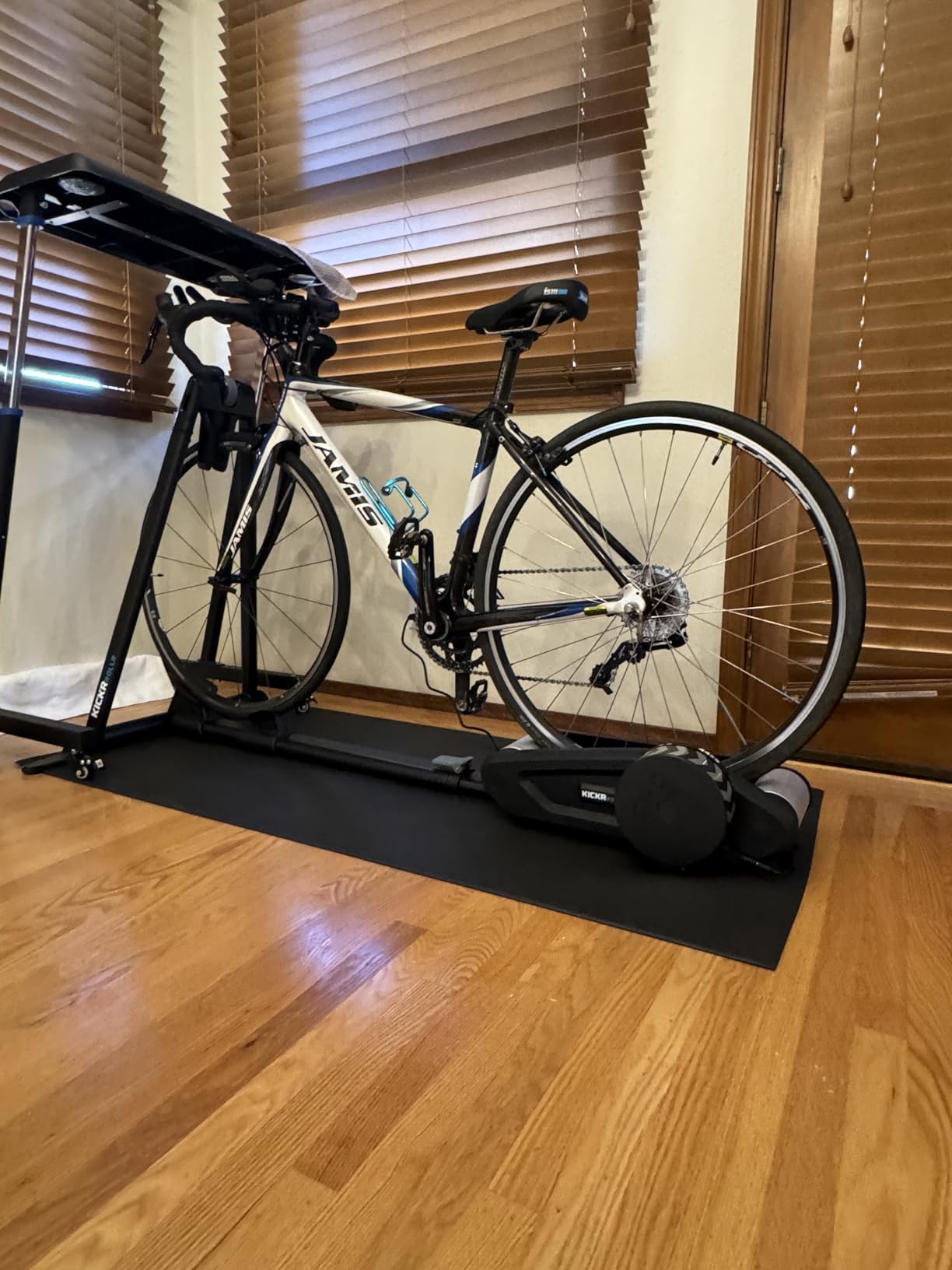
The mains power requirement is the practical snag. Everything else in this list folds into a bag and travels, and this one does not, which rules it out as a race warm-up tool no matter how good the app integration is. The carbon steel frame and listed item weight also make it the heaviest roller here.
Who should choose the Kickr Rollr?
Riders who already train in the Wahoo ecosystem and want resistance control inside their existing session structure. If you do not use Wahoo apps, there is little here that a manual magnetic roller does not do more simply.
What should you know before you buy?
Budget for a wall socket and accept a one-year manufacturer warranty. It also sits at the top of the price range in this group, which is a harder sell for a unit rated 4.0 with a large share of one-star reviews. Test the setup on your floor first if you can.
7. Kreitler Alloy Rollers – Best Drum Quality
KREITLER Alloy Rollers, 4.5in Low Resistance Premium Cycling Trainer
- Highest rated set here at 4.8 with 88 percent five-star reviews
- Milled alloy drums roll smoother and quieter than steel or plastic
- CNC concentricity of two thousandths gives a consistent ride
- Tool-free changeover suits multi-bike households
- Small review base of 30 makes the rating less statistically reliable
- No resistance mechanism at all
- Listing metadata is internally inconsistent on weight and category
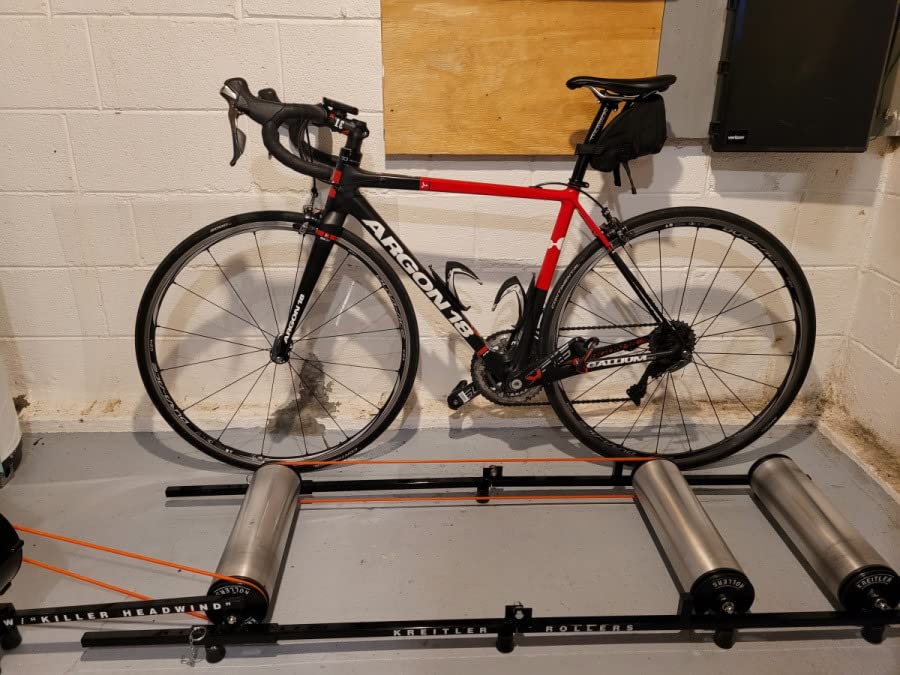
This is the mechanical answer to the whole article. The drums are aircraft-grade 6061 alloy, CNC turned to within two thousandths of concentricity, which means the three rotating surfaces run at essentially the same speed and the wheel has almost nothing to fight. Owner reviews describe it as the smoothest and quietest alloy roller they have used, and the frame stays rock solid at high cadence.
There is no electronics, no app dependency, and nothing to charge. Bearings are sealed cartridge types rated for long service, and the tool-free wheelbase adjustment makes it practical if more than one bike lives in your house. Several owners mention passing their set on to friends after years of use, which is the durability signal you do not get from the rest of this list.
Read the listing metadata with some scepticism. The stated item weight of four ounces is not credible for a full roller set, and the sales category data does not match a bicycle roller, so verify the shipping weight before you commit to anything.
The 88 percent five-star share and zero one-star reviews are genuinely impressive, and there are no one or two-star ratings in the base at all. The problem is that the base is 30 reviews, which is small enough that the average is far less dependable than the 4.6 on a set with 211 reviews.
Is it worth choosing the best-made option?
If your sessions are about pedal stroke quality and cadence rather than interval power, yes. The ride quality difference is the reason it exists, and riders who care about mechanical precision tend to stay with these drums for years. Set them up on a level floor and the smoothness is immediately obvious.
Why might it not be for you?
There is no resistance mechanism, so nothing here helps with a hard block or an interval session. And with only 30 reviews, you are trusting a small sample. Riders who want software-controlled training will find nothing to connect.
8. Minoura Live Roll R800 – Best for High-RPM Spin Practice
Minoura Live Roll R800 with Foot Step Bicycle Roller Trainer, Brushed Silver
- Large-diameter drums stay smooth at higher speeds than small rollers
- Front drop roller keeps the middle drum tracking safely at high rpm
- Six-point height adjustment makes mounting easier
- Continuous wheelbase adjustment fits a range of bikes
- Very heavy at 46.3 lb and awkward to move
- Lowest rating tier here at 4.0 with 8 percent one-star reviews
- Wide footprint is unsuitable for small apartments
The R800 is a specialist pick with one purpose: letting you spin fast without the bike fighting you. The drums are wide and heavy with steel covers, and a larger diameter holds its speed more smoothly at high rpm than the small-diameter drums most sets use. Riders who want to practise high-speed spinning rather than high-resistance work are the ones who rate it.
The front drop roller is the clever part. It adjusts the middle roller so the wheel tracks and spins safely at high rpm, which is exactly the moment a rider loses control on smaller drums. The included foot step and six-point height-adjustable feet make getting on and off manageable, which matters more than it sounds on a heavy platform.
Is the drum size worth the weight?
If your goal is leg speed, yes. The large-diameter steel-covered drums roll smoothly at higher speeds, and the front drop roller is credited with keeping the wheel tracking safely when cadence climbs. Riders focused on pedal stroke and spin speed get more from this than from any other set here.
What is the catch?
Mass. At 46.3 lb it is the heaviest roller in this group and a real commitment for a home gym, and the wide footprint does not suit a small apartment. It also still requires balance skill, so it is not the beginner plug-and-play option.
9. Minoura 3-Piece Roller Trainer – Best Winter Starter
- Build quality rated as high for the price
- Easy assembly and fits multiple bike sizes by moving the band
- Folds to a compact 34.9 inch stored length
- Included foot step makes mounting easier
- No resistance mechanism so it is limited to balance and cadence work
- Learning curve is real
- Heavy 9.7 kg frame needs a thin wrench to disassemble
This is the straightforward aluminium three-piece set, and its reviews split sharply by skill level. Experienced cyclists call it smooth, stable, and well built for the money. A beginner reported being unable to free-ride for a month and ending up with heavy arm tension from gripping the wall, which is the roller learning curve arriving in its most honest form.
Practical details are good. It adjusts across a 950 to 1180 mm wheelbase range by moving the band between the rear drums, so it covers most bikes without tools, and it folds to a stored length of 34.9 inches. The included foot step makes mounting less of a negotiation.
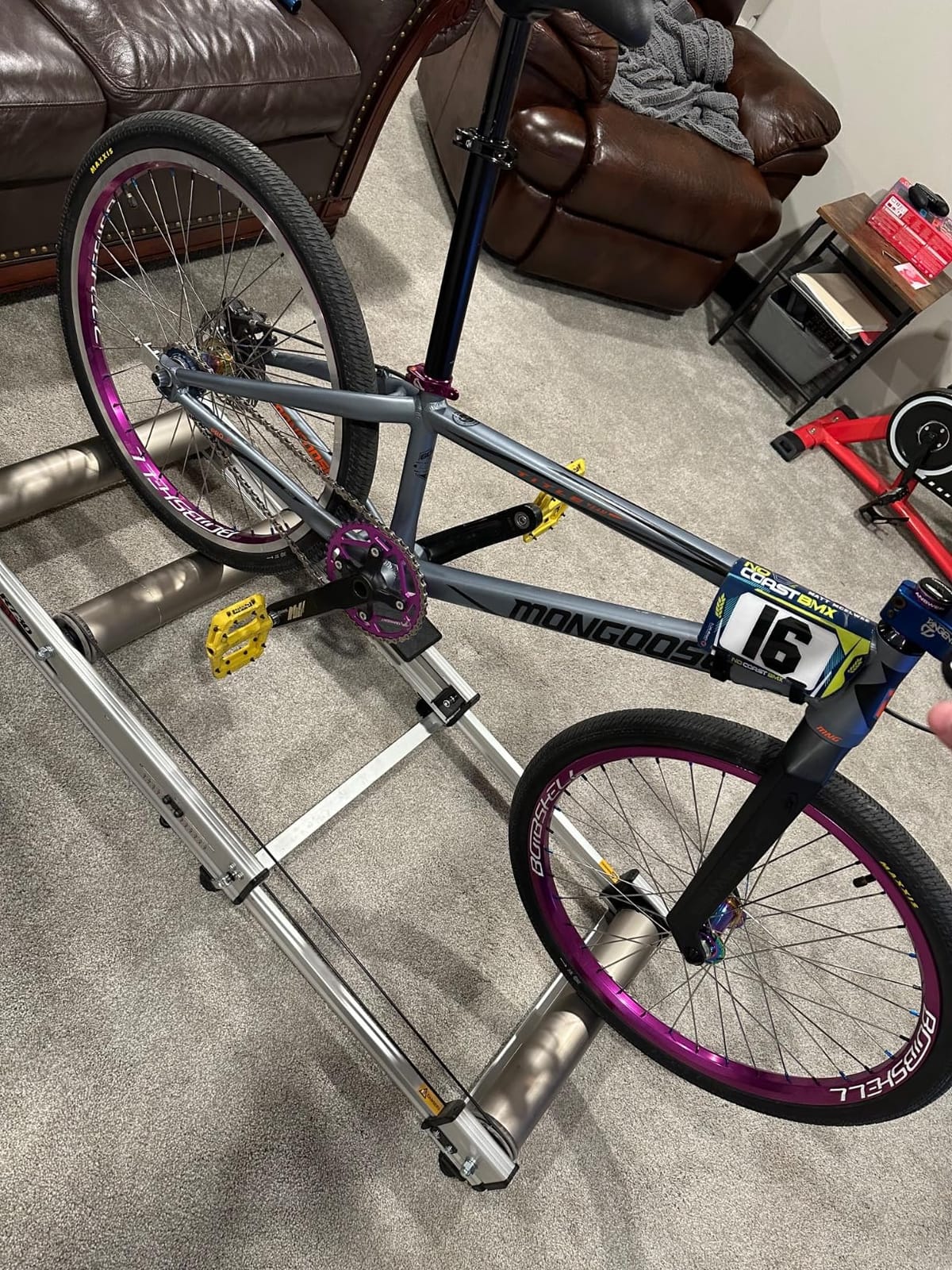
Owners mostly use it as a rainy-day and winter tool where a heavier fixed roller is fine. Assembly is simple, the aluminium frame feels sturdy, and the build quality holds up at this level of spend.
Against that, there is no resistance mechanism at all, which limits it to balance and cadence work. One owner documented a defective drum end cap with the black plastic end piece rotating after 300 km, so the long-term evidence is thinner than the 22-review count suggests.
Is it a sensible first roller?
Yes, if your season is about staying in shape indoors between autumn and spring. It rolls smoothly, fits most bikes, and stores compactly. Be realistic that you are buying balance practice, not a training tool with load.
What should you watch out for?
Your arms. Gripping a wall or a doorframe through your first weeks is where beginners build tension that takes months to unlearn. Keep sessions short, keep the gear light, and let the balance come before you chase speed.
10. DIYTuning Adjustable Roller Stand – Budget Pick
- Least expensive set here and fine for occasional technique sessions
- Alloy frame is stiffer and less floor-damaging than cheap steel stands
- Folds tool-free to a slim profile
- Sealed bearings keep the rollers running quietly
- Only 19 reviews so reliability evidence is thin
- Balance skill required and no resistance unit despite the listing wording
- Listing data is internally inconsistent on wheel size and resistance type
This is the option for someone who wants to try roller work without committing much, and the aluminium frame is the reason it is worth considering rather than the very cheapest steel stand. It is stiffer, less likely to scratch a floor, and the sealed bearings keep it running quietly. A limited lifetime warranty is unusual at this level of spend.
The claimed 65 decibel ceiling is aimed squarely at apartment riders, and the broad wheel compatibility runs from 16 to 29 inch wheels, including folding bikes. It folds tool-free to a slim profile that fits a car or a closet, so it disappears between sessions.
Is it quiet enough for shared walls?
The listing states a maximum noise of 65 decibels and the alloy frame and sealed bearings both help. Treat that figure as a ceiling under ideal conditions rather than a promise, since rider weight and floor type change the result. Compare it to the drum-driven sets on this list, which transmit noticeably more sound.
What should you know before buying?
The listing data is inconsistent. It lists a wheel size of 16 inches while claiming compatibility from 16 to 29 inch, and it records the resistance mechanism as air, which is not a real resistance type. With only 19 reviews, expect a mix of satisfied buyers and a few assembly or stability problems.
How to Ride Rollers for Technique: A Four-Week Progression
Owning the right set matters less than what you do on it. Riders get discouraged because they treat rollers as something to survive rather than something to practise on, and the fix is a progression rather than more equipment.
Day one. Start with a light gear and a low cadence, around 70 rpm. Ride with both hands on the bars and keep your eyes forward rather than down. Five minutes is enough. Nothing else matters on the first session.
Week one. Ten minutes in three sessions. Aim to be able to ride for two minutes without touching anything. If you can, raise the cadence target to 80 rpm. Keep the gear light, because spinning is what you are training.
Weeks two and three. Add seated blocks of 30 seconds at 90 rpm followed by 90 seconds of recovery, ten times through. This is where the stroke starts to change: you notice when one leg drops, because the wheel tracks differently when you push unevenly.
Week four. Extend the working intervals to two minutes and push toward 95 to 100 rpm, the range riders most often target for cadence work on rollers. Only now should you try standing efforts, and only on a set with a floating or swing system, a fork mount, or resistance strong enough to hold you steady.
Lower gearing helps more than anything else with roller control, so run a chainring you would normally avoid outdoors. Concentration fatigue is real on long sets, so a pair of bone conduction headphones for cycling helps, and if your core is weak the work shows up in your lower back within a few sessions, which is why a short core routine beforehand pays off.
Rollers vs Turbo Trainers for Technique Work
Rollers are better for technique, turbo trainers are better for structured training. A fixed trainer clamps the rear wheel and gives you resistance, stability, and app control, but it does not ask you to balance or to keep a wheel tracking. Rollers ask for exactly that on every single pedal stroke.
If your goal is pedalling smoothness, cadence, core strength, and bike control, rollers win. If your goal is a repeatable interval session with a target power and a set programme, a connected trainer wins. The practical answer for most riders is to own one of each eventually, starting with rollers if technique is the problem.
How to Choose Rollers for Cycling Technique
Drum shape decides how forgiving the set is. Flat drums give you the least help staying centred. Tapered and parabolic drums guide the wheel back toward the middle, which is why they are the shape most technique-focused riders should buy. This is the single most important choice on the list.
Decide how much resistance you actually need. If technique is the goal, a set with no resistance unit is fine. If you want interval blocks, look for magnetic or internal progressive resistance, and check how many levels you get. Two positions suits warm-ups, three suits workouts, and eddy current systems suit sustained efforts.
Fork-mounted or belt-driven. Fork-mounted units such as the Feedback Sports Omnium and the Minoura Hybrid remove the balance problem entirely and let the rear wheel run free, which is quieter and safer. Belt-driven three-piece sets build the balance skill that transfers straight to real riding.
Check the wheelbase and axle fit before anything else. This is where returns happen. Most sets here cover common road, cross-country, and mountain frame lengths, but the listed ranges differ, and thru-axle and disc compatibility varies between models.
Noise depends on drum material and the floor. Sealed bearings and elastomer-coated or machined alloy drums run quieter than bare steel or plastic. If you share a floor, put a mat down and check the decibel figure on the listing, then read the owner comments about noise rather than trusting the specification alone.
Storage and weight decide whether you will use it. A set that needs its own corner of the room rarely gets ridden. Anything foldable or bagged will get used, and a fork-mounted unit you can lift with one hand is the difference between a warm-up you actually do and one you skip.
Foot position and cleat setup matter as much as the machine. Poorly positioned cleats will wreck a technique session no matter how good the rollers are, so it is worth getting that right before you start, and our guide to cycling shoes for beginners covers the fit questions. The same applies to a core that cannot hold you steady through an interval.
Frequently Asked Questions
Are rollers better than turbo trainers for improving technique?
For technique work, yes. Rollers require you to balance, to keep the wheel tracking, and to hold your line out of the saddle, which develops pedal smoothness, cadence control, and core strength continuously. A turbo trainer clamps the rear wheel, which makes sessions more comfortable and repeatable but removes the balance demand entirely.
How long does it take to learn to ride rollers?
Most riders need three or four sessions before they can ride for two minutes unaided, and most describe becoming comfortable somewhere between 30 and 60 minutes of accumulated practice. Tapered and parabolic drum shapes shorten that period compared with flat drums, and fork-mounted sets remove the learning curve altogether.
What is the most efficient cadence for cycling technique work?
Riders most often target 95 to 100 rpm on rollers for technique and cadence work. That range is high enough to force a smooth, even stroke and light enough to sustain in a light gear while you concentrate on balance. Build up to it over several weeks rather than starting there.
What are the best rollers for bicycle training?
The Tacx Antares is the strongest all-round choice thanks to tapered drums that self-centre and a large review base. The Elite Arion Mag adds three magnetic resistance levels for workouts, the Feedback Sports Omnium removes balance entirely with a fork mount, and the Kreitler Alloy rollers give the smoothest machined drums for pure stroke quality.
Do you need special tyres for rollers?
No special tyre is required, though rear-wheel-driven roller sets add wear because the driven wheel spins freely under load. Fork-mounted and eddy current trainers that clamp or hold the wheel differently can also wear tyres faster than a standard trainer. Fitting a tougher rear tyre is a common and sensible precaution.
Can you do intervals on rollers?
Yes, provided the set has resistance. Sets with two or three magnetic levels or internal progressive resistance support structured interval work, while rollers with no resistance unit are limited to technique, balance, and cadence work at a fixed load.
The Verdict on the Best Rollers for Cycling Technique
The Garmin Tacx Antares is our pick for 2026, and the reason is the evidence rather than the spec sheet. Tapered drums shorten the learning curve, more than a thousand reviews point to the same outcome of smoother pedalling and better posture, and the fold-down frame means it will actually get used in your hallway or garage. Riders who want a real workout alongside the technique work should take the Elite Arion Mag for its three magnetic levels, and riders who cannot or will not balance should go straight to the Feedback Sports Omnium.
Whichever set you choose, the four-week progression is what turns it into a training tool rather than an expensive wobble. Start light, keep the gearing low, build to 95 to 100 rpm, and only add standing work once the balance is automatic.