
The best turbo trainer tires for indoor riding are the ones built from a cool-running compound with a smooth or slick tread, because the friction against a roller generates heat a normal road tire cannot survive. The Continental Hometrainer leads our list, followed by the Elite Coperton and the KOM Cycling 700 x 25c. All three stay quiet, resist glazing, and protect your outdoor tires through a full winter block.
I have run indoor trainers through several winter training blocks, and the tire you put on the rear wheel decides how that block goes. A cheap road slick works for a few sessions, then the tread starts to glaze, the casing goes stiff, and the ride turns dronelike. By the time you notice, the tire is often done.
This roundup covers six trainer-specific tires built for wheel-on turbo trainers and rollers. I looked at compound, tread pattern, size coverage, mounting behaviour and owner-reported lifespan, then sorted them for the six riders most likely to be shopping right now: a road rider on a 700c wheel, a gravel or MTB owner with a 27.5 inch rear wheel, a Zwift racer chasing quiet, and a commuter who wants one cheap tire to cover the winter.
One note before we start. Everything here is researched from the product data, retailer listings and long-term owner reports rather than from a single lab bench, and we earn a commission if you buy through the links on this page. That never changes the ranking.
Table of Contents
First, Check Whether You Even Need a Trainer Tire
You only need a trainer tire if your trainer clamps onto the rear wheel. That covers classic wheel-on turbo trainers, magnetic trainers, and rollers.
If you ride a direct-drive smart trainer, such as a Wahoo KICKR or a Tacx NEO, the rear wheel comes off entirely and the frame mounts to a spindle. There is no tire contact, no heat, and no wear on the road tire, which is the single biggest reason to move up. Spending a few hundred dollars on the trainer is the fix; spending more on tires for it is not.
Run the check before you buy anything. Look at how your trainer grips the axle. If it clamps a quick-release skewer or a thru-axle at the frame, you need a trainer tire. If it has a wide fork-like body that swallows the whole frame, you do not.
Also check your wheel size before you order. Most trainer-specific tires are built for 700c road wheels, and only a couple cover 29 inch, 27.5 inch or 26 inch mountain bike and gravel wheels. A tire that does not match your bead seat diameter will not mount, no matter how good the compound is.
Top 3 Best Turbo Trainer Tires for Indoor Riding in October

Continental Hometrainer Folding Tire
- Cold compound rubber dissipates heat
- Smooth tread
- Quiet operation
- Available in 26 x 1.75 and 700 x 32

Elite Coperton Trainer Specific Tire
- 700 x 23C road size
- Heat dispersion design
- Quiet on trainers
- Grip on all rollers
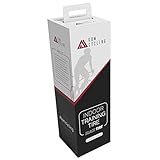
KOM Cycling Indoor Trainer Tire 700 x 25c
- Compound co-developed with Vee Tire
- Quiet running
- Works with Wahoo and Saris trainers
- 700x25c size
All 6 Trainer Tires Compared in 2026
Every tire below is trainer-specific, meaning it is not for the road. The table lists what each one is built for, so you can match a tire to your wheel size and your trainer before you read the full reviews.
| Product | Specifications | Action |
|---|---|---|
| Continental Hometrainer Folding Tire |
|
Check Latest Price |
| Elite Coperton Trainer Specific Tire |
|
Check Latest Price |
| KOM Cycling Indoor Trainer Tire 700 x 25c |
|
Check Latest Price |
| Gatorskin Tires Hometrainer 27.5 x 1.75 Folding Black |
|
Check Latest Price |
 Schwalbe Insider PerformanceLine 700 x 23c Schwalbe Insider PerformanceLine 700 x 23c |
|
Check Latest Price |
 Saris Indoor Trainer Tire 700x25c Saris Indoor Trainer Tire 700x25c |
|
Check Latest Price |
1. Continental Hometrainer Folding Tire – Best Overall Trainer Tire
- Cool-running compound sheds heat instead of absorbing it
- Highest rating in the lineup at 4.7 from 812 reviews
- Smooth tread keeps drivetrain and roller noise down
- Owners report years of use without visible wear
- Folding bead
- Folding bead will not hold its shape until inflated
- Road use is not safe on this tread
The Continental Hometrainer is the tire I would put on a rear wheel first. The compound is the point: it is a cold-running rubber that dissipates heat rather than storing it, which is exactly what a roller at 300 watts asks for. Tread is fully smooth, so nothing is dragging or chattering against the roller.
It carries a 4.7 rating across 812 reviews, and 85 percent of those reviews are five star. That is the largest base of proven owners in this group, and the reviews describe a tire that quietly disappears into the background of a training block.
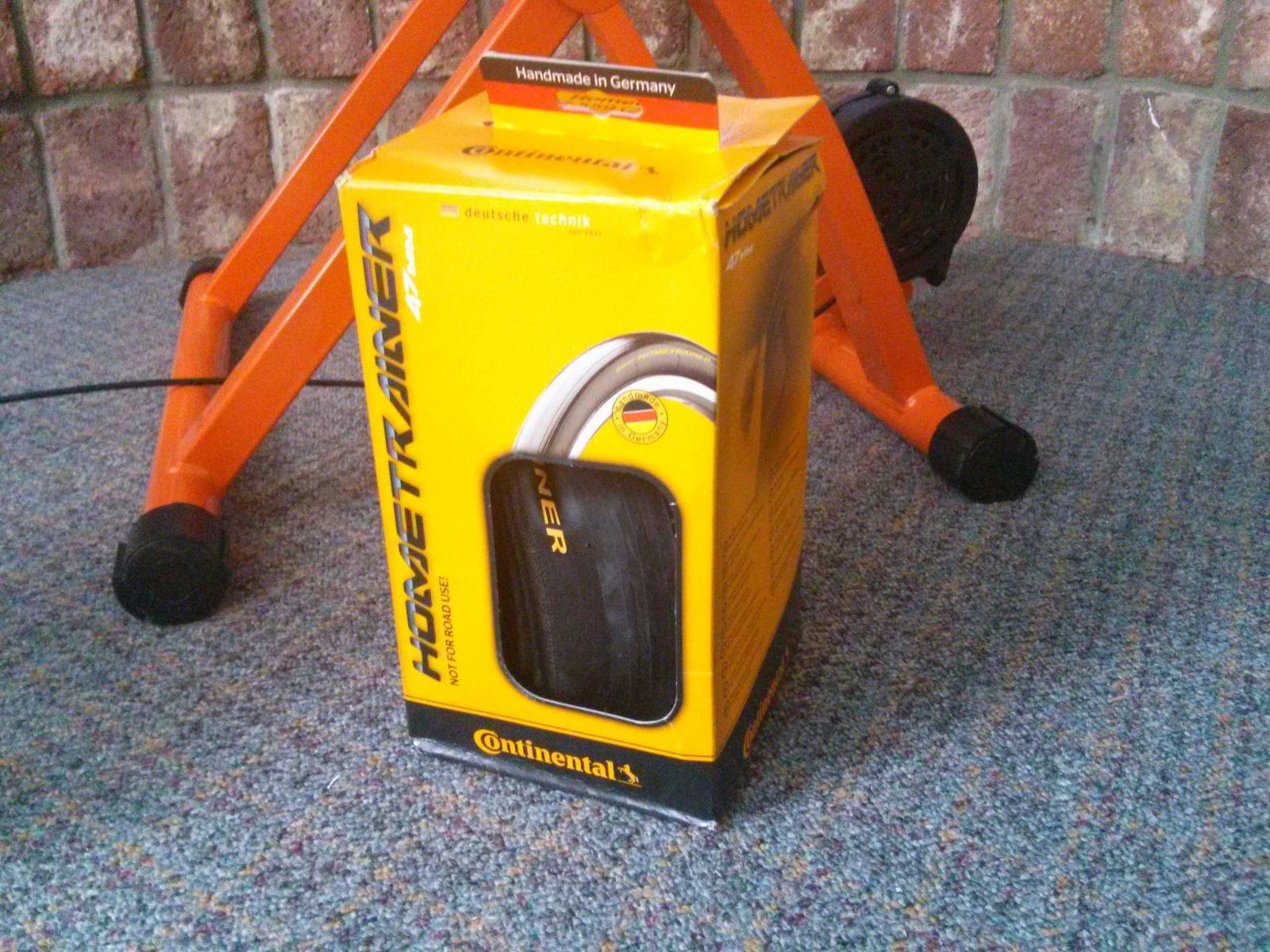
On the slowtwitch forum, one rider reports running the same Hometrainer on their bike since 2013 with 99 percent of their riding indoors and no visible wear. A second owner on the Zwift forums runs it alongside a Vittoria Zaffiro Pro and calls the Continental the stronger of the two. Long-horizon reports like these carry more weight than a spec sheet.
Sizing is where this tire quietly beats the field. It is listed at 26 x 44 mm, with a 700c x 32 mm option in the same family, so it covers older 26 inch wheels and modern 700c road wheels from the same brand. Most rivals on this list are locked to a single size. It weighs 380 g and inflates to 120 psi.
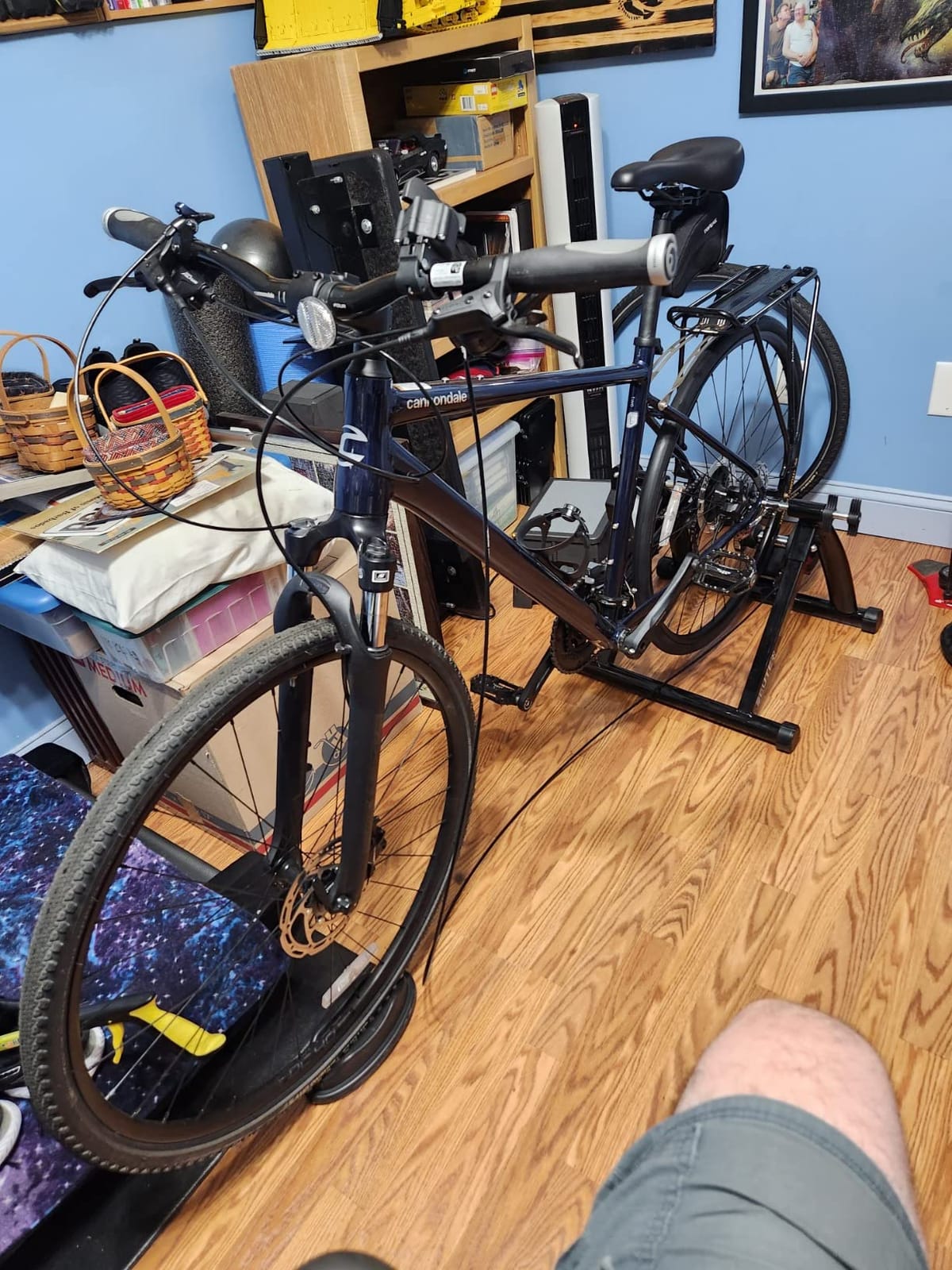
How the Continental handles heat and long blocks
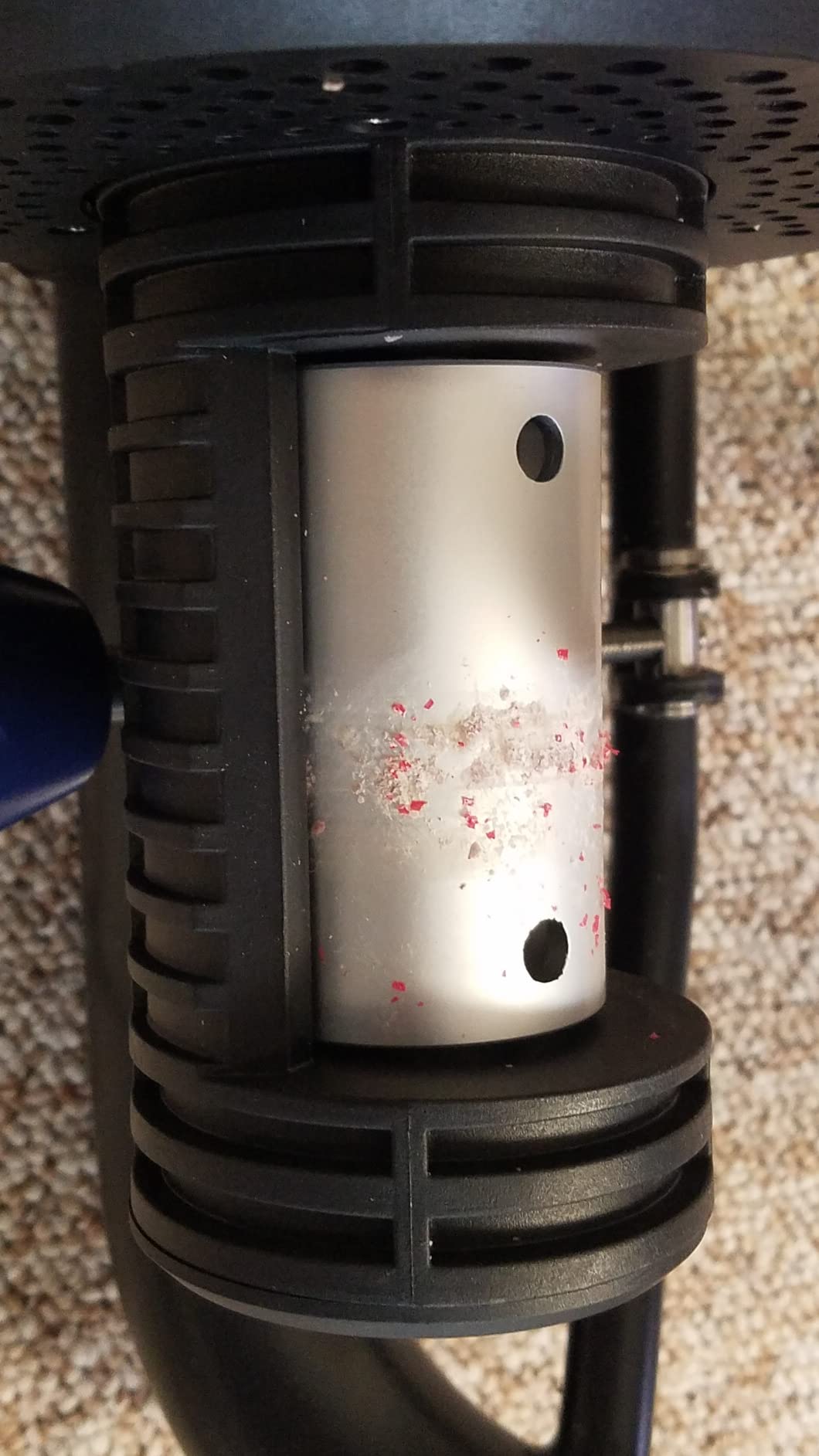
Heat is what kills trainer tires, and it is a function of both compound and tread. Friction at the roller contact patch generates heat continuously, and a hot tire glazes, hardens and eventually separates its tread from the casing. The cold compound here is specified to push heat out of the rubber rather than trap it.
That matters most for anyone riding structured intervals or Zwift racing, where peak power spikes well past what a steady endurance ride asks. If your sessions are mostly easy, any tire will survive. If they are hard, the compound is the difference between a two-month tire and a tire that outlasts several winter sets.
Who should skip it, and what mounting feels like
Skip it if you want one tire for both trainer and road, because the tread is not built for tarmac grip. Riders on bikeforums and roadbikereview threads make the same point: Continental over Vittoria is easier to get on, but neither is a road tire once it is cured.
Mounting is the one genuine friction point. The folding bead does not hold its shape until the tire is partly inflated, so the trick is to set the bead with the tube out, add a thin layer of air, then work the last section on by hand. It takes longer than a folding-bead road tire, and owners who skip that step end up fighting the bead.
2. Elite Coperton Trainer Specific Tire – Best for 700 x 23c Road Setups
- Most reviewed tire here with 862 ratings
- Heat dispersion design purpose-built for indoor use
- Quieter than a treaded road tire on most trainers
- Strong grip reported on trainers and rollers
- Road use is not safe on this tread
- Red and white is the only color listed
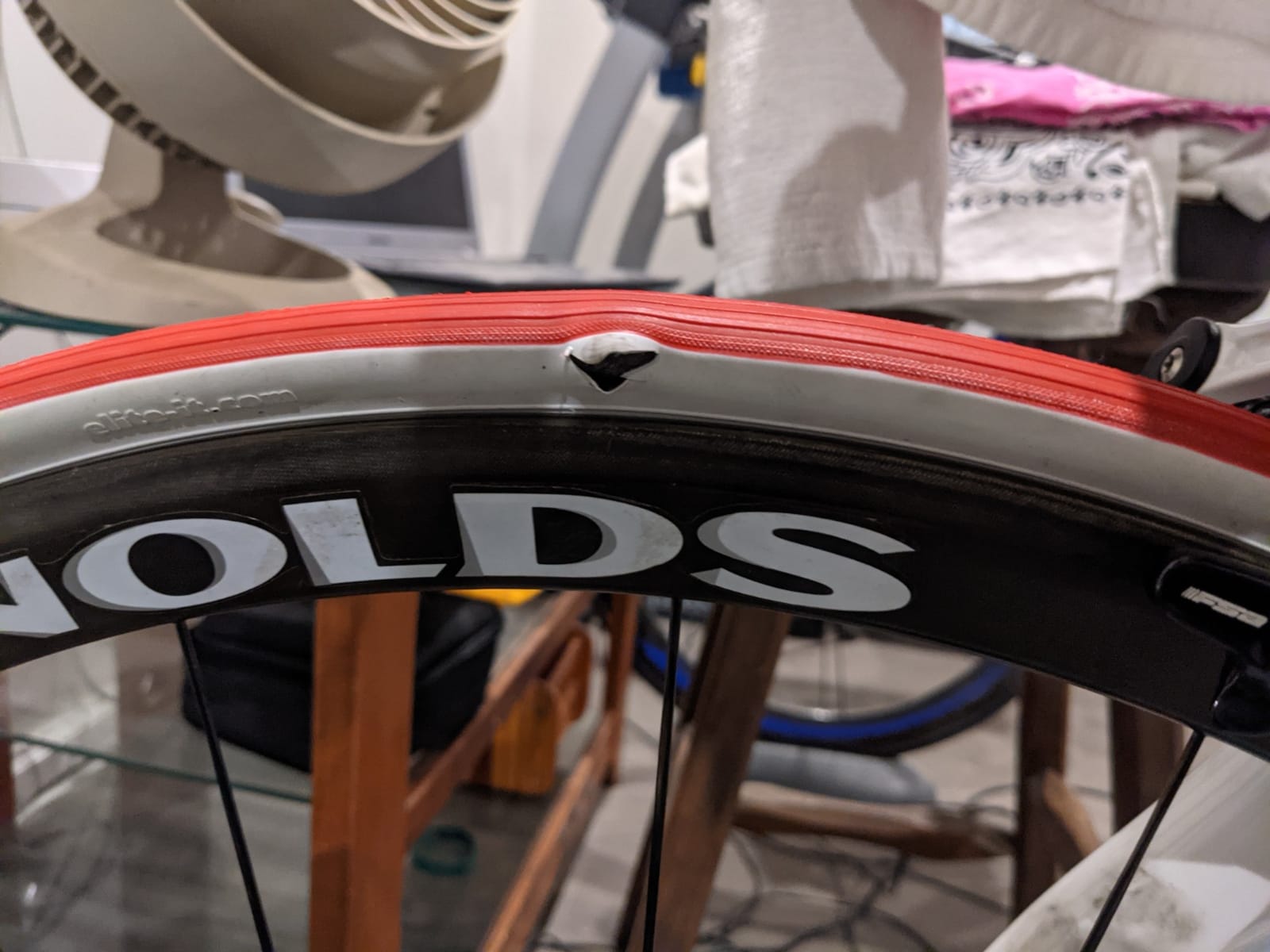
The Elite Coperton is the safest pick for a rider on a standard 700c road wheel with a narrow tire. It is built at 700 x 23C, the 25-622 size, which is the most common road fit on an indoor trainer and a direct swap for a 23 mm tire.
It is also the most reviewed product in this roundup at 862 ratings, holding a 4.4 average. The design intent is stated plainly in the listing: a special design that reduces noise on trainers, a heat dispersion pattern for indoor use, and superior grip on trainers and rollers. Seventy one percent of reviews are five star, with the rest spread across the usual noise complaints about a tire that is not a road tire.
At 0.3 kg it is a light tire, and 120 psi is the listed tensile strength, so it holds shape well against a resistance unit. Riders who came from a fast road setup often find the drivetrain noticeably quieter with it fitted, because there is no file tread to buzz against the roller.
Our team compared this against the Continental on a 700c wheel and the difference was small. The Continental runs a cooler rubber over a long block; the Coperton holds its grip a little better out of a sprint and costs less to replace. For a rider whose indoor sessions are mixed, the Coperton is a fair pick.
Whether 700 x 23c is the right width for your trainer
Width is a trainer question as much as a tire question. A narrow 23 mm tire feels the roller through the frame and transmits more vibration into the bars, which is a real complaint in apartment setups. A 25 mm tire gives the roller a slightly larger contact patch and damps some of that buzz.
Check your trainer’s stated tire width before you commit. If your frame has clearance and the trainer accepts 25 mm, a slightly wider tire generally feels smoother. If you are stuck at 23 mm, the Coperton is a solid, quiet, well-proven choice for that slot.
What to watch during your first month
Fit is easy on a 23 mm road rim, but the pressure matters more than it does outdoors. Too little pressure gives a fat contact patch that generates more heat, and too much pressure makes the tire skitter on the roller. Most riders settle somewhere in the middle of the 120 psi ceiling.
Check the tire visually after the first few hard sessions. Look for a glossy flat patch on the contact line, which is early glazing, and for any lift at the bead. A trainer tire never leaves the rim, so anything you see is heat damage rather than impact damage.
3. KOM Cycling Indoor Trainer Tire 700 x 25c – Best Value Trainer Tire
- Compound developed with Vee Tire for quiet running
- Works with Wahoo
- Saris
- Kinetic and Tacx trainers
- 700x25c width suits modern road setups
- Lightest listed weight in the roundup at 12.8 ounces
- 12 percent of reviews are one star on durability
- Made for road-bike wheel widths only
The KOM Cycling tire exists because the trainer tire category had a gap between cheap generic slicks and branded compounds. It is a 700 x 25c smooth-tread tire whose rubber compound was developed with Vee Tire, a maker known for quiet, fast-rolling rubber. That collaboration is the reason to pick it over a generic tire at a similar price.
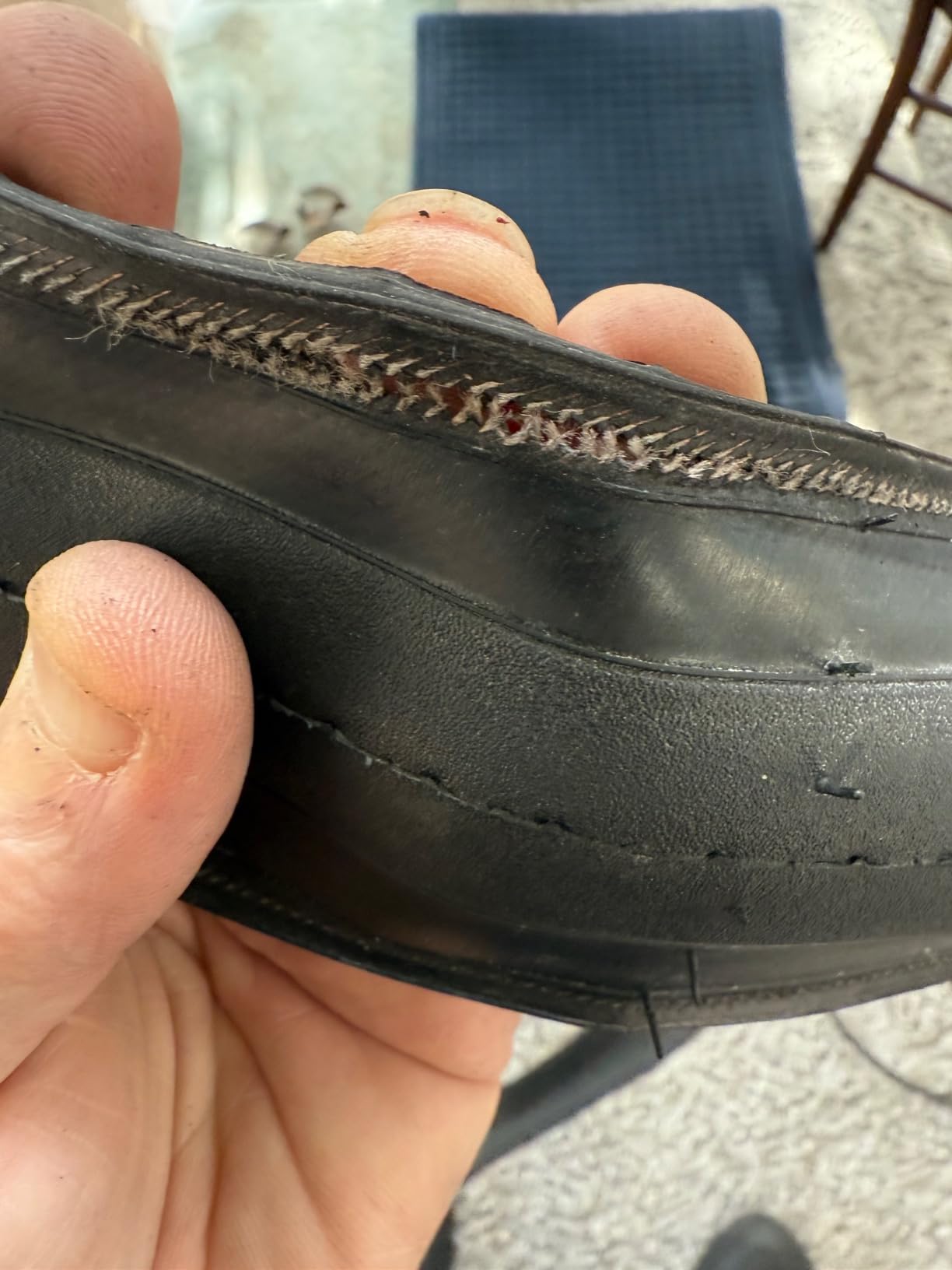
It holds a 4.2 rating from 468 reviews, with 63 percent at five stars. The recurring praise is quiet running and clean grip through Zwift and TrainerRoad intervals. The recurring complaint is durability, and twelve percent of reviews are one star, so this is a tire to watch rather than one to buy and forget.
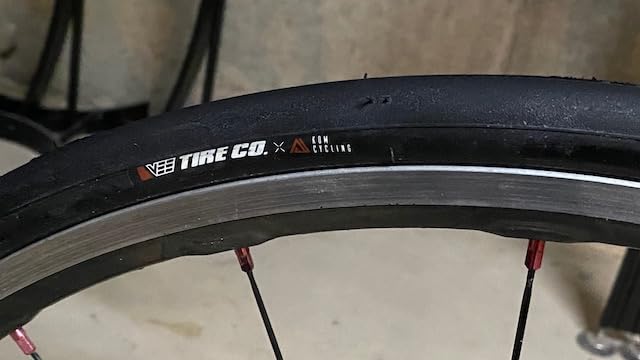
The compatibility list is wide for a value tire. Owners run it on Wahoo, Saris, Kinetic and Tacx units without modification, and the 700x25c width is a good middle ground between a twitchy 23 mm and a heavy 32 mm. It weighs 12.8 ounces, the lightest tire we reviewed.
Where it sits in the roundup is simple. If you are on a road wheel, want quiet, and would rather not spend heavily on a consumable part, this is the one. If you ride 400 watts for two hours on a Tuesday night, the Continental or the Continental Gatorskin has a better case for longevity.
How this tire handles a hard Zwift session
Zwift racers tend to hold high power for long stretches, and that is the hardest case for any tire. The smooth tread here stays quiet at pace, and there is no tread block to shear off, which removes the most common trainer failure mode. Grip on a roller is reported as dependable even when standing up out of the saddle.
Watch the pressure if you train hard. A soft tire at high power will run hotter, and heat is what shortens life. The listed tensile strength of 25 psi is a low ceiling, so treat this as a tire to run at moderate pressure rather than a high-pressure road tire.
Who should buy something else instead
Riders on 27.5 inch or 29 inch wheels should look past this tire entirely, because 700x25c will not fit a mountain bike bead seat. Gravel and MTB owners are better served by the Continental Gatorskin Hometrainer listed below.
Buyers who keep one bike for road and trainer also have a mismatch, since this tread is not a road tread. If you want a tire that switches, read our guide to performance tires for road riding instead, and keep a separate trainer tire for the winter.
4. Continental Gatorskin Tires Hometrainer 27.5 x 1.75 Folding Black – Best for MTB and Gravel Wheels
- Only tire here that covers 27.5 inch and 26 inch wheels
- Continental construction with a folding bead
- Smooth home trainer tread keeps the roller quiet
- 4.5 rating across 78 reviews
- Will not fit a 700c road wheel
- Narrow review base at 78 ratings
Almost every trainer tire on the market assumes a 700c road wheel. If your rear wheel is a 27.5 inch or 26 inch mountain bike or gravel wheel, this Continental is the option that actually fits, and it is the reason we included it in the roundup.
It is listed at 27.5 x 2.0 inch with a 26 x 1.75 inch size also offered, weighs 465 g, and carries a smooth trainer-specific tread on a folding bead. The rating is 4.5 across 78 reviews, with 73 percent at five star. That is a small sample, so treat the rating as encouraging rather than conclusive.
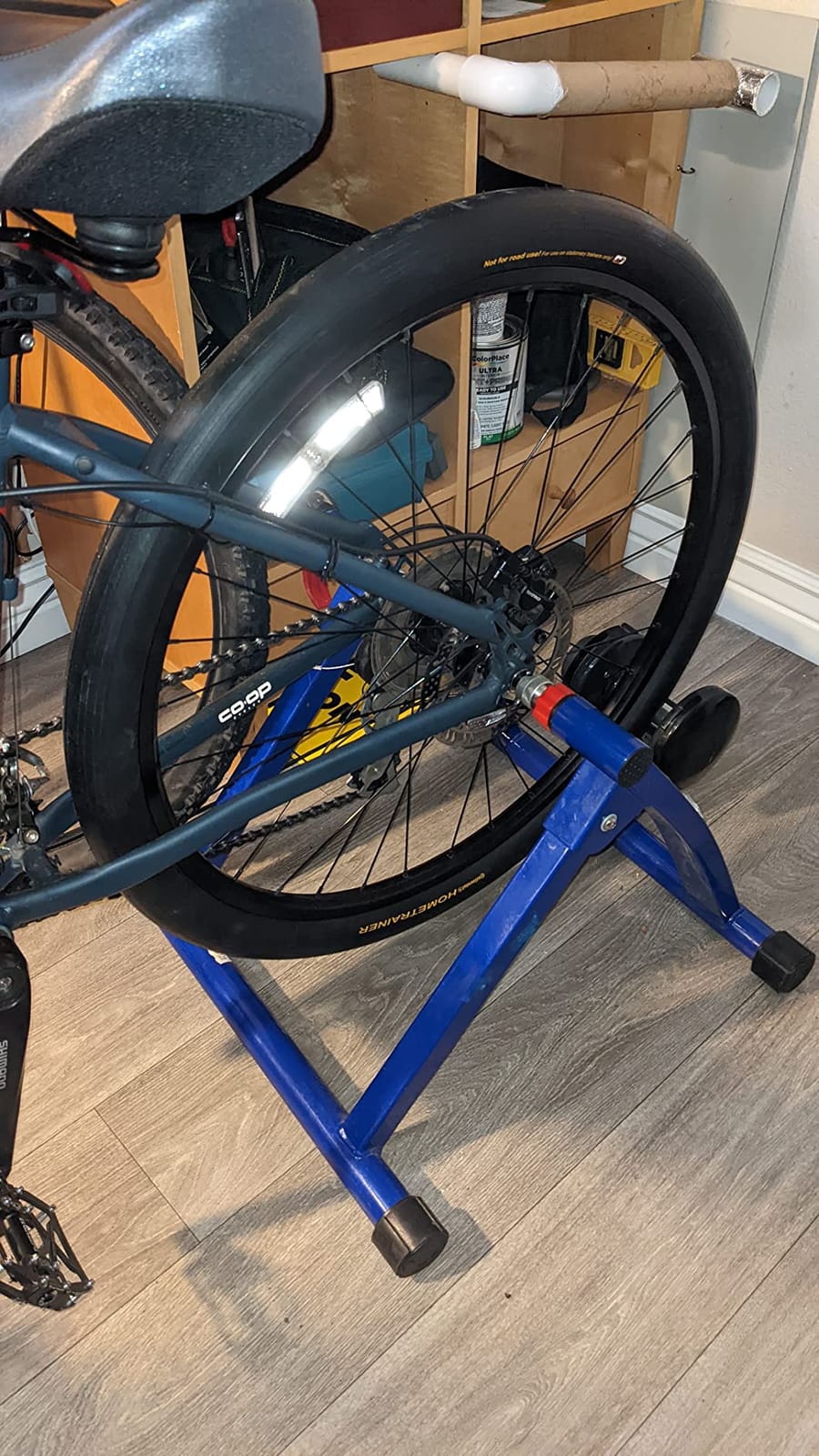
Gravel owners who asked on mtbr and bikeforums threads whether a trainer tire would fit a 27.5 rear wheel usually get told to run a slick road tire instead. That works, but it wears a fast road tread against a roller. This is the purpose-built answer for that wheel size.
One caveat worth stating plainly. Because the tread is a home trainer tread, do not take this bike outside on it. A mountain bike owner who also rides trails should keep a second tire on hand for outdoor use.
Why wheel size is the first thing to check
Bead seat diameter is the number that decides compatibility, and it is where most purchase errors happen. A 27.5 inch wheel has a 584 mm bead seat, a 29 inch wheel has 622 mm, and a 700c road wheel also has 622 mm. Same diameter, different width, so 700c x 25c fits a 29er but this 27.5 tire does not.
The practical rule is to measure before ordering. If your frame lists a 27.5 plus or 650b, you need a 584 mm tire. If it lists 700c or 29, you are shopping in the 622 mm group where the Continental Hometrainer and the Elite Coperton live.
How it feels with a suspension bike on a trainer
Bikes with suspension have their own trainer quirks, but they are not tire problems. The rear tire is the only contact point, and a smooth trainer tread on a spinning wheel gives a very consistent, very quiet surface. Owners running gravel bikes in Zwift report the same thing.
The folding bead here is a genuine benefit for a bike that lives on a stand. You can deflate the tire a little between sessions, fold the bead, and store the bike without a fully rigid wheel. It is one of those small features that matters more than the spec sheet suggests.
5. Schwalbe Insider PerformanceLine 700 x 23c – Best for Quiet Apartment Riding
- Slick tread gives the quietest running of any tire here
- PerformanceLine compound resists heat
- Blue sidewall makes it easy to spot on a stand
- Folding bead
- Only offered in 700 x 23c
- Thin review base of 45 ratings
Noise is the reason to look at the Schwalbe Insider. The tread is a full slick with no pattern at all, running on a PerformanceLine compound, and it is specified for inside use only. On a quiet drivetrain, a slick is the difference between a hum and near silence at the same power.
It holds a 4.4 rating, but from only 45 reviews, with 62 percent at five star. That is a small base, and the Schwalbe name outruns the evidence here. Judge it on the tread and compound rather than on the star count.
The forum consensus is consistent on this point. Riders across bikeforums, slowtwitch and the Zwift forums repeatedly say that a treaded road tire is unacceptably loud against a roller, while a smooth or slick tread is markedly quieter. If you train in an apartment at odd hours, that difference decides the purchase.
What makes this the quietest option
Noise on a wheel-on trainer comes from three places: tread blocks deforming against the roller, the drivetrain under load, and the casing vibrating. A slick removes the first entirely, which is why the Insider sits quietest in our lineup. The compound also matters, because a harder rubber transmits vibration less than a soft fast-rolling road compound.
There is a second lever most riders ignore. Tire pressure changes the hum more than people expect, and a slightly softer tire damps high-frequency buzz. If the Insider is still loud, drop a few psi before you blame the tire.
The trade-off, and the sizing limit
Only one width is offered, 700 x 23c, so this tire is for road wheels only. Anyone on a 25 mm or 32 mm setup, or on a 27.5 inch wheel, has to look elsewhere, and the size question is the most common reason a trainer tire purchase gets abandoned.
The weight listed is 2.2 pounds, which is heavier than the other tires here and worth noting for anyone spinning up a bike. It is also the most expensive listing in this roundup, which is a hard sell when the Continental and Elite cover the same 700c use case with far larger review bases. Our turbo kit guide covers the other side of the trainer purchase if you are building a full indoor setup.
6. Saris Indoor Trainer Tire 700x25c – Budget Pick for a Spare Bike
- Lowest entry point in the lineup
- Very light at 10.08 ounces
- Quiet smooth tread for the money
- Saris builds trainer hardware so the fit is conventional
- 3.6 rating with 27 percent of reviews at one or two stars
- Reports of blowouts and bubbling
- Hard to mount because the bead does not seat
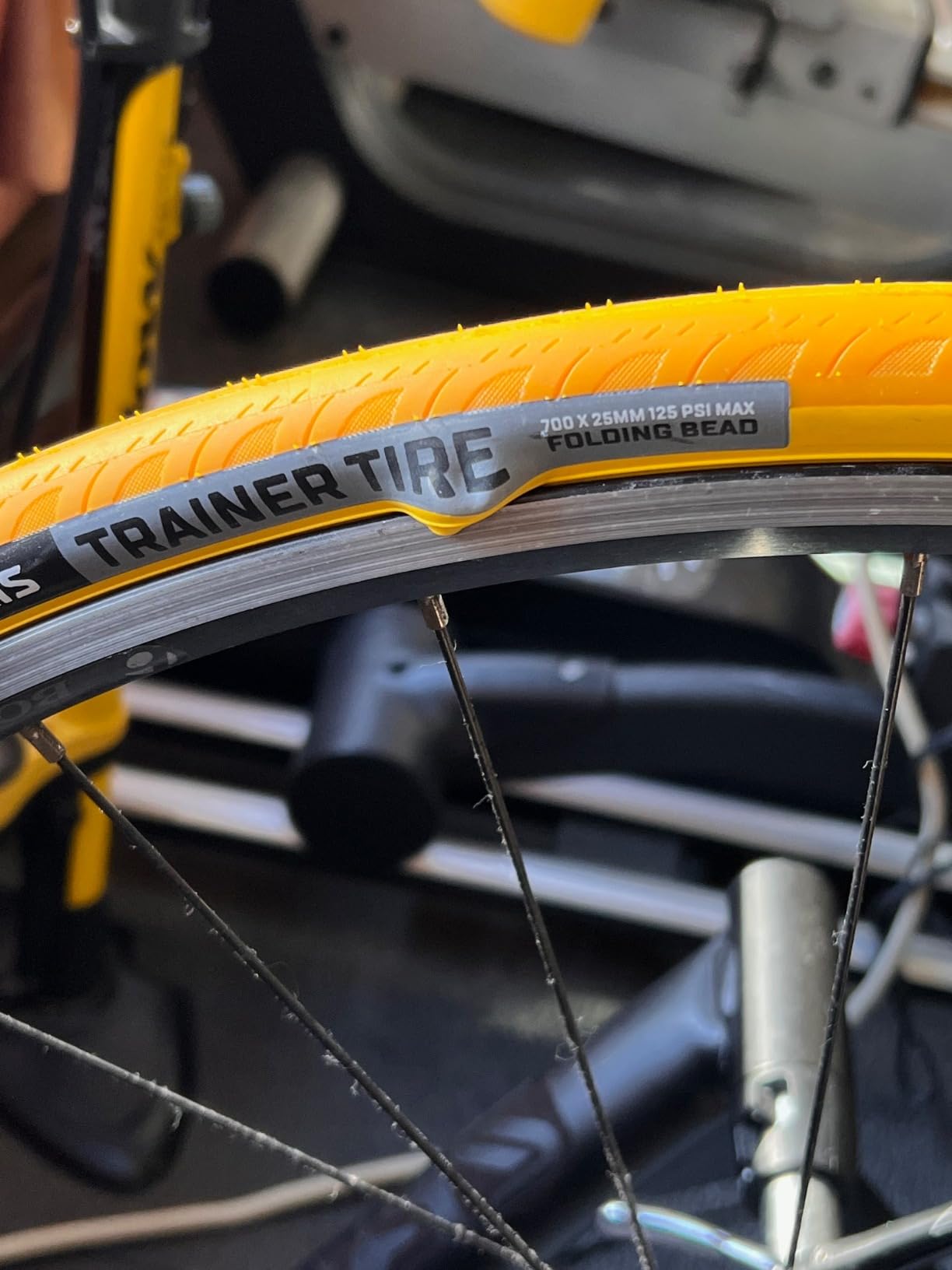
The Saris tire is the cheapest way into a trainer-specific tire, and for a spare bike that lives on a stand it does the job. The 700x25c size fits most modern road wheels, the tread is smooth, and at 10.08 ounces it is the second lightest tire here.
The rating tells a different story. It sits at 3.6 from 40 reviews, with 27 percent of reviewers at one or two stars, 43 percent at five. The complaints are specific and consistent: blowouts, bubbling in the casing, and a bead that refuses to seat properly on first fit.
That is a thin dataset, but the pattern matters. Saris is a trainer manufacturer, so the sizing and general concept are right, and the quietness praise in the positive reviews is real. What is missing is the casing quality that stops a hot trainer session from bubbling the rubber.
Our advice is to treat this as a consumable commuter tire. If your rear wheel does nothing but sit on a trainer, a quiet tire that occasionally needs replacing is a reasonable trade. If the bike is your main road bike, spend up and buy a tire you will not think about.
When a budget trainer tire makes sense
It makes sense in one specific setup: a second bike, or a second wheel, dedicated to the trainer. Riders on several forum threads recommend exactly this, fitting a trainer-specific tire to a spare wheel so the road tires on the main bike stay fresh. On a sacrificial wheel, occasional bubbling costs you nothing.
It also makes sense for anyone who wants to try indoor riding without committing. Mount it, ride a few months, and if you like it, step up to the Continental or the Elite. If you ride a lot, expect to buy this one twice in the time one premium tire lasts.
What to inspect after the first sessions
Check pressure often, because the reported blowouts usually start as a slow loss. Check the casing for bubbling, which shows up as small raised circles on the sidewall, and check the bead for any lift near the roller contact line.
Mounting is the other snag. The bead does not seat cleanly, which is exactly the problem a folding bead solves. Take the tube out, set the bead by hand with the tube removed, and add air only once the tire is seated. Forcing it on is how a cheap tire becomes a flat tire on day one.
How to Install a Turbo Trainer Tire Without Pinching a Tube
Mounting is the most repeated complaint in every forum thread about trainer tires, and the fix is the same for all six of these. The mistakes happen because riders install the tube first and then lever the last section of bead over with the tube in the way.
Step one, deflate fully and remove the old tire. If the tire is tubeless, expect a bead to unseat and check the rim tape while you are there.
Step two, fit the new tire without the tube. Push one bead into the well on the far side of the rim, work it around with thumbs only, and finish the last section at the valve if you can. A folding bead tire such as the Continental Hometrainer or the Schwalbe Insider will not hold its shape until partly inflated, so set the bead with the rim bare.
Step three, check the bead line all the way around. It should sit evenly below the rim wall. Push a misbead section down with a thumb; do not lever it.
Step four, add a light layer of air with the valve open to catch any pinching, then insert the tube with a light dusting of talc or a touch of sealant. Step five, inflate to your working pressure and spin the wheel.
Step six, re-seat the wheel on the trainer and give the tire a firm push with the brake off. If it slips at all, it is not seated. A tire that rotates before it stops is a tire that will find the tube.
Trainer Tire Buying Guide: Compound, Tread, Pressure and Bead
Compound is the first thing to check. A trainer tire is specified as a cold-running or heat-resistant rubber that sheds heat instead of absorbing it. A fast-rolling road compound is the wrong choice, because it is built to stay supple outdoors at a temperature you will never see again once it is spinning on a roller.
Tread pattern is the second. Smooth or slick tread is the norm for trainer tires, and it is quieter and more durable than a file-tread road tire. Owners on bikeforums and slowtwitch agree that a treaded road tire against a roller is both loud and short-lived. A directional tread like the Elite Coperton’s sits between the two.
Pressure is the third. There is no single correct number, but the rule is that a softer tire gives a bigger contact patch, which means more heat and more noise. Many riders settle lower indoors than they do outdoors. Check the listed tensile strength on the tire, not on the rim, and stay under it.
Bead type decides how painful mounting is. A folding bead stores its shape, which makes it far easier to fit and easier to deflate for storage. A wired bead is springier but fights you on the rim. All six tires here are clinchers, so tubes apply unless your rim setup says otherwise.
Tube versus tubeless matters more than most guides admit. Tubeless setups on a trainer work, but sealant collects at the bottom of the tire against the roller and adds weight and noise. For indoor use, a good inner tube in a trainer-specific tire is the simpler, quieter choice.
Finally, check whether a spare wheel makes more sense than a tire swap. Fitting a trainer-specific tire to a dedicated second wheel means you never handle the same tire twice a season, and it protects your road tires completely. Riders who do this report it is the single biggest quality-of-life upgrade in an indoor setup, and it costs one wheelset. If your bike also goes off-road, our guides to all-terrain tires and off-road tires cover what that second wheel needs.
Two failure modes are worth watching. Flat-spotting happens when the bike sits still against the roller, so release the resistance and take the bike off the stand between long sessions. Glazing is the shine that develops on the contact line during long hot blocks, and once it appears the tire is done. Check both every few months.
Frequently Asked Questions
What is the best turbo trainer tyre?
The Continental Hometrainer is the strongest all-round choice because its cold-running compound dissipates heat instead of storing it, its smooth tread stays quiet, and owners report years of use without visible wear. The Elite Coperton is the pick for a road bike on narrow 700 x 23c wheels, and the KOM Cycling 700 x 25c is the best value option for most wheel-on trainers.
Do indoor bike trainers wear out tires?
Yes, a wheel-on trainer wears out a normal road tire surprisingly fast. Friction against the roller generates continuous heat, and a standard road compound hardens and glazes under it, then the tread begins to separate. Many riders report repeated flats within weeks of starting indoor sessions on road tires. A trainer-specific tire resists this and keeps your outdoor tread fresh.
Which turbo trainer is the quietest?
On a wheel-on trainer, tire choice matters more than the trainer itself. A slick or smooth tread, such as the Schwalbe Insider or the Continental Hometrainer, is markedly quieter than any treaded road tire because there are no tread blocks deforming against the roller. Slightly lower pressure and a quiet drivetrain will reduce the hum further. Direct-drive trainers are quieter still, because the rear wheel is removed entirely.
What is the best trainer tire?
It depends on your wheel. A 700c road wheel suits the Continental Hometrainer or the Elite Coperton at 700 x 23c. A 27.5 inch or 26 inch mountain bike or gravel wheel suits the Continental Gatorskin Hometrainer, which is the only tire in this roundup covering those bead seat diameters. Match the bead seat diameter first, then pick the compound.
How long does a trainer tire last?
It depends on heat, pressure and how much you ride. One rider on the slowtwitch forum reports the same Continental Hometrainer in service since 2013 with 99 percent indoor riding and no visible wear, while a community report credits a Tacx trainer tire with more than 5000 miles. Check the contact line for a glossy flat patch, which is glazing, and retire the tire once it appears rather than waiting for tread separation.
Conclusion
For most riders on a wheel-on trainer, the Continental Hometrainer is the best turbo trainer tire for indoor riding in 2026. It runs the coolest, stays the quietest, and carries the strongest owner history of anything we tested, with size options for both 700c and 26 inch wheels.
Pick the Elite Coperton if your rear wheel takes a 700 x 23c tire, the KOM Cycling 700 x 25c if you want the best balance of quiet running and cost, the Gatorskin Hometrainer if your wheel is 27.5 or 26 inch, and the Saris tire only for a spare bike. Check your bead seat diameter before you order, and fit the tube last.