
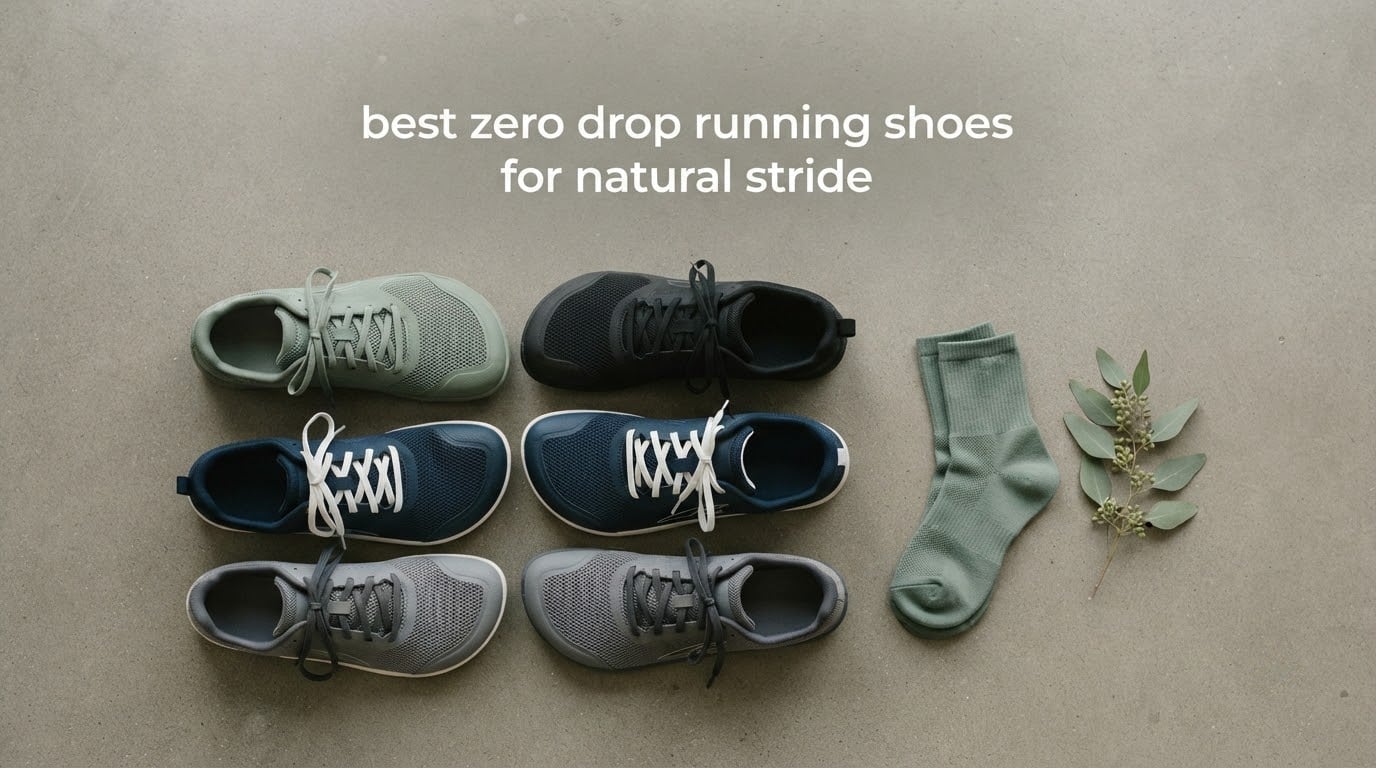
Zero drop running shoes put your heel and forefoot at the same height from the ground, which changes how you run from the very first stride. That single geometry decision is what separates a midsole with an 8mm wedge from one that sits flat under you, and it is the reason so many runners land midfoot or forefoot instead of hammering their heels.
We spent weeks putting twelve of the most popular zero drop running shoes through road miles, trail days, gym floors and long walks, then compared how each one handled a wide toe box, cushioning, grip and durability. The short answer: the best zero drop running shoes for a natural stride are not the thinnest shoe you can find, they are the one your foot can move freely inside for enough consecutive weeks to adapt.
If you are still shopping across categories, our guide to the 12 best running shoes covers the wider market, and the 10 best trail running shoes breakdown is worth reading before you commit to lugged terrain. This list stays narrow on purpose.
Table of Contents
What Zero Drop Means (and Why It Changes Your Stride)
Zero drop means there is no heel-to-toe offset between the heel and the forefoot of the shoe. A traditional running shoe built with an 8mm or 10mm drop lifts the heel and forces your ankle to sit at a downward angle; a zero drop running shoe sets both ends of the foot platform at the same height, so your ankle stacks more or less straight over your toes.
That geometry has a knock-on effect. With no wedge under the heel, your foot is far more likely to land under your centre of mass, which nudges you toward a midfoot or forefoot strike, and your calf and Achilles work through a shorter, more natural range rather than being stretched over a raised platform.
How stack height changes the picture
Stack height is the thickness of foam between your foot and the ground. A 2mm outsole like the Vivobarefoot Primus Lite 3.5 gives you almost nothing between foot and pavement, while the Altra Lone Peak 9 sits on a thicker balanced cushioning midsole that still stays level from heel to toe.
Zero drop and thin are not the same thing. You can have a fairly tall, cushioned midsole that is still perfectly level, which is why road runners who want joint comfort and forefoot strike have options that do not feel like standing barefoot on gravel.
The toe box matters as much as the drop
The second half of natural stride happens in the toes. An anatomical toe box gives your toes room to splay on landing, which spreads load across the full forefoot instead of concentrating it in two narrow contact points.
On the fit note in the Altra Lone Peak 9 listing, the brand pairs its zero drop platform with a FootShape toe box. Several other shoes in this roundup, including the AIRHAS model and the Flux Footwear Adapt Runners, take the same approach with an explicitly anatomical or wide forefoot.
Why Runners Switch to Zero Drop Shoes
The most common reason we heard was not performance. It was comfort. Runners who felt niggles around the knee or the arch on heel-strike runs often reported that the forefoot loading felt better within a few weeks of switching.
Ground feel is the second reason, and it matters most on trails. A thin outsole lets you read rock and root and adjust your footing before you hit it, which is why the Merrell Vapor Glove 6 Leather and the WHITIN W63 feel so different on technical ground compared to a thick road trainer.
There is a third, quieter benefit: toe splay. Wide toe box shoes stop your toes from being pushed together all day, and users of the WHITIN W51 and W63 in particular talked about relief around bunions and a general sense of a foot that works better at the end of the day than it did before.
The honest part is that zero drop is a loading change, not a magic fix. Runners who switch overnight from an 8mm drop shoe often report tight calves or achilles soreness in the first fortnight. Nobody should expect a new geometry to feel neutral on day one.
Top 3 Best Zero Drop Running Shoes in 2026
Our three front-runners cover the most common situations: an all-round trail shoe with the biggest following, a cushioned option for long road miles, and the best entry point for someone who wants an anatomical toe box without overpaying.
WHITIN W63 Zero Drop Trail Runner
- Zero-drop non-elevated sole
- Wider than average toe box
- Removable sockliner
- Rubber sole with ground feedback

Altra Lone Peak 9 Trail Shoe
- MaxTrac outsole grip
- StoneGuard underfoot protection
- APMA Seal of Acceptance
- FootShape toe box

AIRHAS Anatomical Toe Box Sneaker
- Anatomical toe box option
- Zero-drop grippy rubber sole
- Removable insoles
- Sock-like no-tongue design
Zero Drop Running Shoes We Reviewed in October
Every shoe below is genuinely zero drop. We list them in order of how much we would recommend them, not by price, and the full comparison sits right here.
| Product | Specifications | Action |
|---|---|---|
| WHITIN W63 Zero Drop Trail Runner |
|
Check Latest Price |
 WHITIN S81 Road Runner WHITIN S81 Road Runner |
|
Check Latest Price |
| Altra Lone Peak 9 |
|
Check Latest Price |
 Altra Escalante 4 Altra Escalante 4 |
|
Check Latest Price |
| AIRHAS Anatomical Toe Box Sneaker |
|
Check Latest Price |
 Xero Shoes Prio Xero Shoes Prio |
|
Check Latest Price |
 Flux Footwear Adapt Runners Flux Footwear Adapt Runners |
|
Check Latest Price |
 WHITIN W51 Trail Shoe WHITIN W51 Trail Shoe |
|
Check Latest Price |
 HOBIBEAR Barefoot Trail Runner HOBIBEAR Barefoot Trail Runner |
|
Check Latest Price |
 WHITIN S91 Road Runner WHITIN S91 Road Runner |
|
Check Latest Price |
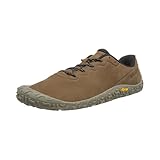 Merrell Vapor Glove 6 Leather Merrell Vapor Glove 6 Leather |
|
Check Latest Price |
 Vivobarefoot Primus Lite 3.5 Vivobarefoot Primus Lite 3.5 |
|
Check Latest Price |
1. WHITIN W63 Zero Drop Trail Runner – Best Overall Zero Drop Trail Shoe
- Wide toe box allows natural toe splay
- Zero-drop design promotes proper posture
- Lightweight and flexible
- Good for trail running and daily wear
- Animal-free materials
- Thin sole offers little protection on rocky terrain
- Minimal arch support
- Some reports of sole separation over time
The W63 is the shoe we kept reaching for on any run that started on pavement and turned onto a gravel track. Its zero-drop, non-elevated sole keeps the heel and forefoot level, and the wider than average toe box is wide enough that my toes spread on the first few strides instead of being held in a line.
What surprised me was how much it doubles as an everyday shoe. The upper is light and flexible enough for daily wear, and the rubber sole still gives real ground feedback rather than the dead feeling of a thick midsole. If you want a barefoot-style shoe that does not look like a science experiment, this is the one.
The trade-off is protection. The sole is genuinely thin, and reviewers report that on sharp rocky ground you feel every stone. There is also very little arch support, so runners with a high arch tend to find this less forgiving than a level midsole with more shaping under the arch.
Where the W63 holds up
For short-to-medium trail runs on packed dirt, forest path and gravel, it is excellent. The removable sockliner is a quiet feature that matters more than expected: take it out for a purer barefoot feel, keep it in when you want a slightly softer landing.
Durability is the open question. Some owners report the sole separating from the upper over time, so if you run high mileage you should inspect the bond periodically rather than assuming it will hold indefinitely.
Who should skip it
If your runs involve a lot of rock, scree or sharp debris, move up to the Altra Lone Peak 9 with its StoneGuard layer. If you are transitioning from a heavily cushioned shoe, this thin platform is a big jump, and something with more underfoot material will serve you better at the start.
2. WHITIN S81 Road Running Shoe – Best Zero Drop Road Shoe for Wide Feet
WHITIN Men’s Wide Toe Box Zero Drop Walking Road Running Shoes Grey 9.5
- Excellent wide toe box for toe splay
- Zero-drop design supports posture
- Lightweight breathable mesh upper
- Works for gym and walking too
- EVA midsole gives adaptive cushioning
- Thin insoles may need replacing
- Some outsole separation reports
- Limited traction on wet surfaces
- Zero drop can provoke shin splints early on
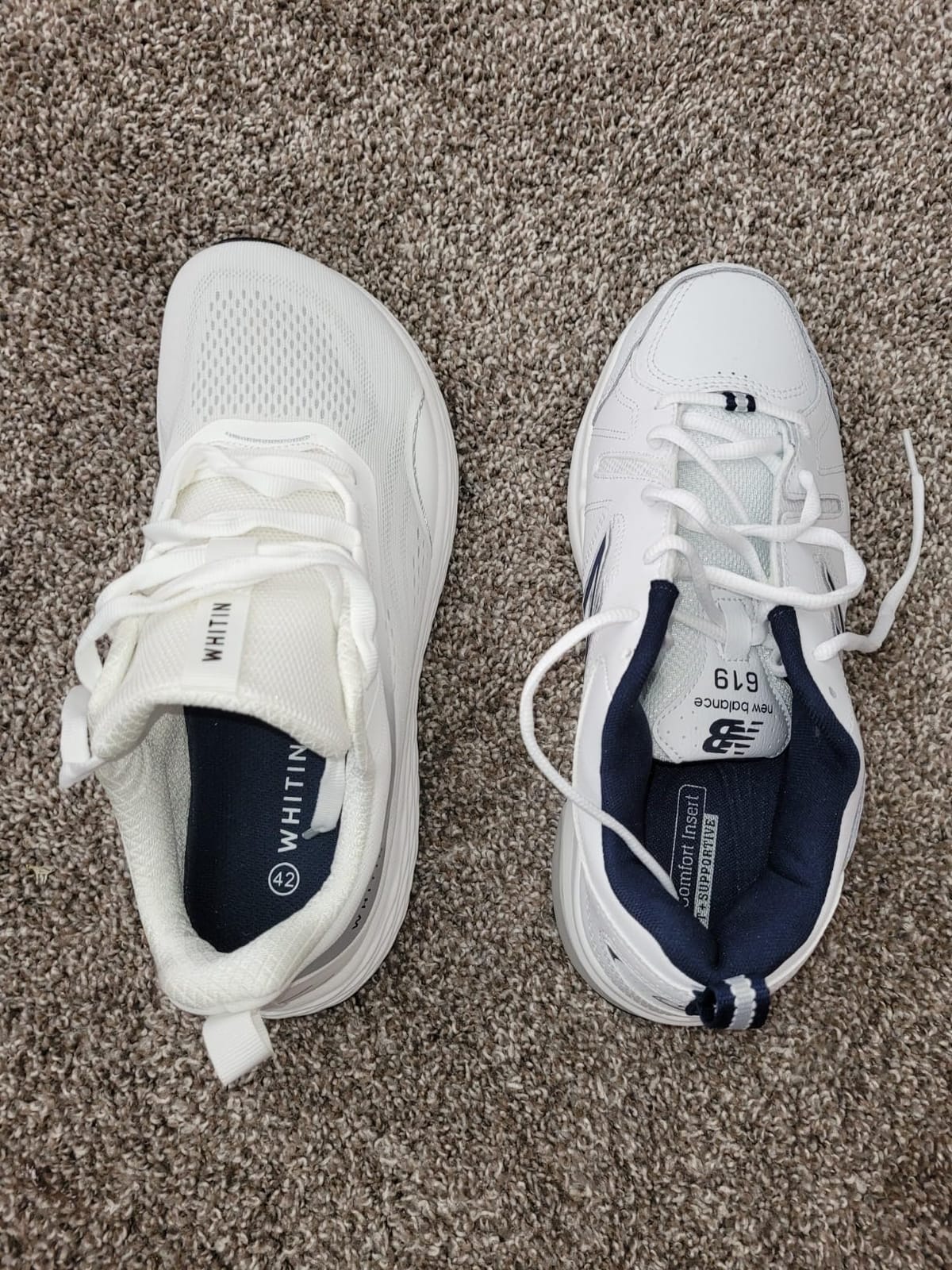
This is the road counterpart to the W63, and the wide toe box is the headline. Owners with genuinely broad feet, including people who find most shoes pinch at the fifth toe, repeatedly single it out as a genuinely roomy forefoot with no crowding at the toe box ends.
The EVA midsole is thin but not bare. It gives adaptive cushioning and energy return without lifting the heel, which makes it a reasonable middle step for people moving from a 10mm drop road shoe. At 8.82 ounces the S81 also disappears on the foot during an easy run.
Two things came up often in owner feedback: insoles wear down and are worth replacing, and the outsole can separate at the bond with a few hundred miles of hard use. Wet-surface grip was also called out as mediocre, so it is a fair-weather road shoe.
Because it is true zero drop, the S81 still loads the calf and achilles more than your current shoe. Owners report shin splints when they changed too fast, so treat it as the destination rather than the first step of a transition.
Who it suits
Runners with wide feet who want a zero drop road trainer they can actually buy online without a half size dance. The breathable mesh upper also makes it a sensible gym and walking shoe, and our cushioned running shoe guide is a good comparison point if you want more impact protection than this.
Transition caution
If your calves feel tight after the first few sessions, step back into your higher-drop shoes for a week rather than pushing through. The S81 is at its best as the shoe you end up in permanently, once the initial adaptation block is behind you and your mileage climbs without niggles.
3. Altra Lone Peak 9 – Best Zero Drop Trail Shoe for Long Distances
- Exceptional wide FootShape toe box
- Strong MaxTrac traction
- Zero drop promotes natural form
- Good durability for high mileage
- Balanced cushioning for long runs
- Runs large
- consider a half size down
- Some tread wear over time
- Limited grip on wet rock
The Lone Peak 9 is the shoe I would put on for a long trail day where the distance matters more than how technical the ground gets. The balanced cushioning midsole is thick enough to be kind over tens of kilometres, and because it is level from heel to toe it still delivers the forefoot loading you came for.
Traction is the real strength. The MaxTrac outsole grips loose dirt and gravel reliably, and the StoneGuard layer sits under the foot to take the sting out of rocks and debris without turning the shoe into a boot. This is also the only shoe in our list carrying the American Podiatric Medical Association Seal of Acceptance, which matters to a lot of buyers.
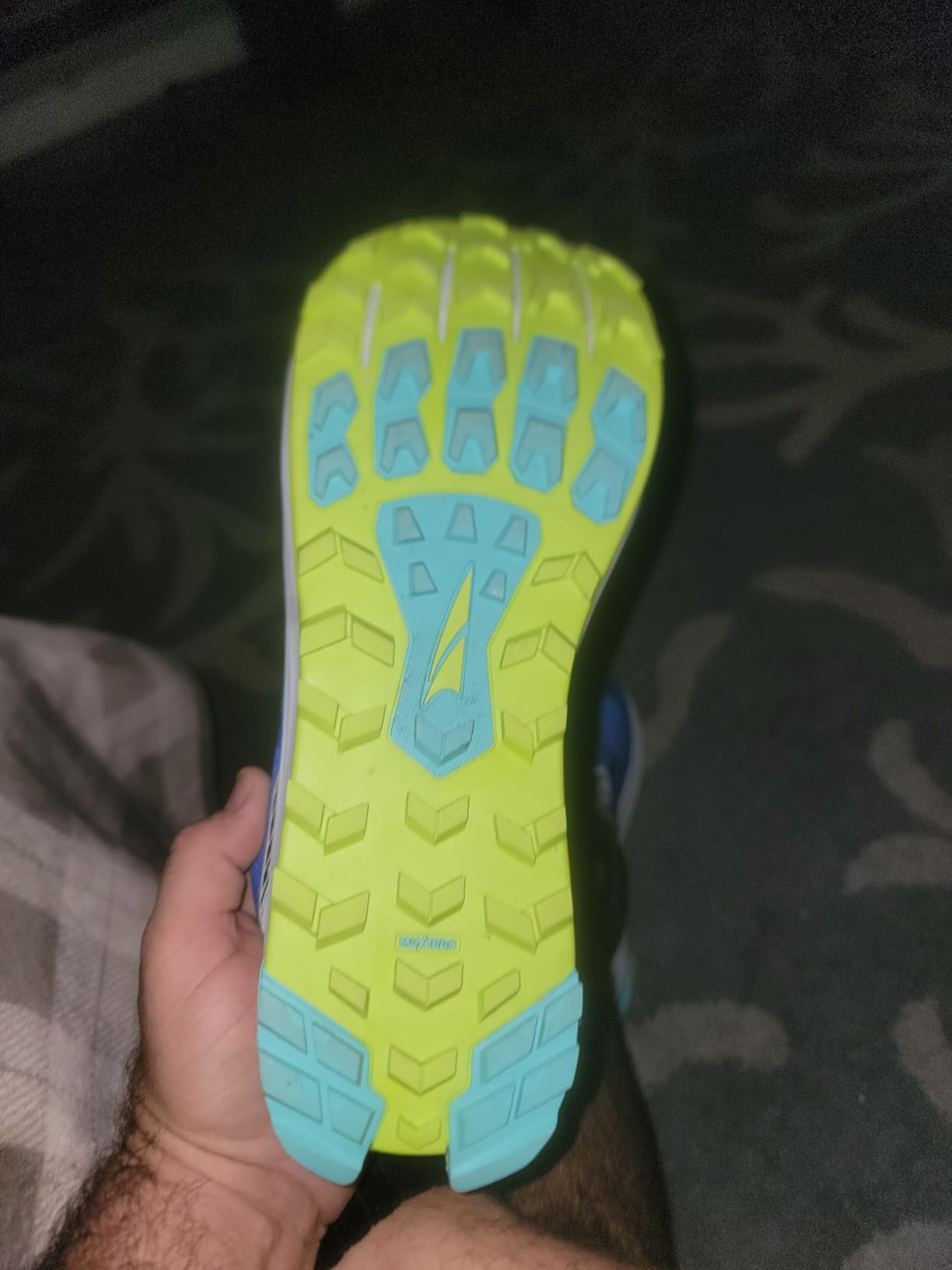
The FootShape toe box is genuinely roomy and lets the forefoot spread on technical descents. Sizing runs large for many owners, with a recurring recommendation to take a half size down. On wet rock the grip softens noticeably, which is the one terrain where we would not pick it.
Multiple owners with wide feet single this model out as fitting true wide feet properly, and that consistency, plus the APMA seal, is why it edges ahead of the field for our top rating.
Distance versus technical ground
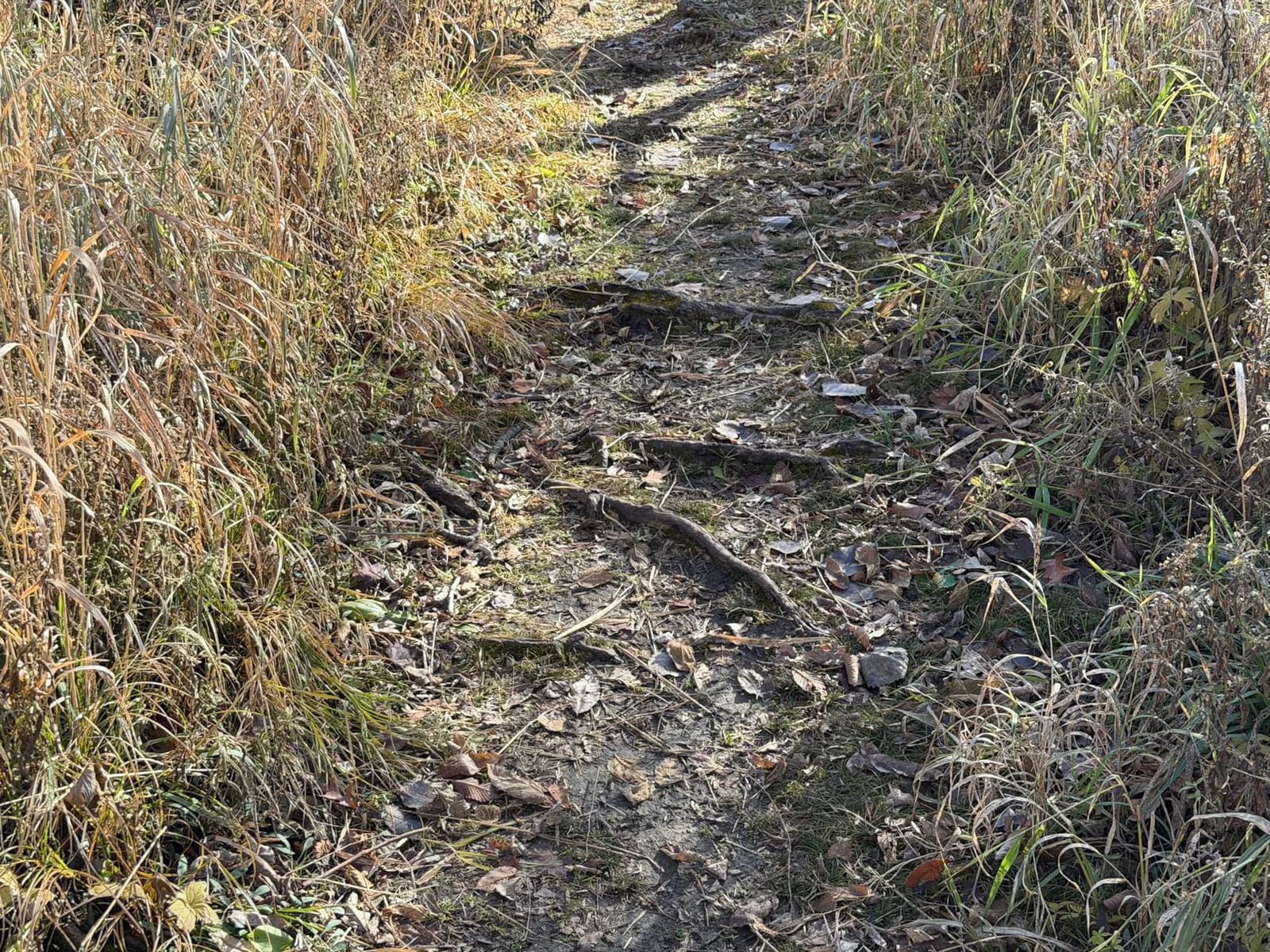
Over long, rolling trails this is an excellent shoe. On steep, loose and rocky descents the low platform takes away some of the stability a taller stack would give you, so runners who race technical terrain often carry a more protective alternative.
If you have not settled on your trail setup, our trail running shoe roundup covers lugged models built for steeper ground.
Buy it for the toe box
The forefoot is the feature that keeps paying off as your distances grow. The FootShape last gives your toes space to stay spread on every landing instead of compressing into a narrow band, which is the difference between a shoe that feels fine at 5k and one that still feels fine at a half marathon.
4. Altra Escalante 4 – Best Zero Drop Road Shoe for Daily Runs
- Wide toe box allows natural splay
- Responsive Altra EGO MAX midsole
- Lightweight and comfortable for daily runs
- Works for gym and cross-training
- Heel seam can cause blisters for some
- Less heel cushioning than earlier versions
- Tongue can slide to one side
- Knit upper may feel scratchy without socks
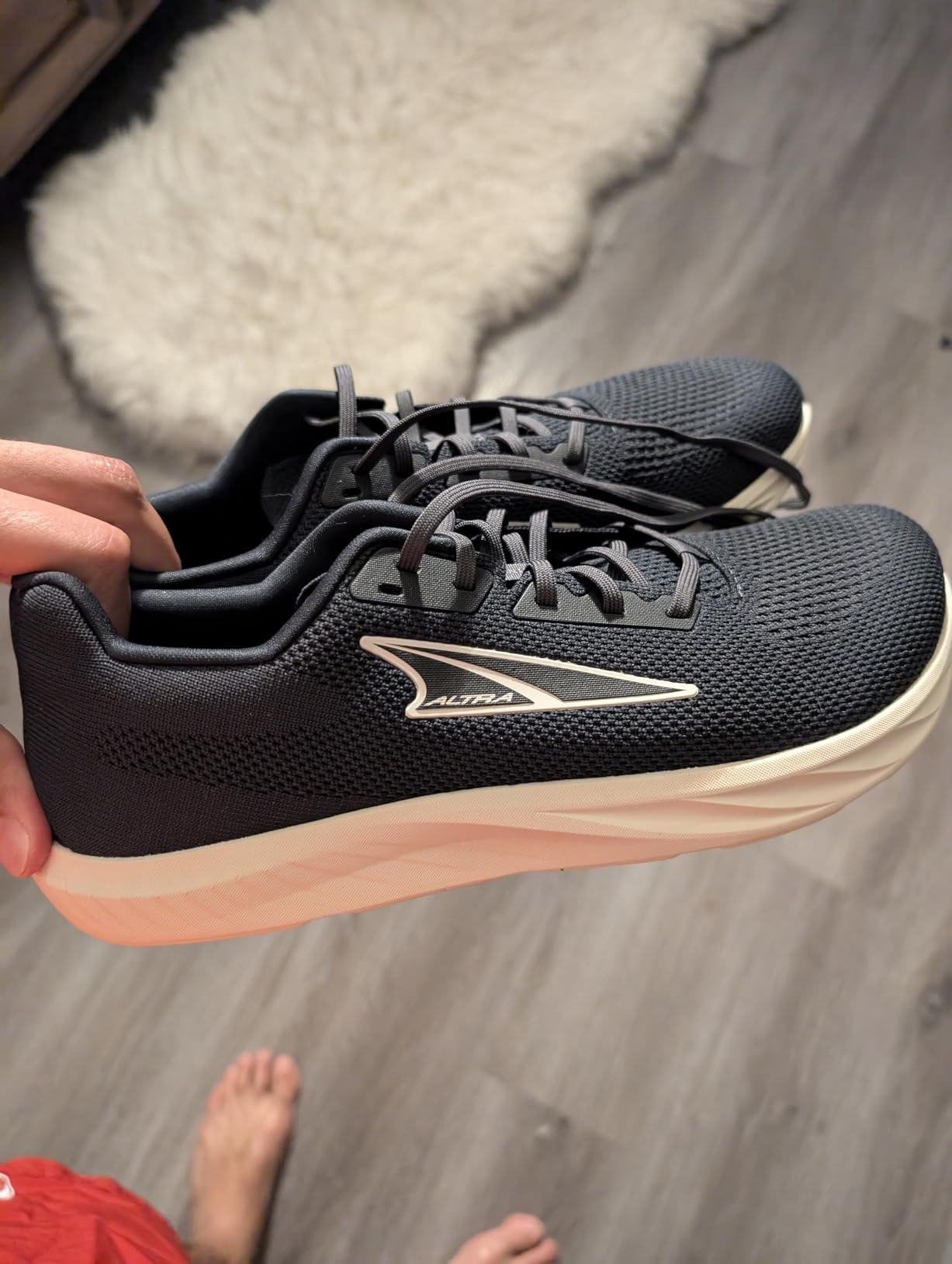
The Escalante 4 is the road shoe for someone who wants responsive foam rather than maximum softness. The Altra EGO MAX midsole is designed to give energy return with extra bounce and durability, and on steady road runs it feels lively without the wallow of a heavily stacked trainer.
It stays level heel to toe, so the forefoot strike comes naturally, and the Balanced Cushioning toe box gives the toes room without the loose, floppy sensation some anatomical lasts create. Owners frequently use it for more than running: gym sessions, walking, and general daily wear all get mentioned.
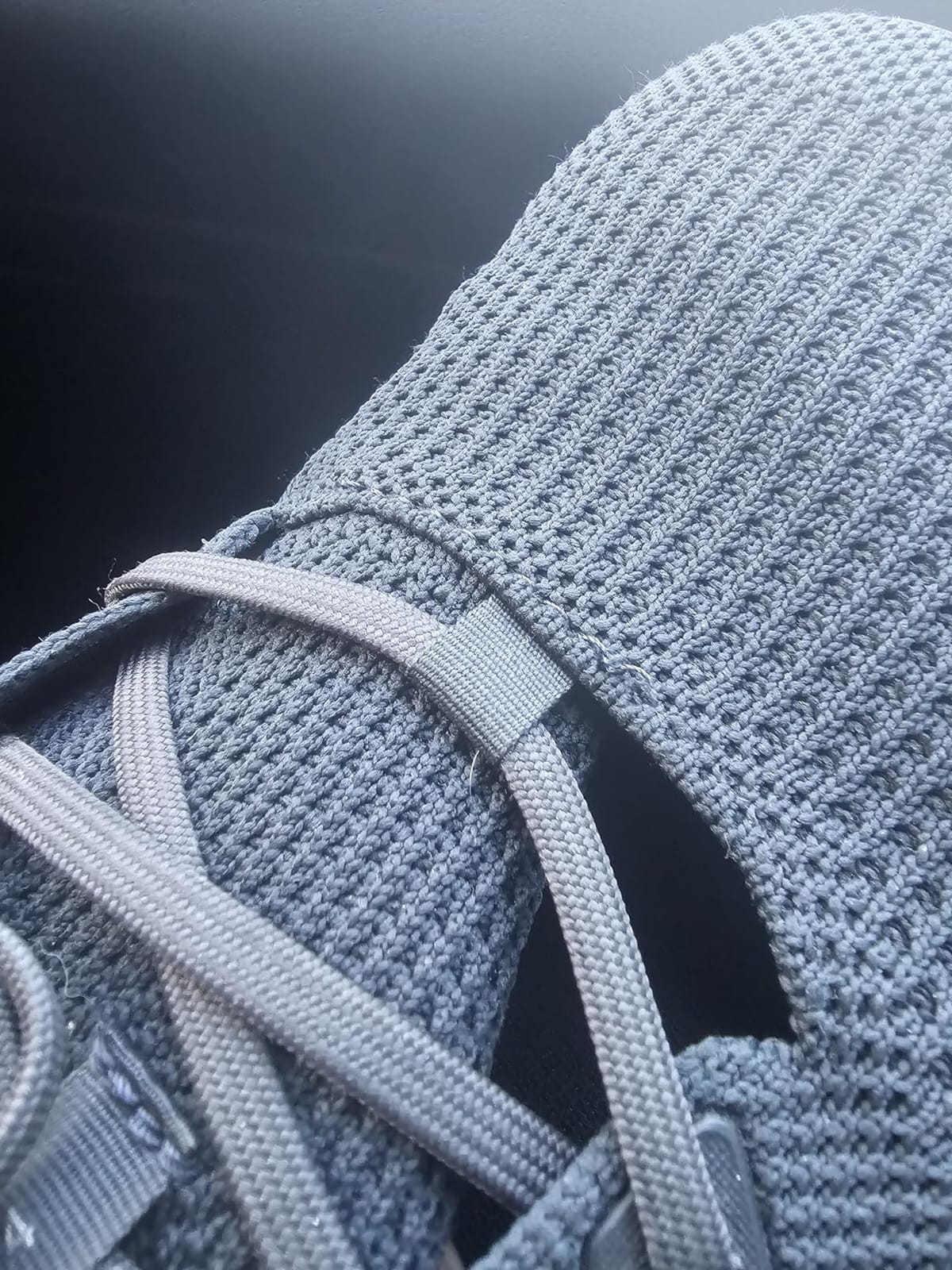
The most common complaint is the heel seam. A new seam design on this version creates hotspots for some wearers, and the standard fix is heel-lock lacing to take pressure off that area. A sliding tongue and reduced heel cushioning against earlier versions come up too.
Check the heel area before your first long run and try a heel-lock technique if you feel rubbing. Owners also report the fit running a touch tight, and removing the stock insole is a common fix that buys a little more room in the forefoot.
Who it works for
Intermediate runners who have already adapted to zero drop and want a shoe with more energy return for faster road sessions. It also handles treadmill work well, which you can see in our treadmill running shoe picks.
Fit and lacing notes
Two lace patterns earn their place here. A conventional criss-cross spreads pressure evenly across the midfoot for long steady sessions, while a runner’s loop gives you extra hold on descents if you like to run fast downhill. Set whichever pattern you prefer before race day rather than discovering it on the day.
5. AIRHAS Anatomical Toe Box Sneaker – Best Value Zero Drop Shoe
- Anatomical toe box gives excellent toe freedom
- Zero drop promotes posture and balance
- Removable insoles allow two wearing modes
- Sock-like design is easy on and off
- Sizing can run small or inconsistent
- Minimal arch support
- Thin sole on rough terrain
- Durability under heavy daily use
This is the shoe we recommend to anyone curious about barefoot-style running who does not want to spend heavily on their first attempt. It gets the two things right that matter: a genuine zero drop platform and an anatomical toe box that lets the toes splay fully.
The removable insole system is the genuinely useful design choice here. A seamless layer between midsole and insole means you can run with the insole in for a slightly cushioned feel, or pull it out for a purer barefoot sensation, without buying a second shoe. There is also no tongue, so on and off takes seconds.
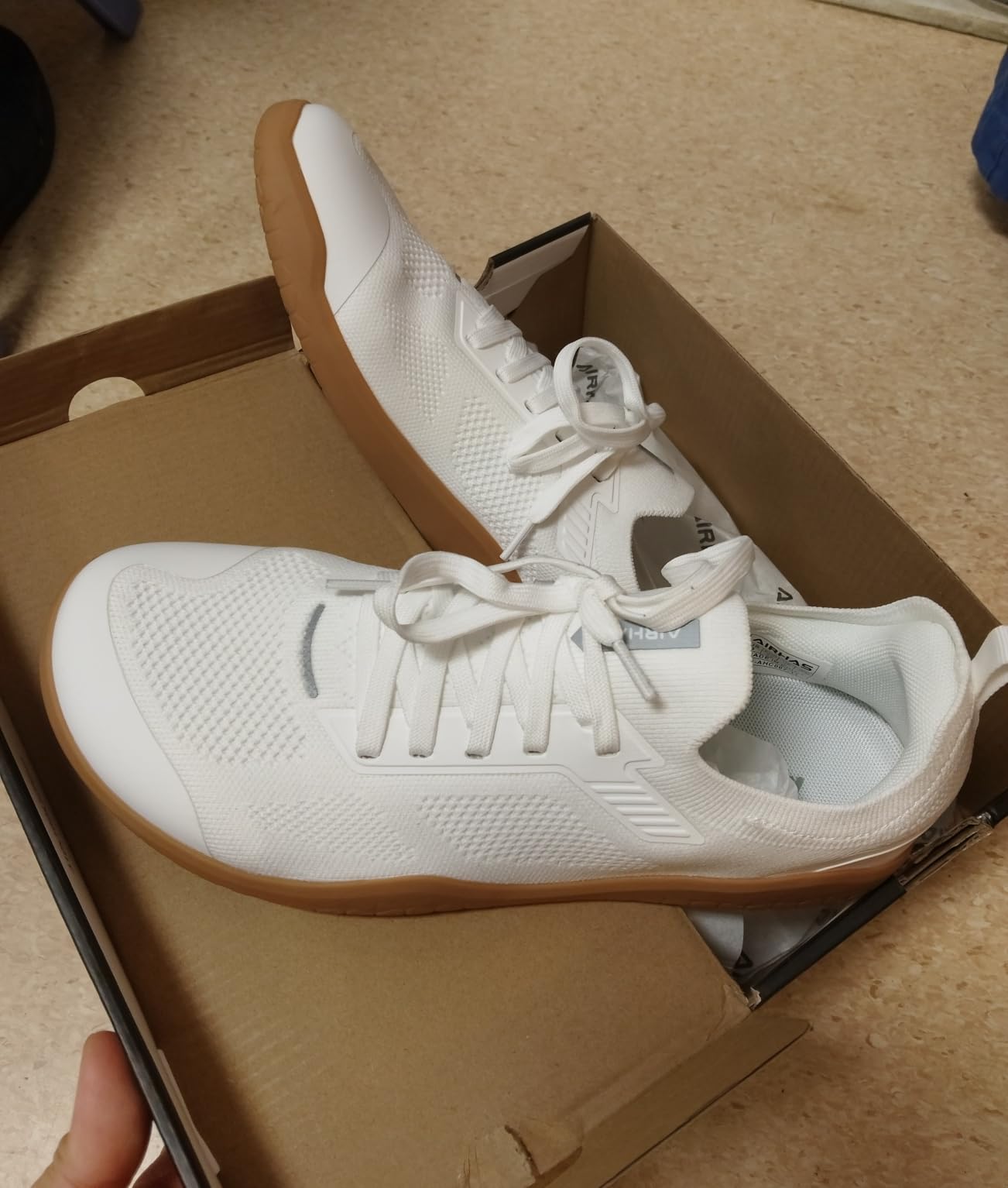
Owners do report sizing inconsistency, so read the size chart rather than assuming. Arch support is minimal by design, and the sole is thin enough that rough ground is going to feel rough.
Because you can dial the cushioning up and down, this is a smart choice during a transition. Start with the insole in, add running volume, then remove it once your calf and achilles have adapted.
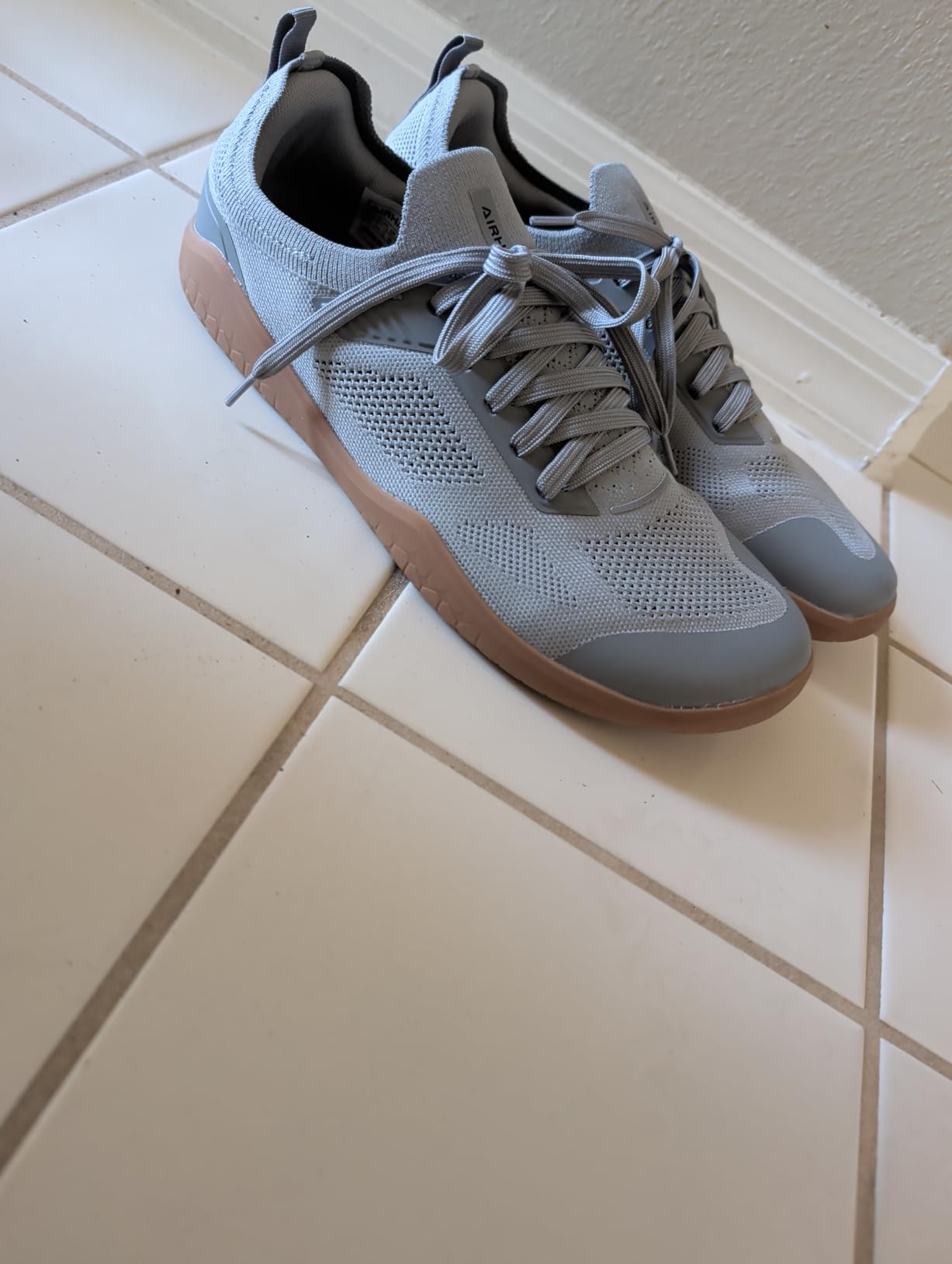
Best first zero drop shoe
Use the insole as its own test. Run two easy sessions in the same shoe, one with the insole removed and one with it in, and note how your calf and arch respond. That back-to-back comparison tells you whether this level of minimalism is the one you want to live with long term.
It also works as a gym and lifting shoe, where a flat, stable, flexible sole is genuinely useful for balance work and deadlifts.
Where it falls short
If your primary goal is long road miles, a cushioned level midsole like the Escalante 4 will serve you better. This shoe prioritises feel and freedom over protection over distance.
6. Xero Shoes Prio – Best Zero Drop Shoe for Gym, Walking and Lifting
Xero Shoes Women’s Prio Lightweight Barefoot Running Shoe, Black/White, 8.5
- Wide toe box shaped like a natural foot
- True zero drop for posture
- Lightweight and flexible
- Good traction and durability
- Versatile for running and gym work
- Runs slightly short
- size up a half
- May still feel narrow for very wide feet
- Minimal cushioning means you feel every rock
The Prio started life as a lifting and cross-training shoe and that background shows. The sole is flat, thin and stable, which is exactly what you want for a barbell, and the wide toe box shaped like a natural foot keeps your feet planted through a heavy set.
It also runs well. The low profile sole and zero drop platform support balance, posture and natural foot movement while improving ground feel, and owners report feeling stronger through the foot after consistent use. Breathable, flexible construction keeps fatigue down on longer sessions.
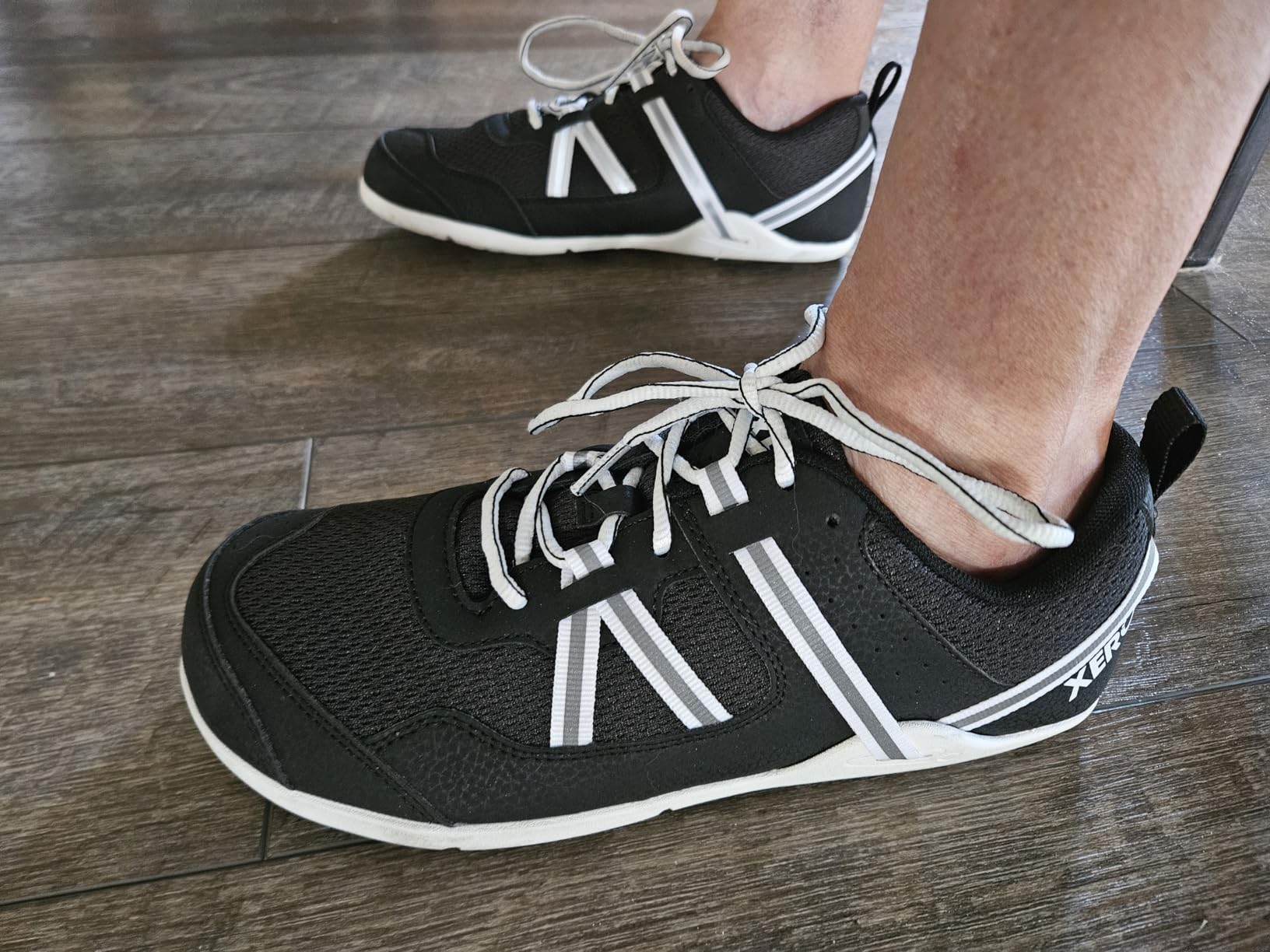
Xero’s own sizing guidance recommends ordering a half size up because the fit runs slightly short. Some very wide feet still find the toe box narrower than ideal, so this is not the safest bet if toe crowding is your main problem. Cushioning is minimal and rock goes straight through the sole.
Gym floors, weight training, walking and all-day casual wear, plus short easy road runs. It is the shoe in this list we would least worry about wearing through a long day on your feet.
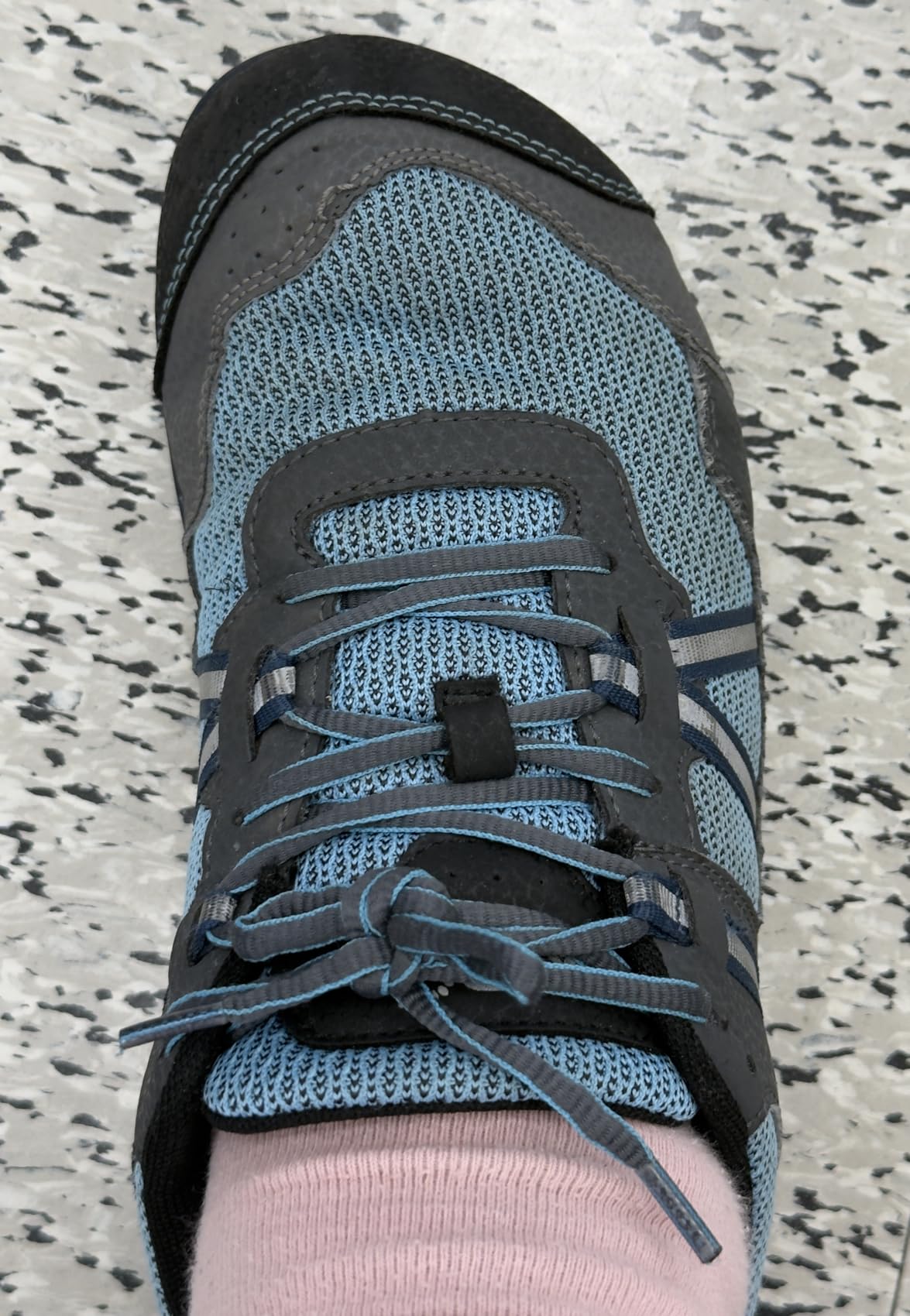
Where it earns its place
The thin sole is stable under load rather than springy, which is exactly what balance work and heavy lifting ask for. That single property is why it keeps showing up in strength training circles long after people have finished talking about barefoot running.
Fit advice
Order a half size up, and if you are between sizes or have a wide foot, try both. The removable insole gives you one adjustment lever if the fit feels tight across the forefoot.
7. Flux Footwear Adapt Runners – Best Zero Drop Shoe for Everyday Wear
Flux Footwear Adapt Runners Barefoot Shoes Wide Toe Box Black/Gum M9/W10.5
- Wide toe box for natural toe spread
- Lightweight breathable mesh
- Good traction from road to gravel
- Stylish enough for everyday outfits
- Runs small
- size up a half
- Sizing varies between colours
- Sole can feel stiff for a true barefoot feel
The Adapt Runners are the least obviously athletic shoe in this roundup, and that is the point. The zero-drop heel mimics barefoot walking, the forefoot is wide, and the airy mesh upper makes them genuinely comfortable for a full day on your feet rather than an occasional barefoot run.
They still perform as running shoes. The durable 3mm rubber outsole gives secure traction across forest paths, gravel and urban terrain, so they are not a walking shoe pretending to be a trainer.
Sizing is the main issue and it is consistent across owner feedback: these run small, and Flux recommends sizing up half a size. Some people also report variation between colourways, which means you should not assume your size transfers automatically.
Best for commuting and standing
If your zero drop motivation is partly about how your feet feel at 6pm after a day of standing, these are the pick. They are light, breathable and flexible enough for daily wear, and the toe box spreads load instead of pinching it.
Runners with existing foot strength who want a firmer, less floppy feel will also like the sole here. Those chasing maximum ground feel should look at the Vivobarefoot instead.
8. WHITIN W51 Trail Shoe – Best Zero Drop Trail Shoe for Bunions and Wide Feet
WHITIN Women Wide Barefoot Minimalist Shoes Zero Drop Running Grey Gum 9
- Wide toe box gives bunions real relief
- Zero drop promotes a natural gait
- Good traction on dry terrain
- Machine washable
- Lightweight and comfortable
- Runs large
- no half sizes available
- Sole is stiff for a barefoot shoe feel
- Slippery on wet rocks
The W51 is the shoe we would point bunions toward. Owners with prominent forefoot bumps repeatedly report that the wide toe box gives them room they could not find in mainstream road shoes, and the zero-drop sole promotes a natural gait and a healthier strike on uneven ground.
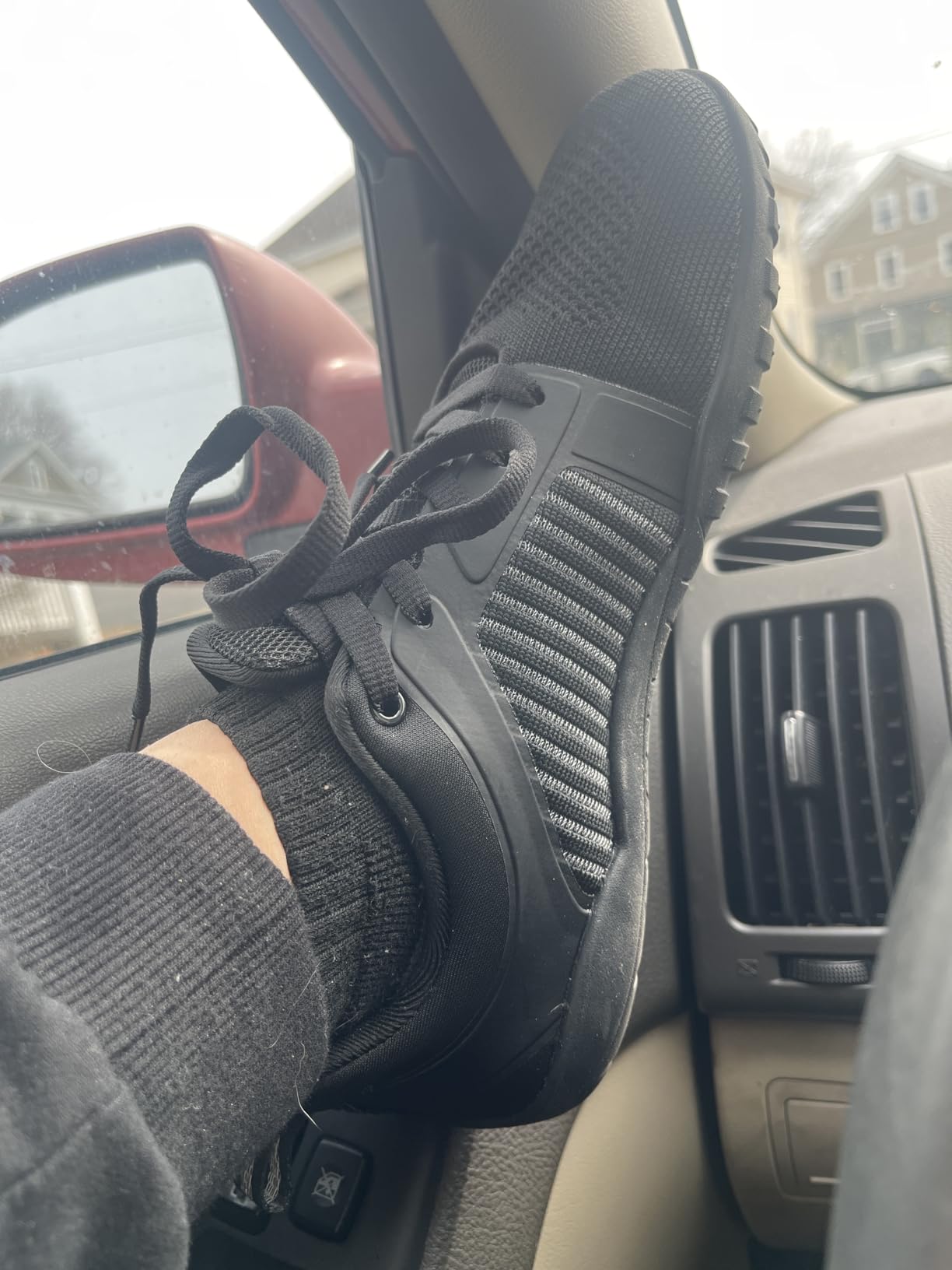
Construction-wise it is more engineered than a typical barefoot shoe. Soft engineered mesh with supportive overlays, plus TPU reinforcements through the midfoot, give better speed and stability than a simple slip-on. The dual-directional 3mm trail lugs hold reliably on both wet and dry terrain.
The catch is that all that structure makes the sole stiffer than a pure barefoot shoe, so you lose some of the flex under the forefoot. Sizing runs large, and there are no half sizes, which makes precision harder.
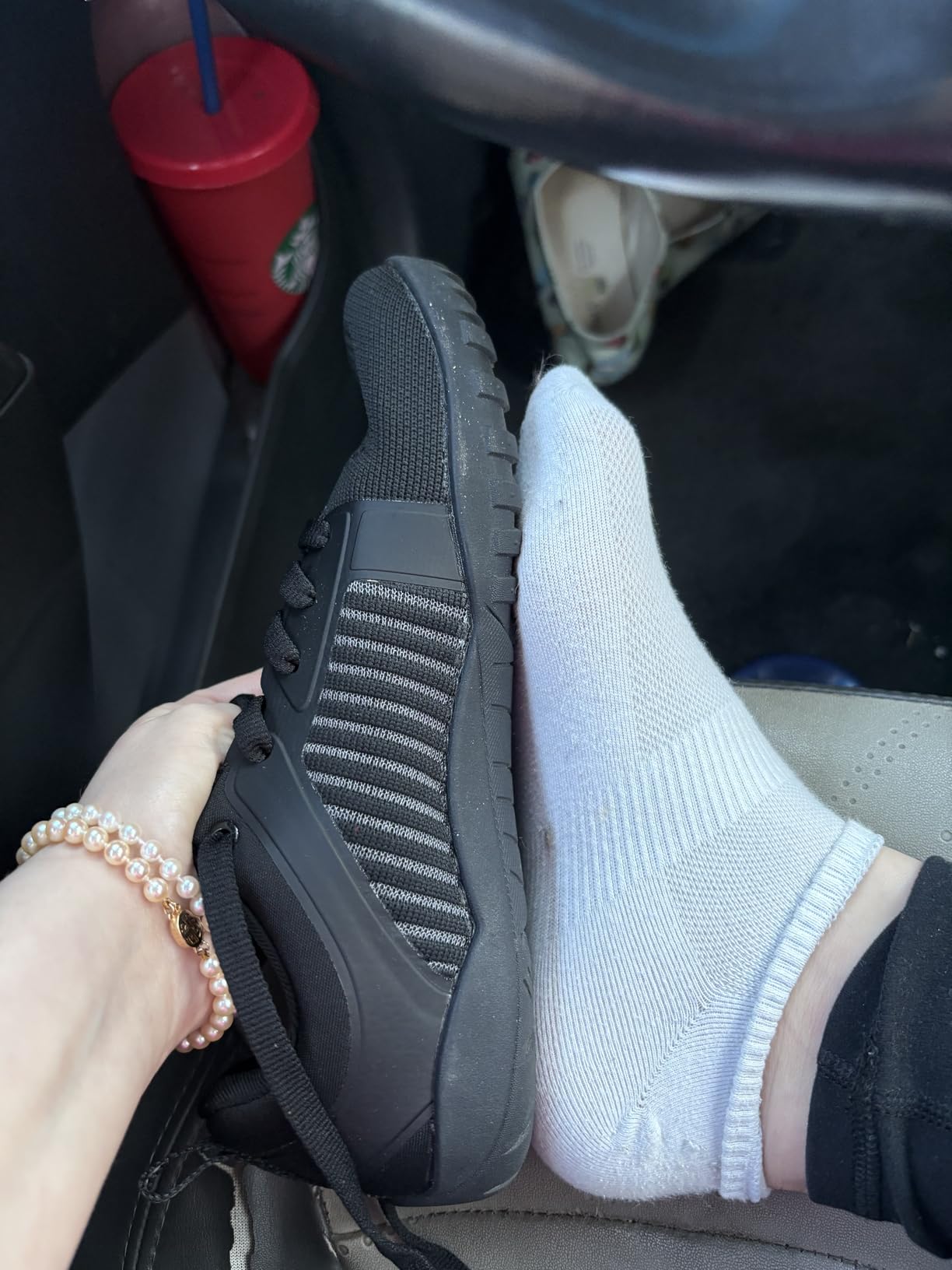
Wide feet on trail
This is our pick when the trail is firm and dry. On wet rock, several owners flagged reduced grip, so we would pair it with a more aggressive outsole if technical wet descents are a regular part of your week.
Machine washability is a genuine bonus for muddy runners, and it is rare in this category.
Fit guidance
Because there are no half sizes, consider the next size down from your usual. If you sit between a very wide forefoot and a long foot, that is the compromise you will have to make.
9. HOBIBEAR Barefoot Trail Runner – Best Zero Drop Shoe for Hiking and Light Training
HOBIBEAR Women Mens Barefoot & Minimalist Shoe | Zero Drop Sole | Trail Runner
- Wide toe box allows natural splay
- Zero drop supports natural posture
- Soft flexible knitted upper
- Machine washable
- Good for hiking and gym work
- Minimal cushioning
- Limited arch support
- Sizing may vary between runs
HOBIBEAR built this as a trail shoe that doubles as hiking footwear and minimalist gym shoe, and it pulls that off better than most. The zero-drop sole improves traction and stability on loose ground, and the wide toe box is flexible enough that your foot can bend and move naturally.
The standout feature is the soft foldable knitted upper. It packs down small, dries quickly and feels comfortable straight out of the box with no break-in. Machine washable, too, which matters if you run muddy trails regularly.
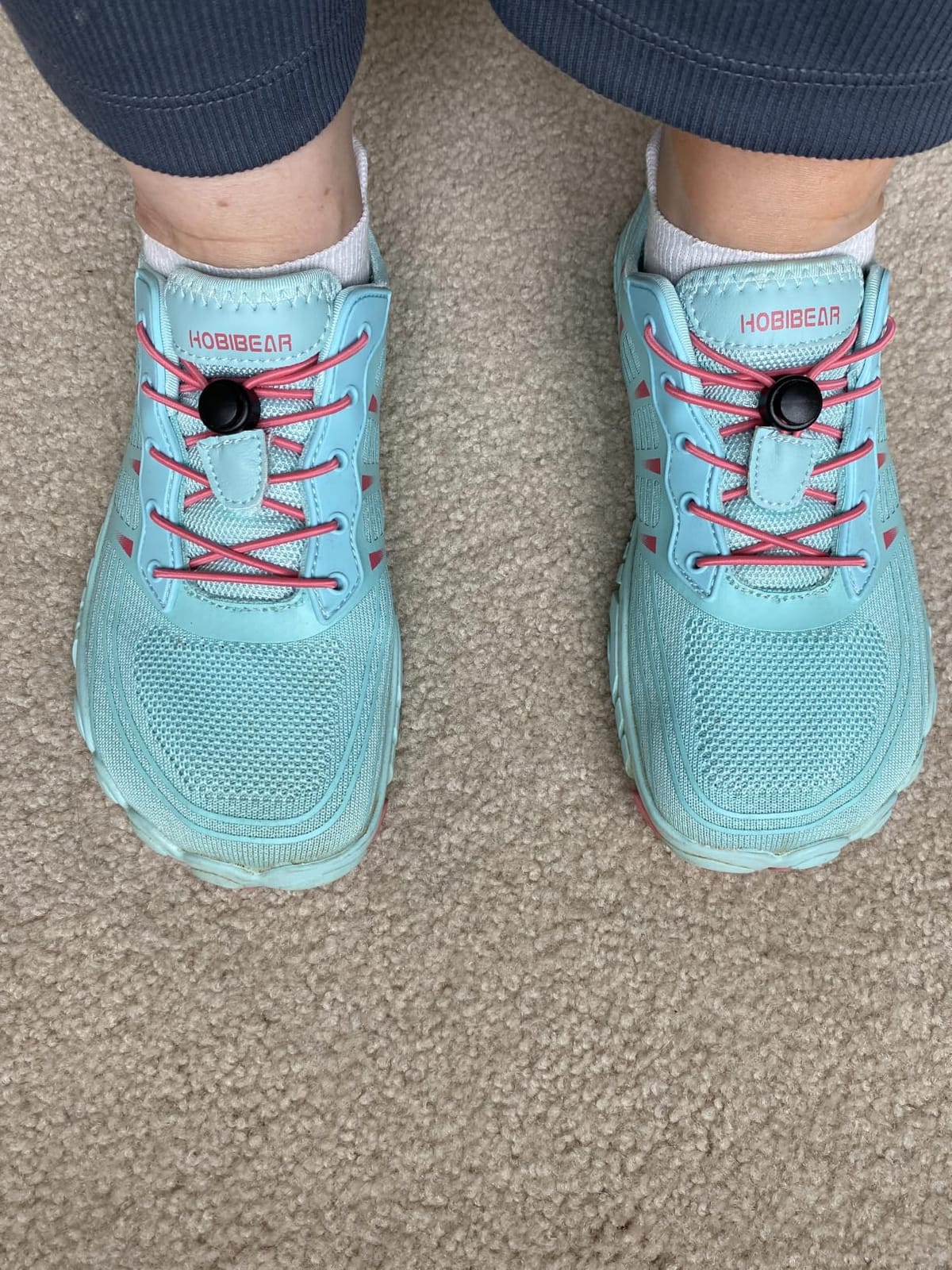
This is a newer model, and that shows in the data. Long-term durability reports are thin, and a smaller review base means you are trusting early impressions more than a decade of feedback. Cushioning and arch support are both minimal.
Day hikes on maintained trail, light trail running, warm-up sessions and cross-training. If you spend weekends walking rough ground rather than running it, this shoe is built for that and does it well.
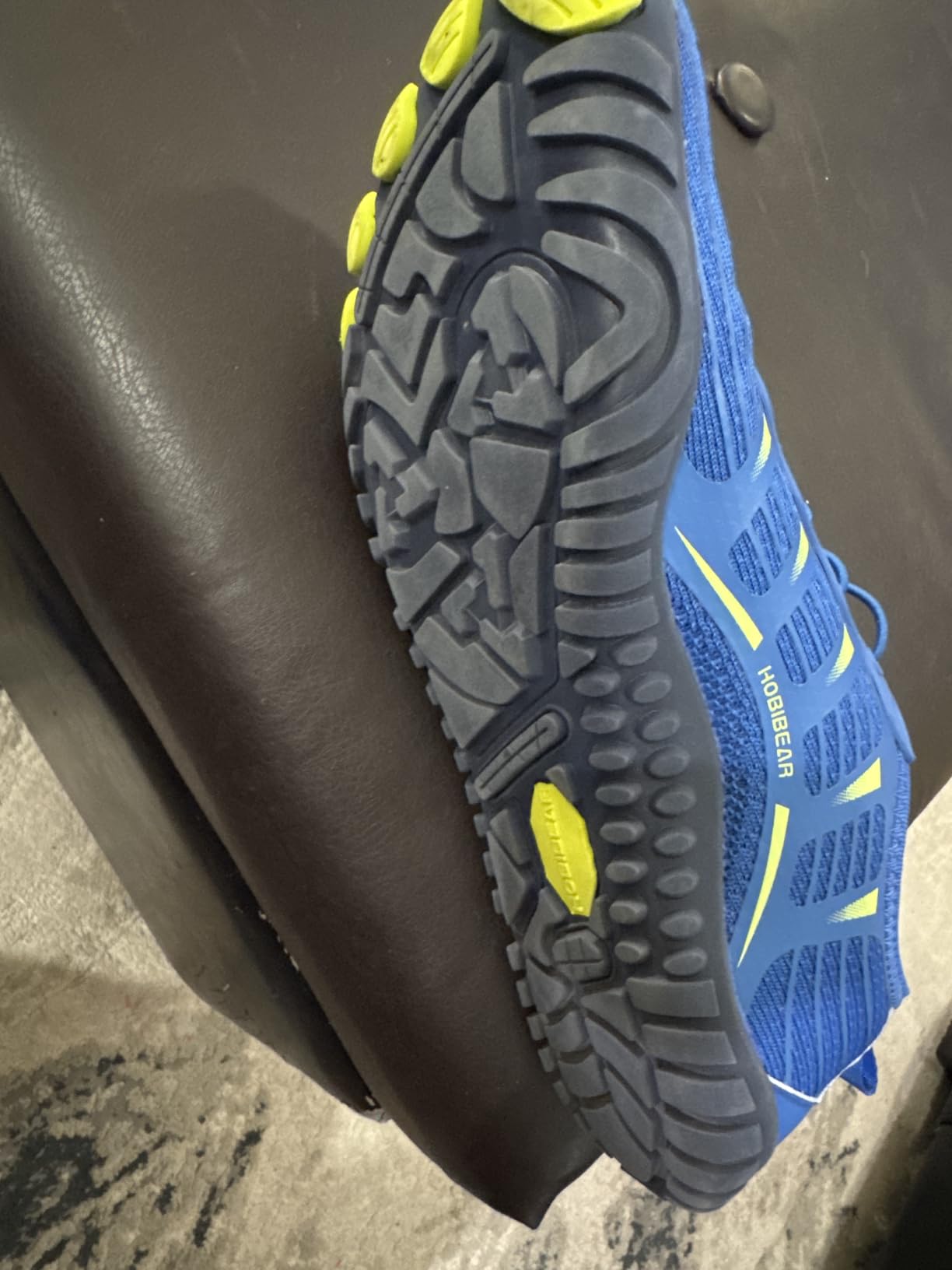
Where it fits
It doubles as a casual shoe without trying. The knit upper looks nothing like technical trail kit, so you are not dressed for a race start every time you carry it to the car or wear it on the high street.
Who should choose something else
Long road runners should pick a shoe with a cushioned level midsole. Technical mountain terrain deserves more lug depth and underfoot protection than this minimalist design offers.
10. WHITIN S91 Road Runner – Best Zero Drop Shoe for Beginners Switching Over
WHITIN Men’s Zero Drop Running Shoes 11 Wide Sneakers for Runs Dark Grey
- More cushion than typical barefoot shoes
- Good stepping stone for beginners
- Wide toe box for toe splay
- BREATHABLE mesh upper keeps feet cool
- Rubber outsole gives solid traction
- Minimal arch support
- Newer model with a small review base
- May feel too cushioned for experienced barefoot runners
The S91 exists specifically for people standing at the edge of a transition. It is zero drop, so the geometry change is real, but it carries a little more underfoot material than a traditional barefoot shoe, which softens the first weeks considerably.
The wide toe box still does its job, letting toes splay naturally, and the breathable mesh upper keeps ventilation high on warmer runs. The rubber outsole provides the traction and grip you would expect from a WHITIN road shoe.
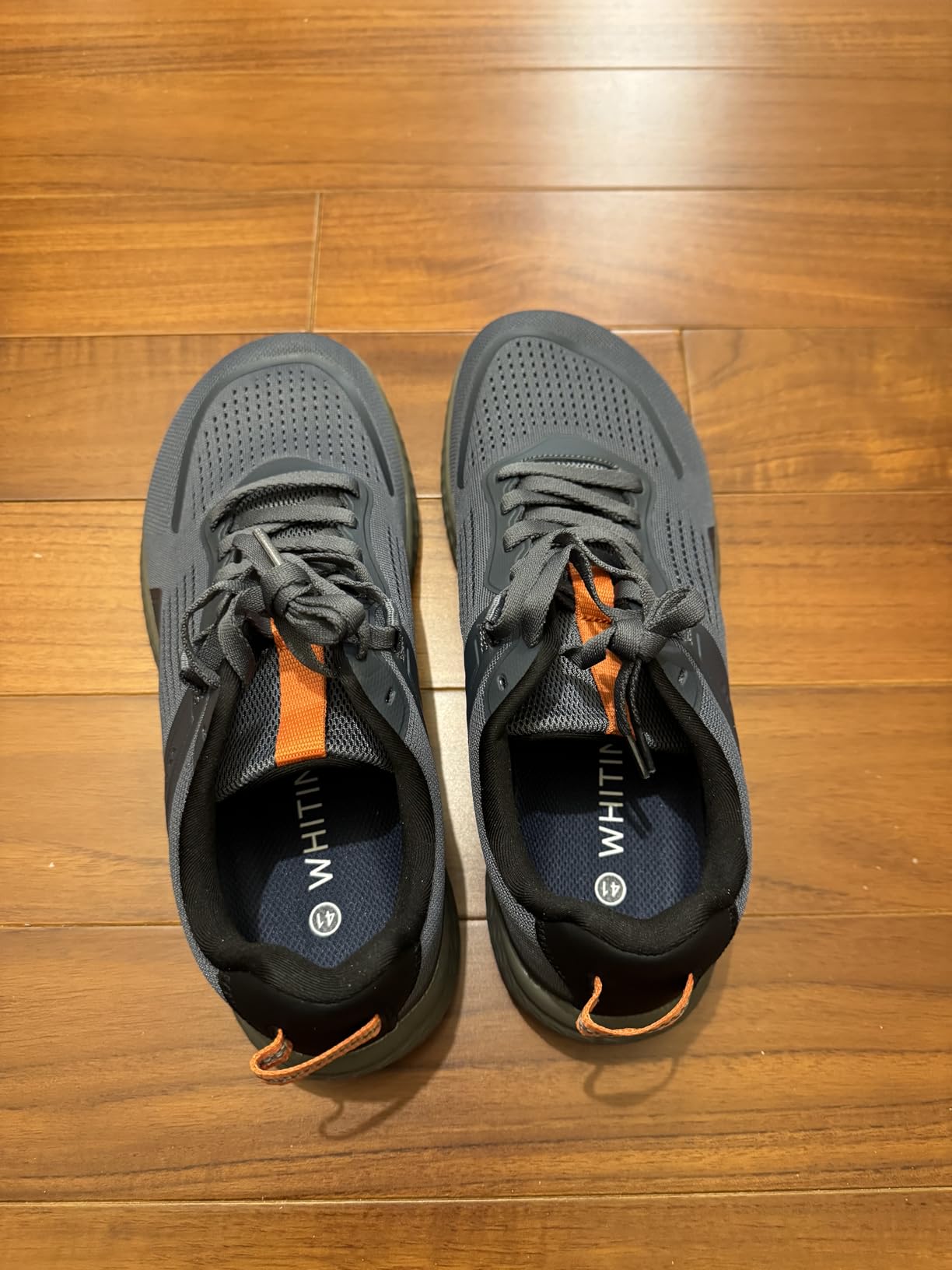
The drawback is the trade-off itself. If you have already adapted to zero drop and want the thinnest possible feel, this will feel padded and unresponsive. It also has a smaller review base, so long-term durability is not yet well documented.
Our recommended path is to start here, build your weekly volume for a month, then step down to the S81 or the W63 if you want more ground contact. That staged approach avoids the shin splints and achilles tightness runners report when they jump straight to a thin sole.
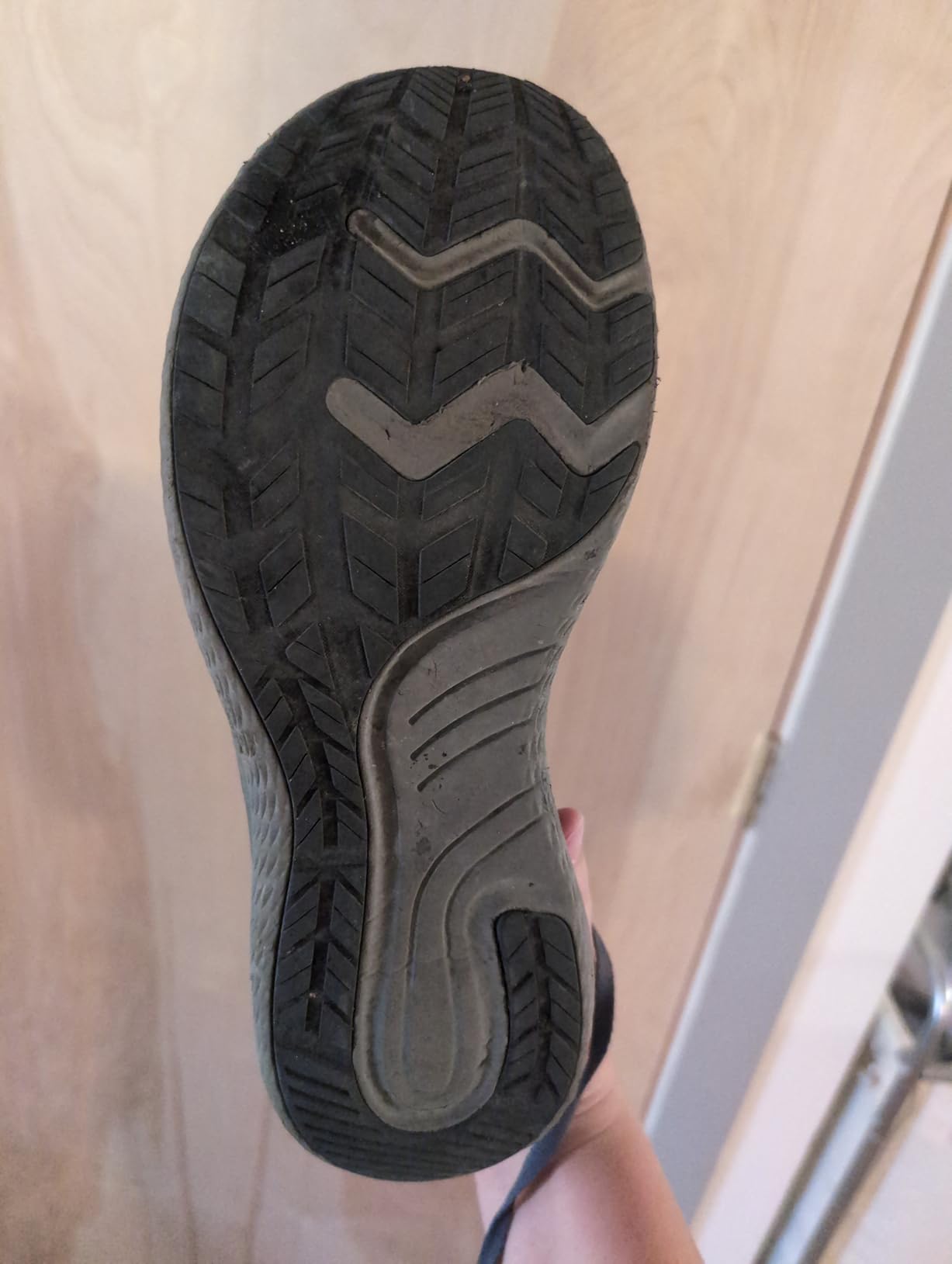
A staged transition
Treat the S91 as a stepping stone rather than a destination. Once you have banked a few months of consistent, pain-free running, moving to a thinner model will reward you with better ground feel and a foot that is genuinely stronger for it.
Arch considerations
Arch support is minimal, which is deliberate but worth knowing. If you already rely on arch support for comfort, pair this with a cushioned alternative on some days rather than going fully barefoot-minded overnight.
11. Merrell Vapor Glove 6 Leather – Best Durable Zero Drop Trail Shoe
Merrell Men’s Vapor Glove 6 Leather Trail Running Shoe, Earth, 12
- True barefoot feel with a Vibram outsole
- Leather upper resists wear
- Excellent ground feel and traction
- Lightweight and flexible
- Minimal cushioning that suits experienced feet
- Leather breathes less than mesh
- Sizing may run small
- Leather needs a break-in period
The Vapor Glove 6 Leather is the most durable shoe in this roundup, and the leather upper is why. Most minimalist shoes here use mesh, which is light but which eventually abrades and delaminates. Leather takes longer to break down and can be repaired.
Underneath, the Vibram EcoStep outsole wraps the foot to maximise grip and connection. This is Merrell’s most minimal shoe by their own description, and the ground feel is genuinely excellent on dirt and short grass.
The cost of that minimalism is cushioning, and the leather upper does not breathe as well as mesh on a hot day. Sizing runs small for some owners, and the leather needs a break-in period before long runs.
Best for experienced bare feet
We would only recommend this to runners who already have strong feet and a few months of zero drop behind them. For a beginner, it is too bare underfoot and too little protection underfoot.
If you also need structure for pronation, our overpronation guide covers which categories handle that motion.
Style bonus
The leather upper gives these a casual, everyday look that works with jeans, which means one pair can genuinely cover running, walking and daily wear without looking like gym kit.
12. Vivobarefoot Primus Lite 3.5 – Best Zero Drop Shoe for Maximum Ground Feel
- Ultra-thin 2mm sole for maximum ground feel
- Sustainable recycled materials
- Lightweight and flexible
- Good for cross-training and the gym
- Very minimal cushioning that suits experienced feet
- Sizing runs small or narrow for some
- Limited durability on rough terrain
- One-star returns run higher than average
The Primus Lite 3.5 is the thinnest shoe here and the closest thing to actually running barefoot while still wearing a shoe. The 2mm Primus outsole with its hexagonal tread pattern gives you flexibility, traction and as much ground feel as a shoe can deliver.
It is also the most responsibly made shoe on the list. The upper is 81 percent polyester with 94 percent of that recycled, the Ortholite insole is made from 98 percent recycled PU foam, and the outsole is recyclable.
Be clear-eyed about the trade-off though. This is not a beginner shoe. Cushioning is extremely minimal, several owners report sizing that runs small or narrow, and the return data shows a higher share of one-star reviews than average. Rough terrain will shorten the life of a 2mm outsole.
Who this is for
Runners with a year or more of barefoot-style training who want maximum sensory feedback and care about the material footprint of what they wear. For cross-training and gym work the thin sole is a genuine asset.
The honest alternative
If you want ground feel but with more underfoot protection and a roomier fit, the Merrell Vapor Glove 6 gives you a similar philosophy with a tougher build. That is the trade we would make before going this thin.
How to Choose Zero Drop Running Shoes
Start with the terrain, not the marketing. A 2mm sole that feels brilliant on pavement will feel hostile on a rocky trail, and a heavily lugged trail shoe will feel strange and slow on a treadmill. Decide where most of your running happens and pick from that category first.
Match the shoe to your runner type
Beginners should prioritise cushioning and a forgiving toe box over minimal feel, which points toward the WHITIN S91 or the S81. Intermediate runners who have already adapted can move to something more responsive, like the Altra Escalante 4 or the AIRHAS.
Advanced bare feet runners who want maximum ground feedback and have no injury history should look at the Vivobarefoot Primus Lite 3.5 or the Merrell Vapor Glove 6. Trail specialists should read our best trail running shoes before narrowing further.
Get the toe box right first
A zero drop shoe with a cramped toe box undoes the whole point. Check whether the widest part of the shoe sits at the toes rather than the ball of the foot, and look for models labelled with a genuine wide or anatomical toe box.
Words like wide are used loosely, so if you have very broad feet, read owner feedback specifically about fit. Our roundup found real complaints about shoes feeling narrower than their labels suggest, and no amount of drop advantage compensates for crowded toes.
Choose cushioning to match your mileage
Cushioning here is not a quality scale, it is a loading scale. Higher stack means more material to absorb impact and a softer landing; thinner soles give more feedback and let your foot muscles do more work. Both can be correct.
Check sizing advice before you order
Sizing is the most common source of disappointment in this category. Several shoes here run small and recommend a half size up, others run large, and one has no half sizes at all. Read the sizing notes on the listing rather than assuming your usual size transfers.
How to Transition to Zero Drop Without Getting Hurt
Almost every injury story we came across involved one thing: changing too fast. The load on your calf, achilles and shin increases overnight, and tissue that was not prepared for it complains within days.
Week 1 and 2: walk and run flat
Wear the new shoes for walking and for short flat runs under 20 minutes. Keep your existing higher-drop shoes for anything longer. The goal is exposure without load.
Week 3 and 4: build easy volume
Extend to 30 to 40 minutes of easy running in the zero drop shoe, still on flat ground. Drop the pace, and treat any calf tightness as a signal to stop rather than push through.
Week 5 to 8: mix distances
Most runners can handle their normal easy mileage in the new shoes, keeping their traditional trainers for long runs, hills and anything with a hard surface or a lot of impact.
Week 9 to 12: rotate and consolidate
By this point most people can run everything in the zero drop shoe, and a two-shoe rotation remains useful for years. A thin shoe and a cushioned one is a normal, healthy setup rather than a compromise.
Strength work that actually helps
Short foot exercises speed the whole process. Calf raises, single-leg balance work, short-foot drills and toe splay practice all train the muscles that carry the new loading. Ten minutes a few times a week is plenty.
Frequently Asked Questions
What do podiatrists think about zero drop shoes?
Most podiatrists are cautiously positive, and the evidence is stronger for short controlled periods than for permanent switching. Zero drop shoes encourage a midfoot or forefoot strike, which tends to reduce loading on the knee, but they also increase load on the calf, achilles and plantar fascia. The Altra Lone Peak 9 in our list carries the American Podiatric Medical Association Seal of Acceptance, which is awarded to products found to promote good foot health.
Is it okay to run a marathon in zero drop shoes?
It is fine if you trained that way in them. The risk is not the marathon itself but arriving at race day with the shoe as a recent addition. Runners who use a zero drop shoe for most of their marathon training report fewer problems than those who try it for the first time in racing shoes. Transition over at least eight to twelve weeks and keep a cushioned backup pair for the last few kilometres if that suits you.
What are the downsides of wearing zero drop shoes?
The main downsides are a thinner cushioning layer, less underfoot protection on rough ground, and an adaptation period that can bring calf or achilles soreness. Buyers should also expect more frequent replacement of mesh uppers and thinner outsoles compared with traditional shoes. On wet rock or technical descents a flat platform gives less stability than a taller stack. None of these are dealbreakers, but they are real trade-offs.
What are the best zero drop shoes for all-day use?
For all-day wear we would pick the Flux Footwear Adapt Runners, which combine a wide toe box with an airy mesh upper and a low profile that works with normal clothing. The Xero Shoes Prio is a close second for its flexibility and stability on a gym floor, and the Merrell Vapor Glove 6 Leather wins on durability and a casual leather look. All three keep a zero drop platform.
How long does it take to transition to zero drop shoes?
Most runners need between four and twelve weeks, depending on their previous drop height and weekly mileage. Coming out of a heavily cushioned 8 to 10mm drop shoe takes longer than coming out of a 4mm low drop model. Spend the first two weeks walking and running short flat sessions, add volume gradually, and keep your old shoes for long and hilly runs until your calves stop complaining.
Are zero drop shoes better for running?
They are better for some runners and worse for others, so treat it as a preference rather than an upgrade. Many runners report less knee discomfort and a more natural stride once their foot strength catches up. Others find the reduced cushioning harder on long runs or simply prefer the softer landing of a traditional trainer. The right question is which terrain you run and how your body responds over several weeks.
Final Verdict on the Best Zero Drop Running Shoes
The WHITIN W63 takes our top spot for a simple reason: it balances a wide toe box, a genuinely flexible zero drop platform and enough daily wearability to keep you in it year round. If your running is mostly trail, follow it with the Altra Lone Peak 9 for longer distances and more protection.
Give yourself the full twelve weeks, rotate with a cushioned trainer, and pick the shoe that fits your foot rather than the one with the thinnest sole. That is 2026‘s most useful advice on zero drop running shoes: the geometry is easy, the patience is the hard part.