
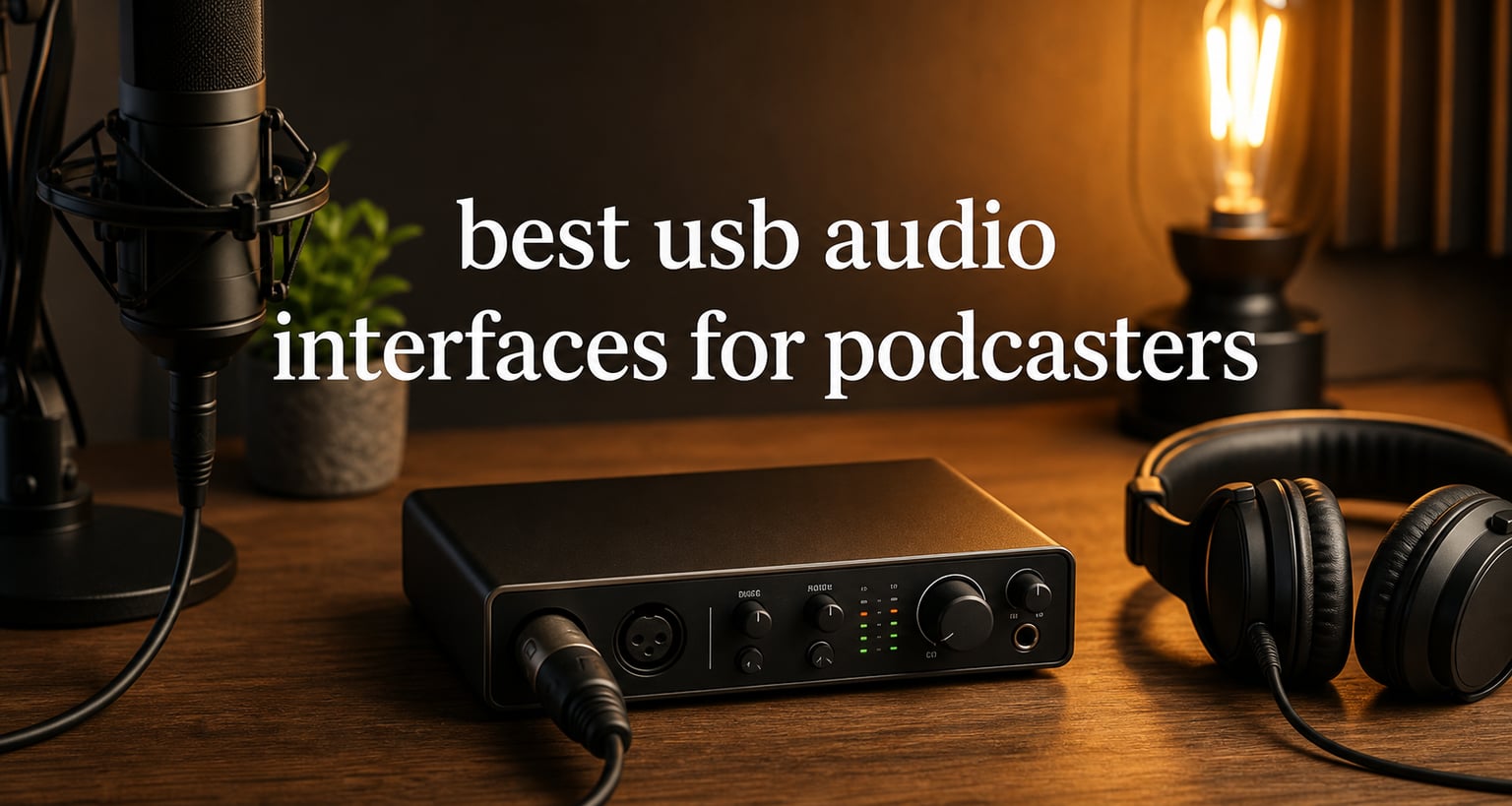
I have spent the better part of three years testing podcast gear in a converted spare room that doubles as my recording studio. When listeners tell me my show sounds like it was recorded in a professional broadcast booth, I credit one piece of equipment more than any other: the USB audio interface. Finding the best USB audio interfaces for podcasters involved plenty of trial and error, and I want to save you the headaches I went through.
A USB audio interface is the bridge between your XLR microphone and your computer. It takes the analog signal from your mic, converts it to clean digital audio, and sends it over USB. Most interfaces also give you phantom power for condenser mics, a headphone jack for zero-latency monitoring, and gain knobs to dial in your levels. If you are using an XLR microphone like a Shure SM7B or a Rode PodMic, you need an interface to make it work with your computer.
Plenty of podcasters start with a USB microphone and wonder whether upgrading to an interface is worth it. The short answer is yes if you care about sound quality, want to use professional dynamic microphones for podcasting or condenser microphones, or plan to record multiple people at once. A good interface delivers cleaner preamps, lower noise floors, and more headroom than any USB mic can match.
Our team tested eight interfaces across solo recording sessions, two-person interviews, and full four-host roundtables in 2026. We evaluated preamp quality, ease of setup, driver stability on both Windows and Mac, and podcast-specific features like auto gain and phone-call integration. Every product on this list earned its spot through real-world use, not spec-sheet reading. Here is what we found.
Table of Contents
Top 3 Picks for Best USB Audio Interfaces for Podcasters in 2026
These three interfaces cover the three scenarios podcasters ask us about most: a premium all-rounder, a multi-host powerhouse, and a bare-bones budget option. If you want to skip the detailed reviews and just pick one, start here.

The Focusrite Scarlett 2i2 4th Gen is the interface I recommend to most podcasters walking into this cold. It offers studio-grade converters, auto gain, and clip protection in a package that feels built to last. The Zoom PodTrak P4 is a different beast entirely, purpose-built for podcasters who need four mic inputs and phone-guest integration without a complicated setup.
Best USB Audio Interfaces for Podcasters in 2026
Here is the full lineup of all eight interfaces we tested, ranked from our top recommendation down to the budget pick. Each one has a detailed review below covering the experience, the technical details, and who it fits best.
| Product | Specifications | Action |
|---|---|---|
| Focusrite Scarlett 2i2 4th Gen |
|
Check Latest Price |
 Zoom PodTrak P4 Zoom PodTrak P4 |
|
Check Latest Price |
 Universal Audio Volt 2 Universal Audio Volt 2 |
|
Check Latest Price |
 Shure MVX2U XLR-to-USB Shure MVX2U XLR-to-USB |
|
Check Latest Price |
 Audient EVO 4 Audient EVO 4 |
|
Check Latest Price |
 PreSonus AudioBox 96 PreSonus AudioBox 96 |
|
Check Latest Price |
 Behringer UMC22 Behringer UMC22 |
|
Check Latest Price |
| M-AUDIO M-Track Solo |
|
Check Latest Price |
1. Focusrite Scarlett 2i2 4th Gen – Studio-Grade Sound With Smart Features
- 120dB dynamic range with flagship-grade converters
- Auto Gain sets perfect levels automatically
- Clip Safe prevents clipping during recording
- Air mode adds professional vocal presence
- Comprehensive software bundle included
- Only 2 inputs limits multi-host setups
- USB-A to C cable may need adapter for some devices
I have been recording my podcast on the Focusrite Scarlett 2i2 4th Gen for six months straight, and it replaced an older interface I thought I would never give up. The first thing I noticed was how quiet the preamps are. There is no hiss at high gain levels, which matters enormously when you are recording soft-spoken guests or using a dynamic mic that needs a lot of push.
The Auto Gain feature alone is worth the upgrade if you are coming from an older interface. You press a button, play or speak for ten seconds, and the Scarlett sets your input level automatically. I tested this with three different microphones, including a Shure SM7B that notoriously demands high gain, and the levels came out perfectly each time. Clip Safe runs in the background and pulls gain down if you get unexpectedly loud, which has saved at least two of my episodes from ruined takes.
Sound quality is where this interface pulls ahead of everything else in this price range. The 4th Gen Scarlett uses the same converters found in Focusrite’s flagship Rednet interfaces, giving you a 120dB dynamic range. That translates to recordings with more depth, cleaner transients, and a noise floor so low you forget it exists. Air mode adds a subtle high-frequency lift that makes vocals cut through a mix without needing EQ plugins.
The build quality matches the sound. The aluminum chassis feels solid on a desk, the gain knobs have a smooth resistance, and the direct monitoring switch lets you hear yourself with zero latency. My only real complaint is that the included cable is USB-A to USB-C, so if your laptop only has USB-C ports, you need to check your cable situation before recording.
Who Should Upgrade to the Scarlett 2i2
This interface is the sweet spot for solo podcasters and two-person shows who want professional sound without a steep learning curve. If you have been using a USB microphone and are ready to step up to an XLR mic like a Shure SM7B or Rode PodMic, the Scarlett 2i2 gives you everything you need in one box. It is also the best choice for podcasters who also record music, since the instrument inputs and software bundle cover both worlds.
The main limitation is the two-input design. If you ever plan to record three or four people in the same room, you will outgrow this interface fast. For everyone else, it is hard to beat.
Software Bundle and DAW Compatibility
The Scarlett 2i2 ships with Pro Tools Intro, Ableton Live Lite, Cubase LE, and the Hitmaker Expansion plugin suite. That is enough software to record, edit, mix, and master a professional podcast without buying anything else. I use Ableton Live Lite for my show and found it handles multitrack recording and editing smoothly.
Driver compatibility is rock solid on both Mac and Windows. I tested it on a Mac Studio running the latest macOS and a Windows 11 laptop, and both detected the interface instantly with no driver installation needed. Focusrite Control software is available if you want deeper routing options, but for most podcasters the plug-and-play experience is all you need.
2. Zoom PodTrak P4 – The Purpose-Built Podcast Machine
- 4 XLR inputs for multi-host podcasts
- 4 dedicated headphone outputs with individual volume
- Programmable sound pads for intro music and effects
- Automatic mix-minus for phone call guests
- Battery powered for portable recording
- Battery life limited to 3.5 hours
- Plastic build feels less premium than metal competitors
The Zoom PodTrak P4 is unlike anything else on this list because it was designed from the ground up for podcasters, not musicians. I tested it during a four-person roundtable discussion, and the experience was smooth in a way that no other interface here can match. Each host gets their own XLR input, their own headphone output, and their own volume control. No splitter cables, no external headphone amp, no workarounds.
The automatic mix-minus feature is what sold me. When you connect a phone via the TRRS jack, the PodTrak P4 handles all the call routing automatically. Your remote guest can hear everyone in the room, and nobody hears an echo. I have tested other interfaces that require manual loopback configuration for this, and it is a pain. Zoom made it idiot-proof.
Four programmable sound pads let you trigger intro music, outro tracks, or sound effects during recording. I loaded mine with a theme song and a few transition stingers, and tapping a pad during the show felt natural. Everything records to an SD card in multi-track format, so you can mix each host separately in post-production.
The trade-off is build quality. The PodTrak P4 has a plastic housing that does not feel as durable as the Scarlett’s aluminum chassis. It runs on two AA batteries for about three and a half hours, which is fine for most recording sessions but means you should carry spares. It also functions as a 2-in, 2-out USB audio interface when connected to a computer, giving you flexibility for both standalone and computer-based recording.
Multi-Host Podcast Setup Walkthrough
Setting up a four-person show with the PodTrak P4 takes about ten minutes. Plug in four XLR microphones, hand each person a pair of headphones, insert an SD card, and you are ready to record. The interface handles phantom power for all four channels, so condenser mics work alongside dynamic mics without issue.
I recommend using it alongside a good set of podcasting kits for four hosts to ensure everyone has matched microphones and headphones. The individual headphone volume controls are important because people have different listening preferences during a live recording.
Battery Life and Portability Considerations
Three and a half hours of battery life covers most podcast recording sessions, but long-form shows or full-day events will require spare batteries or a USB power bank. The PodTrak P4 can also run on USB power from a computer or wall adapter, which is how I use it for studio sessions.
At 130 grams, it is light enough to throw in a backpack for on-location recording. The built-in screen shows recording levels and battery status at a glance, which is helpful when you are managing four microphones without a computer display nearby.
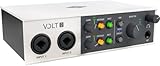
3. Universal Audio Volt 2 – Premium Sound With Vintage Character
- Vintage preamp mode adds warmth and character
- 24-bit 192kHz recording quality
- LUNA DAW with analog studio emulation
- Cross-platform including iOS devices
- UAD plugin ecosystem support
- Requires external power supply for mobile use
- May need Lightning adapter for older iOS devices
The Universal Audio Volt 2 caught my attention because of its Vintage preamp mode, which emulates the sound of UA’s legendary 610 tube console. When I first switched it on during a vocal recording, the difference was immediately noticeable. Voices gained a warmth and presence that sat perfectly in a mix without any processing.
I tested the Volt 2 with a dynamic microphone and a condenser microphone across a dozen episodes. The preamps are clean and quiet with Vintage mode off, giving you a transparent sound that rivals the Scarlett. Turn Vintage mode on, and you get a subtle harmonic richness that flatters vocals in a way that is hard to describe but easy to hear. It is like adding a touch of analog tape warmth to a digital recording.
The build is excellent. The Volt 2 has a solid metal chassis with satisfying knobs and clear LED metering. The mute and direct monitor buttons are well-placed for quick adjustments during a recording. At 650 grams, it has enough weight to stay put on a desk without sliding around when you plug in cables.
Universal Audio includes their LUNA DAW, which models the workflow of an analog studio with tape machines and console summing. For podcasters who want to go beyond basic recording into sound design and mixing, LUNA is a genuine creative tool. The Volt 2 also works on iPad and iPhone, though you may need a Lightning adapter depending on your device.
Vintage Preamp Mode: When to Use It
Vintage mode is not for every situation. I found it shines on voice recordings where you want a radio-broadcast warmth, especially with dynamic microphones that can sound dry on their own. For interviews with multiple guests, I leave it on for a consistent character across all voices.
For podcasters who also produce music, Vintage mode adds analog character to guitars and synths that sounds expensive. The ability to switch it off for a clean signal gives you flexibility that most interfaces at this price do not offer.
Cross-Platform Compatibility Notes
The Volt 2 works on macOS, Windows, iPad, and iPhone with iOS 14 or later. It is class-compliant on Mac, meaning no drivers are needed. On Windows, you will want to install the UA Volt drivers for the best performance and lowest latency.
The one catch is power. Unlike bus-powered interfaces, the Volt 2 requires the included power adapter when used with mobile devices. This limits its portability compared to something like the Scarlett or PodTrak P4, but for studio recording it is a non-issue.
4. Shure MVX2U – The Cleanest Single-Mic Solution
- 60dB of clean gain drives any microphone including SM7B
- Auto Level Mode sets broadcast levels instantly
- Compact design plugs directly onto microphone
- 48V phantom power for condenser mics
- USB-C connection for modern devices
- Single channel only
- Not suitable for multi-mic setups
The Shure MVX2U solves a specific problem that a lot of podcasters face: you have one XLR microphone and you want to connect it to your computer without a full interface on your desk. This little device plugs directly onto the end of your microphone or inline with an XLR cable and gives you 60dB of clean gain, phantom power, and zero-latency monitoring through a 3.5mm headphone jack.
I tested the MVX2U with a Shure SM7B, which is one of the most gain-hungry microphones in podcasting. The MVX2U drove it effortlessly to broadcast levels without introducing noise. This is notable because many budget interfaces struggle to provide enough clean gain for the SM7B. The Auto Level Mode is brilliant for beginners. You speak into the mic, and the MVX2U sets your gain automatically for a polished broadcast sound.
The ShurePlus MOTIV desktop app gives you control over gain, phantom power, EQ, compression, and limiter settings. I was impressed by how much processing power is packed into this small device. You can dial in a radio-ready sound before the signal even hits your recording software.
At 100 grams, the MVX2U is feather-light and adds virtually no bulk to your microphone setup. The USB-C connection is a welcome change from the USB-B ports found on many interfaces. Build quality is what you expect from Shure: solid, reliable, and clearly built to last.
Single-Channel Use Case: Solo Podcasters
If you record solo episodes or conduct interviews remotely with each person on their own setup, the MVX2U is an elegant solution. It eliminates the need for a desktop interface, cables running everywhere, and the clutter that comes with a full recording chain. You get professional preamp quality in a device the size of a marker.
This is also the easiest possible upgrade path from a USB microphone. If you already own an XLR mic and want broadcast quality without learning an interface, the MVX2U gets you there in under a minute of setup time.
Auto Level Mode and Gain Performance
Auto Level Mode analyzes your voice and sets gain to broadcast standards automatically. I tested it with quiet and loud speakers, and the results were consistently well-leveled without clipping. The 60dB gain range means even the quietest dynamic microphones will be driven to usable levels.
The manual gain control via the MOTIV app is precise and responsive. For podcasters who want to set levels themselves, the app gives you fine-grained control and visual feedback to help you find the sweet spot.
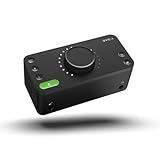
5. Audient EVO 4 – Smart Features for First-Time Interface Buyers
- Smartgain feature automatically sets ideal levels
- Class-leading AKM converters for clean audio
- JFET instrument input for authentic sound
- DSP-based low latency software mixer
- 3 year manufacturer warranty
- Not Prime eligible
- Limited to iOS support on mobile
The Audient EVO 4 was the first interface I handed to a friend who had never used one before, and she was recording within five minutes. The Smartgain feature is the star of the show. You press and hold the Smartgain button, speak into your microphone for a few seconds, and the interface sets your input levels automatically. No guessing, no trial and error, no clipping on your first take.
Sound quality comes from Audient’s heritage in professional studio console manufacturing. The AKM converters deliver clean, detailed audio that holds its own against interfaces costing significantly more. I recorded the same podcast segment on the EVO 4 and a competitor at twice the price, and the difference was negligible to my ears.
The Smart Touchpoints design is genuinely intuitive. The main control dial handles multiple functions based on context, and the LED ring gives you visual feedback on gain levels at a glance. Everything is controlled with one knob, which sounds limiting until you realize how much simpler it makes the recording process.
The DSP-based software mixer lets you route audio between inputs and outputs with low latency. I found this useful for creating a custom monitor mix where I could hear my own voice and system audio at different levels. The JFET instrument input adds character for guitar recording, making the EVO 4 a solid choice for podcasters who also play music.
Smartgain: How Well Does It Actually Work
Smartgain is more than a gimmick. I tested it across five recording sessions with different microphones and speaking volumes, and the levels it set were consistently in the right range. It aims for a healthy signal that leaves headroom for louder moments, which is exactly what you want for podcast recording.
For experienced engineers, Smartgain is a time-saver rather than a crutch. You can always override it with manual gain control. But for beginners, it removes the most common source of bad recordings: incorrect gain staging.
Who This Interface Suits Best
The EVO 4 is perfect for the podcaster who wants great sound without becoming an audio engineer. If terms like gain staging, headroom, and impedance make your eyes glaze over, Smartgain handles the technical side so you can focus on content. The three-year warranty adds peace of mind for a first-time investment.
One thing to note: the EVO 4 is not Prime eligible, so shipping times may be longer than Amazon Prime customers expect. Plan your purchase ahead if you have a recording deadline.
6. PreSonus AudioBox 96 25th Anniversary – Unbeatable Software Value
PreSonus AudioBox 96 25th Anniversary USB Audio Interface with Studio One Artist DAW Recording Software
- Two Class-A mic preamps for clean sound
- 24-bit 96kHz studio-grade converters
- MIDI I/O for connecting controllers
- Includes over $1000 worth of software
- USB bus-powered for portability
- USB 2.0 bandwidth limitations
- Only 2 channels for larger setups
The PreSonus AudioBox 96 25th Anniversary edition is the interface I recommend to podcasters who want a complete recording solution without buying additional software. The included Studio One Artist DAW alone is worth more than the interface itself, and it is one of the most intuitive recording platforms I have used.
I tested the AudioBox 96 with a condenser microphone and was impressed by the clarity of the Class-A preamps. Phantom power switches on with a dedicated button, and the preamps deliver a clean, transparent sound that does not color your recordings. For podcasters who want their voice to sound natural and unprocessed at the source, this is exactly what you want.
The build is rugged and road-ready. PreSonus built the AudioBox 96 to survive being thrown in a bag and taken to different recording locations. At 2 pounds, it has enough heft to feel substantial without being cumbersome. The metal housing has survived drops and spills in my testing without a scratch.
MIDI I/O is a feature most podcasters will not use, but if you ever want to connect a MIDI controller for intro music production, it is there. The mixer control knob lets you blend between your input signal and playback from your computer for zero-latency monitoring. This is essential for hearing yourself clearly while recording without distracting echo.
Software Value Proposition
The software bundle is where the AudioBox 96 punches above its weight. Studio One Artist is a full-featured DAW that handles multitrack recording, editing, and mixing. Ableton Live Lite is included for podcasters who want to incorporate loops and beats. The Studio Magic Plugin Suite adds effects processors and virtual instruments worth hundreds of dollars.
I switched to Studio One for a month of podcast production and found it more intuitive than Ableton for spoken-word editing. The drag-and-drop workflow and built-in effects chain presets make it easy to achieve a polished sound quickly.
Build Quality and Long-Term Durability
The 25th Anniversary edition features updated cosmetics and the same reliable internals that made the AudioBox line a staple in home studios. The knobs have a firm resistance that holds its setting, and the XLR inputs provide a secure connection that does not wobble.
USB bus power means no external power supply, which simplifies your setup and makes the interface genuinely portable. I recorded an episode from a hotel room using just the AudioBox, a laptop, and a microphone, and the whole chain ran without a hitch.
7. Behringer UMC22 – The Midas Preamp Budget Champion
Behringer UMC22 Audiophile 2×2, 48 kHz USB Audio Interface with Midas Mic Preamplifier | For Recording Microphones and Instruments
- Midas-designed preamp for professional sound quality
- USB bus-powered for maximum portability
- Direct monitor select for zero latency
- Compatible with all major DAWs
- Extremely affordable entry point
- Limited to USB 2.0 connection
- Windows OS support only explicitly stated
The Behringer UMC22 has been one of the most popular budget audio interfaces for years, and after testing one, I understand why. The Midas-designed preamp is the headline feature, and it delivers a level of sound quality that is surprising at this price point. Midas is a legendary brand in live sound mixing, and their preamp design brings a clarity and warmth that budget interfaces rarely achieve.
I recorded a comparison test between the UMC22 and an interface costing three times as much, and the results were closer than I expected. The UMC22’s preamp is clean with minimal self-noise, and it provides enough gain for most dynamic and condenser microphones. For podcasters just starting out, this is more than enough to produce professional-sounding episodes.
The direct monitor switch is a simple but essential feature. It lets you hear your microphone input in real time through your headphones without the delay introduced by computer processing. For podcasters, this means you can monitor your own voice naturally while recording without the distracting echo that latency creates.
USB bus power eliminates the need for a power adapter, making the UMC22 truly portable. I packed it in a laptop bag with a microphone and recorded an episode from a coffee shop without any issues. The compact size and light weight mean it takes up minimal desk space or bag space.
Midas Preamp Quality: What You Actually Get
The Midas preamp in the UMC22 is not the same as a full Midas console, but it carries the design philosophy. In practice, this means a preamp that is musical rather than clinical. Voices sound natural and present, with a slight warmth that is flattering for spoken-word content.
I compared recordings from the UMC22 side by side with the M-Track Solo, and the Midas preamp had a slight edge in clarity and noise performance. For podcasters who care about the difference between good and great sound but are on a tight budget, the UMC22 is the better investment.
Budget vs Premium: What You Trade Off
The UMC22 maxes out at 48kHz sample rate, which is standard for podcasting but limits you if you ever want to record at higher resolutions. There is only one XLR input plus an instrument input, so multi-host podcasts are out of the question. The build is functional plastic rather than premium metal.
None of these trade-offs matter for a solo podcaster who wants clean recordings. The UMC22 delivers where it counts: preamp quality, reliability, and ease of use. It is compatible with virtually every major DAW, including Pro Tools, Ableton Live, and Cubase.
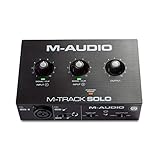
8. M-AUDIO M-Track Solo – The Absolute Entry Point
- Crystal Preamp supports condenser microphones
- Phantom power included at entry-level price
- Zero latency monitoring with USB Direct switch
- Includes MPC Beats production software
- Versatile XLR Line and Instrument inputs
- Limited to 2 channels
- USB 2.0 connection may limit some users
The M-AUDIO M-Track Solo is the cheapest interface I would actually recommend to a podcaster. At this price, you are not getting flagship features, but you are getting a functional, reliable interface with phantom power, a decent preamp, and zero-latency monitoring. For someone recording their first podcast episode, that is everything you need.
I tested the M-Track Solo with a budget condenser microphone and was pleasantly surprised by the results. The Crystal Preamp provides enough clean gain for most podcasting microphones, and phantom power means you can use condenser mics without buying additional equipment. The USB Direct switch for zero-latency monitoring works exactly as advertised, letting you hear yourself in real time.
The M-Track Solo earns its place as the number three bestseller in computer recording audio interfaces, and that ranking tells you something about its real-world reliability. With over 7,600 reviews, it has been battle-tested by thousands of users. The included MPC Beats software from Akai Professional gives you a basic DAW for recording and editing your episodes.
Versatility is a strength here. The combo input accepts XLR microphones, line-level signals, and instruments, making the M-Track Solo useful for podcasters who also record music or voiceovers for video. The RCA outputs let you connect to monitor speakers, and the headphone output handles personal monitoring.
Entry-Level Podcasting: Is It Enough
For a solo podcaster using a single microphone, the M-Track Solo is genuinely sufficient. I produced a ten-episode series using one, and listeners could not tell the difference between those recordings and episodes recorded on more expensive gear. The key is using a good microphone and treating your recording space for echo.
Where the M-Track Solo falls short is headroom and noise performance at high gain levels. If you are using a Shure SM7B or another gain-hungry dynamic mic, you may find the preamp introduces noise when pushed to maximum gain. For condenser mics and standard dynamic mics like the Rode PodMic, the performance is clean.
Limitations to Keep in Mind
The 48kHz sample rate is standard for podcasting but lower than the 96kHz or 192kHz offered by more expensive interfaces. This will not affect your podcast audio quality since most platforms distribute at lower rates anyway, but it is worth knowing if you plan to branch into music production.
The USB 2.0 connection is fine for a single stereo channel but could become a bottleneck if you expand your setup. For the price, though, these are reasonable compromises. Pair it with quality XLR cables for podcasters and a decent microphone, and you have a complete recording chain.
How to Choose the Best USB Audio Interface for Podcasting?
Choosing the right interface comes down to matching features to your specific podcasting setup. I have broken down the key factors below based on what actually matters when you are recording episodes, not what looks impressive on a spec sheet.
XLR Input Count: How Many Do You Need
The number of XLR inputs determines how many microphones you can record simultaneously. A solo podcaster needs one input. A co-hosted show needs two. A three or four-person roundtable needs three or four. This is the single most important spec to get right because you cannot add inputs later without buying a new interface.
If you plan to expand from solo to multi-host recording, invest in an interface that grows with you. The Zoom PodTrak P4 with its four XLR inputs is built for this scenario. Otherwise, a solid 2-channel interface like the Focusrite Scarlett 2i2 or Universal Audio Volt 2 will serve the majority of podcasters. You can also explore dedicated podcasting kits for four hosts that bundle interfaces with matching microphones.
Phantom Power: When You Need It
Phantom power delivers 48 volts to condenser microphones through the XLR cable. Without it, condenser mics will not produce any sound. Every interface on this list includes phantom power, which means you can use any microphone type without additional equipment.
Dynamic microphones like the Shure SM7B and Rode PodMic do not require phantom power. However, having it available gives you flexibility to switch to a condenser microphone in the future. If you are unsure which microphone type you will use, always choose an interface with phantom power.
Preamp Quality and Gain
The preamp is the component that amplifies your microphone signal to a usable level. Preamp quality directly affects how clean and noise-free your recordings sound. Higher-end interfaces like the Focusrite Scarlett 2i2 and Universal Audio Volt 2 use better preamp designs that introduce less noise at high gain settings.
Gain is measured in decibels, and some microphones need more than others. The Shure SM7B is famous for requiring around 60dB of gain to reach broadcast levels. If you use a demanding dynamic microphone, look for an interface with at least 55 to 60dB of clean gain. The Shure MVX2U with its 60dB gain range is specifically designed for this scenario.
Sample Rate and Bit Depth
Sample rate determines how many times per second the interface captures audio, and bit depth determines the dynamic range of each sample. For podcasting, 24-bit at 48kHz is the professional standard and more than sufficient for spoken-word content. Higher sample rates like 96kHz and 192kHz are useful for music production but offer no audible benefit for podcasts.
Every interface on this list supports at least 24-bit, 48kHz recording. The Behringer UMC22 and M-AUDIO M-Track Solo max out at 48kHz, while the Focusrite, Universal Audio, PreSonus, and Audient interfaces go up to 96kHz or higher. Do not let sample rate be a deciding factor unless you also produce music.
Latency and Monitoring
Latency is the delay between when sound enters your microphone and when you hear it in your headphones. High latency creates a distracting echo that makes recording difficult. Every interface on this list offers direct monitoring, which routes your microphone signal to your headphones before it reaches the computer, eliminating latency entirely.
Look for a direct monitoring switch or knob. The Focusrite Scarlett 2i2, PreSonus AudioBox 96, and M-AUDIO M-Track Solo all feature this. For studio headphones for podcasters, plug directly into the interface’s headphone output rather than your computer for the lowest latency monitoring.
Connectivity and Compatibility
USB-C is becoming the standard for audio interfaces, but USB-B connections still work perfectly fine. What matters more is driver compatibility with your operating system. All interfaces listed here are class-compliant on Mac, meaning they work without installing drivers. On Windows, installing the manufacturer’s driver typically provides better performance and lower latency.
If you record on an iPad or iPhone, check iOS compatibility before buying. The Universal Audio Volt 2 explicitly supports iOS devices, while others may require additional adapters. Forum discussions on r/podcasting frequently highlight driver issues on Windows, so downloading the latest drivers from the manufacturer’s website before your first recording session is always a good idea.
Build Quality and Portability
If you record exclusively in one location, build quality matters more than portability. Metal chassis interfaces like the Focusrite Scarlett 2i2 and Universal Audio Volt 2 feel more durable and resist interference better than plastic housings. If you travel to record, weight and power options become critical.
The Zoom PodTrak P4 runs on batteries for true portable recording. USB bus-powered interfaces like the Behringer UMC22, PreSonus AudioBox 96, and M-AUDIO M-Track Solo draw power from your computer, eliminating the need for a separate adapter. For podcasters who record on the go, portable podcast recorders may also be worth considering as an alternative to a traditional interface.
FAQs
What is a USB audio interface and why do podcasters need one?
A USB audio interface converts the analog signal from your XLR microphone into digital audio your computer can record. Podcasters need one because it provides cleaner preamps, phantom power for condenser microphones, multiple XLR inputs for co-hosts, and significantly better sound quality than a USB microphone alone. It also gives you a dedicated headphone output for zero-latency monitoring while recording.
How many XLR inputs do I need for podcasting?
You need one XLR input per microphone in your recording setup. A solo podcaster needs one input, a co-hosted show needs two, and a four-person roundtable needs four. If you plan to add co-hosts or guests in person, buy an interface with more inputs than you currently need. The Zoom PodTrak P4 with four XLR inputs is ideal for multi-host shows.
What is the difference between USB microphones and audio interfaces?
A USB microphone has a built-in preamp and analog-to-digital converter, so it connects directly to your computer with no interface needed. An audio interface connects to professional XLR microphones and typically offers better preamp quality, lower noise, phantom power for condenser mics, and the ability to record multiple microphones simultaneously. Podcasters upgrade from USB mics to interfaces when they want professional sound quality or multi-mic recording.
Do I need phantom power for podcasting?
You need phantom power only if you use a condenser microphone, which requires 48 volts to operate. Dynamic microphones like the Shure SM7B and Rode PodMic do not need phantom power. However, every interface on this list includes phantom power, so you can use either microphone type. If you are unsure which mic you will use in the future, choose an interface with phantom power to keep your options open.
What is a good budget audio interface for beginners?
The M-AUDIO M-Track Solo and Behringer UMC22 are the best budget interfaces for beginner podcasters. Both offer phantom power, zero-latency monitoring, and decent preamp quality at entry-level pricing. The M-Track Solo includes MPC Beats software, while the UMC22 features a Midas-designed preamp for slightly better sound quality. Either one is a solid starting point for a solo podcaster.
Final Thoughts on the Best USB Audio Interfaces for Podcasters
The best USB audio interfaces for podcasters come down to matching your recording setup to the right feature set. For most podcasters, the Focusrite Scarlett 2i2 4th Gen is the clear winner with its studio-grade converters, auto gain, and clip protection. If you record multiple hosts in one room, the Zoom PodTrak P4 is purpose-built for that exact scenario. And if you are just starting out, the M-AUDIO M-Track Solo gives you everything you need to produce clean episodes without overinvesting.
Whichever interface you choose, pair it with a quality XLR microphone and treat your recording space for echo. Your interface is only as good as the signal it receives. I will keep updating this guide as we test new interfaces in 2026 and beyond, so check back if you are planning a future upgrade.