
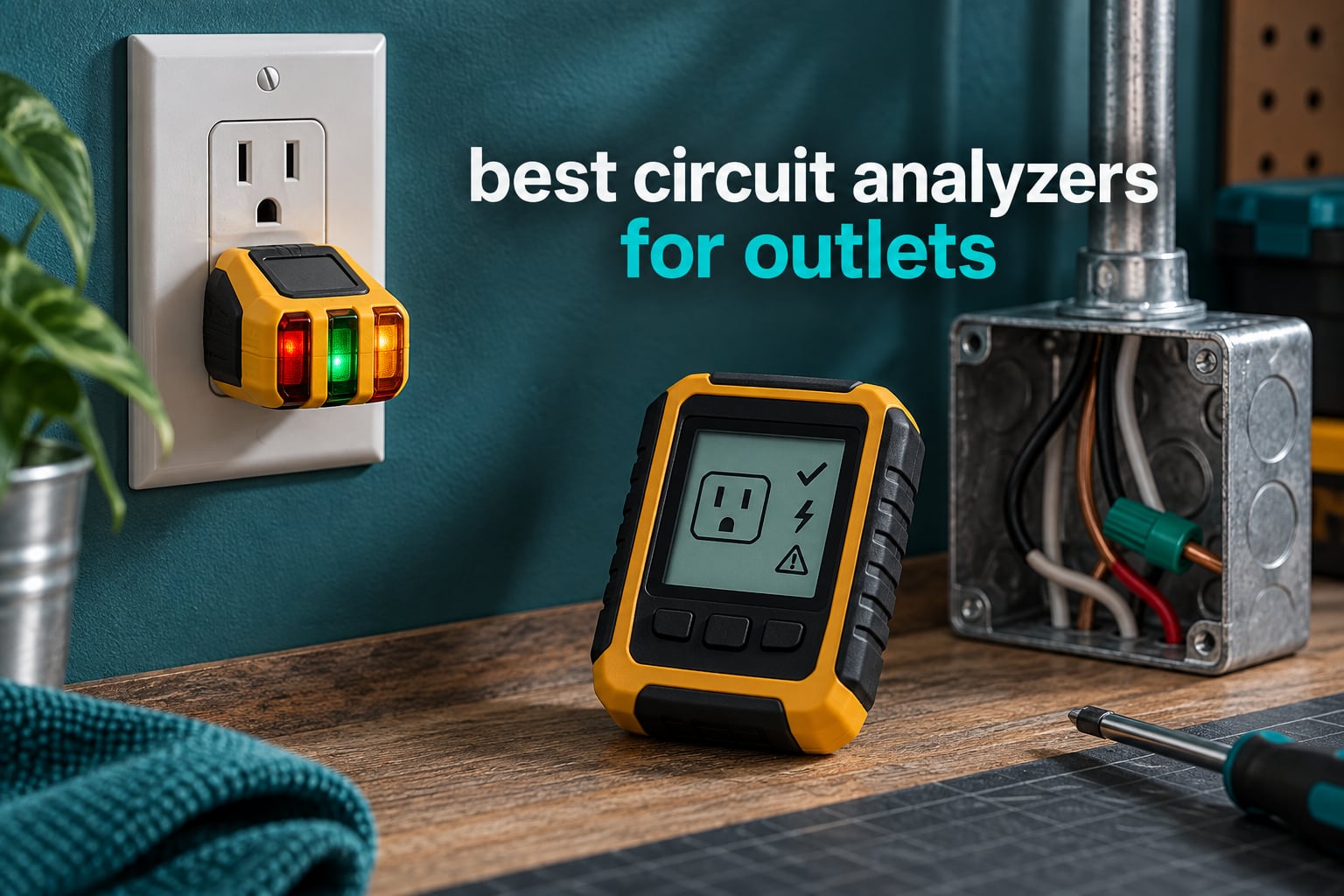
What is the best device to test electrical outlets? A receptacle tester is the right tool for almost everyone: plug it into a 120V outlet and it reports open ground, open neutral, reversed polarity, and hot-side faults using indicator lights, with better models adding a GFCI test button and an LCD voltage readout. A circuit analyzer is the upgrade that also measures actual volts, line drop, and load response. A breaker finder and a digital multimeter solve different problems entirely.
Most of the wiring faults that make an outlet dangerous are invisible. A reversed line, a missing ground, or a bootleg connection behind the plate looks exactly like a good receptacle from across the room, and plenty of them were installed by someone in a hurry decades ago. A plug-in tester settles that question in about three seconds.
Our team compared 10 of the most-reviewed outlet testers and circuit analyzers on the market, reading the specs and owner feedback on each, and we focused strictly on devices that work at the receptacle. No clamp meters, no panel-only testers, no multimeter kits padded in to pad a list. Every pick below plugs into a standard three-wire 120V outlet and tells you what it found.
Table of Contents
Top 3 Best Circuit Analyzer Picks for 2026

Klein Tools RT250
- Backlit LCD voltage readout
- Names the wiring fault in text
- GFCI trip time display
- Open neutral and open ground detection
Klein Tools RT210
- No batteries needed
- Works on GFCI and standard outlets
- 6.6-foot drop rated
- Named-fault light legend

Sperry STK001
- Non-contact voltage detection 50-1000V
- Plug-in GFCI receptacle tester
- Color-coded neon indicators
- Limited lifetime warranty
Quick Overview: All 10 Circuit Analyzers in 2026
Before the individual reviews, here is every device in the roundup with the specs that actually separate them. The single biggest dividing line is display type: LED-only testers tell you the fault name, LCD testers tell you the fault name and the voltage. The second is whether the tool can test GFCI protection.
| Product | Specifications | Action |
|---|---|---|
| Klein Tools RT250 GFCI Outlet Tester with LCD |
|
Check Latest Price |
| Klein Tools RT210 GFCI Receptacle Tester |
|
Check Latest Price |
| Sperry Instruments STK001 NCVT and GFCI Tester Kit |
|
Check Latest Price |
 Klein Tools RT110 Receptacle Tester Klein Tools RT110 Receptacle Tester |
|
Check Latest Price |
 Gardner Bender GFI-3501 Circuit Analyzer Gardner Bender GFI-3501 Circuit Analyzer |
|
Check Latest Price |
 Sperry VD7504GFI DualCheck 2-in-1 Sperry VD7504GFI DualCheck 2-in-1 |
|
Check Latest Price |
 Southwire 40022S GFCI Receptacle Tester Southwire 40022S GFCI Receptacle Tester |
|
Check Latest Price |
 Fluke ST120+ GFCI Socket Tester Fluke ST120+ GFCI Socket Tester |
|
Check Latest Price |
 Power Gear 50542 Receptacle Tester Power Gear 50542 Receptacle Tester |
|
Check Latest Price |
 Bastex Z45 Socket Tester with GFCI Check Bastex Z45 Socket Tester with GFCI Check |
|
Check Latest Price |
1. Klein Tools RT250 – LCD Outlet Tester That Names the Fault
- Names the wiring fault in plain text instead of light codes
- Shows measured voltage on a large backlit LCD
- Displays GFCI trip time for troubleshooting
- Auto-Hold keeps the reading for hard-to-reach outlets
- Rated for a 6.6-foot drop at CAT II 135 V
- Needs two AAA batteries to power the display
- Holding the power button a couple of seconds wakes the LCD
- Background drainage from the switch if left loose in a toolbox
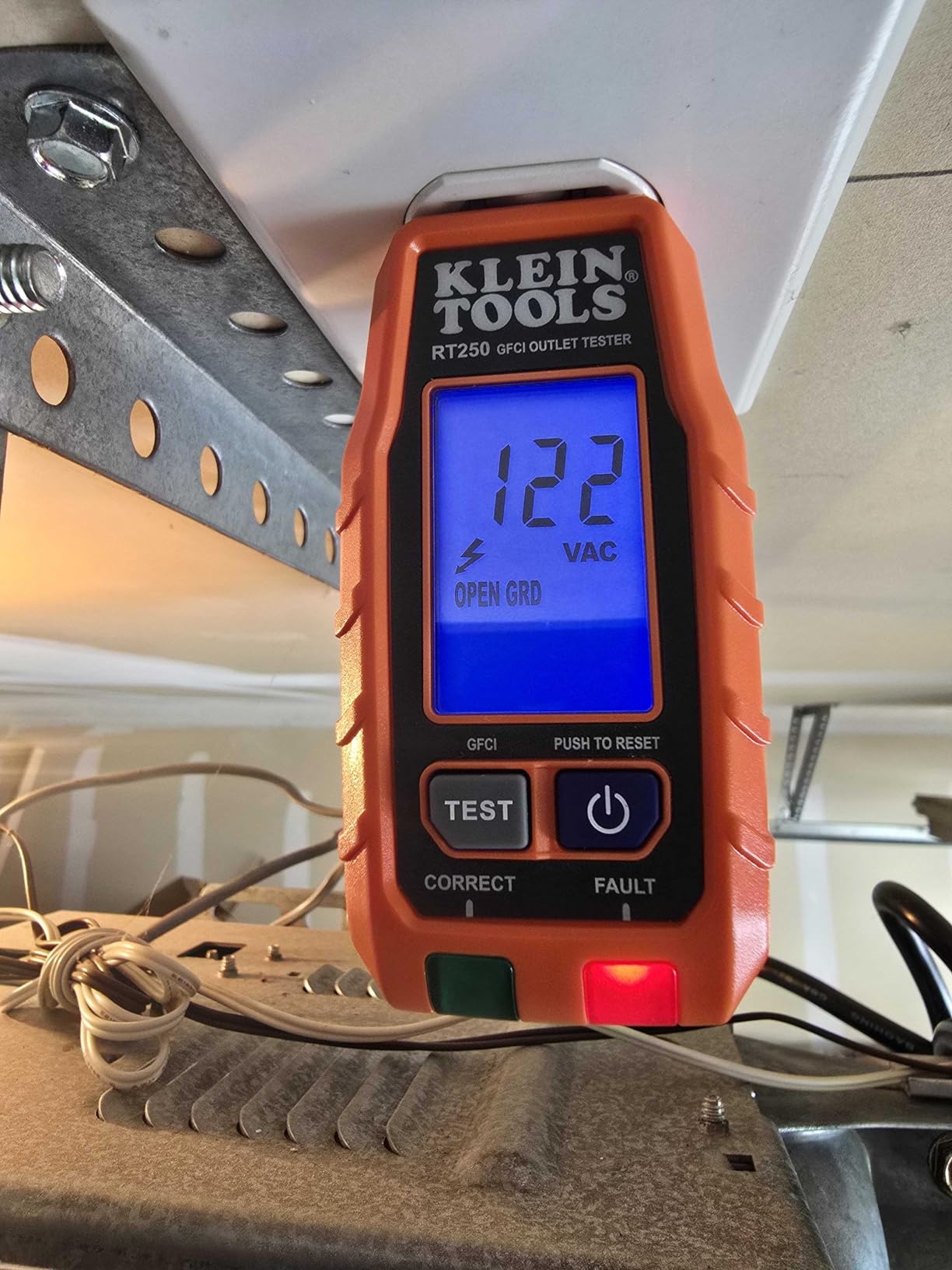
I keep the RT250 in my hand permanently and it has earned that slot. The difference from a three-light tester is that the LCD prints the fault as words, so there is no chart to memorize and no guessing when two indicators are lit at once. For anyone who has ever squinted at a legend in a dark basement, that alone is worth the upgrade.
Owners consistently describe it as a step up from basic LED testers, and the reason keeps coming back to the same thing: the display removes guesswork. It reads voltage as a number, names the condition in text, and holds the reading on screen so you can pull the plug out and still see the result.
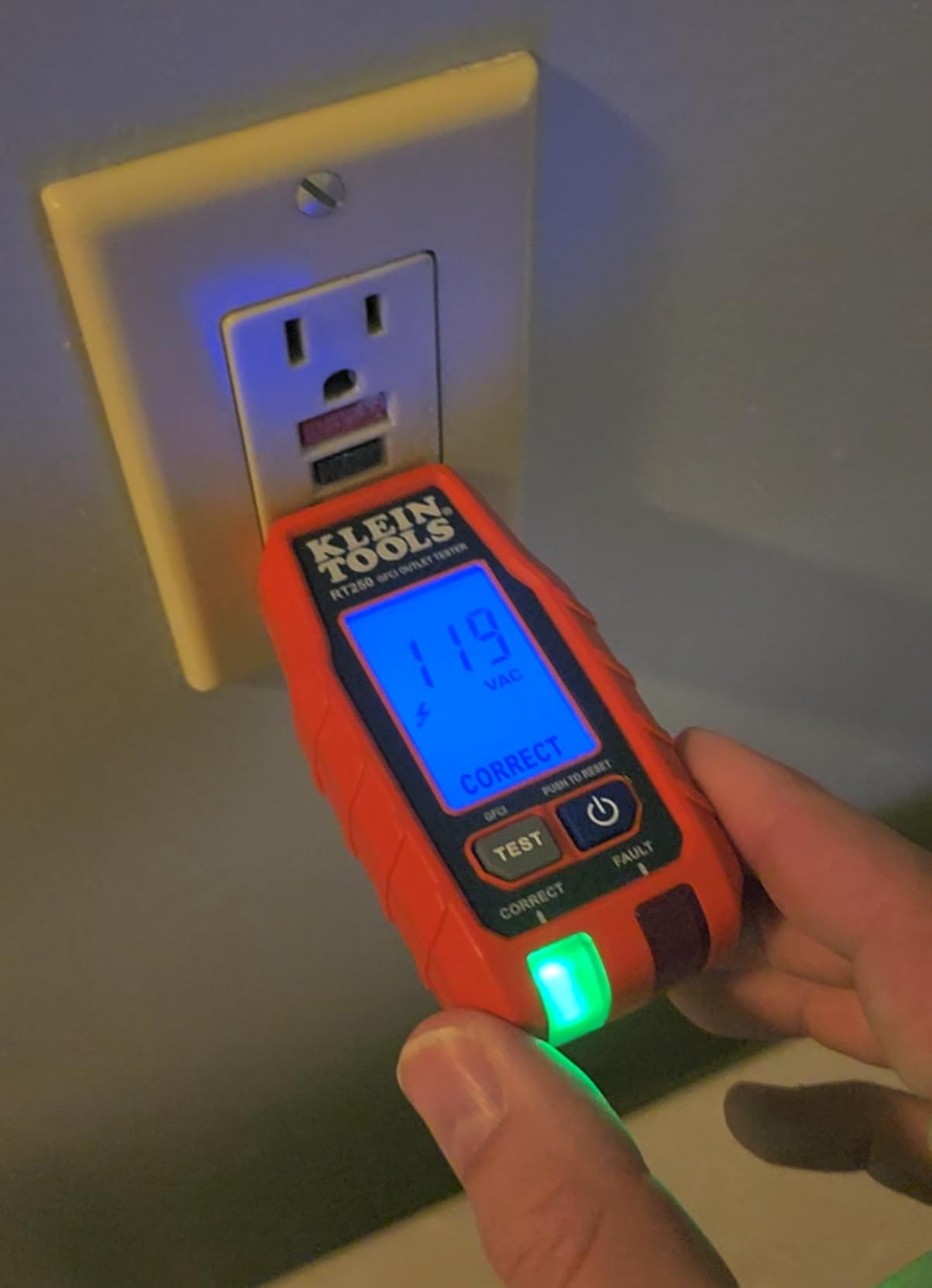
The GFCI button is not cosmetic. Press it and the screen shows how long the device took to trip, which is exactly what you want when a GFCI in a bathroom keeps tripping and you need to know whether the trip point is even in range. A tester that only flashes a light cannot tell you that.
It also carries patent-pending open neutral and open ground detection, and open neutral is the fault that forum users single out as the most safety-critical thing a plug-in tester can catch. An open neutral can leave a faceplate energized with no visible sign at all. Multiple owners report the RT250 catching miswired outlets in older parts of their homes, often in rooms they had assumed were fine for years.
What the LCD readout actually changes for you
An LED tester tells you a fault exists. The RT250 tells you the fault and the voltage at the same time, which means you can tell a wiring problem apart from a supply problem. An outlet reading low while a heavy load runs is a different problem than an outlet that reads low idle.
Auto-Hold solves a small annoyance that adds up across a house. Plugging into a receptacle behind a washer or inside a cabinet, you often cannot see the screen from where you are standing. Hold the reading and read it a moment later instead of crouching.
Where the RT250 falls short
It runs on two AAA batteries, which means a tester can look dead in a cold garage when the cells have drained over the winter. Owners also mention having to hold the power button a couple of seconds to wake the display, which is mildly annoying when you are testing thirty outlets in a rental turnover.
There is one more field note worth knowing: stored loosely in a toolbox, the power switch can drain the batteries slowly in the background. Owners who hit flat cells keep spare batteries in the case. Neither issue touches accuracy.
2. Klein Tools RT210 – Hand-Powered GFCI and Standard Tester
- No batteries to fail or replace
- Tests both standard and GFCI receptacles
- Survives a 6.6-foot drop
- Works in temperatures from 32F to 140F
- Light at 1.9 ounces for a pocket or pouch
- Indicator lights only with no numeric voltage readout
- Not a non-contact voltage detector
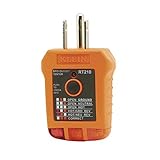
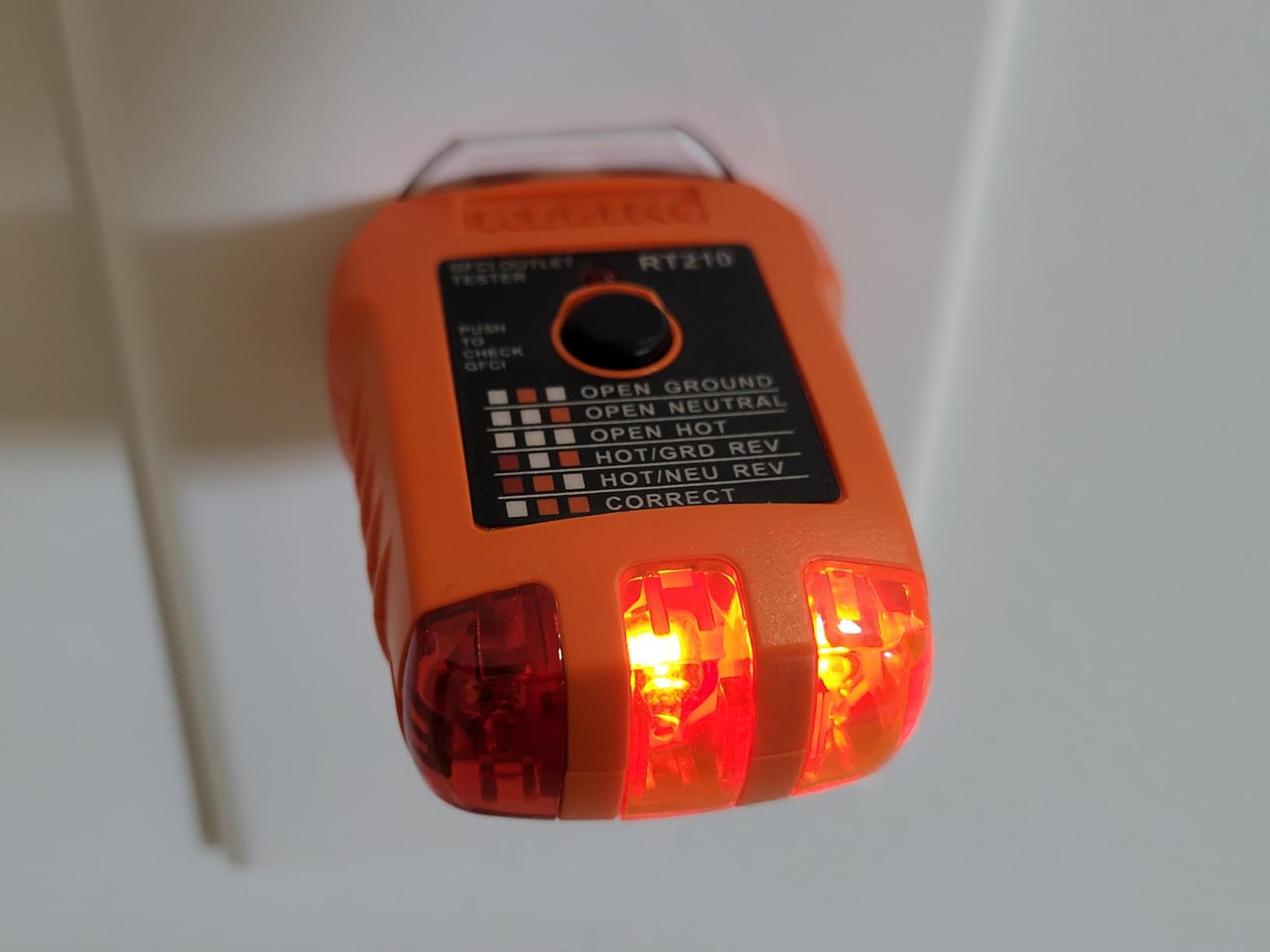
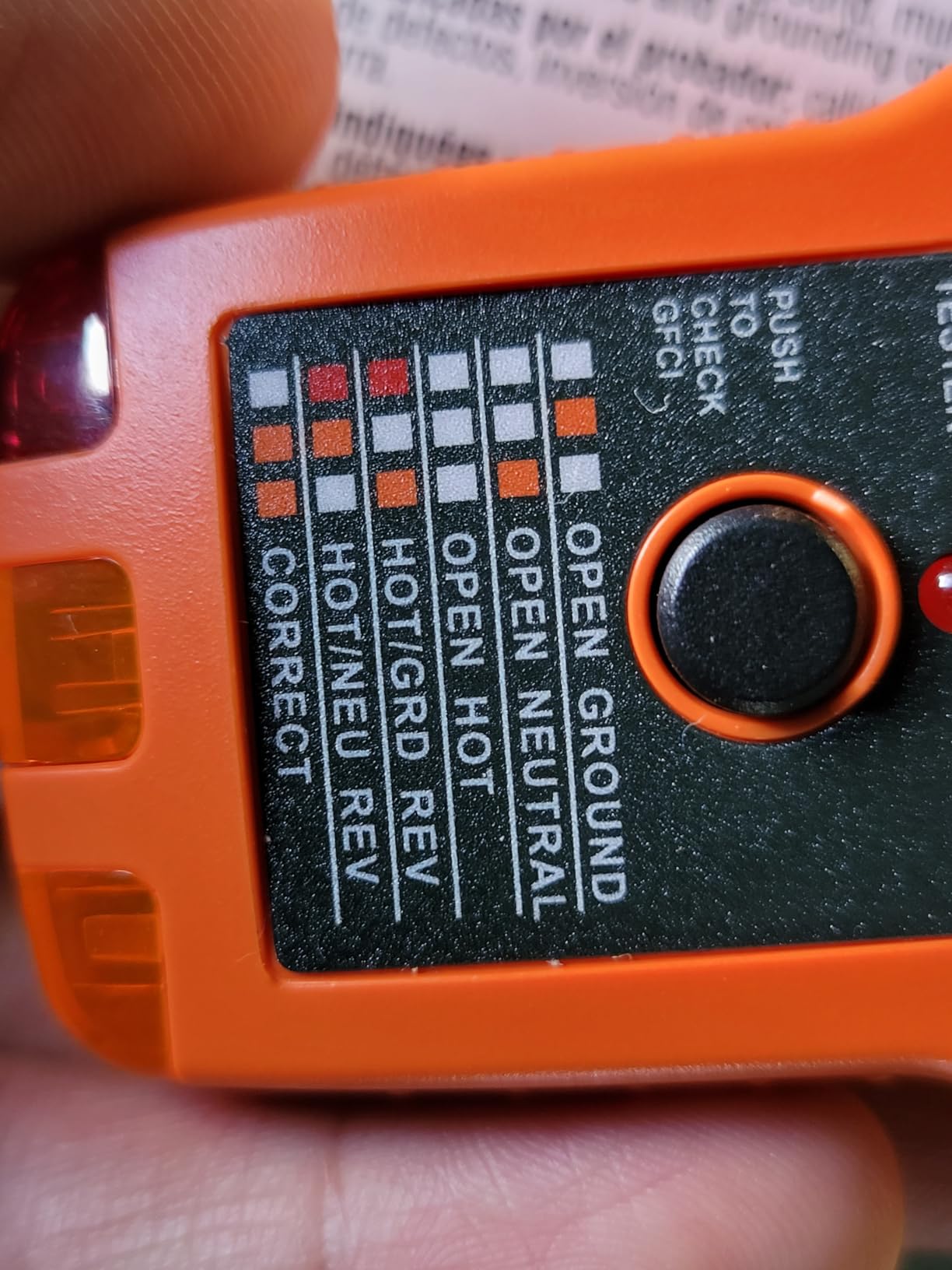
The RT210 is the tool I hand to someone who has never held an electrical tester. It is hand-powered, so there is no battery to die, no charge state to wonder about, and nothing to fail in a cold garage after the winter. Plug it in, read the light pattern against the legend printed on the body, and you have your answer.
It handles both standard and GFCI receptacles, and the GFCI verification function is the main reason owners pick it over a cheaper three-light tester. Pressing the test button confirms the ground-fault device actually operates rather than just looking like it does.
Build quality is the other argument. It is rated to survive a 6.6-foot drop and rated for a 32F to 140F operating range, so it works in an unheated garage in January and a hot attic in July. Multiple buyers compare it favorably to cheaper three-LED testers specifically on durability.
For electricians doing rough work, that drop rating is not marketing. A tester that survives being dropped off a ladder once is more likely to survive the whole year.
Where LED-only indication still works fine
For wiring diagnosis, lights are genuinely sufficient. The RT210’s legend names each pattern, so the common faults including open ground, open neutral, reversed polarity, and hot-to-ground reversal are all readable without any training. What you give up is the ability to see a voltage number.
That number matters when the fault is intermittent. A circuit that drops voltage under load but reads normal idle will pass a light-based test every single time. If your symptom is a flickering lamp or a resetting microwave rather than a permanently dead outlet, the RT250’s screen is the better tool.
Where the RT210 falls short
There is no voltage readout, so you cannot quantify supply problems or measure drop. It is also not a non-contact voltage detector, meaning you cannot use it to confirm a conductor is dead before touching it. Electricians who need both functions usually pair it with a separate NCVT or step up to a dual-function analyzer.
3. Sperry Instruments STK001 – Non-Contact Voltage and GFCI Kit
- Two tools in one kit for one purchase
- Color-coded neon lights read fast in any orientation
- Patented battery self-test on the voltage detector
- 360-degree audible and visual indication
- Rated to a 10-foot drop and 250 lb crush
- Non-contact tip is very sensitive and triggers near unrelated wiring
- Needs button-cell batteries that are not always easy to source
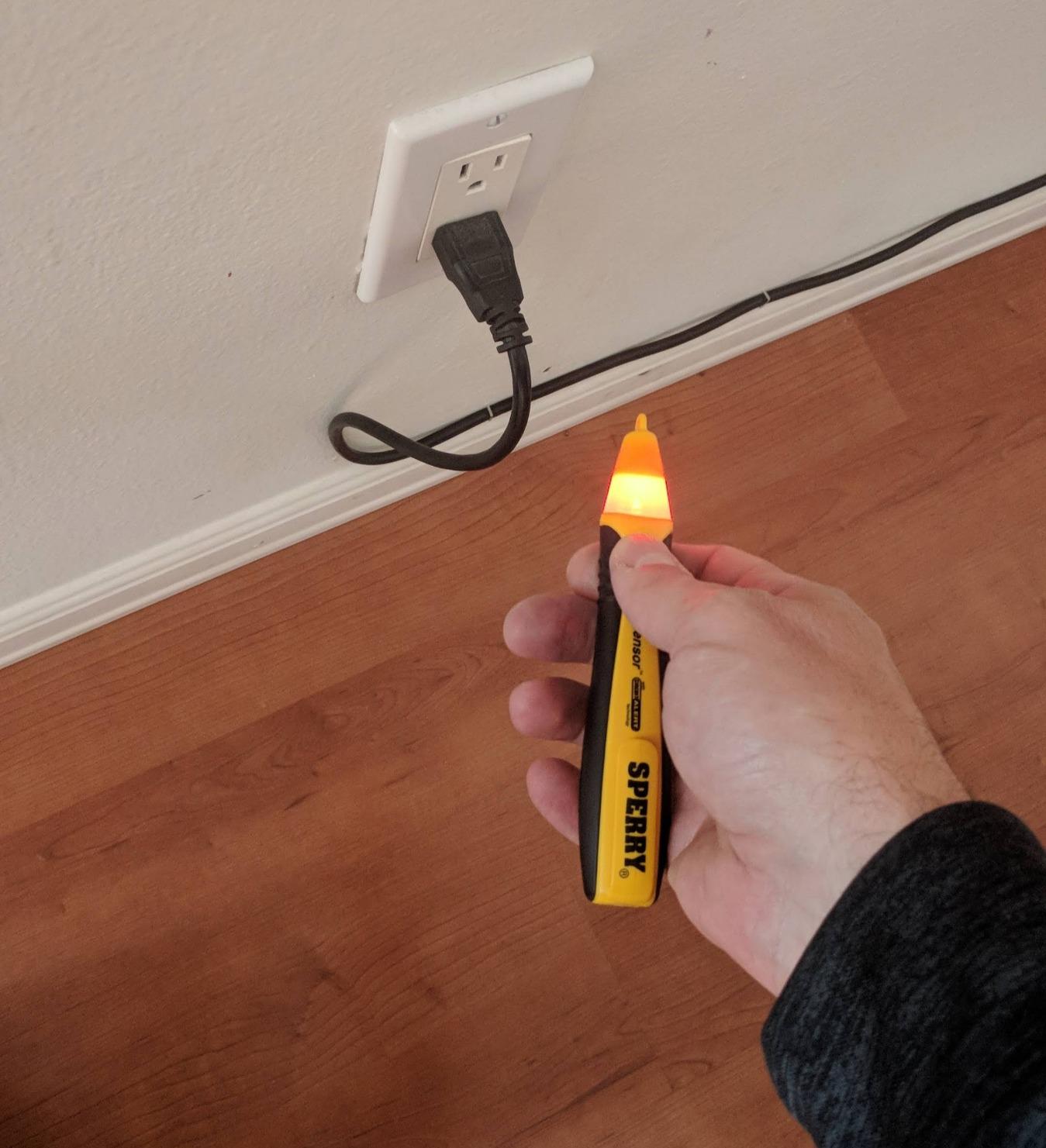
This kit pairs a non-contact voltage detector with a GFCI receptacle analyzer, which is the combination electricians most often ask for. Verify that voltage is present before you touch anything, then plug the analyzer into the receptacle to check wiring and trip function. Two functions, one purchase, one hand.
The color-coded neon lights are a quiet upgrade over small LEDs, especially in a garage or a basement where you might be crouching. They read instantly from any angle, which is why the design appeals to people doing repeated checks.

The non-contact side detects 50-1000V AC with both a 360-degree visual ring and an audible beep, and it carries a patented battery self-test so you can confirm the detector is actually working before you trust it. That self-test matters more than it sounds: a dead non-contact detector is the classic way people get hurt.
Durability is a genuine strength here. The housing is hi-impact ABS with soft over-molded rubber grips, rated to a 10-foot drop and 250 pounds of crush. The voltage detector carries CAT III 1000V and IV 600V ratings, and the tester is C-UL US listed. It also has a limited lifetime warranty, which is uncommon at this level.
Why pairing voltage detection with receptacle analysis pays off
Half the outlets are dead is the single most common diagnostic question homeowners bring to electrical forums, and the pattern almost always traces back to a tripped breaker or a GFCI somewhere else on the circuit. Having a device that can both beep at a conductor and analyze a receptacle makes that diagnosis one trip instead of three.
The forum consensus also frames the multimeter as the baseline tool everyone should own, with outlet testers as a complement rather than a replacement. This kit sits between those two ideas: it is not a full multimeter, but it covers the two checks that come up constantly in residential work.
Where the STK001 falls short
The non-contact detector is extremely sensitive. It will trigger near wiring it has no business reacting to, and owners report it chirping at things that turned out to be fine. That is a nuisance rather than a hazard, but it can train you to ignore the beep, which defeats the point.
The other recurring note is the button-cell batteries. They drain slowly in a drawer and are less common at a hardware store than AA cells, so the self-test feature becomes something you should run more often than you otherwise would.
4. Klein Tools RT110 – Simplest Three-Light Receptacle Tester
Klein Tools RT110 Outlet Tester, AC Electrical Receptacle Tester for North American Outlets
- Plug in and the printed legend names the fault
- Needs no training or technical background
- Fits tamper-resistant child-safety receptacles
- Light at 1.76 ounces
- UL and CSA certified for safety
- Standard tester with no GFCI test button
- Instructions are English only
- LEDs are hard to tell apart in direct sunlight
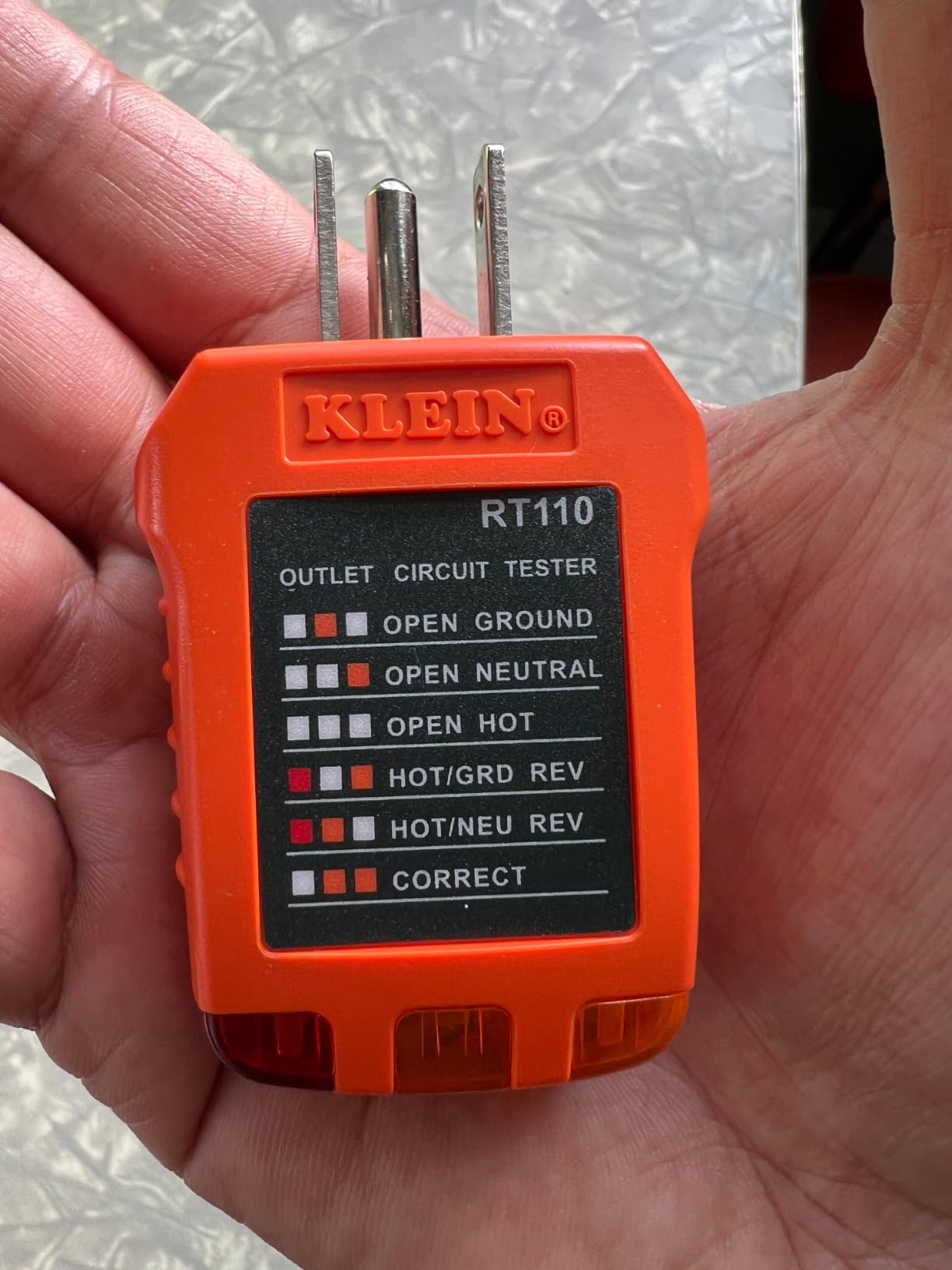
The RT110 is one of the most straightforward tools in this roundup. Plug it into a receptacle, look at which combination of lights is on, and match it to the legend. There is no GFCI button, no display, and nothing else to learn, which is exactly why it works for someone who just found a dead outlet in a bedroom.
It weighs 1.76 ounces and conforms to UL Std 1436 and CSA Std C22.2 number 160, so it is a certified device rather than a novelty. It also fits tamper-resistant receptacles, which matters more than it sounds because a chunk of modern housing uses them.
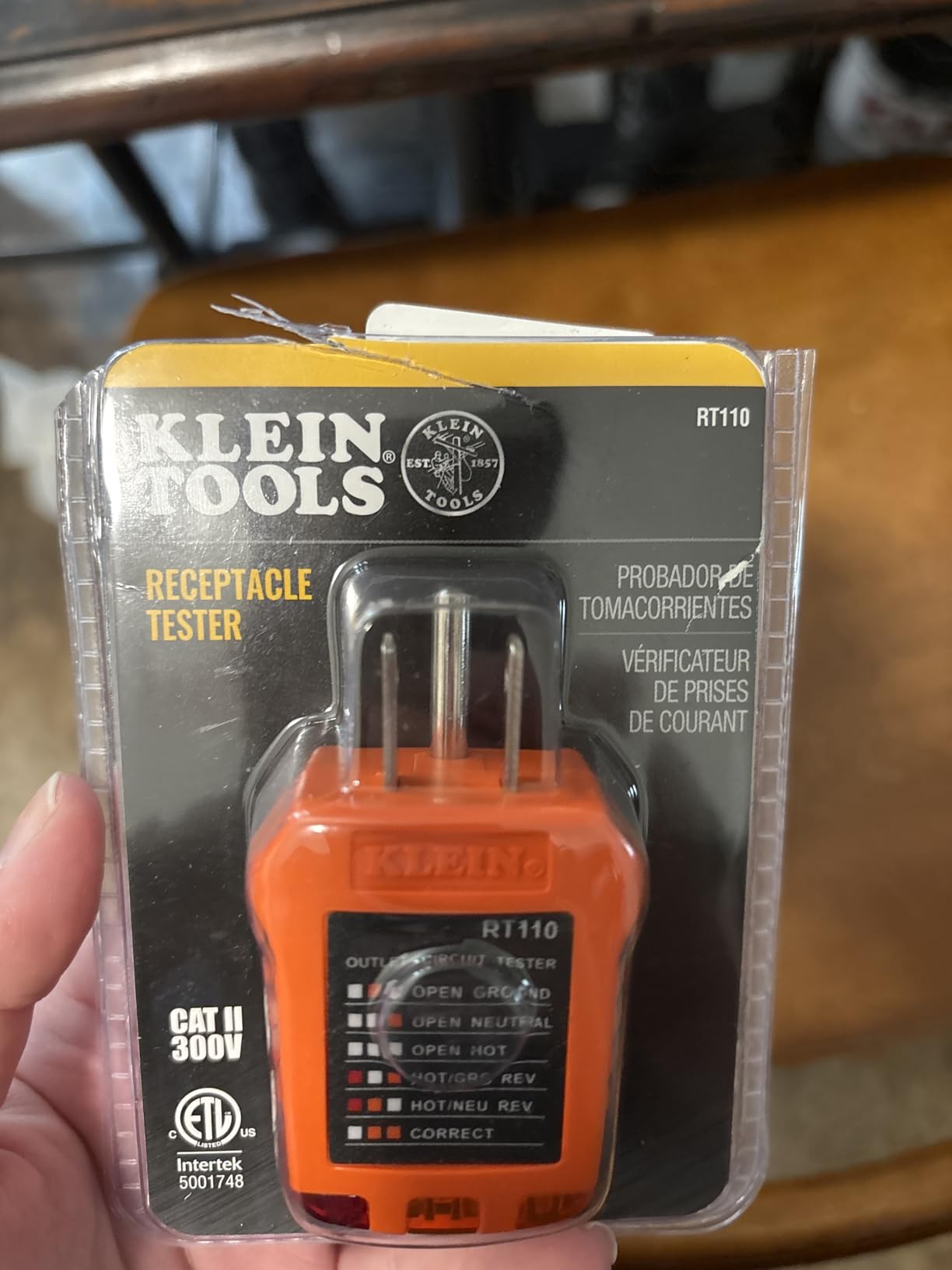
Reviewers describe it in exactly the terms you would hope for: simple, dependable, and clear about what is wrong. The printed light sequence indicates correct or incorrect wiring at a glance, so there is no second step and no separate manual to dig out.
For rental turnovers and pre-purchase walkthroughs, it is fast in a way that LCD tools are not. There is no wake-up button, no reading to hold, no number to transcribe. You are in and out of each outlet in a couple of seconds.
When three lights are genuinely enough
A three-light tester covers the fault list that matters most: open ground, open neutral, reversed polarity, and the hot-side reversal conditions. For checking a home you are about to buy, or for confirming that a series of outlets was wired correctly after a repair, that coverage answers the real question.
It is also the tool most people will actually keep. A tester that requires batteries and a button press tends to end up in a junk drawer. This one ends up in the toolbox and gets used.
Where the RT110 falls short
There is no GFCI test button, so you cannot verify that a ground-fault receptacle is still functioning. If you own GFCI-protected bathrooms or an outdoor kitchen, that gap matters and points you toward the RT210 or Southwire instead.
Two smaller notes: the instructions are English only, and the LEDs can be difficult to distinguish in direct sunlight. Both are real but neither affects the diagnosis in normal indoor conditions.
5. Gardner Bender GFI-3501 – Seven-Condition Coverage in a Compact Body
nVent GARDNER BENDER GFI-3501 GFCI Outlet Tester & Circuit Analyzer
- Covers open ground
- open neutral
- open hot
- and both reverse-polarity faults
- Also tests extension cords
- Compact body grips into tamper-resistant receptacles
- Tests GFCI trip function at 6-9 mA
- LED-only indication with no numeric voltage readout
- Carries only a one-year limited warranty
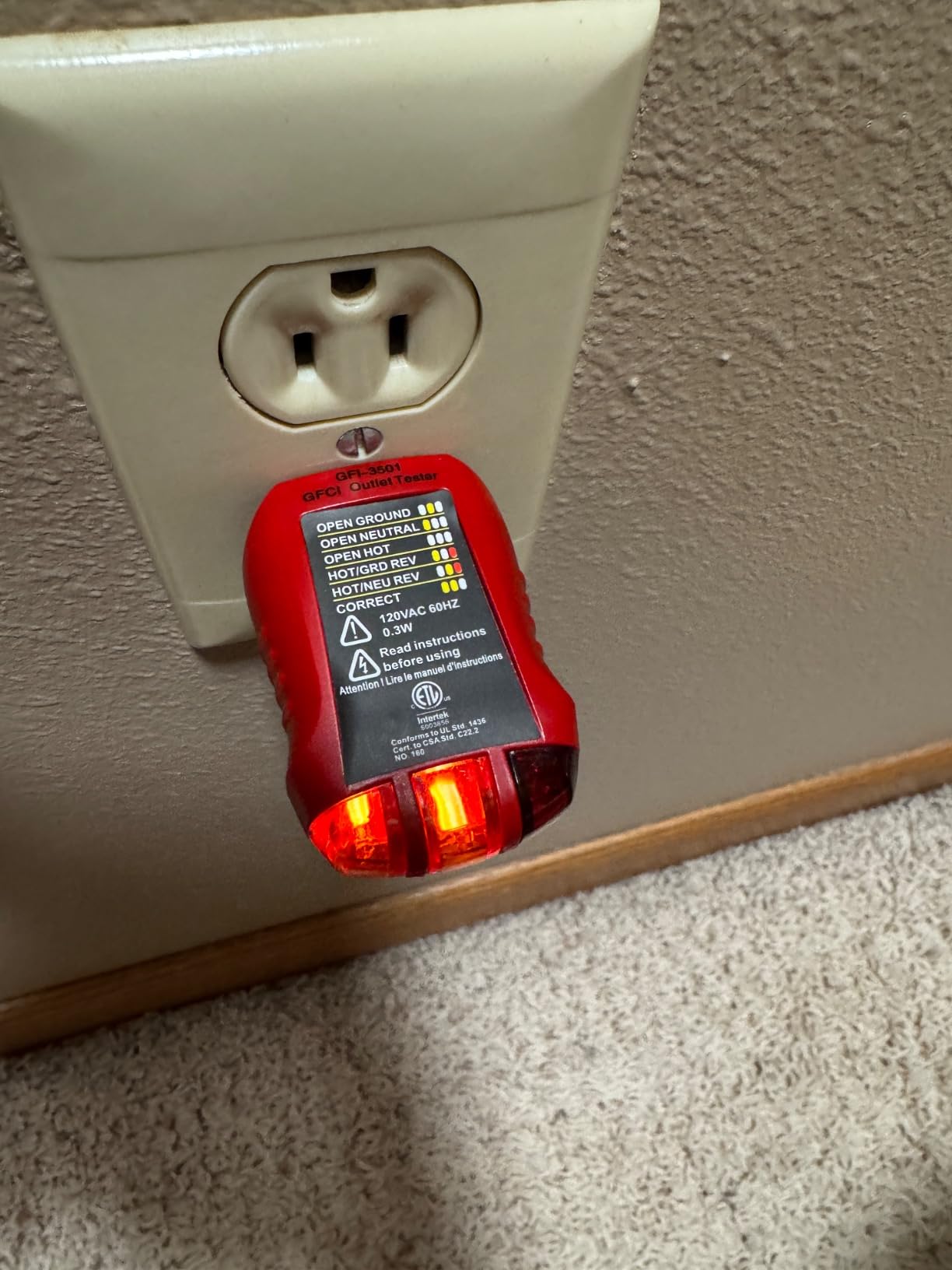
The GFI-3501 covers a wide set of faults for its price. Its yellow and red light succession reports seven conditions: ground fault interruption, open ground, open neutral, open hot, hot-to-ground reverse, hot-to-neutral reverse, and correct wiring. Few tools at this size cover open hot as well.
It also tests extension cords, which none of the other budget picks do. That makes it the only affordable tool here that covers both halves of a common complaint: a lamp or power tool that misbehaves only when plugged into a specific cord.
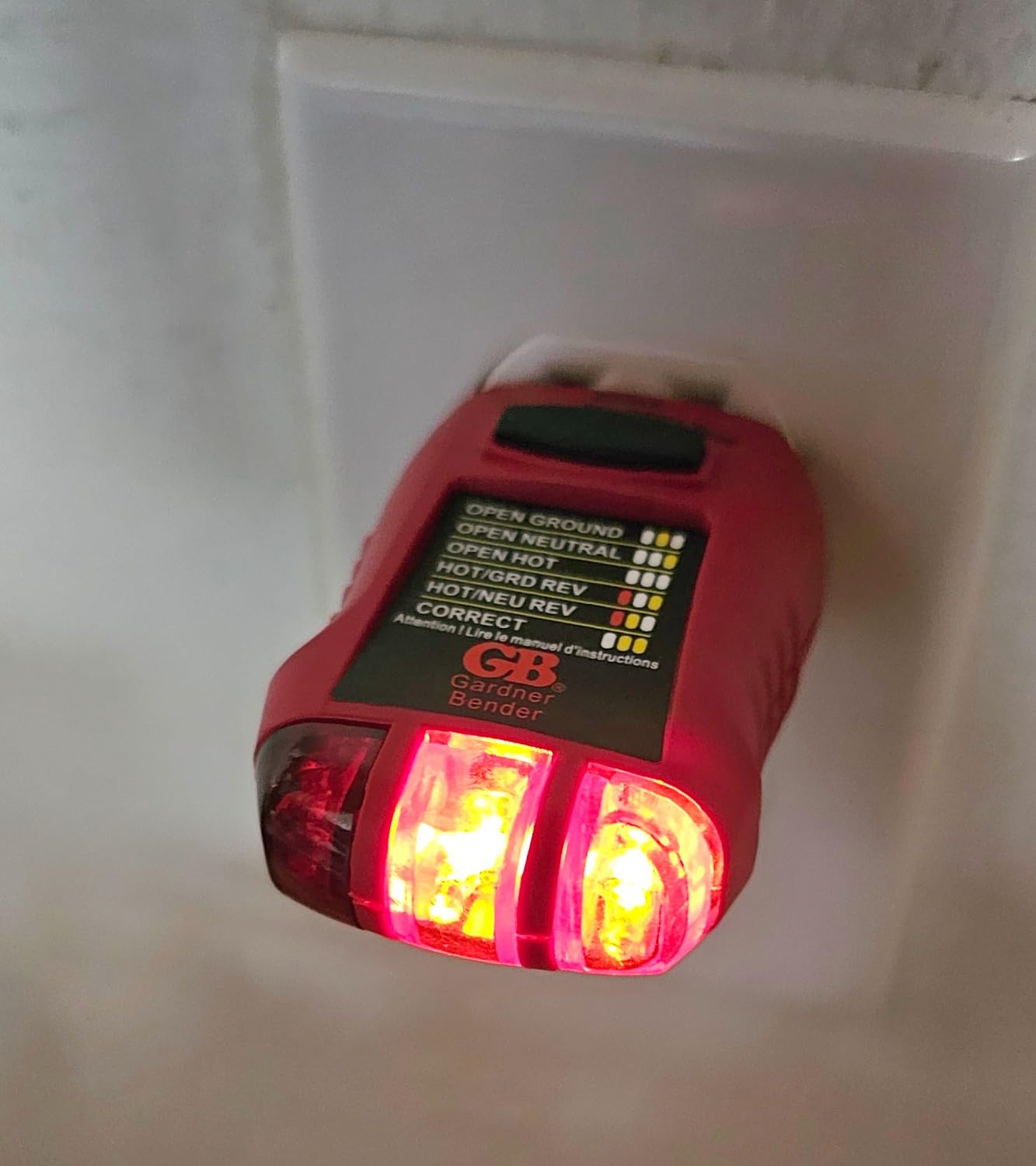
The compact 2 by 1 by 3.5 inch body is a genuine ergonomic win. It fits into tamper-resistant receptacles and stays easy to grip when you are working one-handed or in an awkward position. The tester trips GFCI devices between 6 and 9 mA, which is the standard ground-fault threshold range.
Homeowners on electrical forums repeatedly say the tool works fine and that interpreting the light pattern is the hard part, not the device. That is exactly the frustration the legend-on-the-body design is meant to solve, and it is worth pairing any Gardner Bender tester with our light pattern guide further down.
Why open-neutral detection matters most here
Of the seven conditions, open neutral is the one that gets treated as the most safety-critical across RV and residential forums. When the neutral path breaks, a faceplate and screw can remain energized while everything looks normal. RV owners in particular rely on analyzers that refuse connection when an open neutral is present.
The GFI-3501 reports that condition, which puts it ahead of several cheaper three-light testers that only cover open ground. If your concern is an older house with questionable splices, that coverage is worth more than a nicer display.
Where the GFI-3501 falls short
There is no numeric voltage readout, so a supply problem that only shows up under load stays invisible. And the one-year limited warranty is short by the standards of this list, where several competitors offer a limited lifetime warranty.
6. Sperry DualCheck VD7504GFI – One-Body Two-Function Analyzer
Sperry Instruments VD7504GFI DualCheck 2-in-1 Non-Contact Voltage Detector + GFCI Outlet Circuit Analyzer, 360° Visual & Audible Indicators, 50-1000V AC, 250 lb. Crush Rating
- Combines plug-in GFCI analysis and non-contact detection in one body
- Single green good-light is faster than decoding three-light codes
- Large handle works with child-safety receptacles
- Advanced ground circuitry detects low-resistance values
- Held up well in heavy daily professional use
- Non-contact sensor is very sensitive and triggers near unrelated wiring
- Ground pin screw can loosen and printed legends rub off with heavy use
- Button-cell battery is easy to overlook
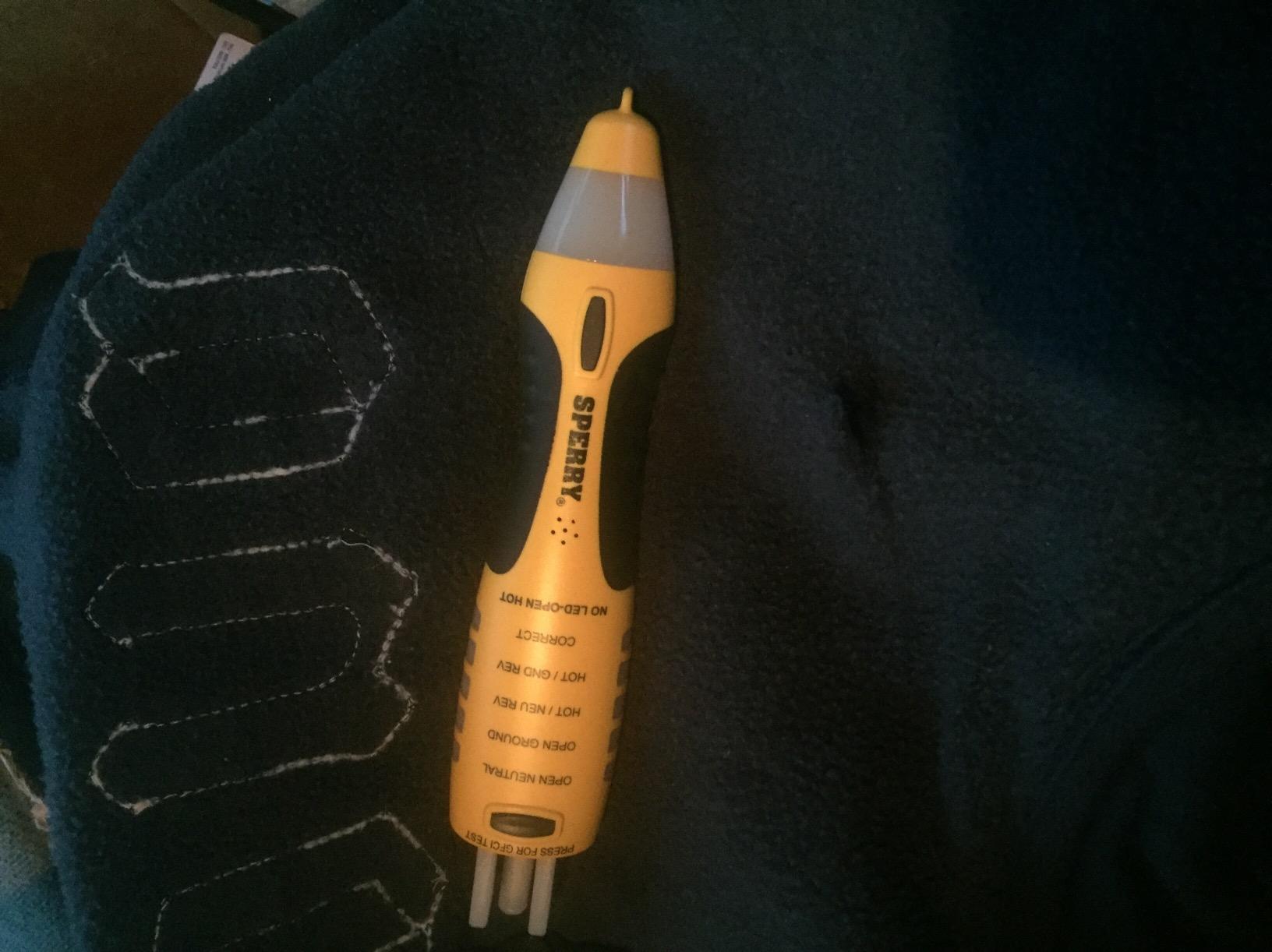
The DualCheck puts a plug-in GFCI analyzer on one end and a non-contact voltage detector on the other, which makes it a fast single-object answer to half-the-outlets-dead. Electricians on forums specifically recommend this Gardner Bender and Sperry class of dual-function tool as an affordable all-rounder.
The single green good-light is the feature that changes your speed. Instead of matching three lit LEDs against a legend, you get one unambiguous green when the receptacle is correct. Building inspectors and electricians report saving one to two seconds per outlet against three-light testers, and across thirty outlets that adds up fast.
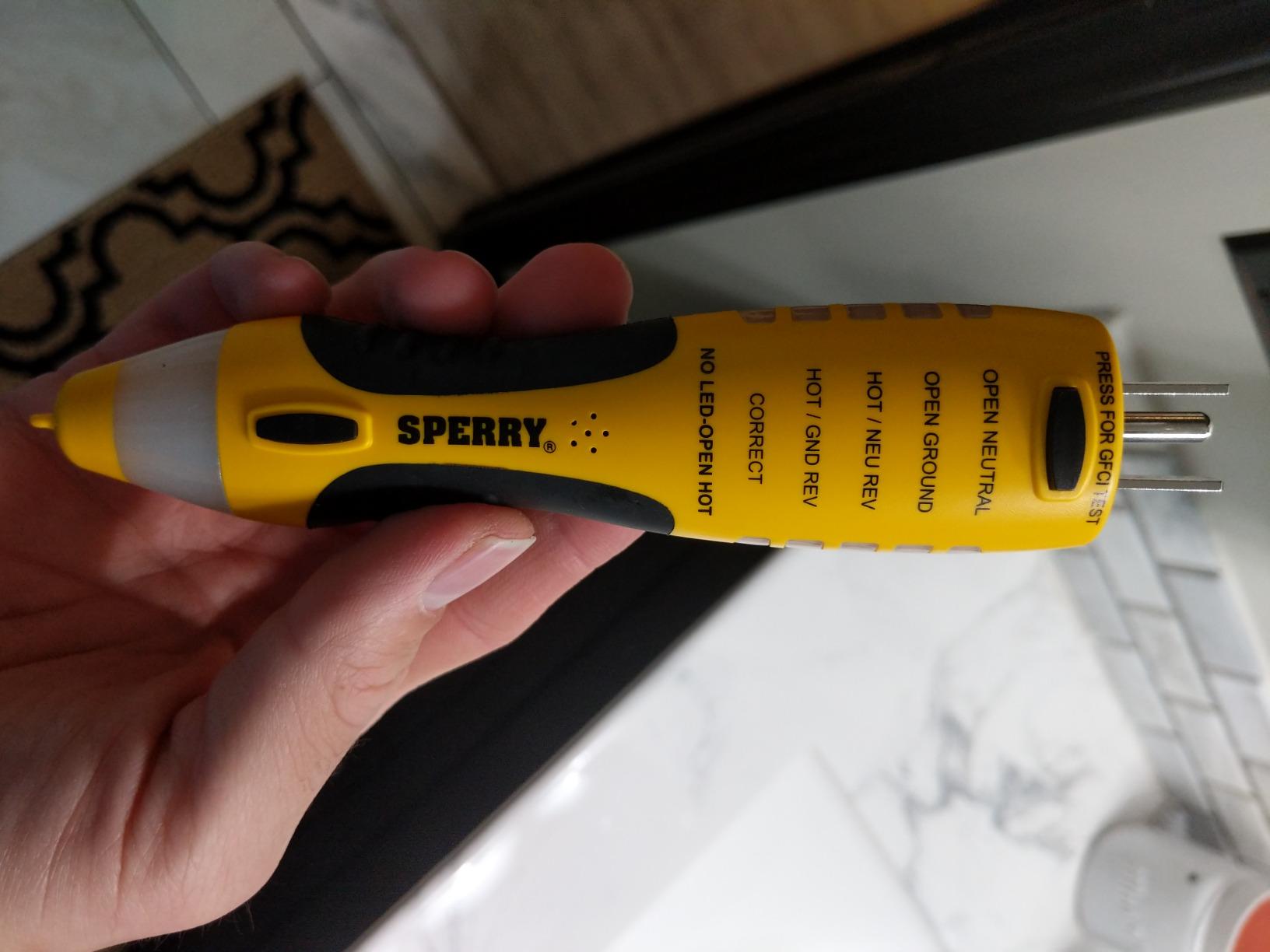
The non-contact side senses 50-600V AC with 360-degree visual and audible indication, rated CAT III 1000V and certified C-UL US, CE, and OSHA recognized NRTL. The ground testing circuitry is designed to detect the low resistance values required by code, rather than just confirming that a wire exists.
Durability is rated to a 10-foot drop and 250 pounds of crush with a polycarbonate housing and soft over-molded rubber grips. Owners doing daily professional work report it holding up, with the usual caveat that the printed legends wear over months of constant use.
Why one green light beats a legend for volume testing
When you are testing a whole property, the bottleneck is interpretation, not plugging in. A binary good-or-bad result removes the lookup step entirely, which is why inspectors gravitate to this design. You keep your eyes on the receptacle instead of on your thumb.
It also solves the outdoor-cover problem in a small way: the large handle is easy to grip with gloves on, and the body clears the shields on many in-use covers where a slim plug-in tester will not seat properly.
Where the DualCheck falls short
The over-sensitive non-contact tip is the dominant complaint, and it can be counterproductive. Triggering near unrelated wiring trains you to discount a signal you should respect, and some owners report the sensor not responding at all and needing a fresh battery cell.
Two build notes over time: the ground pin screw can loosen, and the printed legends rub off with heavy daily use. The length is also awkward for a standard tool pouch. None of this affects a fresh unit, but it is worth knowing if you plan to rely on it every day.
7. Southwire 40022S – Seven-Function Tester With a GFCI Button
Southwire GFCI Receptacle Tester – Push-Button Outlet Tester for Fast & Accurate Wiring Checks – Compact & Durable Housing – 7 Test Functions
- Very low cost with both standard and GFCI button testing
- Light chart printed on both sides reads in any orientation
- Compact body with a good grip
- Handy for mapping which outlets are ground-fault protected
- One reviewer reported it did not flag an ungrounded outlet
- LED-only indication with no voltage readout
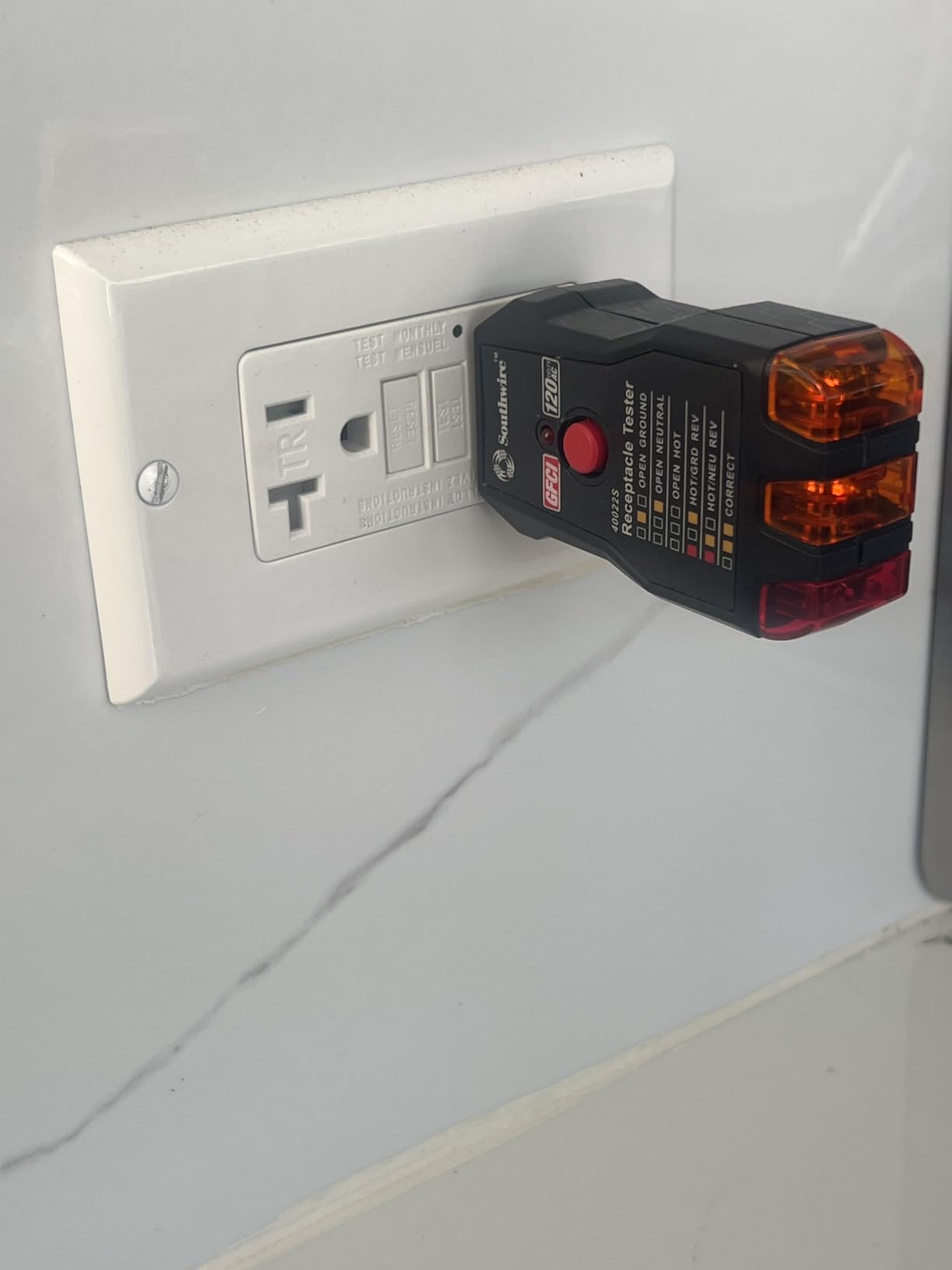
The Southwire 40022S gives you seven test functions and an integrated GFCI push button at a price point that makes it a natural second or third tester. If you run a maintenance round through a building, having several inexpensive units in the pouch changes the workflow.
The detail we like most is the legend printed on both sides of the housing. In practice it means you can read the result without rotating the tool, which saves a genuinely annoying second when you are testing dozens of receptacles.
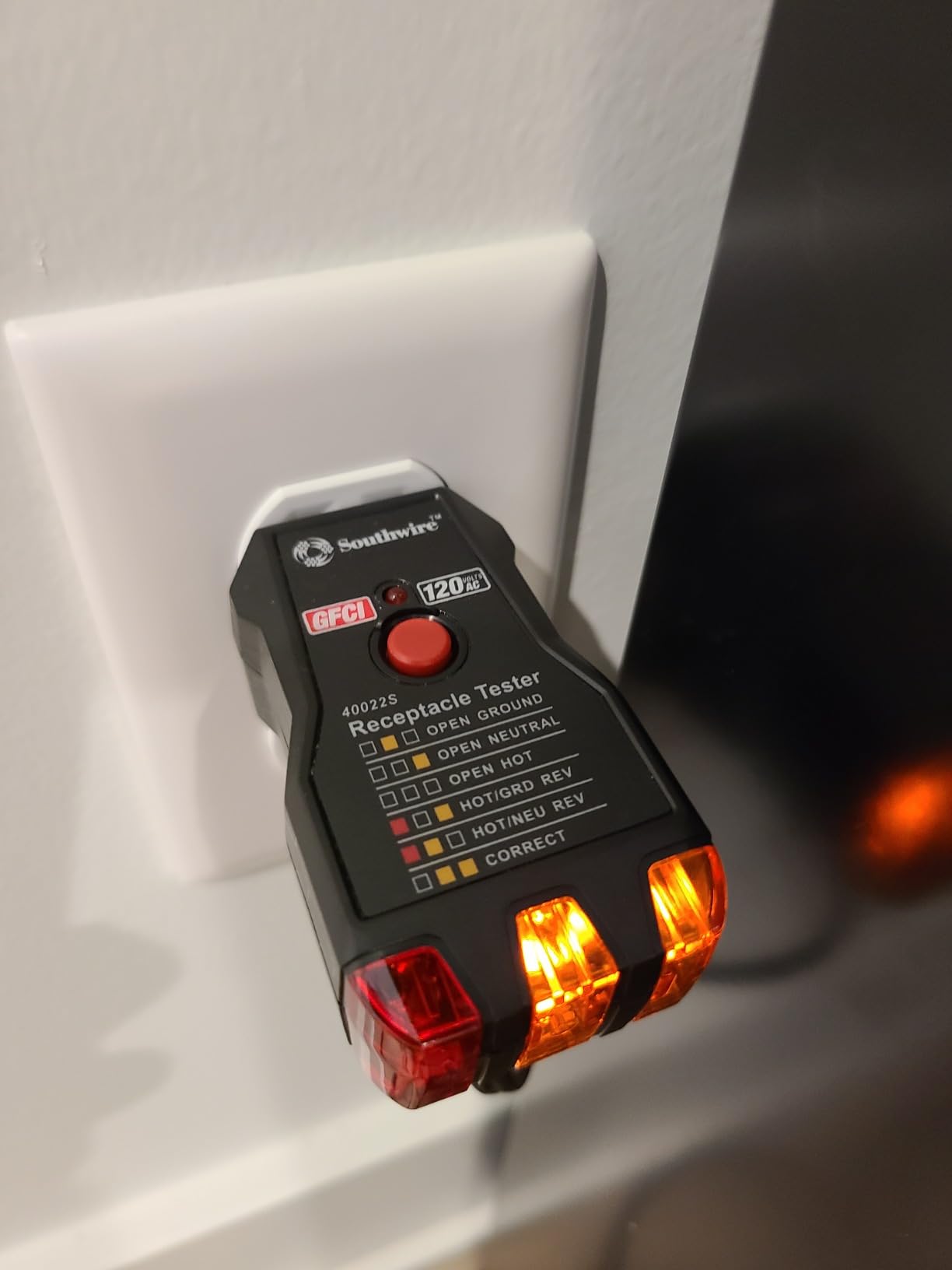
Owners credit it with catching reversed hot-to-neutral wiring, missing grounds, and incorrect GFCI wiring in real homes. It is also useful for a specific job no other tool on this list does as well: walking a property to map which outlets are ground-fault protected. Press the button, watch whether the device trips, note it, move on.
Southwire makes the tool to EN 61010-1, and the compact 1 by 1.7 by 3.6 inch housing at 1.92 ounces makes it easy to carry in a pocket during an inspection.
What mapping GFCI coverage is actually for
Before you replace a GFCI receptacle, you need to know whether the circuit downstream is protected at all. A tester with a trip button answers that in one press per outlet, and it is the fastest way to find out whether a kitchen counter run or a bathroom wall is on a protected circuit or an ordinary one.
It is equally useful for property managers doing turnover checklists, where documenting protection status matters as much as documenting wiring faults.
Where the 40022S falls short
One reviewer reported a unit that did not flag an ungrounded outlet, and because these testers rely on the ground pin making a connection, a corroded or loose ground prong on the tester itself can quietly weaken detection. Check the pins periodically.
There is also no voltage readout, so load-related problems stay hidden. And users outside US wiring conventions report widespread reverse-polarity readings that may reflect the installation rather than the tester, so confirm your wiring standard before drawing conclusions.
8. Fluke ST120+ – Audible Beeper Ends the Trips to the Panel
- Switchable beeper confirms a de-energized circuit without walking to the panel
- Integrated GFCI test button verified a defective outlet
- Protective lip prevents damage in a toolbox
- Bright LEDs read quickly
- CAT III 300 V rated
- Cannot plug into weather-resistant or shielded in-use outdoor covers
- Priced above basic receptacle testers
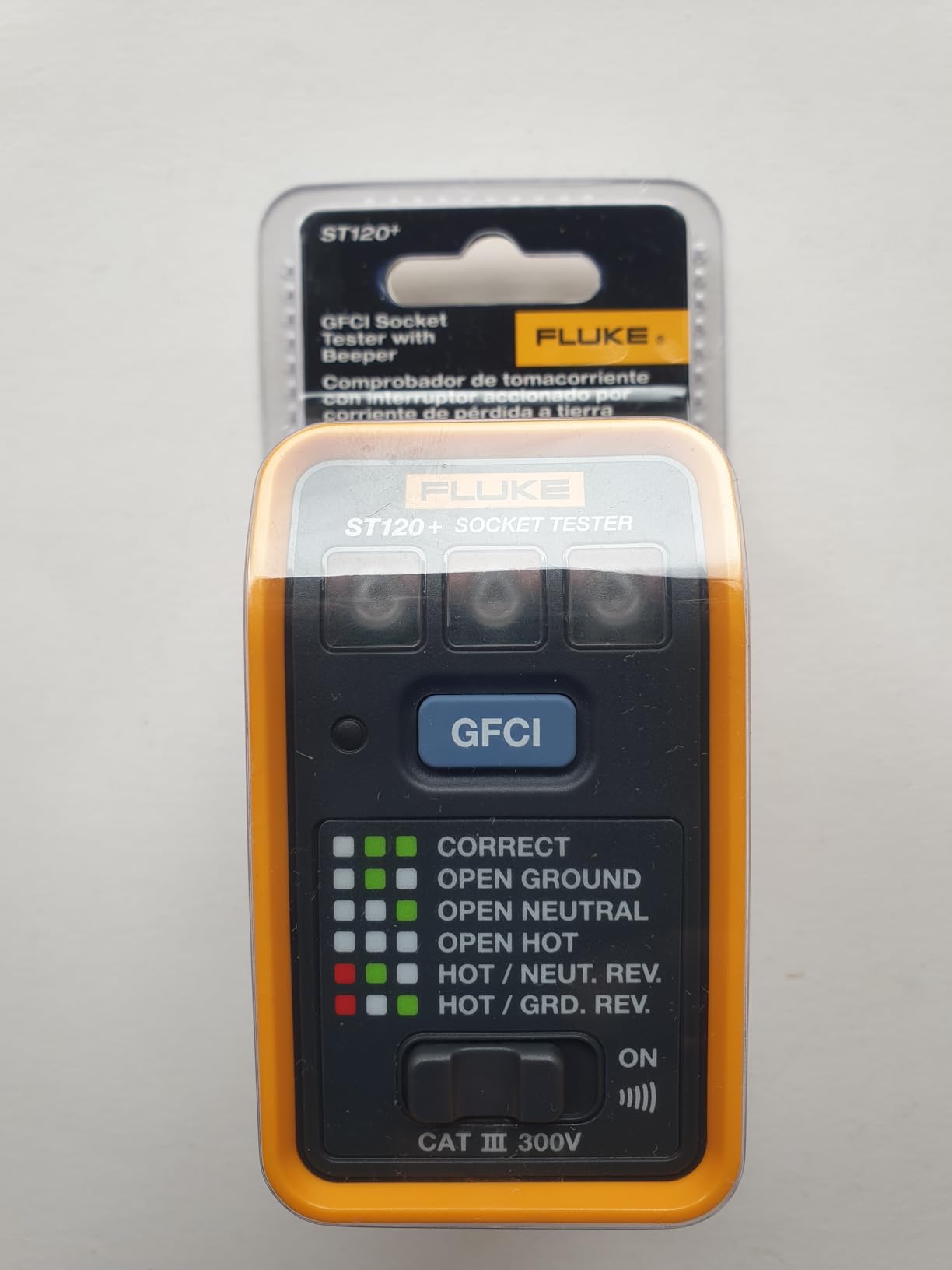
The ST120+ answers a problem most outlet testers quietly create: how do you confirm the circuit is actually dead while standing at the receptacle? The switchable audible beeper gives you a tone when voltage is present and silence when it is not, so you can find out without a trip to the panel every time.
That matters most when you are working alone. Electricians and serious DIY users single out the beeper as the standout feature, describing it as the reason they stopped walking back and forth to the panel to confirm a dead circuit. You arm it, you touch the receptacle, you hear the answer.
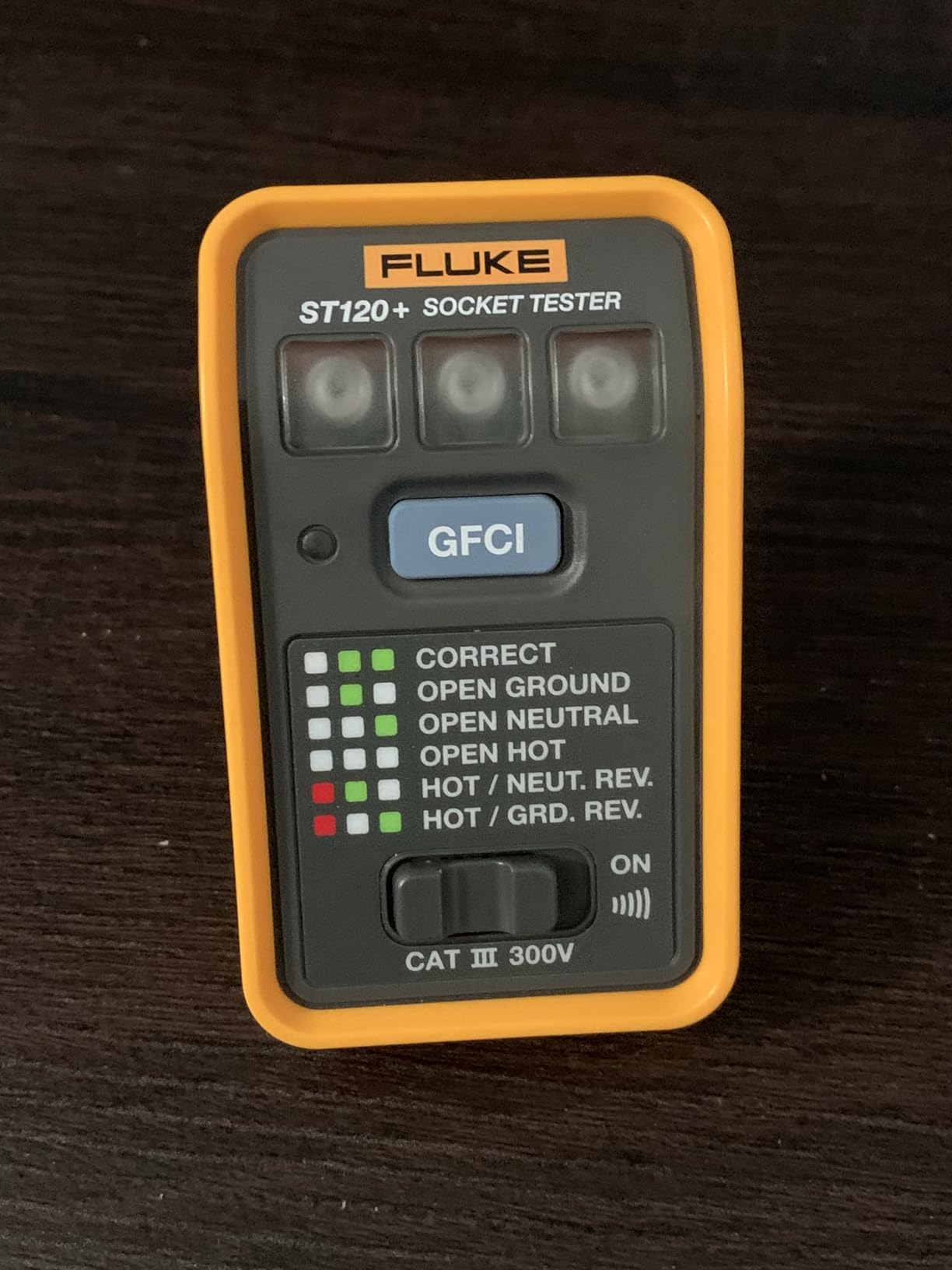
The GFCI test button is the other half of the value. Owners report it correctly verifying a defective GFCI outlet rather than simply passing it, and the bright LEDs make fault identification fast without squinting.
Build details are thoughtful for field use. A protective lip runs around the front face so the tool survives being dropped into a toolbox, the housing is compact and rugged, and it carries a CAT III 300 V rating. Fluke rates in the socket-tester category the way it does in meters.
When an audible dead-circuit check is the deciding feature
Any task involving working on or near a receptacle has a moment where you need to know the conductor is safe. A non-contact detector can tell you, but it introduces its own false positives. The ST120+ gives you the answer at the point of work, in the same device you already plugged in.
It is also useful in a second way: the beeper helps you locate a breaker without leaving the circuit. The product description frames it as eliminating trips back and forth, and for anyone working in a house where the panel is in a different wing, that is a real time saver.
Where the ST120+ falls short
The body cannot seat into weather-resistant or shielded in-use outdoor receptacle covers, which is a genuine limitation for anyone testing exterior receptacles or a detached garage. Plan to remove the cover plate for those.
It also costs more than basic receptacle testers while still giving lights rather than a voltage number. If you want a screen, the Klein RT250 is the alternative.
9. Power Gear 50542 – ETL-Listed Six-Condition Receptacle Tester
- Much easier than a multimeter for basic outlet checks
- Onboard chart makes fault codes readable without a manual
- Small enough to carry in a toolbox
- Identified reversed hot-to-neutral and ungrounded outlets in real use
- ETL listed for certification
- Requires a ground connection to test reversed hot-to-neutral
- No GFCI test button and no voltage readout
- Housing feels inexpensive
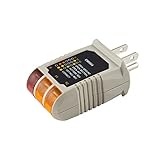
The Power Gear 50542 sits at the entry level of this roundup and it covers the four faults that drive most homeowner calls: open ground, open neutral, reversed polarity, and a hot-side reversal. Six visual conditions, an indicator light chart on the body, and an ETL listing.
Users call it a simple, inexpensive first-line tool that beats reaching for a multimeter, and that comparison comes up often because it is true. For the question is this outlet wired correctly, a multimeter is more effort and more ways to get a confusing reading.
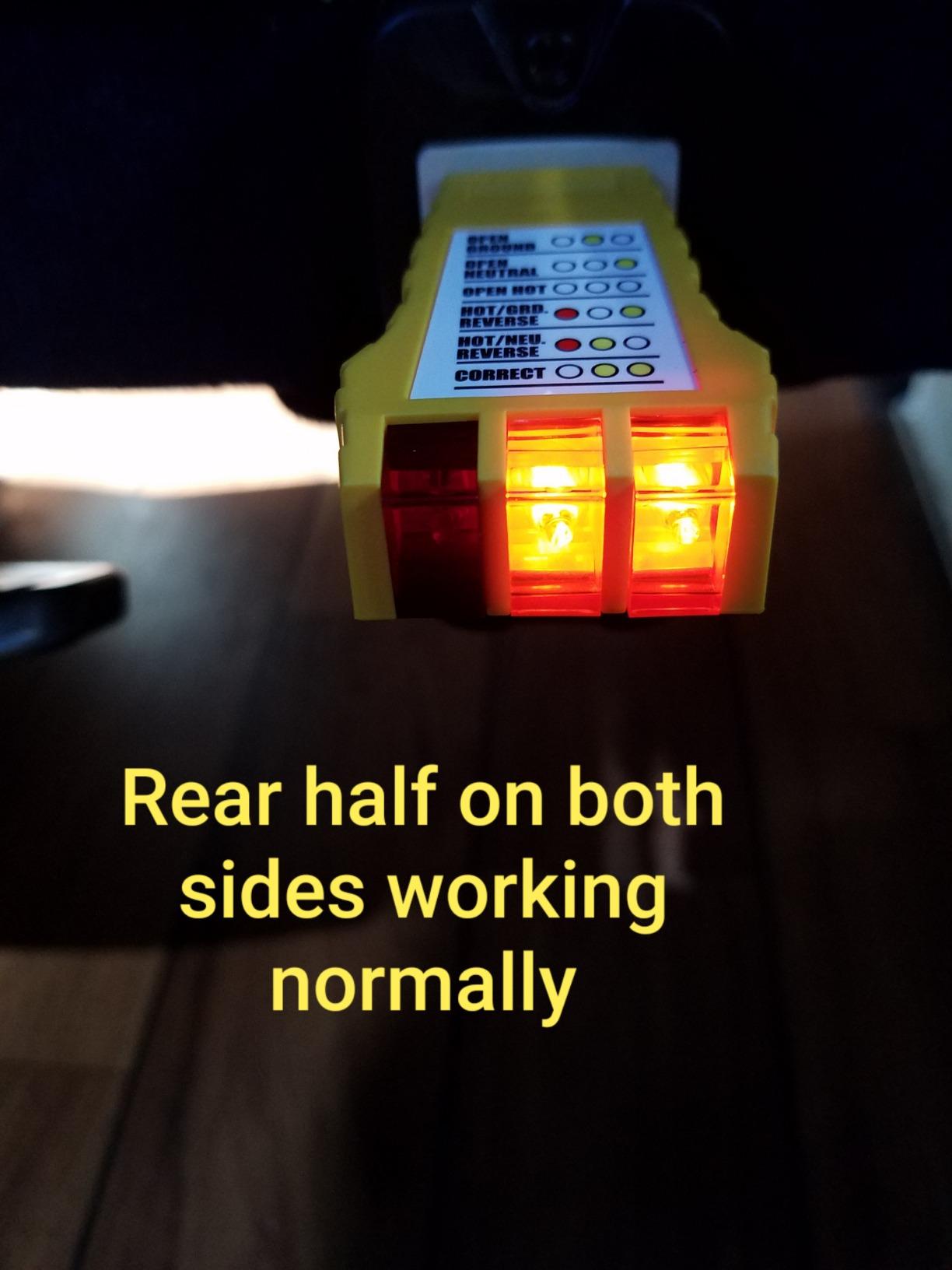
The onboard chart is the practical winner here. You do not need to find a manual or a phone to decode what you are seeing, which removes the single biggest friction point reported by people using basic testers. The body fits in the palm and disappears into a toolbox between tasks.
Several owners describe successfully catching reversed hot-to-neutral and ungrounded receptacles in real homes, including ungrounded outlets in older properties where that condition is common.
Where a light chart tester still earns its place
There is a real scenario for this tool: confirming a whole run of outlets after someone has rewired a room. The 50542 is fast, always ready, and never fails because of a battery. For a rental property manager doing annual walkthroughs, buying a handful is a reasonable strategy.
It is also the least intimidating device on this list. No button to hold, no mode to select, no chart to look up beyond the one printed on the front.
Where the 50542 falls short
There is a genuine technical limitation here. Testing reversed hot-to-neutral requires the tester to establish a ground reference, so in an older ungrounded home it will report open ground instead, and testing polarity means borrowing a ground from a properly wired outlet. Know that before you interpret a reading.
There is no GFCI test button and no voltage readout, and owners describe the housing as feeling inexpensive. It is a tool for a quick check, not one to leave on a job for years.
10. Bastex Z45 Socket Tester – Seven Indications With a Clear Body
- Seven common wiring conditions with an on-device legend
- Built-in GFCI trip test function
- Textured sides give a secure grip
- Hi-impact resistant housing
- Backed by a 30-day money-back and 12-month replacement warranty
- Lower review volume and rating than the leading testers
- LED-only indication with no voltage readout
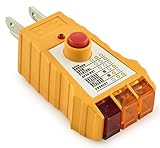
The Bastex Z45 is a straightforward seven-indication socket tester with a GFCI check built in. The indicator legend is printed directly on the housing, so results are quick to read, and the clear body makes the lit indicators visible from more angles than an opaque case allows.
It runs on 110-120V AC at 60Hz, has a hi-impact resistant housing with a compact textured grip for handling, and is UL listed. The warranty is a 30-day money-back with a 12-month replacement, which is more coverage than some tools in this roundup offer.
Owners describe a good value option that handles the seven common conditions plus a GFCI check. Its 4.5 average sits below the higher-rated models, and the review base is smaller, so it is not the first name we would recommend. As a spare tester for the toolbag or the truck, it does the job.
Why a second inexpensive tester is worth owning
A working outlet does not need to be diagnosed with your primary tool. Keeping a second inexpensive tester in the vehicle means the second tester is always available, and a spare is genuinely useful when your main tool is on a job site across town.
Having two also lets you confirm a surprising result. When a tester reports open neutral, plug in the second one before you start opening a box, because a faulty tester and a genuinely dangerous circuit should not be the same event.
Where the Bastex falls short
The rating and review volume are both below the leaders on this list, and that is the honest reason it sits at number ten. LED-only indication means no voltage readout, and the 110-120V at 60Hz specification excludes other frequencies if you are outside North America.
How to Read Outlet Tester Lights Without Guessing?
Two lit LEDs on a basic tester are not a mystery, they are a lookup. Every certified receptacle tester carries a legend listing its own light combinations, and that legend is the authority, not the color names. Here are the patterns these tools report and what each one means in practice.
Correct wiring. The green indicator alone, or the single marked-correct pattern on your legend. All three conductors are present and oriented properly. This is the only reading that means nothing is wrong.
Open ground. The ground conductor is missing or broken. The receptacle still delivers power, but a fault current has no path back to the panel. This is the fault that makes a plugged-in tool lethal if you touch a screw on the faceplate, and it is a common finding in older two-wire homes.
Open neutral. The neutral path is interrupted. The single most safety-critical condition a plug-in tester can catch, because energized conductors can remain live with no normal operation. Forum users across RV and residential communities treat this as the reason to carry a tester at all.
Reversed polarity. Hot and neutral are swapped at the receptacle. Loads still work, which is exactly why it goes unnoticed. On devices with a switch or a screw shell, the energized part is the part you expected to be dead.
Hot to ground reversal. Hot and ground are swapped. The faceplate and screw are energized in a way that defeats the normal assumption of safety, and any plugged-in metal-bodied device can carry that through to you.
Hot to neutral reversal. Same principle as hot to ground, with the neutral conductor in place of the ground. Less common, but it is a code violation and it is reported on the same legends.
Open hot. The hot conductor is missing or interrupted at this receptacle. Common at the end of a run or where a device has been removed and the box reboxed.
Two or more conditions at once. Three-light testers will sometimes show combinations that map to two simultaneous faults. Treat any multi-light pattern other than correct as unsafe, and stop using the circuit until it is resolved.
Two practical rules. First, a passing test does not prove the circuit is safe, because high-impedance and shunted faults can read as correct, and on multi-wire branch circuits a shared neutral can mask an open neutral entirely. Second, if you get a fault, de-energize the circuit before you open anything, and verify your tester on a known-good receptacle first.
This is also the point where two testers earn their keep. If your tester says open neutral and a second tester says correct, the first tester is suspect. Confirm before you commit to a diagnosis.
Which Outlet Testing Tool Do You Actually Need?
The search results for this topic mix four entirely different tools together, which is why so much buying advice misses the mark. Here is what each one does and when it is the right answer.
Receptacle tester: the right default for almost everyone
A receptacle tester plugs into a standard three-wire 120V receptacle and reports wiring faults with lights or a display. If your question is is this outlet wired correctly, this is the tool. Every pick in this roundup is a receptacle tester or a receptacle tester with an added function.
Circuit analyzer: the same job plus real measurements
A circuit analyzer does everything a receptacle tester does and adds measured voltage, and in higher-end units line impedance and load response. It is the right tool when a fault is intermittent or load-dependent, because a number is far more informative than a light. Among the products here, the Klein RT250 shows the LCD end of that category most clearly.
Circuit breaker finder: for identifying which breaker feeds which outlet
A breaker finder pairs a transmitter you plug into a receptacle with a receiver you carry to the panel. It answers a completely different question: which breaker controls this outlet. It cannot tell you whether the outlet is wired correctly. Several forum threads note that breaker finders are the tool most often recommended when the real problem is half the outlets in a room are dead.
Digital multimeter: the baseline tool that never leaves the bag
Consensus on electrical forums is that everyone should own a multimeter, because it measures voltage, continuity, and resistance and answers questions the plug-in tools cannot. It is also the slower option for a routine outlet check, since setting up leads to confirm a wiring fault takes longer than plugging in a tester.
Non-contact voltage detector: a safety confirmation, not a diagnostic
An NCVT tells you whether voltage is present. It is invaluable before touching a conductor and almost useless for diagnosing a wiring fault. The Sperry tools in this roundup pair one with a receptacle analyzer, which is the sensible way to own one.
Buying Guide: Six Decisions That Matter More Than Brand
1. LCD display or LED indicator lights
This is the first real decision and it matters more than brand. LEDs are faster and never need power. An LCD names the fault in words and gives you a voltage number, which is the difference between knowing a fault exists and knowing what the circuit is actually doing. If you test intermittently problems, choose LCD. If you test volume, choose LEDs.
2. GFCI test, and whether you need AFCI too
A GFCI test button verifies that a ground-fault receptacle actually trips. That is worth having if you own any bathroom, kitchen, garage, or exterior receptacle. AFCI testing is a different matter: legacy receptacle testers can produce misleading results on modern AFCI-protected circuits, so if arc-fault protection is the question, verify the protection at the breaker rather than trusting a plug-in reading.
3. Measured voltage and what a pass does not prove
A number lets you distinguish a wiring fault from a supply fault, and lets you see drop under load. But no plug-in tester can detect every fault. High-impedance connections and multi-wire branch circuits with shared neutrals can produce a false pass, so a correct reading is a floor, not a ceiling.
4. CAT safety rating and build quality
A CAT rating tells you the transient overvoltage a device survives. For a tool used only at a receptacle, CAT II or CAT III is appropriate. Separately, drop rating matters more in practice: several tools here are rated to 6.6 or 10 feet, which tells you what happens when you drop it off a ladder.
5. Two-prong and ungrounded receptacles
If your home has older two-wire receptacles, you need to know how your tester behaves there. Most three-wire testers will read open ground, and some cannot test polarity at all without a ground reference. A two-wire home is a genuine upgrade candidate, and no plug-in tester replaces that work.
6. Non-contact detection in the same tool
Owning both an outlet analyzer and a voltage detector in one body removes a step from every job and is why dual-function tools like the Sperry DualCheck earn repeat recommendations from electricians. Choose one only if your work keeps you away from live conductors.
One related note if your testing takes you outdoors or to an RV site: a tester that refuses to energize equipment on a faulty circuit is a safety feature, not a limitation. RV owners on iRV2 forums specifically rely on open-neutral detection as a gate before connecting to a campground pedestal, and that same logic applies to any temporary power arrangement. If you also need power on the road, our picks for RV inverter generators with 30 amp outlets cover the supply side of the same problem.
Safety First: De-energize, Verify, and Know When to Stop
A plug-in tester requires the circuit to be energized to work. That is the whole point and also the whole hazard. Treat every receptacle you are testing as live until a tool tells you otherwise, and do not treat a tester as permission to work.
When you open a box or work on a receptacle, de-energize at the panel, then verify with a tool you have just checked on a known-live source. A non-contact detector alone is not sufficient verification; a plug-in tester or a multimeter reading is.
Wear eye protection, keep hands clear of energized components, and never work alone on an energized circuit if you can avoid it. Do not rely on a passing test to justify touching conductors, and do not use any of these tools on 240V equipment, on subpanels, or outside the voltage range printed on the device.
Know your exit. If you find open neutral, reversed polarity, or hot-to-ground reversal and the fix involves working inside a panel or a junction box you have not opened before, that is the point to call a licensed electrician. The tester tells you what is wrong. It does not tell you how to safely correct a wiring problem in an enclosure full of live parts.
Frequently Asked Questions
What is the best device to test electrical outlets?
A receptacle tester is the right device for most people. Plug it into the 120V outlet and it reports open ground, open neutral, reversed polarity, and hot-side faults with indicator lights. Add a GFCI test button to verify ground-fault protection, or choose an LCD model for a voltage readout and named fault codes. A circuit analyzer is the upgrade for measured voltage and load behavior.
Are receptacle testers accurate?
Receptacle testers are accurate for the faults they are designed to detect, which is why inspectors rely on them. They are not a complete diagnosis. High-impedance connections, shunted neutrals, and multi-wire branch circuits with a shared neutral can produce a false pass, so a correct reading means nothing obvious is wrong, not that the circuit is perfect.
What is the best outlet tester for home inspectors?
Inspectors testing volume want speed and an unambiguous result. A dual-function analyzer with a single green good-light and a GFCI test button covers the most ground per outlet, and one with an audible beeper avoids repeated trips to the panel. An LCD tester is worth adding for rooms where intermittent faults need a number rather than a light.
What is the best GFCI outlet tester?
The best GFCI outlet tester has an integrated test button that verifies the receptacle actually trips, and reports the wiring faults around it so you know the device is safe to press. Among our picks the Klein RT210, Southwire 40022S, and Fluke ST120+ all include a GFCI test, with the RT250 adding a trip-time display.
What is the best circuit tester for home use?
For most homeowners, a hand-powered receptacle tester with a printed fault legend is the right circuit tester. It needs no batteries, fits tamper-resistant receptacles, and answers is this outlet wired correctly in seconds. Upgrade to an LCD model if your symptoms are intermittent or load-related rather than a permanently dead or warm outlet.
Which voltage tester is better, Fluke or Klein?
Both are respected brands and both appear in our picks. Fluke leads on instrument safety ratings and the ST120+ adds an audible beeper for confirming a dead circuit. Klein leads on outlet-specific features, with the RT250 combining an LCD voltage readout, named fault codes, and a GFCI trip-time display at a lower tier.
What is the best digital circuit breaker finder?
A circuit breaker finder is a different tool from a circuit analyzer. You plug a transmitter into the receptacle and use a receiver at the panel to identify which breaker feeds it. It answers which breaker, not is it wired correctly. Use a receptacle tester for wiring faults and a breaker finder for circuit identification.
Is a ten-dollar outlet tester as good as a two-hundred-dollar one?
For basic wiring faults, yes. A certified tester in the lowest price tier reliably catches open ground, open neutral, reversed polarity, and hot-side reversals. The expensive tier adds measured voltage, load response, trip timing, and category safety ratings. The gap only matters if you need numbers or test faults that are intermittent or load-dependent.
Best Circuit Analyzers for Outlets: The Final Word
The Klein Tools RT250 is our pick as the best circuit analyzer for outlets in 2026. It is the only tool in this roundup that tells you the fault, tells you the voltage, and tells you how long a GFCI took to trip, all on one backlit screen, and it carries more than eleven thousand owner reviews describing it that way.
For most people buying one tester, the Klein RT210 is the smarter purchase because it never needs a battery and it still tests GFCI protection. For professionals working through a building, the Sperry DualCheck saves more time than it costs, and the Fluke ST120+ earns its place with the audible beeper when you are working alone.
Whatever you choose, use it. Plug it into every receptacle you care about, read the lights against the legend rather than assuming, and treat any open ground, open neutral, or reversal you find as a stop sign until it is properly corrected.