

Short answer: for most two-car garages the Lasko 20-inch high velocity wall mount fan is the best wall mount fan for the job, because its rating and review volume are far ahead of everything else in this category. For a damp garage or a covered patio, pick the iLiving 18-inch 6360 CFM model, and for a large workshop, go bigger with the Simple Deluxe 24-inch.
Garages have no ducting. Heat stratifies, rises to the ceiling, and pools in the rafters while the floor stays idle. A wall mount fan solves this differently from every other fan type, because it takes up no floor space at all and pushes that trapped hot air across the room and out an open door or gable vent instead of blowing it straight up into the joists where it does nothing.
We put ten of the strongest wall mount garage fans through the spec comparisons, customer review patterns and mounting realities that matter once the box is open. The category is crowded and most listings repeat the same three bullet points, so this roundup spends its time on the parts that decide whether a fan works for three summers or one: real airflow figures, noise at the top speed, whether the bracket is rated for a stud, and whether the unit is rated for a damp location.
One thing to settle first: a fan moves air, it does not cool it. If your garage is running 110 degrees and you want it at 80, no fan will get you there. A fan works when the outdoor air is cooler than the air inside, or when you have a window, gable vent or open door to exhaust through. If you want real cooling, pair ventilation with shade and insulation work, or read our solar attic fan guide for hot garages to see how much that side of the problem costs to fix.
Table of Contents
Top 3 Wall Mount Fans for Garages (October 2026)
The three picks below cover most garages. The Lasko wins on proven reliability, the iLiving wins if any moisture is a factor, and the Simple Deluxe wins on sheer output for large spaces.

Lasko 20 Inch High Velocity Wall Fan
- 2750 CFM
- 20 inch blades
- Floor or wall mount
- ETL listed

All 10 Wall Mount Fans Compared Side by Side
This table is the fastest way to narrow ten options down. Read the CFM column first, then check whether the fan is rated for a damp location if your garage is humid.
| Product | Specifications | Action |
|---|---|---|
| Lasko 20 Inch High Velocity Wall Fan |
|
Check Latest Price |
| iLiving 18 Inch 6360 CFM Outdoor Wall Fan |
|
Check Latest Price |
 Simple Deluxe 24 Inch Industrial Wall Fan Simple Deluxe 24 Inch Industrial Wall Fan |
|
Check Latest Price |
 Tornado 18 Inch High Velocity Wall Fan Tornado 18 Inch High Velocity Wall Fan |
|
Check Latest Price |
 Air King 9020 20 Inch Industrial Wall Fan Air King 9020 20 Inch Industrial Wall Fan |
|
Check Latest Price |
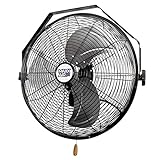 Maxx Air 18 Inch Wall Mount Circulator Maxx Air 18 Inch Wall Mount Circulator |
|
Check Latest Price |
 BILT HARD 24 Inch Oscillating Outdoor Fan BILT HARD 24 Inch Oscillating Outdoor Fan |
|
Check Latest Price |
 NewAir 18 Inch Heavy Duty Wall Mount Fan NewAir 18 Inch Heavy Duty Wall Mount Fan |
|
Check Latest Price |
 Hurricane Pro 20 Inch Oscillating Wall Fan Hurricane Pro 20 Inch Oscillating Wall Fan |
|
Check Latest Price |
 iLiving 20 Inch Floor and Wall Mount Fan iLiving 20 Inch Floor and Wall Mount Fan |
|
Check Latest Price |
1. Lasko 20 Inch High Velocity Wall Fan: The Most Proven Pick in the Category
- Converts between floor fan and wall mount with included bracket
- Tubular steel and metal blade cage
- Pivoting head for directional airflow
- ETL listed with safety fuse technology
- Largest review base in the category
- Louder than smaller residential fans on higher settings
- Indoor use only rated
- 2750 CFM is modest against 18 to 24 inch industrial models
Our verdict: this is the wall mount fan to beat for a typical garage, and the reason is a review count rather than a specification. Lasko 2264QM carries a 4.7 rating across more than 28,000 reviews, which is several times the owner history of anything else in this roundup. Specifications age. Two decades of owner reports do not.
The build matches that expectation. Tubular steel, a metal blade cage and three high-velocity blades with three pull-chain speeds, driven at 130 watts on 120 volts. The pivot is the feature most people underrate, because a fan bolted flat to a wall throws air at one spot on the far wall, while a pivoting head can be aimed down the length of a single-car garage or angled across a two-car bay in seconds.
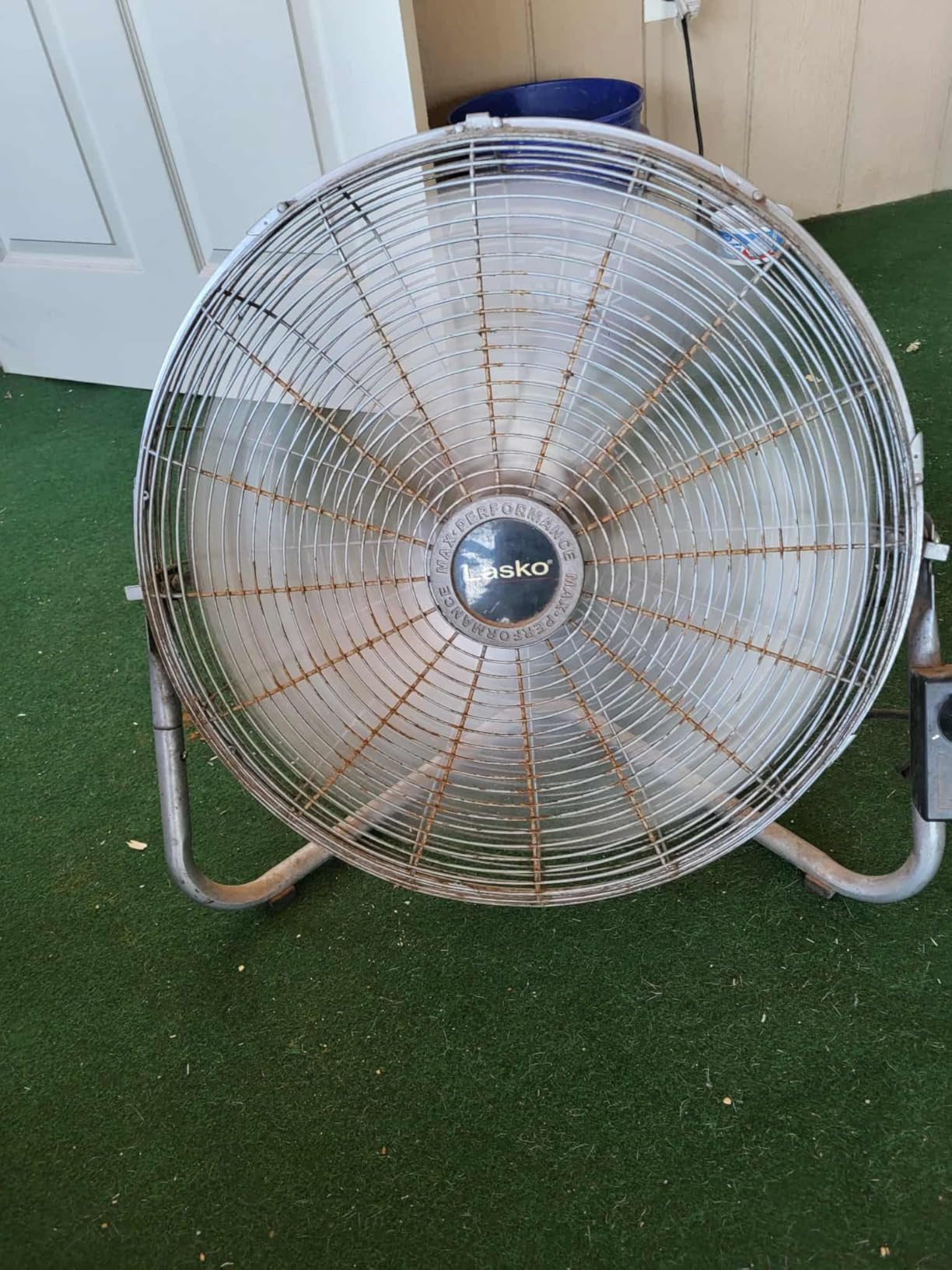
The floor-to-wall conversion is what makes it different from the industrial units. The same unit works as a shop fan on the floor in February and hangs on the wall in July, and owners regularly describe moving it between a garage, a basement and a home gym. At 22 by 22 by 7 inches and 21.15 CFM per watt, it also draws less power than most of the high-velocity competition here.
The catch is honest and worth stating twice. Rated noise is 68.2 dB, which is the second-highest published figure in this group, and a minority of owners find it loud on the middle and top settings. Its 2,750 CFM also sits at the low end of the range here, so in a genuinely large or uninsulated space it will feel underpowered next to a 6,000 CFM machine. Match it to a one-car garage, a basement, a laundry room or a home gym rather than a two-car workshop.
What the Lasko 2264QM does well
It converts between floor and wall mounting with the included bracket, so it works as an ordinary shop fan on days you do not want it hung. Owners also single out the tubular steel frame and metal cage as noticeably more durable than the plastic-bodied fans at similar money.
The ETL listing and integrated safety fuse are meaningful for a shop with a saw on the bench. If you plan to run it near a workbench with dust and debris in the air, a listed fan with a metal cage is the safer default.
Where the Lasko 2264QM falls short
The 68.2 dB rating is the honest drawback. If your garage is a home office, a recording space or a garage gym where you need to hear a call, run it on the low setting only. Owners who want full-blast airflow from a small footprint should look at the NewAir or the Tornado.
It is also rated for indoor use only. If your garage door stays open and rain blows in, or you want to hang one on a covered patio, this is the wrong fan despite the strong brand name.
2. iLiving 18 Inch 6360 CFM Outdoor Fan: The Damp Garage Answer
- Very high airflow for an 18 inch unit
- Weatherproof and corrosion resistant
- Quiet on low and medium per owners
- Pushes air 25 feet or more on high
- Adjustable wall bracket included
- Loud on the high setting
- Rear motor housing runs hot
- No stand included for non wall use
- Some boxes arrive missing mounting hardware
Our verdict: if humidity, a semi-open carport or a covered patio is part of the picture, this is the fan to buy. Almost every other industrial wall fan in this roundup is marked indoor use only, and this one is built specifically for outdoor mounting with a weatherproof, corrosion-resistant finish around a sealed 168-watt motor.
The airflow number is the headline. At 6,360 CFM from an 18-inch frame, it delivers more air than most 20-inch and 24-inch units in this list, which means you get large-space coverage without a 26-pound fan bolted to your studs. Reviewers consistently report it pushing air more than 25 feet, which is the number that matters when your workbench is at the far end of a two-car bay.
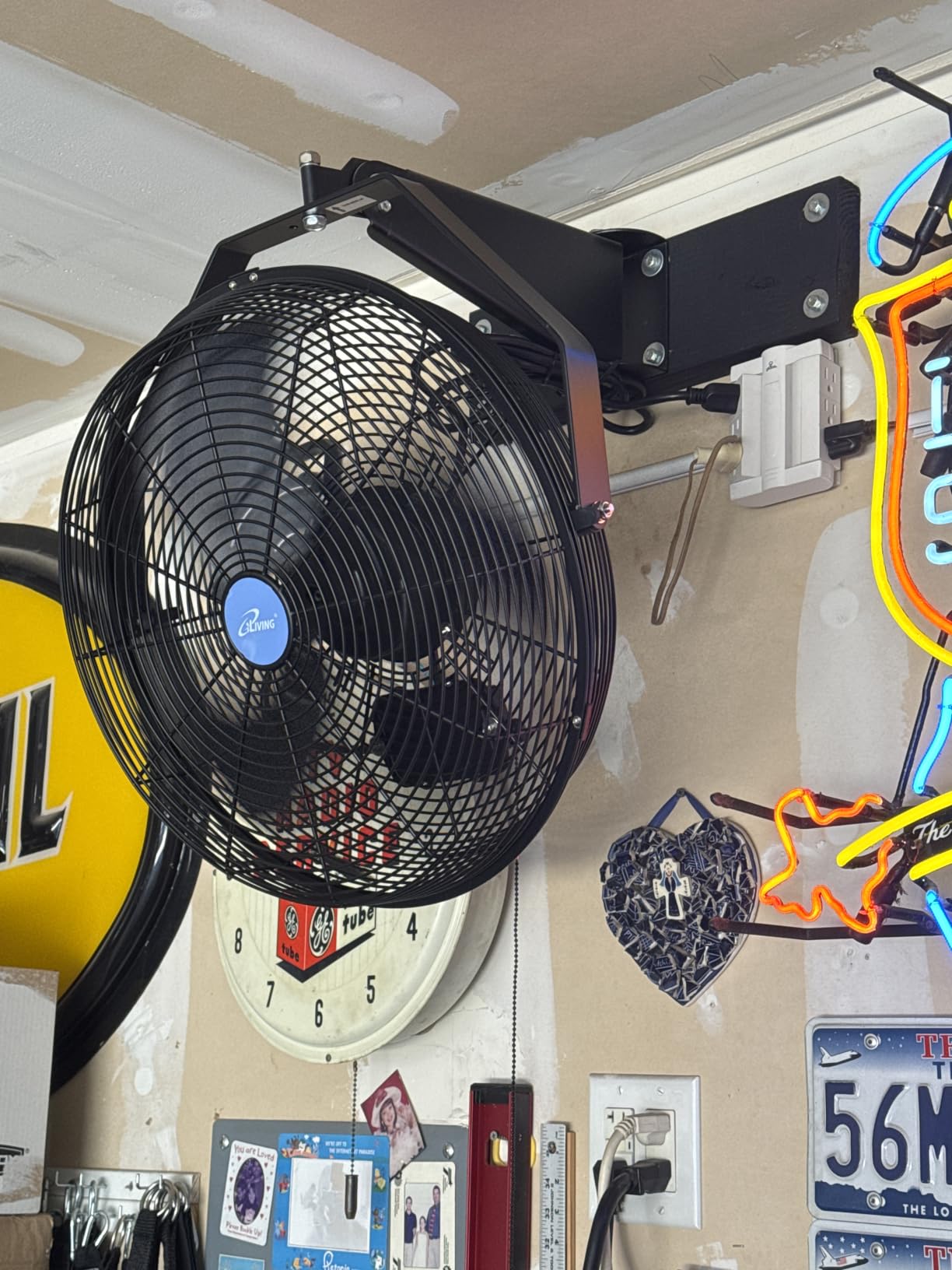
It also works far outside a garage: the same chassis bolts to a chicken coop, a barn, a greenhouse or a covered patio. Buyers in those settings report it running through full seasons outdoors without corrosion, which is exactly the durability claim you want before hanging anything outside.
The catch involves three things. It is loud on high, at a 70 dB rating. The sealed motor housing at the rear runs hot enough that reviewers warn about bare skin contact. And there is a documented contradiction in the packaging: the listing is weatherproof while the instruction sheet warns of shock hazard in wet environments, so treat it as splash resistant rather than rainproof and do not leave it in a direct downpour.
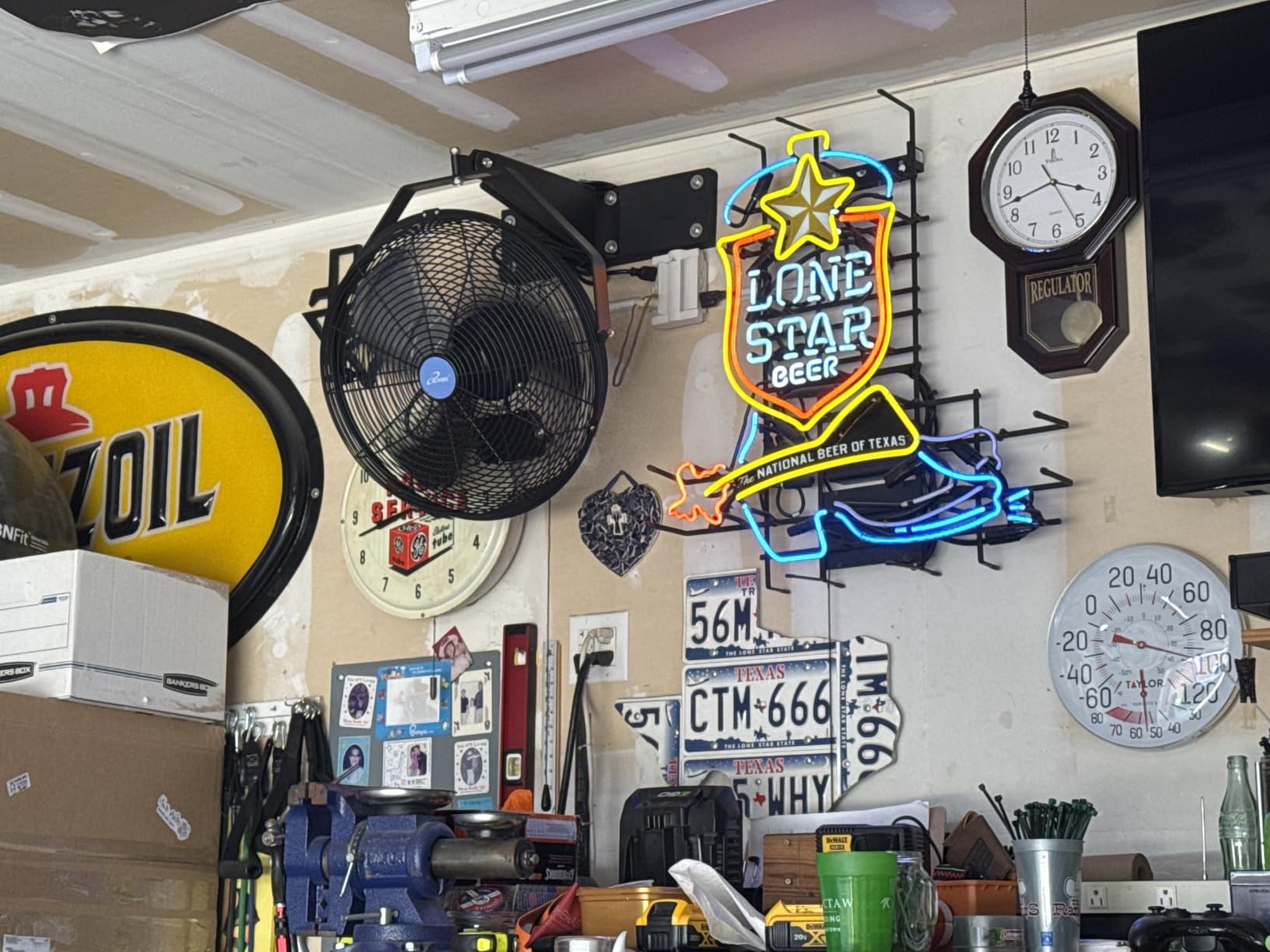
Why the iLiving ILG8E18 wins in a damp garage
IP-rated construction is the whole point here, and this is the only pick in the roundup with a genuine outdoor rating on an 18-inch frame. Sealed motor, OSHA-approved safety grill, NEMA 5-15 connector and a 10-foot cord give you room to place it outside the door rather than inside it.
It also converts into a misting fan with the optional iLIVING ILG-250 kit, which is a useful trick for a west-facing garage door that bakes in the afternoon. Several reviewers in hot climates use it that way through summer.
What to watch out for with the iLiving ILG8E18
Check the box before you climb a ladder. Multiple reviews mention arriving without some mounting hardware, which turns a fifteen-minute job into a hardware-store run. Owners also note the low and medium settings are unusually quiet for this airflow class, so if noise is your concern, run it on medium rather than high.
There is no stand included, so if you want it freestanding you need a separate base or a shelf rated for 20 pounds.
3. Simple Deluxe 24 Inch Industrial Wall Fan: The Most Air for Large Spaces
- Highest airflow figure in the group at 7600 CFM
- Full 360 degree tilt for precise aim
- Lower noise on medium and low than most 24 inch units
- Powder coated steel with ball bearing motors
- Indoor use only rated
- Listed package text names a 20 inch fan
- 24 inch head needs real swing clearance
Our verdict: this is the output leader of the group, and for a workshop, warehouse bay or three-car garage measured on airflow rather than square footage, it is the pick. The 24-inch head delivers 7,600 CFM on high, 6,800 on medium and 6,100 on low, all from a 115-volt 170-watt motor.
What separates it from a typical 24-inch industrial fan is the noise curve. The published figures are 60 dB on high, 52 on medium and 45 on low, a stated 40 percent reduction against conventional designs of the same size. For a 24-inch fan pushing this volume, those numbers are unusually restrained, and the low speed is genuinely usable in a space where you also want to think.
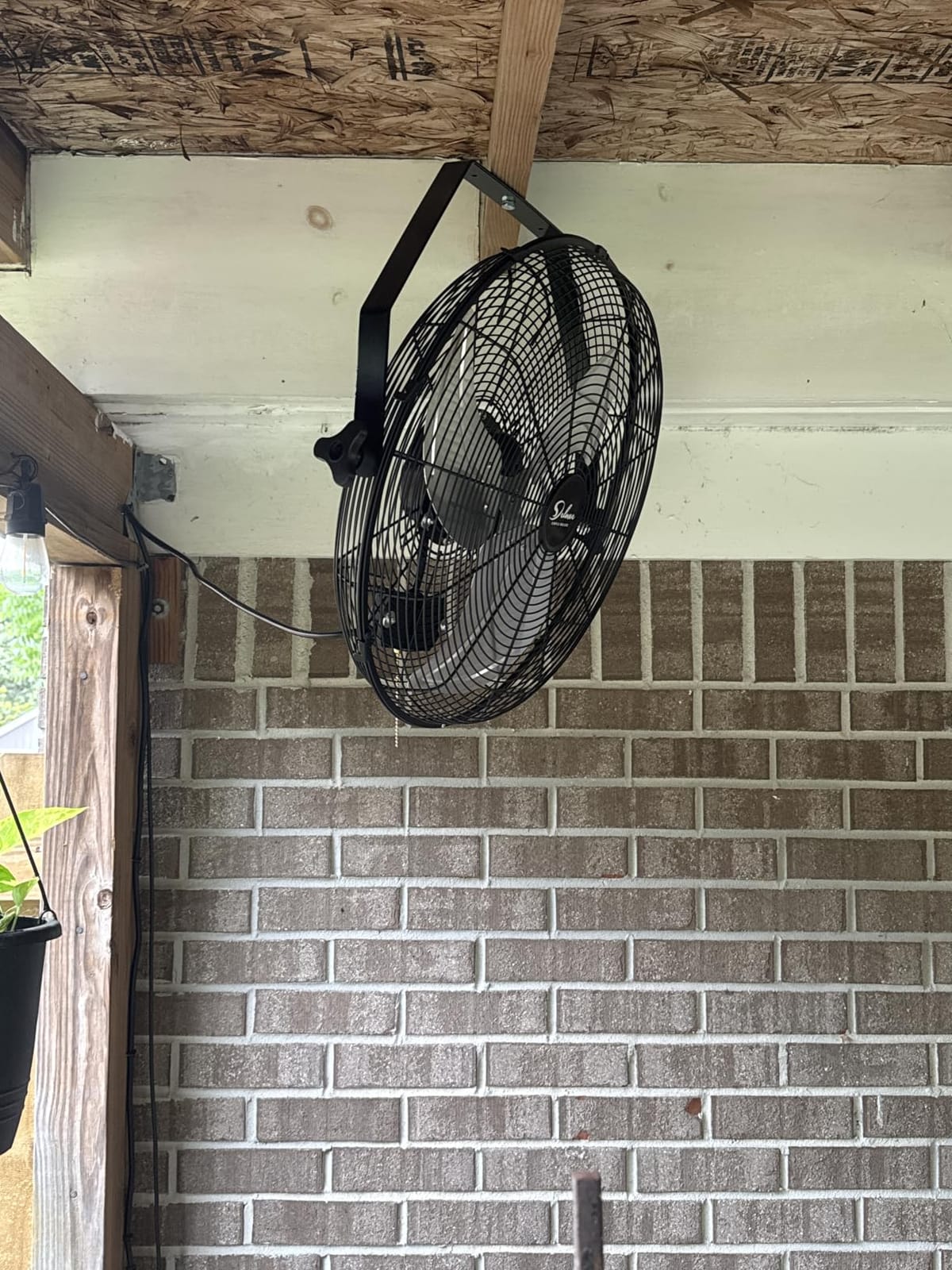
The full 360-degree tilt on the powder-coated steel head is the other feature that earns its keep. Most industrial fans in this roundup offer 180 degrees of vertical tilt, which is plenty for a flat wall. The 360-degree head also swings horizontally, so you can aim across a two-bay garage without mounting it in a corner.
Two things to know before buying. It is listed for indoor use, so it needs a covered location. And the listing’s component text refers to a 20-inch fan, which is a packaging inconsistency worth a quick check of what is actually in the box.
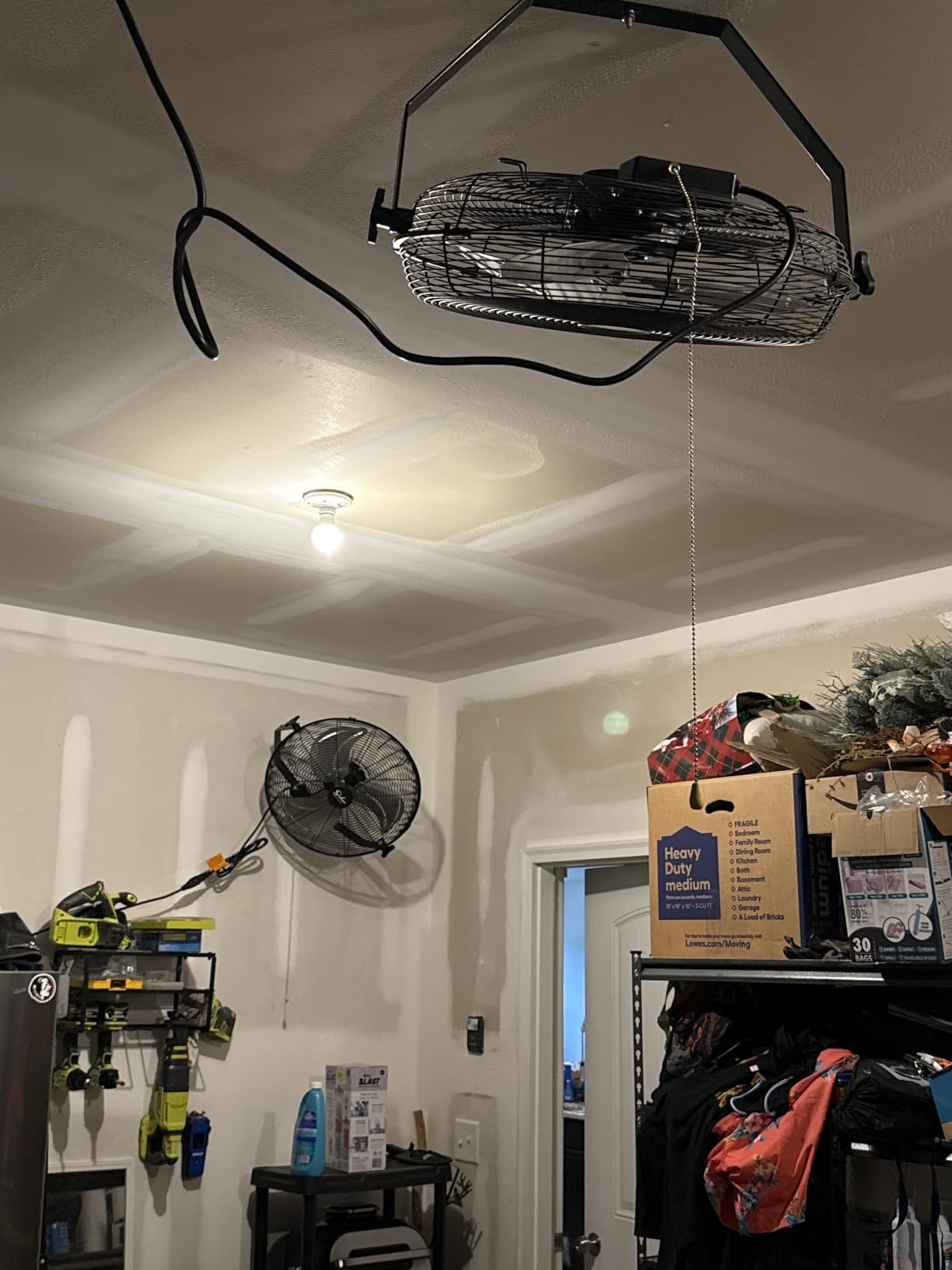
When the 24-inch Simple Deluxe earns its size
Size only pays off in a space with room to receive the air. At 26 by 25.6 inches with full tilt, it needs clearance around the head to swing, and it is the wrong choice for a one-car garage where the air has nowhere to go.
Three speeds and a thermally protected PSC motor make it adaptable across seasons, running high in August and low through a spring workshop. The wall or ceiling bracket is included, which is not true of every competitor in this list.
Where the 24-inch Simple Deluxe falls short
Sixteen pounds is manageable for one person on a ladder, but it is a two-hand job and a spotter helps. Mounting into a joist or a masonry wall means planning the lift before the bracket is in your hand.
It moves more air than anything else here, but it does not move it more efficiently than the 18-inch units. If you want the same coverage from a smaller motor, look at a 6,000 CFM 18-inch fan before you step up to 24 inches.
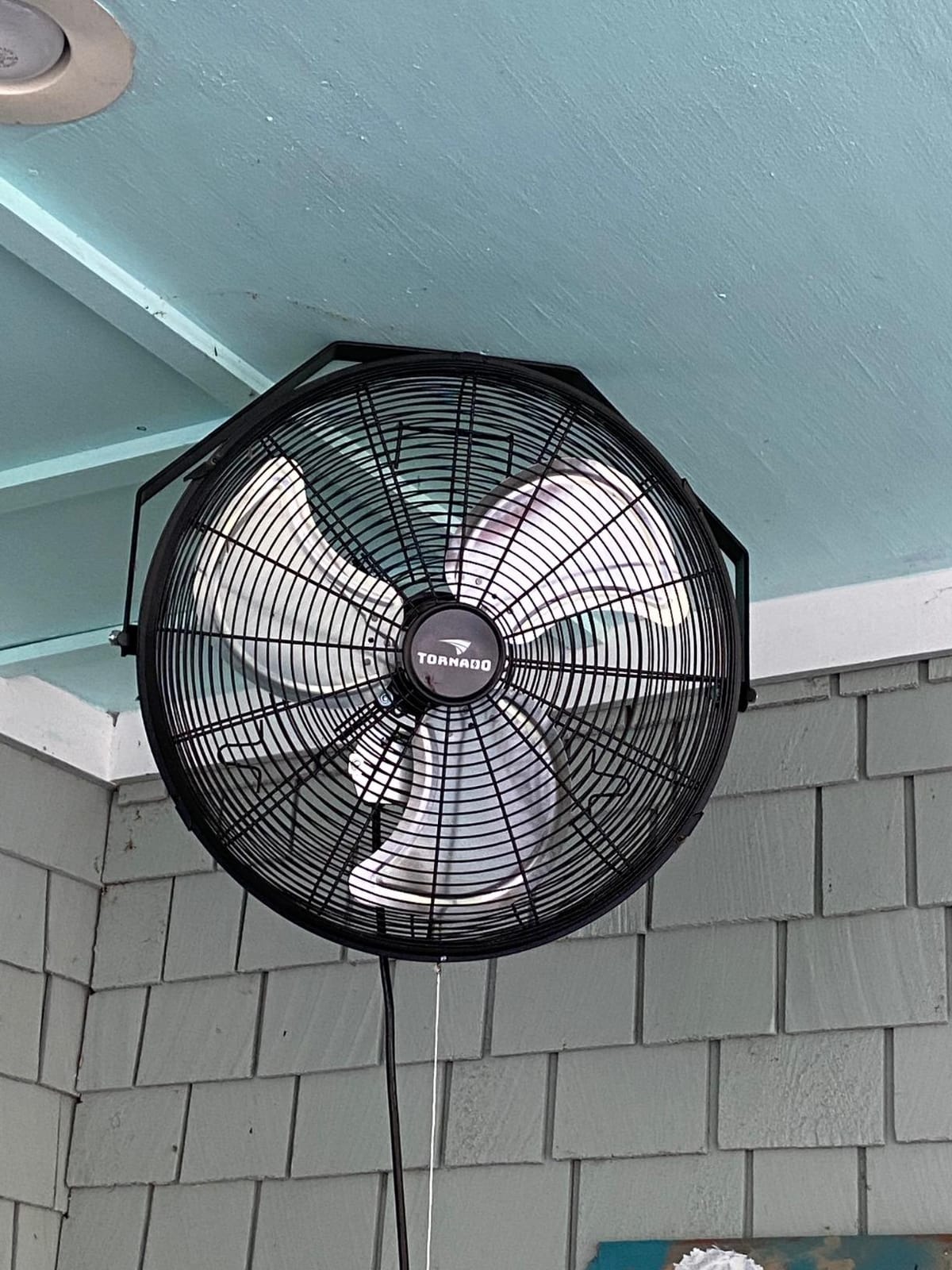
4. Tornado 18 Inch High Velocity Wall Fan: The Quiet Industrial Choice
- Quiet for its airflow class per owner reports
- Full 180 degree vertical tilt and 3 speeds
- Rust resistant grille and enclosed motor
- Easy ceiling or wall mounting
- Requires an M10x80 expansion bolt for concrete
- Awkward to mount high on a wall alone
- Not rated for outdoor installation
Our verdict: if noise is your top constraint and you want industrial airflow anyway, this is the fan. Multiple owners describe it as quieter than expected for 4,150 CFM, and its published 60 dB matches the Simple Deluxe at its top setting while sitting below every other rated unit here.
The construction details are what separate it from cheaper units. A totally enclosed ball bearing motor rated at 1/6 horsepower and 1,500 RPM sits behind a rust-resistant powder-coated grille, and the blades are aluminum rather than plastic. That combination is why owners running it in barns and horse stalls report it holding its performance after years rather than seasons.
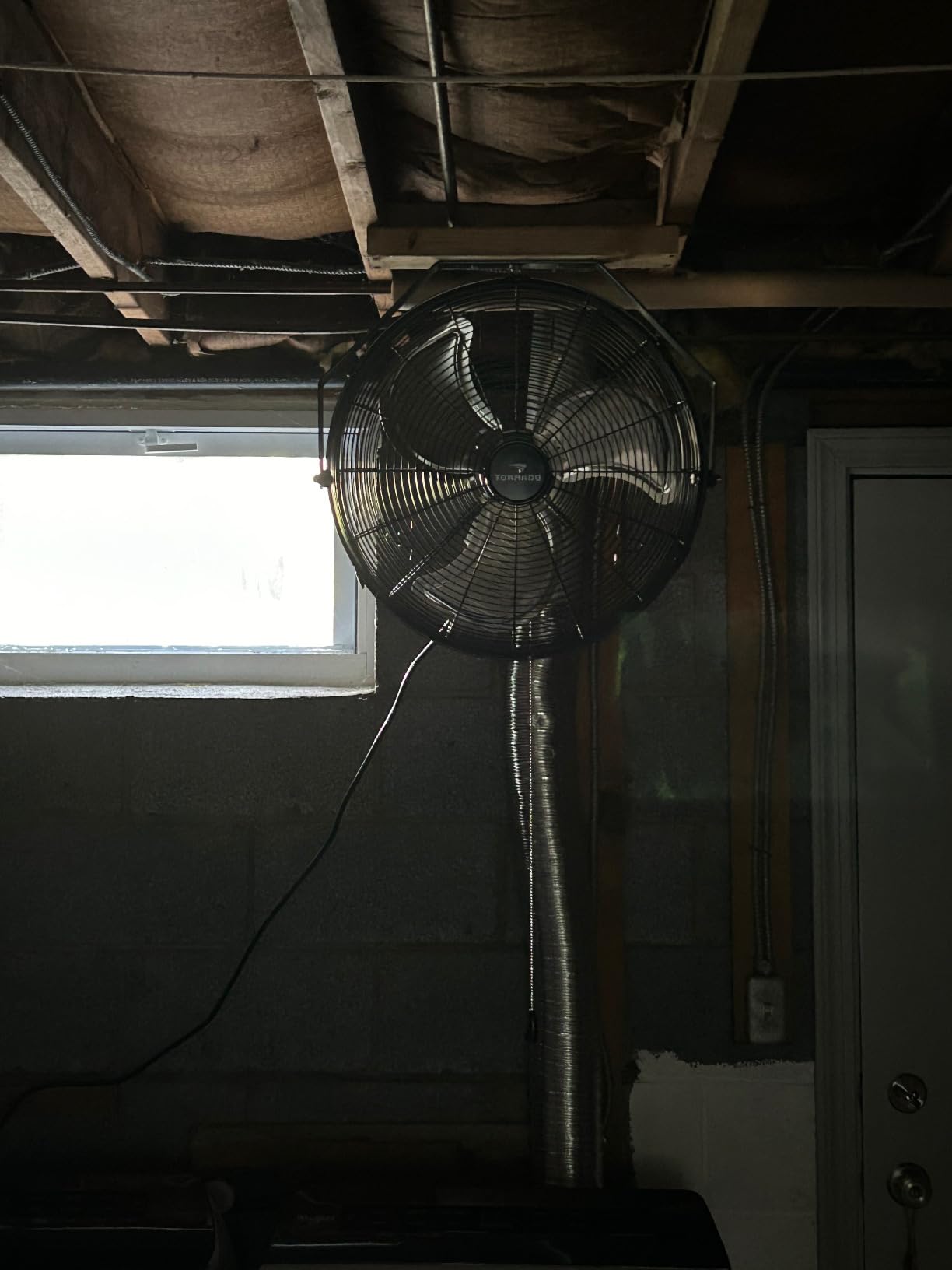
Three speed settings are listed at 4,150, 3,700 and 3,450 CFM. That is a narrow spread, which is a deliberate trade in a high-velocity design: the low setting still moves serious air, so there is no useless speed one. Full 180-degree vertical tilt handles both wall and ceiling mounting from the same bracket.
The catch is installation hardware. For concrete, block or metal racking you need an M10x80 expansion bolt that is not included, and that is the single most repeated practical tip across owner reports. Mounting high on a wall is also awkward solo, because you have to hold the fan while fitting washers and nuts. Have a second person or a temporary cleat.
Why the Tornado HI-FAN-18HVWM suits a workshop
The enclosed motor and sealed housing are the answer to workshop dust. Owners running saws, sanders and grinders report the motor keeps running where open-motor fans eventually choke, and the rust-resistant grille suits a space where humidity and temperature swing daily.
It meets OSHA and UL507 standards, which matters if anyone in the space works with combustible dust. The 6.5-foot cord is short by garage standards, so plan on an extension or a ceiling drop.
Where the Tornado 18 Inch is the wrong choice
It is not rated for outdoor installation, so a carport or an open-sided shed is out. If you need wet-location performance, the iLiving 18-inch or the BILT HARD 24-inch is the correct answer.
One owner note worth repeating: some buyers report that a second unit needed a higher speed setting to match the first. If you plan to install two fans, run them side by side on the same speed for a week before you settle.
5. Air King 9020 20 Inch Industrial Wall Fan: Built Like It Will Outlast the Garage
Air King 9020 1/6 HP Industrial Grade Wall Mount Fan, 20-Inch,Black
- Heavy 26 pound build that damps movement
- Two way mount swivels side to side and tilts
- Multiple owners report zero wobble or vibration
- Secondary safety cable and hardware included
- ETL and OSHA compliant to AMCA standard
- No lag bolts or screws included for mounting
- Noticeably louder on medium and high
- Spends more than the value picks
- Plastic blades rather than metal
Our verdict: the Air King is the answer for anyone whose real fear is a fan that rattles the drywall. Multiple owners report no wobble and no vibration at all, and the reason is mass and mount design. At 26 pounds with a two-way bracket, it has little momentum left to shake a stud wall.
It is also one of the few fans here tested to a published air performance standard. The 1/6 horsepower totally enclosed ball bearing motor is ETL and OSHA compliant and tested to AMCA standard 230.99, which is the kind of verification most listings in this category never offer. A rear-mounted pull cord keeps the speed switch reachable after the fan is on the wall.
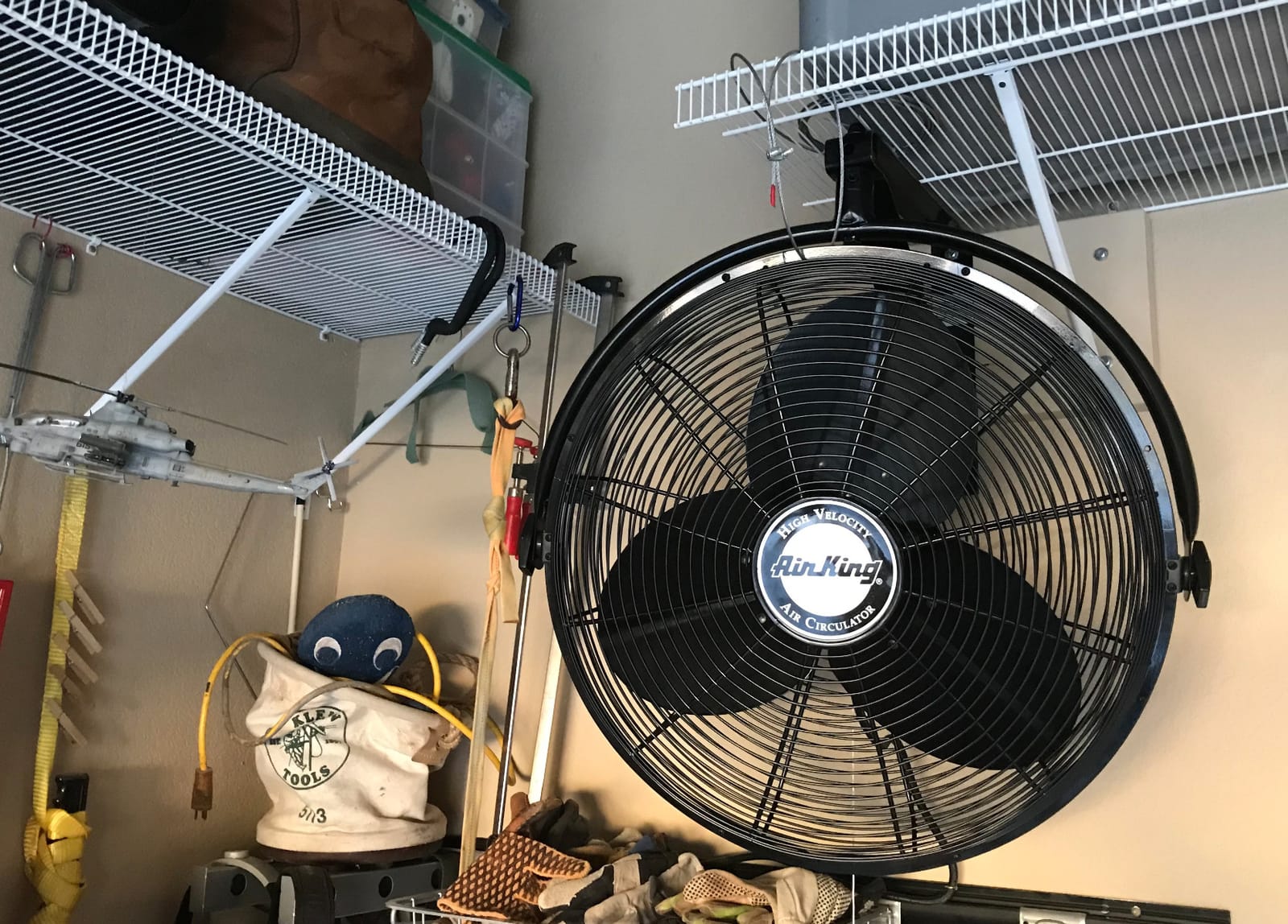
The build is deliberately over-engineered. A 20-inch powder-coated metal blade, a nine-foot three-conductor SJT cord, a secondary safety cable and full assembly hardware are all included. Buyers running it in kennels and shops report near-continuous operation without complaint.
The catch, plainly stated: no lag bolts or screws come in the box, so buy masonry fasteners before you start. It is noticeably louder on the middle and top speeds than the quieter units here. And a few owners of multi-fan setups reported motor failures after roughly two years of seasonal use, which is the kind of feedback that matters if you plan to run one permanently.
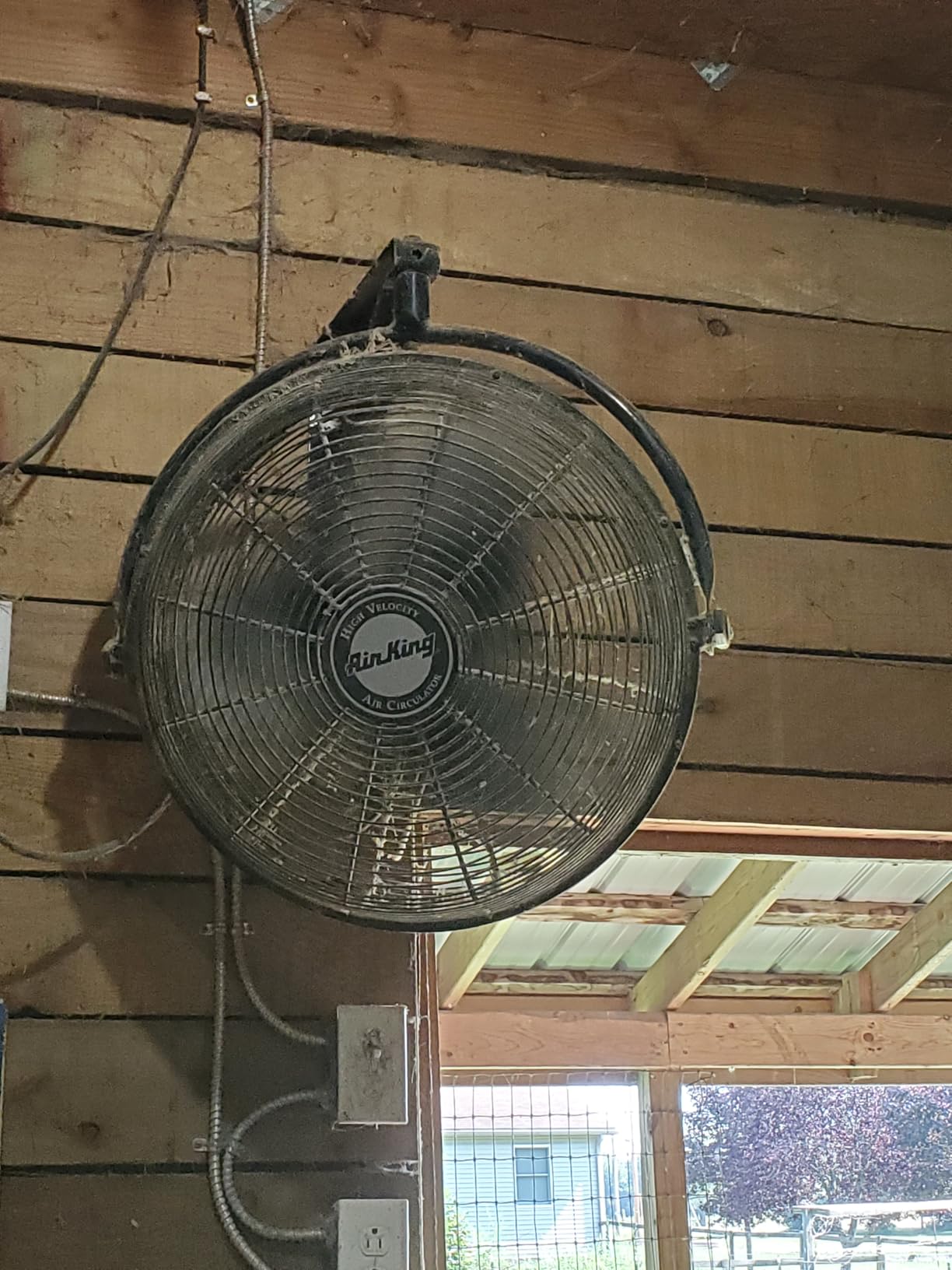
Why the Air King 9020 stops the wobble
Three things work together. The two-way mount lets the head swivel horizontally and tilt vertically against a rigid bracket rather than a single pivot point, the weight damps small oscillations, and the enclosed ball bearing motor avoids the dry-bearing rattle that shows up at top speed on cheaper units.
If you share a wall with a bedroom or a home office, this is the pick. Vibration transmitted through framing is a named complaint for several other fans in this roundup and is simply absent here.
Where the Air King 9020 costs you
It costs more than the value picks in this roundup, and you pay for construction rather than airflow. At 3,670 CFM it sits in the middle of the pack, so a cheaper 18-inch fan will move comparable air. Buy it for the mount and the motor, not for the CFM figure.
Plastic blades are a downgrade against the aluminum units here. They weigh less, which helps the vibration story, but they are the part most likely to warp after a decade.
6. Maxx Air 18 Inch Wall Mount Circulator: Best for a One-Car Garage
- Quiet motor with good airflow for an 18 inch size
- Tilting and swiveling head plus ceiling mounting option
- Detaches easily for cleaning and winter storage
- Long term owners report four years of daily seasonal use
- 1450 CFM suits a small room rather than a garage
- Ceiling performance drops without a cowling
- Thin bracket flexes from a single top bolt
- Indoor use only
Our verdict: if your garage is a one-car space, a basement, a sunroom or a horse stall, this is the right fan and you should stop reading here. At 1,450 CFM it moves a fraction of what the industrial models push, and for a small room that is all you need. Putting this in a two-car garage would be a mistake.
What you give up in CFM you get back in noise. The brushless motor is quiet enough that owners describe it as rivaling residential ceiling fans, and one owner reports it still working flawlessly after more than four years of near-daily seasonal use. It draws only 85 watts, so the operating cost of running it all summer is negligible.
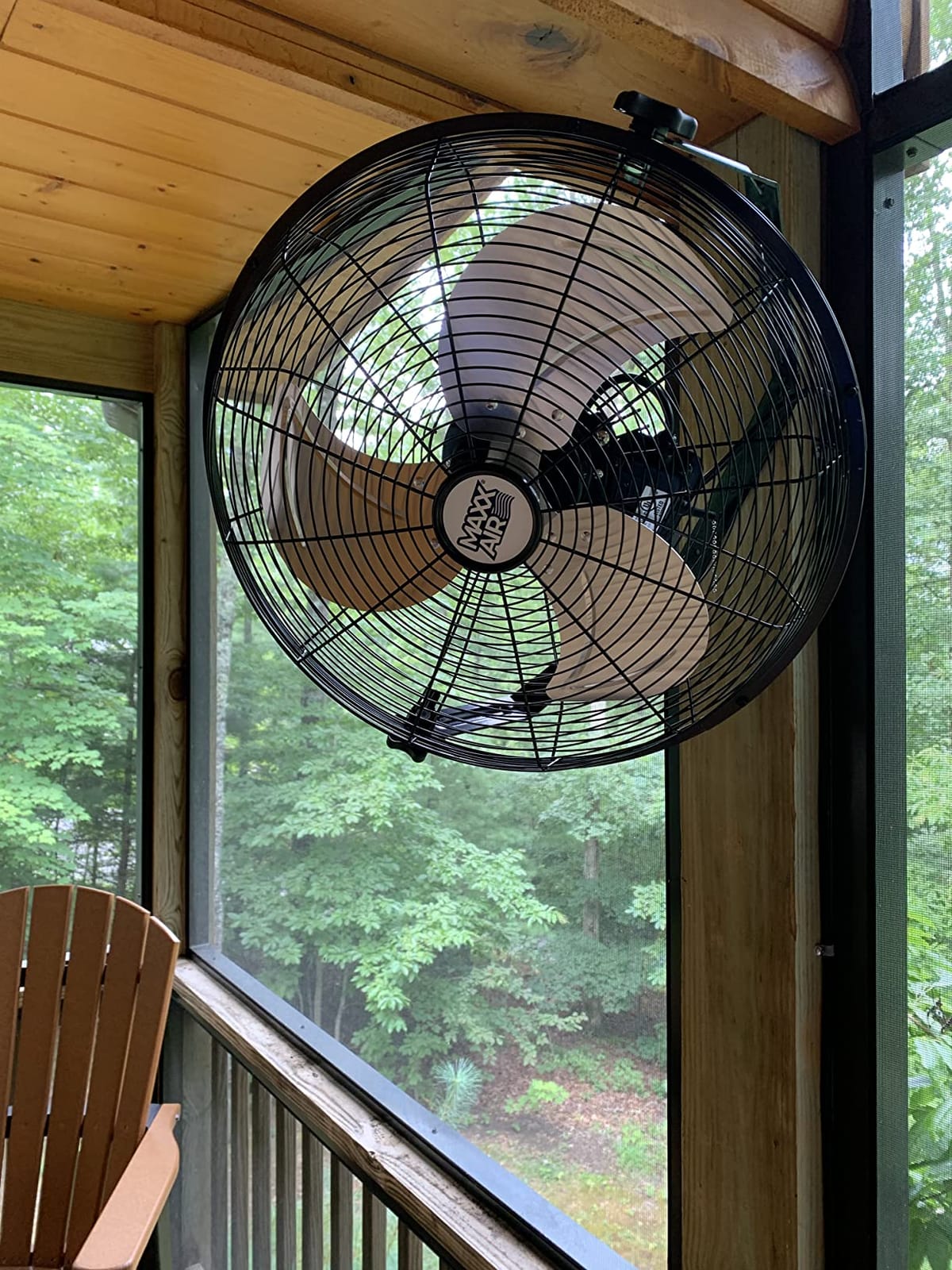
It is also the easiest unit in this roundup to move around. The bracket allows wall or ceiling mounting, the head tilts, and the whole fan detaches for cleaning or winter storage without tools. That flexibility is why it turns up in sunrooms and covered porches as often as garages.
Two mechanical quirks show up repeatedly in reviews. Ceiling-mounted performance drops sharply unless you add a cowling over the top half, where the housing works as a brake on the exhaust side. And the thin bracket flexes when the fan is hung from a single top bolt, so use both mounting points.
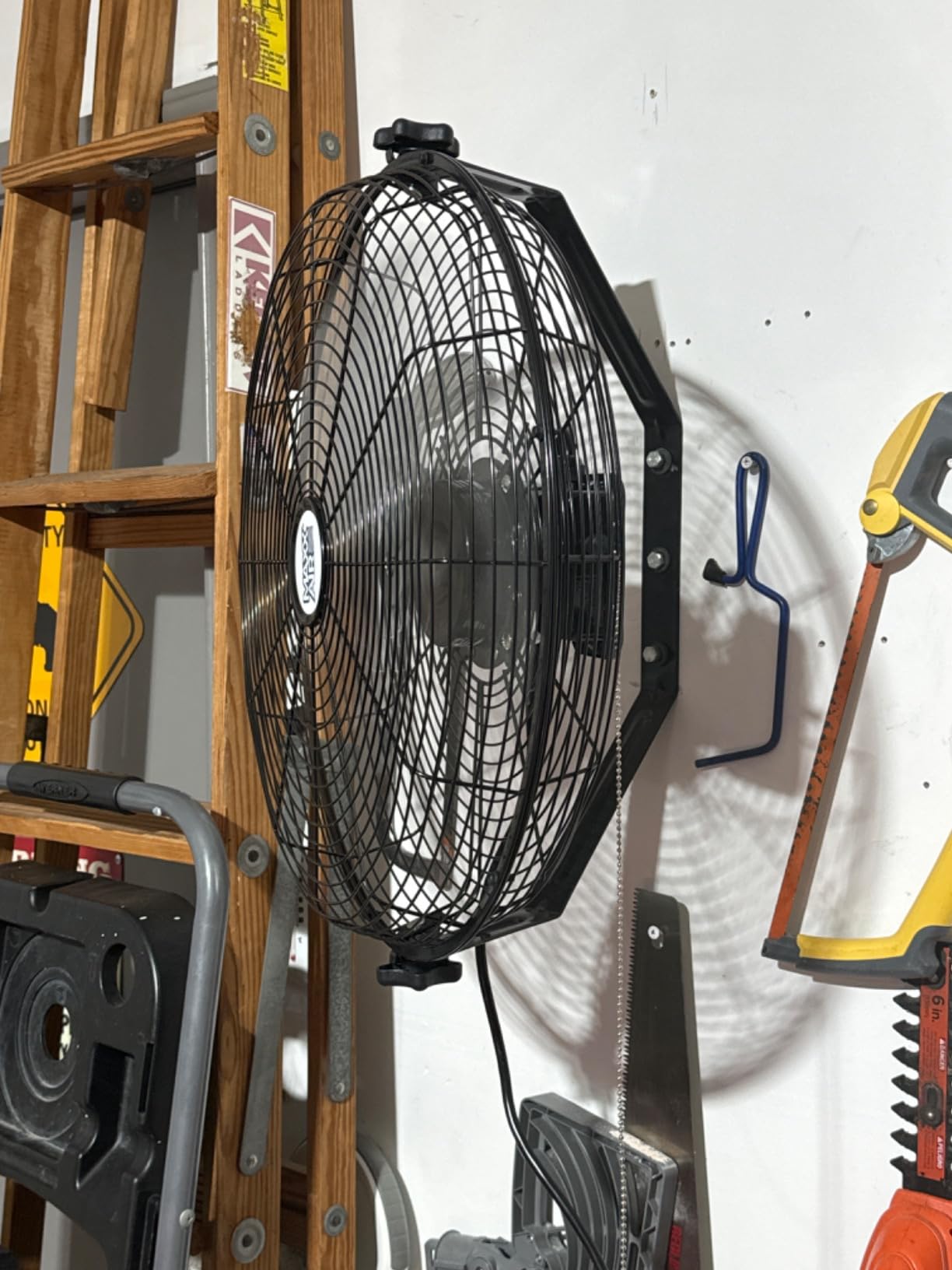
When quiet beats powerful
This is the fan for a garage office, a reading room, a sunroom or a garage gym in a single-car space where a constant roar would be the deciding factor. At 85 watts and a brushless motor, it idles at a level most people stop noticing after a few minutes.
For air circulation rather than blast cooling, it is genuinely effective. The distinction matters: this is a circulator that evens out stratified air, not a high-velocity machine that pushes a working breeze across a bench.
Where the Maxx Air HVWM 18 falls short
Airflow is the limitation. At 1,450 CFM it moves a fraction of what the industrial units push, and no amount of aiming changes that. If you work at a bench at the far end of a long garage and want to feel the air, this is the wrong fan.
The bracket is also thinner than the Air King and the Tornado, so it transmits more movement when the motor runs high. Attach it to a stud rather than drywall.
7. BILT HARD 24 Inch Oscillating Outdoor Fan: The Only True Oscillator at 24 Inches
- 80 degree oscillation built into the tiltable head
- Genuinely outdoor rated with IPX4 and a GFCI plug
- Aluminum blades and shroud with no plastic
- Sealed motor rated for continuous duty
- Louder than average when wall mounted
- Thin gauge metal that some buyers disliked
- Costs more than the 18 inch units here
- Oscillation transmits some vibration through framing
Our verdict: oscillation is the feature shoppers ask for most and manufacturers deliver least. This is the only 24-inch fan in the roundup that sweeps, and it is also genuinely rated for the outdoors with an IPX4 water-resistant design and a nine-foot cord with a GFCI plug. That combination is rare in this tier.
Airflow is 6,300 CFM on high, with 4,200 and 3,200 on the two lower settings. At 1,126 RPM it turns more slowly than the smaller fans here, which is how a 24-inch fan moves so much air without climbing to 1,500 RPM and getting progressively louder.
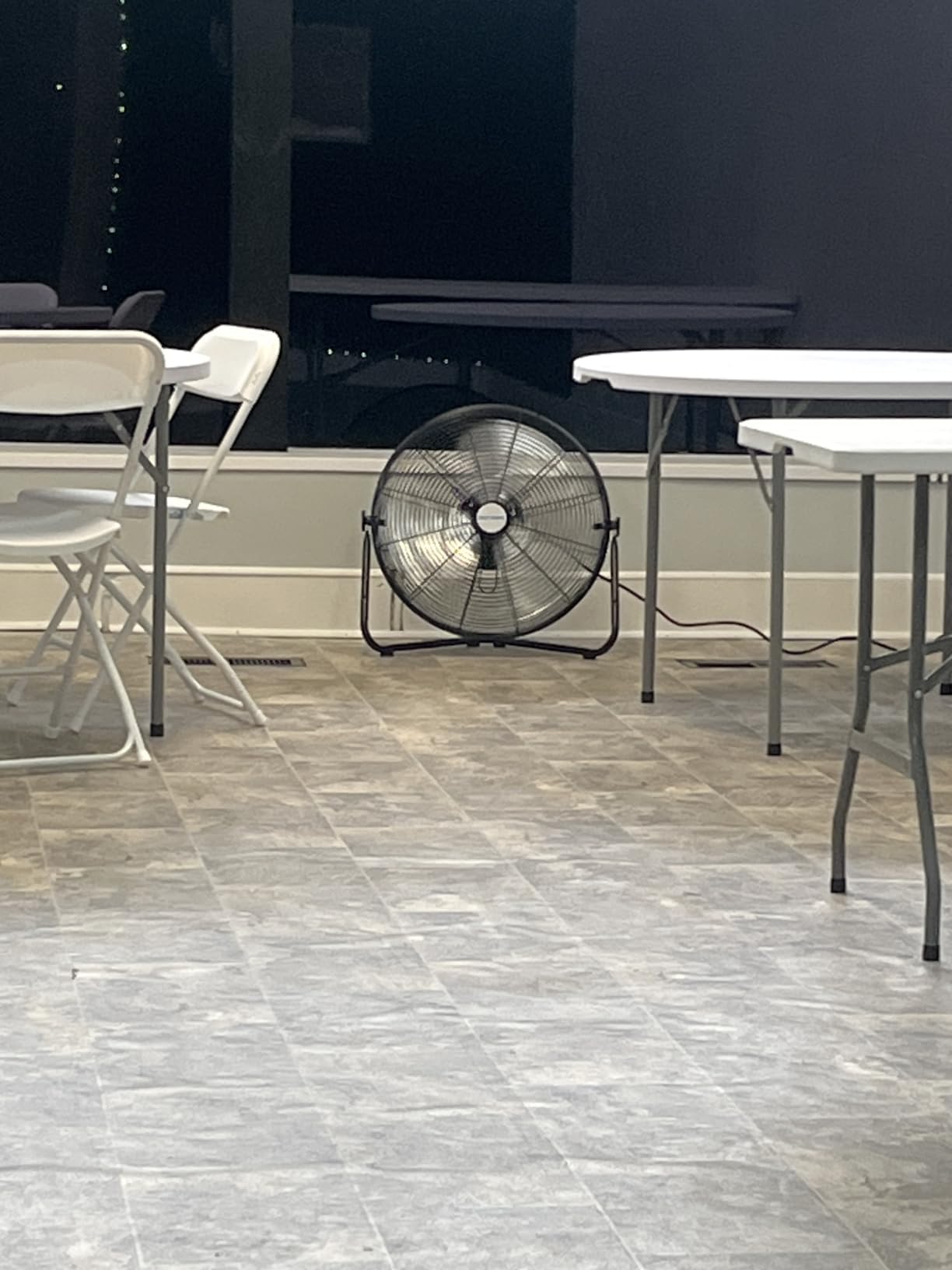
The weight point is worth dwelling on. At 26.2 pounds it is still a two-hand lift, but the aluminum blades and shroud keep it manageable for a 24-inch fan, which reduces the load on your studs. Reviewers who were wary of thin sheet metal changed their minds once they saw the airflow.
The catch is that it is louder than average when wall mounted, and several owners report that the oscillation carries a small amount of vibration through the framing. On drywall over studs you will hear it. If you are mounting on a wall shared with a living space, test the location at high speed before you commit.
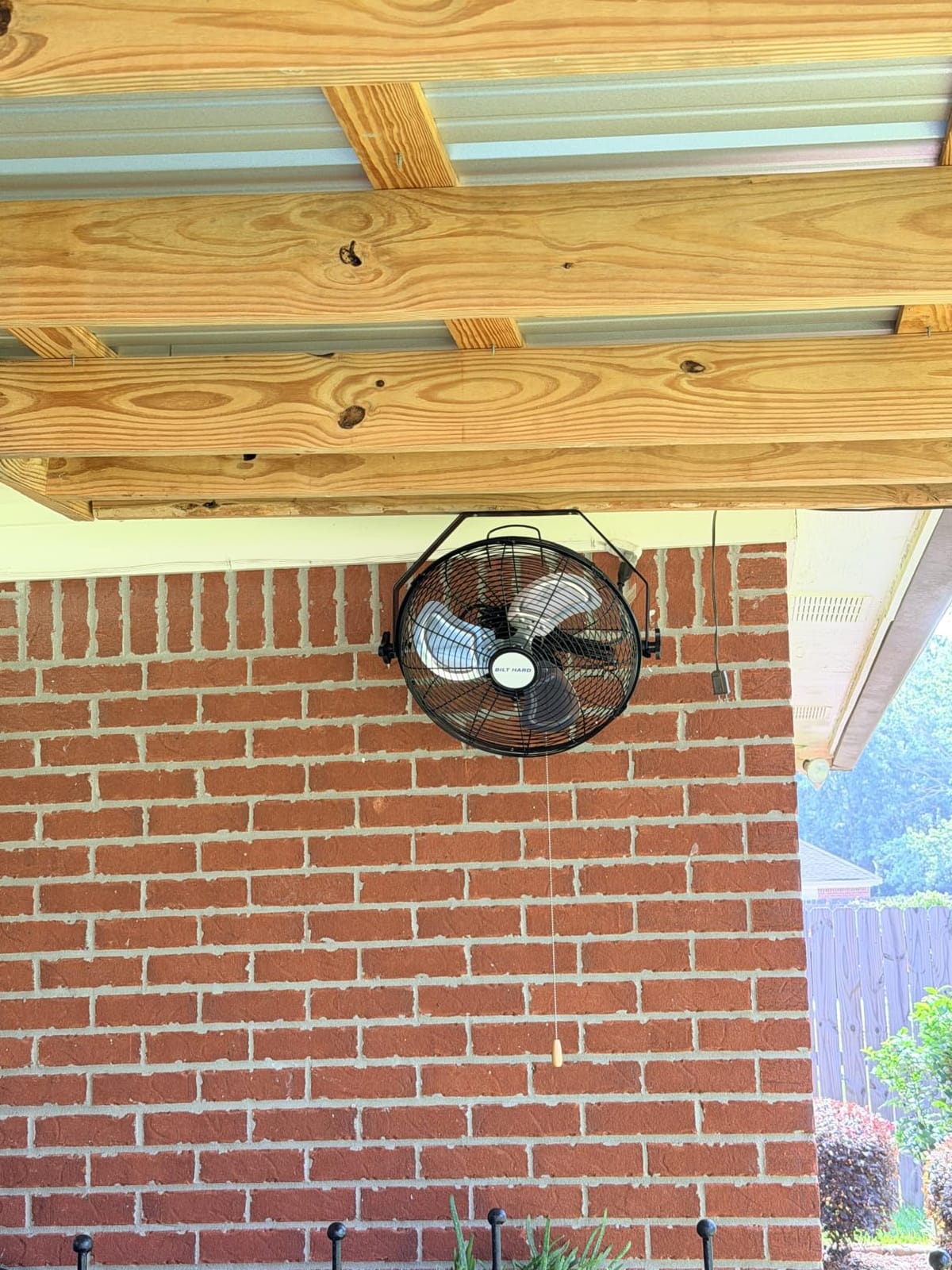
Why oscillation earns its place
A stationary fan cools one zone. An oscillating head sweeps a wide arc across a rectangular room, which is what makes one fan cover a two-car bay instead of a single workbench corner. For a garage gym or a general living space, the 80-degree sweep is the difference between a fan that helps and a fan that just blows at the far wall.
The sealed, permanently lubricated industrial motor drawing 1.54 amps is built for continuous duty, and owners report running it through extreme summer heat around the clock. It also disassembles easily for cleaning, which matters when the unit lives outdoors.
Where the BILT HARD 24 Inch is the wrong pick
If your priority is quiet, this is not it. The published behavior is loud at high speed and the oscillation mechanism adds its own sound. Buy the Tornado or the Simple Deluxe instead.
It is also one of the more expensive units in this roundup on a specification basis, and oscillation is a feature you pay a premium for whether you use it or not.
8. NewAir 18 Inch Heavy Duty Wall Mount Fan: The Quietest Industrial Option
- 45 dB published noise figure
- Sealed metal motor housing shields the ball bearing motor
- Mounting hardware included unlike several competitors
- Adjustable tilt bar aims airflow without repositioning
- ETL certified with all metal blades
- 3000 CFM suits a workbench rather than a whole garage
- Indoor use only rated
Our verdict: this is the value pick, and the value is specifically quietness. At 45 dB published, the NewAir WindPro18W runs quieter than every other industrial fan in this roundup, matched only by the Simple Deluxe on its lowest setting. For a garage workshop where you weld, sand or think, that is the number that matters.
The dual ball bearing motor sits inside a fully enclosed metal housing, which is the right answer to workshop dust. Dust is the number one motor killer in a garage, and a sealed housing buys you years that an open motor on a cheap fan does not. The listing is ETL certified with all-metal blades, and the adjustable tilt bar lets you aim the breeze without climbing back up.
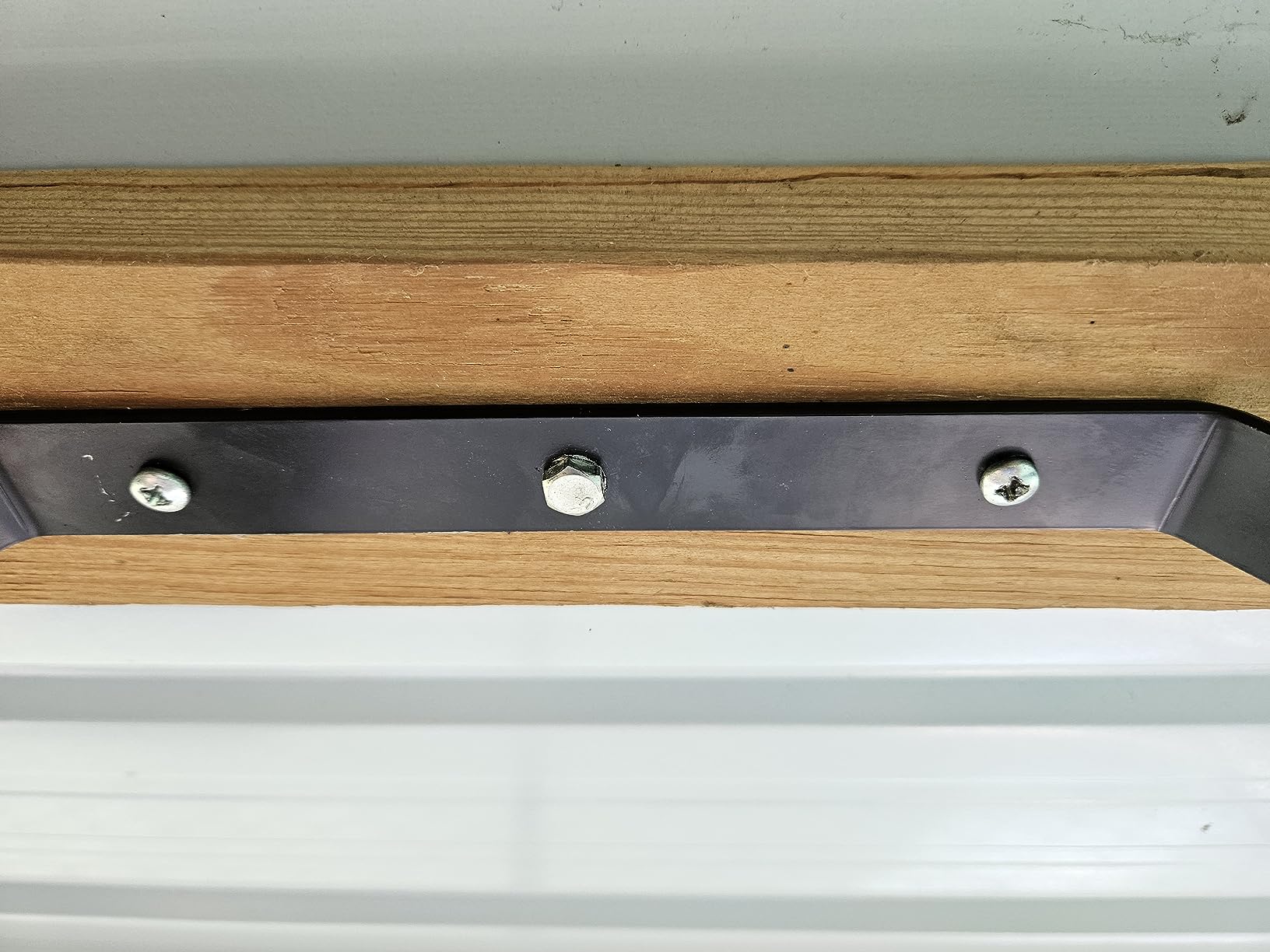
Mounting hardware is included, which puts it ahead of the Tornado, the Air King and the Air King-class units that expect you to source masonry fasteners separately. It also mounts to cement, drywall over studs, masonry and steel beams, which covers almost every garage wall you will meet.
The catch is airflow. At 3,000 CFM this serves a person and a workbench rather than a whole garage. It is indoor use only, and it mounts to cement, drywall over studs, masonry and steel beams, so the wall is never the limiting factor here.
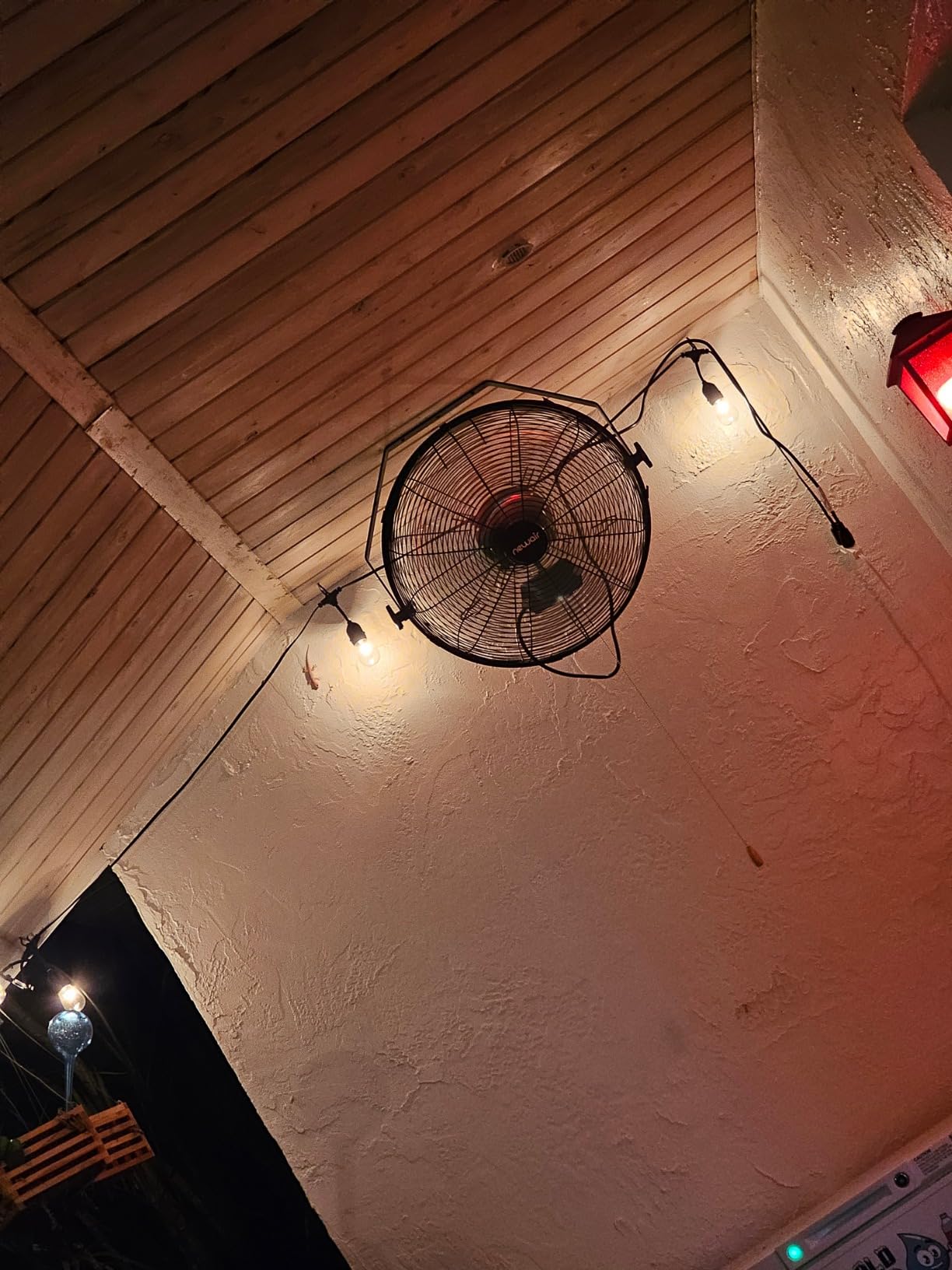
Why the NewAir WindPro18W is the smart buy
It pairs a sealed metal motor housing with the lowest published noise figure in the group, and sealed housings are where the money should go in a dusty space. You are buying protection for the part that actually fails.
It also draws 120 watts with a claimed running cost of roughly 12 cents per workday, so leaving it on through a summer is a rounding error on your electric bill. That matters more for a fan in an uninsulated garage than any other spec on this list.
Where the NewAir falls short
Do not expect a garage-wide breeze. At 3,000 CFM the air is local, so a two-car garage with a workbench at the far end will leave you disappointed. Size up to an 18-inch 4,000-plus CFM unit if the whole space needs cooling.
It is indoor only. For a damp garage or a covered patio the iLiving or the BILT HARD is the correct selection.
9. Hurricane Pro 20 Inch Oscillating Wall Fan: Strong Air, One Weak Plastic Part
Hurricane Pro High Velocity Oscillating Wall Fan, 3 Speeds, Black, 20in
- Oscillation can be locked off to fix airflow direction
- Well balanced build that transmits little noise
- Lowest speed already equals high on smaller fans
- Arrives fully assembled so mounting is one plate
- Responsive warranty service from the manufacturer
- Plastic speed selector switch breaks in multiple reports
- Switch can land between detents and fail to register
- Audible vibration while oscillating
- Loud on high
- No remote included
Our verdict: the airflow here is excellent and the mounting is the easiest in the roundup, but the speed selector is a known weak point. Owners describe the plastic switch and oscillation collar breaking during installation or failing within about a year, and it is the dominant complaint across more than 3,000 reviews. Buy it knowing that, and keep the receipt.
Set against that, the engineering is good. At 4,500 CFM and 1,450 RPM on high, it out-moves most 20-inch fans here, and the lowest speed is already comparable to the high setting on smaller models. All-aluminum blades and a black powder-coated finish mean no plastic in the airflow path except the switch.
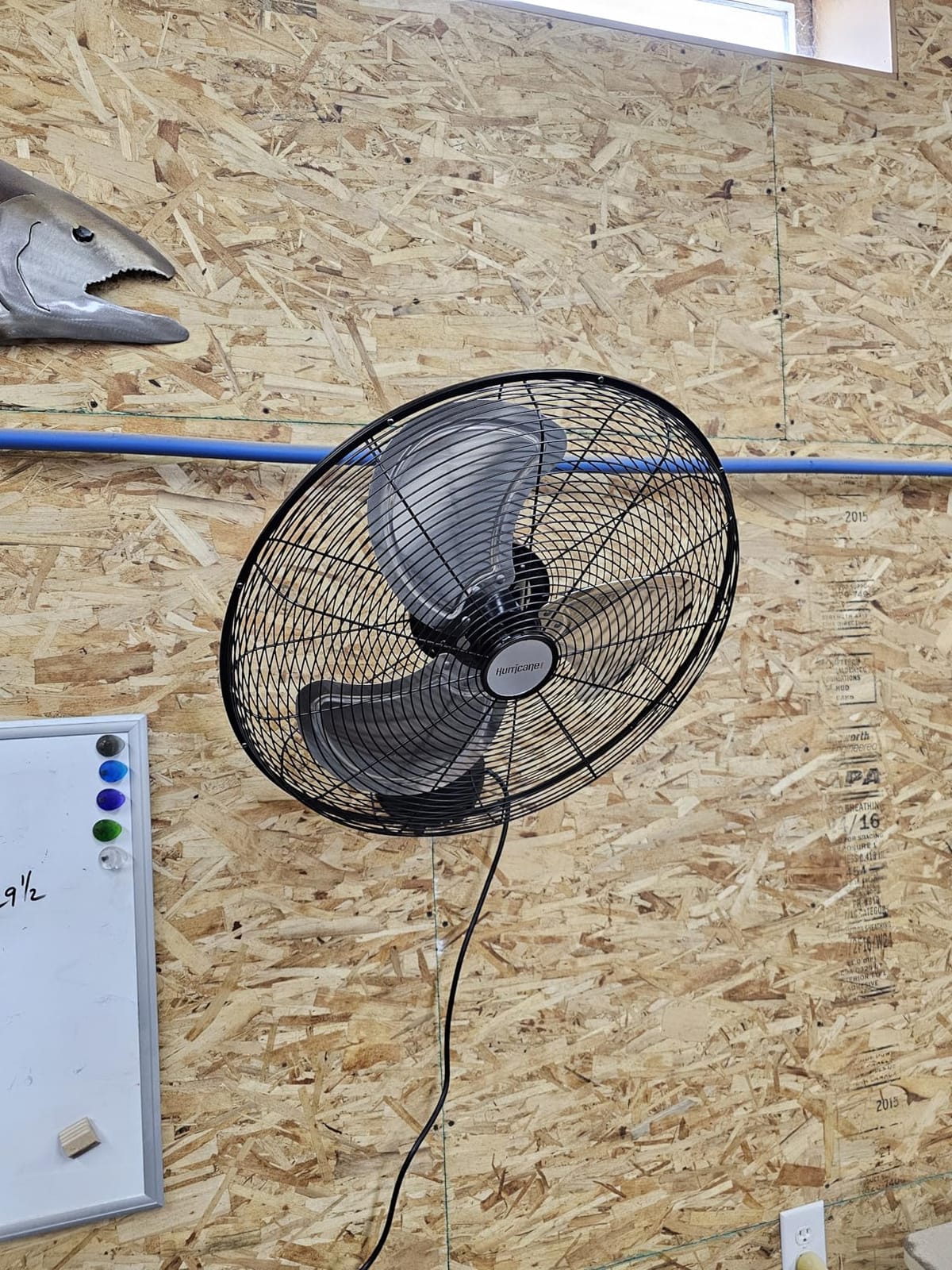
The oscillation feature is unusually well done. It can be stopped and locked in a fixed direction, so you get sweep coverage when you want it and a locked aim point when you do not. That is not something the BILT HARD offers, and it is why this fan beats the BILT HARD for a garage gym where you would otherwise leave oscillation off.
The catch beyond the switch: it is loud on high, the switch can sit between detents and fail to register a speed, and a smaller group of owners report audible vibration through the building while it oscillates. Manufacturer support itself is a genuine strength, with several owners reporting fast replacement service.
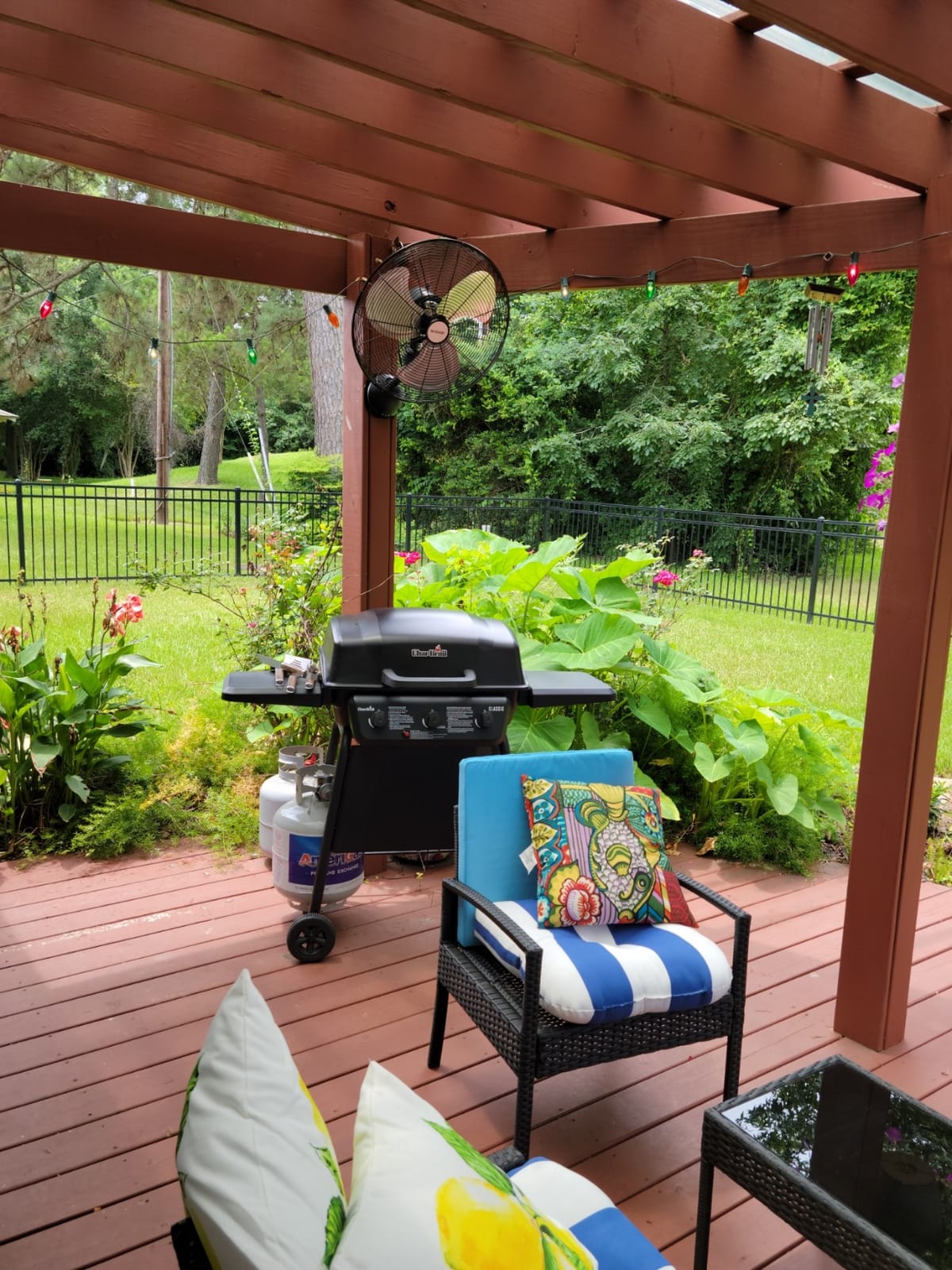
Why the Hurricane Pro fits a garage gym
Lockable oscillation is the deciding feature for a workout space. A fan that sweeps 80 degrees while you are on a bench keeps you cool without blowing directly at your face, and you can lock it off when you are doing overhead work that needs steady airflow.
It arrives fully assembled, so installation is bolting up a mounting plate with the bracket and hardware already in place. That is the fastest install of any fan in this roundup and it matters if you are working alone.
Where the Hurricane Pro 20 Inch disappoints
The plastic selector is a real reliability concern. If you buy it, inspect the collar before mounting and avoid forcing the switch between detents, which is what breaks it in the reports.
There is no remote. If you want to change speed without climbing a ladder, the only options here are the pull-chain units, which is a downgrade in convenience. For a fan mounted high, plan your speed before you climb.
10. iLiving 20 Inch 5750 CFM Floor and Wall Fan: The Budget Entry Point
- Entry level pricing against the industrial units
- Works freestanding on the floor or wall mounted
- 360 degree tilt head with three speeds
- Lightweight at 10.6 pounds for easy repositioning
- UL and cUL certified with reinforced grilles
- A 4.3 average with a 10 percent one star share
- Indoor use only rated
- Lighter build than the premium industrial units
Our verdict: this is the entry point, and it is a genuinely capable machine rather than a toy. At 5,750 CFM it moves more air than every 18-inch fan in this roundup, at an entry-level cost, on a 120-watt motor with UL and cUL certification and reinforced front and rear grilles.
Versatility is the real argument. It runs freestanding on the floor or wall mounted from the same body, so you can pull it down in February, use it as a normal shop fan, and hang it back up in July. At 10.6 pounds it is the easiest unit here to reposition, which matters for renters and for anyone with more than one space to cool.
The 360-degree tilt head is unusual at this tier, and combined with three speeds it gives you a lot of control over where the air lands. Reviewers buying it for greenhouses and attics report the same thing: enough air to do the job, in a body light enough to move between rooms.
The catch is the review profile. Its 4.3 average sits at the bottom of the range in this roundup, with a one-star share running at about 10 percent, roughly double the group norm. Buyers generally treat it as a value entry rather than a heavy-duty bargain. The build is lighter than the Air King or the BILT HARD, and it is indoor use only.
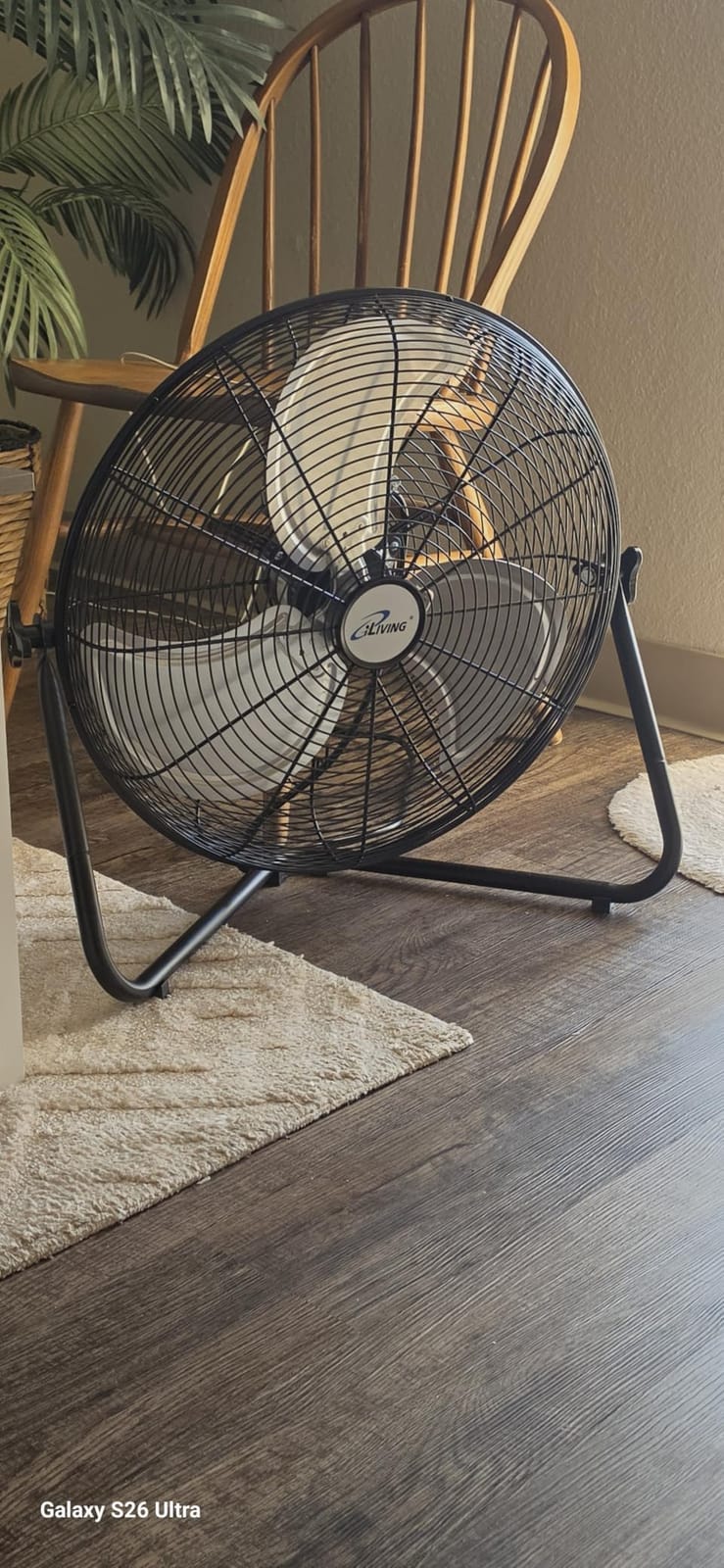
Why the iLiving ILG8F20 is worth starting with
You get most of the airflow of a much larger fan from a body you can carry with one hand. If you are not sure whether wall mounting suits your space, this is the lowest-risk way to find out, because it works both ways out of the box.
The permanently lubricated 120-watt motor and reinforced grilles are more than the spec on a typical budget fan, and the UL and cUL certification means it passes the same safety bar as the premium units.
Where the iLiving 20 Inch is the wrong choice
If you need a fan to run year-round in a dusty workshop or a humid garage, this is too light. The premium units use sealed motors and heavier housings for exactly that reason.
It is also indoor use only, so an outdoor carport or a damp garage rules it out. If noise at the top speed bothers you, note the 64 dB figure before you commit.
How Much CFM Your Garage Actually Needs?
The most common garage fan question is not which brand is best. It is how much airflow to buy, and almost nobody answers it with a method. Here is one you can apply in four steps.
CFM means cubic feet per minute, the volume of air a fan moves each minute. The number matters more than the blade diameter, because a larger blade spinning slowly and a smaller blade spinning fast can move identical volumes. Judge every fan on CFM first and size only afterwards.
1. Measure the floor area in square feet. Multiply length by width of the garage floor, not the ceiling footprint.
2. Multiply by ceiling height in feet to get the room volume in cubic feet. A 20 by 20 garage with 9-foot ceilings is 3,600 cubic feet.
3. Multiply that volume by four to get your target CFM. Four air changes per hour is the working figure that clears stratified heat in an occupied garage. That example gives 14,400 CFM, which is far more than any single fan in this roundup delivers, and that result is normal rather than a sign you miscalculated.
4. Accept that one wall mount fan is an air movement tool, not a whole-room ventilation system. If your target is above what one fan pushes, you are describing a job for an open door, a gable vent and a second fan pointed at the exhaust.
The practical shortcut that most buyers use is far simpler: pick by the room. A one-car garage or basement wants roughly 1,500 to 3,000 CFM. A two-car garage or single-bay workshop wants 4,000 to 5,000 CFM. A three-car bay, warehouse space or open-plan workshop wants 6,000 CFM and up, which in practice means a 24-inch head or the highest-output 18-inch models.
One more number worth knowing is throw distance, the distance air stays strong enough to feel. Throw depends on diameter and velocity, which is why a 4,000 CFM fan can feel weak in a long garage: the air is arriving but it has lost its push. Bigger blades push farther at the same volume, which is the argument for stepping up one size tier rather than buying two smaller fans.
Wall Mount vs Ceiling Mount vs Portable Shop Fan
The live question on garage forums is whether wall mounted oscillating fans actually move air better than overhead paddle blade fans. They do different jobs, and choosing the wrong one is the most common regret.
A wall mount fan uses no floor space at all, which matters enormously in a two-car garage where the floor holds two vehicles, a workbench and a parts shelf. Its head pivots and sweeps at working height, so the air arrives where you are. The cost is installation: you need a stud, a joist or masonry, and a clear swing arc.
A ceiling paddle blade fan is the better choice when the floor is precious and you want whole-room circulation with no bracket work. The trade is geometry. A paddle fan mounted flat pushes air across the ceiling plane where there is no one, and its output drops sharply when it is mounted close to the ceiling without a cowling. If you go ceiling, put the unit high and use a cowling over the exhaust side.
A portable shop fan wins on flexibility. It needs no mounting surface, moves between the garage and the patio, and is the only option that works in a rental. It also occupies the floor, and it will not move stratified air out of the rafters on its own. For a garage you are cooling while you work at floor level, a portable unit pointed at the open door is genuinely effective.
Our recommendation for most people: a wall mount fan for permanent cooling plus a small portable box fan aimed at an open door or window for exhaust. The wall fan does the circulation, the portable fan does the removal, and the pair beats either one alone without adding a second industrial fan.
If the main heat source is the sun hitting the garage door, fixing that is cheaper than buying a bigger fan. Our guide to solar attic fans for hot garages covers the venting half of that problem.
Mounting a Wall Mount Fan: Studs, Joists, Masonry and Drywall
Installation is where most wall mount fan plans fail, and it is the number one practical blocker in every garage forum thread about this category. None of the fans in this roundup should be mounted into drywall alone. Run these five checks before the bracket is out of the box.
1. Locate the framing. A stud finder or a 3/16 inch bit and a stud finder will tell you where the studs are, typically 16 inches on center. Mount the bracket so at least two of its fasteners land in wood. Ceiling joists are wider, so a ceiling mount is more forgiving than a wall mount.
2. Confirm the clearance and swing arc. Measure the fan’s full tilt and oscillation range, then mark the arc on the floor with tape before you lift anything. Check that the head clears your vehicle, the door track and any shelf.
3. Match the fastener to the wall. Wood framing takes lag bolts or structural screws into the stud. Concrete or block needs an expansion anchor, and the Tornado specifically requires an M10x80 for concrete and metal racking. Air King does not include lag bolts at all. Buy hardware before you start.
4. Check the circuit. Most of these fans draw between 85 and 184 watts on 120 volts, so they share a 15-amp household circuit with plenty of margin. If you add two fans plus a welder or an air compressor, put them on a dedicated circuit. The BILT HARD includes a GFCI plug, which is the right call for any damp location.
5. Assemble the bracket before the fan goes up. Fit the tilt hardware and confirm the head moves freely on the bench, then lift and bolt. Mounting high while holding a 26-pound fan with one hand while turning nuts with the other is how brackets end up crooked.
Add a secondary safety cable if your fan weighs more than about 15 pounds or is mounted above head height. The Air King includes one, and the rest of the field should be copied. It is cheap insurance against a fan coming loose in a wind gust with the garage door open.
Noise, Vibration and Oscillation Problems (and Fixes)
Noise is the number one complaint in this category, and oscillation is the mechanism people blame for most of it. Manufacturer dB figures are measured at a fixed distance in a lab, so treat them as a ranking rather than a promise. One r/VanLife datapoint reported in the community put nine high-CFM fans running at 30 percent speed at roughly 60 to 65 dB, described as definitely noticeable. That is the honest scale.
Five common problems and what actually fixes them:
1. Noise that appears only while oscillating. The motor is not the cause. As the head swings, an unbalanced load cycles load and off the wall framing, and a flexing bracket turns that into a rhythmic knock. Tighten the bracket bolts, level the unit, and check that the fan is seated flat against the wall rather than leaning on one fastener.
2. Noise or wobble after a blade impact. A bent blade ruins the balance permanently. Inspect each blade for a visible curve, especially after moving the fan through a doorway. Replace rather than try to straighten, because a straightened blade is still out of balance.
3. Vibration transmitted into drywall. The wall is amplifying what the mount should have absorbed. The fix is isolation, not more torque: rubber or vibration-isolation washers between the bracket and the studs, or a neoprene pad behind the mounting plate.
4. Rattling that grows at the top speed. That is usually a dry or worn bearing in the motor, or a grille that has loosened from the housing. Check the grille fasteners first. If the noise persists at top speed only, the motor is the likely cause and the fan needs service or replacement.
5. A bracket that flexes under load. Thin-gauge brackets on lighter units will visibly move. This is a structural problem, not a tuning problem, and the answer is a fan with a heavier bracket or a mounting plate that spreads the load across two studs.
The full vibration fix sequence, in order: confirm the mount lands on a stud or joist rather than drywall, torque every bracket bolt evenly, level the fan with a spirit level, inspect and clean the blades for dents and buildup, fit vibration-isolation washers or a rubber pad, and finally check that the fan is not simply running out of balance at high speed. Do them in that order, because each step assumes the previous one is already correct.
On the honest expectation question: a fan cannot cool a garage below the temperature of the outdoor air. A temperature dip from running one for an hour tends to fade as the space heats back up, which is why ventilation through an open door matters more than the fan itself. Fans move air; air conditioning removes heat.
Best Wall Mount Fan for a Garage Gym
A garage gym inverts the usual priority. Maximum CFM is not the goal, because a hard blast while you are lifting is unpleasant. What you want is quiet operation at a usable speed, wide sweep coverage so no corner goes stagnant, and the ability to aim the air at ceiling height where the heat collects.
For most home gyms, the Lasko 2264QM is the answer, because its pivoting head lets you aim the flow up and across rather than directly at the bench, and it converts back to a floor fan for storage.
If noise is your dominant concern in a single-car space, the Maxx Air HVWM 18 is quieter by a wide margin at a much lower airflow figure, which is enough for a small room. In a larger gym, the Tornado 18-inch at 4,150 CFM and 60 dB gives you real coverage without the industrial roar.
For a gym where you want the whole floor swept rather than one aimed zone, the Hurricane Pro is the pick. Its oscillation locks off when you want a fixed direction, so you can sweep the room during rest periods and hold a steady angle during heavy sets.
Avoid the highest-output 24-inch units for a gym. More CFM at close range means more noise right where you are trying to breathe, and the benefit over a 4,000 CFM unit in a single-bay space is marginal.
Frequently Asked Questions
What is the best fan to cool a garage?
For a typical two-car garage, a wall mount fan in the 4,000 to 5,000 CFM range is the best balance of airflow and noise, and the Lasko 20-inch is the most proven model we found. A fan moves air rather than cooling it, so it works best when the outdoor air is cooler than the air inside and you have an open door or gable vent to exhaust through.
What is the best wall fan for a garage gym?
A garage gym rewards a pivoting or lockable oscillation head and quiet low-speed running over raw airflow. The Lasko 20-inch works for most spaces because the head aims up and across instead of blowing at the bench, the Maxx Air 18-inch is the quietest option for a single-car space, and the Hurricane Pro locks its oscillation off when you want a fixed direction.
Which brand wall mounted fan is best?
Lasko leads on proven reliability, with a 4.7 rating across more than 28,000 reviews. iLiving leads for outdoor and damp locations with a weatherproof 6,360 CFM model. Air King builds the most rigidly and reports the least vibration, and NewAir offers the quietest industrial option at a 45 dB published figure.
What is the best portable fan for a garage?
There is no portable fan that matches a wall mount unit for a fixed space, because portable fans occupy floor space and cannot clear stratified air out of the rafters. A portable unit works best as the exhaust partner, pointed at an open door or window, while the wall mount fan handles circulation. Portable also wins when you have no stud or joist available.
What are the common problems with oscillating fans?
The five recurring problems are noise that appears only during the swing, wobble after a blade has been dented, vibration transmitted into drywall, rattling that grows at the top speed, and thin brackets that flex under load. Four of the five trace back to the mount rather than the motor, which is why every fix begins with studs, tight bolts and levelling.
Why does my fan make noise when it’s oscillating?
The motor is rarely the cause during a swing. As the head rotates, an unbalanced load cycles on and off the wall framing, and a slightly flexing bracket turns that into a rhythmic knock. Tighten every bracket bolt, level the unit, confirm it sits flat against the wall rather than hanging on one fastener, and check the blades for dents.
What is the quietest oscillating fan on the market?
No wall mount garage fan is genuinely quiet at the top speed, and quieter models always trade airflow for it. Among the industrial units we compared, the NewAir 18-inch publishes the lowest figure at 45 dB, the Simple Deluxe 24-inch matches that on its low setting, and the Maxx Air 18-inch is the quietest by design because it only moves 1,450 CFM.
How do I stop my fan from vibrating?
Work through this order: confirm the bracket lands on a stud or joist rather than drywall, torque all bracket bolts evenly, level the fan, inspect and clean the blades for dents, then fit rubber vibration-isolation washers or a neoprene pad behind the mounting plate. If vibration persists at high speed only, the motor or bearings are the likely cause.
The Verdict on the Best Wall Mount Fans for Garages
If you are buying one wall mount fan for a typical garage in 2026, buy the Lasko 20-inch high velocity wall mount fan. Its 4.7 rating across more than 28,000 reviews is the strongest evidence in the category, it converts between floor and wall mounting, and at 130 watts it will not run up your electric bill.
Match the pick to the condition instead. Take the iLiving 18-inch 6360 CFM if the location is damp, semi-open or outdoors, because it is the one industrial unit here with a genuine weather rating. Take the Simple Deluxe 24-inch for a three-car bay or a workshop that needs whole-room volume, and accept the size and the mounting work. Take the Tornado 18-inch if noise is the constraint and you still need industrial airflow.
Three decisions settle most of the remaining questions. Choose the Air King 9020 if you cannot tolerate vibration through drywall. Choose the BILT HARD 24-inch if you want built-in 80-degree oscillation and outdoor capability. Choose the NewAir 18-inch if you want the quietest industrial unit and can work with 3,000 CFM. Start with the Hurricane Pro if your garage is a gym and lockable sweep matters more than anything else.
Whatever you choose, get the airflow right first and the mounting second. One fan plus an open door beats two fans pointed at each other, and a fan bolted into drywall is a fan that will be off the wall before the summer is over.