
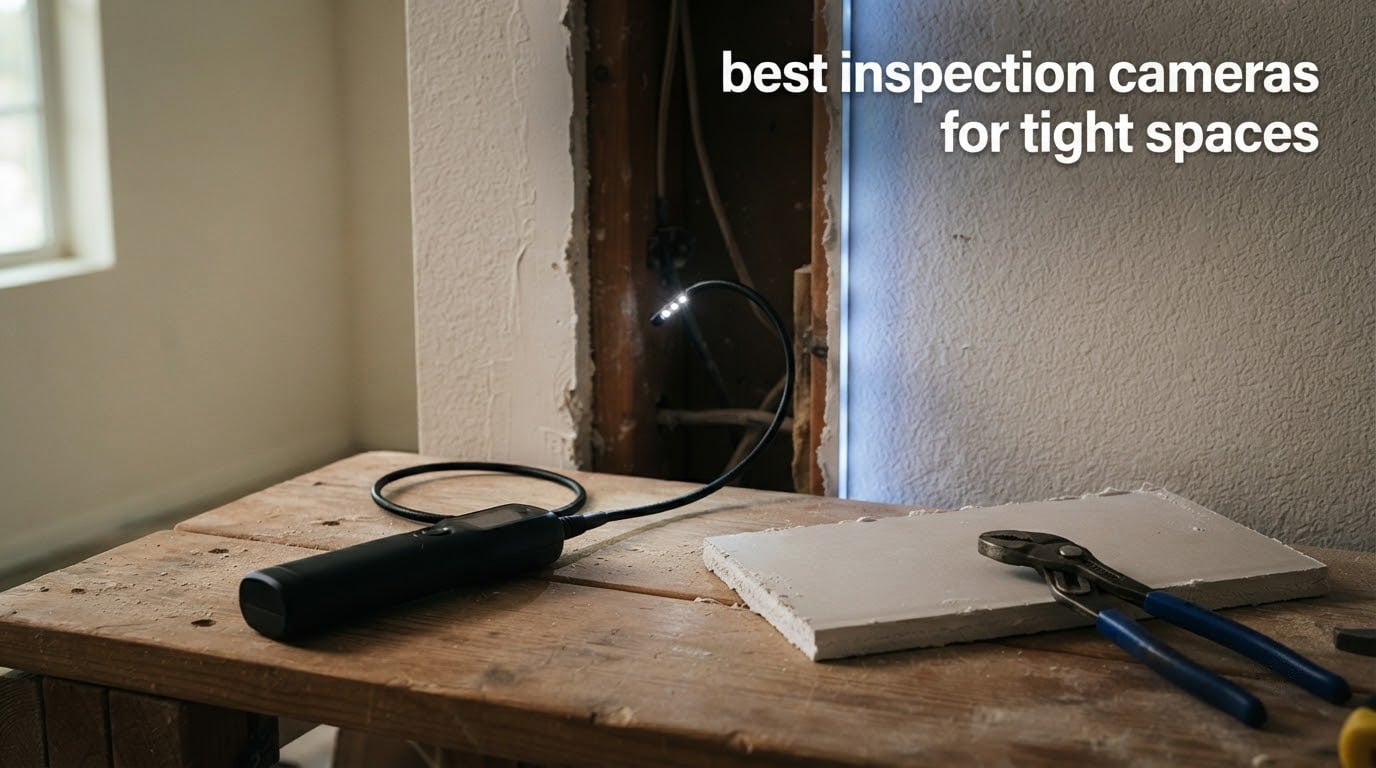
A tight-space inspection camera is a small camera on the end of a narrow probe, paired with a screen or a phone app, that lets you see inside walls, ducts, pipes, engine bays and appliance cavities you cannot reach by hand or line of sight. Borescope, endoscope and snake camera are three names for the same tool, and buyers use them interchangeably.
Only two specs decide whether one of these cameras actually works for tight spaces. The first is the camera head diameter in millimetres, which has to physically pass your access opening. The second is whether the probe tip articulates to steer around obstacles once it is in there. Everything else on the spec sheet is secondary, which is why two scopes with almost identical resolution lists can feel completely different in your hands.
We spent weeks putting ten of the current best inspection cameras through the same routine: threading each probe through the same narrow openings, steering the tip around blind corners, lighting a dark cavity and checking whether what we saw could be recorded and shared. The picks below cover engine bays, wall voids, drains, HVAC ducting and phone-only workflows.
If your tight space is a mechanical one rather than a wall cavity, our right angle drills for tight spaces guide covers the other half of the confined-access tool kit. For full drain lines rather than the short run inside a cabinet, see our sewer inspection camera picks.
We earn from qualifying purchases, which never changes the ranking below.
Table of Contents
Top 3 Picks for Best Inspection Cameras for Tight Spaces (2026)
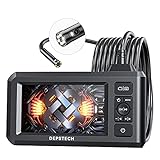
DEPSTECH DS300-DL
- Dual lens with split screen
- 1080p on a 4.3 inch IPS screen
- 16.5FT semi-rigid IP67 cable
- 24-month warranty
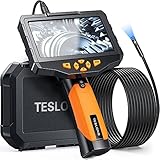
Teslong NTS300
- Dual lens with independent LEDs
- 5 inch IPS display
- 16.5FT 8mm gooseneck cable
- 5000mAh battery

BAZO 1920P Phone Scope
- 6.9mm slim probe
- 18.04FT semi-rigid cable
- IP67 waterproof
- 8 adjustable LEDs
All 10 Inspection Cameras Compared in 2026
Probe diameter, articulation and screen type are the columns that matter most here. Read across before you read down: several of these scopes trade one for another rather than beating each other outright.
| Product | Specifications | Action |
|---|---|---|
| DEPSTECH DS300-DL 16.5FT Dual Lens |
|
Check Latest Price |
 DXZtoz Two-Way Articulating 5.5FT DXZtoz Two-Way Articulating 5.5FT |
|
Check Latest Price |
 Teslong TD450S Articulating 5FT Teslong TD450S Articulating 5FT |
|
Check Latest Price |
 DEPSTECH DS650DL-3m 10FT Dual Lens DEPSTECH DS650DL-3m 10FT Dual Lens |
|
Check Latest Price |
| Teslong NTS300 16.5FT Dual Lens |
|
Check Latest Price |
| BAZO 1920P Phone Endoscope 18.04FT |
|
Check Latest Price |
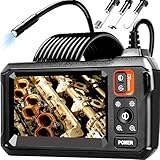 Daxiongmao C30 16.5FT Standalone Daxiongmao C30 16.5FT Standalone |
|
Check Latest Price |
 MugEasy 1920P 7.9mm Short Tip 16.6FT MugEasy 1920P 7.9mm Short Tip 16.6FT |
|
Check Latest Price |
 Kinpthy 1920P Dual Lens 16.4FT Phone Kinpthy 1920P Dual Lens 16.4FT Phone |
|
Check Latest Price |
 TGJOR G50 5 Inch Dual Lens 16.4FT TGJOR G50 5 Inch Dual Lens 16.4FT |
|
Check Latest Price |
How We Picked These Borescopes
We applied the same four filters to every scope in the list, in this order. First, does the camera head fit the opening, measured in millimetres rather than vague size claims. Second, can the tip steer once inside, because a rigid probe in a curved void gives you one fixed view no matter how you shape the cable.
Third, can you actually see anything in the dark. That means LED count and, more importantly, whether brightness is adjustable, since overly bright light a few centimetres from a wet or reflective surface washes the image out completely. Fourth, can you keep the evidence: capture to a card, export to a phone or computer, and enough battery to finish a job without a recharge halfway through.
We deliberately ignored advertised resolution alone. Resolution numbers are close to meaningless without a focal range, and we saw noticeable quality fall away the moment a probe was pushed past its useful focusing distance in a dark cavity. Where a product could not record at all, we said so plainly rather than treating live viewing as a partial success.
1. DEPSTECH DS300-DL 16.5FT Dual Lens – Best Overall for Confined Voids
DEPSTECH Endoscope Camera with Light, Dual Lens Inspection Borescope 16.5FT
- Dual lens with one-button split screen for seeing around obstacles
- 16.5FT cable holds shape and reaches deep into drains and ducts
- Second CMOS chip reduces picture lag
- 24-month warranty
- Fixed focus with no fine tuning
- No articulating tip so steering depends on the cable shape
- No memory card included
This is the scope we kept reaching for. The dual lens with one-button split screen is the feature that changes how you work in a narrow space, because it lets you keep one eye forward and one on the side of the probe without physically twisting the cable to change your angle.
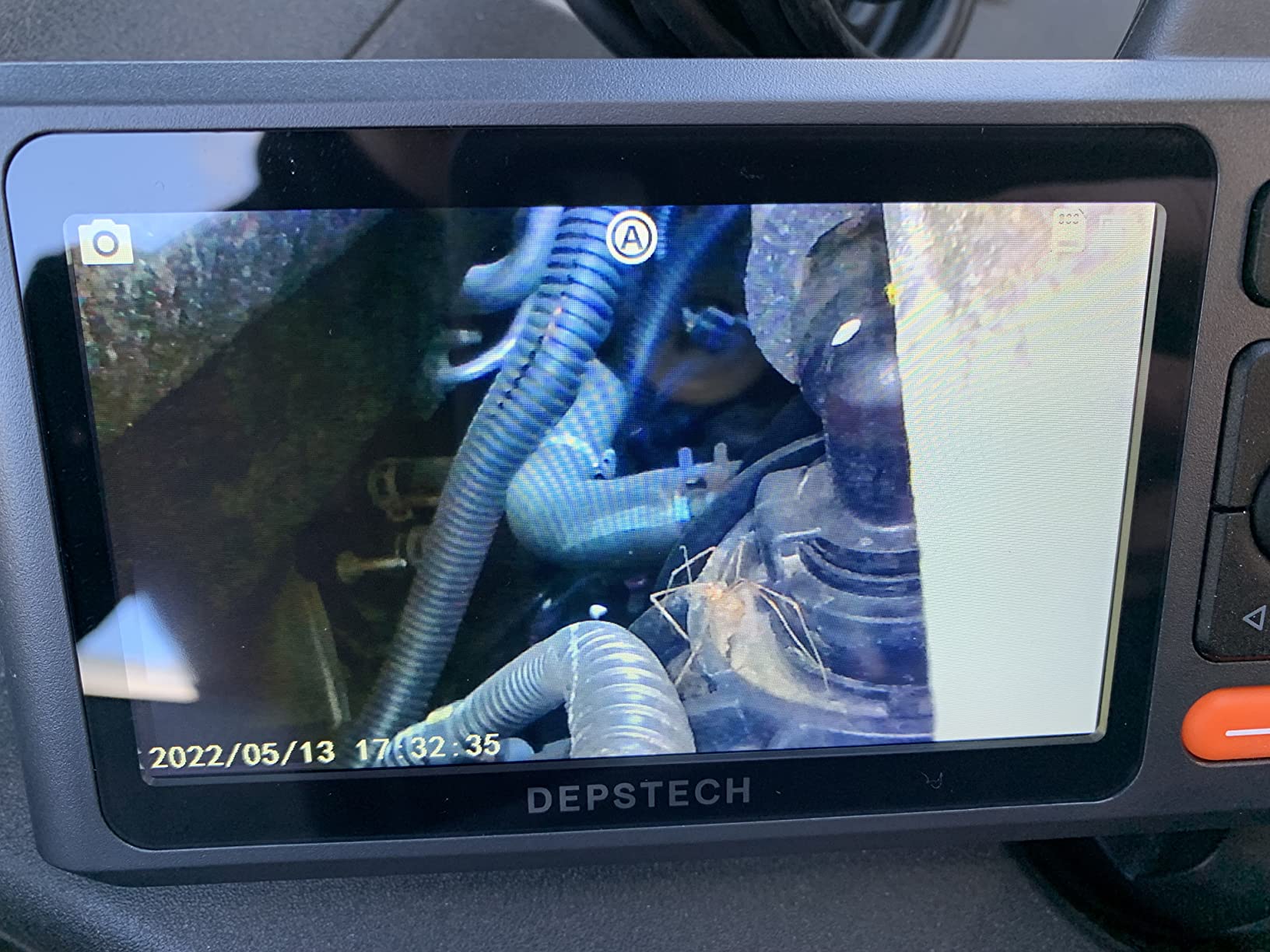
Video is 1080p with 2.0MP stills on a 4.3 inch wide-angle IPS screen, and the second CMOS chip keeps picture delay low enough to guide the probe by hand rather than by guesswork. Focus runs 3-8cm on the front camera and 2-6cm on the side camera, which covers most wall cavities, appliance interiors and drain runs.
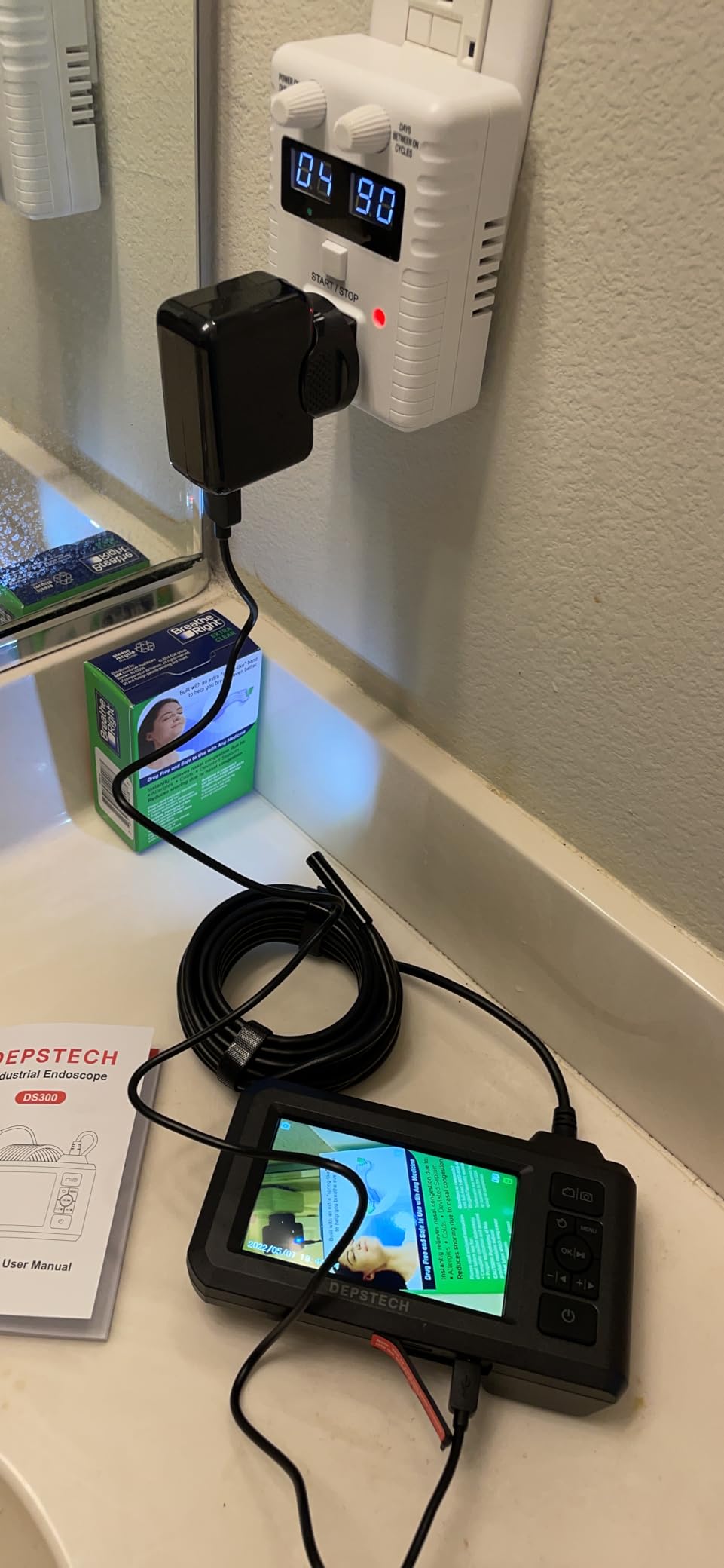
The 16.5FT semi-rigid cable holds its shape, which means you can push it down a line and leave it there while you look. Seven adjustable LEDs run at three brightness levels using the brand’s Bluart 2.0 lighting, and the probe carries an IP67 rating for wet environments.
For documentation the camera is solid but incomplete. It records to a card and the orientation rotates 180 degrees, yet no card is included in the box, so budget for that before a job. The battery is a built-in rechargeable unit rated at roughly four hours, and the 24-month warranty is the longest in this group.
Where the DS300-DL works best
Behind drywall, inside ducting, under cabinetry and along drain runs, where the combination of a long semi-rigid cable and split-screen dual view lets you inspect without pulling fixtures apart. It is also the easiest of the ten to hand to someone else, since it powers on and works with no pairing or app.
Where it falls short
The tip does not articulate at all. In a straight run that is irrelevant, but in a curved void or around the back of a fitting you are limited to views you can produce by shaping the cable, and the lens is fixed-focus so it will not hold detail at very close range. If steering is your priority, look at an articulating model instead.
2. DXZtoz Two-Way Articulating 5.5FT – Best for Steerable Tight Gaps
- Two-way 220 degree articulation steers past obstacles and looks back around corners
- 8.5mm head passes access openings most rigid probes miss
- 8 LEDs with 4 brightness levels and 8x zoom
- Hard case keeps the unit and accessories organised
- Steering works side to side only with no up and down movement
- No orientation marker to tell a mirrored image from an upright one
- Hook magnet and mirror tips can partly block the lens
Articulation is the whole point of this one. The control wheel at the back of the unit drives a two-way 220 degree steering lens, so once the probe is inside a wall void or an engine valley you can aim it past an obstruction and look back around a corner instead of reshaping the cable.
The head measures 8.5mm, which passes through openings that stop a larger bulbous camera, and the IP67-rated gooseneck probe is also oil resistant, so engine work does not end the job. Video is 1080p with 2.0MP stills on a 4.3 inch HD IPS screen, and the macro focus range of 1-15cm covers crack inspection and close work on a gasket face.
Eight high-intensity LEDs run at four brightness levels, and 8x zoom lets you frame a distant detail without pushing the probe closer to a hot surface. The rechargeable 3000mAh battery delivers around four hours of working time, and files move off the camera through a microSD slot or USB Type-C.
Two details caught us out during testing. The steering is horizontal only, so some upward angles need the probe withdrawn and re-entered rather than tilted. And there is no orientation marker, which makes mirrored or inverted frames easy to misread when you are documenting a finding.
Where the DXZtoz earns its place
Anywhere you need to look behind something: behind an engine component, around a valve, into the far corner of a cavity or down a run where the cable cannot be shaped to the right angle. The 4.3 inch IPS screen runs full 1080p with no app involved, so it works in gloves, rain or a dark crawl space.
Where it frustrates you
The articulated tip can stiffen in very tight bends and should never be forced, since the steering joints are the first part to fail. Attachments are another trap: the hook, magnet and side mirror all sit close enough to the lens to block part of the frame in a narrow gap, and there are no printed instructions for fitting the tip ring.
3. Teslong TD450S Articulating 5FT – Best for Engine Work
Teslong Articulating Borescope for Mechanic Automotive HVAC Wall Inspection
- Steering head aims into spark plug holes couplers and engine bays
- Central joystick allows true one-handed operation
- Records audio alongside video for narrating findings
- Bright illumination and a simple menu system
- Semi-rigid cable resists tight 90 degree bends in piping
- Steering lever stiffens if the cable is wound
- Fixed screen brightness and no phone transfer for files
The Teslong TD450S is the one our mechanics preferred to hold. The articulating lever is centred in the grip, which means you steer with your thumb and keep the probe pointed with the same hand, and the single camera avoids the mode-switching confusion that dual-lens scopes can introduce.
Two-way 210 degree articulation is enough to look around a bracket or down into a valley, and the 5FT semi-rigid gooseneck holds its shape without fighting back on short engine runs. Video records at 1080p with audio, so you can narrate what you are looking at while it is still happening.
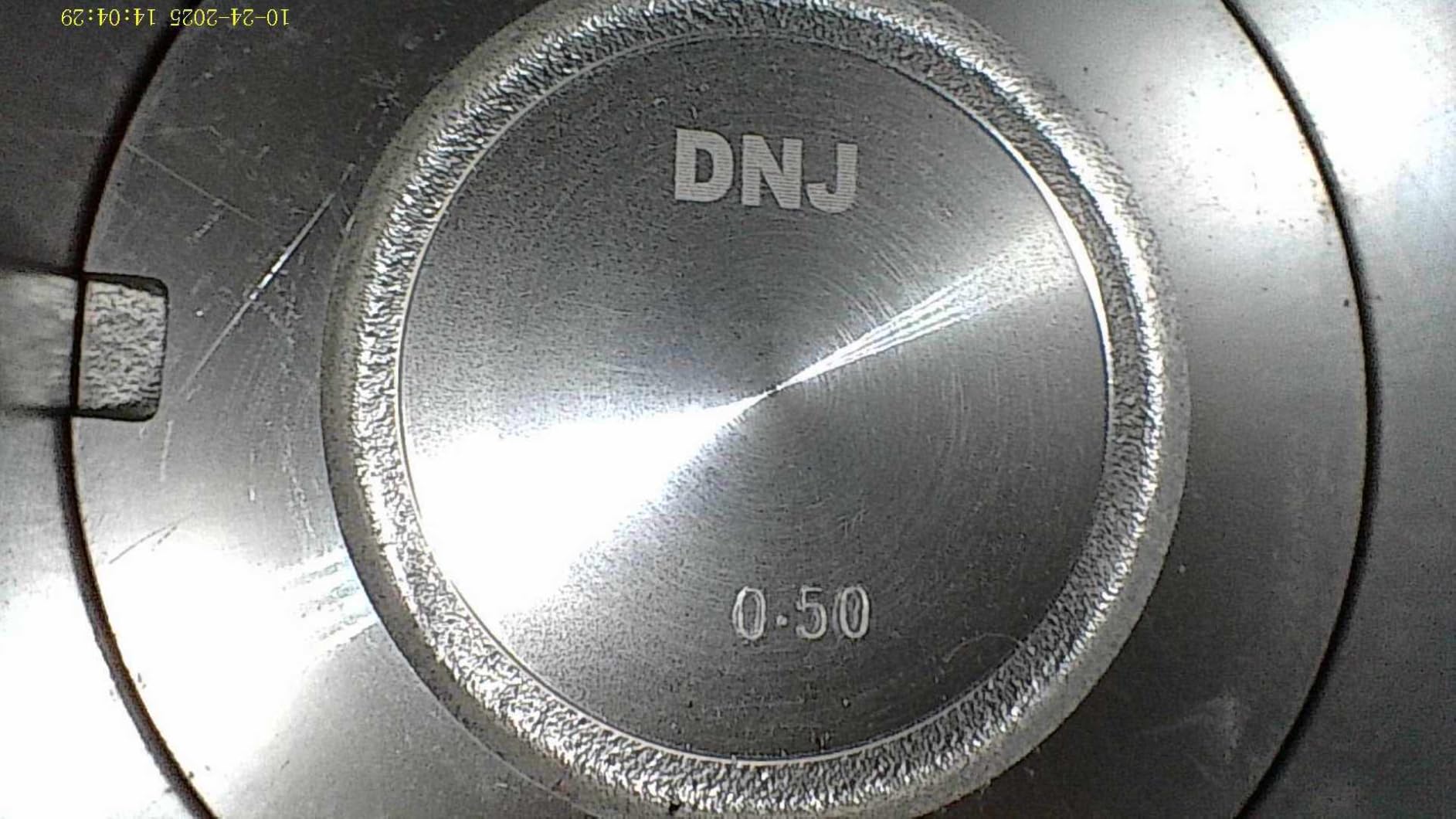
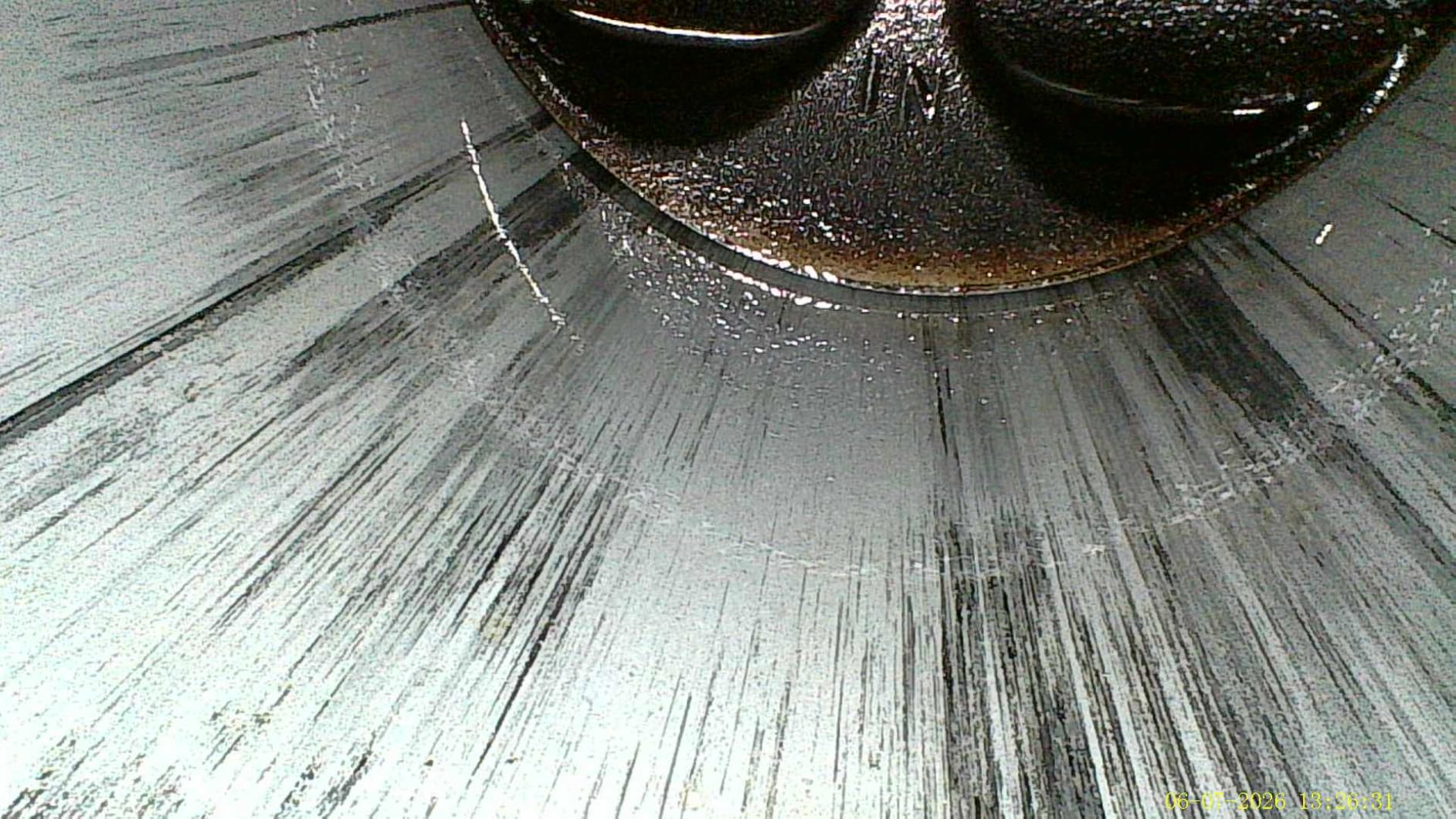
The 4.5 inch IPS LCD colour screen is comfortable to read in a dim garage, and macro focus from 0.6 to 4 inches is tight enough for close inspection of a piston crown or a valve seat. Illumination comes from eight LEDs with adjustable brightness, and the probe carries an IP67 rating.
Two honest caveats. The semi-rigid cable does not slide easily around sharp 90 degree bends in tight piping, and the articulating slider stiffens if you wind the cable before parking the tool, which risks internal damage over time. Screen brightness is also fixed, and files reach a computer through the included 32GB microSD card rather than wirelessly.
Where the TD450S works best
Engine bays, exhaust manifolds, couplers and spark plug holes on a four-cylinder or six-cylinder engine, where the cable is short enough to control precisely. The two-year manufacturer warranty and the semirigid case that stores the cable without disconnecting it make it a good travelling tool.
Where it is the wrong choice
Long reaches and heavily curved pipework. A 5FT semi-rigid cable will not negotiate a long elbow run without kinking, and for drain lines or deep wall cavities a longer flexible cable is the better trade even if you give up articulation.
4. DEPSTECH DS650DL-3m 10FT Dual Lens – Best Multi-View Probe
DEPSTECH 10FT Articulating Borescope, Dual Lens Endoscope Camera with Light
- Dual lens and two-way articulation together cover far more of a confined area than a fixed probe
- 10FT cable reaches deeper into walls ducts and engine bays
- 0.33 inch probe passes tight openings
- Built-in 8GB card and no app required
- Manual focus so the operator sets the working distance
- Split-screen dual view adds menu complexity
- Costs more than entry-level fixed-tip scopes for similar core image quality
Most scopes make you choose between a steerable tip and a second viewing angle. This one does both. The dual lens gives a split-screen view with 78 degree field of view on each side, and two-way 210 degree bidirectional articulation through the side-mounted control wheel lets you aim the pair of views at once.
In practice that combination covers a void in a way a single-lens articulating head cannot. You watch the forward and side images together, spot the obstruction, and steer toward it without losing the context view you started with.
The probe is 0.33 inch, among the slimmest of the standalone scopes here, and the 10FT semi-rigid gooseneck is long enough to reach into a deep wall cavity or along a duct run. Video is 1080p with 2.0MP stills on a 4.5 inch IPS display, with no WiFi or app involved at any point.
Two practical details stood out. The integrated high-temperature warning system tells you when the probe is being run somewhere it should not be, and the 8GB TF card is built in, so the camera records out of the box. The 2200mAh battery gives a little over four hours of continuous operation across three LED brightness levels.
Where the DS650DL earns its place
Deeper inspection work where reach and steering both matter: HVAC ducting and evaporator interiors, behind a wall where the opening is far from the target, engine bays with a valley to look into, and appliance internals with several obstructions in a row.
Where it falls short
Focus is manual across a 3-8cm range with the sweet spot around 3-5cm, so you set distance yourself every time. The split-screen mode also adds menu steps that a beginner will need a minute to understand, and the review volume on this one is lower than the rest of the shortlist, which tells you less about long-term reliability.
5. Teslong NTS300 16.5FT Dual Lens – Top Rated for Reach
- Switchable dual lenses remove the need for a separate side mirror attachment
- 16.5FT cable reaches far into wall cavities ducts and drains
- Large 5 inch IPS screen is easy to read while working
- Self-contained with no phone WiFi or app required
- Fixed focus with no articulation so the tip cannot be steered
- 720p capture resolution trails newer competing scopes
- Semi-rigid cable struggles through tight 90 degree elbows
The NTS300 has the highest rating in this group and the largest screen, and for straight-line reach it is hard to argue with. The 5 inch IPS display is a real advantage when your hands are dirty and you are holding the unit at arm’s length to guide the cable.
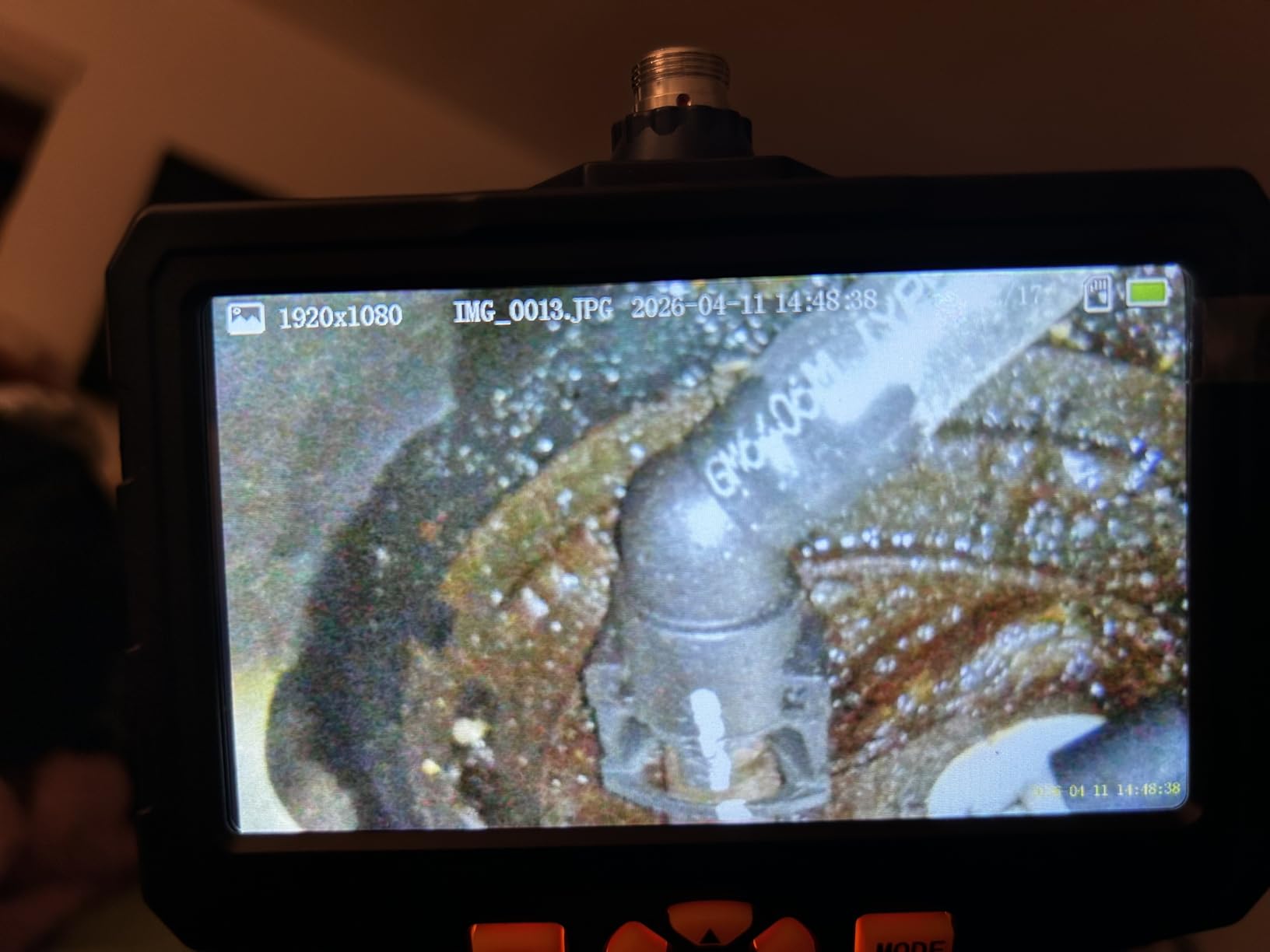
Reach is its headline number: 16.5FT of semi-rigid 8mm gooseneck, which will go down a dryer vent, along an under-slab run or deep into a duct with the camera still inside. The dual lenses switch between forward and side views, each with its own independent LEDs, so a side view does not come back as a dark shadow.
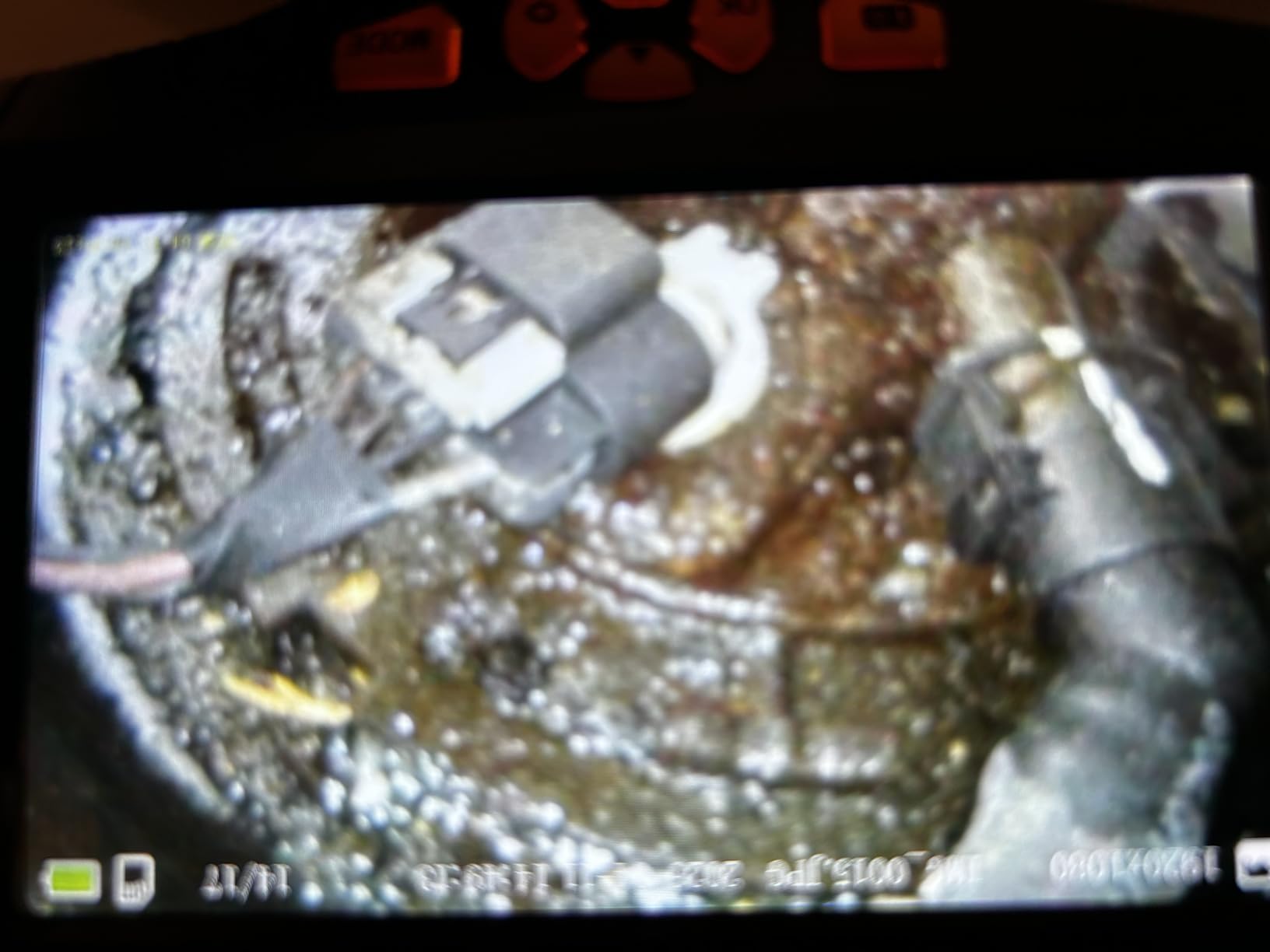
Seven LEDs in total with brightness control handle the usual darkness problem, and the 5000mAh built-in battery gives roughly four and a half hours of use, the longest runtime here. Capture is 720p video with 2.0MP stills, at 1.5x optical zoom and fixed focus across a 70 degree field of view.
The honest weakness is that the tip is fixed. With no articulation, everything depends on how you shape the cable, and a semi-rigid 8mm probe is stubborn inside a tight 90 degree elbow. The 720p capture is also lower than the newer scopes on this list, which shows on a still frame you intend to send to a client.
Where the NTS300 works best
Long, straight, hard-to-reach runs: dryer and bathroom vents, under-slab and crawl space lines, deep wall cavities, and drain paths where the cable has to go further than your arm. The hard carrying case, hook, magnet and mirror are all included.
Where it is the wrong choice
Anything curved. A fixed tip and a stiff cable combine badly in a tight elbow, and you will spend more time shaping the cable than looking through it. It also has a 12-month warranty, shorter than the two-year coverage on the Teslong articulating model.
6. BAZO 1920P Phone Endoscope 18.04FT – Budget Pick for Slim Reach
BAZO Endoscope Camera with Light –1920P HD Borescope with 8 Adjustable LEDs
- Slim 6.9mm probe reaches narrow gaps other scopes cannot enter
- 18.04FT semi-rigid cable balances rigidity with flexibility
- IP67 rated so it works underwater and inside drains
- No WiFi Bluetooth or separate battery to manage
- Needs a phone or tablet plus the UseePlus app with no built-in screen
- App connection problems can occur and may need an update
- Image quality trails dedicated-screen scopes of the same era
The BAZO solves a specific problem no standalone scope on this list solves: a 6.9mm probe head. That is the slimmest camera in the group, and it will pass through gaps that stop an 8mm or 8.5mm head dead.
The 18.04FT, or 5.5 metre, semi-rigid cable gives you more reach than any standalone scope here while staying rigid enough to hold a bend in a pipe. The IP67 probe is usable underwater, which makes it the natural choice for drain lines, aquarium work and wet appliance cavities.
There is no screen of its own. The probe plugs directly into a phone or tablet through the included iPhone and micro-USB adapters, with no WiFi and no Bluetooth pairing to fail. Video records at 1440p from a 1920P photo sensor, and eight LED brightness levels let you dial light down at close range.
Being honest about the tradeoff: it needs a phone, the UseePlus app and a working adapter, and app connection problems are the most common complaint owners report. Some phone models also produce inconsistent image quality or latency, so a cheap case with a cracked port can stop the job entirely.
Where the BAZO works best
Really small openings, wet locations and occasional use. If your tight space is a 7mm gap, a drain you need to look down more than once, or an aquarium, this is the only camera in the group that reaches it. The accessory bundle covers magnet, hook, mirror, mounts and a protective cap.
Where it falls short
Documented work and gloved operation. A wet, dirty phone screen in a service van is a worse experience than a dedicated 4.3 inch display, and if the app decides to update mid-job the camera is unusable until it finishes.
7. Daxiongmao C30 16.5FT – Best for Spark Plug Hole Inspection
- Sharp picture for the price across vents drains and duct work
- 16.5ft cable reaches deep into dryer vents and under-house lines
- Standalone 4.3 inch screen keeps phones out of the job
- Rugged enough to take knocks
- Advertised 1080p quality falls short in some settings
- No articulation so a long cable makes steering around bends hard
- Cannot record photos or video and viewing is live only
Taking a spark plug out and pushing this probe through the hole is the classic engine inspection move, and the 8mm head is sized for it. The four-way head on a small engine and the line to a cylinder wall make it one of the few tools here that answers a question you cannot answer any other way without pulling the head off.
Everything else about it is conventional and well made: a 4.3 inch colour LCD with 120 degree field of view, 16.5ft of semi-rigid cable, eight adjustable LEDs and an IP67 probe with a water-safe aerospace connector for wet work.
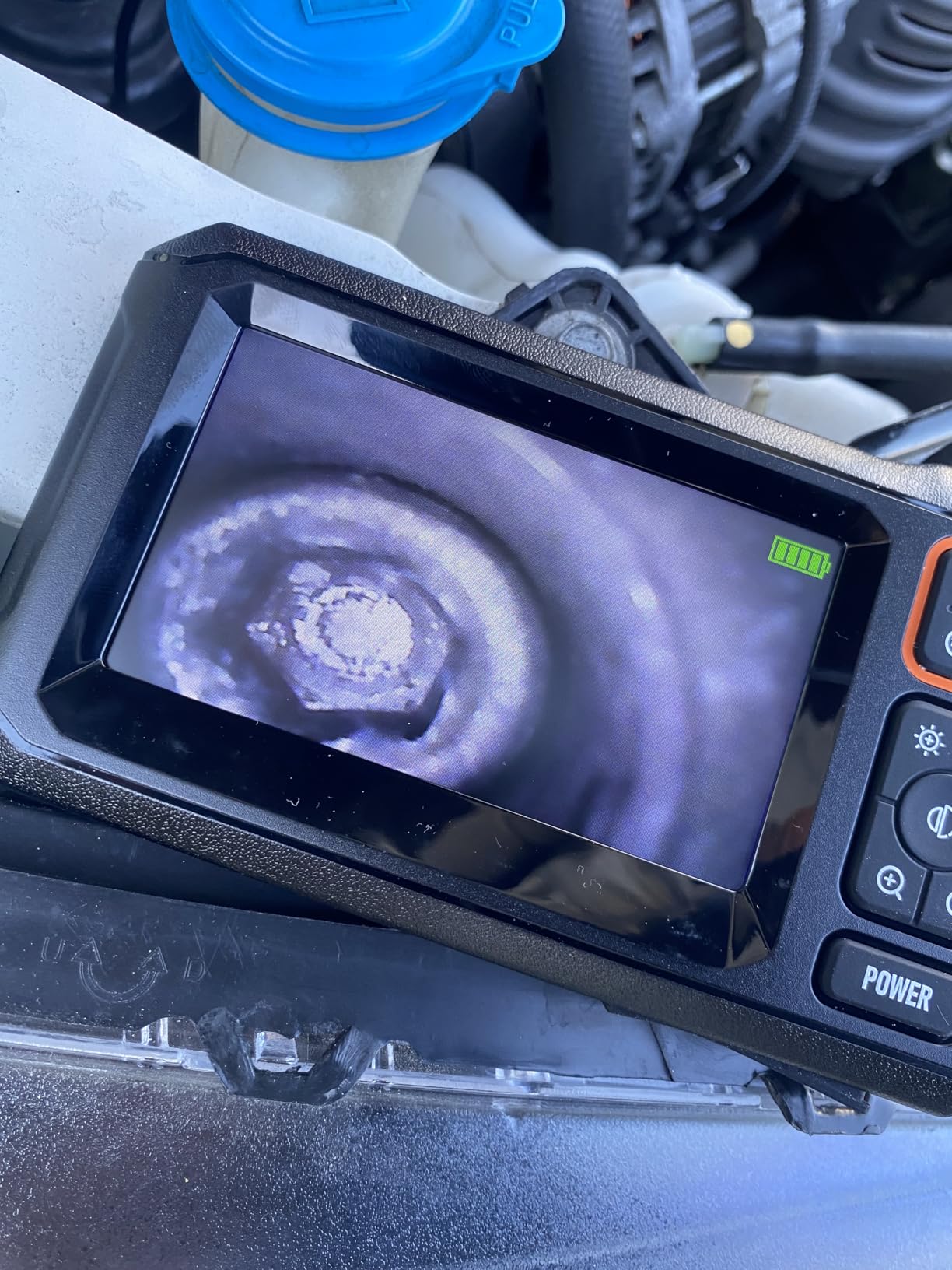
Best observation distance is 1.5 to 5 inches with macro focus from 3.81 to 12.7cm, so you can frame a whole combustion chamber or move in on a valve. It runs for roughly three and a half hours on the internal rechargeable battery.
The catch is recording. This camera is view-only: no photos, no video, no capture button. For a quick look that is fine, and for anyone documenting a diagnosis it is not, which is the single biggest reason we did not rank it higher despite its strong review volume. Image quality also tends to trail the advertised 1080p in low light.
Where the C30 works best
Combustion chamber and cylinder inspection, plus vent, drain and duct work where a standalone screen matters more than recording. The semi-rigid cable pushes past obstacles that a fully flexible wire could not, and the warranty is 180 days.
Where it is the wrong choice
Client-facing reports and any tight curved run. With no articulation and a fixed tip, the head is hard to aim around a sharp bend, and the on-screen image adjustment settings make little visible difference when the light is poor.
8. MugEasy 1920P 7.9mm Short Tip – Best for Narrow Pipes
- Short 1.29 inch lens tip manoeuvres at difficult angles where long tips snag
- 7.9mm slim probe reaches confined areas
- Standalone 4.3 inch IPS screen keeps phones clean
- Autofocus with 4x zoom and a 2-10cm optimal range
- Cannot take or store photos so viewing is live only
- Fixed non-articulating tip
- Screen resolution limits how much fine detail is visible
The design detail that sets this one apart is a 1.29 inch lens tip on a 7.9mm probe. Almost every other scope uses a longer nose, which is why they snag on the lip of a pipe fitting or the edge of a wall opening. A short tip clears those edges far more often.
The display is a 4.3 inch IPS panel with roughly a 170 degree horizontal viewing angle, which matters because it means you can read the screen from an awkward angle without losing the image. Live video runs at 1920×1080 from a 2.0MP sensor.
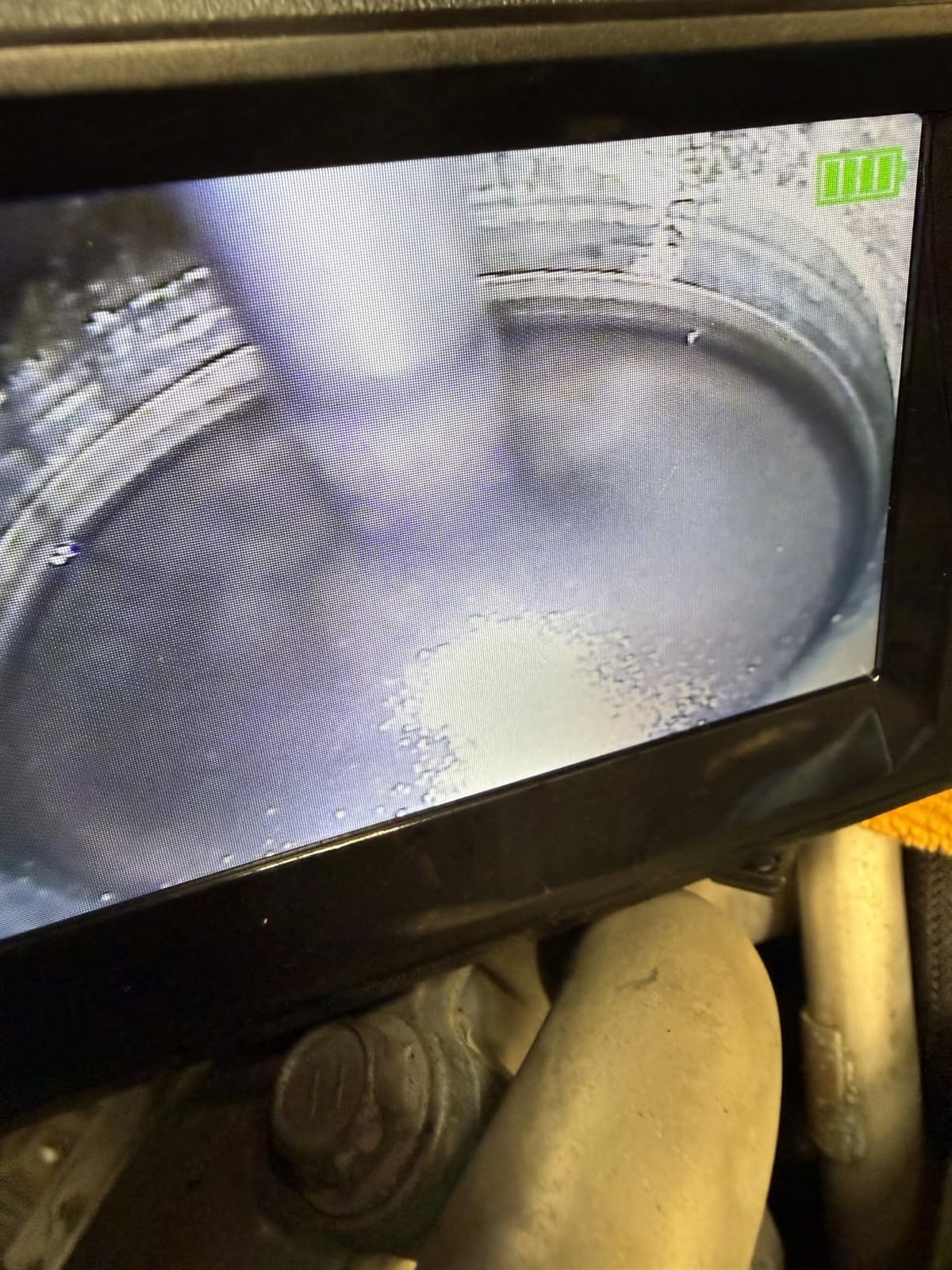
Autofocus is the other useful spec here, with an optimal range of 2 to 10cm and macro focus down to 1cm, plus 4x zoom. Eight adjustable LEDs and an IP67 rating cover dark and wet work, and colour flip and brightness shift functions help when you are looking at something shiny or backlit.
It cannot take or store photos, so this is a live-viewing tool only. The tip is also fixed and non-articulating, meaning steering depends entirely on shaping the semi-rigid 16.6ft cable, which holds a bend well but resists tight elbows.
Where the MugEasy works best
Plumbing branch lines, appliance drains and narrow pipe runs where the tip has to clear an edge, plus cabinet and wall voids where a light, handheld standalone unit is easier to manage than a phone. It powers on and works with no app, WiFi or driver software.
Where it falls short
Anything you need to keep. With no capture at all, and a screen resolution that limits fine detail, this is a diagnostic aid for your own eyes rather than a tool for showing a client or a colleague what you found.
9. Kinpthy 1920P Dual Lens 16.4FT – Best for Home Projects
- Dual-lens switching avoids twisting the wire to see the sides
- Bright LEDs illuminate dark corners and pipes
- 16.4ft cable is stiff enough to hold shape in pipes
- Records stills and video to a phone
- Long cables coil and need a guide line to fish around corners
- Lightning adapter quality is poor and has failed on day one
- No built-in screen for field use
This is the one most first-time buyers end up with, and for a single weekend project inside a wall or under a sink it does the job. The 7.9mm probe fits tight openings and the 16.4ft semi-rigid cable holds shape well enough to push into a gap between studs and stay where you put it.
Dual-lens switching means you can move from a forward view to a side view without rotating the cable into a knot, which is the most common frustration with single-lens phone scopes. Still and video capture at 1920×1440 means you can send the result to someone.
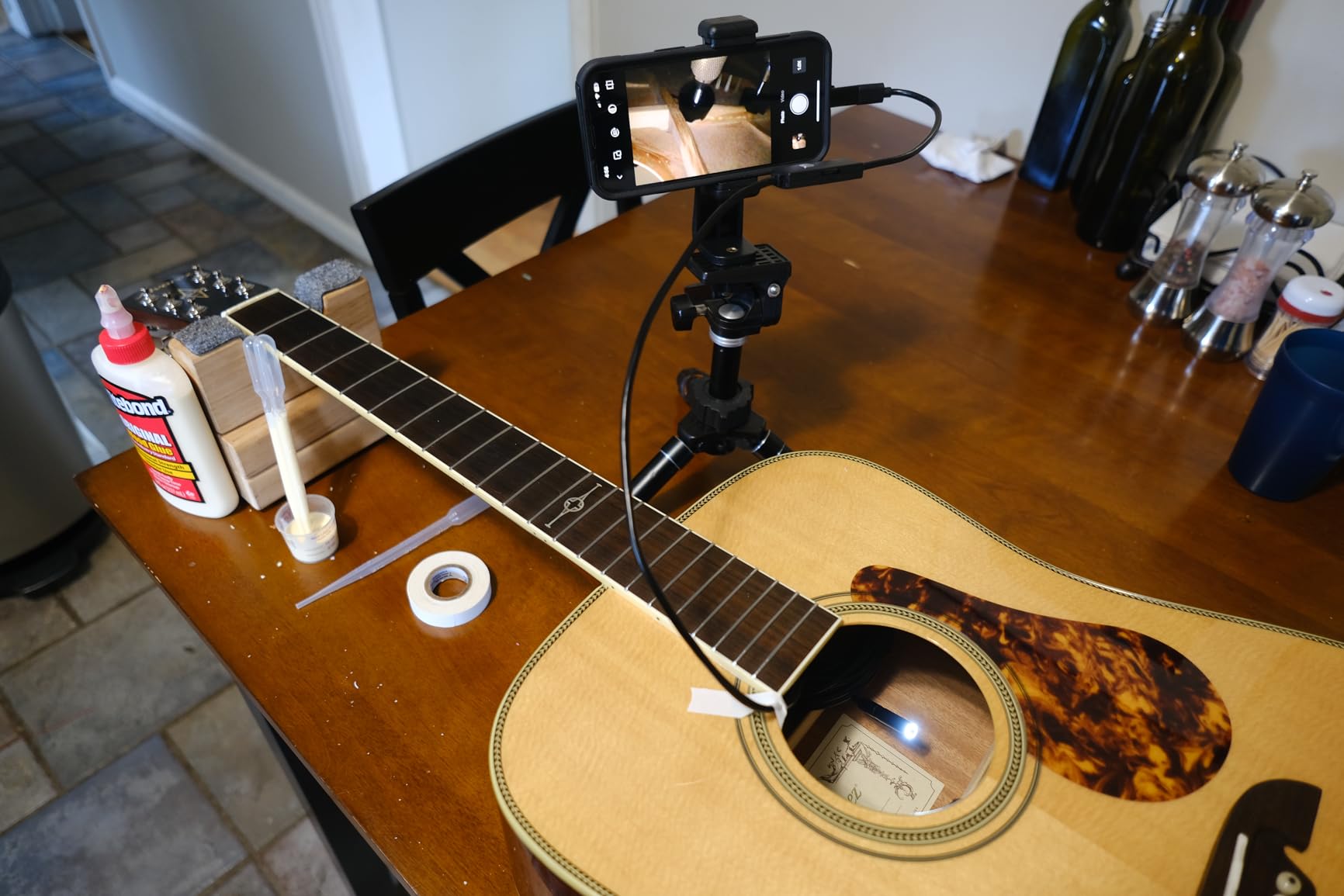
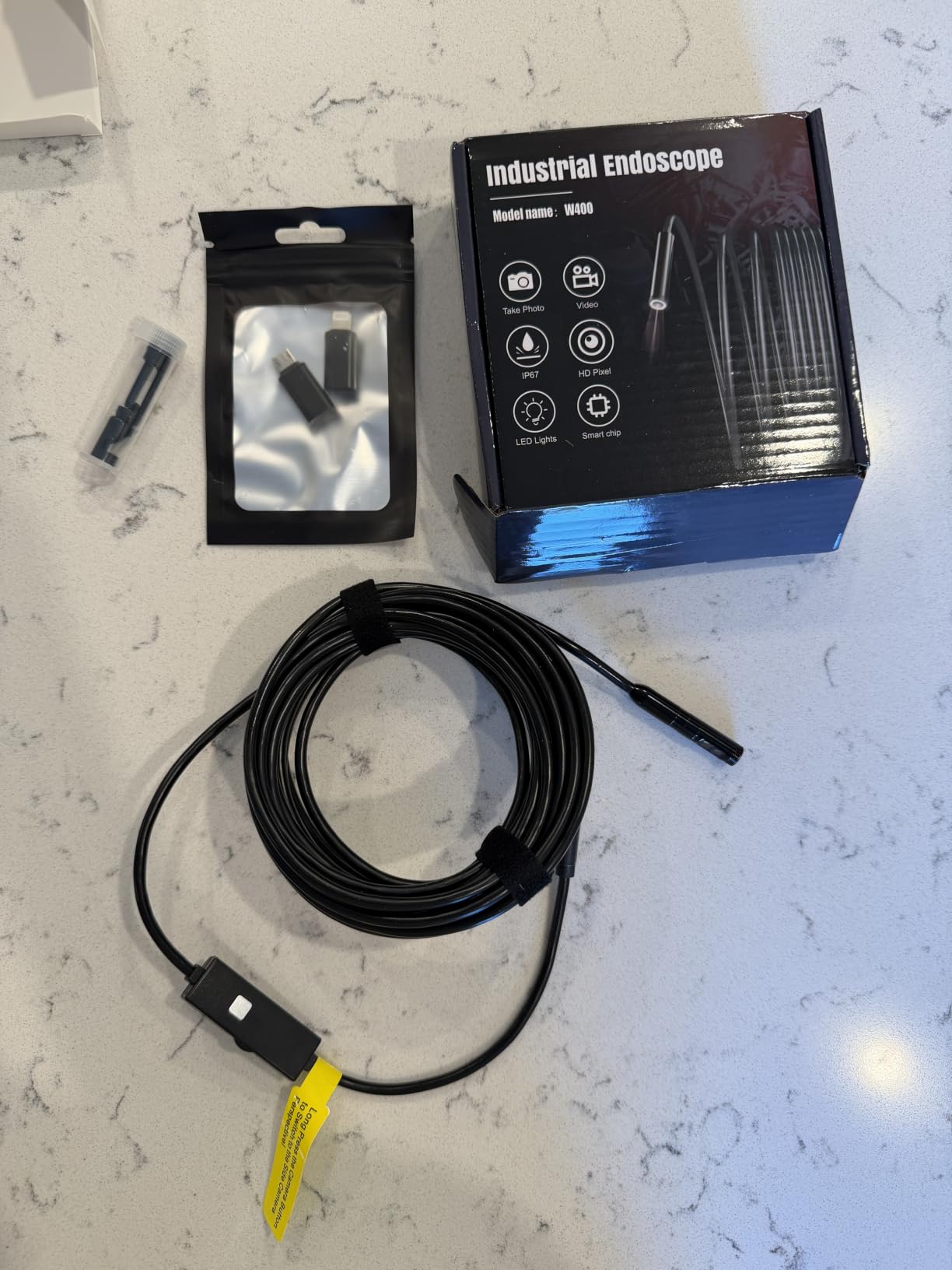
Eight adjustable LEDs light dark corners effectively, and the IP67 rating covers damp pipes, rated for underwater use to 3.28 feet for up to an hour. It connects to iOS 9.0+ and Android 7+ devices through the included Android, Lightning and Type-C connectors.
The weak points are real. The included Lightning adapter is the flimsier component in the box and has failed on day one for some owners, the semi-rigid cable coils when you work at length, and the mirror attachment produces an unclear image. Video quality is basic compared with any dedicated-screen scope here.
Where the Kinpthy works best
Home inspection work, checking for a leak behind a wall, confirming a blockage location, or confirming that cable is running where you think it is before you drill. The accessory bundle covers magnet, hook, mirror and a protective cap.
Where it falls short
Long fishing runs and professional daily use. Once the cable is more than a few metres into a line it starts to coil, and you will need a guide line to get around a corner. Treat the connector as consumable and keep a spare adapter in the van.
10. TGJOR G50 5 Inch Dual Lens – Best Large-Screen Budget Scope
- Large 5 inch screen and 170 degree view beat most phone-based scopes
- Dual-lens switching is fast and useful for combustion chamber work
- Long 16.4ft cable reaches under drains and deep lines
- Internal battery keeps the phone free during work
- No focus adjustment so some surfaces come back fuzzy
- Fixed focus and a fairly rigid cable make precise positioning hard
- Cannot record photos or video and there is no zoom
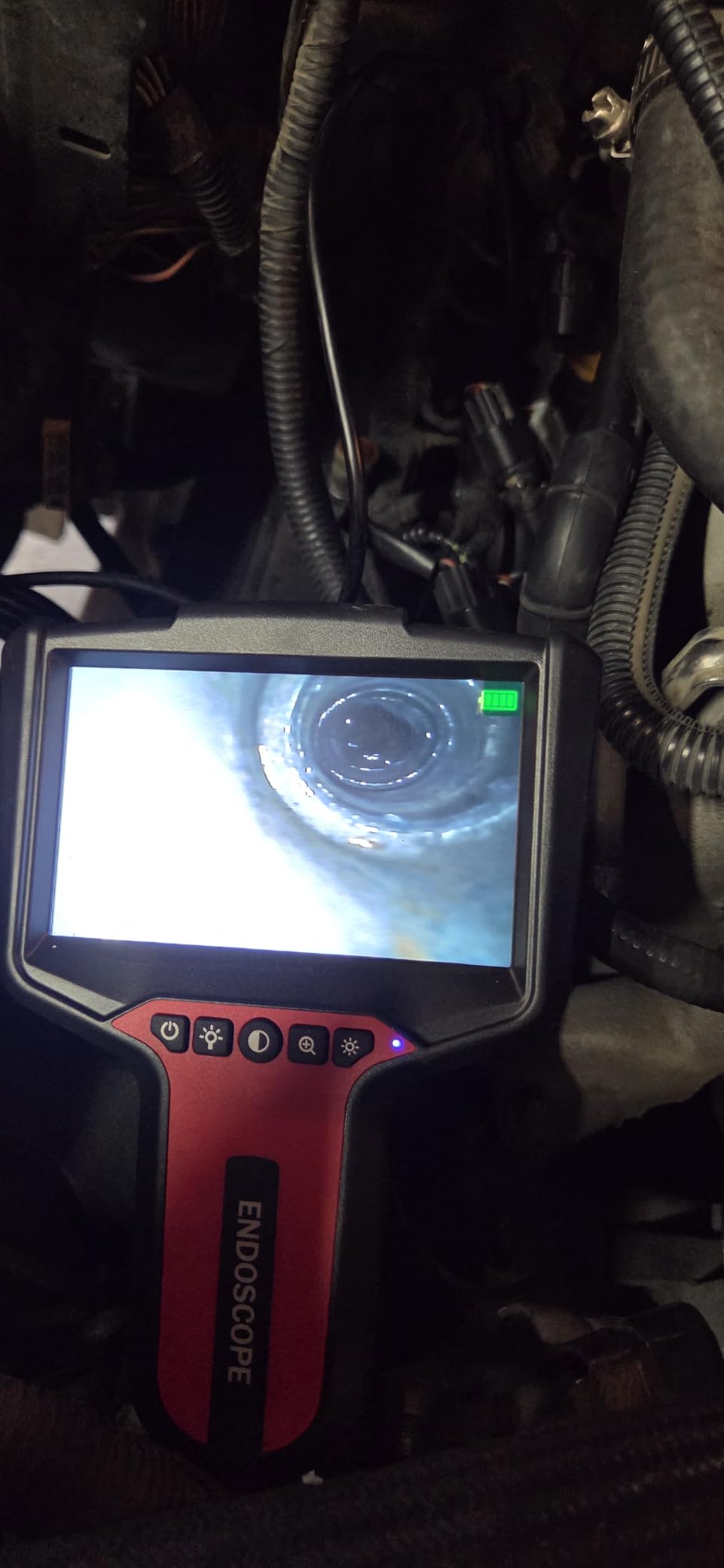
A 5 inch screen with a 170 degree wide-angle view at this level of the market is unusual, and it is the reason to consider this scope over a phone model. You can read the image while holding the cable with both hands, which matters when the probe is in an awkward position.
Dual lenses switch instantly between front and side views, and the side view is the one that makes combustion chamber inspection practical. The 16.4ft semi-rigid cable reaches under sinks, along drain runs and into a basement line, with eight adjustable LEDs for the dark sections.
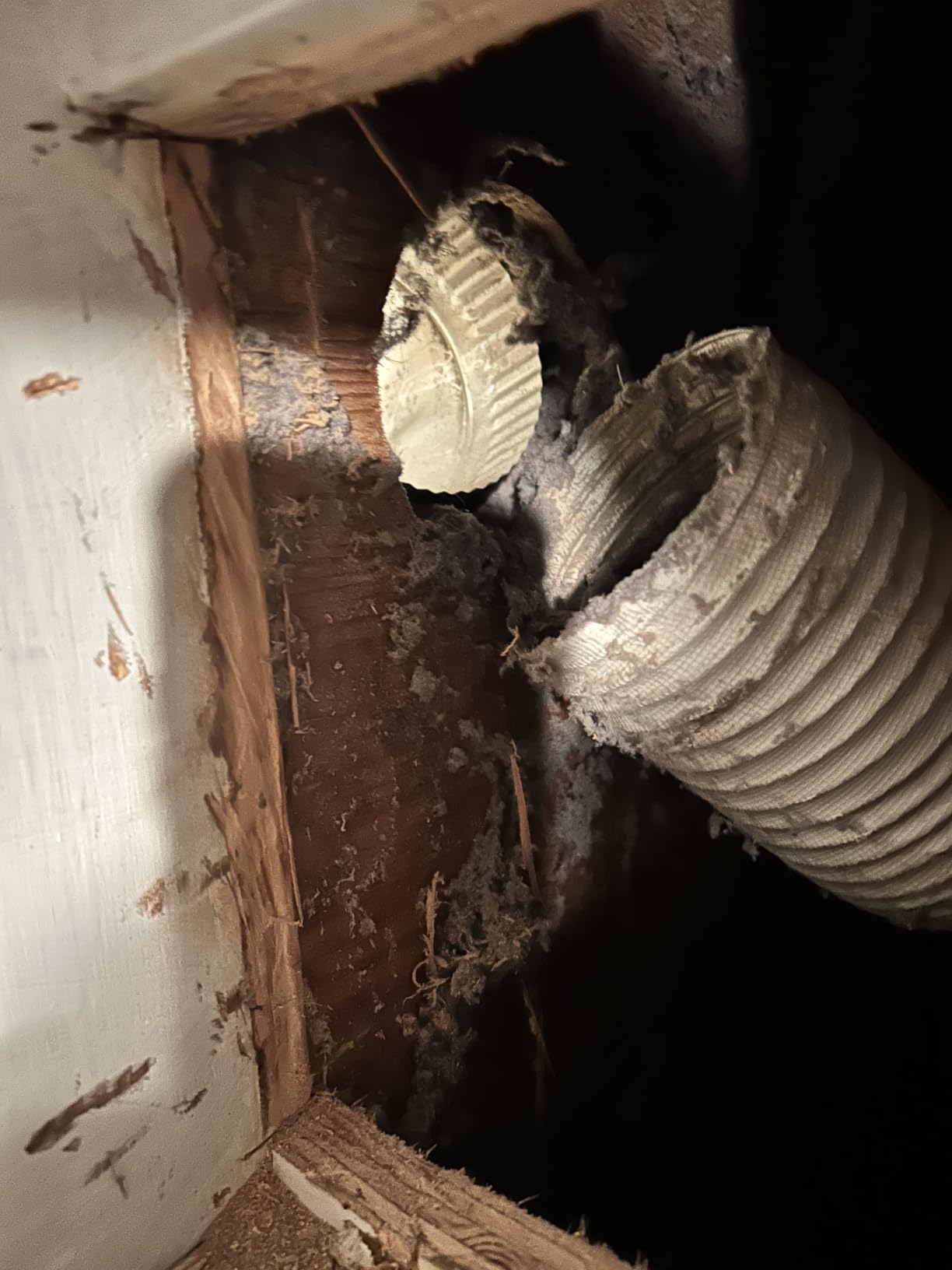
Focus range is 1.2 to 4 inches at fixed focus, close enough to resolve crosshatch patterns on a cylinder wall. The 2000mAh rechargeable battery runs three to four hours, and a one-year warranty covers the unit.
Against that, it will not record. Live display only, no stills, no video, and no zoom despite what the listing implies. Screen image adjustment settings make little visible difference, and a fairly rigid cable is hard to position precisely in tight or awkward spaces. This is a look-don’t-document tool.
Where the G50 works best
Drain and trap work, appliance interiors and general home inspection where a big readable screen matters more than documentation. It is self-contained, so nothing else on the job gets tied up while you are using it.
Where it falls short
Evidence gathering and precise steering. With fixed focus, no zoom and no recording, you cannot build a case file from it, and the rigid cable fights you the moment the space gets genuinely tight.
How to Choose an Inspection Camera for Tight Spaces?
Start by measuring your access opening, not the space you want to see. Measure the hole, take the smallest dimension, and buy a probe head that clears it with a couple of millimetres to spare. A camera that nearly fits will scrape on the edge and usually will not go in at all.
The heads in this roundup range from 6.9mm to 8.5mm among the units that publish a figure. Here is how those numbers map to the openings people actually work with, plus what each gap calls for.
Wall voids and small penetrations usually present an opening you cut yourself, so head size is rarely the limit there; what matters is bend radius and whether the tip can steer. Spark plug holes come in tight, and an 8mm head is the practical ceiling for most engines without an adapter. Drain branch lines under a sink are the most common reason people end up with a 7.9mm or 6.9mm head, because standard branch fittings leave very little clearance.
Appliance interiors and ducting are usually generous at the entry and tight further in, so cable length matters more than head diameter. Engine cylinders are the hardest case of all, because you need both a small head and a steerable tip to see past the valve seat into the chamber.
Next, decide whether you need articulation. Articulated tips cost battery, add joints that can stiffen and make the camera bulkier, and in our experience they are worth it whenever the void is curved or has obstructions, and not worth it on a straight run. Rigid probes are simpler, cheaper and more reliable for pipes and vents.
Then check lighting control rather than LED count. Eight LEDs with a fixed output will blow out a wet pipe at 3cm and still leave a 30cm cavity black. Adjustable brightness in three or four levels is the single most useful lighting feature, and glare control matters more in plumbing and engine work than raw output.
Finally, read the IP rating carefully. An IP67 rating covers the probe, which is the part that goes into the water. It does not cover the screen, the handle or the connector at the top of the cable, so keep the body dry when you are working in a drain or an appliance full of water.
Articulating vs Rigid Probes: Why Tight Spaces Change the Answer
Rigid is the default, and it is the right default for straight runs. A fixed tip over a rigid semi-rigid cable is mechanically simple, has nothing to fail except the cable itself, and gives you a predictable view every time you push it in the same path again.
Articulation earns its place in curved, obstructed or offset spaces. Three of the ten cameras here steer their tips, ranging from two-way 210 degrees to 220 degrees, and all of them use two-way side-to-side movement rather than full four-way control. That limitation matters: you can look around a corner but you still cannot tilt the view up at a ceiling void without reshaping the cable.
The failure mode to know about is the cable itself. Winding an articulating scope around a tight bend repeatedly stresses the steering joints and the internal conductors, and owners report the control slider stiffening as an early warning. If you are going to push a steerable scope through pipework, go in and out on a straight line rather than working it through a permanent elbow.
Dedicated Screen vs Smartphone Borescope
A dedicated screen costs you nothing at the point of use and removes three failure points at once: no app to update, no adapter to break and no phone battery to drain mid-job. Four of the ten cameras here are standalone, and every one of them is the simpler tool to use with gloves on.
The smartphone route wins on head diameter and reach. Two of the phone scopes here have the slimmest probes in the group at 6.9mm and 7.9mm, and the BAZO’s 18.04FT cable is longer than anything with a built-in screen. If your access point is genuinely too small for a standalone scope, a phone model may be the only thing that physically fits.
The phone downsides are real and worth stating plainly. Owners report connection problems that require an app update, inconsistent latency on some phone models, and in the case of the Kinpthy, a Lightning adapter of poor quality that has failed on day one. Notifications interrupting an inspection, and files that live only in a gallery until you export them, are the smaller irritations.
Our rule: if the work is diagnostic and you already own a phone you can afford to dirty, go phone-based to get the smaller head. If the work is documented, repeated or professional, use a standalone screen and pay for the capture.
Common Mistakes When Buying a Tight-Space Borescope
Buying the longest cable available. Reach is only useful if you can control the cable. A 16ft semi-rigid probe is excellent in a straight run and almost useless in a tight elbow, and owners regularly warn against defaulting to the maximum length.
Ignoring the access opening. Measure the hole before you buy. The gap between a 6.9mm head and an 8.5mm head is the difference between a probe that slides in and one that never will.
Assuming IP67 makes the whole tool waterproof. The rating covers the probe only. The screen, handle and top connector are not rated, and a borescope is not a shower camera.
Expecting advertised resolution to match what you see. Image quality collapses when the probe is pushed past its focal range or used in low light, so judge a camera on focus range and LED control rather than the resolution number.
Buying a view-only camera for documented work. Three of the cameras here cannot record. If you need to send a still to a client or a colleague, confirm capture before you buy.
Forcing an articulated tip. If the steering stalls in a tight bend, withdraw and re-enter rather than pushing harder. The joints are the part most likely to fail first.
Leaving the battery flat for months. One manufacturer instructs that the battery be topped up roughly every three months during storage, because a fully drained lithium cell can be permanently damaged.
Frequently Asked Questions
What is the difference between a borescope and an inspection camera?
There is no difference. Borescope, endoscope, snake camera and inspection camera are four names for the same category of tool: a small camera on the end of a narrow probe that lets you see inside voids you cannot reach by hand. Retailers and forums mix the terms freely, so any of them will return the same products.
What size borescope camera should I buy for small spaces?
For genuinely tight openings, aim for the smallest head you can find: 6.9mm or 7.9mm probes pass drain branch fittings and narrow gaps, while 8mm to 8.5mm covers spark plug holes and engine work. Measure your access opening first and buy a head that clears it with a couple of millimetres to spare, because a probe that nearly fits will not go in.
Are phone borescopes as good as ones with screens?
Phone scopes win on probe diameter and cable reach, and standalone screens win on reliability and documentation. Phone models give you the slimmest heads and longest cables available, but they depend on a companion app and a connector that can fail. Standalone scopes power on and work immediately and can record evidence, but their heads are usually larger.
Do I need an articulating borescope?
Only if your tight space is curved or obstructed. Articulation lets you steer the tip around corners and look back at what you have passed, which rigid probes cannot do. On straight runs such as a vent or a straight drain line, a rigid tip is simpler, lighter and less prone to cable and joint damage.
Can a borescope see through walls?
No. A borescope only sees into voids you have already opened an access point into, such as a cut hole in drywall, a removed vent grille, a spark plug hole or an open drain fitting. It tells you what is inside a cavity you can reach, and it does not replace a proper inspection, thermal survey or diagnosis.
Our Pick for Inspection Cameras for Tight Spaces in 2026
The DEPSTECH DS300-DL is our overall pick for inspection cameras for tight spaces, because the dual lens with one-button split screen and a 16.5FT semi-rigid cable covers more confined space than any other camera here, with a 24-month warranty behind it. When the void is curved and you need to steer, the DXZtoz two-way articulating scope with its 8.5mm head is the better tool.
For the smallest openings, the BAZO phone scope reaches with a 6.9mm head through an 18.04FT cable. For long straight runs and the biggest screen, the Teslong NTS300 goes 16.5FT on a 5 inch display. All ten are linked above with the latest pricing.
If you also need to find the leak rather than just the blockage, our thermal camera drones for inspection cover the survey side of the job.